
Business RadioX ®

  • Home
  • Business RadioX ® Communities
    • Southeast
      • Alabama
        • Birmingham
      • Florida
        • Orlando
        • Pensacola
        • South Florida
        • Tampa
        • Tallahassee
      • Georgia
        • Atlanta
        • Cherokee
        • Forsyth
        • Greater Perimeter
        • Gwinnett
        • North Fulton
        • North Georgia
        • Northeast Georgia
        • Rome
        • Savannah
      • Louisiana
        • New Orleans
      • North Carolina
        • Charlotte
        • Raleigh
      • Tennessee
        • Chattanooga
        • Nashville
      • Virginia
        • Richmond
    • South Central
      • Arkansas
        • Northwest Arkansas
    • Midwest
      • Illinois
        • Chicago
      • Michigan
        • Detroit
      • Minnesota
        • Minneapolis St. Paul
      • Missouri
        • St. Louis
      • Ohio
        • Cleveland
        • Columbus
        • Dayton
    • Southwest
      • Arizona
        • Phoenix
        • Tucson
        • Valley
      • Texas
        • Austin
        • Dallas
        • Houston
    • West
      • California
        • Bay Area
        • LA
        • Pasadena
      • Colorado
        • Denver
      • Hawaii
        • Oahu
  • FAQs
  • About Us
    • Our Mission
    • Our Audience
    • Why It Works
    • What People Are Saying
    • BRX in the News
  • Resources
    • BRX Pro Tips
    • B2B Marketing: The 4Rs
    • High Velocity Selling Habits
    • Why Most B2B Media Strategies Fail
    • 9 Reasons To Sponsor A Business RadioX ® Show
  • Partner With Us
  • Veteran Business RadioX ®

PHELAN & MYERS 2 FOR 20: Interest Rates, Lending, and the Current State of the Economy with Janney Director of Research Chris Marinac

August 23, 2024 by Mike

Gwinnett Business Radio
PHELAN & MYERS 2 FOR 20: Interest Rates, Lending, and the Current State of the Economy with Janney Director of Research Chris Marinac
Loading
00:00 /
RSS Feed
Share
Link
Embed

Download file

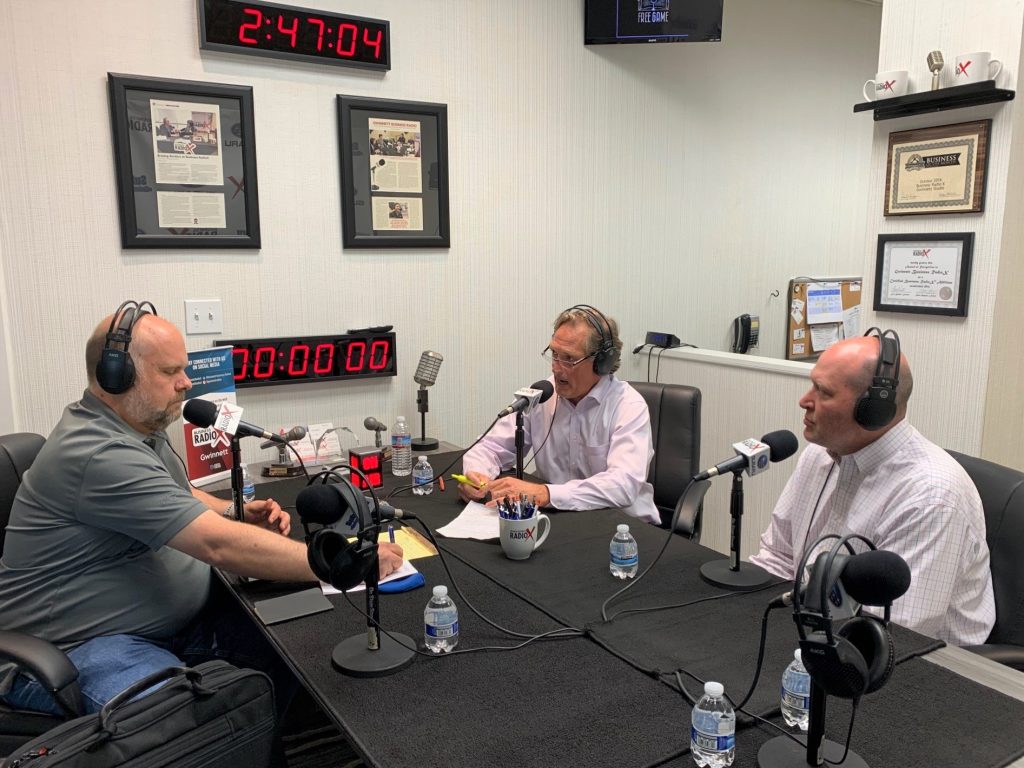
Kevin Myers, Chris Marinac, Scott Phelan

Hosts Scott Phelan and Kevin Myers discuss interest rates, lending, and the current state of the economy with Chris Marinac, Director of Equity Research for Janney Montgomery Scott LLC.

No matter where you are in life – just starting out, in your peak earning years, nearing retirement, or contemplating your legacy – Phelan and Myers Wealth Management Group of Janney Montgomery Scott is here for you. When you work with them, it’s about going beyond investing. It’s about connecting your life and your finances.

They take a comprehensive and customized approach to your finances, by understanding your needs and goals and aligning your investment strategies to help meet those goals. Their depth of knowledge and experience, combined with their firm’s capabilities and resources, enables them to provide high quality service, while offering advice and executing financial solutions for every stage of life.

No needs are more important than your own. They pride themselves in making your needs and goals, their own. They don’t simply work for you. They work with you to understand who you are as an individual and as an investor.

Their mission is to help you to define your financial objectives, and then use that knowledge to develop — together — a plan that is tailored to fit your unique needs and preferences, and is in your best interest. They’re proud to offer comprehensive financial planning resources, providing you access to education, advice, planning, and consultation.

Chris Marinac
Director of Research/Janney Montgomery Scott

As Director of Research at Janney Montgomery Scott, Chris Marinac oversees the firm’s Equity Research team, which covers more than 225 companies within the Financials, Healthcare, Infrastructure, and Real Estate sectors. The team aims to provide first class research on companies and the industry at large—which means staying ahead of the curve, understanding investors, and considering how events today will affect the future.

Chris has more than 27 years of financial services and research analysis experience. Prior to joining Janney in 2019, he was Co-Founder and Director of Research at FIG Partners LLC, a premier investment banking and research firm specializing in community banks. At FIG, he established and managed an award-winning Equity Research team that covered more than 150 banks, thrifts, and REITs. Earlier in his career, he spent six years as Managing Director at SunTrust Robinson Humphrey and five years as a Research Analyst at Wachovia Corporation (formerly Interstate/Johnson Lane Inc.).

He has served as a financial expert and resource to global and national media outlets including American Banker, Bloomberg, CNBC, Financial Times, FOX Business, and the Wall Street Journal.

Chris graduated from Kent State University with a Bachelor of Science in Accounting and Finance. He is actively involved with Atlanta Ronald McDonald House Charities Inc., where he is serving his fourth, three-year term as a board member.

Scott Phelan, CFP®
Executive Vice President/Wealth Management, Financial Advisor

Scott Phelan has over 20 years of financial advising and planning experience. As Executive Vice President/Wealth Management, Financial Advisor, his focus is helping build wealth for high net worth individuals and corporate clients. His core competencies include estate, retirement, insurance and income tax planning strategies. Scott has a long and distinguished career in the financial services industry having held leadership positions at Edward Jones, The Hartford, and New England Financial. Most recently, he was a Senior Vice President, Wealth Management, Financial Advisor/Senior Portfolio Management Director at Morgan Stanley. Scott began his career at the New England Financial Group where he developed and implemented employee 401(k) programs.

Phone: 678.448.4841
sphelan@janney.com

Kevin Myers, CFP®
Vice President/Wealth Management, Financial Advisor

Kevin’s philosophy is simple; he worries about your finances so you don’t have to. As a Certified Financial PlannerTM (CFP®) Professional, Kevin helps clients develop and implement a comprehensive financial plan that is tailored to your needs. Kevin specializes in portfolio management, ensuring that each of his clients’ unique needs are being taken into account. Kevin has over 10 years of experience in the financial services industry and previously served as a consultant. He attended the University of Georgia where he earned his Bachelor of Science in Personal Financial Planning.

Phone: 678.448.4842
kmyers@janney.com
Tagged With: banking, chris marinac, economy, equity research, janney, janney montgomery scott, kevin myers, lending, market research, market trends, phelan & myers, phelan & myers 2 for 20, scott phelan

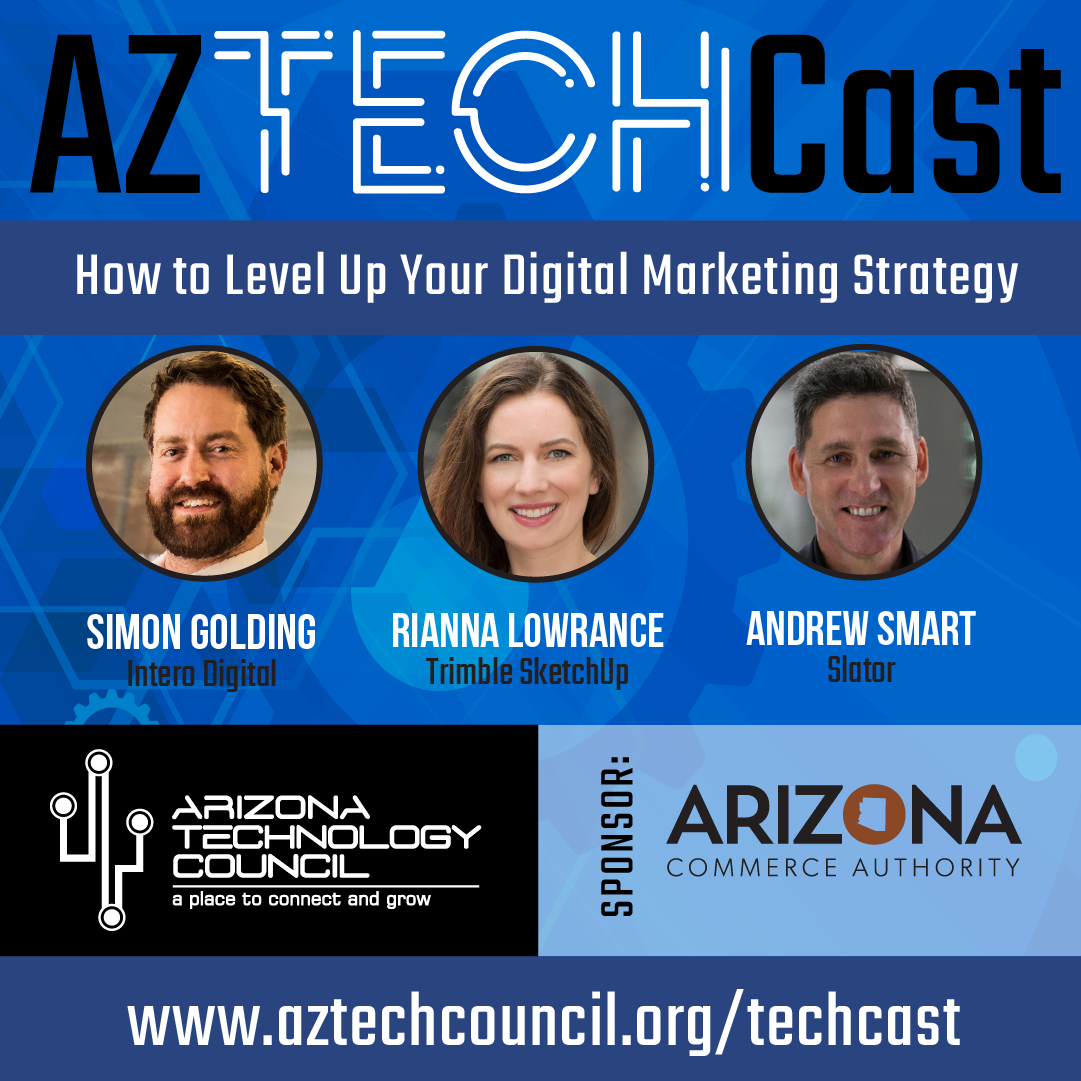
How to Level Up Your Digital Marketing Strategy E41

August 28, 2023 by Karen

How-to-Level-Up-Your-Digital-Marketing-Strategy-E41-feature
AZ TechCast
How to Level Up Your Digital Marketing Strategy E41
Loading
00:00 /
RSS Feed
Share
Link
Embed

Download file

How-to-Level-Up-Your-Digital-Marketing-Strategy-E41

How to Level Up Your Digital Marketing Strategy E41

From SEO to paid media to website design, refining your company’s digital marketing strategy can be overwhelming. But if created intentionally, it can be a critical step towards meeting key business goals.

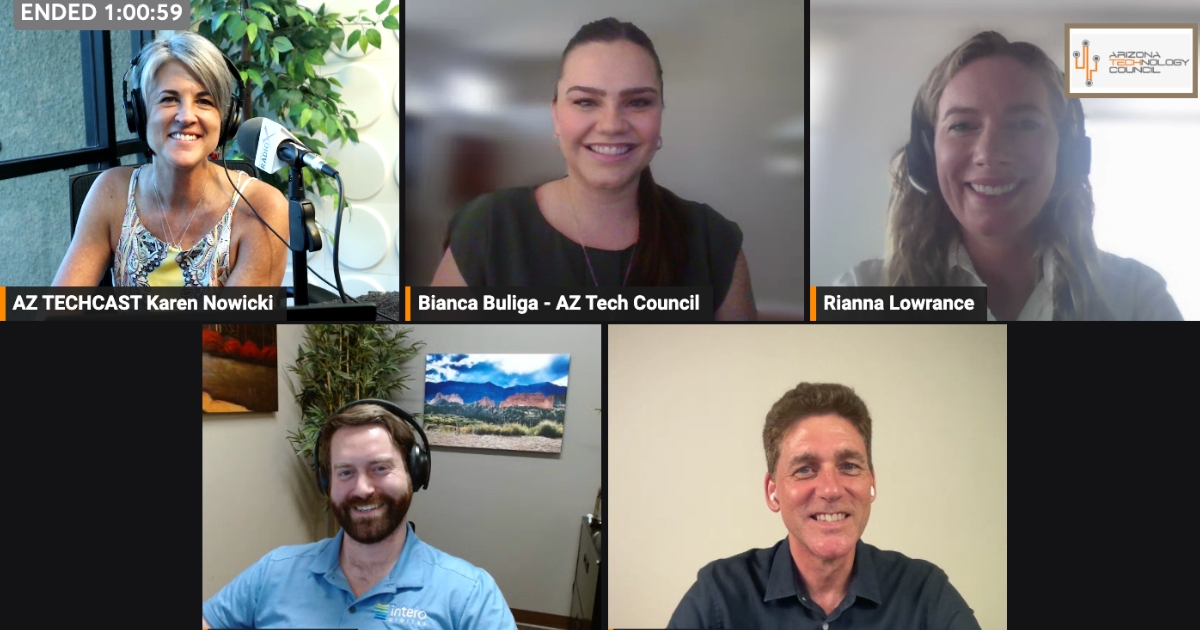
The August 2023 episode of the Arizona Technology Council’s AZTechCast podcast featured experts including Simon Golding, senior digital marketing consultant at Intero Digital; Rianna Lowrance, content marketing manager at Trimble SketchUp; and Andrew Smart, co-founder and commercial director at Slator. These leaders joined Bianca Buliga, director of marketing and communications at the Council, and Karen Nowicki, president and owner of Phoenix Business RadioX, in shedding light on the up-and-coming digital marketing solutions that can give your company a competitive advantage.

In this hour-long episode, the panel of three experts discussed the evolution of marketing from a traditional or physical format to a digital modality, the most in-demand digital marketing services in today’s world and the biggest challenges that they see companies needing support with that digital marketing agencies can help tackle.

Throughout the conversation, the speakers shared specific use cases of companies that turned to digital marketing agencies to help achieve business objectives, the solutions that were implemented and the results they have seen. Finally, they suggested useful metrics to track when introducing a new digital marketing platform, highlighted the role that technology plays in improving a company’s digital marketing strategy and provided myriad tips for how to select an effective agency and build a lasting relationship with them.

Intero-tm-allcolor-logo

Intero Digital is an agile and forward-thinking digital marketing solutions provider headquartered in Colorado Springs, Colorado, that’s dedicated to helping businesses reach their full potential.

With a passion for innovation and an expert team of highly skilled professionals, Intero Digital offers a comprehensive range of 15+ services, including SEO, SEM, content and PR, social media, video, influencer marketing, web design and development, and more.

Intero Digital’s commitment to delivering exceptional results and personalized solutions — coupled with industry-leading proprietary technology — has earned the agency a reputation as a trusted partner for companies of all sizes.

Simon-Golding-AZ-TechCastWith over 10 years of experience in business intelligence, marketing strategy, and digital marketing, Simon Golding’s depth of digital marketing understanding is well-matched by the breadth of contexts in which he can actualize his wisdom.

From multinational corporates to sole traders, from neuromarketing to print marketing, and everything in between, Simon’s colorful marketing journey has given him the skills to help every kind and size of business.

When he’s not translating marketing jargon into plain English, you’ll likely find him contemplating and philosophizing over a bottle of wine, reading non-fiction, listening to intellectual debates, or playing games on his latest PC build.

Follow Intero Digital on LinkedIn, Facebook and Instagram.

SketchUp-logo

With more than 33 million users, Trimble SketchUp is the premier design software among creative professionals across architecture, interior design, construction, and more. Creativity, flexibility, and connected workflows are at the core of Trimble SketchUp and allow users to actualize big-idea concepts.

From interior projects and custom home builds to intricate, energy-efficient buildings, Trimble SketchUp makes it easy to get your creative juices flowing to define, refine, and build out those award-winning designs. Facilitate cross-functional efficiency with 3D modeling and markups, pre-built parametrically configurable objects, task assignments, 2D documentation, virtual reality viewing, clash detection, and sustainability tools to ensure your net-zero goals are met.

Rianna-Lowrance-AZ-TechCastAs a marketing and communications professional with over six years of experience, Rianna Lowrance specializes in creating and executing innovative campaigns that build brand awareness and drive engagement.

Her content creation skills and her passion for storytelling have allowed her to create impactful content that resonates with audiences and inspires action. She has a strong background in project management and cross-functional collaboration and has a proven track record of delivering results.

Follow Trimble SketchUp on LinkedIn, Facebook and Instagram.

Slator-logo

Slator is the leading source of news and research for the global translation, localization, and language technology industry. Our advisory practice is a trusted partner to clients looking for independent analysis. Headquartered in Zurich, Slator has a presence in Asia, Europe, and the U.S.

Andrew-Smart-AZ-TechCastAndrew Smart co-founded Slator and provided its online media strategy and business model to create what is now the No. 1 news and research site for the global translation, localization, and language technology industry. He led the development of Slator.com, defining its content, information architecture, ad products and pricing, and e-commerce sales model.

He established and runs the event business, including the SlatorCon conference series, roundtables, and training workshops. Andrew also provides business advisory and content marketing services. Most importantly, he leads sales as commercial director to a global client base and drives revenue growth.

Follow Slater on LinkedIn, Facebook and Twitter.

About Your Hosts

Steven-ZylstraSteve Zylstra serves as president and CEO of the Arizona Technology Council, a role he assumed in 2007. He is responsible for strategy, operations, finance and policy development. Zylstra is a vocal spokesman for the value technology can provide in raising social and economic standards in Arizona.

Zylstra serves on numerous councils, committees and boards, was named “Leader of the Year, Technology,” by the Arizona Capitol Times, and “Most Admired Leader” by the Phoenix Business Journal. In addition, he was awarded an honorary doctorate of science in technology from the University of Advancing Technology in Tempe, Ariz.

Zylstra earned a bachelor’s degree in automotive engineering technology from Western Michigan University.

KarenNowickiv2Karen Nowicki is a successful author, speaker and the creator of Deep Impact Leadership™ and SoulMarks Coaching™. She is a two-time recipient of the prestigious national Choice Award® for her book and personal development retreat. Karen was crowned the first-ever “Mompreneur of the Year” Award in 2010 for the southwestern states. She was recognized for her leadership, business acumen, and work-life balance.

Karen has been an expert guest on regional TV and radio shows, including Fox Phoenix Morning Show, Sonoran Living, Good Morning Arizona, The Chat Room, and Mid-Day Arizona. She has been a regular contributor to many print and online magazines – publishing articles and blogs for business and education.

In addition to working with private coaching clients, Karen is also the Owner & President of Phoenix Business RadioX. The Business RadioX Network amplifies the voice of business – serving the Fortune 500,000, not just the Fortune 500. Phoenix Business RadioX helps local businesses and professional associations get the word out about the important work they’re doing to serve their market, profession, and community.

Of all the experiences Karen has had the privilege of participating in over her vast career, she shares that Phoenix Business RadioX is a pinnacle adventure!

Connect with Karen on LinkedIn and follow Phoenix Business RadioX on Facebook and Instagram.

bianca-buliga-aztechcastBorn in Phoenix, Arizona, Bianca Buliga is a trilingual first-generation American of Romanian ethnicity. A marketing professional with experience in both the nonprofit and for-profit sectors, Bianca currently works as Director, Marketing & Communications for the Arizona Technology Council.

Previously, Bianca worked as Marketing Communications Lead at Proctorio, a learning integrity platform that offers remote proctoring software ensuring exam integrity for learners around the world.

Bianca also worked as Senior Marketing Manager at SEED SPOT, a social impact incubator that educates, accelerates, and invests in impact-driven entrepreneurs creating market-based solutions to social problems. In January of 2020, Bianca was selected as an awardee of the Mandela Washington Reciprocal Exchange Program and traveled to the African island of Mauritius to run entrepreneurship programming for 15 impact-driven ecopreneurs on behalf of the U.S. State Department’s Bureau of Educational and Cultural Affairs.

Bianca has also completed comprehensive consulting projects for IBM, ESAN Business School, and the Peruvian government, and interned at the Arizona House of Representatives and U.S. Embassy in Bucharest, Romania.

Bianca earned her Bachelor’s degree in International Affairs from Northern Arizona University in 2014 and her Master’s degree in Global Affairs and Management from the Thunderbird School of Global Management in 2017. She is an avid reader, yogi, and world traveler always planning her next trip.

Connect with Bianca on LinkedIn.

About Our Sponsor

The Arizona Technology Council, Arizona’s only statewide organization serving the technology sector, fosters a climate of innovation to enhance technology in Arizona.

A trusted resource in strengthening Arizona’s technology industry, the Council proactively eliminates impediments that companies face, accelerates the entrepreneurial mindset in the state’s expanding innovation ecosystem, and works to create a destination for companies to be, thrive and stay.

Follow Arizona Technology Council on LinkedIn, Facebook, and Instagram.

AZTClogomainRGBPNG300DPI

Tagged With: 3D design software, 3D modeling, 3D modeling tools, 3D rendering, 3D visualization, advisory services, architectural design, architectural visualization, CAD software, design software, digital marketing agency, digital marketing experts, digital strategy, digital transformation, entrepreneur, full-funnel solution, global language services, language ai, language localization, language service providers, market research, Mergers and Acquisitions, natural language processing, ppc agency, SEO experts, translation news, translation technology, UX/UI design

Decision Vision Episode 156: Should I Interview My Customers? – An Interview with Carolyn Kopf, C.E.K. & Partners

February 17, 2022 by John Ray

Carolyn Kopf
Decision Vision
Decision Vision Episode 156: Should I Interview My Customers? - An Interview with Carolyn Kopf, C.E.K. & Partners
Loading
00:00 /
RSS Feed
Share
Link
Embed

Download file

Carolyn Kopf

Decision Vision Episode 156: Should I Interview My Customers? – An Interview with Carolyn Kopf, C.E.K. & Partners

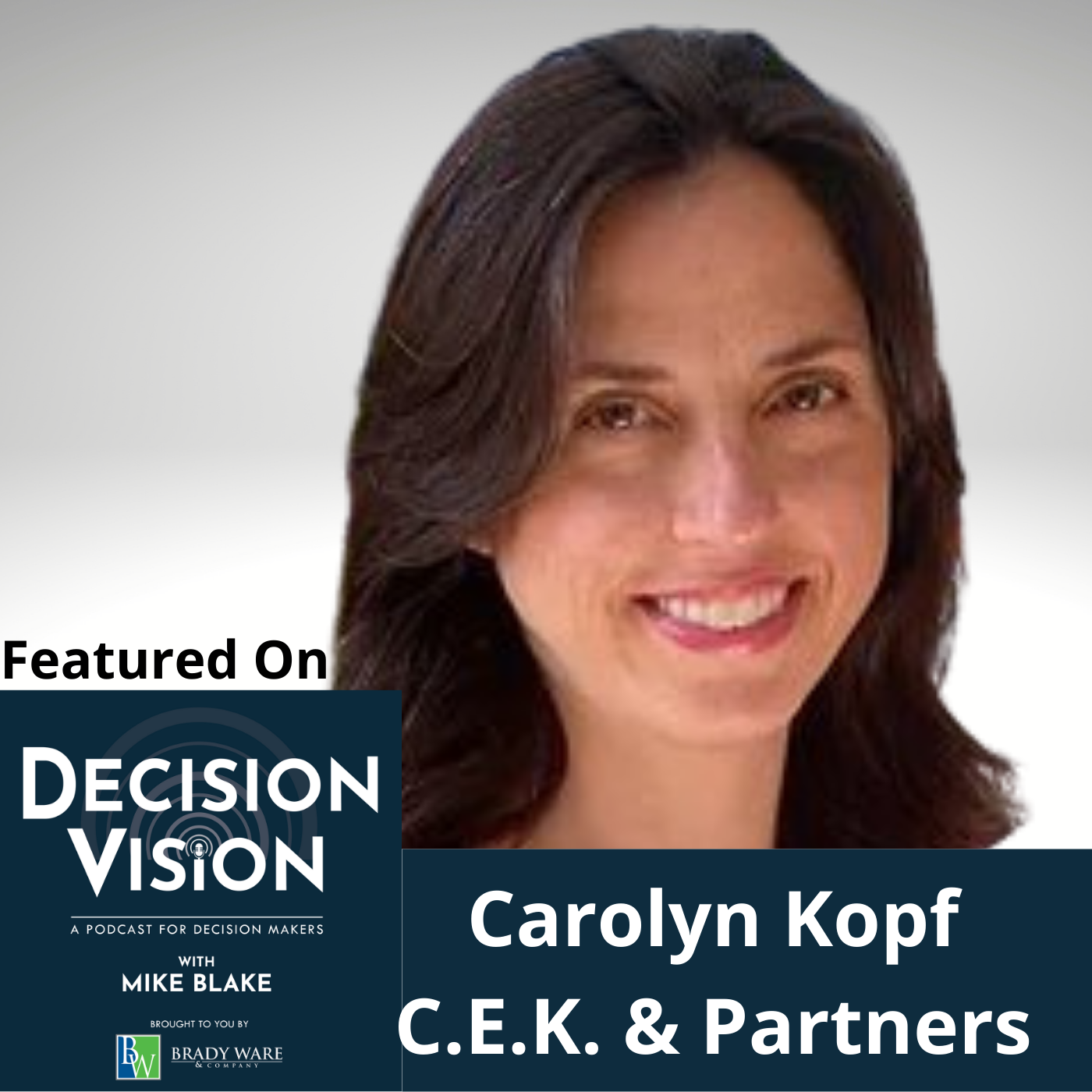
Carolyn Kopf, Founder and Managing Partner at C.E.K. & Partners, joined host Mike Blake in a conversation on how to interview customers, whether they be individuals or businesses. She covered how her firm’s studies are designed, the role of statistical significance, compensation, when a company would hire a firm like C.E.K, unexpected results, how the pandemic affected their work, and much more. Decision Vision is presented by Brady Ware & Company.

Carolyn Kopf, Founder and Managing Partner, C.E.K. & Partners

Carolyn Kopf, Founder and Managing Partner, C.E.K. & Partners

Carolyn Kopf started her career on Madison Ave in NYC and has worked at top global agencies in Europe and APAC. Today, she is the founder and managing partner of C.E.K. & Partners, a firm that provides expertise across market research, branding and digital marketing communications.

As a woman-owned firm, C.E.K. delivers work that enables companies to make more informed decisions, build awareness, establish thought leadership and generate demand to drive business growth.

Industry Focus:
–Financial services, fintech and payments
–Manufacturing (e.g., flooring, cosmetics, furniture, lighting)
–Sustainability and socially responsible/purpose-driven brands
–Healthcare, hospital systems, health plans and employee benefits
–Emerging technology and cybersecurity solutions
–Placemaking
–Retail

Their clients have included some of the most recognizable brands, and their innovation workshops have generated new product concepts for Fortune 50 companies. Each concept is expected to generate a minimum of $300 million in annual revenue. Carolyn’s curiosity and love of research led to her being awarded a patent (#7,333,635) by the USTPO for a next-generation identity authentication method to be used by financial institutions.

Company website | LinkedIn | Facebook

Mike Blake, Brady Ware & Company

Mike Blake, Host of the “Decision Vision” podcast series

Michael Blake is the host of the Decision Vision podcast series and a Director of Brady Ware & Company. Mike specializes in the valuation of intellectual property-driven firms, such as software firms, aerospace firms, and professional services firms, most frequently in the capacity as a transaction advisor, helping clients obtain great outcomes from complex transaction opportunities. He is also a specialist in the appraisal of intellectual properties as stand-alone assets, such as software, trade secrets, and patents.

Mike has been a full-time business appraiser for 13 years with public accounting firms, boutique business appraisal firms, and an owner of his own firm. Prior to that, he spent 8 years in venture capital and investment banking, including transactions in the U.S., Israel, Russia, Ukraine, and Belarus.

LinkedIn | Facebook | Twitter | Instagram

Brady Ware & Company

Brady Ware & Company is a regional full-service accounting and advisory firm which helps businesses and entrepreneurs make visions a reality. Brady Ware services clients nationally from its offices in Alpharetta, GA; Columbus and Dayton, OH; and Richmond, IN. The firm is growth-minded, committed to the regions in which they operate, and most importantly, they make significant investments in their people and service offerings to meet the changing financial needs of those they are privileged to serve. The firm is dedicated to providing results that make a difference for its clients.

Decision Vision Podcast Series

Decision Vision is a podcast covering topics and issues facing small business owners and connecting them with solutions from leading experts. This series is presented by Brady Ware & Company. If you are a decision-maker for a small business, we’d love to hear from you. Contact us at decisionvision@bradyware.com and make sure to listen to every Thursday to the Decision Vision podcast.

Past episodes of Decision Vision can be found at decisionvisionpodcast.com. Decision Vision is produced and broadcast by the North Fulton studio of Business RadioX®.

Connect with Brady Ware & Company:

Website | LinkedIn | Facebook | Twitter | Instagram

TRANSCRIPT

Intro: [00:00:01] Welcome to Decision Vision, a podcast series focusing on critical business decisions. Brought to you by Brady Ware & Company. Brady Ware is a regional, full-service, accounting and advisory firm that helps businesses and entrepreneurs make visions a reality.

Mike Blake: [00:00:22] Welcome to Decision Vision, a podcast giving you, the listener, clear vision to make great decisions. In each episode, we discuss the process of decision-making on a different topic from the business owners’ or executives’ perspective. We aren’t necessarily telling you what to do, but we can put you in a position to make an informed decision on your own and understand when you might need help along the way.

Mike Blake: [00:00:43] My name is Mike Blake, and I’m your host for today’s program. I’m the managing partner of the Strategic Valuation and Advisory Services practice for Brady Ware & Company, a full-service accounting firm based in Dayton, Ohio, with offices in Dayton; Columbus, Ohio; Richmond, Indiana; and Alpharetta, Georgia. The SAVAS practice specializes in providing fact-based strategic and risk management advice to clients that are buying, selling, or growing the value of companies and intellectual property. Brady Ware is sponsoring this podcast, which is being recorded in Atlanta for social distancing protocols.

Mike Blake: [00:01:16] If you’d like to engage with me on social media with my Chart of the day and other content, I’m on LinkedIn as myself and @Unblakeable on Facebook, Twitter, Clubhouse, and Instagram. I also recently launched a new LinkedIn group called Unblakeable’s Group That Doesn’t Suck, so please join that as well if you’d like to engage. If you like this podcast, please subscribe on your favorite podcast aggregator, and please consider leaving a review of the podcast as well.

Mike Blake: [00:01:43] Today’s topic is, should I interview my customers? And according to data from Price Intel, most software as a service companies do fewer than 10 customer interviews per month, which is surprising given that most SaaS companies have thousands, if not millions of customers. And, you know, as data becomes increasingly important, and it’s been this way for a while, you know, data has been gold for the last 20 years now. But as we develop greater analytic capability, as we develop greater AI and as we move kind of philosophically to a more evidence-based management approach, society-wide, I think this notion of interviewing customers becomes more acute.

Mike Blake: [00:02:31] And, of course, one of the more, I guess maybe it’s not important, it’s not the right word, but certainly better-known tools for understanding customer satisfaction is something called the net promoter score. And generally, that’s best achieved or understood through customer interviews, although I suppose you could do those two online surveys and so forth. But clearly, you get more – you get richer data when you actually talk to people as opposed to asking them to click on buttons on a website.

Mike Blake: [00:03:05] And so, I hope you’ll agree. I’m a data junkie as it is, and I have someone coming on today that’s a fellow data junkie. So, this is going to be data junkie to data junkie action here. And for the other data junkies out there, I think you’re going to like the show and certainly hope that you will.

Mike Blake: [00:03:20] And, joining us today is Carolyn Kopf, who is founder and managing partner of CEK & Partners, a market research, branding, and digital communications firm. Carolyn is passionate about delivering strategic insights that transform brands. Clients benefit from her team’s ability to mine data and extract gems to find insights that truly differentiate their brands. She guides and positions them to reach the next level. She holds an MBA in international business – sorry, international business.

Mike Blake: [00:03:50] Carolyn Kopf started her career on Madison Avenue in New York and has worked at top 10 global agencies in Europe and the Asia Pacific markets. Carolyn is the founder and leader of CEK & Partners, a 20-person firm of experts across market research, branding, and digital marketing communications fields.

Mike Blake: [00:04:08] As a woman-owned firm, CEK delivers work that enables brands to build awareness, establish thought leadership, and generate demand to drive business growth. CEK & Partners innovation workshops have generated new product concepts for Fortune 50 companies. Each concept is expected to generate a minimum of $300 million in annual revenue. CEK has generated $600 million in annual in aggregate revenue for its clients over the 13 years of its operation and has completed over 1200 engagements and counting.

Carolyn Kopf: [00:04:39] Thank you for that introduction. I appreciate it. I’m really honored and excited to be here with another data junkie.

Mike Blake: [00:04:47] Yes. Well, thank you for coming. So, welcome to the program. So, why are people excited, or why are people saying the best practices now includes interviewing customers?

Carolyn Kopf: [00:05:03] Well, I think really best practices, if we take it higher to what you’ve said, it’s really gathering insights, you know, and there’s so many great wonderful techniques that are effective. And, speaking with customers is just one of those techniques. But certainly, whether it’s surveys, whether it’s online bulletin boards, whether it’s focus groups, or whether it’s in-depth interviews, there are so many great ways to capture insights about what customers are thinking, how they’re behaving, and how that has changed over the past couple of years.

Mike Blake: [00:05:42] So, when is the right time to interview customers?

Carolyn Kopf: [00:05:47] You know, there’s usually critical junctures where you want to understand the latest attitudes, beliefs, and behaviors. Those critical junctures could be anything from you’re getting ready to launch and develop a new product, and you want to understand market viability for a product concept. Well, in that case, you might want to speak with, not only customers but prospective customers who haven’t purchased from you before or even lost customers to understand where that fits in with their needs. So, there’s, you know, doing – you have a new marketing campaign, you want to understand customer sentiment and be prepared. Any time you’re making an investment and you’re going out into the market, you want to make sure that you’re informed.

Mike Blake: [00:06:43] So, I want to ask you about talking about prospective customers because one of the big buzzwords around Atlanta with startups, and I know you don’t do a ton of work with startups, but you’re certainly familiar with what they do. One of the buzzwords around startups is a notion called customer discovery, right? Investors want to know what conversations have you had with prospective customers and, you know, you do interviews with people for a living, so I’m curious. I think you have unique insight to this.

Mike Blake: [00:07:14] I think when prospective customers are involved, I think there’s a predisposition psychologically to want to tell the interviewer what you think they want to hear. Right? You want to be – people want to be positive. There’s a natural predisposition, maybe to not be entirely honest but rather be encouraging. Right? Because there’s no cost to that, the interviewee of doing so.

Mike Blake: [00:07:39] As an interviewer, how do you cut through that? Is it interviewing technique? Is it structuring the questions correctly? Is it something that has to do with the post-interview data analytics? Or, is this something that’s just sort of have to live with in terms of whether or not prospective customers are willing to be truthful to you and tell you, “Nah, I don’t want to buy it. Your baby’s ugly. Get out of here.” Because I don’t think that happens as often as it does when the actual purchase decision is put in front of them.

Carolyn Kopf: [00:08:09] Yeah. I think that’s a really great question and a really strategic one. Thank you for asking that. I think what’s really important is stepping back from the actual conversations and thinking through the design of the research. All of our studies are custom-designed. So, we think through, does a study have to – we call it blind – should it be blind where the participant does not know who’s sponsoring the study? And that way, they’re not going to try to please anyone. And, that becomes especially important again with the design of the study. They’ve chosen a third-party partner again to help be that objective voice. They’re not going to, you know, lead the conversation. So, there’s really those three pieces of an experienced moderator, having a blind study and then having a third-party moderator.

Mike Blake: [00:09:08] So, do you – is best practice is that you simply try to interview as many customers as you possibly can? Or, is there a way to – do you work out sample sizes using the math, the math that’s out there that tells you how many customers you interview to get to achieve a certain confidence level? See, I told you, analytics people, you’d be happy with the geekiness here. Do you go that deep? Do you get – do you go – do you go that deep with something like this or?

Carolyn Kopf: [00:09:36] You might not be too happy with this answer. But when we do what’s called qualitative research and we’re having discussions with customers, it’s not going to be statistically significant. It will be directional. But certainly, we want to understand and think through the sample.

Carolyn Kopf: [00:09:54] So if a customer, if a client wants to speak to customers, it’s important to understand what is the lens that they want to. Is it a certain position, a certain title within a department of a company? Is it a certain size of the company? Is it a certain industry segment? What if it’s all three of those things? Then, all of a sudden it’s “Okay. Well, we want to speak only with manufacturers and a director level or above, and we want to hear from companies across three revenue ranges, you know, less than a billion, 1 to 2 billion and 2 billion plus.” I’m just, you know, shooting from the hip here. All of a sudden that determines how many people you need to recruit, right? If there’s quotas for a company size, you want to – at a minimum, we recommend five and always an odd number. So, it’s kind of that tiebreaker, if you will.

Mike Blake: [00:11:00] Yep. So, let me ask this, and you have had this conversation before, but I think our listeners will benefit. Why wouldn’t you strive for some sort of statistical significance? Is it – I don’t want to lead the witness here, so I’m going to leave that open-ended. Why would you not try for a statistically significant sample?

Carolyn Kopf: [00:11:21] Well, I think part of it is you have to remember that when you have discussions, if it’s in-depth interviews or focus groups, you’re not having someone answer every question. You’re not forcing them. You must answer this question. It’s a discussion, and there might be some questions that you skipped because someone’s not comfortable or they don’t have the expertise to answer the questions. So, you’re really from one conversation to another. You might serve up, you know, 10 out of 15 of the questions, and not to mention just the sheer number of people you would have to speak to.

Carolyn Kopf: [00:12:00] Today, we find that we really want to deliver insights faster to meet the demands of our clients and to move through hundreds of interviews. It would be very doable, but it’s just not necessary. Not to mention you start to identify themes after you’ve spoken with three to five people. So, you’ll just start to see those same themes, even if you spoke to 20 people. So, let’s just call it at five per segment, if you will, but you could have, you know, 10 segments in that case. You might be speaking to 50 people.

Mike Blake: [00:12:37] And, I had a thought of a point that you just brought up is that, you know, just because you’re talking to somebody doesn’t mean that they’ll answer all the questions, which means that if you wanted to have a statistically significant sample, you have to factor in the fact that not all the questions will be answered, which means your sample size is even greater, which means more expense, more time and like – and as you said at the end of the day, you may not gain that much more insight from a statistically significant sample.

Carolyn Kopf: [00:13:05] Well, we find a lot of – absolutely. I agree with you. We find that the best – you know, you can complement these discussions with doing quantitative studies. So, you might have, you know, 15, 20, 30 in-depth conversations, get some very good directional insights and findings. And depending on how much rigor and how much you’re investing in a product launch or a marketing campaign or a rebranding, it might warrant saying, “Okay. We’ve got some great directional insights. Let’s take those and craft an online survey and get those statistically significant insights with a larger population.” So, certainly, they work hand-in-hand, depending on the rigor that’s needed.

Mike Blake: [00:13:51] So, you spoke about a magic number five, which I find fascinating. I don’t do what you do for a living. That’s lower than I would have imagined. How do you select the five? Who are the lucky five?

Carolyn Kopf: [00:14:04] Well, keep in mind that, you know, we could have eight segments that we want to speak to. Right? So, and five within each of those segments. So, all of a sudden you’ve got 40 people that you’re speaking with but the characteristics of the five. So, it could be, you know, much of it is making sure that the people match and get through that filter and qualify to speak with you. So, certainly consumer interviews, you’re going to find those people faster. But when you start talking about B2B studies, you’re working from a much smaller universe. So at that point, really, it’s just a matter of who meets the qualifications and the specs of the participant and are they available within the window of the study.

Mike Blake: [00:15:02] So, when you make that selection, I’m curious about something, I’m kind of going off-script here, but I know that it’s common to compensate survey participants generally to participate in the survey. Do you find that’s also the case with customers? Do you have to budget for customers being willing to talk to you, to being compensated for their time, to talk to you about their own experience with you?

Carolyn Kopf: [00:15:33] You know, that’s interesting because there are different types of customers. We really bucket it into three types of customers. One is the lost customers. They’re no longer – they’re no longer your customer. There’s your current customer who should be willing to speak with you without being paid. And, of course, there’s your prospective customer who is you’re going to need to incent them to speak with you. So, that’s really the rule of thumb.

Mike Blake: [00:15:59] Interesting. We hadn’t even talked about customers who have left. And, how – do you do that a lot? And if so, how do you find that? Because there’s a saying, I’m sure you’re familiar with, that, you know, a happy customer will tell nobody, but an unhappy customer will tell 9000 people. So, I wonder, are people who are unhappy actually more willing to participate because they just can’t wait to unload on the company that pissed them off basically?

Carolyn Kopf: [00:16:29] Well, keep in mind if past customers, especially when we talk about B2B, they may not be unhappy. It could be that the project sponsor changed companies and say they went with another vendor or another relationship. It could be that their budgets were cut and they had to eliminate a partnership and consolidate. So, a lost customer in the B2B world may not be unhappy, but rather, you know, when we do speak with lost customers, it’s really valuable when you’re positioning the brand. Because remember when you position a brand, you want it to be any positioning that you articulate. You want it to be defendable, ownable, and true.

Carolyn Kopf: [00:17:17] So, if you get that 360 of your current customers, your lost customers, and your prospective customers, all of a sudden you know if it’s dependable or true. Because if you’re thinking one thing, but people have left because that’s not the case, it really helps to ground work in the defendable and true piece, at least in the B2B world.

Carolyn Kopf: [00:17:42] Absolutely, I agree. In the consumer world, a lost customer is probably someone who’s grumpy and didn’t love something, whether it was, I’m thinking about things that happened today with, you know, return policies, with everything being online or not being able to get a hold of someone on the phone. All of a sudden, there are different reasons why someone might not be happy.

Carolyn Kopf: [00:18:10] But I think absolutely it’s important to understand when you talk about that net promoter score. What are – what is the percentage of detractors, neutrals, and promoters? Because certainly if someone’s neutral to negative, there’s a chance you can recover that relationship with, I don’t know, a free trial or, you know, a 10% discount, something to get them to come back. But if it’s a true detractor that’s on the scale of NPS, down at the one or two’s, that’s just – just let them go and focus on your happy customers who are promoting and those who are neutral that you can recover and really bring them along.

Mike Blake: [00:18:59] So, who should perform the interview? Should it – leaving aside an outside firm for a second, we’ll get to that. But many firms, I’m sure, in-house this process, and if they do, who should do that? Should it be somebody in the marketing department? Should it be somebody on the direct service or provider team in the case of professional services, maybe a dedicated group entirely whose job it is to interview customers? If it’s an internal agent that’s going to be doing that, who should that be?

Carolyn Kopf: [00:19:33] You know, it really depends on the context. So, for example, if you’re talking net promoter score and you’re speaking with lost customers, you want someone from the customer insights team or someone even from customer service who’s trained in having conversations with lost customers and helping to bring them back to sign up for free month trial or whatever the business model might be. But certainly, many customers have those insight teams. They’re going to have the experienced moderators that know how to navigate conversations, know how to navigate tricky situations in a customer-friendly manner. So, certainly, we recommend someone with experience handling them.

Mike Blake: [00:20:21] So, when is it a good idea to have an outside firm as opposed to the firm, the company itself, interview the customers?

Carolyn Kopf: [00:20:30] Well, I think there’s a couple of reasons. One could be a company or a corporation. Their customer insights team is small and they need to expand capacity and expertise with an outside party. That’s one scenario. Another scenario is a company doesn’t have insights in-house, and they could lean on marketing or product marketing but maybe there’s not the expertise, so it’s really a risk and it would make sense to bring in a third party to either design the study, you know, do the comprehensive. And then, I guess the last point would just be making sure that no one’s leading the answers because certainly you want the insights to be helpful and true in the sense of making decisions versus what someone wants them to be.

Mike Blake: [00:21:32] Right. Don’t – you know, I think Brady Ware is great, don’t you agree? Right? Not exactly an honest interview question.

Carolyn Kopf: [00:21:40] I know you had a great experience with it. So, how would you rate it on a scale from 1 to 10?

Mike Blake: [00:21:45] How much do you love us?

Carolyn Kopf: [00:21:47] Exactly. And so all of a sudden, you know, people might not realize they do that. It’s just their natural, optimistic, bubbly selves. And, it may not be intentional. So, it takes out that, you know, to have that experience and that fresh, neutral perspective.

Mike Blake: [00:22:05] And, you know, you mentioned the word training. And, I want to bring something up because I don’t think this is always appreciated, but conducting interviews is a skill. It’s not easy to conduct a useful interview, is it? You don’t just walk up and just do that for the most part, do you?

Carolyn Kopf: [00:22:26] No, you don’t. I mean, experienced moderators. I mean, it starts with the design of the questions. You know, what is the order of the questions? Certainly, you want to make sure that you start out not revealing anything if you’re looking to get awareness of a particular topic or a particular brand, and then potentially reveal the sponsor if it’s relevant later in the conversation. So, it’s really that design, not only of the flow but the actual design of the questions themselves so that they don’t lead.

Mike Blake: [00:23:06] Now, what is the benefit of conducting customer interviews versus sending out a survey? Someone might say, “Could not that accomplish the same thing faster, more cheaply, more efficient.” Why go the extra mile, the extra hassle, the expense for doing the interview?

Carolyn Kopf: [00:23:24] Well, certainly I think that there’s different reasons to do in-depth interviews over a survey. One, the in-depth interviews, you’re going to get more rich context. You’re having a discussion. You can listen for certain things and you don’t hear what you’re expecting to hear. You can probe on topic areas and go deeper into the conversation so you really can guide the discussion and each one will be a little bit unique.

Carolyn Kopf: [00:23:52] With a survey, for the most part, you’re going to have closed-loop questions or, you know, they’re not going to be open-ended, and someone has to choose from six answers. And one of those answers could be, I don’t want to answer it, or, you know, I don’t know or not applicable. So, you’re really limiting. You’re getting very great information, but you’re not getting deep context.

Mike Blake: [00:24:24] So, is there an ideal length for how long an interview should take? And, I got to imagine at some point there’s got to be a limit to how much time you can get from somebody. So, in your mind, is there an ideal time limit on an interview?

Carolyn Kopf: [00:24:41] Absolutely. I think there’s really three types of interviews. There are interviews that feel like a survey where you might ask someone, I don’t know, 15 questions in 15 minutes. It’s like, “Are you aware of this?” Yes, no. Right? It’s not a conversation. You can do that in 15 minutes.

Carolyn Kopf: [00:25:00] If you want to have a conversation and really go deeper, I would suggest 30 minutes. Potentially, you could do 45. It’s just going to be harder and more expensive. The 60-minute interviews are really going to be around usability. Right? So, you want to share something on the screen and get feedback.

Carolyn Kopf: [00:25:23] So, there’s certainly different techniques that are going to be appropriate for the different amount of time. We find that really a 30-minute in-depth interview, that’s a conversation, is a tried and true. If you’re doing usability., you’re going to want a minimum of 60 minutes.

Mike Blake: [00:25:41] What are the – this may be an unfair question, but I’m going to ask it anyway, and that is, what are the most important questions to ask customers, and for the purposes of this question, let’s say current customers versus prospects or lost customers. What are the kinds of the most important questions? Or, if you want to replace important with common, that’s fine too.

Carolyn Kopf: [00:26:05] You know, it really comes back to the learning objective because, remember, each study is going to be custom-designed to fulfill the needs and objectives of the client. So, if a client is seeking to understand awareness of their organization, you’d start with asking questions around, how familiar are you with a company? Tell me, what are they known for? And you might end the survey with how are they different, better or special, compared to the competitors? Those are very common questions with awareness and trying to understand how to position or reposition a company within the world.

Mike Blake: [00:26:48] So let’s – to me, I think a common application of a customer interview is to gauge customer satisfaction and maybe detect likeliness to become an ex-customer related to net promoter, I guess. Do you think that interviews that are more structured in nature, the yes-no, or rate this one to five versus unstructured, open-ended, which format of questions do you think works better for that kind of purpose, or is a mix of the two ideal?

Carolyn Kopf: [00:27:24] It’s really a mix of the two. So, you ask, you know, on a scale from, you know, typically net promoter, we do that through a quantitative study. It’s an online that comes through a text message on the phone and email. But you could ask in a conversation for someone to rate a product attribute on a scale from zero to five, zero to 10, whatever it is, and then ask them, “Why did you rate that a 10?” And then, they explain their ratings. So, that’s how I would use a mix of questions. And that’s, you know, both regardless of the type of study you’re doing.

Mike Blake: [00:28:08] And I think the advanced class in terms of data analytics, which I candidly can’t, I don’t know how to do, is analyzing the results of those unstructured answers. So, I’m curious, how do you do it? Are there tools that you put together that are like language analysis tools that help you do that? Or, how do you approach those free-range answers to try to aggregate them and pull a cohesive story out of them?

Carolyn Kopf: [00:28:39] Yeah. That’s a really great question. I have never been asked that. I love that because unstructured data is hard for some people, right? You know, data ana – you know, people work with their Excel sheet, Tableau, these different platforms. But really with unstructured data, we’re looking for themes. Right? So, it’s not, you know, you certainly want to compare conversation to conversation to identify theme. Once you identify those themes, you’ll pull some verbatim ones to bring color to the findings document. So, a verbatim would be a direct quote from a customer, prospective customer, lost customer that represents the overall story that’s been heard, for sure.

Mike Blake: [00:29:31] So, I’d love it – Give me an example of when a client of yours, maybe, you know, that hired you to find out something from – it could be current customers, prospects, lost customers, doesn’t matter. And, maybe the client thought that I already know what the answer is going to come back but maybe you came back and surprise them where the data sort of – you didn’t surprise them, the data surprised them, and the responses surprised them. Can you think of a time when that happened?

Carolyn Kopf: [00:30:00] Yeah. I mean, I think there’s a couple of instances. I mean, especially when you talk about doing an AAU study, attitudes, awareness and usage. Right? A customer does that to establish a baseline and monitor their brand’s performance and how it’s perceived in the marketplace with its customers as well as against its competitors. And so, you’ll know you’ll rate brand attributes as far as how the brand behaves, you know. Do people think that it’s fun to interact with the brand? Do they think that the brand customer service or communication is friendly or welcoming whatever the situation may be?

Carolyn Kopf: [00:30:42] And so, a lot of times there might be things that aren’t even a hypothesis that comes back of, “Oh, wow. We didn’t realize that we weren’t considered a friendly brand. We thought everyone was really warm and welcoming. Gosh. You know, but compared to our competitors, they might be doing a better job.” So, things that weren’t maybe on the radar, especially when you compare it against the competitors.

Carolyn Kopf: [00:31:11] Another example would be in message testing that you find out that, you know, you think you’re messaging is resonating or you have some new messaging that you want to launch, whether it’s for a TV or radio campaign or, and you test it and you hear from people that, “Wow. I can’t believe the brand’s talking to me in that manner. It’s rude. It’s making me feel bad. It’s fear-based.” And so, things that, again, weren’t even on the radar to expect to come back surprise – you know, the data surprises all of us, and the importance of that is the value of the data. Right?

Carolyn Kopf: [00:32:03] It’s a small investment compared to, you know, the marketing and advertising campaign creative, the production, the media buys. I mean, when you look at it and compared it to those budgets, it’s probably a rounding error. So, it makes sense to certainly get that pulse of, “Oh, yeah. This is resonating,” or, “Oh, wow. We should really talk to our team and train against this because it’s not coming through right to our customers.”

Mike Blake: [00:32:36] And, you know, those surprises can, as you said, you know, they can be so instructive and the business you’re in, to me, from my perspective I should say, the business that you’re in from my perspective is really the insurance business. Because for a small amount of a relatively small investment compared to the overall investment of introducing a new product service company launch, whatever, right, you can find out if you need to course correct or even bail out before you make the really big investment.

Carolyn Kopf: [00:33:09] Absolutely. Especially when you’re talking about proof of concept, you’re trying to figure out what price point, what products and features should be the top three that are communicated in the marketing that are going to be most, you know, interesting and compelling to the customer in a software solution, for example. I mean, you don’t want to put 15 product features when really there’s three that are going to compel and motivate the buyer to sign up.

Mike Blake: [00:33:41] I remember when at the outset of COVID, Apple had a very short-lived campaign where they were doing these TV and video advertisements, basically showing people having lots of fun and smiling while they’re all in quarantine and using their Apple devices and so forth. And, I sensed it and there was tremendous backlash because basically, while millions of people who can’t be sequestered were forced to put their lives on the line in service to the rest of the economy, and also just sort of completely missing the point that the pandemic was serious and it wasn’t just a vacation to go home and play on your iPad. You know, I think that was a place where Apple really missed the mark, and I suspect they thought that for sure. They really understood what everybody was going for.

Mike Blake: [00:34:29] But that to me, that was a classic case where they would have done very well to have stepped outside of their office and hired somebody like you to kind of test that message and give them sort of a reality check because it truly was disastrous. Your Apple can withstand that, but nevertheless, it was a disastrous campaign that the kind of study that you’re talking about, you know, talking to customers would have avoided.

Carolyn Kopf: [00:34:56] Yeah. And, I think that what’s important here is when you talk about, you know, smaller companies, startup companies, you know, these mid-sized companies, it matters. You know, if they have a misstep, it can mean market share points for them in the millions of dollars or more. So, I think that’s a great reminder about just taking the time and being thoughtful to hear from people before you tell them what you think they want to hear.

Mike Blake: [00:35:29] So, we’re recording this in a period of a lot of uncertainty in terms of, you know, meeting in person, return to office, et cetera, et cetera. Does it impact how you earn to interview or the efficacy of interviews to conduct them virtually or remotely versus in person? And if so, what adjustments have you had to make in terms of technique or approach to close that effectiveness gap?

Carolyn Kopf: [00:36:01] You know, we’ve always done in-depth interviews over the phone, right, because we might have, you know, 20 interviews, but we’re speaking with people around the country. So, it’s not cost-effective to fly to California and then fly to Texas and then over to New York and then to South Carolina. So, those would always traditionally be done over the phone.

Carolyn Kopf: [00:36:21] The primary difference is, you know, we’re now using Zoom. So, it’s almost better because you get to see the people and it’s easier to record. You’re not, you know, jury-rigging some handheld recorder or whatever techniques people use, you know, 10 years ago. And, everyone’s comfortable for the most part on Zoom. You know, there are a few exceptions, but really Zoom or similar platforms, whether it’s a WebEx or a Teams, they’re great for in-depth interviews.

Carolyn Kopf: [00:37:00] Certainly. I think the biggest change has been in-person focus groups, right, where those have gone virtual. Certainly, there are plenty of current focus groups behind the glass that are still occurring. But I think that there are definitely some efficiencies and comfort level with virtual focus groups and that saves people money. You don’t have to fly to California to conduct focus groups. You can do them online if there’s a speed or budget constraint for a company.

Mike Blake: [00:37:33] You know, you bring the whole Zoom thing up and it’s funny. You know, we’ve had the telephone for about 145 years and we’ve had video calling available for roughly 60. And it was really a niche, fringy product nobody wanted to deal with it, except for real tech heads until the pandemic hit. And then, all of a sudden, because there’s a virus out there, for some reason now we don’t want to do phone stuff anymore. Everything has to be on video. And, it’s strange because nothing changed about the core technology or even the use case. It’s just for whatever reason because we’re all in our – for our time, we’re all in our homes, all of a sudden we had to do video. Really strange. Somebody’s got to be writing psychology papers on that.

Carolyn Kopf: [00:38:17] It’s been a great tool and I’m surprised we haven’t, like you said, used it more often. I think it just wasn’t mainstream or it wasn’t a platform that was an easy subscription. Whereas, now it’s just part of your tech stack.

Mike Blake: [00:38:35] So, you mentioned something I want to, I did want to make sure to touch upon. It sounds like that it is a practice of yours, at least sometimes, to record interviews. And if that – is that in your mind a best practice as a blanket or are there some cases where it’s more important to record an interview than others?

Carolyn Kopf: [00:38:55] You know, I think that recording the interview has value for transcription. Right? So, you can really focus on speaking and listening to the participant in the study, and you can go back and, you know, if you’re allowed, I mean, there’s different parameters depending on the study design, you can go back and cut a video if it’s a Zoom and show a minute clip of, you know, 10 customers what they said, depending on if it’s, you know, the parameters. Again, sometimes it’s confidential and it’s blind and people aren’t supposed to know who’s participating. But again, there is that opportunity at the right design. But there’s also the opportunity to transcribe the interview so you have those notes so that you can pull the verbatim. I mean, you can certainly try to type as fast as you can to get those verbatims, and that’s certainly possible. But relying on the videos is just a great, again to use your word, insurance policy that you have the notes and all the information to do the analysis.

Mike Blake: [00:40:07] And, I’m guessing, I know some attorneys feel this way when they do when they take depositions that being able to capture the body language can sometimes be very material to what you glean from that interview.

Carolyn Kopf: [00:40:25] Certainly. I mean, we’re not putting anyone under the spotlight where we’re grilling them.

Mike Blake: [00:40:29] No, I understand. I understand. You know, waterboarding anybody. But nevertheless, I mean, you can a question that may make somebody feel uncomfortable or more comfortable, and, you know, but I’m only speculating. You know, whether it’s a deposition or a conversation, right, body language is meaningful.

Carolyn Kopf: [00:40:47] Yeah. And I think that that is interesting, but that’s not the core of the in-depth interviews. But, yeah.

Mike Blake: [00:40:55] You don’t make, like, little notes saying, well, this person has shifted in their seat a little bit or looked flustered on an interview question, number nine.

Carolyn Kopf: [00:41:04] No.

Mike Blake: [00:41:05] All right.

Carolyn Kopf: [00:41:05] I think it’ll come through someone hums and haws, and most people will say, “You know what? I just don’t have the expertise to talk about that particular question.” And, it’s very different with the in-depth interviews. You know, it might be different with a focus group where you’re asking someone, “What do you think about this package design?” And they’re, you know, trying for all their might to rip something open and, you know, jabbing at it with scissors. All of a sudden, someone’s body language of, gosh, they can’t open this package, it’s not designed or consumer-friendly, that absolutely matters.

Carolyn Kopf: [00:41:42] And, there are certainly in-depth interviews that may be more ethnographic in nature, where you can send someone a product and say, “All right. I want you to work with this product and use the product, and then we’re going to have a conversation around it.” And at that point, they may share the product. And, that’s where body language would be important, for sure. So, I think you make a very good point.

Carolyn Kopf: [00:42:06] And, again, it just comes down to what you’re trying to learn. And, is it conversation, is it ethnographic where you’re really trying to learn how someone uses something in their home or office? So many variables.

Mike Blake: [00:42:21] I’m talking with Carolyn Kopf, and the topic is, should I interview my customers? A couple of questions I wanted to get through here, make sure that we cover. One, is there any value to interviewing a customer more than once? Maybe, not in the same study, but maybe you come back to that same customer a year later, two years later. Is there a, you know, maybe influences? I don’t know. I’m sort of spitballing. You’re the expert. I’m not. But I’m speculating that there could be a case in which interviewing the same customer over time might yield interesting sort of quasi-time series data. Or, is that just not a thing?

Carolyn Kopf: [00:43:09] No. I mean, I don’t know that it’s a thing. Again, it comes back to what you’re trying to monitor. So, if you’re doing an online study where you’re establishing a baseline on perceptions of a certain brand, of course, you’re going to want to redo that study in a year or 18 months or two years. You may not send it to the exact same body of people. There might be some overlap, but certainly, you start to see how perceptions change.

Carolyn Kopf: [00:43:42] Also, when you talk about the NPS surveys, again, it’s more that you’re repeating to your customer base, right, of, okay, it’s been six months since they received this appliance and they’ve installed it and used it and we asked them how everything was going or how the delivery experience was, you know, a week after they received it. But now, we want to go back and ask them how the experience is with the product.

Carolyn Kopf: [00:44:13] You know, the same with a software, right? So, “Oh, how was it to sign up? Was it easy to sign up and implement the software?” You might ask them that. And then six months later, “How happy are you with the software now that you’ve been using it for six months?”

Carolyn Kopf: [00:44:30] So, absolutely. there are reasons to do follow-up whether it’s monitoring perceptions or following up with an appropriate series of questions as they get more familiar with your product or solution.

Mike Blake: [00:44:46] Carolyn, this has been a great conversation. I want to be respectful of your time. There are probably questions that somebody wished we would have covered or maybe would have wished we spent more time on going into more detail. If somebody has a question about interviewing customers, can they contact you to follow up? And if so, what’s the best way to do that?

Carolyn Kopf: [00:45:05] Absolutely. I think the easiest way to find us and all of our contact information is online, at our website, which is cekpartners.com. So, you’ll find all our social handles there, as well as a contact form and a phone number.

Mike Blake: [00:45:24] That’s going to wrap it up for today’s program. I’d like to thank Carolyn Kopf so much for sharing her expertise with us.

Mike Blake: [00:45:30] We’ll be exploring a new topic each week, so please tune in so that when you’re faced with your next business decision, you have clear vision when making it. If you enjoy these podcasts, please consider leaving a review with your favorite podcast aggregator. It helps people find us that we can help them.

Mike Blake: [00:45:46] If you would like to engage with me on social media with my Chart of the Day and other content, I’m on LinkedIn as myself and @Unblakeable on Facebook, Twitter, Clubhouse, and Instagram. Also, check out my new LinkedIn group called Unblakeable’s Group That Doesn’t Suck. Once again, this is Mike Blake. Our sponsor is Brady Ware & Company. And this has been the Decision Vision podcast.


Tagged With: Brady Ware & Company, Carolyn Kopf, CEK & Partners, Customer interviews, Decision Vision, interviewing customers, market research, Mike Blake

“Under the Radar” Resources for Business Owners, with Paul Wilson, Jr., UGA Small Business Development Center at Georgia State University

September 23, 2020 by John Ray

UGA Small Business Development Center Paul Wilson
North Fulton Business Radio
"Under the Radar" Resources for Business Owners, with Paul Wilson, Jr., UGA Small Business Development Center at Georgia State University
Loading
00:00 /
RSS Feed
Share
Link
Embed

Download file

“Under the Radar” Resources for Business Owners, with Paul Wilson, Jr., UGA Small Business Development Center at Georgia State University (North Fulton Business Radio, Episode 289)

The UGA Small Business Development Center (SBDC) at GSU is a “best kept secret” asset for both established businesses and startups. Area Director Paul Wilson joins host John Ray to discuss their extensive resources, which includes free consulting services with experienced mentors, and how much value their work has added to businesses and, in turn, the Georgia economy. “North Fulton Business Radio” is produced virtually from the North Fulton studio of Business RadioX® in Alpharetta.

UGA Small Business Development Center at Georgia State University

The Small Business Development Center (SBDC) provides tools, training and resources to help small businesses grow and succeed. Designated as one of Georgia’s top providers of small business assistance, the SBDC has 17 offices ranging from Rome to Valdosta to serve the needs of Georgia’s business community. Since 1977, our network of partners has helped construct a statewide ecosystem to foster the spirit, support, and success of hundreds of thousands of entrepreneurs and innovators.

The Small Business Development Center, a Public Service and Outreach Extension of The University of Georgia, is funded in part by the U.S. Small Business Administration (SBA). The University of Georgia Small Business Development Center is nationally accredited by the Association of SBDCs.

Paul Wilson, Jr.  Area Director

Paul Wilson, Jr. is an innovative and effective entrepreneurial leader with nearly 20 years of experience creating and delivering high caliber consulting and training solutions to large corporations, small businesses, non-profits, and professionals at all levels. He currently leads the UGA Small Business Development Center at Georgia State University where his team provides consulting services, market research, business resources, and educational support to startup, growing, and mature small businesses to help them achieve their short and long-term goals.

He has extensive industry experience that spans leadership roles in supply chain management, supplier diversity, and small business development. His expertise includes strategic planning, organizational development, process improvement, leadership development, government and corporate contracting, and curriculum design and development.

Prior to joining GSU, he had the opportunity to work with several Fortune 500 companies, consult with multiple NFL teams, and teach at a university. He is also a published author, actor, and youth development advocate. He is passionately driven by a strong desire to create a significant impact with under-resourced individuals and communities.

Company website

LinkedIn

Facebook

Instagram

Questions/Topics Discussed in this Show

  • SBDC consulting services and training resources
  • Small business resources in metro Atlanta
  • How to develop new strategies for your business in the current environment
  • Economic disaster funding
  • Other small business needs or concerns

North Fulton Business Radio” is hosted by John Ray and produced virtually from the North Fulton studio of Business RadioX® in Alpharetta. You can find the full archive of shows by following this link. The show is available on all the major podcast apps, including Apple Podcasts, Spotify, Google, iHeart Radio, Stitcher, TuneIn, and others.

Renasant Bank has humble roots, starting in 1904 as a $100,000 bank in a Lee County, Mississippi, bakery. Since then, Renasant has grown to become one of the Southeast’s strongest financial institutions with over $13 billion in assets and more than 190 banking, lending, wealth management and financial services offices in Mississippi, Alabama, Tennessee, Georgia and Florida. All of Renasant’s success stems from each of their banker’s commitment to investing in their communities as a way of better understanding the people they serve. At Renasant Bank, they understand you because they work and live alongside you every day.

Tagged With: business consulting, business resources, consulting, market research, Mentors, mentorship, Paul Wilson, SBDC, small business resources, uga sbdc, uga small business devlopment center

Business RadioX ® Network


Our Most Recent Episode

CONNECT WITH US

  • Email
  • Facebook
  • LinkedIn
  • Twitter
  • YouTube

Our Mission

We help local business leaders get the word out about the important work they’re doing to serve their market, their community, and their profession.

We support and celebrate business by sharing positive business stories that traditional media ignores. Some media leans left. Some media leans right. We lean business.

Sponsor a Show

Build Relationships and Grow Your Business. Click here for more details.

Partner With Us

Discover More Here

Terms and Conditions
Privacy Policy

Connect with us

Want to keep up with the latest in pro-business news across the network? Follow us on social media for the latest stories!
  • Email
  • Facebook
  • Google+
  • LinkedIn
  • Twitter
  • YouTube

Business RadioX® Headquarters
1000 Abernathy Rd. NE
Building 400, Suite L-10
Sandy Springs, GA 30328

© 2025 Business RadioX ® · Rainmaker Platform

BRXStudioCoversLA

Wait! Don’t Miss an Episode of LA Business Radio

BRXStudioCoversDENVER

Wait! Don’t Miss an Episode of Denver Business Radio

BRXStudioCoversPENSACOLA

Wait! Don’t Miss an Episode of Pensacola Business Radio

BRXStudioCoversBIRMINGHAM

Wait! Don’t Miss an Episode of Birmingham Business Radio

BRXStudioCoversTALLAHASSEE

Wait! Don’t Miss an Episode of Tallahassee Business Radio

BRXStudioCoversRALEIGH

Wait! Don’t Miss an Episode of Raleigh Business Radio

BRXStudioCoversRICHMONDNoWhite

Wait! Don’t Miss an Episode of Richmond Business Radio

BRXStudioCoversNASHVILLENoWhite

Wait! Don’t Miss an Episode of Nashville Business Radio

BRXStudioCoversDETROIT

Wait! Don’t Miss an Episode of Detroit Business Radio

BRXStudioCoversSTLOUIS

Wait! Don’t Miss an Episode of St. Louis Business Radio

BRXStudioCoversCOLUMBUS-small

Wait! Don’t Miss an Episode of Columbus Business Radio

Coachthecoach-08-08

Wait! Don’t Miss an Episode of Coach the Coach

BRXStudioCoversBAYAREA

Wait! Don’t Miss an Episode of Bay Area Business Radio

BRXStudioCoversCHICAGO

Wait! Don’t Miss an Episode of Chicago Business Radio

Wait! Don’t Miss an Episode of Atlanta Business Radio