Business RadioX ®

  • Home
  • Business RadioX ® Communities
    • Southeast
      • Alabama
        • Birmingham
      • Florida
        • Orlando
        • Pensacola
        • South Florida
        • Tampa
        • Tallahassee
      • Georgia
        • Atlanta
        • Cherokee
        • Forsyth
        • Greater Perimeter
        • Gwinnett
        • North Fulton
        • North Georgia
        • Northeast Georgia
        • Rome
        • Savannah
      • Louisiana
        • New Orleans
      • North Carolina
        • Charlotte
        • Raleigh
      • Tennessee
        • Chattanooga
        • Nashville
      • Virginia
        • Richmond
    • South Central
      • Arkansas
        • Northwest Arkansas
    • Midwest
      • Illinois
        • Chicago
      • Michigan
        • Detroit
      • Minnesota
        • Minneapolis St. Paul
      • Missouri
        • St. Louis
      • Ohio
        • Cleveland
        • Columbus
        • Dayton
    • Southwest
      • Arizona
        • Phoenix
        • Tucson
        • Valley
      • Texas
        • Austin
        • Dallas
        • Houston
    • West
      • California
        • Bay Area
        • LA
        • Pasadena
      • Colorado
        • Denver
      • Hawaii
        • Oahu
  • FAQs
  • About Us
    • Our Mission
    • Our Audience
    • Why It Works
    • What People Are Saying
    • BRX in the News
  • Resources
    • BRX Pro Tips
    • B2B Marketing: The 4Rs
    • High Velocity Selling Habits
    • Why Most B2B Media Strategies Fail
    • 9 Reasons To Sponsor A Business RadioX ® Show
  • Partner With Us
  • Veteran Business RadioX ®

Material Risks in a Healthcare Merger

November 4, 2022 by John Ray

Material Risks Healthcare Merger
Advisory Insights Podcast
Material Risks in a Healthcare Merger
Loading
00:00 /
RSS Feed
Share
Link
Embed

Download file

Material Risks Healthcare Merger

Material Risks in a Healthcare Merger (Advisory Insights Podcast, Episode 16)

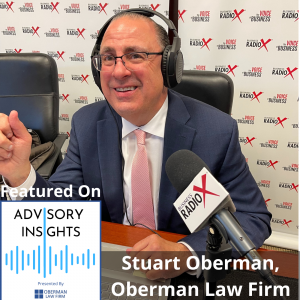
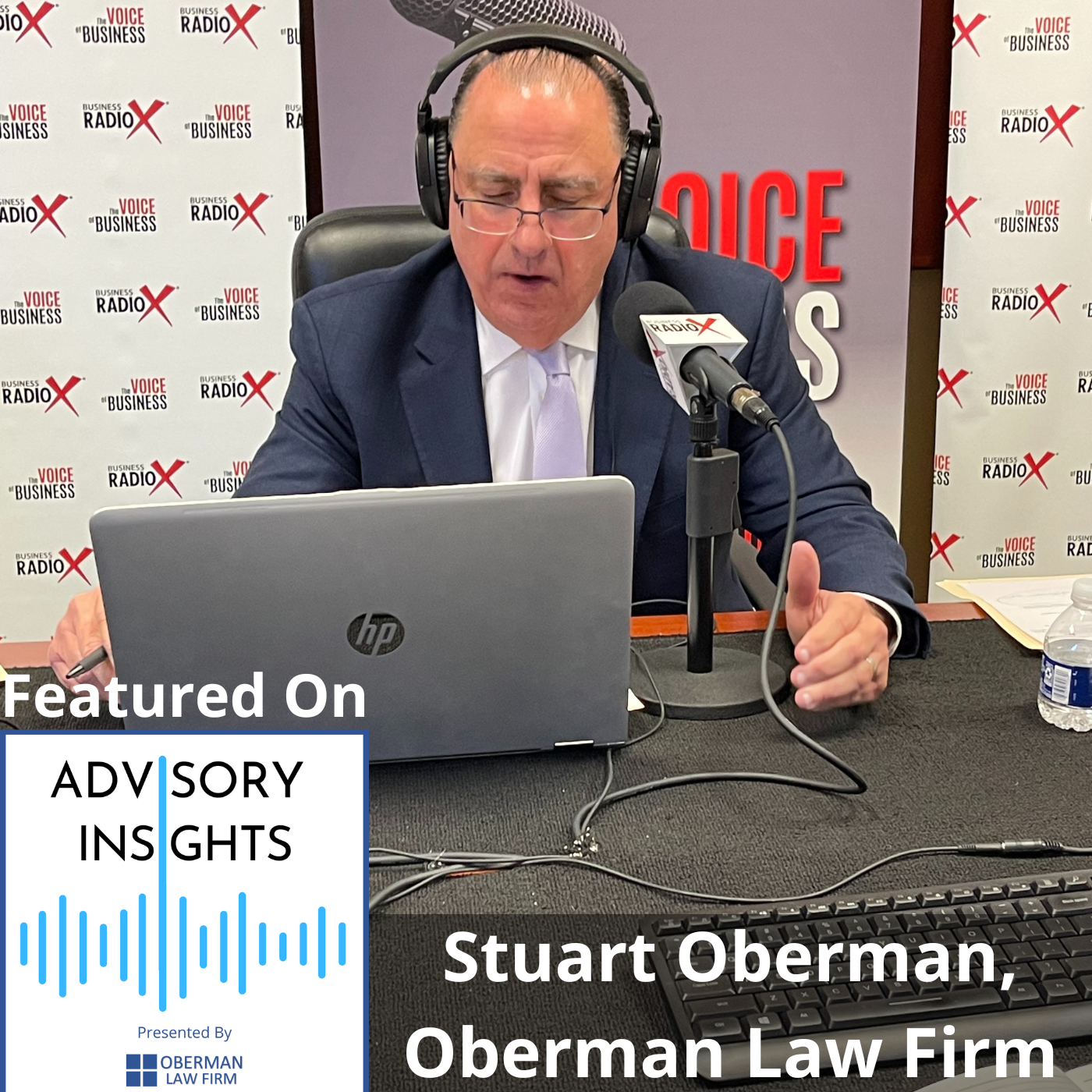
On this episode of Advisory Insights, Stuart Oberman of Oberman Law offered due diligence tips when purchasing a healthcare practice. He discussed the material risks and potential pitfalls of buying a healthcare business without fully understanding the requirements of governmental reimbursement, the importance of being knowledgeable about laws like the Anti-Kickback Statute, the Stark Law, the False Claims Act, and more.

Advisory Insights is presented by Oberman Law Firm and produced by the North Fulton studio of Business RadioX®. The series can be found on all the major podcast apps. You can find the complete show archive here.

TRANSCRIPT

Intro: [00:00:01] Broadcasting from the studios of Business RadioX, it’s time for Advisory Insights, brought to you by Oberman Law Firm, serving clients nationwide with tailored service and exceptional results. Now, here’s your host.

Stuart Oberman: [00:00:21] Welcome everyone to Advisory Insights. This is Stuart Oberman as your host. I would say I want to talk about mergers and acquisitions in health care. I will tell you, last year was an absolute blistering year in the industry. And I’ll tell you, for us, Oberman Law Firm, it was amazing last year what we did, how we did it, especially in the fourth quarter.

Stuart Oberman: [00:00:45] So, a substantial part of what we did on the mergers and acquisitions was health care related. But I want to talk about some items in general. A little background. Last year we did I think the numbers were about 135 transactions, I think maybe a little bit plus or minus. And I believe the number was a total of about $350 million worth of transactions. So, we saw a lot, a lot of things in healthcare transactions. I want to talk about a couple of things in particular.

Stuart Oberman: [00:01:17] So, first and foremost, for those that are in a highly regulated industry, especially in health care, you’ve got to be careful when you do diligence. So when you are doing a healthcare transaction, an acquisition, it should never be overlooked that what you’re doing is and has to be heavily regulated. So, one of the things that we look for is we want our buyers to sift through sellers’ records to ensure that that seller is in compliance with state and federal law, especially on the reps and warranties. That’s a whole other topic we may cover for another day.

Stuart Oberman: [00:02:07] But if you are in a healthcare-related transaction and you are the buyer, I cannot stress enough on your due diligence, do not, do not leave off compliance. So, especially – I want to talk especially about this area. If you are buying a business, whether it is a medical practice, whether it is a particular practice area in different industries, you have to be extremely careful if that buyer, or if that seller, participates in the Federal Health Care Programs. Acronym FHCP. That has to be scrutinized in every single healthcare transaction.

Stuart Oberman: [00:02:59] So, let me tell you if it is an FHCP practice or business and they get government reimbursement, there are extremely stringent provisions for participation in that particular payment structure, if you will, in how they submit claims. You have to audit how they submit claims because that is a material risk, a due that you will inherit if it is not done correctly. Once you purchase that business, you run the risk of being a successor to liability.

Stuart Oberman: [00:03:42] So, what happens is if they don’t, if the seller has not met stringent – I can’t stress this enough – stringent requirements, they are facing substantial civil fines and penalties. And also you cannot overlook the potential of clawbacks, allegations of overpayment, and in some cases, False Claims Act, FCA, liability. That is critical that you have to understand the requirements of governmental reimbursement and how they relate to any industry – I mean, excuse me, how they relate to any business in health care.

Stuart Oberman: [00:04:24] Now, what I’ll tell you is we’re seeing this a huge clampdown – the DOJ, strikeforce, regions throughout the country – fraud and abuse. Fraud and abuse under the FHCPs is rampant. Absolutely rampant. If you look at the advisory notices, the takedowns under the DOJ communications, you’re going to look at a couple of things. You’ve got to look at the Anti-Kickback Statute, AKS. If you don’t know what that is and you’re buying a business that is subsidized by governmental reimbursement, you have to get assistance with that transaction. Stark law, Physicians Self-Referral prohibition. You have to look under the criminal and civil False Claims Act.

Stuart Oberman: [00:05:20] Those under fraud and abuse will take you down financially quickly if you purchase a particular healthcare business and you’re not fully aware of this. One thing that we see a lot that is overlooked is licensures. So, depending on what business you are purchasing, every healthcare business requires certain licensure, no matter what it is. In some cases, they’re very specific. They could be generic. You have to do your due diligence under the licensure requirements in healthcare transactions because if you purchase a business and then you overlook the proper licenses, you are looking at potential disaster on a very, very expensive investment.

Stuart Oberman: [00:06:09] So, those are a couple of things. Again, I can probably speak for three hours regarding governmental reimbursement, FHCP programs, fraud and abuse. The Anti-Kickback Statute is a three-hour lecture in and of itself. Stark is a whole different world. That’s another – you know, you could easily talk an hour or 2 hours in Stark and not even hit half the topics. But I would strongly encourage you to know exactly what the False Claims Acts are and how they relate to you in the transaction.

Stuart Oberman: [00:06:42] So, folks, that’s a very, very short summary of a very complex matter. If you have a healthcare transaction, it does not have to be a large hospital. It could be a dermatology practice, dental practice, healthcare practice. It doesn’t matter. Anything that is regulated by the government in health care, especially if they take Federal Health Care Program subsidies, reimbursements, critical, folks.

Stuart Oberman: [00:07:13] Folks, that’s a very, very short topic for a long, long conversation.

Stuart Oberman: [00:07:17] I want to welcome – and thank you for joining Advisory Insights. Stuart Oberman here. Please feel free to give us a call at 770-554 – excuse me, 770-886-2400. Again, 770-886-2400. Or feel free to reach out, email, stuart, S-T-U-A-R-T, @obermanlaw.com. Folk, thanks for joining us again. We appreciate you joining us and have a fantastic day.

Outro: [00:07:45] Thank you for joining us on Advisory Insights. This show is brought to you by Oberman Law Firm, a business-centric law firm representing local, regional, and national clients in a wide range of practice areas, including healthcare mergers and acquisitions, corporate transactions, and regulatory compliance.

About Advisory Insights Podcast

Presented by Oberman Law Firm, Advisory Insights Podcast covers legal, business, HR, and other topics of vital concern to healthcare practices and other business owners. This show series can be found here as well as on all the major podcast apps.

Stuart Oberman, Oberman Law Firm

Oberman Law Firm
Stuart Oberman, Founder, Oberman Law Firm

Stuart Oberman is the founder and President of Oberman Law Firm. Mr. Oberman graduated from Urbana University and received his law degree from John Marshall Law School. Mr. Oberman has been practicing law for over 25 years, and before going into private practice, Mr. Oberman was in-house counsel for a Fortune 500 Company. Mr. Oberman is widely regarded as the go-to attorney in the area of Dental Law, which includes DSO formation, corporate business structures, mergers and acquisitions, regulatory compliance, advertising regulations, HIPAA, Compliance, and employment law regulations that affect dental practices.

In addition, Mr. Oberman’s expertise in the healthcare industry includes advising clients in the complex regulatory landscape as it relates to telehealth and telemedicine, including compliance of corporate structures, third-party reimbursement, contract negotiations, technology, health care fraud, and abuse law (Anti-Kickback Statute and the State Law), professional liability risk management, federal and state regulations.

As the long-term care industry evolves, Mr. Oberman has the knowledge and experience to guide clients in the long-term care sector with respect to corporate and regulatory matters, assisted living facilities, continuing care retirement communities (CCRCs). In addition, Mr. Oberman’s practice also focuses on health care facility acquisitions and other changes of ownership, as well as related licensure and Medicare/Medicaid certification matters, CCRC registrations, long-term care/skilled nursing facility management, operating agreements, assisted living licensure matters, and health care joint ventures.

In addition to his expertise in the health care industry, Mr. Oberman has a nationwide practice that focuses on all facets of contractual disputes, including corporate governance, fiduciary duty, trade secrets, unfair competition, covenants not to compete, trademark and copyright infringement, fraud, and deceptive trade practices, and other business-related matters. Mr. Oberman also represents clients throughout the United States in a wide range of practice areas, including mergers & acquisitions, partnership agreements, commercial real estate, entity formation, employment law, commercial leasing, intellectual property, and HIPAA/OSHA compliance.

Mr. Oberman is a national lecturer and has published articles in the U.S. and Canada.

LinkedIn

Oberman Law Firm

Oberman Law Firm has a long history of civic service, noted national, regional, and local clients, and stands among the Southeast’s eminent and fast-growing full-service law firms. Oberman Law Firm’s areas of practice include Business Planning, Commercial & Technology Transactions, Corporate, Employment & Labor, Estate Planning, Health Care, Intellectual Property, Litigation, Privacy & Data Security, and Real Estate.

By meeting their client’s goals and becoming a trusted partner and advocate for our clients, their attorneys are recognized as legal go-getters who provide value-added service. Their attorneys understand that in a rapidly changing legal market, clients have new expectations, constantly evolving choices, and operate in an environment of heightened reputational and commercial risk.

Oberman Law Firm’s strength is its ability to solve complex legal problems by collaborating across borders and practice areas.

Connect with Oberman Law Firm:

Company website | LinkedIn | Twitter
Tagged With: Dental Practice, Healthcare, merger, merger and acquisition, merger consulting, Oberman Law, Oberman Law Firm, Stuart Oberman

IT Due Diligence in a Merger

October 28, 2022 by John Ray

IT Due Diligence Merger
Advisory Insights Podcast
IT Due Diligence in a Merger
Loading
00:00 /
RSS Feed
Share
Link
Embed

Download file

IT Due Diligence Merger

IT Due Diligence in a Merger (Advisory Insights Podcast, Episode 15)

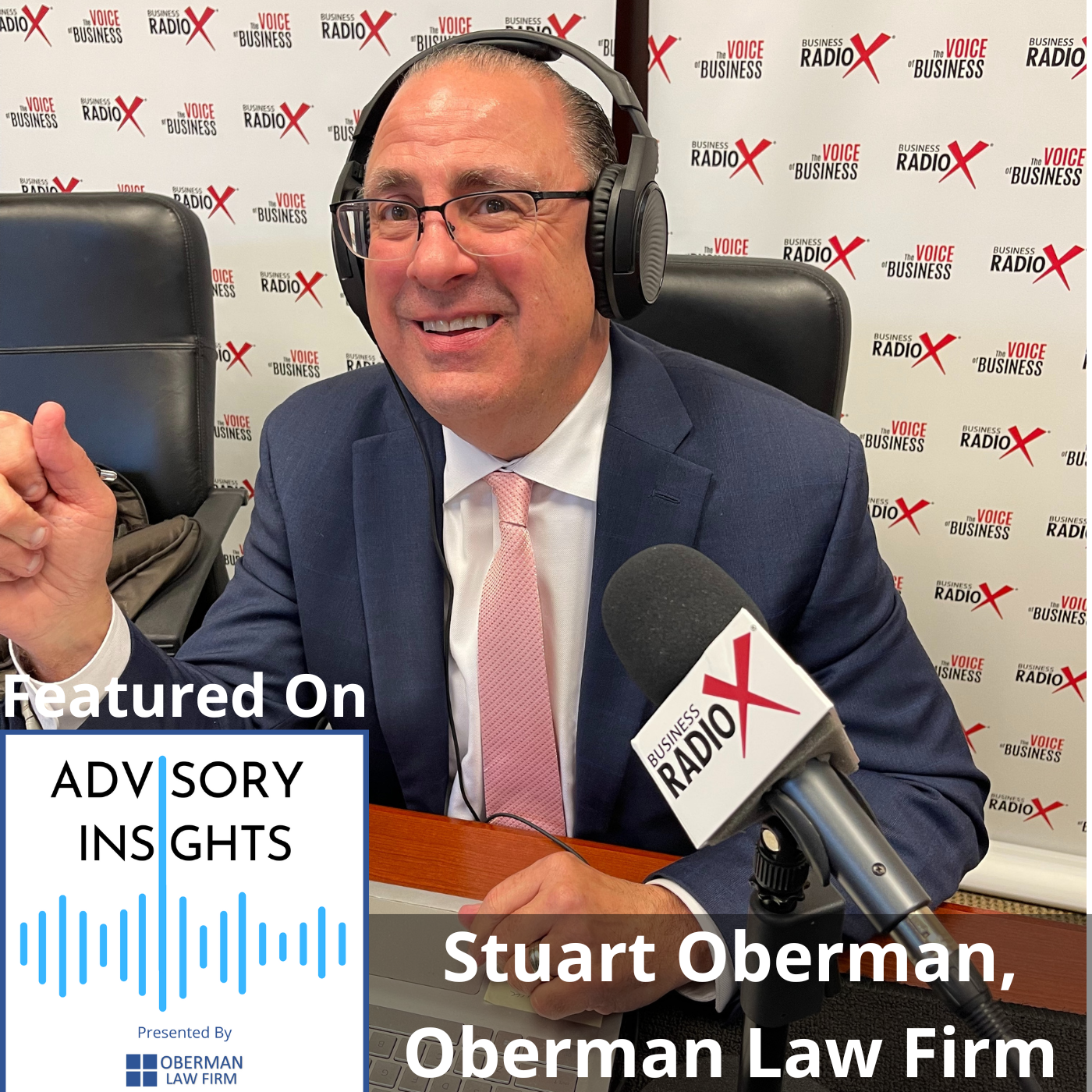
In this episode of Advisory Insights, Stuart Oberman with Oberman Law Firm discussed the importance of cybersecurity in today’s business world. He stressed the need for businesses to do their due diligence in evaluating potential acquisition targets, why he recommends a cybersecurity risk assessment, and cautioned IT and HR professionals to be aware of the risks involved in handling sensitive information.

Advisory Insights is presented by Oberman Law Firm and produced by the North Fulton studio of Business RadioX®. The series can be found on all the major podcast apps. You can find the complete show archive here.

TRANSCRIPT

Outro: [00:00:01] Broadcasting from the studios of Business RadioX, it’s time for Advisory Insights, brought to you by Oberman Law Firm, serving clients nationwide with tailored service and exceptional results. Now, here’s your host.

Stuart Oberman: [00:00:21] Hello, everyone. Stuart Oberman here for Advisory Insights, your host. Hey, I want to talk about a couple of things here in mergers and acquisitions. In a previous podcast, we covered material risks that involved governmental reimbursement, fraud and abuse, and licensure. But I want to sort of digress a little bit. So, I mentioned before in some of our podcasts that we had really a 2021 extraordinary year, mergers and acquisitions, that we did about 135 acquisitions and probably $330 million worth of revenue in those acquisitions.

Stuart Oberman: [00:00:59] So, one, as I digress and looked at some of those acquisitions that we are involved in, some of them are fairly big. One of the items that was, I could tell you, significantly overlooked is I.T. and what due diligence is required in a merger and acquisition for I.T. So, look, when you get – the first thing you can do is you ask for financials, then you ask for account receivables and you ask for the customer database, then you ask for the products and services. Then, you ask for facilities. What we don’t see a lot of requests for is I.T. Now, I.T. is sort of one of those things where, “Well, I’m not worried about I.T. Everyone knows I.T. I got an I.T. guy.” Your I.T. guy will send you right down the river if you don’t understand some of this stuff.

Stuart Oberman: [00:01:47] So, let me tell you. I want to take a look at a couple of things, a couple of bullet points. If you’re contemplating a merger and acquisition, big or small, does it matter? I.T. I want to know how their sensitive data is stored. I want to know that. I want a specific outline of how that occurs. I want to know all their software licenses. I want to know what I’m paying for. I want to know what I’m committing to. I want to know what I’m assigning myself to. I want to know what’s being purchased. I want to know what can be canceled.

Stuart Oberman: [00:02:16] So, another thing I want to look at is, is my equipment I’m going to purchase out of date? Is it end of its life cycle? Is it ready for the big waste bin in the sky? Is my Windows application up to date? Or is my license up to date?

Stuart Oberman: [00:02:36] Also, we talked previously in a podcast regarding health care. Health care. Health care. If you’ve got a – if you had – well, first you want to do is ask that particular seller, “Have you ever had a breach?” And, if they have and they are a health care industry, you want to go, “Are you under investigation? Have you received notice from HHS or any other state or federal agency?” So, otherwise, you really don’t know if there has been a breach or if there’s still a breach you’re ready to purchase and you don’t even know about it.

Stuart Oberman: [00:03:16] One thing you want to take a look at is, have your I.T. person as well versed in this area, see if there’s been a breach before with the software. I would always recommend a complete cybersecurity risk assessment. The last thing you need is a hack. And all of a sudden you’re asked to go to the nearest Bitcoin station and transfer $25,000 in Bitcoin. What is the risk, especially in health care? What is the due diligence? Is there an annual risk assessment which is required under HIPAA?

Stuart Oberman: [00:03:54] Another thing we see as grossly overlooked, I want to know about your firewalls. I want to know about your backups. Do you back up by taking a flash drive home every night? Are you backed up to your computer? What if someone steals your computer? Are you backed up to the server? Are you backed up to the cloud? How secure is a cloud? Does your Uncle Vinnie control the cloud? What are the securities? You got to know these things.

Stuart Oberman: [00:04:22] “Well, my buddy has a great server. He stores all my I.T.” Well, that’s great, but what’s – let me know the buddy’s protocols. What’s the IP address? There’s a floating. I want to know how your data is backed up. Again, is it backed up to a flash drive? Is it backed up to the computer? Or you have no backup, whatever it is. I want to know what cybersecurity protocols and procedures you implemented in the last 12, 24 months. “Well, I haven’t really done anything. Everything’s secure.” You’ve got a problem. You better know what’s been upgraded. You better know what the security protocols are. You better know what you’re purchasing and you better know if they’ve had a breach of cybersecurity, period.

Stuart Oberman: [00:05:13] So, let’s take a look at a couple of other things that we’ve been looking at. Again, I think there’s a laundry list here. But again, I could probably talk for two hours on this one subject, but we just have a very limited time. I want to take a look at whether or not they have cybersecurity insurance. It is becoming very difficult to obtain cybersecurity insurance. There are only a few players in the market. And what are the coverages? What is the non-coverage? What are they making you do and what are you certifying that you have done and maintained in relation for that coverage? So, you’re going to get a checklist probably from the cybersecurity insurance company. It’s going to outline certain things that you’ve done, that you haven’t done or that you need to do. And I would venture to say that if you put something false and misleading on that particular application and they find out you have no coverage, which is horrible, especially when some of these big hacks.

Stuart Oberman: [00:06:18] So, I want to know what your I.T. guy is doing or if you have hired or going to hire a third party to do a vulnerability screen. I want to know what your vulnerabilities are. I want to know how to fix it. I want to know what patches I need. I want to see when the last time you’ve patched. Are you getting constant upgrades? Are you outdated on Windows? You know, are you in Windows 6? I’m going to – for those of you that are a little bit older, I’m going to use the term DOS. We have clients that are still working on DOS. Yes, DOS. I can’t stress that enough. We have members of practices, businesses that they’re running two systems, DOS. And then, for the younger guys, of course, the Windows and Macs.

Stuart Oberman: [00:07:12] So, I want to make sure your information technology person understands what’s going on. What are their qualifications? Do they simply do your backups, or are they a legit, legit down and dirty cybersecurity company?

Stuart Oberman: [00:07:29] So, again, in evaluating every business that you’re going to acquire – and let me go so far as this. If you’re a business, period, you’ve got to look at cybersecurity policies. You got to look at protocols, procedures. You should do your due diligence as if you’re purchasing your own business. Are you doing it? Are you doing a security risk analysis? Are you doing the assessments? Take a look at all these things.

Stuart Oberman: [00:07:53] Cybersecurity is no longer an option. It’s absolutely mandated with everything that goes on your systems, payments, history, Social Security numbers. It’s amazing what will end up on the black market, if you will, on information.

Stuart Oberman: [00:08:11] Folks, I tell you, again, that’s a three-hour conversation. I just want to hit some highlights. I want to hit some bullet points whether or not you’re looking to buy a business, whether or not you’re owning, you have owned a business, or you’re an I.T. guy, or you’re actually an H.R. person. Are you taking a look at all these things that you need to do on a daily basis especially to be secure?

Stuart Oberman: [00:08:33] Folks, we’re going to wrap it up for today. Stuart Obermann here, your host on Advisory Insights. Thanks for joining us. Hope you took away one or two things which will make you an absolute success.

Stuart Oberman: [00:08:43] If you want to reach us, please feel free to give us a call, 770-886-2400. Or myself, stuart, S-T-U-A-R-T, @obermanlaw.com. Thanks for joining us and we’ll see you on the next podcast.

Outro: [00:08:58] Thank you for joining us on Advisory Insights. This show is brought to you by Oberman Law Firm, a business-centric law firm representing local, regional, and national clients in a wide range of practice areas, including healthcare mergers and acquisitions, corporate transactions, and regulatory compliance.

About Advisory Insights Podcast

Presented by Oberman Law Firm, Advisory Insights Podcast covers legal, business, HR, and other topics of vital concern to healthcare practices and other business owners. This show series can be found here as well as on all the major podcast apps.

Stuart Oberman, Oberman Law Firm

Oberman Law Firm
Stuart Oberman, Founder, Oberman Law Firm

Stuart Oberman is the founder and President of Oberman Law Firm. Mr. Oberman graduated from Urbana University and received his law degree from John Marshall Law School. Mr. Oberman has been practicing law for over 25 years, and before going into private practice, Mr. Oberman was in-house counsel for a Fortune 500 Company. Mr. Oberman is widely regarded as the go-to attorney in the area of Dental Law, which includes DSO formation, corporate business structures, mergers and acquisitions, regulatory compliance, advertising regulations, HIPAA, Compliance, and employment law regulations that affect dental practices.

In addition, Mr. Oberman’s expertise in the healthcare industry includes advising clients in the complex regulatory landscape as it relates to telehealth and telemedicine, including compliance of corporate structures, third-party reimbursement, contract negotiations, technology, health care fraud, and abuse law (Anti-Kickback Statute and the State Law), professional liability risk management, federal and state regulations.

As the long-term care industry evolves, Mr. Oberman has the knowledge and experience to guide clients in the long-term care sector with respect to corporate and regulatory matters, assisted living facilities, continuing care retirement communities (CCRCs). In addition, Mr. Oberman’s practice also focuses on health care facility acquisitions and other changes of ownership, as well as related licensure and Medicare/Medicaid certification matters, CCRC registrations, long-term care/skilled nursing facility management, operating agreements, assisted living licensure matters, and health care joint ventures.

In addition to his expertise in the health care industry, Mr. Oberman has a nationwide practice that focuses on all facets of contractual disputes, including corporate governance, fiduciary duty, trade secrets, unfair competition, covenants not to compete, trademark and copyright infringement, fraud, and deceptive trade practices, and other business-related matters. Mr. Oberman also represents clients throughout the United States in a wide range of practice areas, including mergers & acquisitions, partnership agreements, commercial real estate, entity formation, employment law, commercial leasing, intellectual property, and HIPAA/OSHA compliance.

Mr. Oberman is a national lecturer and has published articles in the U.S. and Canada.

LinkedIn

Oberman Law Firm

Oberman Law Firm has a long history of civic service, noted national, regional, and local clients, and stands among the Southeast’s eminent and fast-growing full-service law firms. Oberman Law Firm’s areas of practice include Business Planning, Commercial & Technology Transactions, Corporate, Employment & Labor, Estate Planning, Health Care, Intellectual Property, Litigation, Privacy & Data Security, and Real Estate.

By meeting their client’s goals and becoming a trusted partner and advocate for our clients, their attorneys are recognized as legal go-getters who provide value-added service. Their attorneys understand that in a rapidly changing legal market, clients have new expectations, constantly evolving choices, and operate in an environment of heightened reputational and commercial risk.

Oberman Law Firm’s strength is its ability to solve complex legal problems by collaborating across borders and practice areas.

Connect with Oberman Law Firm:

Company website | LinkedIn | Twitter
Tagged With: Dental Practice, due diligence, IT, merger, merger and acquisition, merger consulting, Oberman Law, Oberman Law Firm, Stuart Oberman

Decision Vision Episode 63: Should I Buy a Business? – An Interview with Ray Padron, Brightworth

April 30, 2020 by John Ray

should I buy a business
Decision Vision
Decision Vision Episode 63: Should I Buy a Business? - An Interview with Ray Padron, Brightworth
Loading
00:00 /
RSS Feed
Share
Link
Embed

Download file

should I buy a business
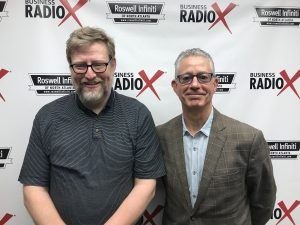
Mike Blake, Host of “Decision Vision,” and Ray Padron, Brightworth

Decision Vision Episode 63:  Should I Buy a Business? – An Interview with Ray Padron, Brightworth

Why buy a business? How do I manage the process of buying a business? How do I prevent an acquisition from destroying the culture of my existing business? Ray Padron speaks from his experience as CEO of Brightworth, an acquisitive private wealth management firm. The host of “Decision Vision” is Mike Blake and the series is presented by Brady Ware & Company.

Ray Padron, Brightworth

Brightworth is a boutique private wealth management firm that empowers its clients to focus on what matters most. They do that by helping their clients build, preserve and to make an impact with their wealth.

Their advisers have deep expertise across the financial disciplines with certifications that include the CFA,CPA, CFP and CIMA, JD and CFTA. The major client focus of Brightworth includes the dental industry nationwide, corporate professionals and executives, business exit transition services, and retiring well.

should I buy a business
Ray Padron, Brightworth

Ray is Brightworth’s Chief Executive Officer, leading strategic and management operations across the firm. In addition, as a Wealth Advisor, he provides comprehensive financial and investment advice to help clients achieve their financial goals and dreams. His experience working with senior executives and business owners and their complex transition and succession strategies helps him guide both Brightworth’s and his clients’ success.

Ray began his financial career with what is now PricewaterhouseCoopers, later working for the Marriott Corporation and then serving as Vice President of Accounting Operations and Financial Reporting for Finalco Group, Inc. In 1986, Ray became a Principal and Senior Vice President of Finance for Capital Associates, Inc., a regional venture capital firm that provided both capital and funding services for portfolio companies.

In 1988, Ray created ARC Financial Services, a financial planning firm that focused on the unique needs of business owners. He later merged that firm with Ron Blue Trust, a national wealth advisory firm, starting their Washington, D.C. and Baltimore, Md. branches and eventually becoming the Vice President of Practice Areas and Chief Financial Officer at the national headquarters in Atlanta.

Ray is a Certified Public Accountant and CERTIFIED FINANCIAL PLANNER™ practitioner. He has completed the Investment Management Consultants Association’s Investment Analyst Program at the Wharton School of Business at the University of Pennsylvania and is a Certified Investment Management AnalystSM. In addition, he is an Accredited Estate Planner®, a Chartered Life Underwriter and a Chartered Financial Consultant. Ray has been named several times in Atlanta Magazine‘s list of Five Star Wealth Managers*.

Ray is currently on the Board of Directors for the Georgia Chamber of Commerce as well as Junior Achievement of Georgia, the Executive Committee of the Buckhead Coalition, and is past President of CEO Netweavers, a community of CEOs and trusted advisors committed to helping and improving the Atlanta business community. He is also a founding board member of Matchbook Learning, a national non-profit K-12 school management organization focused on a unique blended, competency-based model of learning for struggling schools.

He is an active member of Business Executives for National Security (BENS), a non-profit organization focused on bringing the private sector together with our government partners to apply best business practice solutions to its most difficult national security challenges. In addition, Ray is a past member of the board of directors of the Financial Planning Association of Georgia, and a past chairman and board member of an international faith-based ministry.

Over the years Ray has been a frequent speaker to executives on retirement planning. He has also spoken on operational excellence within the financial planning and wealth management industry.

Ray and his wife, Sharon, have four grown children and ten grandchildren. His hobbies include international travel, golfing with friends, reading and exercise.

For more information, you can visit the Brightworth website or email Ray directly.

Michael Blake, Brady Ware & Company

Mike Blake, Host of “Decision Vision”

Michael Blake is Host of the “Decision Vision” podcast series and a Director of Brady Ware & Company. Mike specializes in the valuation of intellectual property-driven firms, such as software firms, aerospace firms and professional services firms, most frequently in the capacity as a transaction advisor, helping clients obtain great outcomes from complex transaction opportunities. He is also a specialist in the appraisal of intellectual properties as stand-alone assets, such as software, trade secrets, and patents.

Mike has been a full-time business appraiser for 13 years with public accounting firms, boutique business appraisal firms, and an owner of his own firm. Prior to that, he spent 8 years in venture capital and investment banking, including transactions in the U.S., Israel, Russia, Ukraine, and Belarus.

Brady Ware & Company

Brady Ware & Company is a regional full-service accounting and advisory firm which helps businesses and entrepreneurs make visions a reality. Brady Ware services clients nationally from its offices in Alpharetta, GA; Columbus and Dayton, OH; and Richmond, IN. The firm is growth minded, committed to the regions in which they operate, and most importantly, they make significant investments in their people and service offerings to meet the changing financial needs of those they are privileged to serve. The firm is dedicated to providing results that make a difference for its clients.

Decision Vision Podcast Series

should I buy a business“Decision Vision” is a podcast covering topics and issues facing small business owners and connecting them with solutions from leading experts. This series is presented by Brady Ware & Company. If you are a decision maker for a small business, we’d love to hear from you. Contact us at decisionvision@bradyware.com and make sure to listen to every Thursday to the “Decision Vision” podcast. Past episodes of “Decision Vision” can be found here. “Decision Vision” is produced and broadcast by the North Fulton studio of Business RadioX®.

Visit Brady Ware & Company on social media:

LinkedIn:  https://www.linkedin.com/company/brady-ware/

Facebook: https://www.facebook.com/bradywareCPAs/

Twitter: https://twitter.com/BradyWare

Instagram: https://www.instagram.com/bradywarecompany/

Show Transcript

Intro: [00:00:02] Welcome to Decision Vision, a podcast series focusing on critical business decisions. Brought to you by Brady Ware & Company. Brady Ware is a regional, full-service accounting and advisory that helps businesses and entrepreneurs make visions a reality.

Mike Blake: [00:00:20] And welcome to Decision Vision, a podcast giving you, the listener, clear vision to make great decisions. In each episode, we discuss the process of decision making on a different topic from the business owner’s or executive’s perspective. We aren’t necessarily telling you what to do, but we can put you in a position to make an informed decision on your own and understand when you might need help along the way.

Mike Blake: [00:00:39] My name is Mike Blake, and I’m your host for today’s program. I also touch my face, at least, 35 times a day. I’m a Director at Brady Ware & Company, a full-service accounting firm based in Dayton, Ohio, with offices in Dayton; Columbus, Ohio; and Richmond, Indiana; and Alpharetta, Georgia, which is where we recording today. Brady Ware is sponsoring this podcast. If you like this podcast, please subscribe on your favorite podcast aggregator, and please consider leaving a review of the podcast as well.

Mike Blake: [00:01:07] So, we’re talking about a subject that I’m a big fan of. And I’m a big fan of it because I think it’s extremely important, and nobody talks about it. And that is whether you should buy a business. And I say nobody talks about it because I’m in the transactional world, and I do my fair share of M&A, thankfully. And one thing that I’ve noticed is that there are plenty of seminars around that will talk about how you should sell your business and why. And there’s some that will even talk to you about succession planning, how do you transition at your business to a succeeding generation?

Mike Blake: [00:01:54] And I think those two subjects get covered a lot, quite frankly, because I think that’s where the most money is made. There’s a lot of money to be made, certainly, anytime a business sells, or brokerage fees, or legal fees, or accounting fees are, I don’t know, after deal dinner fees. There’s a lot of money on the move that occurs and is set in motion because a business is going to be sold. And that’s usually initiated by the seller. Not always, but usually. And to a lesser extent, that is true for businesses that are in succession. There’s a whole industry now around succession planning. There are organizations that offer some form of accreditation or some source of letters after your name because you’re a really awesome succession planner.

Mike Blake: [00:02:41] But buying a business, it’s really crickets. And even to the point where it’s actually hard to find an investment bank that wants to take on what we call buy side transaction. They don’t want to work for buyers because the perception is that buyers have less of a motivation to buy a business than a seller has to sell a business. And therefore, if you’re working on contingency, it’s a less reliable source of income. But buying a business, I would argue, is just as hard, if not harder than selling a business because the burden of information is on the buyer and it’s going to be in the asset that you buy.

Mike Blake: [00:02:41] So, Warren Buffett is famous for saying that “Price is what you pay. Value is what you get.” And if you do things right, you hope that value is, at least, equal to or maybe greater than the price. But the seller walks away with money, and they know what money is worth. But the buyer, they may not understand exactly what they’ve bought for a year or two or more after they’ve bought the business. And so, this is a rich topic for discussion. This can be one of these things. I may ask our guest to come back for a second part because I can just see right now that we’re going to cover a lot of ground and leave ground uncovered.

Mike Blake: [00:04:11] So, with that having been said, I would like to introduce you to my friend Ray Padron, who is Chief Executive Officer of Brightworth, a boutique private wealth management firm headquartered in Atlanta. Founded in 1997, they empower their clients to focus on what matters most. They do that by helping their clients build, preserve and make an impact on their wealth. Today, Brightworth has over 1400 individuals and families across the US, whom they helped build, preserve and be generous with their wealth, which is currently, according to their website, about $4 billion under management, letting them spend more time on the things that truly matter to them.

Mike Blake: [00:04:48] From the beginning, Brightworth built their firm to align their interests with those their clients that they’re always on the same side of the table with those they serve. A critical way in which they accomplish this is by being fee-only, selling no proprietary products and refusing to let compensation influence the guidance Brightworth provides to its clients. That’s important. Fee-based advisors are hard to find. Fee-based advisors who are good are very hard to find. That is not a usual model. So, pay attention to that.

Mike Blake: [00:05:16] They’re a team of over 50 professionals in Atlanta and Charlotte who are dedicated to providing independent and objective advice, taking care of their clients in the same manner they would want their own parents taken care of provide. By providing outstanding depth of expertise, the uniquely personal approach, they continue to create lasting relationships with clients to help build their financial future with confidence. Ray Padron, thank you for coming on the program.

Ray Padron: [00:05:40] Mike, it is a pleasure to be here. I’m glad you and I are getting to spend time together.

Mike Blake: [00:05:45] So, you’re now CEO and grand poobah of Brightworth. I know you’re a co-founder, but have you always been the CEO?

Ray Padron: [00:05:54] No. Actually, I took over the CEO position in 2014.

Mike Blake: [00:05:59] And in that time, how many acquisitions have you led Brightworth either through or maybe better yet into?

Ray Padron: [00:06:06] Sure. We actually have done three. And it was a very fortuitous. We had a chance to do a very small transaction first, which helped us sort of learn the ropes of integrating an individual practice into our firm. Then, the next transaction, which was probably within 12-18 months of that, it was sort of a team that was rolling out of another firm, they wanted to leave, and we brought them into our firm. A little more complicated. There was a lot more client work to do, paperwork, more conversations with the exiting that was taking place, et cetera. And then, there was a very large transaction we did, which doubled the size of the firm in 2017.

Mike Blake: [00:06:49] So, I’d like to talk about that one because it was clearly so material and so important. Why did you want to make that big an acquisition? Were you nervous about making that big an acquisition?

Ray Padron: [00:07:02] Right. Two questions. Yes, we were nervous, but the big reason for doing the acquisition was we decided we needed to actually have a a non-organic growth strategy. We’re in an industry, the wealth management industry is not actually that old, particularly the fee-only practice. So, when you look at what’s happening in our industry, there is issues around succession planning. We have literally hundreds, if not thousands of firms that are struggling with their own succession plans. All the first-generation owners who’ve created this business now were in what we would call a succession trap. They can’t sell their practice or their businesses to the next generation. It’s too late. It’s worth too much. And what’s happening is there’s this huge amount of consolidation that’s actually taking place because they have to do something.

Ray Padron: [00:07:54] At the same time, we’ve got private equity firms that are in large banks like Goldman Sachs that are buying up RIAs because they’re seeing changes in their own industry. So, there’s a lot taking place because the industry’s matured to the place it is. So, our choices are stick with organic growth or to do things that put us in the better position for the future. The future of this industry, there’ll be a handful of national firms. There’ll also be maybe 5 to 10 regional firms. And our decision six years ago was we want to be a regional firm. Let’s work towards that. And then, we can go from there. So, from a strategic standpoint, we needed to to do something and we needed to learn our way there. So, that’s pretty much the motivation for why we wanted to do an organic growth.

Mike Blake: [00:08:45] So, I like that distinction. That’s important kind of vocabulary point, organic growth versus inorganic. For our listeners who may not necessarily know that, organic growth simply means growth that you drive on your own by either expanding revenue from existing clients or adding new clients to your portfolio.

Ray Padron: [00:09:02] Exactly.

Mike Blake: [00:09:03] Right? So, I infer something. I wanna clarify. I wanna make sure I’m not assuming, but I infer from what you just said that you had a concern that if you did not acquire to become larger, you are at risk of potentially being acquired and maybe not under the best circumstances that you would like.

Ray Padron: [00:09:26] Sure. That’s exactly right. We actually had made the decision to work on our own succession plan 13 years ago. I was only 50 years old at the time. I was the oldest partner. So, we started our transition and our strategy for our own internal succession plan well in advance. We’re now at a point where the next generation, and we’re almost into third generation owners, own more of the firm than the original founders do. In fact, two of the founders are already gone. And the other two, myself included, will probably be gone in the next five to seven years. So, we’ve taken care of our part. Now, the question is, what do we want to become? And with all the consolidation taking place, it really is we wanted to be the masters of our own destiny. We’ve sold all our own succession plan. We should be able to survive all the changes that are taking place in the industry.

Mike Blake: [00:10:18] So, this big acquisition that you did in 2017, it’s hard to imagine. It’s three years ago now. How long did that take?

Ray Padron: [00:10:27] Longer than I anticipated. There was a really interesting process. We actually had met several years before that. They were interested in their own succession plan, wanted to meet with us to understand how we had done ours, and approached one private equity firm, in particular, to help them do that. After, I think, working with them for 18 months realized there wasn’t enough time, and they came back to us and said, “Would you be interested? We really like you. Why not consolidate the two firms?” And that was a great opportunity for us.

Mike Blake: [00:11:04] So, you said that the acquisition took longer than than expected. What knock-on effects did that have on other aspects of your business or maybe the acquisition itself? How did that change the tenor?

Ray Padron: [00:11:19] Sure. And I didn’t really s answer the last question well in a sense of why did it take so long. But there are a couple of things that had to take place. You have this whole LOI, which is our first time we actually did something as formal as sending out an LOI. You start doing some due diligence, and you realize, “You know what? The way we structured the LOI, some of the provisions really did need to change.” And one of those was there was a follow-on transaction that we felt was really important. There were two parts to the transaction. There was the investment, the registered investment advisor. And then, there was a planning firm. And there was issues with the planning firm. We realized we needed more than just a — what would you call it? An option. We needed an actual drop-dead date where we would actually be able to do something.

Ray Padron: [00:12:09] So, anyways, that process required us to sort of renegotiate from the LOI a different transaction. And that really is the reason why it stretched out. The cascading consequences of that are both positive in a sense for us and negative. The negatives, as I’m sure everybody can imagine, the longer you take, it’s like a death march. The more time people have to think of things, they want answers that I’m trying to explain to them, we’re going to answer those things on the other side of the transaction. So, where there are blanks in in people’s minds, they filled it with usually negative things. So, it’s this constant grind of trying to solve things and ghosts, I call it, that they think exist that just aren’t there. So, those are the negative things. The positive things where the firm actually grew during all that time, the firm we were buying. So, our initial upfront cost relative to the revenue we’re buying ended up becoming much lower.

Mike Blake: [00:13:10] Now, that’s interesting. And that speaks to the fact that on the sell side, they ran their process well because the more frequent outcome you see as that the firm stagnates or even declines in the sale process because selling a firm, and as I think you discover, buying a firm becomes a full-time job in and of itself. And so, frequently, the very asset you’re targeting can be neglected. If it’s not run well, if it hasn’t scaled well, it’s not as valuable an asset at the end of the process as it was when you started, but you encountered the reverse phenomenon.

Ray Padron: [00:13:42] Yeah. Good point.

Mike Blake: [00:13:43] And that must have given you, then, a lot of confidence. You found the right partner. You are doing the right thing.

Ray Padron: [00:13:48] Yeah, they’re a very focused business. They’re focused on the dental industry. So, they were able to continue to—what’s the word? Kind of run their flywheel. And they have this great marketing engine, which is one of the things that absolutely attracted us to the acquisition. And that marketing engine just kept working.

Mike Blake: [00:14:08] So, actually, I want to I want to touch on that ’cause something you led off with and now are coming back to, I think, is a very important instructive point, which is you didn’t buy a business for the hell of it. You bought a business because you had a specific objective that you wanted to meet with buying one or more businesses, right?

Ray Padron: [00:14:30] Correct.

Mike Blake: [00:14:30] And presumably then, you are prepared and perhaps did walk away from potential targets that we’re not going to help you meet that objective.

Ray Padron: [00:14:38] Correct.

Mike Blake: [00:14:38] Right? So, a there’s a deliberate process. And I think that’s important because— actually, what I’m going to back out, I’m assuming some of that may not be true. Do you, on occasion, receive unsolicited offers? Some firms or brokers say, “Hey, this this thing’s available. Would you like to buy it?”

Ray Padron: [00:14:54] Absolutely.

Mike Blake: [00:14:55] And most the time you say?

Ray Padron: [00:14:57] No.

Mike Blake: [00:14:57] Why?

Ray Padron: [00:14:58] Well, there’s some very specific things that we’re looking for. One is we love the idea of there being a succession trap because, usually, that means we can get this at a decent price. But there has got to be a whole host of things that have to be behind that to make it work. You got to have talent. There’s got to be a set of hungry next generation people who’ve been waiting for something to happen, so they can take over this business. I can’t just ask somebody from Atlanta to move up to Charlotte to run the firm.

Ray Padron: [00:15:31] So, we were looking for several things. One is a strategic location. If I get an offer to buy a firm in some small town in Alabama, I’m not interested in that. So, Charlotte was a strategic location. You’re looking for a strategic talent –  the credible talent and group of next-generation people that were ready to take over the business. And then, I’m trying to think of what the third thing was. Oh, a strategic market. So, our Atlanta business is very focused on corporate executives and professionals, as well as with business owners. Having a business up in Charlotte that’s entirely focused on the dental industry nationwide was a really cool and very unusual. You, usually, don’t see that in our industry.

Mike Blake: [00:16:13] And we had another guest on, Rod Burkert, who talked about the need to specialize. This is not really in our script, but I sort of have to ask you, do you feel that specialization has been a benefit?

Ray Padron: [00:16:24] Absolutely. People want to work with people who know their business and the phase of life that they’re in.

Mike Blake: [00:16:32] Yeah. And I think clients appreciate not having to educate their advisors-.

Ray Padron: [00:16:39] Absolutely.

Mike Blake: [00:16:39] … about their business. And being a generalist, it’s hard to sort of defend to a client that says, “Hey, should I get somebody that’s done one of these before or not?” No, you don’t need someone who’s done one of these before. Your business is any old business.

Ray Padron: [00:16:58] Right, exactly.

Mike Blake: [00:16:58] I’ve never been able to really figure how to carry that conversation and not sound dumb doing it. If there’s a way, please send something into info@decisionvision.com, whatever the hell our email is. Help me figure out how to do that.

Ray Padron: [00:17:11] Really.

Mike Blake: [00:17:14] So, this opportunity came about because you had some kind of relationship, and there was sort of a slow-burn conversation. Let’s just sort of dip your toe in, and I think sort of gradually weighed in. Is that fair?

Ray Padron: [00:17:25] Yeah, that’s fair statement.

Mike Blake: [00:17:27] So, at some point, you then flipped the switch from conversation to real negotiation discussion. You touched on this before, but I want to really dive into this. What was your due diligence process like?

Ray Padron: [00:17:40] So, the due diligence process actually went incredibly well. There are several reasons. The individuals we were dealing with, some of them actually were attorneys. And so, they had a really good understanding of some of the things we were going to be asking for. We also had a private equity firm, our financing arm, if I may, that was helping us do the acquisition, had done literally dozens and dozens of these in this space. So, we really knew exactly sort of what to ask for, and how to build out the data room, and et cetera. So, that process actually went really well and smoothly. We have a full-time compliance officer who knows exactly, again, what we need to be doing and looking for. So, it was a pretty smooth process. It didn’t take very long.

Mike Blake: [00:18:27] How long did it take? Do you recall?

Ray Padron: [00:18:29] It’s about 30 to 45 days.

Mike Blake: [00:18:31] Okay. That’s a well-run due diligence process, which I’m sure your buyer— I’m sorry, your seller appreciated.

Ray Padron: [00:18:37] Yeah, it was.

Mike Blake: [00:18:38] Because a seller, when I advise sellers, I tell them to be prepared for a 90-day, sometimes even 120-day due diligence. And that gets them to the death march things you talk about.

Ray Padron: [00:18:48] Exactly.

Mike Blake: [00:18:48] Everybody’s happy and cheerful for the first two weeks of questions. And then, after that, it’s, “Oh, God. I got to do this again,” right?

Ray Padron: [00:18:55] Yeah, yeah.

Mike Blake: [00:18:56] I can’t imagine what it’s like by day 100. You just want to chuck everything and say, “You know what, I’m just gonna sell this to the government.”

Ray Padron: [00:19:03] It’s funny, and I mentioned it earlier, there were these two parts – the getting the RIA part in the due diligence done. Really, we had that done all in 90 days, including the purchase agreement. It was renegotiating the aspect of the LOI that required the acquisition of the other part that took us another 12 months. It was that, which where we had the death march.

Mike Blake: [00:19:26] Now, what’s interesting in the due diligence too is that in your world, you’re a highly regulated industry.

Ray Padron: [00:19:26] Very, very very.

Mike Blake: [00:19:36] And one in which potential liability and, frankly, disaster is lurking around every corner. And as you said, you have a compliance officer, all RAs either have an internal or outsource compliance officer. You pretty much have to, I think.

Ray Padron: [00:19:51] Absolutely.

Mike Blake: [00:19:55] How afraid were you, concerned were you about finding that or maybe not finding that gremlin under the rug that, all of a sudden, now, it becomes your responsibility? How big a concern is that in your industry?

Ray Padron: [00:20:13] It’s a big concern. Obviously, there’s two things that you do. Well, or maybe three things that you’re doing that kind of help mitigate a lot of that. Obviously, we did an asset purchase. We weren’t buying the stock of the company. So, there’s sort of step one.

Mike Blake: [00:20:28] So, that gives you some level of protection.

Ray Padron: [00:20:30] They actually have compliance files, which they have to have. And if they’ve been recently audited, they’re probably very up to date. So, that gives you another layer of comfort. You’re going to do an audit of their CRM. Well-run firms got every client conversation or every issue sitting in CRM. So, you’re going to do a set of tests through their CRM for, particularly, their larger clients where there might be larger financial exposure. In this case, the firm that we purchased did have one issue with a client. It was disclosed to us right upfront. It wasn’t a big deal. Clients get upset sometimes.

Ray Padron: [00:21:08] And then, the last thing is the clients are required to sign a consent on the transaction. So, we can’t just buy a firm and then the clients go, “Wait a minute” all of a sudden, “Who’s Brightworth?” So, there’s this whole communication process. And the clients actually consent to the transaction. So, there’s another set of affirmations that there’s no problems lurking out there or if they are, they’re going to make a decision not to come.

Mike Blake: [00:21:32] So, that’s interesting. I think I kind of knew that but hadn’t really internalized it. Is a client consent such that they consent to be transitioned over or could a client potentially even hold a transaction?

Ray Padron: [00:21:46] They can’t hold a transaction, but what they can do is isolate what issues are. And effectively, then, they would not sort of consent to moving over, and they can no longer be a client.

Mike Blake: [00:21:57] They can opt out basically.

Ray Padron: [00:21:58] And then, it changes the math of the transaction.

Mike Blake: [00:22:01] Now, I wonder, the way you kind of work through this due diligence process and compliance, I guess I wonder if in a way it’s easier because you can kind of look up with FINRA what kind of actions have been taken, if any sensors, anything like that, that’s gonna be a matter of public record.

Ray Padron: [00:22:18] Exactly. And that’s not just at the firm level but also at each advisor level.

Mike Blake: [00:22:23] Okay.

Ray Padron: [00:22:23] Right. If there’s an action against a specific advisor that maybe they even hired after that issue came up, it’s all gonna be out in the disclosure systems that we check.

Mike Blake: [00:22:34] So, that’s a luxury relative to a lot of other industries-

Ray Padron: [00:22:38] Absolutely.

Mike Blake: [00:22:39] … that the skeletons, they can’t be in a closet or it’s a very easy closet to open.

Ray Padron: [00:22:44] Exactly.

Mike Blake: [00:22:47] So, you’re working through a due diligence process. At what point does your conversation talk turned to pricing terms?

Ray Padron: [00:22:56] Most of the pricing terms were worked out upfront and were in the LOI. We structured it that way. We are basically saying, “We’re going to purchase your revenue at X. And we’ve built out an earn out of whatever, over a five-year period.” And so, most of the pricing was already determined.

Mike Blake: [00:23:14] And how difficult was that? Was there a lot of back and forth? Or did you and the seller find that you had kind of a similar mindset?

Ray Padron: [00:23:22] In this case, it was very similar mindset.

Mike Blake: [00:23:25] In other cases. were there not? Are there cases where you found that a show stopper?

Ray Padron: [00:23:30] No. In the other ones, it was less of an issue because there was much smaller transactions and the multiples were just one time; where this was an earn-out calculation. So, it gets a little bit more complicated. And when you have market volatility like we do today, yesterday anyways, it becomes a much more complex conversation.

Mike Blake: [00:23:51] So, did you do this transaction yourself or did you have a team of advisors helping you with us?

Ray Padron: [00:23:57] Great question. Probably one of my— I call it both a strength and a fault was this one transaction, in particular, I did most of the work from a Brightworth perspective. Now, the good news is I had a private equity firm that specializes in this. So, they were a big part of helping keep things on track, make sure our thinking was clear, and moving the transaction forward.

Mike Blake: [00:24:23] You said you had a private equity firm. In what way? What? How are they involved? Were they a client that’s just sort of helped you along the way or professional contact?

Ray Padron: [00:24:30] No. They’re actually an investor in the transaction. So, it’s a-

Mike Blake: [00:24:33] Oh, I see. Okay.

Ray Padron: [00:24:34] Yeah. They’re just partly a Brightworth private equity purchase of the business.

Mike Blake: [00:24:39] Got it. Okay. So, I didn’t know that out of the transaction. So, it sounds like, I would think initially, my first reaction would be having another seat at the table would make the transaction more complicated, but it sounds like in your case, it also made it easier.

Ray Padron: [00:25:01] Yeah, it absolutely did make it more complicated. Quick funny story. My wife and I have a place in Florida condo. One day where I was working, negotiating with and against the private equity firm on pricing, I was working on the transaction itself, negotiating compensation. I don’t think I got off the phone over a 10-hour period, and I’d walked over five miles just inside my home working through those kinds of issues. So, yeah, it can get really complicated.

Mike Blake: [00:25:36] Now, a lot of people talked about the importance of culture. I’ve known you long enough to know, you are a big culture guy.

Ray Padron: [00:25:44] I am.

Mike Blake: [00:25:44] This is not something that’s just a Harvard Business Review article that you read. This is something that is critical to you. It’s part of who you are and what’s made you successful.

Ray Padron: [00:25:54] Thank you.

Mike Blake: [00:25:54] You are acquiring a large firm. How did you explore culture and get comfortable that an acquisition of that magnitude wasn’t going to blow up what you’d spent the prior 20 years building?

Ray Padron: [00:26:09] Yeah, great question. And probably the biggest concern that you have with your own team when you’re proposing this to your own management committee and your partners, in this case, it was really kind of an interesting process. Step one, and I do this as I’m looking at firms that are out there that I would call targets, they’re what I’d call stealth targets. I’m not using their name. Nobody else in the firm knows. But I actually go to their website, and I’ll sit there and look at the bios of what I would call the next-gen leaders or the senior team that we would probably be buying out. And in this case, when I looked at their website, it was, “Wow! I could take that that bio and that person, lift it out, I could set it right in the Brightworth, and you would know the difference. They’d look and feel just like a Brightworth advisor.” That’s not culture, but it is a big step. You see the things that they’ve done. You see what their hobbies are. You see what’s important to them, their certifications, et cetera. They were definitely felt like Brightworth.

Ray Padron: [00:26:09] The next thing is you’ve got to talk about how they make decisions. How do they govern themselves? That’ll tell you a lot about the leadership. Is it a top-down kind of thing? Is it consensus building? And then, the other part is you actually go in there and you show them, “Here’s how we run our firm. Here’s what we expect from ourselves as human beings working together to get things done for our clients. We want to look as healthy on the inside as we look to our clients on the outside.” And the other thing is you spend time with them. We encourage to do assessments if we can get them to do there. Step one is I share mine, “Here’s my assessments. I want you to see what my profile looks like.” The fact I’m a take charge person and I tend to be a bit spontaneous, et cetera. Those are the things I want them to know about. So, I open the firm up to them. And at the same time, hopefully, allow them to be and feel more open to us. And we kind of learn our way there.

Mike Blake: [00:28:15] I’m glad you say that one. When my firm was acquired by Brady Ware two and a half years ago, I volunteered my profiles because I wanted them to know what they are getting into, and I wanted them to self-select out. And my profile basically says that I am a raving lunatic that is always pushing the edge of stuff, that is a creative type, that doesn’t follow rules, that doesn’t pay attention to administrative detail and doesn’t acknowledge that they’re even important. And basically says that you’re retaining an anarchist.

Ray Padron: [00:28:51] Right.

Mike Blake: [00:28:52] Right? And I thought it was important that they sort of understood what they’re getting into. That when I told them that, I wasn’t just being self-deprecating. I have empirical data that demonstrates that’s the kind of person that I am, so that they understood what they kind of getting into.

Ray Padron: [00:29:10] Sure.

Mike Blake: [00:29:10] And I think that’s why our relationship has, although it’s had some bumps, I’ve only threatened to burn the building down twice, it’s had its bumps along the way, I think it survived because we also realized a culture is going to be a threat. And even as one person who was a loud mouth going into 160-person firm can be just as disruptive to culture if you don’t play it correctly-

Ray Padron: [00:29:38] Absolutely.

Mike Blake: [00:29:38] … as a large acquisition.

Ray Padron: [00:29:40] Yeah. If you think about it, you really are. The closer you can get the authenticity or in transparency is the sooner you can get to a win/win. They don’t want to buy trouble, and you don’t want to inherit trouble. And the best thing you can do is lay it out there, and just be clear on what life forward is going to be like.

Mike Blake: [00:29:59] And you don’t want to walk into trouble either.

Ray Padron: [00:30:01] Exactly. The other thing, and I did mention this, that you should look for, and that is turnover. Go back through the last five years and see how much turnover did the firm actually have.

Mike Blake: [00:30:12] And you’re an industry that has some turnover.

Ray Padron: [00:30:14] It really does. In large part because the way these businesses have been built, they tend to be very siloed. Everything’s concentrated at the top. And you have all these young advisors coming up through the ranks who are looking for opportunity. If you don’t bring that to them, which includes ownership, something we solved at Brightworth a long time ago, they get frustrated and leave. And we earn in talent race in our business.

Mike Blake: [00:30:37] Yeah. So, you’re the chief executive officer, but I don’t think you’re a dictator. You didn’t come in wearing a sash or a big hat and frilly shoulder pads or anything like that. So, how did you get your other partners on board? How involved were they? And how did you manage the— I don’t want to say politics. That’s not the right word. But how do you manage the relationship and communication, so that they would be inclined to be a constructive force in the transaction?

Ray Padron: [00:31:11] Sure. Great question. And there’s sort of several parts to this one too. There’s the management committee and the partners. And then, there’s the entire Brightworth team sitting in in Atlanta. So, one of the things we already had was what were our critical success factors in our mergers and acquisitions strategy that we were looking for? Check the boxes, strategic location, strategic talent, a focus in a niche market. Check, check, check. So, all of the basic things were covered.

Ray Padron: [00:31:43] The other part to this is that you have to realize that there’s sort of a— I call it there’s two kinds of people. At Brightworth, I saw two kinds of people. There’s always the wow group, which is, “Wow, this could be amazing and great.” They see the check next to the critical success factors. And then, there’s the other group, which is, “How in the world are we going to pull this off?” And you really have to take your time with the hows because they’re going to have a billion questions sitting in their head about, “How is that going to work from a compliance? How is that going to work from an investment standpoint? How are you going to integrate all this?” There’s all these millions of questions. And I’m an influencer. I am a very positive person. And at the same time, I have to be patient. You’ve got to bring them along. You’ve got to give them the time to process these things. And partly, you’ve also got to say, “Well, you’ve got to have a little bit of faith here.”

Ray Padron: [00:32:39] I had a great question at a staff meeting when I announced that we were pursuing this large acquisition. A gentleman in the group, he was one of our planners, said, “What makes us think we can pull this off? Like, what makes you think we can actually do this?” And the fact of the matter is I didn’t know we could do this. I can’t prove to them that we can do this. But I looked around the room, I said, “Look, we’re one of the few firms who’ve invested a lot in our next-generation leaders. They’ve done an amazing job over the last 10 years of moving from where they were to where we are now. We’re at the right place in our maturing as a company to go find out. I don’t know if we’re riding a 5-speed bike, a 10-speed bike, or an 18-speed bike. But the only way we’re gonna find out is to attack the hill, and let’s go see.” And that really won a lot of people over.

Mike Blake: [00:33:30] Interesting that you bring up, and not just bring up but that you involved your employees. I think that’s an unusual step to take. I think when most executives pursue a material transaction, buy or sell side, they try to keep that a very closed discussion with a very tight inner circle, I think, primarily, because they’re afraid of causing fear and uncertainty.

Ray Padron: [00:33:58] Sure.

Mike Blake: [00:33:58] Right? Although, I think that tends to backfire. We’re kind of seeing now with the coronavirus thing, the more that you try to cover up, all that does, it makes people’s imaginations become more active.

Ray Padron: [00:34:12] Yep.

Mike Blake: [00:34:12] Right? So, it hurts in the long run. But also, what you did is that you made yourself subject to scrutiny. You  put yourself in a position of a public forum where one of of your planners said, “Basically, what makes you so great? Who do you think you are that we can pull off this really successful thing?” and gave you the opportunity to put you in the position of being vulnerable and saying, “Well, I don’t know. But here’s what my faith is based on.”

Ray Padron: [00:34:41] Yeah, exactly.

Mike Blake: [00:34:43] But not all leaders appreciate being questioned right by the “rank and file” of the organization.

Ray Padron: [00:34:50] Sure. Just from a personal philosophical standpoint, I have found that the benefits of having the open conversation and the challenge outweigh the other way, which is don’t tell them anything. And we actually used to have that culture of telling these people very little. I want to have the questions in advance on a card. And that’s just not my style.

Mike Blake: [00:35:18] Well, I think you get buy-in. We just recorded a podcast with another individual talking about CPA firm relationships, and what he said was that the most disruptive thing to a CPA relationship is a surprise, a material surprise. Very few things are more surprising than an e-mail at 8:30 in the morning on a Monday saying, “Hey, we just acquired a firm equal our size in Charlotte. More to come.”

Ray Padron: [00:35:46] Right. Yeah, exactly.

Mike Blake: [00:35:48] Is that really helping you retain people? And B-.

Ray Padron: [00:35:52] No.

Mike Blake: [00:35:52] And [B], have people be more comfortable with the transaction than if you’ve kind of at least said some information along the line?

Ray Padron: [00:35:59] Exactly. Exactly.

Mike Blake: [00:36:02] So, you made this acquisition in ’17. You’ve had a few years to step back. How has it change your firm?

Ray Padron: [00:36:09] Okay We have not stepped back. That’s the funny part.

Mike Blake: [00:36:12] Okay.

Ray Padron: [00:36:12] All the work starts. You get that signature, you cut a check, and now you’ve got a lot of work to do. And we went from, like I said, with effectively, what were we? We were about 25 people. They were 16. We’re now 80 people. It was a big giant step for our firm. So, we had an awful lot of infrastructure we needed to build out while we were integrating. So, at the time that we did the acquisition, I was effectively CEO, CFO and COO. Well, that couldn’t last very long. So, over the last two years, we’ve spent time building out the infrastructure. We now have a chief operating officer, a chief financial officer, people officer. I’m trying to think what else, but we’ve built in the matrix management between the two offices, so that it’s really clear where all the planners actually report to. And it’s taken an awful lot of time and effort.

Ray Padron: [00:37:13] We’ve answered all the questions that I tried to push off until the other side of that the transaction, and that’s worked out really well. We follow through with our promise, which was we told them, “Look, we realized you’re the same size as us pretty much.” We had more infrastructure built out than they did, but we told them, “We will figure this out together.” I’m sure that was a Jimmy Carter ‘Please trust me” kind of a comment but we follow through. We said, “Look, okay, let’s go sit down. Let’s start talking about CRM. Let’s talk about our trading software. Let’s talk about where trading should take place.” And we’ve worked through all those things together.

Ray Padron: [00:37:51] Now, that’s going to be a lot harder on the next one because we’ve made a lot of decisions about how we’re going to organize ourselves, et cetera. So, the next one won’t be as— what’s the word? Together, if I may. It’s going to be-.

Mike Blake: [00:38:03] Quite as collaborative.

Ray Padron: [00:38:06] Thank you. We’ll be quite as collaborative. It’s got to be more our way than the highway or whatever, but we’ll still take the best. Like if we find another firm that’s of substantial size, and they’re doing something we really like, I think the pain of change now is going to be way better than just trying to force people into a system that’s not as good. So, we’ll make changes. It just won’t be as many changes as we’ve done this time.

Mike Blake: [00:38:34] So, you sound like you’re happy with the results of the acquisition.

Ray Padron: [00:38:37] Yeah. Great team. I love our partners. I can’t tell you how many times they’ve come up to me and said, “Man, we are so glad that we’re part of Brightworth now.” And from that standpoint, people’s standpoint, I could not ask for a better decision. Their firm, if I may, their part has grown by leaps and bounds. And so, everything’s working out. But it’s, again, really hard work. There are periods of time where they probably feel like, “We’re starting to feel like the stepchild,” and it means I’m not spending enough time up there or we’re not putting the right resources there. And we’re working through how to do all of that.

Ray Padron: [00:38:37] Our decision making around hiring, for example, is a little bit more driven around real calculations of what capacity is across the organization. Theirs was a little more by the— I’m not going to use the word seat of the pants, but hey, we’re feeling really busy. I think we need to hire somebody. So, now, we’re bringing structure around all that. They’re not used to that. And we’re learning a lot of things from them. So, it’s been a lot of, I would say, really a win/win from that standpoint.

Mike Blake: [00:39:43] Are you finding that your offices still have slightly different cultures? And maybe that’s a good thing.

Ray Padron: [00:39:49] Sure. And part of that is their service model is a little different. It needs to be. We’re very, obviously, Atlanta-centric. We, obviously, have clients all over the country. Those larger clients, we go fly to. And the Atlanta clients, they just kind of drive to the office. Well, their space, the dentists are all over the country. They actually have the dentists fly into Charlotte. So, the dentist will come in, come to the building. It’s almost like a Mayo Clinic structure. They’ll meet with the attorney. They meet with the transition’s person, the TPA, the CPA, and they meet with us. So, there are some cultural differences but we really are merging the cultures, and that’s working really well. We have very defined sort of terms and accountability around our culture. So, there are a lot of things and behaviors we don’t tolerate, and we’d make sure we jump on those. So, we’re seeing it really come together.

Mike Blake: [00:40:43] I don’t know if this is either here or there but I feel compelled to add in. Microphone’s turned on, so I’m just going to say it. But we were the result of the acquisition of Brady Ware and several firms, including two in the Atlanta area that became the Atlanta office. And our Atlanta office does have a different culture, I think, than the rest of the firm. And I think that’s a good thing. It’s a good thing for me because I do believe that our office is a little bit more entrepreneurial. We do feel like we’re kind of the rebels a little bit, and we’re not afraid to kind of do skunkworks kind of stuff and put things in place that we know are going to hurt the rest of the firm, but we just don’t feel like we got to wait for everybody to catch up to realize how brilliant we are and that we’re right. And we think that if we set a good enough example, the rest of firm will come along.

Ray Padron: [00:41:35] Sure.

Mike Blake: [00:41:36] Personally, our headquarters are in Dayton, Ohio. I don’t know that I would thrive in our headquarter office because it is the central office. It is the core of the firm. They are accountants. There’s nothing wrong with accountants. I worked for an accounting firm but it’s much more of a by-the-numbers kind of place.

Ray Padron: [00:42:00] Sure.

Mike Blake: [00:42:00] And so, personally speaking, having another location of the firm that is willing to be a little bit different where I can be a better fit, for me, has been a huge benefit. And I actually think it benefits our firm.

Ray Padron: [00:42:15] Sure. And I think that’s a really good thing. And I would think every organization, and this is even true around operational issues, which is what are things that have to be absolute, and what are the things where we have some flexibility around? And part of that is also culture and how people operate. But there are also some boundaries where things are just plain not acceptable. And we think those boundaries are really also important to enforce and make sure that there are no exceptions, particularly at the partner level. If we let the partners live in the exception area, the staff will never follow. So, they have to see that at the partner level. And we’ve actually had issues around that, and we’ve dealt with them. And that really speaks volumes to the team.

Mike Blake: [00:43:03] So, you’ve been through a couple of these. And thank you again so much for spending all this time with us and sharing your experience. If someone listening is thinking about buying a company, if we can distill down to a couple of pieces of advice, couple of bullet points, can you do that? Or are there a couple of pieces of advice you’d just give blanket thinking about buying a business, what do you need to think about?

Ray Padron: [00:43:26] Couple of things. One is we talked about it, it’s the death march. So, it’s almost like preparing for a marathon. You have to mentally say, “Okay. I may get this done in six months, but it also may take a really long time.” And just prepare yourself, which also means linked to neglect. So, you have to prepare. Also, know your team. Who are you going to draw into the process and when? And sort of understand how they’re built, right. Are they a wild type of a person or are they going to be a how type of a person? Knowing that it’s good to have those people were always asking how because they’re the ones you’re going to help you with the due diligence and really ask a lot of good questions. So, know your team, expect a long march.

Ray Padron: [00:44:07] One of the things that really was hard for me was realizing that everything matters to somebody. And I have to realize that, “Even though it may not matter to me, like, yeah, that’s just not an important deal point. Why are we bothering with that?” it matters to somebody in the firm. So, you have to take the time to address it and address it well. So, in a sense, details matter. Everything matters.

Ray Padron: [00:44:31] Know your boundaries. I work a couple of times where I got hooked on some policy that they had that they wanted to keep, and it was an absolute no for Brightworth. But when I really looked at it, it was just not a big deal. And I let it bother me. And I was really ready to just say the heck with it and walk away when the PE firm or our attorney would step in and go, “Ray, it’s just not that big a deal. It’s just small potatoes. We’re talking billions of dollars of assets to manage. Who cares whether you’re going to charge your parents or not for the services you’re doing,” that kind of stuff.

Mike Blake: [00:45:08] You want to charge a $5 million fine for a 50 cent crime.

Ray Padron: [00:45:10] Yeah, right. And then, the other thing is when you’re doing the LOI, again, it was my first time, there’s just an awful lot of cascading consequences of anything that’s in there and you need to think ahead. Like what are the cascading consequences of putting this specific thing in your LOI? I found myself having to cover a lot of areas that I didn’t think about because you’re sort of sold that the LOI is just this general document, you want to put too much detail in it, but sometimes you do. You really want to think ahead. Those are my suggestions.

Mike Blake: [00:45:47] I’m going to use that quote. I may even make it my quote of the day that I do on LinkedIn, “Everything matters to somebody.” That-.

Ray Padron: [00:45:53] Really do.

Mike Blake: [00:45:53] That is profound and insightful.

Ray Padron: [00:45:56] Thank you.

Mike Blake: [00:45:56] At least, to me, it is. I think, to other people, it will be as well. If somebody wants to ask a question about how to buy a business, as somebody who has been through the wars before, can they contact you?

Ray Padron: [00:46:05] Absolutely.

Mike Blake: [00:46:06] How do they do that?

Ray Padron: [00:46:07] Well, there’s always the website. My my email address is ray.padron@brightworth.com. And you can always call our phone number, which is 404-760-9000.

Mike Blake: [00:46:20] That’s going to wrap it up for today’s program. I’d like to thank Ray Padron so much for chair for joining us and sharing his expertise with us today. We’ll be exploring a new topic each week, so please tune so that when you’re faced with your next executive decision, you have clear vision when making it. If you enjoy this podcast, please consider leaving a review with your favorite podcast aggregator. It helps people find us, so that we can help them. Once again, this is Mike Blake. Our sponsor’s Brady Ware & company. And I’ve just touched my face three more times. And this has been the Decision Vision Podcast.

Tagged With: acquisition, Brady Ware, Brady Ware & Company, Brightworth, buy a business, buying a business, Decision Vision, Decision Vision podcast, due diligence, management succession, merger, Michael Blake, Mike Blake, private wealth management, Ray Padron, succession

Decision Vision Episode 21: Do I Need an Investment Banker? – An Interview with Roger Furrer, Brady Ware Capital

June 27, 2019 by John Ray

Decision Vision
Decision Vision
Decision Vision Episode 21: Do I Need an Investment Banker? - An Interview with Roger Furrer, Brady Ware Capital
Loading
00:00 /
RSS Feed
Share
Link
Embed

Download file

Roger Furrer, Director of Brady Ware Capital

Do I Need an Investment Banker?

Do I need an investment banker to sell my company? How does the sale process work? What’s the difference between an investment banker and a business broker? Roger Furrer, Director of Brady Ware Capital, answers these questions and much more in a interview with Michael Blake, Host of “Decision Vision.”

Roger Furrer, Brady Ware & Company

Roger Furrer is a Director at Brady Ware Capital, the investment banking arm of Brady Ware & Company. Roger joined Brady Ware in 2016, and prior to that served as COO and Managing Partner at Bannockburn Global Forex, LLC. Additionally, Roger enjoyed over 30 years in the banking industry in which he held various senior management positions, including leading teams focused on middle-market companies.

Roger leverages this expertise to help family-owned businesses and management teams maximize the value of their investments. He guides business owners through the sale of their business, or assists them in securing the liquidity needed to grow their business.

For more information, contact Roger at rfurrer@bradyware.com or at 937-238-9401.

Michael Blake, Brady Ware & Company

Mike Blake, Host of “Decision Vision”

Michael Blake is Host of the “Decision Vision” podcast series and a Director of Brady Ware & Company. Mike specializes in the valuation of intellectual property-driven firms, such as software firms, aerospace firms and professional services firms, most frequently in the capacity as a transaction advisor, helping clients obtain great outcomes from complex transaction opportunities. He is also a specialist in the appraisal of intellectual properties as stand-alone assets, such as software, trade secrets, and patents.

Mike has been a full-time business appraiser for 13 years with public accounting firms, boutique business appraisal firms, and an owner of his own firm. Prior to that, he spent 8 years in venture capital and investment banking, including transactions in the U.S., Israel, Russia, Ukraine, and Belarus.

Brady Ware & Company

Brady Ware & Company is a regional full-service accounting and advisory firm which helps businesses and entrepreneurs make visions a reality. Brady Ware services clients nationally from its offices in Alpharetta, GA; Columbus and Dayton, OH; and Richmond, IN. The firm is growth minded, committed to the regions in which they operate, and most importantly, they make significant investments in their people and service offerings to meet the changing financial needs of those they are privileged to serve. The firm is dedicated to providing results that make a difference for its clients.

Decision Vision Podcast Series

“Decision Vision” is a podcast covering topics and issues facing small business owners and connecting them with solutions from leading experts. This series is presented by Brady Ware & Company. If you are a decision maker for a small business, we’d love to hear from you. Contact us at decisionvision@bradyware.com and make sure to listen to every Thursday to the “Decision Vision” podcast. Past episodes of “Decision Vision” can be found here. “Decision Vision” is produced and broadcast by the North Fulton studio of Business RadioX®.

Visit Brady Ware & Company on social media:

LinkedIn:  https://www.linkedin.com/company/brady-ware/

Facebook: https://www.facebook.com/bradywareCPAs/

Twitter: https://twitter.com/BradyWare

Instagram: https://www.instagram.com/bradywarecompany/

Show Transcript

Intro: [00:00:06] Welcome to Decision Vision, a podcast series focusing on critical business decisions. Brought to you by Brady Ware & Company. Brady Ware is a regional, full-service accounting advisory board that helps businesses and entrepreneurs make visions a reality.

Michael Blake: [00:00:24] And welcome to Decision Vision, a podcast giving you, the listener, clear vision to make great decisions. In each episode, we discuss the process of decision making on a different business topic. But rather than making recommendations because everyone’s circumstances are different, we talk to subject matter experts about how they would recommend thinking about that decision.

Michael Blake: [00:00:43] My name is Mike Blake, and I’m your host for today’s program. I’m a Director at Brady Ware & Company, a full-service accounting firm based in Dayton, Ohio, with offices in Dayton; Columbus, Ohio; Richmond, Indiana; and Alpharetta, Georgia, which is where we are recording today. Brady Ware is sponsoring this podcast. If you like this podcast, please subscribe on your favorite podcast aggregator, and please also consider leaving a review of the podcast as well.

Michael Blake: [00:01:10] Today, we’re going to talk about hiring an investment banker. And I think this is an important subject because investment banks, I think, oddly enough, have a lot of mystery around them. In many cases, particularly if you’re a small business, you may only use an investment banker once in your entire life. Maybe even hopefully once in your entire life. You do one exit, you make a boatload of money, and then you get on your yacht, or you go to your mountain villa or your Italian Sicilian hideaway, and never have to do anything again. And one of the parties that kind of makes that possible for that lucrative exit is the investment banker.

Michael Blake: [00:01:56] Now, I happen to have a lot of respect for investment bankers because early in my career, I did the investment banking thing. And let me tell you – I’ll get on my soapbox a little bit, and I have no problem with that – for all the for all the junk that investment bankers take, and you hear investment bankers brought up in Congress that they don’t pay enough taxes and whatnot, I challenge any of them to walk in the shoes of a successful investment banker for two years and see kind of how they do with that.

Michael Blake: [00:02:38] It is not a 9:00 to 5:00 job, unless your definition of 9:00 to 5:00 is 9:00 in the morning to 5:00 in the morning. It is not a Monday-through-Friday job. It is an always-on job. And I can tell you for a fact that those folks, if they’re a success at all, really earn their fees. And if you don’t kind of live that lifestyle, you just are not in the business very long. That’s just all there is to it.

Michael Blake: [00:03:06] And so, I washed out, and I took a step back, and I went into business valuation, which is, let’s say, a much more work/life balance-friendly profession. Although, sometimes, my wife will wonder about that. But I wanted to kind of get that on the table because when you hire an investment banker, it’s a very important decision. If they’re any good at all, they ain’t cheap. And they can often be the difference between an exit that makes you comfortable for a while, and maybe pays for a vacation, or some of your kids education, versus retiring, or possibly leaving or creating legacy wealth.

Michael Blake: [00:03:50] So, with that, let’s kind of introduce our guest here. I have with us Roger Furrer, who is a director at Brady Ware Capital, which is our firm’s captive mergers and acquisitions specialized business unit. And they help business owners and entrepreneurs understand, increase, and unlock the value of their businesses. Business owners, often, find that managing the complexities of transaction’s an overwhelming experience. So, they can even find it overwhelming when they have help, I can tell you that for a fact. And you need an advocate that’s going to be out there representing you aggressively in the marketplace and helping you find not just an opportunity, not just Mr. Right or Mrs. Right, Mrs. Right now, but Mr. or Mrs. Right.

Michael Blake: [00:04:37] And that’s what Brady Ware does. And they help ease those challenges and let you continue running your business successfully throughout that transaction. That part’s really important because I can tell you, having worked on a lot of transactions myself, not in the investment banking capacity but as the advisor, selling your business is so physically and emotionally consuming that it can be difficult to actually continue running your business and sort of forget. You can easily lose sight of the fact that until that money hits escrow or until money hits your bank account, you get a wire confirmation, that deal is not done. And if you are not paying attention, all of a sudden, you may be left with a less valuable business than what you started with. But we’ll get into that.

Michael Blake: [00:05:24] Roger joined Brady Ware’s mergers and acquisition team in 2016. As I said, he’s a director. He has more than 30 years of experience in banking – i.e. 15 times more than I do – where he led teams focused on middle market companies. He leverages his banking experience as middle market companies to help family-owned businesses and management teams maximize the value of their investments. Specifically, he guides business owners through the sale of their business or assist them in securing the liquidity needed to grow that business. And with that, Roger, thank you so much and welcome to the program.

Roger Furrer: [00:06:00] Thank you, Mike, I appreciate being a part of the discussion.

Michael Blake: [00:06:03] So, Roger, let’s start with some basic vocabulary because I’m not sure everybody knows what an investment banker does. I think there’s an image out there of what an investment banker is, but I think there’s a misconception. So, kind of in your own words, if you had to kind of describe your job, what is it?

Roger Furrer: [00:06:26] Well, sure. One of the things that people misconstrue about the term is when they hear investment, they think it revolves around stocks, and bonds, and that type of thing. So, that’s one thing that we’re not. So, I would say investment bankers do a multitude of things. Some have more well-rounded services than others. At Brady Ware Capital, we help companies evaluate their strategic options around how do you liquidate or transition your business and discuss possible selling options for them. But we, also, help them uncover, perhaps, opportunities to acquire other companies or merge with other companies, and analyze the returns around that. At Brady Ware Capital, too, we also help companies raise the appropriate bank debt, or subordinate it, or mezzanine debt for the situation that they’re dealing with.

Michael Blake: [00:07:30] Okay, yeah. And so, when we say investment banker, one, I mean, you’re not lending money yourself, but you may be an intermediary to the folks who are lending money. And that first job description that you put out there, really, is more of a wealth or financial advisor when you’re dealing with analyzing stocks and bonds. And the exception may be if you’re the kind of investment bank that is taking companies public, and you’re dealing with public securities but that isn’t you guys. And for the most part, that’s not going to be our listener base. So, we can probably set that definition to the side, at least, for the moment.

Michael Blake: [00:08:09] So, one thing — and I have to confess, I don’t really know the answer to this question in a very clear way. So, I’m very curious to hear your answer to this. And that is, what is the difference, if there is any, between an investment banker and a business broker? Because you hear those terms both used a lot, but I also know many investment bankers that bristle a little bit if you call them a business broker and vice versa. So, I’m curious, is the difference meaningful enough? If so, how would you characterize it?

Roger Furrer: [00:08:41] Well, first of all, Mike, I’d say that there’s a lot of overlap in the term. So, I think, when people define a broker, they think about a transaction being completed, a commercial real estate property, a residential property, a broker being someone that executes the trade of a stock or a bond. So, I would say that I am a business broker, but I would prefer to be identified as an investment banker more so that also helps bring a transaction to fruition. So, I think, in in our terms and in the markets that we deal with, I think, business brokers, generally, deal with smaller-sized companies, and typically list the business for sale, and identify an asking price for that business, much like you would with a piece of a real property.

Roger Furrer: [00:09:48] I think the difference between an investment banker, I believe, is in a higher strategic value proposition, if you will, where when we’re representing a company for sale, we go about an entire marketing process and identify who we see as the best strategic and financial buyers for that entity, so that we’re able to drive the highest and best value for that company. I hope that helps you from a differentiation perspective.

Michael Blake: [00:10:26] It does. And not the suck up to because I’m not, it’s actually the best definition I’ve actually heard. The best distinction I’ve actually heard between the two. So, for the first time, I think I can actually explain it to somebody else, which is the definition of a good understanding. So, what is the investment banker-client relationship look like if it’s a very good one? I think, when clients sign onto to pursue a strategic transaction, we use that generic term deliberately for the moment, I sometimes wonder, particularly if they’ve never been in that kind of transaction environment before, if clients really, frankly, know what it is that they’re getting into. So, maybe could you kind of shed some insight and give us some of the inside baseball in terms of what that relationship looks like on a day-to-day, in a month-to-month basis?

Roger Furrer: [00:11:28] Sure. Maybe to define an ideal relationship, I kind of start by saying the process to sell a business and to discuss the strategic options leading up to selling a business could be a 6, to 9, to 12-month process. So, with that being said, you’re going to spend a lot of time as the business owner with the investment banker that you choose to work with. So, I think it’s very important that you have a degree of chemistry with those folks, that everybody likes working with each other, and that the investment banker is able to also work effectively with the management team of the company and work with other outside advisors, such as their attorney, or accountant, et cetera that’s going to be working through this process.

Roger Furrer: [00:12:19] And the reason that is important, it’s not so much the time frame, but it’s the intensity during that time period. I might talk with my customer daily, twice a day, many times a day, depending on where we’re at in the process. So, there is a tremendous amount of interaction that you’re dealing with during the course of the process of selling that business.

Roger Furrer: [00:12:45] I think, the other thing that I would suggest that that somebody look for in an investment banker, and I’m I’m sucking up a little bit and touting some of my background, but I think somebody that has some experience, a multitude of experience in different business environments because there are technical, legal, accounting, financial, emotional, all kinds of issues that come up during the course of the process. And so, I think, dealing with somebody with a well-rounded background is also very important in the process.

Michael Blake: [00:13:27] I’ll underscore that because that’s also important in what I do. As you know, and if our listeners have listened to these other podcasts, I specialize in technology businesses and professional services firms, – i.e. businesses that have mostly intangible assets. And the process of selling/buying a business and those industries is candidly very different from, say, buying or selling an orthopedic practice, or even a manufacturing company, or a high-tech engineering situation, or the engineering professional services. But the point is all these kinds of transactions or businesses have their own little nuances that have to be figured out and anticipated, preferably, well in advance. And there’s a lot of value to having seen a lot of stuff because every deal will have a surprise or two that’s just unavoidable, but you’d like to keep those those surprises down to a minimum to a dull roar.

Roger Furrer: [00:14:39] And the ability to draw back on past experience and be able to connect the situation from one experience to another and say, “In this situation, this is how it was dealt with,” as kind of a starting point in understanding the discussion.

Michael Blake: [00:14:55] Yes. As I like to say, there needs to be some benefit, in my case, to having gray hair and two arthritic ankles. And what you get in exchange for that is a little bit of experience, and been there, done that, and got the T-shirt. So, one thing that I think a lot of folks don’t know if they haven’t worked in the investment bank yet is that there’s a difference between sell side and buy side transactions. Of course, a sell side transaction, meaning that you’re working for the seller, and a buy side transaction, meaning that you’re working for a buyer. And most investment bankers I know, and I truly don’t know if this is the case for you – I should, but I don’t – but most investment bankers have a preference to work on sell side transactions. So, I guess, my two-part question is, is that the case for you guys at Brady Ware Capital? And if so, why is that? Why is there a preference to work on the sell side?

Roger Furrer: [00:15:59] Well, it’s interesting that you bring this up, Mike. This morning, I was talking to another investment banker that we have a strategic alliance with, and we were introducing ourselves to another party, and they asked if he does buy side engagements, and he said, “No, I flat out refused them.” So-

Michael Blake: [00:16:19] Yeah, I’ve heard that.

Roger Furrer: [00:16:21] So, first of all, Brady Ware Capital’s preference is most certainly to do with sell side engagements. We do take on a limited amount of buy side engagements when the situation seems right for ourselves and the client. But the reason for the preference is — and this may seem a little bit strange at first, but with a sell side engagement, you know you have one willing party to start with. You have someone that has engaged you to go find a buyer, they’re ready to sell. When you do a buy side engagement, the buyer says that they want to grow from strategic acquisition or otherwise, but in many cases, it’s very difficult to define what it is that they’re looking for and trying to identify the right party to be a participant on the other end of the transaction.

Roger Furrer: [00:17:20] And if you’re able to find the perfect fit, and talk to, and find, and get financials, and identify the right selling party for that transaction, well, they work for sale when you call them, so you kind of flip the leverage in terms of the monetary value that was going to be exchanged. You kind of flip that leverage over to them because you reached out to them and created a situation that they weren’t ready for. So, it would be the same thing if I showed up at your doorstep and your house wasn’t for sale, but I said that I wanted to buy it because it was the perfect fit for me. And you kind of take a step back and go, “Well, it’s not that really for sale, but if you paid me 50% over market value, it might be for sale.”

Michael Blake: [00:18:13] Yeah, that’s right.

Roger Furrer: [00:18:13] And so, when that happens, right now, my buyer, who was a willing participant, says, “Well, wait a minute, I’m not going to pay that for that company.” So, it’s very difficult to find the perfect fit in a buy side engagement.

Michael Blake: [00:18:29] It’s like trying to solve one equation with two unknowns, I guess. And for the most part, at least larger companies, they won’t hire a buy side investment banker representative, and that’s why they’ll hire instead of vice president of business development, they’ll have a corporate development team if they’re large enough. And that’s kind of their job to go out there and hunt for those businesses to acquire. And that’s probably the more common model, wouldn’t you say?

Roger Furrer: [00:19:00] I would definitely agree with that, Mike.

Michael Blake: [00:19:02] Yeah. So, how do folks like you, frankly, get paid? In my practice, 90% of my fees are on a fixed basis. I don’t think the investment banking world really works that way. So, how are investment banking fee structures on a sell side engagement typically put together?

Roger Furrer: [00:19:30] Well, I wouldn’t have answered it this way, except for how you stated it with yours are 90% percent. Ours are probably 90% variable. So, for the most part, we are compensated when success happens. And back to your introduction, that’s when the wire transfer goes through. So, most investment bankers will receive a retainer at the beginning of a sale process, and they might receive another retainer or two throughout the course of the engagement at various stages in the process. But, again, most of our fees come from the transaction success actually happening. And those fees would range from roughly a few percentage points on up to maybe 7% or 8% of the sale, depending on the size of the transaction.

Michael Blake: [00:20:26] And the risk level, I would imagine as well, correct? In other words, if you think the deal is going to be easier to do, the fee might be a little bit less. Or does it matter? Maybe it doesn’t.

Roger Furrer: [00:20:40] I’ll say I’ll answer that a couple ways, Mike. One is by our very nature, and kind of the structure of our pricing is built around success, the idea is to identify projects that we would work on that we feel that we’re going to achieve success. And that’s a mutually determined between ourselves and our client. In other words, if we value the business, I’ll just use a number of 5 million, and our customer says that, “I’m not going to sell for anything less than 10,” then we probably don’t see a pathway to success with that. At that juncture, we might work with the customer more about how to achieve a valuation of $10 million at that point in time. So, if we don’t see a pathway to success, I’d say there’d be two things that we would do. One is not become engaged; or secondly, if the client wants us to continue through a process, we would probably change the pricing structure, so that it’s more fixed versus variable.

Michael Blake: [00:21:54] Got it, okay. And the way you described that just made me realize something, and it goes back to the previous question of buy side versus sell side. If your compensation is going to be a factor of or driven by the size of the deal, and you’re working on a buy side engagement, you’re kind of working against yourself, right, because you’d be trying to drive down a price, but in so doing, driving down your fees. Now, that would be a pretty hard balancing act to sustain in any event.

Roger Furrer: [00:22:26] Yeah, we’re a little bit — and our pricing structure, we like to be in neutral lockstep with our clients, so that we’re not in a situation like that where we’re not trying to drive the price down, so we drive our fee down. Correct.

Michael Blake: [00:22:44] All right.

Roger Furrer: [00:22:44] And, also, back to your buy side situation, because I described before that it’s difficult to identify and achieve success with it, and that’s the nature and structure of our compensation system is based on success, you don’t want to get into a lot of situations where you don’t see a pathway to success.

Michael Blake: [00:23:05] Yeah. That’s a good way to not be in business very long.

Roger Furrer: [00:23:09] Correct.

Michael Blake: [00:23:13] So, take us through a sales process. Let’s say somebody has been — you’re now engaged, and you’re ready to put a business on the market for sale at some point. I’m guessing there’s some preparation that goes into the process, but I don’t want to answer that question. I’ll let you answer that question. What does that process look like?

Roger Furrer: [00:23:37] Sure. Maybe before getting engaged, I’d like to take a step back and discuss the process of getting engaged. So, I mean, it sounds a little bit like a marriage here. So, what are you trying to accomplish, business owner? What are your objectives? Are you trying to transition your business to your management team? Are you trying to transition your business to relatives, cousins, daughters, sons, whatever it might be? Or are you trying to exit 100% of the business on sale to a strategic party? A financial party? Are you trying to retain some ownership and partner with somebody to take you further and help you grow your business in another direction, perhaps, geographically or from product diversification, whatever that might be? So, I think the first part in thinking about a sale process is really identifying and discussing, what are you trying to do with this? What’s the right solution for you? Because that’s going to drive the marketing process that we go through.

Michael Blake: [00:24:54] So-

Roger Furrer: [00:24:55] Is that helpful?

Michael Blake: [00:24:56] No, no, it is. I’m glad you brought us back to that point because I think it’s very important. I’m guessing the process where or the number of clients that you, or any good investment banker has, or if someone just sort of calls you up and says, “Hey, an investment bank,” “Great. I’ll send you a letter. Sign it.” Next thing you know, you’re engaged. I’ll bet that’s pretty close to zero, right?

Roger Furrer: [00:25:20] That would be less than zero, yes.

Michael Blake: [00:25:22] Yeah, right. So, you’ve had months of of conversations. This is something a lot of people don’t realize about investment banking is folks like you invest a ton of time, energy, and expertise in that pre-engagement relationship-building period where you’re trying to understand (A), business, and (B), the goals of the owners, and make sure those are something that you can realistically accomplish.

Roger Furrer: [00:25:55] That’s correct. And as part of that process, it’s also identifying a value range of that business, so that you understand what the potential outcome could be as a result of the marketing process. So, back to my example of the $5 million valuation where the business owner feels that 10 is their exit number, now, we’ve got to step back and talk about ways to get that business valuation up. So, I digress a little bit from your question on the sales process and what happens when you get engaged, but I thought that was a good backdrop.

Roger Furrer: [00:26:32] With that being said, so to directly answer your ,question through an engagement process, and we describe it as a several different steps that we go through throughout that 6 to 9-month process that we discussed before, where we literally write marketing material on the business by gathering financial data, understanding the products, the markets, the sales process, whatever it might be that are positioning the business as to why this is an outstanding investment consideration for a potential buyer to look at. So, we go through the entire marketing process and understanding the business.

Roger Furrer: [00:27:21] And then, as part of that process, we set down and identify who we see as potential buyers for this business. And how we do that is we review companies that might be direct competitors of the customer. They might have ancillary businesses associated with this particular business. They could be large suppliers to the business or have other strategic interests that could align with purchasing of a particular company that we’re representing.

Roger Furrer: [00:28:00] We also identify what we’ll call financial buyers, who, broadly speaking, would be identified as private equity groups or, perhaps, family offices that engage in private equity transactions. Private equity can be a very powerful option for people, especially who are interested in retaining some ownership and continuing on a go-forward basis. Typically, these financial buyers also have a strategic interest in an industry. So, a private equity firm that has a specialty in managing manufacturing companies probably isn’t going to be interested in a retailing business, as an example, but it’s usually something that’s tangential to the business that they’re already in. So, those are the things that we go through at the start of that process. And then, we literally do hand-to-hand combat outreach to the leadership team of these prospective buyers and send marketing material to them in an attempt to get them interested in this company.

Michael Blake: [00:29:22] Yeah. I like the way that you mentioned that hand-to-hand combat. And just as an aside, you mentioned, you bring up family offices because I think that’s a relatively new trend. When many of us think about private equity — I’m sorry, financial buyers, we go right to private equity. But as you know, I’m doing an increasing amount of work with family offices and dynastic wealth, and they’re starting to become a more important player as a financial buyer of buying operating businesses. At least, I’m seeing that. Are you seeing the same thing?

Roger Furrer: [00:30:00] We are. They, too, like others, are looking for profitable ways to deploy the capital that they have to invest, and they see this as one of the avenues that they might allocate a portion of their portfolio.

Michael Blake: [00:30:18] So, typically — just, let’s do a rain show. I don’t want to nail you down, but I still think it’s important in terms of managing expectations. When you and a client agree to work together – excuse me – how do you set expectations or what expectations you typically set in terms of how long it will take from, “We’re signing this engagement letter,” until you’re going to sell the business, and money wire transfers go through.

Roger Furrer: [00:30:52] Sure. I’ll start with the end answer, and I’ll break it down in stages for you, Mike. The end answer is probably six to eight months from the start of the process to the wire transfer clearing. We say it’s about a month doing our market preparation and marketing material. Another month to six weeks in terms of executing the marketing process, and identifying potential buyers, and outreach, and getting indications of interest from those buyers. Another six weeks or so in terms of providing additional information, hosting those companies on site for visits, and ultimately picking the right party and negotiating a letter of intent that we all agree on. So, that’s about — I’ll call that maybe four months total there. And then, it could be another three months or so to develop documentation, do the due diligence research that the buyer is going to do, and ultimately get to the closing process.

Michael Blake: [00:31:59] So, there’s a question I want to make sure that I — a conversation I want to make sure I have with you because I think this is very important for our listeners, and I’m sure that you’ve addressed it. And that is part of the compensation model is there is a retainer involved. And to be candid, I actually advise clients that hiring an investment banker that requires a retainer, I think, is a good thing, because that’s what helps keep the investment banker interested, especially when the deal isn’t particularly active as opposed to — and we know business brokers tend to be more like this, so they’ll operate without that retainer where there’s a purely a success fee out there, and you’re going to get the very definition of ADHD, and that whichever deal happens to be getting transact – I’m sorry – traction today is the one that’s going to get your attention. That means that yours is going to go to the bottom of the pile. Can you comment on that? Does that make any sense to you?

Roger Furrer: [00:33:09] Well, I would say what went through my mind, Mike, is I’ve seen investment bankers that charge a monthly retainer. I’m not a big fan of that. And in advising a client, I would advise a client against that because that just keeps the meter running and doesn’t necessarily drive one to success. The retainer fees that we have and the way that we restructure it is around hitting certain benchmarks, so that there is demonstrated progress in the work that we’re doing.

Roger Furrer: [00:33:48] Now, it doesn’t necessarily mean that we’re going to close the transaction, but, for example, having a retainer that hits when the letter of intent is signed, that shows that work was done, and progress was made, and this keeps us engaged and kind of covers our expenses, and time, and effort in working through to the closing process. So, I’m a big fan of retainers that way that are benchmark-driven. I’m not a big fan of retainers that are driven by the turn of the calendar.

Michael Blake: [00:34:21] Okay, good, good. So, have you ever run into a scenario where a prospect kind of raises the question of, “Well, my law firm says they know buyers, and my CPA firm says they know buyers, and maybe I can just let them sell my business and not have to pay the fee”? Do you ever encounter that? And if you do, how do you respond to that?

Roger Furrer: [00:34:50] We encounter it frequently. And the way that we address it is a number of ways. First of all, there’s many great accountants and attorneys that I’ve worked with through these processes, and many of them may have the capabilities to do these. I’ll call them one-off transactions from time to time, where buyer reaches out directly to the seller to get a transaction completed. That could work. I don’t advise that you should approach it that way, but that could work. I find it, I don’t know, I’ll use the term laughable, that accountants and attorneys would do outreach to identify potential buyers, and try and get them interested, and do the work that we do.

Roger Furrer: [00:35:46] So, they certainly have some skill sets that help in the process. But the other thing I’d say is that they’re rarely staffed to handle those steps to do it. I mean, we work constantly on a deal. Constantly, we might spend half a day for six months on a particular deal. I don’t see an accountant or an attorney having the ability to do that based on the other workloads that they have. So, we always hear about the realtors sale, the FSBO, the for sale by owner. I certainly don’t think that is the recommended approach.

Roger Furrer: [00:36:23] Independent of the advisors, here’s the other thing that I think is the critical piece of this. So, it’s a very specialized and, at times, sensitive process, which I’ve just articulated, but the business owner and the management team needs to focus on running the business and maintaining the value of the business. If you devote an inordinate amount of time to the selling process itself and the business suffers, guess what, you just diminish the value that you thought you were saving by not paying the investment banker fee. So, how is the expression? What’s the saying? “If you act as your own attorney, you have a fool for a client.” I think this is pretty similar to that.

Roger Furrer: [00:37:15] You’ve used the term before about trying to do this cheaply. Well, we certainly believe a thousand percent of the time that the process, and the effort, and the marketing approach that we do is way, way more offset. Our costs are way, way more offset by the value that we drive in the business. So, first of all, don’t do it yourself because your business is going to suffer. If you’re in a situation where you can spend six to nine months working on the selling process, I challenge that that just doesn’t happen in business very often that you can establish a new role for yourself and not do your current job. So, don’t do that is my huge advice with that.

Michael Blake: [00:38:11] So, the bullet point here is do not try this at home.

Roger Furrer: [00:38:13] Yeah, no.

Michael Blake: [00:38:15] And I agree with that, and I’ve seen it happen even with an investment banker involved. And I think, frankly, one of the values that you guys bring to the table is understanding how to manage your clients’ time to make sure they are still managing their business because there’s the dynamic of work that if your eyes off the ball on the business, that’s one thing. Over time, you could probably recover it. But the other part that, I think, is extremely hard to recover from is psychological. It’s that once your mind is kind of one foot out the door, and you’re thinking more about that condominium in Costa Rica than you are your business on a day-to-day basis, I think it’s very hard for you to snap yourself out of that and get back into full on business non-exit mode.

Roger Furrer: [00:39:15] I would completely concur with that. And I think one of the things that we do in the process is the coaching aspect of it about making sure that the business is still performing. Now, obviously, these situations occur where that doesn’t happen, but the idea is to make sure that people are maintained and maintained in their focus on where they should be to maintain the value of the business during this six to eight-month cycle.

Michael Blake: [00:39:49] So, we are talking to our Roger Furrer of Brady Ware Capital. And we’re talking about whether you should hire an investment bank. I’ve just got a couple more questions, and I want to let you go because I know you’ve got deals that you’re working on right now. But one question I want to make sure that we do cover is investment banks such as Brady Ware Capital are not just about buying and selling businesses, are they? There are other kind of ancillary — I don’t want to say ancillary because that sounds like they’re not important, but there are other important services that you offer to clients as well, as do other many investment banks. Could you talk about that for a minute?

Roger Furrer: [00:40:30] Yeah. I think a couple of things that we do well also. And I think having Brady Ware Capital being a part of Brady Ware, the accounting practice, gives us the unique capabilities of being able to work with what we would call transaction specialists that are able to be participants in a due diligence process and identifying issues that might arise in the financials of a target company, as an example, or preparing the seller for issues that might come up with their target company. So, I would broadly categorize that as transaction services type of work.

Roger Furrer: [00:41:14] Additionally, we also participate in what I would call corporate finance, which would be helping companies analyze potential cash flow and return on equity metrics for an investment that they’re making, an acquisition that they’re making, those types of things to make sure that they’re on the right path from a financial perspective. And finally, I believe I mentioned before, we do assist in capital raises. Most traditionally we have worked in the area of bank debt and other mezzanine debt that would assist the company with their capital structure.

Michael Blake: [00:41:58] Now, you mentioned debt. Sort of noticeably absent in that conversation then is equity. Does that mean that you’re not as aggressively pursuing transactions where you might help somebody raise equity capital?

Roger Furrer: [00:42:14] We do not do that as a routine. No, Mike. It’s almost one of those situations that I would parallel with the buy side discussion in that trying to find the right fit of equity participants with a particular equity need is maybe needle in a haystack type of approach. I would say, more typically. from an equity raise perspective would be around the potential transition of some of the ownership, maybe a minority ownership perspective, to provide liquidity to the primary owner or perhaps to engage in some expansion activity or acquisition activity. There is a fair amount of private equity groups that do specialize in taking a minority ownership position. So, when that scenario arises, that might be something that would be part of a process in an equity capital raise. But rarely do we do one-off type, if you will, for smaller dollar amounts to bring equity into a business.

Michael Blake: [00:43:34] So, if Wiley Coyote is coming to you, and he’s trying to raise venture capital for his roadrunner catching machine, that’s not a good fit.

Roger Furrer: [00:43:43] I know Wiley Coyote had some great Acme machine that I remember as a kid. We might invest in that.

Michael Blake: [00:43:50] Now, there you go.

Roger Furrer: [00:43:52] But yes, that is not one of our strong suits.

Michael Blake: [00:43:57] All right. So, Roger, this has been great. There’s other questions we could ask, but I know we’ll let you get back to it. If somebody wants to contact you and learn more about investment banking, and how investment banks can help a company from a strategic perspective, and maybe a bit more about Brady Ware Capital, how can they best find you?

Roger Furrer: [00:44:21] Well, I’ll tell you that, but before I do, I think there’s one other point that I think that we should talk about with the listeners. A lot of times, we’ve talked about a party not doing it at home yourself type of thing and doing it for sale by owner. When people get outreach from a buyer who calls them directly and thinks that they should engage in an acquisition discussion, investment bankers are very useful in that process as well in that the first thing that we do is help with the identification of what the value of that business should be. And, also, kind of go back to the starting point that we had before is, what are you trying to accomplish, business owner, around your goals and objectives with transition? So, I just thought that was worthwhile to bring up to before actioning.

Roger Furrer: [00:45:19] With that said, in answer to your question on how to get a hold of me, my email address is rfurrer@bradyware.com or anyone may reach me on my cell at area code 937-238-9401.

Michael Blake: [00:45:43] Okay, Roger, thanks very much for that. I think there’s a lot of good content for someone who’s thinking about whether or not they need to retain an investment bank. Chances are if you’re thinking about it, you’re probably doing. And Roger’s a great place to start.

Michael Blake: [00:45:58] That’s going to wrap it up for today’s program. I’d like to thank Roger Furrer so much for joining us and sharing his expertise with us. We explore a new topic each week. So, please tune in so that when you’re faced with your next business decision, you have clear vision when making it. If you enjoy this podcast, please consider leaving a review with your favorite podcast aggregator. It helps people find us, so that we can help them. Once again, this is Mike Blake. Our sponsor’s Brady Ware & Company. And this has been the Decision Vision Podcast.

Tagged With: Dayton accounting, Dayton business advisory, Dayton CPA, Dayton CPA firm, due diligence, engagement, family offices, financial buyer, investment bank, investment banker, investment banking, investment banking engagement, letter of intent, M&A, M&A transaction, M&A transactions, merger, merger consulting, mergers & acquisitions, private equity, private equity firms, private equity funds, retainer, Roger Furrer, sell side, sell side engagement, sell side transaction, selling a company, strategic acquisition

Decision Vision Episode 10: Should I Have a Quality of Earnings Report Done? – An Interview with Teresa Snyder, Brady Ware & Company

April 11, 2019 by John Ray

Decision Vision
Decision Vision
Decision Vision Episode 10: Should I Have a Quality of Earnings Report Done? – An Interview with Teresa Snyder, Brady Ware & Company
Loading
00:00 /
RSS Feed
Share
Link
Embed

Download file

Teresa Snyder, Brady Ware & Co., and Mike Blake, Host of “Decision Vision”

Should I Have a Quality of Earnings Report Done?

What is a quality of earnings report? Why would I want one done for my business? How does a quality of earnings report help as I’m getting ready to make an acquisition or sell my company? These questions and more are answered in this episode of “Decision Vision,” as host Michael Blake, Director of Brady Ware & Company, interviews Teresa Snyder, Director of Brady Ware & Company.

Teresa Snyder, Brady Ware & Company

Teresa Snyder, Brady Ware & Company

Teresa Snyder is a Director of Brady Ware & Company. Teresa has over twenty-five years of experience in public accounting and private industry. Her experience includes not-for-profit organizations, professional service firms, wholesalers, manufacturing and importers/exporters of various industries. Teresa has assisted her clients in a broad range of general management and financial consulting services, accounting systems design, and accounting and financial reporting issues.

In addition to providing client service, Teresa serves as the Atlanta Audit Leader for the firm. She has earned the AICPA IFRS Certificate. Prior to joining the firm, Teresa specialized in software consulting and implementation of fully integrated accounting software for various types of organizations including wholesalers and manufacturers, and importers/exporters.

Teresa is a CPA in Georgia and a member of the American Institute of Certified Public Accountants and the Georgia Society of Certified Public Accountants. Teresa has served as a coach for youth sports and is involved in a variety of not-for-profit organizations where she holds leadership positions.

Michael Blake, Brady Ware & Company

Mike Blake, Host of “Decision Vision”

Michael Blake is Host of the Decision Vision podcast series and a Director of Brady Ware & Company. Mike specializes in the valuation of intellectual property-driven firms, such as software firms, aerospace firms and professional services firms, most frequently in the capacity as a transaction advisor, helping clients obtain great outcomes from complex transaction opportunities. Mike is also a specialist in the appraisal of intellectual properties as stand-alone assets, such as software, trade secrets, and patents.


He has been a full-time business appraiser for 13 years with public accounting firms, boutique business appraisal firms, and an owner of his own firm. Prior to that, he spent 8 years in venture capital and investment banking, including transactions in the U.S., Israel, Russia, Ukraine, and Belarus.

Brady Ware & Company

Brady Ware & Company is a regional full-service accounting and advisory firm which helps businesses and entrepreneurs make visions a reality. Brady Ware services clients nationally from its offices in Alpharetta, GA; Columbus and Dayton, OH; and Richmond, IN. The firm is growth minded, committed to the regions in which they operate, and most importantly, they make significant investments in their people and service offerings to meet the changing financial needs of those they are privileged to serve. The firm is dedicated to providing results that make a difference for its clients.

Decision Vision Podcast Series

Decision Vision is a podcast covering topics and issues facing small business owners and connecting them with solutions from leading experts. This series is presented by Brady Ware & Company. If you are a decision maker for a small business, we’d love to hear from you. Contact us at decisionvision@bradyware.com and make sure to listen to every Thursday to the Decision Vision podcast. Past episodes of Decision Vision can be found here. Decision Vision is produced and broadcast by Business RadioX®.


Visit Brady Ware & Company on social media:

LinkedIn: https://www.linkedin.com/company/brady-ware/

Facebook: https://www.facebook.com/bradywareCPAs/

Twitter: https://twitter.com/BradyWare

Instagram: https://www.instagram.com/bradywarecompany/

Show Transcript:

Intro: [00:00:01] Welcome to Decision Vision, a podcast series focusing on critical business decisions, brought to you by Brady Ware & Company. Brady Ware is a regional, full-service, accounting and advisory firm that helps businesses and entrepreneurs make vision a reality.

Michael Blake: [00:00:20] And welcome back to Decision Vision, a podcast giving you, the listener, clear vision to make great decisions. In each episode, we’ll discuss the process of decision making on a different topic. Rather than making recommendations because everyone’s circumstances are different, we’ll talk to subject matter experts about how they would recommend thinking about that decision.

Michael Blake: [00:00:40] Hi. This is Mike Blake. And I’m your host for today’s program. I’m a Director at Brady Ware & Company, a full-service accounting firm based in Dayton, Ohio with offices in Dayton; Columbus, Ohio; Richmond, Indiana; and in Alpharetta, Georgia, which is where we are recording today. Brady Ware is sponsoring this podcast. If you like this podcast, please subscribe on your favorite podcast aggregator, and please also consider leaving a review of the podcast as well.

Michael Blake: [00:01:04] So, today, we’re going to talk about something called quality of earnings reports. And this an important topic. We’re, right now, at a high point over the last 10 years of merger and acquisition activity, which in English means that businesses are being bought and sold all over the place, and valuations are very attractive, financing is out there. Whether you think it’s back to the good slash battle days of 2006 -2007, I’ll leave it to you to make that determination. But the fact of the matter is that buying businesses is definitely back, and it’s back in style.

Michael Blake: [00:01:42] And as it turns out, a lot of that or a lot of my practice in the business appraisal happens to be in the M&A world. And my job is to help a client figure out the appropriate price and, to a certain extent, the terms associated with the transaction. But within that process of examining a transaction, there’s this thing that we call due diligence. And due diligence, when we really get down to it, is really just trying to answer the question, is this business what the seller says the business is? It’s really all that and a bag of chips basically.

Michael Blake: [00:02:22] That due diligence process, if it’s done well, is typically very involved and a very engaged process. It sometimes takes 30 days. Usually, it takes 60 to 90 days. And I’ve seen it go as far or as long as 180 days if it’s a particularly complicated transaction. And the due diligence process will involve everything from legal due diligence, intellectual property, customer due diligence, and so forth. And to be perfectly candid, from the seller’s perspective, it’s about as comfortable as your garden variety colonoscopy. But if you want to sell your business, you want to get the right price for it, that’s what you got to do. There’s just no alternative to it.

Michael Blake: [00:03:07] Now, financial due diligence, of course, is an important part of this entire kind of investigation and, sort of, crunching the numbers. And what we’re going to learn about today is, kind of, a specialized portion of that financial due diligence that’s called quality of earnings. And what quality of earnings means at the end of the day is that not all earnings are alike. Accounting is a funny thing. Accounting is a language. And like any language, a word or a term can mean different things depending on the context, depending on the syntax of that conversation.

Michael Blake: [00:03:47] And so, quality of earnings can mean different things to different people, to different buyers. And looking at quality of earnings has become much more in vogue. I’ve seen it come much more in vogue in, say, the last 10 years where a specific exercise is done, not just to, kind of, validate the numbers that are presented, but really dig into what do those numbers mean, is the financial performance of the company sustainable, is it telling us the story of what we would like to do.

Michael Blake: [00:04:19] But, of course, with performing additional due diligence, that means extra expense, extra time, extra fees. So, the question comes up, does it make sense to perform or have a quality of earnings report done on this particular transaction?

Michael Blake: [00:04:35] And for those of you who have listened before, I am not qualified to tell you that. I’m not an accountant. I’m not a CPA. I don’t even do my own taxes. But I have somebody here today who is qualified to help us answer that question. And she is my friend and business partner, Teresa Snyder.

Michael Blake: [00:04:50] Teresa is an audit partner with with Brady Ware. She has over 25 years of experience in public accounting and private industry. Her experience includes not-for-profit organizations, professional services firms, wholesalers, manufacturing, and importers/exporters of various industries. Teresa has assisted her clients in a broad range of general management and financial consulting services, accounting systems design, and accounting and financial reporting issues.

Michael Blake: [00:05:17] In addition to providing clients service, Teresa serves as the Atlanta Audit Leader for the firm. She has earned the AICPA IFRS, which means international gap certificate. Prior to joining the firm, Teresa specialized in software consulting and implementation of fully-integrated accounting software for various types of organizations, including wholesalers, and manufacturers, and importers/exporters. Now, until I looked this up, I did not know you are that much of a tech head. You’ve been holding out on me.

Michael Blake: [00:05:44] Teresa is a CPA in Georgia and a member of the American Institute of Certified Public Accountants and the Georgia Society of Certified Public Accountants. Teresa has served as a coach for youth sports and is involved in a variety of not-for-profit organizations in which she holds leadership positions. Teresa, thank you so much for coming on the program today.

Teresa Snyder: [00:06:05] Thank you, Mike. Happy to be here.

Michael Blake: [00:06:07] So, let’s, sort of, before we get into it, I’d like to learn a little bit more and let our listeners learn a little bit more about your role at Brady Ware. When we say that you’re the Director of the Audit Leader of the Atlanta office of Brady Ware, what does that mean? What does somebody who hears that take away from it?

Teresa Snyder: [00:06:28] Well, our team provides audit and review services that help our clients in meeting their financial reporting obligations to investors and bankers. We also serve as advisors to our clients in a variety of business transactions, which include M&A transactions.

Michael Blake: [00:06:47] Okay. And one of the services that you provide out of this office is a quality of earnings analysis.

Teresa Snyder: [00:06:54] Yes, that’s correct.

Michael Blake: [00:06:55] So, somebody is buying a company, and they’re really interested, but they think that they would like to kind of do that deep dive into the financials. That’s something that you do through your practice, correct?

Teresa Snyder: [00:07:11] Yes, that’s right.

Michael Blake: [00:07:12] So, what is a quality of earnings analysis exactly? What is a client buying?

Teresa Snyder: [00:07:18] Well, it’s a detailed analysis of all the components of the company’s revenue and expenses, their operating cash flows, and their assets and liabilities. Typically, we’re going to look at a period of about 24 to 36 months of financial data, so that we can assess the accuracy of the historical data and consider the sustainability of future operations.

Michael Blake: [00:07:42] So, I’d like to hone in a little bit on the sustainability. What are the kinds of things that make operations or make earnings sustainable versus not sustainable?

Teresa Snyder: [00:07:52] Well, we’re looking for transactions such as non-recurring items. They might be non-recurring revenue. It might be a one-time revenue opportunity that a company had and is not present in the future on an ongoing basis.

Michael Blake: [00:08:09] Now, one thing, actually, I’m engaged, and I’m working on right now, I’ve got client who’s thinking about buying a company. And then, all of a sudden, their expenses went down conveniently right before the transaction is supposed to take place. And we’re kind of suspecting, but we don’t know that what’s happened is they’ve delayed their expenses to make that look good. And then, those expenses will wind up popping up after the transaction. Is that something that a quality of earnings analysis can bring to light for a client?

Teresa Snyder: [00:08:39] Yes, it should. It should be part of that analysis. So, you’re going to be looking at expenses as well and trying to determine, are there understated expenses for a variety of reasons? It could be someone postponing. It could be an unfilled position. For instance, an executive position that’s not filled for a time period, and so your expenses come in understated

Michael Blake: [00:09:01] Okay. So, if I’m a — we both know that doing a transaction is not cheap-

Teresa Snyder: [00:09:10] Right.

Michael Blake: [00:09:10] … if you want it done well, right. If you want to go into it blindly, it’s very cheap. It’s not cheap to do it well. On top of all the other fees we got going on, paying somebody like me for appraisals, tax advice, investment bankers, lawyers, everything else, when does it make sense to think about adding a quality of earnings study onto that to-do list or onto that venue?

Teresa Snyder: [00:09:36] Well, I think, the quality of earnings study, going through that process, part of it is to normalize your EBITDA. That’s your earnings before interest, taxes, depreciation, and amortization.

Michael Blake: [00:09:51] And that’s often a proxy for cash flow, right?

Teresa Snyder: [00:09:54] Correct. And so, then, once you normalize your EBITDA for the time period that you’re looking at, then you’re also going to start looking for those one-time transactions. And, generally, they’re going to be add-backs. They might involve owner transactions that wouldn’t be present in the future operation. There could be a variety of of add-backs to that number. And you’re trying to — once you normalize the EBITDA, that becomes your basis for establishing the multiple, which is your selling price. So, it’s very important. That number is critical in the sales transaction.

Michael Blake: [00:10:32] So, I want to touch upon — so, it’s not uncommon, it sounds like, that for even a seller to have a quality of earnings done on their own company, right? Almost like having a private investigator investigate yourself.

Teresa Snyder: [00:10:46] Correct. So, there can be two different approaches. Typically, the buyer is the one that’s going to commission the quality of earnings study. They’re going to use it for their own purposes to decide if what they’re looking at buying has a sustainability that they’re looking for. But a seller could also — and I have seen that, a seller might commission a quality of earnings study in preparation for going to market, or a buyer has come to them, and they want to see what it looks like, and are they being offered a fair price.

Michael Blake: [00:11:19] And I think that’s a smart thing to do because selling a business, in addition to being expensive, is hard. It’s complex. You and I both know the business owners, and they’re selling a business. It’s both an exciting and stressful time.

Teresa Snyder: [00:11:38] Yeah, exactly.

Michael Blake: [00:11:39] And the stress often comes from when a buyer starts pointing out, “Face of the baby is not as pretty as you think it is.”

Teresa Snyder: [00:11:47] Right.

Michael Blake: [00:11:48] Right? So, you’re getting very constructive, very practical criticism about the business. And that’s a lot easier to react to in a constructive way if you already know that criticism is coming, right. And maybe even, you’re in a scenario where you know that criticism is coming, but because you had that study done before the seller even finds out about it, maybe it discloses them proactively. And that can create a positive impression, create trust in the conversation. But the minute, at least, then, you’re prepared for it, right?

Teresa Snyder: [00:12:21] Yes.

Michael Blake: [00:12:21] So, you don’t you don’t react to it in a panic, right. Is that a fair way to think about it?

Teresa Snyder: [00:12:25] Yeah, I think so. And even if you back up and take even a longer-term view, and you go through this process or some version of this process, then you can react to it and act on opportunities that you might be missing or make corrections in areas that need to be corrected before you ever go into the marketplace.

Michael Blake: [00:12:46] Interesting. So, can you think of examples of those, kind of, opportunities that might surface if you do this preemptive, proactive QoE or quality of earnings? And if I understand you correctly, it sounds like you don’t necessarily have to wait until there’s a pending transaction. You may just do it as a matter of good management. Is that fair to say?

Teresa Snyder: [00:13:05] Correct.

Michael Blake: [00:13:06] Okay.

Teresa Snyder: [00:13:06] If you’re anticipating that you want to sell at some point in the future, and again you may not go through the full level of the quality of earnings analysis, you might do — there are some other engagements and agreed-upon procedures. And a lot of business owners know if they have a problem area. And so, that could be something that a business owner might enter into to help construct what are our challenges here, and perhaps what are some things that we can do to correct that.

Michael Blake: [00:13:38] Okay. So, a question I hear a lot is, what if the firm’s financial statements are already audited, right? There’s a perception, which I’m not sure is entirely right, but there’s a perception that because an audit has been done, automatically, they’re going to catch these things. And we had one of our colleagues, Randy Domigan on a few weeks ago and talked about forensic accounting. And audits don’t necessarily catch fraud, for example. Is it reasonable to assume that because there’s a gap compliance audit with a clean opinion or an unqualified opinion, is it reasonable to assume that there’s a quality of earnings report kind of baked in, or do you really need to kind of parse that out and separate that out because that’s a more separate detailed exercise?

Teresa Snyder: [00:14:32] That’s a great question. And there is absolutely added value to a quality of earnings study on top of an audit. So, an audit or even a review, which is a lower level of service, either one of those are a great tool to enter into a transaction or enter into discussions. Adding the quality of earnings study, it has a lot more key details of what’s occurring in the business. Those details are not going to be contained in the audit, and you won’t go through that process of normalizing the EBITDA and looking through what those add-back items might be that might be unique to your business but not necessarily to the industry.

Michael Blake: [00:15:20] Now, as a buyer, I might be thinking to myself, “I’m retaining attorneys, and I’m paying the 400-500 bucks an hour or more. I’m working with investment bankers, and they’re doing their thing. They’re getting their fees, and all kinds of advisors.” Aren’t they already doing this? Isn’t this already part of their normal scope?

Teresa Snyder: [00:15:45] No, they’re not. Everyone works in their specialized areas. And so, the attorneys are focused on the legal due diligence issues. The investment bankers are looking at how to market your company, and how to negotiate your selling price, and how to represent you in that particular transaction. So, the CPA is the accounting advisor as a part of that team. And putting that team together can help you successfully navigate a transaction and, hopefully, navigate — or excuse me, but, hopefully, to achieve your maximum selling price.

Teresa Snyder: [00:16:23] So, it does cost a lot of money for all of these professional services. But, again, going back to the CPA, the other part of the team is looking to them for their expertise and applying gap, which is generally accepted accounting principles. That’s what’s used in the audits and the reviews. And once you start applying gap, you’re taking that company, and you are measuring the transactions of applying consistency, and comparability, and reliability to the numbers in their financial statements.

Michael Blake: [00:16:58] Okay. Now, as we know, not every business acquisition is a financially-driven transaction. We can see this in some of the price multiples that are paid. Maybe there’s a strategic customer, or maybe there’s a piece of technology, maybe they just want to hire some of the talent. The only way they can do that is through an acquisition. In that case, does a quality of earnings report still make sense?

Teresa Snyder: [00:17:23] It possibly could from a buyer perspective. It really depends. They may want to look at the historical transactions and use that as a measure of not only the sustainability but the future predictions of what they anticipate doing with that business.

Michael Blake: [00:17:43] Okay. So, what are the most common issues you see that come up in a quality of earnings report? What is, sort of, on your checklist?

Teresa Snyder: [00:17:53] Well, the top one is inconsistency in financial reporting. And this goes back to the gap financial statements. Not all companies are preparing GAP financial statements. They don’t necessarily have to in terms of their tax compliance. So, even though their work might be going through a CPA for tax preparation, it doesn’t necessarily mean their financial statements are in accordance with gap. And so, inconsistency is a big thing. The gap part of that process is comparability and consistency of the financial statements and the reporting.

Teresa Snyder: [00:18:31] You also have, again, the non-recurring items or the understated expenses. If you’re trying to defer expenses in accordance with gap, you’re going to accrue that. The businesses is incurring those expenses. They just haven’t paid for them yet. So, again, you also identify related party relationships, and transactions, and owner items. That’s all a part of that process.

Michael Blake: [00:18:57] So, when you say inconsistencies, what’s an example of something that you might find an inconsistency and that winds up being material potentially to the transaction?

Teresa Snyder: [00:19:07] There, generally, are — cutoff is a big issue for a lot of companies, especially smaller businesses. So, the proper timing and recording of sales transactions, and the allocation of expenses, or the matching of expenses to those revenues generated, those are generally your two top areas where you’ve got cutoff and maybe not consistency and reporting.

Michael Blake: [00:19:33] Now, have about revenue? How about the way in which revenue is recognized? I see that in an area that’s near and dear to my heart, which is technology. And what about revenue recognition? Can you, sometimes, see inconsistencies there and how revenue recognition is applied?

Teresa Snyder: [00:19:50] Absolutely. Revenue recognition is different among different industries. And technology is unique to some other industries or other businesses. So, yes, you can see differences in revenue recognition. And, of course, the standards are changing for that as we speak. They’re going into effect this year for private companies. And so, that may present a challenge to some private companies for transactions over the next two years is working through the revenue recognition issues.

Michael Blake: [00:20:25] So, on, sort of, the other side of this process, you go through a quality of earnings process. Have you seen it? Have you seen instances where it’s actually kind of changed the price in terms of a deal? The deal typically starts with the letter of intent, which we both know is varying degrees of not that binding. It’s really just a place holder. Have you seen it since where the QoE basically changed the parameters of the deal?

Teresa Snyder: [00:20:56] Yes, it can. It can start reducing that multiple of the EBITDA. So, a seller who enters into a transaction, and they have their financial reporting house in order, so to speak, and they are able to substantiate all of the information that they’ve reported, they’re generally able to hold on to that initial selling price and not face the adjustments.

Michael Blake: [00:21:25] Now, another concern that I wonder if clients have, particular if a transaction is ongoing, we all know good transactions take a long time to unfold. When there are millions of dollars involved, grownups are careful making decisions around millions of dollars. And so, a concern might be, “Oh boy, we’re already doing X, Y, and Z. We’re negotiating. We’re doing the due diligence. If we inject a quality of earnings report into this discussion, am I going to drag this thing out yet more months and might just never going to sell this business?” I mean, how do you frame that conversation, or is that even a legitimate concern?

Teresa Snyder: [00:22:08] The due diligence process is lengthy. And I think you described it accurately. And it can be a painful exercise for you’re still trying to run the business, but at the same time, you’ve got to address all of the due diligence items in this transaction. And they do take a lot of time. And you’re addressing, again, your legal diligence, your tax diligence. There’s so many issues. Your customers, your HR, the culture. There are many, many aspects of it.

Teresa Snyder: [00:22:39] So, it’s all running concurrently, and you’re hitting all of these fronts at the same time as you’re going through this process. The quality of earnings study could potentially add time to it. It may depend on the complexity of your revenue and expense streams. Again, if the house, if your financial reporting is in order, if your books are current, and they’re accurate, and you’re able to quickly respond to questions, then it’s going to speed up that process. But if you’re asked a question, for instance, to produce an accounts receivable report, and, now, you’ve got to take some time to put one together because you haven’t been maintaining it, those things just keep adding time from the seller’s perspective.

Michael Blake: [00:23:32] Okay. So, one of the things I think, also, a client has to think about, and certainly in the appraisal world, it’s t’s very important because gathering data is the lifeblood of what we do. And, sometimes, I wonder if the client wonders who’s working for whom sometimes.

Teresa Snyder: [00:23:52] That is true.

Michael Blake: [00:23:54] I’ll get 50 questions from me. And, all of a sudden, they find out they have to blow a whole morning, or an afternoon, or sometimes more getting us the data. Does a quality of earnings look like that? And if I’m a client, I’m signing up for this, I’m not just signing up for the money but also the time I got to invest, how much of the client’s time or typically at what level of the organization does that time need to be spent?

Teresa Snyder: [00:24:18] I guess, the answer to that depends on the kind of team that you have in place. So, if you have an accounting and a finance team in your organization, obviously, they’re going to be able to field most of the questions when it comes to quality of earnings study. The owner potentially may need to get involved in terms of explaining some things, but it depends on the quality, and the training, and the experience of the accounting team that that you have.

Michael Blake: [00:24:46] Okay. Now, do you find that the quality of earnings makes a difference in terms of the impression on the parties in the transaction, the advisors in the transaction? Maybe you’re a seller, and you’ve already got a QoE, you’re ready to go, or maybe your buyer, and you want to buy the business, but you still have to get the thing financed. Do other parties appreciate kind of having the quality of earnings report ready to go, done, kind of part of the package, or are they a little maybe a little bit more blasé about that, and they kind of think, “Well, we’ll get to it when we get to it”?

Teresa Snyder: [00:25:21] Like many answers in our business, I think, that depends. Some buyers may not rely on a quality of earnings report that you provide to them. They may want to have their own report commissioned. Sometimes, depending on the complexity and, obviously, the dollar value of the transaction, sometimes, they will want to see national firms conduct the quality of earnings study.

Teresa Snyder: [00:25:48] So, again, it depends. They might read it and decide if they question that report or the credibility of that report. And they may decide to accept it if they’re satisfied with what they see, and it’s consistent with the information that you’re providing. So, that’s hard to say. If you’ve gone through it on your own and in advance of entering into a sales transaction, and you have to go through it a second time, it’s certainly not going to be as painful because you have the information. You know what it is and what they’re looking for.

Michael Blake: [00:26:24] So, another question that kind of comes up, and I see this in my world, sometimes, a client is reluctant to have their business appraised because, then, it can be asked for in the due diligence of the locker to say, “Well, I’m not going to provide that to you.” But on the other hand, it feels like you’re in a poker game, but you have to show the other person your cards-

Teresa Snyder: [00:26:45] Right.

Michael Blake: [00:26:45] … before the bets are in, right. So, that’s a delicate thing that I have to work around on my practice. I’m curious, does that come up on your end to where maybe somebody doesn’t want to do the buyer’s work for them and at their expense and kind of risk exposing anything in advance? Again, is that a reasonable concern to have?

Teresa Snyder: [00:27:09] I guess it could be. I think it depends on how much they know and understand their business, I guess, and, perhaps, what they think the buyer is looking for or might find. Generally, if they’re trying to hide something somewhere it’s going to come out at some level. So, that’s generally not advisable. The buyer, if a buyer commissions a report, which is what we’ve seen historically, they don’t necessarily have to share that information. Now, they may choose to, but they don’t have to share that information with the seller.

Teresa Snyder: [00:27:48] And, again, I think from the seller’s perspective, it’s their option if they want to share that with the buyer. They may want to share it in the hopes that they don’t have to go through the process again or, you know what I mean, it can be very positive information that comes out of that quality of earnings report. And so, it could be to their advantage to share it.

Michael Blake: [00:28:08] There’s certainly something to be said for getting out in front of the entire discussion.

Teresa Snyder: [00:28:14] I think so on many levels. And I think the seller, if they commissioned a quality of earnings study, no matter at what point they are in the process that they would want to share that with their investment bankers because their investment bankers are the ones that are cued up and ready to represent them and help them present their business in its best light and, also, provide advice to them throughout the process.

Michael Blake: [00:28:39] So, running out of time. We got one last question. and I’ll have to wrap it up. And I know, for you, it’s also busy season, so we do want to keep you away from it too long. The deliverable of the quality of earnings report, how is that typically used? Does it kind of automatically get sent out as part of the sales package, as a part of maybe the offering memorandum, or is it kept in the data room for part for the due diligence exercise? How have you most typically seen that used?

Teresa Snyder: [00:29:10] I think that would depend on the investment banker and probably the results of that quality of earnings study and how they might present that. They may decide to take the time, and make some corrections, make some improvements in the business operations, and then update a quality of earnings. I haven’t personally participated in that, but I could conceive of that happening.

Michael Blake: [00:29:37] Okay. So, if someone wants to contact you because we’re running out of time, but somebody who may have other questions, if somebody would like to contact you and learn more about this quality of earnings process whether the buy side or the sell side, how can they reach you?

Teresa Snyder: [00:29:51] Sure. You can find me on our website. That’s bradyware.com. My email is tsnyder@bradyware.com. And, also, my direct line is 678-350-9510.

Michael Blake: [00:30:11] All right. Well, thank you so much. That’s going to wrap it up for today’s program. I’d like to thank Teresa Snyder so much for joining us and sharing her expertise with us. We’ll be exploring a new topic each week. So, please tune is that when you’re faced with your next business decision, you have clear vision when making it. If you enjoy this podcast, please consider leaving a review with your favorite podcast aggregator. It helps people find us that we can help them. Once again, this is Mike Blake. Our sponsor’s Brady Ware & Company. And this has been the Decision Vision Podcast.

Tagged With: Dayton accounting, Dayton business advisory, Dayton CPA, Dayton CPA firm, due diligence, earnings sustainability, ebitda, financial statement review, financial statements, legal due diligence, M&A, M&A transaction, merger, Michael Blake, Mike Blake, normalized cash flow, normalized EBITDA, one-time revenue, operations sustainability, quality of earnings, quality of earnings analysis, quality of earnings study, revenue recognition, sustainability, Teresa Snyder, understated expenses

BREAKING PAR IN BUSINESS: Macrae Cain with Blue Key Interactive and Jonathan Sparks with Sparks Law

June 17, 2016 by Mike

Gwinnett Studio
Gwinnett Studio
BREAKING PAR IN BUSINESS: Macrae Cain with Blue Key Interactive and Jonathan Sparks with Sparks Law
Loading
00:00 /
RSS Feed
Share
Link
Embed

Download file


Macrae Cain, Jonathan Sparks, Rich Bartolotta

Macrae Cain/Blue Key Interactive

Blue Key Interactive creates beautiful and functional websites that engage your customers and attract new leads. They work with successful business owners who often say things like… “We’re embarrassed of our outdated website, and our visitors have a hard time using it.” Others say, “We’re tired of dealing with our web developer who rarely responds and makes excuses for all of the problems associated with our site.” Some are struggling to find time to run their company social media pages, and overall these business owners wish their website generated more leads. They solve those kinds of problems to get businesses to the next level. Don’t Just Get Found, Be Noticed!

Jonathan Sparks/Sparks Law

JSparks Law is a new kind of business law firm. They believe that in today’s business environment all business owners deserve and require quality legal services. They offer predictable fees, allowing Sparks Law clients to set their priorities and have control over their budget. Business owners must make big decisions every day. Sometimes they choose to take risks as they grow their businesses; other times they decide it is best to avoid those liabilities. But how do they know which is which when it comes to legal risks and vulnerabilities? That is where Sparks Law come in. They are SPARKS Law. Smart Business Decisions Start with SPARKS.


Tagged With: Legal, legal risks, liability, macrae cain, merger, rich bartolotta, schooley mitchell, Social Media, sparks law, web design

Business RadioX ® Network


Our Most Recent Episode

CONNECT WITH US

  • Email
  • Facebook
  • LinkedIn
  • Twitter

  • YouTube

Our Mission

We help local business leaders get the word out about the important work they’re doing to serve their market, their community, and their profession.

We support and celebrate business by sharing positive business stories that traditional media ignores. Some media leans left. Some media leans right. We lean business.

Sponsor a Show

Build Relationships and Grow Your Business. Click here for more details.

Partner With Us

Discover More Here

Terms and Conditions
Privacy Policy

Connect with us

Want to keep up with the latest in pro-business news across the network? Follow us on social media for the latest stories!
  • Email
  • Facebook
  • Google+
  • LinkedIn
  • Twitter

  • YouTube

Business RadioX® Headquarters
1000 Abernathy Rd. NE
Building 400, Suite L-10
Sandy Springs, GA 30328

© 2025 Business RadioX ® · Rainmaker Platform

BRXStudioCoversLA

Wait! Don’t Miss an Episode of LA Business Radio

BRXStudioCoversDENVER

Wait! Don’t Miss an Episode of Denver Business Radio

BRXStudioCoversPENSACOLA

Wait! Don’t Miss an Episode of Pensacola Business Radio

BRXStudioCoversBIRMINGHAM

Wait! Don’t Miss an Episode of Birmingham Business Radio

BRXStudioCoversTALLAHASSEE

Wait! Don’t Miss an Episode of Tallahassee Business Radio

BRXStudioCoversRALEIGH

Wait! Don’t Miss an Episode of Raleigh Business Radio

BRXStudioCoversRICHMONDNoWhite

Wait! Don’t Miss an Episode of Richmond Business Radio

BRXStudioCoversNASHVILLENoWhite

Wait! Don’t Miss an Episode of Nashville Business Radio

BRXStudioCoversDETROIT

Wait! Don’t Miss an Episode of Detroit Business Radio

BRXStudioCoversSTLOUIS

Wait! Don’t Miss an Episode of St. Louis Business Radio

BRXStudioCoversCOLUMBUS-small

Wait! Don’t Miss an Episode of Columbus Business Radio

Coachthecoach-08-08

Wait! Don’t Miss an Episode of Coach the Coach

BRXStudioCoversBAYAREA

Wait! Don’t Miss an Episode of Bay Area Business Radio

BRXStudioCoversCHICAGO

Wait! Don’t Miss an Episode of Chicago Business Radio

Wait! Don’t Miss an Episode of Atlanta Business Radio