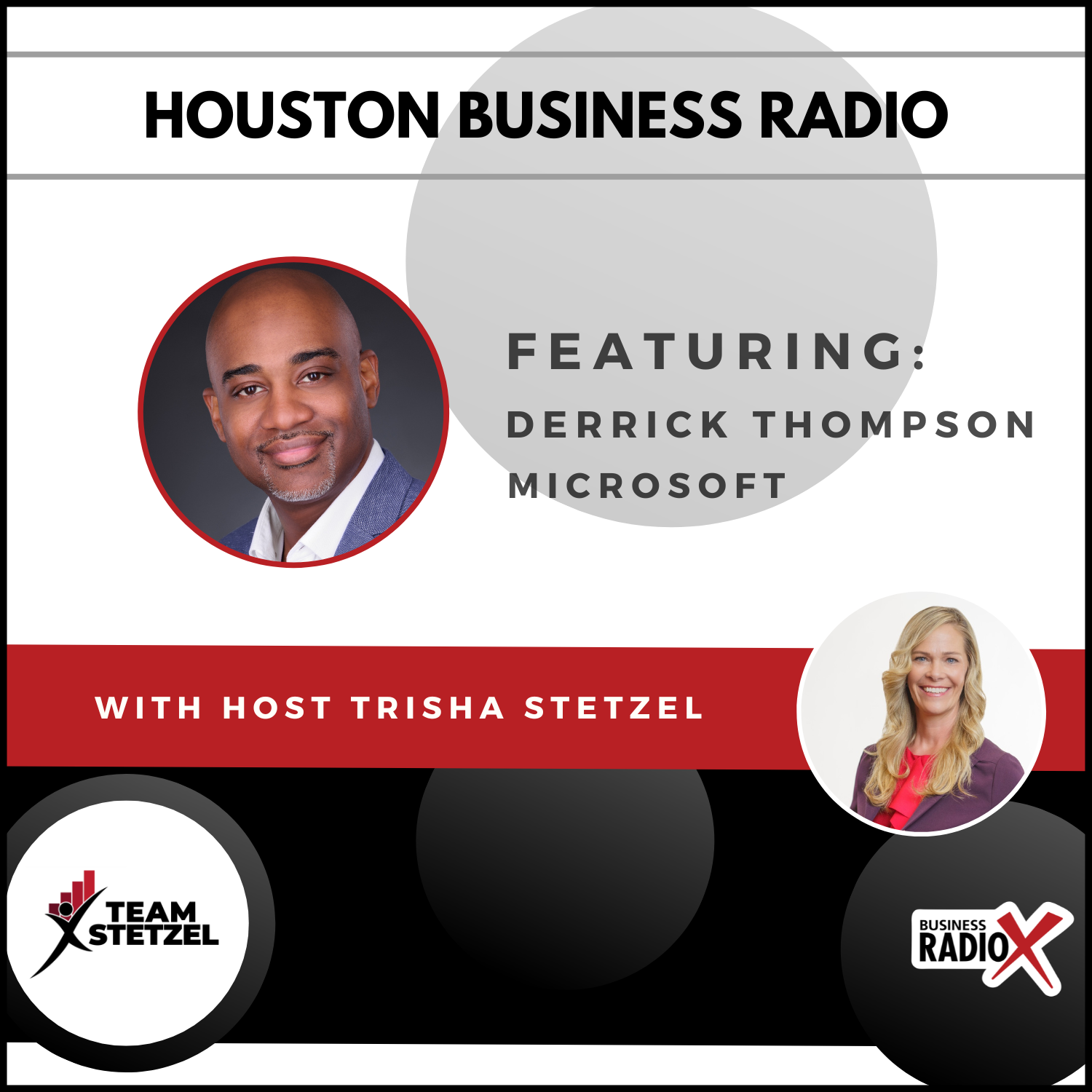

 Derrick Thompson is a seasoned technology leader with nearly 20 years of experience driving innovation and growth in the IT and cloud industries.
Having held influential roles at IBM, Citrix, and Google Cloud, Derrick brings a proven track record of shaping partner ecosystems, advancing technical enablement, and scaling business development strategies across diverse sectors.
Currently serving as the Director of Partner Technology Strategy at Microsoft, Derrick plays a pivotal role in helping partners across the Microsoft ecosystem build differentiated offerings and drive successful business outcomes.
He collaborates with organizations to develop integrated business and IT strategies that harness the power of AI and emerging technologies, enabling them to deliver exceptional customer value while maintaining a strong competitive advantage. 
Known for his deep expertise in partner program strategy and technical alignment, Derrick continues to champion forward-thinking technology adoption and transformation, empowering businesses to grow and evolve in an ever-changing digital landscape.
LinkedIn: https://www.linkedin.com/in/derrickrthompson/
Website: https://partner.microsoft.com/en-US/
 This transcript is machine transcribed by Sonix.
TRANSCRIPT
Intro: Broadcasting live from the Business RadioX studios in Houston, Texas. It’s time for Houston Business Radio. Now, here’s your host.
Trisha Stetzel: Hello, Houston. Trisha Stetzel here bringing you another episode of Houston Business Radio. Today’s guest is Derrik Thompson, director of enterprise partner Solutions at Microsoft. With nearly 20 years of industry and channel experience, including leadership roles at IBM, Citrix, and Google Cloud. Derrick has built a career at the intersection of technology, strategy and partnership. At Microsoft, he helps organizations harness AI and emerging technologies to differentiate their businesses and drive measurable outcomes. I’m not done yet, Derrick. I’m almost there. Beyond his corporate work, Derrick is passionate about mentorship and community service. You guys know that that is near and dear to my heart, and he’s currently serving on the board of directors at Goodwill in Charlotte. He’s here to share insights from his career journey, the importance of mentorship, and what makes Microsoft a platform for innovation and impact. Derrick, welcome to the show.
Derrick Thompson : Oh man. Trisha, thank you so much. What a great intro. A lot more than I imagined. So I really, really appreciate that. And certainly thank you. And to those listeners that are live and also those that will listen to the recording. Appreciate you having me.
Trisha Stetzel: Thank you so much, Derrick, for being here with me today. And I love to take the opportunity to create these amazing introductions for my guests, because we don’t often do that for ourselves. So that is my gift to you this morning.
Derrick Thompson : Thank you.
Trisha Stetzel: Okay, so Derrick, first off, let’s take a little deeper dive into Derrick Thompson. Tell us a little bit more about yourself, whatever you’d like to share. And then let’s dive into your current role at Microsoft.
Derrick Thompson : Yeah, no. For sure. And I you know, I like to start these really on a personal level, to be honest. Trisha. Right. So Derrick Thompson, I’m a husband, a father, a son, a hopefully a good friend to a lot of people. And I just so happen to be, you know, a director over at Microsoft. And, um, what’s funny is I think a lot of that fuels the way that I operate each and every day. I grew up in a very small town. Um, many people may not recognize this name, but Lumberton, North Carolina. It’s a very rural town, um, typically known for textiles and manufacturing and farmland. Um, but I had an opportunity to do some really cool things and be surrounded by people that really cared about what happened to my future, and so took full advantage of that. Um, did some some time with the not just my high school, but spent time with some of the colleges as well, and ended up going to Wake Forest University for undergrad. Had an incredible time there, graduated um, took a job with IBM and the rest is kind of kind of history. And so when I think about those, um, humble beginnings, I think it’s just kind of gave me a drive and a passion to do, really two main things. One, to just explore passions because I think that’s really, really important. But then two, just the value of connections, personal relationships and then obviously giving back. So that’s a little bit about me for sure.
Speaker4: I love that. And Derrick.
Trisha Stetzel: You and I connected well. Linkedin suggested that we connect because we have IBM in common. Right. It’s very, uh, small big world. Right. That’s right. For sure. And, uh, thank you for being vulnerable and sharing your background. I really appreciate that. Let’s dive into your role at Microsoft. Uh, what what is it that you’re bringing to your clients or customers, uh, in your current.
Derrick Thompson : Yeah. Uh, you know, Microsoft obviously is a great company, and we’re on the precipice of what we believe to be a transformational era. Around this idea of of AI. And so I work in a group that’s called enterprise Partner Solutions that you mentioned a little earlier. And our job, quite frankly, is to work directly with our business partners and help them build both capability and capacity to meet that opportunity in terms of AI head on. And so we work very closely with ISVs, which we call software development companies. That’s a much broader statement, but I think it talks to the breadth and the depth of the companies that come on board. And really it says enterprise. And we work with obviously some of the larger companies. Um, but there’s also obviously a segment within Microsoft that really focuses in on the small and medium businesses because we realize, obviously, the closer you are to the customer, the more you really understand the challenges. And Microsoft is, we believe, the best infrastructure to build and the best partner to build, not just for today, but also for for the future. And so I have a great time working with the team. Um, visiting partners, talking to clients about their technology roadmap and how we can actually be helpful as we serve our joint customers together.
Trisha Stetzel: Yeah, I love that. So the thing that bubbles up for me around SMEs and these owners of, um, the smaller to medium sized businesses is some of them run away from AI. Some of them are running towards AI. So what would you just give me a like an overview of kind of where your head is at when we talk about AI and how we can get more SMEs to really embrace this idea of AI moving forward?
Derrick Thompson : Yeah, I’ll give a concept. I mean, when I walk into a room and I talk to really any partner or any customer about the idea of AI, you know, you could have any number of definitions, but I think the best way to really understand it, I’ll ask the question. I’ll say it like this. Hey, how many of you have actually used some of the tools that enable you to take advantage of this new technology? And inevitably, you know, you’ll get maybe 30% of the people to raise their hand. And I believe that’s a critical component that we’re missing. Like, it’s very difficult for you to appreciate some of the advancements and technology that’s occurred, quite frankly, over the past 6 to 9 months without really diving in deep and putting hands on and learning firsthand experience. So that’s my number one question. And so when I talk about AI, you know, the company believes that advancement in technology doesn’t happen without the idea of human ambition or an inclusion of human ambition. And so we talk about agents, we talk about copilot, Microsoft copilot, and then we talk about plus human ambition. And we look at the technology as really a process that really takes away the mundane task that one might do, which unlocks the human ambition that allows for creativity and innovation. So it’s not as scary as many people may think. Oh my goodness, you know the robots are coming to take over. No, no. What’s scary is that we haven’t taken the time to really understand how can we unlock the creativity that we have as humans and leverage the technology for what it has the capability to do today? Because it can tenex the type of activity that you’re doing and help you to meet the customer’s need head on. So yeah, it’s exciting. Trisha, there’s a lot going on.
Trisha Stetzel: I love that. Well, and you said 6 to 9 months. I mean, it’s amazing how quickly this technology is moving. It’s moving so swiftly. None of us can even keep up with it. Especially those of us who are SMEs. Right? Owners, leaders in those spaces. So what advice then, would you give to those who haven’t touched it? They actually probably have used AI and they just don’t know it yet, right? Because they’re using calendaring tools and these other things that are really AI. It’s not just the chat bot guys.
Derrick Thompson : Uh, it’s not.
Trisha Stetzel: Actually so much more. So what advice would you give to those SMB owners listening today that are really super afraid of taking the dive into that?
Derrick Thompson : Yeah, I think there’s a number of ways that you can get really quickly involved in the technology in itself. Um, Microsoft offers a lot of, um, learning frameworks and also classes, quite frankly, for free. And so you can go to the website and take some of the one on one courses around AI, understanding the data, how important data is. Um, underneath that, because it’s almost a garbage in, garbage out type of approach. Um, we leverage the data to then help make sense of the next steps that we should take from a strategy standpoint. So I would recommend learning, take advantage of all the free resources that you’ll see out there on the web. And then the other piece is that if you’re a small company, get every employee right in your organization. Access to Copilot, access to Microsoft 365 and really dive in and start to start to use it. One of the things I think that has made Microsoft so special is that fundamentally, over the past 12 to 18 months, every employee within the partner organization has has access to copilot. So we’ve kind of, I would say back in the day, kind of drink our own Kool-Aid, right. So we we’ve done that internally because the more we use it, the more we’re able to articulate the value to those that are just exploring. So those are two things that I would do. Go tackle the learning. A lot of it is free. And secondarily, make sure that your employees have access to that technology to play around with it and get more comfortable with how it can best be used.
Trisha Stetzel: I love that, thank you. What great advice. So I got excited when you said Microsoft 365 because many of us, many of us SMB owners and leaders have Microsoft 365, and we are not using its full capabilities. Can you talk about that for just a minute?
Derrick Thompson : Yeah. I mean, you and I like to use, you know, some examples. Um, many of us have, you know, iPhones or you may be a Samsung person, but let’s be honest, outside of the actual web, um, text messaging and maybe a few other apps, like there’s still 85% of the capability that that smartphone can do for you. And I think about that with Microsoft 365 as well. Right. There’s so many different components even that’s embedded within Excel. You know obviously within word document as well as PowerPoint. Um, and Microsoft, we’ve been able to unlock the use of agents even across some of the CRM systems and CRM systems that we’re leveraging. The same can be true for small businesses that are leveraging 365. And so really what happens is copilot becomes kind of the the interface into your own information. So now you can use all the great information that you’ve gained over the past years about your customers, right. And be able to data mine that in the appropriate way, be able to surface it in the right way at the right time as you’re having conversations, as you’re, you know, putting projects out there and doing bids, etc.. And so really starting to look at, well, what more can I do with what I already have, leveraging the technology that’s embedded in there will really start to unlock even more for you in the future.
Trisha Stetzel: I love that and free training. You guys. Free training. It’s out there. So, Derrick, uh, I know the listeners are already interested in connecting with you. Maybe they have some questions or you could direct them, uh, in a particular way. What is the best way for them to connect with you?
Derrick Thompson : Yeah, I think the best one. I’m always open to conversation, for sure. Um, you can find me on LinkedIn. My handle is Derrick d e r r I c k r Thompson t h o m p s o n. So feel free to reach out connect, follow. I’d love to hear from from any of you for sure.
Trisha Stetzel: I love that, and by the way, that’s how I found Derrick, right on LinkedIn. Um.
Derrick Thompson : Okay, I’ll tell you one thing too. Just along with that, you know, uh, we’ve ascribed to the idea of being learn it alls. And I think one of the things behind learning it all is versus know it alls is this idea that you can learn from anyone. And so I’d love to hear, obviously, from your listeners and understand well what are some of the things that they’re facing, because it can probably unlock a lot more and we can pour into that right where you are. So really appreciate the opportunity.
Trisha Stetzel: Absolutely, I love that. So you guys heard what Derrick said. Answer the question. You guys can comment in the YouTube comments area. Or if you’re watching on social media, you can certainly comment there. And then I’m going to tag Derrick so that he gets your questions, or you guys can just reach directly out to him at his LinkedIn profile. Derrick R Thompson. Okay, Derrick, I want to move shift a little bit away from the technical side of things and tackle this idea of leadership or how you lead today. So you’ve held leadership roles with IBM, with Citrix, Google Cloud, and now with Microsoft. So what are the key lessons that you’ve learned along this leadership journey that you’d like to share with the audience?
Derrick Thompson : There’s been a number of them. Trisha. I would say, um, one thing important is when you step into a leadership role, um, you’re really stepping into a role where you become more of a servant, if you will. So this idea of servant leadership. And what do I mean by that? It means being able to connect with people, um, a little deeper than the surface level. Right? Now, I’m not saying that, you know, I’ve got to know everything about you from your personal standpoint, or you need to know everything about me. But I do need to understand what’s going to help motivate you on a daily basis. Right? I need to be able to empathize with you when you’re saying, Derrick, today I just may not be able to bring my best self. Well guess what? Well, I want you to make sure that you’re in a space where you can bring your best self and that we can collaborate in the in the best way. So I think that establishing a connection and a, um, reciprocal trust is very, very important. So that’s, that’s really number number one. Um, I think the other thing, and I alluded to it a little bit earlier around this idea of know it all versus learn it all. Um, I think you have to realize and accept the fact that you don’t know everything. You’re not an expert in everything. And in fact, that’s why I hired you, right? Like, I, I would hire someone else that’s smarter.
Derrick Thompson : Smarter than I am, um, in a particular area because I know that it’s the combination of those things that really make up a great team. And there’s no there’s really no substitute for that. And then been able to give credit where credit is due. Right. And people love making sure that that they get, um, the amount due to them. And I’m not talking financially all the time or tangibly, but just a simple thank you. Right. Um, I learned from one of my mentors that, um, in the moment, feedback is some of the best feedback that you can give someone. Now, whether that’s feedback directly on something that just took place or even just accolades for something that just took place in the moment. Right. Because those things are critically important. Look, we all have busy lives outside of work, right? And I realize that. But and so when you step in, you give your best self. People need to be acknowledged for that. And I never want to lose sight for that. So those are some of the things that I’ve learned kind of over my leadership journey. And I think the last piece that I’ll say, I could talk about this stuff all day long, but the last piece is, um, really understanding and learning how to prioritize your time Effectively right? No one is an expert at that, right? I’m still working on it, for sure.
Trisha Stetzel: Me too.
Derrick Thompson : If you if you do not carve out the right time to at least recharge yourself, how are you going to pour into someone else? Right. And I, I think about that even from a parenting standpoint. And obviously with my spouse, I have to have the time to pour into me so that I can pour in to others. So never lose sight of that. Um, because I think it’s extremely, extremely valuable in terms of of leadership.
Trisha Stetzel: I’m so glad that you brought that up. You know, I was I was going to tout that. I’m I want to be a learn at all. I think I’m going to be a learn at some and just get better.
Derrick Thompson : I love it, absolutely.
Trisha Stetzel: And remember to put my mask on first. That was the thing that came up for me when you were talking about time management and recharging your batteries. It’s, you know, it’s not always about, um, or it’s never about being selfish, right? And it’s not always about just resting or unplugging, but recharging your batteries. So what is your favorite thing to do? Right? Um, for the listeners, what is your favorite thing to do to recharge your batteries? Um, I’ve been thinking about.
Derrick Thompson : Yeah, I love to read. Uh, that’s still, uh, a pretty big hobby of mine. And, you know, I’ll read, you know, business books and that type of stuff. I’ll read the Bible. Right. It’s one of my favorite hobbies as well. Um, but the other thing that I’ll do is just sit and be still, Trisha. Like. Like, just be still. I’ll go, you know, on a patio, or I’ll just go take a walk. Um, outside, in between conference calls, maybe do a lap or two. Um, just to just to refocus and kind of steady, steady your, your mind and so that you can then focus on some of the things that, that, that matter. Um, I tell people this all the time, I, you know, my order for a long time has always been God, my wife, my kids. And then everything else falls after that, I. I love my job, I absolutely do. Um, but that’s been my order. And I’ve been blessed enough to work for managers that have never asked me to compromise on that at all. And so I believe that’s extremely, extremely important.
Trisha Stetzel: Absolutely. It sounds like you’ve had some great leaders in your past and you continue to be a great leader. Um, you mentioned mentorship, and I know that that’s very clear, uh, that that’s something that’s important to you. So how is mentorship impacted your own career as you’re moving through your leadership journey? And how do you pay that forward with the next generation of leaders?
Derrick Thompson : That’s a really good thought. Um, you know, I can go all the way back to, you know, even my time in undergrad at Wake Forest University, I had a, had a mentor who and I’ll, I’ll describe the story. I’ll try to make it short, but, um, I’m in a, uh. I’m part of a group, um, a group that founded what we call knowledge network. And it was a a technology company that was incubated by the university. And so myself and four other people helped to found that company. We did all types of kind of pro bono web design work and database work, that type of stuff for the community. And the cool part about that was that the funds that we used or that we made rather, not only did give us, you know, a bit of a stipend, um, but it also provided a bucket of funds, if you will, for, um, underprivileged college students that would come after us. And so, you know, very successful, um, had a great time, but I had a mentor associated with that program who, um, introduced me to, um, someone an executive at IBM. And, you know, I was at we were in a room and she was sitting at a at a table, and I just kind of walked to the door. I was going to be a part of the meeting, but I just kind of stood at the door, not really thinking that I should go all the way in. Maybe I grab a seat over in the corner.
Derrick Thompson : Well, she stood up and she said, you know, Derrick, come on in and you can have my seat. And, you know, reluctantly, for any number of reasons. One, maybe I didn’t feel like I was quite ready, you know, for, you know, to be in that room at that table. Um, but then the other piece was, you know, well, why not? Why not take advantage someone, you know, someone did this for me. So I took a seat. And it just so happens that the person that sat beside was a general manager of IBM at the time. And he gave me my first internship. Um, he was the same guy that hired me on full time, um, before my senior year. He was the same guy that was at my wedding. So there’s a there’s just a consistent thread around mentors that open up opportunities and quite frankly, see things in you before you’re ever even able to see them in yourself. And so that stuck with me for so long. And a lot of my mentors have played a similar role in various stages in my life. And I found that to be important and, um, just obviously a reason to give back and always searching for kind of the next individual that I can do something similar for. And that’s been really, really important to me. Um, and I’ve been able to do that. And so I’ve been excited about it. And certainly I’m blessed to be able to have the opportunity to do it for sure.
Trisha Stetzel: That’s amazing. So like a for real seat at the table. What a great story. I love that because we talk about that, you know, virtually or just as an idea. All of us want a seat at the table that we feel like we belong at. And um, you got yours. And that’s what started this, and I think it’s fantastic. Yeah. Okay. So beyond mentoring and you’re an amazing leader, you are also serving the community and currently sit at on the board for goodwill. Let’s talk about that number one. How long have you been sitting on the board? What is the role and why did you get involved in the first place?
Derrick Thompson : Yeah for sure. So I’ve been on the board of Goodwill now for three and a half years. And so I’m the chair for the missions committee. And goodwill exists. I mean, you’ve I mean, everyone kind of have heard at least of goodwill. Um, and when you think of goodwill, you think of what, Trisha? You think of donations and.
Trisha Stetzel: Yeah, the donation line. Right?
Derrick Thompson : Yeah. Yeah. You think of those things, right? Which is all. Which is all true. But what’s amazing is there’s a whole infrastructure that really drives everything that you see. So that donation, that that small sweater or, um, used, Use slightly used purse or shoes that you may not have need for. Um eventually goes through the infrastructure and can turn itself into a job or an opportunity for someone else that’s just starting out. And so to be able to be involved in helping to kind of make that work has just been incredible, right? I mean, I grew up in I mentioned a small town in Robertson County, um, where people with 30% of most people were living below the poverty line at one time. And having an opportunity to just have a job, an honest work that’s associated with an entity like goodwill can change. Change a life and change a family forever. And so part of my job on the missions committee is to really, as a chair, is to really ensure that the things that we put put together in terms of social enterprise and obviously backed by philanthropy, allows us to continue those types of activities and also community outreach that gives people the opportunity to, you know, seize opportunities, see about possibilities if you will, and just grow uniquely right where they are and give people hope. Right? I mean, that’s that’s literally what it does. And it’s been an amazing, an amazing journey. And I’m really proud of the work that we’ve been able to do here in the Charlotte area.
Trisha Stetzel: That’s beautiful. Thank you for that. I’m a big proponent of community service. I think that any of us who are out working or have our own businesses, or are leaders in the community, expecting those people out there to give back to us, we should be giving in return, uh, and giving first right back communities that we’re a part of. Okay. So as we get to the back end of our conversation today, I know it went by so fast.
Derrick Thompson : Really quickly.
Trisha Stetzel: Yes, exactly. What advice or just your own experience, what would you give back or tell the audience around? Community service. Getting involved. Sitting on a board. Any of any of the above. What would you tell those listeners today who want to get involved and don’t know where to start?
Derrick Thompson : You know, I think there’s opportunity around us everywhere. Trisha. Um, I’ll give you another quick story. Uh, myself and one of my best friends in undergrad, we, um, participated in Big Brothers Big Sisters, and we had jointly we had a ten year old guy, um, who, um, had some family challenges, um, and growing up in a different environment. And we poured into him, we would bring him on campus because I think it’s impossible for people to understand what they can do if they can’t see it taking place. So we used to bring him to campus. He used to participate in some of the the leadership activities that we actually did. We would obviously have fun, take them to the mall and those types of things. But I think it created a passion in him to want to replicate some of those things and allow his future to look different. Um, if you fast forward that, I mean, we were there when he graduated from high school, which is already a stat beater, if you will. Um, we were right there when he graduated from college, um, in Georgia. Uh, and we were there when he got his first job, and I had moved my entire family, um, to the West Coast for the job with Google. And he was there because he had his first job at a small tech company in Silicon Valley, and he was a part of my wedding. So I say all that to say there’s opportunity right in front of you, right? And I think there’s something to being, um, persistent and to finding someone that you can really, really pour into and show them just how much you care about what happens to them next. And if you do that, I mean, I believe it’ll just work wonders, not just for that individual, but also for you. And it helps you to understand, honestly what we’re really here, what we’re really here for. Trisha, I said earlier that I you know, I love this stuff. I’ve got my, um, priorities. But I just believe that unless we’re able to do something for someone else. Um, none of it. None of it matters.
Trisha Stetzel: Mhm. Oh my goodness. Your words today are so powerful Derrick thank you for sharing. I appreciate you um coming on the show today being vulnerable, sharing stories. I would love for people to connect with you guys if you haven’t already. Some of you already have. If you haven’t already gone to LinkedIn and connected with Derrick, I want you to do that right now. Derrick d e r r I c k r Thompson t h o m p o n on LinkedIn. And if you can’t find him, you guys are already connected to me. Go. Go find my connection with Derrick. It’s not hard. It’s not hard at all. Derrick, thank you so much for being with me today. It’s been my pleasure.
Derrick Thompson : Thank you. Trisha. Thank you.
Trisha Stetzel: That’s all the time we have for today. If you found this conversation with Derrick today, um, insightful, please share it with a fellow entrepreneur, a veteran or a Houston leader ready to grow. Be sure to follow, rate, and review the show. Of course, it helps us reach more bold business minds just like yours and your business. Your leadership and your legacy are built one intentional step at a time. So stay inspired, stay focused, and keep building the business and the life you deserve.



 Rohit Panedka is













 After grow up in rural New York and joining the United States Army, Kelly Greene learned quickly to adapt to her surroundings to be successful. She attended Wittenberg University in Springfield, Ohio to earn her Bachelor’s Degree in Elementary Education.
 Claire Conway is the STEM Ecosystem Programs Manager at