Business RadioX ®

  • Home
  • Business RadioX ® Communities
    • Southeast
      • Alabama
        • Birmingham
      • Florida
        • Orlando
        • Pensacola
        • South Florida
        • Tampa
        • Tallahassee
      • Georgia
        • Atlanta
        • Cherokee
        • Forsyth
        • Greater Perimeter
        • Gwinnett
        • North Fulton
        • North Georgia
        • Northeast Georgia
        • Rome
        • Savannah
      • Louisiana
        • New Orleans
      • North Carolina
        • Charlotte
        • Raleigh
      • Tennessee
        • Chattanooga
        • Nashville
      • Virginia
        • Richmond
    • South Central
      • Arkansas
        • Northwest Arkansas
    • Midwest
      • Illinois
        • Chicago
      • Michigan
        • Detroit
      • Minnesota
        • Minneapolis St. Paul
      • Missouri
        • St. Louis
      • Ohio
        • Cleveland
        • Columbus
        • Dayton
    • Southwest
      • Arizona
        • Phoenix
        • Tucson
        • Valley
      • Texas
        • Austin
        • Dallas
        • Houston
    • West
      • California
        • Bay Area
        • LA
        • Pasadena
      • Colorado
        • Denver
      • Hawaii
        • Oahu
  • FAQs
  • About Us
    • Our Mission
    • Our Audience
    • Why It Works
    • What People Are Saying
    • BRX in the News
  • Resources
    • BRX Pro Tips
    • B2B Marketing: The 4Rs
    • High Velocity Selling Habits
    • Why Most B2B Media Strategies Fail
    • 9 Reasons To Sponsor A Business RadioX ® Show
  • Partner With Us
  • Veteran Business RadioX ®

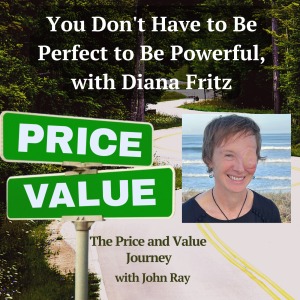
You Don’t Have to Be Perfect to Be Powerful, with Diana Fritz

May 21, 2025 by John Ray

You Don't Have to Be Perfect to Be Powerful, with Diana Fritz, on The Price and Value Journey podcast with host John Ray
North Fulton Studio
You Don't Have to Be Perfect to Be Powerful, with Diana Fritz
Loading
00:00 /
RSS Feed
Share
Link
Embed

Download file

You Don't Have to Be Perfect to Be Powerful, with Diana Fritz, on The Price and Value Journey podcast with host John Ray

You Don’t Have to Be Perfect to Be Powerful, with Diana Fritz (The Price and Value Journey, Episode 133)

In this episode of The Price and Value Journey, executive coach and author Diana Fritz shares the story behind her hard-earned wisdom. She talks about how surviving cancer, navigating single parenthood, and leading in high-stakes environments taught her that strength is not about perfection. It is about showing up with honesty, clarity, and conviction, especially when life gets messy.

Diana and host John Ray explore how embracing your own imperfection can make you a more powerful leader and service provider. They discuss emotional resilience, self-leadership, and the quiet confidence that comes from doing the work no one sees. If you have ever felt like you needed to have it all together to lead, sell, or grow your business, this conversation will help you let go of that belief and replace it with something more truthful and lasting.

The Price and Value Journey is presented by John Ray and produced by North Fulton Business Radio, LLC, an affiliate of the Business RadioX® podcast network.

Diana Fritz, Leadership and Change Consultant

Diana Fritz
Diana Fritz

Diana Fritz is a dynamic executive leader, cancer thriver, and passionate advocate for authenticity, resilience, and positive impact.

With over 25 years of experience spanning executive leadership, operations, human resources, business planning, and technology, Diana has built a reputation for fostering teamwork, driving organizational health, and leading with influence, not just a title.

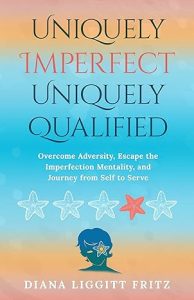
A member of the Maxwell Leadership Executive Program, a Corporate Facilitator, and a Certified DISC Consultant, Diana is dedicated to empowering individuals and organizations through open, engaging, and values-driven leadership. Her mission is to Uniquely Imperfect. Uniquely Qualified. : Overcome Adversity, Escape the Imperfection Mentality, and Journey from Self to Serve, by Diana Fritzcreate a meaningful impact and ensure every person she encounters feels valued.

Diana is the author of Uniquely Imperfect. Uniquely Qualified: Overcome Adversity, Escape the Imperfection Mentality, and Journey from Self to Serve. In her inspiring book, Diana shares her powerful journey through cancer, blending personal experience with reflection and practical guidance. Her message is both vulnerable and empowering: we all have some “type of cancer,” and our flaws often make us the best leaders and servants. This book encourages readers to navigate emotional and high-stakes decisions with grace, to recognize their inherent value even in the midst of struggle, and to reframe adversity as a source of strength and a light for others.

Beyond her professional achievements, Diana is a devoted wife, mother, and committed volunteer. She thrives on sharing insights about leadership, resilience, and navigating challenges with authenticity.

Website | LinkedIn

Key Takeaways from Diana Fritz in this Episode

  • You don’t have to be perfect to lead with impact. Diana shares how her experiences with cancer, single parenthood, and executive leadership taught her that power comes from showing up honestly, not flawlessly.

  • Hardship can sharpen your purpose. Instead of weakening her, Diana’s challenges gave her clarity about what matters and how she wanted to lead and serve.

  • Authenticity builds deeper trust than performance ever will. Clients and teams don’t need polished personas. They need someone who’s real, grounded, and present, even when things are uncertain.

Topics Discussed in this Episode

00:00 Introduction to Diana Fritz
02:38 Diana’s Personal Journey with Cancer
05:55 Mindset and Adversity
09:23 Influence of Viktor Frankl and Stephen Covey
13:10 Applying Lessons in Leadership and Life
16:59 Resilience and Reflection
24:33 The Gold in Our Broken Edges
26:01 Embracing Uniquely Imperfect
28:45 The Power of Authenticity
31:16 Overcoming Self-Doubt
34:03 Redefining Normal
35:09 Confidence in Imperfection
39:47 Practical Tips for Imperfect Leadership
42:13 Connecting with Diana Fritz

About The Price and Value Journey Podcast

The Price and Value Journey is a show for expert-service professionals who want more than formulas and quick fixes. If you’re a solo or small-firm provider—consultant, coach, attorney, CPA, or fractional executive—you know the real work of building a practice goes far beyond pricing. It’s about finding clarity, showing up with confidence, and learning how to express the full value of what you do in ways that clients understand and appreciate.

The Price and Value Journey Podcast with host John RayHosted by John Ray, business advisor and author of The Generosity Mindset, this podcast explores the deeper journey behind running a services business: how you think about your work, how you relate to clients, and how you sustain a business that’s not only profitable but deeply fulfilling. Yes, we talk pricing, but we also talk mindset, business development, trust, empathy, positioning, and all the intangible ingredients that make a practice thrive.

With solo episodes and conversations featuring thoughtful guests, The Price and Value Journey is a companion for professionals who are building something meaningful. Produced in partnership with North Fulton Business Radio, LLC, an affiliate of Business RadioX®, the podcast is accessible on all major podcast platforms. The complete show archive is here.

John Ray, Host of The Price and Value Journey
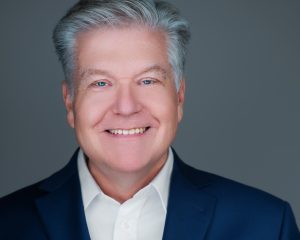
John Ray, Author of The Generosity Mindset and Host of The Price and Value Journey

John Ray is the host of The Price and Value Journey.

John owns Ray Business Advisors, a business advisory practice. John’s services include business coaching and advisory work, as well as advising solopreneurs and small professional services firms on their pricing. John is passionate about the power of pricing for business owners, as changing pricing is the fastest way to change the profitability of a business. His clients are professionals who are selling their expertise, such as attorneys, CPAs, accountants and bookkeepers, consultants, coaches, marketing professionals, and other professional services practitioners.

In his other business, John is a podcast show host, strategist, and the owner of North Fulton Business Radio, LLC, an affiliate of Business RadioX®. John and his team work with B2B professionals to create and conduct their podcast using The Generosity Mindset® Method: building and deepening relationships in a non-salesy way that translates into revenue for their business.

John is also the host of North Fulton Business Radio. With over 850 shows and having featured over 1,300 guests, North Fulton Business Radio is the longest-running podcast in the North Fulton area, covering business in its region like no one else.

John’s book, The Generosity Mindset: A Journey to Business Success by Raising Your Confidence, Value, and Prices

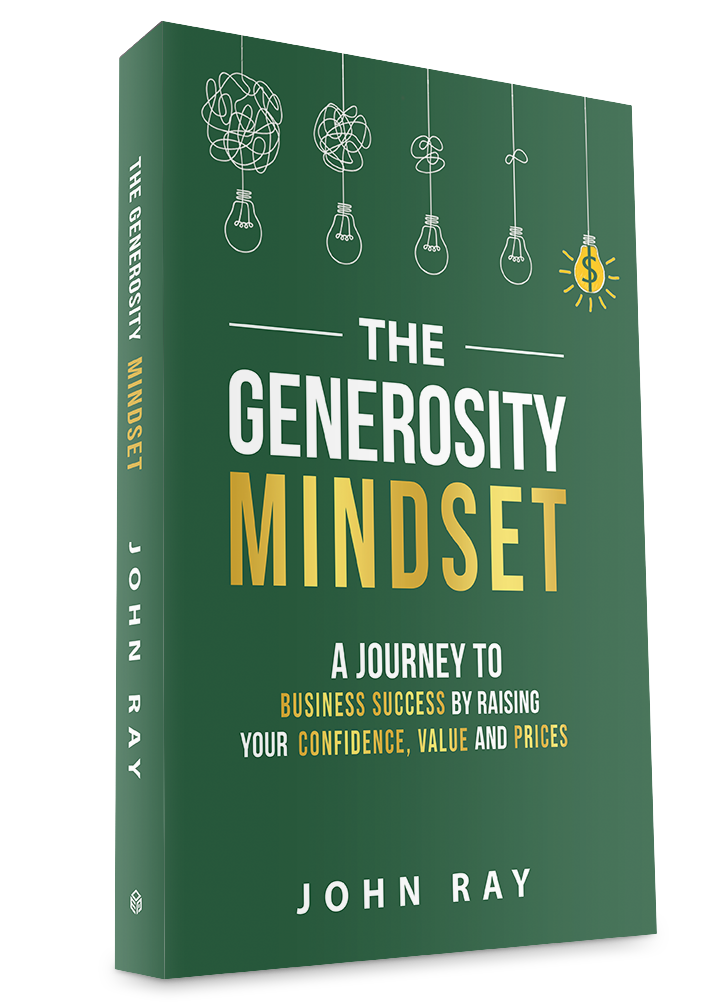
The Generosity Mindset, by John RayJohn is the #1 national best-selling author of The Generosity Mindset: A Journey to Business Success by Raising Your Confidence, Value, and Prices.

If you are a professional services provider, your goal is to do transformative work for clients you love working with and get paid commensurate with the value you deliver to them. While negative mindsets can inhibit your growth, adopting a different mindset, The Generosity Mindset™, can replace those self-limiting beliefs. The Generosity Mindset enables you to diagnose and communicate the value you deliver to clients and, in turn, more effectively price to receive a portion of that value.

Whether you’re a consultant, coach, marketing or branding professional, business advisor, attorney, CPA, or work in virtually any other professional services discipline, your content and technical expertise are not proprietary. What’s unique, though, is your experience and how you synthesize and deliver your knowledge. What’s special is your demeanor or the way you deal with your best-fit clients. What’s invaluable is how you deliver outstanding value by guiding people through massive changes in their personal lives and in their businesses that bring them to a place they never thought possible.

Your combination of these elements is unique in your industry. There lies your value, but it’s not the value you see. It’s the value your best-fit customers see in you.

If pricing your value feels uncomfortable or unfamiliar to you, this book will teach you why putting a price on the value your clients perceive and identify serves both them and you, and you’ll learn the factors involved in getting your price right.

The book is available at all major physical and online book retailers worldwide. Follow this link for further details.
Connect with John Ray:

Website | LinkedIn | Twitter

Business RadioX®:  LinkedIn | Twitter | Facebook | Instagram

Tagged With: adversity, authenticity, Diana Fritz, imperfect leadership, imperfection, John Ray, Leadership, mindset, resilience, self doubt, Stephen Covey, The Price and Value Journey, trust, Viktor Frankl

The Power of Persistence and Value in Sales, with Sales Coach Jacob Hicks

March 26, 2025 by John Ray

The Power of Persistence and Value in Sales, with Sales Coach Jacob Hicks, on The Price and Value Journey with host John Ray
North Fulton Studio
The Power of Persistence and Value in Sales, with Sales Coach Jacob Hicks
Loading
00:00 /
RSS Feed
Share
Link
Embed

Download file

The Power of Persistence and Value in Sales, with Sales Coach Jacob Hicks, on The Price and Value Journey with host John Ray

The Power of Persistence and Value in Sales, with Sales Coach Jacob Hicks (The Price and Value Journey, Episode 126)

In this episode of The Price and Value Journey, host John Ray sits down with Jacob Hicks, a dynamic sales coach, consultant, and host of the Purpose Driven Progress podcast. Jacob shares his journey from a shy retail worker to a skilled sales professional, emphasizing the importance of mindset, gratitude, and empathy in sales. The discussion delves into effective follow-up strategies, overcoming mindset blocks, and the essential role of daily affirmations and gratitude in maintaining a positive sales mindset. Jacob also introduces his “Delete and Dominate” strategy to handle negative client interactions and underscores the value of retail lessons for professional service providers. This episode is packed with actionable insights for anyone looking to enhance their sales approach and mindset.

The Price and Value Journey is presented by John Ray and produced by the North Fulton affiliate of Business RadioX®.

Jacob Hicks

Jacob Hicks, Sales and Success Coach, on the Price and Value Journey with host John Ray
Jacob Hicks

Jacob Hicks is an exceptional Elite Success Coach dedicated to helping individuals build a satisfied and full life. As a certified Elite Coach, Jacob collaborates with leaders, professionals, and entrepreneurs, guiding them towards clarity and success in both their personal and professional lives. His coaching philosophy centers on empowering his “Coaching Allies” to discover optimal strategies for business and personal fulfillment.

Jacob’s approach involves creating goals, developing actionable plans, and executing those plans effectively. Through weekly one-hour calls and supplementary exercises, Jacob provides ongoing support and accountability to his clients. His passion for coaching is evident in his commitment to helping individuals gain clarity and construct actionable plans to realize their aspirations.

With a background in sales since 2014, Jacob has consistently achieved remarkable results across various industries. His track record includes surpassing goals, setting records, receiving awards, and effectively leading teams. This experience informs his coaching practice, allowing him to offer valuable insights into sales strategies and mindset. Jacob’s expertise in sales and coaching has been recognized in various contexts, making him a trusted advisor for those seeking to enhance their performance.

Beyond his professional pursuits, Jacob is committed to continuous personal growth. He is an avid reader, a self-taught piano player, and an investor. His passion for learning extends to travel, having explored extensively throughout the United States and the world. Jacob’s travels have also led him to engage in mission work in Liberia, demonstrating his commitment to making a positive impact beyond his coaching practice. This blend of professional expertise and personal growth makes Jacob Hicks a standout figure in the field of success coaching.

Website | LinkedIn | Instagram | Facebook

Topics Discussed in this Episode

00:00 Introduction and an Overview of Jacob Hicks
01:21 Jacob Hicks’ Sales Journey
03:24 The Importance of Follow-Up in Sales
06:24 Providing Value in Follow-Ups
17:27 Lessons from Retail for Professional Services
20:46 Mindset in Sales
22:21 Morning Affirmations and Gratitude
23:11 Experimenting with Affirmations
24:21 The Power of Gratitude
26:15 Common Mindset Blocks in Sales
28:38 Empathy vs. Sympathy in Sales
29:46 “Delete and Dominate” Strategy
36:54 Effective Follow-Up Strategies
40:40 When to Hire a Sales Coach
42:20 Conclusion and Contact Information

About The Price and Value Journey Podcast

The title of this show describes the journey all professional service providers are on: building a services practice by seeking to convince the world of the value you offer, helping clients achieve the outcomes they desire, and trying to do all that at pricing that reflects the value you deliver.

If you feel like you’re working too hard for too little money in your solo or small firm practice, this show is for you. Even if you’re reasonably happy with your practice, you’ll hear ways to improve both your bottom line and the mindset you bring to your business.

The show is hosted and produced by John Ray and North Fulton Business Radio, LLC, an affiliate of Business RadioX®. The show can also be found on all the major podcast apps. The complete show archive is here.

John Ray, Host of The Price and Value Journey

John Ray, Author of The Generosity Mindset and Host of The Price and Value Journey

John Ray is the host of The Price and Value Journey.

John owns Ray Business Advisors, a business advisory practice. John’s services include business coaching and advisory work, as well as advising solopreneurs and small professional services firms on their pricing. John is passionate about the power of pricing for business owners, as changing pricing is the fastest way to change the profitability of a business. His clients are professionals who are selling their expertise, such as attorneys, CPAs, accountants and bookkeepers, consultants, coaches, marketing professionals, and other professional services practitioners.

In his other business, John is a podcast show host, strategist, and the owner of North Fulton Business Radio, LLC, an affiliate of Business RadioX®. John and his team work with B2B professionals to create and conduct their podcast using The Generosity Mindset® Method: building and deepening relationships in a non-salesy way that translates into revenue for their business.

John is also the host of North Fulton Business Radio. With over 850 shows and having featured over 1,300 guests, North Fulton Business Radio is the longest-running podcast in the North Fulton area, covering business in its region like no one else.

John’s book, The Generosity Mindset: A Journey to Business Success by Raising Your Confidence, Value, and Prices

The Generosity Mindset, by John RayJohn is the #1 national best-selling author of The Generosity Mindset: A Journey to Business Success by Raising Your Confidence, Value, and Prices.

If you are a professional services provider, your goal is to do transformative work for clients you love working with and get paid commensurate with the value you deliver to those clients. While negative mindsets can inhibit your growth, adopting a different mindset, The Generosity Mindset™, can replace those self-limiting beliefs. The Generosity Mindset enables you to diagnose and communicate the value you deliver to clients and, in turn, more effectively price to receive a portion of that value.

Whether you’re a consultant, coach, marketing or branding professional, business advisor, attorney, CPA, or work in virtually any other professional services discipline, your content and technical expertise are not proprietary. What’s unique, though, is your experience and how you synthesize and deliver your knowledge. What’s special is your demeanor or the way you deal with your best-fit clients. What’s invaluable is how you deliver great value by guiding people through massive changes in their personal lives and in their businesses that bring them to a place they never thought possible.

The combination of all these elements is quite different for you compared to any other service provider in your industry. Therein lies your value, but it’s not the value you see. It’s the value your best-fit customers see in you.

If pricing your value feels uncomfortable or unfamiliar to you, this book will teach you why putting a price on the value your clients perceive and identify serves both them and you, and you’ll learn the factors involved in getting your price right.

The book is available at all major physical and online book retailers worldwide. Follow this link for further details.

Connect with John Ray:

Website | LinkedIn | Twitter

Business RadioX®:  LinkedIn | Twitter | Facebook | Instagram

Tagged With: affirmations, empathy, gratitude, Jacob Hicks, John Ray, mindset, Sales, sales coach, The Price and Value Journey

Shifting Mindsets , Part Four: Stepping Into Your Next Chapter

March 6, 2024 by John Ray

Next Chapter
Hello, Self . . .
Shifting Mindsets , Part Four: Stepping Into Your Next Chapter
Loading
00:00 /
RSS Feed
Share
Link
Embed

Download file

Next Chapter

Shifting Mindsets, Part Four: Stepping Into Your Next Chapter (Hello, Self… Episode 39)

In this fourth installment of Shifting Mindsets, host Patricia Leonard began by reiterating her mission to help listeners convert ‘cants’ into ‘cans’ and get their dreams off the “someday” shelf, and covered ways listeners can step into the next chapter by taking action on their dreams.

She reviewed the key takeaways from the previous three episodes such as removing self-imposed masks and challenging limiting mindsets. She then guided listeners through concrete steps to making commitments and taking action towards their goals.

Patricia encouraged listeners to commit to specific actions in their next chapter, including performing in her High Heels Cabaret productions, organizing local fundraisers, or reaching out for personalized help.

She shared that this series is intended to inspire listeners to move from just talking to truly walking their talk and making significant changes in their lives. Patricia also emphasized the importance of celebrating small achievements as we journey towards our dreams.

Resources: You can find a guide to the Shifting Mindsets series here, and contact Patricia here.

She can also be reached at 615-406-9644.

This is the fourth in a four part series called Shifting Mindsets with host Patricia Leonard. You can find the first three episodes here.

Hello, Self… is presented by Patricia Leonard & Associates  and produced by Arlia Hoffman in association with the North Fulton studio of Business RadioX®.

About Hello, Self…

Hello, Self… is a biweekly podcast focused on inspiring stories of turning dreams into reality. Join coach and author Patricia Leonard and her guests as they share life-changing Hello, Self… moments.

Hello, Self… is brought to you by Patricia Leonard & Associates and is based on the new book by Patricia Leonard, Hello, Self.., available here.

The show is produced by Arlia Hoffman in association with Business RadioX®. You can find this show on all the major podcast apps. The complete show archive is here.

Patricia Leonard, Host of Hello, Self…

Patricia Leonard, Host of Hello, Self…

Patricia Leonard is President of RUNWAY TO SUCCESS, a division of Patricia Leonard & Associates located in Nashville, TN.  She is a MESSAGE ARTIST speaker, career & business coach, author and magazine columnist.  Patricia consults with clients on leadership, empowerment, career management, entrepreneurship and the power of language.  Her work is focused on helping clients find their runway to success!

She has a professional background in management, human resources, corporate training, business consulting and talent development.   Patricia has worked with companies in the service, music, banking, manufacturing, publishing, warehousing, healthcare, academic, retail and financial industries, and has taught management classes as an adjunct professor.

Patricia has a degree in Human Resource Management, is certified as a Career Coach and Consulting Hypnotist and is MBTI qualified.

Her volunteer energies are focused on Women in Film and Television-Nashville, where she is a Board Vice President; Dress for Success as the Advisory Board President; and International Coaching Federation-Nashville where she held Board roles for several years.

Patricia is the author of Wearing High Heels in a Flip Flop World, BECOMING WOMAN…a journal of personal discovery, THE NOW, HOW & WOW of Success, Happenings, a full year calendar of inspirational messages and a spoken word album titled, I AM…

She enjoys songwriting, creating poetry and has written a one-woman show and artistic speech she performs titled Hello, Self…, about a woman in midlife reinventing herself, which led to her new book by the same name, available here.

On the personal side, Patricia, describes herself as a woman, lover of life, mother, grandmother, career professional and message artist; AND in that order!  Her goal is to continue inspiring others, of any age, to START NOW creating and expanding their Runway to Success.

She believes that life is a gift, the way we wrap it is our choice.

Connect with Patricia:

Website| LinkedIn | Facebook | Twitter | Instagram

Tagged With: Everyday Diva, Hello Self..., High Heels Cabaret, mindset, next chapter, Patricia Leonard, Runway To Success, shifting mindsets, Stepping Into Your Next Chapter

Shifting Mindsets: Transforming Your World in 2024, with Patricia Leonard

January 10, 2024 by John Ray

Shifting Mindsets
Hello, Self . . .
Shifting Mindsets: Transforming Your World in 2024, with Patricia Leonard
Loading
00:00 /
RSS Feed
Share
Link
Embed

Download file

Shifting Mindsets

Shifting Mindsets: Transforming Your World in 2024, with Patricia Leonard (Hello, Self… Episode 35)

Host Patricia Leonard opened the first show of 2024 with her thoughts on the importance of shifting mindsets and transformation to navigate the coming year.  She outlined her upcoming series of four episodes centered on self-awareness, identifying personal truths and passions, expressing these identities, and implementing commitments.

Patricia encouraged listeners to defy complacency and embrace high ambitions, discussing individuals efforts to step out of their comfort zones, suggesting various mediums for self-expression, and elaborating on her upcoming ‘High Heels Cabaret’ show. Her hope is that this series and the High Heels Cabaret will inspire personal growth and a higher level of thinking, ultimately fostering a more positive world through shifting mindsets.

Hello, Self… is presented by Patricia Leonard & Associates  and produced by Arlia Hoffman in association with the North Fulton studio of Business RadioX®.

About Hello, Self…

Hello, Self… is a biweekly podcast focused on inspiring stories of turning dreams into reality. Join coach and author Patricia Leonard and her guests as they share life-changing Hello, Self… moments.

Hello, Self… is brought to you by Patricia Leonard & Associates and is based on the new book by Patricia Leonard, Hello, Self.., available here.

The show is produced by Arlia Hoffman in association with Business RadioX®. You can find this show on all the major podcast apps. The complete show archive is here.

Patricia Leonard, Host of Hello, Self…

Patricia Leonard, Host of Hello, Self…

Patricia Leonard is President of RUNWAY TO SUCCESS, a division of Patricia Leonard & Associates located in Nashville, TN.  She is a MESSAGE ARTIST speaker, career & business coach, author and magazine columnist.  Patricia consults with clients on leadership, empowerment, career management, entrepreneurship and the power of language.  Her work is focused on helping clients find their runway to success!

She has a professional background in management, human resources, corporate training, business consulting and talent development.   Patricia has worked with companies in the service, music, banking, manufacturing, publishing, warehousing, healthcare, academic, retail and financial industries, and has taught management classes as an adjunct professor.

Patricia has a degree in Human Resource Management, is certified as a Career Coach and Consulting Hypnotist and is MBTI qualified.

Her volunteer energies are focused on Women in Film and Television-Nashville, where she is a Board Vice President; Dress for Success as the Advisory Board President; and International Coaching Federation-Nashville where she held Board roles for several years.

Patricia is the author of Wearing High Heels in a Flip Flop World, BECOMING WOMAN…a journal of personal discovery, THE NOW, HOW & WOW of Success, Happenings, a full year calendar of inspirational messages and a spoken word album titled, I AM…

She enjoys songwriting, creating poetry and has written a one-woman show and artistic speech she performs titled Hello, Self…, about a woman in midlife reinventing herself, which led to her new book by the same name, available here.

On the personal side, Patricia, describes herself as a woman, lover of life, mother, grandmother, career professional and message artist; AND in that order!  Her goal is to continue inspiring others, of any age, to START NOW creating and expanding their Runway to Success.

She believes that life is a gift, the way we wrap it is our choice.

Connect with Patricia:

Website| LinkedIn | Facebook | Twitter | Instagram

Tagged With: Hello Self Podcast, Hello Self..., High Heels Cabaret, mindset, Patricia Leonard, Patricia Leonard & Associates, Runway To Success, shifting mindsets, Transformation

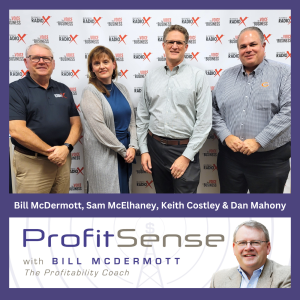
Dan Mahony, Transcendent Sales Solutions, Keith Costley, Keck & Wood, Inc., and Samantha McElhaney, Pinnacle Financial Partners

September 29, 2023 by John Ray

Dan Mahony
North Fulton Studio
Dan Mahony, Transcendent Sales Solutions, Keith Costley, Keck & Wood, Inc., and Samantha McElhaney, Pinnacle Financial Partners
Loading
00:00 /
RSS Feed
Share
Link
Embed

Download file

Dan Mahony

Dan Mahony, Transcendent Sales Solutions, Keith Costley, Keck & Wood, Inc., and Samantha McElhaney, Pinnacle Financial Partners (ProfitSense with Bill McDermott, Episode 49)

Dan Mahony, Transcendent Sales Solutions, Keith Costley, Keck & Wood, and Samantha McElhaney of Pinnacle Financial Partners joined host Bill McDermott for a roundtable discussion about what it takes to have a good mindset for sales. Each of them shared their career journey and their experience in sales. Bill led them through a conversation about the critical elements of mindset that contribute to effective sales, such as intentionality, collaboration, transparency, and honesty. They also discussed the skills that are important such as listening, curiosity, building trust over time, doing your research and more. Each guest concluded with their key advice based on their years of experience.

Bill wrapped up the episode with his thoughts on thinking like a buyer.

ProfitSense with Bill McDermott is produced and broadcast by the North Fulton Studio of Business RadioX® in Alpharetta.

Transcendent Sales Solutions

Transcendent Sales Solutions is focused on empowering companies with tactical sales strategies to accelerate revenue growth. Dan is an agile, results-oriented, and charismatic leader with a proven track record of turning underperforming sales organizations into revenue producing market leaders. He has a unique ability to create sales messaging and processes that increase revenue, decrease headaches, and provide order and definition in place of chaos and confusion. 

Website | LinkedIn | Facebook | Instagram

Dan Mahony, President, Transcendent Sales Solutions

Dan Mahony, President, Transcendent Sales Solutions

Dan Mahony is the President of Transcendent Sales Solutions, a company that helps and empowers small to mid-sized businesses in turning underperforming sales teams into revenue-producing market leaders. Transcendent Sales Solutions takes a proven results-oriented strategic and tactical approach by developing successful sales plans, building a strict sales approach, and aligning sales teams that will help a business marketing operation run effectively.

Dan has a unique ability to create sales messaging and processes that increase revenue, decrease headaches, and provide order and definition in place of chaos and confusion. 

LinkedIn

Keck & Wood, Inc.

Keck & Wood, Inc., founded in 1954, provides professional civil engineering, landscape architecture, and land surveying services to clients throughout the southeast.

The company has 65 employees in four offices. Duluth and Fayetteville, GA as well as Rock Hill and North Charleston, SC. Our clients include city and county governments, utility companies, state agencies, education institutions, and private developers. 

Website | LinkedIn | Facebook

Keith Costley, President & CEO, Keck & Wood, Inc.

Keith Costley, President & CEO, Keck & Wood, Inc.

Keith Costley is the President / CEO of Keck & Wood, Inc., a 65 person civil engineering firm headquartered in Duluth, GA. He graduated from Vanderbilt University with a civil engineering degree in 1994 and has become licensed as a Professional Engineer in GA, SC and NC.

He joined the firm as a Project Manager in their Rock Hill, SC office in 2000 and has steadily progressed his career by becoming the office leader in 2012 and then the President / CEO in 2017.

LinkedIn

Pinnacle Financial Partners

Pinnacle is much more than a bank. It’s a place for people to find true partners for their business. It’s a place where seasoned professionals give clients unmatched service and advice that better their financial well-being. And it’s a place where people love coming to work every day.

Website | LinkedIn | Facebook | YouTube

Samantha McElhaney, Commercial Financial Advisor, Pinnacle Financial Partners

Samantha McElhaney, Commercial Financial Advisor, Pinnacle Financial Partners

Sam has been in the financial services industry for 30 years and works hard to solve the daily business struggles of her clients. When she is not working closely with clients, she is out networking with individuals, so she has resources to solve problems and to connect others to regularly. If Sam is connecting people, she feels her day is fulfilled.

LinkedIn


About ProfitSense and Your Host, Bill McDermott

Bill McDermott
Bill McDermott

ProfitSense with Bill McDermott dives into the stories behind some of Atlanta’s successful businesses and business owners and the professionals that advise them. This show helps local business leaders get the word out about the important work they’re doing to serve their market, their community, and their profession. The show is presented by McDermott Financial Solutions. McDermott Financial helps business owners improve cash flow and profitability, find financing, break through barriers to expansion, and financially prepare to exit their business. The show archive can be found at profitsenseradio.com.

Bill McDermott is the Founder and CEO of McDermott Financial Solutions. When business owners want to increase their profitability, they don’t have the expertise to know where to start or what to do. Bill leverages his knowledge and relationships from 32 years as a banker to identify the hurdles getting in the way and create a plan to deliver profitability they never thought possible.

Bill currently serves as Treasurer for the Atlanta Executive Forum and has held previous positions as a board member for the Kennesaw State University Entrepreneurship Center and Gwinnett Habitat for Humanity and Treasurer for CEO NetWeavers. Bill is a graduate of Wake Forest University and he and his wife, Martha have called Atlanta home for over 40 years. Outside of work, Bill enjoys golf, traveling, and gardening.

Connect with Bill on LinkedIn and Twitter and follow McDermott Financial Solutions on LinkedIn.

TRANSCRIPT

Intro: [00:00:03] Broadcasting from the Business RadioX studio in Alpharetta, it’s Time for Profit Sense with Bill McDermott.

Bill McDermott: [00:00:17] Good morning. Welcome to Profit Sense. This podcast dives into the stories behind some of Atlanta’s successful businesses and business owners and the professionals that advise them. We help local business leaders get the word out about the important work they’re doing to serve their market, their community, and their profession, as well as discuss current issues that business owners are facing today across a wide variety of industries.

Bill McDermott: [00:00:44] I’m your host, Bill McDermott, and this show is presented by The Profitability Coach. When business owners want to increase their profitability, they often don’t have the expertise to know where to start or what to do, I leverage my knowledge and relationships from over 32 years as a banker and 14 years as a business coach now to identify the hurdles getting in the way and create a plan to deliver profitability they never thought possible.

Bill McDermott: [00:01:10] We’re going to be talking sales today, selling professional services. First, I want to introduce Keith Costley who is president and CEO of Keck & Wood. Keith, so glad you’re on Profit Sense. And by the way, welcome back because I was privileged to have you as a guest previously.

Keith Costley: [00:01:30] Yeah, thanks, Bill. It’s great to be back. I feel like a veteran and I really appreciate my relationship with you and our company’s relationship with you. We’ve been in the trenches together before. So, glad to be here.

Bill McDermott: [00:01:42] Yeah, and we’re delighted to have you. So, talk a little bit about Keck & Wood, founded in 54, providing professional civil engineering and other things. Talk about that a little bit.

Keith Costley: [00:01:55] That’s right. Founded in 54. So we’re heading towards our 70th anniversary as a firm, which we’re pretty excited about.

Bill McDermott: [00:02:03] Wow.

Keith Costley: [00:02:03] But our core services are civil engineering. We also do landscape architecture and provide planning and consulting services. But the core to our business is providing solutions to public sector and private sector clients who have a wide variety of needs, whether they be regulatory, development, engineering, solutions, consulting. But our bread and butter is city and county government providing a wide range of services. And we also do design work for private clients as well.

Bill McDermott: [00:02:42] And I love your tagline, “Collaboration By Design.” Talk briefly about that.

Keith Costley: [00:02:46] So, we believe that collaboration is just – has to be at the core of our business and our relationships and not only external relationships with clients but internal relationships. If we’re really going to maximize our success as a firm, we have to be collaborative in how we do our business, how we treat each other internally, and be collaborative with our clients. So that’s why our tagline is what it is.

Bill McDermott: [00:03:09] Yeah, well, and it’s a great one. I also want to welcome Dan Mahony who is president and CEO of Transcendent Sales Solutions. Dan, delighted to have you back. So, welcome back to Profit Sense.

Dan Mahony: [00:03:21] Bill, thanks for having me. It’s great to be here.

Bill McDermott: [00:03:23] And Dan is president of Transcendent Sales, which is a company that helps and empowers small to mid-sized businesses and turning underperforming sales teams into revenue-producing market leaders. So, Dan, talk about that briefly.

Dan Mahony: [00:03:36] Well, I started my business five years ago. I’m on my fifth anniversary. And what I do is, I help those business owners and CEOs that struggle with sales. A lot of times they started the company and they are running their companies. Plus, they’re the head of sales and they’re also the top sales producers. So, especially when you’re getting ready to sell your business, there needs to be that separation for the new buyer. And I work with those companies to help them build the right processes, the right systems, put the right people in there, and have the right strategy.

Bill McDermott: [00:04:09] Yeah. And it’s really about transferring those selling skills from the business owner to that next level of management. So, there is actual transfer – transferable value in the firm, isn’t it, Dan?

Dan Mahony: [00:04:21] Absolutely. And it’s that the skills and the relationships too, is how do you take those relationships from all those years and transfer them over to somebody new when they’re not there anymore?

Bill McDermott: [00:04:31] Yeah, yeah. Great point. And the baby boomer generation is retiring in droves. And so, we’re going to talk more about sales. And I’m excited what you have to contribute to the conversation.

Bill McDermott: [00:04:43] And Samantha McElhaney. Samantha, I believe, is maybe one of the best bankers in the city of Atlanta. Samantha, welcome.

Samantha McElhaney: [00:04:53] Thanks, Bill. Just call me Sam.

Bill McDermott: [00:04:55] All right, Sam. So, Pinnacle Financial Partners. You do a lot of commercial financial advisory business – advisory services. I know financial services because I’ve sold in that space before. You have a unique perspective on that. But talk a little bit about the work that you do and talk a little bit about Pinnacle Financial Partners.

Samantha McElhaney: [00:05:18] Yeah, the last time I was here exactly a year ago, I couldn’t announce that I had moved to Pinnacle Financial Partners. I was actually here with Keith doing a podcast and I just joined Pinnacle Financial Partners. So, it was a year ago, celebrating my anniversary.

Bill McDermott: [00:05:37] Wow! Happy anniversary.

Samantha McElhaney: [00:05:39] Thank you.

Samantha McElhaney: [00:05:39] And it’s the best decision I ever made because I’m with all of my old teammates from former banks, SunTrust, Synovus, Wells Fargo. We’ve assembled an all-star team here in Atlanta, and we are doing what we love, helping business owners make decisions financially that they need to either start their business, grow their business, transition their business, but also help them with their personal needs as well, too. So, it’s just the ideal job as far as banking is concerned.

Bill McDermott: [00:06:15] Yeah. And the thing about banking and financial services is obviously the more a business sells in revenue, the more deposits that a bank will have to be able to loan out. And so – but it’s not really selling as much as it is helping business owners solve problems.

Bill McDermott: [00:06:38] So let the four of us kick off this whole topic of sales. You know, I’ve learned recently over the last couple of years that before we can deal with skill set, we have to deal with mindset. And, Sam, one of the things that I think you do really well and I want to get Keith and Dan’s perspective because I’m sure they do this well also being clients set – being client-centric, one of the mindsets. You know, we have to be able to put our client’s needs before our own and deliver the solutions that meet those needs. So, how have you become the client-centric banker that you are?

Samantha McElhaney: [00:07:26] I think over the years, especially after becoming a mother, you have to put other people’s needs first. I’m a big faith believer. I go to church and it’s not just about going to church. It’s just, you know, getting up every day and having those conversations with my God. And that’s why I work where I work because our institution is a big faith-based institution as well, too.

Samantha McElhaney: [00:07:57] And putting those things into practice and knowing that if I put others first and their needs first, it will pay dividends long term. And so, listening to those individuals and listening to what they need in their life, and it may not be anything financial. I have a new client that had not had a vacation in years and they’re now right now at Disney World and all the family members are down there in Disney. And one of the things that I personally wanted to do and Pinnacle allows me to do it is I wanted to put a big gift basket in their hotel room so that when they open the door, it just welcomed them to Disney and they got to celebrate time with their family. So I got a text message on Saturday that said, “Wow, we opened the door and there was this huge gift basket that just said, ‘Welcome to Disney, you know, blank family.'” And they were just so thrilled and so excited that I got to do something like that to help them all celebrate. And it was a cooler full of, you know, water bottles and snacks and things. So they didn’t have to worry about going and getting all those things while they went out and visited Epcot and Magic Kingdom and stuff.

Samantha McElhaney: [00:09:01] So just taking that burden off of the family, that just makes me feel better as a banker on a regular basis. And that has nothing to do with financial whatsoever.

Bill McDermott: [00:09:10] Yeah. And, Keith, I know the time that you and I spent in the trenches figuring out the direction that you were going to take Keck & Wood, the tagline, “Collaboration By Design,” I think, if I recall correctly, deeply embedded in that was to really create the collaboration with clients and have the engineers also become client-centric and putting your client’s needs first. How have you seen that dream that you had become a reality?

Keith Costley: [00:09:45] In a lot of different ways. You know, we sell professional services and the value that we have is just through our expertise in our time. And I think the key to us being collaborative with our clients is building trust over time and adding value to every interaction that we have with them.

Keith Costley: [00:10:06] Give them a reason to respond to your email, to pick up the phone and take your call because they’re getting bombarded every day from all directions, from all manner of people and vendors and everything else. So, you have to give them a reason to spend time with you. And that’s really important to building that collaborative relationship with the client. They see you as an expert or having some expertise and they know when they interact with you, you’re going to be able to share something with them that’s useful in their lives.

Bill McDermott: [00:10:37] Yeah. And, Dan, I know you and I have had conversations. A lot of people have the mindset that selling is transactional, but in the vein of client-centric, it’s really relational. So as you talk to those solopreneurs or those business owners, whether they be large businesses or smaller businesses, what mindset issues around changing the perspective from this is a transaction to it being a relationship and the relationship is focusing on the client and not the person.

Dan Mahony: [00:11:22] Yeah, it’s from that perspective. When a lot of business owners, again, they have forecast, they have pipelines and you know, a lot of the salespeople, they get trained in the word I’ve used before is that’s been used as coin operated. It’s there. Okay. We have an opportunity and we just need to go in and we need to put our selling shoes on and we need to close it. And it’s just so easy to go and just from point A to point B, but in that relationship build, it’s so much more. It’s more like a chess game versus a game of checkers. I mean, there’s a lot of people to know. There’s a lot of things to understand before you earn the right to ask them for that business. So, it’s making them understand that yeah you have sales goals, but point A to point B, the straight line is not always the path that you have to take when you’re working on something that’s more complex from a sales perspective.

Bill McDermott: [00:12:18] Yeah. Is there a particular story maybe of a client that you’ve worked with recently that might come to mind where you were kind of dealing with this whole selling mindset versus relational mindset?

Dan Mahony: [00:12:33] Yeah. I worked with a client that, you know, worked very large transactions. And, you know, one of the problems they had is they just had the wrong team. And there was that mindset. Their mindset was, we’re going to go out and we’re going to get an order today and we’re going to go out and we’re going to win today. And you want to have that positivity. But they were dealing with companies that were Fortune 250 companies, and the transaction sizes were high six to sometimes low eight-figure transactions. And you’re just not going to go in and write a two-page proposal and send it to somebody and they’re going to sign off on it. So they didn’t understand that complexity of it.

Dan Mahony: [00:13:10] So after we put in the right first people and then we surrounded them with the right process on how we’re going to go about these sales, yeah, they’ve seen – they’ve seen system sales increase by probably 300% over the last couple of years just because, and again, it’s more time. We’re very methodical. But every conversation, everything we’re doing at every time is an event. And if you have a half-hour conversation, we’re going to prepare an hour to an hour and a half for that one conversation and getting them in that you just don’t go on the fly. You know, I think a lot of salespeople have this Superman or Superwoman complex. They could just go in and just handle any situation. And a lot of times they can’t. And they realize and you don’t get a lot of – in big opportunities, you don’t get a do-over.

Bill McDermott: [00:14:04] Right. No mulligans.

Dan Mahony: [00:14:06] No mulligans in sales. Absolutely.

Bill McDermott: [00:14:09] So, Keith, I think the next mindset is around what we’ve already talked about that it’s necessary for that professional to be collaborative, and collaborating effectively is being able to do it with others. That’s harder for some people than it is for others. How do you share ideas and work towards common goals? So certainly, there’s been a mindset shift probably in your collaboration by design. Talk about that a little bit. How is the importance of a collaborative mindset necessary?

Keith Costley: [00:14:49] Well, I think a lot of – we had really good bones before I became CEO six or seven years ago. But I think the key is, is being intentional about what it is that you’re trying to do, what is the message you’re putting out there to the marketplace and how can you leverage that to the benefit of your clients and to the company. But, you know, it’s – sometimes we find ourselves pursuing a wide variety of projects for a wide variety of clients.

Keith Costley: [00:15:21] And sometimes even just recently, we’ve started to develop a capture plan template to help us focus on, well, instead of trying to be everything to everybody and trying to communicate out there, how do we, you know, make that pool of potential clients smaller and do a deeper dive and really invest that time and research and understanding what their needs are and understanding those people and getting to learn those people and building that trust while we’re trying to build an understanding of what their needs are, what future projects are. And it just takes intentionality to allow yourself to pursue less volume of work but hopefully be more successful at meeting your client’s needs and ultimately building more business for your company.

Keith Costley: [00:16:09] And people kind of get in the mindset sometimes that we need revenue, I need to sell, you know, I need to be successful in sales and I need to pursue anything and everything that we could possibly do. And as we are growing up as a firm and growing as a firm, we’re taking a step back and going, “Now let’s get more focused. Let’s do a deeper dive on five clients rather than trying to pursue 25 clients.”

Bill McDermott: [00:16:33] Yeah, yeah, because you can go an inch wide or you can go five feet deep. But there is an intentional choice that gets made. I personally prefer to go deep versus wide.

Keith Costley: [00:16:50] Sure. But that’s not necessarily the natural mindset that people are in.

Bill McDermott: [00:16:54] Right.

Keith Costley: [00:16:54] You know, they just, you know, we can do that, you know, so let’s go after that.

Bill McDermott: [00:16:58] Yeah, yeah.

Keith Costley: [00:16:59] And sometimes it’s better to take a step back and be more intentional and strategic in the types of clients and projects that you pursue. And that’s just something that we’re learning how to do better.

Bill McDermott: [00:17:09] Yeah. And, Sam, I think part of your mindset is your approach to really put the team at the disposal of the client, and that client may have different problems to solve and likely you become the quarterback of the team. So, how has collaboration played out in delivering professional services to business owners?

Samantha McElhaney: [00:17:39] Yeah, it’s really frustrated me over the years when different bankers have said that they’re all things to all people because you can’t be all things to all people. We just read a book at Pinnacle because we read books on a quarterly basis. And I mentioned to you, Bill, the book that we just finished was one called Unreasonable Hospitality, and it’s been focused and featured on the shows, the Bear and Billionaires and stuff. And in the book, it talks about not being all things to all people, just be all things to that one in front of you at that moment at that time. And I love the fact that it says, you know, be good at what you do and then get all the others around you and what they’re good at and just assemble this amazing team around you.

Samantha McElhaney: [00:18:30] So, you know, I really like working with small business owners, but I have an opportunity right now to work with companies and I’ve been introduced to companies that need, you know, 40, 50, $60 billion in financing and they’re not getting factual information from other banks or they’re not getting the information that they need from other lenders. So, I’m able at Pinnacle to pull in other people in different departments and all across the United States and they’re getting on the phone or they’re getting on Zoom or they’re even getting in a plane and coming here to Georgia to work with me and help my prospects or my clients with those opportunities. And there’s no competition. There’s no I’ve got to meet a goal, or, Sam, get out of the way, or I’m learning.

Samantha McElhaney: [00:19:21] At 30 years in my career, I’m learning just like my clients are learning of our capabilities. And it’s fun and they’re seeing it on my face. My clients are seeing it, and they’re eager to learn about what, not only capabilities we have but how I can help, how my coworkers can help. And we’re all learning together. And if we can’t do it, we’re getting them in front of other institutions that can help. And there’s no fighting with and among each other about that. And it’s just fantastic that we’re trying to help the business succeed.

Bill McDermott: [00:19:55] Yeah. Thanks for sharing that. That’s awesome. We’re talking today with Dan Mahony, who’s president and CEO of Transcendent Sales Solutions. Transcendent is focused on empowering companies with tactical sales strategies to accelerate revenue growth. We’re also talking to Keith Costley with Keck & Wood, as Keith mentioned, a company that provides civil engineering landscape architectural and land surveying services, companies in four offices in Duluth and Fayetteville, Georgia, as well as Rock Hill and North Charleston, South Carolina.

Bill McDermott: [00:20:32] And then Samantha McElhaney with Pinnacle Financial Partners. So Sam has, as she said, 30 years in the financial services industry and works hard to solve her clients’ daily business struggles. When she’s not closely working with clients, she’s out networking with individuals. And I’ve seen that networking in action and it works really well.

Bill McDermott: [00:20:55] So the last thing I’m going to pick up on what Sam was talking about reading. Salespeople I think don’t understand because of the transactional mindset, Dan, they don’t look at themselves as professionals, just like a doctor or a dentist or an engineer or an attorney. So, what I’m wondering is if we could shift the topic and talk a little bit about continuous learning, having a growth mindset. You know, we’re on a journey that is leading us to become not only better people but also better professionals. So, how do lifelong learning and having a growth mindset, you think, play into being successful at selling?

Dan Mahony: [00:21:42] You know, very much so. There are so many different books out there on sales and there are so many – you know, there’s training, there’s educational videos. But, you know, I’m old school when it comes back to the fundamentals. It’s as we talked about, it’s first of all, being present. And if you’re present, the most important thing is, is you have to be a very good listener. Okay. It starts with listening, number one, and then being inquisitive and being curious and, you know, asking good questions. Because a lot of times you find with sales folks, I don’t care how many sales trainings they’ve gone through, they are thinking about what they’re going to say next when somebody is talking to them and they’re not present there. So, you know, sometimes I’m like, put all the books away and just go back to the real basic things. It’s just good listening skills. And if you are present, actually be present.

Bill McDermott: [00:22:35] Yeah, yeah. So, asking questions that are based on curiosity, Keith, I guess, how have you used that growth mindset in building a culture of successful engineering professionals?

Keith Costley: [00:22:56] I think some of the key concepts, and I totally agree with what Dan just said, you know, being curious about what your client needs is. Asking good questions is just – it’s just absolutely critical. But, you know, in order to, you know, build relationships, I find that instead of coming into an interaction with a client and wanting to talk about us or me, you know, if we turn that around and make sure that we’re learning about them or doing our research, we’re talking about them. And even when we’re doing, writing articles, are we writing articles about what we did or are we celebrating our clients and the cool projects that they’ve done?

Keith Costley: [00:23:45] You know, are we – when we’re posting on social media, are we talking about our successes and our people, which is important, but are we also celebrating our clients and their people and the good things that they’re doing? So, you know, it just takes a moment and we try to instill in our culture to be a client-centric, have a client-centric approach, and get out of our own heads. Because when we submit proposals and statements of qualifications too much, it’s all about us instead of it being about the client. And we’re trying to learn and improve that every day.

Bill McDermott: [00:24:24] Yeah. And, Sam, in your professional journey, I know that you are a lifelong learner and you and I share books and I’m going to read, what was it?

Samantha McElhaney: [00:24:38] Unreasonable Hospitality.

Bill McDermott: [00:24:39] Unreasonable Hospitality. That is a provocative title.

Samantha McElhaney: [00:24:42] Yeah.

Bill McDermott: [00:24:42] So I look forward to that. But you’ve been a lifelong learner. That’s who you are. Do you have a sense of what has made you that way?

Samantha McElhaney: [00:24:55] Well, I mean, I’m supposed to be a teacher and I’ve got a daughter who’s going to be a teacher.

Bill McDermott: [00:24:59] Okay.

Samantha McElhaney: [00:25:00] And I constantly crave feedback. I think when I meet people because of emotional intelligence, if I can’t pick up on it myself, if I’ve either done something well or I’ve not done something well, I beg people to tell me. I hopefully pick up on it. But if I don’t, I beg you to tell me one way or the other. Let me know that I’ve done it well. Give me good feedback or even give me the bad feedback. I don’t think there’s anything wrong with hitting the elephant in the room straight on because we can learn from it.

Bill McDermott: [00:25:39] Sure.

Samantha McElhaney: [00:25:40] So, for instance, Dan and I are in a networking group together and he knows my eye will blow his phone up and go, “Hey, give me some feedback here. How did that go? How did that – how did the meeting go? How did the presentation go? What can we do better as a group to grow the group, to make the group better?” I just – I want everything to not be perfect because you can’t be perfect, but like you said earlier present because a strong group makes for better opportunities for everyone in the group to be successful. So, more feedback makes for better education, makes for better prosperity for everybody.

Bill McDermott: [00:26:16] Sure. So I think we’ve talked about mindsets and being client-centric, being collaborative and being continuous learners. Let’s kind of, before we move on to successful skill sets, can we synthesize all of those three things? Dan, any closing thoughts on the synthesis of client-centric, collaborative, and continuous learning?

Dan Mahony: [00:26:43] Well, and just what Sam said, it’s that – it’s that feedback, is if you’re in a true collaboration and you’re working as a team and having that and being open to that feedback is important because many times, even though we’re collaborating, people, you know, people don’t want to get called out or they can’t, they take that honest feedback is not a learning opportunity but is an attack or they take it, personal. So, you know, if to have the right mindset, you have to go in at that. I’m always learning and I’m open to learning because, you know, my dad always says, “Hey, listen when you stop learning,” he’s 83 years old, “when you stop learning is when it’s all over.” And he’s still learning at 83.

Bill McDermott: [00:27:26] Yeah. That’s awesome. Keith, synthesizing it in your mind?

Keith Costley: [00:27:31] I think one of the key concepts is just being curious. And so if you are curious enough to want to know from your client and get the feedback from them, how are we doing? That’s a really powerful question.

Bill McDermott: [00:27:47] Yeah, people don’t –

Keith Costley: [00:27:48] How are we doing?

Bill McDermott: [00:27:49] Yeah, people don’t care how much you know, till they know how much you care.

Keith Costley: [00:27:52] Right, right. And so even if you get some tough feedback because nobody’s perfect, no company is perfect. But if you’re willing to ask the question, then you’ve taken a huge step.

Bill McDermott: [00:28:06] Yeah, yeah.

Keith Costley: [00:28:06] You know, and – so, I think that being willing to be curious and ask those types of questions of your clients does nothing but deepen that relationship.

Bill McDermott: [00:28:17] Yeah.

Keith Costley: [00:28:18] Really important.

Bill McDermott: [00:28:19] Sam, as you kind of bring those three things, what are kind of final thoughts from you on mindset issues?

Samantha McElhaney: [00:28:29] I think it was during COVID someone suggested to me to pick a word every year and live by that word. And so, and I think that has to go with mindset. And so 2023, I picked transparency, which I think goes with what you’re talking about. And as long as we all remain transparent, I think we can hit a good mindset with, you know, our client-centric collaboration, curiosity and continuous education, and everybody will be on the same page and – or at least know where everybody stands and move forward.

Bill McDermott: [00:29:03] Right, right. It’s a great point. So shifting to skill set, Dan, I’m going to pick up on something that you said earlier when we’re talking about technical skills. Selling is not about talking. Selling is about listening. And so, I think one of the technical skills is not only being present but listening while you’re present. Talk about that.

Dan Mahony: [00:29:30] Well, I think when we’re having a discussion with somebody, as I mentioned before, many times we’re trying to think about what we’re going to say next versus actually listening, listening to them. So I think it’s really important, you know, from a skill set perspective is going back to being curious, I mean realizing that you have a lot of research that you can do before you go and meet somebody. I mean, think about when we used to go to try to meet somebody 30 years ago, we didn’t know anything. Now we have so much information and I think it gives us the ability, you know, as we’re communicating and we’re listening to them, you know, we should know more when we’re going in which we ever did before. And if that’s the case, you know, our conversations should be much more specific than just in a general sense.

Dan Mahony: [00:30:22] Like I always say in sales, like the first question, you know, and especially in this day and age, when somebody walks in and says, “Hey, Bill, it’s nice to meet you. So tell me a little bit about your company.” That’s usually the “Are you kidding me?” I mean, you’re asking me about the company. You should you should know all these things already. So, yeah, it’s, you know, those are some things that are just real important as, you know, being prepared and, you know, just those good listening skills and, you know, going in with a plan, too.

Bill McDermott: [00:30:53] Yeah. And I think, Keith, one of the things that is part of your sales process is certainly technical knowledge. But beyond technical knowledge, what are some of the things that you see the successful people in your organization possessing as skill sets?

Keith Costley: [00:31:15] Curiosity for sure. We try to have our people. We don’t have anybody in our organization that is their sole responsibility is sales. So, we have a doer seller model. And one of our challenges as a company as we grow is to clearly establish who in the company is responsible for maintaining relationships, building relationships and producing the sales, the growth and revenue.

Keith Costley: [00:31:48] And so it’s just making sure that those people are aware that they have that responsibility, they have tools. We have some basic mindset that we need for them to be in and questions that they need to be asking and researching and being curious about. It all ties together and then developing some processes around this is how we do it. This is the Keck & Wood way to prepare for a meeting. This is how we strategize on what clients are pursuing and why. These are the questions that we have to answer, ask and answer, before we put time, effort and money into developing relationships with different clients.

Keith Costley: [00:32:33] And so, yeah, it’s really exciting time as we grow as a company to help our staff realize these things. You know, we all went to some type of professional school and got some kind of technical degree and we have to teach our people how to be effective friends and client representatives and managers and be able to do sales. And it all works together.

Bill McDermott: [00:33:01] Yeah. Dan?

Dan Mahony: [00:33:02] I think one of the hard things when you have somebody that’s technical is, you know, you’re a nuclear physicist. How do you go and explain nuclear physicist to somebody that doesn’t understand it at all? And it’s trying to understand how you, you know, water it down a little bit and simplify something that’s very complex, like civil engineering or anything like that.

Keith Costley: [00:33:24] It is really hard. I had my own experience with that. I was talking with an accountant about tax-related issues and I was just getting very valid information from this person, but it was very technical and it was formed this and ruled this. And I’m like, “Whoa, you’re speaking a language I don’t understand.” So to speak to your point, it is difficult for some of our highly skilled, highly technical people to boil it down to common sense language that a city manager or a mayor or somebody can understand. And that’s a challenge. That’s definitely a real challenge.

Bill McDermott: [00:34:01] Yeah, great point, Dan. Sam, to build a little bit on what Keith said in technical skills and maybe even in communication skills, the power is in the question that you’re asking rooted in curiosity. So as you have developed as a successful sales professional, how have you crafted your questions to me, more powerful or more meaningful to the person that you’re sitting with in the meeting?

Samantha McElhaney: [00:34:36] Oh, okay. It really all depends on the person. I mean, like Dan has said earlier, a lot of time is spent upfront researching. I mean, I live and breathe by LinkedIn and finding out not only about the individual but researching with my connections what they know about the individual and specific things I need to know. Finding out articles. I do a lot of keyword searches and indicate the person down the road in case some current events or things happen so that I can bring that into the conversation.

Samantha McElhaney: [00:35:16] But, I mean, even though I am a more aggressive individual, I always try to find out about the individual family-wise or significant events, vacations. Pictures can tell a lot. So you can start conversations off with key events that are happening with the person’s life. I mean, if you look at my social media posts, I mean, of course, it shows my twins. So if someone never asks me about my twins, I have a real problem connecting to them.

Bill McDermott: [00:35:46] Because they’re a big part of your life.

Samantha McElhaney: [00:35:47] Because they are my life.

Bill McDermott: [00:35:49] Yeah.

Samantha McElhaney: [00:35:50] Or a football.

Bill McDermott: [00:35:51] Right, right.

Samantha McElhaney: [00:35:52] This is my season of the year. So if you don’t ask me about college football right now, it’s going to be a real hard time trying to connect.

Bill McDermott: [00:35:59] So, I’m trying to say this with –

Samantha McElhaney: [00:36:02] All due respect.

Bill McDermott: [00:36:04] Passion, but Roll Tide.

Samantha McElhaney: [00:36:05] Yes. But I’m also a Gamecock, so.

Bill McDermott: [00:36:08] Okay. Okay.

Samantha McElhaney: [00:36:09] But yeah, so doing those types of things will help an individual connect and therefore ask the right of questions. But if I’m listening, then I can make the right transitions and go down the path of asking the right questions and then funneling them, making those questions, start opening them really large, and then going more direct to the avenue that the person needs to go to.

Bill McDermott: [00:36:32] So, Dan, technical and communication skills seem to kind of blend together, but we as professionals know that from our EQ, we’re creating conversations either of resonance or dissonance. We, you and I, as we have had coffee together, our conversation resonates. It creates harmony. I’m picking up what you’re putting down and I think vice versa. And so, we’re probably aware of those resonance harmony or dissonance disharmony conversations that we’re having. And so, how does that play in in your experience into the sales process as you’re sitting across from the table, maybe even thinking, “Gosh, I’m really loving this conversation,” or, “I’m really struggling to connect with this person and don’t really know how”?

Dan Mahony: [00:37:32] Well, I mean, you never know. I mean, it’s you go in and you can do all the research. You can stalk them on LinkedIn like Samantha does. I mean, we could do all of these things and we could look at all their pictures and everything. And when you show up with that person, you just don’t know what they get. They could get having a bad day. They could have just – they could have just lost the deal. You know –

Bill McDermott: [00:37:55] Their dog died.

Dan Mahony: [00:37:56] Their dog is sick or died. I mean, you just don’t know. So it’s, you know, sometimes it’s timing. I mean, it’s – you know, sales is they say – is sales an art or is it a science? I’ve always said it’s a little bit of both. And you know, and, you know, not to go and get back into movies, but it is like a box of chocolates.

Bill McDermott: [00:38:15] Yep.

Dan Mahony: [00:38:16] Because you never know what you’re going to get on that one call. You could meet somebody one day and they’re Mr. Talkative and they could meet him in the next week and they’re closed-off and they don’t want to have it. So it’s just being flexible and being quick on your feet just to, you know, just try to get as much out of them. And sometimes, and I’ve had conversations with someone you could that is closed-off say, “You don’t really want to have this conversation today, do you?” And they’re like, “Not really.” And I was like, “Can we do it next week? Is that it would be next week?” And they actually appreciate that.

Bill McDermott: [00:38:49] Yeah. Because you can sometimes read their body language. They’re either feeling – you’re feeling disconnected to them or – and then like you said, maybe something happened in their life and they just can’t focus. Well, the worst thing that you can do is continue to have that sales call. So part of those communication skills are knowing when to call a time out and say, “Look, this is not the day to do this, is it?”

Dan Mahony: [00:39:18] Yeah. Like we always know what our objective is. Our objective is in the process to go to the next step. Sometimes you got to, you know what, let’s take a pause and we’ll do it again at another time.

Bill McDermott: [00:39:29] Yeah, yeah. And so, Keith, I’m sure you’ve had some situations where communication and the ability to guide the conversation or what do you handle in a situation if a client surprises you with a question that you didn’t expect, how important is the ability to be able to go with the flow in those conversations?

Keith Costley: [00:39:55] So, it’s important to be able to react appropriately, but it’s also really important to not say things you’re not confident in because people will understand if you don’t really know what you’re talking about. And it’s okay to say, that’s a great question and I know who I need to talk to or I know what I need to do to research that and I will get you an answer on that. That’s okay.

Bill McDermott: [00:40:19] Yeah, yeah.

Keith Costley: [00:40:19] But one of the things I was thinking about when Dan was talking was it’s – I think it’s a learned skill, too. If you have an interaction with a client and, you know, there was dissonance, you know, you didn’t connect well, it didn’t go well, whatever, to not give up on that opportunity, to find another way either recognizing that moment that, hey, maybe this isn’t the right day or time, but, you know, just because it didn’t work one time doesn’t mean that the next time it might work. And sometimes I find it’s human nature that when you feel like there wasn’t a connection and well, I’m just going to walk away from that opportunity and go on to the next thing and I would really encourage people to try to find a way to try again. And, you know, if it’s consistently you’re just not connecting with that person, then so be it. But don’t give up on one try.

Bill McDermott: [00:41:15] Yeah. Sam, I want to go to kind of our next point because I think you do this so well. Relationship-building skills, to Dan’s point, it’s really art. So as you are approaching your sales, you’re always putting that relationship first before any transaction takes place. So what do you feel like are some of the key elements based on your experience in building relationships with those clients or with those potential clients?

Samantha McElhaney: [00:41:54] I think honesty is very important upfront. Because I’m – personally, I’m not going to be everybody’s cup of tea. So I want to be upfront with those individuals and find out what they’re looking for in a partnership and make sure that my skill set will match what they’re looking for and vice versa. And if it’s not, then I want to make sure I have the teammates and the capability to help to the table. And if it’s not going to work, then introduce them to people that I know in my bag of, you know, connections and make those introductions for them.

Samantha McElhaney: [00:42:38] I want to make sure people listen. Honesty, listening, and just effort. I think effort is so important if – I tell people if you will give 100%. And if you’re not capable of it, again, the honesty comes into play. But if you’re always giving 100%, then there’s not going to be a problem there. If you can’t give that 100%, let someone else know and let someone else come in. Tag them in with the teamwork.

Bill McDermott: [00:43:07] Yeah, yeah. Great point. So as you’re talking, what came to my mind is, so I have this computer program that plays in my head. My dad told me very early on, “Bill, anything worth doing is worth doing well.” And so if you’re going to do something, then do it well. So I think that’s part of my DNA. And I think the other word that you mentioned earlier, which is your word for 2023, building relationships that are also transparent.

Samantha McElhaney: [00:43:41] Yeah. And that’s why, again, I’m so excited to be back with my old co-workers from SunTrust because this was the group that helped me when I went through cancer. I know I can trust these individuals. Because they were there for me. They allowed me to tag out and take the time, you know, go through chemo, survive, do what I needed to do. And they allowed me to tag back in and do my best work. And now I’m back with those same people and we’ll be able to do that same thing as we’re getting older and taking care of our families and all that stuff. So, yeah.

Bill McDermott: [00:44:13] Yeah, yeah. This is kind of a full-circle moment.

Samantha McElhaney: [00:44:15] It’s full circle.

Bill McDermott: [00:44:16] For you.

Samantha McElhaney: [00:44:16] Full circle.

Bill McDermott: [00:44:17] We have to celebrate that.

Samantha McElhaney: [00:44:18] Yeah.

Bill McDermott: [00:44:19] Dan, are there one or two relationship-building skills that you’re working with your business owner clients that are just kind of non-negotiables?

Dan Mahony: [00:44:31] As far as working with the owners themselves? Yeah. So, you know, for me, typically it’s there are three things that have to really occur for it to be successful. Number one, they have to realize they have a problem. Okay. Number two, it’s realizing they have a problem that themselves or anyone in their company is able to fix. The third one is if they don’t do something, the problem is not going to get any better. It’s likely to continue to decline. Those are kind of the three things I need as far as being able to work with somebody.

Dan Mahony: [00:45:05] And, you know, as far as just the relationship – that’s the basis of the relationship, is being able to like, “Hey, I’m here to help. I’m not here to be the CEO. I’m not here to be your permanent hire for VP of sales. I’m not looking to work for you. I’m just looking to help solve your problem.” And, you know, them being open to feedback is key, too. Like, we have to go in. Sometimes, we have to tell the business owners that, you know, their baby is, you know, not as handsome as they think it is. And it’s, you know, having those very tough conversations with them is they have to be open to that, or else the success is not going to happen.

Bill McDermott: [00:45:47] Sure, sure. Keith, what are you finding as some of the critical relationship-building skills that are necessary for successful engineers?

Keith Costley: [00:45:58] I think a lot of it is just understanding the individual’s role in developing relationships and maintaining relationships with our clients. And it’s really interesting to speak with some of our younger professionals who don’t realize that they can have a role in relationship building and business development and as well when they’re interacting with a client on a project. It’s okay to ask them, “Hey, what’s on your mind these days? Or what’s coming up next or whatever?” And they just – sometimes it’s just talking to them about that and having them realize, “Oh, yeah, I can ask that question.”

Bill McDermott: [00:46:38] Yeah, yeah, absolutely.

Keith Costley: [00:46:40] And so, it’s just a lot of little things. But I think one of the keys is having our people put their client’s interests first and being genuine with them and asking good questions and the rest of it just kind of flows naturally from that.

Bill McDermott: [00:46:56] Yeah. And so, I think where we’ve kind of landed on skill sets is certainly technical skills, communication skills, relationship-building skills. Sam, I’m going to kind of ask you to maybe synthesize this, not only the mindsets but also the skill sets, how you have done this so successfully. What are just some closing thoughts and comments that you might have for our listeners?

Samantha McElhaney: [00:47:27] Bottom line, when it’s coming to a relationship between myself and a client, with it being a partnership, just ask them what they’re looking for. Bottom line, you know, how do you want to be communicated with? I always tell people I’ve had a client in the past, they’re always on the road and they simply wanted a text message. Don’t bombard me with emails. Don’t call me. Just send me a text. And that’s how I communicate. And I always give that example because if I did anything else for that person, we would have never been able to communicate and we would never be able to work together. So if you just clearly ask, they’ll tell you what they want.

Bill McDermott: [00:48:10] Yeah, that’s a great point. Dan, same question, kind of how do you synthesize what we’ve talked about today in mindset and skill set and successful selling?

Dan Mahony: [00:48:21] You know, I think successful selling and relationship building is realizing that, you know, a lot of times we’re in a consultative – we’re consultative selling and we want to do value-based selling and realizing that how value-based selling has changed. As the salesperson, you are the value. You are the value that is coming to the client. It’s not necessarily your product; it’s your service. It’s your expertise. It’s your background. You are the value. So I think when salespeople know that and realize that and realize they got to continue to educate themselves to continue to increase their value.

Bill McDermott: [00:49:00] Yeah. Great points. Keith, kind of same question. How do you bring all this together in mindset and skill set and professional services?

Keith Costley: [00:49:10] You know, it’s an interesting challenge to have confidence that you have the technical skill to have the – to be humble and be curious and to be able to interact with people and not overwhelm them and really listen to them and then ultimately go down a path with the client that will give you an opportunity to provide a service to them. And hopefully, you’ve built some trust and some rapport along the way. And because without that trust and rapport, you might win some work, but you don’t build lasting relationships. You don’t get repeat business and things like that. So it’s a real challenge for professionals who don’t focus on sales all the time to kind of put all the pieces together, but that’s what we do. And this is how we keep the business going and growing.

Bill McDermott: [00:50:10] Yeah, yeah. Dan, there might be a listener who, something you said really resonated with them and wants to get in touch with you. What’s the best way for them to contact you, phone, email website?

Dan Mahony: [00:50:25] Yeah. Visit transcendentsales.com. We have a website. You know you could be -I could be reached at our business line, (404) 271-6767, or email, sales@transcendentsales.com.

Bill McDermott: [00:50:41] Great. Thanks for coming on the show today.

Dan Mahony: [00:50:43] Bill, thanks for having me.

Bill McDermott: [00:50:44] Keith, kind of same question. There are special people at Keck & Wood doing special things. There is a war for talent out there, but there might be an engineer who is really interested in what you had to say today and the great company that you’ve built and others before you have built. How did they get in touch with you and with Keck & Wood?

Keith Costley: [00:51:11] Sure. If you want to get directly in touch with me, I’d be happy to talk to anybody who’s interested in this topic or Keck & Wood, (678) 417-4001. That’s my landline, mobile line, text. You can reach me. But if you just want to learn information about Keck & Wood and see what we’re all about both from a professional side but also, you know, the human side of our business and how we interact with each other and the things we do in the communities that we work in to volunteer and whatnot, check out our website. It’s keckwood.com, K-E-C-K-W-O-O-D, dot com. Or check us out on LinkedIn. We do a good job of doing posts regularly, talking about our clients, our projects, and our culture. So if you want to learn about us, those are the best places to go.

Bill McDermott: [00:52:02] Great. Keith, thanks so much for sharing your experience and expertise in this topic.

Keith Costley: [00:52:07] Thank you, Bill.

Bill McDermott: [00:52:09] Sam, it’s so hard for business owners out there to have a relationship with a banker, especially with all the banking consolidation that goes on. But you do banking relationships well, and I can say that as having been in banking for three decades. So if what you’ve said today really has resonated with someone out there, whether they be a client or a fellow banker at another bank, what’s the best way for them to get in touch with you at Pinnacle Financial Partners?

Samantha McElhaney: [00:52:38] My phone number has not changed in 18 years, unlike my employer, so my phone number is (678) 524-7133. And our website is www dot P as in Paul, N as in Nancy, F as in Frank, P as in Paul, dot com. And you know, you’re at the right Pinnacle website when you see the Batman building on the website, the one in Nashville, because that’s where we are headquartered. But we have three locations here in Atlanta. Don’t mistake us for the Pinnacle that is here in Georgia, headquartered here in Georgia, but we are headquartered in Nashville with three locations in Atlanta.

Bill McDermott: [00:53:22] Gotcha.

Samantha McElhaney: [00:53:23] Thank you.

Bill McDermott: [00:53:23] Sam, thanks so much for coming on the show today. Great topic.

Bill McDermott: [00:53:28] So, I want to take a moment and talk to my business owner audience on if you’re selling your business or transitioning ownership, whether it be to co-workers or a potential strategic or financial buyer, we have to think like buyers. Every business owner has a big dream to sell their business, achieve financial freedom, and live life on their terms. But recent studies show that business owners have a concept of the value of their business but less than half of those have obtained an independent valuation. How do we know our value corresponds with the market value to a buyer?

Bill McDermott: [00:54:13] Selling our business is a lot like selling a home, except the business values are usually much higher. Everyone knows that kitchens and bathrooms sell houses. Location is also critical. Typically, to maximize the value, we don’t sell our house ourselves. We hire a professional agent. They come up with a listing price based on comparable sales and run a process. In the same way when selling our business, it’s important to think like a buyer. This means understanding what buyers are looking for in a business and how we can position our business to be attractive to potential buyers.

Bill McDermott: [00:54:51] Number one, identify your ideal borrower. Who is our ideal borrower and what are their goals or pain points? Knowing who we’re selling to, we can tailor our marketing materials to appeal to them.

Bill McDermott: [00:55:04] Second, prepare a business for sale. This means cleaning up our financials, updating our marketing materials, and getting our business in top shape. Many business owners don’t know where to start or what to do in these areas, so hiring a professional to help you is critical.

Bill McDermott: [00:55:21] Third, hire a business broker or an M&A advisor. It’s best to have an independent advisor to handle the marketing of our business, finding potential buyers and negotiating deal points.

Bill McDermott: [00:55:36] By following these steps, you can increase the chances of selling your business for a fair price and to a buyer who is a good fit for the company.

Bill McDermott: [00:55:47] If you want to keep up with the latest in pro-business news, follow us on LinkedIn and Instagram at The Profitability Coach. If you want to listen to past or future Profit Sense episodes, you can find us on profitsenseradio.com.

Bill McDermott: [00:56:01] This is Profit Sense with Bill McDermott signing off. Make it a great day.


Tagged With: Architects, Bill McDermott, collaboration, curiosity, Dan Mahoney, engineers, Keck & Wood, Keith Costley, mindset, Pinnacle Financial Partners, ProfitSense, ProfitSense with Bill McDermott, relationship building, Sales, Sam McElhaney, The Profitability Coach, think like a buyer, Transcendent Sales Solutions

Mycal and Nicole Anders with Next Level Performance Consulting

August 22, 2023 by Karen

Mycal-and-Nicole-Anders-with-Next-Level-Performance-Consulting-feature
Phoenix Business Radio
Mycal and Nicole Anders with Next Level Performance Consulting
Loading
00:00 /
RSS Feed
Share
Link
Embed

Download file

Mycal-and-Nicole-Anders-with-Next-Level-Performance-Consulting

Mycal and Nicole Anders with Next Level Performance Consulting

Mycal-AndersMycal Anders is Founder of Next Level Performance Consulting with 3700+ leaders coached since 2011. Mycal is a Performance Consultant, Marine Corps veteran, husband & father of two.

As a Marine Corps veteran with nearly 25 years of strategic leadership experience backed by multiple graduate degrees from Arizona State and Thunderbird School of Global Management, he realized the plight of leaders, people of influence, and high achievers is losing themselves in pursuit of momentous achievement. Next-Level-logo

In 2011 Mycal founded Next Level Performance Consulting to build the fittest leaders by empowering Next Level men & women to prioritize their health, eliminate stress and create alignment between their habits and behaviors! Making space to be present for the things that matter: health, wealth, relationships and time.

Mycal has been featured on the Radio Business X Podcast, Barbell Shrugged, Barbell Business, Gym Lords, Theta Wave, Paradise Valley Lifestyle Magazine, Team Red, White & Blue’s “The Eagle” Podcast, and is a regularly featured speaker for Charles Schwab and Amazon.

The Next Level mantra is “Progress Always” because the journey is ongoing and the greatest stories are told through the process that is life. The story is in the logo. Why the 4th Star incomplete? Firstly, the stars are representative of Mycal’s military roots and service to others before self. The highest rank one can achieve in military service is symbolized by 4 stars.

The Next Level stars also represent what we should all be trying to achieve: our highest and best self. Stacked upon the foundation of your physical body, emotional, mental and spiritual states of being. The 4th star is broken because we will forever be a work in progress. This is a never ending journey.

Nicole-AndersNicole Anders, CEO of Next Level Performance Consulting, excels in leading the organizational process, coordinating the chaos, and assisting her husband and business partner to help executives and high performers make themselves a priority again by using the Next Level Method. Her value is in her exceptional attention to detail, strong communication skills, and the ability to take a vision and project from the starting line to the finish line.

For the past 10 years in various executive and personal assistant roles, Nicole coordinated and managed everything from travel, corporate meetings and conferences to cocktail and dinner parties, to founder’s dinner’s for top donors at multi-million dollar charity galas, by executing a discovery process of a team’s ultimate vision and making it become a reality.

Nicole is a former Division 1 basketball athlete and graduate from the University of Wisconsin- Milwaukee with a degree in Elementary Education. 

Connect with Mycal and Nicole on LinkedIn and Instagram, and follow Next Level on Facebook and Instagram.

Mycal-and-Nicole-Anders-Family

Tagged With: Agility, arizona, bodybuilding, Coach Derz, consulting, Crossfit, diet, Emotional, energy, entrepreneur, Entrepreneurship, finance, FitAid, Fitness, growth, Habits, Health, How To, inspiration, Leaders Forum, Leadership, Life, lifestyle, lose weight, MENTAL, mindset, motivation, Mycal Anders, Next Level, nutrition, obesity, performance, personal growth, Physical, podcast, Progress Always, Scottsdale, SPEED, spiritual, strength, Strength Coach, StrongCoffee, success, time, TYR, UNIVERSE, wealth, Weight Loss, wellness

Changing Your Pricing Mindset

July 21, 2023 by John Ray

Changing Your Pricing Mindset
North Fulton Studio
Changing Your Pricing Mindset
Loading
00:00 /
RSS Feed
Share
Link
Embed

Download file

Changing Your Pricing MindsetChanging Your Pricing Mindset

On this episode The Price and Value Journey, host John Ray presents “Changing Your Pricing Mindset” to a group of business owners. John lays out mindsets that create problems for professional services providers, such as the mindset of comparison and the mindset of inadequacy. John defines and discusses what he calls “the generosity mindset” as an antidote. He also shares how clients decide to buy based on intangibles, having value conversations with prospects and clients, constructing proposals with a three-option model, and closes by answering questions from roundtable members.

The Price and Value Journey is presented by John Ray and produced by the North Fulton studio of Business RadioX®.

TRANSCRIPT

John Ray: Hello, I’m John Ray on the Price and Value Journey. Recently I was honored to be invited to present to a private round table, organized and run by Terry Dockery, better known as Doc Dockery. He has a business consulting firm called The Resolve Firm and as part of his work he runs this private round table for business leaders and business owners, and occasionally he’ll have guest speakers in to come in and talk about various areas of

[00:00:33] expertise and topics of interest. He invited me to speak on pricing and value and other issues like that, and I gave a presentation called Changing Your Pricing Mindset. And in that presentation I covered issues like mindset and the mindsets which inhibit our growth and the generosity mindset to get over those

[00:01:01] inhibiting mindsets that hold us back. I also talked about the value conversation, how to construct better proposals and more.

[00:01:16] With Doc’s permission, I’m releasing the recording of that round table as an episode of the Price and Value Journey.

John Ray: [00:00:00] Okay. I’m going to talk about pricing mindset. And pricing mindset has a lot to do with you as a services provider, me as a services provider. If you’re a product provider, not so much, but we’ll talk about the difference here in a second.

John Ray: [00:00:21] So, here’s the obvious statement, in professional services, you’re not selling a product. So, you’re not selling a bicycle, you’re not selling apples, you’re not selling doggy treats, you’re not selling cans of green beans or craft beer, let’s say. What you’re selling and what your factory for amounts to is what’s between your ears. It’s the sum total of your experience, your expertise, what you bring to the table for your clients. And what that means is that you are the product. You individually are the product.

John Ray: [00:01:04] And that creates a big problem because, essentially, you’re pricing yourself. Now, you’re not pricing a third inanimate object. That bag of doggy treats or that can of green beans or that bicycle, you’re not pricing that. What you’re pricing is, essentially, yourself because everything that you’re offering that client is you, who you are, and what comes out of your head. And that’s a problem. It’s a problem because what gets in the way as a services provider, you being able to most effectively position yourself and price your services are mindsets, it gets into what’s in our head.

John Ray: [00:01:56] And here are a few of those mindsets that inhibit our growth that hold us back as services providers. One is the mindset of inadequacy. Another way to say that is the imposter syndrome, “I’m not quite good enough to be sitting in front of this client” or “I need to discount my services in order to measure up and to get this client to take a chance on me.”

John Ray: [00:02:24] That’s particularly a problem mindset with somebody that’s new in their business. I get the question all the time about should I discount my services when I’m first starting out. The answer to that is no, and we can get into that if you want to know more about that. But the mindset of inadequacy can even affect you as you grow and you start to take on larger clients. And you get to a point where maybe sometimes you come across a client, you wonder if you’re adequate to be able to handle that client.

John Ray: [00:03:01] The mindset of comparison. So, the mindset of comparison is really pretty simple, particularly in a social media soaked world. It’s, “Hey, I see someone else out there that doesn’t seem to have any warts, any problems. They’ve got slick social media images. They write well, blah, blah, blah. I can’t measure up to that.”

John Ray: [00:03:28] The mindset of binary thinking. Everything is black and white. There’s no gray. That kind of thinking inhibits our growth. The mindset of helping. So, the best example of this I’ve heard in the last few years is, I got invited to speak to a group of leadership coaches, and one of those coaches came up and told me that they are just on a mission to help everyone and they just do not believe in overcharging for the help that they want to be. Another way to say that is that’s the Mother Teresa syndrome. That’s nice and cute, but it’s not going to sustain a business longer term.

John Ray: [00:04:15] The mindset of scarcity. So, the feeling that the world is a fixed pie, that there are only so many clients to go around, and, therefore, whatever someone “takes from me” is something that I’ll never be able to replace. It’s seeing the world as I’ve got to get what I can get today and whatever client is in front of me, I have to sign up.

John Ray: [00:04:45] So, it’s mindsets like this that inhibit our growth. So, to get past this, I think what we have to do is we have to understand there are two distinct perspectives that exist for our clients, our prospects, the community, our network, and us as a service provider. We’re the business owner and we’re looking at ourselves and our expertise. We look at our certifications and, of course, we’re swimming in some combination. Each of us have some combination of some mindset issues that affect how we look at our business.

John Ray: [00:05:27] Clients, however, have an entirely different perspective. They don’t see those mindset issues that we have. And a lot of them really don’t care about our expertise and certifications. What they care about is solutions to their problems. And they are sitting in front of us for a reason that goes beyond the things that we like to talk about, which is our expertise, our qualifications, degree, certifications, past clients, et cetera. Those aren’t the same perspectives.

John Ray: [00:06:11] Here’s my solution to this, if you will, or the way I think about it and my philosophy about it in terms of what I see as work for me and many others. And it’s really making it about others in terms of the mindset you bring to the table. So, those clients, prospects, referral partners, community is creating a generosity mindset around that entire ecosystem, if you will. And not leaning into those mindsets you carry in your head but the needs, hopes, desires, wants, dreams of that person sitting in front of you, whether they’re a client, a prospect, a referral partner, or a member of your community.

John Ray: [00:07:05] And the generosity mindset has a number of different characteristics, but here are just a few. It’s empathetic. Generosity is something where you’re standing in the shoes of someone else and thinking about their needs and wants first. You’re thinking in terms of how you empower others to improve their lives and their businesses and create transformative outcomes for them, both professionally and personally. It’s not transactional.

John Ray: [00:07:42] So, sometimes when you hear some people say I want to help, the way they frame that sometimes can be transactional and it feels that way and people smell that, “when you want to help” but there’s a catch. And I think the companies that did particularly well during the pandemic were those that helped without a catch to it, if you will. Those that had a catch to it, consumers, the rest of us, we all smelled that out. And people are very smart and they see through that.

John Ray: [00:08:30] So, generosity mindset is not transactional. And, again, it’s about empowering others. I feel so strongly about that, I have said that on here twice. But maybe it’s all summed up in one of my favorite books, The Go-Giver by Bob Burg. And he says, your influence is determined by how abundantly you place other people’s interests first.

John Ray: [00:08:55] And you can put income, you can put your value, you can put a lot of different nouns in there in place of influence, and they all come out the same is that the extent to which you place other people’s interests first is the extent to which your business ultimately will grow.

John Ray: [00:09:16] Now, here’s the beautiful irony of this. We as business owners, we see ourselves in a certain way and the clients view us as outcome deliverers. And what they’re looking for is value received, and their perception of value received is really how they’re looking at us. And they’re looking for transformational outcomes. And the value of those outcomes are always more, worth more to them than what we see. They see more value in us as services providers than we see in ourselves.

John Ray: [00:10:02] Now, why is that? Let’s talk about the lottery. This is a good way to explain intangible value. So, we’ve had several billion dollar lotteries, and the odds of winning $1 billion lottery are about one in 300,000,000. So, one piece of paper that you receive after standing in line for however long you have to stand in line to get one of those pieces of paper, that’s a statistically worthless piece of paper. That’s what the odds of one in 300,000,000 amount to.

John Ray: [00:10:42] Well, people are obviously buying those tickets for some reason. So, what are they getting if the chances are overwhelming that they’re buying something that they’re not going to receive any money back from? What they’re receiving are hopes. Hope springs eternal, as it will. They’re dreaming of what they’re going to do if they win.

John Ray: [00:11:07] Identification. Identification is, “Hey. I’m standing in line with all the people in my community.” Fear of missing out, “There’s my wife right there who texts me and says, ‘Hey, did you buy a ticket for the billion dollar lottery?'” So, there’s the fear of missing out. We can’t win if we don’t play. So, all of those benefits are intangible benefits, and that’s the reason people buy. They get something out of buying that ticket that goes well beyond the value of the ticket or they wouldn’t buy.

John Ray: [00:11:42] So, the point of that is that clients buy based on intangibles, not just tangible value. They buy based on intangibles. And if you want to characterize what those look like, it could be things like fulfillment, you feel more educated, for example, because I have engaged in the service, or identity. Identity may be a plain baseball cap is worth a whole lot less than one that’s got a Georgia Bulldogs logo on it. There’s identity.

John Ray: [00:12:21] Nostalgia, that may be an old soft drink that people have nostalgia for or an old type of food or a place or what have you. Enhancement, something that enhances my life in some way, whether that’s through knowledge or pleasure or what have you. Rituals, the place I drive by every day or the same coffee place I go to every day for my coffee or what have you. And indulgence is how I reward myself. So, whether that’s my favorite restaurant, my wife has her favorite place to go get a facial, what have you.

John Ray: [00:12:58] These are intangibles that have nothing to do with your service per se. So, let me explain how this works in real life. So, this is my friend Gloria Mattei. Gloria is the owner of Nothing Bundt Cakes, which she’s got now two locations, one here in Alpharetta and one in Sandy Springs. And Gloria came on my show and the first question I always ask on my show is the elevator pitch question, let’s tell folks about how you serve everyone.

John Ray: [00:13:32] And the first thing that she said on my show was we deliver joy. See, she’s positioned herself in an entirely different place than the sheet cake makers at Walmart and Kroger that are right around the corner from her locations. And when you see her product – you can get a sense of it here in one of these photos – you can see why people light up when someone walks in the room with one of her cakes. So, yes, she does deliver joy.

John Ray: [00:14:05] And the other intangibles that she has as well that she likes to talk about is that she’s a locally owned business. So, she’s not a unit of some corporate entity that’s located out of town. And she’s very active in the community in terms of supporting local charitable causes. So, when you support her business and you buy joy from her, if you will, you’re supporting local, charitable causes.

John Ray: [00:14:35] Here’s another example closer to home in professional services. Roger Lusby and Frazier & Deeter – they do a show with us, they’re a client of mine – he had one of his clients on, a fellow named Chuck Walker. And during the show, I asked Chuck, I said, “Tell me about Frazier & Deeter and how they’ve helped you build your business, and what it’s like working with Roger Lusby?”

John Ray: [00:14:58] And he didn’t say anything about the quality of his tax return, or the quality of business advice, or anything like that. Although, Roger has been a long time provider to him and so he must be doing a great job. The first thing he said was, “Roger has a calming effect on me.”

John Ray: [00:15:19] He says, “Sometimes when you talk to Roger, I don’t really come away with anything, maybe necessarily, although I usually do. But he helps calm me down because I’m an excitable guy and I get mad when I get a notice from the IRS or I’ve got a business problem or something like that. He just talks me through and calms me down.” That’s a complete intangible that has nothing to do with the quality of the tax return preparation or the business advice itself.

John Ray: [00:15:53] So, this – what I call – generosity mindset, how does it play in terms of how we have real conversations with real clients? It starts out by having a value conversation with a prospect that talks in terms of looking at that conversation from their perspective. We’re not pitching. We’re not selling anything. We’re just having a conversation to see if I’m the best fit because I may not be. And if I’m not, we’ll find someone else who is. Oh, and by the way, we will only enter into this relationship if the value that I provide is more than the price you pay. Everyone will say yes to that because that’s what people are looking for. Always.

John Ray: [00:16:47] And when you have a value conversation with a prospect, you want to get strategic so that you can ask a whole lot of questions that may or may not necessarily apply to your service. But what they do for you is allow you to get to what the real underlying dreams, hopes, needs, concerns of that client really are. And you allow clients to brain dump with the reasons that they called you, but also the things that are going on in the back of their head that they may not think are germane but actually truly might be.

John Ray: [00:17:33] Some of these questions I like to ask are questions like What’s keeping you up at night? What are you procrastinating about? That’s always a great question. My favorite is, How does your spouse or your significant other feel about your business? And I wrote a LinkedIn piece about this, so if you’re already following me on LinkedIn, you can find it there. It’s a newsletter I released last week. My newsletter is called The Price and Value Journey, and you can find it there.

John Ray: [00:18:06] But it was about a client meeting I had with a fellow that called me to come in and advise him on his business. And he was going on and on about how this and that was going well, and he had these multiple locations, and what great things he had done. And it was getting to the point where I was wondering why I was there.

John Ray: [00:18:27] And then, his spouse came in. And we introduced and she asked who I was, and I told her. And she said, “Oh, my gosh. Thank you so much for being here. We’ve got all sorts of problems and our books are terrible. We don’t know exactly what we’re making. We don’t know what the business is worth. Our retirement is sunk into this business and we don’t know what all that’s going to end up being worth.”

John Ray: [00:18:53] Guess what? Truth blew in the room when she came in. And, suddenly, I had a clear picture of what the needs, hopes, and desires of that client were that her husband really didn’t want to get into voluntarily.

John Ray: [00:19:10] I love to ask why questions, because why questions are catalytic. They cause people to think. So, when you’re in front of somebody talking about your business, Why are we doing this? What’s the end game? What do you think you’re going to accomplish out of this? What would happen if you just left things like they are? Why now? Is it really urgent that you do it now? You made this call to me or you’ve been referred in to me for a reason, why are we doing it now? And why did you wait so long to address the problem? Why me because I’m not the cheapest?

John Ray: [00:19:49] You see what I did there? I’ve positioned myself for a later conversation around price. Why not just handle that internally or do it yourself or hire someone else? So, why me? This is a very powerful question to ask.

John Ray: [00:20:09] Now, one thing about a value conversation is I think it’s not just a conversation you have with prospective clients. It’s a continuing dialogue, if you will, that you have with your clients. “Hey, how are things going? What are we doing right lately? Hey, we’ve cleaned this up or that up in your business, how has that transformed things that are going on in the rest of your business? Those kind of questions that you ask on an ongoing basis are really valued dialogue. And that value dialogue helps you later when it comes to having a conversation around raising prices.

John Ray: [00:20:54] Let’s talk briefly about proposals. The biggest mistake professional services folks make in offering a proposal is there’s one option and one price. And basically what you’re saying to a client is take it or leave it. It’s basically yes or no. It’s an ultimatum. That’s not a great message to leave.

John Ray: [00:21:15] What you really want to do is offer choices. And it’s really a recognition that different clients have different values. And clients like choices to an extent they can get confused with way too many choices. They’re relying on you as the expert to craft options that they can choose from.

John Ray: [00:21:38] Three is the magic number. So, it’s kind of a good, better, best model. Three is not overwhelming. And there’s a tendency to gravitate to the middle option. So, I advocate a good, better, best model. Good is your basic version of what’s requested by the client. Better includes a little bit more, so everything that’s in your good category plus additional benefits. Those benefits, by the way, may be, if you’re in the services business, things like your accessibility, how quickly you deliver the service, that kind of thing. So, it doesn’t all have to be additional things that you do. It’s how you deliver your service. And, of course, best is your velvet rope option, if you will.

John Ray: [00:22:34] Now, the biggest mistake that a lot of services folks make is they have one option, and that option is basically best. There’s no differentiation here.

John Ray: [00:22:47] Constructing a proposal, so I believe there’s just a few basic things that a proposal needs to have. Please do not put your qualifications, your picture, your degrees, anything about yourself in a proposal. That’s already settled. You wouldn’t have gotten that far if the client had any concern about that. So, please don’t put your team pictures, don’t put any of that stuff in there.

John Ray: [00:23:18] You simply reiterate the customer request, what did they originally talk about and what came out of that value conversation that you had. So, what you’re doing is you’re demonstrating that you were listening and you’re demonstrating an understanding of the client.

John Ray: [00:23:36] You provide options, recommendations. I call my proposals engagement recommendations or engagement options. I don’t like the term proposal because I’m an expert just like you are. And experts don’t propose, they give recommendations. So, when you go to the doctor, it does not propose to do something for you and you should be the same way.

John Ray: [00:24:03] And then, terms and conditions, that’s how you’re going to get paid. And that’s a pretty important piece of any document that you put in front of a client.

John Ray: [00:24:14] So, here’s just an example of a client that I worked with and what happens, the power of offering options. And this particular client, I can’t really get into the detail of exactly what they do, but essentially what they offered was an online coaching experience, we’ll call it, that lasted for a couple of hours and it was $800. Now, they didn’t price it by the hour – thank goodness. And by the way, you will notice that none of this really works that well if you’re pricing by the hour. That’s an entirely different discussion I’m happy to have.

John Ray: [00:24:59] But this particular client was thinking of it that way, if you will, and he was looking at the service that he offered in this experience and looking at it and saying I’m making $400 or $500 an hour, that’s pretty good money. And as we went into it and started thinking about it, what we talked about was what’s the perceived client value that’s coming out of that experience that you’re giving that client? And what we came up with were good, better, and best options.

John Ray: [00:25:40] And what was clear is what he had previously been pricing at $800 really had perceived value that was much, much higher such that he could justify a $1,500 price. We went through a whole exercise about what would be in his better option, what would be in his best option. I tried to get his best option a lot higher than 5,000, but he wouldn’t do that, so that’s as high as we went. But what we did was we came up with options that would allow him to put those in front of a client and let them choose what was the best fit for them.

John Ray: [00:26:21] So, right out of the chute, the first client he put this in front of chose the better option for $3,300. So, you don’t need me to do the math on this. That’s over four times the revenue you would received otherwise. Here’s the deal, the first bullet point is the most important to me, that client received much more value than they thought possible. They’re the ones that selected that. He didn’t. They selected that.

John Ray: [00:26:58] So, what he was doing by simply offering one option at a much lower price, he was not offering clients the value that they wanted to choose. So, it was really was all about them. And when he made it about them and gave them choices, those choices inevitably end up working out better for him as well. So, it’s happier client, happier consultant.

John Ray: [00:27:30] So, I’m going to take questions at this point because I’ve hit a lot of this at a real high level. And what I find is it starts generating questions and I want to get to that. But just real quick, you can find out more about me at pricevaluejourney.com. That includes my podcast. And I also have a book coming out later this year, it’s called – ironically enough – The Price and Value Journey: How to Improve Your Confidence, Your Value, and Your Prices Using the Generosity Mindset Method. So, that’s the name of the book, and here are some of the topics, whatnot, that you’ll find that I’ve addressed in my podcast and I’ll be addressing in my book as well.

Speaker 1: [00:28:18] John, how did you know that you could drop that last bit about the sky’s the limit on pricing your professional services? Right at the time when Terry had stepped out of the room, we really appreciate your ability to deliver that message when he couldn’t hear it.

John Ray: [00:28:34] Timing is everything, right?

Speaker 1: [00:28:35] Yeah, yeah, yeah.

Speaker 2: [00:28:36] John, I’ve been thinking of engaging in myself because I feel like I’m not charging these guys merely —

Speaker 1: [00:28:42] No. No. I already cut that off because you were out of the room. There was a whole bunch of caveats on there that you didn’t hear.

John Ray: [00:28:55] Well, I’m interested in your question. So, what questions can I answer?

Speaker 2: [00:29:00] I have a question for you.

John Ray: [00:29:02] Please.

Speaker 2: [00:29:02] But it’s very [inaudible]. So, I used to cut my teeth doing Fortune 500 consulting. I was traveling a lot, and my kids were growing up without me, and I was making a lot of money, but I was miserable. So, I decided to move downstream to the small business market and focus on the Atlanta region, basically to get out of hotels and off airplanes.

Speaker 2: [00:29:23] And it has been a pricing dilemma. What people used to pay me just to have access to be able to call me was a whole lot more. And it’s funny because it’s a different market of people in the smaller companies, they’re not as comfortable asking for help. The corporate guys get used to bringing in experts. And small business people – we’re talking about that earlier – they want to do everything themselves, they have a hard time asking for help, et cetera.

Speaker 2: [00:29:54] So, finding a pricing model that works in that market has always been an ongoing debate with myself about, “Damn. I’m worth more than that.” But then, what can a small business person realistically spend that makes sense for their budget where their kid doesn’t have to do without braces or that sort of thing? Anyhow, I’m sure you deal with small businesses and entrepreneurs that are scaling up their businesses. And I don’t know if that’s a question, but it certainly is an ongoing concern just for these guys and for myself as well.

John Ray: [00:30:29] Yeah, I mean – go ahead. Someone else had —

Speaker 1: [00:30:33] No. I’d like to hear your response.

John Ray: [00:30:35] Okay. Yeah. So, there’s several things there. So, one is that the caché and the authority value of the business card that you used to have is not with you anymore, so that’s one thing. And, yes, that can be a negative because people by McKinsey, let’s say – I’ll use that term – they buy the security of McKinsey not the consultant. In the small to medium-sized business market, they’re buying the consultant.

John Ray: [00:31:13] So, here’s a couple of things. One is that, when you come in with an hourly price to someone like that, the problem with an hourly price to a small to medium-sized business owner is they’ll tell you, “Hey. I’m not making $500 or 750 or 1,000 an hour.” Whatever you’re charging, they immediately look at that and say that makes no sense. And, of course, quoting an hourly rate is not the final price anyway, because they don’t know how long anything’s going to take. And, frankly, it really doesn’t matter how long it takes. It should not matter to them. What they care about are transformational outcomes, not how long it takes you to do it.

John Ray: [00:31:55] And increasingly, with the way services are changing with AI and a lot of other tools, we can come up with diagnostic solutions faster than ever. So, it’s really incumbent upon us to get away from hourly pricing. But part of what I think you have to do is have that value conversation with clients.

John Ray: [00:32:20] And let’s talk about what this project is going to do, not just for you professionally and in your business, but what is it going to do for you personally. So, what I tell people in my pricing consulting is I’m the difference between somebody being able to vacation in Rome, Georgia versus Rome, Italy. That puts it in an entirely different frame of mind. That gets into where the spouse wants to go for vacation, or whatever, and doesn’t want to get stuck on vacation. I call it a confidence crutch. That’s what you lean on. You don’t lean on the service itself. You lean on the value of the transformation.

John Ray: [00:33:11] So, that’s why value conversation is so important and that you continue to dig on, let’s say, we get this project done and it’s going to cost your business to make X more in revenue. What’s that going to do for you? It allows us to hire more employees so we can expand, maybe expand our sales force. What is that going to do for you? And you keep digging into that. And there’s value that comes out of that, that is not just tangible but intangible. And it’s a multiple, a big multiple of whatever it is you’re charging.

John Ray: [00:33:53] So, what that does is it makes your fee, whatever you decide to charge, an investment in an outcome. And it also creates room for you to improve your price. Now, there’s a lot more to it than that, but that’s the best answer I can give in just a couple of minutes. Does that make sense?

Speaker 1: [00:34:22] Yeah. Yeah. What’s got me thinking and marveling at this is how you took a concept that we were talking about pricing and pack so much more into it. This idea of the generosity mindset, which requires an attitude and behavior of empathy, I’ve written out a formula that you got me thinking about. And the formula is nothing but equals, so it’s not a real formula. Empathy equals respect. Respect equals trust. And trust equals next. Meaning next problem, next opportunity, next whatever.

Speaker 1: [00:35:10] Because I’m already thinking past what we’re talking about right now. I know that we’re going to address what we’re talking about right now, but I’ve now blown past all of the, like you say, statement of work, proposal, et cetera, et cetera. I’m just thinking about where do we start on the next item?

Speaker 1: [00:35:32] And pricing isn’t even in the conversation at that point because they’re already trusting you to essentially price your services appropriately for them because you do everything else appropriately with them in mind. And like I say, you’ve just packed so much into a pricing parameter that is really helpful to think through what we perhaps stumble through as to what we think and how we deliver our services and how we engage with our customers.

Speaker 2: [00:36:08] John, I hope you heard that compliment.

John Ray: [00:36:10] Thank you. Thank you for that. Thank you very much.

Speaker 2: [00:36:13] We got about ten minutes left, but before you get away, I have decided to double the price of this group, and I want to thank you for giving me the confidence to do so.

Speaker 1: [00:36:22] That joke is already an old joke. I’m worried that long.

John Ray: [00:36:26] It’s an old joke, but I didn’t hear much of a value conversation that came out of it. That was a real truncated value conversation, Doc, so you’re going to have to do better than that, bud.

Speaker 2: [00:36:34] I skipped a few steps, I guess.

Speaker 5: [00:36:38] I got a question. You had talked about kind of the Goldilocks price and a good, better, best, and how someone who doesn’t have that today just has a best option. And I’ve seen it for myself and I’ve seen it for other people, where, when you take just that and then you start to build out the good, better, best very quickly, it comes back to wanting to just be nice to people. And if someone chooses the good, they continue to get the best treatment.

Speaker 5: [00:37:11] So, where someone struggles when they created this stratification into three levels, now a client comes in and chooses the lowest level, but the service provider still gives them the same level of attention and support as someone who chose the top. How do you help someone work through dialing down their service for scope creep?

Speaker 2: [00:37:35] Scope creep.

John Ray: [00:37:36] Yeah. There’s horror movies with that name, scope creep. Yeah. So, this is where you have to, first of all, document. So, this is why the engagement recommendations are so important because you’re documenting the scope. And if someone comes back to you and says can you do X, that’s in your better or best options and they’ve got your good option, then what you say is, “You know what? Here’s the thing, I’ve got folks that are paying for that and it’s not fair to them for me to give that away, because, essentially, it would be giving it away because you didn’t select that to begin with. And I understand why you want that now, so let’s talk about that. Okay? Let’s talk about what a different kind of relationship looks like.” That’s one way to address it is that, because what you’re getting at with that client is what’s fair. What’s fair?

Speaker 2: [00:38:43] Reciprocal empathy.

John Ray: [00:38:45] Yes. Essentially, that’s a good way to put it. And people want themselves to be treated fairly, so they understand, most of them do. The vast majority of people are going to understand that response. But the key is having the guts, frankly, to have that conversation. And a lot of times it’s just easier to do that because you want to please. We’re all pleasers, right? We want to please our clients. And there’s nothing wrong with that, but we don’t please by giving things away ultimately, because what we’re doing is, of course, we’re really changing the value perception that they have of our service and ourselves.

Speaker 3: [00:39:35] Related to what you just said, value and perception, on the last slide, I think the first bullet point was where you were saying when the client did the better option and you said that was a win-win for the service provider and the client. The first bullet point you said there is that something like the client perceives a much higher value.

Speaker 3: [00:39:58] Can you elaborate on that, why you say that? Is that because they picked the middle one, is it because it’s their decision, it’s a psychological thing that they’re saying, “Okay. Because this is my choice, and I had three choices, I picked what I perceived to be the greatest value.” How do you make that statement with confidence that because they picked it, they perceive it to be a higher value or the highest value?

John Ray: [00:40:23] Yeah. That’s a really important question. So, let me give an example here. And I know we’re running up on time, but this is going to be a quick example. So, let’s talk about coffee. I’m a cheapskate when it comes to coffee. Even the dollar cup at racetrack, I’m perfectly fine with the racetrack coffee, but I’d rather come to Doc’s office and let him buy my coffee. So, I’m a cheapskate when it comes to coffee.

John Ray: [00:40:51] My daughter wears out Starbucks every day for 5 or 6 bucks. The most expensive cup of coffee in the United States is a $75 cup of coffee from some farm in Panama. And it’s a one night only tasting blah, blah, blah. Who knew coffee is like wine? I had no idea. I’m not criticizing it. People see value in that.

John Ray: [00:41:14] There’s an example right there since we’re talking about the middle option, if you’re offering my daughter who wants to pay more than racetrack cup of coffee, then that doesn’t match. And she’s willing to pay more for what she perceives as more value. And that’s really what we’re talking about.

John Ray: [00:41:38] So, each of us have our own laundry list of services or things that we do for clients that people have different perceptions of value of. And what we’re trying to do is better match client perception of value with the particular mix of service that we offer. Does that make sense?

Speaker 3: [00:42:01] That’s a great explanation. The daughter wanting to buy the more expensive cup of coffee. But [inaudible] makes good sense.

Speaker 2: [00:42:09] So, what [inaudible] wants.

Speaker 3: [00:42:12] It’s the perception of what you’re getting because you’re spending more enhances – I think psychologically, part of what you’re saying is I’m getting a better value because I’m paying more for it.

Speaker 1: [00:42:20] Or I’ve figured out that this is —

Speaker 2: [00:42:24] Can the value be tied to whether the solution I’m looking for is a pain point or it’s nice to have?

John Ray: [00:42:37] Yeah. It makes perfect sense. And, yeah, thank you for that. Because, hey, pain, particularly with small and medium-sized businesses, that may be one of the hardest things we have to do when we talk to our business clients, is, they’ve been dealing with pain so long they’ve forgotten what it’s like to be well. And so, they don’t even know what that feels like. And you have to draw a picture of that.

John Ray: [00:43:08] But psychologically, pain avoidance is the biggest thing that makes us react to something. Only half the people in this country go to the dentist regularly. Think about that. They would rather avoid potential pain than deal with dental hygiene. That’s a powerful emotion. And if you can tap into that emotion with your service offering, it has powerful perceived value.

Speaker 4: [00:43:42] Yeah. Because usually when I deal with clients, I haven’t looked at it, unfortunately, from a value standpoint. It’s always been I have a Tylenol or a vitamin analogy, and I try to put them in one of those buckets to know if this will be a potential client or not. So, from hearing you talk today, I’m definitely looking at things a little differently.

John Ray: [00:44:07] And see, here’s the thing, our clients that we’ve had successful engagements with will tell us some of these things. And this is where you go talk to them. What did this engagement do for you that goes beyond just the engagement itself, and have that conversation. You’ll be amazed at what you find out. And you’ll also be amazed at what you find out, how people see value in you. They will come back with things like you had a calming effect or you had these other intangibles that are reasons why they did business with you or doing business with you, and it’s important for you to know what those are.

Speaker 4: [00:44:57] Very helpful.

Speaker 1: [00:44:58] That phrase that you used is something I haven’t heard before that is especially powerful, why questions are catalytic. There’s so much there in those few words. That’s wonderful. Keep using it.

John Ray: [00:45:14] Yeah. Thank you. I mean, see, we’re sitting here talking about this intellectually, and, hey, I’m on a journey. We’re all on a journey. That’s why I call my podcast The Price and Value Journey. We’re all on a journey doing better about this, and I am too.

John Ray: [00:45:35] I’ll just throw this in, by the way, one change I’ve made recently and it worked quite well, when I went to raise the price for a client, I presented them a whole new set of engagement options. I didn’t come back to raise the price on the existing set of service deliverables. I gave them a whole new set of options.

John Ray: [00:45:57] And the basic option was what they had today where I had a higher price. And I went through that and explained the value that they had gotten out of. And so, I had a value conversation along the way and they had told me about all the things that had happened because of their consumption of that basic service option, if you will.

John Ray: [00:46:23] But then, I gave them a better and a best, “Hey, if you want more, here’s how you can get that and here’s the value that comes out of that, I think.” And guess what? They picked the middle option. So, I got a much more engaged client a much higher fee. So, think about using options just to be able to raise your price.

John Ray: And that’s it. And I want to thank again my friend, Doc Dockery for allowing me to repurpose the recording of that presentation as an episode of the Price and Value Journey. Doc does great work, and if you’d like to know more about him you can go to the resolve firm.com. That’s The resolve. R E S O L V E firm dot com. That’s the name of his consulting practice. Doc is also the author of “Leadership, Happiness and Profit :12 Steps to a High-Performance Business.” You can find that book on Amazon and it’s terrific. I can’t recommend it highly enough if you’re looking to be happy and scale your business at the same time, that’s Doc’s specialty.

[00:00:49] Check him out at your convenience. And folks, just a quick reminder that more information on The Price and Value Journey can be found at pricevaluejourney.com. You can find a link to our show archive there at pricevaluejourney.com. And of course, you can find the show on all the major podcast apps.

[00:01:11] You can also sign up to receive updates on my book that’s coming out later this year in 2023. It’s called “The Price and Value Journey: Raising Your Confidence, Your Value, and Your Prices Using the Generosity Mindset Method.” We cover a lot of the topics in that book that you’ve heard on this episode. So if you like updates on when that book will be released check that out.

[00:01:38] And if you’d like to connect with me directly, you can email me, john at john ray.co. Thank you for joining me.


About The Price and Value Journey

The title of this show describes the journey all professional services providers are on:  building a services practice by seeking to convince the world of the value we offer, helping clients achieve the outcomes they desire, and trying to do all that at pricing which reflects the value we deliver.

If you feel like you’re working too hard for too little money in your solo or small firm practice, this show is for you. Even if you’re reasonably happy with your practice, you’ll hear ways to improve both your bottom line as well as the mindset you bring to your business.

The show is produced by the North Fulton studio of Business RadioX® and can be found on all the major podcast apps. The complete show archive is here.

John Ray, Host of The Price and Value Journey

John Ray The Price and Value Journey
John Ray, Host of “The Price and Value Journey”

John Ray is the host of The Price and Value Journey.

John owns Ray Business Advisors, a business advisory practice. John’s services include advising solopreneur and small professional services firms on their pricing. John is passionate about the power of pricing for business owners, as changing pricing is the fastest way to change the profitability of a business. His clients are professionals who are selling their “grey matter,” such as attorneys, CPAs, accountants and bookkeepers, consultants, marketing professionals, and other professional services practitioners.

In his other business, John is a Studio Owner, Producer, and Show Host with Business RadioX®, and works with business owners who want to do their own podcast. As a veteran B2B services provider, John’s special sauce is coaching B2B professionals to use a podcast to build relationships in a non-salesy way which translates into revenue.

John is the host of North Fulton Business Radio, Minneapolis-St. Paul Business Radio, Alpharetta Tech Talk, and Business Leaders Radio. house shows which feature a wide range of business leaders and companies. John has hosted and/or produced over 1,700 podcast episodes.

Coming in 2023:  A New Book!

John’s working on a book that will be released in 2023:  The Price and Value Journey: Raise Your Confidence, Your Value, and Your Prices Using The Generosity Mindset Method. The book covers topics like value and adopting a mindset of value, pricing your services more effectively, proposals, and essential elements of growing your business. For more information or to sign up to receive updates on the book release, go to pricevaluejourney.com.

Connect with John Ray:

Website | LinkedIn | Twitter

Business RadioX®:  LinkedIn | Twitter | Facebook | Instagram

Tagged With: changing your pricing mindset, generosity mindset, John Ray, mindset, Price and Value Journey, pricing, professional services, professional services providers, solopreneurs, Terry Doc Dockery, value, value pricing

Making an Impact E36

September 22, 2022 by Karen

Making-an-Impact-feature
Phoenix Business Radio
Making an Impact E36
Loading
00:00 /
RSS Feed
Share
Link
Embed

Download file

Making-an-Impact-E36

Making an Impact E36

Did you know that businesses and even large corporations can become sustainable and help reverse climate change? The global billion-dollar company, Interface, showed us it’s possible in the film, Beyond Zero.

In this episode of Collaborative Connections Radio Show and Podcast, host Kelly Lorenzen had the opportunity to interview Nathan Havey, writer/director of the Beyond Zero film, Dr. Rhoda Deon, who is helping create the curriculum from the movie, and Diane Janovsky, Chapter President of Conscious Capitalism Arizona.

These amazing guests are making a huge impact on our community and our future. If you would like to know how or learn more about sustainability, eliminating your environmental impact, Conscious Capitalism, or the film Beyond Zero, check out this podcast episode.

You can also learn more at beyondzerofilm.com and ccarizona.org

After a life-changing epiphany, the CEO of a global public company embarks on a high-stakes quest to eliminate all negative environmental impacts by 2020. To succeed, they must overcome deep skepticism, abandon the status quo, and ignite a new industrial revolution. Beyond Zero offers an inspirational roadmap for how business can reverse climate change.

Nathan-Havey-Collaborative-ConnectionsNathan Havey unlocks companies to become the greatest version of themselves.

A believer in the transformative power of stories, Nathan wrote and directed an acclaimed podcast series, “10 Things You Should Know About Stakeholder Capitalism” and an award-winning documentary film, Beyond Zero, which is being used by companies like KKR and UPS to show their teams how business can rise to meet the global challenges we face.

Connect with Nathan on LinkedIn.

Rhoda-Deon-Collaborative-ConnectionsDr. Rhoda Deon is a spiritual life coach and musician with over 30 years of experience in education. She believes joy – not suffering – is the key to changing one’s life.

On a mission to normalize the struggle of being human, Rhoda is obsessed with the intersectionality of art, science, spirituality and human behavior. More specifically, the intersections that instantly remove limiting beliefs, reveal new possibilities and restore autonomy. She is here to remind the weary there is nothing to fight, only choices to be made.

Rhoda is a co-founder of 100 Months to Change – a global coalition of changemakers committed to building a world that works for everyone by 2030. She is also the creator of the Companion Curriculum for the film, Beyond Zero. This set of classroom resources helps students and educators reflect on the movie as well as learn more about conscious business practices.

When she’s not out changing the world, Rhoda enjoys running kitchen experiments, playing fetch with her cat, Prentice, and gravitating towards anything that involves dirt, trees or water.

Connect with Rhoda on Instagram.

CC-Arizona-Logo

Conscious Capitalism Arizona is a nonprofit organization whose purpose, in partnership with Conscious Capitalism Inc., is to build a movement of business leaders improving the practice and perception of capitalism to elevate humanity so that billions of people flourish, leading lives infused with passion, purpose, love and creativity; a world of freedom, harmony, prosperity, and compassion.

They advocate for “Business as a Force for Good” by raising awareness, developing understanding, and supporting the practice of Conscious Capitalism principles in Arizona.

Diane-Janovsky-Collaborative-ConnectionsDiane Janovsky is a consultant and business transformation leader whose purpose is to unleash the power of organizations to do good and to do well.

Through a collaborative but firm style, and with a relentless focus on the alignment of people, process and strategy (purpose, mission, vision and values), she helps organizations improve performance and achieve systemic results including culture change, revenue growth, cost reduction, highly engaged workforce, quality outcomes and superior customer satisfaction.

Diane’s business education began when she was a child and lived behind the “mom and pop” grocery store her parents owned. Through their example, she developed an early appreciation for the importance of people relationships and the value of hard work and a good reputation.

After many years as a professional in the corporate world, Diane returned to her entrepreneurial roots in 2009 and became a business consultant serving the needs of small and mid-size businesses.

Connect with Diane on LinkedIn.

About Collaborative Connections

Kelly Lorenzen started the “Collaborative Connections” show to bring her clients and favorite charities together to meet each other, connect and collaborate in life and business. collaborative-connections-Radio-Show-Podcast-logo1

She hopes to build a stronger community one show at a time.

About Our Sponsor

KLM is a one-stop support shop for small business owners who are starting, growing, or trying to sustain. Our purpose is to foster the growth and prosperity of small businesses in our community.

Entrepreneurs & small business owners come to KLM for support in all areas of business. KLM clients think of us as a concierge, business snuggy, another arm, or duplicate for the business owner; They call us when they need us. Business owners can continue to do what they love while having the support they need when they need it. klm-logo-small

About Your Host

Kelly-Lorenzen-on-Phoenix-Business-RadioXKelly Lorenzen, CEO of KLM, is an award-winning entrepreneur with over 15 years of business-ownership experience. She is also a certified project management professional.

Kelly’s expertise is in business development, customer service, marketing, and sales.

Connect with Kelly on LinkedIn, and follow KLM Consulting on Facebook.

Tagged With: Beyond Zero, Conscious Capitalism Arizona, employee wellness, mindset, motivation, personal growth, Spiritual Life Coach

Nicole Comis, Nicole Comis Coaching

July 19, 2022 by John Ray

Nicole Comis
North Fulton Business Radio
Nicole Comis, Nicole Comis Coaching
Loading
00:00 /
RSS Feed
Share
Link
Embed

Download file

Nicole Comis

Nicole Comis, Nicole Comis Coaching (North Fulton Business Radio, Episode 475)

Professional Certified Coach Nicole Comis joined host John Ray this edition of North Fulton Business Radio. Nicole shared what led her into coaching from a career in mortgage lending, why she emphasizes the power of mindset in her work with driven professionals, her coaching training that includes NLP, how she engages with clients, and much more.

North Fulton Business Radio is broadcast from the North Fulton studio of Business RadioX® inside Renasant Bank in Alpharetta.

Nicole Comis, Professional Certified Coach, Nicole Comis Coaching

Nicole Comis, Professional Certified Coach, Nicole Comis Coaching

Nicole Comis works with driven professionals to achieve their BIG personal and professional goals. She works with her clients to gain clarity on what they want their future to look like, identify obstacles holding them back, face their fears, and create a plan to help them achieve goals that are outside of their comfort zone.

Her coaching practice incorporates her client’s whole life, not just their career, leading to a more balanced, productive, healthy, and fulfilling life.

Nicole is a graduate and certified coach from the Accomplishment Coaching Coaches Training Program and is accredited by the International Coach Federation (ICF) as a Professional Certified Coach (PCC). In addition, she’s a Certified Neuro-Linguistics Programming (NLP) Master Coach and a Master Practitioner of NLP, Time Line Therapy®, and Hypnotherapy.

Nicole’s high-energy, judgment-free, fun, no-BS approach helps men and women live a more balanced life with a career they love, fulfilling relationships, healthy well-being, and killer confidence!

Website | LinkedIn | Facebook | Twitter

Questions and Topics in this Interview:

  • Tell us a little more about coaching.
  • What’s the difference between coaching, consulting, and therapy?
  • What led you to become a coach?
  • Can you tell us a little about your training and certifications?
  • Who are you passionate about working with?
  • What is a common myth about coaching?
  • What is the most important lesson you’ve learned over your career?
  • What are some of the most meaningful goals that your clients have achieved?

North Fulton Business Radio is hosted by John Ray and broadcast and produced from the North Fulton studio of Business RadioX® inside Renasant Bank in Alpharetta. You can find the full archive of shows by following this link. The show is available on all the major podcast apps, including Apple Podcasts, Spotify, Google, Amazon, iHeart Radio, Stitcher, TuneIn, and others.

RenasantBank


Renasant Bank has humble roots, starting in 1904 as a $100,000 bank in a Lee County, Mississippi, bakery. Since then, Renasant has grown to become one of the Southeast’s strongest financial institutions with over $13 billion in assets and more than 190 banking, lending, wealth management and financial services offices in Mississippi, Alabama, Tennessee, Georgia and Florida. All of Renasant’s success stems from each of their banker’s commitment to investing in their communities as a way of better understanding the people they serve. At Renasant Bank, they understand you because they work and live alongside you every day.


Special thanks to A&S Culinary Concepts for their support of this edition of North Fulton Business Radio. A&S Culinary Concepts, based in Johns Creek, is an award-winning culinary studio, celebrated for corporate catering, corporate team building, Big Green Egg Boot Camps, and private group events. They also provide oven-ready, cooked from scratch meals to go they call “Let Us Cook for You.” To see their menus and events, go to their website or call 678-336-9196.

Tagged With: A&S Culinary Concepts, business coaching, Coaching, hypnotherapy, ICF, mindset, Neuro-Linguistic Programming, Nicole Comis, NLP, North Fulton Business Radio, Personal coaching, renasant bank

  • 1
  • 2
  • Next Page »

Business RadioX ® Network


Our Most Recent Episode

CONNECT WITH US

  • Email
  • Facebook
  • LinkedIn
  • Twitter
  • YouTube

Our Mission

We help local business leaders get the word out about the important work they’re doing to serve their market, their community, and their profession.

We support and celebrate business by sharing positive business stories that traditional media ignores. Some media leans left. Some media leans right. We lean business.

Sponsor a Show

Build Relationships and Grow Your Business. Click here for more details.

Partner With Us

Discover More Here

Terms and Conditions
Privacy Policy

Connect with us

Want to keep up with the latest in pro-business news across the network? Follow us on social media for the latest stories!
  • Email
  • Facebook
  • Google+
  • LinkedIn
  • Twitter
  • YouTube

Business RadioX® Headquarters
1000 Abernathy Rd. NE
Building 400, Suite L-10
Sandy Springs, GA 30328

© 2025 Business RadioX ® · Rainmaker Platform

BRXStudioCoversLA

Wait! Don’t Miss an Episode of LA Business Radio

BRXStudioCoversDENVER

Wait! Don’t Miss an Episode of Denver Business Radio

BRXStudioCoversPENSACOLA

Wait! Don’t Miss an Episode of Pensacola Business Radio

BRXStudioCoversBIRMINGHAM

Wait! Don’t Miss an Episode of Birmingham Business Radio

BRXStudioCoversTALLAHASSEE

Wait! Don’t Miss an Episode of Tallahassee Business Radio

BRXStudioCoversRALEIGH

Wait! Don’t Miss an Episode of Raleigh Business Radio

BRXStudioCoversRICHMONDNoWhite

Wait! Don’t Miss an Episode of Richmond Business Radio

BRXStudioCoversNASHVILLENoWhite

Wait! Don’t Miss an Episode of Nashville Business Radio

BRXStudioCoversDETROIT

Wait! Don’t Miss an Episode of Detroit Business Radio

BRXStudioCoversSTLOUIS

Wait! Don’t Miss an Episode of St. Louis Business Radio

BRXStudioCoversCOLUMBUS-small

Wait! Don’t Miss an Episode of Columbus Business Radio

Coachthecoach-08-08

Wait! Don’t Miss an Episode of Coach the Coach

BRXStudioCoversBAYAREA

Wait! Don’t Miss an Episode of Bay Area Business Radio

BRXStudioCoversCHICAGO

Wait! Don’t Miss an Episode of Chicago Business Radio

Wait! Don’t Miss an Episode of Atlanta Business Radio