Business RadioX ®

  • Home
  • Business RadioX ® Communities
    • Southeast
      • Alabama
        • Birmingham
      • Florida
        • Orlando
        • Pensacola
        • South Florida
        • Tampa
        • Tallahassee
      • Georgia
        • Atlanta
        • Cherokee
        • Forsyth
        • Greater Perimeter
        • Gwinnett
        • North Fulton
        • North Georgia
        • Northeast Georgia
        • Rome
        • Savannah
      • Louisiana
        • New Orleans
      • North Carolina
        • Charlotte
        • Raleigh
      • Tennessee
        • Chattanooga
        • Nashville
      • Virginia
        • Richmond
    • South Central
      • Arkansas
        • Northwest Arkansas
    • Midwest
      • Illinois
        • Chicago
      • Michigan
        • Detroit
      • Minnesota
        • Minneapolis St. Paul
      • Missouri
        • St. Louis
      • Ohio
        • Cleveland
        • Columbus
        • Dayton
    • Southwest
      • Arizona
        • Phoenix
        • Tucson
        • Valley
      • Texas
        • Austin
        • Dallas
        • Houston
    • West
      • California
        • Bay Area
        • LA
        • Pasadena
      • Colorado
        • Denver
      • Hawaii
        • Oahu
  • FAQs
  • About Us
    • Our Mission
    • Our Audience
    • Why It Works
    • What People Are Saying
    • BRX in the News
  • Resources
    • BRX Pro Tips
    • B2B Marketing: The 4Rs
    • High Velocity Selling Habits
    • Why Most B2B Media Strategies Fail
    • 9 Reasons To Sponsor A Business RadioX ® Show
  • Partner With Us
  • Veteran Business RadioX ®

Amol Nirgudkar, Patient Prism

February 22, 2021 by John Ray

Patient Prism
Dental Business Radio
Amol Nirgudkar, Patient Prism
Loading
00:00 /
RSS Feed
Share
Link
Embed

Download file

Amol-Nirgudkar-Patient-Prism

Amol Nirgudkar, Patient Prism (“Dental Business Radio,” Episode 14)

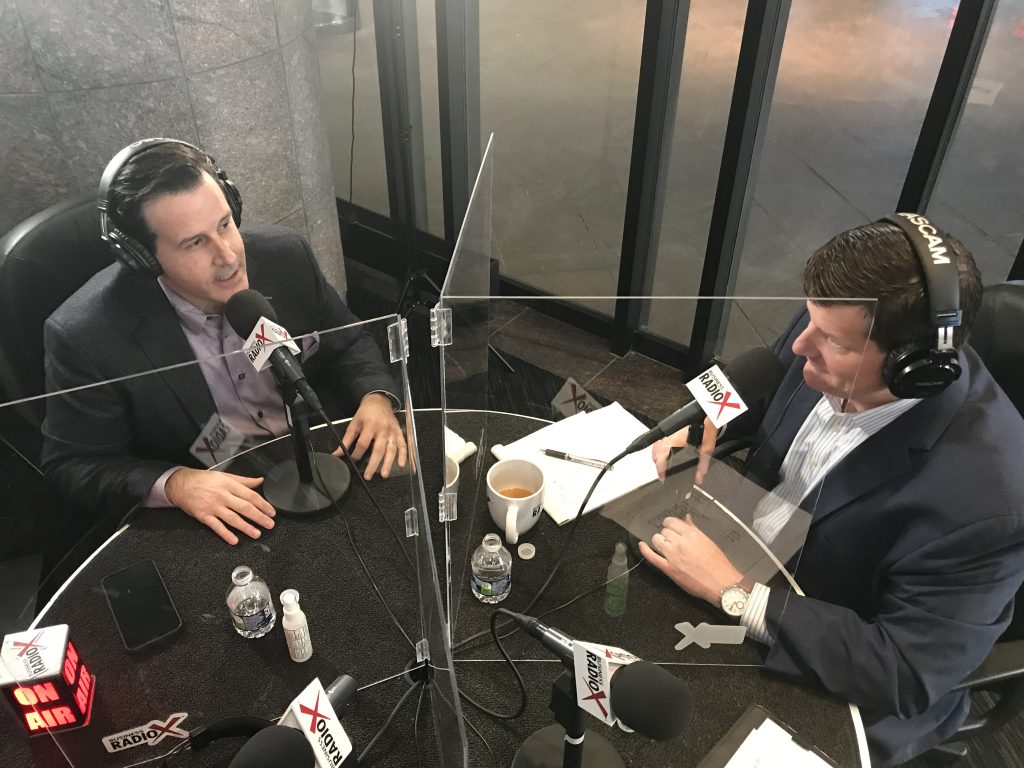
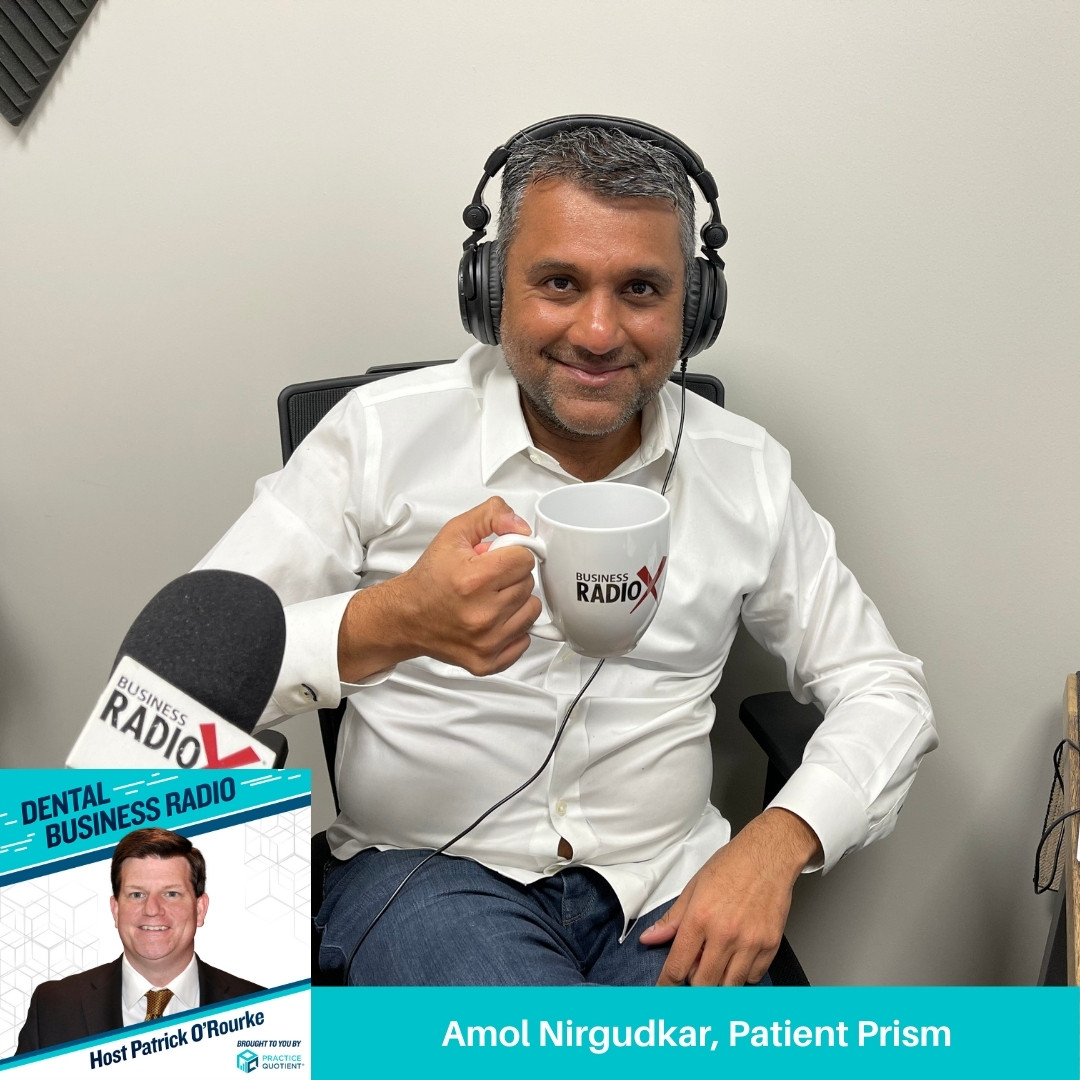
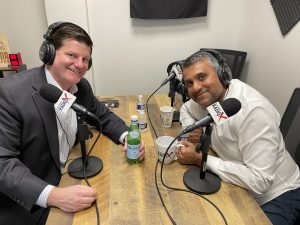
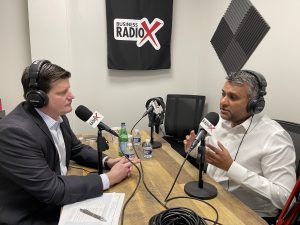
Amol Nirgudkar, CEO of Patient Prism, joins host Patrick O’Rourke to discuss how his firm uses AI to train and inspire patient-facing practice personnel, reengage lost sales opportunities for their dental practice clients, increase their revenue and bottom lines, and much more. “Dental Business Radio” is underwritten and presented by Practice Quotient: PPO Negotiations & Analysis and produced by the North Fulton studio of Business RadioX®.

Patient Prism

Patient Prism’s software shows which marketing investments generate the highest-value phone calls from potential new patients. The use of AI technology enables busy practices to convert more of these callers into patients. Dental offices can increase their revenue growth without necessarily spending more on marketing. Dentists and practice managers can do so without spending hours listening to recordings of entire phone calls.

Patient Prism holds five utility patents issued by the USPTO and is the only call tracking company that leverages artificial intelligence and human call coaching validation to deliver patients directly to dental practices.

Follow Patient Prism on LinkedIn and Facebook.

Amol Nirgudkar, CEO, Patient Prism

Amol-NirdudkarAmol Nirgudkar helps dentists grow their practices and reach their goals.

He is in an unusual position to offer practical insights. As a certified public accountant, business consultant, author, entrepreneur, and former owner of several dental practices, he has 20 years of experience working with dental practices, both large and small.

Through the three companies he founded, Amol has served more than 1,000 dentists across the United States. Through his work, Amol saw firsthand a growth challenge that all dental practices face. No matter how successfully they may market their practice, almost 50% of new patient calls don’t end in a booked appointment.

To help solve that problem, he founded Patient Prism in 2015. The Patient Prism service uses both A.I. and American call coaches to evaluate the way dental offices handle phone calls, identify the callers that didn’t schedule, and teach the team how to win them back – all within 30 minutes of the failed call.

Amol co-invented the patented technologies used in Patient Prism. One eliminates the need to listen to recorded phone calls by providing the information visually. The other technology details specific words spoken by the patient during the call so dentists and managers know which services callers are requesting and the revenue opportunity associated with each call. Amol continues to PatandAmolonDBRwork with artificial intelligence and machine learning to empower dental teams to deliver a better patient experience and build even more successful practices.

Amol has also written several articles and e-books, and published a paperback book called Profitable Niches in General Dentistry (2014).

Connect with Amol on LinkedIn.

Questions/Topics Discussed Include:

  • How is AI affecting our life and why it matters
  • How Patient Prism uses AI to deliver new patients to dental offices
  • Why speed matters
  • What an average practice should expect when signing up with Patient Prism
  • Additional insights Patient Prism provides to dental offices besides scheduling percentage
  • The best way to learn more and sign up for Patient Prism
TRANSCRIPT

Intro: [00:00:03] Live from the Business RadioX Studio in Atlanta, it’s time for Dental Business Radio. Brought to you by Practice Quotient. Practice Quotient bridges the gap between the provider and payer communities. Now, here’s your host, Patrick O’Rourke.

Patrick O’Rourke: [00:00:20] Hi there, friends of Dental Business Radio. This is your host, Patrick O’Rourke, on a sunny day with my friend, Amol. Amol Nirgudkar.

Amol Nirgudkar: [00:00:32] You got it almost.

Patrick O’Rourke: [00:00:34] Well, we’ll try again later.

Amol Nirgudkar: [00:00:35] Yes, sir.

Patrick O’Rourke: [00:00:36] So, Amol, my friend that I met originally down in Tampa on Harbor Island one day for lunch, who is a generous and smart individual, a numbers guy with a CPA background. He’s also an author and the founder of Patient Prism. Patient Prism holds many different patents that we may or may not get into, I don’t know. But when somebody asks you on an elevator and they say, “What is Patient Prism?” What do you tell them?

Amol Nirgudkar: [00:01:07] Well, if it’s a short elevator ride then I’ll tell them, we taught a machine how to understand the nuance of dental conversations, so that we could understand what prevents a new patient from moving forward to schedule an appointment on the phone. And we help dental practices basically improve their sales ability to convert more of those leads into scheduled appointments. That’s a short elevator ride, depending what floor I’m coming from.

Patrick O’Rourke: [00:01:37] All right. So, now, we’re stuck on an elevator, our metaphorical elevator, and I go, “That is interesting. Tell me a little bit more.”

Amol Nirgudkar: [00:01:44] Yeah. I mean, what’s happening in dentistry is this, right? Over the last 10 to 15 years, dentistry has shifted from how dentists acquire new patients. In the past, in the 70s and 80s, even early 90s, patients used to show up from some referral source. There’s not a lot of advertising and marketing going on. In clear choice. dental implant centers came about in the early 2000s and they really changed the game, where, now, you are starting to advertise actively or became a B2C model where you’re actually actively advertising to get new patients.

Amol Nirgudkar: [00:02:20] Now, when you’re actively advertising to get new patients, one of the fundamental things that needs to happen, you get the phone to ring. You have to make sure that every time a phone rings, number one, you answer it – super important. You’re open for business.

Patrick O’Rourke: [00:02:37] Answering phone is important.

Amol Nirgudkar: [00:02:40] Answering the phone is important.

Patrick O’Rourke: [00:02:41] Okay. Hold on. I’m writing this down.

Amol Nirgudkar: [00:02:42] That’s right. Answer the damn phone. Number two, you’ve spent money driving that lead in, spending Google, Facebook, whatever, what not. You want to make sure that lead, that new patient – we call it prospect. They’re not a customer yet. They are prospect.

Patrick O’Rourke: [00:02:57] Sure. They’re thinking about it.

Amol Nirgudkar: [00:02:58] And they’re a pretty hot lead because they’ve called you. They’re not a warm lead or a cold lead. They’re a hot lead, because they called you. You want to make sure that patient feels comfortable booking that appointment on that first attempt. What was happening across dentistry since the 70s is that, that booking rate was around 60, 65 percent. So, we were missing so much of the opportunities right there on the phone because what happened in dentistry – we’re still in the elevator, probably in the 15th floor – was that, we hired people to work in dentistry, especially at the front office who are answering phones, to be order takers. We didn’t tell them to be salespeople. And sales, somehow, is considered a bad word. But it’s not as long as you’re moving people from a bad spot to a good spot. In most instances in dentistry, what we’re doing in dentistry is we’re taking patients with bad health, a suboptimal health and moving them to good health.

Amol Nirgudkar: [00:03:57] So, we have to really train our people to be salespeople at the front. And that is why Patient Prism was developed, is to enable better sales conversations between prospects that are coming from marketing – I mean, from all these different sources – and getting them scheduled by leveraging AI. AI, you know, is a buzzword these days.

Patrick O’Rourke: [00:04:20] Artificial intelligence is what that stands for, right?

Amol Nirgudkar: [00:04:24] It is. And so, we use this subset of our AI called Natural Language Processing, where we took spoken words and we analyze them really quickly. And if the patient decided not to move forward in that journey, on that phone call to schedule an appointment with you, we analyze that conversation really quickly and notify the office within 20 minutes now or 20 or 25 minutes saying that, “Hey, this is what went wrong.” You didn’t have to actually listen to the whole conversation. “This is what went wrong, you didn’t offer them financing.” Or, “You didn’t discuss the insurance options properly.” Or, “You diagnosed what the patient needed when you couldn’t have diagnosed it in the first place.” And so, here’s the information 20 minutes after a patient decides to hang up with you.

Amol Nirgudkar: [00:05:07] And, now, you have that second chance to make that first impression. You call the patient back and saying, “Sir, you called us earlier, you need a dental implant. You know what? I understand you had no insurance and we figured out to give you some important information about financing options we have available. So, come on back in. We’ll get you on our schedule. We have an appointment available for 9:30 tomorrow and we’ll get you free examine X-rays. Come on in. We love new patients. Our doctor is one of the best in the country, has placed over 5,000 implants.” Now, you’ve turned the conversation around. You’ve given that patient the ability to come back in your office. And what we’ve seen with Patient Prism is 25 percent of those patients actually come back on the second try.

Amol Nirgudkar: [00:05:53] So, Patient Prism basically leverages AI to understand the problem that occurred on the phone that prevented the patient from moving forward. Once you understand the problem, we communicate that problem within 20 minutes to the dental office. So, they can actually have that second chance of getting the patient back. And sometimes, you know, it’s one or two patients extra per month could make or break your office. Or it could make your office, right? I mean, you know after a certain point, you can make a big impact.

Patrick O’Rourke: [00:06:23] And it’s about the right kind of patients too. You know, anybody who’s a student of sales – which I think, you know, I would consider myself to be a student – follow up in sales is key. So, you have to follow up, follow up, follow up. One of the things that, frankly, my organization, I don’t have any sales people so we don’t do any follow up and we probably missed out on a lot of stuff. But we’re a little bit different type of business, we’re referral based. It’s 100 percent referral based. So, you’re only calling us if somebody said certain nice things.

Patrick O’Rourke: [00:07:02] And when you state, “Hey, this is sales and prospects,” I get that. But, to me, what you just described is an education process. And it’s a training process of helping the front lines or the face of these dental practices be more welcoming, use active listening techniques, and clearing the pathway making people comfortable and educating them, assuming that they are the best solution or they have the best solution, kind of like the implants we just described for that specific patient. Versus, being, “We don’t take Blue Cross.”

Patrick O’Rourke: [00:07:45] And then, you’re doing it – and I’m going to try to get into the numbers because I was kind of doing them in my head – in a way that’s quantifiable. And the dentist/ owners are not having to listen to phone calls or train people. It’s all done. It’s proven. And so, if, let’s say, we’re converting on a 65 percent ratio, that means we’re not converting on 35 percent. And so, you’re then able to get one quarter of that 35 percent back. I think that that’s really important to track, because in my conversations, still to this day, it seems to me that what’s tracked is how many new patients am I getting a month. Does that make sense?

Amol Nirgudkar: [00:08:36] And, you know, it’s easy to say, “I need to spend more money on marketing to drive new patients.” But sometimes, let’s understand, we might be getting enough leads in our offices. We just need to convert them. So, why spend more? The easy button to press is, let’s spend more money on marketing.

Patrick O’Rourke: [00:08:57] Well, I can tell you that outside of the larger groups, spending money on marketing is not something that’s high on the priority list of most dental practices and specialty practices. Let’s include in that category, you know, sometimes you talk to folks and you’re like, “Well, how much money do you spend on marketing?” They’re like, “Marketing? Nah. We did some mailers, like, back in 1994. It didn’t work.”

Amol Nirgudkar: [00:09:22] You know, as professional management comes into dental practices and private equity comes into DSOs, one of the things – and they’re super analytical, right? – that we talk about in our business, as well as any business you talk about, is, what does it cost to acquire a customer? It’s called a CAC, acquisition cost.

Patrick O’Rourke: [00:09:47] Client acquisition cost.

Amol Nirgudkar: [00:09:47] So, client acquisition cost or customer acquisition cost, whatever that is. And we have to really understand that concept really well if you want to run the practice of dentistry as a business – as we’re in Business Radio right now – we want to understand what does it cost to acquire a customer.

Amol Nirgudkar: [00:10:04] Now, you’re spending, let’s say, $2,000 in a Google Adwords campaign, let’s say, to attract Invisalign patients, and you want to do Invisalign. And, let’s say, from that Google AdWords, ten people actually call us. Now, if ten people call us and we only schedule five, that’s $400 cost of acquisition. But if we schedule all ten, that’s only $200 cost of acquisition. And that’s what Patient Prism really helps you understand and then compress that cost. Because if your $2,000 can get you, you know, five patients worth $4,000 a piece, that’s $20,000. Or if we can get you eight patients, that’s $32,000. That’s what we see the lift happen, right? Because we’re already spending the money to drive the leads in. We’re spending money upwards of a $100 a lead sometimes, some of them are $200 a lead – Google is expensive, Adwords are expensive – to drive those type of high value customers into your office.

Amol Nirgudkar: [00:11:07] And somehow our receptionist says, “By the way, we have nothing available for the next three weeks,” and the patient goes away. Or the receptionist says, “You know, it’s really going to cost you $5,000. But you might need a root canal before that, it’s going to cost you six grand.” And we’re driving people away from the offices to come in. Because at the end of the day – Patrick, you’ve been in dentistry for a very long time. And we’re not dentists. Both of us are not – but one thing we know for sure, nobody knows what you need inside your mouth unless you open your mouth and the dentist looks at it with their loops or whatever it is and examines the teeth. You can’t really diagnose that over the phone and tell the patient, “Oh, you might need this, that’s going to cost you a $1,000.” There’s two barriers – main barriers –

Patrick O’Rourke: [00:11:52] Does that happen a lot?

Amol Nirgudkar: [00:11:53] It happens a lot. It happens a lot. People start talking about, “Hey, what’s it going to cost me?” “Oh, well, the crown is $1,200 but the build up is going to be another $300. And then, we don’t know whether you might need a root canal, that can be another $1,000.” So, the patients here are looking at some special thinking that, you know, it’s maybe about a $1,000 and the insurance is going to cover whatever percentages is. And, now, they have this idea that, “Oh, my God. I have to spend another $1,500 on this?” You have no idea. How do you know the patient might need a build up or a root canal? But, somehow, our folks, they create all these barriers. Barriers for patients to make an appointment.

Patrick O’Rourke: [00:12:32] Right. And they think they’re trying to be helpful, probably, right? So, it’s sort of like you just said, we’re business folks. I’m from the insurance business, but I know more about – you know, I started in dental and the Lord knows this is where I’m still making my hay. So, I know more about it than I care to brag about. I know what an apicoectomy is and I know how to spell it. But can I do it? Now, sometimes, because people know that I do something in dentistry but they don’t know exactly what, then, they’re like, “Hey, Pat. Blah, blah, blah.” I’m like, “Look, I’m not a dentist. I don’t know. Don’t open your mouth over your dragon breath.”

Patrick O’Rourke: [00:13:13] And even though I probably do know more than, you know, most folks, well, I would never try to get out of my [indiscernible] much to diagnose. And it’s the same thing for the front desk, they know a lot about it. But you’re still not licensed to diagnose, right?

Amol Nirgudkar: [00:13:30] And it’s not physically possible to diagnose unless somebody opened their mouth and you’ve looked inside. Because somebody thinks they need a crown. How do you know they need a crown? And then, you’re quoting prices on that. And then, you’re not even – then on top of that, so there’s two barriers that patients face when they call a dental office. And nobody likes to call the dental office, we know that, right? There’s 40 percent of people actually only go to the dentist, 60 percent of America doesn’t even go to a dentist.

Patrick O’Rourke: [00:13:59] I like going to the dentist.

Amol Nirgudkar: [00:14:00] So, somebody who calls a dentist, they have overcome significant inertia to actually call the dental office. And they have called us. Now, they have two concerns, “How much is it going to hurt me physically?” Because there’s fear of dentistry, how much pain and all that stuff. And, “How much is it going to cost me?” So, fear and cost are two big barriers. And then, the third barrier also is that, “Have I called the right place? Are these the good people? Are they competent?”

Amol Nirgudkar: [00:14:30] And all we’ve got to do on the phone is, make them feel safe, make them feel that they have called the right place, make them feel that this is going to be an affordable treatment for them, and make them feel that it’s going to improve their life. And if we can communicate that, we don’t need to communicate a lot more. We have to actively listen, empathy. That’s just a couple of things we do at Patient Prism, we analyze things like active listening. Did you ask about discomfort? Did you mention financing? Did you discuss insurance options correctly? What if somebody was out of network? We look at that. How do you have the conversations around that?

Patrick O’Rourke: [00:15:05] So, have you ever seen the study? There’s multiple of them, actually, that said the number one reason why people don’t go to the dentist is because they don’t have dental insurance. Number two reason is, because they don’t know how much it’s going to cost, whether they have dental insurance or not. Because dental insurance is kind of a funky financial instrument, if you will.

Amol Nirgudkar: [00:15:26] Right. It is.

Patrick O’Rourke: [00:15:26] Right. Funky is a nice word.

Amol Nirgudkar: [00:15:28] But you’re right. Absolutely. And that all derives from the idea, how much is it going to cost? Can I afford it? And how much is it going to hurt me? And it’s simple things. It’s the soft skills. People do business with people, especially with doctors. And, obviously, we’re in health care. First and foremost, you’ve got to feel safe, that you’ve called the right play.

Patrick O’Rourke: [00:15:51] Especially these days.

Amol Nirgudkar: [00:15:52] Obviously. More so in COVID environment than ever before. But all of us desire safety. Any place we are in, we’re always looking for safety. And safety is a big part of what we need to impart to a prospective patient that, “Yes, you’re safe. You’ve called the right place. We care. We have empathy. We can make this affordable. It can change your life. We have an appointment available. You’re special.” So, those are some of the things.

Amol Nirgudkar: [00:16:24] Right now we’re so busy, right? Most dental offices you’ve been to, the front is super busy. They’re doing all sorts of things. They’re checking out patients. They’re doing insurance verifications. And sometimes they’re cleaning things. They’re doing all sorts of things. And sometimes what happens in that busy environment, we forget to talk. We forget to have time for the most important function, talking to our customer or our client, our patient. And if we forget that, no matter whether it’s an existing patient or new patient, you know, people don’t want to do business with you if you appear to be too busy and not caring about their concerns. Because people care what they care about. And you’ve got to care about what the patient’s care about. Your stuff can wait. Right. You’ve got to do stuff. I understand you got to do paperwork, you got to call the companies, all that stuff. That’s great. But the most important person in that dental office is the patient. And we’ve got to respect that, whether it’s on the phone, whether it’s in person, whether it’s anywhere else. Because that is what drives revenue, it’s the patient.

Patrick O’Rourke: [00:17:26] Right. It’s in my head. I like analogies and to use other things, it’s like walking into Macy’s or Nordstrom’s and you’re like, “I’m trying to buy a suit and, you know, I like to have help.” But when I buy a suit, I like to wear nice stuff. And then, somebody is like, “I’m too busy. I’m too busy folding the clothes over here. I can’t help you.” And I’m like, “Well, fine. I’ll find somebody who can help me then.”

Amol Nirgudkar: [00:17:50] That’s a great analogy. Actually, I’ve had situations, just two weeks ago, a patient called one of her clients – and sometimes we get these crazy alerts because if things go crazy wrong – and the patient called at 4:55 p.m. Eastern Time and said, “You know, I’ve been thinking about this for a long time. I really need a full mouth extraction and get those implants aborted dentures.” Pretty penny, $30,000 to 50,000 depending on where you go to. And at 4:55, the person at the front sounded very hurried and like, “Sir, we’re about to close in five minutes. Could you call back tomorrow?”

Amol Nirgudkar: [00:18:37] So, how do you do that? Like, how do you do that? And that call got elevated to my attention because, you know, it’s so egregious, right? You’re literally telling a patient who could potentially spend $40,000 in your office telling them, “Could you call me tomorrow because it’s 4:55?”

Patrick O’Rourke: [00:18:55] So, that brings an alarm on your phone?

Amol Nirgudkar: [00:18:59] It does brings the alarm on our side, we call it escalation call. Or somebody is really rude or racist or something like that, it escalates that because our AI listens too. Because we don’t think every human being needs to be treated with the utmost kindness and respect and compassion, regardless of what they sound like, regardless of how much money you think they have, or whatever their circumstance might be. But this was egregious because, obviously, $40,000 opportunity, 4:55, it’s not even 5:00. Even if it was 5:00 –

Patrick O’Rourke: [00:19:28] Is this almost like a drowning kid – though metaphorically, you know, not that serious – but this is where you go and save this drowning prospect that’s lost. It’s about to wash away with the tide. And you’re going to go in there and pull it right out. And this makes Patient Prism the hero that Patient Prism is.

Amol Nirgudkar: [00:19:49] And we got back. We sent that to the CEO of this group. They called the patient the next morning, offered them a free set of a CT scan and a free whitening kit. They just come in. And, you know, I’ve had situations where we have recommended to our DSO customers and dental customers that, “You know, if you have a case like that, send a Uber. Let them in. Let them in.” You know, there’s Uber Corporate, as long as you can figure out the insurance stuff.

Amol Nirgudkar: [00:20:21] We’ve got to figure out – and telling them, “We’re closed. Call tomorrow,” that’s not acceptable. And we had to have a conversation with the receptionist. I’m like, your number one job in dentistry is to improve people’s health. This procedure, yes, it would make us a lot of money. But at the end of the day, you’ve got to think about that patient has finally taken the step to call a dental office to get all their teeth removed and put nice shiny pearly whites in them. So, not only they will have a great smile, but they will have great health. And you’ve got to remember that’s a responsibility that we have in dentistry to improve, not only people’s oral health, but overall health, as we know that the connections obviously are established very well now.

Patrick O’Rourke: [00:21:09] Did you listen to the show with Marc Cooper, the dental business rating?

Amol Nirgudkar: [00:21:13] Marc’s amazing. It’s on my list to listen to. But the oral systemic connection is absolutely established. And so, one of the things we educate, as part of Patient Prism – and we’re a software company and people think, “Oh, my God. They just do AI and everything else.” But at the end of the day, we’re in the people business. We want to inspire our teams to be better. We want to inspire our teams in the front office to feel that they are making an impact on health care in America. We’re changing the lives of people by getting them in the office. It’s not about revenues. Revenues are a side effect of us treating people right. And so, our values are going to create value in our organization. Our value are, we care for patients. We know dentistry is going to change their life. We know dentistry, giving them the right teeth or whatever, fixing their stuff, a regular cleaning.

Amol Nirgudkar: [00:22:05] Today, there was a study done that I read that periodontal cleaning, periodontal disease, obviously, has a direct impact. But it has a direct impact, apparently, on people who got sick with COVID. People with high amounts of periodontal disease had a higher chance of dying from COVID-19.

Patrick O’Rourke: [00:22:27] Yeah. That’s true.

Amol Nirgudkar: [00:22:28] And so, we are in the business of changing and saving lives. And I think once we get that into the minds of the team members, whether they’re at the front or the middle of the back, it doesn’t matter, and once they believe that it’s a calling, dentistry as a calling. It’s a business, great. We’re in Business Radio, that’s great. At the end of the day –

Patrick O’Rourke: [00:22:47] Right. You serve their purpose. You know, I have to roll out of bed every day thinking I’m helping people. If I don’t think I’m actually helping people, I’m going to go fishing.

Amol Nirgudkar: [00:22:56] Correct. Correct. Or, you know, I’m going to do something else that I love to do. But I get up every morning and think about why I’m here working like a maniac and talking to people in dentistry. Because this is such a beautiful profession. It literally changes people’s lives in so many ways. And if we can improve access to care using this AI technology by allowing more patients to book an appointment, then we are getting America healthier. We’re getting more people to have this function and the aesthetics. It changes relationships too.

Patrick O’Rourke: [00:23:39] More confidence. At least, were more aesthetically pleasing. Please don’t tell me you’re trying to bring smiles to the universe though. That’s an insurance cover. They already got the trade. They already got that slogan, like, trademarked. And then, they told me that one time with a straight face. And I was like, “Really?”

Amol Nirgudkar: [00:23:57] Smiles to the universe.

Patrick O’Rourke: [00:23:57] “So, you want to bring golden small smiles to the entire country, is what you’re doing?” “Okay. Well, how about this? How about instead of dental insurance, here’s what we’ll do. We’ll have all the docs. We’ll work for free.” They’ll just go out there and they’ll do all the work and they’ll handle it and they’ll bring smiles to the whole country and the whole universe for free. And so, guess what we don’t need if that’s the case? A financial vehicle to pay for it. So, we don’t need insurance, so then you don’t have a job buddy. Is that going to make you happy? It’s not going to make you smile, is it? True story.

Amol Nirgudkar: [00:24:31] That comment sounds like one of those social media memes. They sound interesting, they sound funny, but they’re so simplistic. They don’t reflect reality. It sounds funny. You laugh at them, right?

Patrick O’Rourke: [00:24:46] Oh, yeah. You must never even ever worked in an insurance company before.

Amol Nirgudkar: [00:24:50] Yeah. I have not. I have not. I have not.

Patrick O’Rourke: [00:24:53] Yeah. The marketing department is very creative. They come up with all kinds of stuff and I’m like, “Listen guys, you can call it apple or bicycle all day long, but it’s still apple, you know.” You know, with all due respect to you guys, you have to get creative with the products that are not so creative. But, anyway, I digress into the insurance. But trust me, I bet you somebody has the copyright on, “We’re bringing smiles to the universe.”

Amol Nirgudkar: [00:25:18] Right. Bring smiles to the universe. Right.

Patrick O’Rourke: [00:25:20] If not trademarked.

Amol Nirgudkar: [00:25:22] We’re bringing smiles to Baby Yoda over there on – I don’t know what island he’s on right now. Tatooine? I don’t know. I’m not sure what planet is on. But Mandalorian, Star Wars –

Patrick O’Rourke: [00:25:34] I haven’t started that yet.

Amol Nirgudkar: [00:25:35] Mandalorian is good.

Patrick O’Rourke: [00:25:36] Yes?

Amol Nirgudkar: [00:25:36] You got to watch both.

Patrick O’Rourke: [00:25:38] So, are you Star Trek or Star Wars guy?

Patrick O’Rourke: [00:25:40] I’m a Star Wars guy. Star Wars guy. But Mandalorian is great. My son, who’s ten, got me into it.

Patrick O’Rourke: [00:25:47] My son’s ten.

Amol Nirgudkar: [00:25:48] And I’ve learned a lot about all the different galaxies and systems.

Patrick O’Rourke: [00:25:54] It seems like it’s gotten a lot more complicated than the first three.

Amol Nirgudkar: [00:25:59] Yeah. Absolutely, the side stories are interesting. This is right in between when Yoda is dead and, you know, it’s right in between before the other episodes that come out. But, anyway, that’s the –

Patrick O’Rourke: [00:26:13] Yeah. My son’s in Florida where it’s warm.

Amol Nirgudkar: [00:26:18] Mandalorian is excellent. But they’re bringing smiles to the –

Patrick O’Rourke: [00:26:23] So, Mandalorian, they’re not bringing smiles to the universe. But Amol and Patient Prism are bringing smiles to the universe. I’m not going to mention any names, I know you guys are listening to the show, so you know who you are. Hugs and kisses.

Patrick O’Rourke: [00:26:40] So, now, artificial intelligence, my wife says I have artificial intelligence because I think I’m smart, but I’m not. That’s what she says. But AI is a real thing that Patient Prism is moving. Now, how easy is it to plug this thing? The first time I met you, by the way, you were telling me about this, I’m like, “I’ve never heard of that. That sound pretty awesome. This sounds like it’s going to be hard to do. You got to do a bunch of stuff and plug in computers and, you know -” Walk me through the process.

Amol Nirgudkar: [00:27:11] It’s a simple thing. The process is, you’re a patient, you’re driving on I85.

Patrick O’Rourke: [00:27:17] No, no, I’m a doc. Let’s say, I’m a doc, you know, and I’m like, “Oh, that sounds interesting. All right. Go. Put that stuff in my system.”

Amol Nirgudkar: [00:27:27] Right. So, the process is simple. We insert ourselves directly in your phone system so that we are monitoring your phone calls. We record the phone calls, so what the AI does, it really understands who this person is. Is this a new patient?

Patrick O’Rourke: [00:27:46] So, like, if John Ray over here calls, it’s going to be like, John Ray, North Fulton. And it’s going to say everything about John. It’s going to have his age, his background. The fact that he likes purple Corvettes.

Amol Nirgudkar: [00:28:03] No. Not really. It’s not that creepy. It’s not that creepy. But John Ray, if John Ray calls and says, “You know, I’ve been thinking about getting some veneers and I’ve not been to a dentist in a long time, do you guys do veneers?” And they say, “Yes. We do the veneers and stuff.” So, the AI will actually listen to a transcript of John Ray’s recording and says, “You know, I think John Ray, the probability of him being a new patient in this office is about 95 percent.” Because John Ray said that, you know, I’m looking to get some veneers. He didn’t say I’m a brand new patient.

Amol Nirgudkar: [00:28:38] So, what AI does, really, is, it takes the audio conversation, transcribes it into text, and it looks at patterns in text. Not just in John Ray’s conversation, but it looks at millions of patterns and puts them together to understand, first, who John Ray is. John Ray worked for Henry Shine and says, “Hey, when can I deliver the cotton gauze or cotton balls?” And the AI is going to say, “You know what? John Ray, it looks like this is just a general call. This is not a patient.” And to be able to figure that out quickly, AI can do because it recognizes patterns. And it takes unstructured data, makes it structured data, and analyzes it. The first step is figuring out who John Ray is. And now we’ve determined he’s a new patient. Now, the conversation goes on and everything else. And if John reaches the end of the conversation, “I’m going to think about it. I’ll call you guys back.”

Amol Nirgudkar: [00:29:36] Based on those patterns, the AI has figured out that John Ray did not book that appointment. Now, we have identified very quickly, within ten minutes of him hanging up the phone, we’ve identified that John Ray wanted some veeners worth. $5,000, has decided not to schedule an appointment, and here’s what happens. That piece, AI sends it back to our Tampa call center, which they look, they confirm, where a human in the loop AI, which means the humans are there. And then, that information gets curated. Our human being sitting in Tampa says, “Okay. Let’s put some of the things in perspective of all the things that didn’t happen in that conversation.” And that information is packaged in a bow that, “Hey, maybe our receptionist did not give John Ray financing options to clear credit that could have made it cheaper for him. And they didn’t discuss that.”

Amol Nirgudkar: [00:30:32] And all that information goes to somebody’s phone and email within 20, 25 minutes to say that, “We just lost John Ray worth $5,000 of veneers or $10,000 of veneers. And let’s hear some training videos around it. Here’s how you talk when somebody calls and thinks it’s very expensive, and when somebody is really price shopping,” let’s say he was price shopping. So, AI has figured out that John Ray was a price shopper and he was concerned about cost. And there is a training video around that. So, all that goes back to the office, you look at it like, “Okay. Well, I should call John Ray back.” Now, the doctor’s office manager says, “All right. Well, let’s do this. So, we’ve understood Patient Prism has told us we’ve lost a $9,000 opportunity with John Ray. Let’s call them back and tell him, ‘John Ray, you called us earlier but we forgot to give you some important information. One, that we have an appointment available to see you tomorrow or the day after. We’ve got really creative financing available that can make this into, like, a couple hundred dollars a month.'”

Patrick O’Rourke: [00:31:40] You got to get creative with his finances, that’s for sure.

Amol Nirgudkar: [00:31:42] Exactly. “And why don’t you come in? We would love new patients. And, you know, we want to make sure that we’re treating this correctly and we want you to get the smile you deserve. Because our doctor is amazing at smile makeovers.”

Patrick O’Rourke: [00:31:59] At veneers.

Amol Nirgudkar: [00:32:00] Smile makeovers.

Patrick O’Rourke: [00:32:00] He is the Picasso of veneers. And so, if you want to veneer, you need to get in here.

Amol Nirgudkar: [00:32:07] Correct. Correct. And John Ray is like, “You know what? I am really pleasantly surprised that a health care practitioner provider cares enough to call me back.” And then, he’s like, “All right. I’m going to come in.” And that’s the process.

Patrick O’Rourke: [00:32:23] That’s it. That’s what I love about this. For the first time you explain it, because this is Dental Business Radio, I’m a numbers guy and you’re a numbers guy.

Amol Nirgudkar: [00:32:31] I’m a numbers guy.

Patrick O’Rourke: [00:32:32] I like numbers guys and girls. I like numbers people, data people. Because I’m always like, “All right. Well, how do you quantify that? Like, what does that mean and how much money?” And so, this seems like it’s very easy for you to go to any client and go, “Here’s what we just did. We just found you these – what? – ten, I don’t know, 20 different opportunities and they can easily run a report. Well, it’s $100,000 a year.”

Amol Nirgudkar: [00:33:01] At the minimum. At the minimum.

Patrick O’Rourke: [00:33:03] So, this is why you’re very popular.

Amol Nirgudkar: [00:33:06] We’re popular because we care, I think. We really believe that –

Patrick O’Rourke: [00:33:11] You can care all day, but if you don’t make me money –

Amol Nirgudkar: [00:33:14] Correct. Correct. Absolutely. Yeah. I mean, you don’t have to wait. That’s another reason, right? You don’t have to wait to find out. Within 30 days, you’re going to find out. We saved two patients and three patients, and those patients ended up spending 20 grand with us directly as a result of what Patient Prism did. If we had not found out, this patient, John Ray called and he needed $9,000 veneers, we had not known by the time – imagine we had to call a recording service and we had deployed people to listen to calls. Number one, who’s got the time? Number two, how do you figure out which calls to listen to? Let’s say you figured this out, it would take you hours and hours and hours of listening to find out. By that time, John Ray, his nimble fingers on the keyboard have already found five other doctors that he can call upon, so he’s already gone. The prospect is gone to one of your competitors who is going to, basically, treat them –

Patrick O’Rourke: [00:34:13] Right. Roll out the red carpet, right.

Amol Nirgudkar: [00:34:15] Correct. And that’s what we want to prevent, right? We want to prevent – you, you’ve driven that lead in. We want to make sure that that prospect, that patient, comes into your office and spends money with you guys and you get to impact his health.

Patrick O’Rourke: [00:34:29] Right. And you want to welcome them. You want to make them feel warm. And you want to give them the path of least resistance into the treatment that they are looking for and need. That’s pretty easy.

Amol Nirgudkar: [00:34:40] Correct. Absolutely.

Patrick O’Rourke: [00:34:42] The other cool thing about the platform is the education component. The education component in which, you know, as somebody who’s talked to – I don’t know – thousands of different owner doctors across this country, they don’t have the time and, certainly, they’ve never trained on a high level like Nordstrom training on how to answer calls appropriately. Maybe they took a weekend course or something, but maybe you know how to do it even. Maybe you know how to do it but how are you going to train it? I know I do a lot of stuff, but, you know, training, like, do I have time to train, I mean, personally? The answer is no.

Amol Nirgudkar: [00:35:24] It’s tough, right? It’s tough.

Patrick O’Rourke: [00:35:25] And so, the cool thing about it is that, you have this whole library of things that then pinpoint and go, “You need to do X.” And then, it’s like, what’s the average video?

Amol Nirgudkar: [00:35:37] Submitted? Two minutes long. It’s quick.

Patrick O’Rourke: [00:35:38] Right. Boom. Here you go. And so, it’s on the spot training. So, it’s like having a training team. And that’s how I got started my career in operations management, I’ve trained a lot of people in my time. It’s hard.

Amol Nirgudkar: [00:35:52] It is very hard. And you know what? Sometimes we’ve seen people learn better in chunks. You tell somebody who calls in – and let’s take an insurance example – and they’re like, “Well, we don’t take Blue Cross.” Well, you’re out of network. What kind of conversation do you need to have with the patient who’s out of network? We’ve got a video on that. And what happens to a patient who’s a price shopper? We have a video on that. What happens to somebody who is anxious, afraid, somebody who is really wanting all the details, somebody who wants all the information about what dental implants are like?

Amol Nirgudkar: [00:36:36] There’s all sorts of videos. We have almost 350 of them that relate to what questions patients may have in the phone that you can answer. And those are a minute or two minutes long recorded by some of the industry experts in the industry that we know of. And then, they get attached specifically to every problem that occurs. If a patient calls and doesn’t schedule an appointment because he was a price shopper, that alert that goes out will have the price shopper video right there, which is beautiful, right? Because now you’ve not only told these guys what they did wrong, but you’ve given them the tools to listen to that video before they called the patient back. And that’s powerful.

Amol Nirgudkar: [00:37:15] Now, You do that enough times over a period of 42 days – Charles Duhigg wrote the book The Power of Habit – what we’re doing is we’re changing habits one call at a time. And when you encounter these things and when you’re nudged in the right direction, we’re not Big Brother watching here. We’re not Big Brother watching. What we call ourselves are we’re coaches. Front office is a position. Hygienist is a position. Doctor is a position. The doctor is, let’s say, the quarterback. But there’s a position if you have the sports analogy. For an office position, every position has a coach. We are the front office coach, we want to make sure that we are going to facilitate your greatness by allowing you to understand the things that you’re doing that could make the patient experience better or the things that you’re doing that are making the patient experience worse. And we’re optimizing that journey for you.

Patrick O’Rourke: [00:38:08] I love that, actually. So, the front office coach –

Amol Nirgudkar: [00:38:12] It is a front office coach.

Patrick O’Rourke: [00:38:14] And as that they are the face of the franchise, so to speak. It’s pretty important. But I think that going back to our elevator thing, that’s what you guys do. You’re the front office coach, you know, if it’s a dental conference radio, right?

Amol Nirgudkar: [00:38:31] Although, we are accelerating your new patient acquisition rate. We’re accelerating your new patient growth. It’s important, right? It’s important. We’re accelerating a new patient growth without spending more money on marketing. It’s not about spending more money. It’s about really understanding, making sure that everybody who calls can get scheduled now after that happens. Sorry.

Patrick O’Rourke: [00:38:50] Yeah. You’re preserving your marketing investment.

Amol Nirgudkar: [00:38:54] Absolutely. We’re reducing your cost of customer acquisition. Your cost of customer acquisition and reducing that. And, obviously, by providing exceptional customer service on the phone. You know what happens, Patrick? It translates into the entire journey of the patient. If you feel good about somebody, when you go in, and that optimal Ritz-Carlton experience continues throughout the process. The front office gives you coffee, like John Ray offered me today. And then, the hygienist comes in, the system comes in, and everybody is delivering this exceptional care and compassionate service through communication. That, eventually, leads to higher case acceptance rates and then leads to higher referrals.

Amol Nirgudkar: [00:39:46] That’s what we want in dentistry to happen. We want that entire customer journey from the time they find you – when they have the need, they find you, they Google you, they find you on Google Maps, ads, whatever it is. The entire experience, we want to map that and make sure that every handoff that happens, every time a patient encounters your website or your people, the communication is so optimal that they feel that this is the right place. This is where I want to get my treatment done. This is who I want to refer my friends and family to. And we are just one of the pieces, which is on the phone, which is the first interaction with the doctor’s office is the phone.

Amol Nirgudkar: [00:40:28] And, now, people do it through chat and everything else, but on the phone. And if you can make them feel welcome, if you can make them feel safe, if you can empathize with them, you can alleviate their concerns about cost and fear, they are going to come in and you’re going to do, obviously –

Patrick O’Rourke: [00:40:48] So, it’s kind of a no brainer to me. So, you know, just frankly, I’m puzzled when people would say, “Why would somebody not do this?”

Amol Nirgudkar: [00:40:57] Well, for a variety of reasons. And I’ll tell you, I’m very open and candid about our failures as much as our successes.

Patrick O’Rourke: [00:41:05] I like candor.

Amol Nirgudkar: [00:41:06] And who does it fail with? If you’ve got a small office that just doesn’t receive any phone calls from new patients, it’s not going to work for you because you ain’t got nothing to analyze. Number two, if you have a reluctant team that, “Son, I have been doing dentistry since you’re wearing diapers. I don’t need any training.” Well, if you’ve got those kind of people, well, that’s not going to work for them. But, now more and more so, if you are a growth minded dentist who is actively looking for new patients, advertising, marketing through whatever means you’re doing, digital, non-digital, you’re driving leads in, it’s going to work for you. Or unless you have like Dale Carnegie’s at your front office that know exactly how to say everything perfectly, they never have a bad day, and every time they’re booking 100 percent, I haven’t seen yet. There are people who are great. So, it does work for those type of practices.

Patrick O’Rourke: [00:42:01] I don’t know if you remember what I told you the first time you told me about this, I was like, “Can I get that for my company?”

Amol Nirgudkar: [00:42:06] I wish we could.

Patrick O’Rourke: [00:42:07] Why would I not do that? That doesn’t make any sense. Because even me, even myself, I guess I’m the face of the franchise. I don’t know. I certainly talk to a lot of people. But, yeah, could I use coaching? Probably. My staff certainly won’t tell me anything. John Ray is over there chuckling. What are you chuckling about, Chucklehead?

Amol Nirgudkar: [00:42:29] You know, the new industry in Silicon Valley today is sales enablement. And sales enablement is, are we having the right conversation with our customers? And there’s lots of companies out there in other verticals that look at conversational intelligence. It’s what we’re talking about, conversational intelligence, right? At the end of the day, people don’t care about what you’re selling. People don’t care about how you’re selling it. People care about why you’re doing what you’re doing, as Simon Sinek says. People will buy stuff from you as long as they can trust you. And trust can be only established with optimal communication.

Patrick O’Rourke: [00:43:10] Right. You have to build rapport and you have to do so in a very short amount of time.

Amol Nirgudkar: [00:43:14] A very short amount of time. And you have, like, on the website, Google says you’ve got – what? – eight seconds to sometimes 12 seconds to impress somebody to make the next step, which is call you. And on the phone, a patient can tell if you’re having a bad day when you answer the phone. A patient can tell if you don’t care. One of the things, you know, a lot of these coaches advice, like, keep a mirror in front of you when you’re talking on the phone and make sure you’re smiling, because somebody can tell you’re smiling.

Patrick O’Rourke: [00:43:49] This is true actually. This is not just dentistry. This is corporate America. I tell my staff that and they’re like, “Why are you so corny?” And I’m like, “Look, I’m telling you, you can say, ‘Listen, you’re an effing a-hole.’ As long as you’re smiling, you know, then people are like, ‘Ah.'”

Amol Nirgudkar: [00:44:10] As human beings, we have an inherent tendency to relate. And you’ve got to be able to relate to the patient. Relating to the patient means you are putting yourself in their shoes. That’s the beautiful word in the English language, empathy. You’re putting yourself in their shoes and asking about, “Hey, did you watch the Super Bowl?” I don’t know if you’re in Tampa.

Patrick O’Rourke: [00:44:30] I did watch the Super Bowl, Tampa won. And you know what? Tampa, where your call center is, where they are doing the curating, Tampa, I’ve heard is a tiny little town, the championship city. Shoutout to everybody in Tampa.

Amol Nirgudkar: [00:44:43] That is correct. I mean, it’s been a wonderful year, a wonderful season, football, baseball, hockey. And even soccer, they went to the finals, the Rowdies. So, go, Tampa Bay.

Patrick O’Rourke: [00:44:55] That’s right. I recognized I might have to go down there, it’s a lot warmer right now. But I couldn’t walk out of this episode without giving a shoutout there. Now, going back, maybe I need more empathy. Maybe I need an empathy coach, because as you’re describing this and I’m like, well, if we have this filter, if we’re understanding that John Ray is a price shopper, and if we’re understanding that John Ray is maybe very fearful, he’s an anxious guy, he’s not comfortable with people putting fingers in his mouth, or John Ray wants to follow his insurance. We have all of this stuff. Is there something that can tell us that John Ray is an a-hole and we don’t want him in our office?

Amol Nirgudkar: [00:45:38] Well, in our view, every customer, regardless if they’re a-holes, you can unbook every single one of them. But 90 percent of people or 95 percent of people, you can absolutely. Even if they’re a-holes, it’s because it’s something going on in their life that’s making them be that way. You can absolutely get John Ray to calm down a little bit by talking about what’s important to John Ray.

Patrick O’Rourke: [00:46:04] I’ll just slap the bejesus out of them. That’s what I do.

Amol Nirgudkar: [00:46:07] Well, you cannot do that over the phone. You cannot do that over the phone. But you can. I mean, the thing is, there is situations where we have seen that very angry patient. We’ve seen the discourses that are really, really provocative. And you want to make sure that at the end of the day, we are a dental office, we’re a health care provider, we are doing everything in our power to make that patient feel welcome. If they disrespect us, obviously, it’s on them, it’s not on us. But to tell you the truth –

Patrick O’Rourke: [00:46:44] I’m only half kidding here, by the way.

Amol Nirgudkar: [00:46:47] I know you are. I know are.

Patrick O’Rourke: [00:46:49] Because the thing is, is that, my business a little bit different, but if you’re going to be difficult and challenging for me to deal with, and if I think you’re rude to me – and I think I’m fairly polite. You know, I’m a nice guy most of the time – then I know you’re going to be rude to my staff. And that’s not something I’m going to tolerate. And so, I’m half kidding. But because you probably don’t have something on there, because that’s really not what it’s geared to do. And then, internally, like, everybody has their own a-hole filter or they’re like, “Yeah. We don’t need that person in our office very likely.”

Amol Nirgudkar: [00:47:34] Absolutely not. I mean, but you know what? For the most part, people are nice. For the most part, people just are anxious. In our job, our job is to make sure that the patient who calls in is able to just come in. Come into the office and see the beautiful staff, and the hygienist, and assistants, and the doctor, and get the treatment they deserve. That’s it. We’re not trying to be anybody else.

Patrick O’Rourke: [00:48:02] Right. No, I get it. Why does speed matter?

Amol Nirgudkar: [00:48:06] Yeah.

Patrick O’Rourke: [00:48:07] Ricky Bobby.

Amol Nirgudkar: [00:48:08] Speed matters because, imagine knowing in real time what you did wrong and to be able to fix it, it’s like having the ability. And the quicker you know what you did wrong – and nobody wants to suck at anything. Nobody wants to suck at their job.

Patrick O’Rourke: [00:48:25] I agree with that. Right.

Amol Nirgudkar: [00:48:27] And imagine, like, you had a coach. Imagine some guy hovering over your head and watching everything you do, and kind of letting you know quickly that, “Hey, Patrick. That little proposal that you gave earlier, that presentation, I think you forgot to mention, like, two or three things that could have really sealed the deal.” And knowing that in 15 minutes, before you’ve even left that building, going back to the customer and saying, “By the way, I did forget to mention three other things that make me better than everybody else in the planet in the world of dental insurance. I forgot to give you about this. We’ve got a special deal with this. And we can negotiate this.” Imagine having that. Imagine how many deals could you close if you knew immediately. And somebody was actually looking at the stuff and figuring out what the best practices are.

Amol Nirgudkar: [00:49:19] So, speed matters, because now you have a second chance to make a first impression. You have a second chance. AI is giving you a second chance to revisit the customer, fix your mistakes, and try to get the deal back before it’s dead, before somebody else gets it who is less competent than you are. And you know what? You are one of the best and maybe the best in this business. So, that’s what it is. Speed matters because it allows us to fix what we just broke and do it again.

Patrick O’Rourke: [00:49:48] That’s critical.

Amol Nirgudkar: [00:49:49] And that’s what AI allows you to do. That’s why Patient Prism is the most innovative and powerful tool in dentistry, because the speed at which we get the information in an accurate way to the dental office, to be able to fix that problem that occurred 20 minutes ago or 25 minutes ago, allows us to bring back that customer and revive somebody that leave. They’ve already gone. And 25 percent of those people come back because of speed. All my competitors, I love them. I would never say anything bad about any of them. But they haven’t approached this as a sales problem. They’ve approached this as a marketing attribution problem. They just want where did their customer came from and let’s record the calls.

Amol Nirgudkar: [00:50:33] But at the end of the day, we have to know quickly why that patient didn’t move forward. And if we can know it and say, “Oh, my God. We forgot to offer them the financing option or we didn’t offer them the discount plan that we have.” And just quickly knowing that, “Yes, we should have offered that.” And that allows us to really, really optimize everything that we’re doing. That’s why speed matters. Speed matters. And the only thing, if AI didn’t exist, the way you would do this is, you would have a group of people listening to all these phone calls, it would take forever.

Patrick O’Rourke: [00:51:07] And they have to become subject matter experts and then they would have to do training sessions at least once a week over and over and over and over again with these folks.

Amol Nirgudkar: [00:51:17] By the time they get to it, they have listened to the calls, it’s too late.

Patrick O’Rourke: [00:51:21] Right. John Ray is in his purple Corvette, getting veneers in Mexico.

Amol Nirgudkar: [00:51:26] And gotten a speeding ticket already. He got a speeding ticket. He’s already driven past and he’s gone to San Diego and he’s gone into a Baha. And he’s getting the veneers right there on the corner – on the corner strip right there.

Patrick O’Rourke: [00:51:42] He just puts the top down or maybe his T-top. So, I like that. I think that it’s one of the coolest things I’ve heard about. And, you know, I get around. I know you get around too. You get around more than I do, actually. And I admire that about you. And you’re a numbers guy and you’re genuine. You know, I think people should use speed and call you guys up and, you know, access Patient Prism, assuming that you are open, to having your front office get new patients.

Patrick O’Rourke: [00:52:20] So, if somebody who’s listening to the show wanted to get a hold of Patient Prism and ask some questions, I’m sure that your front office is warm and welcoming and will guide them along the path that they need should this solution be in their interests. How would our listeners do that?

Amol Nirgudkar: [00:52:38] Well, all they would have to do is visit our website, www.patientprism.com. Go there and schedule a demo. There’s an orange button on the top right hand corner, it says Schedule a Demo. And somebody will call you that will give you a demo. And the one thing that I can guarantee you that they will do for you is, they will do an honest assessment whether you actually need us or not. If you don’t need us, we will tell you that maybe you need to fix something else. For example, “So, I get only three new patients a month.” “Well, Patient Prism is not the right solution for you. And we will be honest enough. One of the things I talk about is “people before profits”. I mean, you’ve seen my shirts everywhere. You’ve seen my hats and jacket.

Patrick O’Rourke: [00:53:15] Yeah. That’s why I like you.

Amol Nirgudkar: [00:53:17] We do believe that we’re not going to force the solution down your throat, but we can help most dental practices. Contact us, follow us on Facebook, LinkedIn, follow us on YouTube. We have lots of amazing content we’ve created with some of the best minds in dentistry. And schedule a demo. Our sales team will connect with you, schedule a demo. And diagnose, do you really need this? If you need it, then we can get you in and give you really immediate results within the first 30 days, sometimes within the first day.

Amol Nirgudkar: [00:53:53] We had a pediatric group last week came on board, first day on Patient Prism ,booked a family of four. First day, we recovered four patients day number one.

Patrick O’Rourke: [00:54:03] It feels good, doesn’t it?

Amol Nirgudkar: [00:54:05] It feels amazing. Amazing. And that guy sent us a video testimonial like, “Oh, my God. I got Patient Prism starting Monday, a family of four called. They couldn’t in the first time. We got the RELO alert.” We call it RELO, Reengage Lost Opportunity alerts. “We got the letter from Patient Prism. We called them back and got the whole family booked.”

Patrick O’Rourke: [00:54:22] That’s awesome.

Amol Nirgudkar: [00:54:23] And that was beautiful. And we have these stories, Patrick, every single day of the week. Every single day we found out, “Oh, this practice got this patient back. This practice got this all four case back. These practice got a whole family coming into this office because what of we did.” And it’s tremendously fulfilling to know that we’re adding patients to all our clients offices. New patients every single day by just by training people in how to become better communicators, and AI is helping us in that process.

Patrick O’Rourke: [00:54:57] That’s awesome. That’s fantastic. Amol, I want to thank you for being on the show. It’s always a pleasure to see you. I’m glad you came up here. We are broadcasting live out of Atlanta, more specifically, Innovation in downtown Woodstock, where all the cool kids are. With the producer, the unofficial mayor of North Fulton, John Ray, who I’d also like to thank. And I want to give a special thank you to the show’s sponsor, Practice Quotient, PPO analysis and negotiation. It’s a top tier compensation, top tier representation for top tier providers. And so, if you are a top tier provider and are not being compensated as such, you may want to speak with Practice Quotient. And you can reach them at www.practicequotient.com. Not to be confused with Patient Prism. It’s Patient Prism and Practice Quotient. It’s not Practice Prism and Patient Quotient. That would be wrong.

Amol Nirgudkar, Patient Prism: [00:55:56] That is correct.

Patrick O’Rourke: [00:55:58] Practice Quotient. You know, everybody calls it PQ. I thought the name was very clever. My wife thinks it’s silly. But whatever.

Amol Nirgudkar, Patient Prism: [00:56:07] I like the name a lot. And you’re doing great work in this business. You’re super analytical. And, you know, people are leaving money on the table. And just like we are in the business of like, “Oh, my God. Don’t leave all this money on the table.” And you’re doing the same exact thing, you’re not leaving money on the table.

Patrick O’Rourke: [00:56:23] I have to say I’m a little jealous, because you’re able to do it in 30 days. Ours takes a little longer. But thank you to Practice Quotient and all the people at Practice Quotient who makes the organization as stellar as it is. So, from Florida all the way to Georgia, thanks to Practice Quotient. Thank you to Amol. Thank you to John Ray. And thank you to you, dear listener. If you like the show, please be sure to give it a five star rating and thumbs up, nice Google review, all of that stuff. I promise you good karma will come from it. All right. That’s a guarantee from your friend and host, Patrick O’Rourke. Until next time.


About Dental Business Radio

“Dental Business Radio” covers the business side of dentistry. Host Patrick O’Rourke and his guests cover industry trends, insights, success stories, and more in this wide-ranging show. The show’s guests will include successful doctors across the spectrum of dental practice providers, as well as trusted advisors and noted industry participants. “Dental Business Radio” is underwritten and presented by Practice Quotient and produced by John Ray and the North Fulton studio of Business RadioX®.

Practice Quotient

“Dental Business Radio” is sponsored by Practice Quotient. Practice Quotient, Inc. serves as a bridge between the payor and provider communities. Their clients include general dentist and dental specialty practices across the nation of all sizes, from completely fee-for-service-only to active network participation with every dental plan possible. They work with independent practices, emerging multi-practice entities, and various large ownership entities in the dental space. Their PPO negotiations and analysis projects evaluate the merits of the various in-network participation contract options specific to your Practice’s patient acquisition strategy. There is no one-size-fits-all solution.
Connect with Practice Quotient:

Website

LinkedIn

Facebook

Twitter

Tagged With: AI, Amol Nirgudkar, dental offices, dental practices, Pat O'Rourke, Patient Prism, Patrick O'Rourke, PPO Negotiations & Analysis, Practice Quotient, Sales, sales enablement, sales opportunities

Healthcare Integration in Dental Practice, with Dr. Marc Cooper

January 27, 2021 by John Ray

Marc-Cooper-DBRAlbum
Dental Business Radio
Healthcare Integration in Dental Practice, with Dr. Marc Cooper
Loading
00:00 /
RSS Feed
Share
Link
Embed

Download file

Marc-Cooper-DBRAlbum

Healthcare Integration in Dental Practice, with Dr. Marc Cooper (“Dental Business Radio,” Episode 12)

Host Patrick O’Rourke and Dr. Marc Cooper of MBC Consultants engage in a conversation both frank and vital on the integration of primary healthcare in dental practices. This conversation serves as an excellent prelude for an intensive conference on this subject Dr. Cooper will be leading in November 2021. “Dental Business Radio” is underwritten and presented by Practice Quotient: PPO Negotiations & Analysis and produced by the North Fulton studio of Business RadioX®.

Marc Cooper – DDS, MSD, CPC, Host and Producer – A Time That’s Come: The Integration of Primary Care in Dental Practice Conference

Through his consultancy, MBC Consultants Inc (Est. 1985), Dr. Cooper’s clients include solo private practice, small-partnered practices, and every range of DSO. Dr. Cooper was founder and president of the DEO until sold in 2018. 

Dr. Cooper has also worked with numbers of other health care entities such as insurance companies, clearing houses, bio-technical companies, and disease management companies, as well as senior executives and boards of large hospitals and hospital systems and a number of their related physician groups. 

In addition, Dr. Cooper has worked with Silicon Valley start-ups and Fortune 500 companies. He has spoken at dental conferences in 17 countries and has worked with dental clients in the U.S., U.K. Canada, Panama, Portugal, Italy, Greece, Dubai, Abu Dhabi, Brazil, Singapore, Australia, New Zealand and Israel. 

Dr. Cooper’s professional career includes private periodontist, academician, researcher, teacher, practice management consultant, corporate consultant, trainer, seminar director, board director, author, entrepreneur, and inventor. He has studied with masters in many disciplines, participated in formal business educational programs, and worked as an independent contractor with top-flight consulting companies. In 2012, Dr. Cooper was selected as a coach for the prestigious TED Fellows Program and is still active with the program. 

Dr. Cooper is author of eleven books, over 200 published articles and more than 2,000 blogs. Once he left the DEO, his focus took two paths.  One, bringing wisdom to leadership.  Two, a commitment to the integration of primary care in dental practice – a commitment which propelled Marc to create Integration of Primary Care in Dental Practice Conference for dentists, DSOs, physician groups, hospitals, investors, suppliers, and advisors in dental practices – the delivery side of the house. Dr. Cooper is known for his ability to recognize and appreciate when a context is the early stages of shifting, and he understands that context is decisive. 

A Time That’s Come: The Integration of Primary Care in Dental Practice Conference

A three-day conference examining the inevitable integration of healthcare in dental practice. For a list of speakers, agenda, ticket information and more, please follow this link. 

NextSIgnature

About Dental Business Radio

“Dental Business Radio” covers the business side of dentistry. Host Patrick O’Rourke and his guests cover industry trends, insights, success stories, and more in this wide-ranging show. The show’s guests will include successful doctors across the spectrum of dental practice providers, as well as trusted advisors and noted industry participants. “Dental Business Radio” is underwritten and presented by Practice Quotient and produced by John Ray and the North Fulton studio of Business RadioX®.

Practice Quotient

“Dental Business Radio” is sponsored by Practice Quotient. Practice Quotient, Inc. serves as a bridge between the payor and provider communities. Their clients include general dentist and dental specialty practices across the nation of all sizes, from completely fee-for-service-only to active network participation with every dental plan possible. They work with independent practices, emerging multi-practice entities, and various large ownership entities in the dental space. Their PPO negotiations and analysis projects evaluate the merits of the various in-network participation contract options specific to your Practice’s patient acquisition strategy. There is no one-size-fits-all solution.
Connect with Practice Quotient:

Website

LinkedIn

Facebook

Twitter

Tagged With: dental care, dentists, DSO, Marc Cooper, MBC Consultants, orthodontics, Pat O'Rourke, Patrick O'Rourke, PPO Negotiations & Analysis, PPO network contract analytics, Practice Quotient, primary care, primary healthcare, The Integration of Primary Care in Dental Practice Conference

Mark Lakis, Southern Dental Alliance

January 18, 2021 by John Ray

Mark-Lakis-DBR
Dental Business Radio
Mark Lakis, Southern Dental Alliance
Loading
00:00 /
RSS Feed
Share
Link
Embed

Download file

Mark-Lakis-DBR

Mark Lakis, Southern Dental Alliance (“Dental Business Radio,” Episode 11)

Southern Dental Alliance CEO Mark Lakis joins host Patrick O’Rourke to discuss how his DSO allows doctors to be doctors and provide better access to care for patients. Mark also discusses the partnership operating model of Southern Dental Alliance and its advantages for both doctors and patients. “Dental Business Radio” is underwritten and presented by Practice Quotient: PPO Negotiations & Analysis and produced by the North Fulton studio of Business RadioX®.

Southern Dental Alliance

The mission of Southern Dental Alliance is to assist Founder Doctors with the day to day business functions of owning a company, without changing the integrity of the practices they have nurtured and developed. Our focus is to help great doctors, with great practices continue to grow and succeed. We want doctors to be doctors. We provide non-clinical support services to our Affiliated Dentists to enable them to focus on providing the highest quality of care to their patients.

The company has completed 14 acquisitions, expanded services in our affiliated practices, centralized administrative functions and built an exceptional management team to support further growth. We can help doctors run their offices more efficiently, make it possible for them to provide expanded care, increase access to care and make their teams life easier.

Website

Affiliate Practices:

  • Georgia:  Vital Smiles Georgia, Children’s Dental Center, PC, Aberdeen Dental Group, Coweta Dentistry Associates, Choice One Dental Care
  • South Carolina:  Carolina Dental Alliance, Carolina Dental Docs, Novus Orthodontics, Foster Orthodontics, Joseph Orthodontics, Choice One Dental Care of Greenville
  • Tennessee:  Zoo Crew Pediatric Dentistry

Mark Lakis, CEO, Southern Dental Alliance

In Mark’s current position as CEO of Southern Dental Alliance, he helped build the company from two dental practices with $7 million in revenue in one state to a fully functional regional DSO, with 43 practices in three states and over $70 million in revenue.

Prior to Southern Dental Alliance, Mark was President of Children’s Dentistry/Dentistry for Children, where we drove rapid revenue and EBITDA growth then led the company though a successful sale to private equity investors.

Prior to his experience in healthcare services, Mark had a highly successful career in the financial and operational management of global companies.

Connect with Mark on LinkedIn.

About Dental Business Radio

“Dental Business Radio” covers the business side of dentistry. Host Patrick O’Rourke and his guests cover industry trends, insights, success stories, and more in this wide-ranging show. The show’s guests will include successful doctors across the spectrum of dental practice providers, as well as trusted advisors and noted industry participants. “Dental Business Radio” is underwritten and presented by Practice Quotient and produced by John Ray and the North Fulton studio of Business RadioX®.

Practice Quotient

“Dental Business Radio” is sponsored by Practice Quotient. Practice Quotient, Inc. serves as a bridge between the payor and provider communities. Their clients include general dentist and dental specialty practices across the nation of all sizes, from completely fee-for-service-only to active network participation with every dental plan possible. They work with independent practices, emerging multi-practice entities, and various large ownership entities in the dental space. Their PPO negotiations and analysis projects evaluate the merits of the various in-network participation contract options specific to your Practice’s patient acquisition strategy. There is no one-size-fits-all solution.
Connect with Practice Quotient:

Website

LinkedIn

Facebook

Twitter

Tagged With: Aberdeen Dental Group, Carolina Dental Alliance, Carolina Dental Docs, Children's Dental Center, Choice One Dental Care, Choice One Dental Care of Greenville, Coweta Dentistry Associates, dental service organization, DSO, Foster Orthodontics, Joseph Orthodontics, Mark Lakis, Novus Orthodontics, pat o'rour, Pat O'Rourke, Patrick O'Rourke, PPO Negotiations & Analysis, PPO network contract, PPO network contract analytics, Practice Quotient, Southern Dental Alliance, Vital Smiles Georgia

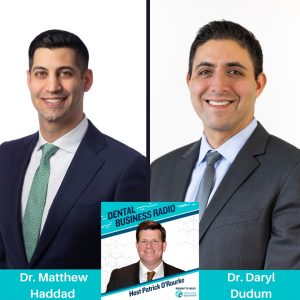
Dr. Matthew Haddad and Dr. Daryl Dudum, Endo1 Partners

December 21, 2020 by John Ray

Endo1 Partners
Dental Business Radio
Dr. Matthew Haddad and Dr. Daryl Dudum, Endo1 Partners
Loading
00:00 /
RSS Feed
Share
Link
Embed

Download file

Dr.MatthewHaddad-Dr.DarylDudum-DBR-Album

Dr. Matthew Haddad and Dr. Daryl Dudum, Endo1 Partners (“Dental Business Radio,” Episode 10)

Endo1 Partners Co-CEOs Dr. Matthew Haddad and Dr. Daryl Dudum join host Patrick O’Rourke to discuss the growth of Endo1 Partners and the attraction it holds for endodontists, how the pandemic has affected their company’s growth, and much more. “Dental Business Radio” is underwritten and presented by Practice Quotient: PPO Negotiations & Analysis and produced by the North Fulton studio of Business RadioX®.

Endo1 Partners

Formed in 2019 with operations in Texas and California, Endo1 provides comprehensive knowledge, resources and shared back-office support to endodontists across the country through an Endodontic Partnership Organization (“EPO”). Endo1’s offering empowers endodontists’ ability to provide best in class patient care and experience in their core specialty – the diagnosis, prevention and treatment of injuries to the pulp, including root canals treatment and other procedures related to the interior of the tooth.

Follow Endo1 Partners on Facebook and LinkedIn.

Dr. Matthew Haddad, Founding Partner and Co-CEO

Dr. Matthew Haddad Co-founded and is currently Co-CEO of Endo1 Partners. Dr. Haddad completed his Endodontic residency at the Boston University Goldman School of Dental Medicine. He received his dental degree from Case Western University School of Dental Medicine.

Dr. Daryl Dudum, Founding Partner and Co-CEO

Dr. Daryl Dudum Co-founded and is currently Co-CEO of Endo1 Partners. Dr. Dudum completed his Endodontic residency at the Boston University Goldman School of Dental Medicine. He received his dental degree from the Arthur A. Dugoni School of Dentistry at the University of the Pacific in San Francisco and a Bachelor of Arts in Economics at the University of California in Los Angeles. Dr. Dudum is a current board member on numerous Dental Organizations.

About Dental Business Radio

“Dental Business Radio” covers the business side of dentistry. Host Patrick O’Rourke and his guests cover industry trends, insights, success stories, and more in this wide-ranging show. The show’s guests will include successful doctors across the spectrum of dental practice providers, as well as trusted advisors and noted industry participants. “Dental Business Radio” is underwritten and presented by Practice Quotient and produced by the North Fulton studio of Business RadioX®.

Practice Quotient

“Dental Business Radio” is sponsored by Practice Quotient. Practice Quotient, Inc. serves as a bridge between the payor and provider communities. Their clients include general dentist and dental specialty practices across the nation of all sizes, from completely fee-for-service-only to active network participation with every dental plan possible. They work with independent practices, emerging multi-practice entities, and various large ownership entities in the dental space. Their PPO negotiations and analysis projects evaluate the merits of the various in-network participation contract options specific to your Practice’s patient acquisition strategy. There is no one-size-fits-all solution.
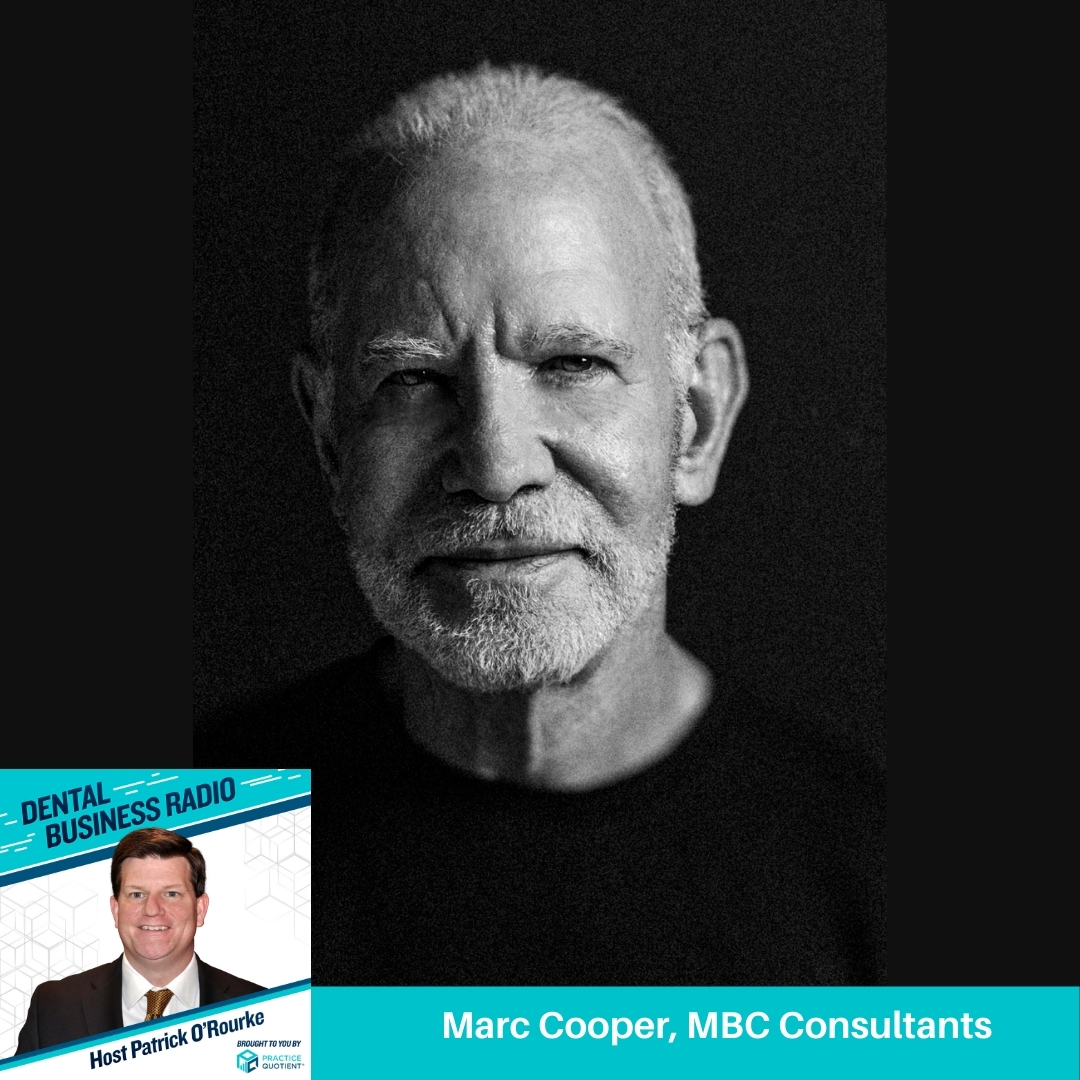
Connect with Practice Quotient:

Website

LinkedIn

Facebook

Twitter


Tagged With: Dr. Daryl Dudum, Dr. Matthew Haddad, Endo1 Partners, endodontic partnership organization, endodontists, Patrick O'Rourke, PPO Negotiations & Analysis, Practice Quotient

Harris Gignilliat, Trillium Partners

December 4, 2020 by John Ray

Trillium Partners
Dental Business Radio
Harris Gignilliat, Trillium Partners
Loading
00:00 /
RSS Feed
Share
Link
Embed

Download file

Trillium Partners
“Dental Business Radio” Host Patrick O’Rourke and Harris Gignilliant, Trillium Partners

Harris Gignilliat, Trillium Partners

On this edition of “Dental Business Radio,” Harris Gignilliat of Trillium Partners joins host Patrick O’Rourke to discuss why today’s environment is perfect for growing dental service organizations, the intersection of politics and the financial markets, his reflections on working with dentists, and much more. Harris also shares a poignant story about his involvement with Habitat for Humanity. “Dental Business Radio” is underwritten and presented by Practice Quotient: PPO Negotiations & Analysis and produced by the North Fulton studio of Business RadioX®.

UBS Financial Services-Trillium Partners

Trillium Partners provides client-centered investment consulting and advisory services to families, foundations, endowments and retirement groups.

When it comes to your family, your employees or your organization, you have important goals and specific concerns. You need the guidance of an experienced advisor or Institutional Consultant, backed by the resources of a global wealth manager.

Whether you are a wealth management client or an institutional plan sponsor, Trillium Partners operates under the golden rule: your success is our success. The core focus of Trillium Partners is their clients, and they strive to help them reach their goals.

The Trillium Partners team can address a broad scope of sophisticated financial needs while offering high-touch client service. They draw on their own knowledge and industry designations, as well as the full capabilities of UBS, to design creative strategies that reflect your unique situation.

Harris Gignilliat, CIMA®, CRPS®, C(k)P®

Harris Gignilliat, Trillium Partners

Harris Gignilliat works with institutional clients to provide financial benefits to members and employees. He specializes in the complexities of trusteed assets and provides sophisticated advice for individuals and fiduciaries. As an Adjunct Instructor for Augusta University, he teaches courses to students and professors. He also leads seminars at colleges, trade organizations and district meetings.

Harris is a graduate of the University of Georgia, and serves as a partner of Trillium Partners after joining in 2000. He has earned numerous prestigious industry certifications, including the Certified Investment Management Analyst designation from the Wharton School of Business and the Chartered Retirement Plans designation from the College for Financial Planning. Additionally, Harris has attained a PlanSuccess Certification in Behavioral Finance from the Center of Behavioral Finance.

Harris is active with dental organizations such as the Georgia Dental Association and the Alabama Dental Association.

Outside of work, Harris volunteers his time and resources to Habitat for Humanity, the Ron Clark Academy, the Atlanta Mission, Children’s Healthcare of Atlanta, and the Leukemia & Lymphoma Society. In his personal time, he enjoys spending time with his wife and two children.

Connect with Harris on LinkedIn.

About Dental Business Radio

Patrick O’Rourke, Host of “Dental Business Radio”

“Dental Business Radio” covers the business side of dentistry. Host Patrick O’Rourke and his guests cover industry trends, insights, success stories, and more in this wide-ranging show. The show’s guests will include successful doctors across the spectrum of dental practice providers, as well as trusted advisors and noted industry participants. “Dental Business Radio” is underwritten and presented by Practice Quotient and produced by the North Fulton studio of Business RadioX®.

Practice Quotient

“Dental Business Radio” is sponsored by Practice Quotient. Practice Quotient, Inc. serves as a bridge between the payor and provider communities. Their clients include general dentist and dental specialty practices across the nation of all sizes, from completely fee-for-service-only to active network participation with every dental plan possible. They work with independent practices, emerging multi-practice entities, and various large ownership entities in the dental space. Their PPO negotiations and analysis projects evaluate the merits of the various in-network participation contract options specific to your Practice’s patient acquisition strategy. There is no one-size-fits-all solution.
Connect with Practice Quotient:

Website

LinkedIn

Facebook

Twitter

Tagged With: Alabama Dental Association, Georgia Dental Association, Harris Gignilliant, Patrick O'Rourke, PPO Negotiations & Analysis, Practice Quotient, Trillium Partners, UBS

Dr. Ted Smith and Dr. Phillip Allison, Park Cities Dental Group

November 23, 2020 by John Ray

Park-Cities-Dental-Group-Album
Dental Business Radio
Dr. Ted Smith and Dr. Phillip Allison, Park Cities Dental Group
Loading
00:00 /
RSS Feed
Share
Link
Embed

Download file

Park-Cities-Dental-Group-Album

Dr. Ted Smith and Dr. Phillip Allison, Park Cities Dental Group (“Dental Business Radio, ” Episode 9)

Dr. Ted Smith and Dr. Phillip Allison, Chief Doctors and Partners in Park Cities Dental Group, join host Patrick O’Rourke to share their journey in buying and building their practice, working together as partners, their experience with the Pankey Institute, what’s happened with their practice during the pandemic, and much more. “Dental Business Radio” is underwritten and presented by Practice Quotient: PPO Negotiations & Analysis and produced by the North Fulton studio of Business RadioX®.

Park Cities Dental Group

Since 1982, the friendly and experienced staff at Park Cities Dental Group has accommodated all of the cosmetic and general dentistry needs of our clients in a warm and inviting setting in the heart of Dallas, overlooking the Katy Trail. Come in and you will find a group of highly trained dentists and staff that will provide the dental care services you need with the personal attention you’re looking for.

Dr. Ted Smith, DDS, FICOI

Dr. Ted Smith provides general and cosmetic dentistry services such as crowns, bridges, dental implants, porcelain veneers and fillings, as well as extractions and TMJ treatment. He is also a Certified Provider of Invisalign orthodontics.

Dr. Smith completed post-doctorate education at The Pankey Institute and earned his Fellowship in the International Congress of Oral Implantologists after training at the renowned Misch Institute. With an emphasis on patient comfort, artistic craftmanship and post-procedural care, this advanced training puts him as one of the top in the nation and one of only a few cosmetic dentists in Dallas to have earned this distinction.

A native of Austin, Dr. Smith graduated from Westwood High School and The University of Texas at Austin. He went on to earn his Doctor of Dental Surgery from Baylor College of Dentistry. Dr. Smith joined Park Cities Dental Group immediately after graduation and continued his education with post-graduate training in cosmetic, restorative and implant dentistry. His mission is to provide exceptional dental health services to his community and the surrounding Dallas area. He lives in University Park with his wife and four daughters.

The entire team at Park Cities Dental Group thanks you for taking the time to learn about our dental practice. Cosmetic dentistry is a big decision and we offer free consultations to answer any questions you may have so you feel comfortable and knowledgeable about your visit.

Dr. Ted Smith is a member of The American Academy of Cosmetic Dentistry, American Dental Association, Texas Dental Association and Dallas County Dental Society and holds himself to the highest standards of the practice of dentistry.

Dr. Phillip Allison, DDS

Dr. Phillip Allison provides general and cosmetic dentistry services such as crowns, bridges, dental implants, porcelain veneers and fillings, as well as extractions and TMJ treatment. He is also a Preferred Provider of Invisalign orthodontics. He is committed to the best possible dental care for his patients.

Born and raised in Midland, Texas, Dr. Allison graduated from Midland High School. He attended The University of Texas at Austin, where he earned a Bachelor of Arts degree in Biology before moving to Dallas to attend Baylor College of Dentistry. Dr. Allison graduated from Baylor in 1999 and immediately began work as an associate dentist for a local practice. In 2002, Dr. Allison established his own practice in Dallas, and for the next 11 years he built a thriving business.In the fall of 2013 Dr. Allison partnered with Dr. Smith at Park Cities Dental Group. Dr. Allison and Dr. Smith are longtime friends and classmates from Baylor College of Dentistry.

Dr. Allison has dedicated numerous hours to continuing education and professional development since he began his dental career. He is certified by the prestigious Pankey Institute in Key Biscayne, Florida and is a member of the distinguished ITI (International Team for Implantology), a worldwide collaborative focusing on clinical excellence in implant dentistry. Dr. Allison is one of a few Preferred Providers of Invisalign Orthodontics in the Dallas Metroplex. He also partners with area orthodontists to ensure his patients receive the best and most comprehensive orthodontic care available.

Dr. Allison is a member of the American Dental Association, Texas Dental Association and Dallas County Dental Society. He lives in University Park with his wife and two children.

Show Transcript

Intro: [00:00:03] Live from the Business RadioX studio in Atlanta, it’s time for Dental Business Radio. Brought to you by Practice Quotient. Practice Quotient bridges the gap between the provider and payer communities. Now, here’s your host, Patrick O’Rourke.

Patrick O’Rourke: [00:00:19] Hi there, friends of the dental industry. This is Patrick O’Rourke, your host of Dental Business Radio. And we want to thank you for joining us today. If you do like the show, please remember to rate it what we deserve. And we  want to thank our sponsor, Practice Quotient. They’re a national firm that specializes in PPO negotiations and analysis.

Patrick O’Rourke: [00:00:43] And I am thrilled to welcome some folks from Texas. So, we have Ted Smith and Phillip Allison. This is going to be the Ted and Phillip Show – all right – featuring these gentlemen that are out of Dallas, Texas but, more specifically, Park Cities. They’re with Park Cities Dental Group. And Park Cities is a bit of a special place, I’m told. Ted, would you like to elaborate? Tell me why Park Cities is a special place.

Ted Smith: [00:01:15] Sure. Park Cities, I mean, it’s truly Dallas, but it’s little bubble right in the middle of Dallas, right by SMU, if anybody knows Dallas. But we’re fortunate to have friends and patients come from all over Dallas and, really, all over Texas. But Park Cities, Phillip and I’s lids have gone to the schools here in the Park Cities, and we live 10 minutes away from the practice. Big fan of a short commute. And so, it’s a big city but still got the small-town vibe to it in the Park Cities.

Patrick O’Rourke: [00:01:56] Gotcha. And Phillip, anything else to add about Park Cities? I would imagine, there’s pretty cool parks there or might just need flipping.

Phillip Allison: [00:02:08] A lot of parks. A lot of parks, yeah. It’s pretty residential. It’s small. I mean, I think there’s two towns. And maybe total between the two, 30,000 to 40,000 people, but it’s right in the middle of the city. So, we’ve got our own school district. So, there’s not a lot of population growth but we’re kind of right on the edge of it. And there’s two business centers, commercial centers. Everything else is home. So, our practice is on one of the major freeways, just off of it. So, we can draw from this. It’s a pretty tight knit community. A lot of referrals from within because the schools drive the whole place. But then, we’re right on the freeway between the bedroom areas and downtown. So, people coming in and out of work, that’s an easy pit stop for them one way or the other.

Patrick O’Rourke: [00:03:04] Gotcha. And you guys are involved too in the civic community or you must be popular because you’ve won some awards that’s voted on by residents in that area and some of the local publications as Top Doc or Favorite Dentist of the magazine. How does that happen?

Phillip Allison: [00:03:27] Well, you know-

Patrick O’Rourke: [00:03:29] Charm? Charm and good lucks, Phillip?

Ted Smith: [00:03:31] Sure, I’ll go with that.

Phillip Allison: [00:03:31] Well, yeah. I think from my end, we’re general dentistry. And so, we really don’t do specialist procedures. We’ve got a great group of specialty offices that we work with. And a lot of that voting is done by peers. So, we kind of hand it over to the rest of the folks around that we work with. And I think, they have recognized us and us them because Dallas is pretty big. There’s a lot of dentists up here. So, we try to keep a good relationship with the specialists. I think that helps with our visibility.

Patrick O’Rourke: [00:04:16] There’s got to be other general dentists too that are voting, and you guys are still winning. That says a lot. So, this is not necessarily even a patient thing. This is like a peer-reviewed award in some respects. It’s what it sounds like.

Ted Smith: [00:04:34] Yeah, the magazine is strictly peer reviewed. And that makes it special, obviously, when your peers, your colleagues think highly of you.

Patrick O’Rourke: [00:04:45] That’s awesome.

Ted Smith: [00:04:45] And like Phillip mentioned, we developed relationships and networks with our specialists that are great. And the patients, they love going to them and have confidence in them. And we’ve been around 21 years. So, you just learn over the years, and try to just treat people the way you’d want to be treated.

Patrick O’Rourke: [00:05:08] Right. Do it. Do attack this way. So, how did you guys end up become as business partners?

Ted Smith: [00:05:16] So, we were classmates in dental school, class of ’99. We went to Baylor College of Dentistry here in Dallas. And then, Phillip was practicing up the highway a couple miles, and I had two older partners. And one retired in 2013 and the other one a couple of years later, but in 2013. So, we had this opportunity because we’d always been great friends, and classmates, and buddies ever since. And we’re like, “It makes sense to partner up.” I think Phillip can speak more about being a solo. And I had the group practice and saw the dynamics that can happen there, the benefits of having more than one provider in the place. And so, it made perfect sense. And seven years later, it’s been fun. It’s fun to work with your buddies.

Patrick O’Rourke: [00:06:16] Yeah, for sure. It’s important. Partnerships, it’s like a marriage in a lot of ways.

Ted Smith: [00:06:23] Absolutely.

Phillip Allison: [00:06:23] Yeah.

Patrick O’Rourke: [00:06:24] So, Phillip, care to expand on that, kind of going at it on your own versus the collegial type atmosphere?

Phillip Allison: [00:06:32] Oh, yeah. I mean, it’s a real contrast. I mean, I’ve seen both sides. And in their current setup, it probably couldn’t have happened earlier. I mean, we had both looked for other places to practice, and the timing just kind of ended up being right. I’ve kind of done all of them. I started out, I was an employee associate right at a school. And then, I worked to man the office of a guy who owned the practice but didn’t work there after that. Then, I finished out a space, started a practice from scratch after that. That was when I was ready to go out on my own.

Phillip Allison: [00:07:23] And I learned a lot about construction, not a lot about dentistry. About six months into it, a broker called me and said, “Hey, I’ve found a practice for you.” Timing was not good because I had just finished installing stuff. The carpet was still fresh. And so, I’ve got this practice but didn’t have patients in it. So, I said, “Okay, I’ll buy that instead.” These days the stories are of the new dentists that every stop along their path would have been a new practice that they had acquired or started up. I was really just hopping from one to the next.

Phillip Allison: [00:08:01] So, I sold my newly finished out spot, went over to this practice that have been around for several years. And that’s where I really sat. So, that was still solo, one office. I have one of each, one hygienist, and one assistant, one front desk, and worked there for about twelve years. And everything’s got pros and cons, but after a while I just saw the cons. Just some based on the growth that I wasn’t seeing, and just the other stresses. Like you could you could really fine tune the place when it’s so small and run well. But when there’s a kink, when your front desk is is on vacation, and you got to get a cordless phone to answer the phone when it rings or lock the front door because people will walk in without knowing, you start looking for another way to do stuff.

Phillip Allison: [00:08:56] And that’s just the tip of a very large iceberg of reasons why Ted’s practice was like, you can’t really just go get into a partnership with anyone. That’s the key. So, it’s not necessarily great advice to just say, “Hey, find someone and buddy up with them,” because that part’s got to work more than just the numbers. And so, when this came up, it was kind of like one in a million. And practices sell under the cloak of darkness. The staff is kind of like, “Why is everything getting counted? And what are all these phone calls?” And you can’t really be open with it, and you can’t tell your patient base as much. And it’s like, “Boom!” And I just showed up one day, and it was just like the place just exploded. My chairs, while my charts to cut rolls, it’s all filling the halls. They must have been dying when I showed up. So, it settled out. It was a little bit of a time but it was the path that it was the way it should be. I’m super happy that it happened.

Patrick O’Rourke: [00:10:08] Sure, transitions are tricky. I probably have this conversation on a daily basis with folks, and they’re like, “All right. Well, I just started a practice that morning, and we need to be credentialed, and we want, really, this scheduled by Monday.” And that’s not going to happen. And then, I have to to do, explain kind of the birds and the bees. There’s always turbulence in any type of transition. So, let’s go back to when you’re the solo dentist, I got a kick out of that though. Locking your door and buying the cordless phone, they didn’t teach you that in dental school.

Phillip Allison: [00:10:48] No, no. There were some logistics that were kind of overlooked. And so, yeah. And that was in a strip center. And so, it was fine. I mean, sometimes, we just get people to come in there, and they want a place to hang out for a while, and maybe they’re not even shopping. So, maybe they just want to sit there. And I’ve had grocery carts in the lobby of the office. I mean, what it needed was growth, and that’s the one thing I wasn’t getting. And so, I would fantasize and say, “Man, if I get my production numbers to keep going and get the mix of procedures that I really like, then the place is so manageable. Wouldn’t it be awesome?” Well, I mean, it would be but it just didn’t happen. So, I gave it good college try and realized. And that was really about the time where the shift from there was monarch, which I don’t know how nationwide they stressed. It’s a publicly traded-

Patrick O’Rourke: [00:12:03] Group practice, yeah.

Phillip Allison: [00:12:03] Yeah. So, that was it. There are some kind of interesting approaches to multi … like clinics. They’re just clinics. Either, it’s you or the clinic. And so, this is the beginning of people starting to pair up, and partnerships, and the idea of DSOs and all that where maybe it’s not so great to just be you and three other people. And so, we all kind of realized that at the same time, like, “Wait a second, there might be a better way to do this.”

Patrick O’Rourke: [00:12:38] Absolutely, it’s tough. When you’re an entrepreneur, you’re either the butcher, the baker, or the candlestick maker, you’ve got to answer the phone, lock the door, do all your numbers, HR, plus to set the strategy, understand your profit and loss. And oh, you guys have to be clinicians too. So, that that’s quite the balancing act. So, care to comment on that, Ted?

Ted Smith: [00:13:06] Oh, yeah. I think it’s just too much work for one person. So, our practice, we’ve never had an office manager. And Phillip and I are, like, doing the management on our own. And there’s nothing wrong with having an office manager. I’ve heard some stories of some people kind of losing control of the practice, or you always hear about somebody getting embezzled and stuff, so they don’t have their thumb on every aspect of the business. And to be able to share those labors as duties is really nice and just economy at scale. We have an associate. Phillip and I have young kids. I think you can hear my three-year-old girl in the background. But we don’t want work Fridays after 21 years. Most people probably don’t work Fridays in general dentistry. Now, the oral surgeons that are listening are probably jealous right now.

Patrick O’Rourke: [00:14:04] Right. But [crosstalk].

Ted Smith: [00:14:04] So, we have an associate there on Fridays.

Patrick O’Rourke: [00:14:08] They’re not jealous on Wednesdays when they’re playing golf.

Ted Smith: [00:14:11] Yeah, it’s true.

Patrick O’Rourke: [00:14:13] We have 11 operatories. So, we wanted the practice to be open on Fridays. So, we’ve always had an associate. And those 11 operatories are like gates at the airport. It doesn’t make sense to just running a business four days a week and have those gates empty on Fridays.

Patrick O’Rourke: [00:14:35] Sure, absolutely. And so, how did you [crosstalk] right now-

Phillip Allison: [00:14:38] Talk about Saturdays [crosstalk].

Patrick O’Rourke: [00:14:38] How busy are you [indiscernible]?

Ted Smith: [00:14:45] We’re busy.

Patrick O’Rourke: [00:14:46] Right now.

Ted Smith: [00:14:46] Yeah, we have a very brisk pace. I mean, the day goes by fast. We’ve just been blessed to always be very busy.

Patrick O’Rourke: [00:14:55] COVID mentioned, even in the COVID times, the interesting thing to me, I have heard of ADA, I’ve heard several folks that are like, “It’s slowly down,” and da-da-da. And anecdotally, that’s not happening with our clients. And our clients tend to be more established folks like yourself, right, just by the very nature of our business. And so, I talk to them, and they’re like, “We’re slack. We’re booking out. Six months of hygiene docs, booking out a month.” And I’m like that, “That’s too long” because there was some pent-up demand. But it seemed to me, I have a theory, but I’d like for you guys just real briefly on how are you addressing that?

Phillip Allison: [00:15:50] Well, I mean, at first, there was the great unknown. When we were shut down in Texas until May 1st, from middle of March to May 1st. And so, there’s a little bit of uncertainty as to what we’re expecting. We really didn’t think hygiene would come back at all. We were planning on it not just being there. And figure there’d be a lot of dental work to do because we got calls all the time about broken teeth that we weren’t allowed to fix. But when we started up, it was just straight to the walls. Like we were packed. And it’s the change. The people that showed up at first, obviously, they didn’t care. They’re just ready to get on, get out of the house, even if it means going to the dental office. And then, it all kind of evened out. So, now, we got people. Now, they are reluctantly coming up, even though they would rather be in their houses. And so, between those two groups of people, we haven’t dropped off really at all. I mean, I think it’s about the same. But like you said, it’s an old practice. So, we’re drawn on a pretty deep patient base. So, we’re really fortunate to have had that. We need more space, actually.

Patrick O’Rourke: [00:17:07] So, have you experienced an influx of new patients for any reason? That they feel more comfortable coming to your practice, for some, because I heard about it from a friend. Like, is your busyness coming from your existing patient base or are you getting an influx of them? There’s no right or wrong answer. I’m just curious.

Phillip Allison: [00:17:32] Both.

Ted Smith: [00:17:32] We’re about 50/50. I think we’re about 50 percent individual referral. And then, about 50 percent of people wanting to stay in network, and they’ll obviously cross-reference with Google and whatnot. And so, we’re probably … I think, we see around one hundred new patients a month. So-

Patrick O’Rourke: [00:18:00] That’s awesome. That’s amazing. And I’m just curious and I think our listeners would be curious, like how much marketing effort are you guys putting into that?

Ted Smith: [00:18:13] We don’t really do a whole lot of marketing. Just the local schools is really our only area that we kind of focus on. Both our kids go to the schools. And obviously-

Patrick O’Rourke: [00:18:28] Not a billboard up with your patients on it?

Ted Smith: [00:18:31] No, no.

Phillip Allison: [00:18:32] No.

Ted Smith: [00:18:33] Still contemplating that one.

Phillip Allison: [00:18:35] We can’t get the headshot to be just right.

Patrick O’Rourke: [00:18:38] No, they’re too big.

Phillip Allison: [00:18:39] So, we’ve got a fine football stadium and. Yeah, nothing. I mean, let’s put our logo on a t-shirt sleeve of the local sports that the kids are involved in. That’s it. I mean, that’s it. I think we have a Facebook page, but we didn’t know it. So, I guess, people check in or something but none of the other stuff. But I mean, you could say that we take PPOs, and we’re published on the PPO rosters. So, the people that do come in that aren’t from friends of friends, they see us on PPO fee schedule. I mean, on their company plan and will list, that is why they came in. That, coupled with the location. So, I think you got to check up probably some of our PPO networks as our marketing cost.

Patrick O’Rourke: [00:19:35] Sure, absolutely. I think that in a metropolitan area that’s fairly managed care-friendly like Dallas, PPOs, they can be quite useful. They’re just outsourced marketing costs. And so, we need to help manage that cost. I think that there’s certainly good partnerships to be had there. It just needs to be equitable between the provider and the payer. There’s no reason by award-winning Top Docs like yourselves should be taking 50 cents on the dollar. It’s just doesn’t make sense if your overhead is 65. That’s our philosophy and [indiscernible] probably preach us for a while.

Patrick O’Rourke: [00:20:21] But that was for all of you out there in whisperland for what it’s worth, but there’s not really a one size fits all solution. I think you guys, on a scale of one to 10 from your network participation, I think you’re probably a solid eight, if not at nine. You’re not doing an APH, you’re not doing any APS, you’re not doing any Medicaid. And you’re, certainly, relevant in the Dallas market. And so, you’re on good carrier partners that are equitable and allow you to provide the type of care that your patients expect and that they very likely deserve.

Phillip Allison: [00:21:10] Yeah.

Patrick O’Rourke: [00:21:10] I would think.

Phillip Allison: [00:21:11] And another, like going back to the Park Cities, what makes it good? I mean, Dallas, in general, the business climate in Dallas is fantastic and for most industries. And you see the cranes up everywhere, and the apartments, and the suburbs expanding. And every day, there’s a new company relocating. And so, we get a lot of new patients from that. And they’re usually big employers. And so, they bring their insurance with them, and then they spread the word in their office. And we are on the drive between downtown and the houses. So, I think that just really being in Dallas is not a slam dunk for a company to succeed, but it’s a good place to do business. And we see patients all the time that they move in. It used to be locals. And now, it’s from out of state all the time. And they’re relocating here because the taxes, the climate, if they travel a lot, they’re centrally located, stuff like that. So, I think we could take advantage of that as much as we can.

Patrick O’Rourke: [00:22:19] I would move to Dallas in a heartbeat. I love Atlanta, don’t get me wrong, but I love Texas in general. But I’m originally from Florida. And so, I can get back to the different coast of Florida pretty easily. Atlanta certainly has its advantages. I think Georgia and Texas are fairly similar just as far as my kind of attitude of the population, and open and friendliness. And I see you guys booming, for sure. And do you think that the folks coming from high-tax environments, like California, I mean, we’re getting them from Connecticut, Jersey, coming down into Atlanta. Not so much California, but definitely if I was in California, and I don’t want to pay 12 percent anymore, this would be a good spot, I think. And so, I’m just curious.

Ted Smith: [00:23:25] Yeah, we’ve had a lot of California companies relocate to the Metroplex. I think, Toyota, Liberty Mutual.

Phillip Allison: [00:23:33] Schwabb

Ted Smith: [00:23:34] It’s built on a humongous center on Southlake right now, relocating all other people. A lot of AT&T people moving in from Jersey in New York, Chicago, a lot of Illinois, California, New Jersey, Illinois. So, yeah. Want to get away from the high taxes, for sure.

Patrick O’Rourke: [00:23:58] Yeah. And no, I would imagine. Shout out to everybody up north, you guys are under some snow right now. I understand. I take calls from all over the place all week long, and I’m like, “Oh, it’s chilly. It’s like 50.” And they’re like, “It’s 10.”

Phillip Allison: [00:23:58] Right.

Patrick O’Rourke: [00:24:17] And I’m like, “Oh!” Yeah.

Phillip Allison: [00:24:19] That’s not good.

Patrick O’Rourke: [00:24:23] Not good. That’s not cool as it actually get there either, isn’t it? Like this is just the beginning. And they’re like, “Don’t rub it in, Pat.”

Phillip Allison: [00:24:30] Right.

Patrick O’Rourke: [00:24:34] So, now, Ted, did both of you guys do Pankey or had to do this Pankey?

Ted Smith: [00:24:41] We actually do things together with a couple buddies of ours or brothers in dental school. One was in our class and one was a class right underneath ours. And their dad was a dentist in East Texas, and he had gone to Pankey back in the day. And so, four of us went out there in the early 2000s. What was it? 2001 or 2002?

Phillip Allison: [00:25:06] Yeah, 2001.

Patrick O’Rourke: [00:25:06] For our listeners that are not dentists and that are not familiar with Pankey, and I’m going to count myself as one of them actually, I understand there’s some prestige there. But can you guys, in your own words, kind of … And Phillip, we’ll go with you first. And then, Ted. Articulate to the listeners what makes Pankey Pankey.

Phillip Allison: [00:25:38] Well, when you leave dental school, you have a foundation but there are a lot of different directions that you can go. And probably right out of school is a good enough time to go over there. The Pankey Institute is trying to gear you towards a little bit of the diagnostic side, trying to get a little deeper into the root cause of common problems. So, it’s a continuum of classes, and you do it over a year, and they hook you up with a mentor. And it’s pretty intensive. You’re there for a week, and it’s all day.

Phillip Allison: [00:26:22] But it’s when we did it, found out there’s a lot of stuff that was never touched on in dental school. And some of it is applicable broadly. And some of it, I think, as you get to the higher levels kind of your practice would reflect your training. And so, it’s a niche type of practice that you would develop in a very complete dentistry and very good. I mean, I think there’s an emphasis on quality. And I think that we’re able to take away some stuff. We didn’t end up going through the whole thing in terms of being the career students there, but it was a good place to get started, I think we were at a good point in our careers when we’re open and want to really learn and find a direction. So, it was good for that.

Patrick O’Rourke: [00:27:21] Gotcha. So, it’s kind of like a higher caliber … I don’t want to say continuing education but-.

Phillip Allison: [00:27:31] Instead of learning how to do a good filling or a good crown, it’s kind of like how can you take someone who has suffered from decades of grinding their teeth down, and they don’t really have it functional, how do you fix that? Bigger problems, stuff that you would feel like you need to refer to a specialist? Maybe, how do you treat that stuff?

Patrick O’Rourke: [00:27:55] And that’s a big deal, right? Having to smile is important. It’s important to your self-confidence. It’s important to your self-image. I had our last show at Dental Business Radio with Jesse Jakubowski. He said to me and told me I had a beautiful smile, which I appreciated, it’s a soothing flattery, while he was telling me about how you could do implants in the same day. And he’s like, “Aren’t you coming down there?” I definitely get it. I do. I think it’s killing, especially for anybody that’s in the public eye. Are you seeing more or less of kind of grinding issues, TMJ issues, jaw?

Ted Smith: [00:28:43] Yeah, especially with the COVID. People are breaking teeth right and left right now with stress. So, when we got back on May 1, about the last three or four weeks locked down, we’re reaching four or five calls a day of people just break teeth, and we’re able to tell them, “You got to hang in there.” We’re just slammed fixing a backlog of broken teeth in May. But then, throughout the year, everybody’s just so stressed, they’re breaking teeth right and left, clenching and grinding. Yeah, have really seen an uptick in fractured teeth for sure. And people are just saying them. Probably didn’t going to tell I’m super stressed out.

Patrick O’Rourke: [00:29:29] Yeah, there’s a lot of noise these days for everybody, for sure.

Phillip Allison: [00:29:35] Yeah. It sounds cliche to say the grinding war but, I mean, the numbers of the procedure mix kind of really reflects. We’re doing night guards all the time. It’s really interesting to see that. Well, and that, and I’m surprised that the amount of cosmetic work has gone up dramatically. That and Invisalign, a lot more like markedly different than, say, this time last year. And I don’t know really what drives that, but people have been asking for that more. Some people said they do Invisalign because you get a mask on. It’s like who would see it anyway. But the goal is to not need a mask. I’m sure Invisalign would say you didn’t need a mask to start with.

Ted Smith: [00:30:26] Yeah, I have a lot of patients say they had been thinking about doing Invisalign. But now that they’re wearing a mask, they just decided nobody could see. We can’t see them anyway. But I guess that last little hang up, it’s like I’m wearing a mask now, so I just decided to go ahead and get started.

Patrick O’Rourke: [00:30:40] And I don’t think we’re going to be wearing masks forever, hopefully. I mean, we’ve got some positive news just this week, not to get all into COVID, but I think it is a good time for folks. I’ve been thinking about it myself. And I have had people because I’m known as like the dental dork in my circle where or my neighborhood or my family. They don’t know exactly what I do, but they’re like, “Something with insurance and he knows a lot about dentistry.” So, people are like, “Well, what do you think about this?” And I’m like, “I’m not a dentist.” And so, they’re like, “Well, is Invisalign good?” And I’m like, “Yeah, it’s pretty awesome assuming you’re a good candidate.”

Patrick O’Rourke: [00:31:29] I’m not a clinician, again, but you get to put this in your mouth in. It’s not like you’re putting these braces on, and you’re tightening them, and you have to go back. It’s not like that at all. So, is it worth exploring? Yeah. Yeah, absolutely. Do you want to make an investment into another [indiscernible] or do you want to have perfect smile for the rest of your life? Your call. So, that’s what I tell folks, and then send them depending on where they’re at. If somebody was in Dallas, it would be like [indiscernible]. Hopefully, they can fit you in because they’re busy over there.

Phillip Allison: [00:32:12] Make it happen.

Patrick O’Rourke: [00:32:12] If you drop my name, yeah, I hope you guys would send them in.

Phillip Allison: [00:30:40] Absolutely.

Ted Smith: [00:32:22] Make room.

Patrick O’Rourke: [00:32:24] I’d appreciate that. You have to give him a warm blanket or something. So, what other things do you guys do to make your office special? What do you think stands out?

Ted Smith: [00:32:30] Well, we have a good team. So, counting Phillip and I, there’s 19 of us. So, we’ve got six hygienists. And we mentioned earlier, we have an associate. So, it’s a big team. It feels fast-paced. So, the day goes by fast. And everybody likes each other, and gets along well with each other, and complements each other.

Patrick O’Rourke: [00:32:58] Good culture. And then, the schedule-

Ted Smith: [00:33:00] Good culture.

Patrick O’Rourke: [00:33:00] I’m a busy professional. I don’t want to be waiting around. I come in, you get in, you do what you got to do, give you some nitrous, tell me a funny joke, get me out.

Phillip Allison: [00:33:11] Yeah, yeah. I think it’s almost like we’re not really trying that hard to craft the experience. We don’t have a lot of other things like massages, like a menu of really anything. There’s not TVs to look at. It’s just pretty straight forward. Like really, people are coming there to get their teeth fixed. They don’t really want the spa effect or some people do, and they try us out, they go somewhere else because there are some great practices that do stuff like that. But we just kind of we’re mindful of your time, we don’t run late. Although we’re super busy, I think we got the scheduling down pretty well. So, you’re not sitting in the waiting room. And you just come in there.

Phillip Allison: [00:34:00] And like Ted said, the culture reflects. I mean, you can always hear people, there’s a lot of chatter, a lot of laughter because the ops are pretty close. It’s cozy. And so, you can hear a lot of stuff going on. And you can only go into a medical office, and you can tell like there’s some unhappiness going on, they’re kind of sulkier. You can just tell the mood is not good. The moods usually-

Ted Smith: [00:34:23] It’s really good.

Phillip Allison: [00:34:24] Yeah. And so, between doing that and just getting them in and out, I mean it’s sort of a relief to not have to feel like we got to lean on selling extra products or the décor, which we do try a little bit on that. We just want to have a solid product.

Patrick O’Rourke: [00:34:50] Right, absolutely. You do a quality job. And then, people feel safe. They trust you guys. And then, they refer their friends, family, church, congregation, et cetera. And it’s obviously working out quite well for you. As a business owner myself, sometimes, it’s just like you got to keep it simple. It’s about just what you do. Do what you say and that’s it. And one foot in front of the other, do a quality job, and keep it basic, and just be really, really good at what you do. That’s some of my advice sometimes to other folks that are starting a business in our industry or out really. So, what are some of the business challenges that you guys have overcome that maybe you would like to share some tips or insights with some of our younger audience members or folks that are in dental school, or about to graduate, or just graduated?

Ted Smith: [00:35:56] I think the group model was a recipe for success. I really do. If I need to take a vacation, we don’t have to close the whole shop down. If Phillip needs to go on vacation, I hold the fort down. Being able to divide the duties and labor of running a business, I would say, to a young person and full-blooded, you can’t just get into a partnership with anybody but the right partnership in a group setting, I kind of see being the future of dentistry. I think that the days of the solo practitioner are probably behind us. It’s just such a high overhead business and a lot of work. You got more and more regulations every year. So, instead of somebody just starting from scratch, I would try to recommend to them to maybe consider a group practice situation that’s the right set up for them.

Phillip Allison: [00:37:03] And when you have-

Ted Smith: [00:37:04] I’d add-

Phillip Allison: [00:37:06] Go ahead. Go ahead, Ted.

Ted Smith: [00:37:09] Well, I think the other thing that helps our practice, so we’re conservative and people like that. We like conservative treatment ourselves when we see medical or dental professionals. And the word of mouth, conservative works. That’s what people want.

Patrick O’Rourke: [00:37:29] Amen. Amen. So, Phillip, do you recommend trying out like five different models before they settle?

Phillip Allison: [00:37:36] Well, just call me, and I can tell you which ones is good. And I’ll save you some time because I think that the hardest part when you first start out is, let’s say, you got one of each – front desk, hygienist, and assistant – when do you add someone else? Like when do you say, “Okay, I’m going to finish out another room, and I’m going to add an assistant. That’s going to be X dollars for equipment. And then, my payroll is going to go about this,” or a hygienist, “I’ve got this many patients,” because when you add that next hygienist, that’s a big jump in your payroll.

Phillip Allison: [00:38:21] And with me, especially, just being kind of timid about if you want to grow, you kind of grow, and if you’re grown organically just from your location, you kind of have to throw it out there first and then grow to it. You got to have a staff increase, and then grow to it. You can’t really just wait till you’re overcrowded and suffering to finally throw in staff. So, growth is hard. There is a risk tolerance that you got to accept. Or else, it’s never going to happen. So, if you’re real timid, you’re going to have a hard time meeting your goals.

Phillip Allison: [00:39:02] So, to that point, I think that there’s a lot to be said for finding a practice that’s a target and growing by acquisition rather than just finding a new ad campaign and just marketing yourself out, which can work for sure. And you have to know the market. I mean, the towns are so varied that the one thing is going to work better somewhere than somewhere else. But if you’re able to find something and you buy it, then you’ve already crossed the staff threshold. You’ve got more hygienist, you got more space, you do have to manage the debt on it, but it’s a whole different thing to manage multiple people as opposed to manage growth. And I think it’s easier. So, I would be looking at refine your clinical skills, and find a good target, and try to buy it.

Patrick O’Rourke: [00:39:58] That’s a really interesting point that you made actually. The choice could be what’s easier for you. Is it easier to manage growth or is it easier to manage people?

Phillip Allison: [00:40:10] Right.

Patrick O’Rourke: [00:40:11] And you answered that question for yourself. But for the listeners, maybe something that you may want to ponder that’s not likely part of the curriculum at school. With all due respect to all the schools, you do a great job teaching how to be a clinician. There’s just not a whole lot of business aspects to it. And any business owner, myself and my partner included, we’re like Frick and Frack. Our personalities are totally different but we want exactly the same thing. And even having a partner, we still have advisors. So, you have to have some people there that you totally trust, that have eyeballs maybe on because you can’t see everything.

Patrick O’Rourke: [00:40:58] And so, how do you find those advisors? I mean, personally, that’s been part of the journey as well because you’re bringing people in to something that’s very like your baby. It’s your family. It’s your kids. It’s like your business. And so, to find people that can add value that you trust implicitly. I mean, we have a small circle of our board of advisors, and I’d like to thank all of them that are listening. We appreciate you. What do you guys think about that? How do you guys seek counsel? I’ll just leave it open ended. So, Ted, we’ll go with Ted first, and Phillip second. How how do you feel you guys seek quality counsel? How are you able to attain that? And not only just us. I mean, just in general.

Ted Smith: [00:41:56] Well, to be honest with you, I’d say that you all probably have been one of our best advisers. I guess, Phillip alluded to earlier, we knew we had a problem, we just didn’t really know exactly what the problem was, let alone how to fix it. And so, you’re at one of those. When I refer people to you all, that’s probably the best advice I can give them. So, I mean-

Patrick O’Rourke: [00:42:24] I really appreciate that.

Ted Smith: [00:42:25] … their pwn accountants and their own attorneys, and there’s no shortage of those guys but-

Patrick O’Rourke: [00:42:30] For sure.

Ted Smith: [00:42:31] … there’s not a lot of people in your space, and you all have gained our trust, and done amazing job for us. So, I’m extremely happy to share a referral with a colleague because I know it’s just going to help our practice.

Patrick O’Rourke: [00:42:49] That’s awesome. And for the record, I did not pay you to say that.

Ted Smith: [00:42:55] That is true, although you can.

Patrick O’Rourke: [00:42:55] You’re definitely on my Christmas card list, for sure. Phillip, do you have any comments kind of on that? And again, kind of more geared to folks that are like they’re listening to the podcast because they’re trying to learn. And so, if you’re like, “Here is kind of what you need to think about,” what would you say as far as those kids then?

Patrick O’Rourke: [00:43:23] And let me preface. I didn’t want to totally preface the question, but I personally feel like there’s a lot of noise out there right now. And for some reason, Facebook is a source of information. Just because you read it on Facebook doesn’t mean much. And there’s some folks out there that are advisers. To be Georgia polite, I raise an eyebrow. And so, how do you work through that noise? Or how would you advise some folks to filter?

Phillip Allison: [00:44:05] So, it kind of goes back to what I was saying about when it’s time to grow, there’s a certain amount of risk tolerance. You have to have a team of professionals to help you out – legal, CPA, and such. But they might not be the best for you, and there’s really no way to know. So, you have them, you ask your friends, which is pretty much the only way you can tell with professional services is get feedback from people that you know. So, starting out your network, go to the meetings, go to your alumni meetings, and get on the internet forums and stuff like that. And take your best guess and just jump in.

Phillip Allison: [00:44:52] But if it doesn’t work out, you got to understand that you can part ways with some of these people and just move on. And you’ll find that patients are going to leave you even though you really like them. And you realize that it’s not a forever relationship. So, you got to be able to say, “You’re not taking me in the direction I need to go. Let’s find someone else.”

Phillip Allison: [00:45:19] And same with there are million consultants that can help you out, and some can really help you and can give you insight, and others can’t. And if you do nothing, you should expect nothing in return. So, the question is, are your decisions right or not? And you can’t go look that stuff up, but make some movements and find some people to work with, but tell them we’re moving on if it doesn’t work. I have known several people that have just been stuck in a rut and saying, “Gosh, I’m really not happy with where things are going,” but they won’t ever make a call to say, “I’m going to end my relationship and move on something else.”

Phillip Allison: [00:46:03] So, that hurts to see that because you can you can get really in neutral in a dental practice because we’re different where the management is basically nonexistent, and we’re on the assembly line. And so, you can get bogged down. And how good your shades, you have porcelain, and the margins, and the chemical stuff, and that’s great and important, you got to have a good product, but you got to spend some quality time on the management side and how are you going to grow because, really, the growth management questions and the things I’ve struggled with in the years past were completely different than now because Ted and I, we’re not looking to add four or five more offices or anything like that. And so, we have different priorities and different goals with our questions when we talk about the future of the practice, and recognize that the time and your career changes your priorities, and you can’t always be looking at the same stuff. But then, you got to recognize it’s time to change your direction. And that might mean a change of crew helping out.

Patrick O’Rourke: [00:47:16] Yeah. No, that’s a really good commentary. And I was driving down to Florida today, I was listening to a different podcast, The Bulletproof Dentist. I don’t know if you guys have heard it. And they were talking about Balance is a Myth. And it has to do with, really, kind of your cycle of life, and you just have to be okay with sometimes, you’re walking; and sometimes, you’re jogging; and sometimes, you’re sprinting. And I thought that that was a really good, candid, honest conversation that I really like to shout out to those guys. And so, before we leave today, is there anybody that you would like to shout out, give thanks to, or mention publicly on this particular radio show, Ted?

Ted Smith: [00:48:06] I would like to shout out to my beautiful wife, Nicole.

Patrick O’Rourke: [00:48:14] Very good. Nicole Smith, big shout out. You’re famous now. You’re welcome. Phillip?

Phillip Allison: [00:48:22] Well, I hate to sound repetitive but, I mean, you all have really been that group that has helped us the most. I mean, tailoring real specific needs and specific instruction with specific results. You overlook the fundamentals like that a lot of times, and you all are at the top of the list. We’ve been thrilled.

Patrick O’Rourke: [00:48:50] Hats off. Well, I appreciate you saying that. I almost thought you were going to say, “Well, I hate to sound repetitive,” and then say Ted’s wife too.

Phillip Allison: [00:48:57] I know.

Ted Smith: [00:48:57] I was thinking the exact same thing.

Phillip Allison: [00:48:59] I was going to be [crosstalk].

Ted Smith: [00:49:00] I was wondering why you had the mailman outfit in his office.

Patrick O’Rourke: [00:49:13] All right. Well, with that, I’m going to give a shout out to Mayor John Ray, the unofficial mayor of North Fulton and everybody at Business RadioX. We appreciate all of your time and your expertise. I’d also like to give a shout out to the entire team over at Practice Quotient – Rachel, Jordan, Nicky, Scott, Tony, Donald, and that guy Patrick who keeps talking, he’s an alright guy though. But Practice Quotient, PPO analysis and negotiation, thank you so much for sponsoring our show. Thank you, Phillip. Thank you, Ted. Park Cities Dental Group, if people want to find you, how do they get in touch with you?

Ted Smith: [00:49:52] Parkcitiesdentalgroup.com.

Patrick O’Rourke: [00:49:56] Very good. Excellent. All right. So, with that, we’re going to wrap up this show. And I hope everybody has a terrific weekend. Thank you so much, Phillip. Thank you so much, Ted. I appreciate you.

Ted Smith: [00:50:09] Thank you.

About Dental Business Radio

“Dental Business Radio” covers the business side of dentistry. Host Patrick O’Rourke and his guests cover industry trends, insights, success stories, and more in this wide-ranging show. The show’s guests will include successful doctors across the spectrum of dental practice providers, as well as trusted advisors and noted industry participants. “Dental Business Radio” is underwritten and presented by Practice Quotient and produced by the North Fulton studio of Business RadioX®.

Practice Quotient

“Dental Business Radio” is sponsored by Practice Quotient. Practice Quotient, Inc. serves as a bridge between the payor and provider communities. Their clients include general dentist and dental specialty practices across the nation of all sizes, from completely fee-for-service-only to active network participation with every dental plan possible. They work with independent practices, emerging multi-practice entities, and various large ownership entities in the dental space. Their PPO negotiations and analysis projects evaluate the merits of the various in-network participation contract options specific to your Practice’s patient acquisition strategy. There is no one-size-fits-all solution.
Connect with Practice Quotient:

Website

LinkedIn

Facebook

Twitter


Tagged With: cosmetic dentistry, Dr. Phillip Allison, Dr. Ted Smith, general dentistry, Park Cities Dental Group, Patrick O'Rourke, PPO Negotiations & Analysis, Practice Quotient

Dr. Jesse Jakubowski, Bay Center for Oral and Implant Surgery and Dr. Frank Yeh, Coastal Virginia Oral and Maxillofacial Surgery

November 12, 2020 by John Ray

Jesse-Jakubowski-FrankYeh-DBR-Album
Dental Business Radio
Dr. Jesse Jakubowski, Bay Center for Oral and Implant Surgery and Dr. Frank Yeh, Coastal Virginia Oral and Maxillofacial Surgery
Loading
00:00 /
RSS Feed
Share
Link
Embed

Download file

Jesse-Jakubowski-FrankYeh-DBR-Album

Dr. Jesse Jakubowski, Bay Center for Oral and Implant Surgery and Dr. Frank Yeh, Coastal Virginia Oral and Maxillofacial Surgery (“Dental Business Radio, ” Episode 8)

Dr. Jesse Jakubowski and Dr. Frank Yeh are representative of a new generation in oral surgery, and they join host Patrick O’Rourke to talk about getting into the industry, how they operate their respective practices, and the challenges presented by DSOs. Patrick also provides commentary on recent dental insurance industry maneuvers (example: fee reductions) happening now as we enter the homestretch of 2020; and how the choice of approach by the individual carriers to the provider community is acutely sensitive with long-term risk/reward impact. “Dental Business Radio” is underwritten and presented by Practice Quotient: PPO Negotiations & Analysis and produced by the North Fulton studio of Business RadioX®.

Bay Center for Oral and Implant Surgery

Bay Center for Oral & Implant Surgery has been providing oral and maxillofacial surgery to Pinellas and neighboring counties for over 30 years. They pride ourselves on providing the highest standard of care to their patients in a comfortable and safe environment. They have three convenient locations, all with the latest state-of-the-art technology needed to serve you and your family.

Jesse Jakubowski, Oral Surgeon/Owner

Dr. Jesse Jakubowski is the newest member of Bay Center for Oral & Implant Surgery, joining Dr. Horner and Dr. Jones in 2013.  He was born and raised in Wisconsin, attending the University of Wisconsin for his undergraduate education and is truly a “midwesterner” at heart.  He then decided to follow his father’s footsteps into the career of dentistry, moving to Fort Lauderdale to complete his dental training at Nova Southeastern University.

While at dental school he served in multiple leadership positions, including Student Government President and still is involved in leadership and community service to this day.  It was also during this time that he developed a passion for Oral and Maxillofacial Surgery and completed six externships throughout the country in this field.

After dental school he stayed in Fort Lauderdale and completed his Oral and Maxillofacial Surgery training at Nova Southeastern University and Broward Health Medical Center.  During his final year he served as Chief Resident of his surgical service and was also voted “Resident of the Year” by his peers.

Upon graduation Dr. Jakubowski and his lovely wife Kinga, an Optometrist, moved to St. Petersburg and joined Bay Center for Oral & Implant Surgery.  This allowed them to settle down closer to her hometown and family in Palm Harbor.  Together they enjoy almost any outdoor activity and love to involve their two boys, Carter and Bennett, and their fun loving Labrador Chloe.  They are avid sports enthusiasts and enjoy cheering on their hometown favorites from both Wisconsin and Tampa Bay.

In addition to his position at Bay Center for Oral & Implant Surgery, Dr. Jakubowski was previously Predoctoral Oral and Maxillofacial Surgery Course Director at LECOM Dental School in Bradenton.  He truly enjoys being involved in academics, to both help educate the dentists of the future and also advance his own education.  He has published multiple articles in a variety of journals and most recently co-authored a book on lip cancer.

Dr. Jakubowski is board certified by the American Board of Oral & Maxillofacial Surgery and practices all aspects of Oral and Maxillofacial Surgery.  He is a Diplomate of the American Association of Oral and Maxillofacial Surgery and a member of the Florida Society of Oral and Maxillofacial Surgery, American Dental Association, Florida Dental Association, West Coast District Dental Association and Pinellas County Dental Association.  He is also a Diplomate and Fellow of the International Congress of Oral Implantologists, a member of the Academy of Osteointegration, and is certified in Basic Life Support (BLS) and Advanced Cardiac Life Support (ACLS).

Coastal Virginia Oral and Maxillofacial Surgery

At Coastal Virginia Oral and Maxillofacial Surgery, patients come first. Their primary focus is to provide the highest level of compassionate care. From the very first phone call, they treat patients and their family like one of their own. They strive to provide exceptional oral and facial care in a comfortable and safe environment.

Their doctors constantly challenge themselves to stay abreast of the forefront of the specialty in order to provide the highest quality of treatment to every patient.

Their team is dedicated to excellence in patient care and aim to be empathetic, caring and efficient. They pledge to you, our patients, and each other our commitment to provide and inspire outstanding value: because WE CARE.

Frank Yeh, President, Oral Surgeon

While Dr. Yeh is from Lancaster, Pennsylvania, he headed to the University of Pittsburgh for his undergraduate studies, where he majored in Exercise Science. He decided to stay in Pittsburgh to complete his dental training, and it was while he was a student at dental school that he discovered his true passion for all things related to oral and maxillofacial surgery. This motivation allowed him to study under some of the most renowned oral surgeon experts in the field.

After graduating from dental school, Dr. Yeh headed to Newark to complete a one-year surgical internship at Rutgers University.

Show Transcript

Intro: [00:00:03] Live from the Business RadioX Studio in Atlanta, it’s time for Dental Business Radio. Brought to you by Practice Quotient. Practice Quotient bridges the gap between the provider and payer communities. Now, here’s your host, Patrick O’Rourke.

Patrick O’Rourke: [00:00:18] Hi there. Welcome to Dental Business Radio friends of the dental industry. This is your host, Patrick O’Rourke. And we appreciate you listening to the show. It’s brought to you by Practice Quotient. Practice Quotient, PPO negotiations and analysis. You could do it yourself. You could have an office manager do it. You can also do your own taxes and represent yourself in a court of law. It doesn’t mean it’s a good idea. So, if there’s a lot of money on the table, you should go and give Practice Quotient a call.

Patrick O’Rourke: [00:00:51] So, with that, I want to welcome our guest, Dr. Jesse Jakubowski of Bay Center Jaw Surgery.

Jesse Jakubowski : [00:00:58] Hello. Thank you very much for having me, Patrick.

Patrick O’Rourke: [00:01:01] It’s a pleasure to see you again, Jesse. And Dr. Frank Yeh of Coastal Virginia OMS. How are you, Frank?

Frank Yeh: [00:01:09] I’m doing great, Pat. Thanks for having us.

Patrick O’Rourke: [00:01:11] It’s my pleasure. So, you know, as I was kind of talking to you guys prior to the show, you guys have a relationship with each other. I’m not sure which one of you I met first, actually. And you have some other compadres in your circle. And so, I talked to a lot of oral surgery practices and I’ve spoken to many, many of them across the country, and I consider you guys to be kind of the young guns of growing OMS practices. So, you’ve already done it. You’ve established yourself. And, you know, I’m sure you’ve learned quite a bit along the way. And so, that’s really what the theme of the show is. How did you guys meet?

Jesse Jakubowski : [00:01:56] So, Frank and I were co-residents in residency at Nova Southeastern University, Broward General. So, we met – oh, jeez – we would have started residency in ’09, so we probably met at interviews in ’08. And we spent four years side-by-side in Fort Lauderdale. And so, we became pretty good buddies at that point. Then, I would say to this day, we probably talk, at least by text, almost on a daily basis about work, and patients, and things of that nature.

Patrick O’Rourke: [00:02:31] Gotcha. I think that that’s terrific. We all need others around us, they’re going through the same things. You know, as a business owner/entrepreneur, you guys have it a little bit tougher, even. Because it’s like, well, hey, you’re a partner, you’re an owner, so you need to understand all the aspects of the business. You know, you’re the butcher, the baker, the candlestick maker, the website guy, the H.R. guy. You know, you need to understand the building. But, also, you need to put patients to sleep and make sure that you’re delivering quality care all at one time, you know, so that can be somewhat challenging. Could that be a correct assumption?

Frank Yeh: [00:03:12] Yeah. I mean, absolutely. You know, you learn all the stuff to be an oral surgeon in residency, you learn how to take wisdom teeth out and put implants in. But no one ever teaches you the business side of running a practice, no one teaches you the H.R. stuff, staff management. So, for me, it was kind of learn on the go.

Patrick O’Rourke: [00:03:35] You know what cracks me up? When I did the chat on your website, I was like, “Hello, does this work?” And then, Frank answered and he was like, “Is this Patrick?” And I was like, “Is this Frank? Are you answering your own chat?” He’s like, “Yeah. I just want to make sure everything works fine.” That’s me. I kind of do the same thing too. I think that’s awesome. So, what are some of the challenges that you’ve overcame? Either one of you, feel free.

Jesse Jakubowski : [00:04:09] Well, I think in general, like Frank said, they teach you how to do the surgery and how to take care of patients, but they don’t teach you how to run a business. So, I don’t know that it’s overcoming a challenge, but it’s definitely learning a lot more than just the basics of going to work, seeing patients, and going home. You know, you spend, at least, as much time on the business end and trying to figure out how to run a business, how to manage staff, the insurance end – which, obviously, you came in and helped us out on that side tremendously – just learning all of those things. And we’re a little bit over seven years out of residency, and I would say it took five years, probably, to figure out what you’re doing from a business standpoint before you could say, “All right. I can comfortably do this on my own.” And that’s just something that would be nice to have some sort of education on that prior and to leaving residency. But it’s not really operating, you know, dentistry, medicine. Nobody gets that training until you’re out on your own.

Patrick O’Rourke: [00:05:16] Okay. Frank, thoughts?

Frank Yeh: [00:05:18] I completely agree. I mean, I think the biggest stress as an oral surgeon, as a business owner, is not so much the oral surgery side, not so much the putting the patients to sleep, and doing the surgeries, and taking care of the patients. It’s more of all the other business stuff, keeping staff happy, keeping the practice afloat. Especially during this COVID time – holy cow – we were shut down for two months, you know, trying to navigate through that. What a struggle that was. That was the most stressful part of our job. I think we all just come on and do what we are trained to do and take care of patients would be a lot easier. But, like Jesse said, I mean, we learn on the go. And it took us four or five years to finally get comfortable in where we’re at. The beauty of Jesse and I’s friendship is we’re always talking with one another, text messaging with one another, and bouncing ideas off each other. So, that’s the beauty of our friendship. But, yeah, I mean, I feel the same about Jesse.

Patrick O’Rourke: [00:06:18] You know, when I started this business – you know, I came from corporate America and they were like, “Well, five years as an entrepreneur. It takes you five years.” And I was like, “Whatever. I’ll get this done in two years.” Five years goes by and you’re like, “Whoa. All right.” Now, I know what they’re talking about. There’s just a lot. You don’t know what you don’t know. And, you know, you get in there and there’s a lot of things that kind of suck your time, distract you. What do you think is an important part of being an oral surgeon that you aren’t taught? Is this aspect the most important thing that you wish was there? Or is there some other stuff that you feel, like, is critical from an education perspective?

Jesse Jakubowski : [00:07:11] I’m sorry. Could you repeat the question? I kind of —

Patrick O’Rourke: [00:07:14] What do you think is the most important part of being an oral surgeon that you aren’t taught in school?

Jesse Jakubowski : [00:07:22] You know, kind of like we talked about, I think a lot of it is how you treat people and how you deal with people. Now, you learn some of that in residency. But it’s more than just the patients. You know, you come out and you just have to treat people right. You have to treat your staff right. You have to treat your referrals right. You definitely have to treat your patients right. And, really, do what’s best for them and kind of go from there. And, really, it’s about people, a lot more than you would ever think. It’s about relationships and developing those relationships. And if you have strong relationships with your staff, and your patients, and your referrals and care about people, then, I think, you’ll be well, regardless.

Patrick O’Rourke: [00:08:09] Fair. The golden rule. I like that.

Frank Yeh: [00:08:13] I completely agree with Jesse. I think it’s all about relationships. It’s not just relationships with patients and staff and referrals, but, you know, we’ve spent a few minutes here talking about the business side of our practice and how to be successful. You know, if someone taught you, “Hey, develop relationships with other professionals that are either insurance minded, accountants, attorneys.” If you get a successful network, have a successful relationship with all those people. You’ll be successful in practice.

Patrick O’Rourke: [00:08:51] Gotcha. And so, as you’re five years past now – so oral surgeons, it takes a little bit longer to get through school, then you have to do residency – now, you have a business. And so, now, you turn a corner. And, now, do you feel like you’re hitting the gas? Well, Frank – and I kind of know the answer to this – it’s like you had one practice. You’re an associate and you become a partner. And, now, you’re like, “How am I going to grow?” Right? And so, do you feel like it turned the corner? Are you mashing the gas pedal or are you just trying to get a speed limit?

Frank Yeh: [00:09:28] Me, I’m always trying to mash the gas pedal as fast as I can, you know. That’s just the type of guy I am. But I think I’m still learning in every single day. You know, there’s always a new challenge that I’m met with every day. I mean, just recently, you know, we’re having problems with our practice management software system. And it’s a jump from that software system to another. It’s just whole different. It’s something you learn something every day. But I feel like I’m comfortable enough to know, what business ventures I want to start getting into. Like, you kind of mentioned I started off as just one practice, one office, gotten to two. I was 50 percent owner. Now, I’m 100 percent owner. And then, we went from two offices to three offices. So, I feel like I’m kind of getting the comfort level of the business aspect of it, where, now, I’m ready to just kind of take off.

Patrick O’Rourke: [00:10:24] Gotcha. So, you have, like, a mogul clause too. You have to get special clause in order to be a mogul.

Frank Yeh: [00:10:31] Oh, yeah.

Patrick O’Rourke: [00:10:33] So, you’ve been reading Mogul Magazine, I hope.

Frank Yeh: [00:10:35] That would be great.

Patrick O’Rourke: [00:10:37] Very good. So, Jesse, in your situation, you walked into three successful practices in Pinellas County. Pinellas County, Florida, part of the Tampa Bay region. Go Bucs.

Jesse Jakubowski : [00:10:52] Go Bucs.

Patrick O’Rourke: [00:10:52] That’s right. And we’ll give a little shout out to all of our friends and family back home in Tampa in a little bit. For those of you who don’t know, your host, Patrick O’Rourke, is a Tampanion. I’m born and raised in the City of Tampa. That’s correct. Proud of it.

Patrick O’Rourke: [00:11:07] So, Jesse, when I met you guys, you already kind of had a nice machine going, right? And so, now, it’s even nicer. So, as your pivoting, and you turn this corner, and you see some open ground – COVID has been a little speed bump, that’s for all of us. But, you know, I think that’s just temporary and a test of our gumption, if you will. So, I don’t want to get too deep into COVID, but I know it’s challenging. We all have a rut. But yours, still, the future is bright. So, what do you see as you pivot?

Jesse Jakubowski : [00:11:47] Yeah. So, I had a little different situation than Frank did. I joined a group practice seven years ago. It was two practices. Pretty much right after I joined, we bought a third practice. I became a partner within about a year from that point. And, yes, I am less than very happy and lucky to get the partners that I got that treated me fairly and equally from day one. And I walked into a relatively well-oiled machine – not that it’s a machine, but you get the point. I worked in a very nice practice, a very well-respected practice that I’m very happy with. And so, we continue to be partners to the day. There’s three of us. This past summer, we did bring on an associate as well, so, now, there’s four of us with the three locations.

Jesse Jakubowski : [00:12:41] And we’ll always be a group practice. You know, as soon as you guys are ready, you can join us as partner and we’ll keep doing what we’re doing. And the practice is doing well. Whether or not we’ll grow or we’ll expand, you know, I think that’s obviously a conversation I would have with my partners as opportunities arise. But at this point, I don’t think there are any plans for that. Just to continue working hard and, you know, the future is unpredictable. And so, you know, I’m always kind of the same way as Frank, and I like to keep my foot on the gas and just be prepared for anything that might get thrown at us. I’m very happy with what’s been handed to me as far as this location and my partners.

Patrick O’Rourke: [00:13:33] Absolutely. I mean, you guys already have three and a very good footprint with an established reputation. You know, you don’t want to grow just for growth sakes. In my humble opinion, you know, we’re not growth oriented. We’re a bit of a boutique. I hate that word, but it’s kind of true. We’re not volume based. And it makes it to where you’re able to pick and choose and take only projects that you are sure that you’re going to be successful with, and work with people that you want to work with, and not run around with your hair on fire. So, that’s one part, for me, that I’ve learned over the years is that, there’s a little bit of a balance. You know, I’ve got two small kids. I know you guys have kids, too. And, you know, professional fulfillment is important. But, you know, one of the reasons – I assume is true for you guys, too – that we all work is to provide for our families and be good fathers, right?

Jesse Jakubowski : [00:14:32] Absolutely.

Frank Yeh: [00:14:33] Yes.

Patrick O’Rourke: [00:14:34] And so, kudo’s to both of you, though, too, because you’re both still very involved in your professional community. Frank, are you the president now of the Virginia Society Oral and Maxillofacial Surgeons?

Frank Yeh: [00:14:48] Currently, I’m the vice-president of the Virginia Society of Oral and Maxillofacial Surgeons. Next year, it’ll be president.

Patrick O’Rourke: [00:14:56] Gotcha. Very good. So, I’ve sat on some boards before. I mean, it’s a commitment multiple years, because you’ve got to go by secretary, treasurer, vice-president, president, which is like a whole second job, by the way.

Frank Yeh: [00:15:09] Oh, my gosh. Absolutely.

Patrick O’Rourke: [00:15:10] And then, you’re the previous past president, which still has its obligations. It’s like after you work out, you have to have a routine afterwards, and the president is doing okay. So, that’s a lot to take on in addition to being a father, being a husband, and a business owner, and a mogul. So, what’s been the most satisfying thing about that type of time and effort spent for you?

Frank Yeh: [00:15:42] With the VSOMS?

Patrick O’Rourke: [00:15:44] Yes, sir.

Frank Yeh: [00:15:46] I’ll tell you what, no one ever tells you when you first commit to VSOMS to an officer position that, “Hey, this is a four year or five year commitment.” And I committed when I just had two kids and everything was going smooth. And, now, I got a third kid and I’m running around with my head cut off. But, you know, I really love this organization. It really helps, especially here in Virginia, keep our specialty in the forefront. It basically fights for our specialty, whether it’s in a [inaudible] rights, insurance rights, licensors. That’s really kind of the gratifying part about being an officer is, as you get inside scoop of what’s really going on with my profession. And I feel like what I’m really trying to do is try and protect my profession, try to protect my specialty here in Virginia. That’s always gratifying.

Patrick O’Rourke: [00:16:41] Yeah. It’s key. It’s key. And, you know, you do some education and some professional development yourself, Jesse. Why don’t you to tell us about that?

Jesse Jakubowski : [00:16:51] Yeah. Sure. I’m involved in a couple of things. I, actually, just became executive board on our County Dental Association, and so that’s a five year track to president. So, in five years, I’ll be president of that. So, that’s relatively new.

Patrick O’Rourke: [00:17:08] Congratulations.

Jesse Jakubowski : [00:17:09] I’m looking forward to that commitment. And I’m sure I’ll be struggling with the time commitment once it gets down in a few years from now. But, now, I’m happy with the decision, so that’ll be good. In addition to that, as far as other things like we talked about, we do some lecturing and clubs for the dentists and staff in our area. So, we do that as a practice, probably, five or six times a year. And that had been a pretty big group, 150 or so per study club. And we did start that back up this fall. But we’re kind of limited in space, so we’re down to about 70 attendees and we’ve had two lectures this fall. So, we do that, which is a great way to get out there and talk to dentists, and teach, and educate, and get feedback from them.

Jesse Jakubowski : [00:18:05] In addition, I lecture at a local VA. It has a general practice residency, and so I go there and lecture to their residents. It’s a year. So, I’m still active with lecturing to some of the LECOM groups. LECOM is Lake Erie College of Osteopathic Medicine, which has a branch down in Bradenton. And so, I had taught at that school for the first two years I was out of residency. I was oral surgery program director there for two years. And then, I went fulltime at private practice. But I’m still involved with them and I still have students that come up and shadow me from the school as well. So, kind of a little bit all over the place with the education. But it’s still nice to stay involved and to talk to people and teach.

Patrick O’Rourke: [00:18:57] Gotcha. It’s nice to help people, right? It’s fulfilling giving back. You know, trying to say, “Hey, look out for these potholes too.” Do you ever get involved in the business conversations?

Jesse Jakubowski : [00:19:12] Not necessarily. But the dental students are so focused on dentistry and oral surgery. You know, the funny thing is, like, I love finance, I love personal finance, I love tax law. Honestly, if I go back and teach again at LECOM, I would love to give them, like, a little mini-finance course or business course or something like that just to prepare them more than I was prepared, because that’s really key to that.

Patrick O’Rourke: [00:19:41] I think you should for sure. I think that’s a brilliant idea.

Jesse Jakubowski : [00:19:48] Yeah. Yeah. It’s on my radar for the future, so we’ll see how things unfold.

Patrick O’Rourke: [00:19:54] And this has just been my observation and this is anecdotal, but, you know, just kind of two schools – and I say the new school. But the new school of doctor/owners are more entrepreneurial in mindset and spirit. They tend to be more – they’ve done their research. They’ve done their homework. You know, they have a pretty firm grasp of, at least, where they want to go. And they thirst for that knowledge. And they’ll just kind of I’m going to do my work and I’m going to be the best at this. They understand that it’s business as well. And you guys are like the tip of the spear of that new school.

Jesse Jakubowski : [00:20:38] You know, I think everyone carries so much more debt now that if you’re not business minded, you’ll never be able to tackle the half-a-million dollars in debt you’re in after you’re done with residency. And so, unfortunately, it’s an unfortunate/fortunate consequence that you become business minded because you need to.

Patrick O’Rourke: [00:21:01] That’s a really good point. Really good point.

Jesse Jakubowski : [00:21:07] Absolutely.

Patrick O’Rourke: [00:21:07] Frank, anything to add?

Frank Yeh: [00:21:07] Absolutely. I mean, you learn all the necessary tools that you need to be an oral surgeon when you come out of residency. You know, I think Jesse and I are just down to earth generally nice guys, so we treat our patients well. We’re always going to do the right thing. But what we’ve kind of learned over the years is that, if you look at the trend of not just oral surgery, but dentistry. Dentistry is probably more ahead of our time than oral surgeons are. But, you know, if you look at the trends of Google, outpatient marketing, public marketing, you really need to start having that kind of business mindset if you want to be successful in life or successful in business. And just like Jesse said, our debt load these days is just astronomical, that if you just sit back and just expect patients to come through your door because of just your name and the way you treat people, that’s old times now.

Jesse Jakubowski : [00:22:05] Or if you are extremely good looking like Frank Yeh.

Patrick O’Rourke: [00:22:13] Is that what you do in Norfolk and Virginia Beach, you just put on big, like, billboards of your face, Frank?

Frank Yeh: [00:22:19] Oh, man. Billboards with my face on it or I’ll just have signage on corners of some streets, newspaper ads.

Patrick O’Rourke: [00:22:29] You should do it like you and your wife, though. I think you’d get better results that way.

Jesse Jakubowski : [00:22:37] There you go.

Frank Yeh: [00:22:37] You’re more good looking than I am.

Patrick O’Rourke: [00:22:40] So, yeah, I think the days of just hanging a shingle and, you know, being fine is great. You know, “Hey, people come in to me because I’m the doc.” Like, those days are gone. And, you know, there’s been corporate or, you know, private equity money in dentistry for a while. I got into specialist fairly recently within the past few years. And I’m sure you guys are somewhat aware of it, neutral towards it. You know, but there’s one thing that I’ve observed and I tell a lot of clients and I’m like, “Look, bud. If you just go out and go shake some hands and kissing babies and make yourself available in the community, your local Chamber of Commerce. You know, maybe even if you don’t like people, like, why don’t you send somebody out there.” If you’re not a good looking guy like Frank Yeh or Jesse, you know, go hire somebody that’s very friendly and personable and have them go out and represent your practice. Because familiarity breeds trust, you know. And so, you know, your website is important. Google reviews is really important. But it’s also, you know, health care always has remained and will be inherently local, in my opinion. You know, just health care is local. That’s that. What do you think of that statement? Frank, we’ll go with you first.

Frank Yeh: [00:24:08] That health care is local? I absolutely agree. I absolutely agree. I think you make a name for yourself in your local community by treating patients right. I mean, talking about external marketing, you know, you treat these patients right. They’re going to tell their family members. Their family members will come to you. Yeah, I think for sure, health care is always going to be a local thing, if I’m understanding that question correctly.

Patrick O’Rourke: [00:24:38] Yeah. I mean, I was just kind of making a statement, so I guess not too much to comment on there. Jesse, would you like to add anything.

Jesse Jakubowski : [00:24:45] No.

Patrick O’Rourke: [00:24:45] No?

Jesse Jakubowski : [00:24:45] I agree.

Patrick O’Rourke: [00:24:46] Fair enough. Is there anything special that you guys do besides – you know, hey, were all surgery practice, but is there a niche that your practice does differently and/or better than most people or most other oral surgery practices, you know, with all due respect? What do you think sets you apart? And we’ll go with Jesse first on this one.

Jesse Jakubowski : [00:25:13] Sure. You know, it’s funny, when I joined the practice, the practice name was Bay Center for Jaw Surgery, because before I had joined and well before I joined, they weren’t even doing orthognathic surgery anymore when I joined. But one of the big niches of the practice was orthognathic jaw surgery. And over the years, we did less and less and we did a lot more dental alveolar and implants. And so, pretty quickly after I joined, we changed the name to Bay Center for Oral and Implant Surgery because it more accurately described what we were doing on a daily basis. We’re doing oral surgery, office based oral surgery. And we’re doing a lot of dental implants.

Jesse Jakubowski : [00:25:57] And so, not that implants is a niche to our practice because, obviously, a lot of practices do implants. But more specifically, within that niche and one of the things that I’ve grasped on, too, personally, are immediate implants. And I would say that’s my niche within a niche. You know, majority of the implants that I place are placed at the same time of the extraction. And this is something that I feel like I’m well known for in the area, that if somebody has a patient and they want to have the implant placed at the same time of the extraction, they’re going to send them to me because they know that if it can be done, I will be able to do it.

Jesse Jakubowski : [00:26:39] And so, I feel like that’s something that I’ve grasped onto and I’m able to provide that for the referrals, for the patient. You know, it’s less time of a wait for healing. When you’re looking at, you know, four or five months total versus eight or nine months total and you’re looking at less surgery, if you can do everything at once, ultimately, happier patients and happier referral, if you can do that at the same success rate and the same results, which I feel like I can. And so, that’s kind of my little thing that I do and I really enjoy doing. It makes the cases slightly more complicated, but I’m doing them all day, every day, and so I love it.

Patrick O’Rourke: [00:27:22] So, can I restate that in my own words to make sure I understand?

Jesse Jakubowski : [00:27:27] Yes, sir.

Patrick O’Rourke: [00:27:28] So, I’m the patient, what you’re saying is, let’s say, I need to have five teeth extracted out of the lower portion of my mouth – so I forget. Which mandibular – is that the mandibular?

Jesse Jakubowski : [00:27:42] Sure. The mandible.

Patrick O’Rourke: [00:27:42] The mandible. All right. The lower mandible. I can have them extracted and then you’re going to put implants on the same day?

Jesse Jakubowski : [00:27:53] Yeah. And, you know, obviously, I can’t do it for everybody. So, I’m clinically evaluating. I’m taking a CT scan on pretty much everybody to see what the bone looks like, making sure there’s no active infection, making sure there’s adequate bone to get me primary stability on the implants. And then, a lot of times, I’m at least immediately placing them. Now, this doesn’t mean that they get teeth on them necessarily the same day. That would be immediate placement and immediate provisionalization, which we can do in some cases. But you need to have a very compliant patient for that.

Jesse Jakubowski : [00:28:25] And so, immediate placement means that I can take the tooth out and put the implant in, and leave it in there for four months, and then they get a tooth back at the end. Versus a more conventional way, you take the tooth out, your bone graft, you wait four months, you’ll re-evaluate, you place an implant, you wait another four months, and then they get the tooth back. And so, that’s a conventional way to do it. But majority of the time, I’m taking the tooth out and I’m putting the implant in the same day. And in some cases, I’m taking a tooth out, I’m putting the implant in, and we’re putting in a provisional tooth on it the same day. So, it just kind of varies case-by-case. But I’m doing that, more than half of the implants I place are that way.

Patrick O’Rourke: [00:29:08] Well, it sounds like a whole lot of awesome as a consumer, because it’s one thing I can’t make more of is time. So, if I need something done, you know, I don’t want to wait for months and make a bunch of appointments. So, the more we can knock it out, especially if we have an established high degree of quality, you know, that’s attractive to busy people. You know, I mean, everybody’s busy. But as a business owner, time is money. I think that’s awesome. I learn something new every day about oral surgery. I did not know that you had the extraction, then you wait – then you put it in the screw?

Jesse Jakubowski : [00:29:49] Implant.

Patrick O’Rourke: [00:29:50] Right. Right. To a layman, right?

Jesse Jakubowski : [00:29:52] It looks like a screw, yeah.

Jesse Jakubowski : [00:29:52] Not all oral surgeons listen to this show. Tom Brady could be listening to the program.

Jesse Jakubowski : [00:29:58] He is. I texted him earlier, so he’ll be listening.

Patrick O’Rourke: [00:30:02] Antonio Brown is listening to it too. Listen, you guys are doing a great job as a lifelong and in long suffering Buccaneers fan. Bravo.

Jesse Jakubowski : [00:30:12] This is going to be an interesting year, that’s for sure.

Patrick O’Rourke: [00:30:14] So, to us regular patients, it’s a screw. I got to pull it out. You’re going to put a screw in there. And what happens is, I’ll walk out with a screw mouth?

Jesse Jakubowski : [00:30:29] So, you know, everything’s usually covered with tissue and bone when we’re done. So, you walk out, it looks like nothing happened. You look in there, you just see a hole where the tooth was. It undergoes a phase called osseointegration, which means the bone fuses to the outside of the implant. It kind of becomes a part of your body. And that can take around four months or so. And so, it just sits in there. Usually, you know, if it’s a front tooth, we get something temporary, removable made that you can wear while it heals. If it’s a back tooth, we kind of usually just leave it out and you just go without the tooth for four months.

Patrick O’Rourke: [00:31:03] Like Dracula teeth?

Jesse Jakubowski : [00:31:05] It could be. I mean, if you wanted it, we can make that happen. But usually normal teeth.

Patrick O’Rourke: [00:31:09] Gotcha. It’s all done. So, all right. I did know know that. So, you have the interim, then you come back, and then you’re putting on the top – which I’ve seen many times like almost. You know, I’ve seen the demos – and then you put the cap on, which looks better than my normal teeth, basically.

Jesse Jakubowski : [00:31:29] Yeah. Definitely. Definitely better than your teeth. Definitely.

Patrick O’Rourke: [00:31:32] Yeah. I’ll be coming down there. I need stuff. I didn’t know I could get it done that quick. We could do it over Thanksgiving. Yeah, I definitely need to. I know sometimes clients look at my mouth and I’m like, “Hey, eyes up here, buddy. Eyes up here. I see what you’re looking at.”

Jesse Jakubowski : [00:31:47] You have a beautiful smile. You have a beautiful smile.

Patrick O’Rourke: [00:31:55] Well, thank you. Thank you very much. I don’t want to be too pretty. You know, Frank Yeh, you can’t use Jesse’s.

Frank Yeh: [00:32:05] No.

Patrick O’Rourke: [00:32:06] So, you’re going to have to come up with something else that’s cool about your practice.

Frank Yeh: [00:32:10] You got it. So, no, we don’t do that. We are your typical wisdom teeth implants, dental extractions, but we don’t do nearly the volume that Jesse does. I feel like our niche here in our practice would be orthognathic surgery. And it’s funny that I got into a practice that does a lot of orthognathic surgery. In residency – oh, my gosh – that was not a procedure I enjoyed. I don’t know if you enjoyed it, Jesse. But doing it down there at Nova, I did not like it. It took us eight hours to do a double jaw. So, I got out of residency thinking I’m not going to do another orthognathic surgery. But things happen for a reason. I got into this office, it does a lot.

Frank Yeh: [00:32:58] We do, probably, about ten to twelve double jaws a year. And I found that I’ve grown to really enjoy it, to really like it, to change someone’s life by just changing their smile. Just putting their jaws in a better position. Correcting their bite, whether it’s a bite problem, a TMJ problem. Some patients come to me and say, “Hey, I have sleep problems. I have sleep apnea and I hate my CPAP.” So, let’s do orthognathic surgery. And I find that procedure in itself to be very, very gratifying, very life changing.

Patrick O’Rourke: [00:33:33] That’s interesting. I’ve heard that. So, orthognathic surgery, from what I’ve been told – we have a lot of oral surgery clients – is very satisfying and it’s also complex and very labor and time intensive. You have to create models. This is not a small procedure at all, right?

Frank Yeh: [00:33:52] No.

Patrick O’Rourke: [00:33:52] And it’s not one of the things – it’s a high frequency. So, I mean, I’m an insurance guy, you know, it’s not something that shows up in the claims report as, you know, a spike claim or something that has a high degree of cost risk. And so, it doesn’t get much of a second thought, really. So, the people that are doing the underwriting on it in medical, they’re dealing with dialysis, they’re dealing with chronic conditions, they’re dealing with, it’s not millions, but billions of dollars. So, orthognathic doesn’t get the time and consideration that it deserves. And they don’t have the time to, you know, compensate folks appropriately.

Patrick O’Rourke: [00:34:36] So, for those of my insurance friends that are listening to the show, hello. And there you go, there’s some work to do on orthognathic. I realized it’s not a slice of the health care cost buy, but it does make a difference in patients’ lives. And I’ve heard this from several oral surgeons across the country and they struggle with it, they stopped doing orthognathic surgery because the reimbursements are so awful. They just can’t afford to put in the time and labor to do it right, which is sad.

Frank Yeh: [00:35:07] Absolutely. That’s one of the biggest downfalls of orthognathic surgery. That’s why oral surgeons don’t want to do it. Let’s face it, you spend about five or six hours in a hospital to do a procedure, take on higher risks, where you probably just stay in the office and do two or three sets of wisdom teeth and make the same amount of money and take the lower risk. Here in our practice, we feel like we want to offer that service to our patients. Not just our patients, but to our orthodontist. You know, we know that not all patients can be corrected with braces or just Invisalign, so we want to provide that service to them.

Patrick O’Rourke: [00:35:43] Excellent point. I think that’s very noble of you. And you’re probably one of the very few to do that in the Greater Virginia Beach-Norfolk area, right?

Frank Yeh: [00:35:55] Mm-hm.

Patrick O’Rourke: [00:35:55] There you go. What are you guys seeing out there that is troublesome or that’s causing you to lose sleep at night? Jesse, we’ll go to you.

Jesse Jakubowski : [00:36:08] I would say, in general, from a business standpoint, and not from COVID or from the election or things of that nature but from a business standpoint, the expansion of DSOs buying private practices and converting, just in the seven years I’ve been in practice here, I think between our three offices, there’s, maybe, around 200 practices that could refer to us that are in our area.

Jesse Jakubowski : [00:36:40] And I would say over seven years, I’ve seen close to 10 percent of those sell out and be bought out by a DSO. Even if it’s a smaller one where they only have four or five locations, in seven years, seeing almost, probably, around 10 percent or close to 10 percent of private practices not being private practices anymore. It’s a disturbing trend that, ultimately, from a specialist standpoint, you know, when you say, “Well, why does that matter to you?” Well, obviously, there’s less people referring us patients. You know, I don’t know if people know this, but most of DSO’s model is to keep all procedures within the practice. And that usually means that they are hiring an outside oral surgeon or periodontist to come in to their four or five locations and do all of their oral surgery. And someone else to do all of the perio and someone else do all the endo. So, they have their own specialists.

Jesse Jakubowski : [00:37:44] And so, although DSOs aren’t buying specialty practices, they don’t want to. They don’t need to. They want to buy dental offices and then put specialists inside of them and increase revenues secondary to that. And so, that’s probably the biggest threat out there to a private practice. Not just oral surgeon, but specialists in general is, as more dentists get bought out by DSOs, there’s going to be less and less patients referred out to us. And if I saw 10 percent go in seven years, does that mean in, you know, within 70 years that everything’s going to be DSO? Probably not. But you see where the trend is going.

Patrick O’Rourke: [00:38:30] And so, what’s your observation, would they bring in specialists in-house? Or they own the general dentist to do the implants and put people to sleep? Or are they going to get the kid that’s got half-a-million dollars in debt and having them run six practices all over Pinellas, Hillsborough, Hernando, Pasco Counties?

Jesse Jakubowski : [00:38:49] Yeah. I mean, some of them will try to get the dentist to do as much as they possibly can. So, if the dentist can do implants, if the dentist is going to take a weekend sedation course, you know, different things like that, they might try to do that. And then, like I said, a lot of them will hire somebody, a specialist, to come in and do the special treatment that needs to be done and not refer that out.

Patrick O’Rourke: [00:39:15] Can I learn to put people to sleep in a weekend?

Frank Yeh: [00:39:21] To quote, “Yes, you can.” There are courses out there, you can do it in a weekend.

Patrick O’Rourke: [00:39:30] That, I could. Right? That’s disturbing.

Jesse Jakubowski : [00:39:33] Well, not you. But, you know, there are courses for general. So, Frank and I went to residency for four years, where we were sedating people on a daily basis for four years, where we were doing a four month rotation in an OR with an anesthesiologist intubating patients and sedating patients. And this four year process to get to where we are, and that’s where our training came from. That’s how we learned how to sedate patients safe. And there are options for people who don’t go that route to do continuing education courses and get certified in conscious sedation as a general dentist or as a different specialist. So, you can undergo that training and get a permit for conscious sedation as a general dentist. Yes.

Patrick O’Rourke: [00:40:30] Got it. All right. So, if somebody is not a doctor, “I don’t have any health care background. I can’t do it.”

Jesse Jakubowski : [00:40:34] You still have to become a doctor first and then take the weekend course.

Patrick O’Rourke: [00:40:38] Being a doctor would make my mom real proud. Hi, mom. But none the stars for me. Okay. Well, that makes me feel a little bit better. And I was like, “What can I learn in a weekend? Get a rubber mallet?” I know how to do that now, anyway. But I don’t know what the actual health care outcome would be. All right. So, that makes sense.

Patrick O’Rourke: [00:41:06] And so, if they’re keeping everything in-house, I can see that. Not really any solution there except to be vigilant and make sure you do a good job. And, you know, luckily you’re in a pretty good market and you’ve got a mean well-oiled machine going on.

Patrick O’Rourke: [00:41:28] Frank, is it the same thing for you or is there anything else keeping you up at night besides COVID, the election, your kids, and corporate dentistry buying up all of your referring general dentist practices?

Frank Yeh: [00:41:42] Yeah. You know, so we got DSO here too. For Tom Brady, if you’re listening, DSOs are just basically business ventures, you know, non-dentists businessmen who are going out and buying dental practice to put on their portfolio. So, the difference in that mindset is, they’re business first and then patient care second.

Frank Yeh: [00:42:05] Whereas, Jesse and I, we’re always about patient care first. Yeah, we’re business minded folks, but we’re about patient care first, then we’re about the business. We got DSO here in the area as well. They’re kind of getting big. I think my CPA once told me, you either get succumb to it or you play their game. And, hence, I went ahead and bought another oral surgery and bought out his office. And I considered doing that here in the near future. Not so much to have the same business model. It’s just to have a bigger presence in the area. And that’s less to worry about if DSOs are coming in and and taking up all these dental offices.

Patrick O’Rourke: [00:42:51] Market power.

Frank Yeh: [00:42:52] Market power, absolutely. But I think what really keeps me up at night is, like I texted you a couple of days ago, where we got this nice little postcard from one of our insurance carriers that said, “Hey, we got a deal for you. We’re going to get some new patients for you.”

Patrick O’Rourke: [00:43:11] New patients. Good news, new patients. It’s always new patients. That’s bad news, baby.

Frank Yeh: [00:43:18] I’m like, I’m sold while we go online and find out our fee schedule has been decreased about 10 to 15 percent. And it is so demoralizing, because after COVID, as offices – I know, Jesse, you’re the same way – we’ve taken on more expenses with PPEs, gloves and gowns. The prices have gone up and the medical supplies have gone up. The medications have gone up. To run a business, everything has gone up. Now, to hear the insurance companies kind of reimburse you less and less, that’s what’s really disheartening. And that’s what really keeps me up at night.

Patrick O’Rourke: [00:44:01] Well, that would make two of us. You know, thank you for bringing that up. Actually, it’s something that we’re trying to get the word out. To my friends and colleagues in the insurance industry who may be listening to this, this is the challenge, right? So, I can see Frank right now and his beautiful face. You guys can’t see his face. You guys are all in board rooms. You’re making decisions. And I’m a little bit disappointed and some of us being in the insurance industry that, you know, I figured that COVID would kind of bring us all together and we’d be somewhat reasonable and not use it as an opportunity to – you know, I get it. Hey, it’s business. You got to control your costs of care. We see an opportunity that we can bring our costs of care down for years to come. I get it.

Patrick O’Rourke: [00:44:55] At the same time, you got business owners out there doing the best that they can and they’re buying all this equipment. And it’s not like they’re charging your full fee. I’m familiar with the contracts. The discount is fair. And so, now, we’re going to slice them even more. You know, and I’m sure to be fair to everybody and respectful, I know that there’s two camps in that boardroom. I know there is. And there’s one camp that says we’ve got to do what we got to do. And the other camp is like, “You know what? Our product here is the doctors. It is the network.” And the last thing I will say to all of you who are listening, you can only tax the people so much before they throw your metaphorical tea into the harbor.

Patrick O’Rourke: [00:45:54] And I will leave the rest of the conversations to be in private. But thank you very much, Frank, for that. That definitely keeps me up at night. There’s not just one carrier right now. There’s a couple of them. And some of them, you know, to be fair, carriers are all different. They’re not all doing the same thing. Some carriers are doing really awesome things, helping out the provider community, helping out the member community, helping out their own local communities. And some of them are using this as an opportunity to be unfair, and I’m being as polite as I can.

Patrick O’Rourke: [00:46:36] So, with that, let’s see here, what else do we want to talk about? What is unique about the Virginia Beach ecosystem? You know, your market there, what do you love about Virginia Beach and Norfolk?

Frank Yeh: [00:46:58] Oh, my gosh. So, you know, first I had no ties to Virginia Beach whatsoever. I am a Pennsylvania guy, so I grew up in Lancaster, Pennsylvania. I went to Pittsburgh for eight years for undergrad and dental school. And then, I moved down to Fort Lauderdale for all sorts of training. When I got out, I realized, man, Fort Lauderdale was too damn hot. Pennsylvania is too damn cold.

Frank Yeh: [00:47:23] So, I literally took a map and I told my wife – my fiance at the time – I said, “Listen, let’s look on the map. Virginia Beach, North Carolina. In the middle between Pennsylvania and Florida, so that’s got to be the best of both worlds.” So, we took a shot and came up here and we’ve been up here for seven years now. We just love it. So, living in Virginia Beach, we got, obviously, the beach. When you want to go to the beach, it’s right down the road. But if I’m tired of the beach, I want the mountains, I drive three or four hours west of the pier, past Richmond to Charlotte, I got the mountains. If I want to go to D.C., it’s a four hour drive up north of D.C. So, it’s got a little bit of everything here. It’s a great community to raise kids. There’s a lot of cool events and farms that kids love up here. So, from a community standpoint, we just love it up here. There’s so much to do.

Patrick O’Rourke: [00:48:17] That’s why I like that area too. And being from Florida, it is too hot. That’s why I’m here. And then, you keep going north, there’s snow. I can’t. This is as far north as we’re going to get. My wife is also a native Floridian from Broward County. She’s East Coast Florida. I’m West Coast Florida. There is a difference for those of us that are Floridians know. Jesse, are you native Floridian? Are you from the sunshine?

Jesse Jakubowski : [00:48:44] No. I’m from Wisconsin.

Patrick O’Rourke: [00:48:47] Okay. So, you got down here like, “Holy smokes, no snow. This is awesome.”

Jesse Jakubowski : [00:48:54] Yeah. So, I did move to Florida just with the thought of getting out of Wisconsin for a while. And then, I would go back to Wisconsin, where my dad was a dentist and I would join his practice, and the rest would be history. That being said, I ended up in dental school, decided I wanted to do oral surgery. I also met my wife, who is from Clearwater, Florida. And so, we set our sights on the West Coast after residency. Ended up in St. Petersburg.

Patrick O’Rourke: [00:49:28] West coast of Florida, you mean.

Jesse Jakubowski : [00:49:30] West coast of Florida, correct. And you’re right, there is a difference. You know, the East Coast, and particularly Fort Lauderdale and Miami, people are not as nice as they are in the St. Petersburg area. I will leave it at that. So, we ended up in St. Pete’s, closer to her family. And the same thing, I love it here. Summers are hot, okay. But, right now, for the next eight months, it’s going to be beautiful here. You know, just get out on the water. You know, I love fishing and we’re going to be doing the big King of the Beach Kingfish Tournaments this weekend, so I’ll be doing that with some friends, which are fun. And, you know, we’ll be fishing while everybody else is shoveling. So, you know, we got that going for us.

Patrick O’Rourke: [00:50:18] I’m coming back home. It’s gotten gotten cold all of a sudden, I’m like, “Okay. We’re going back to Tampa for a little bit.” My son loves fishing. That’s the only thing he loves more than video games. I don’t know. He just digs it. He watches, like, fishing shows and stuff too. Like every chance I get to, you know, I take him out fishing. He digs it.

Jesse Jakubowski : [00:50:40] Awesome.

Patrick O’Rourke: [00:50:40] And he’s, like, not hating me for pulling him off of the video games or making him play basketball or something. So, yeah, this is the time of year where I really miss Florida. And, you know, sometimes people call me, like, from Cleveland or even Wisconsin and they’re like, “Hey, Pat.” – non-COVID times – “will you come speak at our study club or meeting.” And I’m like, “In February? Nuh-uh. No.” I don’t own the clothes that would get me, like, from the airport into the car and get around safely without freezing to death. I don’t think. You have to have special clothes and underwear. So, those of you that are up north, God bless you. I really hope that you are enjoying this show. We’re not judging. We’re just saying that you guys have it harder and so you’re tougher. Rock on.

Patrick O’Rourke: [00:51:31] Let’s see here, so before we wrap this program up, is there anybody that you would like to give special mentions to? We’ve already talked about the Virginia Society for Oral and Maxillofacial Surgeons. Laura Givens, how are you? The Florida Society for Oral and Maxillofacial Surgeons. Hank, how are you? The Florida Dental Association. I’ll give a little shout out to Mike being down there, the association partner. I’ll send this to you. I’d also like to say hello to the Catacali family, Aparicio, McCain Love Nunez, Mike Cole in Tampa, Argus Dental, the Zambrano family, my family, everybody in Tampa. I’ll be coming back soon. Anybody who like to say hello to, say thank you for your support. Frank, we’ll go with you.

Frank Yeh: [00:52:26] I just want to thank, first of all, Jesse, actually. Really, he was the guy who introduced me to you. So, thank you, Jesse, for hooking me up with Patrick. He’s done wonders here in our office in the past two or three years, and so we’ve really got to know one another. But, more importantly, I just want to thank my oral surgery program professors, my attendings out there, Dr. Coleman, Dr. McClure, Dr. Lopez. I mean, you guys are the ones who are the reasons why we’re capable of doing what we can do, teaching us the necessary tools and lessons that we can go and treat patients. So, thank you to them.

Patrick O’Rourke: [00:53:12] I like that. Jesse, you’re up.

Jesse Jakubowski : [00:53:16] Sure. Sure. Well, thank you, Patrick, for having us on your show. I appreciate that. And Frank Yeh for helping make that happen as well. And the same shout out to Nova Southeastern University and our faculty there. You know, they provided us with a great education and gave us the building blocks to build on for what we’ve become today. You know, obviously, my wife and kids as well for supporting me through my education and my career. And then, my partners at the practice for just giving me the opportunity to join and really join something special here in Pinellas.

Patrick O’Rourke: [00:53:57] Terrific. I’d like to thank both of you, not just for being guests, but for your confidence and, you know, your business place in Practice Quotient. I’m pretty sure you guys are happy with it. I appreciate your referrals and all the nice things that you say about me in public and in private. And I’d also like to thank John Ray and all the team at Business RadioX Studios for making things happen. They do a great job producing the show. And, of course, we need to thank our sponsor, Practice Quotient, PPO Negotiation and Analysis. A national firm that specializes in strategic guidance on all of your PPO, UDHMO, and EPO contracts. You need to talk to an expert when the stakes are high. So, thank you very much to Practice Quotient and everybody on the Practice Quotient team. Scott and Nikki, hello. You guys do a great job. Thank you very much. So, with that, this is your host, Patrick O’Rourke, with Dental Business Radio with the young guns of OMS signing off. Until next time.

About Dental Business Radio

“Dental Business Radio” covers the business side of dentistry. Host Patrick O’Rourke and his guests cover industry trends, insights, success stories, and more in this wide-ranging show. The show’s guests will include successful doctors across the spectrum of dental practice providers, as well as trusted advisors and noted industry participants. “Dental Business Radio” is underwritten and presented by Practice Quotient and produced by the North Fulton studio of Business RadioX®.

Practice Quotient

“Dental Business Radio” is sponsored by Practice Quotient. Practice Quotient, Inc. serves as a bridge between the payor and provider communities. Their clients include general dentist and dental specialty practices across the nation of all sizes, from completely fee-for-service-only to active network participation with every dental plan possible. They work with independent practices, emerging multi-practice entities, and various large ownership entities in the dental space. Their PPO negotiations and analysis projects evaluate the merits of the various in-network participation contract options specific to your Practice’s patient acquisition strategy. There is no one-size-fits-all solution.
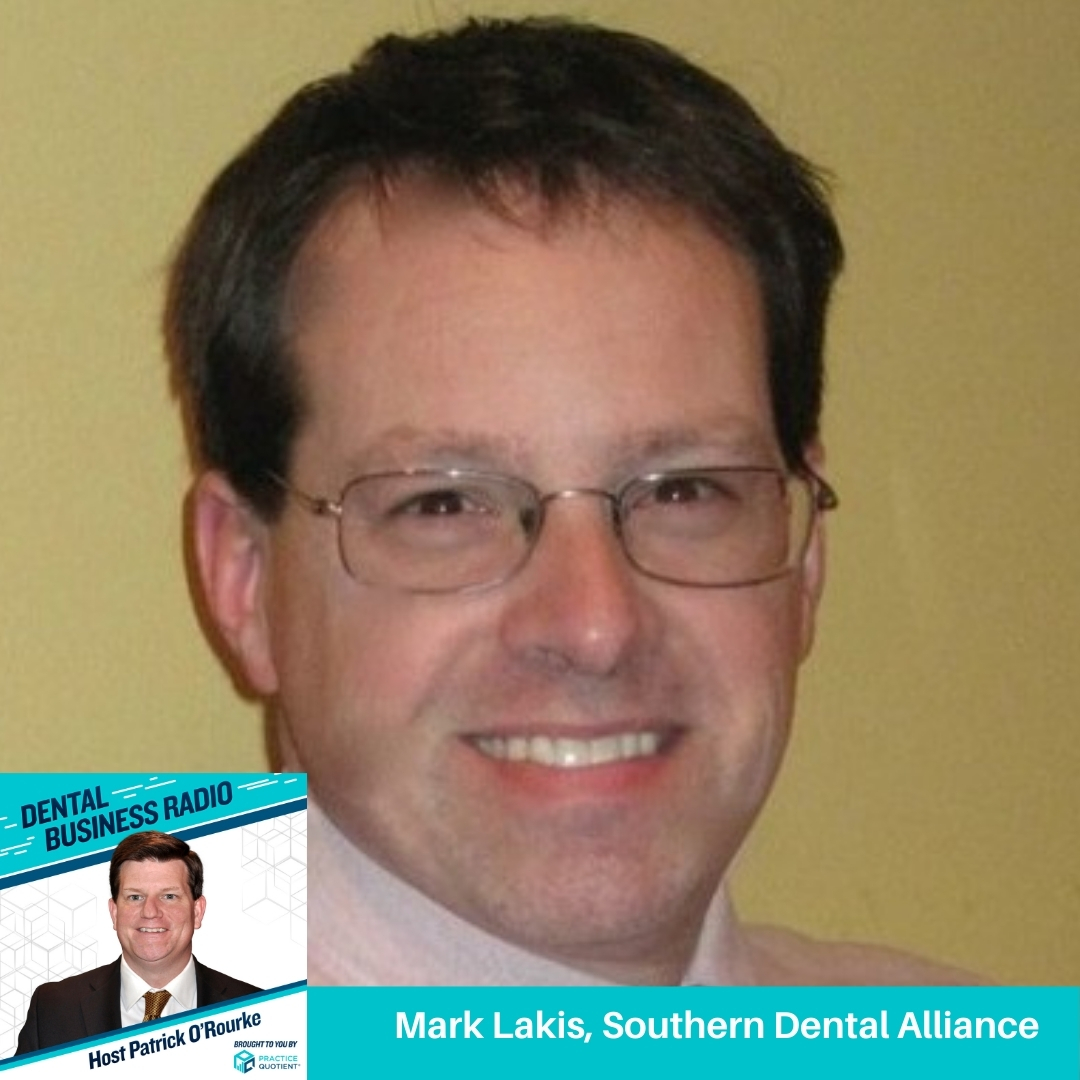
Connect with Practice Quotient:

Website

LinkedIn

Facebook

Twitter

Tagged With: Bay Center for Oral and Implant Surgery, Coastal Virginia Oral and Maxillofacial Surgery, dental insurance industry, Frank Yeh, Jesse Jakubowski, Patrick O'Rourke, PPO Negotiations & Analysis, Practice Quotient

Sean Wild, Pennsylvania Oral Surgery & Dental Implant Centers and Practice Metrix

October 27, 2020 by John Ray

Pennsylvania Oral & Maxillofacial Surgery
Dental Business Radio
Sean Wild, Pennsylvania Oral Surgery & Dental Implant Centers and Practice Metrix
Loading
00:00 /
RSS Feed
Share
Link
Embed

Download file

Sean Wild, Pennsylvania Oral Surgery & Dental Implant Centers and Practice Metrix (“Dental Business Radio,” Episode 7)

Sean Wild, CEO of Pennsylvania Oral Surgery & Dental Implant Centers, discusses his multi-location practice and its growth. Sean also discusses his work as CEO of Practice Metrix, where using both technology and consultative services, he and his team help OMS owners and managers better understand and manage their practices. “Dental Business Radio” is underwritten and presented by Practice Quotient: PPO Negotiations & Analysis and produced by the North Fulton studio of Business RadioX®.

Sean Wild, Pennsylvania Oral Surgery & Dental Implant Centers

Sean Wild, CEO of Pennsylvania Oral Surgery & Dental Implant Centers discusses the complexities surrounding the growth of multi-location practices, and what it takes to go from three locations and three surgeons to 8 locations (soon to be 10) and 14 surgeons.  As you can imagine, lessons learned are invaluable to those that seek to do the same.

For more information, go to their website.

Sean Wild, CEO & Cofounder of Practice Metrix, originally OMS3, LLC

Sean also discusses his work as CEO of Practice Metrix, a business intelligence data visualization company serving 16 practice management software platforms for the past 10 years.  Its premier product, the Practice Pilot & SnapShot Pro grew out of the need to truly understand your practice data in making important practice decisions.  What started out as a Data Dashboard company, now combines technology and 10 years of interpreting providers’ data across America, and the combined experience of managing practices along with understanding how to tie data back to workflows and proven solutions in its unique consulting services – invaluable in telling the story of your practice through its data.  He and his team help OMS, Endo and Perio and large dental group owners and managers better understand and manage their practices more efficiently; transition founding members, acquire new associates and bringing greater efficiency and peace of mind to their practices.

For more information, go to their website.

Offer for “Dental Business Radio” listeners:  Sean and Practice Metrix are offering a trial business dashboard and free coding review if you mention this show when you get in touch. Email Sean directly here.

Show Transcript

Intro: [00:00:03] Live from the Business RadioX Studio in Atlanta, it’s time for Dental Business Radio. Brought to you by Practice Quotient. Practice Quotient bridges the gap between the provider and payer communities. Now, here’s your host, Patrick O’Rourke.

Patrick O’Rourke: [00:00:18] Hi there, friends of the dental business community. This is your host, Patrick O’Rourke. On this edition of Dental Business Radio, brought to you by Practice Quotient, PPO negotiations and analysis. When there’s a lot of money on the table, you probably need professional guidance. You could do it yourself, but you can also do your own taxes and represent yourself in a court of law. It doesn’t mean it’s a good idea.

Patrick O’Rourke: [00:00:47] Today, I have big man on campus, Mr. Sean Wild is with us. And so, Sean Wild has more letters after his name than alphabet soup, so I’m not going to go over that. And Sean is also one of the guys that doesn’t sit still. He does a lot of different things. And so, it would be very difficult for me to tell his story. And so, what I’m going to do, Sean, is I would like – for those that don’t know you, I would imagine a lot of the listeners here do know who you are – but for those who don’t know you, tell us about your path into the dental business world.

Sean Wild: [00:01:25] Well, first, thanks for having me on the show. I appreciate it, Pat. So, I started back in 2008. I was in automotive prior. I worked for Naval Intelligence prior to that. When we came into automotive, I was attracted to a lot of the metrics that drove business and the way that every single thing had a value on what they did. Even with a phone ringing, how much it cost and what you gain from that call. So, when I came to dental, it was by accident that it happened. I met a really progressive oral surgeon who really, to this day, we still meet every day at 6:00 in the morning, in the last 13 years every morning. And it’s just been a really inspirational ride for me. And I think we both feed off and for each other on our professional and personal levels.

Sean Wild: [00:02:15] But, anyway, he basically challenged me to come and look at his business. I did. And when I looked at his business, I was a little frightened. I was frightened that they generated so much money, but they had little green monsters running everywhere around their practice that they just need for coffee cups and named them. They were just things that you would typically not do in business. For instance, real quick, they have a person that worked for them for a long time. They start to become deficient. Well, they don’t say, “Hey, goodbye. This isn’t working out.” They, basically, gave him a title and make him a higher ranked person in the entity. And that seems to be the culture that I was walking into.

Sean Wild: [00:02:55] So, in the end, he asked me to stay on and see if I wanted to help grow his business from three locations to where we are now. And I said, “Great. But if I see something and I liked it, would you be interested if I could go change it or maybe build a piece of software or whatever it was for a solution?” So, he said, “That would be great. Would you mind if I did it with you?” So, that was the beginning of 2008. Now, we have eight locations. We went from three docs to 13 docs, requiring two more. We are going up to ten locations by the end of the year.

Sean Wild: [00:03:31] We now have a software company. The software company is OMS3. For most of the people who know us, it’s now called Practice Metrix. It was a dashboard that we discovered when we gave data to doctors and spreadsheets. They kind of melted. They couldn’t see it. So, we said we need to do something better. We need to come up with something that’s maybe more visual. You know, they worked a millimeter [inaudible] buckle when they approach things. They’re very analytical and they just can’t see empirical data.

Sean Wild: [00:04:02] So, that led us down the road of talking to a friend of mine. I said, “I’m going to go to this place called CareStream. They’re having a meeting up in Canada. I’m going to walk in and find the CEO and pitch this idea to my friend,” who’s sitting with me now. They said, “Are you crazy? They’re going to throw you out of there.” So, long story short, we did meet with the then president of CareStream and made a deal with the company to become a dashboard for their CSOMS product. And that’s how we started.

Sean Wild: [00:04:32] We were basically in a deal for a long time. And one thing it was that was restrictive for us is prevented us from going into other verticals who are bringing the same dynamic dashboard that could help tell their business story in a much easier fashion than what they had. And last two years ago, approximately 2018, we were able to enter into the rest of the dental space. We’re now in 18 practice [inaudible] softwares, all Henry Schein’s except for one, I believe, DSN, you know, just a number of great companies.

Sean Wild: [00:05:10] And the one thing we get out of that relationship is I love to see someone’s business data and show them, “Hey, did you see this? Did you see that?” Most of the time they’re like, “I see it but I don’t understand it.” And then, Pat, that led to us kind of meeting you, which I’ll talk about here shortly. But also led us to helping them understand where the data comes from, what part of their workforce is being fed from positively or negatively, and being a practice administrator all along that ride. I actually understand what the data truly means and what we have to fix internally.

Sean Wild: [00:05:48] So, we really have a good ride in helping folks understand their data. And then, I would get calls, “Sean, I’m jus too busy. I know I need to change this, but I don’t know necessarily how to change it. I don’t know what I don’t know.” “It looks like you did if you were able to go from three to, say, there’ll be ten locations and all those doctors.”

Patrick O’Rourke: [00:06:07] Not easy.

Sean Wild: [00:06:08] “I don’t know how to acquire someone. I don’t understand the marketplace, how to even negotiate that contract with them or what’s appealing to a practitioner at this point in their life.” So, you know, that just led us to doing things we do every day inside Pennsylvania Oral Surgery and help ensure that success with other folks.

Sean Wild: [00:06:31] So, when I was out and about one day, I met a person who was using your services, Pat. I, first, was a little skeptical. I was like, “Oh, here we go. So, you’re going to give me free money and it’s going to cost me something.” And, honestly, it was just that simple [inaudible]. We put the professional on, like you said. I don’t want to be a brain surgeon on myself. I have no skill sets forth, so I want to find the best brain surgeon. And it turned out you were easy to talk to. Kind of almost too easy. We would see you go away. And we weren’t sure if someone kidnapped you or we had to call [inaudible] to come retrieve you.

Patrick O’Rourke: [00:07:08] [Inaudible] all the time. Like, we did not abscond to Mexico, I promise.

Sean Wild: [00:07:12] Yes. But then, all of a sudden, you know, two or three months later, “Hey, would you accept this 18 percent higher negotiated rate or this other win?” And another great point about your services are, you might go away, but the benefits keep coming. And that’s really, to me, the true win. So, as we started, you know, helping people understand their data and then helping them grow their businesses, why not call somebody that was successful? For me, it was predictable. I enjoyed the process. I love the results. And that’s what led us to, you know, work a little bit closer together. So, anywhere I go –

Patrick O’Rourke: [00:07:52] Likewise.

Sean Wild: [00:07:52] Well, thank you for that. But anywhere I go with my consulting business, you’re just another arrow at my quiver. And I love the fact that we stay in the same – you know, we know where our lanes are. We try to do them very well. And it works out just fantastic for the client or the end user. So, from there, we just now been working on some more solutions. We’re coming out with a new patient collaborator, which is amazing. It’s the way that you get the specialists out of the drawer and not be in a drawer with seven other cards or seven other oral surgeons. It’s a way to share data back and forth. But as we treat a common patient, it’s a way to never lose their x-ray or their patient again. And, most importantly, it’s a way for the GP to know when they use my patient exchange, that they can dial in any time they want from any device across the world and see exactly the status of the patient they referred and where they’re at in a treatment plan. And, most importantly, it saves about $2,000 to 3,000 a month in stamps, mail, and letters that these folks pretty much don’t even do anything with for the most part.

Sean Wild: [00:09:04] So, that’s something that helps us continue to grow our partners in oral surgery, perio, and the rest of the specialties that we work with. And, most importantly, we grow. We are the end users. We are the hair club presidents. You know, we have the same pain. We try to come up with a great solution. We test it with some of our folks and then we share it with our clients that want to do the same, you know, gain ground without having to have pain or a number of mistakes along the way. So, I hope that tells you a little bit more about who we are.

Patrick O’Rourke: [00:09:36] I think I learn something new about you every time I talk to you. And that’s saying a lot because it’s not that we talk infrequently. I’ve never heard the expression out of the drawer. I get it. It took me a second as you were talking. I was like, “What does that mean?” And so, what I think it means – and correct me if I’m wrong – is that, general dentists and specialists in general are reliant to some degree or another. On general dentist to send them patients. They don’t do a certain service that they’re not comfortable. And so, the specialists says, you should send your implant case or your wisdom teeth or your complex oral surgery stuff over to us. We’re amazing to work with and here’s why. And some sometimes oral surgeons say the same things, right? And so, you’re looking for a way to differentiate, particularly in an environment where there’s a lot of different oral surgeons like the Metropolitan area. Am I reading that right?

Sean Wild: [00:10:42] Yeah. So, what happened to us was when I first took over the role as the CEO of Pennsylvania Oral Surgery, my principal is really sharp. He said, you know, “Why don’t you just walk around for about two months, follow us around and just watch what we do. And then, while you’re at it, why don’t you go meet my referrals.” I said, “Oh, your customers? That’d be great.” He said, “No. No. They’re my referrals.” I was like, “Well, I think they’re your customers. If they’re sending you business and you’re fulfilling their needs, they’re really your customers.” Because I came from a different business line, but, to me, you must know who your customer is if you’re going to be successful because you need to treat them the best you can.

Sean Wild: [00:11:22] So, I went out with a few folks and we would meet some of our top customers/referrals. And when I walked in, they were like, we would say, “You know, we have some extra referral cards for you. And I want to make sure that we were meeting all of your expectations.” And I watched them open a drawer and dropped our cards. And my fantastic oral surgeons, that I thought were the best anywhere in the world, into a drawer with about 14 other cards. And I thought, “Wow. This needs to change. Somehow, I need to find a way, some transformative process that would get us out of that drawer and make us their top and only choice.” And that became my mission for, really, the past 13 years as a CEO of our surgery group.

Sean Wild: [00:12:07] But, really, as a business person, I feel like we have these folks who are the best at this kind of time that they do and money to become who they are. They need to be seen differently than just anybody with an oral surgery brand, you know, or any other specialty brand. So, with my patient exchange, it’s a little icon. It’s just on your desktop. It’s so easy to use. They have the x-ray up in their software, they drop it in, they click, click, click a number, they send it. But the nice thing is, when that happens, one, you are never in a drawer. They pick you automatically because you are easy to use. And their doctor was able to look in there without having to.

Sean Wild: [00:12:50] This is typically what happens, Pat, “Get that guy on the line. I want to know about this.” Well, that guy is in surgery or that guy was in surgery. So, that doctor is standing there, their front desk has to pick up a phone and call your front desk. So, they have to find a way to get your doctor out of a place. By now, his patient is calling, “I’m here.” She’s back in that room. And then, just a whole communication pathway was just not elegant or slick. So, this, we just thought we need to keep fixing these things as an entrepreneur or just as a problem solver.

Sean Wild: [00:13:21] In my old world, if you kick the door and it bounced back in your face, so to speak -I mean, older world of being overseas – you might not kick the door and walk in fully forward. You’ll learn to take a step back. And I said, “I don’t want to do that anymore.” And that’s kind of what it was for us. We said, you know, “We don’t want to do this anymore. We don’t want to keep bothering the GPs, you know, our customers, to get a simple x-ray or to try to give them the information they need and sending a letter out.” In today’s world, I guarantee you, Pat, about 99.9 percent of our partners in the dental community are still printing letters, specialists are still printing them, put a piece in the mail, put a stamp on it, mailing it to folks who then have to find someplace to put that into a meaningful way for the GP to retrieve it. It’s just archaic.

Patrick O’Rourke: [00:14:09] I had no idea that’s how it worked.

Sean Wild: [00:14:13] Every letter, every patient that you see has to be totaled up, so to speak, in a treatment plan or some type of communication back to the referral. It has to. Or else you lose the patient, right? So, I think we’re onto something that’s going to be just so transformative for the industry. And the fact that they could just look at any devices, like [inaudible] how our product works. Look at the Cloud, pull the patient up, not only see everything that you did for the patient, but ties the dental implant company, the lab, into the process. So, the total care is being managed in one view.

Sean Wild: [00:14:51] And the really nice part is, when you want to send that patient back, they actually have a calendar in their hand that they’re looking at that lights up when that patient is coming back. So, now, they automatically know, “Oh, these four people. That’s right. That was an all-four. Wait, that was that. Let’s make sure we’re ready.” And it makes you the choice for them to do business with. That’s elegance.

Patrick O’Rourke: [00:15:14] That is elegance. That’s awesome. And so, my mind goes to, “Okay. That reduces my cost of care.” Because I’m an insurance guy, so I’m always like, how does this affect the actual cost of care, maybe health care outcomes? That’s important too. That’s very important, don’t get me wrong. But as somebody who sat in the board room, we do talk about cost of care a whole lot. Now, health care outcome, you improve the health care outcome, you reduce your cost of care, that’s generally speaking given. But this sounds to me like it makes the specialist look like a hero but, also, you’re reducing time. It’s more efficient and there’s less likelihood of x-rays getting misplaced, or wrong, or anything like that into the patient. It’s a smoother transition of care amongst the providers, which is a goal of really everybody in the industry right now, from payer to provider to patient. That would be accurate, right?

Sean Wild: [00:16:17] Yes. You just named a lot of touch points that we think that it solved. One was, for [inaudible], because that’s also a challenge to worry about, a lot of folks are just sending things back and forth in your e-mail and they’re not using encrypted devices.

Patrick O’Rourke: [00:16:33] Gmail is not HIPAA compliant is what heard.

Sean Wild: [00:16:37] Most of them are. Yeah, most of them are not. And they’re cumbersome. So, we thought it would solve that challenge. It would save a lot of trees, Pat. There’s nothing wrong with that either, right?

Patrick O’Rourke: [00:16:48] Yeah. I like trees.

Sean Wild: [00:16:48] [Inaudible]. And then, in the end, you’re also giving the GP really, truly what they want. And that is the story of – think about this, they took their coveted patient and they handed them off somewhere and they can’t see anything. Until some day, a letter arrives at their office. Hopefully, that got brought back to their attention. Because a lot of things that happened between the time it hits the office and it didn’t really got back to the GP, the dentist.

Sean Wild: [00:17:15] So, right now, they now are trained that when they want to look at something, they want to see what they want when they want to. Well, that’s not so easy in this world when we’re tethered together for paper and snail mail. And a lot of those other archaic methods are here. It’s instant gratification. They instantly know. And there’s nothing worse than having a thought, trying to remember, because 14 other things happened because you couldn’t get the answer right away. Now, you’re trying to remember again why you started.

Sean Wild: [00:17:42] So, we think it’s going to just change the way that we do – we being all of us – like you said, a better outcome comes from tying a dental implant company and their specialists into an all-four case or a complex multiple implant case. And they’re seeing the treatment plan and identifying a potential challenge, measuring twice as always, better than cutting twice. So, get a separate look there. And the lab also has the ability to share its portion. And, now, it’s a team-based approach in a virtual operating pathway, so to speak, where everybody is onboard. And yet the quarterback still remains, the GP. That’s priceless.

Sean Wild: [00:18:26] So, we think it’s really revolutionary. And whether it is or isn’t, Pat, and remember my motivation financially, I just think it’s going to change the way we do business. And once you do that, that just makes things fun from the perspective of our little company called Practice Metrix.

Patrick O’Rourke: [00:18:42] Right. I think it’s kind of cool that you’re like, “I just solved the problem for us.” And then, you’ve tested it. You believed in it, obviously, because that’s what you’re using, because that’s you. And then, you then export or you’re like, “Look, whoever wants in can jump in.” I think that’s great.

Patrick O’Rourke: [00:19:02] Let’s switch gears a little bit, because, you know, one of the topics of the recent show, really, in the environment that we’re in right now, there’s certainly a lot of folks that are in growth stage. And, you know, anecdotally, I talked to a lot of folks and when they get into – they start growing their practice. You know, you get one location and one location. You’re knocking it out of part two. Yeah. You got it going on. Three? Now, you’re starting to extend yourself. So, to me, anecdotally, this is what I’ve noticed, once you get to that three or four mark, things become a lot different because you can’t be in so many places at one time. Now, you went from three to ten now. Where do you think are some of the biggest challenges that you had to jump over?

Sean Wild: [00:19:57] Great question. That’s a great question. I think the biggest challenge internally – and this is with every human being, in my opinion – as you all rise to your highest level of incompetence season, you stay there or you do not. You decide to overcome, which takes reflection, evaluation, and change. And I think that’s where you really need to focus with a business is, whatever that thing was that made you successful to have one or two of them, there’s a brand there, whether you realize it or not.

Sean Wild: [00:20:28] And most specialists or physicians, in general, don’t realize the brand is more than just their treatment or the way they provide their care. They seem very egocentric, you know, “Of course, I treat patients great.” And you might and probably do. But does the rest of your customer facing interactions support that vision or support that outlook that you’re trying to portray? And that’s everything from the time they walk up to your front desk or to the time they finally are escorted out to their car. And was their billing completed in an efficient manner so that they’re not getting the wrong bills, and, now, you’re devaluing that brand along the way. So, we really break things down. Again, I guess it’s my ex-military background. A lot of processes. You don’t put two or three million people into the services and not have a lot of lessons learned, reflection, organization, and process review.

Sean Wild: [00:21:26] So, where I found a lot of doctor, when I first met them initially, I must be smart. My check cleared. You know, I mean, [inaudible] of money. I am pretty smart. And the truth is, they’re really highly intelligent, but they spend zero time, for the most part, learning how to operate a multimillion dollar business that they’re going to have because they are great practitioners. And then, how do you communicate across multiple locations, making sure that your brand is still the same brand in every place, field, touch all of it.

Sean Wild: [00:22:01] And then, how do you train people, and manage those people, and grow those people without processes when you’re operating in 25 square centimeters of space every day? You know, facilities are always looking in that space. They can’t see behind them. They certainly can’t see three office locations away. And they really don’t understand all those interactions because they’re not there. And how do you measure it, test it, weigh it? And that’s where data comes back in, Pat. When you start to see pay offs by percentage of a formula, my production, my collections, my patient count. If all those were seeing equal to X, and that X is lower or higher, there’s something there if you know how to dig it and figure it out.

Sean Wild: [00:22:45] And that’s where the magic really happens in my world is, I want to identify where they are, how that happened. You were easy for us, Pat. You gave us something we could easily measure. You know, it was just simple. What you do isn’t simple. To me, you must have elves. But whatever you have up there, your Santa’s workshop –

Patrick O’Rourke: [00:23:05] It’s not easy, let me tell you.

Sean Wild: [00:23:06] You did a great job for us, but it was easy to see in our percentage of collections going up, right? But how do you measure when you have two offices? In our software, you can easily see your top referrals. It’s very visual. But if one of them is no referral, it tells me automatically they’re not getting that information at the front desk. Then, I can dive in instantly and tell you, “What front desk?” And I could tell you what front desk I would want you to use as a training source with mobile locations, because it’s all math, it’s all metrics. And it’s not at all fun unless you enjoy doing it. We enjoy doing it.

Patrick O’Rourke: [00:23:44] I don’t want to do it but I think it’s cool.

Sean Wild: [00:23:48] Yeah. Exactly. But then, when you can come on the ground, we have clients all over the U.S., we fly into their practice, watch them for a day, and bring them really great, meaningful change that is measurable, that’s predictable. And on top of that, it’s profitable. Really, it seems to be taking off for us because it’s just resonating with all those folks each and every time we have an engagement. So, that’s the kind of fun part. And then, when I pull you out or someone like you, it really brings that value. It’s just the set it and forget it for me. “Hey, by the way, don’t you also want to make more money for the same work you’re doing with your carriers?” “Sure.” And we pull out that predictable [inaudible] called Practice Quotient.

Sean Wild: [00:24:31] So, we’re trying to just approach this as an engagement. I hate to say consultants. I hate to say, “We’re going to have an engagement for a year and we’re going to grow your practice. And you’re going to find, typically, a four, five X mobile greater return on the dollar you spent compared to the dollar.” Much like you do, Pat. Much like the dollar used to build previously and people like that. Who doesn’t? I’ll give you a dollar –

Patrick O’Rourke: [00:24:58] It is pretty easy.

Sean Wild: [00:24:58] Yeah. I’ll give you a dollar, you give me $5 back. But forget the financial return. We always bring – and honestly, Pat, we can measure it upfront. We know automatically through our coding reviews, because we have three professional coders and some other smart folks looking at the data, we could tell initially automatically what we’re going to bring to that practice as a financial return. And that’s great. You know, four or five [inaudible].

Patrick O’Rourke: [00:25:24] That’s amazing.

Sean Wild: [00:25:26] But put that aside. That’s not the magic. The magic is when you give a doctor time to have lunch, because they’re so disorganized with their scheduling, they just never get it. Or the time to do their notes properly and not take it away from their family at nighttime, because they’re sitting there at the office with their notes, they’re bringing it home with them. To me, that’s the sweet spot for them. You know, money is great. Nothing wrong with that, Pat. We all need it. But when you can change your life, I think, that’s when you’re starting to say, “Wow. I did something there.”

Sean Wild: [00:25:58] You know, those are the kind of relationships we like. And, typically, we’re now on our second year of consulting. We have a pretty high percentage ratio of folks that are signing on for us. We call it partnering, you know, coaching. So, we not only coach, we fly onsite. We review them continuously through the 52 weeks. We have calls and actions, call to actions, that help us, you know, show them where we are effective. Reinforce their staff, because they help us become more effective. Create reward systems internally, better management systems internally, and really clear ladders for their own staff to go and grow, because they now understand what it is you really wanted them to do.

Sean Wild: [00:26:45] Most times, the doctor walks in and they’re like, “You know.” And you’re saying, “Well, what is the challenge?” Well, they don’t know what I need, but there is that layer between that really looked at the mission, identify what it was going to be, made sure everything was there, checked twice. Because there’s no one who really understand – I shouldn’t say no one – but, you know, many times there’s one or two great people. So, when you walk into a practice, “I got married. I have Jill.” That’s it. Because there are other people in there. So, if you had a great team, you’d say, “I have the best team in the world here, Sean.”

Sean Wild: [00:27:19] So, those are the kind of things that tell us, “Hey, we’re going to be having fun here. There’s a lot for us to do.” And the practitioners are going to get to have lunch. And I’ll tell you a quick lunch story, I met a fellow – he was a gentleman that hired me – and his partner, and I sat right next to him 13 years ago. And, you know, it was August. I was looking at their business throughout the summer. And he said, “You know, Sean, I just want to have lunch. I’m a lunch guy. I just want to sit down and have a really good lunch. Is that crazy?” I said, “You know what, Andy? That’s great. And come September, we’re going to put that on the board meeting schedule. We’re going to talk about that. We’re going to get your lunch because right now you need to go back out there and work.” And he was just like, “You’re right.” Then, off he went doing more whizzes.

Sean Wild: [00:28:00] But the truth of it was, I knew that when the next year came around that I can increase his production, his predictability, have a less stressful day, and he’s going to produce more than I really want. Does that make sense?

Patrick O’Rourke: [00:28:15] Yeah. It do makes sense. The gospels that I preach, I had to learn the hard way. You know, as a business owner and entrepreneur, you run, you run, you run. But nobody has ever sat on their deathbed saying, “You know, I wish I would have put in 90 hours instead 80.” You know, it just doesn’t happen. And so, I’ve got two small kids, and that’s my priority, Dylan and Evelyn Grace. And I’ll tell you one of the more fulfilling things I’ve done that I didn’t think I would ever have time to do, I coach basketball. I don’t know if you know that. So, fifth grade basketball, Little River Eagles. That’s right. I know you like that. Philadelphia zone.

Patrick O’Rourke: [00:28:59] And so, one of the most fulfilling things I’ve ever done. And I didn’t play basketball growing up. You know, end of first year, second grade, we didn’t win one game. And last year, we only lost two. We went second round in the playoffs. And so, that kind of taught me when I look back, I mean, I’ve done a lot of good things business-wise. But the balance – you know, I was talking to a client the other day and he’s like, “Oh. Well, you know, I’m taking my first vacation.” I’m on the phone, I’m like, “Dude, if I knew you’re on vacation, I’m hanging up right now. Don’t talk to me.” And he’s like, “What do you mean?” And I’m like, “Go hang out with your family. And the world doesn’t stop turning because you’re at the beach, bro. So, chill out.”

Patrick O’Rourke: [00:29:39] The other thing that you said – and I’m going to say it another way – because I think that a lot of docs – you know, and you talked about your brand – they talk about how there’s a lot of time, effort, training, and prestige that they’ve built and what they feel. And that’s their brand. And then, as it expands, but you can’t have your eyeballs everywhere, and you don’t know what you don’t know, and you can’t see all of that. And I like analogies, so while you were explaining it, you reminded me of, like, somebody that’s a really good chef. He makes the best food ever. They’ve got a beautiful dining room and they got a great host system and everybody comes in. And it’s awesome, except for one thing, the bathroom. The bathroom is awful. The bathroom looks like a third world country. And there’s no paper towels. That ruins the entire experience. And that’s kind of what you’re saying, is, do you know all the facets of your business? Am I picking up what you’re putting down?

Sean Wild: [00:30:56] One hundred percent. It’s about identifying. An old mentor of mine probably changed my life. It took me a while to digest what he said because of maceration, I need to get a little bit older and wiser. But I was, “How did you do all those?” He was like, “It’s real simple.” Probably, I was 26 or 27 and he probably had $10 million in the bank. A self-made guy. He said, “It’s simple, kid. You do more of what works and less of what doesn’t.” “Wait. What? No. No. Tell me what you really do.” And he just looked at me. But it was so true, learn to do more of what works and less of what doesn’t. Now, when you dive into that, it’s a great statement, right? When you dive into it, it’s about evaluating.

Sean Wild: [00:31:22] And the doctors do all that. These guys are so sharp. They can’t make mistakes or they get sued. That’s what I’ve learned early on. They can’t be wrong. There is no place for wrong. So, in that light, because of the wrong, it’s going to be harm or it’s going to be, you know, legal harm. So, in that light, they’re always doing this themselves. But getting somebody outside of their world to support them that’s looking at those things every day, and inspiring people to be their best, and teaching them to measure twice and cut once, and all the things, you know, we like to use as these euphemisms. But the truth of it is, it’s only that way. There is no shortcut to it. And you have to be always looking, measuring.

Sean Wild: [00:31:22] The same with renegotiating, Pat. If you did it at one time and it was over, well, we had that done in 1974, we’re fine. We know it doesn’t work that way, you know. You know, “We better call Pat every couple of years because these guys, the truth of it is, they are working not equally harder. Exponentially harder to take our money away.” That’s their job, to get the most they can get through our services for the least amount of remittance. So, you need something like a Pat out there on the frontline that’s our special forces of negotiating for these folks. The same as we need to be looking at their business when we’re onsite or looking at their data and saying, “You know what? This portfolio you’re using.” Like, we have so many facets of savings for our engagements. It’s in procurement. It’s in their waste. It’s an overnight shipping. It’s all these things that, you know, it’s easier for me to say, “Hey, you’re going to give me 50 grand. I’m going to give you 250, 300.” Who wouldn’t do that deal? But it’s not the money, Pat. It’s that renewable energy, and effort, and outcome that you produce in their practice that when you leave that year – and I’m throwing we do – because they can go fish now forever themselves, you know, and they just take off.

Sean Wild: [00:33:35] I was a product of a single mom, a single parent, for a while. And I looked at how hard she worked and the many jobs she had. And, you know, you don’t even appreciate it when you’re six or seven, you know. But when I look at most of our medical field gals – I’m very proud to say at Pennsylvania Oral Surgery, we have a board of directors, but we also have a supervisory board – and that middle management board runs that entire practice while I can be sitting here today talking to you, it’s because of them. And they’re all female and they’re all really, really strong leaders now, and are people that other females outside of practice, because most of them are dental world or surgical world, is this female-based for the most part and support staff for doctors. So, here they are, they’re out there and are becoming role models for each other. And there’s nothing greater than that, watching somebody change your life and find a career where they only had a job. Does that make sense?

Patrick O’Rourke: [00:34:31] It does. Absolutely. Yeah. I’m [inaudible].

Sean Wild: [00:34:35] So, I think that’s what drives every time we graduate a practice, you know, it’s our team sitting around the room and we’re tossing those folks for success. We’re really tossing those middle manager levels, the manager levels, we create for the doctors so they can get all the things they want. But what they really have, and I hope they realize it, is they have a future that’s going to be less dependent on them and more dependent on our staff, and their staff can do it. They can handle it and they’ll take them to greater lengths. So, that’s greater, I guess, reliance or whatever.

Sean Wild: [00:35:10] So, that’s kind of our motivation internally and a lot of psychology. It really is. But there’s a lot of ingredients to go in the soup. And I’ll tell you this, I watched some chefs show. I love watching the cooking shows and things like that on T.V. And I watch these folks down south. And in Louisiana, I miss those old timers sitting there and she’s like, “You know what? There’s all my ingredients, you could take a peek because it’s all up here.” I tell you, it’s not the ingredients. It’s what you do with them. I thought, “You know what? She is so right.” So, you know, we’re not afraid to share what we do because sharing it, and getting it done, and producing that outcome without doctors having pain in the process, that’s the magic. That’s really the magic for us. And then, leaving and seeing them do it afterwards, there’s nothing greater than that. Nothing greater than that for our company.

Patrick O’Rourke: [00:36:04] I completely agree. When people say thank you, it makes my day. It really does, you know. And when I go to different conferences and folks walk up – I remember being in one earlier this year pre-COVID – and the guy next to us, he’s like, “I have never seen anything like that.” You know, I don’t like hanging around the booth. You don’t either. I see you occasionally walking around. But he’s like, “People just walk up to your booth and they say thank you.” And if you’re not there, they’re like, “When is Pat coming back? Can you tell him I stopped by and say thank you?” And that makes my day.

Patrick O’Rourke: [00:36:36] So, anybody listening to the show, I’m telling you that it makes me happy. Send me a Christmas card or a holiday card if you’re not into Christmas, you know. I think gratitude is really important, you know, and especially these days. I think that it keeps me going. I mean, it’s not about the money for me. I could stay in corporate. But the show is not really about me. Is there anybody that you would like to give a special mention or a shoutout to? Because I would like to give one to Mrs. Sean Wild, because every time I type in congratulations and I get confetti on my little iPhone text, I think of her. And so, thank you again, Mrs. Sean Wild.

Sean Wild: [00:37:24] Well, I appreciate that. My wife has been watching you for me. I would say the two people – obviously, the two factions of people, my wife and my children, but also my partner, Charlie Burns. I’ve been with him 35 years. I’ve worked for him and he’s worked for me. We’ve always worked together. He’s right here today with us. And, honestly, I was in Wisconsin – like you, Pat, we’re everywhere, you know? When you turn around and your partner is always there, always supporting. Nobody runs [inaudible] better than he does as far as the training and the educating goes. And, you know, without him, I wouldn’t be here, so that would be my shoutout.

Patrick O’Rourke: [00:38:01] All right. Charlie Burns. Shoutout to Charlie Burns. He is the man. And when you can’t get a hold of Sean Wild, you just find Charlie Burns. He’s kind of like Scott. Scott’s kind of worked behind the scenes. Tracy Duncan called him underrated this week, I think he liked that of. But talking to Scott is just like talking to me and he sounds just like me, but looks a lot different.

Sean Wild: [00:38:24] I think you’re probably better talking to Charlie first, but I don’t want to say it upfront. Charlie is definitely the glue of our company though. But I would say this, because of you, Pat, if there’s anybody that wants to try our dashboard, no strings attached, and maybe get a free coder review because of you and because of this opportunity here to get in front of them, I’d be glad to give it to them. And that would be, you know, take it for 60 days and enjoy it. Don’t pay for it. And if you like it, that’s great. And if not, at least you will have a amazing coder review telling you how much money you can make next year doing nothing different with the same work you’re doing.

Patrick O’Rourke: [00:39:04] So, what I heard and, listeners, what you should hear is, if you mention the words Dental Business Radio and/or Practice Quotient to the team over Practice Metrix, then you will have – say it one more time, Sean.

Sean Wild: [00:39:21] You’re going to get a dashboard to help them see their business in a much easier fashion for free for 60 days and a free coding review. Or we will look at their current billing processes, what their charges are. We have three certified professional coders, some are dental coders, some are medical coders. And what we’ll do is look at what they’re billing and how they’re billing it, and let them see immediately that they could be making X number of dollars more. If they wish to go forward, we could talk to them at that point. But, at least, we’ll know you’re leaving a couple of hundred thousand dollars or more on the table every year.

Patrick O’Rourke: [00:40:00] Let’s talk about coding just for a minute. And so, before we end this, we want to make sure that we get the contact information there. And because sometimes I get asked about the coding and I’m like, “Listen, we’re not clinical. You’re the doc, so we don’t do that.” And so, it makes sense, it’s helpful for me to know that there’s a resource there. Because those of us in the insurance industry, we’ve been talking about medical and dental integration for well over a decade, probably 20 years. And, now, everybody’s like, “Well, now, it’s high time. Is it now?” What are you seeing -you know, anecdotally – with medical versus dental, without getting into any privacy issues?

Sean Wild: [00:40:53] Sure. I think I get the question. So, think about it this way, when the physician started doing what they do, they’re pretty predictable. They want to do the same thing over and over again. So, unless someone comes to them and says, “No, no, no. You’re going to actually do this or that.” And without being in that world like everything else you said, Pat, you don’t want to be your own lawyer if you’re not an attorney. And even if you do, you probably don’t want to be, right? So, when you’re not looking for those changes, you’re trying to be, say, predictable. Or you’re not in that environment to say, “Hey, you can no longer build this way. You need to build that way.” Or, “You can now build this in conjunction with that.”

Sean Wild: [00:41:36] I’ll give you an example. There’s one code that most folks are doing anywhere between three to 10,000 of them a year. Now, what if you could add $35 to that as an acceptable billable charge? You know, that could be life changing when you take 10,000 and times that by 35. So, it’s not [inaudible] 100 percent. Or your wife’s kitchen she’s been asking for, for these last four years and you weren’t able to give it to her, you know. So, it could be anything that’s important, sending your kids to private school or a better education.

Sean Wild: [00:42:13] So, when can you look at their coding and the things they’re doing, it’s not just saying, “Hey, here’s our code.” We, actually, will fly in, attend, look at their processes, help them change their coding, help them change in the software, help them change it through their processes, make sure it gets build out effectively. And it gets returned at the end of the month or, you know, paying on time their claims hit the kick. Just separating things dental and medical and not understanding where there’s an edge on either one. When you do a lot of things and we do an oral surgery or, you know, and they’re probably all the same, you’re doing a lot of things, a simple change at the multiple is thousands, you know, so that’s really exciting for me.

Sean Wild: [00:42:58] And then, the doctors are like, you know, “I don’t know if I feel good doing that.” Let’s say that’s a potential average change. Take somebody saying we’re not sure. And you look at me like, “Wait a minute. What if there’s [inaudible] for that?” And like, “You know what? You’re right, Sean.” They just don’t know. It’s like a scary thing, once they get past that and look at it like, “You’re right. I’m billing for this. I’m billing for that. It’s the same thing.” And they need to have it or you wouldn’t be doing the thing that you’re billing for. You just said no, those are charged. Does that make sense?

Patrick O’Rourke: [00:43:27] Sure. It does.

Sean Wild: [00:43:27] That’s exciting. To me, that’s just super exciting. And then, looking at their process is when you’re onsite and you’re saying, “Wow. You’re doing this and you realize that has a cost or a benefit if you change that.” And like, “I don’t know why I do it that way. No one’s come in and said, why do I do it that way?”

Patrick O’Rourke: [00:43:48] I get that sometimes.

Sean Wild: [00:43:48] I’m sure you do. You did it with me a few times. I’m like, “Okay. You got a point there.” So, it just dropped in your realities and you usually stay there or you evolve and you don’t. So, we like to give the folks a lot of choices from everything, from their scheduling, to their billing. And especially, Pat, the way they collect money is probably our biggest win for them. We have systems, when you do a lot of procedures – we do about 77,000 procedures a year – you tend to get more efficient or you’re out of business. It’s pretty much you’re really good or –

Patrick O’Rourke: [00:44:30] Driving around town with a baseball bat. Not very efficient.

Sean Wild: [00:44:35] There you go. So, you know, what we tend to do is look at their billing processes, really, to save them money and reducing their efforts. Because they didn’t know what they were doing. They chased it not in a very effective manner. And once they look at our processes and we’re able to dial into their systems every week, Pat, and review it, then the doctor is like, “Wait a minute. I just picked up a whole billing team.” And that’s in there, too. That’s what we always hear, “Is that extra? Is that extra, Sean?” It’s like, “It is nothing extra. This is what you get for us.” And that’s probably the greatest win when you hear them go, like, someone’s not taking advantage of me. Someone’s not [inaudible]. I’m actually getting more than I thought. Pat, that’s the magic for us.

Patrick O’Rourke: [00:45:18] Yeah. That’s awesome. You’ve been busy. I’m really happy that you’ve shared all of this, because I’ve learned a lot.

Sean Wild: [00:45:26] Thank you.

Patrick O’Rourke: [00:45:28] I know you don’t sit still, but that’s a lot.

Sean Wild: [00:45:29] I would say our people really are the reason we are finding a success that, really, it’s our team. You know, Charlie and his team are just amazing. And having them partner with other folks that want to go and grow, that’s magic.

Patrick O’Rourke: [00:45:45] Amen. Amen. So, folks who want to find you or Charlie, how do they do that?

Sean Wild: [00:45:52] Sure. They can go to www.practicemetrix, that’s M-E-T-R-I-X, .com. And they can call 610-600-9932.

Patrick O’Rourke: [00:46:05] Okay. Terrific. Thank you again, Sean Wild, for being on the show. And I want to thank our sponsor and everybody on our team, on the Practice Quotient team. Nikki B., who runs it, who’s also a female and is certainly the lead. She’s really the boss in our organization. And everybody on the PQ team. Shoutout to Scott Marquardt, even though I don’t think he’s listening to the show yet. You’re underrated, brother.

Patrick O’Rourke: [00:46:35] And to Practice Quotient, PPO negotiations and analysis. You can find us at www.practicequotient.com. If you enjoyed this content, please share it. And also rate it five stars. If you did not like this content, then please get a hold of me and tell me why, and I’m happy to take your feedback. Or if you disagree, come on the show, we’ll put on the music and we’ll have a little dance. If you have really profanity laden things to say, then send it to John Ray at jray@businessradiox.com. Thank you to John Ray, and to Diane Lasorda, and everybody on the Business RadioX team for making us look and sound good. We appreciate you all. So, with that, this is your host, Patrick O’Rourke. Until next time.

About Dental Business Radio

“Dental Business Radio” covers the business side of dentistry. Host Patrick O’Rourke and his guests cover industry trends, insights, success stories, and more in this wide-ranging show. The show’s guests will include successful doctors across the spectrum of dental practice providers, as well as trusted advisors and noted industry participants. “Dental Business Radio” is underwritten and presented by Practice Quotient and produced by the North Fulton studio of Business RadioX®.

Practice Quotient

“Dental Business Radio” is sponsored by Practice Quotient. Practice Quotient, Inc. serves as a bridge between the payor and provider communities. Their clients include general dentist and dental specialty practices across the nation of all sizes, from completely fee-for-service-only to active network participation with every dental plan possible. They work with independent practices, emerging multi-practice entities, and various large ownership entities in the dental space. Their PPO negotiations and analysis projects evaluate the merits of the various in-network participation contract options specific to your Practice’s patient acquisition strategy. There is no one-size-fits-all solution.
Connect with Practice Quotient:

Website

LinkedIn

Facebook

Twitter

Tagged With: dental implants, endo, oms, oral surgery, Patrick O'Rourke, Pennsylvania Oral Surgery & Dental Implant Centers, perio, PPO Negotiations & Analysis, Practice Quotient, Sean Wild

John Muse, DDS, Georgia Oral Surgery

October 8, 2020 by John Ray

John-Muse-Georgia-Oral-Surgery
Dental Business Radio
John Muse, DDS, Georgia Oral Surgery
Loading
00:00 /
RSS Feed
Share
Link
Embed

Download file

Georgia Oral Surgery
Dr. John Muse

Dr. John Muse, Georgia Oral Surgery (“Dental Business Radio,” Episode 6)

On this edition of “Dental Business Radio,” Dr. John Muse joins host Patrick O’Rourke to discuss his practice, Georgia Oral Surgery, why it’s important to understand different patient types, improving carrier reimbursement, and much more. He also shares his near death experience which completely changed his priorities. “Dental Business Radio” is underwritten and presented by Practice Quotient: PPO Negotiations & Analysis and produced by the North Fulton studio of Business RadioX®.

Georgia Oral Surgery

Georgia Oral Surgery practices a full scope of oral and maxillofacial surgery with expertise ranging from biopsies to wisdom tooth removal. They can also diagnose and treat facial pain, facial injuries and perform a full range of dental implant and bone grafting procedures. For more information, visit their website.

Dr. John Muse, DDS

Georgia Oral Surgery
Dr. John Muse, Georgia Oral Surgery

Dr. John Muse is a native Atlantan. He attended Druid Hills High School and received a Bachelors Degree in Biology from Wake Forest University, where he graduated with academic honors and was also a ROTC Distinguished Military Graduate. Dr. Muse received his dental degree from Emory University School of Dentistry, also with honors, and was inducted into the Omicron Kappa Upsilon Dental Honor Society. After graduating from dental school, Dr. Muse joined the United States Army and completed a one-year general dentistry practice residency at Fort Riley, Kansas. He then served as a General Dental Officer for five years in Germany and in the United States. Dr. Muse then completed his surgical residency training at Eisenhower Army Medical Center in Augusta, Georgia.

After completing his residency program, Dr. Muse was assigned to Fort Hood, Texas, one of the largest military installations in the world, where he served as Chief of Oral and Maxillofacial Surgery at Darmall Army Hospital. He also served as Chief of Oral Surgery for the Two-Year General Practice Residency Program. While on active duty, Dr. Muse received numerous awards and honors, to include two Meritorious Service Medals. Dr. Muse left the Army in 1999 as a Lieutenant Colonel, returned home to Atlanta, and bought Dr. Perry Brickman’s practice in June of 2000. Dr. Muse has a special interest in dental implant surgery and he has spoken both nationally and internationally on this subject.

Dr. Muse is Board Certified in Oral and Maxillofacial Surgery and is a Diplomate of the American Board of Oral and Maxillofacial Surgeons. Dr. Muse is a member of numerous professional organizations including:

  • American Association of Oral and Maxillofacial Surgeons
  • Georgia Society of Oral and Maxillofacial Surgeons
  • American Dental Association
  • International Congress of Oral Implantologists
  • The Academy of Osseointegration

Dr. Muse maintains his certification in Basic Life Support (BLS) and Advanced Cardiac Life Support (ACLS).

Connect with Dr. Muse on LinkedIn.

Show Transcript

Intro: [00:00:03] Live from the Business RadioX Studio in Atlanta, it’s time for Dental Business Radio. Brought to you by Practice Quotient. Practice Quotient bridges the gap between the provider and payer communities. Now, here’s your host, Patrick O’Rourke.

Patrick O’Rourke: [00:00:18] Hi there, friends of the dental business community. This is your host, Patrick O’Rourke. Thank you for joining us today. This show is brought to you by Practice Quotient, PPO negotiations and analysis. When you need professional guidance and there’s a lot of money at stake, then you need the best, call Practice Quotient. So, welcome, Dr. John Muse. How are you today, sir?

John Muse: [00:00:41] Thanks, Pat. Thanks for having me. Happy to be here.

Patrick O’Rourke: [00:00:43] It is a real pleasure to see you. John is an old friend and a legacy client of ours. And I met John, probably, in 2012, 2013.

John Muse: [00:00:56] Sounds about right.

Patrick O’Rourke: [00:00:56] Sounds about right. And, first, I met Susie Dean. So, shout out to Susie Dean.

John Muse: [00:01:02] Susie is awesome.

Patrick O’Rourke: [00:01:03] She’s an all-star. And Susie is very protective of you, you know. And Susie was like, “I’m going to get you a lunch meeting with Dr. Muse. But if anything goes bad, I am going to cut you with a scalpel. I want you to know that.” Now, she may not have said that with her words, but she definitely said it with her eyes.

John Muse: [00:01:24] Very protective.

Patrick O’Rourke: [00:01:25] Yeah. So, she’s awesome. So, Dr. John Muse is a respected oral surgeon here in Atlanta, Decatur – the Decatur section of Metro. And he’s been there for quite a while. A retired military veteran, very respected ties to Emory, which we’ll get into later. And John also speaks on a regular basis across the country about balance in life and what’s important, and we’ll get into that a little bit. I think we should probably start the show by kind of what was our origin, the two of us, right? So, when I first met you, I came into your practice. It was down there in – what’s the name of the hospital? Is the hospital still there?

John Muse: [00:02:13] Yeah. Decatur Hospital right there in downtown Decatur.

Patrick O’Rourke: [00:02:16] Okay. And so, I came down there and Susie Dean had said, “Well, listen. We’re having some issues. You know, we’re not getting paid appropriately from the insurance companies.” And I got down there and I looked at the contracts and I was like, “This is awful.” They really took advantage of you, right? And so, I got to know you and then I met you, and I’m like, “Well, this is a retired Army guy. This guy could probably kick my ass.” And I think that you were a little bit suspect of me, at least initially, at that lunch that we had. And I’ve said, “Well, look. Here’s the deal, you’re not being treated fairly.” And I’m being polite when I said it was unfair. I mean, you were getting burned. It made me mad. I was angry about it. And so, I had to go do something about it.

Patrick O’Rourke: [00:03:09] And what we were able to do in your case, really, was part of my purpose, because it makes me happy to see you happy and that we were able to relieve some of that pressure. So, that’s kind of how I tell this story, where you were a fee for service only practice. And then, in 2008, the bottom fell out of the economy. And then, you had to take a bunch of plans. Nobody knew what they were doing. And the insurance companies knew that you were, you know, kind of desperate. And so, you got stuck. And then, over a period of years, you continued to not be paid equitably – I’m being polite – until I got involved. Does that sound about right? What did I get wrong? What am I missing?

John Muse: [00:03:57] No. I think you’re spot on. I got out of the Army in 2000 and started growing my practice there in Decatur and things were going well. It’s fee for service practice and we didn’t work for the insurance companies. We worked with the insurance companies. So, the patient had a bill of $2,000, and the insurance was going to pick up 1,500 of it and the patient was responsible for the remaining 500. And so, I was whole at the end of the day. The recession literally kicked our butts. Practice was going downhill, drastically. I lost a lot of money and I panicked. And that’s a great word, I think that’s the word you used. We signed up for a bunch of plans. Put the forms in front of me and I signed them, you know, which sounds really stupid at the time, but we needed to get people in.

Patrick O’Rourke: [00:04:43] It’s not uncommon.

John Muse: [00:04:45] We just try to get, you know, more about quantity, not quality. And we got involved with all these plans. And, you know, the only thing I would disagree with is that, I looked at you with suspicion. I think I saw the value of what you were bringing almost immediately when you kind of said, “John, you’re getting screwed here.” And I realized that I needed to delegate this to someone who had the expertise, the knowledge, the background, and the personality to fight for me. And I think in that same lunch meeting I said to you, “Hey, I need a lieutenant colonel out there kicking some ass for me. And I don’t have time to deal with this and you’re going to be my guy. And go forth and tell me what to be on, tell me what to be not on, and help me refine this.” And it turned out to be a huge win-win. And so, not only did my income go up, but my peace of mind went up having great people work for me. That’s what it’s all about.

Patrick O’Rourke: [00:05:40] Sure. Absolutely.

John Muse: [00:05:41] So, thank you.

Patrick O’Rourke: [00:05:43] No. t was my pleasure. Thank you.

John Muse: [00:05:44] And just a bit as a side to that or a continuation of that, it has been a great ongoing relationship. And I think our immediate contract was for a year. And I think I came to you and said, “Hey, you figure out a way that I want you on my team on an annual basis. What do I have to pay you to help me modify this every year or every other year?” That went for, like, a couple of years, I think. And then, you came to me after, maybe, two or three years and said, “John, you don’t need to pay me this year. You have no contracts coming up. You’re good to go for a year. We’ll step back. You’re not writing me a check this year. And we’re going to come back and we’ll reevaluate when you need me.” And I don’t know if anything could speak higher to your integrity and the value that you bring to my practice than looking out for me, so thank you.

Patrick O’Rourke: [00:06:30] It’s my pleasure. It is truly my pleasure, John.

John Muse: [00:06:33] It’s been great.

Patrick O’Rourke: [00:06:37] From that particular experience, you introduced me to Hank over at Georgia Society of OMS. Hank is an awesome guy.

John Muse: [00:06:52] Hank is the man.

Patrick O’Rourke: [00:06:54] Hank is the man, that is for sure. And then, we started to work with a couple of other oral surgeons, and then AAOMS called. And then, AAOMS was like, “Who are you?” And I was like, “I’m Patrick O’Rourke. Who are you?” And they’re like, “We’re AAOMS.” And I was like, “Who’s AAOMS?” And so, that has turned out to be a really, really good relationship, of which you were the origin and the catalyst for making that happen, really, on a national level. And so, your story is a case study, in my mind – we’re not going to spend the whole show talking about our business – but fee for service only, panicked, too many plans.

Patrick O’Rourke: [00:07:39] This is happening right now, so this is why it’s important. There’s a lot of fee for service only practices that are feeling pressure that they need to take plans. There’s also a quasi fee for service only movement where people are getting off of plans. You also need to be careful with that. And so, understanding the contracts, this is complex. It really is.

John Muse: [00:08:02] It’s huge. It’s beyond me. And it’s very, very difficult.

Patrick O’Rourke: [00:08:04] And you’re dealing with folks that this is what they get paid to do, they’re professionals. And it doesn’t make them bad people, by the way. It just makes them good at their job. They go to church and have families just like the rest of us. But that’s really what they’re focused on, is bringing their cost of care down or – what I’ve heard lately – best pricing. That was pretty clever marketing department, whoever came up with that.

John Muse: [00:08:23] And best pricing can frequently made 50 cents on the dollar.

Patrick O’Rourke: [00:08:26] Fifty cents on the dollar. So, another thing that’s kind of happened – and this is anecdotal only from my experience – so our clients tend to be more established. And so, I think the practices that we’re struggling pre-COVID are probably struggling now. Our clients, because our job is to convince insurance companies to pay them more than everyone else, which I know it sounds crazy. You’re just not in a hurry to do.

John Muse: [00:08:57] Imagine that.

Patrick O’Rourke: [00:08:58] Crazy. So, most of our clients are established. And for some nutty reason, they were willing to take 50 cents on the dollar before.

John Muse: [00:09:11] Probably, we didn’t know like I was. You know, you don’t really know what you’re getting. You know, you just submitting the forms at the end of the day and you don’t know whether it’s 50 cents or 75 cents. You just know that it’s something. And then, it takes someone like you and your company to dive into and say, “Hey, do you know -” because that’s what you did for me “- do you know that you’re making this on this patient or on this contract?” I go, “No, I didn’t know it was so bad.” So, there’s a little bit of education that’s got to take place there.

Patrick O’Rourke: [00:09:35] Right. And even when we went and said you’re making 50 cents on the dollar or less and then I would go, “Well, what’s your overhead?” You know, overhead is typically 60, 65 percent, right?

John Muse: [00:09:45] Well, yeah. The national average, I think, for a well-run oral surgery practice is somewhere between 65 and 70. So, when you tell people, they say, “Really? You’re overhead is 70 cents on the dollar?” Yeah. That’s not a badly run oral surgery practice.

Patrick O’Rourke: [00:09:59] If you’re paying your people well.

John Muse: [00:10:00] Well, yeah. You got to pay. People are valuable. When you have a good practice, you’ve got to have good people.

Patrick O’Rourke: [00:10:05] Amen.

John Muse: [00:10:05] You know, they’re the most valuable asset. You know, if you’re paying your people 50 cents on the dollar, you probably have good people working for you who are dedicated. So, you got to take care of your people. But, once again, I’m not a finance guy, but if your overhead is 70 cents on the dollar and you’re getting reimbursed 50 to 60 cents on the dollar, you’re better off in your office drinking a cup of coffee. As opposed to taking all the liability, because what we do is dangerous. We’re very well paid ditch diggers at times. We work by the hour, but you got to control your risk. And it’s all about risk and reward.

Patrick O’Rourke: [00:10:37] Ditch diggers. That’s one thing I’ll never forget that you have brought up to me. I’m going to come back to that in a little bit. But there’s always risk in an oral surgery practice, that when somebody comes in, you’re putting them to sleep, right? So, there’s risk, there’s liability. That’s why you have malpractice, et cetera. I mean, this is kind of a dumb question, I guess, but there’s obviously more risk now, right, with COVID?

John Muse: [00:11:07] Well, sure. There’s more risk with COVID. There’s no doubt about it. But we’re used to controlling that risk. The thing with risk for me is that, you know, it’s risk and reward. So, prerecession back in 2006, 2007, whatever that was, you know, you have a degree of risk associated with any job or what you do. And you’re willing to accept that as long as you feel like you’re being compensated for that risk. But if the risk remains the same and the reward is going down, then you kind of start questioning your sanity a little bit. And so, that’s what’s happened to my practice. You know, you’ve certainly helped tremendously with it.

John Muse: [00:11:45] But day-to day, the risk stays the same. And then, day in, day out year-and-year, your reward goes down, it starts to wear on you. And it wears on you – what we do is very physical. I don’t know that a lot of non-dental people realize that, but dentistry or oral surgery is a physical job, it’s tough on your neck and your shoulders, and it’s emotionally tough. And you’re willing to accept that as long as you feel like you’re being rewarded. You know, no one’s going to do something that’s risk free, but you’ve got to be compensated for that. And so, when you have someone like you in my court, then you feel like, “Okay. You know, ideal perfect world, I like to be fee for service.” Well, that’s not the case.

John Muse: [00:12:21] But, now, I’m on these plans or a lot less plans than I used to be – thanks to you -but, at least, I know that I’m getting compensated for that. And I’m not trying to put a dollar sign on anybody’s forehead that’s a patient. It’s patients first. That’s what we do. We’re health care providers, it’s their well-being first. But at the end of the day, we also have to take care of our staff. My landlord likes to be paid. I have kids to take care of, imagine that. So, it is a business. And the less that we can decrease, at least in my personal opinion, the business load on my mind, then I can focus on delivering health care. And that’s why I went into it. You know, I went into this to take care of people.

Patrick O’Rourke: [00:13:02] I don’t think that a lot of people realize the physical and mental toll. I really don’t. To the lay people out there, myself included, you know, I’ve learned a lot over the years. Like now, I know the difference between a coronectomy and a 7240, and why coronectomy should get reimbursed higher.

John Muse: [00:13:22] There you go.

Patrick O’Rourke: [00:13:24] I have a client give me a dissertation on that.

John Muse: [00:13:26] But, certainly, the public doesn’t realize that. So, just to talk around numbers that say the public goes to the doctor 500 bucks. Well, they assume that $500 is going in the doctor’s pocket, and he’s going to go out and buy a new Porsche 911 using that money. I know it’s not a perfect example, but, you know, that doesn’t go to the doctor. Especially if that $500 is really being reimbursed by the insurance company at 70 cents. It gets whittled down real quickly.

John Muse: [00:13:57] I don’t like making health care a financial discussion, but to survive and have good people go into health care, that’s a whole another genre of discussion because you want the smartest and the brightest going in to take care of your family. And that they’re deciding not to go into medicine or surgery or dentistry. Well, who’s going to be taking care of our kids?

Patrick O’Rourke: [00:14:14] Amen. One of my theories about politics is that, the reason that we don’t have any really good people in politics is because it doesn’t pay well.

John Muse: [00:14:21] I’m not even going to touch on that. Can I touch on something else though?

Patrick O’Rourke: [00:14:32] Sure.

John Muse: [00:14:32] Yeah. I do want to circle back to what you said about Hank Holderfield. Hank Holderfield is a lifelong friend of mine. I’ve known him since I was 12 years old. Hank runs multiple oral surgery societies, Georgia, Florida, Tennessee, and runs the Southeastern Society of Oral and Maxillofacial Surgeons. So, he’s very, very well connected in that environment and he’s very well connected with our national organization, AAOMS, you know, American Association Oral and Maxillofacial Surgeons. And so, Hank’s job is to look out for us, the individual oral surgeons. He’s very protective of us. And he’s also known on a national basis among, you know, those people who are highly, highly respected.

John Muse: [00:15:12] So, for Hank – where I’m going with this – to see the value of what you did and to bring you in to his fold so that you can be exposed to his clients is a huge, huge compliment. So, you know, you are able to ascend that ladder, one, because of your personality, your expertise, and your reputation. And Hank was a big facilitator of that. The only reason he did that, he didn’t do that for any – just yahoo is what I’m trying to say.

Patrick O’Rourke: [00:15:39] I picked up on that. And thank you to you and thank you to Hank. Hank, I hope you’ll listen to this show.

John Muse: [00:15:47] We’ll send him a tape, would we not?

Patrick O’Rourke: [00:15:49] And maybe we’ll put you on the show.

John Muse: [00:15:50] You should.

Patrick O’Rourke: [00:15:51] Maybe you should come in here.

John Muse: [00:15:52] He would give a great perspective to what’s going on in health care, especially the dental region or, specifically, the oral and maxillofacial surgery region. And Hank also represents cardiologists and other health care groups. So, he’ll be a great, great guest on your show.

Patrick O’Rourke: [00:16:09] Hank, standing invitation. So, I’m going to switch gears back to where I’m going to combine the two things with the clients that during the shutdown they had more time, okay? And some clients don’t always go hands off like what you had described, what you did. You said, “Pat, I’m going to do whatever it is you say. And trust that it’s going to be fine.” And I wish more clients did that. A lot of times they fret, right? And I understand and there’s no one size fits all solution. But, generally speaking, you know, you can’t take 45 cents on the dollar. That’s Groupon territory. And we had clients that, back in January, I’m like, “Listen, this is just not profitable. You need to get out.” And they’re like, “Oh, we’re going to lose patients.” And I’m like, “Yeah.” “How much? How many?” They’re like, “I don’t know.” Like, “Well, I don’t know either. Do you think you’re going to lose half?” And they’re like, “Oh. That would be a disaster. That would be terrible. Awful.” And I’m like, “No, it wouldn’t. Even if you lost half, you wouldn’t make the same amount of money.”

Patrick O’Rourke: [00:17:20] And so, they didn’t pick up what I was putting down really before. But, now, they’re coming back, they open back up, now they’re slammed. Now, their busy schedule is full. And, now, there’s a perception, at least, that they are putting, not just their usual liability, but also their personal safety now, their family’s safety, their staff’s safety. And they’re just not willing to do that anymore. And so, I’ve seen a material shift, not in all of our clients, but certainly more than half that they’re not willing to do that anymore.

Patrick O’Rourke: [00:17:56] And earlier today, pre-show, you had made a really good point about the types of patients. That, when you’re on all the plans and you’re afraid that you might lose a patient, that there are certain patient types that kind of come in that are picking somebody on their directory. And they may come in and those are the ones that want the cheapest. They may not be accepting of your recommendations – did I kind of pick up on that right? – and/or are the most likely to sue you.

John Muse: [00:18:30] Right. You know, you’ve got to take care of everybody that you can. But at the end of the day, you have to take care of yourself. You’ve got to take care of your family. You got to take care of your staff. And for those people who are on those plans and you’re making 50 cents on the dollar – I know we’re kind of repeating ourselves here a little bit – you’re accepting all the liability without any of the reward. And so, you really are better off not treating that patient in that financial reimbursement scenario. I don’t want to say –

Patrick O’Rourke: [00:19:02] That was good dancing. I love that.

John Muse: [00:19:04] You know, you don’t want to say we’re turning people away because we don’t. I mean, our job -.

Patrick O’Rourke: [00:19:07] No. You can still see them. It’s up to them. It’s their decision. Because a PPO by definition, they can still go out of network.

John Muse: [00:19:12] Well, you don’t go into Kroger and get a gallon of milk and they give it to you for 50 cents when you’re at the counter – or 50 cents on the dollar. And so, health care – we’ll kind of get off the rails here a little bit – because there is a segment of the population that think health care should be for free. And I’m all for that, as long as you want to train me for free and run my practice for free. So, I think one of the struggles with health care today is that we are training our physicians, surgeons, dentists in a capitalistic environment. Dental school is not free. Oral surgery training is not free.

Patrick O’Rourke: [00:19:45] It’s not.

John Muse: [00:19:46] No. No. You pay with blood for that. Nonetheless, so we are educated in a capitalistic environment, but then we’re expected to practice in a socialist system. And I’m very familiar with both sides of that. I worked for the biggest socialistic health care delivery system in the world called the United States Army. And that’s fine. That’s fine. But the Army is going to take care of your salary, and your overhead, and all that kind of stuff. That’s fine. But you cannot expect our doctors to be educated in a capitalistic society and then practice in a socialistic one. Pick one or the other. Well, we’re getting way off the rails on that, so sorry.

Patrick O’Rourke: [00:20:24] Yeah. Well, you know, the great thing about this show is that there are no rails.

John Muse: [00:20:27] That’s good. That’s good.

Patrick O’Rourke: [00:20:28] That’s why I created my own show. And I can talk about whatever I want.

John Muse: [00:20:31] And I don’t like to put my home address because I really don’t want death threats, you know, if I say something.

Patrick O’Rourke: [00:20:37] John Muse is well-armed and he was in the Army, so I don’t recommend that.

John Muse: [00:20:40] Thank you for that. I could go off the rails there, too, Pat.

Patrick O’Rourke: [00:20:43] Right. Ratatat. That’s not a BB gun, baby. So, I’m going to say this and then I’ll bring it back in. Because I do hear this a lot out there, I’m very entrenched in health care and have been my entire adult life. When people say, number one, free and anything should never go together and certainly not health care. There is no free health care. And then, when people are like, “We should have one health care system. You know, single payer.” And I’m like, “Buddy, you already got single payer right now. Okay? All of us, me, you, everybody in Business RadioX pays into it on payroll. In fact, your taxes is called Medicare.”

Patrick O’Rourke: [00:21:28] And Medicare is there right now. And Medicare, between the entire 100 hundred percent – let’s say, here’s the population. And those on the radio can’t see me, but I’m holding up my hands, all right? So, let’s say, it’s about a foot long. And so, here’s the population of the country. How many people are covered under Medicare or Medicaid? So, let’s call it ten percent, maybe. How much of the federal budget right now is spent on Medicare? Not Medicaid, Medicare – well, half of Medicaid. Thirty percent. So, if you multiply 10 by 10 and you multiply 30 by 10, what happens? So then, you don’t have enough money for education, tanks, roads, everything else, parks that you care about. So, there is single payer and it’s going broke and so we already have it. And so, trusting Uncle Sam with something more when they’re already screwing up. It’s like hiring a financial adviser. We lost all of your money and they said, “Hey, you know what? If you just give me some more money, I won’t go to the horse track.” “What? Are you crazy?”

John Muse: [00:22:50] Well, coming to your point about a financial adviser, I think for us, as practitioners at least, you know, somebody really smarter than I am once said to me – and he’s very, very successful. He’s actually not a surgeon, but is in the finance business. I always thought he was a big role model in my life and I always looked up to him. And I thought he was an AA plus, plus plus smart kind of guy. He sent me down one day and he goes, “John, you know, I’m really not that smart. I’m probably B to B plus smart. But I got a great work ethic. I think one of the keys to my success is I try to surround myself by A plus people.” So, I think I’m the same way. I’m a B, B plus kind of guy. I’ll outwork anybody on this earth. But I think it helps and it’s instrumental, it’s essential to surround yourself by A plus people, be that your staff, be that your accountant, the lawyer, Practice Quotient. So, I would know more than negotiate the lease of my office space on my own. I don’t understand those contracts. I would know more if I go out –

Patrick O’Rourke: [00:23:58]  I wouldn’t do that either, negotiate for a living.

John Muse: [00:24:02] Right. And so, for someone to think that they can negotiate with insurance companies to get the best rate on their own, I think they’re smoking dope. Sorry. You know what I mean?

Patrick O’Rourke: [00:24:13] That’s legal in some states.

John Muse: [00:24:16] So, why would you do that, especially when the reward is going to be significant? So, you can go negotiate your lease, but you don’t know whether you’re going to get the right deal or not. In subparagraph 59C, you could say, you know, we own you. You don’t know what you’re signing unless you’re going to spend hours doing that. And so, for me to get on the phone and negotiate a rate with an insurance company, I’m not going to have the patience to sit there and listen to get to the right person. If I can get to the right person, I don’t know the vocabulary to use, I don’t know when to push, I don’t know when to accept, I don’t know when to leave.

John Muse: [00:24:49] And so, to engage with someone like you who has worked on the other side is kind of like, you know these people. And some of them, you know personally. And so, you know what to say, and you know what’s fair, and you know what’s not fair, and you know when to say, “Hey, we’re out of here.” or “We’re staying, John. This is the best we can do. You’re good.” And so, I don’t know why someone just wouldn’t immediately sign up for that. And especially – what’s the number, Pat? I mean, you know my practice better than I do in terms of we’re not talking thousands of dollars here. We’re talking tens of thousands of dollars that you have brought to my bottom line.

Patrick O’Rourke: [00:25:23] Six figures.

John Muse: [00:25:24] Right. Right. That’s six. Yeah. Yeah. So, that’s huge. That’s huge.

Patrick O’Rourke: [00:25:29] Now, I’m not setting that expectation for everybody. But, certainly, if you ever hear me say this is a slam dunk or you’re getting burned, you should move forward immediately. You know, there’s been a lot of other firms that pop up, too, and they do things cheap. And, you know, sometimes I get calls and they’re like, “Well, somebody called and they said they’ll do it for X amount of money and they’ll get it done in six months.” And I’m like, “Really? You know, you want it done cheap and dirty? Well, we’re not the right people.”

John Muse: [00:25:56] You get what you pay for. And I’ve also heard you say to clients, “I’ve evaluated and done initial consultation and, you know, you’re good. You don’t really need me.” And I do the same thing for my patients. I say, “No. You don’t need me. You’re fine.”

Patrick O’Rourke: [00:26:11] So, one thing that I want to talk about today is your experience with Emory. The Emory story, to me, is very compelling in how you became a national speaker on your own now, where you are speaking to groups about balance and work-life balance. And keep in mind that right now, AAOMS, the AAOMS Show, the annual show is going on – the annual event – it’s virtual. So, technically, I’m actually in the booth right this second.

John Muse: [00:26:49] Look at you.

Patrick O’Rourke: [00:26:49] I’m multitasking. And so, we’ll probably send this out. And this could be heard by several of our clients and prospective clients and, really, oral surgeons over there.

John Muse: [00:26:49] I hope so. I hope so.

Patrick O’Rourke: [00:26:49] And it’s not just us though. The message that you deliver about work-life balance, can you, in your own words, just describe what happened back then and your experience with Emory, and why that’s led you to preach the gospel that you preach today?

John Muse: [00:27:25] Well, sure. Thank you for asking. The presentation is called Stress, Life Balance, and Second Chances. It’s usually an hour to tell the story. So, I’m going to try to tell it in two or three minutes.

Patrick O’Rourke: [00:27:40] Well, you need to bring them on. So, just give us, like, the trailer.

John Muse: [00:27:45] The trailer is, I had a massive heart attack in my office on a Wednesday afternoon during lunch. I began running the preliminary aspects of a Navy SEAL US code on myself with my nurse. And I kept myself alive, basically, until we got to Emory Hospital. The paramedics showed up to take me and they’re not used to, I don’t think, a surgeon running their own code and telling them what to do. But I was telling them what to do. They didn’t like that a whole lot at first or so, that I’m told. And they wanted to take me to a hospital that was closer by. And I said, “No. We’re going to Emory.” And they said, “That’s five minutes further away.” I said, “I’m willing to take the chance.” And they go, “We’re going to this other hospital.” I said, “You take me to Emory. If you don’t, I’m going to get off this gurney and my nurse will drive me to Emory.”

John Muse: [00:28:32] So, I won that argument. I got to Emory. I said to my nurse in the ambulance – because she wouldn’t leave my side – I said, “You tell my kids that I love them.” Because I was pretty sure I wasn’t going to make it. I mean, it was bad. It was really bad. And she looked at me and she said, “You’re not dying on me today you son of a bitch.” That was a pretty much a direct quote. She’s great. So, I say that as we head to Emory at the E.R. and had stabilized and I was looking okay. And we had a whole lot going on at that time, you know, they just kind of brought me on the gurney and my nurse, Ann, and was saying, “You got to put him in the room. You got to put him in the room. Something is going to go bad.” And sure enough, I turned around, my eyes rolled up in the back of my head and I went into V-fib, which is a non-perfusing cardiac arrhythmia.

Patrick O’Rourke: [00:29:15] Sorry. That sounds bad.

John Muse: [00:29:18] That’s bad. And so, they started running ACLS on me. And for those of you who’ve been involved in those codes, it’s pretty much controlled chaos. It can be kind of nasty, you know, tubes everywhere, shocking you multiple times. And when you’re running a code, it doesn’t get exponentially better with time nor with the degree of shocks. Usually, as a general rule, if you’ve shocked somebody about the third time, you kind of gone through the list of meds once or twice, it’s pretty much over. And my nurse, Ann, was sitting there watching all this. So, you can imagine it’s pretty traumatic for her and my staff.

John Muse: [00:29:55] The young resident emergency room doc didn’t give up on me. She calls the cath lab and says, “I think we’ve got somebody for a cardiac reperfusion catheterization.” And the interventional cardiologist says, “Does he have a pulse and blood pressure?” And she goes, “No.” And he goes, “Don’t send him up unless you get one.” She kept working on me. And after the seventh shock, they got a pulse and a blood pressure, they sent me up to the cath lab. They almost lost me twice more up there. Long story short, after five days, I walked out of Emory Hospital with no brain damage, which is unusual because they did CPR on me for at least 45 minutes. Well, I like to say there is brain damage, but that existed pre-event, if you will. And I think I have a 0.5 percent muscular damage to some tissue in my heart and that’s unheard of.

John Muse: [00:30:51] So, I’m a big, big fan of Emory University. If I had a billion dollars, I would build them a new wing or whatever they wanted. People over there are amazing. And so, I came out of that event. I missed a week of work. And people said, “Well, why did you go back to work so soon?” I said, “There’s one name on the door. It’s my name. If I don’t go to work, people don’t get paid. People don’t go to college. Payroll don’t get handled.” But it really kind of jolted me.

Patrick O’Rourke: [00:31:15] For sure.

John Muse: [00:31:16] That’s the first time I’ve used that word, pun intended, I guess. And really made me start looking a lot closer at my life. It’s a big wake up call. And a year or two went by and kind of someone said, “Hey, tell your story.” I said, “I don’t do that kind of stuff. It’s pretty personal.” And the presentation gets real personal, much more so that I’m sharing today. And that I realized people really enjoy the message and they got a lot out of it. I got a lot of positive feedback from that. So, I’ve given that message to the various study clubs I’ve taught nationally on it. And I enjoy doing that probably more than I do enjoy oral surgery, because I feel like I’m touching a lot of people at one time and it’s fun.

John Muse: [00:31:53] And when you can kind of tell that with a personal twist, and I kind of go into things that I’ve changed since then, and they’ve been not insignificant reduction of stuff, divorce, I quit doing a lot of my study club and extracurricular activities at Stakeholder Field. I will tell you, I was over committed to multiple organizations and run around with my hair on fire, you know, every night after work to go to boys clubs or surgery meetings or northern district society meetings. And so, I really kind of said, “Hey, life is a little too short to go down this road again.” So, that’s probably in a nutshell. So, life is short. So, I have my golf balls that say “Life is short, play hard.” That doesn’t mean I’m good at golf. It’s just that life is short, play hard. And then, take care of the people that you love and associate with good people.

Patrick O’Rourke: [00:32:43] Let’s give a plug to that wonderful country club that you remember of down there.

John Muse: [00:32:47] Oh, yeah. Druid Hulls is a great place. Good friends down there.

Patrick O’Rourke: [00:32:49] Druid Hills Country Club, also a terrific place to play golf. But you can’t get in there, I guess, without an invitation. They don’t let me in unless I use your name and you have to be there.

John Muse: [00:32:59] Yeah. I did notice that my club bill was significantly higher last month. And they described some yahoo in there, it sounded like you. So, we’ll settle up on that after the show.

Patrick O’Rourke: [00:33:12] I can either – no comment.

John Muse: [00:33:16] No comment.

Patrick O’Rourke: [00:33:17] So, John, thank you very much for being on the show.

John Muse: [00:33:22] Thanks for having me, Pat. It’s been a pleasure.

Patrick O’Rourke: [00:33:25] It’s been my pleasure. And then, you know, for everybody at AAOMS, remember work-life balance. When we went up to the Virginia Society of Oral and Maxillofacial Surgeons – shout out to Dipa Patel, Laura Givens, Frank Yeh, Tim Gocke, everybody up there. And Nova Commonwealth, Sean Rye. Thank you for allowing a little shout out. I love the people in Virginia. So, there’s certain states where people work collectively together, and I think that that’s one of them. And so, what do you think is the biggest concern that folks are worried about in your profession right now?

John Muse: [00:34:20] I think the biggest concern is just adapting to the new norm. The post-COVID new normal and whatever that environment may be. And it seems to change on a daily basis regarding regulations and what’s required, what’s needed, what’s not needed. There’s a lot of unproven science that’s driving a lot of decisions out there that are very politically motivated, in my humble opinion, and not scientifically based. But adapting to that new patient flow and expectations. You know, obviously, keeping the patient safe, keeping ourselves safe, and keeping our family safe, and our staff safe. So, just figuring that out is a big, big concern for everybody.

John Muse: [00:35:04] And just to use myself as an example, and you mentioned like everybody is up and running again. Well, you know, we were shut down for two months. That number would be zero on the income side of the house. And, again, I’m not a finance guy, but when the income is zero and the outgo is still the same, it’s significant.

Patrick O’Rourke: [00:35:22] Zero is not good.

John Muse: [00:35:23] Right. So, we got back up and running. But, you know, just full disclosure, we’re probably 80 percent month-on-month compared to year-to-year. And so, my brother said, “Wow. John, that’s great. You’re back up and running. You’re at 80 percent.” “Yeah. That’s good.” But if you’ve got the preceding two months at zero, then the following six to 12 months don’t need to be at 80. I’m pretty sure they need to be somewhere around 120. So, yeah, we’re back up and running. And I think most practices around the country are. But, you know, we’re still paying for getting shut down. And you say, “Oh, we got PPP money.” Yeah. Well, that helped, but it only kind of slowed the bleeding down. It didn’t allow us to be whole, if you will.

John Muse: [00:36:04] So, I think that new balance to the practice, it’s a challenge. But at the end of the day, I think most surgeons and health care providers, you know, we’re thankful to have a job. And there’s a lot of people in this country that don’t. My staff is thankful to have a job. We’re alive and vertical, right? Nobody’s dying here, you know, at least as far as the buyers goes in terms of my practice and everything. But what I meant by that, just in terms of life, you know, it’s good to be alive. And so, I think I would encourage people to say, “Okay. We’ve got some challenges ahead of us.” But we still have people that love us and we can take care of. And kind of simplify life a little bit. And maybe try to turn something bad into a good message and kind of smell the roses a little bit.

John Muse: [00:36:52] And, of course, I’m preaching to myself as much as I am. I don’t preach to people. I’m not smart enough to preach to anybody. So, I’m looking in the mirror when I say things like this. Like, “It’s going to be okay.” It may be a new norm, but it’s going to be okay. I’ve seen it in my practice, this post-COVID thing, patients are so appreciative of us just being there. Honestly, the patient is not going to get the virus from me or one of my staff members. We’re the ones that are at risk big time.

Patrick O’Rourke: [00:37:21] You guys have been set up in a sterile environment to handle anything, AIDS –

John Muse: [00:37:29] We’re fine. We’re going to be fine.

Patrick O’Rourke: [00:37:31] – like infectious diseases, all of that.

John Muse: [00:37:33] Yeah. You know, and one of my buddies who it’s not in the health care industry goes, “Well, I can assure you’ll have to wear mask, you know, a lot now.” And I go, “Yeah. It’s really interesting. We started wearing masks. And then, last week, we actually started sterilizing our instruments too.” Being smart ass. You know, it’s like, “Come on, come on, come on. We can handle this. It’s going to be okay.” And I think we’ve proven to the public that we can treat people in a safe environment, that they’re going to be well taken care of. And I think we’ve proved to the government the powers of these, that we are an essential service. People need us and. And we’re not going to be shut down again. I’m not going to be shut down again. I’m here to take care of people, to include my staff, and my family. And it’s going to be a new norm. You know, the flow of money is going to be different. Our obligations are going to be different. Our overhead is going to go up. And with that, to circle back around spontaneously, our reimbursement needs to, at least, stay the same because our cost of delivering care is going up.

Patrick O’Rourke: [00:38:33] And they can’t be going down. Do you hear that, my friends in the industry?

John Muse: [00:38:36] We cannot be going down low enough.

Patrick O’Rourke: [00:38:37] I will be calling –

John Muse: [00:38:38] Call Pat. Well, I wasn’t expecting that to tie in to a shout out to you, but there you go.

Patrick O’Rourke: [00:38:43] Well, I think we can probably end on that because we need to thank our sponsor, Practice Quotient, PPO negotiations and analysis, contract review and strategic guidance. Special thanks to Practice Quotient, to my partner, Scott Marquardt, Nikki, and everybody on the PQ team, Melissa, Brianna, Brittany, and Tony, Donald, and Jordan. Thank you from Patrick. Thank you to John Ray and thank you to Business RadioX. This is the first time, actually, that we have done this show live. We are in person down in Atlanta, Georgia with my friend Dr. John Muse.

Patrick O’Rourke: [00:39:25] John, if somebody wanted to reach you – I know not to go to your house – but how would they reach you if they want you to speak at – you know, I know you are going to go to Hyndman, but that got postponed or so this year.

John Muse: [00:39:40] Yeah. I’m speaking there next year.

Patrick O’Rourke: [00:39:41] Yeah. So, how would folks find you?

John Muse: [00:39:45] Oh, it’s easy. Just Google John Muse Decatur and John Muse oral surgery Decatur, something like that, you’ll find me.

Patrick O’Rourke: [00:39:51] All right. So, Dr. John Muse of Georgia Oral Surgery, thank you so much. And thank you all of you listeners. If you enjoyed the content, please hit the five star rating on it and share this with a friend. If you did not like this content, then you can email John Ray at jray@businessradiox. All right. Thank you so much for listening. This is your host, Patrick O’Rourke. Until next time.

Patrick O’Rourke, Host of Dental Business Radio

Patrick O’Rourke, Host of “Dental Business Radio”

Patrick O’Rourke began his career in operations management at a dental & vision insurance company in Florida, which after several acquisitions and mergers, is now MetLife. He spent five years at Humana in Atlanta selling in the large group segment (100+ employees). In addition to several awards throughout his career, he has earned many professional certifications.

Understanding the nuances involved with all aspects of risk management helped business partners rely on his expertise to guide client recommendations. He is an insurance insider that has built dental networks, worked in operations management, designed dental plans, and opened markets.

In 2013, he founded Practice Quotient, which specializes in dental insurance PPO network contract analytics and reimbursement guidance, representing the dental provider.

As a national public speaker, Patrick educates doctors on how dental managed care participation impacts more than 50% of practice revenue, the importance of diligent contract management, and how to develop criteria specific to a patient acquisition strategy for choosing the best carrier business partners.

Questions/Topics Discussed on the Show Include:

  • John’s background and an overview of Georgia Oral Surgery
  • The economics of an oral surgery practice
  • Understanding the different types of patients and how they affect a practice
  • Improving reimbursement from dental insurance carriers.
  • John’s near death experience which led to a reordering of his priorities
  • AAOMS
  • Patrick and John give a shout-out to Hank Holderfield of the Georgia Society of Oral and Maxillofacial Surgeons and Southeastern Society of Oral and Maxillofacial Surgeons

About Dental Business Radio

“Dental Business Radio” covers the business side of dentistry. Host Patrick O’Rourke and his guests cover industry trends, insights, success stories, and more in this wide-ranging show. The show’s guests will include successful doctors across the spectrum of dental practice providers, as well as trusted advisors and noted industry participants. “Dental Business Radio” is underwritten and presented by Practice Quotient and produced by the North Fulton studio of Business RadioX®.

Practice Quotient

“Dental Business Radio” is sponsored by Practice Quotient. Practice Quotient, Inc. serves as a bridge between the payor and provider communities. Their clients include general dentist and dental specialty practices across the nation of all sizes, from completely fee-for-service-only to active network participation with every dental plan possible. They work with independent practices, emerging multi-practice entities, and various large ownership entities in the dental space. Their PPO negotiations and analysis projects evaluate the merits of the various in-network participation contract options specific to your Practice’s patient acquisition strategy. There is no one-size-fits-all solution.
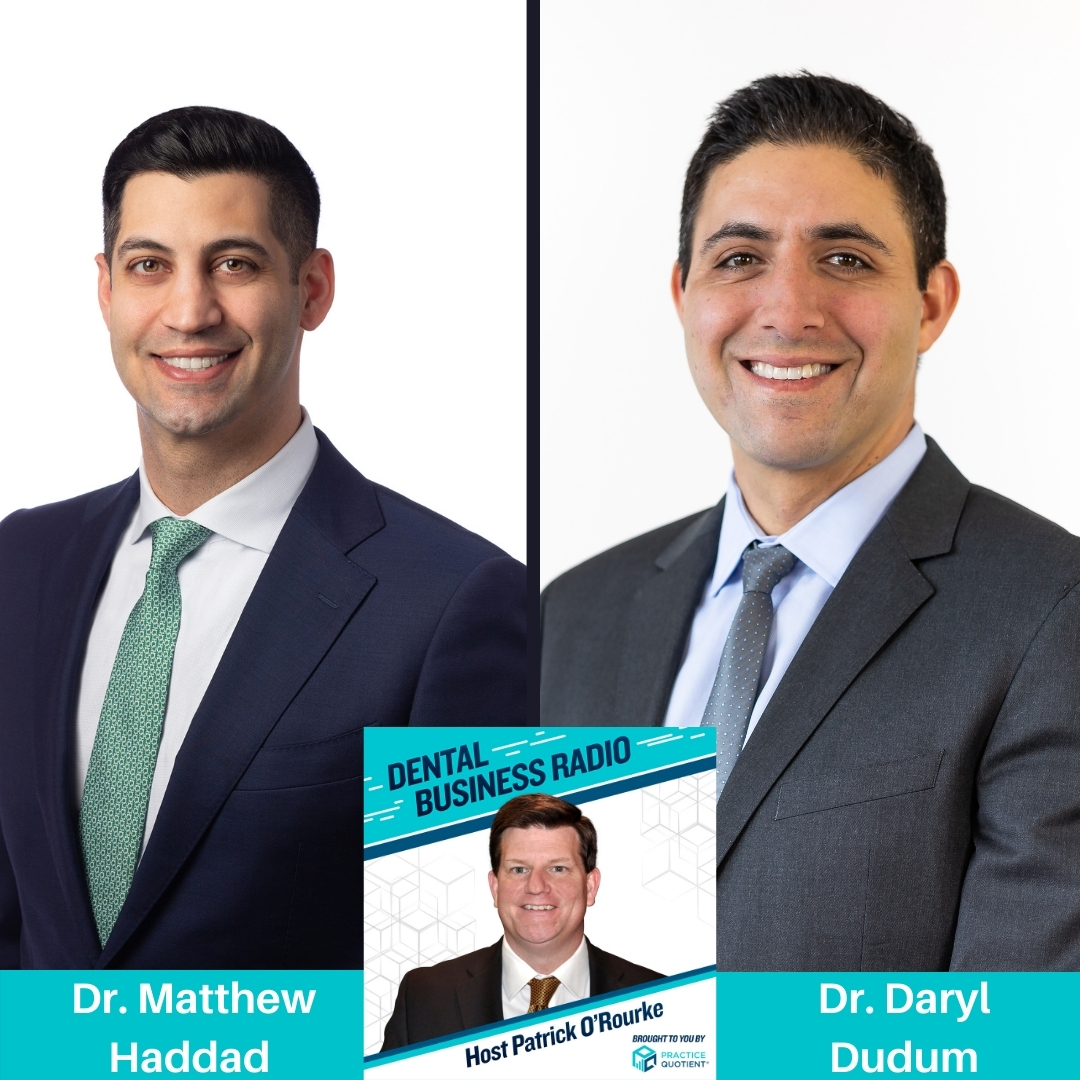
Connect with Practice Quotient:

Website

LinkedIn

Facebook

Twitter

Tagged With: AAOMS, DDS, Dr. John Muse, Georgia Oral Surgery, Georgia Society of Oral and Maxillofacial Surgeons, Hank Holderfield, oral surgery, Patrick O'Rourke, PPO Negotiations & Analysis, Practice Quotient, Southeastern Society of Oral and Maxillofacial Surgeons

  • « Previous Page
  • 1
  • …
  • 4
  • 5
  • 6
  • 7
  • Next Page »

Business RadioX ® Network


Our Most Recent Episode

CONNECT WITH US

  • Email
  • Facebook
  • LinkedIn
  • Twitter
  • YouTube

Our Mission

We help local business leaders get the word out about the important work they’re doing to serve their market, their community, and their profession.

We support and celebrate business by sharing positive business stories that traditional media ignores. Some media leans left. Some media leans right. We lean business.

Sponsor a Show

Build Relationships and Grow Your Business. Click here for more details.

Partner With Us

Discover More Here

Terms and Conditions
Privacy Policy

Connect with us

Want to keep up with the latest in pro-business news across the network? Follow us on social media for the latest stories!
  • Email
  • Facebook
  • Google+
  • LinkedIn
  • Twitter
  • YouTube

Business RadioX® Headquarters
1000 Abernathy Rd. NE
Building 400, Suite L-10
Sandy Springs, GA 30328

© 2025 Business RadioX ® · Rainmaker Platform

BRXStudioCoversLA

Wait! Don’t Miss an Episode of LA Business Radio

BRXStudioCoversDENVER

Wait! Don’t Miss an Episode of Denver Business Radio

BRXStudioCoversPENSACOLA

Wait! Don’t Miss an Episode of Pensacola Business Radio

BRXStudioCoversBIRMINGHAM

Wait! Don’t Miss an Episode of Birmingham Business Radio

BRXStudioCoversTALLAHASSEE

Wait! Don’t Miss an Episode of Tallahassee Business Radio

BRXStudioCoversRALEIGH

Wait! Don’t Miss an Episode of Raleigh Business Radio

BRXStudioCoversRICHMONDNoWhite

Wait! Don’t Miss an Episode of Richmond Business Radio

BRXStudioCoversNASHVILLENoWhite

Wait! Don’t Miss an Episode of Nashville Business Radio

BRXStudioCoversDETROIT

Wait! Don’t Miss an Episode of Detroit Business Radio

BRXStudioCoversSTLOUIS

Wait! Don’t Miss an Episode of St. Louis Business Radio

BRXStudioCoversCOLUMBUS-small

Wait! Don’t Miss an Episode of Columbus Business Radio

Coachthecoach-08-08

Wait! Don’t Miss an Episode of Coach the Coach

BRXStudioCoversBAYAREA

Wait! Don’t Miss an Episode of Bay Area Business Radio

BRXStudioCoversCHICAGO

Wait! Don’t Miss an Episode of Chicago Business Radio

Wait! Don’t Miss an Episode of Atlanta Business Radio