Business RadioX ®

  • Home
  • Business RadioX ® Communities
    • Southeast
      • Alabama
        • Birmingham
      • Florida
        • Orlando
        • Pensacola
        • South Florida
        • Tampa
        • Tallahassee
      • Georgia
        • Atlanta
        • Cherokee
        • Forsyth
        • Greater Perimeter
        • Gwinnett
        • North Fulton
        • North Georgia
        • Northeast Georgia
        • Rome
        • Savannah
      • Louisiana
        • New Orleans
      • North Carolina
        • Charlotte
        • Raleigh
      • Tennessee
        • Chattanooga
        • Nashville
      • Virginia
        • Richmond
    • South Central
      • Arkansas
        • Northwest Arkansas
    • Midwest
      • Illinois
        • Chicago
      • Michigan
        • Detroit
      • Minnesota
        • Minneapolis St. Paul
      • Missouri
        • St. Louis
      • Ohio
        • Cleveland
        • Columbus
        • Dayton
    • Southwest
      • Arizona
        • Phoenix
        • Tucson
        • Valley
      • Texas
        • Austin
        • Dallas
        • Houston
    • West
      • California
        • Bay Area
        • LA
        • Pasadena
      • Colorado
        • Denver
      • Hawaii
        • Oahu
  • FAQs
  • About Us
    • Our Mission
    • Our Audience
    • Why It Works
    • What People Are Saying
    • BRX in the News
  • Resources
    • BRX Pro Tips
    • B2B Marketing: The 4Rs
    • High Velocity Selling Habits
    • Why Most B2B Media Strategies Fail
    • 9 Reasons To Sponsor A Business RadioX ® Show
  • Partner With Us
  • Veteran Business RadioX ®

The Value of Collaboration, with Samantha McElhaney, Pinnacle Financial Partners

October 12, 2023 by John Ray

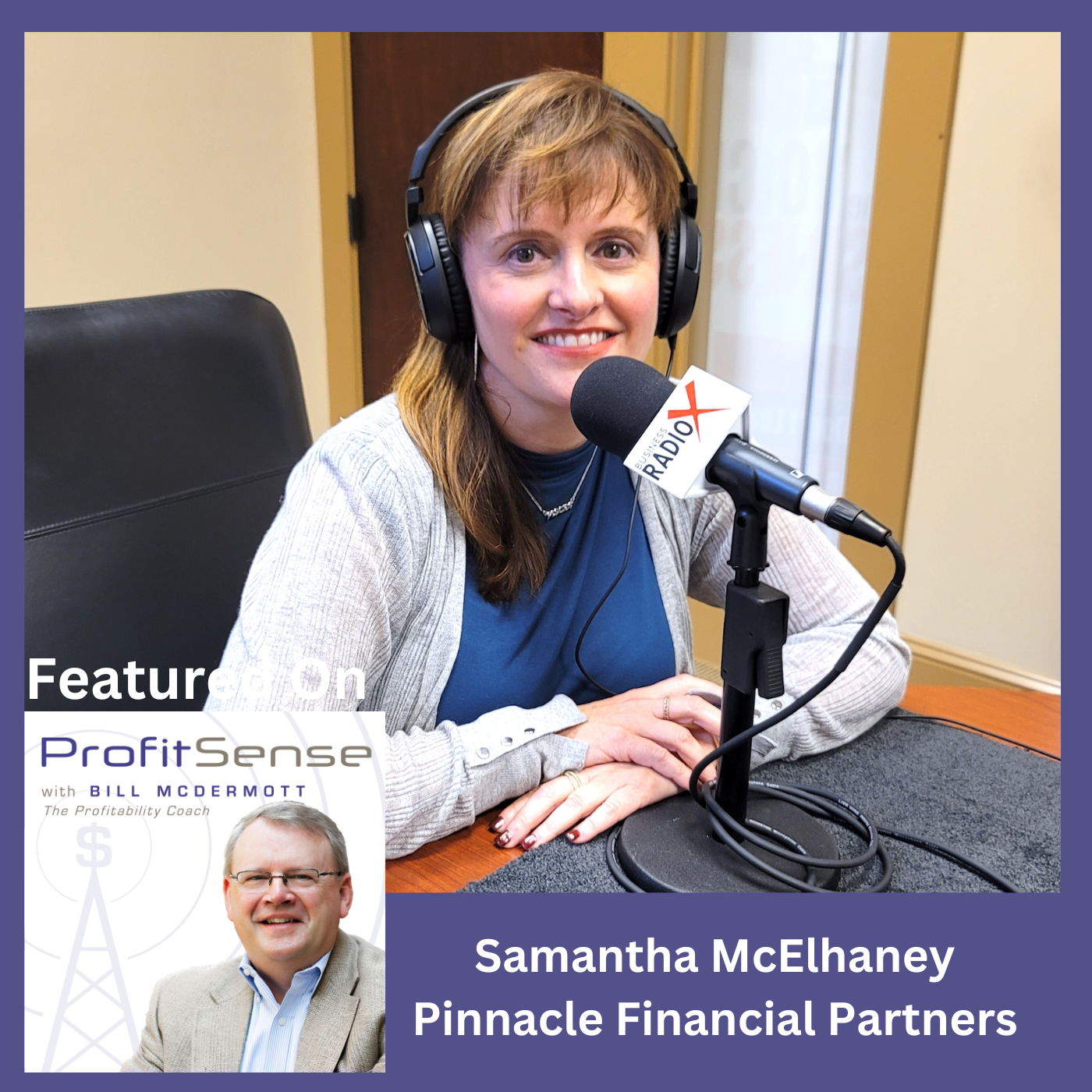
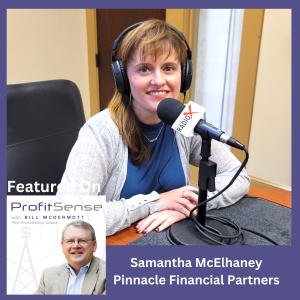
Samantha McElhaney
North Fulton Studio
The Value of Collaboration, with Samantha McElhaney, Pinnacle Financial Partners
Loading
00:00 /
RSS Feed
Share
Link
Embed

Download file

Samantha McElhaney

The Value of Collaboration, with Samantha McElhaney, Pinnacle Financial Partners

[00:00:00] Samantha McElhaney: I really like working with small business owners, but I have an opportunity right now to work with companies. And I’ve been introduced to companies in that need, 40, 50, 60 billion in financing, and they’re not getting factual information from other banks or they’re not getting the information that they need from other lenders.

[00:00:21] Samantha McElhaney: So I’m able at Pinnacle to pull in other people in different departments and all across the United States and they’re getting on the phone or they’re getting on zoom or they’re even getting in a plane and coming here to Georgia to work with me and help my prospects or my clients with those opportunities.

[00:00:41] Samantha McElhaney: And there’s no competition. There’s no, “I’ve got to meet a goal, so Sam get out of the way,” or.. I’m learning. At 30 years in my career, I’m learning just like my clients are learning of our capabilities and it’s fun. And they’re seeing it on my face, my clients are seeing it, and they’re eager to learn about what, not only capabilities we have, but how I can help, how my coworkers can help, and we’re all learning together.

[00:01:06] Samantha McElhaney: And if we can’t do it, we’re getting them in front of other institutions that can help, and there’s no fighting. among each other about that. And it’s just fantastic that we’re trying to help the business succeed.

Listen to Samantha’s full ProfitSense with Bill McDermott interview here. 


The “One Minute Interview” series is produced by John Ray and the North Fulton studio of Business RadioX® in Alpharetta. You can find the full archive of shows by following this link.

Renasant Bank has humble roots, starting in 1904 as a $100,000 bank in a Lee County, Mississippi, bakery. Since then, Renasant has grown to become one of the Southeast’s strongest financial institutions with over $13 billion in assets and more than 190 banking, lending, wealth management and financial services offices in Mississippi, Alabama, Tennessee, Georgia and Florida. All of Renasant’s success stems from each of their banker’s commitment to investing in their communities as a way of better understanding the people they serve. At Renasant Bank, they understand you because they work and live alongside you every day.

Tagged With: banking, Bill McDermott, collaboration, financial services, Pinnacle Financial Partners, ProfitSense with Bill McDermott, Sales, Samantha McElhaney, The Profitability Coach

Dan Mahony, Transcendent Sales Solutions, Keith Costley, Keck & Wood, Inc., and Samantha McElhaney, Pinnacle Financial Partners

September 29, 2023 by John Ray

Dan Mahony
North Fulton Studio
Dan Mahony, Transcendent Sales Solutions, Keith Costley, Keck & Wood, Inc., and Samantha McElhaney, Pinnacle Financial Partners
Loading
00:00 /
RSS Feed
Share
Link
Embed

Download file

Dan Mahony

Dan Mahony, Transcendent Sales Solutions, Keith Costley, Keck & Wood, Inc., and Samantha McElhaney, Pinnacle Financial Partners (ProfitSense with Bill McDermott, Episode 49)

Dan Mahony, Transcendent Sales Solutions, Keith Costley, Keck & Wood, and Samantha McElhaney of Pinnacle Financial Partners joined host Bill McDermott for a roundtable discussion about what it takes to have a good mindset for sales. Each of them shared their career journey and their experience in sales. Bill led them through a conversation about the critical elements of mindset that contribute to effective sales, such as intentionality, collaboration, transparency, and honesty. They also discussed the skills that are important such as listening, curiosity, building trust over time, doing your research and more. Each guest concluded with their key advice based on their years of experience.

Bill wrapped up the episode with his thoughts on thinking like a buyer.

ProfitSense with Bill McDermott is produced and broadcast by the North Fulton Studio of Business RadioX® in Alpharetta.

Transcendent Sales Solutions

Transcendent Sales Solutions is focused on empowering companies with tactical sales strategies to accelerate revenue growth. Dan is an agile, results-oriented, and charismatic leader with a proven track record of turning underperforming sales organizations into revenue producing market leaders. He has a unique ability to create sales messaging and processes that increase revenue, decrease headaches, and provide order and definition in place of chaos and confusion. 

Website | LinkedIn | Facebook | Instagram

Dan Mahony, President, Transcendent Sales Solutions

Dan Mahony, President, Transcendent Sales Solutions

Dan Mahony is the President of Transcendent Sales Solutions, a company that helps and empowers small to mid-sized businesses in turning underperforming sales teams into revenue-producing market leaders. Transcendent Sales Solutions takes a proven results-oriented strategic and tactical approach by developing successful sales plans, building a strict sales approach, and aligning sales teams that will help a business marketing operation run effectively.

Dan has a unique ability to create sales messaging and processes that increase revenue, decrease headaches, and provide order and definition in place of chaos and confusion. 

LinkedIn

Keck & Wood, Inc.

Keck & Wood, Inc., founded in 1954, provides professional civil engineering, landscape architecture, and land surveying services to clients throughout the southeast.

The company has 65 employees in four offices. Duluth and Fayetteville, GA as well as Rock Hill and North Charleston, SC. Our clients include city and county governments, utility companies, state agencies, education institutions, and private developers. 

Website | LinkedIn | Facebook

Keith Costley, President & CEO, Keck & Wood, Inc.

Keith Costley, President & CEO, Keck & Wood, Inc.

Keith Costley is the President / CEO of Keck & Wood, Inc., a 65 person civil engineering firm headquartered in Duluth, GA. He graduated from Vanderbilt University with a civil engineering degree in 1994 and has become licensed as a Professional Engineer in GA, SC and NC.

He joined the firm as a Project Manager in their Rock Hill, SC office in 2000 and has steadily progressed his career by becoming the office leader in 2012 and then the President / CEO in 2017.

LinkedIn

Pinnacle Financial Partners

Pinnacle is much more than a bank. It’s a place for people to find true partners for their business. It’s a place where seasoned professionals give clients unmatched service and advice that better their financial well-being. And it’s a place where people love coming to work every day.

Website | LinkedIn | Facebook | YouTube

Samantha McElhaney, Commercial Financial Advisor, Pinnacle Financial Partners

Samantha McElhaney, Commercial Financial Advisor, Pinnacle Financial Partners

Sam has been in the financial services industry for 30 years and works hard to solve the daily business struggles of her clients. When she is not working closely with clients, she is out networking with individuals, so she has resources to solve problems and to connect others to regularly. If Sam is connecting people, she feels her day is fulfilled.

LinkedIn


About ProfitSense and Your Host, Bill McDermott

Bill McDermott
Bill McDermott

ProfitSense with Bill McDermott dives into the stories behind some of Atlanta’s successful businesses and business owners and the professionals that advise them. This show helps local business leaders get the word out about the important work they’re doing to serve their market, their community, and their profession. The show is presented by McDermott Financial Solutions. McDermott Financial helps business owners improve cash flow and profitability, find financing, break through barriers to expansion, and financially prepare to exit their business. The show archive can be found at profitsenseradio.com.

Bill McDermott is the Founder and CEO of McDermott Financial Solutions. When business owners want to increase their profitability, they don’t have the expertise to know where to start or what to do. Bill leverages his knowledge and relationships from 32 years as a banker to identify the hurdles getting in the way and create a plan to deliver profitability they never thought possible.

Bill currently serves as Treasurer for the Atlanta Executive Forum and has held previous positions as a board member for the Kennesaw State University Entrepreneurship Center and Gwinnett Habitat for Humanity and Treasurer for CEO NetWeavers. Bill is a graduate of Wake Forest University and he and his wife, Martha have called Atlanta home for over 40 years. Outside of work, Bill enjoys golf, traveling, and gardening.

Connect with Bill on LinkedIn and Twitter and follow McDermott Financial Solutions on LinkedIn.

TRANSCRIPT

Intro: [00:00:03] Broadcasting from the Business RadioX studio in Alpharetta, it’s Time for Profit Sense with Bill McDermott.

Bill McDermott: [00:00:17] Good morning. Welcome to Profit Sense. This podcast dives into the stories behind some of Atlanta’s successful businesses and business owners and the professionals that advise them. We help local business leaders get the word out about the important work they’re doing to serve their market, their community, and their profession, as well as discuss current issues that business owners are facing today across a wide variety of industries.

Bill McDermott: [00:00:44] I’m your host, Bill McDermott, and this show is presented by The Profitability Coach. When business owners want to increase their profitability, they often don’t have the expertise to know where to start or what to do, I leverage my knowledge and relationships from over 32 years as a banker and 14 years as a business coach now to identify the hurdles getting in the way and create a plan to deliver profitability they never thought possible.

Bill McDermott: [00:01:10] We’re going to be talking sales today, selling professional services. First, I want to introduce Keith Costley who is president and CEO of Keck & Wood. Keith, so glad you’re on Profit Sense. And by the way, welcome back because I was privileged to have you as a guest previously.

Keith Costley: [00:01:30] Yeah, thanks, Bill. It’s great to be back. I feel like a veteran and I really appreciate my relationship with you and our company’s relationship with you. We’ve been in the trenches together before. So, glad to be here.

Bill McDermott: [00:01:42] Yeah, and we’re delighted to have you. So, talk a little bit about Keck & Wood, founded in 54, providing professional civil engineering and other things. Talk about that a little bit.

Keith Costley: [00:01:55] That’s right. Founded in 54. So we’re heading towards our 70th anniversary as a firm, which we’re pretty excited about.

Bill McDermott: [00:02:03] Wow.

Keith Costley: [00:02:03] But our core services are civil engineering. We also do landscape architecture and provide planning and consulting services. But the core to our business is providing solutions to public sector and private sector clients who have a wide variety of needs, whether they be regulatory, development, engineering, solutions, consulting. But our bread and butter is city and county government providing a wide range of services. And we also do design work for private clients as well.

Bill McDermott: [00:02:42] And I love your tagline, “Collaboration By Design.” Talk briefly about that.

Keith Costley: [00:02:46] So, we believe that collaboration is just – has to be at the core of our business and our relationships and not only external relationships with clients but internal relationships. If we’re really going to maximize our success as a firm, we have to be collaborative in how we do our business, how we treat each other internally, and be collaborative with our clients. So that’s why our tagline is what it is.

Bill McDermott: [00:03:09] Yeah, well, and it’s a great one. I also want to welcome Dan Mahony who is president and CEO of Transcendent Sales Solutions. Dan, delighted to have you back. So, welcome back to Profit Sense.

Dan Mahony: [00:03:21] Bill, thanks for having me. It’s great to be here.

Bill McDermott: [00:03:23] And Dan is president of Transcendent Sales, which is a company that helps and empowers small to mid-sized businesses and turning underperforming sales teams into revenue-producing market leaders. So, Dan, talk about that briefly.

Dan Mahony: [00:03:36] Well, I started my business five years ago. I’m on my fifth anniversary. And what I do is, I help those business owners and CEOs that struggle with sales. A lot of times they started the company and they are running their companies. Plus, they’re the head of sales and they’re also the top sales producers. So, especially when you’re getting ready to sell your business, there needs to be that separation for the new buyer. And I work with those companies to help them build the right processes, the right systems, put the right people in there, and have the right strategy.

Bill McDermott: [00:04:09] Yeah. And it’s really about transferring those selling skills from the business owner to that next level of management. So, there is actual transfer – transferable value in the firm, isn’t it, Dan?

Dan Mahony: [00:04:21] Absolutely. And it’s that the skills and the relationships too, is how do you take those relationships from all those years and transfer them over to somebody new when they’re not there anymore?

Bill McDermott: [00:04:31] Yeah, yeah. Great point. And the baby boomer generation is retiring in droves. And so, we’re going to talk more about sales. And I’m excited what you have to contribute to the conversation.

Bill McDermott: [00:04:43] And Samantha McElhaney. Samantha, I believe, is maybe one of the best bankers in the city of Atlanta. Samantha, welcome.

Samantha McElhaney: [00:04:53] Thanks, Bill. Just call me Sam.

Bill McDermott: [00:04:55] All right, Sam. So, Pinnacle Financial Partners. You do a lot of commercial financial advisory business – advisory services. I know financial services because I’ve sold in that space before. You have a unique perspective on that. But talk a little bit about the work that you do and talk a little bit about Pinnacle Financial Partners.

Samantha McElhaney: [00:05:18] Yeah, the last time I was here exactly a year ago, I couldn’t announce that I had moved to Pinnacle Financial Partners. I was actually here with Keith doing a podcast and I just joined Pinnacle Financial Partners. So, it was a year ago, celebrating my anniversary.

Bill McDermott: [00:05:37] Wow! Happy anniversary.

Samantha McElhaney: [00:05:39] Thank you.

Samantha McElhaney: [00:05:39] And it’s the best decision I ever made because I’m with all of my old teammates from former banks, SunTrust, Synovus, Wells Fargo. We’ve assembled an all-star team here in Atlanta, and we are doing what we love, helping business owners make decisions financially that they need to either start their business, grow their business, transition their business, but also help them with their personal needs as well, too. So, it’s just the ideal job as far as banking is concerned.

Bill McDermott: [00:06:15] Yeah. And the thing about banking and financial services is obviously the more a business sells in revenue, the more deposits that a bank will have to be able to loan out. And so – but it’s not really selling as much as it is helping business owners solve problems.

Bill McDermott: [00:06:38] So let the four of us kick off this whole topic of sales. You know, I’ve learned recently over the last couple of years that before we can deal with skill set, we have to deal with mindset. And, Sam, one of the things that I think you do really well and I want to get Keith and Dan’s perspective because I’m sure they do this well also being clients set – being client-centric, one of the mindsets. You know, we have to be able to put our client’s needs before our own and deliver the solutions that meet those needs. So, how have you become the client-centric banker that you are?

Samantha McElhaney: [00:07:26] I think over the years, especially after becoming a mother, you have to put other people’s needs first. I’m a big faith believer. I go to church and it’s not just about going to church. It’s just, you know, getting up every day and having those conversations with my God. And that’s why I work where I work because our institution is a big faith-based institution as well, too.

Samantha McElhaney: [00:07:57] And putting those things into practice and knowing that if I put others first and their needs first, it will pay dividends long term. And so, listening to those individuals and listening to what they need in their life, and it may not be anything financial. I have a new client that had not had a vacation in years and they’re now right now at Disney World and all the family members are down there in Disney. And one of the things that I personally wanted to do and Pinnacle allows me to do it is I wanted to put a big gift basket in their hotel room so that when they open the door, it just welcomed them to Disney and they got to celebrate time with their family. So I got a text message on Saturday that said, “Wow, we opened the door and there was this huge gift basket that just said, ‘Welcome to Disney, you know, blank family.'” And they were just so thrilled and so excited that I got to do something like that to help them all celebrate. And it was a cooler full of, you know, water bottles and snacks and things. So they didn’t have to worry about going and getting all those things while they went out and visited Epcot and Magic Kingdom and stuff.

Samantha McElhaney: [00:09:01] So just taking that burden off of the family, that just makes me feel better as a banker on a regular basis. And that has nothing to do with financial whatsoever.

Bill McDermott: [00:09:10] Yeah. And, Keith, I know the time that you and I spent in the trenches figuring out the direction that you were going to take Keck & Wood, the tagline, “Collaboration By Design,” I think, if I recall correctly, deeply embedded in that was to really create the collaboration with clients and have the engineers also become client-centric and putting your client’s needs first. How have you seen that dream that you had become a reality?

Keith Costley: [00:09:45] In a lot of different ways. You know, we sell professional services and the value that we have is just through our expertise in our time. And I think the key to us being collaborative with our clients is building trust over time and adding value to every interaction that we have with them.

Keith Costley: [00:10:06] Give them a reason to respond to your email, to pick up the phone and take your call because they’re getting bombarded every day from all directions, from all manner of people and vendors and everything else. So, you have to give them a reason to spend time with you. And that’s really important to building that collaborative relationship with the client. They see you as an expert or having some expertise and they know when they interact with you, you’re going to be able to share something with them that’s useful in their lives.

Bill McDermott: [00:10:37] Yeah. And, Dan, I know you and I have had conversations. A lot of people have the mindset that selling is transactional, but in the vein of client-centric, it’s really relational. So as you talk to those solopreneurs or those business owners, whether they be large businesses or smaller businesses, what mindset issues around changing the perspective from this is a transaction to it being a relationship and the relationship is focusing on the client and not the person.

Dan Mahony: [00:11:22] Yeah, it’s from that perspective. When a lot of business owners, again, they have forecast, they have pipelines and you know, a lot of the salespeople, they get trained in the word I’ve used before is that’s been used as coin operated. It’s there. Okay. We have an opportunity and we just need to go in and we need to put our selling shoes on and we need to close it. And it’s just so easy to go and just from point A to point B, but in that relationship build, it’s so much more. It’s more like a chess game versus a game of checkers. I mean, there’s a lot of people to know. There’s a lot of things to understand before you earn the right to ask them for that business. So, it’s making them understand that yeah you have sales goals, but point A to point B, the straight line is not always the path that you have to take when you’re working on something that’s more complex from a sales perspective.

Bill McDermott: [00:12:18] Yeah. Is there a particular story maybe of a client that you’ve worked with recently that might come to mind where you were kind of dealing with this whole selling mindset versus relational mindset?

Dan Mahony: [00:12:33] Yeah. I worked with a client that, you know, worked very large transactions. And, you know, one of the problems they had is they just had the wrong team. And there was that mindset. Their mindset was, we’re going to go out and we’re going to get an order today and we’re going to go out and we’re going to win today. And you want to have that positivity. But they were dealing with companies that were Fortune 250 companies, and the transaction sizes were high six to sometimes low eight-figure transactions. And you’re just not going to go in and write a two-page proposal and send it to somebody and they’re going to sign off on it. So they didn’t understand that complexity of it.

Dan Mahony: [00:13:10] So after we put in the right first people and then we surrounded them with the right process on how we’re going to go about these sales, yeah, they’ve seen – they’ve seen system sales increase by probably 300% over the last couple of years just because, and again, it’s more time. We’re very methodical. But every conversation, everything we’re doing at every time is an event. And if you have a half-hour conversation, we’re going to prepare an hour to an hour and a half for that one conversation and getting them in that you just don’t go on the fly. You know, I think a lot of salespeople have this Superman or Superwoman complex. They could just go in and just handle any situation. And a lot of times they can’t. And they realize and you don’t get a lot of – in big opportunities, you don’t get a do-over.

Bill McDermott: [00:14:04] Right. No mulligans.

Dan Mahony: [00:14:06] No mulligans in sales. Absolutely.

Bill McDermott: [00:14:09] So, Keith, I think the next mindset is around what we’ve already talked about that it’s necessary for that professional to be collaborative, and collaborating effectively is being able to do it with others. That’s harder for some people than it is for others. How do you share ideas and work towards common goals? So certainly, there’s been a mindset shift probably in your collaboration by design. Talk about that a little bit. How is the importance of a collaborative mindset necessary?

Keith Costley: [00:14:49] Well, I think a lot of – we had really good bones before I became CEO six or seven years ago. But I think the key is, is being intentional about what it is that you’re trying to do, what is the message you’re putting out there to the marketplace and how can you leverage that to the benefit of your clients and to the company. But, you know, it’s – sometimes we find ourselves pursuing a wide variety of projects for a wide variety of clients.

Keith Costley: [00:15:21] And sometimes even just recently, we’ve started to develop a capture plan template to help us focus on, well, instead of trying to be everything to everybody and trying to communicate out there, how do we, you know, make that pool of potential clients smaller and do a deeper dive and really invest that time and research and understanding what their needs are and understanding those people and getting to learn those people and building that trust while we’re trying to build an understanding of what their needs are, what future projects are. And it just takes intentionality to allow yourself to pursue less volume of work but hopefully be more successful at meeting your client’s needs and ultimately building more business for your company.

Keith Costley: [00:16:09] And people kind of get in the mindset sometimes that we need revenue, I need to sell, you know, I need to be successful in sales and I need to pursue anything and everything that we could possibly do. And as we are growing up as a firm and growing as a firm, we’re taking a step back and going, “Now let’s get more focused. Let’s do a deeper dive on five clients rather than trying to pursue 25 clients.”

Bill McDermott: [00:16:33] Yeah, yeah, because you can go an inch wide or you can go five feet deep. But there is an intentional choice that gets made. I personally prefer to go deep versus wide.

Keith Costley: [00:16:50] Sure. But that’s not necessarily the natural mindset that people are in.

Bill McDermott: [00:16:54] Right.

Keith Costley: [00:16:54] You know, they just, you know, we can do that, you know, so let’s go after that.

Bill McDermott: [00:16:58] Yeah, yeah.

Keith Costley: [00:16:59] And sometimes it’s better to take a step back and be more intentional and strategic in the types of clients and projects that you pursue. And that’s just something that we’re learning how to do better.

Bill McDermott: [00:17:09] Yeah. And, Sam, I think part of your mindset is your approach to really put the team at the disposal of the client, and that client may have different problems to solve and likely you become the quarterback of the team. So, how has collaboration played out in delivering professional services to business owners?

Samantha McElhaney: [00:17:39] Yeah, it’s really frustrated me over the years when different bankers have said that they’re all things to all people because you can’t be all things to all people. We just read a book at Pinnacle because we read books on a quarterly basis. And I mentioned to you, Bill, the book that we just finished was one called Unreasonable Hospitality, and it’s been focused and featured on the shows, the Bear and Billionaires and stuff. And in the book, it talks about not being all things to all people, just be all things to that one in front of you at that moment at that time. And I love the fact that it says, you know, be good at what you do and then get all the others around you and what they’re good at and just assemble this amazing team around you.

Samantha McElhaney: [00:18:30] So, you know, I really like working with small business owners, but I have an opportunity right now to work with companies and I’ve been introduced to companies that need, you know, 40, 50, $60 billion in financing and they’re not getting factual information from other banks or they’re not getting the information that they need from other lenders. So, I’m able at Pinnacle to pull in other people in different departments and all across the United States and they’re getting on the phone or they’re getting on Zoom or they’re even getting in a plane and coming here to Georgia to work with me and help my prospects or my clients with those opportunities. And there’s no competition. There’s no I’ve got to meet a goal, or, Sam, get out of the way, or I’m learning.

Samantha McElhaney: [00:19:21] At 30 years in my career, I’m learning just like my clients are learning of our capabilities. And it’s fun and they’re seeing it on my face. My clients are seeing it, and they’re eager to learn about what, not only capabilities we have but how I can help, how my coworkers can help. And we’re all learning together. And if we can’t do it, we’re getting them in front of other institutions that can help. And there’s no fighting with and among each other about that. And it’s just fantastic that we’re trying to help the business succeed.

Bill McDermott: [00:19:55] Yeah. Thanks for sharing that. That’s awesome. We’re talking today with Dan Mahony, who’s president and CEO of Transcendent Sales Solutions. Transcendent is focused on empowering companies with tactical sales strategies to accelerate revenue growth. We’re also talking to Keith Costley with Keck & Wood, as Keith mentioned, a company that provides civil engineering landscape architectural and land surveying services, companies in four offices in Duluth and Fayetteville, Georgia, as well as Rock Hill and North Charleston, South Carolina.

Bill McDermott: [00:20:32] And then Samantha McElhaney with Pinnacle Financial Partners. So Sam has, as she said, 30 years in the financial services industry and works hard to solve her clients’ daily business struggles. When she’s not closely working with clients, she’s out networking with individuals. And I’ve seen that networking in action and it works really well.

Bill McDermott: [00:20:55] So the last thing I’m going to pick up on what Sam was talking about reading. Salespeople I think don’t understand because of the transactional mindset, Dan, they don’t look at themselves as professionals, just like a doctor or a dentist or an engineer or an attorney. So, what I’m wondering is if we could shift the topic and talk a little bit about continuous learning, having a growth mindset. You know, we’re on a journey that is leading us to become not only better people but also better professionals. So, how do lifelong learning and having a growth mindset, you think, play into being successful at selling?

Dan Mahony: [00:21:42] You know, very much so. There are so many different books out there on sales and there are so many – you know, there’s training, there’s educational videos. But, you know, I’m old school when it comes back to the fundamentals. It’s as we talked about, it’s first of all, being present. And if you’re present, the most important thing is, is you have to be a very good listener. Okay. It starts with listening, number one, and then being inquisitive and being curious and, you know, asking good questions. Because a lot of times you find with sales folks, I don’t care how many sales trainings they’ve gone through, they are thinking about what they’re going to say next when somebody is talking to them and they’re not present there. So, you know, sometimes I’m like, put all the books away and just go back to the real basic things. It’s just good listening skills. And if you are present, actually be present.

Bill McDermott: [00:22:35] Yeah, yeah. So, asking questions that are based on curiosity, Keith, I guess, how have you used that growth mindset in building a culture of successful engineering professionals?

Keith Costley: [00:22:56] I think some of the key concepts, and I totally agree with what Dan just said, you know, being curious about what your client needs is. Asking good questions is just – it’s just absolutely critical. But, you know, in order to, you know, build relationships, I find that instead of coming into an interaction with a client and wanting to talk about us or me, you know, if we turn that around and make sure that we’re learning about them or doing our research, we’re talking about them. And even when we’re doing, writing articles, are we writing articles about what we did or are we celebrating our clients and the cool projects that they’ve done?

Keith Costley: [00:23:45] You know, are we – when we’re posting on social media, are we talking about our successes and our people, which is important, but are we also celebrating our clients and their people and the good things that they’re doing? So, you know, it just takes a moment and we try to instill in our culture to be a client-centric, have a client-centric approach, and get out of our own heads. Because when we submit proposals and statements of qualifications too much, it’s all about us instead of it being about the client. And we’re trying to learn and improve that every day.

Bill McDermott: [00:24:24] Yeah. And, Sam, in your professional journey, I know that you are a lifelong learner and you and I share books and I’m going to read, what was it?

Samantha McElhaney: [00:24:38] Unreasonable Hospitality.

Bill McDermott: [00:24:39] Unreasonable Hospitality. That is a provocative title.

Samantha McElhaney: [00:24:42] Yeah.

Bill McDermott: [00:24:42] So I look forward to that. But you’ve been a lifelong learner. That’s who you are. Do you have a sense of what has made you that way?

Samantha McElhaney: [00:24:55] Well, I mean, I’m supposed to be a teacher and I’ve got a daughter who’s going to be a teacher.

Bill McDermott: [00:24:59] Okay.

Samantha McElhaney: [00:25:00] And I constantly crave feedback. I think when I meet people because of emotional intelligence, if I can’t pick up on it myself, if I’ve either done something well or I’ve not done something well, I beg people to tell me. I hopefully pick up on it. But if I don’t, I beg you to tell me one way or the other. Let me know that I’ve done it well. Give me good feedback or even give me the bad feedback. I don’t think there’s anything wrong with hitting the elephant in the room straight on because we can learn from it.

Bill McDermott: [00:25:39] Sure.

Samantha McElhaney: [00:25:40] So, for instance, Dan and I are in a networking group together and he knows my eye will blow his phone up and go, “Hey, give me some feedback here. How did that go? How did that – how did the meeting go? How did the presentation go? What can we do better as a group to grow the group, to make the group better?” I just – I want everything to not be perfect because you can’t be perfect, but like you said earlier present because a strong group makes for better opportunities for everyone in the group to be successful. So, more feedback makes for better education, makes for better prosperity for everybody.

Bill McDermott: [00:26:16] Sure. So I think we’ve talked about mindsets and being client-centric, being collaborative and being continuous learners. Let’s kind of, before we move on to successful skill sets, can we synthesize all of those three things? Dan, any closing thoughts on the synthesis of client-centric, collaborative, and continuous learning?

Dan Mahony: [00:26:43] Well, and just what Sam said, it’s that – it’s that feedback, is if you’re in a true collaboration and you’re working as a team and having that and being open to that feedback is important because many times, even though we’re collaborating, people, you know, people don’t want to get called out or they can’t, they take that honest feedback is not a learning opportunity but is an attack or they take it, personal. So, you know, if to have the right mindset, you have to go in at that. I’m always learning and I’m open to learning because, you know, my dad always says, “Hey, listen when you stop learning,” he’s 83 years old, “when you stop learning is when it’s all over.” And he’s still learning at 83.

Bill McDermott: [00:27:26] Yeah. That’s awesome. Keith, synthesizing it in your mind?

Keith Costley: [00:27:31] I think one of the key concepts is just being curious. And so if you are curious enough to want to know from your client and get the feedback from them, how are we doing? That’s a really powerful question.

Bill McDermott: [00:27:47] Yeah, people don’t –

Keith Costley: [00:27:48] How are we doing?

Bill McDermott: [00:27:49] Yeah, people don’t care how much you know, till they know how much you care.

Keith Costley: [00:27:52] Right, right. And so even if you get some tough feedback because nobody’s perfect, no company is perfect. But if you’re willing to ask the question, then you’ve taken a huge step.

Bill McDermott: [00:28:06] Yeah, yeah.

Keith Costley: [00:28:06] You know, and – so, I think that being willing to be curious and ask those types of questions of your clients does nothing but deepen that relationship.

Bill McDermott: [00:28:17] Yeah.

Keith Costley: [00:28:18] Really important.

Bill McDermott: [00:28:19] Sam, as you kind of bring those three things, what are kind of final thoughts from you on mindset issues?

Samantha McElhaney: [00:28:29] I think it was during COVID someone suggested to me to pick a word every year and live by that word. And so, and I think that has to go with mindset. And so 2023, I picked transparency, which I think goes with what you’re talking about. And as long as we all remain transparent, I think we can hit a good mindset with, you know, our client-centric collaboration, curiosity and continuous education, and everybody will be on the same page and – or at least know where everybody stands and move forward.

Bill McDermott: [00:29:03] Right, right. It’s a great point. So shifting to skill set, Dan, I’m going to pick up on something that you said earlier when we’re talking about technical skills. Selling is not about talking. Selling is about listening. And so, I think one of the technical skills is not only being present but listening while you’re present. Talk about that.

Dan Mahony: [00:29:30] Well, I think when we’re having a discussion with somebody, as I mentioned before, many times we’re trying to think about what we’re going to say next versus actually listening, listening to them. So I think it’s really important, you know, from a skill set perspective is going back to being curious, I mean realizing that you have a lot of research that you can do before you go and meet somebody. I mean, think about when we used to go to try to meet somebody 30 years ago, we didn’t know anything. Now we have so much information and I think it gives us the ability, you know, as we’re communicating and we’re listening to them, you know, we should know more when we’re going in which we ever did before. And if that’s the case, you know, our conversations should be much more specific than just in a general sense.

Dan Mahony: [00:30:22] Like I always say in sales, like the first question, you know, and especially in this day and age, when somebody walks in and says, “Hey, Bill, it’s nice to meet you. So tell me a little bit about your company.” That’s usually the “Are you kidding me?” I mean, you’re asking me about the company. You should you should know all these things already. So, yeah, it’s, you know, those are some things that are just real important as, you know, being prepared and, you know, just those good listening skills and, you know, going in with a plan, too.

Bill McDermott: [00:30:53] Yeah. And I think, Keith, one of the things that is part of your sales process is certainly technical knowledge. But beyond technical knowledge, what are some of the things that you see the successful people in your organization possessing as skill sets?

Keith Costley: [00:31:15] Curiosity for sure. We try to have our people. We don’t have anybody in our organization that is their sole responsibility is sales. So, we have a doer seller model. And one of our challenges as a company as we grow is to clearly establish who in the company is responsible for maintaining relationships, building relationships and producing the sales, the growth and revenue.

Keith Costley: [00:31:48] And so it’s just making sure that those people are aware that they have that responsibility, they have tools. We have some basic mindset that we need for them to be in and questions that they need to be asking and researching and being curious about. It all ties together and then developing some processes around this is how we do it. This is the Keck & Wood way to prepare for a meeting. This is how we strategize on what clients are pursuing and why. These are the questions that we have to answer, ask and answer, before we put time, effort and money into developing relationships with different clients.

Keith Costley: [00:32:33] And so, yeah, it’s really exciting time as we grow as a company to help our staff realize these things. You know, we all went to some type of professional school and got some kind of technical degree and we have to teach our people how to be effective friends and client representatives and managers and be able to do sales. And it all works together.

Bill McDermott: [00:33:01] Yeah. Dan?

Dan Mahony: [00:33:02] I think one of the hard things when you have somebody that’s technical is, you know, you’re a nuclear physicist. How do you go and explain nuclear physicist to somebody that doesn’t understand it at all? And it’s trying to understand how you, you know, water it down a little bit and simplify something that’s very complex, like civil engineering or anything like that.

Keith Costley: [00:33:24] It is really hard. I had my own experience with that. I was talking with an accountant about tax-related issues and I was just getting very valid information from this person, but it was very technical and it was formed this and ruled this. And I’m like, “Whoa, you’re speaking a language I don’t understand.” So to speak to your point, it is difficult for some of our highly skilled, highly technical people to boil it down to common sense language that a city manager or a mayor or somebody can understand. And that’s a challenge. That’s definitely a real challenge.

Bill McDermott: [00:34:01] Yeah, great point, Dan. Sam, to build a little bit on what Keith said in technical skills and maybe even in communication skills, the power is in the question that you’re asking rooted in curiosity. So as you have developed as a successful sales professional, how have you crafted your questions to me, more powerful or more meaningful to the person that you’re sitting with in the meeting?

Samantha McElhaney: [00:34:36] Oh, okay. It really all depends on the person. I mean, like Dan has said earlier, a lot of time is spent upfront researching. I mean, I live and breathe by LinkedIn and finding out not only about the individual but researching with my connections what they know about the individual and specific things I need to know. Finding out articles. I do a lot of keyword searches and indicate the person down the road in case some current events or things happen so that I can bring that into the conversation.

Samantha McElhaney: [00:35:16] But, I mean, even though I am a more aggressive individual, I always try to find out about the individual family-wise or significant events, vacations. Pictures can tell a lot. So you can start conversations off with key events that are happening with the person’s life. I mean, if you look at my social media posts, I mean, of course, it shows my twins. So if someone never asks me about my twins, I have a real problem connecting to them.

Bill McDermott: [00:35:46] Because they’re a big part of your life.

Samantha McElhaney: [00:35:47] Because they are my life.

Bill McDermott: [00:35:49] Yeah.

Samantha McElhaney: [00:35:50] Or a football.

Bill McDermott: [00:35:51] Right, right.

Samantha McElhaney: [00:35:52] This is my season of the year. So if you don’t ask me about college football right now, it’s going to be a real hard time trying to connect.

Bill McDermott: [00:35:59] So, I’m trying to say this with –

Samantha McElhaney: [00:36:02] All due respect.

Bill McDermott: [00:36:04] Passion, but Roll Tide.

Samantha McElhaney: [00:36:05] Yes. But I’m also a Gamecock, so.

Bill McDermott: [00:36:08] Okay. Okay.

Samantha McElhaney: [00:36:09] But yeah, so doing those types of things will help an individual connect and therefore ask the right of questions. But if I’m listening, then I can make the right transitions and go down the path of asking the right questions and then funneling them, making those questions, start opening them really large, and then going more direct to the avenue that the person needs to go to.

Bill McDermott: [00:36:32] So, Dan, technical and communication skills seem to kind of blend together, but we as professionals know that from our EQ, we’re creating conversations either of resonance or dissonance. We, you and I, as we have had coffee together, our conversation resonates. It creates harmony. I’m picking up what you’re putting down and I think vice versa. And so, we’re probably aware of those resonance harmony or dissonance disharmony conversations that we’re having. And so, how does that play in in your experience into the sales process as you’re sitting across from the table, maybe even thinking, “Gosh, I’m really loving this conversation,” or, “I’m really struggling to connect with this person and don’t really know how”?

Dan Mahony: [00:37:32] Well, I mean, you never know. I mean, it’s you go in and you can do all the research. You can stalk them on LinkedIn like Samantha does. I mean, we could do all of these things and we could look at all their pictures and everything. And when you show up with that person, you just don’t know what they get. They could get having a bad day. They could have just – they could have just lost the deal. You know –

Bill McDermott: [00:37:55] Their dog died.

Dan Mahony: [00:37:56] Their dog is sick or died. I mean, you just don’t know. So it’s, you know, sometimes it’s timing. I mean, it’s – you know, sales is they say – is sales an art or is it a science? I’ve always said it’s a little bit of both. And you know, and, you know, not to go and get back into movies, but it is like a box of chocolates.

Bill McDermott: [00:38:15] Yep.

Dan Mahony: [00:38:16] Because you never know what you’re going to get on that one call. You could meet somebody one day and they’re Mr. Talkative and they could meet him in the next week and they’re closed-off and they don’t want to have it. So it’s just being flexible and being quick on your feet just to, you know, just try to get as much out of them. And sometimes, and I’ve had conversations with someone you could that is closed-off say, “You don’t really want to have this conversation today, do you?” And they’re like, “Not really.” And I was like, “Can we do it next week? Is that it would be next week?” And they actually appreciate that.

Bill McDermott: [00:38:49] Yeah. Because you can sometimes read their body language. They’re either feeling – you’re feeling disconnected to them or – and then like you said, maybe something happened in their life and they just can’t focus. Well, the worst thing that you can do is continue to have that sales call. So part of those communication skills are knowing when to call a time out and say, “Look, this is not the day to do this, is it?”

Dan Mahony: [00:39:18] Yeah. Like we always know what our objective is. Our objective is in the process to go to the next step. Sometimes you got to, you know what, let’s take a pause and we’ll do it again at another time.

Bill McDermott: [00:39:29] Yeah, yeah. And so, Keith, I’m sure you’ve had some situations where communication and the ability to guide the conversation or what do you handle in a situation if a client surprises you with a question that you didn’t expect, how important is the ability to be able to go with the flow in those conversations?

Keith Costley: [00:39:55] So, it’s important to be able to react appropriately, but it’s also really important to not say things you’re not confident in because people will understand if you don’t really know what you’re talking about. And it’s okay to say, that’s a great question and I know who I need to talk to or I know what I need to do to research that and I will get you an answer on that. That’s okay.

Bill McDermott: [00:40:19] Yeah, yeah.

Keith Costley: [00:40:19] But one of the things I was thinking about when Dan was talking was it’s – I think it’s a learned skill, too. If you have an interaction with a client and, you know, there was dissonance, you know, you didn’t connect well, it didn’t go well, whatever, to not give up on that opportunity, to find another way either recognizing that moment that, hey, maybe this isn’t the right day or time, but, you know, just because it didn’t work one time doesn’t mean that the next time it might work. And sometimes I find it’s human nature that when you feel like there wasn’t a connection and well, I’m just going to walk away from that opportunity and go on to the next thing and I would really encourage people to try to find a way to try again. And, you know, if it’s consistently you’re just not connecting with that person, then so be it. But don’t give up on one try.

Bill McDermott: [00:41:15] Yeah. Sam, I want to go to kind of our next point because I think you do this so well. Relationship-building skills, to Dan’s point, it’s really art. So as you are approaching your sales, you’re always putting that relationship first before any transaction takes place. So what do you feel like are some of the key elements based on your experience in building relationships with those clients or with those potential clients?

Samantha McElhaney: [00:41:54] I think honesty is very important upfront. Because I’m – personally, I’m not going to be everybody’s cup of tea. So I want to be upfront with those individuals and find out what they’re looking for in a partnership and make sure that my skill set will match what they’re looking for and vice versa. And if it’s not, then I want to make sure I have the teammates and the capability to help to the table. And if it’s not going to work, then introduce them to people that I know in my bag of, you know, connections and make those introductions for them.

Samantha McElhaney: [00:42:38] I want to make sure people listen. Honesty, listening, and just effort. I think effort is so important if – I tell people if you will give 100%. And if you’re not capable of it, again, the honesty comes into play. But if you’re always giving 100%, then there’s not going to be a problem there. If you can’t give that 100%, let someone else know and let someone else come in. Tag them in with the teamwork.

Bill McDermott: [00:43:07] Yeah, yeah. Great point. So as you’re talking, what came to my mind is, so I have this computer program that plays in my head. My dad told me very early on, “Bill, anything worth doing is worth doing well.” And so if you’re going to do something, then do it well. So I think that’s part of my DNA. And I think the other word that you mentioned earlier, which is your word for 2023, building relationships that are also transparent.

Samantha McElhaney: [00:43:41] Yeah. And that’s why, again, I’m so excited to be back with my old co-workers from SunTrust because this was the group that helped me when I went through cancer. I know I can trust these individuals. Because they were there for me. They allowed me to tag out and take the time, you know, go through chemo, survive, do what I needed to do. And they allowed me to tag back in and do my best work. And now I’m back with those same people and we’ll be able to do that same thing as we’re getting older and taking care of our families and all that stuff. So, yeah.

Bill McDermott: [00:44:13] Yeah, yeah. This is kind of a full-circle moment.

Samantha McElhaney: [00:44:15] It’s full circle.

Bill McDermott: [00:44:16] For you.

Samantha McElhaney: [00:44:16] Full circle.

Bill McDermott: [00:44:17] We have to celebrate that.

Samantha McElhaney: [00:44:18] Yeah.

Bill McDermott: [00:44:19] Dan, are there one or two relationship-building skills that you’re working with your business owner clients that are just kind of non-negotiables?

Dan Mahony: [00:44:31] As far as working with the owners themselves? Yeah. So, you know, for me, typically it’s there are three things that have to really occur for it to be successful. Number one, they have to realize they have a problem. Okay. Number two, it’s realizing they have a problem that themselves or anyone in their company is able to fix. The third one is if they don’t do something, the problem is not going to get any better. It’s likely to continue to decline. Those are kind of the three things I need as far as being able to work with somebody.

Dan Mahony: [00:45:05] And, you know, as far as just the relationship – that’s the basis of the relationship, is being able to like, “Hey, I’m here to help. I’m not here to be the CEO. I’m not here to be your permanent hire for VP of sales. I’m not looking to work for you. I’m just looking to help solve your problem.” And, you know, them being open to feedback is key, too. Like, we have to go in. Sometimes, we have to tell the business owners that, you know, their baby is, you know, not as handsome as they think it is. And it’s, you know, having those very tough conversations with them is they have to be open to that, or else the success is not going to happen.

Bill McDermott: [00:45:47] Sure, sure. Keith, what are you finding as some of the critical relationship-building skills that are necessary for successful engineers?

Keith Costley: [00:45:58] I think a lot of it is just understanding the individual’s role in developing relationships and maintaining relationships with our clients. And it’s really interesting to speak with some of our younger professionals who don’t realize that they can have a role in relationship building and business development and as well when they’re interacting with a client on a project. It’s okay to ask them, “Hey, what’s on your mind these days? Or what’s coming up next or whatever?” And they just – sometimes it’s just talking to them about that and having them realize, “Oh, yeah, I can ask that question.”

Bill McDermott: [00:46:38] Yeah, yeah, absolutely.

Keith Costley: [00:46:40] And so, it’s just a lot of little things. But I think one of the keys is having our people put their client’s interests first and being genuine with them and asking good questions and the rest of it just kind of flows naturally from that.

Bill McDermott: [00:46:56] Yeah. And so, I think where we’ve kind of landed on skill sets is certainly technical skills, communication skills, relationship-building skills. Sam, I’m going to kind of ask you to maybe synthesize this, not only the mindsets but also the skill sets, how you have done this so successfully. What are just some closing thoughts and comments that you might have for our listeners?

Samantha McElhaney: [00:47:27] Bottom line, when it’s coming to a relationship between myself and a client, with it being a partnership, just ask them what they’re looking for. Bottom line, you know, how do you want to be communicated with? I always tell people I’ve had a client in the past, they’re always on the road and they simply wanted a text message. Don’t bombard me with emails. Don’t call me. Just send me a text. And that’s how I communicate. And I always give that example because if I did anything else for that person, we would have never been able to communicate and we would never be able to work together. So if you just clearly ask, they’ll tell you what they want.

Bill McDermott: [00:48:10] Yeah, that’s a great point. Dan, same question, kind of how do you synthesize what we’ve talked about today in mindset and skill set and successful selling?

Dan Mahony: [00:48:21] You know, I think successful selling and relationship building is realizing that, you know, a lot of times we’re in a consultative – we’re consultative selling and we want to do value-based selling and realizing that how value-based selling has changed. As the salesperson, you are the value. You are the value that is coming to the client. It’s not necessarily your product; it’s your service. It’s your expertise. It’s your background. You are the value. So I think when salespeople know that and realize that and realize they got to continue to educate themselves to continue to increase their value.

Bill McDermott: [00:49:00] Yeah. Great points. Keith, kind of same question. How do you bring all this together in mindset and skill set and professional services?

Keith Costley: [00:49:10] You know, it’s an interesting challenge to have confidence that you have the technical skill to have the – to be humble and be curious and to be able to interact with people and not overwhelm them and really listen to them and then ultimately go down a path with the client that will give you an opportunity to provide a service to them. And hopefully, you’ve built some trust and some rapport along the way. And because without that trust and rapport, you might win some work, but you don’t build lasting relationships. You don’t get repeat business and things like that. So it’s a real challenge for professionals who don’t focus on sales all the time to kind of put all the pieces together, but that’s what we do. And this is how we keep the business going and growing.

Bill McDermott: [00:50:10] Yeah, yeah. Dan, there might be a listener who, something you said really resonated with them and wants to get in touch with you. What’s the best way for them to contact you, phone, email website?

Dan Mahony: [00:50:25] Yeah. Visit transcendentsales.com. We have a website. You know you could be -I could be reached at our business line, (404) 271-6767, or email, sales@transcendentsales.com.

Bill McDermott: [00:50:41] Great. Thanks for coming on the show today.

Dan Mahony: [00:50:43] Bill, thanks for having me.

Bill McDermott: [00:50:44] Keith, kind of same question. There are special people at Keck & Wood doing special things. There is a war for talent out there, but there might be an engineer who is really interested in what you had to say today and the great company that you’ve built and others before you have built. How did they get in touch with you and with Keck & Wood?

Keith Costley: [00:51:11] Sure. If you want to get directly in touch with me, I’d be happy to talk to anybody who’s interested in this topic or Keck & Wood, (678) 417-4001. That’s my landline, mobile line, text. You can reach me. But if you just want to learn information about Keck & Wood and see what we’re all about both from a professional side but also, you know, the human side of our business and how we interact with each other and the things we do in the communities that we work in to volunteer and whatnot, check out our website. It’s keckwood.com, K-E-C-K-W-O-O-D, dot com. Or check us out on LinkedIn. We do a good job of doing posts regularly, talking about our clients, our projects, and our culture. So if you want to learn about us, those are the best places to go.

Bill McDermott: [00:52:02] Great. Keith, thanks so much for sharing your experience and expertise in this topic.

Keith Costley: [00:52:07] Thank you, Bill.

Bill McDermott: [00:52:09] Sam, it’s so hard for business owners out there to have a relationship with a banker, especially with all the banking consolidation that goes on. But you do banking relationships well, and I can say that as having been in banking for three decades. So if what you’ve said today really has resonated with someone out there, whether they be a client or a fellow banker at another bank, what’s the best way for them to get in touch with you at Pinnacle Financial Partners?

Samantha McElhaney: [00:52:38] My phone number has not changed in 18 years, unlike my employer, so my phone number is (678) 524-7133. And our website is www dot P as in Paul, N as in Nancy, F as in Frank, P as in Paul, dot com. And you know, you’re at the right Pinnacle website when you see the Batman building on the website, the one in Nashville, because that’s where we are headquartered. But we have three locations here in Atlanta. Don’t mistake us for the Pinnacle that is here in Georgia, headquartered here in Georgia, but we are headquartered in Nashville with three locations in Atlanta.

Bill McDermott: [00:53:22] Gotcha.

Samantha McElhaney: [00:53:23] Thank you.

Bill McDermott: [00:53:23] Sam, thanks so much for coming on the show today. Great topic.

Bill McDermott: [00:53:28] So, I want to take a moment and talk to my business owner audience on if you’re selling your business or transitioning ownership, whether it be to co-workers or a potential strategic or financial buyer, we have to think like buyers. Every business owner has a big dream to sell their business, achieve financial freedom, and live life on their terms. But recent studies show that business owners have a concept of the value of their business but less than half of those have obtained an independent valuation. How do we know our value corresponds with the market value to a buyer?

Bill McDermott: [00:54:13] Selling our business is a lot like selling a home, except the business values are usually much higher. Everyone knows that kitchens and bathrooms sell houses. Location is also critical. Typically, to maximize the value, we don’t sell our house ourselves. We hire a professional agent. They come up with a listing price based on comparable sales and run a process. In the same way when selling our business, it’s important to think like a buyer. This means understanding what buyers are looking for in a business and how we can position our business to be attractive to potential buyers.

Bill McDermott: [00:54:51] Number one, identify your ideal borrower. Who is our ideal borrower and what are their goals or pain points? Knowing who we’re selling to, we can tailor our marketing materials to appeal to them.

Bill McDermott: [00:55:04] Second, prepare a business for sale. This means cleaning up our financials, updating our marketing materials, and getting our business in top shape. Many business owners don’t know where to start or what to do in these areas, so hiring a professional to help you is critical.

Bill McDermott: [00:55:21] Third, hire a business broker or an M&A advisor. It’s best to have an independent advisor to handle the marketing of our business, finding potential buyers and negotiating deal points.

Bill McDermott: [00:55:36] By following these steps, you can increase the chances of selling your business for a fair price and to a buyer who is a good fit for the company.

Bill McDermott: [00:55:47] If you want to keep up with the latest in pro-business news, follow us on LinkedIn and Instagram at The Profitability Coach. If you want to listen to past or future Profit Sense episodes, you can find us on profitsenseradio.com.

Bill McDermott: [00:56:01] This is Profit Sense with Bill McDermott signing off. Make it a great day.


Tagged With: Architects, Bill McDermott, collaboration, curiosity, Dan Mahoney, engineers, Keck & Wood, Keith Costley, mindset, Pinnacle Financial Partners, ProfitSense, ProfitSense with Bill McDermott, relationship building, Sales, Sam McElhaney, The Profitability Coach, think like a buyer, Transcendent Sales Solutions

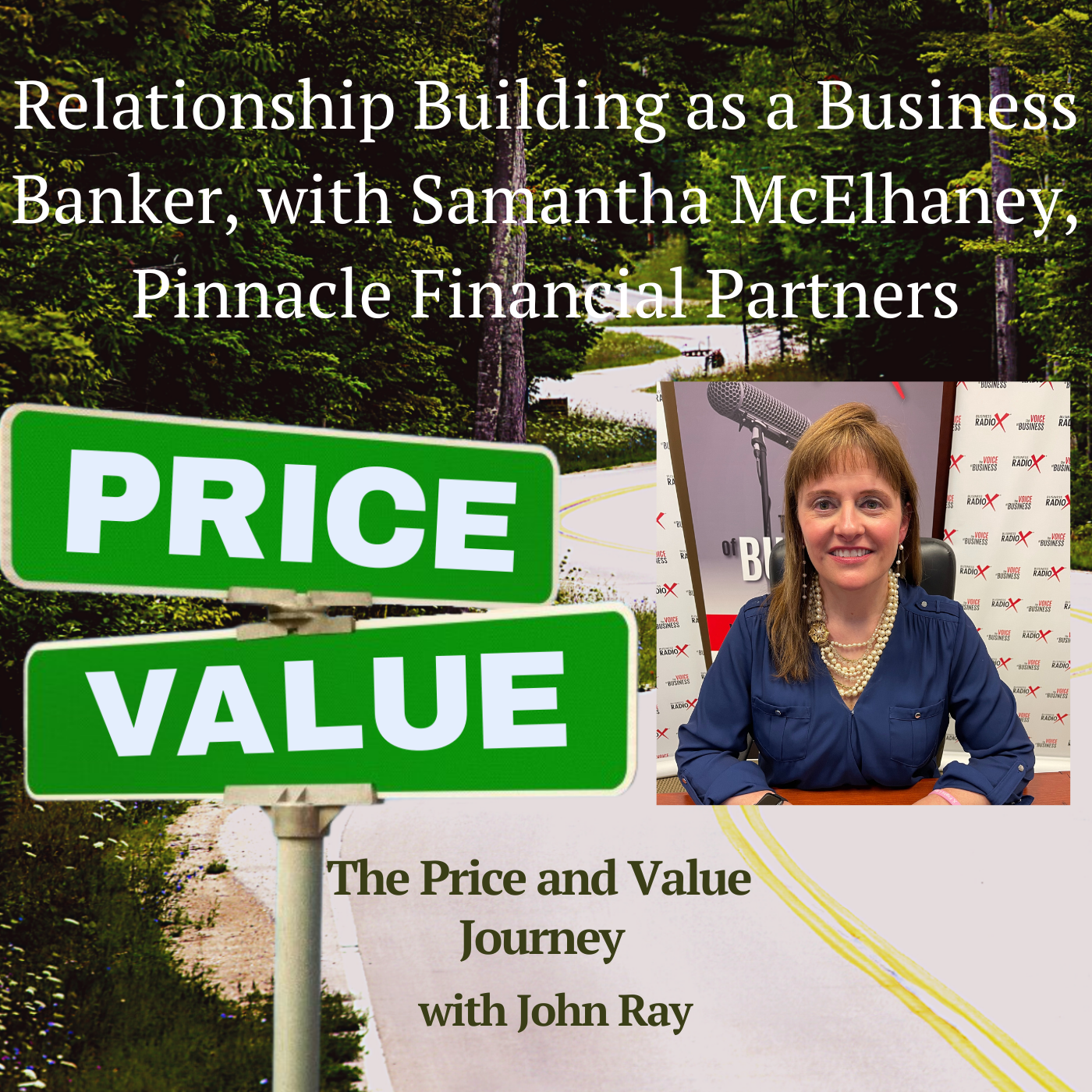
Relationship Building as a Business Banker: An Interview with Samantha McElhaney, Pinnacle Financial Partners

May 8, 2023 by John Ray

Samantha McElhaney
North Fulton Studio
Relationship Building as a Business Banker: An Interview with Samantha McElhaney, Pinnacle Financial Partners
Loading
00:00 /
RSS Feed
Share
Link
Embed

Download file

Samantha McElhaney

Relationship Building as a Business Banker: An Interview with Samantha McElhaney, Pinnacle Financial Partners

How do you build your brand and your book of business as a business banker when you don’t control your pricing, your reputation is tied up with your employer (which might or might not be helpful), and you work for a publicly traded company with quarter-to-quarter earnings pressure? On this episode of The Price and Value Journey, host John Ray spoke with Samantha McElhaney of Pinnacle Financial Partners. Sam discussed why she’s remained in banking her entire career, how she operates with an abundance mindset and a “relationship first” philosophy, how she handles mistakes and errors, developing trusted strategic referral partners and other referral sources, her philosophy of networking, success stories, and much more.

The Price and Value Journey is presented by John Ray and produced by the North Fulton studio of Business RadioX®.

Note from Host John Ray:

We’ve recently expanded our guest focus to professional services providers who do not have their own solo or small professional services firms. They have something to teach those of us who operate independently, because they work with handicaps those of us who own our own businesses don’t have.

In this vein, we recently chatted with Steve Aleksandrowicz, a Medicare insurance broker who built a book of business in an extremely competitive space without a website, no advertising, in an industry dominated by major companies.

I wanted to feature a business and/or personal banker who had built their client base and reputation by a focus on relationships. Business bankers are not in control of their pricing, they are somewhat captive to the reputation of their institution, which may or may not be as good as their own reputation, and they work for publicly traded companies who have quarter to quarter earnings pressure.

I knew who I thought was the ideal professional to invite, but I decided to ask around among a few trusted members of my network. Everyone I asked confirmed my choice, the guest for this episode, Samantha McElhaney.

It’s a great conversation….enjoy!

Samantha McElhaney, Commercial Financial Advisor/Senior Vice President, Pinnacle Financial Partners

Samantha McElhaney, Commercial Financial Advisor/Senior Vice President, Pinnacle Financial Partners

Samantha McElhaney is a Commercial Financial Advisor and Senior Vice President with Pinnacle Financial Partners.

She is a single mom of twins at the University of Alabama and the University of South Carolina, respectively. She has been in financial services for 28 years, starting as a teller while in college.

Sam loves lighthouses because they provide hope in the darkness/storms of life and admits she is extremely hard on herself. She leads and participates in small groups at North Point Community Church and Woodstock City Church because her faith is extremely important to her personally and professionally.

Sam’s favorite time of the year is college football season. She’s always ready for fall, food, and “fandemonium.”

LinkedIn

Pinnacle Financial Partners

The Pinnacle approach is a very people-centric one. It takes an unwavering focus and commitment of leadership to make it work.

The same five key business strategies Pinnacle has employed since its inception shape our focus today: Focus on businesses, real estate professionals, and consumers that desire a deep relationship with their financial partner. Provide distinctive service and effective advice. Hire and retain highly experienced and qualified financial services professionals. Offer a full line of financial services including banking, investments, mortgage, trust, insurance, and financial planning. Offer extraordinary convenience.

Pinnacle is much more than a bank. It’s a place for people to find true partners for their business. It’s a place where seasoned professionals give clients unmatched service and advice that improves their financial well-being. And it’s a place where people love coming to work every day.

Company website | LinkedIn | Facebook

TRANSCRIPT

John Ray: [00:00:00] And hello again, I’m John Ray on The Price and Value Journey. We’ve recently shifted our guest focus to professional services providers who do not have their own solo or small professional services firms, but they have something to teach us who do. Those of us who operate independently because these professionals work with issues and concerns that those of us who have our own businesses, we don’t have.

We recently chatted with Steve Aleksandrowicz. He’s a Medicare insurance broker who’s built a book of business over 12 years in a very competitive space without a website, no advertising, and in an industry dominated by major companies. Check out the show archive for that episode if you missed it.

I wanted to feature a business and or personal banker who had built their client base and reputation by focusing on relationships. And here’s why I wanted to talk to a business banker. They are not in control of their pricing, which makes chills run up my spine, as you might imagine. And they are somewhat captive to the reputation of their institution, which may or may not be as good as their own. And they work for publicly traded companies who have quarter to quarter earnings pressure.

I knew who I thought was the ideal professional to invite, but I decided to ask around among a few trusted members of my network, and everyone agreed with the first thought that came to my mind. The guest that I have here with me today, Samantha McElhaney.

Sam is a commercial financial advisor, senior vice president with Pinnacle Financial Partners. She’s been in the banking industry for 28 years and almost all of that time as a business banker.

Maybe the best way to introduce Sam is what she says about herself on LinkedIn in her profile. She says that for 28 years in the financial services industry, my number one priority has been to connect the right people together in order to pay it forward. By placing my clients’ needs first, I am gaining their trust and becoming a more important part of their overall team.

Quite well said. Sam McElhaney, thank you so much for coming on Price and Value Journey.

Samantha McElhaney: [00:02:29] Thank you, John.

John Ray: [00:02:30] Yeah, thank you so much. So give everyone a brief overview of you and your banking career and maybe explain why banking for you.

Samantha McElhaney: [00:02:41] I actually started in banking as a teller in college. It was the perfect job while going to school in Memphis, Tennessee Rhodes College. A lot of people assume, I went to the University of Alabama.

John Ray: [00:02:56] A great school by the way, Rhodes College.

Samantha McElhaney: [00:02:58] Yes, it is. Go Lynx. But I did receive a scholarship to Alabama, but chose academics over athletics.

John Ray: [00:03:07] Were you an athlete?

Samantha McElhaney: [00:03:08] I was. I played softball.

John Ray: [00:03:09] Really?

Samantha McElhaney: [00:03:10] Yeah.

John Ray: [00:03:10] Okay. See, I just learned something about you. Wow. Cool.

Samantha McElhaney: [00:03:14] But chose academics and went to Rhodes. And actually, majored in history. And I’m supposed to be a teacher, high school history teacher. But you probably don’t want me in your classroom with my OCD behavior.

But after doing my student teaching while also working my full-time job at Union Planters Bank in Memphis, I went into the management training program. And upon graduation, chose to stay with Union Planters and become a branch manager at the naive age of 21 instead of teaching in Memphis, Tennessee.

So my career in banking started that way. And also influenced very heavily by my manager at the time who is still in banking. He’s in the mortgage industry in Nashville, Tennessee. As well as my assistant manager at the time, who is also my best friend of almost 30 years, and she’s in Illinois and the banking industry as well. So pretty well connected there.

John Ray: [00:04:18] What are their names? Let’s shout them out.

Samantha McElhaney: [00:04:19] Yeah. Jeff Devereaux with Studio Bank up in Nashville, and Kara Ferguson who’s in a bank up in Illinois that has changed names several times because she’s in community banking.

John Ray: [00:04:30] Got it. Got it. So, Jeff and Kara.

Samantha McElhaney: [00:04:33] They’re the bomb.

John Ray: [00:04:34] Yeah. Yeah. Shout out to the two of you.

Samantha McElhaney: [00:04:36] Yes.

John Ray: [00:04:37] But you’re a little bit unusual, though, as are apparently Jeff and Kara, too.

Samantha McElhaney: [00:04:45] Yes.

John Ray: [00:04:45] In that you’ve stayed in banking because banking has, let’s say, spit out a whole lot of people over the last two and a half decades with all the merger activity in 2008 fun that everyone had in that time. Why have you stayed? And what’s made you successful?

Samantha McElhaney: [00:05:07] I probably have stayed because I became a mom, number one, in 2003. And every day, blessings, goes to make sure my kids get through college. They’re both in school right now. Number one, so I’ve got to get them through school.

But number two, I just love meeting business owners on a daily basis and hearing their dreams and what they want to accomplish. And I hope to be a part and become a part of their team and making those dreams happen.

One of my favorite shows on television is Shark Tank. And those entrepreneurs are those people on Shark Tank, and they are doing something that I wish I could have done or I could do, come up with that great idea. And so when I go visit them and hear their stories, I’m basically getting to live out Shark Tank and hopefully provide them with the funds that they need to fulfill their dreams. And when they do, and they tell me that I help them do that, it’s just an amazing feeling inside.

John Ray: [00:06:06] Yeah. Yeah. I want to come back to that but part of what’s happened in the banking industry over the last three or four decades, really, I mean it’s been going on for a while is, although it’s slowed down recently, it seems is just the constant formation of community banks. And some of them are built for sale, right?

Samantha McElhaney: [00:06:33] Yes.

John Ray: [00:06:34] But you’ve never, if I’ve got your resume right, you’ve never been enticed by that. And community banks sell themselves as being relationship oriented. You talk about being relationship oriented, but you’ve stayed at larger banks. Why is that?

Samantha McElhaney: [00:06:53] Well, I actually had technically a one day stint at a community bank. I left Fifth Third in 2018 and joined a small community bank here in town that was formerly Midtown Bank and became first Landmark. So it was technically considered a community bank. And then it started the whole merger process. And so over a period of four years, went through five different mergers.

John Ray: [00:07:23] Oh, dear.

Samantha McElhaney: [00:07:23] Which is the definition of community banking, because in order to fulfill the needs of its clients, over time, the only way to do so is to get larger and have capacity. And so merger after merger after merger happened. So that was a new experience for me in that world.

John Ray: [00:07:43] Okay. Okay. So you did do that.

Samantha McElhaney: [00:07:45] Just briefly.

John Ray: [00:07:46] Briefly. Yeah.

Samantha McElhaney: [00:07:47] Because it became, went from a community bank to what is now a large regional bank.

John Ray: [00:07:52] Right. Right. So what was that — how did that experience — how does that contrast between your time at larger banks in terms of your ability to deal with your customers in a relationship format? Was it better? Was it worse? About the same? Or was it what you made of it yourself? Talk about that.

Samantha McElhaney: [00:08:18] I honestly, having experienced both sides of the coin because I made great relationships and great friends in both scenarios. One of the reasons why I’m where I am today at Pinnacle with the large bank scenario, but I still am in contact with those smaller community bank, friends and partners. I just had lunch with a couple of them a few weeks ago and they do pride themselves on relationship style banking.

But it’s really not the name of the bank for customers, or at least it shouldn’t be. It should be the person that you’re banking with. And if you’re banking with a person and you know that person and that person knows what they’re doing within their institution, they should be able to navigate the waters within their institution and get to the people that they need to make decisions to get things and make things happen for you when it comes to products, when it comes to service, when it comes to getting answers, when it comes to getting requests through, when it comes to changing products, updating products.

For instance, if your online banking product doesn’t have a tool that you need, then that banker who’s representing you within that institution should be able to run that idea up the chain. And those changes should be able to be made within that online banking platform, because I’m sure you’re not the only person, John, who wants that change to be made. I’m sure others. You’re just the one voicing it.

John Ray: [00:09:48] What you’re describing is the role of you’re the facilitator.

Samantha McElhaney: [00:09:53] I like to say advocate.

John Ray: [00:09:54] Yeah, yeah, I like that better. Yeah.

Samantha McElhaney: [00:09:56] Yeah. That’s what — we call them advisors at Pinnacle. I like to say advocate. It’s the same initial, but I like to say I’m a daily financial advocate for my clients.

John Ray: [00:10:08] Yeah, I mean, it’s not — this is a dangerous analogy because it’s not that people are guilty of anything, but like you’re advocating for someone in court, right? I mean, you’re arguing on their behalf.

Samantha McElhaney: [00:10:24] I need to be able to tell their story and their why. Yeah. So that means I have to ask some critical questions. I need everybody to be honest on both sides. It goes both ways. That’s one of my biggest pet peeves is when a banker won’t honestly tell somebody why or why not they can do something. And don’t blame the bank. You know, I am the bank.

From day one since I was hired as a teller, I’m not going to sit there and go, well, someone upstairs told me, I can’t do this. No, we just can’t do it. I can’t do it. It’s my responsibility. I am the bank no matter where I am, whether it’s Monday through Friday during business hours or it’s a Saturday when I’m inside of a grocery store, if they recognize me as the banker. Yeah, I represent the bank 24/7.

John Ray: [00:11:10] Now, that’s interesting because as we talked, as I led this off, there are policies. You have no control over prices. You have no control over marketing that you have no control over. So how do you absorb the idea that you are the bank, and you may be advocating for things that or representing things that you don’t even actually agree with?

Samantha McElhaney: [00:11:39] That’s a great question because I’m definitely a why person. I need to understand the why we’re doing it the way that we’re doing it. And I’ve always been the person, especially in a meeting, to ask the question. But if you can give me some answers to the question when I ask it, don’t dance around it.

And I’ve luckily worked for companies who or individuals in the company from a management perspective who’ve always been open and willing to give me that answer so that I can be their biggest cheerleader or biggest representative out in the community.

And they know that I will voice that answer out in the most professional way possible. They’ll give me that to arm myself and be that advocate for the company and to help the clients. So to calm down anything or to lift up anything and be a positive voice.

So even though I might not have had any authority per se to influence a price or to change a product, they have always given me what I’ve needed so that I could let people know this is how we’re going to do it and this is how we’re going to be your best advocate and this is how we’re going to create a portfolio for you so that you can do your day to day business. And I can take care of your financials. And you won’t have to worry about those things on a regular basis.

And it’s been pretty successful. I have been called on the carpet, but when I’ve been called on the carpet, I have no problem saying, you’re absolutely right, let me fix this.

John Ray: [00:13:14] Well, give an example of that. I mean, you don’t have to mention the details of individuals or whatever but talk about just giving an example of that being called on the carpet.

Samantha McElhaney: [00:13:25] Well, I mean, for instance, when we set something up from an implementation standpoint, when a customer gets onboarded at any institution I’ve ever worked at, you tell people that it’s going to take a certain amount of time to get things implemented, set up, and we ask them to keep their old accounts open and new accounts, and cash is going to come in, cash is going to go out. And there shouldn’t be flaws or there shouldn’t be any issues.

But things do happen, unfortunately, out there. We’ve got scammers and we’ve got people taking things out of mailboxes and items of that nature. And so fraud, for instance, does occur. When that situation happens, we try our best in the banking world to prevent it from happening or to catch it before it happens to the client.

When it does happen, customers, you know, they get fearful. They get scared. They get emotional. And so you have to listen to the customers. You have to acknowledge their fear. You have to help them understand, yes, we are going to protect you and that we’re sorry it happened. We thought we had all the instruments in place to prevent it from happening.

Unfortunately, it didn’t stop it. We are going to fix this. We’re going to give you your money back. We’re going to do all the investigation. Just give us the time to do it. But first and foremost, let us give you your money back. Okay. We’ll do this right here, right there for you. So we can’t always catch it, but we try to do our best job possible. And we are truly sorry that it happened.

John Ray: [00:15:06] Yeah, yeah, sure. And you don’t control a lot of the aspects of the quality of your product.

Samantha McElhaney: [00:15:15] I wish but no.

John Ray: [00:15:18] I mean, again, unlike those of our listeners who are solo, small professional services firms, they control the quality of their product. You have a problem with that?

Samantha McElhaney: [00:15:32] We have vendors, of course. We buy products from other people and they promise us things as well. Yeah. But when you work with good vendor partners who will listen to us and gather feedback. For instance in online banking, it’s imperative that you not only are compatible with HP computers, but you’re compatible with Mac computers. And not all online banking products were necessarily compatible for a while with Mac computers. So it was frustrating.

John Ray: [00:16:01] Really.

Samantha McElhaney: [00:16:02] It was frustrating for some customers. And they wouldn’t go to technology because a lot of people converted to Macs early on.

John Ray: [00:16:08] Right. And they’re not leaving.

Samantha McElhaney: [00:16:11] They’re not going to leave it. Once you’re a Mac customer, you won’t go back to an HP. So it was very imperative early on to find out who would and who would not work with Mac computers for customers.

And when vendors said they would and it didn’t work, you had to find out the why and explain it and get it fixed. So that’s just one example that always sticks out in my head. And when I’ve worked for an institution, it’s one of the first questions I ask because a lot of your savvy business entrepreneurs all have the Apple products now.

John Ray: [00:16:47] Yes. Yeah, for sure. Let’s talk about relationships. Now, one of the things I find interesting is that banks may be large, they may be small, they may be mega banks, but every one of them, I think they must have the same marketing people because they all talk about their importance of relationships, right?

Samantha McElhaney: [00:17:12] Yes.

John Ray: [00:17:13] So there’s no difference in the marketing piece of it when you get to know the bank and you get to know their people. Like you, then only then do you know the difference, right?

Samantha McElhaney: [00:17:27] Right.

John Ray: [00:17:27] Right. So talk about, I guess the reality versus the marketing, if you will, of building relationships and how you do it, because it’s a one-on-one thing. And you said that well, if I can just add. You talked about how it’s about people and it’s not about the institution which the executive suite, probably, they’re running in circles hearing that maybe sometimes, depending on the bank. A great bank knows that, right? But talk about that, just the difference between how you operate on the ground in building relationships versus the marketing speak.

Samantha McElhaney: [00:18:19] Yeah. I get leery when someone claims they’re all things to all of their customers. I can do everything. And then they hand out A 1-800 number to their clients. That’s one of the reasons why I am where I am today because we don’t give out a 1-800 number and we also strive to pick up the phone.

In fact, our motto is we will pick up the phone in three rings. So if I’m unavailable because I’m on the phone, let’s say with you, John, my phone rolls to the next person in line, human being, in line to pick up the phone, who is my colleague and teammate. And that’s not a marketing thing or a marketing department. That’s us as a team. That’s different.

John Ray: [00:19:09] Yeah. That’s a process thing, right?

Samantha McElhaney: [00:19:12] Yeah.

John Ray: [00:19:12] Yeah.

Samantha McElhaney: [00:19:13] Yeah, exactly.

John Ray: [00:19:13] It has nothing to do with marketing.

Samantha McElhaney: [00:19:14] No.

John Ray: [00:19:14] Right.

Samantha McElhaney: [00:19:15] And it’s something that we all almost like sign an oath or an agreement with previous and it’s just not in banks, it’s in other companies.

John Ray: [00:19:28] Oh, sure. Yeah.

Samantha McElhaney: [00:19:29] Yeah. Not to be named, but companies, they’ll sit there and switch you over six different times just to talk to someone to get something answered. I’m experiencing this right now in customer service with a vendor that I’ve used for years trying to get it resolved, and it’s resulted in me having to tweet to get an answer.

John Ray: [00:19:52] Oh, lovely.

Samantha McElhaney: [00:19:53] Yeah. And it’s really sad that you have to go to those extremes to get somebody to reply after you’ve called and after you’ve sent emails. And it takes social media now to get somebody to respond to something that could have been resolved really quickly with the first phone call that you made. And the promise that the person said, okay, this will be resolved before the end of the business day.

Lip service is not cheap. If people will just say what they say and do what they say and mean what they say and follow through with what they say, the world would probably be a different place and people would probably feel a lot better about what they’re hearing and about what they’re being promised. And would probably have a higher customer service scores and higher follow through and have happier shopping experiences for that matter.

You can spend a gazillion dollars on your marketing and on your appearance and on your brand and on your logo. But at the end of the day, it’s all about the people who are providing it. And if those people don’t believe in the marketing and the promos and everything, it doesn’t matter. So I’d rather you invest in the people who are providing the service than the color and the brand and everything else that doesn’t matter.

John Ray: [00:21:19] Right. Right.

Samantha McElhaney: [00:21:21] I hope that answered your question.

John Ray: [00:21:22] No, no, it did. But I want to dig a little deeper into your current institution, Pinnacle Financial Partners. So first of all, you hear the name and you think that sounds like an investment bank or something.

Samantha McElhaney: [00:21:40] Yeah, it does. I have been asked, you got your license.

John Ray: [00:21:43] Right. Right. Where’s the bank in there? So what does the name signify and why is it that you’re — what is it about Pinnacle that helps you do what you do?

Samantha McElhaney: [00:21:56] Okay. When I lived in Nashville, because that’s where my children were born, Pinnacle started in 2000. And it was born out of mergers of banks that got to be pretty large. That bank, which is now the largest bank in Nashville and the second largest bank in Tennessee, just started out differently. It focuses on its employees being happy. The employees own stock in the bank. And the employees, if they’re happy, they will provide amazing customer service. So employees come first. Therefore, clients get treated extremely well.

In 2020, the announcement was made that they were here in Atlanta, and I read it in the newspaper, and I was like, whoa, this is a big news, because Pinnacle believes in raving fans. Pinnacle believes in taking care of clients, taking care of employees.

And Pinnacle doesn’t spend a lot of money on marketing. So you didn’t see the big billboards and commercials about them coming to town like you have with other institutions in the past. They also don’t post on LinkedIn. They don’t post on Indeed. They don’t have job postings or career fairs or anything of that nature.

You have to, at minimum, have at least 15 years of experience in your position. So our tellers, down to our tellers, they all have been in those positions or have banking experience of at least 15 years or more. So it’s just a different type of institution. We also call ourselves a firm. So you’ll hear us talk about ourselves as we are a firm.

John Ray: [00:23:40] Why?

Samantha McElhaney: [00:23:41] Because we’re about relationships. And we believe firms build relationships and banks do transactions. And so we’re advisors, not bankers. And so we advise clients on everything when it comes to their business and their personal financial matters and build those relationships.

We’re not going to do a transaction for you. We look at everything and we help introduce you to people that can help you with every idea and every situation. And it may not be something that we do financially for you. That may come later. So that’s what makes it different.

John Ray: [00:24:20] Yeah. Hence your title, Commercial Financial Advisor.

Samantha McElhaney: [00:24:24] Yes. And I don’t have a license.

John Ray: [00:24:25] Right, Right. That doesn’t mean you do stocks or something like that. Yeah, right. Yeah. You advise on all aspects of a business.

Samantha McElhaney: [00:24:34] Yes.

John Ray: [00:24:35] Got it. And so let’s — with Pinnacle as your backdrop, which you seem extraordinarily happy with.

Samantha McElhaney: [00:24:45] It’s my dream.

John Ray: [00:24:46] Yeah. Wow. So let’s talk about your approach to relationship building. So how does that work for you? You’re connected with someone. It’s a loose connection. How do you make that connection tighter so that whenever there’s an opportunity, an impetus for that individual to change banks, that they’re thinking of you?

Samantha McElhaney: [00:25:15] I mean, I never look at any introduction as being a waste or as unnecessary or as what’s the purpose of this introduction or what’s in it for me? I want to meet anybody and everybody. My mom said that when I was little that I would walk up to anybody and just introduce myself. That’s not necessarily the best thing on the planet when it comes to strangers. But she said, I had no problem meeting people.

And so I like to know people’s stories. I like to know what gets them up and gets them going in the morning. And so I want to hear about their business. I want to hear about their families. I want to hear what motivates them, what their passion is. And then I want to hear what keeps them up at night.

And again, that may not be banking. It may not be financially related. I laugh and tell the story about early on in the 2000 when I was in my career, moving here to Atlanta, one of the first companies I met here in Atlanta, the customer spent probably our first 10, if not 15 minutes, talking about and apologizing for the taste of his coffee in the meeting.

John Ray: [00:26:33] Oh, really?

Samantha McElhaney: [00:26:34] Because the coffee, he said, it’s just awful and I just — I’ve tried so many different coffee vendors. I don’t know what to do, but the coffee’s just horrible. And I’m sorry. I’m sorry. Well, come to find out, it was the water filtration system.

And so we ended up introducing him to a water filtration vendor system to put in his office. And the taste of the coffee changed, and he never talked about it again after we solved that solution and problem. So we could talk about other things like his actual business down the road.

So I like the fact that we got down to the heart of it and figured it out and introduced him to a solution. Now you say, that’s kind of weird, Sam. But no, that was something that obviously bothered him because he spent 10 to 15 minutes talking about it during our initial meeting.

So those are the kind of things I want to do is help somebody with what’s preventing them from doing what they do best, which is obviously their business.

John Ray: [00:27:36] Right. So it sounds like what I’m hearing is that you’re trying to figure out what their problems are, what is keeping them up at night, whether that has anything to do with their banking issues or not and trying to proactively bring them solutions to that.

Samantha McElhaney: [00:27:54] Yeah. And that may not in the past with all of my banks that I’ve ever worked with that may not meet my goals right now in the immediate present. But I think long term, it has helped me with not only who I work for, but who I work with, whether that’s my employer or my clients or future prospects, because I think I’m doing the right thing for everybody involved. Because that’s what they need, not necessarily what Sam needs at that particular time.

John Ray: [00:28:29] Yeah. So you work for — as good as your firm is for you, you’re still in a big public company. I mean, and public companies by definition, I mean they have quarter to quarter earnings pressures —

Samantha McElhaney: [00:28:45] For profit.

John Ray: [00:28:46] Right? They’re for profit. They’re for profit. That’s always important. But there are goals, there are budgets, there are, again, the quarter-to-quarter pressures. So what you’re talking about helping someone with their water filtration system, that doesn’t actually add to earnings per share.

Samantha McElhaney: [00:29:07] No, it helps.

John Ray: [00:29:08] For the quarter.

Samantha McElhaney: [00:29:08] It helped that company, I’m sure, but it didn’t help my company at that time.

John Ray: [00:29:12] Right. So, I mean, how do you balance these things, right? Because you’ve got to hit your targets, whatever those targets are and over whatever time frame you’re talking about, how do you balance that?

Samantha McElhaney: [00:29:30] That’s very important. I really honestly believe in a combination of if I’m out there doing the right things every single day, which is out meeting people, talking to people, asking people to do the same thing, keep their ears open, feet on the street, making the right introductions, if I’m asking them who they need to be introduced to, if that’s ongoing 365 days of the year, no matter where I am, I mean, even I take vacations.

I mean, I go to football games because my kids are at two of the best SEC schools on the planet. No offense, Georgia, but they are — you know, I’ll talk to people when I’m at those institutions. I’m always talking about businesses and opportunities and trying to make connections.

And if I’m doing that 365 days, then it always creates what I think is a pipeline. And I’m a big believer and a lady of faith. And I just truly believe that if I continue to do the right things then and I stick to my faith, then it will be provided for me because I’m walking and talking and doing what I’m supposed to do for the right people and for the people who need it. And so I just have to believe I can’t have fear. It’s going to happen and it’s going to be produced so.

John Ray: [00:31:00] Well, so what you’re describing is you’re living from a philosophy of the world is an abundant place, right?

Samantha McElhaney: [00:31:09] It should be.

John Ray: [00:31:10] That’s one way to describe it. As opposed to that the world is a fixed pie. It’s a place of scarcity. And you have to grab whatever you can grab at that moment. That’s what you’re describing. That’s the dichotomy you’re describing, right?

Samantha McElhaney: [00:31:25] I like the way you just put that because I don’t want to see people with one set amount and everybody’s beating each other up to try to get, like you said, their piece. I think there is plenty of business out there for everybody and the right amount is going to go to the right person and to the right fit.

It’s like, for instance, we’ve discussed before when someone comes up to you and says that I can make anybody and everybody, I don’t believe that. I know a lot of bankers here in Atlanta, a lot of people who are really my good friends.

And so I’m not the bank for everybody and I’m not the banker for everybody. That’s why if it’s not a right fit, I have no problem introducing you to a great banker at another institution who’s probably the right fit.

And people are like, why would you do that? Don’t you have goals? I’m like, no, it’s better to put you in the right place so that you’re with the right banker and you’re not being moved around all the time. You’re with who you need to be, the right institution, the right person so that your business can prosper. And I hope it would be paid forward in the long run.

John Ray: [00:32:31] Right. So the analogy here for, again, those of our listeners that are solo small professional services firms, they have their own firm, they’re not subject to quarter-to-quarter earnings, but if they’re trying to maintain this a philosophy like yours, you’re going to go through dips.

Samantha McElhaney: [00:32:48] Always.

John Ray: [00:32:49] Right?

Samantha McElhaney: [00:32:49] Yes.

John Ray: [00:32:50] Where that philosophy of abundance seems like it’s not working, right? So how do you sustain yourself through that?

Samantha McElhaney: [00:32:59] I mean, you’ll sit there and you’ll say, oh my gosh, there’s nothing in the books, there’s nothing in the pipeline. But if you will do the right steps every single day, get up, not mope or play martyr, if you will get out and show the activities and show that you’re actually doing the right things and continue over and over again, kind of like what Adam Grant talks about in give and take and give and give and make the introductions and do the things that you’re supposed to do, even with your coworkers and teammates, then it will eventually open up again and just flood. And you’ll be like, whoa, wait a minute, it was there all along? Why did I doubt it? It will happen and occur.

If you’re not doing the right things in the right steps. Then no, the abundance won’t happen, or the opportunities won’t happen, but you have to be consistent. I love the word consistent. My kids used to say, you all aren’t being fair. And I’m like, babies, I never claim to be fair, but I’m definitely consistent in my practices.

John Ray: [00:34:05] Yeah. We could talk a lot about fair, right?

Samantha McElhaney: [00:34:12] Yes.

John Ray: [00:34:12] Yeah, fair is something that happens in the early fall.

Samantha McElhaney: [00:34:15] In Cumming, for sure. In October, the best one.

John Ray: [00:34:18] That’s right. Yeah. Yeah. You’re mixed up on what fair is all about.

Samantha McElhaney: [00:34:22] Exactly.

John Ray: [00:34:23] Yeah. So you mentioned your personality, you’re an outgoing personality. You love to meet people. There are a lot of our listeners that wouldn’t describe themselves that way. They’re introverts.

Samantha McElhaney: [00:34:39] Yes.

John Ray: [00:34:39] And they don’t see themselves as wanting to put themselves out there the way it’s so easy for you. So give counsel to folks like that, that they want a network, and they want to develop strategic referral partner network like you have. How do they do that in a way that’s non-threatening?

Samantha McElhaney: [00:35:04] Oh, wow. Because I mean, initially when I first moved to Atlanta, where I knew nobody in 2005, I mean I was that person who would go to any and every event and splash my name all over the place because again, had no fear of doing so.

But someone who would move here in 2005 and not know anyone, you don’t know where to start, especially if you’re inside of a shell. Personally, because I do know a lot of introverts. I do, in fact, in my small group from church, our group is half extroverts and half introverts.

John Ray: [00:35:43] Oh, you all have a lot of fun.

Samantha McElhaney: [00:35:45] Oh, yeah. Because you’ve got the people who will dominate the conversation and then you’ve got the people who are just sitting there and not saying a word. And you have to get them to to come out and participate.

John Ray: [00:35:56] And they’re running silent, running deep right there. They’re the ones that come out with the really deep thoughts.

Samantha McElhaney: [00:36:00] When they finally say something, you’re like, oh my gosh, why hadn’t you talked the whole time?

John Ray: [00:36:05] Exactly.

Samantha McElhaney: [00:36:06] You’ve got to take baby steps. And it’s really both of them, extroverts and introverts. You have to take baby steps when it comes to networking and pick something that interests you, especially introverts. You have to find an organization or a group that you’re passionate about to go join and go participate in.

Because if not, networking is not going to be fun. It is going to seem boring. It’s going to seem like a checkbox. It’s going to seem like something that you’re going to want to give up on really, really quick. Like you’ll register, you’ll show up, you’ll enter the room, you’ll pick up your badge and you’ll walk out the door type scenario.

If you go to something that you enjoy or that you have a passion for, let’s say it’s a women’s organization or it’s an event that is sponsoring animal’s rights or the Humane Society or something, you’re more likely to attend that event and find maybe one person in that entire room that you could walk up to and connect with and just have a conversation with that night about the dogs or the cats in the room that you connect with or something.

And that’s one success story right there, because you met one person. And that’s one baby step. Getting there, baby step. Staying there, baby step. Meeting one person, baby step. So that’s what I would encourage the introvert to do is to find one event, one chance, go, stay, find one person, and make the connection. And then try it again.

And then once you get your feet wet and you find out it’s not really that scary, you might actually find out you might be an introvert, extrovert. And then that’s a whole other topic for another day. And those are professional trainers. They can talk to you about that term so.

John Ray: [00:38:01] Right, right. Yeah. Because we tend to put ourselves in these binary silos, right? We’re either this or that, and that’s rarely the case, right?

Samantha McElhaney: [00:38:14] Like, I’m an extrovert during working hours. But, John, when I get home, yeah, I won’t answer our phone, or I’ll go into like a rabbit hole. I need my downtime to recharge my battery.

John Ray: [00:38:28] Right. Right. Yeah, that makes perfect sense. So let’s talk about Strategic Referral Partners because as professional services providers, we all live off our network, right, and referrals. So how did you develop that? You’re known for having quite a deep network, so extensive network. So talk about how that happened for you beyond what you’ve already mentioned.

Samantha McElhaney: [00:39:04] Again, getting out and meeting a lot of people when I first moved to Atlanta. But one of the best networking groups and sets of partners I have had, and I can admit to, and we’re a really neat group. We just met yesterday for lunch, and we have since 2012.

There was a group of us that were part of an organization that paid a lot of money to be a part of that group. We went our separate ways and formed our own networking group back in 2012 because we found some commonalities with each other, and we meet over in the Cumberland area and have the first and third Tuesday of every month around lunch time.

And we protect each other. And when I say protect each other, we don’t overlap when we meet with one another. So if there’s one CPA in the group, it’s the only CPA in the group. I’m the only banker in the group, but our organization is up to 22 members. And we regularly meet with each other. We discuss opportunities with each other, customer clients with their permission, and we look out for each other.

As far as business, we all try to do business with one another. But again, we try to make introductions with one another. And this group has probably been one of the most important parts of my business since, again, we formed in 2012. And the biggest part of it is, I could say we’re honestly family.

That group of individuals, if something ever happened to any one of us, like one individual is celebrating a wedding this weekend. There’s been babies born in that group. There’s been graduations. There’s been deaths. There’s been illness. We treat each other as family. So how we treat each other is how we want to treat our clients. It’s how we want to treat anybody. So it’s a unique organization.

And so from that baseline, that’s how we treat all of our networking partners. And so anyone we meet out in the community, we try to introduce each other to those networking partners and other referral sources. And so it’s just grown and connect each other on LinkedIn and it continues to multiply. So we’ve been very blessed with one another.

John Ray: [00:41:30] We could go down a bunny trail on this. But I mean, how does someone that does not enjoy a group like that, how do they find that kind of group, right?

Samantha McElhaney: [00:41:41] Okay, it’s a great question.

John Ray: [00:41:42] Yeah. How did they judge that group, right, for its personality of giving?

Samantha McElhaney: [00:41:48] Yeah.

John Ray: [00:41:49] You know, how does that happen for them?

Samantha McElhaney: [00:41:51] No. When I worked at Fifth Third, I had employees who would ask me about that group and how did that group even form or what would you do, what would you recommend on how we start a group similar to that? And I have told individuals in the past, start with people that you like to do business with, like to have lunch with, like to break bread with and go have breakfast or lunch with those people.

That’s maybe three, four people and put together. And you all come up with a baseline. What do you all require from a set of guidelines? Are you just going to require that you all meet once a month? Are you going to require that you all make one introduction to each other once a month? And put those baselines down and hold each other accountable.

And then set it on the calendar. Are you going to meet once a month, twice a month, whatever it is? And you come together and is it just going to be the same group of people? Or are you each going to require each other bring another person the next month and see if it stays the same in size?

And if that’s comfortable, keep it that size. If you want to grow it, then do the visitation and grow it to the next size, grow it to the next size. And then if it keeps growing, decide do you want to charge fees for that or are you cool with everybody paying for their own meals, whatever you decide from a meeting standpoint.

But you can create your own group. It doesn’t have to be a national organization and nothing against the national organizations because they’re fantastic. I’m a part of one. I only do two networking groups and one of them happens to be a national organization.

But you can create your own group. You just have to make sure the people that you’re in and working with and that kind of group all have the same ideas and philosophies in play. And the people that you invite clearly understand what those philosophies are.

So if I’m bringing you as a visitor and we introduce our clients to each other, make sure the person you’re bringing, hey, John, when you come and meet my friends, we’re going to — you know, I’m introducing you to my friends that I do business with, they’re going to ask you, who do you want to meet, who are my clients, and who are you willing to, down the road, introduce me to if my services are needed by your clients?

You know, you’ve got to be very clear about those expectations. And if you can’t be and you’re not comfortable with that, then this might not be the right group for you.

John Ray: [00:44:23] Sure. Sure. Well, let’s talk about a success story or two. You know, obviously we’re not going to mention names or affiliations, but where this relationship first approach, let me hear your problems and see if I can solve them approach has worked out for you over the longer haul.

Samantha McElhaney: [00:44:54] It’s always varied in size. I’ve had individuals come to me and they’ve been start-up companies.So I can think of one right now. Three individuals were working for a very large corporation in a field of staffing. And they wanted to leave their larger corporation and start their own smaller company.

They did not want to do SBA lending. And we basically had to sit down and look at their business plan. Everything that an SBA lender would look at and see if the plan made sense from us on a conventional standpoint to take care of them and give them the lending that they needed to get the project off the ground, which would include not only funding to start the organization, working capital for payroll for fixed needs to hire individuals, but also for the lease that they needed because they wanted to have a retail outlet. They wanted to have furniture fixtures and equipment, desks, everything of that nature. They wanted to appear like, in my opinion, like a mini little Rognstad.

Everything financially looked great, but it was going to be really dependent upon those three individuals and the strength of those three individuals. Again, they did not want to lock up their homes. They did not want to lock up 401Ks. They basically wanted an unsecured loan. And it took —

John Ray: [00:46:33] Yeah, because this business does not have any assets.

Samantha McElhaney: [00:46:35] Nothing.

John Ray: [00:46:36] Other than the furniture.

Samantha McElhaney: [00:46:37] That they were going to buy.

John Ray: [00:46:39] Right. At your financing, right?

Samantha McElhaney: [00:46:41] That they were going to purchase. And that would not really be something that a bank would want to take back in the event that it didn’t work out. So we really had to look at the deal, the projections of the deal, the history of the individuals, how they handled their personal finances, resumes, letters of recommendation. I mean, we really had to look outside the box to figure out if this was something that we wanted to do and take a chance on.

And with senior management, I mean higher levels of credit authority, everything, interviews of the three potential owners, again, the letters of people who believed in them, faith in them, things of that nature. I mean, we really went outside what’s normal parameters, especially for a large bank and made this deal happen.

And we did it on a very short term basis. So they had rather large payments in the very beginning. So they were going to have to really work and get contracts, get clients on board, make accelerated payments for this to happen. And the company did a really nice job to the point where even by year two, they were acquired.

John Ray: [00:47:58] Oh, wow.

Samantha McElhaney: [00:47:59] Yeah. Someone acquired them really quick so they could pay us back which was nice. And they’ve all gone their separate ways. And one individual right now is back in corporate America and is doing a fantastic job. Never thought they would go back into corporate America, but they are.

But it’s just a nice little story how we kind of made the exception and went outside the box, and didn’t go down the traditional path because, yes, it probably could have been done SBA, but it would have locked everything up. And a lot of customers don’t necessarily want to do that. Yeah.

Well, that was that one sticks in my head because it was just the idea of, yes, we don’t always have to put every customer inside a square box. We can kind of make it wavy, curvy, triangular, whatever shape you want to come up with.

John Ray: [00:48:53] Yeah. That’s great. Sam McElhaney, folks with Pinnacle Financial Partners. Sam, just one more question and then we’ll kind of bring it down to a close. But just offer a takeaway, just one takeaway that our listeners that are out there with their own firms can take away too, as they think about success for their practice, for their lives. What advice would you give?

Samantha McElhaney: [00:49:31] You have to — it’s going to probably sound like two pieces, so I apologize upfront for that. But first and foremost, John, really stick to your morals, stick to your values, who you are, and don’t let social media or anybody, anyone else change who you are. Because at the end of the day, people will see through that. They’ll see through anything that’s not genuine.

And I hope I’ve done that over the years. I hope people who have met me since, for instance, moving to Atlanta or even those who have known me since I first started as a teller, they will say this is the same person who started banking when she was 18, and now I’m 48. So they will be like, wow, she’s not changed. She can sometimes be a handful, but she also is very passionate, and she will fight and she will be loyal, and she will represent me and take care of me and will be honest with me.

But also, for business owners, be transparent. That’s my word for 2023. I always pick a word and I get it imprinted on a necklace. And I try to wear it on Fridays. And this year’s word is transparent.

And that’s, again, a word that I think people need to know is not a negative. It’s a very positive word. If you’re transparent, I think people will appreciate what you have to give them because there’s no smoke in mirrors. It’s you just being your most authentic and vulnerable self and it goes along with sticking to your values. So that’s why I picked 2023 and I think it’s coming in very relevant right now, especially with the banking industry and what we’re going through.

John Ray: [00:51:28] Yeah, for sure. For sure. That’s an entirely different conversation.

Samantha McElhaney: [00:51:34] Sorry, I didn’t want to open up that worm.

John Ray: [00:51:36] No, we won’t go down that trail, but maybe another time. Well, Sam McElhaney, this has been fantastic. Thank you so much for taking the time to have this conversation. I’m sure there are folks that might want to be in touch, so let’s tell them how they can contact you.

Samantha McElhaney: [00:51:54] Yeah. I am Sam McElhaney. Again, with Pinnacle Financial Partners. My office is over in the Riverwood area, but we have two other locations. One in Avalon and one in Buckhead. You can reach me at 678-524-7133. The same cell number I’ve had since I moved here to Atlanta. And my email address is Sam.McElhaney, that’s M-C-E-L-H-A-N-E-Y@P as in Paul, N as in Nancy, P as in Paul.com.

John Ray: [00:52:30] And they can find you on LinkedIn because you’re very active there.

Samantha McElhaney: [00:52:33] Yes, I try to be. Every morning, one of the first things I do.

John Ray: [00:52:36] And I think you’re the only Samantha McElhaney on LinkedIn. I think you are, right?

Samantha McElhaney: [00:52:40] Some people confuse me with another McElhaney or they ask if we’re sisters and we’re not related, but she’s one of my favorite individuals on the planet, so I like her a lot.

John Ray: [00:52:52] Okay. So connect with both of them.

Samantha McElhaney: [00:52:54] Yes. And you’ll get one of us. I’m sure she knows who I’m talking about.

John Ray: [00:52:58] There you go. Okay. Terrific. Sam McElhaney, Pinnacle Financial Partners. Thanks again so much for our talk.

Samantha McElhaney: [00:53:05] Thanks, John for having me.

John Ray: [00:53:06] Yeah, it’s been a lot of fun. Hey, folks, just a quick reminder is as we look ahead to the rest of 2023, if you are a current listener, subscriber to this podcast, thank you. Thank you for your support. We’re grateful for you.

And if you’re not, you can go to pricevaluejourney.com to find our show archive and check that out and see if you like the series enough to want to subscribe. And if you do, you can do that on your favorite podcast app. So we thank you in advance if you decide to do that.

If you go to pricevaluejourney.com, you can also get a link to receive updates on my upcoming book that will be released later this year. It’s called The Price and Value Journey, Raising Your Confidence, Your Value and Your Prices Using the Generosity Mindset Method. If you want to know more about that book, you can sign up for updates there and you can also email me directly too, if you’d like, John@JohnRay.co. Thank you again for joining me on The Price and Value Journey.


About The Price and Value Journey

The title of this show describes the journey all professional services providers are on:  building a services practice by seeking to convince the world of the value we offer, helping clients achieve the outcomes they desire, and trying to do all that at pricing which reflects the value we deliver.

If you feel like you’re working too hard for too little money in your solo or small firm practice, this show is for you. Even if you’re reasonably happy with your practice, you’ll hear ways to improve both your bottom line as well as the mindset you bring to your business.

The show is produced by the North Fulton studio of Business RadioX® and can be found on all the major podcast apps. The complete show archive is here.

John Ray, Host of The Price and Value Journey

John Ray The Price and Value Journey
John Ray, Host of “The Price and Value Journey”

John Ray is the host of The Price and Value Journey.

John owns Ray Business Advisors, a business advisory practice. John’s services include advising solopreneur and small professional services firms on their pricing. John is passionate about the power of pricing for business owners, as changing pricing is the fastest way to change the profitability of a business. His clients are professionals who are selling their “grey matter,” such as attorneys, CPAs, accountants and bookkeepers, consultants, marketing professionals, and other professional services practitioners.

In his other business, John is a Studio Owner, Producer, and Show Host with Business RadioX®, and works with business owners who want to do their own podcast. As a veteran B2B services provider, John’s special sauce is coaching B2B professionals to use a podcast to build relationships in a non-salesy way which translate into revenue.

John is the host of North Fulton Business Radio, Minneapolis-St. Paul Business Radio, Alpharetta Tech Talk, and Business Leaders Radio. house shows which feature a wide range of business leaders and companies. John has hosted and/or produced over 2,000 podcast episodes.

Coming in 2023:  A New Book!

John’s working on a book that will be released in 2023:  The Price and Value Journey: Raise Your Confidence, Your Value, and Your Prices Using The Generosity Mindset Method. The book covers topics like value and adopting a mindset of value, pricing your services more effectively, proposals, and essential elements of growing your business. For more information or to sign up to receive updates on the book release, go to pricevaluejourney.com.

Connect with John Ray:

Website | LinkedIn | Twitter

Business RadioX®:  LinkedIn | Twitter | Facebook | Instagram

Tagged With: banker, banking, business building, financial services industry, John Ray, networking, Pinnacle Financial Partners, Price and Value Journey, pricing, professional services, professional services providers, relationship banking, Sam McElhaney, solopreneurs, value, value pricing

Rob Garcia With Pinnacle Financial Partners

September 26, 2022 by Jacob Lapera

Rob Garcia
Atlanta Business Radio
Rob Garcia With Pinnacle Financial Partners
Loading
00:00 /
RSS Feed
Share
Link
Embed

Download file

Pinnacle Financial PartnersRob GarciaRob Garcia serves as Pinnacle Financial Partners’ Atlanta president. Before he joined Pinnacle in 2019 to lead the firm’s de novo entry into Atlanta, Garcia was responsible for Synovus’ largest division, which includes metro Atlanta and northwest Georgia, as its division CEO.

Garcia began his financial services career in 1986. He has extensive commercial banking experience with a concentration in commercial real estate and C&I lending. Garcia joined Bank of North Georgia as a regional market president in 2006 through its merger with Riverside Bank. In 2010, he led a team of commercial real estate bankers in growing and managing the division’s extensive CRE portfolio. Garcia was promoted to president and chief operating officer in 2011, and in 2013 he became president and chief executive officer of Bank of North Georgia (now Synovus).

He is a graduate of Auburn University.

Garcia is a very active leader in Cobb County and metro Atlanta. Garcia serves as a board member and immediate past chair of Cobb Competitive EDGE (Economic Development for a Growing Economy). He also is a board member and former chairman of the Cobb Chamber of Commerce. Garcia serves on the boards of the Atlanta Regional Commission (District 13), Action Ministries, the Council for Quality Growth and the Atlanta Police Foundation. He is a recipient of the 2015 Mack Henderson Public Service Award, presented by the Cobb Chamber of Commerce for outstanding commitment to building a better quality of life for citizens of Cobb County.

Follow Pinnacle Financial Partners on LinkedIn.

What You’ll Learn In This Episode

  • Banking and finance
  • Local economy

This transcript is machine transcribed by Sonix

TRANSCRIPT

Intro: [00:00:04] Broadcasting live from the Business RadioX studios in Atlanta, Georgia. It’s time for Atlanta Business Radio, brought to you by on pay. Built in Atlanta, on pay is the top rated payroll and HR software anywhere. Get one month free at on pay. Now here’s your host.

Lee Kantor: [00:00:31] Lee Kantor here, another episode of Atlanta Business Radio. And this is going to be a good one. Today on the show, we have Rob Garcia with Pinnacle Financial Partners. Welcome, Rob.

Rob Garcia: [00:00:44] Thank you. Glad to be here.

Lee Kantor: [00:00:45] Well, I’m excited to learn what you’re up to. Tell us a little bit about Pinnacle. How are you serving, folks?

Rob Garcia: [00:00:51] Well, I’ll tell you, it’s been an exciting run. Just joined the firm in, I guess, very late 2019 December. We really opened for business in January of 2020, just in time for COVID hit. But we’ve been at it almost about three years, and I’ve just absolutely had a ball building this bank. And it’s been it’s been a tremendous success by by all of our expectations.

Lee Kantor: [00:01:19] So for maybe the folks who aren’t as familiar with Pinnacle, what is kind of your value proposition? How are you kind of differentiating yourself from the other financial services firms in Atlanta, in the Southeast?

Rob Garcia: [00:01:32] Well, we may be new to Atlanta, but PINNACLE is certainly not new to banking. Pinnacle originally was founded in 2000 in Nashville, Tennessee. A handful of people in a few dollars started a bank. And here we are 22 years later and I think one or two ranked size bank in Tennessee serving the top 50 in the nation. So there was a great deal of tailwinds that I was able to to really use to really build up what we were wanting to do here in Atlanta. Pinnacle made the decision to come into Georgia and really wanted Atlanta to be the starting jump off place. So that’s that’s what I joined to do with them here. And so for us, while we may be new to the market, we did have a little reputation benefit because Pinnacle, like I said, has been around for for 20 years at that time. And really, our value proposition is pretty simple. I mean, banking, I hate to say it, it’s not that complicated. Sometimes bankers tend to make it complicated. But the reality of it is our value proposition is simple. We build we have a tremendous brand and and speed. The market is our is our benefit. Know we like to describe ourselves as an urban community bank. And what that means by that is, is we operate with the structure and the flexibility and the nimbleness that we know of community banks. But we have the size of a large bank to be able to bring all the resources, to be able to do larger credits and sophisticated capital markets and swap deals.

Rob Garcia: [00:03:03] So it really is a blend of a great structure and a tremendous set of resources behind us. So that’s been our advantage. I mean, our team is built here in Atlanta, but we have built a complete banking team here. I have everything from folks on the lending side. We have a complete credit team. So all the decisions that are made are made here locally. And and that that really adds to our our most important value proposition is speed to market. The other thing I would say that’s very helpful to us is our hiring policies. You have to have at least ten years of experience before you qualify to work with Pinnacle, five years in some of the more support roles. But if I were someone on the lending side or the credit side, I would have to bring at least ten years of experience. My team average is 22 years of banking experience. And while that’s important is because we have a very experienced group of people here. So you combine experience with speed to market because of all the local resources that we have. And I think that’s what’s really helped us gain a competitive advantage and allow us to have the growth that we have had here in Atlanta.

Lee Kantor: [00:04:21] Now, is your ideal customer or is that an individual that’s looking for a banking relationship? Is it a business person that’s looking to partner with a bank in order to be a trusted advisor to help them grow? Are you looking for kind of wealthy folks that need help with their wealth management? Who is that ideal pinnacle customer?

Rob Garcia: [00:04:48] The answer to that question is yes, and it’s all of the above. We have we have bankers that have expertise on on commercial lending in all phases of it. What I mean by that is we have we have we have folks who have a strong history of working in the small business market, which is very different than the larger commercial corporate type commercial business. And we have middle market bankers that really operate more in that upper size, upper tier of of of banking. So on the commercial side, we really have all segments covered well with the experienced team that we have here. We have a wealth group, licensed wealth. A bankers here that have Series 766 insurance license to the whole licensure battery to really take care of the banking needs of of our high net worth individuals. And in addition to that private wealth banker, we also have relationship with Raymond James. So we have a financial advisement group right here in our office that can literally provide the security sales, the planning, all those kinds of services on the wealth management side as well. So all of that is located right here in Atlanta. We have two and about to open our third branch location. So we have an office here in the Cumberland area in Riverwood. This is our main office. We have an office on Peachtree and then we’re building our third location right across from Avalon. And so those offices will provide retail banking services to our clients and our prospects to the traditional come in and open a checking account. If if we’re lucky enough to earn that business from someone, we have the capability to do that. So we’re really fully faceted in banking services. And really our growth has come almost a third, a third, a third really. We have a commercial real estate group as well. So between the commercial effort, the wealth effort and our retail effort, I would say our growth is really been pretty even across those segments.

Lee Kantor: [00:07:01] Now, since you’ve been in banking for a minute, can you give some advice to the entrepreneur, the business owner, who doesn’t yet have a relationship with the banker? And can you share like kind of why that’s so critically important, especially in today’s chaotic times?

Rob Garcia: [00:07:23] Oh, I can’t that’s that’s my favorite question. Lee and I and I can’t imagine a better question for a bank to answer. Covid could have been or should be the greatest example of what we went through with COVID, particularly the PGP program. If we all go back and remember the PGP, it was so chaotic. It was a it was a program that was birthed in just a couple of weeks by the federal government. We were learning as banks, we were learning the rules as we went along. Banks had to build organizations to support the whole PGP effort. And as we all did and what we learned in that process is it is very important to know who your banker is by name. And what I mean by that is some of the best clients and some of the largest regional banks were referred to a one 800 number during that time where no one really knew if their application was approved. And it was a very tense and stressful times as we were watching that thermometer of SBA funds just steadily decreasing and all they had was a one 800 number. And what we were able to provide in the market in our ability and nimbleness is, you know, it was it was nice to have a name associated with your organization and advocate, if you will, on the inside. So if there’s anything I would say to that customer profile that you just defined, I would say know your banker even more importantly than knowing where the bank locations are, because you need an advocate, you need an individual that you can rely on. And like I said, the PGP was the best example of that.

Lee Kantor: [00:09:08] Now you used the phrase Community Bank earlier. Why is it important for the culture of Pinnacle to be seen as that kind of good neighborhood corporate citizen?

Rob Garcia: [00:09:25] Well, first of all, that’s a very important component. You know, one of the things that community banks do well is really they invest in their community. And I’m going to hate to say it, sometimes the larger you get, the more the more that becomes less and less an effort. And sometimes it’s just easier to write checks when you’re a big company as opposed to really investing in your community. And so a very important value intended for PINNACLE is community involvement. And so that’s a that’s an important part of that. But when I refer to Community Bank, I’m mostly referring to the nimbleness of a community bank. You know, in a community bank, you know, one person and that person can take care of every one of your needs, soup to nuts. And you know what? My commercial banker may not be a mortgage lender, but he’s got a mortgage lender two doors down with him that he’s going to bring into the relationship. And our client doesn’t have to remember five different names and five different business cards. You know, it’s almost a concierge kind of approach to it. And so that nimbleness for. It tends to be what we describe. The community bank effort now, usually with community banks are small or can only do small loans and the resources are limited and that’s what we’re a little different. We use their approach, but at a $40 Billion bank, we bring tremendous resources to do some of the larger credits and and some very sophisticated transactions. So so it’s more of the structure, the delivery model. We’re geographically designed. So so everything having to do with Georgia in Atlanta is under my responsibility. And we’re not siloed under a bunch of different groups like retail and commercial. All of it is brought together into one leadership, one team, and that gives the client a much, much more responsive resource to the bank.

Lee Kantor: [00:11:24] Well, if somebody out there is maybe frustrated by their their bank, that maybe is investing a lot of their resources on the naming stadiums rather than serving their customers. What is the website or the best way to get a hold of you or somebody on your team?

Rob Garcia: [00:11:42] Well, we can dial the website is NFP Paul, Nancy, Frank Paul and PHP dot com. And that will get us to our corporate website website our my office number here is 4709908401 and that’s my office number. I’m the regional president. And so I would be delighted to take your call and, and, and listen to the opportunity and be able to match you up with the banking professional here that could that could take care of your specific needs.

Lee Kantor: [00:12:16] Well, Rob, we really appreciate you coming on and sharing your story. You’re doing important work and we appreciate you.

Rob Garcia: [00:12:23] Thank you. Appreciate it. Thank you for being on.

Lee Kantor: [00:12:26] All right. This is Lee Kantor. We’ll see you next time on Atlanta Business Radio.

Intro: [00:12:34] Today’s episode of Atlanta Business Radio is brought to you by on pay. Built in Atlanta on pay is the top rated payroll in HR software anywhere. Get one month free add onpay.com.

About Our Sponsor

OnPay’sOnPay-Dots payroll services and HR software give you more time to focus on what’s most important. Rated “Excellent” by PC Magazine, we make it easy to pay employees fast, we automate all payroll taxes, and we even keep all your HR and benefits organized and compliant.

Our award-winning customer service includes an accuracy guarantee, deep integrations with popular accounting software, and we’ll even enter all your employee information for you — whether you have five employees or 500. Take a closer look to see all the ways we can save you time and money in the back office.

Follow OnPay on LinkedIn, Facebook, and Twitter

Tagged With: Pinnacle Financial Partners, Rob Garcia

Scott Jordan, Rose Sharif, and Matthew Ricks, Pinnacle Financial Partners

July 27, 2022 by John Ray

Pinnacle Financial Partners
Business Beat
Scott Jordan, Rose Sharif, and Matthew Ricks, Pinnacle Financial Partners
Loading
00:00 /
RSS Feed
Share
Link
Embed

Download file

Pinnacle Financial Partners

Frazier & Deeter’s Business Beat: Scott Jordan, Rose Sharif, and Matthew Ricks, Pinnacle Financial Partners

On this edition of Business Beat, host Roger Lusby welcomed three seasoned banking professionals, Scott Jordan, Rose Sharif, and Matthew Ricks, who joined Pinnacle Financial Partners in order to start and build the bank’s North Fulton presence. Scott, Rose, and Matt shared why they joined Pinnacle, their perspective on the North Fulton economy, how they plan to grow, Pinnacle’s recognition as a “best place to work,” and much more.

Business Beat is presented by Alpharetta CPA firm Frazier & Deeter and is produced by the North Fulton studio of Business RadioX®

Pinnacle Financial Partners

The Pinnacle approach is a very people-centric one. It takes an unwavering focus and commitment of leadership to make it work.

The same five key business strategies Pinnacle has employed since its inception shape our focus today: Focus on businesses, real estate professionals, and consumers that desire a deep relationship with their financial partner. Provide distinctive service and effective advice. Hire and retain highly experienced and qualified financial services professionals. Offer a full line of financial services including banking, investments, mortgage, trust, insurance, and financial planning. Offer extraordinary convenience.

Pinnacle is much more than a bank. It’s a place for people to find true partners for their business. It’s a place where seasoned professionals give clients unmatched service and advice that betters their financial well-being. And it’s a place where people love coming to work every day.

Company website | LinkedIn | Facebook

Scott Jordan, Senior Vice President / Area Manager, Pinnacle Financial Partners

Scott Jordan, Senior Vice President / Area Manager, Pinnacle Financial Partners

In 1999, Scott was accepted into the SunTrust Bank (now Truist) Management Associate Program. Upon graduation, he served in various roles including Financial Services Representative and Account Executive. He transitioned to BB&T (now Truist) in 2001 and served as a Financial Center Manager and Business Banker.

Scott was recruited by Accenture in 2004 as part of a new team focused on Bank Mergers & Acquisitions. He returned to BB&T (now Truist) in 2005 and spent the next 16 years in various business development and leadership roles including Commercial Banking Relationship Manager, Market President – North Metro Atlanta, Market President – Central Atlanta, and Market President – Northeast Metro Atlanta.

Currently, he is leading the newly created North Metro Atlanta Banking/Financial Services Division for Pinnacle Financial Partners.

Scott currently serves on the Boards of Community Foundation for Northeast Georgia, North Fulton Community Charities, Forsyth Chamber of Commerce, and Leadership Forsyth. Furthermore, he is a graduate of Leadership North Fulton, Leadership Gwinnett, Leadership Forsyth, and Leadership Atlanta.

LinkedIn

Rose Sharif, Senior Vice President / Office Leader, Pinnacle Financial Partners

Rose Sharif, Senior Vice President / Office Leader, Pinnacle Financial Partners

Rose Sharif is the office leader for Pinnacle Financial Partners and will be opening the New Avalon office in Q4 of 2022. She works very closely with the Commercial lenders at her office to help expand current and new clients’ business and personal relationships.

Rose grew up in the Food and Beverage industry working for her family’s business. Once she married, she moved to Houston Texas where she worked as a food and beverage manager for Hilton Hotels and later for the 4 Seasons Hotels. But in 1990 she decided she was ready to raise a family and decided to enter the banking industry. She completed the Management Associate Program for C & S and has held multiple positions in retail bank and the private bank at various institutions.

Rose as a child lived in multiple states but at the age of 15, her parents moved to New Orleans LA where she attended and graduated from St. Mary’s Dominican College. She has a Major in Business Management and Administration with a minor in Finance. In 1985 she married her husband Kaz, and they have 2 wonderful sons, Armand and Cameron, and 2 grandchildren, Iris and Luka. She has lived in the Roswell area the entire time she has lived in Georgia but has worked in the Alpharetta market since 2004.

LinkedIn

Matthew Ricks, Senior Vice President / Financial Advisor, Pinnacle Financial Partners

Matthew Ricks, Senior Vice President / Financial Advisor, Pinnacle Financial Partners

Matthew Ricks comes to Pinnacle Financial Partners with 18 years of banking experience, all of it with the Bank of North Georgia and Synovus. He began as a personal banker but quickly moved into lending after graduating from the Management Trainee program and began working with commercial clients in 2006.

Ricks earned a bachelor’s degree in economics from the University of Georgia and graduated from the Graduate School of Banking at Louisiana State University. He was also a member of the 2013 class of Leadership Cobb.

LinkedIn

Frazier & Deeter

The Alpharetta office of Frazier & Deeter is home to a thriving CPA tax practice, a growing advisory practice and an Employee Benefit Plan Services group. CPAs and advisors in the Frazier & Deeter Alpharetta office serve clients across North Georgia and around the country with services such as personal tax planning, estate planning, business tax planning, business tax compliance, state and local tax planning, financial statement reviews, financial statement audits, employee benefit plan audits, internal audit outsourcing, cyber security, data privacy, SOX and other regulatory compliance, mergers, and acquisitions and more. Alpharetta CPAs serve clients ranging from business owners and executives to large corporations.

Roger Lusby, Partner in Charge of Alpharetta office, Frazier & Deeter
Roger Lusby, Partner in Charge of the Alpharetta office of Frazier & Deeter

Roger Lusby, host of Frazier & Deeter’s Business Beat, is an Alpharetta CPA and Alpharetta Office Managing Partner for Frazier & Deeter. He is also a member of the Tax Department in charge of coordinating tax and accounting services for our clientele. His responsibilities include a review of a variety of tax returns with an emphasis in the individual, estate, and corporate areas. Client assistance is also provided in the areas of financial planning, executive compensation and stock option planning, estate and succession planning, international planning (FBAR, SFOP), health care, real estate, manufacturing, technology, and service companies.

You can find Frazier & Deeter on social media:

LinkedIn | Facebook | Twitter

An episode archive of Frazier & Deeter’s Business Beat can be found here.


Tagged With: Alpharetta, banking, Business Beat, Frazier and Deeter, Matthew Ricks, Pinnacle Financial Partners, Roger Lusby CPA, Rose Sharif, Scott Jordan

Business RadioX ® Network


Our Most Recent Episode

CONNECT WITH US

  • Email
  • Facebook
  • LinkedIn
  • Twitter
  • YouTube

Our Mission

We help local business leaders get the word out about the important work they’re doing to serve their market, their community, and their profession.

We support and celebrate business by sharing positive business stories that traditional media ignores. Some media leans left. Some media leans right. We lean business.

Sponsor a Show

Build Relationships and Grow Your Business. Click here for more details.

Partner With Us

Discover More Here

Terms and Conditions
Privacy Policy

Connect with us

Want to keep up with the latest in pro-business news across the network? Follow us on social media for the latest stories!
  • Email
  • Facebook
  • Google+
  • LinkedIn
  • Twitter
  • YouTube

Business RadioX® Headquarters
1000 Abernathy Rd. NE
Building 400, Suite L-10
Sandy Springs, GA 30328

© 2025 Business RadioX ® · Rainmaker Platform

BRXStudioCoversLA

Wait! Don’t Miss an Episode of LA Business Radio

BRXStudioCoversDENVER

Wait! Don’t Miss an Episode of Denver Business Radio

BRXStudioCoversPENSACOLA

Wait! Don’t Miss an Episode of Pensacola Business Radio

BRXStudioCoversBIRMINGHAM

Wait! Don’t Miss an Episode of Birmingham Business Radio

BRXStudioCoversTALLAHASSEE

Wait! Don’t Miss an Episode of Tallahassee Business Radio

BRXStudioCoversRALEIGH

Wait! Don’t Miss an Episode of Raleigh Business Radio

BRXStudioCoversRICHMONDNoWhite

Wait! Don’t Miss an Episode of Richmond Business Radio

BRXStudioCoversNASHVILLENoWhite

Wait! Don’t Miss an Episode of Nashville Business Radio

BRXStudioCoversDETROIT

Wait! Don’t Miss an Episode of Detroit Business Radio

BRXStudioCoversSTLOUIS

Wait! Don’t Miss an Episode of St. Louis Business Radio

BRXStudioCoversCOLUMBUS-small

Wait! Don’t Miss an Episode of Columbus Business Radio

Coachthecoach-08-08

Wait! Don’t Miss an Episode of Coach the Coach

BRXStudioCoversBAYAREA

Wait! Don’t Miss an Episode of Bay Area Business Radio

BRXStudioCoversCHICAGO

Wait! Don’t Miss an Episode of Chicago Business Radio

Wait! Don’t Miss an Episode of Atlanta Business Radio