Business RadioX ®

  • Home
  • Business RadioX ® Communities
    • Southeast
      • Alabama
        • Birmingham
      • Florida
        • Orlando
        • Pensacola
        • South Florida
        • Tampa
        • Tallahassee
      • Georgia
        • Atlanta
        • Cherokee
        • Forsyth
        • Greater Perimeter
        • Gwinnett
        • North Fulton
        • North Georgia
        • Northeast Georgia
        • Rome
        • Savannah
      • Louisiana
        • New Orleans
      • North Carolina
        • Charlotte
        • Raleigh
      • Tennessee
        • Chattanooga
        • Nashville
      • Virginia
        • Richmond
    • South Central
      • Arkansas
        • Northwest Arkansas
    • Midwest
      • Illinois
        • Chicago
      • Michigan
        • Detroit
      • Minnesota
        • Minneapolis St. Paul
      • Missouri
        • St. Louis
      • Ohio
        • Cleveland
        • Columbus
        • Dayton
    • Southwest
      • Arizona
        • Phoenix
        • Tucson
        • Valley
      • Texas
        • Austin
        • Dallas
        • Houston
    • West
      • California
        • Bay Area
        • LA
        • Pasadena
      • Colorado
        • Denver
      • Hawaii
        • Oahu
  • FAQs
  • About Us
    • Our Mission
    • Our Audience
    • Why It Works
    • What People Are Saying
    • BRX in the News
  • Resources
    • BRX Pro Tips
    • B2B Marketing: The 4Rs
    • High Velocity Selling Habits
    • Why Most B2B Media Strategies Fail
    • 9 Reasons To Sponsor A Business RadioX ® Show
  • Partner With Us
  • Veteran Business RadioX ®

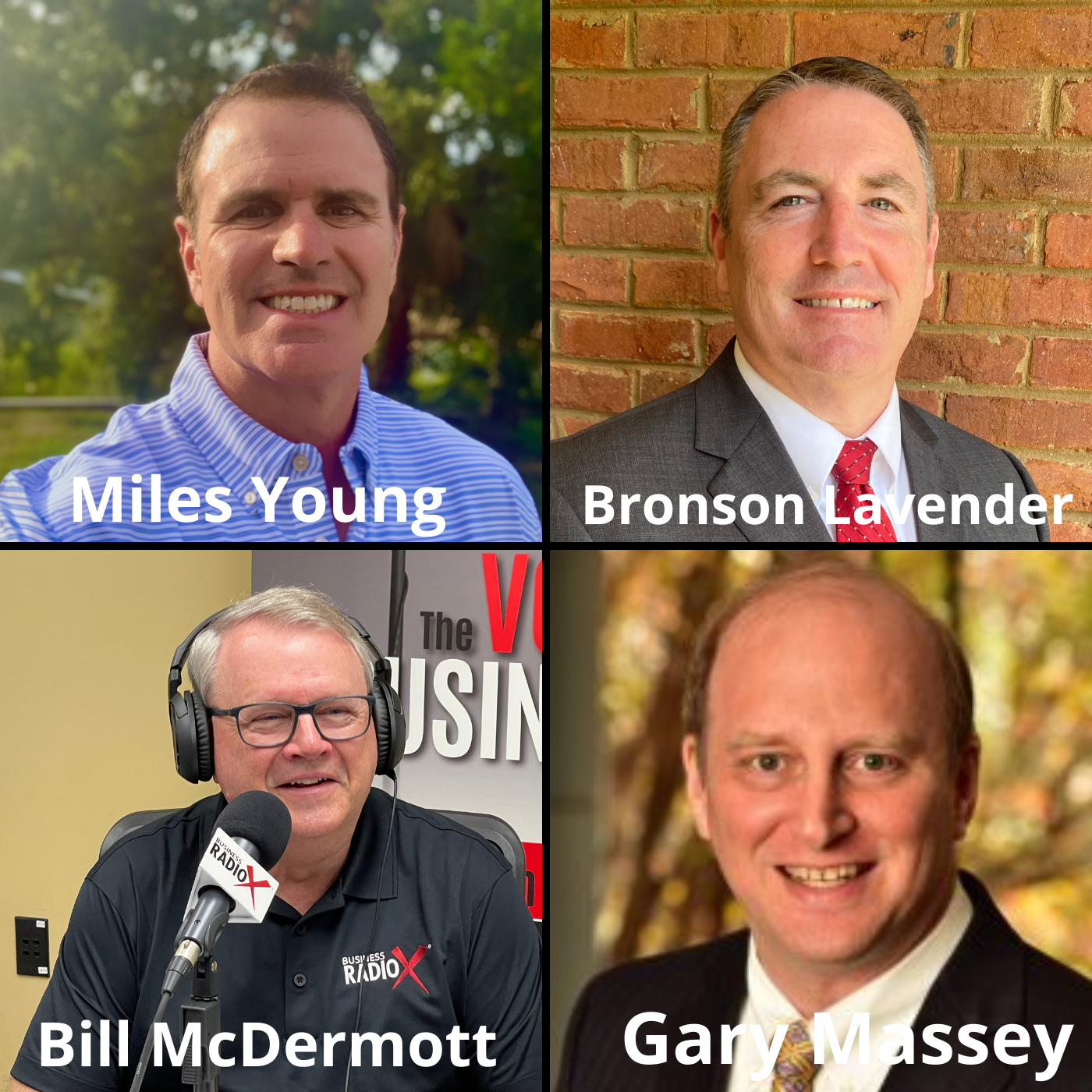
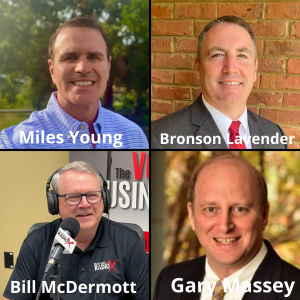
Miles Young, On Time Supplies, Bronson Lavender, Pinnacle Bank, and Gary Massey, Massey and Company CPA

December 15, 2021 by John Ray

Pinnacle Bank
North Fulton Studio
Miles Young, On Time Supplies, Bronson Lavender, Pinnacle Bank, and Gary Massey, Massey and Company CPA
Loading
00:00 /
RSS Feed
Share
Link
Embed

Download file

Pinnacle Bank

Miles Young, On Time Supplies, Bronson Lavender, Pinnacle Bank, and Gary Massey, Massey and Company CPA (ProfitSense with Bill McDermott, Episode 28)

On this inspiring episode of ProfitSense with Bill McDermott, Miles Young of On Time Supplies shared his story of being compelled to create a solution to the problems he saw in the office supply space and the rewards that come from taking a risk. Bronson Lavender, Senior Vice President with Pinnacle Bank, talked about his passion and calling for helping clients throughout his career in banking. Gary Massey of Massey and Company CPA discussed serving his clients through accounting and tax-related issues, sharing how a bit of preparation saves a lot of work down the road. ProfitSense with Bill McDermott is produced and broadcast by the North Fulton Studio of Business RadioX® in Alpharetta.

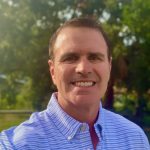
Miles Young, CEO and Co-Owner, On Time Supplies
Miles Young, CEO and Co-Owner, On Time Supplies

OnTimeSupplies.com offers top-notch customer service.  We are a leading supplier of discount office supplies with lightning-fast delivery.  Our team is dedicated to helping people just like you, and we feel like it is a privilege to serve you!  We consider it our personal mission to make every customer a reference customer, from the individual home-office buyer to the purchaser of the largest corporate accounts.

Miles has a background in commodities and a decade in sales of software. He saw a need in the office supply industry and started On Time Supplies seventeen years ago.

Miles has a degree from the University of Alabama.

Company website | LinkedIn |  Facebook

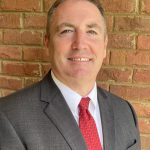
Bronson Lavender, Senior Vice President – Market Manager, Pinnacle Bank
Pinnacle Bank
Bronson Lavender, Senior Vice President – Market Manager, Pinnacle Bank

Pinnacle Bank is a Georgia-based bank headquartered in Elberton, Georgia.  It has been locally owned and operated since 1934.   Currently, Pinnacle Bank has approximately $1.85 Billion in Total Assets and has 24 full-service branches across Northeast Georgia to meet the needs of our clients.  Their Vision Statement is to be “The Best Community Bank in Georgia”.

Bronson has been in banking since 1992 and has a degree from University of North Georgia.

Company website | LinkedIn

Gary Massey, Managing Director, Massey and Company CPA

Gary Massey, Managing Director, Massey and Company CPA

At Massey and Company, their team is bright, friendly, and eager to please. Thanks to the team and their guiding principles, they are a different kind of accounting firm. They founded the company in 2013 with these principles which still guide them today:

-Treat people with respect
-Be kind – we are all human
-Make complex issues less stressful
-Charge fair prices

You won’t find stress or drama at their office. Instead, you will find patient, understanding people who sincerely care. All year long.

Gary Massey holds a Bachelor of Arts degree from Brandeis University, Waltham, MA. He also holds both a Masters in Business Administration degree and a Masters in Taxation degree from Fordham University, New York, NY. He is a licensed Certified Public Accountant (CPA). Gary is also a member of the American Institute of Certified Public Accountants. And he is a Certified Tax Representation Consultant.

Gary worked in the tax departments of Ernst & Young, Coopers & Lybrand, and KPMG for 10 years. Gary then transitioned to regional and local CPA firms, specializing in small business and individual tax services. Since 2013, he has been growing Massey and Company CPA, a boutique tax and accounting firm in Atlanta, focused on the needs of small businesses and individuals throughout Georgia.

Gary’s focus includes helping clients with tax problems. This includes representing clients in front of IRS and state agencies to resolve difficult tax issues, including audits, unpaid taxes, liens, levies, penalties, and notices. His work requires negotiation on a wide variety of tax matters, including offers in compromise, installment agreements, currently not collectible status, and penalty abatement.

Gary enjoys reading and spending time with his children and grandchildren. He is married to Chelly, a native of The Netherlands.

Company website | LinkedIn

About ProfitSense and Your Host, Bill McDermott
Bill McDermott
Bill McDermott

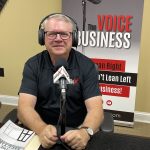
ProfitSense with Bill McDermott dives into the stories behind some of Atlanta’s successful businesses and business owners and the professionals that advise them. This show helps local business leaders get the word out about the important work they’re doing to serve their market, their community and their profession. The show is presented by McDermott Financial Solutions. McDermott Financial helps business owners improve cash flow and profitability, find financing, break through barriers to expansion and financially prepare to exit their business. The show archive can be found at profitsenseradio.com.

Bill McDermott is the Founder and CEO of McDermott Financial Solutions. When business owners want to increase their profitability, they don’t have the expertise to know where to start or what to do. Bill leverages his knowledge and relationships from 32 years as a banker to identify the hurdles getting in the way and create a plan to deliver profitability they never thought possible.

Bill currently serves as Treasurer for the Atlanta Executive Forum and has held previous positions as a board member for the Kennesaw State University Entrepreneurship Center and Gwinnett Habitat for Humanity and Treasurer for CEO NetWeavers. Bill is a graduate of Wake Forest University and he and his wife, Martha have called Atlanta home for over 40 years. Outside of work, Bill enjoys golf, traveling, and gardening.

Connect with Bill on LinkedIn and Twitter and follow McDermott Financial Solutions on LinkedIn.
Tagged With: Accounting, banking, Bill McDermott, Bronson Lavender, Gary Massey, Massey and Company CPA, Miles Young, office supplies, On Time Supplies, Pinnacle bank, ProfitSense, The Profitability Coach

Getting Your Business Bank Ready, with Bill McDermott, Host of ProfitSense

December 7, 2021 by John Ray

Bill McDermott
North Fulton Studio
Getting Your Business Bank Ready, with Bill McDermott, Host of ProfitSense
Loading
00:00 /
RSS Feed
Share
Link
Embed

Download file

Bill McDermott

Getting Your Business Bank Ready, with Bill McDermott, Host of ProfitSense

For thirty years of his career, ProfitSense host Bill McDermott was a commercial banker. As such, Bill possesses a deep understanding of how a business can cultivate its relationship with their banker, and what makes a business “bank ready.” Hear his thoughts on the subject taken from a recent episode of ProfitSense. ProfitSense with Bill McDermott is produced and broadcast by the North Fulton Studio of Business RadioX® in Alpharetta.

Bill’s commentary was taken from this episode of ProfitSense.

About ProfitSense and Your Host, Bill McDermott

Bill McDermott
Bill McDermott

ProfitSense with Bill McDermott dives into the stories behind some of Atlanta’s successful businesses and business owners and the professionals that advise them. This show helps local business leaders get the word out about the important work they’re doing to serve their market, their community, and their profession. The show is presented by McDermott Financial Solutions. McDermott Financial helps business owners improve cash flow and profitability, find financing, break through barriers to expansion and financially prepare to exit their business. The show archive can be found at profitsenseradio.com.

Bill McDermott is the Founder and CEO of McDermott Financial Solutions. When business owners want to increase their profitability, they don’t have the expertise to know where to start or what to do. Bill leverages his knowledge and relationships from 32 years as a banker to identify the hurdles getting in the way and create a plan to deliver profitability they never thought possible.

Bill currently serves as Treasurer for the Atlanta Executive Forum and has held previous positions as a board member for the Kennesaw State University Entrepreneurship Center and Gwinnett Habitat for Humanity and Treasurer for CEO NetWeavers. Bill is a graduate of Wake Forest University and he and his wife, Martha have called Atlanta home for over 40 years. Outside of work, Bill enjoys golf, traveling, and gardening.

Connect with Bill on LinkedIn and Twitter and follow McDermott Financial Solutions on LinkedIn.
Tagged With: balance sheets, bank ready, Bill McDermott, commercial banking, ProfitSense, The Profitability Coach

Culture and the Potential of Your Business, with Bill McDermott, Host of ProfitSense

November 3, 2021 by John Ray

Corporate Culture
North Fulton Studio
Culture and the Potential of Your Business, with Bill McDermott, Host of ProfitSense
Loading
00:00 /
RSS Feed
Share
Link
Embed

Download file

Corporate Culture

Culture and the Potential of Your Business, with Bill McDermott, Host of ProfitSense 

“Culture eats strategy for breakfast” is a frequently quoted line from management guru Peter Drucker. Citing an example from a client’s employee event he attended, ProfitSense host Bill McDermott shared his thoughts on the value of corporate culture to the success of the business. ProfitSense with Bill McDermott is produced and broadcast by the North Fulton Studio of Business RadioX® in Alpharetta.

Bill’s commentary was taken from this episode of ProfitSense.

About ProfitSense and Your Host, Bill McDermott

Bill McDermott
Bill McDermott

ProfitSense with Bill McDermott dives into the stories behind some of Atlanta’s successful businesses and business owners and the professionals that advise them. This show helps local business leaders get the word out about the important work they’re doing to serve their market, their community, and their profession. The show is presented by McDermott Financial Solutions. McDermott Financial helps business owners improve cash flow and profitability, find financing, break through barriers to expansion and financially prepare to exit their business. The show archive can be found at profitsenseradio.com.

Bill McDermott is the Founder and CEO of McDermott Financial Solutions. When business owners want to increase their profitability, they don’t have the expertise to know where to start or what to do. Bill leverages his knowledge and relationships from 32 years as a banker to identify the hurdles getting in the way and create a plan to deliver profitability they never thought possible.

Bill currently serves as Treasurer for the Atlanta Executive Forum and has held previous positions as a board member for the Kennesaw State University Entrepreneurship Center and Gwinnett Habitat for Humanity and Treasurer for CEO NetWeavers. Bill is a graduate of Wake Forest University and he and his wife, Martha have called Atlanta home for over 40 years. Outside of work, Bill enjoys golf, traveling, and gardening.

Connect with Bill on LinkedIn and Twitter and follow McDermott Financial Solutions on LinkedIn.
Tagged With: Bill McDermott, corporate culture, Peter Drucker, ProfitSense, strategy, The Profitability Coach

Troy Cobb, Cinch I.T., and Mark Ligler, Factory Automation Systems

October 19, 2021 by John Ray

Factory Automation Systems
North Fulton Studio
Troy Cobb, Cinch I.T., and Mark Ligler, Factory Automation Systems
Loading
00:00 /
RSS Feed
Share
Link
Embed

Download file

Factory Automation Systems

Troy Cobb, Cinch I.T., and Mark Ligler, Factory Automation Systems (ProfitSense with Bill McDermott, Episode 26)

On this episode of ProfitSense, host Bill McDermott was joined by Troy Cobb with Cinch I.T., who discussed the decision to purchase a franchise vs. start his own business, cybersecurity issues he sees currently, and more. Mark Ligler, Owner and Vice President of Factory Automation Systems, also joined the show. Mark’s business has weathered many seasons in the automation and robotic industry, and he shared his wisdom and experience on sensible business growth, attracting and retaining talent, and much more. Finally, Bill shared his thoughts on how essential a good organizational culture is for a business. ProfitSense with Bill McDermott is produced and broadcast by the North Fulton Studio of Business RadioX® in Alpharetta.

Cinch I.T.

Cinch I.T., Inc. was established in 2004. Like so many computer support companies, it started as a one-man shop in a 10×10 office with no windows. But even then, the focus was on building great relationships with their clients. Over the years, Cinch I.T. has been fortunate enough to see unbelievable growth.

They have added some of the most brilliant minds in our industry to the team, expanded into a 12,000 sq ft corporate office complex, and we have been honored to receive numerous awards, including being named one of the Top 501 Managed Service Providers Globally by Future Channels.

Cinch I.T. has established itself as one of the most highly-regarded I.T. company and computer service providers in the United States. The reason is simple. They have spent years shaping the entire company to meet YOUR needs.

With Support plans designed to create lasting relationships, together they ensure immediate and long-term success.

Company website | LinkedIn |  Facebook | Twitter

Troy Cobb, Owner/Sales Director, Cinch I.T.

Cinch I.T.
Troy Cobb, Owner/Sales Director, Cinch I.T.

Troy Cobb became the owner and sales director for the Cinch I.T. Atlanta office in January 2020.

Troy is a USMC Desert Shield/Storm Veteran with over 20 years of experience in the I.T. industry. Originally from New Jersey. he has lived in Atlanta for over twenty years.

 He is married to Tanya Cobb, an incredible Nurse/Hero at Emory University Midtown Hospital.

LinkedIn

Mark Ligler, Owner and Vice President, Factory Automation Systems

Mark Ligler, Owner and Vice President, Factory Automation Systems

Mark Ligler is the Owner and Vice President of Atlanta-based Factory Automation Systems, Inc.

Factory Automation Systems is a full-service systems integrator that provides turnkey automation solutions to manufacturing companies across the U.S.  FAS designs and implements solutions with programmable controllers, manufacturing information systems, motion control and robotic systems. They serve customers from diverse industries – building products, food and beverage, consumer products, automotive, metals, and more.

Factory Automation Systems was founded by Ross Pryor in 1992. Based in Atlanta, GA, the company has implemented thousands of solutions for manufacturers from a variety of industries across the U.S. and abroad.

Discrete control, coordinated motion, process automation, production monitoring, robotic machine tending, material handling, traceability, robotic assembly, machine safety – diverse projects for a wide mix of customers. They welcome the opportunity to put their experienced team to work on your next automation project.
FAS is near the Atlanta airport – they welcome visitors to meet the team and tour their facility.

Company website | LinkedIn | Facebook

About ProfitSense and Your Host, Bill McDermott

Bill McDermott
Bill McDermott

ProfitSense with Bill McDermott dives into the stories behind some of Atlanta’s successful businesses and business owners and the professionals that advise them. This show helps local business leaders get the word out about the important work they’re doing to serve their market, their community and their profession. The show is presented by McDermott Financial Solutions. McDermott Financial helps business owners improve cash flow and profitability, find financing, break through barriers to expansion and financially prepare to exit their business. The show archive can be found at profitsenseradio.com.

Bill McDermott is the Founder and CEO of McDermott Financial Solutions. When business owners want to increase their profitability, they don’t have the expertise to know where to start or what to do. Bill leverages his knowledge and relationships from 32 years as a banker to identify the hurdles getting in the way and create a plan to deliver profitability they never thought possible.

Bill currently serves as Treasurer for the Atlanta Executive Forum and has held previous positions as a board member for the Kennesaw State University Entrepreneurship Center and Gwinnett Habitat for Humanity and Treasurer for CEO NetWeavers. Bill is a graduate of Wake Forest University and he and his wife, Martha have called Atlanta home for over 40 years. Outside of work, Bill enjoys golf, traveling, and gardening.

Connect with Bill on LinkedIn and Twitter and follow McDermott Financial Solutions on LinkedIn.
Tagged With: Bill McDermott, Cinch I.T., company culture, Factory Automation Systems, Mark Ligler, ProfitSense, Recruiting, robotics, The Profitability Coach, Troy Cobb

Katie Sparks, Law Office of Katherine Sparks, Jim Cichanski, Flex HR and Shawn Vernimo, Arcus Roof, Inc.

August 12, 2021 by John Ray

Katie Sparks
North Fulton Studio
Katie Sparks, Law Office of Katherine Sparks, Jim Cichanski, Flex HR and Shawn Vernimo, Arcus Roof, Inc.
Loading
00:00 /
RSS Feed
Share
Link
Embed

Download file

Katie Sparks

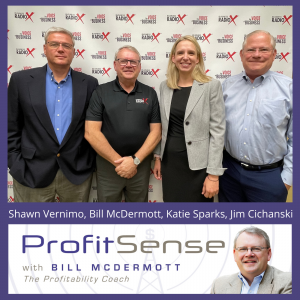
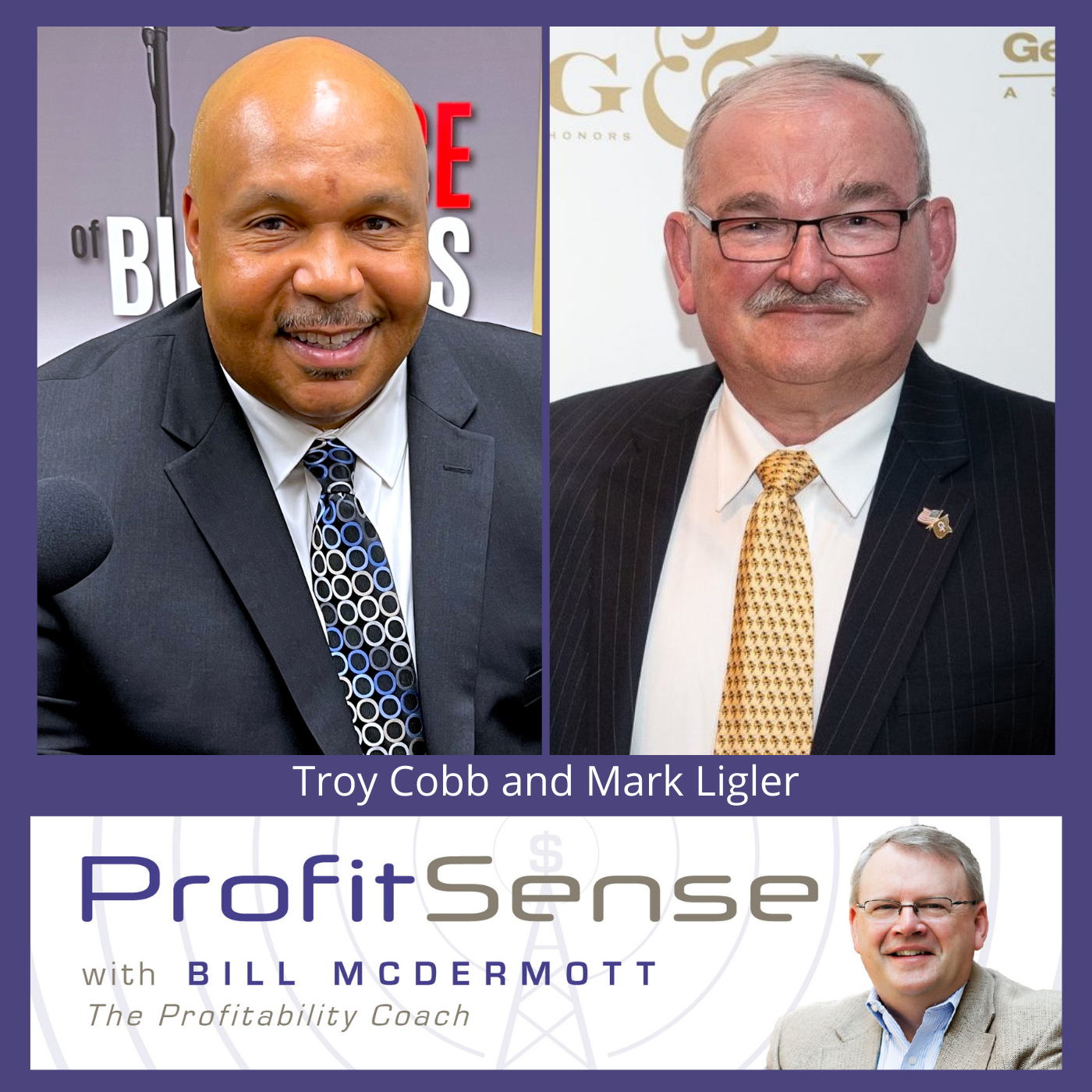
Katie Sparks, Law Office of Katherine Sparks, Jim Cichanski, Flex HR and Shawn Vernimo, Arcus Roof, Inc. (ProfitSense with Bill McDermott, Episode 24)

It’s only when you’re a business owner yourself that you fully understand the challenges other entrepreneurs face. Business attorney Katie Sparks, human resources consultant Jim Cichanski, and roofing company owner Shawn Vernimo talk with host Bill McDermott about their own entrepreneurial journeys, what it took to start their own businesses, and how that experience aids them in rendering outstanding service to their clients. ProfitSense with Bill McDermott is produced and broadcast by the North Fulton Studio of Business RadioX® in Alpharetta.

Katie Sparks, Principal, Law Office of Katherine Sparks, LLC

Katie Sparks
Katie Sparks, Principal, Law Office of Katherine Sparks, LLC
The Law Office of Katherine Sparks, LLC is a law firm that provides comprehensive legal advice for small and medium-sized businesses. From formation to expansion to eventual sale, legal needs are an ever-present reality. The firm aspires to be an integral part of each client’s team, supporting and championing the business on the legal front.
Katie Sparks is a business law attorney who works closely with her clients to help them deal with legal risk so they can focus on running their business. Katie is a graduate of the University of Georgia and the Catholic University of America, Columbus School of Law. Outside of work, Katie enjoys spending time with her family, traveling, and reading.

LinkedIn | Email

Jim Cichanski, Founder & CHRO, Flex HR

Jim Cichanski, Founder & Chief HR Officer, Flex HR

Flex HR is an HR Consulting firm, including HR Outsourcing and Recruiting.

Jim is the founder of Flex HR which is in its 21st year of business. Jim’s experience includes operational HR management knowledge globally in 32 countries and has merged or transitioned well over 350 organizations. He is known as a “Subject Matter Expert” in the field of HR. Last year with the COVID Pandemic Jim provided over 50 seminars reaching over 7,000 Owners and operators of small and mid-size businesses.

Jim also spent 27 years in the Army National Guard achieving the rank of Colonel, was inducted into the Officer Candidate School Hall of Fame, and received numerous awards including the Legion of Merit. Jim has served on several boards, was an inside board member of 17 companies, and is an angel investor in start-up firms in Atlanta. Jim was recognized by the North Fulton Atlanta Chamber of Commerce as the Small Businessperson of the year and was also listed in Catalyst Magazine as 1 of 18 Companies, CEO’s in Atlanta would like to own. Outsourcing Gazette magazine listed Flex HR as the “Top Most Promising HR & Staffing Service Vendors of 2015”. Inc. Magazine in September 2008, 2012 and 2013 recognized Flex HR, Inc. as an Inc 5000 “Fastest Growing Privately Held Companies in America”.

Jim is married to his wife Eldeen for 48 years and they have two daughters and 5 grandchildren.

Company website | LinkedIn | Facebook | Twitter

Shawn Vernimo, CEO, Arcus Roof, Inc.

Shawn Vernimo, CEO, Arco Roof, Inc.

Arcus Roof is a commercial roofing contractor in Marietta, GA. Arcus serves the greater Atlanta metropolitan area.

Shawn is an expert in solving roofing problems and applying an investment approach to all roofing portfolios. As a trained engineer with a passion for roofing, he has been able to serve and educate clients; including three of the top five property management firms and the largest pension fund in the United States. Additionally, he has consulted on numerous multimillion-dollar projects including a $6.6 million roofing project in Dallas, Texas and a $4 million project in St. Louis, Missouri. Throughout his 30+ years of roof consulting and contracting, he has saved business owners and property managers alike hundreds of thousands of dollars by providing clients with his roofing expertise, insight into industry realities, and investment approach solutions.

Company website | LinkedIn | Facebook

About ProfitSense and Your Host, Bill McDermott

Bill McDermott
Bill McDermott

ProfitSense with Bill McDermott dives into the stories behind some of Atlanta’s successful businesses and business owners and the professionals that advise them. This show helps local business leaders get the word out about the important work they’re doing to serve their market, their community and their profession. The show is presented by McDermott Financial Solutions. McDermott Financial helps business owners improve cash flow and profitability, find financing, break through barriers to expansion and financially prepare to exit their business. The show archive can be found at profitsenseradio.com.

Bill McDermott is the Founder and CEO of McDermott Financial Solutions. When business owners want to increase their profitability, they don’t have the expertise to know where to start or what to do. Bill leverages his knowledge and relationships from 32 years as a banker to identify the hurdles getting in the way and create a plan to deliver profitability they never thought possible.

Bill currently serves as Treasurer for the Atlanta Executive Forum and has held previous positions as a board member for the Kennesaw State University Entrepreneurship Center and Gwinnett Habitat for Humanity and Treasurer for CEO NetWeavers. Bill is a graduate of Wake Forest University and he and his wife, Martha have called Atlanta home for over 40 years. Outside of work, Bill enjoys golf, traveling, and gardening.

Connect with Bill on LinkedIn and Twitter and follow McDermott Financial Solutions on LinkedIn.
Tagged With: Arcus Roof, Bill McDermott, business attorney, Female Business Attorney, Flex HR, HR consulting, Jim Chicanski, Katie Sparks, Law Offices of Katherine Sparks, Profitability Coach Bill McDermott, ProfitSense, roofing company, Shawn Vernimo

Nermin Jasani, We Are Wildly Successful, LLC, David Peterson, PNC Bank, and Mike Holden, Nextgen Pest Solutions (ProfitSense with Bill McDermott, Episode 18)

February 24, 2021 by John Ray

Nextgen Pest Solutions
North Fulton Studio
Nermin Jasani, We Are Wildly Successful, LLC, David Peterson, PNC Bank, and Mike Holden, Nextgen Pest Solutions (ProfitSense with Bill McDermott, Episode 18)
Loading
00:00 /
RSS Feed
Share
Link
Embed

Download file

Nextgen Pest Solutions

Nermin Jasani, We Are Wildly Successful, LLC, David Peterson, PNC Bank, and Mike Holden, Nextgen Pest Solutions (ProfitSense with Bill McDermott, Episode 18)

On this edition of “ProfitSense,” host Bill McDermott welcomed Nermin Jasani to discuss her consulting work with medical and legal practices. Bill was also joined by David Peterson of PNC Bank, who offered tips on how business owners should work with their banker. Army veteran Mike Holden, owner of NextGen Pest Solutions, told the story of his company’s founding and growth into multiple states, and why veterans are a vital aspect of his strategy. “ProfitSense with Bill McDermott” is produced and broadcast by the North Fulton Studio of Business RadioX® in Alpharetta.

Nermin Jasani, We Are Wildly Successful, LLC

Nermin Jasani, We Are Wildly Successful, LLC

We Are Wildly Successful, LLC is an Atlanta-based consulting group that works with doctors and lawyers on having a wildly successful law practice.
Success is different for every business owner, and executing the strategy for success is what We are Wildly Successful does.

Company website | LinkedIn

David Peterson, PNC Bank

David Peterson, PNC Bank

PNC Bank is a financial services company headquartered out of Pittsburgh, PA, and operates in 21 states and DC.  The bank is currently the 7th largest financial institution in the US as measured by asset size. PNC provides retail and commercial banking, asset and wealth management, residential mortgage, investment banking, and estate and fiduciary services.

Company website | LinkedIn

Mike Holden, Nextgen Pest Solutions

Nextgen Pest Solutions
Mike Holden, Nextgen Pest Solutions

Nextgen Pest Solutions’ core mission is to provide jobs for veterans of the armed forces after their military careers. They strongly believe that it is important to create careers that give veterans a chance to continue to protect us even after their service is complete.

They also provide the training, competitive pay, and benefits that give them a life-long career. They also have the ability to learn new skills that will help them advance in the organization. Nextgen Pest Solutions is a full-service residential/commercial pest control company in the greater Atlanta metro area, Birmingham Alabama, Clearwater, and South Florida. Each service center is able to treat, remove, or prevent essentially any type of pest, bedbug, rodent, and wildlife issue. They use the latest technology in pest management practices to restore your peace of mind that your home is protected. Throughout their markets, they specialize in hard-to-treat pests for homes, apartments, and hotels.

Nextgen even provides a free guide on how to get rid of various pests for anyone’s use. These include Ants, Roaches, Bed Bugs, Possums, Raccoons, bats, fleas, silverfish, ants, beetles, spiders, mosquitos, and snakes currently. Their wildlife services including raccoon removal, squirrel removal, bat removal, snake removal, possum removal, bee and wasp removal, and other types of wildlife common to Florida and Georgia. While in some cases animals are beneficial, some are nuisances, others represent real emergencies.

They want you to feel protected and know that you have a partner with your pest control service provider. It is these factors that set them apart and these missions that help them protect your property and family. They also GUARANTEE their services, so if you are ever unsatisfied or you find pests that should have been eliminated, they will always come back to solve the problem.

Company website | LinkedIn

About “ProfitSense” and Your Host, Bill McDermott

Bill McDermott

“ProfitSense with Bill McDermott” dives into the stories behind some of Atlanta’s successful businesses and business owners and the professionals that advise them. This show helps local business leaders get the word out about the important work they’re doing to serve their market, their community and their profession. The Show is presented by McDermott Financial Solutions. McDermott Financial helps business owners improve cash flow and profitability, find financing, break through barriers to expansion and financially prepare to exit their business. The show archive can be found at profitsenseradio.com.

Bill McDermott is the Founder and CEO of McDermott Financial Solutions. When business owners want to increase their profitability, they don’t have the expertise to know where to start or what to do. Bill leverages his knowledge and relationships from 32 years as a banker to identify the hurdles getting in the way and create a plan to deliver profitability they never thought possible.

Bill currently serves as Treasurer for the Atlanta Executive Forum and has held previous positions as a board member for the Kennesaw State University Entrepreneurship Center and Gwinnett Habitat for Humanity and Treasurer for CEO NetWeavers. Bill is a graduate of Wake Forest University and he and his wife, Martha have called Atlanta home for over 40 years. Outside of work, Bill enjoys golf, traveling, and gardening.

Connect with Bill on LinkedIn and Twitter and follow McDermott Financial Solutions on LinkedIn.
Tagged With: Bill McDermott, David Peterson, Employing Veterans, hiring veterans, McDermott Financial, McDermott Financial Solutions, Mike Holden, Nermin Jasani, NextGen Pest Solutions, pest control, PNC Bank, profitability coach, ProfitSense, ProfitSense with Bill McDermott, veteran owned, Veteran Owned Business, We are Wildly Successful LLC

Gabe Tilley, King Steel, Inc., Tara Winslow, Winslow Home Professionals, and Rob Swartwood, consilium (ProfitSense with Bill McDermott, Episode 17)

February 11, 2021 by John Ray

King Steel
North Fulton Studio
Gabe Tilley, King Steel, Inc., Tara Winslow, Winslow Home Professionals, and Rob Swartwood, consilium (ProfitSense with Bill McDermott, Episode 17)
Loading
00:00 /
RSS Feed
Share
Link
Embed

Download file

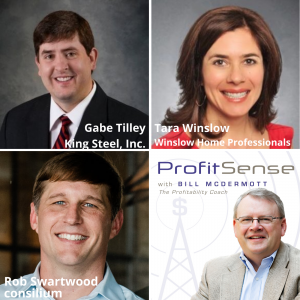
Gabe Tilley, King Steel, Inc., Tara Winslow, Winslow Home Professionals, and Rob Swartwood, consilium (ProfitSense with Bill McDermott, Episode 17)

Host Bill McDermott welcomes Gabe Tilley, King Steel, to discuss his firm’s growth since he and his partner assumed ownership in 2018. Bill also interviewed Tara Winslow on the current state of Atlanta residential real estate, and Rob Swartwood described the “coach approach” he takes with his business law clients. “ProfitSense with Bill McDermott” is produced and broadcast by the North Fulton Studio of Business RadioX® in Alpharetta.

Gabe Tilley, Executive Vice President, King Steel, Inc.

King Steel
Gabe Tilley, King Steel, Inc.

King Steel is a structural steel fabricator located in Lawrenceville, GA. They have been in business since 1989, providing turnkey steel fabrication and erection services throughout the Southeastern United States. They have expertise in providing steel for a wide variety of building projects, including schools, high-rises, data centers, military installations, and distribution centers. Their client portfolio is diverse, including several national general contractors, and they have supplied fabricated steel for several high-profile companies.

In 2018, King Steel was purchased by two partners, Marvin Brown, and Gabe Tilley. Under their leadership, the company has made several capital improvements and streamlined its ability to fabricate steel in a more efficient manner. Both have 20+ years in the steel industry and are looking forward to ushering in a new era of success for King Steel.

More information at 770-963-3888 or contact Gabe by email.

LinkedIn

Tara Winslow, Realtor & Business Owner, Winslow Home Professionals

Tara Winslow, Winslow Home Professionals

Prior to following her passion in residential real estate, Tara spent twelve years in corporate America as a top Sales Executive at several Fortune 500 companies including The Coca-Cola Company, AT&T Business and PGi (formerly Premiere Global Services). In her last position at PGi, selling SAAS (software as a service) technology, she finished 2011 as the #1 Sales Executive across the company in sales production.

As a native Atlantan, she has vast insight in the Atlanta Real Estate Market. Tara resides at Keller Williams Realty Peachtree Road office in Brookhaven. She loves being a business owner which allows her to help make decisions important to her clients. Tara is passionate about helping her clients build wealth through real estate. She is committed to her clients, values long-term relationships and strives to exceed expectations. She has a deep understanding of the real estate process and knows what it takes to get her clients into the home of their dreams. Tara takes pride in her business and earns the trust of her clients who call on her for advice.

Winslow Home Professionals has held its license at Keller Williams Realty Peachtree Road in Brookhaven for over 9 years where the office sells over $1 billion in real estate every year across Metro Atlanta.

Company website      LinkedIn

Rob Swartwood, Managing Member, consilium

Rob Swartwood, consilium

Rob is a business attorney, outside general counsel, and transaction counsel to small and middle-market businesses throughout the Southeast. A former big-law attorney, Rob leverages over a decade of experience representing businesses across the spectrum of size, industry, and complexity to help owners and executives navigate their day-to-day operations; prepare for and complete mergers, acquisitions, divestitures, and other transactions; and accomplish their strategic objectives in a manner that is true to the brand.

Consilium is a boutique business law firm providing wise counsel, professional, concierge service, and effective solutions at competitive rates. At consilium, Rob and his team take a coach-approach to understand their client’s businesses, problems, and interests; developing a sound strategy for accomplishing client objectives in a manner that is on-time and within budget; and guiding their clients through their legal matters with precision and care, to the best outcomes possible. And though outcomes are very important to the team at consilium, it is equally important that they leave their clients in a better position than they found them – with their clients having received something of greater value from the experience than the fee charged to them in the exchange.

Company website     Company LinkedIn     LinkedIn

About “ProfitSense” and Your Host, Bill McDermott

Bill McDermott

“ProfitSense with Bill McDermott” dives in to the stories behind some of Atlanta’s successful businesses and business owners and the professionals that advise them. This show helps local business leaders get the word out about the important work they’re doing to serve their market, their community and their profession. The Show is presented by McDermott Financial Solutions. McDermott Financial helps business owners improve cash flow and profitability, find financing, break through barriers to expansion and financially prepare to exit their business. The show archive can be found at profitsenseradio.com.

Bill McDermott is the Founder and CEO of McDermott Financial Solutions. When business owners want to increase their profitability, they don’t have the expertise to know where to start or what to do. Bill leverages his knowledge and relationships from 32 years as a banker to identify the hurdles getting in the way and create a plan to deliver profitability they never thought possible.

Bill currently serves as Treasurer for the Atlanta Executive Forum and has held previous positions as a board member for the Kennesaw State University Entrepreneurship Center and Gwinnett Habitat for Humanity and Treasurer for CEO NetWeavers. Bill is a graduate of Wake Forest University and he and his wife, Martha have called Atlanta home for over 40 years. Outside of work, Bill enjoys golf, traveling, and gardening.

Connect with Bill on LinkedIn and Twitter and follow McDermott Financial Solutions on LinkedIn.
Tagged With: Bill McDermott, business law, consilium, Gabe Tilley, Keller Williams Realty, keller williams realty atlanta, King Steel, outside general counsel, ProfitSense, ProfitSense with Bill McDermott, residential real estate, Rob Swartwood, Tara Winslow, turnkey steel fabrication, Winslow Home Professionals

Decision Vision Episode 103: Should My Company Borrow Money? – An Interview with Bill McDermott, The Profitability Coach

February 11, 2021 by John Ray

Profitability Coach
Decision Vision
Decision Vision Episode 103: Should My Company Borrow Money? - An Interview with Bill McDermott, The Profitability Coach
Loading
00:00 /
RSS Feed
Share
Link
Embed

Download file

Decision Vision Episode 103:  Should My Company Borrow Money? – An Interview with Bill McDermott, The Profitability Coach

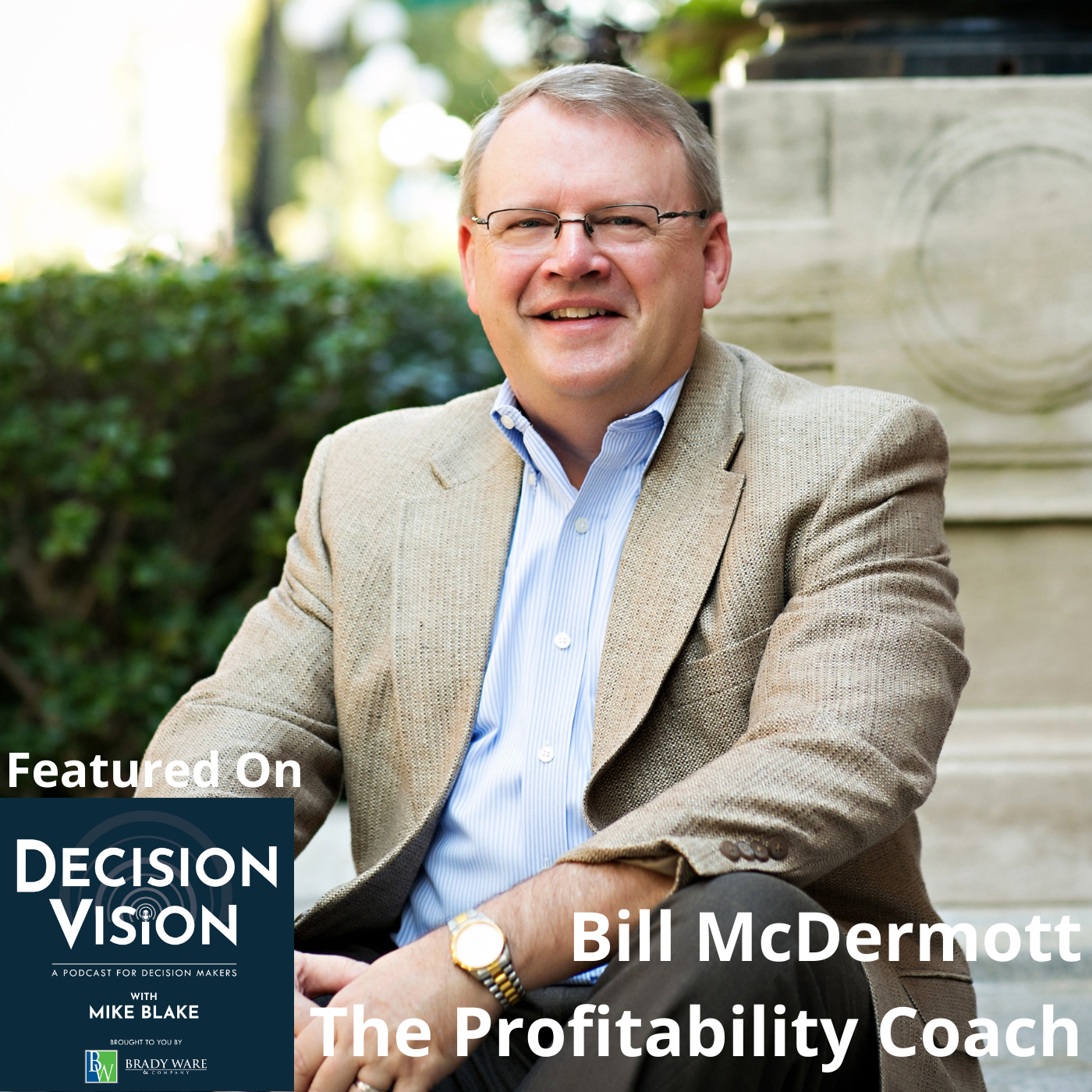
Bill McDermott, Profitability Coach and ex-banker, speaks with host Mike Blake on when and how business owners should borrow money for their business. Bill also breaks down how bankers assess business borrowers and make lending decisions, various types of debt, one type of business loan he considers predatory, and much more. “Decision Vision” is presented by Brady Ware & Company.

Bill McDermott, The Profitability Coach

Bill McDermott is the Founder and CEO of McDermott Financial Solutions, serving as a profitability coach to his clients. When business owners want to increase their profitability, they don’t have the expertise to know where to start or what to do. Bill leverages his knowledge and relationships from 32 years as a banker to identify the hurdles getting in the way and create a plan to deliver profitability they never thought possible.

Bill currently serves as Treasurer for the Atlanta Executive Forum and has held previous positions as a board member for the Kennesaw State University Entrepreneurship Center and Gwinnett Habitat for Humanity and Treasurer for CEO NetWeavers. Bill is a graduate of Wake Forest University and he and his wife, Martha have called Atlanta home for over 40 years. Outside of work, Bill enjoys golf, traveling, and gardening.

Connect with Bill on LinkedIn and Twitter and follow McDermott Financial Solutions on LinkedIn.

Mike Blake, Brady Ware & Company

Mike Blake, Host of the “Decision Vision” podcast series

Michael Blake is the host of the “Decision Vision” podcast series and a Director of Brady Ware & Company. Mike specializes in the valuation of intellectual property-driven firms, such as software firms, aerospace firms, and professional services firms, most frequently in the capacity as a transaction advisor, helping clients obtain great outcomes from complex transaction opportunities. He is also a specialist in the appraisal of intellectual properties as stand-alone assets, such as software, trade secrets, and patents.

Mike has been a full-time business appraiser for 13 years with public accounting firms, boutique business appraisal firms, and an owner of his own firm. Prior to that, he spent 8 years in venture capital and investment banking, including transactions in the U.S., Israel, Russia, Ukraine, and Belarus.

Brady Ware & Company

Brady Ware & Company is a regional full-service accounting and advisory firm which helps businesses and entrepreneurs make visions a reality. Brady Ware services clients nationally from its offices in Alpharetta, GA; Columbus and Dayton, OH; and Richmond, IN. The firm is growth-minded, committed to the regions in which they operate, and most importantly, they make significant investments in their people and service offerings to meet the changing financial needs of those they are privileged to serve. The firm is dedicated to providing results that make a difference for its clients.

Decision Vision Podcast Series

“Decision Vision” is a podcast covering topics and issues facing small business owners and connecting them with solutions from leading experts. This series is presented by Brady Ware & Company. If you are a decision-maker for a small business, we’d love to hear from you. Contact us at decisionvision@bradyware.com and make sure to listen to every Thursday to the “Decision Vision” podcast.

Past episodes of “Decision Vision” can be found at decisionvisionpodcast.com. “Decision Vision” is produced and broadcast by the North Fulton studio of Business RadioX®.

Visit Brady Ware & Company on social media:

LinkedIn:  https://www.linkedin.com/company/brady-ware/

Facebook: https://www.facebook.com/bradywareCPAs/

Twitter: https://twitter.com/BradyWare

Instagram: https://www.instagram.com/bradywarecompany/

TRANSCRIPT

Intro: [00:00:02] Welcome to Decision Vision, a podcast series focusing on critical business decisions. Brought to you by Brady Ware & Company. Brady Ware is a regional, full service accounting and advisory firm that helps businesses and entrepreneurs make visions a reality.

Mike Blake: [00:00:20] Welcome to Decision Vision, a podcast giving you, the listener, clear vision to make great decisions. In each episode, we discuss the process of decision making on a different topic from the business owners’ or executives’ perspective. We aren’t necessarily telling you what to do, but we can put you in a position to make an informed decision on your own and understand when you might need help along the way.

Mike Blake: [00:00:41] My name is Mike Blake, and I’m your host for today’s program. I’m a director at Brady Ware & Company, a full service accounting firm based in Dayton, Ohio, with offices in Dayton; Columbus, Ohio; Richmond, Indiana; and Alpharetta, Georgia. Brady Ware is sponsoring this podcast, which is being recorded in Atlanta per social distancing protocols. If you like this podcast, please subscribe on your favorite podcast aggregator, and please consider leaving a review of the podcast as well.

Mike Blake: [00:01:08] Today’s topic is, Should my company borrow money? And, you know, talk about borrowing and lending, it’s automatically a charged topic. And so much of our consciousness, I think, revolves around debt. And I don’t know if it’s always been that way. Certainly throughout history, people have talked about debt, usually from the dangers of debt. Of course, “neither a borrower nor a lender” attributed to Benjamin Franklin. And, of course, you know, there’s a whole ton of discussion around medical debt, student debt, the national debt. There are individuals that have made, frankly, fortunes and careers advising people against the dangers of debt, Dave Ramsey is probably the most important one, but there are several others, of course.

Mike Blake: [00:02:12] And I see that this mentality does bleed over into the corporate world to some extent. And there are a lot of funny things about debt, you know, one, it has a mystique to it. I think, because when debt works well, it works great. When it works badly or when the outcome is bad, the outcome is usually spectacular. And even our most recent past president – you know, there’s at least a lot of suspicion. We don’t know his full financial position – the prevailing suspicion or understanding or belief – I don’t want to use suspicion in a pejorative sense. That’s not the intent – but the belief that our own president has built an empire on debt and that he’s still very heavily leveraged. But in spite of that fact, he doesn’t appear to be financially hurting.

Mike Blake: [00:03:12] So, you know, debt can be somewhat paradoxical. And I think when debt fails, it fails badly, it fails in a lot of ways publicly. And who doesn’t love a good car crash, as long as you’re not in it. You know, I think that generates a lot of attention. And I’m not a debt expert at all. I have much more experience on the equity side than on the debt side, which is we have a guest coming up that does know what he’s talking about. But, you know, it’s understanding that debt is a power tool. And a power tool, you know, take a circular saw as a great example. If you know what you’re doing and you respect the power of the tool, the circular saw, you can build amazing things, right? You can build furniture. You can build a shelter, you know, effectively with a circular saw and a few other tools. Not that I’d ever do it. I’m incompetent. But I’ve seen people do it and this seems to be the way that it happens.

Mike Blake: [00:04:17] Conversely, if you don’t know what you’re doing, if you put your hand in the wrong place, the next thing you know, your name is Lefty or The Claw or whatever. But the saw itself isn’t bad. It’s simply a matter of the capability and the emotional intelligence of the person using it. And so, as a consequence, you know, I do think that, of course, there are companies that use debt irresponsibly. And we’ve had an interview on a podcast with Tom Rosseland of Bodker, Ramsey talking about, you know, should I enter into a workout? So, we’ve covered that part. And eventually we’ll cover bankruptcy as well. I just haven’t really found the right guest for that.

Mike Blake: [00:05:00] And we’ve talked about SBA lending in a very sort of particular finite discussion. But we haven’t had a far ranging strategic discussion about debt, how it works. You know, the world of debt is much more expansive than simply SBA lending. SBA is a great program. Don’t get me wrong. It’s one thing that I think our government actually has implemented pretty well with a lot of the desired effect. But there’s a lot more to it.

Mike Blake: [00:05:31] So, I want to give this topic, frankly, the amount of depth and breathing space that it is due. And helping us fill that breathing space is my friend Bill McDermott. Bill and I have known each other for over a decade. He is a graduate from Wake Forest University and launched a career in banking that spanned 32 years. And in spite of knowing Bill for a while, as I’ve said previously on this program, I’ll dig into some of his bio. And I learned something that I did not know. And I did not know that he first started out as the repo man for Wachovia Bank in their management training program. And he later moved to Peachtree Bank, which later became SunTrust. You all know the deal, SunTrust is something like the product of 9,000 mergers. And that’s how banking works, I guess.

Mike Blake: [00:06:22] You know, he was a great producer of both loans and deposits for the bank. Climbing the ranks to ultimately become a group vice-president for the commercial banking division. And in 2001, Bill’s group won the SunTrust Cup – the highly coveted, I imagine, SunTrust Cup – for being the highest performing commercial bank group in the company. He worked in community banking, becoming a top producer for Ironstone Bank, et cetera, et cetera. So, Bill really knows what he’s talking about. Over the last 11 years, Bill has been the profitability coach. A recovering commercial banker, he has served over 200 clients in the last year by delivering results – I don’t know if it’s last year or not. He’ll clarify it. I think it’s more than that – by delivering results oriented insights, helping them to make financial – to take them – sorry – from financial confusion to financial clarity.

Mike Blake: [00:07:15] Bill currently sits on the board of directors for Pinnacle Bank. He also hosts a monthly podcast, ProfitSense, which features stories of successful business owners and the professionals that advise them. When Bill is not working, you can find him on the golf course, gardening, spending time with his family, and leading a small group at his local church. Bill McDermott, welcome to the program.

Bill McDermott: [00:07:37] Mike, thanks so much for having me. I’m excited about talking about the topic. And, yes, the repo man spent time either collecting payments at the local furniture factory. I did move to Kinston, North Carolina, which is tobacco country. So, back in the day, I was known to collect past due car payments from some of the tobacco workers coming out of the field. I had a cash receipt book and collected those payments. Or I did have to repossess a car, too, in my day. So, back then, they thought you had to figure out a way to collect loans before you could make them. So, I did survive that, by the way, as proof of me being here, right?

Mike Blake: [00:08:26] Yeah. You know, otherwise, I have to say, this podcast is sponsored by Weegee. So, clearly you’re here to do it. But, you know, when we were talking off air, you told me something that I thought was fascinating that makes all the sense in the world to me. And that is, you said that before they let you lend money, you’d have to collect it.

Bill McDermott: [00:08:47] Yeah. And so, essentially as a banker, you have to know the characteristics of a good loan from a bad loan. And so, you learn the bad loans first. Unfortunately, you learn what not to do before you learn what to do. And the perspective of a banker in lending money from a banker’s point of view, everything is about risk. A lot of people don’t really understand that a bank really only makes about a 4 or a 5 percent gross margin. They’re leveraged about 10 to 1. So, they don’t really have much room to make mistakes given that margin and given that leverage position. So, it is risky to be in the money lending business. Plus, they’re not loaning their money. They’re loaning their depositor’s money. They have to be sure that they get that money back so that can take care of their depositors as well.

Mike Blake: [00:09:49] You know, I’m probably going to set a record here, I’m going to rip up the script before I even get to the first question. But that is, you know, I think what that would teach you, they talk about the C’s of borrowing. I can’t remember if it’s four or five C’s, but I recall that one of them as character. And that must teach you a lot about the character part. And I wonder if some of that is getting lost. You know, banking, like everybody else, is now in data analytics. But, you know, it’s hard to do that with character. And I’m curious if you have a view as to whether or not maybe that one of the C’s is now getting lost a little bit because, one, they’re not making people learn how to collect money and see borrowers face-to-face before they lend it. And, two, if they were so focused on analytics where, you know, maybe sometimes we go a little bit overboard.

Bill McDermott: [00:10:42] Yeah. And so, I think another point – so I think you’re spot on in what you’re saying – character, the average banker right now that is interfacing with a business owner client typically has not had any form of credit training. And I’m generalizing here, but most bankers below the age of 40 may not have had any formalized credit training. And so, they might be able to evaluate character, but they also may not. The other thing is, there was a time when the banker you met with face-to-face had the authority to approve the loan. Now, the approval process is the salesperson meets with that business owner, gets the financial information, takes it to the credit approver. Well, the credit approvers kind of like the Wizard of Oz behind the green curtain, pulling all the levers, but never himself or herself gets the opportunity to determine the character of that borrower.

Mike Blake: [00:11:53] And I mean, you know, you really can’t know it. We try to get a view of it, of course, with credit history, but that’s only one piece of the deal. But anyway, we do need to get through these questions. But, you know, I just love talking about this stuff, and I could for a long time, but we do need to get into it. So, I’d like to start at a very basic level. And that is, you know, talk about what you see currently as what is more or less a typical borrowing process. And does that vary a lot or can you generalize it fairly widely that most lending programs or lending entities, including banks, follow that?

Bill McDermott: [00:12:32] Yeah. At a high level, there are some commonalities. I think the first thing is, a business owner has to put together a loan package. That loan package is generally going to have three years worth of historical financial information. It may have the most recent interim financials. You know, we just finished January, so a January balance sheet and an income statement. It will include a personal financial statement of any owner that has more than 20 percent ownership. Because a bank looks at the people that make up the ownership of the business. Yes, they are loaning to the business. But, generally, that business is a reflection of the people that are running it.

Bill McDermott: [00:13:23] So, first part is the loan package, Mike. The second part, generally, a credit interview. Again, as I mentioned, banks are looking at everything in terms of risk. So, they will have analyzed those financials. They’re going to have some underwriting questions, what’s going on in the business. But, yeah, to your point about the C’s, there are 5C’s as they’re going through that interview. They’re going to be evaluating the character of the borrowers. They’re going to be looking at the cash flow. Does the business have the ability to pay it back? They’re going to be looking at credit score. Generally, the business owner’s personal credit score is the proxy for the business. They’re going to be looking at collateral. Do they have the ability to secure the loan?

Bill McDermott: [00:14:10] And then, the last thing has nothing to do with the business or the business owner. But they’re looking at conditions, specifically economic conditions. So, we just are, hopefully, on the tail end of a pandemic. But the economic conditions and the economic uncertainty have played a big role in bank’s willingness to loan money in the current economic environment. And so, credit has tightened because conditions of economic uncertainty have tightened. But that’s generally the process, one package, credit interview, evaluating the 5C’s. It’s really important for the business owner to have a clear request. And it’s also very important for the business owner to have a compelling case. Why should the bank loan them money? How does the company present itself in terms of risk? And if there are any risks, can those risks be mitigated to help the bank approve the loan?

Mike Blake: [00:15:14] So, I’m curious because you’ve talked about banks tightening lending standards. And a lot has been made around Fed policy, not just now, but really starting in 2008 when we entered the quantitative easing phase and, all of a sudden, quantitative easing entered the jargon. And as a person who’s a trained economist, that scared the living you know what out of me, because you’re not supposed to be able to do that. It turns out, at least for now, you are. But there’s a paradox that’s happened, I think, and I’d love you to comment on it, which is, things like quantitative easing, things like lowering the discount rate, i.e., the Fed rate, is supposed to make more money available for lending. But, you know, it’s one thing to make more money available. It’s another for the bank to feel comfortable. They’re going to actually get that money back, right? And those two things don’t always flow together and cooperate the way that, I think, policymakers would like.

Bill McDermott: [00:16:19] Yeah. And so, let’s go back to 2008, 2009. Quantitative easing was to make more money more available. But, frankly, banks had capital calls. They had liquidity calls. There was a huge devaluation of real estate. Banks had to actually reset their portfolios. And, frankly, Mike, there were a lot of bank failures because of that. They were undercapitalized. There were cease and desist orders. Banking is a highly regulated business to protect the depositors, of course. And so, you had to record bank failures. So, even though banks are supposed to always be healthy, the level of real estate lending caused a lot of banks to become undercapitalized. And so, the quantitative easing really didn’t help, primarily, because it was the banks that were in poor financial position at that moment, which created a huge consolidation during that phase.

Mike Blake: [00:17:25] So, I’m going to combine kind of two questions here, because I think it just flows better. And that is, you know – well, actually, let’s do it this way. So, my next question is, when you’re lending money, do banks care as to the reason – you know, are they going to ask what you want the money for? And if so, does the answer matter as long as, maybe, there’s enough collateral cash flow or whatever? And what are some good reasons to borrow money and what are some not so great reasons to borrow money?

Bill McDermott: [00:18:04] Yeah. So, that’s a great question. And the answer is, do banks care about what the money is being used for? Absolutely. Unequivocally, yes. As a matter of fact, banks have very specific lending policy that says, I will loan into these situations. I will not loan into these situations. So, for example – you know, appropriate reasons for borrowing money. And I’m going to go back to your circular saw, which I thought was a great example. Circular saw used well from a banking point of view, having a line of credit for a business eases the cash flow bumps. You know, all business owners have generally erratic cash flow. It can either be feast or famine. Having a line of credit helps those famine times by having cash available to insert into the business’s purchasing fixed assets, a business that may need equipment, may need vehicles.

Bill McDermott: [00:19:11] Fixed assets also include real estate, a lot of businesses will buy a building and lease it to their company. So, all of those things – one more, acquisition. You know, one company wants to buy another company. So, certainly those are things that banks would say yes to and are good reasons to borrow.

Bill McDermott: [00:19:34] Two things that come to mind reasons you wouldn’t want to borrow money – and banks would probably not look favorably on that – is, you don’t borrow money to fund losses. If your business is losing money, borrowing money to fund losses is like pouring gas on a fire. It’s an accelerant. The other thing is, there are business owners that like to look at their business as their own personal cookie jar. They take a lot of distributions. And so, banks are not really interested in loaning money to fund the business owner’s lifestyle. So, those would probably be two reasons why a bank wouldn’t lend money to either fund losses or fund distributions.

Bill McDermott: [00:20:23] Another thing would be, banks probably wouldn’t finance anything that they consider to be of speculative nature. And, again, coming from a very conservative point of view, based on the leverage and the gross margin that I mentioned, what I would define as speculative as an entrepreneur and what a banker defines as speculative are really two different things.

Mike Blake: [00:20:48] So, I imagine you have too, but you tell me, you do run into people that are just ideologically opposed or even borderline phobic of debt, right? And they’re proud of the fact that their balance sheet has no liabilities to it. And, you know, what do you think of that attitude? And is that a healthy attitude? Or is that attitude actually creating costs of its own?

Bill McDermott: [00:21:16] Yeah. So, I have a client who’s a professional services provider, she is totally opposed to borrowing money. As a matter of fact, now that I think of it, I have two clients. They don’t believe in using debt. If there is a capital call in the business, they’ll fund it out of their own pocket or fund it out of profits. And so, I’m not really sure. It’s kind of a choice. I would say it’s a little unhealthy and the reason is, primarily, there is a cost associated with that. All businesses need to have access to capital from time to time. And so, for a business to be opposed to debt, they’ve just taken one thing off the table in terms of having access to capital that they won’t use.

Bill McDermott: [00:22:12] And then, the other thing, I think, not having access to that capital, their ability to grow is going to be limited to how much internal cash that they can generate in order to accommodate that growth. So, yes, there is a cost to that attitude. I think it can be limiting. But as far as whether it’s healthy or not, I certainly respect people’s choices. But I think, as with anything else, choices have consequences.

Mike Blake: [00:22:40] So, a term you used earlier today that I want to make sure that we talk about, because you can’t really have a discussion about debt without it. What is the difference between a loan and a line of credit? And when is one more appropriate than the other?

Bill McDermott: [00:22:59] Yeah. So, a loan, in its purest sense, is really a sum of money that is put out there. And the structure of that loan really determines the difference between a loan and a line. So, there are actually three types of loans. The line of credit is one, you borrow, repay, reborrow. And it’s great for handling short term cash flow. The other two types, of course, there’s a term loan. Term loans you use to borrow for equipment. And then, the third is a mortgage loan, Mike, which are used primarily again to purchase real estate, which then is leased back to the company. So, loans fit into three categories really just depending on what the money is used for and then how it’s structured for, short term versus long term.

Mike Blake: [00:24:01] Okay. Now, banks aren’t the only lenders. I think, a lot of people, when they think loans, they think of banks. Or, you know, they think of the loan shark who has the big fur coat is going to break your kneecaps if you don’t pay back. But there’s a lot in between those two, isn’t there?

Bill McDermott: [00:24:22] Yeah. There really is. So, you know, if I’m going to walk down a balance sheet for a business owner, I’m always going to look at bank debt first. Because the accounts payable are a way of financing the business. But as far as actual bank financing or non-bank financing, it’s the cheapest source of capital, the interest rates are lower. But banks are basically loaning against the balance sheet and the income statement of that borrower. If they lost money last year or their balance sheet is leveraged generally more than about $3 of debt to every $1 of equity, they’re going to have a hard time. They can get a loan, but generally not beyond that.

Bill McDermott: [00:25:15] So, for somebody that lost money last year or has a leveraged balance sheet, there are asset-based lenders. Asset based lenders don’t care about the balance sheet. They don’t care about the income statement. All they care about is the collateral. And so, if you have $100,000 in accounts receivable, you should be able to loan or borrow about 75 to 80 percent of that. But it carries a high interest rate. Generally, there’s 1 to 1-1/2 percent per month service charge and then there’s money usually at about prime plus two, prime plus three on top of that. So, 1 percent a month for 12 months is 12 percent interest, prime plus three is another 6 or 6-1/2, so all of a sudden, it adds up quick. Mike, that’s an 18-1/2 percent loan you’re up to credit card rates.

Bill McDermott: [00:26:12] Also, I’m going to say there are some – what I’ll call – payday lenders. Honestly, I think they’re borderline predatory lenders. There are some people that will loan you money, but they ask you to pay a piece of it back every day. And sometimes the annual percentage rate on those loans can be in the 30s, even in the 40 percent. It’s absolutely borderline criminal, in my view. Not to say anything disparagingly about those lenders. I’m sure they serve a purpose. But at such high interest rates, it’s incredibly difficult for a business owner to sustain their business. Because a lot of times. those interest rates exceed the gross profit that the business is even generating.

Mike Blake: [00:27:02] Yeah. And, you know, payday loans and their ilk are kind of interesting. I mean, I’m generally a free market guy, but I also enjoy studying the psychology of decision making. It’s why I do this podcast. And one of the things I’ve learned about decision making in crisis – and it almost doesn’t matter if it’s a financial crisis or physical crisis or something else – I’ve seen empirical studies that show that when a person is in crisis, the average person has a functional IQ reduction of between 10 to 15 percent in the midst of that crisis.

Mike Blake: [00:27:44] So, in effect, when you’re in a crisis, most people become dumber because the nature of the crisis makes you tunnel visioned. It makes you focus on how do you solve the problem today the most painlessly, even though you’re creating a problem ten times bigger that you have to confront a week from now. But the psychology of crisis leads you into that decision. So, you know, whether that means that’s predatory, I’m not sure. And I’m not afraid to say, this in my view, it does call for some regulation because you’re selling to what is effectively an impaired market. It’s fine to say that people are free to make their own decisions, but when there’s data that shows that your market, by definition, is cognitively impaired by the very thing that’s leading it to come to you, there’s a clear conflict of interest.

Bill McDermott: [00:28:43] Yeah. And I think at that point, the business owner in crisis has ultimately a concern that his or her business is no longer viable. And so, they will go to almost any length in order to make sure that their business stays viable. And so, I’m a big believer in the good, fast, cheap – pick any two. If it’s good and if it’s fast, there is no way it’s going to be cheap. But I do think predatory lending goes to the end extreme. It’s not really good, it is fast, but you’re paying exorbitant interest rates for that speed.

Mike Blake: [00:29:29] Yeah. And, frankly, in that kind of scenario, you really should be looking at equity, right? And you talked about funding losses. It’s not as if there isn’t a financial vehicle out there to help you. It’s just that debt is the wrong tool. If we take the circular saw, if you’re in crisis, you’re basically trying to cut a ham sandwich with a circular saw. And all you’re going to do is get a messy kitchen if you try to do that. But on the other hand, if you’re using equity, you’re using a nice little Wusthof knife to cut that sandwich, yeah, it’s going to be more expensive, but it’s the right tool for the right job.

Bill McDermott: [00:30:09] Yeah. No question. So, the nice thing about debt, debt magnifies gains, but the downside is debt also magnifies losses. So, people that use debt are able to grow quicker. But people who use debt when they’re funding losses, it magnifies those losses as well, because you’re basically borrowing money that you can’t pay back and the interest expense pushes your breakeven point even higher. So, you’re, in effect, borrowing into your future when your future is actually trending negatively.

Mike Blake: [00:30:48] So, you know, there are nonbank lenders out there, and not just the asset based lenders, but there are mezzanine lenders. And maybe you’re talking about the same thing – if you are, feel free to correct me. But, you know, lenders for subprime borrowers, I think, if I’m not mistaken, there’s a group out there that they’re not payday lender types, but they’re also are credit that’s available at a higher interest rate that is not bankable from a banking standpoint. Right? So, you know, what are those groups like? And, you know, are they legit? Is interfacing with them similar or different from that with a bank? What does that world kind of look like?

Bill McDermott: [00:31:38] Well, necessity is the mother of invention. Access to capital for business owners has been critical. We went through a period of time where banks were somewhat unhealthy. I think banks are healthy now. But over the last ten years, quite a few nonbanks have entered the market. Possibly the benefit is, they don’t necessarily have to chin to the same regulatory environment that banks do. And so, yeah, I think there are some viable entities out there that can provide capital. They actually require sources of funding. They probably go to the public markets, borrow that money, and then loan it back out on a spread. But, no, I think there are viable options out there that nonbank lenders provide and have kind of helped give business owners access to capital that banks either can or can’t provide, given whatever the prevailing economic factors are.

Mike Blake: [00:32:51] So, once you get into the lending world and all the financial world at all, you’ll start to hear terms like senior debt, junior debt, subordinated debt, can you quickly give us a vocabulary lesson. What do those things mean relative to one another?

Bill McDermott: [00:33:05] Yeah. So, first, senior debt is in the senior position, so it’s the highest of the debt positions. Typically, senior debt is predominantly bank debt. There are a lot of growth companies out there that have lending requirements behind that. Then, generally, junior debt means that it is subordinate to the senior debt. That junior debt is also mixing terms here. But subordinated debt, it’s actually debt that exists under the senior debt. It accomplishes some great things. First, for that growth company, they get access to capital. The senior debt looking at that junior subordinated debt underwrites that debt as if it were equity.

Bill McDermott: [00:33:59] And so, for a senior lender’s point of view, that junior debt gives them extra comfort that there’s cash behind their debt that is also capitalizing the business. From the junior subordinated debt, they provide a very viable access to capital that the senior debt holder is unwilling to provide. But, yeah, all you’re really doing is looking at banks in the senior position. Junior debt and subordinated debt are those institutions that provide capital subordinate to that senior position.

Mike Blake: [00:34:42] So, I wonder if this is true or I’m speculating here, is there also kind of an emotional comfort component that if you’re a senior lender and you know that somebody who’s willing to come in and be a junior lender, that it just sort of validates your judgment?

Bill McDermott: [00:35:00] Yeah. Absolutely.

Mike Blake: [00:35:01] It’s not out there on a limb, right?

Bill McDermott: [00:35:03] Yeah. And the the other thing is, if for one reason or another, that senior debt holder decides that maybe they’re wanting to exit that credit, there is a junior position behind them who may be willing to take them out if they decide to exit. So, it really gives the senior debt holder an opportunity to be taken out, if needed, from the junior subordinate. It gives them the opportunity, potentially, by taking that out, they become the senior debt holder and then that allows other juniors to come in under them.

Mike Blake: [00:35:47] I want to switch gears here, you know, I’d like to talk about the intersection and interdependence, if there is any, on personal credit versus corporate credit. I mean, there must be at some point, I guess, but you tell me where it is. You know, where is the point where lenders make a distinction or stop making a distinction – maybe that’s easier – between the company as a borrower and the owner as a borrower? You know, is there a separation between the two? Or as far as lenders are concerned, are the buyer and the company the same thing? And so, you know, does the credit score of one impact the other? How are those two things linked, if at all?

Bill McDermott: [00:36:40] That’s another great question. So, generally speaking, a closely held business where the ownership is closely held, usually concentrated in anywhere from, maybe, one to three or four partners, the personal credit score of either that individual or individuals, in effect, is the business credit score by proxy. And so, the credit worthiness of that business is, frankly, dependent on the credit score of those individuals. When you get to businesses that aren’t closely held, the ownership is widely dispersed. Publicly held companies, for example, where the ownership is widely dispersed, they have access to sources of capital outside the market. Those businesses usually have their own credit score. If they’re publicly traded, they’re going to have a rating by S&P or Moody’s. They may have a rating by Dun and Bradstreet. So, in those cases, those businesses have developed their own credit score, no longer relying on the ownership because it’s so widely distributed. So, the intersection is, once a closely held business becomes publicly held, the owner’s credit score is no longer.

Mike Blake: [00:38:07] So, sometimes I hear from borrowers that they’ll say, “Well, you know, the bank wouldn’t lend me money if they didn’t think I can repay.” And, to me, that sounds like a little bit of a dangerous statement, because I think you’re kind of offloading too much responsibility to the bank to make the right decision for you. But I like you to respond to that. I mean, can you take some comfort even if you, yourself, have, maybe, misgivings? And maybe we’ll take that person that’s kind of debt-phobic as a good example. Is the very fact that a bank is willing to lend money to you, is that somehow self-validating for the company?

Bill McDermott: [00:38:48] Yeah. So, when I was in banking, the knock on bankers to your point was, “Oh, gosh. Banks just loaned money to businesses that don’t need it.” And so, that is a prevailing thought out there. However, the reality is 80 percent of a bank’s income comes from lending money, Mike. So, if banks don’t loan, they can’t. So, bottom line, I think someone who says that could be maybe that person that got declined, primarily because there was a factor within those 5C’s. You know, maybe they didn’t have sufficient cash flow. Maybe their balance sheet was a little too leveraged. Maybe they were wanting to borrow the money for a speculative purpose. And it just made the sum total of those things unbankable.

Bill McDermott: [00:39:53] Also, I will say, because of COVID, there are a lot of good businesses in a good economic environment were able to borrow money, but not able to borrow money in a COVID type environment. So, the economic conditions also play big into that decision.

Mike Blake: [00:40:15] I want to go back to kind of the personal versus company kind of debt profile, if you will. How do personal guarantees work? Are most business loans to a small business going to require personal guarantee? Can you talk a little bit about how they work? And if I’m a borrower, should I be expected to provide a personal guarantee and what that looks like?

Bill McDermott: [00:40:42] Yeah. So, I got to take you back to my Peachtree bank days. So, I graduated from being the repo man, just beginning to do small business lending. And so, my boss, because the subject to personal guarantees came up, his comment to me was, Mike – and it really resonated to me – he said, “Bill, if a business owner isn’t willing to stand behind his or her business, why should I?” And so, part of that personal guarantee is, yes, a closely held business, 9.9 times out of 10, it’s going to require a personal guarantee for that very reason. If the business owner won’t stand behind their business, then why should the bank stand behind it?

Bill McDermott: [00:41:38] Interestingly, though, just yesterday, I had an email from an owner that I worked with. So, he was offered a six figure line of credit. It was at four percent. There was a 2-1/2 percent origination fee, but it was unsecured and unguaranteed. Now, it was not a bank. It was a nonbank, but the rate was attractive, the fee was high, but unguaranteed. I mean, that really kind of caught me off guard. So, I guess it is out there, but I have not seen it at a bank.

Mike Blake: [00:42:23] So, bottom line, be pleasantly surprised if you’re not asked for a personal guarantee. And maybe a question to think about before you even start the borrowing process is, be prepared for that question, right? And if you’re not prepared to make that personal guarantee, it may not be a good use of your time or the banks to even pursue the discussion.

Bill McDermott: [00:42:43] Precisely. You’re spot on.

Mike Blake: [00:42:45] Okay. So, how can borrowers evaluate their own attractiveness to potential lenders? Are there any kind of self-assessment tool that the borrowers can use to understand where they might lie and maybe try to improve their profile or their attractiveness before they start this process?

Bill McDermott: [00:43:10] Yeah. Such a great question. So, a lot of times, I talk to my clients that I’m working with about what it means to be bankable. And so, the quick answer is, if you lost money last year, you’re going to have a hard time borrowing money this year, because banks believe the best indicator of the future is the past. And if you lost money last year, you’re going to lose money this year. They won’t believe you until you’ve gone through a full year and made a profit. So, self-assessment, profitability. Absolutely.

Bill McDermott: [00:43:47] The second thing is leverage. How much skin in the game do you have in your business versus how much skin in the game your creditors have? If you have more than $3 of debt to every dollar of equity, a bank will consider you highly leveraged and that could cause an issue with your ability to borrow.

Bill McDermott: [00:44:11] So, probably the other things in a different profitability and leverage, if you consistently have low liquidity, not much cash on hand, the bank is going to have some concerns. The other thing is, if you’re not good at collecting your receivables and, frankly, you’re borrowing money to replace receivables that you’re either unwilling or unable to collect, banks are going to have a hard time doing that.

Bill McDermott: [00:44:41] So, I have a little acronym that I call PALL, Profitability, Asset Quality, which is how are you turning your receivables in your inventory, Liquidity, and Leverage. And so, a self-assessment going through PALL, which I do for my clients, I provide a business financial checkup. You know, each one of us gets a physical every year, but often business owners don’t put their business through one. So, we provide that as a service so that they know once a year what’s going on in their business. And it also helps them understand whether they’re bankable or not.

Mike Blake: [00:45:20] We’re talking with Bill McDermott, the profitability coach. And the subject is, Should I borrow money for my company? And, Bill, I just had a couple more questions before we let you go. But a question I do want to get to is, you know, so much of the economy now is a service firm, which means that they’re unlikely to have the kind of collateral that a manufacturing firm has. And I think it’s something that the banking industry is really wrestling with quite a bit. Can service firms borrow money or are there certain conditions under which they can or can’t?

Bill McDermott: [00:45:56] Yeah. And I think that is something that, maybe, has evolved over time. Mike, historically, service firms versus firms that deliver a product, it is a little more nebulous to understand the delivery of a service versus a delivery of a product. You can actually determine when that product has been delivered versus service. I think that has changed over time. I worked with a lot of professional services firms, architects, engineers, I have an interior designer, I have a psychology practice. All of those are providing services, but yet banks are willing and able to loan them money. So, the risk from the bank’s point of view is it’s easier to determine delivery of a product than it is delivery of a service. But I do think the banking industry has gotten comfortable with loaning money to service firms over the years.

Mike Blake: [00:47:00] Are there times when you work with clients that are thinking about borrowing and you tell them, “You know what? Skip it. Just put it on a credit card.” And if so, what does those look like?

Bill McDermott: [00:47:11] Yeah. You know, I would say for a newer business, just getting started, there’s really no credit history. General rule of thumb is to get a bank line of credit. They like to see at least three years of history to loan money. So, yeah, for somebody who’s just getting started, I would suggest get a business credit card. I know when I started, I got a company card through American Express. I do think it’s a great idea. Don’t do it on a personal card, primarily, because when it comes to borrowing money, you want a clear audit trail as far as loaning money for your business versus – excuse me – borrowing money for your business versus borrowing money personally.

Mike Blake: [00:48:06] Bill, this has been a great conversation. There are more questions I could ask, but we have limited time. Would you be willing to answer questions of people that may have a question that we didn’t get a chance to cover here? And if so, what’s the best way for them to contact you?

Bill McDermott: [00:48:24] Sure. And I would love to. Probably the best way to do that is go to theprofitabilitycoach.net. There is a prompt in there if they want to contact me. The other way is phone number, 770-597-3136. I always pick up the phone and answer unless I’m in front of a client. But, Mike, I launched this business with the goal of helping business owners become better financial managers. And so, first, I want to applaud you for even bringing up the topic. There is a lot of mystique around it. But the goal is, I want to give business owners financial clarity out of all of the chaos of what the options are and which is best. So, I’m always happy to help any business owner that wants to contact me.

Mike Blake: [00:49:24] Well, thank you. That’s going to wrap it up for today’s program. I’d like to thank Bill McDermott so much for joining us and sharing his expertise with us.

Mike Blake: [00:49:32] We’ll be exploring a new topic each week, so please tune in so that when you’re faced with your next business decision, you have clear vision when making it. If you enjoy these podcasts, please consider leaving a review of your favorite podcast aggregator. It helps people find us that we can help them. Once again, this is Mike Blake. Our sponsor is Brady Ware & Company. And this has been the Decision Vision podcast.

Tagged With: access to capital, asset-based lenders, bank loan, Bill McDermott, borrow money, Brady Ware, Brady Ware & Company, junior debt, McDermott Financial, McDermott Financial Solutions, Michael Blake, Mike Blake, profitability coach, ProfitSense, recovering banker, SBA Lending, senior debt, subordinated debt

Stacey DeWitt, CWK Network Inc., and Stephen Becker, Stephen Becker Automotive Group (ProfitSense with Bill McDermott, Episode 16)

December 10, 2020 by John Ray

Stephen Becker Automotive Group
North Fulton Studio
Stacey DeWitt, CWK Network Inc., and Stephen Becker, Stephen Becker Automotive Group (ProfitSense with Bill McDermott, Episode 16)
Loading
00:00 /
RSS Feed
Share
Link
Embed

Download file

Stacey DeWitt, CWK Network Inc., and Stephen Becker, Stephen Becker Automotive Group (ProfitSense with Bill McDermott, Episode 16)

Host Bill McDermott welcomes Stacey DeWitt, whose CWK Network uses stories which inspire and media that matters to engage and empower students, parents, and teachers. Bill also speaks with Stephen Becker of Stephen Becker Automotive Group, whose childhood passion for the business of collector cars has grown into a substantial enterprise and worldwide recognition as an authority in the industry. “ProfitSense with Bill McDermott” is produced and broadcast by the North Fulton Studio of Business RadioX® in Alpharetta.

Stacey DeWitt, CEO, CWK Network, Inc.

Stacey DeWitt, CWK Network, Inc.

Connect with Kids Network (CWK) is an educational media and technology company that connects communities through inspiring, real stories about the social and emotional issues that change lives. Through dynamic websites, we deliver engaging videos, evidence-based curricula, parent engagement programs, professional development resources, and the communications tools that educators and youth-centered organizations need to inspire positive social action and improve community culture.

CWK owns the nation’s largest non-fiction video library on social and emotional learning (SEL) and parent engagement that includes over 6000 hours of video and thousands of lesson plans, parent fact sheets, professional development materials, and more. Our topics include Attendance and Achievement, Bullying and Violence Prevention, College and Career Readiness, Culturally Responsive Education, Character and Life Skills, Drug and Alcohol Prevention, Digital Citizenship, and Health and Wellness.

Company website

Stephen Becker, President, Becker Automotive Group

Stephen Becker Automotive Group
Stephen Becker, Stephen Becker Automotive Group

Stephen Becker, CEO and President of Stephen Becker Automotive Group, has been an expert on collector cars for over 40 years. He is considered a world-leading authority on 1960s-era Shelby American automobiles, including Cobras, GT350s, and GT500s. His expertise extends into all makes and models of American and European collector cars. Becker was one of the youngest people to ever be selected as a finalist for the Ernst & Young/Inc. Magazine “Entrepreneur of the Year” in the early 1990s. His knowledge, reputation, and business ethics are the leading force of his company, offering an array of boutique services to compliment vehicles it buys and sells. Services include vehicle restoration and repairs, buying and selling services, and car auction services. Stephen Becker personally oversees each and every transaction and service and all work is completed in-house to ensure the highest quality.

Stephen Becker founded Planet Shelby Cobra in 2006 and operated the business until 2016. It was the top-selling dealer for vintage and continuation Shelby Cobras and Shelby Mustangs in the World.

Stephen Becker Automotive Group is a licensed and insured Georgia car dealer. Stephen Becker is also one of the very few hand-chosen members of the NADA advisory board for classic, antique, and muscle cars. Stephen Becker Automotive Group specializes in locating vehicles that are not known to the general public to be for sale.

A core function of the site is to provide a portal that will allow instant live inquiries and two-way, real-time discussions, direct with Stephen himself for car auction expertise, vehicle restoration services, vehicle inspections, valuations, advice, sales or just to “talk cars”.

“I have been lucky enough to work with some of the most passionate car enthusiasts, experts, and collectors for over four decades. Carroll Shelby was my business partner from 1977 until his passing in 2012 and he taught me the automobile business from the ground up. I offer this experience and network to the most discerning clients. The new website will provide a way to communicate who I am and how I can help car collectors worldwide,” adds Becker.

Company website

About “ProfitSense” and Your Host, Bill McDermott

Bill McDermott

“ProfitSense with Bill McDermott” dives in to the stories behind some of Atlanta’s successful businesses and business owners and the professionals that advise them. This show helps local business leaders get the word out about the important work they’re doing to serve their market, their community and their profession. The Show is presented by McDermott Financial Solutions. McDermott Financial helps business owners improve cash flow and profitability, find financing, break through barriers to expansion and financially prepare to exit their business. The show archive can be found at profitsenseradio.com.

Bill McDermott is the Founder and CEO of McDermott Financial Solutions. When business owners want to increase their profitability, they don’t have the expertise to know where to start or what to do. Bill leverages his knowledge and relationships from 32 years as a banker to identify the hurdles getting in the way and create a plan to deliver profitability they never thought possible.

Bill currently serves as Treasurer for the Atlanta Executive Forum and has held previous positions as a board member for the Kennesaw State University Entrepreneurship Center and Gwinnett Habitat for Humanity and Treasurer for CEO NetWeavers. Bill is a graduate of Wake Forest University and he and his wife, Martha have called Atlanta home for over 40 years. Outside of work, Bill enjoys golf, traveling, and gardening.

Connect with Bill on LinkedIn and Twitter and follow McDermott Financial Solutions on LinkedIn.
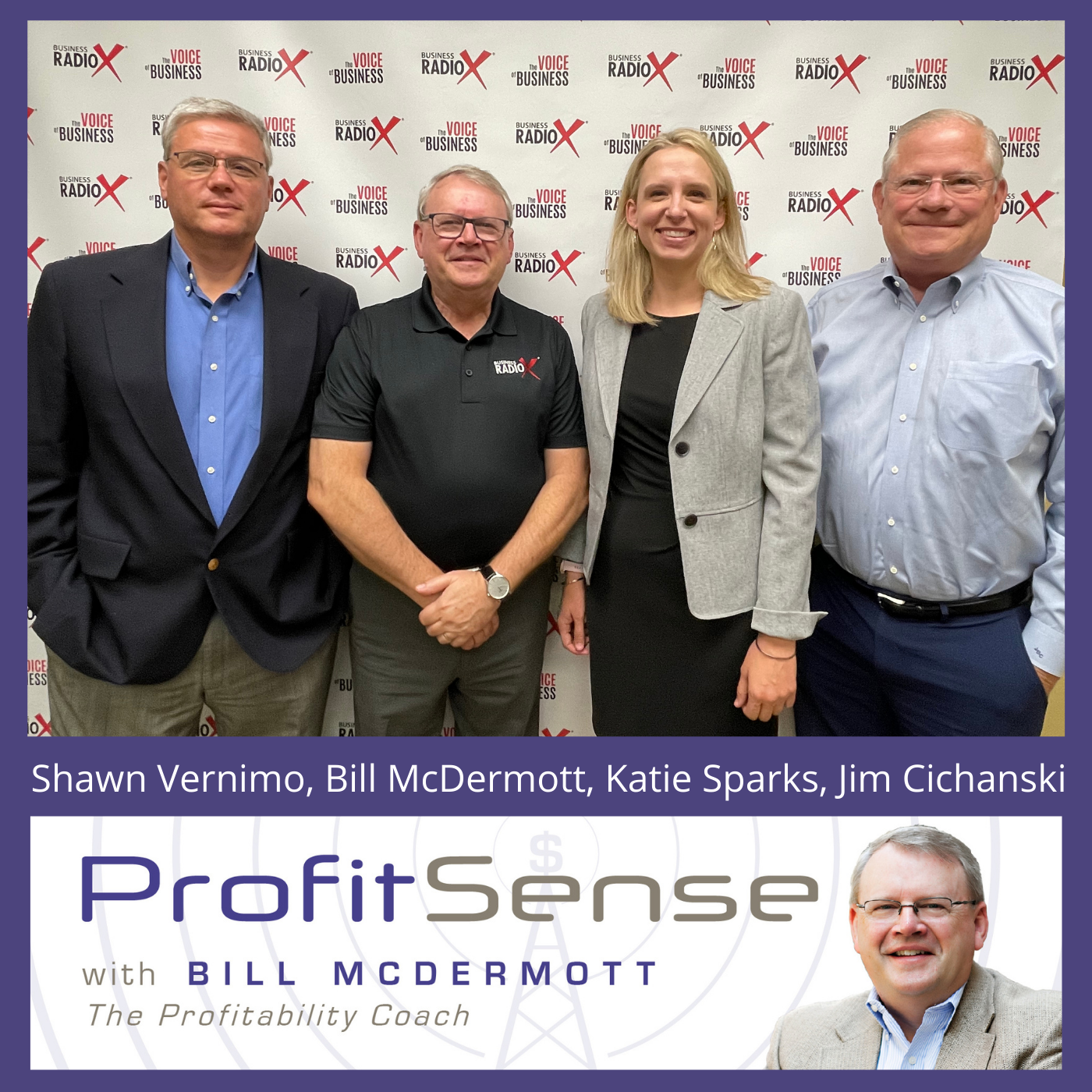
Tagged With: Bill McDermott, collector cars, CWK Network, media company, ProfitSense, ProfitSense with Bill McDermott, Stacey DeWitt, Stephen Becker, Stephen Becker Automotive Group

  • « Previous Page
  • 1
  • …
  • 5
  • 6
  • 7
  • 8
  • 9
  • Next Page »

Business RadioX ® Network


Our Most Recent Episode

CONNECT WITH US

  • Email
  • Facebook
  • LinkedIn
  • Twitter
  • YouTube

Our Mission

We help local business leaders get the word out about the important work they’re doing to serve their market, their community, and their profession.

We support and celebrate business by sharing positive business stories that traditional media ignores. Some media leans left. Some media leans right. We lean business.

Sponsor a Show

Build Relationships and Grow Your Business. Click here for more details.

Partner With Us

Discover More Here

Terms and Conditions
Privacy Policy

Connect with us

Want to keep up with the latest in pro-business news across the network? Follow us on social media for the latest stories!
  • Email
  • Facebook
  • Google+
  • LinkedIn
  • Twitter
  • YouTube

Business RadioX® Headquarters
1000 Abernathy Rd. NE
Building 400, Suite L-10
Sandy Springs, GA 30328

© 2025 Business RadioX ® · Rainmaker Platform

BRXStudioCoversLA

Wait! Don’t Miss an Episode of LA Business Radio

BRXStudioCoversDENVER

Wait! Don’t Miss an Episode of Denver Business Radio

BRXStudioCoversPENSACOLA

Wait! Don’t Miss an Episode of Pensacola Business Radio

BRXStudioCoversBIRMINGHAM

Wait! Don’t Miss an Episode of Birmingham Business Radio

BRXStudioCoversTALLAHASSEE

Wait! Don’t Miss an Episode of Tallahassee Business Radio

BRXStudioCoversRALEIGH

Wait! Don’t Miss an Episode of Raleigh Business Radio

BRXStudioCoversRICHMONDNoWhite

Wait! Don’t Miss an Episode of Richmond Business Radio

BRXStudioCoversNASHVILLENoWhite

Wait! Don’t Miss an Episode of Nashville Business Radio

BRXStudioCoversDETROIT

Wait! Don’t Miss an Episode of Detroit Business Radio

BRXStudioCoversSTLOUIS

Wait! Don’t Miss an Episode of St. Louis Business Radio

BRXStudioCoversCOLUMBUS-small

Wait! Don’t Miss an Episode of Columbus Business Radio

Coachthecoach-08-08

Wait! Don’t Miss an Episode of Coach the Coach

BRXStudioCoversBAYAREA

Wait! Don’t Miss an Episode of Bay Area Business Radio

BRXStudioCoversCHICAGO

Wait! Don’t Miss an Episode of Chicago Business Radio

Wait! Don’t Miss an Episode of Atlanta Business Radio