Business RadioX ®

  • Home
  • Business RadioX ® Communities
    • Southeast
      • Alabama
        • Birmingham
      • Florida
        • Orlando
        • Pensacola
        • South Florida
        • Tampa
        • Tallahassee
      • Georgia
        • Atlanta
        • Cherokee
        • Forsyth
        • Greater Perimeter
        • Gwinnett
        • North Fulton
        • North Georgia
        • Northeast Georgia
        • Rome
        • Savannah
      • Louisiana
        • New Orleans
      • North Carolina
        • Charlotte
        • Raleigh
      • Tennessee
        • Chattanooga
        • Nashville
      • Virginia
        • Richmond
    • South Central
      • Arkansas
        • Northwest Arkansas
    • Midwest
      • Illinois
        • Chicago
      • Michigan
        • Detroit
      • Minnesota
        • Minneapolis St. Paul
      • Missouri
        • St. Louis
      • Ohio
        • Cleveland
        • Columbus
        • Dayton
    • Southwest
      • Arizona
        • Phoenix
        • Tucson
        • Valley
      • Texas
        • Austin
        • Dallas
        • Houston
    • West
      • California
        • Bay Area
        • LA
        • Pasadena
      • Colorado
        • Denver
      • Hawaii
        • Oahu
  • FAQs
  • About Us
    • Our Mission
    • Our Audience
    • Why It Works
    • What People Are Saying
    • BRX in the News
  • Resources
    • BRX Pro Tips
    • B2B Marketing: The 4Rs
    • High Velocity Selling Habits
    • Why Most B2B Media Strategies Fail
    • 9 Reasons To Sponsor A Business RadioX ® Show
  • Partner With Us
  • Veteran Business RadioX ®

LIVE from RISKWORLD 2022: Theresa Everett, QBE North America

June 13, 2022 by John Ray

QBE North America
Minneapolis St. Paul Studio
LIVE from RISKWORLD 2022: Theresa Everett, QBE North America
Loading
00:00 /
RSS Feed
Share
Link
Embed

Download file

QBE North America

LIVE from RISKWORLD 2022: Theresa Everett, QBE North America

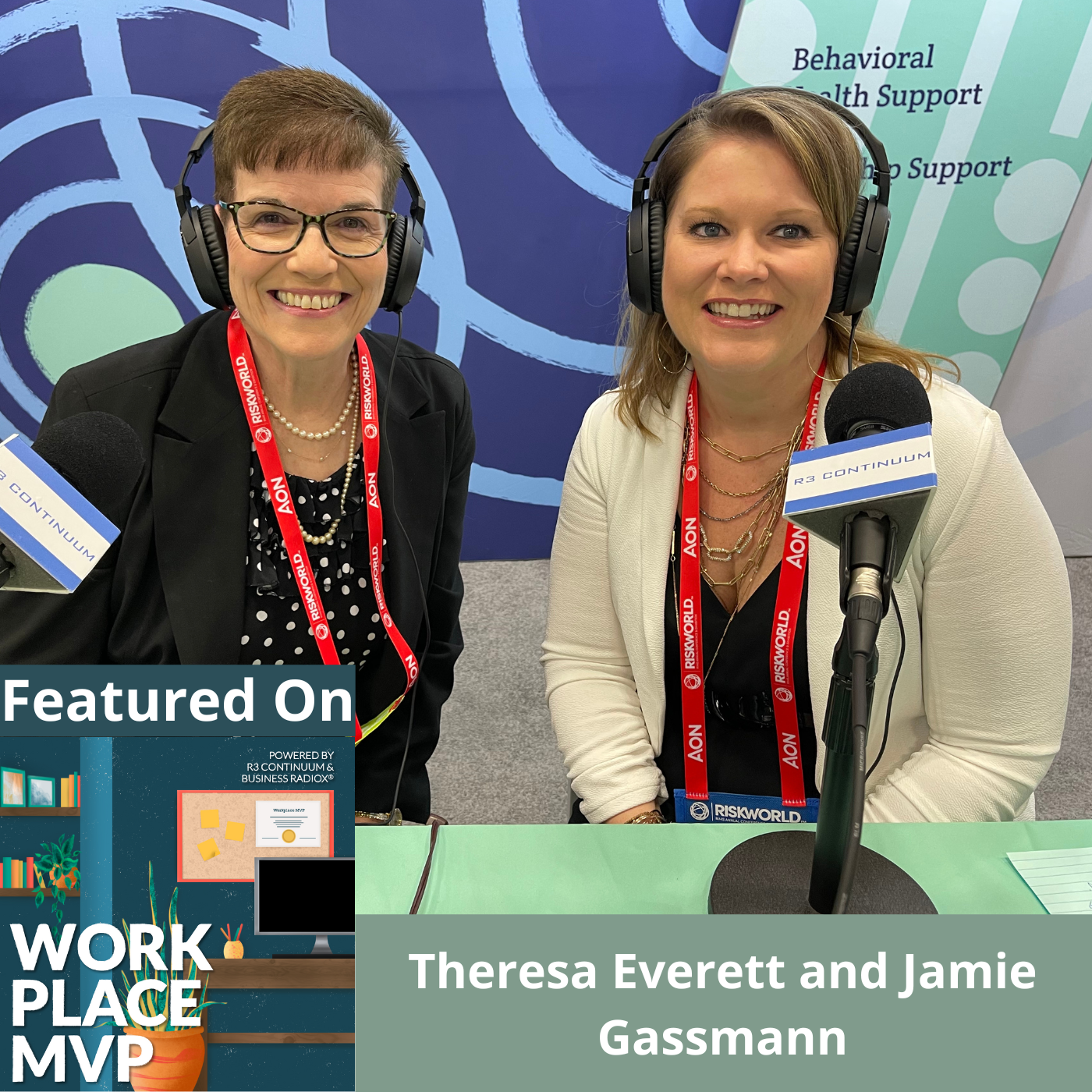
Theresa Everett, AVP of Strategic Client Management for QBE North America, shared some points from her presentation at RISKWORLD 2022, “The Five Best Practices on How to Conduct a Claim Review.” She and host Jamie Gassmann talked about some of those practices, the value of taking a macro perspective to better serve the needs of their clients, and much more.

Workplace MVP is underwritten and presented by R3 Continuum and produced by the Minneapolis-St.Paul Studio of Business RadioX®.

This show was originally broadcast from the RIMS 2022 RISKWORLD Conference held at the Moscone Center in San Francisco, California.

Theresa Everett, AVP, Strategic Client Management, QBE North America
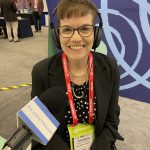
Theresa Everett, AVP, Strategic Client Management, QBE North America
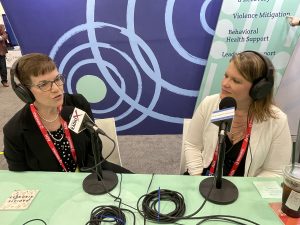
QBE North America is a global insurance leader focused on helping customers solve unique risks, so they can focus on what matters most. Part of QBE Insurance Group Limited, QBE North America reported Gross Written Premiums in 2020 of $4.775 billion. We are rated A+ by Standard & Poor’s and A (Excellent) by A.M. Best.
As an AVP of Strategic Client Management with QBE N.A., Theresa Everett is the one point of contact for all QBE customers, coordinating all the relationships, services, and solutions that their customers have access to.
She also specializes in pre and post-loss injury management consultation which is customized for each customer.  Theresa focuses on the various components of their overall Safety and Workers’ Compensation injury and medical management programs, including but not limited to: human resource and employment practice challenges and the overlap with workers’ compensation and other leave of absence programs, formalized transitional duty programs design and all pre-loss program development and management.

Company website | Theresa Everett LinkedIn

About Workplace MVP

Every day, around the world, organizations of all sizes face disruptive events and situations. Within those workplaces are everyday heroes in human resources, risk management, security, business continuity, and the C-suite. They don’t call themselves heroes though. On the contrary, they simply show up every day, laboring for the well-being of employees in their care, readying the workplace for and planning responses to disruption. This show, Workplace MVP, confers on these heroes the designation they deserve, Workplace MVP (Most Valuable Professionals), and gives them the forum to tell their story. As you hear their experiences, you will learn first-hand, real-life approaches to readying the workplace, responses to crisis situations, and overcoming challenges of disruption. Visit our show archive here.

Workplace MVP Host Jamie Gassmann
Jamie Gassmann, Host, “Workplace MVP”

In addition to serving as the host to the Workplace MVP podcast, Jamie Gassmann is the Director of Marketing at R3 Continuum (R3c). Collectively, she has more than fourteen years of marketing experience. Across her tenure, she has experience working in and with various industries including banking, real estate, retail, crisis management, insurance, business continuity, and more. She holds a Bachelor of Science Degree in Mass Communications with special interest in Advertising and Public Relations and a Master of Business Administration from Paseka School of Business, Minnesota State University.

R3 Continuum

R3 Continuum is a global leader in workplace behavioral health and security solutions. R3c helps ensure the psychological and physical safety of organizations and their people in today’s ever-changing and often unpredictable world. Through their continuum of tailored solutions, including evaluations, crisis response, executive optimization, protective services, and more, they help organizations maintain and cultivate a workplace of wellbeing so that their people can thrive. Learn more about R3c at www.r3c.com.

Company website | LinkedIn | Facebook | Twitter

TRANSCRIPT

Intro: [00:00:02] Broadcasting live from Riskworld 2022 at the Moscone Center in San Francisco, it’s time for Workplace MVP. Brought to you by R3 Continuum, a global leader in helping workplaces thrive during disruptive times. Now, here’s your host.

Jamie Gassmann: [00:00:21] Hi, everyone. Jamie Gassmann here again, your host for Workplace MVP, live at the RIMS Riskworld 2022. And with me is Theresa Everett. Theresa, give us a little background about who you are, where you work, what you do.

Theresa Everett: [00:00:38] Sure. Thank you. Thank you for having me. My name is Theresa Everett. I am with QBE Corporation here in North America and I am a claim relationship manager, and I manage coming from the claims background but I also manage national and multinational insurance programs.

Jamie Gassmann: [00:00:59] And, you are presenting at this year’s conference. Talk to me about the title and what your presentation is about.

Theresa Everett: [00:01:05] Sure. Yes, I am presenting and I’m very excited for that. And I am presenting the five best practices on how to conduct a claim review.

Jamie Gassmann: [00:01:16] So, tell me a little bit about – I know you want to probably save all the juicy stuff for the presentation, but what kind of things are you sharing with the audience?

Theresa Everett: [00:01:25] Sure. Well, the presentation really focuses on how best to take advantage of your claims data and then what is it that you look at in order to pick those claims. So, you know, it’s starting with the understanding of our customer and then, you know, what their pain points are, how much risk are they willing to retain. And just understanding that and just not picking claims just for the sake of doing a claims review, but really picking those claims strategically so that you can have an impact on their total cost of risk.

Jamie Gassmann: [00:02:06] So looking at your audience, what are you hoping that they take away from that presentation? What are like – if you could pick, like, the top three things that you want that audience to be left with after sitting through the presentation, what would you like that to be?

Theresa Everett: [00:02:23] I think that having a claim review, just for having the sake of a claim review, so many people are just used to doing that in our industry. Okay, let’s just have a claim review. What I really want them to walk away with is to really think strategically on the claims that they are picking for that review, how is that going to impact, you know, the account.

Jamie Gassmann: [00:02:50] Yeah.

Theresa Everett: [00:02:51] So that’s really, you know, just for the sake of, okay, we need to do a claims review. So from the portion from the carrier perspective, just don’t, you know, go picking claim. Okay, we need to do this. Really be a lot more strategic with it.

Jamie Gassmann: [00:03:09] So would they be putting like a criteria together then? Is that kind of something that would be an approach that they could take and identifying like –

Theresa Everett: [00:03:16] Yes.

Jamie Gassmann: [00:03:16] Appropriate claim.

Theresa Everett: [00:03:17] Yeah. Yes, absolutely. And, the biggest thing really is to understand your customer, what industry they’re in, you know, how they do their business, you know, what are the things, how much risk have they retained or have they transferred that risk. You know, what do they want to do? Is it just normal business or are they trying to change their program? So, those are the things that really we need to understand before we pick that group of claims to be able to effectuate any change in their program.

Jamie Gassmann: [00:03:52] Yeah. And when we talk about claims management and choosing claims review, what types of claims are you kind of focusing your presentation on?

Theresa Everett: [00:04:00] Well, really it depends on the industry. So you need to know what industry when you’re ready to pick your claim review and you have your client and you’re insured. Okay. If they’re in the food and beverage industry, you pretty much know the types of claims that they’re going to have. And, you know, from a pre-lost perspective, a safety perspective, you can take all of that data, look at it, and then look at the efficacy of how their programs are working behind the scene. So, I mean, people don’t take advantage. They look at things from a micro perspective as opposed to a total macro perspective when they’re looking at a set of claims.

Jamie Gassmann: [00:04:41] Yeah. So, really, from your presentation, they can take those pointers, those five best practices and look at across industries and apply them.

Theresa Everett: [00:04:50] Yes.

Jamie Gassmann: [00:04:50] And, really, it sounds to me like what you’re getting, you know, trying to send the message to the audiences. You’ve got to look at all the industries. They’re all going to be a little different.

Theresa Everett: [00:05:00] Correct. Each one is unique.

Jamie Gassmann: [00:05:01] Yeah, absolutely. But you can use the same standard principles across all of them.

Theresa Everett: [00:05:05] Yes. Absolutely.

Jamie Gassmann: [00:05:05] Fascinating.

Theresa Everett: [00:05:06] Yes.

Jamie Gassmann: [00:05:06] Oh, well, it sounds very exciting. I’m sure the audience is going to really enjoy those tips.

Theresa Everett: [00:05:10] Yes.

Jamie Gassmann: [00:05:11] And we so appreciate you being here on our episode here at Riskworld. If our guests or our audience, goodness gracious, a little tongue-tied this morning. If our audience wanted to learn more from you about that or to talk to you, how would they get ahold of you?

Theresa Everett: [00:05:29] So, they can contact me via email. And my email address is Theresa, that’s T-H-E-R-E-S-A, dot Everett, E, V as in victor, E-R-E-T-T, @us.qbe.com.

Jamie Gassmann: [00:05:45] Wonderful. Well, thank you again so much for being on the episode with us here, Theresa.

Theresa Everett: [00:05:50] Thank you for having me.

Jamie Gassmann: [00:05:50] Good luck in your presentation.

Theresa Everett: [00:05:52] Thank you very much.

Outro: [00:05:57] Thank you for joining us on Workplace MVP. R3 Continuum is a proud sponsor of this show and is delighted to celebrate most valuable professionals who work diligently to secure safe workplaces where employees can thrive.



Tagged With: claim review, Jamie Gassmann, QBE North America, R3 Continuum, RIMS, RISKWORLD 2022, Theresa Everett, Workplace MVP

Workplace MVP: Whitney Hoffman-Bennett, CallRail

June 9, 2022 by John Ray

CallRail
Minneapolis St. Paul Studio
Workplace MVP: Whitney Hoffman-Bennett, CallRail
Loading
00:00 /
RSS Feed
Share
Link
Embed

Download file

CallRail

Workplace MVP: Whitney Hoffman-Bennett, CallRail

In this episode of Workplace MVP, host Jamie Gassmann and guest Whitney Hoffman-Bennett, VP of Talent and Culture at CallRail, looked at unlimited PTO as CallRail has implemented it and what their experience has been. How do you structure it and how do you manage misuse? Whitney discussed how CallRail came to establish unlimited PTO, the “guardrails” they implemented with it, how the employees responded and adjusted to it, the need for leaders to model it, variations on the idea such as a sabbatical program, planning for future growth, and much more.

Workplace MVP is underwritten and presented by R3 Continuum and produced by the Minneapolis-St.Paul Studio of Business RadioX®.

CallRail

CallRail is a lead intelligence platform that makes it easy for businesses of all sizes to turn more leads into better customers.

Serving more than 200,000 businesses and integrating with leading marketing and sales software, CallRail’s marketing analytics and business communications solutions deliver real-time insights that help customers market with confidence.

Company website | LinkedIn | Facebook

Whitney Hoffman-Bennett, PHR, SHRM-CP, Vice President of Talent & Culture, CallRail

Whitney Hoffman-Bennett, PHR, SHRM-CP, Vice President of Talent & Culture, CallRail

Whitney Hoffman-Bennett is the VP of Talent & Culture at CallRail. With a decade of experience in human resources and a specialty in rapidly growing SaaS start-ups, Whitney expertly balances the needs of employees with the needs of the business.

She is passionate about fostering a culture where people are excited about the work they do and the team they’re working with. Prior to CallRail, she gained experience at Ingenious Med, Vocalocity, and LPL Financial.

Whitney earned a Bachelor of Arts in marketing at Kennesaw State University.

LinkedIn

About Workplace MVP

Every day, around the world, organizations of all sizes face disruptive events and situations. Within those workplaces are everyday heroes in human resources, risk management, security, business continuity, and the C-suite. They don’t call themselves heroes though. On the contrary, they simply show up every day, laboring for the well-being of employees in their care, readying the workplace for and planning responses to disruption. This show, Workplace MVP, confers on these heroes the designation they deserve, Workplace MVP (Most Valuable Professionals), and gives them the forum to tell their story. As you hear their experiences, you will learn first-hand, real-life approaches to readying the workplace, responses to crisis situations, and overcoming challenges of disruption. Visit our show archive here.

Workplace MVP Host Jamie Gassmann

Jamie Gassmann, Host, “Workplace MVP”

In addition to serving as the host to the Workplace MVP podcast, Jamie Gassmann is the Director of Marketing at R3 Continuum (R3c). Collectively, she has more than fourteen years of marketing experience. Across her tenure, she has experience working in and with various industries including banking, real estate, retail, crisis management, insurance, business continuity, and more. She holds a Bachelor of Science Degree in Mass Communications with special interest in Advertising and Public Relations and a Master of Business Administration from Paseka School of Business, Minnesota State University.

R3 Continuum

R3 Continuum is a global leader in workplace behavioral health and security solutions. R3c helps ensure the psychological and physical safety of organizations and their people in today’s ever-changing and often unpredictable world. Through their continuum of tailored solutions, including evaluations, crisis response, executive optimization, protective services, and more, they help organizations maintain and cultivate a workplace of wellbeing so that their people can thrive. Learn more about R3c at www.r3c.com.

Company website | LinkedIn | Facebook | Twitter

TRANSCRIPT

Intro: [00:00:04] Broadcasting from the Business RadioX studios, it’s time for Workplace MVP. Workplace MVP is brought to you by our R3 Continuum, a global leader in workplace behavioral health and security solutions. Now, here’s your host, Jamie Gassmann.

Jamie Gassmann: [00:00:26] Hi, everyone. Your host, Jamie Gassmann here. And welcome to this episode of Workplace MVP. The option of unlimited paid time off or PTO is a forward-thinking benefit that some industries and employers have begun adopting. According to Metlife’s 2019 US Employee Benefit Trends Study that interviewed 2675 full-time employees, 72% expressed interest in receiving unlimited paid time off. Some organizational leadership feel this approach is more of a marketing ploy for recruitment efforts; while others, including our guest today, see this as a way to ensure employees are taking their much needed mental wellness breaks.

When thinking of the option of incorporating an unlimited PTO program, I think it naturally presents concerns of overuse of time off and under use of time off. So, kind of a mixed variety. So, what are the benefits to incorporating this type of PTO benefit into your organization? And what are the watchouts and key learnings to be aware of? Well, joining us today to share her experience with us and navigating an unlimited PTO benefit, among other forward-thinking benefits, is Workplace MVP and Vice President of Talent and Culture of CallRail, Whitney Hoffman-Bennett. Welcome to the show, Whitney.

Whitney Hoffman-Bennett: [00:01:47] Thanks, Jamie. Happy to be here.

Jamie Gassmann: [00:01:49] So, let’s start off with you sharing with me and our audience your career journey to date and becoming the Vice President of Talent and Culture at CallRail.

Whitney Hoffman-Bennett: [00:02:00] So, it’s funny. I actually started my career in sales, which is important later. Quickly learned that sales could not do it. Like some people think HR is stressful. I feel like I can handle the people stress all day long, but the stress of restarting quota every month, not for me. So, I left where I was doing sales. It was actually a startup. So, I did learn a lot about startups there and moved to another country — not another country, another company where I actually was in an admin position, saw a need for HR. And the great thing about startups is they said, “Okay, let’s do that and I’m going to support you to do it.”

And I got my PHR and my other certifications, grew to be director there, and stayed there for about eight years. And then, someone at my sales job actually reached out to me and said, “Hey, I’m at this new company. They need HR. Are you interested?” So, full circle moment. And I joined CallRail in 2018 as the Director of Talent and Culture, their first director of talent and culture. And within a year, had been promoted to Vice President and I have been here for four years now.

Jamie Gassmann: [00:03:12] Wonderful. It’s interesting. A lot of the HR professionals that I speak with on this show, and in other conferences, and other locations that I get the opportunity to connect, they have similar stories of falling kind of into the work. So, it’s great. It’s interesting to hear that you kind of have a similar story and, you know, finding that passion, and being able to support the people within your organization. It’s very cool. So, tell me a little bit about what CallRail does, just to kind of give some background to our audience on what the organization serves.

Whitney Hoffman-Bennett: [00:03:47] Yeah. So, we are a marketing attribution software that makes it easy for businesses of all sizes to turn more leads into better customers. We serve more than 200,000 businesses, and we integrate with marketing and sales software. And our marketing, analytics and business communication solutions delivers those real-time insights that help our customers market with confidence.

Jamie Gassmann: [00:04:13] Great. And I know, in looking at the unlimited PTO program and us talking before, this was a program that was already in place when you started at CallRail. So, talk to me about some of the concerns that you identified early on with the program when you joined CallRail, you know, about what they were experiencing, that you were like, “Ooh, we need to correct that.” So, tell me a little bit more about that.

Whitney Hoffman-Bennett: [00:04:36] It’s funny because the place I was previous to CallRail, our CFO kept saying, “Maybe we should do unlimited PTO.” And I was like, “That doesn’t work. We can’t do that. People will take advantage.” And then, I got to CallRail, and I was like, “Whoa! Unlimited PTO. Let’s see what this is about,” because it was already in place. And what’s funny is our CEO actually posted an internal blog, and it was a tweet that said “Name a scam.” And the response was unlimited PTO. And so, he posted that to say, “Let’s be real. Let’s talk about this. What’s working? What’s not working?” And we gave employees the option to give us feedback, what were they seeing, what did they like, what did they not like? And then from that, he and I got together and kind of made changes from the policy based on the feedback from our employees.

Jamie Gassmann: [00:05:28] Yeah, because you had kind of a mix going on. If I recall from our conversation that some were taking it, some were not taking it, some are abusing it. I mean, you just kind of had kind of a mix all over the place. Is that pretty accurate?

Whitney Hoffman-Bennett: [00:05:42] It was definitely a mix. It was difficult for our customer-facing teams to figure out when could they actually go on PTO because they had to hit their numbers. If they were on sales, if they were in support, they had to be able to serve our customers. And then, people really didn’t know what does this mean? Like, how much can I take off? And what if I’m sick? Or What if I have a baby? Like, there was so many things that were muddying the waters that we really need to segment things in order for it to be successful.

Jamie Gassmann: [00:06:09] Yeah. So, when looking at that surveying and kind of pulling the company to hear from your employees, what were some of like — you kinda mentioned guardrails. What did they share with you that they — from that polling, what did you discover?

Whitney Hoffman-Bennett: [00:06:24] So, a lot of employees were saying that they worked really hard, and it’s not that they felt like they couldn’t take time off, but they just didn’t. They didn’t think about it. Or they’d make a couple of long weekends, but that’s all they take off. And so, we had said, “Would it be helpful if we required some sort of minimum?” And they were like, “Yes, that would be very helpful. If it was out there as a statement, it would feel like it was something we had to do,” so to speak. We wanted to make very sure to separate mental wellness from taking PTO. If you’re sick physically or mentally, don’t worry about your PTO. Within that, let’s focus on sick time, other time, keep that separate. So, that was something that was really important. And then, I think sharing the average that people were taking. So, you knew. Like just because this is an average doesn’t mean this is how much you have to take, but it gives you a good guide of this is what other people around you are doing, so you could try to be equitable in that.

Jamie Gassmann: [00:07:22] Yeah, because I would imagine there’s probably some employees that feel bad taking PTO. I know, sometimes, I’ve seen that in my management career where the employee’s like, “I’m really sorry, but I need to request some time off,” and it’s like, “Well, that’s your benefit. I want you to take time off, so never feel sorry about it.” So, I think that’s — I’m sure the truth — that’s probably the same within your organization, those employees going, “Oh, well, that’s good. The average is that. So, I won’t be going any more than what other people are doing.”

Whitney Hoffman-Bennett: [00:07:49] Yeah. And I think even like when I interviewed for my role at CallRail, I interviewed with the CFO, and I was like, “What’s your paternity/maternity policy? Like, what do you do for family leave?” And he actually he was like, “I don’t know, but we have unlimited PTO.” And in my head I was like, “That’s a nightmare. Like, you can’t — then, I’ll just never come back.” So, you have to clarify what that looks like. And that was another thing we said too. We’re like, “It’s not actually unlimited. If you are gone for six months, you’re probably not going to have a job anymore.” Like you can’t just leave for an indeterminate amount of time.

Jamie Gassmann: [00:08:25] Right. So, looking at, you know, the feedback from the employees, kind of some of the key learnings, you know, what kind of edits did you make to the program that you haven’t already shared that helped it to be improved? But then also, how did you communicate that to the employees? And then, ultimately, how did that enhance their utilization of PTO and kind of changes that they made?

Whitney Hoffman-Bennett: [00:08:48] So, we did say call out very plainly, sick time is not vacation. And this was in 2018-2019. So, we’re like, “If you’re sick, stay at home.” Well, everyone stays home. But if you’re sick, stay at home. If you’re really sick, stay at home and don’t work. Like there’s no prize for being hard core and taking the rest of us down with you. Do not do that. And we do call out in our employee handbook now, if you are sick, if you are grieving, if there are things going on, you can be gone for two consecutive weeks before we need to talk about other types of leave. And that’s just for like one instance, two weeks. You can also, if you need a long weekend because you have a cold, that’s separate from those two weeks. So calling that out.

We did call that everyone should take, at least, one continuous week of vacation a year. Do this. You can’t recharge in a long weekend. Take a full week off a year. Another thing we said that I think a lot of people don’t think about when they are developing unlimited PTO is that three-day weekends can be very low impact if you do your part. Don’t disappear and leave your team hanging, but a well-executed three day weekend should never take a project off schedule. Nobody should work 10 to 12-hour days consistently. But if you want a free three-day weekend or personal day, give it a shot for four days, go hard Monday through Thursday, and then go take your long weekend. And you can do that multiple times without it being super disruptive.

Another thing was don’t expect people to check the calendar. We, before I came, did not have HRIS. So, along with this, I implemented an HRIS, and we told people, “You got to start putting it in.” Like it’s approved, but you got to put it in. I don’t know. And honestly, with everything, what we say is just be cool, so we don’t have to make a ton of rules and policy this to death. Like everyone here is an adult. We hire you to be an adult, get your work done, take your vacations, live your life.

And then, I think the final thing is just one of our cultural statements is turn it off. And so, we made it very clear, if you’re on vacation, disconnect, stop checking slack, set an out of office and don’t check your email. If our world is truly on fire, someone will know how to get in touch with you. Beyond that, go have fun.

Jamie Gassmann: [00:11:19] Yeah, that is so important. I see a lot of people, you know, “Oh, I’m going to be on vacation,” and the next thing you know, you’ve got emails rolling in from them. You know, you’re on PTO, be on PTO. It’s kind of one of my rules. I always let my staff know I’m accessible if you need me, but I’m not going to be actively checking, so.

Whitney Hoffman-Bennett: [00:11:37] And I think that’s important as a leader to model that, so other people do it. My out-of-office typically says, “I am practicing our culture value of turn it off. I’m spending an uninterrupted time with my family. Reach out to these people. I will get back to you next week.”

Jamie Gassmann: [00:11:54] Yeah, I think that’s so important, especially now. I mean, I think, you know, you kind of mentioned COVID where, you know, people aren’t coming into work sick. That was something I actually mentioned to a coworker. I’m like, “Well, gone are the days of coming in hacking up a storm and thinking that you’re going to get through your week like that.”

Whitney Hoffman-Bennett: [00:12:12] Can you imagine?

Jamie Gassmann: [00:12:12] It’s not happening anymore.

Whitney Hoffman-Bennett: [00:12:14] We used to do that all the time. And it’s okay

Jamie Gassmann: [00:12:16] Oh my, gosh, yes. You’re at work with a fever. Just, you know, making it work. Yeah. Doesn’t happen anymore. Interesting. So, you know, in looking at this, I mean, I love that, you know, you’ve created kind of this environment where you’re allowing them to be adults, and be respectful with each other, and mindful of each other from a culture perspective, but how do you manage misuse of PTO or the challenge of balancing between the employees? Or do you not have concerns of that where they’re respecting kind of that boundary, if you will? Talk to me about that.

Whitney Hoffman-Bennett: [00:12:51] Yeah. I don’t have a ton of concerns about it. I know I said it before, and it sounded like I was joking, but we really do with most of our policies or things. It’s like, “Can you just be cool? Just be cool.” I will say we did call out, you know, plan early and often. If you’re going to be out for a week, please plan it a month or two in advance. If you’re going to be out for two weeks or more, your team and manager should know this several months in advance. So, it’s more like letting people know, so it wasn’t last minute, “Oh, I forgot. I’m going to be gone for two weeks.”

Be respectful. That’s another one of our value statements is respect everyone. So, in that vein, make sure people are prepared. I will say for our customer-facing teams, we did have to do a little bit more for them, so there would be enough people to manage the incoming calls from our customers. But beyond that, if managers come to me and say, “Hey, it feels like this person’s taking too much PTO,” I remind them of what the average is that we’ve said that people take. And if it is beyond that, remind them, say, “Hey, the average is this. You’re sitting a little bit more above this. Do you know what it’s looking like for the rest of the year and your vacation?” And just have a conversation with them about it.

Jamie Gassmann: [00:14:03] Just to make sure there isn’t too much misuse, that somebody isn’t pulling their weight on a project or within an area. So, looking at it from the sick time, I know you kind of mentioned, and I remember, you know, I’ve worked in corporate America long enough where there were the times of, you know, here’s how many sick days you have a year and here’s how many PTO days you have. You know, now, a lot of organizations have gone to combining that. Thinking of sick time, you know, how are you balancing that? Because I know you mentioned it’s not part of PTO. Do you track it or is it just something that leaders have to keep an eye on? You know, what are — how do you manage that different than the PTO part?

Whitney Hoffman-Bennett: [00:14:45] So, that’s an interesting one. I think most employees know the two weeks. And if they know it’s going to go beyond that, they reach out to us and say, “Hey, let’s talk about leave.” That’s why I think it’s also important to have other benefits like short-term disability, or long-term disability, or family leaves. So, if people have those bigger life things they need to take care of, they have other options once they’ve exhausted that two continuous weeks. And nine times out of ten, we can work with people, and we’re like, “Okay, like your two weeks is up. But realistically right now, what can you do? Is it part-time? Is it just one day a week? Is it maybe not on calls, but you’re able to get other work done?” And then, we’re able to figure out something.

Jamie Gassmann: [00:15:28] So, for the employees, just curiosity, in terms of this unlimited PTO, have they made commentary around like enjoying the fact that they don’t really have to track it, like, as tight and closely as some other organizations might have to if they had like, you know, you have a bank of hours and this is what you get to use? You know, what kind of feedback do you get on that or what does the overall kind of, you know, I don’t know if it’s structure, like, you know, structure, but how do they feel about it?

Whitney Hoffman-Bennett: [00:16:00] I think there’s two camps. It’s people that come from other tech companies and are like, “Well, of course, you have unlimited PTO.” Like, that’s table stakes for them because they come from other tech companies. And then, we have people who have never had unlimited PTO and are used to kind of having to negotiate PTO as part of their offer. And we’re like, “No, no, you don’t have to do that. Like, we’re good.” I think the fact that we have the guidelines help people a lot because it lays out expectations very clearly. Know when they can take it, when they can’t take it. And then I think for the customer-facing teams, we have given them the tools that they need for them to really take time off. And those are the teams that question it the most, like customer support and sales are like, “No, but really how much time off can I take?” And we have levers in place, so they can enjoy the same thing that everyone else can.

Jamie Gassmann: [00:16:52] Yeah, absolutely. Because, you know, having coverage for those customers is so important.

Whitney Hoffman-Bennett: [00:16:56] Yes.

Jamie Gassmann: [00:16:56] So, looking at mental wellness overall with employees, and obviously we all see taking time off and PTO as kind of a way for self-care, and you mentioned requiring that full week, which I think is such an interesting — I just love that idea because you’re right when you say a long weekend doesn’t really give you that time to check out fully. So, I love that culture statement that you’ve coined, you know, the turn-it-off time. So, how do you see this helping the overall health of your organization? You know, are you seeing a good impact on that? You know, what does retention levels look like? You know, what are kind of some of the measurements you’re seeing in terms of this being helpful overall?

Whitney Hoffman-Bennett: [00:17:39] I will say, as far as like the sick time and the mental wellness, we are a company that is very open and transparent about mental wellness, mental health, how important it is. It’s Mental Health Awareness Month now, May is, and we have four weeks of different things every week reminding people to take care of themselves. And we’re focusing on it holistically. Last week was financial week or financial health. This week is burnout and how to deal with stress. Like there’s different things every-

So, in addition to PTO, we’re giving people the tools that they need internally. And I think a combination of all that really helps with engagement and also retention, because all of that can be done in a hybrid environment. And so, even if you’re not in the office, you’re still getting the benefits of everything that someone in the office is getting with the different programming. And I think it’s a one time — one thing to have unlimited PTO, but then it’s another thing for leaders to model it. And for us as a company to talk about PTO and for us as a company to talk about mental wellness. So, I don’t necessarily know that it’s successful if you just throw it up and say, “Yeah, it’s unlimited. Do what you want.” Those are the places that are going to have to policy something to death.

Jamie Gassmann: [00:18:55] Yeah. So, it’s a component of kind of an overall structured approach.

Whitney Hoffman-Bennett: [00:19:01] Yeah.

Jamie Gassmann: [00:19:01] Which is great. And I love when you mentioned the leaders having to model it. I mean, that’s so true in so many different areas of business and kind of self-care, and as vulnerability and, you know, open communication that’s — I mean the leadership has to be such a great demonstrator of that, where employees then can model and follow that behavior. Very cool.

So, we’re going to take a moment and hear from our show sponsors. So, Workplace MVP is sponsored by R3 Continuum. R3 Continuum is a global leader in empowering leaders to effectively support and help their employees thrive during disruptive times through their tailored workplace behavioral health support, disruption response and recovery, and violence mitigation solutions. They can help you create a work environment where your employees can feel psychologically and physically safe. To learn more, visit r3c.com today.

So, shifting gears a little bit. Another area that you as a leader are passionate about and another forward-thinking benefit that you’ve put into motion is family leave benefits for all. Can you tell our listeners about your program, and how you’ve implemented that, and what that all entails.

Whitney Hoffman-Bennett: [00:20:15] For sure. So, this is something that, personally, to me, means so much. I have three young children, and people getting time to bond with children, regardless of how they come into your family, is so important. And I remember when I worked at my previous job, I was at a meeting with people internally, people externally, and they were like, Well, it’s fine for women to have time off, but men don’t need that.” Like it’s, “Men don’t need that.” And it was kind of hand-waving. They’re fine. And I was like, “I had a C-section. I couldn’t, like, function well. I couldn’t pick up my baby on my own. Like I needed my husband there and it was important for us.” And so, I am seeing that companies are starting to change. I think society is a little bit starting to realize that it’s just not all on women.

And something that’s really important to CallRail is being an inclusive environment and making sure that our benefits mirror that. So, we give you 12 weeks paid of family leave regardless of how a child comes in. So, if you adopt, if you foster, if you give birth. And this is for people that identify as men and women. So, everyone gets it. And then, we also let you have — you come back, you transition back. So, for those first four weeks, you’re paid full time, but you work part time. So, you only work three days a week. You have two days where you’re not working, so you can figure out what new normal looks like with this child in your life and you going back to work, and you can really ease in, so you don’t feel that pressure to immediately be a fully functioning human again.

Jamie Gassmann: [00:21:51] Yeah, that’s so amazing. I have two children myself, and I still remember home on leave with the second one, you know, and having both of them there, and my husband leaving to go to work, and being like, “Oh my, gosh. So overwhelming.”

Whitney Hoffman-Bennett: [00:22:05] It’s impossible. I felt that way leaving the hospital. Like, “Are you-”

Jamie Gassmann: [00:22:05] Yeah.

Whitney Hoffman-Bennett: [00:22:05] I came in here with no children, and you’re just giving me a baby, and saying, “Goodbye.” Like, what?

Jamie Gassmann: [00:22:14] Yeah. Actually, this is funny because I’m all about transparency. I actually asked the nurse if I had to now change the diapers in the hospital because I was so exhausted. And she looked at me like I was crazy going, “Yes, you do.” That was like, “Oh! Oh my God, I’m so tired.”

Whitney Hoffman-Bennett: [00:22:30] But how do I feed this-

Jamie Gassmann: [00:22:32] Yes.

Whitney Hoffman-Bennett: [00:22:32] And when do I sleep? And what do I do? No one tells you.

Jamie Gassmann: [00:22:35] No, no. There isn’t like a handbook, as my mom always tells me, so. But I love that the benefits for the husband or the dad as well, because I think that that allows them to be able to have that presence within that, you know, early time of the infant. And I think that’s a really important shift that you’re starting to see in some work environments.

So, looking at your program, I know you mentioned the easing back into work. You know, looking at back at it when coming back from work, I know I just came back full time, and just that transition, to your point, you’re so tired and still trying to navigate all of that, how does that help your employees as they transition back? What have you seen, you know, by having this type of kind of an easing back in? You know, kind of talk a little bit about some of the experience you’ve seen with that.

Whitney Hoffman-Bennett: [00:23:29] Yeah, there was probably a month or two ago, I ran into a colleague who had just come back, and she was on her transition month. And she teared up and was like, “It’s just, I’ve done this before and not have the transition. And it’s so impactful because I don’t necessarily have to send my baby to daycare. I can figure out something else for those three days.” So, she has another full month at home. “And I can feel like I’m doing something for myself,” because she is someone who really likes her job. So, she’s like, “I can feel like I’m doing something for myself, but then I can still go home and spend those two more full days.”

And I think even for me personally, because I have had one baby here at CallRail, and the transition back, it was so overwhelming to come back in and try to catch up. You’re so much more tired than you realize. So, just having those two additional days to not have to use your brain a ton, and be able to just focus on you and your baby and continue to bond is super meaningful. I think, of course we could give more time off and America, as a society, should give more time off, but I would almost rather have that transition because either way, you’re going right back into the fire.

Jamie Gassmann: [00:24:39] Yeah, absolutely. No, I can see that being just, you know, so beneficial, and just looking back in the past on when I transitioned back in years ago. So, looking at other benefits, I mean, you’re really a forward-thinking organization and adopting some of these benefits that other organizations have maybe looked at but haven’t actually moved forward on, there’s another one that you’re looking at implementing or kind of observing you shared that I think was really interesting. You kind of mentioned in our conversation, you know, exploring, you know, doing a sabbatical type program within your organization. What might that look like or, you know, what have you seen other organizations do that present some of the benefits to implementing that within your work environment?

Whitney Hoffman-Bennett: [00:25:25] Yeah, this is something that I would love to implement. I feel like I have to preface this if any of our employees are listening, nothing has been approved yet. This is just in my head, but I do see more and more companies doing a sabbatical program. And if you think about unlimited PTO, sure, it’s unlimited, but you can’t necessarily walk away from your job for six weeks in this unlimited PTO without a ton of planning. And then, also, I’m sure a lot of people would be like, “Well, you have, you know, 12 weeks off when you get a baby. Isn’t that a vacation?” No, no, it is not. No, it is not. But when is any other time that you can take a substantial amount of time off? It doesn’t exist.

And so, I think giving people six weeks off, giving them some kind of stipend to do something during that time, and then being able to really just turn it off. I would also love to marry this, and now I’m getting really big here, but if we could do some kind of program where before the person leaves on sabbatical, there’s someone else shadowing them, and then they take over pieces of their job while they’re gone, and then they can learn a new skill. They can see if they like it or don’t like it. So, marrying it with career growth, and then the other person gets to go away, and their stuff is handled, like that is my ideal state.

Jamie Gassmann: [00:26:49] Yeah.

Whitney Hoffman-Bennett: [00:26:50] Nothing has been approved. Can I say that?

Jamie Gassmann: [00:26:51] No, it’s kind of just – it’s forward thinking and just kind of looking at possibilities. I mean, there’s other –like educational industry is known for the sabbatical programs, right? And allowing, you know, a teacher to go and learn or study abroad a different trade or different, you know, something around the education that they’re looking, they’re inspired by, you know. And it allows somebody to kind of grow as an individual. And I imagine it could benefit the organization depending on what it is that they do.

And I love that mirroring it with career growth opportunity, where somebody can step into the shoes of somebody else for a moment to kind of, you know, expand their horizons. It’s very interesting. And again, forward thinking, but very kind of visionary, right?

Whitney Hoffman-Bennett: [00:27:39] Yes.

Jamie Gassmann: [00:27:39] I just think it was fun to talk about because it just shows that, you know, you’ve got the unlimited PTO, you’ve implemented this great family leave benefit for all, regardless of how the child came into their life. So, it just shows that you’re constantly thinking of ways that you can kind of expand that horizon of benefits for employees, which I think is wonderful. So, looking at like a leader, so let’s just say that there’s a leader looking to incorporate an unlimited PTO program into their organization, what advice would you give to them for where they should start, how do they do that? You know, what are some of your thoughts around where would you guide them to doing that?

Whitney Hoffman-Bennett: [00:28:19] It’s funny because I shared at the top, I was at a company before that wanted to do unlimited PTO and I said no. And the reason I said no was because of the culture. I didn’t think it would work. And not that the culture was bad. It just wasn’t a culture that I think could sustain unlimited PTO. I don’t think there was that foundation of trust with a lot of employees. So, that’s the most paramount is what does the culture look like, and do you think your culture can handle this? You can still have a very generous PTO policy without making it unlimited, and everyone can be happy. So, culture, I think, is the most important thing.

And then, thinkin of — thinking future state. Okay, maybe we’re 50 employees now. When we’re 200 employees, what are some of the roadblocks that might come up? And what are the guardrails we need to put in place now? Because it’s much easier to build it as you intend to be instead of piecemealing it until you get there.

Jamie Gassmann: [00:29:17] Yeah, very good. I mean, it brought me to a question of like, you know, is it a right fit for everyone? And you kind of answered that by saying you really have to look at the culture of the organization, and is it going to be a right fit? That’s kind of your first step. And then, looking at, like, implementing the family leave program that you’ve put in place, how would you advise somebody looking to explore that? What should they do first?

Whitney Hoffman-Bennett: [00:29:43] Yeah, and this is honestly something I could talk about all day long because I think we should have much more leave than we do. For employers that are concerned, like, “Oh my God, I can’t lose them for 12 weeks. What am I going to do?”, they are going to be more loyal to you and want to stay at your organization if you take care of them during that time in their life. So, I think that’s the first, like, mental thing to get over because people are like, “Oh my God, they can’t leave.” Well, what if they leave forever because you don’t take care of them? So, I think that’s important.

And then, also, making sure it is equitable. Not everybody’s going to take it. And that’s just a function of where we are, but it should be available for everyone. And I think that is really important because a lot of companies talk about equity and diversity, but when you look through their policies, they’re not equitable to the full organization. And so, making sure that again, if it’s within your culture, it fits with what you’re saying. And also, like, really leave people alone when they’re on leave. Don’t bother them.

Jamie Gassmann: [00:30:51] Yeah, don’t call them to ask them a question about a project that they’re going to be doing when they come back?

Whitney Hoffman-Bennett: [00:30:56] No.

Jamie Gassmann: [00:30:57] No, no. That’s really interesting because you bring up a good point. You know, I’ve heard that in a couple of my other episodes, you know, and one that we did a talking about second chance hiring. And you know, sometimes, you know, putting some of these initiatives in place. Yeah, there might be that concern of, “Well, gosh, if they use the whole time, then what?” But to your point of that, loyalty is so important. I mean, you know, not every employer offers this type of support. So, you, as an employer, being kind of forward thinking, and offering it, and giving them that flexibility, they’re not going to forget that. And you’re right, they’ll come back a lot more appreciative, especially during that trying time. Sure.

Whitney Hoffman-Bennett: [00:31:36] Yeah. And I think it’s important when you look at hiring as well, in general, I don’t think we should be so judgmental of resume gaps. But if you get parents and there’s a resume gap, maybe we don’t be so judgmental about because let’s think about what the policies were or what their options were when they had that baby. So, I think it’s, like, just a big picture thing that people need to be more cognizant of.

Jamie Gassmann: [00:31:58] Yeah, I mean, you might see those resume gaps as people come back into the workplace after the COVID resignations we’ve seen where they had no choice but to stay home-

Whitney Hoffman-Bennett: [00:32:09] They had no choice

Jamie Gassmann: [00:32:09] … to take care of the kiddos and help them with their schooling. So, yeah, that’s an interesting point because I’m sure we’ll start to see some of that transition in a few years where there really is a gap on their resume, but it comes back down to that. So interesting. Any other advice you would want to leave our listeners with as it relates to these programs or things that they should be looking forward to, you know, for better up-and-coming kind of new approaches that, you know, why they should explore them if they haven’t already?

Whitney Hoffman-Bennett: [00:32:45] I think if you’re hesitant about any of these policies, it’s more like look internally and determine the why, and then maybe solve for that before you put the policies in place. But it is — I mean, it’s 2022. We’re coming out of, hopefully, a pandemic. The way we work is changing, and companies have to meet employees where they are, or they won’t be able to retain people. So, I think that’s just really important. You hired adults; treat them like. adults.

Jamie Gassmann: [00:33:15] Yeah. No, great advice. So great conversation. So, if our listeners wanted to get a hold of you to get more information, or ask questions, or kind of learn from you a little bit more around how you’ve been able to manage these programs, how can they do that?

Whitney Hoffman-Bennett: [00:33:33] I am on LinkedIn at Whitney Bennett PHR. And so, people can reach out there. Yeah. And I’m happy to talk about any of these things. Obviously, I have a lot of opinions about them.

Jamie Gassmann: [00:33:44] Lots of passion, which is great. No, that’s — it’s you know — and they’re new for some organizations. So, I think, you know, it’s learning and kind of exploring them. So, I love that you shared that with us. So, thank you so much for being on our show, and for letting us celebrate you, and sharing, you know, your great advice and kind of key learnings with our listeners.

Whitney Hoffman-Bennett: [00:34:04] Thank you so much. It was fun.

Jamie Gassmann: [00:34:06] Yeah. So, we also want to thank our show sponsor, R3 Continuum, for supporting the Workplace MVP podcast. And to our listeners, thank you for tuning in. If you’ve not already done so, make sure to subscribe, so you get our most recent episodes and other resources. You can also follow our show on LinkedIn, Facebook and Twitter at Workplace MVP. If you are a Workplace MVP or you know someone who is, we want to know. Email us at info@workplace-mvp.com. Thank you so much for joining us and have a great rest of your day.


Tagged With: CallRail, family leave, hybrid work, Jamie Gassmann, R3 Continuum, remote work, sick leave, unlimited PTO, vacation, Whitney Hoffman-Bennett, Workplace MVP

LIVE from RISKWORLD 2022: Stephen Weinstein, Business Development Agency Bermuda, and John Huff, Association of Bermuda Insurers & Reinsurers 

June 8, 2022 by John Ray

Bermuda
Minneapolis St. Paul Studio
LIVE from RISKWORLD 2022: Stephen Weinstein, Business Development Agency Bermuda, and John Huff, Association of Bermuda Insurers & Reinsurers 
Loading
00:00 /
RSS Feed
Share
Link
Embed

Download file

Bermuda

LIVE from RISKWORLD 2022: Stephen Weinstein, Business Development Agency Bermuda, and John Huff, Association of Bermuda Insurers & Reinsurers

Stephen Weinstein with Bermuda’s Business Development Agency, and John Huff, CEO of ABIR, shared with Jamie Gassmann the history and resiliency of Bermuda that has helped it become the world’s center of risk capital. They discussed the unique benefits Bermuda offers those who choose to do business there, including the new residency option, a Digital Nomad Certificate, and more.

Workplace MVP is underwritten and presented by R3 Continuum and produced by the Minneapolis-St.Paul Studio of Business RadioX®.

This show was originally broadcast from the RIMS 2022 RISKWORLD Conference held at the Moscone Center in San Francisco, California.

Stephen Weinstein, Chairman of the Board, Business Development Agency Bermuda

Stephen Weinstein, Chairman of the Board, Business Development Agency Bermuda

Bermuda’s Business Development Agency (BDA) connects you to industry professionals, regulatory officials, and key contacts in Bermuda. Our history has created a highly respected and successful financial centre recognized for worldwide standards of compliance, regulation, transparency, and infrastructure.

Explore the five unique advantages of doing business in an international hub for industries, where lifestyle, stability and a business-friendly climate delivers growth.

Stephen Weinstein holds a J.D. from Harvard Law School. He has been Chairman of the Board for the Bermuda Business Development Agency since 2016.

Company website | Stephen Weinstein LinkedIn

John Huff, CEO, Association of Bermuda Insurers & Reinsurers (ABIR)

John Huff, CEO, Assoc of Bermuda Insurers & Reinsurers (ABIR)

The Association of Bermuda Insurers and Reinsurers (ABIR) represents the public policy interests of Bermuda’s international insurers and reinsurers that protect consumers around the world. With headquarters and operations in Bermuda and with operating subsidiaries in the United States, United Kingdom and Europe, these carriers do business in more than 150 countries.

Since 1993, ABIR’s advocacy and achievements have helped raise the global profile of Bermuda as a whole, underscoring the jurisdiction’s reputation as a top-tier international financial center. Strategically deploying capital to underwrite and manage global risk for over 30 years, Bermuda insurers have built what can only be called the World’s Risk Capital – a reference to the innovation, entrepreneurialism and leadership of Bermuda re/insurers and the Bermuda government that has fostered the growth of this industry. Energized by innovation and fueled by grit and determination after Hurricane Andrew, risk pioneers in Bermuda planted the seeds for an insurance market that would ultimately be known globally for its reliable, responsible, highly-regulated and well-resourced approach to risk management. These pioneers joined forces as a collective voice by forming the ABIR.

John Huff is CEO of ABIR. He holds a law degree from Washington University in St. Louis School of Law.
Company website | John Huff LinkedIn

About Workplace MVP

Every day, around the world, organizations of all sizes face disruptive events and situations. Within those workplaces are everyday heroes in human resources, risk management, security, business continuity, and the C-suite. They don’t call themselves heroes though. On the contrary, they simply show up every day, laboring for the well-being of employees in their care, readying the workplace for and planning responses to disruption. This show, Workplace MVP, confers on these heroes the designation they deserve, Workplace MVP (Most Valuable Professionals), and gives them the forum to tell their story. As you hear their experiences, you will learn first-hand, real-life approaches to readying the workplace, responses to crisis situations, and overcoming challenges of disruption. Visit our show archive here.

Workplace MVP Host Jamie Gassmann

Jamie Gassmann, Host, “Workplace MVP”

In addition to serving as the host to the Workplace MVP podcast, Jamie Gassmann is the Director of Marketing at R3 Continuum (R3c). Collectively, she has more than fourteen years of marketing experience. Across her tenure, she has experience working in and with various industries including banking, real estate, retail, crisis management, insurance, business continuity, and more. She holds a Bachelor of Science Degree in Mass Communications with special interest in Advertising and Public Relations and a Master of Business Administration from Paseka School of Business, Minnesota State University.

R3 Continuum

R3 Continuum is a global leader in workplace behavioral health and security solutions. R3c helps ensure the psychological and physical safety of organizations and their people in today’s ever-changing and often unpredictable world. Through their continuum of tailored solutions, including evaluations, crisis response, executive optimization, protective services, and more, they help organizations maintain and cultivate a workplace of wellbeing so that their people can thrive. Learn more about R3c at www.r3c.com.

Company website | LinkedIn | Facebook | Twitter

TRANSCRIPT

Intro: [00:00:03] Broadcasting live from Riskworld 2022 at the Moscone Center in San Francisco, it’s time for Workplace MVP. Brought to you by R3 Continuum, a global leader in helping workplaces thrive during disruptive times. Now, here’s your host.

Jamie Gassmann: [00:00:22] Hi, everyone. You’re host, Jamie Gassmann, here, coming to you from our sponsor, R3 Continuum’s Booth at Riskworld 2022. And joining me are John Huff and Steve Weinstein from Bermuda Insurance or reinsurance.

Steve Weinstein: [00:00:37] It’s great to be here with you.

Jamie Gassmann: [00:00:38] Yeah. Thank you so much for being on the show. I’m excited to chat with you both. Yeah.

John Huff: [00:00:42] Our pleasure. I’m with the Association of Bermuda Insurers and Reinsurers. Our acronym is ABIR.

Jamie Gassmann: [00:00:48] Great. Okay. So, you know, and I goofed that up at the intro. I could just assume I bucketed you both underneath the same topic, so, or titles. So, that’s awesome. So, tell me a little bit about what you both do. So, Steve, you’re with Bermuda, so share with us a little bit about what Bermuda does.

Steve Weinstein: [00:01:04] So, I am the chair of the Bermuda Business Development Agency, a joint venture, a not-for-profit between the government and Bermuda’s private sector to promote Bermuda’s sustainable and equitable prosperity. The principle why we do that is by recruiting jobs, companies and capitals to come to Bermuda, to invest in our platform and to invest in Bermuda and to take the Bermuda story on the road to come to venues like RIMS and reach out to our friends and partners and make new ones and explain what we can do together to help grow U.S. risk markets to alleviate problems and to have fun while we’re doing it.

Jamie Gassmann: [00:01:34] Wonderful. And so, you were sharing with me, and I think it’s kind of fun to capture. You were sharing with me a little bit of like history about Bermuda. You want to share that on our show because it’s very intriguing.

Steve Weinstein: [00:01:47] So, Bermuda, its history dates back to 1609 when a rescue mission from the United Kingdom on its way to save Jamestown crashed into Bermuda’s coral reef. And from that modest beginning, Bermuda has become a true paradise, a subtropical paradise, the world’s risk capital, a great place to live and to work, and a really unique ecosystem. There’s no fresh water in Bermuda to drink and do laundry. We capture rainwater off our roofs, store it in tanks and keep reusing it.

Steve Weinstein: [00:02:18] Bermuda is extremely storm-exposed. The first settlers landed and build houses based upon Midlands English architecture a hurricane rolled through and knocked them all down and they immediately got to work to build storm-resilient housing out of stone using simple techniques. That’s also something that Bermuda can bring to the world as we confront this rising climate-driven trend for a greater risk. Bermuda learned to build a resilient community with no power tools. And if we all work together, we can be safer from the inevitable rise whether it’s storms or floods and wildfire. We just have to be sensible.

Jamie Gassmann: [00:02:50] Yeah. No. I just thought that was such an interesting story and sharing that. And I love, you know, hearing kind of some background around the areas that people are from. And, I know you’re an exhibitor here at the conference. So, what are some of the things you’re sharing with your attendees that are coming by? John, do you want to speak to that?

John Huff: [00:03:07] Sure. So if you fast forward from 1609 to the last 35 or 40 years, Bermuda now represents about a third of the global property and casualty reinsurance. I like to say we were climate before it was cool. So, we’ve dealt with natural catastrophes all over the world and represent a large segment, but also captive insurance was started in Bermuda. So, really, any innovation in the insurance or reinsurance industry has happened in Bermuda in that last period of time.

Jamie Gassmann: [00:03:37] Great. So, here at the show, you’re hoping to bring more business to Bermuda, is that correct?

John Huff: [00:03:42] That’s right. And also to write more business globally. So, our companies in Bermuda do business in about 150 countries. So, we’re guests in those countries as we provide insurance and reinsurance protection.

Jamie Gassmann: [00:03:54] Awesome. And so, is there – if you were going to tell somebody, you know, kind of a selling point of something super special about what Bermuda brings and gives to either an organization or somebody looking to maybe relocate, what is that like? What would you share? The charm of Bermuda.

John Huff: [00:04:13] So in the insurance sector, it’s innovation and agility. So, being able to respond. So, because we responded to natural disasters, natural catastrophes, and that’s really been our bread and butter business, we’ve been very responsive in that market and that’s what we’ve been known for, is immediate response when there’s a crisis, whether you’re making a family or a community whole after a very disruptive event, and to have the capital behind it to make sure you can make good on your promises.

Steve Weinstein: [00:04:44] I’ll touch on two things. Bermuda really stands out uniquely in respect of its ecology and culture and architecture for innovation. And there are so many needs and they’re so complicated to be able to move quickly in an architecture that’s compliant and blue chip and respected worldwide. But also faster is getting new solutions to market quickly is really unique about Bermuda.

Steve Weinstein: [00:05:05] On a human level, it really is a subtropical paradise. There’s nearly no better place to live, work, and play. And whether you come to join one of the members of companies in John’s organization or want to come by yourself, Bermuda pioneered in the pandemic a new residency status, what we call the Digital Nomad Certificate. But if you can work remotely, consider working remotely from paradise for a year.

Jamie Gassmann: [00:05:26] Yeah. Amazing. So now, Steve, you mentioned you are doing a presentation of [inaudible] here at RIMS. You want to share a little bit about that?

Steve Weinstein: [00:05:34] The most important thing for us in some respects to be at RIMS is to see old friends, make new ones and share our story. So, we’re here at the Bermuda booth, which I encourage you to visit if you’re here, come by and see us, come by our event, but we’ll reach out. But we also want to be in a dialogue and hear from this community. What are your challenges, what are your issues and how can we collaborate together to make them better? So, we’re both presenting, but we’re also listening.

Jamie Gassmann: [00:05:57] Yeah. So, you’re presenting within your booth itself and kind of sharing that message. Got it. Okay. That’s fascinating. And, I’m definitely going to have to stop by and take a look at some of the architecture you’ve built. You have the only house in the Expo Hall, something very unique.

Steve Weinstein: [00:06:13] The traditional vernacular architecture, which is aesthetically pleasing but also storm-resilient, is modeled here by our booth. So, we’re the only two-story structure and you can pretend that you’re riding out a hurricane. By the way, another traditional aspect of riding out a hurricane in Bermuda is to have your supplies, your water, your edible snacks, but also the national drink, the dark and stormy. And if we see you socially across this week, we’ll treat you a dark and stormy or two.

Jamie Gassmann: [00:06:40] That’s fantastic. Well, thank you so much for sharing with us the charm and the lure of Bermuda and why an organization should consider that for a business opportunity.

Steve Weinstein: [00:06:49] Thank you for being here, and thank you for promoting workplace empathy and safety and forward-thinking. It’s so important to our members. The most important capital is human capital and we are pleased to make this connection to be here with you today.

Jamie Gassmann: [00:07:01] Wonderful. Thanks.

John Huff: [00:07:02] Thank you very much.

Jamie Gassmann: [00:07:03] Yeah. Thank you both for being on the show.

Outro: [00:07:09] Thank you for joining us on Workplace MVP. R3 Continuum is a proud sponsor of this show and is delighted to celebrate most valuable professionals who work diligently to secure safe workplaces where employees can thrive.

 

Tagged With: ABIR, Assoc of Bermuda Insurers & Reinsurers, Bermuda, Business Development Agency Bermuda, Jamie Gassmann, John Huff, R3 Continuum, RIMS, RISKWORLD 2022, Stephen Weinstein, World's Risk Capital

LIVE from RISKWORLD 2022: Camille Graham, Floodproofing.com

June 7, 2022 by John Ray

Floodproofing.com
Minneapolis St. Paul Studio
LIVE from RISKWORLD 2022: Camille Graham, Floodproofing.com
Loading
00:00 /
RSS Feed
Share
Link
Embed

Download file

Floodproofing.com

LIVE from RISKWORLD 2022: Camille Graham, Floodproofing.com

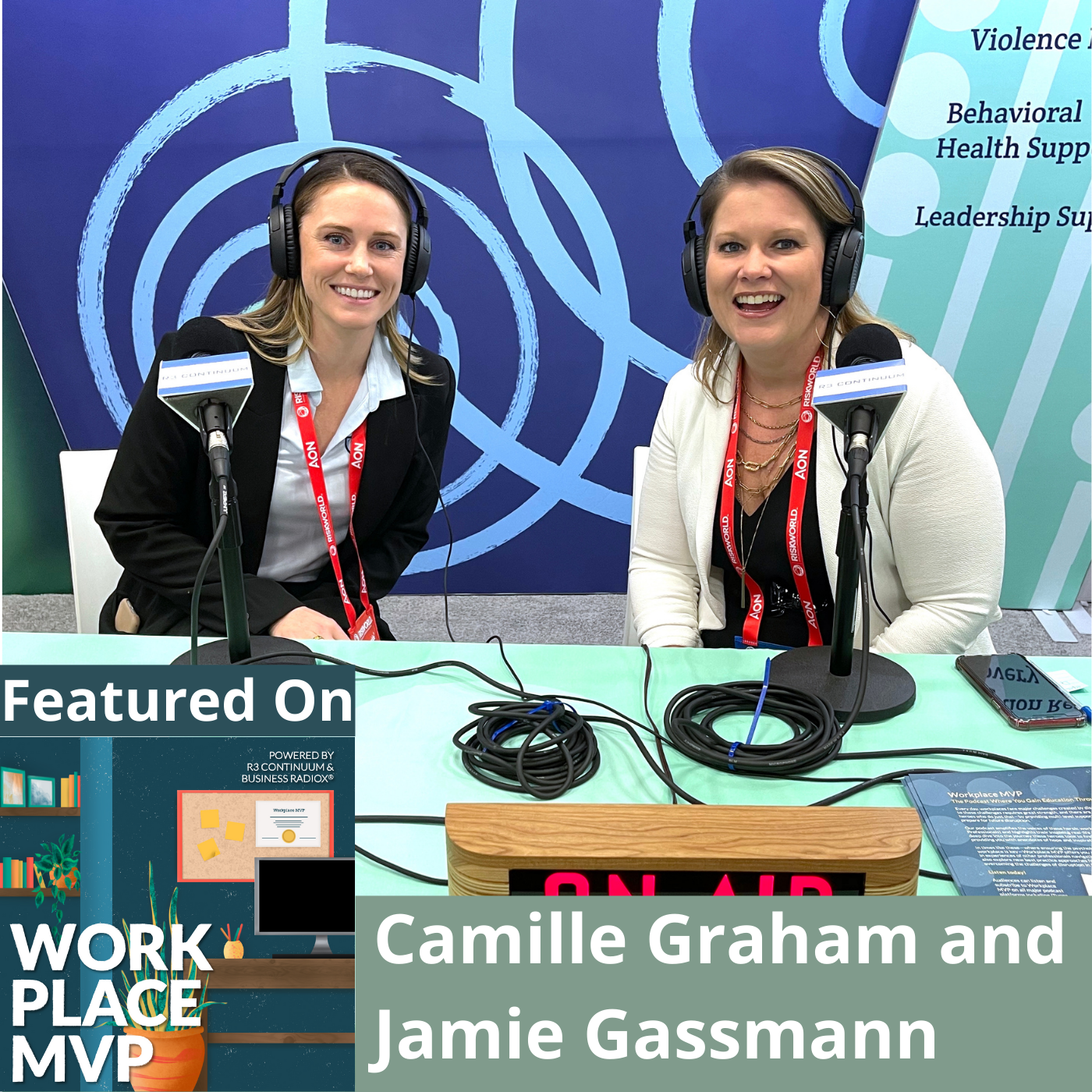
Attending the first RISKWORLD for herself and her company, Camille Graham, National Project Manager for Floodproofing.com shared with host Jamie Gassmann how rewarding the conference was for building new relationships. She talked about the comprehensive services provided by Floodproofing.com, the increase in flooding across the country, the need to consider flood mitigation services regardless of one’s location, and much more.

Workplace MVP is underwritten and presented by R3 Continuum and produced by the Minneapolis-St.Paul Studio of Business RadioX®.

This show was originally broadcast from the RIMS 2022 RISKWORLD Conference held at the Moscone Center in San Francisco, California.

Camille Graham, National Project Manager, Floodproofing.com

Camille Graham, National Project Manager, Floodproofing.com

Since 2001, Floodproofing.com has been providing global floodproofing product options and education to design professionals, municipalities, and property owners. Their goal is to provide the best mitigation solutions through complementary project design analysis.

Floodproofing.com is built upon the legacy and expertise gained from the development of Smart Vent Products Inc., which has propelled the company into an industry leader. A team of Certified Floodplain Managers and Flood Mitigation Specialists provides the industry with a portfolio of innovative dry and wet floodproofing systems.

Camille Graham joined Floodproofing.com in 2019.

Company website | Camille Graham LinkedIn

About Workplace MVP

Every day, around the world, organizations of all sizes face disruptive events and situations. Within those workplaces are everyday heroes in human resources, risk management, security, business continuity, and the C-suite. They don’t call themselves heroes though. On the contrary, they simply show up every day, laboring for the well-being of employees in their care, readying the workplace for and planning responses to disruption. This show, Workplace MVP, confers on these heroes the designation they deserve, Workplace MVP (Most Valuable Professionals), and gives them the forum to tell their story. As you hear their experiences, you will learn first-hand, real-life approaches to readying the workplace, responses to crisis situations, and overcoming challenges of disruption. Visit our show archive here.

Workplace MVP Host Jamie Gassmann

Jamie Gassmann, Host, “Workplace MVP”

In addition to serving as the host to the Workplace MVP podcast, Jamie Gassmann is the Director of Marketing at R3 Continuum (R3c). Collectively, she has more than fourteen years of marketing experience. Across her tenure, she has experience working in and with various industries including banking, real estate, retail, crisis management, insurance, business continuity, and more. She holds a Bachelor of Science Degree in Mass Communications with special interest in Advertising and Public Relations and a Master of Business Administration from Paseka School of Business, Minnesota State University.

R3 Continuum

R3 Continuum is a global leader in workplace behavioral health and security solutions. R3c helps ensure the psychological and physical safety of organizations and their people in today’s ever-changing and often unpredictable world. Through their continuum of tailored solutions, including evaluations, crisis response, executive optimization, protective services, and more, they help organizations maintain and cultivate a workplace of wellbeing so that their people can thrive. Learn more about R3c at www.r3c.com.

Company website | LinkedIn | Facebook | Twitter

TRANSCRIPT

Intro: [00:00:02] Broadcasting live from Riskworld 2022 at the Moscone Center in San Francisco, it’s time for Workplace MVP. Brought to you by R3 Continuum, a global leader in helping workplaces thrive during disruptive times. Now, here’s your host.

Jamie Gassmann: [00:00:22] Hi, everyone. Jamie Gassmann here with Workplace MVP and we are broadcasting from Riskworld 2022 Expo Hall in R3 Continuum’s booth. And joining me is Camille Graham.

Camille Graham: [00:00:22] Hello.

Jamie Gassmann: [00:00:37] Hello. From Floodproofing. Talk to me about your company and tell me a little bit about your background.

Camille Graham: [00:00:42] Yes. Thanks for having me, Jamie. We are Floodproofing.com. We are all the way from New Jersey. It’s our first time out here in San Francisco, for me personally ever. And it’s our first time that our company is doing this conference. We do all things flood mitigation. So, we provide flood panels, flood events, and even flood glass, deployable systems and passive systems to prevent flood water from entering into a building. We also have flood vents that let water through to alleviate the pressure on a building. And we have an insurance agency risk reduction plus group that helps to pass on the insurance savings that you should see from having proper flood mitigation through to your insurance premium. We are a one-stop shop for all things flood mitigation.

Jamie Gassmann: [00:01:28] Very interesting. And so, you mentioned this is your first time expo-ing at RIMS.

Camille Graham: [00:01:33] Yes, it is.

Jamie Gassmann: [00:01:33] So, talk to me about, you know, what were some of the things that made you decide that this was where you needed to be for sharing your business and what you guys do.

Camille Graham: [00:01:42] So, we actually – one of our partners that we work really closely with, Tiger Dam, is also here and they told us that this is the most beneficial conference that they come to every year because they meet people that have an immediate need for what we do. They have an immediate problem that they need to solve with flooding and they’re looking for solutions. And so, it’s cool. We usually go to conferences where we work with a lot of architects and engineers, which is incredible because we get specced early on in the design phase. But there’s also a huge need for property managers, risk managers, people that have buildings now that need solutions, and we’re here to provide them.

Jamie Gassmann: [00:02:23] And so, I mean, we’re at the end of day one. And so, talk to me. How have your conversations been going so far with, you know, the traffic that’s been coming through?

Camille Graham: [00:02:32] It’s been awesome. We have had some of the most incredible conversations with people that have experienced flooding or they know that they’re in a flood zone. And with the changing climate and with the increased risk that’s posed by flooding all over the country, people know that this is an issue that they need to solve. They’re looking for solutions and it’s top of mind more today than ever before. So people are coming eager to find a solution to that problem. And it’s just been the most progressive conversations that we’ve had at a conference.

Jamie Gassmann: [00:03:06] That’s fantastic. And so, looking at flooding, just out of pure curiosity, are there areas within like the North, obviously, America, I think you’re kind of more in the U.S. for your services? Are there some areas that are more prone to flooding that doesn’t have this protection in place than others? Talk to us a little bit about that.

Camille Graham: [00:03:27] Yeah. So, I will say that a lot of people, when they think about flooding, they assume coastal. They think oceans, they think beach towns, they think Florida. But actually, all over the country, you know, this risk is present. A lot of flooding that happens is flash flooding from rainstorms. So, yes. Do we do a ton of work in coastal communities like Florida, like New Jersey, like New York City, and Hoboken? We do. But we also do a ton of work in places that probably would not be top of mind when you think about flooding because this issue is all over the country these days.

Jamie Gassmann: [00:04:04] Yeah, absolutely. And so what – so, you mentioned flash flooding, but what are some other natural or even none, like maybe manmade situations that are causing flooding within the country that businesses should be aware of?

Camille Graham: [00:04:17] Yeah. So, we have – sometimes in your drainage system so you might have an area where that sees a lot of rainfall and then the system is completely overwhelmed and it can’t handle the amount of rain that you saw so it can kind of backflow and cause flooding all through the streets, which causes a horrible issue that might not have been expected.

Camille Graham: [00:04:37] During Hurricane Ida in the northeast, you know, this storm was hitting Louisiana and we knew that it was going to cause a huge issue down there. And then, the next thing we knew, up north in Philadelphia and in New York City, there was, I mean, life loss because of flash flooding and flooding that happened that we did not expect. We didn’t expect it to come. It was actually considered to be like a 500-year flood event. Vine Street through Philadelphia was completely flooded to a point that nobody had ever seen before, nobody would ever expect. And one thing that I want to say is that when a storm like that happens, it might be considered a 100 or 500-year flood event but that doesn’t mean that if it happened yesterday, it can’t happen again tomorrow. These things can happen more than once within that 500-year frame, and they probably will as time goes on when we start to see these things happening more frequently.

Jamie Gassmann: [00:05:38] Yeah. And so if there’s a business out there that, let’s just say, they’re not in a prominent flood area, maybe they’re not in a floodplain, it’s not anything that’s really on their radar from a location perspective, what is some advice that you would give to them in terms of how they should be looking at this as part of their overall risk mitigation?

Camille Graham: [00:05:57] Yeah. I always say don’t just think about today and don’t just look at necessarily the history of flooding in an area but think about the future and really just consider the resiliency of your business or your building where you’re at. Whether it be flood insurance or a flood mitigation system in place, if there is an event, having something in place is just going to allow you to open your doors, you know, sooner than if, obviously, you had a flood event. So it’s something that we say, always consider, never think that you’re not vulnerable to something like this, and protect yourself, not just for today, but for the future.

Jamie Gassmann: [00:06:37] Yeah. Great advice. And thank you so much for joining us. If somebody wanted to reach out to you to get more information or to learn a little bit more, how would they go about doing that?

Camille Graham: [00:06:46] Yes. They can go to floodproofing.com. Our website is an awesome resource. You can find everything that we have to offer and you can reach out to us on that website.

Jamie Gassmann: [00:06:57] Yeah. Very interesting information. Thank you again. It’s been great to chat with you.

Outro: [00:07:06] Thank you for joining us on Workplace MVP. R3 Continuum is a proud sponsor of this show and is delighted to celebrate most valuable professionals who work diligently to secure safe workplaces where employees can thrive.
 

Tagged With: Camille Graham, flood insurance, flood mitigation, floodplain, floodproofing systems, Floodproofing.com, Jamie Gassmann, R3 Continuum, RIMS, RISKWORLD 2022, Workplace MVP

LIVE from RISKWORLD 2022: Paul Jenkins, Lockton Companies

June 6, 2022 by John Ray

Lockton Companies
Minneapolis St. Paul Studio
LIVE from RISKWORLD 2022: Paul Jenkins, Lockton Companies
Loading
00:00 /
RSS Feed
Share
Link
Embed

Download file

Lockton Companies

LIVE from RISKWORLD 2022: Paul Jenkins, Lockton Companies

Paul Jenkins, property broker with Lockton Companies, talked with host Jamie Gassmann live at RISKWORLD 2022. He described the impact of the lockdown on the 350-year-old Lloyd’s Market and how Lockton adjusted to not working face to face. He also shared how they have shifted and succeeded while serving clients in more countries beyond North America, growing in South America, the Caribbean, Australia, and New Zealand, his experience at RISKWORLD, and more.

Workplace MVP is underwritten and presented by R3 Continuum and produced by the Minneapolis-St.Paul Studio of Business RadioX®.

This show was originally broadcast from the RIMS 2022 RISKWORLD Conference held at the Moscone Center in San Francisco, California.

Paul Jenkins, Property Broker, Lockton Companies

Paul Jenkins, Property Broker, Lockton Companies

As a family organization, Lockton Companies is not driven by the quarterly pressure from the financial markets. This kind of independence frees them to always act in the best interest of their clients and creates a completely different dynamic, one that is focused on your success.

They have a strong entrepreneurial culture that’s complemented by the scale and expertise of over 100 worldwide offices. This brings about something quite extraordinary in the insurance business—local partners with the focus and freedom to do what’s right for your business that can also draw on deep global resources to deliver the very best results.
Paul Jenkins is an ACII qualified, Property / Terrorism Underwriter and Team Leader. He has over 17 years of insurance experience.

Company website | Paul Jenkins LinkedIn

About Workplace MVP

Every day, around the world, organizations of all sizes face disruptive events and situations. Within those workplaces are everyday heroes in human resources, risk management, security, business continuity, and the C-suite. They don’t call themselves heroes though. On the contrary, they simply show up every day, laboring for the well-being of employees in their care, readying the workplace for and planning responses to disruption. This show, Workplace MVP, confers on these heroes the designation they deserve, Workplace MVP (Most Valuable Professionals), and gives them the forum to tell their story. As you hear their experiences, you will learn first-hand, real-life approaches to readying the workplace, responses to crisis situations, and overcoming challenges of disruption. Visit our show archive here.

Workplace MVP Host Jamie Gassmann

Jamie Gassmann, Host, “Workplace MVP”

In addition to serving as the host to the Workplace MVP podcast, Jamie Gassmann is the Director of Marketing at R3 Continuum (R3c). Collectively, she has more than fourteen years of marketing experience. Across her tenure, she has experience working in and with various industries including banking, real estate, retail, crisis management, insurance, business continuity, and more. She holds a Bachelor of Science Degree in Mass Communications with special interest in Advertising and Public Relations and a Master of Business Administration from Paseka School of Business, Minnesota State University.

R3 Continuum

R3 Continuum is a global leader in workplace behavioral health and security solutions. R3c helps ensure the psychological and physical safety of organizations and their people in today’s ever-changing and often unpredictable world. Through their continuum of tailored solutions, including evaluations, crisis response, executive optimization, protective services, and more, they help organizations maintain and cultivate a workplace of wellbeing so that their people can thrive. Learn more about R3c at www.r3c.com.

Company website | LinkedIn | Facebook | Twitter

TRANSCRIPT

Intro: [00:00:02] Broadcasting live from Riskworld 2022 at the Moscone Center in San Francisco, it’s time for Workplace MVP. Brought to you by R3 Continuum, a global leader in helping workplaces thrive during disruptive times. Now, here’s your host.

Jamie Gassmann: [00:00:22] Hi, everyone. You’re host, Jamie Gassmann, here with the Workplace MVP podcast and we are broadcasting from the Riskworld 2022 Expo Hall in R3 Continuum’s booth. And with me is Paul Jenkins from Lockton Companies. Welcome to the show.

Paul Jenkins: [00:00:37] Hello, y’all.

Jamie Gassmann: [00:00:40] Playing off of our producers, y’all. I love it. If you learned anything at RIMS, it was y’all.

Paul Jenkins: [00:00:46] Absolutely.

Jamie Gassmann: [00:00:47] Well, welcome to the show. We’re happy to have you.

Paul Jenkins: [00:00:49] Yeah. Thanks for having me.

Jamie Gassmann: [00:00:50] Yeah. So, tell us a little bit about what Lockton does and your background.

Paul Jenkins: [00:00:53] Yeah. So, Lockton Companies is an insurance broker and they are a broker for all lines of business, looking to provide solutions from an insurance perspective for their clients.

Jamie Gassmann: [00:01:04] And, you’ve been in the industry quite a while.

Paul Jenkins: [00:01:06] Yeah.

Jamie Gassmann: [00:01:07] I think you shared with me you started as an underwriter. So, tell me a little bit about your background.

Paul Jenkins: [00:01:10] Yeah. Okay. So, I left school. I wanted to be an architect. And, in London – in the London market, you don’t have to study to get into insurance. You tend to get into insurance by accident. So that’s what happened to me. I started my career as a cat modeller. So, I was doing RMS scheduling and running some analysis from that. And from there really, it just sort of happened by osmosis. I got into underwriting, as a result working in the Lloyd’s market, always doing property insurance. And I’m now a broker at Lockton.

Jamie Gassmann: [00:01:43] Wonderful. And, what has the last few years looked like in the broker kind of world going through the pandemic and some of the changes that have happened in the business world?

Paul Jenkins: [00:01:54] Yeah. A real challenge for us in London on the basis that, you know, in the Lloyd’s mMarket, it’s the oldest insurance market in the world, you know, and that it’s a marketplace. It’s been going for about 350 years. And most businesses still transacted face-to-face, so person-to-person in one place in a market, and lockdown prevented us from doing that because we didn’t have a marketplace. So, we adapted ever so quickly with Zoom, WebEx, iMessage, however you’re doing this stuff.

Paul Jenkins: [00:02:27] But, yeah, it’s been difficult because you’ve essentially been working in isolation and you would normally have your team around you. And we do work as a team. We’re a close-knit team and the youngsters learn from being in-situ and, you know, listening and taking on board what’s going on around them. So, it’s been a challenge for a number of reasons. You know, from a trade perspective, it’s been difficult. From a coaching perspective and a learning perspective, it’s been a challenge. But we’ve managed to do it and we’ve managed to grow our book. So, you know, we’ve got more clients now than we had prior to the lockdown and we’ve got high revenues than we had prior to the lockdown. So, I suppose on reflection, it’s really quite incredible that we’ve been able to do what we did.

Jamie Gassmann: [00:03:10] Yeah, I bet. And so, your clients that you have that you’re speaking of, are they mostly in just London or is it kind of a global kind of clientele or?

Paul Jenkins: [00:03:20] My clients will be North American clients.

Jamie Gassmann: [00:03:23] Okay.

Paul Jenkins: [00:03:23] So, they’ll be in America or in Canada.

Jamie Gassmann: [00:03:26] Great. And then, I’m sure Lockton is kind of a global, anywhere that they might be located, and broadly you guys can support them.

Paul Jenkins: [00:03:32] Yeah. We’ve got a big network and a really successful network in the U.S.

Jamie Gassmann: [00:03:37] Yeah.

Paul Jenkins: [00:03:37] And, we’re growing our footprint globally. So, we’ve just opened offices in South America and in the Caribbean and in Australia and New Zealand. So, you know, we’re growing the footprint so that we can look after our clients as they expand and grow because many of our clients, you know, are growing internationally as well.

Jamie Gassmann: [00:03:55] Wonderful. And I know this is not your first room, so it’s not – you’ve been here before, but what is one of your most exciting, you know, or what are you most excited, I guess I should say, about being here at the show this year?

Paul Jenkins: [00:04:08] Yeah. It’s great to be able to travel again. Again, you know, we would often see our clients. Our clients come to London to meet with us and our underwriters, or we come to America to come and meet with our clients. So, it’s really wonderful to be able to meet people again. And many of these people are people I’ve met for the first time. So, they’re new clients. As I said, you know, we’ve been able to grow the portfolio of business that we have. We’ve done that successfully by providing amazing service, you know, to our clients to give them the best possible outcomes. And it’s nice just to, you know, make friends with new people and –

Jamie Gassmann: [00:04:42] Yeah, totally.

Paul Jenkins: [00:04:43] And to be here together.

Jamie Gassmann: [00:04:44] Yeah. And the clientele that you have, just question, is there anything from a risk perspective or an insurance perspective that’s changed or shifted in terms of the types of things that they need support with?

Paul Jenkins: [00:04:56] It’s ever-evolving. So, take for example the current global environment with regards to supply chain. Supply chains are disrupted all over the place, and for some clients, they have coverage for this, and for others that they don’t. But just trying to identify how they are running their business and continuing to operate with all this challenge, you know, with their business, it’s something that you can only really understand once you’re talking to people and once you get, you know, underneath the – you can’t present this stuff in an email or in an Excel spreadsheet. So, you need to listen to the clients as to what their challenges are, understand the business need. And that allows us to provide them the best possible policy and the best possible coverage at the best possible terms so that, you know, they’ve got the cover that they need in the event of a disruption or loss.

Jamie Gassmann: [00:05:51] Yeah. And like kind of keeping like a pulse almost on what might be potentially a risk for them, too, as things continue to evolve. Because as I always say, you know, the complexities and challenges we’ve experienced over the last few years have required businesses to think of things differently.

Paul Jenkins: [00:06:06] Yeah. Absolutely.

Jamie Gassmann: [00:06:07] Because they’re faced with more.

Paul Jenkins: [00:06:08] Yeah. Absolutely.

Jamie Gassmann: [00:06:09] So, interesting.

Paul Jenkins: [00:06:09] And not just that many businesses had to either close or reduce, you know, their capacity or their ability to produce things, which meant that they might have laid staff off. And then, now having to challenge to try and –

Jamie Gassmann: [00:06:23] Hire them.

Paul Jenkins: [00:06:23] Hire people. You know, there’s a real war on talent at the moment with regards to being able to get good people who know what they’re doing. And that in itself, you know, that might not be an insurable thing, but that in itself is a business problem that I think many people are at the moment trying to get their arms around.

Jamie Gassmann: [00:06:39] Yeah. Absolutely. Well, it has been an absolute pleasure to hear from you.

Paul Jenkins: [00:06:42] Yeah. Thank you.

Jamie Gassmann: [00:06:42] Yeah. So if people wanted to get a hold of you or to reach out to you about the services that Lockton Companies offers, how would they be able to do that?

Paul Jenkins: [00:06:50] Well, I suppose you could look on social media. There’s LinkedIn and others if I’m plugging, you know those platforms, or likewise, you can go on the website and we’ve got all the contact details that you need to be able to contact us.

Jamie Gassmann: [00:07:05] Wonderful. Well, thank you so much for being on the show. It’s been a pleasure.

Paul Jenkins: [00:07:08] Yeah. Thanks very much.

Outro: [00:07:14] Thank you for joining us on Workplace MVP. R3 Continuum is a proud sponsor of this show and is delighted to celebrate most valuable professionals who work diligently to secure safe workplaces where employees can thrive.
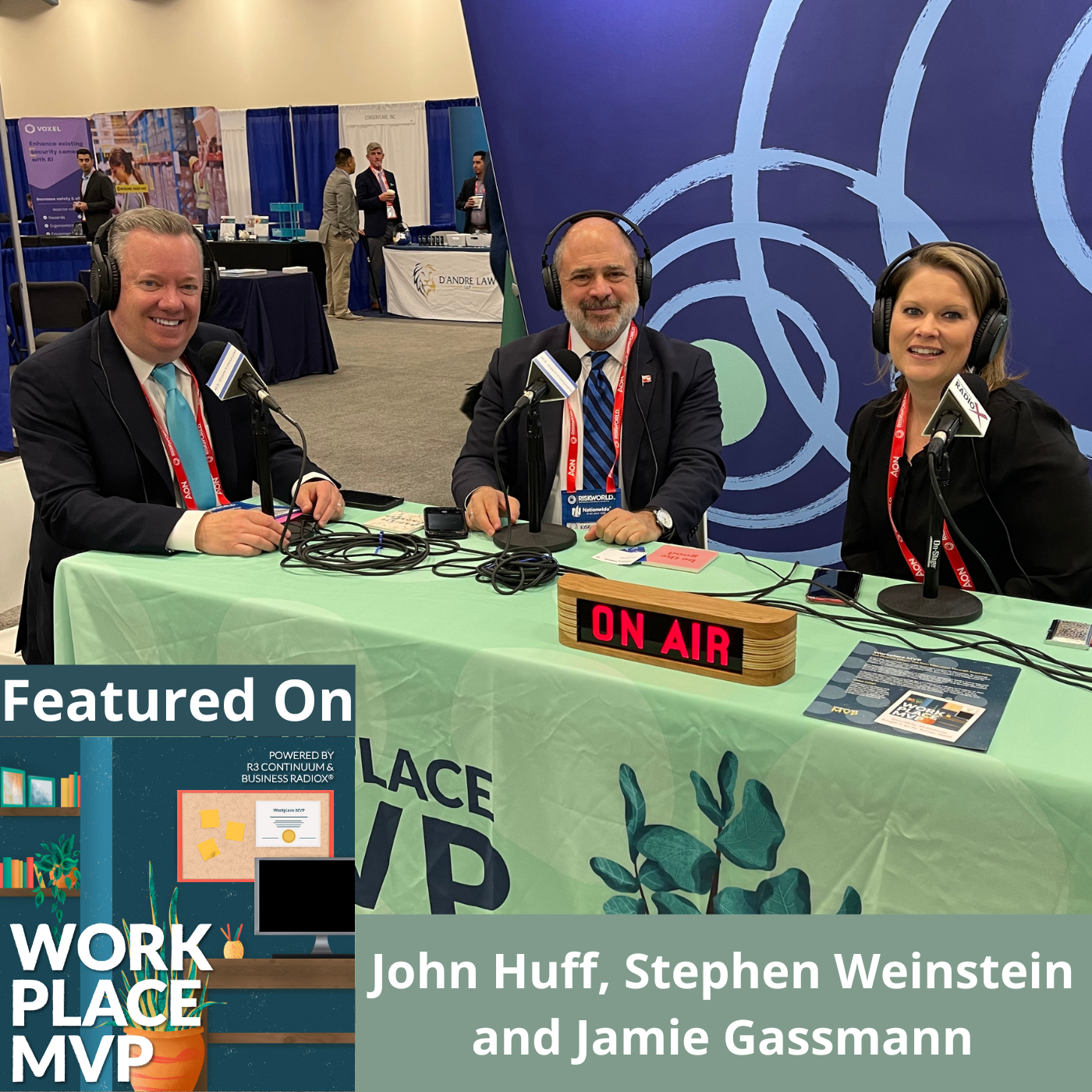


Tagged With: insurance broker, Jamie Gassmann, Lockton Companies, Paul Jenkins, property broker, R3 Continuum, RIMS, RISKWORLD 2022, Workplace MVP

LIVE from RISKWORLD 2022: Carlos Castillo, Confia

June 3, 2022 by John Ray

Confia
Minneapolis St. Paul Studio
LIVE from RISKWORLD 2022: Carlos Castillo, Confia
Loading
00:00 /
RSS Feed
Share
Link
Embed

Download file

Confia

LIVE from RISKWORLD 2022: Carlos Castillo, Confia

Carlos Castillo, CEO of Confia Insurance Brokers headquartered in Costa Rica, was the guest on the episode live from RISKWORLD 2022. He and host Jamie Gassmann talked about the services Confia offers, his experience at the conference, and more.

Workplace MVP is underwritten and presented by R3 Continuum and produced by the Minneapolis-St.Paul Studio of Business RadioX®.

This show was originally broadcast from the RIMS 2022 RISKWORLD Conference held at the Moscone Center in San Francisco, California.

Carlos Castillo, CEO, Confia

Carlos Castillo, CEO, Confia

Confia began in 2010 offering insurance brokerage services. Their mission is to give customers the best advice and service in the insurance market, protecting their risks as if they were ours.

They offer their clients the best insurance solutions, with customer service that exceeds your expectations. We will achieve the prompt payment of your claims.

They operate in Costa Rica, Honduras, and the Dominican Republic.

Company website | Carlos Castillo LinkedIn

About Workplace MVP

Every day, around the world, organizations of all sizes face disruptive events and situations. Within those workplaces are everyday heroes in human resources, risk management, security, business continuity, and the C-suite. They don’t call themselves heroes though. On the contrary, they simply show up every day, laboring for the well-being of employees in their care, readying the workplace for and planning responses to disruption. This show, Workplace MVP, confers on these heroes the designation they deserve, Workplace MVP (Most Valuable Professionals), and gives them the forum to tell their story. As you hear their experiences, you will learn first-hand, real-life approaches to readying the workplace, responses to crisis situations, and overcoming challenges of disruption. Visit our show archive here.

Workplace MVP Host Jamie Gassmann

Jamie Gassmann, Host, “Workplace MVP”

In addition to serving as the host to the Workplace MVP podcast, Jamie Gassmann is the Director of Marketing at R3 Continuum (R3c). Collectively, she has more than fourteen years of marketing experience. Across her tenure, she has experience working in and with various industries including banking, real estate, retail, crisis management, insurance, business continuity, and more. She holds a Bachelor of Science Degree in Mass Communications with special interest in Advertising and Public Relations and a Master of Business Administration from Paseka School of Business, Minnesota State University.

R3 Continuum

R3 Continuum is a global leader in workplace behavioral health and security solutions. R3c helps ensure the psychological and physical safety of organizations and their people in today’s ever-changing and often unpredictable world. Through their continuum of tailored solutions, including evaluations, crisis response, executive optimization, protective services, and more, they help organizations maintain and cultivate a workplace of wellbeing so that their people can thrive. Learn more about R3c at www.r3c.com.

Company website | LinkedIn | Facebook | Twitter

TRANSCRIPT

Intro: [00:00:03] Broadcasting Live from RISKWORLD 2022 at the Moscone Center in San Francisco, it’s time for Workplace MVP. Brought to you by R3 Continuum, a global leader in helping workplaces thrive during disruptive times. Now, here’s your host.

Jamie Gassmann: [00:00:22] Hey, everyone. Jamie Gassmann here, your host of Workplace MVP, coming to you from RISKWORLD 2022. And with me is Carlos Castillo. Hi, Carlos. Welcome to the show.

Carlos Castillo: [00:00:33] Hello. Good morning.

Jamie Gassmann: [00:00:35] So, talk to me about tell me where you’re from, what company you work for and what your company does.

Carlos Castillo: [00:00:40] Yeah, I’m from Costa Rica. The company is called CONFIA, which means trust. We are a brokerage insurance company. We started operations 12 years ago. When the market opens, we were in a state monopoly for 84 years with only one insurance company. Right now, we have 13 insurance companies from different countries. The market has grown. Right now, it’s at $1.4 billion in premiums. It’s a very attractive market. So, we started operations there in 2010 as a broker brokerage company.

Jamie Gassmann: [00:01:23] Wow. And this is your first time attending the RIM’s conference. So, talk to me what are you excited about with your first, you know, experience here? What are you looking forward to?

Carlos Castillo: [00:01:33] Yeah, I always wanted to visit RIMS, but this is the first year. I’m expecting to meet different brokers, different companies looking for opportunities. So, that’s what I’m here for, to make contacts.

Jamie Gassmann: [00:01:50] Yeah. So, the networking aspect of the show, I think there’s a lot of that going on here, which is great.

Carlos Castillo: [00:01:56] Absolutely, yeah. We’re looking for that networking opportunities, not just for Costa Rica, where we have operations. Also, we also operate in Dominican Republic and Honduras.

Jamie Gassmann: [00:02:07] Wow! So, kind of expanding your operation and see if there’s, you know, potential with some of the other brokers that might be working here at RIMS.

Carlos Castillo: [00:02:14] Exactly.

Jamie Gassmann: [00:02:14] Yeah.

Carlos Castillo: [00:02:15] Exactly.

Jamie Gassmann: [00:02:15] Are you planning on attending any of the sessions at all right here?

Carlos Castillo: [00:02:18] Yes, yeah.

Jamie Gassmann: [00:02:18] Yeah.

Carlos Castillo: [00:02:19] I will.

Jamie Gassmann: [00:02:19] Well, which ones attract you the most? Like, which topics are kind of your, like, go-to, can’t-wait-to-sit-in-that-audience for?

Carlos Castillo: [00:02:26] Well, I’m looking for a different topics: cyber insurance, marketing, global market opportunities. Yeah, I registered in some of the conferences.

Jamie Gassmann: [00:02:39] Yeah, fantastic. So, I know you’re networking and this is a great show for that. And are you — so far, I know the show has just kind of started, so far, have you been pleased with what you’ve been finding?

Carlos Castillo: [00:02:52] Oh, absolutely, absolutely. Everybody is very up and happy to see each other after the pandemia, right?

Jamie Gassmann: [00:02:59] Yeah.

Carlos Castillo: [00:02:59] It’s great after being two years in Zoom calls.

Jamie Gassmann: [00:03:03] Yeah.

Carlos Castillo: [00:03:04] So, it’s fantastic to have the opportunity, you know, to talk to people personally and to make contacts. So, everybody is very willing to share information, and everybody wants to do business.

Jamie Gassmann: [00:03:16] Yeah. Well, I really hope that you make a lot of great connections. And it was so great to have you on our episode here, and to meet you, and to hear a little bit about your background and really appreciate you stopping by.

Carlos Castillo: [00:03:27] Well, fantastic, fantastic. Our contact information is in www.confia.co.cr.

Jamie Gassmann: [00:03:39] Great. Wonderful. That way, if they need to get a hold of you or they want to reach out for partnership or any business-

Carlos Castillo: [00:03:45] Absolutely.

Intro: [00:03:45] … they actually have that opportunity to.

Carlos Castillo: [00:03:47] Absolutely.

Jamie Gassmann: [00:03:47] So, thank you so much for joining us. It was so great to talk to you.

Carlos Castillo: [00:03:49] All right. You’re welcome. Have a great day.

Jamie Gassmann: [00:03:51] You, too.

Outro: [00:03:56] Thank you for joining us on Workplace MVP. R3 Continuum is a proud sponsor of this show and is delighted to celebrate most valuable professionals who work diligently to secure safe workplaces where employees can thrive.
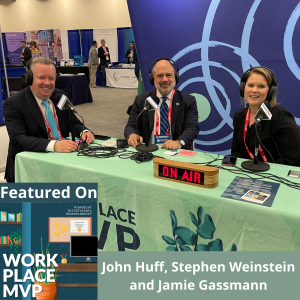


Tagged With: Carlos Castillo, Confia, insurance broker, Jamie Gassmann, R3 Continuum, RIMS, RISKWORLD 2022, Workplace MVP

LIVE from RISKWORLD 2022: Shari Paul, Alliant

June 1, 2022 by John Ray

Alliant
Minneapolis St. Paul Studio
LIVE from RISKWORLD 2022: Shari Paul, Alliant
Loading
00:00 /
RSS Feed
Share
Link
Embed

Download file

LIVE from RISKWORLD 2022: Shari Paul, Alliant

Shari Paul, First Vice President for Alliant, heads all of Alliant’s digital media and sat down with host Jamie Gassmann in the R3 Continuum booth at RISKWORLD 2022. They discussed the value of social media in the insurance industry, the multiple podcasts Alliant has, advice for effectively using social media, podcasting, and more.

Workplace MVP is underwritten and presented by R3 Continuum and produced by the Minneapolis-St.Paul Studio of Business RadioX®.

This show was originally broadcast from the RIMS 2022 RISKWORLD Conference held at the Moscone Center in San Francisco, California.

Shari Paul, First Vice President, Sr. Marketing Manager, Alliant

Shari Paul, First Vice President, Sr. Marketing Manager, Alliant

Shari Paul is First Vice President and Senior Marketing Manager for Alliant Insurance Services. Shari is a data-driven marketing and digital media communications professional with over 20 years of experience within a variety of industries focused on customer acquisition, satisfaction, and retention.

Alliant Insurance Services is among the largest and fastest-growing insurance brokerage and consulting firms in the United States. Fueled by entrepreneurialism and driven by results, Alliant operates on the belief that more is possible and expectations are meant to be exceeded.

Their clients and partners have profound confidence in them to deliver in all market climates through the design and delivery of innovative solutions and services across a broad range of industry verticals.

Alliant’s people stand as the backbone of the organization. They proudly employ a team of diverse, driven, and exceptional people and invest heavily in their success, giving our brokerage and consulting teams the freedom and resources they need to help their clients grow their businesses to remarkable heights. The result is a dynamic team of professionals who consistently perform at the highest level while caring and giving back to causes that impact their communities and the world at large.

Alliant is built on teamwork and collaboration, a philosophy that has guided its growth and evolution for almost 100 years. They rise together to meet challenges, think together to drive innovation, and thrive together in business and in the diverse communities where they operate.

As one of the top 10 largest insurance brokerage firms in the U.S., Alliant combines the power and breadth of big-company resources with a hyper-personalized approach that puts your interests above everything else.

Their culture of entrepreneurialism, collaboration, and innovation gives them the independence and accountability to create solutions that uniquely match your needs. Because when people come first, more is possible.

Company website | Company LinkedIn | Shari Paul LinkedIn

About Workplace MVP

Every day, around the world, organizations of all sizes face disruptive events and situations. Within those workplaces are everyday heroes in human resources, risk management, security, business continuity, and the C-suite. They don’t call themselves heroes though. On the contrary, they simply show up every day, laboring for the well-being of employees in their care, readying the workplace for and planning responses to disruption. This show, Workplace MVP, confers on these heroes the designation they deserve, Workplace MVP (Most Valuable Professionals), and gives them the forum to tell their story. As you hear their experiences, you will learn first-hand, real-life approaches to readying the workplace, responses to crisis situations, and overcoming challenges of disruption. Visit our show archive here.

Workplace MVP Host Jamie Gassmann

Jamie Gassmann, Host, “Workplace MVP”

In addition to serving as the host to the Workplace MVP podcast, Jamie Gassmann is the Director of Marketing at R3 Continuum (R3c). Collectively, she has more than fourteen years of marketing experience. Across her tenure, she has experience working in and with various industries including banking, real estate, retail, crisis management, insurance, business continuity, and more. She holds a Bachelor of Science Degree in Mass Communications with special interest in Advertising and Public Relations and a Master of Business Administration from Paseka School of Business, Minnesota State University.

R3 Continuum

R3 Continuum is a global leader in workplace behavioral health and security solutions. R3c helps ensure the psychological and physical safety of organizations and their people in today’s ever-changing and often unpredictable world. Through their continuum of tailored solutions, including evaluations, crisis response, executive optimization, protective services, and more, they help organizations maintain and cultivate a workplace of wellbeing so that their people can thrive. Learn more about R3c at www.r3c.com.

Company website | LinkedIn | Facebook | Twitter

TRANSCRIPT

Intro: [00:00:02] Broadcasting Live from RISKWORLD 2022 at the Moscone Center in San Francisco, it’s time for Workplace MVP. Brought to you by R3 Continuum, a global leader in helping workplaces thrive during disruptive times. Now, here’s your host.

Jamie Gassmann: [00:00:21] Hi, everyone. Jamie Gassmann here, your host of Workplace MVP, coming to you from RISKWORLD 2022. And with me is Shari Paul. Hi, Shari.

Shari Paul: [00:00:32] Hello.

Jamie Gassmann: [00:00:33] And welcome to the episode. Give me a little background of your role and who you’re with.

Shari Paul: [00:00:38] I am here with Alliant Insurance. We are one of the largest brokers in North America. And I do all of the digital marketing, digital media for the company.

Jamie Gassmann: [00:00:52] Wonderful. And I know you have a very specific topic. I think you guys even have your own podcast. What’s the name of your podcast?

Shari Paul: [00:00:58] We do. We have quite a few podcasts actually, because we have so many different specialties that there is – my gosh – The Financial R&R with Ron and Ryan. That’s one of the most popular ones. We’ve got Digging In with our agribusiness team. And then, just a blanket Alliant specialty podcast.

Jamie Gassmann: [00:01:23] Yeah, kind of covers a whole-.

Shari Paul: [00:01:25] Yes.

Jamie Gassmann: [00:01:25] … kind of-

Shari Paul: [00:01:25] Covers gamut.

Jamie Gassmann: [00:01:26] … gamut of different topics and area of conversations around the industry. And I know one of the things that we were talking about before we jumped on our mics mix was about the power of social media in this industry. So, what are some of your thoughts around that?

Shari Paul: [00:01:42] Absolutely. You know, what’s interesting about the insurance industry is that it’s not very social media — I don’t want to say savvy, but there — it’s hard to get someone on board with doing the social media or seeing the ROI or seeing the value in it. And what we discovered with the pandemic is that there was a lot of opportunities with doing podcasts, with doing the webinars, with doing different type of digital media and digital experiences that worked out phenomenally. So, that’s-

Jamie Gassmann: [00:02:18] Yeah. So, it’s almost like creating an ecosystem from your organization, basically, that extends out of just the in-person opportunities like a conference because, obviously, the last couple of years, it wasn’t as readily available.

Shari Paul: [00:02:31] Right.

Jamie Gassmann: [00:02:31] And you know, virtually, it’s tough to network on a conference virtually.

Shari Paul: [00:02:36] It is.

Jamie Gassmann: [00:02:36] It’s what I’ve found. So, talk to me about, like if somebody was really wanting to put together kind of — from a social media perspective, kind of a program and promoting that internally, how could they build that case internally to kind of get that kind of moving through the ranks?

Shari Paul: [00:02:50] Yeah. What’s great is to find your cheerleaders, right? To find those evangelists of social media. And we have quite a few that have gone out and actually started their own blogs, they post on social media, LinkedIn, Twitter, Instagram almost daily. And from that, what we have found, actually, is we’re getting a lot of press attention. So, we have gotten quite a few journalists reach out to us based on the topics that we’ve been putting out to do interviews. So, it’s actually been phenomenal.

Jamie Gassmann: [00:03:25] Yeah. So, it’s like almost like finding those thought leaders that are willing to present themselves as that in a very public way?

Shari Paul: [00:03:32] Right. I mean, you put a thought leadership piece out or, you know, an article or something like that, or press release, and it’s one dimensional. So, you don’t really get to go into the different thoughts or, you know, it’s just that at that one time. But when you’ve got a lot of people on talking about what’s going on, you get a lot more, I think, bang for the buck there.

Jamie Gassmann: [00:03:56] Yeah, absolutely. And like staying really current with industry trends, and things that you’re seeing and you know, people that might be looking they’re looking for something right now, you know.

Shari Paul: [00:04:05] Absolutely.

Jamie Gassmann: [00:04:05] Not that happened four years ago. They want to know what’s the current world. So, if you’ve got like somebody who maybe is a little hesitant in your organization, but, you know they’re brilliant, you know, what are some of the tactics you’ve used to convince them to get behind your microphone?

Shari Paul: [00:04:20] Constantly asking. Constantly, “Come on, I know you can do it. I know you can do it.” Yes, we’ve had a few that are reluctant, but once you get them going, and they get that first podcast under their belt, then they understand that it’s easy.

Jamie Gassmann: [00:04:35] Yeah. Once they get the taste of that media, right? And the attention.

Shari Paul: [00:04:40] Yeah.

Jamie Gassmann: [00:04:40] Just like all of us, right? We can, like, thrive on that in a way.

Shari Paul: [00:04:45] Absolutely.

Jamie Gassmann: [00:04:45] So, if there was one like leaving, you know, idea or advice or concept you wanted to leave on this episode for anybody that might be listening post-show, what would that be?

Shari Paul: [00:04:57] Just do it. Jump in and do it. You know, you don’t have to worry about equipment. There’s a million different ways to do it. There is lots of, you know, mics and things that you — I mean, we do ours on Zoom, you know. So, we do produce them afterwards. But, you know, just get in there and do it. There are so many topics and so many news items that just, you know, hit the airways, that you’ve got to get something out there quick, and having someone sit down and write something or try to respond to it, it’s not as – it just doesn’t work as well as doing a podcast or or a social media feed.

Jamie Gassmann: [00:05:39] Yeah, wonderful. Well, it’s been great to have you on an episode.

Shari Paul: [00:05:42] Thank you so much.

Jamie Gassmann: [00:05:43] Yes. Thank you so much for joining us. And if somebody wanted to get a hold of you to get more information from you, how can they reach you?

Shari Paul: [00:05:50] www.alliant.com or you can give me an email at shari.paul@alliant.com.

Jamie Gassmann: [00:05:59] Wonderful. Thanks again so much for joining us.

Shari Paul: [00:06:06] Thank you.

Outro: [00:06:06] Thank you for joining us on Workplace MVP. R3 Continuum is a proud sponsor of this show and is delighted to celebrate most valuable professionals who work diligently to secure safe workplaces where employees can thrive.


Tagged With: Alliant Insurance Services, insurance brokerage, Jamie Gassmann, podcasting, R3 Continuum, RIMS, Risk Management, RISKWORLD 2022, Shari Paul, Social Media, Workplace MVP

LIVE from RISKWORLD 2022: Claudia Schmiedhuber, EURAMI

May 31, 2022 by John Ray

Eurami
Minneapolis St. Paul Studio
LIVE from RISKWORLD 2022: Claudia Schmiedhuber, EURAMI
Loading
00:00 /
RSS Feed
Share
Link
Embed

Download file

Eurami

LIVE from RISKWORLD 2022: Claudia Schmiedhuber, EURAMI

At her first RISKWORLD conference, Claudia Schmiedhuber, Managing Director at EURAMI, joined Jamie Gassmann live in the R3 Continuum booth. Claudia shared why EURAMI decided to attend, what they do and who they serve, and more.

Workplace MVP is underwritten and presented by R3 Continuum and produced by the Minneapolis-St.Paul Studio of Business RadioX®.

This show was originally broadcast from the RIMS 2022 RISKWORLD Conference held at the Moscone Center in San Francisco, California.

Claudia Schmiedhuber, Managing Director, EURAMI

Claudia Schmiedhuber, Managing Director, EURAMI

Founded in 1992 the European Aero-Medical Institute e.V. – commonly known as EURAMI – is a nonprofit organization, with its base in Cologne, Germany. EURAMI has established itself as an indicator for Excellence, Quality and Safety in Aero-Medical Transportation. Founded by the leading aeromedical providers in the world, it has since developed into a globally recognized institution with more than 50 accredited providers worldwide.

EURAMI strives to increase and promote the best patient care by creating and publishing standards in the field of Fixed Wing Air Ambulance, Rotary Wing Air Ambulance as well as Commercial Airline Medical Escort.

EURAMI’s membership consists of accredited providers, associated members as well as individual and corporate members who are supporting their mission and development.

Claudia Schmiedhuber is Managing Director for EURAMI and lives in Vienna, Austria.

Company website | Company LinkedIn | Claudia Schmiedhuber LinkedIn

About Workplace MVP

Every day, around the world, organizations of all sizes face disruptive events and situations. Within those workplaces are everyday heroes in human resources, risk management, security, business continuity, and the C-suite. They don’t call themselves heroes though. On the contrary, they simply show up every day, laboring for the well-being of employees in their care, readying the workplace for and planning responses to disruption. This show, Workplace MVP, confers on these heroes the designation they deserve, Workplace MVP (Most Valuable Professionals), and gives them the forum to tell their story. As you hear their experiences, you will learn first-hand, real-life approaches to readying the workplace, responses to crisis situations, and overcoming challenges of disruption. Visit our show archive here.

Workplace MVP Host Jamie Gassmann

Jamie Gassmann, Host, “Workplace MVP”

In addition to serving as the host to the Workplace MVP podcast, Jamie Gassmann is the Director of Marketing at R3 Continuum (R3c). Collectively, she has more than fourteen years of marketing experience. Across her tenure, she has experience working in and with various industries including banking, real estate, retail, crisis management, insurance, business continuity, and more. She holds a Bachelor of Science Degree in Mass Communications with special interest in Advertising and Public Relations and a Master of Business Administration from Paseka School of Business, Minnesota State University.

R3 Continuum

R3 Continuum is a global leader in workplace behavioral health and security solutions. R3c helps ensure the psychological and physical safety of organizations and their people in today’s ever-changing and often unpredictable world. Through their continuum of tailored solutions, including evaluations, crisis response, executive optimization, protective services, and more, they help organizations maintain and cultivate a workplace of wellbeing so that their people can thrive. Learn more about R3c at www.r3c.com.

Company website | LinkedIn | Facebook | Twitter

TRANSCRIPT

Intro: [00:00:03] Broadcasting Live from RISKWORLD 2022 at the Moscone Center in San Francisco. It’s time for workplace MVP brought to you by R3 Continuum, a global leader in helping workplaces thrive during disruptive times. Now, here’s your host.

Jamie Gassmann: [00:00:22] Hi, everyone. Your host Jamie Gassman here. And I am broadcasting from RISKWORLD 2022 in R3 Continuum’s booth, our show sponsor. And joining me is Claudia Schmiedhuber. Welcome to our show, Claudia.

Claudia Schmiedhuber: [00:00:36] Thank you for having me.

Jamie Gassmann: [00:00:37] So, tell me, who are you with? What company are you with?

Claudia Schmiedhuber: [00:00:41] So, I’m with EURAMI. We’re the European Aero-Medical Institute. And we’re actually based out of Cologne, Germany. So, a long way from here.

Jamie Gassmann: [00:00:48] Yeah, it’s a long way from here.

Claudia Schmiedhuber: [00:00:50] It is, but we’re happy to be-

Jamie Gassmann: [00:00:50] How long was the flight?

Claudia Schmiedhuber: [00:00:51] Oh, it’s about like a 20-hour trip, but definitely worth it so far. So, I’m very happy to be here.

Jamie Gassmann: [00:00:57] Wonderful. And I know, you shared with me that this is your first time coming to a RIMS event.

Claudia Schmiedhuber: [00:01:02] It is, it is. And it’s very exciting to be here. And has been really great. And yeah, I’m very happy that I took that long trip.

Jamie Gassmann: [00:01:09] Yeah. So, now, have you been attending a lot of different sessions and kind of experiencing some of those different, like, educational opportunities?

Claudia Schmiedhuber: [00:01:17] Absolutely. I just joined the aviation session, which, for us, obviously, was a must go-to. And it was amazing and very, very interesting input and everything. And yeah, a lot of other good sessions on mental health. And I think it’s a good mixture. So, for me, meeting the people that I normally don’t meet because it’s the first time, and it’s not really the industry we normally operate in, combined with the educational factor, it’s just been amazing so far.

Jamie Gassmann: [00:01:41] Yeah. Any standouts that — I know you mentioned the aviation one and some mental health, but are there any particular, you know, takeaways or like a session you attended, and you’re like, “Oh, my gosh. That is — I’m going to bring that back and put that right into action”?

Claudia Schmiedhuber: [00:01:54] To be honest, almost everything, because our industry is such a niche industry, the aero medical industry that we operate in. And I know that the risk management industry, it’s actually something that I think we have a lot of synergies with, but we haven’t really been in contact so far. So, for me — and that’s also the reason why I wanted to attend RIMS for the first time is really to find out where we connect, and what we have in common together, and where the synergies lie.

So, it’s been really great. And I already briefed our board and said, “You know, this is really worth attending. And we’ll definitely try to get more involved for the next time, and then bring our industry and what we do,” which I think is a very good part and very important part of risk management when it comes to your staff, your employees, and then your health and duties of care and everything. So, yeah, I’m bringing back a lot. And also a lot of good goodies, so.

Jamie Gassmann: [00:02:43] Oh, absolutely.

Claudia Schmiedhuber: [00:02:44] We have alot-

Jamie Gassmann: [00:02:45] You can’t forget about the tchotchkes and swag on the table, right?

Claudia Schmiedhuber: [00:02:48] Oh, perfect. Yeah. They’re amazing.

Jamie Gassmann: [00:02:49] Awesome. I hope you brought a separate suitcase. So, I’ve seen some people grab a lot of stuff in the past.

Claudia Schmiedhuber: [00:02:54] Actually, I think I have to get another one because there’s a really good stuff here.

Jamie Gassmann: [00:02:58] Goodness.

Claudia Schmiedhuber: [00:02:58] Yeah, definitely.

Jamie Gassmann: [00:02:58] That’s fantastic. So, let’s spend a little bit of time talking about what your organization does. I know you’re seeing a really nice kind of connection with RIMS. So, can you tell me a little bit about what your organization does?

Claudia Schmiedhuber: [00:03:11] So, EURAMI or the European Aero-Medical Institute is basically a global accreditation organization for aeromedical transportation, which includes rotary wing, fixed wing and commercial airline medical escorts. So, we are the guys that bring you back when you’re injured, or sick, or needs transportation, needs support getting home from abroad, either when you’re on vacation or on a business trip, or when you’re simply an expatriate or for whatever reason when you’re not in your home country. So, our providers – and we have more than 55 all over the world – do support that and help people do that.

Jamie Gassmann: [00:03:49] Great. So, if I’m a customer of yours, and I’ve got an employee traveling to another country, talk me through kind of a scenario of when your services would be like most applicable and how that would benefit me.

Claudia Schmiedhuber: [00:04:01] So, EURAMI itself, we do not operationally bring anyone back. We do accredit our members. So, then, those members are providers that are the operation part of that. What we do is basically assure that if you work with an EURAMI provider, if you use a EURAMI provider, you get excellence, you get quality, and you got the utmost patient care that you can have. So, if you are abroad or sick, you always or should always have travel insurance, for example or if I send my staff abroad, you have expatriate insurance.

So, the first thing to do would be to call that assistance company, that medical assistance company that works with your insurance company. And then, they start the process by, first of all, evaluating like, how sick is that person? How injured is the person? Is the quality on-site really good enough? Is it sufficient? Does it have to be transported to another hospital or does it have to be transported back? And that’s where we come into place.

So, basically, once the medical assistance company, which is also a big part of our industry, and our the clients or our providers says, “Okay, this person’s fit to fly. We need to bring them back because there’s not sufficient medical care,” our providers step into action, and they basically arrange everything from flight permits, landing permits, to making sure that you have the adequate medication on board, you have the equipment on board.

It’s really a flying ICU. So, you’re only allowed to have very highly qualified staff, doctors, nurses, paramedic. And then, they step into the aircraft and fly wherever you are all around the world where that’s far away or where that’s very close. And they bring you back safely, and make sure that even though you’re in a horrible situation, you feel cared for, and you feel supported and that we make the situation a little bit better as much as we can.

Jamie Gassmann: [00:05:48] Wow. Because, you know, that’s obviously so scary for somebody who’s-

Claudia Schmiedhuber: [00:05:52] Absolutely.

Jamie Gassmann: [00:05:53] … in a, you know, a foreign country-

Claudia Schmiedhuber: [00:05:56] Absolutely.

Jamie Gassmann: [00:05:56] … and not sure of what kind of health care they might have available. They know they need something. And to to know they’ve got that opportunity to have somebody there is fantastic.

Claudia Schmiedhuber: [00:06:03] Absolutely. And I’ve worked as a flight paramedic myself. So, I started a few years back already. And really, it’s the most amazing feeling when you’re able to help someone, and you go there, and you really see grown-up men, and they just burst into tears when they see you because it’s such a stressful situation. You’re not only far away from home, but you’re suffering a horrible injury or, you know, sickness, and you don’t understand the language maybe, or just out of your comfort zone, and you’re not surrounded by your family and the support system you normally have. You don’t understand the medical system maybe there. And it’s really a very, very horrendous situation to be in. So, we’re really glad when we can help these people, and we can really support them, and we show them kindness and humanity, and make sure that we, as I said, make that horrible situation a little bit better.

Jamie Gassmann: [00:06:55] Yeah, that’s amazing. Well, I am so glad you joined us today, so we could hear about that. That’s one of the great things about coming to a show like this is to hear about services like what your organization helps to provide to carriers in helping to make sure they’ve got that access. So, that’s that’s fantastic.

Claudia Schmiedhuber: [00:07:12] Absolutely. Well, thank you for having me.

Jamie Gassmann: [00:07:13] Yeah.

Claudia Schmiedhuber: [00:07:13] It was a great pleasure.

Jamie Gassmann: [00:07:14] So, if somebody wanted to connect with you and kind of get a little bit more information or figure out how they could become a part of your group, how would they do that?

Claudia Schmiedhuber: [00:07:23] So, you can just Google us, EURAMI. So, this is just EURAMI just www.eurami.org, or simply look up my name, Claudia Schmiedhuber, which is very hard to pronounce probably for all English speakers, and just connect with us. But we are a European Aero-Medical Institute, so you should find us. We’re quite tech-savvy already. So, not hard to miss.

Jamie Gassmann: [00:07:48] Yeah. Wonderful. Well, thank you again for joining us. It’s been great chatting.

Claudia Schmiedhuber: [00:07:51] Thank you so much. And look forward to seeing you soon. Yes.

Outro: [00:07:59] Thank you for joining us on Workplace MVP. R3 Continuum is a proud sponsor of this show. And is delighted to celebrate most valuable professionals who work diligently to secure safe workplaces where employees can thrive.
 

Tagged With: air ambulance, Claudia Schmiedhuber, EURAMI, Jamie Gassmann, Medical Escort, medical transport, R3 Continuum, RISKWORLD 2022, Workplace MVP

How to Talk to Your Kids About Gun Violence

May 26, 2022 by John Ray

How To Talk to Your Kids About Gun Violence
Minneapolis St. Paul Studio
How to Talk to Your Kids About Gun Violence
Loading
00:00 /
RSS Feed
Share
Link
Embed

Download file

How To Talk to Your Kids About Gun Violence

How to Talk to Your Kids About Gun Violence

In this public service announcement, Dr. George Vergolias, Chief Medical Director of R3 Continuum, offers guidance on how to talk about gun violence with your kids.

TRANSCRIPT

George Vergolias: [00:00:00] Hello. My name is George Vergolias. I’m the Medical Director for R3 Continuum. I am a forensic psychologist and a certified threat manager with 20 years of experience, specializing in workplace violence and school violence. Most importantly, I’m also a father of a 14-year-old daughter and a 12-year-old son.

At R3 Continuum, our primary and passionate mission is to help organizations adjust to, manage and navigate through difficult disruptive events, including violent incidents. Last week, we collectively witnessed the heinous hate crime in Buffalo, New York, with the killing of 10 black community members at the Tops grocery store, most of them elderly. And we barely absorbed that event, until yesterday, once again, we woke up and bore witness to the attack at an elementary school in Texas, resulting in the deaths of two adult teachers and 19 children – second, third and fourth graders.

There are few words that can capture the outrage, the emotional reaction, the despair that comes with these events. Although we, at R3, can’t change these events having occurred, we can offer tools to make a positive impact. And towards that goal, I want to offer five tips for speaking with children about gun-related violence.

The first tip is that you should talk to them about their worries and concerns openly. Ask open-ended questions to understand what do they know, what are some misconceptions they have, what do they understand about the event. Express feelings about the event. Get them to open up about that, and express their feelings and thoughts. And then, you should also share your feelings as well. And you want to adjust that to their developmental age.

Secondly, adjust your dialogue to what you think they can handle emotionally. Kids at different age ranges and even kids at the same age range with different maturity levels will react differently to these events. Kids that have been previously traumatized may have a more difficult reaction, and you need to adjust that dialogue and that discussion accordingly.

Number three, reassure them about safety. These attacks are high impact, but they are low probability events. They’re unlikely to occur in any given school or any given school district. It’s also important to remind children about all the wonderful and exceptional measures that schools have taken to develop threat management teams, threat assessment, and reaction protocols and security protocols. In total, schools are a pretty safe place to be for kids and one of the most safe environments for them to be in the aggregate. And it’s important to remind them of that.

Four, reduced exposure to media and social media. This is not the time for information overload, particularly information that may not be accurate or may have been created simply for sensationalistic purposes in order to get clicks or additional views. We want to be cautious of exposing them too much to that. Ideally, you would want to titrate their exposure to those situations and that media over time, so they’re not overwhelmed.

Many of our kids, including my 14-year-old and 12-year-old, have their phones. It may be very difficult to get their phones back from them at this age with how much they’re involved in activity and social media. So, rather than trying to completely take the phone away, what you may want to do is some of the older teens where that might be more difficult, you want to at least check in with them periodically – once a day, twice a day – about what they’re hearing about these events, what they’re seeing online, what they’re being exposed to. And the goal there is to be able to correct any misinformation and give them an avenue to digest the information and talk it through. It’s really important to give them that opportunity.

Five, maintain regular routines and model healthy behavior. This is really important. Our kids will look to us for normalcy, as well as when something is not normal or off. And by maintaining regular habits, that becomes critical because these habits are are behavioral anchors to what is normal, and routine and comfortable in our life. And we want to model that and continue to show that in our daily interactions with them. To the extent possible, we want to continue those as much as we can. We can be sad, we can express outrage, we can express anger. Those are human emotions and they’re very normal in response to these events, but we also want to model a proper and productive way of managing those emotions and coping well through those events. And we want to be able to show our kids how to do that effectively.

This list is not exhaustive, but these are very easy take-and-used tips that you can utilize talking with children, and preteens and teenagers about gun violence, about the recent events in the last few weeks that hopefully can get them to express and open up a dialogue and be productive. Thank you for listening. Take care of yourself and take care of those you love.


About R3 Continuum

R3 Continuum (R3c) is a global leader in workplace behavioral health and security solutions. R3c helps ensure the psychological and physical safety of organizations and their people in today’s ever-changing and often unpredictable world. Through their continuum of tailored solutions, including evaluations, crisis response, executive optimization, protective services, and more, they help organizations maintain and cultivate a workplace of wellbeing so that their people can thrive. Learn more about R3c at www.r3c.com.


R3 Continuum is the underwriter of Workplace MVP, a show which celebrates the everyday heroes–Workplace Most Valuable Professionals–in human resources, risk management, security, business continuity, and the C-suite who resolutely labor for the well-being of employees in their care, readying the workplace for and planning responses to disruption.

Connect with R3 Continuum:  Website | LinkedIn | Facebook | Twitter

Tagged With: children, Dr. George Vergolias, George Vergolias, gun violence, kids, preventing workplace violence, public service announcement, R3 Continuum, school violence, teens, workplace violence

  • « Previous Page
  • 1
  • 2
  • 3
  • 4
  • 5
  • 6
  • …
  • 12
  • Next Page »

Business RadioX ® Network


Our Most Recent Episode

CONNECT WITH US

  • Email
  • Facebook
  • LinkedIn
  • Twitter
  • YouTube

Our Mission

We help local business leaders get the word out about the important work they’re doing to serve their market, their community, and their profession.

We support and celebrate business by sharing positive business stories that traditional media ignores. Some media leans left. Some media leans right. We lean business.

Sponsor a Show

Build Relationships and Grow Your Business. Click here for more details.

Partner With Us

Discover More Here

Terms and Conditions
Privacy Policy

Connect with us

Want to keep up with the latest in pro-business news across the network? Follow us on social media for the latest stories!
  • Email
  • Facebook
  • Google+
  • LinkedIn
  • Twitter
  • YouTube

Business RadioX® Headquarters
1000 Abernathy Rd. NE
Building 400, Suite L-10
Sandy Springs, GA 30328

© 2025 Business RadioX ® · Rainmaker Platform

BRXStudioCoversLA

Wait! Don’t Miss an Episode of LA Business Radio

BRXStudioCoversDENVER

Wait! Don’t Miss an Episode of Denver Business Radio

BRXStudioCoversPENSACOLA

Wait! Don’t Miss an Episode of Pensacola Business Radio

BRXStudioCoversBIRMINGHAM

Wait! Don’t Miss an Episode of Birmingham Business Radio

BRXStudioCoversTALLAHASSEE

Wait! Don’t Miss an Episode of Tallahassee Business Radio

BRXStudioCoversRALEIGH

Wait! Don’t Miss an Episode of Raleigh Business Radio

BRXStudioCoversRICHMONDNoWhite

Wait! Don’t Miss an Episode of Richmond Business Radio

BRXStudioCoversNASHVILLENoWhite

Wait! Don’t Miss an Episode of Nashville Business Radio

BRXStudioCoversDETROIT

Wait! Don’t Miss an Episode of Detroit Business Radio

BRXStudioCoversSTLOUIS

Wait! Don’t Miss an Episode of St. Louis Business Radio

BRXStudioCoversCOLUMBUS-small

Wait! Don’t Miss an Episode of Columbus Business Radio

Coachthecoach-08-08

Wait! Don’t Miss an Episode of Coach the Coach

BRXStudioCoversBAYAREA

Wait! Don’t Miss an Episode of Bay Area Business Radio

BRXStudioCoversCHICAGO

Wait! Don’t Miss an Episode of Chicago Business Radio

Wait! Don’t Miss an Episode of Atlanta Business Radio