Business RadioX ®

  • Home
  • Business RadioX ® Communities
    • Southeast
      • Alabama
        • Birmingham
      • Florida
        • Orlando
        • Pensacola
        • South Florida
        • Tampa
        • Tallahassee
      • Georgia
        • Atlanta
        • Cherokee
        • Forsyth
        • Greater Perimeter
        • Gwinnett
        • North Fulton
        • North Georgia
        • Northeast Georgia
        • Rome
        • Savannah
      • Louisiana
        • New Orleans
      • North Carolina
        • Charlotte
        • Raleigh
      • Tennessee
        • Chattanooga
        • Nashville
      • Virginia
        • Richmond
    • South Central
      • Arkansas
        • Northwest Arkansas
    • Midwest
      • Illinois
        • Chicago
      • Michigan
        • Detroit
      • Minnesota
        • Minneapolis St. Paul
      • Missouri
        • St. Louis
      • Ohio
        • Cleveland
        • Columbus
        • Dayton
    • Southwest
      • Arizona
        • Phoenix
        • Tucson
        • Valley
      • Texas
        • Austin
        • Dallas
        • Houston
    • West
      • California
        • Bay Area
        • LA
        • Pasadena
      • Colorado
        • Denver
      • Hawaii
        • Oahu
  • FAQs
  • About Us
    • Our Mission
    • Our Audience
    • Why It Works
    • What People Are Saying
    • BRX in the News
  • Resources
    • BRX Pro Tips
    • B2B Marketing: The 4Rs
    • High Velocity Selling Habits
    • Why Most B2B Media Strategies Fail
    • 9 Reasons To Sponsor A Business RadioX ® Show
  • Partner With Us
  • Veteran Business RadioX ®

What’s Standing in the Way of Your Business Exit?, with Bill McDermott, Host of ProfitSense

October 31, 2023 by John Ray

Business Exit
North Fulton Studio
What’s Standing in the Way of Your Business Exit?, with Bill McDermott, Host of ProfitSense
Loading
00:00 /
RSS Feed
Share
Link
Embed

Download file

Business Exit

What’s Standing in the Way of Your Business Exit?, with Bill McDermott, Host of ProfitSense

In this commentary from a recent episode of ProfitSense, Bill McDermott laid out several factors that can influence how and when a business owner exits.

Bill’s commentary was taken from this episode of ProfitSense.

ProfitSense with Bill McDermott is produced and broadcast by the North Fulton Studio of Business RadioX® in Alpharetta.

Bill McDermott: I want to take a moment right now and ask my business owner audience the question, What’s standing in the way of your business exit? Recent surveys show that 80 percent of business owners will exit their business in the next ten years, yet only 25 percent have created any sort of plans in writing for a successful outcome.

I’m working with quite a few firms that are considering an exit. One situation includes a majority owner who has several partners and maybe discovering those partners don’t think like business owners and may just prefer to remain employees. Another owner is a very successful business. He’s a baby boomer and is ready to retire, but is having a hard time removing himself from day-to-day operations.

So, what are some things that could be standing in the way of our exit? First, the economy. In a recession, the value of a business may decline making it more difficult to sell. Also, if the economy is weak, it may be more difficult to find a buyer. Industry trends. If the industry is declining, the value of a business in that industry may decline. If the industry is changing, it may be difficult to find a buyer who is willing to take on the challenges of a changing industry. Third thing is taxes. This is one component that’s very complex. In almost every case, selling a business for a gain will trigger either capital gains or ordinary income tax.

So, what can we do as owners? Time the sale of our business carefully, plan carefully, and seek advice from your professional advisors, and know that alternatives such as merging with another company also exists. With careful planning and execution, it is possible to sell a business at a fair price, even in challenging economic or industry conditions.

About ProfitSense and Your Host, Bill McDermott
Bill McDermott
Bill McDermott

ProfitSense with Bill McDermott dives into the stories behind some of Atlanta’s successful businesses and owners and the professionals that advise them. This show helps local business leaders get the word out about the important work they’re doing to serve their market, their community, and their profession. The show is presented by McDermott Financial Solutions. McDermott Financial helps business owners improve cash flow and profitability, find financing, break through barriers to expansion, and financially prepare to exit their business. The show archive can be found at profitsenseradio.com.

Bill McDermott is the Founder and CEO of McDermott Financial Solutions. When business owners want to increase their profitability, they don’t have the expertise to know where to start or what to do. Bill leverages his knowledge and relationships from 32 years as a banker to identify the hurdles getting in the way and create a plan to deliver profitability they never thought possible.

Bill currently serves as Treasurer for the Atlanta Executive Forum and has held previous positions as a board member for the Kennesaw State University Entrepreneurship Center and Gwinnett Habitat for Humanity and Treasurer for CEO NetWeavers. Bill is a graduate of Wake Forest University and he and his wife, Martha have called Atlanta home for over 40 years. Outside of work, Bill enjoys golf, traveling, and gardening.

Connect with Bill on LinkedIn and Twitter and follow McDermott Financial Solutions on LinkedIn.

Tagged With: Bill McDermott, business exit, business succession planning, economy, exit planning, ProfitSense with Bill McDermott, recession, The Profitability Coach

Red Light Bank Words to Watch Out For, with Bill McDermott, Host of ProfitSense

January 3, 2023 by John Ray

Red Light Bank Words to Watch Out For, with Bill McDermott, Host of ProfitSense
North Fulton Studio
Red Light Bank Words to Watch Out For, with Bill McDermott, Host of ProfitSense
Loading
00:00 /
RSS Feed
Share
Link
Embed

Download file

Red Light Bank Words to Watch Out For, with Bill McDermott, Host of ProfitSense

Red Light Bank Words to Watch Out For, with Bill McDermott, Host of ProfitSense

In this commentary from a recent episode of ProfitSense, Bill talks about red light words that banks use like covenant violation, covenant default, demand payment, and forbearance agreement. He also suggests looking back at your bank’s commitment letter to see if you have a cash flow covenant.

ProfitSense with Bill McDermott is produced and broadcast by the North Fulton Studio of Business RadioX® in Alpharetta.

Bill’s commentary was taken from this episode of ProfitSense.

About ProfitSense and Your Host, Bill McDermott

Bill McDermott
Bill McDermott

ProfitSense with Bill McDermott dives into the stories behind some of Atlanta’s successful businesses and owners and the professionals that advise them. This show helps local business leaders get the word out about the important work they’re doing to serve their market, their community, and their profession. The show is presented by McDermott Financial Solutions. McDermott Financial helps business owners improve cash flow and profitability, find financing, break through barriers to expansion and financially prepare to exit their business. The show archive can be found at profitsenseradio.com.

Bill McDermott is the Founder and CEO of McDermott Financial Solutions. When business owners want to increase their profitability, they don’t have the expertise to know where to start or what to do. Bill leverages his knowledge and relationships from 32 years as a banker to identify the hurdles getting in the way and create a plan to deliver profitability they never thought possible.

Bill currently serves as Treasurer for the Atlanta Executive Forum and has held previous positions as a board member for the Kennesaw State University Entrepreneurship Center and Gwinnett Habitat for Humanity and Treasurer for CEO NetWeavers. Bill is a graduate of Wake Forest University and he and his wife, Martha have called Atlanta home for over 40 years. Outside of work, Bill enjoys golf, traveling, and gardening.

Connect with Bill on LinkedIn and Twitter and follow McDermott Financial Solutions on LinkedIn.

Tagged With: banks, Bill McDermott, cash flow covenant, commitment letter, covenant default, covenant violation, demand payment, economy, forbearance, forbearance agreement, profitability, profitability coach, Profitability Coach Bill McDermott, ProfitSense, ProfitSense with Bill McDermott, recession

How Businesses Can Prepare for a Recession, with Bill McDermott, Host of ProfitSense

November 28, 2022 by John Ray

How Businesses Can Prepare for a Recession
North Fulton Studio
How Businesses Can Prepare for a Recession, with Bill McDermott, Host of ProfitSense
Loading
00:00 /
RSS Feed
Share
Link
Embed

Download file

How Businesses Can Prepare for a Recession

How Businesses Can Prepare for a Recession, with Bill McDermott, Host of ProfitSense

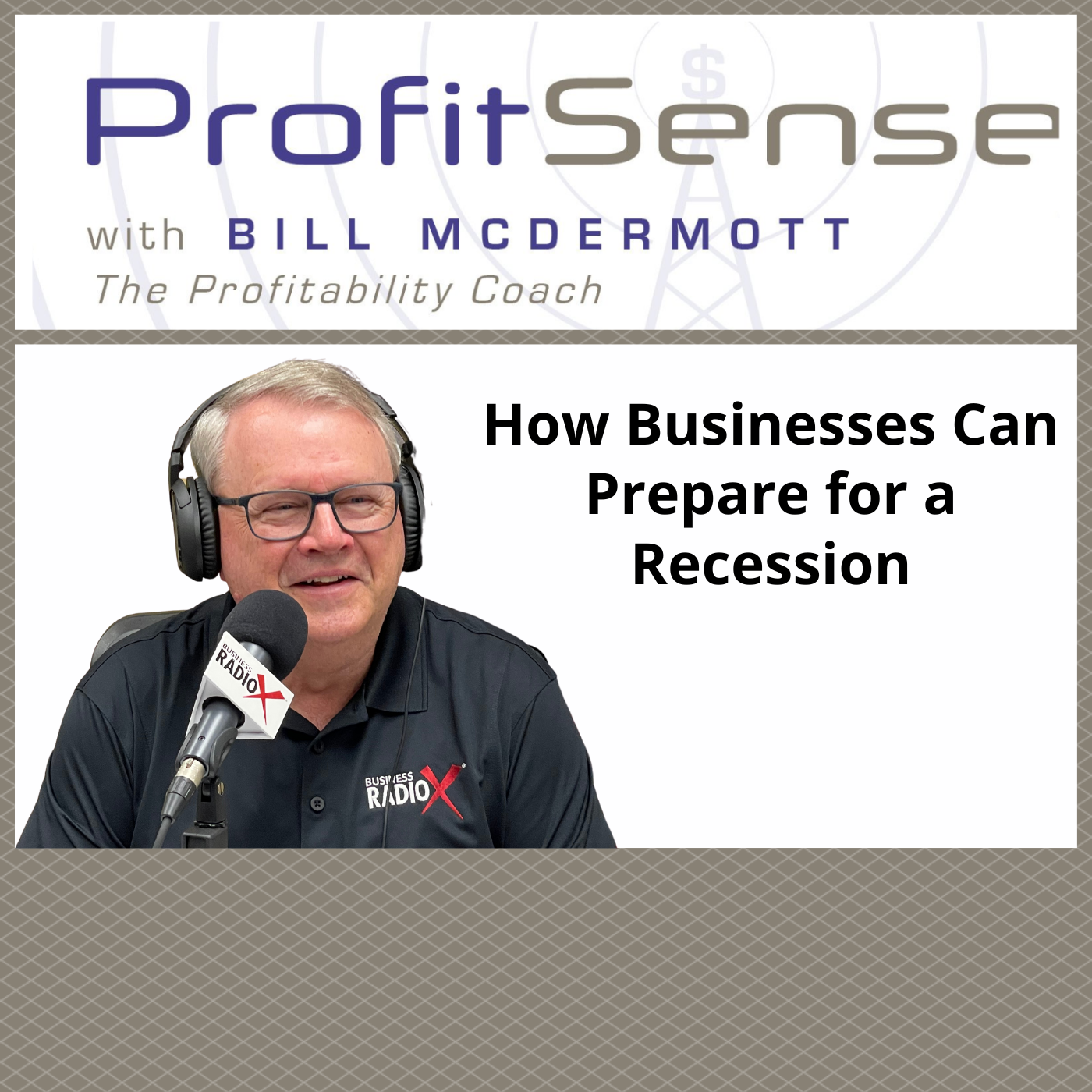
In this commentary from a recent episode of ProfitSense, Bill lays out several ways businesses can prepare for a recession, one being to create a financial scorecard.

ProfitSense with Bill McDermott is produced and broadcast by the North Fulton Studio of Business RadioX® in Alpharetta.

Bill’s commentary was taken from this episode of ProfitSense.

About ProfitSense and Your Host, Bill McDermott

Bill McDermott
Bill McDermott

ProfitSense with Bill McDermott dives into the stories behind some of Atlanta’s successful businesses and owners and the professionals that advise them. This show helps local business leaders get the word out about the important work they’re doing to serve their market, their community, and their profession. The show is presented by McDermott Financial Solutions. McDermott Financial helps business owners improve cash flow and profitability, find financing, break through barriers to expansion and financially prepare to exit their business. The show archive can be found at profitsenseradio.com.

Bill McDermott is the Founder and CEO of McDermott Financial Solutions. When business owners want to increase their profitability, they don’t have the expertise to know where to start or what to do. Bill leverages his knowledge and relationships from 32 years as a banker to identify the hurdles getting in the way and create a plan to deliver profitability they never thought possible.

Bill currently serves as Treasurer for the Atlanta Executive Forum and has held previous positions as a board member for the Kennesaw State University Entrepreneurship Center and Gwinnett Habitat for Humanity and Treasurer for CEO NetWeavers. Bill is a graduate of Wake Forest University and he and his wife, Martha have called Atlanta home for over 40 years. Outside of work, Bill enjoys golf, traveling, and gardening.

Connect with Bill on LinkedIn and Twitter and follow McDermott Financial Solutions on LinkedIn.
Tagged With: Bill McDermott, economy, financial scorecard, Profitability Coach Bill McDermott, ProfitSense, ProfitSense with Bill McDermott, recession

Navigating A Recession

August 31, 2022 by John Ray

Navigating A Recession
North Fulton Studio
Navigating A Recession
Loading
00:00 /
RSS Feed
Share
Link
Embed

Download file

Navigating A Recession

Navigating A Recession

It’s a mistake to do business planning based on the predictions of economists. A better approach to navigating a recession, or any other economic environment for that matter, is to stay close enough to your clients to understand the value they perceive in your service. More in this episode.

The Price and Value Journey is presented by John Ray and produced by the North Fulton studio of Business RadioX®.

TRANSCRIPT

John Ray: [00:00:00] Hello. I’m John Ray on The Price and Value Journey. Navigating a recession or any other major economic event, for that matter, there’s lots of talk right now about recession and some conflicting views about whether we’re in one. Paul Samuelson, a Nobel Prize winner in economics, wrote that the stock market had predicted nine of the past five recessions. What he failed to point out is that economists have a similar track record, if not worse.

John Ray: [00:00:34] Asking whether we’re in a recession to determine what business moves to make in our individual businesses is the wrong question. The better consideration each of us must weigh is whether our clients perceive value which is in excess of the price they pay us for our services. When there’s a major economic shift, business owners face what you might call a value decision point on everything that they buy.

John Ray: [00:01:02] They’ll reassess their perception of the value they think they are receiving from the goods and services they purchase and compare that new perceived value to the price they’re paying. These value decision points come repeatedly over the life of a client relationship. Sometimes without us as service providers even knowing it’s happened.

John Ray: [00:01:26] Value decision points most certainly occur in a down cycle of business conditions, but they occur across the spectrum of macroeconomic events, whether it’s a recession, an inflationary period, a pandemic, or when the pendulum swings back toward prosperity. Sometimes value decision points result in changes to client perception of value, which are very minor. Other times, of course, they can be momentous, or, often, they are somewhere in between. Shifts at the micro level bring business owners to a value decision point as well.

John Ray: [00:02:04] One example is when you announce a price increase. The business owner or manager will naturally assess whether the value they believe they are receiving from the professional relationship they have with you still exceeds the new higher price. Another example is when there’s a service offering change, such as a change in personnel that are doing the work. It could also be that the micro level change has nothing to do with you, such as when there’s been a major internal blow to the business.

John Ray: [00:02:36] If you’re a solopreneur or a small firm professional services firm owner, the question is not whether we’re in a recession. The question for you is whether your client’s perception of the value they receive from your firm remains more than what you’re being paid. And that’s always the question in all economic cycles.

John Ray: [00:03:00] I’m John Ray on The Price and Value Journey. Past episodes of this series can be found at pricevaluejourney.com. If you’d like to connect with me directly with an email, send me a note, john@johnray.co. Thank you for joining me.


About The Price and Value Journey

The title of this show describes the journey all professional services providers are on:  building a services practice by seeking to convince the world of the value we offer, helping clients achieve the outcomes they desire and trying to do all that at pricing which reflects the value we deliver.

If you feel like you’re working too hard for too little money in your solo or small firm practice, this show is for you. Even if you’re reasonably happy with your practice, you’ll hear ways to improve both your bottom line as well as the mindset you bring to your business.

The show is produced by the North Fulton studio of Business RadioX® and can be found on all the major podcast apps. The complete show archive is here.

John Ray, Host of The Price and Value Journey

John Ray The Price and Value Journey
John Ray, Host of “The Price and Value Journey”

John Ray is the host of The Price and Value Journey.

John owns Ray Business Advisors, a business advisory practice. John’s services include advising solopreneur and small professional services firms on their pricing. John is passionate about the power of pricing for business owners, as changing pricing is the fastest way to change the profitability of a business. His clients are professionals who are selling their “grey matter,” such as attorneys, CPAs, accountants and bookkeepers, consultants, marketing professionals, and other professional services practitioners.

In his other business, John is a Studio Owner, Producer, and Show Host with Business RadioX®, and works with business owners who want to do their own podcast. As a veteran B2B services provider, John’s special sauce is coaching B2B professionals to use a podcast to build relationships in a non-salesy way which translate into revenue.

John is the host of North Fulton Business Radio, Minneapolis-St. Paul Business Radio, Alpharetta Tech Talk, and Business Leaders Radio. house shows which feature a wide range of business leaders and companies. John has hosted and/or produced over 1,500 podcast episodes.

Connect with John Ray:

Website | LinkedIn | Twitter

Business RadioX®:  LinkedIn | Twitter | Facebook | Instagram

Tagged With: economic recession, John Ray, pandemic, Price and Value Journey, pricing, professional services, professional services providers, recession, solopreneurs, value, value pricing

Decision Vision Episode 176: Should I Continue Investing in Sales and Marketing in a Recession?- An Interview with Amy Franko, Amy Franko Associates

July 7, 2022 by John Ray

Amy Franko
Decision Vision
Decision Vision Episode 176: Should I Continue Investing in Sales and Marketing in a Recession?- An Interview with Amy Franko, Amy Franko Associates
Loading
00:00 /
RSS Feed
Share
Link
Embed

Download file

Amy Franko

Decision Vision Episode 176: Should I Continue Investing in Sales and Marketing in a Recession?- An Interview with Amy Franko, Amy Franko Associates

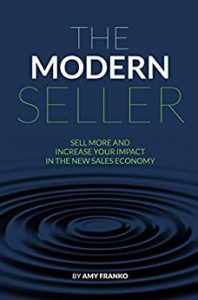
Tempting as it may be to cut expenses such as sales and marketing when faced with the prospect of a recession, Amy Franko argues that is a mistake. Joining host Mike Blake on this episode of Decision Vision, Amy, the author of The Modern Seller, discussed sales and marketing as an investment, the ramifications of putting the brakes on it in an economic downturn, sensible strategies to prepare, the need for Sales and Marketing departments to be in alignment, and much more.

Decision Vision is presented by Brady Ware & Company and produced by the North Fulton studio of Business RadioX®.

In his introduction, Mike mentioned this 2020 Harvard Business Review article on marketing in a recession.

Amy Franko Associates

Amy Franko Associates works with mid-market and enterprise-level organizations to significantly grow their sales results. This includes consulting on sales strategy, and learning programs focused on growing sales team performance.

Company website | LinkedIn

Amy Franko, CEO, Amy Franko Associates

Amy Franko, CEO, Amy Franko Associates

Amy Franko is the leading sales strategist for growth-oriented mid-market organizations. She works with a variety of sectors to grow sales results, through both sales strategy and skill development programs. Her book, The Modern Seller, is an Amazon best seller and she is also recognized by LinkedIn as a Top Sales Voice.

Amy is the Chair of the Board of Directors for Girl Scouts of Ohio’s Heartland, a Top 25 non-profit in the Columbus, Ohio region. She resides in Columbus with her husband Dave and their very energetic black lab, Roxy. She loves all things fitness, enjoys travel, and is usually reading several books at once.

LinkedIn

Mike Blake, Brady Ware & Company

Mike Blake, Host of the “Decision Vision” podcast series

Michael Blake is the host of the Decision Vision podcast series and a Director of Brady Ware & Company. Mike specializes in the valuation of intellectual property-driven firms, such as software firms, aerospace firms, and professional services firms, most frequently in the capacity as a transaction advisor, helping clients obtain great outcomes from complex transaction opportunities. He is also a specialist in the appraisal of intellectual properties as stand-alone assets, such as software, trade secrets, and patents.

Mike has been a full-time business appraiser for 13 years with public accounting firms, boutique business appraisal firms, and an owner of his own firm. Prior to that, he spent 8 years in venture capital and investment banking, including transactions in the U.S., Israel, Russia, Ukraine, and Belarus.

LinkedIn | Facebook | Twitter | Instagram

Brady Ware & Company

Brady Ware & Company is a regional full-service accounting and advisory firm which helps businesses and entrepreneurs make visions a reality. Brady Ware services clients nationally from its offices in Alpharetta, GA; Columbus and Dayton, OH; and Richmond, IN. The firm is growth-minded, committed to the regions in which they operate, and most importantly, they make significant investments in their people and service offerings to meet the changing financial needs of those they are privileged to serve. The firm is dedicated to providing results that make a difference for its clients.

Decision Vision Podcast Series

Decision Vision is a podcast covering topics and issues facing small business owners and connecting them with solutions from leading experts. This series is presented by Brady Ware & Company. If you are a decision-maker for a small business, we’d love to hear from you. Contact us at decisionvision@bradyware.com and make sure to listen to every Thursday to the Decision Vision podcast.

Past episodes of Decision Vision can be found at decisionvisionpodcast.com. Decision Vision is produced by John Ray and the North Fulton studio of Business RadioX®.

Connect with Brady Ware & Company:

Website | LinkedIn | Facebook | Twitter | Instagram

TRANSCRIPT

Intro: [00:00:01] Welcome to Decision Vision, a podcast series focusing on critical business decisions. Brought to you by Brady Ware & Company. Brady Ware is a regional, full-service accounting and advisory firm that helps businesses and entrepreneurs make visions a reality.

Mike Blake: [00:00:21] Welcome to Decision Vision, a podcast giving you, the listener, a clear vision to make great decisions. In each episode, we discuss the process of decision making on a different topic from the business owners’ or executives’ perspective. We aren’t necessarily telling you what to do, but we can put you in a position to make an informed decision on your own and understand when you might need help along the way.

Mike Blake: [00:00:42] My name is Mike Blake, and I’m your host for today’s program. I’m the managing partner of Brady Ware Arpeggio, a data-driven management consultancy which brings clarity to owners and managers of unique businesses facing unique strategic decisions. Our parent, Brady Ware & Company, is sponsoring this podcast. Brady Ware is a public accounting firm with offices in Dayton, Ohio; Alpharetta, Georgia; Columbus, Ohio; and Richmond, Indiana.

Mike Blake: [00:01:06] If you would like to engage with me on social media with my Chart of the Day and other content, I’m on LinkedIn as myself and @unblakeable on Facebook, Twitter, and Instagram. I also host a LinkedIn group called Unblakeable’s Group That Doesn’t Suck, so please join that as well if you would like to engage.

Mike Blake: [00:01:23] Today’s topic is, Should I continue investing in sales and marketing in a recession?

Mike Blake: [00:01:27] So, as we record this on June 21st, literally the longest day, but I don’t think John Wayne’s making an appearance. I miss him. Speaking of Dayton, Ohio, by the way, I think he’s a native of Dayton, but anyway. It seems more likely than not certainly the people who claim to be in the know about these things, and I’m not, but I just read and pair it what other people who say they know what they’re talking about say that a recession seems more likely than not and maybe it’s even necessary. It may take a recession to sort of snap us out of this inflationary funk that our economy is currently in. And, who knows, maybe Paul Volcker is walking through that door.

Mike Blake: [00:02:10] So, I’m of the age where I do remember vaguely anyway the recession of 1980 and 81, where the Fed slammed on the brakes in a big time way. I remember having a CD that offered 18% interest, which is like credit card rates now. I don’t know if we’ll go that high. But it does seem like by hook or by crook in a recession, and if you don’t buy the Fed narrative, there’s always the Russia-Ukraine War and spiking oil prices, spiking food prices, and now monkeypox. Right? We’re not so afraid of murder hornets anymore, but thank God we have monkeypox coming to take its place. So, not necessarily a whole ton of optimism in the economy.

Mike Blake: [00:02:54] And so, given that a recession is at least forecasted by many, and let’s face it, we have pandemic aside from, and I realize it’s a bigger side, we have had a pretty long run, 2008 and ’09 to 2022 is a 13-year run without a recession. I don’t know exactly the history, but I’ll bet you that’s one of the longest runs in history. The only one that’s longer that I can remember is Reagan from ’82 to ’92 up until the Gulf War, the first Gulf War. So, we’ve had a long run. So, from a business cycle perspective, I guess we’re due.

Mike Blake: [00:03:34] And now, for good or ill, I’m old enough to have been through a few of these cycles now. I guess one of the benefits of having gray hair and two arthritic ankles is that companies now have to make a decision on how they’re going to allocate capital. Right? And, the ever-present Elon Musk, who apparently never misses an opportunity to say something inflammatory and he’s got the audience to do it, first announced that basically anybody who’s not in the office just isn’t working at all. And then, he decided to put an exclamation point on that by laying off 3.5% of Tesla, which really in the greater scheme of it, there have been much bigger layoffs, especially in the car industry.

Mike Blake: [00:04:20] So, not to minimize it but, frankly, if you’re in a recession, I want to be let go at the start, not in the middle of it. You have a chance to find a landing spot more quickly, but anyway. And having been through a couple of recessions, one of the things that has been a common theme that I have observed is many companies decide that they’re going to cut back on their sales and marketing under the guise. Well, nobody’s buying anyway, so why bother investing and selling? We’ll kind of come back and get them at another time.

Mike Blake: [00:04:51] And according to The Economist, advertising and marketing spend in the United States actually decreased by 13% in the first quarter of the 2008 recession; 13%. That is a massive number. I’ll bet it’s the largest that has ever been, sort of the Great Depression. But on the other hand, a 2020 Harvard Business Review article by – I hope I’m getting these names right, I’m probably not but we’ll have this in the show notes – Nirmalya Kumar and Koen Pauwels advise not to cut marketing expenditures during a recession. So, who is right? The people who are making the decisions or people who are writing to tell people about how to make the decisions? And I don’t know. I’m a finance guy, so I don’t know the first thing about marketing.

Mike Blake: [00:05:40] So, to help us with this conversation, I have brought in somebody who is an expert, and her name is Amy Franko, who is the leading sales strategist for growth-oriented and mid-market organizations. She works with a variety of sectors to grow sales results through both sales strategy and skill development programs. Her book, The Modern Seller, is an Amazon bestseller, and she is also recognized by LinkedIn as a top sales voice. You can learn more at amyfranko.com, with a K by the way.

Mike Blake: [00:06:10] Amy is the chair of the board of directors for Girl Scouts of Ohio’s Heartland, a top 25 nonprofit in the Columbus, Ohio region. She resides in Columbus with her husband, Dave, and their very energetic black lab. I think that’s redundant by the way. I have a black lab as well. Yeah, separate conversation. But if we ever have a power outage, we’re going to put it on a treadmill and a turbine because I think she can power air conditioning. She loves all things fitness. That’s Amy. I have no idea what the lab likes to do.

Mike Blake: [00:06:10] Amy loves all things fitness, enjoys travel, and is usually reading several books at once. Amy Franko Associates works with mid-market and enterprise-level organizations to significantly grow their sales results. This includes consulting on sales strategy and learning programs focused on growing sales team performance. Amy Franko, welcome to the Decision Division podcast.

Amy Franko: [00:07:01] Mike, it is so good to be here. Thank you for having me.

Mike Blake: [00:07:04] I want to talk about, from a very foundational standpoint, when we talk about investing in sales and marketing, what exactly does that mean? Because I think a lot of people don’t necessarily think of sales and marketing as an investment because that implies an asset. When we say that, what do you think it means?

Amy Franko: [00:07:24] So, before I answer that question, I just have to say, as I was listening to your opening monologue, as I was listening to that, I wrote down a phrase here and you talked about the funk. Sales and marketing can be one of your solutions for the funk. So, I want to open with that, and then share with you – I love that question about sales and marketing being an investment because that is what it is. Because when you make those investments and you being a finance guy, these things drop to the bottom line, the investments that you make in sales and marketing ideally should help improve the bottom line if you’re making the right investments.

Amy Franko: [00:08:07] But as I think about the elements of what it means to invest in sales and marketing, these are things like your sales and marketing strategy, the way that sales and marketing are integrated. And today, more than ever, sales functions and marketing functions are much more integrated, or they should be, if yours or not, in your organization. It’s also investment in talent and having a talent pipeline of sales professionals and marketing professionals. It’s investing in education. It’s investing in your key market segments. It’s innovation.

Amy Franko: [00:08:41] So, there are a lot of different things that we can kind of pick apart here when it comes to actually the investment in sales and marketing. But if you, as a leader, look at sales and marketing as an investment, that will guide your decisions differently than if you look at it as a liability or just something that you have to do, but not something that you want to do.

Mike Blake: [00:09:05] So, what about the argument that you’re in a recession, it’s too hard to sell anyway, got to conserve resources, let’s just sort of retrench a little bit and kind of ride this out. What do you think of that argument or that mindset?

Amy Franko: [00:09:20] I don’t love that mindset. As I was looking at, thinking about questions, I had a big no. Just one. A big no with an exclamation point. Sales is really your revenue and profit engine, and it should be your profit engine, not just your revenue engine. And, marketing is your awareness and your lead generation engines. And if you put those engines into idle or you turn them off completely, you’re not going to be able to move forward. At some point, you are going to be stuck and your competitors or the markets will pass you by. And not to say that you may not need to make some strategic adjustments to your investments.

Amy Franko: [00:10:08] So, for example, pandemic, live events during the pandemic is a really easy one. A lot of that stuff was cut. But if you’re going to be successful in the long run, if you are planning to be in business and successful five years from now, 10 years from now, you can’t turn off the marketing and sales engines today, you need to continue to invest, but you need to invest smart. And you may need to make some strategic adjustments here and there. But if you make wholesale cuts or you are not doing them with a strategic focus, you may not feel that today but you’re going to feel it down the road.

Mike Blake: [00:10:46] And, I wonder if a lot of this discussion has to do with a mindset, you know, and maybe this just means I’m a classical toxic male, but I like to be on offense. When I’m in business, I don’t like to be reactive and responsive. I like to be on offense. And, because life has taught me that when I’m on offense, better things happen, because at least you can force some of the action, right?

Mike Blake: [00:11:13] When you decide you’re going to kind of shut her up and shut down or step back, you’re kind of ceding control of the market, aren’t you, right? To me, that’s a much more defensive stance. And, you’re all about trying to prevent something bad from happening. And, to me, I would find it very difficult. And then, this recession coming up, it would be my first time running a company in a recession, but I would find it very difficult to stay on defense for very long. I find it very difficult to motivate my people to stay on defense for very long.

Amy Franko: [00:11:47] Yeah. And to probably use an overused sports analogy, successful teams have a combination of strong offense and strong defense. You absolutely need both in order to be successful. I personally take a similar viewpoint where the sales and marketing activities are offense-type activities. You may also be keeping your competitors out, which is more of a defensive type of play. But I do see sales and marketing as being offensive. It’s being market forward.

Amy Franko: [00:12:23] One of the mistakes I see organizations make is they shrink back during tough times. And that’s not a good posture in the marketplace. Your clients and prospective clients might start to question how healthy you are as an organization. So, it’s a matter of really thinking through if we make this decision here, what might be the cascading consequence, whether it’s tomorrow or a year from now.

Mike Blake: [00:12:51] So, in my view, we are in a period of measurement. We want to measure everything. We’ve figured out that we can measure a lot more things than we historically have. It’s been revolutionary in marketing, right? I don’t think many people are saying anymore that they’re wasting half their money on advertising. They don’t know which half. Right? That’s something that you’re fired now. But 10 to 15 years ago, that was the state of the art. Right?

Mike Blake: [00:13:18] And that’s a long preamble to the short question, which is this, that in a recession, now that everything is measured, it’s now putting quotas at risk, potentially compensation at risk for salespeople that are commission-based or marketing people or teams that have to meet certain targets on marketing that may or may not be realistic in a recession. So, as management, how do I react to that? And is there a balance you have to walk or establish between still trying to be aggressive and achieve goals, but at the same time not enabling and kind of letting people off the hook altogether because, oh, because recession?

Amy Franko: [00:14:04] Yeah. I think what makes the recession conversation interesting, some people don’t like to talk about recession because they think they’re going to bring it about by talking about it. But recession is often you’re looking out the rearview mirror. It’s, you know, GDP lowering over the course of I think it’s, what, two quarters in a row, so six months of time.

Amy Franko: [00:14:31] So, you realize that you’ve been in a recession when you’re looking in the rearview mirror, you can’t always anticipate what’s happening. And there are lots of companies that thrive during contracted periods of time in recessionary periods. So, just because the markets might be experiencing a recession, that doesn’t necessarily mean your organization is going to experience it if you are diversified, if you are smart about your product and solution mix, or where you happen to be.

Amy Franko: [00:15:05] But to directly answer your question about the quota piece of it, leaders do need to strike a balance, because what you don’t want to do is kill your sales culture. If you have something – I was thinking about this this morning and thinking about vulture culture, which means you might be going after the wrong customers to meet a bottom line. You might be changing compensation plans for your sales teams, which is a surefire way to have issues, let’s just say, you’re essentially creating an unhealthy culture.

Amy Franko: [00:15:44] So, as leaders, we have to really think about the decisions that we’re making when it comes to, you know, you might need to rightsize in the sales quota, you might need to rightsize some things, but to not do it in a vacuum and to think about how those changes could have cascading consequences, and to keep morale, you want to include your sales teams as much as possible in the conversations so that you could potentially come to some solutions together and, as leaders, you’re not just relying on one or two leaders making the decisions without input.

Mike Blake: [00:16:21] You know, in that part about culture, and I think by extension if I can put words in your mouth a little bit, almost a scarcity mentality.

Amy Franko: [00:16:30] Yeah.

Mike Blake: [00:16:31] Reminds me, actually, I watched – for the first time ever, I’m not a big movie guy, but on Friday for the first time ever, I actually watched the entirety of Glengarry Glen Ross, not just the coffees for closers thing. By the way, how Alec Baldwin gets third billing for about 5 minutes of dialogue, he must have had the best agent in the world. But anyway talk about a case study on a toxic culture where in effect most of those people felt like they were behind the 8 ball and frankly could not succeed and there was an absence of leadership and there was an absence of resources to at least make the salespeople feel like they could succeed in an ethical way. Right?

Mike Blake: [00:17:17] And I can’t help but think, as I was watching this – I didn’t do it to prepare for this podcast, just sort of worked out that way. But there is a risk I think even in 2022, so-called modern management, that a boiler room mentality can return, right, unless you adjust expectations and compensation structures.

Amy Franko: [00:17:41] Yeah. And there are plenty of tales of caution out there of those types of sales cultures that might work in the short term. But for the long term, you hurt your culture, which takes a long time to rebuild and probably would also mean a turnover in leadership to do that rebuild and you risk losing market share. So you might be chasing something for the short term, but for the long term, you lose out.

Mike Blake: [00:18:14] So, let’s talk a little bit about the disruption element of a recession. I think that sometimes people forget that some of the most interesting companies have actually been born during recessions, Apple being one during the first oil crisis. Can a recession be thought of perversely as an opportunity?

Amy Franko: [00:18:34] Yes, absolutely. I think there are a lot of opportunities that a recession can provide. You may have competitors that exit, that provide market share opportunities. To your point, you might create an entirely new business during a recession. You have the opportunity to maybe open a new market or find a new way of bringing an existing service to market. If you’re a company of strong cash reserves, you might be able to invest where others aren’t.

Amy Franko: [00:19:07] To prep for our conversation today, I was just doing a little bit of homework on the types of organizations that, or types of businesses I should say, that really thrived during the pandemic. So, these can be lessons for all of us even if we aren’t in these industries. So, like the cleaning industry, the delivery industry, the fitness industry, COVID remote testing, that type of industry. Those are examples of industries that really grew during the pandemic. And now the job of those companies is to continue to capitalize on that. And obviously, there are other challenges around supply chain and staffing shortages.

Amy Franko: [00:19:49] But just because we might be in the midst of a recession if we do look at it as an opportunity, and that comes back to your comment about mindset, we can choose how we look at it, and then if we choose to look at it as an opportunity and we use our actions and behaviors as leaders to look at it as opportunity, then we’re going to be in a much better position to actually find the opportunity versus just shutting our minds and shutting our eyes to finding them.

Mike Blake: [00:20:17] Yeah. You know, and the thing about recessions, it brings to mind a writer that I’m fond of, Nicholas Taleb. He wrote The Black Swan in addition to other things. He also wrote another book called Antifragile, which is effectively a book about resilience. And he made a fascinating observation, which I think is so profound, which is the difference between organisms and mechanisms, is that mechanisms, as they are used, depreciate and deplete. Organisms as they are used actually become stronger. Right?

Mike Blake: [00:20:51] So, people, as we use muscles, for example, they become stronger. Under stress, they become stronger. But machines under stress become weaker, more fragile. They’ll have to be maintained and overhauled. Right? And, I wonder if there’s – as I think about this upcoming recession, I think about and wonder, is that an opportunity for us to become stronger because it is going to create stress, and stress actually can produce very useful things. What do you think about that?

Amy Franko: [00:21:19] That’s such an interesting observation. And it’s reminding me of a conversation that I had with another sales consultant. I was interviewed on his podcast. His name is Victor Antonio, and he has an excellent podcast called The Sales Influencer, for anybody who’s interested in those topics. And what we were talking about, the observation was that in the last year or so, with things like supply chain shortage, resource, human resource shortage like staff shortage, we’ve both talked to so many organizations where sales professionals were saying, “I have so many orders. I can’t even fulfill the orders that I have because we have supply chain problems. We are growing like crazy because there’s so much demand for our service or a product.” You know, fill in the blank.

Amy Franko: [00:22:13] Now, what you’re seeing, and this was his observation which ties to what you just shared, is what sales skill atrophy, if you will. The muscles have not been used because they haven’t had to be. And now we might be entering a period where we have to flex those muscles again, but it’s going to take a few more workouts to get that strength back.

Amy Franko: [00:22:37] So, it’s a really interesting scenario. The people that have continued to work out all through this and keep those skills, whether it’s a leader making the investments or an individual continuing to sell, they’re the ones that are going to thrive. Whereas you’re going to see a lot of organizations that have had that atrophy and they’re going to have to figure it out.

Mike Blake: [00:22:59] I think that’s fascinating. I think that’s a really smart observation, because in a boom time like we’ve had, I do think that it’s been a good time for order takers. Right? But in a recession is when you really appreciate the order makers. Right? And you’re right if you have not been flexing that. And COVID is a perfect example. Right?

Mike Blake: [00:23:25] I went to my first networking meeting about, I guess is, last month in about two and a half years, and I basically drooled on the floor most of the time. I didn’t know how to talk to people anymore. I couldn’t have found my business card if you’d given me 10 minutes and a magnifying glass. Right? I was not at my smoothest, and, you know, a sales – we’re so not used to scarcity right now when it comes to revenue for a lot of us, now that I say this I’m going to lose all my customers tomorrow, so I’ve got to be really careful; knock on wood. But there is a muscle that probably is going to need to exercise.

Mike Blake: [00:24:03] So, with that in mind, I’m going to go off script a little bit because this brings to mind a really interesting – in my mind, a really interesting question. Assuming that people believe the same as I do that some form of recession is coming in the next, let’s say, by the end of the year, how can companies start to prepare now to either at least not be terribly hurt by the recession from a sales and marketing perspective, if not actually position themselves to thrive? How do you – what’s the equivalent of sort of buying all the storm windows before the hurricane hits?

Amy Franko: [00:24:40] Yeah, right. So, where I would counsel my clients to start is you need to get out your sales strategy and you need to get out your marketing strategy, and hopefully those two things exist in your organization. So if they exist, you need to pull them out and this is the time to take a look at them and to determine where you are and where you want to go into the future. If you don’t have these things, it’s not necessarily time to hit the panic button, but you want to get those things in place as well as you can because those can be your North Star, if you will. So, that’s where I would counsel my clients to start.

Amy Franko: [00:25:33] The other thing I would counsel my clients on is to not pivot too hard because I’ve seen organizations chase unproven markets where either they don’t know, they haven’t done their research on what the outcomes could be, or they don’t have enough of their own market share or visibility in those unproven markets. You can squander resources without return.

Amy Franko: [00:26:00] So, you want to take a look at where those resources are being invested and you want to take a look at your numbers. Where are you investing in sales? Where are you investing in marketing? Do you have the return on those investments? So, those are a few places that I would counsel my clients to start.

Mike Blake: [00:26:19] So, what are the landmines? What are the most common mistakes that companies do make in terms of responding to a recession from a perspective of investing in sales and marketing?

Amy Franko: [00:26:31] Yeah. I think the word react really comes to mind. It’s being reactive instead of proactive and not staying the course with the strategy that you’ve designed and not to say that strategy should be stagnant. You know, I am working with clients who are working on strategy that’s maybe a year to 18 months. So, I will work with clients on their sales strategy. And you want to stay the course, but you also want to take a look at what are the returns on those different investments. So, I would say a mistake is to not know your numbers when it comes to sales and marketing return.

Amy Franko: [00:27:17] One of the things that I see organizations do pretty regularly and it doesn’t matter, it’s not necessarily a comment on the recession. It’s really easy to hang on to resources whether they are people resources or other types of investments that you know aren’t performing. They’re dragging on the organization in some way, shape or form, whether it’s organizational morale or dragging on the bottom line and not being proactive with that. That hurts more during a recession. But I see it regardless of what the economy happens to be doing, and that’s a very common mistake.

Mike Blake: [00:27:59] You know that’s interesting because one of the benefits of recessions is, it does sort of separate wheat from the chaff. Right? And though you can – sometimes you can put up with mediocre performers because the recession allows you to do it, but, boy, a recession tends to reveal people’s shortcomings, especially on the sales and marketing side pretty quickly, doesn’t it?

Amy Franko: [00:28:20] It can. And this is where, even – you know, even really high performers, elite performers, aren’t immune to things that happen during a recession. I have seen very elite performers just the industries that they are selling into have hit slumps and some industries were hit much more heavily than others during the pandemic.

Amy Franko: [00:28:44] So, again, that is to your point where you separate the elite high performers from the others. Because the elite high performers, whether it’s in a sales function or a marketing function, they’re the ones that are going to be more resilient and they’re the ones that are going to say, “All right, things do not look good right now. I might be at 50% of my number or maybe even less. But here’s what I’m doing. Here’s how I’m thinking. Here’s what I’m going to go into the market with.” And they aren’t letting it – they aren’t letting it stop them from thinking creatively and being strategic. They’re not just going to sit back.

Amy Franko: [00:29:20] So, in the absence of seeing hard performance numbers like reaching a quota or numbers of leads generated from a marketing campaign, this is where leaders have a great opportunity to really get to know what their individual folks are doing and what their thought processes are and how they’re approaching because that’s going to tell you a lot about how they’ll recover when we do come out of whatever the latest disruption is.

Mike Blake: [00:29:48] What’s an example of a company that got marketing and sales right during the last recession? Can you think of one?

Amy Franko: [00:29:55] Well, you know, this may not be a recession conversation, but I think it’s a unique and interesting story that just speaks to kind of staying the course with strategy. And it’s an Ohio company. It’s a Gojo Industries, which is up in the Northeast Ohio area. And having been a family-owned business, you may not know who Gojo is, but you probably know the brand Purell. You know, Purell is on par with brands like Kleenex and Coke. It’s not hand sanitizer. It’s Purell. Right? But there was a time where that was a market, not a market, it was a loss leader for them. And it took them about a decade to get that product to where it is today, to profitability.

Amy Franko: [00:30:50] And, as I was reading about this, what really struck me was the leadership choices that the organization made, the leaders in the organization to say, you know, if we were perhaps a publicly-traded organization, this is an example of something that would have been cut years ago. But we really believed in it and we wanted to continue to bring it to market even though it took the time that it did and that investment paid off.

Amy Franko: [00:31:14] Now, that’s not necessarily a recession story. It is a story of understanding what your company values are and where you want to invest your resources and those decisions that you make from there. But, again, some of those industries, we could take some real lessons from industries that have thrived during pandemics. And I mentioned a few of them, but a couple of others are health care, telehealth, behavioral health, things like that. What are the lessons we can take from those and apply to our own businesses?

Mike Blake: [00:31:50] Your observation draws me to an observation I love you to react. I wonder if from a purely strategic perspective, privately-held companies actually have more freedom to operate in terms of recession and making investments because they at least have the freedom. Maybe they do or don’t do this, but they have the freedom to think in five and ten-year increments. Whereas in the public company sector, right, when a recession happens, you are expected to slash and burn. That’s what Wall Street wants to see. That’s where people’s bonuses are going to come from in terms of stock price, right, and not necessarily financial performance directly. Could the case be made that private companies actually have an advantage over public companies during a recession?

Amy Franko: [00:32:39] I think you can make the case that there is an advantage there. I think there’s also an advantage to – I think smaller organizations could have an advantage. They may not have the deep pockets, if you will, of larger organizations, but they can often be more nimble and more creative because they’re not constrained by their own mechanisms. Right? They have that ability to be a bit more creative.

Amy Franko: [00:33:04] I agree. I think a privately-held company could absolutely have an advantage. And even in uptimes, publicly-traded organizations are often running quarter to quarter and making these adjustments and pivots to product mix, how they’re incentivizing sales teams, what focus they’re going, what product focus or solution focus they’re going to put their time and attention toward because external forces are pressing down on them to make those decisions. Whereas a privately held organization, they’re going to have internal pressure, but they can make those decisions from the inside out versus the outside in.

Mike Blake: [00:33:46] So, you’ve brought up a term a couple of times that I want to pause on for a second because I do think it’s really important, and that is about reallocating resources. So, when a recession hits, I want to talk about first marketing and then sales. So first, how do you see companies or how should companies think about potentially, if not, reducing the amount of resources in a recession, how those same resources are allocated?

Amy Franko: [00:34:16] So, probably a recent one that can we probably all wrap our heads around is with the pandemic and just the fallout from that, the lack of live events, whether it’s a networking event, it’s a conference, you know what have you. The conference industry, of course, was rocked really hard by the pandemic. And it’s going to take multiple years for them to, for that industry, to recover. But that’s probably a pretty top-of-mind type of example, where if you’re an organization that put a lot of your marketing dollars into things like tradeshows, all of a sudden you had a complete marketing channel that you relied on heavily, it just completely dried up.

Amy Franko: [00:35:04] So, now as a leader, marketing leader or otherwise, you are faced with, all right, here’s this bucket of dollars that we are putting into one channel. I now have some decisions to make on where to reallocate that to. And if you have not had any diversification in those channels, you’re a little bit behind in the game to figure out where to reallocate those dollars or those people to. The other part of that is the replacement mechanisms, which were virtual conferences, a lot of my clients, frankly, did not get ROI out of virtual conferences because of the way that they are structured and just the way that you meet people and cultivate opportunities. It just wasn’t there.

Amy Franko: [00:35:52] So, you have to think about the replacement. Is the replacement going to be as good or better? And if I have this bucket of dollars and I’m going to pull it away, am I going to pull it away permanently, or am I going to maybe put a portion of those dollars back as things start to come online? So, that’s an example of where leaders have decisions to make about where to allocate marketing dollars and do they want to put the pie back to where it was pre-pandemic or pre-recession, or did they make those changes permanent?

Mike Blake: [00:36:29] So, I’ve read that social media tends to be the weapon of choice during a recession now. Have you heard that? Is there any truth to that? Is there any validity to that, or is it maybe –

Amy Franko: [00:36:44] Yeah. You know, I have a bit of an opposite viewpoint. Social media absolutely has its place. And for anyone that connects with me, you will see my presence on social media and definitely more on the business platforms. I use LinkedIn. I mean, I would argue that all the platforms can be used for some type of business.

Amy Franko: [00:37:07] Social media absolutely has its place. Where I see mistakes being made is that companies swing the pendulum so far in that social media direction that it can become a lot of noise. And, I’m a big believer that you have to have a really smart, business-oriented sales force to complement what you might be doing on social media. So, I believe in diversifying. And if all of your eggs are in a social media basket, I believe that you’ll be challenged as an organization moving forward.

Mike Blake: [00:37:45] Now, what about reallocating personnel, particularly sales force, during a recession? Is there a way to do that? Are our salespeople capable, willing to contribute in some other way that they just have to change the way that they sell? Are cutbacks perhaps inevitable whether deliberately or people are just sort of leaving to find a better opportunity? How do you see – what do you think best practices are for companies confronting personnel decisions during a recession?

Amy Franko: [00:38:18] Yeah. So, a lot of the things that you just talked about kind of wrapped up in that question about reallocating resources to other functions or how do we, for lack of a better phrase, rightsize the sales function? I think it starts with as a leader and this is whether you have a small sales team or you have multiple sales teams and you’re a global organization, having the right structures in place really show themselves during recessionary times or in disruptive times. And I mentioned this before that a lot of organizations hang on to professionals that are not not performing.

Amy Franko: [00:39:04] So, as a leader, you do have some options. You may need to cut back on your sales force. You may have some low performers on your team, which every organization has them. I’ve yet to come across an organization that doesn’t. This is also a choice where if you have really savvy sales professionals are going to find a way to stay productive and to continue to build relationships and to set themselves up for moving out of the recession, you have to know who those people are as a sales leader.

Amy Franko: [00:39:45] Most sales organizations don’t have the right sales processes. They don’t have the right skill development, and they don’t understand the skills of their team. If you understand the skills of your team and where they have strengths and weaknesses, that’s going to put you in a lot better position to understand the changes that you might have to make if you hit a period of contraction or some other type of disruption.

Mike Blake: [00:40:13] And what about the balance, if you will, or maybe the relationship between sales and marketing? Does that change? Do you – would you – do you think that best practices would indicate that companies are going to maybe tip the balance in favor of marketing in terms of lead generation? Or are they going to tip in favor of sales in terms of trying to close more of the leads that they have?

Amy Franko: [00:40:38] Yes. The best organizations that I see and work with are working toward an integration of marketing and sales. Now, you may have a chief sales officer or a VP of sales, and you may have a chief marketing officer. You may have people that are sitting in those roles and they’re leading their respective teams. But that type of sort of separated approach, you need to have those leaders that are on the same page moving forward, which is why I will often advocate for a sales and marketing strategy together. Even though you might be doing different activities, your marketing efforts have to support your sales teams, and your sales teams need to take what is created, assuming its quality, and move it through your sales process and your sales pipeline.

Amy Franko: [00:41:35] So, I find the best practice to be an integrated approach to sales and marketing where those leaders are in lockstep, and then that message kind of cascades down to the teams. And if I’m a sales professional, if I’m smart, I want to learn about what’s new in marketing and what my marketing team is doing. If I’m a smart, savvy marketing professional, I want to understand what’s happening in the sales landscape and spend time with my sales teams.

Mike Blake: [00:42:05] Now, what about the choice or the decision on whether or not you’re going to focus on maybe doing more work, more business with your existing customers versus new customer acquisition? How does a recession change, if at all, that calculus?

Amy Franko: [00:42:25] My philosophy is retaining and growing your existing customers is one of your best methods of offense during any type of period of contraction, recession, pandemic, or otherwise. And, every organization is a little bit different. But understanding what the right balance is for your organization, I tend to see a 70-30 split between expanding your existing customers and finding net new logos to add.

Amy Franko: [00:43:00] So, I think professional services, Mike, is a great example of where there’s been a lot of addition to what professional services firms offer. And especially, I work with a lot of public accounting firms, so about half of my business is public accounting and consulting. And, the organizations that have added ancillary high-value services to their portfolio now are in a great position to be able to go to current clients and offer these new services, new ways of thinking that maybe the client didn’t realize, “Oh, my gosh. I didn’t even realize you consulted on this. I absolutely need you to help me with this.” That’s offensive and defensive because not only are you providing a new value, which is offensive, you are ideally keeping your competitors out, which is a great defensive play.

Mike Blake: [00:43:50] So, not all recessions are created equal. Of course, the one that we went through in ’08 was really bad. It was a balance sheet recession that required systemic realignment throughout the economy to sort of rebound from. Others have not been nearly as severe. And so, my question is, does the – and this one doesn’t look like it’s necessarily going to be as severe as ones we’ve had in the past. Does that change at all how one should react to a recession or address a recession or approach a recession from a sales and marketing perspective, if you believe that the recession, for lack of a better term, just frankly just won’t be that bad?

Amy Franko: [00:44:33] Yeah. Sometimes I think it’s kind of the equivalent of pulling out your magic 8 ball and trying to figure out is it going to be bad or is it not? As I was thinking about our conversation today and kind of reflecting on that 2007 to 2009 period, we often talk about it like it was last year, but it was 13 or 14 years ago now. And if you look at your workforce, there’s probably a good portion of your workforce that were in high school when that 2008 recession was here, right, and they’re in their late 20s, maybe early 30s at this point.

Amy Franko: [00:45:13] So, I share that just as a way to give us a little bit of perspective that, like you said, not all recessions or contractionary period, contractive periods are the same. And it’s important to take the lessons that we’ve learned but to know that you may have a portion of your workforce that wasn’t even in the workforce when the last one hit so they may not have a frame of reference and just to treat each thing like its own individual time period and how can I be successful in this time period and also look to the future.

Mike Blake: [00:45:54] I’m talking with Amy Franko and the topic is, Should I continue investing in sales and marketing in a recession. Should a recession alter a company’s risk posture? And in fact, could an argument be made that a recession might be actually a better time to take risks?

Amy Franko: [00:46:12] Yeah. I think every leader is looking at, how do I maximize my upside and minimize my downside, right? So if you are looking to do that throughout your company’s history, whether it is an uptime or we’re hitting a period where we may hit some downtime, if we are smart and doing scenario planning while times are good, then we can minimize our downside ideally in downturns.

Amy Franko: [00:46:50] So, yes, if you have been, if you have good cash reserves, you have maintained a healthy balance sheet, you have diversified products and services, you can absolutely maximize downside. And companies are doing that all the time. It’s whether or not you have put yourself in a position to be one of those companies.

Mike Blake: [00:47:14] You’ve used the term a couple of times in this conversation that I want to come back to, because it’s a very important term, and that’s pivot. How do you decide whether or not the things you need to do or should do in a recession are of a nature where you’re simply rebalancing and adjusting versus a wholesale pivot, which to me implies you’re just going to abandon something and do something else because the thing you were doing just isn’t making it.

Amy Franko: [00:47:44] Yeah. Pivot’s one of those words you could put on a buzzword bingo board.

Mike Blake: [00:47:49] Absolutely. We’ll take that bingo board to the next level with that one.

Amy Franko: [00:47:53] Right. Right. So, between the words pivots and nimble and agile, I feel like we have a whole new game of buzzword bingo. So, yeah, how do you decide whether to pivot strategy, tactics, products, all of that? I think your scenario planning ahead of time can help you with that. Personally, I think that there is a balance between capitalizing on a market opportunity that can present itself during a downtime versus you pivot so hard and you put so many resources into something that isn’t going to pan out. And then, you find that now you have these resources that you’ve wasted.

Amy Franko: [00:48:39] So, your scenario planning ahead of time can be really important. Like, hey, if we do hit a downturn, what are our options? Or you’re in an uptime, what are the markets telling us what we might be able to capitalize on something and then when there is a downturn, you’re in a position to do that? So, it’s continually scanning the environment. So, when I’m doing strategy work with clients’ sales strategy primarily, we’re looking 12 to 18 months out instead of, say, the traditional three to five-year plan that typically gathers a lot of digital dust. And your risk tolerance will determine how hard you take, how sharp is that pivot.

Mike Blake: [00:49:22] So, before we wrap up, there’s a question I want to ask you. And I’m going to admit the question is blatantly unfair. In fact, it’s so blatantly unfair. And I kid you not, there’s no hyperbole here. I think it’s the most difficult question I’ve ever asked in the podcast. And this is episode 173, I think, 170 something.

Amy Franko: [00:49:41] You saved this one for me.

Mike Blake: [00:49:43] Yep.

Amy Franko: [00:49:44] All right. Let’s do it.

Amy Franko: [00:49:44] Because I think you can handle it. So in a recession, the reality may be that even though you advised a client to continue financing their sales and marketing operations, they may not have the money to do so. Right? They may be losing money, right? And they just got a cut. So, my blatantly unfair, horrible question is this. Assuming that the company had a clean, fairly strong balance sheet and assuming that the business owner had fairly middle-of-the-road risk tolerance, would you go so far as to advise a client or to yourself, if you’re in that situation, to actually consider taking on external money from a bank or an investor to keep up your sales and marketing during that recession until operations can recover and pay for it on its own?

Amy Franko: [00:50:43] That’s a really good question. When I think about taking on outside money, outside money could be you’re dipping into your line of credits. Outside money can be you are taking on an external investor who is putting money into your organization and now you have another stakeholder. So, there are probably a lot of considerations for taking on outside investment.

Amy Franko: [00:51:12] So, my answer to that, it’s a conditional yes, and here’s why. I am not opposed to companies taking on or using their debt instruments or outside investment instruments if they have a really clear picture of how they want to use it. If there isn’t a clear picture on how to use it, that can start to become another stressor on the balance sheet and on you as a leader, quite frankly, that you want to consider.

Amy Franko: [00:51:49] So, this is where having outside perspectives, whether it’s my perspective or might even your perspective with your areas of expertise, and really thinking through whether or not that outside investment is going to pay off. If the outside investment, especially if it’s like a line of credit and it’s a low-interest rate on a line of credit and that is a fairly low risk, then that might be an easier decision than taking on an actual outside investor who now has a say in how your company is run.

Amy Franko: [00:52:23] So, a long answer to your question, I wouldn’t leave it off the table, just having very clear parameters on how that’s going to play out and what your exit points are if you see it not working out.

Mike Blake: [00:52:38] Very good. You rose to the occasion. You answered a very tough question. Thank you. Thank you for doing that.

Mike Blake: [00:52:46] Amy, this has been a great conversation but we are running out of time. I’m sure there are questions that our audience wished we would have talked about or maybe talked about longer. If someone wants to contact you for more information about this topic or something related, can they do so? And if so, what’s the best way for them to do that?

Amy Franko: [00:53:03] Yes, please. I would love to hear from you. Two ways. The first is LinkedIn. I’m Amy Franko on LinkedIn. And, please mention that you heard me on our podcast here and I’d be happy to connect with you there. And then, also you are welcome to go out to amyfranko.com and reach out to me that way.

Mike Blake: [00:53:21] That’s going to wrap it up for today’s program. I’d like to thank Amy Franko so much for sharing her expertise with us.

Mike Blake: [00:53:28] We’ll be exploring a new topic each week, so please tune in so that when you’re faced with your next business decision, you have clear vision when making it. If you enjoy these podcasts, please consider leaving a review with your favorite podcast aggregator. It helps people find us so that we can help them.

Mike Blake: [00:53:44] If you would like to engage with me on social media with my Chart of the Day and other content I’m on, LinkedIn as myself and @unblakeable on Facebook, Twitter, and Instagram. Also, check out my LinkedIn group called Unblakeable’s Group That Doesn’t Suck. Once again, this is Mike Blake. Our sponsor is Brady Ware & Company. And this has been the Decision Vision podcast.


Tagged With: Amy Franko, Brady Ware & Company, Decision Vision, Mike Blake, recession, Sales and Marketing, sales strategy, sales teams, The Modern Seller

Decision Vision Episode 104: Should I Layoff Employees? – An Interview with David Frame, HB NEXT

February 18, 2021 by John Ray

David Frame
Decision Vision
Decision Vision Episode 104: Should I Layoff Employees? - An Interview with David Frame, HB NEXT
Loading
00:00 /
RSS Feed
Share
Link
Embed

Download file

David Frame

Decision Vision Episode 104:  Should I Layoff Employees? – An Interview with David Frame, HB NEXT

Reflecting on an earlier career experience at Allconnect, David Frame, now CFO of HB NEXT, joined host Mike Blake to discuss decisions on layoffs he and his management colleagues had to confront during the 2007-2008 recession. “Decision Vision” is presented by Brady Ware & Company.

David Frame, HB NEXT

David Frame is Chief Financial Officer of HB NEXT. David’s focus has been on growing and scaling private equity-backed technology-enabled services companies in the $25 to 50 million range, and has held both financial and operational leadership roles. David’s passion is developing people and building high functioning teams to effectively execute growth strategies. Outside of work, he volunteers in the Boy Scouts of America, stays active with golf, basketball, and skiing when he can.

He has an MBA in Finance and Electronic Commerce from Vanderbilt.

HB NEXT is a technology-enabled services company servicing construction, industrial, and energy companies with a range of safety and environmental compliance and training solutions.  In business since 1999, the company constantly evolved with technology and now provides several SaaS platforms for clients including SafetyCloud and StormCloud for safety and environmental compliance.

HB NEXT is also proud to be a part of the Construction Ready program, providing training for individuals looking for careers in the commercial construction industry.  To date, the program has successfully placed over 1000 students in high-paying construction jobs in Georgia.

LinkedIn

Mike Blake, Brady Ware & Company

Mike Blake, Host of the “Decision Vision” podcast series

Michael Blake is the host of the “Decision Vision” podcast series and a Director of Brady Ware & Company. Mike specializes in the valuation of intellectual property-driven firms, such as software firms, aerospace firms, and professional services firms, most frequently in the capacity as a transaction advisor, helping clients obtain great outcomes from complex transaction opportunities. He is also a specialist in the appraisal of intellectual properties as stand-alone assets, such as software, trade secrets, and patents.

Mike has been a full-time business appraiser for 13 years with public accounting firms, boutique business appraisal firms, and an owner of his own firm. Prior to that, he spent 8 years in venture capital and investment banking, including transactions in the U.S., Israel, Russia, Ukraine, and Belarus.

Brady Ware & Company

Brady Ware & Company is a regional full-service accounting and advisory firm which helps businesses and entrepreneurs make visions a reality. Brady Ware services clients nationally from its offices in Alpharetta, GA; Columbus and Dayton, OH; and Richmond, IN. The firm is growth-minded, committed to the regions in which they operate, and most importantly, they make significant investments in their people and service offerings to meet the changing financial needs of those they are privileged to serve. The firm is dedicated to providing results that make a difference for its clients.

Decision Vision Podcast Series

“Decision Vision” is a podcast covering topics and issues facing small business owners and connecting them with solutions from leading experts. This series is presented by Brady Ware & Company. If you are a decision-maker for a small business, we’d love to hear from you. Contact us at decisionvision@bradyware.com and make sure to listen to every Thursday to the “Decision Vision” podcast.

Past episodes of “Decision Vision” can be found at decisionvisionpodcast.com. “Decision Vision” is produced and broadcast by the North Fulton studio of Business RadioX®.

Visit Brady Ware & Company on social media:

LinkedIn:  https://www.linkedin.com/company/brady-ware/

Facebook: https://www.facebook.com/bradywareCPAs/

Twitter: https://twitter.com/BradyWare

Instagram: https://www.instagram.com/bradywarecompany/

TRANSCRIPT

Intro: [00:00:01] Welcome to Decision Vision, a podcast series focusing on critical business decisions. Brought to you by Brady Ware & Company. Brady Ware is a regional, full service accounting and advisory firm that helps businesses and entrepreneurs make visions a reality.

Mike Blake: [00:00:20] Welcome to Decision Vision, a podcast giving you, the listener, clear vision to make great decisions. In each episode, we discuss the process of decision making on a different topic from the business owners’ or executives’ perspective. We aren’t necessarily telling you what to do, but we can put you in a position to make an informed decision on your own and understand when you might need help along the way.

Mike Blake: [00:00:41] My name is Mike Blake, and I’m your host for today’s program. I’m a director at Brady Ware & Company, a full service accounting firm based in Dayton, Ohio, with offices in Dayton; Columbus, Ohio; Richmond, Indiana; and Alpharetta, Georgia. Brady Ware is sponsoring this podcast, which is being recorded in Atlanta per social distancing protocols. If you like this podcast, please subscribe on your favorite podcast aggregator, and please consider leaving a review of the podcast as well.

Mike Blake: [00:01:08] Today’s topic is, Should I conduct layoffs? And we’ve touched on this topic before, mostly about alternatives to layoffs. But, you know, as I said in Episode 100 that I wasn’t going to be afraid to revisit topics that we have covered before because everybody’s experience is different. And we’re also focusing more on getting people from industry as opposed to advisors on the program. And, again, we’re not going to stop having advisors. We just had one from the previous episode. But, you know, there is a difference from somebody who’s actually had to go through it versus somebody who’s tried to help somebody go through it. You know, there’s empathy and there’s actually feeling the pain.

Mike Blake: [00:01:59] And I think you’re really going to enjoy the podcast that we have for you today or at least find it helpful. Layoffs are not a pleasant topic. Certainly, very few people have enjoyed being laid off. One time I did, because the job I hated and I sucked at and they laid me off. So, they gave me a severance before I quit. So, that was good.

Mike Blake: [00:02:21] But bosses, business owners, business executives, you know, it’s very unpleasant for them to conduct layoffs for many reasons. And I’m not saying that to try to get people to feel sorry for them. But I am trying to say that, you know, if you’re an executive and you’re in a position of either considering layoffs or you’ve had to pull the trigger on that, and if you’re wondering what it says about you, if it bothered you that you had to do that, the answer is that it says good things about you. I think where it says bad things about you, if you can sort of do that cavalierly and then, you know, 30 minutes later, you’re kind of going right back to what you’re doing without a thought. That I would find, frankly, far more disturbing than somebody who had find the topic self-disturbing.

Mike Blake: [00:03:16] And, you know, I’m not sure there’s a more traumatic experience in business than layoffs. You know, if it’s a large company, then the decision to execute a series of layoffs or a layoff program could very well impact the livelihoods of thousands of people. And in a smaller company, it may impact the livelihoods of hundreds or dozens of people. But that’s painful enough. And you probably know a lot of the people that you’re laying off, which just makes it all the more difficult. But at the end of the day, you do have a company to run. You have value that you have to protect for your shareholders. And, you know, one of the reasons that executives are paid as much as they’re paid, besides what they bring to the table in terms of intelligence, capability, willingness to work long hours, weekends, missing birthdays and so forth, but it’s also because they’re the ones who have to make that extremely hard decision.

Mike Blake: [00:04:24] And I’ve had to do it. And our next guest has had to do it more than once, unhappily I know. And I think you’re going to get a lot out of kind of getting inside his head, getting inside what was the mindset, what worked well, what has he learned over the years about doing it better. And so, if you’re an executive that is facing the decision of whether or not that you’re going to have to have layoffs at your company, then my hope is that some of the information we’re going to talk about today is going to help you make a better decision and execute that decision better than you otherwise might have.

Mike Blake: [00:05:08] Joining us today is David Frame, who is the Chief Financial Officer of HB Next, a software and services company providing safety and environmental compliance solutions to construction and industrial companies in the Southeast. David’s focus has been on growing and scaling private equity backed technology enabled services companies in the $25 to 50 million range, and has held both financial and operational leadership roles. David’s passion is developing people and building high functioning teams to effectively execute growth strategies. Outside of work, he volunteers in the Boy Scouts of America, stays active with golf, basketball, and skiing when he can. I think one of his sons is actually an Eagle Scout, if I’m not mistaken.

Mike Blake: [00:05:50] HB Next is a technology enabled services company, servicing construction, industrial, and energy companies with a range of safety and environmental compliance and training solutions. In business since 1999, the company constantly evolved with technology and now provides several software as a service platform for clients including Safety Cloud and Storm Cloud for safety and environmental compliance. HB Next is also proud to be a part of the construction ready program, providing training for individuals looking for careers in the commercial construction industry. To date, the program has successfully placed over 1,000 students in high paying construction jobs in Georgia. Dave Frame, welcome to the program.

David Frame: [00:06:30] Thank you. It’s nice to be here. And, yes, my oldest son did make Eagle and made it the third straight generation of Eagle Scout.

Mike Blake: [00:06:38] Well, good for you. And I assume you’re the second generation. And, you know, thank you all for your service to our community. My son is in scouts. My wife is actually the leader of the Cub Scout troop. And, you know, we’re big fans of the scouting program and what it provides, not just to the individuals, but to the country in terms of building good citizens. So, thank you for that dedication.

David Frame: [00:07:08] I enjoy it.

Mike Blake: [00:07:08] So, let’s dig in. I mean, everybody knows what layoff is. I don’t need to do what I often do in a podcast. You know, what is a layoff? We know what that is. So, what I like you to do is, think about a layoff that you’ve had to do. And I know, unfortunately, you’ve had to kind of go through that – you had to see that movie more than once. But talk about a time that you had to do layoffs. And how did that decision come about? What was involved in making that decision? What was it like to be in the conference room talking through that decision and arriving at the decision that that was the thing that was appropriate to do?

David Frame: [00:07:51] Yeah. Yeah. There’s one that comes to mind, and as you said, unfortunately, I’ve been through it a few times. And oftentimes, it’s really precipitated by a very drastic event. COVID, lots of people had to go through it most recently with the pandemic. But the time I’m going to talk to in this podcast or this moment is one where – and we’ll get into it – it wasn’t necessarily event driven. And I think sometimes these are the hardest ones because there’s not necessarily an excuse, if you will.

Mike Blake: [00:08:25] Yeah. There’s no external blame.

David Frame: [00:08:27] That’s right. There are no external blame. There’s no shock to the system per se. And so, it’s a little like boiling a frog, right? You just slowly end up in a position, and that’s where we were. So, this is a number of years ago – actually, it was 2008 – and we’ll get into that in a second. I’ve been working at Allconnect, which was a technology enabled services company in the digital marketing lead gen space, and venture back, we were growing. As we continue to grow, as you do, you’re adding headcount.

David Frame: [00:09:01] And, frankly, we got to the end of 2007 and we were looking at our results and realizing that we were not on path to be meeting the financial threshold that we need to do towards profitability, which our investors were looking for. And so, we really took the time in early 2008 to sit down and go through the organization, because we felt like we were doing well. We felt like we were on the trajectory. But that wasn’t turning into the bottom line results we were looking for. And we were cash flow positive at that point. And so, we were still – you know, cash burn was an issue. And the last thing you want to do is go back to your investors.

David Frame: [00:09:44] And so, we really sat down with the senior leadership team and took a hard look at our entire organization. We, at the time, had a sales team – like a call center sales team – that was operating pretty well. That was not the issue. We started to look at kind of the overhead, if you will, account management, technology, finance, all of the kind of fixed overhead costs that we had, and we started to really pick it apart and try to look at who is adding value, where are we spending more money than we should. And we went through that process and we realized that we had a lot of people well-intentioned and probably brought on at some point for the right reason. As we’ve evolved, we’ve created a lot of overlap and a lot of redundancy in what people were doing. And it got to the point where we’re just, quite frankly, bloated. Let’s call it a $35 million company is bloated. It shouldn’t be part of the $35 million company. That’s what billion dollar international companies do.

David Frame: [00:10:58] So, we really sat down and we went through kind of a full reorganization of how we aligned resources, how we aligned resources against our customers, against our vendors, and against our goals. And realized that we needed to layoff about 20 percent of our corporate staff. And it was a hard decision because, again, in a small growth company, these are people that many of them started with us early in the process, have been with the company for a while. It’s a small, closely-knit group and so you know all these people really well. And so, it was a hard decision and you really had to fall back to kind of objective measures of what needs to happen, how many people really need to be doing this function to do it the way we want to, and who’s the best suited to do it.

David Frame: [00:11:48] The other thing you find in growth companies like this is, sometimes there’s the saying, “The people that get you here won’t necessarily get you there.” The skillsets you need when you’re a very small startup growth company tend to be people that are a lot of jack of all trades, can pick up a lot of different things, but they may not be the people that also know how to put in systems and structures and process to scale. And I think that’s really what we found we had gotten to.

David Frame: [00:12:18] So, we had to make some hard decisions and let some people go that had been with the company for a long time, were part of the success. But, quite frankly, as much as we tried, they weren’t the right fit going forward. And so, fortunately, we were not up against the wall with a major event that was causing financial stress so we could do it in as fair and equitable way as possible, given everyone’s longevity with the company. But we had to go ahead and do it and reorganize and restructure. And, you know, it’s never easy, particularly in that. But I think we tried to be as honest and upfront about it as possible, and give the context, and go from there.

David Frame: [00:13:07] You know, I will say what’s interesting about the timing of that is, as we know, by the time we fast forward to the fall of 2008, all hell had broken loose. And we were very fortunate to have gotten ahead of this because of a culling process, rather than waiting for the event, that when that happened, we were not in a panic. We were able to do this by being proactive. We were able to do it in a much more rational, logical, and methodical way, which, frankly, is better for the entire organization.

David Frame: [00:13:44] And in that particular case – I’m familiar with the company of which you speak – you know, there’s a dynamic that is somewhat distinctive. You’re venture-backed, correct?

David Frame: [00:13:57] Yes.

Mike Blake: [00:13:57] And you are not yet profitable. So, you know, to a certain extent, you expect venture-backed companies to not be profitable for a period of time. But on the other hand, not everybody is an Uber or an Amazon and can carry unprofitability seemingly indefinitely, if they feel like it. You didn’t have that kind of venture capital, basically. And so, you know, that slow boiling frog is really an interesting and apt description. So, before you reached that point or as you’re reaching that point that layoffs were the right decision to make, even if it was a tough decision, did you consider other vehicles? Maybe some kind of compensation adjustment, work sharing, maybe dumping more money into growth to try to grow your way out of the problem, and trying to cover the costs, or something else. Were there other alternatives that you considered? Or was it very clear just right from the get-go, you just had too much overhead and had to go?

David Frame: [00:15:03] No. I mean, it was clear that our financials were not doing what they needed to do. But, again, I think what we started with in this situation – and this is why it’s nice and something I’ve carried forward in constantly testing this – but we started with aligning an organization that would best accomplish the goals we needed. And then, we started to fill the required boxes in there. And then, what you had was kind of a remainder. And so, it was not done – the goal was not to do layoffs when we started the exercise. The goal is to understand our profitability and really make sure that we’ve aligned the organization for future success.

David Frame: [00:15:50] Had we come to that conclusion and said, “Hey, look. We really need all of these resources because here’s the new structure, here’s what we need to accomplish in 2008, and here are the resources we need and those aligned.” Then, I think we would have been willing to, you know, keep toeing the line, continue on that course, because we did still have funding. We were not going to run out of money right away. But by the same token, what we did was, we had to align the organization. And then, when there were remainders and there were potentially people who didn’t fit the new organization from a skillset perspective or something else, then we realized we had to make those hard decisions and knew that they were right for the company because then we had a fresh start to build from.

Mike Blake: [00:16:38] So, in the process of then implementing the layoffs, what was that like? For example, were you able to give people notice that their jobs are going to end in a week or two weeks? Did you have to basically kind of inform and walk them out the door? Were you able to give them severance? Was there anything else you’re able to sort of do to try to ease the impact or help with the transition?

David Frame: [00:17:04] Yeah. I mean, we were fortunate to be able to give severance, not a lot of golden parachutes, but there was a fair severance for everybody. We were in a situation we felt like we walk people out the door. So, we gave them notice. And in fact, some of that, we needed to do transitions and so on. And so, again, while it was difficult -and you don’t prolong if you don’t have to kind of the people in the building, because at some point that becomes counterproductive. But it was able to be done, like I said, in kind of a methodical as far away as possible, again, partly because we didn’t have our back against the wall.

Mike Blake: [00:17:48] So, what risks were you looking at as you decided to move forward with the layoffs? What are the risks of doing that that concerned you the most?

David Frame: [00:17:59] So, in the company, we had a lot of relationships. We relied on relationships with some large companies on both investor-owned utilities as well as telecommunication companies, and those relationships were critical. And so, one of the things where we really had to focus was how do we maintain those relationships and support those relationships but in a way that doesn’t risk diminishing them or hurting those. But at the same token, doesn’t take as many resources to do so. And so, I think the handoff of those relationships was probably the biggest risk we had because people had formed some good personal relationships amidst the business relationships. And so, we really had to plan around that. We took a lot of time with the executives to make sure the executives were able to step in with some of those changes and kind of support those relationships as needed. And so, we really did have kind of a leadership led process to make sure that all of those remained stable and in good condition. We didn’t lose any business as a result.

Mike Blake: [00:19:11] So, where did the decision for layoffs initiated? You, at the time, I think you’re the senior vice-president of finance and you reported to a chief financial officer. Where did that decision come from? Did it come from you guys? Was it a mandate from the CEO? Is it from the board? Was it from investors who may have sat outside of the board? Where did the genesis of that decision sort of come from?

David Frame: [00:19:39] The genesis came from myself and the CFO. The impetus did, because, as I said, we kind of were looking at our financials and our profitability and understanding that, for lack of a better word, it wasn’t adding up. All right? It was not going on the path we needed to. And I don’t think we had a clear idea why per se. But we knew we were on that path. And the path we were on was not going to get us where we wanted to go. And so, kind of we started with that analysis and understanding and brought that up to the CEO.

David Frame: [00:20:16] It was not at the board level at this point. I mean, we were able to bring that to the board. And then, we sat down with the CEO and the finance team and really kind of went through the first pass of where we are. And then, we had to bring in other leaders, CIO, chief sales officer, those folks into the conversation to start fleshing out the new organization. But the fact that we were going to do it, the decision had been made before we brought in the broader executive team to actually start making the detailed decisions of who needed to go where.

Mike Blake: [00:20:53] You know, you’ve been talking about this in a certain way and it finally sort of hit me. There’s a subtle but very powerful point here in the way that you approached this from an intellectual level. And the way that you approached it was not, “Hey, we have too many people, let’s start swinging the ax.” But it rather was, “Here’s what the organization needs to look like. And of the pool of talent that we currently have within the boundaries of this company, here’s who has a role in that new organization. And here’s who doesn’t have a role in that organization.” Is that a fair way to characterize it? And do you agree that that’s a meaningful distinction?

David Frame: [00:21:34] Yeah. I do. I do for a couple of reasons. One, I think in any growth company – probably any company – as you’re growing, new things come up. It’s not clear where they land. So, it’s easy to start kind of building a Frankenstein’s monster, if you will, of different people. And until you have a comprehensive view now of all the new things that are going on and how to best handle those, you’re going to kind of naturally grow that way a little, you know, Frankenstein’s monster, if you will. And then, you get enough data and you can step back and say, “Hey, there’s a better way to do all of this stuff. Now, that we see all of the new things we’re doing, how are we going to do all those in a more efficient and better way?”

David Frame: [00:22:17] And so, I think that’s a process that needs to happen. In my experience, always has happened in growth companies because of the nature of the way growth comes. And so, on the one hand, it’s the necessity of reassessing what are we doing today that’s different and how are we handling that the best way. The other part, I’ll say, too, is a little bit selfish, which is, nobody wants to have to go through layoffs. It’s painful. I, as a manager, always feel somewhat responsible for having gotten the company into this situation. I know that’s maybe overexaggerating a little bit. But there is a personal responsibility as a manager to say, “Hey, look. If we had been perfect, we might have been able to avoid this.”

David Frame: [00:23:01] So, I think the other part that this does is it provides an objectivity that allows you to make decisions that are hard to make from an emotional perspective. And so, for me, it’s always better to drop back to kind of a process that is not about people and names, but about functions and business requirements, and then match those up with the other one. And then, it’s not personal. It’s about the needs of the business. And it’s a little blunt to cut off a part to save the whole. And that’s what this is all about, you’re saving a hundred jobs by eliminating 20 as opposed to going down this path where, suddenly, it is swinging an ax and it doesn’t matter who you hit. And no one wants to be part of that.

Mike Blake: [00:23:50] So, once the that decision was made, what were some of the key steps in preparing to then implement? And how long did it take you to do that?

David Frame: [00:24:05] So, I think number one, for me, is I believe you want to do it once. And even if you cut a little deeper than you need to, being decisive with a clear communication for the organization of what is happening and why. And this is easier for a small company, I mean, you get to big multinationals, it’s probably hard to manage that. But a mid company size, you have a very clear and honest conversation with your employees of where we are, why we’re doing this, and how we got here. Have that communication come out at once and then have a very clear execution plan of how you’re going to go about doing that, so that everything kind of as much as can be done happens in a very short timeframe. Because I think it makes it easier for the organization. Plus, it allows the remaining people to move forward confidently and not feel like they’re waiting for the other shoe to drop.

Mike Blake: [00:25:10] Okay. So, you want to be prepared to do it quickly, so in order to be able to do that quickly, what’s involved in that?

David Frame: [00:25:19] You know, it’s nailing your talking points – not talking points, but nailing your message, really focusing on what you want to communicate to whom, and having that fully baked with a communication plan when, who, how. It also involves orchestrating all the individual conversations that need to go both for the people that are moving out, but also for the people that are moving in. And sometimes, you know, you want to really prepare the people that are staying before you necessarily let the people know that they’re going. It’s a tight window. But I would rather not surprise the person that’s stepping into a new role. I prefer to let them know what’s going on so they’re prepared. So, when the news is delivered to the person who’s leaving, there’s someone ready to step into that breach.

Mike Blake: [00:26:16] Okay. And that messaging, did you have legal counsel review it?

David Frame: [00:26:20] Yes. Yeah. We did. That was relatively – a smaller company, it’s a little easier. But, yeah, I mean, through the whole process, you’ve got to – and even more so nowadays – be really crisp on understanding and documenting. And another reason we do the process is from a legal perspective, too – I would say I’m more appreciated about now than maybe 15, 20 years ago – but going through that objective process we talked about also is very helpful from a legal standpoint as well as we’re in a world where you’ve got to have your I’s dotted and T’s crossed on those items as well.

Mike Blake: [00:27:00] You know, I’m assuming you agree with me that a layoff is a traumatic event, individually as well as collectively. What was the impact upon the people left behind and how did you manage kind of the after effects left in the wake of the layoffs?

David Frame: [00:27:24] I think that’s a great point, because as you were talking, it occurred to me, the other part of this that I found important is the honesty and the openness that you do this is critical for, (A) the relationships that you’re leaving as they leave the company. But more so, you’ve got an entire organization watching how you choose to execute something like this. And the more that you come at it with an honesty, and an empathy, and an openness, I think you can actually use these opportunities. These opportunities are either going to build or destroy trust in your organization. And the more that you demonstrate to the remaining organization that you are being honest, and open, and forthright, and empathetic, then that is critical to keeping that trust and the people that are still here and getting them to rally behind the new organization as opposed to buck against it or be distrustful of it.

David Frame: [00:28:28] And so, I have seen situations where, you know, it was not done in a way that felt right to people that, again, been long time employees. And I think that really starts to set the new organization on the wrong path in terms of trust, and buy in, and all the things you need to be successful.

Mike Blake: [00:28:49] And, you know, talk about, say, the 24 to 48 hours after announcing the layoffs. Could you feel a difference in the office? I mean, was there a different atmosphere, if you will, or were people able to kind of go back to business as usual?

David Frame: [00:29:09] I think there were two things. I mean, there was a brief period of, what we call, mourning, where people or friends left the building. But I think quickly, frankly, that turned not into business as usual, which was good. It turned into kind of an energy that says, “Okay. We’re refocused. We’ve got the right people on the bus.” I mean, the fact is, when you get to those situations, other employees have the same sense that, “Hey, this isn’t working quite right.” And so, I think if you do this right, you really get a reenergized group of people that see the vision, see the new organization, what it can accomplish. And if you pick the leaders right for that stay, then they’re energized with their new opportunity, probably taking on some different and new responsibilities. And you can actually kind of slingshot your way forward a little bit.

Mike Blake: [00:30:05] You know, that’s an interesting point and I wanted to ask you about that, and I still will because I like to probe. And that is, you know, employees are smart, right? They know what’s going on, on the ground. They often know better than we do in the C-suite, because, I mean, they’re just they’re living it day to day. And I do think on some level, they do know kind of who has a cushy job, who doesn’t have a cushy job, who seems to have a clear role, who doesn’t. And, you know, I do wonder if there’s some appreciation on some level that management at least is knowledgeable enough and has the courage to take action.

David Frame: [00:30:46] Yeah. I think that’s dead on. And I think that’s why people know those that aren’t pulling their weight, either on purpose or not, and the ones that are really motivated can get resentful of that, right? And so, it can be counterproductive. So, when they do see you taking action – and, again, it’s not that there’s anything wrong with that individual. It could be the position they were put in the role. But the fact that you get to the point where, you know, some group is carrying more than their weight, and there’s a group that’s not carrying their weight, and they see that. And so, the fact that, again, in their honest, open way, management is willing to acknowledge that and move forward is a motivator to those folks. And those are the folks you want to motivate too, right? I mean, those are the ones that are chomping at the bit to do more.

Mike Blake: [00:31:33] Well, yeah. And I think to my mind – and tell me if I’m wrong – one of the concerns that comes in right after that is okay. How do you motivate the people you want to stay to stay? Because it’s a natural reaction, I think, that if you’re in a firm that is having layoffs and is faltering at achieving its goals and there’s no more concrete admission of that than layoffs, some people are going to think, “Well, you know, maybe I should get off before my number comes up. Maybe I ought to get my resume out in the street. Or I have to flip a switch in the LinkedIn and say I’m open to job offers,” that sort of thing. And so, how did you manage trying to make sure, in particular the people you really wanted to keep, those high performers continue to have confidence in the company and to sell them? Did you feel like you had to sell them a new on, “We did this, this sucked. I’m not going to sugarcoat it this is a setback. But here’s why you ought to double down.”

David Frame: [00:32:44] Yeah. I mean, again, I’ll keep going back to it, I think honesty and transparency is the key there. And you can’t just wait to this side. That has to be a culture that you’re building anyway. People have to believe they trust you anyway. But I think if you go through a difficult situation, and sometimes that transparency involves risk. And I can share another story of that. But I think if you are honest and transparent, they have to start by trusting you to begin with. But if you continue that honesty and that transparency, and even as a business, take a little risk, then I think you’re likely to – maybe not everybody – retain that trust and gain that backing that you’re looking for. But it’s not going to come unless you’re willing to give a little bit as a company or as a management team.

David Frame: [00:33:34] I’ll share one story that I think embodies that a little bit. Not too long ago, I was working for a company and we had a sizable call center sales force. And we found out we lost a piece of business with one of our biggest clients. And so, in 60 days or 30 days, we were going to lose this business. So, we very quickly put together a plan and it would have been very easy for us, for business continuity reasons or for any business, to wait until a week before and then let everyone know that we lost this business and it’s no longer here. “Sorry. Here’s two weeks. Good luck.” But we didn’t think that was the right thing to do.

David Frame: [00:34:22] So, what we did is, we let about 75 people know right away this is coming and we also explained why. We, also, at the same time, had a plan where we set up a process by which people could apply for internal jobs in the other areas. We also had already reached out to a couple of companies in the area that did similar things and let them know we had high quality people that were being let go. So, we brought them in for job fairs. We set up a job fair internally. And I got to tell you, at the end of that conversation, the appreciation from a bunch of people just being told they’re going to be laid off was tremendous.

David Frame: [00:35:08] And what we found was, most of them stayed around. Some of them looked for other jobs. But they didn’t feel like we were going to cut their legs out. And so, you know, they went through the process and we were able to have a very orderly transition. And we bought a lot of credibility with the rest of the organization because they saw how we treated those people. And so, they’re going to be more trusting going forward. So, I think in the long term, while we took some risk – because half of those people could have walked out the door the next day and we have been struggling and we missed – we chose to take the risk of honesty and transparency because we felt like that was the culture we wanted. Plus, the benefit for us is, we continued to build the trust with our employee base, which is what we really needed for the remaining 350 people versus that. And so, that is the type of thing you got to make some decisions on how you’re going to handle these things. And sometimes they go beyond X’s and O’s, if you will.

Mike Blake: [00:36:03] Well, I mean, that’s when you find out what a company’s integrity and what a company’s dedication to its workforce is. It’s easy to have integrity and dedicated when you’re not in crisis. And there’s sort of plenty of money for everybody. But when things get tight and you’ve got to take something off the table, and you really have constraints, that’s where you find out what price are you willing to pay or even potentially willing to pay in order to pursue that path of integrity. And, you know, you showed it. I’ve never heard of that before where you proactively, you know, invite your competitors to come in and start recruiting, I think that’s awesome. That was very vulnerable. And I can see why people were appreciative of it.

Mike Blake: [00:36:55] And, you know, the thing also is, there are a lot of things that make Americans different from other societies. And one of them, I think, frankly, is that Americans know the name of the game, right? Americans, for the most part, we know that we are at will employees and we generally do not have a culture of job entitlement. We certainly have not had that since the 1980s, because of the economic realities just don’t match that. And part of this, too, I think is kind of giving people some credit. I mean, there are cases, obviously, there are disastrous cases where an employee is really upset and then it becomes a crisis of a different kind. And we had a guest come on and talk about that in the first couple of months of the show, Bruce Blythe. But for the most part, we benefit from a culture where, you know, Americans kind of know the score that nothing is guaranteed to them. And I think because of that case, honesty and transparency and integrity, I actually think, worked better in that case.

David Frame: [00:38:08] I think so, too. And I’ll be honest with you, you don’t learn that right away. One of the interesting things about potentially being on the finance side is, in my history, even as a junior person, when these things happen and you’re not in the management side, you tend to get pulled in early. Because they’re running the models, you’re trying to see that. And so, I guess I was fortunate – or unfortunate – but fortunate to watch other people in management seats have to go through this and took my own personal learnings from that about watching it when it was done in a way that felt a little sneakier or whatever. And so, I think that gave me a little bit of opportunity to learn before I was actually responsible for it. But, yeah, I just made a personal decision, again, because it’s a personal thing that, for me, I just always err towards transparency and openness. And I found that from an ROI perspective, I would argue you almost always get paid back on that.

Mike Blake: [00:39:11] You know, from a personal perspective, one of the best lessons I got as a young analyst was, I had to do one of those analysis to help somebody run three numbers for potential layoffs. And as I handed in my first draft – this was back in the days when bosses still wanted things in paper and wanted them stapled – he said, “Before you give that to me -” he looked me right in the eye and said, “- you need to know that those numbers represent people and families. So, what I want you to do is I want you to go away for an hour and then look at that from that context. And then, if you still believe this is the right thing to do, then I’ll take a look at it. But if you want, putting that in your head, if you want to take some more time to look at this, you can go ahead and do that.” And I thought that was a great lesson. That’s one I’ve never forgotten. And when this comes up with my clients, it’s one that I teach my analysts as well.

David Frame: [00:40:08] Yeah. I mean, you can’t get away from personal connection. Again, particularly at small and mid-sized companies where you really know everybody so closely and so well.

Mike Blake: [00:40:19] But it is easy. I mean, you haven’t done it. I hope that I haven’t done it. But it is easy. And I certainly believe I know people who have. It’s easy to dehumanize these things when they’re numbers in a spreadsheet. A change of a formula here, two people are fired. A change from an assumption there, six people are fired. Or they’re not getting their bonus or whatever. And one of the reasons I want to have you specifically to talk about that on this program is because I know you don’t think that way. I know that when you’re looking at that spreadsheet, behind that, there’s a realization of the human cost of what you’re contemplating.

David Frame: [00:41:02] And I’m going tell you the other big lesson that I learned from that is, I am much more reticent to hire the next body until there’s a very proven need with a long term proven need with a very defined role. Because until you’ve been through it and have to lay those people off, and you realize that potentially you’ve got to make sure it’s not a zero sum game. Because I don’t want to go through that. And so, sometimes that means we’re a little late on hiring. I’d much rather do that and work with the team I’ve got, and suck it up for a little bit, and prove that we have the need, then you don’t have to go through a layoff. We could avoid it. And I think it really does make you a much more discerning hirer.

Mike Blake: [00:41:49] Yeah. I agree with that. And I’ve been in cases where I’ve been pushed to hire. And I’m like, “No. We can handle it.” But I mean, the nightmare scenario is that you hire somebody and then three months later, things don’t pan out. And then, you got tell them, “Look, I don’t have the money to pay anymore.” And, you know, that’s just not a responsibility I’m interested in taking.

David Frame: [00:42:13] So, just as a note, right in that same time, this happened in that time, and I probably blocked it from my side. We hired a guy and came to this whole realization I talked about in the period of which we hired him to when he showed up, and we had to tell him there’s no job for him. I mean, it was horrible. And we made it right. Like, we worked very hard – similar to what we did – to give him a soft landing and all that stuff because that was unfair to him. And I felt horrible because the CFO and I looked at each other and said, “We need this role.” And then, it was a long transition. When we got the end of it, we can’t lay these people off and bring this new person on. And I think that event, probably more than anything, exactly highlighted what you said in no uncertain terms. And I think that probably as much as anything has shaped my hiring and layoff decisions from there going forward.

Mike Blake: [00:43:15] We’re talking to Dave Frame, who is Chief Financial Officer of HB Next. And the topic is, Should my company conduct layoffs? We’re running up against time here, and I’m not surprised. But a couple more questions before we let you go. And one of them is that, you know, how do you handle the emotional impact of having to make that decision? First, in one role, I know that you are reporting to the CFO, so you’re supporting that decision. But the last two, you’ve been the CFO, you have been that person who the buck stop with you, period. I’m curious how you emotionally make peace with those decisions and the aftermath, and find a way to kind of heal yourself on that, and move on.

David Frame: [00:44:06] And I think some of it, for me, is through the process. I’m an empirical person. And so, going through the right process and feeling like we’ve done everything we could to turn over every stone to make sure this is the right decision is the first step. The second step, to me, is honesty and transparency. It’s a hard time for everybody. And we owe it to that person and the rest of the organization to be as honest and transparent as we can. And then, doing it personally. I think that, you know, lots of times there are people that defer this to other people in the organization. And I just feel like, when appropriate, as the executive, it’s my responsibility. As I said, part of my responsibility that we got here and so it’s my responsibility to look it through. And so, I try to, you know, without sugarcoating it, be involved in delivering the message, and the empathy, and transparency, and try to support them as best I can. And I guess that’s about all I can do to make myself feel like I understand that inevitability in business at some level. But at least I’ve handled it in the most fair, transparent, and empathetic way.

Mike Blake: [00:45:29] Dave, this is great. There’s lots of ground we could cover. And, of course, every situation is different. If somebody would like to reach out to you to maybe ask you a question or some advice about a similar situation they’re facing, can they do that? And if so, what’s the best way to connect with you?

David Frame: [00:45:45] Yeah. Probably the easiest way is just to email me at my work email address. It’s dframe, like a picture frame, D-F-R-A-M-E@hbnext.com. And I’m happy to – if I can help anyone through this, I’m happy to do it. Or bounce any ideas, I’m happy to do that as well.

Mike Blake: [00:46:03] Thank you. That’s going to wrap it up for today’s program. I’d like to thank Dave Frame so much for joining us and sharing his expertise with us.

Mike Blake: [00:46:11] We’ll be exploring a new topic each week, so please tune in so that when you’re faced with your next business decision, you have clear vision when making it. If you enjoy these podcasts, please consider leaving a review with your favorite podcast aggregator. It helps people find us that we can help them. Once again, this is Mike Blake. Our sponsor is Brady Ware & Company. And this has been the Decision Vision podcast.

Tagged With: Allconnect, Brady Ware, Brady Ware & Company, CFO, David Frame, employee layoffs, HB NEXT, layoffs, Michael Blake, Mike Blake, recession

Decision Vision Episode 36: How Do I Recession Proof My Business? – An Interview with Wes Gipe, Aileron

October 17, 2019 by John Ray

Decision Vision
Decision Vision
Decision Vision Episode 36: How Do I Recession Proof My Business? – An Interview with Wes Gipe, Aileron
Loading
00:00 /
RSS Feed
Share
Link
Embed

Download file

Host Mike Blake and Wes Gipe, Aileron

Decision Vision Episode 35:  How Do I Recession Proof My Business? – An Interview with Wes Gipe, Aileron

How do I manage my business so it’s able to withstand (and maybe even thrive in) a recession? In the edition of “Decision Vision,” host Mike Blake discusses this question with Wes Gipe of Aileron. “Decision Vision” is presented by Brady Ware & Company.

Wes Gipe, Aileron

Wes Gipe

Wes Gipe works with business owners and their teams as a trusted facilitator, business advisor and coach. Known for his enthusiasm and high-energy approach, Wes’s willingness to boldly approach tough issues and go the extra mile have gained him loyal clients who look to him for help with strategic planning, leadership and culture development, and conflict resolution.

Wes started his journey as an Aileron client in 2008. After applying Aileron’s Professional Management principles to build a self-managing company, he now spends much of his time helping other organizations—big and small—build a strategy that endures. Through this work, he has logged over 9,000 coaching hours with more than 500 individuals throughout North America and Europe. His work has been featured in Forbes as well as other national media outlets. Wes resides in Miami County, OH with his wife and three rambunctious boys.

For more information, go to the Aileron website.

Michael Blake, Brady Ware & Company

Mike Blake, Host of “Decision Vision”

Michael Blake is Host of the “Decision Vision” podcast series and a Director of Brady Ware & Company. Mike specializes in the valuation of intellectual property-driven firms, such as software firms, aerospace firms and professional services firms, most frequently in the capacity as a transaction advisor, helping clients obtain great outcomes from complex transaction opportunities. He is also a specialist in the appraisal of intellectual properties as stand-alone assets, such as software, trade secrets, and patents.

Mike has been a full-time business appraiser for 13 years with public accounting firms, boutique business appraisal firms, and an owner of his own firm. Prior to that, he spent 8 years in venture capital and investment banking, including transactions in the U.S., Israel, Russia, Ukraine, and Belarus.

Brady Ware & Company

Brady Ware & Company is a regional full-service accounting and advisory firm which helps businesses and entrepreneurs make visions a reality. Brady Ware services clients nationally from its offices in Alpharetta, GA; Columbus and Dayton, OH; and Richmond, IN. The firm is growth minded, committed to the regions in which they operate, and most importantly, they make significant investments in their people and service offerings to meet the changing financial needs of those they are privileged to serve. The firm is dedicated to providing results that make a difference for its clients.

Decision Vision Podcast Series

“Decision Vision” is a podcast covering topics and issues facing small business owners and connecting them with solutions from leading experts. This series is presented by Brady Ware & Company. If you are a decision maker for a small business, we’d love to hear from you. Contact us at decisionvision@bradyware.com and make sure to listen to every Thursday to the “Decision Vision” podcast. Past episodes of “Decision Vision” can be found here. “Decision Vision” is produced and broadcast by the North Fulton studio of Business RadioX®.

Visit Brady Ware & Company on social media:

LinkedIn:  https://www.linkedin.com/company/brady-ware/

Facebook: https://www.facebook.com/bradywareCPAs/

Twitter: https://twitter.com/BradyWare

Instagram: https://www.instagram.com/bradywarecompany/

Show Transcript

Intro: [00:00:02] Welcome to Decision Vision, a podcast series focusing on critical business decisions, brought to you by Brady Ware & Company. Brady Ware is a regional, full-service accounting and advisory firm that helps businesses and entrepreneurs make vision a reality.

Michael Blake: [00:00:21] And welcome to Decision Vision, the podcast giving you, the listener, clear vision to make great decisions. In each episode, we discuss the process of decision making on a different topic. Rather than making recommendations because everyone’s circumstances are different, we talk to subject matter experts about how they would recommend thinking about that decision.

Michael Blake: [00:00:38] My name is Mike Blake, and I’m your host for today’s podcast. I’m a director at Brady Ware & Company, a full-service accounting firm based in Dayton, Ohio, with offices in Dayton; Columbus, Ohio; Richmond, Indiana; and Alpharetta, Georgia, which is where we are recording today. Brady Ware is sponsoring this podcast. If you like this podcast, please subscribe in your favorite podcast aggregator. And please, also, consider leaving a review of the podcast as well.

Michael Blake: [00:01:03] So, our topic today is how can I recession proof my business? And, you know, in one respect, recession proofing sounds like the holy grail. It sounds like something that’s so great that it can’t possibly be done. I think we’re going to dispel that myth fairly quickly today. But you know that as business owners and business leaders, we are so involved in the day to day granular nature of our operations. And if you happen to be a business owner or a leader that truly can take a big picture view as often as you would like, congratulations. Let me know. I’d like to have you on the podcast. You can tell the rest of us how you do it.

Michael Blake: [00:01:44] But for most of us, you know where we’re—you know, for most of us, a week ahead of our calendars, the other side of our lives. And the fact of the matter is that our economy is not recession proof. Now, I think the data would show that our periods of expansion appear to be getting longer. And it’s unclear yet as to whether or not that means that when our recessions do happen, there’ll be that much more severe or if ’08, ’09 was simply an aberration.

Michael Blake: [00:02:14] But we do know that just as in gravity, whatever goes up must come down. And so, having a business that is able to weather a downturn that may be somewhat prolonged is an important way to establish that company’s value. Because if it’ s only viable during good times, then by definition, you know that your runway is finite. So, I think everybody is going to find this a fascinating and useful topic.

Michael Blake: [00:02:39] And joining us today to talk about this by phone is Wes Gipe of Aileron, a management consulting firm at Tipp City, Ohio. Wes works with business owners and their teams of trusted facilitator, business advisor and coach. Known for his enthusiasm and high energy approach, Wes’ willingness to boldly approach tough issues and go the extra mile have gained him loyal clients who look to him for help with strategic planning, leadership, and culture development, and conflict resolution.

Michael Blake: [00:03:07] Wes started his journey as an Aileron client in 2008. So, I guess he’s like Victor Kiam. He liked the Razor so much; he bought the company. After applying Aileron’s professional management principles to build a self-managing company, he now spends much of his time helping other organizations, big and small, build a strategy that endures through. Through this work, he has logged over 9000 coaching hours as one in 500 individuals throughout North America and Europe. His work has been featured in Forbes as well as other national media outlets. Wes resides in Miami County, Ohio with his wife and three rambunctious boys. Wes, welcome to the program. And rambunctious and boys sounds kind of redundant, doesn’t it?

Wes Gipe: [00:03:47] It does. It’s a loud house.

Michael Blake: [00:03:48] Loud house and probably with with increasingly unbreakable things.

Wes Gipe: [00:03:57] Indeed. Indeed. We just—we’ll have nice things sometime in the future.

Michael Blake: [00:04:02] So let’s jump into it and let’s talk about, you know, when you talk about a recession proof business, what does that mean? What—and is any business truly recession proof?

Wes Gipe: [00:04:16] Well, you know, a mentor of mine said that there’s no normal environment, only the one that you’re in and the one that you should be preparing for. So, I think there’s no one who looks up and says, gosh, my business is just totally recession proof. And if you do, I would suggest you take stock of where you really are. But there are those who do a good job of recognizing that things will not always be as they are today, whether they’re experiencing good times or challenging ones. And there is still work to be done if they are to adequately prepare for that next environment. I don’t think it’s as much about a destination as it is a continual awareness of the weaknesses and the strengths of the businesses and a reaction to that.

Michael Blake: [00:05:00] So, when a business owner thinks about, let’s call it being recession ready.

Wes Gipe: [00:05:06] Yeah.

Michael Blake: [00:05:06] Does that mean for most business owners, surviving a recession, just sort of making it to the next expansion limiting the damage of a recession or maybe even in some cases thriving in a recession?

Wes Gipe: [00:05:19] Yeah, it’s a great question because—and I think the answer is somewhat subjective. I think it depends, which is, of course, any consultant’s best answer, it depends. There are certainly-

Michael Blake: [00:05:32] Talking about business code.

Wes Gipe: [00:05:33] Right, yeah. And so—but what the observation I’ll make is there are certainly kinds of businesses that take harder hits than others when the economy changes. I mean, for example, the automotive market responds very different than the healthcare market, but both respond at the end of the day.

Wes Gipe: [00:05:52] And the good news is in that reality that all of your competitors that are in the same space as you are experiencing the exact same thing. You can’t control it. What you do control, though, is what you do while you wait for those external factors to recover. I think there’s always opportunity in a recession because everything goes on sale. People go on sale. Property goes on sale. Equipment goes on sale. Services go on sale. Nearly everything can be had at a discount and sometimes a huge discount. So, the question becomes, you know, what should we and can’t—what can we and should we buy now? What should we invest in that would be difficult or expensive to buy during the recovery?

Michael Blake: [00:06:32] So why aren’t all businesses making those kinds of plans? I mean why doesn’t every business kind of have that mentality?

Wes Gipe: [00:06:42] Well, I think it’s interesting. Well, the first thing I might point out that comes to mind is that some businesses actually boom with a recession. You know, we don’t necessarily think that way, but quick service restaurants, for example, what we might call fast food, they generally will see revenue growth during a recession because people are re-prioritizing their dollars. They have less disposable income. That sort of thing. So, I think, it depends. In some cases, things are pretty good when things are going well and they’re great when things go south.

Wes Gipe: [00:07:20] But I think while there are certainly outliers like that, I think those who endure the greatest harm from recession are those who acted as if the good times would last forever. If you know what I mean. The killer in a recession is not necessarily revenue decline, but it’s a failure to build a cost structure that’s able to scale down as a revenue declines without compromising the core competency of the business. Cutting fat but not muscle, if you will. And that kind of planning, I would point out, is far easier to do and is done with far more clarity when the economy is strong. Those are way to plan that way until we start to see the turn and we have the stress of revenue decline. We have the stress of those difficult conversations with our people and with our customers are far more susceptible to emotional and therefore far more risky decision making.

Michael Blake: [00:08:15] You know, essentially, you bring up McDonald’s. You know that’s a classic example of an economist would call so-called inferior good, that when the economy is doing badly, that the customers switch from whatever higher end restaurants, which they used to dine, you know, to a fast food kind of place. And interestingly, I credited the ’08, ’09 recession with launching the electric vehicle market, because back then the notion that you could drive without having to fill your car with gas, that was extremely attractive. And as we’ve emerged from that recession, you know, environmental concerns, whether you believe or not, they’ve not changed. But what has changed is now you know I was concerned about filling up your Ford F-150 with 25 bucks of gas or 25 gallons of gas.

Wes Gipe: [00:09:03] Yeah, yeah, it is fascinating to me as well, because I think we all see—to some degree we’re programmed to see the downside to something that the media and economists would paint a really negative light. I would go so far as to say that economists exist so that weatherman can be proud of their profession. I don’t think that they know anything more about where our economy going—is going than a business owner that’s got his or her head—ear to the ground and head—looking out ahead.

Wes Gipe: [00:09:38] But there is some truth to that. There are opportunities created. The truth that is perhaps not as obvious when it’s happening but no less true is that there are real opportunities created during recessions. You know, I focused earlier on the cost control and investment in things when they go on sale. But the other reality is that the business opportunities are created. Interestingly enough, my own journey in 2008, when 2008 hit, I had a mentor that came to me and said, you know, what you need to do here is spend while others are scared. And it was sort of a different take on Warren Buffet’s perspective in his letter to the shareholders some years ago, where we would do well to be cautious when others are greedy and greedy when others are cautious or something to that effect.

Wes Gipe: [00:10:34] And you know, what was interesting is we took that advice. And fortunately, in my case, we had a number of outsiders that were committed to being part of a board of advisors. And so, they helped me to maintain a focus on investing wisely during that time. And what was fascinating is that customer account grew. Consistently, revenue shrunk. And so you start looking at those numbers and most of this with any sort of rational thinking ability would say this is a terrible situation. But what was also true is people were spending emotionally. And so, there was pent up demand that was being created, particularly in the businesses that I was in that had to be released eventually. And so, that wave of revenue came but it didn’t come for two years after we spent the money, the time, and the effort on capturing those customers while they were being ignored by our competitors.

Michael Blake: [00:11:32] Well, yes, because when your competitors retrench, right, they’re leaving a vacuum in the market. And you know, you’re right. If you have kind of that dry powder, there’s tremendous opportunity to capture market share, to capture mind share, frankly, and also attract great talent because not just the employment, unemployment being higher, but also, you know, don’t you want to work for the company that’s on offense? Playing defense stinks is why we admire teams that do it. Playing offense and scoring is always more fun. So, if you’re playing offense in a defensive environment, you know I think that tends to attract aggressive, more successful business people.

Wes Gipe: [00:12:12] Yeah, I think that’s true. I think it’s also true, though, that it is very difficult to endure two years of that and just trust that the wind is going to come. And I think that’s where I found the outside board to be tremendously helpful. People that weren’t emotionally attached to the decision making, people that were older, wiser, had seen a few more cycles like that than I had, I think that’s what gave me the confidence to continue on when it seemed like we had done this for a really long time and I’m just trusting that this is all going to work out. But in the end, it does, because you’re caring for customers in a way that maybe your competitors can’t.

Michael Blake: [00:12:53] So, you know, let’s talk about the good old recession. It’s hard for me to believe it’s been over 10 years now since Lehman Brothers collapse.

Wes Gipe: [00:13:01] I know right.

Michael Blake: [00:13:01] Seems like two days ago. But it sounds like you’re of the mind that you know companies can position themselves to be successful even in a recession that was pretty profound. Not just financially but I think from a psyche perspective.

Wes Gipe: [00:13:18] Yeah. Yeah. So, I think they can. I think they can. There are certainly—now, what I don’t want to discount is there are certainly industries that just got decimated with that recession and through no fault of their own. I mean, the best laid plans and there were industries that just got hit so hard that it was very, very difficult, if not impossible, to recover. But those really, if you step back and look at the full picture of the economy, those were really, in my opinion, the exception rather than the rule. Most of the folks—there was a prediction made here at Aileron, interestingly enough, when we were in the throes of like I’ll say early ’09. And that was that we believed that there would be more companies actually fail on the upswing or in the recovery than did in the recession itself.

Wes Gipe: [00:14:11] And the reason for that thinking was that most people cut bone. They cut too far out of fear and out of emotional decision making. Or perhaps they cut just a little further than they should, failed to cast a vision, and the real talent and the best customers get nervous and leave. And that is—we saw some version of that come true. I won’t say that was universally true but we did see some version of that come true that we saw a lot of people, if not fail outright, really suffer. And I’ll say grow in fits and spurts as a result of having to rebuild core infrastructure before they could even think about scaling the business to take advantage of the recovery. So, I do think all that to today, I do think there’s a tremendous opportunity when the chips are down to think rationally and in an intellectually honest way about the business and look for opportunities.

Michael Blake: [00:15:11] You know what? One industry that comes to mind that really took it on the chin and serves I think as a missing object lesson is the legal industry.

Wes Gipe: [00:15:21] Yeah.

Michael Blake: [00:15:21] You know. For the first time that anybody can remember, firms on mass are not just cutting staff. They were cutting partners and even equity partners.

Wes Gipe: [00:15:31] Yeah, right. Yeah, long time. Yeah.

Michael Blake: [00:15:31] They certainly (inaudible) bone. And what’s happened since then is the fundamental business of law has changed in that, you know, now there’s a recognition that every lawyer who’s an equity partner must be a revenue generator in a profit center. If you’re not, you’re just never going to be a partner that’s going to be cut the next recession in the first place. So what they’ve done is although they’ve de-emphasize a technician and that’s been a tough pill to swallow for the technician because that work is becoming commoditized, the business of law itself is probably more resilient to the next recession because their model now is able to scale up and down much more easily than it did 10 years ago.

Wes Gipe: [00:16:16] Yeah, yeah. Well, and I think—I mean that’s sort of what I was referring to when I said that—when I made the comment about the issue not being declining revenue but the inability to scale cost with that change in revenue. And, you know, I think in law firms, that’s a labor heavy model. It’s a model that needed innovating. And what’s interesting, I was just sitting here thinking, as you were talking about the law space, I was thinking about Thomas Friedman in The World is Flat. I think that book was written in roughly 2000, something like that.

Wes Gipe: [00:16:55] And it’s interesting to me that it’s only now becoming really, really true. You know, we’ve now seen real examples of what he was positing back in 2000 that, you know, if you’re the middle accountant that never has any contact with customers, you’re in real danger of finding yourself outsourced versus if you’re in the business of relationship management or something that’s much more difficult to outsource to a nameless, faceless entity somewhere else in the world, that your job is not only going to be secure, it’s going to actually grow in value. And I think that’s what we saw in that industry and we’ve seen it in a lot of industries otherwise as well.

Michael Blake: [00:17:37] So let’s start talking at a more micro level. You know, in your experience, what are typically—what are companies typically lacking that makes them more recession vulnerable? And why do they need help from somebody like you to help them remediate those issues?

Wes Gipe: [00:17:56] Well, I often say, you know, [indiscernible], here is a client. And what I got at Aileron that I was unable to get anywhere else was the truth. The objective, they’re hard, harsh truth. Someone to look me in the eye and really challenge my thinking, not—of course accountants are good for this. Attorneys are good for this. But there are limits to the truth that they’re going to give you. And candidly, there are limits to what the scope of the sort of issues that they’re going to typically approach.

Wes Gipe: [00:18:38] And so what I got here at Aileron was not a replacement for any of those things but really someone to look me in the eye and help me think about my business and the decisions that I was making in an intellectually honest way. And I think those who are lacking something that makes it difficult to recession proof themselves, most often what I see is they lack the ability to be intellectually honest. They lie. And that only comes in my experience with an outsider that only has your best interests at heart. And so that’s what I got here. I’ve had this distinct memory of leaning against a post in the cafe, downers, coffee and snacks. And my business adviser sort of looked me in the eye and he said, how much money are you willing to spend to prove that you’re right?

Michael Blake: [00:19:37] That’s a question. That certainly puts your cards on the table kind of question, isn’t it?

Wes Gipe: [00:19:43] Oh, wow. Right. And I remember thinking after I considered running out of the building, what—where else could I get that? You know, they’re one of the precious, precious things that you learn. One of the things that you learn is very precious as a leader is those few people whom you deeply respect that are willing to look you in the eye and challenge the best of, even the best of your ideas. And some do it. You know, sometimes some do it in a very direct way. They call the baby ugly. Other cases, I’ve had situations where people were really good at pointing out all the pretty babies around mine and by virtue of that, letting me draw my own conclusions.

Wes Gipe: [00:20:30] And—but the net of it is it’s the truth, right. And you look at someone like Blockbuster, right. Man, I mean I would love to have been a fly on the wall in that boardroom, in the conversations that must have unfolded as that whole model was changing around them and they just doubled down on what they had already done.

Michael Blake: [00:20:58] That quote or that conversation reminds me one of my favorite quotes from an economist, John Maynard Keynes, who’s one of the architects of modern economics and was also, in his own right, one of the fathers of modern investment management as well. And he said that the market can remain irrational longer than you can stay solvent.

Wes Gipe: [00:21:21] Oh, that’s profound.

Michael Blake: [00:21:22] Isn’t it though?

Wes Gipe: [00:21:23] That’s just profound, right. And in—the other thing that’s true about that, what I love about that is there is always margin. Regardless of the economic reality, there is always margin where there is mystery. Always.

Michael Blake: [00:21:43] Yes.

Wes Gipe: [00:21:43] And yet what we tend to do when things get uncertain is to control the things we can and just hunker down and make ourselves unique just like everybody else. And so that’s profound. I haven’t heard that quote before but I love it.

Michael Blake: [00:22:00] Well, I wish I had said it, but all I can do is parrot it too. But—so when we look at recession proofing or making companies recession resilient, in your experience, is that more often involve making maybe a small number of massive changes or maybe a larger number of smaller changes? Or is there some other way to kind of think about the scope and depth of change that needs to occur in order to achieve that recession resistant property?

Wes Gipe: [00:22:32] Yeah, yeah, I think it is, again, I’ll use my favorite answer, it depends. I think it is somewhat situational. But in more cases than not, the big changes are simply changes that should have happened in most cases a long time ago. And the only reason they’re evident now is because we’ve got no choice. You know, sales growth causes—it covers a multitude of sins. And you want to—and so when that stops, particularly high growth, when that revenue curve inverts or leveled off plateaus, since they weren’t visible before become visible very quickly.

Wes Gipe: [00:23:19] Businesses that we’re in that we have no business being in, lines of business or customer relationships that are just plain unprofitable. Some of those are really big decisions like we got to get out of the line of business. Some of those are—or even perhaps part ways with a large client that we thought was more profitable than they were. Many of them, though, are small decisions. So, I would say the majority, the big decisions are just decisions that I have to make and should have, you know, a year, five years or maybe even longer ago. And they’re only now visible.

Wes Gipe: [00:23:57] But the things—and those have to happen to stop the bleeding, to keep the company solvent, that sort of thing. The path to recovery, though, often is a series of very small, intentional, low risk experiments, all of which, if coordinated appropriately, add up to meaningful and sustainable change.

Michael Blake: [00:24:20] So, it sounds like that, you know, for the most part, the changes a company makes are not sort of one-time fixes, but there are things that need to be consistent. I guess the way to best describe it would be of a structural nature.

Wes Gipe: [00:24:35] Yeah.

Michael Blake: [00:24:36] That’s superficial and cosmetic, but they’re really fundamental to how the company does businesses or even makes decisions.

Wes Gipe: [00:24:43] Yes, certainly. And I think the, you know, because you’ll get a couple of big wins. I mean, with any recession, things will stand out. Revenue curve inverts, things will stand out that have never—that haven’t stood out in the face of revenue, you know, significant revenue growth. But the things that, you know, those come and go pretty quickly and you get the win. The things that keep on giving are the things that make a $500 a month difference here, and $100 a month difference there, and $70. I mean many times, it’s really a lot of really, really small things that add up to monumental differences.

Wes Gipe: [00:25:24] And I think that’s hard to—it’s hard to remain disciplined in looking for those things when the world around is crumbling. And that, again, is where I would just really encourage people to think about, well, how can I surround myself with people who are not as emotionally attached to this thing as I am?

Michael Blake: [00:25:45] So, it’s sort of seeing sort of a psycho-graphic profile sort of coalesce here that, you know, being able to be cold and calculating is kind of critical to making the right decision in a high stress environment. So, I guess, in retrospect, it makes sense. But like so many things, when you’re, kind of, in the weeds, you don’t necessarily see the entire picture.

Wes Gipe: [00:26:08] Yeah. Yeah.

Michael Blake: [00:26:09] So are there businesses and certain kinds of industries that are easier to make recession proof than others? You know, for example, I would imagine the companies that have high operating leverage really would struggle because like you said, they just can’t scale the way that, ultimately, you’d like to. They’re kind of built—they’re built entirely to capture upside.

Wes Gipe: [00:26:32] Yeah. You know, it’s interesting. But even in those scenarios, there is substantial opportunity if you’re willing to step back and think logically and rationally and think about all right, where’s the margin? Where’s the mystery? And therefore, there’s got to be margin there. And how can I leverage that margin? Even if it’s something I’d rather not do in the long term, how can I leverage that margin to cover that high fixed cost if you are high capital cost, depreciation cost?

Wes Gipe: [00:27:00] What do I got to do to make it work to get through the other side of this thing? So, an example I might give you is I worked for a number of years with one of the largest egg producers in the world, 15, 16 million chickens, which is hard to even get your head around to begin with. And every one of these things lays an egg every 26 hours. Things you don’t think about unless you’re in this business, right? And so that’s 15 million eggs a day that come whether you want them or not. And 90—or excuse me. I think it’s a high 70 percent, 80 percent of the cost of that egg is in feed but yet you’ve got animals. It is a very complex industry and it is a feast and famine industry. You know, you’ll make a killing one year and then you’ll just lose your shorts for a couple of years. It’s an industry that takes a tremendous amount of resilience to be in.

Wes Gipe: [00:27:58] And so if you’ll recall, some number of years ago, we had the avian influenza epidemic and so bird flu hits. I mean, it’s something it’s—totally beyond your control. You can’t cover every pan. If you get 15 million chickens, you can’t physically enclose them. And so, duck flies by, goose flies by with AI, with avian influenza, lands in a flock, infects that flock. That flock comes into contact with the other flock. And pretty soon, you can find yourself in a situation, in this case, they lost half of their production in a series of very short period, around a couple of months. So, we go from, all of a sudden, 15, 16 million chickens to 8, right. So, we got all this incredible capital overhead.

Wes Gipe: [00:28:50] Now, you don’t just run down to the true value and say, hey, I’d like to order eight million, you know, layers. That’s just not how that works, right. So, all of a sudden, now, we’ve got rid of what we got in a safe way. We’ve got to sanitize all these environments. Now we’ve got to think about where do we get eight million birds and very quickly, because the bills keep coming, regardless of whether we have eggs to pay for them or not. And very, very, very difficult time.

Wes Gipe: [00:29:21] Fascinating. This leader at one of the best I’ve come into contact with just refused to see that as anything other than an inconvenience. And as a result, for a period of time, they actually became a government contractor that went to their egg, cleaned up their own mess, you know, euthanize the birds, turned them into actually, you know, product, either fertilizers, some other product that was actually salable. And they did so for their competitors.

Wes Gipe: [00:29:53] So while their competitors were freaking out over what are we going to do, they had pivoted. And was it pretty? No. Was it difficult? Absolutely. Was it stressful? It was ridiculously stressful. But you know what? They didn’t lay anybody off. And so, after they got over the hump, gotten, you know, they contracted with somebody to raise eight million more birds and got things cleaned up, they were back at it before their competitors were. So, they saw—again, they just refused to look at that as anything other than an inconvenience. It’s a factor. It’s not an excuse. And I think it’s that mindset, you know, that makes someone recession proof or recession resilient rather than any one thing that you can do.

Michael Blake: [00:30:40] So, you know, this segues nicely to the next question then, which is, I’m curious if you have a view, what’s harder about addressing or confronting a recession, knowing what to do or actually carrying it out?

Wes Gipe: [00:30:54] Yeah. Gosh. Yogi Bear, I love, gosh, I love that guy. If there’s somebody I could go back in history and beat, it would be—there’s a couple of people. I think him, Mark Twain, some other folks. But he famously quipped, you know, if you don’t know where you’re going, you’ll end up somewhere else. And so, I think they’re both hard. But if you don’t know what to do, chances are you’ll do something else. And the best time to decide what to do is not after the economy shift, it’s now. But I got to say, I think—I like to poke fun at economists, but I think there’s a fair consistency in the belief that the recession is not going to happen in the next three months.

Wes Gipe: [00:31:43] And I don’t think anybody believes it’s going to be on the order, the magnitude of 2008 barring some major world event or something to that effect. So, we’ve got some time. That’s the good news. And so, my incursion, we do something with that time. Don’t just sit here and think about it. You know, I think about even people like, oh, remember Captain Sully Sullenberger?

Michael Blake: [00:32:11] Sure.

Wes Gipe: [00:32:11] That guy saved 155 lives when he successfully landed a disabled plane on the Hudson. And I’ll guarantee you that he did not wait until that bird strike to start planning for the emergency. He already knew what to do. It’s just a matter of remaining calm and executing a plan. He had practiced that over and over and over and over. What are the chances that you lose two jet engines with some of the most reliable machines in the world that have ever been invented? You lose two of them that soon after takeoff, but nonetheless, remain disciplined. All right. No normal environment, there’s one I’m in, there’s one I should be preparing for. And he knew in that phase of flight that he should be preparing for that reality. So, he knew what to do. It’s just a matter of remaining calm executing the plan. And in keeping with that analogy, the best possible scenario if people listen to this podcast and don’t need it, right, they know what to do and they never even have to do it.

Michael Blake: [00:33:09] So, you know, I’m glad you brought up kind of this time because there’s a growing belief that a recession is likely between now and the end of next year. And so, you know, if that’s the case and let’s say I’m listening to this podcast and I’m convinced that A, recession proof is feasible and B, it’s something I should do. Is there enough time to do things and execute them for most businesses that, you know, can make a difference? Or do they kind of have to wait until the recession after that to really gain benefit?

Wes Gipe: [00:33:38] Oh, I absolutely think there’s plenty of time. And again, barring, you know, something major happening, some world event, or something that just wasn’t on the radar. I think there’s more than enough time, you know. And if you want to start to think that way, just take some real disciplined time, time that we would probably argue in this employment environment and just how hard it is to operate right now that we don’t have and model a scenario where you lose 20, 30, 40 percent of your revenue in a short time.

Wes Gipe: [00:34:10] Model that avian influenza, you know, your version of that avian influenza plan, could you survive? Would you still make money? If not, why not? And those questions are a great place to start, both to identify, as we were talking about earlier, you know, the big one hit things that might be really painful but, gosh, they provide a lot of, you know, a lot of benefit as well as you have a list of prioritized items that we would do. Again, all of which we might not enjoy, but build on those plans. Now, I think if you just model some sort of revenue correction that will reveal, start to reveal where you should start, I don’t think it has to be any more complicated than that.

Wes Gipe: [00:34:54] Because I will say—I’ll go there for just a second. I see people that get fixated and driven by fear. And I would just offer that that’s counterproductive. There’s these plans that I’m talking about, you know, as you build plans for what you might do in the case of emergency are, you know, a matter of a page or two or three maybe. We’re not talking about some, you know, a full execution manual or anything to that effect just because the reality around us is changing all the time. And so, if you try to make this too precise, chances are, you know, it will just end in frustration.

Michael Blake: [00:35:44] So let me ask this, just one or two more questions and we’ll let you get back to what you’re doing.

Wes Gipe: [00:35:50] Sure.

Michael Blake: [00:35:50] But can recessions offer kind of an—I guess we kind of talked about this a little bit, but I want to hit upon it because that fear that you talked about, I think is really important to master because I’ve read that people’s decision making, their effective IQ, decreases by as much as 30 percent when they’re in a state of fear, right, as they react to crisis. I don’t know if you read anything similar to that, but the benefit of having some sort of recession proofing is I think that it puts you in a place where more intelligent decision making can take place because your fear is kind of amped out a little bit. Does that make any sense to you or am I all whacked?

Wes Gipe: [00:36:33] No. No. I think I’ve read similar things. I hadn’t read that specific statistic, but it makes total sense given, you know, how I’ve seen some of the clients here. They don’t even respond to what I refer to as industry specific recessions that I’ve seen the last five or six years. And it is really interesting. The ability to think rationally is severely hampered by stress, uncertainty, fear, uncertainty, doubt.

Wes Gipe: [00:37:04] And that’s why I think there’s always opportunity. Shoot. We’ve got the bank coming at us. I happen to still remain a partner in the company that I founded back in 1997 and the bank recently said we’d like you to borrow some money and buy a business. And I said, you’ve got to be out of your mind. I mean, why on earth what—there are people demanding multiples as high as 50, 60, 70 percent higher than is even rational right now and you want me to borrow money from you likely based upon some sort of revenue model that makes absolutely no sense. Yes, you’re crazy.

Michael Blake: [00:37:50] What I’d rather do is—what conversations do we have—need to be having now so that when our financials don’t look as strong, when the outlook doesn’t look as rosy this year, as willing then to give me the money as you are now, what sort of indicators do you need to have from me to show you that we’re being responsible while we do have capital and access to capital so that you’ll trust that we’ll be as responsible or more so when the real opportunity exists?

Wes Gipe: [00:38:23] And so there are people around us making noise and all kinds of very candidly unhelpful—pushing us in unhelpful directions. And I think it comes down to, again, outside influence, whether it’s a board of advisors, whether it’s people that you rely on. And it can be people like your accountant—that aren’t—I mean, don’t discount that. You know, people that you may already be in conversations with. It’s just a matter of slowing down and asking them for real feedback, real and honest feedback, because that’s the intellectual honesty that will ultimately reveal the opportunities that exist.

Michael Blake: [00:39:05] Well, Wes, this has been great. And I realize that I’m probably one of your last to do things of the week here so I want to wrap up. But I do want to give some direction or some opportunity for our listeners to maybe follow up. If someone wants to talk to you about maybe making their business a bit more recession proof and have that conversation, what’s the best way for them to reach out to you?

Wes Gipe: [00:39:27] Yes. So, our website is www.aileron. That’s A-I-L-E-R-O-N.org, aileron.org. And if you just search discover session, we—actually business advisors or team members from our staff will actually sit down with a business owner and help explore where they are. And we’re not a fit for everyone but that’s the goal of that initial meeting. It’s just to sit down, ask a bunch of questions, learn about where they are, and connect them with anything here that they might find helpful. So, it’s been a delight and a pleasure to be a part of the program today. Thank you very much.

Michael Blake: [00:40:07] Well, thank you for coming on. And that’s going to wrap it up for today’s program. I’d like to thank Wes Gipe so much for joining us and sharing his expertise with us today. We’ll be exploring a new topic each week. So, please tune in so that when you’re faced with your next business decision, you have clear vision when making it. If you enjoy this podcast, please consider leaving a review of your favorite podcast aggregator. It helps people find us so that we can help them. Once again, this is Mike Blake. Our sponsor is Brady Ware & company. And this has been the Decision Vision podcast.

Tagged With: CPa, CPA firm, cutting expenses, Dayton accounting, Dayton business advisory, Dayton CPA, Dayton CPA firm, Decision Vision, economic recession, economic recovery, Michael Blake, Mike Blake, recession, recession proof, recession resistant, revenue decline, Wes Gipe

Business RadioX ® Network


Our Most Recent Episode

CONNECT WITH US

  • Email
  • Facebook
  • LinkedIn
  • Twitter
  • YouTube

Our Mission

We help local business leaders get the word out about the important work they’re doing to serve their market, their community, and their profession.

We support and celebrate business by sharing positive business stories that traditional media ignores. Some media leans left. Some media leans right. We lean business.

Sponsor a Show

Build Relationships and Grow Your Business. Click here for more details.

Partner With Us

Discover More Here

Terms and Conditions
Privacy Policy

Connect with us

Want to keep up with the latest in pro-business news across the network? Follow us on social media for the latest stories!
  • Email
  • Facebook
  • Google+
  • LinkedIn
  • Twitter
  • YouTube

Business RadioX® Headquarters
1000 Abernathy Rd. NE
Building 400, Suite L-10
Sandy Springs, GA 30328

© 2025 Business RadioX ® · Rainmaker Platform

BRXStudioCoversLA

Wait! Don’t Miss an Episode of LA Business Radio

BRXStudioCoversDENVER

Wait! Don’t Miss an Episode of Denver Business Radio

BRXStudioCoversPENSACOLA

Wait! Don’t Miss an Episode of Pensacola Business Radio

BRXStudioCoversBIRMINGHAM

Wait! Don’t Miss an Episode of Birmingham Business Radio

BRXStudioCoversTALLAHASSEE

Wait! Don’t Miss an Episode of Tallahassee Business Radio

BRXStudioCoversRALEIGH

Wait! Don’t Miss an Episode of Raleigh Business Radio

BRXStudioCoversRICHMONDNoWhite

Wait! Don’t Miss an Episode of Richmond Business Radio

BRXStudioCoversNASHVILLENoWhite

Wait! Don’t Miss an Episode of Nashville Business Radio

BRXStudioCoversDETROIT

Wait! Don’t Miss an Episode of Detroit Business Radio

BRXStudioCoversSTLOUIS

Wait! Don’t Miss an Episode of St. Louis Business Radio

BRXStudioCoversCOLUMBUS-small

Wait! Don’t Miss an Episode of Columbus Business Radio

Coachthecoach-08-08

Wait! Don’t Miss an Episode of Coach the Coach

BRXStudioCoversBAYAREA

Wait! Don’t Miss an Episode of Bay Area Business Radio

BRXStudioCoversCHICAGO

Wait! Don’t Miss an Episode of Chicago Business Radio

Wait! Don’t Miss an Episode of Atlanta Business Radio