Business RadioX ®

  • Home
  • Business RadioX ® Communities
    • Southeast
      • Alabama
        • Birmingham
      • Florida
        • Orlando
        • Pensacola
        • South Florida
        • Tampa
        • Tallahassee
      • Georgia
        • Atlanta
        • Cherokee
        • Forsyth
        • Greater Perimeter
        • Gwinnett
        • North Fulton
        • North Georgia
        • Northeast Georgia
        • Rome
        • Savannah
      • Louisiana
        • New Orleans
      • North Carolina
        • Charlotte
        • Raleigh
      • Tennessee
        • Chattanooga
        • Nashville
      • Virginia
        • Richmond
    • South Central
      • Arkansas
        • Northwest Arkansas
    • Midwest
      • Illinois
        • Chicago
      • Michigan
        • Detroit
      • Minnesota
        • Minneapolis St. Paul
      • Missouri
        • St. Louis
      • Ohio
        • Cleveland
        • Columbus
        • Dayton
    • Southwest
      • Arizona
        • Phoenix
        • Tucson
        • Valley
      • Texas
        • Austin
        • Dallas
        • Houston
    • West
      • California
        • Bay Area
        • LA
        • Pasadena
      • Colorado
        • Denver
      • Hawaii
        • Oahu
  • FAQs
  • About Us
    • Our Mission
    • Our Audience
    • Why It Works
    • What People Are Saying
    • BRX in the News
  • Resources
    • BRX Pro Tips
    • B2B Marketing: The 4Rs
    • High Velocity Selling Habits
    • Why Most B2B Media Strategies Fail
    • 9 Reasons To Sponsor A Business RadioX ® Show
  • Partner With Us
  • Veteran Business RadioX ®

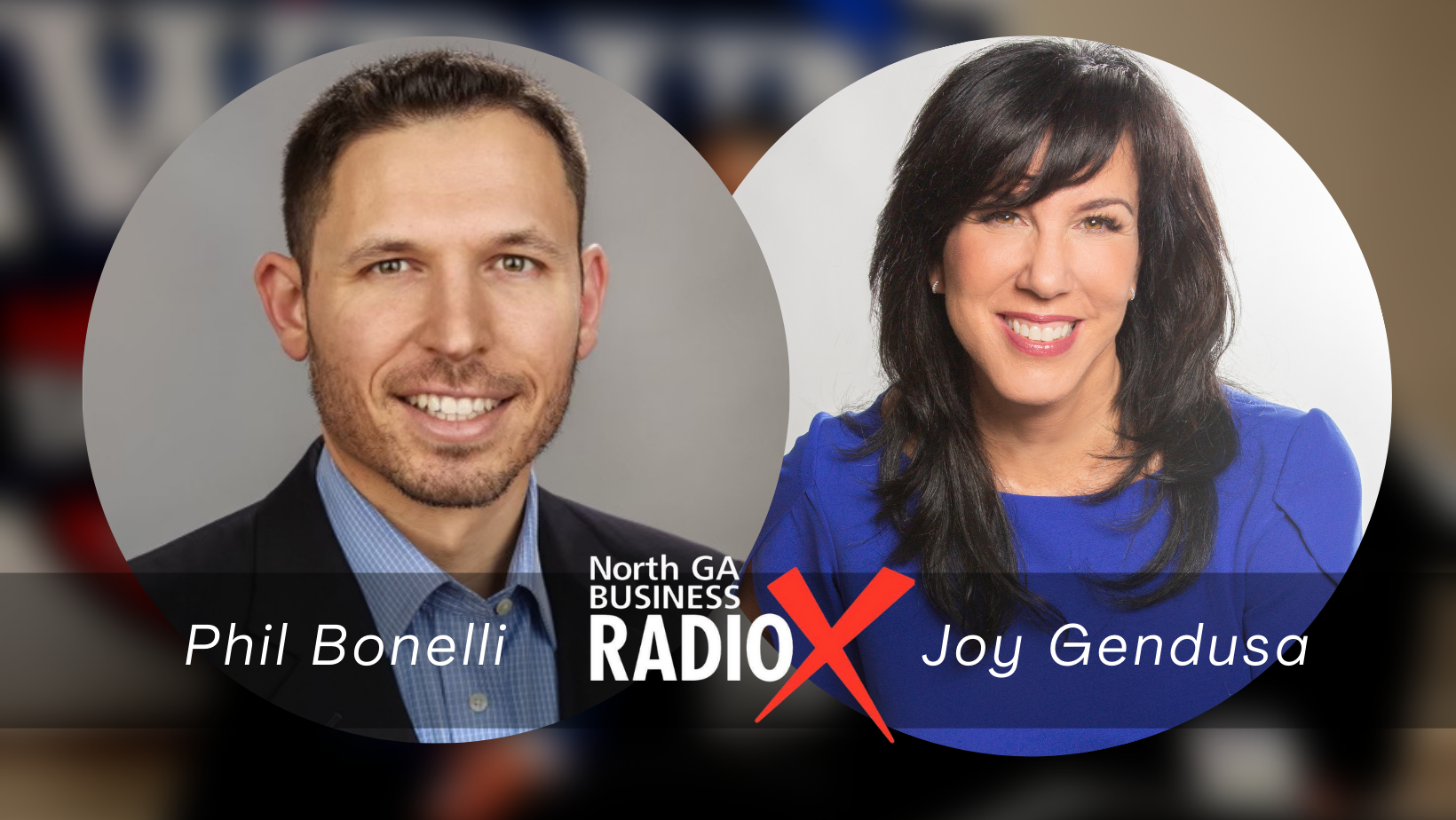
Joy Gendusa – PostCard Mania

November 25, 2024 by Rose

Joy Gendusa PostCard Mania
North Georgia Business Radio
Joy Gendusa – PostCard Mania
Loading
00:00 /
RSS Feed
Share
Link
Embed

Download file


𝗜𝗻 𝘁𝗵𝗲 𝗳𝗮𝘀𝘁–𝗽𝗮𝗰𝗲𝗱 𝘄𝗼𝗿𝗹𝗱 𝗼𝗳 𝗯𝘂𝘀𝗶𝗻𝗲𝘀𝘀, 𝘀𝘂𝗰𝗰𝗲𝘀𝘀 𝗼𝗳𝘁𝗲𝗻 𝗵𝗶𝗻𝗴𝗲𝘀 𝗼𝗻 𝗲𝗳𝗳𝗲𝗰𝘁𝗶𝘃𝗲 𝗺𝗮𝗿𝗸𝗲𝘁𝗶𝗻𝗴 𝘀𝘁𝗿𝗮𝘁𝗲𝗴𝗶𝗲𝘀.

This episode of North Georgia Business Radio features a conversation with Joy Gendusa, the founder and CEO of PostcardMania. This marketing powerhouse has revolutionized direct mail marketing for small businesses.

Joy’s journey from a small startup to an industry leader is nothing short of inspiring.

With no outside capital, she built PostcardMania into a $100 million company that has served over 121,000 businesses nationwide.

Her story is a testament to the power of perseverance, innovation, and a genuine passion for helping small businesses thrive.

Her mission is to empower entrepreneurs with affordable, turn-key marketing tools so they can have the business they always dreamed of—one that prospers and grows.

Whether you’re a seasoned entrepreneur or just starting out, this episode offers a wealth of knowledge on effective marketing strategies, building a strong company culture, and the mindset required for long-term business success.


Connect with Joy and PostCardMania

https://www.facebook.com/people/PostcardMania/61554754834715/

https://www.linkedin.com/in/joygendusa/

https://twitter.com/postcardmania

https://www.youtube.com/user/postcardmania


Connect with Phil Bonelli:

https://www.facebook.com/Hopewell-Farms-GA-105614501707618/

https://www.instagram.com/hopewellfarmsga/

https://www.hopewellfarmsga.com/

Connect with Beau Henderson:

https://RichLifeAdvisors.com

https://www.facebook.com/RichLifeAdvisors

https://www.facebook.com/NorthGARadioX

This Segment Is Brought To You By Our Amazing Sponsors

Hopewell Farms GA

Roundtable Advisors

RichLife Advisors

Regions Bank

Highlights Of The Show

00:00:51 – Joy’s Background and Business Success
Phil shares his positive experience meeting Joy and praises her as a marketing business behemoth. He highlights Joy’s success in building Postcard Mania from a small startup to an industry leader generating over $100 million in annual revenue.

00:04:17 – Postcard Mania’s Evolution
Joy describes Postcard Mania’s evolution from a small printing and mailing agency to a comprehensive marketing company offering integrated solutions. She emphasizes the importance of pivoting in response to changing marketing trends.

00:06:18 – Effective Marketing Strategies
Phil shares his positive experience working with Postcard Mania and the effectiveness of direct mailers in his business. Joy discusses the importance of targeting specific geographic locations and integrating online ads with direct mail campaigns for optimal results.

00:12:35 – Joy’s Entrepreneurial Journey
Joy shares the story of how she started Postcard Mania as a graphic design firm and took a risk by designing and mailing postcards for her own business. This experience led to the evolution of her company into a leading marketing agency.

00:14:39 – Customer Experience and Business Idea
Joy recalls a frustrating customer experience that inspired her to start a postcard company. She emphasizes the importance of providing a unique selling proposition to stand out from competitors.

00:15:38 – First Year of Business
In 1999, Postcard Mania generated over $600,000 in revenue, highlighting the need for their product. Joy stresses the significance of being the first to sell directly to small businesses.

00:16:29 – Watching Competitors and Adding Value
Joy discusses the importance of monitoring competitors and adapting to stay unique in the market. She emphasizes the value of adding uniqueness to the business instead of competing solely on price.

00:18:40 – Finding Key Partners

Joy shares her experience of finding and working with Chris Miller, who played a pivotal role in helping her make important equipment decisions and eventually became a valuable partner in her business.

00:23:47 – Retaining a Great Team
Joy explains how she fosters a familial and empowering work environment at Postcard Mania, allowing employees to take ownership of their roles and make decisions. She highlights the importance of giving employees a strong purpose and trust.

00:28:51 – Embracing Learning Moments
Joy emphasizes the importance of viewing mistakes as learning opportunities and projecting trust in people’s abilities. She shares how this approach influences her management style and the honor system at her farm store.

00:29:48 – Financial Confidence and Testimonials
Phil highlights the importance of financial planning and shares his positive experience working with Postcard Mania. He encourages listeners to explore the services and special discounts offered by the company.

00:30:59 – Resources and Marketing Insights
Joy discusses the wealth of resources available at Postcard Mania, including articles, a book, and potential future audiobooks. She emphasizes the importance of quantity in marketing and shares a success story of revenue doubling through increased postcard mailings.

00:33:09 – Purposeful Leadership and Empowering Employees
Phil and Joy discuss the significance of having a purpose and mission in business. Joy shares her approach to leadership, emphasizing the value of acknowledging and empowering employees, leading to a positive work environment and business success.

00:36:57 – Financial Discipline and Marketing Investment
Joy highlights the importance of reinvesting in the business and prioritizing marketing efforts. She shares her experience of scaling the business without extravagant personal spending and emphasizes the impact of consistent and strategic marketing efforts on revenue growth.

Tagged With: direct mail marketing, Joy Gendusa, multichannel Marketing, PostCard Mania, PostCard Marketing, relationship building

Sharon Lee – Pinnacle Strategic Advisors

November 18, 2024 by Rose

Sharon Lee Pinnacle Strategic Advisors
North Georgia Business Radio
Sharon Lee - Pinnacle Strategic Advisors
Loading
00:00 /
RSS Feed
Share
Link
Embed

Download file

Sharon Lee Pinnacle Strategic Advisors


What are some of the biggest marketing challenges you’ve faced in your business, and how have you approached overcoming them?

Marketing is the lifeblood of any successful business, but it’s not just about shouting your message from the rooftops.

It’s about strategically presenting the value you offer to serve more people in an intentional way.

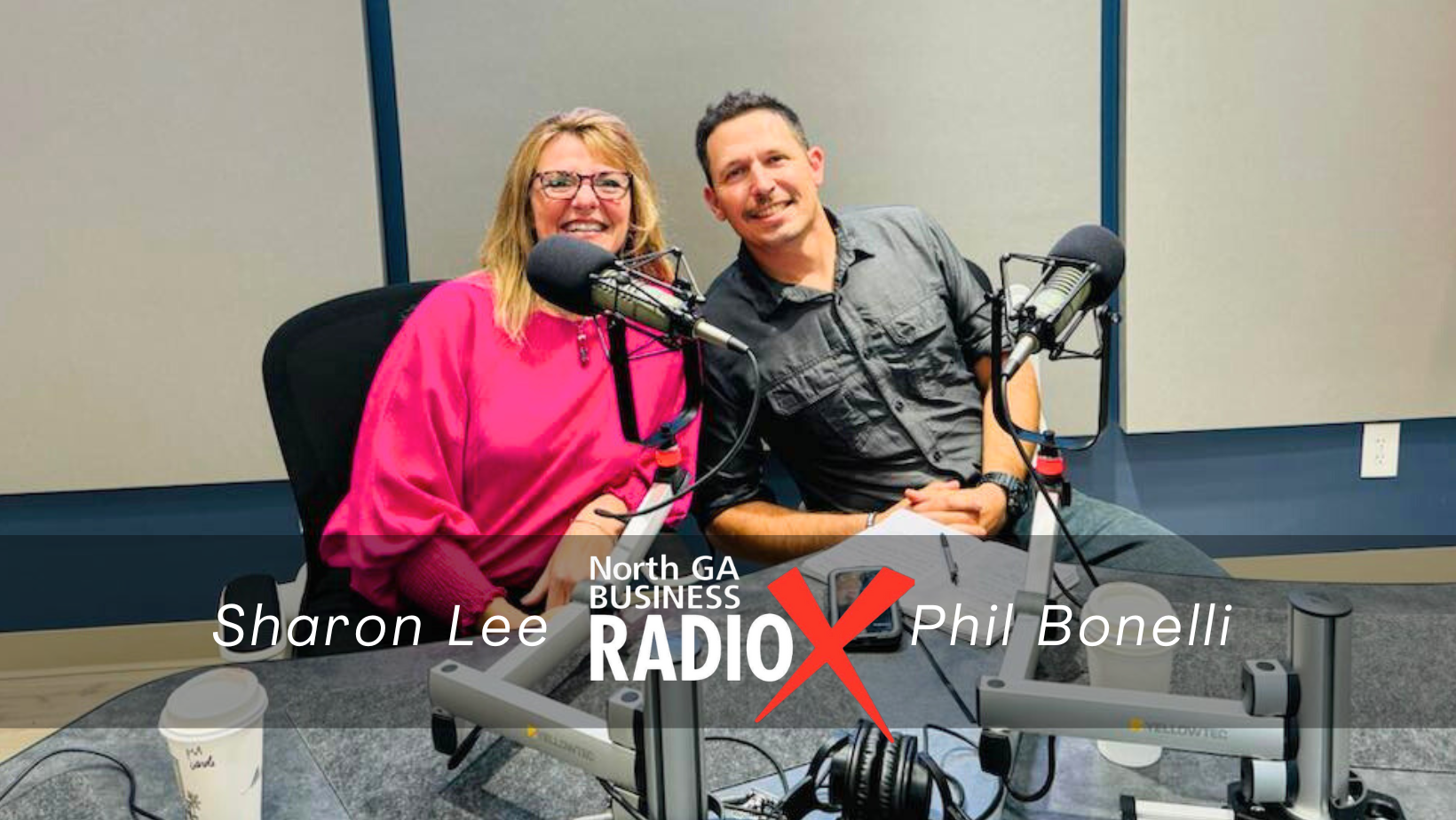
During this episode of North Georgia Business Radio, Phil Bonelli sits down with marketing maven Sharon Lee, the founder of Pinnacle Strategic Advisors, to explore the intricacies of effective marketing strategies.

Sharon brings a wealth of experience to the table, not only as a marketing consultant but also as the host of the IN-powered Women Podcast and a leader of Iron Forums for Women.

Her unique approach to marketing emphasizes relationship-building and storytelling, setting her apart in a field often focused solely on metrics and conversions.

This episode is a treasure trove of practical advice for businesses looking to elevate their marketing game.

Whether you’re a seasoned entrepreneur or just starting out, Sharon’s blend of strategic thinking and relationship-focused marketing offers a fresh perspective on how to connect with your audience and grow your business.

Listen in to gain insights that could transform your approach to marketing and business growth. Remember, effective marketing isn’t about following trends—it’s about creating genuine connections and delivering value consistently.


Connect with Sharon and Pinnacle Strategic Advisors

https://pinnaclestrategicadvisors.net/

https://www.linkedin.com/in/sharon-lee-b898778/

https://www.facebook.com/profile.php?id=61550757011344

https://www.youtube.com/channel/UCp6aP9dLmx0g5G8odVgegOQ


Connect with Phil Bonelli:

https://www.facebook.com/Hopewell-Farms-GA-105614501707618/

https://www.instagram.com/hopewellfarmsga/

https://www.hopewellfarmsga.com/

Connect with Beau Henderson:

https://RichLifeAdvisors.com

https://www.facebook.com/RichLifeAdvisors

https://www.facebook.com/NorthGARadioX

This Segment Is Brought To You By Our Amazing Sponsors

Hopewell Farms GA

Roundtable Advisors

RichLife Advisors

Regions Bank

Highlights Of The Show

00:03:40 – Strategy First
Sharon emphasizes the importance of starting with a marketing strategy before delving into specific marketing channels. Quality over quantity is highlighted, with a focus on building meaningful relationships with the audience.

00:08:03 – Networking and Empowerment
Sharon discusses her passion for empowering women in male-dominated industries, highlighting her networking group and the Empowered Women podcast. The conversation touches on the importance of lifting women up in business and sharing their diverse experiences.

00:10:03 – Thanksgiving Sponsorship and Recap
Phil Bonelli promotes a local farm’s pasture-raised turkey for Thanksgiving. The segment ends with a brief recap of the topics discussed and an invitation to listen to the rest of the podcast.

00:14:00 – Building a Successful Business
Sharon shares a story of a woman who built and sold her business, emphasizing the importance of working on the business, not just in it.

00:15:37 – Iron Forums for Women
Sharon discusses her involvement in Iron Forums for Women, a Christian-oriented community focused on leadership and personal growth, emphasizing the value of like-minded, driven women coming together to support each other.

00:19:28 – Empowering Women
Sharon highlights her passion for lifting up women and empowering them to achieve success, both in business and in life, and shares her experience of starting a new women’s group through Iron Forums.

00:21:29 – Marketing Mistakes to Avoid
Sharon emphasizes the importance of going back to basics in marketing, such as segmenting the audience and maintaining a consistent message. She also discusses the long-term nature of marketing and the need for a clear strategy.

00:27:13 – Marketing Strategy and ROI
Sharon and the host discuss the importance of a cohesive marketing strategy, including tracking ROI and understanding the cumulative impact of different marketing channels. Sharon also emphasizes the need for a marketing budget and clear tracking of results.

00:28:12 – Importance of Tracking and Decision Making
Sharon Lee emphasizes the importance of tracking conversion rates and using the data to make informed decisions about where to allocate marketing dollars. She advises against trying to be an expert in every aspect of business and encourages hiring experts for specialized tasks.

00:29:31 – Starting Small and Scaling
Sharon Lee highlights the importance of starting small and focusing on low-hanging fruit for quick wins, especially for businesses with small budgets. She suggests reinvesting profits into marketing to gradually scale and expand the business.

00:30:58 – Strategic Marketing and Audience Targeting
The conversation delves into the pitfalls of disjointed marketing efforts and the importance of audience targeting. Sharon Lee emphasizes the need for a strategic plan and assessing whether certain marketing channels align with the target demographic.

00:32:09 – Leveraging Numbers and Discipline
The discussion touches on the significance of leveraging numbers in business decisions and the discipline required to achieve freedom in time management. Both Phil and Sharon stress the importance of planning and intentionality in balancing multiple responsibilities.

00:33:28 – Balancing Business and Family

Sharon Lee shares insights into how she balances her diverse responsibilities as a business owner and mother of two teenage boys. She emphasizes the need for intentional planning and adapting to changing priorities while maintaining a disciplined approach to time management.


Tagged With: community engagement, Entrepreneur Life, InPowered Women Podcast, local business marketing, marketing strategy, Pinnacle Strategic Advisors, relationship building, Sharon Lee, Women in Business

Creating Excellence in Landscape Design, with Jason Coultas, Huckleberry Enterprises

July 29, 2024 by John Ray

Jason Coultas, Huckleberry Enterprises
North Fulton Business Radio
Creating Excellence in Landscape Design, with Jason Coultas, Huckleberry Enterprises
Loading
00:00 /
RSS Feed
Share
Link
Embed

Download file

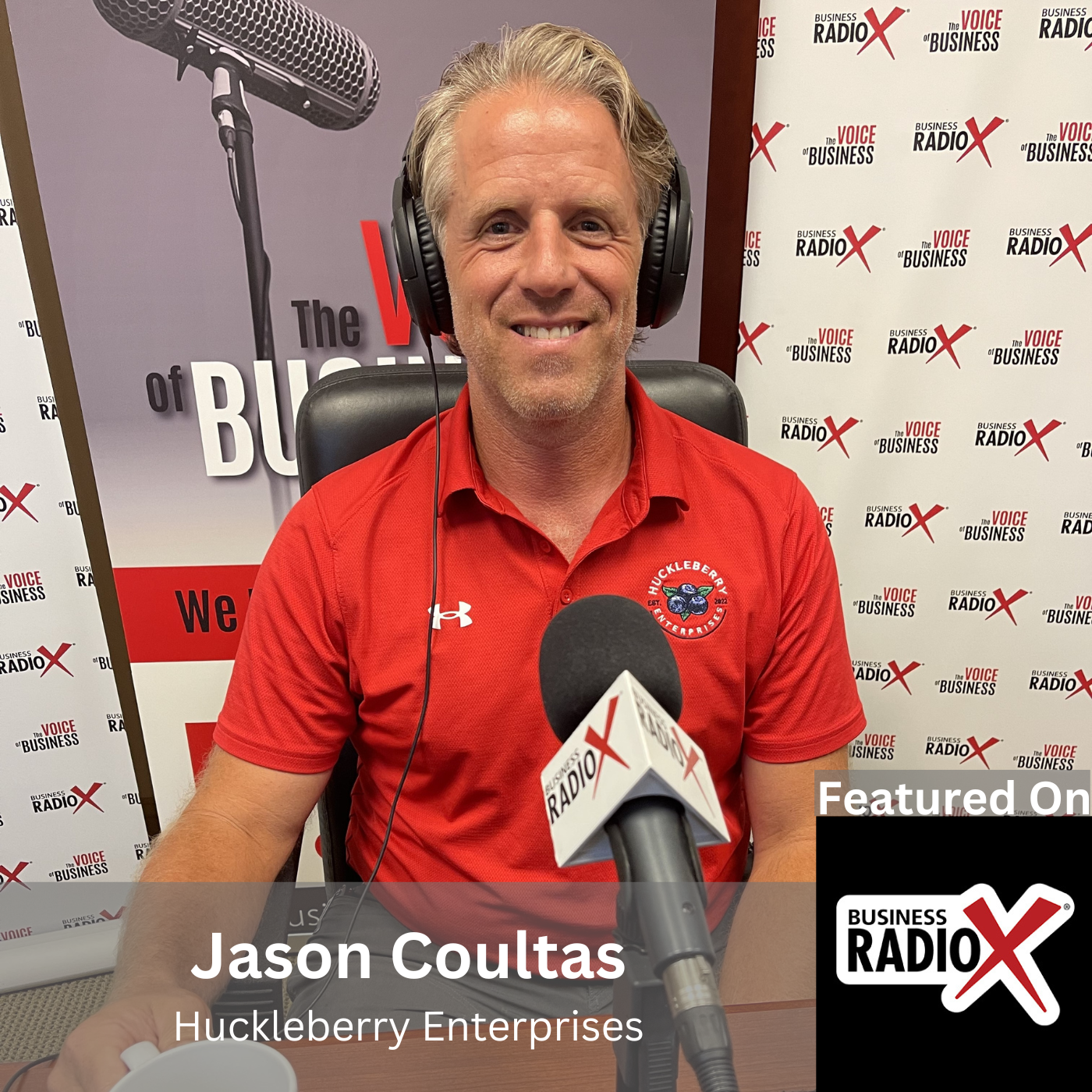
Jason Coultas, Huckleberry Enterprises

Creating Excellence in Landscape Design, with Jason Coultas, Huckleberry Enterprises (North Fulton Business Radio, Episode 790)

In this episode of North Fulton Business Radio, host John Ray interviews Jason Coultas, President of Huckleberry Enterprises. They discuss Huckleberry’s comprehensive landscape services, including commercial maintenance, HOA services, and residential design-build projects. Jason shares his journey, his passion for horticulture, and the importance of client satisfaction and relationship building. He explains how Huckleberry Enterprises prioritizes reducing client stress and ensuring long-term landscape sustainability. The episode also touches on common landscape maintenance mistakes and the significance of understanding environmental factors.

John Ray is the host of North Fulton Business Radio. The show is recorded and produced from the North Fulton studio of Business RadioX® inside Renasant Bank in Alpharetta.

Jason Coultas, President, Huckleberry Enterprises

Jason Coultas, Huckleberry Enterprises

Jason Coultas of Huckleberry Enterprises has decades of experience in all aspects of leading people, building trust with clients, developing a team, and maximizing opportunity. He has a passion for the entire client experience, from first contact to developing long-term, trust-based partnerships. As an arborist and horticulturist, he is a passionate provider of solutions for the many challenges in creating and maintaining effective and desirable landscape experiences, and a trusted advisor to clients and team members.

His greatest passion lies in developing and maintaining collaborative relationships within his industry with clients, team members, and vendors by always pursuing win-win experiences for everyone involved. Through effective advice and transparent communication, he continues to build cultures of collaboration that break the obstacles often created by self-seeking sales and management processes. He is always looking for new and better ways to serve his community and industry, and he is excited to grow with others as part of his network.

LinkedIn

Huckleberry Enterprises

Jason Coultas and Brandon Baxter, two established leaders in the green industry with a track record of providing service to their clients, team members, and partners, founded Huckleberry Enterprises. Through a growing network of partnerships, the organization began growing as an organic response to the desire to be part of the journey.

A love of excellence, a service culture, and a sincere passion for the business drove Brandon and Jason as they developed their vision for Huckleberry in 2022. Unified in their vision to change the green industry in these three areas, the two founders began building the framework for Huckleberry upon these areas of passion.

Huckleberry EnterprisesToday, Huckleberry Enterprises has blossomed into a full-service provider, offering a wide array of services to include:

  • Complete residential landscape design services and consultation.
  • Complete installation of all elements, including walls, patios, drainage and erosion, irrigation, trees, shrubs, sod and seasonal color.
  • Commercial and HOA landscape maintenance and all supporting services.

Huckleberry Enterprises has chosen to place its highest efforts on creating excellence in everything it does. Their focus is on creating an experience for clients that directly reflects their culture of service.

They create and maintain outdoor spaces for clients by collaborating with their team both internally and externally, utilizing best industry practices, innovative ideas, and relentlessly pursuing excellence in every step.

Huckleberry Enterprises believes that all people are valuable and deserve their greatest efforts. By serving a diverse group of clients with the same tenacity and passion for service, they believe they can have the greatest impact on their community.

Website | LinkedIn | Instagram | Facebook

Topics Discussed in this Episode

00:00 Introduction and Welcome to North Fulton Business Radio
01:22 Meet Jason Coultas of Huckleberry Enterprises
01:34 Huckleberry Enterprises: Services and Approach
02:56 Jason’s Journey and Passion for Horticulture
05:22 The Importance of People in Landscaping
10:08 Challenges and Solutions in Landscaping
14:55 Client Relationships and Excellence
27:17 Conclusion and Contact Information
28:15 Sponsor Message and Closing Remarks

Renasant Bank and Casa Nuova Italian Restaurant support North Fulton Business Radio

Renasant BankRenasant Bank has humble roots, starting in 1904 as a $100,000 bank in a Lee County, Mississippi, bakery. Since then, Renasant has become one of the Southeast’s strongest financial institutions, with over $13 billion in assets and more than 190 banking, lending, wealth management, and financial services offices in Mississippi, Alabama, Tennessee, Georgia, and Florida. All of Renasant’s success stems from each of their banker’s commitment to investing in their communities as a way of better understanding the people they serve. At Renasant Bank, they understand you because they work and live alongside you every day.

Casa Nuova Italian RestaurantCasa Nuova is a proud family-owned and operated restaurant, serving classic, authentic and traditional Italian cuisine and top tier hospitality since 1998.

Casa Nuova is a cook-to-order kitchen, serving traditional fare including pasta, chicken, seafood, veal, vegetarian and gluten-free options, plus daily specials. They are a farm-to-table establishment, meaning that in the summertime, they cultivate their own vegetables in their garden, steps away from the restaurant, including tomatoes, corn, peppers, zucchini, sunflowers and more!

Celebrating more than 25 years, Casa Nuova has become a true staple in the Alpharetta area, serving more than three generations of families, including friends old and new, visiting near and far from all over the metro Atlanta area and beyond.

Website | LinkedIn | Facebook | Instagram

About North Fulton Business Radio and host John Ray

With over 780 shows and having featured over 1,200 guests, North Fulton Business Radio is the longest-running podcast in the North Fulton area, covering business in our community like no one else. We are the undisputed “Voice of Business” in North Fulton!

The show welcomes a wide variety of business, non-profit, and community leaders to get the word out about the important work they’re doing to serve their market, their community, and their profession. There’s no discrimination based on company size, and there’s never any “pay to play.” North Fulton Business Radio supports and celebrates business by sharing positive business stories that traditional media ignore. Some media leans left. Some media leans right. We lean business.

John Ray, Business RadioX - North Fulton, and Owner, Ray Business Advisors
John Ray, Business RadioX – North Fulton, and Owner, Ray Business Advisors

John Ray is the host of North Fulton Business Radio. The show is recorded and produced from the North Fulton studio of Business RadioX® inside Renasant Bank in Alpharetta. You can find the full archive of shows by following this link. The show is available on all the major podcast apps, including Apple Podcasts, Spotify, Google, Amazon, iHeart Radio, and many others.

The studio address is 275 South Main Street, Alpharetta, GA 30009.

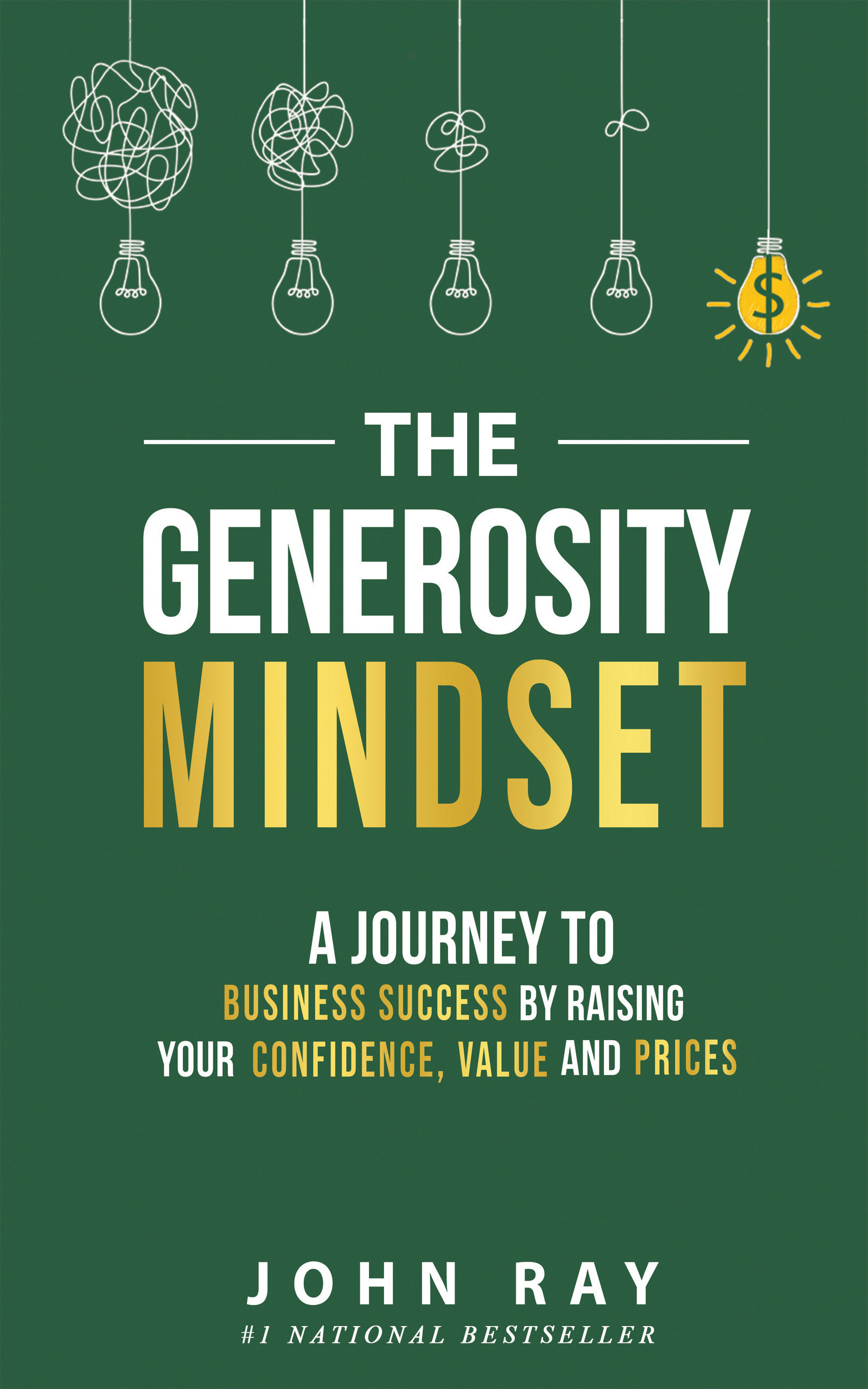
John Ray, The Generosity MindsetJohn Ray also operates his own business advisory practice. John’s services include advising solopreneurs and small professional services firms on their value, their positioning and business development, and their pricing. His clients are professionals who are selling their expertise, such as consultants, coaches, attorneys, CPAs, accountants and bookkeepers, marketing professionals, and other professional services practitioners.

John is the national bestselling author of The Generosity Mindset: A Journey to Business Success by Raising Your Confidence, Value, and Prices.

Tagged With: horticulture, Huckleberry Enterprises, Jason Coultas, John Ray, landscape design, landscape sustainability, landscaping, Nroth Fulton Business Radio, relationship building

D.C. Fly-In Recap, with Jim Teel, Goodwyn, Mills and Cawood, and Tim Perry, North American Properties Atlanta

October 19, 2023 by John Ray

D.C. Fly-In
North Fulton Studio
D.C. Fly-In Recap, with Jim Teel, Goodwyn, Mills and Cawood, and Tim Perry, North American Properties Atlanta
Loading
00:00 /
RSS Feed
Share
Link
Embed

Download file

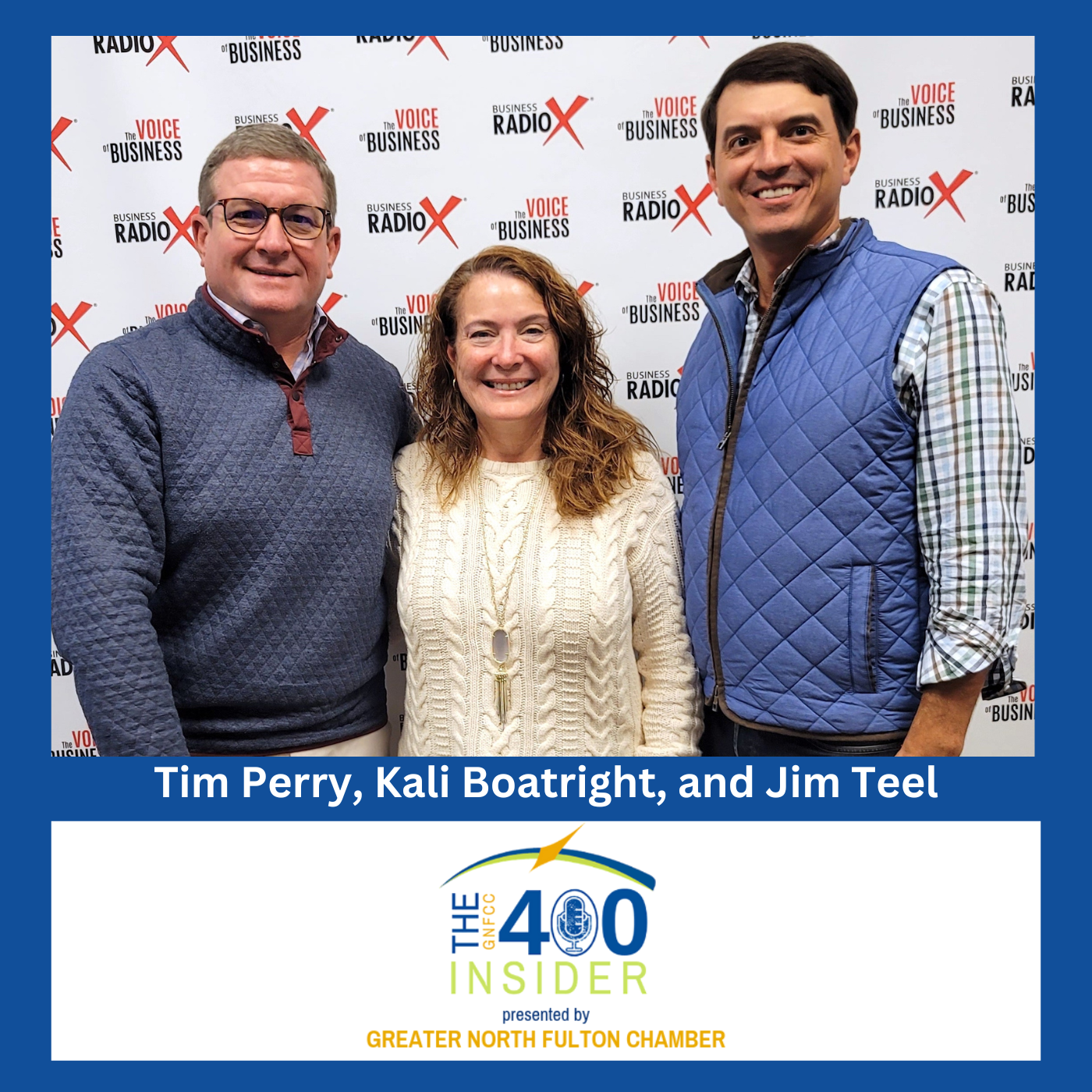
Tim Perry

D.C. Fly-In Recap, with Jim Teel, Goodwyn, Mills and Cawood, and Tim Perry, North American Properties Atlanta (GNFCC 400 Insider, Episode 89)

Jim Teel, Goodwyn, Mills and Cawood and the 2024 Board Chair for GNFCC, and Tim Perry, North American Properties Atlanta and Chair of the True North 400 CID Board of Directors, were the guests on this episode of the GNFCC 400 Insider. They were two of the attendees of the annual Washington, D.C. fly-in organized by the Greater North Fulton Chamber of Commerce.

Jim and Tim talked about the importance of the fly-in, their advocacy efforts, and the meetings they had with elected officials. They also covered various initiatives and priorities discussed during the trip, such as community involvement, workforce development, advocacy for businesses, real estate, and criminal justice reform. They emphasized the significance of the trip in building relationships, advocating for the region’s interests, shaping the Chamber’s future advocacy agenda, and more.

The GNFCC 400 Insider is presented by the Greater North Fulton Chamber of Commerce and produced by the North Fulton studio of Business RadioX®.

Goodwyn, Mills and Cawood

Goodwyn Mills Cawood (GMC) is one of the largest architecture and engineering firms in the Southeast. Whether designing schools, parks, hospitals and other commercial developments, or providing clean water, safe streets and restoring resilient environments, GMC takes great pride in serving our communities through the transformative work they do.

Every project is guided by the foundational concept that communities are built by people, not companies, and they strive to serve their communities with quality, integrity, creativity and care. One of the Southeast’s most comprehensive multi-disciplined firms, GMC is equipped to provide all the services associated with architecture, interior design, civil engineering, environmental services, landscape architecture, planning, transportation engineering, geotechnical engineering, electrical engineering, surveying and disaster recovery.

Website | LinkedIn |  Facebook | Instagram

Jim Teel, Regional Vice President, Goodwyn, Mills and Cawood, and 2024 Chairman of the Board, Greater North Fulton Chamber of Commerce

Jim Teel, Regional Vice President, Goodwyn, Mills and Cawood (GMC), and Incoming Chairman of the Board, Greater North Fulton Chamber of Commerce

As Regional Vice President for Georgia, Jim leads business development and marketing efforts as well as coordinates employee development initiatives for all of GMC’s Georgia offices. Jim is passionate about encouraging personal leadership and growth and providing opportunities for employees to lead and thrive.

An active member of the community, Jim is engaged in many organizations including being named the Greater North Fulton Chamber Board Member of the Year and a Regional Leadership Institute Class of 2019 graduate. He is also a member of the Junior Achievement of Georgia Board of Directors, Economic Development Association of Georgia, Association of County Commissioners of Georgia, Georgia Municipal Association, Georgia Rural Water Association, Georgia Association of Water Professionals and Association for Learning Environments.

He graduated from Auburn University with a bachelor’s degree in marketing, master’s degree in building construction and a minor in community planning.

LinkedIn

North American Properties Atlanta

Since North American Properties’ inception almost 70 years ago, they have developed, managed, and invested in a diverse array of real estate projects so communities can thrive. This is the core of who they are and what they do.

More recently, North American Properties has diversified by investing in and partnering with portfolio companies, often from their inception.

Their real estate expertise, backed by deep operational experience, allows them to dream a little bit bolder through the investment they make in their projects.

They believe in what they do and know they have what it takes to succeed. Though they have many institutional partners, they always lead with capital first.

Courageous visions demand strong execution. They anticipate obstacles and find creative solutions, resulting in positive outcomes for the communities they serve.

Website | LinkedIn | YouTube | Instagram

Tim Perry, Managing Partner, North American Properties Atlanta and Chairman of the True North 400 CID Board of Directors

Tim Perry, Managing Partner, North American Properties Atlanta and Chairman of the True North 400 CID Board of Directors

Tim Perry is passionate about the power of community building and all the ingredients needed to create a great place: walkability, connectivity, hospitality, street-level energy, events and the right mix of uses. He deeply believes that fixing high-potential-but-challenged mixed-use developments or bringing new experience through additional neighborhood density is the best way North American Properties can give communities the great places they deserve.

As Managing Partner, Tim is responsible for advancing North American Properties’ value-add acquisitions and redevelopment program and adding to the firm’s portfolio of commercial properties.

Tim Perry has driven North American Properties’ acquisition strategy for over a decade ultimately serving as North American Properties’ Vice President of Acquisitions in 2009, Director of Investments in 2012 and Chief Investment Officer in 2015. He previously led the acquisition, due diligence, capitalization and disposition teams for landmark communities Atlantic Station, Colony Square, Newport on the Levee, and Avalon; capitalization of the transformational development of Stadium Centre in Tallahassee; and the debt/venture capitalization of over 35 projects in excess of $2.5 billion of total value.

Tim holds a degree in Business Administration from Rhodes College. He is a licensed real estate Broker in Georgia, a member of Urban Land Institute, and a member of the International Council of Shopping Centers. In addition, Tim is on the Board of Directors for the North Fulton Community Improvement Districts, the Advisory Board for Rehabilitation Enables Dreams (RED), and several committees encouraging smart development and increased public transit. He resides in Johns Creek, Georgia, with his wife and children.

LinkedIn

About GNFCC and The GNFCC 400 Insider

Kali Boatright, President and CEO of GNFCC

The GNFCC 400 Insider is presented by the Greater North Fulton Chamber of Commerce (GNFCC) and is hosted by Kali Boatright, President and CEO of GNFCC. The Greater North Fulton Chamber of Commerce is a private, non-profit, member-driven organization comprised of over 1400 business enterprises, civic organizations, educational institutions, and individuals.  Their service area includes Alpharetta, Johns Creek, Milton, Mountain Park, Roswell and Sandy Springs. GNFCC is the leading voice on economic development, business growth and quality of life issues in North Fulton County.

The GNFCC promotes the interests of our members by assuming a leadership role in making North Fulton an excellent place to work, live, play and stay. They provide one voice for all local businesses to influence decision-makers, recommend legislation, and protect the valuable resources that make North Fulton a popular place to live.

For more information on GNFCC and its North Fulton County service area, follow this link or call (770) 993-8806. For more information on GNFCC events, follow this link.

For the complete show archive of GNFCC 400 Insider, go to GNFCC400Insider.com. The GNFCC 400 Insider is produced by John Ray and the North Fulton studio of Business RadioX®.

Tagged With: community, criminal justice, D.C. Fly-In, elected officials, GA 400, GNFCC 400 Insider, Goodwyn Mills Cawood, Greater North Fulton Chamber of Commerce, Jim Teel, Kali Boatright, North American Properties, policy, R&D tax credits, relationship building, Tim Perry, Washington D.C.

Dan Mahony, Transcendent Sales Solutions, Keith Costley, Keck & Wood, Inc., and Samantha McElhaney, Pinnacle Financial Partners

September 29, 2023 by John Ray

Dan Mahony
North Fulton Studio
Dan Mahony, Transcendent Sales Solutions, Keith Costley, Keck & Wood, Inc., and Samantha McElhaney, Pinnacle Financial Partners
Loading
00:00 /
RSS Feed
Share
Link
Embed

Download file

Dan Mahony

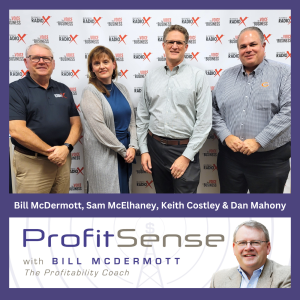
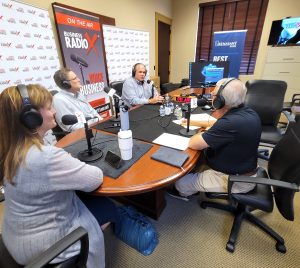
Dan Mahony, Transcendent Sales Solutions, Keith Costley, Keck & Wood, Inc., and Samantha McElhaney, Pinnacle Financial Partners (ProfitSense with Bill McDermott, Episode 49)

Dan Mahony, Transcendent Sales Solutions, Keith Costley, Keck & Wood, and Samantha McElhaney of Pinnacle Financial Partners joined host Bill McDermott for a roundtable discussion about what it takes to have a good mindset for sales. Each of them shared their career journey and their experience in sales. Bill led them through a conversation about the critical elements of mindset that contribute to effective sales, such as intentionality, collaboration, transparency, and honesty. They also discussed the skills that are important such as listening, curiosity, building trust over time, doing your research and more. Each guest concluded with their key advice based on their years of experience.

Bill wrapped up the episode with his thoughts on thinking like a buyer.

ProfitSense with Bill McDermott is produced and broadcast by the North Fulton Studio of Business RadioX® in Alpharetta.

Transcendent Sales Solutions

Transcendent Sales Solutions is focused on empowering companies with tactical sales strategies to accelerate revenue growth. Dan is an agile, results-oriented, and charismatic leader with a proven track record of turning underperforming sales organizations into revenue producing market leaders. He has a unique ability to create sales messaging and processes that increase revenue, decrease headaches, and provide order and definition in place of chaos and confusion. 

Website | LinkedIn | Facebook | Instagram

Dan Mahony, President, Transcendent Sales Solutions

Dan Mahony, President, Transcendent Sales Solutions

Dan Mahony is the President of Transcendent Sales Solutions, a company that helps and empowers small to mid-sized businesses in turning underperforming sales teams into revenue-producing market leaders. Transcendent Sales Solutions takes a proven results-oriented strategic and tactical approach by developing successful sales plans, building a strict sales approach, and aligning sales teams that will help a business marketing operation run effectively.

Dan has a unique ability to create sales messaging and processes that increase revenue, decrease headaches, and provide order and definition in place of chaos and confusion. 

LinkedIn

Keck & Wood, Inc.

Keck & Wood, Inc., founded in 1954, provides professional civil engineering, landscape architecture, and land surveying services to clients throughout the southeast.

The company has 65 employees in four offices. Duluth and Fayetteville, GA as well as Rock Hill and North Charleston, SC. Our clients include city and county governments, utility companies, state agencies, education institutions, and private developers. 

Website | LinkedIn | Facebook

Keith Costley, President & CEO, Keck & Wood, Inc.

Keith Costley, President & CEO, Keck & Wood, Inc.

Keith Costley is the President / CEO of Keck & Wood, Inc., a 65 person civil engineering firm headquartered in Duluth, GA. He graduated from Vanderbilt University with a civil engineering degree in 1994 and has become licensed as a Professional Engineer in GA, SC and NC.

He joined the firm as a Project Manager in their Rock Hill, SC office in 2000 and has steadily progressed his career by becoming the office leader in 2012 and then the President / CEO in 2017.

LinkedIn

Pinnacle Financial Partners

Pinnacle is much more than a bank. It’s a place for people to find true partners for their business. It’s a place where seasoned professionals give clients unmatched service and advice that better their financial well-being. And it’s a place where people love coming to work every day.

Website | LinkedIn | Facebook | YouTube

Samantha McElhaney, Commercial Financial Advisor, Pinnacle Financial Partners

Samantha McElhaney, Commercial Financial Advisor, Pinnacle Financial Partners

Sam has been in the financial services industry for 30 years and works hard to solve the daily business struggles of her clients. When she is not working closely with clients, she is out networking with individuals, so she has resources to solve problems and to connect others to regularly. If Sam is connecting people, she feels her day is fulfilled.

LinkedIn


About ProfitSense and Your Host, Bill McDermott

Bill McDermott
Bill McDermott

ProfitSense with Bill McDermott dives into the stories behind some of Atlanta’s successful businesses and business owners and the professionals that advise them. This show helps local business leaders get the word out about the important work they’re doing to serve their market, their community, and their profession. The show is presented by McDermott Financial Solutions. McDermott Financial helps business owners improve cash flow and profitability, find financing, break through barriers to expansion, and financially prepare to exit their business. The show archive can be found at profitsenseradio.com.

Bill McDermott is the Founder and CEO of McDermott Financial Solutions. When business owners want to increase their profitability, they don’t have the expertise to know where to start or what to do. Bill leverages his knowledge and relationships from 32 years as a banker to identify the hurdles getting in the way and create a plan to deliver profitability they never thought possible.

Bill currently serves as Treasurer for the Atlanta Executive Forum and has held previous positions as a board member for the Kennesaw State University Entrepreneurship Center and Gwinnett Habitat for Humanity and Treasurer for CEO NetWeavers. Bill is a graduate of Wake Forest University and he and his wife, Martha have called Atlanta home for over 40 years. Outside of work, Bill enjoys golf, traveling, and gardening.

Connect with Bill on LinkedIn and Twitter and follow McDermott Financial Solutions on LinkedIn.

TRANSCRIPT

Intro: [00:00:03] Broadcasting from the Business RadioX studio in Alpharetta, it’s Time for Profit Sense with Bill McDermott.

Bill McDermott: [00:00:17] Good morning. Welcome to Profit Sense. This podcast dives into the stories behind some of Atlanta’s successful businesses and business owners and the professionals that advise them. We help local business leaders get the word out about the important work they’re doing to serve their market, their community, and their profession, as well as discuss current issues that business owners are facing today across a wide variety of industries.

Bill McDermott: [00:00:44] I’m your host, Bill McDermott, and this show is presented by The Profitability Coach. When business owners want to increase their profitability, they often don’t have the expertise to know where to start or what to do, I leverage my knowledge and relationships from over 32 years as a banker and 14 years as a business coach now to identify the hurdles getting in the way and create a plan to deliver profitability they never thought possible.

Bill McDermott: [00:01:10] We’re going to be talking sales today, selling professional services. First, I want to introduce Keith Costley who is president and CEO of Keck & Wood. Keith, so glad you’re on Profit Sense. And by the way, welcome back because I was privileged to have you as a guest previously.

Keith Costley: [00:01:30] Yeah, thanks, Bill. It’s great to be back. I feel like a veteran and I really appreciate my relationship with you and our company’s relationship with you. We’ve been in the trenches together before. So, glad to be here.

Bill McDermott: [00:01:42] Yeah, and we’re delighted to have you. So, talk a little bit about Keck & Wood, founded in 54, providing professional civil engineering and other things. Talk about that a little bit.

Keith Costley: [00:01:55] That’s right. Founded in 54. So we’re heading towards our 70th anniversary as a firm, which we’re pretty excited about.

Bill McDermott: [00:02:03] Wow.

Keith Costley: [00:02:03] But our core services are civil engineering. We also do landscape architecture and provide planning and consulting services. But the core to our business is providing solutions to public sector and private sector clients who have a wide variety of needs, whether they be regulatory, development, engineering, solutions, consulting. But our bread and butter is city and county government providing a wide range of services. And we also do design work for private clients as well.

Bill McDermott: [00:02:42] And I love your tagline, “Collaboration By Design.” Talk briefly about that.

Keith Costley: [00:02:46] So, we believe that collaboration is just – has to be at the core of our business and our relationships and not only external relationships with clients but internal relationships. If we’re really going to maximize our success as a firm, we have to be collaborative in how we do our business, how we treat each other internally, and be collaborative with our clients. So that’s why our tagline is what it is.

Bill McDermott: [00:03:09] Yeah, well, and it’s a great one. I also want to welcome Dan Mahony who is president and CEO of Transcendent Sales Solutions. Dan, delighted to have you back. So, welcome back to Profit Sense.

Dan Mahony: [00:03:21] Bill, thanks for having me. It’s great to be here.

Bill McDermott: [00:03:23] And Dan is president of Transcendent Sales, which is a company that helps and empowers small to mid-sized businesses and turning underperforming sales teams into revenue-producing market leaders. So, Dan, talk about that briefly.

Dan Mahony: [00:03:36] Well, I started my business five years ago. I’m on my fifth anniversary. And what I do is, I help those business owners and CEOs that struggle with sales. A lot of times they started the company and they are running their companies. Plus, they’re the head of sales and they’re also the top sales producers. So, especially when you’re getting ready to sell your business, there needs to be that separation for the new buyer. And I work with those companies to help them build the right processes, the right systems, put the right people in there, and have the right strategy.

Bill McDermott: [00:04:09] Yeah. And it’s really about transferring those selling skills from the business owner to that next level of management. So, there is actual transfer – transferable value in the firm, isn’t it, Dan?

Dan Mahony: [00:04:21] Absolutely. And it’s that the skills and the relationships too, is how do you take those relationships from all those years and transfer them over to somebody new when they’re not there anymore?

Bill McDermott: [00:04:31] Yeah, yeah. Great point. And the baby boomer generation is retiring in droves. And so, we’re going to talk more about sales. And I’m excited what you have to contribute to the conversation.

Bill McDermott: [00:04:43] And Samantha McElhaney. Samantha, I believe, is maybe one of the best bankers in the city of Atlanta. Samantha, welcome.

Samantha McElhaney: [00:04:53] Thanks, Bill. Just call me Sam.

Bill McDermott: [00:04:55] All right, Sam. So, Pinnacle Financial Partners. You do a lot of commercial financial advisory business – advisory services. I know financial services because I’ve sold in that space before. You have a unique perspective on that. But talk a little bit about the work that you do and talk a little bit about Pinnacle Financial Partners.

Samantha McElhaney: [00:05:18] Yeah, the last time I was here exactly a year ago, I couldn’t announce that I had moved to Pinnacle Financial Partners. I was actually here with Keith doing a podcast and I just joined Pinnacle Financial Partners. So, it was a year ago, celebrating my anniversary.

Bill McDermott: [00:05:37] Wow! Happy anniversary.

Samantha McElhaney: [00:05:39] Thank you.

Samantha McElhaney: [00:05:39] And it’s the best decision I ever made because I’m with all of my old teammates from former banks, SunTrust, Synovus, Wells Fargo. We’ve assembled an all-star team here in Atlanta, and we are doing what we love, helping business owners make decisions financially that they need to either start their business, grow their business, transition their business, but also help them with their personal needs as well, too. So, it’s just the ideal job as far as banking is concerned.

Bill McDermott: [00:06:15] Yeah. And the thing about banking and financial services is obviously the more a business sells in revenue, the more deposits that a bank will have to be able to loan out. And so – but it’s not really selling as much as it is helping business owners solve problems.

Bill McDermott: [00:06:38] So let the four of us kick off this whole topic of sales. You know, I’ve learned recently over the last couple of years that before we can deal with skill set, we have to deal with mindset. And, Sam, one of the things that I think you do really well and I want to get Keith and Dan’s perspective because I’m sure they do this well also being clients set – being client-centric, one of the mindsets. You know, we have to be able to put our client’s needs before our own and deliver the solutions that meet those needs. So, how have you become the client-centric banker that you are?

Samantha McElhaney: [00:07:26] I think over the years, especially after becoming a mother, you have to put other people’s needs first. I’m a big faith believer. I go to church and it’s not just about going to church. It’s just, you know, getting up every day and having those conversations with my God. And that’s why I work where I work because our institution is a big faith-based institution as well, too.

Samantha McElhaney: [00:07:57] And putting those things into practice and knowing that if I put others first and their needs first, it will pay dividends long term. And so, listening to those individuals and listening to what they need in their life, and it may not be anything financial. I have a new client that had not had a vacation in years and they’re now right now at Disney World and all the family members are down there in Disney. And one of the things that I personally wanted to do and Pinnacle allows me to do it is I wanted to put a big gift basket in their hotel room so that when they open the door, it just welcomed them to Disney and they got to celebrate time with their family. So I got a text message on Saturday that said, “Wow, we opened the door and there was this huge gift basket that just said, ‘Welcome to Disney, you know, blank family.'” And they were just so thrilled and so excited that I got to do something like that to help them all celebrate. And it was a cooler full of, you know, water bottles and snacks and things. So they didn’t have to worry about going and getting all those things while they went out and visited Epcot and Magic Kingdom and stuff.

Samantha McElhaney: [00:09:01] So just taking that burden off of the family, that just makes me feel better as a banker on a regular basis. And that has nothing to do with financial whatsoever.

Bill McDermott: [00:09:10] Yeah. And, Keith, I know the time that you and I spent in the trenches figuring out the direction that you were going to take Keck & Wood, the tagline, “Collaboration By Design,” I think, if I recall correctly, deeply embedded in that was to really create the collaboration with clients and have the engineers also become client-centric and putting your client’s needs first. How have you seen that dream that you had become a reality?

Keith Costley: [00:09:45] In a lot of different ways. You know, we sell professional services and the value that we have is just through our expertise in our time. And I think the key to us being collaborative with our clients is building trust over time and adding value to every interaction that we have with them.

Keith Costley: [00:10:06] Give them a reason to respond to your email, to pick up the phone and take your call because they’re getting bombarded every day from all directions, from all manner of people and vendors and everything else. So, you have to give them a reason to spend time with you. And that’s really important to building that collaborative relationship with the client. They see you as an expert or having some expertise and they know when they interact with you, you’re going to be able to share something with them that’s useful in their lives.

Bill McDermott: [00:10:37] Yeah. And, Dan, I know you and I have had conversations. A lot of people have the mindset that selling is transactional, but in the vein of client-centric, it’s really relational. So as you talk to those solopreneurs or those business owners, whether they be large businesses or smaller businesses, what mindset issues around changing the perspective from this is a transaction to it being a relationship and the relationship is focusing on the client and not the person.

Dan Mahony: [00:11:22] Yeah, it’s from that perspective. When a lot of business owners, again, they have forecast, they have pipelines and you know, a lot of the salespeople, they get trained in the word I’ve used before is that’s been used as coin operated. It’s there. Okay. We have an opportunity and we just need to go in and we need to put our selling shoes on and we need to close it. And it’s just so easy to go and just from point A to point B, but in that relationship build, it’s so much more. It’s more like a chess game versus a game of checkers. I mean, there’s a lot of people to know. There’s a lot of things to understand before you earn the right to ask them for that business. So, it’s making them understand that yeah you have sales goals, but point A to point B, the straight line is not always the path that you have to take when you’re working on something that’s more complex from a sales perspective.

Bill McDermott: [00:12:18] Yeah. Is there a particular story maybe of a client that you’ve worked with recently that might come to mind where you were kind of dealing with this whole selling mindset versus relational mindset?

Dan Mahony: [00:12:33] Yeah. I worked with a client that, you know, worked very large transactions. And, you know, one of the problems they had is they just had the wrong team. And there was that mindset. Their mindset was, we’re going to go out and we’re going to get an order today and we’re going to go out and we’re going to win today. And you want to have that positivity. But they were dealing with companies that were Fortune 250 companies, and the transaction sizes were high six to sometimes low eight-figure transactions. And you’re just not going to go in and write a two-page proposal and send it to somebody and they’re going to sign off on it. So they didn’t understand that complexity of it.

Dan Mahony: [00:13:10] So after we put in the right first people and then we surrounded them with the right process on how we’re going to go about these sales, yeah, they’ve seen – they’ve seen system sales increase by probably 300% over the last couple of years just because, and again, it’s more time. We’re very methodical. But every conversation, everything we’re doing at every time is an event. And if you have a half-hour conversation, we’re going to prepare an hour to an hour and a half for that one conversation and getting them in that you just don’t go on the fly. You know, I think a lot of salespeople have this Superman or Superwoman complex. They could just go in and just handle any situation. And a lot of times they can’t. And they realize and you don’t get a lot of – in big opportunities, you don’t get a do-over.

Bill McDermott: [00:14:04] Right. No mulligans.

Dan Mahony: [00:14:06] No mulligans in sales. Absolutely.

Bill McDermott: [00:14:09] So, Keith, I think the next mindset is around what we’ve already talked about that it’s necessary for that professional to be collaborative, and collaborating effectively is being able to do it with others. That’s harder for some people than it is for others. How do you share ideas and work towards common goals? So certainly, there’s been a mindset shift probably in your collaboration by design. Talk about that a little bit. How is the importance of a collaborative mindset necessary?

Keith Costley: [00:14:49] Well, I think a lot of – we had really good bones before I became CEO six or seven years ago. But I think the key is, is being intentional about what it is that you’re trying to do, what is the message you’re putting out there to the marketplace and how can you leverage that to the benefit of your clients and to the company. But, you know, it’s – sometimes we find ourselves pursuing a wide variety of projects for a wide variety of clients.

Keith Costley: [00:15:21] And sometimes even just recently, we’ve started to develop a capture plan template to help us focus on, well, instead of trying to be everything to everybody and trying to communicate out there, how do we, you know, make that pool of potential clients smaller and do a deeper dive and really invest that time and research and understanding what their needs are and understanding those people and getting to learn those people and building that trust while we’re trying to build an understanding of what their needs are, what future projects are. And it just takes intentionality to allow yourself to pursue less volume of work but hopefully be more successful at meeting your client’s needs and ultimately building more business for your company.

Keith Costley: [00:16:09] And people kind of get in the mindset sometimes that we need revenue, I need to sell, you know, I need to be successful in sales and I need to pursue anything and everything that we could possibly do. And as we are growing up as a firm and growing as a firm, we’re taking a step back and going, “Now let’s get more focused. Let’s do a deeper dive on five clients rather than trying to pursue 25 clients.”

Bill McDermott: [00:16:33] Yeah, yeah, because you can go an inch wide or you can go five feet deep. But there is an intentional choice that gets made. I personally prefer to go deep versus wide.

Keith Costley: [00:16:50] Sure. But that’s not necessarily the natural mindset that people are in.

Bill McDermott: [00:16:54] Right.

Keith Costley: [00:16:54] You know, they just, you know, we can do that, you know, so let’s go after that.

Bill McDermott: [00:16:58] Yeah, yeah.

Keith Costley: [00:16:59] And sometimes it’s better to take a step back and be more intentional and strategic in the types of clients and projects that you pursue. And that’s just something that we’re learning how to do better.

Bill McDermott: [00:17:09] Yeah. And, Sam, I think part of your mindset is your approach to really put the team at the disposal of the client, and that client may have different problems to solve and likely you become the quarterback of the team. So, how has collaboration played out in delivering professional services to business owners?

Samantha McElhaney: [00:17:39] Yeah, it’s really frustrated me over the years when different bankers have said that they’re all things to all people because you can’t be all things to all people. We just read a book at Pinnacle because we read books on a quarterly basis. And I mentioned to you, Bill, the book that we just finished was one called Unreasonable Hospitality, and it’s been focused and featured on the shows, the Bear and Billionaires and stuff. And in the book, it talks about not being all things to all people, just be all things to that one in front of you at that moment at that time. And I love the fact that it says, you know, be good at what you do and then get all the others around you and what they’re good at and just assemble this amazing team around you.

Samantha McElhaney: [00:18:30] So, you know, I really like working with small business owners, but I have an opportunity right now to work with companies and I’ve been introduced to companies that need, you know, 40, 50, $60 billion in financing and they’re not getting factual information from other banks or they’re not getting the information that they need from other lenders. So, I’m able at Pinnacle to pull in other people in different departments and all across the United States and they’re getting on the phone or they’re getting on Zoom or they’re even getting in a plane and coming here to Georgia to work with me and help my prospects or my clients with those opportunities. And there’s no competition. There’s no I’ve got to meet a goal, or, Sam, get out of the way, or I’m learning.

Samantha McElhaney: [00:19:21] At 30 years in my career, I’m learning just like my clients are learning of our capabilities. And it’s fun and they’re seeing it on my face. My clients are seeing it, and they’re eager to learn about what, not only capabilities we have but how I can help, how my coworkers can help. And we’re all learning together. And if we can’t do it, we’re getting them in front of other institutions that can help. And there’s no fighting with and among each other about that. And it’s just fantastic that we’re trying to help the business succeed.

Bill McDermott: [00:19:55] Yeah. Thanks for sharing that. That’s awesome. We’re talking today with Dan Mahony, who’s president and CEO of Transcendent Sales Solutions. Transcendent is focused on empowering companies with tactical sales strategies to accelerate revenue growth. We’re also talking to Keith Costley with Keck & Wood, as Keith mentioned, a company that provides civil engineering landscape architectural and land surveying services, companies in four offices in Duluth and Fayetteville, Georgia, as well as Rock Hill and North Charleston, South Carolina.

Bill McDermott: [00:20:32] And then Samantha McElhaney with Pinnacle Financial Partners. So Sam has, as she said, 30 years in the financial services industry and works hard to solve her clients’ daily business struggles. When she’s not closely working with clients, she’s out networking with individuals. And I’ve seen that networking in action and it works really well.

Bill McDermott: [00:20:55] So the last thing I’m going to pick up on what Sam was talking about reading. Salespeople I think don’t understand because of the transactional mindset, Dan, they don’t look at themselves as professionals, just like a doctor or a dentist or an engineer or an attorney. So, what I’m wondering is if we could shift the topic and talk a little bit about continuous learning, having a growth mindset. You know, we’re on a journey that is leading us to become not only better people but also better professionals. So, how do lifelong learning and having a growth mindset, you think, play into being successful at selling?

Dan Mahony: [00:21:42] You know, very much so. There are so many different books out there on sales and there are so many – you know, there’s training, there’s educational videos. But, you know, I’m old school when it comes back to the fundamentals. It’s as we talked about, it’s first of all, being present. And if you’re present, the most important thing is, is you have to be a very good listener. Okay. It starts with listening, number one, and then being inquisitive and being curious and, you know, asking good questions. Because a lot of times you find with sales folks, I don’t care how many sales trainings they’ve gone through, they are thinking about what they’re going to say next when somebody is talking to them and they’re not present there. So, you know, sometimes I’m like, put all the books away and just go back to the real basic things. It’s just good listening skills. And if you are present, actually be present.

Bill McDermott: [00:22:35] Yeah, yeah. So, asking questions that are based on curiosity, Keith, I guess, how have you used that growth mindset in building a culture of successful engineering professionals?

Keith Costley: [00:22:56] I think some of the key concepts, and I totally agree with what Dan just said, you know, being curious about what your client needs is. Asking good questions is just – it’s just absolutely critical. But, you know, in order to, you know, build relationships, I find that instead of coming into an interaction with a client and wanting to talk about us or me, you know, if we turn that around and make sure that we’re learning about them or doing our research, we’re talking about them. And even when we’re doing, writing articles, are we writing articles about what we did or are we celebrating our clients and the cool projects that they’ve done?

Keith Costley: [00:23:45] You know, are we – when we’re posting on social media, are we talking about our successes and our people, which is important, but are we also celebrating our clients and their people and the good things that they’re doing? So, you know, it just takes a moment and we try to instill in our culture to be a client-centric, have a client-centric approach, and get out of our own heads. Because when we submit proposals and statements of qualifications too much, it’s all about us instead of it being about the client. And we’re trying to learn and improve that every day.

Bill McDermott: [00:24:24] Yeah. And, Sam, in your professional journey, I know that you are a lifelong learner and you and I share books and I’m going to read, what was it?

Samantha McElhaney: [00:24:38] Unreasonable Hospitality.

Bill McDermott: [00:24:39] Unreasonable Hospitality. That is a provocative title.

Samantha McElhaney: [00:24:42] Yeah.

Bill McDermott: [00:24:42] So I look forward to that. But you’ve been a lifelong learner. That’s who you are. Do you have a sense of what has made you that way?

Samantha McElhaney: [00:24:55] Well, I mean, I’m supposed to be a teacher and I’ve got a daughter who’s going to be a teacher.

Bill McDermott: [00:24:59] Okay.

Samantha McElhaney: [00:25:00] And I constantly crave feedback. I think when I meet people because of emotional intelligence, if I can’t pick up on it myself, if I’ve either done something well or I’ve not done something well, I beg people to tell me. I hopefully pick up on it. But if I don’t, I beg you to tell me one way or the other. Let me know that I’ve done it well. Give me good feedback or even give me the bad feedback. I don’t think there’s anything wrong with hitting the elephant in the room straight on because we can learn from it.

Bill McDermott: [00:25:39] Sure.

Samantha McElhaney: [00:25:40] So, for instance, Dan and I are in a networking group together and he knows my eye will blow his phone up and go, “Hey, give me some feedback here. How did that go? How did that – how did the meeting go? How did the presentation go? What can we do better as a group to grow the group, to make the group better?” I just – I want everything to not be perfect because you can’t be perfect, but like you said earlier present because a strong group makes for better opportunities for everyone in the group to be successful. So, more feedback makes for better education, makes for better prosperity for everybody.

Bill McDermott: [00:26:16] Sure. So I think we’ve talked about mindsets and being client-centric, being collaborative and being continuous learners. Let’s kind of, before we move on to successful skill sets, can we synthesize all of those three things? Dan, any closing thoughts on the synthesis of client-centric, collaborative, and continuous learning?

Dan Mahony: [00:26:43] Well, and just what Sam said, it’s that – it’s that feedback, is if you’re in a true collaboration and you’re working as a team and having that and being open to that feedback is important because many times, even though we’re collaborating, people, you know, people don’t want to get called out or they can’t, they take that honest feedback is not a learning opportunity but is an attack or they take it, personal. So, you know, if to have the right mindset, you have to go in at that. I’m always learning and I’m open to learning because, you know, my dad always says, “Hey, listen when you stop learning,” he’s 83 years old, “when you stop learning is when it’s all over.” And he’s still learning at 83.

Bill McDermott: [00:27:26] Yeah. That’s awesome. Keith, synthesizing it in your mind?

Keith Costley: [00:27:31] I think one of the key concepts is just being curious. And so if you are curious enough to want to know from your client and get the feedback from them, how are we doing? That’s a really powerful question.

Bill McDermott: [00:27:47] Yeah, people don’t –

Keith Costley: [00:27:48] How are we doing?

Bill McDermott: [00:27:49] Yeah, people don’t care how much you know, till they know how much you care.

Keith Costley: [00:27:52] Right, right. And so even if you get some tough feedback because nobody’s perfect, no company is perfect. But if you’re willing to ask the question, then you’ve taken a huge step.

Bill McDermott: [00:28:06] Yeah, yeah.

Keith Costley: [00:28:06] You know, and – so, I think that being willing to be curious and ask those types of questions of your clients does nothing but deepen that relationship.

Bill McDermott: [00:28:17] Yeah.

Keith Costley: [00:28:18] Really important.

Bill McDermott: [00:28:19] Sam, as you kind of bring those three things, what are kind of final thoughts from you on mindset issues?

Samantha McElhaney: [00:28:29] I think it was during COVID someone suggested to me to pick a word every year and live by that word. And so, and I think that has to go with mindset. And so 2023, I picked transparency, which I think goes with what you’re talking about. And as long as we all remain transparent, I think we can hit a good mindset with, you know, our client-centric collaboration, curiosity and continuous education, and everybody will be on the same page and – or at least know where everybody stands and move forward.

Bill McDermott: [00:29:03] Right, right. It’s a great point. So shifting to skill set, Dan, I’m going to pick up on something that you said earlier when we’re talking about technical skills. Selling is not about talking. Selling is about listening. And so, I think one of the technical skills is not only being present but listening while you’re present. Talk about that.

Dan Mahony: [00:29:30] Well, I think when we’re having a discussion with somebody, as I mentioned before, many times we’re trying to think about what we’re going to say next versus actually listening, listening to them. So I think it’s really important, you know, from a skill set perspective is going back to being curious, I mean realizing that you have a lot of research that you can do before you go and meet somebody. I mean, think about when we used to go to try to meet somebody 30 years ago, we didn’t know anything. Now we have so much information and I think it gives us the ability, you know, as we’re communicating and we’re listening to them, you know, we should know more when we’re going in which we ever did before. And if that’s the case, you know, our conversations should be much more specific than just in a general sense.

Dan Mahony: [00:30:22] Like I always say in sales, like the first question, you know, and especially in this day and age, when somebody walks in and says, “Hey, Bill, it’s nice to meet you. So tell me a little bit about your company.” That’s usually the “Are you kidding me?” I mean, you’re asking me about the company. You should you should know all these things already. So, yeah, it’s, you know, those are some things that are just real important as, you know, being prepared and, you know, just those good listening skills and, you know, going in with a plan, too.

Bill McDermott: [00:30:53] Yeah. And I think, Keith, one of the things that is part of your sales process is certainly technical knowledge. But beyond technical knowledge, what are some of the things that you see the successful people in your organization possessing as skill sets?

Keith Costley: [00:31:15] Curiosity for sure. We try to have our people. We don’t have anybody in our organization that is their sole responsibility is sales. So, we have a doer seller model. And one of our challenges as a company as we grow is to clearly establish who in the company is responsible for maintaining relationships, building relationships and producing the sales, the growth and revenue.

Keith Costley: [00:31:48] And so it’s just making sure that those people are aware that they have that responsibility, they have tools. We have some basic mindset that we need for them to be in and questions that they need to be asking and researching and being curious about. It all ties together and then developing some processes around this is how we do it. This is the Keck & Wood way to prepare for a meeting. This is how we strategize on what clients are pursuing and why. These are the questions that we have to answer, ask and answer, before we put time, effort and money into developing relationships with different clients.

Keith Costley: [00:32:33] And so, yeah, it’s really exciting time as we grow as a company to help our staff realize these things. You know, we all went to some type of professional school and got some kind of technical degree and we have to teach our people how to be effective friends and client representatives and managers and be able to do sales. And it all works together.

Bill McDermott: [00:33:01] Yeah. Dan?

Dan Mahony: [00:33:02] I think one of the hard things when you have somebody that’s technical is, you know, you’re a nuclear physicist. How do you go and explain nuclear physicist to somebody that doesn’t understand it at all? And it’s trying to understand how you, you know, water it down a little bit and simplify something that’s very complex, like civil engineering or anything like that.

Keith Costley: [00:33:24] It is really hard. I had my own experience with that. I was talking with an accountant about tax-related issues and I was just getting very valid information from this person, but it was very technical and it was formed this and ruled this. And I’m like, “Whoa, you’re speaking a language I don’t understand.” So to speak to your point, it is difficult for some of our highly skilled, highly technical people to boil it down to common sense language that a city manager or a mayor or somebody can understand. And that’s a challenge. That’s definitely a real challenge.

Bill McDermott: [00:34:01] Yeah, great point, Dan. Sam, to build a little bit on what Keith said in technical skills and maybe even in communication skills, the power is in the question that you’re asking rooted in curiosity. So as you have developed as a successful sales professional, how have you crafted your questions to me, more powerful or more meaningful to the person that you’re sitting with in the meeting?

Samantha McElhaney: [00:34:36] Oh, okay. It really all depends on the person. I mean, like Dan has said earlier, a lot of time is spent upfront researching. I mean, I live and breathe by LinkedIn and finding out not only about the individual but researching with my connections what they know about the individual and specific things I need to know. Finding out articles. I do a lot of keyword searches and indicate the person down the road in case some current events or things happen so that I can bring that into the conversation.

Samantha McElhaney: [00:35:16] But, I mean, even though I am a more aggressive individual, I always try to find out about the individual family-wise or significant events, vacations. Pictures can tell a lot. So you can start conversations off with key events that are happening with the person’s life. I mean, if you look at my social media posts, I mean, of course, it shows my twins. So if someone never asks me about my twins, I have a real problem connecting to them.

Bill McDermott: [00:35:46] Because they’re a big part of your life.

Samantha McElhaney: [00:35:47] Because they are my life.

Bill McDermott: [00:35:49] Yeah.

Samantha McElhaney: [00:35:50] Or a football.

Bill McDermott: [00:35:51] Right, right.

Samantha McElhaney: [00:35:52] This is my season of the year. So if you don’t ask me about college football right now, it’s going to be a real hard time trying to connect.

Bill McDermott: [00:35:59] So, I’m trying to say this with –

Samantha McElhaney: [00:36:02] All due respect.

Bill McDermott: [00:36:04] Passion, but Roll Tide.

Samantha McElhaney: [00:36:05] Yes. But I’m also a Gamecock, so.

Bill McDermott: [00:36:08] Okay. Okay.

Samantha McElhaney: [00:36:09] But yeah, so doing those types of things will help an individual connect and therefore ask the right of questions. But if I’m listening, then I can make the right transitions and go down the path of asking the right questions and then funneling them, making those questions, start opening them really large, and then going more direct to the avenue that the person needs to go to.

Bill McDermott: [00:36:32] So, Dan, technical and communication skills seem to kind of blend together, but we as professionals know that from our EQ, we’re creating conversations either of resonance or dissonance. We, you and I, as we have had coffee together, our conversation resonates. It creates harmony. I’m picking up what you’re putting down and I think vice versa. And so, we’re probably aware of those resonance harmony or dissonance disharmony conversations that we’re having. And so, how does that play in in your experience into the sales process as you’re sitting across from the table, maybe even thinking, “Gosh, I’m really loving this conversation,” or, “I’m really struggling to connect with this person and don’t really know how”?

Dan Mahony: [00:37:32] Well, I mean, you never know. I mean, it’s you go in and you can do all the research. You can stalk them on LinkedIn like Samantha does. I mean, we could do all of these things and we could look at all their pictures and everything. And when you show up with that person, you just don’t know what they get. They could get having a bad day. They could have just – they could have just lost the deal. You know –

Bill McDermott: [00:37:55] Their dog died.

Dan Mahony: [00:37:56] Their dog is sick or died. I mean, you just don’t know. So it’s, you know, sometimes it’s timing. I mean, it’s – you know, sales is they say – is sales an art or is it a science? I’ve always said it’s a little bit of both. And you know, and, you know, not to go and get back into movies, but it is like a box of chocolates.

Bill McDermott: [00:38:15] Yep.

Dan Mahony: [00:38:16] Because you never know what you’re going to get on that one call. You could meet somebody one day and they’re Mr. Talkative and they could meet him in the next week and they’re closed-off and they don’t want to have it. So it’s just being flexible and being quick on your feet just to, you know, just try to get as much out of them. And sometimes, and I’ve had conversations with someone you could that is closed-off say, “You don’t really want to have this conversation today, do you?” And they’re like, “Not really.” And I was like, “Can we do it next week? Is that it would be next week?” And they actually appreciate that.

Bill McDermott: [00:38:49] Yeah. Because you can sometimes read their body language. They’re either feeling – you’re feeling disconnected to them or – and then like you said, maybe something happened in their life and they just can’t focus. Well, the worst thing that you can do is continue to have that sales call. So part of those communication skills are knowing when to call a time out and say, “Look, this is not the day to do this, is it?”

Dan Mahony: [00:39:18] Yeah. Like we always know what our objective is. Our objective is in the process to go to the next step. Sometimes you got to, you know what, let’s take a pause and we’ll do it again at another time.

Bill McDermott: [00:39:29] Yeah, yeah. And so, Keith, I’m sure you’ve had some situations where communication and the ability to guide the conversation or what do you handle in a situation if a client surprises you with a question that you didn’t expect, how important is the ability to be able to go with the flow in those conversations?

Keith Costley: [00:39:55] So, it’s important to be able to react appropriately, but it’s also really important to not say things you’re not confident in because people will understand if you don’t really know what you’re talking about. And it’s okay to say, that’s a great question and I know who I need to talk to or I know what I need to do to research that and I will get you an answer on that. That’s okay.

Bill McDermott: [00:40:19] Yeah, yeah.

Keith Costley: [00:40:19] But one of the things I was thinking about when Dan was talking was it’s – I think it’s a learned skill, too. If you have an interaction with a client and, you know, there was dissonance, you know, you didn’t connect well, it didn’t go well, whatever, to not give up on that opportunity, to find another way either recognizing that moment that, hey, maybe this isn’t the right day or time, but, you know, just because it didn’t work one time doesn’t mean that the next time it might work. And sometimes I find it’s human nature that when you feel like there wasn’t a connection and well, I’m just going to walk away from that opportunity and go on to the next thing and I would really encourage people to try to find a way to try again. And, you know, if it’s consistently you’re just not connecting with that person, then so be it. But don’t give up on one try.

Bill McDermott: [00:41:15] Yeah. Sam, I want to go to kind of our next point because I think you do this so well. Relationship-building skills, to Dan’s point, it’s really art. So as you are approaching your sales, you’re always putting that relationship first before any transaction takes place. So what do you feel like are some of the key elements based on your experience in building relationships with those clients or with those potential clients?

Samantha McElhaney: [00:41:54] I think honesty is very important upfront. Because I’m – personally, I’m not going to be everybody’s cup of tea. So I want to be upfront with those individuals and find out what they’re looking for in a partnership and make sure that my skill set will match what they’re looking for and vice versa. And if it’s not, then I want to make sure I have the teammates and the capability to help to the table. And if it’s not going to work, then introduce them to people that I know in my bag of, you know, connections and make those introductions for them.

Samantha McElhaney: [00:42:38] I want to make sure people listen. Honesty, listening, and just effort. I think effort is so important if – I tell people if you will give 100%. And if you’re not capable of it, again, the honesty comes into play. But if you’re always giving 100%, then there’s not going to be a problem there. If you can’t give that 100%, let someone else know and let someone else come in. Tag them in with the teamwork.

Bill McDermott: [00:43:07] Yeah, yeah. Great point. So as you’re talking, what came to my mind is, so I have this computer program that plays in my head. My dad told me very early on, “Bill, anything worth doing is worth doing well.” And so if you’re going to do something, then do it well. So I think that’s part of my DNA. And I think the other word that you mentioned earlier, which is your word for 2023, building relationships that are also transparent.

Samantha McElhaney: [00:43:41] Yeah. And that’s why, again, I’m so excited to be back with my old co-workers from SunTrust because this was the group that helped me when I went through cancer. I know I can trust these individuals. Because they were there for me. They allowed me to tag out and take the time, you know, go through chemo, survive, do what I needed to do. And they allowed me to tag back in and do my best work. And now I’m back with those same people and we’ll be able to do that same thing as we’re getting older and taking care of our families and all that stuff. So, yeah.

Bill McDermott: [00:44:13] Yeah, yeah. This is kind of a full-circle moment.

Samantha McElhaney: [00:44:15] It’s full circle.

Bill McDermott: [00:44:16] For you.

Samantha McElhaney: [00:44:16] Full circle.

Bill McDermott: [00:44:17] We have to celebrate that.

Samantha McElhaney: [00:44:18] Yeah.

Bill McDermott: [00:44:19] Dan, are there one or two relationship-building skills that you’re working with your business owner clients that are just kind of non-negotiables?

Dan Mahony: [00:44:31] As far as working with the owners themselves? Yeah. So, you know, for me, typically it’s there are three things that have to really occur for it to be successful. Number one, they have to realize they have a problem. Okay. Number two, it’s realizing they have a problem that themselves or anyone in their company is able to fix. The third one is if they don’t do something, the problem is not going to get any better. It’s likely to continue to decline. Those are kind of the three things I need as far as being able to work with somebody.

Dan Mahony: [00:45:05] And, you know, as far as just the relationship – that’s the basis of the relationship, is being able to like, “Hey, I’m here to help. I’m not here to be the CEO. I’m not here to be your permanent hire for VP of sales. I’m not looking to work for you. I’m just looking to help solve your problem.” And, you know, them being open to feedback is key, too. Like, we have to go in. Sometimes, we have to tell the business owners that, you know, their baby is, you know, not as handsome as they think it is. And it’s, you know, having those very tough conversations with them is they have to be open to that, or else the success is not going to happen.

Bill McDermott: [00:45:47] Sure, sure. Keith, what are you finding as some of the critical relationship-building skills that are necessary for successful engineers?

Keith Costley: [00:45:58] I think a lot of it is just understanding the individual’s role in developing relationships and maintaining relationships with our clients. And it’s really interesting to speak with some of our younger professionals who don’t realize that they can have a role in relationship building and business development and as well when they’re interacting with a client on a project. It’s okay to ask them, “Hey, what’s on your mind these days? Or what’s coming up next or whatever?” And they just – sometimes it’s just talking to them about that and having them realize, “Oh, yeah, I can ask that question.”

Bill McDermott: [00:46:38] Yeah, yeah, absolutely.

Keith Costley: [00:46:40] And so, it’s just a lot of little things. But I think one of the keys is having our people put their client’s interests first and being genuine with them and asking good questions and the rest of it just kind of flows naturally from that.

Bill McDermott: [00:46:56] Yeah. And so, I think where we’ve kind of landed on skill sets is certainly technical skills, communication skills, relationship-building skills. Sam, I’m going to kind of ask you to maybe synthesize this, not only the mindsets but also the skill sets, how you have done this so successfully. What are just some closing thoughts and comments that you might have for our listeners?

Samantha McElhaney: [00:47:27] Bottom line, when it’s coming to a relationship between myself and a client, with it being a partnership, just ask them what they’re looking for. Bottom line, you know, how do you want to be communicated with? I always tell people I’ve had a client in the past, they’re always on the road and they simply wanted a text message. Don’t bombard me with emails. Don’t call me. Just send me a text. And that’s how I communicate. And I always give that example because if I did anything else for that person, we would have never been able to communicate and we would never be able to work together. So if you just clearly ask, they’ll tell you what they want.

Bill McDermott: [00:48:10] Yeah, that’s a great point. Dan, same question, kind of how do you synthesize what we’ve talked about today in mindset and skill set and successful selling?

Dan Mahony: [00:48:21] You know, I think successful selling and relationship building is realizing that, you know, a lot of times we’re in a consultative – we’re consultative selling and we want to do value-based selling and realizing that how value-based selling has changed. As the salesperson, you are the value. You are the value that is coming to the client. It’s not necessarily your product; it’s your service. It’s your expertise. It’s your background. You are the value. So I think when salespeople know that and realize that and realize they got to continue to educate themselves to continue to increase their value.

Bill McDermott: [00:49:00] Yeah. Great points. Keith, kind of same question. How do you bring all this together in mindset and skill set and professional services?

Keith Costley: [00:49:10] You know, it’s an interesting challenge to have confidence that you have the technical skill to have the – to be humble and be curious and to be able to interact with people and not overwhelm them and really listen to them and then ultimately go down a path with the client that will give you an opportunity to provide a service to them. And hopefully, you’ve built some trust and some rapport along the way. And because without that trust and rapport, you might win some work, but you don’t build lasting relationships. You don’t get repeat business and things like that. So it’s a real challenge for professionals who don’t focus on sales all the time to kind of put all the pieces together, but that’s what we do. And this is how we keep the business going and growing.

Bill McDermott: [00:50:10] Yeah, yeah. Dan, there might be a listener who, something you said really resonated with them and wants to get in touch with you. What’s the best way for them to contact you, phone, email website?

Dan Mahony: [00:50:25] Yeah. Visit transcendentsales.com. We have a website. You know you could be -I could be reached at our business line, (404) 271-6767, or email, sales@transcendentsales.com.

Bill McDermott: [00:50:41] Great. Thanks for coming on the show today.

Dan Mahony: [00:50:43] Bill, thanks for having me.

Bill McDermott: [00:50:44] Keith, kind of same question. There are special people at Keck & Wood doing special things. There is a war for talent out there, but there might be an engineer who is really interested in what you had to say today and the great company that you’ve built and others before you have built. How did they get in touch with you and with Keck & Wood?

Keith Costley: [00:51:11] Sure. If you want to get directly in touch with me, I’d be happy to talk to anybody who’s interested in this topic or Keck & Wood, (678) 417-4001. That’s my landline, mobile line, text. You can reach me. But if you just want to learn information about Keck & Wood and see what we’re all about both from a professional side but also, you know, the human side of our business and how we interact with each other and the things we do in the communities that we work in to volunteer and whatnot, check out our website. It’s keckwood.com, K-E-C-K-W-O-O-D, dot com. Or check us out on LinkedIn. We do a good job of doing posts regularly, talking about our clients, our projects, and our culture. So if you want to learn about us, those are the best places to go.

Bill McDermott: [00:52:02] Great. Keith, thanks so much for sharing your experience and expertise in this topic.

Keith Costley: [00:52:07] Thank you, Bill.

Bill McDermott: [00:52:09] Sam, it’s so hard for business owners out there to have a relationship with a banker, especially with all the banking consolidation that goes on. But you do banking relationships well, and I can say that as having been in banking for three decades. So if what you’ve said today really has resonated with someone out there, whether they be a client or a fellow banker at another bank, what’s the best way for them to get in touch with you at Pinnacle Financial Partners?

Samantha McElhaney: [00:52:38] My phone number has not changed in 18 years, unlike my employer, so my phone number is (678) 524-7133. And our website is www dot P as in Paul, N as in Nancy, F as in Frank, P as in Paul, dot com. And you know, you’re at the right Pinnacle website when you see the Batman building on the website, the one in Nashville, because that’s where we are headquartered. But we have three locations here in Atlanta. Don’t mistake us for the Pinnacle that is here in Georgia, headquartered here in Georgia, but we are headquartered in Nashville with three locations in Atlanta.

Bill McDermott: [00:53:22] Gotcha.

Samantha McElhaney: [00:53:23] Thank you.

Bill McDermott: [00:53:23] Sam, thanks so much for coming on the show today. Great topic.

Bill McDermott: [00:53:28] So, I want to take a moment and talk to my business owner audience on if you’re selling your business or transitioning ownership, whether it be to co-workers or a potential strategic or financial buyer, we have to think like buyers. Every business owner has a big dream to sell their business, achieve financial freedom, and live life on their terms. But recent studies show that business owners have a concept of the value of their business but less than half of those have obtained an independent valuation. How do we know our value corresponds with the market value to a buyer?

Bill McDermott: [00:54:13] Selling our business is a lot like selling a home, except the business values are usually much higher. Everyone knows that kitchens and bathrooms sell houses. Location is also critical. Typically, to maximize the value, we don’t sell our house ourselves. We hire a professional agent. They come up with a listing price based on comparable sales and run a process. In the same way when selling our business, it’s important to think like a buyer. This means understanding what buyers are looking for in a business and how we can position our business to be attractive to potential buyers.

Bill McDermott: [00:54:51] Number one, identify your ideal borrower. Who is our ideal borrower and what are their goals or pain points? Knowing who we’re selling to, we can tailor our marketing materials to appeal to them.

Bill McDermott: [00:55:04] Second, prepare a business for sale. This means cleaning up our financials, updating our marketing materials, and getting our business in top shape. Many business owners don’t know where to start or what to do in these areas, so hiring a professional to help you is critical.

Bill McDermott: [00:55:21] Third, hire a business broker or an M&A advisor. It’s best to have an independent advisor to handle the marketing of our business, finding potential buyers and negotiating deal points.

Bill McDermott: [00:55:36] By following these steps, you can increase the chances of selling your business for a fair price and to a buyer who is a good fit for the company.

Bill McDermott: [00:55:47] If you want to keep up with the latest in pro-business news, follow us on LinkedIn and Instagram at The Profitability Coach. If you want to listen to past or future Profit Sense episodes, you can find us on profitsenseradio.com.

Bill McDermott: [00:56:01] This is Profit Sense with Bill McDermott signing off. Make it a great day.


Tagged With: Architects, Bill McDermott, collaboration, curiosity, Dan Mahoney, engineers, Keck & Wood, Keith Costley, mindset, Pinnacle Financial Partners, ProfitSense, ProfitSense with Bill McDermott, relationship building, Sales, Sam McElhaney, The Profitability Coach, think like a buyer, Transcendent Sales Solutions

Forget the Sales Tactics and Develop Relationships, with Adam Scharfer, Not In Sales, LLC

July 31, 2023 by John Ray

Business Leaders Radio
Forget the Sales Tactics and Develop Relationships, with Adam Scharfer, Not In Sales, LLC
Loading
00:00 /
RSS Feed
Share
Link
Embed

Download file

Forget the Sales Tactics and Develop Relationships, with Adam Scharfer, Not In Sales, LLC

When he formed his company, Not in Sales, LLC, Adam Scharfer gave himself the title of “Not a Salesperson.” Adam joined host John Ray on this edition of Business Leaders Radio to discuss legacy sales tactics and why they need to change or be discarded altogether. He said the best sales practices of yesterday are often not the best ones to follow today. Adam revealed how relationship building, not a perfect sales process, can naturally lead to sales through listening, providing helpful information, being a subject matter expert, and more.

Business Leaders Radio is produced and broadcast by the North Fulton Studio of Business RadioX® in Atlanta.

Not In Sales, LLC

Not In Sales helps technology-focused organizations expand adoption of its offerings and further drive revenue by rejecting archaic s@!es processes and embracing authentic relationships.

AREAS OF EXPERTISE:
★ Leveraging a unique combination of technological and business development leadership
★ Strategic planning for business development without fear of simplicity
★ Fractional or interim sales leadership
★ Identifying processes that do not match present-day procurement psychology
★ Breaking org-chart barriers of sales, delivery, and technical teams
★ Not fixing things that aren’t broken
★ Finding people to help grow your business in the places least checked
★ Training leaders and team members on ways to contribute to success without the sales feel.

Company Website

Adam Scharfer, Not a Salesperson, Not In Sales, LLC

Adam is a hands-on, high-energy business development and delivery leader with over 20 years of integrating enterprise software solutions and consulting across multiple industries. He prioritizes a customer-focused work ethic and specializes in client relations.

LinkedIn


Questions and Topics in this Interview

  • How did you get into sales and come to the conclusion that you’re “not in sales”?
  • What are some of the legacy sales tactics you’re looking to change?
  • What mistakes do small technology companies often make when presenting their offerings to a prospective client?
  • How would you define a good business relationship versus a not so good one?
  • Sales leadership seems like an important role within an organization. Why do you think it doesn’t have to be a full time role?
  • What advice would you give to leaders of technology companies trying to grow their business and sales teams?

Business Leaders Radio is hosted by John Ray and produced virtually from the North Fulton studio of Business RadioX® in Alpharetta.  The show can be found on all the major podcast apps and a full archive can be found here.

Tagged With: Adam Scarfer, Business Development, Business Leaders Radio, leadership training, Not In Sales LLC, relationship building, sales expert, sales management, sales process, Sales Tactics, Software Solutions

LIVE from the GNFCC 2022 Women in Leadership Summit: Chon Trent, PGA Tour Superstore

November 14, 2022 by John Ray

LIVE from the GNFCC 2022 Women in Leadership Summit: Chon Trent, PGA Tour Superstore
North Fulton Business Radio
LIVE from the GNFCC 2022 Women in Leadership Summit: Chon Trent, PGA Tour Superstore
Loading
00:00 /
RSS Feed
Share
Link
Embed

Download file

LIVE from the GNFCC 2022 Women in Leadership Summit: Chon Trent, PGA Tour Superstore

LIVE from the GNFCC 2022 Women in Leadership Summit: Chon Trent, PGA Tour Superstore (North Fulton Business Radio, Episode 566)

Chon Trent, Manager of Integrated Marketing Communications with PGA Tour Superstore, joined host John Ray LIVE from the GNFCC 2022 Women in Leadership Summit. They talked about the PGA Tour Superstore, executive sponsorship for women, mentorship v. sponsorship, the Women in Leadership Summit, and much more.

This show was originally broadcast live from the GNFCC 2022 Women in Leadership Summit held at The Commons at Phase in Alpharetta, Georgia.

North Fulton Business Radio is produced and broadcast by the North Fulton studio of Business RadioX® inside Renasant Bank in Alpharetta.

Chon Trent, Manager of Integrated Marketing Communications, PGA Tour Superstore

Chon Trent, Manager of Integrated Marketing Communications, PGA Tour Superstore

Chon Trent is the Manager of Integrated Marketing Communications at PGA Tour Superstore in Roswell, Georgia. She makes sure that their message is the same and consistent across multiple platforms. She has been with the PGA Tour Superstore since early this year and has a long history in the marketing industry.

At PGA TOUR Superstore, golf and tennis’ leading equipment and apparel destination across the United States, our vision to inspire guides all that we do – including how we grow, train and reward our team.

As part of the Arthur M. Blank Family of Businesses, PGA TOUR Superstore strives to create a family atmosphere for all of our Associates. We believe in hiring, training and growing individuals who are passionate about our business and embody our company’s core values: put people first, listen and respond, include everyone, innovate continuously, lead by example and give back to others. This commitment to our people, coupled with our expertise in the business, has led us to be one of the fastest growing specialty retailers in the country.

PGA TOUR Superstore is headquartered in metro-Atlanta, Georgia, whose chairman and controlling owner (through AMB Group, LLC) is Arthur M. Blank, owner of the NFL’s Atlanta Falcons and MLS’s Atlanta United and co-founder of The Home Depot.

Website | LinkedIn | Facebook | Twitter | Instagram | Chon’s LinkedIn

GNFCC 2022 Women in Leadership Summit, presented by the Women INfluencing Business Committee

The 2022 Women in Leadership Summit, organized by the Women INfluencing Business Committee of the Greater North Fulton Chamber of Commerce, was held on November 2, 2022, at the Commons at Phase in Alpharetta, Georgia.

Powered by the Greater North Fulton Chamber of Commerce (GNFCC), the Women INfluencing Business Committee strives to engage female leaders and enhance the standing of professional women within the community. Its annual awards program recognizes women with exceptional vision who have implemented innovative ideas in both the workplace and community and who inspire others.

Website

Questions and Topics in the Interview

  • PGA Tour Superstore
  • Executive Sponsor
  • Mentorship v. Sponsorship
  • Women in Leadership Summit

North Fulton Business Radio is hosted by John Ray and broadcast and produced from the North Fulton studio of Business RadioX® inside Renasant Bank in Alpharetta. You can find the full archive of shows by following this link. The show is available on all the major podcast apps, including Apple Podcasts, Spotify, Google, Amazon, iHeart Radio, Stitcher, TuneIn, and others.

RenasantBank


Renasant Bank has humble roots, starting in 1904 as a $100,000 bank in a Lee County, Mississippi, bakery. Since then, Renasant has grown to become one of the Southeast’s strongest financial institutions with over $13 billion in assets and more than 190 banking, lending, wealth management and financial services offices in Mississippi, Alabama, Tennessee, Georgia and Florida. All of Renasant’s success stems from each of their banker’s commitment to investing in their communities as a way of better understanding the people they serve. At Renasant Bank, they understand you because they work and live alongside you every day.


Since 2000, Office Angels® has been restoring joy to the life of small business owners, enabling them to focus on what they do best. At the same time, we honor and support at-home experts who wish to continue working on an as-needed basis. Not a temp firm or a placement service, Office Angels matches a business owner’s support needs with Angels who have the talent and experience necessary to handle work that is essential to creating and maintaining a successful small business. Need help with administrative tasks, bookkeeping, marketing, presentations, workshops, speaking engagements, and more? Visit us at https://officeangels.us/.

Tagged With: Chon Trent, Executive Sponsor, GNFCC, North Fulton Business Radio, Office Angels, PGA Tour Superstore, Phase Commons, relationship building, renasant bank, Women in Leadership, Women In Leadership Summit 2022, Women Influencing Business

Jim Fuhs, Fuhsion Marketing

April 6, 2020 by John Ray

Jim Fuhs, Fuhsion Marketing
North Fulton Business Radio
Jim Fuhs, Fuhsion Marketing
Loading
00:00 /
RSS Feed
Share
Link
Embed

Download file

Jim Fuhs, Fuhsion Marketing

“North Fulton Business Radio,” Episode 210:  Jim Fuhs, Fuhsion Marketing

Fuhsion Marketing’s Jim Fuhs offers digital marketing recommendations for businesses, bringing an empathetic tone to marketing, how his use of live streaming helps his clients pivot during today’s business turmoil, and much more. The host of “North Fulton Business Radio” is John Ray. While we are under “shelter in place” directives, the show is produced virtually from North Fulton studio of Business RadioX® in Alpharetta.

Jim Fuhs, Fuhsion Marketing

Jim Fuhs, Fuhsion Marketing
Jim Fuhs

Jim Fuhs is President of Fuhsion Marketing of Marietta, GA.  Jim is a retired Marine Lt. Col, turned digital marketing consultant, speaker and live streamer with over 30 years of business and social media experience. His business serves several diverse clients including small business, nonprofits, higher education, and local non-governmental and governmental organizations. His business designs and maintains Facebook, Instagram, Twitter, and LinkedIn business pages, and provides related marketing services such as print, graphic design, and small business startup packages through collaboration partners. Fuhsion Marketing is also a Google My Business Agency.

Jim is co-host of the Tim and Jim Show that live streams weekly on Facebook, YouTube, and LinkedIn.  He is also launching a podcast called Launch Your Live to help people and businesses launch their own live stream shows.

Jim attributes the growth of his social media business to establishing relationships and referrals from his business network.   Jim has been an attendee and volunteer at Social Media Marketing World and continues to grow his knowledge and connections in the marketing space to help his clients be the best they can be.  Jim strives to help small businesses find their tribe in the social media jungle.

Jim fuses Marine Corps Leadership with Marketing.  His 20 plus years of highly successful leadership experience as a Marine Corps Officer lets him bring that to bear in the ever changing world of Marketing and Technology.

Marines learn to adapt and overcome, he brings this mindset to your business to help you achieve victories in the boardroom and in the marketplace.

He uses the Marine Corps 5 paragraph order process (SMEAC) to do this which consists of the following:

✅ Situation – What is your problem that we need to solve
✅ Mission – What are your goals, vision, and destination for your business
✅ Execution – What are the strategic and tactical plans we need to implement for success
✅ Administration & Logistics – What are the resources consisting of people, programs, and funding to support execution
✅ Command & Signal – Who are the key people that need to communicate and make decisions and take actions to move the plan forward

He earned a B.S. in Business from Old Dominion University with concentrations in Management and Finance and a Masters of Science in Acquisition and Program Management from the Naval Postgraduate School in Monterey, CA.

Jim has a passion for helping others and believes in the BNI motto of Givers Gain.  He is very active in the community and working to help veterans.  He is a member of American Legion Post 29 in Marietta, GA.  You can find out more about Jim at http://fuhsionmarketing.com/about.

Questions and Topics in this Interview:

  • Jim’s service in the Marine Corps
  • digital marketing
  • social media management
  • relationship building
  • empathy in marketing
  • live streaming

Fuhsion Marketing


North Fulton Business Radio” is produced virtually from the North Fulton studio of Business RadioX® in Alpharetta. You can find the full archive of shows by following this link. The show is available on all the major podcast apps, including Apple Podcasts, Spotify, Google, iHeart Radio, Stitcher, TuneIn, and others.

Renasant Bank has humble roots, starting in 1904 as a $100,000 bank in a Lee County, Mississippi, bakery. Since then, Renasant has grown to become one of the Southeast’s strongest financial institutions with over $13 billion in assets and more than 190 banking, lending, wealth management and financial services offices in Mississippi, Alabama, Tennessee, Georgia and Florida. All of Renasant’s success stems from each of their banker’s commitment to investing in their communities as a way of better understanding the people they serve. At Renasant Bank, they understand you because they work and live alongside you every day.


Tagged With: digital marketing, empathy, empathy in marketing, Fuhsion Marketing, live streaming, North Fulton Business Radio, relationship building, social media management

Decision Vision Episode 27: Should Our Company Do More to Support Our Women Employees? – An Interview with Betty Collins, Brady Ware & Company

August 8, 2019 by John Ray

Decision Vision
Decision Vision
Decision Vision Episode 27: Should Our Company Do More to Support Our Women Employees? - An Interview with Betty Collins, Brady Ware & Company
Loading
00:00 /
RSS Feed
Share
Link
Embed

Download file

Betty Collins, Brady Ware & Company

Should Our Company Do More to Support Our Women Employees?

What’s the role of the C-suite vs. HR in encouraging women in the workplace? How does the #MeToo Movement change how companies should support their women employees? Betty Collins, a Director with Brady Ware and host of the “Inspiring Women” podcast, answers these questions and more in an interview with Mike Blake, host of “Decision Vision,” presented by Brady Ware & Company.

Betty Collins, CPA, Brady Ware & Company and Host of the “Inspiring Women” Podcast

Betty Collins, Brady Ware & Company and Host of the “Inspiring Women” Podcast Series

Betty Collins is the Office Lead for Brady Ware’s Columbus office and a Shareholder in the firm. Betty joined Brady Ware & Company in 2012 through a merger with Nipps, Brown, Collins & Associates. She started her career in public accounting in 1988. Betty is co-leader of the Long Term Care service team, which helps providers of services to Individuals with Intellectual and Developmental Disabilities and nursing centers establish effective operational models that also maximize available funding. She consults with other small businesses, helping them prosper with advice on general operations management, cash flow optimization, and tax minimization strategies.

In addition, Betty serves on the Board of Directors for Brady Ware and Company. She leads Brady Ware’s Women’s Initiative, a program designed to empower female employees, allowing them to tap into unique resources and unleash their full potential.  Betty helps her colleagues create a work/life balance while inspiring them to set and reach personal and professional goals. The Women’s Initiative promotes women-to-women business relationships for clients and holds an annual conference that supports women business owners, women leaders, and other women who want to succeed. Betty actively participates in women-oriented conferences through speaking engagements and board activity.

Betty is a member of the National Association of Women Business Owners (NAWBO) and she is the President-elect for the Columbus Chapter. Brady Ware also partners with the Women’s Small Business Accelerator (WSBA), an organization designed to help female business owners develop and implement a strong business strategy through education and mentorship, and Betty participates in their mentor match program. She is passionate about WSBA because she believes in their acceleration program and matching women with the right advisors to help them achieve their business ownership goals. Betty supports the WSBA and NAWBO because these organizations deliver resources that help other women-owned and managed businesses thrive.

Betty is a graduate of Mount Vernon Nazarene College, a member of the American Institute of Certified Public Accountants, and a member of the Ohio Society of Certified Public Accountants. Betty is also the Board Chairwoman for the Gahanna Area Chamber of Commerce, and she serves on the Board of the Community Improvement Corporation of Gahanna as Treasurer.

Michael Blake, Brady Ware & Company

Mike Blake, Host of “Decision Vision”

Michael Blake is Host of the “Decision Vision” podcast series and a Director of Brady Ware & Company. Mike specializes in the valuation of intellectual property-driven firms, such as software firms, aerospace firms and professional services firms, most frequently in the capacity as a transaction advisor, helping clients obtain great outcomes from complex transaction opportunities. He is also a specialist in the appraisal of intellectual properties as stand-alone assets, such as software, trade secrets, and patents.

Mike has been a full-time business appraiser for 13 years with public accounting firms, boutique business appraisal firms, and an owner of his own firm. Prior to that, he spent 8 years in venture capital and investment banking, including transactions in the U.S., Israel, Russia, Ukraine, and Belarus.

Brady Ware & Company

Brady Ware & Company is a regional full-service accounting and advisory firm which helps businesses and entrepreneurs make visions a reality. Brady Ware services clients nationally from its offices in Alpharetta, GA; Columbus and Dayton, OH; and Richmond, IN. The firm is growth minded, committed to the regions in which they operate, and most importantly, they make significant investments in their people and service offerings to meet the changing financial needs of those they are privileged to serve. The firm is dedicated to providing results that make a difference for its clients.

Decision Vision Podcast Series

“Decision Vision” is a podcast covering topics and issues facing small business owners and connecting them with solutions from leading experts. This series is presented by Brady Ware & Company. If you are a decision maker for a small business, we’d love to hear from you. Contact us at decisionvision@bradyware.com and make sure to listen to every Thursday to the “Decision Vision” podcast. Past episodes of “Decision Vision” can be found here. “Decision Vision” is produced and broadcast by the North Fulton studio of Business RadioX®.

Visit Brady Ware & Company on social media:

LinkedIn:  https://www.linkedin.com/company/brady-ware/

Facebook: https://www.facebook.com/bradywareCPAs/

Twitter: https://twitter.com/BradyWare

Instagram: https://www.instagram.com/bradywarecompany/

Show Transcript

Intro: [00:00:01] Welcome to Decision Vision, a podcast series focusing on critical business decisions brought to you by Brady Ware & Company. Brady Ware is a regional, full-service, accounting and advisory firm that helps businesses and entrepreneurs make visions a reality.

Michael Blake: [00:00:20] And welcome to Decision Vision, a podcast giving you, the listener, clear vision to make great decisions. In each episode, we discuss the process of decision making on a different topic. Rather than making recommendations because everyone’s circumstances are different, we talk to subject matter experts about how they would recommend thinking about that decision.

Michael Blake: [00:00:37] My name is Mike Blake, and I’m your host for today’s program. I’m a Director at Brady Ware & Company, a full-service accounting firm based in Dayton, Ohio, with offices in Dayton; Columbus, Ohio; Richmond, Indiana; and Alpharetta, Georgia, which is where we are recording today. Brady Ware is sponsoring this podcast. If you like this podcast, please subscribe on your favorite podcast aggregator, and please also consider leaving a review of the podcast as well.

Michael Blake: [00:01:00] So, today’s topic is, should I implement a women’s career support program at my company? And whether or not you sort of follow, engage with, identify with the #MeToo Movement, this is an issue that goes well beyond the increased awareness that that movement has generated over the last couple of years. I’m not going to debate that on this show, but it’s been long known through all kinds of empirical research that companies that embrace diversity of all kinds, but particularly gender diversity, do well. They outperform in terms of retention. They outperform in terms of employee engagement. They outperform in terms of company longevity and sustainability. And at the end of the day, they also seem to to make more money.

Michael Blake: [00:01:57] And so, it makes sense that, at least, at a high level, that companies really have a sense of enlightened self-interest, not just a sense of social obligation, to ensure that women are given the opportunity, the platform, to accomplish whatever potential they have or whatever goals they have for themselves, and they have a platform on which to thrive.

Michael Blake: [00:02:27] And we’re seeing more and more companies that are doing that. We’re seeing more and more organizations that are supporting that. I believe even the US military now has specific programs about how to help women make sure they reach their full potential as members of the armed services. And I’m not sure anybody would argue that that’s not an important thing to do. I’ve worked for many women in my life. I have had many women work for and with me in my teams, but that doesn’t make me an expert by any stretch of the imagination. So, instead, I’ve decided to bring on our in-house expert, and that is Betty Collins, Brady Ware up in our Columbus, Ohio office.

Michael Blake: [00:03:12] Betty is the co-leader of the long-term care service team of Brady Ware, which helps providers of services to individuals with intellectual and developmental disabilities and nursing centers establish effective operational models that also maximize available funding. She consults with other small businesses, helping them prosper with advice and general operations management, cash flow optimization, and tax minimization strategies.

Betty Collins: [00:03:37] In addition, Betty serves on the board of directors for Brady Ware & Company, and she leads Brady Wares Women’s Initiative, a program designed to empower female employees, allowing them to tap into unique resources and unleash their full potential. Betty helps her colleagues create a work/life balance while inspiring them to set and reach personal and professional goals. The Women’s Initiative promotes women-to-women business relationships for clients and holds an annual conference that supports women, business owners, women leaders and other women who want to succeed. She actively participates in women-oriented conferences through speaking engagements and board activities. Betty is also the host of Decision Vision’s sister podcast, Inspiring Women, the podcast that advances women toward economic, social, and political achievement. Betty, thank you so much for being on the program.

Betty Collins: [00:04:27] Great to be here today, Mike. Great introduction. Thank you so much.

Michael Blake: [00:04:31] So, let’s jump into it. There’s so much that we can cover here.

Betty Collins: [00:04:37] Yes.

Michael Blake: [00:04:37] But let’s sort of — let’s level the set. Let’s sort of set some basic vocabulary.

Betty Collins: [00:04:42] Okay.

Michael Blake: [00:04:43] Because not everybody, I think, is really aware of the challenges that women face in the workplace if it doesn’t directly apply to them. So, from your perspective, as a leader and, of course, as a woman in the workforce, what are the most important challenges you see women facing today?

Betty Collins: [00:04:59] Yeah, I think that when I started the Women’s Initiative at Brady Ware in ’14, one of the things I did was we had all the women come to our corporate office, and I, basically, told my story. And what was surprising about that was they actually listened. Five years later, by the way, they’re kind of tired of listening, but they really listen, and you could see a true interest. And I looked at it as this is just how my life evolved, and I was a shareholder, and I was at the table. And they looked at it so differently, and it kind of ignited something in me to say, “I have a responsibility to show them how to get here, even though I think they know.”

Betty Collins: [00:05:39] So, the biggest challenge for women is just navigating the different seasons that they have in life. And it affects, obviously, their career. So, your 20s look nothing like your 30s, your 30s don’t look anything like your 40s. And your 50s are certainly different. I have no idea what 60 looks like because I’m not there. However, women tend to stop at certain seasons because it’s overwhelming, whether it’s younger kids’ years, whether it is financial years that you just have to crank it out, whatever. Those seasons are different, and they tend to give up. They tend to stop, or they go, “This is good enough. I can’t go on.” I had a different way of thinking because I was a single mom, and I wanted to educate my kids. So, I had this drive behind me to keep moving. But most women, they tend to stop, and they’re very, very talented.

Betty Collins: [00:06:32] The second thing is they don’t see a path where they work. So, if you look inside a boardroom, and you see 22 people, and two are women in 20 are men, you think that room is for men. Okay, that room is for shareholders. Shareholders can be either one, but they don’t see that. And then, the other two biggest things I see are confidence. Just the lack of it is phenomenal to me, or it might be confident, but they’re not courageous on top of it to step in. And then, the other challenge — and it doesn’t matter what level you’re at in any of these things, confidence plays a role in it. And then women tend to accept their situation more than ask, and inquire, and challenge the situation. So, I see, though, especially over the last five years, I see those are the things that challenge women, hold them back in their barriers that really, really don’t have them pursue their distance.

Betty Collins: [00:07:36] And so, how do you work with those things? How do you get them to see it? When I came to Brady Ware, there were two shareholders who were women. There are seven now. So, there’s a little more excitement. And there are women, especially younger, those 40s, going, “Maybe I could do this.” There’s a lot more interest in it. And then, we try to work a lot with that confidence factor. So, I see those are the big challenges in the workplace today. It does not have anything to do with talent. It has to do with those things.

Michael Blake: [00:08:04] And seven, if I remember correctly, I mean, that’s about a third, right? We’re somewhere just north of 20 shareholders, right?.

Betty Collins: [00:08:10] We’re 30 — Yes. It’s 30%. And the average for a firm our size is between 21% and 24%. And then, when you have the tier right below directors, we are increasingly — I mean, our executive management team that’s not an owner is probably in the 65% range of women. And so, again, the room for the shareholder. It’s for the risk taker. It’s for the person with a lot of guts, but it’s for both. And whoever can seize it and go should have the opportunity. But those, again, come back to the challenges of women. They’re seeing it now at Brady Ware. They’re seeing it. And that’s a barrier that we’ve kind of eliminated.

Michael Blake: [00:08:56] So, let’s work through that and kind of make a case here. Maybe someone who’s listening to this podcast say, “That’s all great. And, of course, we like women to get as far as they want. But as a shareholder, as a manager, why is it my obligation to reach out and make an extraordinary effort to help women succeed? Why don’t we just sort of keep telling everybody a pull themselves up by their bootstraps?”

Betty Collins: [00:09:23] Right. Well, here’s the reality of the workforce that we now live in, in the business world, okay – and it could be any kind of job – women are outpacing men by sheer, there’s more. And on top of that, they’re outpacing them in education. Like for instance, accountants, well over 50% are women now. It’s not a good old boys’ arena, as everyone says it is, right. But at the leadership, it is. But I mean, overall, over 55% of our workforce are women. So, if you don’t empower them through those seasons, and you don’t get into the challenges that they face as women, you are going to lose the talent. You’re going to lose that 55% because they’re going to stop, or they’re going to go into something else. So, that’s one of the reasons.

Betty Collins: [00:10:18] The other reasons that you should care about it is one in four businesses today are owned by women. And that’s continuing to increase. So, when you are an advisor or a professional in the marketplace — because when the marketplace works, our country works, right? Households are taking care of all those kind of things. Women want to have women help them. So, you want your workforce within to have the skills to navigate women through businesses. It doesn’t mean that men can’t. It doesn’t mean that men are wrong. It’s just there’s different things that we often bring to the table. So, with the fact that over 50% of the workforce, we’re kind of outpacing in education, and businesses are being started more and more by women, the perspective from that woman is a really, really huge deal because men and women just think differently. No one’s wrong. We just think differently, and we execute differently.

Michael Blake: [00:11:17] So-

Betty Collins: [00:11:17] So, those are the things that I — and on top of that, women have just different challenges that men don’t have, and men have challenges that women don’t have. And so, you have to help that workforce along. It empowers them, and it strengthens it.

Michael Blake: [00:11:35] So, now, obviously, you’ve had an interest in this issue for a long time, much longer than two years. But in two years we’ve had something pop up called the Me Too era. And I’m curious now because in my observations that the Me Too era era, I think, has changed, at a minimum, the tone and the tenor of the conversation of women in the workplace.

Betty Collins: [00:11:59] Yes.

Michael Blake: [00:11:59] And it’s led to some strange overreactions. You hear stories about men now that just will not be alone with women in the workplace and will no longer do certain things, but are necessary networking things, which, to me, is kind of curious. But I like to hear your perspective. How is the Me Too conversation kind of flavored this entire thought process, if at all? Or maybe it’s just background noise. I’m curious as to how you see that.

Betty Collins: [00:12:29] I really don’t think it’s background noise. I think, at Brady Ware, the great thing, because we started this initiative in ’14, one thing I hear over and over again is we started a conversation, and it hasn’t stopped. So, so, issues for women, advancement for women, education for women, that has continued since 2014. And so, when the meaty — Excuse me. Listen to me. This movement came, and, now, it’s okay to talk about it. It took some pressure off people, first of all. And so, it has changed in the terms that we were more aware, we watch things, and if we see something that’s bothersome, we don’t just step back and go, “Well, that’s the way it is,” because there’s been some major discovery, and society is on the side of the Me Too Movement. It’s not okay. And now, it can be set a lot harder.

Betty Collins: [00:13:33] But the other side of that is, generally, the guy is the bad guy. So, it can be really detrimental to them when it maybe shouldn’t be. So, I think there’s a lot of — you got to be really careful with it, but I think we need to continue to have the conversation. We will at Brady Ware, and we have had that, because it has to be addressed. It’s not okay. It’s not okay from either side.

Betty Collins: [00:14:02] And so, it’s a touchy one. But I believe it’s background noise. I think that’s not even acceptable now. And people don’t even want — and sometimes, it’s not even okay to joke and laugh about it. It’s not appropriate. So, I think it’s been a good thing in that way. I just don’t want it to go overboard. I don’t want it to dominate everything because women have made a lot of strides and a lot of progress. So, I don’t know if that answers your question, but that’s my take on it.

Michael Blake: [00:14:33] I think it answers the question as well as it could be answered because I would have been surprised if you just said, “Here’s like our hard and fast answer carved in stone, the end.”

Betty Collins: [00:14:43] No. I mean-

Michael Blake: [00:14:43] And the movement is so new that it’s going to take a while for this to play out, right?

Betty Collins: [00:14:49] Right.

Michael Blake: [00:14:49] And you being in Columbus, think of the Ohio State Program, their legendary football coach was involved in some way. I don’t want to characterize him as being collateral because I don’t want to sound like I’m either assigning blame or not assigning blame. But clearly, that’s a position that not long ago would have been considered untouchable, right?

Betty Collins: [00:15:14] Yeah.

Michael Blake: [00:15:14] And then, his career was very quickly brought to an effective end.

Betty Collins: [00:15:20] Yeah. I mean, we have to be careful that like we tend to do this in the United States, I think. Something happens to two people, and we create a law, right. Okay, everyone, step back. So, you don’t want to overdo it because, then, nobody will take it seriously. But you want the issue to be gone. I think there’s just a lot more confidence to address it. And I think that that’s the powerful thing with it.

Betty Collins: [00:15:46] And again, Brady Ware, women will tell you, we started a conversation in ’14. Then, now, we can have them. I think they feel pretty open that they could have them about any kind of thing, including this. And that’s where Women’s Initiative. You get people comfortable, you get people going, “This is a priority,” then, when these type of things come in play, the conversation is easier to have, and it doesn’t get out of hand. You know what I’m saying?

Michael Blake: [00:16:09] Sure.

Betty Collins: [00:16:11] Okay

Michael Blake: [00:16:13] Some people I think, will think of — will look at women’s role in the workplace and providing the right platform for them. And I think, there will be some people who will be tempted to fall back on, “Well, that’s really an HR problem. This is something that the HR managers should be addressing. We don’t need to necessarily be involved with this at the C level. That’s why we have an HR department for.” How would you — I think I know how you’d react to that, but I’d like you to actually do it. How do you react to that?

Betty Collins: [00:16:45] Yeah, I think the HR gets involved at some point if it’s real and if it’s a problem, for sure. But I would challenge women in any company that when you see behavior, it could be that even the woman is not aware of how she’s conducting herself even, right, or putting herself in situations, women should be supporting women saying, “You need to be careful,” okay, or you need to listen to people who have may have been affected by this person.” So, I think that conversation has to be had by women to women. But I also think that women have to — if they want to get rid of a problem, you cannot just sit back and say, “It’s somebody else’s role to take care of this issue.” Women should support women by helping them work through these situations because maybe it won’t escalate into a really bad situation.

Betty Collins: [00:17:41] So, those are my takes on it. I, also, think that men also have to do that for themselves as well, that if they are getting lured into something that they just don’t see it, or maybe they are conducting themselves in a way that’s just inappropriate, and it’s just not okay. So, I think there has to be some of that as well. And I think it’s more acceptable to talk about it now.

Michael Blake: [00:18:08] Yeah, I think so, too. And to that point, I think, the other part, the other ingredient besides conversation, I think is also introspection. And you mentioned that 25% of businesses are women-owned, which means the other 75% are owned by folks with the XY chromosome. So, for somebody then who’s in that position, and maybe we’re starting to kind of make an impact, and thinking, “Well, geez, I really ought to be paying more attention to this,” how would you sort of advise someone to start kind of a self-examination as to whether they or their organization may have a gender bias? Is it as simple as how many women work in the organization, or how many women have been promoted, or pay gap, or is there something deeper that needs to be looked at for it to be effective?

Betty Collins: [00:18:58] Yeah, I think you always have to look at, “We have an organization that is successful, and we’re going to maintain its success. In order to do that, we’re going to have the best talent that we have. We’re going to go get the best talent always.” But women tend to hire women, and men tend to hire men. I mean, you just — and this is an example of I kind of found myself a while ago in a hiring situation. I really like somebody. I wanted to bring them in. And I had almost all women interview the person. And, of course, she was a woman. And it was like, “Why didn’t I include any men in that?” And somebody brought it to my attention, “Why was there no men involved with the hire?”

Betty Collins: [00:19:49] I don’t think I meant to do it that way. I don’t think it was intentional. But I look at that as, really, I was just bias to utilize all women. Why did I think like that? And that’s what you have in these situations to look at. It wasn’t that I was not willing to hire and get a guy. It wasn’t that I didn’t think guys knew enough about this woman. It just that’s how I navigated, okay. So, is that bias or is that not? But all women were involved in the process.

Betty Collins: [00:20:18] So, I think you have to, sometimes, step back also and get an outside perspective versus trying to do it internally. I’m a big fan of that. I don’t go around talking about the dirty laundry of Brady Ware. I don’t go around talking about, “Here’s what our company does.” But I will go to very, very successful people and say, “What do you think of this? Did I do the right thing?” And give them a circumstance or give them a scenario. They don’t know. They’re not biased. They don’t have any — they’ve nothing to lose in the game whether they pick one side or the other. And so, I think that’s a way you kind of identify those things sometimes. And then, when you see that women are only doing things with women or, “Hey, we’re going to hire all women. We don’t want any men here,” or, “We’re always going to pick women to do these things,” I think you kind of call it out and go, “Why isn’t this an all-inclusive group?” or “Did we pick the right talent? Who’s the right talent to do this?” Does that make sense what I’m saying?

Michael Blake: [00:21:21] Well, yeah, it does. And I think it highlights kind of the insidious nature of biases. It’s very hard, I think, in the moment, to detect it, right?

Betty Collins: [00:21:33] Yeah.

Michael Blake: [00:21:33] You almost have to be thinking about it all the time. And I think, frankly, that’s why there’s so much cannily resistance to this awareness. And even the Me Too Movement, I don’t necessarily think it’s because there are all these men out there that want to do evil things. But it is that it’s another mental thing that you have to have on your plate. And frankly, it’s exhausting to have to think about that all the time. Personally, the way I get through that is, well, if it’s exhausting to me, what must it be like to be on the other side of that table where you’re confronted with it all the time?

Betty Collins: [00:22:14] I was really glad that the person who saw me doing all of this person to hire them said something because I really didn’t see myself doing that.

Michael Blake: [00:22:25] Sure.

Betty Collins: [00:22:25] I didn’t. And so, sometimes, when you’re seeing that bias, you got to be careful how you do things. You got to be a professional. You can’t be constantly harping on something, right. When you see it, I think you need to call it out and do it in a way that is respectful. So, this person wasn’t on me. They just asked a simple question.

Michael Blake: [00:22:46] Yeah. Well, I look at it. And look, there are some people who who were listening to that anecdote, and they were jumping for joy, right.

Betty Collins: [00:22:54] Yeah, right.

Michael Blake: [00:22:55] There’s somebody who has sort of maybe a harder line, for lack of a better term, view of the entire question. And they’re thinking, “Yeah, you go. Make sure there’s nothing but women,” right?

Betty Collins: [00:23:07] Right.

Michael Blake: [00:23:07] And there’s even a perverse incentive in that direction that you got to be aware of. And it highlights sort of how multilayered the entire conversation is. It’s just so much more than just hiring women and paying them the same.

Betty Collins: [00:23:24] Right, right, I agree.

Michael Blake: [00:23:26] So, you’ve been involved with the Women’s Initiative for how long?

Betty Collins: [00:23:31] Since 2014. I was really the one who started it.

Michael Blake: [00:23:34] Okay, cool. So, five years. So, all five years.

Betty Collins: [00:23:36] Yes.

Michael Blake: [00:23:38] Is there a story? We’re not going to ask you to hang out dirty laundry, but I am going to ask you to put out some clean laundry.

Betty Collins: [00:23:43] Yeah, okay.

Michael Blake: [00:23:44] Is there a favorite kind of success story that the firm has had with the initiative that you could share with us?

Betty Collins: [00:23:52] Yeah. There’s two. I’ll give you two. One was when we first did this, this is when I knew this was really the right thing to do. And we had an intern who came to work for us. And she was fairly quiet and in a way. And she was definitely CPA type of personality, that kind of thing. But she came to the first Women’s Initiative. When I kind of challenged her and said, “What do you want it to be? Because this is really for you.” And so, I said, “I need someone from each office to kind of represent that office that where to start digging in and figuring out how we want to do this.” And she called me on the way home and said, “Has anybody taken the position to do this in Columbus?” And I said, “No, I’d love for you to do this.” And she was the youngest, which I didn’t think about that happening, right.

Betty Collins: [00:24:43] And she’d just — the Women’s Initiative helped her develop. I mean, she did things that were just unimaginably. She got on a committee yet at NAWBO, a group that we joined, where she was in sales and helping with guests’ retention. And I mean, it was phenomenal to me. And then, she ended up being a great networker, loved going to events. She went to them on her own without even sponsoring them. I just saw her come alive. She passed the test. She kind of stood up to some things in her life. And she isn’t with us any longer, but she was such an example of it really developed her in an early age. I wish I would have had somebody showing me that when I was her age. So, that’s always one of my favorite stories, even though she’s not here. I know she went out of here really confident, amazing young woman.

Betty Collins: [00:25:34] The other one is my tax manager, [Ronnie Orbit]. She grew up in Puerto Rico, and she has been part of the movement with Brady Ware. She, when Puerto Rico had two hurricanes within a week, about seven days, and the second one just — I mean, ruin the island as we all know.

Michael Blake: [00:25:57] It just wiped it out.

Betty Collins: [00:25:58] Wiped it out. And she went to a school in Puerto Rico for girls, and that school got wiped out. And they were able to do a lot of the cleanup, but the problem was nobody could get to their parents. So, we can’t afford it. We can’t work right now because everything’s a mess. And it just really got her. So, she came to me and said, “Can we do a breakfast and raise money?” And she pictured us all. So, I said, “Look, I’ll buy breakfast food, and I’ll pay for the food, and then everybody can pay 10 bucks, and we’ll do it.” We’ve got an office of 26 people.

Betty Collins: [00:26:29] But long story short, all four offices got involved with that. And her daughter got involved with it because she goes to a school for girls in the States, and she got her school to raise money. And so, they went down on Thanksgiving and took $10,500. And it was like raised in a couple weeks. Everyone just jumped in. She felt empowered. She felt like, “I have this Women’s Initiative. I’ve got these school for the girls.” And now, the school is our sister schools, the one in the US and one in Puerto Rico. And it was just a huge encouragement to them. but it was like a really cool thing that we got to do here. So, that’s one of my definite favorite stories.

Betty Collins: [00:27:12] And last one, I know I could give you a ton. We celebrate International Women’s Day. And the first year we did it, I went out to find the theme of the year, and I didn’t know that much about it really. It was all on persistence. And so, I had the women of Brady Ware give a chance to write, who is that persistent woman in their life? And man, did we have just, probably, 20 just beautiful stories of women that were persistent that were effective and impactful to them. So, those were just a couple of the — I’m going to call the rah-rah moments of the women’s initiative, for sure. And probably that we’ve seen two shareholders go to seven. That’s been a pretty big deal.

Michael Blake: [00:27:52] So, in addition then to the women’s initiative, now, Brady Ware, with your leadership, puts on the Women’s Leadership Conference.

Betty Collins: [00:28:01] Yes.

Michael Blake: [00:28:02] What kind of impact have you seen with that?

Betty Collins: [00:28:05] Well, it was really funny because we started that conference in ’15. That year, we had 135 people come. We had Jane Grote Abell, who is the Chairwoman of Donato’s come in to speak. We ate pizza that day. And it was just this two, maybe three-hour thing. And we just thought we were all that. It was really inspirational. And I said we need to do this at a bigger scale. But I’ve got a day job, and I can’t just plan events all year.

Betty Collins: [00:28:31] And so, I got connected with someone in town who has a great women’s organization. They jumped in with us. And then, they’re a non-profit. So, they get to kind of keep the profit from the conference. Then, we had another one join us as well. Some of these great partnerships. Brady Ware, the WNBA and NAWBO. And this year, we sold out at 350 national speakers power breakfast panel of just big women in Columbus, breakout sessions where we had 70 people apply to even be at the breakout. We only needed 8 breakout because we had to choose from 70.

Betty Collins: [00:29:07] And the day is energetic. I mean, it’s not just rah, it’s rah-rah stuff. It’s education. It’s advancement. You’re networking. You have peers. And, really, what it’s done is create kind of this community. It’s a very known conference. And we just built a great brand with it. And the impact of it to me will be, hopefully, that it will just be this major, major thing that happened in a way that people just know it, and they go in, and we will build on it every year. But it’s very, very good for women. And we have men go to that as well. So, it’s a very amazing event. I never pictured it turning into what it has, but I’m grateful that it has.

Michael Blake: [00:29:51] So, we’ll have to convince you to do that in Atlanta one year. We sure could use it.

Betty Collins: [00:29:56] I would love to do it there. And I’ve told them, I said, “You guys have to get some groups in town that can pull all the talent in,” because that’s the key to this because Brady Ware can easily do it, host it, sponsor it, and be the emcee. But getting your women’s groups in town to come together for a day, you’ve made impact and done something pretty phenomenal.

Michael Blake: [00:30:20] So, other people listening to this program maybe thinking about they want to, again, make sure that their companies are good platforms for women to thrive and reach whatever potential they have or feel that they have. Do you think they need to go so far as to have their own women’s initiatives and put on their own conferences, or can they stop short of that and still get a lot of the same impact?

Betty Collins: [00:30:49] Yeah, I think the most effective thing to do is pull the women together in your company and find out, survey them, find out what their challenges are. Find out what their barriers are. Find out what holds them back. Find out what tires them and keeps them up at night. So, you had to kind of start there to kind of go, “What is it that we could do to energize this force?”

Betty Collins: [00:31:18] And once you kind of find out maybe what they would like to be getting out of a women’s initiative, because everybody can do it differently. You don’t need to do a big conference. That was just kind of something I wanted to do for my community. But once you find that out, the top leadership, and I’ve had really, really amazing leadership in Brady Ware who support this, you have to go to them and get buy in. You’ve got to pour the Kool-Aid, and they’ve got to drink it. I’ve never had that issue at Brady Ware. They have always just, “What do you want to do, Betty? How do you want to do it?” So, the top CEOs, to the board of directors, to our shareholders, got behind it and said, “Go for it.” And then, they just let me go. But the women of Brady Ware really have created a lot of why we do what we do.

Betty Collins: [00:32:08] And so, for me, you don’t need a large company. You don’t need a ton of resources. It’s as simple as a book club at lunch. It’s as simple as finding something in town where you can go and hear women speakers, get perspective, and then you build on it. Because we all have day jobs, we all have stuff that we have to do. And by the way, it costs money to do it in terms of people’s time and how much you’re going to be committed to it, but I cannot emphasize enough the energy you will get from the women that will get in there and go with you. And we have that at Brady Ware. We have some phenomenal — you should always, by the way, do this for all of your employees. You always want to motivate them, right. So, I think those are some of the things you do initially. And then, you make sure there’s good role models around those women developing them.

Michael Blake: [00:32:58] As you’ve — actually, I want to ask one more question before I ask them the next one I had on the list-

Betty Collins: [00:33:04] Yes, okay.

Michael Blake: [00:33:04] … which is, I think. that the — some people look at women’s initiatives, they look at women’s groups, and I think, in my view, wrongly, right. But they think that it’s basically sort of an offshoot of Gloria Steinem and-

Betty Collins: [00:33:20] Sure.

Michael Blake: [00:33:20] … wonder if it’s really just sort of a guys for “radical feminism,” whatever it is that means but-

Betty Collins: [00:33:26] True.

Michael Blake: [00:33:26] … my understanding with most groups like this, I mean, not it’s not just a place where women just get together and hate men for a couple hours, is it?

Betty Collins: [00:33:38] Oh, heavens, no. I wouldn’t want to do it. I mean, people will say to me, “Well, you’re a feminist.” I’m like, “I don’t think of myself that way,” because when I think of a feminist, I think of this angry woman, or this angry group, or whatever. And I will tell you that there was a lot of fighting before me that had to be done. I mean, in 1988, until they passed law under Ronald Reagan, you could not get a loan as a businesswoman without your husband’s signature. 1988, okay.

Michael Blake: [00:34:06] Really?

Betty Collins: [00:34:08] Yes.

Michael Blake: [00:34:08] That’s astonishing.

Betty Collins: [00:34:10] It is astonishing. And so, there were things that had to really be pushed and fought for. And so, when I go to NAWBO, and go to lunch, or I go to a conference, or I partner with them, it’s not about, What’s the next fight?” In my mind, it’s about, “Thank you for the history. Thank you for trailblazing. And we’re going to honor you by seizing opportunity that we have today.” And what is that opportunity, right? I mean, I can be a shareholder at any company I want. I can sign a loan if I want. I can lead if I want. So, take the opportunity that we get to now have because there were people who didn’t fight. There was a time for fighting.

Betty Collins: [00:34:54] Now, the other challenge that I find at these groups, and that I think is we want the next generation to look at us and go, “Man, did they do an amazing job. And look what we get to do because they did this for us,” right, which is creating companies, which is starting 25% of the companies that are running today, et cetera. So, the women’s groups are not that. I mean, if they are like that, I don’t want anything to do with it. I don’t need to fight those fights. And I’ve had tremendous men in my life who have been great mentors. We have great men in this company, Brady Ware, that run it. And so, they’re not my enemy. They’re my shareholder. And it’s just, do I want the opportunity? And I have it. And I should be allowed to seize it if I’m good.

Betty Collins: [00:35:43] And so, that’s what those groups need to be about. So, like NAWBO is the National Association of Women Business Owners Columbus, and they’re a national group, and they’re the ones that actually got the bill passed under Reagan that you could sign your own business loan. So, that’s kind of their claim to fame. And so, they’re big in advocacy. But really, that group is just about — I mean, this is a supportive group. I consider them my tribe. They’re my team. They help me with the day-to-day stuff of running business and being in business.

Michael Blake: [00:36:13] So, in your involvement in this, are there things that you’ve learned? And I know you’ve probably start this thing that you — you started this thing with you being in the role of a teacher.

Betty Collins: [00:36:25] Yeah.

Michael Blake: [00:36:25] But what are some things that you’ve learned over the last five years?

Betty Collins: [00:36:29] Yeah. I mean, if I would have to go back and peruse that, I think it’s more that women and men are different, their perspectives are different, and they shouldn’t be favored one or the other. I can change how women in Brady Ware pursue a career, and make a career, and I’m an influencer. And I think that’s the biggest thing I learned that when you don’t think you’re an influencer, it goes away because you just stop trying because you’re not making change. It’s tragic.

Michael Blake: [00:37:08] Yeah.

Betty Collins: [00:37:08] So, that’s one of the things I really have taken from it. The other thing I’ve taken from it is that when you show them the path, and they see growth amongst women, the excitement builds, and you get more of them to go, “Maybe I can do this.” And I think I’ve learned that confidence is great. And there are people who have way too much of it, right. But if I can help get them to be confident, but then be courageous, I’ve done my job, I’ve left my legacy.

Betty Collins: [00:37:41] And that, I don’t see those two combinations happening all the time. You can be really confident, and you’re sitting in a meeting – because we’ve sat in shareholder meetings together, Mike – and you’re confident about something; yet, you’re not courageous enough to say what you need to say, right?

Michael Blake: [00:37:54] Yeah.

Betty Collins: [00:37:55] So, those are some of the things I’ve learned, confidence and courageous don’t generally go together. Sometimes, they do. And then, seeing the path. And then, you can have impact and influence, and you should use that it to the best.

Michael Blake: [00:38:10] So, if I’m listening to this podcast right now, and I’m thinking, “We probably need to do more to make our company a better platform for women’s success,” what are a few things that, today, this weekend, I should start thinking about if I’m a business owner or a business leader to focus in on initially?

Betty Collins: [00:38:37] Yeah. I would focus and just look at my workforce that I have right now and look at, “Am I missing my talent?” And if I am, or I have women coming and going, or even men coming and going, or I’m not seeing that that woman really is more than she is, and she’s not doing it, I think you need to step back and say, “I want to change that. I want to change that.”

Betty Collins: [00:39:08] Gary Brown and I have been business partners since 1995 or 2000, actually. He came to the firm in ’95. I became a partner with him in 2000. And one of the things he said to me was, “You act like an owner. Why aren’t you one?” And I said, “Well, I don’t want to be a CPA, and I don’t want to do these things.” And he said, “But you are already doing them. And how can I challenge you to do this? Because you’re going to regret it if you don’t.”

Betty Collins: [00:39:38] I am so grateful that he did that. So, he just saw it. He just saw it from a distance and went, “That’s somebody that it’s going to — it would be really tragic if we lost her. It would be really tragic if she didn’t seize her moment.” And I think that’s the first thing you really look at your organization and ask that.

Betty Collins: [00:40:00] The second thing I would tell you, if you’re an owner, and you’re a woman, or you’re a man, but if you’re a woman, specifically, and you’re just surrounded by more men than women, and sometimes you just would like to have more of a peer group that is relatable, you need to start checking out what’s in town that you can go find that from. I mean, I would suggest that.

Betty Collins: [00:40:21] And then, the other thing I would tell you is, for instance, I do this with the AICPA, which is our organization for accountants. I go on their website because this is my industry, right. I Google them to find what are they doing about gender? What are they doing about women in the workplace? What are they doing to keep their workforce energized? And they have some great information. And I look at that. And, sometimes, I’m going, “Man, we’re doing this Women’s Initiative right according to the AICPA. Let’s put it that way.”

Betty Collins: [00:40:50] So, those are things I would suggest initially just getting your head around. And then, find someone who’s done it and say, “Help me get something started. I got a day job. I’m really busy, but I’d like to get this started. What are the steps?” Those are things I would tell you.

Michael Blake: [00:41:06] All right, So, we’re coming to the end of our time here, but I want to make sure we get one more thing in because you’ve actually been doing your podcast longer than we’ve been doing Decision Vision. So, could you talk about that podcast for a few minutes? What you’re talking about, why you’re doing it, why you’re so dedicated to it.

Betty Collins: [00:41:28] Well, I get quite a bit of opportunities to speak. And then, I also do things with the Women’s Initiative and Brady Ware. So, if we have, sometimes, quarterly lunches, or we have our internal day, and so I come up with things to talk about. And so, in doing that, and writing PowerPoints, and I always leave energized when I go speak and talk about the subject. So, someone said to me, “You could do a podcast on these things. You’re a good storyteller,” which I just don’t see it, Mike, but you can hold me up on that.

Michael Blake: [00:42:04] You are.

Betty Collins: [00:42:04] But, okay, thank you. So, I try-.

Michael Blake: [00:42:07] I got mansplain to you and say that you’re a good storyteller.

Betty Collins: [00:42:11] Okay, perfect, perfect. So, I thought. And she said, “I really think you could do this. And I think people would really get something out of it.” So, I said, “Well, let me think about it.” So, she and I got back together, and she said, “Here’s how you do this. We’re going write up 12 topics, and you need to think about things that since you’ve been in this Women’s Initiative, you’re in women’s groups, you’re around women a lot, what are their challenges?” And I mean, I wrote down twelve things like immediately. I just know these are the things that women deal with.

Betty Collins: [00:42:43] And then, we came up with a kind of system in order. And then, I said, “Okay.” And then, I went ahead and started doing them. And I just get a lot of good feedback from people. So, it kind of motivates you with it. I’m not a big name in town. I’m not famous. So, it’s not like when Will Ferrell puts out a podcast, everyone listens to, right? And he’s a funny one. So, I didn’t know if it would take off or it would go, but it has impact to the people that listen to it. And so, that’s the motivating factor that I do it.

Betty Collins: [00:43:17] And it’s really on women’s issues that I know in my little world of Brady Ware, and NAWBO, and the WSBA. These are what women go through. And then, when you start Googling these subject matters, oh my goodness, it’s just layers of it. Layers of it everywhere. So, these are topics that apply to the everyday person. But I have a lot of male listeners. So, it’s not like it’s just for women. I have a lot of men that compliment it, so.

Michael Blake: [00:43:44] No, I’m not surprised. I mean, in my career, for whatever reason, many more women have reported to me than men. And I don’t know why, but that’s just sort of the way that has sort of shaken out. And as somebody who wants to get the most out of those people and, hopefully, also be a running platform, listening to podcasts like yours, and just learning how to think from the other side of the table, and look at it through the viewpoint of women, I think, is extremely useful. In fact, to me, I don’t think I can effectively lead or manage women without, at least, making an effort to kind of learn that language and be on that side of the discussion.

Betty Collins: [00:44:32] Right, right. Because they’re just not going to respond. Again, they think differently. And they do things differently. How they execute is different. And I tell women all the time, it’s okay to kind of leverage your uniqueness and your perspective. But if you think you’re funny, and nobody’s laughing in the room, you probably need to step back and say, “Okay, if I’m going to be heard, I have to know my audience. I have to know the people around me, so that I can get engagement.” And that’s what you’re really saying.

Michael Blake: [00:45:05] Yeah.

Betty Collins: [00:45:05] We have to learn how to do that.

Michael Blake: [00:45:07] The only time crickets are good sound is if you’re collecting them to go fly fishing the next day. That’s the only time.

Betty Collins: [00:45:11] There you go. There you go.

Michael Blake: [00:45:14] All right. Well, this is going to wrap it up here. And Betty, I’ll share with you a secret that that nobody, except for the internet, is going to know. But I had a professional crush on you ever since our first board of director meeting together last October. I mean, just the way that you do this, the leadership, the gravitas you have is just infectious. And I’m proud, as a shareholder of the firm, that you’re doing this for us. And thanks so much for coming on the program to talk about this with us and educate me, as well as our listeners, about what you’re doing, why it’s important, and how we can carry the ball forward.

Betty Collins: [00:45:56] Well, I so appreciate your kind words, and I love it. It really does fuel. It’s the fuel to my fire to be a good CPA, an advisor, and to — I mean, I’m energized by the marketplace. And when we’re successful in the marketplace, the country is successful, communities are successful. And so, it keeps me going because it’s something that’s fun because counting can be highly overrated, right.

Michael Blake: [00:46:24] So, I’ve heard.

Betty Collins: [00:46:25] I appreciate your kind word. Yes. Well, thank you for having me.

Michael Blake: [00:46:30] All right. So, that’s going to wrap it up for today’s program. I’d like to, once again, thank Betty Collins so much for joining us and sharing her expertise with us. We’ll be exploring a new topic each week, so please tune in, so that when you’re faced with your next business decision, you have clear vision when making it. If you enjoyed this podcast, please consider leaving a review with your favorite podcast aggregator. It helps people find us, so we can help them. Once again, this is Mike Blake. Our sponsor’s Brady Ware & Company. And this has been the Decision Vision Podcast.

Tagged With: Dayton accounting, Dayton business advisory, Dayton CPA, Dayton CPA firm, Inspiring Women, Inspiring Women with Betty Collins, MeToo, Michael Blake, Mike Blake, NAWBO, NAWBO Columbus Chapter, relationship building, Women in Business

  • 1
  • 2
  • Next Page »

Business RadioX ® Network


Our Most Recent Episode

CONNECT WITH US

  • Email
  • Facebook
  • LinkedIn
  • Twitter
  • YouTube

Our Mission

We help local business leaders get the word out about the important work they’re doing to serve their market, their community, and their profession.

We support and celebrate business by sharing positive business stories that traditional media ignores. Some media leans left. Some media leans right. We lean business.

Sponsor a Show

Build Relationships and Grow Your Business. Click here for more details.

Partner With Us

Discover More Here

Terms and Conditions
Privacy Policy

Connect with us

Want to keep up with the latest in pro-business news across the network? Follow us on social media for the latest stories!
  • Email
  • Facebook
  • Google+
  • LinkedIn
  • Twitter
  • YouTube

Business RadioX® Headquarters
1000 Abernathy Rd. NE
Building 400, Suite L-10
Sandy Springs, GA 30328

© 2025 Business RadioX ® · Rainmaker Platform

BRXStudioCoversLA

Wait! Don’t Miss an Episode of LA Business Radio

BRXStudioCoversDENVER

Wait! Don’t Miss an Episode of Denver Business Radio

BRXStudioCoversPENSACOLA

Wait! Don’t Miss an Episode of Pensacola Business Radio

BRXStudioCoversBIRMINGHAM

Wait! Don’t Miss an Episode of Birmingham Business Radio

BRXStudioCoversTALLAHASSEE

Wait! Don’t Miss an Episode of Tallahassee Business Radio

BRXStudioCoversRALEIGH

Wait! Don’t Miss an Episode of Raleigh Business Radio

BRXStudioCoversRICHMONDNoWhite

Wait! Don’t Miss an Episode of Richmond Business Radio

BRXStudioCoversNASHVILLENoWhite

Wait! Don’t Miss an Episode of Nashville Business Radio

BRXStudioCoversDETROIT

Wait! Don’t Miss an Episode of Detroit Business Radio

BRXStudioCoversSTLOUIS

Wait! Don’t Miss an Episode of St. Louis Business Radio

BRXStudioCoversCOLUMBUS-small

Wait! Don’t Miss an Episode of Columbus Business Radio

Coachthecoach-08-08

Wait! Don’t Miss an Episode of Coach the Coach

BRXStudioCoversBAYAREA

Wait! Don’t Miss an Episode of Bay Area Business Radio

BRXStudioCoversCHICAGO

Wait! Don’t Miss an Episode of Chicago Business Radio

Wait! Don’t Miss an Episode of Atlanta Business Radio