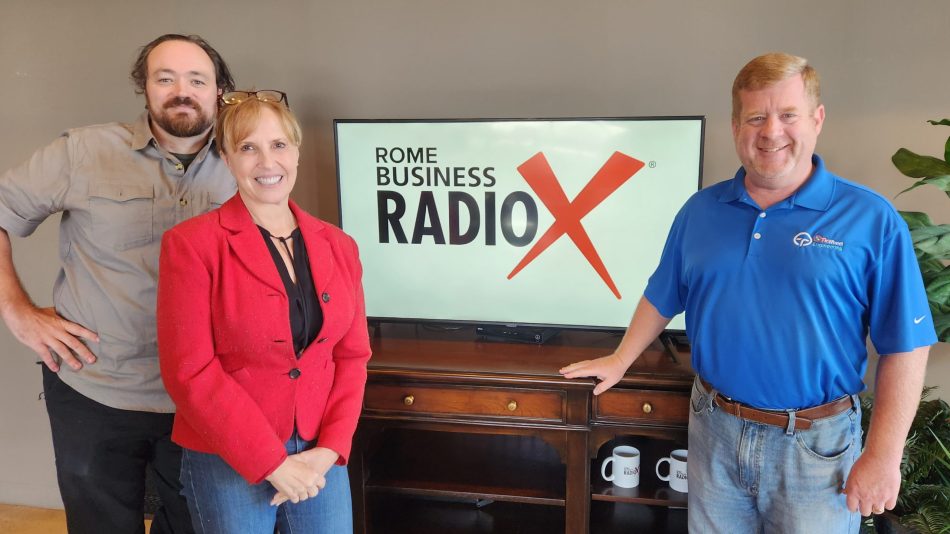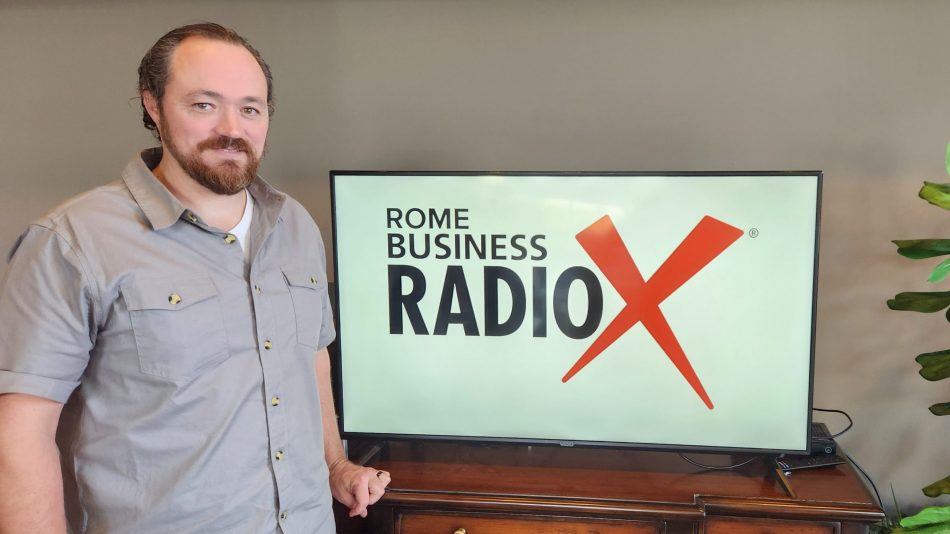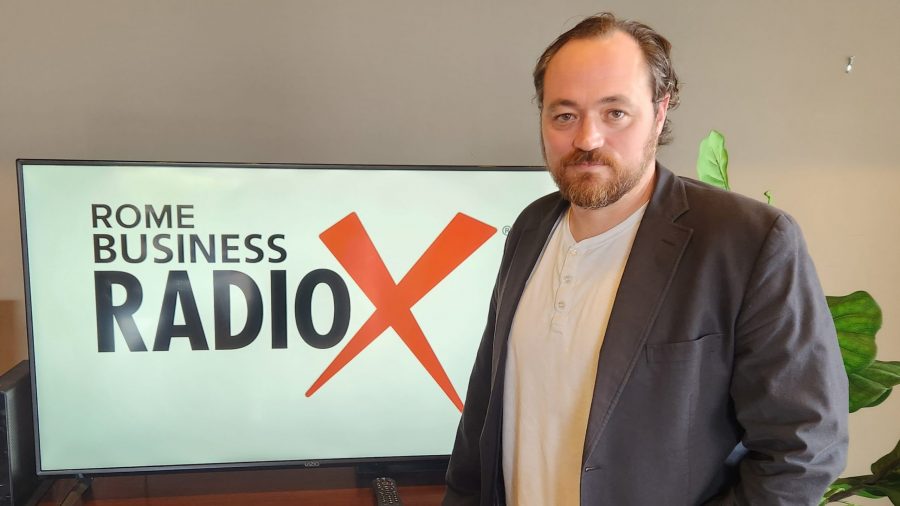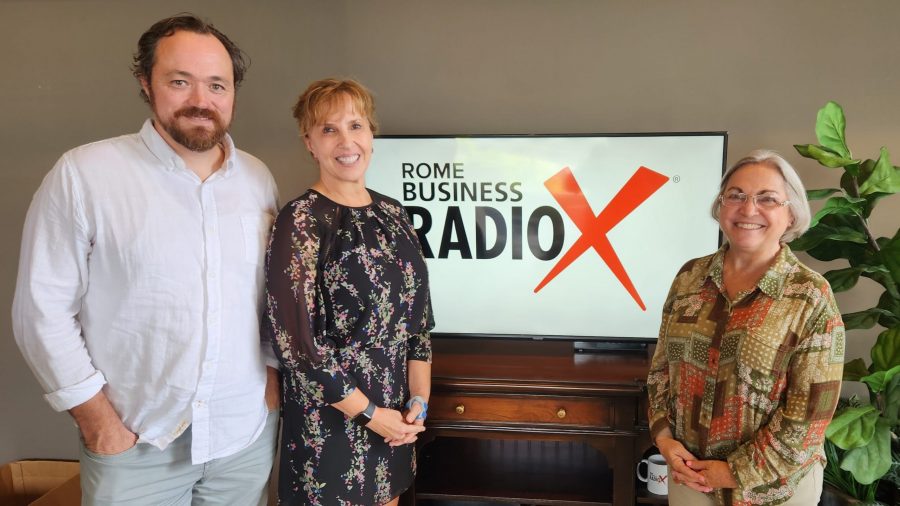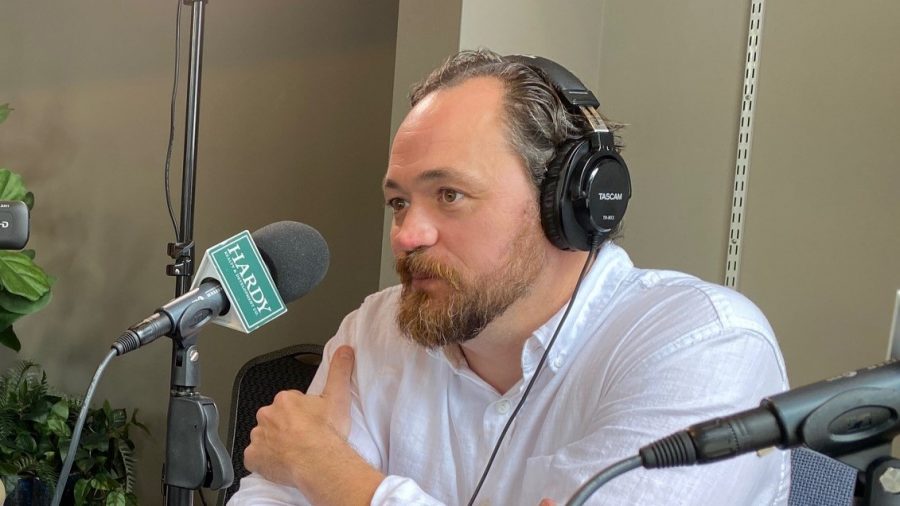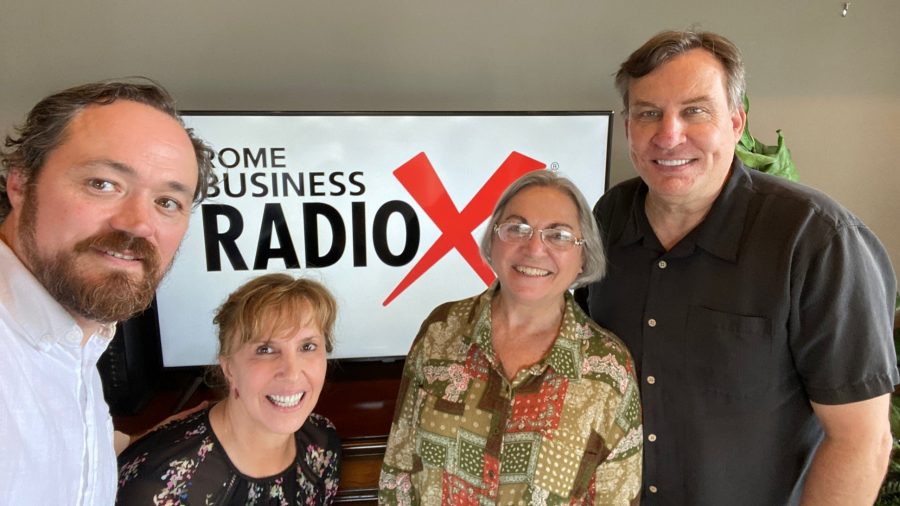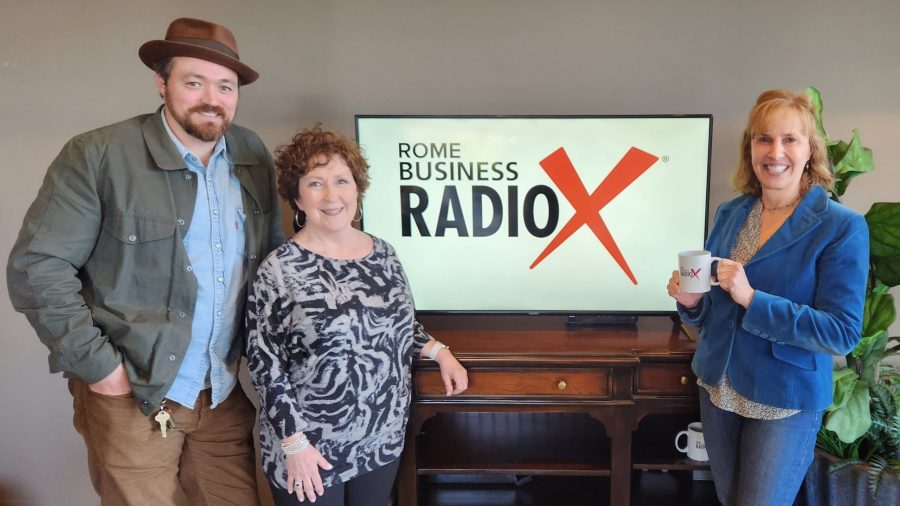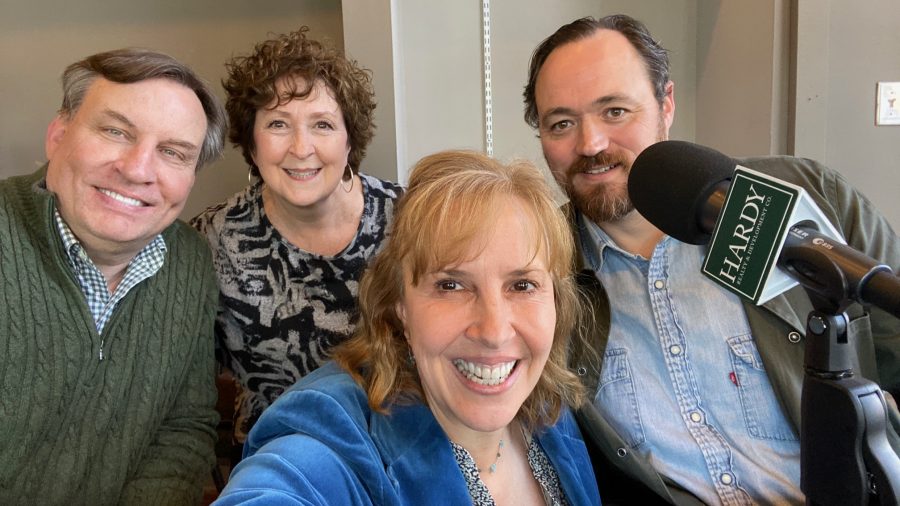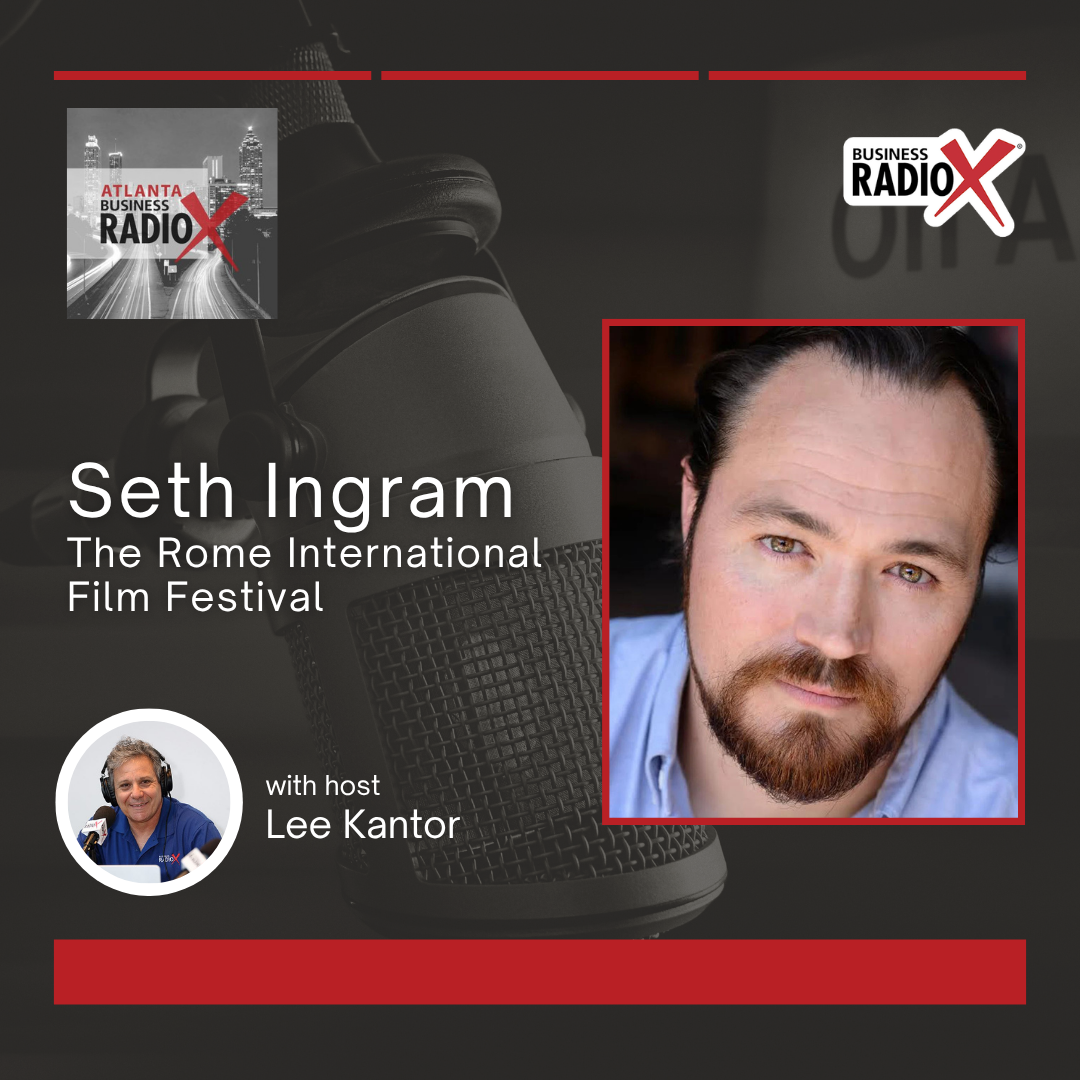

 In this episode of Atlanta Business Radio, Lee Kantor speaks with Seth Ingram, executive director of the Rome International Film Festival, about the festival’s mission to celebrate independent filmmakers, elevate Georgia’s creative voices, and connect artists with audiences, industry professionals, and potential investors. They explore how film festivals serve as both cultural platforms and economic incubators while helping emerging filmmakers gain visibility in an increasingly crowded streaming landscape. Seth also discusses the importance of networking, curated programming, strategic distribution, and having a strong business plan behind a film. He shares how persistence and continued practice can help aspiring filmmakers and actors build their careers, while festivals create opportunities for meaningful industry connections and new collaborations.
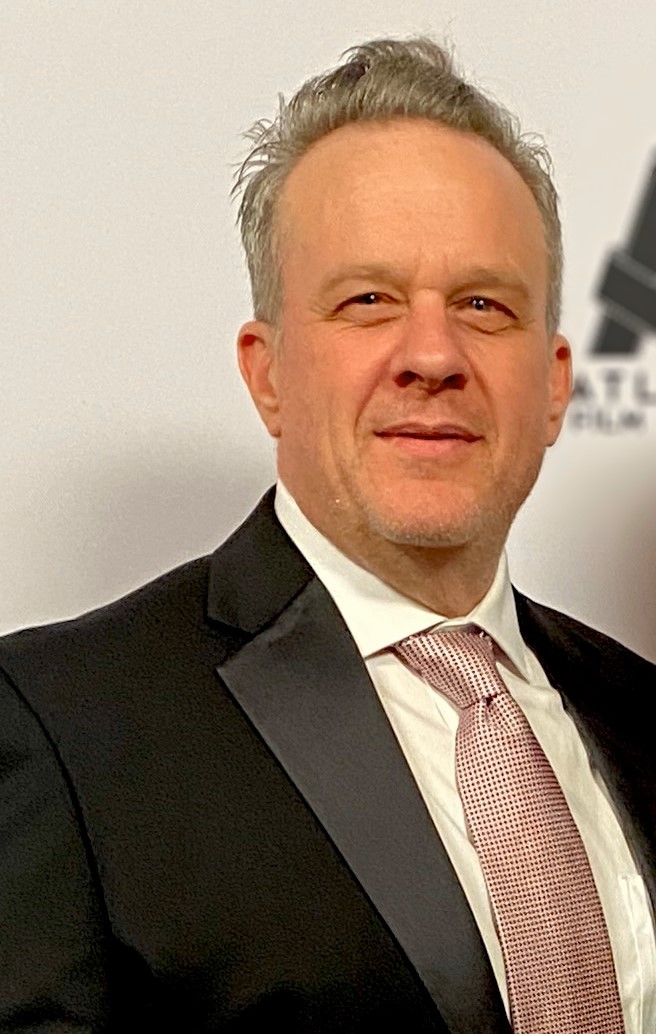
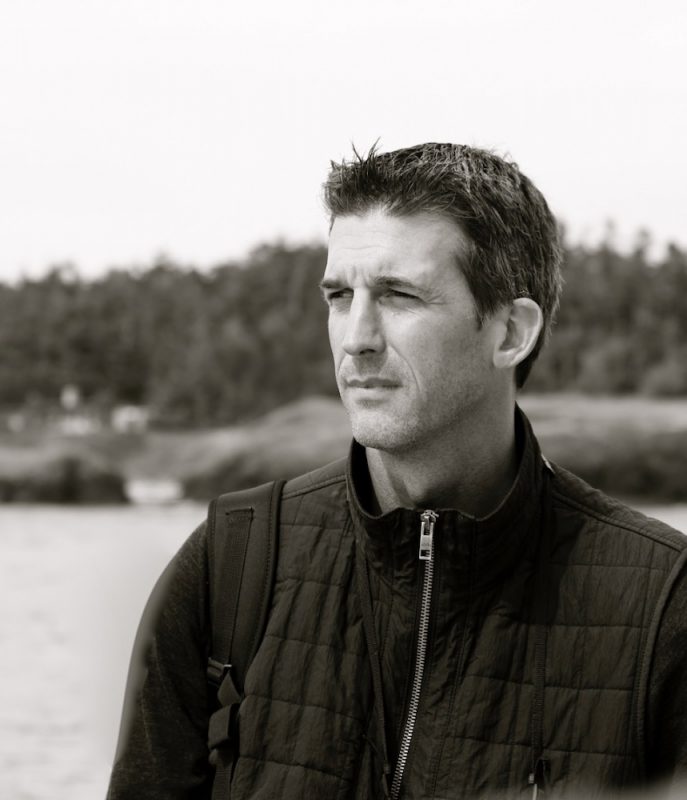
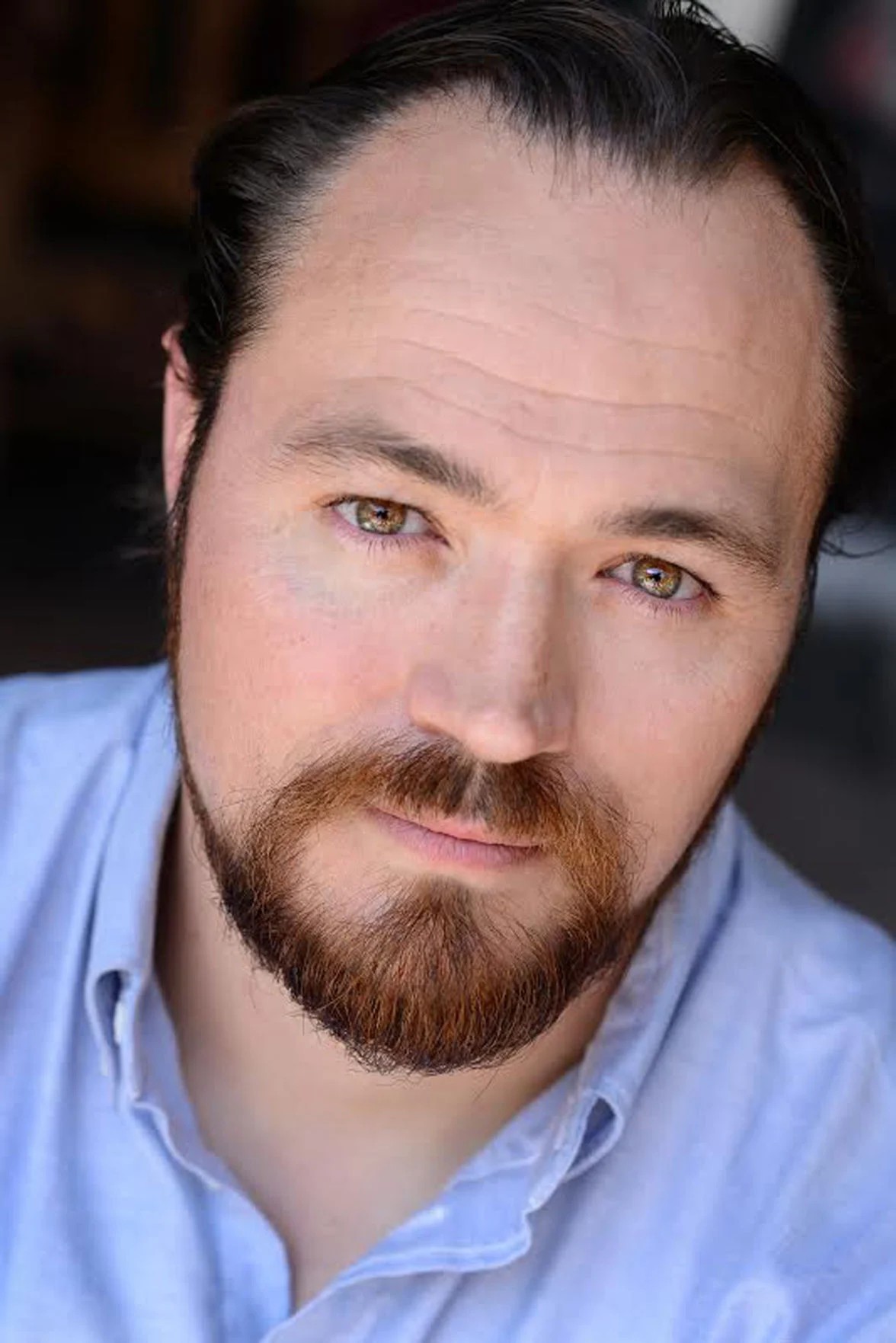 Seth Ingram is the Executive Director of the Rome International Film Festival (RIFF), where he has helped champion independent filmmaking, emerging artists, and Georgia’s distinctive storytelling culture.
With years of experience in the film industry as both a festival leader and producer, he is passionate about connecting filmmakers with audiences, industry professionals, and opportunities to bring new projects to life
Under his leadership, RIFF has expanded its international partnerships, local programming, educational initiatives, and industry networking opportunities. The festival showcases a diverse range of films while providing a platform for Georgia filmmakers and emerging voices.
He also helped establish the Flannery O’Connor Award for Storytelling in partnership with the Flannery O’Connor Trust, recognizing outstanding creative storytellers.
Beyond festival leadership, Seth actively works as a film producer and mentors aspiring filmmakers and screenwriters, emphasizing the importance of persistence, developing one’s craft, and understanding the business side of filmmaking.
RIFF, Inc. is a 501(c)(3) non-profit organization dedicated to bringing world-class film and entertainment to Northwest Georgia. Headquartered at 530 Broad St. in Rome, Georgia, the annual four-day festival welcomes filmmakers and film lovers from around the globe to share the art of independent film, enrich regional audiences, encourage cultural tourism, and foster economic film industry development in the region.
Recognized by “MovieMaker” magazine as one of the “20 Film Festivals Worth the Entry Fee,” RIFF has earned substantial acclaim within the independent film community. Acclaimed actor Ethan Hawke previously praised the event, stating, “This festival… in this town. Amazing! The people in Rome, Ga., are why we make films”. Actor Tim Blake Nelson similarly lauded the destination, proclaiming, “I think that Rome, Ga., is the most exciting town in the South”.
Additionally, juried award winners at the festival are presented with “The Sylvia,” an exclusive bronze sculpture created by acclaimed artist and Rome native Julia Knight. The custom statue takes its mythic name from Rhea Silvia, the Roman goddess of the forest and the mother of the legendary founders of Rome.
RIFF is well-known for showcasing breakthrough artists, from local Georgians to international filmmakers, including Burt Reynolds, Danielle Deadwyler, Hawke, Nelson and Billy Bob Thornton. For more information, visit RIFFGa.com, follow or like on Instagram and Facebook @RomeFilm.
Connect with Seth on LinkedIn.
What You’ll Learn In This Episode
- Building visibility and audiences for independent films
- Using film festivals to create meaningful industry connections
- Developing a strong distribution and business strategy
- Supporting emerging and underserved creative voices
- Turning networking opportunities into future film projects
- Staying persistent and continuously developing your creative craft
 This transcript is machine transcribed by Sonix.
TRANSCRIPT
Intro: Broadcasting live from the Business RadioX Studio in Atlanta, Georgia. It’s time for Atlanta Business Radio, brought to you by My Global Presence. The award winning Atlanta public relations agency that elevates brands and non-profits through authentic storytelling and national media campaigns. Find them at myglobalpresence.com. Now, here’s your host.
Lee Kantor: Lee Kantor here, another episode of Atlanta Business Radio. And this is gonna be a good one. But before we get started, it’s important to recognize our sponsor, my Global Presence. If you want global visibility and meaningful impact, go to myglobalpresence.com. Today on the show, we have the executive director with the Rome International Film Festival, Seth Ingram. Welcome.
Seth Ingram: Welcome. Thanks for having me. Uh, and that’s Rome, Georgia. Just to clarify.
Lee Kantor: Uh, well, I mean, I think it’s understood on the Atlanta Business Radio that there’s only one Rome in the Metro area.
Seth Ingram: Yeah, I think that’s right. But we get films submitted from around the world for international film festivals. So sometimes we do get mistaken.
Lee Kantor: Well, tell us, for folks who aren’t familiar, tell us a little bit about the Rome International Film Festival mission, purpose, how it got started.
Seth Ingram: Yeah. So the Rome International Film Festival, we’re going into our 23rd season and I’ve been the executive director. I’ve been a director at the festival since 2015. It was initially brought to Rome just both as a cultural arts experience and as an economic incubator for the for the city to really put a positive spin and bring in international guests and highlight the city. And, uh, we’ve grown it over the years to a lot of international partnerships. We also have just really expanded our local programing. And we have a lot of Georgia filmmakers. Now that we try to highlight and try to highlight new up and coming artists. And we are a 501 C three, not nonprofit. So that’s a that’s a little bit about the history of the festival. And, you know, in the last few years, we started giving out the Flannery O’Connor Award for storytelling in conjunction with the Flannery O’Connor trust. And that has been some of our guests in the last few years have been Billy Bob Thornton and Tim Blake Nelson and Ethan Hawke and Jerusha Hess. And this year we’re giving that award to Mr. Danny McBride, a Georgia native, so the first Georgia native to win that award.
Lee Kantor: So how did that tie in come about?
Seth Ingram: So, uh, you know, I just proposed it to the to the trust, the Flannery O’Connor trust, and they loved the idea. So, uh, we wanted to highlight a creative, original Georgia storyteller. And I don’t think there’s anyone better than Flannery O’Connor to represent that, that face of being the greatest Georgia’s greatest storyteller.
Lee Kantor: And so then when you made that decision to partner, was it difficult to get, um, you know, the honorees to attend?
Seth Ingram: You know, Flannery O’Connor in the artistic circles is highly, highly sought after and well thought of. So, uh, it has not been, uh, difficult in any way. And in fact, it’s been, uh, it’s been a very rewarding experience to give the award. And part of the, when we give the award, the, uh, the nominee for that year has to help be on the committee to select the nominee for the next year. So that’s been very helpful as well. And it’s, uh, it’s, you know, honoring that southern storytelling tradition. Um, and I think that it’s been very beneficial to us and it brought a lot of, uh, acclaim to our festival.
Lee Kantor: And then what, in your opinion, makes a good film festival? It seems like there’s quite a few of them around the country. Around the world.
Seth Ingram: Yeah, there’s a lot, you know, there’s quite a few here in Georgia, too. Um, Athens Film Festival was just this past weekend, and Macon has a film festival in Atlanta and the Atlanta Jewish Film Festival and the Savannah Film Festival, so there’s quite a few. The bronze lens and out on Film Film festival. So, uh, there’s quite a few of them around, but they’re all each have a distinct flavor. And ours, we really focus on a mix of both the international partnerships that we’ve, we’ve put together, and also highlighting just Georgia filmmakers and showing them off to the world. So, uh, and we really focus on that sort of, uh, I would say, uh, southern Gothic is one of our, uh, strong, uh, focuses and we have a lot of great documentary films and, uh, just narrative films too. So we’re kind of a broad spectrum catch all from all genres, but a lot of festivals are very niche and focus on a specific category. Uh, but I think that, uh, being, being broader gives us lots of room to, to get good quality programing in each year.
Lee Kantor: Now is the film festival. The only thing that happens throughout the year, like is that your work is just getting ready for this one event? Or is it something that there’s maybe education or other things happening throughout the year?
Seth Ingram: Yeah. During the festival we have there are other events that happen, and we work with the historical DeSoto Theater Foundation and, and the Rome City Auditorium in downtown Rome, Georgia. And we have films throughout the year. Um, and we bring in, you know, sometimes we, we’ll do a documentary documentary series or just a narrative film series. But the film festival is the big event. And that is when we do all of our educational things. We have a big student film academy that we work with at Georgia Highlands College, and we bring in a lot, maybe 250, uh, juniors. Rising juniors and seniors in high school to the college for, um, a look at what it takes to, to work in the creative industry in Georgia and from all different facets, not just filmmaking, but all different facets. So we have workshops for them, and we also have workshops from industry professionals during our festival as well. So there’s not just workshop. You asked what goes into a film festival? So we have a lot of musical events as well, as well as educational programing and educational workshops. Uh, and then just fun events too. So it’s a, it takes all of that to really build the atmosphere that you want to have a great film festival.
Lee Kantor: And for somebody who’s going to attend, like how, how do you recommend attacking it?
Seth Ingram: Yeah. So we will, we will put out our schedule and then you can buy our all access passes are on sale now. And we will have individual tickets that go on sale later. But you kind of look at the schedule and scope out the main events that catch your eye, and you can go and reserve your tickets once you have a pass for those events. Uh, and then the main thing is for people that are in the industry, or even if you’re just a fan of a lot of the filmmakers that will be here just to come in and you’ll have the opportunity to, you’re in a small town and you get the opportunity to actually rub shoulders with these people and, and talk to them and ask questions and attend the panels. So yeah, just you just sometimes we do, we run 3 or 4 venues at a time. So sometimes you do have to make choices about which show that you’re going to see. But when you pick one, you just, uh, you go, you just go there and enjoy it and, uh, hopefully make a lot of great networking connections, um, there, especially in the industry. So we are kind of, we do focus a lot on, uh, industry specific stuff, but we also have a broad audience of just, uh, regional attendees that come from, you know, all around and really all around the world. We have folks that come in from the West Coast and from Europe just to attend our festival each year. So it’s a lot of, it’s a great opportunity to meet a lot of international friends, uh, and things like that. So it’s, um, I don’t know, I think I’m maybe giving a broad answer there, but it’s, uh.
Lee Kantor: Well, like what I’m just trying to understand, like, so like you said that there could be multiple films happening at the same time. Do I pick one? And then I watch the film and then there’s like a panel at the end where I can ask questions, maybe of the people who made it.
Seth Ingram: Yeah, we have Q and A’s with all the filmmakers after their films. And then we also have some different panels set up with some of the producers and directors and other artists during the festival as well that you can attend. And then we also have during the festival, there’s also a lot of like, you know, social cocktail hours and things like that. And we have a party each night where you actually get to just kind of network and talk, talk to people and socialize during those hours as well. So, uh, you know, there’s lots of opportunity there just to, uh, just to meet a lot of new people and experience a lot of new, different types of film and a lot of independent films that, you know, you may not see, you know, on your major streaming platforms. And then sometimes we get some of the bigger films that we do have. You just get a, you know, a, a six month look at them ahead before they do come out on major streaming platforms.
Lee Kantor: Now, what’s kind of your take on the state of independent film nowadays with, like you mentioned, streaming and it’s just a different world now, right? When it comes to producing and distributing a film.
Seth Ingram: Yes, it’s a very challenging time and I still actively produce as well and work as a as a film producer. And I have a film that I help produce that’s playing at the Toronto International Film Festival coming up in a couple of weeks. Uh, but yeah, it takes a lot to, to, to cut through the noise. We have so many streaming platforms, um, that it’s hard just to, once you produce a film to get it out there and get it to, to find an audience. And then once you can find that audience, that’s the key. But it’s hard. It’s hard to do that and cut through the noise because there’s just so many options for people these days. It’s been good to see that the in, you know, this year, particularly the theater has had a large comeback. So people are going back to the theater. But, um, the independent filmmakers are, you know, they start out as independent filmmakers, but those are the, the people that, you know, will be the next big directors as well. So you just got to kind of, um, that that filmmaker has to elevate their profile through coming to these film festivals and getting their work out there. And then sometimes these festivals will also help with distribution deals, or you’ll meet someone there that helps work on your next project or helps produce your next project. We’ve had many films at our festival where filmmakers and financiers or whoever just met each other, and then the deal was hatched to produce a film that came out of connections at our film festival.
Lee Kantor: Now is the industry shifted from there was a time when there were. There weren’t lots of people to purchase and distribute your film to where. Now there’s. With streaming and YouTube, it’s like infinite distribution. Distribution really isn’t the hard part. It’s just getting eyes on your work is the hard part. That shift seems for some a major disruption on just the business model of film.
Seth Ingram: Oh, it has totally upended everything. And like as I said, cutting through the noise and just making your product stand out. So a lot of independent, um, producers, if you can partner with a distribution agency or a streaming platform and have a distribution plan where you’re guaranteed distribution when you finish your film, that is the ideal way to go. But a lot of times filmmakers, you know, they make their film, the project that they want to make, and then they’re looking to get it out there in the market. And then that can be very hard to, to get your film advertised and, um, and promote it. Even if you do a theatrical run, you still have to go promote the film everywhere you go. And those budgets, the, the marketing budgets can exceed the cost of the film budget and oftentimes do, um, and it’s, it’s just how well you’re able to do that and how successful your film can be. But occasionally there’s those films that just, uh, that just find an audience and they’ll like, uh, there’ll be a festival darling, and they’ll get picked up and, you know, put on Netflix or something like that. And then that’s a, they’re occasionally a film may take off like that as well, and a filmmaker will be elevated. And now you’ve seen this year with an obsession and some of these other films, backrooms, these are, uh, TikTokers and YouTubers that have made films and they already had a built in audience. So that’s something else we’re seeing in the industry is all of these people who are online on, uh, have a YouTube channel that have had a built in audience for their content, are now able to make a film and take it to the theater or streaming platform and do very well with it. Um, so that’s been another disruption in the industry of recent, in recent times.
Lee Kantor: Now, is it something that if you’re, uh, have an idea for a film and you don’t have, um, a connection in the industry and you say, okay, I’m going to do this on my own. And like you mentioned, with the phones nowadays, you can probably film a whole film on your phone, I would think, um, and edit it. And then you can even put it out on YouTube and, and potentially anybody in the world could see your film. So that part of the equation is almost next to nothing or minimal investment compared to what it used to be. It’s just that you’re just not. The money part, I think, is the biggest shift. Like the the math of it has shifted in terms of what is you may not make any money, but you’ll have the film out you’ve created and you’ve put it out to the world to see. So you can check that box, but you’re the money. Part of it may never come.
Seth Ingram: Yeah, exactly. And that’s that. That’s what happens, especially with a lot of first time filmmakers. And then, um, yeah, you don’t want to sink in a lot of money unless you have a great distribution plan and a business model. And I talk to filmmakers all the time and screenwriters who are trying to get projects made and, and walking them through the, the business of it and how that actually comes to fruition. If you want to have a, you know, a successful, successful business plan, it takes a little more time and a little more thought to put into it, but it can be done. But there are a lot of filmmakers who make their film and they’ll often go, um, you know, won’t get picked up by a major distributor. And then later on they find their audience. But you know, if you miss that first, that first window to get your film out there, that’s when you really have the opportunity to make money. So you’ve got to kind of have a great business plan, uh, on to, to, to do that. And it is possible. It has gotten harder, I would say just because all the, all of the finding your audience and letting people know that your film is out there and why they should watch it and how they should watch it. But just reaching people and advertising with all the social media, uh, stuff today, it’s just, it’s very, uh, it’s a very different time, I would say, but I think the industry is adapting, uh, to that. And I think that you are seeing a comeback of the lower budget independent films, and there’s going to be a greater demand for those because there’s just not a lot of major content being produced enough to that stays in the theater long enough to, uh, you know, make the theater successful. So I think the theaters are even looking for more independent films to come in and, and find an audience. Uh, so not just the streaming platform, but the actual theatrical screening is, is definitely making a comeback.
Lee Kantor: So do you find that the film festivals are kind of a, a line of vetting that happens, that you’re able to kind of discern, okay, these are worth paying attention to because there’s so much stuff out there that’s hard to tell the good stuff from the not so good stuff. But if they go through a film festival, there’s a bunch of people who have eyes on it and they’re going to give you a thumbs up or thumbs down, and this is what they do every day. So it’s not like an educated opinion.
Seth Ingram: Yeah. And there’s a lot that goes into festival programing because there is sometimes some local focus and things like that that may not, you know, there’s some some more regionally local focused films that you would know aren’t going to have a definitely a wide appeal, but there are other films that definitely, if you have a good reputation, if your festival has a good reputation, they can definitely elevate them to get some of the distributors to take a real look at it. You know, there are some of the major film festivals like Toronto and Sundance and South by Southwest and Cairns, and those are film festivals where people take their films to, and there’s lots of financiers and distributors there looking to purchase films. Uh, we get a little bit of that at our festival. Occasionally we’ll get, uh, someone from one of the studios, uh, looking, looking for that, but it’s usually looking for the next picture from the, from the director. So even if a, if a film has a successful run, it may not be a commercial success. But then the next project that the filmmaker does is kind of a scouting pool for the talent, if not for the film. Um, and it can be on screen talent or off screen talent, screenwriting talent, all the things that go into making a film. So it’s definitely a lot of different things that can happen. But if you’re like, I think we have a great reputation as a festival. So if I call and recommend a film to an agency or a studio, they’ll normally, uh, take a really good listen to it. If I have a good pitch for them and connect them with a filmmaker to a film that doesn’t have distribution.
Lee Kantor: So what would you recommend to an aspiring let’s go with an aspiring director, an aspiring actor? What should they be doing? Um, you know, to get their dreams coming true to, you know, keep working in the industry.
Seth Ingram: Well, that’s, that’s can mean a lot of different things, but I think you just got to continue to practice your craft however you can, whether that’s for a, you know, something that you’re filming that you know, is going to go on YouTube and have a small audience. If you’re going to get a feature film opportunity, you’ve just got to continue to, to practice your craft and get better at it each day. Uh, the worst thing you can do is to settle and not, not continue to work. So I think that oftentimes filmmakers, like I said, if a filmmaker has a first film that comes out and maybe it’s not a huge success, maybe that they burn out and think that the industry is just going to be too big of an obstacle to overcome, but you just kind of have to keep directing. You have to keep finding those opportunities. And there’s a lot of different opportunities, you know, whether it may not always be making the film that you want to make, but there are director for hire type situations where you can, people can tell a good director, um, you know, in commercial work or wherever you are. So there’s definitely a lot of business opportunities out there outside of the feature film, um, categories, but it’s just just being diligent and continuing to practice your craft and not giving up. That’s the, that’s where the real cream rises to the top.
Lee Kantor: And then at a festival like yours, uh, this is an opportunity for folks to come and see what’s been produced and made it into the festival. But also, like you said, network with other people in the industry that might open a door for you down the road.
Seth Ingram: Exactly. Um, yeah, the networking is like in any, in any industry is very important, but there’s not very many opportunities. And especially some of the, you know, the more regional film festivals like ourselves, we’re kind of a boutique film festival. And, you know, you get there’s when you’re in Rome, Georgia for the weekend, everyone’s there for that one purpose. So you’ve got like an attentive audience and everyone, all the producers that are there, they’re just having conversations. So like I’ve seen, like I said, so many things have come out of just the connections that have been made at our, at our festival. And this happens at a lot of different festivals. But that is hugely important. And I encourage any young filmmaker or young actor, the best thing to do is to attend a film festival and network and let people know who you are. And you know, we show everything from student films to, uh, studio films. So there’s a, a wide range of people there, and there’s someone somewhere you can plug in at every level and make a connection.
Lee Kantor: And it seems like, like we talked about earlier, there’s a lot of film festivals, but it seems like it’s a growing business. There seems to be more and more every year.
Seth Ingram: Well, I think it’s definitely a place where, uh, you know, an educated film audience is looking for, for quality content.
Lee Kantor: And curated content, I think.
Seth Ingram: Curated. Yeah, I would say curated especially. Yes. They’re looking for, uh, and they know that what they’re going to get and like you festivals and the programmers at the festivals definitely develop a brand and people gravitate toward that once they know that, and that has some clout that goes with it. Even if the festival is not a film market festival, there’s definitely a gravitas that goes with being selected into that festival.
Lee Kantor: Now because, uh, you mentioned independent film. Does that mean that there’s going to be films like from maybe some underserved folks that wouldn’t normally have a chance to see their work in, uh, you know, seen by this many people.
Seth Ingram: I think that’s definitely true at film festivals. And we always try to elevate new voices. Uh, and you know, when you talk about underserved populations, that can mean a lot of different things. But in Georgia, it can even just be like we have a lot of, I would say, more rural filmmakers and, uh, for them just to find an audience and find people that gravitate toward this kind of content they want to make. And we try to highlight some of that. But there’s also just, you know, different voices from the international perspective that we’re trying to help some of those independent films that are, you know, are really good from the European markets to come over here and find an audience in the US markets, too. So those, uh, and then that works vice versa. If you take a film to a European film festival. So, um, a lot of different opportunities are created, um, through that, um, that metric, I think.
Lee Kantor: So how does it work? Like when do you start kind of looking for films? Like when can people start submitting like to be in next year’s festival? Like how does the process work from your end in order? And I would imagine you get bombarded with lots of entries, but then you got to watch them. All right.
Seth Ingram: Yes. Yeah. We we normally open submissions. Our festival wraps, you know, in November. So we’ll open in December or by the 1st of January, and we’ll have a six 5 to 6 month window where we’re open for submissions. And we have a team of maybe 40 screeners that are watching the films and, and rating them. And we’re having, you know, monthly discussions and elevating some of the better ones that we think would fit into the programing and curate that programing so that you have, there’s a lot of different, um, elements you have to capture. Like we only have room for so many narrative short films and we only have room for so many documentary feature films. So you kind of have to find a balance and things are going to resonate with your audience. Um, but yeah, that, uh, that process takes a, you know, we’re, we have a dedicated team that’s, you know, watching the films diligently and then what goes into the final programing? Um, uh, you know, I’ll lay eyes on everything that goes into, into the final programing. Um, and it’s, uh, it’s definitely a curated process for sure. And like I said, each festival has its own flavor of what they do and what you can expect from those film festivals.
Seth Ingram: And there’s a a lot of films, especially if there’s a lot of Georgia filmmakers, then I think a lot of the Georgia festivals are going to try to highlight their own Georgia filmmakers and their Atlanta based filmmakers as much as they can. But there’s so many of those out there now that you can’t program everything that you want to program. And we get so many great films and we’re not able to program all of them. And just because your film doesn’t make it into our festival, doesn’t mean that you didn’t make a great quality film. It just means that that was the nature of the programing that we had to select. Uh, but we try to, you know, we try to give everyone a fair shot and we take everything seriously. And, uh, we know that making a film is one of the hardest things in the world to do. And we want to make sure that we respect the filmmakers and the process and through the whole, throughout the whole process of our selection.
Lee Kantor: So about how many films will be screened during the festival?
Seth Ingram: We typically screen around 80 films. Um, on. We start on a Thursday night and go through a Sunday and we’re in three. 3 to 4 different venues. Uh, and that’s everything from short films to animated films to documentary films. We will have maybe I would say 15 or so feature films and a lot of the rest is the shorter films, but the short filmmakers will then, you know, they’re working to make their first feature film, so they get a taste of coming back to the festival, and they may meet someone at the festival that helps them elevate to make their feature film. So that’s, um, that’s one of the things that I’ve loved to see is the young filmmakers get inspired and meet, meet other young filmmakers and work together to, you know, go on to make another project at the that they met at the festival. And, uh, like I said, I’ve seen lots of actual feature films that are now, you know, films that you can watch on streaming platforms that, that happen through relationships made at our festival. So that’s, uh, that’s what we strive to do is just put people together in the room and just create a wonderful atmosphere for film goers as well and the whole community. So we our flavor is definitely Rome is the back is like a backlot. If you’ve never been to downtown Rome, Georgia, it’s this town of three Rivers and seven hills, and we have a beautiful stretch of Broad Street and, and everything. All of our venues are located within walking distance. So once you get to the festival, you can stay at one of the downtown hotels and you can walk to all the venues. And it just, all the restaurants there are just booming with filmmakers throughout the whole weekend. And it’s just great to see all the businesses really embrace us and, and they look forward to the festival coming each year.
Lee Kantor: So now, um, for the business folks who want to be part of this, is there a way to sponsor things? Is there a way for the business community to, um, you know, immerse themselves in this event?
Seth Ingram: Yes, 100%. We love, uh, sponsorship and we can’t do it without our sponsor Partners and on our website at wrif.com. We do have a sponsorship portion of the website. You can get some of the basic information. And then my, uh, there’s email contact information there that you can get involved. And we would love to, to work with any sponsors that want to, uh, you know, really highlight their company. And we can, you know, we do like a lot of, um, activations during the festival and we have, uh, you know, obviously we’re showing trailers and commercials and things like that. So there’s a lot of different ways to highlight. And then through all the social media that we do as well@wrif.com or Rome film on social media. Uh, and we can really elevate your brand and we would love to have, uh, as many, uh, sponsor partners as we can. And it is in this time in the arts field and especially being a curator of the arts. I don’t know if you are aware of this, but, uh, Georgia of, of the 50 states is, uh, for the amount of money that’s given to the arts is number 50. And if you count the outlying territories of the U.S., we’re 52nd or third. It’s pretty low. So it’s a hard. All these independent art organizations depend on sponsors and the patrons, uh, giving money as well. So, uh, we couldn’t do it without our generous sponsor partners.
Lee Kantor: Now, is there something that the South or Georgia has become known for? Is there a niche that we’re like especially good at when it comes to filmmaking?
Seth Ingram: I think Georgians are the best storytellers. Um, I mean, we have a history of it going. That’s when we give out the Flannery O’Connor Award. Uh, I think we are definitely known. I mean, there’s so many Georgia filmmakers that are out there working now that from all in all different genres. Um, and Georgia, you know, is known as a production state. Lots and lots of films and TV shows are produced here over the last 10 to 15 years. Um, you know, obviously we’re on, you know, going back to the, to The Walking Dead and some of those types of shows. But I think that Georgians are just known, and Southerners in general are known for the craft of telling. A unique, nuanced story in southern literature has always had a very distinct flavor as well. So I think we have a long, steep tradition in songwriting, novel writing, filmmaking. We just have a lot of very distinctive Georgia voices. And, um, we’re trying to just continue to find those and lift those up.
Lee Kantor: So what do you need more of? How can we help you?
Seth Ingram: What I need is for people to come out and attend the festival and support the festival and support independent film. So I just want, uh, anytime we can create screenings. I know that, uh, we got that many films running during the day and it’s not everyone. May we get a lot of folks that may come to 1 or 2 films and then just really enjoy the parties and the networking part of the festival, but I want to see every theater full. I want to see, uh, all these filmmakers, uh, getting an audience and getting that, that first impression of their film hitting the audience for the first time. And that feeling, I know what it feels like as a filmmaker to be in the theater when your film is being screened by a lot of strangers and how exhilarating that is. And I love it when I see the the glow in the filmmaker’s eye and having a great screening. So I just want as many people to come out and attend this festival and be a part of it and really embrace it and embrace all the creativity that Georgia has and help lift up these Georgia filmmakers. And for the financiers that are investing in these types of projects, we want those people there as well, because you can’t make these movies in a vacuum. And we can’t lift up the creative voices in the Georgia industry without having those business folks as well. So we want to have all of those types of people attend as well. So you don’t have to be just a cinephile to come out and appreciate the festival. You can be someone that is a, you know, looking to plug in in a lot of different ways. So just come out and attend the festival and I promise that you’ll have a great time.
Lee Kantor: And one more time for tickets. And, um, you know, the, all the sponsor opportunities, the website one more time.
Seth Ingram: The website is, uh, RIFFGA like ref georgia.com and you can find all of our sponsor information and our tickets, our passes are on sale now. Our individual tickets will be going on sale once the full schedule is announced, which will be coming out in the next couple of weeks. And, um, and our social media, we are on, you know, Instagram, Facebook, uh, x at Rome film, uh, so you can find us at that and, uh, go give us a follow and a like and, uh, stay on the lookout for all of our upcoming announcements.
Lee Kantor: Good stuff. Well, congratulations on all the success. Thank you so much for sharing your story today.
Seth Ingram: Thank you. Lee. Thanks for having me.
Lee Kantor: All right. This is Lee Kantor. We’ll see you all next time on Atlanta Business Radio.