Business RadioX ®

  • Home
  • Business RadioX ® Communities
    • Southeast
      • Alabama
        • Birmingham
      • Florida
        • Orlando
        • Pensacola
        • South Florida
        • Tampa
        • Tallahassee
      • Georgia
        • Atlanta
        • Cherokee
        • Forsyth
        • Greater Perimeter
        • Gwinnett
        • North Fulton
        • North Georgia
        • Northeast Georgia
        • Rome
        • Savannah
      • Louisiana
        • New Orleans
      • North Carolina
        • Charlotte
        • Raleigh
      • Tennessee
        • Chattanooga
        • Nashville
      • Virginia
        • Richmond
    • South Central
      • Arkansas
        • Northwest Arkansas
    • Midwest
      • Illinois
        • Chicago
      • Michigan
        • Detroit
      • Minnesota
        • Minneapolis St. Paul
      • Missouri
        • St. Louis
      • Ohio
        • Cleveland
        • Columbus
        • Dayton
    • Southwest
      • Arizona
        • Phoenix
        • Tucson
        • Valley
      • Texas
        • Austin
        • Dallas
        • Houston
    • West
      • California
        • Bay Area
        • LA
        • Pasadena
      • Colorado
        • Denver
      • Hawaii
        • Oahu
  • FAQs
  • About Us
    • Our Mission
    • Our Audience
    • Why It Works
    • What People Are Saying
    • BRX in the News
  • Resources
    • BRX Pro Tips
    • B2B Marketing: The 4Rs
    • High Velocity Selling Habits
    • Why Most B2B Media Strategies Fail
    • 9 Reasons To Sponsor A Business RadioX ® Show
  • Partner With Us
  • Veteran Business RadioX ®

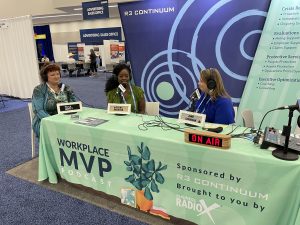
Workplace MVP LIVE from SHRM 2021: Beth King, Motif FoodWorks

October 13, 2021 by John Ray

Motif FoodWorks
Minneapolis St. Paul Studio
Workplace MVP LIVE from SHRM 2021: Beth King, Motif FoodWorks
Loading
00:00 /
RSS Feed
Share
Link
Embed

Download file

Motif FoodWorks

Workplace MVP LIVE from SHRM 2021: Beth King, Motif FoodWorks

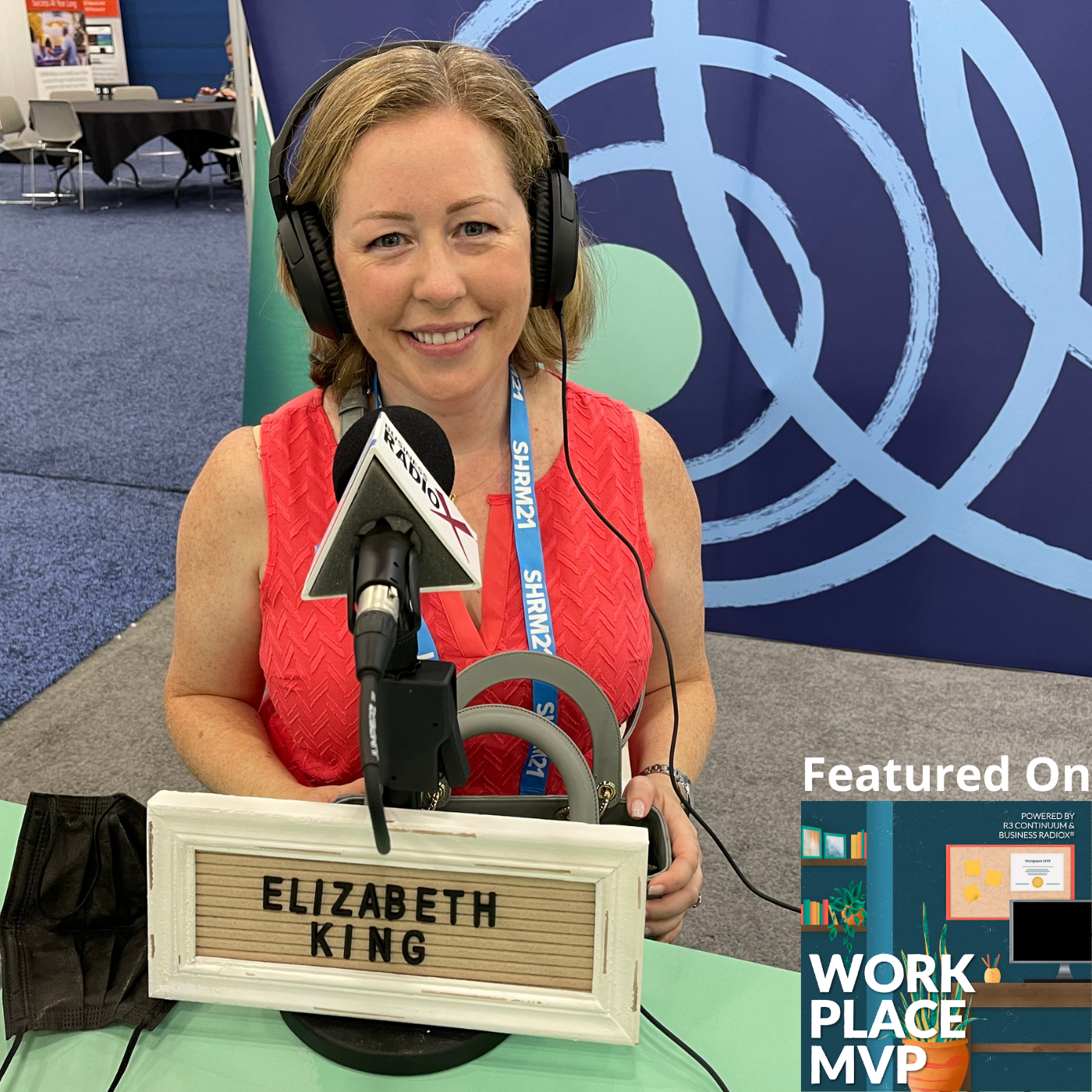
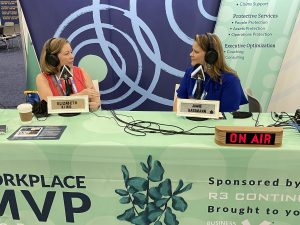
Beth King, VP of People and Culture at Motif FoodWorks, shared her journey to HR, from a focused role to a generalist, which is her passion. She and host Jamie Gassmann discussed the difference between HR in small and large organizations, her advice to those just starting, her company’s experience during Covid, and much more.  Workplace MVP is underwritten and presented by R3 Continuum and produced by the Minneapolis-St.Paul Studio of Business RadioX®.

This show was originally broadcast live from the 2021 SHRM Annual Conference held at the Las Vegas Convention Center in Las Vegas, Nevada.
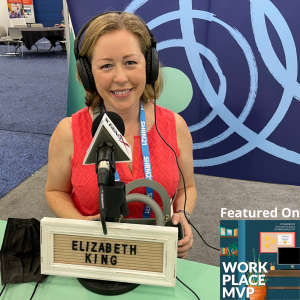
Beth King, Vice President, People & Culture at Motif FoodWorks, Inc.
Motif FoodWorks
Beth King, Vice President, People & Culture at Motif FoodWorks, Inc.

Elizabeth King is a seasoned Human Resources professional with 12+ years experience growing and cultivating dynamic organizations.

She is well respected as a business partner and thought leader who in her career has taken small companies through the Initial Public Offering (IPO) process, acquisitions, and integration processes.

She says her passion is being a generalist. She lives in Boston and has been with Motif FoodWorks since 2019.

LinkedIn


Motif Foodworks

We make plant-based food better by analyzing, discovering and designing differently. The result? Crave-worthy food that’s better tasting, more nutritious and sustainable.

Unlike other food and ingredient companies, we’re built to bring the outside in. We’re a lean, nimble organization with seasoned professionals who have lived and led food businesses, along with science and technology experts who have renovated, innovated and designed leading-edge solutions. Together, we curate and connect with world-class scientists, universities, partners and technology platforms.

We’ve assembled an unrivaled team of experts from the food industry and world-class science and academic institutions.

We integrate and apply cutting-edge technology focused on closing the biggest gaps and solving the food innovation challenges of today and tomorrow.

We’re creatively aggregating proprietary insights and an exclusive network of partnerships to holistically unlock the secret building blocks of food to rewrite today’s food design rules.

Company website

About Workplace MVP

Every day, around the world, organizations of all sizes face disruptive events and situations. Within those workplaces are everyday heroes in human resources, risk management, security, business continuity, and the C-suite. They don’t call themselves heroes though. On the contrary, they simply show up every day, laboring for the well-being of employees in their care, readying the workplace for and planning responses to disruption. This show, Workplace MVP, confers on these heroes the designation they deserve, Workplace MVP (Most Valuable Professionals), and gives them the forum to tell their story. As you hear their experiences, you will learn first-hand, real-life approaches to readying the workplace, responses to crisis situations, and overcoming challenges of disruption. Visit our show archive here.

Workplace MVP Host Jamie Gassmann
Jamie Gassmann, Host, “Workplace MVP”

In addition to serving as the host to the Workplace MVP podcast, Jamie Gassmann is the Director of Marketing at R3 Continuum (R3c). Collectively, she has more than fourteen years of marketing experience. Across her tenure, she has experience working in and with various industries including banking, real estate, retail, crisis management, insurance, business continuity, and more. She holds a Bachelor of Science Degree in Mass Communications with special interest in Advertising and Public Relations and a Master of Business Administration from Paseka School of Business, Minnesota State University.

R3 Continuum

R3 Continuum is a global leader in workplace behavioral health and security solutions. R3c helps ensure the psychological and physical safety of organizations and their people in today’s ever-changing and often unpredictable world. Through their continuum of tailored solutions, including evaluations, crisis response, executive optimization, protective services, and more, they help organizations maintain and cultivate a workplace of wellbeing so that their people can thrive. Learn more about R3c at www.r3c.com.

Company website | LinkedIn | Facebook | Twitter

TRANSCRIPT

Intro: [00:00:03] Broadcasting live from the SHRM 2021 Conference at the Las Vegas Convention Center, it’s time for Workplace MVP. Brought to you by R3 Continuum, a global leader in workplace behavioral health, crisis, and security solutions. Now, here’s your host.

Jamie Gassmann: [00:00:21] We are broadcasting from SHRM 2021 on Day two here in Las Vegas, Nevada. And with me is Beth King, the Vice President for People & Culture at Motif FoodWorks. Welcome to the show, Beth.

Beth King: [00:00:34] Thanks, Jamie. I’m excited to be here.

Jamie Gassmann: [00:00:36] So, why don’t we start off with you sharing a little bit about your journey kind of getting into H.R., and what you do as Vice President of People & Culture at Motif FoodWorks.

Beth King: [00:00:50] Sounds great. So, in terms of getting into H.R., I have to say I fell into it. I graduated college with the ever-popular liberal arts degree, which provides you with very little direction on how to actually get a job. And, my parents said, “Well, you have to get a job.” And I said, “Okay.”

Beth King: [00:01:09] And so, I started out as a recruiting coordinator, which is a very popular entryway, as you know, to H.R. and really enjoyed that. But I was lucky enough to have an opportunity to transition into a broader role and go into more of a generalist role. And, I started in a startup-like environment, which was really, really fun, and was able to take that, take my learnings from that company and move to a true startup that had gone through Series A and Series B funding, and went through an IPO with them as an H.R. manager. We were subsequently acquired and I was able to transition ultimately into an H.R. business partner.

Beth King: [00:01:53] So, my journey went from a more focused role in recruiting to a broader role and in the more generalist and business partner sector. And, that’s where I found my true passion and enjoyment, and, ultimately, that’s how I landed where I am today. And, throughout that journey, I also realized that there are so many great things about H.R. and what they can do in different types of companies whether it’s a startup, a midsize, or a very large company because I have experience in all of those. But my passion really lies in entrepreneurial ventures, in startups, and in growing something small into something mid-sized. And, that’s a really enjoyable place for me to be in H.R. But when you’re doing that, you need to have a broader perspective.

Jamie Gassmann: [00:02:47] Absolutely. So, you mentioned that there’s a lot of great things that H.R. does within all these different organizations. Let’s dive into that a little bit. Tell me a little bit about what you see as those great things. Like, what is it to you –

Beth King: [00:03:01] Sure.

Jamie Gassmann: [00:03:01] That you think is most impactful.

Beth King: [00:03:02] So, what I love about being in a small company, which is something that I’ve done several times throughout my career, is that you’re all things to everyone. So, you never have the luxury of getting bored, right? Because there’s just always something. So, one day you might be recruiting. The next day, it might be benefits. The day after that, it’s employee relations, et cetera, et cetera.

Beth King: [00:03:24] But when you have the opportunity to work for a mid-sized or a large firm, then you have the opportunity to engage with individuals who have done one thing for the majority of their careers. And, while that may not be attractive to all of us in terms of a career path, it’s a huge opportunity to learn about what does it mean to truly be a subject matter expert in XYZ area.

Beth King: [00:03:50] So, you have the opportunity in a mid or a large company to talk to people who have done payroll for 25 years and they know everything about payroll. They know everything about the state laws, they know everything about multistate, they know everything about international, they know how to interact with Treasury. And, it’s so incredible to go through your career and have those resources available to you even if it’s not your own journey, right?

Beth King: [00:04:19] And, that is what I love about working at different types of companies or having worked at different types of companies. And, it’s why I would always encourage people. If you think you love small business, that’s great, but don’t be afraid of trying something new. Don’t be afraid to go to that big or mid-sized company because you never know. And, even if it turns out not to be your thing, the insight and the information and the context that you’ll gain will be incredible, and it’ll be a wonderful addition to your own résumé.

Jamie Gassmann: [00:04:54] Absolutely. So, do you think it’s a hard transition for some that go from more of that generalist role to a more kind of subject matter, like specifics, specialty role? You know, is there a hard transition with that, do you think?

Beth King: [00:05:09] There can be. I think it depends on, obviously, the person’s interests and personality.

Jamie Gassmann: [00:05:13] Sure.

Beth King: [00:05:14] But I certainly think that we all naturally gravitate even as generalists to one discipline or another. So, for example, although I have made a career out of being a generalist, if I have the opportunity to focus my time on a specific discipline, it’s always going to be OD, organizational development.

Beth King: [00:05:37] To me, that’s what gets me excited. That’s where I see – it’s the work that is the most fun. It is the work that allows me to engage with employees in the most meaningful way for me. And, if I were to go into a specific discipline, that would be the one. But that’s not always going to be everyone’s choice.

Beth King: [00:06:02] So, I think that it doesn’t have to be a tough transition because if you just go with the discipline that excites you, that you’re passionate about, that you find joy in, and that you find to be really worthwhile for the employees, then I think it’s going to be more natural than anything else.

Jamie Gassmann: [00:06:21] Wonderful. And so, if somebody, let’s say they’re new in their career.

Beth King: [00:06:25] Sure.

Jamie Gassmann: [00:06:26] You know, maybe they work for a small organization, or maybe they work for a large organization and they’re kind of, you know, in one specialty and they’re looking at broadening that or trying to figure out where they go. You know, what are some things that have helped you in your career and kind of identifying that passion in organizational development? You know, how did you discover that?

Beth King: [00:06:45] So, I was very, very lucky early in my career. The organization that I worked for, the H.R. organization that I worked for, was actually led by someone who had done OD for about 20 years prior to joining our team. So, because of her specific background, the very nature of our day-to-day work had a bit more of an OD bent to it. So, it was a little bit more natural.

Beth King: [00:07:13] But that being said, it certainly wasn’t the only work going on in our team because we were H.R., so benefits still had to be done. Comps still had to be done. Payroll still had to be done. Recruiting. All of those things, right? We couldn’t just play around with creating trainings and what’s the next great employee engagement thing that we’re going to do for the team.

Beth King: [00:07:32] So, we had to focus our time differently. And, I would say for those folks who are looking to explore different disciplines in H.R., talk to your peers and colleagues. You know, go to – even if going to a SHRM event isn’t something that maybe is available to you, SHRM has an incredible amount of free resources that you don’t even have to be a member of SHRM to access. If you are able to get a SHRM membership, all the better because then you have even more resources available to you.

Beth King: [00:08:04] But I think one of the great things about SHRM is that it does offer a number of different points of reference and contacts even for those who, for one reason or another, may not be able to have a membership. But you can do that. I would say your local SHRM affiliates.

Beth King: [00:08:22] So, our company is based in Boston, so we have NEHRA, the New England Human Resources Association. They often will have free-to-member or pay-for-non-member events that you can go to. Look those up and just keep yourself informed. You know, do the research. Go online. I fully appreciate that keeping up with the newest labor laws isn’t exactly the world’s most riveting information. But if you want to grow and develop your H.R. career, you might want to check it out once a year or something. But there are great podcasts out there.

Jamie Gassmann: [00:09:00] Yeah.

Beth King: [00:09:01] There are great YouTube channels. There are so many wonderful resources out there. So, I would say talk to your partners and colleagues and, you know, do your research yourself and see what you think might be the right fit.

Jamie Gassmann: [00:09:15] Awesome. Awesome. So, one quick question, kind of looking at that organizational development and looking at, you know, you kind of mentioned that Motif FoodWorks does kind of almost like lab kind of work.

Beth King: [00:09:29] We have a heavy lab presence. Yes, we hired many scientists and engineers.

Jamie Gassmann: [00:09:33] So, how did the last year in terms of like, you know, I know with being that you’re involved in like managing culture and overseeing that, how did you balance that culture and support those individuals that – were they in the office? Were they considered essential? Were they hybrid? Like, how have you approached that? Because it sounds like you’ve got a lot of passion in that organizational development kind of that cultural aspect of an organization? How have you been able to implement some different things or explored your challenges [inaudible]?

Beth King: [00:10:02] Sure. So, I have to admit for our company specifically, COVID could not have come at a better time because we had about six weeks prior to COVID. So, in the state of Massachusetts, we went into lockdown on March 13, 2020, and about six weeks prior, maybe a little bit less than that, we had embarked on a buildout of our new facility, which was going to include our labs. So, the truth of the matter is in our organization we didn’t actually have our labs ready to go anyways, and they were able to be built out over the pandemic. So, it kind of worked.

Beth King: [00:10:39] But we got really creative with a lot of the work that had been going on in the office in terms of lab work. And, we had application engineers and scientists who work with food ingredients and creating different applications. They worked in their own personal kitchens, at their homes. Their families became – you know, we would send them the correct forms to sign and their families became the testers of those ingredients. Does this ingredient really do what we’re looking for it to do in the way that we want it to do it? And, what was helpful, obviously, is that we got very real-time and authentic feedback because I think most people would agree that your family is always going to be very clear if they don’t like your cooking. So, that’s the truth. So, it was very helpful to have that, right? And so, we were able to get that sort of non-biased – they weren’t going to sugarcoat it – feedback.

Jamie Gassmann: [00:11:45] That’s like your best test subject.

Beth King: [00:11:46] Exactly, exactly. I always say if we ever do a chicken nugget, give it to my kids, that’s all they eat, so.

Jamie Gassmann: [00:11:53] Oh, fantastic. Well, you can sign my kids up for that too. They’re like, you know, chicken nugget connoisseurs, right?

Beth King: [00:11:58] Exactly, exactly. Their absolute snobs. So, we were able to think creatively about what we were going to do. But our organization is not solely scientists and engineers. We also have [inaudible] staff, we have marketing staff, we have sales staff, et cetera.

Beth King: [00:12:16] And so, for those folks, you know, we really did have to get creative. Tools like Zoom and Teams became critical infrastructure for us. We did stay home for quite a bit of time in part because of COVID and in part because of the build-out, where it was like, well, if you know we’re supposed to be at home anyways, then I guess, you know, we don’t have a place to go back to. We were sort of homeless.

Beth King: [00:12:39] And then, when we came back to work, we had this big, beautiful new office with brand new labs and it was really wonderful. But we did things like we did the now-ever-prevalent Zoom happy hours. We tried to make it fun, tried to do different themes, ’80s themes. We did a “come as your favorite Nicolas Cage character,” which we had to explain to certain generations that Nicolas Cage had done more than just some Disney movies, that he had actually in fact been around since the early ’80s but that was before they were born. But it was really fun. We did things like that.

Beth King: [00:13:24] And, as I said Zoom and Teams just became critical. So, it was just kind of getting in the mindset of if I need someone using those types of tools, using Slack to get in touch, to kind of recreate that sort of grab you in the hall real quick that we get when we’re in person. Using Slack as the alternative to that has really helped. “Hey, I have a quick question.” “Hey, did you hear this?” “I’m on a meeting. They’re talking about this.” “What are they talking about? I haven’t heard about this. Can you explain it to me?”

Beth King: [00:13:53] All of that stuff was done through these new tools, or at least new-to-us tools or less frequently used tools, that really helped create remote business. And then, when we went back, we did do a hybrid model and we still are doing a hybrid model for many roles.

Beth King: [00:14:09] Lab roles, what we’ve done as we have said, you need to be here when you need to be here. Meaning, if you’re running experiments, you need to be here for that. But if you’re just analyzing data and you would prefer to work from home, then you can do that from home.

Beth King: [00:14:23] We also have employees who have that option and choose to be in the office for a variety of reasons. They like the personal interaction. Maybe, they have three more roommates at home who are also working from home and they don’t want to do that. Maybe, if someone, like myself, who’s a parent and getting work done at home is more of a challenge than it is to get work done at the office and so it’s just a productivity issue.

Beth King: [00:14:50] But we try to be as flexible as possible because we recognize that there has been a real shift in workplace culture, not just with our company but the expectations of candidates, right? Folks are looking more and more for flexibility in the workplace for that hybrid offering and what does that looks like. And, the truth of the matter as well is that we’re based in the seaport in Boston and driving in and out of the seaport on a Friday year-round is not the most pleasant experience. So, if we don’t have to have folks do that, we tend not to. But, again, some people want to go in on a Friday because maybe they want to do a happy hour after and you don’t want to drive to a happy hour.

Jamie Gassmann: [00:15:34] Yeah. No, absolutely not. And, well, and it’s just great having that flexibility and kind of meeting people where it best fits them with their lifestyle and their work style and – fantastic.

Jamie Gassmann: [00:15:46] Well, if anybody wanted to get in touch with you, Beth, and kind of hear a little bit more about, you know, your Nicolas Cage happy hours, how would they be able to do that?

Beth King: [00:15:54] Sure. So, LinkedIn, I’m under the name Beth Kelly King, would be one great way, or an email, eking@motiffoodworks.com. And, they can always check out our website, which is www.madebymotif.com.

Jamie Gassmann: [00:16:12] Fantastic. Well, thank you so much for joining us today in the show.

Beth King: [00:16:15] Thank you for having me.

Jamie Gassmann: [00:16:16] You’ve been a fabulous guest. And, I hope the rest of the SHRM Conference goes great for you.

Beth King: [00:16:20] I’m sure it will. Thank you so very much.

Jamie Gassmann: [00:16:22] And, for those listening, definitely if you are in the booth area and the Expo Hall for SHRM 2021, stop by R3 Continuum’s booth at 4076 and check out our podcast.


Tagged With: Beth King, HR, Human Resources, Jamie Gassmann, Motif FoodWorks, R3 Continuum, SHRM 2021, Workplace MVP

Workplace MVP LIVE from SHRM 2021: Michelle Heiliger, Sellenriek Construction

September 30, 2021 by John Ray

Sellenriek Construction
Minneapolis St. Paul Studio
Workplace MVP LIVE from SHRM 2021: Michelle Heiliger, Sellenriek Construction
Loading
00:00 /
RSS Feed
Share
Link
Embed

Download file

Sellenriek Construction

Workplace MVP LIVE from SHRM 2021: Michelle Heiliger, Sellenriek Construction

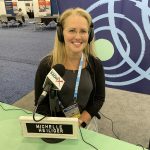
Speaking with host Jamie Gassman live from SHRM 2021 in Las Vegas, Michelle Heiliger, Director of Human Resources with Sellenriek Construction, shared key pieces of advice from learning the business, investing in the development of people, giving younger workers leadership opportunities, and much more. Workplace MVP is underwritten and presented by R3 Continuum and produced by the Minneapolis-St.Paul Studio of Business RadioX®.

This show was originally broadcast live from the 2021 SHRM Annual Conference held at the Las Vegas Convention Center in Las Vegas, Nevada.

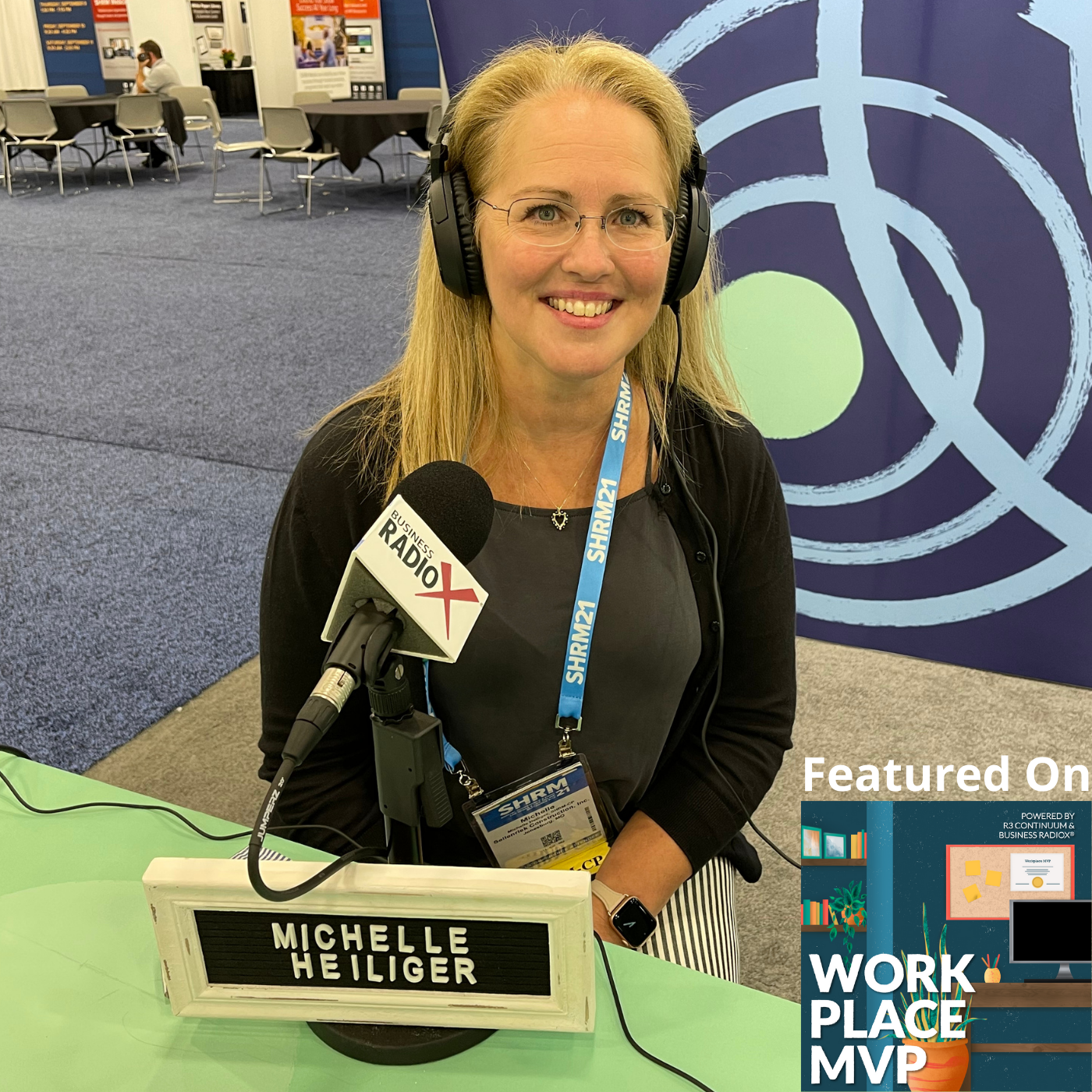
Michelle Heiliger, SHRM-CP, Director of Human Resources, Sellenriek Construction

Michelle Heiliger, SHRM-CP, Director of Human Resources, Sellenriek Construction

Michelle Heiliger is Director of Human Resources for Sellenriek Construction.

She has been in HR for twenty-three years beginning at a Taco Bell franchise. She moved to Missouri and went to work for Sellenreik Construction. She began in training and development and is now Director of Human Resources.

LinkedIn


Sellenriek Construction

Sellenriek Construction Inc. is a family-owned and operated utility construction company located in Missouri.

Robert “Bob” Sellenriek started his telephone construction company in 1979 with a vision, a used backhoe, a truck, a trencher, and 2 men. Today, Sellenriek Construction, Inc. operates from five locations and employs almost 150 people. Sellenriek Construction was founded on March 12th, 1979 by Robert “Bob” Sellenriek and his wife, Dixie. Prior to this, Bob had worked for L,P&H and Burnup & Sims for ten years. At its beginning, Sellenriek Construction’s areas of service were primarily in east-central Missouri.

Company website

About Workplace MVP

Every day, around the world, organizations of all sizes face disruptive events and situations. Within those workplaces are everyday heroes in human resources, risk management, security, business continuity, and the C-suite. They don’t call themselves heroes though. On the contrary, they simply show up every day, laboring for the well-being of employees in their care, readying the workplace for and planning responses to disruption. This show, Workplace MVP, confers on these heroes the designation they deserve, Workplace MVP (Most Valuable Professionals), and gives them the forum to tell their story. As you hear their experiences, you will learn first-hand, real-life approaches to readying the workplace, responses to crisis situations, and overcoming challenges of disruption. Visit our show archive here.

Workplace MVP Host Jamie Gassmann

Jamie Gassmann, Host, “Workplace MVP”

In addition to serving as the host to the Workplace MVP podcast, Jamie Gassmann is the Director of Marketing at R3 Continuum (R3c). Collectively, she has more than fourteen years of marketing experience. Across her tenure, she has experience working in and with various industries including banking, real estate, retail, crisis management, insurance, business continuity, and more. She holds a Bachelor of Science Degree in Mass Communications with special interest in Advertising and Public Relations and a Master of Business Administration from Paseka School of Business, Minnesota State University.

R3 Continuum

R3 Continuum is a global leader in workplace behavioral health and security solutions. R3c helps ensure the psychological and physical safety of organizations and their people in today’s ever-changing and often unpredictable world. Through their continuum of tailored solutions, including evaluations, crisis response, executive optimization, protective services, and more, they help organizations maintain and cultivate a workplace of wellbeing so that their people can thrive. Learn more about R3c at www.r3c.com.

Company website | LinkedIn | Facebook | Twitter

TRANSCRIPT

Intro: [00:00:03] Broadcasting live from the SHRM 2021 Conference at the Las Vegas Convention Center, it’s time for Workplace MVP. Brought to you by our R3 Continuum, a global leader in workplace behavioral health, crisis, and security solutions. Now, here’s your host.

Jamie Gassmann: [00:00:21] Hello, everyone. Jamie Gassmann here, your host of Workplace MVP. And we are broadcasting from SHRM 2021 here in Las Vegas, Nevada. And with me today, I have Michelle Heiliger, who is the Director of Human Resources from Sellenriek Construction. Welcome to the show.

Michelle Heiliger: [00:00:40] Thank you.

Jamie Gassmann: [00:00:41] Now, did I pronounce your name correctly?

Michelle Heiliger: [00:00:42] You did. You did great.

Jamie Gassmann: [00:00:43] Okay. Good. Now, why don’t we start out, Michelle? Tell us a little bit about your career journey and how you got into H.R. and kind of where it’s taking you.

Michelle Heiliger: [00:00:54] So, I’ve been in H.R. for, I guess, it’s been almost 23 years. I started out with a small 23 unit Taco Bell franchise. And actually started working in the office as the office manager and, basically, the franchise crew. And the owner said, “Look. I really need somebody who can do H.R. Can you go take this class?” I was like, “Why not?” And that’s sort of where it started.

Jamie Gassmann: [00:01:23] I started there, moved through multiple acquisitions, and ended my Taco Bell career with the largest franchisee in the nation. So, at that time, I was covering four states, about 150 stores. And then, I had a loss in my family and needed to not be on the road all the time. So, I moved home and was looking for a job closer to keep me local. I had a child in school still.

Michelle Heiliger: [00:01:52] So, I took a job with Sellenriek Construction, who is pretty close to my home. A family-owned organization who was looking for somebody who believed in teaching and development, who would come in and help them grow their organization. When I started with them, they had just a little over 100 employees. I’ve been there two years and we’re at 250, so huge.

Jamie Gassmann: [00:02:16] It’s grown. So, obviously, construction, fast food restaurants with franchising, two completely different worlds. What are some of the differences that you’ve had to navigate between the two as an H.R. representative?

Michelle Heiliger: [00:02:32] I think it’s more about taking knowledge, base knowledge, and applying it to a new situation. So, you’re still managing people. I’m fortunate to still work for an organization that really wants to do the best thing for their people. The challenge for me is that the motivation is completely different. You know, what motivates construction workers is completely different from what motivates Taco Bell employees. The other big difference for me is I deal far more with a rural organization now. Whereas with Taco Bell, it was more urban areas. So, their lives are different.

Michelle Heiliger: [00:03:17] You know, so from an H.R. perspective, the best way to empower your people and help understand them and help them grow is to understand their lives. And so, completely different mindset in the construction industry and the folks that I have now compared to where I was before.

Jamie Gassmann: [00:03:35] And so, you know, individuals coming into H.R. and new to that, how do you learn that? Like, how do you get to know those employees at that level? And how do you get comfortable? Because some people are afraid to learn people from their personal lives, but there’s so much power in it. So, what would you recommend to them and the benefits to that?

Michelle Heiliger: [00:03:55] So, if I were going to give advice to a new person coming into H.R., the number one thing that you have to be able to do is know your business. Because the people that are sitting at the table making the decisions, they already know their business. And in order to gain their trust and have them offer you a seat at the table is if you can have those conversations with them. You have to be able to speak on their level. You have to understand where their risks are. You have to understand where their opportunities are. And you have to be able to be their business partner.

Michelle Heiliger: [00:04:34] Otherwise, real life, you’re going to struggle in that role. You’re going to struggle getting the complete buy in from a leadership team. And by starting there and understanding the business, you know, you have to be willing to get your hands dirty to go out on a job site. Before it was, you had to show up in a restaurant, you had to show up in a restaurant at midnight. H.R. is not an 8:00 to 5:00 job in most cases. So, you have to be willing to do those things in order to be successful and to get the buy in from the team members.

Michelle Heiliger: [00:05:07] You know, laborers will call me, operators will call me, but it’s because they know I’ll show up in a shop or I’ll show up on a job site. And you know, I’m not just some girl sitting in the office. So, in order to progress in your career and get where most people want to go, you have to be able to do those things, you have to want to do them.

Jamie Gassmann: [00:05:25] Yeah. You got to show up and meet them where they’re at. Especially in a construction site, I can’t imagine. So, there’s lots of different things. What are some of the most common things from an H.R. perspective that you deal with in the construction industry?

Michelle Heiliger: [00:05:38] Well, for me right now, the biggest piece is the growth and development. In most construction organizations, they don’t invest at the foreman level. So, one thing that we did this year is we created a foreman development class. We tapped 50 guys from the field and we brought them in for four months straight. We bring them in for three days at a time. And pulling that many guys out of the field at one time is huge. But it was our commitment this year. It was our commitment to our people.

Michelle Heiliger: [00:06:12] And so, we offered them this, and it was everything from leadership to P&L. Understanding your P&L, understanding where your bottom line is, where do we actually start to make money, how do you get an extra five points on a job. Those are all things from a foreman level that these guys had never been introduced to.

Michelle Heiliger: [00:06:31] So, when you invest in your people and they see that every day, then you get their buy in. You’re opening a door for them. Like, “If I’m willing to do this and learn these things, I can get ahead.” In the average construction industry the age is 47, that’s about the median. In our company, the average age is 27. We have foremen that are 20. Because our leader, Bob Sellenriek, is a firm believer in the idea that you can be young and work hard. And they still want to grow. And they still want to support their families. And they want to do all the same things that all these other guys want to do. And if you give them that opportunity to do it, they will rise to the occasion, and we’ve seen that happen.

Jamie Gassmann: [00:07:17] Yeah. Like giving them a chance for career development that maybe they didn’t think they’d have the opportunity with.

Michelle Heiliger: [00:07:23] Yeah, for sure. And we started an apprenticeship program this year. So, the Department of Labor has tapped 25 companies across the nation to start an apprenticeship program for overhead and underground fiber installation. And that’s what we do, we deliver the internet. So, we design and build fiber networks. And we were one of the companies that were chosen.

Michelle Heiliger: [00:07:47] So, this year, we have worked really hard to develop an apprenticeship program within our organization. It’s another opportunity for our guys, “Here’s a career path for you, which is great because not only does it help them, but it holds us accountable.” You know, we’ve given them a career path here, the things that we are required to teach you, and it sets a timeline for us as well. So, it’s really been a good thing all the way around.

Jamie Gassmann: [00:08:12] And I imagine that helps from a talent recruitment perspective. Because, you know, I’ve heard a lot here at the show about how talent and acquisition has been really challenging, especially with the group resignation and everything of that nature. So, when you go out for recruiting, you know, is this something that you share with them in terms of outlining that career path? And how has that helped you in competition with other maybe construction companies that are in your area?

Michelle Heiliger: [00:08:40] For sure, it helps us. We kind of switched gears a little bit. Job fairs, per se, have always been a struggle for me. I’ve never really found that you get a lot of return on that investment. It’s a lot of time that you spend sitting at a table and you’re hoping they’ll come and talk to you. And so, we’ve sort of switched gears and we’ve created career days where we bring high school students who potentially don’t have a path, either they know they want to go to a technical school or they just don’t have a path out of high school. And we invite those schools to bring those kids to our campus.

Michelle Heiliger: [00:09:18] And we walk them through every job that we have available that you could get right out of school. And then, we tie in the apprenticeship programs. We have State Technical College out of Linn, Missouri, it’s a tech school. And we invite them to the campus the day we have it. So, we kind of create these moments, per se, for these kids to come in and talk to people who are close to their own age who they see as being successful. “Here’s where I started. Here’s what I’ve done to get here.”

Michelle Heiliger: [00:09:48] And we introduce a couple of ideas to them, first of all, that the number one thing that they have to have in order to do this job is the ability to work hard. We can train you to do anything else, but you have to bring that piece to the table.

Jamie Gassmann: [00:10:03] Bring your good attitude, positive attitude, willing to put everything out.

Michelle Heiliger: [00:10:08] Yeah, for sure. And then, we kind of challenge them as we go through the day with, “As you go to interview – like, we want you to go to interview with other people – here are questions you should ask. Like, what is my career path? What is that going to look like for me? What do I have to do to get to the next level? You know, what kind of benefits are you going to offer me?” So, we kind of make it an educational experience for them as well so that when they walk away, it kind of gives them some things to think about.

Michelle Heiliger: [00:10:32] You know, in my mind, from my perspective, if they go to another company and they ask three of those questions, probably at least one of them, the company is going to be like, “This kid is 18 years old. I can’t even believe this is happening.” So, for me, that’s a win. And then, if they remember that’s where that came from, in most cases, they’re going to come back.

Jamie Gassmann: [00:10:53] And that’s great because you’re meeting those individuals, almost like you’re connecting with the target audience you need to connect with for recruitment as opposed to waiting and hoping that that comes your way. You’re really kind of forging the path to make sure they come to you directly. Fascinating. And giving them hope, probably, too, especially if they didn’t have any direction. That’s fantastic. It sounds really creative and a great way to kind of change the script a little bit on that whole recruitment side of things.

Michelle Heiliger: [00:11:20] Yeah. Well, and that’s the boat everybody’s in right now. You’ve got to think outside of the box. If you’re not thinking outside the box on how to get there, then you’re pretty much standing still.

Jamie Gassmann: [00:11:31] Yeah. Interesting. Yeah. Great advice and great techniques. So, if somebody wanted to get a hold of you and kind of talk a little further about some of those innovative approaches you’ve implemented, how would they be able to do that?

Michelle Heiliger: [00:11:42] Well, they can reach out to Sellenriek Construction online. We’re on Facebook. We’re on LinkedIn. You know, any of those comes directly to me because I manage almost all those platforms. So, it’s really easy.

Jamie Gassmann: [00:11:57] That’s awesome. Like, it’s all me.

Michelle Heiliger: [00:12:00] So, go on to any of those things and you’re probably going to get a direct line.

Jamie Gassmann: [00:12:03] Yeah. That’s fantastic. Well, thank you so much, Michelle, for joining us on the show today. And I hope you have a great rest of your SHRM Conference experience.

Michelle Heiliger: [00:12:10] Yeah. Thank you. I appreciate it.


Tagged With: Jamie Gassmann, Michelle Heiliger, R3 Continuum, Sellenriek Construction, SHRM 2021, Workplace MVP

Workplace MVP LIVE from SHRM 2021: Katrina Branson, SBDC Louisiana, and Paula Harvey, Shulte Building Systems

September 30, 2021 by John Ray

Paula Harvey
Minneapolis St. Paul Studio
Workplace MVP LIVE from SHRM 2021: Katrina Branson, SBDC Louisiana, and Paula Harvey, Shulte Building Systems
Loading
00:00 /
RSS Feed
Share
Link
Embed

Download file

Paula Harvey

Workplace MVP LIVE from SHRM 2021: Katrina Branson, SBDC Louisiana, Paula Harvey, Shulte Building Systems

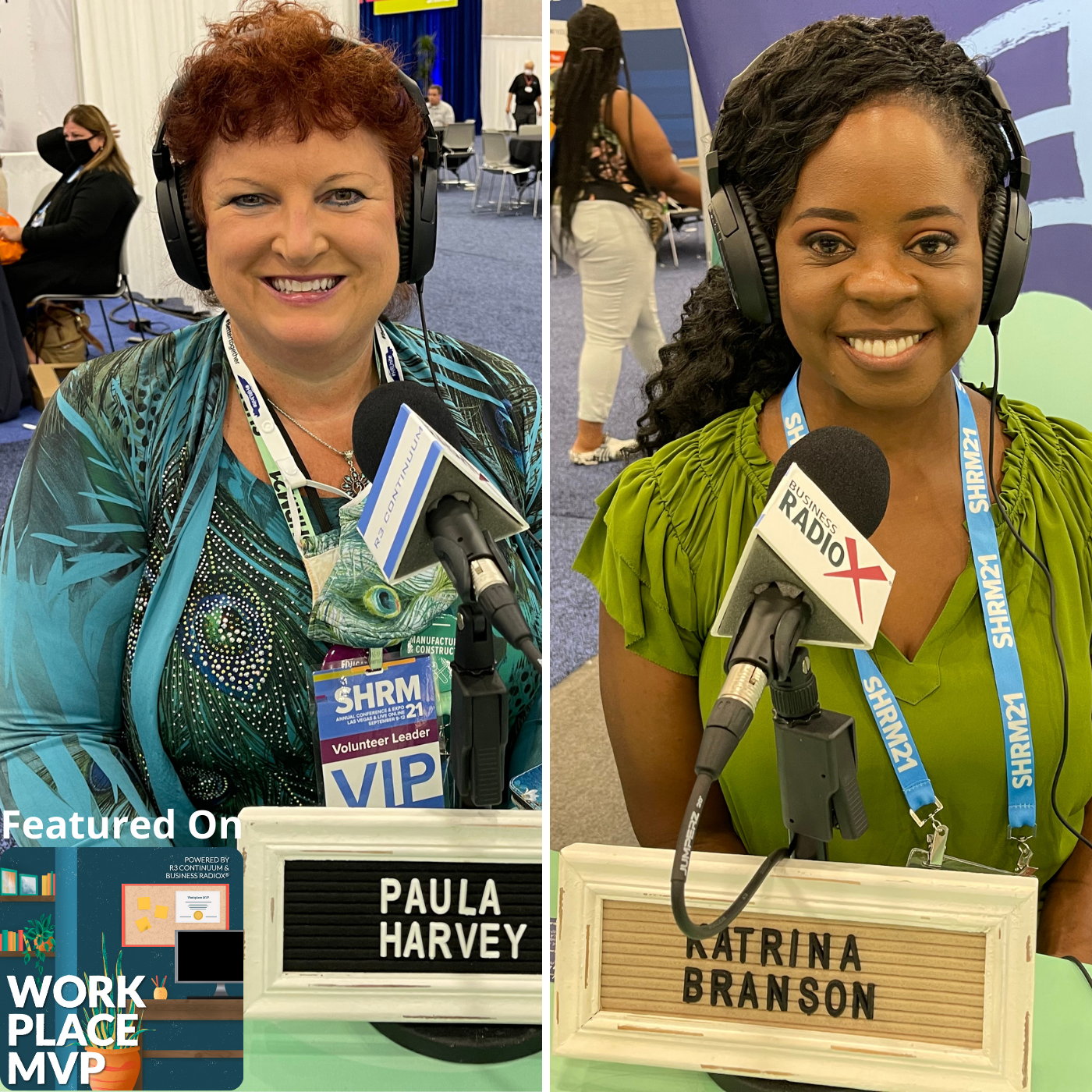
Katrina Branson with the SBDC Louisiana and Paula Harvey of Shulte Building Systems joined host Jamie Gassmann for a live show in the Workplace MVP Booth at SHRM 2021. The pandemic has created a bevy of new entrepreneurs, and Katrina talked about using her HR experience to support new business owners at the SBDC. Paula Harvey is a SHRM veteran and SHRM Foundation board member, and she discussed her career, her work with Shulte, and the SHRM Foundation. Workplace MVP is underwritten and presented by R3 Continuum and produced by the Minneapolis-St.Paul Studio of Business RadioX®.

This show was originally broadcast live from the 2021 SHRM Annual Conference held at the Las Vegas Convention Center in Las Vegas, Nevada.

Katrina Branson, Special Project Consultant, America’s Small Business Development Center Louisiana

Katrina Branson, Special Project Consultant, America’s SBDC Louisiana

Katrina Branson is Special Project Consultant for SBDC Lousiana. SBDC, funded by the SBA, is a network of centers for low or no-cost business consulting.

Katrina is also the president of her local SHRM Chapter. She has been in HR for fifteen years and part of SHRM for all of those years.

She uses her experience in human resources with business owners using the SBDC as their business grows and they hire employees.

Katrina has an MBA from Grambling State University and lives in Monroe, Louisiana.

LinkedIn

America’s SBDC Louisiana

America’s SBDC represents America’s nationwide network of Small Business Development Centers (SBDCs) – the most comprehensive small business assistance network in the United States and its territories.

SBDCs are hosted by leading universities, colleges, state economic development agencies and private partners, and funded in part by the United States Congress through a partnership with the U.S. Small Business Administration.

There are nearly 1,000 local centers available to provide no-cost business consulting and low-cost training to new and existing businesses.

Small business owners and aspiring entrepreneurs can go to their local SBDCs for FREE face-to-face business consulting and at-cost training on a variety of topics. Learn more about how SBDCs are helping local businesses start, grow and thrive.

Company website

Paula Harvey, Vice President of Human Resources and Safety, Shulte Building Systems

Paula Harvey, Vice President of Human Resources and Safety, Shulte Building Systems
Paula H. Harvey is the Vice President of Human Resources and Safety at Schulte Building Systems, Inc., a metal buildings manufacturer, in Hockley, TX. She has more than 30 years’ experience as a HR generalist in the retail, services, construction and manufacturing industries. She also owned her HR and Safety consulting firm for several years.
In addition to teaching business and leadership topics including the SHRM Learning System, Paula is an internationally recognized speaker on global and strategic business issues. Her work has been published or appeared in articles on HR topics and she co-authored three books with other HR professionals.
Paula is an active member of the Society for Human Resources Management (SHRM) and is currently serving on the board of the SHRM Foundation and the SHRM Talent Acquisition Panel. She has also served as the SE Membership Advisory Council Representative (MAC), NCSHRM State Director/President and President of Union County HR Association, and Charlotte Area SHRM. She is a member of HR Houston mentoring students on the University Liaison committee.

Paula earned her Bachelors of Business Administration in International Marketing and Operations Management from the University of Texas at Austin and her MBA with a concentration in HR Management from the University of North Carolina at Charlotte. She is a past recipient of the NCSHRM HR Professional of the Year and NCSHRM HR Humanitarian of the Year awards.

Paula lives in Cypress, TX, a suburb of Houston, with her husband, Kenneth, and their fur babies. She enjoys martial arts, church activities, spending time with her grandchildren and traveling all over the globe visiting lighthouses. She is a member of the All Fifty States Club.

LinkedIn

Shulte Building Systems

SBS is an IAS AC472 accredited manufacturer of pre-engineered metal buildings, steel framing systems and building components. We have three state-of-the-art manufacturing facilities located in Hockley, TX (HQ), Hueytown, AL and Cullman, AL. These modernized plants and a team of dedicated people help us meet the growing needs of Architects, Builders, Contractors and Erectors throughout the Midwest and Southeast United States.

Company website

About Workplace MVP

Every day, around the world, organizations of all sizes face disruptive events and situations. Within those workplaces are everyday heroes in human resources, risk management, security, business continuity, and the C-suite. They don’t call themselves heroes though. On the contrary, they simply show up every day, laboring for the well-being of employees in their care, readying the workplace for and planning responses to disruption. This show, Workplace MVP, confers on these heroes the designation they deserve, Workplace MVP (Most Valuable Professionals), and gives them the forum to tell their story. As you hear their experiences, you will learn first-hand, real-life approaches to readying the workplace, responses to crisis situations, and overcoming challenges of disruption. Visit our show archive here.

Workplace MVP Host Jamie Gassmann

Jamie Gassmann, Host, “Workplace MVP”

In addition to serving as the host to the Workplace MVP podcast, Jamie Gassmann is the Director of Marketing at R3 Continuum (R3c). Collectively, she has more than fourteen years of marketing experience. Across her tenure, she has experience working in and with various industries including banking, real estate, retail, crisis management, insurance, business continuity, and more. She holds a Bachelor of Science Degree in Mass Communications with special interest in Advertising and Public Relations and a Master of Business Administration from Paseka School of Business, Minnesota State University.

R3 Continuum

R3 Continuum is a global leader in workplace behavioral health and security solutions. R3c helps ensure the psychological and physical safety of organizations and their people in today’s ever-changing and often unpredictable world. Through their continuum of tailored solutions, including evaluations, crisis response, executive optimization, protective services, and more, they help organizations maintain and cultivate a workplace of wellbeing so that their people can thrive. Learn more about R3c at www.r3c.com.

Company website | LinkedIn | Facebook | Twitter</a

TRANSCRIPT

Intro: [00:00:03] Broadcasting live from the SHRM 2021 Conference at the Las Vegas Convention Center, it’s time for Workplace MVP. Brought to you by R3 Continuum, a global leader in workplace behavioral health, crisis, and security solutions. Now, here’s your host.

Jamie Gassmann: [00:00:21] Hello, everyone. Jamie Gassmann here, your host of Workplace MVP. And we are again broadcasting from the SHRM 2021 Conference in Las Vegas, Nevada. And, if you hear some thundering, it has started to storm, you know this 108-degree temperature. Mother Nature’s finally giving us a little bit of a cool off. But with me right now, I have two guests. I’ve got Katrina Branson, who’s a Special Project Consultant for America’s SBDC Louisiana. And I’ve got Paula Harvey, who is the VP of Human Resources for SBS Schulte Building Systems. Welcome to the show, you two.

Paula Harvey: [00:00:59] Thank you.

Katrina Branson: [00:01:01] Thank you so much for having us.

Jamie Gassmann: [00:01:02] Yeah. Really excited to talk with the both of you. So, I’m going to go ahead and kind of start with Katrina. So, Katrina, tell us a little bit about yourself, how you got into your role at SBDC, and a little bit just kind of your background.

Katrina Branson: [00:01:15] Yeah. So, I am a special project consultant with the Small Business Development Center in the State of Louisiana. We have 10 centers all across Louisiana. There is typically an SBDC center within 100 miles of where you live in the United States. We are funded by SBA, the Small Business Administration, and we are a network of centers that provides no-cost or low-cost business consulting.

Katrina Branson: [00:01:42] If you are looking to start a business and you have an existing business and you’re looking to grow a business, you come to us and we provide those resources for you. So, whether that be training, any technical assistance, we would be the person to hold your hand and walk you through the process of starting a business.

Jamie Gassmann: [00:02:02] Wow. So, talk me through, you know, kind of what are some of the normal things that are typically needed as somebody’s venturing into starting that new business.

Katrina Branson: [00:02:10] Right. We have, you know, this new renaissance of people who are wanting to start a business. You know the pandemic and COVID has really taught people that they can do things on their own now. So, we have an influx of serial entrepreneurs who are coming to us for assistance.

Katrina Branson: [00:02:29] When they come to us, typically one of the main things that we want to share with our entrepreneurs is to make sure that they have enough cash flow. That’s important when you’re starting a business, not just, you know, starting that business but making sure that you can sustain yourself within the next three to five years, so working with those small businesses, making sure that they have the cash flow in the financial projections that they need for where they’re going. So, we walk them through that process and detail those things that they are going to need when they start their business. So, we do that.

Katrina Branson: [00:03:02] We also offer a series or a plethora of training programs for how to continue to operate your business, whether that be with QuickBooks software or training that you’re going to need. So, various things like that are kind of the hub of what we are able to offer those small businesses.

Jamie Gassmann: [00:03:23] Wow. So, you’re here at the SHRM Conference. So, is H.R. kind of learning about, like, if they grow big enough that they’ve got a staff? Is that part of some of the support that you provide to them?

Katrina Branson: [00:03:34] Very good question. So, I wear many hats. I am the current president of our local SHRM chapter. So, I’ve been in human resources for about 15 years and SHRM has been a great addition to my career and my professional development and growth. I’ve been a member of SHRM for all of those 15 years that I’ve been in H.R.

Katrina Branson: [00:03:59] But being the leader of our chapter, kind of, is what brings me here. I started my career in human resources and then just kind of progressed with SBDC. So, being here allows me to not only become and continue to be well versed in the field of H.R. but to really help those small and medium-sized businesses with what they are dealing with in human resources and employee retention, especially during these times, where you’ve got those who are wanting to continue to work from home and be offered those hybrid options to be able to work from home and in the office. So, having the network and the support here at the conference is really able to allow me to take back to my hometown in the State of Louisiana, kind of what the industry is saying in those areas.

Jamie Gassmann: [00:04:55] Fascinating. So, it’s kind of almost you’re using it for the chapter but also I got to imagine some of those business owners, you know, once they get that business up and going, and do they come back downstream to kind of seek out additional help if like, okay, I’ve gotten to this point, like, and I’ve gotten out of this hundred employees, what do I do.

Katrina Branson: [00:05:14] Absolutely, absolutely. We don’t just let them go when they start their business. We are there to help them continue to grow and look at different strategies on how they can, you know, not just work in their business but work for their business. You know, we want to allow them to be able to grow and hire more employees so they can be more hands-off to really develop that strategic role that they need to be as a CEO.

Jamie Gassmann: [00:05:38] Wonderful. And so, being at the sessions, what has been some of your best takeaways that you can’t get, you know wait to get back and share with those that you kind of bring that information back to?

Katrina Branson: [00:05:49] Right. I think one of the important things really when I talk about remote workforce is really, you know, how do we retain our employees now? I mean, we have to really look at different ways that we are going to be able to support our employees. If we allow them to work remotely, how do we support them mentally when you’re sitting at home and you’re, you know, whether that be you have someone who is a mother or someone who works alone at home. But being able to support them mentally is going to be a challenge because you’re sitting at a desk and you’re sitting there all day with no human interaction if you’re working from home. So, there are just so many things that we need to change and look at and adapt to with this new dynamic of remote workforce.

Jamie Gassmann: [00:06:37] And, SHRM, I know, has a number of different sessions that are focused around this, so you’re probably getting some great information that you can take back.

Katrina Branson: [00:06:44] I am. I am.

Jamie Gassmann: [00:06:44] Wonderful.

Katrina Branson: [00:06:44] Absolutely, yes, yes.

Jamie Gassmann: [00:06:45] So, we’re going to move to our next guest. We’ve got Paula Harvey, VP of Human Resources with Schulte Building Systems. Welcome, Paula.

Paula Harvey: [00:06:55] Yeah. Thank you. I’m really glad to be here.

Jamie Gassmann: [00:06:57] So, tell us a little bit about your career journey and how you got into H.R. and kind of, you know, how you kind of climb the ranks into the VP role?

Paula Harvey: [00:07:05] Okay. Well, I have been in human resources 34 years, so quite a while. Graduated from UT Austin, and my degree in international business and operations management took me to my first role as a recruiter. I’ve worked in retail. I’ve worked in manufacturing. I had my H.R. consulting business for 12 years and was very successful with it and then sold it to go back in-house that I’ve done for the last six years and been with Schulte Building Systems. They are a metal buildings manufacturer.

Paula Harvey: [00:07:37] But on the H.R. side, to even get some more, I am, assure me I think for life now, I’m on the SHRM Foundation’s board. I’m a board member for the SHRM Foundation. I’ve been a chapter president of two chapters. I started a chapter. I’ve been the State Council Director for North Carolina for three and a half years. And then, I was then elected to the Membership Advisory Council for SHRM for two years. So, I’ve been doing SHRM volunteer work for a very, very long time and absolutely love spending time, helping people, and getting people involved in our wonderful profession of human resources.

Paula Harvey: [00:08:18] So, I’m currently at this conference as a SHRM 21 influencer. So, I’m known as one of the Peacock sisters, and so I’m here supporting one of my dear friends, who is, this is her very first SHRM Conference and she is a speaker. And so, she’s speaking at 4 o’clock today, and her name is Tina Marie Wohlfield. So, she’s excited. She’s going to be talking about how to get better collaboration in the workplace.

Jamie Gassmann: [00:08:44] Oh, such a powerful topic. But, you know, and it makes such a difference in that workplace.

Paula Harvey: [00:08:49] Yeah.

Jamie Gassmann: [00:08:50] So, great. So, Peacock sisters, that’s great. Is that like a –

Paula Harvey: [00:08:54] There’s three of us.

Jamie Gassmann: [00:08:55] There’s three of you.

Paula Harvey: [00:08:55] So, Melanie Peacock is the other one.

Jamie Gassmann: [00:08:58] Okay.

Paula Harvey: [00:08:58] She is in Canada. And, because of what’s going on with the COVID, she could not come here. She was supposed to be speaking. I often speak at the conferences too. But just this year, I’m too busy with the SHRM Foundation and other things, so. But, yeah, we miss Melanie, our third member of the #peacocksisters. So, we’re pretty well known on Twitter and in the #hrcommunity for all our fun that we have with our bright colors, so.

Jamie Gassmann: [00:09:27] I love that. I love that. Definitely have, you know, builds that collaborative spirit.

Paula Harvey: [00:09:34] Absolutely.

Jamie Gassmann: [00:09:34] And, you know, kind of finding people that you can kind of have as like lifelong friends almost within that industry.

Paula Harvey: [00:09:38] You know, Tina Marie’s in Detroit, I’m in Houston, and Melanie’s in Calgary, and we are on a text feed all day long, talking back and forth to each other. And, now, I have three best, you know, two best friends for life, so the three of us.

Paula Harvey: [00:09:55] And, it’s just, you know, and if it hadn’t been for SHRM and all the things that they’ve been doing and the H.R. social hour group, that’s how we became friends. Melanie spoke at her first conference in 2017 and we’ve been friends since then and then now Tina Marie here, and Tina Marie and I met a few years ago because she was posting about H.R. and peacock. So, it’s amazing how you can make friendships over Twitter and then they grow into lifelong friendships.

Jamie Gassmann: [00:10:25] Yeah. That’s fascinating, you know. And, that’s what kind of the beauty of some of these conferences, which is nice, that they were able to have it back in person again this year to kind of, you know, that networking capacity. So, from your, you know, being in the industry as long as you’ve had, how do conferences like this help in building some of that networking, some of that take-home education, you know? And, I know you’ve got the SHRM Foundation. There’s lots of great information within them, you know within that foundation as well. You know, kind of share a little bit about that because –

Paula Harvey: [00:10:54] Well, this is my 20th SHRM Conference. So, I actually wrote a blog on it so you can find it on the SHRM website and find it. I’ve posted it through Twitter too. And, it’s amazing, all the different places and all the different friends and all the different things.

Paula Harvey: [00:11:10] But I think out of all of them, besides it being a family affair because my daughter’s also in H.R., so this is her 9th conference. And so, she’s, you know, it’s just helped to bring some friendships and allow me to do things that I would have never done otherwise. I’ve been an instructor for the certifications since 2001 and teach the SHRM CP and SCP prep courses for Rice University as my side gig. And, it’s really, you know, it’s given me a chance to do things I would have never done otherwise and to be an expert in my field.

Jamie Gassmann: [00:11:45] Yeah. That’s wonderful. So, and being an expert in the field with all of that background that you have, you know what have been some of the trending that you’ve seen that maybe even pre-COVID that maybe got heightened, you know, post-COVID?

Paula Harvey: [00:11:59] We were already starting to see a talent war and that has been coming on. But now it’s a talent tsunami, as we call it, and everything else going on. It is. And, with the great resignation going on, I see it in my own company that we had had really pretty decent turnover because we pride ourselves as being an employer of choice.

Paula Harvey: [00:12:19] But we’ve already passed just recently our normal yearly turnover is, you know, happened in early August. And, I mean, it’s just, especially we hire manufacturing people, welders and fitters and, you know, machine operators, and they can pick and choose their jobs. And, if they just don’t go for 50 cents more now, that they wouldn’t do that. And, we had people, you know, 15 years with the company and making those changes.

Paula Harvey: [00:12:49] So, talent acquisition. I serve on SHRM’s Talent Acquisition Panel and have been on it for several years now as one of the experts in talent acquisition. And, even it’s challenging me who does this and really, you know, gets to talk about how to do it right. It’s challenging me to do it right just because it is such a change.

Paula Harvey: [00:13:10] And then, the other thing is just all the stuff, of course, on DEAI and B, diversity, equity, inclusion, and belonging, for those of you not aware of those letters. But that’s been a challenge since all the stuff from George Floyd and, you know, just how to react and say the right things, to do the right things and be understanding and supportive of all our employees, all of our employees, because we have a very diverse mix in my organization and just supporting that and being, you know, a leader of that is important.

Paula Harvey: [00:13:43] And then, I would say, of course, I’ve become the COVID queen. And, I never thought I would ever learn how to procure masks, hand sanitizer, you know, cleaning supplies, and all those things that I’ve had to do over the last year and a half. And, you know, unfortunately, we’ve had several people test positive and I’ve had three deaths. And so, having to deal with the family and the tragedy of that. And it’s hard and the mental health that it’s hitting for us H.R. people, to be honest, but also with the mental health that’s hitting for our employees. And, I think Michael Phelps talking this morning was such an important and impactful conversation.

Paula Harvey: [00:14:23] And, we are moving with the SHRM Foundation and we have sponsors for this and there’s going to be some education that people can get on how to be a supporter of mental health and understand how to deal with mental health in the workplace.

Jamie Gassmann: [00:14:38] Yeah. And, you brought up a lot of great, you know, kind of challenges that workplaces across, you know, really the globe almost are experiencing. You know, if an employer – you know, from your perspective, if an employer hasn’t been paying attention to those three things, you know, what would you say to them from? I mean, obviously from a consulting role that you’ve had before, but knowing and experiencing it yourself and your current role, what would you say to them?

Paula Harvey: [00:15:03] I would say, you know, each company is different. I work for an essential employer. That means people talk to me about, “Oh yeah, well, I’ve been working and I’m Zoom fatigued and working from home,” and I look at them, I wish. I have been to work every single day. I haven’t been working out of my home. Instead, I’ve had to be – someone has to be there and, as an executive, I need to be there and to support. I’ve let some of my staff work from home, but it’s just a handful of the staff that could do that in a manufacturing setting.

Paula Harvey: [00:15:33] So, realizing that everybody’s different and we’ve all handled this last, you know, two years very differently and had different experiences. But, you know, being respectful of that and caring about that and realizing we all have different things that have happened to us, but it’s been a shell shock to everyone.

Jamie Gassmann: [00:15:50] Yeah.

Paula Harvey: [00:15:51] And just being supportive of everyone in the H.R. industry and knowing what they’ve gone through and sharing our stories and being, you know, part of this greater H.R. community is important.

Paula Harvey: [00:16:05] I really have loved that these – one of my friends runs this thing called a coffee talkie, and so it’s called the H.R. Unite Group. And so, that’s Tina Marie, actually. She runs this out of – and so this is virtually done and you have this group that you meet with once a month and just talk about what’s going on.

Paula Harvey: [00:16:25] There’s another group that I know runs an H.R. Rebels Group that I’m in, and they meet every Wednesday at 2:00. And, having those people just to talk with all over the place is just wonderful because you’re all going through a lot of the same things but then different things and then giving better perspective by, you know, realizing this is a greater size group. We have one gentleman who’s in our Rebels Group who calls out of Spain. He’s on there from Spain all the time. So, it’s just amazing, you know, and you get friends from all over the world if you’re willing to open up your life and, you know, participate. I think that’s the biggest thing. You have to participate.

Jamie Gassmann: [00:17:04] Yeah. That’s been a common theme at this show that I’ve heard. There’s been several things that have been standout, and one of them is, you know, start communicating, getting to know people, and asking questions. And, you know, and everybody has a different experience. But there are similarities in some of those experiences, but you can learn from each other as well. So, that’s very powerful. And, I guess, you know, with an employer like, you know, talk to your people too, like how are they feeling and what’s going on?

Jamie Gassmann: [00:17:28] So, from your H.R. perspective, you know, and I know you’re an influencer here at the show and you’re working with the foundation. Can you talk a little bit about what the foundation does and how you’re focused in some of those areas you’ve mentioned?

Paula Harvey: [00:17:42] So, we are a non-profit entity. We are really like, you know, we’re the foundation for SHRM. So, you can you could use the word charity also. But, you know, people, mainly H.R. folks, donate money for research, for scholarships, for all sorts of wonderful things that we’re doing. And, you can find from the regular shrm.org website, down at the bottom, click on the thing to go to the SHRM Foundation. You can see all the wonderful things that we’re involved in. We’ve done projects on aging. We’ve done projects on getting veterans jobs. We’ve been helping with projects on the formerly incarcerated and having opportunities for them. The more recent ones have been on disability and understanding what it means for that and now this mental health is our next big project, but that we keep supporting the older projects, too. So, we want people to, you know, because these are all topics that are important and that we’re dealing with with our employees in the workplace.

Jamie Gassmann: [00:18:46] Wonderful. So, I’m going to leave with one last question for both of you. You know, what is your passion with H.R.? What makes you wake up in the morning excited to do what you do in that H.R. role? And, I’ll go ahead and start with you, Paula.

Paula Harvey: [00:19:01] I think making a difference in people’s lives. That’s probably the biggest thing. And, I actually will pull it all the way back as someone was asking about this to me recently and I said, I love talent acquisition. Because that’s kind of the foundation of what H.R. starts with is finding that amazing, maybe diamond in the rough, person that you just want you to take a chance on them and giving them an opportunity to come work at your organization and mold them and see them grow into making an amazing employee and, you know, get promotions and things like that. To me, that just makes me feel so good in my heart.

Jamie Gassmann: [00:19:39] Yeah. You made a difference in someone’s life.

Paula Harvey: [00:19:41] Right.

Jamie Gassmann: [00:19:42] Yeah, amazing. How about for you?

Katrina Branson: [00:19:44] Yeah. I’m going to – this is going to sound really cliché-ish, but it’s really the people. You know, I am a real proponent of diversity, and having the gift to be able to talk to and train and really speak to a diverse group of people from the lowest level employee to the highest level is really a gift that’s been given to me. And, to be able to share that in a space of human resources is really rewarding for me. So, I’m really happy to see that. We now have this conversation with, [inaudible], and how important that is. So, being able to really hone in and really stress the importance of the differences in people is really something that is really rewarding for me.

Jamie Gassmann: [00:20:34] Awesome. And, it’s rewarding the organization too, the different perspectives they can bring. Awesome.

Katrina Branson: [00:20:39] Absolutely.

Jamie Gassmann: [00:20:40] Well, thank you both for being on the show. If somebody wanted to get a hold of you, how would they go about doing that? Paula, why don’t you share how they can get in touch with you.

Paula Harvey: [00:20:47] Find me on Twitter, @paula, number 4, Harvey, so paula4harvey.

Jamie Gassmann: [00:20:52] Great. How about for you?

Katrina Branson: [00:20:54] I’m on all of, pretty much all of the social media channels. I spend most of my time on Facebook and also Instagram. Our center is also on Facebook as well, so you can follow us there as well.

Jamie Gassmann: [00:21:10] So, that would be the America’s SBDC Louisiana, and that’s Katrina Branson, so just to kind of – and then Paula Harvey, I know you shared your name. I just want to make sure.

Paula Harvey: [00:21:19] Thank you.

Jamie Gassmann: [00:21:20] Well, thank you both so much for joining us here. It’s been so great to chat with you. And, if you are listening in and you are in the SHRM Expo area, stop by Booth 4076 and visit our sponsor, R3 Continuum.


Tagged With: Human Resources, Jamie Gassmann, Katrina Harvey, Paula Harvey, R3 Continuum, SBDC Louisiana, SHRM 2021, SHRM Foundation, Workplace MVP

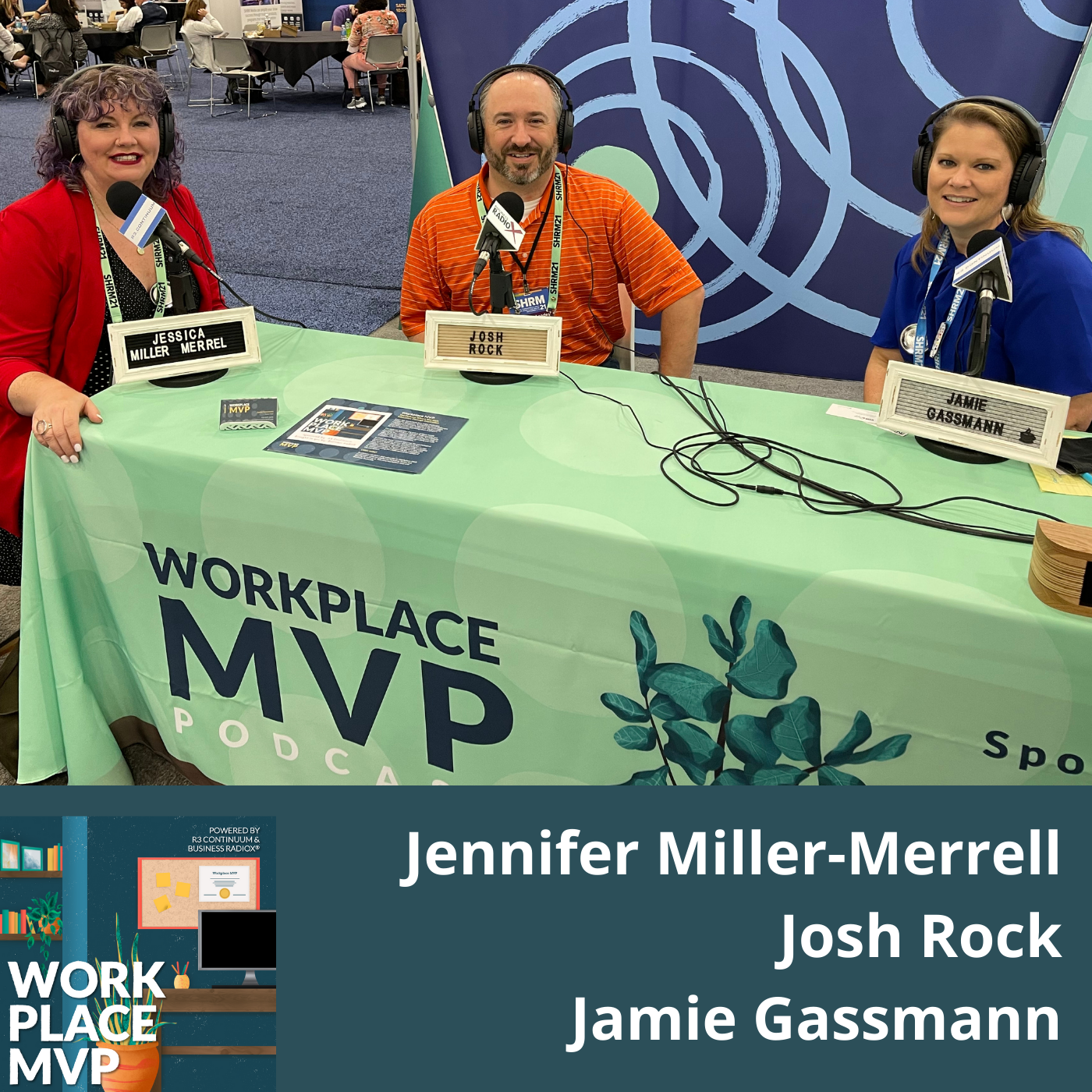
Workplace MVP LIVE from SHRM 2021: Josh Rock, Nuss Truck Group, and Jessica Miller-Merrell, Workology

September 22, 2021 by John Ray

Josh Rock
Minneapolis St. Paul Studio
Workplace MVP LIVE from SHRM 2021: Josh Rock, Nuss Truck Group, and Jessica Miller-Merrell, Workology
Loading
00:00 /
RSS Feed
Share
Link
Embed

Download file

Josh Rock

Workplace MVP LIVE from SHRM 2021:  Josh Rock, Nuss Truck Group, and Jessica Miller-Merrell, Workology

Josh Rock, Talent Acquisition Manager at Nuss Truck Group, and Jessica Miller-Merrell, CEO of Workology, had a lively conversation with host Jamie Gassmann about connecting with talent, going where the talent is, global HR issues as the workforce is remote, the Workology podcast, and much more. Workplace MVP is underwritten and presented by R3 Continuum and produced by the Minneapolis-St.Paul Studio of Business RadioX®.

This show was originally broadcast live from the 2021 SHRM Annual Conference held at the Las Vegas Convention Center in Las Vegas, Nevada.

Josh Rock, Talent Acquisition Manager at Nuss Truck Group Inc.

Josh Rock, Talent Acquisition Manager at Nuss Truck Group Inc.

After nearly a decade in recruiting with healthcare companies, Josh Rock moved the Nuss Truck Group as their Talent Acquisition Manager.

Josh holds a degree from the University of Minnesota-Duluth and is an active alum. He is the recipient of the 2001 Sieur du Luth Award Winner, given for the highest level of involvement and service to the university community.

LinkedIn | Twitter

Nuss Truck Group

With eight locations in the midwest, Nuss Truck & Equipment is proud to carry the best lines of trucks, trailers, and construction equipment. Their sales and service teams are highly trained to deliver and maintain the right truck or machine for your application to ensure maximum productivity and efficiency. You and your business can rely on Nuss.

Company website | LinkedIn

Jessica Miller-Merrell, SHRM-SCP, SPHR, CEO & Founder, Workology

Jessica Miller-Merrell, SHRM-SCP, SPHR, CEO & Founder, Workology

Jessica Miller-Merrell is the Founder of Workology, a workplace resource for HR, recruiting professionals and business leaders. The site was listed twice as a top 75 career resource by Forbes Magazine. Jessica is the president and CEO of Xceptional HR, a human capital strategy and consulting agency, and a published author of Tweet This! Jessica is listed by Forbes as a top 50 social media power user. Because of vast industry expertise and knowledge, Jessica’s professional opinions and expertise are sought after and sourced by publications and media including: the Economist, Forbes, CIO Magazine, CBS, Entrepreneur Magazine, and SHRM’s HR Magazine.

LinkedIn | Facebook | Twitter | Instagram

Workology

Workology is a destination for the disruptive workplace leader discussing trends, tools, and case studies for HR, recruiting professionals, and business leaders. The site and community are designed for those who are tired of the status quo and are compelled to change and transform not just their organization but the world of work and the human capital industry. If you are interested in contributing, please click here. If you are interested in advertising, click here.

We reach a half-million HR and Recruiting leaders each month with our website, newsletters, and podcasts. Workology and its community are founded and managed by XceptionalHR Consulting. XceptionalHR Consulting is a workplace consulting company focused on developing resources, training, and content for HR, Recruiting, and Workplace Leaders.

Workology and Xceptional HR Consulting is led by our Founder and Chief Innovation Officer, Jessica Miller-Merrell. She’s available for speaking, consulting, writing and research opportunities. If you are interested in advertising opportunities, visit our advertising page.

Company website | LinkedIn | Twitter | Instagram

About Workplace MVP

Every day, around the world, organizations of all sizes face disruptive events and situations. Within those workplaces are everyday heroes in human resources, risk management, security, business continuity, and the C-suite. They don’t call themselves heroes though. On the contrary, they simply show up every day, laboring for the well-being of employees in their care, readying the workplace for and planning responses to disruption. This show, Workplace MVP, confers on these heroes the designation they deserve, Workplace MVP (Most Valuable Professionals), and gives them the forum to tell their story. As you hear their experiences, you will learn first-hand, real-life approaches to readying the workplace, responses to crisis situations, and overcoming challenges of disruption. Visit our show archive here.

Workplace MVP Host Jamie Gassmann

Jamie Gassmann, Host, “Workplace MVP”

In addition to serving as the host to the Workplace MVP podcast, Jamie Gassmann is the Director of Marketing at R3 Continuum (R3c). Collectively, she has more than fourteen years of marketing experience. Across her tenure, she has experience working in and with various industries including banking, real estate, retail, crisis management, insurance, business continuity, and more. She holds a Bachelor of Science Degree in Mass Communications with special interest in Advertising and Public Relations and a Master of Business Administration from Paseka School of Business, Minnesota State University.

R3 Continuum

R3 Continuum is a global leader in workplace behavioral health and security solutions. R3c helps ensure the psychological and physical safety of organizations and their people in today’s ever-changing and often unpredictable world. Through their continuum of tailored solutions, including evaluations, crisis response, executive optimization, protective services, and more, they help organizations maintain and cultivate a workplace of wellbeing so that their people can thrive. Learn more about R3c at www.r3c.com.

Company website | LinkedIn | Facebook | Twitter

TRANSCRIPT

Intro: [00:00:03] Broadcasting live from the SHRM 2021 Conference at the Las Vegas Convention Center, it’s time for Workplace MVP. Brought to you by R3 Continuum, a global leader in workplace behavioral health, crisis, and, security solutions. Now, here’s your host.

Jamie Gassmann: [00:00:17] Hey, everyone. Jamie Gassmann here, your host of Workplace MVP. And we are broadcasting our episode today from the SHRM 2021 Conference in Las Vegas, Nevada. And I have two wonderful guests with me today. I’ve got Josh Rock from Truck & Equipment. He’s the Talent Acquisition Manager. And from Workology, I have Jessica Miller- Merrell, Founder and Chief Innovation Officer. Welcome to the show you two.

Josh Rock: [00:00:48] Thanks, Jamie.

Jessica Miller- Merrell: [00:00:49] Awesome to be here.

Jamie Gassmann: [00:00:50] So, I’m going to start out by talking with Josh, because I know you’ve kind of waited a little bit to connect with us on our show.

Josh Rock: [00:00:57] We’ve been chatting here and hanging out, and talking with your guys online via Twitter, you know, here at the show, just having a good time.

Jamie Gassmann: [00:01:02] Awesome. So, tell us a little bit about your background, how you got into talent acquisition, and just share with our audience a little bit more about you.

Josh Rock: [00:01:10] So, if any of your listeners are familiar with the cartoon Family Circus, where the kids would walk around a lawn and the whole yard and they have the dotted line, that’s how I fell into H.R. I started going to school for law, of all things. I fell into advertising for 16 years. And through that, I did ten years of recruitment advertising and trying to be a trusted advisor to H.R. professionals across the country and across the globe. And left that organization and went to work for my clients to teach them what I was doing outside but then within their walls, give them back control, back their budget, back to the power, instead of putting it in the hands of agencies. And I’ve been doing it ever since.

Josh Rock: [00:01:47] I went to work for a couple of health care organizations. I recently left a 36,000 employee health care group out of Minneapolis to join a truck dealership of nine locations, with now almost 400 employees. So, a huge paradigm shift, not only in the industry, but employee size, to lead their talent acquisition efforts and just have a good time every day.

Jamie Gassmann: [00:02:08] Yeah. Wow. And, obviously, now, hiring concerns and issues, how has that impacted the truck industry that you’re in?

Josh Rock: [00:02:17] You know, there’s impact. There’s not enough students going into the heavy duty diesel programs. And so, connecting with the schools, helping build curriculum to make that a more profitable venture for not only the schools, but the students, obviously. So, that way, we can continue to drive great business for us and then our customers. So, it’s going full cycle. It’s not just opening up a requisition, posting it on Indeed or any other partner just to wait for candidates to come in. We’ve had to be more holistic in our approach of finding, acquiring, and hiring great talent.

Jamie Gassmann: [00:02:51] Right. And so, talk to me a little bit about that approach. Are you going out to actual universities? You live in the St. Cloud area, I know there’s a big university in St. Cloud. I know I’ve been talking to you a little bit already. I know you’re a big Duluth.

Josh Rock: [00:03:06] Go Bulldogs.

Jessica Miller- Merrell: [00:03:07] Go bulldogs.

Josh Rock: [00:03:08] Shane here from R3, he’s also a UMD Bulldog. We connected on Twitter because of our alumni association with UMD. So, yeah, I mean, I actively go out. Even in a post-pandemic world, I’m out visiting colleges already. I was down in Dallas recently. I was down in Denver. I’m now here going out and talking to students about how their careers could go well in diesel truck repair. And, you know, finding great ways about, not only who we are, what we do, and how they can grow with us, and set themselves up and maybe their families up for great success through careers in this venture. So, it’s fun.

Jamie Gassmann: [00:03:45] Yeah. Absolutely. And that’s such an impressionable age, right? I’m guessing you’re really looking at all students. But, you know, when you’ve got somebody who’s going through their program and they’re trying to figure out what they want to be when they get older, you can really have an impact. So, if another employer was looking at taking that same approach, you know, what are some kind of your advice, if you will, on how you would approach that?

Josh Rock: [00:04:13] You know, for me, it’s all about engagement. And engagement comes in different forms. Through active questioning of the people that you’re talking to, whether it’s a student or a student’s parents, about where do they want to take their career, where do they want to go, what do they want to achieve. You know, those things, layering those questions in to create a picture, a painting, of what that could be. And then, finding your organization – like mine here at Nuss – where that resonates. For some, it’s time off. For some, it’s paid. For some, it’s advancement.

Josh Rock: [00:04:46] You’re going to find those threads just in genuine conversation and questions with those students or alumni from the schools or parents looking at how do I help set my child up for a successful career. And then, just finding those threads. It doesn’t have to be, “Hey, we’re offering a $10,000 sign on bonus and you can start tomorrow.” It’s more about what do you want? And then, finding that lane of the value proposition from your organization and going through that.

Jamie Gassmann: [00:05:15] Yeah. Well, and it’s interesting you mentioned, like, finding that lane and kind of having that engagement opportunity. Because, you know, I’ve read job descriptions over my career. I think we all have.

Josh Rock: [00:05:25] Unfortunately.

Jamie Gassmann: [00:05:25] And sometimes you’re left going, “I don’t get it. I don’t know. Maybe I like this job, but there was one word that kind of threw me off.” So, it’s almost like how can that employer step out of that job description. How can they empower themselves to take that different approach? What’s worked for you?

Josh Rock: [00:05:43] So, a great story. I had a local – or, actually, a national job board reach out to me and say,” Hey Josh. You need to invite people through our portal to apply for your positions.” And I told him he was wrong. Straight up I said, “You know what? Actually, what I need to do is when somebody voices interest in one of our jobs through your portal, I’m going to call them. I’m going to text them and say, ‘Hey, you know what? I found your information. I want to talk about where your career is going and what we can do together.'”

Josh Rock: [00:06:14] Because my job is not a gatekeeper. There’s a lot of recruiters, unfortunately, in the United States that act like gatekeepers. Actually, what you should be doing is being dance partners. Helping them navigate to their career within your organization. And so, instead, what I told this vendor, I said, “What I’m going to do is you guys are going to bring me information. I’m going to digest that information. I’m going to actively reach out to them on my own, through my own information, my own tools and technology and say, ‘Hey, I’m interested in you because. Now, I want you to join me because.'” Instead of saying, “Hey, do this for me, do this for me.” Because they’re getting the information. They’re holding the power. No.

Jamie Gassmann: [00:06:52] No. I need to hold the power, right?

Josh Rock: [00:06:53] Exactly. Exactly. I’m the customer. I need to do what works for me. Not what works for you and your technology. And what you can then put on your advertisement to say you had this many candidates to customers. That doesn’t matter to me. What matters to me is that Paul Alexander from Sheboygan, Wisconsin applied for my position, has an interest in my role, was in the U.S. Military, now wants to come work for me. I want to get him on the phone as quickly as I can and find a way that maybe this is an opportunity for him to drive his career forward.

Jamie Gassmann: [00:07:24] And so, you’re very active on social media with the Twitter, because that’s how you found us.

Josh Rock: [00:07:30] Kind of. Yeah.

Jamie Gassmann: [00:07:31] So, talk to me how do you leverage Twitter or how do you leverage LinkedIn? How do you empower even Facebook, potentially, I’m guessing, could be a really good avenue for you? How do you leverage that in a way that’s helped you to get good candidates to reach out to?

Josh Rock: [00:07:45] So, in my current industry in transportation, I’m not going to find a ton of diesel technicians on Twitter. It’s just not going to happen. I can do it on Facebook. I can do searches by putting in diesel technology. I can look for trucking. I can do keywords to find people that have similar similarities or have posted something about it, and then reach out to them that way.

Josh Rock: [00:08:07] In my previous industry in health care, I could do it much easier. Because I could go on to Pinterest and find a female in Atlanta, Georgia looking at recipes for something. But she also posted on her Pinterest wall scrubs that she really liked.

Jamie Gassmann: [00:08:25] Interesting.

Josh Rock: [00:08:25] And I can say, “Oh, I see you’re a nurse. We’ve got opportunities here in Minnesota. What’s your specialty? Are you an ED? Are you in transplant?” Strike up a conversation, say, “Hey, you know what? I work for this organization. We have this many openings. I’ve got these many hospitals, depending upon the kind of community you want to be in.” I can do those types of things that way.

Josh Rock: [00:08:40] You can do a lot of different things on social channels based on what somebody is interested in. It doesn’t have to be just the resume on LinkedIn or that they’re looking for a job that they posted on Twitter. That stuff’s easy. You can do that really quickly. But sometimes it’s just as simple as finding that moment in time post about what they liked and then find the correlations. It takes time. It’s sourcing. It’s active sourcing. But you can find really good talent.

Jamie Gassmann: [00:09:07] Yeah. And sometimes going out of the script of, like, this role helps you to kind of get that engagement that you’ve been mentioning.

Josh Rock: [00:09:15] Well, you talked about social media so a great story about SHRM. We’re sitting here in Las Vegas. We all flew here Tuesday, Wednesday, Thursday. And I’m on the flight from Minneapolis here and I’m sitting by four people in my row. I’m like, “Hey, are any of you guys going to the SHRM Conference?” All four of them said yes. I said, “Anybody staying at Resorts World, the new Conrad Hotel?” It’s where I’m staying. By the way, if you haven’t been to Las Vegas’s brand new hotel, it’s fantastic. There’s their plug. I love those guys. It’s good.

Josh Rock: [00:09:45] But this young man, his name is Ethan. He’s from Minneapolis. He was sitting with his mom. And they’re like, “Yeah. We’re staying there too.” I said, Well, why don’t we ride share? Save each other some money. Maybe we could put it on gambling, or food, or something like that later on.” Come to find out he’s a senior at a local college back in Minnesota looking to, you know, build upon his career. And I said, “Are you on social media?” “Well, yeah. I’m on Twitter.” I said, “Well, here. We’re going to do something while we’re in the car.”

Josh Rock: [00:10:08] So, I took a photo, tagged him in a post. I said, “Hey, all my SHRM social influencers, I want you to meet Ethan. All H.R. leaders here at SHRM, I want you to meet Ethan. He’s looking to start his career in the next year. Let’s connect with him, and help build him, and get to network with him, and connect with him.” He has over 50 followers now. When I talked to him, he was at 18 on the flight. He’s over 50. And these are all H.R. leaders. These are people that could offer him an opportunity, could give him tips towards connecting with other leaders. It’s endless.

Josh Rock: [00:10:36] We’re walking through the hall and I run into Ethan. We’re sitting with the other students. I said, “Hey, Ethan. How’s it going for you so far?” “It’s great. I met these people. I got invited to these dinners. I’m going to this social. All because you shared who I am at this conference.”

Josh Rock: [00:10:50] And there’s this young lady from University of Tennessee, Knoxville, sitting behind me. Her name is Stephanie. And I said, “Stephanie, can we blow you up on Twitter too?” “Sure.” The next thing you know, people are following Stephanie. Her dad followed me on Twitter yesterday and said, “Thanks for expanding my daughter’s networking world.” These are the things that we do.

Jamie Gassmann: [00:11:09] I love that.

Josh Rock: [00:11:09] You know, it may not benefit me as a recruiter at Nuss. But if I can give back, I’m happy to do it. And that’s part of the reason of one of the things we talked about earlier before coming on the show was #JobHuntChat. We’ve been doing a job advice chat on Twitter for over 11 years every Monday night. I don’t do it because I’m getting paid off it. I do it because I enjoy it. I love to give back, because if one little bit allows somebody to leverage their career, provide for themselves or their family, good karma for the day.

Jamie Gassmann: [00:11:36] Yeah. Absolutely. And engagement is the key. Not being afraid to strike up that conversation and start just, you know, getting to know people. I mean, it’s amazing what you can find out and what you can learn, which is obviously what we’re doing today, which is great.

Josh Rock: [00:11:48] Exactly.

Jamie Gassmann: [00:11:48] Well, thank you so much, Josh. It has been great chatting with you. I’m going to shift over to our next guest from Workology, Jessica Miller-Merrell. Welcome. She’s the Founder and Chief Innovation Officer. Talk to us, Jessica, how did you get into this?

Jessica Miller- Merrell: [00:12:03] I started a blog. I started a blog in 2005. It was a job search blog originally called Blogging for Jobs. And I was an H.R. director at a Fortune 200 company, and I was trying to fill inside/outside sales positions and supporting roles. And I started the blog to be able to build a pipeline of candidates. And it’s now became a business. I have a team of 11 and we provide resources, information, support, and training for H.R. And workplace leaders. We reach over 800,000 every single month. It’s amazing.

Jamie Gassmann: [00:12:37] That is amazing. Fantastic. So, now, you’re here at SHRM, obviously, probably been here multiple times. How do you leverage this conference for building on maybe your content or learning about what’s kind of trending within the H.R. space?

Jessica Miller- Merrell: [00:12:53] So, it’s my first conference in – what? – two-and-a-half years or whenever the world stopped, right? So, it’s been great to hug people, shake hands, masked of course. But just connect in person and have a conversation that doesn’t involve screens. I mean, my business is predominantly online, and the work that we do is mostly digital. But it’s nice to just be able to randomly connect with somebody on Twitter or in a session and then learn more about what they’re doing and what’s important to them.

Jessica Miller- Merrell: [00:13:27] I have a lot of access to different resources information in people. And so, for me, it’s all about connecting those people to other people or those other resources. And sometimes the best way to do that is in crazy atmosphere like this, where we’re all kind of the same, but we’re all different, but we all have that thing in common which is working and loving the human resources industry.

Jamie Gassmann: [00:13:49] Absolutely. And so, for content, I mean, you mentioned it’s kind of a resource hub. You’ve got different elements that help H.R. leaders. I got to imagine you’ve just been pushing a ton of content out over this last year helping them with how to guide through the pandemic and others. So, how do you create that and how are they accessing it?

Jessica Miller- Merrell: [00:14:09] So, predominantly, there’s four different ways that H.R. leaders get access to our resources. We do have a number of trainings. We provide H.R. certification prep for HRCI and SHRM certification resources that’s all digital and on demand. And then, we also have a membership that allows H.R. leaders to get access to our library of resources, connect with me, connect with others. And then, be able to just have aggravated customized content delivered to them or training or information. So, training is number one.

Jessica Miller- Merrell: [00:14:39] And then, we also have a newsletter that reaches over 500,000 H.R. leaders at Workology every single week. And we organize and deliver similar stuff – like, the Biden press conference will probably be on our next newsletter – just providing information to help them do their jobs better and to spend less time searching the internet for it, like we just deliver it out for them. So, I’m like their trusted friend that knows all the things over cocktails or coffee that’s like, “Here’s everything that you need.”

Jessica Miller- Merrell: [00:15:09] We also have a podcast ourselves. It’s called the Workology Podcast, over seven years going. So, that’s been a lot of fun. And then, of course, my blog, and we have over 8,000 articles and information there. It’s this living embodiment and a testament to how vast, and interesting, and amazing the human resource industry really is.

Jamie Gassmann: [00:15:30] Yeah. Well, there’s so many different facets. You know, there’s the legal side, regulation, talent and acquisition that we talked about, and there’s also the hiring part of it. So, one part of HR that’s your favorite that gets you just all giddy, what would that be?

Jessica Miller- Merrell: [00:15:48] Right now, I’m really fascinated with the evolution of the chief human resources and the chief people officer. I was telling Nicole as we were waiting that we have been doing a podcast series, really, since the beginning of the pandemic that’s just focused on talking to CHROs, and understanding what has their attention right now, maybe an initiative or program. What’s their HR organization like? How do they talk to their executive team? And it has been amazing. We’ve talked to companies that are, you know, Fortune 5 CHROs. And then, we’ve talked to companies that have 57 employees that are chief people officers in their organization.

Jessica Miller- Merrell: [00:16:29] So, it’s really interesting to see how that’s evolving and changing. And then, the kinds of resources that we need as CHROS, regardless of the company size, need, tools, information technology is really evolving. And it definitely has increased in the speed with the pandemic, because we have to be able to be more flexible and pivot and agile. And that’s different than it ever has before because we don’t know – well, we always didn’t know what tomorrow is going to be. But we really don’t know what tomorrow is going to be in the workplace.

Jamie Gassmann: [00:17:02] Yeah. Even still today, right?

Jessica Miller- Merrell: [00:17:04] Yeah. Every single day, it’s changing. And, especially if you’re a global H.R. leader, if you have a global organization, maybe you’re in the U.S., maybe you’re in India, maybe you have a team in Pakistan or Mexico, you have to be able to lead not just to your core team or your team in the U.S., but you have to be able to support those employees everywhere.

Jessica Miller- Merrell: [00:17:25] And now that so many people are remote, you might have Susan who decides to move to Portugal and now you’re faced with a whole another challenge as the head of HR. Like, how do I set a payroll and taxes and all these things for Susan who didn’t tell me for the last eight months that she relocated to Portugal. And this is happening a lot. I’m seeing it. I’m getting emails, DMs, text messages of, you know, freaked out H.R. personnel like, “I need help.” And I have been drowning for the last two years. And now here’s another just pivot or thing that we have to become an expert on and support the organization and our employees in.

Jamie Gassmann: [00:18:06] That’s fascinating. Because when they move, everything changes in terms of their employment. So, I mean, how an employee doesn’t share that with them, but you know [inaudible].

Jessica Miller- Merrell: [00:18:15] Well, they wanted to work remotely. I think the pandemic, like for me, I’ve had to really sit back and think about my life. And I think a lot of people have taken stock, like what is really important, what matters. And I hope that if you haven’t done that as an H.R. leader, you are doing that. And then, also, thinking about who you want to be in 18 months, two years or five years. Not just who you want to be as a person to your family and your friends, but as a leader in an organization supporting the business.

Jessica Miller- Merrell: [00:18:44] And employees are making decisions and saying, “Hey, you know what? YOLO. I’m moving to Portugal. And right now everybody’s working from home, so nobody knows because I can do it over Zoom.” But they are just thinking about, “Okay. My boss, I just want to show them, him or her, that I can do this here. Or, you know, they’re probably never going to know.” They’re not thinking about the things that we have to deal with as H.R. leaders, employment laws, payroll, taxes, all the fun things. And, now, it’s not just somebody moving from Texas to Minnesota, it is somebody moving from Texas to Portugal or, you know, wherever else.

Jamie Gassmann: [00:19:21] So, quick question, because I had not heard that yet, but it makes total sense when you bring that up that an employee would do that because why not, right? How can an employer be proactive in saying, “If you’ve got ideas of doing this,” I mean, is there a way they can gently put that out there without maybe showing that they’re encouraging, but maybe is there communication that can be done?

Jessica Miller- Merrell: [00:19:44] It starts with a culture of trust and conversation. So, H.R. leaders – and they should be. And I know we have got a lot on our plate, so I hear you because you’re going to groan when I make this recommendation – you need to be investing as much time as you can talking to your people. And I don’t mean your managers and your frontline managers and your executive team. I mean, your actual people. And so, that means popping into Zoom calls, scheduling appointments, scheduling meetings, in-person or remote, however you’re going to do it. But the majority of your time should be spent with the people in the organization, and building that trust, and leading by example.

Jessica Miller- Merrell: [00:20:23] So that when Susan decides to relocate to Portugal, she sees us as a human being, Josh or Jessica, “I might need to let my boss or Josh or Jess know what’s going on.” Just to check in.

Jessica Miller- Merrell: [00:20:38] I think a lot of times we just look at someone who is in a position of management or leadership as a logo, not necessarily a person. So, as H.R. leaders, we need to lead with the humanity side of things. Go out there and build those relationships, set the tone for the rest of the organization.

Jessica Miller- Merrell: [00:20:57] So that when Susan has a question because she’s probably just like, you know, no news is good news, right? So, she hasn’t heard anything about it, so she thinks it’s okay. But then, we can start to have those conversations because if there’s one person that’s done it in your organization, I guarantee you, there’s probably 15, 25, 45 more.

Jessica Miller- Merrell: [00:21:17] I mean, personally, my goal is to move to Belize. I want to be, like, part time. I want to be in Texas. I want to be in Belize and wherever. My husband, he’s a little bit different. He just wants to relocate to wherever my daughter goes to college. Which I’m like, “Okay. We can own a house. But I’m moving to the Caribbean somewhere. I’m going to be snorkeling on my days off and when I’m not podcasting or speaking.”

Jamie Gassmann: [00:21:41] Like, this is going to happen.

Jessica Miller- Merrell: [00:21:41] Yeah. And I think a lot of other people are wanting to do this. But if we don’t plan or prepare or at least consider this might be happening, because if it’s not moving to Belize or Portugal, it is mental health conversations or PTSD, or I’m having a lot of financial problems right now, or other things. This year has been hard for so many people, and so they’re just grabbing onto the one thing that brings them some happiness and just fills up their cup. And for Susan, that’s moving to Portugal. For me, it is Belize. And I’m going to talk about it on every podcast. I am moving there because I’m going to manifest and make it happen.

Jamie Gassmann: [00:22:21] Yeah. And then, you’ll do a podcast on living in Belize.

Jessica Miller- Merrell: [00:22:24] Yeah. There’ll be a whole blog and a business. It’s going to be a whole thing.

Jamie Gassmann: [00:22:26] I can see it now. Fantastic. No, I’m glad we’re having that conversation, and I know you said people will groan at that. But you’re not the first person that I’ve talked to at the show that has mentioned that, about that senior, that executive level leadership needing to have more visibility kind of with employees. And that is a struggle, right? Because some of them are feeling the burn. They’re trying to balance all the shifts and turns and keep that organization strategically running forward.

Jessica Miller- Merrell: [00:22:52] It’s the reason that I’m here to connect with the H.R. community. Because I’m providing resources just like H.R. leaders are providing their employees and organizations resources. If I don’t invest the time, like H.R. leaders are not investing time in their people, I might go somewhere else and start writing about Alaska when I should be writing about Belize or whatever resource that I’m providing. I want to make sure that we’re connected together and that I’m able to do my job and what my superpower is.

Jessica Miller- Merrell: [00:23:22] Just like as H.R. leaders, we need to be able to do that. And that’s really that human connection piece that people focus first. That is so important right now in moving forward, because we will continue to be a hybrid workplace, whether our organizational leaders want it or not. The employees are speaking, and they are walking out of jobs, and making decisions, or moving to Portugal and not telling their organization because it is such an important thing. It doesn’t mean that working remotely is less productive, but it allows for some work-life flexibility that they maybe didn’t have in the same way before.

Jamie Gassmann: [00:24:03] Yeah. And are so appreciating that aspect over the last year of that work-life, you know, they don’t want to give that up so they’re really holding on to it.

Jessica Miller- Merrell: [00:24:10] As someone who has worked remotely for over 12 years, it’s good and bad. I do like going to the office because I can leave my work at work.

Jamie Gassmann: [00:24:22] Yeah. Yeah. Absolutely. Well, if anybody wanted to get a hold of you, Jessica, how would they do that? Or how would they access Workology so they can get those great resources that you talked about?

Jessica Miller- Merrell: [00:24:34] workology.com is the best place to go. If you want to connect with me one-on-one, all the places and all the social medias. Facebook is great. Twitter is excellent. Linkedin, you can connect with me there as well. You can also send me an email, you know, if you’re not on the social medias. And that’s jessica@workology.com. I’m here to support H.R. leaders and help empower them to be better at their jobs and also better at just life. I mean, this is all that we have. That’s one opportunity. So, we should make the best of it.

Jamie Gassmann: [00:25:09] Absolutely. I love that. And, Josh, if they wanted to get in touch with you, how would they get in touch with you?

Josh Rock: [00:25:14] Easy. You can find me on LinkedIn, just like many other H.R. pros that are here. Twitter, JRock96, the hockey number follows me everywhere I go. But if you’re looking for a job or seeking advice, you can always check out #JobHuntChat Monday nights 8:00 p.m. Central, we’ll be there. And you can contribute if you’re an H.R. pro and you want to help job seekers. Or if you have other job seekers that want to know more, tell them to jump on Twitter and follow us along.

Jamie Gassmann: [00:25:43] Awesome. Well, thank you both for joining us. It’s been great to chat with you.

Josh Rock: [00:25:46] Awesome. Thanks, Jamie.


Tagged With: find talented people, hiring, Human Resources, Jamie Gassmann, Jessica Miller-Merrell, Josh Rock, Nuss Truck Group, SHRM 2021, talent acquisition, Workology, Workplace MVP

Workplace MVP LIVE from SHRM 2021: Nicole Roberts, MVAH Partners and John Baldino, Humareso

September 22, 2021 by John Ray

Humareso
Minneapolis St. Paul Studio
Workplace MVP LIVE from SHRM 2021: Nicole Roberts, MVAH Partners and John Baldino, Humareso
Loading
00:00 /
RSS Feed
Share
Link
Embed

Download file

Humareso

Workplace MVP LIVE from SHRM 2021: Nicole Roberts, MVAH Partners and John Baldino, Humareso

Nicole Roberts with MVAH Partners and John Baldino with Humareso joined host Jamie Gassmann on this live edition of Workplace MVP. Nicole spoke to the steps her company took to support their workforce, employee, and HR burnout, and how to be there for each other. John Baldino shared his work at Humareso, the HR consulting firm he founded, the unprecedented pace of change in compensation, and much more. Workplace MVP is underwritten and presented by R3 Continuum and produced by the Minneapolis-St.Paul Studio of Business RadioX®.

This show was originally broadcast live from the 2021 SHRM Annual Conference held at the Las Vegas Convention Center in Las Vegas, Nevada.

Nicole Roberts, SHRM-CP, PHR, Vice President of People & Culture, MVAH Partners

Nicole Roberts, VP of People & Culture, MVAH Partners

Nicole Roberts is Vice President of People & Culture for MVAH Partners. She started in March, 2020, three days before the pandemic affected their business. She went right to work figuring out how to help employees feel supported and finding solutions such as Support Link, a 14 touch point EAP service to employees.

Nicole started in human resources in 2004.

LinkedIn

MVAH Partners

MVAH began developing affordable housing in 1993. Since then they have developed more than 7,000 affordable housing units ranging across a broad spectrum of housing types: multi-story apartment properties for families and seniors, villas, single-family developments, rehabs, adaptive reuse of existing buildings in large and small communities. MVAH has a singular focus on developing quality affordable housing for those who need it most. This includes over 100 affordable housing properties in 15 states.

MVAH provides development services for their own long-term ownership as well as for other companies. MVAH values long-term partnerships and relationships with non-profits and public agencies and will continue to try to build relationships like those with others.

Company website

John Baldino, MSHRD SPHR SHRM-SCP, President, Humareso

John Baldino, MSHRD SPHR SHRM-SCP, President, Humareso

John is an SPHR, SHRM-SCP certified professional with 25+ years of HR experience in strategic planning, organizational development, coaching, leadership development, training, curriculum development, compensation analyses, employee relations, policies & procedures, business development, payroll & benefits administration.

He delivers keynote addresses across the US and in the international community. John was the 2012 Delaware Valley (Philadelphia Metropolitan Area) HR Person of the Year.

John started Humareso in 2012. He has a Master’s in Human Resource Development from Villanova.

LinkedIn

Humareso

Humareso is able to strategize with your company and develop plans to manage talent, recruit for skill gaps based on employee inventories, assess markets for growth, develop long-range succession plans and influence a culture of enthusiastic buy-in. Humareso handles all facets of employee engagement and business development. Humareso provides HR solutions and administration for small businesses trying to manage budget and growth.

Humareso sits strategically to support an organization’s vital talent needs. Talent is what they believe in cultivating. They look to drive organizational health through true employee engagement, strategic workforce planning and invested management training. Having a culture that values people, policy, and performance in the right measures is the differential needed to stand apart from other organizations. Whether your organization has 10 or 100,000 employees, dynamic human resources will build corporate strength and recognize talent contribution.

Company website | LinkedIn


About Workplace MVP

Every day, around the world, organizations of all sizes face disruptive events and situations. Within those workplaces are everyday heroes in human resources, risk management, security, business continuity, and the C-suite. They don’t call themselves heroes though. On the contrary, they simply show up every day, laboring for the well-being of employees in their care, readying the workplace for and planning responses to disruption. This show, Workplace MVP, confers on these heroes the designation they deserve, Workplace MVP (Most Valuable Professionals), and gives them the forum to tell their story. As you hear their experiences, you will learn first-hand, real-life approaches to readying the workplace, responses to crisis situations, and overcoming challenges of disruption. Visit our show archive here.

Workplace MVP Host Jamie Gassmann

Jamie Gassmann, Host, “Workplace MVP”

In addition to serving as the host to the Workplace MVP podcast, Jamie Gassmann is the Director of Marketing at R3 Continuum (R3c). Collectively, she has more than fourteen years of marketing experience. Across her tenure, she has experience working in and with various industries including banking, real estate, retail, crisis management, insurance, business continuity, and more. She holds a Bachelor of Science Degree in Mass Communications with special interest in Advertising and Public Relations and a Master of Business Administration from Paseka School of Business, Minnesota State University.

R3 Continuum

R3 Continuum is a global leader in workplace behavioral health and security solutions. R3c helps ensure the psychological and physical safety of organizations and their people in today’s ever-changing and often unpredictable world. Through their continuum of tailored solutions, including evaluations, crisis response, executive optimization, protective services, and more, they help organizations maintain and cultivate a workplace of wellbeing so that their people can thrive. Learn more about R3c at www.r3c.com.

Company website | LinkedIn | Facebook | Twitter

TRANSCRIPT

Jamie Gassmann: [00:00:07] Well, I think you hire veterans. I’m going to totally play off of that. So, I watch for my little clues of good convo.

Nicole Roberts: [00:00:17] I love it.

Jamie Gassmann: [00:00:17] Awesome.

Male Speaker: [00:00:18] So, let’s do a real quick soundcheck. I want to make sure we’re good. Nicole, pull that mic in, if you will, just a little bit. Awesome. And, these are directional mics, meaning if you’re back here or off to the side, you can hear the difference. So, we want you in there loud and proud. So, Nicole, just give your name and company affiliation.

Nicole Roberts: [00:00:36] Nicole Roberts.

Male Speaker: [00:00:38] Perfect. John?

John Baldino: [00:00:39] John Baldino.

Male Speaker: [00:00:42] Awesome. Okay. I think we’re ready to go.

Jamie Gassmann: [00:00:45] I think we are.

Male Speaker: [00:00:45] Okay.

Jamie Gassmann: [00:00:46] Awesome.

Male Speaker: [00:00:46] Here we go. You all have fun.

Intro: [00:00:53] Broadcasting live from the SHRM 2021 Conference at the Las Vegas Convention Center, it’s time for Workplace MVP. Brought to you by R3 Continuum, a global leader in workplace behavioral health, crisis, and security solutions. Now, here’s your host.

Jamie Gassmann: [00:01:12] Hello, everyone. Jamie Gassmann, your host here for Workplace MVP. And I am broadcasting from SHRM 2021 in Las Vegas, Nevada. And really exciting. I have three guests for this episode. So, I’m going to start out with our first guest, Nicole Roberts, who’s Vice President of People & Culture from MVAH Partners. Welcome to the show, Nicole.

Nicole Roberts: [00:01:34] Thank you very much.

Jamie Gassmann: [00:01:35] So, why don’t we start out with you telling us a little bit about your H.R. background, how you came into H.R., and a little bit about MVAH partners?

Nicole Roberts: [00:01:45] Sure. So, I started in H.R. in 2004 and started out in benefits and then moved into employee relations and was a department of one a couple of times and really just moved into more amplified roles throughout my career until I got into, you know, executive leadership and building and developing teams. And, currently, my role as vice president at People & Culture, I am able to set the strategy and be really intentional in how we want to show up and how we want to take the best care of our people and to really be intentional with our culture.

Jamie Gassmann: [00:02:24] Awesome. So, over the last year and looking at going now into 2021 and I know it’s hard to not talk about over the last year because H.R. has been impacted so much. And, from a cultural perspective, what have been some of the challenges that you’ve seen that you’ve had to get really strategic and kind of overcome over that last year?

Nicole Roberts: [00:02:42] So, when I started with MVAH partners, my first day was March 9 and as we know the kind of beginning, so to speak, of the impact of the pandemic on our cultures and on our workplaces was March 11. So, the traditional aspect and the traditional approach of, you know, get in, learn the culture, learn the people, all that, like all of that went out the window. And it was, what is most important to the business? How can we best support our people?

Nicole Roberts: [00:03:12] We are in 15 states and we have 100 locations. And, because we’re affordable housing, it’s essential that people have a place to live. So, we have not stopped through the entire pandemic. And so, our major focuses were making sure that our people who were working, you know, at front lines, so to speak, really felt supported and that we see you and we understand and we acknowledge that you are right there public-facing.

Nicole Roberts: [00:03:40] And, one of the things that we’ve done recently is we implemented Core Links…. It’s called SupportLink. And, what it is is it is what I would call an EAP on steroids. And, it is a 14-touchpoint EAP program. So, it really just meets people where they are if it’s an app, a phone number, a website. And, it really just was one of those benefits where we looked at it and we said we really can’t afford not to do this.

Jamie Gassmann: [00:04:13] Yeah. It’s almost like giving them access to something in the way that they want to receive that information. And, what kind of difference have you seen within the employees, maybe from a utilization perspective, by implementing something different like that?

Nicole Roberts: [00:04:25] So, one of the main things is during the pandemic, there were so many people that were reaching out and saying, “Hey, does our benefit program cover mental health? Do we have tech support? Do we have phone calls? How many visits is it?” And all of that.

Nicole Roberts: [00:04:41] And so, even before our renewal of 10/1, I started to talk to our broker and, like, what can we do? What solutions are out there? And so, we looked at four or five different companies and we decided that SupportLlink was perfect for us because it met people where they were and we’ve gotten so much positive feedback from that that not only do you have access to the care, but it is a licensed professional that you speak to the first time that you call.

Jamie Gassmann: [00:05:09] Right. So, they’re more accessible. Fantastic. So, you know, as you kind of look at it towards the end of this year, are there any things that you’re seeing now that we’ve kind of seen this increase in cases again? You know, are there challenges that are resurfacing that you’re having to navigate? And, what is that looking like for your organization?

Nicole Roberts: [00:05:27] Well, for us, so we went through, you know, state-by-state, and in some states, it was municipality-by-municipality, where the guidance was different. The regulations were different. And, there was kind of this feeling like, okay now we can breathe and then right back into it. So, for us, it’s really just making sure that, you know, the compassion fatigue doesn’t get to a point of complete burnout and exhaustion, and that people, you know, feel supported and that there’s – our biggest thing really is making sure that they have as much information as possible so that there’s not that additional stress of the uncertainty to go with it.

Jamie Gassmann: [00:06:13] Right. Well, and isn’t compassion fatigue and burnout becoming some of the most common things we’re hearing across multiple industries but particularly that frontline, kind of, essential worker, like here we go again kind of environments.

Jamie Gassmann: [00:06:28] So, when how – and I know you’ve got this program. But are there other things that you’re seeing with that compassion fatigue and burnout? And, are there ways that employers or H.R. people can be looking at and doing things to help out?

Nicole Roberts: [00:06:41] I think one thing that we really need to pay attention to as well is it’s not just our employees, it’s H.R. I mean, part of how you build resilience is you have that period of rebuilding and we just aren’t having that in this case. I mean, some of us have been, you know, just full steam ahead for so long that we haven’t even stopped to feel authentically how this actually is for us.

Nicole Roberts: [00:07:10] And so, I think from that aspect, we just need to really grant each other a lot of grace and we need to make sure that we’re caring for one another coming into situations with that positive intent, that benefit of the doubt, and asking, how are you? Not just what do you need and what can I get for you? And, you know, from a benefit perspective or anything like that. But really at the personal level, how are you? How are you dealing with this? Do you have kids that all of a sudden have been sent back home? Or, you know, what’s going on with you? And, I think that the biggest thing that we can do as H.R. is to not only be there for our employees but for each other.

Jamie Gassmann: [00:07:51] Oh, that’s a fantastic way, and SHRM is a great place to be able to do that. Reconnect with colleagues you probably haven’t seen for a while. Well, thanks, Nicole.

Jamie Gassmann: [00:08:00] We’re going to go into our next guest here, John Baldino from Humareso.

John Baldino: [00:08:06] Excellent.

Jamie Gassmann: [00:08:06] Did I say it right?

John Baldino: [00:08:08] Yes. Humareso.

Jamie Gassmann: [00:08:09] I tried really hard to punch that up for you.

John Baldino: [00:08:12] You did a great job. Fantastic.

Jamie Gassmann: [00:08:13] So, John, why don’t we start out with you introducing yourself, telling us a little bit about your background, tell us a little bit about Humareso, and kind of give us a little bit of background on you.

John Baldino: [00:08:22] Sure. So, I’m one of the old ones here at SHRM. Yes, I’m getting head nods. This month actually is my 30th year in human resources. And, I started out in personnel because that’s kind of what we used to be known as. And, I started out in the retail world and my career just, you know, evolved from there and leadership development and organizational design and development and H.R. stuff right over the past 30 years.

John Baldino: [00:08:51] And so, Humareso is my H.R. consulting firm that I began a little over nine years ago. And, it’s been a great ride. I mean, really, it’s been a lot of fun because we do a lot of great work with organizations of various sizes across the country, a little bit international. And so, from startups, which is really exciting, right, to watch all the startups trying to get things going, but also to organizations that are enterprise, multistate, multilevel organizations that have some of the same problems that startups have and trying to figure out a way to be customized in the approach to handle those problems because of their specific details. But there’s a lot of similar applications, right. So, it’s fun for our team to get to be a part of those things.

Jamie Gassmann: [00:09:32] Yeah. And, I imagine as a consulting firm, you see everything.

John Baldino: [00:09:34] I mean, unfortunately.

Jamie Gassmann: [00:09:37] Like everything.

John Baldino: [00:09:37] Everything. And videos. Yes.

Jamie Gassmann: [00:09:40] Okay, so everything.

John Baldino: [00:09:41] Thank you. Yes.

Jamie Gassmann: [00:09:41] Have to add that, right. So, talk to me. What are some of the, you know, kind of, you know, from the – I’m looking at the last year because I think that that’s really top of mind for a lot of people. But, you know, what are some of the things that you’ve seen in the consulting world that have been growing, kind of trending concerns or challenges that H.R. teams or employers have faced?

John Baldino: [00:10:01] Yeah. I mean, obviously, and then Nicole just did a great job talking about COVID response and you can’t ignore that. But there’s some residual in that as well. And so, we’re seeing some difficulty when it comes to talent management and talent acquisition. And, we’re also seeing difficulty when it comes to compensation management. How much do we pay people now? You know, the rate of pay is changing so quickly. I just was sharing this with somebody else.

John Baldino: [00:10:25] You know, again, I’ve been doing this a long time. There’s some great data that’s done from a compensation analytics standpoint that for the first time with some of the large providers of compensation data, they’re putting their hands up and saying, “We are so sorry. We’ve never experienced this kind of turnover in comp data. We can’t keep up.”

Jamie Gassmann: [00:10:46] Wow.

John Baldino: [00:10:47] And, that’s absolutely unusual. Like, never have I seen this before.

John Baldino: [00:10:52] Yeah. Well, in the rate of change, just in the worlds, I mean, you know, constant in terms of what people are needing.

John Baldino: [00:10:59] Yes.

Jamie Gassmann: [00:11:00] So, it’s very interesting. Have you seen, you know, obviously, from your experience, in nine years of doing consulting, are there some trends that might have been starting prior to COVID? So, you already saw the writing on the wall, but due to COVID just completely sped up the rate of the change.

John Baldino: [00:11:18] Yeah. You know, I know that we’ve talked a lot about work from home obviously over the past year. And, what I would say is, pre-pandemic there already were organizations trying to figure out how to be a bit more nimble and flexible. And so, this concept, I mean, even in my own organization in Humareso, not everyone came into the office every day, not every – and they weren’t hired in the city where the corporate offices are.

John Baldino: [00:11:41] So, we already had a sense of that. But, obviously, when COVID hit and that became much more of the conversation, for some organizations, it was, you know, a little too late. They could have been planned a bit better when it came to flexibility. But for some, they really saw this as the push to make things cleaner when it comes to employee experience and to finding talent. I mean, we’re seeing organizations that are – so, our corporate offices are in the Philadelphia area and we’re seeing companies, for example in Philadelphia, that are hiring their first employees this past year in San Francisco, in Chicago, in Austin, Texas, and, you know, Topeka, Kansas, because they can.

Jamie Gassmann: [00:12:28] Yeah.

John Baldino: [00:12:29] Right? And that’s kind of exciting.

Jamie Gassmann: [00:12:30] Right. Your candidate pool just expanded across the globe, basically.

John Baldino: [00:12:33] And, it needed to.

Jamie Gassmann: [00:12:34] Yeah. Absolutely.

John Baldino: [00:12:34] We needed it, too.

Jamie Gassmann: [00:12:35] But on top of that, though, how does that impact compensation? I know you mentioned the compensation numbers are off the charts. But when you live like, let’s say you have, you know, your offices are in somewhere remote Nebraska, but you’re trying to hire somebody in San Francisco. I mean, that rate of pay is like a night and day. How how does an employer navigate that?

John Baldino: [00:12:54] It’s a great question. I’m going to say they navigate it not very well and usually –

Jamie Gassmann: [00:13:00] And they need to hire you, right? Yeah. They need to call John.

John Baldino: [00:13:05] And, you know, then you get into – there’s a couple of different ways to approach it. There is a philosophy around the job is worth what the job is worth. Because that’s what you’re paying for is the skill sets and knowledge to be applied to get that work done. And that is worth X, whatever that is.

John Baldino: [00:13:21] Some organizations will do that as sort of a baseline, but then you have sort of cost of living add-ons put onto it to say, you know, living in San Francisco, as an example, or San Diego, it’s a lot different than living in Lincoln, Nebraska, right? It’s a little different for a variety of reasons. But compensation being one. And so, we can do the offset from a cost of living adjustment if we needed to. This way you’re not committing yourself to something beyond.

John Baldino: [00:13:46] But I will say there are employers that are, I hope, listening, right, who have put themselves in a corner to say we will never hire anybody from California because we don’t want to pay X, Y, or Z, we don’t want to do this and that. And I get that. But I would also say we’re in a time where talent is at a premium. So, you can’t afford to be that snotty about where you’ll take people, right. It’s not someone’s fault that they grew up in California. That’s where they are.

Jamie Gassmann: [00:14:14] It’s where they live. And then, the question comes to is with the shortage of employers or employees, right, that strain on employers trying to find that talent, you know, to your point, you know, sometimes they can’t really be overly picky, but, you know, how – they got to get into a certain mindset. So, if you were going to coach somebody and can kind of consult on how they should be approaching that, especially in today’s hiring world, what would be some of those key things you would remind them to do?

John Baldino: [00:14:42] Yeah. That’s really a good question. So, one of the things that I like to do and our team does is the hiring manager or executive who is having these thoughts. We try to say to them, okay, we’re going to take out a piece of paper, right old school, grab a pen, old school, and write down the top 10 tasks that you have in your job. Your job.

John Baldino: [00:15:05] And, you know, we’ll watch them write these 10. And, I’ll say, “When you started here, could you do these 10?” And, really have a heart-to-heart about – right. Well, I could do six out of 10 of these. I couldn’t do all six as well as I do them now, but I had an understanding. Okay. If I had your resume today, you wouldn’t let me hire you for that job. Right?

Jamie Gassmann: [00:15:28] That just got deep.

John Baldino: [00:15:29] Right.

Jamie Gassmann: [00:15:30] That’s awesome.

John Baldino: [00:15:31] You’re welcome. But you caused them to have a reality check. Like, you’ve been in your role, maybe for six years. You’re very comfortable. You know what you’re doing. You’ve had job enlargement and enrichment and have grown with it. You are not looking at it with those same eyes anymore to remember. You need to do that for this person who is bringing – you know, one of the things, and I know that this is going to come up probably a little bit later, too. But when you put out these job postings with these qualifications or what’s there, we have some people in our country who will look at these qualifications and self-select out.

John Baldino: [00:16:04] The statistics are off the chart about that. Look, if there are 10 bullet points of what you need and you’re a dude, you’ll do, too. If I have two out of 10, I’m 100% qualified for this job. That’s what you think. Women will be somewhere between seven and eight bullet points, and so they’ll self-select out of. And, if you’re in the military, the statistics are almost 10 out of 10.

John Baldino: [00:16:23] Come on, right. So, what are we doing that’s precluding people from thinking that they can be a part of it? Take a look at what you’re advertising, which you’re asking for a little bit deeper. And, remember, you can grow into some things. It’s not a day one.

Jamie Gassmann: [00:16:37] Right. And I love that perspective because that’s so true. And, I’ve heard that before, where men, you know, sometimes are, “Yeah, I’m fully qualified. I’m applying for it.” And, women tend to kind of take a step back.

John Baldino: [00:16:48] Yes.

Jamie Gassmann: [00:16:48] And so, if you were going to give advice to a candidate, you know, what – you know, who is looking at those job descriptions and going, “Oh my gosh, can I do this? Can I not do this?” What would be some of the advice you would give to them that helps them to identify that “No, you can do that.” You know, you may need to grow into some of these skills. But how should they present themselves or how should they kind of build up maybe some of that confidence?

John Baldino: [00:17:10] I think that when you look at it from a talent sourcing standpoint, finding people and connecting with someone to exactly your point, and saying and listening to someone say, “You know, I can’t do this. I see what you sent me. I can’t do this,” I’ll often say, “Oh, this is just, you know, a barometer of some of what’s needed. Let me ask you a question.” And then, I’ll ask something that seems disconnected and I’ll listen to someone share success that they’ve had and how they’ve been rewarded for that success. And, I’ll say fascinating. By doing whatever that is, X, the skills you demonstrated were a B and C. Funny how that will likely apply to these couple of areas that you’re saying I don’t have that. You have it all over the place, especially, I mean, again, something that might be common to some people listening is returning. If you’ve made a choice as a woman to take some time off to raise kids and you want to come back into the workforce and you say, “Well, I haven’t been working.” “Well, what have you been doing at home? I’d like to know?” Right? Because I have three kids and I know, right?

Jamie Gassmann: [00:18:18] I am a mom. I know.

John Baldino: [00:18:20] But you know what I mean?

Jamie Gassmann: [00:18:21] Yes. Absolutely. And to be able to say to you, “Did you manage the household? How about a budget?” Right? “Did you plan menus? Like, did you get your kids where they needed to be on time?” You know, maybe they weren’t dressed, but they were there on time. Like, whatever it is to just sort of laugh with it, be a little tongue in cheek about it, but remind them you demonstrated skill sets just in a different arena.

Jamie Gassmann: [00:18:42] Yeah, but they’re transferable.

John Baldino: [00:18:43] And, they are totally transferable.

Jamie Gassmann: [00:18:45] Yeah. Yeah. And so, one additional question because I am just kind of thinking about it. You know, in today’s candidate market and to some of the points you made about when people are reading those job descriptions and kind of self-selecting out, you know, do you think some of that comes down to how employers are writing that job description and how can they write them better that helps the candidates understand, “No, I can do that job,” or that may not be required on day one but we’re going to be looking for you to expand into that. I mean, is there’s something that they can be doing to maybe kind of get a little bit more innovative so candidates understand?

John Baldino: [00:19:20] Absolutely. I mean, I think there are a couple of things that come to mind. Number one, stop going to Google and, you know, downloading a job description, for Pete’s sake. I mean, I appreciate the accessibility but it’s the wrong way to approach it, right. Should I go on Google for your job description? You know, CEO, CFO, because you may not make it. Because it depends on the one that I’ll download.

Jamie Gassmann: [00:19:44] Right, right.

John Baldino: [00:19:45] The other thing I would say is, be creative in the way in which you can vet for qualifications. Use video. Use Facetime, right? You can do pre-records. You can do lives. We should be a lot more comfortable with those things as a result of this past year, right, to your point, earlier, like what has changed. Be creative in that way, too.

John Baldino: [00:20:05] I recently was working on a marketing specialist at our organization and the key to entry was, where’s your link to your portfolio, your online portfolio? Just send the link. I don’t – well, I have to get my resume together. No, thank you.

Jamie Gassmann: [00:20:21] Yeah. I want to see actual work.

John Baldino: [00:20:23] Right. No thank you. I’ll get the resume later. I need your name and email address. Can I just have the link to your – are you sure? Yeah. Actually, I know, I run the company. I’m pretty sure. Just sent it to me. It’s okay.

Jamie Gassmann: [00:20:36] Are you questioning me? Are you questioning me? Really?

John Baldino: [00:20:40] And, you do that and someone is – the interesting thing about that in that particular role is that’s their bread and butter.

Jamie Gassmann: [00:20:47] Yeah.

John Baldino: [00:20:48] The creative, innovative approach to design and development. So, start with the best foot forward. Why wouldn’t you want to?

Jamie Gassmann: [00:20:55] Yeah. What is your LinkedIn look like and is you have a picture on it? I mean, that’s –

John Baldino: [00:20:59] Right.

Jamie Gassmann: [00:20:59] Honestly, I mean, that’s going to be – you’re going to be expected to do that and so –

John Baldino: [00:21:03] Right.

Jamie Gassmann: [00:21:03] Fantastic. Yeah.

John Baldino: [00:21:03] So, to have that kind of different approach, I would say for employers, look at the job, and I know we’re going to hear some more about that from a talent acquisition standpoint. But what does this job ask for? Is there are different ways that you can find out that information than just a sheet of paper?

Jamie Gassmann: [00:21:15] Yeah. Fantastic. Well, thanks so much for joining us, John.

John Baldino: [00:21:18] Thank you.

Jamie Gassmann: [00:21:21] So, yeah, thank you for joining us. Sorry, I just got a little bit distracted from the show floor here. Lots of people coming by. Very exciting. But we’re going to – if anybody needs to get a hold of you, John, how would they do that if they wanted to get in touch with you and reach out for more information?

John Baldino: [00:21:37] So, certainly the website @humareso.com, H-U-M-A-R-E-S-O .com. And you can connect with me there, or I’m on Twitter all over the place @bjalive, like not dead, but alive, jbalive.

Jamie Gassmann: [00:21:51] Fascinating. Well, it’s been great to have you on the show. Thank you so much. And, thanks to Nicole as well who did have to step away because obviously, these are working, you know, H.R. folks trying to get all their education here at the show. And, if you are in the area, stop by Booth 4076 and check out R3 Continuum’s booth, our show sponsor. And, thank you again. Have a great day.


Tagged With: Affordable housing, HR Consultant, Human Resources, Humareso, Jamie Gassmann, John Baldino, MVAH Partners, Nicole Roberts, R3 Continuum, SHRM 2021, Workplace MVP

Workplace MVP LIVE from SHRM 2021: Tammy Worley, Adare Pharma Solutions

September 21, 2021 by John Ray

Tammy Worley Adare
Minneapolis St. Paul Studio
Workplace MVP LIVE from SHRM 2021: Tammy Worley, Adare Pharma Solutions
Loading
00:00 /
RSS Feed
Share
Link
Embed

Download file

Tammy Worley Adare

Workplace MVP LIVE from SHRM 2021: Tammy Worley, Adare Pharma Solutions

On this live edition of Workplace MVP, Adare Pharma Solutions Sr. HR Manager Tammy Worley related not only her path to HR but shared how the SHRM 2021 conference has reaffirmed her belief that the whole person comes to work. As she shared with host Jamie Gassmann, employees aren’t looking for another newsletter; they are looking for better communication and connection. Workplace MVP is underwritten and presented by R3 Continuum and produced by the Minneapolis-St.Paul Studio of Business RadioX®.

This show was originally broadcast live from the 2021 SHRM Annual Conference held at the Las Vegas Convention Center in Las Vegas, Nevada.

Tammy Worley, Sr. Manager, Human Resources – US, Adare Pharma Solutions

Tammy Worley, Sr. Manager, Human Resources – US, Adare Pharma Solutions

Tammy Worley fell in love with HR in 1996. She realized it combined her love of compassion for people and education. Tammy has been with Adare since 2017 and in 2020 became the Senior Manager of Human Resources in the US for Adare.


LinkedIn


Adare Pharma Solutions

Adare is a global specialized CDMO company with a long history of success from concept through commercialization. We use our unique combination of experience, proprietary capabilities, and resources to create meaningful products for our customers. Our ability to create differentiated drugs guides the identification and development of the novel products in our pipeline and our acquisition strategy. Our dedication to developing strong, collaborative partnerships provides significant advantages in competitive markets.

Company website

About Workplace MVP

Every day, around the world, organizations of all sizes face disruptive events and situations. Within those workplaces are everyday heroes in human resources, risk management, security, business continuity, and the C-suite. They don’t call themselves heroes though. On the contrary, they simply show up every day, laboring for the well-being of employees in their care, readying the workplace for and planning responses to disruption. This show, Workplace MVP, confers on these heroes the designation they deserve, Workplace MVP (Most Valuable Professionals), and gives them the forum to tell their story. As you hear their experiences, you will learn first-hand, real-life approaches to readying the workplace, responses to crisis situations, and overcoming challenges of disruption. Visit our show archive here.

Workplace MVP Host Jamie Gassmann

Jamie Gassmann, Host, “Workplace MVP”

In addition to serving as the host to the Workplace MVP podcast, Jamie Gassmann is the Director of Marketing at R3 Continuum (R3c). Collectively, she has more than fourteen years of marketing experience. Across her tenure, she has experience working in and with various industries including banking, real estate, retail, crisis management, insurance, business continuity, and more. She holds a Bachelor of Science Degree in Mass Communications with special interest in Advertising and Public Relations and a Master of Business Administration from Paseka School of Business, Minnesota State University.

R3 Continuum

R3 Continuum is a global leader in workplace behavioral health and security solutions. R3c helps ensure the psychological and physical safety of organizations and their people in today’s ever-changing and often unpredictable world. Through their continuum of tailored solutions, including evaluations, crisis response, executive optimization, protective services, and more, they help organizations maintain and cultivate a workplace of wellbeing so that their people can thrive. Learn more about R3c at www.r3c.com.

Company website | LinkedIn | Facebook | Twitter

TRANSCRIPT

Intro: [00:00:03] Broadcasting live from the SHRM 2021 Conference at the Las Vegas Convention Center, it’s time for Workplace MVP. Brought to you by R3 Continuum, a global leader in workplace behavioral health, crisis, and security solutions. Now, here’s your host.

Jamie Gassmann : [00:00:22] Hello, everyone. Jamie Gassmann, your host of Workplace MVP, and we are broadcasting from the SHRM 2021 Conference in Las Vegas, Nevada. And, with me today is Tammy Worley from Adare Pharmaceuticals. Tammy is the senior H.R. manager for the U.S. region. Welcome to the show, Tammy.

Tammy Worley: [00:00:44] Thank you. I’m happy to be here.

Jamie Gassmann : [00:00:46] So, Tammy, tell me a little bit about your career journey and how you came to be the senior H.R. manager for Adare Pharmaceuticals.

Tammy Worley: [00:00:54] Wow. What a journey. I started out in a manufacturing company that was a glass factory and I was asked to volunteer to help to rewrite an employee handbook. And, from there, I fell in love with H.R. and I have been in it since 1996.

Jamie Gassmann : [00:01:14] Wow. So, all from being a volunteer to writing an HR handbook. Fantastic. How did you navigate that task?

Tammy Worley: [00:01:22] It was a lot of work, a lot of talking to people, a lot of typing because back then we did not have word processors like we have today so there was a lot of manual typing. And, it was communicating with a lot of people and having to collaborate with different groups. And, I found that when I was a child, I wanted to be a teacher and this started that journey where I could be a customer service person without having to be a teacher of young children. And, I also, at one point, wanted to be in adult care, and I knew that from my wearing my heart on my sleeve that I wasn’t going to be probably good in that arena. And, when I volunteered in H.R., it just was like, I think I found my home.

Jamie Gassmann : [00:02:19] It’s amazing. Well, it definitely brings those two, kind of, passions that you had as a child into one career opportunity because H.R. definitely does that. There’s definitely that educational component to it as an H.R. leader within an organization, and you really have to have that compassion for people, too. So, that’s fantastic.

Tammy Worley: [00:02:38] Yeah. And, it was just a way that, you know, if in the adult care, elder care, you know, you’re going to be looking at the loss of individuals. Not that I don’t see a loss of people, but it’s on a different scale. But it’s a way for me to connect with people, do all I can to support them because I heard it during the session, the general session, it’s the whole person comes to work, and I heard Chipotle mentioned that. And, that has actually been a belief of mine for as long as I can remember. The whole person comes to work and the whole person goes home. And how can you ask people to differentiate from that? And I can’t because I am the whole person that comes to work and I’m the whole person that goes home. So, how can I ask people to be different from me? I can’t.

Jamie Gassmann : [00:03:37] That’s a fantastic takeaway. I love that. And it’s true. You got to look – it’s all of it. It’s the physical. It’s the psychological. You got to look at that entire person and how you’re supporting them.

Jamie Gassmann : [00:03:48] So, having that belief and then hearing that in one of the pre-conferences, oh, actually, it was the general session, was like, opening keynote. Is there something that you are taking back that’s different than what you might have been doing already, or is it going to enhance some of the things that you maybe have done already in your role?

Tammy Worley: [00:04:06] I think it’s an affirmation that what I have believed all along is accurate. You know, I’m a person entering the H.R. arena in the ’90s, and that was a whole different world. And Brian spoke about, you know from Chipotle, that there was one person who said a new normal. And, I agree with him that our new normal is changes daily.

Jamie Gassmann : [00:04:41] Absolutely.

Tammy Worley: [00:04:42] And, as an H.R. professional how do we recognize that that new normal is going to change daily but we answer to different people who don’t necessarily agree that the new normal is daily. I love the fact that he, as a high-level leader within the organization, recognizes that.

Jamie Gassmann : [00:05:01] Yeah. That’s fascinating because, you know, it’s a new normal at work daily. It’s also a new normal at home daily for some of these employees. So, they’re bringing that on their sleeve when they’re coming into that workplace. They’re trying to balance the challenges that they’re experiencing on their daily at home with the challenges they face daily at work. So, what a great takeaway.

Jamie Gassmann : [00:05:20] And so, you know, how, you know – from your perspective, if you’re going to be looking at, like, maybe a senior leader in your organization that you’re having to kind of talk about that with, you know, how would you approach that?

Tammy Worley: [00:05:39] Well, it’s really a cultural difference. We went from an autocratic organization, most organizations are autocratic, to more of a demographic or democracy, if you will, asking employees. What do you think? What do you feel? Where do you want to see things? Having focus groups.

Tammy Worley: [00:06:01] I mean a lot of organizations were breaking that ground and other organizations were not jumping onto that bandwagon. They were still in a this is what we have to do and we’re very controlled environment and it’s black and white but now we’re in a gray environment. We have remote workers and these remote workers want to stay remote. We had to introduce flexible work environments because we have people that are taking care of their children at home.

Tammy Worley: [00:06:37] And so, that new normal became a different demographics for us, and we had to rethink how we administer policies, how we administer compassion, how we integrate communication, you know. So, it was a divide and conquer, but at the same time thinking about how do we re-engage people because engagement is important. And I know every pulse survey every company does, it comes out communication. But employees are not asking for us to give us another newsletter. They’re not asking us to send another email. They’re not asking for another video. They’re asking for us to bridge the gap from department to department. And, they want to bridge that gap of communication.

Tammy Worley: [00:07:33] And so, when you have remote workers, there’s a delay in communication. It’s not real-time anymore. So, we have to figure out how to engage the employees to recognize that if you’re asking for email, you’re asking for teams meetings or Skype meetings or whatever the case may be, that we’re no longer asking employees, send me an IM, let’s open up the door to give me a call, and have a real-life conversation because I think email has become the norm communication and there’s something lost in that.

Tammy Worley: [00:08:15] Because I know from my own personal experience. I send an email. I can be short and sweet. And then, the person reads that, and then they interpret something different than the message I wanted to present. If we had just picked up the phone and called that person or said let me call you on teams or IM or Skype, we could have eliminated all of that confusion. But I think that the bridge is communicating interdepartmentally and silos have been built, and we’ve got to get the silos back down.

Jamie Gassmann : [00:08:50] Oh, I think that’s such a great point. I always say things are lost in translation and in email. And on top of that, you know, people are, they’re burned out. They’re stressed and they’re getting a lot of emails from a lot of different sources. And so, I would agree with you. Like, they’re probably skimming it, you know, and not really reading it. And, you know, it’s kind of like when you hear communication with when you talk and listen to someone like that active listening skills. It’s almost like you have to have active reading skills. And, when you’ve got so many things coming at you, I could see where some of those employees are struggling with that, which does create kind of some divides because – and those silos are hard to break down once they’re formed.

Tammy Worley: [00:09:32] Yes, and we have, in the past, you could just get up from your chair and go to the other office and talk to the person if you were not understanding. We can’t do that so much today, right?

Jamie Gassmann : [00:09:45] Right. Yeah.

Tammy Worley: [00:09:45] Because their office is at their home where the dog is barking, the cats walking across their keyboard, or the child is crying in the background. And so, we need to remember that.

Jamie Gassmann : [00:10:00] Wow. That sounded like a school bell here. Speaking of interruptions during different work and events. I’m not sure what that was, but, yeah, no, absolutely there are a lot more distractions sometimes with people working from home.

Jamie Gassmann : [00:10:16] So, in your opinion, if an organization is going to, you know – that’s a cultural thing, right, and I’m always a firm believer that cultural changes and things of that nature start at the top and then they kind of, you know, move their way through the organization. And so, as leaders, do you think that it has to be like a program implemented or is it something that you just have to get that buy-in from your executive team or your leaders and kind of saying this is now the expectation culturally that you pick up the phone and you make that phone call.

Tammy Worley: [00:10:51] I think it has to be a top-down.

Jamie Gassmann : [00:10:53] Absolutely.

Tammy Worley: [00:10:54] Because I find that our executive leadership is leading from an email. And, they do town halls, they do the pulse surveys, they do all of that. But it’s still disengaged, right? It’s not personable. Where is the personable touch to that?

Tammy Worley: [00:11:15] So, our organization is trying to do more onboarding, calling, welcoming the person to the organization from a one-on-one standpoint, and then asking them, what would you like to see differently? And then, we are actively looking to make changes based on that critique. So, that feedback is important to us. But I think there’s a lot of work that still needs to be done from the top down.

Jamie Gassmann : [00:11:43] Yeah. Interesting. I know it’s – I heard one time from an executive leader that making rounds on the floor to check in on people just to see how they’re doing, like building that into your day. It’s almost like you got to find a way to do that virtually, you know, whether it’s joining in on a team meeting. That’s not a town hall but, like, kind of individual department team meetings just to kind of show that face and let them know that you’re there and you care.

Tammy Worley: [00:12:10] Yeah. But when you have an essential workforce, they have to be there day in and day out. And then, you’ve identified those people that are not essential to the day-to-day operation. And, I almost guarantee you that’s been H.R. folks, customer service folks, maybe finance, and maybe even your individual site leadership people that don’t have to be there on a day-to-day basis. How do we get them to reengage to do as you’re pointed out to walk on that floor? Because I’m sorry, I can take my phone out there and I can video. That’s not the same. It’s not an engagement activity.

Tammy Worley: [00:12:54] So, we have to get them back to the workforce and realize that their presence is this key to every essential employee to be there. Because for me, even when I was told I was not an essential employee, I still came to the site almost every day. Why? Because I’m H.R. My title is human resource manager. How can I take the human out of the resource? And so, I still came to the site because they needed to know that I cared enough to be there, that you had to expose yourself every day to be there on-site. I had to be there too because you have questions. And, how am I supposed to answer those questions remotely from an email? Send me an email. For employees that are still using flip phones and don’t understand the email system. So, I came on site because I felt like it was my job to still include the human in the resource that we provide because are we not a customer service?

Jamie Gassmann : [00:14:02] Yeah. Absolutely. Like an internal customer service. Love that point of you’re the human in the resource. That’s fantastic. So, now, I know this is your first SHRM that you’ve attended.

Tammy Worley: [00:14:14] Yes.

Jamie Gassmann : [00:14:15] And so far, obviously, it sounds like you’re getting some great pointers from the presentations.

Tammy Worley: [00:14:21] I love it.

Jamie Gassmann : [00:14:21] So, are there any other topics or exciting presentations you’re looking forward to attending over the next few days?

Tammy Worley: [00:14:28] The Michael Phelps is really interesting to me. A couple of years ago I really wanted Adare to change their EAP benefits and we promoted a new EAP benefit plan and I have noticed over the last year we had more utilization of that. And, it’s a very – it’s a big, passionate part of being a human resource department is providing that resource.

Tammy Worley: [00:14:54] And, I knew a couple of years ago, actually I would say almost five years ago I had an employee who lost her spouse. And, she went to use our EAP benefits and she struggled finding a counselor. That was not acceptable to me because she needed real-time assistance. And, our plan that we had in place at that time was what we want to call like “free benefit,” but it didn’t provide real benefit, real-time benefit. And so, I promoted and we utilized putting in a real-life, live online help that they can get immediately for EAP benefits. And, I have noticed an increase in the utilization of our benefits, not just from our employees but their families, and we opened up that door to our EAP benefits to being anyone living in the household.

Tammy Worley: [00:15:59] So, we know that in this modern-day, it’s not just your spouse, you as an employee, and your children, but you might have a grandchild living with you. You might have a grandparent living with you. You might have parents living with you. And they may need help, too. And so, for me, an EAP benefit isn’t just about acknowledging our employee but acknowledging their home and who might need help in that home.

Jamie Gassmann : [00:16:31] Yeah. Going back to that whole person you mentioned earlier in the conversations. Great pointers. Great information. Well, I hope you get some wonderful sessions that you take some more great content from. And, I just really want to thank you for being on our show today and appreciate you stopping by the booth.

Jamie Gassmann : [00:16:50] For all those listeners listening in, we are at Booth 4076 here in the SHRM Conference. It’s our R3 Continuum’s booth, our show sponsor. And, thank you again. Enjoy the show.

Tammy Worley: [00:17:00] Thank you. So, I have enjoyed it and I hope that somebody will take something away from this, too.

Jamie Gassmann : [00:17:06] Wonderful. Appreciate it.


Tagged With: Adare Pharma Solutions, Human Resources, Jamie Gassmann, R3 Continuum, SHRM 2021, Tammy Worley, Workplace MVP

Workplace MVP LIVE from SHRM 2021: Brandee Izquierdo, SAFE Project

September 16, 2021 by John Ray

Brandee Izquierdo SAFE Project
Minneapolis St. Paul Studio
Workplace MVP LIVE from SHRM 2021: Brandee Izquierdo, SAFE Project
Loading
00:00 /
RSS Feed
Share
Link
Embed

Download file

Brandee Izquierdo SAFE Project

Workplace MVP LIVE from SHRM 2021:  Brandee Izquierdo, SAFE Project

About 10 years ago, Brandee Izquierdo was sitting in a jail cell, struggling with a substance abuse disorder. Brandee joined Workplace MVP host Jamie Gassmann to talk about her long-term recovery, her work at SAFE Project, addiction in the workplace, and how her organization battles the U.S. addiction epidemic.  Workplace MVP is underwritten and presented by R3 Continuum and produced by the Minneapolis-St.Paul Studio of Business RadioX®.

This show was originally broadcast live from the 2021 SHRM Annual Conference held at the Las Vegas Convention Center in Las Vegas, Nevada.

Brandee Izquierdo, Executive Director, SAFE Project

Brandee Izquierdo SAFE Project
Brandee Izquierdo, Executive Director, SAFE Project

Brandee Izquierdo’s drive and determination are built on making an impact within behavioral health, promoting long-term recovery, and ensuring communities are educated and have the tools necessary to combat the addiction epidemic. Before leading the SAFE Project team, Brandee worked for Faces & Voices of Recovery as the Director of Advocacy and Outreach. In addition, she served as the Associate Director of Special Populations with Behavioral Health System Baltimore and as the Director of Consumer Affairs for the state of Maryland’s Behavioral Health Administration. In these leadership roles, Brandee has led advocacy efforts to expand access to behavioral health services and recovery support services while providing technical assistance both nationally and internationally, empowering others within the recovery movement. Her ability to build relationships and bridge gaps within behavioral health, community services, and criminal justice have been a catalyst for global peer expansion.

As a subject matter expert with Center for Social Innovation, Policy Research Associates, SAMHSA, and the International Certification and Reciprocity Consortium (IC&RC), Brandee has made vast contributions within behavioral health and within the recovery movement around public policy, outreach, and workforce development. Additionally, Brandee has made a significant impact within the judicial system, advocating for access to treatment and recovery and is the principal investigator of Maryland’s integrated-Forensic Peer Recovery Specialist curriculum.

Brandee’s passion for service work and knowledge of recovery support services extends beyond behavioral health. With a master’s degree in Public Administration and a bachelor’s degree in Government and Public Policy, Brandee is currently working on her Doctorate in Public Administration with a specialization in Administration Justice.

SAFE Project

SAFE Project was founded in November 2017 by Admiral James and Mary Winnefeld, following the loss of their 19-year old son Jonathan to an accidental opioid overdose. Read more about Jonathan Winnefeld.

The Winnefelds immediately channeled their grief into action, hoping to save more families from the pain of loss. Whether it was seeking treatment, getting answers, or understanding the nature of the disease – they knew there needed to be a different solution to help other families facing the same journey with substance use disorder.

They swiftly built our SAFE Project team of experts who strive for meaningful action through our programs, and lead efforts that are unifying, non-partisan and evidence-based. SAFE seeks meaningful metrics that strengthen our interdependent six lines of operation, and ultimately aim to achieve SAFE Communities, SAFE Campuses, SAFE Workplaces and SAFE Veterans across the nation.

About Workplace MVP

Every day, around the world, organizations of all sizes face disruptive events and situations. Within those workplaces are everyday heroes in human resources, risk management, security, business continuity, and the C-suite. They don’t call themselves heroes though. On the contrary, they simply show up every day, laboring for the well-being of employees in their care, readying the workplace for and planning responses to disruption. This show, Workplace MVP, confers on these heroes the designation they deserve, Workplace MVP (Most Valuable Professionals), and gives them the forum to tell their story. As you hear their experiences, you will learn first-hand, real life approaches to readying the workplace, responses to crisis situations, and overcoming challenges of disruption. Visit our show archive here.

Workplace MVP Host Jamie Gassmann

Jamie Gassmann, Host, “Workplace MVP”

In addition to serving as the host to the Workplace MVP podcast, Jamie Gassmann is the Director of Marketing at R3 Continuum (R3c). Collectively, she has more than fourteen years of marketing experience. Across her tenure, she has experience working in and with various industries including banking, real estate, retail, crisis management, insurance, business continuity, and more. She holds a Bachelor of Science Degree in Mass Communications with special interest in Advertising and Public Relations and a Master of Business Administration from Paseka School of Business, Minnesota State University.

R3 Continuum

R3 Continuum is a global leader in workplace behavioral health and security solutions. R3c helps ensure the psychological and physical safety of organizations and their people in today’s ever-changing and often unpredictable world. Through their continuum of tailored solutions, including evaluations, crisis response, executive optimization, protective services, and more, they help organizations maintain and cultivate a workplace of wellbeing so that their people can thrive. Learn more about R3c at www.r3c.com.

Company website | LinkedIn | Facebook | Twitter

TRANSCRIPT

Intro: [00:00:03] Broadcasting live from the SHRM 2021 Conference at the Las Vegas Convention Center, it’s time for Workplace MVP. Brought to you by R3 Continuum, a global leader in workplace behavioral health, crisis, and security solutions. Now, here’s your host.

Jamie Gassman: [00:00:21] Hey, everyone. Jamie Gassman here, your host of Workplace MVP, broadcasting again from our SHRM 2021 Conference in Las Vegas, Nevada. And with me today I have Brandee Izquierdo.

Brandee Izquierdo: [00:00:34] Very good.

Jamie Gassman: [00:00:35] Did I say that right? All right. And, she is the executive director for Safe Project. Welcome to the show.

Brandee Izquierdo: [00:00:40] Thanks, Jamie. I appreciate it.

Jamie Gassman: [00:00:42] So, tell me a little bit about your career journey and how you kind of came to be as part of Safe Project.

Brandee Izquierdo: [00:00:49] Wow. What a journey it’s been. I’d like to first start by saying I am the executive director of Safe Project. However, I’m also a person in long-term recovery. So, my journey has been, needless to say, it’s been very complex and I think right now, especially with this radio station and the behavioral health component of things, the conversation is extremely timely.

Brandee Izquierdo: [00:01:12] I will tell you from my own personal journey and my own personal perspective, I work in the behavioral health field now, but that is not the trajectory of my career or where I thought it was going to be. During my active addiction stages or days, for example, I worked in the corporate world and, you know, what a timely conversation to have because I found myself, you know, really faced with a lot of challenges in terms of mental health and substance use. And quite often in the workplace environment, we don’t have those conversations as candidly as we need to.

Jamie Gassman: [00:01:46] Yeah. Absolutely. So, from your perspective, those conversations, you know, and we can probably get into that. But, like, how does an employer open up those environments? So, from somebody who’s actually gone through that, what would you’ve wanted at that time from your employer?

Brandee Izquierdo: [00:02:02] Yeah. I think safety, safety first, a safe space to actually have those conversations. I think quite often, especially in the world of human resources, there’s a lot of fear around mental health conversation, substance use conversation. We’re afraid of legal issues, maybe overstepping our bounds. If I would have had some of those conversations early in my career when I was in the corporate world, I may have recognized that I had a problem.

Brandee Izquierdo: [00:02:33] You know, we talk about employee retention. We talk about job performance. We talk about all of that from a business standpoint. But we don’t talk about the why. Why are organizations having a hard time retaining employees? Why are organizations having a difficult time, you know, keeping employees or making sure their own time or their performances is up to par? And a lot of times, if you start to ask that why and create that safe space in a workplace environment, you’re more likely for individuals to come out and say, “Hey, I need help.”

Jamie Gassman: [00:03:10] Yeah. You got to make it comfortable for them to be able to – that they’re not going to be penalized or treated differently, right. Because when you talk a lot about stigma with mental health in the workplace, you know, from your perspective, was that some of what held you back, maybe from talking about it was just that fear as an individual?

Brandee Izquierdo: [00:03:28] Absolutely. I mean, even if you take a look at my family dynamic, for example, you know, there was a lot of substance use in my earlier years and my youth years and I didn’t want to be one of those people. And, it wasn’t until, you know, the disease of addiction is very cunning and baffling.

Brandee Izquierdo: [00:03:45] So, we don’t know what’s going to hit us. And, once it does, you’re in those grips and then you become those people and you perpetuate the stigma and the shame, both internally and externally. So, you’re not as free or feel as free or liberated to actually talk about that.

Brandee Izquierdo: [00:04:02] And, I think from an employer standpoint also, you know, quite often we don’t think it’s our problem. You always hear, especially with the addiction epidemic that’s going on now, we’re losing 93 American – 93,000 Americans, over 250 individuals a day, and we deem it as a public health crisis. But it’s more than that. It is definitely more than that. And, I think corporations and businesses need to invest in their people and in their communities, and this is one way to do it.

Jamie Gassman: [00:04:30] Yeah. Well, [inaudible] a corporate or business level, you know, really, that can be sometimes the first places that you see that. I mean, you hear it with, like, schools and children that’s their outlet and that’s usually where people can see that somebody needs help. You know, if an employer is more open to seeing some of that or has education around the signs, they might be able to help them in being able to give an extension to their employee of help and support that maybe they aren’t able to get that outside of the workplace.

Jamie Gassman: [00:04:59] Absolutely. I mean, we look at America and our work habits. You know, for me, for Safe Project, I really try to build a culture of safe space or a judgment-free zone. We’re with individuals in our workplace for more than eight hours a day. If we say that we typically work 40 hours, we’re probably lying. We’re probably working more than that. So, we’re around other individuals in terms of colleagues, professionals, vendors, you know, just to name a few. So, we really need to understand the signs and symptoms of addiction and invest in our employees rather than just doing away with them because, you know, perhaps that’s a liability. We talk a lot of stuff as far as, “Oh, I care about my employees.” But do you really care about your employees? And if you do, start talking the talk and walking the walk.

Jamie Gassman: [00:05:51] Absolutely. So, Safe Project, tell me a little bit about your nonprofit and the work that you do.

Jamie Gassman: [00:05:55] Sure. So, again, as I mentioned, Safe Project was founded by Admiral Winnefeld and his wife, Sandy, who lost their son to an accidental overdose in 2017, actually on a college campus. So, their heart is in the collegiate space, but more importantly the community space as well.

Brandee Izquierdo: [00:06:13] So, we work with different stakeholders whether it be college campuses, communities, safe workplaces, and safe veterans. So, in working with those different stakeholders, we know that we need to create collaborative partnerships to ensure that we are providing the best resources, education, and knowledge around substance use and mental health challenges that we possibly can throughout the nation.

Brandee Izquierdo: [00:06:38] And that’s what we do. We meet communities and our stakeholders where they are and start to move them in the right direction. I kind of call it the Monty Hall approach, kind of old school. You know, let’s pick door one, two, or three. Door number one, for example, may be something as simple as let’s provide some preventive measures. We’re here with Detarra, for example, as one of our partners in drug disposal bags, in-home drug disposal bags. Or, we may want to go a little bit deeper and say, hey, how can we start developing these initiatives in these programs in your workplaces, not only to encompass a holistic wellness approach but also tackle, you know, the stigma associated with addiction and mental health.

Jamie Gassman: [00:07:19] Yeah. And I’ve heard that from some statistics that, you know, with people being home over this last year, substance abuse, addictions are on the rise because they’re doing it at home and there’s nobody to be able to, kind of, catch some of that stuff. Has your work increased, or what kinds of things have you guys put into place in kind of response to that?

Brandee Izquierdo: [00:07:43] Absolutely. It has increased. We are really taking off. We launched our Safe Workplaces initiative not too long ago, probably about six months ago. It’s been in development for a little bit over a year. But when COVID hit, what we’ve realized is that we need to start communicating with individuals because you can’t compartmentalize. It’s not your daily routine where you go to work, you work in an environment, and then you come home. You can really, you know, move back and forth in the substance use arena as far as your use is concerned and hide it very well.

Brandee Izquierdo: [00:08:17] But there are also a lot of different aspects of mental health. You’re dealing with being a mom, perhaps a teacher, trying to keep your kids together, yourself together, and there’s no clear disconnect when it comes to work and your home environment.

Brandee Izquierdo: [00:08:34] So, we’re seeing a lot in terms of mental health on the rise – people – but I’m also seeing some good stuff too. I’m seeing telehealth coming into play. I’m seeing individual organizations and businesses, really, saying, “Hey, how do we maintain the health and well-being of our employees?” But it’s pretty interesting. We can lead quite often with the mental health side of things. People are a little more accepting of that. They’re not as accepting of the substance use side. So, I think we need to really shine some light on that and that it is happening and it affects everyone.

Jamie Gassman: [00:09:08] Yeah. So, we’re here at SHRM, obviously an HR-focused work conference. If you were going to give advice to these H.R. leaders that are here at this conference from your own personal perspective, what would you want to leave them with?

Brandee Izquierdo: [00:09:22] I think I’d want to leave them with invest in your employees, not only from a work performance perspective but also from a well-being perspective. Start having those conversations and start to build a culture that creates judgment-free safe zones. You know, again, we’re saying that we can’t retain employees. We need to start investing in them as people. We don’t stop at the door and drop our bags off when we’re talking about our problems or issues or challenges in our home life. So, we need to start recognizing that and really just invest in our people and kind of get back to old school, you know. Care.

Jamie Gassman: [00:10:03] Yeah. Just care. Awesome. And creating that environment of safety.

Brandee Izquierdo: [00:10:06] Right.

Jamie Gassman: [00:10:07] Very cool. Well, thank you so much for joining us. If somebody wanted to get in touch with you or get more information about Safe Project and the work that you’re doing, how would they go about doing that?

Brandee Izquierdo: [00:10:16] Sure. They can visit us on our website at www.safeproject.us and I’m all about emailing me directly, which is brandee, B-R-A-N-D-E-E, @safeproject.us.

Jamie Gassman: [00:10:29] Wonderful. Well, thanks again, Brandee, for joining us. Thanks for sharing your story. Thank you for providing an opportunity for H.R. leaders to kind of hear another perspective and also kind of be more aware of ways that they can help support their employees that maybe are dealing with some substance abuse. Thanks for joining us.

Brandee Izquierdo: [00:10:45] Thank you so much for having me. I appreciate it.


Tagged With: addiction, addiction epidemic, addiction in the workplace, addiction recovery, behavioral health, Brandee Izquierdo, employee behavioral health, Jamie Gassmann, Las Vegas, long-term recovery, R3 Continuum, SAFE Project, SHRM 2021, SHRM21

Workplace MVP: Broadcasting LIVE from the 2021 SHRM Conference

September 9, 2021 by John Ray

SHRM 2021
Minneapolis St. Paul Studio
Workplace MVP: Broadcasting LIVE from the 2021 SHRM Conference
Loading
00:00 /
RSS Feed
Share
Link
Embed

Download file

SHRM 2021

Workplace MVP: Broadcasting LIVE from the 2021 SHRM Conference

Broadcasting LIVE from the SHRM 2021 Annual Conference at the Las Vegas Convention Center, Workplace MVP  host Jamie Gassmann and R3 Continuum Marketing Specialist Shane McNally discuss R3 Continuum’s presence at this year’s conference. Workplace MVP will be broadcasting live interviews with conference speakers and attendees during the conference. If you’re at #SHRM21, come on over to Booth 4076 and see us! Workplace MVP is underwritten and presented by R3 Continuum and produced by the Minneapolis-St.Paul Studio of Business RadioX®.

R3 Continuum

R3 Continuum is a global leader in workplace behavioral health and security solutions. R3c helps ensure the psychological and physical safety of organizations and their people in today’s ever-changing and often unpredictable world. Through their continuum of tailored solutions, including evaluations, crisis response, executive optimization, protective services, and more, they help organizations maintain and cultivate a workplace of wellbeing so that their people can thrive. Learn more about R3c at www.r3c.com.

Company website | LinkedIn | Facebook | Twitter

About Workplace MVP

Every day, around the world, organizations of all sizes face disruptive events and situations. Within those workplaces are everyday heroes in human resources, risk management, security, business continuity, and the C-suite. They don’t call themselves heroes though. On the contrary, they simply show up every day, laboring for the well-being of employees in their care, readying the workplace for and planning responses to disruption. This show, Workplace MVP, confers on these heroes the designation they deserve, Workplace MVP (Most Valuable Professionals), and gives them the forum to tell their story. As you hear their experiences, you will learn first-hand, real life approaches to readying the workplace, responses to crisis situations, and overcoming challenges of disruption. Visit our show archive here.

Workplace MVP Host Jamie Gassmann

In addition to serving as the host to the Workplace MVP podcast, Jamie Gassmann is the Director of Marketing at R3 Continuum (R3c). Collectively, she has more than fourteen years of marketing experience. Across her tenure, she has experience working in and with various industries including banking, real estate, retail, crisis management, insurance, business continuity, and more. She holds a Bachelor of Science Degree in Mass Communications with special interest in Advertising and Public Relations and a Master of Business Administration from Paseka School of Business, Minnesota State University.Workplace MVP:

Tagged With: Jamie Gassmann, Las Vegas, R3 Continuum, Shane McNally, SHRM 2021, Workplace MVP

Business RadioX ® Network


Our Most Recent Episode

CONNECT WITH US

  • Email
  • Facebook
  • LinkedIn
  • Twitter
  • YouTube

Our Mission

We help local business leaders get the word out about the important work they’re doing to serve their market, their community, and their profession.

We support and celebrate business by sharing positive business stories that traditional media ignores. Some media leans left. Some media leans right. We lean business.

Sponsor a Show

Build Relationships and Grow Your Business. Click here for more details.

Partner With Us

Discover More Here

Terms and Conditions
Privacy Policy

Connect with us

Want to keep up with the latest in pro-business news across the network? Follow us on social media for the latest stories!
  • Email
  • Facebook
  • Google+
  • LinkedIn
  • Twitter
  • YouTube

Business RadioX® Headquarters
1000 Abernathy Rd. NE
Building 400, Suite L-10
Sandy Springs, GA 30328

© 2025 Business RadioX ® · Rainmaker Platform

BRXStudioCoversLA

Wait! Don’t Miss an Episode of LA Business Radio

BRXStudioCoversDENVER

Wait! Don’t Miss an Episode of Denver Business Radio

BRXStudioCoversPENSACOLA

Wait! Don’t Miss an Episode of Pensacola Business Radio

BRXStudioCoversBIRMINGHAM

Wait! Don’t Miss an Episode of Birmingham Business Radio

BRXStudioCoversTALLAHASSEE

Wait! Don’t Miss an Episode of Tallahassee Business Radio

BRXStudioCoversRALEIGH

Wait! Don’t Miss an Episode of Raleigh Business Radio

BRXStudioCoversRICHMONDNoWhite

Wait! Don’t Miss an Episode of Richmond Business Radio

BRXStudioCoversNASHVILLENoWhite

Wait! Don’t Miss an Episode of Nashville Business Radio

BRXStudioCoversDETROIT

Wait! Don’t Miss an Episode of Detroit Business Radio

BRXStudioCoversSTLOUIS

Wait! Don’t Miss an Episode of St. Louis Business Radio

BRXStudioCoversCOLUMBUS-small

Wait! Don’t Miss an Episode of Columbus Business Radio

Coachthecoach-08-08

Wait! Don’t Miss an Episode of Coach the Coach

BRXStudioCoversBAYAREA

Wait! Don’t Miss an Episode of Bay Area Business Radio

BRXStudioCoversCHICAGO

Wait! Don’t Miss an Episode of Chicago Business Radio

Wait! Don’t Miss an Episode of Atlanta Business Radio