Business RadioX ®

  • Home
  • Business RadioX ® Communities
    • Southeast
      • Alabama
        • Birmingham
      • Florida
        • Orlando
        • Pensacola
        • South Florida
        • Tampa
        • Tallahassee
      • Georgia
        • Atlanta
        • Cherokee
        • Forsyth
        • Greater Perimeter
        • Gwinnett
        • North Fulton
        • North Georgia
        • Northeast Georgia
        • Rome
        • Savannah
      • Louisiana
        • New Orleans
      • North Carolina
        • Charlotte
        • Raleigh
      • Tennessee
        • Chattanooga
        • Nashville
      • Virginia
        • Richmond
    • South Central
      • Arkansas
        • Northwest Arkansas
    • Midwest
      • Illinois
        • Chicago
      • Michigan
        • Detroit
      • Minnesota
        • Minneapolis St. Paul
      • Missouri
        • St. Louis
      • Ohio
        • Cleveland
        • Columbus
        • Dayton
    • Southwest
      • Arizona
        • Phoenix
        • Tucson
        • Valley
      • Texas
        • Austin
        • Dallas
        • Houston
    • West
      • California
        • Bay Area
        • LA
        • Pasadena
      • Colorado
        • Denver
      • Hawaii
        • Oahu
  • FAQs
  • About Us
    • Our Mission
    • Our Audience
    • Why It Works
    • What People Are Saying
    • BRX in the News
  • Resources
    • BRX Pro Tips
    • B2B Marketing: The 4Rs
    • High Velocity Selling Habits
    • Why Most B2B Media Strategies Fail
    • 9 Reasons To Sponsor A Business RadioX ® Show
  • Partner With Us
  • Veteran Business RadioX ®

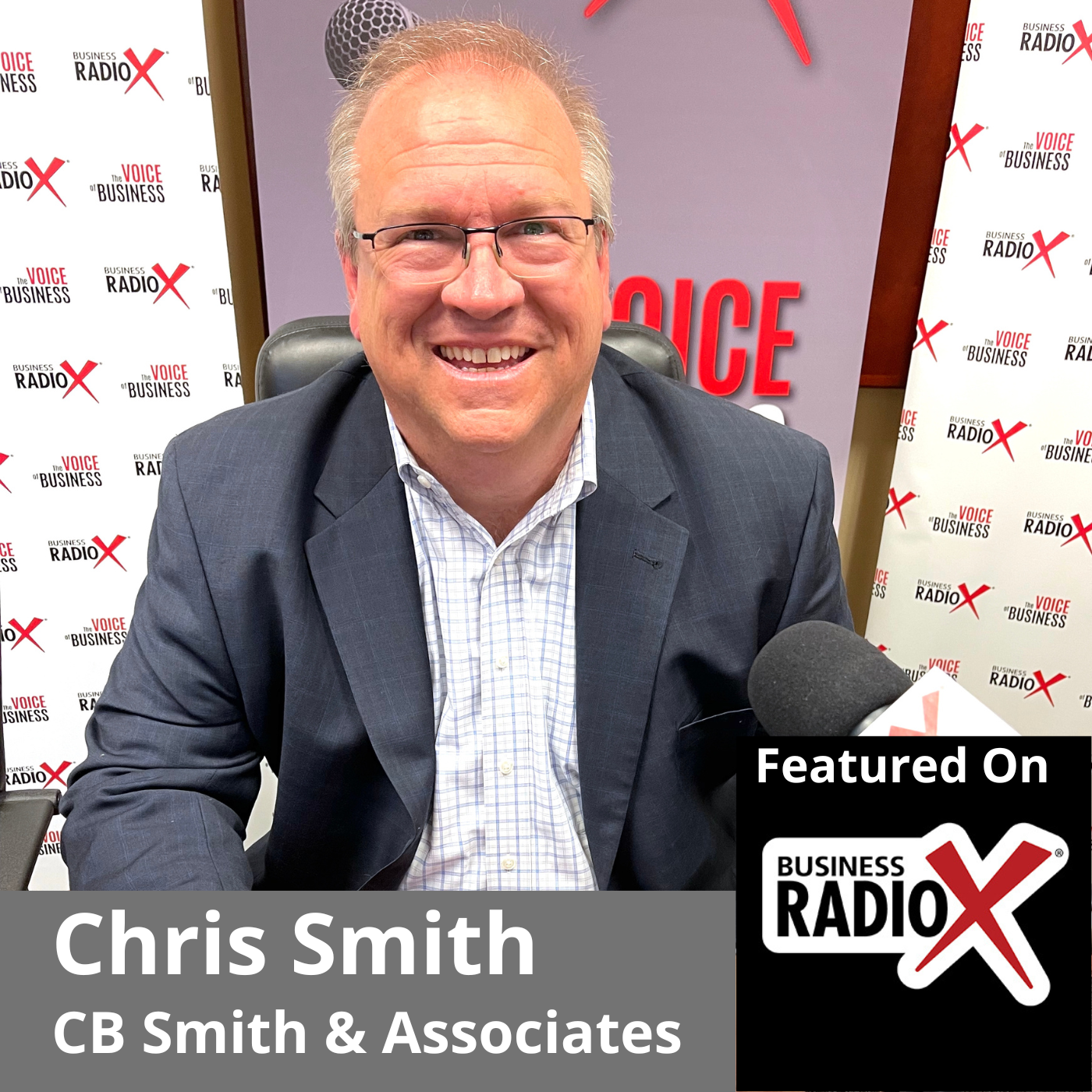
Chris Smith, CB Smith & Associates

November 8, 2022 by John Ray

CB Smith & Associates
North Fulton Business Radio
Chris Smith, CB Smith & Associates
Loading
00:00 /
RSS Feed
Share
Link
Embed

Download file

CB Smith & Associates

Chris Smith, CB Smith & Associates (North Fulton Business Radio, Episode 560)

Chris Smith made a return visit to the North Fulton Business Radio studio to discuss recent tax law changes business owners should be aware of, including an important change of pass-through entity elections which Georgia-based businesses can make for the 2022 tax year. Chris also chatted with host John Ray on his firm’s growth, the talent acquisition challenge which all accounting firms face today, what clients should look for if they’re thinking about selecting a new CPA, and much more.

North Fulton Business Radio is produced and broadcast by the North Fulton studio of Business RadioX® inside Renasant Bank in Alpharetta.

CB Smith & Associates

CB Smith & Associates is a Georgia-based business advisory and CPA firm that delivers big-firm expertise and acumen with small-town thoughtfulness and warmth.

They help bring to light the stories that numbers tell — about the health of your business, the soundness of your financial or tax plan, and the options that can lead you to a path of success. They believe that awareness makes opportunity visible.

As trusted advisors, they have a partnership philosophy that is designed to help you better understand your financial outlook. Whether you have a small or midsize business or you need to enhance your personal financial strategy, the team at CB Smith & Associates is committed to providing you with responsive accounting consultation and business guidance that moves you closer to your goals.

Their mission is to be a strategic partner in the preservation and enhancement of your wealth. They listen first, take a personal interest in your goals and aspirations, understand your obstacles and challenges, and present and implement valuable solutions with integrity, quality of service, and professional expertise.

Company website | LinkedIn | Facebook | Twitter

Chris Smith, CPA, CGMA, Founder and Partner, CB Smith & Associates

Chris Smith, CPA, CGMA, Founder and Partner, CB Smith & Associates

With 30 years of financial experience, Chris Smith is passionate about his work. Since founding CB Smith & Associates in 2003, he has led the accounting firm’s growth from one to three office locations in Georgia. It now has 21 employees, including a solid team of certified public accountants and other tax professionals.

CB Smith & Associates is a business advisory and full-service accounting firm that works in tandem with its sister company, Reliance Payroll LLC, a full-service payroll and human resources outsourcing firm. Prior to starting his own firm, Chris was a corporate controller.

He earned a degree in accounting from Georgia State University’s J. Mack Robinson College of Business and is active in local community groups such as the Rotary Club and numerous CPA groups.

LinkedIn

Questions and Topics in the Interview

  • Tell us about CB Smith & Associates
  • Where are your offices?
  • As a public accounting and business advisory firm, what do you do for businesses and individuals?
  • What are some tax Law changes in Georgia that individuals and businesses need to know?
  • Last year, the Georgia Governor signed House Bill 149 into law (resulting in Rule 560-7-3-.03 being adopted). Explain the law to us and tell us more about pass-through entity elections and what business owners need to know.
  • What should companies know about the new lease accounting standards?
  • Why is it important for a business owner to have a CPA (or team of CPAs) on their team?
  • Are you currently hiring/recruiting?

North Fulton Business Radio is hosted by John Ray and broadcast and produced from the North Fulton studio of Business RadioX® inside Renasant Bank in Alpharetta. You can find the full archive of shows by following this link. The show is available on all the major podcast apps, including Apple Podcasts, Spotify, Google, Amazon, iHeart Radio, Stitcher, TuneIn, and others.

RenasantBank


Renasant Bank has humble roots, starting in 1904 as a $100,000 bank in a Lee County, Mississippi, bakery. Since then, Renasant has grown to become one of the Southeast’s strongest financial institutions with over $13 billion in assets and more than 190 banking, lending, wealth management and financial services offices in Mississippi, Alabama, Tennessee, Georgia and Florida. All of Renasant’s success stems from each of their banker’s commitment to investing in their communities as a way of better understanding the people they serve. At Renasant Bank, they understand you because they work and live alongside you every day.

 

Special thanks to A&S Culinary Concepts for their support of this edition of North Fulton Business Radio. A&S Culinary Concepts, based in Johns Creek, is an award-winning culinary studio, celebrated for corporate catering, corporate team building, Big Green Egg Boot Camps, and private group events. They also provide oven-ready, cooked-from-scratch meals to go they call “Let Us Cook for You.” To see their menus and events, go to their website or call 678-336-9196.
Tagged With: A&S Culinary Concepts, Accounting, business advisory, CB Smith & Associates, Chris Smith, CPa, North Fulton Business Radio, renasant bank, tax laws, Taxes

Tax Consequences of a Practice Sale

September 30, 2022 by John Ray

Advisory Insights Podcast
Tax Consequences of a Practice Sale
Loading
00:00 /
RSS Feed
Share
Link
Embed

Download file

Tax Consequences of a Practice Sale

Tax Consequences of a Practice Sale (Advisory Insights Podcast, Episode 11)

On this episode of Advisory Insights, Stuart Oberman talked with Danielle McBride, Partner at Oberman Law Firm, on corporate sales transactions. She emphasized the importance of involving a CPA early in the transaction to ensure that the proper documentation is in place to avoid double taxation.

Advisory Insights is presented by Oberman Law Firm and produced by the North Fulton studio of Business RadioX®. The series can be found on all the major podcast apps. You can find the complete show archive here.

Danielle McBride, Partner, Oberman Law Firm

Danielle McBride
Danielle McBride, Partner, Oberman Law Firm

Danielle McBride has been practicing law for over 21 years, and her primary focus is representing healthcare clients on a local, regional, and national basis. Ms. McBride regularly consults with clients regarding simple to complex healthcare transitions, including mergers and acquisitions, employment law, governmental compliance, tax strategies, practice valuations, DSO formation and structures, employee compensation, associate and partnership contracts, joint ventures, and partnership buy-in/buy-outs.

In addition, Ms. McBride brings a wealth of knowledge and experience preparing practice valuations for clients, as well as formulating simple to complex tax strategies, and entity formations.

Ms. McBride holds a Bachelor of Arts in Sociology/Criminology from The Ohio State University, a Juris Doctor (J.D.) from Ohio Northern University Pettit College of Law, and a Master of Laws (LL.M.) in Taxation from Case Western Reserve University.

LinkedIn

TRANSCRIPT

Intro: [00:00:01] Broadcasting from the studios of Business RadioX, it’s time for Advisory Insights. Brought to you by Oberman Law Firm, serving clients nationwide with tailored service and exceptional results. Now, here’s your host.

Stuart Oberman: [00:00:19] Welcome everyone to Advisory Insights. This is Stuart Oberman, Oberman Law Firm. Well, we have a fantastic guest with us today on our podcast, Danielle McBride, who is a partner in Oberman Law Firm, and who does an enormous amount of health care transactions on a national basis.

Stuart Oberman: [00:00:40] For those who are not familiar with our firm, we are very, very health care centered. Last year, we did 135 transactions, and I believe the number was, maybe, about 350 million was total of the transactions. So, through this craze that we’re in, mergers and acquisitions, the tax consequences are so under viewed that they got to get out in the forefront of these issues.

Stuart Oberman: [00:01:14] And Danielle McBride, who does a fabulous job with the firm, and who is our resident tax guru, if you will, and has a master’s in tax is really going to walk us through some things. And I got some questions along the way that she’ll answer, hopefully. And this is such an ongoing topic. We can talk about tax consequences for a day and not even cover everything on a merger and acquisition. So, Danielle, welcome to the show again.

Danielle McBride: [00:01:44] Thanks, Stuart. Good to be here and happy to put some information out there so our buyers and sellers can be a little more educated on these topics.

Stuart Oberman: [00:01:51] Yeah, it’s amazing. It is amazing how many questions you receive and we all receive on these deals and how uninformed some advisors are. And I want you to touch on that later on during the podcast. But, you know, I want to talk about some of the things you run into on the sales tax side, you’ve got goodwill, you’ve got personal versus corporate, you’ve got C versus S corporations, you’ve got reporting issues. I know, again, it’s a long, long, long conversation we can have on this. And I know you’ll drill it down to the basics, which will not cover all the details. So, tell us, I want to know what you’re running into on some of these sales.

Danielle McBride: [00:02:39] Sure. So, you know, basic tax consequences, I think a lot of that information is out there. You’ve got a sale of tangible assets, a sale of goodwill, capital gain on goodwill, tax treatment is ordinary income on the sale of tangible assets. But it gets much more complicated and there can be a lot more detail involved depending on the type of entity that someone has.

Danielle McBride: [00:03:03] So, if your seller is, say, a C Corporation versus an S Corporation or an LLC, a C Corporation has an entity level tax. It’s not a pass through entity, which means that there is a tax on the sale of any assets from the corporation first. And then, you’ve got your shareholders receiving distributions of the balance of that. And so, there could be a goodwill double taxation issue if your corporation owns the goodwill and sells it. So, that’s where personal goodwill is kind of a key component.

Danielle McBride: [00:03:42] And most important in these C Corporation sales, and we still have a lot of older C Corporations that are out there in the health care world, so you want to make sure that you’re looking at that. Not only C Corporations but S Corporations. If a C Corporation elected S Corporation status, they have a five year window during which they still get treated if they sell assets like they’re a C Corporation. They call it a built-in gains tax.

Danielle McBride: [00:04:14] So, you’ve got to be aware if you’re a C Corporation or a C that elected S status and you haven’t met your five year built-in gains tax window, personal goodwill in those cases is just key because you’re going to avoid a double taxation issue if you set up the transaction properly using personal goodwill instead of having the corporation own and sell all of the assets.

Stuart Oberman: [00:04:39] That’s a good point.

Danielle McBride: [00:04:39] So, it could be a huge tax difference here. And so, that’s something you got to talk to your advisors about, make sure that it’s being structured properly, make sure your contracts have those things specifically listed in it, and the sellers are listed as both personal seller selling personal goodwill and corporations selling the assets.

Danielle McBride: [00:05:03] And then, that even goes down to payments as well. Make sure if you’re getting personal goodwill and it’s a key component in this C Corporation or what we call sort of a non-ripe S Corporation. You know, the payment and all of the documentation needs to track in order to protect that personal goodwill concept and keep you from paying twice on the goodwill.

Stuart Oberman: [00:05:28] A non-write election corporation?

Danielle McBride: [00:05:32] Non-ripe.

Stuart Oberman: [00:05:33] Ripe. Okay.

Danielle McBride: [00:05:34] We call it a non-ripe S election when you’ve elected S Corporation status and you have that five year building gains tax window that you have to meet.

Stuart Oberman: [00:05:44] You just mentioned a couple of things. Do you write in cases where the CPAs, one, don’t understand transactions, or, two, they don’t get involved early enough?

Danielle McBride: [00:05:57] Yeah, absolutely. And the latter is what I see most often. The clients are hesitant to get their accountants involved early in the transaction, and I think that’s one of the biggest mistakes that I see made is not involving that CPA. And there are lots of good CPAs out there that understand and work in these dental transactions. And they just need to be looped in and they need to help talk about personal versus corporate goodwill. If there are tax attributes that the corporation could use some things allocated to corporate goodwill versus personal goodwill, because they’ve got corporate tax attributes to use up.

Danielle McBride: [00:06:44] I mean, the CPA is in a position to know these things, and they’re also the first line of defense if a transaction gets audited. So, they need to be involved from the beginning. And everybody needs to be on the same page. So, I always say, practice transitions, practice sales, business sales, they’re a team sport. And you need to have all your team players on the field when you’re trying to work through these things.

Stuart Oberman: [00:07:12] I don’t know, some transactions are a blood sport. I don’t know about a team sport.

Danielle McBride: [00:07:18] That’s when we get the corporate transactions involved and it gets more complicated because –

Stuart Oberman: [00:07:22] And I know you run into this, when everyone is ready to quit the deal, I mean, everyone’s like, “I’m done with this. I can’t do this anymore. I’m sick of this. I’m done. We’re about one day away from finalizing the deal, aren’t we?” It’s just gets to that stage.

Stuart Oberman: [00:07:37] Now, you also mentioned a couple of things. You mentioned, you know, at the end of the transaction, there’s got to be a true up of allocations that have to be reported to the IRS. How important is that and what form is that?

Danielle McBride: [00:07:51] That is very important, and it’s often overlooked, and most clients don’t understand this, and don’t know anything about it as well. It’s a Form 8594. So, in a sale transaction, you have to report the transaction to the IRS. That gets done on a Form 8594. That should be prepared by the accountants. Another reason accountants need looped into this, because they’re the ones that ultimately prepare that Form 8594 to submit to the IRS.

Danielle McBride: [00:08:21] So, in the documents, it’s important to have the price allocation spelled out so that the accountants can properly report this, because it’s the same as if you accidentally forget to report that you got a 1099 or a W-2 from an employer, you’re going to wind up audited because the IRS gets reporting from both sides of a transaction. So, if you don’t submit an 8594 or you submit one that’s different than the other party, it’s going to flag you for an audit.

Stuart Oberman: [00:08:54] Now, I got one question that we’ve run into on occasion. What happens if the buyer wants to set a floating sales price that is spread out through the years where, let’s say, they say if you hit this target, this is a sale price. And that may go on for two or three years. How complex is that and how problematic is that for the seller who doesn’t know what in the world to do with this taxes?

Danielle McBride: [00:09:21] Yeah. So, that is also a reason to have your accountant involved because there are certain ways that you can report that. And that may get reported as an installment sale. And those numbers, you don’t want to report it on that initial tax form that goes in because you may or may not receive those amounts. Those amounts could be treated as an installment sale, and you don’t get taxed until you actually receive the funds.

Stuart Oberman: [00:09:45] Oh, wow. Okay. So, that sounds like another podcast. I mean, it truly is amazing. You know, in this brief, brief segment that you’ve touched on, you’ve touched on corporate goodwill, personal versus corporate, C versus S Corporation, reporting 8594, and you’ve touched on installment sales. I mean, it is truly amazing what has to be done on a tax side from a sale, whether it is a small sale or $44 million sale, which we’ve handled on a transaction.

Stuart Oberman: [00:10:27] I say we could talk seven days on topics. But in closing, is there anything you’d want to add advice that we can give our listeners on what they want to do before they start getting into the meat of this transaction or a transaction?

Danielle McBride: [00:10:49] Well, make sure you reach out to your advisors. If you’ve got letters of intent, make sure you show those to your advisors and go through those. Make sure you’re thinking about the structure and the tax allocations. And make sure you understand the terms of the deal, you know, things like personal versus corporate goodwill. Another thing we didn’t even touch on that I see as a big issue is accounts receivable and how that’s going to be handled.

Stuart Oberman: [00:11:17] There’s another podcast. You’re making a career out of this.

Danielle McBride: [00:11:20] Yeah. You’re going to keep me on this.

Stuart Oberman: [00:11:24] We’re going to have the Danielle McBride show here in a minute. They’re going to give me the hook. You’ve already teed up seven episodes here. It’s like a version of a Game of Thrones, geez. Well, again, it is amazing and you’ve done an amazing job since joining the firm. We’re so happy to have you. You bring so much gravitas to the table. Again, we’re definitely going to have you back on this show.

Stuart Oberman: [00:11:53] So, in parting, if you need to reach Danielle, please feel free to email her at danielle, D-A-N-I-E-L-L-E, @obermannlaw.com. The phone number 770-886-2400. Folks, it’s been an absolute pleasure and we hope that you’ve at least taken away one golden nugget of this. And if so, we’ll consider this podcast an absolute success. Danielle, thank you again. I know you’ve got a convention to go to. And we appreciate your time. Thanks a lot. Ladies and gentlemen, thanks and have a fantastic day.

Outro: [00:12:30] Thank you for joining us on Advisory Insights. This show is brought to you by Oberman Law Firm, a business-centric law firm representing local, regional, and national clients in a wide range of practice areas, including health care, mergers and acquisitions, corporate transactions, and regulatory compliance.

About Advisory Insights Podcast

Presented by Oberman Law Firm, Advisory Insights Podcast covers legal, business, HR, and other topics of vital concern to healthcare practices and other business owners. This show series can be found here as well as on all the major podcast apps.

Stuart Oberman, Oberman Law Firm

Oberman Law Firm

Stuart Oberman, Founder, Oberman Law Firm

Stuart Oberman is the founder and President of Oberman Law Firm. Mr. Oberman graduated from Urbana University and received his law degree from John Marshall Law School. Mr. Oberman has been practicing law for over 25 years, and before going into private practice, Mr. Oberman was in-house counsel for a Fortune 500 Company. Mr. Oberman is widely regarded as the go-to attorney in the area of Dental Law, which includes DSO formation, corporate business structures, mergers and acquisitions, regulatory compliance, advertising regulations, HIPAA, Compliance, and employment law regulations that affect dental practices.

In addition, Mr. Oberman’s expertise in the healthcare industry includes advising clients in the complex regulatory landscape as it relates to telehealth and telemedicine, including compliance of corporate structures, third-party reimbursement, contract negotiations, technology, health care fraud, and abuse law (Anti-Kickback Statute and the State Law), professional liability risk management, federal and state regulations.

As the long-term care industry evolves, Mr. Oberman has the knowledge and experience to guide clients in the long-term care sector with respect to corporate and regulatory matters, assisted living facilities, continuing care retirement communities (CCRCs). In addition, Mr. Oberman’s practice also focuses on health care facility acquisitions and other changes of ownership, as well as related licensure and Medicare/Medicaid certification matters, CCRC registrations, long-term care/skilled nursing facility management, operating agreements, assisted living licensure matters, and health care joint ventures.

In addition to his expertise in the health care industry, Mr. Oberman has a nationwide practice that focuses on all facets of contractual disputes, including corporate governance, fiduciary duty, trade secrets, unfair competition, covenants not to compete, trademark and copyright infringement, fraud, and deceptive trade practices, and other business-related matters. Mr. Oberman also represents clients throughout the United States in a wide range of practice areas, including mergers & acquisitions, partnership agreements, commercial real estate, entity formation, employment law, commercial leasing, intellectual property, and HIPAA/OSHA compliance.

Mr. Oberman is a national lecturer and has published articles in the U.S. and Canada.

LinkedIn

Oberman Law Firm

Oberman Law Firm has a long history of civic service, noted national, regional, and local clients, and stands among the Southeast’s eminent and fast-growing full-service law firms. Oberman Law Firm’s areas of practice include Business Planning, Commercial & Technology Transactions, Corporate, Employment & Labor, Estate Planning, Health Care, Intellectual Property, Litigation, Privacy & Data Security, and Real Estate.

By meeting their client’s goals and becoming a trusted partner and advocate for our clients, their attorneys are recognized as legal go-getters who provide value-added service. Their attorneys understand that in a rapidly changing legal market, clients have new expectations, constantly evolving choices, and operate in an environment of heightened reputational and commercial risk.

Oberman Law Firm’s strength is its ability to solve complex legal problems by collaborating across borders and practice areas.

Connect with Oberman Law Firm:

Company website | LinkedIn | Twitter

Tagged With: Advisory Insights, Advisory Insights Podcast, dental practices, employees, Oberman Law, Oberman Law Firm, Practice Sale, Stuart Oberman, Tax Consequences, Taxes

Tax Implications of a Practice Sale

September 23, 2022 by John Ray

Tax Implications of a Practice Sale
Advisory Insights Podcast
Tax Implications of a Practice Sale
Loading
00:00 /
RSS Feed
Share
Link
Embed

Download file

Tax Implications of a Practice Sale

Tax Implications of a Practice Sale (Advisory Insights Podcast, Episode 10)

On this episode of Advisory Insights, Stuart Oberman talked with Danielle McBride and Lauren Mansour, both Partners at Oberman Law Firm, on the tax implications of a practice sale. They covered letters of intent and what key provisions should be in them, common tax pitfalls, different classes of shares common with DSO acquirors, how to limit the tax consequences of Class C shares, and more.

Advisory Insights is presented by Oberman Law Firm and produced by the North Fulton studio of Business RadioX®. The series can be found on all the major podcast apps. You can find the complete show archive here.

Danielle McBride, Partner, Oberman Law Firm

Danielle McBride
Danielle McBride, Partner, Oberman Law Firm

Danielle McBride has been practicing law for over 21 years, and her primary focus is representing healthcare clients on a local, regional, and national basis. Ms. McBride regularly consults with clients regarding simple to complex healthcare transitions, including mergers and acquisitions, employment law, governmental compliance, tax strategies, practice valuations, DSO formation and structures, employee compensation, associate and partnership contracts, joint ventures, and partnership buy-in/buy-outs.

In addition, Ms. McBride brings a wealth of knowledge and experience preparing practice valuations for clients, as well as formulating simple to complex tax strategies, and entity formations.

Ms. McBride holds a Bachelor of Arts in Sociology/Criminology from The Ohio State University, a Juris Doctor (J.D.) from Ohio Northern University Pettit College of Law, and a Master of Laws (LL.M.) in Taxation from Case Western Reserve University.

LinkedIn

Lauren Mansour, Partner, Oberman Law Firm

Lauren Mansour, Partner, Oberman Law Firm

Lauren A. Mansour, Esq.’s practice is devoted to the representation of health care providers in various corporate and regulatory compliance matters. Lauren handles transactional matters for her clients, representing healthcare providers in joint ventures, mergers, and acquisitions. Ms. Mansour regularly counsels her clients on a range of compliance and regulatory matters, including anti-kickback and stark issues, fraud and abuse laws, state corporate practice of medicine doctrines, and state licensure laws.

Ms. Mansour’s expertise in the health care industry includes compliance of corporate structures, third-party reimbursement, contract negotiations, partnership agreements, commercial leasing, technology, health care fraud and abuse, professional liability risk management, federal and state regulations. Ms. Mansour has experience representing startups, seasoned professionals, and dental service organizations, and enjoys advising clients at every stage of practice ownership.

A graduate of the University of Georgia School of Law, Ms. Mansour joined Oberman Law Firm in 2010 and is licensed to practice law in Georgia and South Carolina.

LinkedIn

TRANSCRIPT

 Intro: [00:00:01] Broadcasting from the studios of Business RadioX, it’s time for Advisory Insights. Brought to you by Oberman Law Firm, serving clients nationwide with tailored service and exceptional results. Now, here’s your host.

Stuart Oberman: [00:00:20] Hello everyone and welcome to Advisory Insights Podcast. Well, today, we’ve got two special guests with us. There is a lot going on in the health care field for the mergers and acquisitions, whether it’s dental, vets, eye, it is all over the place. So, I got two of our great, great partners at the Oberman Law Firm today, and I want to introduce them, Lauren Mansour and Danielle McBride. Both of them do a tremendous job on mergers and acquisitions.

Stuart Oberman: [00:00:51] And I want to talk to Lauren a little bit first. And the key thing is letters of intent. I know if you’re an attorney, you do transactions, you always get, it seems, a signed letter of intent before you really, really have a chance to drill down on it. So, Lauren’s going to talk a little bit about letters of intent. And then, Danielle is going to talk about tax items that are really, really critical in a health care transition, whether it’s a private equity company or it is a private sale.

Stuart Oberman: [00:01:25] So, let’s start off, Lauren, tell you what, I want you to take me through some steps that our listeners need to know regarding LOIs. I mean, we’ve got stuff on holdbacks, real estate matters. I want you to drill down a little bit. Before I start, last year we did as a firm about 135 transactions totaling about 350 million. So, we’ve seen a lot of stuff come under the bridge, if you will, last year. And I think we saw a lot of things we don’t want to see happen again. So, Lauren, tell you what, talk to the audience, tell me a little bit about letters of intent, what you run into and your problems. And, hopefully, our listeners can pick up a couple of pointers.

Lauren Mansour: [00:02:12] Of course, happy to jump into this topic. So, a letter of intent kind of varies. Sometimes we see letters of intent that are a paragraph long, maybe half-a-page max, and sometimes they’re ten pages. And so, there’s definitely a lot of variance depending on the transaction.

Lauren Mansour: [00:02:31] I would say I was speaking with a buyer yesterday, even for just a simpler doctor to doctor transaction, I think it’s important to have a little bit more than half-of-a-page because you do want to flash out certain important concepts and just make sure that you and the seller or you and the buyer are on the same page, and you’re not both spending money on attorneys and bankers and CPAs, and spending time going through this process of negotiating a transaction, and you are never really on the same page to begin with.

Lauren Mansour: [00:03:08] So, I think that we don’t necessarily have to spend a whole lot of time on the letter of intent. But I think it’s important to make sure certain key items like, obviously, the purchase price, possibly even purchase price allocations, what does any post sale employment look like for the seller restrictive covenants, can we agree on those at the LOI stage, is there any real estate involved, and have terms been agreed upon. And if so, let’s include that.

Lauren Mansour: [00:03:39] For a buyer, it’s very important to have exclusivity language in the letter of intent, because you do want to make sure. Again, you’re kind of investing your time and money into the process and you want to make sure that the seller is not continuing to speak with other interested parties. And then, you also want to make sure there’s language that is clear that this document is not binding. I think most letters of intent will say that. But we have had clients in the past sign an LOI before we reviewed, and it was binding. And when they decided after diligence they wanted to walk away, they were facing legal action.

Lauren Mansour: [00:04:20] So, some important tips, I think that in larger transactions, so when our clients are selling, especially to a large group, these letters of intent can be very complex. And I was just looking at one the other day for a client that’s selling a group of practices, and she was looking at restrictive covenants that were not just around her practices, but statewide for any practice that the buyer group owned in any state, that entire state was wiped out for her.

Lauren Mansour: [00:04:56] And so, I think it’s important to kind of go through and make sure that you’re comfortable and you’re aware of the terms kind of before you move forward. Because with sellers, and if they’re talking with big group practices, you’re often courting several buyers. And so, if you can kind of flash out a lot of these concepts and make sure that you understand them, it’s more than just the purchase price. There’s now holdbacks and earnouts and equity involved.

Lauren Mansour: [00:05:31] And so, what do these holdbacks look like? So, sometimes we’ll have a very large transaction and it will briefly mention a holdback or the earnout, and what does that mean? Or the equity won’t be clearly spelled out, and so we have to ask questions. And it’s my opinion, better on the frontend to say, are there going to be any ties to any of this? Is the equity subject to forfeiture if employment terminates before a certain period? Or the earnout, what is it tied to? Do we have to just be employed or do we have to have certain collection levels that we have?

Stuart Oberman: [00:06:08] Can you explain, so you just hit really on a couple of points. One, have you seen a request on a national non-compete? Two, take our listeners through the process of what exactly is an earnout and a holdback.

Lauren Mansour: [00:06:26] I don’t know that I’ve seen a national non-compete. These are usually groups that are in several states that they’ll kind of limit to a region, but it definitely can be several states, and a lot of times it’s tied to equity. So, if you invest with the buyer group, they’ll tie you to think, “Okay. You need to be loyal to this group. Right now you’re invested with us, and so now, because of the equity, you have to not compete with us, not only around your practices, but around any practices we own. We don’t want you to work there.”

Lauren Mansour: [00:07:02] And so, sometimes there’s circles around every practice they own and sometimes there’s just statewide restrictions. If we own in this state, you cannot operate there. Which is sometimes not problematic when our clients are looking to retire. But other times it is, our clients are younger, they still want to work, there’s never any guarantees. And I think we have to look at things from the worst case scenario, just planning it. And so, it can be problematic.

Lauren Mansour: [00:07:32] With respect to your question on holdbacks or earnouts, in some occasions, a purchase price, let’s say, 80 percent of the purchase price is paid at closing, maybe there’s 20 percent that’s paid in an earnout. And that could be part of a purchase agreement or it could be part of an employment agreement.

Lauren Mansour: [00:07:53] But the earnout means, let’s say, it’s 100,000 a year for three years. And each year, in order to get $100,000, your practice has to continue to collect a certain level or it has to grow by a certain percent. And so, in order to get your 100,000 for the first year, your practice has to be at a certain collection level. And if it’s not, you do not receive that amount. Sometimes those earnouts are only tied to continued employment. So, as long as you’re working there, you would receive it. And we will try to negotiate things like, “Okay. Well, what if there’s death or disability? Would we get it in those events?” But that’s what the earnout looks like.

Lauren Mansour: [00:08:35] And then, holdbacks are similar. Sometimes holdbacks are just based on operating liability expenses to make sure that the seller didn’t leave anything unpaid that the buyer has to pay for. Other times they’re longer term holdbacks, they’re tied to either employment or some revenue metric, and you would receive that amount as long as the goal is met.

Stuart Oberman: [00:09:01] So, you mentioned a couple of things. One, invest in a group, is that where, let’s say, we’re talking about $100,000 deal, doctors will take $200 and invest that back into the private equity company?

Lauren Mansour: [00:09:21] Correct.

Stuart Oberman: [00:09:21] Let’s put that on $1,000,000 scale. So, the doctors are going to take $800,000 to put it in their pocket, and they are percentage. And the equity companies want to have the investment back into groups that are doctors putting in, essentially, $200,000 back into their pockets, if you will, whether it’s what? A or C shares you’re seeing, A or B share stock?

Lauren Mansour: [00:09:51] Right. So, there’s a portion of the purchase price that instead of you receiving that in cash at closing, you will invest it in an entity. And a lot of times with these groups, it may not be the actual buying entity. It may be a group that they formed where all of the doctors are investing into that specific entity. There’ll be an operating agreement. You’re governed by the terms of the existing agreements in place. There’s never any guarantees. Sometimes there’s discussion on the frontend.

Lauren Mansour: [00:10:22] I’ve actually seen it a couple of times recently and spoke with some of my colleagues about how it was actually in writing from a buyer that they expected it to be X amount. But, usually, they may tell you how much you may receive on a return or what they’re expecting. But, again, never any guarantee. The buyers will usually give you some timeframe that they are expecting to roll, so it may be, “We’re expecting within the next year or in two years. That’s when we’re going to do our equity event and you’ll be able to see some of this investment back.” But it’s generally variable, economy and what’s going on in terms of what the buyer pool will look like.

Stuart Oberman: [00:11:04] I mean, just great information. So, literally in 15 minutes, you’ve hit on some amazing topics, purchase price, holdbacks, earnouts, length of terms of employment contracts, real estate, restrictive covenants, equity earnouts, real estate exclusivity binding. I mean, this is a seven day conversation that we’re putting in to, like, 15 minutes. So, you did an enormous, enormous job outlining everything. Is there anything else you want to add that may be of importance to buyers or sellers on any kind of transaction regarding an LOI until we jump into our tax side of the sale?

Lauren Mansour: [00:11:49] I mean, I just think overall, regardless if you’re the buyer and you’re looking at terminating employment, maybe even before you sign a purchase agreement, which I think you need to be cautious about, I think it’s very important for a buyer to have a LOI that’s clearly spelled out so that you know both parties are on the same page with respect to most of the major terms.

Lauren Mansour: [00:12:11] And then, a seller, especially with these very complex group LOIs, I think it’s also important, one, just to understand everything and sometimes to flash things out a little more fully than they even are in that group. LOI, just because, again, I feel like at times you have more negotiation power at the LOI stage. So, once you’ve signed something, if you didn’t understand it or we think, “Oh, this isn’t really market, let’s see if we can change it,” it sometimes becomes more difficult.

Lauren Mansour: [00:12:41] And so, I think it’s a good idea to have that letter of intent reviewed and to fully negotiate it at that stage while the buyer is basically courting you versus after you’ve already signed. So, I think that would be my advice is definitely to pay attention, not to disregard the LOI and to make sure that you’re comfortable with all of the terms.

Stuart Oberman: [00:13:01] Yeah. That’s just great information. Like I said, this is a seven day conversation and we’re trying to boil it down into a relatively short period of time, if you will. Lauren, thank you very much on that.

Stuart Oberman: [00:13:12] And now I want to jump over to Danielle McBride, who does an enormous amount of transactions as does Lauren on a national basis. And Danielle is our resident tax attorney, also extraordinaire, she’s got a master’s in tax. And I know that this could be a 75 day conversation on tax, but there’s so many things that can really go sideways regarding tax issues in a merger and acquisition. And, Danielle, I want you to touch on a few of those sort of landmines, if you will.

Stuart Oberman: [00:13:49] And then, Lauren said to two things. I want to know the tax consequences on earnout and what that looks like. And, again, I know there’s so much information you can provide. But I want you to to discuss some of the tax issues that you run into through your training and experience. And you’ve been on both sides of the fence. You also done state planning for tax issues. So, you’ve got a well-versed bullpen, if you will. So, Danielle, take it away. I want to hear some things that our listeners want to hear about.

Danielle McBride: [00:14:27] Sure. I would just start off by saying I completely agree with Lauren, though, about consulting with your advisors on the letter of intent on some of these concepts, because if you don’t get them flashed out, you don’t understand them. And then, especially with a corporate sale, it becomes sometimes impossible to negotiate off of those things that are in the letter of intent with them.

Danielle McBride: [00:14:51] So, I do agree with her. It’s really important to look. Just because people tell you letters of intent are nonbinding, don’t skip that step in having it reviewed by your advisor because it makes the our job a lot more difficult and it could really change some of the tax consequences for you.

Danielle McBride: [00:15:10] So, as far as tax implications, there’s sort of some basic tax implications on these deals, whether it’s a private party or a corporate sale. You know, it gets more complex when you’ve got the corporate sales and the DSOs that are buying these, and you’ve got the rollover equity, and earnouts, and holdbacks, and those sorts of things. So, your basic tax consequences, you’re got a sale of assets, tangible assets, your fixed assets, and you’ve got your goodwill.

Danielle McBride: [00:15:43] The goodwill can be a big deal and there can be some tax traps there as far as is this professional personal goodwill, is it corporate owned goodwill, and how is that allocated. You know, there can also sometimes be some negotiation as to how much is allocated on the side of the goodwill versus the tangible assets. And there are a few differences between those tax implications and whether buyers and sellers, whether it’s private party or a corporate sale, how much are you going to allocate to either transaction.

Danielle McBride: [00:16:23] So, the complexity comes from the corporate sales and when you’ve got these holdbacks and rollover equity. So, a private party is pretty much going to pay you cash at closing. So, you’re going to have your tangible assets and your goodwill allocation. You’re going to have a portion that’s taxed at ordinary rates. You’re going to have a portion that’s taxed at capital gains rates. Usually, the bulk of that is capital gains for your goodwill allocation.

Danielle McBride: [00:16:48] But on a corporate deal, you’re not getting all cash at closing. You’re usually getting maybe 70 to 80 percent as cash at closing. And the rest is in these earnouts, holdbacks, and rollover equity, like Lauren mentioned.

Danielle McBride: [00:17:02] So, that rollover equity piece, earnouts, and holdbacks, those are usually taxed. They’re usually tied to compensation, performance triggers, and things like that. They’re paid over time. And a lot of times those are paid as compensation, and you get taxed at compensation rates, at ordinary income rates for those.

Danielle McBride: [00:17:22] Your rollover equity, though, you can get tax deferral on that rollover equity. So, you’re investing in a parent company or a holding company that one of these corporate buyers has. And so, you’re contributing assets in exchange for goodwill often. And so, you’re getting a tax deferral on this rollover equity under Section 721. And you don’t recognize any tax on that until you sell it later, until that company has what they call a liquidity event, or they bring in a new private equity buyer, or they sell the entire company.

Danielle McBride: [00:18:09] Some of these are scaling up and then they sell the entire business to someone new. That’s when you would wind up with your taxable event and recognize capital gains tax, usually, because your contribution of assets is typically goodwill contribute in exchange for that rollover equity.

Stuart Oberman: [00:18:32] I have one question for you. So, on the capital gains side, you mentioned 721. Now, you’ve got another podcast coming up where we’re actually going to touch even more on 721s, which are critical to the tax consequences. But one thing I want to know is, is investment in shares – our clients get letters of intent and it’s A shares, C shares – what is the difference on the tax consequences, if any, on those particular A shares or B shares or C shares?

Lauren Mansour: [00:19:07] Sure. Well, in most cases with a seller, they’re receiving A or B shares, typically it’s B shares. The A shares will be held by the members who created the entity. Those owners, the directors, the managers of that business, they may hold the A shares, which may mean that they have more authority, more management power. That’s usually the big difference between class A, class B shares. Class A shares can sometimes have a preferred return where money is paid out to those Class A shareholders first before the Class B shareholders, which are usually all your doctors.

Danielle McBride: [00:19:43] You can also have Class C shares where you don’t have a typical equity, but maybe you have an associate. Seller has an associate who they want to keep on board. Buyer wants them to stay on board so they offer some Class C shares that are really a profits interest in the business. And those can be subject to vesting requirements, and continued employment, hitting performance triggers, things like that, and they won’t get a return on those until they hit the four years that they have to work with them.

Danielle McBride: [00:20:21] So, those Class C shares, usually, they don’t share in the existing value of the practice. It’s usually just a go forward thing. So, once those shares vest, they will have a piece of the pie in any growth in the business, not in the existing value of the business, and those can get complicated.

Danielle McBride: [00:20:46] And, now, there’s something called an 83B Election that can come in, so you’re not getting taxed, so you can limit your tax consequences and get a substantial portion of this growth in capital gains versus ordinary income tax like compensation on these amounts. It can get very complicated.

Stuart Oberman: [00:21:06] 83B sounds like another podcast.

Danielle McBride: [00:21:09] Yes.

Stuart Oberman: [00:21:09] I think you just teed yourself up to another at bat here. I got you. I got you. Well, you know, the funny thing, I’m listening to you talking all this information, and it’s amazing to me how many -and I hate to say this – CPAs and financial advisors don’t understand this when they get into these transactions. And then, it becomes very complex when someone like you understands the absolute tax side of this has a financial adviser on the other side and doesn’t explain or can’t explain to the seller why it is so beneficial, yet risky to a certain extent, in the long run.

Stuart Oberman: [00:21:53] So, I’m sitting here listening to all this and these are the questions that our CPAs are asking us – they’re asking you, they’re not asking me.

Danielle McBride: [00:22:05] Yeah. Yeah. Definitely. They’re asking me in.

Stuart Oberman: [00:22:08] They ask me these questions, I’m getting you on speed dial, so we’re good with that. We’re good with that.

Danielle McBride: [00:22:12] Yeah. Yeah.

Stuart Oberman: [00:22:13] I tell you, like I say, we got another podcast coming up with you and I know we’re going to cover 721 and 83Bs. But, Danielle, thank you so much for this information. I think the information that you gave was just enough to let our clients know, our listeners know, or maybe they’re not even doing business with us but, yet, they’re going to get their financial advisors, their CPAs, and their lawyers involved. But, Danielle, extraordinary job. I look forward to our next podcast. And I know Lauren’s going to have some further input later on down the road on some of these podcasts.

Stuart Oberman: [00:22:54] But, folks, we are about to conclude the Advisory Insights podcast. My name has been Stuart Oberman, Oberman Law Firm. So, if you want to reach out to Lauren, please feel free to email Lauren at lauren, L-A-U-R-E-N, @obermanlaw.com. And danielle, D-A-N-I-E-L-L-E, @obermannlaw.com. A phone number for the firm is 770-886-2400.

Stuart Oberman: [00:23:23] Folks, thanks so much for listening in. Danielle, Lauren, thank you so much for your time. And I know it’s invaluable, invaluable information. Ladies and gentlemen, thanks a lot. Have a fantastic day.

Outro: [00:23:37] Thank you for joining us on Advisory Insights. This show is brought to you by Oberman Law Firm, a business-centric law firm representing local, regional, and national clients in a wide range of practice areas, including health care, mergers and acquisitions, corporate transactions, and regulatory compliance.


About Advisory Insights Podcast

Presented by Oberman Law Firm, Advisory Insights Podcast covers legal, business, HR, and other topics of vital concern to healthcare practices and other business owners. This show series can be found here as well as on all the major podcast apps.

Stuart Oberman, Oberman Law Firm

Oberman Law Firm

Stuart Oberman, Founder, Oberman Law Firm

Stuart Oberman is the founder and President of Oberman Law Firm. Mr. Oberman graduated from Urbana University and received his law degree from John Marshall Law School. Mr. Oberman has been practicing law for over 25 years, and before going into private practice, Mr. Oberman was in-house counsel for a Fortune 500 Company. Mr. Oberman is widely regarded as the go-to attorney in the area of Dental Law, which includes DSO formation, corporate business structures, mergers and acquisitions, regulatory compliance, advertising regulations, HIPAA, Compliance, and employment law regulations that affect dental practices.

In addition, Mr. Oberman’s expertise in the healthcare industry includes advising clients in the complex regulatory landscape as it relates to telehealth and telemedicine, including compliance of corporate structures, third-party reimbursement, contract negotiations, technology, health care fraud, and abuse law (Anti-Kickback Statute and the State Law), professional liability risk management, federal and state regulations.

As the long-term care industry evolves, Mr. Oberman has the knowledge and experience to guide clients in the long-term care sector with respect to corporate and regulatory matters, assisted living facilities, continuing care retirement communities (CCRCs). In addition, Mr. Oberman’s practice also focuses on health care facility acquisitions and other changes of ownership, as well as related licensure and Medicare/Medicaid certification matters, CCRC registrations, long-term care/skilled nursing facility management, operating agreements, assisted living licensure matters, and health care joint ventures.

In addition to his expertise in the health care industry, Mr. Oberman has a nationwide practice that focuses on all facets of contractual disputes, including corporate governance, fiduciary duty, trade secrets, unfair competition, covenants not to compete, trademark and copyright infringement, fraud, and deceptive trade practices, and other business-related matters. Mr. Oberman also represents clients throughout the United States in a wide range of practice areas, including mergers & acquisitions, partnership agreements, commercial real estate, entity formation, employment law, commercial leasing, intellectual property, and HIPAA/OSHA compliance.

Mr. Oberman is a national lecturer and has published articles in the U.S. and Canada.

LinkedIn

Oberman Law Firm

Oberman Law Firm has a long history of civic service, noted national, regional, and local clients, and stands among the Southeast’s eminent and fast-growing full-service law firms. Oberman Law Firm’s areas of practice include Business Planning, Commercial & Technology Transactions, Corporate, Employment & Labor, Estate Planning, Health Care, Intellectual Property, Litigation, Privacy & Data Security, and Real Estate.

By meeting their client’s goals and becoming a trusted partner and advocate for our clients, their attorneys are recognized as legal go-getters who provide value-added service. Their attorneys understand that in a rapidly changing legal market, clients have new expectations, constantly evolving choices, and operate in an environment of heightened reputational and commercial risk.

Oberman Law Firm’s strength is its ability to solve complex legal problems by collaborating across borders and practice areas.

Connect with Oberman Law Firm:

Company website | LinkedIn | Twitter

Tagged With: Advisory Insights, Advisory Insights Podcast, dental practices, employees, Oberman Law, Oberman Law Firm, Practice Sale, Stuart Oberman, Tax Implications, Taxes

Decision Vision Episode 174: Should I Fight the IRS? – An Interview with Bruce Wood, Brady Ware Arpeggio, LLC

June 23, 2022 by John Ray

Bruce Wood
Decision Vision
Decision Vision Episode 174: Should I Fight the IRS? - An Interview with Bruce Wood, Brady Ware Arpeggio, LLC
Loading
00:00 /
RSS Feed
Share
Link
Embed

Download file

Bruce Wood

Decision Vision Episode 174: Should I Fight the IRS? – An Interview with Bruce Wood, Brady Ware Arpeggio, LLC

The decision to dispute, negotiate or litigate with the IRS is a difficult one, given its reputation and power. Bruce Wood, a principal at Brady Ware Arpeggio, is a business appraiser specializing in tax issues and a former CPA tax advisor. He and host Mike Blake looked at many of the considerations surrounding a tax issue with the IRS, from how to avoid them in the first place through how your returns are prepared, to what to expect from an IRS agent, the importance of having a professional interface with the IRS for you, the appeals process, the costs of litigating, and much more.

Decision Vision is presented by Brady Ware & Company and produced by the North Fulton studio of Business RadioX®.

Brady Ware Arpeggio, LLC

At BWA, they value your business – literally. They recognize the gravity and complexities of decisions facing individuals and businesses, and that bad decisions are often consequential and difficult to repair. BWA’s evidence-based decision systems enable businesses and their owners & executives to avoid pitfalls and blunders and accordingly successfully capture value opportunities more effectively than via mundane approaches to decision making.

They ultimately deliver decision clarity and confidence in decision-making based on well-analyzed, relevant data. Brady Ware’s team consistently delivers decision clarity via our proven processes for evaluating critical decisions. This unique insight to help make decisions has a profound impact on the result. Incorporating this decision process creates an advantage from what used to be pain points and barriers.

Company website | LinkedIn

Bruce Wood, Principal, Brady Ware Arpeggio, LLC

Bruce Wood, Principal, Brady Ware Arpeggio, LLC

Bruce’s business appraisal practice focuses primarily on tax-specific areas such as: (1) Tax Controversy – executing business appraisals and litigation support in United States Tax Court cases, as well as settlement efforts between the IRS and taxpayer, under the direction of tax and estate litigation attorneys from national and local law firms. These cases most often arise out of IRS audits of estate, gift, and trust tax returns, as well as IRS challenges of C corporation reasonable officer compensation, etc. (2) Estate, Gift and Trust Tax & business transactions -planning and compliance. Closely held businesses (S corp, C corp, LLC, and family limited partnership issues), M&A, etc.

Bruce brings over 30 years of experience to the marketplace, spending the last 20 years in business appraisal after 12 years as a CPA/tax adviser. Often faced with decisions or situations impacting the value of a transaction or business, Bruce helps navigate the complexities of those situations. He has helped in industries such as meat processing, professional services, manufacturing, distribution, food service, mining, technology, retail, and other business sectors.

While he can assist clients nationwide, most of his career has been spent in and throughout the Atlanta metropolitan area including Atlanta’s southside. With an exceptional network of contacts, Bruce can also help clients connect with other areas of expertise such as within the legal community.

LinkedIn

Mike Blake, Brady Ware & Company

Mike Blake, Host of the “Decision Vision” podcast series

Michael Blake is the host of the Decision Vision podcast series and a Director of Brady Ware & Company. Mike specializes in the valuation of intellectual property-driven firms, such as software firms, aerospace firms, and professional services firms, most frequently in the capacity as a transaction advisor, helping clients obtain great outcomes from complex transaction opportunities. He is also a specialist in the appraisal of intellectual properties as stand-alone assets, such as software, trade secrets, and patents.

Mike has been a full-time business appraiser for 13 years with public accounting firms, boutique business appraisal firms, and an owner of his own firm. Prior to that, he spent 8 years in venture capital and investment banking, including transactions in the U.S., Israel, Russia, Ukraine, and Belarus.

LinkedIn | Facebook | Twitter | Instagram

Brady Ware & Company

Brady Ware & Company is a regional full-service accounting and advisory firm which helps businesses and entrepreneurs make visions a reality. Brady Ware services clients nationally from its offices in Alpharetta, GA; Columbus and Dayton, OH; and Richmond, IN. The firm is growth-minded, committed to the regions in which they operate, and most importantly, they make significant investments in their people and service offerings to meet the changing financial needs of those they are privileged to serve. The firm is dedicated to providing results that make a difference for its clients.

Decision Vision Podcast Series

Decision Vision is a podcast covering topics and issues facing small business owners and connecting them with solutions from leading experts. This series is presented by Brady Ware & Company. If you are a decision-maker for a small business, we’d love to hear from you. Contact us at decisionvision@bradyware.com and make sure to listen to every Thursday to the Decision Vision podcast.

Past episodes of Decision Vision can be found at decisionvisionpodcast.com. Decision Vision is produced by John Ray and the North Fulton studio of Business RadioX®.

Connect with Brady Ware & Company:

Website | LinkedIn | Facebook | Twitter | Instagram

TRANSCRIPT

Intro: [00:00:02] Welcome to Decision Vision, a podcast series focusing on critical business decisions brought to you by Brady Ware and Company. Brady Ware is a regional, full service accounting and advisory firm that helps businesses and entrepreneurs make visions a reality.

Mike Blake: [00:00:23] Welcome to Decision Vision. A podcast giving you, the listener, clear vision to make great decisions. In each episode, we discuss the process of decision-making in a different topic from the business owners or executives’ perspective. We aren’t necessarily telling you what to do, but we can put you in a position to make an informed decision on your own and understand when you might need help along the way.

Mike Blake: [00:00:43] My name is Mike Blake, and I’m your host for today’s program. I’m the managing partner of Brady Ware Arpeggio, a data driven management consultancy which brings clarity to owners and managers of unique businesses facing unique strategic decisions. Our parent, Brady Ware & Company, is sponsoring this podcast. Brady Ware is a public accounting firm with offices in Dayton, Ohio, Alpharetta, Georgia, Columbus, Ohio and Richmond, Indiana.

Mike Blake: [00:01:07] If you’d like to engage with me on social media with my Chart of the Day and other content, I’m on LinkedIn as myself and at #Unblakeable on Facebook, Twitter and Instagram. I also host a LinkedIn group called Unbreakable’s Group that doesn’t suck, so please join that as well if you would like to engage.

Mike Blake: [00:01:24] Today’s topic is, “Should I fight the IRS?” And I’m actually surprised at myself that we haven’t had this topic before because I think this is topical for everybody. It’s clearly an evergreen topic. I’m not sure that anybody is more feared in our government than the Internal Revenue Service.

Mike Blake: [00:01:47] You can make an argument that outside of the armed forces of the most powerful government agency. And, you know, the fact of the matter is that hundreds of thousands, if not millions of people have interactions or people and businesses have interactions with the Internal Revenue Service every year involving some dispute over the amount of taxes that they owe.

Mike Blake: [00:02:14] And I think for many of us, the goal if the IRS approaches us with any kind of controversy is we just, kind of, want to make them go away. Most of us don’t necessarily have an appetite to fight the IRS, but that calculus may change. You may not have the money to pay what the IRS wants you to pay, or it may be just an unreasonable demand, or it may be in effect if it goes in front of a court. It may wind up being an illegal demand.

Mike Blake: [00:02:50] But how do you know that? And I think that is difficult to know. And even CPAs will give you a nuanced answer here, because fighting the IRS is hard and fighting the IRS is scary and fighting the IRS has an uncertain outcome. Notice I didn’t say, should I beat the IRS? I said, “Should I fight the IRS”? There’s no guarantee of victory. And so, I think this will be a very interesting topic, even if you haven’t been the target of an IRS investigation or action or principle of an action.

Mike Blake: [00:03:25] You may be in the future and forewarned is, of course, forearmed. And so joining us today is my new colleague, actually, Bruce Wood, who is a principal at Brady Ware Arpeggio. He is a business appraiser whose practice focuses primarily on tax-specific areas, including tax controversy, which means executing business appraisals and litigation support in US tax court cases. As well as settlement offers between the IRS and taxpayer under the direction of tax and estate litigation attorneys from national and local law firms.

Mike Blake: [00:03:59] Bruce is also an expert in estate, gift, and trust, tax and business transactions, planning and compliance. He works with closely held businesses such as S-Corp, C-Corp analysis, family partners, and et cetera.

Mike Blake: [00:04:13] He brings over 30 years of experience to the marketplace. Spending the last 20 in business appraisal after 12 years as a CPA tax adviser. Often faced with decisions or situations impacting the value of a transaction or business, Bruce helps navigate the complexities of those situations. He has helped in industries such as meat processing, professional services, manufacturing, distribution, food service, mining technology, retail, and other business sectors. And I can’t tell you how delighted we are to have him join the team and I’m equally delighted to have him on the podcast. Bruce Wood welcome to the Decision Vision podcast.

Bruce Wood: [00:04:50] Thank you so much for having me, Mike. And I am equally thrilled, not only about being here, but about being with our company. It’s been a really good, really good match.

Mike Blake: [00:05:03] So, let’s start with the basics. The IRS doesn’t challenge every tax return that comes through. In your experience, what – why does the IRS challenge tax returns at all?

Bruce Wood: [00:05:17] Well, anything else out of estate and gift, as far as I know, they’re selected first by a computer scoring system that is set up to determine anomalies. And then managers go through those returns that are selected to see which ones are audit worthy. Then this – when it comes to estate tax returns, when somebody files one, it’s going to be looked at. And more automatically, it’s not random – if you have enough estate to file an estate tax return, they’ll look at it and they’ll either send a closing letter. Once you got the closing letter then that’s saying they’re going to leave you alone. Otherwise, if they think it’s audit worthy, you know, they’ll look at it more closely, may inquire, may do an audit.

Mike Blake: [00:06:24] Now, that’s interesting. I didn’t realize they sent the closing letter. So, no news is not necessarily good news. You either get an affirmative notification that your estate appraisal has been accepted or or there’s some sort of other action that will be taken.

Bruce Wood: [00:06:41] Right.

Mike Blake: [00:06:42] Interesting. Okay. And for purposes of this discussion, I think it’s important that our audience understand, and you and I have talked about this prior to the conversation, you know, you specialize in a specific area of tax controversy. You’re not necessarily challenging or working on income tax returns, that’s what more conventional CPAs do.

Bruce Wood: [00:07:03] That’s right.

Mike Blake: [00:07:03] But rather a fairly specialized area where wealth is being transferred from one party to another, whether it’s a gift or an estate or charitable contribution, things of that nature.

Bruce Wood: [00:07:15] That’s right.

Mike Blake: [00:07:17] So, you know, when the IRS decides they’re going to raise an issue. And then they send – they say, you owe us X number of dollars. What usually goes into that? How are those numbers of dollars calculated from the IRS perspective?

Bruce Wood: [00:07:40] What they’ll do is what’s called an adjustment or first will be a proposed adjustment. And so, for example, they may disallow a discount – well, you go to a background. In business appraisals, for non-controlling interests, especially there are control in marketability discounts because people wouldn’t pay for as much for us. A block of stock that’s non-controlling.

Bruce Wood: [00:08:09] And the IRS has a serious issue with that. It’s very common that they’ll make an adjustment to the discount. So, it may – we make a proposed adjustment. So, say it’s $10 million. So, that means you owe tax in their mind on an additional $10 million-plus interest and penalties for underpayment. It may be $40 million. But they may make several adjustments in one return so it can get expensive pretty quickly.

Mike Blake: [00:08:41] And how does the IRS decide on interest and penalties to those formulas? Do they get to make up what those things are? How do those work?

Bruce Wood: [00:08:50] No, those are in the – either in the code or statutory. They’re – I mean, I’m not using the right word but they’re predetermined. They don’t get to decide.

Mike Blake: [00:09:01] Okay. So, they’re rules-based. They’re not just —

Bruce Wood: [00:09:03] That’s right, rules-based

Mike Blake: [00:09:04] Not just the IRS says, well, we think you’re a jerk. So, you have to pay more dollars. That’s —

Bruce Wood: [00:09:09] Yes, you can pay credit card interest. It’s the same.

Mike Blake: [00:09:09] There’s a rule that has to be followed.

Bruce Wood: [00:09:11] That’s right.

Mike Blake: [00:09:12] Okay. So, if you’re in the unlucky group, for lack of a better term, that does not get that all-clear notification. Instead, they’re going to challenge and propose an adjustment. What does that look like procedurally? And then, how long does that – can that process takes in trying to resolve an IRS challenge?

Bruce Wood: [00:09:39] I’m not sure there’s a limit on how long it can take. They have – a there’s generally a three-year statute for them to make changes. But litigation can go on for years. I’m dealing with a 2018 case right now. So, it’s hard to put a cap on either the time or the professional fees that would be spent.

Mike Blake: [00:10:11] So, years of litigation, that sounds expensive.

Bruce Wood: [00:10:15] Very much so.

Mike Blake: [00:10:17] So, it’s safe to say that you’re probably looking at the hundreds of thousands of dollars. And if the matter is large enough, like, say, the Michael Jackson case that recently resolved maybe millions of dollars.

Bruce Wood: [00:10:30] Exactly.

Mike Blake: [00:10:33] So –.

Bruce Wood: [00:10:34] And there are —

Mike Blake: [00:10:34] Go ahead.

Bruce Wood: [00:10:35] There are situations where it’s the best thing to do but you really – but making the decision of what we’re talking about. Analyzing and making the decision is key. Are you going to fight this or not? What’s it worth in terms of losing sleep, stress, distracting you from other things you need to do whether it’s work or play. You know, what’s that worth to you?

Mike Blake: [00:11:08] Yeah. So, you know, in a way, I mean, the IRS does that cost of prosecuting or challenging does give the IRS a particular element of leverage, doesn’t it? And that, you know, if the IRS is asking you to pay another $10,000, for example, they probably wouldn’t do that, but just for an example. They’re making an adjustment of 10,000 on an estate. Probably, most of the time, you’re going to say, you know what, just write the check and move on.

Bruce Wood: [00:11:41] I would think so.

Mike Blake: [00:11:43] A boss of mine once said, you know, you cheated me fair and square.

Bruce Wood: [00:11:48] Right. Is it worth – right. In a situation like that, typically – maybe negotiate with the agents and see what you can get. But I wouldn’t go – get heavy into litigation hiring professionals for $10,000, no.

Mike Blake: [00:12:06] So, let’s talk about the negotiating with the agent, because I’d like our audience to understand, and candidly, I don’t fully understand kind of how it works. So, you know, from a day-to-day or practical perspective, when the IRS proposes an adjustment, you decide that, as a taxpayer, you want to challenge that adjustment. What happens then?

Bruce Wood: [00:12:31] Well, first thing to do is talk to the IRS agent on your case. And get him to explain why – or get him or her to explain why the adjustment. They’ll usually – they’ll document that usually. And then, make sure they have all the facts. They may be missing facts. Well, did you know this, this, and this?

Bruce Wood: [00:12:59] So, it’s good to talk with him. A good IRS agent will talk to you about the adjustment before they make it. And that way, if there’s a – if it’s based on a misunderstanding or something, you can catch it early. But if they do propose an adjustment, one thing to keep in mind is their manager has given them this case and say, go out to this taxpayer. You’ve got to make it easy for the IRS agent to take into account what you’re saying, whether it’s you personally or through your professional. Knowledge is power.

Bruce Wood: [00:13:43] A professional should be advising the taxpayer on what to do, giving the agent the relevant law. Keep in mind these agents are – the IRS is understaffed, according to them. And there are so many things they can’t get to. So, they’re going to go for the low-hanging fruit. Don’t give them low-hanging fruit to the extent possible.

Mike Blake: [00:14:10] And then, you know, there’s an – so, there’s an agent involved, right? And I think it’s important for the – for audience to know this. It’s not like you disagree with the IRS and bang, you’re in tax court. There’s likely going to be a lot of things that need to happen before appearing in tax court is even a realistic possibility. And that’s before we even entertain the discussion as to whether or not that’s even a desirable outcome, right?

Bruce Wood: [00:14:38] Right.

Mike Blake: [00:14:39] So, Where does that conversation with the agent go? If you’re not able to get a resolution with the agent, what happens then? Is there an escalation to a manager or something or how does that work?

Bruce Wood: [00:14:55] Yes, she can request to talk to the agent’s manager next. And if you exhaust it, if you exhaust that kind of option, there’s IRS appeals. And it takes at least several months to get on their calendar, but this is just what I’ve heard in several places, but appeals will give away about half of the cases or half of the issues, I should say. Because if the IRS agent hasn’t documented it property, the agent thinks they are or that appeals agent thinks the agent is wrong, they don’t have the bandwidths to redo it for them. They’ll just, typically, I think, decide right there. Okay, we’re going to throw this issue out. We’re going to fight for the IRS for this issue.

Bruce Wood: [00:15:53] And then even if – and then lawyers talk back and forth. And it is – and then, of course, getting it heard in tax court it takes, God only knows how long. So, you would be basically held hostage. If you were – if that was a big issue to you, waiting to go to tax court, they may or may not hear your case. It may take years. There’s a lot involved.

Mike Blake: [00:16:24] So, and it’s important to understand, I think in that process, the meter’s still running to an extent, right? You’re still accruing interest and potentially additional penalties while that process is playing out, right?

Bruce Wood: [00:16:40] It depends. There are cases where you – I don’t know, I’m right offhand, but there – this would be an attorney question. But there are cases where you have to pay the tax upfront and then seek a refund.

Mike Blake: [00:16:55] Interesting.

Bruce Wood: [00:16:55] Depending on the retort you’re going to. And so, that would stop the interest and penalties from accruing.

Mike Blake: [00:17:00] Right, but of course, the downside is the IRS already has your money.

Bruce Wood: [00:17:04] Right, and you may or may not get it back.

Mike Blake: [00:17:06] Right. I mean, this may or may not apply, but they say the possession is 9/10 of the law, right? It’s —

Bruce Wood: [00:17:14] Exactly.

Mike Blake: [00:17:14] You know, I don’t know if this is true with IRS matters, but it certainly feels like I have less leverage if I’ve already written the check.

Bruce Wood: [00:17:21] It does, that never helps.

Mike Blake: [00:17:22] I don’t know if it’s actually true. But it certainly feels uncomfortable. So —

Bruce Wood: [00:17:26] Sure.

Mike Blake: [00:17:28] So, in this conversation – and let’s kind of go back to the agent level. How does having a CPA and a business appraiser, like you, and specialized tax legal counsel, how does having a team like that impact the likelihood of getting the matter resolved in a way that’s positive for the taxpayer?

Bruce Wood: [00:17:52] Well, they have – these professionals know the law. They can – you know, when the agent proposes an adjustment, they can assess the validity of the adjustment. Check out the law and provide the agent more information. There may be something the agent missed. And they can say – they can communicate if they disagree with the agent on the issue.

Bruce Wood: [00:18:22] And another – and they’re not emotionally wrapped up in the case like a taxpayer is. That’s another key element. It’s – a lot of times it’s best for the taxpayer not to talk unless he’s directed to and let the professionals do the talking.

Mike Blake: [00:18:44] And that brings up, I think, a very important point in that. You know, not speaking at all to the dedication or professionalism of the IRS agent or individuals involved. But the fact of the matter is, it’s not their money they’re playing with –.

Bruce Wood: [00:19:02] Right.

Mike Blake: [00:19:03] — on any level, right? And so —

Bruce Wood: [00:19:04] That’s right.

Mike Blake: [00:19:06] You know, I do think that there’s an inherent negotiating advantage with the IRS that is in favor of the IRS because, you know, at the end of the day, the entire exercise is depersonalized, right?

Bruce Wood: [00:19:20] Right.

Mike Blake: [00:19:20] It’s not like an IRS agent gets a bonus if they collect more tax.

Bruce Wood: [00:19:25] They’re not on commission, you’re right.

Mike Blake: [00:19:27] They’re not on commission, exactly. And so, you know, just like in my practice and transactions, we do have clients say, you know, we’re we’re too close because we don’t want to negotiate our own sale and we’ll, sort of, be that buffer. It sounds like there actually is a parallel with an IRS negotiation.

Bruce Wood: [00:19:47] There is. And another value of having the professionals there is this is not unique to IRS agents. Lawyers do this. And gaining somebody’s trust, getting them to talk. The IRS agent may go, wow, this is a really cool business. How did you do this and how did you do that? Get the guy talking. Some people love to hear themselves talk, love to talk about themselves, and they can get all kinds of information that way. And they don’t even realize, you know, what’s happened until it’s too late.

Mike Blake: [00:20:27] Well – and you know, that’s negotiating 101, too, right?

Bruce Wood: [00:20:30] Right.

Mike Blake: [00:20:30] If you can build some sort of relationship with the other party, some way of connecting and make the relationship somewhat less adversarial.

Bruce Wood: [00:20:40] Right.

Mike Blake: [00:20:40] It’s more likely you’re going to achieve some kind of resolution.

Bruce Wood: [00:20:44] Right, I agree that people skills are important. And good professionals know how to do that because IRS agents are people, too. You know, they go home. They don’t want to be screamed at or told they’re idiots, you know, anymore than anybody else does. And they have families. They go home to their families or, you know, they – after a rough day, they get upset, that kind of thing. So, they want they want respect just like the rest of us. That doesn’t mean you have to agree with them.

Mike Blake: [00:21:27] So – you touch on a point that I want to actually ask is the next question, which is, I think some people are tempted to stereotype IRS agents, or really any government employee as as somebody that may or may not necessarily be competent because they’re working for the government, right? We hear about, I’m from the government, I’m here to help, et cetera, et cetera. You know, is that true or do you find a lot of IRS agents, in fact, are very competent professionals?

Bruce Wood: [00:22:05] Sometimes, what you’re saying is true. But other times, I’ve known some that left big for CPA firms to go to work there because they wanted the work life balance. And my guess would be that they love to be underestimated, you know, they probably have fun with that.

Mike Blake: [00:22:28] Interesting.

Bruce Wood: [00:22:31] So, it – and the agent may act like they’re from a sticks. They don’t know anything. But that’s always dangerous. Underestimating people is dangerous, including IRS agents.

Mike Blake: [00:22:48] Yeah, I think that’s right. Years ago, I used to be a fairly serious chess player, decades ago now. But one of the hardest things to do is to play somebody who is new to the tournament scene because you had to make sure to not underestimate them. And because they were new, you couldn’t exactly predict what they were going to do

Bruce Wood: [00:23:11] Hustlers, perhaps.

Mike Blake: [00:23:12] Yeah, yeah. Kind of, hustlers or just, you know, they weren’t indoctrinated with conventional thinking necessarily. So, you weren’t exactly sure, kind of, what the move sequence is going to be, even if you kind of thought that you had that all figured out. And, you know, I can see that. I can see people, sort of, liking the position of being underestimated and being the underdog because if, you know, from the other side of the table, if your counterparty is overconfident, right, maybe they’re going to make a mistake, right?

Bruce Wood: [00:23:49] Right.

Mike Blake: [00:23:49] And maybe they’re going to say something dumb or damaging or compromising that if I’m the agent, that’s going to make my life a little easier.

Bruce Wood: [00:23:59] Right, that’s exactly right.

Mike Blake: [00:24:00] And you know also, I’m curious, I have – I don’t have that much experience with the government, but I’ve read enough about, in particular, SEC actions. And one thing that strikes me about the SEC anyway, is that, for the most part, they really – for the most part, they’re going to give you a lot of ways out. They’re going to give you a lot of off-ramps. But if you’re a jerk and if you’re condescending and if you’re sort of deliberately confrontational and not listening to any kind of reason, the SEC will then turn around and make an example of you.

Bruce Wood: [00:24:46] Sure.

Mike Blake: [00:24:47] There’s a point at which the door to a resolution, sort of a peaceful solution sort of closes. And now you’re going – not only you’re going to court, but you’re probably going to jail if you lose. In your experience, is that the way with the IRS, too, that you can sort of, you know, sort of, get in the ref’s face for a little bit. But at a certain point, there’s a technical foul and you’re thrown out of the game.

Bruce Wood: [00:25:14] Right. And you – well, it’s a little different. You probably won’t go to jail, but it’s – it can make your financial life hell. So, it’s not a good idea.

Mike Blake: [00:25:29] So, you know, we talked about the agent level, the manager level, and then the appeals level, and then presumably after that, there’s tax court level. In your mind, where is the optimal stage to settle a tax controversy?

Bruce Wood: [00:25:45] Well, the IRS is under pressure. Some kind of pressure to settle things at the lowest possible level. So, and to the extent, you can best get advice to follow. Because every time you decide to go over the next step, it’s more time, more stress, or more meetings with your professionals, more strategizing, work produced, and less attention to other things in your life.

Bruce Wood: [00:26:27] So, if you can get something reasonable agreement with the actual agent, that’s certainly the easiest appeals, you have a 50/50 shot. So, if you think, you know, in certain cases where it’s a lot of money, the IRS agent is being unreasonable, you don’t think they did their homework or really have a leg to stand on, that might be a good option.

Mike Blake: [00:27:03] So, in your experience, how often do challenges on – and I’m just saying limit this to your world because I know that’s the place you know. How often do challenges happen on gift and estate tax returns? What would you estimate as a percentage of, you know, given, say, 100 or 1,000 gift or estate tax returns that are filed? What number of those are likely to face a challenge?

Bruce Wood: [00:27:31] We probably – I don’t know a number but it would probably – I can tell you the start where I think the starting point would be though. The larger estates would likely be able to be looked at more closely. And they’re looking for low-hanging fruit. They don’t have – I’ve heard IRS appraisers talk. They came to the TSCPA one time and gave us a presentation. They don’t have time to look at every report. They’re overwhelmed. We have fundamental disagreements about whether control and marketability discounts even apply at all, much less the amount. But they’re going to go after the low-hanging fruit.

Bruce Wood: [00:28:20] The reports that aren’t documented that take leaps of faith that say, based at marketability discount on an average of interest studies instead of what’s going on with that company. When there’s – in time their analysis where they have an analysis when they have a conclusion and they don’t tell you how they got from one to the other, when they leave holes like that, my goal is – in my report, is always to make it easy for the user to go through and duplicate my work.

Bruce Wood: [00:29:03] They could take the same information I had, you know, access to the same databases that I have referenced in the report. So, even if the IRS doesn’t agree with it, they can duplicate my report and see how I got my answers. When they can do that, when there’s not a leap of faith somewhere, well, there’s no patrol here. So, we think it should be 20% or something like that. So, document, document, document. Make it – you’d make their job easier by making the report easier to read. And give them less gray area to jump on.

Mike Blake: [00:29:47] And you know, I’m a big fan of that approach. It’s one of the reasons I think, you know, you and I worked so well together and that we’re of the same cloth there. You know, we don’t like those holes. And in fact, one thing I regret about our profession, you know, I’m sure you know this, but not everybody does. We used to have another credentialing body, the Institute of Business Appraisers.

Mike Blake: [00:30:13] And one thing that stood out in their series of professional standards, that I think was unique, and has not been adopted since. But under IBA professional standards that, you know, a business appraisal report should be replicable by a competent professional given the same information set, basically. And again, it doesn’t mean that they agree with it, but it should be able to be replicated.

Mike Blake: [00:30:43] And, you know, we can and I truly wish the Appraisal Foundation and the National Association of Certified Valuation Analysts. I truly wish they would both – and the NACPA, the third one, would adopt that into their set of professional standards because it really should not be exceptional that we do that. But unfortunately, it is. But it’s really high class, I think, to put a report that an IRS agent or one of their valuation analysts or called engineers, still to this day, you know, that they can actually reverse engineer the report. And I think that’s really important.

Bruce Wood: [00:31:26] It is. And there is no – in our recourse, there’s no ball to hide. So, why wouldn’t we be transparent about how we did it?

Mike Blake: [00:31:37] Yeah, well, and you and I could go down a different rabbit hole. Maybe we will, but not on this particular podcast. But yes, it does sometimes – I see some reports that sometimes make me think that the appraisers are intentionally trying to ensure that their report is just unreadable and taking their chances in the chaos.

Bruce Wood: [00:31:58] Some people fall asleep, you know. I’ve seen than.

Mike Blake: [00:31:59] But, you know, actually, you touched on the next question already. So, why don’t I just go ahead and slide into it which is, you know, when the IRS looks at a return. And the return basically is going to be based on a report like somebody would – you would do. What are the most common flags in your experience that the IRS looks for?

Bruce Wood: [00:32:25] Well, they want – if a report is not logical. If it contradicts yourself, make contradictory statements, for example. The company only pays distributions to cover tax liabilities and then you see something contrary to that. If the report looks, like it was – you know, if sections of the report, kind of, looked like they were copied and pasted from different sources. If it doesn’t flow. If it’s not logical. If there are holes in the analysis, there’s no segue from the analysis to the conclusion or there’s no analysis at all. The conclusions need to be based on something to show that the appraiser did his or her due diligence and follow through and came up with a reasonable conclusion.

Mike Blake: [00:33:31] So, you know, to me, the IRS seems like a different animal. Of course, we have lots of regulatory bodies the Securities Exchange Commission, Environmental Protection Agency, OSHA, Department of Justice, you name it, we’ve got it. But the IRS seems like a different animal to me. In particular in that I think I think more than any other agency, there is a, sort of, a presumption of guilt. You have to, kind of, prove to the IRS why you’ve paid the appropriate amount. Not to the IRS, what they’re suggesting you pay is inappropriate. Is that a fair observation or do you disagree with that?

Bruce Wood: [00:34:23] Well, yes and no. The IRS has to prove income. And you have to create your expenses. So if they think your income was –.

Mike Blake: [00:34:36] Interesting.

Bruce Wood: [00:34:36] Right, if they think your income was more than you reported, they’re obligated to prove that. And any expenses, you know, you’re obligated to show documentation of those.

Mike Blake: [00:34:48] But in your world where an appraisal for the estate or for the gift or has been filed, to me, it seems, again, like the burden of proof is actually on the estate of the gift or not the IRS.

Bruce Wood: [00:35:06] Right, and that’s why documentation, explanation is so key. And at the end of the day, they still have certain mandates, like, for one thing is tax affecting earnings and evaluation. Which means accruing, you know, pass through entity accruing taxes that will be paid at the shareholder level. Because the earnings that are capitalized or discounted should be what you keep, not what you make and they disallow tax affecting.

Bruce Wood: [00:35:47] There are several cases that came up and Michael Jackson, as you mentioned. And the IRS has a national mandate to disallow tax affecting. Regardless of all these court cases now. But most of them say, the tax code is not against tax affecting. But you’ve got to do a good job of it. You’ve got to do a reasonable analysis because they’re not there to recreate it. They’re going to throw it out if your analysis was not reasonable or you made assumptions that weren’t true.

Bruce Wood: [00:36:33] Like, for example, an assumption that the buyer would be a C corporation. Hanging your head on things like that will get it disallowed. But the IRS is starting to position, that’s a huge issue for them is that no tax affecting is allowed.

Bruce Wood: [00:36:51] And so, they probably have other mandates, too. Oh, and one of the IRS appraisers told me that to the IRS all discount evaluations, family and partnerships, LLCs, et cetera, all of them are abusive tax avoidance transactions. That’s their starting gate position. So, they prefer to start at zero. And discounts, generally speaking, unless you prove every percent.

Mike Blake: [00:37:20] So, that’s a very adversarial position to take. And just for our audience, when we say tax affecting, we mean that when you’re, in particular, appraising a business that you’re determining the value of the company on an after-tax basis in terms of profits rather than pre-tax basis. And there are technical reasons why that’s important when you get into things like pass-through entities. It can become very complex.

Mike Blake: [00:37:47] But it’s interesting that – I’m sort of vaguely aware of this. Again, you know, you do a lot more of this than I do. But I am vaguely aware of the fact the IRS, at least they’ve been trying to take this position of starting with zero discounts. They’ve been trying to take the position of assuming that no tax is paid by the company. That everything is a pass through entity.

Mike Blake: [00:37:47] How much have you actually seen that in practice? Because I have to say, knock on wood, I haven’t seen it a lot in my practice. But again, you do more of this and you do it deeper than I do. So, I’m curious how much the reputation is matching the practice on the road, in your experience.

Bruce Wood: [00:38:35] I just had a meeting this week where the agent actually said that. He said that it was a national mandate. They would not allow tax-affecting. And after you said that, I thought back to some other conversations in the past with IRS agents. It seems like sometimes they’re reluctant to say that if they’ve been told, they just can’t do it. And sometimes that comes out as, you know, I’m going to disallow that. And they won’t really explain. So, this is a theory, that maybe that’s why. That they’re uncomfortable saying they’ve been told not to.

Mike Blake: [00:39:17] Yeah. And I mean, it’d be interesting. If those actually get to tax court, I think the IRS is in trouble because when you take that position, you’re actually violating professional standards. You’re basically pre-determining to a large extent, in some cases, you’re actually pre-determining the appraisal outcome.

Bruce Wood: [00:39:40] That’s a good point.

Mike Blake: [00:39:40] And that may be why. Maybe there’s a national mandate, but they’re probably going to play soft with that because, you know, tax judges, generally speaking, know what they’re doing. I’ve actually been very impressed with their reasoning and how they articulate how they got to where they got. And they seem to understand complex financial discussions with actually a fair amount of fluency. Tax judges are going to pick up on that pretty quickly.

Bruce Wood: [00:40:10] Oh, sure. They don’t buy the smoke and mirrors, that’s for sure. They’ve seen enough of it.

Mike Blake: [00:40:20] And they understand, I mean, they get the professional standards. Of course, in every place there are good judges and bad judges. And every profession, there are good appraisers and bad appraisers. But there are enough good judges that, you know, they take the time to understand professional standards and amazing to see how that goes. But anyway, I can tell you about that stuff all day.

Bruce Wood: [00:40:45] Right, and they do. The tax court has disallowed tax-affecting but they make a point of saying but it’s not because they think tax-affecting is wrong, it’s because it wasn’t done correctly. And, you know, they think it’s not their job to recompute it for you.

Mike Blake: [00:41:04] Yes, that’s right. And I’ve seen the same thing that there’ve been a, you know, they’ll do what you’re supposed to do, which is rule and/or make a valued judgment based on the prevailing facts and circumstances. Not a blanket ideological statement, which is what you’re describing.

Bruce Wood: [00:41:27] Right.

Mike Blake: [00:41:28] A question I want to make sure we get to here is, there’s been a fair amount of press to this and you’ve indicated it yourself that the IRS is understaffed, or at least they say they are. I think they’re in the midst of a big hiring push right now. Good luck. But, you know, when the IRS is understaffed, how does that impact their reaction to tax controversies? Does that mean that taxpayer might be able to get away with more or they’re simply going to be a longer queue towards resolution or are there other ways in which understaffing by the IRS, kind of, impacts the the tax controversy conversation?

Bruce Wood: [00:42:14] Well, I think they certainly do have to pick and choose. You know, the IRS certainly has to pick their battles. Because of it – another theory I have is that taxpayers hear that news that the IRS is understaffed and that sometimes they get emboldened. Certain taxpayers will get emboldened to do to push the envelope and they might end up being the ones who stick out and get audited. I don’t have data to quantify that. It’s just a theory.

Mike Blake: [00:42:47] Yeah, and I suspect that is the case, right? A key distinction here that you’ve pointed out. I just want to come back to because I think it is critical, is that with income tax returns, there’s at least a semi-random element as to whether or not your return will be flagged for some sort of closer examination. But in terms of gift or estate, if you’re a taxable estate, i.e., roughly $11 to $12 million, I think the number range for a married couple. If you’re much more than that, it’s really a case-by-case basis where somebody actually is taking the time to carefully read your documentation.

Mike Blake: [00:43:28] And then if your documentation is dubious, then you’re probably going to get that call you don’t want. And if your documentation is solid, then they’re going to move on to that low-hanging fruit, as you said.

Bruce Wood: [00:43:38] Exactly.

Mike Blake: [00:43:41] Let me ask, in your experience, the other side of that coin is, one, picking sort of the lucky few of the returns that will ultimately be audited or more closely examined. But then the other part is, once you’re in that phase, what is the motivation to negotiate, right? We’ve talked about the motivation on the part of the taxpayer, cost time, distraction, lost sleep, et cetera. In your experience, has a short-staffed IRS made the IRS more motivated to dispense with matters?

Bruce Wood: [00:44:24] I would think they would be. Since they are overwhelmed, the agent will be getting more cases from their manager or the manager – again, I’m theorizing. The manager says, Have you finished the Smith case yet? No, I have these stacks worth of filing with me, no. And I would think that the manager would be under pressure from even above them to say, settle it. Give them more. See if you can work it out.

Bruce Wood: [00:44:53] So, I think the IRS is so overwhelmed that I would think that. And They do have some pressure from the top, at least to settle at the lowest level possible. Because at some point, if they litigate too much and ask for too much more money from Congress, the taxpayers are going to start to get irritated. I think that’s how it would play out.

Mike Blake: [00:45:18] OK. Now, when we think about the IRS, we’re most of us anyway. you’re different because you’re so close to it. But most of us think of the IRS. we think of it as a pretty powerful agency. And that means that there can be concerns as to whether or not there could be an abuse of that power.

Mike Blake: [00:45:42] And what I’m getting at is there a recourse? Does a taxpayer have any recourse? If they feel like, for whatever reason, the person they’re talking to at the IRS is biased or is being unreasonable as being is not negotiating effect, not bargaining in good faith. Do taxpayers have recourse or are they kind of just stuck, they get who they get?

Bruce Wood: [00:46:11] Well, there are – the taxpayer advocate is another arm of the Treasury. And I think that’s more on the individual side. Honestly, I’ve never seen them get involved in what I do or whether business. And there are three arms of the Treasury. There is the IRS, the Taxpayer Advocates Office, and there’s TIGTA, the Treasury Inspector General for Tax Administration.

Bruce Wood: [00:46:45] And what TIGTA does is they protect the others from each other. So, nothing strikes fear in the heart of an IRS agent like TIGTA. The IRS agents fear them, kind of, like other people fear IRS agents. Because if there is some kind of abuse, if an IRS agent does an offer – engages in unauthorized access to taxpayer information, one they weren’t assigned or unauthorized disclosure. Those are examples where they can get into a tigta investigation pretty quickly if they’re not careful.

Bruce Wood: [00:47:36] And on the other hand, if a taxpayer harasses an IRS agent, like, shows them their weapons collection or something like that, TIGTA will show up very quickly to defend the IRS agent. So.

Mike Blake: [00:47:59] Okay. I’m talking with Bruce Wood and the topic is, “Should I fight the IRS?” We’re running out of time, but there are a couple more questions I do want to make sure I get in. And one of them is, can you countersue the IRS? You know, in conventional civil litigation, you can countersue for damages or at least you can seek compensation for the cost of litigating a lawsuit that might have been improper, frivolous, or whatever. Does any kind of mechanism like that exist with respect to a controversy with the IRS?

Bruce Wood: [00:48:44] Yes, I’ve heard the tax attorneys I work with that they call those administrative expenses. They can add those on as additional damages and they can be professional fees and any other direct costs of the litigation or the dealing with the IRS.

Mike Blake: [00:49:10] OK. So, Bruce, as we sort of wrap up here, there may be questions that some of our listeners would wish that I would have asked, or maybe we might have spent more time on. If somebody wants to contact you about a potential IRS controversy, just want some advice. can they do so? And if so, what’s the best way to contact you?

Bruce Wood: [00:49:33] Absolutely, they can. My cellphone is 770-310-5347. And my e-mail address is bwood@bradyware.com.

Mike Blake: [00:49:54] And that’s going to wrap it up for today’s program. I’d like to thank Bruce Wood so much for sharing his expertise with us. We’ll be exploring any topic each week. So, please tune in so that when you’re faced with your next business decision, you have clear vision when making it.

Mike Blake: [00:50:08] If you enjoy this podcast, please consider leaving a review with your favorite podcast aggregator. It helps people find us that we can help them. If you would like to engage with me on social media with my “Chart of the Day” and other content, I’m on LinkedIn is myself and at Unbreakable on Facebook, Twitter, Clubhouse and Instagram.

Mike Blake: [00:50:26] Also, check out my LinkedIn group called Unbreakable Group that doesn’t suck. Once again, this is Mike Blake. Our sponsor is Brady Ware & Company and this has been the Decision Vision podcast.


Tagged With: Brady Ware & Company, Brady Ware Arpeggio, Bruce Wood, Decision Vision podcast, IRS, IRS Appeals, Mike Blake, tax issues, tax returns, Taxes

Kristine Stevenson Seale, EA, Advocate Financial Coaching

April 20, 2022 by John Ray

Kristine Stevenson Seale
Business Leaders Radio
Kristine Stevenson Seale, EA, Advocate Financial Coaching
Loading
00:00 /
RSS Feed
Share
Link
Embed

Download file

Kristine Stevenson Seale

Kristine Stevenson Seale, EA, Advocate Financial Coaching

Kristine Stevenson Seale is a financial coach and an IRS Enrolled Agent with a brand-new book, How to Avoid Trouble with the IRS: 10 Best Tax Tips for the Self-Employed, Gig Worker, and Indie Contractor.  She and host John Ray talked about her journey of preparing taxes, working for the IRS (which she loved!), becoming a financial coach, to now publishing a book full of her advice on the basics of getting your finances in order as a self-employed or independent contractor, and so much more.

Business Leaders Radio is produced and broadcast by the North Fulton Studio of Business RadioX® in Atlanta.

Kristine Stevenson Seale, EA, Advocate Financial Coaching

Kristine Stevenson Seale, EA, Advocate Financial Coaching

Kristine Stevenson Seale is a Personal Finance Coach, Tax Resolution Specialist, and host of the weekly radio segment, “Dollars and $ense” ℠ with Kristine”.

She is also the author of How to Avoid Trouble with the IRS: 10 Best Tax Tips for the Self-Employed, Gig Worker, and Indie Contractor.

She is on a mission to help families, individuals and businesses solve their personal and business finance problems. She is empowering individuals to win by connecting their behavior with money to their success with money. Clients unleash the power of their income through budget prioritization, saving for emergencies, and eliminating debt. Long-term wealth and retiring with dignity become a reality

Kristine is an IRS Enrolled Agent and specializes in the field of Tax Resolution, negotiating settlements for individuals and businesses that find themselves in trouble with the IRS.

Her radio segment, “Dollars and $ense” ℠ with Kristine”, airs on a popular Central Texas radio station, educating her listening audience with tax tips and personal finance strategies.

LinkedIn | Facebook

Questions and Topics

  • When did you become an IRS Enrolled Agent and what is that?
  • What kind of tax problems do people have? What is it you negotiate?
  • There’s a common theme of helping people with their money issues in all you do, Kristine. Everything from personal finance coaching to helping people solve their tax debt issues with the IRS. How did all this start?
  • You’re a personal finance coach. What is coaching and how does that differ from being a financial advisor?
  • How do you help people pay off debt, learn to budget, and save for the future?
  • Tell us about your new book

Business Leaders Radio is hosted by John Ray and produced virtually from the North Fulton studio of Business RadioX® in Alpharetta.  The show can be found on all the major podcast apps and a full archive can be found here.

Tagged With: Advocate Financial Coaching, Business Leaders Radio, enrolled agent, gig worker, How to Avoid Trouble with the IRS, Independent Contractor, IRS, John Ray, Kristine Stevenson Seale, self employed, Taxes

Nikki Rohloff, Rohloff Associates, LLC

April 4, 2022 by John Ray

Rohloff Associates
Minneapolis St. Paul Business Radio
Nikki Rohloff, Rohloff Associates, LLC
Loading
00:00 /
RSS Feed
Share
Link
Embed

Download file

Rohloff Associates

Nikki Rohloff, Rohloff Associates, LLC (Minneapolis-St. Paul Business Radio, Episode 36)

While most other CPAs are working eighty-hour weeks ahead of the April tax filing deadline, the team at Rohloff Associates is committed to fifty-hour weeks as well as eliminating hourly billing. It’s just two ways her firm defies the expectations of how a CPA firm can work, says managing partner Nikki Rohloff. Nikki joined host John Ray to discuss her CPA firm’s unique business model, how and why they integrate talent selection and team effectiveness into their service offering, and much more. Minneapolis-St. Paul Business Radio is produced virtually by the Minneapolis St. Paul studio of Business RadioX®.

Rohloff Associates, LLC

Rohloff understands that many CPA firms tout similar ideologies.

That would make complete sense considering numbers are numbers. However, they aspire to do things differently at Rohloff Associates. To them you aren’t just a number.

Their desire was and still remains to defy the expectations of how a CPA firm can work. Their story over nearly the past two decades is for their clients to know Rohloff Associates as their Relational CPA firm. In the effort to do so, they have removed the billable hour model which has opened the door to conversation with clients and their families on a level like no other.

Company website | LinkedIn | Facebook

Nikki Rohloff, Managing Partner, Rohloff Associates, LLC

Nikki Rohloff, Managing Partner, Rohloff Associates

Nikki Rohloff recognized at an early age that fostering relationships was a foundational building block. She continued to hone that skill as she acquired a Bachelor of Arts in Accounting & Sociology.

Nikki is the expert and friend you want by your side when the landscape of life is uncertain. Her responsibilities over the years have run the full spectrum. With a background in Sociology, Nikki’s warm personality and collaborative style foster an implicit foundation of trust with her clients. In her role as a Rohloff Associates Partner, she understands that there are often difficult conversations that need to be broached when planning for the future, but her can-do spirit readily navigates many of those moments.

LinkedIn

Questions and Topics Discussed in this Episode

  • What makes your firm different than other CPA firms?
  • How do team engagement and behavioral assessments make a difference to your clients?
  • What have clients been struggling with during the pandemic?
  • Why is hiring to your culture so imperative?

Minneapolis-St. Paul Business Radio is hosted by John Ray and produced virtually from the Minneapolis St. Paul studio of Business RadioX®.  You can find the full archive of shows by following this link. The show is available on all the major podcast apps, including Apple Podcasts, Spotify, Google, Amazon, iHeart Radio, Stitcher, TuneIn, and others.

Tagged With: accountant, accounting firm, CPa, hourly billing, Minneapolis St Paul Business Radio, Nikki Rohloff, P&L, Rohloff Associates, talent selection, Taxes, team facilitation

Tax Updates for 2021 and Beyond, with Danielle McBride, Oberman Law Firm

December 24, 2021 by John Ray

Danielle McBride
Dental Law Radio
Tax Updates for 2021 and Beyond, with Danielle McBride, Oberman Law Firm
Loading
00:00 /
RSS Feed
Share
Link
Embed

Download file

Danielle McBrideTax Updates for 2021 and Beyond with Danielle McBride, Oberman Law Firm (Dental Law Radio, Episode 28)

On this edition of Dental Law Radio, Stuart Oberman was joined by Danielle McBride, tax authority and Partner at Oberman Law Firm, to discuss tax updates for 2021 and beyond. Danielle discussed changes in the Employee Retention Tax Credit, potential tax increases, a surtax on net investment income, and much more. Dental Law Radio is underwritten and presented by Oberman Law Firm and produced by the North Fulton studio of Business RadioX®.


Danielle McBride, Partner, Oberman Law Firm

Danielle McBride
Danielle McBride, Partner, Oberman Law Firm

Danielle McBride has been practicing law for over 21 years, and her primary focus is representing healthcare clients on a local, regional, and national basis. Ms. McBride regularly consults with clients regarding simple to complex healthcare transitions, including mergers and acquisitions, employment law, governmental compliance, tax strategies, practice valuations, DSO formation and structures, employee compensation, associate and partnership contracts, joint ventures, and partnership buy-in/buy-outs.

In addition, Ms. McBride brings a wealth of knowledge and experience preparing practice valuations for clients, as well as formulating simple to complex tax strategies, and entity formations.

Ms. McBride holds a Bachelor of Arts in Sociology/Criminology from The Ohio State University, a Juris Doctor (J.D.) from Ohio Northern University Pettit College of Law, and a Master of Laws (LL.M.) in Taxation from Case Western Reserve University.

LinkedIn

TRANSCRIPT

Intro: [00:00:02] Broadcasting from the Business RadioX Studios in Atlanta, it’s time for Dental Law Radio. Dental Law Radio is brought to you by Oberman Law Firm, a leading dental-centric law firm serving dental clients on a local, regional and national basis. Now, here’s your host, Stuart Oberman.

Stuart Oberman: [00:00:26] Welcome, ladies and gentlemen, to Dental Law Radio. I have the absolute honor of having, Danielle McBride, Partner Oberman Law Firm, joining us today. And we’ve got a great, great topic. But first I want to get to talk to Danielle a little bit about really what she does at our law firm, which is amazing, and that’s why that I want to really have her on today’s podcast.

Stuart Oberman: [00:00:54] So, Danielle’s been practicing for about 21 years and focuses on health care and on the regional national basis. And Danielle handles a lot of dental transitions, healthcare transitions, employment law and tax. So, that’s going to be one of our topics today and, also, practice valuations. And Danielle has her Law Degree from Ohio Northern University and a Master’s in Tax from Case Western Reserve University. And there is no better topic today in today’s world if you’re a dental practice owner than tax.

Stuart Oberman: [00:01:36] So, Danielle, I want you to talk a little bit today about tax update for 2021 and beyond. I know that you are in tune immensely as to what’s going on with that. You have an enormous amount of resources. And we are extraordinarily happy to have you as a member of the firm. And I know we rely on you a lot for a lot of complex stuff. So, it is my absolute pleasure to have you on today. So, tax, tax, tax, tax, tell us what’s going on. And welcome, welcome, welcome.

Danielle McBride: [00:02:08] Tax. Well, thanks Stuart for the introduction. And I’m really happy to be here today and talk about tax, which to most people sounds like a boring topic, but it really plays a huge role in all of these transitions that we do. And part of what we do as a dental-specific lawyer is to make sure that we keep up to date on things that affect our clients in particular. And these tax laws, there’s a lot of stuff that does not affect clients in our business, but the things that do are important for them to learn.

Danielle McBride: [00:02:43] And we’ve got two real big bills, two bills that have gone through the the House, one passed into law. We’ve got the Infrastructure Investment and Jobs Act, which was actually passed and signed into law by the President November 15th. That had some major items. It’s the largest infrastructure act in decades. It’s got major items for disaster relief, capital contributions, public utilities, excise taxes, cryptocurrency provisions. And there’s one item in particular that has an impact on our dental clients. And that’s this Employee Retention Tax Credit, which was originally put into place under the CARES Act to allow those practices that had a decrease in revenues be able to claim some tax credits.

Danielle McBride: [00:03:33] So, the Infrastructure Investment Jobs Act actually ended that retroactively to September 30th of 2021. When it was originally put in place, it was supposed to — and it was extended through the end of 2021. So, now, we’ve lost the fourth quarter. That also keys up a few problems because they did this so late that there were some employers who had already withheld deposits thinking that they were going to get this credit. And so, there’s actually a new notice that came out on that. So, this earned income employee retention tax credit is 70% of qualified wages paid in a calendar quarter before, now, September 30th of 2021. The only exception to September 30, 2021 is the recovery startup business. And that’s someone who probably wasn’t in business before the March 2020 COVID shutdown. So, those clients have the ability to maybe qualify for quarter four when they wouldn’t have before this Infrastructure Act was signed into law.

Stuart Oberman: [00:04:57] I got one question. What kind of notice was sent out? What kind of notice when you say notice?

Danielle McBride: [00:05:02] It’s an IRS notice. So, the IRS notice, it’s Notice 2021-65 issued by the IRS. And that’s to provide guidance on the rollback of the employee retention tax credit, except for those recovery startups, like I mentioned. And so, for those employers that got an advance on the credit, the IRS isn’t making you repay that money until the due date of the fourth quarter return, which is January 31st of 2022. They’re also including a waiver-

Stuart Oberman: [00:05:32] Can our doctors get a copy of that from us? Because I know we get these questions from from CPAs.

Danielle McBride: [00:05:38] Yeah, we have access to it. We can give it. If there are dental CPAs or clients who want a copy of this notice, we have access to tax research. We can easily provide a copy of that notice. Notice also allows for some waiver of failure deposit penalties if you retain those deposits before December 20th of 2021. So, important piece of information for all those dental advisors to have in counseling their clients for this last quarter of the year.

Stuart Oberman: [00:06:14] Well, I know when you say — so, how do our clients or anyone who’s listening today get that information? They just email to you, and you can just send out-

Danielle McBride: [00:06:27] Sure, they can email our office.

Stuart Oberman: [00:06:30] Okay.

Danielle McBride: [00:06:30] They can email me at our office. It’s just Danielle@ObermanLaw.com. Or they can call and ask for me at our office phone number, 770-886-2400.

Stuart Oberman: [00:06:43] Now, there’s a lot of acronyms thrown around through all this legislature stuff that’s going on now and probably into 2022. So, when our doctors hear the acronym ERC, what does that stand for?

Danielle McBride: [00:06:58] Employee retention credit. And sometimes, also-

Stuart Oberman: [00:07:00] And that’s what you’re talking about.

Danielle McBride: [00:07:01] And sometimes, also, referred to as ERTC, employee retention tax credit.

Stuart Oberman: [00:07:06] Got it. Okay. Now, one thing is we get questions on how does the Back Better Act affect my practice? And I know you are on the forefront of that.

Danielle McBride: [00:07:20] Sure. And the Employee Retention Tax Credit was part of the Infrastructure Act. The second piece of legislation is the Build Back Better Act, and that has not been signed into law yet. It has passed the House and there is a Senate version. And that Senate version was passed or the act was passed by the House on November 19th. It’s been with the Senate. The CBO or the Congressional Budget Office has given some statistics to the senators on how much this is going to cost, what’s going into the bill, how are we paying for these things, tax increases and spending, all of that.

Danielle McBride: [00:08:02] And December 11th, a draft legislative text was released by the Senate Finance Committee chair. And so, that’s the current version of the bill that the Senate is looking at. It’s going to take all 50 senators for this thing to pass, and they’re still negotiating it. And there are senators like Senator Manchin who-

Stuart Oberman: [00:08:23] Of course.

Danielle McBride: [00:08:23] … are really pushing on this tax legislation. They have a couple of concerns; one with the Congressional Budget Office dollar amounts on this thing. And then, the other big issue that’s being debated under this Build Back Better Act is the SALT or the state and local tax deduction cap. It was a $10,000 cap. They want to raise it to $80,000. Cap was supposed to sunset in 2025, and they’re talking about pushing it out a little longer or maybe taking away that cap after 2025 or 2032, I think has been mentioned on this. So, that’s the biggest concern.

Danielle McBride: [00:09:12] For those of our clients who are concerned about this, the good news is this act had a lot of tax provisions in it that could have raised things like capital gains rates, individual and corporate business tax rates, estate planning issues and IRA contribution amounts. Things like that were contained in that bill. All the individual rates and the capital gains rate increases were removed from the bill. And some other limitations to that would have been a concern, most of those are no longer in the text of the bill, and it doesn’t look like those kind of things are going to get negotiated back in.

Danielle McBride: [00:09:54] So, those key provisions in this Build Back Better Act are going to be things like extended child tax credits, earned income tax credits, added childcare entitlements and paid family leave. There are some climate change spending in there. Tax increases, the state and local tax issue that I mentioned, there’s also tax increases for large corporations – a 15% tax on large corporations, one percent excise tax on stock buybacks for corporations. These are all things that are probably not going to affect our smaller dental practices. Even the larger dental practices are probably going to fall underneath the limits to where this is going to have an effect on them. There are surtaxes on modified adjusted gross income, but it’s on income from $10 million to $25 million, and 8% above $25 million.

Danielle McBride: [00:11:07] The one thing that does potentially have an impact is an expansion on the 3.8% surtax on net investment income. They want to include trade and business income, which would also include our Sub-S corporations, and a lot of our dental practices are Subchapter S corporations, and they take that income out of the business. Those distributions are not subject to a 3.8% Medicare payroll tax. If this expansion on the surtax on net investment income is expanded, then that’s going to take away what some people call the S-Corporation loophole. So, those are-.

Stuart Oberman: [00:11:49] Are major-

Danielle McBride: [00:11:49] There’s some other minimum distribution rules. Backdoor Roth IRA contributions and things like that are also being discussed. Roth IRA conversions, backdoor Roth IRA conversions may end in 2022. That’s one of the things that’s under this bill, which may have a big impact on some of our clients as well. Those are where there are certain income limits that don’t allow you to use a Roth IRA feature. And so, to take that away would mean you can’t get a Roth IRA. And those are the big issues in that act.

Stuart Oberman: [00:12:35] Wow. Well, I know that you are a major contributor to our Advisory Insights newsletter. And I know you’ll be bringing our listeners up to date on a regular basis regarding that. And I know-

Danielle McBride: [00:12:49] Right.

Stuart Oberman: [00:12:49] And we’re going to talk a little bit in a subsequent podcast regarding capital gains and ordinary income. I know you’re expert on that also. So, wow, there’s a lot of stuff. So, I think this is a great update. Again, we could talk for days on this topic, but I think this — I mean, it’s unbelievable. And I know some of this stuff that you’re reviewing, and looking at, and writing about, so this is major stuff.

Stuart Oberman: [00:13:20] Well, I think this gives our listeners a really, really good, good basis moving forward into the new year, especially what they need to do for this year. Although we got a week and a half, and I know there’s going to be lot of — or about week and half or so — a lot of scurrying activity. And this will keep our guys pretty busy with the CPAs. So, no, this is great stuff. Again, there’s so many moving pieces to this. And I know that you just scratched the surface of the highlights. I will tell you that.

Stuart Oberman: [00:13:54] So, well, I’ll tell you, well, it’s amazing. So, we’re going to bring you back on some subsequent podcasts. I know we got a couple more to go and our listeners are going to be even more informed. So, amazing. Danielle, thank you so much for joining us today. I know you’re very busy with yearend stuff and all the tax reviews coming up in the Legislature stuff. So, ladies and gentlemen, thank you for joining us.

Danielle McBride: [00:14:24] Thanks, Stuart, for having me.

Stuart Oberman: [00:14:25] And then, what we’ll do is if you have any questions, concerns, feel free to reach out to us. Number is 770-886-2400. Oberman Law Firm, if you have any questions, please feel free to email myself Stuart@ObermanLaw.com or Danielle@ObermanLaw.com. Folks, thanks for joining us, and have a fantastic day. Talk to you soon.


About Dental Law Radio

Hosted by Stuart Oberman, a nationally recognized authority in dental law, Dental Law Radio covers legal, business, and other operating issues and topics of vital concern to dentists and dental practice owners. The show is produced by the North Fulton studio of Business RadioX® and can be found on all the major podcast apps. The complete show archive is here.

Stuart Oberman, Oberman Law Firm

Stuart Oberman
Stuart Oberman, host of “Dental Law Radio”

Stuart Oberman is the founder and President of Oberman Law Firm. Mr. Oberman graduated from Urbana University and received his law degree from John Marshall Law School. Mr. Oberman has been practicing law for over 25 years, and before going into private practice, Mr. Oberman was in-house counsel for a Fortune 500 Company. Mr. Oberman is widely regarded as the go-to attorney in the area of Dental Law, which includes DSO formation, corporate business structures, mergers and acquisitions, regulatory compliance, advertising regulations, HIPAA, Compliance, and employment law regulations that affect dental practices.

In addition, Mr. Oberman’s expertise in the health care industry includes advising clients in the complex regulatory landscape as it relates to telehealth and telemedicine, including compliance of corporate structures, third-party reimbursement, contract negotiations, technology, health care fraud and abuse law (Anti-Kickback Statute and the State Law), professional liability risk management, federal and state regulations.

As the long-term care industry evolves, Mr. Oberman has the knowledge and experience to guide clients in the long-term care sector with respect to corporate and regulatory matters, assisted living facilities, continuing care retirement communities (CCRCs). In addition, Mr. Oberman’s practice also focuses on health care facility acquisitions and other changes of ownership, as well as related licensure and Medicare/Medicaid certification matters, CCRC registrations, long-term care/skilled nursing facility management, operating agreements, assisted living licensure matters, and health care joint ventures.

In addition to his expertise in the health care industry, Mr. Oberman has a nationwide practice that focuses on all facets of contractual disputes, including corporate governance, fiduciary duty, trade secrets, unfair competition, covenants not to compete, trademark and copyright infringement, fraud, and deceptive trade practices, and other business-related matters. Mr. Oberman also represents clients throughout the United States in a wide range of practice areas, including mergers & acquisitions, partnership agreements, commercial real estate, entity formation, employment law, commercial leasing, intellectual property, and HIPAA/OSHA compliance.

Mr. Oberman is a national lecturer and has published articles in the U.S. and Canada.

LinkedIn

Oberman Law Firm

Oberman Law Firm has a long history of civic service, noted national, regional, and local clients, and stands among the Southeast’s eminent and fast-growing full-service law firms. Oberman Law Firm’s areas of practice include Business Planning, Commercial & Technology Transactions, Corporate, Employment & Labor, Estate Planning, Health Care, Intellectual Property, Litigation, Privacy & Data Security, and Real Estate.

By meeting their client’s goals and becoming a trusted partner and advocate for our clients, their attorneys are recognized as legal go-getters who provide value-added service. Their attorneys understand that in a rapidly changing legal market, clients have new expectations, constantly evolving choices, and operate in an environment of heightened reputational and commercial risk.

Oberman Law Firm’s strength is its ability to solve complex legal problems by collaborating across borders and practice areas.

Connect with Oberman Law Firm:

Company website | LinkedIn | Twitter

Tagged With: Danielle McBride, Dental Law Radio, ERC, ERTC, Oberman Law, Oberman Law Firm, Stuart Oberman, Taxes

RichLife Retirement Show with Beau Henderson and Bill Maine #009

September 27, 2020 by Rose

North Georgia Business Radio
RichLife Retirement Show with Beau Henderson and Bill Maine #009
Loading
00:00 / 24:50
RSS Feed
Share
Link
Embed

Download fileDuration: 24:50

The RichLife Retirement Show with Beau Henderson | Comprehensive Retirement Planning & Social Security Optimization

Join Beau Henderson, CEO of RichLife Advisors and Bill Maine from WDUN for a conversation about all things retirement — markets, Social Security, healthcare, taxes, and more

About Beau Henderson:

Beau Henderson is a retirement planning specialist located in Gainesville, GA, a USA Today and Wall Street Journal best-selling author, and the founder and visionary of RichLife Advisors. He has helped more than 3,000 clients to not only improve their relationship with money, but to live their unique definition of a fulfilled, meaningful retirement with purpose.

Through his innovative RichLife Retirement Success Strategy™, Beau and his team at RichLife Advisors help families across the United States approaching retirement to properly address the six components a successful retirement:

  1. Maximizing income (including Social Security)
  2. Optimizing assets for long-term growth
  3. Paying less in taxes
  4. Planning for healthcare
  5. Protecting the people and things that they care about the most and
  6. Addressing non-financial considerations to ultimately living their unique definition of a RichLife in retirement

Beau is an avid local business advocate, podcast enthusiast and studio owner of North Georgia Business RadioX. He was recognized as Junior Achievement’s Business Partnership of the Year in 2016 for his efforts and commitment to increasing financial literacy in the community.

Website:

RichLifeAdvisors.com

Contact Beau:

EMAIL
Info@RichLifeAdvisors.com

PHONE
(770) 249-7424

Connect with Beau:

Facebook — https://Facebook.com/RichLifeAdvisors
Twitter — https://Twitter.com/RichLifeAdvisor
 LinkedIn.com — https://www.linkedin.com/in/beauhenderson/


Tagged With: beau henderson, healthcare in retirement, RichLife Advisors, Social Security, Taxes

Tax Advantages of Being a Landlord

October 3, 2019 by Tom Sheldon

Northeast Georgia Studio
Tax Advantages of Being a Landlord
Loading
00:00 /
RSS Feed
Share
Link
Embed

Download file

Sandy Hill, Jacqueline Sheldon, Tom Sheldon

This month on “The Bottom Line with Jacqueline Sheldon”, hosts Tom and Jacqueline discuss the tax advantages of rental properties and being a landlord with special guest Sandy Hill of Fairway Independent Mortgage.

Sandy Hill/Fairway Independent Mortgage

Sandy Hill from Fairway Independent Mortgage in Suwanee, GA is committed to taking great care of people who are looking to buy or refinance a home. Sandy has been in the mortgage industry since 1985. She has worked in the real estate and mortgage industries with licenses in a number of capacities including loan originator, appraiser, insurance and real estate agents. Her goal is to provide product recommendations that fit her clients’ objectives and qualifications with service focused on integrity, professionalism and personal care.

Sandy is active in her passions of ministry, animal rescue and music. She is blessed to share her life with her husband Ted and several adorable furry children that were rescued from local shelters. Family, friends and fun are part of Sandy’s lifestyle.

The powerful combination of experience and access to the nationwide platform of Fairway Independent Mortgage Corporation enables Sandy to facilitate optimal mortgage recommendations for her clients.

Jacqueline & Tom Sheldon/Bottom Line Tax Solutions

Bottom Line Tax Solutions specializes in tax planning and tax resolution. The firm focuses on proactive tax planning and working with their clients throughout the year lower their tax liability and to help them keep more of what they make. Bottom Line Tax Solutions can assist clients who have back tax issues work out payment terms with the IRS, get penalties reduced, and in some cases settle their tax debts for less than what they owe.

Tagged With: fairway independent mortgage, Fairway Mortgage, gwinnett tax advisor, Jacqueline Sheldon, landlords, mortgage broker, rental properties, renting your home, renting your house, sandy hill, tax advice, tax advisor, tax on rental properties, tax planning, tax resolution, Taxes, the bottom line, tom sheldon

  • « Previous Page
  • 1
  • 2
  • 3
  • 4
  • 5
  • Next Page »

Business RadioX ® Network


Our Most Recent Episode

CONNECT WITH US

  • Email
  • Facebook
  • LinkedIn
  • Twitter
  • YouTube

Our Mission

We help local business leaders get the word out about the important work they’re doing to serve their market, their community, and their profession.

We support and celebrate business by sharing positive business stories that traditional media ignores. Some media leans left. Some media leans right. We lean business.

Sponsor a Show

Build Relationships and Grow Your Business. Click here for more details.

Partner With Us

Discover More Here

Terms and Conditions
Privacy Policy

Connect with us

Want to keep up with the latest in pro-business news across the network? Follow us on social media for the latest stories!
  • Email
  • Facebook
  • Google+
  • LinkedIn
  • Twitter
  • YouTube

Business RadioX® Headquarters
1000 Abernathy Rd. NE
Building 400, Suite L-10
Sandy Springs, GA 30328

© 2025 Business RadioX ® · Rainmaker Platform

BRXStudioCoversLA

Wait! Don’t Miss an Episode of LA Business Radio

BRXStudioCoversDENVER

Wait! Don’t Miss an Episode of Denver Business Radio

BRXStudioCoversPENSACOLA

Wait! Don’t Miss an Episode of Pensacola Business Radio

BRXStudioCoversBIRMINGHAM

Wait! Don’t Miss an Episode of Birmingham Business Radio

BRXStudioCoversTALLAHASSEE

Wait! Don’t Miss an Episode of Tallahassee Business Radio

BRXStudioCoversRALEIGH

Wait! Don’t Miss an Episode of Raleigh Business Radio

BRXStudioCoversRICHMONDNoWhite

Wait! Don’t Miss an Episode of Richmond Business Radio

BRXStudioCoversNASHVILLENoWhite

Wait! Don’t Miss an Episode of Nashville Business Radio

BRXStudioCoversDETROIT

Wait! Don’t Miss an Episode of Detroit Business Radio

BRXStudioCoversSTLOUIS

Wait! Don’t Miss an Episode of St. Louis Business Radio

BRXStudioCoversCOLUMBUS-small

Wait! Don’t Miss an Episode of Columbus Business Radio

Coachthecoach-08-08

Wait! Don’t Miss an Episode of Coach the Coach

BRXStudioCoversBAYAREA

Wait! Don’t Miss an Episode of Bay Area Business Radio

BRXStudioCoversCHICAGO

Wait! Don’t Miss an Episode of Chicago Business Radio

Wait! Don’t Miss an Episode of Atlanta Business Radio