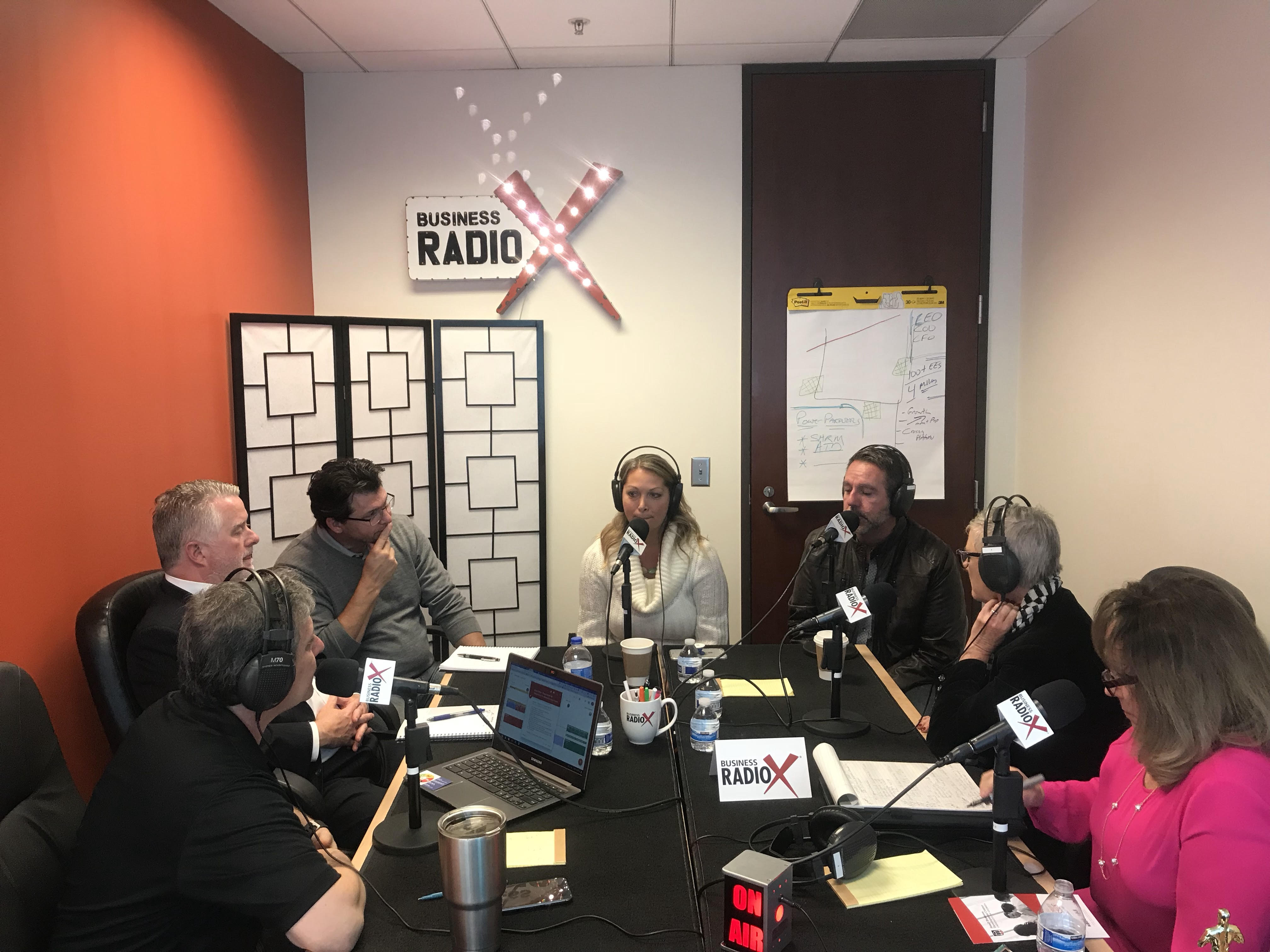


Decision Vision Episode 140: How do I Select an Attorney? – An Interview with Juliana Neelbauer, Drew Eckl & Farnham, and Jackie Hutter, The Hutter Group
Two seasoned business attorneys joined host Mike Blake to discuss factors one should consider when choosing an attorney. Juliana Neelbauer and Jackie Hutter addressed how to find the right fit, setting expectations for the engagement, why the heavily promoted website ratings you see are misleading, why an Ivy League law degree doesn’t guarantee you’ll receive the counsel you’re looking for, and much more. Decision Vision is presented by Brady Ware & Company.
Juliana Neelbauer, Senior Attorney, Drew Eckl & Farnham

Juliana Neelbauer is a senior attorney who is the outside general counsel for companies that are product- or SaaS-centered, or IP-driven and that work with data and sensitive information in highly regulated industries. Her practice leverages her insights in cybersecurity, data management and analytics, government contracting, fintech, consumer-web, enterprise-software, health care delivery, medical products, supply chain, film, and political action sectors. She handles the full lifecycle of her clients’ needs including venture capital or private equity rounds, subsidiary formation, contract or governmental compliance, licensing, international transactions, and mergers and acquisitions. She is known as an attorney who brings an operator’s mindset, a technologist’s know-how, and an executive’s strategy to her client’s legal concerns.
Prior to joining Drew Eckl & Farnham’s Atlanta office, Juliana was the chief operating officer of Ad Hoc LLC. Ad Hoc is a Maryland-based mid-market federal contracting company that builds custom web portals that deliver government services to millions of Americans. Juliana oversaw the scaling of Ad Hoc from a 2-person small business to a 90-employee mid-market prime contractor with a 10x increase in revenues within a 14-month period.
Juliana started her career in software and business operations, founded two high-growth companies, and has overseen the scaling of many startups and mid-market companies in the tech industry before building a technology-focused law firm in the DC-metro area. She was born in Decatur and after more than 18 years away from the State, she was happy to return with her husband and daughter in 2017 to build the Drew Eckl & Farnham technology law practice in Georgia.
Drew Eckl & Farnham
Drew Eckl & Farnham is a full-service law firm that offers deep litigation experience, strategic corporate and transactional counsel, and practical legal advice to companies, individuals and families. Their approach to practicing law is to resolve each new legal matter as expeditiously and efficiently as possible. They strive to propose a legal strategy that directly correlates with the risks involved.
Powered by their diversity, innovation, and commitment to the communities in which they work, Drew Eckl & Farnham has grown to more than 100 attorneys in Atlanta, Albany and Brunswick, Georgia and serves local and national clients throughout the Southeast.
Jackie Hutter, Principal, The Hutter Group, LLC

Jackie Hutter has been recognized for each of the last 8 years for her innovative insights in creating value from IP Strategy with the peer-awarded Top Global IP Strategist by Intellectual Asset Magazine. Ms. Hutter’s IP Strategy clients have been varied, and include a Fortune 500 consumer hardware company, a large alternative energy company, several funded medical device ventures and dozens of startup companies with diverse technology offerings.
From 2011-2015, Ms. Hutter also served as the CEO of a startup battery-related company, which has provided her with a unique vantage point among her experienced colleagues about what it means to work with counsel to generate the critical IP necessary to prevent competitors from “knocking off” the innovator’s technology. Her experience extends beyond the IP realm: she frequently handles contracts and related matters for her clients, especially those relevant to clients’ IP rights.
The Hutter Group, LLC
The Hutter Group, LLC is an IP and legal strategy consultancy. As Principal, Ms. Hutter advises C-Level executives on how to create and enhance return on innovation investment.
They apply decades of experience in IP and business to identify the right IP strategy for your company. They don’t just dive into the technical aspects of your innovative product or technology to generate a patent application for you. Instead, they start with understanding your customers and how your competitors will react to your success. Their goal is to make it cheaper for someone who desires access to your innovation and customers to go through you than around you.
As IP Strategy consultants, they make their living helping you attain your business goals by providing IP solutions that allow you to achieve your desired revenue or exit. Only then do they start down the patent path.
In short, they won’t tell you to spend money on IP just because you can, but because you should.
Mike Blake, Brady Ware & Company

Michael Blake is the host of the Decision Vision podcast series and a Director of Brady Ware & Company. Mike specializes in the valuation of intellectual property-driven firms, such as software firms, aerospace firms, and professional services firms, most frequently in the capacity as a transaction advisor, helping clients obtain great outcomes from complex transaction opportunities. He is also a specialist in the appraisal of intellectual properties as stand-alone assets, such as software, trade secrets, and patents.
Mike has been a full-time business appraiser for 13 years with public accounting firms, boutique business appraisal firms, and an owner of his own firm. Prior to that, he spent 8 years in venture capital and investment banking, including transactions in the U.S., Israel, Russia, Ukraine, and Belarus.
LinkedIn | Facebook | Twitter | Instagram
Brady Ware & Company
Brady Ware & Company is a regional full-service accounting and advisory firm which helps businesses and entrepreneurs make visions a reality. Brady Ware services clients nationally from its offices in Alpharetta, GA; Columbus and Dayton, OH; and Richmond, IN. The firm is growth-minded, committed to the regions in which they operate, and most importantly, they make significant investments in their people and service offerings to meet the changing financial needs of those they are privileged to serve. The firm is dedicated to providing results that make a difference for its clients.
Decision Vision Podcast Series
Decision Vision is a podcast covering topics and issues facing small business owners and connecting them with solutions from leading experts. This series is presented by Brady Ware & Company. If you are a decision-maker for a small business, we’d love to hear from you. Contact us at decisionvision@bradyware.com and make sure to listen to every Thursday to the Decision Vision podcast.
Past episodes of Decision Vision can be found at decisionvisionpodcast.com. Decision Vision is produced and broadcast by the North Fulton studio of Business RadioX®.
Connect with Brady Ware & Company:
Website | LinkedIn | Facebook | Twitter | Instagram
TRANSCRIPT
Intro: [00:00:03] Welcome to Decision Vision, a podcast series focusing on critical business decisions. Brought to you by Brady Ware and Company. Brady Ware is a regional, full-service, accounting and advisory firm that helps businesses and entrepreneurs make visions a reality.
Mike Blake: [00:00:22] Welcome to Decision Vision, a podcast giving you, the listener, clear vision to make great decisions. In each episode, we discuss the process of decision making on a different topic from the business owners’ or executives’ perspective. We aren’t necessarily telling you what to do, but we can put you in a position to make an informed decision on your own and understand where you might need help along the way.
Mike Blake: [00:00:43] My name is Mike Blake, and I’m your host for today’s program. I’m a director at Brady Ware & Company, a full- service accounting firm based in Dayton, Ohio, with offices in Dayton; Columbus, Ohio; Richmond, Indiana; and Alpharetta, Georgia. My practice specializes in providing fact-based strategic and risk management advice to clients that are buying, selling, or growing the value of companies and their intellectual property. Brady Ware is sponsoring this podcast, which is being recorded in Atlanta per social distancing protocols.
Mike Blake: [00:01:13] If you would like to engage with me on social media with my Chart of the Day and other content, I’m on LinkedIn as myself and @unblakeable on Facebook, Twitter, Clubhouse, and Instagram. If you like this podcast, please subscribe on your favorite podcast aggregator, and please consider leaving a review of the podcast as well.
Mike Blake: [00:01:33] So, with this podcast, we’re taking a little bit of a different take on Decision Vision. The overwhelming majority of the Decision Vision podcast topics are framed as a binary, should I do X or should I not do X? Or should I do X versus should I do Y? And some time ago, in an idle moment, it occurred to me that that’s not the only kind of decision that you, the audience, are faced with.
Mike Blake: [00:02:03] You may make a decision to proceed, but then there’s another kind of decision where you then must select. You make a decision that, yes, I’m going to eat out. You arrive at the restaurant and then you are generally presented with the menu. Although, now I guess a lot of them give you a QR code and you have to squint on your phone, which I hate, and I hope that goes away.
Mike Blake: [00:02:24] But I’m going to kind of test out a series of these topics because I do think there’s some value to them for, what I call, sort of a second order decision. You know, we’ve decided to do X, how do we proceed? Because that how do we proceed, typically, involves, again, a choice among various alternatives of how to proceed.
Mike Blake: [00:02:46] And so, today’s podcast topic is actually sort of going Back to the Future, if you will, and you’ll understand why in a second as I introduce our guests. But today’s topic is, How do I select an attorney? And most of us, at some point in our lives, are going to have interactions with and rely upon the advice provided by legal counsel. And that advice may be in a transaction, maybe in contract law, employment law, intellectual property law, you name it. There’s a law out there and there’s an attorney out there who wants to be your advisor and provide that advice.
Mike Blake: [00:03:27] And it occurs to me that it’s not all that easy to select an attorney, not for lack of them. There’s certainly an ample supply of attorneys in the United States who are, again, happy to become your advisor and counselor. But you can be overwhelmed with those choices. And unless you kind of have a legal background or you hang out in the legal community, how do you make an informed decision as to the right person, or the right firm, or some combination of the two to represent you?
Mike Blake: [00:04:05] And, you know, because attorneys provide such critical advice, it’s important that that’s a decision that you make correctly because bad advice or a bad relationship with an attorney that causes you, maybe, to not listen to their advice and not act on their advice can undermine what might have been a good decision to retain legal counsel in the first place.
Mike Blake: [00:04:30] So, we’re having sort of a panel discussion today or a tag team, if you will. And we have two guests today, both of whom are alumni of the Decision Vision podcast. In no particular order other than looking at them on the screen, first is Juliana Neelbauer, who is Senior Associate at Drew Eckl & Farnham, which is a law firm here in Atlanta. They’re a full-service law firm that offers deep litigation expertise, strategic corporate and transactional counsel, practical legal advice to companies, individuals, and families.
Mike Blake: [00:05:03] Juliana focuses her practice on virtual general counsel for for-profit, nonprofit, charitable trade organizations, and high net worth individuals and families, which hail from consumer technology, commercial technology, healthcare, industrial supply chain – boy, that’s a mess – finance, government contracting, and political action industries.
Mike Blake: [00:05:23] Also joining me today – talking about Back to the Future – is the host/victim from the Inaugural Podcast. I think back to, like, Star Trek when they had Christopher Pike as the captain, Jackie Hutter was the first guest ever on the podcast to talk about should I get a patent. And incredibly enough, she’s agreed to come back on.
Mike Blake: [00:05:48] And Jackie has been helping innovators capture the value of their ventures at the Hutter Group since 2008. During this time, and probably not coincidentally, Jackie has been named by her peers as a Top Global IP Strategist for I don’t know how many years now. I don’t know, it’s got to be at least a decade. Every time I open up LinkedIn, she’s named like another top IP something or other.
Mike Blake: [00:06:09] For several years, Jackie took a break from the law as CEO of a startup technology company where she experienced entrepreneurship from the inside, which gives her a unique perspective among patent experts. Prior to striking out on her own, Jackie was a senior intellectual property lawyer at Georgia Pacific and a shareholder at an Atlanta intellectual property law firm.
Mike Blake: [00:06:31] She started her non-legal career as a research scientist in the innovation group of a hair and skin product company. She lives in the Decatur area in a groovy mid-century house with her husband. Far too many pets, and we may hear one of the dogs barking in the background today for no extra charge. And she has two daughters in college. Juliana and Jackie, welcome back to the program.
Jackie Hutter: [00:06:52] Thank you.
Juliana Neelbauer: [00:06:54] So glad to be here.
Mike Blake: [00:06:59] So, here’s a question I want to jump in, and we could almost talk an hour on this one topic, but we’ll just sort of see how this goes. My question is, how do people end up with bad lawyers or at least lawyers that are a bad fit for them? As I said, there’s no shortage of lawyers out there. There’s no shortage of information. You can find out about them, whether they wanted to be found out or not. But, nevertheless, we all encounter scenarios in which we have clients, contacts, friends that are frankly unhappy with their legal counsel, and sometimes they feel trapped in that relationship. In your mind seeing it from the semi-inside, how does that happen?
Jackie Hutter: [00:07:42] Well, I thought about this on the way to drop my daughter’s really awful car at the car mechanic this morning. And the reason why people end up with bad lawyers is the same reason why so many people end up with bad mechanics. They just don’t know what they’re looking for. And, usually, you know, the good news is, it doesn’t really matter because it’s a pretty simple thing. It doesn’t take a whole lot of skill. It takes some skills. It take some expertise. But it doesn’t take a whole lot of expertise.
Jackie Hutter: [00:08:16] But in the case of my auto mechanic – who I adore, by the way – I learned about him from a very dear friend who was himself a car mechanic. And he doesn’t fix his own cars anymore and he happened upon this gentleman’s business. But, importantly, my good friend who introduced me to this car mechanic collects vintage cars. He has a Jensen, and he doesn’t take his Jensen to our car mechanic because he knows that our car mechanic is not qualified to fix a Jensen.
Jackie Hutter: [00:08:52] And my point there is that, sometimes you need a skillset that is really, really hard to find. And not only do you not know what the general skillset is for something but, again, it won’t matter. But if you need something very, very specialized and you don’t know, and you’re likely not going to know, you’re not going to know whether the guy on the other side of the counter knows how to fix that or not, because it’s probably pretty likely that they’re going to say, “Oh, yeah. I can fix this.”
Jackie Hutter: [00:09:24] And when you end up with a with a Jensen, if you will, that’s currently worth $100,000 and then they screw up the wiring on that, it is not worth $100,000 anymore. You’re going to be pretty upset but the damage done and did.
Jackie Hutter: [00:09:41] Now, I think it’s just the nature of the specialty. You could talk about that with any number of other specialties. Doctors, sometimes you just have a broken bone and it’s pretty easy. But sometimes it’s something more serious. And you hope and you should expect that the doctor, he or she, is going to recognize that they are really qualified to do what needs to be done. But a lot of times they don’t.
Mike Blake: [00:10:14] So, in your case, you benefited in your mechanic story. You benefited from the adage that if you want to catch a jewel thief, hire a jewel thief.
Jackie Hutter: [00:10:23] Yes.
Mike Blake: [00:10:24] And, actually, I’m going to come back to that because I do think there are resources that at least purport to sort of be that higher jewel thief to catch a jewel thief. We’ll get there. Juliana, anything that you want to add to that discussion?
Juliana Neelbauer: [00:10:37] Of course, I have something I want to add to that. I’m a lawyer, I love to talk. But, also, because, quite frankly, the reason why I am sitting in this seat and in this role in life, the reason why I went back to law school, was because I personally felt this pain of how do you find the right lawyer and then having a lawyer that you’re not really happy with. And after having that experience in my own businesses, I regretfully shared it with some other technology company owners and discovered, “Oh, I shouldn’t be embarrassed about this. We’re all suffering this fate or a large number of us are.”
Juliana Neelbauer: [00:11:16] And I thought at the time, “Well, this is just a market inefficiency or a gap that needs to be filled.” And so, perhaps foolishly, I left the tech industry, and went back to law school, and put up a shingle, and started serving my management consulting clients with legal services as an attorney in my own firm. And I’m still doing it, so I guess it’s a good sign. And I was trying to solve some of that problem.
Juliana Neelbauer: [00:11:45] But to Jackie’s point, being an industry specialist and who could also provide legal specialty for that industry so that I had deep understanding of your transactions, of your business models, but also of the law that you needed to then overlay on top of that.
Juliana Neelbauer: [00:12:02] But, in addition to all of that, I think it comes down to, now that I’ve been in the seat for a while and I see it from the other side, I think that the client has just given very limited education about the different types of lawyers that are out there, what they can actually do for you. And so, the expectations that they bring versus the expectations, quite frankly, that the lawyer has when you are starting an engagement, the time is rarely spent to truly vet that those are aligned because, yeah, you need a specialist.
Juliana Neelbauer: [00:12:42] But sometimes I find in my practice, half of my clients I would guess, come to me because of my IP/specifically technology industry or product driven experience. And so, they initially come to me with an IP related question, a licensing question, a commercialization question, and that’s all they really want. But then, very quickly, we discover that all of the other aspects of their business that an outside general counsel can provide maybe are even more of what I end up doing for them over time than what they initially came for me as a specialist for.
Juliana Neelbauer: [00:13:17] And so, I think we have to put it on the lawyers that we don’t do a great job of making sure that our clients understand what we really can do. And that’s also outcomes, to Jackie’s point, like, I think people expect that by hiring a lawyer and making that investment, there should be almost like a guarantee and an outcome that’s better than what they could have had on their own. And in many cases, that is the case. But, you know, what is that spectrum of possibility and then also what is the style of communication and working styles like every other human being.
Juliana Neelbauer: [00:13:55] Your lawyer is a part of your team. It’s like hiring a co-founder. And if you don’t think of it that way, if you think of your lawyer as just sort of another vendor that you’re plugging in and out, you’re probably not getting the most value out of them. But you could be. It’s an inefficient relationship. But, also, you’re much more likely to have that feeling of dissatisfaction because you’re not giving them as much information, they’re not giving you as much. And if your communication styles aren’t aligned, what you want delivered to you is not expressed clearly. And then, if they don’t express to you how they’re going to deliver the work so that it’s most useful to you, I think you’re going to be pretty unhappy or, at least, not thrilled.
Jackie Hutter: [00:14:37] And I just have a quick follow up to what Juliana said. The question is, is your lawyer solving a problem or is this lawyer solving your problems? And a lot of lawyers like to solve problems and get their joy, get their pay for solving problems. But they may have very little to do with what your real problems are as a business.
Juliana Neelbauer: [00:15:02] That’s an excellent point. I think Jackie, by the way, I mean, giving her a shoutout, I love sharing this time with her because I refer a lot of clients to her, because I know that she’s not just going to solve a patent problem, but the client specific one. And that is a huge distinction, and so I’m a better lawyer to my client and they’re happier with me when I refer them to someone like Jackie. And I had the gumption to do that as well.
Jackie Hutter: [00:15:29] Right back at you. Right back at you.
Mike Blake: [00:15:31] So, Juliana, you mentioned something in passing, I actually think it warrants a little bit of expansion. So, if you don’t mind, I’d like to pause a bit on that. And I’d love Jackie to comment as well. You talked about a scenario under which maybe an attorney is brought into the team for an initial task. And then, that task develops into a relationship. And, therefore, the spectrum of problems that the attorney is going to address will become broader and the relationship will become deeper.
Mike Blake: [00:16:06] And it strikes me that maybe that is perhaps an example of best practices of how to hire an attorney, to try to figure out a model of, instead of just sort of like a mail order bride kind of thing where you’re getting married sight unseen, can you have a date or two to see if you actually like each other before you really kind of dive in and commit to a massive relationship? Does that make any sense?
Juliana Neelbauer: [00:16:35] It does. And that is almost always the way it starts. Maybe two clients, three, who come to me and said, “You’re going to be our outside general counsel immediately and you’re going to handle everything.” It’s usually a discrete project. Now, the reason why I think that is, is partly fee fear. And that’s a whole another reason, which is the 800 pound gorilla in the room for why people are unhappy with their lawyers. And we definitely need to talk about that some more.
Juliana Neelbauer: [00:17:04] And I think in those cases where it was the case, it was because also critically, I was referred. Or in effect, they knew my work quality, and my work product was going to be good, and they had their expectations set as far as how that would be delivered from another attorney or another professional who could speak to that. Or they actually observed my work product because they saw me in action in a different context, either through mentoring at university or teaching at a university, collaborating with someone else’s project where I wasn’t their counsel and then they wanted me as their counsel.
Juliana Neelbauer: [00:17:38] And so, again, when we live in this world where it’s very difficult to evaluate lawyers or even just assemble the collection of those who are available in a specialty so that you can begin to search them properly, I think it’s really important that you look for folks who you can observe their skill, their expectation of how they want to work, how you want to work with them, and their working style. You know, how they deliver work and how they communicate ahead of time, if possible.
Juliana Neelbauer: [00:18:10] And I know most of the time you have an urgent fire and now we’ve actually got to hire a lawyer. And so, there’s a rush and you don’t have that. And so, in that case, even more, I would say if it’s an attorney who is referred by another attorney, that’s a very good sign, in my opinion.
Jackie Hutter: [00:18:26] What I’d like to say is, it’s just as important for me to love my clients. And I had spent a lot of time, and I’ve actually worked very hard at making sure that the folks who are going to work with me, it’s going to be a good fit. Because if it’s not a good fit, they’re not going to be happy and I’m not going to be happy.
Jackie Hutter: [00:18:46] So, I’ve created an intake system where I get to know people. I make sure that they’re the right people for my practice because I have a very bespoke, different type of practice. But the reason I learn that is through, you know, real, not very comfortable experiences. I woke up as an equity partner in a law firm where I was being paid hundreds of dollars an hour and more money than I’ve ever made in more than 15 years ago when I left that position.
Jackie Hutter: [00:19:18] And I woke up one day and I said, “I have nothing in common with my clients. We don’t really click. And yet they were paying me ridiculous amounts of money, and neither of us liked each other.” And that’s no shade on them, that’s no shade on me, but it was not a good fit from that standpoint. And, yet, because I was working at a law firm with massive overhead, associates reporting to me, all the stuff that goes along with that, my business model did not allow me to say, “You know what? You need to go somewhere else because this is not a good fit.” And that creates unhappy clients, unhappy lawyers, and it becomes a cycle that’s really, really difficult to extricate yourself from.
Mike Blake: [00:20:08] So, I want to stick on that point, too, because I think that’s really important. I don’t know if it’s right or wrong, but I can say as a matter of my practice, I do make clients in a way sell themselves to me. I make them jump through hoops to make sure that I think it’s a good fit. It’s sort of a life’s too short thing. And I also don’t want to have a bad outcome because there’s just a bad fit. I don’t want that on my record basically, right? And I suspect that both of you do the same thing in some fashion or another.
Mike Blake: [00:20:41] And to somebody listening now, going back to the topic how do you choose a lawyer, is it a red flag if I’m a client and I call an attorney up and I say, “Hey, I need this done. They say, “Ok, I’ll send over an engagement letter.” No conversation. No hoops to jump through. No prequalification. Not even any hint of a client acceptance process if you’re a larger firm. Is that in itself a red flag? Like, “Geez, really?”
Juliana Neelbauer: [00:21:10] Yeah, 100 percent. Like, I’m going to go back and say it again because I think it’s worth repeating, you know, it’s like hiring a co-founder. It’s like hiring another C-suite operator of your company. And so, to Jackie’s point, yeah, you got to get along. And in her case, love her clients, which is why I love referring mine to her. But, also, you’re going to be in the trenches.
Juliana Neelbauer: [00:21:33] By the way, my clients and I joke that when they hire me, they expect me not only to live a long time, but to outlive them, because they don’t want to have to go find another lawyer if I die before them. So, I’ve got to be a lawyer forever and I’ve got to do it longer than they’re going to be alive. And so, you know, as a result, like this is a long term relationship.
Juliana Neelbauer: [00:21:53] I have many clients now that has exits from companies. Some had companies that didn’t work out. And I will stick with those founders in different contexts for years and years and years. And so, is that worth an extra hour, an extra 30 minutes of discussion upfront? I think so. I don’t know about you. I wouldn’t want to get married to somebody – going back to your analogy, Mike – that I hadn’t had at least a 30 minute worthy conversation. When you don’t do that, both sides are treating this like a purely transactional relationship. And that is the fiction. This is a deep relationship over time.
Jackie Hutter: [00:22:32] So, to Juliana’s point, I tell clients and any potential new client, that contacts me, I make sure that in our initial call, I say, “You know what? You’re not going to hear this from any other lawyer I know.” Maybe Julianna, because I have done an intake with her. I say, “I will always tell you the truth, even though you don’t want to hear the truth. And I will always treat your money like it’s my money. And if that’s not, if that’s not something you want, if you want somebody to say yes to you all the time, somebody who makes you comfortable -” which is, effectively, what I was required to do when I was an equity partner at a law firm, I couldn’t make my clients uncomfortable because – oh, my gosh – if they’re uncomfortable, if I cause them any kind of like, “I think maybe we should try something different,” they might go down the street to another expensive law firm.
Jackie Hutter: [00:23:23] Because in actuality, there was really no competitive differentiation between what I was doing and any number of expensive law firms that also existed in the city – I have a federal practice. I’m a patent lawyer – but throughout the country.
Mike Blake: [00:23:39] So, let me change gears here. If you look at most law firm websites and the bios, this is changing a little bit, I think, to be fair. But it hasn’t changed enough, in my view. An attorney’s academic credentials are very much front and center. And I’d like to get both of your viewpoints, how important should the brand name of the school – you never know if that person graduated top or bottom of their class – how much should the name of the school matter in terms of selecting who an attorney is going to be?
Jackie Hutter: [00:24:17] You’re asking somebody who went to a fourth tier law school in another city that had the same name of a law school here in Atlanta that wasn’t accredited. My resume went into the circular file of every law firm that I applied to. And I was at the top of my class. I had all kinds of rewards or whatever. And bottom line is, I went to a really good school for where I lived in Chicago, but nobody knew it outside.
Jackie Hutter: [00:24:46] And I was fortunate enough to get brought in to a very prestigious law firm, working with a very prestigious lawyer/litigator at the time. And everything is history in that regard. But I can say that some of the least talented lawyers I have ever worked with and worked directly with went to some of the best law schools, unquestionably.
Jackie Hutter: [00:25:09] But how do you know that from the outside? At the end of the day, where you went school, often, is an infinity game. At least there’s some perspective. There’s some assumption that somebody else has done the filtering. And you have to worry about fewer things. But that requires you to have absolute confidence that the filtering was done correctly. And that’s irrational, if you ask me.
Juliana Neelbauer: [00:25:38] Thank you for saying that, Jackie. A hundred percent. Well, it’s a filter. But is that filter relevant to why you’re hiring the attorney? So, I went to, I’ll say, an upper mid-tier law school, University of Maryland School of Law. And I went to an Ivy League undergrad. And neither of those degrees are framed on my wall in my office because that’s how much I think they matter to my practice of law, by the way.
Juliana Neelbauer: [00:26:05] But I do agree that they do create an efficiency and a filter for those who need to quickly sort through a thousand lawyers. And it matters too. And why would that matter? If you are in the middle of a high stakes, a federal appeal, and the people who are going to determine the outcome of your issue, your problem, are people who care about that, it could be a useful tool to consider putting in the quiver or a useful arrow to put in the quiver to have an attorney who’s got a storied degree or background.
Juliana Neelbauer: [00:26:43] If you need someone to write your IP commercialization agreement for a specific type of software, I think a much better filter is whether that person understands that software or software in general, or commercialization of software in the world or commercialization at all in the jurisdictions where you’re looking at, or if they’ve ever had to think about the commercialization of a patent, in Jackie’s case, and how that actually plays into your business plan.
Juliana Neelbauer: [00:27:11] And so, I think it is perfectly relevant and reasonable if you’re looking to use the appellate system to change the law for your industry to try to get somebody who’s got the credentials that a federal judge would appreciate, who’s going to help adjudicate and determine the outcome of your appeal. But in most other cases, I think industry experience, I think the ability to mesh with you and your perspective as far as how legal services are going to be prioritized and delivered communicates well with you, has good rapport, and has just the raw skill to do the work is much more important.
Jackie Hutter: [00:27:49] And I would say from the standpoint of the business, you know, an entrepreneur that needs real world guidance in a way that somebody who’s a large corporation may not need that kind of guidance, you’re much more likely to find somebody with real world experience that went to a “lower tier law school” than went to one of the Ivies that may have had a job before, may have gone to school at night.
Jackie Hutter: [00:28:16] Because you’re not going to get somebody who went to GSU versus here in Atlanta if somebody went to Georgia State at night versus somebody who went to Emory. And you want them to to give you practical advice. And the reason why they went to GSU, Georgia State, at night was because they were working in a laboratory during the day to feed their family. In the patent world, that’s a big deal. Somebody who has actually got practical science experience so their law degree isn’t as “premier” as going to Emory. But the reasons they went to the lower tier school or indicative of their expertise as you need in context.
Mike Blake: [00:28:54] So, Juliana alluded to an image which I want to touch upon – so it’s great you’re basically doing my job for me – and that is starting off with a list of a thousand lawyers. And one way one might get a list of a thousand lawyers might be to look at the Martindale-Hubbell website ratings, that sort of thing. And I assume that’s still a thing. I actually didn’t look for this podcast, but I suspect it’s still out there. So, from people or industry insiders, definitionally industry insiders, how useful are those?
Juliana Neelbauer: [00:29:34] How many referrals have you gotten from those kind of sources, Jackie?
Jackie Hutter: [00:29:37] I don’t. A lot of them are business models of the folks that do the books. I was a Super Lawyer one year. I had no clue why I was named a Super Lawyer. But they sent me a solicitation, “Send us X number of dollars so you can have your pretty picture in the magazine that comes out every year.”
Mike Blake: [00:30:03] So, I want to come back to that.
Jackie Hutter: [00:30:06] There’s some criteria for reaching that point. But I actually don’t know what it is. Now, on my top IP global IP strategies or whatever, they do solicit an advertisement for me every year for several thousand dollars. I have never advertised and that has not affected my ability to be named every year. So, you know, it’s kind of a black box as far as I understand.
Juliana Neelbauer: [00:30:35] I would say I have the same experience. I mean, maybe I get like a spam email here, and I’m not sure if it’s a spam email with a referral from some of these places. But, honestly, that is not any part of my marketing or my business development pipeline at all. And so, if I was out in the world trying to find a lawyer – that’s either the Jackie or the Julianna or someone similar who I felt like would be a good fit – and I could bet they were quality, I think it’s kind of logical to go to your industry events. You could go to the legal committee or related industry events, but those are kind of adjacent. Those tend to be both people who care a lot about effecting legal protocol for your industry or are marketing themselves to other lawyers.
Juliana Neelbauer: [00:31:26] But if you go to the actual industry events or blogs and see which lawyers are actually engaged with your industry, and are present in it, and interacting with it, and accepted and embraced by it, I think you can get your hundred person list or even a five person list, and that five person list is going to probably be a lot more representative of who is doing the real work related to what you need done than the opposite.
Juliana Neelbauer: [00:31:52] I mean, if you just go to a podcast digest and put in patent law Georgia, Jackie Hutter’s podcast is going to come up and you’ll be able to listen to her work product, in effect, by listening to her talk about the specific issues that you care about. I think it’s a much better way to create a list.
Jackie Hutter: [00:32:12] And the neighborhood list serve, like so many of us have these days. And people ask, “I need an estate lawyer. Who would you hire?” I’m pretty sure that when I, as somebody who the neighbors know, is a senior lawyer says, “Yeah. I have used this person. And even though I’m not an estate lawyer, I like what they do.” I know nothing about estates and trust law, but I know somebody who’s handling my stuff, my things that are important to me, and I feel they’re doing a good job. The likelihood that they’re going to also do a good job for you is probably better. Not always the case, but I at least know who I would and wouldn’t recommend.
Jackie Hutter: [00:32:54] Because when I recommend somebody, my reputation is on the line. I consider my reputation to be on the line. Even though I don’t make any money from that but, still, people rely on me for my expertise, and it’s meaningful to me. So, I would ask people who are in the business who have gone farther along than you, and maybe had an exit or maybe had a situation, and they were happy with the result.
Jackie Hutter: [00:33:21] And, you know, Mike, you always like to say, what business result are you seeking to obtain from whatever decision you’re making? And so, look around for other people who have been through the entire process and see what their result was and whether or not they were happy with that.
Juliana Neelbauer: [00:33:40] Can we highlight that, what Jackie just said in particular. The part about it’s her reputation on the line, Mike, you said the same thing about taking in a client and that you want it to be a good relationship because, quite frankly, it’s going to hurt your reputation if it goes sideways. This is so important.
Juliana Neelbauer: [00:33:58] It’s not just, you know, reinforcing existing networks or cronyism to talk to other lawyers, or your accountants, or your wealth managers, or your community entity, or industry group leaders about who they like because they have that real world experience. And it’s their reputation on the line if they refer you to somebody who you’re going have a bad experience with.
Juliana Neelbauer: [00:34:21] And oh, by the way, for Jackie and I under certain jurisdiction interpretations of our ethical rules under the bar, when we refer someone to another service provider, particularly another lawyer, in some cases we can be liable for malpractice performed by that secondary attorney. Now, not in all cases, but in some cases you can. So, there’s that thin risk added on top of our reputational concern that all lawyers feel every time we make a referral to any other third party service provider for our clients. And I don’t know about you, I take that very seriously because you can’t control that other person’s actions. So, you’ve got to know from experience they’re going to do a good job.
Jackie Hutter: [00:35:03] I’m always very careful also telling somebody how I know somebody. I have worked with this person or they have actual knowledge of the work they’ve done or I met them and they seem like they know how to do it. But I’m not going to necessarily push into any real degree of knowledge about whether I know that they’re trustworthy or not.
Jackie Hutter: [00:35:27] And maybe that comes from the fact where I grew up. I’m from Miami, back in the bad old days, and everybody wanted to steal your money. So, what it was or do something else that was not good because, you know, it’s Miami watch Miami Vice, it’s actually worse in Miami Vice. It wasn’t as pretty. But in any event, you created your own networks and those weren’t who you went to church with or who you went to school with or anything, because you couldn’t trust anybody in an environment like that unless you really knew them.
Jackie Hutter: [00:36:01] And so, we created these very diverse networks of people, and the focal point of creating those networks was the canoe that they were trustworthy. And the reason they were part of your network is because they had been vetted by somebody else you trusted. And I treat every referral I have today like that. And I cannot attest to that. I’m absolutely honest and straightforward about that.
Mike Blake: [00:36:30] So, you touched on something that I need to make sure that I cover today. A big negligence for me as a podcaster if I don’t. And I’m probably going to put you ladies in the hot seat, but I know you can handle it. What is a Georgia Super Lawyer? What does that mean? If I’m a client and I see that somebody is a Georgia Super Lawyer or Super Lawyer someplace in their bio, and they shout it out on LinkedIn, I mean, does that say, “Man, I got to hire that person.” Do I have a cape?
Jackie Hutter: [00:37:03] This is a much funnier question than it was a year ago, because there’s now a guy who’s got a set of billboards – have you seen these, Juliana? At least they’re up on 85 on my way. Next time you’re going to go down the highway from your house, look at this. I’m sorry, we’re going sideways.
Jackie Hutter: [00:37:21] There’s a bunch of billboards by a lawyer who says he is the superlawyer.com, which is not a Super Lawyer, TM. Because a Super Lawyer is a trademark of the company. So, this guy, it’s like, how could he be the superlawyer.com but he’s not a Super Lawyer, TM. So, that’s indicative of the fact, it’s like, “You don’t know. I don’t know. Who knows?” It sounds like a trademark infringement suit to me.
Jackie Hutter: [00:37:56] But bottom line is, like I had alluded to before, I was a Super Lawyer. I have lots of friends who are Super Lawyers. You know, there’s some filtering mechanism that they get you. Juliana, you have more information on that.
Juliana Neelbauer: [00:38:12] Yeah. So, our firm looked into it, because there was, actually, a women’s law group said, “We should make sure that the women and the folks who are represented through the diversity committee are also participating in whatever it needs to be done to ensure that they can be nominated, if their own networks are not deep enough to nominate them.” And so, we looked into it.
Juliana Neelbauer: [00:38:34] And for Super Lawyers, unlike some others, you do have to create an account to nominate somebody so that you can get into their marketing pipeline as a lawyer. And it is only other lawyers nominate lawyers. You have to have multiple other lawyers nominate you and they can’t be from your firm. Maybe one or two, but you can’t. And as a nominator, you can’t just nominate everyone in your firm. For every person that you want to nominate in your firm, you have to nominate either one or two or two or three other lawyers.
Juliana Neelbauer: [00:39:04] And so, what is your motivation? I mean, there isn’t a lot of disincentive, again, to not just nominate a bunch of other people. Except for the fact that, again, if you do so, you’re on the record in some level and potentially there’s some liability there. But since this is through a pipeline and it’s not directly referring to a client, that’s less of a risk. I would say, there are some where it definitely feels much more pay to play.
Juliana Neelbauer: [00:39:28] Super Lawyers does, in fact, have a process where a certain number of other lawyers, more than two, have to nominate you and they can’t be from your firm. So, there’s less of an incentive to just nominate your own team. And so, that is not a perfect filter. It’s better. It is a filter, I think. I think it has some value.
Juliana Neelbauer: [00:39:50] Because, again, I just have a feeling from my experience that our jobs are hard. It’s very easy to make mistakes in the job that requires as a baseline you can perfect. Because think about it, if we aren’t perfect, that could lead to very bad outcomes for our client. And so, almost every lawyer could wince about thinking about moments in life and in practice where they haven’t been perfect. And often that happens in the context of performing in front of another lawyer who observed you being imperfect.
Juliana Neelbauer: [00:40:24] And so, to get another lawyer to want to say, “Yeah, this person is super” – and, oh, by the way, lawyers are very competitive – I think actually there’s some value to that. But beyond that, I think to my point, it is not a deep filter. It is a filter.
Jackie Hutter: [00:40:45] So, I don’t have a marketing budget and I haven’t been nominated for being a Super Lawyer since I was in a law firm. And the referrals that I get, typically, are from my own clients who are happy with what I do. So, presumably they think I’m a Super Lawyer, but it’s not in the context of some magazine that gets floated and it becomes marketing collateral that’s distributed, you know, in all kinds of press releases and stuff every year.
Jackie Hutter: [00:41:15] But more power to anybody whose name is Super Lawyer. Like, I have dear friends who were Super Lawyers. No shade on them. But if I was choosing a lawyer, you know, it wouldn’t be because they were a Super Lawyer.
Juliana Neelbauer: [00:41:26] That might be a great filter question when you’re interviewing a lawyer going to some of how do we workshop, your real question here, Mike. One of the questions that you could ask is, what percentage of your existing clients are referrals from your other clients?
Jackie Hutter: [00:41:42] That’s a good question.
Juliana Neelbauer: [00:41:43] And just even if they’re a young lawyer and they just haven’t had enough time to have it be that high of a percentage, it would be very informative for me as a potential client to hear that answer and how they address it.
Mike Blake: [00:41:54] I think that’s a fair question that probably has different degrees of relevance depending on what area of law. It’s probably okay if you’re seeking a personal injury attorney, it may be okay that you saw them on the side of a bus, because just the nature of that business or DUI kind of thing. I know that’s not your world. But you’re right, it does sound to me intuitive that a very fair question to ask is, where do most of your referrals come from?
Jackie Hutter: [00:42:25] So, Mike, you brought up the bus side, and this is something that’s very passionate about this. And I tend to drop a lot of criticisms to my fellow attorneys at times as you think you know. And this is not just buses, this is not just billboards, but this is any swag that you get. If your potential lawyer takes you to lunch, and gives you some swag, and takes you to baseball games or whatever, and you’re not a real client who’s delivering revenue to them now, recognize those billboards don’t pay for themselves. That swag doesn’t pay for themselves.
Jackie Hutter: [00:43:04] So, it’s a loss leader for them where they’re going to get that money back somehow, whether they’re going to beat it out of your hide or out of every client’s collective hide. But from my perspective, any time I see a law firm that is spending huge budgets on marketing in a way that does not result in substantive content for a client that lets them learn something to drive better decisions, that’s like a television commercial watching a primetime TV show.
Mike Blake: [00:43:43] Is it fair for a client to ask an attorney for specific references? Somebody that they could call and ask a client or previous client how happy they were with their work?
Jackie Hutter: [00:43:53] Absolutely. And a couple of years ago, there’s a very famous attorney – of course, I won’t say their name – who was a contact of mine. And asked that attorney for referrals, they were in the startup world and wanted to see whether they were a good patent expert, because they’re in all the startup shows. They’re everywhere. So, you know, it’s like you would think this would be the person that you would hire to do your startup patent work for you, very senior person in town.
Jackie Hutter: [00:44:22] And this patent person told my contact that it would be impossible to give the names of other clients that they had worked for because that would be a violation of attorney-client privilege. And I had never heard anything like that before. And I said, “Well, if they don’t want to introduce you to their existing clients and to satisfy clients, you, by then, can take a negative inference on that and assume that there are none.”
Mike Blake: [00:44:51] [Inaudible].
Juliana Neelbauer: [00:44:52] Oh, okay. Okay. Okay. I’m going to weigh in on that. So, I agree with everything Jackie said up to the very last inference there being such a broad brush. There are certain types of practice areas where the client that might be related to what you’re doing, in fact, might be needing some confidentiality because there’s an active litigation matter. And just the fact that they’ve hired this attorney, this fancy, well-known attorney could be very bad for their business
Jackie Hutter: [00:45:18] But in the patent world, your name is public record on the pad.
Juliana Neelbauer: [00:45:24] Yeah. So, I just don’t want that to be painted across all law. But not every single client, if they only have three clients or four in your industry, and they’re all new, and it’s a litigation attorney and a litigator, and so you need a reference. They should be able to give you some client reference or multiple, even if they can’t give you one that might be directly related your industry right now. And then, also, it’s information. You now know breaking into your industry is a more recent experience for that attorney because they aren’t currently in active litigation right now. And that usually means they’ve only had that kind of client for the last two-and-a-half years max. So, there are other attorneys that might have more experience in your industry. Maybe you should look around.
Mike Blake: [00:46:16] We are talking with Jackie Hutter and Julianna Neelbauer. And the topic is, How do I choose a lawyer? In the financial world, there’s often public record when people sort of have marks against them, whether it’s an official censure by an accrediting organization or a complaint filed with a regulatory agency. Is there anything similar that pertains to the legal profession where I could do my own background check and see if there have been any complaints filed, say, with the Bar Association or if there’s been a censure or anything just to at least do that that basic level of due diligence?
Juliana Neelbauer: [00:47:00] Yes. In fact, unlike other industries, there’s at least three places that you can search to see if your attorney has been subject to an unhappy client outcome. One of them is the the court system itself, where they can file a malpractice claim against the attorney. Another one is a grievance proceeding with the bar association. And if you’re not sure how to search for that, you can even call the bar association and they have clerks that will help you look that up. That’s a second resource for that.
Juliana Neelbauer: [00:47:28] And the bar one for the grievance is nice, because even if it doesn’t rise to a level where the client can afford to file a claim in court against their attorney, or it doesn’t rise level where they could show damages easily where they could file a claim in court, if they still have a legitimate ethical grievance with their attorney, they can file a grievance with the Bar Association.
Juliana Neelbauer: [00:47:48] And then, third is the Better Business Bureau. I mean, again, this is where I come back to, you know, we are vendors, we’re partners in your business, but we are running our own operations here. And so, you could certainly have consumers file unhappiness-es with the Better Business Bureau too. And Jackie are there others?
Jackie Hutter: [00:48:10] Yeah. But while practically speaking, however – and I have recent experience on this – we had an outside counsel for two of my clients. One was an entrepreneur, a small business. And another one is a fairly large company, well-known company. And outside counsel was doing work for us under my management. And who knows? Maybe he has a health issue, maybe he has a drinking problem, who knows? Because for a lot of lawyers, especially when you have time dependent things like litigation or you have dates, you expect your lawyer to report stuff to you and to give you the information, and, of course, respond, but also respond in a timely manner.
Jackie Hutter: [00:48:53] And in this case, we found out because no news was not good news in this case. And what ended up happening is, there was a clear pattern in retrospect that this lawyer was not maintaining ethical standards. Yeah, it was likely malpractice. But for both of these clients, the decision was just like, “Let’s just find somebody else and move on and mitigate the damage here.” Because I was managing things, we found that before there was real damage.
Jackie Hutter: [00:49:25] But what the effect was just, basically, let this guy off because he did things. It didn’t make sense for us to make a complaint, you know, because there really was no damage because we were able to stop that damage. But this guy is just going to go ahead and continue to whatever other health problem he has or drinking problem or whatever, whatever reason he’s not maintaining ethical standards.
Jackie Hutter: [00:49:51] And is he the equivalent of letting somebody drive a car without all his faculties? Maybe. But he’s not going to hit my client. He’s not going to hit me anymore. It’s an awful thing. But what do you do? And so, relatively speaking, just like with medical malpractice, there’s very few complaints made where there should be.
Juliana Neelbauer: [00:50:13] Although there are kind of legal industry gossip sources, too, that you could go to. Some of them are not very journalistic at all and potentially are defamatory. Others are, maybe, a little bit more balanced like Above the Law. Which, by the way, if you search for Jackie on Above the Law, all you’ll find is positive stuff about her.
Jackie Hutter: [00:50:40] Wait. Am I on Above the Law at all? I didn’t know I’m in Above the Law.
Juliana Neelbauer: [00:50:42] You are. You’re an IP Dealmaker listed on there in an article for winning an award as an IP dealmaker at the IP Dealmakers Forum.
Jackie Hutter: [00:50:51] That was a trivia contest.
Juliana Neelbauer: [00:50:54] Yeah. But you still get a plug. You get a plug on there. So, if you want to kind of see what might not have been filed, but it’s sort of like gossip – and it’s usually about a firm, not necessarily a specific attorney, unless a specific attorney does something very untoward – that is another source you could go to.
Juliana Neelbauer: [00:51:13] And Law 360 covers the industry, but it is more, I would say, always positive generally and not necessarily so much gossip. But it’s sort of like, again, dating and hiring anybody in your C-suite. It’s not always easy to know unless, again, you had this referred to you by one or more people in the field or people in your industry. And this is why I go back to, like, watch this person in action as much as you can, hear them in action, read them in action as much as you can.
Mike Blake: [00:51:45] We’re running overtime here, but if you can bear with me, I have a couple more questions I’d love to get through because I think they’re important. And one of them is, how would you advise somebody who’s retaining counsel but there’s a disconnect between either the reputation or just the general feeling between an attorney and the firm for whom they work? It could be a situation, maybe you like the attorney, but maybe you don’t love the firm so much. Or maybe it’s the opposite. Maybe you don’t love the attorney, but the firm has a reputation of being the “BEST FIRM IN TOWN, TM.” Do you try to reconcile those things? Do you run screaming if those two things are not aligned, you just sort of shuffle the deck and start over? Do you prioritize one or the other? How do you address that mentally?
Juliana Neelbauer: [00:52:41] Again, this relationship is really between you and the attorney for the long term. In my experience, the firm can make that relationship more or less fun based upon administratively, like how easy they make it to work without attorney or difficult. If that attorney is not empowered, unfortunately by their colleagues that they might work for, to work directly with you, and their colleagues are going to insert themselves in your work, and you don’t like those colleagues, you, as a client, have a lot of power to request who you want to work with and make that demand. And say, “I only want to work with so-and-so,” or “Not that person.”
Juliana Neelbauer: [00:53:21] And I had a client whose business model was in ESG space, and she was a female founder who was helping to fund other female founders. So, shoutout to EnrichHER and Dr. Roshawnna Novellus for what she has done and her success. And I’ve had clients in that space who come to me like her or others who have said, “I really want all of the attorneys who work on my project to meet diversity standards of the Mansfield Requirements -” which is a diversity standard, “-to represent my company.” And so, in some cases, “I want only female attorneys” or “I only want people who represent that on my case.” And in some cases, you can have quite a bit of power to get that outcome if the firm is willing to accommodate that and if it’s a legal request for you to make.
Jackie Hutter: [00:54:09] And then, also, if you’ve been assigned an attorney that you just don’t feel is the right fit for you, and if you like the managing attorney, I have no qualms with telling my primary IP or outside LP counsel, “No. I don’t want that person working on my stuff.” Or, “I just did not feel that they really were passionate about,” “They didn’t get me,” that kind of stuff, that’s not happening anymore and we need to find somebody else.
Juliana Neelbauer: [00:54:39] And, in fact, the bar rules make it very difficult, if not impossible, for a firm to place a non-compete so that the attorney can’t work with a specific client. Because it is so important in our judicial system and our justice system for the client to have that choice of who is going to represent them. And so, to Jackie’s point, you have the right to ask for counsel that you request, and need, and want. And if you don’t feel like you’ve got good representation, you have the right to request representation that you want.
Mike Blake: [00:55:17] So, ladies, we’re sort of out of time, but I know we didn’t get to all the questions that I wanted to. And there are probably other questions that we cover, but maybe somebody, a listener, would like to go into more depth or, hey, maybe somebody who listen to this wants to hire one or both of you guys, can they contact you for more information? And if so, what’s the best way to do that?
Jackie Hutter: [00:55:43] Well, for me, I’m at jackiehutter@gmail. And I also have a podcast, Winning with Patents (and IP), that’s now entering its second season. And I write a lot on LinkedIn, so look for me on LinkedIn. And if I sound like somebody you think might be fun and create value for you to work with, I’d love to hear from you.
Juliana Neelbauer: [00:56:05] Similar to Jackie, I’m pretty prolific on LinkedIn. I’m on Instagram. I’m on Twitter. I’m getting off of most of the Facebook products and may wind down my Instagram presence soon. But for the time being, I’m cemented there. So, you certainly can reach out to me there, neelbauerj – that last name is so long. You certainly are welcome to look at the show notes to get that email address. But neelbauerj@deflaw, D-E-F-L-A-W, .com is my email address. And I’m certainly always interested to talk to new potential clients, especially those that have heard me or seen me speak or write. And so, you know, seeing that work product, if this feels like a good communication style, I’m very interested in speaking with you.
Mike Blake: [00:56:53] That’s going to wrap it up for today’s program. I’d like to thank Jackie Hutter and Juliana Neelbauer so much for sharing their expertise with us.
Mike Blake: [00:57:01] We’ll be exploring a new topic each week, so please tune in so that when you’re faced with your next business decision, you have clear vision when making it. If you enjoy these podcasts, please consider leaving a review with your favorite podcasts aggregator. It helps people find us that we can help them. If you like to engage with me on social media with my Chart of the Day and other content, I’m on LinkedIn as myself and @unblakeable on Facebook, Twitter, Clubhouse, and Instagram. Once again, this is Mike Blake. Our sponsor is Brady Ware and Company. And this has been the Decision Vision podcast.