Business RadioX ®

  • Home
  • Business RadioX ® Communities
    • Southeast
      • Alabama
        • Birmingham
      • Florida
        • Orlando
        • Pensacola
        • South Florida
        • Tampa
        • Tallahassee
      • Georgia
        • Atlanta
        • Cherokee
        • Forsyth
        • Greater Perimeter
        • Gwinnett
        • North Fulton
        • North Georgia
        • Northeast Georgia
        • Rome
        • Savannah
      • Louisiana
        • New Orleans
      • North Carolina
        • Charlotte
        • Raleigh
      • Tennessee
        • Chattanooga
        • Nashville
      • Virginia
        • Richmond
    • South Central
      • Arkansas
        • Northwest Arkansas
    • Midwest
      • Illinois
        • Chicago
      • Michigan
        • Detroit
      • Minnesota
        • Minneapolis St. Paul
      • Missouri
        • St. Louis
      • Ohio
        • Cleveland
        • Columbus
        • Dayton
    • Southwest
      • Arizona
        • Phoenix
        • Tucson
        • Valley
      • Texas
        • Austin
        • Dallas
        • Houston
    • West
      • California
        • Bay Area
        • LA
        • Pasadena
      • Colorado
        • Denver
      • Hawaii
        • Oahu
  • FAQs
  • About Us
    • Our Mission
    • Our Audience
    • Why It Works
    • What People Are Saying
    • BRX in the News
  • Resources
    • BRX Pro Tips
    • B2B Marketing: The 4Rs
    • High Velocity Selling Habits
    • Why Most B2B Media Strategies Fail
    • 9 Reasons To Sponsor A Business RadioX ® Show
  • Partner With Us
  • Veteran Business RadioX ®

Workplace MVP: Rosana Preston, Rosedale Transport

October 7, 2021 by John Ray

Rosedale Transport
Minneapolis St. Paul Studio
Workplace MVP: Rosana Preston, Rosedale Transport
Loading
00:00 /
RSS Feed
Share
Link
Embed

Download file

Rosedale Transport

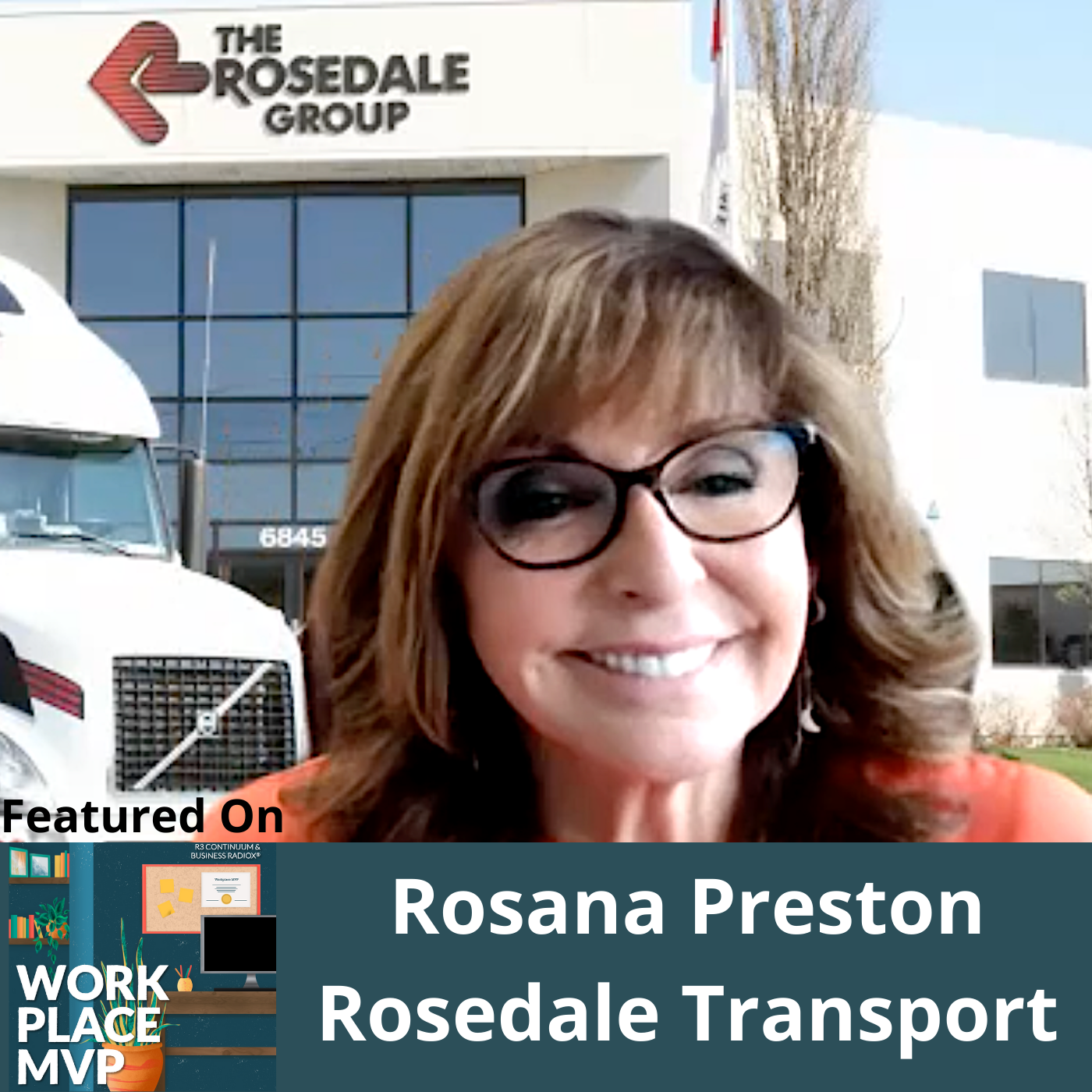
Workplace MVP:  Rosana Preston, Rosedale Transport

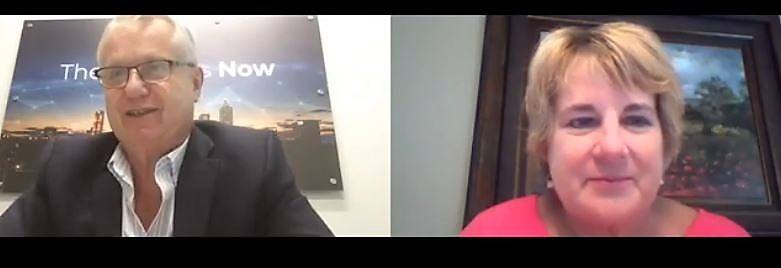
Rosana Preston, Director of HR and Administration for Rosedale Transport, has decades of experience in trucking yet makes responding to changing times a priority. In this conversation with Workplace MVP host Jamie Gassmann, she cites other fundamental principles for her work and for Rosedale corporately, including a culture of transparency, respect in the workplace, consistency, and a sense of fun. As Rosana says, “You’re never too big that you can’t listen. You have to keep your finger on the pulse of what’s important to people.” Workplace MVP is underwritten and presented by R3 Continuum and produced by the Minneapolis-St.Paul Studio of Business RadioX®.

Rosedale Transport (The Rosedale Group)

The Rosedale Group is a privately held, family-owned Canadian company. Opening its door with a fleet of one truck and two customers, today Rosedale has grown to 15 terminals with a fleet of 40 straight trucks, 500 tractors, and 1300 trailers that are operated and supported by over 800 employees.

Rosedale’s growth was based on quality service, competitive rates, and the strength of its people. These factors remain to this day why customers choose Rosedale.

For years, Mississauga, Montreal, and Ottawa were their only terminals. That evolved to include London, Barrie, Quebec City, Granby, and Dalton, Georgia. In 2001, Rosedale expanded into Western Canada with terminals now in Winnipeg, Saskatoon, Regina, Edmonton, Calgary, and Vancouver.

Over their long history in transportation, they have steadily improved their people resources, technology, equipment, and terminal network. Rosedale continues to offer quality service to its customers and is committed to getting the job done, and done right.

Company website

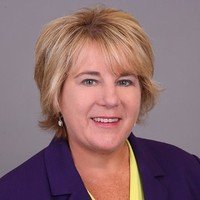
Rosana Preston, Director, Human Resources & Administration at Rosedale Transport
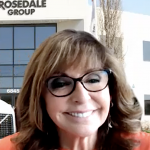
Rosana Preston, Director, Human Resources & Administration at Rosedale Transport

Rosana Preston has been with Rosedale Transport since 1991. She began her career in trucking in the safety department, moved into training and development, and eventually into HR and Administration at Rosedale.

Her priority is to create a respectful workplace that encourages growth and psychological safety.

Rosana is the 2020 HR Leader of the Year from Trucking HR Canada, celebrating her 50 years in the trucking industry.

LinkedIn

R3 Continuum

R3 Continuum is a global leader in workplace behavioral health and security solutions. R3c helps ensure the psychological and physical safety of organizations and their people in today’s ever-changing and often unpredictable world. Through their continuum of tailored solutions, including evaluations, crisis response, executive optimization, protective services, and more, they help organizations maintain and cultivate a workplace of wellbeing so that their people can thrive. Learn more about R3c at www.r3c.com.

Company website | LinkedIn | Facebook | Twitter

About Workplace MVP

Every day, around the world, organizations of all sizes face disruptive events and situations. Within those workplaces are everyday heroes in human resources, risk management, security, business continuity, and the C-suite. They don’t call themselves heroes though. On the contrary, they simply show up every day, laboring for the well-being of employees in their care, readying the workplace for and planning responses to disruption. This show, Workplace MVP, confers on these heroes the designation they deserve, Workplace MVP (Most Valuable Professionals), and gives them the forum to tell their story. As you hear their experiences, you will learn first-hand, real life approaches to readying the workplace, responses to crisis situations, and overcoming challenges of disruption. Visit our show archive here.

Workplace MVP Host Jamie Gassmann

In addition to serving as the host to the Workplace MVP podcast, Jamie Gassmann is the Director of Marketing at R3 Continuum (R3c). Collectively, she has more than fourteen years of marketing experience. Across her tenure, she has experience working in and with various industries including banking, real estate, retail, crisis management, insurance, business continuity, and more. She holds a Bachelor of Science Degree in Mass Communications with special interest in Advertising and Public Relations and a Master of Business Administration from Paseka School of Business, Minnesota State University.

TRANSCRIPT

Intro: [00:00:04] Broadcasting from the Business RadioX Studios, it’s time for Workplace MVP. Workplace MVP is brought to you by R3 Continuum, a global leader in workplace behavioral health and security solutions. Now, here’s your host, Jamie Gassmann.

Jamie Gassmann: [00:00:25] Hi, everyone. Your host, Jamie Gassmann, here and welcome to this episode of Workplace MVP. When a crisis event happens, whether it is a large scale or small scale incident, the effects of the event tend to put things into perspective, leading us to reflect on our current lives and reevaluate what matters most. Over the last year with the COVID-19 pandemic, many of us have done just that. And as a result, it is leading to a dramatic increase in resignations and what is now being referred to as the great resignation.

Jamie Gassmann: [00:01:01] In April and June alone, the Department of Labor recorded a record of four million people resigned their jobs in each month. And this level resignation, coupled with a shortage of job seekers, has workplaces looking to strengthen cultures and create a work experience for their employees where they have no need to leave. What are the secrets to keeping that strong work experience that no one wants to leave?

Jamie Gassmann: [00:01:25] And with us today to share best practices for how they have been able to create a great work experience for employees is Workplace MVP Rosana Preston, Director of HR and Administration for Rosedale Transport. Welcome to the show, Rosanna.

Rosana Preston: [00:01:42] Thank you. It’s a pleasure to be here.

Jamie Gassmann: [00:01:44] So, let’s start off, walk us through your career journey and how you came into your position as Director of HR and Administration at Rosedale Transport.

Rosana Preston: [00:01:54] Well, I was kind of just trying to figure out what I wanted to do with my life, and I got a job at a nearby transportation company. And I was very fortunate in that I met many different mentors that afforded me the opportunity to move through, learn, and grow. So, my all things trucking passion started with me working for the safety department, the recruiting department, the administration, getting involved in training and development, and then moving into management.

Rosana Preston: [00:02:32] As my career continued to progress, again, I remained able to continue to grow and kept me so involved in the trucking industry with mentors and support. I moved forward and I have been able to continue my career in HR and administration as a director for Rosedale. And focus on a goal, my own goal, to be committed to creating a respectful workplace, one that encourages personal and professional growth and is psychologically safe for everyone.

Jamie Gassmann: [00:03:11] Fabulous. So, tell us a little bit about Rosedale Transport. How many employees do you have? Obviously, it does transportation like trucking. So, talk to us about, you know, where your drivers are transporting to and just kind of give us a little bit of background.

Rosana Preston: [00:03:27] I can. About 52 years ago, two gentlemen and one truck decided to start a trucking company. They had a vision. While we celebrated our 50th anniversary with a huge, huge party, that vision turned into what Rosedale is today. Predominantly, we specialized in floor covering. The transportation of floor covering represents about 60 to 70 percent of our business. The rest is general freight. We have a terminal location in Dalton, Georgia, which everyone knows is the carpet capital. So, two men and one truck grew to 15 locations across Canada, one in the U.S., and about 800 employees and 1,700 pieces of equipment.

Jamie Gassmann: [00:04:17] Wow. All from two men and a truck.

Rosana Preston: [00:04:21] Two men and truck, that’s how it all started.

Jamie Gassmann: [00:04:23] Fabulous. So, on a previous call that you and I had had, you shared that the organization has had a very strong retention history. So, can you share with us and kind of elaborate a little bit on what your retention history looks like.

Rosana Preston: [00:04:38] Absolutely. So, when we talk about retention in the trucking industry, it generally focuses with drivers because that is one of the biggest problems. I’m proud and happy to say that when I look at the company’s retention from zero to one year, we’re running at 77.3 percent. From zero to 30 years, we’re running at 85 percent. I believe our retention numbers are high because we’re a good company to work for and we’re a people company.

Rosana Preston: [00:05:09] As far as the staff – we talked a little bit about that – there’s many, many people across our organization that have received their 25 year watches, like myself, for over 30 years. And I guess we kind of joke anybody under ten years is a newbie. And, again, that speaks for the company and people just don’t leave.

Jamie Gassmann: [00:05:33] Yeah. So, obviously, are you looking at this year coming out of COVID and having organizations with this great resignation, are you seeing any impact on that or is your retention still staying strong?

Rosana Preston: [00:05:47] Our retention is still staying strong. During COVID, unfortunately, the economy and every company, I think, took a bit of a hit. And for the first time in our history, we had to lay off some employees on the operating side of the company. Most of them have been brought back.

Jamie Gassmann: [00:06:08] Great. Great. So, what do you feel is really helping to create this work environment that employees want to stay at, especially your truck drivers? I mean, you see a lot of articles that there’s hiring issues with truck drivers and even in the trucking industry in general. So, what do you think is helping with your work environment that’s making that difference?

Rosana Preston: [00:06:31] I think being visible, being honest, transparent, and down to earth has created an environment that promotes that kind of retention. Over the years, we have kept our focus on staying current. And we’re not a one size fits all type of organization. We stay current and try and know what is important to our people. And I believe those are some of the facts that promote retention.

Jamie Gassmann: [00:07:03] Yeah. So, by staying current, what types of things do you do to make sure that you’re staying current with them? Are you out having conversations with the staff? Are you doing team surveys? What are some of the things that you’re monitoring that help you to know that you’re hitting that mark?

Rosana Preston: [00:07:20] I think, first of all, staying in touch with the times. You know, today’s worker is a lot different than someone 30 years ago. We all know that today people are looking for that work-life balance. The days of people working from sunup to sundown are gone. People don’t want to do that anymore. And there’s been a lot of corporations that at one time demanded that type of time from their employees. They’re not around anymore.

Rosana Preston: [00:07:51] So, understanding the culture, understanding how people have changed, that is learning that we have to stay on top of. And not just hunker down and think, “Well, that was the way it was 40 years ago.” Because that’s not the way it is today. So, we’ve kept that focus on staying current and listening to the people, being visible. Kind of establishing that comfort where someone sees you, they’re not shy to come up and say, “Hi, How are you doing?” whether it’s the president, the vice president, or any one of the directors I mean, no one is reluctant to come and say hello, that’s for sure.

Jamie Gassmann: [00:08:31] Yeah. That’s fantastic. And you mentioned culture a couple of times. You know, why is that so important in relation to retention in your opinion?

Rosana Preston: [00:08:41] Well, we spend a lot of time at work. Sometimes we see the people that we work with more than we might see a family member. Liking what you do and where you do it makes it all the better. If you have all the other factors that work for you, such as salary, opportunities to grow, you like where you work, and you feel like you’re a part of the organization, why would you leave? I mean, other than, of course, if someone got transferred or there’s some extenuating circumstances. But why look for greener grass when your grass is already green?

Jamie Gassmann: [00:09:20] That’s a great point. And a lot of people do that, they’ll seek that greener grass. I know in my own career I’ve seen people that will leave, you know, when you’ve got things that are pretty good. And then, I, generally, see them come back, which is interesting. Do you sometimes see that in your own work environment?

Rosana Preston: [00:09:37] Oh, very much so. I mean, we have one gentleman, unfortunately, he knows that if there’s a spot open, we’ll bring him back. But he left for greener pastures. And sometimes I find people are not always honest about the job that they’re presenting, and someone leaves, and they get to their other place, and it’s not quite what they thought it was. And then, they either stay there or try and come back. We have a lot of people that we’ve rehired.

Jamie Gassmann: [00:10:06] Yeah. Interesting. And I know you’ve previously shared when you talk about the culture that you’ve built, which sounds like an amazing environment for those employees with that visibility to leadership and kind of transparency and comfort. You built that culture within the main terminal, but you’ve been able to replicate that across all the other terminals and also replicate that with your drivers that are out on the road. So, can you share a little bit about what were some of the ways that you’ve been able to kind of maintain that culture across the entire organization and all areas that employees might be working?

Rosana Preston: [00:10:48] Sure. One of the things is consistency, the same message throughout the organization. Whether you’re in Winnipeg, Montreal, or Toronto, it’s the same message. It’s the same company. We promote an inclusive management style. And respect in the workplace is paramount here. Again, so it’s the same message that transcends all the locations.

Rosana Preston: [00:11:15] One of the things we like to do a lot is have fun. And pre-COVID, I think, I was explaining to you, we celebrated everything that we possibly could. So, head office would send out a call to action that we’re going to be celebrating these days. But then, how that location is decided to celebrate it was up to them. They know what their people like. They know which day would be the best day to celebrate. And we allowed the managers and their cheerleaders were able to run with creativity, food choices, decorations. Everything was left up to them. If we were having food truck in Mississauga, that necessarily didn’t mean Montreal was going to have one. They might have done something different.

Rosana Preston: [00:12:04] Our marketing team always helped by sending all the branches out material. We probably have bought more baseball caps – I don’t know what – the Toronto Blue Jays. And we have them distributed throughout the organization. And, of course, that’s good advertising for us as well. We change them up because you can’t have the same hat two years in a row. So, different locations know what works best for them.

Rosana Preston: [00:12:34] And, of course – and, again, pre-COVID. I’m hoping we can get back to this – we always had chocolate at all of the stations, the office, the warehouse, the dispatch area. Chocolates for Valentine’s Day, Easter, Halloween. There’s just something that starts off your day when you walk in and you can put your hand in a bowl and take some chocolate and away you go.

Rosana Preston: [00:12:58] So, we would definitely want to get back to that. We might do it a little different. All the candy will be wrapped and so on. We’ll figure it out. But it certainly won’t stop us from celebrating in the future.

Jamie Gassmann: [00:13:09] Yeah. It’s amazing what chocolate can do for a work environment, right?

Rosana Preston: [00:13:13] Chocolate, and I’ll tell you one of the most popular was the ice cream truck. It was really funny. It was only going to be here in Mississauga until about 3:00 or 3:30. City drivers had gotten stuck in traffic or whatever, and they were calling and saying, “Hold the ice cream truck. I’ll be there. I’m going to be a-half-an-hour away.” So, a little thing like the ice cream truck was the highlight of everybody’s day.

Jamie Gassmann: [00:13:40] Yeah. And, you know, it breaks a little bit of business as usual and gives you something fun to look forward to. That’s fantastic.

Rosana Preston: [00:13:47] Absolutely. Absolutely.

Jamie Gassmann: [00:13:47] So, in addition to some of the fun that you’ve kind of created within that culture, you also talked a lot about some of the incentives that you’ve established. So, how did you identify what’s the right fit for the incentives? And how did that help in driving motivation and employee engagement and involvement in achieving those?

Rosana Preston: [00:14:10] We have two incentives that surround dollars, money. And one of them is a years of service bonus. And what that one is that, the years of service, every employee receives $150 every year, accumulates to a maximum of $3,000. So, a 30 year employee like myself, I look forward to getting a $3,000 bonus check just because that’s the seniority that I have. We give that bonus out at Christmas time. And a few years ago, someone questioned, was that the right time during the holiday season. So, we asked our employees, “Do you like getting your years of service bonus at the holiday season? Would you like to get it at a different time?” Overwhelmingly, everybody liked it during the holiday season. So, that’s one bonus.

Rosana Preston: [00:15:03] And the second one is a profit sharing bonus. And based on the profitability of the organization, everyone top down, bottom up, it doesn’t matter how you say it, part-time, full-time receives an annual profit sharing portion. And, again, that is something that everybody looks forward to. I’ve been here 30 years, we haven’t missed a year yet. And it’s inclusive of all employees.

Jamie Gassmann: [00:15:32] Yeah. I like that you’ve kind of got that balance of a personal type bonus as well as a team incentive bonus. You’re kind of meeting both areas of what, typically, would drive some of that motivation from employees and balance.

Jamie Gassmann: [00:15:48] So, in looking at your drivers, I know you mentioned early on that one of your objectives is to make sure that the full work environment has that psychological safety. And you talked about how you extend the culture a little bit into your drivers. But how do you extend some of that psychological safety when they’re out on the road? Because I imagine some of your drivers are probably out, you know, for the full week, they’re long road drivers. So, how are you supporting them when they’re not actually in the terminal?

Rosana Preston: [00:16:20] So, we have the city drivers and the highway drivers. Most of our highway drivers are home a minimum of twice a week. So, they don’t have runs that take them away for weeks on end, like some other carriers do. So, communication is key, and we use different forms of communication.

Rosana Preston: [00:16:42] Our line haul team, which works closely with the highway drivers, is responsible to make sure that they pass on information. We use satellite messaging. We use emails to their home. That’s something new we started a couple of years ago, sending emails out to their homes so that they can receive communications, share them with their wife, and so on. There’s always posters, events, and we try and make sure that there’s enough lead time so that everybody can see what’s going on and what’s new.

Rosana Preston: [00:17:18] We take into consideration all of our shift workers too. Like, we have people that work midnights and afternoons and so on. So, we have to make sure that the highway drivers and people on different shifts are never excluded from anything that’s going on.

Jamie Gassmann: [00:17:35] Yeah. Perfect. And I imagine, you know, receiving that information at home helps them to push that communication to their spouses or significant others if they are getting a little busy in transporting goods.

Rosana Preston: [00:17:49] Absolutely. Absolutely. Sometimes we have to put up a notice to say, “Please make sure you check your home email when you go home tonight because there’s a message from us.” But, yeah, we do find a way to communicate, that’s for sure.

Jamie Gassmann: [00:18:03] Yeah. Fantastic. So, we’re going to take a word from our sponsor real quick. So, Workplace MVP is sponsored by R3 Continuum. R3 Continuum is a global leader in providing expert, reliable, responsive, and tailored behavioral health crisis and violent solutions to promote workplace wellbeing and performance in the face of an ever changing and often unpredictable world. Learn more about how R3 Continuum can tailor a solution for your organization’s unique challenges by visiting r3c.com today.

Jamie Gassmann: [00:18:37] So, over the last year when you were navigating the pandemic, what were some of the things that you implemented that helped to maintain your work culture, especially as you had employees that moved to remote?

Rosana Preston: [00:18:49] Well, the first thing that we did was take a look at what we could change and to help promote that safety. For example, we implemented changes to longstanding procedures such as a driver will go to a customer, get paperwork, sign the paperwork, there’s an exchange of pens and paperwork and so on. So, we took a look at those things. And to lower the risk, we changed those policies that have been ingrained for years and years. We told them they don’t have to get signatures anymore. Just make sure you write down the name of the person that received the goods or that you picked up from.

Rosana Preston: [00:19:34] We formed a team across the country with individuals from all of the locations to assist with questions, and deal with concerns, and help with communication. We created a hotline for employees to reach, either by phone, because our cell phone numbers were posted, or by email, they could reach the hotline by email, again, if they had any concerns.

Rosana Preston: [00:20:01] We continue to provide personal protective equipment for all the employees. That includes canisters for the highway drivers to keep with them. When the canister is empty, they bring it back, they get a new one. So, they can wipe down where they’ve been, wiped down their trucks, and so on. We provide daily kits for the city drivers. They pick up their bills, they pick up their kit, away they go, again, to wipe down, gloves if they need them, and so on. So, we continue to do that.

Rosana Preston: [00:20:32] We’re transparent. We always let employees know. And we’re very fortunate, we have very few cases of COVID, but we did have some. And we were very transparent about it. We let all the employees in that facility know that there had been an outbreak – I don’t know that that’s an outbreak. Probably the wrong word – one individual had COVID and then we got the terminal fogged or we did whatever corrective measures we had to add and make sure, again, that it was safe.

Rosana Preston: [00:21:05] So, as an essential service, most of our employees worked from the facility. We had very few that worked remote. We did have a couple and we made sure that we always passed on through communication anything that was important to them.

Jamie Gassmann: [00:21:22] Yeah. So, were those remote employees ones that requested to work remote or were they in positions that it felt like it was, you know, more necessary that they be in a remote setting?

Rosana Preston: [00:21:34] A little bit of both. Some people were very nervous of COVID or had elderly parents at home. They felt like they might want to work from home, and we were able to facilitate that.

Jamie Gassmann: [00:21:47] Yeah. Very great. That’s always nice to be able to offer that option. So, now, everyone’s back. Obviously, you continue to work as essential workers and in the office. How are the employees now? I mean, it sounds like you still have some of the PPE procedures in place.

Rosana Preston: [00:22:09] Yes.

Jamie Gassmann: [00:22:10] You know, have things kind of started to go back to that new normalcy? Or how are the employees at this particular point with some of the COVID, if the cases have risen or things of that nature, in your area?

Rosana Preston: [00:22:24] We took a position that until the branch is heard differently from head office, everything stayed the same. So, all COVID protocols stayed in place. We still wear masks unless you’re in your own office. We wear masks as we travel through the building. We stay six feet apart. So, we have not stopped any of the COVID protocols. And we still, as I say, continue to supply all the branches from head office we could get out of here, the personal protective equipment for the people.

Jamie Gassmann: [00:23:01] Awesome. Yeah. And so, obviously, Rosedale Group is a private organization. So, some of the things that we talked about is, in your opinion, do you feel you’re at more of an advantage in creating this work environment with different incentive programs and different fun activities than maybe a larger organization might be that is a little bit more matrixed or siloed. What are some of your thoughts around that?

Rosana Preston: [00:23:32] Well, I think there’s definitely an advantage to being privately owned. But more than that, it’s the mindset of ownership. And we’re privately owned and we’re a flat organization. We don’t have a lot of red tape to go through. The management team is small. It’s a case of, you know, two doors down and walking down to see the president and saying, “What do you think about this? How if we do this?” And the same with our VP and GM and our sales manager.

Rosana Preston: [00:24:06] So, we’re privately owned and families involved in running the company. And I guess we’re blessed because we have very similar mindsets. And we’re all for, as I said, celebrating. We’re all for listening to the people. So, it’s very easy to navigate through those things. I mean, we don’t always agree. And I don’t want to create that big lie. But it’s easy. There isn’t a lot of us. We talk about it, pros and cons. We try it. More importantly, we’re not afraid to say, “Well, we won’t be trying that one anymore.” Sometimes things don’t work and you have to remember that you’re human and you just move on to the next thing.

Jamie Gassmann: [00:24:51] Yeah. And so, from a larger organization and knowing that they might have a little bit more red tape to go through or kind of more layers that they have to consider when making a decision, what are some of the things, from your opinion, that they could do in some of those maybe departments or sections of their organization that could help to instill that strong work culture?

Rosana Preston: [00:25:15] Well, I think you’re never too big that you can’t listen. You can’t pay attention. You can’t have empathy. And, I mean, we’re in business to make money, of course. But we also employ 800 people. So, you have to keep your finger on the pulse of what’s important to people. There’s no point in putting a procedure in place or a policy and it has no merit, it has no place in your organization.

Rosana Preston: [00:25:56] And we talked about that a little bit at the beginning, keeping focus on what’s new, what’s important, what’s changed, the different age demographics. You know, we have drivers that have come to us, there’s five of them just in this location, and they’ve crested 65 and they’re not ready to retire, but they know they can’t work five days a week. Well, that’s easy. You just go and you talk to ownership and say, “So-and-so has been with us 30 years. He’d like to go down to a four day workweek.”

Rosana Preston: [00:26:28] Why would you say no if the person can still do the job, still valuable to the organization from many perspectives, then, yeah. Okay. You can work four days a week. You can maybe take Wednesday off, so work Monday, Tuesday, take a break, work Thursday, Friday, move on. Again, we’re non-union. We can do a lot of those things and we, certainly, try to do our best.

Jamie Gassmann: [00:26:51] Yeah. Creating a flexible environment to meet that employee where they’re at. And I got to imagine they appreciate that so much, especially, if, like, it’s a temporary thing, they’re going to remember that.

Rosana Preston: [00:27:04] Yes. Absolutely. And, again, that holds true, like, if you have a line haul driver. And, again, this has happened. The highway driver, maybe his wife’s having surgery, so he asks if he can stay more local for a little while, maybe only do Toronto, Montreal. That way, he’ll be home for sure. And, again, you can do those things, but you have to listen and you have to balance running an organization, being profitable with the needs of the people as well as the company.

Jamie Gassmann: [00:27:33] Yeah. And that’s that whole creating that culture of transparency where the employee feels comfortable bringing that to you.

Rosana Preston: [00:27:42] Absolutely.

Jamie Gassmann: [00:27:44] So, in your opinion, just looking at what they are calling the great resignation, why do you think so many people are making career changes and moves at this particular point, from your opinion?

Rosana Preston: [00:27:58] Well, I can give you a real life example. Recently, I’d say within the last 18 months to two years, we’ve had four individuals leave the same place of employment in our industry and apply for positions at Rosedale. And we hired them all and they’re great. They have fit into our organization. They like it. They stop me sometimes in the lunchroom and tell me how much they like it here.

Rosana Preston: [00:28:30] Why didn’t four people all leave the same company? So, of course, I’m going to ask. And I found out that, basically, the years that they had there took a secondary place to how they were feeling. They didn’t like to come to work. There was broken promises. There was a lack of empathy and caring. And they were no longer happy. So, it didn’t matter that some of them had four, five, six, eight years vested. Things deteriorated for whatever reasons. And the people started to feel that and they they left.

Rosana Preston: [00:29:08] And one of the gals, she said, “If I get this job at Rosedale, great. But it isn’t going to make a difference. I’m still leaving my place of employment and I will find another job.” Fortunately, it worked out, she came to Rosedale. So, there’s an example where four people all left one company because people stopped listening, people stopped caring, and broken promises, as I said.

Jamie Gassmann: [00:29:33] Yeah. They lost that people focus.

[00:29:36] Absolutely. Absolutely.

Jamie Gassmann: [00:29:37] So crucial. So, if you could provide advice to the leaders that are listening to our show right now for what you found works in ensuring strong retention, what would that be?

Rosana Preston: [00:29:49] Well, I think you have to believe in yourself. If you believe in yourself, if you have confidence within yourself, then other people are going to believe in you as well. I find being transparent is really key. We all make mistakes, admit it, and regroup, and move forward. We’re all human and we should never act or feel as if we’re on a pedestal. I think for HR leaders, you have to stay current. You can draw on your experience, but don’t let that experience rule how you view things or rule your judgment.

Rosana Preston: [00:30:31] People are complicated, and I think you have to be careful that you avoid a rush to judgment. What works well for one person may not be the formula for another. Never stop listening. Never stop listening. And you need to build trust and have a passion for what you do. I think you have to make sure that your actions mirror your words. People say, “Oh, we have an open door. We do this. We do that.” But if it’s not real, people understand that very quickly and they don’t have any faith in you or your organization. You can do the organization a disservice. And I think those are the the important things to me.

Rosana Preston: [00:31:19] Everyone knows – I’d like to think everyone knows – if they come to me for an answer, they’re going to get an answer. It may not be the answer they were looking for, but it will be an answer. And I think that is really important. If you say you’re going to get back to somebody, get back to them.

Jamie Gassmann: [00:31:39] Yeah, absolutely. I love that advice. That’s great advice to leave our listeners with. So, if somebody listening does want to get a hold of you and learn a little bit more or just, you know, connect with you, how can they do that?

Rosana Preston: [00:31:54] Well, I would suspect email is probably the easiest. Would you agree?

Jamie Gassmann: [00:32:00] Email, yeah. Or if you’re on LinkedIn. I know some of our guests are on LinkedIn. But email can also be a great way. Absolutely.

Rosana Preston: [00:32:06] Yeah. Linkedin is fine. I don’t seem to check that as often as I should. I promise I’ll get better. But my email is R-O-S like Sam-A-N like Norman-A-P as in Peter@rosedale.ca, R-O-S-E-D-A-L-E.ca. So, it’s rosanap@rosedale.ca.

Jamie Gassmann: [00:32:32] Oh, thank you so much for joining us today, Rosanna, and being on our show, and for letting us celebrate you, and sharing your stories, and great advice with our listeners. We appreciate you, and I’m sure your organization and staff do as well.

Rosana Preston: [00:32:47] Thank you. It was certainly my pleasure. I enjoyed it and it was great. Yeah, absolutely great. Thank you.

Jamie Gassmann: [00:32:54] Yes. Absolutely. And we also want to thank our show sponsor, R3 Continuum, for supporting the Workplace MVP podcast. And to our listeners, thank you for tuning in. If you’ve not already done so, make sure to subscribe so you get our most recent episodes and other resources. And you can also follow our show on LinkedIn, Facebook, and Twitter at Workplace MVP. If you are a workplace MVP or know someone who is, please let us know. Email us at info@workplace-mvp.com. And thank you all for joining us and have a great rest of your day.

Tagged With: Human Resources, Jamie Gassmann, R3 Continuum, Rosana Preston, Rosedale Transport, The Rosedale Group, trucking, trucking industry, Workplace MVP

Workplace MVP: Geoff Topping, Challenger Motor Freight, and Sara Rose, Hennepin Healthcare

April 8, 2021 by John Ray

Challenger Motor Frieght
Minneapolis St. Paul Studio
Workplace MVP: Geoff Topping, Challenger Motor Freight, and Sara Rose, Hennepin Healthcare
Loading
00:00 /
RSS Feed
Share
Link
Embed

Download file

Hennepin Healthcare

Workplace MVP: Geoff Topping, Challenger Motor Freight and Sara Rose, RN, MVN, Hennepin Healthcare

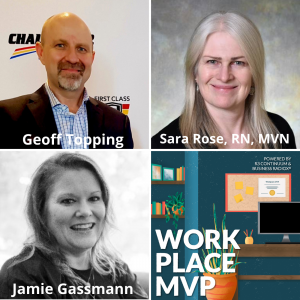
The pandemic created unique and acute workplace challenges for both trucking and healthcare enterprises. Geoff Topping, Challenger Motor Freight, and Sara Rose, Hennepin Healthcare, joined host Jamie Gassmann to reflect on their experiences of both difficulty and hope over the past year. “Workplace MVP” is underwritten and presented by R3 Continuum and produced by the Minneapolis-St.Paul Studio of Business RadioX®.

Geoff Topping, Vice President of People & Culture, Challenger Motor Freight Inc.

Geoff Topping, Challenger Motor Freight

Geoff Topping has been in the trucking industry for over 25 years and has held many roles in that time. Geoff started his career as a Driver and has since held positions in Operations, Sales, Recruiting and Human Resources. Currently, Geoff is Vice President of People & Culture including Safety, Recruiting and Risk Management for Challenger. Geoff has also served Industry associations such as the Truck Training Schools of Ontario where he acted as the Chair of the Carrier committee and is currently the co-chair of the Recruiting, Retention and HR committee at TCA as well as a Commissioner for the Niagara Bridge Commission. In 2018 Geoff was awarded the HR Leader of the year by Trucking HR Canada and is 2017 was also recognized as the HR Innovator.

Challenger Motor Freight Inc.

Challenger Motor Freight is a total supply chain provider to a large and diverse customer base in Canada, United States, and Mexico. Challenger employs more than 1,500 people with locations in Toronto, Montreal, Vancouver, Atlanta, Chicago, Dallas, and Long Beach.

Since its inception in 1975, Challenger Motor Freight Inc. has continually set new standards of quality and performance. Their unwavering commitment has earned us some of the highest accolades in the transportation industry and an impressive record of customer satisfaction.

From its earliest days, Challenger has made innovation a part of its corporate culture. The Challenger team has always been on the forefront of operational and technological advancements that have significantly changed the nature of the transportation industry. These innovations continue to take them in new directions by allowing the company to offer enhanced services to meet their customer’s increasingly diversified needs.

With a full range of transportation, warehousing, and logistics services, Challenger can meet client requirements and transport your goods between Canada and anywhere in North America.
Their modern fleet serves truckload, less-than-truckload, special commodities and expedited needs. A team of professionally trained drivers and state-of-the-art electronic monitoring and on-board tracking systems help ensure the highest quality standards and timely arrivals.

At Challenger, they are proud of our history and excited about their future, but their greatest pride lies in helping customers reach new heights.

Leading the Way. Challenger Motor Freight is a company that shares your drive to outperform the competition.

Company website | LinkedIn | Facebook

Sara Rose, RN, MSN, Hennepin Healthcare

Hennepin Healthcare
Sara Rose, RN, MVN, Hennepin Healthcare

Sara Rose is an energetic and visionary hospital leader with thirty-two years of healthcare experience including fourteen years in a nursing leadership role. Sara has experience in smaller critical access hospitals as well as urban, academic medical center environments. Sara is passionate about maintaining a strong focus to provide support and well-being resources for her teams. She sees staff as the most valuable resource in any healthcare organization.

LinkedIn

Hennepin Healthcare

Hennepin Healthcare is a network of inpatient and outpatient services across the Twin Cities in Minnesota.

Their flagship, Hennepin County Medical Center (HCMC), is a 400-bed Adult and Pediatric Trauma Center, Comprehensive Stroke Center, Verified Burn Center, and Verified Bariatric Center in the heart of Minneapolis.  As an academic medical center and safety net hospital, their mantra is “Every Life Matters.”  The Critical Care and Heart and Vascular divisions oversee adult intensive care and cardiology services.  HCMC is accredited by the Joint Commission.

Company website| LinkedIn |Facebook | Twitter

About “Workplace MVP”

Every day, around the world, organizations of all sizes face disruptive events and situations. Within those workplaces are everyday heroes in human resources, risk management, security, business continuity, and the C-suite. They don’t call themselves heroes though. On the contrary, they simply show up every day, laboring for the well-being of employees in their care, readying the workplace for and planning responses to disruption. This show, “Workplace MVP,” confers on these heroes the designation they deserve, Workplace MVP (Most Valuable Professionals), and gives them the forum to tell their story. As you hear their experiences, you will learn first-hand, real life approaches to readying the workplace, responses to crisis situations, and overcoming challenges of disruption. Visit our show archive here.

“Workplace MVP” Host Jamie Gassmann

In addition to serving as the host to the Workplace MVP podcast, Jamie Gassmann is the Director of Marketing at R3 Continuum (R3c). Collectively, she has more than fourteen years of marketing experience. Across her tenure, she has experience working in and with various industries including banking, real estate, retail, crisis management, insurance, business continuity, and more. She holds a Bachelor of Science Degree in Mass Communications with special interest in Advertising and Public Relations and a Master of Business Administration from Paseka School of Business, Minnesota State University.

TRANSCRIPT

Intro: [00:00:04] Broadcasting from the Business RadioX Studios, it’s time for Workplace MVP. Workplace MVP is brought to you by R3 Continuum, a global leader in workplace behavioral health, crisis, and security solutions. Now here’s your host, Jamie Gassmann.

Jamie Gassmann: [00:00:26] Hi, everyone. Your host, Jamie Gassmann, here. And welcome to this edition of Workplace MVP. Every day around the world, workplaces of all sizes face disruptions, such as loss of employees, business interruptions, natural disasters, workplace violence. And, yes, a pandemic. Within those workplaces are everyday heroes whose role calls for them to ready the workplace for and respond to those disruptions. This show features those heroes we call Workplace MVP’s, otherwise known as Most Valuable Professionals. While we celebrate their inspiring work, we also hope to learn from their experiences as well.

Jamie Gassmann: [00:01:09] Today, we have two wonderful MVP’s to celebrate. Geoff Topping, Vice President of People and Culture from Challenger Motor Freight, and Sara Rose, Senior Director, Critical Care from Hennepin County Medical Center, also known as HCMC. They will be sharing with us today the amazing work they have done for their organizations and their people as they navigated the twists and turns brought on by the various challenges of 2020.

Jamie Gassmann: [00:01:35] Our first workplace MVP is Geoff Topping, Vice President of People and Culture at Challenger Motor Freight. Hi there, Geoff.

Geoff Topping: [00:01:43] Good morning.

Jamie Gassmann: [00:01:45] So, you’ve been named the accidental H.R. Manager. Can you share with me how you got that title?

Geoff Topping: [00:01:51] Yeah. Absolutely. So, I am the Vice President of People and Culture here at Challenger. That kind of came about in a strange way. I started my career in the trucking industry at the age of 18 as a driver. I was a driver and owner-operator. I worked in operations and I worked in sales. And then, back in, I guess, it was about 2016 or 2015, somewhere in there, I was kind of tapped on the shoulder and asked to move in to the recruiting and retention side of the trucking business.

Geoff Topping: [00:02:26] And it was kind of an odd thing for me because I don’t have any postsecondary education in H.R. I had never worked in the H.R. field. In fact, I used to pick on the H.R. people, I called it the hug department, actually, lots of times. And so, it was kind of an odd thing for me to be put into the H.R. role. Yeah, it was a very unconventional way of getting here. But I think I’m pretty proud of the way things have turned out. It’s been an exciting time. And we’re going to talk a bit about that a little more as we go through things here today.

Geoff Topping: [00:02:58] But I’ve often said now, I wish it was what I’d done all my career was working the H.R. side of things. But it’s been pointed out to me by many people, a couple of mentors that I have that, you know, if I hadn’t done all the different roles I have within the industry and within the school of hard knocks, I guess we’ll call it, then I wouldn’t be able to fulfill the role the way I do. So, kind of a weird pattern or way to get here, but it’s been exciting.

Jamie Gassmann: [00:03:24] Definitely. So, tell me a little bit about, you know, the career journey you’ve had. You know, your mentors pointed out that it helped you in your current role. In your opinion, how has that helped you be more effective at what you do?

Geoff Topping: [00:03:37] Well, I think in our industry, because I’ve worked in basically all areas of our industry, I can really empathize with the drivers, with the mechanics, with the people in the operations floor, the people in the admin sections of the business. I’ve done a lot of the same roles they are currently doing. I’ve faced a lot of the same challenges, it gives me a good perspective of what they might be dealing with.

Geoff Topping: [00:04:03] It’s also really helped where I can relate and kind of tell the story, or I joke and call it translate. I can translate what the other departments might be dealing with. You know, when you put in an order, for example, you’re putting in an order for a load to pick up somewhere. That information that’s put in there is not only important to the driver, it can be important to the billing department. It can be important to the safety department. It can be important to the risk department. And because of all my different roles, I’m able to kind of share with everybody what you do and how it affects other people throughout the supply chain.

Jamie Gassmann: [00:04:36] Great. Now, over the last year, I’m sure it helped out a lot to have some of that background, but what were some of the hardest parts of your role over this last year?

Geoff Topping: [00:04:48] Since the pandemic started in March the 11th at about 1:15 in the afternoon – I’ll never forget it – in 2020, getting people answers has been the hardest part, I think. People were dealing with fear in a lot of ways. I mean, if we look at Maslow’s Hierarchy of Needs, you know, those basic needs were in question for a lot of people. They didn’t know if they were going to have a job. They didn’t know what this might mean for their health. They didn’t know what it might mean for their loved one’s health. And so, there was a lot of fear. And, you know, we still go through waves of that as the pandemic continues. And we’re in wave 3 of it here now in the Province of Ontario.

Geoff Topping: [00:05:33] But I think getting people answers was the hardest thing because people were scared. They were having emotions that they didn’t understand. I mean, none of us have been through a pandemic before. This is something new and unprecedented. So, coming up with answers fast enough for people and ones that weren’t going to change, I mean, this was a very fluid situation. The health care professionals, which we have one of them on the line here with us today, we’re learning about this virus. It was a changing virus and still changes to this day. So, how it was being handled, what the medical professionals, what the the boards of health or the Departments of Health were requiring was constantly changing. And I think just getting people the answers to make them feel safe and make them feel comfortable was the biggest challenge.

Jamie Gassmann: [00:06:25] Now, you’ve mentioned fear and we’re going to talk a little bit more about that in a little bit. But tell me a little bit about what was it like for your staff? What were you experiencing? You know, you’ve heard stories of every employee kind of responded differently. Some were really afraid. Some were not. Kind of like almost like a spectrum of fear. What was it like for your staff over this last year with all of the different twists and turns, cases rising, cases falling? What was it like for your team?

Geoff Topping: [00:06:59] It’s been a time of constant change, I’ll say that. I could not be more proud of the way our organization has handled it. I mean, from the frontline, the drivers out on the road, the mechanics, all the admin staff back here in the offices supporting everybody, people have handled it amazingly. I mean, the challenges they faced have been things we’ve never dealt with before.

Geoff Topping: [00:07:25] And, you know, I take the drivers, for example, out on the road. That’s a tough job to start with. You’re away from home. It’s a lot of hours. You’re dealing with different weather, different traffic, all those kind of things. But the drivers had a real interesting challenge. Again, I can’t be more proud of the way the organization handled it. But the drivers, you know, restaurants were closed for a long time. They didn’t have access to restaurants. So, they were having to pack extra food with them or eat fast food out of their truck. Getting into shippers and receivers was an issue. They weren’t allowed on the dock. They weren’t allowed in the office. They couldn’t use the washroom facilities due to COVID. I mean, for those drivers, it was a real tough situation.

Geoff Topping: [00:08:11] I mean, all of us back in our offices or working from home, sure, we had all those fears to deal with as well. But we had some comfort and we were going home at the end of every shift or we were at home. Well, the drivers were living on the road in a very fluid situation with, you know, again, lack of access to rest areas, to washrooms, to restaurants. It was a tough time for them.

Jamie Gassmann: [00:08:37] So, we kind of have talked about the fear of the employees and, obviously, the struggles that all the drivers went through. Talk to me about, in your role, how did you support the well-being and encouraged self-care? Because obviously those are some trying times. How did you help them to kind of keep their mental health as well as their physical health intact through this?

Geoff Topping: [00:09:04] Yeah. Sure. So, communication, I think, was the biggest thing. And we started right away. Back on March the 11th, 2020, we started a communication plan that still continues to this day. We’re actually working on COVID communication number 73, we started working on it this morning. Then, they were going out kind of every other day for a little while. Then, we switched it to weekly, then biweekly, and as needed. But very detailed communication that went out. We sent it out to all the drivers in the trucks. We have the satellite system. We sent it to every drivers’ email. We sent it to every employees’ email. We sent it to all of the mechanics. We posted it on our social media pages.

Geoff Topping: [00:09:47] But a very detailed communication that kind of explained what’s happening, what’s changed since last week, here’s what we’re hearing in dealing with the various levels of government, various industry associations. We really tried to keep people up to date on what we knew at the time with the caveat that, you know, this is a very fluid situation that changes and we’ll update you as we can.

Geoff Topping: [00:10:10] Mental health is something I’m concerned about, for sure, still to this day. I kind of refer to it as the mental health hangover, that could come from this pandemic. And we’ve tried to share a lot of resources with people, resources that our EAP providers gave us, resources that are available online for people, whether that be just websites with information or access to virtual counseling, virtual doctors, to get medical appointments, all those kind of things. For the drivers, that’s certainly something that’s helped them a lot because they can’t always get home to get to the doctor at a certain time.

Geoff Topping: [00:10:49] But every one of those communications, we not only shared what we’re doing, health and safety wise just to reiterate all the protocols and safety measures, but we tried to share as many resources as we could for people to access to help them or their family or their friends. We also sent out messages to the leadership team and the managers on a biweekly basis during the initial phases of the pandemic with how to help manage your team or how to help coach your team through this situation. We just tried to provide a lot of extra information.

Geoff Topping: [00:11:26] We also made a point of doing management by walking around, I’m a big fan of that. And I tried and still do try to take a lot of the the full building at least once a day and just kind of check in with the various departments, see how people are doing, and kind of keep my ear to the ground of what might be the pinch points so that we can address that in those communications as well. In a time like this, communication, I think, is the key. I’m sure we’ve over communicated in some ways, but I felt it was important to keep people up to date on what’s going on.

Jamie Gassmann: [00:12:01] So, what is something that you’re most proud of within your career? It could be something maybe over the last year that you’ve done or just in your career in general, you know, within your role at Challenger Motor Freight or other roles that you’re just most proud of, you know, of your accomplishment.

Geoff Topping: [00:12:23] I hate kind of talking about myself, but I think one of them would be when I first got into the recruiting and retention role of things on the H.R. side. I was asked to be the face or the voice of our culture change program. And we’d done a lot of work as a company on focusing on our culture. And we believe there’s three pillars to a business, and that’s people, customer, and profit. And if we take care of the people, they’ll take care of the customers, and that will ultimately take care of the profit.

Geoff Topping: [00:12:57] And we did a a good to great – we call it – a good to great journey, where we went out and did a discovery where we met with about 40 different people one-on-one, and did intense interviews with them on what they thought was going well with the company and what they thought needed improvement. We did about 25 sessions at all days, hours, and shifts where anybody could attend any role in the company and ask those same questions. Through the help of a consultant, we boiled all that down into the main themes that we needed to address. And then, we went back out and did another road show where we said, this is what we heard, this is what we can do about it today, this is what we’re going to work on next year, the year after, et cetera. I still think that’s one of my most proudest accomplishments was working on that.

Geoff Topping: [00:13:48] And I had a lot of support. It was by no means a one man effort. You know, it was a team of people. But I got to be the voice of it, which I felt pretty privileged of. And it’s been something that’s worked very well. I think that all put us in a great spot for what we had to deal with during the pandemic, because we had proven to people that we’ll go out and ask for your opinions. We might not be able to change everything exactly the way you want, but we will give you an answer on what we’re going to do, what we can do, or what we, unfortunately, might not be able to do to affect something. So, I think combine those two, the first one put us in a great spot to handle the pandemic and the situation that we’re in today.

Jamie Gassmann: [00:14:28] Wonderful. Well, thanks, Geoff, for all that great information. We’re going to come back to you after we talk with Sara Rose now. So, our next Workplace MVP is Sara Rose, Senior Director, Critical Care, Heart and Vascular at Hennepin County Medical Center. We’ll be referring to Hennepin County Medical Center throughout the rest of the show as HCMC. So, welcome, Sara.

Sara Rose: [00:14:53] Hi, Jamie. Thanks for having me.

Jamie Gassmann: [00:14:55] So, you oversee a number of areas at HCMC, can you walk us through what those areas are and your role within the hospital?

Sara Rose: [00:15:04] Sure. I’m a nurse and I’m a patient care director, so I have several departments that report up through me in, actually, two divisions. In the Critical Care Division, I have the Adult ICUs, and the Burn Unit, and Respiratory Therapy. We are a Level 1 Trauma Center, so those are very busy areas. In the Heart and Vascular Division, I have all the procedural areas that report up through cardiology. So, the cardiac cath lab, where you might go if you have a heart attack, the echocardiography lab, and those smaller departments.

Jamie Gassmann: [00:15:47] Great. So, looking at the last year, obviously health care has been hit pretty hard in terms of being the frontline responding to patients with COVID, what for you has been the hardest part of your role over this last year?

Sara Rose: [00:16:03] Yeah. Well, I can echo some of what Geoff said too. You know, I think the hardest part was asking staff to trust us and be flexible as we moved forward. It was a year where we didn’t have the answers. And in health care, we like to have those answers. Things were changing with our personal protective equipment every day. They were changing in the way we isolated patients with COVID, the medications we gave them, the protocols, and the treatments. And that was the hardest part, really. Health care is an environment where you’re asked to change all the time, but we are very protocolized. And that’s how we keep patients safe. We have standard work and we follow it. And so, turning on a dime is not our strong suit. But staff did, we all got through it together.

Jamie Gassmann: [00:17:05] Yeah. And so, talk to me a little bit about the staff. I know when we talked earlier, you know, you shared kind of some of the ups and downs and the changes. Talk to me a little bit of what was the last year like for your staff?

Sara Rose: [00:17:21] Well, it started out before the shutdown. We knew this was coming. I don’t think any of us knew the tsunami that we were headed for. But we started by looking at our elective procedures and we started shutting those down. And focusing on what was absolutely necessary to do. So, during that time, we had furloughs, we had a loss of business because we were shutting down those elective procedures and staff went home. And at the same time, the other half of the organization was really busy building up for what was to come, building out extra care spaces to take care of overflow patients. So, it was a real dichotomy. Nurses were asked to work in different areas. Maybe your area was shut down, but you’re a critical care nurse and you could be utilized in the ICU. So, again, we were asking staff to be very flexible.

Sara Rose: [00:18:27] Then, when we hit our first surge around the March or April timeframe, it was crazy. We did not have enough staff. We were out taking care of patients in areas we hadn’t cared for them before. And we were working with our local business partners, the other hospitals, to try to load level and make sure that none of us were overly burdened, while others were status quo. It was a crazy time.

Sara Rose: [00:19:00] And going into the summer, we saw the COVID numbers go down a little bit. People were outside. However, there was a lot of civil unrest in our community that took the violent injuries up quite a bit. And so, we saw, I think, about 300 percent increase in our penetrating trauma over the summer. And so, that was another stress on the staff.

Sara Rose: [00:19:34] Then, we had another surge in October where we were asked again to change our nursing ratios, do things differently to accommodate the influx of patients. So, it’s been a real roller coaster from feast or famine. And that creates a lot of emotional drag on staff, and I can still feel it today.

Jamie Gassmann: [00:20:01] Sure. So, you kind of touched on it a little bit with the unexpected patient increases, obviously, in the violent injuries. What other increases did you see as a result of people kind of changing how they live? A lot of people working remote, maybe being home all day. What were some of the other areas that also increased along with, obviously, COVID patients at your hospital?

Sara Rose: [00:20:30] You know, mental health resources in this country are really stretched. And we saw that there were an increase in demand for counseling. And we shut down a lot of our group therapies and had to do those on line. So, we saw people getting sicker with their mental health. But we also saw across the country and at HCMC an increase in the burns, especially in the pediatric population. Parents working from home, trying to homeschool their kids, young kids maybe not being as supervised, so coffee burns. And this was a country-wide phenomenon.

Jamie Gassmann: [00:21:18] Interesting. And those were the things that we weren’t really hearing about because there’s so many other things to report on. So, it’s interesting that both you and Geoff shared areas that we maybe hadn’t thought about as increases or challenges that each of your industries faced. So, you kind of touched on this a little bit, your hospital is located in downtown part of Minneapolis. So, how has the civil unrest impacted your team? I know you mentioned the increase in violent injuries, but what other impacts have you had to manage as a result of that civil unrest being so close to home?

Sara Rose: [00:21:57] Well, we’re a very multicultural and diverse organization. And so, you know, what goes on in our community is often brought inside our doors because we live and work in the community. There’s been a lot of anxiety. As a leader, my job is to make sure that people are safe and that patients are safe, that staff can get to and from their cars safely, and that the patients we’re taken care of inside our walls are safe. You know, there have been necessary conversations that have been sparked because of the civil unrest. And so, emotions are raw. But, again, these are things that we have to go through.

Sara Rose: [00:22:46] I’m really proud as an organization that from the top down, we’re really committed to equity in the care we deliver and how we treat each other. And so, we’re on the road on that journey actively pursuing it. But I would say in wrapping up this question, it’s an emotional time and we’re trying to understand each other. And I think we need to have these conversations, but they’re hard in the midst of a busy workday.

Jamie Gassmann: [00:23:20] Evidently. So, now, your team on a normal workday – and year – see a lot due to being a Level 1 Trauma Center. This last year, as you kind of mentioned, is a roller coaster, especially taxing, so what approaches have you used to support the well-being and encourage self-care within your team?

Sara Rose: [00:23:42] Much like Geoff, we have a portfolio of offerings for staff. We have employee assistance and we have online trainings. We also have a critical incident support team that we can call on to come and help our staff members get through a crisis or a critical time, something that’s really affecting them in the moment. I think we struggle a little more looking back and saying we realize people need help, but what do we do for them? And that’s really where we are today.

Sara Rose: [00:24:21] For me, it’s important for me to show up. I think a leader shows up for their team even on a day that they don’t want to be face-to-face with people. And Geoff alluded to it as well, getting out there and walking around. It’s so important to staff that they know that we know what they do. Right? And so, for me, being present, stepping up, having an open door policy. But I still feel like we have some room for improvement in really getting to our team members and making sure that they’re doing okay. And that’s a passion of mine and something I hope that we can continue to work on here at HCMC in my career time.

Jamie Gassmann: [00:25:13] Great. And so, what is something that you are most proud of within your career and your role at HCMC?

Sara Rose: [00:25:23] I’ve always been proud of the teams I’ve worked with. I can look back on every team, whether I was a staff member or a leader, and I’ve been proud to be part of those teams. But I would say, especially in this last year, everyone in this hospital, from environmental services, to nursing, to respiratory therapy, to facilities, we really pulled together. And I’m proud of the team we became. We became a different team. A team that had no bounds and no barriers. And we just worked to get the job done. No politics. No long conversations. We just did the work. And looking back, I wouldn’t want to go through it again. But looking back, I’m very proud of them and I would work with that team any day. And I’m fortunate to be here still working with them.

Jamie Gassmann: [00:26:22] Wonderful. So, real quick, we’re going to a little word from our Workplace MVP’s underwriter, R3 Continuum. R3 Continuum is a global leader in providing expert, reliable, responsive, and tailored behavioral health crisis and security solutions to promote workplace well-being and performance in the face of an ever changing and often unpredictable world. Learn more about how R3 Continuum can tailor a solution for your organization’s unique challenges by visiting www.r3c.com today.

Jamie Gassmann: [00:26:57] So, now, I’d like to open up a conversation with both of our MVP’s. So, first question I have for the two of you is, looking at your employees today, a year after the start of the pandemic, what would you say are some of the challenges that you might be still facing or are new challenges that you’re facing as a result of the last year or just as we continue to move forward into 2021, having started the year out with some of the same of what we went through in 2020? So, I’ll open up with whoever wants to kickoff that answer.

Geoff Topping: [00:27:32] I can go ahead first. I guess the first thing I wanted to say before we get into that was, a big thank you to Sara and her team and all the health care professionals across Canada, the U.S. and, really, everywhere. I know we’re all stressed in this time, but I think the health care professionals are doing an amazing job of keeping us all safe, keeping us all healthy, and helping everybody navigate through it. So, my hat is off to you and everyone that does the kind of work you do. So, thank you.

Sara Rose: [00:28:01] Thanks, Geoff.

Geoff Topping: [00:28:01] I think the biggest thing now that people are still dealing with is not work related issues as much as it is personal issues and home issues. There’s compound stress due to kids being at home from school, online learning. People haven’t been able to see their family. They haven’t been able to take vacations. All those things that we kind of take for granted on a normal level. So, I think the stress outside of work is probably the biggest thing, I think, that we still need to focus on and help people deal with. And that comes back to mental health for sure. But all of those things are compounding on people.

Geoff Topping: [00:28:39] In the climate where I live and where Sara is, there’s that whole thing called winter. That certainly doesn’t help the situation. You know, it’s hard for people to get outside. It’s hard for them to get fresh air and sunlight and those kind of things. So, it’s really helping people kind of live their whole life, I think is the important thing right now. Work is a part of it for sure. We all spend a lot of hours at work everyday. But there’s more to a person than just them being at work. We need to make sure that the people are getting the tools and resources they need to help them with the other parts of their life, which I think is where the bigger stresses are right now.

Sara Rose: [00:29:18] And I can say for me, my staff, they’re just starting to bounce back. Resilience is an issue. We felt a large lift when we started getting vaccinated. You could almost feel the tempo or the temperature. People were a little more relaxed just knowing that we were getting vaccinated. But, still, we have a lot of emotional baggage that we’re carrying around and a lot of emotional injury.

Sara Rose: [00:29:53] As an organization and across the Twin Cities, we’re really trying to judge when is the best time for us to open up to visitors. This has been hard. The caregivers at the bedside, really have had to be the family for patients because family hasn’t been able to come in. And so, when is it safe to open up? And there’s a whole bunch of emotions attached to that. We want families here, and yet we’re afraid, you know, to have possible COVID positive people walking through our doors. So, yeah, they’re struggling, but I see glimmers of hope. People supporting each other and high fives and elbow bumps and all the things, you know, that you can do when you walk into work that really start the day off well.

Jamie Gassmann: [00:30:44] So, over this last year, what do you feel has helped you to navigate the year successfully? You know, even though, obviously, there’s hardships with the various challenges, but what would be something that helped you to navigate it?

Geoff Topping: [00:31:00] I think the big thing for us was the communication, keeping people informed and sharing communication over and over and over. The other thing that really helped was, we did have a crisis management team in place prior to this. And I know many people thought I was being a little too serious and taking things a little too far by pushing having that crisis team in place. But we had put that in place a-year-and-a-half, two years ago with members of each department. And information on teams that people could access remotely, phone numbers, procedures, plans, all those kind of things. And I think having that in place really proved successful and proved that we could hit the ground running as soon as it started.

Geoff Topping: [00:31:47] And that was a huge team effort. I mean, there was people from every department, every office, every location we have that really jumped in and and did what needed to be done. And to serious point, there wasn’t long conversations. It was, “This is what we know right now. This is what we’re going to do.” What we know ten minutes from now might be totally different, but we have to act. We have to act swiftly and we need to get going right away. So, that was really helpful.

Jamie Gassmann: [00:32:13] How about you, Sara?

Sara Rose: [00:32:14] Yeah. I agree with a lot of what Geoff said, that resonates with me. Personally, you know, I had to remain grounded to show up for my team. So, the shelter in place was really a gift to me. It afforded me the time that I needed to recharge at the end of the day. And as an organization, you know, I think the biggest thing was having a psychology presence on each of our units. The psychologists went above and beyond. They have patients to see and they’re hired to see patients. But they actually took care of the staff, too. And we had them somewhat embedded in our units so that staff could talk at huddles or at any time of the day and reach out to this person. And I think that was a huge help going forward to keep us moving.

Jamie Gassmann: [00:33:16] Great. So, a question that I have for the both of you as well is, you know, we talk a lot about employee well-being and self-care, but we also know that it’s important for leaders themselves to be following some of those same guidelines. So, across the last year, what were some of the approaches you did for yourself as a leader so that you could, as you say, show up and be present for your staff? You know, what types of self-care and well-being did you do for yourself throughout the year or continue to do?

Geoff Topping: [00:33:47] So, one of the things I’ve tried to do is, I mean, obviously, it’s more difficult to get to gyms and fitness facilities. So, I’ve tried to make sure I, at least, get out and walk every day and try to get a half-hour in weekdays and maybe do a couple of those everyday on the weekend. And I think being out and some fresh air certainly helps. The exercise helps. I have a theory, you can’t walk and worry at the same time. So, it kind of takes your mind away from things. Try to eat as healthy as I can. And I really believe in taking some quiet time every morning to sit and read something, sit and meditate, sit and think, whatever you want to call that. And I believe everybody has their own version of what they like to do that.

Geoff Topping: [00:34:32] And one of the things I do and I know some people kind of think it’s kind of funny or hokey, but I think a gratitude journal has massively helped me. It’s something I did on and off prior to the pandemic. But as I was doing some research, you know, I was under a lot of pressure and still am, and by no means it isn’t just me. Everybody’s under a lot of pressure right now. And I was reading about doing a gratitude journal again and picked up the habit and really focused hard on it. And I believe that has really helped me. It’s helped me first thing in the morning put a positive spin on my life and on my day, and give me some good thoughts to get the day started.

Sara Rose: [00:35:13] I agree, Geoff. I mean, nature for me is very healing. So, I tried to be active, get out in the woods, get to the spots in my life that really fill my cup. I, too, do some meditation. I know not everyone can meditate and so I think it’s important for people to just do what fills them up. And quite frankly, there were nights that I came home and went to bed at 6:00 p.m. and slept until I got up the next day, and that was what was needed.

Jamie Gassmann: [00:35:47] Yes. I think we’ve all had those nights for sure.

Geoff Topping: [00:35:51] Well, it wasn’t just me.

Sara Rose: [00:35:52] No.

Jamie Gassmann: [00:35:52] Definitely. Wonderful. So, if you were going to give one piece of advice to our listeners, what would that piece of advice be?

Geoff Topping: [00:36:06] During the pandemic?

Jamie Gassmann: [00:36:08] During the pandemic or just in general leading through kind of a crisis situation or challenging situations, what would that be?

Geoff Topping: [00:36:16] Mine would be just be honest, be empathetic to people. Try and understand the things from their point of view and what they’re going through, because everybody is going through something a little different. And be honest with what you know. And I know sometimes people are disappointed that you can’t give them the answer they want or sometimes you can’t even give them an answer, but give them a time when you’re going to have them an answer. And say, “I’ll look into this and I’ll get back to you with something at X, Monday at noon, Tuesday at noon,” whatever that might be.

Geoff Topping: [00:36:47] Again, during this time, it was so fluid. Things were changing so fast that it was hard to give those answers. But I believe being honest like that lets people know that you will give them an answer when you can and that you’re not going to make something up. And to make something up in a situation like this, it could spiral out of control terribly. It just would not be the right thing to do.

Sara Rose: [00:37:12] I agree, Geoff. Authentic leadership is really important. For me, I guess, I wouldn’t be able to leave this podcast as a health care provider and not say my advice would be get vaccinated. It’s the way out of the pandemic. Get vaccinated and wear your mask.

Jamie Gassmann: [00:37:37] Great. Well, you both are amazing. And, you know, a big thank you for letting me celebrate you, letting us celebrate you, and for all of the hard work and tenacity that you guys went through over the last year in keeping things moving in both your respective industries. And for sharing your stories and giving great advice with our listeners. We appreciate you. And I’m sure your organizations and staff do as well.

Jamie Gassmann: [00:38:06] So, you can find Geoff Topping and Sara Rose on LinkedIn, if you would like to connect with them both. We also want to thank our show underwriter, R3 Continuum for supporting the Workplace MVP podcast. And to our listeners, thank you for tuning in. If you have not already done so, make sure to subscribe so you get our most recent episodes and our other resources. You can also follow our show on LinkedIn, Facebook, and Twitter, @Workplace MVP. If you are a Workplace MVP or know someone who is, we want to know. Email us at info@workplacemvp.com. Thank you all for joining us and have a great rest of your day.

 

Tagged With: Challenger Motor Freight, Geoff Topping, healthcare industry, Hennepin Healthcare, Human Resources, human resources support, Jamie Gassmann, R3 Continuum, Sara Rose, trucking industry, workplace culture

Effects of the COVID-19 Pandemic on the Trucking Industry

April 7, 2020 by Mike

Gwinnett Studio
Gwinnett Studio
Effects of the COVID-19 Pandemic on the Trucking Industry
Loading
00:00 /
RSS Feed
Share
Link
Embed

Download file

On this special episode of “TravelSafely with Bryan Mulligan”, host Bryan Mulligan discusses the effects of the COVID-19 pandemic on the trucking industry – and the importance of truck drivers during this crisis – with guest Rebecca Brewster of the American Transportation Research Institute.

Rebecca Brewster/American Transportation Research Institute

The American Transportation Research Institute (ATRI) has been engaged in critical transportation studies and operational tests since 1954. ATRI is a 501(c)(3) not-for-profit research organization headquartered in Arlington, VA with offices in Atlanta, Minneapolis, Sacramento, and New York.

ATRI’s primary mission is to conduct transportation research, with an emphasis on the trucking industry’s essential role in a safe, efficient and viable transportation system. ATRI’s research focus includes: Congestion and Mobility; Economic Analysis; Safety and Security; Technology and Operations; Environment; and Transportation Infrastructure.

ATRI’s extensive experience covers a broad range of commercial vehicle operations including leadership and/or participation in numerous national freight analyses, technology research initiatives and field operational tests.

CLICK HERE to see a list of the Top 100 Truck Bottlenecks in 2020

Tagged With: american transportation research institute, applied information, applied information podcast, applied information radio show, atri, bottleneck traffic, bryan mulligan, business podcast, business radio, Business RadioX, Entrepreneurship, gwinnett technology company, Radiox, Rebecca Brewster, Technology, traffic, traffic safety, traffic technology, Transportation, transportation innovation, transportation safety, transportation technology, travel safely podcast, travel safely radio, travel safely with bryan mulligan, TravelSafely, travelsafely app, travelsafely podcast, travelsafely radio show, TravelSafely with Bryan Mulligan, truck data, truck traffic, trucking, trucking industry

Business RadioX ® Network


Our Most Recent Episode

CONNECT WITH US

  • Email
  • Facebook
  • LinkedIn
  • Twitter
  • YouTube

Our Mission

We help local business leaders get the word out about the important work they’re doing to serve their market, their community, and their profession.

We support and celebrate business by sharing positive business stories that traditional media ignores. Some media leans left. Some media leans right. We lean business.

Sponsor a Show

Build Relationships and Grow Your Business. Click here for more details.

Partner With Us

Discover More Here

Terms and Conditions
Privacy Policy

Connect with us

Want to keep up with the latest in pro-business news across the network? Follow us on social media for the latest stories!
  • Email
  • Facebook
  • Google+
  • LinkedIn
  • Twitter
  • YouTube

Business RadioX® Headquarters
1000 Abernathy Rd. NE
Building 400, Suite L-10
Sandy Springs, GA 30328

© 2025 Business RadioX ® · Rainmaker Platform

BRXStudioCoversLA

Wait! Don’t Miss an Episode of LA Business Radio

BRXStudioCoversDENVER

Wait! Don’t Miss an Episode of Denver Business Radio

BRXStudioCoversPENSACOLA

Wait! Don’t Miss an Episode of Pensacola Business Radio

BRXStudioCoversBIRMINGHAM

Wait! Don’t Miss an Episode of Birmingham Business Radio

BRXStudioCoversTALLAHASSEE

Wait! Don’t Miss an Episode of Tallahassee Business Radio

BRXStudioCoversRALEIGH

Wait! Don’t Miss an Episode of Raleigh Business Radio

BRXStudioCoversRICHMONDNoWhite

Wait! Don’t Miss an Episode of Richmond Business Radio

BRXStudioCoversNASHVILLENoWhite

Wait! Don’t Miss an Episode of Nashville Business Radio

BRXStudioCoversDETROIT

Wait! Don’t Miss an Episode of Detroit Business Radio

BRXStudioCoversSTLOUIS

Wait! Don’t Miss an Episode of St. Louis Business Radio

BRXStudioCoversCOLUMBUS-small

Wait! Don’t Miss an Episode of Columbus Business Radio

Coachthecoach-08-08

Wait! Don’t Miss an Episode of Coach the Coach

BRXStudioCoversBAYAREA

Wait! Don’t Miss an Episode of Bay Area Business Radio

BRXStudioCoversCHICAGO

Wait! Don’t Miss an Episode of Chicago Business Radio

Wait! Don’t Miss an Episode of Atlanta Business Radio