Business RadioX ®

  • Home
  • Business RadioX ® Communities
    • Southeast
      • Alabama
        • Birmingham
      • Florida
        • Orlando
        • Pensacola
        • South Florida
        • Tampa
        • Tallahassee
      • Georgia
        • Atlanta
        • Cherokee
        • Forsyth
        • Greater Perimeter
        • Gwinnett
        • North Fulton
        • North Georgia
        • Northeast Georgia
        • Rome
        • Savannah
      • Louisiana
        • New Orleans
      • North Carolina
        • Charlotte
        • Raleigh
      • Tennessee
        • Chattanooga
        • Nashville
      • Virginia
        • Richmond
    • South Central
      • Arkansas
        • Northwest Arkansas
    • Midwest
      • Illinois
        • Chicago
      • Michigan
        • Detroit
      • Minnesota
        • Minneapolis St. Paul
      • Missouri
        • St. Louis
      • Ohio
        • Cleveland
        • Columbus
        • Dayton
    • Southwest
      • Arizona
        • Phoenix
        • Tucson
        • Valley
      • Texas
        • Austin
        • Dallas
        • Houston
    • West
      • California
        • Bay Area
        • LA
        • Pasadena
      • Colorado
        • Denver
      • Hawaii
        • Oahu
  • FAQs
  • About Us
    • Our Mission
    • Our Audience
    • Why It Works
    • What People Are Saying
    • BRX in the News
  • Resources
    • BRX Pro Tips
    • B2B Marketing: The 4Rs
    • High Velocity Selling Habits
    • Why Most B2B Media Strategies Fail
    • 9 Reasons To Sponsor A Business RadioX ® Show
  • Partner With Us
  • Veteran Business RadioX ®

Roundtable – The State of Higher Education in Arizona E3

June 30, 2020 by Karen

AZTECHCASTDrRobertRobbinswithUADrRitaChengwithNAUandDrMichaelCrowwithASUFeature
AZ TechCast
Roundtable - The State of Higher Education in Arizona E3
Loading
00:00 /
RSS Feed
Share
Link
Embed

Download file

AZTECHCAST-Dr-Robert-Robbins-with-UA-Dr-Rita-Cheng-with-NAU-and-Dr-Michael-Crow-withASU

Roundtable – The State of Higher Education in Arizona E3

Arizona proudly boasts of having some of the best universities and educational institutions in the country, and in the world. Arizona is home to three world-class universities— Arizona State University, Northern Arizona University, and the University of Arizona.

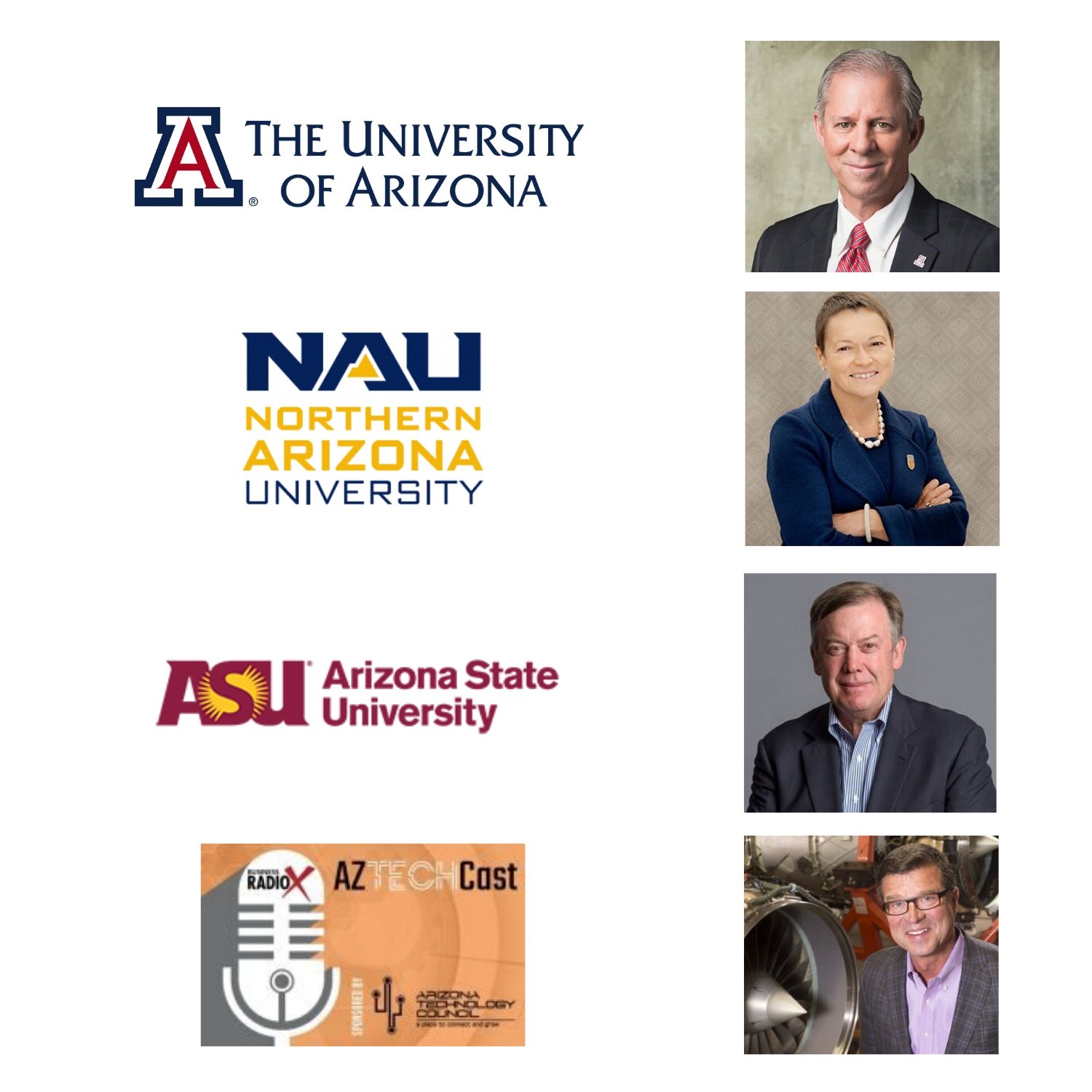
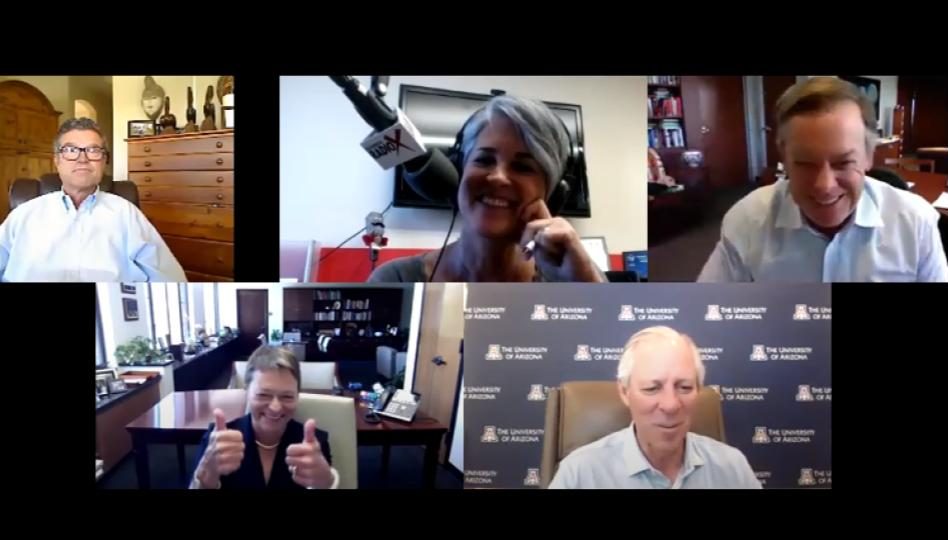
Moderated by Phoenix Business RadioX President Karen Nowicki and Arizona Technology Council CEO Steve Zylstra, the state university presidents, Dr. Rita Cheng of Northern Arizona University, Dr. Michael Crow of Arizona State University and Dr. Robert Robbins of the University of Arizona discussed the state of higher education in Arizona and how COVID-19 has shifted higher education, the university programs that are helping to create a highly skilled workforce, collaborations with the private sector, how each university is working to bring about innovation-based economic development to the state, the relationship between the tech community and the university system, as well as what challenges and opportunities are on the horizon.

Students, educational institutions and faculty have all been tossed into an unprecedented situation during the pandemic. Home to three world-class universities—Arizona State University, Northern Arizona University, and the University of Arizona—the state university presidents shared valuable insight into what the new paradigm will look like to keep students and faculty safe in the fall, as well as discussed the importance of fostering local start-ups and the exciting new innovations coming out of each university.

The University of Arizona, a land-grant university with two independently accredited medical schools, is one of the nation’s top public universities, according to U.S. News & World Report. Established in 1885, the UA is widely recognized as a student-centric university and has been designated as a Hispanic Serving Institution by the U.S. Department of Education.

The UA ranked in the top 25 in 2018 in research expenditures among all public universities, according to the National Science Foundation, and is a leading Research 1 institution with $687 million in annual research expenditures.

The UA advances the frontiers of interdisciplinary scholarship and entrepreneurial partnerships as a member of the Association of American Universities, the 62 leading public and private research universities in the U.S. It benefits the state with an estimated economic impact of $4.1 billion annually.

Robert-Robbins-on-Phoenix-Business-RadioXDr. Robert C. Robbins assumed his position as the 22nd president of the University of Arizona on June 1, 2017. Previously, he served as president and CEO of the Texas Medical Center (TMC) in Houston from 2012 to 2017. In this role, he significantly enhanced TMC’s commitment to collaboration, introducing five cross-institutional research initiatives centered on innovation, genomics, regenerative medicine, health policy and clinical research.

Prior to his time in Houston, Dr. Robbins served as professor and chairman of the Department of Cardiothoracic Surgery at Stanford University School of Medicine, founding director of the Stanford Cardiovascular Institute, president of the International Society of Heart and Lung Transplantation, president of the Western Thoracic Surgical Association, president of the American Heart Association Western States Affiliate, president of the Bay Area Society of Thoracic Surgeons, and chair of the American Heart Association Cardiovascular Surgery and Anesthesia Council, among other roles. In 2016 he served as president of the American Heart Association Southwest Affiliate.

An internationally recognized cardiac surgeon, Robbins has focused his clinical efforts on acquired cardiac diseases with a special expertise in the surgical treatment of congestive heart failure and cardiothoracic transplantation. His research work includes the investigation of stem cells for cardiac regeneration, cardiac transplant allograft vasculopathy, bioengineered blood vessels, and automated vascular anastomotic devices. Robbins is the author of more than 300 peer-reviewed articles and a former guest editor of the Circulation Surgical Supplement.

In addition to his role at the UA, Dr. Robbins serves on the boards of the Arizona Commerce Authority, Southern Arizona Leadership Council, Tucson Metro Chamber of Commerce, United Way of Tucson and Southern Arizona, and the Greater Phoenix Economic Council. He is also a member of the Chairman’s Circle of Sun Corridor, Inc., and a member of Greater Phoenix Leadership. While at TMC, Robbins served on the Houston branch of the Dallas Federal Reserve board, the board of directors of the Welch Foundation, and the American Heart Association Southwest Affiliate in 2016. He served on an independent blue ribbon committee to evaluate the Veterans Affairs health system, and the World Affairs Council of Greater Houston honored him as the 2016 International Citizen of the Year.

His educational background includes a B.S. in chemistry from Millsaps College, medical degree from the University of Mississippi, general surgical training at the University of Mississippi, cardiothoracic training at Stanford University, postdoctoral research at Columbia University and the National Institutes of Health, and congenital heart surgical fellowships at Emory University and Royal Children’s Hospital.

Follow UA on LinkedIn, Facebook, Twitter and Instagram.

NAUlogo

Founded in 1899, Northern Arizona University delivers world-class academic programs for a world-ready generation. In every classroom, top-flight research powers personalized teaching. With a commitment to delivering research-driven curricula and personal attention to our students, NAU provides the college experience, elevated.

NAU has much to be proud of, including nationally ranked programs, high-research status, and emergence as a leader in sustainability, science, business, green building and cultural arts.

Recognized as an institution that has thrived due to strong leadership, the devotion of alumni and faculty and community support, NAU offers more than 150 combined undergraduate and graduate degree programs, all distinguished by an ongoing commitment to close student-faculty relationships.

Rita-Cheng-on-Phoenix-Business-RadioXDr. Rita Cheng serves as the 16th president of Northern Arizona University. As a first-generation and non-traditional college graduate, Dr. Cheng firmly believes in making higher education accessible and affordable for all students.

Under her leadership, NAU has embarked on an aggressive agenda to thrive in the fast-changing environment of higher education. She has amplified the university’s strengths and set forth a vision of excellence in education through student-centered teaching, a robust research environment, an extensive global engagement program, and inclusive support services focused on success measured through retention and graduation rates.

Prior to NAU, Dr. Cheng served as chancellor at Southern Illinois University in Carbondale. She previously held positions on the faculty and various administrative roles including, provost and vice chancellor, at the University of Wisconsin-Milwaukee. She is internationally recognized for her research in government and nonprofit accounting.

Dr. Cheng earned a Ph.D. in management from Temple University’s Fox School of Business and Management, where she was recently recognized as one of 100 notable alumni in the school’s 100-year history. She also holds an MBA from the University of Rhode Island and a bachelor’s in business administration with honors from Bishop‘s University in Quebec. Committed to service, Dr. Cheng also serves on a variety of local and national boards.

Follow NAU on LinkedIn, Facebook, Twitter and Instagram.

ASULOGO

Arizona State University is a public research university ranked #1 in the U.S. for innovation, dedicated to accessibility and academic excellence. Commonly referred to as ASU, the university is comprised of five campuses across the Phoenix metropolitan area and four regional learning centers throughout Arizona.

One of the largest public universities by enrollment in the country, in 2019 the university had nearly 90,000 students attending classes across its metro campuses, more than 38,000 students attending online, including 83,000-plus undergraduates and more nearly 20,000 postgraduates. The university is organized into 17 colleges, featuring more than 170 cross-discipline centers and institutes.

ASU offers 350 different degree options for undergraduates students, as well as more than 400 graduate degree and certificate programs.

MichaelCrowASUonPhoenixBusinessRadioXDr. Michael M. Crow is an educator, knowledge enterprise architect, science and technology policy scholar and higher education leader. He became the sixteenth president of Arizona State University in July 2002 and has spearheaded ASU’s rapid and groundbreaking transformative evolution into one of the world’s best public metropolitan research universities. As a model “New American University,” ASU simultaneously demonstrates comprehensive excellence, inclusivity representative of the ethnic and socioeconomic diversity of the United States, and consequential societal impact.

Lauded as the ”#1 most innovative” school in the nation by U.S. News & World Report, ASU is a student-centric, technology-enabled university focused on complex global challenges related to sustainability, economic competitiveness, social embeddedness, entrepreneurship and global engagement. Under Dr, Crow’s leadership, ASU has established twenty-five new transdisciplinary schools, including the School of Earth and Space Exploration, the School for the Future of Innovation in Society and the School of Human Evolution and Social Change, and launched trailblazing multidisciplinary initiatives including the Biodesign Institute, the Julie Ann Wrigley Global Institute of Sustainability, and important initiatives in the humanities and social sciences.

Connect with Dr. Crow on LinkedIn, Facebook, Twitter and Instagram.

About the Show AZTECHCASTLOGOBRX-4-23-2020

AZ TechCast is dedicated to covering innovation and technology in Arizona and beyond.

Through the art of connected conversation, AZ TechCast’s guests will share their expertise, success stories, news and analysis about the region’s leading startups, companies and emerging technologies, as well as the latest industry trends and critical issues propelling the state’s growing technology ecosystem. 

About Your Hosts

Steven-ZylstraSteve Zylstra serves as president and CEO of the Arizona Technology Council, a role he assumed in 2007. He is responsible for strategy, operations, finance and policy development. Zylstra is a vocal spokesman for the value technology can provide in raising social and economic standards in Arizona.

Zylstra serves on numerous councils, committees and boards, was named “Leader of the Year, Technology,” by the Arizona Capitol Times, and “Most Admired Leader” by the Phoenix Business Journal. In addition, he was awarded an honorary doctorate of science in technology from the University of Advancing Technology in Tempe, Ariz.

Zylstra earned a bachelor’s degree in automotive engineering technology from Western Michigan University.

KarenNowickiv2Karen Nowicki is a successful author, speaker and the creator of Deep Impact Leadership™ and SoulMarks Coaching™. She is a two-time recipient of the prestigious national Choice Award® for her book and personal development retreat. Karen was crowned the first-ever “Mompreneur of the Year” Award in 2010 for the southwestern states. She was recognized for her leadership, business acumen, and work-life balance.

Karen has been an expert guest on regional TV and radio shows, including Fox Phoenix Morning Show, Sonoran Living, Good Morning Arizona, The Chat Room, and Mid-Day Arizona. She has been a regular contributor to many print and online magazines – publishing articles and blogs for business and education.

In addition to working with private coaching clients, Karen is also the Owner & President of Phoenix Business RadioX. The Business RadioX Network amplifies the voice of business – serving the Fortune 500,000, not just the Fortune 500. Phoenix Business RadioX helps local businesses and professional associations get the word out about the important work they’re doing to serve their market, profession, and community.

Of all the experiences Karen has had the privilege of participating in over her vast career, she shares that Phoenix Business RadioX is a pinnacle adventure!

Connect with Karen on LinkedIn and follow Phoenix Business RadioX on Facebook and Instagram.

About Our Sponsor

The Arizona Technology Council, Arizona’s only statewide organization serving the technology sector, fosters a climate of innovation to enhance technology in Arizona.

A trusted resource in strengthening Arizona’s technology industry, the Council proactively eliminates impediments that companies face, accelerates the entrepreneurial mindset in the state’s expanding innovation ecosystem, and works to create a destination for companies to be, thrive and stay.

Follow Arizona Technology Council on LinkedIn, Facebook, and Instagram.

AZTClogomainRGBPNG300DPI

Tagged With: Arizona State University, ASU, Dr. Rita Cheng, higher education, Innovation, innovative university, Michael Crow, NAU president, Northern Arizona University, President, Robert Robbins, UArizona, UArizona president, University of Arizona

Economic Forecast for 2020 and Beyond E2

June 2, 2020 by Karen

AZ-TECHCAST-Ep2-Economic-Forecast-for-2020-and-Beyond-Feature
AZ TechCast
Economic Forecast for 2020 and Beyond E2
Loading
00:00 /
RSS Feed
Share
Link
Embed

Download file

AZ-Techcast-Group

Economic Forecast for 2020 and Beyond E2

At the start of 2020, most investors and economic analysts expected the 11-year bull market to continue. And then the spread of COVID-19 changed everything. As a result of the pandemic, the global economy is projected to contract sharply by 3% in 2020. In addition, there is a huge amount of uncertainty about the future of the outbreak and the economic impacts associated with it. While the epidemic’s economic impact is difficult to predict, the economic forecast says we are on track for a major downturn. The question is how bad and for how long.

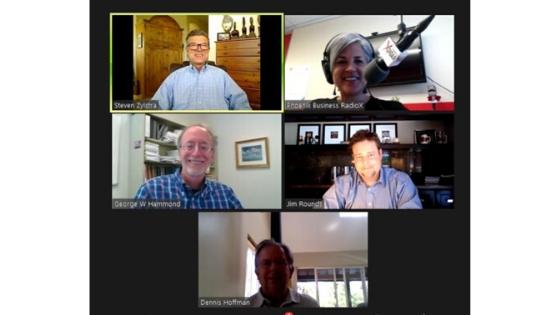
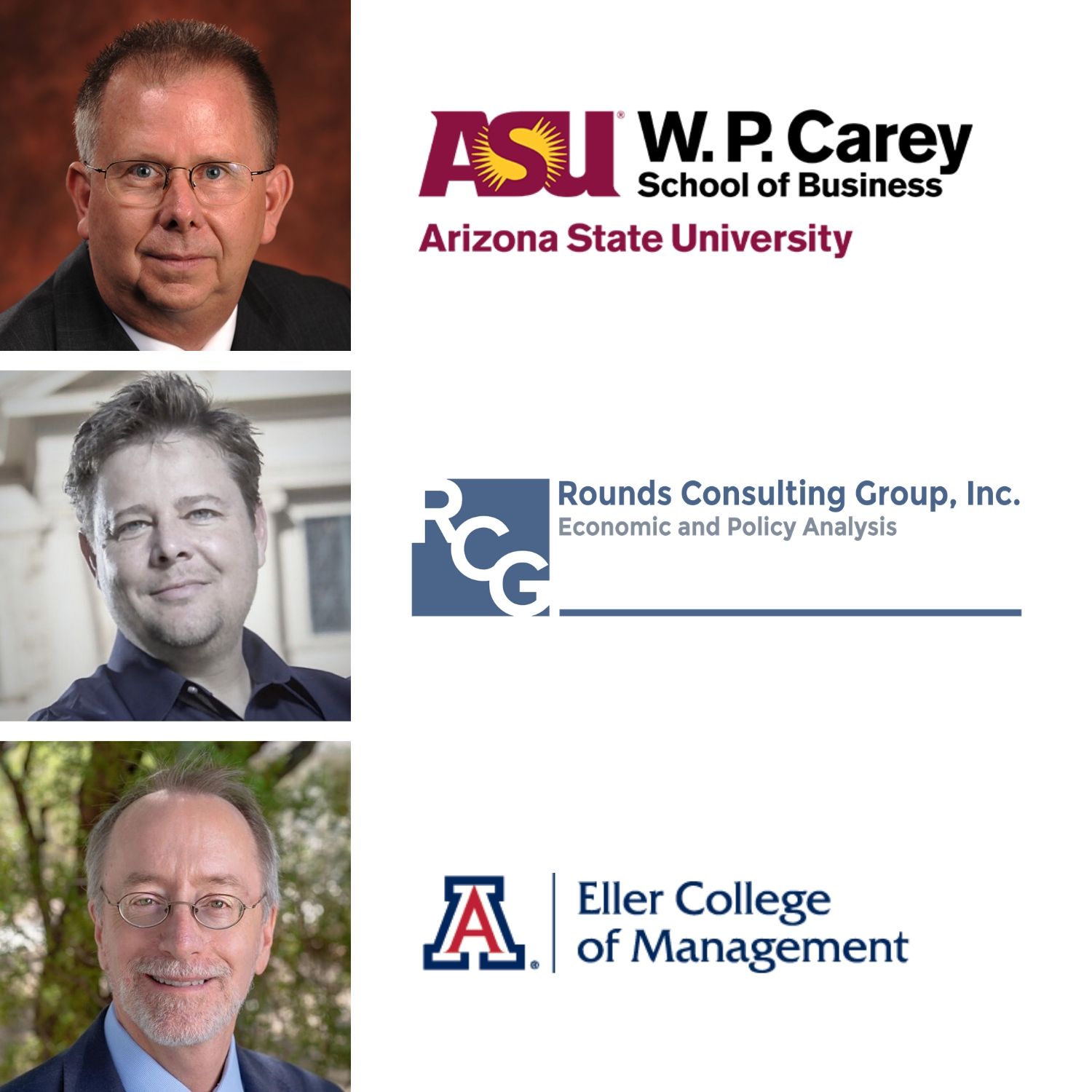
Economic experts Jim Rounds, George Hammond, Dennis Hoffman and Steve Zylstra join the Arizona Technology Council’s May 29th podcast to share their assessment of the damage, needed measures for economic growth and the prospects of recovery in the coming months.

Featured guests covered:

  • Arizona’s economic recovery
  • Hard-hit industries that will take the most to recover
  • Expected growth rates for Arizona
  • How 2020 compares to the crash of 2008 and the Great Depression
  • How can IoT and renewable energy help kickstart an economic recovery
  • The innovation and opportunity a downturn can spur

While the epidemic’s economic impact is difficult to predict, we are on track for a major downturn. The question is how bad and for how long.

RoundsConsultingGroupLogo

Rounds Consulting Group advises both public and private sector entities on matters of policy and economics. The firm specializes in economic development; data collection and analysis; fiscal planning including revenue forecasting and budget development; strategic planning and marketing; impact and market studies; litigation support, and keynote speaking, and more.

Jim-Rounds-on-Phoenix-Business-RadioXJim Rounds is president of Rounds Consulting Group, a firm specializing in economic development and tax policy analysis; education research; transportation economics; fiscal planning including revenue forecasting and budget development; strategic planning and marketing; impact and market studies; and litigation support.

He regularly provides economic advice to policymakers at the State Capitol, mayors throughout the state as well as city council members, county board members, and other public and private sector leaders in the community.

Rounds a Senior Fellow at the Goldwater Institute and serves on many boards and foundations, including the Maricopa County IDA, the Helios Education Foundation, Achieve 60 AZ, the Rodel Foundation, the Arizona Board of Regents and various state universities, among others. He serves as the lead economist for multiple rural and urban area healthcare and hospital associations and is a member of the Joint Legislative Budget Committee’s Finance Advisory Committee. He has also served on scores of committees and task force efforts at both the state and local levels.

His recent areas of study include advanced workforce analysis; minimum wage impact analysis; State Trust Land finance; public employee pension reform; utility infrastructure investment; and state and local area tourism planning. Recently, Rounds has been supporting the concept of “growing from within,” which includes efforts to better understand small business development issues, and strategic investment in education and workforce training.

Rounds began his career as a Senior Economist and Senior Budget Analyst with the Arizona Joint Legislative Budget Committee and has been engaged in policy related economics for more than two decades. He has a Bachelor of Science degree and a Master of Science degree in Economics from Arizona State University.

Follow Rounds Consulting on LinkedIn, Facebook, and connect with Jim on Twitter.

UArizonaEllerMgmtLOGO

Founded in 1913, the Eller College of Management at the University of Arizona in Tucson, Ariz. is one of the largest colleges at the University of Arizona, with over 5,400 undergraduate students and nearly 700 graduate students. Employing over 130 faculty members, the business school offers programs in accounting, economics, finance, marketing, management information systems, operations management, entrepreneurship and business administration.

Its interdisciplinary program in entrepreneurship is perennially ranked one of the world’s best. As the highest-ranking college at the University of Arizona, Eller also boasts the #1 Public Management Information Systems and ranked #7 Entrepreneurship programs nationally. The MIS program has been ranked in the Top 5 by U.S. News since the inception of the rankings, one of only three programs in the U.S. with such a distinction.

GeorgeHammond-on-Phoenix-Business-RadioXGeorge W. Hammond directs the Economic and Business Research Center in the Eller College of Management. A specialist in econometric forecasting for more than two decades, Hammond has designed, built and used economic models to produce more than 100 forecasts for state and local economies, and completed more than 50 regional economic studies on topics including economic and workforce development, energy forecasting and the impact of higher education on human capital accumulation.

These forecasts and reports reach thousands of business leaders, policymakers and citizens each year through conferences, public presentations, publications, EBRC’s websites and social and traditional media. Hammond is a frequent contributor to local and national news services. His analysis and commentary have been featured on NBC Nightly News, The Wall Street Journal, USA Today, Bloomberg Businessweek and The New York Times.

In addition to directing EBRC and spearheading EBRC’s Forecasting Project, Hammond is also a research professor with academic research interests focusing on the determinants of local economic growth in the U.S., the impact of state and local policies on economic growth and the contribution of higher education to local workforce development.

Follow Eller College of Management on LinkedIn, Facebook, Twitter and Instagram.

asu-wpcarey-logo

The L. William Seidman Research Institute serves as a link between the local, national and international business communities and W. P. Carey School of Business. It collects and disseminates information about local economies, benchmarks industry practices and identifies emerging business research issues.

Dennis-Hoffman-on-Phoenix-Business-RadioXDennis L. Hoffman is a Professor of Economics at Arizona State University where he has published numerous academic articles and a book in the area of macroeconomics and econometrics. He has received both teaching and research awards from ASU. He received the Distinguished Faculty Research Award in 1992 and has held the title of Dean’s Council of 100 Distinguished Scholar since 1996. He served as a visiting research scholar at the Federal Reserve Bank of St. Louis during the summer of 1996. In 1997, Dr. Hoffman was named the Arizona Professor of the Year by the Carnegie Foundation.

In addition to his academic appointment, Dr. Hoffman has held several administrative appointments; Associate Dean for Graduate Programs, 1998-2004, Associate Dean for Research; 2004-2008, and Director of the Seidman Research Institute, 2004-present. Dr. Hoffman is also director of ASU’s Office of the University Economist, 2005-present.

In his role in the Seidman Institute – as University Economist, Dr. Hoffman is responsible for the production of policy white papers with regional, education, fiscal, and labor market emphasis. This work is supported directly by the Office of University President Michael Crow. In addition, Seidman serves as the applied contract research arm of the W. P. Carey School averaging approximately $800,000 per annum in external research contracts meeting the needs of government, community and business clients primarily in the southwest. This activity is summarized at https://seidmaninstitute.com/. Seidman is also responsible for responding to the majority of business/economic media inquiries received by the university and has considerable connections with both local and national media outlets.

Dr. Hoffman’s sponsored project efforts include the construction and maintenance of the tax revenue forecasting model used by the Executive Budget Office of the State of Arizona each year since 1982 – serving eight different Governors. Dr. Hoffman headed groups of economists who measured the economic impact of several fiscal initiatives for the State of Arizona in 1989 and in 1990. The 1989 study was commissioned by Governor Mofford as an input to fiscal initiatives that were contained in her State of the State speech in 1989. The 1990 study was requested by the Joint Select Committee on Fiscal Reform of the Arizona Legislature. In 1996 Dr. Hoffman was appointed to the Joint Select Committee on Economic Incentives of the Arizona Legislature. He also served as technical advisor for Governor Napolitano’s citizen’s fiscal reform committee (2004). At the Governor’s request, Dr. Hoffman served on the Board of the Arizona State Retirement System (ASRS) from 2012-2017. As Director of the Seidman Research Institute,

Dr. Hoffman has closely studied the regional economy in Arizona. His extensive experience with the state and local economy positions him for his current research interests that include defining and measuring the role of research universities in regional development, quantifying the value of education investments to the economic prosperity of a region, and measuring the impact of various fiscal initiatives on regional development. These current research interests align with Dr. Hoffman’s administrative assignment, Director of the Office of the University Economist, undertaken as a strategic university initiative at the direction of Arizona State University President Michael Crow. Dr. Hoffman is the faculty director of the Center for Competitiveness and Prosperity Research where he directs the Productivity and Prosperity Project.

Connect with Dennis on LinkedIn and follow Seidman on Twitter.

About the Show AZTECHCASTLOGOBRX-4-23-2020

AZ TechCast is dedicated to covering innovation and technology in Arizona and beyond.

Through the art of connected conversation, AZ TechCast’s guests will share their expertise, success stories, news and analysis about the region’s leading startups, companies and emerging technologies, as well as the latest industry trends and critical issues propelling the state’s growing technology ecosystem. 

About Your Hosts

Steven-ZylstraSteve Zylstra serves as president and CEO of the Arizona Technology Council, a role he assumed in 2007. He is responsible for strategy, operations, finance and policy development. Zylstra is a vocal spokesman for the value technology can provide in raising social and economic standards in Arizona.

Zylstra serves on numerous councils, committees and boards, was named “Leader of the Year, Technology,” by the Arizona Capitol Times, and “Most Admired Leader” by the Phoenix Business Journal. In addition, he was awarded an honorary doctorate of science in technology from the University of Advancing Technology in Tempe, Ariz.

Zylstra earned a bachelor’s degree in automotive engineering technology from Western Michigan University.

KarenNowickiv2Karen Nowicki is a successful author, speaker and the creator of Deep Impact Leadership™ and SoulMarks Coaching™. She is a two-time recipient of the prestigious national Choice Award® for her book and personal development retreat. Karen was crowned the first-ever “Mompreneur of the Year” Award in 2010 for the southwestern states. She was recognized for her leadership, business acumen, and work-life balance.

Karen has been an expert guest on regional TV and radio shows, including Fox Phoenix Morning Show, Sonoran Living, Good Morning Arizona, The Chat Room, and Mid-Day Arizona. She has been a regular contributor to many print and online magazines – publishing articles and blogs for business and education.

In addition to working with private coaching clients, Karen is also the Owner & President of Phoenix Business RadioX. The Business RadioX Network amplifies the voice of business – serving the Fortune 500,000, not just the Fortune 500. Phoenix Business RadioX helps local businesses and professional associations get the word out about the important work they’re doing to serve their market, profession, and community.

Of all the experiences Karen has had the privilege of participating in over her vast career, she shares that Phoenix Business RadioX is a pinnacle adventure!

Connect with Karen on LinkedIn and follow Phoenix Business RadioX on Facebook and Instagram.

About Our Sponsor

The Arizona Technology Council, Arizona’s only statewide organization serving the technology sector, fosters a climate of innovation to enhance technology in Arizona.

A trusted resource in strengthening Arizona’s technology industry, the Council proactively eliminates impediments that companies face, accelerates the entrepreneurial mindset in the state’s expanding innovation ecosystem, and works to create a destination for companies to be, thrive and stay.

Follow Arizona Technology Council on LinkedIn, Facebook, and Instagram.
AZTClogomainRGBPNG300DPI

Tagged With: Economic consulting, economic development, Economic forecasting, Economic impact analysis, Economist, Eller School of Management, George Hammond, Jim Rounds, Public Policy, Rounds Consulting, University of Arizona

Decision Vision Episode 56: Should I Partner with a Technology Transfer Office? – An Interview with Stephen Fleming, University of Arizona

March 19, 2020 by John Ray

technology transfer office
Decision Vision
Decision Vision Episode 56: Should I Partner with a Technology Transfer Office? - An Interview with Stephen Fleming, University of Arizona
Loading
00:00 /
RSS Feed
Share
Link
Embed

Download file

technology transfer office

Decision Vision Episode 56: Should I Partner with a Technology Transfer Office? – An Interview with Stephen Fleming, University of Arizona

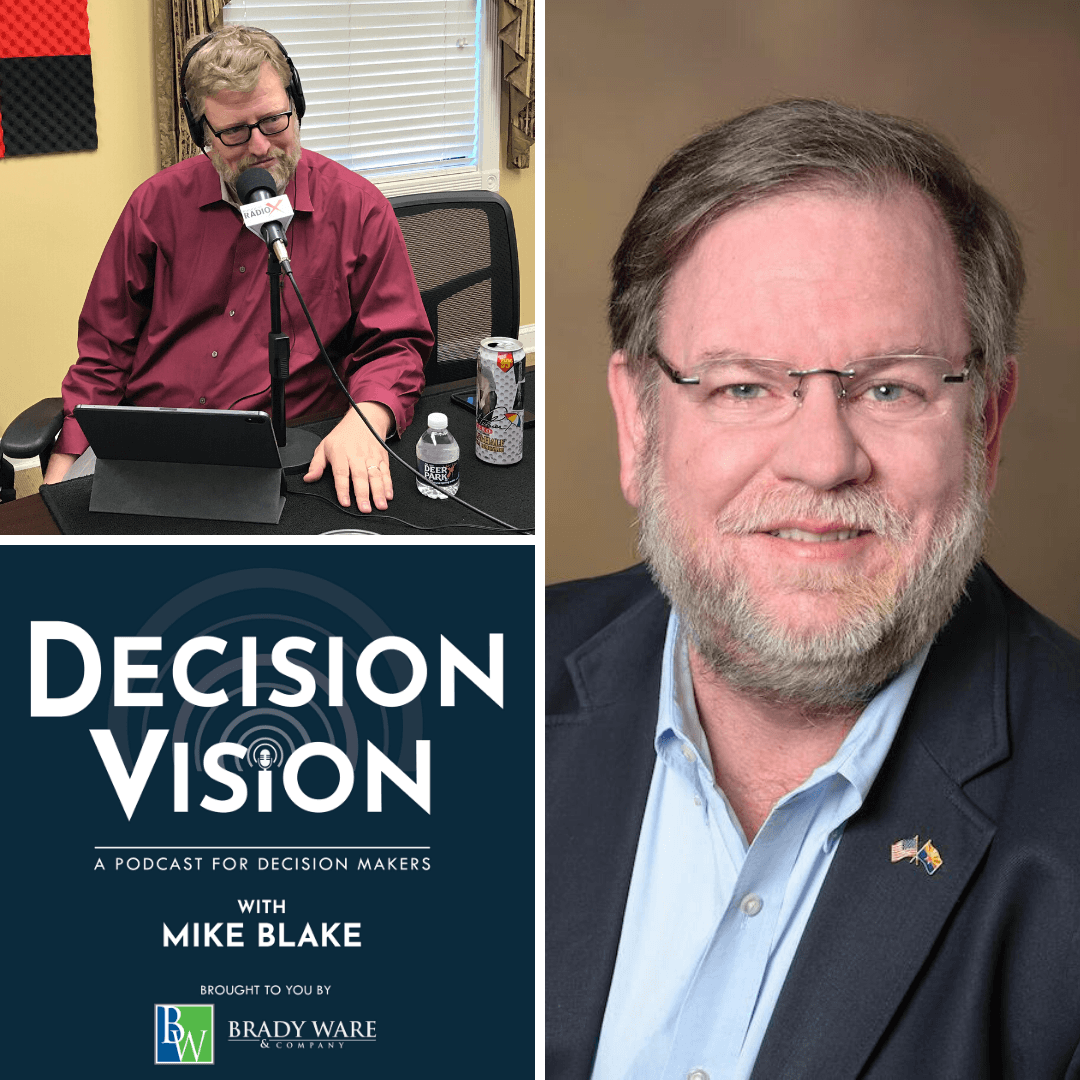
Why and how should a business work with a university’s technology transfer office? How does the ownership and use of intellectual property work? These questions and much more are addressed by Stephen Fleming, University of Arizona, in this edition of “Decision Vision.” The host of “Decision Vision” is Mike Blake and this series is presented by Brady Ware & Company.

Stephen Fleming, University of Arizona

technology transfer office
Stephen Fleming, University of Arizona

Stephen Fleming is with the University of Arizona and serves as Vice President, Strategic Business Initiatives.

Stephen was originally trained as a physicist, and spent 15 years in operations roles at AT&T Bell Laboratories, Nortel Networks, and a venture-funded startup. He has 25 years of experience as a technology-focused venture capitalist and angel investor. Stephen is the former general partner of a $260-million early-stage venture capital firm responsible for 18 investments, 16 board seats and 13 successful exits.

After retiring from venture capital, he served at Georgia Tech as Vice President, Economic Development and Technology Ventures, Executive Director of the Enterprise Innovation Institute, as well as Director of the Advanced Technology Development Center (ATDC).

In 2017, Stephen moved to Tucson in 2017 to join the University of Arizona, where he focuses on improving the university’s engagement with the private sector. He is an investor in eleven private aerospace startups, was a founding member of the Space Angels Network, and has recently organized the Arizona Space Business Roundtable.

Michael Blake, Brady Ware & Company

Mike Blake, Host of “Decision Vision”

Michael Blake is Host of the “Decision Vision” podcast series and a Director of Brady Ware & Company. Mike specializes in the valuation of intellectual property-driven firms, such as software firms, aerospace firms and professional services firms, most frequently in the capacity as a transaction advisor, helping clients obtain great outcomes from complex transaction opportunities. He is also a specialist in the appraisal of intellectual properties as stand-alone assets, such as software, trade secrets, and patents.

Mike has been a full-time business appraiser for 13 years with public accounting firms, boutique business appraisal firms, and an owner of his own firm. Prior to that, he spent 8 years in venture capital and investment banking, including transactions in the U.S., Israel, Russia, Ukraine, and Belarus.

Brady Ware & Company

Brady Ware & Company is a regional full-service accounting and advisory firm which helps businesses and entrepreneurs make visions a reality. Brady Ware services clients nationally from its offices in Alpharetta, GA; Columbus and Dayton, OH; and Richmond, IN. The firm is growth minded, committed to the regions in which they operate, and most importantly, they make significant investments in their people and service offerings to meet the changing financial needs of those they are privileged to serve. The firm is dedicated to providing results that make a difference for its clients.

Decision Vision Podcast Series

“Decision Vision” is a podcast covering topics and issues facing small business owners and connecting them with solutions from leading experts. This series is presented by Brady Ware & Company. If you are a decision maker for a small business, we’d love to hear from you. Contact us at decisionvision@bradyware.com and make sure to listen to every Thursday to the “Decision Vision” podcast. Past episodes of “Decision Vision” can be found here. “Decision Vision” is produced and broadcast by the North Fulton studio of Business RadioX®.

Visit Brady Ware & Company on social media:

LinkedIn:  https://www.linkedin.com/company/brady-ware/

Facebook: https://www.facebook.com/bradywareCPAs/

Twitter: https://twitter.com/BradyWare

Instagram: https://www.instagram.com/bradywarecompany/

Show Transcript

Intro: [00:00:01] Welcome to Decision Vision, a podcast series focusing on critical business decisions brought to you by Brady Ware & Company. Brady Ware is a regional full-service accounting and advisory firm that helps businesses and entrepreneurs make visions a reality.

Mike Blake: [00:00:20] Welcome to Decision Vision, a podcast giving you, the listener, clear vision to make great decisions. In each episode, we discuss the process of decision making on a different topic from the business owners’ or executives’ perspective. We aren’t necessarily telling you what to do, but we can put you in a position to make an informed decision on your own and understand when you might need help along the way.

Mike Blake: [00:00:40] My name is Mike Blake and I’m your host for today’s program. I’m a director at Brady Ware & Company, a full-service accounting firm based in Dayton, Ohio, with offices in Dayton; Columbus, Ohio; Richmond, Indiana; and Alpharetta, Georgia, which is where we are recording today. Brady Ware is sponsoring this podcast. If you like this podcast, please subscribe on your favorite podcast aggregator and please consider leaving a review of the podcast as well.

Mike Blake: [00:01:05] So, today, we’re talking about technology transfer offices and when it might make sense to partner up with one. And I think this is an interesting topic for a lot of reasons. One, I think this is an underutilized and underappreciated asset among companies in the tech sector broadly. And in some cases, you don’t even need to necessarily be a technology company to benefit from these kinds of relationships. But also, not many people know this because the early part of my career is convoluted and would take a podcast episode to really explain in detail.

Mike Blake: [00:01:05] But the bottom line is that my first job out of school full-time was to work for Brown University’s technology transfer office, which was called the Brown University Research Foundation. And until I had done that, I did not know what a technology transfer office was. So, you know, why did they hire me? The reason was, at the time, they were doing a lot of stuff with Russian universities. And because I was a Russian speaker that was willing to work for peanuts, they saw me as a good fit.

Mike Blake: [00:02:13] But I’m not a scientist by any stretch of the imagination. But that made a lasting impression upon me in terms of what tremendous impact a technology transfer office and generally, what private academic partnerships, and sometimes, those are public academics, sometimes, those are private academic partnerships, can do in terms of supporting the private sector and promoting economic and social development, generally.

Mike Blake: [00:02:46] So, you know, if you are a technology-related company and you feel like you may need help or maybe there’s some universities you think are working on some cool things, but you’re wondering about how to take advantage of that, and most universities are looking very actively to partner with the private sector, that’s a major priority for just about every university that I’ve spoken to over my career. I think this podcast will at least give you some understanding as to how to approach that conversation and do so in a way that’s intelligent and productive.

Mike Blake: [00:03:20] So, as is always the case, I can have a five-minute conversation about any topic we put on, but we’re going to introduce an expert in. Today, I’m delighted to introduce my friend, Stephen Fleming, who is currently Vice President, Strategic Business Initiatives at the University of Arizona. And that’s strange to say. He and I were just talking about this. And he’s a native Atlanta guy going back, I think, five or six generations.

Mike Blake: [00:03:47] And I think at least until three years ago, if you prick him, he’d bleed golden black. But now, he’s with the University of Arizona, which is ranked among the top 20 public research universities nationwide in areas such as the environment, optics, space sciences, bio sciences and southwest border issues. They’re among the best in the world. Stephen himself is a highly successful senior executive with leadership experience in startups, multinationals, private equity and university-based economic development.

Mike Blake: [00:04:18] Recognized as a thought leader for innovation entrepreneurship, including selection, as one of the first principal investigators funded by the National Science Foundation to help create the I-Corps program. Most recently, he led the Economic Development Entrepreneurship Initiatives at the Georgia Institute of Technology. There’s that golden black I told you about. He’s the former general partner of a $260-million early-stage venture capital firm responsible for 18 investments, 16 board seats and 13 successful exits.

Mike Blake: [00:04:46] I’m going to pause for that. 18 investments, 13 successful exits, that’s a high batting average, folks. Previously led introduction of residential broadband products such as DSL and cable modems. I remember DSL at Nortel Networks, vice president of product management marketing at LICOM, which is a venture-funded startup. And started his career as a bench scientist at AT&T Bell Labs. He’s an active angel investor, at least he has been, community leader and mentor to local entrepreneurs and generally just a good egg. Stephen Fleming, thanks for coming on the program.

Stephen Fleming: [00:05:22] Like I always hate listening to that intro because it seems like I can’t keep a job. But I’ve had a lot of fun and a great run so far.

Mike Blake: [00:05:31] I think the bigger issue is that they can’t keep you. I didn’t realize that you had 18 investments and 13 successful exits. How in the hell did the venture capital industry not keep you in there as a lifer?

Stephen Fleming: [00:05:48] Well, you know, I tried retiring. It was my own choice. And it turns out I have zero retirement skills. And about the time that I was realizing that I don’t golf and I don’t fish and I don’t do anything else you’re supposed to do in retirement, Georgia Tech started sinking its hooks into me as a volunteer. I was an entrepreneur and resident at ATDC, which actually, I wound up running that. I got on a couple of advisory boards and I just slowly got absorbed into the body of Georgia Tech and wound up running the group that I had there, which was actually about 200 people at the peak. And so, yeah, I loved the venture business. I enjoyed it. It’s the greatest job in the world. But honestly, I’ve been an academia now for, gosh, lasted the amount, 17 years. And this is fun, too. I love being part of a major public research university. It’s a great gig.

Mike Blake: [00:06:47] So, what I like to do with most of these podcasts, and it certainly applies here, is I want to set a vocabulary for the listener because the listener may not have heard the term technology transfer office. It doesn’t necessarily come up every day. So, can you describe for us and define what is meant by a university technology transfer office?

Stephen Fleming: [00:07:09] There’s a general set of terms that would fit just about everybody and then, you know, many universities will have their own unique spin or their own unique interpretation. But in general, a research university is going to have faculty and staff and students working on research projects which may, and the result of that research, create intellectual property. And in this case, we’re almost always talking about patents. There are other forms of intellectual property as Mike well knows, but here, we’re going to talk mostly about patents.

Stephen Fleming: [00:07:46] And if you are creating patentable technology, the law in the United States for the last 40 years, if that research was funded by the federal government, then the university has the option to assert title to that intellectual property. So, the university can patent that within the universities name. Well, yay, that means the university owns the patent, which is a piece of paper. And that by itself is basically worthless.

Stephen Fleming: [00:08:16] In order to make that have impact on society and to have economic value, that needs to be transferred to the private sector. And so, technology transfer is just that, it’s taking the intellectual property developed by the university and moving it into some sort of licensing agreement or some sort of arrangement with a private sector entity. That private sector could be an individual in the case of a consulting operation.

Stephen Fleming: [00:08:46] It frequently is a startup company, which could be created around or adjacent to that intellectual property or it could be a large company, you know, a Microsoft or Boeing or a Pfizer to license it and take it toward as part of a big company. But in all those cases, you’re transferring the technology from the research university into a place where the private sector can pick up the ball, run with it, and hopefully create value and create a positive impact on the community and on the world.

Mike Blake: [00:09:18] So, I mean, you know, sort of brass tacks, why does a university care about any of that? When we look at universities, we think about academics to sort of do their thing. You know, why do they take an interest in transitioning these technologies outside of the academic universe?

Stephen Fleming: [00:09:40] Well, let me first make it clear why we don’t do—or a reason we don’t do it. We’re not doing this to make money. A lot of people have that misconception that, you know, we’re selling off this intellectual property and we have a Scrooge McDuck money bin that we dive into and swim around in. That really isn’t true. Most major research universities lose money on intellectual property and technology transfer. It’s the cost of doing business. There are a number of reasons why we do it, none of which are financial.

Stephen Fleming: [00:10:14] The one which people may not really accept this, which is true, is that we feel it’s our obligation. This is research which is being done, especially in public universities, but it’s true as well at private universities like Emory or Stanford or MIT. You know, we feel that creating this technology and letting it sit on a shelf and gather dust is not the honorable thing to do. There should be a path forward to make this happen.

Stephen Fleming: [00:10:45] And if we can do that, and hopefully not lose too much money in the process or ideally break even in the process, then we’re fulfilling kind of a public duty. That is true, but if you don’t believe it, there are some more tangible reasons. We, the university, tend not to make money on this, but the professors individually very well can. There are some professors out there, you know, driving Ferraris based on technology transfer agreements with their university because of creation they’ve ushered through their laboratory.

Stephen Fleming: [00:11:18] And so, we are competing for good faculty and we’re always competing for good faculty. The fact that we’ve got a supportive technology transfer office and all the community around that is one of the table-stake items to recruit and retain excellent faculty. So, it’s part of, you know, building our intellectual standing. And then, finally, it’s a great way to help out our students because even though I suspect those professors who drive Ferraris, like those cars, most professors are not really driven by money, they would have probably made different career choices if they were.

Stephen Fleming: [00:11:59] They’re really driven by making their students successful. And by having these sort of technology transfer agreements and licensing offices and so forth, it’s a way to give multiple path forward to their students if the student wants to start a company based on that work in the laboratory or join a company based on the work in that laboratory or if we want to license that technology to a big company and that student wants to go work for that big company. It’s a way of helping the careers of those students that we’ve spent so much of our time and effort in supporting.

Mike Blake: [00:12:34] So, you know, that’s interesting even with the exposure I’ve had to tech transfer offices, I’ve not heard it exactly in that way. So, I’ve learned something so at least one listener learned something. I think it’s reasonable to put out there that universities are going to have a reputation for doing very, you know, so-called primary or, you know, basic research, research that is fundamental to science, but may not have a short path or even a clear path to any kind of commercialization. Is that fair and is that something the private sector has to then bridge or are universities better at producing something closer to market-ready science and maybe generally believed?

Stephen Fleming: [00:13:28] The answer to almost any reasonably complex question is it depends. So, the answer, it depends. In general, you know, your instincts are right. You know, if you look at the research and development continuum, universities are typically going to be big are a little deep. You know, we’re working on the fundamental research, the fundamental science. And, you know, much less focused on how do you develop that into a product or service that you could put in a catalog and sell to somebody. We do some of that. But really, our emphasis is on the earlier stages.

Stephen Fleming: [00:14:01] And corporations or even startups are kind of the flip side of that. They are like, you know, we have to believe the science works, but now, how do we build the sales channels? You know, how do we do pricing? How do we go through regulatory relief and things like that? So, there is this, I mean, you can always hear people calling various things, the valley of death or the chasm or what have you that needs to be bridged between the early-stage activity of university and the later-stage activity of the marketplace.

Stephen Fleming: [00:14:30] Those are some of the ancillary functions that tend to get wrapped around a technology transfer office. But I’ll also note that that chasm between fundamental research and commercial deployment can vary dramatically based on the sector of science and technology that you’re working in. If you’re doing human pharmaceutical drug development, you know, that gap can be decades, okay?

Mike Blake: [00:14:57] Yeah.

Stephen Fleming: [00:14:58] If you’re doing software and, you know, augmented reality, that gap can be months. You know, that can actually go very, very quickly. And other things, you know, advanced materials or things like that will be somewhere in between. So, just because it’s early and fundamental doesn’t mean that it’s a long wait. It depends on the sector. And, you know, the closer you get to putting something in a pill that goes into the body, the longer it takes.

Mike Blake: [00:15:25] So, of course, what we’re talking about, technology transfer offices, which are associated with academic institutions. And I think you would agree that academic institutions culturally, structurally, fundamentally are different animals than the typical corporate organism. And I guess my question is that, you know, should private companies have an amount of concern or trepidation in trying to cooperate with an academic institution, given that those cultures and sometimes the fundamental objectives are so foundationally different?

Stephen Fleming: [00:16:06] The cultures are different. There’s no doubt about that. And the role of a good tech transfer office and commercialization office and other functions, a lot of times, is to do impedance matching and, you know, making sure that the expectations are aligned and appropriate for both parties. So, the clock tends to tick slower in academia. The professor will look at something and say, you know, “Gee, I can’t get to that this semester. I can do that next semester.”

Stephen Fleming: [00:16:39] And the corporate partner, especially with the startup, says, “You know, I don’t know what a semester is, but can I have something by Tuesday?” And those are just fundamentally different. So, it’s a matter of managing expectations. It’s a matter of, you know, understanding that if you’re looking for something that’s going to go into production in your factory in the next 90 days, you probably are not going to get that out of the university.

Stephen Fleming: [00:17:04] If you’re looking for something which is going to completely obsolete what’s in your factory right now and make you build a new factory, that very well may be coming from the university. And the earlier you get a start on that, the better. Now, given that, I will say, a lot of the grief that universities get for being slow and stubborn and hard to deal with and so forth, a lot of that is anecdotal. Sometimes, that’s self-serving on the part of the non-university partners.

Stephen Fleming: [00:17:37] A lot of universities, including the two that I’ve been closely involved with, Georgia Tech and now, University of Arizona, have gotten a lot better at this in the last couple of decades. So, if you’re hearing horror stories of that in the world, you know, back in the day, I had this, you know, situation, “Well, you know, find out when back in the day it was”, because yeah, in the 1980s and even 1990s, universities were pretty bad at this. This whole area of practice of university technology transfer is only 40 years old. The whole idea of university tech transfer really only emerged with the Bayh-Dole Act of 1980.

Stephen Fleming: [00:18:22] And most universities didn’t establish tech transfer offices until the late ’80s or early ’90s. So, in the early days, yeah, we were pretty bad at this. Now, we’ve gotten good at it. We have templates, we have guidelines. We have, you know, a lot of test cases with, you know, clear crisp delineations of what we can and cannot do. And so, I think it’s much more efficient and much more—I’ll say, a much less painful process for a company to work with a university than it may have been even a decade ago.

Mike Blake: [00:18:57] And I imagine, too, one of the ways in which the offices have evolved is that they hire people candidly like you who have been in the business world and speak business. And in your case, you’re bilingual, you speak both business and academia. And that’s an important element.

Stephen Fleming: [00:19:17] That’s true. And people like me didn’t exist 20 years ago because nobody had done both sides of it. So, now, universities will have people who can help out in intelligent ways. And also, you know, we can make it really clear, you know, hey, “Well, you know, this is not our first rodeo. You know, we’ve done licenses like this frequently. You know, here’s the points which are negotiable and let’s negotiate. And here’s the points we just aren’t, you know, we’re a public university. There’s things that are a matter of law that we can’t change.”

Stephen Fleming: [00:19:52] And let me give an example. One that, you know, frequently comes up in negotiations with either startups or with big companies is around the issue of ownership of intellectual property. Well, under federal law, if we’ve asserted title to the intellectual property, you know, we have to maintain that title in the name of the university. So, basically, we cannot sell you our patent. Now, through a licensing arrangement, we can arrange for you to have exclusive worldwide sub-dividable, sub-licensable, non-recourse, non-fee control of that intellectual property, which, for all intents and purposes, is identical to ownership.

Stephen Fleming: [00:20:43] Because if your focus is not really you want to use it, you want to make sure that nobody else can use it. Well, that’s ownership. We can make that happen. We just can’t sell you the patent. We can’t transfer title, but we can give you all of the benefits of ownership. And for the companies who’ve done this before and understand that, we can actually reach an agreement very, very rapidly. If we’re working with a first-timer that has been through this that has to get educated about, “So, we’re going to hand you money and you’re not going to hand us titles or VIP. Why is that a good idea?”

Stephen Fleming: [00:21:18] We have to go through an educational process. Now, again, the good news is over the last, I will say, 40, certainly 30 years, we’ve done this enough, we’ve gotten better at the educational process. But, you know, 30 and 20 years ago, we weren’t even good at that. And there are a lot of people that got kind of crossways and got upset about the way things were being handled. We’ve gotten better at that.

Mike Blake: [00:21:41] So, we sort of danced around it, but I want to make sure we hit this very directly because it is central to the theme of the podcast. And that is, you know, as you go out into the market, make your pitch to the private sector to cooperate with University of Arizona by I think tech offices, transfer offices generally, you know, why should companies be thinking about that? Why is that something that’s worth a company to invest in?

Stephen Fleming: [00:22:08] Well, even when I worked at Bell Laboratories, that’s before divestiture, which goes to your podcast, listeners won’t even know what I’m talking about, but there, you see this wonderful emerald city called Bell Laboratories which had some of the smartest people in the world working there. You know, I had three Nobel Prize winners, you know, working within a mile of my office, at different buildings. Even then, most of the smart people in the world didn’t work for my company. And that’s even more true today. Most of the smart people don’t work for you.

Stephen Fleming: [00:22:42] And if you’re in a business where your product or service is going to depend on having the best ideas and the best technology and the best science behind them, you’re going to want to get those wherever you can. And sometimes, that’ll be from inside your own skunkworks operation in your own laboratories. Sometimes, that will be from startup companies that you go off and acquire. Sometimes, that will be from universities where you go off and make license arrangements for intellectual property.

Stephen Fleming: [00:23:14] Sometimes, that might be with national laboratories like Oak Ridge or Lawrence Livermore or something like that, which also have tech transfer offices. So, you know, you as a company, you’re going to be in search for the best ideas, the best science, the best technology, the best implementation. And you need to have processes in place to chase those ideas wherever they live. And if they happen to be at universities, you need to have processes and structures in place where you can easily incorporate those into your product and service planning without breaking your old system.

Mike Blake: [00:23:53] Now, that’s a very interesting answer because I didn’t expect it. I would have thought that the first answer when it comes to cost is that in your case, the taxpayers of the State of Arizona and to a lesser extent, federal taxpayers have funded research that’s gotten it to a certain point, so you’re able to piggyback on resources that have already been spent by somebody else. And maybe that’s true. And I’ll ask you to comment on that in a minute. But interestingly, what you’re really leading with is expanding your in- effect network of intellectual capital because, you know, even, as you said, Bell Labs can’t house it all in one place.

Stephen Fleming: [00:24:39] Right. And to, you know, replied to your approach, you’re not wrong. I mean, the taxpayer is paying, you know, country-wide, billions of dollars for this research, which your company can’t afford those billions of dollars. But the truth of the matter is, you know, going to a university tech transfer as a cost reduction strategy is probably misguided because if you’re kind of—I’m thinking for from a big company’s perspective right now, so a big company, you know, your cost is basically all payroll.

Stephen Fleming: [00:25:16] You know, everything else is a rounding error. I don’t care how many electron microscopes you’ve got and, you know, whatever other people, the test equipment you got, your cost is going to be the cost of people. And you’re going to pay those people, whether they’re working on good ideas or whether they’re working on bad ideas. So, what you want to do is maximize the time they’re working on good ideas.

Stephen Fleming: [00:25:39] And if you can jump-start them with a piece of intellectual property or maybe you just hire a really great graduate student and there’s no licensing arrangement that comes with it, you’re just hiring a great grad student and you’re jump-starting that very expensive payroll you’ve got to work on better ideas faster. You know, that’s how you go into the marketplace and compete and win. It’s not because, you know, we’ve got this wonderful, you know, gas chromatograph that you’re able to use for a cheap rate because the taxpayers paid for it. We’re happy to do that, but that’s not going to make you win.

Mike Blake: [00:26:11] So, you touched upon something at the start of the interview and I want to come back to that. Are there certain fields of science that lend themselves better to a technology transfer relationship than others?

Stephen Fleming: [00:26:28] The relationships can be different. I’d say pretty much, you know, all of the, you know, science and engineering related work that is done at the university, you know, can all be transferred. Some will transfer faster than others. What I would say is that different ones lend themselves to different structures. And let’s take the two extremes. You know, let’s take drug development and let’s take software. You know, software is very easily transferable to startups because you have essentially no capital requirements, use a couple of laptops and an internet connection.

Stephen Fleming: [00:27:07] You have, you know, very few, perhaps too few, regulatory requirements. So, you can set up shop as a startup with a license to university intellectual property, you know, very, very quickly, very, very cheaply. If you’re working in drug development, there’s an enormous amount of regulatory burden, perhaps too much, that’s a different conversation. There’s enormous amount of capital requirements. There’s enormous amount of overhead required and creating and developing channels to market. It’s a hugely expensive proposition.

Stephen Fleming: [00:27:43] And it’s very unusual that a startup company would be able to take that all the way to the marketplace. You might start with a startup company with the intention of having that startup company acquired by a Pfizer or GlaxoSmithKline or somebody like that later on. So, I’d say that, you know, all areas of technology have interesting leading-edge work being done at universities. All of that can be transferred, but you wouldn’t necessarily use the same cookie-cutter template depending on what business you’re in.

Mike Blake: [00:28:21] Yeah. And, you know, interestingly that, you know, you did cite two extremes and those two, in spite of the fact those are extreme cases, the cases for that kind of collaboration is readily visible either way, right? If it is going to a longer, more expensive process for pharmaceutical development, but that’s just the way pharmaceutical development works, whether it’s private or academic.

Stephen Fleming: [00:28:48] Right. And just the way that works because you’re putting substances in human bodies and we, as a culture, have decided we’re going to have certain rules about that. And following those rules takes a lot of time, money and talent. That’s not saying it’s a bad thing. It’s just saying that you need to know that, you know, when you’re starting a company in that sector or launching a product for a big company in that sector.

Mike Blake: [00:29:13] So, we’ve touched upon one particular model, which is technology licensing or what you’ve described sounds to me like, effectively, a sort of synthetic ownership transfer. Are there other models out there that companies can consider or does it have to be that kind of licensing model?

Stephen Fleming: [00:29:36] Well, there’s different kinds of licenses. And the fundamental, you know, dividing in two is exclusive and non-exclusive. And an exclusive license is, you know, this is mine. You know, one way or another, I paid for it and I want to control it and I want to make sure that nobody else can use it. And we’re happy to create exclusive licenses like that. They cost a little bit of money. If that’s not critical to you and what you really want is freedom to operate and just to make sure that no one else can come and say, “You have to stop doing what you’re doing” because now, they have control or ownership of the piece of intellectual property, you know, that can be a non-exclusive license.

Stephen Fleming: [00:30:25] And so, something that we grant all the time is called, the acronym is NERF, nonexclusive royalty free license. And that’s basically saying, you know, we, the university, own this piece of intellectual property for various bits of compensation, which can vary depending on the deal. You know, you’ve given us good and sufficient reason that we’re granting you a non-exclusive royalty free license, which means you can use that in your product and service and you don’t have to pay us any additional for that because you’ve paid us something upfront.

Stephen Fleming: [00:31:01] But at the same time, you can’t stop, you know, Brand X from using it and you can’t stop us from licensing it to Brand X, Y and Z under other arrangements. And that’s actually a great utility especially to some folks in the hardware-related businesses because, you know, they’re not looking to build the product around this particular way of building semiconductors. They want to build a semiconductor to put them into a laptop and sell laptops.

Stephen Fleming: [00:31:34] And that’s really what they want to do. And so, what they want is freedom to operate to know that they’re safe from getting a tap on the shoulder or a nasty letter from a lawyer saying, “You can’t do that anymore.” So, there’s a whole range of different arrangements. At the University of Arizona, we’ve got a couple of templates called the Arizona Choice, which you can look up on the website if you want to. And those are kind of the two versions, is if you really think you’re going to want an exclusive, you can pay us upfront and we’ll make sure that nobody else even gets a look at that technology.

Stephen Fleming: [00:32:11] If you just want freedom to operate, you can pay us a little less, actually a lot less and you can have that. You can also be in-between. You could say, “Look, I want to non-exclusive with a certain amount of period of time to decide if I want to negotiate an exclusive and pay more money.” We can make that happen. So, you know, we can be pretty flexible within the bounds of federal law and IRS regulation and things like that, but we can’t change within those boundaries because we’re doing this as a service to our faculty and to our students and to the community. And we’re not, you know, trying to make money off this. We’ll be as flexible as we can be.

Mike Blake: [00:32:52] So, what you’re describing to me is something that sounds to me of a highly transactional nature, which is, you know, let’s say, you know, UA has developed technology X and company A thinks that technology X is pretty cool. Tech company A says, “I’d like to have technology X.” And then, you work out some model that makes sense for you by which company A does have access to technology X. My question is this, are there other more expensive models out there? For example, purely hypothetical, but I’m going to use this example because I know you know this sector very well. You know, let’s take Boeing and they’ve had, literally, a disaster of a product launch and they’re still trying to figure out how to get that thing flying, right?

Stephen Fleming: [00:33:47] And not just on the 737 Max, I mean, they’ve had troubles in a lot of places. They’ve had a bad year.

Mike Blake: [00:33:52] They have.

Stephen Fleming: [00:33:53] Go ahead.

Mike Blake: [00:33:53] For sure, right? And, you know, if I were they, and maybe they’re already doing this, I don’t know, but I would want to go to some—I would at least think about, is there someone that we can partner with? Maybe there’s some people in spite of Boeing being Boeing and who they are and how many people. There are lots of smart engineers and all that. But is there somebody that can just help us figure this darn thing out, so we get the planes back flying again and people being willing to fly on them? Are there models where there’s this sort of an effect, I guess, a joint venture available, where, you know, that company may want to just—may not have the answer, maybe they don’t think the university itself has the answer either, but probably has the resources to help them figure out the answer. Does that make any sense to you?

Stephen Fleming: [00:34:47] Yeah. And let’s make sure to make it very clear. I’m not talking specifically about Boeing because by the time you get to the situation they’re in, I mean, they’re in an issue where it’s a public relations crisis, it’s a stock price crisis. I mean, you don’t want to get to that point.

Mike Blake: [00:35:04] Right.

Stephen Fleming: [00:35:05] And we, universities in general, really are not in the fix-it-up business. You know, we’re not turnaround specialists. And because our clock does tick slower, you know, if you’re trying to figure out how to get the stock price back up the next 90 days, we’re not going to be the ones to solve that problem. But to answer the deeper question, you know, are there other relationships? Yes, absolutely.

Stephen Fleming: [00:35:34] What you can find is certain companies will look at certain universities with particular specialties and say, “You know, there’s just a lot of great activity going on there. We’re not looking to license any specific piece of intellectual property”, which as you correctly noted is transactional. “We just want to be in the conversation with these folks to kind of figure out what’s coming next and how that’s going to affect our business and, you know, what should we be thinking about four or five years out?”

Stephen Fleming: [00:36:09] Not 90 days out, but five years out. And there, we’ve got a couple of models. We, the universities in general, have a couple of models. One of which is just, you know, a bilateral agreement between the university and a big company to say, “Hey, look, let’s come sponsor some research. Let’s do some sabbaticals for your faculty. Let’s do some internships for our grad students. Let’s just have this free-flowing set of discussions between the two of us, so we can help color your perception of what you’re working on next.”

Stephen Fleming: [00:36:46] And oh, by the way, these graduate students doing internships with you, you’re going to want to hire them. And so, we do a conveyor belt of talent to them. That would be kind of a bilateral research agreement. We can also do the multilateral and we can say, you know, “We’re working on what can be seen as pretty competitive technology or non-competitive technology and let’s put together a consortium.” And sometimes, we’ll do that purely with university partnership with companies.

Stephen Fleming: [00:37:21] Sometimes, we’ll get federal dollars to help make that happen through a National Science Foundation grant or something like that. And this brings us up to one of the important roles of a major research university, especially a public research university, is we can act as a convener. And, you know, you’ll never get Coke and Pepsi to cooperate, but you can get both Coke and Pepsi to join a university consortium to look at issues of, let’s say, you know, how—I’m making this up.

Stephen Fleming: [00:37:58] This is not a real project, but, you know, how can we minimize water use in making our soft drinks in areas where they’re under water stress, that there’s a drought or because of climate change or what have you? You know, that’s not going to be a competitive advantage for Coke nor for Pepsi. You know, they’re not going to go advertise, “Hey, we’re using less water in our production process.” It would save them money.

Stephen Fleming: [00:38:24] It would be a good thing for them, but it’s not necessarily a head-to-head competitive issue. So, that’s one where you could see—and again, this is purely hypothetical, you could see both of those companies coming together and working with the university and saying, you know, “How are the best ways to do this? And by the way, here’s some things we, as Coke, have tried” and “Here are some things we, as Pepsi, have tried.”

Stephen Fleming: [00:38:49] And the university, here are some things we, as the university, have tried. And let’s start trying to find best of breed.” And so, that sort of research consortium is not focused on a license, is not focused on a transaction, but it’s focused on moving the chains for everybody in the industry. And again, that’s something which, really, can only be done at a major research university. There are really not other entities that are able to do that very well.

Mike Blake: [00:39:18] So, we’re running up against the clock here. There’s time for a couple more questions. But one I want to make sure I get out there is, you know, let’s say a listener has become convinced that at least exploring a relationship with a tech transfer office is worthwhile. What are the first couple of steps to get started on that?

Stephen Fleming: [00:39:43] Well, first is picking the right university. And there can be lots of reasons why it’s right. The best one is that university is working on the technology that you specifically are interested in. You want to go find the leaders in that. You know, the other might be their neighbors down the street. And there’s a certain value that you shouldn’t discount the value of being able to be local to your local research university because you may find out that they’re not working on a particular widget you’re interested in, but they’ve got people who could be.

Stephen Fleming: [00:40:13] And if you were to sponsor research in that area, they could suddenly become a very strong leader in that area with just a little bit a nudge and a little bit of resource. But you need to have a thesis. You need to have a reason for why you’re talking to a particular university or a particular set of universities because there are, you know, 100 tier-one universities in the country and, you know, hundreds more in the lower tiers. You can’t talk to all of them.

Stephen Fleming: [00:40:39] So, first, you know, you pick the ones you want to talk to. After that, I would have had different advice 20 years ago. But right now, in the year 2020 and thereafter, what I would say is, you know, look up their technology transfer office online and call them or send them an email. And they’ll have lots of different sorts of names, technology transfer office, technology licensing office, office of industry engagement, I think, was the name they use down at Georgia Tech, doesn’t matter.

Stephen Fleming: [00:41:16] You know, you’ll quickly be able to poke around the website and find out who owns the licensing process because these days, any substantial research universities, and probably anyone that you’re going to want to work with, they’re going to have people whose job it is to talk to you. So, they’re waiting for that phone call or that email because that’s their job, is to do outreach. And so, in the current environment, it’s actually a very, very easy conversation to get started.

Stephen Fleming: [00:41:48] You go to the web page, you find the right link to click on or number to pick up a phone call, what have you, talk to those people and they can start navigating you through the process as it exists at that university because the basics will be the same anywhere. But some of the specifics will be different depending on what the university policy is, whether they’re public or private, how they’re structured, blah blah blah, there’s lots of reasons. But those people in the tech transfer office can act as your native guide, you know, through that process and make sure that it’s successful for you.

Mike Blake: [00:42:26] So, Stephen, to wrap up, this is obviously a complex issue and I’m sure there are going to be listeners that could very well have more questions. If they’re interested in either collaborating with the University of Arizona or just tech transfer, in general, would it be okay if they contacted you? And if so, what’s the best way to do so?

Stephen Fleming: [00:42:50] Oh, absolutely, I’m happy to talk to any of your listeners. I’m easy to find, it’s my first name and last name, stephenfleming@arizona.edu and Google find that easily. But also, you know, make sure they do talk to their local university if they got questions, even if that’s not the one they want to talk to. There also is a trade organization, AUTM, which used to stand for American University of Technology Managers. But then, the non-American started joining. So, now, AUTM just stands for AUTM. And they have publications, they have conferences and they welcome non-university participants.

Stephen Fleming: [00:43:31] So, if you decide to get serious about this, you know, go to an AUTM meeting or, you know, they have a regional, it’s not necessarily having to fly across the world to do it. You get a chance to meet a lot of people, hear about a lot of different models. Because it is a transactional business, it only survives if there are transactions. So, therefore, there are people who are motivated to make sure transactions happen. So, you’ll find that there’s many, many people anxious to work with you if this is something that makes sense for your business.

Mike Blake: [00:44:02] Well, that’s going to wrap it up for today’s program. I’d like to thank Stephen Fleming so much for joining us and sharing his expertise with us. We’ll be exploring a new topic each week. So, please tune in so that when you’re facing your next executive decision, you have clear vision when making it. If you enjoy these podcasts, please consider leaving a review with your favorite podcast aggregator. It helps people find us so that we can help them. Once again, this is Mike Blake. Our sponsor is Brady Ware & Company. And this has been the Decision Vision podcast.

Tagged With: intellectual property, Michael Blake, Mike Blake, Stephen Fleming, technology transfer office, University of Arizona

LEADERSHIP LOWDOWN Drena Kusari GM with Lyft and Kyle McIntosh President with Mac6

February 26, 2018 by Karen

Phoenix Business Radio
LEADERSHIP LOWDOWN Drena Kusari GM with Lyft and Kyle McIntosh President with Mac6
Loading
00:00 /
RSS Feed
Share
Link
Embed

Download file

LEADERSHIP LOWDOWN Drena Kusari GM with Lyft and Kyle McIntosh President with Mac6

Drena Kusari oversees growth strategy, marketing and operations and under her leadership, Lyft added over $140 million in Phoenix in the last eighteen months. During Drena’s tenure as the Southwest GM, Lyft grew over 6x in rides, drivers and passengers.
Drena is adamant about engaging Lyft in the community. She propels Lyft’s mission by forging partnerships to support community initiatives and fundraise for underserved communities, women, minorities and LGBTQ. She and her team have worked with 60+ nonprofits, organized food drives, and offered financial education and literacy classes. Drena has developed programs to increase the availability and accessibility of rides partnering with Maricopa County, City of Phoenix, State of Arizona and ASU.  Moreover, Drena has been the key driver of a series of partnerships with iconic brands in Arizona, such as The Phoenix Suns and Mercury, Barrett-Jackson, Phoenix Rising, etc.
Drena was awarded the Young Professional ATHENA, was recognized as Phoenix’s 40 Under 40 and was one of the 2018 Outstanding Women in Business honorees.
Website: https://www.lyft.com/cities/phoenix-az
Facebook: https://www.facebook.com/lyft/
Twitter: https://twitter.com/ridelyftphx
LinkedIn: https://www.linkedin.com/in/drena-kusari-a40a322/
Instagram: @drenakusari
Kyle McIntosh is the President and Creative Excitant of MAC6, which he co-founded in 2011.  MAC6 provides both collaborative work spaces and culture focused leadership programs to businesses looking to break through ceilings, its purpose being to build better communities where people and businesses thrive.  Additionally, Kyle sits on the board of Conscious Capitalism Arizona, a local chapter of the global Conscious Capitalism movement, working to bring the articulation of Conscious Capitalism and business as a force for good into education.  Kyle and MAC6 are active investors in early stage high growth potential businesses, which are creating commensurate impact in the world.
Websites: http://mac6.com/
Facebook: https://www.facebook.com/MAC6Communities
Twitter: https://twitter.com/MAC6Communities

The Leadership Lowdown was created to share the REAL story behind valley leaders’ rise to the top, and the truth about what it takes to TRULY succeed in life and business. Hear the raw stories of these leaders’ journeys…the pitfalls, the victories, and all of the heartaches and triumphs in between.

ABOUT YOUR HOST

Jodi Low is an accomplished corporate trainer, inspirational speaker, and the Founder and CEO of U & Improved. Jodi has trained thousands of entrepreneurs and executives on how to build a booming business, master a mindset for success, and achieve the lifestyle they desire through heart-fueled leadership.

Through U & Improved—an award-winning personal and professional leadership development company based in Scottsdale—Jodi has redefined traditional leadership training by creating a sustainable and actionable model that is personal, challenging and meaningful to each and every individual who enrolls in any of the two-and-a-half-day experiential training classes. She and her elite training team have advanced the charge in heart-based leadership
development and empower U & Improved graduates with knowledge, tools and awareness to immediately be more effective and responsive leaders at work, home and within their communities.

Among her many accomplishments as a Valley leader, Jodi launched a teen leadership program in 2014 to empower young adults to become more confident, motivated and focused stewards of our future. In 2016, she founded a non-profit arm of the company—the U & Improved Leadership Foundation—that makes the program more accessible to deserving teens.

Jodi has been recognized by industry publications and organizations for her work in leadership development and serves as a source of inspiration within the community. In 2015, she was honored as an “Outstanding Women in Business” by the Phoenix Business Journal and by the Phoenix Suns and National Bank of Arizona with the “Amazing Women” award. She has received both the prestigious “Diversity Leader of the Year” and the Scottsdale Chamber of Commerce’s “Sterling Award.” She was also awarded a Silver Stevie Award for Female Entrepreneur of the Year 2015 and was a finalist for the Junior League of Phoenix’s Valley Impact Award. Jodi is a devoted single parent who volunteers her time at her daughters’ school programs and with organizations such as Angel Mamas, where she’s served on the board for three years.


Tagged With: coworking space, creating highly effective work teams, creating leaders, doing business for the social good, Drena Kusari, early stage investors, everyday lessons in business, focus on teams development, From Boston to Phoenix, Girl Scouts and Lyft, Goldman Sachs, growing people, gut feel in business, Harvard Business School Graduate, infusionsoft, Instant Credibility, keeping business fun, Kyle McIntosh, leaders volunteering, leadership development, leadership development for high performing teams, Leadership LowDown, Lyft, Lyft brand, Lyft customer service, Lyft driver experience, Lyft General Manager, Lyft growth, Lyft partnerships, Mac 6, Mac 6 Co-Founders, MAC6, manufacturing shared space, MBA Graduate, MBA Graduate Success Story, Occidental College Graduate, partnering with Lyft, personal development program in Phoenix, Phoenix leadership training, positive impact on employees, power of business partnerships, professional development in Arizona, public transportation, quiet occupancy work space, ride sharing, rising to the occasion, serving, space for arizona manufacturers, Startup, team assessments, team tools, tipping point, transportation industry, U & Improved, U and Improved, U the leader, U&Improved, University of Arizona

Business RadioX ® Network


Our Most Recent Episode

CONNECT WITH US

  • Email
  • Facebook
  • LinkedIn
  • Twitter
  • YouTube

Our Mission

We help local business leaders get the word out about the important work they’re doing to serve their market, their community, and their profession.

We support and celebrate business by sharing positive business stories that traditional media ignores. Some media leans left. Some media leans right. We lean business.

Sponsor a Show

Build Relationships and Grow Your Business. Click here for more details.

Partner With Us

Discover More Here

Terms and Conditions
Privacy Policy

Connect with us

Want to keep up with the latest in pro-business news across the network? Follow us on social media for the latest stories!
  • Email
  • Facebook
  • Google+
  • LinkedIn
  • Twitter
  • YouTube

Business RadioX® Headquarters
1000 Abernathy Rd. NE
Building 400, Suite L-10
Sandy Springs, GA 30328

© 2025 Business RadioX ® · Rainmaker Platform

BRXStudioCoversLA

Wait! Don’t Miss an Episode of LA Business Radio

BRXStudioCoversDENVER

Wait! Don’t Miss an Episode of Denver Business Radio

BRXStudioCoversPENSACOLA

Wait! Don’t Miss an Episode of Pensacola Business Radio

BRXStudioCoversBIRMINGHAM

Wait! Don’t Miss an Episode of Birmingham Business Radio

BRXStudioCoversTALLAHASSEE

Wait! Don’t Miss an Episode of Tallahassee Business Radio

BRXStudioCoversRALEIGH

Wait! Don’t Miss an Episode of Raleigh Business Radio

BRXStudioCoversRICHMONDNoWhite

Wait! Don’t Miss an Episode of Richmond Business Radio

BRXStudioCoversNASHVILLENoWhite

Wait! Don’t Miss an Episode of Nashville Business Radio

BRXStudioCoversDETROIT

Wait! Don’t Miss an Episode of Detroit Business Radio

BRXStudioCoversSTLOUIS

Wait! Don’t Miss an Episode of St. Louis Business Radio

BRXStudioCoversCOLUMBUS-small

Wait! Don’t Miss an Episode of Columbus Business Radio

Coachthecoach-08-08

Wait! Don’t Miss an Episode of Coach the Coach

BRXStudioCoversBAYAREA

Wait! Don’t Miss an Episode of Bay Area Business Radio

BRXStudioCoversCHICAGO

Wait! Don’t Miss an Episode of Chicago Business Radio

Wait! Don’t Miss an Episode of Atlanta Business Radio