Business RadioX ®

  • Home
  • Business RadioX ® Communities
    • Southeast
      • Alabama
        • Birmingham
      • Florida
        • Orlando
        • Pensacola
        • South Florida
        • Tampa
        • Tallahassee
      • Georgia
        • Atlanta
        • Cherokee
        • Forsyth
        • Greater Perimeter
        • Gwinnett
        • North Fulton
        • North Georgia
        • Northeast Georgia
        • Rome
        • Savannah
      • Louisiana
        • New Orleans
      • North Carolina
        • Charlotte
        • Raleigh
      • Tennessee
        • Chattanooga
        • Nashville
      • Virginia
        • Richmond
    • South Central
      • Arkansas
        • Northwest Arkansas
    • Midwest
      • Illinois
        • Chicago
      • Michigan
        • Detroit
      • Minnesota
        • Minneapolis St. Paul
      • Missouri
        • St. Louis
      • Ohio
        • Cleveland
        • Columbus
        • Dayton
    • Southwest
      • Arizona
        • Phoenix
        • Tucson
        • Valley
      • Texas
        • Austin
        • Dallas
        • Houston
    • West
      • California
        • Bay Area
        • LA
        • Pasadena
      • Colorado
        • Denver
      • Hawaii
        • Oahu
  • FAQs
  • About Us
    • Our Mission
    • Our Audience
    • Why It Works
    • What People Are Saying
    • BRX in the News
  • Resources
    • BRX Pro Tips
    • B2B Marketing: The 4Rs
    • High Velocity Selling Habits
    • Why Most B2B Media Strategies Fail
    • 9 Reasons To Sponsor A Business RadioX ® Show
  • Partner With Us
  • Veteran Business RadioX ®

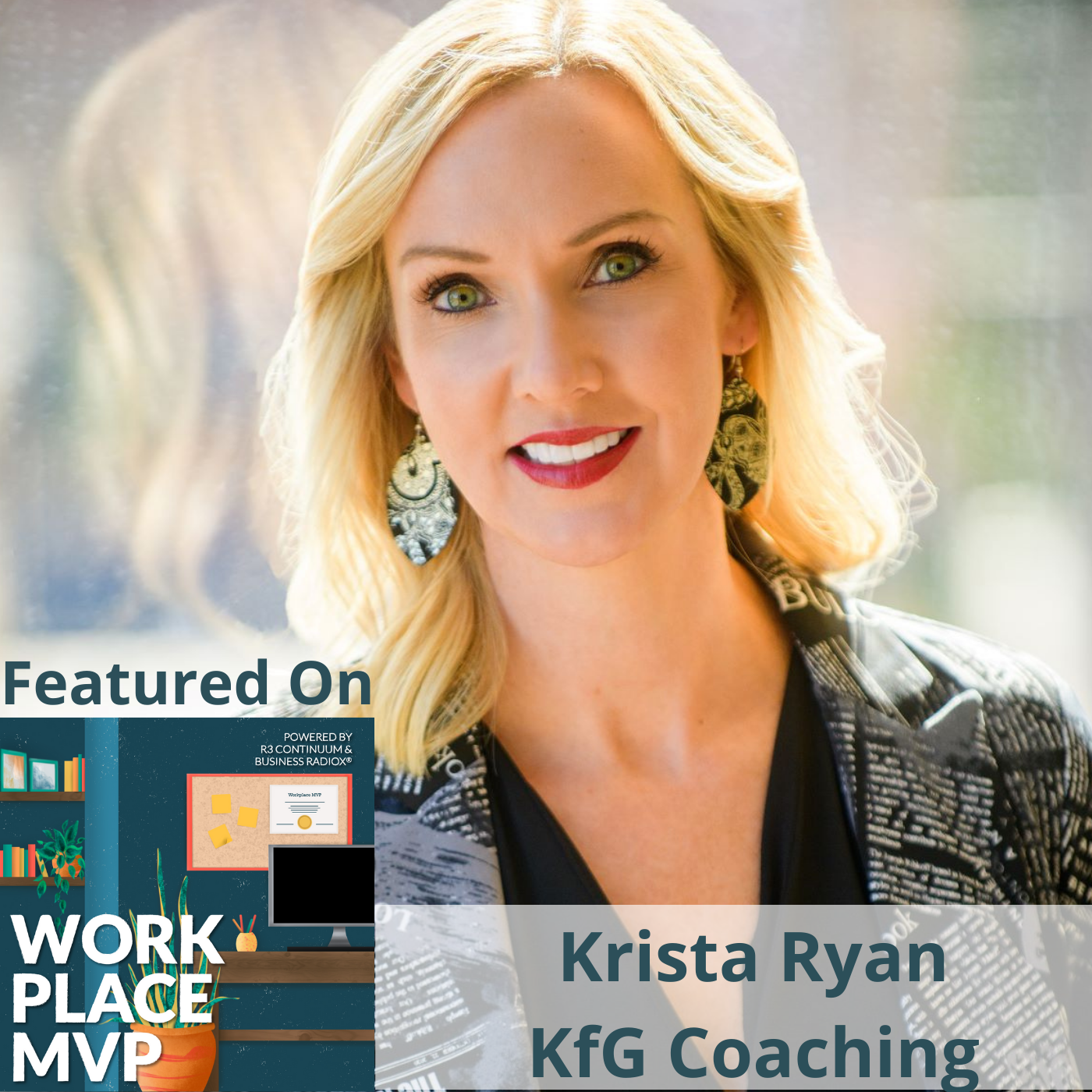
Krista Ryan, KfG Coaching

April 14, 2022 by John Ray

Krista Ryan
Minneapolis St. Paul Studio
Krista Ryan, KfG Coaching
Loading
00:00 /
RSS Feed
Share
Link
Embed

Download file

Krista Ryan

Workplace MVP: Krista Ryan, KfG Coaching

In 2017, days after completing coaching training, Krista Ryan traveled to Las Vegas, Nevada for the Route 91 Harvest Festival. She was a witness to the horrific mass shooting at that event which killed 60 people and injured hundreds.  On this episode of Workplace MVP, Krista recounted that experience with host Jamie Gassmann. Krista shared her struggle to find immediate help for her experience, her journey of recovery, how she has merged her experience and her training to help others through KfG Coaching, the model she developed based on her own recovery, and much more.  Workplace MVP is underwritten and presented by R3 Continuum and produced by the Minneapolis-St.Paul Studio of Business RadioX®.

KfG Coaching

Krista Ryan, the founder of KfG Coaching, has been coaching employees across the United States, Canada, Europe, and Asia. As a smaller business owner herself, Krista personally understands the unique challenges smaller business owners and employees face every day.

Through her experiences working with C-Suite and Fortune 500 companies, she realized there was a lack of professional coaching and support available to small and medium-sized businesses and their employees. KfG Coaching is a business coaching company designed specifically for these situations. KfG Coaching supports the employees within organization through confidential conversations, strategy-building, professional coaching, and action plans. Often times, KfG coaching is considered a bridge between the employee and the HR department. With KfG Coaching support, employees can identify ways to hold themselves accountable for their own success, creating a happier, more productive workplace for everyone.

Company website | LinkedIn | Facebook

Krista Ryan, PCC, Founder, KfG Coaching

Krista Ryan, PCC Founder, KfG Coaching

Krista Ryan is a professional business and employee success coach who supports employees across the United States, Canada, Europe, and Asia. Krista comes from 18 years of experience in the financial industry as the Human Resources Director at a community bank she and her husband own and operate in southeast Minnesota. Krista coaches business owners and employees through her I.R.S. method. This formula was created in 2017 after her personal involvement in the mass shooting in Las Vegas at the Route 91 Harvest Festival which claimed the lives of 59 innocent lives and remains America’s largest mass shooting as of today. With this formula, she leads employees through key factors in successfully self-navigating and coaching others within their own organizations through events out of their control.

Whether it be the pandemic, divorce, job/title change, medical diagnosis, the decline of a promotion, bonus/salary adjustment, or organizational changes, there are many events requiring a unique way of navigating to achieve success. The I.R.S. method will lead individuals through actionable steps for themselves and their teams while maintaining personal and professional success through unplanned events that life may present.

LinkedIn

About Workplace MVP

Every day, around the world, organizations of all sizes face disruptive events and situations. Within those workplaces are everyday heroes in human resources, risk management, security, business continuity, and the C-suite. They don’t call themselves heroes though. On the contrary, they simply show up every day, laboring for the well-being of employees in their care, readying the workplace for and planning responses to disruption. This show, Workplace MVP, confers on these heroes the designation they deserve, Workplace MVP (Most Valuable Professionals), and gives them the forum to tell their story. As you hear their experiences, you will learn first-hand, real-life approaches to readying the workplace, responses to crisis situations, and overcoming challenges of disruption. Visit our show archive here.

Workplace MVP Host Jamie Gassmann

Jamie Gassmann, Host, “Workplace MVP”

In addition to serving as the host to the Workplace MVP podcast, Jamie Gassmann is the Director of Marketing at R3 Continuum (R3c). Collectively, she has more than fourteen years of marketing experience. Across her tenure, she has experience working in and with various industries including banking, real estate, retail, crisis management, insurance, business continuity, and more. She holds a Bachelor of Science Degree in Mass Communications with special interest in Advertising and Public Relations and a Master of Business Administration from Paseka School of Business, Minnesota State University.

Company website | LinkedIn | Facebook | Twitter

TRANSCRIPT

Intro: [00:00:04] Broadcasting from the Business RadioX Studios, it’s time for Workplace MVP. Workplace MVP is brought to you by R3 Continuum, a global leader in workplace behavioral health, and security solutions. Now, here’s your host, Jamie Gassmann.

Jamie Gassmann: [00:00:25] Hi, everyone. Your host Jamie Gassman here and welcome to this episode of Workplace MVP. Work is just one part of an employee’s life. Outside of the workplace, they have various other commitments, responsibilities, and activities that they are involved with. Great way to sum it up, it’s their life outside of work. And just like at work, disruptive events or events out of the employee’s control can occur, the death of a loved one, divorce, pandemic stress, catastrophic accident, natural disaster, and violent acts, to name a few.

Jamie Gassmann: [00:00:59] Disruption is one’s life with – disruption in one’s life whether at work or at home, can have an impact on their ability to remain productive and thrive both in and out of the workplace. When the disruption is personal, how can an employer help their employee with the recovery journey? And in doing that, what are the benefits they receive from providing that support?

Jamie Gassmann: [00:01:22] Well, joining us today to share her personal story of recovery following the Las Vegas Route 91 Harvest Music Festival mass shooting and her journey to helping other organizations support their employees through events that are out of their control is Workplace MVP and Professional Business and Employee Success Coach for Bravely and founder of KFG Coaching Krista Ryan. Welcome to the show, Krista.

Krista Ryan: [00:01:47] Thank you. Thank you so much for having me. It’s a pleasure being with you today.

Jamie Gassmann: [00:01:52] Yeah. We’re really, really happy to have you on the show and so excited to hear from you in terms of, you know, the journey that you’ve been on and how you’ve turned that into your coaching career and in helping other individuals with disruption. So with that, can you start off by walking us through, now I know you had a career in human resources and coaching prior to forming KFG Coaching. So can you walk us through your journey of becoming a success coach?

Krista Ryan: [00:02:22] Yes. Absolutely. Honestly, it’s one of those journeys that I never would have dreamt. This is where I’d be sitting today. Never in my wildest dreams. I’m communications major. That’s really where my heart lies. I’ve always enjoyed conversations and having communication with other people. I thought I was going to go into journalism for a while. There was just something in me that really enjoys having conversations. So with that being said, I quickly realized that that’s not just what my career is. It’s a passion.

Krista Ryan: [00:02:57] So, when I talk about how I became this employee success coach, it was really by accident. I have 18 years background experience as a human resources director in an organization that actually my husband and I own. So, I had that conversation piece very consistent. It was happening on a daily basis with our staff as their human resources director. What I realized I was doing was, in essence, I believed what I was doing through my conversations was coaching them.

Krista Ryan: [00:03:30] So, long story short, I remember walking into my husband’s office and saying, I think I need to figure out that I’m doing this effectively, that I actually know what I’m doing. I would love to go out and get formally certified, get my education as a career business coach and make sure I can apply those skill sets to our staff. So, very supportive. He was all on board with that. I went out – in 2016 is when I went and got my formal education with executive employee coaching, got certified, and then came back.

Krista Ryan: [00:04:04] So, my education, I’m based out of Minnesota. My education was at Newfield Network in Colorado. I came home, flew home, literally. It was such in-depth information. It’s one of those moments where you’re like, whoa, that was a huge overload of information. I literally remember sitting on my patio that night after flying in. It was a late flight. And I sat there and I remember looking up at the stars and thinking, What in the world am I going to do with all of this information? It was a lot. How am I going to apply this? How am I going to make an impact with all of this information just given to me?

Krista Ryan: [00:04:44] So, interesting how the world works was four days after the flight home and that actual question, my husband and I and some close friends of ours flew out to Las Vegas. So, we’re big country music fans. We enjoy outdoor concerts. We absolutely love the energy all that brings. So, we went out to celebrate. My husband and I really wanted to celebrate my certification in this new journey of mine as an employee coach and also just celebrate with our friends at this musical festival, so Route 91. So, we were there in what turned out to be a celebration quickly turned into tragedy as we were involved in the Route 91 Harvest Music Festival Mass Shooting, which stands today as America’s largest mass shooting; 58 lives were claimed that night. Two other individuals passed away since then due to the injuries.

Krista Ryan: [00:05:44] So, it definitely was an opportunity and it’s how I got to where I’m at today. Through my recovery, through the lessons I learned, I’d been given this tool kit, all of these tools I had just learned in my education and in my certification for coaching. And I was actively working them. But I had that opportunity, the gift to not just talk the talk but now I was walking the walk, utilizing these tools that I had received through coaching in my own recovery.

Krista Ryan: [00:06:19] And it sounds like okay that’s the story but it was years of hard work, years of new awareness, years of learning who I am and how I can effectively respond to every situation that I’m encountered with. So, that’s really how I got into developing my own business, KFG Coaching. It’s really to help employees of organizations across the globe understand that it’s up to them on how they respond to any situation and through coaching. That’s the support that we really offer and that’s the impact that I am inspired to make on the employees and really overall the world.

Jamie Gassmann: [00:07:02] Right. I mean, and that it’s such a – you know, it’s like there’s always things in our life that’s like, oh, now I understand why I had to go through that. Right? I mean, obviously going through mass shooting, we all hear it on the news and it’s – you always, I don’t know about, you know, I’m sure you experiencing it firsthand. It’s like, what was that like? What was that in that moment? What were some of the things that you carried with you after that? What was your kind of the survival of it, the recovery of it? Can you talk us through some of the feelings that you were going through when that event was happeningAbsolutely. It’s interesting. I’d heard of all these kinds of events. Right. So, you see them on the news. You hear about them. You have some sort of really close connection that’s going through something that you can’t even wrap your head around. You just can’t even understand it. I quickly realized it as being part of it, as of there was 22,000 plus people in attendance of that event. I mean, it was an impactful event for thousands and thousands of people, not just those in attendance, but those that are connected to them, our family members, our close friends. It was really a trickle effect for those that were involved.

Krista Ryan: [00:08:18] What I learned is you actually know nothing, right? There’s so much that is out of your control, even in the heat of the moment. So, some main points that really stand out from my experience there specifically at that night was I actually don’t remember making any kind of decisions. It was just all of a sudden your body takes over and action takes place. So, I don’t remember making the decision to lie down on the ground. I don’t remember making the decision to stand up and start running. I do remember when the shot started, my husband and I and our friends, actually, I got separated from all of them. So, I had 2% on my phone battery and the last text message went to one of my dear girlfriends and said, “My phone is at 2%. I’m really worried that it’s going to die and then I’m going to be not able to find you guys.” I’m really concerned about that.

Krista Ryan: [00:09:18] My husband was on a mission to find the world’s biggest belt buckle. That’s what he was doing. That’s how we were separated. So, he was looking for a belt buckle. And I was frustrated because we couldn’t find each other. So, there were already emotions that were involved in the story before the shots even started.

Krista Ryan: [00:09:36] When they started, I do remember the gut feeling, right, and I’ve always been one that follows my gut. I don’t always follow my heart or my head, but I definitely am listening if something is in my gut of what’s going on. And something told me those were not fireworks and this was very serious. Those that were around me were saying, “You guys, it’s fine, it’s fine. It’s got to be fireworks. It’s got to be fireworks.”

Jamie Gassmann: [00:10:03] So, there was that conversation right at the beginning, but then it very quickly turned into absolute chaos because we were seeing individuals that had been hit. We were seeing people, the effects of it. And it was almost as if someone was spraying a garden hose up in the air because there was a lot of ricocheting. We are the – concert was on solid ground, so it wasn’t grass. So, a lot of the bullets were kind of like ricocheting off things. So, there was really no safe area, a lot of chaos. No one really knew where the shots were coming from.

Krista Ryan: [00:10:39] It was only the next day that we found out exactly what had happened from the news. We had absolutely no clue if it was one person, if there were multiple, if we were surrounded, and we really were caged. We were in this area that was fenced in. So, I don’t remember making choices. I do remember the world turned black and white. Like for some reason, there was no color and that was just my own body’s way of observing what was happening I guess. I remember very little sound other than the shots. I don’t remember screams or cries or people even really talking. It was almost as if life just slowed down. You know, life really just went in slow motion for a while.

Krista Ryan: [00:11:28] And then it was one of those, “What’s the next best thing? What do I need to do next?” And my decision, everyone had that question without even knowing they had that question. That’s where you see some people their next best thing is laying on top of someone to protect them. You know, the next person, their next best thing is to run, jump over the fence, try to get out of there. The other person’s next best thing is to wrap gauze around someone that was wounded. So, everyone had different action steps that they were taking. And mine were – my next best thing for me is I’m getting out of here. I’m going home to my three kids. That’s definitely in the forefront of my mind. I’m going to do absolutely everything I can to get out of this situation and to get home.

Krista Ryan: [00:12:17] That piece of it actually took a ton of recovery for me because that decision I held on to and started asking myself, why didn’t I stop and help people that I saw were injured? Why did I keep running? Why didn’t I do more on my part to X, Y or Z? So, those are the questions that started to come to the surface and they were not helping me. They were hurting me because it was holding me back. And, really, I got sucked into that deep, deep, dark victim mindset.

Krista Ryan: [00:12:53] So, was I a victim? And were those that were there that night of victim? Absolutely, 100%. But the next hour, the next day, the day after, the month after, we’re not victims anymore. If we choose to respond in a way that really supports us in that moment, we’re not victims. So, it’s really – it was a really a long journey of recovery and a lot of tools, a lot of hard work to kind of start shifting away from that mindset because it’s all about the way you respond.

Jamie Gassmann: [00:13:26] Yeah. And in that recovery, let’s talk a little bit about that because I kind of formed, you know, some of what we’re talking about today is, you know, what was it like getting on that plane to fly home?

Krista Ryan: [00:13:38] Oh, that was absolutely horrific, to be completely honest with you. It was not only was it horrific because we absolutely were traumatized. We flew home the next day. I don’t know. But I’m assuming most of the people on that flight had witnessed what we had. There was a lot of scary, dark, heavy emotions that were attached on the flight. We were scared.

Krista Ryan: [00:14:06] You know, when I say we, I’m using myself. I can only tell my story. You know, I can only share my piece of it. But we, as my friends and myself and my husband, can collectively agree that we were definitely afraid. You know, we were afraid. We knew that we were changed in some way, shape, or form likely for the rest of our lives. And it was just a really scary flight home because we had no idea what’s next. We have no idea.

Krista Ryan: [00:14:34] We all knew we had different stories. And it actually took days and days, maybe even a week or two after before we started sharing internally within the group of us what exactly had happened, you know. So, there was a lot of that shutdown, close in, protect ourselves. And that flight home, it was terrible weather. It was very bumpy. The emotions were already there. I cried personally the whole way home. I just remember nonstop tears, which brought a lot of different emotions. It was tears of gratitude, tears of sorrow, tears of what just happened. We were definitely in shock. And tears of what’s next. What do we do now? What’s the next best thing for us or for me?

Jamie Gassmann: [00:15:24] Yeah. A lot to process.

Krista Ryan: [00:15:26] It absolutely was.

Jamie Gassmann: [00:15:27] And also that, you know, I hear a lot of like kind of that survivor’s guilt and you touch a little bit on that where your focal point was to get out of there so you could get home for your kiddos. And yet you’re thinking back on, could I have done more in that moment? You know, so when you got back, you know, and we’ve talked about this on a previous call in terms of that recovery journey.

Krista Ryan: [00:15:52] Yeah.

Jamie Gassmann: [00:15:52] Share with us a little bit. I mean, because one of the things that you touched on is that you shared. There wasn’t really a lot of – you couldn’t find support that could help with addressing what you just went through.

Krista Ryan: [00:16:04] Yeah.

Jamie Gassmann: [00:16:05] And I know our show sponsor, R3 Continuum, provides support at a workplace level, but this is a personal disruption so –

Krista Ryan: [00:16:13] Absolutely.

Jamie Gassmann: [00:16:14] Share with me a little bit some of the challenging parts of the recovery what you would want workplace leaders that might be listening to know and how they can reach out and support their employees.

Krista Ryan: [00:16:26] Yeah. So that was a huge piece and a really huge awareness for myself. So, I’ve always been one who’s not afraid to ask for help. So, that is one thing I’ve always known about myself. I’ve had no problem reaching out and saying like, “Hey, I’m a big believer in therapy.” You know, I’m a big believer that if you’re navigating something and you have questions about if this is effective or if I’m doing this, is this for my best interest that we’re not meant to figure that out alone, that it’s important to ask for support from others. So, in this situation – pardon me, I’m taking a drink. In this situation, it was one of those things that I got home and I knew immediately I’m going to need some major help. I absolutely. I can’t self-diagnose PTSD, but I knew I was in shock, so I was not afraid to start searching and asking for help.

Krista Ryan: [00:17:19] I remember being in the real heat of the moment that brought that awareness to me was the day after we got back. I tried to get into my normal life again immediately. And I remember being afraid to go to bed that night. I didn’t want to turn off the lights. I didn’t want to hear any kind of flashbacks. I didn’t want to hear the gunshots. I had to stop watching the news because it was all over the news. And I started attaching myself to what I was seeing on the news, thinking did I see that? Did I witness that piece? Is that me? I was navigating and looking for, is that me in this new story? Is that me? And looking for answers that were never going to come. They were – I was never going to find the answers of why that happened. What could I have done differently? How could I have responded differently? Those were answers that were hurting me and not helping my recovery.

Krista Ryan: [00:18:09] I was at the grocery store the day after returning and I live not too far from Mayo Clinic. So, we have a helicopter that’s from the hospital that flies over frequently. The helicopter flying over eerily sounded very much like the gunshots at night. And my body went into protection mode at the grocery store. When I was walking out with my cart of groceries, that’s when I knew I cannot continue on this way. I have to ask for some help and assistance. That was my first blockade.

Krista Ryan: [00:18:39] I reached out to multiple places begging for help and I got the response consistently back like, “Yeah, we can open up our calendar for you. We can get you in. It’s going to be three months. It’s going to be eight weeks. It’s going to be.” And I thought if I continue in this way, in this mindset, I’m going to have to admit myself or something because I was helpless. I didn’t know what to do.

Krista Ryan: [00:19:04] So, bless my husband mentioned he has a close connection and a dear friend of ours actually that he said, “Have you thought of reaching out to her?” And I said, “No, I haven’t really.” So, I did. And she got me in the next day. And that was the first step for me really recovering and my body was responding. There’s a lot of somatics involved in recovery when you’re recovering from something like this, shaking of the body, tears. Your body is just trying to process what happened.

Krista Ryan: [00:19:42] So, that was step one for me, and the first time I shared my story with anybody was with her. And it was terrible. It was, you know, tears and shaking, but it was also the most beautiful moment because it was the first one for me to make that step forward. So, my first learning there is don’t think for a second you’re expected to do this alone because you, quite frankly, cannot. It’s too much for one person to be able to navigate alone. So, keep looking, keep looking for support, and don’t stop asking until you receive the support that you’re looking for. That was my first awareness and a really big lesson I took.

Jamie Gassmann: [00:20:28] Yeah. It’s like you’re not alone in that journey of recovery. There’s help for you out there. Yeah. And so we talked a little bit about how each individual has a different experience or perception and a journey following disruption. I know you’ve touched a little bit on that with your husband had a totally different experience and his recovery was different, and even your friends. Can you share how you saw that between the two of you? Like the differences between. Because I know sometimes people start to try to relate, well, you know, you’re not – you should be going through it the same way and they assume that can cause kind of some hindrance to recovery or unintentional, like aggression between. So, you talk a little bit about some of that differentiation that you and your husband went through.

Krista Ryan: [00:21:19] Yeah. Absolutely. And it happens in our personal lives and you see it all over the workplace, too, right. So, you identify someone’s going through something challenging and you immediately come up with solutions for them, right? So that I did it myself with my husband. I decided that since I was going to a somatic therapist, that’s what everyone that experience this should be doing because it was right for me. And then, when it wasn’t happening, when he was recovering, he was on his own journey that he was involved in his story. I was attaching myself to it because I love him. And then I was getting frustrated because he’s not doing things in the way that I feel like he should have but that it had nothing to do with me. That was a really hard pill for me to swallow. And it was a big breakdown for me, right?

Jamie Gassmann: [00:22:07] So, I realized I was attaching myself to his journey so I could avoid looking at my own and, really, what supports me in my own recovery, in my own growth, in my own experience is not cookie-cutter the same for everybody. Everyone observes situations differently. Everyone – some people walked away from that experience with no, they didn’t need any kind of therapy. They observed it. They processed it. They found the healthy steps to move forward from it. And they lived healthy, happy lives a lot faster than I did.

Krista Ryan: [00:22:46] I had to do hard work because I didn’t know how to do it. I didn’t realize it that I was the one accountable for myself and actually no one else. It’s a lot easier to tell someone how they should recover. Right? And it’s a lot easier to draft and say, I think you should do this. I think you need to do this. I think you need to do this, that it’s quite frankly and it’s really a blunt way to say it, but it’s none of our business. It is their own journey to process. And that was frustrating as heck to me because I love these people so much I wanted them to come with me and do it my way because it was supporting me. And that created more breakdown than good.

Jamie Gassmann: [00:23:30] Yeah. And, I imagine too, there could be like the reverse, where you feel like they should be feeling the same way that you are and should understand how you’re feeling.

Krista Ryan: [00:23:39] Yeah.

Jamie Gassmann: [00:23:39] Did you experience some of that as well where, you know – I kind of attribute it to maybe to COVID when the pandemic broke out and people’s reactions to it and maybe when, you know, and then when schools shut down and there’s kids back at home and there’s all this new stress and challenges that we’re navigating. You know, one spouse might be thinking of it one way and dealing with it one way, while the other might be the, you know, doing another thing. But they are not realizing that they might be feeling differently and assuming that each other should be feeling the same.

Krista Ryan: [00:24:13] Yeah.

Jamie Gassmann: [00:24:13] Have you seen that in some of your coaching and how do they navigate those types of situations?

Krista Ryan: [00:24:18] I see it every, every – I don’t want to say every day, but pretty much every day. Right? So, everyone, not just navigates things differently, they experience things differently. It’s really one of the biggest lessons I’ve learned is how important it is for me in my own success, in my own growth, to listen to understand and not listen to respond. Right?

Krista Ryan: [00:24:45] So, so many times people are listening and they’re preparing a way to respond, right? And like, this is what you need to do. This is what – I think this is right. That’s a listening to respond. Listening to understand is kind of like where the level playing field is. That means I’m not right. You’re not right. I’m not wrong. You’re not wrong. We are different people. You know, like there’s no right and wrong. It’s not us versus them. It’s this is how I’m processing. This is what I believe. You’re a different person. You experience things differently. There’s no way we’re going to be aligned on absolutely everything. Let me listen so I can understand how you process what you believe, how you view things, the world, the pandemic, the vaccines, and let me understand. There’s no response that’s even necessary.

Jamie Gassmann: [00:25:39] Yeah. Sometimes they just want to be heard.

Krista Ryan: [00:25:42] Absolutely.

Jamie Gassmann: [00:25:43] Not looking for someone to provide that solution, but just to be heard, which I think, and you know, in looking at the journey that you’ve gone on, you took that and you took that coaching background that you had and you turned it into an opportunity from a coaching perspective so that the event itself that you experienced completely out of your control but yet you took that and you established the IRS models that you created. Can you share with our listeners what this model is? What does the IRS in that name stand for and how does it work in helping people that might be going through, you know, either a similar traumatic experience or other types of disruption in their life? You know, how does it work to help them through that?

Krista Ryan: [00:26:35] Yeah. It’s a process that I formed years, through the years of work after coming back. Right? I didn’t even know I was formulating this method until all of a sudden it was like, “Wow. I’m consistently coaching on the same things. I’m consistently having similar conversations with people across the world.” We are so connected in the way that we navigate and respond that it was one of those aha moments and like this is why, this is how I can turn that experience into a gift to offer others, right? Like, “Whoa. This is my learnings.”

Krista Ryan: [00:27:11] The IRS stands for, quite frankly, I is identification. That’s acknowledging that something is happening that maybe you’re stuck in a victim mindset due to an experience, right? That there is some sort of breakdown. There’s something happening. There’s something out of your control that is taking place that is disrupting your life and your success. That’s the identification.

Krista Ryan: [00:27:35] Some of the key things to keep in mind there is, like, if you’re blaming and complaining a lot, if you’re looking at a surrounding and you’re like, “Why is this happening to me? What’s going on?” You know, a lot of that blame and complain is a keynote of here’s a moment for you to pause and identify exactly what’s going on. So, that’s what the I in the IRS method stands for.

Krista Ryan: [00:27:59] The R is the magical moment. That’s your response. So, anything can happen, anything, the pandemic, a medical diagnosis, the loss of a loved one, the loss of your job. There’s so many things that happen on a day-to-day basis that are completely out of our control. What we can control is our own response to it, and that is where that R sits. And that’s what that magical holding places, the R. Not someone else’s response to it. You can’t control that. You can only control your own.

Krista Ryan: [00:28:35] And then, the S is the power. That’s where the freedom is and that’s sharing your story. We are all connected through sharing our stories. It’s how I got introduced to you. I started talking and get in recovering and I quickly got introduced to Jim Mortensen, who is R3 Continuum. And I like to consider him now a friend. And it’s through sharing stories and learning from each other and looking for more impact and growth moments, and what else can I learn about myself in this moment, and how are we connected. We’re so connected as humans through our stories.

Krista Ryan: [00:29:14] And my experience in Las Vegas, there’s a lot of similarities with people that have been in a car accident or they’re dealing with something that’s challenging in their life. And if they’re not, they will be. The only guarantee is that life is full of unexpected events.

Krista Ryan: [00:29:32] The IRS method is something I’m actively coaching employees across the globe on, and it’s not to help navigate through something, right? So, I want to be really clear that that is definitely therapy. But coaching is to help give them the tools to prepare them for these moments to say like, “You know what? I can handle this through my response. What is my next best thing? What can I do? How can I respond effectively?” So, that is the power of the IRS method. It’s really empowering people to be prepared for events that are out of their control. So, when they do, not if, when they do happen, that they have this tool kit to really utilize to move forward from it.

Jamie Gassmann: [00:30:23] Wonderful. And, yes, that was how I connected with Jim Mortensen, our company president, because I remember following the Harvest Music Festival Mass Shooting. R3 Continuum did respond to that to various workplaces that were either involved or nearby. But we thought about all of you that we’re getting on planes to head home and how could our services be further reaching and how could we support this broader group of people who get on a plane and head home following that, knowing that they need support to some capacity or may not, but at least they know what’s available. So, yeah, definitely –

Krista Ryan: [00:31:02] Yeah. It gives me chills. Jamie, it does. It gives me chills because I never even knew until after this happened and my healing took place. You are – you’re so close to me in my home state. You’re literally miles away. And I got in the car and I drove up and I said, “I would love to have a conversation with you. Tell me the impact that you’re making.” It’s just – I was so inspired to learn more. I was thirsty to hear the support that you’re offering individuals that are navigating situations such as this, and through the sharing of stories, that’s how I’m reaching out to other people. That’s how we’re learning from each other. That’s how we’re improving and that’s the freedom. And, really, the last step of this IRS method is here’s now how you can take the experience and make impact for others.

Jamie Gassmann: [00:31:49] Yeah. And that’s so powerful because we do all. There’s different – it might be different levels of disruption and obviously, we’re all going to respond to it differently But it’s how – it’s having tools and knowing that you have that support there. Sometimes you may not be ready to talk about it, but when you are knowing that you’ve got that option.

Krista Ryan: [00:32:08] Yes.

Jamie Gassmann: [00:32:08] And so powerful. So, speaking of R3 Continuum, R3 Continuum is the sponsor of Workplace MVP. They are a global leader in empowering leaders to effectively support and help their employees thrive during disruptive times through their tailored workplace behavioral health support, disruptions, response and recovery, and violence mitigation solutions. They can help you create a work environment where your employees can feel psychologically and physically safe. To learn more, visit r3c.com.

Jamie Gassmann: [00:32:39] So, continuing with some – now, I want to shift into kind of talking about that workplace, right. I know for you the workplace was your own organization, but for others that might be going back to a work environment, you know, following some type of a disruption, you know, from the coaching that you’ve done, how does personal disruption or one struggle to recover from maybe a particular event that’s out of their control impact that workplace, almost like as a whole?

Krista Ryan: [00:33:11] Multiple ways. I mean in so many ways. It’s almost easier to identify how it does not. Right? Because it’s a lot less. It impacts it in all ways. It impacts the relationships. It impacts productivity. It impacts vulnerability. There are so many ways that it impacts the entire organization, not just the person that is going through the disruption. Sometimes it’s an individual disruption. Sometimes it’s an entire organizational disruption that multiple team members are involved with. So, there’s a lot of layers to the onion of what exactly it means.

Krista Ryan: [00:33:48] But the one – the key thing to note is despite whether it’s one individual or the entire organization going through collectively, every single person is disrupted by it. So, every single, whether they’re the one experiencing it or not, they are completely disrupted by it. So, and everyone navigates different. Right? So, there’s no, if I could create a step-by- step and send it out to every business and organization and say when you’re going through this, here’s the steps to effectively move forward. I would love to do that. It’s impossible because everyone’s different. Everyone is made up differently and receives processes differently.

Krista Ryan: [00:34:34] The best thing that in my personal experience I found is vulnerability, transparency, and no guessing. So, what that means is in organizations, key leaders, team members, managers, supervisors, owners, through asking questions without making any kind of assumption. Right? So, even the question you’re asking me now is a beautiful question to ask team members. What can we do? What can we do to support you through this? Because, quite frankly, we have no idea. And that is the first step. Right? What can we do to support you through this?

Krista Ryan: [00:35:16] My learning in my own experience was, it was hurtful when I came back and was asked information and details. That didn’t feel like support to me. That felt like curiosity and it was hurting me. So, there was – and not by any ill intention either, right, by a lack of awareness and me not being transparent and saying, “Hey, I’m protecting myself in this moment right now. Your questions of curiosity are actually hurting me,” because it’s not something I’m ready to talk about. Right? Some people would just flat out ask the questions if I had seen anyone lose their life that night or how traumatic it was. And it’s not because they’re ill people or that they’re ill-intended people. They are curious, but the curiosity was hurtful to me.

Krista Ryan: [00:36:01] So through my learning, I found that the most supportive questions were the ones of I literally have no idea what to do in this moment to support you, know I’m here, and that I will do anything to support you. That felt like support because I wasn’t quite sure what I needed. I was still trying to figure that out. Did I need more time off? I don’t know. Did I need a person to talk to? I don’t know. I wasn’t sure if I was ready to talk. I didn’t know if I wanted to be home and isolating. I did not know what I needed. But having someone actually be vulnerable and open and say, “I don’t know what to do in this moment, but I’m here for you.” That was the most impactful comment and that helped me breathe and give me space to actually start figuring out what do I need, what does Krista need?

Jamie Gassmann: [00:36:57] Yeah. Very interesting, because I’m sure, you know, it’s similar if somebody gets the news of a, you know, an illness that’s terminal. And, you know, you just – it’s hard to know sometimes how to comfort that person and you feel like you have to, I think, by human nature. But to your point, sometimes it’s better just – it’s okay to say I don’t know what you need from me but I just want you to know I’m here. That’s a very powerful statement because I think, you know, it helps people kind of have that – that gives them that ability to kind of just express that support without having to put too many words into it and make it worse.

Krista Ryan: [00:37:33] Absolutely.

Jamie Gassmann: [00:37:34] Very interesting.

Krista Ryan: [00:37:35] And even how you just mentioned like it’s human nature to want to support and it’s human nature to want to comfort. Right? There was a lot of times I did not want the comfort at all. I was angry and I was rigid. And when people tried to comfort me, I shut them out even harder because I was like that is not the support I need right now. That feels good to you, but it’s not part of my journey right now. So, it was the more questions of like, I don’t know. I literally have no idea what to say or do. And that that felt like, “Oh, that’s real. Okay. Thank you. Because I don’t either.”

Jamie Gassmann: [00:38:10] Yeah. And I can see so that that kind of leads me to my next question about some of those challenges as like a workplace leadership, typically has that job of helping employees, right, you know, or being aware of their employees and identifying when they might need some additional support or might be struggling with something from a personal disruption. What advice would you provide to a workplace leader who might have an employee where they openly know they just went through something? What is their best first steps in supporting that employee? Is it following similar to what you just commented on, or are there ways they can prep the team for it? What are some of your thoughts around that?

Krista Ryan: [00:38:58] Every situation is different. I would say the first step is to have a conversation, quite frankly, with the individual and with that key leader, whoever wants, as the team lead that wants to initiate this conversation, identifying that something happened and that there’s awareness around it, and then formulating the next steps. Right? A lot of conversations are happening, too, because employees don’t, or employers don’t know what to do to support them, but they also still need the job to get done. So, they’re like walking on eggshells and don’t quite know how to approach it, being that we need this job to get done. We have no idea how to support the individual. We don’t want to trigger them or make it seem that we don’t have that support in place for them. But this job needs to get done.

[00:39:42] So, it’s really having that vulnerable conversation of given the fact that this has happened and we need this job done, let’s collectively work together and have constant conversations, not one and done. It’s every day that employee is going to be different. They’re going to show up differently every day through this recovery process. So, let’s meet every day and say, in order to get this job done as effectively as possible, let’s talk about what support looks like for you today. And then, that conversation can happen tomorrow because that employee may show up in a different way tomorrow.

Krista Ryan: [00:40:18] So, it’s a really – it’s an action. It’s not a conversation and done. It’s an action moving forward as the recovery is taking place, as they change. As new things come up, it’s constantly – it’s malleable. It’s constantly changing and shifting.

Jamie Gassmann: [00:40:36] So, and from a leader perspective, what are some of the benefits that that employer can benefit from when they are prepared and able to respond to employee’s personal disruption, where they have some of these kinds of either whether it’s training or educational tools or resources and tools in place to help support employees when they go through that? What are some of the benefits that come from that?

Krista Ryan: [00:41:00] Oh, this guy is so important. It’s really – it’s preparing for the unknown so that when it happens, not if, when it happens, they’re able to effectively navigate, that they have something in place. It can also show that we are truly here to support you, even without having something going already happening. Right? So, let’s support you before we’re going through something. Let’s set this up for success now so that when something happens, we already have the game plan in place and then we can start taking those steps.

Krista Ryan: [00:41:37] So, it can build trust amongst the entire team when you start having conversations about the unknown and how you’re going to navigate. It can establish deeper connection relationships. It can really encourage vulnerability and trust. I mean, all of those are beautiful gifts that will help. Those are assets that help the organization grow.

Krista Ryan: [00:41:58] So, setting something up for success before you have to, that is the sky’s the limit for possibilities that will come from that. And whether that be bringing in external sources or resources ahead of time, having game plans in place, you know, it’s kind of like how kids at school go through. They go through like active shooter drills now. They go through fire alarms or tornado drills. They do that so that if something were to happen, if there’s a tornado coming through town, they actually have some awareness of what to do. Now, will it be perfect? Absolutely not. They’ll have some idea of what to do, how to navigate. They’ll have already received that support. And then, the aftermath, it can be the more individualized support. So, it’s just part of – I feel like it’s part of the employee manual that needs to be constantly updated, talked about, and implemented.

Jamie Gassmann: [00:42:54] And if anything that – we always say, if anything that the pandemic taught us, is that disruption can happen. It’s not an if. It’s usually a when. And it’s how do you – how prepared are you in supporting that workplace when it does? So, to that point, if you were going to leave our audience with any points, point, advice, tools, or resources that you highly recommend that they reach out to or that they put into place now in preparation for these types of situations, what would you share with them?

Krista Ryan: [00:43:29] I would share that everyone has the ability. Everyone, no matter who you are, no matter what you believe you’re able or capable of, you have, within you, you already have the ability to navigate through anything life gives you. It’s through the support of others that it can be the most impactful and successful and you can really step into a whole new way of yourself. So, everyone has the ability to do it. It’s reaching out and connecting with others and learning and constantly shifting and changing. Talk about being like – it’s all about pivoting, learning how to pivot through all these changes and you’re not intended to do it alone. It involves connections.

Jamie Gassmann: [00:44:16] Yeah. That’s a beautiful statement. And it just – it’s so true. And it’s been such a great conversation listening to you. Thank you so much for sharing your story with us. I applaud you. I know – it’s great to see your recovery. I know that had to have been a very hard journey. And I just really appreciate you sharing that with us.

Jamie Gassmann: [00:44:36] But if our audience wanted to get a hold of you and learn more information about your IRS model or KFG Coaching or your coaching services or ask you questions, how can they go about doing that?

Krista Ryan: [00:44:48] The best way to do that would be at my website. It will have my direct contact information. They can reach out to me. I will immediately get back to them. It’s kfgcoaching.com. So, it means keep flipping going. It’s really what we all need to do in our lives. Right? Keep going. So, that’s what CFG coaching is and that’s all we need to do. So, definitely reach out to me on that and I would be happy to have a conversation with them.

Jamie Gassmann: [00:45:19] Wonderful. Thank you again so much, Krista. It’s been so great to chat with you. Really appreciate you being on our show and being a guest and letting us celebrate your accomplishments where you’re at today.

Krista Ryan: [00:45:31] Thank you. Thank you so much, Jamie. And thank you to R3 Continuum.

Jamie Gassmann: [00:45:35] Yeah. Thank you. Also, we also want to thank our show sponsor, R3 Continuum, for supporting the workplace MVP podcast. And to our listeners, thank you for tuning in. If you’ve not already done so, make sure to subscribe so you get our most recent episodes and other resources. You can also follow our show on LinkedIn, Facebook, and Twitter at Workplace MVP. And if you are a Workplace MVP or you know someone who is, we want to hear from you. Please email us at info@workplace-mvp.com. Thank you all for joining us and have a great rest of your day.
 

Tagged With: Jamie Gassmann, KfG Coaching, Krista Ryan, Las Vegas shooting, R3 Continuum, Route 91 Harvest Festival, traumatic event recovery, Workplace MVP

The R3 Continuum Playbook: Imposter Syndrome – How to Understand, Acknowledge, and Overcome It

April 7, 2022 by John Ray

Imposter Syndrome
Minneapolis St. Paul Studio
The R3 Continuum Playbook: Imposter Syndrome - How to Understand, Acknowledge, and Overcome It
Loading
00:00 /
RSS Feed
Share
Link
Embed

Download file

Imposter Syndrome

The R3 Continuum Playbook: Imposter Syndrome – How to Understand, Acknowledge, and Overcome It

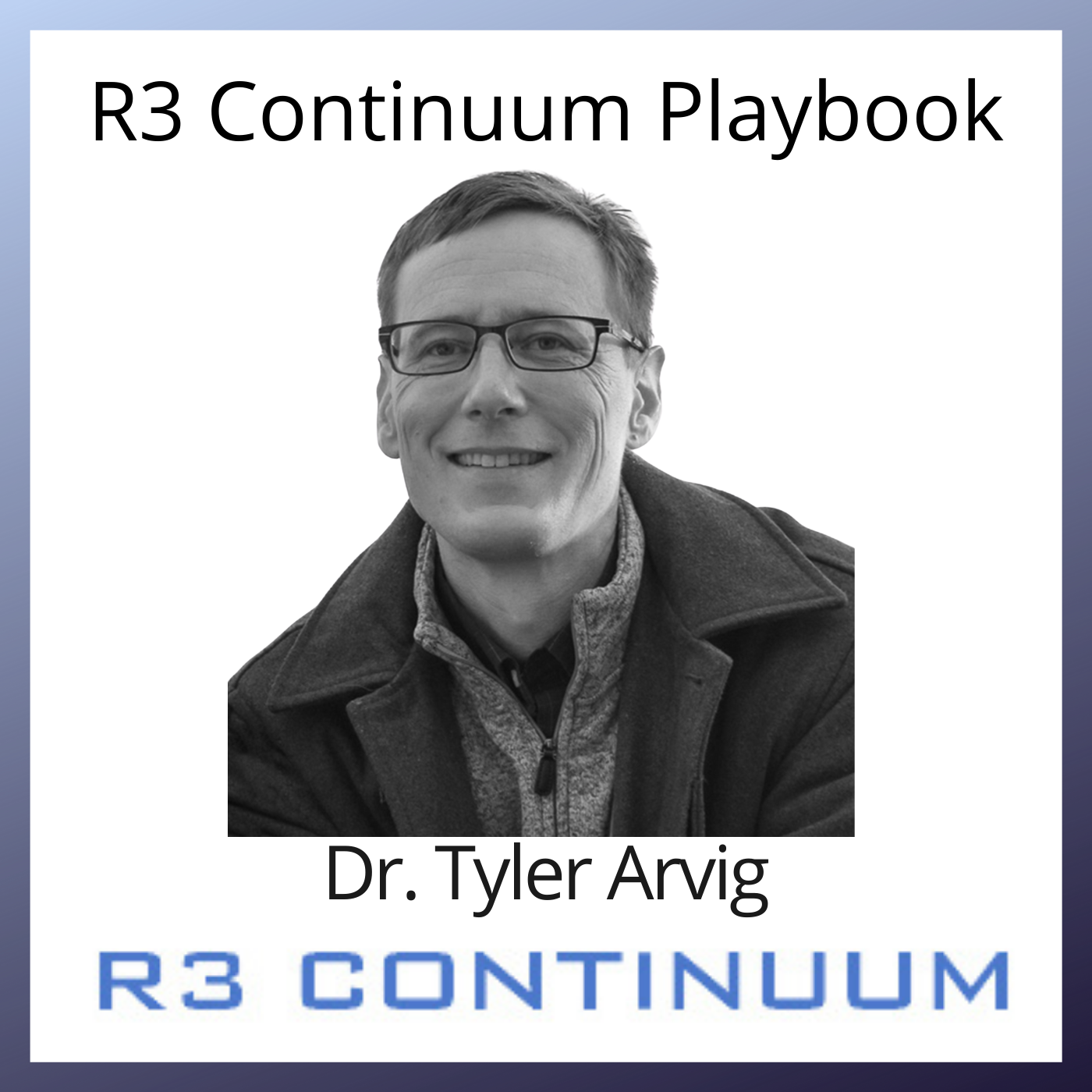
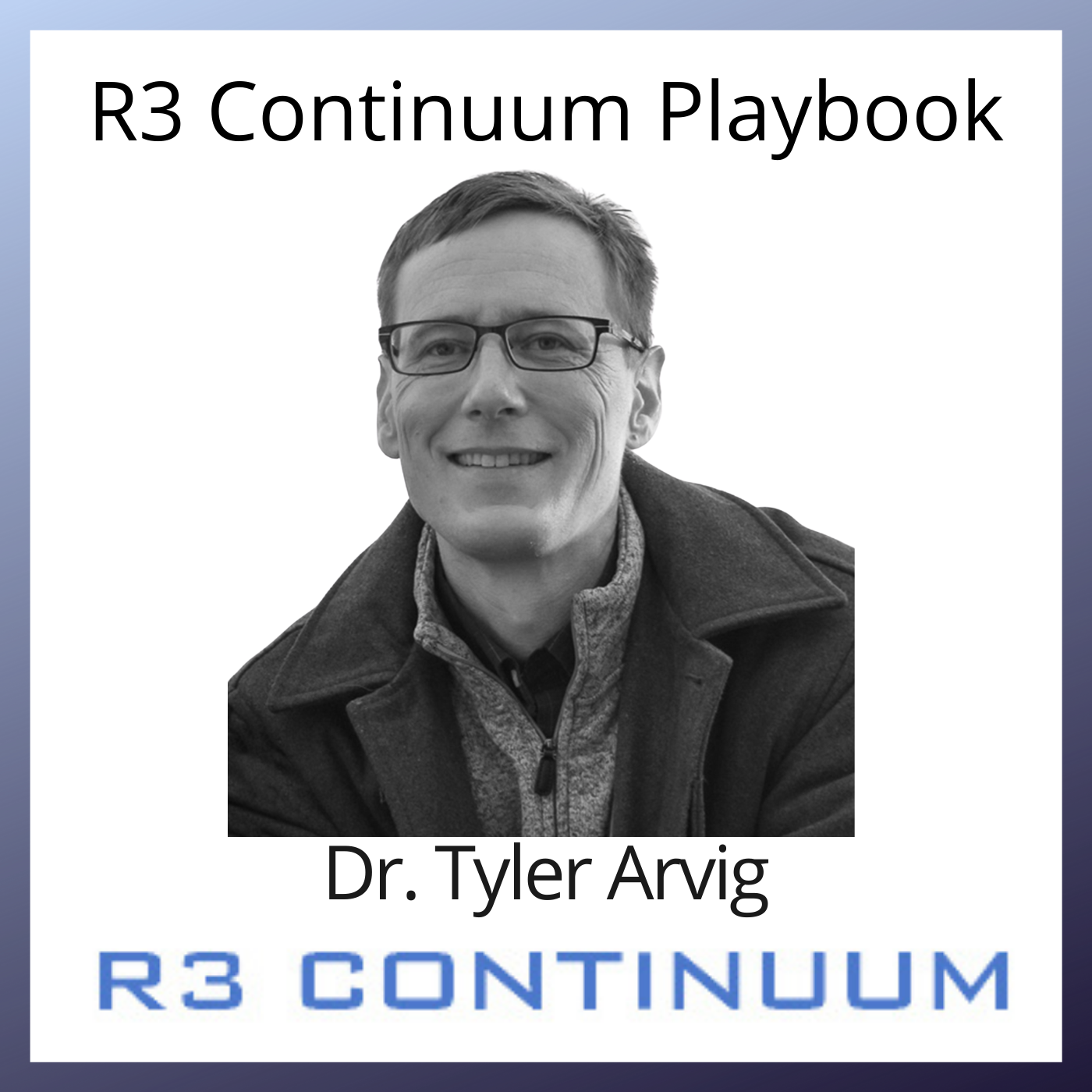
Imposter Syndrome is not something new, but it is a current area of interest for those wanting to overcome the self-doubts that most people experience. In this excerpt from an R3 Continuum webinar, Dr. Tyler Arvig, Associate Medical Director, sheds light on exactly what Imposter Syndrome is, how it can impact your life and career if it is not addressed, and some ways to overcome it.

The full webinar, Imposter Syndrome – How to Understand, Acknowledge, and Overcome It, can be found here.

The R3 Continuum Playbook is presented by R3 Continuum and is produced by the Minneapolis-St.Paul Studio of Business RadioX®. R3 Continuum is the underwriter of Workplace MVP, the show which celebrates heroes in the workplace.

TRANSCRIPT

Intro: [00:00:00] Broadcasting from the Business RadioX Studios, here is your R3 Continuum Playbook. Brought to you by Workplace MVP sponsor, R3 Continuum, a global leader in workplace, behavioral health, crisis, and security solutions.

Shane McNally: [00:00:13] Hi there. My name is Shane McNally, Marketing Specialist for R3 Continuum. On this episode of the R3 Continuum Playbook, we’re featuring a segment from a recent webinar that was done with R3 Continuum’s Associate Medical Director, Dr. Tyler Arvig. This webinar was titled Imposter Syndrome: How to Understand, Acknowledge and Overcome It.

Shane McNally: [00:00:33] In this webinar, Dr. Arvig took a deeper dive into something that most of us have likely experienced at some point, but maybe didn’t even realize what it was. Imposter Syndrome. Imposter syndrome is defined as an internal experience of believing that you are not as competent as others perceive you to be. While it’s perfectly normal to feel this way, it can impact your mental well-being, job performance, and your ability to thrive within your career if it’s left unaddressed.

Shane McNally: [00:00:59] In this segment, Dr. Arvig provides expert advice into what you can do if you find yourself struggling with imposter syndrome.

Shane McNally: [00:01:07] What do you do if you are identifying with some of these traits?

Tyler Arvig: [00:01:12] Yeah. Well, first of all, realize that that’s normal. Humans have this wonderful ability to – we have frontal lobes and we can process things more intellectually and dig into things. But sometimes that can also have a downside, which is we overanalyze things. We worry too much about things. So, if you’re noticing these things in yourself, first of all, realize that it’s normal and it’s not pathological. We aren’t talking about pathology or you’re not sick. This isn’t an illness. It’s just your way of seeing yourself and seeing other people.

Tyler Arvig: [00:01:56] So, these are just some tips. They might work for you. They might not. But really just kind of think about these things as we talk about them. The first thing you do is show your feelings. Be transparent. If I’m having doubt in myself and what I’m feeling or my role or whatever, the first thing I can do is just, you know, talk to someone about that. Share that I’m feeling anxious or I’m feeling like I’m not maybe really part of this group or I’m not good enough. There’s something wrong with that. And everyone has those thoughts, but some people are reluctant to share them. But sharing those feelings can go a long way towards undoing what you might have built up in your mind about some of these things.

Tyler Arvig: [00:02:48] The second thing is, you know, assess your abilities. So, with imposter syndrome, what we’re talking about is, I don’t feel like I’m really good at doing what I’m doing. If the CEO – you know the CEO information that’s out there is interesting because you get these people that are heads of giant, multibillion-dollar corporations and, like, I’m not good enough to do this. Like, I’m not really that good. And, like, well, you must be because you got promoted to that level and that doesn’t happen by accident. But if we think of this as doubting our abilities, the second thing we can do is really assess our abilities. Objectively, how did I deal with that? Oh, actually, maybe I did pretty darn well with it. So, maybe some of my doubt in my abilities is misplaced.

Tyler Arvig: [00:03:46] Again, when it comes to confronting what we think of as faulty beliefs or beliefs that maybe don’t have a basis, in fact, the way you do that is by assessing facts, and then going, okay, here’s what I believe. Here’s what I actually did. What do they match up and what don’t they match up?

Tyler Arvig: [00:04:06] The third point here is to start small, which is don’t try and do everything all at once. Start with one thing. If I’m – I have – let’s say, I guess with this presentation, I’m like, oh, this presentation just didn’t go well. I feel like I didn’t know the topic and I was kind of fooling everyone and I didn’t really say anything that was intelligent. I could do a bunch of different things. I could go do a ton more research on the Internet and compare it to the slides I have and then talk to my boss and talk to this person, talk to that person. Or, maybe I just call Shane, be like, hey, Shane, how did that go? Like, did it go okay? Did it – start small. You don’t always need this big giant reaffirmation, but just a little affirmation. Chip away at it over time. And that can sometimes help to get you out of that mindset.

Tyler Arvig: [00:05:10] The fourth thing is question your thoughts. And if you’ve ever been involved in therapy or mental health treatment of any kind, one of the things we often do is when people have thoughts and those thoughts may or may not be based, in fact, the first thing we do is if someone says, “I think that this person doesn’t like me.” Okay. Well, look at that objectively. That thought, question it. Do I have any basis for that thought? What information confirms that thought? What information disconfirms that thought? Like, question it.

Tyler Arvig: [00:05:50] A thought is not a fact. A thought is thought. Right? So, start questioning your thoughts, especially those thoughts that lead to self-doubt or negativity, which, by the way, doesn’t mean you’re not going to do anything that’s wrong or the things might not happen that are negative because you will and they do. But one of the things we often do is one negative thing can happen, 99 positive things can happen. And what we walk away with is the one negative thing. We don’t walk away with all the other stuff that went really well. So, questioning your thoughts is one way of balancing out your mindset when it comes to some of these things.

Tyler Arvig: [00:06:33] Limiting social media is a big one, particularly when it comes to – well, I was going to say particularly when it comes to social, but I would say actually in relation to everything. I joke with my wife that no one posts on social media, yes, I got drunk last night and my marriage is falling apart, and this, and I’m losing my house. No one posts the bad stuff on social media. What you see is, you know, happy people and smiling people and people on vacation and people getting promotions and people doing this and people doing that. And there’s nothing wrong with that. That’s fine.

Tyler Arvig: [00:07:09] But what that can lead to is, you know, when I look at my life, I’m not happy with a lot of things and I look externally at social media and everyone’s happy about things. And then, you start to feel like you’re less than other people, or they have their stuff together and you don’t. Well, that’s not the case. It’s just, again, people post happy things. They don’t post negative things sometimes. But it leads to a comparison that’s not an accurate comparison. You know, if we get a true apples-to-apples comparison, we’re probably all kind of in the same boat. We have some stuff that’s good. We have some stuff that’s bad. And most of the time, we’re somewhere in the middle. But consuming constant social media is one way to really get yourself mentally in the wrong headspace when it comes to these comparisons with others and comparing your own abilities.

Tyler Arvig: [00:08:09] Don’t let it stop you. This might seem kind of obvious, but, you know, Tom Hanks said every – you know, the first week of every movie, he has his doubts and he thinks he is going to get fired. He doesn’t quit the movie in that first week. Right? He keeps working.

Tyler Arvig: [00:08:30] So, as with most things in our lives that are negative or negative thoughts pushing through, most of the time what we’re going to find is that what we think doesn’t come to fruition. And, we only can figure that out if we keep pushing through. If we stop every time we hit a barrier, we’re never going to move beyond that barrier.

Tyler Arvig: [00:08:57] Most things we worry about never happen, which as a quick aside for any trivia buffs, Tom Petty said the best line he ever wrote in a song is, is most things I worry about never happen anyway. It’s just we worry about things. That’s what we do. Most of the time, those things never happen. So, if we let it stop us, then we’ve created a problem for ourselves in our lives. If those CEOs and those sports stars and all those other people stopped in their tracks because they felt, I’m really a phony, I’m not going to make it, they wouldn’t make it. So, don’t do that. And then, I already talked in social media, really, about comparing ourselves to others, but there’s really not much value in it. So, try not to do that as well.

Shane McNally: [00:09:46] What I really find interesting about imposter syndrome is that it’s something that I think most people could probably relate to at some point, both in the work environment and in personal lives as well. Imposter syndrome can have a negative impact on mental well-being of employees if left unaddressed. R3 Continuum can help. Connect with us and learn about our services at r3c.com or email us directly at info@r3c.com.


Show Underwriter

R3 Continuum (R3c) is a global leader in workplace behavioral health and security solutions. R3c helps ensure the psychological and physical safety of organizations and their people in today’s ever-changing and often unpredictable world. Through their continuum of tailored solutions, including evaluations, crisis response, executive optimization, protective services, and more, they help organizations maintain and cultivate a workplace of wellbeing so that their people can thrive. Learn more about R3c at www.r3c.com.

R3 Continuum is the underwriter of Workplace MVP, a show which celebrates the everyday heroes–Workplace Most Valuable Professionals–in human resources, risk management, security, business continuity, and the C-suite who resolutely labor for the well-being of employees in their care, readying the workplace for and planning responses to disruption.

Connect with R3 Continuum:  Website | LinkedIn | Facebook | Twitter

Tagged With: Dr. Tyler Arvig, imposter syndrome, R3 Continuum, R3 Continuum Playbook, Workplace MVP

The R3 Continuum Playbook: The Aftermath of Disruption: How to Create an Emotionally Healthy Workplace

March 31, 2022 by John Ray

Emotionally Healthy Workplace
Minneapolis St. Paul Studio
The R3 Continuum Playbook: The Aftermath of Disruption: How to Create an Emotionally Healthy Workplace
Loading
00:00 /
RSS Feed
Share
Link
Embed

Download file

Emotionally Healthy Workplace

The R3 Continuum Playbook: The Aftermath of Disruption: How to Create an Emotionally Healthy Workplace

How can you maintain an emotionally healthy workplace which promotes positivity, hardiness, and healing? At the same time, how can you do so without diminishing productivity? In a recent webinar, Jeff Gorter, VP of Clinical Crisis Response at R3 Continuum, answered these questions and much more, including the best long-term strategies to support employees after a disruption.

The full webinar, Ask the Expert: The Aftermath of Disruption: How to Create an Emotionally Healthy Workplace, can be found here. The R3 Continuum Playbook is presented by R3 Continuum and is produced by the Minneapolis-St.Paul Studio of Business RadioX®. R3 Continuum is the underwriter of Workplace MVP, the show which celebrates heroes in the workplace.

TRANSCRIPT

Intro: [00:00:00] Broadcasting from the Business RadioX Studios, here is your R3 Continuum Playbook. Brought to you by Workplace MVP sponsor, R3 Continuum, a global leader in workplace behavioral health, crisis, and security solutions.

Shane McNally: [00:00:14] Hi there. My name is Shane McNally, Marketing Specialist for R3 Continuum. On this episode of the R3 Continuum Playbook, we’re featuring a segment from a recent webinar that was done with R3 Continuum’s Vice-President of Crisis Response Clinical Services, Jeff Gorter.

Shane McNally: [00:00:29] The webinar was titled The Aftermath of Disruption: How to Create an Emotionally Healthy Workplace. This was an ask the expert webinar, where Jeff was answering questions that the attendees submitted when they registered for the webinar. We discussed how to provide support to employees in the aftermath of a workplace disruption, how asset framing can change a company’s narrative, how to avoid negative group thinking, and how to create emotionally healthy support system within your workplace.

Shane McNally: [00:00:56] In this segment from the webinar, Jeff discusses long term strategies that organizations and leaders can implement into their work environment to help create an emotionally healthy workplace.

Jeff Gorter: [00:01:07] Some further best practices, some further long term strategies that organizations are incorporating is recognizing that safety concerns right now are paramount in this current phase, in this transition phase. And by safety, I mean both psychological and physical safety. Again, we may feel quite confident about where we stand, not only in our traditional safety operations, but also our safety measures we’ve taken to address COVID.

Jeff Gorter: [00:01:38] But that doesn’t necessarily mean automatically that people feel psychologically safe about that. They may still have questions. They may still wonder. And particularly if we are not communicating transparently to the workforce about what steps we’ve taken to address their safety needs, their safety concerns, you’re going to be constantly playing catch up.

Jeff Gorter: [00:02:02] And so, organizations communicating transparently about here’s what we are doing to address your safety concerns in a larger picture, all of that builds in the culture of health, all of that influences and facilitates that culture of health. That also engenders the trust and engagement of the organization. That reinforces the sense of strength, of hardiness, of perseverance before the next crisis occurs.

Jeff Gorter: [00:02:34] Knowing that we learned some things from the last crisis that we are stronger because of that. Remember that post-traumatic growth and post-traumatic depreciation, and those who recovered the quickest from the depreciation were those who grew the strongest because of that. The struggles we went through directly influences our growth.

Jeff Gorter: [00:02:57] And so, those organizations that are able to highlight here’s what we learned, here’s how we grew, here’s how we are taking additional steps for your psychological and physical safety, builds a culture of health that can withstand the next crisis that’s going to come. And we know there will be. We know there will be other crises. And so, that helps build the hardiness.

Jeff Gorter: [00:03:23] Prioritizing that culture of well-being by incorporating that asset framing approach and that appreciative inquiry, make that part of our standard business operations, make that part of our standard operating procedures. Being able to approach things from that asset perspective, that positive perspective, and asking questions that continue to build on influences that care.

Jeff Gorter: [00:03:53] And continually assessing, opening a regular dialogue with your employees regarding their needs and involving them in those improvement efforts, that kind of engagement gives them a voice. And having a voice is empowering. Think about it, having a voice, being able to have a sense of agency, of influence following two years in which I felt completely out of control, in which I felt like I had no agency, in which I wasn’t able to effectively change or influence things. It was kind of just getting by.

Jeff Gorter: [00:04:29] And so, being able to engage them in what are your needs, and how can we help them, and what suggestions do you have, that kind of improvement dialogue back and forth reinforces a sense of agency and a sense of control, which leads to an empowered and engaged workforce.

Shane McNally: [00:04:51] Creating and maintaining an emotionally healthy workplace can be difficult, but it’s incredibly important. Looking for more information on how to provide psychological and physical well-being to your employees? R3 Continuum can help. Learn more about our R3 Continuum services and contact us at www.r3c.com or email us directly at info@r3c.com.


Show Underwriter

R3 Continuum (R3c) is a global leader in workplace behavioral health and security solutions. R3c helps ensure the psychological and physical safety of organizations and their people in today’s ever-changing and often unpredictable world. Through their continuum of tailored solutions, including evaluations, crisis response, executive optimization, protective services, and more, they help organizations maintain and cultivate a workplace of wellbeing so that their people can thrive. Learn more about R3c at www.r3c.com.

R3 Continuum is the underwriter of Workplace MVP, a show which celebrates the everyday heroes–Workplace Most Valuable Professionals–in human resources, risk management, security, business continuity, and the C-suite who resolutely labor for the well-being of employees in their care, readying the workplace for and planning responses to disruption.

Connect with R3 Continuum:  Website | LinkedIn | Facebook | Twitter

Tagged With: Disruption, emotionally healthy workplace, Jeff Gorter, R3 Continuum, R3 Continuum Playbook, Workplace MVP

Workplace MVP: Soumaya Khalifa, Khalifa Consulting

March 24, 2022 by John Ray

Khalifa Consulting
Minneapolis St. Paul Studio
Workplace MVP: Soumaya Khalifa, Khalifa Consulting
Loading
00:00 /
RSS Feed
Share
Link
Embed

Download file

Khalifa Consulting

Workplace MVP: Soumaya Khalifa, Khalifa Consulting

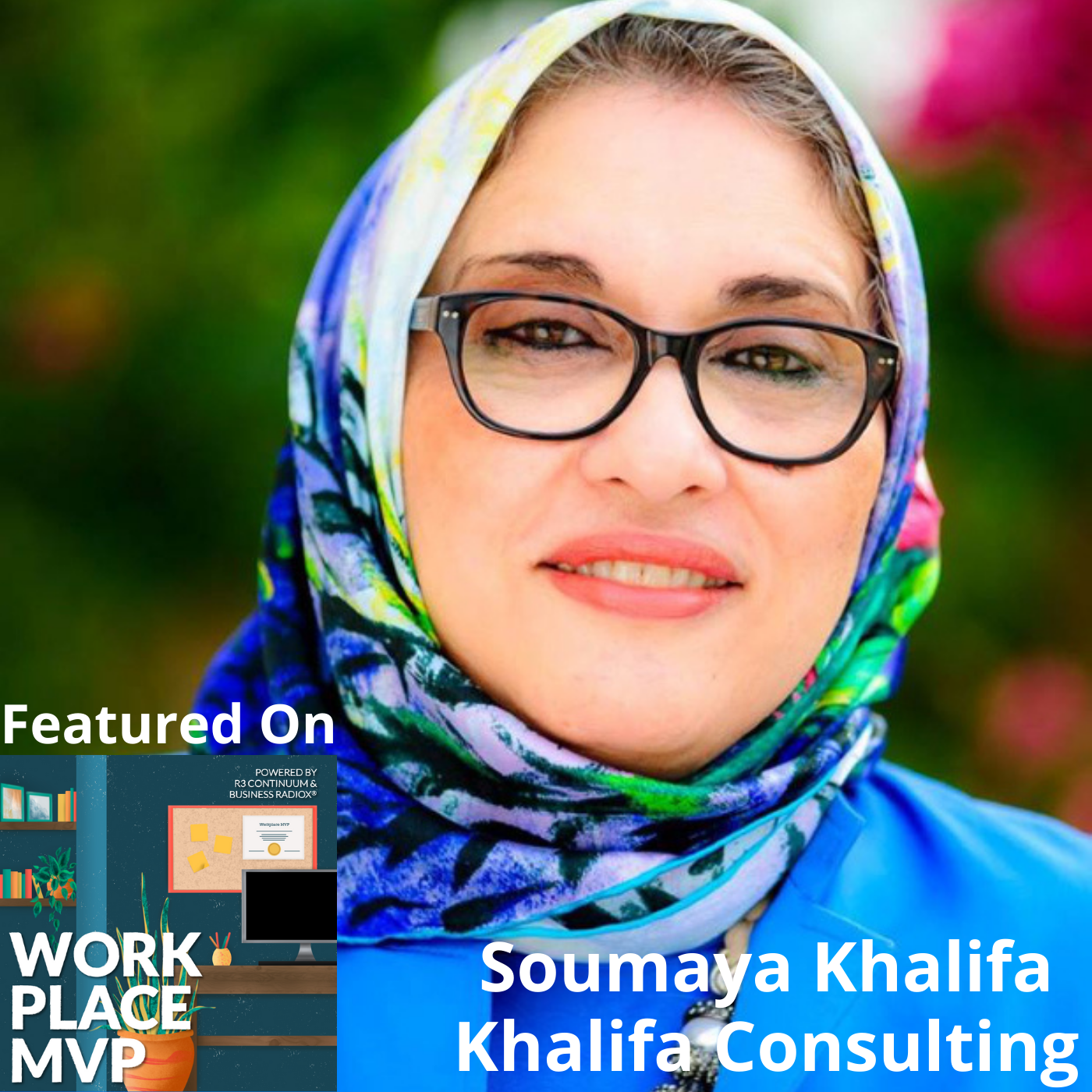
On this episode of Workplace MVP, Soumaya Khalifa, President of Khalifa Consulting, joined Jamie Gassmann to discuss diversity, equity, and inclusion at the leadership level. Noting that diversity is now a given when hiring, Soumaya elaborated on the qualities an effective leader must have to be an inclusive leader. She and Jamie went on to discuss what diversity is, the impact when it’s missing, how leaders can uncover their unconscious bias, a culture of belonging, and much more. Workplace MVP is underwritten and presented by R3 Continuum and produced by the Minneapolis-St.Paul Studio of Business RadioX®.

Khalifa Consulting

Khalifa Consulting provides Fortune 100 companies, non-profit organizations, and governmental institutions with wide-ranging expertise and practical solutions to cross-cultural operations in the Arab world and the US.

Our team of top-level Diversity and Inclusion experts offers training and coaching services including Understanding the Diversity and Cultures of Arab Americans, Intercultural Communication, Managing a Cross-Cultural Team, Cultural Competency for Law Enforcement, and Keys to Success as a Woman Executive in the Arab World.

▪ For international business clients, we offer the specific cultural tools and information needed to successfully conduct business in the Arab World, including how to work within global/virtual teams, and crafting culturally appropriate videos and other media messages.

▪ For domestic and international business clients, we offer training workshops and individualized coaching to support diversity, equity, and inclusion initiatives.

▪ For US-based clients, we offer guidance and technical assistance on how to provide reasonable accommodations for their Muslim employees, by auditing current practices, making recommendations, and suggesting inclusive ways to support a positive work environment.

▪ For clients planning relocations to or from the Arab World, we offer general and specific direction for personal and family adjustment, practical shortcuts for managing new systems, and how-tos for everyday life.

▪ For our executive coaching clients, Khalifa Consulting offers personalized, ongoing, one-on-one high-level coaching to increase motivation, improve business skills and create work-life balance leading to thriving businesses and families.

Company website | LinkedIn | Facebook | Twitter

Soumaya Khalifa, President, Khalifa Consulting

Soumaya Khalifa, President, Khalifa Consulting

Soumaya Khalifa is the president of Khalifa Consulting, an Atlanta-based consulting firm specializing in intercultural coaching, consulting, and training. She is also an executive coach and teaches at Emory University Continuing education courses on Human Resources Management, Diversity, Equity and Inclusion, and Women in Leadership.

Soumaya is passionate about her work to build bridges of understanding and help leaders and organizations positively impact their employees and their bottom line.


LinkedIn

About Workplace MVP

Every day, around the world, organizations of all sizes face disruptive events and situations. Within those workplaces are everyday heroes in human resources, risk management, security, business continuity, and the C-suite. They don’t call themselves heroes though. On the contrary, they simply show up every day, laboring for the well-being of employees in their care, readying the workplace for and planning responses to disruption. This show, Workplace MVP, confers on these heroes the designation they deserve, Workplace MVP (Most Valuable Professionals), and gives them the forum to tell their story. As you hear their experiences, you will learn first-hand, real-life approaches to readying the workplace, responses to crisis situations, and overcoming challenges of disruption. Visit our show archive here.

Workplace MVP Host Jamie Gassmann

Jamie Gassmann, Host, “Workplace MVP”

In addition to serving as the host to the Workplace MVP podcast, Jamie Gassmann is the Director of Marketing at R3 Continuum (R3c). Collectively, she has more than fourteen years of marketing experience. Across her tenure, she has experience working in and with various industries including banking, real estate, retail, crisis management, insurance, business continuity, and more. She holds a Bachelor of Science Degree in Mass Communications with special interest in Advertising and Public Relations and a Master of Business Administration from Paseka School of Business, Minnesota State University.

TRANSCRIPT

Intro: [00:00:04] Broadcasting from the Business RadioX Studios, it’s time for Workplace MVP. Workplace MVP is brought to you by R3 Continuum, a global leader in workplace behavioral health and security solutions. Now, here’s your host, Jamie Gassman.

Jamie Gassmann: [00:00:25] Hi, everyone. Your host, Jamie Gassmann, here, and welcome to this episode of Workplace MVP. Diversity and inclusion is an area of focus for many senior leaders and H.R. executives. A great number of workplaces are re-examining their organization’s approach to ensuring diversity and inclusion and looking for how they can improve, build or implement new initiatives for their work environments. There are a lot of ways employers can take to building their diversity and inclusion program. But to aid in their ability to ensure their program is effective and successful, their efforts need to start at the top where they’re leaders embodying what is called inclusive leadership.

Jamie Gassmann: [00:01:08] As an inclusive leader, you are aware of your own biases and you are actively seeking out and considering different perspectives to inform your decision making and collaboration with others. These leaders are committed to ensuring all team members are treated equitably, feel a sense of belonging and value, and have the resources and support they need to achieve their full potential. How does an organization ensure they have inclusive leaders or how do their leaders learn to be inclusive if not already? Where does this fall within the process of establishing or reinventing an organization’s diversity and inclusion program?

Jamie Gassmann: [00:01:47] Well, joining us today to share her expertise and recommendations for workplaces looking to incorporate or reinvent their diversity and inclusion programs is workplace MVP and President and CEO of Khalifa Consulting, Soumaya Khalifa. Welcome to the show, Soumaya.

Soumaya Khalifa: [00:02:03] Thank you. It’s so wonderful to be with you today.

Jamie Gassmann: [00:02:07] Oh, we’re really happy to have you. So, I’d like to start out with you sharing with me your journey to becoming the President and CEO of Khalifa Consulting.

Soumaya Khalifa: [00:02:16] That is an incredible question. It has been a long road and it also has been a very unconventional journey. I earned my B.S. degree in Chemistry of all things and decided that I wanted to do something with people and not in labs. So, what I did is I pursued my MBA in human resources, worked in Corporate America for many years in the H.R. field, which I truly loved. Towards the end of that career in Corporate America, I was involved in a lot of diversity and inclusion work as well as organizational effectiveness, and it’s really amazing that the two really kind of complement each other. When I went out on my own, I wanted to bring all of my journey, all of my experiences to my clients. And so, that’s when I founded Khalifa Consulting, and it’s been about 12, 13 years now.

Jamie Gassmann: [00:03:01] Wow. So, talk to me a little bit about some of the work and the business that you do with Khalifa Consulting and helping your clients.

Soumaya Khalifa: [00:03:09] Khalifa Consulting is a boutique firm with a network of consultants covering the world. We specialize in executive coaching, intercultural and DEI training and consulting. I have a special interest in women and leadership and how to bring religion or faith into the DEI framework. We cater to large and mid-sized organizations and in the intercultural and DEI work, and also we do executive coaching for all sizes of organizations.

Jamie Gassmann: [00:03:41] Great. So, this topic we’re talking about is very near and dear to your heart. Share with me your opinion about workplaces having a diversity and inclusion program. Should they – is it – what’s the level of importance in making sure that they have something built-in?

Soumaya Khalifa: [00:03:59] Well, you know, diversity is a given because our population right here in the US has been diversifying over the last couple of decades. So, it is a given. If we are, as employers, looking for the best talent that there is out there, we will get diverse talent. Now, the real issue is how do we make our workplaces inviting enough for that talent, that top talent, to want to join us, but not only in joining us but to stay with us. So, inclusion needs to be very intentional. What does an employer have to do to attract and retain the talent that’s out there?

Soumaya Khalifa: [00:04:39] And, you know, it’s not only about talent. But if we have that talent, we are able to get into new markets. Because when we go into new markets, we have to understand them. And if we do have representation from them, that gives us an advantage, a competitive advantage to reach people in different markets. And, diversity is being invited to a party, and inclusion is being able to dance up the party. So, that’s the framework. So, diversity is a given, but what do we do with it in organization is the act and that is inclusion.

Jamie Gassmann: [00:05:19] Yeah. It’s such a great analogy. I’ve never heard it referred to that way, but it gives some context to how those two play together, basically. So, looking at that term inclusive, inclusive leader, you know, can you share from your expertise what that means? I know I gave a little brief definition of it at the beginning, but can you share from your perspective what that means?

Soumaya Khalifa: [00:05:43] Sure. In my opinion, an effective leader by default is an inclusive leader. And if we are to look at some of the characteristics of an inclusive leader, they have to have commitment to cultivate a diverse and inclusive workforce, and that takes really time and energy from them. And they have to believe in the business case for diversity and inclusion and how that is driving or will drive or will impact on the mission and vision of their organization.

Soumaya Khalifa: [00:05:43] They need to have courage. They need to have courage and not be afraid to challenge organizational attitudes and practices that yield homogeneity, even if their recommendations are politically or culturally unpopular within their organization. You know, they have to be very careful there.

Soumaya Khalifa: [00:06:34] They need to also display humility by acknowledging their own personal limitations and seeking contributions from others to overcome that. Some leaders, you know, as we all know, find it difficult to admit that they don’t have all the answers. So if they are, if they do have humility and reach out to others, that makes them better leaders. They need to be able to recognize that they have biases. We all do this. It’s just human nature. They need to work on identifying what their own biases are and learn ways to prevent them from influencing their talent decisions.

Soumaya Khalifa: [00:07:14] They want to also look at their policies, processes and structures to see if there are organizational biases that are undermining diversity and inclusion in their organization.

Soumaya Khalifa: [00:07:27] They have to be curious. They have to have an open mind and a passion for learning and a desire for their own exposure to different ideas. And, they have to also be culturally intelligent. By that, I mean that they have to be aware of their cultural preferences. When they are on autopilot, how do they act? What do they go to? But they also need to learn about the cultures of people that they work with, their team, their colleagues, and be able to identify if there are gaps and how can they bridge those gaps to be able to leverage the best from all their team members.

Soumaya Khalifa: [00:08:13] An inclusive leader needs to also be collaborative. They have to understand that collaboration is important for the success of their teams. And for them to be collaborative, they have to create a psychologically safe environment in which all individuals feel that they are empowered to express their opinions in the group. So, these are just some of the characteristics of an inclusive and, in my opinion, an effective leader.

Jamie Gassmann: [00:08:45] Great. And now, looking at those biases and thinking about diversity, just real quick, can you share with us when we hear the term diversity. I feel sometimes that can show up differently with different individuals. From your perspective, when you hear the term diversity, what does that include? What does that mean?

Jamie Gassmann: [00:09:07] Sure. Diversity, in my opinion, is everything that makes us different but also everything that makes us the same. So, a lot of organizations focus on race and on gender. And, within the US framework, that’s usually what is focused in on. But there are so many different layers of diversity that we need to look into if we are telling people bring your whole professional self to work in terms of, for instance, sexual orientation, in terms of religion, and many other different layers of diversity.

Soumaya Khalifa: [00:09:51] People on the outside might look the same, but when we start peeling off the different layers, there are differences amongst them. So, we need to treat diversity in the broadest sense. And, what’s really interesting is diversity, we need to look at the history of the nation that we’re looking at diversity at. We need to look at the social construct in it and many other things.

Soumaya Khalifa: [00:10:15] I was working with a client who works for a French company, and the French company’s diversity and inclusion philosophy is getting more women in and bringing more non-French people into their boards and into their leadership. So, that is how they define it in a French company. In a US company, that is defined a little bit differently. There’s more emphasis on race and on gender, of course.

Jamie Gassmann: [00:10:45] Interesting. So, looking at that inclusive leadership and looking at that work environment, why is it so important that you have inclusive leadership within that work environment? What are the consequences if you don’t? Or the impact?

Soumaya Khalifa: [00:11:00] The impact there is really huge. And some of it is a direct impact and some is an indirect impact. If the workplace is not inclusive, where employees don’t feel like they belong, if it is a hostile work environment, it’s not a friendly work environment, then the implications can be very enormous, anywhere from a turnover rate where people are not – don’t want to stay with the company or the organization. People can get depressed. The medical cost of the organization that they pick up on productivity goes down. People call out sick more often. Just a lot of negative consequences if we don’t have an inclusive environment in our workplaces.

Soumaya Khalifa: [00:11:55] I don’t feel like I belong. If I don’t feel like I belong and I could be myself, I don’t want to be there. I want to find somewhere else to go. And, I think with COVID-19 and if leaders were not intentional in diversity and inclusion because we went into more online and it was more difficult to provide that culture of inclusivity when we are online. So, leaders have to be even more intentional and organizations have to be more intentional to bring that inclusiveness culture into the workplace.

Jamie Gassmann: [00:12:31] Yeah. Interesting. I could imagine with the great resignation, if you will, if maybe some of that realization was coming through for some of those employees. Do you think that that had some contribution to it once they moved into this kind of remote work environment, feeling a little bit more isolated than before?

Soumaya Khalifa: [00:12:50] I do believe so. I do believe so. All our worlds really turned upside down. We did not think that we could work from home as much as we did, and we adapted to it. Everybody had an opportunity to pivot. And, as employees, they looked at their priorities and what’s important to them and decided is this the right organization for me to stay in, or do I look for something else where I’m happier? Because happiness is really important for individuals now.

Jamie Gassmann: [00:13:24] Yeah. Absolutely. And so, looking at a leader in a work environment, you know, how do they identify the biases that they have? How do they know they’ve got them? Like, what are some ways that they can help themselves to maybe identify ones that they might have that they weren’t even aware of? So, just we’d like to get some of your thoughts around that.

Soumaya Khalifa: [00:13:47] Well, thank you so much for the question. We all have biases and we have unconscious bias, whether – and they’re called unconscious because we don’t know about them and they could be really detrimental for us. If we don’t know about them, we can’t do anything about them.

Soumaya Khalifa: [00:14:02] So, your question of how do we find out. Well, there are so many different ways to find out. One quick way of doing it is for the individual leader to look at their circle of friends. Do they all look like them? Look at who they’re hiring. Do they all look like them? This is similar to me impact. And, you know, so that is looking in the mirror and seeing what world have I created around me.

Soumaya Khalifa: [00:14:33] I was involved with Leadership Atlanta and I went through that many years ago. And one of the things that came out of it is that we were challenged to look at our circle of friends. And many people from our class decided that, hey, I golf with all white guys or all black guys or whatever the race and gender happened to be. And they made a conscious decision that I need to diversify my circle of friends, circle of people that I go out with, circle people that I golf with, and that impacted them.

Soumaya Khalifa: [00:15:15] Now, another way to find out about our own cultural biases or unconscious biases, I’m sorry, is to ask a colleague or confidant. That would be a very sensitive conversation. But there needs to be a very high level of trust there.

Soumaya Khalifa: [00:15:32] There’s another way too and that is, there’s an online tool that is developed – that has been developed by Harvard University, and that’s an instrument to identify unconscious bias. And it’s free and it’s online. And, if one types implicit Harvard edu, then they will take that, take it to that website. And it’s really an amazing one. If you want to look at race or gender or religion or what have you, there are many different instruments there for people to identify what unconscious bias they might be playing.

Jamie Gassmann: [00:16:09] So, you kind of identified a couple of approaches that they can take by looking at their group of peers or that they’re spending a lot of their extra time with and look, you know, re-evaluating and identifying ways to kind of diversify that. But what are some other ways that they could overcome their bias, their unconscious bias, or even biases they know that they have and relearn a thinking, you know, that likely has been instilled in them from a really young age, because I think some of our biases that we have comes from how we grew up or how we, you know, life events that we’ve experienced. And so, how can one kind of relearn, if you will, how to look at people differently or how to kind of be more diverse or more inclusive?

Soumaya Khalifa: [00:17:00] Yeah. That is such a great question. And, you know, we pick up our unconscious biases as children at the dinner table, what is said at the dinner table. So, parents and grown-ups and leaders, we need to be watching what is said at the dinner table because the younger generations are picking up on the biases that we already have, spoken and unspoken. So, we don’t have to say much of anything and that’s picked up. Kids are very, very smart.

Soumaya Khalifa: [00:17:30] So, in terms of how do we get over that, I know that a client, he worked with very diverse background people. And one of the stories that he shared is they were talking about we don’t have, you know, we only have one Jewish person in the group. And to him, he looked and he said, “Who’s that?” And that Jewish person was somebody that he became friends with and he no longer saw him as Jewish. He was just Ed.

Soumaya Khalifa: [00:18:11] And so, that is how we can work around unconscious biases. First of all, identifying what unconscious bias we might have, and then be intentional in terms of expanding our experiences so that we have meaningful interactions with people from whatever background that we have the unconscious bias on. And then, when we see people as individuals, the stereotypes or the assumptions we have based on the group kind of falls out the way. And that is a very effective way to overcome our unconscious biases. But, again, it takes awareness. It takes intentionality, and it also takes a strong will of wanting to do it.

Jamie Gassmann: [00:18:56] Great. Great, great advice there. Because I imagine there’s people who are like, I don’t want to be seen as that person that’s not inclusive because they might feel internally that they are and maybe aren’t aware of what they can’t see. So, very interesting.

Soumaya Khalifa: [00:19:11] And, you know, more on that because that is a very important subject to think about. Again, unconscious, it’s not seen, it’s not felt. But knowing that the biases show up when we are in an ambiguous situation, such as if we don’t know about a person and we meet them, and all of a sudden we go to our stereotypes. So, we want to be able to minimize ambiguous situations. We you want to learn about all the situations we get into so we won’t be surprised. We won’t be able to surprise ourselves in a negative way when snap decisions need to be made right away, our hardwired stereotypes pop up. So, taking time to make decisions. And usually, it’s recommended that leaders make decisions early in the day when they have had a good night’s sleep and they’re less likely to make mental shortcuts.

Soumaya Khalifa: [00:20:09] And, you know, being able to push back against default assumptions when we put a stereotype in our mind that’s hardwired, you know, and I’m a short person. I love to give that example. If our stereotype in our mind is that short people are not very smart and we see a short person, then the way the stereotype works is that they are not very smart. And if that happens, if that person happens to be smart, then we push back through those stereotypes. Well, well, they’re the exception. They’re not really the rule.

Soumaya Khalifa: [00:20:44] So, we need, again, self-awareness to get over that. And then, being able to learn, learn and meet new people, be challenged and challenge our stereotypes and prejudices if they have gotten to that level.

Jamie Gassmann: [00:21:06] Yeah. Ask questions get to know people. Yeah. Be open to that. That’s kind of the approach that I like to take because I just love to hear people’s stories. So, which is why this show is so great because I get to hear so many leaders’ stories and expertise.

Jamie Gassmann: [00:21:19] So, real quick, we’re going to take a break and listen from our sponsor. So, Workplace MVP is sponsored by R3 Continuum. R3 Continuum is a global leader in empowering leaders to effectively support and help their employees thrive during disruptive times. Through their tailored workplace behavioral health support, disruption response and recovery, and violence mitigation solutions, they can help you create a work environment where your employees can feel psychologically and physically safe. To learn more, visit our r3c.com today.

Jamie Gassmann: [00:21:53] So, you mentioned in our previous conversation the importance of creating a culture of belonging within that work environment. Can you help kind of describe for our listeners what does a culture belonging look and feel like?

Soumaya Khalifa: [00:22:09] Sure. Belonging is a sense one gets that they are a valued member of an organization. They feel a sense of purpose. A sense of belonging brings meaning into our lives and all the circles. I mean, let’s face it, we spend more time at work than we spend with our family. And if we feel good about ourselves, good about the organizations that we work for, just think about how that’s going to impact us individually, as employees, as leaders, but also the organization.

Soumaya Khalifa: [00:22:44] So, there was a survey done in 2019 by an organization called BetterUp, and they found that workplace belonging can lead to a 56% increase in job performance. It can also lead to a 50% reduction in employee turnover. Workplace belonging can lead to 75% decrease in employee sick days. So, those numbers really give us the business case for why having a culture of belonging is very important. It adds to the bottom line.

Jamie Gassmann: [00:23:19] Wow. Sounds like – I mean, those are great statistics to show, you know, just by creating that environment that people want to be at and be a part of. Fantastic. So, looking at that, there was something when we talked before that really resonated with me in regards to religion and the symbolism around religion and certain holidays that are celebrated. And you and I were kind of discussing, in particular, the Christmas or Hanukkah and kind of that a lot of leaders have taken the approach of this broad messaging of happy holidays, and then removing certain symbolism like Christmas trees. And you talked about how not all your employees really want you to take that down, even if they don’t celebrate it.

Jamie Gassmann: [00:24:06] And so, the question I have is, you know, by taking and removing some of those symbolism, does it help to create that culture belonging, or what are some of your thoughts around how they can really handle those holiday seasons, you know, in an appropriate approach that allows all employees to feel like they belong and that their holidays are being celebrated.

Soumaya Khalifa: [00:24:32] I love that question. I super love that question. I am not in favor of somebody saying happy holidays. First of all, I am a Muslim. And, most of the time I don’t have a holiday around Christmas. And, for somebody to say happy holidays, it really doesn’t resonate with me. And that’s not only for Muslims, but you have Buddhists and you have Hindus, etc., who do not have a holiday around the holiday season.

Soumaya Khalifa: [00:25:02] I am not in favor of taking down the Christmas tree, but I am in favor of having an inclusive work environment that acknowledges and celebrates the religious holidays and traditions that are represented in the workforce. So, if we do have Jewish members, then Hanukkah, Passover, needs to be acknowledged. Holly, Ash Wednesday, Ramadan, and the list goes on. I want to be – I want to feel like I’m validated. By just saying happy holiday, I think it’s just a brush over and it alienates the Christians and it does not bring anybody into the fold.

Soumaya Khalifa: [00:25:44] But we want to be intentional. Again, we want to be knowing who’s in our workforce and what matters to them. If we have a calendar, let’s put it on there that Ramadan starts April 2nd. Ash Wednesdays on that date. Hanukkah is on that date. So, bring all those holidays, acknowledged people, validate people, and they feel like, hey, my workplace cares about me enough to wish me a Ramadan Mubarak or Happy Hanukkah or whatever the holidays.

Jamie Gassmann: [00:26:16] Yeah. Well, even to allow other employees to understand how each of those faiths practice their various holidays and what the symbolism and meanings are behind what they’re practicing so that people can learn.

Soumaya Khalifa: [00:26:30] Yes. And that’s the intention behind that. Because if I know – if I am – we have something called the iceberg. And the iceberg is where we say that what’s visible is what people see. But what’s below the waterline is what drives the visible attributes that we see.

Soumaya Khalifa: [00:26:50] So, if people know that my colleague’s religion is Muslim and when he takes or she takes a longer lunch hour on Friday, it’s because they have to go to prayer, or they’re not eating from April 2nd to May 2nd lunch and they leave early and we know it’s Ramadan. What is Ramadan like? What is Hanukkah like? What is the Passover and High Holy Days are like? Then, we get to know people at a deeper level and that goes hand-in-hand with belonging. I am accepted for who I am. I’m celebrated for who I am, and I am appreciated for who I am. And I don’t have to fit a mold to be able to be a validated person.

Jamie Gassmann: [00:27:40] Yeah. I love that. So, looking at that and looking at that validation of a person because obviously, you know, not feeling like you belong, not feeling validated can start to really impact somebody’s mental health and obviously ultimately their productivity. So, how does a workplace that’s not culturally belonging in your opinion, what do you see as the impact on that mental health and productivity of its employees?

Soumaya Khalifa: [00:28:08] There’s been a lot of research about that. And the outcome says – it was a 20-year research project. And it said that there’s increased depression of the employees, substance abuse, and health issues that kind of manifest themselves because of the stress and the pressure that they feel in that particular workplace. And, we know we’ve heard about people being disgruntled. We’ve heard people possibly committing suicide. We’ve heard people going postal. If the situation really gets out of hand and there’s a mental issue there, an employee could go back to the workplace and do horrific things, do it. So, it does have very negative implications.

Soumaya Khalifa: [00:29:00] But, you know, we’re talking about the employee and their mental health, which is really important. But the research also shows that the organizations are suffering as well. So, they’re suffering from decreased productivity, lower levels of employee commitment, increased turnover, and that doesn’t take into account the higher medical insurance premiums that the employer will be paying, the use of the employee assistance programs. So, it’s negative for all concerned, both the employees, leaders and the organization.

Jamie Gassmann: [00:29:38] Yeah. Absolutely. You know, it’s like when you want to bring your whole self to work because you’re passionate about the work that the company is doing, but yet you don’t feel like your whole self can be at work. You know, you want to – it’s like when you’re at work, it gets like you’re home away from home is kind of how I call it when you’re in the office because you spend so much of your day there. You want to feel like you’re welcome just like you are within your own home. So, I could see where that could have a huge impact on those individuals.

Soumaya Khalifa: [00:30:04] Absolutely.

Jamie Gassmann: [00:30:07] So, looking at cultural differences you shared previously that there are cultures that are relationship-oriented and then there’s cultures like the US that are very task-oriented. So, within our workplaces becoming more and more diverse, how does this show up? How does a leader strike that balance between allowing people to really congregate and socialize, you know, at the water cooler, if you will, when we get, you know, get that opportunity back to those days to really that task-oriented? How do they strike that balance?

Soumaya Khalifa: [00:30:39] Yeah. So, I want to share that I ran into a website that is a Ramsey County Minnesota website. And what struck me is that that website has been translated into languages that I had never heard of before. I mean, Somali, Hmood, Oromo, and Kara. All right. I had to Google each one of those languages to see where they’re spoken. So, this is not a hypothetical question. This is a true question that we need to be thinking about is we have people represented from all over the world working right here. Different cultures have different orientations. You mentioned that task-oriented cultures and the relationship-oriented cultures and they are on a spectrum.

Soumaya Khalifa: [00:31:36] So, the task-oriented culture is let’s get to work. We have a project to do. Let’s get down to what’s going to be done. What is it going to be done? Who’s going to be responsible? Where are the deliverables? And, relationships are really a second or third item that people will think about. Let’s just get the job done.

Soumaya Khalifa: [00:31:55] Now, the cultures that are relationship cultures and all those languages that I just named off, they are relationship cultures, which means that before I start doing work with you, I want to get to know you. I want to get to know about your family. I want to get to know where you went to school. What do you like to eat? Let’s go out to lunch together. Right?

Soumaya Khalifa: [00:32:15] So, if we have people who are on the opposite spectrums of that task orientation or relationship and we want them to work together, we need to be very, again, intentional. That word is very important for understanding who do we have in our teams. Come up with the team norms, identify what is a hybrid culture that will work for both the task-oriented people and the relationship-oriented people.

Soumaya Khalifa: [00:32:44] The task-oriented people, just an FYI, will look at the relationship people and say, “Gosh, they waste so much time. Why do they need to do all this small talk and drink tea or coffee? Let’s just get down to business.” The relationship people will look at the task people and say, “Oh, they’re just so rude and abrupt. They don’t even say hello and drink coffee with me.” So, that can be a real issue in terms of breakdown and communication. So, as leaders, we need to know who is on our team and how do we create a culture that would be understood and accepted by both.

Soumaya Khalifa: [00:33:20] When we look at a lot of data and research and looking at a homogeneous team versus a multicultural team and looking at when they are at their best and when they are very well managed, the multicultural team way outperforms the homogeneous team. So, it is a gift to have the diversity, but we have to manage it well to be able to leverage the results that we want to be able to achieve.

Jamie Gassmann: [00:33:55] Yeah. I find that there’s so much value in being able to build up some of those relationships. Even as a leader, you get to know people so differently. If you’re only focused on the day-to-day task, you’re not taking that time to get to know the people you’re working with. And so, when you think of that culture of belonging, it makes me think there’s benefit in trying to bring them closer to a balancing act. What are your thoughts around that and like how it contributes to that culture of belonging?

Soumaya Khalifa: [00:34:26] Yeah. One thing that I want to mention here is we are in a business to do business. So, let’s not lose sight of that. Right?

Jamie Gassmann: [00:34:35] Right.

Soumaya Khalifa: [00:34:35] And doing DEI is a very strong business case to do our business better. So, I don’t want us to just talk about DEI and not forget the bigger picture. We are doing DEI because of the bigger picture and we have to keep that very clear in front of our eyes. We are here to further and achieve the mission and vision of our organizations, and I’m a firm believer that DEI will help us achieve that.

Soumaya Khalifa: [00:35:04] So, let me give you an example and we touched upon that just a little bit earlier when we include religion and the DEI conversation. All right. We want to be able to leverage the organizational values and how they are very much aligned with our employee values. And they’re probably aligned in their religious beliefs values. So, when we say bring your religion into work, it does not mean that, hey, let’s bring everybody together and let’s argue about which faith tradition is the right tradition that’s going to get us to heaven or what have you. But it is to understand what’s below the waterline for our employees is to get to know them. It’s to be able to celebrate them, make them feel like they’re validated. So here is the way, as an example with DEI, when we bring faith tradition into work, the parameters that we need to build around it. There shouldn’t be a discussion about or proselytizing or what have you, but it’s about the person, about my teammate, about my leader, about everybody matters. And that part of them, which in many situations is a big part of who they are.

Jamie Gassmann: [00:36:25] Yeah. Absolutely. And there definitely is that you still have a business to run. So, I love that you brought that up and, you know, sharing that you’re focusing on the business needs while also focusing on your employee needs. So, how do you know when you’ve got it right? Like, is there a way for them to measure that? I mean, is it employee surveying? Is it pulling? Like, what can a leader do to know they’re striking that right balance and that right chord within that organization?

Soumaya Khalifa: [00:36:52] Well, yeah. Employee surveys are definitely something that many organizations look at and, you know, they’re done anonymously so people feel comfortable giving their true, honest opinions about the culture of the organization, about whether the culture has moved the needle to belonging or not.

Soumaya Khalifa: [00:37:15] There is something called the stay interview, like the exit interview but for people who do stay in the company, to get a read on how others perceive in the company. There are employee exit interviews, of course, but hopefully, we don’t get there. But if we do, then we want to understand why people left.

Soumaya Khalifa: [00:37:36] And one of my favorites is a very simple thing, and it’s just sitting down and speaking with employees and team members about how things are going. We look at performance management. A lot of organizations do at least that it’s done once a year, but we do ourselves a disservice when we do that. Managers and leaders need to have frequent check-ins with their employees to see how they’re doing, and hopefully, they have created a relationship with their employees where they’re open enough to share with them how things are going for them.

Soumaya Khalifa: [00:38:12] A leader should not wait very, very long time to have that conversation, but the more frequent the conversations are, the better off it is. So, it’s not rocket science. It’s communication, it’s caring, and it’s letting the employees know that there is a positive psychology within the organization and they can speak their mind.

Jamie Gassmann: [00:38:36] Yeah. Awesome. So, the leader is looking to evaluate, build or reinvent their diversity and inclusion program within their organization. What is your advice for how they should prioritize this initiative and where should they start?

Soumaya Khalifa: [00:38:51] Well, a couple of thoughts here is they need to be very clear on why they want to do that. They need to understand the business case for it. If an organization is doing DEI just to check the box, they need to rethink that. I believe that when just checking the box is done, it has very negative repercussions on the organization. And they can hire an outside consultant to assess the organization in terms of where they’re at with their DEI and collaborate.

Soumaya Khalifa: [00:39:30] If somebody brings in a consultant, it needs to be a collaboration. It’s not, “Here, consultant, take this. Let me know what I need to do.” It needs to be a collaboration. It needs to be a commitment of time and energy and resources and to understand that DEI is really a journey and not a destination. We don’t get there. It’s always work in progress. So, a lot of times people want to say, “Okay, we’ve arrived.” There’s no such thing. It’s always work in progress.

Jamie Gassmann: [00:40:02] Great. Well, I know I personally have learned a lot from you, and I so appreciate you being here on our episode. But if we have guests that want to hear more from you, or to get a hold of you, how can they do that?

Soumaya Khalifa: [00:40:17] I am on LinkedIn, Soumaya Khalifa. Our website is khalifa.consulting. So, K-H-A-L-I-F-A, dot consulting. Send us a message at info@khalifa.consulting, or call at 678-523-5080. I would love and appreciate hearing from you.

Jamie Gassmann: [00:40:40] Yeah. Wonderful. Well, thank you again so much for being on the show, Soumaya. It’s been such a great conversation. I truly appreciate you and all the work that you do.

Soumaya Khalifa: [00:40:48] Thank you so much. What a pleasure and honor to be with you.

Jamie Gassmann: [00:40:52] And we also want to thank our show sponsor, R3 Continuum, for supporting the Workplace MVP podcast. And to our listeners, thank you for tuning in. If you’ve not already done so, make sure to subscribe so you get our most recent episodes and other resources. You can also follow our show on LinkedIn, Facebook, and Twitter at Workplace MVP. If you are a workplace MVP or you know someone who is, we want to hear from you. Email us at info@workplace-mvp.com. Thank you all for joining us today and have a great rest of your day.


Tagged With: belonging, DEI, diversity, equity, executive coaching, inclusion, Jamie Gassmann, Khalifa Consulting, R3 Continuum, sense of belonging, Soumaya Khalifa, Workplace MVP

Workplace MVP: Amy Zimmerman, Relay Payments

March 17, 2022 by John Ray

Amy Zimmerman
Minneapolis St. Paul Studio
Workplace MVP: Amy Zimmerman, Relay Payments
Loading
00:00 /
RSS Feed
Share
Link
Embed

Download file

Amy Zimmerman

Workplace MVP: Amy Zimmerman, Relay Payments

In a wide-ranging conversation, Amy Zimmerman, Chief People Officer at Relay Payments, and host Jamie Gassmann discussed best practices for retaining talent. They covered incentives, rewards, and recognition, the need for companies to keep abreast of market conditions, the value of stay interviews and what happens when they go wrong, talent retention methods which go beyond compensation, and much more.

During the show, Amy referenced a recent interview she gave on stay interviews. You can find that interview by following this link.

Workplace MVP is underwritten and presented by R3 Continuum and produced by the Minneapolis-St.Paul Studio of Business RadioX®.

Relay Payments

After years of gaining a profound understanding of the ingrained payment problems in the logistics industry, co-founders Ryan Droege (CEO) and Spencer Barkoff (President) ultimately shared the vision of building the supply chain and logistics digital payment network of the future.

Now, Relay is a fast-growing, venture-backed fintech company, which raised $100 million in investment funding to fully support the goal of spearheading the industry transformation to digital, contactless payments, ensuring America continues to run during COVID-19 and well beyond.

As a result of the immense expansion, Relay has grown exponentially, boasting a workforce of 100+ across 12 states; all focused on building a customer experience unlike any other while modernizing age-old payment processes in the supply chain industry.

Relay’s customer-centric approach has entrusted the company to process more than 250,000 transactions every month, working with the largest carriers, freight brokers, and 3PLs across 50 US states and Canada, ensuring their products get to shelves quickly for consumer consumption.

Company website | LinkedIn | Facebook | YouTube

Amy Zimmerman, Chief People Officer, Relay Payments

Amy Zimmerman, Chief People Officer, Relay Payments

Amy joined Relay Payments in 2020 to support their explosive growth plans. She was hired to establish their people function and build it from the ground up. During this time, they have grown from fewer than 10 team members to over 120 globally. Relay Payments is a mission-driven, Series C, venture-backed start-up in the fintech space, headquartered in Atlanta, GA. They are building a contactless payment network in the transportation and logistics industry.

Amy co-founded PeopleCo. to be a strategic partner for founders and a growth catalyst for companies on the rise. Central to her work, of course, is the development and nurturing of a company’s culture. Whether the focus is on foundational elements, like defining core values and communication practices or developing more mature programs to support organizational effectiveness like performance development and engagement initiatives, it’s all in service to ensure that the culture is intentional and aligned with the company’s growth objectives and financial goals.

In her previous life, as chief people officer for Kabbage (recently acquired by American Express), Amy was responsible for building the company’s award-winning culture, driving engagement, and guiding all people strategy initiatives. She oversaw the integration of M+A teams to build and grow capabilities across a diversity of cultures and geographies. Before that, she worked for VSI as a recruiter, people leader, and culture ambassador prior to their acquisition by TransUnion.

She graduated from the University of South Florida with a completely irrelevant degree in Criminology.

LinkedIn

About Workplace MVP

Every day, around the world, organizations of all sizes face disruptive events and situations. Within those workplaces are everyday heroes in human resources, risk management, security, business continuity, and the C-suite. They don’t call themselves heroes though. On the contrary, they simply show up every day, laboring for the well-being of employees in their care, readying the workplace for and planning responses to disruption. This show, Workplace MVP, confers on these heroes the designation they deserve, Workplace MVP (Most Valuable Professionals), and gives them the forum to tell their story. As you hear their experiences, you will learn first-hand, real-life approaches to readying the workplace, responses to crisis situations, and overcoming challenges of disruption. Visit our show archive here.

Workplace MVP Host Jamie Gassmann

Jamie Gassmann, Host, “Workplace MVP”

In addition to serving as the host to the Workplace MVP podcast, Jamie Gassmann is the Director of Marketing at R3 Continuum (R3c). Collectively, she has more than fourteen years of marketing experience. Across her tenure, she has experience working in and with various industries including banking, real estate, retail, crisis management, insurance, business continuity, and more. She holds a Bachelor of Science Degree in Mass Communications with special interest in Advertising and Public Relations and a Master of Business Administration from Paseka School of Business, Minnesota State University.

TRANSCRIPT

Intro: [00:00:03] Broadcasting from the Business RadioX Studios, it’s time for Workplace MVP. Workplace MVP is brought to you by R3 Continuum, a global leader in workplace behavioral health and security solutions. Now, here’s your host, Jamie Gassmann.

Jamie Gassmann: [00:00:25] Hi, everyone. Your host, Jamie Gassmann here, and welcome to this episode of Workplace MVP. This last year brought on an additional challenge for workplace leadership with what some experts are referring to as The Great Resignation or The Great Reshuffle.

Jamie Gassmann: [00:00:41] Turnover in 2021 was 12.2 percent higher than pre-pandemic turnover rates across all industries in the U.S., according to the U.S. Bureau of Labor Statistics. There are varying opinions as to why employees were leaving their current employers over this last year and what some believe will continue into this year. Some feel it was as a result of employees realizing a need for better work-life balance and improved work environment or culture.

Jamie Gassmann: [00:01:11] Employees seeking a remote or hybrid work option, better pay. And some feel it may have just been as a result of people who were already looking to make a change but held off during the volatile times in 2020. And there are, of course, others from both a professional and personal reasoning that drive employees to make career changes.

Jamie Gassmann: [00:01:33] The concern for employers with the increase in resignations and employee movement to other organizations is the cost that turnover can have on the organization. At an average, for every salaried employee who leaves an organization, it can cost the company six to nine months of the employee salary to replace them.

Jamie Gassmann: [00:01:52] But not all turnover is bad. Sometimes it is better for the organization and the individual. But for those employees you want to keep, how do you create an environment that aids in your ability to retain them?

Jamie Gassmann: [00:02:04] Well, joining us today to share her best practice approaches to retaining talent is Workplace MVP and Chief People Officer at Relay Payments, Amy Zimmerman. Welcome to the show, Amy.

Amy Zimmerman: [00:02:15] Thanks, Jamie. I’m glad to be here.

Jamie Gassmann: [00:02:17] So, share with us your career journey to becoming the Chief Police – Chief People Officer at Relay Payments.

Amy Zimmerman: [00:02:25] Thankfully, I actually don’t feel like the Chief Police Officer at Relay. Long story short, I started my career post-college as a substance abuse counselor, which is probably a bizarre journey to where I landed. But as a social worker at heart, I think it shaped in every way the type of people leader that I’ve become.

Amy Zimmerman: [00:02:58] Ultimately, early on, I was a recruiter, and would still say that I identify as a recruiter in so many different ways. But started with a tech company in Atlanta in 1999. I probably just aged myself a lot. The company was eventually acquired by TransUnion. And I stayed on with TransUnion for a couple years as part of the agreement. But certainly learned very quickly that I’m a startup person through and through, and so left and did some consulting after my oldest daughter was born.

Amy Zimmerman: [00:03:35] And then, wound up connecting with Kabbage as a client of mine for quite a while. I actually helped them hire their first team member after they were funded. And eventually joined them full time and was with them pretty much the entire ten year journey to acquisition by American Express in October of 2020.

Amy Zimmerman: [00:03:58] I started consulting again and was introduced to the founders at Relay. And despite not being interested initially in being a full-time team member again, I quickly realized that it was a no-brainer our values aligned in every possible way. And if I was going to do this one more time, I’ve been part of two acquisitions at this point, I figured the third one, I’d go out with a bang.

Amy Zimmerman: [00:04:27] So, I’m at Relay Payments now and started with the founders when they were single digit team member numbers about a-year-and-a-half ago, fractionally. And we’re over 140 team members now and will likely be somewhere around 300 by end of year. So, giant growth plans and an exciting kind of road ahead with these guys.

Jamie Gassmann: [00:04:51] Wow. Very exciting. Can you tell us a little bit more about what Relay Payments does?

Amy Zimmerman: [00:04:57] I can. Imagine, we’re basically like the Venmo in the logistics industry. So, we’re modernizing payments for an industry that’s been ignored for a good while. I would say many of the ways payments is done in logistics and trucking, specifically, is very archaic. There’s lots of paper involved, which certainly leads to fraud, and leads to lost receipts, and lots of wasted time. And so, we’re creating solutions that modernize a very old practice. And as a result, save money in time for the really, really important people who are moving goods throughout the country.

Jamie Gassmann: [00:05:44] Wow. So, from your perspective, why do you think we’ve seen so much turnover in the last year across various industries with having employees leaving their employers?

Amy Zimmerman: [00:05:57] You know, I think a couple of things. You touched on some of them, certainly, and that’s, I think, there was a buildup. I think 2020 was so uncertain that some of the natural attrition that would have happened was delayed. And so, I think the uptick in 2021, for a lot of reasons, made sense. I think the complexity or the piece that probably was a little different or not COVID related necessarily was the fact that people realized that some companies were offering an enormous amount of flexibility and also care.

Amy Zimmerman: [00:06:40] You know, people were burning out. There was this confusion between work-life balance and work-life integration. When does work start? When does it stop? Does it stop? Is it fully integrated? Is there this expectation now that I work all day and all night? Maybe not even imposed by the employer, but self-imposed, because there was some confusion as individual team members about kind of boundaries, et cetera. And so, I think there were a lot of things, but I think a lot of companies got it right and a lot of companies got it wrong.

Amy Zimmerman: [00:07:13] And so, people were sharing stories with friends. I think there was more opportunity. A lot of companies decided that they weren’t confined by their geography, and so they were opening opportunities up to people in other states and other locations. And so, I think the opportunistic reasons that people left probably increased dramatically, in addition to the fact that people from 2020 that hadn’t already started contemplating a move decided to.

Amy Zimmerman: [00:07:49] And the part about companies not getting it right was some companies just didn’t do a good job of investing in their people and staying connected to their people while they were gone. Rewards and recognition, I think, is a giant way you do that, and we can talk more about that. But I don’t think a lot of the companies got that right. And so, there were just a number of reasons why people decided it was time to consider something new.

Jamie Gassmann: [00:08:16] Yeah. So, we’re going to talk a little bit this kind of first part of the show just discussing a little bit of the impact that this has on organizations when you’re having that turnover. So, looking at retention and turnover, what is that impact on the organization from your perspective of both of those?

Amy Zimmerman: [00:08:38] I think aside from the financial cost, which you referenced as potentially six to nine months of somebody’s salary, which is huge, there’s a loss of knowledge that walks out the door that can be hugely impactful, not only on the organization from an expertise and bench strength perspective, but also on the team members.

Amy Zimmerman: [00:09:01] You know, if the person that knows the most is leaving, then (A) We all have to step up in a way that maybe we didn’t have to before. (B) There’s a learning curve that we now need to navigate or figure out. And (C) If I’m the person who knew as much as the person leaving or say the second most, now, suddenly, there’s a burden. I’m feeling all of the pressure to be the subject matter expert on the team or at the company in a way that is imposing. Because I already had a full-time job, potentially, and now, suddenly, everybody’s looking to me to lean on and leverage because some of the other expertise walked out the door.

Amy Zimmerman: [00:09:42] And so, I think there’s obvious impact financially to the bottom line. But I think there’s more subtle impacts to morale and to people that are affected and caught up in some of that, that is harder to quantify, but super damaging, potentially nonetheless.

Jamie Gassmann: [00:10:01] Yeah. And that definitely leads into my next question in regards to, obviously, you can quantify those hard costs. You can put dollar signs to it. But what you can’t put dollar signs to is the soft costs around what happens to your people. And so, let’s kind of dive into that a little bit in terms of, like, the mental health impact or, to your point, the pressure, particularly in situations where maybe that person is trying to step up and maybe not getting noticed. Like, some of that impact that kind of ripple effects that happens from those situations. Can you share a little bit of your thoughts around that?

Amy Zimmerman: [00:10:37] Yeah. I think that’s probably one of the biggest opportunities for an employer to really double down. And when you think about losing somebody that could be material to the business for a number of reasons, sometimes that has a ripple effect. And people start thinking, “Ay yay yay. If that person left, what do they know that I either don’t know? Or they know something I also know, they had the nerve to leave, maybe I should do the same.”

Amy Zimmerman: [00:11:07] And so, in my mind, what an employer should do at that point is really, really double down. First of all, you can start doing stay interviews with some of the more key folks that you’d be in really big trouble if you lost. And, essentially, that’s a conversation where you get vulnerable. You ask, What do you love about this place? What should we do more of? And where are the gaps? What are our opportunities? If you were to leave, help me understand why so that I can try and solve some of those issues, or address some of those issues ahead of it getting you to a point where you’re potentially going to walk out as a result?

Amy Zimmerman: [00:11:50] The other thing is rewards and recognition. If people are working really hard, they want to be recognized for it. I think, you know, a lot of times people think, “Well, that’s what we’re paying them for.” They are being recognized for it. They get a paycheck every two weeks. I would say that’s pretty old school thinking. Companies that are doing the best work at retaining their folks show an enormous amount of appreciation.

Amy Zimmerman: [00:12:16] And so, one of the ways that you show appreciation is through rewards and recognition. And, certainly, there’s a cost associated, but the cost is small. I mean, $100 gift card or a dinner. Public recognition, it really goes a long way. And in many ways, it’s actually more impactful, in my experience, than giving somebody a raise. But giving somebody a raise can be a lot more expensive, but it’s typically private. That’s between you and the team member, and so there’s no public recognition.

Amy Zimmerman: [00:12:47] But when you celebrate somebody’s success, whether it’s a product launch, or whether it’s a customer win, or whether it’s some sort of accomplish toward the company’s goals, the entire company or department or team is actually celebrating. And so, that recognition has a ripple effect well beyond the moment of the discussion or the moment of the acknowledgement. And so, it’s really, really crucial that managers, and owners, and founders recognize the value and the impact of their team members and that they show appreciation for that, and that shows up in any number of ways.

Jamie Gassmann: [00:13:26] They can get really creative in some of those rewards and recognitions as well. So, where do employers go wrong when they’re trying to retain their employees? What are some of the taboo, if you will, things that employers do where you go, “No, no, no. Don’t do that”?

Amy Zimmerman: [00:13:44] So, there’s a couple of things. I will never discourage giving somebody a raise because, you know, money talks. No doubt, at the end of the day, everybody shows up at their job and, ultimately, they’re looking to earn a living to support their lifestyle, their family, et cetera. But it’s not all about money, and there’s a lot of research and a lot of data that proves it.

Amy Zimmerman: [00:14:06] But what a lot of times people do because they don’t know really how to do the softer stuff is they say, “All right. I’m going to throw some money at the person and I’m going to assume that’s going to solve all the problems.” And I can tell you that’s only a Band-Aid. And that is probably the biggest – I was going to say misconception or how much of a misconception it is. But if you think throwing money at somebody is the only way to solve a problem, I think you’re going to be really disappointed in three months when they leave anyway.

Amy Zimmerman: [00:14:38] Because what ultimately will happen is they’ll find somebody else willing to pay them what you’re paying them or more, and they’ll have a clean slate. So, they won’t have the baggage. They won’t have the burdens. They won’t have, potentially, the drama. Whatever it is that has created a negative experience, they’ll literally get to walk away from with a clean slate, in many instances, for more money. Minimally for the same money. And most people aren’t leaving for the same money. They’re leaving for more.

Amy Zimmerman: [00:15:08] But it really isn’t just about the money. It’s really to escape whatever the root cause is that’s creating the issue for the person in the first place.

Jamie Gassmann: [00:15:19] Like, when you think of an employee putting in their notice, is that the time that you offer the money? Or do you be a little bit more proactive prior to that? So, share with me a little bit of your thoughts on that because I’ve heard that throughout my career, and it’s awful. Somebody, when we’re trying to get them to stay, we threw a promotion their way or an extra money their way. You know, it sounds, to me, from some of your comments that that’s just kind of putting, to your point, a Band-Aid on it. And it’s probably not a waterproof Band-Aid, which means it’s going to fall off in a little bit.

Amy Zimmerman: [00:15:54] For sure. And the truth is, it’s too late. Most people understand that accepting a counter is a big mistake because the problems are never resolved. If you were so dissatisfied that you went through an interview process, got another job, and actually resigned, it’s too late.

Amy Zimmerman: [00:16:16] My advice to team members is, if you really want to stay, don’t stick around for a counter. Try and solve the problem before you start interviewing elsewhere. As the employer, if you want to keep somebody, make sure you understand market, make sure you’re paying your team members competitively. You’re not waiting for them to get a competitive offer. You’re actually paying them competitively because it’s the right thing to do for their skills, for their contributions compared to market, et cetera.

Amy Zimmerman: [00:16:43] We do market assessments a couple of times a year. It’s easy to get out of whack when somebody who’s been at the company for a while because, typically, people get raises when they leave. And so, if you’re somebody that’s been at a company for three or four or five years, you’ve potentially missed out on opportunities to get bumps to your salary unless your company is staying on top of how the shift in your comp should be happening.

Amy Zimmerman: [00:17:08] And it’s not three to four percent a year, which might be a fine raise in a customary situation or a traditional situation. But it’s not going to keep you up to market standards if that’s all you’re getting. And so, as the team member, as the consumer, you should also be aware of your value and your worth and having conversations proactively with your manager. Like, “Hey, I’m in this role, this is the value that I add. Market says I should be making X, but I’m only actually making Y. Can we talk about the disconnect?” Because that’s one way you can ensure that you’re going to retain strong contributors, but it’s got to be fair on both sides.

Jamie Gassmann: [00:17:53] And employees should be, you know, comfortable making some of those conversations. It’s okay to bring that up. You may not get what you’re looking for, but being comfortable in having a transparent kind of relationship where you can share that information openly. So, thinking of that, if they’ve got this employee who’s feeling undervalued or isn’t getting something – because I agree, it’s not always about money – how can an employer get that understanding from their employees before it gets to that point where they’re seeking other options?

Amy Zimmerman: [00:18:30] I’ve actually talked a good bit lately about this concept of stay interviews, and it’s essentially the opposite. If you think about when somebody resigns and they’re leaving, it’s pretty customary that companies run an exit interview. You know, what could we have done differently? And what was the ultimate decision that drove your exit, et cetera?

Amy Zimmerman: [00:18:52] So, turn that around. Have that conversation a couple of times a year. If you’re an effective leader anyway, you’re having regular one on ones with your people, you’ve got a relationship, you’ve established a rapport, throw in. And you can Google good questions for stay interview. I mean, there’s just a ton of writing. I’ve written some stuff on it. A lot of people have. And get a list of questions so that you’re not going at it blind.

Amy Zimmerman: [00:19:18] But, ultimately, you’re asking people, what is it that makes them tick? What is it that they need in their career, or in their role, or with the company that brings them joy? How do they feel excited about waking up on Monday?

Amy Zimmerman: [00:19:34] You want your team members to wake up on Monday excited to tackle a new week. Not dreading a new week. If they wake up on Monday and they dread going to work, they’re only going to do that so many times before they decide it’s time to look for something new. And so, if you conduct a stay interview with them ahead of a departure decision, you potentially will retain them. And in the process, you might even retain others, because a lot of times they’re raising issues that other people are feeling and, potentially, just not as brave to bring up.

Jamie Gassmann: [00:20:08] And the stay interview is kind of a newer concept that I’ve heard the terminology for, but there’s been other types with the Traction 555 meetings is a similar concept to that. What’s so powerful about those is, you learn so much about what drives your employee when you’re doing those types of meetings. I mean, you really can get to, kind of what you’re mentioning, what makes them tick, what their career aspirations are, what do they enjoy doing, what would they like to do more of.

Jamie Gassmann: [00:20:42] And it’s really fun, especially if you have new projects that come up, you know who you can assign it to because you’ve got somebody who’s already expressed that interest and you know them better. And I think through that, you just get to know each other better. So, it’s really kind of just a great leadership technique and approach to do as well.

Jamie Gassmann: [00:21:01] But what are some other ways that an employer can help to improve retention? Is there cultural things? What are some other ways that an employer can look to improve retention that maybe is broader, not just with the individual employee, but maybe the employee group?

Amy Zimmerman: [00:21:19] For sure. So, a couple of things. I think really building a strong community where people feel like they belong is a huge thing. If you wake up every day and you’re going to work and you’re part of this really awesome community, and you understand the mission of the company, and you’re excited, and you’re inspired by the mission, that’s a huge way to keep people excited about the work they’re doing and, ultimately, staying on the team.

Amy Zimmerman: [00:21:46] I touched on the idea of rewards and recognition, but people want public recognition, most people do. That’s not to say everybody does. But most people want shout outs. It doesn’t cost anything to give people a shout out when they just knock it out of the park. “Oh, you were instrumental in this new product release. I also noticed you worked round the clock for four days or four weeks to get something out the door, what an amazing, heroic contribution. Also, you missed dinner with your spouse or your kids, how about a $100 gift card so that you can make up that dinner on the company, since the company was responsible for the dinners that you missed while you were in the critical path on this project?”

Amy Zimmerman: [00:22:33] So, there’s free ways to recognize people. There’s inexpensive ways to recognize people. There’s so many different things that you can do from a culture perspective to create a community that people are excited to be a part of, and that will, ultimately, keep people at the company rather than contemplating the grass being greener somewhere else.

Jamie Gassmann: [00:22:55] Great points. Love that. So, we’re going to take a quick moment to hear from our sponsor. So, Workplace MVP is sponsored by R3 Continuum. R3 Continuum is a global leader in empowering leaders to effectively support and help their employees thrive during disruptive times. Through their tailored workplace, behavioral health support, disruption, response and recovery, and violence mitigation solutions, they can help you create a work environment where your employees can feel psychologically and physically safe. To learn more, visit our r3c.com today.

Jamie Gassmann: [00:23:29] So, we’ve talked a little bit about the stay interviews, so I’m going to keep moving here. So, quick question, and we talked about the positive sides of the stay interviews. How can they go wrong? How can they fall apart on the employer? How can, like, what was really well-intended, just go wah-wah?

Amy Zimmerman: [00:23:53] It’s a really great point. And they absolutely can. And I’ll tell you how and that’s, don’t ask people for feedback if you’re not willing to act on it. And that doesn’t mean you have to act on everything. You should acknowledge it. And if you’re not going to act on something, have a dialogue, be transparent about what it is that you’re doing and why, and why what they’re asking for may not make sense for the company or for the team.

Amy Zimmerman: [00:24:20] But if you ask, call it, eight questions, and you have an excuse for why you’re not willing to do anything, it will likely go wrong. Because now I’m a team member who felt supported and cared for. You engaged in an hour long conversation or a 45 minute long conversation. You seemed like you cared about my input. You ultimately acted on none of it. And so, what message did you send to me as a team member? You really don’t care. It was lip service.

Amy Zimmerman: [00:24:52] You know, it’s similar to an engagement survey. When you ask a series of questions, whether it be in a survey or whether it be in person, to your company or to your department or to your team, and, ultimately, take no action, I think you’re sending the wrong message and you would have been better served to not even put yourself out there and pretended to care about the feedback or to care about making any changes.

Jamie Gassmann: [00:25:17] Yeah. I mean, even if you just acknowledge like, “I heard what you were referencing, I will see what I can do to get you more training in that area.” Or just something to show that you’re going to take action with it, even if it’s just, “I’ve looked into that. I’m not able to do that, but here’s why. But here’s what I can do.” So, just kind of having something to fall back on, I could definitely see where that could go sideways.

Jamie Gassmann: [00:25:41] So, something you shared with me previously, and this kind of relates back to where those stay interviews could go wrong as it comes down to the management, and having good leaders that know how to navigate those kind of conversations effectively, or how to model some of that transparency and vulnerability within your organization. So, talk to me about what’s so important about this need for good management? How can an employer ensure that they have that? And what needs to be considered when you’re bringing a new leader on to your team?

Amy Zimmerman: [00:26:16] Great question. And, ultimately – gosh – so many things. I think there’s a lot there to unpack. But, ultimately, if you’re a company who operates from a set of values, which is a shared language between a team member, a shared commitment, a shared language between the team member and the company, your managers should all be bought in, and your managers should all be operating within that framework.

Amy Zimmerman: [00:26:43] And so, if there’s a disconnect between what you as the company, the founder, the CEO, whomever, believes you’re doing and you’re committed to, and you’ve got a manager who isn’t onboard or isn’t aligned or, frankly, isn’t qualified and isn’t operating in the capacity that you expect, they could absolutely be damaging your reputation as an employer, certainly internally and potentially externally.

Amy Zimmerman: [00:27:12] And so, I think it’s important that companies invest in making sure that their managers understand how management happens at the company. And so, developing those managers, developing those leaders, creating a shared sense of language and commitments. At Relay, we talk about continuous compassionate feedback. We talk about saying the last ten percent. We talk about being super transparent. These are all things that we’re committed to as a company and that our leaders absolutely align with and they understand.

Amy Zimmerman: [00:27:52] We’re actually in the process of building out a leadership development program that will run six months. And, ultimately, all of our leaders will go through the programming. It’s not a super heavy lift. It’ll be a 75 minute monthly commitment. And so, if you think about it, that’s not a lot of time for the amount of impact and access they have to your team members who are, ultimately, doing the work and driving the outcomes of the company. And so, there is an investment, I think, required of the company. But if you care about the team and you care about how your leaders show up, it’s probably an investment that’s worthwhile.

Jamie Gassmann: [00:28:32] Yeah. Absolutely. And I’m sure it contributes to this next question of mine for you is that, hearing that term creating a culture of safety. I think your leaders play a big impact on that. But in your opinion, what does that culture of safety look like and feel like in your opinion? And how does that help with retention?

Amy Zimmerman: [00:28:57] Oh, it’s huge. I think that’s part of the hierarchy of needs for humans. You’ve got to feel safe before you can do anything else. And so, I think the same concept applies professionally. If somebody doesn’t feel safe, they probably aren’t taking risks. If they aren’t taking risks, they absolutely aren’t innovating. Which means, they’re doing things the way they’ve always been done before.

Amy Zimmerman: [00:29:22] And if your company is trying to innovate, and trying to stand out, and trying to do something different, how is it possible with people that aren’t willing or able or feel safe taking risks and potentially failing? Because if they fear their job and they think that getting something wrong could ultimately lead to their termination, then they’re probably going to do everything really safe. And that’s not, in my opinion, going to move the business forward.

Amy Zimmerman: [00:29:53] And so, really, really important that you create a culture where people feel safe, and they feel like they can take risks, and they feel like they can actually learn and grow and impact the company in a positive way, which sometimes means you fail first and, hopefully, you fail fast, but only if you feel safe.

Jamie Gassmann: [00:30:12] Yeah. Absolutely. And sometimes that’s a big hurdle to get over, especially for newer employees that maybe are fresh in their careers and not really quite sure what they can or cannot do. So, I love that feedback and that thought process around helping them to feel safe about their role, even if they fail.

Amy Zimmerman: [00:30:36] So, looking at regular feedback, and this kind of ties into that, too, in creating that safety net for employees. That constant feedback, and giving regular feedback, and having that commitment to no surprises, can you share a little bit about that? Because, obviously, a lot of organizations right now are going through their annual review process, and the number one rule of a review is there shouldn’t be a surprise in it. So, talk a little bit about how organizations really need to focus on that feedback, how that plays into that culture of safety, how that plays in kind of this overall concept of retention?

Amy Zimmerman: [00:31:13] Absolutely. If you’re meeting regularly and, as a manager, you should be meeting with your team member if not weekly, biweekly at the very least. And those conversations should be super transparent. I think they should be compassionate, but they should be direct. And continuous feedback is a two way conversation. It’s not happening to me. It’s something that I’m participating in.

Amy Zimmerman: [00:31:38] And so, if you’re committed to continuous feedback and no surprises, it means you’re having conversations about opportunities. “Here’s some feedback. Here’s some things that didn’t really go well this week or last week. And here are some gaps. Here are some opportunities.”

Amy Zimmerman: [00:31:56] If you’re compassionate in your approach and you have a decent relationship with the person, it should be a conversation that’s received well. And if it’s received well, there’s a potential that the person will actually act on the feedback and do better. And you’ll create a situation where you’re turning an average employee into potentially a high performer. If not, and ultimately you wind up having to manage them out of the organization, they weren’t surprised.

Amy Zimmerman: [00:32:27] I mean, it’s one of the things that is absolutely most important to me. I am supportive of firing fast when somebody isn’t getting it. Look, we all make hiring mistakes. We’re human. Sometimes we miss something. And sometimes somebody is just a really good interviewer and then they just don’t show up for the work, whether they oversold themselves or they have other reasons why they just couldn’t show up. But it happens.

Amy Zimmerman: [00:32:57] And being transparent about the gaps, and being transparent about what the needs are, and how the needs of the organization aren’t being met means that if you do ultimately have to have a conversation where you’re parting ways, the person may not be happy with it, but they’re not surprised. And when you blindside somebody and surprise them in that way, it feels like something happened to them and it doesn’t feel fair.

Amy Zimmerman: [00:33:21] And so, in order to create a level playing field where somebody doesn’t feel like something is happening to me and that the company was being unfair, make sure that they’re not blindsided. Make sure that they know and that they have the opportunity to step up or to make changes where they needed to make changes. Ultimately, they could be an amazing employee. It could be that there was just a misunderstanding because the manager wasn’t effectively communicating the expectations. Or the team member wasn’t effectively hearing it. But the more the conversation happens, the more likely it is that you find common ground, alignment, and people really understand how to best work with one another.

Jamie Gassmann: [00:34:04] I think it also goes to, if there is that opportunity for growth and providing that feedback, sometimes you learn a little bit about your employee and how you need to manage them. That’s kind of been what I have found through the years of leading teams. So, looking at pay, you can see the research that sometimes or, actually, is usually the most common reason that an employee leaves an organization.

Jamie Gassmann: [00:34:31] But you have organizations out there that might be smaller or a midsize that they may not be in that financial position to be able to give the size of raise that an employee is expecting. What are other ways that an organization that maybe can’t give a pay raise can show value to an employee that would be enough to help keep them retained?

Amy Zimmerman: [00:34:54] I think there’s quite a few ways. I think showing the impact that the employees work has on the organization’s progress is big. I think one of the biggest ways is sharing equity. I’m a huge fan, and when I do advisory work with startups, I’m always a huge advocate for share equity with the company. If you create a situation where everybody at the company is an owner, everybody is incented and motivated to making that company successful. And sometimes you can get away with being under market on comp because people see the giant opportunity, if indeed it is a giant opportunity, from an upside perspective.

Amy Zimmerman: [00:35:38] And so, I’ve been lucky enough, fortunate enough, to be at companies that did have successful exits. And in each case, every single team member on the company made some money. And in some cases it was life changing. But, ultimately, it was the fruits of the labors paying off, and you don’t always have to be as competitive on cash if you’ve got other ways to incent people and motivate people to contribute.

Jamie Gassmann: [00:36:05] Sometimes it could be in skill growth too. Some of the opportunities that are presented within the organization that you could go and chase a bigger paycheck, but you may not get the opportunity to do something more than what you’re doing now. Can you talk a little bit about that?

Amy Zimmerman: [00:36:22] For sure. Especially in smaller environments. In larger environments, roles are typically better defined and they’re more structured and they’re more siloed. But in a smaller company, you usually have a lot more breadth, and depth, and access, and ability to have an impact. And so, if you’re in a smaller environment and you’ve got a lot of access, you’re going to learn probably at an accelerated pace than any other environment.

Amy Zimmerman: [00:36:49] I tell people all the time, you’re going to get promoted every six months, whether you’re ready or not. So, if you’re working in a high growth, fast moving company, you’ve got to buckle your seatbelt because it’s literally an accelerated MBA that you’re not paying for. What it winds up yielding, of course, especially if you’re in a situation where you’re not making as much money as maybe market or some of the competitive companies can pay, is, now you’ve got two years or three years or five years under your belt and talk about what that does for your value.

Amy Zimmerman: [00:37:24] You know, having a pedigreed company that exited that was well-known from a reputation perspective for hiring good people, putting out good quality products, and, ultimately, having an excellent outcome, you can pretty much pick your next opportunity and the money will be exponential. I’ve seen it a thousand times.

Jamie Gassmann: [00:37:43] Awesome. And, obviously, some of this firm play retention comes down to how do you properly hire the right employees. So, share a little bit about that. I know you talked a little bit about some of the ways you’ve hired in the L&D space and with coaching, share a little bit about some strategic approaches to employee hiring that helps.

Amy Zimmerman: [00:38:05] It’s huge. So, first of all, know your values. Know your company. Know what success looks like. And so, we’ve created this concept called Success Criteria. And, essentially, what Success Criteria is, it’s traits and characteristics that we believe the most successful people at the company possess. And so, we were able to create a scorecard.

Amy Zimmerman: [00:38:30] You hear people talk all the time, “Oh, that person is a great culture fit” or “That person is not a good culture fit,” what’s the barometer? I always ask people, “What does that mean to your organization?” And for a lot of companies it still applies. I think what people think about when they think about culture fit is people’s personalities. Are they going to fit in? Are they somebody I’m going to want to have a beer with? Are they somebody I’m going to want to sit across a room from at a meeting and spend a lot of time with and work with?

Amy Zimmerman: [00:39:02] But how do you quantify that? You know, when you think about D&I, I think about how do you create a more objective interview process to really determine whether somebody’s a culture fit or not. It should have nothing to do with whether or not you want to have a beer with that person. It should have everything to do with their capabilities. It should have everything to do with how likely they are to succeed in your environment.

Amy Zimmerman: [00:39:29] And so, by creating this notion of Success Criteria, you’ve at least objectively identified the traits and characteristics that will drive success. Now, you have to figure out how to evaluate candidates against your success criteria, no doubt. But if you create behavioral-based or competency-based interview questions, you can really zero in on the candidates that actually possess those traits. And so, that’s what we’ve done at Relay.

Amy Zimmerman: [00:39:58] The truth is, everybody, any company, can do a better job. I think we’ve done a pretty outstanding job. Our team is insanely high performing. And it’s very, very intentional on our part in terms of how we set it up, how we’ve recruited, how we’ve onboarded, how we’ve organized. I mean, you name it, we’ve been very, very deliberate and very intentional in all of those structures and all of those processes because I believe culture is a very intentional journey. And if you just leave it to chance, you’re going to have a culture, all right, it’s just probably not going to be the one you wanted.

Jamie Gassmann: [00:40:38] Absolutely. And it starts at the top and it starts, to your point, with an intentional this is what I want for my organization. So, I love that feedback and that advice to our listeners.

Jamie Gassmann: [00:40:49] So, you’ve given so much great advice over this conversation. It’s been such a great conversation. So, if our listeners wanted to get a hold of you to get more information or ask questions around how you’ve structured your hiring process or your retention efforts, how could they do that?

Amy Zimmerman: [00:41:06] I’m on LinkedIn, and that’s probably the best. But I’ve got quite a few advisory clients that I work with in addition to my full-time commitment to Relay in building an amazing team and an amazing culture. But I’m super responsive on LinkedIn, so if anybody wanted to reach out, I’d be happy to respond and be as supportive as I possibly could, given some of the other dependencies and commitments that I have.

Jamie Gassmann: [00:41:39] Absolutely. Oh, it’s been such a pleasure to talk with you and learn from you. And thank you so much for being a part of our show and for letting us celebrate you on our show today.

Amy Zimmerman: [00:41:50] I appreciate that, Jamie. It was a lot of fun.

Jamie Gassmann: [00:41:53] We truly appreciate you being here. And we also want to thank our show sponsor, R3 Continuum, for supporting the Workplace MVP podcast. And to our listeners, thank you for tuning in. If you’ve not already done so, make sure to subscribe so you get our most recent episodes and other resources. You can also follow our show on LinkedIn, Facebook, and Twitter at Workplace MVP. If you are a workplace MVP or know someone who is, we want to hear from you. Email us at info@workplace-mvp.com. Thank you so much for joining us today and have a great rest of your day.


Tagged With: Amy Zimmerman, employee retention, HR, Human Resources, Jamie Gassmann, R3 Continuum, Relay Payments, retaining talent, stay interviews, talent retention, Workplace MVP

The R3 Continuum Playbook: Reducing the Stigma: Ways Leaders Can Support Employee Mental Health

March 3, 2022 by John Ray

employee mental health
Minneapolis St. Paul Studio
The R3 Continuum Playbook: Reducing the Stigma: Ways Leaders Can Support Employee Mental Health
Loading
00:00 /
RSS Feed
Share
Link
Embed

Download file

employee mental health

The R3 Continuum Playbook: Reducing the Stigma: Ways Leaders Can Support Employee Mental Health

In a recent webinar featuring Dr. Tyler Arvig, Associate Medical Director at R3 Continuum, Dr. Arvig addressed a variety of questions on employee mental health, and how leaders can make it easier for employees to request and receive behavioral health support. Dr. Arvig mentioned not only better communication, but more personal and honest conversation with employees, making modeling self-awareness and vulnerability a priority, being creative in balancing the needs of the organization with the needs of the employees, knowing when to pull in experts, and much more.

The full webinar can be found here. The R3 Continuum Playbook is presented by R3 Continuum and is produced by the Minneapolis-St.Paul Studio of Business RadioX®. R3 Continuum is the underwriter of Workplace MVP, the show which celebrates heroes in the workplace.

TRANSCRIPT

Intro: [00:00:00] Broadcasting from the Business RadioX Studios, here is your R3 Continuum Playbook. Brought to you by Workplace MVP sponsor, R3 Continuum, a global leader in workplace behavioral health, crisis, and security solutions.

Shane McNally: [00:00:14] Hi, there. My name is Shane McNally, marketing specialist for R3 Continuum. On this episode of the R3 Continuum Playbook, we are featuring a segment from a recent webinar that was done with R3 Continuum’s Associate Medical Director, Dr. Tyler Arvig.

Shane McNally: [00:00:28] The webinar was titled Reducing Stigma, Ways Leaders Can Support Employee Mental Health. And it looked into the current workplace climate, what and what employees are currently feeling, ways that leaders can start to notice if their employees may be struggling, what leaders can do to help reduce the stigma of mental health in their organization and resources available to them.

Shane McNally: [00:00:48] During the webinar, we asked our audience the question of what issues are you seeing in those around you right now. And the top three responses were anxiety, work-life imbalance, and changes in productivity. What we can gather from this is that many folks are noticing their employees or colleagues struggling, but may not know how to handle it. In this excerpt from the webinar, Dr. Tyler Arvid gives advice to leaders on what they can do to support their employees and what they should be doing to help their employees that are struggling.

Tyler Arvig: [00:01:17] So, here’s, again, these aren’t in any particular order. The first thing you can do in your organization is, make behavioral health a priority and employee health a priority not just at the H.R. level or at the wellness committee level, but at the very top, you know, your C-suite folks, your president. You know, them indicating, you know, we have a business to run and we have things to do but we care about you too. And, you know, checking me in and showing that it’s something that’s not just on paper. Like the previous slide, 96% of the companies [inaudible] H.R. policy. Most still don’t feel supported. And, we often look for H.R. to be that support and that they should be and that’s wonderful and we want them to do that. But we also want our leaders, people that hired us, that support us, that run our businesses to say, “Hey, this is a priority for us, too.”

Tyler Arvig: [00:02:23] The second point, engaging your employees, we already talked about. But, really, you know, how do you communicate with them? Don’t just do it in emails. You call them. You call them for no reason. You check in with them. Are you – are you keeping them in the fold, or are they just off on an island doing their own thing?

Tyler Arvig: [00:02:42] Modeling strength and vulnerability is a bit of what I talked about before, which is – there is no – saying the great thing about this is a bad choice of words. But, you know, with COVID-19 being what it is, there’s no us in them here. Right? We’re all experiencing these things, whether we’re at a management level or the entry-level or somewhere in the middle. We’re all experiencing those stressors and those challenges, and those things. So being able to be a little bit transparent with your folks not overly so and not over disclosing or, you know, laying out your every personal problem you ever had at their doorstep.

Tyler Arvig: [00:03:31] But, again, I’m struggling with my kid. Like, you know, last year when there was distance learning for a lot of us and a lot of our kids were struggling. Yeah. And you get parents that maybe they’re not as productive because they’re trying to help their kids in school, like, not fail. And it’s a problem, and chances are you felt that too. Share it. So, really, you know, kind of joining with your folks. And also, showing some strength in terms of, you know, effective ways to manage things. You know, they might be looking to you for some level of leadership and modeling in trying to do that.

Tyler Arvig: [00:04:11] The communication I think we’ve already addressed. But, really, it’s – the important part here is your communication is two-way. It’s not just I’m dictating to you what is. It should be a dialogue. “Hey, what do you guys think would be helpful for this problem?” And then, sharing back and forth, having an open conversation. Most really good ideas and organizations don’t come from someone at the very top that dictates something and then commands people to do it. It usually starts organically at the lower level and then gets adopted at the higher levels.

Tyler Arvig: [00:04:50] Same thing when it comes to employee health and organizational health. Make sure there’s an open dialogue there. Show some creativity when it comes to things you can alter. There are things that we can’t alter [inaudible] workday or work environment or work tasks. But there are things that we can. “I got to go pick my kid up for half an hour. You know, I can adjust my schedule or, you know, tweak.” Those kinds of things. Do it. Thinking through not, you know, did you serve your nine to five and punch in and punch out for your lunch break, but did you meet the needs of the organization?

Tyler Arvig: [00:04:50] You know, Jane mentioned earlier everyone is always fearful at the beginning that, well, what if we send everyone home, they work from home and no one is productive? And, really, that fear in our organization, at least in most organizations, didn’t come true. It turns out giving people flexibility and some creativity and changing some things actually made things more likely to get done more effectively.

Tyler Arvig: [00:05:53] You know, know your lane. And, by this, I mean, you know, we can all be better supporting our people. But you’re going to get to a point where you’re like, “This is above my pay grade. This is outside of my wheelhouse. I don’t know.” And, that’s when you want to consult with an expert. I mean, our company does this for a living. It’s what we do, right? It’s our thing. And, it’s because we realize that some of these challenges, there are a lot of them you can do on your own and you can manage on your own. But if it gets to be a bigger challenge, you’re better off trying to pull in an expert who can really give you the guidance of what you need and when you need it.

Tyler Arvig: [00:06:42] The last piece I’m going to mention here is it’s really more of a self-reflective piece. If I’m going to be a leader and I’m going to lead my folks, I need to have a good understanding of myself and what my own vulnerabilities are. Right? So, I think we’ve all found, over the course of the past couple of years and most of our lives if we’ve been leaders for long enough, there’s stuff we’re not very good at. And there are things we’re good at and there are things that we really struggle with. If I don’t have a good sense of this isn’t a strength of mine and I can’t adjust for that, I’m going to struggle to really effectively lead other people. If I don’t have a sense of, you know, what my own pain points are in my personal life, I’m not going to recognize it when I see it in my people.

Tyler Arvig: [00:07:33] So, part of, you know, being a coach or a mentor or a leader or a manager to other people is being able to look internally and go, “How am I doing? What are my strengths and weaknesses? What do I need to work on?” There’s a lot of rich material there that a lot of us haven’t had to sit and think about or deal with. But when do we do, when we try and figure some of that stuff out, we actually get much more effective in what we’re doing for our organization. So, yeah.

Shane McNally: [00:08:12] I loved your point about with be creative. You know, that’s one thing from working from home is. So, you know, for me, it’s like if I’m stumped on creating something, you know I’m having just a tough time, and I can just get up and go out to the living room and go play with my cat for like five minutes and all of a sudden I come back and it’s like, “Oh, I got up. I moved.” You know, it’s a little just different than having to take a walk down the hall or go grab a cup of coffee. It’s a little bit – you know, gives me a little bit more, I don’t know, I don’t know the word, happiness, I guess if that makes sense. So, I thought that was a good point there.

Tyler Arvig: [00:08:48] All right. So, if you have an employee who is struggling, again we’ve already talked about this, ask. You know, be inquisitive in an appropriate way. You know, if you have a good relationship, they’re going to be open. And if you have someone you consider [inaudible], try and connect them with some help. I would say start with your human resources department, know what resources your company has for folks. Maybe you have different programs, different opportunities, maybe even having an understanding of what the different benefits are that people might have, be [inaudible], be that health insurance or employee assistance or whatever it is.

Tyler Arvig: [00:09:35] One of the things people that often need help, often struggle with, is they don’t know where to go or what to do, and so they just don’t do it. So, it’s our responsibility but also kind of our honor to be able to say, “Hey, you’re struggling and here, here are some things I think can help.” And help them. Don’t just say, “Oh, go talk to H.R.” You know, maybe have a conversation and maybe, you know, facilitate it. Do something a little bit more active to get them help.

Tyler Arvig: [00:10:06] And then, you know, directing resources kind of falls within that as well. But, you know, there are a lot of resources out there right now, a lot of the resources, even in private mental health treatment. You know, now telemedicine is not only a thing. It’s been a thing for a long time. It’s becoming the norm. I can see a psychiatrist or a therapist or whoever without leaving my desk. It’s much easier to get access to some of those things than it used to be. So, you know, you have apps on your smartphone, that kind of thing.

Tyler Arvig: [00:10:43] So, there are lots of resources out there. It’s not your job to know what all those are, but do know what’s available to your people and be able to talk to those a little bit. Because, again, a lot of our people are struggling. And if we can do anything we can do to help get them the help they need at that moment, it’s going to help them.

Tyler Arvig: [00:11:07] And by the way, there’s a real business element to this that I think it’s missed, and that is all these things like asking how you’re doing and directing the resources and doing a warm handoff on some of these things. These are things that will ingratiate your employees to your organization in a way that other organizations that don’t do that kind of stuff. Don’t – you know, to them, you’re just – you know, those organizations might be just a paycheck if you can take those extra steps in these cases. You know, even if you don’t pay the highest or even if you make them work a few extra hours, they’re going to do that because you care about them as people. And one of the things with, you know, people talk about the great resignation, it’s not just about pay. I mean, you might leave for a bigger paycheck. You might leave for, you know, personal reasons. A lot of it is, my employer doesn’t care about me. My manager doesn’t care about me. I was struggling and they said they didn’t care. If I’m struggling, [inaudible], it doesn’t mean I won’t leave, but the odds of me leaving are much lower if I feel like I’m in a place where I should be and you value me as a person. So, just things to be aware of.

Shane McNally: [00:12:31] This information is extremely important for leaders, but it’s also good for people at any level in a company. While the best support for an organization starts at the top, it’s important to know how to assist someone that may be struggling.

Shane McNally: [00:12:43] Looking for more information on how you can begin implementing a more supportive behavioral health program for your employees? R3 Continuum can help. Learn more about R3 Continuum services and contact us at www.r3c.com or email us directly at info@r3c.com.


Show Underwriter

R3 Continuum (R3c) is a global leader in workplace behavioral health and security solutions. R3c helps ensure the psychological and physical safety of organizations and their people in today’s ever-changing and often unpredictable world. Through their continuum of tailored solutions, including evaluations, crisis response, executive optimization, protective services, and more, they help organizations maintain and cultivate a workplace of wellbeing so that their people can thrive. Learn more about R3c at www.r3c.com.

R3 Continuum is the underwriter of Workplace MVP, a show which celebrates the everyday heroes–Workplace Most Valuable Professionals–in human resources, risk management, security, business continuity, and the C-suite who resolutely labor for the well-being of employees in their care, readying the workplace for and planning responses to disruption.

Connect with R3 Continuum:  Website | LinkedIn | Facebook | Twitter

Tagged With: anxiety, behavioral health, Dr. Tyler Arvig, employee mental health, employees, HR, R3 Continuum, R3 Continuum Playbook, Workplace MVP, workplace wellness

The R3 Continuum Playbook: Should I Start a Mental Wellness Program at My Company? – An Interview with Dr. George Vergolias, R3 Continuum on the Decision Vision Podcast

February 24, 2022 by John Ray

R3 Continuum
Minneapolis St. Paul Studio
The R3 Continuum Playbook: Should I Start a Mental Wellness Program at My Company? - An Interview with Dr. George Vergolias, R3 Continuum on the Decision Vision Podcast
Loading
00:00 /
RSS Feed
Share
Link
Embed

Download file

R3 Continuum

The R3 Continuum Playbook: Should I Start a Mental Wellness Program at My Company? – An Interview with Dr. George Vergolias, R3 Continuum on the Decision Vision Podcast

Dr. George Vergolias, Medical Director at R3 Continuum, was a guest on the Decision Vision podcast, hosted by Mike Blake, discussing whether an organization should start a mental wellness program. In this insightful episode, Dr. Vergolias laid out the considerations and issues involved, best practices for meeting the needs of people’s emotional and psychological health, the rise of telehealth, the potential returns of such programs, the characteristics of a successful program, and much more.

The show archive of the Decision Vision podcast can be found here. The R3 Continuum Playbook is presented by R3 Continuum and is produced by the Minneapolis-St.Paul Studio of Business RadioX®. R3 Continuum is the underwriter of Workplace MVP, the show which celebrates heroes in the workplace.

TRANSCRIPT

Intro: Broadcasting from the Business RadioX studios, here is your R3 Continuum Playbook. Brought to you by Workplace MVP sponsor R3 Continuum, a global leader in workplace behavioral health, crisis and security solutions.

Shane McNally: Hi, there. My name is Shane McNally, marketing specialist for R3 Continuum. This week’s R3 Continuum Playbook is going to be a bit different. We’re really excited to share that R3 Continuum Medical Director, Dr. George Vergolias, was recently a guest on the Decision Vision podcast. Dr. Vergolias had a conversation with Mike Blake from Brady Ware & Company, where they discussed mental wellness programs, and if it’s worth considering the implementation of one at your organization. They also discussed best practices for supporting emotional and psychological health, the rise of telehealth and what it takes to create and implement a mental wellness program successfully. Here’s the full conversation between Mike Blake and Dr. George Vergolias.

Mike Blake: Dr. Vergolias, welcome to the program.

George Vergolias: Thank you, Mike. It is a pleasure to be here.

Mike Blake: So, let’s start from the basics because I think people could define this differently depending on their context. How do you define mental wellness?

George Vergolias: So, the World Health Organization has, I think, a very usable and approachable definition. They define it as a state of wellbeing in which the individual in his or her own abilities can cope with the normal stresses of life. They can work productively and fruitfully. And they can make a contribution to their society. I kind of simplified that a little bit, and I like talking about mental wellness as a synergy between emotional, psychological, physical, and spiritual ways of being in the world that allow us to thrive.

Mike Blake: So, you’ve been doing this a long time, obviously, you have a lot of expertise in this field. When people think about or consider implementing a mental wellness program, what does that look like? Most of us know what a physical wellness program looks like. It could be gym memberships, and it could be walks, it could be stretching at your desk, not sitting for too long, all kinds of things of that nature, healthy snacks in the break room. But I’m not sure all that familiar with what a mental wellness program looks like. So, what, in your mind, does that look like? And maybe you can share some best practices with us?

George Vergolias: Sure. Really, it is a program that is designed at the highest level around meeting the needs of people’s emotional and psychological health. I mean, that’s kind of built into the definition. So, what does that mean in terms of best practice or what should you consider if you’re a leader at an organization? There’s a number of things that I’d recommend.

George Vergolias: And the first is, it has to be catered to your organization’s needs and to your organization’s culture. I’m not a fan of a one size fits all. There are different pain points. There are different needs, different industries, different companies, different cultures. And even in the same company, you might have different regions of the world or of the country in the U.S. that have different needs. So, it has to be catered to your needs and culture. It has to be collaborative both internally amongst various departments, as well as with outside vendors that can provide additional resources that you, as the organization, may not be an expert at.

George Vergolias: Leaders and managers need to be invested, engaged, and accountable at the highest level. I think a good example of this, which also shows some vulnerability, is Sheryl Sandberg from Facebook. Strong advocate of a mental health program, came out with her book a number of years ago, Lean In, and really was very open about her own experiences and her own vulnerabilities.

George Vergolias: That really sets a tone for employees. You want the employees to be engaged and you want their input to be part of the process of developing a program. You need to have a clear rollout and a communication plan. You need to leverage technology to support the initiative. On this front, remember, technology is a tool, it’s not the goal.

George Vergolias: I think what has happened in recent years is there have been some technology driven giants that have come on the scene that have wonderful apps and they have wonderful engagement in terms of the technology side. But they don’t necessarily have the best throughput in terms of impacting functional or behavioral change.

George Vergolias: And two more things I’d recommend. Consider a plan for anticipated barriers. Given your unique needs and culture, what are the things that you might hit roadblocks on and anticipate that ahead of time. And lastly, you want to address a menu of offerings in that service plan. Ideally, it shouldn’t be just psycho-educational trainings, or just peer support, or just access to the EAP, or access to mental health services. One size doesn’t fit all, and you really want a range of those things as you’re applying these programs.

Mike Blake: So, an argument might be that employees have it pretty good right now. And I’m not saying I’m saying this, but I have heard this argument, and you probably have too. Employees have not had as much power as they have right now – in my lifetime, for sure – to kind of pick and choose where they want to work, how they want to work. Many of them are working home. And for baby boomers and some Gen Xers, that seems kind of cushy, frankly.

Mike Blake: And so, that leads to the question, you know, is this question of a mental wellness program relevant to organizations that now have large numbers of people working from home? Can a company even put something in place to help them? Because with people working at home now that each have their own individual environments, now their each individual needs that are no longer kind of collectivized by an organization, they’re so diffused and so diverse now. Does that take a mental wellness program off the table? Are there things that companies can do to promote mental wellness, even if you have a largely remote workforce?

George Vergolias: It’s a great question, Mike. And my answer is, it absolutely does not take it off the table. In an interesting way, it heightens the need. Let me throw out some details for you. In March of 2021, the Microsoft Work Trends report was published. And what they came out with is a number of interesting findings, and I’m just going to throw a few out just to anchor this discussion. Compared to 2020, as they went into 2021, they saw a 100 percent increase in the use of Microsoft Teams. The average meeting was extended by ten minutes.

George Vergolias: There was an increase of 45 percent more chats being sent at random times of the day. And one of the difficulties we were finding is you always had to be on camera. So, if you were on camera, it’s really interesting that people don’t realize is if you’re in a board meeting or just a conference meeting at your workplace, you can see the speaker or your boss, and you can see if they’re paying attention to you. So, you can divert your gaze. You could take a sip of water. You can scratch your nose. You can do a million things.

George Vergolias: What’s so odd is when you’re on a Zoom meeting with eight people, you don’t know who’s looking at you at that exact moment. And so, there’s this sense of you always need to be on. You always need to be completely focused. That’s mentally exhausting. And so, there’s these realities of working remote that has really been difficult.

George Vergolias: What we’ve also seen is – this is really a fascinating study – the increased number of emails delivered in February of 2021 versus February of 2020 based on this same study, it increased in the U.S. 40.6 billion more emails were sent. So, what’s interesting is when you think of chat and you think of email, think of the disruptive nature. At any moment in the day, these things can come in and interfere with your work productivity, with your focus.

George Vergolias: And it’s like the real exhaustion. Eighty percent of employees say that they’re more productive through 2020 and through 2021, but 60 percent feel they’re overworked, and 40 percent feel exhausted. And leaders tend to be out of touch. A study from about three or four months ago by Deloitte showed that 61 percent of leaders say that they’re thriving, but only 38 percent of employees say that they’re thriving.

George Vergolias: So, the point with all of this is although that remote environment early on seemed really nice, “I could pick my kids up. I could eat lunch in my own, you know – I could wear my gym bottoms if I’m not showing, you know -” all of these things are wonderful. This sense of merging my home-personal life and my work life and not having clear boundaries with all the things I’ve already mentioned really resulted in a great deal of emotional exhaustion.

George Vergolias: And so, now, more than ever, the creative but problematic issue is, how do we engage employees in a remote work environment in a way that still meets those needs, that meets those behavioral and cognitive and psychological needs. So, it’s definitely needed and it’s a big challenge.

Mike Blake: The Zoom thing is interesting, and you’re right, it is exhausting. It is exhausting to be on camera. I think we all now have a greater appreciation for how hard it is for people who are on TV or the movies as a living. And I think, also, you become so aware because you see yourself often. If you haven’t turned off your own sort of picture that creates a self-consciousness that, I think, is also draining.

George Vergolias: You know what’s interesting, Mike, if I could just interject. What we’ve done at R3 Continuum – which I love this idea. It wasn’t my idea. I think our ops director came up with this because she read an article – is we tacitly or explicitly gave permission for people to go off camera, whether it’s because their kids are screaming in the background, or their dogs barking, or maybe they didn’t clean up, some of our folks were doing these calls from their bedrooms. There’s a number of reasons why you would want to do that. But that really gave permission for people to say as long as you’re still focused within reason as you normally would be in the office, you can go off camera if you need a relief.

Mike Blake: Yeah. And, also, I wonder, you know, I’ve heard that some people are more focused when they can be also a little distracted. You know what I mean? They’re doodling or something, right? But being on camera where you just sort of have to lock your eyes into the camera and you can’t do that, I think that’s also very stressful for people. And turning off the cameras is a really good idea.

George Vergolias: Yeah. Absolutely. Absolutely.

Mike Blake: So, speaking of boundaries, here’s a question I want to ask. Are there any limits or are there boundaries in terms of how realistic it is to expect a mental wellness program to perform in terms of addressing potential sources of mental unwellness? Are there certain things that a corporate mental wellness program can or can’t do despite your best of intentions throwing all the resources at it that you want? Or is anything on the table? Could a well-constructed, well-funded mental wellness program achieve almost anything you want?

George Vergolias: I don’t think it can achieve anything you want. I think what it can do, it can really help prevent a host of developing issues, like anxiety, depression, substance abuse, even suicidal ideation. It can’t fully prevent those. But what it can do is help catch those upstream when they’re developing, and then get people to the proper resources, be they formal clinical treatments, or what we call more organic supportive resources, like peer support, mindfulness programs, psycho-educational training, things of that nature. That could be really helpful.

George Vergolias: And by doing that, the upside is that can impact morale. It could impact productivity, which has a bottom line impact on businesses. And most importantly, it can impact cultural cohesion and cultural engagement. It impacts talent retention, all of those.

George Vergolias: There are some limits, though. So, some things I think it cannot really do is, if somebody has a moderate to severe mental health problem, they probably need formal clinical treatment. They need to be referred to proper treatment providers that can address that either through psychotherapy and/or medications. It’s important to know that it can’t do all of that.

George Vergolias: The other thing I don’t think it can do fully without a separate approach is we see that there’s a host. And we certainly have seen in ’20 and ’21 a host of cultural tensions that emerge at the workplace, be they related to political, ethnic, racial, gender, regional differences. The big two that we’ve been involved in a great deal are the collective response to the murder of George Floyd and the demonstrations, and those demonstrations that then turned into riots. And then, of course, mask mandates and vaccine mandates.

George Vergolias: These are really tough hot points that all the way wellness program can raise the emotional IQ of your employees. And they can alleviate how that tension manifests. If you want to address those kind of cultural issues, you need to address them head on and in some different ways. A wellness program can complement that process very well. But it is not in in it of itself going to take those cultural issues away or off the table.

Mike Blake: And I’m glad you brought that up because it leads into a question I wanted to make sure to cover, and I’ll bet you encountered this. What if the company itself is the source of the mental and wellness? The new word in everybody’s lexicon now is toxic. And there are toxic people, there are toxic workplaces. I think that social media has amplified toxicity in a profound and pervasive way. And as a company reflects on or considers putting in a mental wellness program, is it possible they’re going to find that they’ve seen the enemy, and it is us. That they may be actually self-defeating because they’re the cause of the mental unwellness to begin with?

George Vergolias: One hundred percent, I agree with that. It can be very counterproductive. And I said this earlier, but it’s important to just say it again, it’s really important to know thyself as an organization, to know your culture, know your employees, know your leaders, know your pain points.

George Vergolias: It’s interesting, Mike, the image that comes to mind is imagine you spend $10,000 to landscape your backyard. The landscaper comes in, does wonderful works for weeks and does great. It looks like a Zen garden when they leave. And then, for the next six months, you don’t do anything. You don’t water, you don’t mulch, you don’t weed. What happens? It falls in complete disarray.

George Vergolias: We have seen some companies who do a pretty good launch of a wellness program, or they partner with groups like R3 or others, and we do a really good launch working in tandem with them, but they’re not dealing with their cultural toxicity. And that just undermines the foundation on which all of that is based. What’s really interesting when you think of a physical wellness, bring in massage therapists, have a dietician come in, there’s a number of other ways you can do that. In part, you need to be engaged in that process for it to be beneficial. But there’s physical benefits that one can get without necessarily voluntarily being engaged in the process.

George Vergolias: When you think of mental wellness, the recipient has to have buy in. They have to believe in it and they have to do the work. And if you don’t have a culture of trust, if you have a culture of stigmatization against feeling vulnerable or admitting that you have mental health challenges, the best program in the world just isn’t going to take off. So, it’s a really poignant question that you raise.

Mike Blake: So, in point of fact, this may be something that might be considered hand in hand with a leadership and cultural evaluation. Because it seems to me this is a real double-edged sword of a mental wellness program is that, if you put that in, you may find things out about your organization that you don’t necessarily love.

Mike Blake: I can easily see a scenario in which you put in a mental wellness program, let’s say, you have a telemental health consultations. And then, an employee says, “Yeah. I’m not the underperformer. My boss is really toxic. I’m quitting.” I mean, that’s a very real possible outcome, right?

George Vergolias: That’s absolutely right.

Mike Blake: And I kind of even wonder if before you put in a mental wellness program, you may want to do some sort of self-evaluation to make sure that, again, you’re not the one causing the mental unwellness in the first place.

George Vergolias: I think that’s very important. And that’s why that engagement, all the way from top to bottom, of getting input, certainly, from leadership – that’s important – middle management, all the way down to your frontline employees is critical, so you can understand what those insights are. And it’s critical to do it in a way, I recommend doing that in an anonymous way so that people can feel more comfortable being open and there won’t be backlash on their job. Because what you really want is you don’t necessarily want people to fall in line in that step of the process. You want really honest and candid, almost gut punch data so you can take a really good appraisal of where are we as a company, and what are the pain points that we need to solve along those lines? I totally agree with that.

Mike Blake: So, you’ve done this for a long time and, of course, you’re right in the middle of it with coronavirus, are you able in any way to measure kind of the ROI of putting programs like this? And what have you seen in terms of improved company performance, bottom line-wise, for companies that have successfully implemented mental wellness programs?

George Vergolias: Yes. Again, great question. And it’s something that if you go back five years and certainly ten years ago, there was some studies that showed ROI, but I don’t think they were nearly as well developed. What we’re seeing just in the last two years is what I’d refer to as an explosion of studies looking at what is the ROI, not only in terms of human impact, but also in terms of bottom line.

George Vergolias: And the ultimate conclusion – I’ll give you a quick data point from a Canadian study that was done recently – you have to make a business case for the benefit as well at some point to get that buy in. So, what’s interesting is Deloitte did a study – now, this was November of 2019. So, what’s interesting here is that was actually at the frontend or just before the pandemic – and they were looking at a wellness program across ten different large companies in Canada.

George Vergolias: And what they found going in, they estimated that ten percent of those employees across that sample size had depression. And the annual cost of depression – and this is in the U.S. – is $31 to 51 billion in terms of lost productivity, absenteeism, presenteeism, and so on.

George Vergolias: And what we know is the World Economic Forum estimates that the cost globally is going to be six trillion and that’s for mental health problems globally, the business loss or the cost of decreased productivity. What’s interesting is when they did this study and they looked at productivity, they looked at engagement of employees, they looked at talent acquisition and overall throughput of work, they found that after three years, there was a 60 percent ROI on dollar spent. And after four plus years, four or five six years, that ROI went up 118 percent. And that’s based on the productivity, and the output, and the creative inventive-ism, if you will, or ingenuity that people were bringing to the table.

George Vergolias: Because the hard reality is, if you have a burned out, exhausted, anxious, depressed core group in your workforce, they’re not being innovative, they’re not being collaborative. They are getting by day-by-day and they’re not pushing the envelope from a business perspective. That’s not the talent you want. Well, you want that talent, but you want that talent to be more at a place of wellness and thriving is what I meant by that.

Mike Blake: So, one question that comes to mind and probably may come to mind with some of our listeners is that, we’re reading all over the place that this is a great time to be a therapist or a psychologist or psychiatrist. You know, most doctors, they’re not even taking new patients right now. You can’t get a consult. How do companies kind of address that or not let that stand in the way of providing resources to their employees?

George Vergolias: So, first, that’s an absolute harsh reality right now. And what’s interesting as a side note, in my work with my Telepsych company, we’ve been doing telehealth for almost 19 years. And up until the pandemic, we struggled with a lot of hospitals getting them to really adopt a telemental health approach. As you said earlier, Mike, as soon as COVID hit, it was like overnight that acceleration adoption just accelerated.

George Vergolias: So, an upside is that there are a lot more options of access to therapists, psychiatrists, social workers, psychologists, and so on via telemental health. And those definitely should be explored. If you are a company, or an HR director, or a company leader, and you are not open to telemental health options, you are really missing out on a wonderful opportunity to expand the reach of resources to your employees. And very soon you’re really falling behind. So, that’s one point.

George Vergolias: The difficulty, though, is I would say that corporations, companies, particularly HR directors, I think they really need to demand and expect their EAPs to continue to build those networks in a way that can meet their client’s needs. They’re paying for services, and it’s important that those networks be developed, be they incite or onsite evaluations and treatment or telemental health services.

George Vergolias: So, that’s one thing I would recommend that if you have an EAP in place, really have dialogue with them about what are the options that you’re offering and how are you shoring up those service gaps. I think that’s really important.

Mike Blake: Now, aside from direct consultations with therapists, what are some other examples of features of wellness programs that companies can put in place, or offerings, if you will?

George Vergolias: Yeah. Certainly. Certainly. So, what we tend to see in those that are most successful is we tend to see an array of offerings. So, these can include psycho-educational resources. Many of those are online trainings, various videos, how to manage conflict at home, how to handle marital conflict, how to handle conflict with your teenage child, managing anxiety, navigating through a panic attack. Again, I could go on. There could be hundreds of topics.

George Vergolias: We actually have a software program that we’ve developed that has well over 100 different modules on mental health and mental wellness that people can choose. And get a quick three to five minute kind of video on either educating them on the nature of the condition of the symptoms or helping them navigate and understand how to navigate those symptoms. There’s a lot of programs out there that do that.

George Vergolias: Another would be, these programs really should also have a factor of peer support and empowering a culture of support and, what I call, empowering a culture of vulnerability, where it destigmatizes mental health, it allows people to feel like they have support, and it allows people to feel safe to reach out and say I need some help. It’s important to have a clear communication plan and roll out the program. We see good programs where half the employees don’t even understand the program exists or understand how the program can benefit them.

George Vergolias: Beyond that, emotional and physical health education, adoption, and integration into the culture, self-help or mindfulness initiatives, peer support, disruptive event management is something R3 does a great deal of across the U.S. and globally. Helping people adjust to traumatic or disruptive events that occur at the workplace. Early intervention support, whether it’s destigmatizing campaigns, mental health first aid, all of these other things that we provide.

George Vergolias: And then, at some point, helping people identify when do you need more formal clinical treatment, mental health treatment, and then linking people to resources so they can access that.

George Vergolias: One last thing I’ll add that I don’t think is explored enough is developing access to what I call organic community resources. I mean, it used to be, and for some of us it still is. It used to be where you can go to your church, you can go to your local clubs, you can go to your local neighborhood groups, ethnic groups, whatever it may be, and you can still get a lot of support. Now, we have a culture by which many of us move around state by state. We are more disjointed than we were pre-COVID. And it’s harder to access some of those more natural supports or organic supports. So, I think that’s another thing that programs should consider as well.

Mike Blake: Now, what about things that are really sort of – I want to get a little bit granular with you if that’s okay – like encouraging meditation or meditation training, breathing exercises. A big one might be, for example, trying to organize some kind of group events, whether in-person or remotely. Because, you know, one of the downsides for many people for remote working is loneliness and isolation.

George Vergolias: Now, not for me, I’m an extreme introvert. So, you know, my wife is not concerned about me cheating on her. Her biggest concern is that I’m going to be picked for the Mars mission because I’m like, “You’re going to put me in a tin can by myself for three years? I’m in.” But, unfortunately, they don’t want fat old people on the mission, so there’s no danger of that. But the point is that sort of these other programs that just try to be a little bit kind of interventional. I guess my question is, are they used with any effectiveness in the workplace alongside the other things that you’re describing?

George Vergolias: I think they are. I think what’s really interesting is mindfulness and meditation programs, including just apps. There’s a proliferation of apps that talk about this as well. The value that they have shown over time, over the last five plus years, has really been astounding in terms of people just being more mindful, more aware of what they’re feeling, more aware of developing conflicts or symptoms over time.

George Vergolias: And I think that has been a huge development forward. Now, this is hard to measure, but I believe anecdotally and based on 20-some years of experience, it has been a huge benefit in helping people stem off more severe development of, not only interpersonal conflict, but other symptoms, developing more severe symptoms of depression or anxiety.

George Vergolias: I also feel it has a counter. These things not only prevent things from getting bad. They help us do better. They help us perform better. They help us have more meaningful relationships. They help us have more happiness and moments of gratitude in our life. So, I think that those are very powerful aspects to a program without doubt.

Mike Blake: So, how expensive are these programs? I understand that it depends on how kind of deep you want to go. I’m sure there are Cadillac programs and there are cheaper programs. But let’s say relative to a conventional healthcare physical health program, are mental wellness programs or should companies expect to spend roughly as much, or more than, or less than whatever they’re spending on their physical health programs?

George Vergolias: That’s a tough one to answer. I’ve got some insights that I’ll offer. Please take these with a certain degree of flexibility. I have to say that, of course, it’ll vary by scope and size. We work with companies that want to roll out a mindfulness meditation program that can be really focused and relatively inexpensive, depending on the nature of what they want to do. We’ve had companies that want to roll out an app that’s already well developed on the App Store or on the Android Store, and they just want some communication around benefits of using it. That can be really kind of low budget, relatively speaking, and still can have some value.

George Vergolias: And then, there’s companies that want to offer a full menu of all the things I already talked about in terms of the full comprehensive menu. So, that will depend a great deal. The key, I think, is identifying the needs and the pain points of your organization and then prioritizing what is it that you want to impact first. And realize that even the biggest, best programs out there with the most resource laden companies that make billions of dollars a year, none of them do all of this that we’re talking about today, Mike. None of them do all of it.

George Vergolias: You know the the old saying, “How do you eat an elephant? One bite at a time.” So, start with where do you think your biggest pain points are? What do you think you’re going to get the best buy in from employees all the way up to leadership? And start with that. It might be a psycho-educational training library. It might be a mindfulness program. It might be just offering peer support groups so people can talk about what they’re struggling with pertinent to remote work or work from home.

George Vergolias: Interestingly, at R3, we offered a parenting support interface, kind of a peer support for parents, including some resources. And what we did is we actually sent those parents a three month subscription to Tinker Crate. And I don’t know if you know what Tinker Crate is, but it’s like a little kit developmentally appropriate for different ages. They could put together different types of little engines or little mechanized things, and it’s kind of a nice, scientific-based project that they can do.

George Vergolias: Well, what we had is we had a whole bunch of our single workers say, “What about us? We’re still struggling. And in a way, we’re struggling more because I’m home alone in an apartment. I don’t have a wife, a husband, or two kids.” And so, it made us really think, “Darn. We really missed that.” And so, we pivoted and we offered other support resources.

George Vergolias: But that’s what I would say, it’s really hard to come up with a price tag because the scope could vary greatly. What I will say, I would not expect it to cost as much as the physical wellness.

Mike Blake: So, I have a view – and you tell me if I’m full of it or not – but I think one thing that mental and physical wellness programs have in common is that, in the right circumstance, you can get a lot of bang for the buck with a very minimal investment. Those Tinker Crates, I think, is a great example. It might cost you $20 per month per employee, maybe. But that can make a huge difference. If that keeps an employee happier, more stable, more actualized for a couple of weeks after that, boy, what a great investment.

George Vergolias: I can’t agree more. You know what’s it’s interesting, Mike? I think of those times in my life where I’m having a really rough day and I’m checking out at the grocery store. And the person at the register clerk or the cash register says, “Boy, I really like your haircut,” or, “I love that shirt”. I’m not feeling like the Dalai Lama. Like, I’m not absolutely at the zenith of my happiness as a result. But it just lifts me enough to feel like, “Well, that was kind of nice.” And that then sets in motion a trajectory of incremental steps throughout the rest of the day or the night where I keep improving on that.

George Vergolias: I call those emotional strokes. Small emotional scopes that give you that uplift, that just give you that feeling of I’m not alone, these other people or these leaders get it, they understand what I’m dealing with. And this was just a nice little small blessing for me today. Those make a big difference. They really do.

Mike Blake: I’m talking with Dr. George Vergolias. And the topic is, Should I start a mental wellness program at my company? We’re running out of time, unfortunately, so I only have time for a couple more questions. But what I do want to make sure we get out there is, what are best practices for companies to measure whether their wellness programs are working or doing the job they’re being asked to do?

George Vergolias: So, certainly, what I would say is, you have to start by being very clear on what are you trying to achieve. Absolutely. You need to know that. What are you trying to achieve? What are the goals? And then, operationalizing those in a way that you can measure them. And what I tend to do is I tend to put it into two buckets.

George Vergolias: One is satisfaction, because you want your employees and your leaders to have engagement in the program. And often, in its highest form, it’s a satisfaction type question or a series of questions. How’s the program working? Do you feel you’re getting better? Do you feel it meets your needs and so on?

George Vergolias: By the way, a lot of companies stop there. And some people may not agree with me, but I’m a big fan that satisfaction doesn’t always indicate outcome or functional benefit. I could be very happy with a therapist and I’m still not getting better. And one of the reasons I’m happy with a therapist is they’re not challenging me to get better. Think of a physical therapist or think of a personal trainer that doesn’t piss you off occasionally or get you angry, that’s not a very good physical therapist and that’s not a very good personal trainer.

George Vergolias: So, what you also need to measure is what are the behavioral functional changes that are occurring over time? And from a business perspective, what is the productivity or the impact on the business that is promoting the business forward? It could be increased team collaboration. It could be a measure of increased innovative ideas. It could be increased operational efficiency.

George Vergolias: There’s a number of ways companies can define that. But that’s what I would say that you need to answer both of those buckets, satisfaction and then – what I call – functional outcome. And that has two types, the behavioral and kind of functional aspect of the individual and then the business functional improvement that you’re seeing as a result. That’s how I would structure that.

Mike Blake: Yeah. And it occurs to me, I’ll bet you there are KPIs that can be structured around this. You know, for example, it could be productivity, it could be turnover, it could be tenure, in some cases, even your pay scale. You have to pay people more to work for you just because you’re not all that pleasant to work with.

George Vergolias: Absolutely.

Mike Blake: George, this has been a great conversation. I’ve got about ten more questions I love to ask, but we’re running out of time.

George Vergolias: I understand.

Mike Blake: I’m sure that there are questions that our listeners would have liked me to cover that we didn’t or would have liked us to cover in more depth. If they’d like to follow up with you on some of these issues, can they do so? And if so, what’s the best way to do that?

George Vergolias: Absolutely. So, you can do so by emailing me at George, G-E-O-R-G-E, .vergolias, V as in Victor-E-R-G-O-L-I-A-S, @r3c.com. Or my office line, feel free to give me a call, area code 952-641-0645, and I’d be happy to engage.

Mike Blake: That’s going to wrap it up for today’s program. I’d like to thank Dr. George Vergolias so much for sharing his expertise with us.

Shane McNally: What an educational and important podcast episode. If you’re a small business owner, make sure you check out Mike Blake and the Decision Vision podcast, where Mike covers topics and issues small business owners are facing and talks with experts about solutions for those issues. If you’d like more information on mental wellness programs or are looking for different strategies to offer the best support and resources for your employees, R3 Continuum can help. Learn about our R3 Continuum Services and contact us at www.r3c.com or email us directly at info@r3c.com

Show Underwriter

R3 Continuum (R3c) is a global leader in workplace behavioral health and security solutions. R3c helps ensure the psychological and physical safety of organizations and their people in today’s ever-changing and often unpredictable world. Through their continuum of tailored solutions, including evaluations, crisis response, executive optimization, protective services, and more, they help organizations maintain and cultivate a workplace of wellbeing so that their people can thrive. Learn more about R3c at www.r3c.com.

R3 Continuum is the underwriter of Workplace MVP, a show which celebrates the everyday heroes–Workplace Most Valuable Professionals–in human resources, risk management, security, business continuity, and the C-suite who resolutely labor for the well-being of employees in their care, readying the workplace for and planning responses to disruption.

Connect with R3 Continuum:  Website | LinkedIn | Facebook | Twitter

Tagged With: Decision Vision podcast, Dr. George Vergolias, Mental Wellness Program, Mike Blake, R3 Continuum Playbook, workplace mental health, Workplace MVP

Workplace MVP: Sally Spencer-Thomas and Dr. Jodi Frey

February 17, 2022 by John Ray

Workplace Suicide Prevention
Minneapolis St. Paul Studio
Workplace MVP: Sally Spencer-Thomas and Dr. Jodi Frey
Loading
00:00 /
RSS Feed
Share
Link
Embed

Download file

Workplace Suicide Prevention

Workplace MVP: Sally Spencer-Thomas and Dr. Jodi Frey

Sally Spencer-Thomas and Dr. Jodi Frey joined host Jamie Gassmann to discuss their work in raising awareness of the need for workplace suicide prevention programs. Both Sally and Jodi are tireless advocates and noted speakers on suicide prevention, and they were instrumental in creating the National Guidelines for Workplace Suicide Prevention. Each of them shared the work they do, their experiences in developing these programs, the challenging work of getting businesses on board, the National Guidelines and Workplace Suicide Prevention Pledge, and much more.

For more information, visit the website to find resources and the Workplace Suicide Prevention Pledge.

Workplace MVP is underwritten and presented by R3 Continuum and produced by the Minneapolis-St.Paul Studio of Business RadioX®.

Sally Spencer-Thomas, Owner, Sally Spencer-Thomas LLC

Sally Spencer-Thomas, Owner, Sally Spencer-Thomas LLC

Clinical psychologist, inspirational speaker, podcaster, and impact entrepreneur, Dr. Sally Spencer-Thomas sees the world of mental health from many perspectives. She began her innovative work in suicide prevention after her brother Carson died of suicide in 2004. After his difficult battle with a bipolar condition ended in tragedy, she searched for bold, gap-filling strategies to prevent what happened to Carson from happening to other people. Now known nationally and internationally as an innovator in social change, Spencer-Thomas has helped start multiple large-scale, gap-filling efforts to remove bias around mental health and ensure more people have access to the tools and assistance they need to thrive and stay alive.

In 2016, Spencer-Thomas was honored to accept an invitation to speak about men’s mental health at the White House. In her TEDX talk, Stopping Suicide with Story, she shares her goal of elevating the conversation to make mental health promotion and suicide prevention a health and safety priority in our schools, workplaces, and communities.

Her degrees include: • Doctorate in Clinical Psychology from the University of Denver • Masters in Non-profit Management from Regis University • Bachelors in Psychology and Studio Art with a Minor in Economics from Bowdoin College.

LinkedIn

Sally Spencer-Thomas LLC

Sally Spencer-Thomas LLC is a small, woman-owned company with a mission to empower people and systems to make resilience, mental health promotion, and suicide prevention a core priority. They do this through awareness building, influence, compassion, strategy development and collaboration.

Their aim is to implement bold, gap-filling actions that help prevent mental health emergencies and build vibrant communities by promoting the science, stories, and strategies that make our world a better place to live.

They envision a world that aspires to a zero suicide mindset where we live, learn and work and where leaders and communities are dedicated to sustaining compassionate societies and a passion for living — in short, a world where people help one another and get to live their best lives. They’ve worked internationally in Australia, South America, Asia, Europe and Canada. They’ve partnered with large multi-national tech companies, large industry professional associations, and labor unions, while also making space to support our most cherished non-profit partners.

Clients include Southwest Airlines, Google, the FBI, the National Hockey League’s Player Association, and several large construction companies. Their company offers keynote speeches for industry events, trainings for organizations and teams, and consulting on how to build effective strategies.

Company website |LinkedIn | Twitter

Dr. Jodi Jacobson Frey, PhD, LCSW-C, CEAP, University of Maryland

Dr. Jodi Jacobson Frey, PhD, LCSW-C, CEAP, University of Maryland

Dr. Jodi Jacobson Frey, PhD, LCSW-C, CEAP is a Professor at The University of Maryland, School of Social Work. Dr. Frey chairs the Social Work in the Workplace & Employee Assistance Sub-specialization (formerly EAP Sub-specialization) and the Financial Social Work Initiative. She is the Founder and Faculty Executive Director of the newly launched Behavioral Health and Well-Being Lab (BHWell Lab). She is also co-Chair of the University of Maryland Mental Health and Addiction Health Disparities Think Tank. Her MSW and PhD degrees were earned from the University of Maryland.

Dr. Frey’s research focuses on workplace behavioral health, including the impact of employee health and well-being on productivity and safety. She studies the effectiveness of employee assistance, work/life, and related programs for working-age adults and families. She has dedicated a significant portion of her research and advocacy to suicide prevention and crisis response in the workplace.

Recent refereed articles have been published in JAMA, American Journal of Addictions, Social Work, Journal of Career Development, Journal of Occupational and Environmental Medicine, Journal of Social Work Education, Journal of Workplace Behavioral Health, Research on Social Work Practice, and Suicide and Life-Threatening Behavior. Dr. Jacobson Frey has presented research findings at international conferences. She is the Co-Editor-in-Chief for the Journal of Workplace Behavioral Health. She is also the Co-Founder of the International Employee Assistance Digital Archive, housed at the University of Maryland, and which was awarded the Best Use of Technology in the Employee Assistance Field by the Employee Assistance Professionals Association (EAPA) in 2019.

Dr. Frey co-chairs the Workplace Suicide Prevention and Postvention Committee of the American Association of Suicidology where she leads the development and dissemination of the National Guidelines for Workplace Suicide Prevention. She is also a past chair of EAPA’s Subcommittee on Workplace Disaster Preparedness and Response. In 2006, she was the recipient of the EAPA President’s Award for Excellence, recognizing her work on this committee.

Prior to teaching, Dr. Frey provided employee assistance and work/life services to NASA, Goddard Space Flight Center, where she was recognized with several awards for her service to employees and family members. As an employee of COPE, Inc., and later as an EA professional in private practice, she worked for several years providing direct EAP, outpatient mental health, and crisis intervention services.

LinkedIn | Twitter

About Workplace MVP

Every day, around the world, organizations of all sizes face disruptive events and situations. Within those workplaces are everyday heroes in human resources, risk management, security, business continuity, and the C-suite. They don’t call themselves heroes though. On the contrary, they simply show up every day, laboring for the well-being of employees in their care, readying the workplace for and planning responses to disruption. This show, Workplace MVP, confers on these heroes the designation they deserve, Workplace MVP (Most Valuable Professionals), and gives them the forum to tell their story. As you hear their experiences, you will learn first-hand, real-life approaches to readying the workplace, responses to crisis situations, and overcoming challenges of disruption. Visit our show archive here.

Workplace MVP Host Jamie Gassmann

Jamie Gassmann, Host, “Workplace MVP”

In addition to serving as the host to the Workplace MVP podcast, Jamie Gassmann is the Director of Marketing at R3 Continuum (R3c). Collectively, she has more than fourteen years of marketing experience. Across her tenure, she has experience working in and with various industries including banking, real estate, retail, crisis management, insurance, business continuity, and more. She holds a Bachelor of Science Degree in Mass Communications with special interest in Advertising and Public Relations and a Master of Business Administration from Paseka School of Business, Minnesota State University.

TRANSCRIPT

Intro: [00:00:05] Broadcasting from the Business RadioX Studios, it’s time for Workplace MVP. Workplace MVP is brought to you by R3 Continuum, a global leader in workplace behavioral health and security solutions. Now, here’s your host, Jamie Gassmann.

Jamie Gassmann: [00:00:27] Hi, everyone. Your host, Jamie Gassmann, here, and welcome to this episode of Workplace MVP.

Jamie Gassmann: [00:00:33] Suicide is the 10th leading cause of death in the United States according to the National Institute of Mental Health. In 2019 alone, there were an estimated 3.5 million people who plan to suicide, 1.4 million who attempted suicide, and 47,511 who died by suicide, which averages out to approximately 130 suicides per day. The societal cost associated with suicide and suicide attempts are estimated at 93.5 billion dollars, which includes lifetime medical fees and the cost of lost work. But what you can’t put a price tag on is the emotional cost of grief, loss, guilt, and confusion that the families, friends, coworkers, and others will have in the aftermath of a loved one completing suicide.

Jamie Gassmann: [00:01:26] As business leaders, our employees are spending a good majority of their day at work. Work has become for some a home away from home and their coworkers become a work family. With that much time spent in the work environment, are there ways we can proactively look to help those that may be struggling or contemplating suicide? As a leader, are there programs or conversations that can be had to create an environment an employee would be comfortable discussing the struggles they’re having? And ultimately, is there more that can be done to help reduce the number of individuals who feel completing suicide is their only option out?

Jamie Gassmann: [00:02:05] Well, joining us today to share how business leaders can create a comprehensive approach to suicide prevention within their work environments is Workplace MVP’s Dr. Sally Spencer-Thomas, President of United Suicide Survivors International, and Dr. Jody Frey, Professor at University of Maryland, School of Social Work. Welcome to the show, Sally and Jody.

Sally Spencer-Thomas: [00:02:27] Yeah, thanks so much, Jamie. We’re really grateful to be here.

Jody Frey: [00:02:30] Yeah. Thank you.

Jamie Gassmann: [00:02:32] So, let’s start out with our first workplace MVP, Dr. Sally Spencer-Thomas, President of United Suicide Survivors International. So Sally, you personally have experienced the loss of a loved one to suicide. Can you share with us your story?

Sally Spencer-Thomas: [00:02:47] Sure. So, I’m a psychologist by training and I have been in the field of mental health approximately 16 years when my brother died by suicide on December 7th, 2004. And a lot of people have these before and after moments in their life where they say, like, this was my life before this happened and then this is my life afterwards. It’s something completely different. And, his death had that impact on me. We were incredibly close, and he happened to live with bipolar condition, which he managed very well throughout his young adult life. But for whatever reason, the summer of 2004, he had a full-blown episode of mania that totally destroyed everything that he held dear, his family, his work life, everything. And ultimately, it proved to be fatal.

Sally Spencer-Thomas: [00:03:36] So in the aftermath of his death, we were, our family, his friends, we were all in such shock and grief, and I learned things in those months that followed that no one ever taught me in graduate school. And, again, this was a while ago. But you know, no one ever told me that the majority of people who died by suicide were working-aged men. The majority of them had one attempt and it was fatal. And, the majority of them also never stepped foot in any kind of mental health resource.

Sally Spencer-Thomas: [00:04:05] So, that seemed like a pretty important gap to fill, and that’s gotten me on the trajectory to meet amazing people like Jody Frey and many others who are doing incredible work in this space to try to really empower workplaces to make this, make suicide prevention and mental health promotion a health and safety priority in their community and in their workplace.

Jamie Gassmann: [00:04:28] Yeah, yeah. This had to have been just a really hard experience to have gone through. And you’ve used that, you know, as you kind of mentioned, to help to inform and educate businesses and others about suicide and then the mental health aspect that, you know, with your brother and not getting support for it and, maybe he was getting support, but other men that maybe aren’t getting support for that so that other families don’t have to go through that again. Can you talk through about the work that you’ve done in spreading education and understanding around suicide prevention? Because I know you’re a well-known public speaker and you’re involved in a lot of various different organizations and foundations. Can you talk a little bit about some of that work?

Sally Spencer-Thomas: [00:05:08] Yeah. So, that was also like a really hard part of the journey because we got this clarity in 2005, 2006, it’s the workplace. Workplace is the most cross-cutting system we have. Everybody died by suicide or attempted was working or they were just working or they had an immediate family member who’s working, and the workplace doesn’t know what they don’t know and they’re not doing anything.

Sally Spencer-Thomas: [00:05:28] So, myself and another psychologist, Rick Ginsberg, we set out to make or do something in this space. And so, we created a program called Working Minds. And we were, like, when we finished it, it was a training and a strategy, and we were like, “Ta-dah!” We’re like, “Here we go. We’re going to save a bunch of lives. It’s going to be amazing,” and lead balloon. Like, no one, I say no one cared. It felt like no one cared. Because we were so passionate, we would be like, you know, knocking on all these employers’ doors like, “Hey, how about some suicide prevention in the workplace?” And they’d be like, “Oh, suicide? Mm-hmm. That’s a medical issue, right? People need to take that stuff up with their doctors. That’s nothing we can touch here. It’s like way beyond our thing. It’s not our lane.” Blah blah blah blah. And I’m like, “Yeah, but they’re not. They’re not reaching out to their doctors and they’re here. I promise you, they’re here. So, wouldn’t that be an important thing to tackle head-on?” No. We really had a hard time getting any traction in the early days.

Sally Spencer-Thomas: [00:06:24] But then things started to change because when – people never think it’s going to happen to him until it happens to them. When there’s a suicide death in a workplace community, people a lot of times have this oh my gosh moment, where why didn’t we see this coming? You know, people are in turmoil. It’s a crisis. And, you know, the really caring leaders say what could we have done differently? And so, we started to see people reaching out, you know, many years later, where they had had a high profile death that had really impacted their community. And, they said we don’t want this to ever happen again. How do we get in front of this? And that was the game-changer where some larger companies, some larger professional associations, larger unions started to reach out and say help us.

Sally Spencer-Thomas: [00:07:11] We have a story that I always like to share of this construction company whose COO and I were part of leadership Denver together. You’re part of these leadership groups. You go up for coffee. So, we were out for coffee one day. And, you know, he says, “You know, Sally, when you talk about who’s at risk for suicide, you’re talking about my folks.” And I said, “I know,” and he said, “Well, let’s do it. Give me all the tools.” And we’re about three months in, and he’s like the only one that we know of in the United States, anyway, that’s really kind of taking this at a deep level. And he comes back in three months and he says, “I had no idea. I had no idea how much my people were suffering. I had no idea how worried they were about their kids and their parents. I had no idea that our employee assistance program was so broken that people can’t access it and it doesn’t really work for them.” Like, this has got to go national.

Sally Spencer-Thomas: [00:07:57] And so, it was around that coffee meeting that kind of spun the whole things out. His foundation underwrote the development of a construction industry blueprint for suicide prevention. We got another partner involved and they got into all the trade publications. All of a sudden it was a conversation that the construction industry was having because of just a couple of people’s passion and influence.

Sally Spencer-Thomas: [00:08:20] And, today, you know, hundreds, hundreds of companies are really doing strategic work, you know, largely based on some of the strategy things that Jody and myself and our committee have been evolving over the last decade so that it’s gone from just a conversation to like a full strategy implementation, which is really exciting.

Jamie Gassmann: [00:08:41] Yeah. That sounds really great work. I mean, that’s, you know, you’re helping people. And especially I know in the construction industry, I’ve heard, is one of the higher known industries for having more common, you know, incidents of suicide that I’ve heard in some of the work that we’ve done at R3 Continuum.

Jamie Gassmann: [00:09:04] Quick question because, you know, it’s interesting. You say about the EAP system being broken and that’s how your contact in that construction industry felt. You know, I heard from someone in a different industry where they said when people are stressed out or burned out, they don’t reach out. Is that common from what you’ve seen in some of these others where, you know, they may have that resource but they may be just too fatigued or just, you know, too kind of worn down or whatever they might be feeling, where they just don’t have that energy to make that call? Have you seen that in any of the work that you’ve done?

Sally Spencer-Thomas: [00:09:42] Oh, yeah, 100%. Yeah. You think to any of our most overwhelmed days. Like, all we want to do is stay under the covers and not tackle this day head-on. And so, yeah, it certainly makes sense when people are shut down, whether it’s burnout or depression or, you know, the consequences of addiction. Like, there’s a whole bunch of reasons why it feels like the 500-pound phone is what we call it, like to make that call seems so hard. And I think, you know, especially in companies where mental health well-being, whatever you want to call it, was never part of the mission or vision or game plan. There’s just not a readiness or an awareness of how anything works. It’s just like this foreign thing.

Sally Spencer-Thomas: [00:10:24] And so even when, you know, company executives have an employee assistance program, they’ve kind of just checked the box. They don’t know what it entails. They don’t really know if anybody’s using it. They don’t know if it’s any good. They’re just like, “Well, I provided the benefit for my employees, but what do you want?” And I’m like, “Oh, a heck of a lot more.” Because especially in those areas, there’s just a million barriers that people have. Energy being one, the complication of a system that’s kind of hard to navigate even when you’re well. I mean, I try to access employee assistance work frequently and sometimes it’s, you know, three calls and then they call you back and it’s hard. You know, you have to have a certain level of energy and awareness to kind of get yourself through it.

Sally Spencer-Thomas: [00:11:06] And then, you know, when we have a top-tier program, there’s all kinds of support that can happen. But a lot of times people went to the lowest bidder, and so then they’re not getting quality service. And that’s very demoralizing for people. And then, the word gets out. Like, don’t even bother. It’s going to be too hard and then it’s not going to work out.

Sally Spencer-Thomas: [00:11:23] So, the EAP part of the overall strategy is one very important part that we like employers to understand because if the whole message is going to be a bridge to resources, you better be confident that those resources are going to support people in the way that they deserve. And you better know them more than just a 1800 number or a website. Like, call them, get to know how they work, and so forth. So, we do what we call a mental health resource audit with our partners to do a deep dive so that they can create a what to expect sheet for their workers and it’s a little easier road to travel down.

Jamie Gassmann: [00:12:03] Yeah, very – that’s great. And, you know, in looking at like, obviously, over the last couple of years and I know a lot of my episodes have brought this up, but the pandemic is still there and we’re still navigating it and, you know, the various challenges and complexities that have come from that. And, I know from looking at the different, you know, metrics that have been put out either by the CDC or some of the other groups that, you know, it’s had a huge impact on the mental health of our country. I mean, I think we all have felt it in some way. In your opinion, for workplaces, how has this impacted suicide and what do they need to be looking for and watching for, particularly in their employees and particularly employers that might tell people who are working remote and they don’t have as much of a connection point with them?

Sally Spencer-Thomas: [00:12:49] So, you hit it head on the fact that none of us on the entire planet escaped the emotional impact of the pandemic. You know, it was in one way or another impacting our well-being and for some people very intensely and for many people very long haul. The question about how it impacted suicide is a complex one. So when people started to predict that suicide rates would skyrocket, you know, very early on, you know, lots of anxiety, lots of disruption, you know, as we all experienced, people anticipated, “Oh, my gosh. The suicide rates are going to go through the roof.” And those of us in public health around suicide were like, “Hold on.” Just, like, wait and follow the data because human behavior surprises us a lot of times. And in large-scale disasters after 911, for example, historically around wartime, suicide rates actually dropped, which is surprising to the general public but not surprising to those of us in this work.

Sally Spencer-Thomas: [00:13:46] Because one of the things that happen in large-scale disasters, and you can probably remember this between like mid-March and mid-May, is that we tend to pull together. In our anxiety, we pull together and we just lean on each other. And so, if you remember back to those times, at least here in Colorado, we were like leaning our heads out the window at 8 p.m. at night, howling in support of all the essential workers. People were making masks and delivering food. Like, you had this sense of like, we’re scared, we’re overwhelmed many of us, and yet we’re going to pull together the best we can to live through this.

Sally Spencer-Thomas: [00:14:22] But then, what often happens again in large-scale disasters is there’s this tipping point where we’re past the honeymoon phase of her heroism and pulling together, and we’re exhausted and we are at each other. And you can remember, right, end of May, George Floyd’s murder was nothing but a freefall of discontent and conflict and so on that is still going on today, but really hard in those next several months, I would say, until, you know, the news of the vaccine started coming out. And then, we thought, there’s something hopeful here. But, you know, still up and down throughout the way.

Sally Spencer-Thomas: [00:14:58] So, isolation has been part of it and certainly, the divisiveness around all of the regulations has been a big part of people’s well-being. Suicide rates actually went down in 2020, which is surprising to people, but it’s not a clear-cut story. It went down about 3% as far as we can, you know, tell. There’s a lot of gray area in suicide data. That dip in suicide rates was largely offset by an increase in overdose and an increase in accidental death, which gray areas as far as many of us are concerned. So, there’s all of that to take in.

Sally Spencer-Thomas: [00:15:37] But the interesting part about suicide, in addition to it being offset by accidental death and overdose, is it didn’t go down for everybody. It largely went down for the highest risk group, which are mostly white men in the middle ages, but it did not go down for people of color. And again, if you can think about some of the particular things that were happening in 2020, a lot of communities of color were very, very much suffering. So, the story of the pandemic remains to be told.

Sally Spencer-Thomas: [00:16:04] The other piece that I’ll point out is that, you know, having this massive, massive long-term disruption to most all of our lives gave people pause to reflect on what’s important to them. And so, that’s where you have, you know, the mass resignation. Like, people are upending their lives because they realize life is short. And my family, my sense of, you know, going in and looking at the world or doing this important thing impact that I’ve always – like, I got to do it now because I might not have tomorrow.

Sally Spencer-Thomas: [00:16:34] And that’s not a bad thing, you know, for people to have that shakeup in their priorities. And I know for me, before the pandemic, I was on a plane two, three times a week, waking up in hotels. I didn’t know where I was. My family was having all these experiences without me. I felt very disconnected. The pandemic has let me be home and reconnect, and it’s been much better for my mental health. So, it didn’t – it wasn’t, while stressful for many, wasn’t necessarily something that was increasing risk for suicide per se.

Jamie Gassmann: [00:17:05] Yeah. Interesting. And looking out, you know, obviously, we shared that some of the ways, you know, if anybody is struggling with it, that there’s the 500-pound phone that you talked about. You know, they’re too tired to pick that phone up. Are there other reasons that, let’s say, somebody has something that’s been, you know, they’ve been dealing with through the pandemic or other things that they’re navigating and they’re really struggling internally? What are some of the other barriers that prevent them from getting some of the support and help that they do have accessible to them?

Sally Spencer-Thomas: [00:17:41] Yeah. There’s so many. I mean, a lot of people have been conditioned from birth to be problem solvers, to be the ones that people lean on. They don’t lean on other people or maybe they don’t want to take a resource away from someone they feel like might have a bigger problem than them. There’s all kinds of bias, too, and fears that are based in reality. Discrimination and prejudice is a real thing. And, people don’t always feel that their workplace is psychologically safe to disclose. They are concerned about the confidentiality. They are often rightly worried that their company will use this information against them and prevent them from getting promotions, getting certain types of security clearances, all these other things that are super important to their career, to their identity.

Sally Spencer-Thomas: [00:18:29] So, we have lots of cultural issues that are the bigger part of the iceberg underneath the systemic challenges of just trying to navigate resources that are probably even more powerful than, you know, I don’t know what number to call, is the fact that if I start this, maybe I lose all control over everything that’s important to me here and then I can’t get it back. And those are real fears.

Sally Spencer-Thomas: [00:18:56] So, again, working around shifting culture in an organization is an essential part of this. We have got to establish psychological safety so that people do feel like if they disclose something vulnerable about themselves that their organization is going to have their back, their organization is going to come forward with support. Because the truth of the matter is nobody gets out of this life without being brought to your knees by something. And, we all want to know that when that happens to us that somebody is going to be there for us.

Sally Spencer-Thomas: [00:19:27] And if the culture is no, then people are going to leave. They’re going to shut down, and that just doesn’t impact the well-being of the workforce. We know from data from Gallup, it also impacts errors, job site safety, turnover. Like, it has major cost impact on an organization. So, if you’re not going to do it because it’s the right thing to do, do it because it’s the right business thing to do as well. Shifting culture is really an important piece, and it really often starts with the leadership being able to talk about this in a matter-of-fact way and share some of their stories of things that they’ve gone through and how they’ve been helped.

Jamie Gassmann: [00:20:05] Oh, that’s really great advice, and I know we’re going to dive into that a little bit deeper a little bit later in the episode. So, quick question, in terms of – you do a lot of educating, speaking, and programming around suicide prevention. Is there something within the work that you’ve done that you are absolutely most proud of that has really just continued to resonate with you that what you’re doing is working and you’re getting the results that you’re looking for?

Sally Spencer-Thomas: [00:20:34] Well, I think, you know, when our committee established the national guidelines for workplace suicide prevention after like over a decade of trying to figure out what to do, that was a very pivotal moment I think for all of us because it was a call to action nationally and just watching again the construction industry move through the movement of this. At first, nobody knows it’s an issue or it’s not my problem, right? So then, first we got to get the awareness out there. Yes, this is an issue. And, yes, it is your problem. It’s everybody’s problem, right?

Sally Spencer-Thomas: [00:21:08] Then, we move to how do I help a person? Like, I have a person in my heart that I’m worried about or I’m worried about myself. So then we moved into that space and we saw a lot of programs coming up or, you know, resources, that kind of thing. And now, because of the national guidelines and because a lot of companies and other professional associations and organizations have set a precedent, people are moving to strategy, and strategy is really where the things are going to shift for good in a positive way. So, the national guidelines help with that, having large reputable companies say we get it, we can’t just do a one-off training or one-off awareness day and call it good. We’ve got to figure out how this is embedded in our entire health and safety culture. So, it’s just part of the fabric of what we do around here.

Sally Spencer-Thomas: [00:21:52] Having those stories to tell now, one of the things that I’m super excited about for the upcoming months is we’re having a summit in Colorado, where all of the early adopters in the construction space who’ve been working and trying things on and measuring impact, they’re all going to come together and they’re going to learn from each other. Like, here’s what’s working, here’s what’s not working, here’s what we need for the next three to five years. That’s where change becomes sticky, and that’s where we’re at, which is very, very exciting.

Jamie Gassmann: [00:22:20] Wonderful. Great. So, we’re going to shift over to our next workplace MVP for today’s episode, Dr. Jody Frey, Professor at University of Maryland, School of Social Work. Welcome, Jody.

Sally Spencer-Thomas: [00:22:33] Thank you, Jamie. Thanks for having me.

Jamie Gassmann: [00:22:35] Yeah. Absolutely. So, share with us your career journey and kind of your path that got you into kind of moving into working in the suicide prevention area.

Jody Frey: [00:22:45] Sure. And, it’s always just such a pleasure to hear Sally and her story. It’s just such an amazing professional in this space. Honored to be here with her. So, my journey is a little bit different. I entered the field as a clinical social worker, and to be honest, I had very little formal training in suicide assessment and response in my MSW program, which has gotten better over time. As Sally mentioned, both of us in our counseling programs weren’t, I would say, fully prepared. And, that’s probably being generous.

Jody Frey: [00:23:24] I really learned more of the work about suicide prevention, asking questions, providing support, access to resources in my fieldwork and ultimately in some of my first jobs. And I always thought, you know, this is not necessarily the way that we should be preparing folks. And, when we talk about the workplace and thinking about how to prepare leaders and coworkers to talk to employees that they’re concerned about, we can’t just let people go out there and expect that they know the right things to say and the right things to ask. And the lack of knowledge, I think actually is one of the biggest problems in our field because we don’t know so we don’t ask and we stay silent.

Jody Frey: [00:24:11] And so, when I started working in employee assistance, in the workplace, you know, similar to the trends that Sally was seeing in construction, I was in federal government, so, again, with an aging population, a lot of increased risk, suicide attempts, and deaths among working-aged men. And, we didn’t have anything about suicide in our workplace. Violence policy, we weren’t addressing this in our safety initiatives.

Jamie Gassmann: [00:24:40] And in fact, when I tried to bring this up to senior leadership in workplaces that I was engaged with as an EAP clinical social worker was very quick to be told, “Jody, that’s a personal problem. We’re very sad that that happened, but it really had nothing to do with the workplace. In fact, we heard, you know, that that person was going through a nasty divorce or had recently experienced some pretty significant financial problems.” And, it just was very quick to try to move on and not understand at all how a workplace could have a role in helping to prevent but also on the other side could be contributing and exacerbating the risk that we see.

Jody Frey: [00:25:27] So, as a social worker, I didn’t give up, you know. As I continue to try to bring these issues to light and see the potential actually, the opportunity for this untapped environment of a workplace to not only do education and awareness but intervention and more recently in my work, thinking about changing the systems that calls some of the increased risks and some of them are involved with work.

Jody Frey: [00:25:58] So, I kept going and I found folks like Sally that had similar ideas of how can we take what we’re seeing in our communities and in our workspaces, increasing the awareness and the training for folks that we refer to, but also building that bridge of how do we connect people with care, and how do we start the conversations so that we could think about employees asking, “Are you okay?” And, not asking it in a way like, “You’re okay, right?” But opening the door to conversation both from the workplace perspective and also from counselors.

Jody Frey: [00:26:42] And that’s another piece that I’ve been doing quite a bit of work on as well is how do I bring this into the training and the education of social workers and helping professionals so that they are also equipped to ask questions and when they ask the questions to sit and listen and be present with someone.

Jamie Gassmann: [00:26:59] Yeah, which leads me into my next question of how have you incorporated that into the curriculum that you’re teaching in your social work program?

Sally Spencer-Thomas: [00:27:08] A lot of different ways. And I think, you know, there’s still quite a bit of work to do. But one of the ways that we’re bringing this into social work and counseling and helping professions is to actually have classes on suicide and suicide prevention.

Jody Frey: [00:27:23] I actually created at the University of Maryland an interprofessional course, where I work with our School of Nursing, and we prepare clinicians, nurses, and social workers to think about how they can work as a team in different settings, community, hospital, health care, et cetera, to identify risk and to respond appropriately to risk. And, you know, when I first started doing this work, Jamie, I thought, well, everybody knows to ask a direct question, and I brought – I think the first time I entered this in social work because I brought a QPR, question persuade and refer, training into social work, and I thought, this is going to be too novice. Like, everybody, they’re all going to know this. And we did a randomized controlled trial, actually, and found that yes some people knew this and felt it was a great refresher and some people did not know. And, I think that is just so important to think about both in education but also the workplace, that people are still very concerned that if I ask, “Are you thinking about suicide? Are you thinking about death?” That I will somehow implant that idea in the person’s head and therefore we don’t ask.

Jody Frey: [00:28:37] And so being able to have basic trainings, both at counseling programs in the workplace and the community, is so critically important to reduce the stigma or the discrimination against suicide and to help people feel confident in the ability that by asking the question doesn’t actually implant some idea, but it opens a door to say, “You’re an ally. You’re a safe person that I can talk with because, yes, I am maybe having these thoughts and no one’s really asked me about them or will listen.” And then, being prepared to think about where do we refer to.

Jody Frey: [00:29:19] So, both in our master’s program and the research I do, we’re always bringing students into that capacity to think about broader spaces and places where we can provide bridges to care. Like, some of the work that I’m doing in Michigan and Washington County, Rhode Island, with man therapy, like getting social workers and researchers and practitioners to think about different interventions that they might not be evidence-based interventions and mindfulness and cognitive behavioral therapy but, like, how do we get out into the community which includes the workplace and maybe we need to communicate differently to try to connect particularly with men, with frontline workers, with working parents, folks that are not maybe accessing our traditional mental health resources as much as we would like.

Jamie Gassmann: [00:30:10] Yeah. And I think in the workplace, sometimes there’s that fear of litigation that if I bring up mental health or something to that degree, I’ve now set myself up, you know, as a leader for that employee to, you know, sue me or something to that effect. So, how – I think that educational point is important. How can workplaces figure out that balance between, you know, regulatory requirements around an employee’s health and creating kind of that, you know, ability to be able to have those conversations safely, you know, and show that you’re that ally for that employee?

Sally Spencer-Thomas: [00:30:47] Yeah. I think it’s very important that workplaces consider the culture of their organization. And, I think right now we’re seeing a lot of increased attention from employers when mental health and what can they be doing. But there’s still this notion, as Sally mentioned when talking about EAP, to check the box. Like, “Well, what training can I do? And, that will solve the problem.” Or, “What vendor can I use for a particular benefit? And that will solve the problem.”

Jody Frey: [00:31:17] And I think what is really needed, which then allows those conversations that you’re talking about to happen, is to take a broader view and approach of the culture of the workplace. Because some places, it is not safe to disclose vulnerabilities. And that is the reality that many workers are facing day in and day out.

[00:31:39] And so, in order to to have conversations, I think leaders need to do some work first and foremost and thinking about what do they want their workplace to look like. What does psychological safety look like and how does it work here? And do we have the resources to refer folks to should they express concerns? Because it is not the role of managers and supervisors to diagnose any kind of psychological problems, but it is their role to look at patterns of behavior and to show empathy when they have concerns to have the ability to ask “Are you okay?” and “I’m concerned about you because this is what I’m seeing,” and, “we also have the resources to take care of you.” We have to have a package deal. We cannot just offer, you know, someone to be vulnerable, and then we have nothing to offer them.

Jody Frey: [00:32:40] And, that goes beyond EAP. You know, one of the areas that I chat with employers quite a bit when they ask me, because I am an EPA expert, like, what program should we use? And, I say I will give you an answer. But first, you need to tell me what are you doing as a leader to change the culture of your workplace? And, what are you really willing to invest? Because you could have a wonderful mental health package, but if there’s no paid time off, you know if there’s no support for employees who are being harassed or discriminated in the workplace, we are continuing to put all the blame on the individual and say care for your mental health and your well-being, your self-care, when potentially this workplace is toxic or there’s aspects of it that really need some considerable change.

Jody Frey: [00:33:31] And so, I think if we start to address some of the culture, situations, and environments, then the conversations that an employer or a coworker could have are much more safe, both for the employee and for the employer. Because we’re really creating a culture of caring as compared to one that’s blaming and shaming and sending someone to a program that may or may not be connected to the resources and the overall culture of the workplace.

Jamie Gassmann: [00:34:00] Sure. You know, and I think that kind of brings up an interesting part about some of the challenges that, you know, overall might be being faced in helping to kind of slow suicide rates. From your perspective, where are some of the other challenges? I know, obviously, in the workplace, there are some things that need to be corrected. But what are some of the other challenges that individuals might be experiencing either getting help or just in general with society? You know, what does that look like in your perspective?

Jody Frey: [00:34:33] So, you know, a lot of attention, and even in some of my early work, has been training clinicians to assess and respond to suicide risk. And, that’s critically important. Sally and others, you know, have talked about, like, when you are sitting with someone who has serious suicide ideation and intensity, you need to bring your best as the crisis response. And, I know R3 does this very often in that position. We have to bring our best professional self forward and be there for that person.

Jody Frey: [00:35:05] But if we are able to get through that intense moment and step back, I think some of the bigger issues of why we’re really struggling to reduce suicide rates in a significant manner has much more to do with some of our basic needs. And so, in social work and other persons, we’re taught about Maslow’s hierarchy of needs, you know, which starts with safety and security at the bottom of that pyramid. And if we’re not feeling safe, if we’re not feeling secure, if we’re not feeling like we contribute to society, then all the mindfulness in the world is not going to help us. So, I often find that we have to step back.

Jody Frey: [00:35:48] I also teach psychological first aid, and sometimes my social workers are like, “Well, we want to jump into therapy,” and I’m like, “No, we need to hand out water right now.” That’s what’s needed. People are thirsty. People are tired. Counseling maybe can come later. Maybe, it’s not needed even.

Jody Frey: [00:36:04] But I think for suicide prevention, when we look at societal issues, social connection and isolation are critically important, but so are social determinants of health. And I really see issues of poverty, racism, financial security, housing stability, food insecurity, and couple that with feeling not connected or that or withdrawn and not having access to good quality health care. This is, you know, I think, where we see suicide risk really coming to ahead and why it’s so challenging to figure out. Like, what screening should we do or what programs should we offer or what training should we do? Those are all very important pieces of the puzzle. But the bigger table that the puzzle is sitting on has to do with our societal issues.

Jody Frey: [00:36:56] And I think that’s where the guidelines that Sally and I are involved with, the National Workplace Guidelines for Suicide Prevention. We’re always trying to think, how do we go more upstream? And that’s, you know, where we’re seeing a number of employers think about which has not happened when Sally and I first entered this field and there’s still quite a bit of work to go. But the idea is to think about preventing someone from getting to the point of crisis because these other situational factors are supported and taken care of. And, as our research demonstrates the disparities in health, mental health, social determinants, I think we need to think about not just identifying the disparities but changing the systems that cause and exacerbate those disparities. And, the workplace has a great opportunity to be part of the solution for suicide prevention in that way.

Jamie Gassmann: [00:37:59] Great. And I’m excited to dive into that here in a little bit on the workplace. But real quick, just like Sally, you too have done a lot of educating and speaking and programming around suicide prevention. What would you say is your most proud kind of moment in the work that you’ve done?

Sally Spencer-Thomas: [00:38:17] Well, definitely, ditto with the national guidelines. Sally and I used to see each other at conferences and we were just like, it was very hard to get traction. I remember trying to do my first grant on Workplace Suicide Prevention, and it got to like a week before being submitted and the workplace shut it down at a very high level saying if we do this program, more people are going to kill themselves and we’ll be held liable. And, the grant was never submitted and I couldn’t understand. I was so excited to have this comprehensive model that we were going to do and you would be the first workplace to lead the effort. And, I realized they don’t want to be the first. They don’t want to be recognized as having a problem with suicide. And, that was really hard for me during that time to just have that kind of thrown in my face with that recognition that the workplace didn’t want to lead.

Jody Frey: [00:39:16] So, I think being able to build back and look at what other countries are doing and learn from them and bring this to the U.S. has been a huge accomplishment on a more micro level I think teaching the class with social work and nurses. When I run into a student in the elevator and they said, “You know what, Dr. Frey, that class not only helped me be able to talk to my client last week, but actually my significant other or my sister express suicide ideation, and none of us knew what to do. And from the class that I took, I knew how to ask questions and I knew about resources that were going to be important not only for my family member but our whole family for healing.” And so there’s, you know, big examples of making change in workplace. And then there’s the small individual examples knowing that we just have to keep doing this work and we’re reaching more and more people, and more and more people are receiving the help they need. And, that’s very rewarding to me.

Jamie Gassmann: [00:40:21] Oh, absolutely. How powerful that is to be able to get that feedback from one of your students. That’s amazing.

Jamie Gassmann: [00:40:27] So, real quick, we’re going to hear a word from our sponsor. Workplace MVP is sponsored by R3 Continuum. R3 Continuum is a global leader in providing tailored behavioral health disruption, response and recovery, violence mitigation, and leadership support solutions. R3 Continuum is proud to have taken the Workplace Suicide Prevention Pledge to make suicide prevention a health and safety priority in their workplace.

Jamie Gassmann: [00:40:53] To learn more about the Workplace Suicide Prevention and take your pledge, visit workplacesuicideprevention.com. To learn more about R3 Continuum and their ability to create a tailored solution for the unique challenges of your workplace, visit r3c.com today.

Jamie Gassmann: [00:41:10] So moving in, I know you guys have touched on it a little bit in terms of leaders and creating this open environment, creating a culture that creates that psychological safety where employees feel like they can have those open dialogues and conversations or come to a leader for support. Let’s talk through about what are some of the ways that they can go about creating that environment and creating the, you know, creating programs or kind of that cultural feeling where it is okay to be open because I know a couple of you mentioned, you know, that there are some work environments where it’s just not. And so, how can we start kind of turning that? And, what can leaders learn today on this episode about ways that they can kind of start that process? So, we’ll go ahead and start with you, Sally, if you can share with us your thoughts on that.

Sally Spencer-Thomas: [00:41:59] Sure. I have two thoughts. One is going to back to what you were raising earlier. We really have to address the leader’s fears. Because if the leader is afraid, it’s really not going to go in the way that we need it to be. And a lot of times, you know, I do an anonymous and confidential survey with large groups that I train and I ask, “What are your top fears?” And, you know, the top ones are usually I’m afraid I’m going to make things worse. I’m afraid I don’t know what I’m doing. You know, that kind of stuff.

Sally Spencer-Thomas: [00:42:25] But pretty high up there, especially with what the top leadership is, this liability issue. And if that’s really at the heart of the fear blockade, they’re not going to be bold and they’re not going to fully embrace this. They’re going to kind of hold back. So, Jody and I have been working with a group of nationally known H.R. and employment lawyer folks to say how do we get, how do we get through this so that their legal counsel, their HR department, is saying, we understand this. And, one of the – we understand it and support it. And here’s why we should not be afraid. We need them on the team to help message that this is the right thing to do.

Sally Spencer-Thomas: [00:43:01] And, usually one of the ways that we bridge that is around talking about CPR. You know, most companies, especially in our safety-critical industries, CPR all the time, everybody gets it. We train everybody, you know, just to make it fresh and keep the skills sharp and all of this. We don’t expect people to be heart surgeons. We don’t expect them to be EMTs even. But we do expect them to be aware, be confident and confident moving in, supporting a life, and connecting to resources. So, it’s the same idea here. If you were afraid that somebody’s going to crack a rib and get sued, you would never train your people in CPR and a whole bunch of people would die. So, kind of making those arguments is a really important thing. And, soon we’re going to be publishing a white paper co-written by this task force to help decrease some of those fears so that we can go ahead and do the things that we know can be lifesaving.

Sally Spencer-Thomas: [00:43:50] The other piece that really addresses the culture issue is usually when we partner with companies, we do both the grasstops and the grassroots about the same time. So, we walk in with a small group of leaders and we say we need you to lead here. You can’t just bounce it off to your wellness department or your benefits team or your safety team. We need you out in front saying here’s why this is important for our mission, what we’re trying to do here as an organization, and very critically, here’s why it’s important to me. And, they have to have a very compelling reason why this needs to be a priority in the organization.

Sally Spencer-Thomas: [00:44:27] And so, we coach them on, you know, if you do have a story to tell about your own distress, we can help you share that story so you look strong. If that’s your fear that you’re going to be looking weak and people are going to second guess your mental well-being, don’t have that fear. Because what actually happens, Brene Brown’s research, right, you show vulnerability, people see you as even more authentic, more trustworthy, and stronger than people who only, you know, only share the strongest sides of themselves. So, helping our leaders be strong storytellers and model, “It’s okay to talk about it, Watch me. Here I go. I’m going to talk about it,” does more to shift culture than just about anything we do.

Sally Spencer-Thomas: [00:45:07] The other piece is for us to have listening sessions with the grassroots. This is something that, again, they’re very afraid of. They don’t want dirty secrets being aired, or I don’t even know all the fears that they have or they think they know what the problems are. And I said, even if you’re right, we should be listening. Because when we listen to people, they feel like they’re part of the process and they feel like this whole work is by them, about them, and for them. And, they’re going to be far more likely to engage than if you just took an off-the-shelf thing and jammed it into your training program. So, the leaders are very critical in this whole space.

Jody Frey: [00:45:41] And then one more thing, I just want to make sure that I don’t forget to say is that I talk a lot about construction. Most of the early-adopting communities have been the male-dominated communities, construction, extraction, manufacturing, transportation. And the reason why is because death data is clear and they’ve been hit hard. But I can tell you, there’s not a workplace here that hasn’t been impacted. It’s just sometimes the attempt data or the thought-related data is not as clear for a workplace, but it’s coming. Like, I can see other types of industries are trying to get up to speed because they know that many of their workers are suffering. So, I just want to make sure of that. It’s not just the male-dominated industries. Everybody is impacted.

Jamie Gassmann: [00:46:21] Yeah. Great, great information. How about you, Jody? What are your thoughts on this question?

Jody Frey: [00:46:27] Yeah. I think the leaders doing some looking in the mirror and really working with coaches and folks that are out there to help them, whether within their workplace or outside, to think about a strategy, to share a story perhaps, or to become a champion. I’ve seen – as a social worker, I’ve done grassroots efforts in the workplace, but they only get so far without buy-in from top leadership.

Jody Frey: [00:46:59] So, I think being able to create allies in the leaders is very important, and if they can share a story that demonstrates that they’re willing to share their own vulnerability and they’re willing to start the process to make the workplace safer, or perhaps change the culture of a workplace that hasn’t been safe for so many people. I think, you know, coaches could be in H.R. They could be in EAP. A lot of times folks need to rehearse and play and practice and be able to make mistakes in what they’re saying or they’re communicating.

Jody Frey: [00:47:40] So, not feeling alone, which, you know, I think a lot of leaders do feel like they’re on this island and it’s like all up to them to do this work but to make sure they’re using their team effectively and that they’re creating a team, a team that they’re able to be vulnerable and get feedback and continue to improve. Because turning a switch on to say, okay, we’re a psychologically safe workplace or, you know, a lot of people now are throwing equity into their language, like that doesn’t change the culture of workplace. You haven’t made it more equitable. You haven’t made it more safe. It starts the conversation and it’s critically important, but really then maximizing the resources and the assets that you have to start making real change.

Jody Frey: [00:48:23] And, one of the pieces that I would add to what Sally mentioned that I’m really encouraged to see is the intersection and the interweaving of mental health and DEI in the workplace. Now, I mean, another podcast could be why we’re seeing them interwoven. I’ve always thought that my work in mental health is DEI work. I don’t differentiate them. But what we’ve seen in workplaces is some folks have, you know, jumped in to communicate. We think about in 2020 kind of performative statements about DEI and it’s really coming back to be detrimental for workplaces that haven’t fully vested in worker well-being and changing the culture.

Jody Frey: [00:49:08] So, now I’m actually really optimistic about the workplace seeing the intersection and that if we’re going to be working on workplace suicide prevention, we need to be thinking about inclusion of our employees. We need to be thinking about equity in terms of access, in terms of opportunity, and we need to continue to value diversity and not as lip service. So, I think bringing those messages together is a great way that leaders can start to think about changing the culture of their workplace and to bring their teams together to help them to support the communication and to build more allies in this work.

Jamie Gassmann: [00:49:52] I know we’re running a little bit out of time, but there is one thing that I wanted to make sure I got mentioned on the show, and I know it was mentioned in the commercial for R3 Continuum in terms of taking the pledge. And, you both are volunteer co-chairs of the Workplace Suicide Prevention Committee that created and is working on disseminating the national guidelines for workplace suicide prevention and you both have mentioned those in some of your responses today.

Jamie Gassmann: [00:50:18] So, can you tell us a little bit about the program and the pledge that our sponsor, R3 Continuum, has taken in making suicide prevention a health and safety priority in the workplace? Because that could be really a good first step for some of these workplaces in terms of accessing tools and resources that they can use to kind of start having the dialogue or even building a program. So, Jody, do you want to start out with that? And then, Sally, we’ll have you kind of share your thoughts there as well.

Jody Frey: [00:50:49] Sure. The guidelines which, you know, R3 is a great example. So, the guidelines are online. They’re at workplacesuicideprevention.com. They’re freely available. We ask employers and professional organizations to take a pledge to make suicide prevention a health and safety priority. Now, sometimes that’s “Oh, my gosh. What does that mean?” And, some workplaces feel overwhelmed.

Jody Frey: [00:51:16] But what the beauty of the guidelines is that it provides a roadmap, you know, a toolkit with practices. Some, you’re already doing as R3 found out as an early adopter. And, you can start wherever you want. You know, maybe we start with a peer program and looking at our employee resource groups that are doing really active, great work and we build up there. Or, maybe we start because we’ve got a great champion in our leadership and we want to start with our communication and maybe doing an audit of what’s happening. You don’t have to take this all on. We’re not going to switch a light and tomorrow be a suicide-informed workplace. It’s a process, and it’s okay to take our time because changing culture takes a lot of time.

Jody Frey: [00:52:01] So, I think with the guidelines and the website itself has a ton of resources, from communication templates to where should I get training for my managers, to examples of other workplaces that are sharing best practices through videos. It’s just a wealth of information for someone to take the first step, to go online, and to probably be very pleased to say, “Hey, we’re already doing some of this work.” And as R3 recognized, they were willing to jump in and say, “I think we’re doing some of this. We are. And here’s some places where we can keep improving, keep this on our radar, and keep it moving forward.”

Jody Frey: [00:52:41] So, I definitely encourage every workplace and professional organization to take a look at the website and think about what is the right spot for you to start with and know that we’re here to support you as you’re thinking about what your next steps are.

Jamie Gassmann: [00:53:00] Great. How about you, Sally?

Sally Spencer-Thomas: [00:53:01] Yeah. Well, I will echo the shout-out to R3. Not only were they one of our very first pledge partners, but, you know, Jeff Gardere was instrumental in helping us develop the guidelines. You know, he’s been a part of their committee for four years, and so we’re just very, very grateful for the sponsorship and opportunities like this and other times where we had a chance to talk about the guidelines and their impact.

Sally Spencer-Thomas: [00:53:22] If you go to the website, workplacesuicideprevention.com, and you’re looking for a PDF where the guidelines are, you’re not going to find it. We also decided from the very beginning that this was not going to be a static thing that you would just – that would become outdated in five years. This is going to be an evolving thing because we’re going to learn a lot as people try practices and find out what else is missing and communities learn from each other and so forth.

Sally Spencer-Thomas: [00:53:46] So, what we have once you become a pledged partner, you become a registered pledge partner. Then, this world opens up to you where you can dive deeply into nine practices, nine buckets of areas to grow in your company that are guided by eight guiding principles. So, you can look at the principles and decide, does this – is this the true north of where we want to head? Is this direction better than the other? That kind of thing.

Sally Spencer-Thomas: [00:54:11] And, we have a badge process where after a certain number of practices are completed, you get a badge that starts to show your company’s investment in this effort in a public way. So, we try to make, you know, again recognizing reward, people who are taking action steps, give people some breadcrumbs to follow so they don’t feel like they’re lost in the woods, and then evolve together as we learn more and more.

Jamie Gassmann: [00:54:36] Great. And just real quick, you both shared some wonderful information, great tips. I know workplacesuicideprevention.com has been mentioned a couple of times on the show as a resource site. But if listeners wanted to get a hold of either of you, how can they go about doing that? Sally, do you have an email or LinkedIn or something that you’d like to share with the audience?

Sally Spencer-Thomas: [00:54:57] Yeah. I’m on all the social media platforms if you search my name. It’s easy to find me. My website is my name also, sallyspencerthomas.com.

Jamie Gassmann: [00:55:04] Okay. How about you, Jody?

Jody Frey: [00:55:06] And, yeah, I can be reached easily through the University of Maryland, jfrey@ssw.umaryland.edu. And like Sally, I’m also on all the social media. I think I’m @jodyfrey on Twitter and probably on there more than I should be. But I think it’s a great way for all of us to stay connected and share these resources and best practices. So, we hope everybody listening will take a look at the website and communicate with us, maybe even consider joining the committee. We’re always looking for new industry leaders to think about the challenges and also the opportunities to share our success story as well.

Jamie Gassmann: [00:55:47] Well, thank you both so much for being on our show. It’s such a pleasure and an honor to be able to have you both on and share the great work that you’re doing and to celebrate you for all that great work as well. So, I truly appreciate you being guests on our show.

Sally Spencer-Thomas: [00:56:01] Thank you, Jamie.

Jody Frey: [00:56:02] Thank you, Jamie. Thank you.

Jamie Gassmann: [00:56:04] We also want to thank our show sponsor, R3 Continuum, for supporting the workplace MVP podcast. And to our listeners, thank you for tuning in. If you’ve not already done so, make sure to subscribe so you get our most recent episodes and other resources. You can also follow our show on LinkedIn, Facebook, and Twitter, @WorkplaceMVP. If you are a workplace MVP or know someone who is, we want to hear from you. Email us at info@workplace-mvp.com. Thank you all for joining us and have a great rest of your day.


Tagged With: Dr. Jodi Frey, Jamie Gassmann, National Guidelines for Workplace Suicide, R3 Continuum, Sally Spencer-Thomas, Suicide prevention, suicide prevention programs, University of Maryland, Workplace MVP, workplace suicide prevention

Workplace MVP: Oscar Villanueva, Managing Director of Security Services, R3 Continuum

February 10, 2022 by John Ray

Oscar Villanueva
Minneapolis St. Paul Studio
Workplace MVP: Oscar Villanueva, Managing Director of Security Services, R3 Continuum
Loading
00:00 /
RSS Feed
Share
Link
Embed

Download file

Oscar Villanueva

Workplace MVP:  Oscar Villanueva, Managing Director of Security Services, R3 Continuum

What can an employer do to prevent or mitigate the risk of workplace violence?  Workplace security authority Oscar Villanueva addressed this vital question in this conversation with Workplace MVP host Jamie Gassmann. Oscar was part of the response team to the tragic shooting at the Santa Barbara Distribution Center of the US Postal Service on January 30th, 2006. From that event and his decades of work in security, Oscar shared his experience of dealing with workplace violence, the impact on employees and the organization, steps employers can take to be prepared, and much more. Workplace MVP is underwritten and presented by R3 Continuum and produced by the Minneapolis-St.Paul Studio of Business RadioX®.

Oscar Villanueva, Managing Director of Security Services, R3 Continuum

Oscar Villanueva, Managing Director of Security Services, R3 Continuum

Oscar Villanueva, a well-known international security expert, and former federal law enforcement senior executive brings many years of risk assessment and management, investigative, emergency preparedness, training, and critical infrastructure security experience, worldwide. He oversaw the security-based initiatives in over 180 locations throughout the world and has worked directly with the United Nations, Interpol, Europol, and during multiple Olympic Games.

He has over 30 years in federal law enforcement and corporate security consulting domestically and internationally. One of his areas of focus was workplace violence during his time with federal law enforcement and for the last decade in corporate security venues.

He now helps individuals and organizations navigate the difficulties of overall security and risk issues.

Mr. Villanueva lives in San Francisco.

LinkedIn

R3 Continuum

R3 Continuum is a global leader in workplace behavioral health and security solutions. R3c helps ensure the psychological and physical safety of organizations and their people in today’s ever-changing and often unpredictable world. Through their continuum of tailored solutions, including evaluations, crisis response, executive optimization, protective services, and more, they help organizations maintain and cultivate a workplace of wellbeing so that their people can thrive. Learn more about R3c at www.r3c.com.

Company website | LinkedIn | Facebook | Twitter

About Workplace MVP

Every day, around the world, organizations of all sizes face disruptive events and situations. Within those workplaces are everyday heroes in human resources, risk management, security, business continuity, and the C-suite. They don’t call themselves heroes though. On the contrary, they simply show up every day, laboring for the well-being of employees in their care, readying the workplace for and planning responses to disruption. This show, Workplace MVP, confers on these heroes the designation they deserve, Workplace MVP (Most Valuable Professionals), and gives them the forum to tell their story. As you hear their experiences, you will learn first-hand, real-life approaches to readying the workplace, responses to crisis situations, and overcoming challenges of disruption. Visit our show archive here.

Workplace MVP Host Jamie Gassmann

Jamie Gassmann, Host, “Workplace MVP”

In addition to serving as the host to the Workplace MVP podcast, Jamie Gassmann is the Director of Marketing at R3 Continuum (R3c). Collectively, she has more than fourteen years of marketing experience. Across her tenure, she has experience working in and with various industries including banking, real estate, retail, crisis management, insurance, business continuity, and more. She holds a Bachelor of Science Degree in Mass Communications with special interest in Advertising and Public Relations and a Master of Business Administration from Paseka School of Business, Minnesota State University.

TRANSCRIPT

Intro: [00:00:03] Broadcasting from the Business RadioX Studios, it’s time for Workplace MVP. Workplace MVP is brought to you by R3 Continuum, a global leader in workplace behavioral health and security solutions. Now here’s your host, Jamie Gassman.

Jamie Gassmann: [00:00:25] Hi, everyone. Your host, Jamie Gassmann, here, and welcome to this episode of Workplace MVP. On January 30th, 2006 at 7:15 p.m., Jennifer San Marco, a former U.S. Postal Service employee, returned to the Santa Barbara Distribution Center, where she once worked. Now, this return was not to reconnect with coworkers and catch up on what’s been going on in their lives because she happened to be in the neighborhood. Now, she was returning with violent intentions. And on that evening, she shot and killed her previous neighbor and six of her former coworkers at a postal facility before taking her own life.

Jamie Gassmann: [00:01:09] The agents who investigated this case are unsure or just unclear a little bit of what her true motives or intentions were by committing this act of violence. Was it out of revenge? Was it due to racism or related to her mental health condition that she had? There was certainly evidence of all of those reasonings in her background that led up to this event, but how could the employer have known she would come back and commit harm? And the reality is in this case, that they had no indication that it would occur. You know, in looking out over history, this is not the first time that a situation like this has happened in a work environment. And, as we can see in the daily news, it wasn’t and won’t be the last time.

Jamie Gassmann: [00:01:57] Unfortunately, situations like this happen way too often putting any work environment and organization at risk regardless of their size, industry, or location. So, what can an employer do to prevent or mitigate this risk? And if unfortunately they do experience an event like this, what can they do to lessen the impact it might have on their organization and its people?

Intro: [00:02:24] Well, with us today is Workplace MVP Oscar Villanueva, Managing Director of Security Services at R3 Continuum. Villanueva was an agent and executive for the U.S. Postal Inspection Service, the law enforcement arm of the Postal Service, where he oversaw the Los Angeles division and his agency response and investigation into the Santa Barbara Distribution Center shooting. He is with us today to share his experience managing this investigation and from the work that he has done in consulting organizations and how to help prevent and mitigate workplace violence and security risk. So, welcome to the show, Oscar.

Oscar Villanueva: [00:03:06] Thank you, Jamie. It’s a pleasure to be here today and to have this conversation with you about this important topic. I’m looking forward to it.

Jamie Gassmann: [00:03:13] And, I’m looking forward to hearing your great thoughts and sharing some insights with our audience. So, let’s start out getting kind of an understanding of your career journey and kind of talking a little bit about the work you’ve done in the U.S. Postal Inspection Service and where your career is at right now.

Oscar Villanueva: [00:03:31] Sure. So, I have over 30 years in federal law enforcement and corporate security consulting domestically and internationally as well. I’ve had an excellent and very enjoyable career in both. In all those years, one of my main focuses was workplace violence in my work in federal law enforcement and also for the past 10 years in corporate security. And, it has very interesting work and that along with many other areas that I have been involved with, you know, physical security investigations.

Oscar Villanueva: [00:04:08] And now, as I get more and more into corporate security consulting, I really appreciate the opportunity to help individuals and organizations navigate the difficulties of security overall and risk issues that come up and, now, especially as the topic of this podcast episode is workplace violence. It’s a very difficult topic to discuss because there are obviously some unsavory situations that happen out there almost every day. And I think anything that can come of this conversation and the work that I do and have been doing is welcome just helping people in organizations get passed through this type of very difficult situations that happens with workplace violence.

Jamie Gassmann: [00:04:57] Yeah. Absolutely. So, looking at the events of January 30th, 2006, I know you shared with me that you were part of that investigation. Talk me through, you know, those incidents and how it occurred and then also some of the things that you’re able to share in the aftermath.

Oscar Villanueva: [00:05:18] Well, that was a very difficult time in a number of ways. At the time, I was working in Los Angeles as the head of the Los Angeles Division of the U.S. Postal Inspection Service. And, of course, we were notified that evening that there had been a shooting at the Santa Barbara Processing and Distribution Center, which is located actually in Goleta, which is a city just north of Santa Barbara, a sort of suburb of Santa Barbara, north of the Santa Barbara City.

Oscar Villanueva: [00:05:51] And what had occurred that we didn’t know at the time but once we responded found out that this woman, a former employee at this facility, had been to the facility, had gained access into the parking area, and then into the facility and had shot six employees and then committed suicide right there in the middle of the workroom floor. And before going to the postal facility, she actually went and visited a former employee, a former neighbor that appears to have had some kind of disagreement with her over the years, and shot and killed that person first. And then, she went on to the facility and committed the horrific shooting where six employees lost their lives. This was a facility that had been evaluated for security. It had good security measures. But like anything else the possibility of someone who is focused on causing harm to somebody being able to perpetrate happens and sometimes it cannot be stopped.

Oscar Villanueva: [00:07:11] It was a horrific scene the day that this happened and those affected by the tragedy were very difficult to observe because, you know, if you can imagine, you have employees – this happen at the end of a shift. It happened around 7 to 9 p.m. in the evening at night and it was the end of a shift. And as people were thinking of leaving and going home and others coming into work, that’s when this happened. And we believe that she knew the shifts at this facility and use that information to get there at the right time.

Oscar Villanueva: [00:07:51] So, it was a horrific day, a terrible day. But as anything else, you know, this too shall pass, as they say. And there was an investigation. There was a lot of support for employees and family members. And, you know, if there is anything to be learned out of it, I hope that some of that comes out today in our conversation.

Jamie Gassmann: [00:08:15] Yeah. Absolutely. And so, one of the first questions I have for you is, you know, as a leader, leading that investigation, what was the first thing that went through your mind when you heard the news and then obviously had to respond. What was the first thing that went through your mind?

Oscar Villanueva: [00:08:37] Well, I think the first thing that went through my mind is how are we going to respond to this and mitigate it. These are very large events. They usually require the support of multiple law enforcement agencies. In this case, the first ones to get there was the Santa Barbara County Sheriffs, who did a tremendous job, and they were excellent at doing their work. We also had the California Highway Patrol come out because when you have fatalities, there’s specific expertise that you need to process a crime scene. And of course, we were there. The Postal Inspection Service was there in significant numbers as well to help with the investigation.

Jamie Gassmann: [00:09:21] So, just the victims of the families – the victims and their families actually were my first concern, aside from how to respond and how to do an excellent job on this, which is not easy, always easy. When you have family members who went to work at the regular time and they don’t make it back home, that’s a really, really difficult situation. So, you know, as you can imagine after this, individuals that were the victims did not show up, did not get home. Their family members started coming to the facility to find out what happened. So, seeing that anxiety and that, you know, desire to figure out what happened to their family members, whether they – maybe they had gone somewhere else and didn’t make it home or maybe they were victims of the shooting, was difficult to see.

Oscar Villanueva: [00:10:14] And so, my concern was really for the victims and their families and my desire to really support them and others affected by the tragic tragedy. There were maybe a thousand employees working at that time. And all of those individuals were affected by this as well. And again, they just came to work that day not knowing that something tragic was going to happen later. And seeing the devastation is really heartbreaking. And it really has been a catalyst for me to work on preventing and mitigating this type of incidents from occurring in the future.

Oscar Villanueva: [00:10:48] So I know that, you know, when I work with clients that are having difficulties with workplace violence or conducting a threat assessment, there’s something inside of me that wishes I can really prevent anything from happening because I know what it looks like when something terrible does occur. And I hope that in any way, if in any way, it can be prevented that it can be done so that they don’t have to go through this situation.

Jamie Gassmann: [00:11:14] Yeah. Because there’s definitely this ripple effect, right, when that incident happens. It’s not just those that are on that facility, it’s the family, it’s the community, it’s others in the organization that are, you know, maybe not at that particular location, but worked with somebody that was. So, there’s definitely this kind of spread kind of effect that occurs.

Jamie Gassmann: [00:11:34] So, in looking at, like, the aftermath of that situation, I know the family was probably one of the hardest things to navigate with that. But what are some of the other things that are particularly hard to navigate when a situation like that occurs?

Oscar Villanueva: [00:11:50] Well, as you mentioned, I think the victims’ families were the toughest, absolute toughest situation to handle, again, because they’re asking questions that you don’t have an answer for at the moment and they show up in great numbers. And, I think this is something that’s very interesting about this incident. There are so many factors that are going to play in responding to one of these things, and most companies and most organizations really have not thought of. For example, the families showing up, how do you handle them? In this particular case, the way it was done is a church two or three blocks away was asked if we could use their church. And so, whenever family members showed up at the site, they were routed to the church where they could wait until we were able to come over and give them an update.

Oscar Villanueva: [00:12:41] The other part that was really difficult to handle, and again this is something that a lot of organizations and individuals haven’t thought about, a lot of leaders haven’t thought about it, is the media. There were at least 25 media outlets that showed up. And they were all kinds from national networks to local TV stations, newspaper, radio. They were all there. And just managing that was difficult. How do you keep them away from the crime scene? How do you give them enough information for them to be satisfied? Because you know what happens with the media sometimes. If you don’t give them information, they’re going to go look for it somewhere else. And oftentimes that information is not going to be accurate. So, managing through the media part of this was also somewhat difficult.

Oscar Villanueva: [00:13:36] I would say that working with other law enforcement agencies was relatively straightforward in that this, unfortunately, you know, acts of criminal activity happen frequently and there’s always agencies working with each other so that worked okay. But I would say the victim families, dealing with the victims, not only the ones that were deceased but other employees at the site with postal management and also with the media, those three were probably the hardest areas to navigate right after this.

Jamie Gassmann: [00:14:08] Yeah. I guess, you know, controlling the scene but controlling the messaging too, the communications going out, it’s going to be very challenging. In looking at your staff and the work environments, because obviously if I’m understanding kind of the investigation role, you weren’t working inside this facility. You were in a different office somewhere else nearby. Correct? When that incident occurred?

Oscar Villanueva: [00:14:36] Well, the Los Angeles Division of the Postal Inspection Service has multiple offices all throughout L.A. County, down in Orange County, all the way down to San Diego. And so, if you can imagine when the call went out that this had occurred, inspectors, that’s what the agents are calling the inspection service, inspectors responded from all these different locations, and they all converged at the Goleta Processing and Distribution Center. And so, you know, everybody’s there. Everybody wants to help. Sometimes there is something to do. Sometimes there is not much to do until later. So, navigating through that was not easy. And the fact that it happened at 9 o’clock at night, around 9 o’clock at night, and most of us arrived an hour or two later because we were large distances away from there. Again, the Santa Barbara County Sheriffs are the ones that responded first, and they were the ones, they had the SWAT team inside looking for the shooter because at that time they didn’t know that the person had committed suicide. The shooter had committed suicide.

Oscar Villanueva: [00:15:45] So, I think the impact on my staff was psychological, for sure. You know, all of us as postal inspectors were federal law enforcement agents but we’re also postal employees, and many of us started in the Postal Service either working at a processing plant like this one or working in another area of the Postal Service. Sometimes you come into the Postal Inspection Service directly from another law enforcement agency, but many of these individuals that were responding were former operations workers at the Postal Service and now there were agents. And so, you can easily place yourself in the situation that these other employees were in at the plant.

Oscar Villanueva: [00:16:32] And then on top of that, of course, they have families that are wondering what’s happening because this is all over the news, and you have your coworkers. You know, we all know people in the Postal Service that work in other capacities, you know, executives, employees, carriers, clerks. And so, you start thinking about all these different people. So, it really – you know, even though it happened in one location, it really affects a broad range of employees and facilities within the Postal Service because, you know, it’s like one big family. And if it happened there, it could happen anywhere.

Oscar Villanueva: [00:17:05] So, I would say the impact on the employees that they were working with me was largely psychological. And I think it was just a difficult day. And the week after that was also hard because now you’re trying to figure out what happened here. And so, you have to really dig deep into the cause and why did this happen to begin with, which was not easy to determine in this case.

Jamie Gassmann: [00:17:34] Yeah. Absolutely. And, I mean, in your opinion looking at, because we talk a lot about, you know, you’re looking at workplace violence, there’s that prevention side of it and trying to prevent it from happening in that work environment. But in the event that it does, how do you mitigate that impact afterwards? And there’s so many different things that are impacted, you know, the family members, the other employees there, the culture within the work environment itself, you know. And so, it’s like how do you mitigate all of that?

Jamie Gassmann: [00:18:04] From your kind of experience and working in this field and maybe from this particular situation itself, what do you typically see in your opinion for how long it takes for an organization to recover and return to kind of a new normal? Because obviously there’s not going to be like what it was before the incident, but what typically is that time frame? I’m sure it varies. But what do you typically see for that kind of turnaround in terms of recovery?

Oscar Villanueva: [00:18:35] Well, I think that – I don’t think you ever fully recover from this, to be honest with you, because you’re seeing in the case of the postal facility, you’re seeing your coworkers shot dead, which is not a pleasant thing to see, and it’s difficult to recover from that. The Postal Service, I think, did an excellent job at dealing with the aftermath. There were EAP resources on site. There were a lot of mental health resources and other resources that were provided to all employees, and they were there for a long time, just allowing people to heal and to figure things out on their own and just being available whenever they were ready to talk about it.

Oscar Villanueva: [00:19:25] And it took a while. I can tell you that at the one-year mark after this occurred, there was a dedication on site that I was able to attend where they planted some trees in the memory of those that lost their lives. And so, I think they did an excellent job at sort of keeping it real, as they say these days, you know, making sure that people understood that they were valued and that there was care that they can seek and assistance they can get. On the side of our response team, when I think about the employees that I work with responding to this, all the agents and people that were involved in that, is the same. I don’t think it ever really goes away. There’s always something a little memory that’s in there that gets triggered whenever you see another shooting occur. And unfortunately, here in the U.S., we seem to have quite a few of those happening.

Oscar Villanueva: [00:20:27] And so, how long does it think is hard to tell. I think it really depends on the work that the leaders at the organization do to make people feel valued and supported because it takes time and it is very traumatic. So, I think the more work you do immediately right after the event, the better the outcome is in the long run. And, I think mental health is really the key to getting back to work and getting back to normal, which is really what everybody is looking for. You know, they don’t want to keep reliving this over and over again. They want to get past it. And that’s what I saw in this situation.

Jamie Gassmann: [00:21:07] Yeah. And we’re going to, later in the show, we’re going to talk a little bit about what leaders can do from a preventative and a recovery standpoint. But just a quick question in terms of the work you’ve done. Obviously, I know there was probably a lot of learning that you acquired from that day. But in kind of your career and just looking out over the work that you’ve done, what are some of the key learnings that you yourself have had that have helped you to be able to give sound advice to other workplaces?

Oscar Villanueva: [00:21:38] Well, I think at the end of the day, when you have a – as a leader, when you have a situation like this or anything else that’s traumatic for a team or a workplace, you really need to take care of your team, especially their mental health. And it’s really important that you take care of your own mental health. Because as a leader, if you – you know, that you’re only as good as the team around you and the team around need somebody to point them in the right direction so they can go and do what they do best. And, I think the ability to remain in the moment, to understand what your role is, to be able to work through difficulty is really important.

Oscar Villanueva: [00:22:30] So, mental health support for your team, for yourself, especially after something like this has occurred, really goes a long way, understanding your feelings, understanding what sort of responses you’re going to experience, and just, you know, making sure that people understand that you appreciate their support, you appreciate their work, and keeping that team mentality, the team atmosphere is really, really important in order for you to be able to perform and do well in the future.

Oscar Villanueva: [00:23:02] But, you know, this is – there are many types of activities that teams engage in. This happens to be one that can be difficult from a psychological perspective because you’re seeing people harmed, you’re seeing lives destroyed, you’re seeing a lot of different things that the average individual doesn’t have to deal with. I mean, you see it in the news, but you’re not directly involved in it. So, I would say mental health, the availability of mental health support before and after and just ongoing is really, really important.

Jamie Gassmann: [00:23:37] Yeah. Great. So, we’re going to talk a little bit more about some of the ways that leaders can protect their work environments and help their teams. We’re going to take a moment and hear from our sponsor. Workplace MVP is sponsored by R3 Continuum. R3 Continuum is a global leader in providing expert, reliable, responsive, and tailored behavioral health disruption and violence solutions to promote workplace well-being and performance in the face of an ever-changing and often unpredictable world. Learn more about how R3 Continuum can tailor a solution for your organization’s unique challenges by visiting r3c.com today.

Jamie Gassmann: [00:24:21] So, continuing to move into this, so we shared, you know, this particular active shooter situation and the events, how they unfolded, and the investigation. But that’s not the only type of workplace violence or criminal attack or risk that organizations face. Can you talk to me a little bit about what are some of the other types of security and risk issues that are common in work environments that sometimes employers aren’t really aware of? And, you know, because I know I’ve talked to a number of workplaces myself, and a lot of times they go to the active shooter scenario. But there are so many more ways that employers can be impacted. Can you talk through those for us?

Oscar Villanueva: [00:25:09] Yes. So, you know, active shooter situation and workplace violence is one that most companies face at one time or another. I have heard from a colleague one day that there’s only two kinds of companies, one that has had a workplace violence issue and one that will have a workplace violence issue. So, that’s kind of a given that at some point there will be some problem. And, most workplace violence is not an active shooter situation. Sometimes it’s a threat. Sometimes it’s a fight on the working floor. Sometimes it’s bullying. Sometimes it’s sexual harassment. So, it takes a lot of different – it manifests itself in a lot of different ways.

Oscar Villanueva: [00:25:49] And other types of threats or concerns that organizations and companies face and risk is to their physical security. For example, theft of property, theft of intellectual property rights. Sometimes you have issues with insider threats. For example, an employee that’s stealing or employee misconduct. You may also have issues with emergency preparedness situations where you have a natural disaster or a manmade disaster that you need to deal with and recover from. And then, the business continuity of the company or the facility or the organization after that. So, there is a number of different areas that can be a problem from a security and risk perspective for a company.

Oscar Villanueva: [00:26:47] And I think this is a good spot to mention that, you know, the average company is not in the business of security or risk mitigation. You know, the average company is either manufacturing something or selling a service or providing support or doing something, along those lines. And their main line of business is not security or risk mitigation, and sometimes companies tend to forget that, you know, your business is only going to operate properly if places are secure and you have a plan in place to deal with security and risk issues.

Oscar Villanueva: [00:27:25] And that’s what I do a lot of my work in, you know, just providing that advice and that consulting consultancy to help organizations get to that point. But there’s a variety of types and kinds of risks and potential security attacks that occur. And sometimes because they don’t happen often, companies and organizations tend to be complacent about it and don’t really put a lot of attention into it. But there’s a number of things to be concerned about and be prepared for.

Jamie Gassmann: [00:27:58] Yeah. I mean, looking at employers, you know, I think you and I have had a conversation before in the past where, you know, we discussed that how having, just even the – having a workplace violence plan in place and a program that you’re following and then being proactive and communicating that at the onboarding of employees can in and of itself be a preventative measure because the employees know what’s being tolerated or not tolerated. So, you know, with that example in mind that, you know, you and I have kind of talked about whatever, how can an employer, what can they do to help lessen the chances that there’s going to be a violent incident in their work environment?

Oscar Villanueva: [00:28:43] Well, I think, you know, if you think about overall risk and overall security concerns and threats, I think there are a few things that every company and facility should consider having, every company and organization. And these are very straightforward. They can be put together relatively quickly, and they often take into account the companies or the organization’s culture, which is really important when you put some of these things together that I’m going to talk about.

Oscar Villanueva: [00:29:11] But I would suggest that every facility should have a facility security plan. And by that, I mean some kind of document. You can have it online. You can have it written as a paper document. But something that says, if this happens this is what you do and this is your contact and here’s where the nearest hospital is and here’s a police department contact that you should get a hold of. And if anything happens in this facility, these are the leaders in the organization that you need to contact and notify. A facility security plan is important for every facility and is relatively straightforward to put together.

Oscar Villanueva: [00:29:51] The other thing that employers can do to sort of mitigate risk and security issues is to create a workplace violence program that deals with how the company is going to handle reports of workplace violence. And again, they fall in all kinds of different categories from threats, assaults, sexual harassment, all the way down to an active shooter situation. But putting together a workplace violence program is important, and in this program what you want to include is who has a responsibility for what. How is management going to handle reports of workplace violence? How will it work to mitigate bullying and other behavior, harassment, and sexual harassment that occurs in the workplace? And we know that it does occur almost everywhere. Just put together a program along with a plan and a policy that says this is how this company will handle workplace violence situations and here’s our policy where we don’t tolerate it, and this is what will happen if we find it at work. So that would be the second recommendation that I would have.

Oscar Villanueva: [00:31:03] The third recommendation is to put together and to have in place an executive emergency preparedness and business continuity plan. So if you happen to have a tornado happen someplace or a hurricane come or if you have an earthquake or if you have a fire or any kind of natural or manmade disaster that comes your way, how are you going to deal with that and how are you going to ensure that your organization and your company is going to get back to work as soon as possible in order to continue your business? And that can be accomplished ahead of time if you put together an emergency preparedness plan and a business continuity plan. Again, this can be done. It’s not – many companies have this, but many others don’t. And it can really help mitigate and prepare for the situation where you have an emergency preparedness or an emergency situation, a crisis situation that occurs.

Oscar Villanueva: [00:32:03] Then, I would suggest that along with these documents, the fourth recommendation would be to have an overall security plan which basically talks about the organization as a whole, not just the facility but the entire organization, and it would include policies, procedures, internal resources, external resources, who do contact, how to handle security issues when they do show up.

Oscar Villanueva: [00:32:30] And then, the final point that I want to share here, and this is just as important as all the others, is training, training and security awareness and training and situational awareness by socializing employees to the possibility that you may have a criminal attack or a workplace violence issue. You’re already halfway there when it comes to preventing and mitigating issues from occurring and being able to handle them when they do happen.

Oscar Villanueva: [00:33:03] And, situational awareness specifically is really important because it helps you be aware of your surroundings and is helpful in your work environment as well as in your personal life. You know, taking your kids to the movies or going shopping, you know something can happen there. You know, usually things are safe and nothing occurs. But if something was to happen, thinking ahead and being aware of what’s going on around you and how you will respond to that is really, really important. So, those would be my recommendations of what employers can do.

Jamie Gassmann: [00:33:35] Yeah. Those are some great recommendations and they sound pretty straightforward in terms of like kind of this checklist of things to do and knowing that, you know, violence can happen anywhere and it can happen to any size organization. From what you’ve seen, why do some organizational leaders not make this a top priority in securing their workplaces?

Oscar Villanueva: [00:34:00] Well, I think there’s a couple of reasons. One is that most organizations are not, again, they’re not in the security and risk management business. They’re into tech or manufacturing or whatever other business they’re in. And so, this becomes – this is almost like an afterthought. It’s not something that’s top of mind. And, I think it’s important. So, that’s one of the reasons.

Oscar Villanueva: [00:34:26] The other reason is that it does cost some money to put these plans together and to prepare. And oftentimes organizations don’t see it as an expense that needs to happen at that moment in time. But there are many organizations that have this reasoning, and what ends up happening is they’re penny-wise and pound-foolish or dollar-foolish in that, you know, when they have the opportunity to do these prevention efforts at a certain cost, they don’t do it. But when they do have an incident, there’s no limit as to how much money they will spend on attorneys and consultants and advisers and the rest. So, I would argue that if you don’t have these things in place, these prevention methods in place, you will end up paying a lot more in the future because of that lack of preparedness.

Jamie Gassmann: [00:35:22] Yeah. I can’t recall the dollar amount, but I think I read somewhere that it’s like a hundred times more after the fact than what you would have paid if you had just done that, you know, a plan upfront. It’s going to save you a lot in the long run because, especially in a litigation situation, you can show you had, you know, due diligence in protecting that work environment. And I’ve seen in some cases where the judges, you know, identify that the employer had done everything they could to prevent that it was completely out of their control is that something that you’ve also seen in the aftermath of some of these incidents.

Oscar Villanueva: [00:36:01] Yes. I think there is significant liability when it comes to some of these issues. Because there is the OSHA Act, I think it was of 1970, dictates that every workplace, every organization, every facility has the responsibility of maintaining a workplace free of hazards. That’s the language that OSHA uses in their language. And what that basically means is that you have the responsibility as an employer to keep a place that is safe for a work environment. If you have a workplace violence issue that you’re not addressing, if you have a bullying situation that you’re not addressing, if you don’t have proper physical security measures to keep intruders from coming in, all of those are instances that someone can gravitate towards and file a lawsuit because you did not do your duty as an employer to keep the place safe and secure. So, I would argue that one of the great motivators, if employers start thinking about this, is the fact that there is liability involved in a lot of these situations and that can be mitigated by putting in place programs and policies and practices that address these concerns. Again, it’s cheaper in the long run to do that than to wait for something to happen and then face liability lawsuits and loss of life, God forbid.

Jamie Gassmann: [00:37:37] Absolutely. So, looking out over the last two years, there’s been a great number of employees that have moved to a remote work environment where they were originally inside an office setting. You also have some employees who have been in roles where they work with the public, so they haven’t been able to have that ability from a remote environment but they’re dealing with more increased frustration and stress from general public. And you have employees now, employers, that I’ve started to see that are starting to, you know, where they were allowing this remote work or hybrid setting are now looking at it and going, “No. We really need you back in the office.”

Jamie Gassmann: [00:38:18] So, all of these shifts and changes and challenges that we’ve been experiencing, you know, navigating the pandemic has created a lot of, like, kind of I mentioned that frustration and stress, and you’re seeing more situations occurring on, like, planes. I know there’s a lot of plane stories with the mask mandates and you’ve seen a lot of, you know, incidents occurring in stores and restaurants. You know, so it feels like violence is more on the rise than what it maybe was prior to the pandemic. And so, I’d like to get your thoughts on that but then also from an employer’s perspective because I imagine that a lot of them have not been thinking about this over the last year that that protecting their people in their organization, particularly with this return to the office, I think a lot of it’s going to be focused around like that health aspect, you know, and how do I keep them safe from catching the pandemic or the COVID. What is some of your perspective on what employers should be thinking about if they are looking at bringing their employees back into the office or if they are still working in a frontline kind of role, what are some of the things that you would be recommending that these employers start thinking about if they haven’t already?

Oscar Villanueva: [00:39:35] Well, I think that there’s a couple of factors that come into play here. One is the people who have been working remotely seem to like it. And so, there is likely to be a backlash when somebody is told you’ve got to come back to the office and you have to get back on your car and you have to commute again and you have to pay for lunch and you’ve got to do all these things that we all have done working in an office someplace. So, there could be some resentment there once they’ve tasted working from home. And I would argue that productivity has not really suffered from what I can tell, at least from my experience, from working from home as opposed to working from a facility. I would expect that there would be some resentment from having to come back to work.

Oscar Villanueva: [00:40:26] The other area that appears to be a concern, and I would expect this to continue to be a concern, is the polarization of our beliefs when it comes to vaccine, no vaccine; mask, no mask; all of these really divided thoughts that we have when it comes to a lot of these different things. So, I would say that the main concern I would have, aside from the health issues and making sure that everyone is safe from that perspective, is the potential for workplace violence because you will see friction occur when people come back to work. You see it on planes, you know. You see people flying on planes that don’t want to wear a mask and they’re willing to foolishly put themselves in jail just to prove a point that they don’t want to wear a mask, something that’s so very simple. Even if you don’t 100 % agree with it is a requirement.

Oscar Villanueva: [00:41:29] So, I would expect that when people come back to work, they’re going to experience friction. There’s going to be anxiety and there’s likely to be resentment from having to come back to commuting and to working in a place when they were doing well working from home. Those are for the ones that are working at home. And of course, you know, when you have frustration and you’re coming back to work, that frustration is going to manifest itself in different ways. If you go to a restaurant and you’re not treated exactly the way you want to be treated but you’re already in a bad mood, so that may cause you to lash out at somebody.

Oscar Villanueva: [00:42:05] So, I would say my advice would be to employers to pay attention to that friction that’s likely to occur to consider the possibility that these people are not going to be 100% happy about having to come back to work, that there’s going to be some friction and to consider putting together or at least thinking about a workplace violence prevention program in order to mitigate the possibility of that occurring.

Jamie Gassmann: [00:42:36] Yeah. Great. And looking out over just in general this topic and what employers maybe some that have been kind of on the fence of adding a workplace violence program or, you know, maybe just haven’t thought about it, you know, what would be something that you would want to leave with them as kind of a takeaway or an action item that they need to do at least a minimum, where they can start kind of mitigating that workplace violence or workplace violence situation in their office?

Oscar Villanueva: [00:43:12] Yeah. So, it’s pretty straightforward, you know. There should be – to put together a workplace violence program I would recommend would be the top thing that employers should do in this situation. And, it is fairly straightforward. It takes a little bit of research within the company, the culture, the type of issues that they’ve encountered in the past, the potential problems that they will encounter going forward.

Oscar Villanueva: [00:43:36] And so, I would suggest, you know, this potentially could be done internally if you have the expertise. But I would say that more than anything, it’s important to bring somebody in that has that type of experience and expertise to help put something together. But I would say workplace violence again remains an important part of what the employers should be thinking about doing as people come back to work and just overall in this current situation that we have with the pandemic.

Jamie Gassmann: [00:44:07] Yeah. Are there any solutions that you would recommend for where they might be able to seek out expert support for that if they don’t have that expertise in-house? Are there places that they could go to get that expertise?

Oscar Villanueva: [00:44:23] Well, I think that there’s a number of professionals that do this kind of work, me being one of them through R3 Continuum. But, you know, it’s really important to find somebody. I think it’s important to make sure that they have the past experience in doing this type of work and they have a track record of success. I also believe that when it comes to workplace violence, for example, it’s important to combine security and behavioral health because that’s what’s going to give you the best result. There’s always a little bit of both components or a lot of both components in every single situation that I’ve ever encountered. But I think it’s important to find a professional that has done this before, knows what they’re talking about, and can really help to put something together that’s going to be meaningful and helpful.

Jamie Gassmann: [00:45:16] Great. It’s been really a great conversation and very insightful in hearing from you, from your experience. So, if our listeners wanted to get a hold of you and ask more questions or find out how they could vet a vendor, how can they get a hold of you to do that?

Oscar Villanueva: [00:45:33] Well, I would say the best way to get a hold of me is to contact me at oscar, O-S-C-A-R, .villanueva, V-I, V as in victory, I-L-L-A-N-U-E-V-A, @r3continuum or r3c.com. Let me do that again, oscar, O-S-C-A-R, .villanueva, V-I-L-L-A-N-U-A, @r3c.com. That would be the simplest. It’s just a quick email, and I’m happy to talk to anybody who’s interested in discussing this a little bit more.

Jamie Gassmann: [00:46:09] Wonderful. Well, thank you so much, Oscar, for being on our show and letting us celebrate you and the great work that you’ve done in your career. It was very insightful and I really appreciate you sharing. I’m sure that was a very difficult story to walk us through, but really appreciate you sharing your experiences with us and our listeners, and we really, truly appreciate you as a guest.

Oscar Villanueva: [00:46:30] Thank you, Jamie. It’s been a pleasure talking with you and I hope we can do this again sometime.

Jamie Gassmann: [00:46:34] Absolutely. We also want to thank our show sponsor, R3 Continuum, for supporting the Workplace MVP podcast, and to our listeners, thank you for tuning in. If you’ve not already done so, make sure to subscribe so you get our most recent episodes and other resources. You can also follow our show on LinkedIn, Facebook, and Twitter, @WorkplaceMVP. If you are a workplace MVP or know someone who is, we want to hear from you. Email us at info@workplace-mvp.com. Thank you all for joining us and have a great rest of your day.


Tagged With: Jamie Gassmann, Oscar Villanueva, preventing workplace violence, R3 Continuum, Workplace MVP

  • « Previous Page
  • 1
  • …
  • 4
  • 5
  • 6
  • 7
  • 8
  • …
  • 11
  • Next Page »

Business RadioX ® Network


Our Most Recent Episode

CONNECT WITH US

  • Email
  • Facebook
  • LinkedIn
  • Twitter
  • YouTube

Our Mission

We help local business leaders get the word out about the important work they’re doing to serve their market, their community, and their profession.

We support and celebrate business by sharing positive business stories that traditional media ignores. Some media leans left. Some media leans right. We lean business.

Sponsor a Show

Build Relationships and Grow Your Business. Click here for more details.

Partner With Us

Discover More Here

Terms and Conditions
Privacy Policy

Connect with us

Want to keep up with the latest in pro-business news across the network? Follow us on social media for the latest stories!
  • Email
  • Facebook
  • Google+
  • LinkedIn
  • Twitter
  • YouTube

Business RadioX® Headquarters
1000 Abernathy Rd. NE
Building 400, Suite L-10
Sandy Springs, GA 30328

© 2025 Business RadioX ® · Rainmaker Platform

BRXStudioCoversLA

Wait! Don’t Miss an Episode of LA Business Radio

BRXStudioCoversDENVER

Wait! Don’t Miss an Episode of Denver Business Radio

BRXStudioCoversPENSACOLA

Wait! Don’t Miss an Episode of Pensacola Business Radio

BRXStudioCoversBIRMINGHAM

Wait! Don’t Miss an Episode of Birmingham Business Radio

BRXStudioCoversTALLAHASSEE

Wait! Don’t Miss an Episode of Tallahassee Business Radio

BRXStudioCoversRALEIGH

Wait! Don’t Miss an Episode of Raleigh Business Radio

BRXStudioCoversRICHMONDNoWhite

Wait! Don’t Miss an Episode of Richmond Business Radio

BRXStudioCoversNASHVILLENoWhite

Wait! Don’t Miss an Episode of Nashville Business Radio

BRXStudioCoversDETROIT

Wait! Don’t Miss an Episode of Detroit Business Radio

BRXStudioCoversSTLOUIS

Wait! Don’t Miss an Episode of St. Louis Business Radio

BRXStudioCoversCOLUMBUS-small

Wait! Don’t Miss an Episode of Columbus Business Radio

Coachthecoach-08-08

Wait! Don’t Miss an Episode of Coach the Coach

BRXStudioCoversBAYAREA

Wait! Don’t Miss an Episode of Bay Area Business Radio

BRXStudioCoversCHICAGO

Wait! Don’t Miss an Episode of Chicago Business Radio

Wait! Don’t Miss an Episode of Atlanta Business Radio