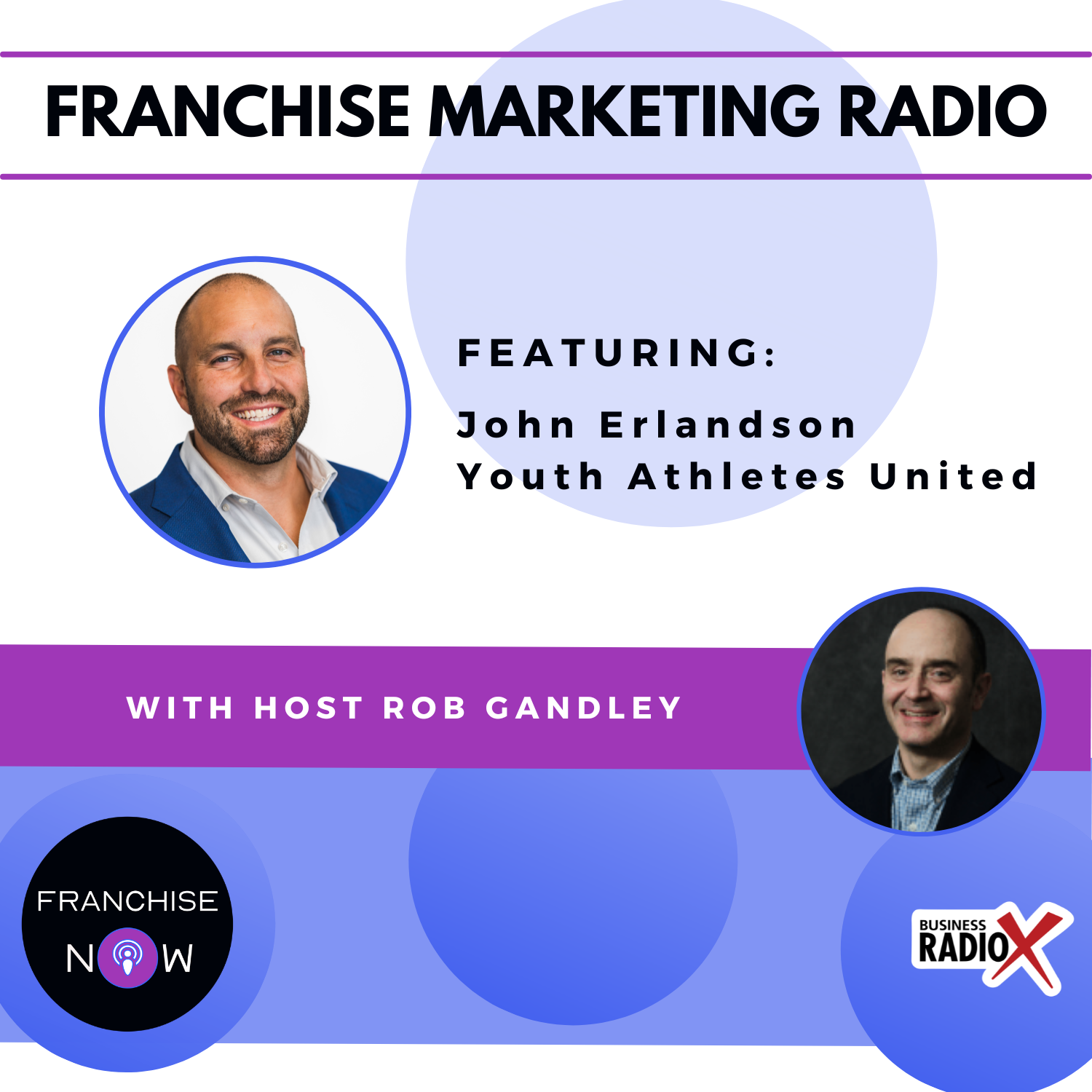


 John Erlandson is the Co-Founder, President, and Chief Revenue Officer of Youth Athletes United, a leading youth sports franchising platform that encompasses brands such as Soccer Stars, Amazing Athletes, TGA Premier Sports, JumpBunch, and Little Rookies . Since its inception in November 2021, Youth Athletes United has expanded to over 280 locations across 36 states and two international markets, aiming to impact the lives of over one million children annually through sports and fitness education.
Before co-founding Youth Athletes United, Erlandson served as President of Amazing Athletes. He also held prominent roles at Authentic Brands Group, including Chief Revenue Officer and Executive Vice President of Sports, where he played a key role in scaling the company’s revenue from $100 million to $8 billion over seven years . His earlier career includes leadership positions at Product Central Software Inc., Sportcraft, Fitness Quest, and Horizon Fitness, focusing on product development, marketing, and sales.
Erlandson earned a Bachelor of Science degree in Kinesiology from Temple University . He is known for his passion for youth development through sports and his commitment to empowering children by teaching them the fundamentals of athletics in a fun and inclusive environment.
Connect with John on LinkedIn.
 This transcript is machine transcribed by Sonix.
TRANSCRIPT
Intro: Coming to you live from the Business RadioX studio. It’s Franchise Marketing Radio. Ready to revolutionize your franchise with AI franchise now empowers franchises with advanced AI solutions, automatic processes, and enhanced marketing strategies. From personalized customer interactions to predictive analytics, we help you harness AI to drive growth and efficiency. Transform your franchise with the power of AI. Visit Franchise Now to learn more and take your business into the future. Now here’s your host.
Rob Gandley: Welcome back to another episode of Franchise Marketing Radio, the podcast where we spotlight the brands, brains and breakthroughs shaping the future of franchising. I’m your host, Rob Gandley, and today is no different. I want to welcome John Erlandson, and he is no stranger to building beloved brands. He is the co-founder and chief brand officer at Youth Athletes United. He’s helped lead a portfolio of purpose driven youth sports franchises that combine national scale and local impact. And we’re going to jump into that today. I can’t wait. But with a background that blends corporate, brand building and entrepreneurial spirit, John is on a mission to positively impact 1 million kids annually through fun, foundational sports experiences and other positive events. His leadership focuses on franchise empowerment, community connection, and digital first marketing strategies, all the while maintaining strong values and strong values based approach. So with all that being said, John, welcome to the show.
John Erlandson: All right. Thanks. It was a big intro. I feel like, uh, like Muhammad Ali.
Rob Gandley: You are the intro.
John Erlandson: Titles there.
Rob Gandley: And for anybody that hasn’t, it can’t see us right now. He was up there shaking his body and his hands out. He was ready. That’s supposed to be a good thing for you to do. But anyway, listen, the first thing I love to ask, and you know, it’s always a great way to frame the conversation, but, you know, how did you get here? I know your journey was interesting. I know I’ve taught you a little bit about it, but I’d love the audience to hear more about how did you wind up in this place? And I know you’ve got a little bit of a history that got you here, so could you share a little more?
John Erlandson: Yeah, absolutely. You know, a lot of times people, people start with, well, my background was this and I was doing this for years. But, you know, the genesis of this story kind of starts with hurricane Sandy. And I just I’ve been in a company called Sport Craft for probably six years, and I was in my background was in fitness and games and physiology and product development. I did a lot of sales along the way, so I was making treadmills and things like that. Loved, you know, exercise, sports, all, all things, you know, kids, families. And I’m at that company. I’m doing great. I’m executive vice president and the company goes bankrupt. Didn’t see it coming. I just bought my first house, had my first baby, and I literally am out of a job. No health insurance, I have no money. I don’t have family with money. There was no one I could call. I’d put all the money into the house, and I’m scrambling around trying to figure out what to do. And all of a sudden, hurricane Sandy comes through new Jersey and six massive trees fall on my house. And I’m like, at the low of the low of the low of my life, in my career and everything. And I had this boss tell me it was a good mentor of mine. Guy’s name was Mike Nalley. He was probably my first real business mentor.
John Erlandson: He’s like, listen, always do what’s right. And I had just screwed all these Chinese factories over, telling them that they were going to get paid. And I just didn’t know the bankruptcy was coming. I wasn’t on the board and so I just started calling and apologizing to every one of these factories and saying, hey, you know, I I’m sorry. I was just there. I didn’t lie to you. And all of the owners were like, listen, John, we trust you. Just out of curiosity, if this company is bankrupt and no one’s watching the trademarks, can you start calling retailers and selling all this inventory I have? And I was like, I don’t know, give me five minutes. So I started dialing up, uh, retailers. I’m like, all right, I sold 5000 footballs. You know, I can pay the car payment this week. You know, I got 20,000 ping pong balls. And so through that kind of entrepreneurial scramble, I ended up at a company where I met my business partner, now called Authentic Brands. And I was very lucky because that company went from 0 to $8 billion. I was the chief revenue officer, and I worked alongside serial entrepreneurs, and I always had this passion about being an entrepreneur, and I wanted to do it on my own, and I just didn’t know how to do it, which is a lot of the story of many, many franchise owners, right? They work these career jobs.
John Erlandson: They always wanted to do something entrepreneurial. They, you know, families, they haven’t saved enough money. And so my journey mirrors so many of our franchisees journeys. And so while we build up authentic brands, early stage employees had stock options, did very well there. A lot of it was fashion. And you know, I just don’t care about women’s handbags. Like it just didn’t get me out of bed in the morning. And one day, Adam and I are in Japan. He’s my business partner now. And we came up with this idea for youth athletes United on one fundamental principle. What could we do where money is a wonderful byproduct of changing somebody else’s life, right? And so we started asking that question and just going, okay, well, well, there’s kids sports. We both have exercise physiology degrees, which are pretty useless degrees in case anybody’s kids out there are thinking about it. Talk it out. Talk them out of it. Um, but, you know, that was our passion. That’s what pulled me out of bed every morning. And so we started looking at the youth sports space noncompetitive, focused on kids under eight. And we realized there was amazing content, amazing brands, amazing people, but not a lot of really sophisticated business skills. Not a lot of investment in technology.
John Erlandson: And so Adam and I were like, man, this this just feels like we could put all this together. And so we founded Youth Athletes United as a platform. And, you know, take the year and a half of Covid out of it. We hit 90% of everything we said we were going to do in that initial business plan we’ve done. And it’s all rooted in let’s get an incredible group of people together that have this ideological passion that still have to make money, but they believe that money is a wonderful byproduct of changing somebody else’s life. And so we are having an unbelievable amount of fun doing this. Like, it is just so great. I’m working 24 hours a day, seven days a week and I love it. Like I can’t stop, you know? And so yeah, I mean, that’s that’s kind of my story. It started from just this train wreck of a being in the basement, wife screaming, baby screaming. Trees were falling everywhere. You’re thinking the house is going to collapse to. You know, what has been the peak of my business career and you know and that that story plays out over ten years. It feels like an overnight success story with ten years of just grinding. But the grinding was was kind of magical because it wasn’t about money. It was just about doing something you loved.
Rob Gandley: Yeah. And I you know, we were talking recently about energy. It was a recent episode, and it was like the one attribute of an entrepreneur that needs to be there. And you have it. I can feel it, right? But but that energy comes from your conviction and belief to and kind of when you tell that story, what I feel like is we all hit those crossroads in life where you could look back and say, this happened to me, right? These things happened to me. Or you can look forward and say, how am I going to fix it? Right? What what is what is the opportunity put in front of me? And also, I love that you did the right thing and it produced the opportunity to fix the problem, right. Even if it may not have been perfect, it wasn’t what you expected. But when you called those manufacturers that put it the seed in your mind to move forward and solve a problem. Yeah. And, you know, and it’s because you wanted to do the right thing. Right? And just telling what was going on. But I just love that.
John Erlandson: That skill is stuck with me. So I call it being an ostrich. So one of my things is every time you feel you’re in a negotiation, a tough conversation, an email where you’re batting the ball back and forth, a text message, and you just want to ignore something and put your head in the sand. You need to fight that urge. It is so easy, especially like if you do a lot of deals where you’re negotiating with somebody, it’s so easy to be like, oh, that person just forgot about that point. Let’s not bring it up and I’ll slip it in the contract and we’ll deal with it later. Right. And that’s just putting your head in the sand. All that’s going to happen is it’s going to come back to haunt you later, or not wanting to have a tough conversation with an employee or a franchisee or you know you did something wrong or something isn’t working, and not just raising your hand and just taking the beating now and getting it out of the way. And so I found, like, there are some people in life that they just have every skill. The the second mentor I had, Jamie Salter at Authentic Brands, really taught me how to be like a real scrappy entrepreneur. And he went on to be a billionaire and, you know, one of the point one percenters in life.
John Erlandson: But what I realized is nobody could replicate that. You were born like that. But 90% of the mechanical things he did, you could teach to anybody. And one of those big mechanical skills I learned was like, listen, just take the beating. Now get it out of the way. Go have the fight now. You’re kidding yourself if you think it’s not coming later. And what that allows you to do is just build a lot of trust with people. Even if you’re not always having fun conversations, you’re having productive conversations. And people love that. People want to be around other people they trust. They know you’re going to get things done and you know you’re going to get to the next result even when it’s hard. And so that that tool has served me very well. I try to teach it to all our young people. And, you know, I think it started with that lesson of calling the factories because, man, I that was that was the hardest thing to do because they’re all in China, right? Like you could easily have disappeared. And I just, uh, I just couldn’t bring myself to do it. So and again, I’d say it changed the entire course of my life.
Rob Gandley: I think that shows a lot about your character, man. That’s why you are who you are, though, too. That inner, that inner, you know, voice said, you gotta let these people know. And that was a good that was a good.
John Erlandson: But you know what for for everyone listening out there and trying to, you know, take some a learning away from it, even very rock headed people that seem like they always want to do stuff like that, deep down, they really don’t. Like, you’re still you’re still fighting yourself internally every day. And the difference between person makes stuff happen and the person that doesn’t is you get through that fighting yourself first before you go out and kind of, you know, challenge the challenge, what you got to do in the world. So yeah.
Rob Gandley: Exactly. To have the inner game is key. So so I wanted to kind of just frame your brand, your platform company and you know, so that is youth Athletes United. And then you have three brands. I wanted to just the audience to be very clear about what you’re running here. And it’s three distinct brands. But there is a unified sort of strategy. And you’re the chief brand officer. It’s one of the hats, right? You’re the co-founder, but.
John Erlandson: I’m more the chief revenue officer. So that that the marketing side really sits more with my business partner. We we co-run things very, very well. Um, but he is the marketing brand visionary. I always say, listen, left to my own devices, uh, we’d be bankrupt. So, like, we’re yin and yang in that way, where I’m always the revenue. What’s next? What’s the. I never saw an idea I didn’t like. And he’s always like, think through this, like, you know. So in that push and pull, uh, we’ve actually been pretty productive.
Rob Gandley: So that’s great. Well, so like when you are a platform company and you have, uh, these different brands. And so tell us a little bit about the strategy of that. So what that means and how, how do you keep a brand ethos sort of intact when you have this platform strategy?
John Erlandson: There’s upsides and downsides to being on a platform. I say it every day. And so everything in life is a weighing scale. Nothing is good or bad. Usually most things are not good or bad. It’s just you stack up all the good things and you stack up all the bad things and one side wins. So when you’re on a platform. We felt like if you looked at the industry that we focused on noncompetitive youth sports, especially with kids under, let’s call it the age of eight, is the majority of our revenue down to like one year old the the size of the business. Because if you look at the number of kids that are available per unit of time, per unit of geography in any given marketplace, it’s just not the same unit economics as like a McDonald’s, right? Because a one year old and a 99 year old can eat a cheeseburger 24 hours a day, right? Where that’s not the case when you’re trying to take a one year old and a parent in soccer class, you got like two hours in the day when that works really, really well, right? So our thesis was for somebody to revolutionize this part of the industry, you needed to stack a lot of revenue so you could reinvest in tech and intellectual capital. Right. So we could get we could get more sophisticated marketing people, business people, branding people, entrepreneurial people, and we could dump a ton of money into tech so we could have an Amazon type experience for mom and for our franchisees.
John Erlandson: Well, the only way to do that and to solve that problem is to stack a lot of royalties, right? And if you only focus on one brand, it’s a lot harder to get that level of scale and those level of unit economics. Soccer is probably the biggest of our brands, so youth Athletes Unite is the parent company. Soccer is our fastest growing brand. It’s called Soccer Stars. Uh, started in New York City. It is the largest operated soccer. So think of like the units I own soccer company in the country. Then we have, uh, amazing athletes, which is the largest, call it preschool PE program in the country. It’s about 2000 plus locations. And then we have play TGA, which is one of the very few companies that brings tennis, golf and pickleball. We do some other athletics, but the majority of the revenue sits with golf and tennis. We bring real clubs, real hitting, max play safe ball, and we teach golf in a noncompetitive and a non-intimidating environment. I like going to a golf course is a very hard place to learn golf. It’s intimidating. Yeah, right. It sucks. And so to for us to be able to do that at the school level. So every one of those businesses shares a lot of the same ideology and a lot of the same, um, back end operations.
John Erlandson: They’re all mobile businesses. We don’t own facilities. We don’t run facilities. So very low initial capital investment. We borrow space. So wherever there is kids time and money, we go to there and we deliver the content, we deliver the sports. And they are all content first brands, meaning we don’t send a coach out to come up with their own curriculum. We are very, very particular. I joke all the time on the franchise calls. We’re the In-N-Out burger of soccer, right? Like the content is so juicy and it’s so good and it’s so well thought out, like for, you know, on this podcast, you can’t see me, right? I’m a bald guy with a beard. To a three year old, I might as well be a serial killer, right? Like, total stranger danger. So I got on the field to coach for the first time. And one of the senior, you know, um, executives in our company, Dean Simpson, pulled me aside. He’s like, listen, just do this eye level. Get down on your knee. Sunglasses off. Smile it at the at the kid. Go. Hi, buddy. What’s your name? I’m Coach Marshmallow. As soon as I do that with any three year old, they burst out. They takes a second to process because they’re expecting you to say I’m Coach John. And then they hear I’m Coach Marshmallow. They burst out laughing. And now I’ve got a friend in the class.
Rob Gandley: Oh that’s.
John Erlandson: Great. Thousands, I mean thousands of those little techniques we have built something that that is just very unique. And everybody asks, well, I could just go buy sports equipment and start coaching this, right? And it’s like, yeah, you could, but to scale it, to do it at the highest, highest level of quality, very hard because it took people 20 years to come up with all these little innovations. And so the future of our platform, we are laser focused on owning the mobile space and watching the child because kids move through sports, right. Go through this journey with youth athletes united every step of the way for any sport they want to play.
Rob Gandley: That’s so. So let me connect it with a question I was dying to ask, which I love that you have this goal of a million kids, right? Impact. And so tell me more about that goal. And how has franchising in this experience. And I don’t know when that goal came in. Like I know that was very at the beginning. Or as you started scaling and realizing the impact. But how does franchising give you that platform, I guess, to achieve that type of audacious type of goal.
John Erlandson: So if you think about it from a standpoint of we originally didn’t have a big franchise vision. We had an operating vision. And so you start to like, logically think through the problem and you go, okay, so I’m going to create a workforce that to get to a million kids, we probably would need about ten. I’m guessing 5 to 10,000 coaches. Right. It’s a massive number spread across 40 states. And so you go is that logistically possible to from New York City manage a workforce that large that is part time when, you know, 90% of those people are just almost like gig workers and they have to not just show up and drive a car. They’ve got to deliver an incredible piece of content to another human being, to a group of human beings. They have to be able to interact with the parent that is in charge of the child. And be able to interact with the location manager. Who is the preschool director or the elementary school director. Do we really think sitting in New York City, I can hire somebody that makes 25 bucks an hour, that’s going to do that at the highest level of quality. And we tried it. And the conclusion we came to is the reason why no one’s ever done it is because the math doesn’t work. You need somebody who has an ownership link in the market that that lives and bleeds their community and will go above and beyond, and they can do all three of those things.
John Erlandson: They can take a lot of young people in coaching and teach them life skills and build a community, take them out to the bar, do a kick around on the weekend, like build that that culture because that culture is what makes your product unbelievable on the field. Then they got to build relationships with all the directors, all the schools, right? Because the schools and the parks control all the space. So we got to go work with those guys, and then they’ve got to be able to walk on the sideline, talk to mom, talk to dad. How’s Billy doing? Take a customer service call. You were never going to get that level of sophistication trying to hire, you know, regional managers all across the country. We tried it, and it just. You couldn’t get people that were bought in enough. Now, there are some regions where we have been able to get enough scale in cities. So we still own four regions. So we have New York, Los Angeles, Boston and San Francisco. Those units have so much scale that the four people that are running, those are seasoned executives that are living and breathing the business and delivering on that level. But but it was built over 15 to 20 years.
John Erlandson: I didn’t build it. I bought it, right. And so to rebuild that and go through that journey in every state in the country, it just wasn’t economically feasible. And so when we bought Amazing athletes, it was already franchised, fell in love with the concept of franchising. I loved the franchisees. I love the people I like as much as I love kids in sports. What gets me out of bed every morning is helping an entrepreneur go on that same journey that I went on, maybe minus the trees falling on their house and the hurricane. But everything else, right? Like, you know, like all that. All those other parts of like, man, you know, you start that business, you come out of the gates, it can go really, really well. But no matter how well it goes, you think it’s going to be on paper. There’s always something where you’re like, oh man, you got to solve a problem. And to me, when when we’re done solving problems, I might as well be dead. Like, what’s the point? Right? It’s kind of like you go on vacation in the Bahamas. By day, you’re like, all right, what am I doing on Earth? Like, this is a great use of my time on this planet. And so I think that that that part is really what gets me excited, you know, about business. That’s my.
Rob Gandley: That’s cool. Yeah. Yeah. And so here’s a good follow up then. So like in the marketing or sales side of things, you’re dealing with one audience that are these folks that really want more purpose and meaning in their life. And they also want obviously Potentially to earn as well to be able to earn and have financial freedom. Um, so you’re talking to that audience, and then you’re also in a position where you’ve got to build a business model where these same people build trust with parents and children. So or at least. Well, I think pretty much all the models. Right. So so you got marketing on one side that says we want to recruit the right kind of people for that model. So they have to represent this trust link with these parents. But your marketing and all that wrapping around the branding. How do you do that. Like that’s the two big things you got to do. You got to show them show we want people that care about. Yeah making money. But making an impact has to be the first, the leading of that. But you probably don’t when you recruit. I got to believe you don’t talk to people that say they hate kids, right? That’s the first thing.
John Erlandson: No. And I’ll tell you what. If somebody gets on the call and the first thing they go is, you know, how much money can I make off these kids? We’re generally like, this isn’t the right business for you. We’re going to end the call, right? We do. Right? Like we’ve been very fortunate enough. You know, myself, my business partner. Like our houses are paid off, right? So, like, I don’t have to do anything for money, I don’t care. Not that I could retire either, but, like, I don’t want to do anything that’s in the life. Too short column to add people to this platform that are that are not sharing the same mission. Now, that being said, do we relentlessly focus on people making money? Absolutely. You got to make money for a business to be successful so you could do good things, right? But it’s all about that ideology of the underlying kind of philosophy. From there, as much as the brand is the brand in the market, we expect the entrepreneur and the owner to also be the brand in the market, because this marketing is still very like 1975. A lot of it is going out to a playground with a flier and a business card, knocking on the local coffee shop door.
John Erlandson: Can I put this stack of brochures here? And talking to your local preschool, we do door to door sales, which most people that come in have never sold anything and they hate it. They think sales is a dirty word. And the more we start. That’s where I spend a lot of time during franchise training is I teach a whole 3 to 5 hour course on sales. And basically it’s like throw everything out of your mind of what you think sales is. This is about just being human and making sure that that person likes you, and telling your message in a real passionate way and starting a conversation. And the minute we get people to do that and they realize, like, this is the brand is radiating off of you. That’s where we start to see that magic happen. And after they get over their nerves for the first 4 or 5 of those calls, they’re like, wow, this is amazing. This is awesome. I’m building my business. The the movie montage that was in their head when they bought that franchise is actually starting to play out, right. And that’s that’s pretty cool that that gets me out of bed every morning I love it.
Rob Gandley: Yeah. Well, that’s amazing that you framed it that way and explained it, because I feel like that is a key to success for a business owner, for a new franchisee to get to that place. Right? First of all, you do a good job in the beginning recruiting, telling, being transparent, being clear about what the opportunity holds. Uh, but they create that vision in their mind, which you want them to create, right? I mean, that’s part of sales and marketing. But then when they come in, if you can achieve where they start to feel it and see it happening unfolding in front of them, to me, if you can do that in a certain period of time, in the beginning your success rate would be extremely high because that is the spark, right? That’s the also the disconnect. I feel right in a lot of brands where I’m here six months later, I feel like I had a breakthrough at 90 days. It’s not what I thought or see, you know, and that’s where the momentum gets lost and that’s where the challenge can be for certain brands. But that was brilliant. The way you phrased, is that how you guys look at it too? Like, let’s get them to see that.
John Erlandson: More upstream with the person. So what has been shocking to me in franchising is the number of times. And as we get in, um, community groups and we get to know other franchisors, Cause how often people will kid themselves in life and we all do it. I’ve done it to myself a million times, right? Like you, you believe in your head. You really want to own a business, and you want to get out there and you want to work it, and you love the details of it. And then we watch every now and then every 6 to 8 months, we’ll watch an owner buy a business and never show up. And they don’t want to do any of the hard work. They don’t want to knock on the door. They don’t want to do anything that makes them uncomfortable. And so early on when we were selling franchises six years ago, you know, when we were on these, these, uh, interview calls for franchisees, you know, I came from a sales background, so I assumed we should be doing a lot of selling today. I do a lot of trying to talk you out of it. And the reason is, we are not. It’s not like I’m your boss. We’re in a car together.
John Erlandson: There’s a seat sitting next to us. Right? And the whole team, the. Your team is driving the car, and that seat is empty. And we want you to get in the car. But I don’t want you to complain when the car goes 100 miles an hour, because I told you we’re going 100 miles an hour. This is where we’re driving. We’re pulling hard left turns. We’re pulling hard right turns. Right. Like we’re going on this adventure together. And I want to talk you out of it. Because if my words scare you, then you ain’t right for this. I don’t. I don’t want you bitching the whole time you’re in the car seat next to me, right? And so we explain that now, the other place I watch people kid themselves. And this is just like a public service announcement. If you were thinking about buying a franchise, even it has nothing to do with mine. Don’t kid yourself that. If you have a marital problem, a health problem or another business problem, that this is going to solve it. Because when you are getting started, you are the salesperson, the accountant, the coach, the manager, the CEO, the the, you know, the equipment manager. You have to do it all. And so if you were being distracted by life’s challenges, it’s like having a baby thinking it’s going to save a bad marriage.
John Erlandson: And you will watch people on franchising kid themselves like that all the time. And so we’ve gotten very good at really trying to talk people out of it. And at the end of me talking you out of it and I say the same thing, listen, weigh all the good and the bad. Here’s all the hard parts about this business. Here’s the things that will give you so much joy about being in this business. And it’s worked really well, man. The group of people we have in the system, at the speed that we have grown, private equity firms, um, other franchisors, other consultants in the industry are just shocked. They’re just shocked at the level of success we’re having. And our FBR review’s franchise business review, it’s an anonymous survey that they put out independently or through the roof. Now, are we perfect? Absolutely not. We screw things up every day, but it’s not bad intentioned. It’s usually because we’re trying to do too much, too fast. And most people that are in a franchise system, they can deal with that as opposed to a franchise owner that’s asleep at the wheel.
Rob Gandley: Exactly. Yeah. You know, no one expects perfection, but it is some degree of that, that vision in your head playing out. Right? No one said it would be perfect, but it is playing out and and it is moving forward. And I think that’s the key. Um, and I love the way like your it is near impossible to, to solve certain problems like on a national scale if you don’t have the right level of talent. And so another example of a business model is in the senior care space, very much a similar idea where you’re you’re getting a lot of benefit in helping people, making a big impact in your community, helping families and such. And it’s very much about that. But you look at the ways that people get help in that space. Without a franchise model, it’s very hard to get the help. You don’t get the hand-holding. You don’t because there is no one you can hire to do that type of work at the level you need them to do it, just like you said about the coaches. If you try to outsource the coaching, that’s you just can’t do it. Yeah. And so franchising is the solution. Like you couldn’t do it without the franchise model and the distributed ownership model. Right. That’s what I’m saying. That’s amazing. And you guys saw that. But you saw it.
John Erlandson: It comes back to the people though, I gotta tell you, we have the most wonderful, wonderful group of franchise owners like it is. I feel incredibly lucky by the fact that, like, they’re just good people. They are people first before they are business owners. And it allows you to solve problems. And I will I will tell you the best system in the world. The best system in the world will fail. If you have bad people on the other end, or you have the wrong people on the other end. And so what we have worked relentlessly in this to to create these systems. We have this philosophy of just get the right person, take a lot of notes because they’ll tell you what they need, right? Like everybody’s like, you know, what was your vision when you came in and took over? Amazing athletes. I’m like, I have a vision. I sat down with a notepad and said, bitch to me about everything you hate about this system, wrote everything down, right? Took all my notes. I’m like, all right, I got my five year plan. Thanks, guys. Like, we just bucketed it in and we just started executing, right. And so you build a little bit of trust and you build a little bit more and they’re like, oh wow, these guys care, right? My cell phone, my business partner, our executive team, they’re all in our in our email signature.
John Erlandson: I tell people I am available till midnight on Easter time. And then after that I’m probably asleep. And if you want to talk to somebody at 6 a.m., call my business partner. He’s the morning guy. But like, we are always, always available. We’re always on. But it’s not like it’s work. We’re just we’re having a blast. Like it’s just great. And so but it’s only great because you have people that are aligned with the vision And that that is what makes it fun. That’s what makes it possible to roll new things out, screw them up, get them fixed, get a lot of mulligans from your from your franchise system because everybody sees this, this North Star that we’re all driving towards, that you know you’re never going to get to. But that’s that’s part of the fun, right? The fun is the journey up the mountain. Like you’re at the top that it’s fun for about five seconds. You’re like, well shit, what do I do next? You know, like so another mountain.
Rob Gandley: Yeah.
John Erlandson: Yeah. Right. And that that’s been the secret sauce here so far over the last six years.
Rob Gandley: I love it, man. I love I thank you for sharing. I, I just love the way you articulate that, that idea of alignment. I feel like, again, like you’re saying things that most people don’t see, like. Yeah, recruiting great people. People are great. Yeah. No doubt. And I know what you mean. Exactly. Like franchisees are some of the best people in the world in every way, right? It’s like you couldn’t hire them and they’d be too expensive from that point of view. And then just the quality of the person. Right. But the idea of alignment is, again, you said that really quick, but I feel like, my goodness, if you get alignment, you can get a lot of average people doing really well, like the whole brand, just like the rising tide lifts, lifts, all boats. I just felt Lyman has a lot to do with that, where everybody is in that similar mindset of kids first, right? You have a franchisees first. I wanted to ask you about that philosophy. I think you kind of articulated it a little bit. So before I go down there, I do want to have some time to talk about technology though.
John Erlandson: Well, so.
Rob Gandley: Before you have before. Yeah. Go ahead.
John Erlandson: One kind of thing. I actually learned this from our private equity guys. So we raised money to start this platform. And, uh, we were we were negotiating because you have to negotiate with those guys on your deals, your terms, all these things. And there’s a lot of negotiating while you’re negotiating to buy the first company to get started. So I like to call it the cycle of misery because it’s just highs and lows when you’re trying to get something closed, right. You got to just put your quarter in and ride it and enjoy the ride. But, um, it was really interesting where we got to a place where we were kind of disagreeing on something, and one of the senior guys at our PE firm, he was just like, you know, do you feel like we’re aligned on this? Because I totally disagreed with with whatever point. I don’t remember what the point was, but I do remember him vividly asking me, go, does this feel aligned to you? Like, we both win if this happens and if this happens. And the minute he said that, I was kind of like, no, you’re right. And I’ve used that as a tool in the toolbox. Again, we can’t all be born Steve Jobs, right? Like it’s just not going to happen. But there were a bunch of mechanical things that these really successful people do that you can take those, put the tool in your toolbox and use it to some degree. And so every time I’m negotiating with an employee, right, maybe on a salary, on a raise, on a bonus.
John Erlandson: We ask the question of like, is this aligned with the company and the mission? Same thing when I’m negotiating with a franchisee who’s asking for special treatment, or they’ve done something really unique and we want to figure out how to partner on it. And that tool has been one of the most powerful tools I probably have used over the last six years. It’s really, really good. And and I would highly recommend everybody to use two. There are two mechanical tools that I feel like reset me mentally whenever I’m, you know, if you’re you’re debating anything, you’re arguing anything. It’s all over the board. There’s too many variables. So the alignment tool is number one I use. And the other one I use is ask yourself where you are trying to land the plane. So you get a room of 20 people debating something. And there’s arguments that are really good, but they’re they’re kind of all around like they’re all in like a circle, but nobody ever stops and goes, hang on, guys. Somebody just answered me where we are landing this plane and we can work backwards, because I don’t think we’re all trying to land it in the same spot. Are we debating how we fly into the landing zone, or are we debating where the frigging landing zone is? Right. Like, let’s start there. And so those two tools we use all the time in this company to kind of reset those debate conversations and it’s really, really good, really productive.
Rob Gandley: I love it. I think I think those two tips are brilliant because I know how that plays out in conversation and in decision making. Right? And it is about having that confidence and knowing, you know, this is the way we should go. This is this is what I need to do. Um, and you’re right, you could spend and we’ll talk about technology now. And that’s one area where you could spend so much time going in circles. It’s like, wait a minute, we all want to do this. Why are we talking about this over here? Like the color of the plane? Like we just want to land it, right? So.
John Erlandson: Yeah, the tech side has been interesting, right? It’s, um. It’s really, really hard when you get started and you start just plowing money into tech. Sometimes you put more CapEx in than you had Ebit to come out, and you could sit at those board meetings and just go, man, we could redeploy that capital into acquisitions. We could redeploy that capital into dividends. We could we could, you know, there are so many things we could do that do with that money. And we have watched some competitive platforms come along. And their view is I’m building a conglomerate of things and that doesn’t make them right or wrong. But their view is I don’t care about a seamless tech experience. I’ll let every one of these little things kind of run in their own tech bubble, and we’ll kind of just mine the data and we’ll use that for marketing. And they they’ve blown past us in terms of size. But I truly believe and I fundamentally believe the game we’re playing is the long game. It’s kind of like looking at Amazon early on and going, you know why they could have made so much more money if they stopped building distribution centers and they stopped upgrading their tech and just that relentless, Less relentless focus on what are basically our two customers when it comes to tech, the franchisees experience. We say we want more green time and less screen time. That doesn’t just apply to our kids, right? That applies to the franchisees. And we are also looking at it from, you know, is mom getting the Amazon experience? I don’t want to look at my competitors websites and hold that as the standard.
John Erlandson: I want to look at the best technology in the market and the best consumer experience and say, how do we model that? Right? Well, I don’t have $1 trillion to go invest in something, right? So how can we at least steal five ideas from the Amazon checkout experience and put them in here? And then you get them launched, you fix them, you make some bugs, you make some mistakes, you upgrade them and then rinse, wash, repeat, rinse, wash, repeat. And you just do that over and over. And what we have seen is every time we and we release tech features every three weeks. Every single time we release more technology features, we just watched the organic growth grow and grow and grow. And so it’s been incredible. Now, would we have taken on this journey if it was just, you know, uh, you know, myself and Adam? No, we had a we have a two other partners, uh, that are in the business that kind of came in as the initial for one of them has a degree from MIT. He’s a chief technology officer. He had built software in sports prior to coming here. So he was he was really the secret sauce that allowed us to kind of do this. Um, and, and it’s been it’s been spot on. It’s really made a difference. And, and there’s some new problems that have emerged as you’ve scaled tech. And I can talk about those in a minute, but it’s, uh, it’s been good.
Rob Gandley: Well, you know, one of the thoughts I had was, you know, obviously technology is there’s a lot of buzz around it right now with AI, obviously, and many other disruptive technologies. But I’d say AI is probably the most in the front of most consumers and people nowadays. And, and you know, so I mean for you guys it is still about alignment. I love that. Right. You just come right back to that thought like is this tool, is this capability aligned for vision of impacting a million children. You know what I mean. Is it getting us there and is it getting obviously you keep improving that right. You keep raising the standards as high as you can take it. So like how do you make those decisions like and right now, are there any places that you see that really like this from what you can see now would be, yeah, that might really help what we do, that piece of technology that really might enhance what we’re doing. Is there anything like that that you can point to or talk about?
John Erlandson: What’s super interesting is when you’re building your own tech stack. And I saw I went and I always look at other systems, and I was looking at one the other day and they’re, you know, multi multi-billion dollar conglomerate. And I was shocked at how clunky the interface was. I couldn’t believe it. And then I went back and I looked at our interface, and I realized what happens to a lot of tech companies as people, just continually it’s a never ending black hole of features that people ask for. And so the problem is, what starts out as a great, simplistic idea ends up with this infinite number of variable menu options, which starts to make it very complicated to find things. And so what happens is over time, you lose that pizzazz of like having time to really redesign the user interface. So it’s sleek, it’s modern because now all of a sudden there’s all these friggin submenus. And you end up with the exact opposite of the dream of where you started, which was more screen time and less screen time. Now I have double the screen time because I’m clicking all these freaking boxes, right? And so I think before we start talking about AI tools and bots and some of the things that are going on out there, and we’ve tested some of those We probably are at a place where we’ve where millions upon millions of lines of code.
John Erlandson: We’re going to probably take a quarter or two, pause and go back and re scrub the whole interface for speed and convenience. And why isn’t this obvious? Because I think if you don’t clean out your closet once every year, you just end up with a mess and you can’t figure out kind of what to wear. Right. And that fashion analogy I stole from somebody else’s podcast, but I thought it was great. So I’m using it here. And so, um, then you go, okay, now that the foundation of the house is perfect and the closets are clean and the house is organized on the inside. Now, how do we build two new things that are rapidly emerging technology, which is a combination of AI bots, really, uh, and a genetic AI, which are a little bit different. If you think of the bots, the bots are basically just asking questions, right? We’ve all dealt with the customer service bot An agentic AI bot can do a lot more. It can perform complex tasks on the back end, but it can also think through situation A and situation B, right? If the invoice doesn’t come in perfectly, it knows there’s an address somewhere on the invoice so it can read through the invoice, find the address, type it into the system. That’s the future.
John Erlandson: That’s where it’s going. I think what we found is the couple times we’ve tried to integrate AI, you almost have to look at it like bullets in a gun, right? So we’re being charged by a thousand zombies are coming and charging our position, and we only have 800 bullets, right? So you can’t just fire at every zombie. You see, you have to be smart about the ones you attack. And the problem is, that’s what AI is right now, is the expense of just figuring out the never ending landscape of AI can actually bankrupt you in a never ending black hole of spending and spending, and then it changes, and then you spend again. But as a small business, you can’t keep up with that. So what we found is, is we deployed a bot, we call it soccer bot, and it was supposed to do customer service just for the franchisees. Was it only answered about 50% of the questions. And it just kept every day creeping up and getting more and more and more expensive. You’re like, this thing’s going to kill us. So we shut it down. I think that the for a small business under $100 million like us, um, I think a little bit of a wait and see approach. Well, you use some very, very, very sniper shot off the shelf AI tools. So, for example, uh, a video editor that can do faster video editor editing, make it look more modern, but it’s 20 bucks a month, right? Um, just things like that.
John Erlandson: Like, you know, using ChatGPT to write, not just emails is everybody’s doing that. But, like, we’re in a meeting, you and I, and there’s all these action steps. And so what do you do? You write all the action steps down. You get distracted. You come back at night, you go to type it all into your CRM, and then you have to remember what you did right. So while we’re taking the meeting notes, we copy that. We’re like, oh, we need to send a letter to the franchisees. So we copy what just came up in the transcript or we’re writing it. We drop it in chat. The letter is done in the meeting right there. Yeah. Right. Well, that’s free to do. So those types of little techniques are where we’re implementing AI every step of the way. And we’re all learning it a little bit at a time. And it’s a very low cost high return way to to to go after it. And that I would recommend anybody that’s in a small business that doesn’t have a lot of bullets to shoot in terms of capital to apply towards this, that’s the best way to get in the game. And it’s working.
Rob Gandley: Yeah, yeah. No, I mean that’s what we see. I think that, uh, the first step is looking at your people, looking at your people, your teams, and seeing what you can do to equip them better. As you said, like it could be these tools that just make them do their job way better than they were before. And that’s step one. If you do that well, I think you’re in the right place because, um, I do think that sort of thinking, if you’re not doing it, what if the other folks in your industry are. So at some point it will be more commonplace for employees to all be upskilled with various tools, right? So I love that analogy, like the video editing analogy. So that’s amazing. So we’re coming towards the end here. I know we set aside a certain amount of time and I know you’re you’re busy, John, and I appreciate the conversation so far. I feel like we could probably just sit here all day. Really. I think both of us love talking, so I know it’s our background, right? Um, so. But like, in terms of vision, I’m just. I’m just wondering, like you had mentioned earlier in the conversation about climbing, you know, kind of climbing the mountain. And a big part is the climb, right? It’s the journey. And there is that payoff, though, of the vision of seeing the top right. And that’s an amazing feeling. Um, I, I do, I do climb mountains. I live in Colorado and I do get that feeling, and I do love that feeling. And oftentimes I feel like there’s nothing else in that moment. Right? Like, that is the pinnacle. And so you want to keep recreating that feeling. So but tell me about your vision because you’re that you’re sort of you’ve climbed the mount, you’ve climbed a couple mountains, now you’ve seen some nice views. Tell me about your vision for this platform company. Where where do you see things going into the future, given the world we live into with all this change? What is your.
John Erlandson: Yeah, I think our executive team, all the leaders feel like the opportunity is infinite. And I think our franchisees do too. And this is why children are moving the old days of just your parents throwing you out in the fricking yard and being like, hey, come back when it’s dark. Like those days are gone, right? And so it’s it’s just not reality for any of us anymore. And so kids are just doing structured things nonstop and they’re kids, so they’re going to try an infinite number of things. And so there’s all these obvious things in sports tennis, golf, soccer, multi sport, cross whatever you want to do. Then that same child is trying the same thing in Stem robotics, science, fashion design. You know medical learning like money management like there’s an infinite number of contact content packages. And we like to say the brain is the biggest muscle in the body. Right. And so like why are we not having mom and dad bring their children through this trusted ecosystem every step of the way, lowering the marketing cost of acquisition for a customer for our franchisees. Right. Using that data not to shill. Right. They used to work the WWE a lot, and one of Vince McMahon’s big things was we don’t want to shill, right? We like we want to sell. We want to provide value, but we don’t want to shill. Right? So where’s the value for mom of her getting a text message that says, hey, Billy left the preschool.
John Erlandson: He’s now in elementary school X, Y, and Z. Did you know that his progress report said he was great at golf when he was five? We have a TGA class. Here’s a 20% coupon. We’d love to have Billy come try TGA and test some golf. Right. That’s the future of where we’re going. And we’re probably only about 12 months away from that being automated. Um, and everybody wins. Again, we talk. Let’s bring it back to where we started. Alignment. Is mom aligned in getting a value and is it something she wants? Yes. Is the franchisee aligned in terms of a customer moving from one franchisee to another? But they both win? Yes. Because they weren’t in a competing brand anyways. Is is the franchisor aligned in that investment and technology? Because ultimately they’re going to receive a royalty off of every one of those kids. Yes, absolutely. Is the school aligned because you took the kid off the teacher’s hands for a little bit, and the teacher is now happy and we take care of the facility. Yes. There’s no losers in this. It’s not like I sold you a lemon and you drove off the lot. And so again, when I go back to there’s like five core tools that you can use in every situation to bring your yourself back to center. You know, zero point attack this goal, make this happen and achieve your vision. And it is awesome when you get in that rhythm. And that’s what we’re doing now.
Rob Gandley: I just love that you’re sharing that because it there’s two things. One, it’s the knowing of it. It’s knowing to look for alignment knowing to think win, win, think what’s in it for the other party. Right. How does it impact them, and why is that good or is that bad? Is that aligned or not? Yeah, but you thought you thought about it through the whole network of folks, the stakeholders in the whole, you know, in that whole example. And I love it. It’s knowing that, but it’s also being willing as a business leader to run your business that way? Yeah. And because you can know a lot about all this stuff and still choose. It’s all about profit, right? And I know we live in that world to some extent. I’d like to think it’s a little different than maybe when I was younger.
John Erlandson: But even that I would tell you there’s nothing wrong with that either. Right there. I mean, friends that are in the industry that own, you know, um, I don’t know, plumbing franchises or home service franchises. And there are some, like, building out a garage. You could be really passionate about finishing a kitchen, you know, doing plumbing. You could be passionate about the industry and stuff. But it’s not like if there was no money, would you still do it? The number of people would go way down. Right. And there is absolutely nothing wrong with that. We’re in America, right? And there’s a certain type of person that should absolutely buy that franchise first. Our system we want you to like, if money wasn’t a thing, if the robots take over and we don’t have to do any work, would you still show up and do this every day? Then this is the place for you, right? That’s what has made this so special. And I actually we find that very easy. And if you do all the right things because the system is really good, the profits will come, right? They just come and do this. You do that. Profits pour out of the machine. And so it’s, uh, it’s just about how you, like, set your core methodology that really determines every single thing that you and your teams do day in and day out.
Rob Gandley: Yeah, absolutely. Now, I mean, it just comes down to, as you said earlier, the kind of model it is and being transparent upfront and and again, you’re in that model and I you made a comment about um about robots taking over. Well I mean, in my world I’m in the tech, you know, and I could tell you you’re passionate about it too, but it’s like, that is a real sort of idea, but not like, here’s what I think. I think the relationship jobs of today, like your business, like your brands, where you’re really connecting with other people, making an impact in their lives. Those are the they. They ain’t going nowhere. We’re still we have needs. We still are going to fulfill those needs for each other. Hopefully, it just means a lot of the grind of life that we had to do to just survive can be removed, and we can focus more on business models like yours. Like you said, there’s no real end to picking the phone up and adding value and helping a franchisee help a kid, right? I mean, that’s pretty much what you’re doing. And I think the future is still the future. That’s still the future, even with robots around. So that’s the cool thing.
John Erlandson: Yeah. We’ll we’ll be last in line to to. Yeah. I mean robots coach. You know, young kids soccer. But you know, if it ever gets to.
Rob Gandley: Maybe an assistant.
John Erlandson: Yeah. The whole the whole world’s in trouble. So.
Speaker4: Yeah. Yeah, yeah.
Rob Gandley: No, that’s that is key. So it’s been a pleasure, man. Thank you for spending the time. Um, yeah.
John Erlandson: Thanks for having me on. Appreciate it.
Rob Gandley: And, yeah, the the insights were tremendous. I would recommend people relisten to some of these, uh, these answers you shared. I loved it. Thank you. Because I know when I walk away feeling like I learned a ton, which is most of the time, I must say, but not I gotta tell you, I just love. Last few interviews have been unbelievable. Um, I feel like I’m just. I’m getting the benefit of of of your coaching and consulting indirectly. But it’s really good stuff. And that’s why that’s why the brand has done so well. And and I want you to tell the listeners, where can they get in touch with you guys, with your brands, with your platform, with you. You seem like a great place to start. You you know, you’re the chief revenue officer, but how do people reach out if they’re interested in making an impact?
John Erlandson: You can look at youth athletes. United.com. Uh, it’s a good place to start. It’ll tell you all about the franchise system. Um, and then also you see us on LinkedIn. Um, I highly recommend doing your research. Right. There’s a lot of podcasts out there with us. There’s a lot of, you know, industry research ChatGPT us. I did it the other day, you know, what does the world have to say about John Erlandson? Right? Adam Geisler, you know, Dean Simpson, Carman, Khalil, all you can see our executive team, they’re all out there. Annie. Um, you know, so all of the the core people that that have really founded these businesses. So what is so cool is when you look into the history of our business, you know, some of the names I named and, you know, another executive, Bob Gibson, founded, like, just founded this business. They were the first people on the soccer side that started 20 years ago in the business. And they’re like the core founders. And to have all those people still surrounding us is pretty freaking cool. It’s really cool. It says a lot that we came in and we weren’t money guys. We really understood the value of human beings in this. And like, what this is, is like human Netflix for kids, right? We got to deliver that movie every week. You pay your subscription, everybody enjoys the movie, but you’re getting healthy and active. And at the end of the day, that doesn’t happen without incredible humans around you. And so, yeah, I mean, I would say start at youth Athletes United. Look us all up on LinkedIn chat GTP us. You know, go look at other franchisee podcasts. And if you’re interested, we’d love to talk to you. If not, you know, take these tips. And we made the world a better place. Whether we’re helping kids or we’re helping people. That’s great. Right. So beautiful. You know, that’s, uh, that’s who we are.
Rob Gandley: It’s about doing good work and helping people and being an awesome business at the same time. So I think that’s amazing. It’s good stuff. I just want to thank you again for your insights. And to our listeners, thanks for tuning in. Please share this if you find it helpful. This is insightful, impactful stuff. Please share it and keep tuning in. And bye for now.