
Business RadioX ®

  • Home
  • Business RadioX ® Communities
    • Southeast
      • Alabama
        • Birmingham
      • Florida
        • Orlando
        • Pensacola
        • South Florida
        • Tampa
        • Tallahassee
      • Georgia
        • Atlanta
        • Cherokee
        • Forsyth
        • Greater Perimeter
        • Gwinnett
        • North Fulton
        • North Georgia
        • Northeast Georgia
        • Rome
        • Savannah
      • Louisiana
        • New Orleans
      • North Carolina
        • Charlotte
        • Raleigh
      • Tennessee
        • Chattanooga
        • Nashville
      • Virginia
        • Richmond
    • South Central
      • Arkansas
        • Northwest Arkansas
    • Midwest
      • Illinois
        • Chicago
      • Michigan
        • Detroit
      • Minnesota
        • Minneapolis St. Paul
      • Missouri
        • St. Louis
      • Ohio
        • Cleveland
        • Columbus
        • Dayton
    • Southwest
      • Arizona
        • Phoenix
        • Tucson
        • Valley
      • Texas
        • Austin
        • Dallas
        • Houston
    • West
      • California
        • Bay Area
        • LA
        • Pasadena
      • Colorado
        • Denver
      • Hawaii
        • Oahu
  • FAQs
  • About Us
    • Our Mission
    • Our Audience
    • Why It Works
    • What People Are Saying
    • BRX in the News
  • Resources
    • BRX Pro Tips
    • B2B Marketing: The 4Rs
    • High Velocity Selling Habits
    • Why Most B2B Media Strategies Fail
    • 9 Reasons To Sponsor A Business RadioX ® Show
  • Partner With Us
  • Veteran Business RadioX ®

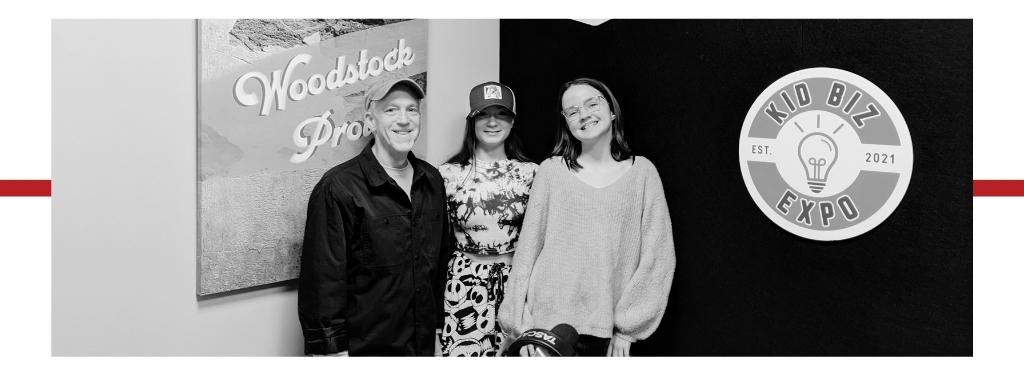
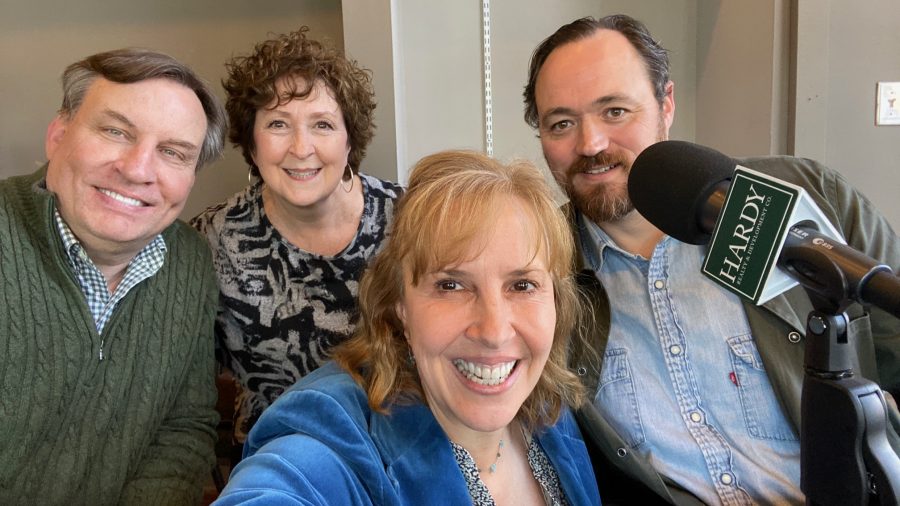
Brianna Johnson with Good Faith Consulting, Sean Berney Fable Creature and Tim Abbot with Good Neighbor Homeless Shelter

January 30, 2023 by angishields

Charitable Georgia
Charitable Georgia
Brianna Johnson with Good Faith Consulting, Sean Berney Fable Creature and Tim Abbot with Good Neighbor Homeless Shelter
Loading
00:00 /
RSS Feed
Share
Link
Embed

Download file

Brianna Johnson with Good Faith Consulting, Sean Berney Fable Creature and Tim Abbot with Good Neighbor Homeless Shelter

Brianna-Johnson-bwGood Faith Consulting, LLC began in 2015 when an acquaintance of the owner, Brianna Johnson, passed away unexpectedly.

She saw a great need to begin educating both herself and others when it came to their insurance and from that point on, she began working with small businesses and helping families find the right coverage for their specific needs.

She is an award-winning agent who was awarded as the National Agent of The Year via one of her carriers.

Connect with Brianna on LinkedIn.

Sean-Berney-bwSean Berney grew up surfing and skateboarding on the east coast of Florida. In his early 20’s he decided to jump head first into business management.

After spending 15 years of his life successfully managing brick and mortar retail stores in the action sports industry, Sean decided to take on the challenge of starting his own business. 2020 launched opportunities for him to do just that. Along with a partner,  Sean started an HVAC business and has now started a video production business, Fable Creature.

After moving to Georgia, Sean met and married his best friend Kellie, and exactly a year later (on their one year anniversary), their two nieces came to live with them. Sean has spent most of his life chasing after adventure, and now adventure has started chasing him.

Connect with Sean on LinkedIn.

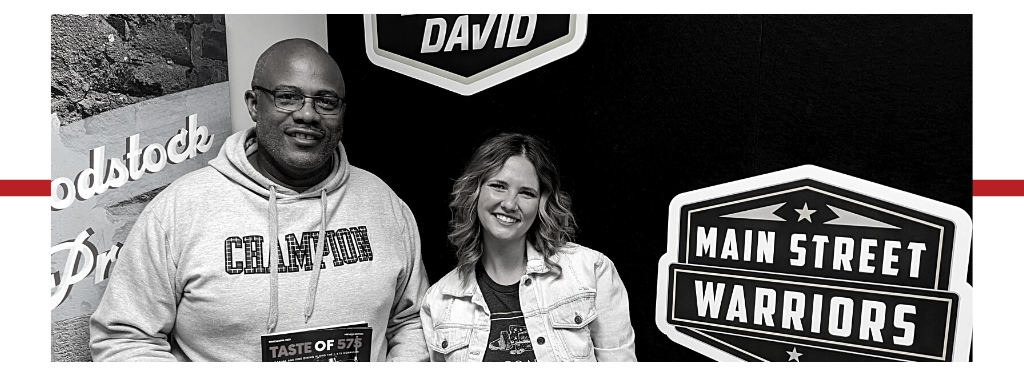
Tim-Abbot-bwTim Abbott is the National Director, New Member Welcome Experience at Kaiser Permanente. He’s also a Board Member of Good Neighbor Homeless Shelter. Good Neighbor’s mission is to provide men, women, and families with temporary shelter and physical, emotional, and spiritual support.

Tim is married to his wife Lisa, and they have 3 children.

Connect with Tim on LinkedIn.

This transcript is machine transcribed by Sonix

TRANSCRIPT

Intro: [00:00:07] Broadcasting live from the business radio studios in Atlanta. It’s time for Charitable Georgia, brought to you by Bee’s Charitable Pursuits and Resources. We put the fun in fundraising. For more information, go to Bee’s Charitable Pursuits dot com. That’s Bees charitable pursuits dot com. Now here’s your host, Brian Pruitt.

Brian Pruett: [00:00:45] Good, fabulous. Friday morning, everybody in the listening world, it’s another fabulous Friday. And we got three more fabulous folks this morning. Stone You know, we’ve been doing this show to put positivity out there and today’s show is all about love. And you’ll hear it love and God’s story in these three stories, and they’re all three different. And it’s just amazing what you get to hear and hopefully what you get inspired by. The first guest this morning is Brianna Johnson with a good faith health insurance. So, Brianna, thank you for being here.

Brianna Johnson: [00:01:11] Thanks for having me.

Brian Pruett: [00:01:12] So, first of all, I do want to talk a little bit about your company and the good faith health insurance you get. You have a passion on helping people and trying to get the bridge with health insurance and people that really can’t find the right stuff. So but first of all, share your story and how you started this company and why you do what you do.

Brianna Johnson: [00:01:29] Okay. Well, I had a I was actually in finance before I did this, and I had a young lady come to see me one day and she was 27 years old. She sat across from me and said, I’m going to die before I’m 30 and I need a life insurance policy. And I just looked at her and I said, Well, why do you think you’re going to die? You know? And it turns out her medication was about $2,400. She had a medical condition that was very, very treatable. And I think I called about 5 to 10 different health insurance agents to help her. And nobody would help her because they all focused either on group or they were captive with a company that couldn’t sell them, sell or anything. So I ended up finding that medication for $45. She is now 33 years old. She’s had her third child. Her disease went into remission two years ago and she lives here in Kennesaw. So she’s doing great. But that kind of led me into I need to look into this industry because there’s just so few health insurance agents that actually will help families with preexisting health problems. You know, I look at share plans, I look at the marketplace, I look at individual indemnity insurance. I mean, I look at everything. So it makes me very unique.

Brian Pruett: [00:02:40] Do you also help small businesses as well?

Brianna Johnson: [00:02:43] Oh, absolutely. Up to and past 20 employees. It just depends on what their needs are.

Brian Pruett: [00:02:49] I think that’s awesome because you’re right, there’s a lot of people out there who have preconditioned things going on and they really can’t get the help. So it’s great to have somebody who is looking out for for others and doing that. So you if I remember right when we when we met and talked, you come from a large family, right?

Brianna Johnson: [00:03:04] Yeah. I’m one of 11 children.

Brian Pruett: [00:03:06] Yeah. So I’m sure Christmas was a lot of fun around here.

Brianna Johnson: [00:03:10] Oh yeah. Oh, yeah. You know, and same mom and dad as well. I always have to add that part in. We’re not Irish or we are Irish, but we’re not Catholic. So it’s answering those questions. But Christmas was always a blast. Is always a blast.

Brian Pruett: [00:03:22] Well, one of the reasons I wanted to talk to you is you and your husband did something pretty incredible last year. Yeah, officially, Yeah. You’ve been working on it for a while, but it came came finally to fruition last year. You guys went and adopted an infant? Yes. So share that story.

Brianna Johnson: [00:03:41] So my husband and I and I’m very open about this. We struggled with unexplained infertility for about eight years. And when I say unexplained, it means that we did all the medical testing and they could find absolutely nothing wrong with either one of us. We are, I think, in one of the 5 to 10% of couples who struggle with infertility where they don’t have an explanation. So the doctors just kept saying over and over, just keep trying. Just keep trying. And it was just it got to that point where we both looked at each other and I said, Honey, you’re about to be 38. Do we want to keep trying this way or do we want to actually make some effort and, you know, ensure that we get a child, that we have a child? And so our beautiful little boy was born in April. And the crazy thing is that when you start this process, you are told you’re probably going to have a baby with problems. He’s going to have a mother who’s got a drug problems. You’ve got children who are out there with ADHD and all that. And I go, Well, I have ADHD. So, you know, I sit here and I go, Well, that doesn’t guarantee anything. You know, a biological child doesn’t mean it’s going to be any healthier than a child you adopt. So anyway, we went through the process. It took about six months to get through, you know, the home study and tests and everything else to make sure that you are not criminals, that you’re going through.

Brianna Johnson: [00:05:00] The process is tedious. And we actually went live with our profile in December because the birth moms can actually choose you, which is pretty cool on the private adoption side of it. So if a mother gets pregnant with an unwanted child and they say, I don’t want this baby, they can actually choose the family this child goes to, which a lot of people don’t seem to understand. So we actually got matched two weeks after our profile went live, which is insane. That does not happen very often. And our birth mom, I’m actually still in contact with her. I actually reach out to her about every two weeks, send her emails and updates and. You know, let her know how he’s doing, because obviously this was an act of love on her part. But she had me there for the delivery. So I got the phone call and in the space of 5 minutes, I had to sit down because I thought she was calling my our lawyer was calling me to tell me, Oh, you need something for the website or we need something for this, that and the other. It’s a lot like online dating. You have to create a profile and the birth moms read through your profile and they can pick the criteria.

Brianna Johnson: [00:06:14] They can pick what state you live in. I mean, they literally have all of that information right in front of them. And she picked us, which we’re super humbled by. It was very sweet, the whole process. And, you know, for her, it was like this was not a child that she didn’t want. She just couldn’t keep. She didn’t have a drug problem or anything like that. But she just financially couldn’t do it. This was her fifth child. So in her situation, it’s pretty common for for women to get pregnant, single moms having to struggle through this process. But she has just been a wonderful example to me of just love, because when she gave birth, she was crying. I was crying. We were just congratulating each other, You know, when they put my son on her chest. And it’s, you know, at that time it’s her child, too. She’s just looking at me. She’s like, congratulations, you’re a mom. And she’s it was just incredible. But the entire time, I really did try to make her feel like it’s okay if you change your mind. And that is a hard thing for an adoptive parent to do, especially when you’ve waited this long. So, yeah, so everything has gone really well. And the funny thing is, you know, I mentioned this earlier. Our son’s been sleeping through the night since he was six weeks old.

Brian Pruett: [00:07:38] Wow.

Brianna Johnson: [00:07:38] He is the most sweet, angelic child. And I know I’m totally biased, but he is a really good kid. And it’s just funny because they they prepare you for the worst when you’re adopting, which is good and bad. But in our case, I was like, Man, we’ve been spoiled rotten with this child, Like, he’s so good. And his birth mom and I talk on a regular basis. We’re actually going to go see her this summer. We’re going to spend a week and just visit with her, let her see Corbin, our son, and just let her get to know him a little bit, because I do think that’s very, very healthy for the child when it’s a good situation for them to know the biological family to some extent, to know where they came from.

Brian Pruett: [00:08:23] That’s pretty cool because, I mean, you see, obviously Hollywood can do what they want to, but you see a lot of times it’s further down the road when they start asking questions about who their biological parents are and they want to start searching. So you guys are getting ahead of that curve, which I think is great.

Brianna Johnson: [00:08:36] Yeah. And it’s crazy to me that because, well, at least with private adoption, people think that there’s all these babies that are available. There’s not there’s about 30 families for every available child. So it’s surprising that number because people think, oh, yeah, there’s all these kids. No, there’s not. There’s really not. Not on the private adoption side.

Brian Pruett: [00:08:58] What’s the difference from the private and public side?

Brianna Johnson: [00:09:01] So there’s kind of three ways to adopt. You can do a domestic adoption, also considered a private adoption. You can do an international adoption, and you can also do a foster care adoption. So the private adoption side, there’s never like a 100% guarantee, but you’re definitely in a better spot as far as being more sure you’re going to get a child versus foster care, which is considered not as ideal because it’s designed for reunification. It’s not designed to place children with adopting families. The design is literally to try to get the child and the children that are in foster care back with their biological families, which is how it should be. So it’s kind of funny because people think, oh, you know, there’s all these kids like, no, there’s really not. There’s not because we have a very high rate of abortion. I don’t mean to get political, but that’s the truth. There’s just not I mean, if you look at the data, there’s 30 couples for every available child on the private adoption side. Wow.

Brian Pruett: [00:10:03] Can you give any advice for anybody out there who’s thinking about wanting to go through a process like this? What’s the best thing you can tell them?

Brianna Johnson: [00:10:09] Don’t be afraid. Don’t be afraid of it. It’s it’s something that, you know, if you are talking to people and get advice from people who’ve done it, don’t you know, just Google and go with the first thing that pops up. Talk to people who have gone through this process, who can advise you, but also who can encourage you, because it does require quite a bit of encouragement because it is scary. You know, you don’t you don’t know what you’re stepping into because you’ve never done this before. It’s like riding a bike. It’s kind of nerve wracking the first time you do it. So yeah, that’s my advice. This is just find someone that that can mentor you through it. And, you know, for us, when we were matched with our kid, it was literally like, okay, he’s due in three months and it’s a boy. And it was literally, Oh, we’ve got three months to get ready for our for our son. And we had so much support from our church, from our community. And what’s interesting is that there were things I didn’t even think about, like a bottle warmer. You don’t think about needing that when you go to the hospital to to have a baby, right? You just don’t think about it. We would have been totally lost without a bottle warmer because they don’t have those at the hospital. They don’t have a microwave in the room where you’re staying. So and that’s not a complaint. It’s just things like that. It’s just things like that. We we talk to a lot of people who went through it, and I literally had a friend that was Marco Polo. We made. This is the list of things you’re going to need, you know, And it’s it’s definitely a wonderful thing and it makes you feel very warm and very accepted.

Brian Pruett: [00:11:43] So are there groups out there to look for those mentors?

Brianna Johnson: [00:11:46] Absolutely. There’s actually a lot of groups through depending on what agency you go through, they have groups. I started a Moms group specifically on Facebook, just for families interested in adopting, for families who are like, Hey, we want to adopt, but we don’t know if we can afford to adopt, you know, and sharing data. As far as just information, here’s some grants you can apply for. Here’s some fundraising we can actually help you with. And that’s something that is is so it’s so out there. Everybody thinks, oh, it’s so hard. You’re on your own and you do feel like an island at first, but then you start to look around. You go, Wow, there’s like all these families that have done this, gone through this process, and I want to learn from the master, you know, And it’s kind of like business. You want to learn from someone that knows and has been through it.

Brian Pruett: [00:12:37] If somebody wanted to get a hold of you, first of all, for their health insurance needs or if somebody wants to get ahold of you and talk about the adoption process because they want to start doing it, are there ways people can do that? And if so, how can they?

Brianna Johnson: [00:12:47] Absolutely. So for either of those people can just call my cell phone, which is 7702899231. My website is good faith health insurance dot com. If people want to look me up and just read about what we do. But I’m an open book when it comes to either of those things so anyone can reach out if they just hey, I’m thinking about this and I’m not sure what the steps are and I need a little guidance or a little help either one.

Brian Pruett: [00:13:13] Can you share your Facebook group too? Is there if somebody’s looking for that?

Brianna Johnson: [00:13:16] Yes. So I actually that’s a private group. So I’m going to actually I would share the link with someone who is interested. So.

Brian Pruett: [00:13:22] Well, Brianna, thank you for, again, being here and sharing your story. Do you mind sticking around and listen to these other two stories?

Brianna Johnson: [00:13:27] Because I love it. I’m actually really excited to hear your stories.

Brian Pruett: [00:13:31] Awesome. Well, we’re going to move over now to Sean Berney. So, Sean, thanks for being here this morning.

Sean Berney: [00:13:35] Yeah, thanks, Brian. Appreciate you having me, man.

Brian Pruett: [00:13:37] So you and I met a few months ago, and at the time you were working for Titan Pro Mechanical, which is an HVAC company. But I’ve learned that you you are a surfer, you like mountain biking, you’re a youth leader, and you do all kinds of stuff. And then just this month, you stepped out on your own and started a new videography company. So give us a little bit of your background.

Sean Berney: [00:13:57] Yeah. So as you said, I grew up in Cocoa, Florida, surfing, skateboarding, just really anything that I could get my hands on. Honestly, I have too many hobbies. My my wife complains all the time, like you have all these basics. It’s just ridiculous. Right? And so I’ve been trying to, you know, as I get older, I’ve been trying to narrow those things in. Also, I’ve definitely gained a lot more wisdom in my older age with my my sense of mortality, you know, knowing that, like, I probably shouldn’t hit that jump or I probably shouldn’t surf that size wave, things like that. But yeah, so as you said before I did, I was part owner in an HVAC business. I’ve spent about 16 years in the business management space, so I started working for action sports companies, skateboard companies, snowboard companies. And I traveled really all over the US, living in different places, doing that and just managing business, opening brick and mortar stores for those different brands. And then, you know, eventually I really just wanted to to start my own right. So I worked for a company that had that was really about the 50% mark of their their full growth. And then I wanted to see what it was like to go a little bit earlier on.

Sean Berney: [00:15:05] And so I went to a business that was about 25% into their infancy and their full of growth and and that was fantastic. And then I was like, I want to see what it’s like from day one, right? I want to know what it’s like. And so I went in and found a partner that was just an HVAC savant. He was amazing. I went and did a couple of jobs with him just to see what he was all about. And we had kind of met during the pandemic. We were working out in my garage together and I was like, You need to get your contractor’s license and let’s let’s do this right. So we did. And it was it was fantastic. But honestly, my my love for film and film production and storytelling. Was just something that I had done since, you know, really early on, since I was a teenager. And my friends and I were always filming each other’s skateboarding and doing different things. And I just absolutely loved it. And it was a passion. And I started doing some of that for one of the businesses that I was in. And we were using a lot of those videos internally and, you know, they loved it.

Sean Berney: [00:16:02] And so they were commissioning me to do more things. But long story short, you know, my business partner and I were having having a conversation one day and he was like, Man, he’s like, Your videos are really good. Like, they’re really good. He goes, And I kind of feel like this is something you should you should do. And I was like, okay, you know, you think so? And so, you know? So I went out on a limb this year and decided to start my my own film production business, stable creature film production. We do weddings, events and then also a lot of branding. And I think my, you know, 16 plus years of experience in the business world, corporate business world gives me a really unique perspective with with customers and clients with branding, because, you know, I, I know what’s going to turn those transactions, right? I know those things. What kind of clientele are you trying to target? So it gives me a unique edge, I think, to a lot of filmmakers where I have that creative side. But I also I understand the marketing and sell side of it as well. So so that’s really exciting as well. But yeah.

Brian Pruett: [00:17:05] So, so I have to ask, where did the name Fabled Creature come from?

Sean Berney: [00:17:08] Yeah, a good question. Good question. So, you know, I, I love like sci fi and fantasy and I’m a huge like Lord of the Rings nerd and all those types of things. I can’t I can’t help myself, Right? I can’t help myself. So that’s kind of part of it. But, you know, the idea of a fable is a story, right? And, you know, the idea of this fable creature when I was going into it, it’s like there’s this story that everybody has in their mind that that’s maybe unattainable, right? Like, they don’t know how to capture it. They don’t know how to to to put it into this mode that that tells everybody who they are and what they do. You know, especially with like with brides. Right. You know, there this kind of epic fable creature and, you know, and they want their big day captured. So for me, it just made sense. Right. And then, you know, kind of on the back side of that, being in the skateboarding industry, you know, creature skateboards, I don’t know if I can throw that brand out there, but Creature skateboards is always so cool to me. I love their artwork is very fantastical. And so yeah, so Fable Creature kind of stemmed from my love of action sports, but also this idea of capturing that story that maybe people think you can’t get.

Brian Pruett: [00:18:13] So Sean and I started working together. He’s been gracious to come out and do some videography of the events I’ve done so far this year, So I appreciate that. And I have to tell you, he’s a pretty good director. I felt like I was on the Ellen show yesterday because when he was at the Expo, he even brought something out and set it on and he’s standing right here at this spot. This is where you stand. I was like, No, I’m on a talk show. That’s pretty cool. Well, as I mentioned to you’re also a youth pastor. You do a youth group. So you have a passion for youth, but you also have a great adoption story. So I’d like for you to share that.

Sean Berney: [00:18:44] Yeah. Yeah. So I’ve always had a passion for kids, just, you know, young people. I think that, you know, we’re we’re in this world where we’re, you know, sometimes the it’s easy to neglect a generation, right? It’s easy to just kind of say, oh, like maybe they’re there are lost cause. And I think this, you know, during the pandemic and things like that, I heard all these people and political individuals talking about, you know, it’s like the worst generation ever. Right? You know, and and to me, it’s like, well, that’s because of us, right? Like, that’s not because of them. And so I’ve always had a passion for for for young people and just, you know, being a part of that mentorship in their lives. And so, yeah, I do I do a middle school in high school student, pastor or, you know, leader, whatever you want to call it. I’m not ordained or anything. I volunteer doing that. But yeah, so my wife and I, we’ve been we’ve been together for about eight years now and seven or eight years. And we, you know, once we got married, we had kind of had the discussion of we weren’t going to have kids, like we just had made the decision that we weren’t going to have our own biological kids. And, you know, and, you know, but I think God has different plans for us sometimes, Right. You know, when we talk about not having kids because we were very adventurous and kind of wild and we were talking I mean, we were in the conversation of like, we’re going to build out this conversion van and we’re going to basically travel around and live in different states and, you know, and work and whatnot.

Sean Berney: [00:20:06] And as we’re having this conversation, you know, we we started to see that there were some there were some opportunities and some signs of concern with with our nieces and their mom. And, you know, so we, you know, kind of like everybody else, we try to support that support, you know, my wife’s sister and, you know, and support the girls ever we could. So we were kind of going back and forth between here in Virginia a lot. And, you know, we really had no intention or anything like that on our radar, like as far as like adoption or taking them, that was never a conversation it was really trying to support. Their mom through that through some of those addictions that she was having. Right. That was always our number one. And, you know, we were coming up to our one year anniversary. Like I said, we don’t one year married. Right. Coming up to our one year anniversary anniversary. And we were planning this huge backpacking trip. We were going to be gone for like a week, you know, just totally off grid backpacking. And, you know, we we’d finally kind of it was about Easter, I think we were getting close to.

Sean Berney: [00:21:10] And we had we had seen the girls and seeing their mom and we realized that there was a real a real problem. So we had you know, when somebody is battling with addiction, right, they’re not always thinking clearly, you know, and they think that they can. They’ve got it right. I’ve got it. I can manage it, you know, But in reality is that’s that’s not the case. Right. They really need to tackle that addiction problem. And, you know, and she’ll be okay with me talking about she’s been sober for two years. She’s it’s fantastic. But we’ll get to that. But anyways, so long story short, my wife and I had kind of made this decision like, we need to step in, right? We need to do something. And so we had we had talked to her sister and said, hey, why don’t you bring the girls down to us? We’ll take them on a vacation with us for a couple of weeks. And and you essentially can can go to rehab and get help. And so she came down and, you know, as you know, kind of that the I think the key the key word here is doing it out of love. Right. You know, that that love, you know, she she had made the decision to leave him with us so she could go back and and go to rehab. Well, unfortunately, that that wasn’t necessarily what had happened. And she went back and and she was kind of free of of her girls for for the first time in her life.

Sean Berney: [00:22:24] And, you know, and that just really kind of led her down an even deeper, darker path of of addiction. And so we went through the process of of really just like we don’t know what to do. You know, she didn’t she didn’t come back to pick them up on the date that we had talked about. And then when she did show up, she was like, I can’t do it right. And so that’s where that that that love comes into play. And she knew that, you know, leaving them with us, they’d be safe, right, while she she went through this process. So you know one year into marriage. Right. You know, going on. And we were like, we’re going on her one year anniversary. We ended up changing all of our plans. You know, we basically packed our backpacks away and we went out and and bought a camper, a small camper, and just changed everything because I was like, wow, you know, these girls are you know, they’ve never been camping before, right? They don’t know anything about that. And it’s like, well, we’ll kill them if they go on this, you know, 30 mile excursion. And so which we were right because we went on like a one mile hike and halfway through they were dying, you know, So. So yeah. So we just kind of changed our lives completely around for that.

Sean Berney: [00:23:26] And, you know, the the interesting thing about we’re where we’re kind of at is like, you know, we spent years really just not knowing what to do. And so, you know, after the first couple of months of her, you know, not coming back and not getting into rehab, we we had to kind of go to this process of like, okay, we need to seek some legal counsel and figure out what we want to do. Because, you know, the scariest thing for us is, you know, her. You know, she’s a she has addiction problems and she’s all over the place. And we don’t know where she’s at. Right. There was zero communication. It’s like a she going to show up one day. And the the girl’s father was was in prison at the time. And so he had he’d been in and out of jail pretty much their whole lives. And and he was you know, he had basically three strikes. He was a felon. And so they ended up deporting him back to El Salvador. And that was another thing that we were like, okay, well, you know, we don’t have to worry about him showing up. We don’t know what’s going on, because at the time we had absolutely zero legal protection. The girls were just staying with us and we had somehow figured out how to enroll them in school. You know, we had gotten all their documents, but they well, anyways, we found out that their dad had actually illegally came back into the country somehow.

Sean Berney: [00:24:37] And so we were just really terrified. Like, you know, we don’t know what’s going on. And so we were on high alert for for really a process of two years, you know, And during that time, we were going to regular visits at the courthouse and we had a I think it’s called a guardian ad litem, which is another really crazy thing. You know, you’re talking about the the foster care system and how wild that is. You know, when we’re talking about private adoption versus the foster care, there are so many kids in the foster care system that, you know, one guardian ad litem or representative is essentially monitoring 100 plus kids at a time, which is mind boggling. Right? Totally mind boggling. Like they have. They’re so short staff, They’re so short resourced. And, you know, so we but we had a great relationship with her and she would come and visit us and things like that. But but like I said, it was a really wild couple of years. And, you know, I think that the thing that got us through it with them because it’s a little bit different situation, right? The the girls, we were the cool aunt and uncle, right? They like to come and visit us and then we. Went from being the cool aunt and uncle to being parents. So we were no longer cool and I thought I was going to be the coolest dad ever, right? I’m like, Man, I skateboard.

Sean Berney: [00:25:51] I was in a band. They do all this cool stuff. No, that is not the case. When you when you become the parent, you were pretty much no longer cool. Your cool is out the window, but in all the things you tell them is not cool, but all the things. Somebody could tell them the same thing and it’s the coolest thing ever. And I’m just like, whatever. But, you know, I think, you know, the girls have been with us for for just over five years now. And, you know, as a as a great praise report and how God works in just amazing ways is, you know, my wife’s sister, she’s been sober for a couple of years and she actually stays with us on the weekends, which is fantastic. So she’s just been doing a fantastic job. And, you know, but that that brings up a whole different set of emotions, you know, because I immediately took this, my wife and I both took the stance like, we’re mom and dad, right? We’re we’re these we’re these girls parents. And, you know, that’s that’s hard on them, right? Because in their hearts, you know, mom is still out there, Right? You know, and dad wasn’t really in the picture, you know, but but mom was still out there. And so they’re really holding on to that. And we had early conversations about adoption and things like that.

Sean Berney: [00:26:53] And at the end of the day, you know, that wasn’t really what they what they were interested in, you know, and. What my wife and I had to come to. The realization was that it wasn’t about us, Right. You know? It was not like making that decision for them. It’s not about us. It was about taking care of them, and it was about putting ourselves in this position of like, we are always going to make sure that they want for nothing. Right. But reunification with their mom was one of the most important things for us, you know? And so it’s a hard barrier because you put yourself in this parental position like like, you know, those girls will never not be my daughters, never right to the day I die. That’s that’s where it’s at, you know? But, you know, I didn’t I guess we got into this position where we didn’t need that piece of paper to do it, but we wanted it right. You know, we selfishly wanted that paper. And not that it’s selfish by any means, but I mean, I think just in this particular situation, you know, you have to and I think that’s the the struggle with fostering, right. You know, you foster and you it’s hard because at any given time those child’s can this child can children can go away. Right go back to their paternal families. And that’s that’s really hard emotionally for people.

Sean Berney: [00:28:05] Like really hard. I mean, I know we’ve gone through it and we’re still going through it. Right. But but anyways, at the end of the day, I think that, you know, anybody that that wants to go that route. Right, versus the private route, which which is amazing, by the way, versus the private route. And they do want to go to that foster route or they want to go to maybe taking on a family member is you have to make sure you’re constantly reminding yourself that it’s not about you. Right. It’s not about you. It’s not about your needs. It’s about their needs, because children can absolutely fill needs in your life. Like, you know what I mean? Like they those girls fill fill a place in my heart that I never knew that I needed or wanted. And selfishly and you know, and it’s like I said, they’ll always be my daughters. But I’m so, so stoked that their mom is back in their life and she’s doing well and she’s been know since she’s been staying with us. And we’re we’re this really awesome, cohesive unit at this point, which I think is really rare in the world we live in. So it’s again, it’s a it’s a it’s a, a story of struggle, but a story of like great success. And and it’s also just this, you know, this constant proof that, like, God is real. And as many plans as you make, his plans are always going to supersede yours. Yeah.

Brian Pruett: [00:29:24] Yeah. You never know how he’s working. And, you know, that’s that’s incredible. So how old were they when when you guys officially adopted them?

Sean Berney: [00:29:31] So. So when they came to stay with this, they were nine and 11, and now they are 13 and 15. My 15 year old’s about 16. She’s about to get her driver’s license boyfriend. You know, I really like her boyfriend, but I also kind of hate him, you know.

Brian Pruett: [00:29:45] Get the shotgun ready.

Sean Berney: [00:29:46] Yeah. Oh, yeah, for sure. And but no, he’s a he’s a he’s a good guy. And and then my my youngest girl, 13, you know, all her, all she thinks about is volleyball. Like, that’s it, man. Volleyball is life. And so, so she’s, she’s on her way to be becoming a professional volleyball player. We’ll see. But yeah, so like I said, it’s been about five years. Just over five years.

Brian Pruett: [00:30:06] Awesome. So obviously you’ve got one an infant story, one that’s a little older. Can you share some advice for somebody who’s thinking about any kind of adoption? You know, what Would you give advice would you give them?

Sean Berney: [00:30:18] Yeah, I think I think number one is is is listen, listen to God like you need to you need to listen to him and you need to you need to make you need to pray. Right. You know, you need to make sure that what the the journey that you’re about to undertake is is long. And there are a lot of highs, but there are a lot of lows. Right. And I think that it’s really important to just go into it with that mindset of like, it’s not always going to be happy days, there’s going to be rain. And, you know, and I think that if you going into the fostering to adopt kind of direction specifically is honesty is honesty, right. Being honest with them because there’s a really good chance that there wasn’t a lot of honesty leading up to that particular time in their life. Right. So just always being honest with them that that was our always our number one rule. Like we’re always going to be honest with you. We’re always going to tell you the truth. We’re always going to tell you what’s going on, because we don’t want you to get to a certain age and be like, Oh, you you help withheld that stuff from us, right? So we were always honest with them, which is not always easy, you know? And then the other one is. Pick your battles, right? Like you don’t need to sweat the small stuff. You know, we all have in our mind the way we want to raise our children or the way our children should be raised. But when you are taking taking children into your home, that might be at a certain age.

Sean Berney: [00:31:37] Maybe they’re a little bit older. You know, they come with with already kind of a fixed thought process. Right. And, you know, I think when you think about like, oh, like I don’t want my my child to dye their hair or something like that. I mean, that is small potatoes, right? Like that is way small potatoes and, you know, or just anything like social media, things like that. You know, I’m a really big fan of limiting those things. But when kids move to your home, there’s a good chance that they’ve had like untethered access to social media this entire time. And just cutting the cord on them is is a really terrible decision because they’re going to it’s like adequate draws, right? They’re going to hate you. It’s a terrible decision. So you’ve got to take those things in stride, right? And you have to implement different things in a way that’s going to that’s going to encourage their growth. Right. And encourage them to start thinking for themselves because you don’t want to be that person that’s just telling them how to think like you want to teach them how to think because that’s going to serve them so much better in the long run of their life versus you saying, No, this is what we believe, this is how we think, this is what you should do. It’s just never a good idea. So again, it’s about giving them the tools to think for themselves and giving them the tools to be successful in life.

Brian Pruett: [00:32:48] If somebody wants to get a hold of you for your for videography and they want to work with you, how can they do that?

Sean Berney: [00:32:53] Yeah, so you can go to my website WW feeble creature dot com or you can email me at Sean B that’s ASEAN be at fable creature dot com as well.

Brian Pruett: [00:33:04] Sean thanks for coming and sharing your story. Do you mind sticking around listen to this next story. Absolutely. So my next guest Tim Abbott, probably the best thing to do is ask him what he doesn’t do. But Tim is Tim’s got a I mean, I don’t know anybody who’s got a bigger heart. I mean, if it could, it probably busting out of his his chest. But as you can see a sweatshirt love right. That’s what we’re talking about today And he I don’t know if you did on a purpose, but that’s great. Just some few of the highlights. I know that you’ve you were a journalist for the US Navy, correct? You’ve or you were a city councilman for your city of you, Harley. You work for Kaiser. But your your passion is just people.

Tim Abbott: [00:33:46] Yeah.

Brian Pruett: [00:33:47] And you love that one thing that you and I have in common other than that is that we’re both graduates of KSU.

Tim Abbott: [00:33:51] Yeah.

Brian Pruett: [00:33:52] Out and go basketball there. They could make the big dance this year. It’s exciting. So you have the same kind of degree that I do in communications. So a Bachelor of Science in that a lot of BS.

Tim Abbott: [00:34:03] Yes. Yes.

Brian Pruett: [00:34:06] I have.

Tim Abbott: [00:34:06] Today.

Brian Pruett: [00:34:07] Right. No, we’ll save that for the afternoon.

Brian Pruett: [00:34:09] I have two BS and I’m a little mistress of BS, so I’ve got a lot of it. So but your big passion that you do is you’re the board chair for the good neighbor homeless shelter. That’s true there in Cartersville. Yeah. And you did you started a thing called Night in the Box.

Tim Abbott: [00:34:24] Right, right.

Brian Pruett: [00:34:25] Right. First of all, share that and the good name for homeless shelter and just your story.

Tim Abbott: [00:34:32] Yeah, the story around the the homeless shelter and my involvement. Yeah. So I’m a late bloomer in life. Didn’t even think I should think about God. And then when I was 30 years old, I literally found myself in emotional, physical, spiritual and financial bankruptcy. All through all four areas. I was just bankrupt and the good times I were having we’re no longer good and divorced twice and had a son that I wasn’t getting to see. And I used to run around this church in Marietta, East Side Baptist Church and weird things. Like every time I ran around there, like I heard a whisper come inside and I thought Christians were the weirdest people in the world. Like, goes to church and you’re singing all these songs and talking about this guy you’ve never seen named Jesus and clapping your hands. And in a moment of desperation in 1996, with my son being a year old, it was a Sunday night and I had nothing left in the tank. Buckhead running life wasn’t working for me anymore, and all the things I was doing to try to comfort myself with things that you shouldn’t be putting in your body wasn’t working anymore. So I went to that church. And this story is important because it leads into the adoption story. I walked in that church on a Sunday night thinking not that many people would be there, and I could sit in the back and I don’t even know what like quit whispering to me, I’ll go and then we’re done, right? I saw the back head of a blond and still being so carnal of mine, I’m like.

Tim Abbott: [00:36:23] Kind like she’s mine. Tonight. I’m taking her out. I went and sat down right next to her, and after church, just begged her to go out with me and walked her to her car. She didn’t ask me to. I just did it. And she literally said, I’m going home to do my laundry. If you want to see me again, you’ll come to Sunday school. Now, I thought that was stupid. Sunday schools for five year olds. But I did. And it took three years and hundreds of hours of counseling. But Lisa Abbott is now my wife and God was giving her to me for a purpose that I couldn’t see. So I told you that story because before I got it into the Good Neighbor shelter and adoption, if it wasn’t for that desperation and me listening to that little voice in my head and heart, which I just again thought was weird, none of the rest of what I tell you would make sense. It would all sound unplanned, but it was very much planned. So yeah, So she became my wife, but she broke up with me at least six times. Real quick story. She made me go to counseling with her before she would even date me. And the counselor came out and talked to me. Then he talked to her, and he came out and he looked at her and he goes, I wouldn’t date him. He goes, He’s got a lot of work to do.

Brian Pruett: [00:37:51] Wow.

Tim Abbott: [00:37:52] Talk about a moment in your life that broke your heart. You know, I was beginning to get a sense I was worthless and I would never have a good relationship. And and but that counselor said one thing to me. He said, Do you want to live the legacy that your family gave you? Or do you want to live the legacy that God’s created for you? And you can lean and and a champion rose up in my heart just through that one question. And I dug in and it hurt so many, many years later. There was a long story. And so so this is what I tell people when I travel and have to go to California. If you’re sitting in the seat next to me, I got your 4 hours. So we don’t have 4 hours here. So you’ll get you’ll get the little version. But yeah, just fast forward, moved to Bartow County and God had a plan for us there. And then I in 2016, I was literally walking down the street at a prayer breakfast and I said to my friend John Parton, I said, God is opening up discretionary time for me to do things with my life, but I don’t know what to do with it here and I want to get involved. And he picked up the phone. He called the CEO of the chamber and he said, If you’ll let this guy in leadership, Bartow, he’ll pay you back. So I got in that leadership class and and did a lot of neat things. But one of the things was I was on a committee with the executive director of the Good Neighbor Homeless Shelter, and she called me one day.

Tim Abbott: [00:39:26] Usually when people call me and I don’t know them, I figure that I talk a lot. And I figured I said something that I shouldn’t have said, right? I’ve offended you because remember, I didn’t become a Christian until 30. I had a lot of filters to like, get out, you know? And so I picked up the phone. I said, What did I say to you? She goes, What? I said, Did I offend you yet? And she goes, No. And I said, I’m working on it. So she said, Hey, I want you to do this thing called Dancing with the Stars. It’s a benefit for the good neighbor homeless shelter. She goes, You’re going to tell me you can’t dance, and you probably can’t. But I think that you can help us raise money. Never raised a dollar for anybody before besides myself. And so I just said yes and then get to the night in the box. I had to do a fundraiser and I asked God, like, how can I do something outside of like cocktail parties or silent auctions, like something really unique nobody’s doing? And I couldn’t find the answer. So I asked community leaders to sit down with me and just listen to my heart about going to live in the woods for a week so that I can actually know the people that I’m trying to help. And they said, That’s a horrible idea. They said, Those are tight knit communities and you won’t be welcomed and it’s dangerous.

Tim Abbott: [00:40:40] And then a guy named Doug Belisle looked at me and he said, You want to do Night in a Box? And I said, Yes, what is it? And he had a friend in Colorado doing that. So I’ll just end that story here. Brian was saying what was born out of that in January 2019, on the coldest night in January, there it was 21 degrees. I spent 36 hours on the street corner in Cartersville, Georgia, telling people that God loves all people, regardless of socioeconomic status, that if we’re going to be a community that matters, then we have to be a community of generosity and service. And that if you’re listening to my story about homeless people, we have a homeless shelter that needs your help and would you donate and help? And that 36 hours, I raised almost $6,000 just by telling the stories I’m telling here today. And so since then, we’ve had eight night in the box events and we now involve families and corporations, and we go out to a corner once a year and then I do it by myself just because I love it. And so I’ll end up doing it this month or next month. So that’s the good neighbor shelter. They asked me to be on the board. It doesn’t matter if I was on the board, I’m still helping them. And so but it does give me a position to help promote their mission and help people. So anyways, Brian, That’s it.

Brian Pruett: [00:42:10] Oh, so I mean, wow, Right, right. But you’re not done. So you also have an incredible adoption story, so please share that.

Tim Abbott: [00:42:17] Yeah. Yeah. So, Bree, people call you Bree.

Brianna Johnson: [00:42:21] Yes, they.

Tim Abbott: [00:42:21] Do. Do you let them?

Brianna Johnson: [00:42:22] Yes.

Tim Abbott: [00:42:23] Okay. So that’s the second part of that. Easier to.

Brian Pruett: [00:42:25] Remember.

Tim Abbott: [00:42:26] And Shawn, I love your stories of courage and love and and openness. And I’m going to I’m going to just lean into that story to my wife’s biggest dream, Lisa, was to have children. And and so when we got married, was becoming clear that wasn’t going to happen. And it was breaking her heart. And I, I was not equipped, like, I don’t know what to do with female emotions. Like, you know, she’ll tell you after 23 years of marriage, I’m like a sophomore in college. I’m still trying to, you know, be an understanding husband. So, you know, we spent money that we didn’t have a ton of money we didn’t have on all the medical opportunities that are. And she got pregnant but then lost it, you know, and that that was, as you might imagine, was really hard. And and so just a time of despair for her. And I mean, three years of despair of like, what are you going to do, God? And like I said, we already spent a ton of money that we didn’t have at the time. And so we just kept praying and we ended up moving to Bartow County. And Lisa got up one morning and she said, We’re going to go to a foster care orientation class. And I said, That is the worst idea I’ve ever heard. I was such a sensitive husband.

Tim Abbott: [00:44:01] And she goes, No. And she goes, I really want to do this. And I said, okay. So we went to that class and much like you talked about Bri and the things that you talked about, Sean, that class was like scared straight from some jail, right? They really tried to convince you this is not your dream. If you want to adopt children, the kids are going to get are the most messed up kids in the world, and they really are. So Lisa left the class just crying and she goes like, We can’t do this. I’m not doing this. So in a flip, I said, Oh, yes, we are. I said, You said that the Lord told you that we should do this. And I said, So we are not. Now, you know, she’s been a Christian all of her life. I’m kind of a brand new Christian, but I’m like, if God says who he is, we are diving in. And so we went and that began our adoption story. The they tell you you’ll never get an infant to adopt. Two weeks after we went through all of our orientations, six weeks, we got a phone call and they had an infant baby girl and she was six weeks old and we got her. Another week after that, they had another infant, little girl. She was three weeks old and we got her.

Tim Abbott: [00:45:22] And so this is all in 2003. And it was a few weeks after that that Lisa got a phone call from her mom. Crazy stuff, just crazy that her mom’s hairdresser knew a lady and her husband was a Navy chief and one of his direct reports wanted to abort. And he said, if you’ll just keep the child, I’ll help you find adoption. So through Lisa’s mom’s hairdresser, we get this phone call of like, Hey, I hear you want to adopt. We have a child you can adopt. And so here we have a three week old and a six week old and and we’re like, Oh, gosh, I don’t know, you know, But this is an adoption and foster care is not an adoption right now. And the things that you guys talked about were true, that we Lisa, was just so afraid there’s we’re going to fall in love with these kids and they’re going back to their biological home. So we said, okay, well, we got to we have to do the adoption thing. Then, like God is opening up this door that mom changed her mind so many times. But then she delivered him and told the doctors that she didn’t want to see him. So we got a phone call and since she was in the services, JAG took care of her legal matters.

Tim Abbott: [00:46:42] We got a lawyer real quick, took care of our legal matters. And so we went and got Sam. So here we are now, 2003. We have Samuel, who is three weeks old. We have Emily, who is six weeks old, and we have Hannah. And I’m going to show you guys in the room. You can’t see it on the radio. And we have Hannah, who is ten weeks old. So in two, in 2003. Never have raised a kid. We have a three week old, a six week old and a ten week old. And people are like, Oh, that was been so fun. It was so and like, seriously the most stressful time of our marriage. It was a really tough year. You talked about, though, a warming bottle. I am in Walmart. When we got the first delivery from Bartow County sheriff, who was also our neighbor, you know, of Emily. And I’m in there and I’m like, I what do I buy? I mean, they got food, they got all these things. And like, we had no idea. And we were making 22 bottles a night just to get through the next day. And then Lisa’s working as a teacher in Cobb County still. So we’re taking the kids to daycare. I’ve never seen a river of snotty noses like that. You just can’t stay healthy. And and I just started my career with Kaiser Permanente, a health care organization, three years into it.

Tim Abbott: [00:48:11] And the kids are sick. Somebody’s got to stay home and we’re calling off work. And then one of my best husband moments ever when we had to call off work. And I said, Well, you call off work. You’re just a teacher. Oh, holy cow. So the stress of those moments and the stupid like we were in fear and we were in stress. We knew that God had done something like I work in big time strategy at Kaiser Permanente, like 700 people in a department. The story I’m telling can only be a God story, right? Because those foster kids, Emily and Hannah, they came up for adoption. And Sam we adopted. And so we’re in the stressful moment of these history. We know God’s doing something. And I make a statement like that. And it was so hurtful, right? I mean, it’s so hurtful, but it didn’t make us pause and say, wait a minute. Like, we’re so ingrained in the fire. So we had to have a better, better plan. But it was a very stressful year. But it’s a very beautiful story of how you can’t plan that. And like in our stories, I hear you guys talk and like you say, What will you tell people about their adoption stories that are desires or the pain they’re going through of not being able to have a child or however it might come? Like just be open.

Tim Abbott: [00:49:39] Like, just like, just be open. We wanted to adopt one child that we were praying for, and I would say just like just be open, talk to people like Bree talked, people like Shawn, like don’t be afraid of the foster care environment. Like, I’m not saying that will be your story, but just be open. And even if you don’t like somebody, listen, this doesn’t believe in God. I totally get that. It was a crazy story to me, and Jesus just showed himself to us. And I believe I’m nobody special. Honestly, I’m a dressed up trainwreck held together by the grace of God every single day. Just lean into it and don’t over overthink it. And the other thing I like to give people kind of a visual of, So Lisa was adopted when she was three months old, right? My grandparents raised me since I was two, and God began to reveal and I tell my kids this all the time, they’re they’re all 319 right now. And I tell them this all the time. There are 7 billion people approximately, in the world, and the God of this universe somehow said that US five are going to do life together. Lisa Being adopted. Tim Not being raised by his parents, you three not knowing your biological parents.

Tim Abbott: [00:51:00] And God said, Hey, why don’t you guys go do life together? 7 billion people and you put us five together. We didn’t have a strategy. We didn’t. We were out of money. We were out of hope. And so we just prayed and ask. And then we got brave. And it actually made our marriage stronger, even though that was a very difficult year. So, yeah, I don’t know what questions you have. And there’s all kinds of things that didn’t go well and stuff, but I just tell people to be of hope. We ended up adopting like three kids for $1,500 because the foster care system would have been nice then. Yeah, right, right. Well, and I don’t say that in a in a in a bragging way, like, I don’t even understand it like clearly myself, except that just lean in and if, you know, God lean in and if you don’t know God lean in like it doesn’t matter. Like just just start asking and talking and yeah, it’s I could talk about it all day long because, you know, for a guy that wasn’t a Christian, God just started showing me like, I can do things. And with your life that you never thought were possible, and I still marvel at it. I don’t even know what to say.

Brian Pruett: [00:52:20] I just all you have to do is if you read your Bible, you can see everybody he used, right? None of them. I mean, you have a murderer, you have a rapist, and he used them. So it doesn’t matter. Yeah. What your situation is, is God can use you for great. You know, I do have one question. How is it with the three? And, you know, I guess triplets that aren’t really biological triplets, but there’s one thing, they’re older than the other and that kind of stuff.

Tim Abbott: [00:52:43] Yeah. You know, well, they know who’s the oldest out of them all. And it’s but there’s not really a pecking order there. They’re three very, very different kids. Very, very different kids. And one of the hard parent moments for everybody, for everybody is, I didn’t teach you that. You didn’t see that from me. So they are very different. They get along when they’re together, but it gets very loud and they like to pick on each other, which I was like that too. But as a parent, I don’t like it, you know what I mean? So but yeah, they’re they’re they’re very different and they do their own thing. One of the really neat things about Lisa being adopted is and I told Brian, I wish Lisa could be here because she’s just great at this, but she knows all their back stories like and you know, and I told the kids, you know, you’re in. They all know me. I mean, there’s no there’s no hidden thing. Like they what Lisa knows about their biological parents. They know if they ever want to meet them. We said, come to us. Let us help you, because you’ll make up things in your mind that are grand. And it may be grand and it may not be grand. So Lisa’s very open about that with them. And if they have any questions or anything, she has all their files. And so, you know, whatever they want. And we ask like, do you have questions even at 19, like, you know, you got questions getting curiosities, things like that. So very open. Talk to them about it. She’s a great nurturer for them. I’m just a doer. Like, what do you need? You know, let’s go make it happen. We’ll find somebody. So.

Brian Pruett: [00:54:30] Yeah. So you you talked about the good neighbor homeless shelter. And, you know, I started a monthly trivia show at Saint Angelo’s there in Emerson, and we’re rotating charities and Good Neighbor Homeless Shelter is my charity for February. Yeah, I think I said the wrong date last week because we had Kelly Nagle on and she was talking about her Dances with the Stars this year. She’s doing for that. But February 15th, Wednesday night, 6:00, we will be at San Angelo’s helping with a good neighbor homeless shelter on that. So if somebody wants to get a hold of you just to say how they can help with the good neighbor homeless shelter, how can they do that?

Tim Abbott: [00:55:02] Yeah, let’s do that. First of all, let’s say this. If anybody’s listening to me and I’ll certainly share this on my Facebook and share it on the Good Neighbor Shelter Facebook, like if you guys are trying to figure out how to get something done for your organization, profit or nonprofit and you want it to be fun, you’ve got to find Brian Pruett and you got to find B’s charitable organization. I’ve met Brian just a month, two months, three months ago, and Cartersville Business Club. And you’re phenomenal because you have the right heart. And then coupled with that, you’ve got the head to get it done and you’re really helping a ton of people. So I just want to make sure I say that. Thank you. If somebody hears it, you’re the guy. Yeah. So the good neighbor shelter is just it’s it’s marvelous. One of the reasons I love it, I tell people, when you spend your money there, I’ll come show you how you’re spending it. Like families, lives are being restored. Women who are escaping domestic abuse and their kids like it’s a home. Like kids don’t want to leave after they, you know, they have to leave. And so it’s a great organization to support. Like you can really see we have a men’s shelter with 14 beds and we have a family female shelter with 35 beds. And so the best way to get a hold of me and find I’m so easy to find if you just go to Tim Abbott and my Facebook page and Bartow County or go to Good neighbor Homeless Shelter Cartersville, or you can even go to night in the box on Facebook and just easy to find our Facebook on Good Neighbor shelter.

Tim Abbott: [00:56:43] We get so much support if we put out there that we got three kids that need backpacks. I mean, we have it within an hour. Just beautiful people, just beautiful people that want to step up and support or decorate a little girl’s room who’s never had a room decorated before. But I would say that’s the easiest. I’ll give you my phone number. There’s there’s really no secrets about me because when I tell you the bad side of me, I’m just glorifying God that he brought me out of that. So it’s six, seven, 85969415. And yeah you can. We’re easy to find at the shelter I’m easy to find. I usually post when I go to church if you want to talk like God was weird to me at one time too. I think the Bible is an exploration of a bunch of strange stories that have a really godly point, you know? So I tell people, Don’t be embarrassed that it all seems weird. I get that. So I usually post on there, like, if you want to talk, just come find me so I can talk forever.

Brian Pruett: [00:57:43] Tim, I appreciate you coming and sharing your story while we’re wrapping up. What I’ve started doing is I like to get the folks that are here. I mean, you’ve all shared incredible stories. You share some advice for those that might be looking, doing some adoption. But I want you two guys to share either a quote or a word or something that people can go the rest of 2023 and beyond of what they what just some some encouraging words or some inspiration. So, Brianna, what do you got?

Brianna Johnson: [00:58:11] I keep coming back to Peter where he says, cast your care upon him for he cares for you.

Sean Berney: [00:58:19] Sean Yeah, I mean, I kind of have two things and I do have a quote. I know we’re on on time here, but I think one of the, the coolest things that I’ve heard from from all of the stories and the one thing that makes me feel really encouraged is, is the honesty piece, Right. You know, being really honest with you, with those loved ones and with your kids, you know, And if you’re going through this process, it just gives me a little bit of, you know, confirmation that we went the right route, you know, and in making sure that those honest conversations were happening. And, you know, and I think the other thing is, is unconditional love. You know, we we think about unconditional love as a feeling, right, when in reality, it’s a choice. You know, we you have to wake up and you have to choose every day that you’re going to give those children unconditional love, you know? And then if you’re if you’re thinking about doing the the foster the foster piece, right. You know, it’s like don’t don’t shy away from it. You know, it’s it’s scary. But but and you yeah that child may be reunified with their parents and that’s that’s the goal right But but that doesn’t mean that means you need to wake up every day with that choice of unconditionally love that child no matter what is happening, what they’ve been through. And if that leads to adoption, that is that’s amazing, right? That is fantastic. But yeah, so that’s just a little thing. But my quote would be from from Shar, which is you see things and you say, Why? But I dream things that never were. And I say, why not? And the idea behind that is that anything is possible, right? There’s there’s nothing impossible. And a lot of people are going to be naysayers to the things that you want to do in life, you know, And but but reality. God always has his plan.

Tim Abbott: [00:59:56] Jim Yeah, so many things run through my head. Brian So I’ll try to get it down to a soundbite. I wish people could experience this almost live with the five of us in this room. And I really like what you said about unconditional love. It’s, it’s hard to understand things in life. Like I really didn’t understand Grace and God showed me that through my wife, Lisa. I was a mess and she’s loved me in my worst parts. And people will say, Well, what do you love about Lisa most? And I’ll say, I’d rather have a bad day with her than a good day without her. So so to quote, to wrap it up and I guess is I really struggled, believe it or not, with communication and being around people before I became a Christian. And then God showed me and then I really struggled because I talk so much about like, does anybody really care what you’re saying? And it sounds like you’re bragging. And I wasn’t. I was just trying to draw people in to something that they don’t even see and I don’t see. So I heard this quote, and it’s really helped me. Being humble wasn’t thinking less of yourself, but it’s thinking of yourself less. So I just had to embrace what God was doing with me by way of communication, community involvement, marriage and all that and that. I could talk about it. And I wasn’t trying to draw attention to myself, but hopefully to be an encourager for others because I think we’re all broken and we all need words of encouragement, unconditional love and people to lean in to our lives like mine was leaned into. So I tried to lean in to others. So don’t let being humble stop you from saying what you need to say and let God worry about the outcome if your heart’s in the right place.

Brian Pruett: [01:01:56] That’s right. I told you last week that I was told by my mother that I needed to think of a new word, but all I can say is just awesome.

Stone Payton: [01:02:03] I think that sums it up. Yeah, it’s a perfect word.

Brian Pruett: [01:02:06] All right, guys, Everybody there listening. Let’s remember, let’s be positive and let’s be charitable.


Tagged With: Fable Creature, Good Faith Consulting, Good Neighbor Homeless Shelter

BRX Pro Tip: Helping Clients Build Deeper Relationships

January 30, 2023 by angishields

BRX Pro Tip: How to Improve Faster

January 27, 2023 by angishields

BRXmic99
BRX Pro Tips
BRX Pro Tip: How to Improve Faster
Loading
00:00 /
RSS Feed
Share
Link
Embed

Download file

BRX-Banner

BRX Pro Tip: How to Improve Faster

Stone Payton: [00:00:00] Welcome to Business RadioX Pro Tips. Stone Payton and Lee Kantor here with you today. Lee, we all want to improve. We all seek to improve. What are some ideas for improving faster?

Lee Kantor: [00:00:12] Yeah. I think that this is one of those things that’s right in front of you that people just don’t use enough. The best tip to improve faster, I think, is just find someone who is successfully doing what you want to do and ask them how they did it. People are always happy to share advice for people that are interested in what they’re up to. So, getting advice from somebody who’s already been there and done that is the single fastest way for yourself to level up, I believe.

Lee Kantor: [00:00:44] And you don’t have to learn these things the hard way through trial and error. It’s just with the internet today and how everybody’s connected today, you can find other people who have already done stuff that you want to do and you can ask them for help.

Lee Kantor: [00:01:01] And if you think that that’s weird to ask a stranger for help or to ask a stranger for advice, then pay them. I mean, there’s plenty of business coaches out there or coaches of all kinds that will happily teach you what they know. So, if you think it’s weird to ask a stranger for advice or help, then offer to pay them because there’s plenty of people that will coach you.

Lee Kantor: [00:01:28] So, I think if you want to accelerate your growth, accelerate your learning, find someone who’s already doing it, and ask them for help.

Alan Vey with Aventus

January 26, 2023 by angishields

rita-trehanfeatureimage-1500x1500
Daring to
Alan Vey with Aventus
Loading
00:00 /
RSS Feed
Share
Link
Embed

Download file

Alan-Vey-AventusAlan Vey is Founder & CEO at Aventus. Following receiving his Master’s in Artificial Intelligence at Imperial College London, he completed a stint as a quantitative developer at macro hedge fund Brevan Howard, giving him exposure to the world of traditional finance.

Marrying these skillsets and his hunger to innovate, Alan founded Aventus in 2016 – an enterprise-grade blockchain with the aim of making the benefits of blockchain available to businesses. After raising over $20m in an ICO in 2017 and surviving the pandemic, we have since continued to grow and expand into new sectors (including NFTs, loyalty, ticketing, gaming and supply chain to name a few).

Alan was named a Forbes 30 Under 30 winner in 2021 for his work at Aventus, and he continues to look for ways to remain at the bleeding edge of the space.

In addition to his work at Aventus, building further blockchain businesses and supporting others with their tokenomics models, Alan focuses on extending discipline to all areas of his personal life.

Connect with Alan on LinkedIn.

This transcript is machine transcribed by Sonix

TRANSCRIPT

Intro: [00:00:02] Welcome to Daring to a podcast that finds out how CEOs and entrepreneurs navigate today’s business world. The conventions they’re breaking. The challenges they faced and the decisions that they’ve made.And lastly, just what makes them different.

Rita Trehan: [00:00:19] Well, what a way for us to kick off 2023. Joining me today is Alan Vey, a serial entrepreneur, Forbes 30 under 30. He’s just traveled from the UK back to Dubai. He’s only just landed, but he’s looks as fresh as a daisy and he’s raring to go to share his knowledge, his expertise about a subject that I think is like on everybody’s radar right now. There’s like a ton of news about technology. Yeah, we know technology’s been around a long time, but you’re kind of like a really interesting character. So I’ve got some what I call wicked questions for you today that we’re going to cover. We’re going to cover. Does it make a difference? Is an entrepreneur successful because of the diverse experiences that they bring to the table? Why do I ask that question? Well, Alan was born in South Africa, but apparently he’s lived around many countries. Let’s explore. Does that make a difference to being a really successful entrepreneur? I wonder? We’ll get his thoughts on that. If you’ve heard of blockchain, I will share with you my own experience of blockchain. Very briefly, back in about 2016, 2018, I was on the board of a publicly listed company in Australia.

Rita Trehan: [00:01:31] Sitting on the board. The board were talking about black blockchain. I came out of the meeting and said, Is anybody got blockchain for dummies? Because I like, I really need to understand this and my mind is blown. But Alan is going to help us understand that in a way that’s really important. One Web two, Web three. I know. Do you know what they are? If you don’t know what Web three is, you better listen in because it’s something that we may all really want to benefit from. So, you know, I’m honored to have you on the show, Alan. I mean, you know, you are you’ve created not only successful businesses, raised $300 Million and more, but you’re continuing to be an advocate for a tech industry but making tech accessible. So let’s start. Tell me, what does gold and blockchain have in common? I ask that question because it seems like golf is quite important in your early days. And I play golf, but I can’t say I’ve connected. It’s blockchain. So tell us a little bit about yourself, please.

Alan Vey: [00:02:29] I read that. Thanks for having me up for a chat today. So maybe just starting off on that first point, right? I think I played a lot of being South African Culturally, it’s quite typical to play a lot of sports is very sort of outdoorsy lifestyle, right? Everything from water sports to different team sports. Golf and rowing were the ones that kind of resonated best with me. And I continued on playing the most, I think in any team sport, especially as you’re growing up as a kid, it’s just great and learning the discipline of training, right? A competitive nature and figuring out how to at times do it with, well, what you’re going to golf the world of etiquette or just in a competitive but not too far in the realm of that being a little bit unpleasant to others. I think a lot of those sort of good fundamental building blocks and how to deal with people in a competitive environment and work together come from the world of sports.

Rita Trehan: [00:03:24] And so what was it? I mean, like you trained like I mean, you played at a national level, but then you decided to pursue computer science. What was it about computer science that interested you? I mean, that’s not necessarily outdoors, is it? But but clearly, there was a passion, a hidden passion that you’ve had, which you’ve actually brought to, in all seriousness, to to play in a very important space right now. So tell us a little bit about that. What was the intrigue around I computer science and your time at Imperial College? Because that’s kind of where you got your like you really kind of made it come alive. Tell us a little bit about that.

Alan Vey: [00:04:05] Exactly. So I started I moved to the UK. I was living in Germany and when I was 16 my parents moved us to the UK and that’s really when I’ve been playing kind of at a national level in Germany and then the moving country that age at 16 as well, and was starting to become an adult, or at least the early phases of that. I went through, shall we say, a less motivated phase with respect to my goal of right after the move. So I was a little bit lost all over the place looking for kind of a direction like what’s next, right? And I started to become better and better at maths in school. It just seemed to be something that came to me naturally, but I like to apply it to the real world. So the applications are kind of physics or more recently computer science. And that’s where in my last year I took a gap year after I did A-levels in the UK to really figure out what I was doing. I worked. Deloitte, an entrepreneurial business, which was my first kind of commercial world experience in that seeing sort of small and medium sized enterprises and what that meant from the sort of financial professional services and consulting side. Being at Deloitte and during that year then applied to do computer science because I just thought it was a nice application of maths. Imperial was a great school. I was really, really happy when I got accepted there and I thought spending some time in London, you’ll meet amazing people there and kind of see where that takes you, right? So my undergrad was done in computer science and as I learned more and more about the space and artificial intelligence really resonated with me.

Alan Vey: [00:05:40] We did various different assignments. I remember one of them was predicting people’s emotions, so you would get sort of readings of whatever facial expressions and the like 45 action units or something on the face, an eyebrow up or down or something like that. And we’d predict to 93% accuracy what the emotion was. The person’s face was kind of showing, which is as accurate as humans can predicted. And these kind of little tests I just thought were so powerful when you extrapolate where this technology might go one day and then we had to do a sort of industrial placement. So I spent six or nine months working at macro hedge fund Brennan Howard, looking at machine learning strategies with them. So I went to my professor, also South African guy William Newton, both he had just launched the cryptocurrency Center at Imperial in 2015. This is also the Ethereum blockchain. That sort of second biggest blockchain today was launched and I went to Will and said, I’m going to predict the price of Bitcoin based on sentiment laws, machine learning, sort of techniques I learned better than anybody has so far. And he was very unenthused, as I gathered. That’s that’s, that’s old news. And why don’t you do something really interesting and look at what Ethereum has done to Bitcoin. And Ethereum obviously introduced the notion of smart contracts programable money, if you like, and that innovation really learning about that is what kind of set me off on this path.

Rita Trehan: [00:07:07] So I talk about the companies that you have, like you are a serial entrepreneur, your companies have as you progressed, they’ve actually really sort of open the field of transparency around contracts and changes and actually addressed a really critical problem, something that I’m very passionate about and which is inclusion. So in the sense of inclusion being that everybody gets the opportunity to be able to access, have ownership and get to decide where and what they do and how they how they play in a marketplace. But you just use the word I’m not sure even I’m going to say it right. Etherium Right. Which is like people like, quick, let me Google that. What does it mean? But actually it’s a really important concept. So can you talk about some of the the businesses that you’ve actually created and and how actually it’s making technology not only available, but but actually really transparent and actually inclusive, INC making it inclusive versus these big technology companies, which we loved. So let’s not get us right. We love them. We love them for what they are. But also, you know, they’ve had their share of the game, haven’t they? And it’s time now to maybe open it up a little bit. So talk a bit about that. You are a massive advocate for that, the businesses that you’ve created. I’ll let you talk about them and have done that both from a ticketing perspective, just opening up this concept of tokens and exchange. I mean, it’s a whole new world, but it’s so fascinating. So they share some of that.

Alan Vey: [00:08:45] Yeah, for sure. Let’s start with. A sort of high level overview of what was innovative about this technology, right? Because then we can understand the problems that we tried to apply it to to solve them. So there’s a lot of complicated terminology around blockchain, and it’s the nature of the technical industry. People like to be very precise, but at the end of the day, the thing we couldn’t previously do, which blockchain enables is create scarcity without a trusted intermediary. It’s pretty much that simple, right? With scarcity, you can’t actually have any genuine representation of value without scarcity. If something isn’t scarce, it has no value, right? It’s infinitely available. So that ability to represent value and to move that around is what Bitcoin really enables. No intermediaries, like you say, transparent and immutable so that nobody could tamper with it kind of creates that beautiful audit trail. And then the second generation of blockchain is what Ethereum kind of created, which is coin smart contracts. And what you layer on top of that is the ability to create rules around this value. How is this value created? What conditions have to hold for this value to be transferred? You can think of these. The reason they call it smart contracts is almost like contractual clauses. Right at the end of the month you will pay me X if you did your job properly or whatever it is. So that’s what Ethereum brought to the space in the kind of second generation of smart contracts. And when you look at the industries we got involved in, so I had done my master’s thesis with Will at Imperial at on film rights distribution and in exploring the film industry, it became clear quite quickly that music typically adopts new technology first and then formed us.

Alan Vey: [00:10:45] So we thought, okay, let’s start with the music industry and then music. There’s two major subcategories, right? There’s recorded, which is your Spotify, and you’re kind of playing it on your phone and there’s live where people attend events and whatnot and revenues and growth in recorded is decreasing because of their business models there, but in life is massively increasing. So we thought, okay, growth market in a sector where this is very applicable, we think there might be some problems there and in doing our analysis, really noticed in the ticketing market how there were certain inefficiencies in the secondary market. Now it was a bit naive at first. Our approach being very technical and background and coming into this industry and thinking, Oh, it’s just a tech problem. There are various political reasons and and sort of monopolistic behavior in the market, which is why it is the way it is. But the tech can help support that. And specifically the point you’re mentioning around transparency, right? This technology that now does not require intermediaries means essentially from an economic perspective, you can move away from this notion of economies of scale, Right. Where something needs to scale to be really big for it to be efficient With blockchain, the technology so efficient that the base layer, we can do much more sort of decentralized and put the power back in the sort of masses and individuals and just as efficiently come together as in that sort of economies of scale.

Alan Vey: [00:12:15] So when you apply that problem to you apply that those properties to these kind of problem areas and ticketing, for example, what we found is you don’t want to touch the transaction, you don’t want to be dealing with the money of the sale of the ticket because of how the industry is structured. That’s a very hard way to break in. But if you restructure what you think has as the access, right, it was originally a piece of paper moved to barcodes, Now it’s moving to these what you call NFT tickets or should we say blockchain based tickets where you can essentially lock the tickets to an identity and you can very transparently track how that ticket moves between various different identities. So maybe the identity is the identity of a phone. So you buy a phone, maybe it’s an actual individual’s identity. There’s various ways of thinking about identity and how you validate that when somebody shows up at the venue. But this infrastructure gives you the ability to much more efficiently manage this shed light on some of what’s happening in the secondary market, which ultimately allows the artist to deliver the experience to the fan as they intended, with maximum effect alongside the promoters and managers and whatnot who are involved in that value chain. So yeah.

Rita Trehan: [00:13:33] That was available when George Michael was having those debates around like who owns the music rights for his music Boy, would it maybe have created a very different place for his passion for music. And who should who should benefit from that, right? I mean, you can kind of play that back. And say actually, that you’re solving a problem that many musicians and and artists, whether it’s in the film or music industry, were saying, like, actually let the people have access to the music and exchange that in a fair, fair way. Right. So it’s kind of really addressing a very real problem that existed. I’m sure if he’s listening above is going carry on, Alan, because that’s the way forward. If you’re a George Michael fan. I am. So we’ll leave it at that. But it’s a really interesting concept. So, you know, you’ve created several businesses from this. And one thing that I because I like to kind of find that interesting facts is you say experience is not everything. I find that a really interesting and insightful comment from an entrepreneur because a lot of people that listen to this show particularly are wannabe entrepreneurs. They want to hear inspirational stories. Now, you may have this brilliant idea. They may be right now thinking, I’ve got this idea around how Web3 might play out for me or some of the technology and some of the space that you’re playing in could be a real collaboration, but I don’t know that I’ve got the experience to do it. You said earlier we came at it from a tech perspective, but actually there’s a whole lot more. Tell me why that comment experience is not everything and was so important to you? Our couple that with one with other things which is influence comes from the people that you know you talked about your professor and how you learn. I kind of put those two together and go like experience is not everything. Influence is about people like who you know and who you work with and who you trust kind of thing. Tell us a little bit about that journey for you.

Alan Vey: [00:15:34] Yeah. So. On the experience front, right? There’s there’s various different ways of looking at it. Base kind of as an individual for trying to achieve something. You kind of look at your base talent or shall we say the things you were born with. You then have your skills, the things you really worked hard on creating for yourself, and you spend the time and then experience as you kind of use your talent and skills over the years, which helps sort of further refine that. That’s the way I kind of look at the sort of base skillsets of an entrepreneur, right experience. It’s difficult sometimes when you look back on your life and you’ve done different things to say, Oh, the reason I had this success was because of this property, that property, that property. Because if you changed any one of them, you don’t know which one actually created that sort of causal link to the result that you were trying to achieve. So sometimes people who are amazing people in business have worked in business for 40 years, had great successes. They don’t necessarily know which of their characteristics are the ones that led to those successes. They know all of them together potentially lead to that result. But to say just this one thing or that one thing from my experience is so important, it’s difficult to dissect them objectively, sort of quantify. So that’s one thing. But that’s not to say experience doesn’t matter, right? Like, it’s very important to surround yourself with people who know what they’re doing.

Alan Vey: [00:16:59] And better yet, the more independent sources you can draw on. Mentors is a very important part of being an entrepreneur. Finding people that you respect who see something in you, maybe something of themselves, and they want to help sort of foster that learning from their experience and listening to everybody, always having an open mind. I think it was Continental. Somebody said strong opinions loosely held. You have your strong opinions form your point of view. Of course, be willing and ready to change that as and when you are given evidence of concrete. Right. So if you have four or five mentors or completely independent, diverse backgrounds all telling you the same thing, there’s probably something to it. They all have a different opinion on it, then maybe the experience is not so relevant to that particular element. So all of this kind of plays a role in trying to build and then ultimately everything comes down to relationships, right? The fundraising, which enabled building the products, hiring the team that was able to take these ideas to the next level and further develop the ideas come with their own ideas and ultimately sign with the clients. Every one of those aspects is about relationships with people, and if you don’t work on that and actively see that as one of the most important elements of your job as an entrepreneur, I truly think you’ll struggle to get to get anywhere.

Rita Trehan: [00:18:20] You have been very active in sort of being a voice for technology, in technology. And let’s talk about Web3 because it’s technology Web3 the new wave of of the Internet. Internet for good, as some people refer to it. And you know, you’re an advocate for that. But mentorship around that as well. So why is for all those budding entrepreneurs and actually all of those corporations that are listening to because we do get some high level CEOs, they say they don’t listen, but we know they do. We know who you are. And they are interested, too, in budding entrepreneurs. Why is Web3 so important and how can you explain it to the average person like me? Okay, but I liken it to Brexit. It’s a complex subject, but you can make it simplistic in a way that can help people. It is really important, right? It’s the internet for good. Can the internet be good? Is it a liberator or is it really an enslaver? Tell us your views on Web3.

Alan Vey: [00:19:25] Yeah. So. Let’s start with some definitions and then we’ll get to the conclusion of how people choose to use it. So. Web3. Let’s do Web one. Web two. Right. The Internet itself, obviously is just a bunch of computers that are connected and talk to each other. Web one was all about reading content. You had these big service companies that would create informational websites or whatever, and you would sit at home and you would pull this information and you would kind of read it to consume it. What went to then did this is really where social media started to explode, is read and write. So rather than pulling information from these websites like Facebook, you would start with user generated content posting YouTube videos, Facebook pictures, all of this kind of stuff, creating more of a dynamic Internet environment of reading and writing. What Web three adds to this equation is owning as well. You can actually have digital ownership and everything that comes along with that the scarcity notion that I mentioned before. So Web3 is really all about the ability. The Internet itself was not set up very well for payments for sort of value exchange. Any of that stuff is still a lot of manual processes, right Today, if you transfer banks for money between international banks, you’re waiting days in a world where we can lend each other a text in just than a second.

Rita Trehan: [00:20:52] Seconds.

Alan Vey: [00:20:52] Right there. So it’s a basic building block that’s going to help a lot of that. And the reason it’s so in the forefront of people’s minds is because of crypto, Right? It was an interesting market, like the stock market, like what Robinhood did with sort of shares and that kind of way of making investing easy for people in the stock market. Crypto is very easy and unregulated and that’s why that’s one application of blockchain that web3 technology itself will fade more and more into the background of. I think people will start using it without even knowing that they’re using it because they’re getting value from these properties. That’s more and more where they’ll go. And of course crypto and trading in the markets and financial side will stay interesting for those that are interesting and playing in that domain. But the core technology now is really starting to get used underneath things and like any technology. It’s not inherently good or evil. It’s how many? I mean, even the defense industry, you could argue some people use it for defending rather than attacking, and that’s questionable. But most technology is how people end up applying it.

Rita Trehan: [00:22:00] Right.

Alan Vey: [00:22:00] So let’s have an example in the ticketing world from when I spoke before, you could use this technology to ensure that what’s promised with the artist, let’s say Ed Sheeran, he’s big on sort of making sure he does right by his fans. Right. He could make sure that none of his tickets ever sell for above whatever price and everything is enforced properly all the way through. It’s called the supply chain of a ticket from sale to redemption when you enter the venue. Or his manager could use it to ensure that they still market works exactly the same as it currently does, but they get their fair share of all of the revenue within that market. Or somebody downstream can use it to ensure that they control that downstream. Right. So there’s various ways more right or wrong, depending on where you kind of draw the line with respect to what you’re trying to optimize towards where it could be good or bad. But ultimately, it does give us the ability to empower individual communities and move away from these models, like the tech companies storing all data and benefiting from it. Right? You can now build systems where you are paid for your data if it’s used in advertising. So I think more and more use cases is going to act like a nuclear deterrent. Big businesses in the financial world and big tech across many industries are going to be forced to innovate their business models in a more fair direction because of the pressure of competitors using this technology for good. So ultimately it is going to improve the scenario for the kind of individual every man from this technology.

Rita Trehan: [00:23:43] To what is your vision taking you? You know, you’ve raised all this money, you’ve created these platforms where whether it’s ticketing, whether it’s payment opportunities, whether it’s about opening up sources for token exchange on different aspects around payments, an opportunity for people to kind of like collectively create their own, if you like, exchange platforms. Where’s your big vision going? Where do you see not only have you done that, I should also say like you’ve done it in an ecologically sound way, right? We’re we’re in this week is Davos. There’s a lot of there’s a lot of talk is going out there at the moment but maybe they need to hear from practitioners, the people that are really making it happen about where the vision is. So where’s your vision, Alan?

Alan Vey: [00:24:34] So. I just want to for our companies, what we are trying to achieve is being a part of on building on building the world to Web3 right. The real definition, the goal is to continue to improve The infrastructure will be a part of improving the infrastructure that we have to kind of drive advancement across society. So we’re a minor part of that today. But more and more, this technology really has the ability to drastically transform ecosystems. And we’ve seen a lot of interesting stuff already happening. People are moving towards more sustainable infrastructures with the impact this has had in developing nations. Their example of of crypto games that were basically exclusively axie infinity, as an example that blew up and this is a game on Ethereum and blew up in the Philippines and such a large amount of people started playing the game because they were able to earn triple what the sort of average salary earning was that they otherwise had access to. So the ability to create fairer economic systems, people send money back to developing economies now without 20, 30, 40% fees, you can do it for a few cents. There’s so many ways that this can help better connect the world and improve our infrastructure as a whole. So might not be the sexiest kind of vision, but being a.

Rita Trehan: [00:25:57] Part, I think it’s a pretty sexy vision, right? I mean, just thinking about the UN have 21 sustainable goals that they’re trying to achieve, you know, that are empowering and saying to companies, governments, institutions, hey, we can’t do this alone with three potentially offers, opens up that platform to make some of these massive challenges and they are global challenges. We can’t move away from them anymore and say it’s a government challenge or a corporation challenge or an institution challenge. It is a collaboration and it’s making technology like at the core of how it can be a good thing. Like technology is not bad. It’s not. I’m a big believer technology is not destroying jobs, it’s creating jobs. Technology is creating interesting work. It’s actually solving societal problems, as you say, it depends on how it gets used. Right. And ultimately, that that’s the that’s the foundation that you’re proving with the companies that you have invested in and or have serially created to prove out that point. You’ve said that actually you’ve been quoted, and I wholeheartedly agree with you, that the downturn in the Bitcoin and crypto currency was probably a good thing, right? It kind of sifted out those bad players in the market or people that were perhaps more focused on like, let’s go with the hype rather than actually doing what you’re talking about, which is like, let’s invest in a sustainable infrastructure that actually works and capture on those ideas wherever they may come.

Rita Trehan: [00:27:32] So I have to come into a little bit about knowing a bit more, digging deeper. You know, I don’t have the facial tech AI that tells me like what you’re thinking right now, but I am intrigued by that. We may talk about that later on another on another webcast. But let’s let’s delve a little bit more into Alan. Right. You know, here you are, 30 under 30. Having created this, you talk about the need to be tough and ruthless, right? Like hard work, determination, but this kind of ruthless quality I like ruthless like you look like a ruthless kind of guy, But I don’t think you mean ruthless in the sense of like just in it. For me. I think you are ruthless. Is a different kind of take on that word. Tell me if I’m right or wrong and what you mean by that.

Alan Vey: [00:28:20] Yeah, I think the most important thing is to try and be objective, right? As much as possible, keeping an even temperament, not being too happy with any of the apps. So people agreeing with you, not being too depressed with any of the downs or people disagreeing with you as much as possible. Trying to be objective, trying to be rational. And people at times can say that comes across a bit cold. And those things that I’ve had to work on over the years is especially with staff internally and telling people, Yeah, great job, but they’ve done a great job or now we need to improve this or that. Because most of the time we all work really hard. We get it done and then we move on to the next thing. So I think, yeah, ruthless is not intended to mean. China doesn’t matter. The other people don’t matter. Let’s just optimize towards ourselves. I think ruthless in pursuit of the objective without distractions. Right. That’s that’s the really important part. Objective focused and not getting taken off path by things that don’t really matter to the core objective of what we are all waking up for.

Rita Trehan: [00:29:33] So I think that’s a great payback moment. I always have like there’s always an aha moment happens on my podcast, me personally, and that was my aha moment. And this is the one where I say, go back and relisten, rewind listeners and just listen to that sentence again because it was all about have the focus, don’t get distracted, stay true to what you’re trying to to achieve and be really disciplined about it. I guess that’s where maybe some of that goal came in to it, but I really like that. Ruthless In your pursuit of what your goal is, I think is a very powerful message for businesses in general to stay the course and not get sidetracked and be true to following that that path. I go back and listen to that. There’s plenty of nuggets all around. But but that one, I think, just kind of hits. So I’ve got to ask as well. Right. We’ve got to like it’s really current. It’s been in the news this week. I’ve been on I’ve tried to chat TB to right. People may not know what it is, but I’ve been quite intrigued with it and it’s I it’s in the space where you have, you know, you are an expert in there’s lots in the media about Microsoft’s $10 Billion potential investment in this in this new thing where you kind of go in, you ask it a question. It’s the kind of the taking the web to to potentially a web3. It’s kind of letting you ask questions and get information back. Is A.I. designing A.I., As some people have said, this could be What’s Google doing about this? Because suddenly they’re in the space of like, hang on a minute, isn’t that what, like, I’m just going to Google this dead? And is this now playing in this space? Our favorite saying, What’s your take? What do you say to the people that are debating this right now? Because it’s a big thing into Web3, I think, is it not, or am I wrong?

Alan Vey: [00:31:27] I think it’s really exciting to see how far I has come. We had Siri and Alexa and all of these tools for a while, but that’s its really fancy way of selecting from a menu with GPP when you kind of interact with this bot. It feels very different than the kind of intelligence it shows. I mean, I don’t know to what degree you’ve played with it, but one thing I like to do is I would do these kind of meetings. Right. And I have a tool that transcribes the conversation, and then I’ll put that into chat and say, please give me the action points and the kind of summary and everything. And it’s amazing how accurately it even does that. So processing new data, drawing on other data. Once this thing gets properly let go, right now I think we have beta version three, version fours coming, which is sort of a whole nother level. So I think it’s very exciting what the best technology can do. I’ve heard I think I saw Google’s got kind of red alerts around.

Rita Trehan: [00:32:26] They say they’re now fast tracking their version of it. So.

Alan Vey: [00:32:31] Exactly. And then Microsoft, one interesting thing that I saw from the deal structure with Microsoft and Chat Group, I believe in the early years, they from any profits, they recoup their investment. But over time, it shifts to a 5050 split. And in the long term, the profits stay with church. And so despite this investment, it’s really them looking at it as whatever the timeline is, 5 to 10 years of first to market and being able to use this and ultimately giving up the revenues in the future for that advantage. So it’s not even your traditional kind of investment, which is very interesting to see sort of strategic thinking that might be happening at Microsoft that that suggests.

Rita Trehan: [00:33:14] That’s nice thing. Yeah. They all said some interesting things in the space without a doubt. Yeah. And you obviously see it as a play for all of the things and where you’ve invested and kind of what you are trying to to bring forward. I mean this is this is continuing to open up the avenues, is it not? Is it not heightening the the sort of the awareness of just the capability of what technology can do and how blockchain can play a part in this?

Alan Vey: [00:33:44] Yeah. So between sort of blockchain and especially the payments infrastructure that we’re seeing really starting to change on the financial markets, these sort of intelligent AI tools that will ultimately be able to join anything that is digital and concepts around sort of metaverse, where obviously Facebook announced this a couple of years ago now and people are more and more kind of building out those elements, but you’re starting to see a world come together of I don’t know if you’re familiar with Steven Spielberg’s ready. Player one but.

Rita Trehan: [00:34:15] Now, yeah.

Alan Vey: [00:34:16] It’s kind of live in this virtual world. You transact there and every now and then the real world is kind of not so interesting and you just get a sense of your core substance that you’ve won by playing this game in in this kind of fake world and you’re playing against real people and computer intelligence. So it’s very advanced. It’s pushing forward things significantly. And I’m really excited to see what happens with GPT. I mean, it’s really good times for the AI industry and something. I finished my master’s in AI in 2016 and couldn’t even dream of something like this when you know, you kind of reach the edge of where certain elements of research are in the world and to see what’s happened in what, five, six years. Yeah, it’s very exciting to see what might happen in the next ten. We’ve just got to be careful with how it plays out from us.

Rita Trehan: [00:35:03] Yeah, well, I hate to see you writing about it and talking about it, because I do think it does need visionaries like yourself to actually be contributing to the chat on these new technologies as they come out. So I hope to hope to be reading back your opinions on this in the future. I’m going to come back with one question that is particularly, I guess, important in my kind of my heart, I guess, which is do you think that your diverse experience, having lived and worked in different cultures and and what you’re trying to what you have shown with what you’ve done with blockchain, is it truly opening up the opportunities for inclusion? There are many people, as you’ve said, like whether it’s payments that people, you know, trying to send payments to across countries in underserved populations and underrepresented founders and massively continues to be an issue, does blockchain and web3, does it open up that And do you think your own personal experience of having that diversity is actually core to the potential success of entrepreneurs? I’m curious.

Alan Vey: [00:36:16] So to the first half of that question, is blockchain opening things up more? Yes, to a degree, especially because of the lack of regulation. Right? There was the ability for everyone and anybody to kind of get involved in this market early on. And that led to a lot of problems because, of course, the easiest way of making money is to kind of cheat. And if you have a scenario where that’s possible and not enforced, that’s why we have some of the negative sentiment from the 2017 ICO bubble and various other crypto winters we’ve had since then. But the flip side of that coin is that everybody has access, including. Various underrepresented people. People who don’t quite have the advantages, or shall we say, the access to capital, the democratization of capital is a very important one in solving this problem. Right? If you look at the sort of founders, there’s a demographic profile that emerges as a significant majority, despite merit wise, you wouldn’t necessarily expect it to be the case. So that democratization of access to capital, to debt, to financial markets that operate more efficiently, less relationship based, more merit based, because you just have the transparency of the KPIs that you can enforce on the blockchain, right? It shows transparency. So you can see how many transactions are occurring, how many users there are these kinds of things. I believe that there is the ability, if people so choose and the regulators leave room for it, for this technology to to create a big difference in sort of inclusion when it comes to experience the second half of what you’re asking there.

Alan Vey: [00:37:59] I’ve noticed it in our businesses that the best teams are those with diversity of thought. So often having different backgrounds leads to diversity of thought. If you’ve lived in various different countries, I remember when I moved to Germany, I didn’t speak German and I went into a German school, not an international school. And certain things that you just think are like universal truths in the world. As a kid, I’m just not because people laugh at you for it, or it’s just completely different cultures. And those kind of learnings. But the moving around is not the only way of getting those right, going through difficulties and overcoming difficulties, really taking challenges head on. That’s what ultimately builds sort of diversity of thought, diversity of experience and from what I’ve seen, so the better. And does that impact performance? What I’ve seen with teams is the more diversity of thought that exists people from different backgrounds, ethnicities, genders. Sexual preferences, whatever all the arbitrary classifications that we create around people, the more diverse peoples are, often the more, shall we say, friction there is between the team, the good friction, because people have different viewpoints, they don’t just agree. And that ultimately if you have the right management structure and a very emotionally intelligent manager to make sure that you keep this productive, that’s where you get the best ideas from them. So, yes, I think it I think it’s important to evaluate myself is difficult. I believe it’s helped me, but who knows?

Rita Trehan: [00:39:43] Yeah, well, you sound to me like you have a mindset that says I don’t need to be the smartest person in the room. I need to, like, have that diversity of thought around me to help me ask the questions. Why? Why not? What if? What could be? So that’s the sense I get from who you are. And certainly you’ve been an inspiration to many, many people. If anybody looks you up, they can just see how much of a thought leader you have been for the tech industry and to individuals, which is the kind of leader I call them, leaders of difference. You are the leader of difference that hopefully is going to continue to make that make that traction going forward. We need more of them. We need we need the advocates and you certainly in the businesses that you’ve done are taking them there. So I think well, I’m certainly much more educated on on web3 and blockchain, so I no longer feel like I need to refer to Blockchain for dummies, which I felt I did need back in probably 2017. I think it was when my head was hurting and I thought like, I’m never going to get this. And I would encourage people to kind of like really read about it. It is important and certainly we’re going to get on to how they can find out a bit more from you. But as much as I’d like to to chat more, I’m conscious that we are running out of time. So I do have one last question which I ask everybody, which is they’re daring to moment. So it could be something that you’re daring to do. It’s you’re daring to moment, it’s what you did or it’s a daring to just believe what you’re daring to moment that you want to share with the listeners.

Alan Vey: [00:41:23] The biggest one that sticks out to me is a personal risk I took when when starting all of this, I had just finished uni and you don’t have much money as a as a recent graduate got your uni debts to kind of deal with and I just raised my first angel round for a business. So this was late 2016. I raised £80,000 and now I wanted to spend every dollar as little as I could to get as much as I could out of it. And from a personal perspective, that meant cutting at many costs in my personal life as possible, right? Dedicating ridiculous amount of time to work. So I had maybe £1,000 in savings or something like that, and I decided to invest all of it into cryptocurrency ether. Etherium So I think it was about $10 at the time when I made the purchase and. Then when it got to about $50, my investors told me an amazing return five times in, whatever, six months or something. You should cash that out and sit on that. And I was like, No, guys, I believe in this. And anyway, I needed to go out and I’m going to be able to pay for my my noodles and whatever. And so I just left it in and it ended up going to so I ended up at 5000 at one point as it went through those phases, I was selling it off and actually paying for just my food and my eating and my whatever in London was just trying to build this business and draw any money on the company, spend that purely on marketing or third parties and whatnot to scale as much as possible. So there were a few times where I sat thinking. Am I really stupid for doing this and kind of doubting it? But looking back on it, it was for me, a big risk putting all of my money into something that was unproven. And everyone told me, What do you know about financial markets in the world? But it paid off, fortunately, and it helped me build the companies and and get to that next level.

Rita Trehan: [00:43:23] So I come back to your core experience is not everything. Believe a vision and real hard work and being ruthless in the pursuit of an idea and a passion. What counts? It sounds like that was your daring too. And boy, I mean, it’s showing its its fruit, if you like, in just how it’s helping in many, many sectors. So, Alan, it’s been a privilege to talk to you. If people do want to know more about you, about your company, about how they might even work with you and or your mentorship as well, and what’s the best way to get hold of you? What’s your website? Do you have LinkedIn, Twitter? What would they be?

Alan Vey: [00:44:07] So the best the one that I’m personally the most active on is LinkedIn. That’s just my name, Alan. But otherwise you have the companies Aventis, Aventis, today, AT&T, US Dollar, and then all of the socials are sort of at Aventis Network as well. I’m on Twitter as well at own pace. Yeah.

Rita Trehan: [00:44:26] Okay, That’s great. Okay. Well, thank you so much for being on kicking off 2023 with such a brilliant podcast on a topic that is really, really hot at the moment. So this podcast is going out ASAP because there’s lots of people that need to learn about this as fast as they can. And if anybody wants to hear and learn a bit more about and worldwide and what we’re doing, you can get us on our website. Ww Wine.com If you like this podcast, please like it, please share it. And please recognize the importance of technology in 2023. It is really important and it is a way to change the world. We’re big believers. Don’t wait for the world to change. Change the world you’re in. So do that. You can get me. And you’re here where you can get in contact with us. If you’re interested in learning more about what we do as well. So thank you very much. Alan. It’s been great having you.

Alan Vey: [00:45:18] Thanks for having me. Retranslated chatting to you.

Intro: [00:45:20] Thanks for listening. Enjoy the conversation. Make sure you subscribe so you don’t miss out on future episodes of Daring To. Also, check out our website AOL White dot com for some great resources around business in general leadership and how to bring about change. See you next time.


Photographer Casey Howard and Jared Rhodenizer with Horse.TV and CarsonJames.com

January 26, 2023 by angishields

CherokeeBusinessRadioo12423pic2
Cherokee Business Radio
Photographer Casey Howard and Jared Rhodenizer with Horse.TV and CarsonJames.com
Loading
00:00 /
RSS Feed
Share
Link
Embed

Download file

Today’s Episode is Brought to You By:

Diesel-David-Logo

Casey-McMinn-Howard-and-Jared-Rhodenizer-banner

Casey-McMinn-Photography-logo

Casey-McMinn-Howard-bwCasey McMinn Howard, with Casey McMinn Photography, is Atlanta’s most sought after maternity and newborn photographer, providing a high-end, luxury experience for busy moms and dads who value their time.

We are a maternity, newborn and milestone photography studio in the Atlanta area, specializing in a luxury portrait experience from start to finish, complete with professional hair and makeup, access to our inventory of studio gowns and wardrobe for family, and professionally designed artwork, hand delivered to your home.

Connect with Casey on LinkedIn and Facebook. CarsonJames-logo

Jared-Rhodenizer-bwJared Rhodenizer, Founder and President at Horse.TV and CarsonJames.com, is a digital marketer, copywriter, Facebook ad specialist, video editor, interior designer, and former cowboy.

Connect with Jared on LinkedIn and Facebook.

This transcript is machine transcribed by Sonix

TRANSCRIPT

Intro: [00:00:07] Broadcasting live from the Business RadioX studios in Woodstock, Georgia. It’s time for Cherokee Business Radio. Now here’s your host.

Stone Payton: [00:00:24] Welcome to another exciting and informative edition of Cherokee Business Radio. Stone Payton here with you this morning. And today’s episode is brought to you in part by the business RadioX Main Street Warriors Program Defending Capitalism, promoting Small Business and Supporting Our local Community. For more information, head on over to Main Street Warriors dot org. And speaking of the Main Street Warriors program, I am delighted to announce that Diesel David Inc has stepped up to be our 2023 title sponsor for the Cherokee chapter of Main Street Warriors. Thank you Diesel David Inc. Go check them out at Diesel. David Dotcom. You guys are in for such a real treat this morning. Please join me in welcoming to the broadcast. First up on Cherokee Business Radio this morning with CarsonJames.com and Horse TV, Mr. Jared Rhodenizer. How are you, man?

Jared Rhodenizer: [00:01:23] I’m doing great, man. How are.

Stone Payton: [00:01:25] You? I am doing well. I have so been looking forward to having you in the studio. We see each other early on Thursday mornings. You do such a marvelous job running the young professionals of Woodstock.

Jared Rhodenizer: [00:01:36] Well, thank you.

Stone Payton: [00:01:36] And just really looking forward to this conversation. I think a great place to start might be mission purpose. What are you and your team out there trying to do with these two entities? How are you trying to serve folks?

Jared Rhodenizer: [00:01:49] Well, there are two kind of different entities, but essentially what we’re doing is we’re creating horse training online where people can access thousands of hours, literally of online horse training videos to fix problems, create better horses, and just create like a better world for the horses. Because if the horses are happy, the people are happy and the people are happy, the horses are happy. So it goes back and forth. So that’s really our main purpose is just helping people fix problems and get along with their horses. And then horse TV is like I describe it as the Netflix for horse people. So it also has the entertainment aspects. We have movies, documentaries, TV shows. It’s everything horses related.

Stone Payton: [00:02:30] Take me back to the beginning, man. What is the origin story? How did all this get started?

Jared Rhodenizer: [00:02:34] Okay, so. So my brother Carson is my business partner. He’s always been, like, phenomenal with horses. But one of those people that, like, no one, really knew who he was. He had like, 40 bucks to his name, Nothing. And I worked for this guy for two years. I still refer to him as like, the God of marketing. He took me under his wing and like, taught me everything about marketing. We were doing real estate or tools for real estate agents. So after I learned all this stuff, I was like, Man, Carson is so talented. I wonder if we could like, take the same principles of what I learned here and apply it to, like the horse niche. So it was just an idea. So I went up to Carson. I said, Hey, can I film some videos of you? He was like, For what? I said, We’re going to we’re going to see if people like them. We’re going to see if people want to buy them. He was like, All right. So I spent a day out there and I filmed some videos, throw them on a DVD and ran that DVD on Facebook for free, plus 4.95 shipping. So the DVD is free. You just pay $5 shipping. And this was like an hour and a half long DVD. I mean, it was pretty freaking good deal. Wow. And the first year we did over $1,000,000 that completely blew up. And after they bought the DVD, we had an upsell page where people could click a one time offer where they could join our subscription for $20 a month. And in the subscription they get all the videos on the DVD, plus all the courses we had at the time. We now have 12 courses. I think we started out with two or three when we first started.

Stone Payton: [00:04:02] How did you get the traction so fast.

Jared Rhodenizer: [00:04:06] Learning Facebook ads? Man Everybody’s on Facebook. Well, at least our customers are on Facebook. Yeah, just Facebook is incredible when you know how to use it. You can also waste a lot of money.

Stone Payton: [00:04:18] On.

Jared Rhodenizer: [00:04:18] Facebook if you don’t know what you’re doing. I’ve been there, done that, too.

Stone Payton: [00:04:22] So what’s your favorite part at this point in your work? What are you enjoying the most?

Jared Rhodenizer: [00:04:27] I love every aspect of marketing. So it’s not just the ads, it’s the copywriting, it’s the designing, the sales pages, it’s split testing. It’s finding out, okay, what’s going to convert. Oh man, that converted better than this. And one interesting test that we keep running and it keeps winning is we’ll do like a very pretty like really clean like an Apple type sales page, you know, where all the graphics are pristine and the wording is pristine and then we’ll split test it. And I always do it because it always wins and I don’t understand why, but we’ll split test it against a page that’s like ugly. It’s just a white page with a bunch of black text on it and the graphics aren’t, you know, it just it looks less, a lot less professional. And I’m telling you what, man, every single time that sales page, that ugly sales page wins over the nice one. And so, like, that’s the one thing I always tell people, like when they’re designing a new product page, you’re coming out with a new product. I’m like, Be careful not to make it too shiny. Because if it’s too shiny, a lot of times it’ll turn people away.

Stone Payton: [00:05:26] That is interesting and surprising to me. Yeah.

Jared Rhodenizer: [00:05:30] Wow. Pretty wild.

Stone Payton: [00:05:33] So what is your advice, if any, to someone getting their their business off the ground and trying to to do it with the benefit of these digital platforms? Are there some major dos and don’ts?

Jared Rhodenizer: [00:05:46] Yes, there are major don’ts, but I would rather talk about the major dos. And these are things some people are doing them, but very few people are doing them. And the horse neck is no different than any niche. If you have a product that you can teach people something or you just have like an e commerce product or something like that, even photography, this will work. So you want to be willing to go in the hole a tad. You try to break even, but be willing to go in the hole just a tad on the front end of your sales page on Facebook. So we like, for example, we’re running ads right now for a problem solving course where they get 42 videos and it’s only $4. And then we have an order bump where they can add it to their cart if they want to. For the digital version of our book, which is $10. 50% of people take that order bump. So we have an average order value of $9. Now, when I run ads on Facebook to that sales page, we break even. It costs about between seven and $9 to get a customer. But we have a customer and we didn’t pay for it. It was a free customer. And then immediately after they buy that, there’s an immediate upsell that says, Hey, do you want to join our membership and get all of these other courses, including kind of the same thing we started with? You know, we haven’t really changed the model that much and we get a 30% upsell rate on that. So not only are we getting free leads, building our email list for free because we’re breaking even, we’re also gaining members by doing that $20 a month subscribers, and that is recurring revenue that comes in every single month.

Stone Payton: [00:07:21] So it’s one thing to get a member it clearly another, I would think, in keeping them. So is your day to day more invested in making sure that you keep that $20 a month member?

Jared Rhodenizer: [00:07:33] Well, somewhat. I oversee it. My brother Carson is the face of the company. The company is called Carson James. That’s his name. So he’s more focused on that. I mean, I oversee it and help, but my main I guess what I do would be sales and marketing and stuff like that, making sure everything works and nothing breaks.

Stone Payton: [00:07:53] And at the same time, as I understand it, you are a real cowboy. You have been a real cowboy in.

Jared Rhodenizer: [00:08:01] The past and some of it’s still there probably, I reckon. But yeah, my parents grew up on a ranch or I grew up on a ranch. My parents were actual like real cowboys, like you see on Yellowstone. Like they went on the cattle drives, they lived in the tents and had the chuck wagons and everything. And so I lived in Montana till I was about, I don’t know, five or seven years old. And yeah, we lived on a ranch, I mean, just in the bunkhouse, just like you see on on TV. It was it was pretty wild.

Stone Payton: [00:08:29] Well, I wanted to ask you how authentic, because I love Yellowstone. Of course. How authentic is Yellowstone? Is that pretty? Pretty reflective?

Jared Rhodenizer: [00:08:36] Some of it is. Some of it’s extremely accurate and some of it’s drama. Yeah, but Carson, you know, he went on he went beyond what you know, we grew up on the ranch, but then Carson actually got a job working for a ranch out west. He’s worked for several ranches. He worked on a million acre ranch in Oregon. And he was an actual cowboy, too, like working every day, riding horses and just like on Yellowstone. So sometimes I’ll sit and I’ll watch it with him and I’ll be like, All right, tell me, tell me how much of this is real? And he’ll be like, Oh, that’s not real. Or Oh, that’s that’s pretty. That’s pretty accurate right there. So yeah, there’s some things that are that are pretty close for sure.

Stone Payton: [00:09:13] So at the top of the show, I mentioned that you and I get to hang out on Thursday mornings at Young Professionals of Woodstock. What compelled you to not only be a part of that group, but you’re you’re like our leader now.

Jared Rhodenizer: [00:09:25] Well, so the horse KKTV and Carson James is like a global company. It’s not, you know, a local business. So I don’t really get a whole lot of business benefit from coming to those networking groups. But I like the friendships and I like the relationships. And I said the other morning I was like, All my friends are here, you know, like all of my friends and the people that I’m closest to are in that group. So that’s that’s why I come and that’s why I do it.

Stone Payton: [00:09:51] Well, it’s certainly been my experience and I didn’t really know what I would find when I decided to move here to Woodstock from East Cobb and when I decided to open a studio because because our business is a little more I don’t know if it’s I guess it’s global, but it’s certainly national. The Business RadioX network. And I told Holly, we’re going to open up a studio, we’re going to do the community thing and the business community here in this Cherokee County area. It’s phenomenal. Such a supportive group, isn’t it?

Jared Rhodenizer: [00:10:17] It’s wild, man. The some of the best entrepreneurs and the most creative people I’ve ever. Live right here in Woodstock, Georgia. It’s wild. I got a head shot done yesterday by a guy named Jerry King. And I’m telling you what, one of the best headshots I’ve ever had in my life. It was great. And like, we’re sitting here with this photographer. I looked at her pictures before I came on. I was blown away. I was like, Holy cow, man. We just surrounded by talent right here. It’s unbelievable.

Stone Payton: [00:10:42] It is. So Casey would horses make good subject matter, too?

Casey Howard: [00:10:46] Yes.

Casey Howard: [00:10:48] There is a newborn photographer who I first started kind of following, and she was like my guiding light. And she now photographs horses. Julia Kelleher, look her up.

Jared Rhodenizer: [00:10:59] That name sounds familiar.

Casey Howard: [00:11:01] I’m sure you’ve seen her. Her horse pictures. Okay. They’re beautiful. Yeah. That’s crazy.

Stone Payton: [00:11:06] Yeah. So what’s next for you, man? You’re just going to continue to expand the Empire. You’ve got business number three lined up.

Jared Rhodenizer: [00:11:12] I have some ideas. I’m not certain on anything yet. As far as another business, I do have some ideas because this. This formula that I follow with the ads and I call them tripwires, you know, getting people in on breaking even on the on the on the front end of your funnel.

Stone Payton: [00:11:27] What a cool name for that.

Jared Rhodenizer: [00:11:28] Yeah. The trip wires lead magnets or when you get leads trip wires or when you make low end sales to break even to create bigger sales. But the point is the niche. It’s a very niche thing and you can take these same principles and apply them to any niche. So like if you want to teach someone to learn how to take pictures, it would work. I’ve got a guy right now that wants to do a homesteading thing where like it’s a subscription where he teaches you tips and tricks on how to homestead, how to grow your food, how to collect water and things like that. So it’s it’s kind of unlimited what you can do with this Internet marketing stuff.

Stone Payton: [00:12:03] Well, it’s interesting that you bring that up. Casey and I were talking a little bit I was talking about the Main Street Warriors program because we designed sort of this way to serve the smaller businesses where, you know, our fee structure is a little out of reach and doesn’t necessarily make sense for the most of the solopreneur, the startups, but they still want to participate in some way. I wonder if you could help us with the Main Street Warriors program to figure out how to not only just get the word out, but give these small business people a place in a way and make it low risk, high gain. I’ll bet you with the with what you’ve learned, I bet we could apply some of that methodology to something like the mainstream.

Jared Rhodenizer: [00:12:38] Oh, absolutely. Local advertising locally on Facebook is so much easier and cheaper than advertising, like nationwide or even globally because you’re only trying to reach, you know, a certain group of people within a certain distance. So it’s you reach a lot more people for a lot less money.

Stone Payton: [00:12:55] Well, I hope you get this third thing going, man. I think you just picked up a new client.

Jared Rhodenizer: [00:13:00] Yeah, maybe so.

Stone Payton: [00:13:01] If we can afford you. But we’d love to get your help on that, because everything I know about any of this, from SKO to the trip wires, I mean, you could stick in your eye and still see out. It would take all the help we could get on that. Absolutely.

Jared Rhodenizer: [00:13:15] Sure, man.

Stone Payton: [00:13:16] All right. Going forward, what plans do you have for young professionals of Woodstock? And on the community side of things.

Jared Rhodenizer: [00:13:24] Young professionals of Woodstock is exactly how I want it to be. Everyone loves it. I don’t want to change it because I people people love it. And I don’t want to. You shouldn’t change something that people love so much. So the plans are to just keep going. I mean, every now and then I’ll try like something new. I’ll kind of test it out and if people like it will stick with it. But like if it doesn’t get a whole, like a huge response, then usually I just go back to how we’ve always done it.

Stone Payton: [00:13:49] So tell the folks about the format. I could do it, but I think you’ll do a much better job. And I just it is so different from any other network kind of thing I’ve ever been a part of, and I feel like I’ve gotten to know everyone in that room far better, far faster than anything else. Saved maybe having people come on a radio show and visit with them. But I mean, tell them about the format, how.

Jared Rhodenizer: [00:14:11] You do it. It’s it’s more about creating personal relationships than it is creating business connections. So what happens is everyone gets there. It starts at 730 and I have the question of the week and it’s usually like a semi personal question, like what are you afraid of the most? Or what’s the funnest thing you’ve ever done? Or I don’t have the list in front of me, but well.

Stone Payton: [00:14:32] I got to tell you, last week was one of my favorite. I’m going to start. I’m thinking I’m gonna steal a page out of your book. What do you have a tendency to nerd out about? Yes, that would a great question.

Jared Rhodenizer: [00:14:41] That was probably the best question I’ve ever asked as far as the response rate. And I like, you know, I’m all geeky about the split testing and stuff, so I’m always interested to see like test my response rates on the questions. That was probably the best one for sure. Everyone loved it.

Stone Payton: [00:14:55] But yeah, in doing that, Casey, you ought to come visit sometime. It’s I mean, it’s just a.

Casey Howard: [00:14:59] Blast so crazy that you’re here right now because I’ve been thinking about going to the I’ve seen this I’ve been thinking about going to these meetings for a long time, but I’m like, Oh, I don’t know anyone. I don’t know. I just haven’t made that leap so.

Stone Payton: [00:15:13] I can make it happen for you for free plus $5 shipping. Okay. But that’s the.

Jared Rhodenizer: [00:15:19] Big difference about Whipple is it’s not. Everyone trying to hand out business cards. It’s not everyone trying to, you know, get their next connection. It’s really about like making friends and creating relationships. And yes, business does come out of that. I’ve done business with I don’t know how many people in that room, but that’s not the point. The point is let’s create a relationship. Let’s get to know each other. Let’s be friends. And then if business comes from it, great. I mean, most of the people in there are business owners, and if they’re not their executives or higher ups, and then we got people who I mean, anybody’s welcome if you’re just interested in business or you just want to make friends, you know, come on, everybody is welcome.

Stone Payton: [00:15:58] And we get together early on Thursday morning. I get there about 720 people are already there. So I don’t know what the official.

Jared Rhodenizer: [00:16:03] You can get there as early as seven. We start at 730 at the circuit in Woodstock.

Stone Payton: [00:16:08] And I always load up on some circle of friends coffee and it’s it’s fun, especially when you have someone you don’t recognize if they’re behind you in line. But I’m a cup of coffee. It’s it’s a blast. But you’re doing a fantastic. Thank you.

Jared Rhodenizer: [00:16:20] I appreciate it.

Stone Payton: [00:16:21] Well, I have so much admiration for what you do and how you do it, both on on the business side and on the community impact side. And I got to say, man, you got so many irons in the fire at some point and you’re such an up and enthusiastic guy, you’re always looking for ways to help people. And I got to believe sometimes you must begin to run out of gas and get a little you must have to recharge. Where do you go? And I don’t necessarily mean a physical place, but where do you go to kind of recharge, get inspired and geared back up to get back out there and serve? How do you do it?

Jared Rhodenizer: [00:16:53] Video games.

Stone Payton: [00:16:54] Video games, Yes. Okay.

Jared Rhodenizer: [00:16:55] I have a second screen. You know, I have two screens on my computer. And when I’m not playing video games, the second screen is the second monitor to my computer. But I’m telling you what, man, my day to day, I’ll sit down and I’ll work for a few hours and I’ll be like, Oh, I’m tired of working, or I got to take a break and I’ll turn the monitor on to the Xbox and I’ll play Xbox for an hour and then I’ll get tired of that and I’ll go back to work. And so, yeah, it’s that’s, that’s what I like to do. I really enjoy gaming. It’s probably one of my biggest hobbies. I’ve tried to get into other things. I don’t know how many times I’ve been asked to play golf and I like the people, but I don’t. I just cannot hit that golf ball. So it’s not something I ever want to try again. I decided last time I was like, I’m never doing this again.

Stone Payton: [00:17:36] So I like being around the golf tournaments, like the fundraisers, and I’ve done like the where you get a hit at once and then I think out of 18 holes they used my shot one time or something. Yeah, and I enjoy that. And we’ve done like the remote broadcast at the golf tournament. So I like the the ambiance hanging out with the people. But the golf for me, not, not my thing either, man.

Jared Rhodenizer: [00:17:56] Yeah, Yeah, not for me.

Stone Payton: [00:17:59] Oh, I know what I wanted to ask you because I am reading a book now, that is, I’m really fired up about and I hope I don’t screw up the title. What does it costing you not to listen? Okay. And so I’m really enjoying that and think I’m thinking about sharing it with our studio partners and our new clients and that kind of thing. But I’m curious, what’s on your nightstand, man? What are you reading these days?

Jared Rhodenizer: [00:18:18] Okay, so there are a few key authors if anyone’s interested in like learning about trip wires and lead magnets and this type of marketing. Dan Kennedy Any book by Dan Kennedy, Frank Kern, Ryan Dice or Russell Brunson, any books by those guys will steer you down the right path. And those are the gods in this niche.

Stone Payton: [00:18:38] I’m so glad I asked, man. I got I got a list for the next three months. That’s fantastic.

Jared Rhodenizer: [00:18:43] Any book.

Stone Payton: [00:18:44] So when you go about reading a book like that for your business, do you have a a methodology? Do you just dive in? Do you do you paint it and highlight? What do you.

Jared Rhodenizer: [00:18:53] Do? I just kind of dive in. I skim most of it. I’m not a I have severe ADHD, so I don’t sit down and like read a full book, but like, I’ll skim through and like if I’ve already feel like I understand something, I might skip a few pages and then I just skim through and but everything I read like I always pick up and even if it’s something that I’ve already learned or something I’ve already kind of looked into, it reignites it, and it’s like, Oh yeah, I should be doing that. And it just reminds me, Oh yeah, I’m not doing that right now. I need to be doing that. So that’s, that’s probably the most helpful thing is just being reminded of all the things that because with this marketing thing, there’s so many, there’s so many roads can go down, there’s so many paths that cross. It’s it’s, it’s impossible to do it all. But you want to find like the top five and stick with it for sure.

Stone Payton: [00:19:42] So on the other side of the coin, is there a book in you? You ever thought about writing a book?

Jared Rhodenizer: [00:19:46] I thought about it, but I’m not convinced yet. We’ll see. No, I might wait a little bit longer and see what happens. It might get more interesting.

Stone Payton: [00:19:55] What’s how I got in this business. I self-published a book a long, long time ago when I had black hair. Yeah, I met my business partner, Lee Kantor, and he showed me what we were doing and we were off and running. I’ll tell you a reason to think about seriously. Consider doing it, particularly if you do decide to go down that path of your third business. I found in writing the book and it did have some success, but even if all the copies would have stayed in Mom’s garage, one of the benefits that came out of that was it. Really helped me solidify, crystallize my own thinking and be able to articulate that much more effectively what I thought I had learned about the topics that I was trying to consult.

Jared Rhodenizer: [00:20:32] Yeah, that’s a great point.

Stone Payton: [00:20:33] Yeah. So, yeah, do that book, man. Okay. And if you don’t want to sit down in front of a blank page, come in here and we’ll just talk.

Jared Rhodenizer: [00:20:40] It and then we’ll talk. There you go. Yeah, that’s funny. You mentioned that we do have a book. It’s called Tales of Horsemanship on Amazon that Carson is not a writer. And he he’s just and he can’t he can’t spell very well. He’s a great horseman, but Carson cannot. Grammar is not his thing. So that’s how we wrote the book. Carson transcribed all of the chapters in the book, and then we had to. We went, sent them to Rivka and had them transcribed.

Stone Payton: [00:21:05] Well, there you go.

Jared Rhodenizer: [00:21:06] Yeah, But then, you know, we had to severely clean it up. But that’s how we wrote the whole book was audio transcription.

Stone Payton: [00:21:12] So does he look or at least act a little bit like RIP or one of those characters or the other stuff?

Jared Rhodenizer: [00:21:17] Carson’s the most nicest, helpful guy you’ll ever meet in your life. There’s not a taste of a hole in him whatsoever.

Stone Payton: [00:21:26] And he’s out west. Yeah.

Jared Rhodenizer: [00:21:27] Or he he used to go out west in the summers. He lives in Florida right now. He has a house in Florida, and that’s where he lives.

Stone Payton: [00:21:34] Very cool. Well, shout out to Carson. Thanks. Yeah.

Jared Rhodenizer: [00:21:36] I’ll send it to him so he can have a listen.

Stone Payton: [00:21:39] All right, So if our listeners would like to learn more, have a conversation with you or someone on your team, learn more about either the Carson Gamescom or the horse KKTV, or maybe have a conversation with you about this other thing, What’s the best way for him to connect with you?

Jared Rhodenizer: [00:21:52] Add me on facebook. It’s facebook.com. Jared jared roden iser rh modine is there. I try to add everybody on facebook. It’s like my rolodex.

Stone Payton: [00:22:03] More or less. Well, thanks for coming in and visiting with us. Man. This has been insightful, inspiring, informative. It’s it’s fun to have you in the studio, man.

Jared Rhodenizer: [00:22:11] I really enjoyed it. It was a.

Stone Payton: [00:22:12] Blast. Yeah. Hey, how about hanging out with us to visit with our next guest?

Jared Rhodenizer: [00:22:16] Yeah, absolutely. I want to hear all about this, actually.

Stone Payton: [00:22:18] All right, We’re ready for the headliner now. Here we go. Please join us in welcoming to the broadcast with Casey McMinn Photography, The lady herself, Ms.. Casey Howard, how are you?

Casey Howard: [00:22:30] Good morning. I’m good. How are you?

Stone Payton: [00:22:32] I’m doing well. So what’d you learn in that last segment?

Casey Howard: [00:22:35] So much? Yes. We’re going to have to keep in touch after this, because I feel like there are so many things I need to ask him about.

Stone Payton: [00:22:42] And that was an information packed 20 minutes. I’d like to hook it up to a firehose.

Casey Howard: [00:22:46] Yeah.

Stone Payton: [00:22:47] God knows his stuff. And I’m serious. He’s he’s just such a great job facilitating the Whipple and probably anything else that he does. All right, so let’s talk about this business mission purpose. What’s driving you to do this kind of work?

Casey Howard: [00:23:00] Let’s see. So this all started years ago. It was my side hustle and I was working in a corporate job and it was fine. But I always knew that that’s like not where I want it to be. But at the same time, I didn’t really know how to work for myself, so I just kind of started a side hustle. I always love photography. I had been doing it for years. I worked at a studio, like a corporate studio. I worked for somebody else, basically. And that’s where it all started, where I realized this is what I really want to do. And so fast forward a little while, maybe five years or so. I started I got I had my own camera, I started doing my own thing and I started taking pictures of whatever people would hire me for. So I was doing weddings, senior pictures, babies, families, all the things, right? So that was kind of my side hustle for years and started before I had kids. And then in 2016, my first daughter was born. And so I thought like, Man, I really don’t want to go back to work after she was born. Of course we don’t want to go back. We just want to stay with them. And so I’m like, I really just want to do this for a living. But I was not busy enough at all, so I did have to go back to work and I made it my goal. I said, The next time I’m pregnant and I have a baby, I’m not going to go back. Like that’s going to be my deadline.

Stone Payton: [00:24:21] I made that decision. That was for the second.

Casey Howard: [00:24:23] Yes, that was my deadline. And so I don’t even think I told my husband that. But like secretly, secretly, I was like, I hope I get pregnant soon because I don’t want to go to work anymore. But yeah, so I just kept on hustling. It was my side hustle, if you want to call it that. But yeah, just really trying to make it happen and get enough business going. I really had no idea what I was doing business wise. I was just finding outlets through Facebook and different groups and places. I could ask questions about all these things and I made it happen. My second child, she was born in August of 2018, and I remember, so I didn’t tell my my work where I was employed until like the very end of my maternity leave when I was supposed to be going back. I remember making that call and I was like, so nervous to tell him, I’m not going to come back. But then I was so excited, you know, hang up the phone. I’m like, Yes, that was like what I was wanting to do, and I made it happen. So finally I’m working for myself. And it was kind of a struggle at the beginning. A bunch of little kids running around to under two. So I had a 20 month old and a newborn and I’m like, thought it was a bright idea to start my business and and I did.

Casey Howard: [00:25:32] But I made it work. And it took a few years to really get things going and get busy to where I was actually making good money. And I got a mentor. She Yeah, she really helped me out. So I changed my whole business plan and the whole way I do things now. And so, yeah, here I am today, when I quit my corporate job, I was just traveling around to people’s houses to take their pictures wherever. And then I decided this. This is horrible. Like packing all this stuff in my car, you know, to go take pictures of these babies or these people’s houses. It was just too much. Then I decided, I’m going to have my studio in my house. And that was really not a smart idea with two small children, because then you have to clean up your entire house before people come over to take pictures in your home studio. And then I eventually did get my own studio space about two and a half years ago. It’s over in East Cobb Johnson’s Fair and Roseville Road, so it’s a really good spot. Been a whole whirlwind, but it’s been awesome.

Stone Payton: [00:26:30] So have you found yourself during that time? Have you gravitated to a certain type of photography, a niche, a certain constituency or two that you’re trying to serve?

Casey Howard: [00:26:39] Yes. So over the past six years, you know, I first started photographing anything under the sun, and then I started gravitating towards families and babies. And then recently, the past two and a half years since I’ve had my studio space, it’s been maternity in newborns and also also one year milestone cake smashed pictures because the newborn match, I love it. The newborns that come in, they want to.

Jared Rhodenizer: [00:27:04] Was it was.

Casey Howard: [00:27:05] Fun. Yeah. So the newborns come in, but then the year later, you know, the parents want to bring them back for the first birthday. So that’s kind of been like something that’s been added in. But yes, maternity newborns in first birthday.

Stone Payton: [00:27:16] When’s the best time? When do you do the maternity pictures? Early on or like when she’s about to pop or how?

Casey Howard: [00:27:22] Well, no, I tell them not to wait that long because you don’t want to be super uncomfortable. You want to be like 30 to 36 weeks when you have a nice baby bump, Right? But you’re not super, super uncomfortable and exhausted because at the end of pregnancy, I know you guys don’t know, but it’s horrible. It’s a lot. So 30, 30, when we get.

Stone Payton: [00:27:42] Our own version of horror.

Jared Rhodenizer: [00:27:43] I’m vaguely familiar with it.

Casey Howard: [00:27:45] It’s rough. So 30 to 36 weeks is a good time to get your pictures taken.

Stone Payton: [00:27:51] 30, 36 weeks. All right. So how about the the baby? When do you when is it time to take?

Casey Howard: [00:27:55] I always say that babies should come in. Well, first of all, the parents are scheduling these things like well in advance. And then when the baby arrives, then they will will schedule a time for them to come in. But it’s 5 to 20 days is the good like the sweet spot to photograph the baby. So usually like two, two and one half weeks is perfect for little newborns to come in because then, you know, you’ve had the baby, you’ve had time to go home from the hospital, have a week to adjust with having a new baby and then come to the studio and we’ll take your pictures. So, yeah, 5 to 20 days.

Stone Payton: [00:28:28] I say you mentioned a mentor earlier. I’m going to go say more about that.

Casey Howard: [00:28:33] So that was probably the best thing I’ve ever done for myself. She I found her on Facebook and through a newborn photographer’s group and she.

Stone Payton: [00:28:44] Let me just stop you there. Yeah, a newborn photographer’s group. So your crowd is kind of along Jared’s ethos, a collaborative group of people. You’re not fighting in court. No peace?

Casey Howard: [00:28:56] No. We’re helping each other out.

Stone Payton: [00:28:58] Wow. Okay, go ahead.

Casey Howard: [00:28:59] Yeah. So she she was the leader of the group who created this newborn photographer’s group, and she had a mentor program that I. I thought about it for quite some time, and I kept seeing all these other people who had joined and had success. And I finally did it. And, yeah, it changed my whole business model. What I’m doing now is creating like a more high end luxury experience. We provide everything really from start to finish. You’re not having to do anything at all. So we have gowns for mom, clothing for parents, clothing for toddlers, of course, everything that the babies would need, professional hair and makeup for mom and you name it. I mean, we have even beyond like the whole picture part of it, we have a changing table diapers, wipes, lotions, bottle, warmer snacks, coffee for the parents, snacks for the kids. There’s everything there. So yes. And then beyond all that, essentially how my whole model has changed as well. The luxury part of it like that, we’re helping. We’re giving you everything that you need so you’re not having to worry or stress about anything. But we are also providing you with some very, very nice artwork that you’re going to put up in your home for the next ten, 15, 20 years. You’re going to have some really nice wall art, you know, on your walls. We offer a bunch of different products. Now.

Stone Payton: [00:30:13] Talk more about the products, the deliverables, because because the experience just sounds marvelous, you know? Thank you. And you clearly have have discovered how. To excel at serving that that niche. Right. And then on the back side of this, there’s all kinds of good stuff.

Casey Howard: [00:30:28] Yeah. So when I first started taking people’s pictures long ago, when I started my business, I was just. It’s called Shoot and Burn photographer. So like taking their pictures and handing over the digitals and that’s that. And eventually over the past few years, I introduced selling products to my clients, which has enabled me to be a lot more lucrative in my business, and it’s also just so much more fulfilling. So these clients are now, you know, they’re so excited to get their artwork and they have they can see their pictures on the walls. Whereas before, when I would just sell digital images, then what do you really do with that? Like, are you going on your computer every day and looking at that now? So this has been really fulfilling to be selling this these big pieces of artwork that are going to go in their house. I mean, I sell large pieces from like 24 by 36 to a 40 by 60 canvases acrylics, which are more like a very reflective material. Acrylics are. So there’s all different pieces of wall art that you can get. And then I also have several different very nice high end albums to choose from. So it’s just really you create whatever you the collection that you want when you come in and I’ll help you obviously determine the best pieces for you. There’s a whole lot of questions that go into it. I ask my clients, What colors are you doing in your house? What is the nursery look like? What is your decorating style? So this all helps me to help them pick out the best products for them.

Stone Payton: [00:31:55] And it’s not theoretical. You’ve got examples of all of this.

Casey Howard: [00:31:57] Oh, it’s all there. Yeah. So they’re all singing person holding it, touching it, and really figuring out what they want When they come in to take their pictures. They’re looking at all this stuff and then by the time they come back for their sales appointment, they really have a good idea of what they want.

Stone Payton: [00:32:13] And you just reminded me of something I sell to dive into in our conversation with Jared. But you got some interior design chops, don’t you?

Jared Rhodenizer: [00:32:20] Yes. I also have an alternate personality, Jerod, and he is my interior designer.

Casey Howard: [00:32:28] It’s hilarious.

Jared Rhodenizer: [00:32:29] And he has an accent, too. Would you like to hear it? Absolutely. So, Jerod, talk like this. Okay. Every time I get into design mode, they’re going to. Jerod It’s kind of like Urkel and or Steve and Stefon, if you ever watch Family.

Casey Howard: [00:32:42] Oh, yeah, yeah. Stephen.

Stone Payton: [00:32:43] Stefan And is it Jerod that wears the suspenders are both personalities.

Jared Rhodenizer: [00:32:48] Where they both do and they can switch back and forth at any time.

Casey Howard: [00:32:52] Amazing.

Jared Rhodenizer: [00:32:53] I have something. So I, I would, I would bet that when you went from selling digital to physical, your sales.

Casey Howard: [00:33:02] It’s insane. Yeah.

Jared Rhodenizer: [00:33:03] Yeah. Because crazy it’s really interesting when we’re running, you know, we used to sell DVDs and now, like, no one has a DVD player anymore, but that was something physical that you put in people’s hand. Whenever you’re selling something digital, it’s always a harder sell because right now we’re selling online courses and we’re still making money, but it’s nothing like it was when we were selling physical.

Casey Howard: [00:33:25] It’s so exciting to actually have something like holding. I prefer when I go and buy a new book. I don’t want to buy the audio version on Amazon. I buy the hardback copy because I want to write all in that thing. And I, I want to keep it. And it’s like, like I read this book, you know, and I like, want to have all of them to see, you know what I’m saying? So same kind of thing.

Jared Rhodenizer: [00:33:45] There’s definitely something to it.

Stone Payton: [00:33:47] Well, I’m going to take that to heart, but both from my own business, but also for this Main Street warrior statement, maybe not all digital have some even taken.

Casey Howard: [00:33:55] Even.

Jared Rhodenizer: [00:33:55] Taking digital files and putting them on a USB drive and then mailing the USB drive to someone. Aha is a lot of people doing that. And that works really, really well because it’s something they get in their hand. We just.

Casey Howard: [00:34:08] Bring tangible.

Jared Rhodenizer: [00:34:09] Yeah, we just released a new product where it’s an MP3 player that it tells you how to train your horse like you wear it as you’re training and it tells you step by step. And everyone said, Why didn’t you do an app? Why don’t you do an app? Why don’t you do an app? Well, for one thing, a lot of these people, when they’re training their horses, are out in the field and they don’t have cell service. Another thing is it’s not a physical product. An app has an app has a value that people are accustomed to. But if we can put something in somebody’s hand, we can charge a lot more money for it. And in my opinion, it’s a better product because you don’t have the distractions of all the things that come through your phone.

Casey Howard: [00:34:45] All right.

Stone Payton: [00:34:45] Man, I’m wearing ton here. I tell you what, if you want to learn a lot of cool stuff for free, get yourself a radio show. Yeah. Just invite smart people to get it. Talk to. All right. I’m going to switch gears on you a little bit, Casey, and ask you a question I’ve been asking my whole career or for a week at least.

Casey Howard: [00:35:05] I hope I know the answer.

Stone Payton: [00:35:06] What do you have a tendency, no doubt about?

Casey Howard: [00:35:08] Okay. I was thinking about that answer when you when we were talking about the earlier. But. Well, I really nerd out about the show, friends pivot. Yeah. I mean, it’s a classic and it’s. I go to. So yeah, I love the show friends, but I also get really excited about buying a new business book. It’s so silly because growing up and going to school as a kid, I did not like reading. I, I want to read a book. I don’t even know if I read through a whole book, to be honest with you, when I was in school. But I found out that if it’s something that I’m really interested in, which is business, like, it just I can’t ever stop thinking about it. I get really excited to get those books in the mail. I just got three new ones and I can’t stop myself. I have a stack on my nightstand of three or four that I haven’t touched yet, and I’m like, okay, I need to stop read these and then I’ll keep ordering.

Jared Rhodenizer: [00:36:00] As soon as friends is over, I’m going to read it.

Casey Howard: [00:36:03] Yeah, I binged. I binged friends recently, maybe last year. I mean, I had seen it obviously growing up, but I’m like, I’m going to watch it from start to finish. And that was three months of it was really fun. But I’m like, Man, three months has gone by like, I need to get back to my regular programing of like focusing.

Stone Payton: [00:36:21] Does a Chandler have a book or more or one or two out?

Casey Howard: [00:36:23] Oh no, he does. A new one just came out. Yeah, I thought.

Stone Payton: [00:36:26] I saw that.

Casey Howard: [00:36:27] I don’t have.

Stone Payton: [00:36:27] To go or.

Casey Howard: [00:36:28] I to get.

Stone Payton: [00:36:28] It. Yeah. All right, So what do you have on your nightstand or what’s one that’s standing out for you right now?

Casey Howard: [00:36:33] The one that I’m reading right now. I’ve been getting up really early every morning, making it a habit, and I first thing I do is read. And so the book that I have now is I don’t I don’t want to get the title wrong, but I think it’s Seven Habits of a Millionaire. Have you heard of that one?

Stone Payton: [00:36:49] So is it part of that Seven Habits family of books that came out from Covey or I think.

Jared Rhodenizer: [00:36:54] I’m familiar with? Yes, but I’m not 100%.

Casey Howard: [00:36:55] Sure that’s the one. So it’s really good.

Jared Rhodenizer: [00:36:59] Seven successful habits of highly something people. Is that what you’re talking about?

Stone Payton: [00:37:04] Well, I think that’s that was a core book and I think maybe this was a derivative. I don’t know. Yeah.

Casey Howard: [00:37:09] Okay. Yeah. All right. I should look it up.

Stone Payton: [00:37:12] But if you did get the title right, I can send them an invoice.

Jared Rhodenizer: [00:37:15] So there you go.

Casey Howard: [00:37:18] Seven Habits of a Millionaire, I think is what it’s called, but I might be missing something.

Stone Payton: [00:37:22] It’s good. So what’s on the horizon? Where are you going to be investing your energy in the next nine, 18 months? Are you going to. You’re going to grow this thing, blow it out, build more studios? What are you going to do?

Casey Howard: [00:37:32] I have so many thoughts on that. And I write down my my goals every morning. A lot of them have to do with having well, having a lot bigger studio with all the bells and whistles. I’m not going to bore you with all the the vision that I see. Yeah, but a bigger, a lot bigger space and a lot more employees, a whole team. Another thing besides the studio part of it that I would like to kind of branch off of in photography, which is wonderful that you hear today because I’m going to get in touch with you, is I want to do something where I I’ve been thinking of maybe doing like a podcast subscription or I write some ebooks, I have some ideas for that, things that I can sell on my website that are just going to, you know, constantly be making me money. You write at one time and then you sell it, right?

Stone Payton: [00:38:23] I call that pillow money. I want money. Why do you.

Casey Howard: [00:38:25] Need pillow money? Because I don’t I haven’t done any of that yet. So that’s what I’m working on this year, is creating all that content, which seems like a lot right now. But at the end of this year, I’ll be really excited about it.

Stone Payton: [00:38:37] Yeah, you’re right. We got to get right guy in the room.

Casey Howard: [00:38:39] Help.

Stone Payton: [00:38:39] It’s weird going down the right path.

Casey Howard: [00:38:41] Yeah, these things work out, so.

Stone Payton: [00:38:43] All right, what’s the best way for our listeners to get in touch with? You have a conversation, book, some session, whatever, whatever you think is appropriate. Website, LinkedIn.

Casey Howard: [00:38:51] I kind of like my website. Casey McMinn photography dot com and then my Instagram everything is that Casey McMinn photography on Instagram, Facebook, you name it, I’m on LinkedIn, but I kind of forget about it sometimes, so probably don’t go there. My website.

Stone Payton: [00:39:08] Well, it has been an absolute delight having you on the show. Thanks for coming in and visiting.

Casey Howard: [00:39:13] Thanks for having.

Stone Payton: [00:39:14] Me, stranger. Yeah, come on back. It might be fun sometime to have you. And maybe the same with Jared. I know his businesses are more global at the moment, but it might be fun to have a delighted client or someone you’re teaming up with. Or maybe a favorite cause. Okay, come in here and we’ll spotlight their calls or business, but also talk about the collaboration.

Casey Howard: [00:39:32] That sounds good to me.

Stone Payton: [00:39:33] They work together. Yeah. You up for that?

Casey Howard: [00:39:35] For sure. Yeah. All right, we’ll make it happen.

Stone Payton: [00:39:37] Well, thank you. Thank you both. This has been a marvelous way to invest in this morning. I really enjoyed it. Thank you. All right, Until next time, this is Stone Payton for our guest today, Jared Rodan, Iser and Casey Howard, and everyone here at the business radio x family saying we’ll see you next time on Cherokee Business radio.


Tagged With: CarsonJames.com, Casey McMinn Photography, Horse.TV

BRX Pro Tip: How to Stop Delaying Decisions

January 26, 2023 by angishields

BRXmic99
BRX Pro Tips
BRX Pro Tip: How to Stop Delaying Decisions
Loading
00:00 /
RSS Feed
Share
Link
Embed

Download file

BRX-Banner

BRX Pro Tip: How to Stop Delaying Decisions

Stone Payton: [00:00:00] And we are back with Business RadioX Pro Tips. Stone Payton and Lee Kantor here with you. Lee, decisions are the lifeblood of virtually any business. And I don’t know, sometimes we fall into a pattern of delaying critical decisions. Speak to that a little bit, if you would.

Lee Kantor: [00:00:20] Sure. We as individuals delay decisions a lot because of some sort of fear, whether it’s the fear of making the wrong decision or the fear of embarrassment because I made the wrong decision. A lot of times we are hesitating because of some sort of fear. And it’s not only us, individually, for our day to day work, it’s also your prospective clients as well or your sales prospects.

Lee Kantor: [00:00:46] So, a lot of times what you want to do is when you’re framing this decision is try to remove some of the risk in the offering if you can. And remember that, for people, it’s not always the risk of losing money. There’s people out there who also are afraid of the risk of wasting time. And so, it’s not changing the price or thinking about things in terms of money is not always the right frame for every person.

Lee Kantor: [00:01:16] So, there’s a bunch of people who care more about wasting time than they do wasting money. And in life, sometimes you have more time than money, and sometimes you have more money than time. And you’ll find that as your clients become larger and they have more money, they’re going to value the time over the money. So, you might be able to reframe your offering instead of a price savings, reframe it as a time saver, and that might attract a different type of client that might be happy to spend more money to save more time.

BRX Pro Tip: Try the New Chat GPT

January 24, 2023 by angishields

BRXmic99
BRX Pro Tips
BRX Pro Tip: Try the New Chat GPT
Loading
00:00 /
RSS Feed
Share
Link
Embed

Download file

BRX-Banner

BRX Pro Tip: Try the New Chat GPT

Stone Payton: [00:00:00] And we are back with Business RadioX Pro Tips. Lee Kantor and Stone Payton here with you. Lee, you’ve come across something recently and suggest that we take a look at it and we try this new ChatGPT.

Lee Kantor: [00:00:13] Yeah. This is a new technology that uses artificial intelligence and machine learning. It looks on the outside to be just a typical chatbot or one of those boxes you’ve seen on lots of websites that say, How can we help you? But this is going to be really disruptive in the search engine world and it could at some point even replace, or definitely it’s going to augment, what search engines like Google or Bing or the large players are doing.

Lee Kantor: [00:00:42] But I highly recommend that everybody go and play around with this just to see what’s out there and how it could possibly be used by you. If you Google Chat, C-H-A-T, and the letters G-P-T, you’ll find this open source chatbot. And once you sign into there, you can ask questions and it will generate answers for you.

Lee Kantor: [00:01:06] So, this is where it’s different than the search engine. A search engine sends you to websites that might have the answer. This is going to give you a specific answer to whatever question you ask it. And where this becomes really interesting, and a simple way to kind of use it immediately, is to help you in your writing process. So, if you are looking to write a blog post, say, on best business development tips or best sales tips and you type it in there, it will write five to ten tips in human language, sounds good.

Lee Kantor: [00:01:45] And some people right now are even using that as content on their websites, just as is, especially people in other countries. But what you can use them as is as thought starters for brainstorming or you can just start kind of tweaking their answers to, you know, fit your language so it sounds like it’s coming from you rather than this machine.

Lee Kantor: [00:02:09] But this technology is pretty new and, really, it demonstrates how we are just scratching the surface with artificial intelligence and machine learning. I really think it’s in your best interest to play around with it, see what it can do. You can ask it questions about anything. It can be about business. It can be about your life. It could be about cooking. It could be about exercise, whatever. It’s going to scour the Internet for what it thinks is the best answer to your question and it will put it out there. And it sounds like a human. It’s like you’re asking a human for this information. So, it’s really cool. Check it out, ChatGPT.

Helping Clients Build Deeper Relationships

January 24, 2023 by angishields

Please log in to view this content

Filed Under: Uncategorized

Mitchel Black with STRONGSIDE

January 23, 2023 by angishields

Mitchel-Black-Strongside
Cherokee Business Radio
Mitchel Black with STRONGSIDE
Loading
00:00 /
RSS Feed
Share
Link
Embed

Download file

Mitchel-Black-Fearless-Formula-bw

Mitchel-Black-Fearless-Formula-Feature-bwMitchel Black attended the National Personal Training Institute and studied exercise physiology and nutrition. While in school, Mitchel hosted a talk radio show on health and fitness called “Talking Smack with Mitchel Black” where he talked about the correct foods to eat and how to implement them into your diet.

After graduation Mitchel went on a fitness rampage to learn everything he could about fitness, nutrition, and everything related. Mitchel acquired five personal training certifications along with three advanced certifications from the highest ranked certifications to date. Along with education Mitchel has an undying and burning passion to help people, and he truly cares about each and every member.

He prides himself in greeting everyone by name at the door; STRONGSIDE members aren’t just a number. His love for coaching members shows in his personality during every class as he makes sure each member has the best hours of their day at Strongside. Mitchel spent seven years working for the big “globo gyms” as a trainer and program manager. Mitchel worked at many clubs throughout the country as well as corporate offices training clients, training and educating trainers, and managing the business side of the fitness industry as well.

After five years of managing clubs Mitchel became very successful at doing it and received many awards from his company for doing so, but something was missing. Mitchel wanted to deal with people and truly help them, not just train other trainers and help the company have a healthy bottom line. Mitchel then stepped down from all managerial rolls to focus purely on helping individual clients reach their goals and truly make a lifelong impact on people. “It’s the best decision I have ever made and I am the happiest I have ever been in my life. Coaching people to reach their health and fitness goals is what I live for,” said Coach Mitchel Black.

In 2013 the opportunity to open Strongside came about and Mitchel could not neglect this opportunity. It was everything he had ever dreamed of and he knew he could help so many people by doing this. Along with all of his success in the fitness industry, Mitchel is also a nationally recognized personal trainer through NASM, NSCA, and NPTI. Mitchel is also a USA Olympic Weightlifting Coach and a CrossFit L2 trainer.

Mitchel has an athletic career of competing in the Ironman triathlon; he regularly competes in CrossFit competitions both individually and on a team. Above all, Mitchel wakes up every single day loving what he does and his life is completely devoted to Strongside and its members. He works nonstop to make sure every member receives excellent service, they are happy with their training, and that they are getting results. “STRONGSIDE is a results based business and not getting results is not an option,” says Coach Mitchel when asked about the philosophy of STRONGSIDE.

Follow STRONGSIDE on Facebook.

This transcript is machine transcribed by Sonix

TRANSCRIPT

Intro: [00:00:08] Coming to you live from the Business RadioX studio in Woodstock, Georgia. This is fearless formula with Sharon Cline.

Sharon Cline: [00:00:18] And welcome to a fearless formula on Business RadioX Fearless Formula. Friday is what I like to call it. This is where we talk about the ups and downs in the business world and offer words of wisdom for business success. I’m your host, Sharon Klein, and we are lucky to have the founder of a functional fitness based gym, several of them for four of them. Is that right? Four of them here in the area called Strongside, as well as a health and wellness coach, a mentor. Welcome to the show, Mitchel Black. Hi.

Mitchel Black: [00:00:48] Hey, thanks for having me, Sharon. I’m so excited to be here.

Sharon Cline: [00:00:51] Yeah, me too. I’m excited to talk to you about how you were able to open up four gyms in five months. How did you do this? So daunting when you think about it.

Mitchel Black: [00:01:00] Yeah, it was I mean, well, it was four gyms in five months, but that was after being one gym for eight years.

Sharon Cline: [00:01:08] Wow. Okay. What was your first gym? Where was.

Mitchel Black: [00:01:11] It? So it was strong side, but it was we were on 92 and Woodstock, and we were right by exit seven on 575. And we started as six, 900 square feet and 24 members. And then we got kicked out of that place because we outgrew it. And then we moved to our second place and then we moved to our third place where we’re at now. And then COVID happened and now we have four. But it’s been, you know, I started folding towels and cleaning toilets. So it’s it’s been a work to get here.

Sharon Cline: [00:01:40] So you started it’s your gym? Yes, your official. So you’re the you’re the owner.

Mitchel Black: [00:01:45] Owner, founder, whole deal.

Sharon Cline: [00:01:47] Coach. So you although you have a history of being a personal trainer and running different gyms. Right. I read on your website that you had you called it like the global Gym, Global Globo Gyms. Yeah. And I was trying to remember. But are you talking about a place like Gold’s Gym or like One Life, which is what I belong to?

Mitchel Black: [00:02:06] Yeah, really similar. I started at Lifetime Fitness and I started an operations and I started folding towels and cleaning toilets from 11:00 pm to 7 a.m..

Sharon Cline: [00:02:16] The night.

Mitchel Black: [00:02:16] Shift? Yeah. And then I’d go to school all day and I’d work all night. And I just, you know, it was a way to get my foot in the door like I had nothing. And I was like, well, I mean, I’m going to be a trainer, so just go there and then throw out folding towels and cleaning toilets. As soon as I got closer to graduating, I was like, Well, people got to see my face. So I started begging for a job at the front desk and they gave me a job at the front desk so I could see everybody’s face. And then I started begging for a job as a personal trainer, and nobody wanted to do anything with me because I had really long hair and earrings and I’m this punk kid and like, whatever. And but it was just a dog fight. And then I was like, Just give me a minute, just give me a minute. And they did. And I worked my way up and I was able to start as a trainer and then grow the training business and then get into group training and then grow that. And then I was able to go to corporate and do some stuff up there, and then I didn’t ever want to open my own gym ever.

Sharon Cline: [00:03:08] Why?

Mitchel Black: [00:03:09] It didn’t intrigue me. I mean, I was I was the number one trainer in the company. I was making good money. I was doing what I wanted to do. You know, you have you have everything. You have health insurance, you have a41k, you got a lot of security. And, you know, I didn’t want to go, but I felt really capped out. And I started hearing know a lot and I started getting kind of suffocated with, you know, hey, hey, buddy, sit down. And I’m like, no, no, I think we can do this. Nah, we’re not going to do that. And after a while I was like, Oh, okay. But I got to go then.

Sharon Cline: [00:03:46] Well, you clearly have a propensity to grow because if you started, you know, doing the night shift and then got to the front desk and then continue to progress so quickly, I mean, you’re in the right place, you know, that you want to have upward mobility. So someone was telling, you know, I, I imagine that’s very frustrating.

Mitchel Black: [00:04:04] Yeah. It’s not necessarily the telling me. No, the the only thing that scares me is complacency. And I cannot sit still and I can’t not grow and I can’t, you know, at least try to spread my wings. So it’s not like you’re telling me no thing. It’s like a if I ever feel as if we’re not able to move forward, that’s when I start panicking.

Sharon Cline: [00:04:25] So let’s go back a little bit to your for your history. You studied exercise, physiology and nutrition at the National Personal Training Institute. Where is that?

Mitchel Black: [00:04:34] It’s super cool. So they have a bunch of satellite campuses and I equated a lot to like deep fry. You know, like you go there, you get a degree just in in computer science. Yes. But if you decide halfway through, hey, I like art. Well, sorry, buddy, you got to start over. Right? So it’s really similar thing. And I did Accelerated Program through there and loved it. I mean, I graduated high school with a 1.75 GPA and was not supposed to do anything with my life. And I graduated third in my class from there. I mean, I love.

Sharon Cline: [00:05:05] Was it always something you just. Loved.

Mitchel Black: [00:05:07] No. Oh, yeah. Did you.

Sharon Cline: [00:05:09] Get it? I assumed you were going to say yes. No. No. How did you get into it?

Mitchel Black: [00:05:13] So I weigh less now than when I was 13. When I was 13, I was five, five. I was £200. I was miserable, hated everything about myself. And I just again, maybe I felt like so suffocated back then, didn’t like exercise, didn’t like eating right. My favorite thing was you take chocolate donuts and you put them in the microwave for 5 seconds and heat them up with Saturday morning cartoons and stuff. I mean, that was that was my life.

Sharon Cline: [00:05:35] It’s like you’re at my house.

Mitchel Black: [00:05:36] And and I just got fed up, man.

Sharon Cline: [00:05:39] And something clicked in your brain.

Mitchel Black: [00:05:41] Yeah. I was getting made fun of and bullied at school, like, terribly. I was sent home from school three days in a row crying. And really what happened is this this dude that wound up becoming a really good friend of mine, but at the time he was making fun of me every day. And the first day I went home from school crying and my mom was like, you know, hey, that’s terrible. You know, kids are bad, whatever. And then the second day she was like. You know. Och, all right. And then the third day, she was kind of like, All right, here’s a deal, buddy. You can be as big as you want to be and you can love life and crush it, or you’re just going to come home crying every day or we’re going to do something about it. And I was like, Yeah, you’re right. We joined Weight Watchers and I just needed something. I didn’t know where to start from.

Sharon Cline: [00:06:26] Your mom like that?

Mitchel Black: [00:06:27] Yeah, super big supporter the whole way through. But when I looked back at why I wanted to start, you know, there’s a whole list of things that I didn’t have when I was getting started. And a lot of things that people don’t have today, like where to get education, where to get support, where to get a community, where to get direction. You know, you’re limited by so much. And I made the commitment at 19 years old when I started being a trainer that I was going to dedicate the rest of my life to making sure nobody ever had to feel like I did at 13 and feel trapped and feel suffocated. And that’s our mission.

Sharon Cline: [00:06:57] And you continue to do that every day.

Mitchel Black: [00:06:59] Every day.

Sharon Cline: [00:06:59] That’s it. You were saying right before you came here, what were you doing?

Mitchel Black: [00:07:02] You were we had a webinar today.

Sharon Cline: [00:07:05] Okay. So who do you talk to on these webinars?

Mitchel Black: [00:07:06] Anybody?

Sharon Cline: [00:07:07] So anyone can join your webinar and kind of get information about the gym or.

Mitchel Black: [00:07:11] Yeah, whether you’re in our gyms or whether you’re in our corporate wellness side of our business or whether you’re just a regular person out there, you can sign up for the webinars. And then some of them have like today was just a specific topic, but then some of them are in line with, let’s say, challenges that we might be doing. It’s such an easy way to guide a large group of people, but like today’s webinar was called Discover Your Body Type, and I walked you through the three different body types that you might be how to identify that body type, and then how to make changes on dietary supplementation and exercise guidelines to reach your goals. And everybody had a follow along packet. It’s all interactive. There’s Q&A at the end and it’s really detailed. You leave with like an actual plan.

Sharon Cline: [00:07:53] So when you had your your job at One Life and you decided that you needed to spread your wings, what how did you make that happen?

Mitchel Black: [00:08:02] So as lifetime now, not that matters. I’m saying sorry. Yeah.

Sharon Cline: [00:08:05] Lifetime. Did it have the word life in it? Lifetime. Oh, gotcha. Yeah, that’s why I said that.

Mitchel Black: [00:08:09] But. So yeah, so basically I had my classes were getting really, really big and they were filling up the gymnasiums and so I had so back up. So I was down here in Georgia. I worked all the gyms down here. They moved me up to corporate, which is in Minnesota, and I worked there for two years doing like all the research and development for group training and stuff. And and that was cool. But I was like 20 and everybody there was like 45, you know, like it wasn’t like a great environment. Learned a lot, but I was like two years. I was like, I’m out. So I moved back down here to this Woodstock gym, which at the time was the worst performing club in the company. And I was like, I want that one. That’s the one I want. Give it to me. I’m going to flip it, because that’s what I did, is I would go into the underperforming clubs and flip them. I was like, I just want I want that project. I want that title. I want that on my resume. Let’s go. And they moved me there and I was able to do it. But I start getting into all this like class stuff and the classes start getting bigger and bigger and bigger to the point where you couldn’t even work out. At the time, my class was because we would take all the equipment. It was just crazy. And I had four people come to me and start offering me money and they were like, I’m going to invest in your gym. You need to get out. You need to do your thing. And I’m still in that phase of what I said.

Mitchel Black: [00:09:23] Like, I don’t want that. Like because in my head I’m thinking gym. I’m thinking these lifetimes are $42 a pop. They’re, you know, there’s no way I can compete with this. I wasn’t thinking what we do now, which is boutique functional fitness, and we’ll get there. But you know, what they were doing is all these people were offering money and it was a normal business transaction. I will give you this many dollars for this much percentage. And I’m like, Well, dude, I’ve never had anything in my whole life and I’m really not about to give up something that doesn’t exist yet for X percentage. It maybe it’s a great deal for other people. It’s not a great deal for me. I don’t want to do that. So I kind of brush it off, brush it off. And then this couple came to me and they were clients of mine for a while and they said, Here’s the deal. We don’t want any of your business. You are crushing it. We just want to give you money. You need to be doing this on your own. We’re going to do this as an angel investor. We’re going to give you a little bit more interest in a bank. I mean, it was high. It was like 12% interest, but I didn’t have to go to a bank or whatever. We’re going to do a five year deal. And then I’m still kind of interested. I wasn’t sold yet. And then they said, Here’s the deal. Our only requirement is that later in life you have to do this for somebody else.

Sharon Cline: [00:10:32] Interesting.

Mitchel Black: [00:10:33] And I was like, Those are the people I want to be in business with. Pay it forward. Yeah. And and that’s what they did. And it was I was like, okay, we went to a Starbucks, they wrote me a check and I was like, I never seen that much money before in my life. And so they wrote me a check. I start the gym. We need 36 members just to pay rent. No other bills just to pay rent, 36 members, 62 people said they were going to come with me and join. But that never happens, right? 24 people signed up. Oh, wow. I needed. 36 to pay rent. Lifetime wound up suing me because I was I was a third of their revenue. So when a third of the revenue, there’s 26 trainers and Mitchell Black’s doing a third of the revenue. I walked out. So we get in this lawsuit, I have no money because I put it all into strong side. So I went back to my investors. I borrowed another $5,000 to hire this lawyer, go into debt even more. Right. We wound up winning the lawsuit, whatever. But so there’s that. But I basically had like three months. So on top of that, it was open in December. In April, I was going to be out of business and I had to figure out a way to get more members with no money.

Sharon Cline: [00:11:45] So because I’m advertising no nothing.

Mitchel Black: [00:11:47] Yeah. And the only solution that I could come up with was the people. The only solution. I was like, All right, well, I got 24 people, so I can’t do anything. But what I can do is I can train these people better than they’ve ever been trained in their entire life and give them the best service, the best quality, bleed into them and make 24, 25 and make 2526. And that’s what we did.

Sharon Cline: [00:12:09] So did Lifetime not want you to take their members? Is that what the issue was?

Mitchel Black: [00:12:12] Yeah. So they accused me of doing two things. They accused me of tracking all these sessions and like basically for time that hadn’t been serviced yet. And I mean, it was it was bogus. It was just a way to come after me. But because I was a manager, I had a manager code and I could go in and I could track multiple sessions in a day. And the way that their systems rung up, you know, I would I would service a couple of hundred people a day because I would teach these classes. They would be in there and I would track the sessions and it would look like, I guess on paper it would look like. You weren’t in the gym that day, but I tracked your session because I physically couldn’t log all the sessions in a day, but I had to log them to get paid. And so there was that. And then they tried to get me for solicitation because what I did is I said, Hey, this is just what I’m going to do. End of story. If you choose to interpret that as you would like to come follow me. I can’t control.

Sharon Cline: [00:13:07] That. So it came down to almost like semantics.

Mitchel Black: [00:13:09] Yeah. So we had all 24 founding members signed sworn affidavits that they would that they would contest to Lifetime was trying to, like pull them into their offices and offer them free memberships and tell them that strong stuff was going out of business and all that kind of stuff. And so my lawyer was able to gather all that information. They were able to go back to him and they tried to do it with another guy who opened a gym over on Sugarloaf. So me and him partnered together and we did a class action lawsuit and and and we were able to win really quick because George is a right to work state. So if we sued first, which we did, then it fell under Georgia law, which is way easier to get it done.

Sharon Cline: [00:13:49] How did that feel to have them coming after you like that? Right as you were getting started. Amazing that they were coming after you.

Mitchel Black: [00:13:56] Yeah. Dude, you got a $2 billion company looking at little. All strong side. Good. I mean, I don’t I don’t get up in the morning and think about you, but I’m glad you’re getting up in the morning and thinking about me.

Sharon Cline: [00:14:07] I suppose it’s the best attitude to have when you’ve got someone coming after you.

Mitchel Black: [00:14:11] Like what? What are you not doing? To focus on me.

Sharon Cline: [00:14:15] That they’re so threatened by you.

Mitchel Black: [00:14:16] Because I’m playing offense so cool.

Sharon Cline: [00:14:20] And then. And then it slowly grew then. Or actually rather quickly. You said because you had, what, from December to April to be able to. To grow your numbers.

Mitchel Black: [00:14:30] Yeah. Well, it kind of grew and I only grew it to what I could grow it based on my mentality at the time because I went through a phase. Where. And I think a lot of business owners get in this, You think way too small. I walked in to 6500 square feet to squat racks, and I literally remember this putting my hands on my hips, looking around and going, This is all we’re ever going to need. And I was and then, you know, all of a sudden there’s like 20 people in every class and, like, just it’s freaking crazy and and it just blew up a lot. But then then it got real stagnant. So it went from 24 to like 80, and then it held there for two years. And then I met my wife and she my wife’s a powerhouse. My wife doesn’t work for the business or anything like that. But you want to talk about the best partner, the best pusher. Snap my mentality. I owe her everything and she got me to think so much bigger and so much of like, You can do this. And then it was like 80 became 180, and then it became 280. And then it became like, I don’t even know these people’s names, like, And that’s a whole nother I mean, I know everybody’s name now, but like, I mean, it got like, you know, just crazy like what’s possible. And now it’s now it’s 250 classes a week. Now it’s like, you know. Hundreds of members at this gym and hundreds of members at that gym. And like, that’s not bragging. I’m just saying, like, you think bigger, your think has to change.

Sharon Cline: [00:16:01] I was thinking on your Facebook page, you have thousands of of likes. You know what I mean? People follow you. Well, I think also how important it is to have the right people around you. We talk about this on the show all the time, about how important it is to have a support system, but specifically your partner being so supportive of you. It’s such a testament to having the right energy to kind of move you forward.

Mitchel Black: [00:16:21] Yeah, you get trapped around the wrong people. I mean, I yeah, don’t ever be the smartest person in the room. Get, get out, find a different room like. And I like hanging out. I don’t know how you feel about this, but like, because you’re in the radio business, like, I don’t want people in my I don’t like hanging out with people that are in my business. I want people that think like Jim has an I in it.

Sharon Cline: [00:16:43] Oh, interesting.

Mitchel Black: [00:16:44] Because they look at it with such a clear sense. Like when I hang around most other gym owners, I’m not talking to every gym or most of the gym owners. They want to talk to me about the same negative Nancy’s that. Are all your gyms the same? Oh, don’t you don’t you hate it when so-and-so. Yeah, I sure do. But but what I really want to focus on is like, can you give me some advice from a non biased opinion on how to do this better?

Sharon Cline: [00:17:10] Well, I wanted to talk to you about what makes your gym so special. You you use the word boutique, but I don’t understand what that means.

Mitchel Black: [00:17:16] Yeah. So. So when you when most people think gym, what they what they think is I wish I wish I made up the term term Globo gym. That’s from the movie Dodgeball. Oh, back in the day, I mean, I heard it. I beat it to death like it’s mine. But but you know, that’s the big mega gyms and that’s what people think. Basically, when you think gym, what you think is I’m going to go rent fitness equipment and that’s fine if that’s what you want to do. But those are your big box gyms. I’m going to pay 30 bucks a month. I’m going to go in there. Nobody’s ever going to call me if I don’t show up and I want to use this stuff and whatever. And what I realized, like I did the math when I worked for Lifetime, I was like, okay, this gym has 13,000 members. It has 200 pieces of cardio equipment. It has 5500 towels, six washers and 12 dryers. It has four lanes of a pool. I said, if if people use this thing, they’re it’s going to go out of business.

Mitchel Black: [00:18:13] Like it’s not made to support the people that it has. And then you have somebody like Planet Fitness. The planet fitness business model is so smart because here’s what they did is they said it’s ten bucks a month. You need to get in whatever. We’re going to offer it to a whole bunch of people. And then they said, okay, we’ll make it really hard to cancel and make it really low. It’s easy to get in. But then they took it a step further and they said, if the people who use the gym, what do they do? The people who use the gym, they use chalk, they use barbells, they use kettlebells, they do squats, they great. So what we’ll do is we say, you can’t do that. Any of that here, no squats, no deadlifts, no grunting, no chalk, no nothing, no kettlebells. You cannot do that here. So they take because so what the real metrics are that less than 12% of people actually use their gym membership. So you have 88% of people that will buy the gym membership and then not use it.

Sharon Cline: [00:19:04] It’s kind of depressing statistic.

Mitchel Black: [00:19:05] And then if you take the other 12% that are interested and you take away their equipment, then you have like 100% of the people that aren’t ever going to come to the gym. So so that’s just like that’s just how the model works. I mean, I don’t know, I don’t think they set up in their corporate offices and hope nobody comes to the gym. I’m just saying that’s how the model works. Those are the real numbers, whatever. And then you have on the other end, you have like like studios, like one on one training and stuff like that. And that’s that’s super private if that’s what you want. You know, a trainer rents a space, they do whatever and you sign up for that. It’s a couple hundred bucks a month. You get your sessions, whatever strong side is, definitely right there in the middle is we build these boutique esque studios and these gyms, these boutique spaces. They’re are 4 to 5000 square feet. Everybody who joins the gym gets a subscription, and that subscription allows them to come to as many classes as they want at any location. They want it any time they want. We offer three main classes, our 60 minute class, 45 minute class and our yoga class, and they’re all different offerings, right? And then that member can come to the gym and utilize those classes any way they want. However, what makes us different is our, our, our focus on community. So we focus I give you those stats before 12% of people maybe use the gym. Our goal is that 40% of our members use the gym every single day. Wow. If you go longer than one week on our software is a red freakin circle around your name that pops up for that gym’s manager to reach out to you.

Mitchel Black: [00:20:37] And at the two week mark of not using our gym, you should have been followed up with. We’re going to do monthly community outings. You’re going to start meeting people and friends. Each gym has their own Facebook, each gym has their own email group. You’re going to be as a new member, you’re going to meet with the club manager in a non. Sales meeting to get you to use our platform. Our take on the business is, is you buy a subscription. And what we want to do is get you to use that subscription. So rather than saying here’s the subscription and here’s all these up up tick up fees that you need to pay for other stuff, we just want you to use our product for longer. So we say, okay, can you do this? Can you do this? Okay, What if we gave them this and we offer everything that we can like ten, 11 classes a day? Clinics are included, nutrition challenges and stuff. Now we have things that you can pay extra for, like nutrition coaching and stuff like that. But we take a boutique approach usually ten, 12 to 14 people per class. We want 40% of the people coming in every day. The average member is with us for 18 months or longer and it’s 100% focused on general population. There’s no crazy athletes. It’s all people that have never worked out before. It is all people. It’s it’s normal people that work really hard. And and that’s what it is. And it’s good fun stuff.

Sharon Cline: [00:21:56] This model that you have, this boutique approach, did you have that initially when you started the first gym?

Mitchel Black: [00:22:02] No. I always say be stubborn in the vision and flexible in the details. So I’ve always had a vision of what I said earlier. I want to dedicate my life to making sure that nobody ever has to feel the way that I the way that I feel. And I can break it down to three things. I’m like, boom, boom, boom. Okay, well, when you’re thinking too small, you start at one little 1600 square foot place. And then it was like, okay, we’re going to be the mega center of Woodstock, Georgia. And then you start realizing all the things that you would have to do to do that. They aren’t really, like, scalable, you know, like we’re in a pretty not not we’re in a weird market. Not that many people like to work out. It’s actually a stupid business model when you think about it. Nobody likes to work out. Nobody likes to work out frequently. Hey, you know what we should do? We should open gyms that nobody wants to go to. Like it’s so you’re in a niche, right? So the only way to scale is to open more of them. So now we’ve we’ve just in the last two years or so really honed in on what that is. And what we really are is we’re the intersection of CrossFit and Orangetheory. That’s, that’s really who we are because like we’re all CrossFit coaches, I’m a CrossFit level two coach, all of our coach. But we also have been doing this 15 years. We have degrees. We’re not just going to Google and we make and curate everything that we do. So you have two spectrums, right? You have the the people that go to Orange theory F 45, burn whatever, and they have a client boredom rate.

Mitchel Black: [00:23:22] And that client boredom rate is usually somewhere between 6 to 12 months. And this is not a hate on the this is just the business. I’m not saying they’re dumb program. So what I’m saying is those programs are the same every day. It’s 12 minutes of rowing, 12 minutes of treads, 12 minutes of resistance training every time you’re in orange theory F 45 is 45 seconds on, 45 seconds off, whatever, same thing. So and that’s cool, but they get bored, but they’re never going to do CrossFit because the customer is told that CrossFit hurts people. It’s dangerous, is too challenging, it’s too hard. I don’t believe that. But I’m not here to argue with the customer. So what do they learn? They learn that it Orangetheory theory 45 burn whatever. What they want is they want an app, they want towels, they want air conditioning, they want showers, they want it clean. I agree with you, but they want more variety. They want teaching and education and they want cool exercises like CrossFit does. Crossfit is one of the best people in the world to educating people. How do we make that middle? How do we make a strong side? Clean air conditioning, shower, shampoo? You walk in, somebody giving you water like, Yeah, I’m with you. But we’re also going to do more than just these three things every day and we’re going to teach you and we’re going to educate you and we’re going to give you real certified trainers that go through ridiculous training that are full time employees that are dedicated to get to know you. And that’s what we do.

Sharon Cline: [00:24:41] If you’re just joining us, we’re speaking with Mitchell Black of Strong Side. Would you say that that is your biggest mistake? Is that you thought too small from the beginning?

Mitchel Black: [00:24:50] Everything? Yeah, 100%. 100% too small.

Sharon Cline: [00:24:53] That’s your biggest mistake you feel like in reflecting on your business model?

Mitchel Black: [00:24:58] Yeah, because it goes to everything like that.

Sharon Cline: [00:25:00] Trickles down, you mean?

Mitchel Black: [00:25:01] Yeah, I mean, like. You name it, because that affects how much. Now, you can’t think unreasonably like I’m not saying go borrow $10. What I’m saying is, like, I would confine myself in. To, you know, I’m going to build the gym this way because this is all we’ll ever need. Not looking at potential growth. So you spend so much money on new equipment. You spend so much money not realizing what could be in the future. And then you lose money on I don’t need this email list plan or, you know, like what? What could you get out of it? Is. I’ll give you an example. Like marketing. My team thinks I’m crazy when it comes to marketing because I always say that the cost of being unknown is way more expensive than any cost of advertising. And they’re like, Oh, well, you know, this cost money or this. And I’m like, What can you do with it? Tell me what you can do with it and how we could leverage it. And then I’ll tell you if it’s expensive.

Sharon Cline: [00:26:01] Interesting. I mean, we talk about marketing on the show all the time. So I’m wondering, do you what are your main methods as at Facebook? Most people use Facebook.

Mitchel Black: [00:26:10] It depends. So we view podcast is what the radio used to be. Facebook is what the news used to be. Instagram is what commercials used to be. And we play each one different and we do. We have five main streams of content and then we slice up those main streams of content to get. Our goal is to work 1000 hours a day and have 100 pieces of content every week.

Sharon Cline: [00:26:34] Wow, that’s a big goal.

Mitchel Black: [00:26:37] Yeah. So but the only way you can do that is multiply. So how can you take how do you get 1000 hours lots, 100 people working 10 hours a day? Okay. Well, how do you get 100 pieces of content? You probably need ten really good pieces of content. Like how much can you slice up a podcast? Well, if I record it and I talk, that’s two and then I can get snippets. Okay, now I’m up to six, you know, like I just how do I get to 100?

Sharon Cline: [00:26:58] It’s so analytical. Do you know what I mean? It’s not. It’s something I haven’t thought about that way in terms of having analytics and metrics, you know, to make A plus B, we’ll see if that makes sense.

Mitchel Black: [00:27:08] I mean, yeah, that’s what we do. So, I mean, I’m sure somebody out there has something like crazy plan that works better, but that’s what we do and it works for us.

Sharon Cline: [00:27:14] Now, I was going to say your track record is proven right.

Mitchel Black: [00:27:17] I mean, I feel like I feel like we’re get we got a good understanding of who we’re trying to talk to. I’m happy with what we’re doing with marketing.

Sharon Cline: [00:27:25] What do you think’s the biggest misconception is in the fitness industry.

Mitchel Black: [00:27:30] That you’re either going to get hurt doing it or that you need to get in shape first?

Sharon Cline: [00:27:34] Get in shape before you join the fitness industry.

Mitchel Black: [00:27:37] Which is I mean, that makes no sense. I mean, I used to I’ve been and that’s not new. I remember starting as a trainer, people like, well, let me get in shape first and then I’ll sign up with you. And I’m like, you know, that’s my job. That is literally 100% my job.

Sharon Cline: [00:27:55] So how do you assure people that they don’t have to be in the best shape or that they’re they’re not going to get hurt?

Mitchel Black: [00:28:01] The hurt thing is really hard. And if you ever get hurts people attached to your name, you’re going out of business and you have to be real delicate with it. And what we’ve done is really change our language. You know, we used to if you walked into Strong side 2013, 2014, it was not clean, unedited rap music. It was shirts off. It was I mean, you just go nuts, dude. And it was fun. It’s fine. I had a blast doing it. But there’s the the customer fears things that they don’t understand. And what you’re trying to do is neutralize their anxiety by elevating their levels of certainty. So when you do things like describe an exercise in a way that is using terms that they don’t understand or it’s not visually appealing because they’re looking at an ad or a video of something that they can’t do, or you’re putting people in these ads that you know, you’re as the gym over gym owner trying to show off like you’re really attractive clients that yet anybody want to see that like it’s who’s the most relatable and how are you talking to people so. It’s you can’t go to people and say you’re not going to get hurt doing this. You have to really, really just embed the story. You’ve got to be kind. You have to be assuring you. I mean, I remember being young and saying, Oh, what are you talking about? Look at look at all these people over here. They’re not hurt. They know how it works. Like, you really have to just kind of hold their hand and guide them.

Sharon Cline: [00:29:34] It’s you have to be a people person number one, right?

Mitchel Black: [00:29:36] Oh, my goodness. Yeah. That is the job is just talking to people. And then the second part of your question, get in shape first. I find that comes from insecurity. So you’re just trying to like meet people where they’re at. And, you know, I truly mean it. It strong side. Everyone’s welcome and everyone’s equal. The first person that has an ego can leave like get at you will hurt our business more than you will grow it because the people that are out of shape are the people that build our business. So we’re our competition is the couch. It’s not another gym. So we’re always competing with laziness, we’re competing with Instagram, and it’s not about how can we make you throw up, it’s how can I just make you want to come back tomorrow? I don’t care what you do today. I just need you to come back tomorrow.

Sharon Cline: [00:30:18] Have you ever had to ask someone? Leave?

Mitchel Black: [00:30:20] Yeah. No.

Sharon Cline: [00:30:22] Yeah. How does that.

Mitchel Black: [00:30:23] Go? Not fun. I’ve had to do it three times. Yeah.

Sharon Cline: [00:30:29] But you know what? You’re protective of your business, so I can imagine you get to fire people too, you know, that are. That are paying.

Mitchel Black: [00:30:35] It’s so dumb. It’s like the whole. I don’t even know. Like, it’s it’s dumb. So I’ve done it. I’ve done it. I’ve done it three times. I did it once the wrong way. And we have a great relationship today and I really appreciate her and I know she’s listening to this and I appreciate it. That was the wrong way and and to the right way. And what I mean, the right way was truly toxic to the culture and. It’s just You’re not happy. I’m not happy. You know, my coaches aren’t happy. The members aren’t happy. It’s it’s really dumb and unfortunate that it has to get there. And I don’t, like, walk around and be like, Who’s next?

Sharon Cline: [00:31:21] Like, scaring everyone.

Mitchel Black: [00:31:23] Yeah, it’s. Yeah.

Sharon Cline: [00:31:25] All right, Well, talk to me a little bit about the talk show that you have.

Mitchel Black: [00:31:28] Talking smack with Mitchell Black. Yeah. So I. So I’ve written one book, but I swear to you, my second book is going to be called Making Something from Nothing. Because that’s because that’s just all I’ve ever done. And I had So I was in school and, you know, I never really was comfortable talking to people. And my cousin at the time happened to manage this radio show and he was like, you know, I know you need to like, talk to people. I’m sure being a trainer, you got to get out there like I had. It was really helpful because I had to curate information. But he said, I’ll give you a spot. And obviously it wasn’t very big radio show, but he said, I’ll give you a shot. And he let people call in and ask questions. And it was I got an hour once a week talking smack with Mitchell Black on Radio Jefferson.

Sharon Cline: [00:32:18] Did you love it?

Mitchel Black: [00:32:19] I really did. Yeah. I mean, and it taught me a lot of how to communicate in a flowing way because my first session doing it, I mean, I typed everything out. I typed everything out and I and I could there’d be a recording and I would go back to recording and listen to it. And it was just me reading a book. I’m like, Why am I doing this? And and then as the weeks went by, I started getting more flow with it. And that really helped me learn how to talk to people because especially in the fitness space and it’s true for most other spaces too, like the person doesn’t really care about what I’m saying, they care about how I’m saying it.

Sharon Cline: [00:32:57] How you’re making them feel.

Mitchel Black: [00:32:58] Yeah. And it’s not they’re not shopping. Trainer’s being like, which one is going to have me go through the best mezzo cycle of training to like that’s on you as the trainer to make sure you know what you’re doing and give integrity in your job to make people feel comfortable is extremely hard. And that’s so that’s what I learned of that. And when people call in and ask you some crazy question, how are you supposed to answer that?

Sharon Cline: [00:33:23] Do you wish you were doing it now? I mean, I know you have a podcast. You talked about what’s your podcast?

Mitchel Black: [00:33:28] So our podcast called The Live Well Podcast, and I’m a guest on it. I don’t run it, but so like I try to be a guest in there like one or two times a month, but it’s a really interesting take. As of now, we’re closing in on 100 episodes. As of now, we’ve never had a non member on the podcast. So our theme is like cool story within the community and like, I don’t think we’re going to take the podcast and be like all over America. It’s kind of just a neat way for our community to hone in with each other.

Sharon Cline: [00:33:55] Yeah, but don’t think small now.

Mitchel Black: [00:33:57] See, there I go again. There I go. No, I would. I would love to. I really love this stuff. Like just talking to people, hanging out with people.

Sharon Cline: [00:34:06] Just to make their lives better. Yeah, there’s something very noble about that.

Mitchel Black: [00:34:10] It’s all for other people. It has to be done in a very selfless way.

Sharon Cline: [00:34:13] Well, how did you survive the pandemic? How did it affect you?

Mitchel Black: [00:34:16] Oh, dude, that was rough. I’m just so the positive is never let a good crisis go to waste. So I so the the long answer to a short question is that in 2000 so I started as a trainer in May of 2008 and the economy crashed in September. Right. And I remember being at Lifetime and I was so so this will answer your question. But at the time I had I had 22 clients. They were paying $85 a session. They were training 3 to 4 times a week. So on the average, client ticket rate was like $100 a month. I’m 18 years old making 108,000 a year. I came from growing up on like food stamps, literally, and having my phone turned off and like, nothing, right? So I’m bawling beyond my wildest dreams for four months. And then the economy crashed and it was phone call after phone call after phone call of just, oh my God, I can’t do this, you know, because they’re all in the banking industry and all this kind of stuff. I mean, like I’ve never seen more black Amex in my life and but all those people. But yeah, but all these people were getting affected, right? So the the day the economy crashed, I’m looking up like, at all the TVs in lifetime and everybody should stay in there. I’m 18. I don’t even know what an economy was. I just knew that nobody was on those treadmills. Everybody’s looking at the TV and his phone call after your phone call.

Mitchel Black: [00:35:39] And I said, Whoa, whoa, wait a minute. What’s going on here? Nobody’s saying they don’t want to do it anymore. They’re just saying they can’t afford it. So I said, okay, instead of making a lot of money on a few amount of people, 22 clients, I’m just going to make a little bit of money on a whole bunch of people. So how about I charge all of you and your friends 150 bucks a month and we start doing boot camps and I get you with like seven or eight of your friends. I don’t lose any money. Cost you a lot less. 150 compared to 100 is a lot better. Let’s just do that. All right. So I and then that was a weather storm, you know, like, whatever. When I saw 2020, if you were able to take the virus out of it, so you just strip any emotion, ties to it and look at it as just the business. It taught me two things. And the first thing was I looked right back at 2008 and I said, Dude, a lot of people came out of their billionaires. And I remember watching that happen and I said, Whenever that happens again, I want my piece. And when I saw that happen, I said, The market is going to constrict so hard, everybody’s going to pull in, Everybody’s going to be scared when this happens. Mitchell Whenever this is, I knew that in 2020 something was going to happen for 18 months. I was saying the market’s going to consolidate, markets are going to consolidate.

Mitchel Black: [00:36:55] You can’t have this many people. Nobody likes working out. You can’t have all these gyms with not anybody that likes exercise. It’s not made to survive. You’re all floating on fake cash right now. So I was like, it’s going to constrict now. I didn’t know it was going to be a virus, but that happened. Everybody pulls in and I pulled our team in and I said, Look, here’s the deal. If this doesn’t work for you, it doesn’t work for you if you need to leave, totally cool. I got it. But we’re going to lean in harder than we’ve ever leaned. And this is going to be the biggest opportunity of our lifetime. They shut us down, and my wife is like, What does this mean for us? And I said, It means you’re not going to see me much for the next six months. I’m going to go into a hole harder than I’ve ever gone into a hole, and we’re going to figure this thing out. I don’t know what it looks like, but I do know this. We will make it through. The question is, what are you going to look like on the other side? So we just started saying, okay, what’s going on? Take the virus out of it. What are the facts? People are scared. How do you make them less scared? You neutralize anxiety by increasing certainty. What is fear? It’s unknowing of the future. How far of a future can I predict for these people and what certainty can I give them? So what we did is we said, All right, here are gyms closed.

Mitchel Black: [00:38:06] All right, cool. We’re going to give you two options. Option one, we’re going to put together equipment packages if you want to take an equipment package home. They had like three different options they could pick from. Then you’re agreeing to keep 100% of your membership, But we’re going to get you a gym at home if you don’t take any equipment, we’re going to give you 40% off. So you pay 60%. However, we’re going to offer five workout classes streamed per day. I didn’t know anything about Zoom. Nothing. And I’m just YouTubing everything, ordering everything. And I told our team I was like, Look, this gym is now a 5000 square foot media production facility. You need to imagine that it never reopens. We are running five classes a day. We’re doing a we were the first that I ever knew of to do a virtual five K. We sent people race packets, we sent them t shirts, We developed a hashtag. The fitness never stops. My hand was like broken. I wrote hand-written cards to every single member and we just mailed them just boom, boom, boom. And I was like, Connect, connect, connect. We had a we viewed strong side as a news network, and we said, if you tune into this news network, what shows would you get? And we put it was like Power Players where I had a guest on every Wednesday, I had a monday, Wednesday, Friday show.

Mitchel Black: [00:39:20] Then we had five workouts a day. We had yoga that you could tune into. We partnered with the city. Where would they would do this? Amped in the park thing. We did it digitally and I’m just like going, I mean, just going, going nuts as hard as we could. And we tried to get as much online as we could, but we couldn’t lean too far because I knew that when we reopened, I mean, all that happened within like six weeks. Like it was crazy. Wow. But I knew that when we that when we reopened, I said human nature is not going to change 100%. I’m not saying that digital is not going to be the way of the future. I’m just saying that just because COVID happened six weeks later, you can’t say that 100% of your clients are going to work out online for the rest of their life. So I saw everybody I saw everybody pivoting into like digital only platforms and 50,000 on an app. And I was like, way too early. The market’s not even primed to to be comfortable working out online. That’s what happened to Peloton. A whole nother story there. But so anyway, so we reopen and our plan of reopening and this is pivoting in. The second thing that I learned, our plan reopening was we were going to do Monday, Wednesday, Friday, online and Tuesday, Thursday in gym, because that’s what the quote world was telling me to do.

Mitchel Black: [00:40:38] And we said, Hey, if you want to keep your equipment, you can keep it. If you want to bring it back, bring it back. 100% of people brought it back. Interesting. And I was like, holy crap, Plan B, we can’t support this. They don’t even want to work at home. So reopened. We did it in a normal way. I’m not saying it was like, you know, chest slaps and sweat everywhere. We did it like in a normal, appropriate way, but we brought everybody back in the gym, which had me realized thing number two. And the second thing I learned is how dangerous being small is. So when COVID shut everybody down, is that so? Well, before I get there to close out number one, because I even tell you what I learned in number one is that when we reopened, like it just went like straight up and it was never let a good opportunity go to waste. And it was like an L-shaped recovery. We grew 36% in revenue in 2020, and it really taught us how to increase people’s level of certainty. You know, fast forward into 2023. What we’re what we’re learning is it’s all about making the customer feel certain, make them feel comfortable over and over and over again. We learned that in a very accelerated level in 2020, and now we get to carry that into 2023 because most of our clientele who’s really overweight and really unhappy is uncertain, is scared, doesn’t even know where to start. They probably wanted to lose weight £40 ago.

Mitchel Black: [00:42:01] They’re just like, I don’t even know what to do. And that was a gift. And we got to learn six years of stuff in six weeks. Then the danger of being small. So when everything was shut down, LA Fitness does not own a single one of their locations. They’re all build to suits. La Fitness sent a letter to every landlord and said, This is an act of God. We are not going to pay you rent. You can sue us if you want to, but we’re a really large company and we’re going to fight you. Lifetime owns all of their locations and they sent a letter to their bank and they said, We’re going to refinance all of our mortgages, which means we’re going to have 30 days of no payment, and then we’re going to go ahead and do another 30 days, too. So it’s going to give us 60 days to figure this whole thing out and we’re going to refinance at a lower interest rate. Done little ol strong side over here calls their landlord and said, Hey, the world just shut down. What are we doing? Landlord says nothing. And by the way, I didn’t get a loan, so the first loan was taken up. I got a little bit of money after. So they did two rounds. The first round I got nothing because all like the they classified a small business under 500 people and like all the Marriotts and all this kind of stuff that are under 500.

Mitchel Black: [00:43:16] They took all them, whatever. So who cares? I don’t really care. I want to write my own check. I didn’t want any money anyways, but I just tried to get it. And then they did a second round. I got a little bit way after we were open, so I’m like, I’ll tell you that I got it a little bit, but I didn’t get it when I needed it. So they shut us down. I call the landlord, Hey, we’re not doing anything. You know, rent’s due on the first. The best we can do is you don’t pay for three months, but then you have to pay it back. I sound like bull crap, right? And I was like, Dude, if this ever happens again, I need to be huge because let me tell you how much. If I owed somebody $100 million, they would call me and they would be like, Hi. Hi, Mr. Black. I just want to make Are you okay? I want to make sure that everything’s cool with you. I know covid’s hard. Is there anything that we could do to take care of you? And I was like, I’m too small, I’m too small. I don’t know. I don’t owe anybody money. I don’t I don’t have enough liability. They don’t care. So I was like, we we have to go. And that’s how you get to that story of opening four more gyms in five months, opening a corporate wellness side of our business and just being like, and we’re still not done.

Sharon Cline: [00:44:23] But where do you want to be in like five years, ten years? Do you have a projection like that?

Mitchel Black: [00:44:27] No. Yeah. So so we were going to we were going to do 22 clubs by 2026. That’s what we were going to do. But we learned so much. And by we, I definitely mean me. I mean, I know the rest of the team learned a lot too, but I hope that I mean, my goodness, I learned a lot in 2022. And it’s. The market’s going to get really interesting in 2023. And I’m not talking about the stock market. What I’m saying is that you cannot have 5500 orange theories, 100 f 40 fives. You can’t have Peloton. Think of any other service. You have iPhone, you have Android, you have like four streaming services and people want streaming services. There’s like there’s what? There’s three phones and two phone providers. There’s Apple and Android and then there’s Google Phone. But your Android owns Google Phone and every more people have phones than bank accounts. And you’re telling me that you can have all these gyms, you can’t do that. So this thing is going to contract. And when I thought in 2022 that we were going to expand, what I’m seeing more of in 2023 is what we’re going to consolidate. I’m thinking now we’re in 2023, we’re not open. Another one. What we’re really focused on is building our infrastructure and our blueprint, and we want to be more of an infrastructure management company, more so than a gym company where we’re able to give you the blueprint to go open your gym if you need to, or absorb your current location. Because what works for us is there’s all these gyms around our gyms and they’re just they’re just kind of done. And we want to do business with these gym owners that have been trying for eight, ten years to build their business but just haven’t been able to. Or maybe they’re tired now or now they have kids and they’re looking for some type of support. You know, they’re tired of paying 20,000 a month in rent and they don’t want to deal with employees and like, you know, whatever. Cool, Come on our ship and let’s just rock and roll.

Sharon Cline: [00:46:30] So it’s like franchising kind of.

Mitchel Black: [00:46:33] Well, I don’t want to do a franchise because, like, I don’t do it. I don’t even know where to start. I mean.

Sharon Cline: [00:46:39] You figure it out, though, I will say.

Mitchel Black: [00:46:41] Yeah, that’s something I don’t know. And maybe somebody listen, I’ll have advice because of what we do. So this is just my $0.02. I don’t have any answer for it because I get asked to franchise all the time. We don’t have a cookie cutter teach this today. We literally are coaches like go through so much training and it’s so great and it’s so humanistic. How do you scale that? Like me personally, I’m just like, that is the question.

Sharon Cline: [00:47:06] You can’t replicate yourself. So you’d have to find people that have the same sort of mentality that you do, I guess.

Mitchel Black: [00:47:12] So we’ve done that. I don’t coach at all. Yeah, so we’ve done that within our four, but I’m like, Dude, if we had strong at Texas, like, and maybe I just need to figure it out, maybe I just need to just shut up and figure it out.

Sharon Cline: [00:47:22] Well, here’s my final question for you. So, you know, the show is called Fearless Formula. What are the things that you’re not afraid of anymore having gone through the recession in 2008 and obviously the pandemic, are there things that you’re not afraid of anymore that you think generally people can be change?

Mitchel Black: [00:47:41] Like, not even. Anything you want to change Right now, we can change. And it freaks people out. But change does it. So the first thing you have to do is define who you are, what your culture is, what you stand for. That can never change. But the idea that the way you do things today has to be done that way in the future. I mean, all the way down to like you walk in our gym right now, each gym has like 23 barbells, 20 to 23 barbells. If an article came out tomorrow that said barbells cause cancer and we had to sell the barbells, our business would live. It’s not built around a thing. So it’s we change and we fluctuate all the time. And as long as you can have change with reason and vision and, you know, there’s I get I’m explaining guardrails. You can’t be, you know, delirious and just change this and change that and nothing actually gets done. What I’m saying is reading the market, making changes that are in line with the market of what your prediction is going to be, but never being adverse to change, just change all the time, just in line with your values.

Sharon Cline: [00:48:47] I guess that’s important, though, because the notion of change, if you don’t really know who you are, change could mean everything could be too broad.

Mitchel Black: [00:48:55] Yeah. If you don’t know who you are and like, I mean, that’s one thing we did a couple of years ago that was extremely important. We we developed 24 fundamentals. We took those fundamentals and we put them in four different categories for people to identify with. And we just pushed out. I mean, you’ll hear me say the same story over and over again. I was five five, I was £200. I was 13 years old. This is why I started making this change strong. So started here at 24 members. They need to resonate with that and they have to understand that, you know, from the top down, bottom up, however you want to describe it, it is we are here to make people better.

Sharon Cline: [00:49:24] Your fundamentals are consistent.

Mitchel Black: [00:49:27] Yes. It never, ever changes. It just looks like, you know, if you talk, you’ll meet members over the past five years. I remember when you used to do that. Remember when you see that? I’m like, Yeah, I remember when people used to like that. Now they like this. Like, it’s okay.

Sharon Cline: [00:49:40] Well, if anyone wanted to get in touch with you, how can they do that?

Mitchel Black: [00:49:44] We’re all over Facebook, Instagram, Twitter, YouTube. I mean, Google, just Google strong side and it’ll bring you up. But then on any of the platforms, it’s either strong side or train strong side. And we’ll get back to you immediately. We don’t have any bots in our system, which is something that I’m really, really I don’t know if we’re gonna live there forever, but I’m really happy with it right now and we will contact you faster than a bot.

Sharon Cline: [00:50:06] Well, Mitchell Black, thank you so much for coming by. Cherokee Business Radio X, I really appreciate the time and it’s very inspiring to hear someone so passionate about their their work and aligning themselves, kind of being congruent with themselves and their business models. It’s inspiring.

Mitchel Black: [00:50:21] Hey, I appreciate you. Thanks for having me. I know you’ve had some of our members, actually Josh Bagby, on the show, and that’s how I got hooked up with you guys. And you guys do such a great thing. I was doing some research on you too, and it’s super, super cool. I didn’t I didn’t know it was live. So everyone that I’ve listened to, I didn’t know they were actually live. So that’s cool.

Sharon Cline: [00:50:39] Did it make you nervous? You you were good.

Mitchel Black: [00:50:41] No, it’s just like, ah, okay, we’re doing. We’re going.

Sharon Cline: [00:50:45] Yeah. That’s how we roll here at Business RadioX.

Mitchel Black: [00:50:48] Oh, love.

Sharon Cline: [00:50:48] It. Thank you all for listening to Fearless Formula on Business RadioX. And again, this is Sharon Cline reminding you that with knowledge and understanding, we can all have our own fearless formula. Have a great day.


Tagged With: STRONGSIDE

  • « Previous Page
  • 1
  • …
  • 206
  • 207
  • 208
  • 209
  • 210
  • …
  • 1323
  • Next Page »

Business RadioX ® Network


Our Most Recent Episode

CONNECT WITH US

  • Email
  • Facebook
  • LinkedIn
  • Twitter
  • YouTube

Our Mission

We help local business leaders get the word out about the important work they’re doing to serve their market, their community, and their profession.

We support and celebrate business by sharing positive business stories that traditional media ignores. Some media leans left. Some media leans right. We lean business.

Sponsor a Show

Build Relationships and Grow Your Business. Click here for more details.

Partner With Us

Discover More Here

Terms and Conditions
Privacy Policy

Connect with us

Want to keep up with the latest in pro-business news across the network? Follow us on social media for the latest stories!
  • Email
  • Facebook
  • Google+
  • LinkedIn
  • Twitter
  • YouTube

Business RadioX® Headquarters
1000 Abernathy Rd. NE
Building 400, Suite L-10
Sandy Springs, GA 30328

© 2026 Business RadioX ® · Rainmaker Platform

BRXStudioCoversLA

Wait! Don’t Miss an Episode of LA Business Radio

BRXStudioCoversDENVER

Wait! Don’t Miss an Episode of Denver Business Radio

BRXStudioCoversPENSACOLA

Wait! Don’t Miss an Episode of Pensacola Business Radio

BRXStudioCoversBIRMINGHAM

Wait! Don’t Miss an Episode of Birmingham Business Radio

BRXStudioCoversTALLAHASSEE

Wait! Don’t Miss an Episode of Tallahassee Business Radio

BRXStudioCoversRALEIGH

Wait! Don’t Miss an Episode of Raleigh Business Radio

BRXStudioCoversRICHMONDNoWhite

Wait! Don’t Miss an Episode of Richmond Business Radio

BRXStudioCoversNASHVILLENoWhite

Wait! Don’t Miss an Episode of Nashville Business Radio

BRXStudioCoversDETROIT

Wait! Don’t Miss an Episode of Detroit Business Radio

BRXStudioCoversSTLOUIS

Wait! Don’t Miss an Episode of St. Louis Business Radio

BRXStudioCoversCOLUMBUS-small

Wait! Don’t Miss an Episode of Columbus Business Radio

Coachthecoach-08-08

Wait! Don’t Miss an Episode of Coach the Coach

BRXStudioCoversBAYAREA

Wait! Don’t Miss an Episode of Bay Area Business Radio

BRXStudioCoversCHICAGO

Wait! Don’t Miss an Episode of Chicago Business Radio

Wait! Don’t Miss an Episode of Atlanta Business Radio