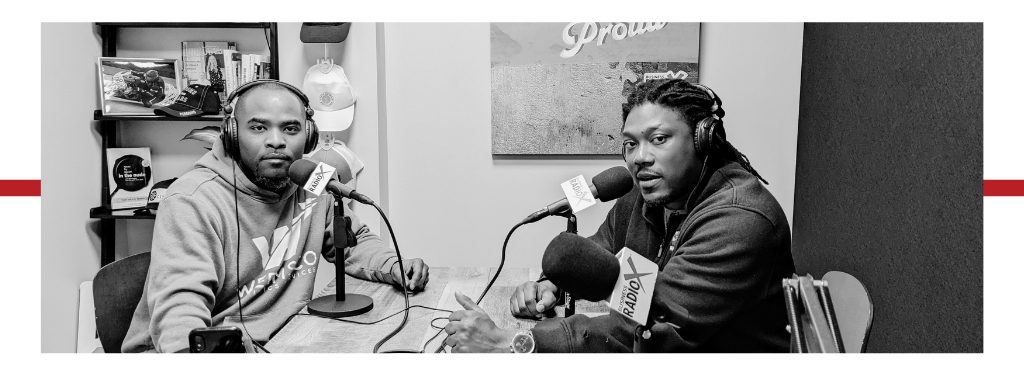

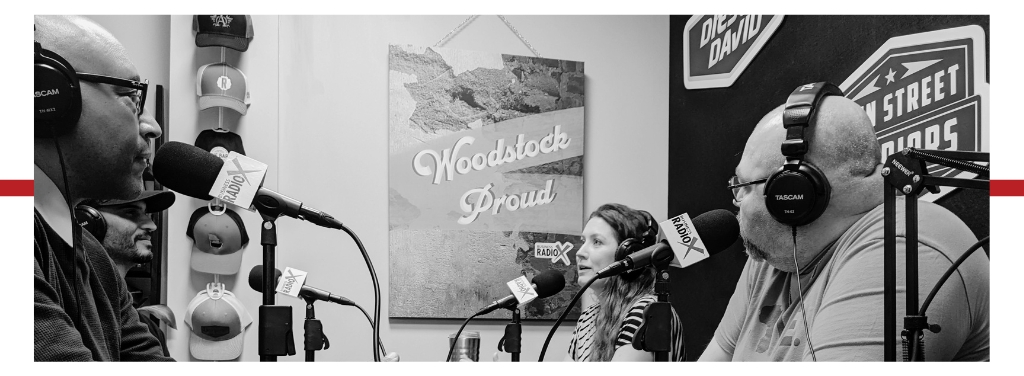
 A local of Cartersville, Caitlin Thomas has lived in Georgia her whole life, but her family roots are deep in New Jersey. She is a wife and mom of 2 boys. Caretaking has always been a large part of her life, being the second oldest of nine children and assisting in her grandfather’s caregiving.
Caitlin is currently working as a community magazine publicist. She hasworked in many fields over the years, from waitressing to life insurance sales and everything in between. However, her most well-earned title and favorite job was a first rank Karate instructor in Ketsugan Martial Arts out of Powder Springs.
 Dan Pineda is an entrepreneur and author on martial arts and spirituality.
He is a managing partner at Atlanta Water Fire Damage, a local restoration company servicing the Atlanta metro. He has run and owned many different kinds of business, from organic produce delivery to commercial martial arts schools, and restoration companies.
 Master Michael E. Reid is a former NFL player, internal and holistic practitioner, a martial artist, as well as a speaker and business man.
Along with being a teacher to others, he is a willing student on a lifelong journey to elevate himself.
Connect with Michael on LinkedIn.
This transcript is machine transcribed by Sonix
TRANSCRIPT
Intro: [00:00:07] Broadcasting live from the business radio studios in Atlanta. It’s time for Charitable Georgia, brought to you by B’s Charitable Pursuits and Resources. We put the fun in fundraising. For more information, go to B’s Charitable Pursuits dot com. That’s B’s Charitable Pursuits dot com. Now here’s your host, Brian Pruett.
Brian Pruett: [00:00:45] Good, fabulous Friday morning. It’s another fabulous Friday with three more fabulous guests. We’ve got a pretty cool show this morning. The three guests that I have all have something pretty cool in common, which we’ll get to in just a second. But my first guest this morning is Caitlin Thomas. Caitlin, thanks for being here this morning.
Caitlin Thomas: [00:01:02] Thank you for having me, Brian.
Brian Pruett: [00:01:03] So you are from the Cartersville area and you’re starting a community magazine, correct?
Caitlin Thomas: [00:01:11] That is correct.
Brian Pruett: [00:01:11] So give us a little background. Why are you doing that and share a little bit of your story and then we’ll get into why I asked you here.
Caitlin Thomas: [00:01:18] Okay. So actually, before I came into publishing this magazine, I was working in life insurance and wanted to have something a little bit more positive to be giving the community. So I found myself in this position with publishing the community magazine for Cartersville. It’s going to be called Cartersville Living. It’s about bringing the community together. We stay away from divisive topics and it’s really just about uniting the community, making homeowners aware of services in the community that are available to them in addition to really just bringing the businesses together, highlighting them as the go to with these homeowners as well.
Brian Pruett: [00:01:58] Is this going to be a monthly magazine, Weekly magazine, Quarterly.
Caitlin Thomas: [00:02:02] It’ll be a monthly magazine. So we highlight local residents, those that are either doing work in community or in charitable events such as yourself, so nonprofits or working in the school districts. We want to highlight those individuals because the homeowners that we are distributing to have a little bit more, I would say, funds available to contribute to those nonprofit organizations.
Brian Pruett: [00:02:28] And this is going to be a hardcopy magazine as well as online.
Caitlin Thomas: [00:02:31] It will be a hardcopy magazine, and we’d do digital footprint with advertisements online.
Brian Pruett: [00:02:38] Is it a subscription based or how do people get the magazine?
Caitlin Thomas: [00:02:40] So it’s going to be direct mail. So our our homeowners, they don’t have to pay for the subscription. It is really just a complimentary thing about bringing the community together.
Brian Pruett: [00:02:52] Awesome. Well, the reason I asked you here, just like these other folks, you have a background in martial arts, so that’s pretty cool. And my uncle, a little trivia free guys, my uncle’s and martial arts. He’s also a martial arts heart of Famer. I actually took Taekwondo up until about the seventh grade when I broke my leg the night before I supposed to test for my blue belt and I never went back. So that’s a different story. But anyway, so share a little bit about your your martial arts training and the type you do and why you’re doing it.
Caitlin Thomas: [00:03:24] Okay, so my background is in jitsu and martial arts. There’s not very many schools of Katsudon here in Georgia. Actually, I come from the only school here in Georgia for Hexagon. All other Katsuya martial arts studios are in New York. But really what brought me into it was I come from a large family and my dad wanted us all to have that discipline instilled in us. So I’m one of nine kids and that was a very big deal, was the discipline and the structure within the family. So that’s really where it started, was just wanting to have that instilled in us. But for me, what took off was the really influence that my sensei had on me and his roping me into, you know, his training courses and doing women’s self-defense courses. And for me that was just all the motivation and inspiration I needed was just somebody to be pouring into me that way.
Brian Pruett: [00:04:23] Can you take us through a little bit about your how your training goes and went.
Caitlin Thomas: [00:04:27] Oh boy, that’s hard. So we had you know, we had some days that were just very basic as far as, you know, you’re going through your quotas, you’re going through your basic punches, you know, And then we had have our days where we have intensified training. You know, we’d walk in and it’s just intensified training and you’re just, oh, crap, you know, sorry, I don’t know if I did.
Brian Pruett: [00:04:51] The SEC’s not listening.
Speaker3: [00:04:52] Okay.
Caitlin Thomas: [00:04:54] And intensified training for us was, you know, you could be in a horse stance and you’d feel like you’re sitting there for an hour. He’d take, you know, one of the smaller weight kids, sit him on one of your legs, make sure that you can hold. That stands for as long as possible, or it would mean, you know, sparring or clubbing until your guy and your belts are falling off. And in those situations, you’re not able to fix yourself. So you’re really just more intensified. On a basic day, though, is a little bit more structured. You’re going through your forms, like I had said, or your quotas or instructing younger, younger generation students on their kicks, punches, forms, etc., holds.
Brian Pruett: [00:05:43] You know, we talk about the kids on your legs at Thanksgiving or dropkick them across the room.
Caitlin Thomas: [00:05:46] So that would be easier.
Brian Pruett: [00:05:51] You would you know, I sat down and talked to. We talked a little bit. My uncle used to be one of the judges of Battle of Atlanta. And I think you probably all three have been involved with Battle of Atlanta. But you’ve done some competitions not only here in Georgia, but in other places as well. Can you talk about a little bit the tournaments you’ve been in?
Caitlin Thomas: [00:06:06] I have. So it’s always hard for us as kids, Sook and studio going into these Battle Atlanta or other competitions because most of the judges are not familiar with Kintsugi and martial arts. They don’t know how to judge the quotas that we are performing. They’re more familiar with, you know, taekwondo or I guess was probably the main one that we were competing against back then. But as far as the fighting goes and the sports competition, we always did well in those competitions. Our studio was not one of these storefronts that you see with the advertisements out front. We had a basement that we practice in. You know, we didn’t wear a lot of gear. We had maybe had had pads and hand pads. So I feel as though we had a little bit more traditional training in regards to our martial arts. So we always did well in our sports competitions. But it’s very different from, say, you know, your typical life self-defense courses. Sports fighting is a little bit different.
Brian Pruett: [00:07:12] Can you explain the difference.
Caitlin Thomas: [00:07:14] So well, when you’re training for a self defense, real life scenario? You’re going up against individuals who might not have the same training as you. Number one, you’re also having to gear a lot more of their body language, etc., and just your life experiences in the dojo. Whereas in sports competition, you know that you’re up against somebody who has similar training as you and you’re really you’re trying to find the opening, so to speak.
Brian Pruett: [00:07:51] You talked about earlier the only school in Georgia you shared that your sensei recently passed away, but you share with me that you wanted to kind of continue and be able to teach not only women, but I guess the younger generation as well. You’re a mom, you have some kids that. So why is it important to kind of continue, I guess, the the training and teaching?
Caitlin Thomas: [00:08:14] So my sensei, he actually he brought up the studio, number one, because he wanted his kids to have the same growth experience that he had. He came from New York and, you know, they didn’t wear pads, period, at his studio. So he started up just for kicks here in Georgia for his children. So he really was starting the studio or continuing the classes until his kids became black belts and they had that training instilled in them. I’m just grateful that I got to be a part of that. I got to be a part of his family. And I have a little bit of regret, honestly, in not continuing my training. When I became a mom, I became a mom very early on. I had my first child when I was 21, and I had actually just stopped assisting my sensei in his women’s self-defense courses probably five months before I got pregnant. But now, after his passing and going back, visiting the studio, I feel like it’s something I could start back up. My kids have recently become very interested in the Karate Kid and they have been, you know, just messing around. They’ve had some bullies in the neighborhood and, you know, I don’t want this to be something that they’re utilizing in those situations, but I want them to be able to defend themselves. I want them to have that confidence that I had and be prepared if something were to happen.
Brian Pruett: [00:09:50] You got the cars ready for wax on.
Caitlin Thomas: [00:09:51] Wax off. Oh, yeah.
Brian Pruett: [00:09:52] All right. Nice. So you talked about the magazine and the community and share a little bit of why it’s important to be a part of the community and be a positive influence in the community because you share it’s going to be positive stories and things of that nature. Why is that important?
Caitlin Thomas: [00:10:10] There is a lot of negativity going around in the world these days, and I feel like a lot of the media sources that we have tap into those negative stories. They highlight those negative stories and they have a certain energy that carries with them. And that’s something I try to stay away from, in all honesty. So I want to be part of the positive that is happening in the world. I want to make people aware of the resources, number one, that they have available to them in the community. Because in Cartersville we have a lot and I feel like a lot of them go unnoticed.
Brian Pruett: [00:10:44] Hence the reason you’re on Charitable Georgia show, right? The magazine is not currently out. When do you think that it will be launched?
Caitlin Thomas: [00:10:52] I am looking for spring, so April, May, June. Hypothetically, I’m hoping for the launch date as far as I can keep my morning sickness under wraps.
Brian Pruett: [00:11:07] So if somebody wanted to get a hold of you as far as maybe some advertising or wanting to talk a little bit about the magazine or if anybody’s interested in about the martial arts aspects of it, how can people get ahold of you?
Caitlin Thomas: [00:11:19] I am best reached through email or by my phone number. I don’t know if I can leave those on here.
Brian Pruett: [00:11:23] You can.
Caitlin Thomas: [00:11:24] Okay, so my email is Kaitlin Thomas. That’s Caitlin Thomas. Dot B as in boy v v m sorry. B v m at gmail.com. And my phone number is 4045676338.
Brian Pruett: [00:11:45] Awesome. Well, Kaitlin, again, I appreciate your time this morning and being here. Do you mind sticking around and listening to these other two stories?
Caitlin Thomas: [00:11:50] I’d love to.
Brian Pruett: [00:11:51] So we’re going to move over now to Mr. Dan Pineda. Pineda, how you say that, right?
Dan Pineda: [00:11:54] Hello. Hello, Dan Pineda.
Brian Pruett: [00:11:55] And I did say right. How about that?
Dan Pineda: [00:11:57] Like a potato.
Brian Pruett: [00:11:58] There you go.
Dan Pineda: [00:11:58] There’s a Pineda instead.
Brian Pruett: [00:12:01] So Dan is with Atlanta Water and Fire Damage. And you’ve shared that you’ve been extremely busy since Christmas Eve.
Dan Pineda: [00:12:10] Yeah, I worked Christmas Eve. Yeah, we were. You know, I’m Cuban, Cuban American. So we were about to dig into the election. I saw, you know, and then I get a call from my boss. He’s like, Hey, Dino, you got to get. You got to get down to Atlanta, man. It’s everywhere. And yeah, it was. I was just working till almost till the sun was coming up Christmas morning. And.
Brian Pruett: [00:12:32] And they haven’t stopped since.
Dan Pineda: [00:12:33] We haven’t really stopped. And we were just coming off the storm in Fort Myers, you know, or Hurricane Ian. And that was horrible. The things that we, you know, saw these poor people going through, you know, so we were trying to help them. And then we come back here and then the freeze happened. So we’ve we’re just we have one office guy right now and we’re trying to hire people. And this poor guy, I just every time I see him, I give him a back rub. You know, I’m like, Hey, buddy.You can do this, you know.
Dan Pineda: [00:13:04] Because he’s got he’s got his work cut out for him. I love you, Leo, if you hear this. But. But, yeah, it’s it’s been nuts. But even with all that. You know, people are very grateful. And, you know, we’re doing our best to make sure everyone gets everything they need and that they’re taking care of like an actual human being.
Brian Pruett: [00:13:25] Which is, you know, these days, a lot of companies don’t don’t do that. And it’s cool to hear that you actually went down to Florida to help the folks out. I mean, you hear stories of other companies doing that. But I mean, your name is Atlanta. You’re on fire. But that doesn’t mean you’re just going to stick in Atlanta.
Dan Pineda: [00:13:38] Well, my my boss, Charlie, he lost his house in a fire. So he that’s how he got introduced to this business was his house got burned down. And then he how he was treated and what he saw from the inside. And he was a contractor for many years before that. So he was like, you know what, man? I think that we could do a good job just by being human. And I think just by being a human here, we can do better. And we did. And that’s was one of the things that the Fort Myers residence and down in Bonita Springs and all everywhere that we were, they said they were like, Man, you guys are from Atlanta, but. We’re happy. We feel like you’re. You’re from here. We feel like you’re here with us. So, yeah, that’s the vision. It’s almost like how a Philly cheesesteak. You can get it anywhere, you know? Right. The vision is Atlanta water fire damage. You’re going to be able to get it anywhere. That’s kind of the idea.
Brian Pruett: [00:14:31] So how did you get involved with this company?
Dan Pineda: [00:14:33] Well, I had my own restoration company for about eight years before that. And the way I got into that was because my martial arts studio crashed and burned because I was a horrible martial arts business owner. I was a great coach, horrible business owner. So if you need someone to get better at martial arts, I can help. But if you need someone to get better at running their dojo, I can’t help. I’ll. I’ll hurt them.
Dan Pineda: [00:15:03] So just do the opposite of what Dan says and you’ll be fine. Right? So. So my dojo crashed and burned, and my students were like, Coach, don’t die. Get into water restoration. And I had no idea what that was. You know, I was like, What are you talking about? I worked for Morgan Stanley Dean Witter before. I had done some clerical work in the law field. I had never swung a hammer. And now they’re like. Be the man, you know. And. And I jumped in with both both feet and brought some extra feet just in case. And and it was amazing because our first year of business, we did like, 1,000,005 me and me and my partner, and we had no idea what we were doing and we still did well and we were like, Wow. So it just kept growing and growing. Came up to Atlanta, did some sales training for a couple of different companies here. I did what was it name is Phenix and there was another one and taught their whole sales team how to be less robotic. You know, how to use some strategy, martial arts use strategy, you know your strategy and what we’re doing right, if you live a more intentional right and and then my my, my current boss slash partner slash caretaker.
Dan Pineda: [00:16:20] Slash you know, ride or die because I told I said, look, if we work together, it’s like we’re married. It’s not I’m not just working with you like we win. We win. That’s what happens. And so he saw what I was doing and he wanted to take his business to the next level. He had this he had Atlanta water fire damage, but it was kind of in his back pocket and he wanted to grow to National. So then that’s when he brought me on and that’s what we’re up to.
Brian Pruett: [00:16:49] So you mentioned your martial arts background. How did you get involved with your story in martial arts?
Dan Pineda: [00:16:53] My pretty much. I’m a copycat. So when my big cousin does anything, I would do it. So my big cousin, Julian, he comes home and he’s like a martial arts guy now, you know? And he was like a chubby little kid. And all of a sudden you could kick my ass, you know? And I was like, Wait a second, that’s not fair. That’s not that’s not the righteous order of the universe.
Dan Pineda: [00:17:14] So I was like, Mother and father, please take me to martial arts. Right? So I was four years old. They take me to taekwondo and I did not want to ever go back the Masters. Their ginseng conjured him. He was like a brutal, evil monster in the eyes of a four year old. You know, I looked at him and I thought he ate children, you know, I was like, Oh, gosh, you know? And so he wouldn’t say, Clap your hands. He’s a Korean guy. He’d say, Beat your head. So when it was time to clap, he’d be like, Beat your hand.
Dan Pineda: [00:17:48] And I was like, What is he saying? You know? So I would we would call him Cuban people. A lot of Spanish culture, we’re not as refined as the United States in many ways. So like you will say, Oh, he’s Korean or he’s Japanese, but Cubans, all Cubans who came in the fifties, they’re like I said, Chino, El Chino, right. That’s just everybody. So I would say to my mom, por favor, por favor, normally.
Dan Pineda: [00:18:12] Salcedo, please don’t take me to him. Please, please.
Dan Pineda: [00:18:14] I was just so terrified. So they kept bringing me back out of love, I guess. And and I kept going, and I never stopped. And then when I was in high school, I met a kid who was doing kendo. He was doing Bruce Lee system and he was doing boxing and he was doing Mercado. Gee, this is like 98, 97. He’s doing boxing. He’s doing Muay Thai, he’s doing Mercado jujitsu, he’s doing Filipino Kali. And so he was training with a guy who was a student of one of Bruce’s students, Bruce Lee, students, Seafood Bustillo, Richard Bustillo. And so I went and jumped in again, fully boom and trained, fought, became a coach, fought in some unsanctioned fights in Lake Worth. This was back before there was all this stuff. I mean, we would just get together. There would be like a wood floor in Lake Worth Beach and the municipal building, and we would just all bang. It was just bang in time, man. It was everybody from every style. There were no pads, there were no mats. If you did a takedown on a dude and you dropped him on the top of his dome, you just wow. And it was just it was just no, there was no like, Oh, is he okay? Like, none of that. Your coach wasn’t like, I hope he’s okay. Your coach was like, Yes, you know more, right?
Dan Pineda: [00:19:24] So it was a completely different environment. And so I broke my leg on a dude’s face who’s actually still one of my good friends. And yeah, Aaron Joyce is wonderful guy. And so I broke my leg on his face and he’s a tough guy. Aaron’s a tough, big Irishman, and so Aaron’s like, you know, I think, I think, I think your legs broken, you know, And we just taped it and kept going. But in the healing process, I thought, man, I looked at like my Muay Thai coaches and they’re all like walking around with canes. And I’m looking at my, like jujitsu coaches and they’ve all got like, their knees don’t work. And I’m looking at just looking across like I do, Is this what I really want? And I happen to pick up this book by a guy named Masaki Tatsumi. He’s just a ninja dude. He was saying he was a ninja dude in Japan, and I thought all that was BS, but the book was cool. So I was reading through it and I found someone who knew him in my hometown, and this guy was like this old money art dealer. He had the original. James Bond, 1979. Aston Martin from the Living Daylights in the Dojo A Kahului. If you’ve ever heard of Julie’s art. Bauhaus like the Picasso of art. We had Julie. We’d break Julie pieces on accident with the Spears practicing in Belgium. It’s nuts, right? So he pulls me into the world of the ninja, and it is real. And I flip out because I’m from the eighties, so anything ninja is cool to me immediately. It doesn’t matter what it is.
Dan Pineda: [00:20:58] You’re like Houston Ninja Donut. I’m like, I eat it. I’m like, Oh, that was great. I just don’t even notice. Right? So we’ll get into the world of the Ninja and it ends up being that everything that I thought about martial arts was wrong. Everything. And now this is five principles that I found in there through playing with these things in a in a from a level of sincerity and wanting to work hard, not not wanting to be the master, just wanting to get one little piece. If that if there was one little piece, that’s enough, right. And so. They’re doing that, you know? That’s how I lead my life now. So everything I do now, moving forward, I use these five these five concepts that I got from Ninjutsu. But that’s that’s kind of like my thing. So now I have online ninja training. I have rough and tumble play, which has nothing to do with martial arts. It’s to help dads and moms play rough with their kids so that they learn how to have that physical contact from youth. We divorced it from the martial arts because people were freaked out by belts and kicking and fighting. So we took all of the rough, the contact, the kinesiology, all that stuff that heals your brain and that makes you a superhuman from playing with other people. You put that in a in a program. So that’s like all the stuff that my wife and I ended up doing with this stuff. So we’re not combat killers. We just want to make people’s lives better. That’s really share the good stuff, basically take off the top shelf stuff.
Brian Pruett: [00:22:25] Share the five principles of one.
Dan Pineda: [00:22:26] Yeah. The first one is always be aware that there could be a hidden advantage and in fact count on it. So like when, when I’m sitting here, right. I don’t think to myself, oh I’m just sitting with, with a bunch of just regular people, I think, oh well this guy’s in shape. This guy could have a gun. She was just telling me that she’s a psycho karate master.
Dan Pineda: [00:22:49] She just told me all her training. She just told you I beat people with no pads. I’m like Okay, we’re going to we’re going to avoid this individual in.
Dan Pineda: [00:22:56] Open combat. Right? So so from a ninja perspective, the idea of fighting openly is ridiculous because I’m placing myself in a targeted. It’s like this man, I would never try to do something in front of him because he would just crush me. But from behind. And with the surprise, that makes sense. So why is that? Well, because what it looks like isn’t what it is. That’s the first one. The second one is don’t be where you can be pushed or pulled. Meaning if we are in an engagement and I am in a place where he can exert any force against me, that first idea that he had an advantage I didn’t know about, that’s what cooks my goose. Because if he can put any force on me and he has a blade or he has any kind of advantage friends, Right. That all of a sudden. Right, the game changes quite a bit. So I can’t be where he can put any force on me. How many martial arts techniques start with the guy punches you and you block. That’s force. You’re receiving force. Now, you could say, Well, I’m blocking in such a way that I’m dissipating that, Yeah, that’s great. That’s Budo, that’s Warrior Samurai stuff. That’s not ninja stuff. Ninja stuff is he punches. You’re not there, right? So weird. That’s one thing. Don’t be where he can push you. The next one is keep your weapons covering their weapons. And in real life, you know, in a sales situation, something like be aware of the rebuttals, be aware of the possible rebuttals and have them answer it ahead of time in a love situation.
Dan Pineda: [00:24:29] Right. Be aware of your partner’s insecurities. Be aware of their challenges and be ready ahead of time. Right? That’s all of that stuff. So keeping that. And then the other one is move towards his back. What do you mean, move towards his back on combat? It means get to where none of his weapons are pointing at you. But in everyday life, if I have your back right, to really have your back means I have to have control over the situation enough to be supportive in a positive way because help is the sunny side of control, right? You get the wrong person helping you as bad, right? So I want to have you back the right way. And the last one is finish with economy of motion. Meaning if in order to beat you, in order to win, in order to get what I want, in order to complete, if what I have to do is move at a greater amplitude, at a greater speed with more force than you, then this is tyranny. In order to get what I want, I need to have you give it to me. And that’s the ultimate technique. So really, those five principles by following them. I’m always in a position where I have optimum optionality. And so that’s what I’m teaching, like the sheriff’s, you know, that’s what I’m teaching the students, teaching them to maintain optimum optionality, which comes from keeping your cool and knowing where to go next, right?
Brian Pruett: [00:25:49] That’s cool. You actually beat me to that. You said you were I was going to mention you were. You’re training the sheriffs, Cherokee County.
Dan Pineda: [00:25:55] Sheriffs. Yeah. I’ve got some sheriffs. They come, they train. They’re kind of still in the hush hush, because the thing is, a lot of these guys want they learn the Brazilian jujitsu, which is great. I did Mercado Jujitsu. It’s a form of that. It’s wonderful art. And they learn that stuff and there’s a lot of toxic martial culture. Martial culture has a lot of. Like the bullies. So it’s so funny. Like you think about the martial arts as being the guy who beats the bully, but most of the time the martial artist is the bully. Most of the time, in my experience, it’s the guy that knows some stuff, but he’s not followed it all the way. He hasn’t gone all the way to the old man where the old man shows him the way. He hasn’t done that yet, but he’s got some stuff and he uses it. And in the West, our concept of martial art is mostly probably the worst thing that could ever have existed for humanity. I mean, our concept of fighting is horrible. You know, the hero in our movies always wins. People from the East and from people can converse in. The classics are very confused by our culture because to them, the hero dies In the end. If you read any of the ancient hero dies, it’s the cost for being great is self sacrifice. And then we started telling stories where you get to kick everyone’s butt, get the girl, get the money, the credits roll, and I’m like, That’s wrong, buddy.
Dan Pineda: [00:27:18] So, you know, that’s that’s the main thing is in Japanese called Haki, Haki means a calm mind. And that’s the idea. Even if someone’s cutting me, someone’s killing me because we always think self-defense. But really, someone busts in here and tries to hurt all of us, right? Let’s say my wife and my kids and I mean, I don’t want to virtue signal, but let’s say we’re all here. Someone’s trying to hurt. I’m a guy. This is a nice woman. I’m probably going to sacrifice myself to protect her, even if I don’t want to. Even if I think, Oh, it’s the patriarchy, I’m still going to do it because I’m loaded. She’s life continuing. I’m loaded to protect her, right? So in which case there’s a dude come in with a knife. Martial arts, self-defense as I avoid the knife. But real life says I eat the knife for her. I eat the knife for you. I make sure I take it. And if I live, great. But the idea is you live a different perspective. Don’t see too much of that, right? So that’s why we’re doing what we’re doing with Budo and with Nina. That’s why I’m that’s why I’m here is to share that message, you know? But yeah, restoration. Yeah, whatever. But that part. Right, Right. More, more important.
Brian Pruett: [00:28:25] You also share that you’ve written a book as well, right?
Dan Pineda: [00:28:27] Yeah, I’m a, I’m a spiritual explorer of sorts. I joined a bunch of weird secret societies. I lived in an ashram, naked, gardening. I’ve done it. Whatever you can imagine, to expand consciousness and break down the walls of the screw, the doors of perception, the walls of perception, the ceiling. Right. Open that up. Big octopus brain going out in the universe. You know, all that good stuff. That’s all I did. So I wrote a book, My, my, my mentor in the occult and the spiritual traditions and all that. Jim Wasserman, he was a student of the students of the most infamous man to ever live, Aleister Crowley. And so Aleister Crowley, who was the famous evil Satanist demon worshiper, he wasn’t any of that stuff. He was like C.S. Lewis or J.R.R. Tolkien. He was a fantasy writer. But, you know, people take his stuff Anyways, Jimbo calls me and he’s like, Hey, man, I’m going to ask you to do something. But you got to say yes before I ask you. And it was Jim. And Jim was like another dad to me. So I was like, Yeah, whatever you say, old man, you know? And he’s okay, Well, you got to read a book.
Dan Pineda: [00:29:31] My mother in law was dying of cancer during that time. Stage four lung cancer. I wrote that book in hospice next to her. I don’t remember writing it. I don’t. The grief has wiped the memory of writing the book. So now when I read it, it’s called The Book of Secrets Secret Societies, Ancient orders, something or other. It doesn’t. Doesn’t matter. You look up the Book of Secrets, You’ll you’ll find it and wrote some other stuff. Martial arts stuff, political stuff. Not like left, right, more like how do we use martial arts to help create a better political environment where because it’s really hard to hate somebody who if you’re showing up every single week and you’re throwing each other and you’re talking and you’re getting deep about what life’s about, it’s very difficult to maintain many of these divisions. So wrote a little bit about that. But, you know, it’s a I just kind of take the writing gigs as they come. I’ve never chased. I’ve never tried to write or be published. I’ve never tried to do anything. I’ve never tried anything in my life. Everything has been like one thing after another, like a fruit after the flower.
Brian Pruett: [00:30:45] How can people find your book on Amazon?
Dan Pineda: [00:30:48] Yeah. Amazon, Barnes Noble Book of Secrets. And it’s not very good.
Dan Pineda: [00:30:52] So if you. So here’s the thing. Here’s the thing. It’s probably one of the worst books on the subject. And the reason was I was the reason I was hired to write a book for a complete novice. So so they’re like, write a book on symbol so that someone who has no idea what any of this is like, this is like Wikipedia level, like, you know, And so I write this because it was supposed to be a part of a huge series called The Wiser Concise Guide. And then the series got canceled after I wrote it and they said, We’re going to publish it anyways on its own. And I thought, Well, it’s like the intro to a series. It’s not even complete and it’s no problem because you know, our readers, they’ll like it. And they did. But me being honest with you, like if you’re going to read a book on symbols, there are so many better books like by James Osterman or any of these bigger guys. Like my book is a good coffee table book, and you can throw it at someone you know if you need to. That’s good.
Brian Pruett: [00:32:00] So those are the well. So if somebody wants a good coffee book, spell your last name. When they look it up.
Dan Pineda: [00:32:03] Pineda. P as in Paul. I anyday It means pine Glen which is strange because you know, not from the not from the woods, man. We’re from Jersey, so I don’t know.
Brian Pruett: [00:32:16] So you’ve talked about a lot of stuff in why you’re doing what you’re doing. But share you talk about treating people as humans in the business. Yes. Why is it important for you to be part of the community?
Dan Pineda: [00:32:29] Well. It’s not so much for me. I think it’s more of like there’s a need for human contact, right, wherever that is. And so, you know, when I was a kid, I would read these old writings, these old myths, and I would think, Oh, man, it would have been so great to be Hector, to be Odysseus, you know, to be. What would it be like to be Jonah, you know? And then now I realize. Yeah, you are. You are. You are, Hector. You are Odysseus. You are Jonah, your Ahab. You’re those people. And how you express that is in the contact. So the main thing that I’m bringing when I’m working in any project, but especially during a disaster, right, is I’m giving them the confidence that I’m an actual human being and that I’m going to do what I said I’m going to do, which is. What I found that that’s enough for me to basically destroy almost all of my competition. So if there’s like a group of ten restoration guys and all I do is do what I say I’m going to do and make sure, you know, you’re talking to a real person, like give you my actual number and answer when you call me. Look you in the eye since the work is very low bar. Unfortunately, it’s a low bar, but it’s something that, you know, we provide and we go all the way with it to the point where, like, we’re giving people merch and we’re sending them on the dinners and it’s not because they’re going to be a repeat customer. We don’t have repeat customers. People’s houses burned down usually once, but it’s because we we we’ve been there. We’ve been there. Every single member of our team has been in a loss situation and knows what it’s like. So, you know, we want to take care of people.
Brian Pruett: [00:34:12] Well, I wouldn’t say it’s a low bar because again, customer service these days.
Dan Pineda: [00:34:16] Right. Well, I just feel like it should like what I’m doing. My wife and I, we talk all the time because we’re like, man, all we’re doing is taking care of these people. Like normal people. Like, how is this? Because really what it is the response we get. Brian The response that I get from the public, from our customers, from our friends, they talk to me like I just gave them a like a golden Cadillac. And I’m like, Wow, that’s how much human beings value connection. So, I mean, I’m learning every single day. But to me, that’s that’s an unbelievable truth. So, yeah, yeah, you’re right. I just wish we could keep going with this even more. You know, Like, this is like what we’re doing now. I’m interested to see what we do in the future where all of us have been connected for longer than 20 minutes. Right?
Brian Pruett: [00:35:00] So if somebody wants to get a hold of you for, you know, water fire restoration or for your training or anything like that, how can they do that? Yeah.
Dan Pineda: [00:35:09] Atlanta water fire damage is my company for that stuff And if you’re interested in like. Brain transforming consciousness transformation through martial arts training, which is what I really specialize in, like the trippy stuff. Mushrooms. Like the mushrooms. Not martial arts. Martial arts, not mushrooms. Right.
Dan Pineda: [00:35:31] Like that kind of thing. Like, instead of those mushrooms.
Dan Pineda: [00:35:33] Do martial arts, you can get in touch with me. I have a Facebook page, but I also have Art of Ninjutsu, which is being built now. It should have a CAPTCHA page, but if I don’t have one, just go to Atlanta. Water Fire. My boss is used to strange inquiries coming through the company on my do to me. He’s like, Oh, this must be to do with then. Yeah, that’s fine. Thanks. Brian.
Brian Pruett: [00:35:55] Awesome. Dan, thanks for being here. You want to stick around for this next story?
Dan Pineda: [00:35:59] I wouldn’t miss this for the world, man. This is great.
Brian Pruett: [00:36:01] So my next guest is Michael Reid. And Michael, I appreciate you being here this morning. And for those of you listening in our sports fans, you may recognize his name from being a part of the Atlanta Falcons for six years. And you now are also a master in the martial arts. You have your own school, you’re in the martial Arts Hall of Fame. You do a lot for the community. But I’d like to start off a little bit about you’re from Albany, you played Wisconsin, right? And give us a little background and give us talk through a little bit about your your football career.
Michael Reid: [00:36:36] Football career coming out of South Georgia all the way up. Before I do that, I want to say that I’ve listened to your other guest here who I’ve met for now for 20 minutes. And I will have to say that that my mind is racing all over the place, right? Because the stories that you’re telling are the different aspects of martial arts training and how we evolve over time. And so I’m listening to your your comments and I’m going, Oh, yeah, just this da da da da da. And I’m going, Oh, okay. So I went past the what I call normal martial arts to get to some family style traditional martial arts that’s going into the concept of how you live and what you do. And it’s just all those things. You know, for me, it’s like, you know, just goose pimples everywhere because I’m like, Oh, this is what I this is what I’ve lived to do for a long period of time. But originally from Albany, Georgia, I went to Dalton High School from there to the University of Wisconsin on a football scholarship, majored in computer science, graduated in computer science, was an All-big ten football player and also All-big ten academic football player. I was very fortunate to be drafted in the seventh round. That was 12 rounds back in 1987 when I was drafted by the Atlanta Falcons. And then if you know anything about football, you know that most seventh rounders don’t make the team first.
Michael Reid: [00:37:43] The second round is third rounders. They’re pretty much no, they’re going to be there. But after about the fourth round, people start looking at you and you’re like, Well, we’ll see what happens. So I was blessed to play and see my first professional football game at the same time, because growing up in South Georgia, I did go to a Braves game, but never once did we go to a Falcons game. We went to plenty of college games, went to see Georgia play. My dad is also played in the NFL for many, many years. Before, before I came along, I was a coach and so we I saw more football than most people would ever want to know. I developed my love for football as a kid. Matter of fact, I learned all the capitals, not capitals, all the all the cities in Georgia based upon the football teams, because I you know, I knew everyone’s mascot. And so as a kid, that was very interesting to me. So I learned the geography for the state of Georgia via high school football teams throughout the state. And so, you know, even now when someone says some small town in Georgia, I’ll be, oh, that’s such and such, such that. And they’re like, Well, how do you know that?
Michael Reid: [00:38:41] So I was very, very passionate about football growing up. A coach’s son. There was nothing more I wanted to do than to be a football player. Football player, martial artist. But. I think a lot of people don’t know about me unless they grew up in Albany. So I was a pretty good basketball player. And so basketball probably is what set me up to be able to move on to play at Division one football and in the NFL. One of my teammates died last year. His name is Little Trane, Lionel James, who played at Auburn and then played over at San Diego. I had the distinct responsibility as a sophomore to guard him in practice every day. Now Lionel is five foot seven. He was All-State in the state of Georgia in football and basketball. First team. Now, did I ever stop Lionel in practice? No, but I had to. Do what? Move my feet, move my body. And also because I was competing with him. And this is a team that played for a state championship. The following year, we were number one in the state for most of the year. We learned the idea of competition and learned the idea of never giving up, learning the idea that I don’t care that you’re supposed to be better than me today, you got to prove it.
Michael Reid: [00:39:52] Which is very what martial arts like, right? You can come with all the accolades that you want, but when we step it up, then we’ll find out. And in the real world of combat, of real life living, like you said, the person jumps you from the back. Now, what are you going to do? Do you have the will to fight? Do you have the will to survive? Can you reverse that sudden circumstance? Unlike a prizefight. Prizefight? I know I’m fighting you. We measure up, we do our thing, we line up, we touch gloves. If we if we’re sportsmanlike and then we hammer each other. But the real life you walk by, a person hit you in the back of the head, and now you’re all out of caboodles and commits and you got to have the will and the nerve to overcome that and survive. So a question that you may get to later, but I’m going to say it now since I’m on it. Yeah. Is that when you go I guess training in martial arts since 88. So I don’t know everything, but I’ve certainly, I think evolved. The longer I train in martial arts, the simpler things become. I was taught this in
Michael Reid: [00:40:51] Probably 19 90, 91. Maybe 92. Martial arts is for living. Fighting is just a small, small portion of martial arts. As Guru Bahati would say, my one of my C Latin clientele teaches a great art will take you from the cradle to the grave. Now you think about that. So that speaks to the idea of being banged up and bruised up and not being able to function. That’s not a great art and I’m not criticizing anyone’s art, but a great art should take you mentally, physically, spiritually, health wise, from the cradle to the grave, which means it has to be flexible. Right. I think everyone here has seen taekwondo. Taekwondo is a fine system. I have people who who are really good fighters, and that’s fine. But most people aren’t going to be throwing high kicks into their eighties. It’s just not going to happen. So that art and that and they do have this. There’s just not taught a lot. Must be able to adapt to the people who are still training. So maybe now instead of practicing high kicks from my head, I kick at your shin. I stomp the floor. So every art must have that. So martial arts is for living. And I think in particular, this is kind of referencing you when you look at arts that come from Southeast Asia. Oc I study, come and see lot coming out of Indonesia, All right. And I’ve also studied Chinese arts since 88. So the idea of how you do martial arts there is different. It is about the culture and the way you live. I have been taught and I believe this, that you cannot understand an art unless you understand its what the culture that it came from. Because the martial arts is a reflection of the culture. It’s a reflection of how you live. It’s a reflection of what you do. Martial arts, without concepts and principles of how you live, is not martial arts. It’s just fighting. So, you know, I don’t know what you You get me on the martial arts team.
Brian Pruett: [00:42:47] Go ahead.
Michael Reid: [00:42:47] I will talk about it.
Michael Reid: [00:42:48] Right. Because.
Michael Reid: [00:42:48] Because I’ve been passionate. In 1993, I opened my school. When I opened my school, it was Chinese, Shaolin. And at that point in time, my reason for opening the school stated and it still exists to this day is and was to find the truth. Now, sometimes when you’re pursuing the truth, you have to leave where you’re at. Because you get to a certain point and then you realize that there are other things that are out there and then you have to follow those directions. So I’m a person who’s committed to knowing what the truth is, what works, what doesn’t work, what is external training, what is internal training? Can you split them up? Really? What is spiritual training? What is energetic training? So all these things go together and all these things make what is considered to be the totality of martial arts, which is the evolution of the human being who’s studying them. If you study martial arts and you’re not evolving yourself, that’s why martial arts attracts us. That’s why martial arts we have our relationship to the teacher. The teacher is not more important than the student. The student is not more important to the to the teacher. We talked about Master Poe at the beginning, right? Neither one was more important than the other. So it’s the symbiotic relationship between teacher and student and the evolution that each person goes through that brings you to a place that allows you to function at a higher level in which martial arts is all about. Now you can go back and ask me another question because I’m sorry I got on the martial arts. That’s right. But when I do that, you know, that’s fine.
Brian Pruett: [00:44:15] I actually I got a lot of questions just because, you know, I mean, it’s all great, but I’m passionate about three things. And Stone, you know this I’m passionate about helping others. Connecting others. And sports is my huge passion. So the fact that I’ve got the three of you in this room and I’ve got family members who done martial arts, I don’t know if you got all day, but, you know, we might be here all day stuff. But anyway, so first of all, I just I would like to ask just how many different types of martial arts are there?
Michael Reid: [00:44:42] Oh, thousands. I mean, you have your general narrative of what has been publicly reported as this where martial arts came from. But the truth is, is that martial arts started when man started when mankind started male and female martial arts began, martial arts primary function was so that a person who was smaller could overcome someone who was bigger and stronger. You really think about it because if you were bigger and stronger, you didn’t need martial arts. You just walked over there. If you’re six foot six and £325 with a club and you just hit the person, you took your stuff and went okay. And of course I’m being I’m being generic there, whereas the people who were smaller, who weren’t as physically inclined, had to realize that, How can I overcome this? Because if I can’t overcome this, then this person’s going to lead me or this person is going to take my stuff or if something goes wrong. So martial arts systems, there are every culture that’s ever existed, has martial arts systems. Now, in our culture, we, you know, we’re quick to say, well, there’s Japanese martial arts, that’s Korean martial arts. There’s the martial arts we do in America.
Michael Reid: [00:45:41] There’s some things that do in other parts of the world, but we don’t talk about them very much. You know, it’s becoming much more popular. See, I’m old enough to where when you say jiu jitsu to me, I don’t think of his jitsu. I think of Japanese jiu jitsu because that was a warrior art and that predated that. But that didn’t do the marketing that the other systems did. And and I’m going to be honest with you guys, I survived myself for at least 20 years of being a martial artist, running a martial arts school because I had no real business background. But I was really, really good martial artist and a really good teacher. And so with that being said, people were attracted and stayed and allowed me to develop to the point to where I could get a martial arts business acumen and then realize, Oh, if I actually employ other people, we can have a bigger reach and do more things, you know. So other question, I’m like I said, you know, the football brand at some point in time goes, what did he say?
Brian Pruett: [00:46:36] We talked about we’ve heard the word since a coach master. Is there any difference in those?
Michael Reid: [00:46:42] Those are titles. Okay. So every culture has its methodology of titles. Normally when you hear Sensei, you’re thinking Japanese martial arts. Sometimes you’re thinking Korean martial arts, okay, now and martial arts and so forth. But it’s something normally in the karate phase, things when you hear master, Master can go across a wide variety of martial arts systems, but it really just means learn it. Instructor Big instructor Okay. The Chinese, it’s just big. And then you get into Senior master, elder, master and so forth. So there are many different titles, but at the end of the day, the only title is really important is what did you do to earn that? And when that person speaks to you, do you have those attributes to be able to give that person that? Otherwise it’s just a title? And as Americans, we proved this in the seventies when martial arts came to this country. Most martial arts systems have, what, ten degrees of rank? Generally speaking, all of a sudden in America they were 14th degree, 18th degree. I’m a 22nd degree black belt, right, Because we’re in the West. And so bigger the number. But what higher and more proficient I am. You’re only a 10th degree, but I am a 23rd degree black belt, blah, blah, blah, blah, blah. Kids, Biz Expo master, you got to get ready. So different cultures, different names, but at the same thing. Teacher, student. My my first traditional art that came to me, there was only student. Teacher. Student. Master teacher.
Michael Reid: [00:48:11] That’s it. Five ranks.
Michael Reid: [00:48:15] They converted the ranks so that people would feel. Actually, the reality can vary to rank. They only have five degrees. Then they moved to ten because in America everyone had at least ten degrees and they just realized that a person said they were fifth degree and have been training for 40 or 50 years and and the other person had been training for five and had a second degree or was close to them, that people were equating him as the same thing at the end of the day. Martial arts systems are not always apples to apples, but one thing that you can count on is that I think my martial arts would agree with me on this. When you’re around certain people, there’s a certain energy to that person. It doesn’t matter what they study, there’s a certain feel and way that they do things that’s at a higher level and that’s what martial arts, the systems are designed to do create a highly connected individual who can operate on a high level. That high level can be martial arts, that high level can be business, that high level can be whether so like, for instance, kung fu doesn’t mean martial arts or gung fu is, they say these days, all right. Doesn’t mean martial arts. It means what mastery of time and effort being good at something through your sweat equity wushu means martial arts Chinese. So my point is, is that the titles are one thing, but the most important thing is you, the individual who’s more important. The style of the fighter. It’s the fighter, right? It’s a fighter. Now, if both fighters are equal, then the style might have something to do with it. Or are we fighting in the street or are we fighting in the ring? Do we have weapons? Do we not have weapons? Some styles are better designed for real survival, and other styles are better designed for ring competition. So what do you need when you have right now?
Brian Pruett: [00:49:50] So looking at your site and your school and all that, you offer quite a few different classes. I’ve seen them for kids, for parents, community, all that. What share a little bit about your school, the different type of classes.
Michael Reid: [00:50:02] Sure. Currently, the name of our school is Martial Premier Martial Arts Marietta. And then I also have a separate academy. They’re known as Aqua Academy or Academy of Qigong and Internal Studies. So covering those two things Prevent martial arts is actually a bigger group of franchises. At some point in time. I was reaching out in martial arts and I decided that if I was going to grow and evolve and if I was going to have a business exit plan, then it needed to be bigger than me. So I joined a bigger group. And with that comes different resources and so forth. The most important thing to me when I made that decision was that the people who were involved actually did do real martial arts because I had no desire to do Dojo. That was not my focus or function. That’s my whole life not doing that. So at premiere, we focus on empowering the lives of all of our students, but in particular kids. So we have a tiny chance program ages 3 to 4. Now, if you know anything about martial arts in our culture, it’s very difficult to actually train a three and four year old and, you know, take the stance, do this right here. So 3 to 4 year old classes, developmental, how to have a friend, how to talk to someone, how to interact, how to act when things don’t go your way, how to share.
Michael Reid: [00:51:15] Ock Along the way, they learn a punch or a kick and they do some other stuff and they learn how to stand on one leg and get some how to roll and how to fall and blah, blah, blah. But really we’re just preparing them with the life skills that will be necessary as they go forward. Then the 5 to 7 year olds we call little champs, they are now spring boarding from that. They’re old enough now to actually have an attention span, and their attention span is 30 minutes. Sometimes parents say, why is this class not an hour? I said their attention span is 30 minutes. Okay. So one of the things that we do with the school is we do recognize the the attention span that kids have and their growth potential of where they should be. So we don’t run a tiny champs class 3 to 4 the same way we run a little Champs class. We don’t run on little champs like kids 8 to 12 because they have different developmental stages that they’re at. The arts are the style that they’re being taught is kickboxing. Why? Because kickboxing is straightforward and simple, and everybody’s martial art, kickboxing, whether they want to say it or not. If you take a conditional stance and you do a high block punch that’s Jab or cross.
Michael Reid: [00:52:19] Or cover, it’s the same thing. So we like to teach that because it’s simple. And in martial arts, one of the things that you need is repetition, repetition, repetition. So we can hide repetition with drills so kids don’t get bored when they do boxing and kickboxing, right as they get a little bit older. So then they move into the Krav Maga. And the reason why we teach crowd My God is that one is very popular. It’s not ring based and it allows people to actually take a philosophy of things to solve problems. So that’s the other big thing with martial arts. Martial arts is problem solving, right? So we use that because it’s simple. I played for teams and football to where you had one or two plays and I played for teams in football where you got 50 plays. Okay? Oftentimes the teams that run one or two plays really well are pretty good, even if they mask it with 6000 motions and movements, but they run, what, three plays? So Krav Maga is based upon the ideology that I’m going to. Be able to respond under pressure. What happens Under pressure? We all degrade. None of us move quite as fast. We don’t think it’s clear. No matter how much you train, there’ll be a slight delay. If you train something over and over and over and over and over and over and over again. Your odds of performing under pressure are what really high. So for a beginning level martial artist, I think that Krav Maga is an excellent way to start to learn real defense if you have to really defend yourself.
Michael Reid: [00:53:44] Is that the only way It is not. Now, some people disagree with me on that, but that’s that’s my understanding based upon the training that I have seen across a wide collective of information. And we run that also for a teen adult class. And that’s the general thing. Each program is taught with a little more realism. We shouldn’t teach a 5 to 7 year old the same way we teach 8 to 12 year old, the same way we teach a 13 to 16 year old, the same the way we talk to a mother or a young lady who’s 18 to 22 who may be accosted in the street. But we have to give people the real life scenarios of what they have to deal with. And then the other side of that is the academy. You’re going to internal studies where I still teach the traditional arts that were given to me. I teach kung fu, I still teach Tai Chi and Baga and singing the internal arts, meditation, qigong. And then in about was about 12 years ago. I was introduced to see Lot and also Kontoor coming out of Southeast Asia. And that changed my life. The reason why is that those people who were in that particular system were still very traditional, still trained in the old ways, and they were all street. Not credible. There were street based, war based.
Michael Reid: [00:55:00] Traditional martial arts base, meaning that we’re not fighting unless we’re really fighting. And if we’re fighting, we’re fighting for our lives. So as one of my instructors said to me, he goes, Mike, you have a lot of information and you’ve lots of terms, lots of movements, lots of forms, you have some ability to fight. He goes, But every technique I was ever taught was to kill somebody. So what I learned from that after processing war was that everybody’s techniques are pretty much the same because you’ve got two hands, two feet. It’s the only thing. But what changes is your intent, right? If my intent is to survive in the ring, that’s one thing. If my intent is to have a hard sparring match at the school, that’s another thing. If my intent is to survive when someone is causing me a jumping me from the rear, that’s different. But if we go into a scenario which we know someone’s going to die, do you care about a black eye? You don’t. So the intention changes what you will do with the movements and how you will do them. The the flick to the face of the head becomes in the eye. And I’m not trying to be graphic. I’m just saying the the ideology is different. So your mindset has to change. So. I also hope that anyone who’s listening to me does not think I have just said, you know, you should flick people in the eye and kill them.
Michael Reid: [00:56:15] Sell you on Ninja. Well, let’s go see ninjas. Just as ninjas just hear.
Dan Pineda: [00:56:19] Flicking in the. I mean, we get excited.
Michael Reid: [00:56:21] So what? What I’m trying to say is that you have to be responsible with your martial arts. Too much is given. Too much is expected. So the higher my skill level, the greater my capacity to do damage. The harder I should work to not have to do damage. So one of the things I work on is the martial art is I don’t want to touch you. As one of my teachers told me, get the highest levels. Never touch anyone. They look at you, they’re pissed off. They want to fight you. Look at them. You have an energetic communication and they just forget why they want to fight you and they move on. That’s high level martial arts. But if the person attacks you, you must be able to do something. Notice I said they attack me. I’m not planning to attack anyone. The only odds, only difference of that is if I have to defend people who can’t defend themselves, in which case I’m going first. Right. Because I can’t wait. So. All of these things fall into a big bucket of martial arts. We like to subdivide them and so forth, but at the end of the day, they’re about each person evolving, each person growing, each person understanding what they have and how they can use it. That’s what I tell my students all the time, is you got all these tools in your toolbox.
Michael Reid: [00:57:27] How are you going to use them? How are you going to deploy them, and will you deploy them? Well, only deploy them if you really need to. And then with that, use common sense, right? I know unfortunately for myself, if I get jumped in the street and I survived the the the incident and I really damage someone, they’re going to come after me. They’re going to say that no, what happened, no matter what happened, at some point in time, you should have be able to calm down and fix yourself, you know, to which I’m going to be like if someone tried to attack me with deadly force, it is what it is. But my point is, is that I would prefer to stay out of that. So the higher level of fighting is controlling myself so that you call me a bad name. And it didn’t just make me go off. Okay, I’m all right. We’re good. All right. You lay your hands on me. That’s different, right? But we want to be able to manage all of those things. So what I’m getting at is that fighting for a good martial artist is always the last resort. But if you’re a good martial artist, you should be able to fight.
Brian Pruett: [00:58:22] I just keep sitting here and thinking, Star of the song Kung Fu Fighting. Just keep going through my head right now. You know, you also you’ve written a book, correct?
Michael Reid: [00:58:32] You know what? I’ve got three or four books that I have not finished writing. I’ve did way more video work because I of I came along when the video transfer kind of take take took place. And so everybody wants to start to see things on videos and make videos and so forth. But I’ve got like two or three books in the can that probably over the next two, two years, I’m going to I’m going to finish them up. I’ve got a student who’s a professor of English and he can go in and and make sure that my words are cultivated correctly. And I don’t have spelling because my mother, who was a librarian, was a charge of media for Dougherty County, would lose her mind if she looked in there and saw all types of grammatical issues and so forth. She’d be like, I did not raise you like that. So. So that book coming, it is all right.
Brian Pruett: [00:59:09] Sounds like my mother and my wife because I shared last time, You don’t want me writing anything because I have homophobia, because I don’t use them. So you just have to stay away from that. You also do motivational speaking, though.
Michael Reid: [00:59:19] Yes. Yes. I haven’t done as much of that over the last couple of years. But yeah, that’s something at this point in time we talk about community. We’re talking about giving back to the community. I am blessed. I have always had people pour into me from the martial arts industry to the guys down the street. So I’m in that era and I’m born in 64. All those guys who were 5 to 10 years older than me spent time with me. They taught me they’re the reason why I got where I’m going. The martial artists have always invested far more into me than I quote unquote paid for. So when you’re given all this information, all this love, all this knowledge, then it’s your job, at least to me, to pass that on, to pay it forward, you know, to just get information and to hold on to it. It’s egotistical and it doesn’t do anyone good. So I know that I grow I’m be selfish now. I grow as a practitioner and as a person when I share. I have been raised to be a teacher from the entire time that I’ve been on this planet. And so teaching is very natural to me. So sharing what information has been given to me is something that I consider to be a mission of what I do. It’s one of the reasons I’ve stayed in this industry for so long and not try to run off and do other things because I could have made more money doing other stuff. But this is a passion. And now with all the information that I’ve been given from the healing and the health and punching and kicking, particularly more interested in healing health right now. But I will you know, I want to be able to pass that on to those people who who who need it and can do something with it.
Brian Pruett: [01:00:50] I’m going to circle back around to your football. You you mentioned you played high school in Albany, went to Wisconsin, and you obviously played in the NFL with the Falcons, first of all. Somebody is listening and they wanted to know the difference. I’m very, very curious. I mean, I know the differences, but share the difference in each level. How is that transitioning each level?
Michael Reid: [01:01:12] So the first thing is football is football. It’s the same game when you play when you’re eight, nine, ten, 11, 12 years old. For those who start that early, it’s the same game. The game never changes when you walk out between the hashes. It’s the same game, but every time you go up, the athletes who you compete with get faster, bigger, stronger, smarter and more motivated. So if you go, let’s let’s just say in high school you’re going to have a few really good players and a lot of kind of good players. In some places you don’t even have good players. You just have guys who are just trying to do the best they can and that’s okay. So those guys who are quote unquote outstanding or who normally go on to college are pretty much heads and shoulders above everybody who they played against. Right. Although there’s a difference. So, for instance, you play on the JV team and you go to the varsity. The world is different and you have to make the adjustment when you get to college. Virtually everyone on the college roster was the star. So everyone’s got to start. What, over? So I wasn’t a five star, four star blue chip prospect. Nobody wanted me. I played out of position in high school. I played tight end as my primary position split in when we were going to pass. It’s pretty obvious. Ran back, kicks in punts, didn’t play a down the defense because our defense was number one. The reason they didn’t need me, I wanted to play defense badly because we all said, No, you’re staying over here.
Michael Reid: [01:02:35] Okay. And so at being six foot two and £200, that’s not D-1 tight end. Tight end started like six, five, six, four was the minimum. So I was perfect size for a linebacker. And Wisconsin took me as an athlete. So my only scholarship offers I had to rd one offers. I had Wisconsin who recruited me and I had South Carolina. And I’m not going to tell that story. That’s why those ones where I’m like, I don’t want to I’m not going to expose how that went down. But but they did offer. And then Tennessee State and Davidson. And when I went to Tennessee State, I was like, you know what? This is seems like this could be cool. But they were having problems with money and finances at that point in time. They had just had a story in Sports Illustrated where they were having difficulties buying tape. And I was like, I don’t know if I want to do that. And when I went to Davidson, Davidson was out in the country and I was just like, I’m not ready for that right here. So I went to where I wanted to go, which is play big time college football, where I could prove myself. So when I showed up at the University of Wisconsin. The majority of my class was far higher rated than me. And in fact, when they got to me, they were like, said all that. This is Mike read. He was second team all regional tight end.
Michael Reid: [01:03:41] We don’t know what he’s going to play and so forth. But I made my mind at that point time that I would prove to them who I was and I would prove to them and represent South Georgia, because I’m really proud of that. And so that’s what I set out to do. When you get to the NFL, once again, that whole group of athletes now who got to the NFL roster that didn’t do well in college. Nobody. Everyone on the NFL roster is a certain size and certain heart and so forth. So athleticism now becomes a premium. I was an average NFL athlete, but I wasn’t average in my head in terms of thinking and evaluating and understanding leverage. And my heart was really big because I’m too stupid to think that you can beat me. Okay, so the biggest difference is the athleticism changes, the speed of the game changes, the physicality changes a little bit because the athletes and the speed change. And then as an athlete, can you adjust your competition, your heart to compete at that level? Right. There’s difference between what B level sea level fighter, B level fighter and a level fighter, right? It’s no different than going up in the football ranks. The athletes change. The game doesn’t really change. The speed of the game changes drastically and your heart must match what’s taking place. To me, that’s still that determination to overcome your belief in yourself and your ability to execute that belief at a high level. So that’s the biggest difference to me.
Brian Pruett: [01:05:01] I’m sure you had a culture shock going from South Georgia to Wisconsin.
Michael Reid: [01:05:05] Well, you know, when I went to Wisconsin, the only thing I really knew was I knew that Milwaukee, you know, was in Wisconsin and Happy Days was, you know, theoretically film there. I had never heard of a brat. I didn’t know what a poker was. I didn’t know what a cheese head was. To this day, do not call me a cheese head. I am not a cheese head. I’m a South Georgia. So it was it was a big difference. Obviously, Georgia has a much larger black population than Wisconsin has. So that means the culture of the state. And what you do is a lot different. I went to a school that had 40,000 people on campus. Right. And I think there are 15, 1600 people who were who are black and half of them were from Africa and didn’t consider themselves to be black. They were like, We’re from Africa, we’re Africans, we’re not black Americans. So it was only about 800 of us on a four 40,000 plus campus. So that is a bit of a culture shock. It is when you can’t get grits. That’s harsh. I mean, even guys laugh, can’t get grits, you know? You know, not a lot of greens, you know, just a lot of potatoes and things that you’re like, you know, you guys are having raw hamburger meat.
Michael Reid: [01:06:14] You know, So I’m just going it was it was different. You couldn’t get your hair cut oftentimes, especially being black, because the what business was going to be there unless you went to that side of town where they were, you know, a small population live. So it was amazing to see kids come to college who were from Upper Wisconsin, Minnesota and other places, who had never met someone who was black. And so they would look at you and they would they were the only image they had in their head is what they saw on TV. So you imagine that conversation, You know, it’s quite a bit different. So it was a lot. I wouldn’t trade it because it was five years. I was wretched. It was five of the best years in my life, and it definitely has. Projected or projected my life where it should be. So, you know, I would never, ever give up that experience. It was the right experience for me. I always tell people, if I had to play linebacker in high school, I probably never, never, never got to Wisconsin because I’d been highly recruited as a linebacker down in the South. But it worked out for me. You know, it wasn’t a perfect experience, but it’s changed my life and it’s meant most to me. Like some of them. I spent time last night with a gentleman who’s the head of a law firm that’s now in Atlanta and in Chicago, you know, who played kept everybody off me. So like, go make tackles, you know? So I still am greatly and deeply connected with all those guys who I played with and a few other people who I knew as students that are at Wisconsin. So it was a fantastic experience. Mean it’s a great, great decision.
Brian Pruett: [01:07:34] What years were you with Atlanta?
Michael Reid: [01:07:36] I was with Atlanta. I was drafting 87 and then I played here for six years through 1992. In 1993, they released me. I went to Cleveland for the summer. That’s the interesting thing. Literally, I’m signing. I’m figuring football is over. I just signed my lease. I’m sitting at the table signing, signing my lease for my martial arts school. I’m feeling like, okay, I’m ready to move on to this next thing. And the Browns call. And my wife at that time was like, Aren’t you going to go? And I’m like, Yeah, I’m going to go, you know, because you don’t not go. But but at that point, my heart was no longer in it, you know? And so, you know, I didn’t try to get cut and I played that. I played okay. But I also knew that I didn’t play as passionate as I could have played. And I knew that when they released, I was playing for Bill Belichick because he was with the Browns at that point in time. I can’t think of the linebacker who they he was. He went to Ohio State and he played for the Giants Pepper Pepper Johnson When they released Pepper Johnson, the two of us who were competing for the other spot, we knew we were out of there because because Pepper was his guy. And Pepper obviously could play too. So, you know, you got to know when something ends and then you move forward from there.
Brian Pruett: [01:08:41] Well, I’m from Dayton, so Cincinnati Bengals are my team, so I’m just glad you didn’t play Cleveland. So no, if you just as just me being a sports nut and football fan. But did you have a particular person that you really wanted to hit on the football field when you were playing? We just enjoyed that tackle.
Michael Reid: [01:08:57] You know, when you’re playing in the game, you just want to make the plays you’re supposed to make. You know, I got a couple of pitchers that still follow me every once I see on Facebook. I had a couple of sacks on Joe Montana, and I always tell people, You might not know me, but you know him.
Michael Reid: [01:09:12] Awesome. You know, you know, it’s like, for instance, I remember we played against Kansas City and we were playing Christian Okoye. Right. And our coach was like, you know, don’t hit him in the chest. Just cut his legs out, you know, because he’s too big and too strong. So you’re playing against Barry Sanders. And, you know, Coach Glanville at that point in time would say, you know, I don’t want you to break down. I just want you to pick your leverage spot and run through it because he’s too athletic, make him cut back to the inside, you know, So he’s basically saying, don’t be a fool on ESPN or whatever, What’s going on? Because Barry will make you look sick out here if you try to break down and cover for him. So it’s I never really thought about who I was playing. My thing was I have a job to do and I’m doing my job. You know, I studied the people who I had to play against, respecting the people who I had to play against and wanted to find a way to beat the people who I had to play.
Brian Pruett: [01:09:55] Against, you know? So I have to ask this. What made you go from football to martial arts? I mean, you shared before the show the one TV show that you really like. But share I mean, just share the difference or the going from NFL football to martial arts.
Michael Reid: [01:10:10] Well, going from the NFL to martial arts, it goes back to the story that tells you the beginning to childhood dreams. You know, some people want to be an astronaut. I wanted to be a football player and a silent kung master. So when I got done playing football, I had the options. I’d work for IBM, I think five or six times at that point in time in Florida and in Wisconsin, here in Atlanta. And I thought that that was going to be my route. Then I decided that I didn’t want to sit in an office. Nothing against IBM, just that I didn’t want to sit in the office. I wanted to do something that was active. I still wanted to be involved in coaching and I wanted to be involved in being an athlete. So that led me to choose something that I wanted to do. So I chose to, much to the chagrin of people in my life, to operate a business not knowing all that businesses fail all the time and not understanding a whole bunch of other stuff. But I chose my passion. So because of that passion. I took the things that I learned from martial arts, I mean, from playing football and took them into the martial arts teaching and coaching arena and survived myself in business. You know, so it’s more to do with just another passion. So that’s my that was my passion. And I’ve kept that passion now longer than I played football, you know. So that’s a good thing.
Brian Pruett: [01:11:22] So you already shared why you’re part of the community because people give them back to you when you were growing up. So if somebody want to get a hold of you for your school or even if someone want to hear you speak. How can people get ahold of you?
Michael Reid: [01:11:33] Easiest thing to do is call our school. 7704229250. Once again 7704229250. You can reach out to me directly. Just ask for master read or if you ask my mike read, it’ll still get to me and we’ll be happy to give you information about the school. And then if you want to know about the things that I do outside of the building, you know, running special workshops, talking, speaking and teaching, we’re here and available to take care of that.
Brian Pruett: [01:11:59] Michael is always good. I met him doing a fundraising event a few years ago at a poker tournament for a fundraiser. So I appreciate everything you do and everything you got. I have two more questions for all three of you before we wrap this up. I’m just sitting here thinking, you know, people always say it’s never you’re never too old to do anything. I’m just curious from the three of you, is that true for martial arts? Can people get involved at any age and learn things? Caitlin, I’m going to let you start with an answer.
Caitlin Thomas: [01:12:25] Oh, absolutely. I remember in our karate studio and my instructor approached me about assisting a woman and self-defense classes. The majority of the women that we were teaching were in their forties, thirties, fifties. They were in that general population where you do have to be concerned about predators, unfortunately, and we did have a couple of them approach us after the training seminars to be more involved in the classes and more hands on. And definitely, I mean, you can be learning at any age then.
Dan Pineda: [01:12:57] Yes. With a caveat. Right. Which is have a goal. Right. So when you come into martial arts a lot of times and you’re older, chances are you haven’t done it before, Right. So in your mind, have a goal, have something that you are going to get out of it and then hold yourself to that standard and your teacher hold your teacher to that standard if that’s part of your your program. So yes, martial arts can be taken up. The oldest student I ever had was 93 years old. Wow. And I taught Tai chi and Qigong at a doctor’s office for like two years. And I had tons of octogenarian patients that were my people. And so, no, it’s never too late. But we had specific goals because if you’re older, you don’t have 40 years. You need to get you need to get what you need. So, you know, their their goal at the doctor’s office with the Tai Swan and the qigong was, you know, to get off of certain blood pressure medications and things like that. And we did that with diet and the mostly the breathwork. So because we had the goal, yeah, my 80 year old student, they, they felt like they got a lot out of it. But if I had just started teaching them, gee, and stand there and here’s this and that, they would have, you know, maybe they would have loved it, but they wouldn’t have gotten the benefit. So that’s the piece.
Brian Pruett: [01:14:14] What do you think, Michael?
Michael Reid: [01:14:15] You know, I’m getting older myself these days. I believe that you can start martial arts at any age. I do think that it’s important sometimes to look at what the systems are that you’re studying. If you’re 85 years old and you’re unathletic and you’re out of shape, then maybe you shouldn’t be in arts where they’re throwing you down.
Brian Pruett: [01:14:36] Right?
Michael Reid: [01:14:37] All right. I’m not saying that you shouldn’t do martial arts, but maybe that’s not the best choice to begin with, because one of the things our esteemed colleague right here just mentioned is that, you know, we talked about like a lot of people wouldn’t say that tai chi and qigong or martial arts. I would disagree with that. I disagree. But but most people would say that’s not really martial arts because of what they’re doing. But those are softer styles, softer meaning that they’re more breathwork, more posture, more structure and more focus, more energetic movement, more clarity in the brain. Whole focuses get blood moving throughout the body from the heart out to the periphery so that you can get more blood circulation, more blood, oxygen, so that you’ll feel better about you doing so. My answer to that is evaluate what it is you would like to do and then do it. Now, if you want to do a throwing art and you’re 85, then you need to find an instructor who’s good enough to help you slowly work your way through that because that’s your passion. So we shouldn’t tell you that you can’t do it unless you just really feel you can’t do it. So I think that that any age is good. The biggest thing is that what am I doing? I’m challenging myself. I’m challenging my myself to grow in ways that I’ve not grown. And oftentimes when we’re older. We have a better mental outlook. That is in. Traveling correspondents with what the true philosophies of martial arts are. When we’re younger, we want to fight. We want to punch someone in the face. We want to sell to fans. As you get older, we start talking about what? How do I live? And so martial arts can always help a person live their best life and teach them to what problem solved.
Brian Pruett: [01:16:12] The last question for all three of you. I always like to end the show with asking this for the folks that are here. I’d like for you guys to share a quote, a word, and just a nugget for somebody to live 2023 and beyond with Caitlyn.
Caitlin Thomas: [01:16:27] Well, if you don’t understand yourself, you will lose 100% of the time. And if you understand yourself, you can win 50% of the time. If you understand your self and your opponent, you’ll win 100% of the time. So you focus on not only learning yourself, but your surroundings, how to use your surroundings, and you know how to be aware, be more aware. And that’s part of martial arts as well, is just growing that awareness.
Brian Pruett: [01:16:57] All right. Thank you, Dan.
Dan Pineda: [01:17:00] So this is like wise words for 2023 and beyond. Groove is in the heart. That’s there was a band called Daylight, and their big hit was Grooves in the Heart. And that to me. Getting out of getting out of preconceived notions of what should be and being ready to work with what is with a groove in mind. That that to me is the way for 2023 Brother Michael.
Michael Reid: [01:17:26] For me, it’s pretty simple. Keep moving. All right. Recognize that we are ever evolving beings and. When we become stagnant. The world kind of we were strict, we contract, whereas when we keep moving, we allow ourselves to grow. So it’s a simple thing, but it’s not always the easiest thing to do. When you have heartache, when you have disease, when you get sick, when things happen to you. Unexpected. What is our thing that we normally do? We ball up in a thing and we feel real bad and we stop. What moving? It takes a lot of courage to get back up on your feet. And do whatever it is you’re doing and then try to elevate yourself to the next level. So personal elevation, right? Personal elevation, grow and then keep moving. So day to day, you’re continuing to grow a little bit more, a little bit more, a little bit more into so that you can evolve into the spiritual being that you are meant to be.
Brian Pruett: [01:18:25] Awesome up. Caitlin, Dan, Michael, again, I appreciate you guys coming this morning. And for those out there listening, let’s remember, let’s be positive. Let’s be charitable.






 Olivia Smith, Transformation Expert, founder of