

/
RSS Feed

Stone Payton: [00:00:00] And we are back with Business RadioX Pro Tips. Lee Kantor and Stone Payton here with you. Here’s a great question to ask and I suspect you’re thinking is, let’s ask it of ourselves periodically, not just what, who knows you?
Lee Kantor: [00:00:16] Yeah. If you’ve been in business for any length of time, it becomes pretty apparent that it’s a lot less about what you know and more about who you know, and more importantly, who knows you when it comes to business success. And then, once you realize that, you have to say, okay, do I have a strategy that’s going to help me build relationships with the people who matter most to me? And if I don’t have a strategy around that, I better come up with one if I want to succeed at what I’m trying to do here.
Lee Kantor: [00:00:50] And I think that’s really the secret sauce of Business RadioX. And I think it’s worth everybody’s time to take a minute to learn about Business RadioX. If you are looking for an elegant way to meet more of the people you think are important to you, Business RadioX has a proven, elegant, non-salesy way to help you meet the people who are most important to you. I promise you, you will not be spamming them. You will be serving them first before you ever ask anything of them.
Lee Kantor: [00:01:23] So, if you’re interested in building your network and having more people know about you and what makes you special and unique, then you owe it to yourself to invest some time to learn about Business RadioX. You can go to businessradiox.com. Learn about us there. Read about all the stories that we have shared, the 75,000 plus stories that we have shared through the network, and see how we help our clients meet the people who matter most to them.
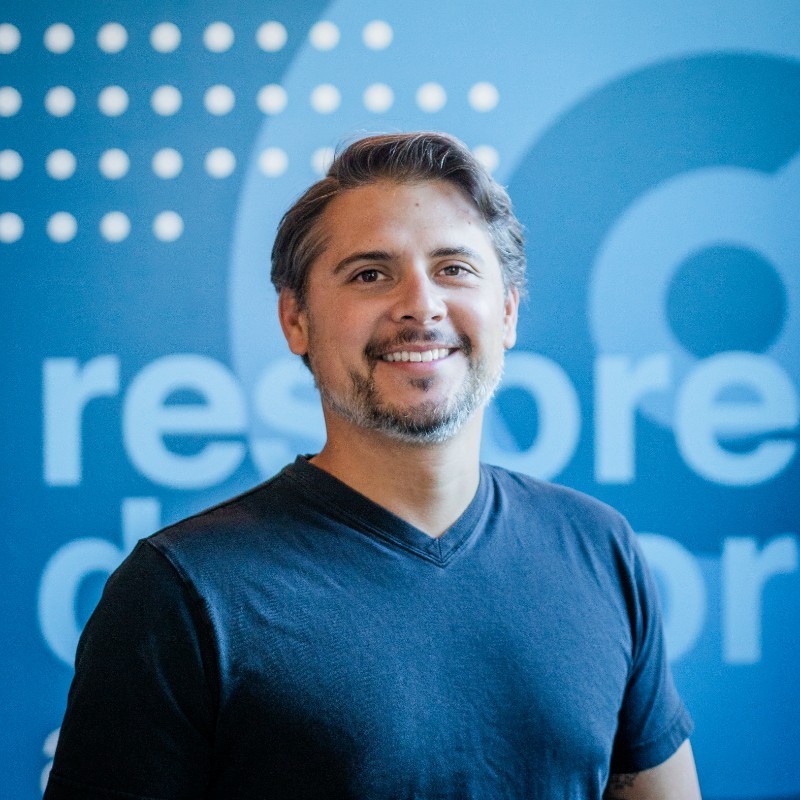
 David Fossas is a growth stage leader with a record of driving revenue and maturity of companies from startup to exit. Currently leading marketing for Restore Hyper Wellness.
Prior to Restore, David led global brand for WP Engine, a growth-stage platform for building websites and digital experiences, from 2016 – 2020. He helped define its corporate, product and brand strategy, repositioning the business, launching the brand, and helping it grow from 55,000 customers to 100,000+ customers globally in three years. WP Engine closed a $250 million investment from Silver Lake Partners in 2018.
From 2011 – 2016, David held various leadership positions at Real Chemistry—a high growth communications agency. He grew Verizon to be the agency’s largest client, created the Strategy & Planning practice and led the Media & Engagement Practice. During David’s tenure, he directly contributed over 25% of Real Chemistry’s new business and top-line growth, from $47 million to $95 million in revenue, leading up to Mountaingate Capital’s investment in 2016.
Prior to Real Chemistry, David served as Director of Emerging Platforms and Distribution at Big Fuel. He developed content marketing and influencer marketing practices for GM brands—Chevy, Cadillac, Buick and GMC—many of which are now common industry practice. Big Fuel was acquired by Publicis Groupe in 2011. 
David has worked with over 35 brands, including General Motors, Verizon, HP, Inc., Hewlett Packard Enterprise, Visa, P&G, Clorox, CVS Caremark, Philips Health and Galderma.
Between 2004 – 2010, David held business development and corporate development roles at International Creative Management, Endeavor, and Intrepid Pictures.
David was named to DMNews.com’s 40 Under 40 marketing leaders in 2018. He serves on the advisory board for St. Edward’s University’s Master of Science in Digital Marketing and Analytics.
David is a contributing author for “Contemporary Issues in Digital Marketing: New Paradigms, Perspectives, and Practices” published by Libri Publishing Limited in 2018.
Connect with David on LinkedIn and follow Restore on Facebook, Twitter and Instagram.

 Victor Arechavaleta is the Vice President of Business Development of Farm Stores Franchising, and has been in this position since March of 2012. His responsibilities include management of all new business channels, franchise development, territory development, and product and supplier relationships.
Prior to joining Farm Stores, Mr. Arechavaleta was the director of sales and marketing for Pagnifique USA from 2010 to 2012, and the director of marketing and product development for Quirch Foods from 2002 to 2010.
He pulls from an extensive background in marketing and product development, having spent over a decade in digital media, advertising, and film and television production.
He entered the food and beverage industry in 2000, and has since developed marketing and sales programs for national and international product lines in the supermarket retail channel.

Stone Payton: [00:00:00] And we are back with Business RadioX® Reseller Tips. Stone Payton here with you this morning. Today’s tip, invite your prospect on the show. It’s a marvelous way to begin a new relationship. It’s a terrific way to strengthen an existing relationship. It’s a good way to reciprocate to your referral partners, your most trusted circle of people who you are working with and through.
Stone Payton: [00:00:27] If you have purchased a Business RadioX® Custom Turnkey Podcast for your own business, invite them on your show. If not, then invite them to appear as a guest on one of our flagship shows. We call them house shows. We never, ever charge guests to appear on any Business RadioX® show, and for our resellers, we never charge you to sponsor episodes that you’ve organized.
Stone Payton: [00:00:52] There simply is no better way that we’ve ever come across for cultivating genuine relationships. It will put you in a position to have a more substantive conversation with them, and they will want to reciprocate. They’ll take your call. They’ll entertain the idea of your products and services with an open mind — and everything else being even remotely equal, they’re going to give you the nod. They’re going to want to do business with you.
Stone Payton: [00:01:27] And once they have had that Guest Experience and participated in that process, they have a heightened more informed frame of reference when you begin to talk with them about using the platform to grow their own business. So that’s today’s tip. Invite your Prospect, invite your Client, invite your Market Partners to be on the show.


 Steven Palmer helps business owners start-up, scale-up, or sell their business.
He started Transworld Business Advisors of Annapolis in April 2021 after 17 years providing software engineering, data analytics, and project management support for the United States Government and Department of Defense.
He has an undergraduate degree (Computer Science) from the University of Mary Washington and a Masters Degree (M.B.A) from George Mason University.
Connect with Steven on LinkedIn.
What You’ll Learn in This Episode
This transcript is machine transcribed by Sonix
Intro: [00:00:07] Broadcasting live from the Business RadioX studios in Atlanta, Georgia. It’s time for Buy a Business Near Me, brought to you by the Business RadioX Ambassador program, helping business brokers sell more local businesses. Now, here’s your host.
Stone Payton: [00:00:32] Welcome to another exciting and informative edition of Buy a Business near Me. Stone Payton here with you this afternoon. Please join me in welcoming to the broadcast with Transworld Business Advisors of Annapolis, Mr. Steven Palmer. How are you doing today, man?
Steven Palmer: [00:00:51] Stone. I’m great, man. Thanks for having me.
Stone Payton: [00:00:54] Well, we are delighted to have you on the show. One of the first things that I thought might be helpful to give me and our listeners a little context is if you could speak to mission purpose, what what you’re really out there trying to do for folks.
Steven Palmer: [00:01:11] Yeah, it’s it’s quite simple. We have a lot of very, very nice people that live in and around the Annapolis area. We have a lot of very, very hardworking people that have been working their entire lives to build a business, build a brand, provide a service to our community, and we are helping them with their exit strategy. So when it comes time for them to move on to the next phase, whether that’s to go play with grandchildren, whether let’s go hang out on a on a boat or read a good book or spend more time on the links, whatever that is. We’re not here to tell them what it is. We’re just here to help them put a value on their business. That’s really marketed the best deal we can and see them through the sale and the selling process.
Stone Payton: [00:01:55] So what’s the back story? How did you get into into this line of work?
Steven Palmer: [00:02:00] Yeah. So I am a recovering software engineer. I realized I like people more than software and thought I would move up the ranks in the government contracting world, which was completely fine. But my my wife and I made a made a family decision to get a little bit closer to 2 hours. Both her, her parents and mine. And we moved away from D.C.. Out to Annapolis. And in that process, I no longer really had ties to the D.C. area. So I started looking for for that next job. And Transworld grabbed me. Transworld found me on the you the indeed websites or the job boards. They reached out and they kind of said, Hey, we see you have some some background in selling, we see you have some background in management, you’ve got an MBA. Have you ever considered selling a business? Which I thought was intriguing because my father ran a business for 30 years and when he was done, he was just kind of done. He folded up and got got nothing for and I remember him telling me about it over beer, saying, you know, that our construction was no more. And I thought. That’s not right. That’s not right. You work. You’ve worked way too hard. That’s not right. But I didn’t really know what it was at the time. So when Transworld came asking, know, Hey, have you ever thought about selling small, mid-sized businesses? I thought. That would have been great for my dad. And I thought that it’s a good service that that’s sorely needed in my area and something that I thought I’d be really good at. I’ve been running at pretty much ever since.
Stone Payton: [00:03:43] So how would you describe the pros and cons or the decision making process for an individual between buying a business or just just starting one from scratch?
Steven Palmer: [00:03:56] Yeah, I mean, the the pros for starting from scratch is the cheaper is cheaper. The cons are everything else, 1%, everything else. And I could even make an argument that it’s probably not even cheaper once you factor in the amount of money and time and blood, sweat and tears it’s going to take to to reach the same level that some of these businesses that are some of the businesses that the owners have been growing for 20 years, you know, if you catch the right business under the right terms and this is something that we’re we’re very open with, with all of our potential buyers, whether we’re representing sellers or not, we let them know there’s kind of what we think our valuation is. You’re kind of how we came up with that valuation is because if we don’t do that, the bank’s going to do that immediately and the bank is going to shoot us down. So we’re going to have egg on our face. So we’re very upfront, we’re very honest. And if you look at that value and compare it to how much you would have to spend marketing and selling and then factoring your time commitments for all of that and the lack of sleep and the time away from family and the stress and the heartache and all that other stuff, I could probably make a make a case that it’s cheaper just to buy a good business.
Stone Payton: [00:05:11] So are some of your buyers, those that have an existing business and they’re really like acquiring something just like it or complementary to it? Speak to that a little bit.
Steven Palmer: [00:05:24] So there’s multiple ways that it makes sense to buy a business, right? We deal with the individuals that are know, I’m tired of working for somebody, Give me give me a business I can run. And but we also deal with exactly what you’re talking about. Right. And it makes sense if you’re an existing business to buy another business when you are looking to expand your your service providers, when you’re looking to increase the the amount of of customers that you have in a certain area, if you’re looking to expand into a new area, there are a lot of different scenarios where it makes sense. It’s called growth through acquisition, right? And it is by far, in a way, the fastest way to grow a business. So owners that are looking to do that, the questions are really how quickly do you want to scale? Do you have the capacity to scale now or are you going to have to hire? And what’s what capacity is really kind of coming with the business, right? Because, you know, and and what’s the overlap? Are there synergies between the two? Right, Or are you going to have to come in and immediately have to lop off half of the business they’ve been doing? Because you just that’s not an area where you compete. So, I mean, we we walk people through what the acquisition looks like, both from a game of hopscotch right here. Here’s one step, here’s the next step, here’s the next step. But also from a strategic level, once you get this, here’s what they’ve done very, very well and here’s what you’re going to be able to leverage. Right? So we work, we walk buyers through all of that.
Stone Payton: [00:06:50] So how does the whole sales and marketing thing work for you for for your practice? How do you get the the new buyers, the new sellers is one more challenging than the other.
Steven Palmer: [00:07:03] Uh, yes. So we have been in Annapolis, has been around for since 1979, I think is when they officially kicked off. So we’ve got some center of gravity there where things are starting to kind of pull into us. And people are certainly aware of of our name and seek us out. Otherwise, we we are a franchised, so our owners go and live in the area that they service. So I live in Annapolis. I my my kids go to daycare in Annapolis. We go out to eat in Annapolis. We, we network. We everything that we do is in and around the area. So we know the players, we know the banks, we know the the lawyers. We know all the pieces that you need to buy a business. We we do. We do provide it. When we were starting out, we did some things like putting envelopes on doors of closed businesses. Hey, have you ever considered selling your business? If so, give me a call. We still do use postcards. We haven’t done as much with social media, social media, marketing, all that we have in the past and probably need to get back into it.
Steven Palmer: [00:08:08] But I mean, honestly, the next big thing that I’m really excited about is we we also do industry webinars, so we’re partnering with the business coach, we’re partnering with a financial advisor, and we’re going to be putting on a a webinar here in November to kind of not only talk people through what does this raising interest rate from the Fed look like? How does it affect you selling your business? But hey, if you’re are you are you ready to sell your business? If you’re not, let’s talk to this business coach and let’s talk to them about what they can do and what their timeline is to work with you to get you into a sellable position. And then once you have that check in hand. Well, let’s talk to let’s talk to this financial advisor and talk about ways that you can keep the most in your pocket and strategically invested. Right. And then we’re the business coach is is Patrick with Chesapeake think tank and the the financial advisors and also with Ken Alsina and they are two of the absolute best in the business and it’s going to be an absolutely great event.
Stone Payton: [00:09:06] It sounds to me like the work, at least the way you and Transworld choose to approach it, is far more relationship oriented than transactional, far more relationship oriented than I guess I was anticipating.
Steven Palmer: [00:09:22] Hmm, I think it can be run either, but I mean, from my perspective it is. It’s relationship driven, it’s different, you know? And I think I think all of sales should be I don’t think all of sales are. I think all sales should be. I think that is the correct way to go about the selling process. And that’s kind of what we’ve certainly implement here.
Stone Payton: [00:09:44] Well, I mean, you’re clearly enjoying the work. I can hear it in your voice. I know our listeners can hear on the airways. What are what are you finding the most rewarding at this point in your career? What are you enjoying the most?
Steven Palmer: [00:09:56] Oh, man, I got a we did a deal with an automotive shop back in July, closed in July, and this guy is ran the shop for 20 years and he was hoping to pass it down to a son. And his son just decided that that wasn’t really the path for him. And he and the father respected the son, which is the right thing to do. But he really didn’t know what he wanted to do or he really didn’t have an exit strategy at that point. So when I approached him about helping themselves business, because by the way, automotive in this industry, automotive Indianapolis right now is absolutely scorching hot for a number of reasons, but that that digresses from here. But for this specific deal, you know, I approached him and he’s like, yeah, you know, I see my getting out in a couple of years. But honestly, like, if we can do it now, that’s that’s great. I’d rather start spend some more time on the water. I want to go jump on a boat and sail down to the keys. That’s that’s my dream right now. So we we listed his business within a couple of months. We had we had a very intriguing buyer.
Steven Palmer: [00:11:00] Luckily for the buyer, we were able to bring him out of Jersey and down to the Annapolis region, which is just clearly a quality of life improvement. I’m kidding. All my all my Jersey friends out there. I’m completely kidding. I do like Jersey. Jersey’s a great time, but I just couldn’t resist. But we found we found a perfect buyer for him. He’s coming down. We negotiated a a deal where the seller was able to to sell or finance this purchase, which absolutely made the acquisition seamless. We closed it in just over three weeks and probably would have closed it in under three weeks if it didn’t fall. That was in straddling the 4th of July holiday and have a bunch of people that went out of town. So now this guy gets up and on the fifth of every month he gets a check for doing nothing but putting his pants on. And then he goes back into the same business that he always enjoyed working in. But this time now, not as an owner, just as a mechanic, because he still enjoys the work. He just didn’t. He was tired of of the overhead. He was tired of always having to be there.
Steven Palmer: [00:12:06] He was tired of all of the ancillary things that that that grind on those owners. Right. Over time. Yeah. And now he’s going to jump on a boat and take that Caribbean trip in October, November at least, knock on wood and hopefully it doesn’t fall through for him. So I’m really excited for him because, you know, again, he gets this 30 $500 check and start of every month. He gets a paycheck now from from working as an employee. He’s helping the this this new buyer grow this business because he’s got a he’s got a vision. But I don’t know if you’ve heard Stone, but hiring is a challenge. You know, so like he’s helping get this get this guy firmly planted in the ground, you know, bring this guy, this new guy into the community. And I really enjoy getting to know Mark. And Glen was a seller, and Glen is just a fantastic human as well. I mean, that was such a such a fun deal to be a part of, just so happy that it worked out the way it did. And best of all, you know, now hopefully I get a discount on my oil changes.
Stone Payton: [00:13:01] There you go.
Steven Palmer: [00:13:03] At least for the next one or two.
Stone Payton: [00:13:05] But but this example that you share, it’s a great way to underscore the what I’m learning in doing some of these interviews in this arena is that there’s a lot of opportunity to get creative and genuinely serve everyone with with the with the structure of the deal. It doesn’t have to be hand me your keys and I hand you a check, right?
Steven Palmer: [00:13:28] Yes. Yes. That’s that’s that’s exactly right. And we’ve again, been around the block once or twice. So we’ve we’ve seen some of these structured deals. We know how we can kind of help these guys get creative. There’s so many owners that I come to that don’t even know. Yeah. You know, I don’t entertain selling my my business. But how much how much do I ask for it? You know, like step one, which is to put it put a price tag on the asset. And while we we do ask for a commission on the back end, we take such a headache away because there’s always a part there’s always a point in the deal where the deal can just get stuck. And because we’ve seen it and because we have various contacts for, for that deal back in July, we always got we almost got held up for a couple of weeks because the guy was waiting on an insurance provider. Right. The guy guy was coming down from New Jersey, didn’t didn’t have contacts in the area, had to get insurance for for the the LLC that he was setting up to take over.
Steven Palmer: [00:14:29] So we structured the sale as an asset sale and the insurance provider just wasn’t wasn’t responsive. Well I’m in the industry, I live in the area. I know 30 insurance providers, five of which I’ve done deals with and like like a whole lot. So we were able to help them get that within 48 hours, within 72 hours of him reaching out, We we had an insurance quote, you know, like, you know, we’re able to kind of keep things move and keep things going. And because otherwise those deals hang, you know, not scare people away. If you if you can sell it on your own and keep 100% of the value of your business, do it. And you have a price point of mind that it makes sense for you to do it at do it know my services are not perfect for everybody. My services are not right for everybody. But if you’re if you’re nervous about the plan and would like somebody be able to kind of come in and help help you see help see you through it, we’d love to be able to help out however we can.
Stone Payton: [00:15:29] So I was planning to ask you a question about mentors and but it strikes me that one of the tremendous advantages of joining a team like Transworld, you must have some have had some built in mentors like Right Out of the Box that really helped you navigate some of this terrain early on.
Steven Palmer: [00:15:51] Yeah. Oh yeah. Oh yeah. You know, all of our. So what’s great about Transworld being a franchise is not just the fact that we’re interconnected to our 250 offices around the globe, but not that not just the fact that I can see every deal that’s being worked at any point in time or all the way back to 2014, 2015, and use that data to help my clients. But I mean, the training, not just the hey, you’re brand new, come hang out in Florida for a week and let us walk you through what it’s like to sell a business, but also the ongoing training as well and the refresher courses. And they provide all of that stuff for us. It allows us to kind of stay up to pace, stay up to date on the industry comings and goings. And I mean, starting with with Glenda dad, who was the the first guy to kind of talk to me about valuing a business and how how you go about recasting financials and what you’re looking for and how you how you ultimately get down to some of that to some of the other industry partners that that and Kyknet and team at Transworld have been able to bring in and provide us. We’ve got partners with with folks at Bennett Benetton’s that were able to are able to help people pull money out of their existing retirement accounts, early tax free to fund the purchase of businesses today. I mean, like some I mean some of the resources they’ve been able to just introduce me to or have been have been world changing.
Stone Payton: [00:17:16] Well, it certainly sounds like it. So this is kind of a tactical question, and maybe I’m watching too much news, but it has to do with timing. And for your listeners out there, if you you know, because sometimes people will hear this content six months, a year, two years after, after we’ve captured it, we’re having this this conversation at a time when interest rates are kind of on the rise. Does does that have an impact? Does that influence timing? Like is it a better time, a good time, a bad time in terms of buying or selling a business?
Steven Palmer: [00:17:51] Sure. I mean, money is never going to be cheaper than it is right now for the foreseeable future. Right. The Fed has has signaled that, hey, we’re going to need to continue to raise interest rates to fight inflation right now, which means every dollar that you borrow today is going to require. More overhead, certainly than yesterday, but less overhead is going to tomorrow. So it’s being able to get some of the buyers off the fence. With that being said, buying power has now certainly decreased as well. So if you’re considering selling, you’re going to want to be able to enter that market soon, because one of the things that we always talk to our sellers about is the number of buyers, the number of potential buyers, and how can we increase that buyer pool. Right. And, you know, sadly, what the Fed’s doing, whether it’s necessary or not, history will be able to tell us that I’m certainly not qualified, but the Fed is effectively lowering our buyer pool. So if you’re looking to get out in the next next year or next, next three years, now is probably a really good time to hurry up and and sit down and chat. So see if we can kind of get you out there sooner. But it certainly is getting some buyers off the fence as well, which is good.
Stone Payton: [00:19:10] Yeah. So maybe a related topic, just timing in general, irrespective of of current economic conditions. If you’re a business owner and you’ve got your eye on exiting at some point in some way, what kind of what kind of runway do you need? Because I’m operating under the impression you need more than just a than a few months. You’ve got to get some you’ve got to get some things put in place, right?
Steven Palmer: [00:19:37] Yeah. Yeah. It’s not it’s not short. 8.3. 8.3 months is the average sale time. I don’t nobody’s been able to tell me what 8.3 of a month is. So there’s that that makes that makes me think that a mathematician came up with that number and not a not a human. But even so, if we if we say eight months, it’s gonna take eight months to sell business. I mean, I mean banks are taking anywhere between 45 and 60 days for a loan alone, right. So you figure you’ve got, you’re walking into to two months. If somebody needs to borrow money, then there is the courting period and then there is the due diligence period. And lawyers are involved. And sometimes there’s there’s CPAs involved or bookkeepers that need to get involved to review everything and make sure the financials align. And we certainly recommend that all of those people play and make sure that both buyers and sellers have the appropriate professionals representing them on both sides because it’s an expensive purchase. You want to make sure that you are doing your homework and getting what you you expect to get out of it. You walk into these deals with eyes wide open. I mean, it’s it’s a long it’s just it’s just a long time.
Stone Payton: [00:20:52] Yeah. Yeah. And then before all that, as a as a seller, as a potential seller, I mean, you got to get your books clean, you got to get your value, you got to do a lot. So they need to be talking to you sooner than later.
Steven Palmer: [00:21:05] You know, it’s it certainly helps. We’re doing a deal now that I sit down with the owner and we’re we’re trying to get down to a number that’s that we the term is sellers discretionary earnings. So all the value all the profit that the owner is taken out of the business, which goes beyond just their paycheck. Right. It could be their health insurance, it could be their car payments, it could be their cell phones. It could be a variety of things. Right. Yeah. And then not to mention, you know, you kind of add all of that back against the value that you report to the IRS or subtract that if the value is negative, which hopefully most business owners are reporting something negative to the IRS. But if you’re taking money underneath the table, that gets more difficult to justify to the bank because it’s not going to necessarily show up on some of those financial documents as well. So it’s great for business owners to be able to kind of do that, to kind of be able to just put that cash straight in their pocket. But when it comes time to sell, it is advantageous to put as much of that back onto the actual paper as possible and to do that for two or three years leading up to it. And again, that’s typically what I end up doing, is trying to pass that along to to Patrick or some of the other really great business coaches that we have in this area. That’s that’s they they have they have plans. They they help people get back involved. But from my perspective, when it comes time to to to market this baby and certainly when I start representing you with a bank to get a loan, the cleaner your financials are, the easier my job, the easier my job, the faster your sale is, the faster your sale is, the sooner you’re on a beach.
Stone Payton: [00:22:42] I love it. Okay. I’d like to leave our listeners with with a handful of I’ll call them pro tips. Just to some do’s, some don’ts, some things to read, some things to be thinking about. And of course, the number one pro tip gang is reach out and have a conversation with Stephen Palmer. But but maybe there’s a couple of action we’ll just kind of down and dirty tips that a lot a business owner would benefit from maybe on both sides selling, you know, buying and selling anything you can offer on that front.
Steven Palmer: [00:23:11] Yeah. Reach out to me. Have a conversation. We’re we’re commission based and we only get paid on success. So we don’t take any money up front. We don’t. We don’t get paid by the hour. So even if you are just thinking about it at the start, let’s have a conversation. If you’re in the Annapolis area, let’s let’s sit down and have a cup of coffee. There’s there’s no reason we can’t. Again, to me, it is a relationship driven ballgame. So Thursday, there’s a book called the The Private Equity Playbook. I kind of enjoyed reading that and also know what the most important factors are for you, right? So sometimes that is let’s get X number and we’re going to hang on till we find a buyer that’s going to get us X number. Sometimes that is, I just need to get out, get me a ham sandwich. And sometimes you, sometimes there’s there’s somewhere in between, right? Yeah. We don’t want to just give it away. But at the same token, we really kind of we need to expedite this. So when we talk to you about things like let’s, let’s price this aggressively, let’s look at seller financing, let’s let’s use some of these other tools and tricks that have been proven to sell businesses faster. You know, not everything’s right. Don’t get me wrong. Everyone’s got their own situations. Everyone’s got to make their own decisions for themselves, but really give them some some consideration because we’re we’re saying this to you because we’ve been through it and we know we know what the outcome will be.
Stone Payton: [00:24:36] What a pleasure to have you on the show, sir.
Steven Palmer: [00:24:39] Oh, this was great, man. So. So thankful that you you reached out and we were able to make this happen. It was a lot of fun.
Stone Payton: [00:24:47] Me, too. Okay. Let’s make sure that our listeners have an easy path to to get in touch with you, man. Whatever’s best. You know, email, website, LinkedIn, whatever you feel like is appropriate.
Steven Palmer: [00:24:57] Yeah, absolutely. So don’t hesitate to reach out to me. My email address, which is s pal m e r et pt WorldCom. If you want to come check out our website and see what businesses we have for sale, it’s t worldcom slash annapolis. And then are the office numbers the easiest way to get hold of me? It’s 4108426063. And if you want to bypass everybody else, just hit extension zero. They’ll come right to me.
Stone Payton: [00:25:27] Well, thanks so much for hanging out with us this afternoon. Man. This has been fun. It’s informative, it’s inspiring. It has me believing that even on our exit at Business RadioX, maybe I can still hang around and do some of the fun stuff.
Steven Palmer: [00:25:41] Absolutely. That’s when the fun begins. You got it right, Stone.
Stone Payton: [00:25:44] All right. Well, thanks again. You’re doing important work, man, and we sure appreciate you.
Steven Palmer: [00:25:49] I appreciate you, sir.
Stone Payton: [00:25:50] All right. Until next time, this is Stone Payton for our guest today with Transworld Business Advisors of Annapolis, Mr. Stephen Palmer, and everyone here at the Business RadioX family saying we’ll see you next time on Buy a Business near me.

 Dr. Ann Griffin developed and teaches Symptom Evolution, a revolutionary health care methodology that produces consistent and rapid relief of even the most complex pain conditions.
After several years in her manual therapy practice, she realized traditional diagnosis and treatment algorithms were woefully inadequate to get the kind of results she wanted for her patients. Why do two patients with the same condition get markedly different results to the same treatment? Why do symptoms return?
Symptom Evolution was developed to not only answer these questions, but create a system to dramatically increase the efficiency of health care as we know it. She holds two degrees from University of Western States and has been in practice for 12 years. 
Ann still maintains a private practice in central Oregon and teaches this important work both at home and abroad. She also enjoys chasing her kiddos, rafting, skiing, and lifting weights.
Connect with Ann on LinkedIn and follow Symptom Evolution on Facebook and Instagram.
What You’ll Learn in This Episode
This transcript is machine transcribed by Sonix
Intro: [00:00:04] Broadcasting live from the Business RadioX studios in Atlanta, Georgia. It’s time for High Velocity radio.
Stone Payton: [00:00:15] Welcome to the high velocity radio show where we celebrate top performers producing better results in less time. Stone Payton here with you this afternoon. This is going to be a marvelous conversation. You guys are in for such a real treat. Please join me in welcoming to the broadcast with Symptom Evolution and Griffin, how are you?
Ann Griffin: [00:00:37] Oh, I’m awesome. It’s been a great day. Thanks for having me on.
Stone Payton: [00:00:40] Yeah, It’s a delight to have you on the program. I think a great place to start might be if you could articulate for us mission purpose what what you and your team are really out there trying to do for folks.
Ann Griffin: [00:00:55] Oh, same thing that you’re trying to do better results in less time. So the work that I do symptom evolution refers to a health care methodology, and this methodology is just a refinement of our question and answer or question asking during a history intake. And it’s also to identify really the root cause, because it’s one of the biggest plagues in all of health care. And it doesn’t matter what your stripe is, whether you’re a physical therapist, an orthopedic surgeon, a massage therapist, it doesn’t matter what flavor of health care practitioner you are, there’s a lot of guesswork that goes into it with our current model that we don’t really understand what’s causing somebody’s knee pain. We’ve kind of got a best guess, and so there’s a lot of trial and error, and that alone is the number one drag on. Our gross domestic product is low back pain because we can’t accurately identify what’s actually causing someone’s lower back pain, much less fix it in a consistent or an efficient manner. And so that’s the the problem that symptom set symptom evolution set out to solve is to have a much more accurate way of taking a history to get us a much more accurate diagnoses and therefore guide a much more efficient treatment progress moving forward. On average, even for very complex cases, we only treat somebody maybe 2 to 4 times and then their problem is expected to make a full resolution and not return.
Stone Payton: [00:02:23] Wow. That is incredible. I guess I already knew or felt like I knew that, you know, patients and doctors alike are probably very frustrated with the with the current health care climate. But I don’t think I anticipated the immediate and direct impact on economics, like the like the gross domestic product that. Wow, that’s alarming.
Ann Griffin: [00:02:47] Yeah. And unnecessary. We spend the most amount of money here in the United States on health care and our outcomes are pretty mediocre. So in admitting the emperor has no clothes, what we were, what our working diagnosis or our premises that we were rendering our health care was based on, there’s a glitch somewhere. And that is evidenced again by the inefficient or the ineffective care outcomes that we get. So, for example, it’s a completely acceptable course of care to see somebody 12 to 16 times in physical therapy, chiropractic, acupuncture, and you expect to have that dosage of care before you start to expect results, number one. And two, you already expect the problem to return. There is something wrong with this picture.
Stone Payton: [00:03:37] Yeah, I’ll say.
Ann Griffin: [00:03:39] Right. That’s you know, how many times do you need to bake a cookie? Right. I think you’re doing it wrong. And that’s not to disparage any of my wonderful colleagues out there in the field, but that there’s got to be a better way. There’s got to be a more efficient way, because the frustration that’s felt by patients when they see practitioner after practitioner and they can’t figure out why they’re in pain or the treatment, the trials of treatments that they’ve had maybe rendered some pretty mediocre outcomes. The problem still comes back, or maybe at worst didn’t have an effect at all or made them worse. The surgery didn’t work. The surgery made them worse. The cortisone injection didn’t work, the physical therapy didn’t work. And those patients start to lose hope because their practitioners can’t explain why they’re still having symptoms. But to enlighten patients, us as practitioners, we all get into this field because we want to be of help, we want to be of service. And when our patients come back and say, Doc, I’m worse. Doc, it didn’t make a difference. Yeah, maybe I got a day of relief, but not more than that. We feel the frustration too, but on our side to get curious about why that is, that’s really where symptom evolution was born is because as my patients were coming back and I was really good at the work that I already knew how to do, but I was still only hitting maybe an 86% success rate.
Ann Griffin: [00:05:00] And I couldn’t explain why to people with what I. It was the same knee pain. One would get better and I do the same thing for the other person and they wouldn’t y y. And there’s some patterns that started to show up. So I observed, for example, that when patients had more than three injuries, significant injuries or surgical events, and again, they’re interchangeable. The more stuff that happened to somebody in somebody to a person in someone’s life, the less likely the work I already knew how to do was going to be effective. And I also noticed if somebody had a lot of dislocations and not any broken bones, the work I was going to do didn’t work either. Just those kinds of things. So I started to do a lot of research and it really started to come together that when A plus B equals C, well, then it follows logically, the D plus equals F, and this goes all the way to Z. And when I started to apply the principles, I got amazing, miraculous, almost unbelievable results. And it just has to do with identifying some root causes that are not known by the health care profession at large yet. So on a mission to really change how we see the body and up the standards of what we think is an acceptable outcome of care I don’t think is good enough.
Stone Payton: [00:06:16] So then you find yourself beginning to educate other practitioners in this pursuit.
Ann Griffin: [00:06:23] Mm hmm. When I started to get some pretty amazing results, I was like, Oh, okay, I’m on to something. Because when I got hundreds and hundreds of patient reports and patient outcomes that were just unbelievable, I took on three students. They were practitioners whom I knew locally and it took about three months to train them. And these poor these poor first students didn’t have any visual aids. I didn’t have any lecture notes. I just firehose them with information. But we ended up crafting a course that is very digestible. The first level course is about 10 hours. It’s all done online and as I saw, these practitioners who then graduated became certified in symptom evolution, not only understand what I was trying to tell them, but apply it and they get the exact same amazing results. So this technique is reproducible that I’m not special. It’s just a few missing pieces of information that we lack as health care professionals to get the kind of efficient and effective care that both the practitioner and the patient really want.
Stone Payton: [00:07:32] You’re so energetic, you’re so enthusiastic. It comes through over the airwaves. You clearly find the work incredibly rewarding. What are you enjoying the most at this point in the evolution of this?
Ann Griffin: [00:07:46] Oh, it has to be the ripple effects. So here’s me just having lunch at the desk because I do have a private practice still here in central Oregon. Here’s me sitting at the desk just quietly eating my lunch because like a human being, like any other human being, I need some fuel to. And out comes the massage therapist to a graduate of mine and the lady who’s checking out, she’s just in tears. She’s in tears of joy because 20 years of jaw pain in one visit is now gone and she’s just so profuse. And thank you. I can’t thank you enough to this to the massage therapist. She has no idea who I am. She has no idea that I was the person that developed the work that has now changed her life. And it just makes my heart sing. So I know there will be thousands and thousands of patients that I don’t even know the names of that get the benefit of this work and can go back to being their best mom, their best dad, their best nurse, their best doctor, because they don’t have back pain. They don’t have any pain. Pain makes us grouchy. It makes us bad moms. It makes us bad wives. It makes us bad employees and bosses. When we hurt our world, hurts our lives suffer as a result of that. And so that excitement of spreading the work in and of itself makes it all worth it.
Stone Payton: [00:09:04] So have you had to to learn or create a whole different approach to the to the sales and marketing thing with with getting this course out there, this methodology out there? Or were you able to apply some of the same principles you did in growing your practice?
Ann Griffin: [00:09:20] Yeah, So great question, because when we have a product that is so what we’ll say unique or new to market, there is a great sort of untested credibility concern that comes up. So all the students that I have have had up until now, they have experienced the work personally and that’s why they decided to take the coursework. So when I travel to go cultivate a learning pod, this is quite different than I’m not selling selling fingernail clippers. Right. Everyone knows what a fingernail clipper is. There might be different brands. Some might work better than others, but you understand what it is and what it’s for. So symptom evolution because again, the work and the result is almost unbelievable. So when I go and do a demonstration with a learning pod of practitioners who are interested in the work, I have them give me set up four in a weekend to three patients that I would call a treatment failures, right where they’re coming in for the same thing. Everyone’s scratching their head and no one can figure it out. And almost wordlessly I just go to work and it takes me about 2 to 3 hours and the patient gets off the table and they say, My hip, 20 years of hip pain, it’s gone. And that’s when people really get curious. So in that regard, entering the town square, that is social media marketing, so on and so forth, I can use words, words, words all day long to trumpet the benefits and try to explain what symptom evolution is. But at this stage, seeing really is believing. So in that regard, my product, so to speak, it’s intellectual property, so it’s a bit abstract being a non tangible product already, but it’s even more abstract because it’s revolutionary.
Ann Griffin: [00:11:05] So that little piece of it, as you can imagine, I have a very multi pronged approach. You’ve got to get really creative. So yes, social media marketing is one thing, but I also have to build up my authority ship, so to speak. So I’m doing podcasts like these, spreading the word, having a long format sort of tome or body of work it’s called. So when people pop on to social media, they might get really curious about some Instagram videos that I posted or TikTok videos. They’ll go to my website, then they can read some longer format blogs or some go to some links to the podcast. So when somebody already opened the crack in the door, it’s not more Instagram posts or social media posts that really create what we call conversion, right, where somebody is interested. But what makes a difference between someone who clicks on a website versus click buy and opens up their wallet, right? So as a business owner, I’ve had some really interesting quandaries that are unique to what I do. Again, very different than selling fingernail clippers, right? You just got to seal the deal with your manufacturers and then bring that baby to market with some some jazzy marketing, that kind of thing. This is quite a bit different. And again, having a multi-pronged approach and really looking to create the credibility and the authority ship is a big, big, big part of when somebody like me has some intellectual property that’s pretty revolutionary and they’re onto something, that piece of it makes it, I guess, like a puzzle. But that in and of itself is pretty fun to.
Stone Payton: [00:12:39] Well, and you’re the kind of person who celebrates challenges. I can see that as you continue to sort of build out this this tribe and you’re building your your business, what counsel, if any, would you have to offer in terms of, I don’t know, keeping people as inspired and as as enthusiastic as you are about this and celebrating the challenge and celebrating the the wins, because obviously you’ve you’ve you’ve cracked the code on that avenue.
Ann Griffin: [00:13:11] So that’s so what you’re really harkening to is mindset. So yeah, and for all of us and it doesn’t matter if you’re a business owner or an entrepreneur or not, or if you’re just a middleman selling fingers, fingernail clippers and looking how to laterals and maximize your business or you’re focusing on margins, etc., or you’re somebody that is kind of an industry innovator or what have you. You can be a mom, you could be a dad, you could be a boss. All of those avenues invariably present us with challenges. And when we look at a challenge as a barrier, you’ll never jump over it. You’ll never you won’t even try. You’re defeated before you begin. And the opposite of fear is curiosity. So I knew instead of being afraid, no one’s going to believe me. Instead of that, I got curious How can I get people to trust what I’m saying? What have other people done? And when we get curious and we learn from those who’ve gone before us, and sometimes that means throwing out the book, that’s that everyone else is reading, right? Sometimes you just sometimes you have to reinvent the wheel, right, and go go with your gut. But I don’t think that I need to waste 3 to 5 years chasing my tail or doing it the hard way. And that has a lot to do with what we believe. So if, for example, in parenting or an employee employer relationship, the boss that yells at his employee, he’s just out of ideas, right? He just doesn’t have another tool in his belt.
Ann Griffin: [00:14:49] The number one guidepost for me is if I ever feel uncomfortable and that can be bored, lonely, frustrated, angry, afraid, whatever it is, if I ever feel uncomfortable all the. It doesn’t mean that something has gone wrong, but it does mean that I need a tool that I don’t currently have. And that’s where Curiosity comes in. It’s like, Well, I feel really frustrated about that technological platform. How can I make this fun, right? How can I turn this into a game? And the love of learning is so far outweighs my fear of looking stupid or getting it wrong. That right there, there’s no such thing as a barrier for me. Everything is an opportunity to learn. I just had a patient coming in today in tears because she was in so much pain. I’d seen her twice. She was great and then all of a sudden pain out of nowhere. And she says, I feel like I’m going backwards. So we had that conversation and we both got curious. I just learned how to recognize congenital stenosis in a 19 year old. Who would have thunk it, right? So instead of getting afraid, Oh, I’ve done something wrong. I’ve made this patient unhappy. I’ve lost a customer. I was like, What’s this about? And every time curiosity turns that barrier into a stepping stone or a springboard, it’s amazing.
Stone Payton: [00:16:12] Well, it makes perfect sense to me that the most powerful lever in this, this movement, if you will, is educating, inspiring practitioners. Is there any room in this pursuit to equip the patient to somehow make it easier to help create a symptom evolution climate in the in the conversation in the room? Is there anything from the patient side?
Ann Griffin: [00:16:40] Yeah. So think about let’s let’s let’s look at a different field. For example, think about the therapist that works with somebody for 30 years, like a talk therapist. A psychologist? Yeah. I would question your methodology. Why do you need to keep saying them? Because the huge part of the psychiatry field, et cetera, is to give tools, is to teach self sufficiency. Right? To teach people to fish, not to give them the fish. Right. Not to create that reliance. And that in and of itself is embedded in sort of the inherent flaws in the framework of how our are United States health care is structured because we incentivize quantity of care because it’s the far most profitable thing to do is very extractive, right? You make a lot of money when somebody needs you over and over and over. Right? So a big part of how a patient can get the most out of the care that they do have available to them. And again, I’m not disparaging my very talented colleagues in all flavors. I do refer out for drugs and surgery. I do refer out for physical therapy. We all have our own gifts to bring. But the patient who might be listening to this, or somebody who owns a human body, everyone to get the most out of the care that you are able to access is again, get curious was like, Well, you’re saying such and such.
Ann Griffin: [00:18:02] What happens if I add some foam rolling into the mix or you know, Doc, I like what you’re saying and I’m definitely feeling better. And I understand the course of care that you’re recommending. What are my other options? What can I do? Is there anything that I can do that would affect this? Or when somebody isn’t getting the effectiveness out of the care that they believe is possible? It doesn’t mean that you’re rejected that practitioner as a person, but it may not be the right key for your lock. Don’t kid yourself. Well, you know, I’ve seen you five times and it’s helping, but my issue keeps coming back. I want to do some digging. I want to go look around the patient that gets curious, both with whether they stick with the form of care they’re in or they look around or they do some research on their own. The patient that gets curious is always going to have a much, much, much better outcome and a faster outcome, better results in less time. And it’s just because your is based on our each of our individual willingness to do as much as we can where we can.
Stone Payton: [00:19:05] You have so much going on and so much to to do and you seem to be up for it from an energy standpoint. And I know I mean, you’re human. You got to sometimes run your tanks got to run low occasionally. When that does happen, where do you go? And I don’t I don’t necessarily mean a physical place, but to to to get inspired and sort of recharge. Where do you go for that? How do you do that?
Ann Griffin: [00:19:33] Oh, that’s a great question. So the the the not so mythical beast of work life balance, right? So even though my work juices me to the max, I am absolutely. I know with every fiber of my being this is what I’ve been put on this earth to do. I like to do other things too. So most of the time it’s simply a matter of scheduling. It’s a matter of self-compassion. When I let something fall through the cracks or if I drop a ball, it means I’ve got too many balls and I need to recalibrate what’s going on. So again, just like with the physical body, when we’re asking somebody about their knee pain, etc., there’s things that somebody’s knee pain behavior means. It doesn’t mean just because someone has knee pain doesn’t mean they have knee cancer. That’s not what that means. Similarly, if I’m overworked, fatigued, tired, resentful, it doesn’t mean something’s gone wrong, but it does mean something’s out of balance. And sometimes the tool that I need to recalibrate is how well I manage my time. Other times it might be how well I can delegate or, you know, I thought I needed to do this, but I think my assistant can take care of that. Sometimes it’s releasing all all of our first and worst vice, the illusion of control. Sometimes things just aren’t up to us. And to be able to admit that because when we drop the ball, it doesn’t mean that we’re a bad person and we suck at our jobs.
Ann Griffin: [00:21:01] Or we should just give up now. Oh, you idiot. I don’t let those those kinds of voices, they don’t even get to enter into my brain. I have long since kicked them out of my court, and it’s simply because it doesn’t get me anywhere, you know, berating yourself for a perceived mistake, etc. never moves the needle forward. You just it’s a blind alley. It just leads to a waiting place where you go nowhere and you do nothing. So when I run out of juice, oh, I do all kinds of things. I go weightlifting, I raft, I hang out with my kids, I read books that don’t matter. All that and every day it might be a little bit something different. Some days I don’t get as much me time as possible. But it is really important that if I’m uncomfortable, something’s out of balance and it doesn’t have to be that way. I’m not secretly a marine where I just think, you know, the more the harder, the better. I don’t believe in that. I don’t believe that struggle is the defining the definition of success. Right. I don’t think that I know that we can all do hard things, but we don’t have to do them the hardest way.
Stone Payton: [00:22:06] I am so glad that I asked. I found all of that to be incredibly helpful counsel. But what I wrote down in my notebook was read books that don’t matter.
Ann Griffin: [00:22:18] I try to rotate them, so sometimes I read a book about mindset or social media marketing or I have that in there. Right now I’m reading the Midnight Library by Matt Haig, Whoever you are out there, thank you for this book. Another super fun one. I like to double dip. If you haven’t read, you’re a badass by Jensen Churro portion. She swears a lot. It is hysterical. And it will. It is just a game changer. And the magic of of whether it’s what will, say, books that don’t matter or books that do matter. Or is this. Am I? Do I think I need to get something out of this or is this just going to be what it’s going to be thoughtful digestion of whatever’s presented, even if there’s only a little speck of gold in there, you can turn it into a fountain by letting it affect you, giving it some meaningful digestion, absorbing what’s useful and letting the rest go.
Stone Payton: [00:23:15] Well said. All right, so what’s next? And when I say next, I’m really talking about short horizon. I don’t know. Maybe 6 to 18 months. Yeah.
Ann Griffin: [00:23:26] What’s next? Again, the cultivating learning pods to make symptom evolution a modality that’s available in as many places as possible, and then refining the refining. You know, my third or second elevator speech, we can always be better. I don’t remember who said this was Abraham Lincoln. He said, if you if he asked me to write a speech that’s an hour long, it’ll take me a day. If you ask me to write something that’s two sentences that’ll take me three months. Yeah. To to be really, really concise in my ideas and my beliefs and just, like, symptom evolution as a methodology. Faster results in less time. That goes for myself to and not because I’m running out of time. Everything that I have is enough. The 16 to 18 month window is enough to start to see the change that I know is possible in this world. And again, the vehicle that I’m choosing to use is via health care innovation. But this is available to us all. And I’d invite everyone. Think different. Think lateral. Think upside down.
Stone Payton: [00:24:42] All right. Let’s make sure that our listeners have an easy way to tap into your work, maybe connect with you or someone on your team. Yeah, whatever’s appropriate. I just want to make sure that. That we give them an easy path to to to continue this conversation in this pursuit.
Ann Griffin: [00:24:58] Yeah. So for my social media platforms, all of my handles are the same, and it’s at Symptom EVO and you can also visit my formal website symptom EVO and there is a contact form you can get directly to me. I don’t have a CEO yet, so when you write an email on the contact list, it goes right to me and I respond very promptly.
Stone Payton: [00:25:19] Well, and it has been an absolute delight having you on the show this afternoon. Thank you for sharing your insight, your perspective, and mostly your energy. I just I have had the best time visiting with you and you’re doing such important work and we sincerely appreciate you.
Ann Griffin: [00:25:39] Oh, so are you stone like hats off to you. You’re just elevating and celebrating everyone. And I think it’s marvelous. Don’t stop.
Stone Payton: [00:25:48] Well, thank you. I’ll try not to. And it’s been my pleasure. All right. Until next time, this is Stone Payton for our guest today, Anne Griffin with Symptom Evolution. And everyone here at the Business Radio X family saying we’ll see you in the fast lane.














