Business RadioX ®

  • Home
  • Business RadioX ® Communities
    • Southeast
      • Alabama
        • Birmingham
      • Florida
        • Orlando
        • Pensacola
        • South Florida
        • Tampa
        • Tallahassee
      • Georgia
        • Atlanta
        • Cherokee
        • Forsyth
        • Greater Perimeter
        • Gwinnett
        • North Fulton
        • North Georgia
        • Northeast Georgia
        • Rome
        • Savannah
      • Louisiana
        • New Orleans
      • North Carolina
        • Charlotte
        • Raleigh
      • Tennessee
        • Chattanooga
        • Nashville
      • Virginia
        • Richmond
    • South Central
      • Arkansas
        • Northwest Arkansas
    • Midwest
      • Illinois
        • Chicago
      • Michigan
        • Detroit
      • Minnesota
        • Minneapolis St. Paul
      • Missouri
        • St. Louis
      • Ohio
        • Cleveland
        • Columbus
        • Dayton
    • Southwest
      • Arizona
        • Phoenix
        • Tucson
        • Valley
      • Texas
        • Austin
        • Dallas
        • Houston
    • West
      • California
        • Bay Area
        • LA
        • Pasadena
      • Colorado
        • Denver
      • Hawaii
        • Oahu
  • FAQs
  • About Us
    • Our Mission
    • Our Audience
    • Why It Works
    • What People Are Saying
    • BRX in the News
  • Resources
    • BRX Pro Tips
    • B2B Marketing: The 4Rs
    • High Velocity Selling Habits
    • Why Most B2B Media Strategies Fail
    • 9 Reasons To Sponsor A Business RadioX ® Show
  • Partner With Us
  • Veteran Business RadioX ®

Jasmine Jones with Abundance

July 22, 2022 by angishields

Abundance-logo
Association Leadership Radio
Jasmine Jones with Abundance
Loading
00:00 /
RSS Feed
Share
Link
Embed

Download file

Jasmine-Jones-AbundanceJasmine Jones joins Abundance with deep and direct experience in disinvested communities struggling with the school-to-prison pipeline, particularly addressing the issue of school safety. She was also a founding member and the lead organizer at the Black Organizing Project based in Oakland, California.

Jasmine believes that through empathy, public policy, and deep financial investments sustained over time, we can create a world where everyone can thrive, especially Black and Brown people who have historically been disenfranchised.

Connect with Jasmine on LinkedIn and follow Abundance on LinkedIn, Facebook, Twitter and Instagram.

What You’ll Learn in This Episode

  • How the Abundance program began
  • How Jasmine sees the Abundance Movement making an impact on Black-led nonprofits
  • How Abundance is making an impact on the South Side of Chicago
  • Why helping Black-led nonprofits is important

This transcript is machine transcribed by Sonix

TRANSCRIPT

Intro: [00:00:02] Broadcasting live from the Business RadioX studios in Atlanta, Georgia. It’s time for Association Leadership Radio. Now, here’s your host.

Lee Kantor: [00:00:19] Lee Kantor here another episode of Association Leadership Radio, and this is going to be a good one. Today on the show, we have Jasmine Jones and she is with abundance. Welcome.

Jasmine Jones: [00:00:31] Hello. Lee. Thank you for having me today.

Lee Kantor: [00:00:34] Well, I’m so excited to learn about abundance. Can you share a little bit about what you’re up to? How are you serving folks?

Jasmine Jones: [00:00:40] Yes, absolutely. So I will start off just sharing that. My name is Jasmine Jones and I am the first director of abundance. Abundance is a national movement to free mindsets, dollars, policies and practices to address anti-blackness and philanthropy. And I’m just really excited to share more about the work and how we’re operating.

Lee Kantor: [00:01:00] All right. So let’s dig in. How did the idea come about? What was the genesis?

Jasmine Jones: [00:01:05] Absolutely. And so in full transparency, I actually joined a month ago. I joined the team a month ago as the first director of abundance. And so the work started in 2020, a little bit before I came on. And it was really through a partnership between Liz Dozier, founder and CEO of Chicago, Beyond Sharing Bush, president of Grand Victoria Foundation, and John Palfrey, the President and the John and Catherine MacArthur Foundation. And really, it came to be because there are all the racial uprisings that were taking place in 2020 and the litany of statements and pledges from foundations. Liz and Sharon were super frustrated with the lack of action and really reflect it and ask themselves what more needs to be done beyond the statements. And more importantly, how can we really do this work? And a joyful way and in community with one another while making structural shifts. After they had many conversations and talk with other funders in the field, they really brought this conversation to John from the MacArthur Foundation, and the concept of abundance just resonated with all three of them, and they decided to bring the initiative to life. And that’s what brings me here.

Lee Kantor: [00:02:17] And that’s what brings you here. And then so for you to having that as kind of the catalyst, how do you see it playing out now that you’re there? Like what is your objective may be for the first 100 days and what’s your vision for the future?

Jasmine Jones: [00:02:31] Yeah, absolutely. And so really right now I’m just fostering relationships with the community, having lots of conversations with different funders that have already expressed interest, but even those who might be kind of on the fringes and want to know more about it. And so right now I’m having lots of conversations that will lead up to launching an abundance action community sometime next year. And really, the goal of abundance is not to do one time things or gimmicks, but to really create long term, sustained change and how philanthropy operates in support of black communities. And so we want to really move more dollars to black led organizations and ensure accountability leads enduring action, not just pledging. And so we want to make sure that by 2025, we actually see an increase from the folks that are coming together to say they want to have an abundance framework, to say they want to operate more abundantly. And so bringing this core group together to have a community to build with each other, to learn from each other about how they’re shifting their practices and their own institutions, to be more pro-black is the ultimate goal. And so by 2025, we should see a significant not just a little bit, not a here and there, but a significant increase to black led organizations across the country.

Lee Kantor: [00:03:50] So you’re saying that some of this has to do with actual scorekeeping and writing numbers down, right. So so in order to be held accountable for the progress, when you say significant, like, how are you defining? Significant.

Jasmine Jones: [00:04:07] Significant is something that we’re defining collectively. And so we recognize that foundations are coming in at different various places and their institutions. Some foundations are super far along and have been doing, you know, racial justice grantmaking for a very long time and might be wanting to just learn better or understand how they can shift their practices internally to live it more internally. They might be doing all the work externally, but might need some more support to shift the practices internally and others may not have even touched the surface, right? May not have even even tried to explore the data around how they’re giving and who they’re giving to. And so since folks are coming from different places, we really want to allow each individual foundation to define what does that significant reach look like for them? But we do want them to stretch. So it has to be a stretch goal. We’ve we’ve played around with the idea of 25% increase to black led organizations and some foundations have that that has settled with them and others are. I don’t know if that can be. And so we recognize everyone is coming from different places and we will collectively define what that means for each individual.

Lee Kantor: [00:05:23] So you’re going to create kind of a specific goal for each and then you’re going to hold them accountable.

Jasmine Jones: [00:05:30] Exactly. Well, and not just me. So let me like it will be a community and so it will be a shared space of accountability in a safe space. Because I think the other piece is oftentimes folks don’t want to share publicly what they’re doing because they feel like they’re going to be shamed. And so this isn’t an opportunity to shame people. We don’t want to shame anybody about how much you give in or why you’re not giving or you’re late to the game. Really, it’s an opportunity and a call and an invite to say, What can we do now? What is our baseline and how do we grow from there? And so, yes, we will collectively be holding accountability in a safe space as shared space. Yeah.

Lee Kantor: [00:06:14] So that’s kind of tricky, right, because, you know, on one hand, you want to results are important and keeping score is important, but then you want to balance that with kind of meeting people where they are. So do you have any strategies on how to do that? Is this just based on kind of good communication and everybody collaborating and being on the same page or their kind of tactics you’ve done in the past that can help you achieve this?

Jasmine Jones: [00:06:40] Yeah, absolutely. So what we initially plan to do is bring some of the core folks together who are already doing the work. There are many institutions that are shifting the practices and culture within their institutions currently, and so they have a lot of knowledge and intel around how to move the work for it, how to move and shift their institutions to operate more abundantly. And so with those core folks, we’re going to really be designing what does the larger movement look like? How do we want people to come to the table? What is the commitment people are going to be giving to us and how do we share that out publicly? And so we want to grapple with that together, and I think that’s part of organizing. So my background, I don’t know if I mentioned this, but I’m a I’m a community organizer. I also have background in philanthropy, in government. And so from a community organizing standpoint, you really want to organize your core, you want to organize your people to get on one page and then move forward from there. And so we are going to bring it to the people and we’re going to allow us collectively to define what does that look like?

Lee Kantor: [00:07:47] So abundance started in Chicago, is that right?

Jasmine Jones: [00:07:52] Correct. So the three core foundations that came together, Chicago beyond Grand Victoria Foundation and the MacArthur Foundation, they all are based in Chicago. And so these conversations had initially taken place there and the three of them really said this. This needs to be something that’s across the country. You know, we shouldn’t just have abundance in Chicago. There’s black led organizations across the country. And so how are we really lifting up models maybe from Chicago, but also connecting across the country so we all can do it? I also just in full transparency, I’m from California and so I’ve done some philanthropy work in California. And there’s a lot of movement in California around foundations, really leaning into racial justice grantmaking and looking at their work through the lens of race. And so being able to connect those folks who are doing the work is really important, too. So how do we connect folks in California to the Midwest, to the South, so that there is more of a movement feeling, a swarm of folks that are coming together to really do the work? And I’m the type of person who recognizes that when people see something happening and the momentum is going and they feel like they’re being left out, they want to join. And so not everybody’s going to join year one. But by the time year 2025 comes around, I’m sure a lot of folks will be saying, I want to be down with this movement.

Lee Kantor: [00:09:21] So now the the movement sounds like the momentum began in Chicago and now you’re trying to take it to a new level over the entire country.

Jasmine Jones: [00:09:31] Absolutely. So we’ll continue to work in Chicago. There will be a deep core of foundations in Chicago. And our hope is really that, you know, with such interest in Chicago, there will be a significant increase of black led organizations in Chicago. But additionally, we want to have that feeling across the country.

Lee Kantor: [00:09:51] So now the folks you want to meet, are they primarily the people who operate black lead for philanthropic organizations? Is that your first group or are you going for any group? And then you’re just trying to get them to move some of their donating to these black led groups?

Jasmine Jones: [00:10:08] Yeah. So no, you do not have to be a black led institution in order to participate in. The Abundance movement. We recognize that there’s not you know, there’s not as many black lead philanthropic organizations across the country. And so we can’t leave people out who aren’t black because they still have the potential to serve black organizations. And we want to make sure that they’re intentional in thinking about that in their work. And so we are extending this invitation to anyone who is interested in working in community to figure out how they shift their practices in their organizations in order to increase their payouts. And so there’s been a lot of conversations with folks who have already expressed interest. Liz, Sharon and John had spoken with many, many foundations before I came on. And so I’m currently continuing to cultivate those relationships and also my networks of folks that I know to share abundance and see how it resonates and whether or not they will be able to join this movement with us.

Lee Kantor: [00:11:13] So for those folks out there, what’s kind of the elevator pitch for the why that this is important and why they should help?

Jasmine Jones: [00:11:23] I’m really happy you asked this question because oftentimes people push back on centering black folks in their work. However, research has found that on average, the revenues of black led organizations are 24% smaller than the revenues of their white counterparts. When it comes to the holy grail of financial support and if you’ve ever worked in nonprofit, you know how important unrestricted funding is. You know that is even bleaker. So the unrestricted net assets of black led organizations are 76% smaller than their white counterparts. That is enormous in terms of the potential in what black led organizations would do if that funding was even just slightly more equitable. Right. The disparity in unrestricted assets, net assets, is particularly startling as as such funding often represents a proxy of trust. And so oftentimes a significant amount of funding isn’t given to black led organizations because there’s a trust issue. They don’t trust the organization. They don’t trust how they may be operating or they don’t like the metrics in which the organization is measuring in order to show impact. And so it’s really critical to invest in black led organizations because historically they have been divested in. And if institutions really want to shift outcomes for black folks, they must invest in the visions black leaders have for their communities. And I just want to note that I was a leader of a nonprofit, and I sit on nonprofit boards, and I have witnessed firsthand the disparities in funding to black organizations and the impact it has on our ability to really carry out meaningful work. And so the abundance movement is the potential to change the narrative and allow black led organizations to feel more whole and operate with less stress. And so that may not have been an elevator pitch, but I definitely wanted to make sure you got the core of why it’s so important to do this work.

Lee Kantor: [00:13:22] So now, as we’re entering the back half of this year, what is going to be some kind of achievement that you and your team could have by the end of the year that you would be high fiving and celebrating?

Jasmine Jones: [00:13:38] Absolutely. So really, I want to start off with at least ten foundations that are coming to the table. And so if we can get ten foundations by the end of this year to say, I want to commit to the abundance movement and really move my institution forward in track progress and share publicly and hold ourselves accountable. That would be a high five by the end of this this year, getting ten folks to ten foundations to commit to the abundance movement. Initially, we’re working on really designing what the actual activities in the abundance community are going to look like for next year, in some years to come. And so a high five will be having that that design together by the end of the year. So we can go into 2023 and start doing action, like really start moving forward with this movement.

Lee Kantor: [00:14:29] So like I mentioned earlier, you’re this is you’re kind of new to the abundance movement, not new to philanthropy or working in the association space. But can you give some advice for other kind of maybe new leaders? What, you know, would you suggest so that they can kind of get get into a new role moving rather than just like, oh, now, like you’re you’re pushing the wheel from the first, which is hard. How do you how do you create momentum in order to make the change you envision?

Jasmine Jones: [00:15:03] Yeah. I would say to any new leader coming on, you know, take the few first few months to build relationships, build relationships, hear from people, understand what’s happening on the ground, understand who your constituents are, understand who, who the folks may be, who could potentially be a threat. And how do you build from there? How do you use and leverage those relationships to move the vision you have forward for your community? I think that’s the first thing, just taking the time to build relationships. The other thing I would say is to be bold do not stand down from your bold vision. Don’t be afraid to say black. Don’t be afraid to say you want to lead with supporting black led organizations or or centering black folks in your work. That was something that I learned. I wouldn’t say the hard way, but I was definitely nervous. And so my first job I toggled back and forth was like, Well, do I just say black or do I say people of color? Or, you know, and my board director at the time he was the president, you know, he really encouraged me to be bold and that I always must do things that are just. If I know that this work is just, then I must continue to move forward. And so that’s how I ended up landing on centering black students and families and the work that I did while I was mobilizing resources into schools and really excited to kind of move that that vision and work here at abundance.

Lee Kantor: [00:16:42] Right. So you’re suggesting leaned into it. Don’t you know, don’t hedge. This is what you’re doing. Be proud of it. And this is what it is. It is what it is.

Jasmine Jones: [00:16:51] It is what it is. You know, the truth is the truth. And the reality is black folks have not had the investments of our peers. And so we would really need and love that partnership from folks.

Lee Kantor: [00:17:04] Amen to that. So if somebody wants to learn more, get involved with the movement or just learn more to get on, you know, be one of those foundations that care. What is the website? What’s the best way to get a hold of you or somebody on the team?

Jasmine Jones: [00:17:16] Absolutely. The best way to get a hold of us is to go to the website, which is WW W abundance movement dot org. You can request a meeting through the website.

Lee Kantor: [00:17:28] And that’s abundance movement dot org. Right.

Jasmine Jones: [00:17:32] Right. W ww abundance movement dot org.

Lee Kantor: [00:17:37] Well, Jasmine, thank you so much for sharing your story. You’re doing important work and we appreciate you.

Jasmine Jones: [00:17:42] Thank you, Lee, for having me. Thank you so much.

Lee Kantor: [00:17:45] All right. This is Lee Kantor. We’ll see you all next time on Association Leadership Radio.

Tagged With: Abundance

Rome Floyd Chamber Small Business Spotlight – Robbie South with WealthWave (The How Money Works Company), Caris Barton with Magic Fingers Therapeutic Massage, and Mark Suroviec with WorkPlay Solutions

July 22, 2022 by angishields

RomeFloydChamber
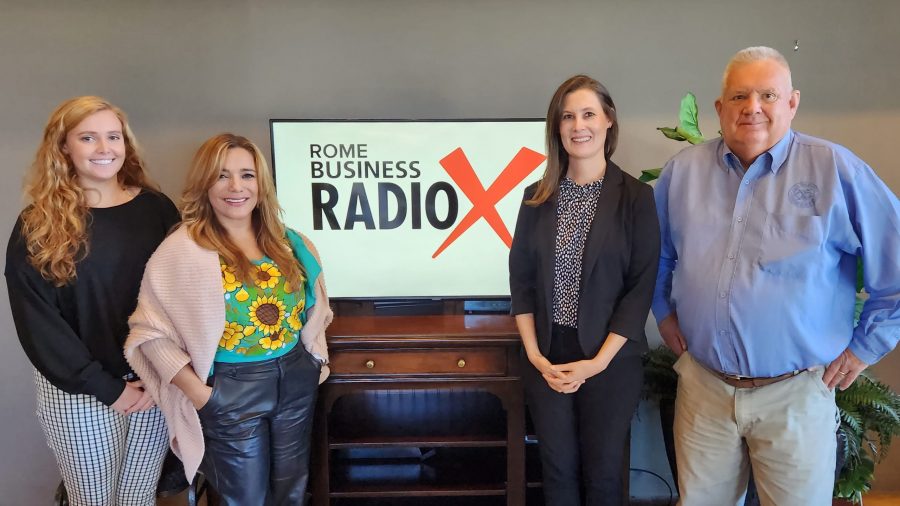
Rome Business Radio
Rome Floyd Chamber Small Business Spotlight - Robbie South with WealthWave (The How Money Works Company), Caris Barton with Magic Fingers Therapeutic Massage, and Mark Suroviec with WorkPlay Solutions
Loading
00:00 /
RSS Feed
Share
Link
Embed

Download file

2022-07-22 rome chamber pic 1 of 1

Tagged With: Caris Barton, Hardy on Broad, Hardy Realty, Hardy Realty Studio, Karley Parker, Magic Fingers Therapautic Massage, Mark Suroviec, Robbie South, Rome Floyd Chamber, Rome Floyd Chamber of Commerce, Rome Floyd County Business, Rome Floyd Small Business Spotlight, Rome News Tribune, The How Money Works Company, WealthWave, WorkPlay Solutions

BRX Pro Tip: 3 Benefits of Making Your Client Famous

July 22, 2022 by angishields

BRXmic99
BRX Pro Tips
BRX Pro Tip: 3 Benefits of Making Your Client Famous
Loading
00:00 /
RSS Feed
Share
Link
Embed

Download file

BRX-Banner

BRX Pro Tip: 3 Benefits of Making Your Client Famous

Stone Payton: [00:00:00] And we are back with Business RadioX Pro Tips. Lee Kantor and Stone Payton here with you. Lee, today’s topic, three benefits of making your client famous.

Lee Kantor: [00:00:11] Yeah. This is one of the things that is a point of differentiation between what we do at Business RadioX and what most other people in the media are doing. Most people in the media tend to do this because they want to be famous. They want to be the one whose face is on a billboard or on a bus.

Lee Kantor: [00:00:28] In our world, most of the people that are doing the work that we do is – our goal is to make our clients famous, to make our clients’ ability to get new clients. That’s a priority for us. So everything we’re doing is kind of to be the wingman or wing person for our clients in order to help them achieve the goal that they’re trying to achieve.

Lee Kantor: [00:00:49] So, some of the benefits of making your clients famous are, number one, they’re going to want to reciprocate back to you to thank you for what you did. There is that level of generosity is unusual and it’ll help you stand out. Number two is they’re more likely to share the message that you’re using to make them famous so that you get to come along for the ride. And, that’s one of the benefits that our clients and our studio partners realize pretty quickly, that when they are co-hosting a show or they are producing a show on behalf of a client, their brand gets to come along for the ride. They don’t have to do anything. They get the credential, they get the authority. They get the influence just by being the person that’s helping the other person out.

Lee Kantor: [00:01:32] So, it’s one of those counter-intuitive things that you don’t have to shout from the rooftops who you are. Just by sharing other people’s stories, just by helping your client become famous, you are coming along for the ride. You don’t have to say a word. And then, finally, you get that reputation in the industry of being that good, generous, good corporate citizen who genuinely cares about the whole ecosystem rather than a transactional-minded taker who only cares about themselves. Everything you’re doing is demonstrating that the value that you’re putting on the entire ecosystem and you’re holding up everybody.

Lee Kantor: [00:02:14] So, by holding up everybody, you get to be kind of that common thread, that point of that hub where you’re at the center of this ecosystem that’s important to you and you’re actually demonstrating the behavior of somebody who cares. And that, by helping your clients become famous, you get to become famous too without saying a word.

BRX Pro Tip: 4 Things You Can Steal From Super Bowl Winners

July 21, 2022 by angishields

BRXmic99
BRX Pro Tips
BRX Pro Tip: 4 Things You Can Steal From Super Bowl Winners
Loading
00:00 /
RSS Feed
Share
Link
Embed

Download file

BRX-Banner

BRX Pro Tip: 4 Things You Can Steal From Super Bowl Winners

Stone Payton: [00:00:00] And we are back with Business RadioX Pro Tips. Lee Kantor and Stone Payton here with you. Lee, let’s talk about four things you can steal from Super Bowl winning teams for your own business.

Lee Kantor: [00:00:14] Yeah. There’s a lot of things you can borrow from other successful entities. And, Super Bowl winners tend to have things in common that I think that you’ll be able to utilize in your business. The first thing they have in common is that they recruit A players. Whether they’ve trained them and drafted them right out of school or they’ve hired them from a competitor, having as many A players as you possibly can will accelerate the growth of your organization.

Lee Kantor: [00:00:42] Secondly, strategy matters. Do you have a solid game plan that is going to take you to where you want to go? You have to have a game plan that can withstand challenges, that can withstand, you know, negative outcomes and bad things happening. What do you – do you have a game plan in place that is going to get you through the rough times and to take you to the better times?

Lee Kantor: [00:01:05] Do you have systems in place? Number three. Do you have systems in place and processes in place that ensure that if you do have a misstep, that you do get back on track as quickly as possible and that your systems allow your people to focus in on their strengths and do the job that they have to do rather than everybody else’s job?

Lee Kantor: [00:01:28] And then, finally, are you practicing every day? Do you have repeatable activities that will give you predictable results that are going to take you to the outcome that you desire? If you are doing those four things, you have a much better chance of achieving the success that you desire.

Anna Kawar with Boys and Girls Club of America

July 21, 2022 by angishields

Anna-Kawar-Boys-and-Girls-Club-of-America
Cherokee Business Radio
Anna Kawar with Boys and Girls Club of America
Loading
00:00 /
RSS Feed
Share
Link
Embed

Download file

Boys-and-Girls-Club-of-America

Boys & Girls Clubs provide a safe haven for more than 4 million youth, giving them an opportunity to discover their great futures. Their mission is to enable all young people, especially those who need us most, to reach their full potential as productive, caring, responsible citizens.

Anna-Kawar-Boys-and-Girls-Club-of-America1Anna Kawar is a recent transplant to Georgia and originally grew up overseas in Ireland and the Middle East. She currently serves as a Senior Director of Implementation & Impact at Boys & Girls Clubs of America.

She has dedicated her career to supporting non-profits from diverse sectors in producing measureable outcomes for the people they serve.

She is passionate about continuous quality improvement, compassionate leadership, and ultimately, bettering the American social sector.

Connect with Anna on LinkedIn.

This transcript is machine transcribed by Sonix.

TRANSCRIPT

Intro: [00:00:08] Broadcasting live from the Business RadioX studios in Woodstock, Georgia. It’s time for Cherokee Business Radio. Now, here’s your host.

Sharon Cline: [00:00:23] Well, hello and welcome to the inaugural show. This is a new show called Fearless Formula on Cherokee Radio X. And this is where we talk about the ups and downs in the business world and offer words of wisdom for business success. And I am your host, Sharon Cline, and our guest in the studio currently serves as the Director of Implementation and Impact of Boys and Girls Clubs of America. And she has dedicated her career to supporting nonprofits from diverse sectors in producing measurable outcomes for the people they serve. I love your bio Ana. Please join me in welcoming Ana Kawar.

Anna Kawar: [00:01:00] Hey. Hi, Sharon.It’s great to be here.

Sharon Cline: [00:01:03] Thank you. I’m so happy you’ve made it to this studio today. So again, this is our first show called Fearless Formula. And I know we talk a lot about fearlessness, generally speaking, but actually it’s more about fear and how you manage it. So I wanted to talk to you a little bit about kind of your journey in coming from a different country, coming over here to the United States and kind of how you’ve gotten to the position you’re in. Oh, well, Boys and Girls Club, I know it’s a big broad, but you touch on what you want.

Anna Kawar: [00:01:31] Know it’s a good story. I feel like it really does all tie together for me. So I was born in the Middle East in Jordan. My father is originally Arab American. He was born and raised in New York, but his father is from Jordan. And then my mother is from Dublin, Ireland. So they met in the Middle East and I was born there and I spent most of my life there, although we would go back to the States every once in a while to visit my dad’s brothers and cousins. But one influential point in my life, my to the summer of ninth and 10th grade, my dad said to us, We’re moving to upstate New York. And we were living in Oman at the time, and I’d never been to an American high school, let alone actually live in the States for any amount of time that I could remember. And I was terrified. Absolutely terrified because.

Sharon Cline: [00:02:28] Yeah. What was it?

Anna Kawar: [00:02:29] Well, this and I think this is applicable to a lot of us, but we have you know, I had a lot of preconceived notions about what the states was like, especially especially the world of American teenagers.

Sharon Cline: [00:02:41] Let’s just you know, did you watch like Disney Channel?

Anna Kawar: [00:02:44] Well, first of all, yeah, Jordan TV had basically saved by The Bell Friends and Seinfeld and then, you know, just those typical movies and things about the jocks and the cheerleaders and the nerds and cliques and people getting beaten up and all of.

Sharon Cline: [00:03:01] That scare anybody.

Anna Kawar: [00:03:02] Yeah.So all you all I had in my mind was I’m not going to fit in. I was a nerd. I love school, loved school. My sister was way more popular than me. So she I already knew we were going to be in separate camps.

Sharon Cline: [00:03:15] But was it when you got here? Did it did it live up to your your expectations American?

Anna Kawar: [00:03:21] Well, luckily, we were in a smaller town in upstate New York. So there was there were definitely the groups and the cliques, but it was a small enough school that everybody still got along or knew each other. So I, you know, I fit in pretty well and I kind of had group. I had friends from all different groups, which is really nice. But the biggest thing that impacted me though was just the different the culture shock of going from really some of the poorest countries in the world to the richest country in the world, and the difference in how people live their lives and the issues that they face on a daily basis.

Sharon Cline: [00:04:02] So do you think that that influenced you in wanting to become associated with Boys and Girls Clubs and.

Anna Kawar: [00:04:08] Well, it really it really, I think is where my nonprofit career came from because what the way I say it now, looking back, I couldn’t understand why the richest country in the world had the problems that it did and why people were struggling so much. Though the one of the things that was very obvious to me was that, you know, coming from developing countries, people are resource poor, but their family and happiness rich is kind of how I think about it.

Sharon Cline: [00:04:41] Be interesting.

Anna Kawar: [00:04:42] Culturally. It’s a much more tribal culture. It’s much more based on your social network. That’s what gives you wealth, that’s what gives you status, is what’s your last name, who’s your family? Who are you connected to in the States? We’re very individualistic. We it’s much more about what you own, your resources. And so so if you’re not resource rich, you you kind of almost lose the ability to be happiness rich in this in a sense. And so people I noticed being in this small town in upstate New York where people were pretty poor, you know, living. In mobile homes and on farms and just not necessarily in a city where people had more money. They were also really struggling with broken families, substance abuse, just in very self destructive ways of living. And it confused me. It really confused me. It helped me understand a lot of things about my own family. But it it really confused me because I just thought, why can’t we figure out a way to fix these resource inefficiencies so that people can really live the lives that they could given, you know, what we have in this country? So that really kind of launched my obsession with wanting to fix the social system, not necessarily from a, you know, give everybody everything lens, but more like where are the where are the breakdowns?

Sharon Cline: [00:06:16] So fascinating because someone who lives in this grows up this way may not have that same exact perspective. So it’s a gift in a way for you to come in during your teenage years and see the world that you thought was going to be kind of like Disney, Disneyfied, yeah. Or whatever, and see it now kind of with a different lens. I love that because not everybody gets that gift. So it’s really actually says a lot about your character that you’ve continued on this path for your living. So tell me what you do. I know that you are the implementation and impact director, senior director. It’s very important. Boys and Girls Clubs tell me what that position is like for you.

Anna Kawar: [00:06:58] So essentially my job is to think about how we can improve the level of scale of implementation, which I’ll explain in a second, and the quality of impact. So the way I like to think about it is that we have a lot of great stuff at Boys and Girls Clubs of America, which is our national organization that serves all of the Boys and Girls clubs across the country who are all independent. 501 Threes We have no direct authority over them other than setting a minimum standard of compliance to certain rules and regulations. But they’re all their own organization, their own board, their own culture.

Sharon Cline: [00:07:36] I didn’t know that.

Anna Kawar: [00:07:37] Yeah, and not many people realize that. And so what we what we at National have to do is really through influence and through education. And so we have a lot of great stuff that we can that we’ve developed, that we have, that’s research based, that’s evidence based, that’s proven to work for impacting young people and helping set them up for success, that we need to get out there and help the individual clubs implement successfully. So it’s about building awareness that these tools and resources exist across. And we’re talking close to 1200 independent organizations that we’re trying to work with and and support. It’s a lot of moving parts.

Sharon Cline: [00:08:15] Yeah, I imagine so.

Anna Kawar: [00:08:17] Building awareness of what we have and then supporting them to implement it well and then and ultimately the goal then is to is to create a consistent level of quality across the country where a young person can walk into any single boys and girls club anywhere in the country and be promised the same level of outcomes and experience that we know really will impact them throughout their whole lives.

Sharon Cline: [00:08:42] What I love, too, is you’ve had a lot of celebrities associated with Boys and Girls clubs. So you can can you tell me a little bit about that? I know that we had spoken not long ago about oh, my goodness, Magic Johnson. Yeah, yes, yeah.

Anna Kawar: [00:08:55] Magic Johnson was at our national conference in May in Chicago and was a huge hit. He was he he went he went a little bit rogue in terms of what was planned for his session, but he delivered above and beyond. And it was so fun and people loved him.

Sharon Cline: [00:09:10] Did he talk about being associated with Boys and Girls clubs when he was younger?

Anna Kawar: [00:09:14] Yeah, so we have a number of celebrities that went to the clubs as children, a lot of NFL stars. Hulk Hogan is is associated Denzel Washington as our national spokesperson. So is Jennifer Lopez. We have Misty Copeland, the ballet dancer, learned ballet at Boys and Girls Clubs, was introduced to it. So we have a number of folks that have that went to clubs as children or as teenagers and were and really found their calling in some way through it or were just given a place where they were shown that somebody really cared about their future and felt motivated and supported to to pursue their dreams. And so a lot of folks then are kind enough to come back and share those stories with us, with with folks in the public. And Denzel Washington was just awarded the Presidential Medal of Honor for his service to Boys and Girls Clubs of America, which has been for almost three decades now. Wow. So, yeah, we have a great, great relationships with a lot of. People.

Anna Kawar: [00:10:23] It’s crazy because all of these children whose lives are impacting, there’s no way to see or measure what that exact impact is. So to be able to have people come back and say, this really meant something to my life, it must be very emotional, too. Is that what’s most satisfying for your job? What would you say is most satisfying to you?

Sharon Cline: [00:10:41] I think that for me personally, I know this sounds a little harsh, but I’ve never been one to want to directly work with a young person and and see, you know, I’m not a mother. I’ve I haven’t had children on my own. And and I, I love kids, but I’ve never been one to want to directly mold them or shape them. But what I, what I love doing is helping the people who are really good at that do that even better. So I worked with teachers before this job. I worked in California and education. So I worked with a lot of teachers and principals and school folks that are so unbelievably passionate about what they do and but yet can the system is so complex and they can get so stuck in the bureaucracy. And so my job was to help them break through and find ways to really impact youth in alongside all of the other stuff they had to deal with. But I love finding those paths to impact. I love I’m I’m a mapper. I love to say, okay, if this is where we want to be, how do we get there? What do we know works? What do we know from evidence? How can we test things? What data we need to collect? How can we stay youth focused? How can we stay aligned with our values? And you just said, you know, we don’t always know what’s going to impact a young person, but we do know a lot. One of the scariest statistics is that you can predict whether somebody is going to end up in the prison system by their third grade reading level.

Anna Kawar: [00:12:21] Oh, my goodness.

Sharon Cline: [00:12:22] So where? So there are prison organizations that literally plan for capacity based on the literacy rate of third graders. Oh, gosh, it’s it’s that it’s that predictable. And so we know so much about how to prevent negative outcomes, and we know a lot about how to build positive outcomes. And so that’s really my favorite thing in the world is to watch an organization really get super clear on that North Star and the path towards it and help them lead the way in doing that.

Sharon Cline: [00:12:58] Do you think that there are some some misconceptions about. Boys and Girls Clubs or your industry that you’re in. What are some things that you think that people don’t understand or would need to know?

Anna Kawar: [00:13:09] I think one of the biggest things that we battle is that Boys and Girls clubs are not just a daycare organization. You know, I think in practice it can feel that way because you drop them off and then you pick them up and they’re in this place while you’re at work or whatnot and they’re just playing and having fun. Yeah. But part of that mission of of preparing youth for the future is to ensure that there is a, a curriculum of a set of programs and really thoughtful structures that ensure that that young person is physically safe, emotionally safe and thriving and exposed to opportunities, exposed to ideas for their future and support in their academics. So when they’re in those walls, they are not just being kept physically safe, they are also being developed. And that’s that’s something a lot of folks don’t really understand.

Sharon Cline: [00:14:07] Well, on a personal sort of level, who are your mentors or people that you look to to sort of help navigate through not just this position, but a position you had previously through your career? Did you have a particular person or did you read a particular book that you thought was impactful?

Anna Kawar: [00:14:27] I think.

Anna Kawar: [00:14:28] That.

Anna Kawar: [00:14:29] From on the mentor level of why I’m doing what I’m doing now, I think, you know, I, I graduated from college. I was 21, I was went to Cornell University and I, I finished and I moved to Boston with my best friend at the time. And I had no idea, I honestly had no idea what I wanted to do for a job. I had studied public health. I sort of thought I wanted to go to medical school, but then I switched to public health and I started sending out resumes. And I ended up as an executive assistant at this at this nonprofit, health care nonprofit. And the CEO president CEO at the time was a man named Don Berwick, who I always say, you know, I drank the Kool-Aid very young because I started at 21 in this organization under his leadership and a woman, our chief operating officer was Maureen Bisignano, who was an amazing Bostonian woman with the best Boston accent.

Sharon Cline: [00:15:24] Oh, I love it. Wicked this. Oh, she was great.

Anna Kawar: [00:15:27] And the two of them were pioneers in the field of of quality improvement, specifically in health care. But for me, I fell in love with I thought I wanted to be in health care, but I fell in love with quality improvement. I fell in love with problem solving, with fixing stuff. And and so I’ve always been inspired by their work of really setting the tone and saying there is no reason why we can’t provide reliable outcomes in the social sector. That is kind of what has been my driving force. And but I think on a personal level, you know, I’ve I’ve had a lot of mentors in the sense that I have a lot of people that inspire me. One of my best friends, her name is Lavine. She’s out in San Francisco. We took some time together to work on a leadership development organization. She is I was call her like my soul sister because we went to high school together in Jordan. She’s from Sri Lanka and we graduated together in Jordan.

Sharon Cline: [00:16:36] And she came over here, too.

Anna Kawar: [00:16:37] And then she she ended up in the States as well. And we we she was she’s the person that has always helped me understand myself and my values and what matters to me. And I think if anything has helped me stay focused and manage fear and that imposter syndrome and feeling of doubt, it’s been staying in touch with that y literally feeling it in your chest like this matters to me. This is my purpose. This is why I’m here. This is important. And just I think sometimes I need to do that and just sit there and remind myself of why I’m doing something. And then all the anxiety kind of goes to the background.

Sharon Cline: [00:17:22] Well, if you’re just joining us, we are speaking with Anna Khoury. She is the senior director of implementation and impact at Boys and Girls Clubs of America. What I like that you just talked about is that it’s so easy. I mean, I live in imposter syndrome. That’s my calling card. I’m the best at mental torture and questioning whether or not I deserve anything anyway. I just really appreciate that. You mentioned how having a friend to kind of keep you on track and answer the why is actually so important. Because I get into my head where why is not even just because I want to do this because I want to do this or but having a why shifts the focus out of should I do I need to deserve this how am I good enough any of that but to having actually something to do a problem to solve it becomes about the problem and not about me, I guess. So. I really appreciate you brought that up because I hadn’t thought about it that way. And it’s wonderful that you had early on some very important people in your life that you can kind of go back to and remember what their philosophies are to to continue on with your journey right now.

Anna Kawar: [00:18:29] Yeah, I think I think from a professional standpoint, it took me a while of being a bit lost as we all are, and dealing with some of some of my own stuff from my past that has held me back. And I’ve been working through a lot of that. But but now looking back, it’s a lot it’s become easier to stay in touch with that. And and I think, you know, it’s funny because it it my own personal journey of trying to figure that out aligns with what I do for work. Because for me, a nonprofit organization that doesn’t understand its why and ultimately what it’s trying to accomplish is not going to get very far. And I think that is is true. It’s the same for people. I mean we if you have goals, you need to stay in touch with that y and make sure that it really resonates with you, with you, with your values, with your intentions. With your hopes for yourself.

Sharon Cline: [00:19:28] Do you think that’s how people can almost make, like I’m saying, their own fearless formula? There are ways to combat well in your industry or even just your position. What are some of the ups and downs that you experience that could potentially throw you off track?

Anna Kawar: [00:19:42] Well, I mean, you know, at a if you’re talking from an entrepreneur perspective, I’m sure that there’s a ton when I tried doing it on my own, I mean, I’m not well wired for entrepreneurship just because I I’m very externally motivated and I and I’m very extroverted and I need a lot of people around me. And, you know.

Sharon Cline: [00:20:03] Pandemic must have been hard for you.

Anna Kawar: [00:20:05] Yeah, that was really hard. But so I’m sure, you know, places like here in Woodstock where we have such an amazing entrepreneur community, I can’t imagine the value of that to to to people who are entrepreneurs. But being in a large organization, I mean, Boys and Girls Clubs is a complex animal. It’s massive. I mean, before the pandemic, we were serving 500,000 children would walk through the doors of Boys and Girls Club every day. Wow. We’re talking about half a million youth every day are in some Boys and Girls Club somewhere. And so the scale is immense. And then we have 500 staff or so at the national office. So when you’re working in the level of complexity like that, you can get really lost in both feeling, both being in your own head about what’s the point of doing this. It’s never going to get anywhere. I don’t even. Doesn’t even make sense or even to listen to me. Everybody’s got all these other things going on, you know, there’s that. But then there’s also just navigating the complexity of the organization. How do you get your strategy, your ideas out there? How do you you know, I’m very motivated by problem solving. I don’t care if it’s my idea or not my idea. I just want to solve the problem. So how do we get people in the room? How do we solve the problems? How do we move forward? That’s all that throws me for a loop and I get really overwhelmed. And some actually just had this experience this week where I was feeling super shut down and just very overwhelmed and frozen.

Sharon Cline: [00:21:36] Where do you find your inspiration to kind of come back from that? Because that can derail anybody. That happens to me probably once a day at least.

Anna Kawar: [00:21:42] Yeah. And this was bad. Like it was a couple of days in a row of feeling. Every time I started to do something, this just sinking feeling.

Sharon Cline: [00:21:51] How do you combat that?

Anna Kawar: [00:21:52] Yeah, I mean, I what I was I was lucky enough to have a I’m in a leadership program that that’s wrapping up. And I have an amazing pair of colleagues that were in a little peer coaching group with and we have this great executive coach. So this I’m lucky enough to have that resource and that call was literally that morning and I said, okay, well I guess I’m bringing this to the call even though I feel super vulnerable saying this. But I just was really honest. And and, you know, that’s one of the that’s actually a piece of feedback that I’ve gotten from colleagues is that I’m willing to be vulnerable and that inspires them. So I’m not afraid to go and say, I don’t know what I’m doing. I’m struggling, please help. And and that, I think, humanizes things for other people, too. And then we can have real conversations about what needs to be done. So I said to them, I feel frozen, I feel overwhelmed, I feel stupid for feeling this way because I know exactly what I need to do, but I can’t physically bring myself to do it because I’m so I’m just feeling very lost. And we had just had a whole conversation about purpose and getting tactical and taking it one step at a time. And, you know, we had a pretty high level conversation, but I think something clicked for me where I just said, Anna, do one thing at a time. And I got up on my whiteboard and I just brain dumped everything in my head and just kept massaging it and it came together into a plan. And all of a sudden I was like, Wow, I feel clearer. I feel clearer.

Sharon Cline: [00:23:23] I love the one step at a time because I get overwhelmed as well. But one of the reasons why I wanted to call this show Fearless Formula is because I think that is a very normal human emotion we all experience in so many different ways, and I let fear make decisions for me too often. And so I guess that’s kind of what I like is that when you talk about highlighting an emotion that we all can identify with, there is a level of bravery. It’s vulnerable, but there’s there’s bravery and vulnerability. And so being able to say, I’m over, I don’t even know what I’m doing. Like, that’s for me. I feel like that takes all of the ego and all of the bravado people carry and just kind of breaks it down to just your human. And I’m a human and this is how I feel, whether it has nothing to do with judgment, you know, it just is what it is. And I really appreciate your sharing that because I think many people, including myself, would be much more willing to be like, nah, you know, I’m good, I got it, I got it. But most of the time I’m inside, like. Saying out loud. I don’t think I got anything.

Anna Kawar: [00:24:29] Well, I think I think I can imagine. I know vulnerability is hard for a lot of people, but I think one thing that I like to think about for myself is fear can come from a lot of different places. And I think it’s important to think about where where is that fear coming from. So if I’m scared of being vulnerable, if I’m scared to admit that I’m stuck, why? Where is that fear coming from? Is it because I don’t want to look stupid? Is it because I’m shaming myself for not being able to figure this out myself? So I have colleagues who are much more concerned with status and what people think of them than I am. So for them, being vulnerable in that sense is really hard for me. What what drives my fear is I self shame and I say I should be able to do this.

Sharon Cline: [00:25:15] I’m yourself. I should myself all day long.

Anna Kawar: [00:25:18] There’s no good reason why I can’t do this myself. What’s wrong with you, Anna? So I have to. I have to use different tactics than somebody else would have to use to be vulnerable, because for them, maybe announcing it to a group of four people is a little bit harder. But finding one person you trust is a better way to do it. For me, I don’t mind if they know that I’m struggling, but what I do mind is being judged that I should know better. So I’m not going to go to somebody who’s going to tell me I’m an idiot because I can’t do it myself. Right? So I think I would my recommendation to people would be to get clear on what your where your fear is coming from in that sense, and pick a tactic that specifically addresses that so that you can be vulnerable and ask for help. Because that’s really, at the end of the day, what we all should get better at doing.

Sharon Cline: [00:26:02] What do you think you’re not afraid of anymore? What do you think? You’ve been able to kind of learn a good technique or I mean, tool or tool, something that will kind of help you to ground yourself some. I don’t know. I have been in therapy many times, so I have some techniques. Yeah.

Anna Kawar: [00:26:20] Join the club. You know, one thing that I. One thing that I have gotten better at and that has really helped me is getting more comfortable with the process. So part of that should has been like, I should know the answer and I should know what’s going to happen when and have and and be able to get there quickly. So I’ve gotten much more comfortable with the fact that things take time and I don’t know the answer now. And I have to let things unfold and I have to trust the process and I have to be patient and wait for results or wait for the knowledge or wait for the insight.

Sharon Cline: [00:26:58] So you tell yourself, I just need to be patient.

Anna Kawar: [00:27:01] I tell myself it’ll come out. I told myself so when I’m confused by something. I used to get really frustrated and I used to. And sometimes I would take that out on people around me, as in like, you need to explain this to me. This doesn’t make sense to me. And I would try to force the understanding, and now I’m much more willing to sit back and just let conversations unfold without needing to jump in, without needing to control the conversation, without needing to have an answer. And I just say, you know what? I’m just going to listen and see how this goes for a couple of days. And if I and then I not only will the answer maybe come, but the questions will come, the right questions will come. Because I don’t even know what the I don’t even know what questions to ask right now. And that is also on a personal level, too, like not rushing relationships, not having to have an answer is like what’s going to happen where this is going to go and what does this mean and and friendships and where your life is going and where should I where I grew up moving around the world. I’ve never had a home before, a place where I can put roots down. And I never knew that the first time I walked into Woodstock, I would say to myself, I love this town, I want to live here. And then a year later I buy a house here, and I had no idea that that was going to happen, but I trusted that somewhere would feel that way at some point and I’ve gotten better at that.

Sharon Cline: [00:28:25] Do you think that if like four years ago someone would have said in four years you’re going to own a house and you’re going to live in this town and you’re going to be sitting down roots and it’s not going to be so nomadic and you’re not a gypsy. And all of these things like. Would that have overwhelmed you at that moment? It’s so interesting to me that things happen in the time that you’re ready for them to happen or you allow things to happen when you’re ready. I guess.

Anna Kawar: [00:28:46] I agree. I mean, I was I was married and living in California four years ago. So that would have come as a very big shock. And also, I was still in a place where I was scared to settle down and to like put roots down somewhere because I wasn’t ready to face the fear of commitment that I needed to work through for my own from my own nomad upbringing.

Sharon Cline: [00:29:10] Sorry, it was a nomadic okay to say, because I don’t know if that’s a good word or not. Okay, well, if people wanted to contact you and want more information about what you do, or even more information about Boys and girls clubs or just even to chit chat. With you. What do you think would be the best way for them to contact you?

Anna Kawar: [00:29:28] Yeah, I use LinkedIn a lot so you can find me on LinkedIn and a QR. Ah, I know. It’s a it’s a it’s an Arabic last name. Boys and girls is America. I’m always on there so you can connect with me. I have a pretty big network too, so I’m always happy to connect people with other people. If you’re thinking about nonprofit careers or, you know, definitely happy to connect anyone to to folks they may want to talk to more.

Sharon Cline: [00:29:54] Well, Anna, thank you so much for joining us on. Thank you. I had so much fun chatting with you today. And I hope some people can take some good words of wisdom for themselves. And again, this is Sharon Cline. And I am reminding you that with wisdom and understanding, we can all have our own fearless formula. Have a great day.

Tagged With: Boys and Girls Club of America

Ed Fox with Tradebank Nashville

July 20, 2022 by angishields

Ed-Fox-Tradebank-Nashville
Nashville Business Radio
Ed Fox with Tradebank Nashville
Loading
00:00 /
RSS Feed
Share
Link
Embed

Download file

Ed-Fox-Tradebank-NashvilleAussie Ed Fox (AussieFox) is a lifelong entrepreneur. He started his first business at age 15, with only $80. He grew said business into a multi-million dollar enterprise, even bringing his parents into the fold.

Ed loves small businesses, dad jokes, and Nashville. Ed’s personality and positive attitude are larger than life and infectious. And his Aussie accent? Well, that just makes you want to sit down, shut up and listen to what he has to say. And these days, he wants to talk about helping Nashville do business in the “what’s old is new again” way – bartering.

Ed is the owner of Tradebank Nashville, an international barter exchange company founded in 1987 and headquartered in Georgia. Tradebank Nashville includes the metro area from north of Hendersonville, through Murfreesboro, Dickson and Columbia. Tradebank-Nashville-logo

Ed is making it his mission to teach business owners how to open networks they didn’t even know existed – through bartering. As Ed says, Tradebank is a way to “trade what you have to get what you need or want without spending cash.”

Ed also hosts the Nashville2 podcast, where he interviews other Nashville area small business owners, allowing them to highlight why they are “Nashville, Too.”

He has been married to his American-born wife Alice, for 32 years and the couple have three children.

Connect with Ed on LinkedIn and follow Tradebank on LinkedIn, Facebook, Twitter and Instagram.

What You’ll Learn in This Episode

  • How Ed got his start as a serial entrepreneur at age 15
  • Ed’s passion for small businesses and what drives him to succeed
  • How Ed first became interested in trading / bartering
  • What a professional trade is and how members can benefit
  • Misconceptions about belonging to a professional trading exchange

This transcript is machine transcribed by Sonix

TRANSCRIPT

Intro: [00:00:03] Broadcasting live from the Business RadioX Studios in Nashville, Tennessee. It’s time for Nashville Business Radio. Now here’s your host.

Stone Payton: [00:00:16] Welcome to another exciting and informative edition of Nashville Business Radio. Stone Payton here with you today. And you guys are in for a real treat. Please join me in welcoming to the broadcast with Trade Bank Nashville. Mr.. Ed Fox Good morning, sir.

Ed Fox: [00:00:34] Great Stone. How’s it going?

Stone Payton: [00:00:36] It is going well. Good. All right, there’s a clue. Sounds like you might be from a little bit south of here originally.

Ed Fox: [00:00:43] Yeah, I’m from the Deep South Southern Hemisphere.

Stone Payton: [00:00:48] Everything’s backwards down there, right? Like summer is winter in the. In the water flows. I don’t know. It’s just different, right?

Ed Fox: [00:00:56] It is, yeah. Like, so take Christmas Day, you go down the beach with a with a cold salad and it’s 100 degrees and. Yep.

Stone Payton: [00:01:05] So what brought you from Australia to to our fair land?

Ed Fox: [00:01:10] Well, you know, I tell people I wasn’t born here, but I got here as fast as I could, did all the paperwork, did it all legally. But actually, I met I met a wonderful girl who came to Australia on vacation and she walks up to me and she says, You spent so long flirting with them two New Zealand girls that I think you made me miss my bus for dinner. And even if you didn’t, you should take me out. And I look around and I say, Look back. And I said, I’ve heard of pushy American women. Now I’ve met one. Well, we’ve been married 32 years. Best thing I ever did.

Stone Payton: [00:01:40] Oh, my goodness. And your entrepreneurial journey, where you doing entrepreneurial kinds of things? Back. Back in the homeland?

Ed Fox: [00:01:48] Yeah. I grew up with a grandmother that was like one of the top ten Tupperware dealers in town. And all my aunts and uncles had some sort of business from a fried chicken restaurant to a, I guess you’d call it industrial salvage these days. We called it a junkyard back then, so they were all business owners. And so at seven years old, I told my grandmother, I said, Nan, when I grow up, I want to be a business owner too. And so I left school at 15 and started the first business.

Stone Payton: [00:02:16] And what was that business?

Ed Fox: [00:02:19] It was a convenience store. A little corner store had been shut down. No, no gas pumps, no petrol station, but just a little old fashioned general store on the corner. And the little old lady’s husband had passed away a couple of years ago and the shop had been empty. And I’d known her from we just lived around the corner and I walked up to her one day. I said, Mrs. Simpson, can I rent your shop? I’ve got a plan. She goes, Oh, you’ve got a plan, do you? So she said, Come on in and come on into the house and tell me your plan. And the next week I opened a convenience store with 80 bucks.

Stone Payton: [00:02:52] Wow. What a. That’s why I love to have these conversations. What an inspiring story. I mean, just sharing that story with other people in your in your ecosystem, in your world and letting them know that you were able to do that. I bet it’s a fun story to share and I bet people find it inspiring.

Ed Fox: [00:03:12] Well, I hope so. That’s the whole plan is, you know, you have to be authentic, right? You do you whatever that is for you, as long as you’re not hurting other people. So for me, the entrepreneurial journey, I get asked a lot, well, don’t you miss a formal education? Or do you think they want me to either support their argument that formal education isn’t needed or say that formal education is needed and we all pay for our education one way or another. I’ve spent hundreds of thousands of dollars on mistakes, right on business, and my wife has a degree and is a pharmacy manager for Kroger. And so she’s gone the formal route both can work, right? And so that’s what I want that story to say. Hey, look, if you’re a if you’re a young kid and you want to go into business, go into business, you know, if you want to go to college and get a degree and use that degree in some some other field, then do that. You do you.

Stone Payton: [00:04:03] All right. So let’s talk about Trade Bank a little bit. What got you interested in this whole idea, this this concept of bartering?

Ed Fox: [00:04:12] Well, bartering to me just made good sense when I opened the convenience store. One of the things we did back in 1983 was we had video rentals, right? So VHS and beta back in the day, that sort of dating myself. But we traded movie rentals for virtually everything we needed. So we used barter right from the get go to grow our business. And so when I came across Trademark and I’d always bought it stuff, even as kids and growing into adults, we all barter things all the time. You know, the wife says, look, if you take the kids to the park on Saturday, you know, then I’ll, you know, Sunday afternoon, you can watch football, you can do whatever you want. You know, that’s a barter, right? That’s something that you do well in business. It works the same way. Why pay cash? Why pay a retail price for an item when you could take your wholesale cost and barter that for their retail price item. So even if you break it down to like a bottle of water and a hot dog, right. Stone If I could if you’re the hotdog vendor and I’m the water guy, if I could trade you a bottle of water because you’re thirsty and I’m hungry and I want a hot dog. Well, we both get the value, but we haven’t had to spend the money.
Stone Payton: [00:05:24] I love it. Now I’m operating under the impression that Trade Bank just just provides some some structure and some scale and some convenience and ease of execution to this concept. Right. Because even though I might have a dozen eggs to trade, my neighbor may not have the bacon that I want to trade it for. Right.

Ed Fox: [00:05:45] Exactly. Exactly. So a managed platform is not something that people are very familiar with and we’ve forgotten how to barter. We I have people all the time that just follow their arms and say, I’d just rather pay cash. And I’m like, okay, let me get this straight. You’ve got a ten cent bottle of water that you bought in a case, and I can help you trade that for things you want at full retail boat, but you’d rather just pay the full, full retail price. That doesn’t make any sense to me. And so I realize it’s a failure on my behalf to educate properly. So when you take a managed barter platform and you plug them into the system, think of it like a you ever used cash app, Venmo or PayPal? It’s like an app, right? It’s an app we use on our phone. And and for you to send money to that people they have to be on the app or trade bank has the same sort of app only that you use it within the network. So if I’m a web designer and you’re a voiceover artist, maybe I need you to do some videos on my website, but you need a new website so you and I could barter directly. But like you said, if you’ve got eggs and you want my bacon, but I don’t have bacon, then that’s not going to work. So by using a barter platform app, you can trade what you have with other people that don’t necessarily have anything to trade with you because you’re using the barter currency instead.

Stone Payton: [00:07:02] So are you finding that there are certain industries, certain professional practices, certain types of businesses that really gravitate to this kind of kind of thing and really do well with it?

Ed Fox: [00:07:19] There are industries that do well with it. But more than that, as you’ve come across, I’m sure across the years, it’s more about the attitude of the person behind the business. If they if they grasp the concept, if they grasp the concept of their cost of goods being traded for somebody else’s retail price, and then saving and leveraging that margin and putting that back in their pocket by not having to spend it. It really could work with virtually any industry. Now, there are some legal requirements that certain industries can’t use it, right? If I’m an insurance salesman, I can’t take your premium in barter currency. I’m not allowed to do that. But if I’m a restaurant, if I’m a coffee shop, if I’m a voiceover artist, a web designer, a podiatrist, a lazy guy surgeon, a plastic surgeon, a, you know, basically any other field that can accept cash, can accept barter currency.

Stone Payton: [00:08:14] All right, so let’s talk about me. It’s my show, and it’s my favorite subject. But. But, no, I think it’d be a great way for me to really get my arms around this and helpful for our listeners. Let’s play this through for a moment. So I work with Business Radio X. I own a pretty big percentage of the overall network, but I also I run a business radio studio in Cherokee County, Georgia. You and I were talking before we went on air. There’s a guy here locally that runs the trade bank for this area. Play that like, how would that work for me? Oh, and just to give you some insight on our business model, we don’t charge people to be on the show, obviously, but but professional services, B2B people pay us money to help them design shows that help them use the platform to build relationships. And and so that’s our business model. We’ve been doing it for a long time. So those are, you know, I’m looking for those kinds of clients and then I use all kinds of services. Interesting. You should mention voiceover artists. We use voiceover artists to do our intros and outros and that kind of stuff. So what might that look like for a guy like me, like the onboarding process and how I can get the most out, if you don’t mind. Walk us through that.

Ed Fox: [00:09:29] Yeah, you bet. So having the studio, there’s probably times when the studio is not being used. Would that be correct?

Stone Payton: [00:09:36] Oh, yeah, that’s cool.

Ed Fox: [00:09:38] So that is an booked revenue, right? So if you have if you have an an a studio or a dentist office or whatever and we’re talking in your specific case, you have time in the studio that you’re not getting paid for, get paid for that in barter currency. In turn, take that barter currency. Hire one of my voiceover artists from Nashville, one of my voiceover artists from Wichita, Kansas. I own both those regions. That means that you the cash that you would normally spend on those voiceover artists is back in your pocket because you’re using the barter currency currency and transacting through the app. So you would rent out studio time. Maybe if you do advertising, you would would make some ads for people, you would sell those on barter and then you would take those barter dollars and offset some of your expenses by using barter dollars instead of using your cash. Now you’ve got a whole new revenue stream and you’ve offset some of your regular expenses. So what does that do with the cash that you were spending on those voiceover artists? Now that you’re spending, barter on them that puts that cash back in your pocket. So that makes you healthier, a business, healthier all the way around.

Stone Payton: [00:10:46] So it just dawned on me as you were talking, I suspect that there’s this whole group of people that are already part of the system. Again, here in my world to here here in in Georgia. And so it’s also sort of putting me out there in front of that group, isn’t it? It’s it’s it’s another method for getting the word out about the work that we do.

Ed Fox: [00:11:10] Right. Exactly. It opens you up to a whole new network. You know, sometimes people don’t realize that that all these other networks that are out there I had a financial planner friend who was a gamer. She played she did cosplay and she went to conventions. I said, that’s a whole new market that most financial planners won’t tap into. So now we relate that to Bada Stone. This is a whole network. We have about 4500 members. We’re a boutique barter exchange across southeast United States from Florida, across to Alabama, up to Wichita, Kansas. And there is franchise cities in there. And and the guy you were talking about in the Atlanta area, Lee Conner, would be a great guy to talk to about this if you’re in the Atlanta area. And that would open you up to that network, as you said.

Stone Payton: [00:12:00] So how does the and I ask this question, I come from sort of the sales and marketing side of training and consulting a long, long time ago when I had something more akin to a real job. So it’s how my mindset works. But I’m always interested to know, like, how the whole sales and marketing thing works. And I ask this of attorneys and CPAs and marketing consultants how does the whole sales and marketing thing work for for a guy like you with these multiple entities that are that are doing this business? How do you get to, I don’t know, have conversations like this, I guess.

Ed Fox: [00:12:39] Putting yourself out there the way most other business owners do, joining a chamber, joining a networking group like a BMI or something equivalent A.I. maybe, and just putting yourself out there in front of people. Right. I’m in the process of writing a book. It’s called Be Authentic. Unless you’re a serial killer, then don’t be. That changed. So. So the idea being that if we’re authentic. Right, unless we’re a jerk, right? If we’re a jerk, we need to check. You know, there’s people say, oh, I’m a I just have to accept me for the way I am. No, no, no, you don’t. You can’t build relationships if you’re not a nice person. So be a nice person. So it’s the same with any business. We’re all trying to reach new customers, and I think we’ve forgotten how to be authentic. We’ve forgotten how to share our concerns and our worries. And people think that salespeople are always out there to sell. They’re not. They’re out there to solve problems. And if I solve your problem, is it okay that I make some money because I solved your problem? That’s what I do. So it’s the same thing. Build a network, get out there, meet that network, and invite them to participate in whatever your product or service is.

Stone Payton: [00:13:48] So starting on this entrepreneurial journey, so young, having that success, did you have an opportunity? Did you have some mentors along the way? In the second part of that question, are you finding that now you have some opportunities to to mentor others?

Ed Fox: [00:14:09] Yeah. So you hit the nail on the head of what really drives me right now is I can’t I can’t say I’m a self-made man. Right. Because there’s been so many people that helped me up. So when I started the convenience store with $80, I talked to our at that time, we still had a milkman. He still delivered milk, 1983 in Australia, a little country town, 20,000 people. And I said his name was Ralph Lane, old guy, but he could still carry around cases of milk. And I said, Would you put them in on consignment? He’s like, Do I need cash? I said, But what if you put in like 100 liters on Monday morning and then Tuesday morning I pay you for whatever I sold the day before, and he did that. And so he put them in on consignment, patted me on the head, said, I want to help you out. You’re it’s exciting. We didn’t use the word entrepreneur back then. We said business owner. So he says, exciting to have a kid as a business owner. And then he brings me three or four other guys that put their stuff in on consignment. So all of those guys were mentoring the guys and gals were mentoring me and helping me grow my business to the point that we did 100,000 in 1983, the first year, I didn’t have a clue what.

Stone Payton: [00:15:17] I was doing.

Ed Fox: [00:15:18] You know, 1980, $300,000 for a 15 year old kid. And, you know, mum and dad, I didn’t have a license in Australia. You can’t get a license till you turn 18. So they would deliver the newspapers to the shop and they would buy the groceries and stuff for me, stuff I couldn’t get done. And so again they helped me. Second year they come in and they said, Look, dude, you’re killing yourself. Let us help you build it. Second year we did 300,000, right? And then we we built it up to about half a million. And then I stopped tracking it. It just just kept growing. And then we finally sold it after five years. But it was all about having mentors to help me and learn the steps along the way. And now I’m able to do that for business owners. I’m able to take people that maybe solo entrepreneurs, maybe they don’t know their marketing, they don’t know their advertising, they don’t know what to do. They don’t know how to get their business off the ground. And I love talking on business topics. I love talking business. I love talking and promoting. I have a real passion. Everybody should have a side hustle.

Stone Payton: [00:16:17] Hmm. Well, and I got to believe people love to just hear you talk, right? Don’t you get a little mileage out of that? Awesome.

Ed Fox: [00:16:25] Thank you. And you have some funny conversations like 4th of July, right? So I’m an American citizen. I say Australian by birth, American by choice. I mean, I love to visit Australia. I miss family. But given the opportunities in America, I love Tennessee, I love Kansas. We lived in Kentucky for a year. I love that. I just love those free states. Right. And coming from Australia, which is very controlled, I wanted that freedom and for me, I had a guy the other day says, Do you have 4th of July in Australia? I said, Yeah, it’s right after 3rd of July. Yeah, I’m a bit of a smart aleck, what can I say? You know, they say, Where is your accent come from? I said, me mouth like, No, no, no, where are you from? I said, Well, as long as you don’t say New Zealand, we’re good. I said, I’m from the South. I say, G’day ya’ll, when I want to confuse people.

Stone Payton: [00:17:19] Oh, nice.

Ed Fox: [00:17:21] So I have I have fun with that conversation. It opens doors, you know, I say to people, I say, look, hey, when you go networking, the easiest thing to do is throw out your hand and say, Good day. My name’s Ed. Of course I wouldn’t use today and I wouldn’t use it. I’d use your own name. But, you know, that’s the way that’s the way I say, look, if you need an icebreaker, you say this, say hi. How much does a polar bear weigh? They go, Oh, no, it’s enough to break the ice. My name’s Bob, so I’ve written a couple of Dead Joke books. I do a tick tock channel with nothing but dad jokes. But you know, when you have businesses, when you have multiple different businesses and you’re trying to promote and market the businesses, people want to know the person behind the business. You know, we we in America, Australia, most of the Westernized world, we love chains, right? We love the branding. We love being marketed to. Although we say we don’t, we love being marketed to, but they want we want to be marketed to in the way that is interesting to us. And so most of the time, I find I want to know the person behind the brand like I with you. Stone I would if we were close. I’d love to go out and have a beer or a Coke or a coffee, have something to eat, learn more about what you do, and then I would know better on how to help you utilize Beda to grow your business, right?

Stone Payton: [00:18:43] Yeah. So what you’re saying is Lee should buy me a beer.

Ed Fox: [00:18:48] Lee should buy you a beer?

Stone Payton: [00:18:49] Yeah. Okay.

Ed Fox: [00:18:50] Tell him that I’ll send him a message after we get off this call. And and I’ll. I’ll text you the fantastic.

Stone Payton: [00:18:56] So I know in my world there are at least a handful of what would I call them? Misconceptions. There’s some misinformation. There are some assumptions about what we do and what we’re. Out. And our work gets confused with some other kind of media approaches. I got to believe that there are probably a few just misconceptions, some patterns that you run into that you that you need to clear up to genuinely serve someone. Is that accurate? And if so, can you share a couple of these?

Ed Fox: [00:19:29] Yeah, you bet it is accurate. Number one, awareness. People don’t realize that a managed barter platform is out there or let’s just say Bada. They don’t realize that Bada is done on a high level as well as on an everyday level. They think about Bada with farmers and agriculture, right? Like you said, eggs for baking, but they don’t realize that. But it can happen on a high level. I like telling the story of Pepsi. Pepsi back in the sixties traded billion dollars of Pepsi products for $1,000,000,000 of vodka from Russia. In the eighties. They traded $3 Billion of Pepsi products, and Pepsi became the sixth largest military in the world for a brief period of time because they traded for $3 Billion in decommissioned naval assets, including 17 submarines, a frigate and destroyer now who thinks of Pepsi becoming a military power because they bought a soft drink for military hardware. You know, that’s a barter deal that you would never think of. So there’s misconception out there that barter is not used in today’s economy, but 92% of Fortune 500 companies barter.

Stone Payton: [00:20:40] Wow.

Ed Fox: [00:20:41] Do it all the time. If you just Google search Baidu and do a Google alerts on different things that are busted. So at my level, I get misconceptions like, oh, it’s it’s a cryptocurrency. No, it’s not a cryptocurrency. It’s actually been operating for 35 years or started in the Atlanta market. 35 years it’s been around. Sold their first franchise in 94, I think it was. And teaching people that, you know what? Bada can be as good as cash and in fact it can sometimes be smarter. So one of the one of the misconceptions I break down is I say, stone, if I have $100 cash to put in one hand or we have 100 trade bank barter dollars to put in the other hand. Looks like Monopoly money, but it isn’t. You know, it’s a it’s not a physical note. It’s on the app. If if I let you keep the $100 cash, if we go eat somewhere on trade or we go eat somewhere for cash, and you keep the $100, 99.9% of the time, if people understand it, they’ll say, well, I want to keep the cash.

Stone Payton: [00:21:46] Right, right. I want to.

Ed Fox: [00:21:47] Keep cash and let’s spend your your bot adults, because cash to me has more value. So you’re saying that cash is king, but what you’ve actually told me is, hey, Ed, wouldn’t it be smarter to spend the barter?

Stone Payton: [00:22:02] Well, of course.

Ed Fox: [00:22:03] You’ve just told me that. Oh, I’m going to keep the cash, because cash is king. But what you’ve actually said is it’s smarter to spend the ibotta because we’re going to drive by for burger restaurants to get to the Fifth because he accepts barter. So he’s outbid all his competition for your business by accepting barter dollars. And they go, Yeah, but what’s the benefit to him? Well, now he takes those barter dollars and he buys advertising. We just did, I think we did, up to $2 million on Yellowstone when they launched on Paramount Plus and Peacock, we were able to sell commercials for barter dollars. We had a firm here in Franklin, Tennessee, that does phone services, and they called one called technology. They do voice over IP phone services. And they were able to buy 1000 ads during Yellowstone in a Franklin zip code for two barter dollars and add 1,032nd ads for $2,000. Wow. They can’t they can’t get that exposure anywhere else. And they use the line frustrated by business phone service have rip take it to the train station. It worked great. And then they sent out postcards, but they were able to spend their barter dollars instead of spending their cash. So any time you can spend barter dollars instead of spending your cash, that means more money staying in your pocket. And if we are actually going into a recession, you know, the media would like us to think we’re going into recession.

Ed Fox: [00:23:26] I’m not an economist. I don’t know if we are or not, but I can tell you that if we have that mindset, that it’s going to be a recession. Do you want to spend 100 cents on the dollar for things you need, or would you like to spend $0.50 on the dollar or less because you’re spending that wholesale dollar? So busting down the myths, number one, educating and making people aware that a managed barter platform even exists. Right? That is available to virtually every business out there to get new customers and open up new networks and create new revenue streams without changing their processes. All it is is it go. My wife is a pharmacist and she says it’s like buying in-network or out-of-network. When you have health insurance, if you have health insurance and you shop in network, you save money, right. If you have health insurance, but you go outside of the network that the health insurance provides, you have to pay more. Well, do you want to pay more or less when you are when you have health insurance, you stay with the network. Well, BART is the same way if you’re a trade bank member and you have the option of of buying time on the radio with barter dollars instead of paying cash, that means more cash stays in your pocket to grow your business, feed your family.

Stone Payton: [00:24:39] Well, I’m glad I asked, because, yes, I suspect that all of those are initial thoughts that people will have till they get a chance to have a conversation with you. You strike me as a guy who rarely gets down and you know, I know you’re human. So surely you run out of juice now, now and again. Where do you go? And I don’t necessarily mean a physical place, but how do you recharge the batteries? Where do you go for inspiration?

Ed Fox: [00:25:07] Right. So one of the challenges. Yeah, sure. Depression is something that has run in my family for a long time. I love the fact that in this day and age we can talk about mental health. And so when I get depressed, if you’re on my Facebook page, you will see me do a run of dad jokes and I’ll post a bunch of memes and a bunch of dead jokes. I read an article in Harvard Business Review back in 2014 and it said something paraphrased like the average three year old laughs 200 times a day. And the average 40 year old 12.

Stone Payton: [00:25:39] Wow.

Ed Fox: [00:25:40] That is true. Right. We we don’t have enough laughter. And, you know, Reader’s Digest, I don’t know if you’ve ever read the Reader’s Digest, but they have a page in there called Laughter’s the Best Medicine. And I’ve heard from people that, you know, if you feel down, just start laughing, laughing out loud. Well, you know, we can’t in a work environment or whatever, people think we’re crazy anyway. But but I find when you can make people smile and you can make people laugh, it lightens their heart and keeps them healthy. And so for me, humor is the way I do that. So when I get down, number one, I’m married to the most wonderful wife in the world, and that’s trademark. We’ve been married 32 years. But number two, laughter is the key for me and taking your eyes off yourself and do something for somebody else. So I have people reach out to me through networks like Allina Bell and LinkedIn and Facebook on social media, and then through the chamber and through BMI groups and say, Hey, Edward, you’ve got a lot of skills in marketing and your own personal brand. And, and I would just like to learn from you. And so when I’m depressed, if I can take my eyes off myself and help them briefly, it makes me feel better.

Stone Payton: [00:26:49] What a great piece of counsel right there. All right. So before we wrap, let’s make sure that our listeners know how to get in touch with you, have a conversation with you or or someone on your team, whatever you feel like is appropriate. The social media channels, web website. But I want to make sure that these folks can reach out.

Ed Fox: [00:27:08] Yeah, you bet. So probably the easiest way to see everything that I do and it’s a little messy, but I use a little app called Link Tree. And so it’s link dot E that’s the domain forward slash Ozzy Fox, a U.S. Fox. So link tree Ford slash OSI Fox would take you to all of my different medias, but you can find me on LinkedIn, OSI Fox, USC Fox. You can find me on Facebook under the same thing. I’m all over the place. Just search Edward Fox, Nashville or Edward Fox Wichita on Google and I pop up and it’s either going to be for the sport of cricket or dad jokes or barter because those are the big ideas.

Stone Payton: [00:27:52] Those are the big three. Well, Ed, it has been an absolute delight having you on on the show, man. We certainly appreciate the work that you’re doing. And we want to continue to follow the story. And please, as your book, as you put that book out, please reach back out and let’s let’s catch up on on all three of those things. Okay?

Ed Fox: [00:28:14] Yeah, that’d be great. I love ketchup.

Stone Payton: [00:28:19] Oh, my goodness. Well, thank you. Thanks again, man. This has been a great deal of fun and very informative.

Ed Fox: [00:28:27] Yeah, no, our extend. Thanks for having me.

Stone Payton: [00:28:29] All right. This is Stone Payton for our guest today, Ed Fox with Trade Bank Nashville and of course, dad joke extraordinaire and everyone here at the Business RadioX family saying we’ll see you next time on Nashville Business Radio.

Tagged With: Tradebank Nashville

WBENC 2022: Sara Webb with Intandem Promotions

July 20, 2022 by angishields

Sara-Webb-GWBC-WBENC-National-Conference
GWBC Radio
WBENC 2022: Sara Webb with Intandem Promotions
Loading
00:00 /
RSS Feed
Share
Link
Embed

Download file

Sara-Webb-GWBC-WBENC-National-ConferenceSara Webb, Intandem Promotions

TRANSCRIPT

Intro: [00:00:04] Broadcasting live from the Business RadioX Studios in Atlanta, Georgia, it’s time for GWBC Radio’s Open for Business. Now, here’s your host.

Lee Kantor: [00:00:18] Lee Kantor here broadcasting live from the WBENC National Conference 2022 inside the Georgia World Congress Center. And we are inside the GWBC booth, Booth 1812, if you want to come by and check us out. I am so excited to have with us right now Sara Webb. She is the CEO of InTandem Promotions. Welcome, Sara.

Sara Webb: [00:00:40] So glad to be here in person.

Lee Kantor: [00:00:43] In person.

Sara Webb: [00:00:44] After all this time. Love It.

Lee Kantor: [00:00:46] After multiple Zoom interviews, we are now here in person.

Sara Webb: [00:00:48] Thank God.

Lee Kantor: [00:00:50] I didn’t see you here yesterday, but I saw your work. I saw all of these beautiful GWBC tennis shoes that have been roaming around here, and I heard that you might have played a part in that.

Sara Webb: [00:01:02] Aren’t they so fun? So, we get to create emotional connections through tangible products. So, as the team is walking around, you’re seeing their logo, you’re seeing the brand, and it creates that connection that draws them in to both the booth as well as to what do you do. It creates those conversation opportunities.

Lee Kantor: [00:01:22] Right. It’s a surprise and delight moment because you don’t expect to see that there.

Sara Webb: [00:01:28] A hundred percent.

Lee Kantor: [00:01:28] And so, how did this whole tennis shoe idea come about?

Sara Webb: [00:01:33] It’s so fun. Well, you know, we knew that we were going to do a lot of walking. There’s just a few steps a day. I haven’t tracked where I am today, but yesterday I was up to about 25,000 steps. So, yes, my high heeled shoes just were not going to cut it. So, it was a great opportunity for us to leverage both branding as well as comfort.

Sara Webb: [00:01:53] And what’s really cool is that you can do as little as one version. So, just an order of one. There’s lots of different styles, lots of different imprint. And what’s really great is that we get to custom create them. So, we can do full color, we can dye sublimate. And what I really, really, really like about it is that I don’t have to have the same style for every single team member. You can have Vans, you can have sneakers. And that’s what’s really cool about what I do is actually making product that fits the demographic that you’re trying to attract.

Lee Kantor: [00:02:26] And in the environment that they’re going to be using it.

Sara Webb: [00:02:29] A hundred percent.

Lee Kantor: [00:02:30] So, now I would imagine you created this for the GWBC folks. Has every single place been calling you and saying, “Hey, how did they get that? How do I get that?”

Sara Webb: [00:02:43] We have gotten some great business, so we definitely appreciate GWBC’s support as we’re continuing to draw people too. But we have a booth here, we’re Booth 2212.

Lee Kantor: [00:02:53] 2212, down a few rows away.

Sara Webb: [00:02:55] Down just a couple of rows. But we’re also doing onsite, on demand t-shirts. And it’s crazy right now. They literally had to pull me out of my booth to come and talk.

Lee Kantor: [00:03:07] Sorry. Sorry.

Sara Webb: [00:03:07] I mean, not that I would never want to. I mean, I love talking to you, Lee.

Lee Kantor: [00:03:11] I thought you like to talk.

Sara Webb: [00:03:11] You’re one of my favorites, but, like, we had a line that was wrapped around.

Lee Kantor: [00:03:15] People like shirts.

Sara Webb: [00:03:17] They love shirts. And then, being able to have that custom personalized experience, that’s what’s so cool about what we do in our online stores, is that, employees are able to pick product based off of what they like. And the corporates aren’t having to house this huge inventory quantities. We’re shipping globally as well as domestically. We’re in multiple locations. And so, it really creates this personalized experience for clients.

Lee Kantor: [00:03:42] They’re done at scale.

Sara Webb: [00:03:43] Done at scale.

Lee Kantor: [00:03:43] That’s the beauty.

Sara Webb: [00:03:44] And it’s here.

Lee Kantor: [00:03:45] It feels personalized. It feels like a one off. But it can be done for everybody.

Sara Webb: [00:03:49] A hundred percent. And that’s what’s so cool about where we are in this industry and in this time.

Lee Kantor: [00:03:53] Yeah. Well, technology allows that to happen. Because it wasn’t too long ago that would have been impossible or you would have to be a gazillionaire to afford this stuff.

Sara Webb: [00:04:01] Well, the craziest thing is that when I started in this business, I literally had proofs come across on a fax machine on my desk. I mean, I was too, but besides that.

Lee Kantor: [00:04:12] Right. So, now, how has being involved with GWBC and the WBENC impacted your business? Has it opened the doors for these large corporate kind of clients? Has that opportunity kind of presented itself because of that?

Sara Webb: [00:04:28] Absolutely. There’s no way that we would be where we are without the support of GWBC and WBENC. Between the two organizations, their connections, and then we’re also a member of We-Connect as well globally. So, having the opportunity to be in front to show what we do, to have the conversations, and to really have those opportunities, not even from a business perspective in terms of buying and selling, but understanding what the market actually needs and is looking for and how we scale our business going forward. And that’s really been pivotal for us as we continue to build and grow in the next decade.

Lee Kantor: [00:05:05] And that’s an important thing for people who are not members yet or are considering being a member. You learn so much from the other business people that are part of the community, right? Like, they can open doors for you or just make you aware of things that are happening in industries maybe you’re not as familiar with, that that’s you’re kind of sweet spot. And then, you can kind of say, “Oh, that idea, if that’s working over there, why don’t we try it over here?” Like, just from a community and education standpoint, the value of being part of the organization is worth it.

Sara Webb: [00:05:35] Absolutely. So, I’m having the opportunity to talk to different companies as they’re standing in line waiting for their free shirt. And while I’m doing that, I’m hearing all sorts of stories, their own personal journeys and things that they’ve experienced, and talking about pitfalls and opportunities where they’ve shown, and how they managed and who to contact. And that’s from other WBEs just here at this conference.

Lee Kantor: [00:06:00] That are in line. This random serendipitous conversations.

Sara Webb: [00:06:05] Yes. Yes.

Lee Kantor: [00:06:05] And you learn just from that. I mean, imagine if you put energy and kind of worked it on purpose, then strategically, I mean, the sky’s the limit.

Sara Webb: [00:06:13] Exactly. Exactly. So, you know, having the corporates here helps, but having the WBEs and the support, it’s so great.

Lee Kantor: [00:06:19] Don’t sleep on that part of the membership.

Sara Webb: [00:06:22] It’s so great. It’s so great. I mean, in my booth, they saw how slammed we were. And I had fellow WBEs come and help support us pulling shirts. True story. True story.

Lee Kantor: [00:06:32] Wow. True story. I mean, that’s the power of the community. It isn’t one of those organizations where everybody’s kind of angling to get one step ahead of each other. We’re all working together and we’re trying to hold each other up.

Sara Webb: [00:06:42] Absolutely. Absolutely.

Lee Kantor: [00:06:44] So, now, any story you can share from your work in creating these promotions for folks that you helped. You came up with an idea, maybe it was silly, maybe it was an out there idea. And then, someone said, “Yeah. Let’s go for it. Let’s be bold,” because that’s a theme here. And then, they did something that kind of was a game changer for them.

Sara Webb: [00:07:05] I think one of the cool projects that we just completed was for a large company, and they were looking for a solution in terms of we don’t want to ship all the products. We don’t want the clients to have to come to the event and then have to take it back home with them. How do we run and manage this?

Sara Webb: [00:07:24] And so, we created individual kiosks for this client. And where this was really a game changer for us, is that, as I shared, we’re creating emotional connections from tangible products. So, when you have that experience, when you go to an event and you’re taking something away, how does that make you feel? And so, we created these individual kiosks. They were able to go in and customize. So, having that personal touch, being able to pick the product. And then, at our warehouse and fulfillment center, the orders were being received and it’s going to be delivered when they get home.

Lee Kantor: [00:07:57] So, it’ll be there when they get home?

Sara Webb: [00:07:59] They’re not having to pack it, they’re not having to worry about shipping it or any of that. And that’s really a game changer for us. And the thought concept of how do we –

Lee Kantor: [00:08:09] Exchanging the paradigm, right?

Sara Webb: [00:08:10] Exactly.

Lee Kantor: [00:08:10] You were thinking of, “I got to make something and hand it to them and they take it.” But it doesn’t have to be that way.

Sara Webb: [00:08:15] It doesn’t. It doesn’t. And that’s what’s so great about, like you said, technology and how things are growing. And then, having the connections and the partnerships and the warehouse and the fulfillment. And that was huge and game changing for us during the pandemic, because when that happened, nobody was home. Corporates weren’t keeping product in their house or at their corporate location.

Lee Kantor: [00:08:40] In the warehouse. Right.

Sara Webb: [00:08:41] We were having to ship it. And so, really leveraging some of those learnings of what has happened from the pandemic and then actually moving them.

Lee Kantor: [00:08:48] Having used that moving forward.

Sara Webb: [00:08:50] Yes.

Lee Kantor: [00:08:51] Yeah. I mean, it shows when you’re in kind of this chaos or a crises, there’s opportunity even in there. And there could be a silver lining that’s going to pay off down the road if you just open your mind to it.

Sara Webb: [00:09:04] Well, I have a very funny story that happened, and it’s funny now because I’m on the other side.

Lee Kantor: [00:09:08] It’s funnier now on the other side. Right. It wasn’t funny when it was happening.

Sara Webb: [00:09:11] So, we knew that we were going to do on-site custom printing. We had partnered with a company to help us to have the screen printer run the machine and support us from that avenue. Supply chain, all the crazy things, all those scary words that we’ve all heard. 4:00 a.m. on Tuesday morning, I got a text saying this isn’t going to happen. And I had purchased 2,000 t-shirts.

Lee Kantor: [00:09:34] Yeah. As one would.

Sara Webb: [00:09:36] Every one of my shirts is tagged with our brand. We had the logo. Whole half of my booth was shirts that I wasn’t going to give away not imprinted. And so, to your point, as an entrepreneur, you just make it happen.

Lee Kantor: [00:09:50] Make it happen.

Sara Webb: [00:09:51] So, literally, I bought the equipment. I found an individual that has saved my soul, that I will make sure it’s very well taken care of. And they’re on site. We’re doing it. And that’s what it takes.

Sara Webb: [00:10:08] I actually just posted this on my Instagram, I read this quote where it said, “All of this that you’re going through is the universe trying to test you to see if this is what you really want.” And I’m like, “Yes. I still want this.” You know, we’re nine years in as a company and organization. This is my 22nd year of being in this industry. And every day it’s a new challenge, but being able to, you know, leverage and learn and continue to grow and just keep making it happen.

Lee Kantor: [00:10:37] Well, one of my favorite books is called The Obstacle Is The Way. And if you reframe it to the obstacle isn’t there to be in my way, it’s just part of the journey. And part of the journey means I have to climb over this big rock that’s in the middle of the road, or I have to go around it, or I have to go under it, or I have to go through it. That’s just part of the journey. It’s not there to sabotage me. It’s there for me.

Lee Kantor: [00:11:00] So, that’s one of my favorite books. You should check it out. Ryan Holiday, The Obstacle Is The Way. It really reframed how I thought of these type of challenges when they come up. It’s nothing personal. It’s just part of the journey.

Sara Webb: [00:11:10] And I think to your point, it’s creating those new connection points that I’m not sure that I would have had if the obstacle hadn’t been there.

Lee Kantor: [00:11:17] Right. Exactly. And I’m going to use that moving forward.

Sara Webb: [00:11:20] Yeah. Absolutely.

Lee Kantor: [00:11:21] Well, if somebody wants to learn more, where should they go, Sara?

Sara Webb: [00:11:24] Check us out at intandempromotions.com.

Lee Kantor: [00:11:27] All right. Thank you so much for sharing your story. You’re doing such important work and we appreciate you.

Sara Webb: [00:11:31] Thank you. Thank you for having me as always.

Lee Kantor: [00:11:33] All right. This is Lee Kantor. We’ll be back in a few at the WBENC National Conference 2022 inside GWBC’s booth.


About WBENC

The Women’s Business Enterprise National Council (WBENC) is a leading non-profit organization dedicated to helping women-owned businesses thrive.WBENC-Logo

We believe diversity promotes innovation, opens doors, and creates partnerships that fuel the economy. That’s why we not only provide the most relied upon certification standard for women-owned businesses, but we also offer the tools to help them succeed.

About GWBC

The Greater Women’s Business Council (GWBC®) is at the forefront of redefining women business enterprises (WBEs). An increasing focus on supplier diversity means major corporations are viewing our WBEs as innovative, flexible and competitive solutions. The number of women-owned businesses is rising to reflect an increasingly diverse consumer base of women making a majority of buying decision for herself, her family and her business. GWBC-Logo

GWBC® has partnered with dozens of major companies who are committed to providing a sustainable foundation through our guiding principles to bring education, training and the standardization of national certification to women businesses in Georgia, North Carolina and South Carolina.


BRX Pro Tip: Do the People You Serve Look Like the People on Your Team?

July 20, 2022 by angishields

Access to this series is restricted to Business RadioX® Studio Partners.

Ted Westhelle with Mambu

July 19, 2022 by angishields

Ted-Westhelle
Atlanta Business Radio
Ted Westhelle with Mambu
Loading
00:00 /
RSS Feed
Share
Link
Embed

Download file

Atlanta-Blockchain-Center-Sponsor-v2

Ted-WesthelleTed Westhelle, Mambu

TRANSCRIPT

Intro: [00:00:07] Broadcasting live from the Georgia World Congress Center for Fintech South 2022, it’s time for Atlanta Business Radio. Brought to you by Atlanta Blockchain Center. Now, here’s your host.

Lee Kantor: [00:00:28] Lee Kantor here, broadcasting live at Fintech South, once again, it’s been a minute since we’ve been back here, but I’m excited to see all the folks again. Right now, we have Ted Westhelle with Mambu. Welcome, Ted.

Ted Westhelle: [00:00:42] Thank you, Lee. Thanks for having me on a short notice. Appreciate it.

Lee Kantor: [00:00:44] Sure. Tell us a little bit about Mambu. How are you serving, folks?

Ted Westhelle: [00:00:48] Yes, absolutely. So, at Mambu — first and foremost, you know, we really think that there’s a problem out there with a lot of technology, right? And this applies not only to financial services industry, but to many different industries, right? And most technology out there, while it’s really necessary, it doesn’t really allow the companies to be agile, to change, to add new products, to move into new markets quickly, right?

Ted Westhelle: [00:00:48] And so, Mambu really addresses that big problem with its existing technology out there by putting a lot of control back in the hands of the business owners. Letting them manage the technology and Mambu specifically lets them offer deposit and lending products.

Lee Kantor: [00:01:30] So, what’s the pain that your prospects are having? Where Mambo is the right answer?

Ted Westhelle: [00:01:36] A couple of things –.

Lee Kantor: [00:01:36] Symptoms, we just need some symptoms.

Ted Westhelle: [00:01:38] Yes. So, one of the big pains is, you know, whether you’re a Fintech or, you know, a regulated bank, they — you typically will get locked into an end-to-end core product, maybe a five, 10, even maybe 15-year contract, right. And they really become dependent on that core provider.

Lee Kantor: [00:01:59] Right.

Ted Westhelle: [00:01:59] Right. And it makes it difficult for them, like I said, to maybe add a new product that may be a nine-month process where they have to pay an additional $100,000.

Lee Kantor: [00:02:07] Right, because they bought this thing because they thought that was going to solve all their problems.

Ted Westhelle: [00:02:10] Right, right. And it does, sort of, initially, right. Because the way that those end-to-end solutions, they get customized for the specific needs of the company at that time.

Lee Kantor: [00:02:21] Right.

Ted Westhelle: [00:02:21] But every company is constantly evolving and changing, right?

Lee Kantor: [00:02:23] Right.

Ted Westhelle: [00:02:23] And so, it doesn’t allow them to quickly evolve over time.

Lee Kantor: [00:02:26] So, it doesn’t allow them to be as nimble as they need to be as things shift?

Ted Westhelle: [00:02:31] Exactly, and to that point, with a solution like Mambu, every single customer actually has their own dashboard into a Mambu product factory. It’s a zero-code environment where in the space of minutes, they can whip up a new product that they want to offer during the next few weeks.

Lee Kantor: [00:02:48] And then it’s in the market at that point, like it’s off and running or now it’s going to go through its testing and all the stuff that has to do?

Ted Westhelle: [00:02:56] Right. Exactly. I mean, theoretically, yes. If you were super risk-averse, you could offer it the next day. Typically, what our customers will do, they will test it in a Sandbox environment, make sure everything is —

Lee Kantor: [00:03:06] But it can be implemented —

Ted Westhelle: [00:03:08] Absolutely.

Lee Kantor: [00:03:09] — as quickly as they want it to be?

Ted Westhelle: [00:03:10] In a few weeks, absolutely.

Lee Kantor: [00:03:11] Right. As opposed to, you know.

Ted Westhelle: [00:03:12] As opposed to waiting nine months. Right. And so, if you think about that from the point of view of being able to react to new demands you’re seeing from your existing customer base. Being able to take advantage of opportunities you see in the marketplace, it’s huge.

Lee Kantor: [00:03:25] Yes. So, what’s the back story? How did this kind of get invented and started?

Ted Westhelle: [00:03:32] It’s actually a really great story. Our co-founders were at Carnegie Mellon, getting their grad degree in computer engineering. They then started off Mambu, it’s headquartered, initially, was in Germany. It’s now moved to Amsterdam. And they started it off purely on the lending engine side with a focus on actually micro-lending and microservices, right. And so, they did that in a lot of emerging markets.

Ted Westhelle: [00:04:00] And then found as it evolved, they expanded over to the deposit side as well. Started to sign some big customers, like in Oaknorth Bank was an initial big win for them in the European markets. And so, we grew gradually over the last 11 years. We now have 250 customers around the world and 65 markets around the world. Roughly, half of them are now in AMEA. And then we went to LatAm, APAC. And then three years ago we entered the North American market.

Lee Kantor: [00:04:25] So, what brings you to Fintech South?

Ted Westhelle: [00:04:27] A great environment. A great chance to get the Mambu brand out there. But most importantly to meet partners, ecosystem partners, different system integrators, and potential buyers.

Lee Kantor: [00:04:39] And if somebody wants to learn more about Mambu, what’s the coordinates, website?

Ted Westhelle: [00:04:44] Yes, just go to mambu.com. There’s tons of information on our website or reach out to me, Ted Westhelle.

Lee Kantor: [00:04:49] And it’s M-A-M-B-U?

Ted Westhelle: [00:04:52] M-A-M-B-U, Correct.

Lee Kantor: [00:04:54] Well, Ted, thank you so much for sharing your story today.

Ted Westhelle: [00:04:56] All right. Thank you. Thanks for having me on.

Lee Kantor: [00:04:58] All right. This is Lee Kantor. We’ll be back in a few at fintech South 2022.

Outro: [00:05:09] This episode has been brought to you by Atlanta Blockchain Center, the catalyst for Atlanta’s emergence as the Premier Blockchain Innovation Hub globally, through cultivating entrepreneurship, inclusivity, and education. To learn more, go to atlblockchaincenter.com.


Fintech South 2022 is a world-class summit with its nexus in Atlanta live and in-person, a global financial technology hub that is home to more than 200 fintech companies. The top 15 public fintech companies in Georgia alone generate more than $100 billion in revenues.

Tagged With: Fintech South 2022, Mambu

  • « Previous Page
  • 1
  • …
  • 241
  • 242
  • 243
  • 244
  • 245
  • …
  • 1320
  • Next Page »

Business RadioX ® Network


Our Most Recent Episode

CONNECT WITH US

  • Email
  • Facebook
  • LinkedIn
  • Twitter
  • YouTube

Our Mission

We help local business leaders get the word out about the important work they’re doing to serve their market, their community, and their profession.

We support and celebrate business by sharing positive business stories that traditional media ignores. Some media leans left. Some media leans right. We lean business.

Sponsor a Show

Build Relationships and Grow Your Business. Click here for more details.

Partner With Us

Discover More Here

Terms and Conditions
Privacy Policy

Connect with us

Want to keep up with the latest in pro-business news across the network? Follow us on social media for the latest stories!
  • Email
  • Facebook
  • Google+
  • LinkedIn
  • Twitter
  • YouTube

Business RadioX® Headquarters
1000 Abernathy Rd. NE
Building 400, Suite L-10
Sandy Springs, GA 30328

© 2025 Business RadioX ® · Rainmaker Platform

BRXStudioCoversLA

Wait! Don’t Miss an Episode of LA Business Radio

BRXStudioCoversDENVER

Wait! Don’t Miss an Episode of Denver Business Radio

BRXStudioCoversPENSACOLA

Wait! Don’t Miss an Episode of Pensacola Business Radio

BRXStudioCoversBIRMINGHAM

Wait! Don’t Miss an Episode of Birmingham Business Radio

BRXStudioCoversTALLAHASSEE

Wait! Don’t Miss an Episode of Tallahassee Business Radio

BRXStudioCoversRALEIGH

Wait! Don’t Miss an Episode of Raleigh Business Radio

BRXStudioCoversRICHMONDNoWhite

Wait! Don’t Miss an Episode of Richmond Business Radio

BRXStudioCoversNASHVILLENoWhite

Wait! Don’t Miss an Episode of Nashville Business Radio

BRXStudioCoversDETROIT

Wait! Don’t Miss an Episode of Detroit Business Radio

BRXStudioCoversSTLOUIS

Wait! Don’t Miss an Episode of St. Louis Business Radio

BRXStudioCoversCOLUMBUS-small

Wait! Don’t Miss an Episode of Columbus Business Radio

Coachthecoach-08-08

Wait! Don’t Miss an Episode of Coach the Coach

BRXStudioCoversBAYAREA

Wait! Don’t Miss an Episode of Bay Area Business Radio

BRXStudioCoversCHICAGO

Wait! Don’t Miss an Episode of Chicago Business Radio

Wait! Don’t Miss an Episode of Atlanta Business Radio