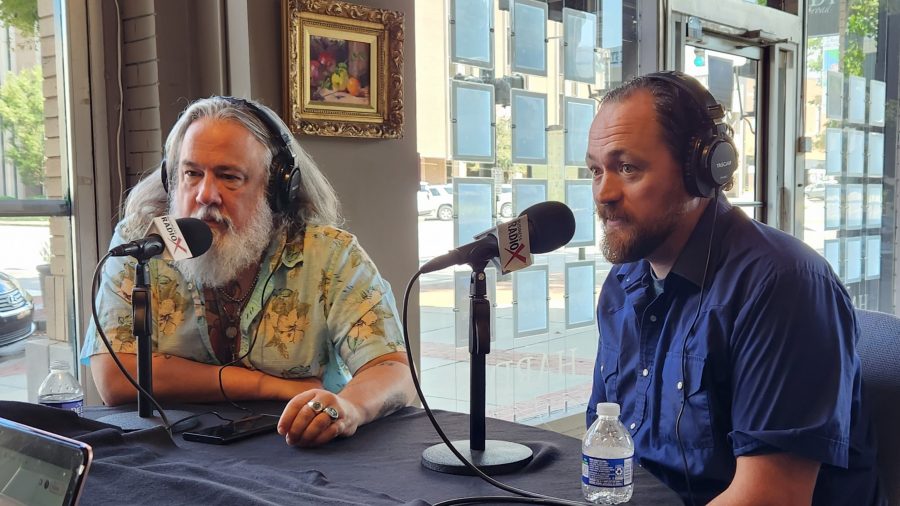

BRX Pro Tip: Giving People a Voice
Access to this series is restricted to Business RadioX® Studio Partners.
BRX Pro Tip: How to Apologize

BRX Pro Tip: How to Apologize
Stone Payton: [00:00:00] And we are back with Business RadioX Pro Tip. Stone Payton and Lee Kantor here with you. Lee, in your experience, what is the best way to apologize?
Lee Kantor: [00:00:11] How to apologize? That is an important thing that people should get good at because people make mistakes all the time. So, I think that having at least a framework for how to apologize is important. I think, number one, when it comes to apologizing is like you always say bad news fast. If something bad has happened, don’t wait until the right time to tell somebody. Tell somebody as quickly as possible so that we can kind of start taking action on how to deal with it. So, number one, a part of an apology is identify that something bad has happened and tell people quickly.

Lee Kantor: [00:00:49] Number two is take responsibility by acknowledging the mistake. It’s much better to take responsibility than to blame other people. And as a leader, ultimately, you are responsible. So, taking responsibility is an important component of an apology. The third part of an apology should be some sort of empathy and articulate the impact, the mistake or what you understand the mistake has caused. So, by showing this kind of empathy, by articulating the impact the mistake caused, is showing that “Hey, I’m aware I did something wrong. I am owning it and I feel like I understand that the impact that that mistake caused.”
Lee Kantor: [00:01:32] Now saying that is one thing. The next step is the acknowledgment from the party that you’re apologizing to, that you got that part right because you may not – you may be articulating an impact that you think you’ve caused, but the impact might be different than what you are articulating. So, get acknowledgment from the part of your apologizing to so that they understand and believe that you understand what you are apologizing for.
Lee Kantor: [00:02:01] And then finally, the last thing is explain how you are going to avoid making this mistake again. If you can do all of those things and you can really own the mistake, take responsibility for the mistake, show empathy around the mistake, and then have a plan of action so that you’re going to tell this person that this mistake is not going to happen again, then you have apologized effectively.
The Hardy Realty Show – Tracie Ball with Open Door Home, Barbara Beninato with Rome Symphony Orchestra, and Molly Steeves with Hardy Realty
Giving People a Voice
BRX Pro Tip: Two Common Sources of Self Sabotage

BRX Pro Tip: Two Common Sources of Self Sabotage
Stone Payton: [00:00:00] Welcome back to Business RadioX Pro Tips. Lee Kantor, Stone Payton here with you. Let’s talk about two of the most common sources of self sabotage.
Lee Kantor: [00:00:07] Yeah, as part of a growth of a leader, of an entrepreneur, you know, there’s danger all around you. But sometimes the danger is within, and that we have to fight these kind of self saboteurs that are within ourselves. I think that one of the most common self saboteurs is that inner worrier. That person or part of you that sees all the negative possibilities and potential dangers that are out there.
Lee Kantor: [00:00:38] And those dangers and negative possibilities are both real and imagined. Sometimes that discourages us from taking action, and we really have to be clear that are we not taking action because there really is a danger or there really is a negative possibility, or are we just afraid? So that inner worrier within ourselves is important, kind of, to be aware of and to kind of manage. The second self saboteur that a lot of folks have to deal with is that inner critic who thinks that we’re an impostor, who thinks that we’re not qualified or we’re not ready to take on this challenge ahead. You have to be able to ignore that voice and go boldly forward. The worst case scenario is rarely fatal.
Lee Kantor: [00:01:22] It is much better to take an action and then kind of deal with the ramifications of it, than it is to not take that action and pull the trigger when the time comes. So I think that if you can manage these two self saboteurs, you’re going to have a much better chance of success. Leading is difficult, you know. Running an organization, creating something from nothing is difficult. So if you have these two common self saboteurs kind of working against you, it makes it that much harder. So be aware that they exist and fight through them. You can do it.
Rome Floyd Chamber Small Business Spotlight – Lisa Frank with Kingston Downs, Lynn Rousseau and Claudia Navichoque with Hospitality House for Women, and Shane Clements with Northwest Georgia Coaching & Hypnosis
BRX Pro Tip: Building Loyalty

BRX Pro Tip: Building Loyalty
Stone Payton: [00:00:00] Welcome back to Business Radio Pro Tips. Stone Payton and Lee Kantor here with you. Lee, I know we at Business RadioX put so much energy into trying to create people who really enthusiastically resonate with our mission, endorse our work, want to be a part of our movement. But there’s a lot to this business of building loyalty.
Lee Kantor: [00:00:24] Yeah. I think it’s absolutely critical that the first 30 days of a relationship with a client are optimized to make sure your client’s initial experiences are fantastic, that they ensure that there’s a quick win and ultimately success down the road. The launch has to be filled with ways to get your new client learning the process, the habits they need to use the service successfully, onboarded quickly, efficiently and effectively.
Lee Kantor: [00:00:52] So if you are going to invest any time in your customer success, those 30 days, those first 30 days are critical. So think about and really optimize those first 30 days for your client so they get a fantastic experience because that’s the honeymoon stage. That’s when you have the best chance to get a referral from them. That’s when everything is as good as it’s going to be right now for them. So, make sure that those 30 days are optimized to make them successful. A quick win is fantastic if you can make that happen. Just some things that happen really fast, easily, that ensure that they’re going to succeed and they should feel good about the relationship moving forward.
Lee Kantor: [00:01:32] So if you can get through those first 30 days, the first 60 to 90 days in a positive way where everything is moving smoothly and everything is being executed and they’re getting success, then you have a great chance to have a customer for life.
Equip Your Community to Do More
Access to this series is restricted to Business RadioX® Studio Partners.