CTWJ E22: Amber & Brandon Powell, Wonder Wisps Creations

/
RSS Feed
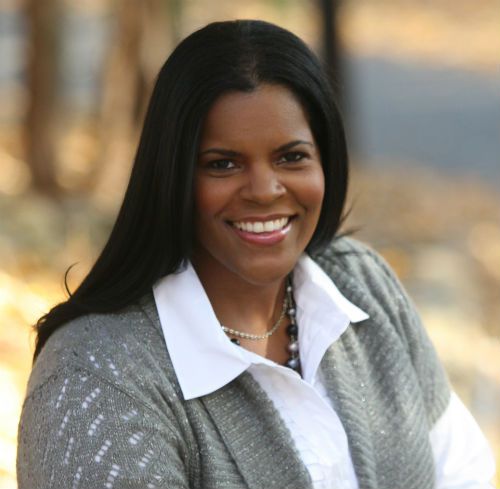
Amber & Brandon Powell, Owners
Mobile Number: Amber: 520-262-8084 Brandon: 520-358-2303
Email: wonderwispsaz@gmail.com
SOCIAL MEDIA: Facebook | Instagram |
Amber was raised in the Santa Cruz, CA area and moved to Tucson in 2002. She worked at the University of Arizona for 10 years before leaving to run a clothing business from home in 2017.
Brandon was raised in the Seattle, WA area and moved to Tucson in 2010 to help his father beat cancer. He was a PE teacher for Pima Partnership High School and is now a licensed massage therapist.
We got married in 2012 and have a blended family with 4 kids 12-boy, 10-boy, 7-girl, 4-boy.
About the business:
Wonder Wisps Creations was a development during the 2020 lockdown that came to fruition in December. We make cotton candy, sparkle bombs, hot cocoa bombs, smores bars, and other confections.
We will be setting up at events ranging from school events and drive-ins to fairs and festivals.
We have a heart for giving and will be teaming up with a different non-profit each month to give a portion of our sales. We are starting with Impact of Southern Arizona for January 2021 and will find others to support along the way.
About Your Host
Jaime Overturf
Farmers Agent, Entrepreneur
2555 N Campbell Ave
Tucson, AZ 85719
(520) 293-2900
joverturf@farmersagent.com
As a local Farmers® agent in Tucson, AZ, Jaime Overturf helps customers identify the insurance coverage that best fits their needs. This process is straightforward and personalized to help make them more informed about their insurance options.
Jaime has the knowledge and experience to help customers better understand their coverage options–whether that Jaime has the knowledge and experience to help customers better understand their coverage options–whether that’s auto, home, life, business insurance and more. You can connect with Jaime on Facebook.
Retargeting
Jennifer Sherer and MK Khan with Georgia State University

/
RSS Feed

Jennifer Sherer is the Director of the Entrepreneurship and Innovation Institute at Georgia State University. The Institute is focused on expanding an innovative and entrepreneurial culture inclusive of all students, faculty, and staff at Georgia State as well as engaging alumni and the external community to advance innovative ideas, create new enterprises, and transform existing businesses and organizations.
Jennifer’s entire professional career has been dedicated to driving innovation and supporting entrepreneurs. Prior to joining Georgia State, Jennifer was the Vice President of Innovation and Entrepreneurship for the Metro Atlanta Chamber. There she led the launch of numerous initiatives to promote collaboration in the innovation community, support high-growth entrepreneurs, and elevate Atlanta’s status as a globally recognized innovation hub.
Earlier in her career, Jennifer served as the Executive Director of Southeast BIO (SEBIO), a regional non-profit organization that fosters the growth of the life sciences industry in the Southeastern U.S. SEBIO’s mentoring programs, designed to prepare entrepreneurs for fundraising and cultivate new start-ups from universities, have benefited over 200 companies in the Southeast. Companies participating in SEBIO activities have gone on to raise over $2.5 billion in public and private funding.
After finishing graduate school, Jennifer joined the Office of Technology Transfer at Emory University as a licensing associate. She was responsible for assessing intellectual assets for advancement, developing marketing strategies, and generating commercialization plans for technologies generated by university researchers. She also aided faculty members in developing strategic partnerships with the industry.
Jennifer serves on the Emory University Center for Ethics Advisory Board, the Southeast BIO Executive Committee, and is a graduate of Leadership Gwinnett. She earned a Ph.D. in Molecular Physiology and Biological Physics at the University of Virginia and a B.S. in Biochemistry at Lehigh University. She was also a collegiate athlete as a member of the Lehigh University Women’s Basketball team.
Jennifer lives in Suwanee, Georgia with her husband, Todd, and has three stepdaughters and twin boys.
Musaddeq Khan (MK) is the lead Entrepreneur In Residence for Georgia State’s Main Street Entrepreneurs Seed Fund. MK is a serial entrepreneur. He has taken ideas and transformed them into growth businesses. In 2002, he founded Prominus to help hospitals manage their receivables. In 2008, MK founded Verdeeco, a cloud-based analytics platform that energy utilities use to manage and analyze data to gain operational efficiencies.
Verdeeco was acquired in 2014 by Sensus, the company that helps Georgia Power and Cobb EMC measure and manage electric grid. Verdeeco was dubbed iTunes of the Smart Grid. MK has also led innovation teams for large corporations like Best Buy and Itron. In addition to his role at Georgia State, he is a mentor at the Atlanta Tech Village and works with startups and entrepreneurs nationwide. MK is also currently the Chief Revenue Officer for Grid4C an AI startup based in Tel Aviv. MK holds a B.B.A. in Computer Information Systems from Georgia State University.
Follow GSUENI on LinkedIn, Facebook and Twitter.
What You’ll Learn in This Episode
- About Main Street Entrepreneurs Seed Fund
- The significance of a program like Main Street in the middle of a global pandemic
- Who should apply and tips for submitting an application
- The selection process
- The program format
- How community partners can get involved
About Our Sponsor
OnPay’s
payroll services and HR software give you more time to focus on what’s most important. Rated “Excellent” by PC Magazine, we make it easy to pay employees fast, we automate all payroll taxes, and we even keep all your HR and benefits organized and compliant.
Our award-winning customer service includes an accuracy guarantee, deep integrations with popular accounting software, and we’ll even enter all your employee information for you — whether you have five employees or 500. Take a closer look to see all the ways we can save you time and money in the back office.
John Doc Fuller with Prison Coach Speaking and Consulting

/
RSS Feed

John Doc Fuller experienced the worst of humankind behind bars, but he refused to let that destroy him. He vowed that he would turn his life around and encourage others living on the edge to do so as well. 
As soon as John was released in 2002, he began coaching others who were facing incarceration about how to make the best of their time in prison. In 2004, he formalized his coaching by founding Prison Coach Speaking. He is the most sought-after prison coach in the world.
In addition to being a nationally renowned prison coach, John is also an acclaimed motivational speaker, author and teaches criminal defense attorneys CLE courses so they can better understand what their clients will face in prison. John energizes his audiences to live his motto – Motivation. Determination. Transformation. John is living proof that no matter how bleak a situation is, motivation and determination can lead to transformation.
John is active throughout the country assisting organizations looking to implement prison re-entry programs. 
John is also the author of two books: A Day In Prison: An Insider’s Guide to Life Behind Bars and The Ten Prison Commandments: The Ten Rules You Must Know Before You Enter a County Jail, State or Federal Prison.
John is an active contributor to ABC, NBC, FOX, Entertainment Tonight and Hollywood Access.
Connect with John on LinkedIn and follow Prison Coach Speaking and Consulting on Facebook.
John Ryan with Georgia Multiple Listing Service

/
RSS Feed
John Ryan is Chief Marketing Officer for Georgia Multiple Listing Service and has been with the company for 28 years.
His responsibilities include the growth and expansion of the MLS across Georgia and the contiguous states, promoting and marketing the Georgia MLS brand to existing and prospective members, and spearheading the development of the company’s marketing initiatives. 
Georgia MLS, Georgia’s largest real estate marketplace, has provided real estate tools, services and education to real estate professionals for 58 years.
With member offices ranging from the North Georgia Mountains, Metropolitan Atlanta, through central Georgia, and along the Georgia coast, members have consistently sold more homes through Georgia MLS than any other multiple listing service in the state.
Georgia MLS combines innovative technology solutions with unmatched value so that members have the resources to respond to the changing needs of the real estate consumer. Headquartered in Tucker, GA, GAMLS services 43,341 agents in 3,944 offices across the state of Georgia.
Follow Georgia Multiple Listing Service on Facebook and Twitter.
What You’ll Learn in This Episode
- How the pandemic has affected the real estate market in Atlanta
- What to provide to agents and brokers that will assist them in doing their job
- The difference in the real estate market today vs. 5 years ago
- What the housing market looks like heading into 2021
About Our Sponsor
OnPay’s
payroll services and HR software give you more time to focus on what’s most important. Rated “Excellent” by PC Magazine, we make it easy to pay employees fast, we automate all payroll taxes, and we even keep all your HR and benefits organized and compliant.
Our award-winning customer service includes an accuracy guarantee, deep integrations with popular accounting software, and we’ll even enter all your employee information for you — whether you have five employees or 500. Take a closer look to see all the ways we can save you time and money in the back office.
Leslie Pearce with Fiserv

/
RSS Feed
Leslie Pearce’s current role is Senior Vice President of Inside Sales for Fiserv. Her team is responsible for direct sales in the B2B model. Under her leadership, the team has consistently delivered revenue growth, realized expense reduction and maintained high employee morale.
Leslie Pearce leverages over 20 years of success in multiple facets of sales. Her achievements include sales leadership, global sales management design, and sales process leadership that optimize sales resources while exceeding client expectations by partnering on consultative sales solutions. Leslie brings the unique mix of engineering and finance that enhances her ability to understand and meet client business requirements while delivering revenue and profit objectives.
Leslie is a graduate of Northwestern University earning a degree in Electrical Engineering. She earned her Master’s degree in Business at the University of North Carolina, Chapel Hill. Upon graduation, Leslie joined IBM as a Mainframe Systems Engineer in the financial sector. Her passion for her customers, employees and product portfolio enabled her to take on multiple sales leadership roles including Vice President Global Software Sales, Vice President North America Inside Sales and Director of Global Sales Center Delivery.
Leslie joined Comcast Cable Communication as the Vice President of Sales and Retention Operations. In this role, she was responsible for streamlining operations, reducing expense, growing revenue and customer retention. As a member or NAMIC, Leslie was recognized as one of the Most Influential Minorities in Cable in 2013, 2014 and 2015.
Leslie has been a Trustee for Whitefield Academy in Mableton, GA for the past 9 years.
You can apply for Fiserv’s Back2Business Program here.
Connect with Leslie on LinkedIn and follow Fiserv on Facebook and Twitter.
What You’ll Learn in This Episode
- What Fiserv does in the Atlanta community and how they support small businesses through Clover
- What Leslie has seen with her work with small businesses – what they need to compete in a COVID world
- Fiserv’s Back2Business Program, which has launched to support minority-owned small business in Atlanta
- Resources available through the Back2Business Program
- How community partnerships are a part of Back2Business
- Positive stories of business receiving grants
About Our Sponsor
OnPay’s
payroll services and HR software give you more time to focus on what’s most important. Rated “Excellent” by PC Magazine, we make it easy to pay employees fast, we automate all payroll taxes, and we even keep all your HR and benefits organized and compliant.
Our award-winning customer service includes an accuracy guarantee, deep integrations with popular accounting software, and we’ll even enter all your employee information for you — whether you have five employees or 500. Take a closer look to see all the ways we can save you time and money in the back office.
BRX Pro Tip: Share Your Values More Frequently

/
RSS Feed
BRX Pro Tip: Share Your Values More Frequently
Stone Payton: [00:00:00] And we are back with Business RadioX Pro Tips, Lee Kantor and Stone Payton here with you this morning. Lee, let’s talk about values and, particularly, the discipline of sharing your values more frequently.
Lee Kantor: [00:00:14] Yeah. I think it’s critically important for the leaders of an organization to kind of keep reiterating what the values are, what they stand for, what they don’t stand for. Because people hear things at different times and people resonate with mission a lot more if they hear it from a lot of different people, in a lot of different ways, but all along the same lines of getting that overall messaging. So, if your team and/or your clients don’t know what you stand for, then you are not demonstrating and communicating your values enough.
Lee Kantor: [00:00:46] And people in the organization might think that everybody knows what we stand for, but they may not. And so, you got to just keep telling them that message and showing them that message. It’s great for it to appear. Like, if you’re in an office setting, you know, put them out loud and proud somewhere in the office. Mention them regularly when you have team meetings. Mention them regularly on the website.
Lee Kantor: [00:01:11] A simple test is to ask people what your company stands for. Just do a survey, do a poll, you might be surprised by the answers because a lot of people may not really understand what it is that you do or what you’re trying to accomplish. And if there is that kind of lack of clarity and a miscommunication at this level, then you’ve got a real problem.
Lee Kantor: [00:01:32] So, I am a big believer in just keep reiterating your values, explain why that’s important, and why you guys are getting up in the morning to do what you do. You’re doing a lot of hard work and it’s important for people to know what that is and the why behind it. So, you have to be able to connect your value and values with your organization. And delivering that promise that you’re making to your customers and your people is critically important. And if they don’t all know what you’re trying to accomplish, you have a problem. So, pull your folks and the answer might surprise you.
Tim Gerrits with GMB

/
RSS Feed

Tim Gerrits leads the Sports practice at GMB, with an emphasis on turf fields and tennis facility design. He has combined his background in landscape architecture and planning with a passion for sports and competition.
With over 25 years of experience, he’s helped design over 45 tennis facilities, including over 175 post-tensioned courts.
He loves building teams at GMB through overseeing the people development team. And he loves seeing athletics teams grow through great competition spaces.
Follow GMB on LinkedIn, Facebook and Twitter.
TRANSCRIPT
Intro: [00:00:04] Broadcasting live from the Business RadioX Studios in Atlanta, Georgia, it’s time for Learning Insights. Brought to you by TrainingPros. When you have more projects than people, TrainingPros can provide you with the right L&D consultant to start your project with confidence. Now, here’s your host.
Lee Kantor: [00:00:27] Lee Kantor here. Another episode of Learning Insights, and this is going to be a good one. But it’s important to recognize our sponsor at TrainingPros. Without them, we could not be sharing these stories, so please support them. Today on Learning Insights, we have Tim Gerrits, and he is with GMB Architecture and Engineering. Welcome, Tim.
Tim Gerrits: [00:00:46] Hey. Thanks, Lee.
Lee Kantor: [00:00:47] I’m excited to learn about what you’re up to. Tell us a little bit about GMB Architecture and Engineering, how are you serving folks?
Tim Gerrits: [00:00:53] Yeah. So, we’ve been serving folks for about 50 years. And I think over the last, you know, five to ten years, we’ve made a lot of changes that we’re really excited about and we’re going to talk about today. And client-wise, we are in the education sector. We’re architects and engineers, of course, and we look for ways to help them make their students successful.
Lee Kantor: [00:01:16] Now, let’s talk about the culture at GMB. I know that’s very important to you. And being an employee-owned company kind of makes it a special place, I would imagine.
Tim Gerrits: [00:01:25] Yeah, it is. You know, you talked about culture, and culture is kind of a hot topic right now. Explaining it, explaining culture specifically, is not always easy. So, often, you hear things like it’s a family or it’s people first. But I think for us it kind of comes down to two really important things. One is our teams and the other is the strong personal relationships they have with each other. And all of that is kind of built on the idea of trust.
Lee Kantor: [00:01:57] Now, how did this kind of – I think you called it the team of team structure, how did that kind of come about? Was that always the intention when it was started? We’re going to do this. This is going to be kind of employee-owned. Was all of this at the start or is this something that evolved over time?
Tim Gerrits: [00:02:14] I think it sort of evolved in some ways. And then, we had kind of an aha moment. What we found is that, when we were a smaller organization, we saw how our teams were working. And as we grew a little bit larger, our organizational structure was kind of not working anymore. And in a sense, leadership basically found that decisions weren’t being made as quickly as we needed to.
Tim Gerrits: [00:02:39] And we ran into this book, Team of Teams by General Stanley McChrystal, and it talked about the Army and how the hierarchy that the Army had was limiting how decisions were being made. And so, we started to say — we break up into teams. We have teams, everybody’s on a certain teams. And it’s those links that become really important between all those teams and decisions that don’t need to go up to a hierarchy model in our minds. And we don’t really, as leaders, always know the answers to those questions either. And so, let’s leave that in a system with the right people making those decisions. So, it’s an interesting book. It’s good read. And we’ve just found that we needed to change our framework and write it down so people understood it internally.
Lee Kantor: [00:03:36] Now, when you were making this kind of a shift, it sounds like a lot of it is a mental shift for the leadership to say, “Okay. It’s going to require trust and really good communication in order to pull this off.” Right?
Tim Gerrits: [00:03:48] Yeah. That’s exactly right. I think trust is a big one where, without that, you do go back to the hierarchy model where we need to make all the decisions. So, it’s really empowering our people who know the right answers to it. We, as leadership, sometimes we’re getting asked questions we didn’t know. And so, we really revert to those teams and they’re really responsible as a group, not as individuals, but as a group making those decisions. So, that’s something where we really have noticed in the teams, though, we need strong personal relationships. And so, I think something unique to us is we make time for our employees to build personal relationships.
Tim Gerrits: [00:04:34] And so, I will give an example a little bit of how a team might work or might not work. And I’d use kind of your neighbor. If you had to have a new neighbor move in and your spouse said, “Hey, we should go meet them.” And you don’t go do that and you don’t do it for a year. After a while, you might find that going over to borrow a cup of sugar isn’t going to happen. What we do right away is make sure our employees get connected with another person and many people. And, therefore, we think that communication amongst our team has improved. So, in that same analogy with the neighbor, if you know them, you’re willing to go ask them difficult questions or ask them for their help.
Tim Gerrits: [00:05:16] And it’s that same kind of idea with us as we carve out time. And that time in our world is called pods. Every day for 15 minutes, our employees meet, mostly for social interaction and to help understand each other. And with that, it creates, I think, a care component for each other. It also creates some empathy of what they’re going through and how another individual might be able to help them.
Lee Kantor: [00:05:42] Now, when you’re doing this kind of work and you’re kind of leveling up the trust and the communication, the collaboration, by putting in place kind of these core values that say if you want to be part of GMB, this is how we behave, right? And you’re kind of setting a standard of expectations. And so, there’s no surprises here. How did you handle that transitionary period when, you know, you were going to go from the old way to the new way? Because I think that this requires a level of – it’s almost like less ego, right? Because you have to kind of be for the team. I think this could eliminate some politics and some, you know, kind of jockeying for position. And this is about me.
Tim Gerrits: [00:06:30] It’s a great point, Lee. I think what you find is, you have to find people who want to win as teams or win as a teammate and not as an individual. And what you find after a while, they start to find that it’s more enjoyable to win as a group. And I think the part where you let your guard down is you don’t need to know everything. But you need to surround yourself in a team that will help you build that ability to know everything or most things, you might say. And that is something that mostly people have a hard time with. We’re expected to know everything. No, you’re not really expected to know everything. And for that matter, you might have somebody on your team who is much better at the thing that you’re struggling with. And so, there is a little bit of letting go and doing what you’re good at and finding those and having those people surround you that can support you.
Lee Kantor: [00:07:26] Now, how do you kind of amine everybody’s incentives so that everybody feels like they do win when the team wins and they don’t have to be kind of the Lone Ranger that’s, you know, running with the ball to the finish line?
Tim Gerrits: [00:07:40] Yeah. I think you’ll find in teams when they’re functioning well, they take cues from each other. We have certain things that are highly encouraged of, you know, what we call, Friday shout outs for, “Hey, this person is on my team and they really did this well.” Or, “They helped me with this in banking.” And it’s sort of what you encourage that starts to get that idea of it is really different. We have had it in interviews where people maybe just don’t quite understand it as well. Like, “Well, do I have a boss?” And it’s like, “Well, your teammates really are your boss,” which is a big shift for people to understand. Some people don’t, maybe, embrace it as quickly. And some people say, “Hey, that’s just not for me. I really like the hierarchy of our world.” But we think things are changing and we think we really benefit from efficiency, but also enjoyment of our staff in how they work.
Lee Kantor: [00:08:47] So, I would imagine you’re discussing, “Hey, everybody. We’re going to kind of pivot to this team of team structure and it’s going to look a little like this and then less of like how it used to be,” how did you know you were getting traction where, “Hey, this thing could work. I think this is the right way to go.” Were there kind of some clues when you were doing this that, “Hey, let’s really lean into this. This is something that’s going to be powerful and really change our company.”
Tim Gerrits: [00:09:16] I think people genuinely want to feel empowered in the work they do, but they also really want to understand what is my role in the day-to-day operations and how is that clear. And what we try to do is, really put names on all these teams and what their responsibilities are. So, we have different teams for design that really can help influence that. We have others that are more technical in nature and they can influence that. And others that really look at our process, for example. And when people are in the right seats – you’ve heard that from other individuals say that – they really excel and they feel empowered to make those decisions instead of having to go ask somebody else. We’ve really said, “No. That’s your call. You know more about that subject than we ever will.”
Lee Kantor: [00:10:11] Now, how does kind of the sharing of knowledge work? So, I’m on a team and then maybe I’m doing some cool and innovative, how do I share that best practice with other teams that, maybe, I don’t interact with a lot?
Tim Gerrits: [00:10:26] Yeah. So, you’ll find that people are on multiple teams. So, there are cross links where, “Hey, I’m on these three teams, so I know what’s going on in the other teams so I can speak up and say, ‘Hey, this team is doing that.'” So, there is that, what I can say, if you think of a bunch of teams and they’re all in their own little bubble, we can have links across from one team to another because Bill might work on three teams and one of those teams that is in question of what’s going on, on that team, he can address that.
Lee Kantor: [00:11:06] And then, is there somebody who’s kind of has the bird’s eye view of all the teams and seeing, “Hey, we don’t have a link here between these teams.” And is there somebody kind of –
Tim Gerrits: [00:11:18] Yeah. So, we’ve kind of created a map. We’re using a program called Peerdom right now. And that’s kind of a mapping program to help us understand how these links happen, and specifically what everybody’s responsibility is on that team. So, this is a new exercise. We’re just starting. We’re really excited about it. But it’s meant to add some clarity to our whole organization. We have 135 people, and as you grow, it’s harder to share knowledge, it’s harder to share information, and it’s harder to keep everybody on the same page. And, frankly, people weren’t sure as we grew who to ask those questions to.
Tim Gerrits: [00:11:56] So, this system, although kind of complicated, it’s kind of free flowing. If a team no longer needs to exist, we also have to say it either solved its mission and it doesn’t need to happen or they’re done with their assignment and we move on. So, it is kind of a once always there, doesn’t mean it’s going to stay that way. It is evolving and we’re trying to figure it out. So, in a few years, it might look a little bit different again, Lee.
Lee Kantor: [00:12:27] Now, how has the pandemic impacted your work? Were you always remote workers or at one point were you all in one location? And so, were those kind of serendipitous moments and those kind of accidental collisions happen is easier. And when you’re remote, that takes a little more intentionality.
Tim Gerrits: [00:12:46] Yeah. So, when the pandemic hit, we have four offices. We were all in offices. Now, of course, we have clients that are, you know, at different sites so we move around. But for the most part, people had a seat at a location. When the pandemic hit, we went 100 percent remote with the exception of one individual still at this point. And I think a lot of the things we put in place over the last three years, specifically, have made this transition actually go very well. We feel confident in what we’re doing. We’re excited how it’s going. I think it’s both the team of teams and it’s really about the pods that we created, those social groups that meet every day for 15 minutes. It’s kind of a lifeline to make sure people are truly cared for and don’t fall through the cracks. And it really became more and more important.
Tim Gerrits: [00:13:47] We have other committees, like Connections Committee and things like that, that make sure that we’re interacting and whatnot. But the pods really are kind of the glue that said, “Hey, I think someone is still struggling. We can do something.” Or, “Let’s have a happy hour with a smaller group.” It’s basically taking a larger group and creating smaller groups within the hole and making sure nobody falls through the cracks and everybody is really cared for. I always say, if you have at least one friend at work, you’re more likely to stick around. And, really, the pods itself has been a way for an individual to build friendships and, maybe, specifically a closer friend.
Lee Kantor: [00:14:32] Now, if you were giving advice to other folks that maybe are struggling in this area and maybe don’t have it together as well as you do, is this something that you can kind of do at a small level, a test level, a beta level? Or is it something you kind of got to go all in and say, “Okay. You can’t do this a little bit. You got to either do this or don’t even bother.”
Tim Gerrits: [00:14:56] Yeah. It’s interesting. It’s like how does this resonate with other companies and organizations? I think there is a lot of letting go of saying, “Okay. There are other people that can answer this question better. I’m empowering you to do that.” But first, I think, you have to have employees you really trust that can carry out kind of the same vision. And without that trust, it’s really hard to probably pull it off.
Tim Gerrits: [00:15:26] Some critics would say, “Well, why do you meet 15 minutes every day just to talk socially?” Our understanding would be, that probably still happens in some way. But we, as an organization, say, “No. It’s really meaningful. It’s important. And it impacts our work.” It makes our work better because our employees actually care for each other and know each other. And by knowing each other, they’re more likely to go ask some difficult questions or things that they’re working out or to admit they don’t know something. And so, it’s good — all in. I think it is always baby steps, but it probably starts with letting go a little bit and trusting your employees. And then, maybe creating kind of like, “Hey, this is our organization, let’s try to map it out and draw what it really looks like so people understand it.”
Lee Kantor: [00:16:18] Now, talk a little bit about GMB University, how did that come about? Was that something that you put in place early on or was that something that you were like, “Hey, we’re going to have to formalize some of this stuff, and write stuff down, and map this out a little bit tighter.” I would imagine at first it was a little chaotic because there was a lot of trust and collaboration happening. You were just saying, let’s see what happens. But then, you got to kind of rein it in a little to make sure it’s efficient.
Tim Gerrits: [00:16:42] Yeah. So, I think GMBU or University started really with the idea of we have people who know things in our office. But as we grew over one hundred individuals, people weren’t sharing that as well as we thought we could. And so, we took time out of, basically a-day-and-a-half, every quarter with the entire staff and said, “We’re all going to get together.” And there are certain topics that our whole office needs to hear and understand. They may not always be engaged in that activity or that information for our client that they need to produce. But it’s good for everybody to know it.
Tim Gerrits: [00:17:26] And so, we had our internal people making presentations, which we thought was also good for increasing their ability to give that in practice. But then, we also brought in outside speakers. And then, it also gave us a chance to kind of cast the vision that you just mentioned where we’re saying, “Hey, this is where we’re headed. Does that all sound good?” And so, that is important that everybody kind of says, “Hey, this is at least where we’re headed that’s why we’re doing it.” And we didn’t do that in isolation. A lot of it was workshops within that, where we’d all get together and say, “Hey, what’s important to our organization? What do we want to keep?” And being able to allow our employees to say, “This part is garbage, let’s get rid of it.” And sometimes you just need to accept that.
Lee Kantor: [00:18:13] Now, doing this kind of work internally throughout the organization, has this trickled out to the community as well? Is this something that it kind of encourages and enables your people to really help their community? And maybe some of this learning and culture can kind of permeate outside of the walls of GMB, but also into Michigan and the other areas you work in.
Tim Gerrits: [00:18:37] Yeah. So, we have a just cause, you know, back to the idea we’re all working for the same thing. And the just cause for us is, basically, to make this world a place where our clients are equipping students for lifelong learning, and that’s our goal. And with everybody kind of headed in that same direction and excited about it, we feel like, “Hey. Nothing can stop you,” you might say. And there’s passion towards that. So, I would say, we are looking for clients that somewhat feel the same way, that education is critical to creating a better world. And so, finding those employees in the future that want to work for us, that have that goal, but then mostly just those clients as well that kind of have that same passion.
Lee Kantor: [00:19:32] And then, has it played out that way? Are you finding that people that are attracted to GMB are those folks that they want to be part of the team, they see the value of that? And it’s a point of differentiation amongst your competitors.
Tim Gerrits: [00:19:46] Yeah. I think, on the just cause, we’re trying to be more and more clear with our interviews that this is important to us and we want it to be important to our employees. And asking questions in those interviews to say, “Hey, does this resonate with you?” It’s a little bit harder in an interview. But, you know, you can start to understand a client, what their mission is, what they’re excited about. And so, it plays into that as well.
Lee Kantor: [00:20:18] This would be interesting. Do you have a piece of advice regarding that? Like, are there clues that a prospective client or prospective employee kind of share or give out that is like, “Hey, this is going to be something that’s going to fit in here.” Is there a question you ask that maybe shines a light on that? Or is there a behavior you look for or a past activity they participated in that is a clue that, “Hey, they’re going to fit in there.” Like, is this something that maybe somebody with a military background is better in this or somebody in a sports, played sports. Is there a certain things that kind of align?
Tim Gerrits: [00:20:59] That’s interesting. Our interview process, I think a lot of it is – and I hear it when I’m in interviews and when others are – “I think he’s a really good teammate.” Or, “Is she a really good teammate? Would I enjoy this as a conversation we have some time, which is sort of unique. Would I enjoy a long ride in a car for three hours with this person? And what would that feel like and look like?” And so, I think the teammate thing is critical. It doesn’t need to be an individual sport in terms of architecture. How we do good work is when we are all collaborating and communicating really well. And those communication skills, the ability to not feel like you actually have to know everything, so a little bit of humbleness that maybe we look for. Architects are not always known to be humble. And so, maybe that is something that maybe we should look for. I haven’t really thought about that.
Tim Gerrits: [00:22:04] But what we do, it needs to be much more important to the individual that we interview, the goal of the team and the goal of the client is way more important than any award or individual achievement that they maybe have had in the past and hope to have in the future.
Lee Kantor: [00:22:25] Well, it seems to be working. You’re recognized as one of the best and brightest companies to work for. And some must be working there. You figured something out.
Tim Gerrits: [00:22:35] Well, I will say, you don’t always have it all figured out, but you have to have the attitude that we’re going to try to figure it out. And, frankly, I think we have a lot of great people that we rely heavily on through the whole of the organization to help make this better. “Not just leadership,” you might call it. It’s about all of us and creating an environment that we all really want to work in and that we’re all really excited about servicing our clients.
Lee Kantor: [00:23:02] And when you have that bigger why, I think it’s easier to find folks that want to get behind it and be part of that journey.
Tim Gerrits: [00:23:09] Yeah. I think if it’s real and that’s part of your heart, our clients realize that. And when they realize we’re as excited about pushing their mission forward and that we’re a teammate to make success in every one of their buildings in a school district or at a college or university, they get excited as well. And it’s a team thing, you know.
Lee Kantor: [00:23:38] Now, what do you need more of? How can we help? Do you need more talent? Do you need more clients? What can we do to help you? What does GMB need?
Tim Gerrits: [00:23:46] Hey, you know, I think both of those things are what we’re looking for. We’re looking for people out there that have a passion for education, both clients and new employees. And really want to excel on a team environment where we all kind of win together. And that we can, in fact, influence the world by creating spaces where education is delivered to kids in the most exciting ways and in ways that they can flourish and influence the world in the future. So, yeah, it’s both end. And people who want to work with an architect who really wants to be a teammate. You know, not on the sidelines just creating a space. But really creating spaces that are impactful for generations to come.
Lee Kantor: [00:24:39] Now, if somebody wants to get a hold of you or somebody on your team or learn more about GMB, what’s the website?
Tim Gerrits: [00:24:45] Website, just search GMB Architects and Engineers and it’ll come up. And we’d love to hear from anybody. And if people have questions, don’t be afraid to reach out.
Lee Kantor: [00:24:58] Well, Tim, thank you so much for sharing your story. You’re doing important work and we appreciate you.
Tim Gerrits: [00:25:03] Well, thank you, Lee.
Lee Kantor: [00:25:05] All right. This is Lee Kantor. We’ll see you all next time on Learning Insights. And remember, this work could not be done without the support of our sponsor, TrainingPros. Please support them so we can continue to share these important stories.
Outro: [00:25:19] Thank you for listening. For more information about TrainingPros, visit their website at training-pros.com.
About Training Pros
Since TrainingPros was founded in 1997, they have been dedicated to helping their clients find the right consultant for their projects.
23 years later, they are proud to have helped hundreds of clients complete their projects and thousands of consultants find great assignments. Training Pros continues to focus on helping their clients and consultants as well as their community.