Relationship Autopsy
Breaking Through Growth Ceilings: How EOS Empowers Small Businesses

/
RSS Feed
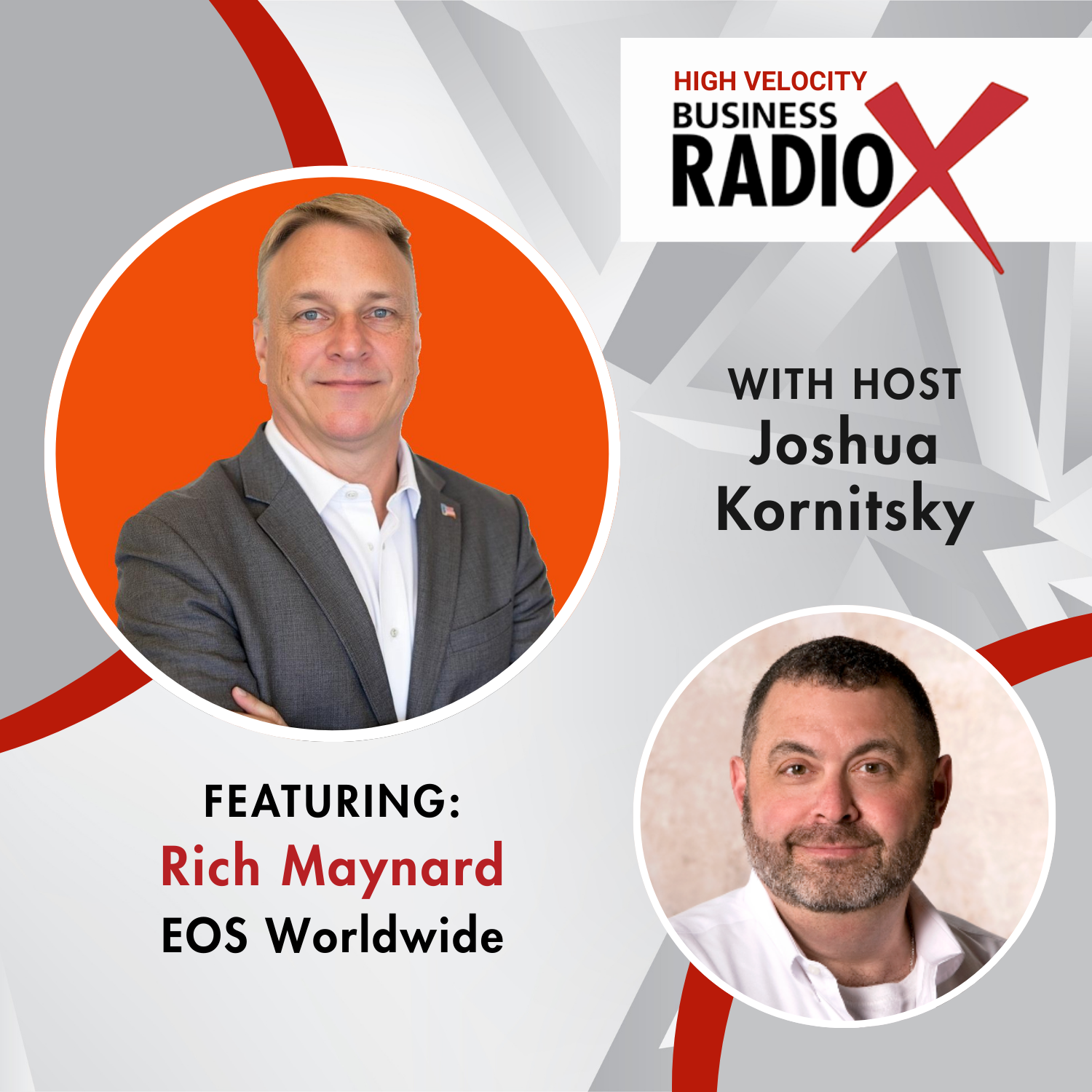
In this episode of High Velocity Radio, host Joshua Kornitsky interviews Rich Maynard, a sales coach and EOS implementer. Rich shares his journey from the Navy to manufacturing, sales, and ultimately helping businesses implement the Entrepreneurial Operating System (EOS). The discussion explores how EOS clarifies vision, instills discipline, and fosters healthy leadership, especially in family and cross-generational businesses. Rich explains the EOS process, tools for aligning teams, and real-world examples of organizational transformation.

 Rich Maynard’s story starts in the Navy on board an Aircraft Carrier and the realization that when the ships deploy, 2,500 of the 5,000 sailors on board have never done anything like that before. Structure, process, and accountability!
That love of structure and process stayed with him as he moved through his career in manufacturing leadership and sales roles. Ultimately, he found a passion for helping others realize their best lives while building a practice as a sales coach. This is where Rich began to work with entrepreneurial companies and their leadership and sales teams.
Facilitating more than 1,000 sessions with owners, leadership, and sales teams revealed a particular group of clients who were more open, honest, and vulnerable than others and, frankly, were happier and having more fun. These teams were also implementing EOS in their businesses.
This discovery made Rich realize that EOS combined his love of structure, process, and accountability with his passion for helping entrepreneurs and their leadership teams get what they want most out of their businesses and live their best lives.
Connect with Rich on LinkedIn.
About Your Host
 Joshua Kornitsky is a fourth-generation entrepreneur with deep roots in technology and a track record of solving real business problems. Now, as a Professional EOS Implementer, he helps leadership teams align, create clarity, and build accountability.
He grew up in the world of small business, cut his teeth in technology and leadership, and built a path around solving complex problems with simple, effective tools. Joshua brings a practical approach to leadership, growth, and getting things done.
As a host on Cherokee Business Radio, Joshua brings his curiosity and coaching mindset to the mic, drawing out the stories, struggles, and strategies of local business leaders. It’s not just about interviews—it’s about helping the business community learn from each other, grow stronger together, and keep moving forward.
Connect with Joshua on LinkedIn.
 This transcript is machine transcribed by Sonix.
TRANSCRIPT
Intro: Broadcasting live from the Business RadioX studios in Atlanta, Georgia. It’s time for High Velocity Radio.
Joshua Kornitsky: Welcome back to High Velocity Radio. I’m your host, professional EOS implementer Joshua Kornitsky. And my guest here today is Rich Maynard. He’s a sales coach and a professional implementer of the EOS system based out of Greenville, South Carolina. Good afternoon. Rich. How are you?
Rich Maynard: I’m good. Joshua, how you doing?
Joshua Kornitsky: Doing well. Thank you. So happy to have you here today. So tell us a little bit about yourself. What’s your background? Where are you from?
Rich Maynard: Well, I grew up in, uh, in, in the Detroit area, and, uh, left there in the, uh, a while ago. Joined the Navy and, you know, thank.
Joshua Kornitsky: You for your service.
Rich Maynard: And see the world. They are not lying. Um, but what they what the recruiters don’t often talk about is the world is 73% water. So.
Joshua Kornitsky: So you picked the right way to go.
Rich Maynard: Yeah, yeah, you can pick the. They say the old slow boat to China. I was actually on that boat.
Joshua Kornitsky: There you.
Rich Maynard: Go. It is quite a voyage.
Joshua Kornitsky: Thank you again for your service.
Rich Maynard: No, but I got settled in Greenville in the Greenville area about 30 years ago. And, um, have, you know, found a found a local girl, and now I have southern children, so.
Joshua Kornitsky: Wow. So.
Rich Maynard: Been married 28 years.
Joshua Kornitsky: That’s fantastic. So tell us about your professional background. What? What brought you to where you are today? What drives you?
Rich Maynard: Yeah. So, uh, as I mentioned, I was in the Navy when I was, when I was younger, and, uh, I don’t know how many, uh, how many of your viewers have ever been in the military? You know, in the military or or been around aircraft carriers, but a lot of people seen Top Gun in the movies, and and what, what most people don’t realize is of the five or so thousand people that are on one of those ships every time it deploys, fully half of that crew has never done that before. Wow. And they’re all about 19 years old.
Joshua Kornitsky: So, wow.
Rich Maynard: So that that structure, process, discipline, accountability really stuck with me as I left that, uh, left the military and went into my civilian career where I moved through, uh, some roles in manufacturing. Actually, I was in the photographic world working for Fujifilm.
Joshua Kornitsky: Okay.
Rich Maynard: If you happen to have any pictures hanging on your wall around your desk that have Fuji on the back of the paper, that’s what we manufacture here in South Carolina. And, uh, and at our peak in 2003, before the digital revolution, we were manufacturing, uh, 1,000,000m² of photographic paper a day.
Joshua Kornitsky: Wow.
Rich Maynard: In complete darkness. Because it’s photographic.
Joshua Kornitsky: So it has to.
Rich Maynard: Be lights.
Joshua Kornitsky: Off. Right?
Rich Maynard: And again, so, you know that theme of structure, process, discipline, accountability. You know, when you’re running around a factory with a bunch of moving parts and heavy equipment and there’s no lights on, you got to be pretty good about that stuff. Um, so ultimately, I moved through several roles there, and some, like a lot of salespeople, found one day, woke up and found myself in a sales role.
Joshua Kornitsky: Okay.
Rich Maynard: And moving through and and really enjoyed sales and, and uh, you know, getting to know customers and building those relationships. And that led me to a coaching, uh, position with, with a sales coaching organization, which I love. Uh, just that’s that’s where I developed a real passion for the entrepreneurial world and small and medium size businesses. And you look at the economy around the world, and, uh, big business is great. But, you know, the small the small businesses really are the, the beating heart of our economy. And I just love helping them, no question. Yeah. But so as I was working with those guys, I realized that about 40% of those clients of mine, I did more than a thousand coaching sessions with them. And and about 40% of my clients were just different. They they struggle with the same things everybody else was. But they got better quicker. They were more successful, and they enjoyed the process and each other more than the others did. And I thought, what is what is going on with these people? And then they were all using similar terms. They were using things like l10n and rocks and scorecards and vto. And so I started to uncover what this language was and discovered it was iOS or the entrepreneurial operating system. So my favorite clients for implementing iOS in their business, as they were getting this training that we were going through. And that just led me down the path of really understanding what iOS is. And it just brought together that passion for small business and small and medium sized business and the structure, process, accountability and discipline that that I saw in my military and and my manufacturing career. And I just I kind of felt like I found my home.
Joshua Kornitsky: That’s fantastic. Um, and it sounds like you may not have gotten where you were going, but you ended up where you needed to be. Uh, it’s my favorite quote from Douglas Adams. But let me ask you, because obviously, you and I speak a common language. One of the things that I think is important, though, is to help people understand who is iOS four. How does it help. And again, us is the entrepreneurial operating system. But but explain it so that people will understand what it is you do.
Rich Maynard: So EOS the entrepreneur operating system, it really it’s a simple set of practical tools that helps instill three things in a business. It’s it’s vision, traction and healthy. And vision is just about getting everybody on the same page with where you’re going and how you’re going to get there. Traction is about instilling that discipline and accountability. So everywhere you look in the business, everybody’s actually executing on your vision. And healthy is working with leadership teams to help them be more open and honest with each other, solve real problems to to make their lives better. Because a lot of times they’re just not that way. Um, and then what we find is, as goes the leadership teams, so goes the rest of the organization. And ultimately through the EOS journey, everybody in the organization gets on the same page. They’re all rowing on, you know, on the same direction, pulling on the same end of the rope, and life gets better, the business is more successful, and everybody begins to enjoy their lives and live the life they want and studying instead of their, you know, their business, running their life.
Joshua Kornitsky: Thank you. That gives it some context for folks that are hearing it and helps them better understand. So in your experience, you know, what are some of the biggest impacts you’ve seen on on the leaders that you work with as you’ve helped them instill the EOS model into their business?
Rich Maynard: Yeah, there’s a couple of really striking examples that I have that that highlight where where EOS has had an immediate impact. One of the things we we do, we call it vision building. So we answer, we answer some questions to help people define where they’re going and how they’re going to get there. And one of the big things that we get out of that is, is what are the most important things that you need to be working on in the immediate future? We call this we call these rocks. So what are the big things that you need to be working on in the next 60 to 90 days and one owner. We went through this initial vision building step and he had a pet project he was working on that had taken a lot of resources and money from the company. As he was building this, this, it was a great innovation for their business. But as we lay it out, all their priorities and all the issues they had to overcome in the immediate future. We went through this prioritization and he realized, hey, this thing that I’ve been pouring a bunch of resources into is not the most important thing for our business.
Rich Maynard: In the next 90 days, there’s 4 or 5 other things that we really need to shore up. So when we do get this thing off the ground, it launches well. So he put that on the shelf for the immediate future solidified, set these rocks, set these priorities, and solidified the most important things to get done. And then at the end of that quarter, when those things got done, he brought it back out and it became the you know, now it’s the most important thing that he needs to do. The the the funny or the I guess the, the eye opening part was his team at the end of that first day, looked at him and said, I can’t believe you were the one who put that on the shelf. We’ve we’ve been wanting to do that, but we know it’s your project. And we were kind of like, okay, this is yours. But they all agreed that it was the right thing to do, and it really freed them to take advantage of that innovation at the right time.
Joshua Kornitsky: So you’re helping the leaders learn how to prioritize?
Rich Maynard: Well, the first thing is we help them get everything out on the table, okay. So you can’t solve you can’t prioritize if the issues are not out there in front of you. And then we help them prioritize. And it’s really we we are more facilitators. One of the things that a core belief within the US community is 95% of the answers are already in the room. Our job is to facilitate those conversations, teach the tools that we use and coach them in their use. We don’t. We’re not the we’re not going to come in and tell you how to run your business, because we don’t know how to run your business. But what we do know is how to implement these tools and how to facilitate the conversations to make sure that the right things are being brought out in the right time.
Joshua Kornitsky: Okay. That makes sense, right? So what happens when you encounter an organization that that’s cross generational? I know something like 70% of the small businesses in America are family businesses. So I’m sure from time to time you come in and it’s an organization where, you know, the older generation might be on their way out or is already out, and the new generation comes in. How do you work to transform an established organization, and what are some of the challenges that you encounter?
Rich Maynard: Well, that’s a great question. And one of the I have a client that I’ve been working with that exactly like you said, it’s it’s the, the the first the the founders of the company and his partner. They have stepped back. They’re more in a board kind of advisory role, and the son has taken over as president of the company. And it’s a great company. It’s been successful. It’s it’s it’s a it their stock, which is why they’re using us. They’re trying to break through a revenue and organizational ceiling that they’ve hit. And one of the one of the areas they’ve been very successful is historically they are a very solid. Their core values are very solid. And what core values are is just a it’s just a simple set of terms that define who they are at their core, their, you know, like they’re they’re resourceful, they’re respectful, they’re responsible. So that defines the kinds of people that they want to be around.
Joshua Kornitsky: So did they already have those or is that something you worked with them okay.
Rich Maynard: Yeah. So they had their core values and they all believed in them. And so we went we we even in that case, we still go through an exercise that at the very least is going to validate that what they have is actually true within their organization, because a lot of times the owners or the founders, they sit in a room and they’re like, here’s who we are, or here’s who we want to.
Joshua Kornitsky: Be sure.
Rich Maynard: And sure. They hang them on a wall and they never talk about it.
Joshua Kornitsky: Mouse pad core values.
Rich Maynard: Yeah. So so these guys actually lived their core values. And this exercise we went through validated exactly that. They do truly live the core values that they had set out to build over 17 years. But it also illuminated that they they identified another core value that makes them that is part of their DNA that makes them successful, that wasn’t listed. So not only do we validate the three they had, we added one. But what was interesting was so I asked the question, well, we went through this exercise. What’s different? And one of the leaders on the team, she said, you know, these have always been the owners core values. And we’ve we’ve always lived them and appreciated those core values, but they were always theirs. But now that we’ve gone through this exercise, I feel like they’re mine.
Joshua Kornitsky: That’s awesome. And updated for the current generation.
Rich Maynard: Exactly. It’s like, yes, these now we own them and and it really, you could just see them settle back in their chairs and just take in the fact that this is theirs. Now it’s no longer the previous owners. They own it now. It was incredibly powerful.
Joshua Kornitsky: That’s amazing. And it does kind of cross that bridge, right. Or it bridges the gap between the the outgoing and the incoming. And for a company of any size to stay successful, you’ve got to both have continuity and preservation of what was. But stay tuned in to what’s happening now, because, you know, I, uh, occasionally encounter people that are in industries like say, film, paper or, you know, photo paper production. And it’s not that it doesn’t exist anymore, but it certainly doesn’t exist at the scale that it was at, uh, I ironically, you know, what was mass produced now becomes a niche item. But that’s just reality. You’ve got to help people understand that they got to stay up to date, because if they just stay fixed in the past, uh, things will go by them. So what does it look like when you engage with someone from an EOS perspective? What’s that process that you work through? Do you just sign them to a contract and get in there and tear the place up? How does it work? No.
Rich Maynard: So that’s what’s a little unique about the way EOS implementers engage with clients. We don’t have any contracts. We don’t we? You know, one of the things we say is our services are guaranteed. It’s like, well, what does that mean? It’s like, well, so we we work on a, on a kind of a daily session. We scheduled sessions. And if you get value at the end of that session, then we get paid. And if you don’t get value then don’t pay us. We don’t deserve it. You know, our goal is to help you and, uh, recognize the the what is going on in your organization and where the strengths are, where the weaknesses are, and then help set you up with the tools that we have to be successful in the future. And if you don’t get that from us, then we didn’t do our job. So that’s that. And then as far as the the process we go through, there’s kind of a there’s a you’ve got earlier. The 92nd version of the OS is there’s also a 90 minute version where we there’s no charge, we get in front of the leadership team, and we invest our time with the leadership team to just lay out the whole process and all of the tools. We just want everybody in that meeting. It’s really is iOS are the right fit for your organization? Am I, as the implementer, the right fit for you? You know, sometimes we implementers, uh, or, you know, a leadership team might not, you know, feel the implementer. So we always want them to to use iOS and we’ll make introductions to others if it’s not a good fit.
Joshua Kornitsky: So is is that 90 minute meeting like deep intensive or more like a 10,000 foot overview?
Rich Maynard: It. Well, it’s pretty intensive. We go through all of the tools that we have at a high level, and then we take a deeper dive into each one to to illustrate how it can affect the the issues that are going on in that business. And we do spend time on the front end understanding what’s going on. So when we do run across, well, here’s a particular tool that may address the challenge that you’re facing in your business. So it’s tailored to the individual organization. But we want to make sure they get a full picture of what the EOS model is.
Joshua Kornitsky: So you’re laying out a roadmap for him.
Rich Maynard: Yes.
Joshua Kornitsky: Okay.
Rich Maynard: So the last part of that is is what is the process look like? And there’s, there’s, uh, as we as we open that up and unpack that, it really starts off with three days, about 30 days apart where we go in and we first help them gain traction. And so we want to get them moving. We want to get them making decisions. We want to get them solving problems, setting priorities, priorities, priorities. So they’re actually moving in a direction. Because a lot of times what happens is people have this vision, but they don’t have any traction. And vision without traction is is just hallucination. So we want to get them moving in the in a direction. And then in the second day we start to crystallize that vision. That’s where we start looking and answering some what are our core values? What’s our core focus? What’s our ten year target? And then we build on that in the third day with what’s, you know, how are who are we going to reach. Are we going to talk to what are we going to say to them? And then, you know, what’s a three year picture and a one year plan? And what is the most important thing we need to get done in the next 90 days to tie all these things together? So that’s the the three day journey that we go on over about a 6060 day period.
Joshua Kornitsky: Right.
Rich Maynard: And then from there they’re they’re into execution mode. And we meet with them once a quarter to to look back at the past quarter, learn from it, look at the look at the current situation and set the next priorities for the next quarter. And then really spend about half a day really just we call it, uh, I identify salt or discuss and solve issues, okay. Through the things that are tripping them.
Joshua Kornitsky: Up and you help them understand that process.
Rich Maynard: Yep. Well, we facilitate that process.
Joshua Kornitsky: Okay.
Rich Maynard: Which in in this in the same sense as we facilitate we’re equipping them to do that when we’re not there.
Joshua Kornitsky: That makes sense. Um, so one question, going back when we were talking about sort of that generational shift and, and that’s not always family, right. That could just be, uh, leaders leaving and new leaders coming in. And, and companies sort of find themselves in states of flux, I think these days probably more often than maybe in the past, because a with no critique of any particular, uh, group of, of age or what have you, uh, it’s become a more transient workforce where people will move in and move out. So how do you make sure you’ve got the right people in the right seats in the organization with that type of upheaval.
Rich Maynard: So that’s a great the the right people. Right seats is a is a cornerstone of. And you may recognize that from the book Good to Great by Jim Collins, which is a fabulous book. Um, but it really tells the story of you have to get the right people in the right seats, because if you if you don’t, you’ll never achieve a vision that you have. Um, so how do we we use a tool we call. Well, there’s a couple of tools. The first one, we call it a people analyzer. And when we when we look at we take we take those core values. And that’s the right people side of things. Do they actually meet and live up to our core values? And what’s and what’s really interesting is everybody defines their core values differently. So a core value fit for organization A is not necessarily a core value fit for organization B. So we look at the unique organization and say, well what makes this person right for you. That’s the that’s the first step. The second step we look at is we have a tool called the accountability chart. And a lot of organizations have organizational charts. Right. The difference is, in our accountability chart, we highlight not only the seat. We take a structure first approach. We highlight well, what what seats do we need in this organization. But we also identify the the five core responsibilities or things that seat is accountable for. And then when we finally put somebody put a name in that seat, one do they do they match our core values? Do they exhibit our core values? Do they live up to who we are? Are they the people we want to be around and that we want our customers to encounter? And secondly, do they get their job? Do they get those five roles? Do they want it? Do they, you know, so they, they, they, they have the, the genetic encoding that they this is what they wanted to do. This is like I get to I wake up in the morning and I get to go do my job, not have to go do my job.
Joshua Kornitsky: Makes sense though. But it makes a difference. So okay, so no, no, it makes sense because if they’re aligned to the core values and they understand what’s being asked of them, they’ve got a lot more clarity than probably a lot of places offer as employment. Right?
Rich Maynard: Well, and it’s more than just being aligned. It’s do they get it? Do they want it? And do they have the do they have the capacity for it. And that that capacity is measured, measured in a bunch of different ways. It’s time. It’s do they have the training? Do they have the, you know, innate abilities. You know. So that’s and that’s how we start evaluating people. And and if, if it’s a core value fit and they’re missing 1 or 2 things, well then we put a plan in place to help them overcome it. And if they don’t, well, we try to find another seat for them because finding the right people is hard.
Joshua Kornitsky: So what happens if you’ve got a seat that you don’t have the right person for?
Rich Maynard: If it’s a wrong person?
Joshua Kornitsky: No, no you don’t. I mean wrong person to. But I mean you just don’t. You you go through this exercise to understand the roles. You understand the accountabilities of the roles. But what if you don’t have someone currently employed that fits that. Who takes that seat?
Rich Maynard: Well, somebody has to take that seat. Somebody has to be accountable for those roles. And that’s the difference between an organizational chart and an accountability chart. So that stuff still has to get done. So somebody has to do it. And in one case I was working as another second generation client. The the son had come in and taken over and he was the president. He was also the sales manager and he was the finance guy. So he was handling.
Joshua Kornitsky: All the.
Rich Maynard: Money. He was handling the sales team. He’s trying to be the we call it the visionary, the the big thinker. And he had his head down in the business trying to do the small thinking too. And they were stuck. And as soon as we laid out the accountability chart and started saying, well, who’s who’s actually in these seats today? And it was like, oh, well, there’s the and the rest of the team looked at him and said, well, do you see the problem?
Joshua Kornitsky: So so he was his own roadblock.
Rich Maynard: He was the roadblock. And he freely and he’s like, ah, 100% see this? So he actually he had two members of his team step up in the roles that they were not currently in, and they all agreed. You’re going to take this responsibility and you’re going to take this responsibility. And it took two seats off of his shoulders, which freed him up to one be, uh, effective in the seats he was in. And also, it took two days a week out of his schedule of things that he had to do because somebody else was now doing that. So now he he was able to become that big thinker, and he kept the finance role. So he was able to dive into the finance of the finances of the business and really understand them. Huge change for him personally and for the business. They’re they they’re just on a path that is they’ve never seen before.
Joshua Kornitsky: So us basically gave him some freedom.
Rich Maynard: That was the biggest thing for him. His biggest impact was I actually have time to breathe and I’m not. Not everybody in the business isn’t waiting for me to do something so they can act. And so that we call it letting go of the vine. The sales role, he had somebody come in, you know, and it’s one of his team members right now when we when we start looking at what are the issues of the business. Well, one of the issues is do we fill that sales and marketing seat with somebody from outside the business? So that’s an issue. But it’s not one of the most important issues to solve in the next 90 days. So it goes on a list. It stays there until it’s either not an issue anymore or they stop, or they decide it’s the most important thing and they and they put it on the list to be solved. But right now they’re doing okay. 90 days from now, that may become a thing, and that may be one of the most 3 to 7 important things that they need to accomplish. And then it’ll go on that list.
Joshua Kornitsky: It sounds like it’s a pretty transformative process.
Rich Maynard: The biggest thing that I’ve seen happen one. Everybody knows what their job is and what everybody else’s job is, so they get to understand that they know who is responsible for what, they know who’s accountable for what, and they also know where they’re going. So in this process, we answer those questions. Core values core focus, our ten year target where where are we going. And then where do we need to be just three years from now in order to answer that or to begin on that path? And then what do we need to be in a year? And now everybody’s pulling on the same end of the rope, rowing the same direction. The entire leadership team is is on board with it. It just becomes very transparent. Everybody solving problems for real.
Joshua Kornitsky: That’s fantastic. So so who’s EOS for? If someone’s listening to this and they’re thinking, you know, this sounds great, but I don’t I don’t know if it’s for me. Who’s it intended for.
Rich Maynard: It’s intended for privately held businesses that are anywhere from 10 to 250 people. Um, you know, one of the things that, you know, when you gather kind of a litmus test, if you gather your leadership team together and you can you can set the direction and make changes to the website, that’s probably who, uh, who should look at iOS.
Joshua Kornitsky: Okay.
Rich Maynard: And the people that are stuck, it’s, you know, we’ve reached that, you know, we’ve made it to ten employees or $5 million in revenue or $2 million. But we don’t. We’re just we keep bumping against the ceiling. We don’t know how to get past it. That’s a that’s a $5 million ceiling. That’s a $20 million thing. That’s a $50 million ceiling business, as we call it, hitting the ceiling. Every once in a while, they just reach the capacity of how the business is designed. So how do you change that? You’ve got to change the methodology that you’re using. Otherwise you’ll never break through that capacity. And that’s what iOS helps people do.
Joshua Kornitsky: Well, I mean, it sounds fantastic. So when when we publish we’ll obviously have all your information. But Rich, how do people get in touch with you?
Rich Maynard: Uh, the EOS worldwide website has an implementer directory which you look up Rich Maynard or South Carolina. I’m in there, but Rich Maynard at EOS, Richard Maynard at EOS worldwide.com.
Joshua Kornitsky: And again we’ll, we’ll we’ll put that on our site as well when, when we push out to all the platforms. So people will be able to access this. I can’t thank you enough. I really appreciate it. Last question Rich how big of an area do you service?
Rich Maynard: So right now, uh, nationwide, uh, one client in Texas, one client in California. I’ve got a client in the in the upstate. And, uh, you know, a handful of others that are in the area.
Joshua Kornitsky: So you go where you need to go.
Rich Maynard: Go where? Go where the where, where the need is. And, uh, it’s it’s really satisfying work. When when you see people like I mentioned that, you know, sitting back and realizing, wow, this, this value, these values, this vision, this company is ours now, it’s not the previous owners, even though they love them and they’re still part of it. But I just love that that those aha moments that when people become free of the past and they can actually see and recognize that the future is possible.
Joshua Kornitsky: That’s that’s a great place to end it. Thank you Rich. Again, my guest today has been Rich Maynard, uh, sales coach and professional EOS implementer. I appreciate your time. Rich, thank you for coming on. Uh, my name is Joshua Kornitsky. I am the host of High Velocity Radio. I, too am a professional EOS implementer, but I always enjoy talking to my associates like Rich. Thank you, Rich, and appreciate having you on, and we’ll have you on again in the future.
Rich Maynard: All right, Joshua, thanks a lot. I really appreciate it.
The Intersection of Leadership and Life: How to Thrive Through Change and Transition
/
RSS Feed
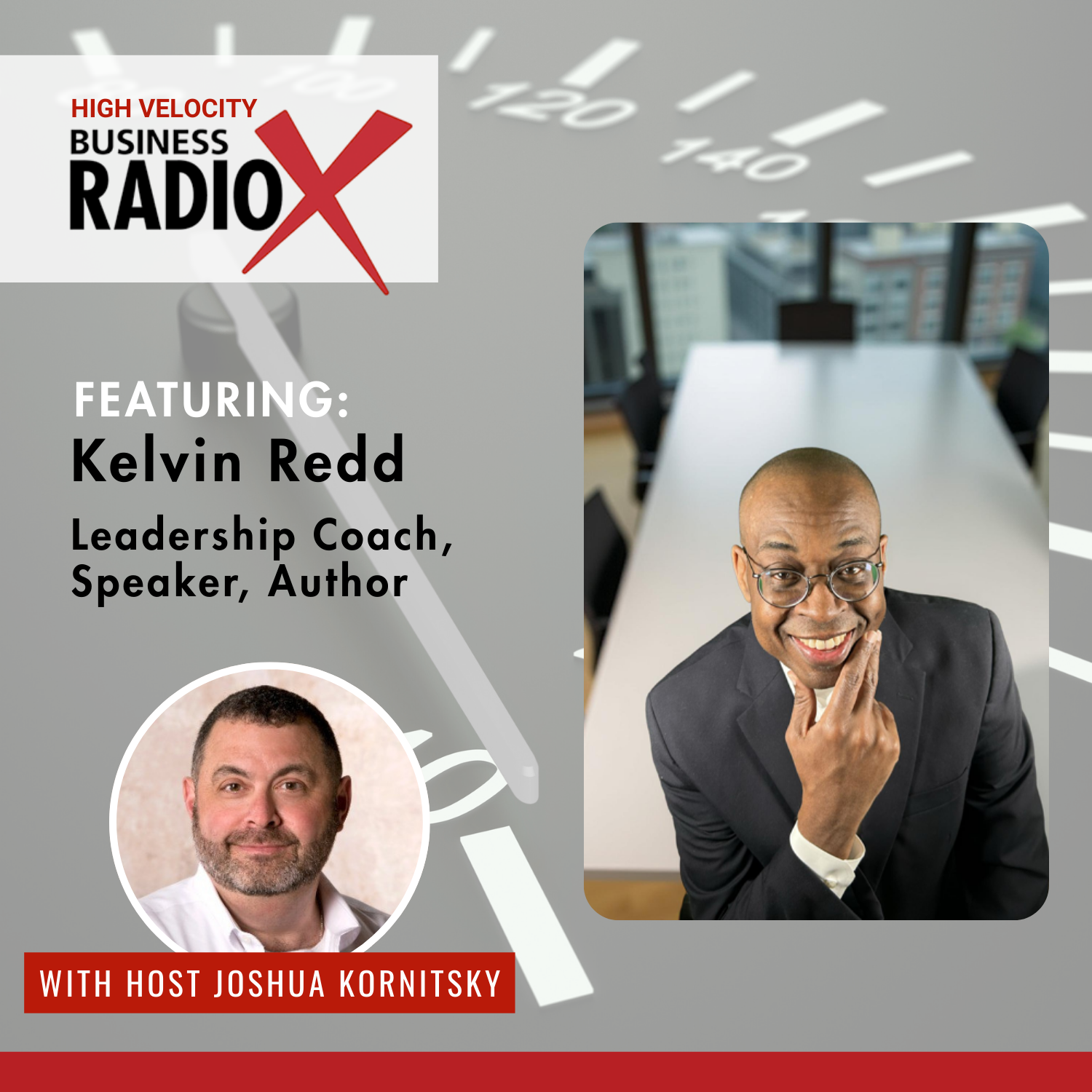
In this episode of High Velocity Radio, Joshua Kornitsky interviews leadership coach Kelvin Redd. They discuss Kelvin’s journey from corporate leadership to coaching, his pivotal role in making Columbus, Georgia the first servant leader city, and the importance of self-awareness in leadership. Kelvin shares insights on servant leadership, the value of personality assessments, and navigating life transitions. The conversation highlights practical strategies for leaders to foster authenticity, purpose, and engagement, while also previewing Kelvin’s upcoming book and coaching course.
 Kelvin Redd is a nationally recognized leadership coach, speaker, and author, known for his work in servant leadership and self-awareness. His work has impacted organizations like Aflac, Southern Company, the U.S. Government Accountability Office, and major universities including Auburn, Spelman, and Wake Forest.
Kelvin is the #1 Leadership Coach in Alabama and Georgia and the author of two books. His first book, Stand Tall: Essays on Life and Servant Leadership (Second Edition), debuted at #35 on the Amazon Business and Organizational Learning List in 2021. His second book, Define Your Destiny: A Self-Awareness Journey Toward Servant Leadership, debuted at #15 on the 2014 Amazon Top 100 Leadership Books List.
He is the only Emergenetics MASTER Associate in Alabama and Georgia. Of the more than 4,000 Emergenetics Associates worldwide, fewer than 60 are MASTER Associates. Kelvin uses Emergenetics—a measurable, proven way to recognize and apply thinking and behavior patterns people regularly use—as a first step in personal development, self- awareness, and servant leadership journeys. 
Kelvin is the former Director of the Center for Servant Leadership, a division of the Pastoral Institute in Columbus, Georgia. While there, the Greenleaf Center for Servant Leadership named Columbus a Servant-Leader City in 2010—the first time in the organization’s history that any city in the world had received such an honor.
For 13 years, Kelvin worked for Synovus Financial Corp., a company voted by Fortune magazine as The Best Place to Work in America in 1999. He held positions in human resources, branch management, customer service, governmental affairs, and relationship management, and was promoted to assistant vice president in 1995.
Kelvin earned a Bachelor of Arts in History from Auburn University and a Master of Science in Management, with a concentration in Leadership and Organizational Effectiveness, from Troy University.
“Kelvin Redd is one of the finest leadership minds in America. He has the rare ability to inspire while delivering practical, results-driven strategies.” — Howard Behar, Former President, Starbucks Coffee Company.
Connect with Kelvin on LinkedIn.
The Emergenetics theory profile and attributes are the intellectual property of Emergenetics International. The views and opinions expressed by me, Kelvin Redd, are my own and do not necessarily represent those of Emergenetics International.
Episode Highlights
- Leadership coaching and its significance in personal and organizational development.
- The concept of servant leadership and its application in communities and organizations.
- The role of self-awareness in effective leadership.
- The impact of personality assessments on understanding individual strengths and behaviors.
- The evolution of leadership perspectives through real-world experiences.
- The challenges individuals face during life transitions, such as retirement or becoming empty nesters.
- The relationship between purpose and productivity in personal and professional contexts.
- The importance of energy dynamics in leadership and team interactions.
- Upcoming projects, including a new book and a coaching course.
- The holistic approach to leadership development that emphasizes understanding oneself and others.
About Your Host
Joshua Kornitsky is a fourth-generation entrepreneur with deep roots in technology and a track record of solving real business problems. Now, as a Professional EOS Implementer, he helps leadership teams align, create clarity, and build accountability.
He grew up in the world of small business, cut his teeth in technology and leadership, and built a path around solving complex problems with simple, effective tools. Joshua brings a practical approach to leadership, growth, and getting things done.
As a host on Cherokee Business Radio, Joshua brings his curiosity and coaching mindset to the mic, drawing out the stories, struggles, and strategies of local business leaders. It’s not just about interviews—it’s about helping the business community learn from each other, grow stronger together, and keep moving forward.
Connect with Joshua on LinkedIn.
This transcript is machine transcribed by Sonix.
TRANSCRIPT
Intro: Broadcasting live from the Business RadioX studios in Atlanta, Georgia. It’s time for High Velocity Radio.
Joshua Kornitsky: Welcome back to High Velocity Radio. I’m your host Joshua Kornitsky professional EOS implementer, and today we’ve got a really incredible guest with us, Kelvin Redd. He’s a distinguished leadership coach, an author and a speaker who’s really dedicated his entire career to advancing leadership. He’s guided organizations and communities, most notably leading Columbus, Georgia, to become the first servant. Servant leader city recognized by the Greenleaf Center. He’s got a background spanning corporate leadership roles at Synovus and academic credentials from both Auburn and Troy University. Kelvin’s also the only Emerge genetics master associate in Alabama and Georgia. Welcome, Kelvin. It’s really great to have you here today. How are you.
Kelvin Redd: Joshua? I’m doing great. Thank you so much for having me to.
Joshua Kornitsky: It’s a pleasure to have you. So please, let’s begin at the beginning. Tell me about you and about, uh, how you got to this place in your life.
Kelvin Redd: Wow. Well, I was born in Phenix City, Alabama, which is right across the river from Columbus, Georgia. Sure. And, uh, that whole area, Columbus, Phoenix, Phenix City, the military base and what have you. Uh, right now, it comprises about 500,000 people. And so my father was a a chemistry and physics teacher when I was growing up. And my mom worked in the system, but my father was also our school’s basketball coach. So I found my love of sports and academia. It was all meshed together when I was growing up. I learned a great deal from him. Uh, graduated from Auburn University. I was a history major, and I was all set to go into teaching and had a chance meeting with one of my dad’s former students. And the next thing you know, I end up at Synovus Financial Corp., which is now Synovus, uh, soon to be pinnacle and, um, worked there for 13 years, learned a tremendous amount about leadership. And that’s really when I, I learned a great deal about, uh, leadership visions, mission culture, and what have you. And then after that, I ended up at the Pastoral Institute in Columbus, Georgia, which was to me a godsend to be able to work there. That’s when I learned and fell in love with the deep, deep sense of learning, of, uh, self-awareness. Really, all of that propelled me to where I am right now.
Joshua Kornitsky: Okay. So I know you had shared in the past some about your time at the center. Tell us a little bit about how that shaped who you are, because you shared some stories about its founder with me, uh, that I think people would love to hear.
Kelvin Redd: Well, um, the Pastoral Institute is a counseling and education center. And if you’re not from East Alabama or west central Georgia, you probably have never even heard of it. But it’s a Samaritan center, and it was found about a gentleman by the name of William Bill Turner, and his grandfather was one of the earliest investors of the Coca-Cola company. So Mr. Turner sat on the board for 16 years. Wow. While I was there at the National Institute for ten years, I had a chance to meet with this gentleman for nine and a half years. And on a couple occasions, I actually traveled with him and I learned a great deal from him. He was the one who was incessantly teaching the importance of self-awareness along with servant leadership. But he would also always say that self-awareness was the most important characteristic of a servant leader, and he drummed it into our heads so much that as the director of the center for Servant Leadership, I began to focus my attention not so much on the leadership portion, but the self-awareness piece. And that’s the piece that I think that leaders have to do the inner work. You know, it’s kind of like athletics. You know, uh, people ask me to come in and do, uh, communications workshop, trust workshops, leadership. And I’m thinking, okay, let’s go to football, baseball and basketball. Before the games start. You have to go through the fundamentals. And that’s where that self-awareness piece, you get really good at the fundamentals. You’re going to be a good hitter, good fielder, good basketball player, blocking and tackling in football. Well, it’s the same way in leadership. If you get really, really, uh, and uh, if you get entrenched in this journey towards self-awareness, you’re going to be a good leader.
Joshua Kornitsky: Well, and I do want to dig in much, much more on the self-awareness part, but I want to talk first about leadership, if that’s all right. Now, I know you’ve written, I think, two books on leadership. Okay. And in in the process of creating and directing the thoughts that led you to produce those books, what was a lot of that from Synovus? Was a lot of that from the center. Where where did your view on leadership get molded life? Okay.
Kelvin Redd: You know, I was yeah, I was in a meeting several years ago. And there was a professor, uh, from one of our major institutions, um, in the state of Georgia, and he said, you know, I wish I could get my students to understand servant leadership. And I just kind of blurted out, well, just go tell him. Get a job and work. They will learn right away what servant leadership is, leadership, and whether it’s good or whether it’s bad. So I think life, if you go through life and you observe because Mr. Bill Turner, he did write the foreword to my book, and I’m not boasting, but he did say that Kelvin is a great observer of people. Now, I don’t know if I’m great at it, but I enjoy it. And so I’ve always been one of those individuals. No matter where I am, I’m always observing other people. And that’s that was the impetus, impetus for this book right here. Stand Tall Essays on Life and Servant Leadership.
Joshua Kornitsky: Thank you for sharing that. And that definitely sheds a light onto it. But it makes me ask the question, because life is arguably the best teacher of of all right. Life and time and over time. How has your perspective on your own life and the way you viewed the world, and specifically how you viewed leaders, because you’ve seen it both from like, financial services as well as leadership coaching? How has that evolved and changed over time? Because I know what I thought made a good leader when I was younger versus what I think now is two vastly different human beings.
Kelvin Redd: Yeah, yeah. When I’m observing leaders, you know, and I was also, uh, on the school board here in town, which is a interesting.
Joshua Kornitsky: Oh, that’s a whole different animal.
Kelvin Redd: Yeah, yeah. We were yeah, we were, we were ousted. Um, so it you learn a lot because here’s the deal. I observe people first and then I when I’m observing leaders, I’m looking for certain characteristics. For instance, does that leader no matter which genre education, um, business, financial services, which is business as well. Um, I’m looking to see how often do they preach the mission, the vision and the values, because in some form or fashion, as a leader, you’ve got to be the one to paint the picture. You’ve got to paint the vision so people can see it, and you’ve got to do it clear enough. And so I’m always curious because I’ve always I learned this at Synovus because Jim Blanchard was our chairman and CEO. He talked about the mission, vision and values in some form just about every time he spoke. And so that’s what I look for. And then I look for engagement, because when I’m presenting a workshop, the participants will tell you if they enjoy the if they enjoy working at the at the organization or not, you’ll see body language. You’ll see if they’re smiling and they’re really engaged. They love it. But if somebody just simply goes like that, oh, that’s a cute. Let me let’s let’s pause this or at the break time, let me just mosey over and talk to this individual and say, why? Why did you give me that, that sad ass, so to speak. As young people like to say.
Joshua Kornitsky: That’s I find that fascinating because I feel like and many, many people before me have said, you have to have a level of vulnerability in order to have any level of self-awareness. So let me ask you, how do you encourage when someone approaches you from a business perspective and they say, Kelvin, you know, we really want to work with our leadership team and encourage that self-awareness. How do you do that?
Kelvin Redd: Well, the first thing we got to do is we got to get them to understand the importance of why they’re wired to think and behave the way that they do. And so I always encourage a personality test. Now my favorite is genetics. It’s a brain based personality test that tells you why you think and behave the way that you do. There are a lot of personality tests that are on the market, but the one that I really like is genetics, because not only will you tell you what you’re doing, but it’s telling you why you do it. And a lot of the personality tests there centered around observable behaviors, and that’s fine. But what about the thinking attributes? And that’s what Doctor Gail Browning, who founded Emerging Ethics, earned Doctor Wendell Williams. They decided to separate thinking from behaving. And so I think that is really, really key leaders who don’t understand why they’re wired to think and behave the way they are, what their strengths are. They will typically project their personality onto those that they’re leading. And so if they’re extremely assertive and directing and controlling, they might want to see that out of their leadership team. If they’re more quiet and, um, and peacekeeping and what have you, they may want to see that on their leadership team, not realizing that everybody is wired differently. And so people bring different strengths. If I’m a person who is very process oriented, I might need the creative. You know, if the person who is a creative, um, big picture thinker, they may need somebody like me who is process oriented, who can handle the details and such as yourself as well. Josh.
Joshua Kornitsky: Thank you. And in full transparency, I was part of a leadership program where I met Kelvin and all of the participants in the program in the in the Bartow Cartersville Chamber of Commerce Leadership program. Went through the genetics. And I will I will absolutely tell you, having done no less than six other forms of personality analysis, I’ve never had one that was quite like this, nor, uh, explained as thoroughly as as Kelvin did. But Kelvin, I want to ask you to, to share something about that. And I know we’re talking sort of out of context, but you talk about both how they think and how they act at a very high level. Take us through the process when when you see people that have either, uh, complementary or even opposing, let’s say, traits to keep it generic, um, how do you begin to look at that and analyze it and work with that team.
Kelvin Redd: Well, first of all, I meet people where they are. Each individual. You have a team of 16 people on your leadership, from finance to HR to facilities, what have you. Meet people where they are and once they see their personality profile, explain to them they are as unique as who they are. They’re special who they are and embrace that. Don’t try to change yourself. Use who you are to kind of flex to do the things you need to do. One of the things I’d love to do in my workshops is I point out to people, I said, you know, you have a personality and you have a job description. My job is to help you use your personality to get the job description done.
Joshua Kornitsky: That’s a good perspective. And what impressed me when we had gone through this exercise. And then I’ve had the the benefit of seeing it as a member of the committee now twice for different classes is I love the fact that you’re not trying to get people or you’re informing, you’re not trying to change. You’re not telling them. Well, you know, if you are more introverted, you just need to be more extroverted instead. If I remember, if you would share how you explained how you just sort of lean in, it’s not that you’re not capable of being extroverted, it just requires more effort.
Kelvin Redd: Yeah. More than anything, it’s about energy. Like, where do you where do you where is your energy derived? And so and there are these myths out there about introversion and extroversion or what have you. It really comes down to energy. Are you energized by being alone or are you energized by being around other people? Those are the observable behaviors. We understand that, but meet people where they are. And once you do that, then you can. You get that aha moment when you look around the room and say, ah, now I understand Joshua a whole lot better.
Joshua Kornitsky: So let’s say that you’ve gone ahead and you’ve, you’ve worked with, uh, seven, eight person leadership team and you’ve come to help them first and foremost, foremost pardon me. Understand who they are. What’s the next step to get that team to understand. So if you and I are opposites in certain traits, how do you help them understand how to work better together?
Kelvin Redd: Well, it’s all encompassing because you also have that other self-awareness piece where you talk about your dreams, your goals, your values. And keep in mind there are two types of self-awareness. Um, I know you asked me about team building, but what I typically do, if there are ten steps, I say we’re going to focus on self-awareness. At least 7 or 8 of them before we even attempt to work on the team. And so you there are two types of self-awareness. There’s internal self-awareness, you know, how do I see myself? Like, what are my strengths? What are my gifts? What are my values? What’s my reason for being like? What’s my purpose? Why am I here?
Joshua Kornitsky: Right?
Kelvin Redd: But then there’s also external self-awareness. How do the people in my sphere of influence see me? And I think that’s critical. Critical. Before you do team building, like you have to have an understanding before you work in a team. You got to have an understanding of yourself. And how do those individuals see me? And once you understand that, then that paves the way for team building.
Joshua Kornitsky: Well, so I. And that makes sense to me. I know that you work across the spectrum from professional environments to strictly academic environments.
Kelvin Redd: Religion. I’ve worked you name it.
Joshua Kornitsky: Well, and one of the things that’s hard to quantify is without having gone through the analysis and sort of understanding the process of it, it first and foremost hits you, the individual, in a way that helps you better understand yourself without being critical. And, and I would even argue that there might be a level of, of acceptance with it, because it’s you’re the person who answered the questions to determine the way the profile leans. And more often than not, that’s going to be, give or take maybe 1 or 2 points of of statistical margin. That’s probably who you are. But the piece that always impressed me was the idea to understand that you can work outside of areas that you are not an expert in.
Kelvin Redd: Yes, yes. I mean, for instance, I give you an example, um, when you saw me present, like I was quote unquote on, like I was having a good time, it was I was smiling, I was walking around, I was in, I was trying to be engaged, and I thought I was and I was trying to get to know the participants and what have you. Um, but I’m an introvert, right? I’m an introvert. My energy is derived from being alone, but it’s the same as a teacher. There are so many teachers that I know. My sister’s a teacher and she’s introverted and. But we have a calling, right? And we go to work and we do what we’ve been called to do. And afterwards we’ll have our downtime beforehand, we’ll have our downtime, and on occasion we’ll take some mini breaks, you know, during the day if we can. And so you teach that to people that it’s about energy. And if you pace yourself in that particular, uh, environment. Then you can get the job done. Let’s look at extroverts. They’re energized by being around other people. Sure. What happens if you’re working in a back office somewhere? You know you’re not. You don’t have a lot of people. I had a client one time. Uh, he was used to being. He was a teacher, and he got promoted to being in federal programs, and they moved him to the downtown office, and he was in the back office. And as a principal, he was around students, parents, teachers, cafeteria workers, dignitaries. And he was energized all day long, all week. And then he ends up in a back office and I had to work with him on that. I said, well, here’s one thing you can do when you have certain meetings. If it’s a zoom meeting or a phone call, get in your car and drive across town so you can meet the people, you know, just little things like that that breaks up that monotony throughout the day.
Joshua Kornitsky: Well, and that brings up a really important question. So do you work primarily with, um, organizations, companies, uh, or individuals or both? Who comes who looks to work with you.
Kelvin Redd: It’s about 75 to 80% organizations, and the other 20 to 25% are individuals. I will say that that individual there’s been a demand, um, in the last couple of years for more and more coaching, uh, a really high demand. Uh, and here’s the thing about the 1 to 1 coaching versus the group coaching, which, you know, you might call a workshop, is that, uh, it’s time sensitive. And it’s also, um, it takes a lot. It takes a lot of work with my travel schedule. Sure. And so I told myself, you know, here we are in August that I was not going to do a lot of 1 to 1 coaching toward the end of the year. And I’ve taken on several clients because I didn’t like seeing them in distress. So, uh, it just happens like that.
Joshua Kornitsky: Yeah, it’s it’s a balance for sure. Um, and not to not to pile more on, but to ask the question without obviously, uh, any names or any any identifiable what types of individuals, what type of guidance are they? Are they looking to work with you on?
Kelvin Redd: Um, it’s interesting. A lot of it is purpose. And here’s the deal. I believe that your purpose can actually change in life depending on which season you’re in.
Joshua Kornitsky: I think that’s.
Kelvin Redd: Fair. What happens to the educator who starts teaching at age 22 and at age 52? It’s time to retire. They’ve got their 30 years in. Then what? What are you going to do? You know, some continue to teach, but some don’t. What about the CEO who has been in charge for 20, 25 years as a CEO, and it’s time for him to step aside. And what happens if he’s very extroverted? He loves being around people. What happens? What are you going to do the day after you retire or the week after? Where are you? Where are you going to get your people contact from? As I like to say, you know, so I think I think I’m working with some people who have come to a stage in life where it’s like, okay, things are changing. Um, uh, parents, children graduate from high school, 17, 18 years old. They’re empty nesters. The mom is like, okay, what do I do now? The father’s like, what do I do now? You know, those kinds of things. So I’ve got about five clients right now. About four of them. It is about, um, it’s about purpose. And I would also weave in productivity in there.
Joshua Kornitsky: I think there’s arguably an interdependency, right? If you don’t have purpose, it’s hard to feel or be productive.
Kelvin Redd: Exactly.
Joshua Kornitsky: Um, and does it track back broadly to self-awareness?
Kelvin Redd: I always start there. The first thing you do, I want to see. I want to know who you are and where you come from. And I want to know your strengths, your weaknesses. I want to see where you get your energy from also.
Joshua Kornitsky: And in the process of going through that with people. And again, I have the advantage over anybody listening or watching right now, because I’ve had the opportunity to witness it both as a participant, but also from the outside looking in. The thing that surprised me the most is that I don’t to to my memory, and I think at this point between the three classes, it had to have been close to 100 people together, spread across the three. I don’t believe I saw anybody who said, no, this isn’t me. You know that that that after you took them through the explanation. Because it’s very easy when you don’t understand what you’re looking at to say, of course, that’s not me. But once, once they understood what it all meant. Um, I don’t recall a single person who said, do people ever ask to be reevaluated?
Kelvin Redd: Uh, they do, they do. Probably about 95. In my in my class. Right? Probably about 95 to 97% of the participants. They one of two things happens. They have an aha moment or there’s a confirmation one of.
Joshua Kornitsky: Those two.
Kelvin Redd: And then you have about 2 to 3%. They just stare in wonderment like, is this really me? I want to take it again, that kind of thing.
Joshua Kornitsky: Wow. Well, and having been on the receiving side of it, I can tell you that that there is a lot of introspection that happens once you have an understanding, because the way that it is explained is everything is a spectrum. It’s not black or white. It’s not. You are these things, it’s you tend more towards. This is when it comes to my personality that I lean more towards this rather than that. And it’s not a definitive you are A, B, C, and D, like a lot of other analyzes are, but I think that’s also my understanding of it comes literally directly through you. So I think you did a great job explaining it. But I think for anybody that’s listening that’s curious about, um, the way to apply this, I think it’d be a great idea to talk to you about it. So let me ask, how do we get in touch?
Kelvin Redd: Well, you can get in touch with me. You can go to my website. Or you can email me at com.
Joshua Kornitsky: Well, in.
Kelvin Redd: With an L. My father was a physics teacher and he named me after Lord Kelvin, the famous physicist.
Joshua Kornitsky: So when when when you get to zero degrees, it means it.
Kelvin Redd: It means it. Yes. That’s a good one.
Joshua Kornitsky: Yeah.
Kelvin Redd: Sorry.
Joshua Kornitsky: Old science geek. Um, we also will share all of your contact information, but I want to make sure before we close out. Kelvin, um, anything on the horizon, anything new you’re working on or that people should know about?
Kelvin Redd: Yes. I’ve got a third book that is either going to come out during the holidays or the first of the year, and that decision will be made probably within the next week, right after the this particular holiday. And uh, and then we’ll go full steam ahead with all the marketing, make sure we get the word out. And I’m really excited about it because it’s my first business fable. Uh, that’s the first thing. The second thing is I’m creating a coaching course because I realized that people are calling. They’re asking for 1 to 1 coaching. And I thought, well, why not put this in a course with different modules based upon what I’m hearing or what I have heard over the last several years? Um, whether it’s one on one coaching or, uh, being in a workshop and what I’m hearing from the participants, I’m going to put it all in a course and they can have they’ll be able to go to the website and download it.
Joshua Kornitsky: That’s fantastic. And that’s really something that’ll speak to fulfilling the needs of folks that are reaching out. Uh, I look forward to to reading the book. We absolutely would love to have you back on that. We can talk about it and share it. We can even do a little book club, uh, so we can understand what the fable and the moral to the story is. Um, you know, Kelvin, thank you so much for for giving us this time today. My guest today has been Kelvin Read. He is a distinguished leadership coach and author of two books. Third on the way, a speaker and really someone who has dedicated his career to advancing leadership. I cannot say enough about the holistic approach that Kelvin takes to helping people really understand themselves, but also understand themselves within a larger organization. I’ve had the opportunity to be part of it three times, and can’t say enough how effective it is and how strong an impact it makes. Kelvin, thank you so much.
Kelvin Redd: It’s been a pleasure. I really appreciate this.
Joshua Kornitsky: Fantastic to have you. So this has been Joshua Kornitsky professional EOS implementer and your host here on High Velocity Radio. Thank you for joining us. We look forward to seeing you again next time.
From Green Beret to Green Dollars: A Guide to Winning in the Market
/
RSS Feed
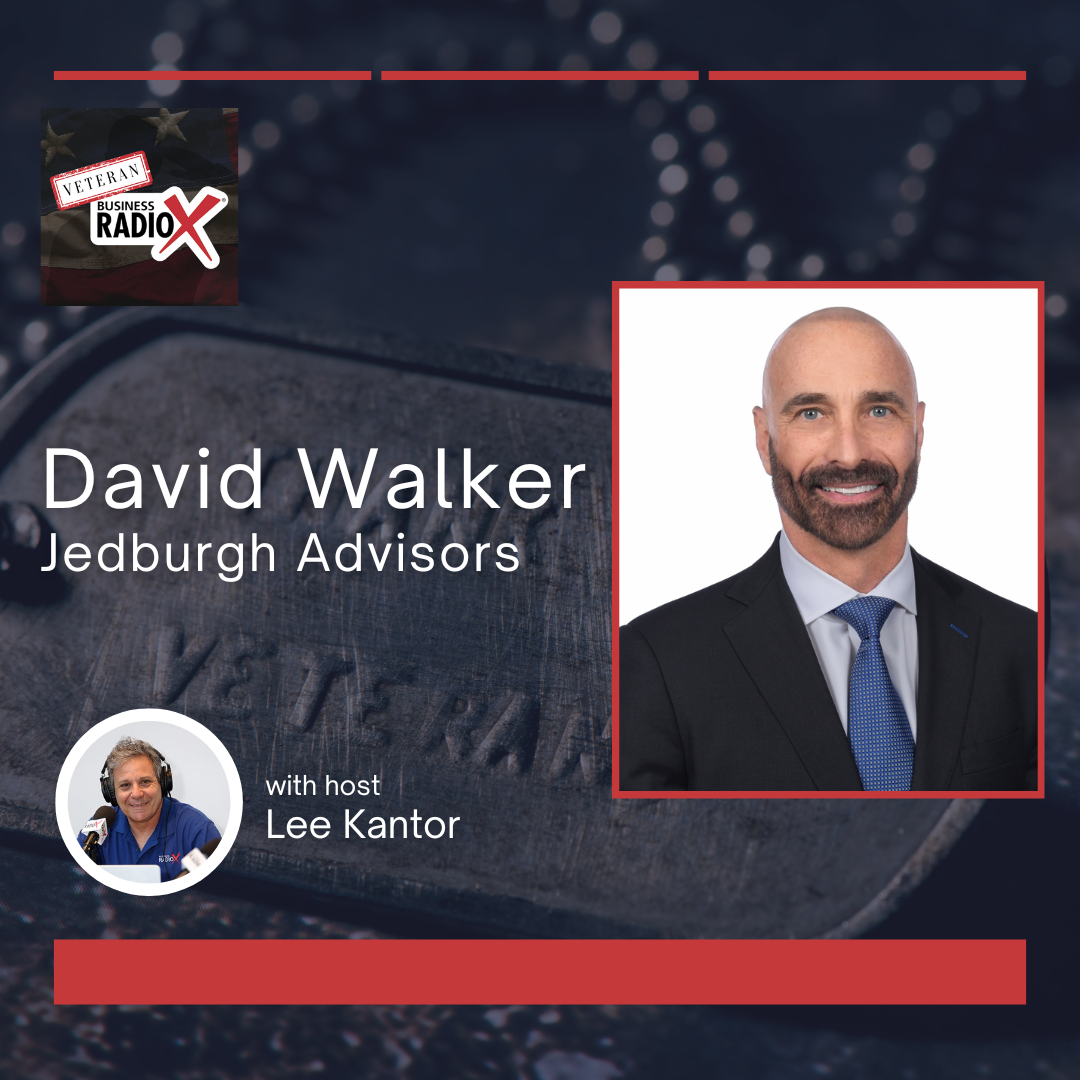
In this episode of Veterans Business Radio, Lee Kantor is joined by David Walker of Jedburgh Advisors, a hedge fund specializing in disruptive innovation and volatility strategies. David shares insights from his military background and investment career, emphasizing disciplined risk management and the importance of distinguishing between long-term “HODL” stocks and speculative trades. The discussion covers emotional pitfalls in investing, the impact of AI on finance, and practical advice for everyday investors. David also highlights his book, *Don’t Be Stupid: A Green Beret’s Guide to Investing*, and encourages veterans to leverage resilience and adaptability in business.

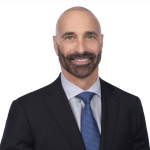 David Walker is the Founder and Chief Investment Officer of Jedburgh Advisors, a hedge fund based in West Palm Beach, Florida.
Before launching Jedburgh Advisors, Dave spent 21 years at multi-billion-dollar hedge funds, serving as both Chief Operating Officer and Chief Financial Officer.
Mr. Walker also has over six years of experience as Chief Investment Officer and portfolio manager.
Dave shaped his investment philosophy during two decades at top-tier hedge funds—including Spruce House Investment Management, Tower Capital, Scout Capital, and Concordia Advisors—gaining insights from a diverse range of mentors and portfolio managers.
Mr. Walker holds a Bachelor of Science in Engineering from the United States Military Academy at West Point, where he received the Superintendent’s Award, and an MBA from the Kellogg School of Management at Northwestern University.
He served in the U.S. Army’s 82nd Airborne Division, 3rd Ranger Battalion, and the 5th Special Forces Group (“Green Beret”). Dave is the published author of “Don’t Be Stupid: A Green Beret’s Guide to Investing”. He is also a service-disabled veteran and is committed to supporting the Special Operations community.
Connect with David on LinkedIn.
Episode Highlights
- Overview of David’s background and military service.
- Explanation of hedge funds and their differences from other investment vehicles.
- Discussion of portfolio management strategies, including disruptive innovation and volatility mean reversion.
- Importance of risk management and emotional discipline in investing.
- Insights on the impact of disruptive technologies, particularly artificial intelligence, on investment strategies.
- Recommendations for average investors, including a buy-and-hold approach and diversification.
- The concept of “HODL stocks” versus speculative investments and the importance of exit strategies.
- The role of professional financial advisors in managing investments effectively.
- Discussion on the gamification of investing and its potential risks for younger investors.
- David’s investment philosophy and lessons learned from both successes and failures in the market.
This transcript is machine transcribed by Sonix.
TRANSCRIPT
Intro: Broadcasting live from the Business RadioX studios in Atlanta, Georgia. It’s time for Veterans Business Radio, brought to you by ATL vets, providing the tools and support that help veteran owned businesses thrive. For more information, go to ATL vets. Now here’s your host.
Lee Kantor: Lee Kantor here. Another episode of Veterans Business Radio. In this episode of Veterans Business radio is brought to you by ATL vets. Inspiring veterans to build their foundation of success and empowering them to become the backbone of society after the uniform. For more information, go to ATL vets. I’m so excited to be talking to my guest today, David Walker. He is with Jedburgh Advisors. Welcome.
David Walker: Hi, Lee, thanks a lot for having me.
Lee Kantor: Before we get too far into things, tell us about Jedburgh Advisors. How are you serving folks?
David Walker: Yeah. So thanks. So Jedburgh Advisors is, um, a hedge fund, so we’re not an Ria, which is a little bit different. We serve institutional clients or high net worth, what they call accredited investors. So we’re not allowed to take any retail clients. But what we do is we manage a couple of different portfolios. One is around disruptive innovation. So we basically research and invest in stocks we think are companies where we think that are providing new technologies for the world. And another one of our funds is called a its volatility mean regression. It’s kind of a mouthful, but it’s based on the premise that the volatility mean reverts over time. And so my business partner is running that that fund. And I’m running the Disruptive Innovation fund.
Lee Kantor: So what’s your backstory. How’d you get involved in this line of work?
David Walker: Yeah, it’s kind of an interesting story because I was in the military as a, as a young man, joined when I was 18 and then was an enlisted man for a couple of years. And then I got somehow I got to West Point. Not sure how that happened, but they figured I was good enough to go. And after West Point, I went back into the military as an officer and then eventually went Airborne Ranger Battalion and then Special forces, and then served for a number of years in special forces before getting out right before the towers came down. As a matter of fact, because I’m an older generation, and so it was not really a background that would lend itself to finance. But I eventually went to business school and found my kind of just competed for jobs and found my way to a hedge fund in Manhattan, kind of a multi-billion dollar multi-strategy hedge fund, and started learning the the craft, so to speak, by working for some very talented portfolio managers over the course of about 21 years, and to start to start my own fund.
Lee Kantor: Well, can you educate us a little bit about a hedge fund, like a people hear about it, people write about it. But I don’t know if everybody understands what it you know, what you’re doing every day and why it’s important.
David Walker: Yeah, exactly. You know, it’s very interesting because it’s it’s not really for retail investors. It’s like I said, the government, the SEC mandates that it’s only for accredited investors or institutional investors, and hedge funds can do a little bit more unique things. So sophisticated investors kind of understand it. But other retail investors may or may or may not understand what we can do. So we can do things like we can short a stock, and shorting a stock means we can bet basically that the stock will go down. So basically we borrow the shares, we sell them in the open market. And then when the stock goes down, we can buy them back at a lower price. And then and then return those shares that we borrowed mutual funds. They really can’t do things like that. We can also use derivatives. We can use options. We can do futures. We can do warrants. There’s a lot of different things we can do that mutual funds and index funds can’t do. And the reason they can’t do that is because of the regulations and because some of the things we do, even though we try to hedge, meaning we try to lower the risk, sometimes some of the things that we do can actually increase the risk. And that’s why they don’t allow it for mutual funds or ETFs for retail investors.
Lee Kantor: So what attracted you to this?
David Walker: Um, I, uh, it was funny because I was single at the time, and I was, um, I was in, um, Kingsport, Tennessee, working for Eastman Chemical Company. And, uh, you know, I didn’t think I was going to spend the rest of my life in eastern Tennessee. Uh, although it was nice for outdoor activities, it was a little bit, um, kind of like some social activities that I was kind of looking for as a young man, uh, after getting out of the military. So, so then I. So then I wanted to go to a bigger city, and I had a friend in New York City who was working for a hedge fund, and he. And he said he was looking. They were looking their firm was looking for someone. And I said, you know, what about me? And, you know, he said, basically send me your resume and kind of went from there.
Lee Kantor: So but what what attracted you to it? You could have gone in a lot of directions in finance.
David Walker: Yeah. But, uh, I think I attracted to me because there were so many different, um, kind of basically so many different types of hedge funds. So there’s a global macro hedge funds, which are interesting, and they basically look at the entire world and place their bets on usually using currencies or interest rates on, on different countries kind of against each other. There’s equity long short which basically the kind of the, the, the type of hedge fund that I’m involved with which um, um, kind of goes long, meaning, uh, we buy or short, we sell equities based on what we think are going to go up and down, uh, commodity hedge funds, which, you know, based basically, uh, place their bets on, um, oil or crude or precious metals and things of that nature. So what attracted me was, is there’s so many different types of funds and, um, it just, you know, there’s also fixed income and convertible art and it just it’s just a really interesting, um, area to be in. And also it’s, it’s also it kind of like you see the, um, you see the results immediately, whereas if you’re in venture capital, you’re doing a startup. It may take years for you to see results where we see our results within sometimes minutes, sometimes days and sometimes weeks or months.
Lee Kantor: So did you like the fact that there was less limits on what you can invest in? And there was more volatility, like there’s more action in owning a hedge fund versus more, you know, traditional, uh, finance.
David Walker: Yeah, that’s that’s true. So there there are um, yeah. You can, you can, um, express, uh, an idea or a strategy in kind of multiple ways. For example, let’s say you like Tesla. You could just buy the stock, right? Or you could buy the stock and sell a covered call. Or you could just buy, you know, you could do a synthetic long where you buy a call and sell a put. You could do a straddle or strangle. You could use derivatives. Um, you could do a poor man’s cover call. There’s so many different ways to express, um, a strategy instead of just purely buying the stock. And so, yeah, I was really attracted to the uniqueness of it. And, um, you know, over the years I’ve kind of developed kind of like I started off with, like, little sticky notes. And then just by watching, uh, hedge other hedge fund managers and talking with them and having mentors in the industry, I put together a bunch of these sticky notes and sticky notes eventually became like these bullet points, and they eventually became what would became my book, to be honest with you, chapters in my book. And by learning from all these other people in the industry, you know, about all the different ways of kind of expressing ideas and strategies. It gave me a really good sense and a really good flavor and a really I really appreciate kind of the industry as a whole. And I’m very excited. Like my friend and I, we wake up on a on a Monday morning more excited than most people who wake up, who basically wake up on a Saturday morning a lot more excited than we are. We like the work week more than we like the weekend.
Lee Kantor: So, um, is that what kind of drew you to say? You know what? Enough working for somebody else. I think I’m going to just go all in on myself.
David Walker: Yeah, it was driven by. Yeah. That’s true. It was also driven by a few things I worked, like I said, for a bunch of rock star, um, hedge fund managers in the most recent one, um, a really good guy was at a Goldman and had jettisoned a lot of good firms and whatnot, but he and I had some differences in the way we thought philosophically about managing risk. And, um, you know, one thing that I talk about in my book, for example, and I talk about drawdown math, and a lot of people get this wrong, especially retail investors. If you lose 10%. Like if I ask somebody, if you lose 10%, what do you got to make to get back to zero? And they’ll say 10%. And that’s incorrect. If you lose 10%, you got to make 11 technically 11.11 to get back to zero, right? So if you think about it, if you lose 20%, you’re going to make 25 to get back to zero. If you lose, you know, 30%. You got to make 43 to get back to zero and you lose 50%. You got to make 100, get back to zero. So draw down math is very crippling. And so when I was with the last person was the last fund that I was at, you know, he was the CIO, I was the CFO. So I wasn’t really in charge of the the stock or picking the stocks or managing the risk.
David Walker: But he would write a stock down. And um, me, I don’t do that. I and and I don’t do that because of draw down math. So even a great name a good stock that you like if it’s drawing down I sell it because of the math is so against you. And I was at another fund fun? Years and years and years ago they wrote a stock down. They bought a stock at $30. It went up to 60. They patted themselves on the back and that stock went from 60 to 45. Then it went to 25. Then it went to ten. Then it went to $0.17. So they wrote it all the way down to zero. And I think that’s I think that’s just one of the worst things you can do. So starting my own fund was basically driven by the philosophy of these bullet points that I kind of developed over the years of watching other hedge fund managers, and I watched a lot of good hedge fund managers, um, kind of take their portfolios down, and some of them even actually blew up. And I said I wasn’t going to do that. I was going to protect the book, protect the portfolio, even at the expense of maybe not having as optimized returns because I want it to be as safe as possible.
Lee Kantor: So the book you’re talking about is Don’t Be Stupid A Green Berets Guide to Investing. So are you taking some of these kind of philosophies? Is this coming out of the Green Beret playbook? Like, how does that kind of, um, correspond to how a Green Beret would behave?
David Walker: Yeah, it’s funny because it’s not really a direct link between the two, but there is a link in terms of the kind of the philosophical and the concepts. For example, there’s a lot of times when I have failed, excuse me, uh, either in the industry or just as an entrepreneur, and it took a lot of grit to kind of stay with what I was doing and keep moving forward. And when I was going through for to through through Special forces assessment and selection, you know, a lot of people quit. A lot of people just, you know, didn’t want to put up with the misery of it. You know, it’s a tough it’s a tough course. And, um, and even in Ranger school, same, same thing. Of the 13 people in my squad, only two of us made it all the way through, uh, without either getting kicked out or quitting or recycling. And, you know, it taught me that you really had to have the grit. You really had to have the staying power, and you have to kind of accept failure as part of part of the process, and you got to learn from your failures and then keep moving forward. So I use that kind of that same sort of discipline and grit, um, because I know I’m going to have failures. I’m going to have failures, uh, you know, picking stocks. I’m going to have failures in my, my risk management. I’m going to have failures in my portfolio. But if I keep doing the right things and keep putting my head forward, um, and I will, I will eventually be successful. So that’s kind of where that crosses over into terms of the the discipline that I learned, the grit and just the focus. And it’s, uh, it’s paid off so far.
Lee Kantor: So you’re kind of your investing philosophy is a combination of the people that you’ve worked with in the past and your own kind of investing philosophy. It’s a combination of what you’ve saw and what you’ve kind of decided is the right path on your own.
David Walker: Yeah, that’s very true. And also a lot of the lot of the, you know, the big hedge fund managers. You know, the well-known names of Paul Tudor Jones, the Druckenmiller of the world. You know, a lot of them have, uh, they’ll write articles. Howard Marks. Great articles. Uh, Buffett. They’ll write a lot of articles, and you can learn a lot from those. But you and I also learned, I think, a lot from, you know, their mistakes when they talk about their mistakes. I love it when the managers that I’ve worked for have either talked about their mistakes or I see their mistakes. And I think you can really go through, uh, life or even as a portfolio manager or managing managing your own investments. Even Warren Buffett once said, you know, it’s really about making 1 or 2 good investments and avoiding big mistakes. And, um, if you look at his portfolio, he has a lot of mistakes throughout his 60 year career. And, um, but he doesn’t have monster mistakes like giant, you know, mistakes that have destroyed him and caused him to close, close the doors of, uh, of Berkshire Hathaway’s. He has small mistakes, and he tries to mitigate those. And then you just kind of let the portfolio do its own work. And, and and you know, you have 1 or 2 good, good return hits. The rest are probably going to be average and then avoid major mistakes. And kind of that’s what I’ve learned, I think, throughout my career.
Lee Kantor: And that’s where that drawdown math discipline comes into play.
David Walker: Yeah, absolutely. You know, I did a private investment with a, with a with a friend of mine. And our another gentleman did it. And, uh, we got the shares at about $0.53. They went up to five bucks I immediately sold. You know, I sold as fast as I could, uh, about 85% of my shares. And then when they started drifting down, I sold them all out. And within two weeks. So I had about a ten bagger, uh, which, you know, ten x return is pretty darn good. Um, well, the other gentleman who I know who also did the investment he held on, he said, oh no, the stock’s going to go to 2020 bucks. It’s only at five bucks now. Well it went to four bucks. And he kind of I said hey man you got an eight bagger you’re going to sell. No it’s great stock. It went to six bucks. Hey. You gotta. It kept going down. Bottom line, he started buying more at $1.25. That stock has $0.17 now. So he took a ten x return and made it into like a -67% return. And I thought that was the one of the worst things you can do. So yeah, you talk about lessons learned, you can learn from other people’s mistakes and you can learn by watching them. And then that goes right into that drawdown math. It just doesn’t make sense to take a return like that, uh, and just ride it all the way down.
Lee Kantor: So is that a common mistake? You you see, people make that. It becomes emotional. It stops becoming kind of a mathematical, um, um, situation because, you know, in your head, if you’re like, I like this stock at some point you liked it because you put money into it and then it goes up and then you’re like, see, I was right. And then it goes down a little and part of you emotionally might be going, well, I liked it before, so now it’s on sale, so I should like it. You know, this is even better. Now I’m getting, you know, it’s an opportunity. It’s not. It’s it’s not. I’m not perceiving it as a risk.
David Walker: Yeah. That’s a very good point. And that’s one of the hardest things to do. And you brought up a really good point because you know some stocks are really great. And they go down. You want to buy on the dip. You know like a great stock that’s going to be around for the next two, three, five decades. But sometimes these smaller caps uh, you know, a stock with very low or even no, no revenue at this time. And you’re in a fed tightening cycle. And, you know, those stocks are probably not going to recover from a dip. The dip is a sign that it’s going to continue to go down. And so I try to break my portfolio into what I call the Hodl stocks. Like, you know, people talk about hodling and crypto, but there are some stocks that are just great stocks that are going to going to be around for for decades. And you kind of know the names, right? You don’t need to to go into the depth there. But and there are some stocks that are probably going to outperform in the short time. But but may or may not. Maybe they spike up 50% in three months, but may or may not be around for the long term. So when they start fading, it might be a good time. I call it Gtfo. It’s get the f out. And so yeah, that’s that’s that’s the one of the hardest things to do at the point you brought up is you know what. What is the stock where you buy it on a dip, and what is the stock where you get the heck out on a dip. That’s that’s that’s what we get paid. That’s why portfolio managers get paid. Because those are the things we’re trying to figure out.
Lee Kantor: Right? And it’s not for the faint of heart because it’s such a complex, uh, environment that you’re dealing with. There’s so many variables and you don’t know what is going to be the thing that’s going to make it. I mean, it’s there’s no sure things here.
David Walker: That’s that’s 100% true. And there are a lot of variables and you can’t get emotionally attached. A lot of people want to sell like a stock, like one of the big talking about mistakes that I made. I remember buying Apple at $11 and selling it at 22. Thinking I was a genius. And by the way, it split and doubled and split 2 or 3 times since then. So I don’t know what it’s at now. 100 and some change. But but multiply that by two. Then multiply that by four. Because. Because of the splits. So um, so the key thing is not to sell the winners of a great stock, but, but to sell your losers. And it’s harder for people to do that because, you know, they buy a stock for say, ten bucks. It goes to like 15. They think they’re, you know, it’s going to keep running on. And then it drops down to ten again and then drops to eight and drops to five or what have you. And it’s hard for them to cut that loss because when you sell a loss, that’s when you’re confirming that it’s really a loss because you changed an unrealized loss into a realized loss. It’s gone forever now, and it’s a tough feeling, but there’s almost like a weird sense of relief when I do it. When I sell a loser because you’re like, all right, I don’t have to deal with it anymore. It’s gone. I take that loss. What did I learn from it? I try to write down the lessons learned and try to move on from it. But you’re absolutely right. A lot of people get emotionally attached to their losers, and they just hold on to them. And I think that’s a terrible idea.
Lee Kantor: And I think that’s where having, uh, experts involved make it easier to, um, to kind of execute your financial plan rather than yourself, unless this is all you’re doing 24 over seven, because, I mean, at one point Sears was Amazon, right? You know, at one point Myspace was Facebook. So it’s hard to know, you know, who’s going to be here tomorrow. Um, you know, because historically, what is it most of the fortune 500, you know, 50 years ago probably don’t even exist anymore.
David Walker: That’s very true. That’s that’s very true. I mean, you look at the Dow industrials, the 30, you know, supposedly 30 biggest stocks in in America. There is not one of the it used to be GE was the only one survivor. Now it’s gone. It’s no longer uh one of the the the Dow 30. That that’s the Dow Industrial 30 right now are none of them are the original 30 that that were uh, you know, put in the index when it was, uh, when it was developed. And so even with my stocks that I, that I call my Hodl stocks. Yeah, they’ll be around probably for a decade. But, you know, even then you never know when they, when they, when they might fade. And you always have to be kind of um, on the ball kind of monitoring those as well. Um, and so listen, technology is changing now the pace of change is, is not only is technology changing, but the speed at which it’s changing. The area under the curve is is changing at a more rapid pace. And so, um, you know, yesterday’s disrupter can be you know, today’s disrupted, you know, so many companies that that were doing great things, you know, just five, ten years ago are now being disrupted by new technologies. And AI is one of the reasons, uh, that a lot of these companies are getting disrupted. So, uh, it’s, it’s important to, to really, really pay attention to what’s going on in the world.
Lee Kantor: And and it’s a different time now. Now you can have billion dollar companies with a handful of employees. Where in the past where you to have $1 billion company, you had to have thousands of employees.
David Walker: Yeah, that’s absolutely true. And in fact, I just read an article somewhere that said, uh, probably the first single person billion dollar company is being developed right now. So, so that’s like almost impossible to kind of imagine even two years ago. But yeah, now companies have so many fewer people. And even my law firm said, you know, hey, what used to take them weeks for a, you know, a couple of lawyers to work on can be done now. I mean, they don’t do it. It’s not 100% now. It’s, you know, legal docs can be done 95% by AI. And now the lawyers go in and finish it up and clean up the, the last 5%. So, you know, you maybe want to think twice about sending your kid to law school because they may not have a job in, you know, three years from now.
Lee Kantor: But is that the could you say the same thing about finance? I mean, at some point, is AI going to be better at choosing the right investments?
David Walker: Yeah, actually, I do think that that could be that could be the case in 2 to 5 years from now. And but then, then I get to a point where I say, all right, listen, if we’re all picking the most optimal, um, uh, making the most optimal decisions, therefore everyone’s going to be average. And so the average decision, you know what I’m saying? Everything will start averaging each other out. No one will have. No one will have an edge. Does that make any sense? Unless. Yeah. Ai gets more and more powerful, but, um. And then who? Who will the people with the more powerful AI versus people with, like, the average AI? So you kind of it kind of goes back into this loop where if everyone’s picking the most optimal decision, the most optimal decision would become the average decision. And we will all be the, you know, like the S&P 500. Um, so, so I do think AI is going to add a lot to the industry and it’s helping the industry right now in terms of research, like we can replace a couple of research analysts with AI. But at the end of the day, right now, AI isn’t to a point. Maybe it is in certain firms, but it isn’t to a point where the majority of hedge funds or investment managers are using it solely to replace, like all their analysts.
Lee Kantor: Now, is it one of those things where, like you mentioned, the average is the average, but should most people be investing in like index funds and things like that, or just, um, in kind of general investments that, you know, the rising tide will lift all the boats. So you’re going to get a somewhat consistent, reliable return over time. But the people who want that edge or who want to stay a little bit ahead, are going to be the ones that are going to work with your firm or firms like yours that they want, you know, not to be average.
David Walker: Yeah, no, 100%. In fact, I actually wrote a little article on it and send it out to my friends kids who are like in their 20s and starting their, you know, careers and therefore have some a little bit of money to invest and, and building their retirement accounts. I think, uh, the vast majority of people should just buy and hold, you know, a mixed portfolio of stock. And that might be the S&P 500 through an index fund or a combination S&P 500 and whatever, maybe some other like real estate or bitcoin or what have you, or a combination of all those and that’s it. And just let those do their work over time and not muck it up. Because I read a couple articles about, you know, investors are their own worst nightmare or their own worst enemy in that, um, you know, they’ll in and out and they’ll pick stocks here and there. And the average investor underperforms. So does the average mutual fund manager, to be honest with you, the S&P 500 over 1020 year period. So if you just buy and hold S&P 500 and a nice, very cheap index fund, uh, you’ll probably outperform all your friends who are, you know, in and out and trading stocks. Now you know we have done better. Knock on wood, uh, over the six and a half years of our lifespan because, uh, you know, we do this I would like to say eight hours a day, but it’s more like 15 hours a day because I and on the on the weekends because I enjoy it so much. But but you know, if you’re not doing if you have a regular job and you’re, and you’re going to work and you’re trying to come home and, you know, pick stocks, I think you’re doing yourself a disservice.
David Walker: Um, you know, that being said, uh, if you really have like, people like there’s a little bit of gamification involved in investing and that’s why I think people do it. And sadly, things like Robinhood, you know, um, make it easier for younger, the younger generations to kind of, you know, it’s gamified. So so they get they get they do it more often. Which, which I bet studies will eventually show that they’re hurting the returns over time. So so the advice I give to my friends kids, I say, listen, break your portfolio up into your, you know, your long term portfolio, which you want to buy and hold. And it should be probably the S&P 500, you know, or some other mix of index funds. And that should be like 90% of your portfolio. Then I call the other 10%, I call it your dope folio. I said, look, if you’re going to get your dopamine fixed by buying and trading stocks in your Robinhood account, where little flashes of lights are going off like a like a casino, then that should be 10% of your portfolio, and your 10% of your portfolio should only grow if after, let’s say, five years, you’ve outperformed the 90%, meaning you’ve outperformed the S&P 500. If you have not outperformed the S&P 500, do not expand your dope folio. Leave it. Leave it alone. And and I bet majority of people will underperform. Um, sadly. But that’s just that’s just what? That’s just the way it is.
Lee Kantor: Yeah. And I’m really kind of worried about all of this. The, um, you know, so much the gambling and the fanjuls of the world that they make it. I don’t want them to equate the stock market to that. I don’t think they’re the same thing at all. And I think it’s a disservice to emotionally feel like, oh, they’re both gambling in some form or fashion. I don’t think that’s true.
David Walker: That’s correct. And they’re not true. And it’s been proven over and over again. And you can read all the stats on it that the more you flip around a portfolio, the lower your return on average is going to be. I mean, unless you’re a high frequency firm, of course those guys outperform, but you know, they spend $100 million a year on software and analysts and computer programmers, etc.. But the majority of investors, if they’re trading in and out of stocks, you know, and that’s and then and then then on top of that, you add all the fees associated with that, even though the fees are almost zero now. But they’re they used to be significant. But they most people underperform. Meaning there’s there’s a negative correlation to the more you trade and your performance. So the key is if you buy and hold the S&P 500, you happen to go into go to sleep for 20 years, you wake up, you’re probably going to do much better than your friends who are who are buying and selling and buying and selling. And you’re right, because of the gamification of the stock market. Um, it’s really doing most investors a disservice.
Lee Kantor: Yeah. And I and I think that, um, that’s why experts like you are so important, I think that you got to stay in your lane. You know it. You do what you do and then hire people to do the other stuff. Because this is, like you said, this is more than a full time job. You have to this has to be your obsession if you want to win in this game. Um, it’s not something you can just go dabble in because, you know, when the market’s going up, everybody looks like a genius. You know, everybody’s system is working, but it’s going to be volatile. And you got to you need the experts to help you handle the volatility.
David Walker: Yeah I agree. And that’s why you know a lot of my friends they use registered investment advisors or Wealth of Wealth advisors. You know they help them out. They help them structure their portfolio. They help them when it comes to insurance and trusts and wills and and all those things. You know, where my fun comes in for high net worth and institutional, um, you know, investors, you know, we try to, you know, we help them diversify if they want to invest in our funds because we’re a little bit we’re kind of one fund is kind of highly correlated to to tech and disruptive innovation. And the other fund is a lot less correlated. So it provides a different return stream. But it’s also you know, our funds are made because listen, if I couldn’t, I’d tell you right now if I could not beat the S&P 500, I would not be in this business because I would just like to tell everyone, hey, here’s your money back. Go, go buy and hold S&P 500. So my whole goal is our whole goal is to is to beat that over the course of, you know, a long period of time. And and I will tell you that a small amount it’s even on the SEC’s website, they have an article if you can dig through there and find it 75 basis points, you know, a basis, one basis point is 1/100 of 1%.
David Walker: So 75 basis point is three quarters of 1%. So three quarters of 1% outperformance over the course of I forgot what it is 20 or 30 years I think. No, the course of 20 years is like a 30% outperformance. It’s something insanely substantial. And the article wasn’t written about, um, the article on the SEC website. It really wasn’t written about outperformance. It was written about the effect of fees. So if you have 75% extra fees in one fund versus another fund, and both those funds do the same in a gross return over a course of a long period of time, it’s a substantial, uh, drag on on that on the fund that had the high fees. And so the way we look at it is if we can put up, you know, 29% annualized, 26% annualized, or 24% annualized, or even 15% annualized when the S&P 500 over over time with dividends reinvested, does about 9.6. Then we have a we have a very large outperformance. Even if you do 4% more or 2% more than the S&P 500, you know, over a decade. And then two decades and three decades, you’re going to you’re going to substantially outperform over time.
Lee Kantor: Good stuff. Well, if somebody wants to learn more, have a more substantive conversation with you or somebody on the team, what is the website? What’s the best way to connect?
David Walker: Yeah. So, uh, you know, they can, uh, you know, try to ping me through the website, I think. I think it’s info at advisors comm is, uh, one way to connect, uh, with me. Um, and, uh, yeah, I’m happy to answer anyone’s emails that they have any questions. And if you’re if they’re, uh, credit investors, we’re happy to, you know, uh, um, Um, give them a lot more information. We can only give information out to accredited investors, uh, because of the SEC regulations, but it’s info at, uh, at Jedburgh advisors.com.
Lee Kantor: And Jedburgh is g b u r g h advisors.com.
David Walker: Yeah. Advisors advisors advisors and uh yeah Jedburgh advisors com that’s where I can be found. And I also have a blog called Doug Walker. That’s my business partner. Uh Dutta. And um, of course they can always go on Amazon and look at look for my book, don’t Be Stupid A Green Berets Guide to Investing. Uh, if they want to spend some time in reading about, uh, my own philosophy of investing.
Lee Kantor: Sounds good. Well, Dave, thank you so much for sharing your story today. You’re doing such important work and we appreciate you.
David Walker: Lee, thanks so much. Really appreciate it. Thank you again.
Lee Kantor: All right. This is Lee Kantor. We’ll see you all next time on Veterans Business Radio.
BRX Pro Tip: Radical Transparency

/
RSS Feed

BRX Pro Tip: Radical Transparency
Stone Payton: Welcome back to Business RadioX Pro Tips, Lee Kantor and Stone Payton here with you. Lee, let’s explore for a moment the role of transparency in achieving sustainable growth.
Lee Kantor: Yeah, I think that in today’s day and age, people are so hungry for authenticity and honesty. And this type of radical transparency is a way to kind of differentiate yourself. There are so many people that are doing things publicly and building their business publicly, so by embracing this kind of radical transparency in your organization, it’s not just about telling the truth, it’s about building a culture of openness, of trust, and of continuous improvement.
Lee Kantor: Sustainable growth, it really can happen when information is flowing freely and all of the stakeholders are feeling empowered. So ways to do that, that are very practical, it takes a level of courage and bravery in order to pull it off.
Lee Kantor: But things that you can be doing that can really demonstrate this radical transparency are show behind the scenes, you know, share how the product is made or how your team solves problems. Building buyer trust and brand loyalty happens when they see exactly what your thought process is and the why behind what you’ve built. So, don’t be afraid to share that.
Lee Kantor: And then, create this kind of transparent promotion criteria where make promotion requirements and the decision making process just super crystal clear. That builds in the trust and it builds in the motivation of the person to share it.
Lee Kantor: So, radical transparency isn’t about sharing everything without context. It’s about proactively sharing the information, the reasoning, and the learning that’s necessary for everybody to make smarter decisions and feel truly invested in the company’s journey. So, don’t be afraid to share.
BRX Pro Tip: Subscription vs Ownership
/
RSS Feed
BRX Pro Tip: Subscription vs Ownership
Stone Payton: And we’re back with Business RadioX Pro Tips, Stone Payton and Lee Kantor here with you. Lee, I know at Business RadioX we have a bit of a mix of business models, depending on what we believe will generate the most productive outcome for our clients. A great deal of ours is subscription based, but talk a little bit about business models, subscription, ownership, et cetera.
Lee Kantor: Yeah, I think subscription models are a great call for a lot of professional service or business, and if they can kind of productize some of what they’re doing into a subscription, they’re going to have kind of more reliable growth over time.
Lee Kantor: So, how do you kind of rethink your product model? Some ways that you can do that, even small brands can kind of recast what they’re selling as a subscription or a service, even getting to the point where you’re unsubscribing some of your customers who aren’t a good fit, so rethink your product model. You can open up some new revenue streams, you can increase customer loyalty, and you can provide more agile offerings.
Lee Kantor: So, the key to this is looking for recurring value. Which aspects of your product or service that you deliver over time and that require kind of periodic refreshes, upgrades, or support? So, that’s a good clue that you might have a good subscription model opportunity there.
Lee Kantor: And then, remember to focus not on just access to your brain, but to focus in on the customer outcomes. Sell the result your product provides, whether it’s piece of mind, updated tools, always on, services, things like that, and not just the product itself.
Lee Kantor: Subscription models aren’t just a pricing change. They’re a new way of delivering on customer outcomes, which are going to build relationships and then help you stay agile as the market changes. So, by thoughtfully reimagining your offering, you can meet changing customer expectations and smooth out your revenue streams and stay ahead as the marketplace shift.
Mission-Driven Tech: Transforming Businesses with Tommy Ryan
/
RSS Feed
Brought to you by Diesel David and Main Street Warriors

In this episode of Cherokee Business Radio, host Joshua Kornitsky interviews Tommy Ryan, co-founder and CEO of ThreeWill. Tommy shares his journey from process engineering to leading a technology consultancy that helps mission-driven organizations maximize their Microsoft 365 investments. The discussion covers ThreeWill’s tailored approach to technology adoption, the importance of organizational culture, and making tough staffing decisions. Tommy also highlights their community-building efforts through local luncheons and announces the upcoming ThreeWill Productivity Manifesto, offering practical insights for business leaders and technology professionals.

 Tommy Ryan is a technology consulting leader and a passionate organic farmer, driven by a mission to help both people and soil thrive. As Co-Founder and CEO of ThreeWill, a Microsoft Solution Provider, he leads a team dedicated to helping organizations get the most out of the Microsoft 365 and Power Platform.
Through prescriptive, packaged solutions, ThreeWill empowers small and mid-sized businesses to align technology with their people, processes, and purpose—enabling teams to do more meaningful work and leaders to build systems they can trust.
Beyond the world of productivity tools, Tommy cultivates abundance through Iron Mountain Organics, his small-scale regenerative farm on his 6-acre property in North Georgia. With a deep love for soil ecology, compost systems, and flavor-rich food, he brings the same care and systems thinking from the farm to his leadership at ThreeWill.
It’s not unusual for Tommy to show up to a meeting with a basket of freshly harvested vegetables in hand, providing a gesture that reflects his belief in nourishment, connection, and generosity. Tommy is passionate about co-creating with both nature and people.
Whether it’s removing friction from team collaboration or planting a tomato plant that feeds a neighbor, he sees every system as an opportunity to foster growth. His weekly LinkedIn newsletter, Sowing Success, explores the intersection of leadership and land stewardship, offering insights rooted in ThreeWill’s core values: Better Together, Extreme Ownership, Humble Confidence, and Choose Growth.
Each edition draws on the rhythms of nature to inspire healthier, more sustainable organizations.
Follow Tommy’s journey:
LinkedIn Newsletter: Sowing Success
Instagram (for Iron Mountain Organics)
Episode Highlights
- Tommy Ryan’s professional background and early career in process engineering and technology.
- The founding and mission of ThreeWill, a technology consultancy established in 2001.
- The importance of maximizing Microsoft 365 tools for collaboration, communication, and automation.
- Tailoring technology solutions based on clients’ unique business processes and culture.
- The significance of organizational culture and leadership support in technology adoption.
- ThreeWill’s focus on managed services and long-term client relationships.
- Key verticals of focus for ThreeWill: home and community-based services, real estate development, and family offices/credit unions.
- The philosophy of measuring success through tangible productivity gains and reclaiming time for clients.
- The connection between personal interests (like organic gardening) and business principles.
- Community engagement initiatives, including luncheons for local leaders to foster connections and discussions.
This transcript is machine transcribed by Sonix.
TRANSCRIPT
Intro: Broadcasting live from the Business Radio studios in Woodstock, Georgia. It’s time for Cherokee Business Radio. Now, here’s your host.
Joshua Kornitsky: Welcome back to Cherokee Business Radio. My name is Joshua Kornitsky, professional EOS implementer and host of Cherokee Business Radio. Just a quick note that today’s episode is brought to you in part by our Community Partner program, the Business RadioX Main Street Warriors Defending Capitalism, promoting small business, and supporting our local community. For more information, go to Main Street Warriors and a special note of thanks to our title sponsor for the Cherokee chapter of Main Street Warriors Diesel David, Inc.. Please go check them out at diesel. David. Com. Well, we’ve got another great show lined up today. My guest in the studio is Tommy Ryan. Uh, Tommy is the co-founder and CEO of ThreeWill, a technology consultancy focused on helping mission driven organizations gain more value from their Microsoft investment. Beyond his executive role. Tommy also brings a leadership style rooted in systems thinking, human connection and security of curiosity. Pardon me about the natural world. Good morning. Tommy. How are you?
Tommy Ryan: Good morning Joshua. I’m doing good.
Joshua Kornitsky: Forgive me. I think I brought the frog in my throat today, and I’m trying to clear him out. Um, it’s great to have you. Thank you so much for taking the time to come in. Sure. So tell us a little bit about who you are in your background and what led to three. Well.
Tommy Ryan: Wow, that’s a big question there, Joshua. Yeah.
Joshua Kornitsky: So start.
Tommy Ryan: Large. Yeah. So this all started the the three world journey. Um, probably I’d say ten years before we started. ThreeWill it was started by me and my brother Danny and we were curious about this internet stuff.
Joshua Kornitsky: I hear it’s going to be big.
Tommy Ryan: Yeah, yeah. And this was, you know, back in, let’s say, in the early 90s. Uh, he was a Price Waterhouse consultant. I was a process engineer manufacturing Gore-Tex as a chemical engineer. Okay. And, uh, got very curious about the technology side of process engineering. So I did plc programing. I don’t know if you’ve ever heard of that before. People in manufacturing would recognize that. Okay. It’s kind of the hardened, um, PC technology that operates equipment. And I also worked on the human machine interfaces for that equipment. And that is something that I would just, um, the hours would melt by. Sure. You were with the technology, so I found an early On curiosity for technology and how that can systemize things. So I did that for five years and ended up going to work for Siemens and, and made a transition in my career to support a software product from Siemens that was that HMI human machine interface. And during that time I was talking about, um, starting a company with Danny as it relates to technology. And we said, well, let’s work at the same company to see if we’re work compatible. We did that for, gosh, maybe it was 2 or 3 years at a company called Extreme Logic. It was a very, um, kind of solid consultancy in those days, right before the year 2000.
Joshua Kornitsky: Okay.
Tommy Ryan: And they were the Microsoft partner of the year. They got acquired by HP, and my brother and I were writing technology articles when we were there at Extreme Logic in a company approached us to write a book. It was actually John Wiley and Sons, and it was a blueprint series, and it was back when Net was beta. So we used that as a launching point to say, well, maybe this is the time to start a business. We did that in 2001. Our first sales call was September 11th two, 2001. A very interesting day. Wow. Um, so and they say that’s when to start a business, when times are tough because it makes you run lean, makes you get focused very quickly.
Joshua Kornitsky: So obviously you learned you could work well with your brother.
Tommy Ryan: We did, we did. We worked for 20 years together. And there was it was a great journey as brothers. And now we’re putting a full time effort towards being brothers versus business partners.
Joshua Kornitsky: That’s fantastic. I support that completely. Um, so I mentioned in your introduction that you really help your organization, the organizations you work with get, um, much more value out of their Microsoft investment. Right. What? Tell us what that means.
Tommy Ryan: Well, typically, what we find in organizations that are using Microsoft technologies. Microsoft 365, in particular. Um, they’re they’re very comfortable with email, and they use that communication mechanism to also collaborate with each other and to share content. And it’s a very dated, very, um, reliable technology. Going business to business if you’re not in the same collaboration environment. Um, sending emails is a good way to get information. Sure.
Joshua Kornitsky: Communicating accepted. Norm?
Tommy Ryan: Yes. And, um, and people are comfortable with that. But we help organizations start embracing the other parts of the toolset that helps with better communication, collaboration and automation of kind of the the standard things that they do to bring more predictability to their business.
Joshua Kornitsky: And in the case of office 365, in many cases, don’t they already have license to utilize that?
Tommy Ryan: Yeah, they do, and they probably.
Joshua Kornitsky: Use it for it and they’re not using.
Tommy Ryan: It. That’s right. They use probably 1,020%. That’s common for us to see when we look across, you know, what they own and what they actually use. We believe that it takes a custom tailoring of, okay, um, looking at their business, understanding what are the core processes that drive that organization and looking at where they are in the maturity spectrum of of using technology, meet them where they are, take them on the next step in that journey.
Joshua Kornitsky: So you’ve got to kind of do a deep dive with them to understand where they’re at before you can figure out where you can go.
Tommy Ryan: Yes. Yes. Yeah. That early on kind of analysis, discovery of understanding what makes that company tick. Um, and where what type of people do they have working there? You know. Is it people that are in their 50s or people in their 20s? And you approach technology differently depending on what the demographic looks like in the company.
Joshua Kornitsky: I imagine that your background in systems thinking, in human design must give you a great deal of insight into understanding where they’re at.
Tommy Ryan: Yeah, when we look at productivity, we like to look at ourselves as a fractional productivity department for our customer where they are, you know, they’ve got the guide or the expertise to help them take what they do in their work day to day and, and humanize that work by taking the mundane and the repeatable things and let technology take care of that. Um, so when we think about that journey with a customer, the first step in that journey is making sure they have the right culture. Um, are they are they willing to change? Um, because, you know, we can show them a new way. But if they’re not hungry to improve what they’re doing, if they don’t have the leadership support to say we are going in a, in a, in a direction where we’re going to adopt more technology to enable the mission. Um, then, you know, we’re fighting an uphill battle that we’re never win in.
Joshua Kornitsky: In my other life as an implementer, we say if you have to drag them in, you’re going to have to drag them around. If they don’t want to do it, then then you’re just pushing it uphill. And, uh, so I, I fully agree with you on that in that analysis. So let’s talk about the kind of clients you work with. Or is there a specific vertical because you have a background in manufacturing or or who do you help.
Tommy Ryan: Yeah. So the first 20 years or three. Well was in the space of really enterprise just general enterprise. So you know, some of the clients we still have today. Um, also, but, you know, big companies like Ernst and Young, AT&T, WarnerMedia, CVS health, and we were helping those organizations with custom SharePoint development. Okay, they had SharePoint on premises. They wanted it to work in a way that they thought it should work, versus just embracing what’s there and.
Joshua Kornitsky: Send it to their will.
Tommy Ryan: Yeah, yeah. And spending a lot of money to do that. And and there’s a lot of history to what made us pivot the business. But one of the key things that we wanted to do as a business is have, um, longer term clients where we’re taking a journey with them. So we went in a direction of a managed service that’s affordable, as you know, people that, you know, just like you hire a fractional HR person or a fractional bookkeeper.
Joshua Kornitsky: To fill a need without needing it, unless you need it full time. Yeah.
Tommy Ryan: Without having to staff that department. You’re you’re too small to do that. Or maybe it’s just not in your DNA to, you know, have a technology group. So we we went in that direction and, um, you know, been doing that for the past almost three years. And we found that that’s where it’s more meaningful work for us because we get to know them better over time, and we get to make sure that the technology that’s put in place actually thrives and gets return on investment for them. And what we’ve seen emerge is three different verticals, and we’re focusing on one very strongly this year to get, um, kind of get it off the ground in a more formal way around home and community based services. So think of senior living, home health care, um, community clinics, um, a lot of the care that the community gets that doesn’t come through traditional institutions like a hospital. Right, um, that sometimes, in many cases underserved or, um, in a challenging situations where you might have an adult child that’s 25 still living at their home, can’t live on their cell by themselves. But if they’re in the right kind of community that has the right kind of support, um, that child can move on into an adult life. So, um, that that’s something that kind of breaks our heart and we’re like, hey, if we’re going to help people be more productive, hey, let’s do it. We’re going to make it’s going to be, yeah, a better world after we’ve done the work.
Joshua Kornitsky: That’s, uh, that’s very much aligned with who you are. So I think that’s fantastic. Um, so when, when you engage and. Well, you said there were two other verticals. What are what are the other two?
Tommy Ryan: Yeah, there are verticals, real estate development, which is interesting. It’s, um, you know, that that industry definitely is, um, been through some turmoil with, with Covid and, and kind of hybrid work and how people are getting work done. Um, and just, you know, spaces are actually becoming, um, it’s more popular for this work, live, play type, you know, environments. We’re seeing pop up everywhere. And, uh, we help those organizations with kind of the, the workflow that goes between departments and that, that can, um, there’s can be a breakdown in communication, a flow of information. So it’s, um, like things like multi-family homes, um, you know, that people that are managing that they want the quickest turnaround from the time a tenant leaves to a new tenant comes. So they really appreciate having process to expedite that and have high visibility of where it is in the whole scheme of things.
Joshua Kornitsky: When you work with those types of property management companies.
Tommy Ryan: Yes. Yeah we do.
Joshua Kornitsky: Wonderful.
Tommy Ryan: Yeah. And the other uh, um, the other vertical is taking shape and its, um, family offices and credit unions. It’s kind of a niche in small financial services. So not big bank, sure. But, you know, there’s a theme of community. Um, you know, we we enjoy creating a better member experience, um, for when people come into a local community bank to make information flow. Well, from the time they walk into the door to the time that they leave. Um, so those are the three verticals. And, you know, at the end of the day, Joshua, if I could have just one vertical, I think it would be best for for our company and our customers because it allows us to focus all of our energy into that domain and come to a customer with a point of view, a strong point of view, assets to bear and, um, just to understanding of the challenges that they face.
Joshua Kornitsky: Sure, the more sharpened the the point on the pencil, the more you can probably help them. But it’s good to know that you’re able to to service across multiple sectors. And obviously that comes from time. You had said that all of your endeavors are sort of tailored to meet what the clients need or needs are. How do you broadly define success, or is that something you collaborate on to determine at the beginning?
Tommy Ryan: Yeah. That’s interesting. Um, so, um, you’re familiar with the US? I am definitely we are a company that runs on iOS. And and part of that is you define what your three uniques are.
Joshua Kornitsky: And what.
Tommy Ryan: Are your three uniques are. We have depth and knowledge and that that doesn’t mean just Microsoft technologies, but the domain knowledge of the client journey with you. So that’s influenced us going in a managed services route to say we’re going to we feel like we best serve a client over time Versus a big bang of just, you know, do some technology and hand it off and say bye. And then our last unique is measuring your success. And so when we when you look at productivity, a lot of times that’s thought of as a very squishy thing. So we want to put more science around that. And so every customer we work with, we measure the time that we reclaim by putting technology in place.
Joshua Kornitsky: That is an incredibly valuable service, because often when I work with my clients, they have a goal of a 10% increase in in metric X, Y, or Z over a period of time. But my very first question is that’s great goal. What’s the metric today? Well we don’t know. So my my immediate response is always how do you know you will be 10% better today if you don’t know where you are today? You don’t have a benchmark. There’s just no way to determine that you’ve improved off of it better than yesterday is a wonderful goal. But yeah, In order to really grow, they’ve got to know where they are. That’s right. So that’s great. So you’re able to help them understand where there are where they are. Mhm. And then build towards your their long term goal on the journey with them. Because that’s what you do.
Tommy Ryan: Yeah. Yeah. And we have a pretty lofty goal. We you know as iOS you said a ten year target. And for us it’s reclaiming 10,000,000 hours over the next ten years with our clients.
Joshua Kornitsky: That’s an amazing and really, really thought provoking goal. I love that I hope that you achieve it. Are you well on your way?
Tommy Ryan: We’re about. So we’re in, um, in year two.
Joshua Kornitsky: Okay.
Tommy Ryan: And we’ve got 367,000 hours we’ve reclaimed so far.
Joshua Kornitsky: That’s fantastic. Yeah, I, I wish you well on that journey. Now, earlier, you had shared with me that you’ve got some interesting interests outside of work, right. Let’s talk a little bit about that and maybe how that kind of influenced the way you run the organization and kind of see the world. So that’s what what do you do when you’re not helping others?
Tommy Ryan: Well, I’ve got this nice little side hustle of, uh, growing vegetables. And that is kind of my history is I’m a two time cancer survivor. So I got into organic growing, uh, to know where my food comes from and to, um, essentially try to infuse more good stuff into my diet. Sure. Um, I love donuts. I love French fries. I, I eat all those things, but I look at can I put a little bit more healthy food into my diet? And I am so curious about how nature works. And as I was in the garden, just doing the day to day things into the garden, I would see something or experience something and say, you know what? That is a natural law that applies to my business, and I see it in my business, and I can tell a story about it so people can kind of grasp, you know, that that concept. And so those things that started piling up in my head and I said, you know, one day I have to start writing these down. So about 25 weeks ago, I started the Sowing Success newsletter on on LinkedIn. And basically every week I’m finding, you know, I haven’t exhausted them yet, but I’m finding these concepts that, hey, this happens in nature. I can apply this to my business.
Joshua Kornitsky: Sure. Well, there’s a long history of the natural world really being the inspiration for, I guess, almost everything. Right? Yeah. So. So can you give us 1 or 2 of the of the takeaways briefly that you’ve learned?
Tommy Ryan: Yeah. So, um, gosh, if I reflect back on, um, some of them, uh, I look at, uh, abundance is a recent thing that if you nurture something, um, it can grow in abundance and, you know, pouring into something, um, kind of believing in it and, and caring for something creates fruit at the end of the day. And you can see that with theorem with your employees. I mean, the more you can pour into them, um, your C over time with, with kind of trust and space, um, that your C things flourish because you’re investing into that relationship. Um, also I think there’s, you know, concepts that like pruning that might seem oh, that could be a negative thing. Oh, I’m cutting back. And when you prune, you know, like a bush in your yard, um, it can look ugly after you prune it?
Joshua Kornitsky: Yes.
Tommy Ryan: Right. But what? How? It grows back and it grows back stronger and healthier. That, you know, those are some of the hard things you need to do in business that, um, you know, but but are the right things to do to help your business flourish.
Joshua Kornitsky: So that’s a really great observation, and I appreciate you sharing that, because the reality is, is sometimes we have to make hard decisions both in the garden and in the business in order for the business to grow. And they’re not always fun. And, you know, cutting away the flowers may look may make the bush look ugly for a while. But yeah, come the spring, it’s going to be beautiful. Yeah. Well, you mentioned earlier, Tommy, that that three one is over two decades old.
Tommy Ryan: Yes.
Joshua Kornitsky: So in in those two decades, what are some of the biggest lessons you’ve learned along that journey? Flipping it now onto the business side of your perspective. A little bit out of the garden.
Tommy Ryan: Yeah. So I mean, on the topic of pruning, I think some of the hardest things that I’ve had to do in the business is, is, uh, letting people go. Um, and I think most business owners, that’s kind of the hardest part of the business. And what I’ve learned is, you know, letting people go when I have the data and the know how, hey, the business is moving in this direction. Um, is do I have a seat for this person in the bus? It’s not personal. It’s like, okay, I need these seats in the bus, and it’s just. Do I have the people for that? And the people that don’t have a seat? It doesn’t do them any service to kind of hold them around and them to struggle. Um, that, you know, making that decision faster. Sure.
Joshua Kornitsky: Just kindness, as much as it may not seem it. Yeah. It’s kindness.
Tommy Ryan: Yeah. Yeah.
Joshua Kornitsky: Um, that that’s that’s a hard but true lesson. But but I know that from the time we’ve spent talking already in the little before the show. I know that you also worked to grow and specifically in your community. You work to grow. So what are some of the things that you’re doing to help local leaders?
Tommy Ryan: So at three, well, we have this abundance mentality that, um, we’re about pouring into other people, into our clients and to our employees and to our community. And when, you know, after Covid, um, we found that, hey, we’re not having those person to person interactions and we need you to have more of that. How can we be a part of that? So we started a luncheon for that. And we first started with CIOs to be able to give them a forum to talk to other CIOs about employee, um, productivity and thriving employees and, and bringing topics to the table to talk about that. And then more recently, in the past two years, we’ve focused in on partners or what we call our Alliance luncheon. And there’s no requirement, you know, to say, well, you’ve got to check all these boxes. It’s more of, are you in this local community that you’re trying to drive services for organizations? Um, come and join us or pay for lunch, and you can learn from others and create a more tangible network. You know, of course, we’ve got LinkedIn and that works. And I’ve met a lot of people through that. But to have a physical network, that’s where the magic occurs is just face to face with people and them getting to know the person. And that’s what we focus in on is it’s all about getting to know your your neighboring business owners and leaders that are trying to make things work in their business.
Joshua Kornitsky: Sure, people always do business with those who they know and understand and have a connection with. And when? When is. And you say the lunch is open to anyone that wants to attend?
Tommy Ryan: Yes. Yeah. Just reach out to me on LinkedIn. Linkedin, that’s the best way. And you’ll see posts that I have on it or occasionally say, hey, if you’re interested, come join us. Um, those I do those once a quarter. Um, so I think our next one is in October. Okay. And our post something, um, out on LinkedIn in the next couple of days after this broadcast.
Joshua Kornitsky: So people know when we go live, we will post, uh, all of your social links, your website, your LinkedIn and your phone number, your website. But if if people want to get in touch with ThreeWill, how do they do that?
Tommy Ryan: Of course you can go to three. Worldcom, you know, WW three, Worldcom.
Joshua Kornitsky: And spelled out or is it the numeral three?
Tommy Ryan: It’s spelled out. Yeah. Um, t h r e I l l. And you can reach out to me on LinkedIn. Um, and there’s a contact us page on our website. And you’re definitely can learn about our verticals there. Learn about who we are as an organization, what we care about. And I’m going to be releasing the three World Productivity Manifesto.
Joshua Kornitsky: Oh, wonderful.
Tommy Ryan: And that’s the end of this week, beginning of next week. And that’s a great way to understand who we are as a company. It’s the why for us of why we care about productivity and giving a framework for people to think about productivity.
Joshua Kornitsky: We’ll have to have you back on so you can share some of the highlights of that, and also some of the feedback you get after it’s been out for.
Tommy Ryan: Yeah, I’d love to do that.
Joshua Kornitsky: Uh, we’d love to learn more about it because ultimately it’s about serving our community, which is what we’re about here. Uh, is there anything that I miss, Tommy? Anything else that you wanted to share that I didn’t think to ask about? I always like to ask.
Tommy Ryan: I think this is a journey, Joshua. This is part one.
Joshua Kornitsky: Okay.
Tommy Ryan: All right. And we can continue to peel the layers well.
Joshua Kornitsky: And I can’t tell you how much I appreciate your transparency and your willingness to share and to even go, as we say, into the danger to talk about some of the hard subjects, because understanding and and I should say, getting advice and direction on when it may be appropriate to do some pruning, which is not your primary focus in the universe, but it is a focus that you help folks understand, along with process and along with getting greater value out of their current investments. You’re doing hard work and and as as someone who works with a lot of similar businesses to you, I can tell you that it’s needed and it’s appreciated. Um, thank you again. My guest today has been Tommy Ryan, the co-founder and CEO of ThreeWill. They’re a technology consulting firm focused on helping mission driven organizations get more value from their Microsoft investment. And also with regards to process and even farming, from what I understand. Uh, Tommy, it’s been great having you. Thank you again for being here with me today. And go ahead.
Tommy Ryan: I appreciate the opportunity, Joshua.
Joshua Kornitsky: Thank you. Uh, again, today’s episode is brought to you in part by the Community Partner program, the Business RadioX Main Street Warriors defending capitalism, promoting small business, and supporting our local community. For more information, go to Main Street Warriors. And a special note of thanks to our title sponsor for the Cherokee chapter of Main Street Warriors Diesel David, Inc.. Please go check them out at diesel David Comm. If you’re interested in learning more about the Community Partner Program, please just reach out to me Joshua Kornitsky. Your host, thank you again for joining us for Cherokee Business Radio, and we’ll see you next time.
Andrew Bolton with TechRescue
/
RSS Feed
 Andrew Bolton is the CEO and Co-Founder of TechRescue LLC, a 24/7 tech support and cybersecurity company dedicated to helping seniors, families, and small businesses across the U.S. stay connected and protected. With a Harvard finance degree and a background in Wall Street and private equity, Andrew leverages his expertise to build a company that prioritizes people over profit—delivering real help from real humans in an increasingly automated world.
In his conversation with Trisha Stetzel, Andrew shared his journey into entrepreneurship and TechRescue’s mission to simplify technology while strengthening human connection. He highlighted the growing role of technology in helping seniors maintain social ties and independence, as well as the challenges younger generations face in developing essential life skills amid rapid digital transformation. 
Andrew also discussed the potential of artificial intelligence and the importance of human guidance in shaping its impact. The conversation concluded with his call for collaboration and a shared vision to adapt education and workforce readiness for the evolving technological landscape.
Follow TechRescue on LinkedIn.
This transcript is machine transcribed by Sonix.
TRANSCRIPT
Intro: Broadcasting live from the Business RadioX studios in Houston, Texas. It’s time for Houston Business Radio. Now, here’s your host.
Trisha Stetzel: Hello, Houston. Trisha Stetzel here bringing you another episode of Houston Business Radio. Today’s guest is Andrew Bolton, CEO and co-founder of TechRescue LLC, a 24 by seven tech support and cybersecurity company helping seniors, families and small businesses across the US stay connected and protected. Andrew is a Harvard finance graduate with a background in Wall Street and private equity. He is building a company that puts people before profit, offering real help from real humans in a world overwhelmed by automation and disregard. Andrew, welcome to the show.
Andrew Bolton: Thank you. You know, you make it seem like I’m actually a very nice person. No, I have an Irish Catholic mother with a rolling pin with dents in it, so I have to behave.
Trisha Stetzel: Oh my goodness. I knew this was going to be a great conversation. I’m so excited to have you on. So, Andrew, you just gave us a little bit of insight into who you are, but tell us a little bit more about yourself, and then let’s dive into what Tech Rescue does for other human beings.
Andrew Bolton: Oh, let’s see, we can give it really quick. Uh, I went I went to school. I followed exactly what everybody said to do. I went to school, I went to work, I went to grad school. And then. Then what? Then Covid happened, and then, you know, everything else spiraled out of control. And then one day, just serendipity came. My father asked, how do you forward an email? And I said, dad, for Pete’s sake, and for everybody. I got a little show and tell my father God love him is 78 years old. He went to college at Hofstra back in the late 60s. Now, for anybody who doesn’t know what this is, this is a card system. This. You hear that? That’s paper. That’s paper, that’s cardstock. This is what a computer used to be for all of you people that don’t know what paper is, who’ve never seen paper. This thing used to be stacked in the thousands, fed through a machine, and these little itty bitty holes would then be programed into the machine. And then your calculations will be run based off of the sequence of the cards. Now, God forbid you misplace one card, Mr. Card. Miss, shuffle the card. These stacks were in the hundreds or thousands per equation, depending on what you were using it for. Now you can just ask Google or AI or anything else the same thing and it tells you in milliseconds. Yeah. That’s how fast we’ve come. Mhm.
Trisha Stetzel: Yeah. Yeah. Like lightning speed to get where we were not just 4050 years ago to where we are today. Yeah.
Andrew Bolton: So to give a perspective. If anyone has ever had their cell phone as a teenager, if you’re a teenager you grew up with a cell phone. You understand the ideal concept and what we would call relative speed of technology. Right. At a certain point, we have basically measured that technology advances every year by about five years now. So if we’re starting from the first sets of computers that were used to launch the moon, launch the rocket into space in the 1960s, every compounding year up until about the invention of the internet was on a granule linear basis. Mhm. When we went world, when we went connected we started jumping. And we’re now we’re about every five years in technology companies are outpacing themselves. That’s why we’re going through so much as we’re creating new prototypes of massive rates. Yeah. It’s no wonder seniors don’t have the ability to constantly keep up. We have AI, we have artificial. We have, uh, we have goggles. We have. We have complete systems in our homes that can surround us and make us feel virtually wherever we want to be. Mhm. You’re going to get lost in the shuffle. Yeah.
Trisha Stetzel: Absolutely. So we were talking about this before. Our seniors are actually a little more technical than we think they are. So let’s talk about that.
Andrew Bolton: So right off the bat, um, grandma and grandpa aren’t what we remember as Grandma and Grandpa. It’s not like going to grandma’s on your bike and going down and going down to the lake. And there’s the barbecue and the egg toss. No no no no no no. We’ve come to the age where that demographic, the great generation, um, those who served in the 1940s and 50s in Korea, they’ve slowly started going towards the assisted living facilities and nursing homes and stayed and, you know, end of care life facilities. So what we’ve seen is the shift of demographic that now what would be urban considered uncle and auntie are now grandma and grandpa. The average American female in the United States is statistically around 48 years old. And a grandmother. Wow. 48 years old and a grandmother plus 18. That puts you at.
Trisha Stetzel: Yeah. What year? 76.
Andrew Bolton: Exactly. Yeah. And guess what. I hate to say it with the fact that we have at home equipment access on Instagram, TikTok and Facebook to health and Jazzercise classes. And we kept keeping together. I know it’s cliche to say, but put 65 is not 65 anymore. 40? You know, 65 is 45 now. Yeah.
Trisha Stetzel: That’s crazy. And I can’t do math. So if anybody’s listening to the math that I was doing, don’t make fun of me. It’s okay.
Andrew Bolton: So what we’re seeing is the type of questions that we’re getting are video games. So we’re not really seeing, thanks to a lot of things in the news that, you know, thankfully, you know, children are not getting access, you know, out of school immediately. So a designated person has to pick them up, but usually a parent. So what we’ve seen is the uptick since even last Christmas, where it was almost 20% of the GDP was coming from senior from senior purchasing and technology is that seniors are buying video game consoles, and you can go to your local Walmart. A 65 inch plasma screen TV doesn’t cost no more than about $400 a PS5. You know, not the top end models, but, you know, a lower end model. A PS5 will cost you maybe 5600. So you get a couple of games NBA, uh, NFL, and we’re getting calls on how to connect to their to their player, to their player name. So now they’re connected online and they’re playing baseball together. So instead of I know it’s weird to say instead of actually going outside to play baseball, they’re keeping communication with their kids playing, you know, the rival games, you know, you know, Yankees, Yankees and Boston Red Sox. You know Molly, you know Marlins and White Sox. You know this is how we are connecting which led me to really dive into the numbers, is that at the end of the day? We as a species and we keep forgetting this part. We’re still a species. I know we have social media and we have opposable thumbs and we can send stuff into space, but we’re a species. We all share the same chromosomes and DNA at some molecular level. We’re all connected. We want to connect with each other. Yeah, at the end of the day, that’s all we want to do is just connect with each other.
Trisha Stetzel: So these seniors are calling you about video games. I’m dumbfounded. One that that they’re playing video games.
Andrew Bolton: I.
Trisha Stetzel: Love to I love to hear that they’re playing with their grandkids, though. This is cool. I like this connection right where these grandparents are able to connect with their grandkids.
Andrew Bolton: So Sniper Grandpa is one of the top players on YouTube. He’s been on numerous podcasts in regards to his subject matter, in terms of his service and, you know, his life experience and things like that. But he’s connecting with people around the world, and he’s one of the top shots on the internet. There’s, um, there’s Warhammer granny who, um, there’s a grandmother in the Warhammer community who’s who’s commanding a massive empire.
Trisha Stetzel: Oh, my gosh, that is so funny. So grandparents are getting younger.
Andrew Bolton: Age is just a number.
Trisha Stetzel: And technology is changing so fast. How how are you, Andrew? Keeping up Tech Rescue, LLC? How are you keeping up with assisting with technology when it moves so fast?
Andrew Bolton: Well, luckily they come to us. So we get we get straight from the front lines exactly what’s going on. Which is why our data, when we write articles on LinkedIn, We. We hand out our information. We’re not going to sell that data. Because when I was in grad school trying to find Ebsco host, you know, qualified data and articles was hard to do. And when we publish articles, we provide the data, you know, that can go along with what we see. So that allows maybe a grad student to basically come up with a new question. See, this is the part that where I get upset and I know I’m going to deviate from the subject for just for a quick second. Okay. Education is not about the facts and figures and numbers. It’s the ability that we have to be able to teach the next generation how to ask new questions. Okay. That’s it. All right. That’s education.
Speaker4: Yeah. Okay.
Andrew Bolton: We just have to ask different questions. So with that being said, the new question that we found ourselves is what’s the new senior? The new senior is up there. Mobile. They have they have fiscal spending. The average American consumer has $1,300 in subscriptions. Um, they are traveling more than any other demographic in our in our population, they’re traveling three times more than they ever have. And yes, believe it or not, even with fiscal uncertainty, this generation has been solid enough to be able to extend some of their equity lines of credit, whether it’s been home or portfolios, to help cover the cost of student loan debt. I believe I saw one part of the study said that 11% of almost all student loan debt being paid off is by grandparents.
Speaker4: Wow.
Andrew Bolton: There is this massive amount of opportunity with this demographic because they want to stay active. They want to stay connected. They are making it apparent that they want to and they want and they want to stay. They want to stay young and we want to stay connected.
Trisha Stetzel: Don’t we.
Speaker4: All? Absolutely.
Trisha Stetzel: So I’m I’m just going to throw this out there. My mom was a grandmother at 40. So I get this generational thing right where our grandparents are so much younger. And I think it’s really interesting how much tech comes into play here. And it’s because it’s all around us. It just is. You can’t you can’t walk ten feet without passing some kind of technology. Um, all right. So let’s go to the other side of things, the other end of the spectrum, and talk about youth in America and Tuck. And I know there’s a lot of discussions around faces and phones. So our grandparents are doing it and so are the youth of America. So tell me more about what you’re learning in that space.
Andrew Bolton: Unfortunately, some of the psychological studies are true. What we’re finding is that the data showing us being connected in such a way has taken away from human connectivity. So. I don’t want to be the doom. I don’t want to be that guy. But we have completely monetized human emotions, right? We have AI’s that have been utilized on sites like OnlyFans. And I’m not trying to pick the argument for OnlyFans. There’s a lot of different things out there, but we’re just going to use this as an example in the monetization world. You know, human interaction. And that’s basically what it is, is the marketplace for human interaction with, let’s just say, a theme now in these particular themes, whatever you want to call them, video games or in personal relationships, we’re still paying for it. We’re getting calls about how to send different payments and how to have these different prizes and gifts connected to certain accounts. So. Because we’re raising this post Covid group. Right. And this is where the data is getting really interesting because we’re still pulling it now, this generation from the class of 2020 to 21, when the lockdowns went into effect, the ones who graduated just about the lockdowns, they’re relatively fine. The classes of 2021 up until about 2025, We’re seeing that in terms of the spending wise, this group, in their most critical adolescent development years, have an interactive personally with each other. For example, in class, a 16 year old boy sits across from a 16 year old girl, hormones pumping throughout the entire classroom.
Andrew Bolton: That’s an experience that you get used to when you’re working in an office setting or you’re out in the real world, you’re surrounded by the same type of environment hormones. And now most people are not at that age. They’re even hotter. They’re even higher in terms of that scale. So for the first aspect, we’ve taken away that. Arena where we can practice interpersonal communication and interpersonal connections with each other in a real world setting. That’s the classroom. The second aspect, and I know it’s a funny way to talk about it, but you don’t learn the subtle hints of flirting on a camera. You don’t have that foot tapping your other foot, or that pencil rolling off to the side so you can come down and pick her up, and then you see the there’s none of that. So what we’re seeing is there’s this uptick in usage in all these other channels of communication outside of real life. Why? Because we we consequently built a funnel. We constantly, constantly built the funnel for it. We put kids in a classroom expecting that they were going to actually do schoolwork, and they were on their computers for, what, almost a year and a half, two years. Then we gave them another year and a half to come back to school if they wanted to, because then we were touch and go about it. So they spent 4 to 5 years doing what? Yeah. Okay.
Speaker4: Yeah. Uh huh. Huh?
Trisha Stetzel: Distracted by their phones?
Speaker4: Yeah.
Andrew Bolton: This is going to be a problem. Because sadly enough, in our line of work, in our business, we can’t hire. We get a lot of these applications to work in the call center. We can’t use any of them.
Speaker4: Mhm.
Andrew Bolton: The reason being is our call center is a hotline. We call it a hot. We call it a hot call. A hot call is anything frustrated tired cranky. You know all the wonderful things that you feel like because you can’t get the stupid thing to work. And I’ve tried a million times. Yes, dear. I’ve unplugged it. Re plugged it, turned it on, turn it off. It just won’t do it. We get those calls. That’s what we do all day long. It’s not. And I can’t blame them. It’s not their fault. We didn’t train them. We did not prepare them for life. Like. Excuse me. I’ve been waiting in line for 20 minutes. Um, how long does it take to pour a cup of coffee? We haven’t prepared them for that. And I get the resumes. I get the interviews. We have a problem. We have a problem. We’ve got about 37 million kids with no real skills. So one of the things that I think that this generation and we’ve been tossing around different ideas and trying to get groups together, is have the connection of these people, this generation that have lived through world two world wars, Korea and Vietnam. How do we get we have technology. We can talk to anybody on the other side of the planet. I can pick up my phone and call any one of the people that I know in Botswana right now, and they’ll pick up the phone. Couldn’t do that 20 years ago.
Speaker4: Nope.
Andrew Bolton: And and here, I’ll tie it in because I know you want to get to it. Ai. The genie is out of the bottle. Ai is out of the bottle. I’m sorry. It’s not going anywhere. We use it because when we’re taking a look at hundreds and hundreds and hundreds of calls and data, I can’t look at it fast enough, but AI can.
Speaker4: Yeah.
Andrew Bolton: Same with. Same with when we had the internet. The genie’s out of the bottle. So how do we make it work? And this is where I tied into the education. We have an entire country structured on an educational system that was rudimentary and hasn’t changed in almost 50 years. We now have the most powerful tool to have ever come into existence. Artificial intelligence. When I say the way that we need to do education now is AI can read everything that has been ever printed in human history in less than a minute. We have the answers. All of them. We have all the answers. What’s missing? The new questions. If we have all the answers that have ever been given in the history of the world, what? What do we not know? What we don’t know. We’re not. We now have common sense. This is. This is important. We are now in the dawn of the informational breakthrough age. Ai will break through quantum computing. Ai will break through diseases once we figure out how to ask the new questions. Think of it this way. Think of cancer.
Andrew Bolton: Think of every John Hopkins research paper ever done, every study ever done, every surgery ever done, every case, every looked at, every thing that has been ever done at John Hopkins read in 30s with a new question and boom! We now have the understanding of how maybe a cell turns malignant and now turns cancerous because we asked a new question, because there it is, across 500 different radial scans. We can now see it because we ask the new question. We are in the beginnings of the dawning of the new age, where we have all the answers. We’re at the end of the line. We’re at the end of the consensual mind of what do we know, right? Even Neil deGrasse Tyson said, we know what we know, right? We know what we know. We now have the most powerful tools since the nuclear bomb, the splitting of the atom, the splitting of the atom was in the 40s. This is the new one. This is how we change everything by not by doing the same thing, by asking a new question. That’s it.
Speaker4: That’s it. That’s it. We just saw the world’s problems today. Andrew. Yeah.
Andrew Bolton: And if you if you ask the right question, you might be able to.
Speaker4: Yeah. I love that I think that’s fantastic.
Andrew Bolton: So because we have everything we have created the tool to read everything that has ever been written. We have music being put on YouTube. Artists who don’t, who don’t even exist. Why? Because they have an AI who can sing. An AI who can make a beat. An AI who can make lyrics, an AI who can make drums and guitar and piano. We have it all. We are in the dawning of everything. We have AI creating painters and pictures and stories and content we have. But guess what? It still needs a human to guide it. It still needs a human to control it still needs a human to ask. That’s it. We are now with the most powerful tool that has ever been in existence since fire. Really, really and truly since fire with fire. We created communities. We gathered around the fire with fire. We were able to cook food with fire. We were able to explore because we were no longer afraid of the night. Fire was hot. Fire hurt. Fire burned. We controlled fire. Here we are. This is it. Ladies and gentlemen, this is the dawning of everything. Of everything to come. This is it. This. This next. Within this decade, 2020 to 2030. This is the cradle in which all of the next 100 years is probably going to be determined in every way, shape and form. Because with this tool, remember Oppenheimer, the movie? The moment that they solved that equation, they knew exactly what was going to happen.
Speaker4: Yeah.
Andrew Bolton: And the worst part about it is it’s inevitable because we can’t help ourselves.
Speaker4: Mhm.
Andrew Bolton: Which is why, as scary as that is to believe, which is why we exist as tech rescue. Because at the end of the day, as curious as we are to create these things, we still want to connect to one another. We still want to talk to one another. Really, at the end of the day, if we look at all the things that people call us about emails, printers, faxes, uh, Bluetooth, TV, everything, what is it really all coming down to? We play video games so that we can connect to a story so we can be part of it and be part of a community. We watch football because we feel connected to that community and that team because it represents something to us. We are a community, people. We are that and the moment. And this is why I laugh. And I cry a little bit too, when I see the news. It’s like we keep forgetting that as much as we want to admit it, when we don’t do, we’re not a solo people. We’re not solo species. We’re not sharks, sorry. We’re mammals we like. We like one another.
Speaker4: Like we do. We like it.
Andrew Bolton: Believe it or not.
Speaker4: Well.
Trisha Stetzel: And we and we thrive that way. And we crave to be around a community and have other people in our lives. And I know there are some people sitting listening to this today or even watching and saying, I don’t like human beings. Well, you know what? There’s a human craving to be around other people. And that’s just the bottom line. You can’t get past that.
Andrew Bolton: So I would say to somebody that does not like any person anywhere, any place, I would argue, who are the people that are hanging on the wall? And I would then ask, do you have everything delivered or do you still go to that one place? Because I guarantee you, it’s probably not because of the pie.
Speaker4: Nope.
Trisha Stetzel: It’s the people.
Andrew Bolton: It’s the people.
Speaker4: It’s the people.
Trisha Stetzel: Andrew. Oh my gosh, this has been such a such an invigorating conversation. I love everything that we’ve touched on today. There’s so much more that we could talk about. However, we’re at the end of our time. So can you give our audience the best way to connect with you?
Speaker4: Of course.
Trisha Stetzel: The best way to get in touch with Tech Rescue if they need help from your business.
Speaker4: Of course.
Andrew Bolton: You can call us at (855) 250-8586. 24 hours a day. Seven days a week, including the Super Bowl. Yep. I know, I’m a Jets fan. Leave me alone. We’re open. I’m hopeful. I’m hopeful. All right.
Speaker4: Leave me.
Andrew Bolton: It’s been it’s been a it’s been it’s been a long run. It’s been a long it’s been long. Or you can go visit us at. Io Oh, and I’ll leave it with. And I’ll leave with this. Technology is a beautiful, beautiful thing. We have been able to completely change the world. First, second and now going on third. Generational families who have come from wherever they have come from are able to talk to loved ones from around the world because we grew up in a time where to call grandma was like $0.90 a minute, or internationally it was like $1.20 something.
Speaker4: Mhm.
Trisha Stetzel: Yeah, absolutely. And our generation started moving away from home. Right. And now you hardly see people sticking around in their hometowns. They’re all migrating. We talk to see you’re going to have to come back on the show because there’s this whole conversation that we had before we started the show about.
Speaker4: Oh, I, uh, I.
Andrew Bolton: Gave I gave her some inside baseball that hopefully will get me on the show. I have to I have to keep it selling. See, ABC always be selling?
Trisha Stetzel: I love it, Andrew. Thank you so much for being with me today.
Speaker4: Thanks for having me.
Trisha Stetzel: Ceo and Co-Founder of Tech Rescue LLC. This has been so much fun. Can’t wait to have you back so that we can have yet another very interesting conversation.
Speaker4: Thank you.
Trisha Stetzel: That’s all the time we have for today. If you found value in this conversation, share it with a fellow entrepreneur, veteran, or Houston business leader ready to grow or your favorite senior. And be sure to follow, rate and review the show. It helps reach much more bold business minds just like yours. Your business, your leadership, and your legacy are built one intentional step at a time. So stay inspired, stay focused, and keep building the business and the life you deserve.














