
BRX Pro Tip: AI is a Tool
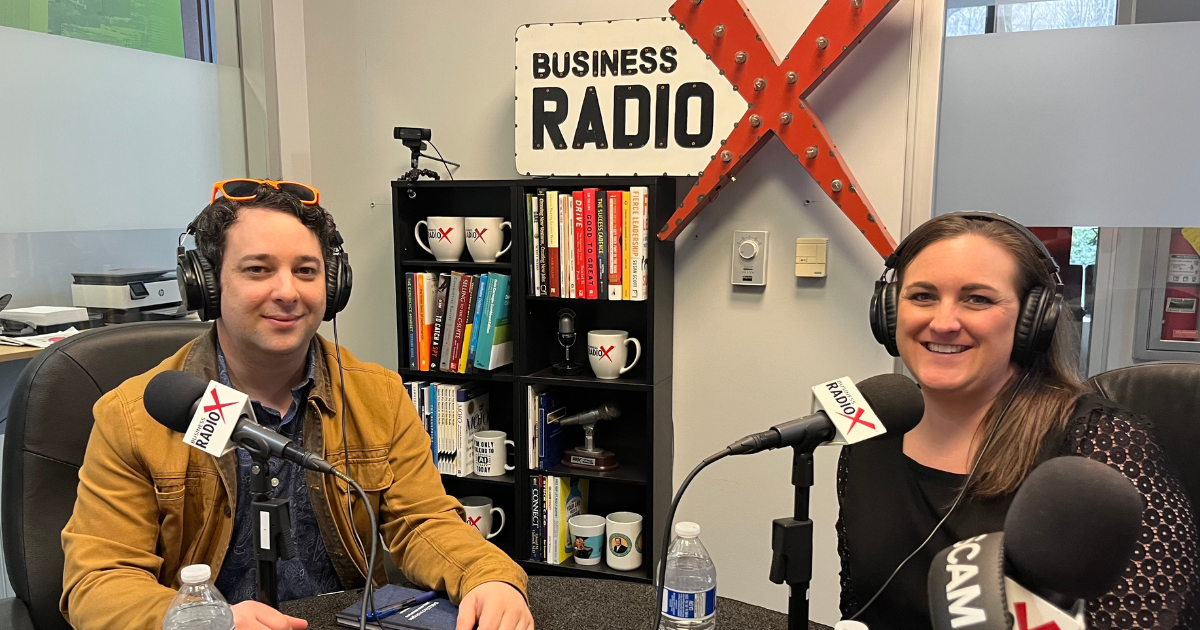
Stone Payton: And we’re back with Business RadioX Pro Tips. Lee Kantor, Stone Payton, here with you. Lee, as you and I and the organization here at the Business RadioX Network dive more and more into ways to leverage AI, and the more I talk about it in all of my circles, people are all over the map with their perspective on the value of it, how to leverage it. What’s your current thinking?
Lee Kantor: Right now, I think AI is a tool, and it’s an important tool to learn how to use. And I think the first step in dealing with AI, I don’t know if it’s going to be, you know, something like the Industrial Revolution that is just monumental, revolutionary change. But right now, for sure, one of the things is, it is a tool, and it’s in your best interest to learn how to make that tool your own personal assistant at the minimum.
Lee Kantor: So AI is changing the game. It’s not going to replace you anytime soon. And the people who know how to use it to make themselves more effective, more efficient, and a little bit smarter are the ones who are going to win in the present day. Who knows what the future lies?
Lee Kantor: But I would treat it like it’s your top-tier executive assistant. Learn how to use it on things that are going to improve your life. You know, you want to figure out ways to leverage it so you can automate repetitive stuff. Anything you do with a checklist can be automated. Use AI to help you.
Lee Kantor: You want to use AI to get insights and patterns about the people who matter most to you. This is a way you can tailor messaging and solutions to their needs. Let AI handle the heavy lifting, but you always want to bring your kind of special secret sauce.
Lee Kantor: And don’t just cut and paste what it’s saying. You want to use it for your benefit to help you differentiate yourself so you can be smarter and faster.
Lee Kantor: So bottom line, today AI is here to help you work smarter. You’d better be experimenting with it. You want to use it wisely, and you’re going to see that you’re going to be able to get more done in less time.


Growing up in an entrepreneurial household, Jacqueline Jensen quickly learned that leadership comes with pressure, high expectations, and the need to step up before you feel ready. Those experiences taught her resilience, the value of guiding others with care, and the impact of servant leadership.
Vasanti Kumar is the Regional Vice President at 
Caryn Kopp has been dubbed the Chief Door Opener because she gets her clients “in the door” with their prospects. Many business leaders and sellers say that when they’re in front of the right decision makers they close the sale most of the time, but they just can’t get in front of enough of the right prospects.
Rich Brown is a Combat-Service-Disabled U.S. Marine Corps Veteran turned executive protection specialist, gym owner, and event director.


Bob Taylor attained a mechanical engineering degree from Michigan State University in 1986, then joined the Air Force in 1987. He married the love of his life, Sara, on the Fourth of July during navigator training. He finished that training program as a Distinguished Graduate.
From the U.S. Air Force to scaling businesses, Mark O’Donnell’s career has been defined by leadership and growth.
Joshua Kornitsky is a fourth-generation entrepreneur with deep roots in technology and a track record of solving real business problems. Now, as a Professional EOS Implementer, he helps leadership teams align, create clarity, and build accountability.
Debbie Longo is an executive behavioral coach, entrepreneur, and founder of Life In Bloom NY, a consulting firm that transforms leadership performance and workplace culture through strategic behavioral change. With over 20 years of experience in human resources, leadership development, and behavioral strategy, Debbie works with executives and business owners to identify and shift the behavioral patterns that hinder performance, profitability, and team dynamics.