Customer Experience Radio Welcomes: Nina Arnaiz with Premia Relocation Mortgage


/
RSS Feed
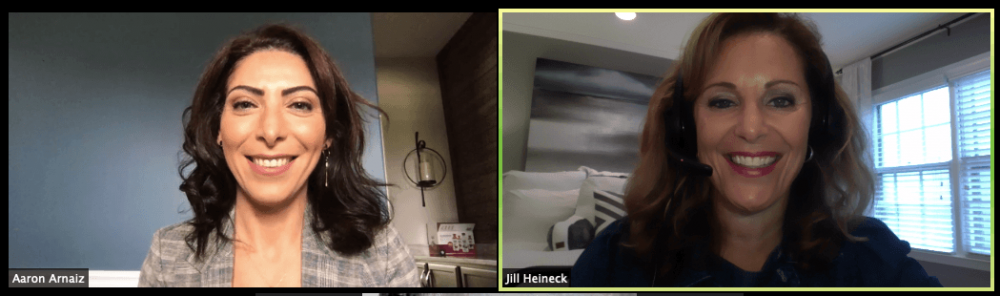

 Nina Arnaiz became President of Premia Relocation Mortgage in 2019 after holding several positions within Premia Relocation Mortgage. She is responsible for the overall execution and profitability of the company.
She started with the company in 2002 and was quickly recognized for her abilities to grow production, lead conversion, customer service and referrals. As VP of Sales, Nina was instrumental in testing, designing and implementing of several systems, including Premia Relocation Mortgage’s DigitalMoveTM mortgage platform. Under her direction, the sales team has increased customer service and loan conversion to company highs. Nina is very energetic and has very high expectations when it comes to customer service and earning someone’s business.
Nina holds a Bachelor’s degree in Business and Administration from Wayne State University, Detroit, Michigan. In her free time, she enjoys traveling, scuba diving, cross-fit training, and spending quality time with her husband and 3 kids, Andrew, Alessandra and Olivia.
Follow Premia on LinkedIn and Twitter.

Transcript
Intro: [00:00:01] Broadcasting live from the Business RadioX Studios in Atlanta, it’s time for Customer Experience Radio. Brought to you by Heineck & Company, real estate advisors specialized in corporate relocation. Now, here’s your host, Jill Heineck.
Jill Heineck: [00:00:19] Welcome to this very special edition of Customer Experience Radio. I’m your host, Jill Heineck, and I’m a business owner, real estate advisor, and customer experience enthusiast. As many of you know, my boutique real estate group has specialized in helping families move with or without a job for the last 20 or so years. Relocation has many moving parts, and it takes experience, expertise and patience to coach our transferees through the process. As relocation partners, we serve as an extension of the company, an outsourced relocation department, if you will. And the main goal is to alleviate the HR. and management team of having to know all things relo. By partnering with experts in each area of the relo, it becomes a smoother and less stressful experience for both the company and the transferee.
Jill Heineck: [00:01:06] So, that’s why I’m excited to have Nina Arnaiz on the show with us today to talk about her company, Premia Relocation Mortgage, and how they’re delivering a great client experience in today’s climate. Premia’s service model is built around serving the unique needs of customers’ relocating due to employment. Nina became president in November 2019 and is responsible for the overall execution and profitability of the company. Over the years, through our trade organization worldwide, ERC, I have come to know Premia as a highly regarded team of people who are committed to delivering at a high level, and all the while maintaining a great sense of humor and sense of calm during what could be an extremely tense time. Welcome, Nina.
Nina Arnaiz: [00:01:49] Hello. Thank you for having me.
Jill Heineck: [00:01:50] Hello. I’m so happy. I’m so happy to see you. How are you and your family faring? Everything going well at the home office?
Nina Arnaiz: [00:01:57] Yes. So far, so good. We’re staying safe and healthy. Everyone’s good. And I think we’re finally past the scary times as I call them. And things are really good. We’re happy. I’m happy. Things are, actually, we’re beyond that month of March and April that was really difficult. And I think I’m just looking forward to the upcoming month. I think things are looking much better. So, I’m happy about that.
Jill Heineck: [00:02:25] Great. I’m so happy to hear that we’re feeling the same way. So, you are based in the Detroit area, right?
Nina Arnaiz: [00:02:32] That’s Troy, Michigan, to be exact.
Jill Heineck: [00:02:34] Okay. And when will you be going back to an office?
Nina Arnaiz: [00:02:39] Good question. So, our office never really closed. We’re looked at as essential, part of the lending. So, I’ve had a few of my team members that have actually stayed going into the office. They just felt working from the office was better suited for them. With their kids at home and the technology, even though we have it, they didn’t feel it’s the best fit. So, they continued going in the office, and we’ve done plenty of precaution there. The rest of us have been working from home.
Nina Arnaiz: [00:03:10] The state has been opened, the stay-at-home order has been lifted, and we’re looking at probably returning back in the office sometime in July on a voluntarily status, if you’d like to come in. A lot of people I’m hearing, they’re done with the working from home with the kids, and spouse, and everything else, and they just feel like, “Okay, I feel comfortable enough as long as we’ve got all the safety measure and the protocols in our office. I’d like to come in back in the office.” So, we’re not looking for a few more weeks. Anybody that would like to come back, they’re more than welcome to, but we’re not mandating it until they feel comfortable to come back into the office.
Jill Heineck: [00:03:48] Well, good. Yeah, it sounds like that’s kind of the overwhelming situation at the moment. Most states are kind of moving in that direction.
Nina Arnaiz: [00:03:56] Yes.
Jill Heineck: [00:03:56] Well, I’m glad to hear it. People are getting to come kind of sense of, “Okay. Now, I’m actually getting to have a change of scenery.”
Nina Arnaiz: [00:04:05] Yes. They’re all looking forward to, to be honest with you, Jill. Seeing each other’s faces and be together under one roof. With the social distancing and all of that protocol but still, at least, seeing the team instead of the Zoom calls, and the conference call, and all that stuff. I think people are getting tired of it a little bit. They want to see real human socialization again.
Jill Heineck: [00:04:25] Absolutely. Well, let’s tell our listeners a little bit about yourself and and your journey to where you are now.
Nina Arnaiz: [00:04:35] Sure. Gosh, it’s a long journey, let’s put it that way. So, I’m not originally from here. Actually, I was born in the Middle East, specifically in Iraq. Technically Chaldean, and it’s the Christian part, small population in Iraq. I moved here when I was young, and I had a little bit of English that I learned through going through Catholic school, but the proper English like pronunciation, “water, not water.” So, that was when one coming in here and try to understand what people are really saying. But still, I was really young when we moved here.
Nina Arnaiz: [00:05:17] It was in the summer, so there was no school, and I pretty much was glued to the TV for about three months. All I did is we lived at my uncle’s house, who’s lived in the country for 15 plus years in the State of Michigan, specifically, and I was literally glued to the TV. I’d sit there and listen to every show, and I would have the closed captioning feature at the bottom, so then I can write every single word down, and try to look it up in my dictionary, and anything I didn’t know or can’t understand in the dictionary what it meant, I’d have a list for my uncle. When he comes in home from work, I’m like, “Okay, we’ve got homework to do.” And I have him actually tell me what it meant and put it to me in a sentence. And that’s pretty much how I learned the language.
Nina Arnaiz: [00:06:05] So, it was it was hard, as you can imagine, like not knowing how to speak it, and the culture, and everything. But going to school in high school here, and going to college, and just working, and being in this country, it really made me feel it’s a great opportunity. Like this was the best decision my parents had make to bring us here. And I was so excited because I felt like you can make a difference on anybody, anyone, men, women. You can make that huge difference, and you can have that opportunity, and be able to be in that work. And I was never the kind of person that I wanted to stay at home and be a stay-at-home mom. Nothing wrong with that. I give so much credit for these moms that do it day in and day out. Now, after quarantine, I was like, “Get me out of here. I want to go back to work.” I want to go back to adult babysitting, not baby babysitting. But it’s a huge difference. And I love my kids, but I was like, “I’m not meant to do this all day, every day.”
Nina Arnaiz: [00:07:10] So, I literally went to college, and I got into the retail sector, and I met one of my customers. I was in the fashion. I worked for a retail store. My job was 100% commission, and it was to pull clothing collection, and build your own clientele, and call them when the collection comes in, and take care of them, and show them pieces, and that’s how you sell. And one of my really good customer was an HR director at a bank. And after working with her for three months, she’s like, “Okay.” She brought me an application and she’s like, “I’m not buying anything until you fill this application. You need to come and work for the bank. We need people like you with tons of energy, just really passionate, loves the customer service.” She’s like, “I’ve been here coming in for three months, and I’ve never been treated the way anybody’s been treated me. You’re on top of your service. You’re running back and forth. These are the people we need in our bank, and you’ll make a huge difference. So, we need you to come in.” And I was like, “I don’t know.”
Nina Arnaiz: [00:08:16] So, I filled out the application because she wasn’t going to buy anything, and I needed her to buy the collection. That’s how I get money. So, she bought everything, I filled out the application, she called me, I went in for the interview, and within a month like I decided, “Okay, I’m going to go work for the bank.” And I went in, and I absolutely love it, and it’s just a great opportunity. I was going to college at the same time.
Nina Arnaiz: [00:08:42] And my manager, at the time, after working, I started there as a teller, obviously, the basic, learning from the bottom, and I became a teller supervisor. And shortly after that, my manager said, “I want to teach you mortgages. I think you’re really good. You relate to people. You hear, you listen. You’ve got excellent customer service skill. You’re really good at teaching someone all the things that you learn, and you kind of simplify it down to someone who has never done something. You don’t take it for granted.” Like we know everything about the business, and I always try to simplify it to people to the degree where I always made the assumption they know nothing about a mortgage, and loved that.
Nina Arnaiz: [00:09:26] So, he taught me mortgages, and I worked at the bank for three plus years. And then, I moved then on to Premia Relocation Mortgage in August of 2002 through one of the people that I actually trained whose friend was a manager at a Premia at the time. And he took my resumé, he called me, and he kept saying, “Come on over, we need you here. You’ll be great.” And I’ve never done relocation. I didn’t know what relocation was all about. I knew mortgages inside out. So, I said, “Okay, I will come. So, I went, and I fell in love with it.” I started in August of 2002, and I was done with training, and I was on the phone in October. And I just found it so fascinating, so different and challenging. And I felt like you can make a huge difference in these people’s lives because beside buying a house and being the biggest investment of someone’s life, it is the relocation aspect of moving someone across the state and making sure you’re getting their family, their their pets, their kids, everybody. You’ve got so many layers and ecosystems to answer to. I love that challenge. And I felt like, “Okay, I’m always excited by something new and something – I don’t know – hard. I love that challenge.”
Nina Arnaiz: [00:10:54] So, I was very much looking forward to it. And I started there at the very basic as a loan officer in that October, and getting on the phone, and talking to transferring, and learning the business, learning all these companies and government agency that we work with. And I remember my boss, the president of Premia at the time, came to me. And shortly after I got on the phone thing, I think it would have been the end of October, and said to me, “Next year, you will be our top producer in production and customer service.” And he’s like, “I guarantee that’s going to happen.” I felt like the pressure was really on. I was like, “Wow, I really need to work even harder than I’ve ever worked,” just because this guy is putting all this faith. Like I’m brand new, I don’t expect to be number one. And I was, to be honest with you. I became.
Nina Arnaiz: [00:11:50] But I think one of the biggest lesson that I’ve learned that you can do anything you set your mind to. And I’ve learned at a very young age, my dad has always told me you’ve got to work hard for everything that you do and it doesn’t come easy. And oops, sorry. I’ve got great work ethics, in my opinion, that is very contagious. I think it plays a huge role today in me working with my team, and managing, and everything that we’ve done for me being a loan officer there, to being a sales manager in charge of a sales team, to a vice president of the entire sales organization, to my role currently as the president had just been me really working extremely hard and putting great emphasis on the overall experience in what we’re trying to do because I think that’s huge.
Nina Arnaiz: [00:12:52] And my model is always treat everyone the way you want to be treated. That’s the way I’ve learned. If I want to fight, pick up the phone, and call, and send an email, or anything, I want someone to take care of me right away, and make me feel comfortable, and make me feel like they can answer my question. And I feel the same exact way how we should be treating our borrowers and our transferees. Especially in the relocation business that we’re in, it’s very unique, as you know, and complicated. So, that’s kind of my journey. And I’ve been with the company for 18 years will be this August, and I absolutely love it, and I would never change it for the world. I love where I’m at. I love relocation. I can’t imagine doing just regular mortgage anymore. As complicated mortgages are, I love that complication and fascination of the relo on top of it. So, it’s a great opportunity.
Jill Heineck: [00:13:50] So, tell us a little bit, how big is your team at Premia?
Nina Arnaiz: [00:13:55] So, we are 68 teammates on. We have our [SIOS] team, which consists of all my loan officers. We have support, obviously, for them. We have our fulfillment team, which is our operation. And then we have my business development and client services team that you’ve interacted with a lot in a lot of regional and conferences that you probably have met. So, that’s all of us. And we work in two locations. The sales team, and support, and some of the client services team sits in Troy, Michigan. I’ve got some remote employees that are across the country. And then, we also have our fulfillment team that’s out of St. Louis, Minnesota. And we’ve got a few also fulfillment that are in remote setting as well.
Jill Heineck: [00:14:47] Excellent. So, why don’t you go into a little bit more detail about what exactly a relocation mortgage is versus a regular purchase mortgage, so our listeners have an understanding of that?
Nina Arnaiz: [00:15:02] Absolutely. So, mortgages, obviously, is a mortgage but relocation adds another layer of maybe a little bit more complicated and a lot more in-depth in terms of what’s happening. We’ve got a relocating transferee, who is relocating by their employer, and their employer could be a corporate client or government agencies that we work with. They relocate that employee for many business needs; obviously, for the talent from one state to another, most of the time. Very rarely that happens within the same state that that would be a relocation. But a lot of times, I would say 99% percent of the time it’s within different states in where we fit in as we speak with that transferee to help them get financing on the new destination home purchase. If they’re looking to purchase a home in a new location, we’re they are to help them.
Nina Arnaiz: [00:16:02] It’s an ecosystem that we work with. And communication is very essential in our business. When it comes to all parties, we work with the employee, which is the actual transferee. We work with the employer, which is the corporate client or the government agency. We work with the relocation management company or we call them RMCs; the relocation consultant, which is the person who is speaking with the transferee; and pretty much going over their entire relocation package and helping them, set them up with pretty much every single aspect of the relocation from home purchase, to home sales, to moving, to packing, you name it, everything, they do everything.
Nina Arnaiz: [00:16:51] Then, the realtor, like yourself, we we answer to all those five people. And our number one goal is to make sure we’re in constant communication, we’re delivering excellent service to all of them. And really, to me, it starts with the transfer. If we are communicating and we’re doing everything possibly we can to deliver that great experience to that transferee, they’re happy, they’re satisfied with us, they’re over the moon, that’s exactly what we’re looking to do because that will translate into a happy employer, happy relocation management company, happy relocation consulting, and obviously happy real estate agent when we give them all of that finish line in simple, easy steps as possible.
Jill Heineck: [00:17:35] So, what I’m hearing is that the communication strategy and plan setup for every relocation is going to be touching all five of those partners, which also includes the transferee. So, what I see for my business as well is that the customer experience really lies heavily on the communication, the level of communication that you have. Obviously, primarily with the transferee, and then also with the rest of partners, right, that are helping move that transferee along?
Nina Arnaiz: [00:18:14] Absolutely.
Jill Heineck: [00:18:14] So, what are some of the tools or strategies that you use to communicate, have your LOs communicate with the transferee along the way? Are you implementing a lot of tech tools? Are you including a lot of calls? What’s trending in terms of communication and keeping everybody in the know?
Nina Arnaiz: [00:18:38] Sure, great question. Yeah, our model in what we do day in and day out is really high tech, high touch. I love technology. I’m a huge advocate of technology and the technology that we have, and we use it tons in baseline and bars in the transferee’s need. But to me, first and foremost is the relationship. It’s the high touch aspect. Our business model, it’s all about our people and our culture. And that’s what we embed with our team when it comes to you being a business developer, a client service, if you’re a loan officer and talking directly to the transferee, or you’re a fulfillment processor talking directly to that transferee and getting them to the finish line.
Nina Arnaiz: [00:19:27] When we start talking to any transferee, we spend tons of time asking tons of questions. Every transferee’s need is different, just like all of us. They’ve got different needs. How long they plan to be in that new location for? How often do they do move? How do they feel about this relocation? How their family feels about the relocation? So, we spent the majority of our time, what I’d call, in the discovery process. Trying to uncover what exactly this transferee feels about the relocation, what their needs are, and customize based on that. Everyone is different. And you try to understand that instead of just going with the vanilla of, “Yup, you want to get a preapproval. Let’s get that going. There’s your 30-rate mortgage and rated product.” That’s not how we do it. We want to know you. We want to build the relationship with you.
Nina Arnaiz: [00:20:18] And we’re very much relationship based, not transactional based. We want to have a customer for life. When someone is done with us, we want them to be like, “I’m never gonna go talk to anybody else except talk to so-and-so at Premia Relocation Mortgage.” That’s really our goal. So, we spend tons of time at doing that to uncover what their needs are, what they’re looking for, what their family is looking for. And then, we start kind of walking through the process of getting that preapproval going. Teaching them how we can empower them when they’re out there working with a real estate agent like yourself and asking the right question, helping them with the negotiation and things like that.
Nina Arnaiz: [00:21:02] We ask for the agent information upfront. We pick up the phone, we call the real estate agent, we introduce ourselves, let them know that we’re here. There’s our contact information. If we have permission from the transferee to share their preapproval letter, we’ll do that as well on their behalf. They’ve got tons of things to do. So, we try to take as much of these things off their plate because they, also, not only have a relocation to do, but they also have a job that they have to do. So, we want to make sure we’re doing it.
Jill Heineck: [00:21:27] There’s that.
Nina Arnaiz: [00:21:27] That’s obviously where they’re getting paid for, we got to make sure we get down from A to Z, and still doing their job, and having to even [indiscernible] to all the bosses. So, it’s huge. So, pretty much, that’s the biggest component. And then, we’ve got our technology. We have our digital move, which is what we call it. It makes it easy when it comes to everything. If someone’s got the time on the phone and wants to get qualified, let’s do it. All it takes is 10 minutes. If someone says, “I don’t have the time, I’d like to do it in the evening, I’d like to do it on my phone, my tablet, my wife would do it for me,” we send them the link. They can go on our website directly, and they can literally fill out of that application in a matter of eight minutes. It’s so quick.
Nina Arnaiz: [00:22:12] And they get into our poll roll. So, they can upload their documentation, they can e-sign. We do the e-closing. And that has been huge, especially in the environment that we just went through to have, at least, not to have to go to a closing table, to have a transferee sign pretty much every single piece of documentation and maybe have to do a remote closing, what we call it, and sign the notary pieces in front of someone, and walk in and walk out in a matter of 10 to 15 minutes signing five pieces of document. And you’ve got a whole car full of kids, and pets, and dogs barking in that van with all the other stuff, it’s a life saver. Especially like with everything with the social distance and not to have to spend an hour or two hours sitting at a closing table in a timely way, that was huge. So, we rely heavily on technology when we need it, but I am a huge advocate of that human interaction. That’s how you build the relationship. That’s how you gain trust. And you can’t replace that by any technology, in my opinion.
Jill Heineck: [00:23:23] No. And what I find in the last 20 plus year is that we all know that something could potentially go wrong. And nine times out of ten, something does. So, we might have a snag here and there. Maybe something is not met, the timeline isn’t met exactly as we had anticipated or somewhere along the line, hadn’t produced the piece of paper or something we needed in a timely fashion, but I think it’s the way in which that we respond, and how quickly, and what we do in order to respond well to a snafu is how the customers perceive the experience, right. So, I don’t know about you, but I always say in the beginning there will be a bump in the road. What I can tell you is we’re going to do our best to either, (A), you’ll never know about the bump in the road; or (B), you’ll know about the bump in the road and the bump will be gone very quickly. So-
Nina Arnaiz: [00:24:26] You might hear about it. You might notice a little bit, but it will be solved very quickly. And I think it’s all about the team. To your point, I think if you’ve got people that you said the proper expectation up front, to your point, and always under promise and over deliver, I think that’s the best thing. And as long as they know you’re there to take them to the finish line with the least amount of bumps, to your point, I think that’s a huge relief for a lot of people, especially in the relocation mortgage industry versus a regular mortgage. None that it’s not difficult and complicated, but this is so much more complicated.
Jill Heineck: [00:25:05] So, when we talk about a relocation mortgage, we’re talking about the fact that a person happens to be relocating while they’re trying to get finance for a new property in their new location. So, is there any other specifics about a relocation mortgage that is different from a purchase mortgage?
Nina Arnaiz: [00:25:27] Absolutely. So, there’s a lot, obviously. For us, because we have been doing a relocation for 33 years, that’s all we do. We have to know how to do it and we have to know how to do it really good and better than anybody, in my opinion. So, we have been able to work really closely with the agencies, the Fannie, the Freddie, the investor, the FHA, the jumbo investors in making sure that we’re able to deliver. The mortgage guidelines are much more streamlined to these transferees because they are being moved by a corporation or a government agency. They’re sponsoring that move. They’ve got the backing. I mean, you’ve got to be a great talent, a great employee to be able to have that relocation offer to you. They want you to be with the company. So, why not be able to have some underwriting left? And that’s one of the things we’ve been able to work on. Getting a regular mortgage, you’ve have to provide paystub, W2, bank statements. A lot of documentation,
Nina Arnaiz: [00:26:29] Let’s put it that way. For us, we have almost every single thing verified electronically. We don’t need paystubs. We don’t need W2s. And I would say that 95% of the cases, we don’t need it. Very few cases that we might have to ask you for a W2, for example, depending on the loan type that you’re going for. But for the most part, we have an electronic, what we call vacation of income. It’s called the DIY, where, actually, all we’re plugging in is your name, Social Security, your date of birth, and we get pretty much your history in terms of where you’ve worked, where you’re currently working, what your position is, how much money you’re making. And we’ll able to use all the money that shows up in terms of base, bonus, commission all electronically. So, that piece.
Nina Arnaiz: [00:27:15] And we’re doing this at the time of preapproval. So, when you’re talking to someone, and you’re getting them a preapproved, and pulling that immediately, as soon as we get that, we’re able to validate and verify with someone that your employment income has already been verified, you’re done. And that comes as a surprise to a lot of people. Like, “What do you mean? You don’t need anything else?” We’re like, “No, we’re good.” And they love that.
Jill Heineck: [00:27:35] That’s huge.
Nina Arnaiz: [00:27:35] It is and they love that.
Jill Heineck: [00:27:35] That is huge. That’s the biggest complaint about most of my traditional purchase clients who are not relocating with a job. And then, they have to spend who knows how long trying to locate the documents, and then figure out how to upload the documents. So, while I’m glad that we can do that and have that access to technology, and most lenders are doing that now, knowing that you can take us with a relocation, that’s one or two layers of things you don’t have to think about, right?
Nina Arnaiz: [00:28:07] Exactly.
Jill Heineck: [00:28:07] And you just get on this call, have a conversation with you or your team, and you can have your preapproval letter right then and there, right?
Nina Arnaiz: [00:28:15] Yes. So, we’ve got that. We’ve got the assets where we don’t need bank statements. We don’t need them to upload any of those documentation. We offer that to all our relocating transport, in addition to, sometimes, we have borrowers that we’ve assisted and we relocated. And then, they come back and purchase a second home or refinance, let’s say, or their co-worker that’s not relocating had heard such a great thing about us, and they want to purchase a home, so they call us. So, we do offer that. We work with that population of our corporate client, what we call our employee base business. and we’re able to offer them that exact same technology. So, they don’t need to go out there and upload application. They go through our verification of asset documentation. It’s electronic. They log in directly to their bank and they’re uploading 60 days’ worth of bank statement right in there, and we go.
Nina Arnaiz: [00:29:06] But beside all of that great technology, we’ve got tons of lift for relocating transferee, specifically on a home purchase when they’re selling their departure home, for example. In the typical mortgage purchase transaction, as you probably are aware of, you’ve got to have that house sold, gone, a closing disclosure in hand in order for a lender to, what we call, exclude that payment from your debt to income ratio, so they don’t count against you. And not everybody qualifies with multiple homes, obviously. For us in relocation, we don’t need that because we have that company-sponsored relocation, because we’ve got the lift that we worked with directly with the investor, we’re able to offer things to transferee where the home is not even sold, and we’re able to exclude that home out of a debt to income ratio.
Nina Arnaiz: [00:29:56] We’ve got tons of guidelines underwriting why it’s lift that we’re able to help transferees on that. And we’ve got subsidy. I don’t know if you familiar with that, but a lot of companies, sometimes, when someone moving from a low-cost to a high-cost area, they offer what they call a cost of living subsidy to get them to adjust to that new high-cost area. We’re able to administrate all that stuff, and set it up on the loan, and take care of it. And that can range somewhere between a three to five-year term. And we set that all up as well.
Jill Heineck: [00:30:29] And that’s commission through the company that’s relocating them, sponsored by the company, adjusting their salary up or down, whatever it is, adjusting based on where they’re going. And then, that kicks in for a certain amount of time while they’re on the new job.
Nina Arnaiz: [00:30:45] You got it. Yes, it’s pretty much, for example, if you’re going from a $1000 mortgage payment to an area that’s going to cost you $3000, let’s say, for example, the company will offset as you are moving, let’s say, from Michigan, where I lived, to California. Much more expensive.
Jill Heineck: [00:31:02] More expensive.
Nina Arnaiz: [00:31:02] Exactly, high-cost living. So, then, the company will actually offset a part of their mortgage payment for you. And most companies will offer it. It goes really high in the first year and gradually drop, they’d need to adjust. Not to mention your company is adjusting, but it’s just a hard adjustment to go from $1000 to $3000. Obviously, that mortgage is one piece. The entire cost of living is much higher. Therefore, we adjusted that.
Nina Arnaiz: [00:31:28] And then, the other piece is direct billing, which is huge, as you’re aware of in the relocation that company allows us to advance funds. So, we actually don’t have the transferee come to closing. All they need to come to closing with is their downpayment, and their escrow, their escrow rate, and their prepaid interest. Their entire closing costs, which can be costly in some areas of the country, we actually advanced those funds upfront. And then, we get that money from the employer when we invoice that to them, and it could be 30, 45 days late.
Jill Heineck: [00:32:02] And that’s assuming if that money is part of their benefits.
Nina Arnaiz: [00:32:07] Yes, absolutely.
Jill Heineck: [00:32:07] If it’s not, then that’s another story but-
Nina Arnaiz: [00:32:09] Correct. They’re eligible for a direct. But sometimes, when they’re not, we also have relationship with these corporate client. So, we’re able to offer a lot of different benefit that they get very low cost mortgage in terms of what we would charge as a lender, for example, compared to what other lenders would be charging outside of the preferred network. In addition to that, they get extremely aggressive interest rate. And it’s all because of the relationship that we have with the client. So, there is tons of benefit there.
Jill Heineck: [00:32:42] Excellent. So, how many relocation mortgages would you say you do in a year?
Nina Arnaiz: [00:32:47] We’re about 2500 as of last year, 2019. And that number continues to grow. And that’s our goal, obviously, but somewhere right around there. And then we do also, like I mentioned earlier, our employee base. So, anybody that’s a nonrelocation, that’s a repeat borrower or refinance, it could be, or a co-worker, friends, family that we’ve worked with. The actual transferee, they were for friends and family over realtors. We work with a bunch of realtor that do relocation like yourself, but also non-relo. And then, walk with we offer, and how quickly we do things, and how efficient we are, and they refer their customer to us as well. So, there’s a lot of avenues there.
Jill Heineck: [00:33:32] Awesome. So, what are some things that you and your team, your leadership team does to empower, motivate, inspire your LOs, and your BDs, and everybody within the organization to deliver this high-level customer experience? What kinds of things are you doing to motivate them?
Nina Arnaiz: [00:33:54] Sure.
Jill Heineck: [00:33:54] Or to inspire them?
Nina Arnaiz: [00:33:56] Absolutely. So, it starts with me, to be honest with you. I have-
Jill Heineck: [00:33:59] I mean, hello, you’re the head honcho.
Nina Arnaiz: [00:34:04] I have very high expectations. Sometimes, they could be pretty tall, I’m being told, but I think it motivates the team. Personally, I think if you work hard and you lead by example, I think people will follow it, to be honest with you. I think I have been lucky for the entire time that I’ve been with Premia, and even not in management in the position I’m in, but just prior even, we have a great team of people, and they thrive. And it’s really, what I hear always, it’s my energy, my work ethic, and my dedication, it’s contagious. And I think I really try to lead by example.
Nina Arnaiz: [00:34:04] One of my biggest thing, if I work 10 times harder than my team, my team will deliver and will get somewhere. I don’t expect everyone to get to my crazy energy and my dedication all the time, but they do an amazing job. But I really try to do lead by example. And I always remind them that there is so much that that transferee is going through, and put yourself in that position, how do you want to be treated? How do you want your phone call to be returned? How do you want to be talked to? What do you want out of this? Trust me, I’ve got tons of people that works for me that have just moved within this state that purchased homes, and they’re like, “Wow, I can’t believe what our transferee we would go through in terms of moving across state lines. I totally sympathize, and get it, and have to do about it.”
Nina Arnaiz: [00:35:42] So, that’s usually my our model is I lead by example. And really, to me, it started the root of it is customer service is key. I think if you take the time to listen to people, to hear what they’re telling you to deliver, it should be a no brainer, in my opinion, for you to be their mortgage lender. I think really, that’s my model. And it’s all about relationship and customer service, and that’s what I live by. We do tons of things to make sure my team, we’re held accountable because, to your point, there is always sometimes bumps in the road, but I want to make sure there is less discovered. Let’s find out what it is, and let’s learn from it, and let’s make sure we don’t repeat it again.
Nina Arnaiz: [00:36:32] We do what we call a mid process survey. So, when we put someone in process, halfway through the process, we send them a one-question survey that just says, “How are we doing in the overall experience that you’ve got so far with us?” And it’s just one question, it’s a rating one to five, four and five being satisfied, very satisfied. Anything less than that, that e-mail comes directly to me, and I pick up the phone, I call that transferee. If anything is less than a four or five, I want to know what did we do? How can we improve on it? And I think-
Jill Heineck: [00:37:08] It’s probably a communication thing. Nine times out of ten, that’s probably what it is.
Nina Arnaiz: [00:37:15] Absolutely. And that’s the key, to be honest with you, for me. You have no idea how many times people, when we’ve called on the mid-process survey, when we survey them at the end as well, have no idea how many times, when I picked up the phone and called, and I’ve asked, “Hey, we’ve got your survey. You’ve rated us three, which is a neutral,” let’s say, “what we could have done better?” Even if we get a four and a five, and there is a comment in there that says, “You did amazing, but…” there’s that, “but,” I want to know what is that, what we could have done better. And it is amazing how often I get from transferee the fact that, “Oh, wow, someone actually read their survey, read my comment, and there to call me.” I’m like, “Yeah, it is.” It’s because they feel like they filled out a survey, it goes to some box.”
Jill Heineck: [00:37:15] And it goes into a black hole, right?
Nina Arnaiz: [00:38:04] Nobody-
Jill Heineck: [00:38:08] That’s what they think.
Nina Arnaiz: [00:38:08] Exactly, but we do. And it is amazing how the conversation people actually appreciate getting that feedback wanting to know what we could’ve done better. At the end of the call, they kind of like sometimes feel apologetic and like, “I’m sorry, I want to make sure you guys did a great job, but maybe this…” I’m like, “No,this is exactly what we want to know to make the experience better.” So, it isn’t amazing in how great and rewarding that is.
Nina Arnaiz: [00:38:36] And like I said, a key to me is communication. And that’s the part where I feel like our sales team does an amazing job communicating with our transferee, and we can always improve, in my opinion. I’m always pushing the envelope. How can we do things better? And then, our transition to our processer. So, it’s a two-team. Only the only people that speak with that transferee is our loan officer and our processer, and pretty much take care of that transferee from beginning to end all the way through.
Jill Heineck: [00:39:06] That’s amazing. So, do you have a great story that you’ve recently, like maybe be in 2020, COVID or otherwise, where, potentially, you’ve overcome something, or you just got a great review, or something that would be interesting, something interesting that our listeners would take away from?
Nina Arnaiz: [00:39:31] Sure. Yeah, we always get tons of great feedback, to be honest with you. And one of the things that always surprises me is as busy as our transferees with their family and the move, when we send them those surveys, they literally write paragraphs of praises about how-
Jill Heineck: [00:39:53] They’re not busy. They’re not busy [indiscernible].
Nina Arnaiz: [00:39:53] I guess not, but it really goes a lot. Like it goes like, “Wow, for someone to take time out of their busy move with what they have going on to sit there and acknowledge a great of a job that the team has done, it makes everyone, not just me, the entire team, when our processor, a loan officer, sees it, they’re like, “Oh, wow, I really made a difference.” It makes him feel like on peace. Like, “I want to go on for the next one.” So, we get tons of those.
Nina Arnaiz: [00:40:21] The most recent one really is one that I just … we had this borrower who, actually went to you, drove across the country – a spouse, two dogs and two children – over the course of several days to get to the new home.
Jill Heineck: [00:40:36] Oh, my God.
Nina Arnaiz: [00:40:36] They arrived the night before closing to a hotel at the destination stay. The next day, they spend less than 10 minutes at the closing table, signed those documents, the dogs barking in the car, the kids are screaming, but all was worth it because while they came there in their hand and walked into their new home. And that transferee literally wrote a huge paragraph about how amazing the process was, how great of a job.
Nina Arnaiz: [00:41:06] And then, like the blow to top it all, like you said, to put the cherry on top of that ice spring is walking into that closing thinking, “This is going to take forever. And even though you guys told that e-closing is so easy, it’s like I really did not think it’s going to be like that. I walked out with the keys. And now, we’re in our home. And the kids screaming excited and the dogs barking or running around. But they were over the moon with all that stuff. And we did tons of those with now with COVID-19, obviously, and even before. So, those are the things that just puts a huge smile on everybody’s face when we see this paragraphs of-
Jill Heineck: [00:41:42] Absolutely. So, did COVID kind of slow you guys down? Did it slow your processes down at all?
Nina Arnaiz: [00:41:50] To be honest with you, slow down from the fact that people were not out and about looking for homes, as you know. When the shutdown happened, we were still talking to people, we were still talking to our transferees, and just-
Jill Heineck: [00:42:02] They just weren’t like pulling the trigger because that’s we were.
Nina Arnaiz: [00:42:04] Exactly.
Jill Heineck: [00:42:04] We’re kind of circling, right?
Nina Arnaiz: [00:42:05] Exactly. We had to do that did actually virtual tours. It’s amazing the things that people-
Jill Heineck: [00:42:11] We were too.
Nina Arnaiz: [00:42:11] … can do. Exactly.
Jill Heineck: [00:42:13] Right.
Nina Arnaiz: [00:42:13] The real estate, it’s amazing. And people’s tolerance and acceptance to go out there and put an offer on a house with just a virtual tour via Zoom-
Jill Heineck: [00:42:23] I know.
Nina Arnaiz: [00:42:23] … or Facetime, I was like, “Wow! I give you guys tons of credit.” But people did it, but not to that degree. But for us, to be honest, we’ve been really busy. We had tons of businesses, and we are lucky to have the partners that we do from our clients, and RMCs, and the realtors, and the title companies. We really did not skip a beat when it comes to having to delay a closing or not being able to meet someone. So, that all went really well.
Nina Arnaiz: [00:42:56] And I would say the month of April was probably the month where there wasn’t tons of purchase transaction, as you probably know. And it picked up at the end of April and then May. It’s been crazy busy in June. It’s like relocation in summer times 10 maybe, times 100. It’s just really, really busy. And people are out there looking tons of homes. We’ve got tons of contract. And you could tell it’s a huge difference that’s picked up. And I feel like whatever we kind of missed, at least, for us in April, we’re going to more than make it in June. Like it is amazing how quickly it’s picked up. And we’re super excited about that.
Jill Heineck: [00:43:39] We’re definitely seeing that latent kind of spring and summer coming on in our market at Atlanta. So, I can only imagine. I’m hearing it from my partners from all over the country that it’s definitely blowing up in most markets. So, that’s a good thing, right? Real estate’s the backbone of the United States economy. So, we want to keep it going.
Nina Arnaiz: [00:44:02] The rates are so low.
Jill Heineck: [00:44:04] I know.
Nina Arnaiz: [00:44:04] I mean, it’s a great opportunity. I mean, oh, my gosh. I mean, it’s a great opportunity to purchase a home right now. Money is so cheap. Rates are so great. And guidelines are still there. I mean, for us, we didn’t have to make any adjustment to the guidelines. We’re still able to offer the zero percent downpayment, three and a half percent unconventional or three percent, I should say, on conventional. Our FHA VA program is still out there, and we’re still able to offer pretty much everything that we were offering pre-COVID 19, which is really great for people.
Jill Heineck: [00:44:39] Well, I am so happy to hear that. I’m glad we’re on the right track. And I want to thank you so much for taking the time to be with us today. I want to thank everyone listening. I am so proud to share this show with everyone as these stories prioritize the customer experience as a legitimate business strategy, reminding us that no matter the business you’re in – relocation, mortgages or real estate – the customer experience should always be the heart of the business.
Nina Arnaiz: [00:45:08] Absolutely. Thank you for having me. I want to thank, obviously, all our partners, our corporate clients and government agency, our RMC, our relocation consultant, all the realtors that we work with. It’s been a great journey, continues to be despite everything that we’ve obviously gone through. And at the end, I want to thank my team. The team has been amazing. They’re really the backbone of our company. And I couldn’t do it, none of us can do it without each other. So, I want to thank them and give them kudos every day for everything that they do day in and day out.
Jill Heineck: [00:45:43] Yay! Thank you, Nina.
Nina Arnaiz: [00:45:45] Thank you so much.
About Your Host
 Jill Heineck is a leading authority on corporate relocations, and is highly sought after for her real estate industry acumen and business insights. As a published author, frequent panelist and keynote speaker, Jill shares her experience and perceptions with people from around the globe.
Jill is a founding partner of Keller Williams Southeast, established in 1999, and the founder and managing partner of Heineck & Co. Her real estate practice specializes in corporate relocations, individual relocations, luxury residential, and commercial properties. Jill’s analytical approach to problem-solving, along with her expert negotiation skills and sophisticated marketing, deliver superior results to her clients. Her winning strategies and tenacious client advocacy have earned her a reputation for excellence among Atlanta’s top producers.
While Jill has received many accolades throughout her career, she is most gratified by the personal testimonials and referrals she receives from her clients. Jill’s unwavering commitment to the customer experience, and her focus on the unique needs of each client, serve as the foundation of her success.
Follow Jill Heineck on LinkedIn.
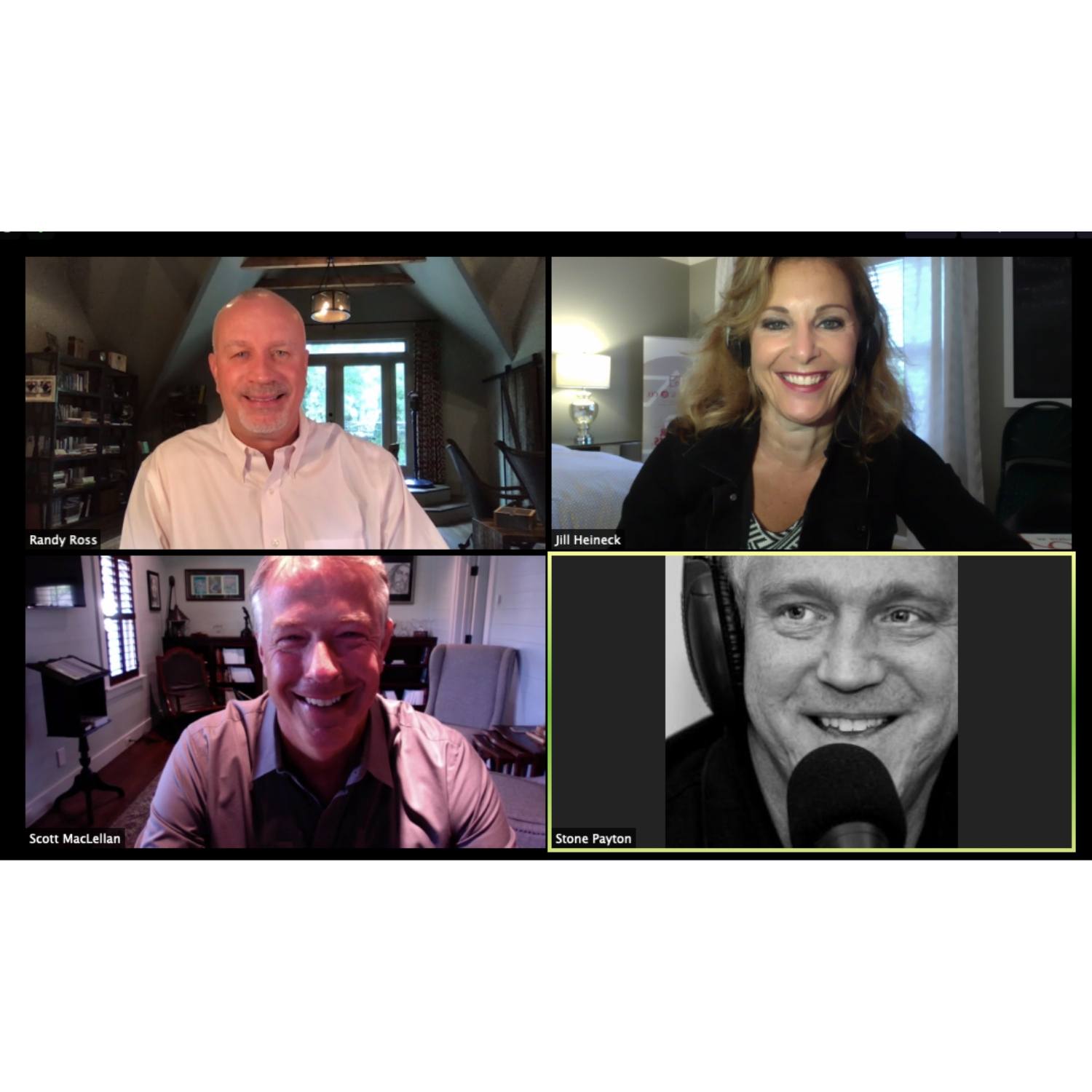
Customer Experience Radio Welcomes: Dr. Randy Ross with Remarkable and Scott MacLellan with TouchPoint Support Services
/
RSS Feed
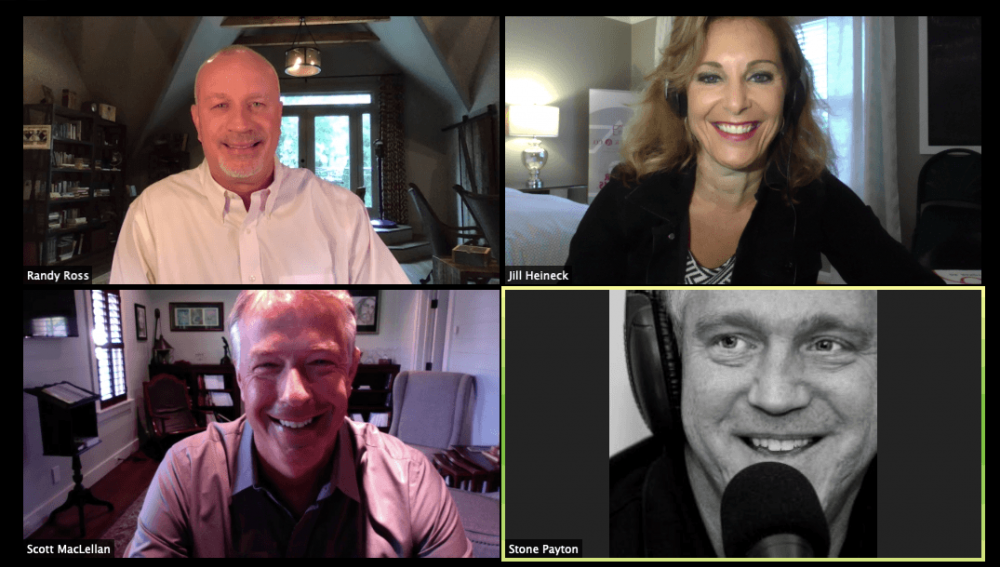
 Dr. Randy Ross is a compelling communicator, craftsman of culture, and bestselling author of multiple books, including his latest book entitled, Relationomics: Business Powered by Relationships.
Working with brands like GE Appliances, Cox Communications, Compass Group, Chick-fil-A, Keller Williams and the Intercontinental Hotel Group, he has inspired and enabled countless people to find new passion and purpose in their work, work better together in teams and have greater influence and impact.
When people like what they do, they do it better. When people like those they do it with, they work better together. When they like the impact they are having, they find meaning and fulfillment in what they do. Dr. Ross helps them find what they really like, while building healthier relationships and pursuing a passion beyond self.
As the CEO of Remarkable and a former Chief People Officer, Dr. Randy Ross utilizes his experience to engage audiences worldwide with his keen insight and contagious humor. He is a messenger of practical wisdom and needed hope, untangling the biggest challenges facing today’s business leader, tomorrow’s workforce and the future marketplace. He lives with his wife, LuAnne, and four children in Atlanta, Georgia.
Connect with Randy on LinkedIn and Twitter.
 Scott MacLellan is an inspirational leader who takes a vision and makes it reality. Throughout his career in healthcare, contract dining and support services, Scott has led organizations that challenge the status quo and drive material business advantage.
Scott serves as Chief Executive Officer of TouchPoint Support Services and Morrison Living, two Compass Group companies that provide dining, nutrition and environmental services to healthcare and senior living communities across the United States. Collectively, these companies provide a unified experience across healthcare and senior living, and both have been ranked among the best places to work in healthcare.
Scott’s companies have been known for their visionary strategies. TouchPoint filled a distinct need in the market for unified hospitality services. The resulting business model was unique and was the subject of a Harvard Business School case study. Earlier, he created Foodbuy, a procurement solutions provider, to add transparency to the supply chain and enable smaller companies to reduce costs. Today, Foodbuy is the largest food service buying organization in the country.
MacLellan received a B.S. in Commerce from the University of Virginia. He’s been a prolific non-profit fundraiser and has served on numerous boards, including Children’s Healthcare of Atlanta, Children’s National in Washington, DC, the National Children’s Cancer Society, and the World Trade Center Atlanta. Scott is also the author of eight books, including Amanda’s Gift, a book dedicated to serving the parents of seriously ill children.
Scott and his wife live in Bluffton, South Carolina. They are proud parents of two grown children and grandparents of two very busy grandsons.
Follow TouchPoint on LinkedIn, Facebook and Twitter.
Transcript
Intro: [00:00:01] Broadcasting live from the Business Radio Studios in Atlanta, it’s time for Customer Experience Radio. Brought to you by Heineck & Company, real estate advisors specialized in corporate relocation. Now here’s your host, Jill Heineck.
Jill Heineck: [00:00:19] Good morning, everyone, and welcome to this very special edition of Customer Experience Radio. I’m your host, Jill Heineck. And I’m a business owner, a real estate advisor, and customer experience enthusiast. Today, we’re gonna pivot a bit and talk about the impact a company culture has on the customer experience. My guests today are two people committed to this, working with brands like GE Appliances, Cox Communications, Compass Group, Chick-fil-A, Keller Williams Realty, and the Intercontinental Hotel Group, Dr. Randy Ross has inspired and enabled countless people to find new passion and purpose in their work, work better together in teams, and have greater influence and impact. He is a crossman of culture and bestselling author of multiple books, including his latest, Relationomics: Business Powered by Relationships. Welcome, Randy.
Dr. Randy Ross : [00:01:10] Good morning, Jill.
Jill Heineck: [00:01:11] And then, joining Randy and I is Scott MacLellan, who serves as CEO of TouchPoint Support Services & Morrison Living, two Compass group companies that provide dining nutrition and environmental services to health care and senior living communities across the United States. Scott’s companies have been known for their visionary strategies, providing a unified experience across health care and senior living, and has been ranked among the best places to work in health care. So, welcome too, Scott, and to both of y’all, thank you for joining us.
Scott MacLellan: [00:01:41] Glad to be here. Thank you.
Dr. Randy Ross : [00:01:41] Absolutely.
Jill Heineck: [00:01:41] Well, I want to talk a little bit about how you both have got to this point in your career. So, Randy, why you just give us a little bit of background to your journey to this point?
Dr. Randy Ross : [00:01:54] Well, I started off in the not-for-profit rail. I worked with a lot of organizations that were based upon volunteer activity. And that was a great time of my career where I had the opportunity to really gain an understanding that the most powerful force that drives people is to have a passion and a vision for something beyond themselves. And so, then, in taking that knowledge into the for-profit world, I’m able to help organizations see that monetary regeneration, their paycheck is not the big driver of human performance. It’s really when they feel like they’ve engaged, their values are consistent with the values of the organization, and they’re able to make a contribution on a level to drive a purpose follower that’s bigger than themselves.
Jill Heineck: [00:02:43] Excellent. And then, so you began as incorporate leading a team, correct?
Dr. Randy Ross : [00:02:52] Well, yeah, I did. I helped found and grow some organizations in South Florida, non-profit organizations, who work specifically in the faith-based realm, a couple of churches. And then, made a transition over into the marketplace and was able to take a lot of that same purpose-driven life orientation into the marketplace to help people find more passion in their work. One of the things, I think, that helped me make that transition, Jill, as I stepped into boardrooms and started working with teams in the marketplace was the research that Gallup did showing that so few people had a passion around their work. Very few people engaged. Less than 30% of the workforce is highly engaged, meaning that they bring enthusiasm and creativity to the work experience.
Dr. Randy Ross : [00:03:43] And I just through, “That’s got to change. That’s not the way it should be.” People should enjoy what they do and wake up in the morning excited about being a part of something that they feel like is bringing value to the world. And so, I fell in love with this area of study called Axiology, which is a strain of philosophy that talks about value creation and someone’s value construct, and then began to break that down and put that into easily consumable form that organizational leaders could understand and use those principles in order to drive higher levels of engagement, employee engagement and client engagement, helping them create environments that really inspired their people to bring their best to work every day.
Jill Heineck: [00:04:32] Excellent. I love it. And Scott, give us a little bit about your journey as well.
Scott MacLellan: [00:04:37] Yeah. So, I’ve been in the marketplace about 40 years. Almost all of that has been in either acute care hospitals and/or senior care. So, I’ve had the privilege of serving in a lot of different capacities with those organizations. I’ve gone on supply chain, technology, and on the distribution side, and on the sales side, led operations, some like manufacturing, and just been privileged over the last 20 years to be with a great organization that specifically runs food service, housekeeping in hospitals and retirement centers.
Scott MacLellan: [00:05:12] My greatest diversion was probably back in June of 1999 when I left to big corporate job to start a company out of my garage, employee number one, just sitting there with nothing, not a phone, not a dollar in the bank, not a customer, nothing. And today, that organization is actually $20 billion big and serves customers all around the world. So, that was a fun but trying time.
Jill Heineck: [00:05:39] Remind us again what the name of that company is.
Scott MacLellan: [00:05:42] It’s called Foodbuy.
Jill Heineck: [00:05:44] That’s right.
Scott MacLellan: [00:05:44] And I sold it to the company I work for today.
Jill Heineck: [00:05:47] That’s fantastic.
Scott MacLellan: [00:05:48] Yeah.
Jill Heineck: [00:05:50] Well, I’m so happy to have you. So, will you tell us a little bit more about what makes the Morrison story a compelling one?
Scott MacLellan: [00:05:58] Whether you’re talking Morrison or TouchPoint, again, what we do kind of tactically is we provide food and facilities management to hospitals and senior care locations. My parent company does the same thing. So, if you’ve ever been to a Hawks game or a Falcons game, we’ve fed you. If you’ve been to the World to Coke, the Georgia World Congress Center, the Aquarium, we fed you and/or clean up after you.
Scott MacLellan: [00:06:21] The two businesses that I’m responsible for include running cafes, mostly our own but also brands you’d know like Chick-fil-A and Starbucks. And we feed patients in the room, but we also do some highly specialized things. So, we sterilize operating rooms just as an example. We transfer patients from place to place, within either a retirement center or a hospital. And we just have the privilege of caring for people at the most vulnerable points of their lives. But I think more than that, we are the largest in our industry, and we’re the only that is completely dedicated to what we do. And so, we have a lot of scale that we bring to the occasion that our customers just by themselves don’t necessarily have.
Scott MacLellan: [00:07:08] And I think even more than that is our people and the sense of purpose that they have. These are some of the most compassionate people that you would ever meet. And I’m humbled every time I get out and have the chance to visit with them.
Scott MacLellan: [00:07:22] And we have a corporate sense of purpose, but we also encourage people to live their individual sense of purpose as well. But our corporate sense of purpose for our seniors business is to be the best part of someone’s day. And if you’ve ever been in a retirement community, you know that food is very often the best part of a senior’s day, and we’re grateful to do that, but we also want to be the best part of each other’s day or vendor partner’s day. Anybody we come in contact with, we want to be the best part of their day.
Scott MacLellan: [00:07:50] On the hospital spot side, our sense of purpose is to provide compassion at every point of human contact. And if you’ve ever been in a hospital, you know how scary that can be. And we want to be a warm, friendly, hospitable part of that stay. So, if you combine the scale of being the largest, the sense of purpose, and then a highly trained team, it just becomes a very compelling offer for customers. You just don’t do this particular thing every day as their core competency.
Jill Heineck: [00:08:18] It is a special niche.
Scott MacLellan: [00:08:18] Yes.
Jill Heineck: [00:08:22] And you do have to have a special … you have to have that special something to work in that niche, I think.
Scott MacLellan: [00:08:32] Absolutely. And again, if you ever met just any one of our frontline employees, she’d be changed forever. They’re amazing people. Yeah.
Jill Heineck: [00:08:40] I can only imagine. So, Randy, what were some of the observations that you made while working with Scott and his teams where was there a passion that you saw and how their teams were coming together?
Dr. Randy Ross : [00:08:56] Yeah. Well, it’s a great question. Scott and I started working together several years ago. He asked me to come speak for him for his national conference for TouchPoint back in Indianapolis. And we had a great opportunity to kick off our relationship there and got a chance to meet the team. I think as it’s true with any organization who has a stellar culture, Jill, it starts with leadership. And I’ve known Scott now for a long time, and I can just tell you that the things that mark his leadership are authenticity and transparency.
Dr. Randy Ross : [00:09:31] And for everybody in the life of the organization, your authenticity is when you’re honest with yourself about yourself. Scott is one of those level five leaders that he’s an incredibly humble guy. You can hear it in the tone of his voice. She can see it in his mannerisms. And one of the things that makes Scott so special is when he meets with people, you feel like you’re the only person in his world at that moment. He focuses on you. And that’s true whether you’re a leader that directly reports to him or you’re somebody on the frontline and he engages with as he walks through the facilities.
Dr. Randy Ross : [00:10:05] So, I think authenticity, but then transparency. Scott knows what his strengths are. He knows where his weaknesses lie. He surrounds himself with good people. And so, I think that’s the bonding of a good team. And then, been able to cast a compelling vision, that’s all part of leadership. And Scott has not only been able to do that personally, but he’s also got other leaders at the top of the organization and just sort of cascades down or permeates throughout the organization that’s clear on their mission. It’s simple and it’s compelling, but it’s clear and everybody is captivated by that.
Dr. Randy Ross : [00:10:40] I mean, compassion at every point of human touch. I mean I can’t think about any other mission statement that’s more clear and compelling when you’re talking about the health care realm, and being the best part of someone’s day. And everyone goes to work every day excited about making a difference in someone’s story, even if it’s just through some small act of kindness or some gesture of goodwill. And so, it starts with leadership, humility, authenticity, transparency that breeds a genuine environment. But the, there’s the mission, which is clear and compelling.
Dr. Randy Ross : [00:11:17] And then, the passion. I think one of the things that Compass does really well across the board and specifically to TouchPoint & Morrison Community Living is that they help connect the individual’s passion with corporate objectives. In other words, they clearly show them the difference that they’re making. They tell stories about the difference that they’re making and it’s just magnetic. And so, those things.
Dr. Randy Ross : [00:11:44] And lastly, I would just say that through Scott’s leadership, there’s an emphasis on healthy relationships. And there are so many corporate environments – you know that, Scott – that they’re out there, they’re just toxic. And people will wake up in the morning, and they want to roll over, slap the alarm and go back. They drag themselves out of bed because they really don’t want to engage in the day. But when you create an environment where people play well in the sandbox together and they have a depth of relationships with one another, it makes all the difference in the world. People are excited to get up to see what the day will hold and how they can make a positive difference in other people’s lives. And I think that’s what Scott’s been able to create. It’s not just only Scott, but he’s been able to inspire that throughout the ranks.
Jill Heineck: [00:12:31] Right. And I think I want to talk about that a little bit further, Scott, on when you are empowering, and inspiring your team, and growing this amazing culture of passion, and they are excited about what they’re doing, they’re appreciated, where are you seeing that impact with the customer, the end users?
Scott MacLellan: [00:12:58] Well, I think, again, if you’re caring for someone when they’re at a very vulnerable state, kind of the end user, or the patient, or the resident just feels loved and cared for. And we track the metrics of what our patient experience looks like and our resident experience is like. And so, we know where that culture is working and where it’s not. So, when you’re talking about the patient or the resident, but I think when you talk about our clients, they’re in this business to serve others as well, and they have this incredible heart. And so, when someone comes in from the outside, one of their early concerns is, are you going to care for our patients, our residents, and our people as much as we do? And we spend a lot of time talking about our culture, and we spend a lot of time sharing other clients with them, so that they can find out that culture is authentic or not.
Scott MacLellan: [00:13:48] And so, I think what ultimately happens is when we come into a location, people ultimately feel like these people get it, they’re a thought partner, they’re a caring partner, and they’re going to be able to do what they said they were going to do. And so, it’s just very heartwarming to get messages from our clients to say, they’re often telling stories about what our people have done to care for their customers. And that’s when you know you got it. And one of the greatest compliments, quite frankly, a customer can give me is we don’t even think of you as Morrison or TouchPoint. We just think of you as part of our family. That’s when I know that we really, really have done a great job, that our brand is invisible and their brand is forward.
Jill Heineck: [00:14:32] That’s fantastic. So, when we’re talking about the employee experience, because that’s what we’re talking about here, the culture or the employee experience that is then translated to deliver the deliverables, where you’re caring for the customer or the patient. So, where are a couple of things that you feel like you’re doing well when it comes to caring for your teams and getting them feeling excited and passionate?
Scott MacLellan: [00:15:02] So, we spend a great deal of time every year focused on associate engagement in terms of surveying our team, both live with third parties. Randy has been a big part of that over the years and done a stellar job to help kind of ferret out things that may not be working. But we built our entire key performance indicators, structure, our compensation structure around whether or not you’re serving your associates. And we’ve had leaders in our business, quite frankly, who delivered great results but also delivered the toxic culture that Randy was talking about. And what you have to do if you’re truly going to be authentic about it is even if someone’s driving results numbers-wise but the culture is bad, you ultimately have to pull that person from the organization.
Scott MacLellan: [00:15:51] And so, we we take the associate experience very, very seriously. And today, it’s kind of an overused expression but we’ve lived it for the past 20 years, which is an employee isn’t going to treat their customer any better than we treat them. And so, really, our primary customers are our own team, and allowing them to succeed and thrive because if they feel they can bring their full selves to work and kind of fully engage, and to Randy’s point get out of bed excited to come in and serve, then our patients and our residents are going to be cared for.
Jill Heineck: [00:16:33] That’s right. So, when you’re talking to a client who’s getting ready to sign a contract to work with you, is there anything in particular that you share with them about the team that would be potentially serving that account that would excite this customer about working with you? So, I don’t know if I’m making myself clear, but what I’m thinking is like, are there certain things that you say to a customer that you already have teams in mind that are going to serve that customer? And then, what are those one, two or three things that you share with the customer before the service even begins?
Scott MacLellan: [00:17:11] Yeah. So, we spend a great deal of time before the very first day that we serve. And it’s typically months, maybe even more than a year from the time we first engage a client until we’re actually in running their operations. And really, when you’re selling to a client, there are two primary things you’re trying to sell. One is the culture and the strength of the national organization. But that is only so good as the local team that’s there. And I think that’s the point that you’re making.
Scott MacLellan: [00:17:39] And so, we will very often bring in either one, or two, or three candidates and say, “You pick. You pick, and here’s what they’ve delivered, here’s what they’ve done, and you tell us.” In fact, we have a very large customer out west, we’re doing that very thing right now where we’re going through an interview with 10 customers. So, it’s a Zoom call with 10 customers and one candidate at a time, and I’m going through. But we think that relationship, that onsite delivery is that important.
Jill Heineck: [00:18:13] Excellent, yeah. And that’s exactly what … I don’t think you see a lot of companies doing that on the frontend. I think you get a lot of assigned teams once the account is signed, and then they kind of just backpedal if something isn’t working. But I love the proactiveness of that, and I think that makes such a huge difference and an impact. And then, obviously, impacts the business long term because you keep that customer in that account for a long time, which is the-
Scott MacLellan: [00:18:41] The customer isn’t working. And we do have customers where just the fit is not right. But if we’re 30, 60, 90 days in, and we’re already missing the mark, we’re not so much looking at the team that’s on site, we’re looking at the team that was looking at that customer to start with that we missed what that fit might be.
Jill Heineck: [00:19:01] Right.
Scott MacLellan: [00:19:01] Yeah.
Jill Heineck: [00:19:02] So, Randy. So, let’s talk a little bit about the compelling culture aspect. And I know that you talk a lot in your books about the client relationship and the healthy relationships that we’re building internally. So, how would you talk about coaching a team to create a better culture, so that they work better together? I know we talked about passionate people to want to come to work, but can you give a few specifics?
Dr. Randy Ross : [00:19:33] Yeah. Well, Scott just touched on probably one of the most important ones, and that’s making sure that you take the time upfront to make sure that the relational connectivity is strong. And I think a lot of organizations, they rush into the hiring process. There’s a formula that we use safe. If you want remarkable results, there are two things that you have to do well. You have to hire remarkable people, and then you have to craft a remarkable culture.
Dr. Randy Ross : [00:20:02] And a lot of organizations, quite frankly, Jill, they just don’t take the time to vet people in the process to make sure they’re bringing the best people on board or, to Scott’s point, they spend months making sure that the chemistry of the team is right, and they’ve got the right leaders in the right places, and they’re working well together. And I think that when you rush into a hiring process, and you don’t vet and get the absolute top tier of the talent pool that you’re drawing from, that is a critical mistake. And that’s where many organizations find themselves just spinning their wheels or they’re on a revolving door of hiring.
Dr. Randy Ross : [00:20:37] And so, one of the things that we’ve been able bring to the table is a very insightful tool that helps organizations in the hiring process to make sure that the people that they’re selecting are people whose values are strong. And we are able to ascertain that they’ve got the emotional strengths and ability to perform at a high level over the long haul. There’s sustainability there. So, that’s one of the first things. I think you have to make sure that your hiring processes are solid, that you take the time to get the right people because everybody would say if you get the people part right, you make so many other things easy because you don’t have to light a fire underneath people. You just have to fan the flame within them.
Jill Heineck: [00:21:18] That’s right.
Dr. Randy Ross : [00:21:19] So, if you miss it on the hiring piece, then I can tell you as a leader, everything else gets hard. You will perpetually be spinning your wheels, trying to get enough traction to move the organization forward. And so, I think that’s the first piece, and Scott alluded to that, getting the hiring piece right.
Dr. Randy Ross : [00:21:40] And the second piece is getting the culture right. And that has to do with healthy relationships because we know that intuitively, we know through experience, we’ve watched organizations that people and organizations thrive in relationally rich environments. Now, we could spend a lot of time talking about what creates a relationally rich environment, but it’s a place where people serve one another. It’s not a place that’s driven by ego. And you see so much of that in the politics of corporate circles where people both self-promote and they self-protect rather than serving because it’s all about self-interest. But I think leadership has to go beyond self-interest in order to be effective.
Dr. Randy Ross : [00:22:28] And so, good leadership rallies people to a higher cause. And when you create this environment where people bring more to the table on a daily basis than they take away, it’s such a simple concept, but if you bring more to the table on a daily basis than you take away, at the end of the day, there’s a surplus. And that surplus can be shared by everybody in the organization who help to create that value. When we’re not careful, when we fall back to our natural propensity, which tends to be selfishness, unfortunately for all of us, and when you have a team of people who are all rushing to the table to take as much off of the table for themselves as they can, then it’s not very long until there’s nothing left on the table. When there’s nothing left on the table, the game is over, go home.
Dr. Randy Ross : [00:23:16] So, one of the things that Scott has done really well in the organization is he’s created this environment where people have this passion to lead a positive way in their world. And when they do that, they lay their head on their pillow at night and they feel good about what they’ve been a part of having created. And I think that’s a big key to the success of any organization, and that’s the key to a good culture. Are people excited about working there? Do they feel like they’re serving a greater cause themselves? Are they making a positive difference in the world? And when you start making a positive difference in the world, you feel good, the organization grows, and people, they will pay top dollar for those things they deem bring true value to life. So, when you bring more value than you take, I don’t care if it’s in real estate or it’s in health care, people will appreciate that and they will be drawn to that.
Jill Heineck: [00:24:13] That’s absolutely right. I know that. And I know Randy, you’re familiar with Gary Keller of Keller Williams, and a lot of our regional groups like Bob Kilinski, et cetera, where Gary’s always preached to us about hiring slow and firing fast. And that has a lot to do with what we’ve just discussed and that you want to take your time to find the right fit for your teams, and notice that when that isn’t working any longer that you are taking action quickly, so that it doesn’t poison the rest of the culture or the rest of the team action, right?
Jill Heineck: [00:24:47] So, that resonates really strongly with me because he talks about building our own little groups under the Keller Williams umbrella and really taking the time, which is painful for most real estate agents to take the time to hire slowly because we don’t have typically an HR department who screens through all of this and we don’t have all the channels. But the point being, it’s the same concept to really take your time to find the right people that fit in your company culture.
Dr. Randy Ross : [00:25:19] And I think, here’s what you have to think about it, Jill, your culture is either strengthened or diminished by every single hire that you make. And when you begin to think about it that way, then it puts a whole different perspective on the hiring process.
Jill Heineck: [00:25:32] It really, really does it because one bad apple messes up the whole apple cart, right?
Dr. Randy Ross : [00:25:38] Absolutely.
Jill Heineck: [00:25:38] So, yeah. So, I absolutely believe in that. And so, I think I’m curious to know if either of you have had any strange or interesting situations that could be examples of what to do, or what not to do, or what is worked well, or what hasn’t worked well, in particular, anything that kind of stands out in your mind that you would want to share with our listeners?
Dr. Randy Ross : [00:26:07] Maybe this is not as specific as you’re asking for, but it’s interesting what I’m seeing take place right now. We’re in a very strange time in our nation’s history. It’s the first global crisis that the millennials have really ever seen, and I’ve seen people respond to this in two different ways. I’m seeing some people who are purpose-driven and very passionate about what they do, and they’re continuing to move about their daily lives with a sense of stability and peace that seems to anchor them. And they’re more intentional about building relationships. They’re more intent on serving well.
Dr. Randy Ross : [00:26:49] That’s on the one side. But then, on the other side, I’ve seen this response to the pandemic and the economic crisis that we’re going through where there are people who are panicking, there’s anxiety, there’s fear, there’s frustration. And so, I’m seeing this frenetic pace. People are doing a thousand things and they’re staying busy, but they’re not making any progress. And I see this especially in social media. There’s a flurry. People want to connect, they want to broaden their network of influence, which is kind of interesting because the reality is everybody who’s trying to connect right now is kind of there’s a proposition coming. It feels [crosstalk]-
Jill Heineck: [00:27:28] Right.
Dr. Randy Ross : [00:27:28] … Every social media invitation. This is not the time, I don’t think, to broaden your network. This is the time you need to go deep. That’s is what you need to begin with, to lean into the healthy relationships that you’ve built in the past. And the sad thing is, I think a lot of people, through this whole pandemic, have been forced to face themselves, and it missed the fact that the relationships they built across the years are extremely shallow. And so, I think it’s a scary thing if you don’t like your own company and you’re forced to face yourself. And that’s what I’ve seen with a lot of people. And there’s a frenetic activity that’s not impactful.
Dr. Randy Ross : [00:28:15] And so, what I’m trying to urge people to do is one mentor of mine told me many years ago, actually, we’re going through the recession of 2008-2009., he said, “Never raise a crisis. A crisis is an opportunity for change.” And what comes to mind, I don’t know if you remember the Allstate commercial that was brilliant, had Dennis Haysbert looking out over downtown Los Angeles, and he says this, he says, “How will we look back on the day as the Great Recession or the recession that made us great?” I love that. And that’s a question we need to bring back today and ask ourselves all the time, how do we look back on this? Is this the great pandemic or the pandemic that made us great?”
Dr. Randy Ross : [00:29:02] And so one of the things I’m really focused on right now is trying to bring a message into the marketplace of hope because people just need hope. Fear, anxiety, depression, it all abounds. And people need to have hope that tomorrow can be better, and they can have a say over how their life is going to impact the outcome. And so, when you lean into that, that’s the kind of strength that a good culture provides. It provides a sense of stability, and we’re all in this together.
Jill Heineck: [00:29:38] Yes. So, that brings me to a question for you, Scott. So, what kinds of things are you doing for your team to make them feel stable and secure in their jobs?
Scott MacLellan: [00:29:52] Yeah. So, first of all, just the wisdom you just heard from Randy is what we’ve had the privilege of getting for years in our business, and also having the privilege of reading a manuscript of his new book, and I just can’t wait for that to come out for the rest of the world to see it and hear it. And if you haven’t read Relationomics, Remarkable, or his upcoming book, I really want to encourage you to do that. And I would also encourage you to get Randy in to provide that kind of wisdom to your organization because Randyt has helped build our culture over the years. And I think it’s one of the best cultures in the industry. And Randy has been a big part of that. So, I just didn’t want to lose that wisdom that just came across there.
Scott MacLellan: [00:30:35] But for us, COVID has been an exceptional time, and I don’t mean that in all just positive ways. It has been something that has dramatically changed who we are because you can only imagine, we are in the senior care industry, in the hospital industry, so everything you’re hearing on the news is what our people are living each and every day. And we’ve got one of two scenarios, either we’re totally overrun – like what you saw in New York, we have business in New York – or everybody emptied out for the COVID crisis that never came in that particular community. So, we’re either overrun or our people are not having as much to do as they’ve always done. So, we’re having to meet those unique needs differently. I mean, the people who are exhausted, how can we help, what resources can we bring in, how can we complement what you’re doing without getting in the way, and the people who are not having that kind of environment.
Scott MacLellan: [00:31:39] And again, great wisdom for Randy, it’s how do you deepen relationships there both with your own people and with your clients as well as you’re going through that. And what we’ve gratefully done throughout all of this is we have just ramped up our communication, ramped up direction, ramped up how we’re dealing with the crisis, ramped up the storytelling around what’s happening in the crisis. And we’re fortunate in that while many businesses have had to shut down, we’re actually having, for the most part, the opposite experience. And people are connecting in like they never have. This is their chance to serve, their chance to live their purpose, their chance to be heroes, and they are heroes. They’re walking into a life or death situation and doing it with a smile and a great attitude. And so, the more other people can hear what’s happening and be inspired by what’s happening, the more you connect and make people feel stable and secure. But providing direction, and clarity, and transparency during a time like this is more important than ever.
Jill Heineck: [00:32:45] And you’re talking about internal communications.
Scott MacLellan: [00:32:48] Internal and external. Helping our clients understand what we’re doing as well. But we have in our organizations about 25,000 associates spread across about 47 states. And so, you can feel isolated in that kind of environment. And so, we’ve just had to ramp it up, lots of videos, lots of phone calls because we’re not allowed to go in in-person at this particular time.
Jill Heineck: [00:33:12] Wow! I mean, that is, I think what would be a crisis communication protocol in a situation like this. I mean, any kind of challenge, I guess, challenge communication protocol, when the employees want to know what’s happening. It’s kind of like you’re on a plane, and they’re not telling you why you keep circling the airport, right? So, that is the most frustrating thing. So, I think that is, number one, the best thing you can do is to communicate or over communicate in a situation like that. So, that’s just going to keep people engaged and feel like they are included. It’s an inclusive feeling and that they’re important enough to know these details.
Jill Heineck: [00:33:12] So, Randy, can you just share with our listeners again how you define remarkable? And I was listening to one of your videos or watching one of your videos and I love how you explain remarkable. I mean, you can look it up in the dictionary, but how are we applying it here?
Dr. Randy Ross : [00:34:18] Yeah. Well, it’s a dear word, obviously for us, because it’s the title of the book, but it’s also the name of our organization. And remarkable just simply means that you provide a service or a product, and you do it in such a way that you exceed all expectations. You blow people away. You go the second mile in terms of serving people. You do something to make their story better. And in doing so, what you do is you leave them with this irrepressible desire to talk about you and tell other people about the positive impact that you’ve made in their lives. And by its very definition, when other people are telling your story, when other people are remarking about the difference that you’ve made in their lives, then you have become remarkable.
Dr. Randy Ross : [00:35:05] But remarkable also means that you mark someone’s life for the good. In other words, you leave an indelible impression upon them that’s not easily erased. And so, on a personal and relational basis, we’re talking about the culture of an organization, a remarkable culture that is a place that is marked by three things. We call it the Remarkable Trilogy. And it’s a place where people believe the best in one another, they want the best for one another, and consequently, they expect the best from one another. So, there’s that first element of trust because nothing happens without high levels of trust, especially when we’re talking leadership. The second point is compassion and connection. We talked about that, compassion at every point of human touch. And the third point is accountability. A lot of organizations, they lean into accountability to get results before they’ve built a high level of trust and before they’ve established deep levels of connection. And that’s a real challenge.
Dr. Randy Ross : [00:36:08] So, it’s got to flow in that order. Believe the best in one another, trust; want the best for one another, compassion; and then expecting the best from one another because that’s when you really began to see teams grow and flourish. When we coach each other up and we call each other out to just a higher level of not only performance but a higher level of living. And so, that’s what remarkable means to us.
Jill Heineck: [00:36:33] Scott, have your teams been able to implement some of these lessons from Randy?
Scott MacLellan: [00:36:40] Yeah. So, Randy, I’d say it again, just had a huge impact on our organization, and he’s done so kind of corporately and individually as well. And we’ve had Randy speak to our national meetings, all our leaders coming together, hundreds of people, and he’s always had a four-day session, the most highly rated speaker there. And so, he’s reinforcing the culture that we want to build, but kind of more importantly is that Randy will be in small groups having a chance to more directly impact people and help them kind of understand what a remarkable culture is, how to implement what behaviors look like that. Randy has helped us learn how to hire right because we e hire thousands of people every year, and that can get kind of become but of a work when it’s, as we discussed, the most important thing that we do. And so, Randy’s had a huge impact on both my companies and people. Still to this day, we’ll talk about things that Randy might have done five, six, seven years ago. And that lesson has stuck with them that long. So, we’ve absolutely had the chance to benefit from everything Randy’s to offer.
Jill Heineck: [00:37:53] Suffice it to say say that Randy is remarkable.
Scott MacLellan: [00:37:56] He’s remarkable.
Jill Heineck: [00:37:59] He’s leaving indelible mark on your teams. That is the point, right?
Scott MacLellan: [00:38:04] That is correct, yeah. And that trilogy that Randy just referenced, that’s powerful. And it’s very often to say you have a great culture, but when you hold it up against a standard like that – and I just hold it up against my own actions, and behaviors, and thoughts – it really challenges you to decide whether you’re doing that or not. And I love those kind of convicting questions and thoughts that force you to think differently and act differently.
Jill Heineck: [00:38:34] Well, as Randy said earlier, this kind of time where we are in today forces you to look internally and be realistic about what maybe what needed to be changed for many, many months or many years. And now, you’re being forced to look internally and make those changes. And I think when you have the tools that Randy provided your teams, you have that library of tools that you can look back on and say, “Okay. Well, we’re in a time where we probably need to go ahead and exercise that.” And I think a lot of companies are missing that. I think a lot of companies are going to continue to miss the mark and wonder why they go away after this time, potentially, because of the wrong formula happening inside the culture, right?
Scott MacLellan: [00:39:26] That’s right.
Jill Heineck: [00:39:26] So, let’s say, Randy, why don’t you have a couple pieces of actionable advice or tips that you might share with our listeners this morning on creating a great culture or whatever you want to share with us, we’ll be happy to have?
Dr. Randy Ross : [00:39:48] I appreciate that. And this has been great. And Scott, thanks you for being so gracious about your comments. But I think during this period of time, the thing that we all need to do is do the hard work of introspection. This is a time for personal growth and development. I think that we’ve slowed down, the world has pushed the pause button. We’re sort of, in some ways off the hamster wheel, and in some ways, we’re running harder than we ever have before. There’s a scrambling to keep up with this change. There are so many industries that are necessary, and they’re exhausted, quite frankly, and frustrated with the current situation. So, the only way that you can keep people engaged is to help them grow personally. And we’ve got to bring a better self to the table every single day.
Dr. Randy Ross : [00:40:34] When you talk about culture, culture starts with you. Well, it’s the disposition. What’s the mindset? How are you dealing with your own challenges on a daily basis? Because the affect that you bring into the work experience is going to have an impact on other people. So, I think that probably, during this time, more so than ever before, we are forced to confront ourselves. You’ve seen probably on social media the guy who’s being asked during this pandemic, “Would you (A), like to be able to be confined in your home with your wife and kids; or (B)?” and he goes, “B, B, B, B, B. I’ll take B.” And it’s funny, but it’s true because all of our relationships are being tested right now.
Jill Heineck: [00:41:21] That’s right.
Dr. Randy Ross : [00:41:22] And we’re being forced to have to look at ourselves and go, “Wait a minute. How does this apply to me as a leader? How does this apply to me as a business owner? How does this apply to me as a spouse? How does this apply to me as a parent? What am I bringing to the table? What’s the self that I have to contribute?” And I think the best thing for anybody to do during a period of time like this is to seek feedback on how you can grow personally and make strides to look deep within to make sure that you’re bringing the very best self to the table that you can bring because that’s where all good leadership begins.
Jill Heineck: [00:41:55] That’s right. And how about you, Scott, any tips are words of wisdom for leaders like yourself who are working through this pandemic and trying to really keep and inspire, motivate your teams to bring their best selves every day?
Scott MacLellan: [00:42:11] So, maybe a cliche but, again, it’s one of those standards that you don’t always necessarily actually live up to, and that’s just to listen. Listen to your clients, listen to your people and listen deeply. I think so often, when we come to leadership, we have an agenda that we’re trying to push. When we’re selling the client, the sale, very often, is our goal. But if you turn that around to actually want to deliver value, what Randy’s been talking about this whole time, and listen deeply to what people are asking for, whether it’s your own people or your customers, I think you think differently, act differently, and then you succeed differently.
Scott MacLellan: [00:42:53] We have the privilege of leading the largest client in the world for our organization, and when they’re asked by other people, “My goodness, how did they win the business?” what he says, “They actually listen to us. They actually cared more about what we were trying to accomplish than what they could get out of the deal.” And so, I think that’s equally as true for your people. When you actually listen to what is important to them, you connect at a very deeper level. So, it’s a cliche, but I don’t think we always actually do it even though we might say we’re doing it.
Jill Heineck: [00:43:28] I appreciate that so much. And I really appreciate both of you and your time and insights, especially in a time like this when we’re called out, Zoomed out, videoed out, and taken the time to carve it out for us. We really appreciate it. And I really want to thank everybody for listening. I’m proud to share the show with you. And these stories to me, it shows how companies are prioritizing the customer experience, as well as the employee experience as a legit business strategy. It’s not just about the numbers, it’s not just about how many accounts can we get. Reminding us that no matter what business you’re in – health care, real estate, consulting, the entertainment – the customer experience is always the heart of the business. And really appreciate your time today. Thank you so much.
Scott MacLellan: [00:44:19] Thank you. Thank you..
About Your Host
Jill Heineck is a leading authority on corporate relocations, and is highly sought after for her real estate industry acumen and business insights. As a published author, frequent panelist and keynote speaker, Jill shares her experience and perceptions with people from around the globe.
Jill is a founding partner of Keller Williams Southeast, established in 1999, and the founder and managing partner of Heineck & Co. Her real estate practice specializes in corporate relocations, individual relocations, luxury residential, and commercial properties. Jill’s analytical approach to problem-solving, along with her expert negotiation skills and sophisticated marketing, deliver superior results to her clients. Her winning strategies and tenacious client advocacy have earned her a reputation for excellence among Atlanta’s top producers.
While Jill has received many accolades throughout her career, she is most gratified by the personal testimonials and referrals she receives from her clients. Jill’s unwavering commitment to the customer experience, and her focus on the unique needs of each client, serve as the foundation of her success.
Follow Jill Heineck on LinkedIn.
Emily Tyson with Radix Health

/
RSS Feed

 As Chief Operating Officer for Radix Health, Emily Tyson drives the company’s efforts to scale its delivery model while maintaining a flexible operating structure and “clients first” culture. Emily boasts an outstanding track record of proven results across fast-growing, innovative healthcare technology and service companies.
Prior to joining Radix Health, Emily was responsible for the vision and direction of naviHealth’s product offerings. Amid ongoing acquisition integration efforts, she operationalized the Product Strategy, Product Management, and User Experience functions for the company’s $220 million health plan and health system business lines.
She possesses extensive experience creating, implementing, and scaling new initiatives at naviHealth, as well as Curaspan and athenahealth. Emily received her MBA from Harvard Business School and a B.S. in Business Administration, summa cum laude, from Washington and Lee University.
Follow Radix Health on LinkedIn.
What You’ll Learn in This Episode
- How the market has changed. Are we seeing a change in the adoption of or demand for digital health solutions?
- How Radix Health’s customers been affected by the crisis. What new challenges are they helping their customers solve?
- The new products and services that Radix Health has launched to address these challenges.
- How they have navigated work from home.
- How Radix Health is supporting their team’s mental health and well-being.
Show Transcript
Intro: [00:00:04] Broadcasting live from the Business RadioX studios in Atlanta, Georgia, it’s time for Atlanta Business Radio. Brought to you by OnPay. Built in Atlanta, OnPay is the top-rated payroll and HR software anywhere. Get one month free at onpay.com. Now, here’s your host.
Lee Kantor: [00:00:31] Lee Kantor here. Another episode of Atlanta Business Radio. And this is going to be a good one. But we couldn’t be doing this work without the support of our sponsor, OnPay. So, please support them, so we can continue to share these stories. Today on the Atlanta Business Radio, we have Emily Tyson, and she is with Radix Health. Welcome, Emily.
Emily Tyson: [00:00:50] Thank you, Lee. Excited to be here today.
Lee Kantor: [00:00:52] Well, before we get too far into things, tell us about Radix Health. How are you serving folks?
Emily Tyson: [00:00:58] Sure. So, Radix Health is a patient access software company. So, we work with large medical groups and health systems around the country to make it easier for patients to see their doctors and for the practices to, actually, manage the operations on their side to make that possible.
Lee Kantor: [00:01:13] So, now, if you weren’t around, how would they be doing that kind of thing?
Emily Tyson: [00:01:19] A lot of it happen, you manage it with the calendar. And so, you’ve got someone or many people with Post-it notes and paper with trying to remember what are all the rules around patients, and which doctors will see which types of conditions or complaints when a patient calls them. And so, what we do is we take all of that that’s living in people’s heads and on paper and, actually, automate it to try to figure out how to better match what is the supply of available appointments with the demand from patients that are coming in the door and find it really works better. Patients can see doctors much more quickly in most cases, and doctors are able to better see the right patients. So, you’re really matching and finding the appropriate appointment for that patient.
Lee Kantor: [00:02:03] Now, because of the pandemic, have things changed? I know in my own personal life, I’m not too thrilled about going to my primary care doctor because I don’t want to be around sick people. So, has this impacted your business? Are more people leaning on your kind of service because that’s just a more efficient way to manage kind of the inflow of patients?
Emily Tyson: [00:02:25] It’s a great question. It’s really a mix. So, there’s two parts to it. I would say on the one hand, our clients have certainly been impacted and affected by the crisis. If you think about it, elective procedures, for example, could not be seen. And so, patients cannot go. And so, patient volume, appointment volumes were down significantly. It would impact their operations and financial positions. And then, you’ve got patients waiting for care and couldn’t see it. So, we’ve been working with them to manage through that and clients having to do that.
Emily Tyson: [00:02:59] A lot of what they have done where we’ve worked with them is actually, how do they increase their telehealth capacities? And then, as the market are slowly starting to resume, where they are able to see elective procedures and facilitating reopening plans and having to do that. But there’s been a pretty serious impact. Exactly as you said, patients can’t go to the primary care doctor. And so, in general, the practices have been very limited in what they’re able to do. They’ve responded quite quickly, and we’ve been working with them in how to use the digital health solutions to both manage patients more effectively remotely, thinking about tools like telehealth and virtual visits, and how you turn that on quickly and make it work across a number of locations, providers with different types of appointments, while, also, now, looking to the future and kind of how do they operate in this new normal and how our tools can support them.
Lee Kantor: [00:03:53] Now, what about Radix Health dealing with the remote work, is that something you had been doing in the past?
Emily Tyson: [00:04:01] We had not done much remote work in the past, though, as a technology company, I’d say we were fairly well suited for it. So, of course, it was a transition, and you end up with Zoom meetings and connectivity challenges. But overall, for us, it was a fairly seamless transition, and we’ve taken extra steps in that process to think about for our team members who have been as busy as ever, how do we better support them. And it’s everything from equipment from the office. We had them go and take their desk chairs home to make that transition a little bit easier, I would say, and really making sure we keep our clients at the forefront, knowing the impact that this has had on our clients and, thus, on their patients as well.
Lee Kantor: [00:04:49] Now, how did the whole idea come about for Radix Health? Like, what was the genesis, your origin story?
Emily Tyson: [00:04:58] Absolutely. So, two of our co-founders, Dr. Mohan, who is our co-founder and CEO, is actually a physician by training. And the idea started, he was trying to get a patient in to see a specialist, and the told story is patient’s got to wait, appointment will be three weeks out, for example. Really hard. He’s frustrated. Patient can’t wait that long. It just so happens, the physician with whom he wanted the patient to have an appointment, he saw in the doctors lounge later that day, and said, “Things are going well. You’re really busy.” And actually, she said, “I’m really not that busy. I don’t know what’s going on with my schedule. They’re doing something. Have the patient first thing in the morning.”
Emily Tyson: [00:05:43] And it turns out that is actually a very common problem that happens. And that’s where this whole, “Who do you know? And do you know someone?” that’s how you get your doctor appointment doesn’t really work for patients and it doesn’t really work for doctors either. And so, he then partnered with Anup Lakare, who is am industrial engineers, supply chain background to think about this and apply some of the principles around maximizing supply and demand and optimizing it from that perspective to bridge that gap.
Lee Kantor: [00:06:14] And then, how did you know that this was going to work for others? Did you have the ability to kind of beta test in other practices and then get some feedback? Like how did the learning go at first?
Emily Tyson: [00:06:26] Yes. So, Radix Health actually initially partnered with a large gastroenterology practice here in Atlanta, and And really sat side by side with the scheduling team to manage. Most of this, what we say was the front door of access for patients to the practice, understanding how they operated, what the workflows were, what the day-to-day challenges were, and how we may apply those learnings to technology. What could be automated and what could not with intelligence that needed to live in the solution.
Emily Tyson: [00:06:56] And so, we are lucky enough to be really working hand-in-hand with that organization at the start. And really, for the first two years with the company, we’re building out and figuring out what exactly is the solution, how do we solve it. And then, working with other local practices and going from there. Everyone, there’s more learnings, but it turns out they have a lot of shared challenges across them. So, we really benefited from close partnerships with our customers who are willing to open the kimono, and let us see how they work and what they struggle with, so we could figure out how to solve it for them.
Lee Kantor: [00:07:29] So, now, what stage is Radix Health at now in the growth of the business?
Emily Tyson: [00:07:34] We have grown. Over the past just five plus years, we’ve grown. We’re in over 30 states now with about 5000 providers that we’re serving across the organization, and about 70 employees. So, we’ve grown quite quickly. And I would say we are growing incredibly quickly certainly before COVID-19 pandemic impacted things earlier this year.
Lee Kantor: [00:08:00] And what’s the sweet spot for a good client for you?
Emily Tyson: [00:08:04] There is a pretty big range. Typically, it’s going to be a larger medical group. Multiple physicians, multiple nurses physician assistants, multiple locations and can be from that side. Call it if you have 10 doctors in a practice to thousands of doctors, if you’re working for a large health system across specialties and everything out. There is a wide range. Where it is less of a sweet spot tends to be if it’s an independent, a single one or two, a very small practice, and the complexity of managing across locations, and times of day, and which doctor we’ll see which patient doesn’t exist. And so, we’re able to add significantly more value in the larger practices who are really trying to coordinate and optimize not just for one individual provider and one set of patients but across many of those and how you do that as one combined network.
Lee Kantor: [00:09:04] Now, is it kind of agnostic when it comes to the specialty? Like would this work for an orthopedist, as well as it would work for just general practitioner, or even that dentist, or plastic surgeon?
Emily Tyson: [00:09:17] Yeah, absolutely. It is agnostic. The way we think about implementing the tool and some of the things we do to configure it will vary a little bit by specialty. Some of the unique aspects of it can differ. And so, you think about, for example, orthopedist practice is one thing that’s really important is with new patients when they first come in the door, how do you decide which physician that new patient should see if they don’t have a specific referral or request. That’s a really critical part of their operations. If you think about women’s health, for example, how do you make it easier to schedule sequential appointments? And so, there are some differences in how the solutions may be applied and used, but it’s really built to be something that can serve all the different aspects of the market.
Lee Kantor: [00:10:03] Can you share a story maybe where you came into a practice that didn’t have anything like this and were able to really make an impact? I mean, you don’t have to name their names but maybe just tell the story about it.
Emily Tyson: [00:10:14] Sure. It’s funny. For some parts of our solution, we have a platform, and there’s several different products on it. And you would think that in many cases we’re replacing an existing solution. But in most cases, we’re really not. It’s the new area and we’re replacing paper. And so, I can think of a local client where we went in, and sorted things, and improved the first pain point with scheduling accuracy, for example. So, they had just tried to consolidate; whereas, opposed to you have a different person who handles scheduling, one person who manages the schedule for Dr. Smith, another person looks at schedule for Dr. Thomas, and so on. You have a group of people who can schedule across all of them. As you can imagine, that’s really challenging because then you have to understand the rules related to it for every single physician that’s there and trying to centralize that is quite hard.
Emily Tyson: [00:11:10] So, they were really struggling with accuracy. Patients are showing up for appointments. Providers are saying, “I don’t see this type of condition.” How do you get it right? And so, we’re able to improve. Within the first three months, improve scheduling accuracy. It’s how we think about it as, did the patient get to the right provider, the right appointment to over 99%. The same time, utilization, which is how we think of, how busy are the providers? Are they sitting there with gaps in the schedule? Are patients actually getting in the door? Do they have full schedules? Improve several percentage points, which is something that is very meaningful to be able to deliver that increase in activity without needing additional resourcing for the practice and patients can get in that much faster.
Emily Tyson: [00:11:56] And then, also, improving their online presence and getting newer patients and more patients able to find something online without having to call around. You can imagine how hard it is to book an appointment during the day if you have to actually speak to someone on the phone. And so, there’s a lot of different angles where we help, but it’s really a combination of having the practice be more efficient and really making sure patients are getting to the right provider. And for patients, just giving it more of a modern consumer experience and being able to book an appointment online at your convenience, which we can do for a lot of other things in life, but for healthcare appointments, it’s still quite challenging in many cases.
Lee Kantor: [00:12:35] Now, I assume it plays nicely with all the other software that a practice would need and use regularly. Is that accurate?
Emily Tyson: [00:12:45] It does. We invested a lot from the very beginning, and we continue to invest a lot in terms of our R&D resources, and how we play with the other solutions that practices are using. The most important, of course, is the electronic health record or the practice management system that are containing all the clinical records and all of the billing records. So, a significant portion of what we do is devoted to ensuring that data’s flowing really seamlessly between those systems to make it easy for the practice and to make sure that the information for the patient is there and it’s consistent.
Lee Kantor: [00:13:20] And then, I’m sure it’s also flexible in times like this. Like I know I went to the dentist recently, and they had a new onboarding. I had to fill out some special forms because of the pandemic that required me to do certain things, a certain way. I had to text them in the parking lot. You’re able to kind of integrate all those pretty easily from a patient standpoint?
Emily Tyson: [00:13:44] Absolutely. It’s been really interesting to see if we think about the changes we’ve made to better help our clients and our patients navigate through the COVID-19 pandemic. And for the most part, because our tools were built around, how do you make it easier for patients see their doctor, how do physician practices actually manage operational implications of seeing patients, we were really uniquely suited to do this.
Emily Tyson: [00:14:10] And some of the pieces we’ve been most focused on enhancing are exactly what you said. How do you make sure you’re creating a completely contactless check-in? It’s having forms filled online ahead of time, having payment online ahead of time, alerting the patient to notify the practice when they arrive, and so, they’re not sitting in the waiting room with the crowd and waiting. So, how do you do things like that? There’s been a lot of activity around supporting telehealth and driving activity there to enable virtual appointments where appropriate and a lot of the campaigning.
Emily Tyson: [00:14:47] One thing that has been consistent over the past several months is everyday sort of a new day. And what that means for our practices and their patients changes with that. If not once a month, it’s been once every two weeks, once every week for some practices. They’ve had operational changes every day. Location might close because there was a patient that had been diagnosed or someone had been exposed. And so, enabling very rapid communication out to patients appropriately has been a significant focus area for us as well to really make sure that the patients can stay informed as the practices are also navigating what the world looks like given how quickly it’s all changed.
Lee Kantor: [00:15:28] Now, you mentioned that there’s like a suite of kind of software they can buy. Is this something that there’s a point of entry that a new customer goes through? Usually, they try it with kind of maybe one aspect of the software, and then it just kind of expands as they feel more confident.
Emily Tyson: [00:15:48] It’s really changed. And I’ll tell you, there are four products typically that we think about within the platform. There is one that is used as a front desk, someone working the call center managing phone calls to schedule a patient. It’s the workflow that they work through to understand the rules and book the appointment. You can think about that as air traffic controller for the practice that they’re really navigating.
Emily Tyson: [00:16:13] There’s been a version of that, that’s the patient facing online self-service application where patient doesn’t have to call, they can actually book an appointment. And it’s critical as they book an appointment because, often, for practices there, when you want a doctor’s appointment, what you’re doing online is actually requesting appointments, and you still have to have that phone call back, and someone has to talk to you before they can confirm it. But since we built the same engine behind it and the same rules and preferences behind the scenes, patients are able to actually complete the booking process online.
Emily Tyson: [00:16:13] With that, the third one is a communication layer that I mentioned of enabling campaigns, whether it’s as simple as a reminder or something more complex, like care planning and preparation of what needs to be done prior to an appointment. Right now, we’ve seen a lot of communication related to what to expect when you arrive since it’s a very different experience than prior to COVID-19. And then, there’s also this check-in component of what is that digital check-in, how do you limit as much contact and time needed in that waiting room as possible?
Emily Tyson: [00:17:16] Historically, if I went back in time two years, the first product that I mentioned, that kind of deep operational scheduling tool really was a starting point for many of our clients. What we have seen recently is a rapid shift where the online self-scheduling, the patient communications and check-in actually are the rapid starting point. They needed a way. How did they interact with, stay in touch with, and enable patients to operate more independently throughout this process? And so, there’s been a rapid shift there. But all of the products work together or standalone. And so, it really depends on where a client or prospect would be in their journey and what they really need to improve their operations.
Lee Kantor: [00:17:59] And if somebody wanted to learn more and have a more substantive conversation with you or somebody on your team about Radix Health, is there a website?
Emily Tyson: [00:18:07] Absolutely. So, it is easy enough. It’s radixhealth.com. And Radix is R-A-D-I-X. So, just radixhealth.com, and you can certainly find Radix Health online.
Lee Kantor: [00:18:18] Well, Emily, thank you so much for sharing your story today.
Emily Tyson: [00:18:22] Thank you, I appreciate the opportunity to chat. And I hope you have a great day, Lee.
Lee Kantor: [00:18:26] All right. This is Lee Kantor. We will see you all next time on Atlanta Business Radio. And remember, we could not be doing this work without the support of our sponsor, OnPay. So, please support them so we can continue to share these important stories.
About Our Sponsor
OnPay’s payroll services and HR software give you more time to focus on what’s most important. Rated “Excellent” by PC Magazine, we make it easy to pay employees fast, we automate all payroll taxes, and we even keep all your HR and benefits organized and compliant.
Our award-winning customer service includes an accuracy guarantee, deep integrations with popular accounting software, and we’ll even enter all your employee information for you — whether you have five employees or 500. Take a closer look to see all the ways we can save you time and money in the back office.
BRX Pro Tip: Be Interested, Not Interesting

/
RSS Feed

BRX Pro Tip: Be Interested, Not Interesting
Stone Payton: [00:00:00] And we are back with BRX Pro Tips. Lee Kantor and Stone Payton here with you. Lee, let’s talk about a specific interview tip – be interested versus interesting.
Lee Kantor: [00:00:13] Right. This is kind of a mental shift, especially for new interviewers. They think that they have to be the star of the show, that they have to be the one that’s clever, and charming, and charismatic. In our world, it is much better to be the facilitator, to be the one that is interested in the work of others that are holding up the spotlight on others and helping them become the best them they can during the interview.
Lee Kantor: [00:00:38] So, if you can let the guest be interesting, and you focus on bringing out all their brilliance, you’re going to be better served because if you do this right, you are going to create a really good relationship with this guest in order to try to sell them something because at the heart of what we do, that’s what one of the outcomes you’re trying to accomplish is to build a really strong relationship with your guests.
Lee Kantor: [00:01:03] So, a great way to do that is to hold the guest up, make them look smart. And then, sometimes, it requires you asking dumb questions that you already know the answer to in order for allowing the guest to articulate it and be brilliant. And if you can do this well for your house show, for your own guests. And then, if the next level is you can teach your clients how to do this for their guests, then they will reap the same benefits that you will be reaping by doing this.
Stone Payton: [00:01:36] All of this is so true. And I really do believe it’s one of the reasons that people have benefited so much further from leveraging our platform. And I got to tell you, gang, everything Lee just described to you works really well at the family reunion, the cocktail party, the bar. Any exchange, if you focus on any other person, and pay more attention, and be interested more than trying to be interesting, I think that will serve in a lot of different venues. But absolutely, particularly with our platform, it is generally the best way to help more people and make more money in our experience.
The Winter Sisters Author Tim Westover

/
RSS Feed
Disclaimer: The Amazon 99-cent book sale mentioned during the show was from June 2-8
 The award-winning The Winter Sisters (QW Publishers, August 2019) is Tim Westover’s second unusual Southern novel. Auraria (2012), his first, received a starred review from Publishers Weekly. The Old Weird South (2012) is a collection of 24 stories exploring the supernatural side of the American South. Westover is also the author of Marvirinstrato (Mermaid Street) (2009), a collection of short stories in Esperanto, an international language created in 1887 to bridge the gap between speakers of different languages. Westover is a recognized expert in Esperanto and also speaks Russian, German, and reads ancient Greek.
Westover is a transplanted Yankee who has put down roots in Lawrenceville, Ga. where he and his young daughter have embraced the culture. He perfected a family recipe for biscuits after dozens of failed attempts, learned to play the claw hammer banjo, and travels the South looking for unique stories, folklore, and history that he enjoys mixing with larger philosophical themes in his books. 
Dedicated to supporting his community, Westover has donated $50,000 of the proceeds from The Winters Sisters to the Child Life Department of Children’s Hospital of Atlanta. He is also the COO and web application designer for MediaLab, Inc., an international company based in Lawrenceville.
Westover has a bachelor’s in English from Davidson College where he was Phi Beta Kappa and a master’s in business technology from the University of Georgia. He and his daughter live in Grayson.
Connect with Tim on LinkedIn, Facebook and Twitter.
What You’ll Learn in This Episode
- About Tim’s new book THE WINTER SISTERS
- Why Tim decided to put THE WINTER SISTERS on sale for 99 cents on Amazon
- Why Tim selected the SE Gwinnett Co-Op to benefit from the sale
- How much money Tim hopes to raise for the SE Gwinnett Co-Op
About Our Sponsor
OnPay’s payroll services and HR software give you more time to focus on what’s most important. Rated “Excellent” by PC Magazine, we make it easy to pay employees fast, we automate all payroll taxes, and we even keep all your HR and benefits organized and compliant.
Our award-winning customer service includes an accuracy guarantee, deep integrations with popular accounting software, and we’ll even enter all your employee information for you — whether you have five employees or 500. Take a closer look to see all the ways we can save you time and money in the back office.
Dayton Business Radio: David Ramey with Strategic Leadership Associates
/
RSS Feed
 David Ramey founded and has been President of Strategic Leadership Associates, Inc. since 1987. He formerly served as President of Bergamo Center for Lifelong Learning, a national conference and training center in Dayton, Ohio. He served as Interim Chief Administrator for the American Association of Tissue Banks in Washington, D.C., restructuring that organization. Dave completed the book Empowering Leaders published by Sheed and Ward in 1991, which enjoyed a second printing. In addition, he developed the StrategicLeadership Assessment and Profile to evaluate the leadership culture of organizations.
Dave received a B.A. Degree from Marquette University and a Master’s Degree in education from Loyola University of Chicago. He has doctoral studies in Continuing and Vocational Education and has completed a Certificate in Training and Consulting from the University of Wisconsin in Madison. Dave has offered regional and national workshops on leadership development and strategic planning. Educational institutions, including Wright State University, Loyola University of Chicago, the University of Wisconsin at Madison, and Notre Dame University, have sponsored his leadership development workshops and presentations.
Dave serves as a strategic planning and organizational development consultant to over 800 business, healthcare, and life science, government, education, arts, and human services, foundations, national organizations, and universities throughout the United States. In 2001, he received NASA’s Public Service Medal, the highest civilian award of the agency. His NASA clients have included the Marshall Space Flight Center (MSFC), Langley Research Center (LaRC), and the National Space Science and Technology Center (NSSTC). His clients have also included the Air ForceResearch Laboratory, Texaco, FirstEnergy Corporation, the Greater PhoenixEconomic Council, the Raleigh-Durham Research Triangle Foundation, the American Association of Tissue Banks, Excellus Health Plan, Inc., and the LifetimeHealthcare Companies.
Dave is currently a member of the Board of Directors for Oasis House (for women) and the Brunner Literacy Center. He has also been past President of the Beavercreek, Ohio Chamber of Commerce. Dave has served on the Advisory Board for the center for Supervision and Leadership Formation at United TheologicalSeminary. He is a former Vice President of the Wegerzyn Gardens Foundation and former Executive Committee member of habitat for Humanity of Greater Dayton.
Dave has served as Trustee and President for Retreats International, a national professional organization of conference centers; a board member for NCCL, a national association of educators; Chairperson for the Volunteer AdvisoryCouncil for the City of Kettering, Ohio; and moderator for a regional association of five chambers of commerce. He has also served on the Board of Directors for the United Way of greater Dayton.
Dave has been a media guest on the subject of leadership. His interviews have included KMPC, LosAngeles; KBRT, Costa Mesa; WOAI, San Antonio; USA Radio Network; WERE, Cleveland; WOOD, Grand Rapids; WDWS, Champaign; KYBG, Denver; WTAK, Huntsville; and KOAP, Oregon Public Radio.
Follow Dave and Strategic Leadership Associates on LinkedIn.
TMBS E88: Joel Marion, Co-Founder of BioTRUST

/
RSS Feed
15 years ago, Joel Marion won the world’s largest Body Transformation contest for “regular” people, the Body-for-Life Transformation Challenge.
 Since then, as a 5-time bestselling author and fitness personality, Joel Marion has appeared on all of the television networks is a frequent guest on SIRIUS satellite radio, and has been featured in the pages of more than 20 popular national newsstand magazinesincludingMen’s Fitness, Woman’s Day, Maximum Fitness, Oxygen, Clean Eating, Muscle Mag International, and Muscle & Fitness Hers.“So, I think it would be fair to say that, when it comes to achieving your best body and the results you truly deserve, rest assured, you couldn’t possibly be in better hands”.
Joel Marion, CISSN, NSCA-CPThas been helping literally millions of people world-wide slash body fat, gain muscle, and dramatically improve their lives through his cutting-edge articles,witty blogs, and breakthrough diet programs ever since breaking into the fitness industry more than 15 years ago by winning the world’s largest Body Transformation contest for “regular” people, the Body-for-Life Transformation Challenge. Since then, as a 5-time bestselling author and fitness personality,Joel has appeared on such television networks as NBC, ABC, and CBS is a frequent guest on SIRIUS satellite radio and has been featured in the pages of more than 20 popular national newsstand magazines including men’s Fitness, Woman’s Day, MaximumFitness, Oxygen, Clean Eating, Muscle Mag International, and Muscle & Fitness Hers. When it comes to achieving your best body and the results you truly deserve, rest assured, you couldn’t possibly be in better hands.


Diane Wilush with SPADD

/
RSS Feed
 Diane Wilush came to UCP of Georgia in 1994 and has led the organization through tremendous growth, from a small nonprofit serving the Atlanta area to an organization providing comprehensive services for more than 500 individuals and families statewide.
With more than 35 years of experience in developing community-based supports and advocating for the rights of people with intellectual and developmental disabilities. Diane also sits on the board for SPADD and leads a team in the They Deserve More campaign.
Follow SPADD on Facebook.
What You’ll Learn in This Episode
- What a Direct Support Professional (DSP) is and what issues they face in Georgia
- The impact of low wages and high turnover on the individuals they support
- How COVID-19 is impacting group homes, caregivers, and the individuals they support
- Why They Deserve More was created
- What Georgians can do to support these DSPS
About Our Sponsor
OnPay’s payroll services and HR software give you more time to focus on what’s most important. Rated “Excellent” by PC Magazine, we make it easy to pay employees fast, we automate all payroll taxes, and we even keep all your HR and benefits organized and compliant.
Our award-winning customer service includes an accuracy guarantee, deep integrations with popular accounting software, and we’ll even enter all your employee information for you — whether you have five employees or 500. Take a closer look to see all the ways we can save you time and money in the back office.














