Business RadioX ®

  • Home
  • Business RadioX ® Communities
    • Southeast
      • Alabama
        • Birmingham
      • Florida
        • Orlando
        • Pensacola
        • South Florida
        • Tampa
        • Tallahassee
      • Georgia
        • Atlanta
        • Cherokee
        • Forsyth
        • Greater Perimeter
        • Gwinnett
        • North Fulton
        • North Georgia
        • Northeast Georgia
        • Rome
        • Savannah
      • Louisiana
        • New Orleans
      • North Carolina
        • Charlotte
        • Raleigh
      • Tennessee
        • Chattanooga
        • Nashville
      • Virginia
        • Richmond
    • South Central
      • Arkansas
        • Northwest Arkansas
    • Midwest
      • Illinois
        • Chicago
      • Michigan
        • Detroit
      • Minnesota
        • Minneapolis St. Paul
      • Missouri
        • St. Louis
      • Ohio
        • Cleveland
        • Columbus
        • Dayton
    • Southwest
      • Arizona
        • Phoenix
        • Tucson
        • Valley
      • Texas
        • Austin
        • Dallas
        • Houston
    • West
      • California
        • Bay Area
        • LA
        • Pasadena
      • Colorado
        • Denver
      • Hawaii
        • Oahu
  • FAQs
  • About Us
    • Our Mission
    • Our Audience
    • Why It Works
    • What People Are Saying
    • BRX in the News
  • Resources
    • BRX Pro Tips
    • B2B Marketing: The 4Rs
    • High Velocity Selling Habits
    • Why Most B2B Media Strategies Fail
    • 9 Reasons To Sponsor A Business RadioX ® Show
  • Partner With Us
  • Veteran Business RadioX ®

Learning Insights Radio featuring John A. Dues with School Performance Institute/United Schools Network

September 30, 2018 by angishields

John Dues
Learning Insights
Learning Insights Radio featuring John A. Dues with School Performance Institute/United Schools Network
Loading
00:00 /
RSS Feed
Share
Link
Embed

Download file

John Dues

John A. Dues is the founding Director of the School Performance Institute (SPI), the social enterprise division of the United Schools Network (USN). He also serves as the Chief Learning Officer of USN, a network of high-performing public charter schools in Columbus, Ohio. Previously, he has served as a School Director and Dean of Academics at USN. Under John’s leadership, USN schools have regularly been among the state and nation’s highest performing urban schools. In 2013, John was recognized as the Ohio School Leader of the Year by the Ohio Alliance for Public Charter Schools.

Follow SPI on Facebook and Twitter.

learninginsights092718.mp3

: Broadcasting live from RadioX Studios in Atlanta, Georgia, it’s time for Learning Insights, featuring learning professionals improving performance to drive business results.

: Welcome to another exciting and informative edition of Learning Insights. Stone Payton and Lee Kantor here with you. Lee, I loved doing this show. It’s brought to you by our friends at TrainingPros. And each and every time that we do this, we just seem to make really good friends and learn so much. I don’t think this is going to be any exception. Please join me in welcoming to the broadcast, Director of School Performance Institute and the Chief Learning Officer of the United Schools Network, Mr. John Dues. How are you, sir?

: I’m great. I’m great. Stone, thank you for having me.

: Well, John, can you share a little bit about the School Performance Institute and the United Schools Network? How are they related and how are you serving folks?

: Sure. So, United Schools Network is a nonprofit, an education nonprofit here in Columbus, Ohio. And, basically, what our nonprofit does is we are a network hub for four public charter schools here in Columbus. And sort of along the way, as we started the four schools in the USN organization, we also built a social enterprise within the United Schools Network called The School Performance Institute. And, really, what SPI is sort of the learning and improvement arm of our nonprofit organization.

: And then, so, the mission of that is to help learning. And who are the learners?

: Yeah, sure. So, at USN, sort of the mission is transforming the neighborhoods that we’re in by providing excellent schools to students and families in Columbus. And then, SPI has a related purpose, which is to sort of spread the best of what we’ve seen in the school visits across the country, as well as what we’ve seen worked in our own schools, to spread those ideas both within the schools that we have, and then also to other folks through workshops, and consulting services, and those types of things. And so, what we’re really trying to do is study what works, especially in high-poverty schools, and spread those best practices and lessons to as many other folks as we can through SPI.

: So, you’re teaching the leadership of schools, how to run their school better?

: Well, I think, what we’re doing is, for example, we have a workshop where we invite external participants in during a live school day, and they’re sort of learning techniques and observing them in classrooms. And then, throughout the day, they’re also sort of breaking those things down and talking about how they can apply them in their own schools.

: And it typically works best if a team of folks from another school come. So, a lot of times, you’ll have, you know, two teachers, and an assistant principal, and principal from the school building, and they will come to one of these workshops. And so, you have sort of a critical mass of people learning the same thing.

: And then, there’s, you know, multiple people on a building, the leadership team that can take that back to their own school and try to make, you know, what they thought would work in their own school work back in that setting. So, it’s teachers, it’s principals, and then, we also have district and network leaders that come with those teams as well.

: Now, are these people hungry for this type of learning?

: Yeah, I think so. You know, I think educators. in general, are hungry for this type of learning. I think, you know, by the very nature of being a teacher or a principal, you’re sort of tied to a building. And, you know, you have to be really diligent about getting outside, and seeking out that learning when you can. And I think that was true for me when I was a teacher and a principal. And, I think, it continues to be true that, you know, educators are really hungry to see things that they can use back in their own schools. And, I think, by the very nature of their profession, they are sort of continuous learners.

: So, we’ve had so far through the last 15 months or so coming to our schools for these workshops have been great, great participants, hungry for learning. They are great as, sort of, idea exchangers amongst themselves. And we have really great healthy discussion on sort of what works, what they’re seeing, and how can they make it work back in their own setting.

: Now, do you find that they’re jaded by just having seen so much, you know, great ideas that maybe you haven’t bared fruit and like-

: I mean, I think, there could be some of that. I mean, I think, even, you know, really good people, if you sort of are in a setting where, you know, there’s sort of a series of reforms, and one after the other to sort of try it out, you don’t really fully understand like how it’s supposed to work in practice. And then, it’s sort of abandoned in a couple of years. And if you’ve been through that cycle, you know, you’re 15 years in your career, you’ve been through that cycle four or five times, there can definitely be some initiative or some reform fatigue that happens.

: I think, the feedback that we’ve gotten so far has been extremely positive. And we’ve had some 15 and 20-year veterans say, “Oh, wow. Like some of the things that I saw today just really refreshed me, and I’m hungry to take this back to my own classroom, my school, and try to make them work.”

: So, I think, that certainly can happen. And, sometimes, it’s for good reason. But I think what we’re seeing is because folks are interacting with people from, you know, across the state, and we’ve gotten people actually from from Atlanta and Memphis come as well. And so, you know, I think, you know, just seeing something new just sort of refreshes people and energizes people. We’ve got the early feedback we’ve gotten.

: Can you share some of the initiatives that have worked?

: Yeah. I mean, I think, you know, in that particular workshop series, it’s called Study the Network. And, basically, what we’re doing is we’re sort of outlining in five areas our key systems and procedures. And it’s, you know, grounded in research, sound research. And it’s not really rocket science type stuff, but it is stuff, especially in a high-poverty setting, that is really hard to get right and to keep right.

: And so, we’re talking about things like how do you design a purpose for curriculum, how do you deliver that curriculum purposely, how do you gather data on that teaching to make sure that, you know, what you think kids are learning is actually being learned by kids.

: We also get into some things that are, sometimes, overlooked by schools that are really important things, like how do kids come into the building first thing in the morning. We have a really sort of strong entry routine. And, you know, if you don’t have that as a school, that can lead to lots of lost time both at the beginning of the day, and then sort of throughout.

: So, we go over sort of one of the system and the procedures that we have in place, at both the classroom level and the school level, that allow kids to enter the building safely, and efficiently, and move between their classes, and exit the building safely and efficiently. So, we’re going over all of those things.

: We also talk a lot about our school culture. How do we build it, how do we maintain it, how do we keep both the adults and the students engaged in their classrooms and their school community. And then, sort of, we wrap up the day with a focus on, you know, the importance of, you know, very clear mission, and vision, and values, and how do you get people that are an add to those missions or are aligned with the mission, vision, and values. So, those are sort of the five main areas that we’re tackling across that workshop day.

: And then, you developed this while dealing with like super high-risk kids right and super high-risk environments?

: Yeah. I mean, I think I would probably frame it as kids that have been traditionally underserved. All of our schools, our four schools, our network, 100% of the students are economically disadvantaged. Meaning, they qualify for free-and-reduced lunch. You know, there are challenges in Columbus in terms of providing an outstanding education. And that’s sort of what we’re trying to do. We certainly do not know everything in the space, and we are continuous learners ourselves.

: And so, part of what we open our doors to others is to sort of learn from them as well because before launching this particular workshop series, myself and our superintendent, between the two of us, we went on about a 120 school visits across the country to mostly high-poverty schools to learn from them. And, sort of, we’ve brought those lessons back to our own schools, the oldest of which is 10 years old. And then, we’ve been continuously studying those things and trying to spread them to other folks through this launch of the School Performance Institute.

: John, you talked about addressing these five areas or five pillars in the course of a workshop day. Sounds like an awful lot. That’s a live face-to-face instruction day. Is that accurate? This is person-to-person, in-person training. Yes?

: Yeah, it is. So, it’s an all-day workshop. You know, typically 8:00 to 4:30. And we spend about 75 to 90 minutes on each of those modules, each of the areas. And that time is always split up between sort of learning about the area. Also, there’s time within a module to go into a classroom and observe. And then, come back and break down what they saw. So, yeah, it’s definitely an intense workshop. And then, we also offer workshops where we spend a whole day with folks just on each of those five areas as well.

: Well, it does sound like a very intensive day. And part of my purpose in asking, I was wondering if you have some designs toward or maybe you’re already doing,this blending the medium, blending the platform, and maybe providing some sort of support, or follow-up instruction, or material before and after this in-person experience.

: Yes. What’s been typical is one, you know, for example, we had a district last year that was very interested in the workshops. And so, across we had six of these workshops. Three in middle schools, three and elementary schools last year. And across the course of the year, this particular district superintendent and the chief academic officer each came to two or three workshops themselves. And every time they came, they brought a team of like five to seven people. So, they were coming repeatedly throughout the year. So, that’s one thing. A lot of people will bring various members of their team either at the building or district level, so that there is a repeat experience. And more and more people also experience it.

: And they also get a drive with the various materials. So, for each of the five, sort of, the core areas that I talked about that we discuss during the workshop day, there’s also an internally written manual that explains, sort of, all of our practices in that particular area. So, for example, we have a culture manual that explains all of our culture systems and procedures school-wise. So, they get that manual. They walk away with that manual.

: And then, a lot of times what happens is, for example, a teacher will be here participating in the workshop, and you know, they’ll see something that they think they want to know more about, or they see an artifact that they’d like to have. And so, then, they reach out to me afterwards, and I often connect them to one of our teachers that can sort of work with them, at least, on an informal basis, and share, and provide some insight into how they got their classroom looking like they did that day, or if they have, you know, a specific question about, let’s say, a math lesson that they observe that they can follow up with the teacher to sort of learn more about that.

: It sounds like the ideal habitat, or breeding ground, or environment for a group of people with common mission and purpose that I bet there are a lot of new relationships forged from the people participating in this process and the alumni coming back through and adding their experiences. I bet you’ve built one heck of a really strong community in doing all this, huh?

: Yes. That part’s been probably the best part of doing this.

: Yeah,

: You know, I’ve been fortunate to be a part of, at least, a loose network of schools across the country that are sort of like-minded and mission-oriented. And I’ve learned a lot from going to those places. And they’ve tended to be schools in urban areas. That’s just where I’ve spent my career in Atlanta, and Denver, and now in Columbus.

: And one of the interesting things is that one of the leaders that, he’s very reform-minded that I connected with very early on last year and came into a number of the workshops with his team with the superintendent from a rural area, and what I learned pretty early on was that we are dealing with a lot of the same issues. We have kids in high-poverty situations. They’re coming, you know, significantly below grade level. And so, because of those conditions, we deal with a lot of the same things.

: Now, we have, you know, problems that are unique to our, you know, urban environment. And they have are problems that are unique to the rule environment, but very quickly, you know, this idea that what we were dealing with was totally different was sort of put to the side, and we’ve developed a relationship, and been able to share back and forth over the course of the last 12 or 15 months. That part has been pretty cool to see sort of the similarities between different types of schools.

: Also, you know, there can be — You know, in our world, there can be sort of sometimes a divide between traditional public schools and public charter schools. And we’ve actually seen sort of an equal split between those two camps, those two groups coming to our workshops. And we’ve also had actually some private school principals that have come, especially if they’re dealing with sort of a similar student population. So, it’s been really interesting to bring all those types of people and all those groups of people from different settings together. And lots of shared issues and lots of shared ideas for how to move forward.

: Now, do you have any data? I know it’s kind of new in this area, but do you have any data that supports like how quickly they see improvement if they institute some of these initiatives?

: I think, you know, most of our data in that respect would be anecdotal. You know, we definitely did, you know, a survey to see how our materials and our workshops were being received. And, you know, that data was extremely positive. So, we asked, you know, what your overall workshop experience? You know, they’re giving it a 9.5 out of 10. You know, would you recommend our workshop to others? 100% of people said they would. And 7 out of 10 of those people said they would actually go out of their way to make that recommendation.

: So, people are definitely latching onto the idea, They think the workshops are well received. I think we’re a little early in the game in terms of knowing how much we’re pushing the needle in other places, but that’s something we’re definitely interested in exploring more.

: And I think, you know, one part of that is expanding our work to be also in schools and not just bringing people to us because we know the research is pretty clear on, you know, you can get a lot out of professional learning, but unless it’s something that’s done on an ongoing basis, it’s really hard to move the needle on results.

: And the other part of that would be, you know, checking for fidelity, of doing, you know, whatever the techniques are. You’d have to be doing those in the right way to sort of tie it back to what they learned during the workshop day. But that’s something we’re definitely exploring, and we get asked that question a lot. And I think it’s something, especially in such a human-centric sector like education, that’s something that’s sort of hard to parse out, but it’s something that we’re working on right now.

: Now, this started in Ohio. So, you have future plans to expand this to people all over the United States? That’s the overarching mission?

: Yeah. I mean, I think. you know, we started in Ohio, obviously, because that’s where our schools are and, you know, our networks are sort of most dense here in Ohio. What we’d ultimately like to be, our sort of vision for the future, is a true school improvement institute. So, a place where people come and share ideas on moving this work forward.

: And we have a couple different ideas for what that would look like. A lot of those ideas are borrowed from the healthcare world. And, you know, sort of, all of that is couched in doing this work through a specific methodology called improvement science. So, that’s one of the things that we’re learning how to do right now. And what we’d like it to do or what we would like it to become is, sort of, the foundation for this Improvement Institute.

: And so, we’d like to work on improvement projects with schools which whether they’re in Ohio or elsewhere. We’re certainly open to that. And we’d also like to be an institute where people come to both learn the science and to, sort of, spread the lessons they’ve learned on the improvement front, especially if they’re working in, you know, high-poverty settings where there’s a lot of need and a lot of urgency for schools to get better.

: This improvement science methodology, is it pretty closely tied with a, I don’t know, change management, architecture, framework as well. Do you find that you need to employ some sort of change management methodology as well when you’re doing this work?

: Yeah. I think, change management would — You know, implementation science, change management, sort of the lean six sigma work, there’s a lot of similarities between those things and improvement science. Improvement science really boiled down to sort of the scientific method basically. So, you’re just doing improvement. You know, you’re asking sort of three core questions. You know, what’s our problem? Why are we getting it? You know, how are we going to know if whatever we’re doing is going to make that thing better? And what are some of those things that we could do to try to change the results that we’re getting?

: The methodology and the framework itself is is fairly simple. Getting the people that are undergoing the change to actually change their behavior. That’s the tricky part. There’s psychological, sort of, techniques, I think. There’s change management, there’s knowledge management, there’s learning how to work in sort of a networked team environment. And doing that, thinking about very early on in the work how are going to spread and scale the lessons that you learn.

: So, it’s sort of a combination of a number of things in different industries that’s called different things, but really, it’s sort of a scientific method to approach to problem solving.

: Now, does this methodology, is it kind of Russian nesting dolls in the sense that what you’re doing to reach the children, are you using similar approaches or anything alike in reaching the adults? Like are some of the way that you teach children, are you using any of that to teach the adults, so they can teach children?

: Yeah. I think, you know, in thinking about improvement science methodology, one of the keys is that you are starting with a problem that you surface in your organization, and you spend a significant amount of time trying to understand what that problem is and how it came to be.

: And I think, the point there that, I think, in education that we we, often, sort of, have a problem that we loosely understand, and we often very quickly jump to solutions. But the solutions, a lot of times, may not actually match, sort of, the the root causes of the problem because we didn’t explore that deep enough, or, you know, there’s just sort of — We have a lot of fads, be it curriculum, or technology platforms, or whatever in education. Then, we sort of latch onto these ideas. But, actually, knowing how to get those things to work under the conditions in which people are working, many times, those sort of ideas are way under specified.

: And so, that’s sort of links back to the fatigue that teachers often feel when the district adopts some new thing. And then, that new thing doesn’t produce the results that the district wanted, and they abandon it. And then, there’s another new thing. And, you know, people may or may not be trained on it. People may or they may not buy into it. People may or may not know how to make that thing work. It may not even be the right thing for that environment in the first place. And then, you sort of go through that cycle.

: So, in improvement science, you really spend a lot of time with the problem identifying the root causes. And in small test, iterate your way to changes that will work in your context because you’re doing the test in the very context where they would need to work. So, I think, that’s a long answer to your question but the answer is definitely yes.

: And so, one of the things I’m doing right now is actually running one of these improvement projects internally. And the out or the goals are twofold. One, we want to solve the problem that we’re tackling, the problem that we surfaced, but we also want to build this capability for more and more people in our network of schools to do improvement through this disciplined lens, so that more and more people have this capability basically.

: And in this, we think we create that virtual sort of cycle of improvement. And, you know, instead of admiring the problems and sort of talking about them cathartically. We’re actually working in a systematic way to address them and test changes. And in doing so, get better.

: And so, yeah, a lot of the problem that we would address would definitely be teaching problems. It could be attendance problems. Really, it could be discipline problems. So, anything that’s sort of getting in the way of you achieving your ultimate goal as a school, which is educating kids could be a problem for study within this methodology.

: It sounds like a marvelous and noble pursuit to me. And I think it’s going to be fantastic if you believe you can consistently continue to pull this off. And it sounds like you’ve made some great strides. You have, what I’ll characterize as an added dimension that I think is maybe the brave among us would find interesting and intriguing. But I don’t know. I might find it downright scary, I think, if I were involved in this.

: And that you’ve got this whole population that is so critical to this that doesn’t work for you. It’s almost like I’ve seen this in some volunteer-run organizations, but what are the key components to pull this off is the home life, right, having these involved families? Can you speak a little bit to to managing that piece of the puzzle, the home side, the family side?

: Yeah. I mean, I think, unfortunately, you know, in our society, certainly, we have lots of systemic barriers to success and inequities, for sure. I think, my experience has been that, by and large, across all kinds of lines, be it economic lines or whatever, almost every parent I’ve ever met wants the same thing for their kid. They want their kids to go to school. They want them to be safe. They want them to have friends. They want them to learn.

: So, while there may be some additional challenges in a high-poverty setting, I think what parents want ultimately is the best for their kids. And so, you know, our job is to find ways to make that happen. And that can be a little more challenging sometimes in high-poverty settings. So, you know, one way this plays out is, let’s say, we know have parent conferences, we know that many of our parents have work schedules that are less flexible than maybe other parents would have, right.

: So, we have recognized that and created systems where parent conferences are just not from 5:00 to 7:00 in the evening. So, we’ll have parent conferences in the morning. We’ll have parent conferences in the afternoon. Then, we also will do sort of one-off parent conferences for parents that can’t make either the slots.

: So, yeah, there’s additional challenges, for sure. And sort of part of our job is to figure out how to design our system, so that it is, you know, reflective of the needs of the folks that we’re here to serve. So, yup, additional challenges, for sure.

: One thing that we have talked about for the last couple of years is this idea of getting proximate. And that means to us that we are in close contact with our families to make sure we know how to best serve them basically. So, that’s sort of our approach to what can be some challenges, for sure, in a high-poverty setting.

: Can you share any lessons learned in this year that you’ve been doing this?

: Yeah. I mean. I think — So, School Performance Institute is part of an existing organization, but it is a startup. And, you know, startups are a big lift. I think, maybe that’s not a lesson learned this year because this is the seventh startup that I’ve done. But it’s when you start a new one, you quickly are reminded of what the lift is like when you start something with scratch. That’s fresh on my mind, for sure.

: I think, always on our mind is how to find the right people that are mission-aligned. It takes a significant amount of time, and it’s well worth the front-end investment to find the right people. And it’s really critical right from the get go to have a very clear purpose. What do you call that? Mission, Vision, core purpose, or whatever, and a set of core values that you stick to, and that you’re really clear about, especially as you bring on new folks to your organization. I think that’s really important.

: I think, you know, in some ways I had to have sort of more of an appetite for failure with this startup than the other startups that I’ve done. The other startups have all either been USN non-profit that we started as a hub for our organization. And then, the five schools, four here and one in Denver, that I started up.

: The one thing, those are all hard. When I say stomach for failure, I mean, as an enterprise I am trying to sell things to people. And so, there is sort of more frequent rejection whether it’s, you know, we’re going after grant funders that are turning us down or we’re going after — you know, I have, you know, an email list that I send workshop notices to and people unsubscribe. So, there’s sort of failure all around in this world, and you have to have you have to be willing to say, “Yeah, that’s fine. I’m going to keep at this, I’m going to keep working no matter what.”

: We always talk about sort of you’re going to be in the startup world, and you’re going to be in the — Especially in the urban school world, you got to be willing to sort of run through walls to accomplish your mission. And so, that’s sort of the mindset that you have to take at the beginning, but you also have to keep it and sustain it. And that can be really hard.

: And then, I think, you know, you have to definitely love and believe in what you’re building because you’re spending so much time on on whatever that thing is. In my case, it’s this institute. And so, it happens to be something I love. So, the thing that I’m reading, the things that I’m studying, the things that I talk about with people, I love to do it because it all is stuff that I’m pretty passionate about.

: Well, what can we do to help, man? What do you need more of right now? What do you what are you in search of right now?

: You know, I think, one big thing is that we are sort of pursuing some funding, grant funding mostly since we’re a non-profit, to be able to fund sort of an approach to the work that has to do with improvement science. It also has to do with taking improvement science and doing it in a collaborative fashion.

: And they do this in healthcare, but we don’t really do this in education where there’s sort of this learning system where it happens over the course of time. Instead of coming for a one-off workshop, there’s a system that we’d like to put together that would tackle, you know, a significant problem in education that the learning plays out over the course of 6 to 18 months.

: So, we’d love to get the funding to sort of test out that idea to see if it is sort of a new approach to educational professional development that would really benefit people. That’s something that we’re really looking for and always looking for people to sort of spread the message that, you know, a lot of it is this divide between traditional and public and public charter schools that no matter where you are on that, we would encourage you to just actually sit down and have a conversation with somebody that’s on the other side of the issue. Maybe it’s even something you disagree with.

: And you can go further to take a step into one of those public charters that you maybe heard negative things about charters or something like that, but, maybe, you’ve never actually been there or talked to somebody that’s worked in one. We always love people to come, and visit us, and be willing to sit down and have that conversation. So, those are two big things for us.

: So, if you do get that funding, and I have no doubt that you will, do you think you may invest some of those dollars in a more robust, more ubiquitous, maybe with the aid of e-learning or whatever distribution of this learning, and these workshops, and these trainings? Is one of the places you might invest some of that money?

: Yeah. We absolutely would. And especially with the improvement science methodology, part of how the leader, the thought leaders in this area are doing this work is through these things called a networked improvement community, which often requires a group that is spread out across the country that can work on a common problem.

: And so, technology certainly plays a role in being able to make those communities, those collaborative work. Technology for sharing information, technology for the workshops, technology for knowledge management. So, I don’t think you can do this work through this improvement methodology without a technological component. So, we would absolutely be interested in that type of investment.

: Well, John, thank you so much for sharing your story today. If somebody wanted to learn more about School Performance Institute or United Schools Network, what’s the best way to get a hold of you?

: Yeah, the best way is my e-mail, which is JDues@UnitedSchoolsNetwork.org or feel free to call me on my cell phone. Should I give that or?

: Well, I think let’s do the e-mail. And if you have a website, that would probably be good.

: Yeah, sure. Website is www.SchoolPerformanceInstitute.org.

: Well, John Dues, Director of the School Performance Institute and Chief Learning Officer of the United Schools Network, it has been an absolute delight visiting with you this afternoon. Thank you so much.

: Yeah. Thank you, guys. And I really appreciate the opportunity.

: All right. Until next time, this is Stone Payton for Lee Kantor, our guest today, John Dues, and everyone here at the Business Radiox family saying we’ll see you next time on Learning Insights.

Automatically convert audio to text with Sonix


Tagged With: Learning Insights Radio, SPI

Tucson Means Business Sports Special

September 29, 2018 by angishields

Tucson Business Radio
Tucson Means Business Sports Special
Loading
00:00 / 1:02:01
RSS Feed
Share
Link
Embed

Download fileDuration: 1:02:01

Mark IrvinMark Irvin, CCIM, SIOR

Mark Irvin Commercial Real Estate Services
www.markirvin.com

Mark Irvin has been involved in the commercial real estate industry for most of his adult life. He has over 35 years of commercial real estate experience in consulting, development and brokerage. He has been involved in commercial real estate in Tucson since 1983 and moved there full-time in 1986. Mark was one of the original founding partners for PICOR but left in early 1995 to create his own firm that focuses its efforts exclusively in office, medical and investment real estate.

Mark holds professional designations as both a Certified Commercial Investment Member (CCIM) and as an Office Specialist with the Society of Industrial and Office Realtors (SIOR). In fact, he is the only office and medical specialist in Southern Arizona to hold both distinguished designations.

Mark is very active in the community and serves a leadership role for Rio Nuevo Multi-facilities District, serving as its Vice Chair/Secretary since he was appointed by the Speaker of the House in 2013. The District is responsible for downtown redevelopment. Davis Monthan Air Force Base, Honorary Commander, Tucson Metropolitan Chamber of Commerce, Board Member, The Rotary Club of Tucson, The Tucson Breakfast Club, BSD Winers and Diners, Mark was one of the Founders of the Nova Home Loans Arizona Bowl.

Ali FarhangAli Farhang

Farhang & Medcoff 
https://www.fmlaw.law/

Ali is an AV-rated attorney who practices in the areas of labor and employment, business consultation, commercial litigation and personal injury defense, across multiple jurisdictions. He is well known in Tucson for being a community activist and loves being a High School football coach.

Ali Farhang is the Founder and Chairman of the Board for the NOVA Home Loans Arizona Bowl, which is held annually at the Arizona Stadium in Tucson. Ali was instrumental in founding the Nova Home Loans AZ Bowl, and now is a partial owner of the Sugar Skulls that will be representing Tucson. He is very proud of the fact that the Arizona Nova Home Loans Bowl was Named the 8th best Bowl of the Season by CBS Sports. It has generated $33M in economic impact – second to the Gem show in Tucson and the game was watched by over 4.8m people on CBS Sports network.

The “NOVA Home Loans Arizona Bowl” gives over $500k to local charities in Tucson. “I almost wanted to name the game the ‘Tucson Renaissance Bowl’ because I believe Tucson is at the start of a renaissance as a place to be,” says the 43-year-old attorney.

Ray DesmondRay Desmond

President / CEO
Nova Homes Loans
www.novahomeloans.com

Title Sponsor of The NOVA Home Loans Arizona Bowl, Tucson’s official football festival.

Ray is known in the industry as the pioneer of mortgage brokering, although NOVA® is now a full-service mortgage bank. He is currently President and Founder of NOVA. And is extremely proud of the NOVA® family he has created. In his own words “It’s the NOVA® people and their dedication that make NOVA® what it is today”.

NOVA® has consistently ranked as the #1 lender in Southern Arizona and is the largest privately held mortgage bank in Arizona”. NOVA® Home Loans was founded in 1980 in Tucson, AZ. The company is licensed as a Mortgage Bank and Mortgage Broker. NOVA® Home Loans has 14 offices throughout Arizona, and also provides loan services in Alaska, California, Colorado, Florida, Illinois, Kentucky, Nevada, New Mexico, Oregon, Utah, Washington, and Texas. They are able to originate loans in 12 states.

Ray’s personal loan team at NOVA® is the Presidential Team. The Presidential Team is comprised of a select few of the top mortgage professionals in the industry. They deliver VIP treatment to Ray’s circle of friends, family, clients and all of their referrals. NOVA HOME LOANS has sponsored the Boys and Girls Club since 2004.

Mike FederMike Feder

President 
Vamos A Tucson Mexican Baseball Fiesta
Executive Director
Tucson Sugar Skulls Indoor Football Team
www.mexicanbaseballfiesta.com
www.tucsonsugarskulls.com 

Mike has been a General Manager in minor league baseball for 30 years and spending 1989 – 2001 as the GM of the Tucson Toro’s/Sidewinders and 2011 – 2013 as General Manager of the Tucson Padres.

Mike received the Presidential Citation from Minor League Baseball and was the Pacific Coast League’s Executive of the Year in 2013. It was the sixth time he had received the Executive of the Year award in professional baseball. 

Mike also spent five years with the New Orleans Saints from 2011 – 2015 as well as operating the New Orleans Voo Doo for two years in the Arena Football League. He was also with the Arizona Diamond Backs in 2014/15 as Co-Ordinator for Tucson Special Projects and then in 2016, the Executive Director of the NOVA Home Loans Arizona Bowl. 

Mike is looking forward to his next challenge as the Executive Director of the Tucson Sugar Skulls Indoor Football team a brand-new initiative for Tucson.

Tagged With: Tucson Means Business

Junko’s Health, Wealth, and Happiness Hour Episode 6

September 28, 2018 by angishields

JHWHH
Atlanta Business Radio
Junko's Health, Wealth, and Happiness Hour Episode 6
Loading
00:00 /
RSS Feed
Share
Link
Embed

Download file

JHWHH

Junko’s Health, Wealth, and Happiness Hour is brought to you by Fujiyama Wealth Management.

Karen Cohen with Omiga, Inc. is a former educator, artist, writer and now, inventor of the Visulyzer™, an ocular scanning device for identifying and documenting signs of cognitive and physical impairment.
Follow Omiga on Facebook and Twitter.
Cara Convery is the Senior Assistant District Attorney with the Fulton County District Attorney’s Office.

Tagged With: Fujiyama Wealth Management

Learning Insights featuring Joe Ilvento with CommVault Systems

September 28, 2018 by angishields

Learning Insights
Learning Insights
Learning Insights featuring Joe Ilvento with CommVault Systems
Loading
00:00 /
RSS Feed
Share
Link
Embed

Download file

Joe Ilvento is the Chief Learning Officer and WW Director of Talent Development for CommVault Systems. Joe is receiving an award at the CLO Symposium in October based on Job Role profile, assessment and the creation of a 70-20-10 development plan. Joe supports the leadership and development of CommVault employees worldwide. Since coming on board, Joe has built and delivered a comprehensive leadership development program, selected & implemented a global learning management system, and built and delivered various elearning and virtual classroom solutions. As Director of Talent, he is helping develop a world class performance management model that is both effective and actionable to include individual development plans & learning and career paths. Prior to coming to CommVault in 2011, Joe was with Citi for 12 years. He served as the Director of L&D for Citi’s Global Functions & supported 20,000+ Citi employees in the Finance, Risk, Compliance & Audit depts. Joe started with Citigroup in 1998 as e-Citi’s Professional Development Mgr. Prior to Citi, Joe lived in Wash D.C. area for 14 years & worked as a mgmt. consultant training 25,000+ people that included the Fortune 200 & Fed Gov’t Agencies. He served as a Master Trainer for Learning International (formally Xerox Learning Systems) & Fred Pryor Seminars & prior to that was the National Sales Trainer for Cable & Wireless Communications. Joe is the author of 3 books, Nobody to Somebody in 63 Days or Less License to Sell License to Serve.

learninginsights092618.mp3

: Broadcasting live from Business Radio Studios in Atlanta, Georgia, it’s time for Learning Insights, featuring learning professionals improving performance to drive business results.

: Welcome to another exciting and informative edition of Learning Insights. Stone Payton and Lee Kantor here with you this afternoon. Lee, this is going to be a fantastic show. Please join me in welcoming to the broadcast. Chief Learning Officer with CommVault, Mr. Joe Ilvento. How are you, man?

: Good, good. Hello, Stone. How are you? Hello, Lee.

: We are doing great, Joe. Before we get too far into things, can you share a little bit about CommVault? How are you serving folks?

: Yeah, sure. So, CommVault is a leader at enterprise backup, and recovery, data management. And what we do is we work with companies across any kind of a hybrid environment. So, not just any particular type of backup but any of their equipment, we can work with. And founded in 1996. We’re publicly traded, and were headquartered in Tinton Falls, New Jersey.

: And so, your clients are in a variety of industries?

: Variety of industries across the board and around the world.

: Wow. So, as Chief Learning Officer, you must — That’s a pretty big challenge.

: It’s a big challenge, it’s lots of fun, and it’s some travel along the way. I had the opportunity to be with our Singapore team just a couple of weeks ago. Earlier in the year, I was with our UK team. And throughout the year, of course, visiting folks around the country and around the world.

: Now, how do you design your learning for the different cultures and the different groups around the world?

: Yeah. So, one of the things we take a look at is we start really with the business drivers. We look at what they’re looking to achieve, and how they’re — what some of their objectives are.

: With our Singapore team, we have a new VP installed, and they’re looking to craft a vision. So, I was just talking about some of the consulting work. So, sometimes, we’ll put on our consultants’ hat, and work with creating vision statements, and identifying the big rocks, and the goals, and the objectives for the tier or the region, and helping the VP and his team kind of action that and what that looks like for the next 30, 60, 90 days, and, of course, throughout the year.

: In other instances, we’ll be working with our managers and our leaders. And we have a variety of programs there from a transitioning into management program to a CommVault manager program. And we’re in the process now of developing a director level program to help more of the senior leaders work. And then, there will be kind of micro learning along the way. So, right now, we have a lot of emphasis on coaching, and coaching others, and also around change, leading change and change management.

: So, you developed kind of an overarching corporate policy, and then you deploy it as needed around the world?

: That’s correct. And so, those would be some examples of classroom or face-to-face type learning. We layer in a virtual component, so it can always be there, both pre and post. So, we’ll offer up e-learning, we’ll offer up virtual training, either as pre-learning or post-learning in that process.

: And then, we’ve also crafted a university. So, we have a learning at CommVault website that offers up to about 1500 or so either CommVault-created or off-the-shelf type short micro learning sessions. A lot of video, a lot of audio, a lot of engaging type content where an end user, a learner, can go in and type in a particular topic of interest, whether it’s communication skills, or project management, or whatever it might be, and see what’s out there.

: Now, how long have you been in the CLO role?

: With CommVault, going on seven years. Prior to CommVault, I’m just one of the learning folks, up and learning folks, one of three at Citigroup for about 12 years.

: Now-

: Prior to that, I was an independent consultant. I did a lot of work for the Fortune 200.

: Now, prior to you at CommVault, did they have a chief learning officer or were you the first one?

: I was the first. So, part of this process was, I think, they were looking for a learning professional. And as I was going through my interview process, they saw what I brought to the table was much bigger than what they were originally looking for. But it was a headhunter who brought me to the table, and they said, “You got to meet this guy. He really does do a lot of things, not only in the learning space, but also in the talent management space and the strategic HR space.” So, as we went through the interview process, it was kind of a larger turnkey solution. And so, they created the role for me.

: So, now, when you had this role and you got to, I guess, kind of create it from scratch, has it evolved in the manner that you envisioned?

: Yeah, it certainly has evolved. When you think about where we were and where we are today, it certainly is and continues to be a very fun, and exciting, and innovative environment. One of the nice things about creating the role was that it was really a blank slate opportunity, and that was what excites me. I’m an entrepreneur at heart, and I love to build and create things.

: And so, CommVault, one of our core values is innovating an innovation. And one of those, that opportunity certainly exists here. So, really have the opportunity to build out a learning function, a talent function, and build some frameworks and models that have really received both national and international attention.

: And in your career, you’ve had the opportunity to write several books, right?

: That’s correct. So, I started way back when. My background is Psychology and a Masters in Distance Education. And my first role out of college, out of Syracuse, was with a company called Cable & Wireless Communications down in Vienna, Virginia. And at that time, I was salesperson for them. I became their top salesperson.

: And so, they said, “You’re doing so well. Why don’t we have you train the other salespeople in the company?” And so, I migrated from a sales environment into sales training. And that sparked the first book called License to Sell. I’m also a big James Bond fan. So, we borrowed from the title there. License to Sell was a great book.

: And I’ve met another co-author at the time who is a 20-year Marriott executive. And I was presenting at the Speakers Association down in Washington DC about how to get published, and how to get recognized, and I said that you got to find a co-author any time you get to write a book. It doubles the effort. It doubles the marketing that you put around a particular book. And he approached me, and he was a 20 plus year Marriott executive, and we wrote License to Serve. So, he came out of the hotel industry and the restaurant industry, and we wrote another book on servicing.

: And then, the third book is around networking. And this is old school networking. This is pre-Facebook, pre-LinkedIn, old school Rolodex type of networking, press to flesh, word of mouth. And that one was called Nobody to Somebody in 63 Days or Less.

: Now, did that activity inform your chief learning officer ability, like being an author and going through that process?

: Yeah. I think, part of it is the ability to create content. So, one of the things that I like to do is not just be the thinker or the strategy but actually to doer. So, oftentimes, from an instructional design perspective, you not only have to conceptually come up with the idea. Part of the sale is understanding the needs analysis and understanding what the customer’s looking for. In this case, my managers, or my leaders, or my learners.

: And then, the ability to write and craft the content. So, it’s not that you’re handing this off to other people because you can do it all yourself. It really helps you see the end-to-end design both from the initial need and the driver behind it to actually outlining and creating the instructional design. And then, right on following through to the delivery and the support of pre and post program.

: So, in your process, do you lean on the experts and the subject matter experts throughout your system, or are you saying that you’re doing most of the content creation?

: No, absolutely. One of the, I guess, trends that I’ve leveraged over the last 10 or so years is really taking a leaders teach concept. So, rather than playing that role of a subject matter expert, I like the idea of using instructional design to leverage the existing leaders, the existing business head in the function to share their perspective and share their insights.

: So, as a learning professional and as an instructional designer, you certainly can help tee that up. So, you might tee up the exercise. You might tee what the actual breakouts might look like, and help them understand it, and capture those ideas. You really want to give the opportunity for the business lead or some leader in the room to be able to share their expertise, share their own experiences, get that buy-in from the rest of the table and the rest of the team around the room, and then help that person through instructional design or facilitation to carry that through to the conclusion of whatever their learning objective happens to be.

: Now, when you’re capturing the content, are you, right now, leaning a lot on video or how is the content captured?

: Well, we’ll certainly do video. So, we love micro learning. We love short videos. So, we will look for opportunities to capture our leaders’ perspectives in short small videos. We’ll look for ways to tee it up live in the classroom, or we’ll use subject matter experts in just getting some feedback, whether it’s anecdotes, or case studies, or examples that the folks facilitating the other programs can leverage during the program.

: Joe, this is Stone talking here. How do you make your curriculum decisions? How do you land on what to create and distribute in a given year or season?

: That’s a great question. I think, again, it goes back to the overarching strategic goals of the organization. I’m a big believer in cascading. So, we will look for what those strategic objectives look like, and then kind of follow that progression down the line to understand what does that impact look like from an HR perspective.

: And then, from within an HR perspective, what might that look like from an L&D perspective. In my case, L&T reports up to the HR function. So, I work closely with by human resource business partners to align with the business leads to help understand what it is they’re looking for and how we can help support their efforts.

: So, right now we’re undergoing a big change strategy in how we are marketing our products and services. And as a result, we’re supporting that change and helping manage that change in the field, helping people understand how they’re getting, — you know, how their roles might change, how their deliverables might change, how their day-to-day actions might change on a daily basis, and help them with that transformation from maybe what they did yesterday to what they’re going to be doing tomorrow.

: Well, I absolutely love it that you have business leads intimately involved in design and delivery. And I’m operating under the impression, maybe even in strategic direction, assessment, and so many of the other disciplines, and I have to believe that when it comes to planning and executing large-scale, truly transformational change of the nature that, I think, I hear you describing, having business leads that intimately involved has to make for better, faster, more cost-effective change. Is that accurate?

: Yes, certainly. I mean, any time we can get an opportunity to have a business lead share their perspectives, especially in an area or in an industry that has a very rapid change associated with it, to get — By the time — If you were to take a traditional approach, and try to do interviews, and capture that content into some type of formal learning, and then formally create that into some type of e-learning or classroom-based learning, and then cascade that within the organization, then, probably, the strategies change, the markets change, the environments change.

: So, what we do is we’ll often ask either virtually or live in person. If we’re doing an offsite, if we’re doing a meeting, we’ll invite leaders to come and present. And we’ll take, if it’s a 90-minute session, we’ll carve out 20-30 minutes to invite a guest speaker from the business to come share and speak to us, whatever their group is, to help gain some insight and always allow time for Q&A at the end.

: Now, are these micro learning opportunities, are they in that 20-minute chunks or are they more micro than that?

: So, our micro learning within our Learning at CommVault website, we offer off-the-shelf, third-party vendor content that ranges in the two to five-minute range. We’ve launched our own internal and crafted our own videos around our talent management framework, a.k.a. performance management, or our coaching framework, or our priorities framework. And we’ve leveraged and built in-house content that ranges, again, four to five minutes in length. And in the end, sometimes, when we’ll invite speakers to speak, typically, we’ll keep that in the 15 to 20, you know, max of 30-minute range, and allow Q&A to build off of that as well. So, it really ranges, but definitely on the shorter side versus the longer side.

: Are you finding that you’re getting better engagement and people are listening and comprehending in those small chunks?

: I think, the small chunks really do help. It allows people to craft a learning path that works for them. So, you’ve heard of the “Just in time, just enough, just wait,” kind of model associated with bite-size learning or micro learning. And what it does is it allows people to have a beginning, a middle, and an end all in a very short time frame, And then, tee up the next program behind it. So, they can decide, based on the time available, how much they want to invest in a particular topic, or honing a particular skill, or possibly just prior to a meeting.

: The other option that we’ve done is we’ve actually created curriculum. So, we’ve curated multiple learning modules, these small micro learning, into a learning path that can sometimes exceed 60 or 90 minutes. But it’s a series of modules. So, a module might consists of four or five of these three-minute type programs, and a curriculum might have three or four modules associated with it. So, all in, it might be 60 or 90-minute program, but it’s all curated. So, it tees up the next program for you once you’re finished with the one prior.

: Now, are you doing assessments too, so you can tell what’s working, what’s not, and what needs to be tweaked, or where there needs to be some remedial help or things like that?

: Yeah. So, one of the things that we’re doing, so the micro learning that we leveraged has a built-in kind of knowledge test, knowledge quiz, knowledge transfer option at the end. So, you do have that ability. We can, in some instances, we do pre-test and post-test. So, we’re able to get some level two data. All of our e-modules that we craft in-house, we have a level one follow up that’s built-in. And then, in some instances, we’ll actually look for some anecdotal level three type application of the content.

: As, you know, it gets a little bit more challenging, and it gets a little bit — It’s a lot more rigor that goes into that type of pre and post. Ultimately, we use the business to be our gauge and our guide. And we look at our usage and our learners coming back for more to be our primary driver as to whether we’ve been successful or not. And the answer over the years has been an overwhelmingly yes.

: Now, are you directly involved in, I don’t know what the right term would be, structuring the job or creating job profile descriptions? Is that part of your domain and the area of responsibility there, you and your team?

: So, yes, I have been asked to help craft what we call success profiles. And by doing that, what we do is we go back. We will identify, we interview a particular group of people, and find out what makes them successful. So, we look for best-in-class folks that are succeeding in their roles. We’ll help identify, and we’ll tease out of them through those interviews what are the required skills, what does their background and experience look like, and what are some core competencies associated with that role.

: And then, from that, we’ll actually build a profile. And we can, then, leverage that profile to cover everything from recruiting. So, when we’re actually posting a role out externally as to what that descriptor role might look like, what the recruiters might use to screen those candidates, to interview guides. So, when the hiring manager is sitting in front of those candidates, behavioral interview questions, they can ask to truly and genuinely make sure that those skills and that knowledge exists against that particular role and with those individuals.

: We’ll carry it right on through to what we call a learning path or a career development opportunity. We have new hires or existing people in role self-assess against an assessment. And we’ve recently been awarded an innovation award on a tool that will actually allow for that assessment to occur, and it will dynamically craft a 70/20/10 split development plan for that individual both closing the gaps that might exist for a role or allowing them to look at their current goal, and what our future role might look like, and close those gaps. So, some pretty cool stuff in that regard.

: Well, congratulations. Congratulations on being up for that award. Can you describe, what is this 70/20/10 about? What does that mean?

: So, 70/20/10 for the learning folks out there, certainly they’ve heard that before. 70/20/10 is a way of looking at learning that if you think about what you’ve learned in the past, and everything you’ve learned to date, probably 70% of it falls into on-the-job experiential type exercises.

: Yeah.

: What we refer to sometimes as stretch assignments or on-the-job assignments, we’re learning in the role itself. But the 20 is the coaching and the feedback. It’s the mistakes. It’s the feedback loops that you get as to learning how not to do something or how to improve on something based on feedback.

: And then, the 10% is the structure of learning. It’s the classroom learning. It’s the Learning at CommVault website type structured learning or e-learning that you might take or book learning. And so, when you think about that mix, it creates a hybrid learning environment where 70%, 20% and 10% of that, when put together, creates your ideal learning atmosphere.

: What you’re describing makes perfect sense. I don’t guess I ever framed it that way and didn’t think about it, but all three are important. But such a great deal of this really is happening on the job, which, again, for me, underscores the value and the importance of having your business leads intimately evolve throughout the process. And that way, they don’t untrain them quicker, and you can train them, right?

: Absolutely. When you think about that model, and this is one of the things that we talk about at our manager and our leadership training, is if you think about that model, the manager owns about 90% of that person’s success from a development perspective.

: But, oftentimes, what happens is the manager will say, “What training do you have to fix this issue or fix this person?” And we’ll often go into that 70/20/10 kind of model, and talk to them, and say, “We can certainly provide training, but understand that 90% really rests in your environment and what you can bring to the table as a leader.”

: So, as you are thinking about delegating assignments, as you think about the work that has to be done, and in the function, look across your team and say to yourself, “Who would benefit most from those types of stretch assignments? Who would benefit most from, maybe, cross-functional assignments?” So, you might, rather than give it to the person who has always done that particular role in the past, look for opportunities to cross train or to provide new opportunities and stretch opportunities for other members of your team.

: Now, how has CommVault been able to kind of make learning just really part of the culture. Do you have any suggestions for other CLOs out there?

: Well, part of that culture, certainly, is the opportunity to to learn and to provide the learning to everyone. So, we have an open door policy. There is really any content that we loaded our Learning at CommVault website, I mean, I could probably count on one hand the number of programs that are not available to every single person in the company. So, we do not limit on who could see what content.

: So, if you’re in customer support, you get the sales training program, or get up to speed on what the sales field is seeing, you absolutely have that ability and vice versa. So, that’s a big part of the culture is just being open with that, with the content and the environment.

: I think a big part of it also is innovation. And in the technical space, I think, technical professionals know that their learning curve is a steep one, that if they cannot kind of rest for too many months or let alone years, and not have skills bypass that.

: I’ll give you a good example. Five years ago, only a few people were really talking about cloud. But now, that’s all you hear. So we were putting content around cloud and serving it up into the system. And, now, it’s just a given. That’s part of the market and part of the offerings that are out there.

: So, I think, it’s that innovation, it’s that drive for results that certainly comes through in our values. It’s giving the tools and the opportunities for anyone in the company to attend the various training programs that exist is a big opportunity and a big driver of engagement and culture that we could support learning here CommVault.

: And it sounds like you’re investing in all the employees to really get the most out of their skills and give them the most opportunity to learn a variety of things, not just where they are involved. It gives them a chance to grow.

: Yeah, absolutely. We’re we’re big on that. So, from an onboarding perspective, we’re starting early, and getting folks on board, and giving them an opportunity to kind of be exposed, and what’s available to them. Certainly from that perspective, the one area of manager training that we’re moving into, we’re in the process of developing now is what we call an individual leadership program. So, again, exposing folks that are not as leaders and managers but those from an individual perspective, what are all the training and the opportunities that exist there?

: Last year or I should say over the last couple of years, we’ve put over a thousand people through what we call an unlocking potential workshop. And that really gave them the opportunity to explore their career aspirations. What is it that they want to get out of that? And gave them the opportunity to participate in a career anchors assessment, to do a strength’s assessment, to understand what their strengths are and their personal strengths are.

: We gave them the opportunity to craft a development plan to kind of hone those strengths, and then to have a conversation with their manager to mutually come up with a great development plan that’s going to help them both expand in role but also prepare them for future roles here at CommVault.

: Now, has that initiative kind of bubbled up some people that maybe surprised people there that, you know, you’re making this available to a lot of people that aren’t typically getting that kind of leadership training. And, now, since anybody can do it, have you been surprised that anybody has taken advantage of it?

: Well, some of the metrics, you go back to metrics and things that we’ve measured. So, we had some really, really great success. Actually, we do a voice of the employee, what we call a Vulture’s Voice Survey. So, it’s an annual employee survey. Many companies do this on an annual basis. And one of those scores that they look at is engagement, and this is a series of questions that measure engagement.

: And what we found is that those managers, and those employees that were having those unlocking potential conversations, talking about career, talking about development, giving them permission to participate in training that those managers that had one or more conversations over the course of the year versus those that didn’t have those conversations had a 20% jump in engagement scores across the board.

: Corporate Executive Board, now Gartner, actually came in and did a case study on our work and the work that we’ve done. And they have it as a case study within the CEB environment. So, really, powerful stuff that it really helps underscore the power that the unlocking potential workshop or just really getting managers and employees talking to one other can do with regards to getting your employees engaged within the company.

: And it’s amazing that it doesn’t take a lot. I mean, just one or two times, it causes a significant improvement.

: Yeah, exactly. I mean, when you start to ask, you know, simple questions, you know, are we leveraging your strengths? What was the best part of your quarter last quarter? What was the worst part of your quarter last quarter? Now, sometimes, you’re afraid to ask the questions, you know, some negative question. Sometimes, as managers or leaders, you may not want to hear the answers.

: This is tried. If you have those conversations, you can learn a lot about your team, and you learn a lot about the way you might be delivering or doing your work within your function that you could modify and change. And as a result, not only increase individual engagement and really develop the culture, but, also, from a team perspective, to, you know, build the team engagement and the team culture.

: And I’m sure having that type of program, it helps on multiple fronts. It helps in recruiting new talent. It nurtures existing talent. And then, it provides a wealth of knowledge to share throughout the entire company.

: Absolutely. We will often ask new hires or folks coming into the organization, vaulters as we call them, to, you know, do some testimonials or, you know, ask them what they like best about becoming a CommVault employee. And, oftentimes, they’ll cite the learning opportunities, or they’ll look back and they’ll say, “You know, what we’re doing here is a great opportunity, and much more than what’s offered at our previous company.” So, that’s a great kind of testimonial. We love to hear that all the time.

: Well, this is Stone again. I got to tell you, I think I can take you a step further than that. You guys are having a marvelous learning talent development conversation here. But as a marketing person, I want Joe Ilvento on my side helping me think through how to frame up, articulate, and deliver messaging even to my market. I mean, are your marketing guys like knocking on your door wanting to work with you too?

: So, it does help to have a little sales background when it comes to putting together your learning, for sure. One of the things, I go back to my consulting days. So, not only do we deliver, say, a leadership program, but we’ll do one sheets. So, those of you who sell learning for a living, you know what these one sheets are there. They’re kind of the one-pager that talks at the highlights, what are the key benefits, what are the key tools, what am I going to walk away with, you know, how is the tending, how to find that spend time in this particular program that will help me personally, or help my the team, or help me as a leader or make my job easier. So, that sales side of things is important because you have to get the learners’ mindshare first to get them to invest into the session and, ultimately, absorb the materials and the content, and then apply it.

: Now, I think you briefly mentioned this earlier, but you’re being honored with an award from CLO Magazine. Can you talk a little bit about how that came about?

: Absolutely. So, I am fortunate. We are doing this session on Sunday. I get on a plane to go down to Houston for the CLO Magazine Awards. It’s an award in innovation. And in this particular award, it’s an innovation award for the work that we were doing in this dynamic development plan tool that we’ve crafted around the success profiles.

: So, I mentioned earlier, we give the — Oftentimes, when it comes to career conversations, managers, employees they fall flat. Employees want to have a clear conversation. Managers don’t always know what to say and how to kind of point to and say, “This is what you’re going to need to do that kind of close gaps or advance your career.”

: So, what we’ve done is we take that success profile, we’ve crafted, broke it down into the competencies and sub-competencies. So, not to get too technical, but for the most part, we try to chunk it into manageable questions that are progressive. So, you know, both the employee and the manager both answer these questions. It’s weighted a little bit heavier on the manager’s sides. Whatever the manager says, that’s a little bit more weight than what the individual might be saying just because sometimes we tend to, as humans, over-inflate our own abilities and skills at times.

: And what it does is it will instantly, as you complete the assessment, it will instantly craft an assessment. You’ll see red bars and green bars patterned against the core competencies of the role. So, you’ll know where you meet expectations for that role and where there might be some shortcomings.

: And then, instantly, it will serve up suggested training. Again, going back to that 70/20/10 split. So, stretch assignments, on-the-job assignments, things you can do today in that role, very specific to that role. The actual behaviors that you’re assessed against become the coaching tool part of it. And then, we add in the structured learning that might exist within the Learning at CommVault website to help supplement that.

: And then, the manager sees that for this. He can then push a button. It tees it up for the employees. They get together, get a face-to-face or virtually. And then, together, they decide what would be the priority in terms of what that learning might look like or what that career path or learning path might look like for that particular learner or employee.

: The nice thing about it is the manager just has a read-only version. It’s the employee that owns checking the boxes or identifying and crafting the plan. So, the employee owns their career. And that’s an important part of the takeaway of the program. So, within minutes, practically, I mean, if you strung everything together quickly, it can be done probably in about an hour, an hour and a half. But, usually, over a series of days, people will do this. We’ve had hundreds of people complete it.

: And the results are our development plans that are built. And then, furthermore, we could roll that off into a heat map and see from a team perspective where the team might require some team development around a particular scale or area. And then, the entire function can roll it up into a heat map that, actually, see where maybe the function might need work. And that helps us, again, go back to targeting business-specific training around a particular area to close that gap that might exists across the board.

: Well, Joe, I can certainly see why you’re winning the award. Congratulations again. Keep up the good work. Thank you so much for investing time to to visit with us a little bit this afternoon. This has been a great deal of fun. Thanks, man.

: Well, thank you. Thank you, Lee. Thank you, Stone.

: All right, until next time. This is Stone Payton for Lee Kantor, our guest today Joel Vento, Chief Learning Officer with CommVault, and everyone here at the Business RadioX family saying we’ll see you next time on Learning Insights.

Automatically convert audio to text with Sonix


Tagged With: Learning Insights, Training Pros

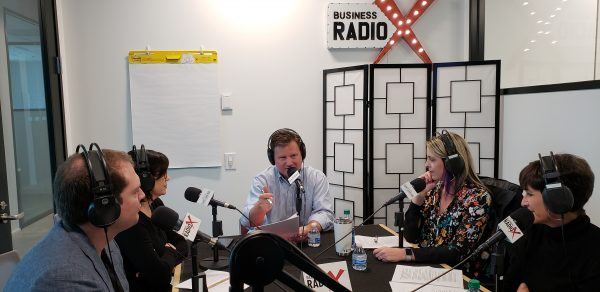
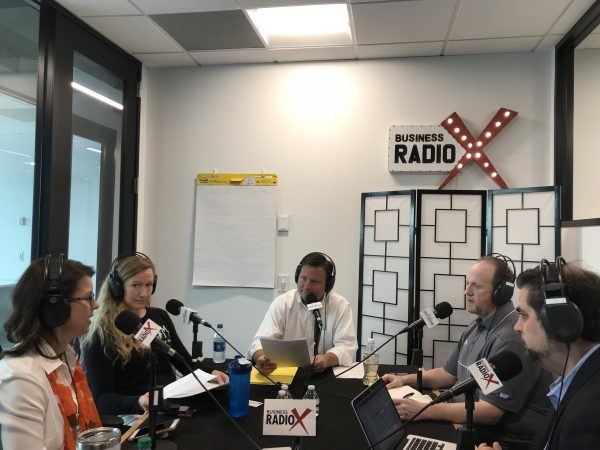
Supply Chain Now Radio Episode 23

September 28, 2018 by angishields

Sandy Springs Studio
Supply Chain Now Radio Episode 23
Loading
00:00 /
RSS Feed
Share
Link
Embed

Download file

Supply Chain Now Radio

supply-chain-now-radio small

Supply Chain Now Radio brought to you by APICS Atlanta and TalentStream.

Elba Pareja-GallagherElba Pareja-Gallagher is the founder of the social impact organization ShowMe50.org. The non-profit’s vision is to achieve 50% women in senior leadership positions through a grassroots movement of women and men. Using a one-of-a-kind collaborative approach, individuals learn to influence change at work in gender bias awareness, talent management, workplace flexibility and executive accountability. ShowMe50 holds Lean In Circle meetings in Sandy Springs which incorporate communication, strategy and leadership training.  APICS Atlanta and ShowMe50 work together to lead change and close the gender gap in Supply Chain and Manufacturing. Elba is also a finance and strategy professional with over 20 years of experience at UPS. She’s held roles in International Finance, Investor Relations, Marketing and Strategy. She lived as an expat in Asia for three years and currently works on a cross-functional team developing long term strategies for Global eCommerce. She’s published several thought leadership blogs on UPS Longitudes. An APICS Certified Supply Chain Professional, Elba also holds a Master of Science degree in Supply Chain Management and is a frequently featured guest on Supply Chain Now Radio. Connect with Elba on LinkedIn and learn more about ShowMe50 here: https://www.showme50.org/ 

Joe DeSantis is a Managing Director at FTI Consulting and is based in Atlanta. DeSantis is a member of the firm’s Performance Improvement practice, where he focuses on LEAN Six Sigma in supply chain management. He has more than 25 years of experience in developing and implementing operational, financial, and continuous process improvement (“CPI”) solutions for global companies. Joe has led numerous turnarounds for large distribution and warehousing operations across multiple industries. He gains a deep understanding of the root cause of issues and develops sustainable solutions. Joe engages company resources at all levels to align and focus on value-added activities and eliminate non-value added steps and processes. As the director of operations for Avon Products, Inc., he led the turnaround of the largest distribution operation in the global network ($850 million in revenue). At Office Depot, Joe was responsible for the turnaround of the largest retail/business-to-business (“B2B”) distribution center in the U.S. network ($1.1 billion in revenue). His approach to understanding the current environment focuses on people, process and technology. Prior to joining FTI Consulting, Joe was a Partner and Performance Improvement Practice Leader for Total Solution Partners, a firm he founded in 2011. A member of the APICS Atlanta Executive Advisory Board, Joe has a passion for leadership and often speaks at conferences around the country on this topic. Joe holds a B.S. in Accounting from Sacred Heart University and an Executive M.B.A. from the Kellogg School of Management at Northwestern University. Connect with Joe Desantis on LinkedIn and learn more about FTI Consulting, recently named a Top Firm to Work For by Consulting Magazine, here: https://www.fticonsulting.com/

Ashley Liebke is President & CEO at Vision Media Group and is an innovative digital marketing and strategy leader with two decades of business development experience. Over the last five years she has become a noted leader in retail supply chain optimization and digital consumer experience – – and is connecting the dots for businesses looking to optimize their cloud platforms for today’s on demand economy. Ashley collaborates with partners and customers to publicize how unified customer experience with store operations, distributed order management and supply chain optimization can drive growth for US and global businesses. In previous roles, Ashley has served as Vice President of Marketing with Deposco and Acting Director/Marketing Manager with UPS. Ashley earned a Bachelor of Arts Degree in Political Economy from Tulane University, as well as an MBA from Georgia State University. Recently, she co-founded Epic Taste, a blog that delivers mouth-watering imagery and reviews of the finest food, beverages, tables, places, chefs in Atlanta. Connect with Ashley Liebke on LinkedIn and learn more about Epic Taste here: http://www.epic-taste.com/

Jessica Clayton is the founding Partner of TalentStream and a member of the ownership group. She is a cum laude graduate of Clemson University with a Masters Degree from The Citadel.  Jessica grew up in the staffing industry and worked for a national staffing company before launching TalentStream in 2013. In addition to leading TalentStream’s recruiting and operations, Jessica enjoys giving back to the Greenville (SC) Community and spending time with her husband and three children. A former Teacher of the Year in South Carolina, she has served as a volunteer leader at a wide variety of organizations, to include Ronald McDonald House, Big Brothers Big Sisters of America, and the Red Cross. Jessica serves as Chair of Career Development on the APICS Industrial Crescent Board of Directors and also maintains active professional membership in SHRM Greenville. Jessica is a member of Christ Church of Greenville, where she serves on the Annual Giving Cabinet, as well as the Children’s Ministry committee. Connect with Jessica Clayton on LinkedIn and follow her on Twitter at @JBClayton1. 

Scott W. Luton is founder of Supply Chain Now Radio and also serves as Managing Partner for TalentStream. He has worked extensively in the end-to-end Supply Chain industry for more than 15 years, appearing in publications such as The Wall Street Journal, Dice and Quality Progress Magazine. Scott currently serves as Executive Vice President of APICS Atlanta and was also named to the 2018 Georgia Logistics Summit Executive Committee. He is a certified Lean Six Sigma Green Belt and holds the APICS Certified Supply Chain Professional (CSCP) credential. As a Veteran of the United States Air Force, Scott also volunteers as Co-Chair of the Business Pillar for VETLANTA, and maintains active membership in the Georgia Manufacturing Alliance & CSCMP Atlanta Roundtable. Connect with Scott Luton on LinkedIn and follow him on Twitter at @ScottWLuton. He can also be reached by email. Learn more about WBENC-certified TalentStream here, a leading recruiting & staffing firm that helps companies find top talent in the Engineering, Manufacturing and Supply Chain space.: www.talentstreamstaffing.com

Tagged With: FTI Consulting, Non Profit, ShowMe50, Supply Chain, TalentStream, Vision Media Group

– Tucson Business Radio – Community Law -Episode #2

September 27, 2018 by angishields

CommunityLaw
Tucson Business Radio
- Tucson Business Radio - Community Law -Episode #2
Loading
00:00 / 54:23
RSS Feed
Share
Link
Embed

Download fileDuration: 54:23

Tucson Business Radio – Community Law -Episode #2

The Host of Community Law 

Michael Shupe
Owner/Partner
Goldschmidt|Shupe, PLLC

6700 North Oracle Road, Suite 240
Tucson, Arizona 85704
(520) 265-4462
www.gshoalaw.com
michael@gshoalaw.com


M
ichael has worked with Carolyn for the past 12 years, beginning when he was an undergraduate at the University of Arizona. He has been a licensed attorney for the past 8 years and practices exclusively in community association law. Carolyn and Michael formed their law partnership in the Fall of 2014. He has experience in a wide variety of community association and real estate issues, including covenant enforcement and assessment collection, as well as county and municipal zoning requirements, and easement and right-of-way disputes. Michael is a member and Past-President of the Southern Arizona Chapter of Community Associations Institute (CAI) and is a member of the Arizona Association of Community Association Managers (AACM). Michael has lectured on community association issues and provided instruction to various community boards and community management groups.

The Co-Host of Community Law 

Carolyn B. Goldschmidt, Esq.
Owner/Partner
Goldschmidt|Shupe, PLLC

6700 North Oracle Road, Suite 240
Tucson, Arizona 85704
(520) 265-4462
www.gshoalaw.com
carolyn@gshoalaw.com

Carolyn has practiced community association law in southern Arizona for 30 years, including covenant enforcement, construction defects, architectural control, assessment collection, transition from developer control, dispute resolution, counseling, and drafting and review of governing documents. She is certified as a real estate specialist by the State Bar of Arizona and is a long-time member of the Community Associations Institute (CAI). Carolyn served on the Board of Directors of the Southern Arizona Chapter of CAI for more than 8 years and is a Past President of the Chapter. She also is a member of the Arizona Association of Community Association Managers (AACM). In addition, Carolyn has training and experience in alternative dispute resolution as a mediator and communication facilitator. Carolyn has taught courses in community association law for CAI, AACM, the Hogan School of Real Estate, and Lorman Educational Services, and has lectured frequently on community association law for various other groups and community boards.She hosted the Legal Hotline: Community Law Edition on KNST-790-AM radio.

Howard Schmitter
President
Green Valley Council

(520) 664-5754
howard@hbsmanagementsolutions.com
hbsmanagementsolutions.com


I spent over 30 years in the department store world as a senior executive in operations. My wife and I were born in Columbus, Ohio and through work lived in Indianapolis, Denver, Cleveland and New Jersey before moving to Tucson. We started our company in Tucson in 2008 and we are now approaching 100 employees. I have  served on numerous committees overseeing charitable operations within the cities that i have resided in.

Jeff Leane
Insurance Specialist
LaBarre Oksnee Insurance

(800) 898-0711
JeffL@hoa-insurance.com
hoa-insurance.com


Jeff Leane is a community association insurance specialist with LaBarre Oksnee Insurance – a medium sized insurance broker founded in 1985.Jeff got his start working with community associations back in 1992 as a community manager and later as a development consultant for home builders before joining LaBarre Oksnee in 2006. Currently LaBarre Oksnee insures more than 6,000 community associations in Arizona, California and Nevada.

Arnold Huffman with Digital Yalo and Julianne Andrews with Atlanta Financial Associates, Inc.

September 27, 2018 by angishields

Atlanta Business Radio
Arnold Huffman with Digital Yalo and Julianne Andrews with Atlanta Financial Associates, Inc.
Loading
00:00 /
RSS Feed
Share
Link
Embed

Download file

Yalo

Arnold Huffman learned at an early age, from his tool salesman father, the value of responsive, customer-driven service and attention to detail. It’s these values that he tirelessly applies to Yalo’s strategic direction. With over 20 years experience delivering complex consulting services and world-class digital marketing solutions, Arnold prides himself on client satisfaction and value creation. Away from the office, you’ll find him at a live music venue, on the basketball court or enjoying time with his wife and three children.

Follow Digital Yalo on Facebook, LinkedIn, and Twitter.

Julie Andrews co-founded Atlanta Financial Associates, Inc.  in 1992. With more than 25 years of experience in the financial planning industry, Julie demonstrates her unparalleled commitment to her clients by developing sophisticated solutions that address the financial needs of highly successful physicians, professionals and individuals at or nearing retirement. Julie’s unwavering professionalism has earned her local, regional and national recognition for her service and expertise. She has won numerous awards, including Forbes’ list of America’s Top Women Wealth Advisors for 2017 and 2018* and Forbes’ Best-in-State Wealth Advisors list for 2018*. Additionally, Julie has been consistently named a Five StarSM Professional Wealth Manager.** Her award is featured in Five Star’s promotional insert titled, “Women in the Workplace” which can be seen in The Wall Street Journal(September 27, 2017 and March 26, 2018). She can also be found among the Medical Economics’ Financial Advisers for Doctors list.*** Julie is also a sought-after expert whose experience and advice has been featured in several industry publications including Medical Economics, Atlanta Business Chronicle, Investor Business Daily and Commonwealth Business Review as well as the Journal of Financial Planning, Financial Planning Magazineand TravelGirl. Prior to entering the financial planning industry, Julie was a senior financial analyst for a Fortune 250 company and a management consultant with a national consulting/accounting firm. She earned her CERTIFIED FINANCIAL PLANNER™ certification and Accredited Investment Fiduciary® (AIF®) designation. Julie graduated Tau Beta Pi with a Bachelor of Science degree in industrial engineering from Purdue University with highest honors then attended the University of Virginia, where she earned a Master’s of Business Administration (MBA) and received the William Michael Shermit award for academic excellence, graduating with honors. Julie previously served as co-chairman of the Atlanta chapter of the National Committee on University Resources for the University of Virginia, and is also a founding member of the University of Georgia, Terry College of Business, Entrepreneurial Society. Julie is married to Dr. Andy Andrews, a pediatrician in private practice in Atlanta since 1986. They have two sons and a daughter.

Tagged With: Digital Yalo

Supply Chain Now Radio Episode 22

September 27, 2018 by angishields

Sandy Springs Studio
Supply Chain Now Radio Episode 22
Loading
00:00 /
RSS Feed
Share
Link
Embed

Download file

teamshot

supply-chain-now-radio small

Supply Chain Now Radio brought to you by APICS Atlanta and TalentStream.

John Holly is a lifelong human resources professional with a passion for coaching for personal and professional growth and success. John, was born in South Carolina, but spent his formative years growing up in South Florida.  He attended Clark College (known now as Clark Atlanta University) where he attained his BBA. John is also a graduate of the 67th session of the Harvard Business School Program for Management Development. John had a long tenure with Georgia Power and its parent company, The Southern Company, before moving into the food services industry working for companies such as AFC Enterprises, parent company to a number of iconic food services brands (Church’s Chicken, Cinnabon, etc.).  While at AFC Enterprises, John received the 1999 AFC Spirit Award for his leadership and collaborative skills. From 2005 through 2016, John was a human resources leader with Cox Communications.  While there he provided HR leadership during the devastation of Hurricane Katrina and the subsequent successful recovery of that system, among many other people successes.  His team received the company’s Vision Awardjohnandperry4 for People in leading that historic effort. Presently John is the Deputy Chief People Officer for Kumho Tire Georgia, an international tire manufacturer, which located its first U.S. plant in Macon, Georgia.  John and the human resources team at Kumho have responsibility for recruiting, selecting, training/developing and managing the various people needs for a team to grow into a major competitor in the tire industry. Connect with John Holly on LinkedIn and learn more about Kumho Tire here: http://www.kumhotireusa.com/
Perry Falk is Regional Vice President of Carrier Sales at Nolan Transportation Group, a Top 25 Freight Brokerage Firm as ranked by Transport Topics. Nolan Transportation Group (NTG) provides third-party logistical services for over 15,000 customers across the U.S., Canada, and Mexico. With record-setting growth over the last 12 years, NTG now has over 1,000 team members at its 12 locations nationwide. The company has received numerous accolades, including being named a 2018 Top Workplace by Atlanta Journal-Constitution for the third consecutive year. Connect with Perry Falk on LinkedIn and learn more about Nolan Transportation Group here: https://ntgfreight.com/

newWillpicWill Haraway is Founder & Lead Evangelist at Backbeat Marketing. Will has 20 years of executive experience in B2B Technology Marketing. Will is a certified analyst relations practitioner by the Knowledge Capital Group and has helped companies including Manhattan Associates, Aptos, Atlantix Global Systems, American Software and Rubicon Global improve their brand reputations with marketing results that help increase sales. Will also serves as a member of the APICS Atlanta Executive Advisory Board. The Backbeat team includes lead generation, digital marketing, media relations and content marketing specialists with a combined 50 years of experience in their chosen disciplines. Connect with Will on LinkedIn and learn more about Backbeat Marketing here: www.backbeatmarketing.com

Ben Harris is Director of Supply Chain Ecosystem Expansion for the Metro Atlanta Chamber. Ben comes to the Metro Atlanta Chamber after serving as Senior Manager, Market Development for Manhattan Associates. There, Ben was responsible for developing Manhattan’s sales pipeline and overall Americas supply chain marketing strategy. Ben oversaw market positioning, messaging BenWillandScott1and campaign execution to build awareness and drive new pipeline growth. Prior to joining Manhattan, Ben spent four years with the Georgia Department of Economic Development’s Center of Innovation for Logistics where he played a key role in establishing the Center as a go-to industry resource for information, support, partnership building, and investment development. Additionally, he became a key SME for all logistics and supply chain-focused projects. Ben began his career at Page International, Inc. where he drove continuous improvement in complex global supply chain operations for a wide variety of businesses and Fortune 500 companies. An APICS Certified Supply Chain Professional (CSCP), Ben holds an Executive Master’s degree in Business Administration (EMBA) and bachelor’s degree in International Business (BBA) from the Terry College at the University of Georgia. Connect with Ben on LinkedIn and learn more about the Metro Atlanta Chamber here: www.metroatlantachamber.com


Scott W. Luton is founder of Supply Chain Now Radio and also serves as Managing Partner for TalentStream. He has worked extensively in the end-to-end Supply Chain industry for more than 15 years, appearing in publications such as The Wall Street Journal, Dice and Quality Progress Magazine. Scott currently serves as Executive Vice President of APICS Atlanta and was also named to the 2018 Georgia Logistics Summit Executive Committee. He is a certified Lean Six Sigma Green Belt and holds the APICS Certified Supply Chain Professional (CSCP) credential. As a Veteran of the United States Air Force, Scott also volunteers as Co-Chair of the Business Pillar for VETLANTA, and maintains active membership in the Georgia Manufacturing Alliance & CSCMP Atlanta Roundtable. Connect with Scott Luton on LinkedIn and follow him on Twitter at @ScottWLuton. He can also be reached by email. Learn more about WBENC-certified TalentStream here, a leading recruiting & staffing firm that helps companies find top talent in the Engineering, Manufacturing and Supply Chain space.: www.talentstreamstaffing.com

Tagged With: Supply Chain, TalentStream

Allison Robinson and Mark Rankin with The Mom Project, and Steve Latham with Canopy

September 27, 2018 by angishields

High Velocity Radio
High Velocity Radio
Allison Robinson and Mark Rankin with The Mom Project, and Steve Latham with Canopy
Loading
00:00 /
RSS Feed
Share
Link
Embed

Download file

The Mom Project

The following story is brought to you by Aquitas Solutions. To learn more about Aquitas Solutions, you can follow them on LinkedIn and Twitter.

After having her son Asher in 2015, Allison Robinson identified how universally challenging it can be for American mothers to juggle the demands of motherhood with a full-time career and decided to tackle the issue on a national scale. Prior to founding The Mom Project, Allison spent 8 years at Procter and Gamble working on go to market strategies for leading household brands with a special focus on moms during her tenure on the Pampers brand. As CEO, Allison is responsible for delivering on the company’s mission of building a better workplace for women while supporting our customers through innovative talent solutions that help them attract and retain the diversity of backgrounds and perspectives they need to propel their businesses forward.

Mark Rankin is the Head of HR Centers of Excellence and is responsible for Total Rewards, Talent Acquisition, and Talent Development. He joined Invesco in August 2015. Previously, Mr. Rankin performed a variety of strategy roles over nine years at Wells Fargo. He as the Director of Retirement Strategy from 2009 to 2015, when he led the division’s strategic planning. He also initiated several key products such as Wells Fargo’s Retirement Income Solution and led strategic initiatives such as the effort to improve cross selling between Wells Fargo’s Brokerage and Community Bank. Prior to this role, Mr. Rankin was part of Wachovia’s internal consulting group where he worked on a variety of projects spanning the enterprise. (Wachovia was acquired by Wells Fargo in 2008.) Before joining Wells Fargo (Wachovia) in 2006, Mr. Rankin was a Case Team Leader for Bain & Company where he worked on projects spanning from organization design to growth and process improvement for a number of companies both within and outside of financial services. Prior to this, Mr. Rankin worked at Hewitt Associates where he was a 401(k) plan Project Manager and Head of Client Implementations for health and benefit plans in the United Kingdom. Mr. Rankin earned a BA degree in economics from Haverford College and an MBA from the Fuqua School of Business at Duke University.

Follow The Mom Project on Facebook and Twitter.

Steven Latham is the Founder & Chief Executive Officer with Canopy. Steven is a forward-thinking technology entrepreneur with a history of building successful hardware and software solutions for Fortune 500 companies and small private firms. With more than 20 years of experience in the field of technology, he is regarded as an expert in cloud-based software and the Internet of Things. Latham is the founder and CEO of Canopy, an Internet of Things company that provides businesses with end-to-end IoT services. Canopy has a team of experts focused on IoT and is committed to understanding how businesses can leverage the Internet of Things to reduce costs and grow profitably. Canopy’s cloud-based IoT platform, CanopyTM, is a comprehensive software solution for operators of self-service devices and on-premise control systems. Since its founding in 2013, Canopy has been named to Connected World IoT Innovations and, in 2018, it was ranked number 1,203 on the Inc. 5000 list of fastest-growing private companies in the United States. Canopy recently doubled the size of its Atlanta-area headquarters and experienced 95 percent year-over-year growth in 2017. Prior to Canopy, Latham served as CTO for the Entertainment division of NCR, where he led the planning, architecture, implementation and delivery of NCR’s Blockbuster Express kiosk business. Prior to that, Latham held various technology leadership positions at Harland Clarke and led the consolidation of their e-commerce platform to a unified product offering for its customers. In addition to his work at Canopy, Latham is committed to helping accelerate innovations in the Greater Atlanta tech arena through his involvement in the Gwinnett County Chamber of Commerce and at Georgia State University. He also serves on the board of trustees for Beacon College, a private college in Lakeland, Florida that is one of the first to award bachelor’s degrees exclusively to students with dyslexia, ADHD and other specific learning disabilities. In other nonprofit work, Steve is most proud of the annual donations Canopy makes to a variety of charities for its employees’ anniversary milestones. Employee donations have been directed to a variety of charities including programs to provide disadvantaged families with opportunities to shop during the holidays for gifts at significantly reduced costs, a food bank gardening project and a program to provide job training to prison inmates.

Tagged With: High Velocity Radio, The Mom Project

  • « Previous Page
  • 1
  • …
  • 592
  • 593
  • 594
  • 595
  • 596
  • …
  • 1326
  • Next Page »

Business RadioX ® Network


Our Most Recent Episode

CONNECT WITH US

  • Email
  • Facebook
  • LinkedIn
  • Twitter
  • YouTube

Our Mission

We help local business leaders get the word out about the important work they’re doing to serve their market, their community, and their profession.

We support and celebrate business by sharing positive business stories that traditional media ignores. Some media leans left. Some media leans right. We lean business.

Sponsor a Show

Build Relationships and Grow Your Business. Click here for more details.

Partner With Us

Discover More Here

Terms and Conditions
Privacy Policy

Connect with us

Want to keep up with the latest in pro-business news across the network? Follow us on social media for the latest stories!
  • Email
  • Facebook
  • Google+
  • LinkedIn
  • Twitter
  • YouTube

Business RadioX® Headquarters
1000 Abernathy Rd. NE
Building 400, Suite L-10
Sandy Springs, GA 30328

© 2026 Business RadioX ® · Rainmaker Platform

BRXStudioCoversLA

Wait! Don’t Miss an Episode of LA Business Radio

BRXStudioCoversDENVER

Wait! Don’t Miss an Episode of Denver Business Radio

BRXStudioCoversPENSACOLA

Wait! Don’t Miss an Episode of Pensacola Business Radio

BRXStudioCoversBIRMINGHAM

Wait! Don’t Miss an Episode of Birmingham Business Radio

BRXStudioCoversTALLAHASSEE

Wait! Don’t Miss an Episode of Tallahassee Business Radio

BRXStudioCoversRALEIGH

Wait! Don’t Miss an Episode of Raleigh Business Radio

BRXStudioCoversRICHMONDNoWhite

Wait! Don’t Miss an Episode of Richmond Business Radio

BRXStudioCoversNASHVILLENoWhite

Wait! Don’t Miss an Episode of Nashville Business Radio

BRXStudioCoversDETROIT

Wait! Don’t Miss an Episode of Detroit Business Radio

BRXStudioCoversSTLOUIS

Wait! Don’t Miss an Episode of St. Louis Business Radio

BRXStudioCoversCOLUMBUS-small

Wait! Don’t Miss an Episode of Columbus Business Radio

Coachthecoach-08-08

Wait! Don’t Miss an Episode of Coach the Coach

BRXStudioCoversBAYAREA

Wait! Don’t Miss an Episode of Bay Area Business Radio

BRXStudioCoversCHICAGO

Wait! Don’t Miss an Episode of Chicago Business Radio

Wait! Don’t Miss an Episode of Atlanta Business Radio