Business RadioX ®

  • Home
  • Business RadioX ® Communities
    • Southeast
      • Alabama
        • Birmingham
      • Florida
        • Orlando
        • Pensacola
        • South Florida
        • Tampa
        • Tallahassee
      • Georgia
        • Atlanta
        • Cherokee
        • Forsyth
        • Greater Perimeter
        • Gwinnett
        • North Fulton
        • North Georgia
        • Northeast Georgia
        • Rome
        • Savannah
      • Louisiana
        • New Orleans
      • North Carolina
        • Charlotte
        • Raleigh
      • Tennessee
        • Chattanooga
        • Nashville
      • Virginia
        • Richmond
    • South Central
      • Arkansas
        • Northwest Arkansas
    • Midwest
      • Illinois
        • Chicago
      • Michigan
        • Detroit
      • Minnesota
        • Minneapolis St. Paul
      • Missouri
        • St. Louis
      • Ohio
        • Cleveland
        • Columbus
        • Dayton
    • Southwest
      • Arizona
        • Phoenix
        • Tucson
        • Valley
      • Texas
        • Austin
        • Dallas
        • Houston
    • West
      • California
        • Bay Area
        • LA
        • Pasadena
      • Colorado
        • Denver
      • Hawaii
        • Oahu
  • FAQs
  • About Us
    • Our Mission
    • Our Audience
    • Why It Works
    • What People Are Saying
    • BRX in the News
  • Resources
    • BRX Pro Tips
    • B2B Marketing: The 4Rs
    • High Velocity Selling Habits
    • Why Most B2B Media Strategies Fail
    • 9 Reasons To Sponsor A Business RadioX ® Show
  • Partner With Us
  • Veteran Business RadioX ®

Pensacola Business Radio, 5-11-18, Guests: Tony Tejas Salsa and Ray Sizemore

May 9, 2018 by angishields

Pensacola Business Radio
Pensacola Business Radio, 5-11-18, Guests: Tony Tejas Salsa and Ray Sizemore
Loading
00:00 /
RSS Feed
Share
Link
Embed

Download file

Tony’s Tejas Local Love

Although the world’s best salsa is sold in all Whole Foods Markets throughout their Southern Region, as well as online via Amazon, we like to shine the spotlight on local retailers that also feature Tony’s Tejas Salsa. Each is very unique and caters to the desires of their community. #buyfreshbuylocal #shopsmall

The Produce Place

Has been providing fresh regional produce and products to the Sylvan Park area of Nashville, TN since 1988. This little neighborhood store has a wide selection of items you can find in the biggest natural food stores and several items you can’t get anywhere else.  It’s Family owned and operated and has a welcoming feeling when you hit the door. They host events also, like their strawberry festival, where they have in season produce and local vendors. We are proud to have The World’s Best Salsa in the building and share our love with the community.

Thanks for visiting the home of the world’s best salsa!

Follow us on Facebook @worldsbestsalsa for current events and appearances by Team Tejas. See who Tony Tejas is taking #salsaselfies with @tonys.tejas.salsa on Instagram as he travels the states. Subscribe to our YouTube channel – Tony Tejas TV for videos of Tony Tejas cooking his delicious recipes made with The World’s Best Salsa . Read the latest tweets about our company and the impact our investment group has @tonytejas on Twitter. We are never afraid of a good time and want you to join Team Tejas for all the fun we have with our #salsaaddicts


Ray sizemore

The HAVEN Place LLC

Having relationship problems? Can’t relax, your mind always races, memories keep intruding and affect your work, family, or social life? Tried a variety of ways to fix it but nothing really worked? These are problems I can help you with.

I focus on what’s happened to you vs. what’s wrong with you in two primary areas – relationships and couples as well as trauma. In the process I also work with individuals and children. I’ve helped several thousand people regain their lives, just like this woman, and I can help you as well.

Couples I work with are often struggling with a lack of emotional and physical intimacy, they’ve lost respect and trust for each other, and have little companionship or communication. And they often have frequent arguments about finances, sex, children, social media, etc.

I help couples open up to each other, rebuild mutual respect, trust, and honesty, understand what’s not working in their relationship and why, help them come up with mutual solutions for their problems, and re-experience friendship and simple joy in just being with each other.

Past trauma, accompanied by grief,  is all too often an underlying and untreated cause of relationship, work, and health problems. Many have ongoing struggles with mental health and substance use. They feel guilty, ashamed, stressed out, damaged, alone, confused, emotionally numb, can’t sleep or concentrate, have racing thoughts, have mood swings and anger issues, worry constantly. Alcohol or other substances may have helped to a point, but also caused other difficulties. They ‘ve tried psych meds, therapy, substance rehab but nothing has really worked. They want their lives back but feel lost and out of control.

I provide outpatient therapy to help my clients identify and address those underlying causes, work with them on eight aspects of wellness, help them restore emotional and physical balance, and in the process help people regain their lives and experience a renewed sense of joy, inner peace, calmness, self-control, purpose, and meaning.

What do I do differently than others? First, I don’t focus on mental disorders. I focus on what’s happened to people, not what’s wrong with them. I also consider and help my clients explore other possible causes. I get feedback each session from my clients about how they’ve done over the past week, as well as how they think I’m helping them in each session and we track and work those results. The therapy I do is structured and we stay focused on clients’ initial problems. While we work together on new problems as they arise we also stay focused on those primary problem areas.

The majority of those I’ve worked with over the years have had significant improvement, many 30-points or more compared to their pre-therapy scores in as little as 10 sessions.

Thank you for all you are doing for me, on and off the table. It means a lot to me. Kelly S. [former client]

Thank you Ray for everything. You have helped me so much. Billie G. [former client]

Have some questions or want some help? Send me an email asking for a free consultation. Include your availability in the coming week and I’ll respond within 24-hours with a day and time that works for both of us.

Tagged With: entrepreneur, Entrepreneurs, Entrepreneurship, Expert Interviews, Foodie Life, gulf coast, small business, Talk show

ITEN WIRED Radio Ep 5 2018: The Center for Cyber Security and The Cyber Ambassador Program at UWF

May 8, 2018 by angishields

From Left to Right

Jim Rhodes/Director ITEN WIRED – Carson Wilber/UWF Cyber Ambassador – Eman El-Sheikh, Ph.D./Director, Center for Cyber security at UWF

Eman El-Sheikh, Ph.D.
Director, Center for Cybersecurity
Professor, Computer Science
PI and Director, NSF ADVANCE Program


UWF CENTER FOR CYBERSECURITY

Designated by the National Security Agency and Department of Homeland Security as a National Center of Academic Excellence in Cyber Defense Education, we focus on three distinct areas to promote and expand cybersecurity awareness and practice.

Education

We’re preparing the next generation of cybersecurity leaders with dynamic, interdisciplinary education and state-of-the-art training programs and facilities.


People in a computer lab

Developing the Next Generation of Cyber-Stars

UWF Cybersecurity scholars work comprehensively to detect critical vulnerabilities and defend organizations of all sizes against information security exploitation.

Become a cybersecurity expert with up-to-date, industry-aligned programs and hands-on experience at the University of West Florida. UWF offers multidisciplinary Cybersecurity degree programs and certificates at the undergraduate and graduate levels. UWF is a member of the National CyberWatch Center and provides interdisciplinary Cybersecurity programs and certificates crossing Computer Science, Information Technology, Information Security Management, Computer Engineering, Security and Diplomacy and other areas. Scholarships are available to support students in Cybersecurity-related areas.

Programs

The University of West Florida (UWF) offers multiple undergraduate and graduate programs in the area of Cybersecurity. These programs are each designed to make the student a highly employable candidate in the field of Cybersecurity.

Undergraduate Programs

  • Bachelor of Science in Computing and Information Sciences with a specialization in Cybersecurity (Blended)
  • Bachelor of Science in Information Technology with a specialization in Network Systems Operations (Online)
  • Bachelor of Arts in International Studies with a concentration in Security and Diplomacy (Face-to-Face)

Graduate Programs

  • Master of Science in Information Technology with a specialization in Cybersecurity (Online)
  • Master of Science in Computer Science with a focus on Cybersecurity (Blended)
  • Master of Business Administration with a specialization in Information Security Management (Online)
  • Master of Arts in Political Science with a concentration in Security and Diplomacy (Blended)

Certificates

The Center for Cybersecurity also offers multiple undergraduate and graduate certificates in a variety of fields to best serve the needs of both students and the workforce.

Undergraduate Certificates

  • Certificate in Cybersecurity (Blended)
  • Certificate in Intelligence Analysis (Online)
  • Certificate in Information Security Management (Online)

Graduate Certificates

  • Certificate in Information Security Management (Online)

Tagged With: entrepreneur, Entrepreneurs, Entrepreneurship, ITEN WIRED Radio: UWF Cyber Security and Ambassador Program, Keith Hoffert, Leadership, Pensacola Business Radio, Talk Radio

Rick Jackson with Jackson Healthcare and Eric Tanenblatt with Dentons

May 8, 2018 by angishields

CEO Exclusive Radio
CEO Exclusive Radio
Rick Jackson with Jackson Healthcare and Eric Tanenblatt with Dentons
Loading
00:00 /
RSS Feed
Share
Link
Embed

Download file

RickJackson2

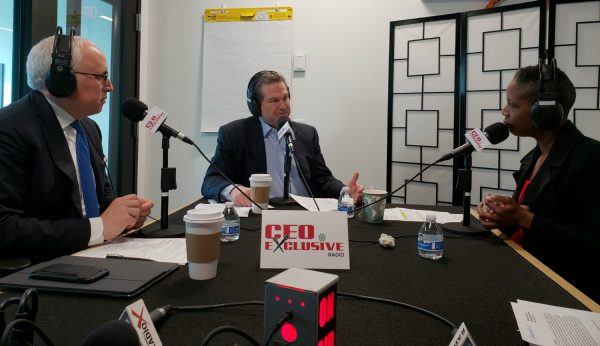
On this CEO Exclusive we talk with Rick Jackson with Jackson Healthcare and Eric Tanenblatt with Dentons about corporate philanthropy and their organization, goBeyondProfit.

goBeyondProfit is committed to celebrating businesses investing within Georgia communities. As businesses make significant contributions to improving the communities in which they live, work and serve, we believe those actions should be recognized and celebrated, further inspiring others to follow their example.

Led by inaugural Ambassadors, goBeyondProfit encourages business leaders and owners across the state to sign the goBeyondProfit Pledge in which companies of all sizes and stages are encouraged to find and invest in creative ways to give back that align with their unique business models.

There is no cost to participate. goBeyondProfit is funded by Jackson Healthcare and asks nothing from businesses except to pledge to continue making a difference.

Richard L. Jackson serves as Chairman and Chief Executive Officer of Jackson Healthcare, a family of highly-specialized healthcare staffing and technology companies. Jackson Healthcare is the third largest U.S. healthcare staffing firm by revenue, ranks 20th among U.S. staffing firms and is 17th largest among Atlanta’s largest private companies.

For the past 39 years, Jackson has been instrumental in conceptualizing and developing more than 25 healthcare companies. His ownership and operation of staffing companies, surgery centers, practice management companies, clinics and hospitals have endowed him with the depth and breadth required to thrive in the ever-changing healthcare environment.

Jackson has demonstrated a unique ability to anticipate industry trends, identify underserved niches and create industry-leading companies. Jackson partners with industry thought leaders and continues to play a lead role in transforming the way healthcare is delivered.

As a former foster child, he is driven by a personal mission to inject hope and opportunity into the lives of underserved children, Jackson actively supports numerous local and international charitable organizations. He is a co-founder of FaithBridge Foster Care and serves as its Chairman. Jackson founded goBeyondProfit, a first-of-its-kind business leader-to-leader initiative to make giving back the norm in Georgia.

Jackson and his wife reside in Atlanta, Georgia.

Follow Jackson Healthcare on Twitter and Facebook.

Eric Tanenblatt chairs Dentons‘ US Public Policy practice and serves as a leader of the global Government sector and global Public Policy and Regulation practice, leveraging his three decades of experience at the very highest levels of the federal and state governments.

Mr. Tanenblatt, a renowned lecturer and political counselor who’s widely regarded as one of the nation’s preeminent public policy thought leaders, has served in the administrations of the three US presidents and as a senior advisor to a US senator and governor, and held a US Senate-confirmable post governing a federal agency.

He has a passion for shepherding disruptive companies and industries through the complicated web of law and regulation, and often writes and speaks about the innovation economy and autonomous vehicles. He leads Dentons’ global autonomous vehicles team and authors a popular weekly digest tracking the most consequential regulatory, political, and technical developments in the world of automotive autonomy.

Mr. Tanenblatt’s political and fundraising activities and experience are extensive.

He served as chief of staff to Governor Sonny Perdue, Georgia’s first Republican governor in 130 years, and later helped coordinate the 2004 G-8 Economic Summit, hosted by President George W. Bush at Sea Island, Georgia. He served in 2012 as a political advisor and National Finance Co-chairman for the presidential campaign of Governor Mitt Romney, with whom his relationship dates back to 2004, when he served as Finance Co-chair for the Romney-led Republican Governors Association (RGA). Earlier, in 2000, he served as the state chairman for President Bush’s successful Georgia campaign and held sernior positions in the 1996 Bob Dole and Phil Gramm presidential campaigns.

He also served as a longtime advisor to the late US Senator Paul Coverdell (R-GA), including as vice chairman of the senator’s reelection bid in 1998. Later, he served in the administration of President George H. W. Bush at the Department of Health and Human Services as a special assistant to the secretary, and as director of intergovernmental affairs at the Peace Corps.

Mr. Tanenblatt is a prominent advocate for civic engagement, often writing and speaking on the subject. He was nominated by President Bush and confirmed by the US Senate to serve on the Board of Directors of the Corporation for National and Community Service, serving from 2008 until 2013. He was also the founder and chairman of Hands on Georgia, a statewide organization to promote volunteerism, and served as co-chair of the Host Committee for the 2008 National Conference for Service and Volunteerism.

Routinely named one of Georgia’s 100 most influential persons by the magazine Georgia Trend, which years earlier named him one of the state’s “Forty under 40” rising stars, Mr. Tanenblatt is often quoted or cited by some of the most prestigious news and opinion services in the world, including the Wall Street Journal, the Washington Post, the New York Times, US News and World Report, National Journal, Politico, The Hill, Roll Call, the Associated Press, and the Atlanta Journal-Constitution.

Connect with Eric on LinkedIn, and follow Denton’s on LinkedIn and Twitter.


Tagged With: Corporate Philanthropy, Dentons, goBeyondProfit, Healthcare, Jackson Healthcare

Larry Williams with The Technology Association of Georgia, David Katz with Nelson Mullins Riley & Scarborough, Jeffery Gapusan with FinTech at ATDC, Jonathan Burke with Ernst & Young, Susan O’Dwyer with Aprio

May 7, 2018 by angishields

Atlanta Business Radio
Larry Williams with The Technology Association of Georgia, David Katz with Nelson Mullins Riley & Scarborough, Jeffery Gapusan with FinTech at ATDC, Jonathan Burke with Ernst & Young, Susan O'Dwyer with Aprio
Loading
00:00 /
RSS Feed
Share
Link
Embed

Download file

Larry Williams

President & CEO, TAG

Twitter: @LarryKWms

http://www.tagonline.org/

Bio: Mr. Larry K. Williams has been President at The Technology Association of Georgia since 2017 and serves its Chief Executive Officer. Mr. Williams served as the Chief Executive Officer and President of The Beacon Council Inc. until October 31, 2016. Mr. Williams is a recognized leader in economic development, bringing more than 20 years of experience in global branding, international trade and finance, public and industrial policy and administration and management. He is a consensus-builder and communicator with a background in information technology, aerospace, advanced marketing and start-ups, is responsible for leading and further developing and implementing the strategy of the public-private partnership created in 1985 to attract companies to Miami-Dade County.

He began his work at The Beacon Council, one of 36 accredited economic development organizations in the nation, in October 2013 after a nationwide search for a candidate who excelled in economic development as well as inter-personal skills. Mr. Williams’ accomplishments in the public and private arenas combined with his experiences with Latin America and the technology industry permeates his leadership style to drive The Beacon Council and Miami-Dade County to greater competitiveness. He helped shape the vision for Atlanta’s technology industry as Vice President of Technology Development at the Metro Atlanta Chamber (since 2011). He provided leadership and direction to the Chamber’s Mobility Task Force, the effort to position Atlanta as a global hub of mobile technology and the Technology Leadership Council, where he was also recruited after a national search to provide leadership.

In the State of Washington, Mr. Williams garnered a list of special assignments and honors including serving on the Governor’s Global Competiveness Council, where he created and led all processes and committees. The council’s report served as the basis of the state’s new 10-year economic initiative. In 2008, he was appointed by Gov. Christine Gregoire as co-chair of the newly created Washington State Tourism Commission and the following year he was appointed to serve on executive cabinet. As Assistant Director of International Trade for Washington State Department of Commerce, Mr. Williams managed the merger of the International Trade and the Economic Development Divisions of the State Department of Commerce.

His responsibilities increased from managing 14 employees with a $6 million budget to 66 employees with a $130 million budget. He recruited, retained or expanded 692 companies statewide; created or retained more than 17,000 jobs and generated more than $1.8 billion in private investment in fiscal years 2008/2009. He developed and implemented initial sales goals for each team member and exceeded three-year projections by more than 40 percent, documenting more than $43 million in actual sales. Under his leadership, Washington State opened its first foreign offices in Mexico City, Frankfurt, Germany and Guangzhou, Shanghai and Beijing, China.

In his native North Carolina, he rose through the ranks to Director of Operations of the International Trade Division for the North Carolina Department of Commerce. He developed business opportunities for client companies throughout Canada and Latin America. He served as Director of The Beacon Council Inc., until November 07, 2016. He studied in Costa Rica and speaks Spanish. He is a graduate of North Carolina State University and the Darlington School.

David Katz

Partner, Nelson Mullins

Twitter: @KatzFDavid

https://www.nelsonmullins.com/

Bio: David Katz is a partner in Nelson Mullins Riley & Scarborough’s Atlanta office where he leads the Privacy and Information Security Practice Group. He provides legal advice on matters related to the privacy laws affecting multiple sectors of the economy including retail, financial services, education, healthcare, and technology. He counsels corporate clients on the development, management and oversight of privacy and compliance programs, vendor management programs and assists them in developing policies and procedures, education strategies, implementation of auditing and monitoring controls, reviews of disciplinary and enforcement activities, and risk assessments. His corporate practice includes providing privacy and security due diligence reviews for mergers and acquisitions. He represents client at all stages of incident response from investigation, notification, remediation and defense of litigation and regulatory inquiry.

Jeffery Gapusan

Startup Catalyst and Head of FinTech at ATDC

http://atdc.org/

Bio: Having spent the past 15 years in New York, Jeff comes to Georgia with the goal of making it a Global FinTech capital. He is a proven dealmaker with international finance and capital markets acumen. Jeff prides himself on being able to quickly identify operational challenges, determine valid solutions, and obtain buy-in from multiple stakeholders.

Most recently, Jeff managed revenue generation operations and capital relationships for TradeRocket, an Atlanta-based startup. In his capacity as CRO and head of capital markets, Jeff led initiatives in Latin America and the United States with key clients, investors, financial sponsors, and strategic partners.

Prior to TradeRocket, Jeff founded Makai Advisory Services, a full-service business development consultancy for the alternative investment sector. It was here that Jeff began his foray into FinTech. Working with an early investor in the marketplace lending space, Jeff researched and became an expert in the FinTech space. Leveraging his knowledge of the operations and hurdles often found in institutional finance, he enabled companies to develop winning strategies. Utilizing his expansive network, Jeff consulted with industry leaders to develop ways in which companies in the two sectors could collaborate.

Jeff began his finance career as part of Salomon Smith Barney’s Sales & Trading Associate Training Program. He subsequently served domestic and international banks on the Financial Institutions Desk prior to joining the Mortgage-Backed Securities sales team. As a specialist in structured credit, he later focused on driving mandates for asset managers in the space enabling more than $5 billion in deal-flow in commercial real estate, leveraged loan, and asset-backed structures. Jeff later joined Cantor Fitzgerald as a managing director. He was a pioneer in Cantor’s foray into the alternative investment space driving critical engagement efforts between hedge fund and fund-of fund clients and some of the world’s most relevant alternative investment allocators. In 2009, Jeff spearheaded the establishment of Cantor’s London-based European Structured Products sales and trading desk.

A veteran naval officer, Jeff has more than 1,500 hours of flight time over combat zones in the Middle East, the Pacific Ocean, and the Mediterranean Sea. He directed flight operations in multiple theaters and was handpicked to represent U.S. interests with NATO allies and other foreign governments and militaries on key strategic and training initiatives.

Jonathan Burke

Senior Manager – Financial Services Risk Management at Ernst & Young

http://www.ey.com/

Jonathan joined EY in 2012 and is a leader in the Financial Services Advisory practice focusing on strategic risk and regulatory affairs. He previously served as a senior policy advisor in the U.S. Department of the Treasury’s Office of Terrorism and Financial Intelligence where he was responsible for developing and implementing global strategies to support US national security policy.

In his current role, Jonathan advises large global financial institutions, including global banks, insurance firms, and broker dealers, on matters related to regulatory compliance and related technology.  He has developed and executed numerous risk assessments for some of the largest banks in the world and has performed compliance assessments at the request of US and UK regulators.  Jonathan has also worked with clients on applying advanced technologies, including robotics, analytics, and machine learning, to automate certain risk functions.  Jonathan regularly contributes insights on the implication of foreign policy matters for EY’s global client base through EY’s Geostrategic Business Group.

Susan O’Dwyer

Director of Corporate Citizenship and Community at Aprio

https://www.aprio.com/

Susan is director of business development at Aprio and by all meanings of the word, a connector. By more than virtue of her career, Susan loves meeting and building relationships with individuals from all areas of business. In her roles at Aprio, Susan is responsible for driving business development across all industry sectors serviced by the firm. Susan’s willingness to help companies be successful has led to her own personal career success.

Susan’s specialty lies in the technology and venture capital industries, two industries that go together hand-in-hand. She is known throughout the Atlanta business community for her passion for connections, which resulted in Susan being recognized as one of the Top 50 women you need to know in Atlanta by the Atlanta Business Chronicle, as one of the 100 most influential people in the tech community and as a finalist for the 2012 Turknett Leadership Character Awards.

As the director for civic & community relations, Susan acts as the main point of coordination regarding civic and community activities throughout the firm. Her role is to maintain open communication with civic leaders and community partners, creating good will on behalf of Aprio.

Tagged With: Ernst & Young, FinTech, Nelson Mullins Riley & Scarborough, Startup Catalyst, Technology Association of Georgia

Rob Wilkins with Concourse Athletic Club – Squash Department, Keith Wilson with Kompass Events

May 7, 2018 by angishields

High Velocity Radio
High Velocity Radio
Rob Wilkins with Concourse Athletic Club - Squash Department, Keith Wilson with Kompass Events
Loading
00:00 /
RSS Feed
Share
Link
Embed

Download file

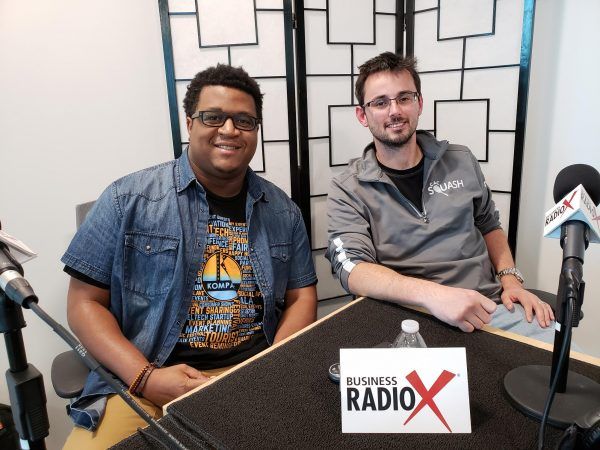
Rob Wilkins, is the Squash Director at Concourse Athletic Club. He has been playing squash for 25 years and was formerly a professional Squash player representing his country in the World Championships. Wilkins is from the UK, and has been living in the US for 6 years. 3 of those years have been spent in Atlanta.He is the Regional Junior Squash Director for the South and South-East of the US and also volunteers his time working with a non-profit organization called A+ Squash where he also serves as their squash director. Since starting in Atlanta, they now have the largest community in Atlanta of Junior squash players that are all nationally ranked and some that are making there way into the Top.50 in the US in their age groups. They travel extensively around the US competing in some of the largest events hosted by US Squash.

Originally from Mississippi, Keith Wilson is the Founder/CEO of Kompass Events, an event sharing start-up tech company that allows users to share, discover, and explore events in their favorite cities. Prior to starting Kompass, Keith excelled as a marketing executive at Ford Motor Company. Most recently, he led all future product strategies for the Lincoln Motor Company’s China division while based in Shanghai. He received his undergraduate degree at Ole Miss and his MBA at Clark Atlanta University and now resides in Atlanta, GA.

Follow Concourse Athletic Club on Twitter , Facebook, and LinkedIn.

Follow Kompass Events on Instagram, Twitter, and Facebook.

Tagged With: Concourse Athletic Club, High Velocity Radio, Kompass Events, squash department

Barry Navarre with Southern Telecom, Inc., Krisztina Bell with No Vacancy Home Staging

May 7, 2018 by angishields

Atlanta Business Radio
Barry Navarre with Southern Telecom, Inc., Krisztina Bell with No Vacancy Home Staging
Loading
00:00 /
RSS Feed
Share
Link
Embed

Download file

In his role as Business Development Manager, Barry Navarre is responsible for generating, evaluating, negotiating, and fostering strategic relationships and bi-lateral contract agreements in the delivery of telecommunications and information-based services for Southern Telecom.

Navarre brings a wealth of telecom management experience to the Southern Telecom team. Before joining Southern Telecom, Navarre managed strategic carrier relationships with national and regional carriers, CLECs, ILECs, ISPs and third party integrators. He is experienced in evaluating customer communications needs and developing custom fiber-optic solutions for them. Navarre also has consulted on fiber-optic WAN, VoIP, Internet access, metro Ethernet, video conferencing and data storage solutions. His telecom experience broad, ranging from field testing of network trunks to technical sales support to development of transport networks and network migrations.

Navarre holds an MBA from The University of Alabama and a B.S. in Management Information Systems from the University of Southern Mississippi. He also served in the U.S. Airforce. He resides in Chelsea, Alabama with his wife Angie, son Jackson, and daughter Brooklyn.

Professional home stager, marketing director and owner of No Vacancy Home Staging, Krisztina Bell brings over 13 years of experience in the real estate marketing and home staging business to her clients. She and her team of home stagers work closely with agents and sellers by providing them a portfolio of home staging services. Krisztina and her team specialize in transforming any vacant property to be listed for sale into a beautifully staged home that knocks out the competition, creates more attractive photos online and drives buyer traffic instantly for a faster sale! #sellitfaster

The team at No Vacancy along with Krisztina’s expert advice and works have been featured on HGTV’s House Hunters and The Property Brothers as well as in such publications as Realtor Magazine, The New York Times, Dallas Morning News, San Francisco Chronicle, Atlanta Journal & Constitution, FoxNews.com, Trulia.com, Redfin.com and CNBC.com to name a few.

Krisztina also teaches continuing education classes for real estate agents on topics relating to utilizing home staging as a marketing tool to sell any property listing faster and for top dollar. She is the former co-host of the popular Atlanta radio show and podcast “At Home With Paisley Radio Show” which featured interviews with high profile home, design and real estate industry experts as well as HGTV celeb hosts that provided listeners with practical advice and stylish living for the home and office. She has recently been awarded a 2017 Top 10 Professional Home Stager through the HSRA home staging organization and is recognized as a Who’s Who in Atlanta Real Estate this year with Atlanta Agent Magazine (www.atlantaagentmagazine.com).

Follow Barry Navarre  on LinkedIn.

Follow No Vacancy Home Staging,Tim Pinkham on Instagram, Facebook, and LinkedIn.


Tagged With: No Vacancy Home Staging, Southern Telecom Inc

Amy Geltner with American Hotel Register

May 2, 2018 by angishields

Amy Geltner
Learning Insights
Amy Geltner with American Hotel Register
Loading
00:00 /
RSS Feed
Share
Link
Embed

Download file

Amy Geltner

Amy Geltner with American Hotel Register is a Leadership Development, Training and Organization change Leader with large company experience supporting multiple employee populations including sales, service, operations, and administration. She is a true business partner and coach to managers including President, SVPs, VPs, Sr. Directors, Directors and Managers in multiple states. Her Leadership Development experience includes creation of succession planning program for high potentials; needs assessment, design, development, implementation and sustainability of leadership and coaching programs for management; and execution of distance-learning events and direction of legacy learning tools to sustain program content and learning objectives. She also has Learning Management System implementation and administration experience. She is a well rounded generalist with proven skills in program development, key initiative implementation, training and presentations, staff development and motivation, budgeting and expense control, organizational development, employee relations, recruiting, planning and administration at the corporate level.


AmyGeltner042018.mp3

Broadcasting live from the Business RadioX Studios in Atlanta, Georgia, it’s time for Learning Insights, featuring learning professionals improving performance to drive business results.

: Welcome to another exciting and informative edition of Learning Insights, brought to you by our good friends at Training Pro. Stone Payton and Lee Kantor here with you this morning. Lee, this going to be a fantastic segment. Please join me in welcoming to the broadcast, Director of Organizational Development with American Hotel Register, Ms. Amy Geltner. Good morning.

: Good morning. Thanks for having me.

: Sure. Well, Amy, can you share a little bit about American Hotel Register before we get too far into this to set some kind of context?

: Absolutely. So, this is a good analogy that I’ve given for American Hotel Register. So, if you cut the roof off of a hotel, and you turn it upside down, and you shake it, everything that falls out is what we sell and distribute. And we do that in the hospitality industry primarily and beyond. So, from soaps, and shampoos, to towels, to linens, so furniture, equipment, all those things that we sell and distribute.

: So, now, that’s hotels all over America or it’s all over the world?

: All over the globe because a customer goes to a Marriott in New York have the same experience when they go to Marriott in Singapore. So, we distribute throughout the world.

: So, now, we’re here to talk about the leadership development program that you guys have implemented.

: Yeah.

: Now, when you’re implementing a program like that, what was the rationale behind it?

: So, leadership development, absolutely, helps drive long-term success. I mean, there are studies that are saying just linking leadership practices to your percentage of sales, your bottom line. It can be linked to decrease to turnover and increase in productivity. So, it’s a no-brainer that there is a cost to not providing leadership development. So, we definitely want to create a program and have it here in American Hotel.

: Now, was that … Had there not been a program previously, and then you spearheaded it, or had there been one before, and you were just kind of tweaking it?

: There had not been one. Prior to myself joining, they had just started one. So, there was some participants selected, and the program was in its infancy. And then, they said, “We have this group of people. We have them starting a program. Here you go.” So, from there, I got to really be creative and kind of create what exists today from that.

: So we’re kind of building it from scratch. There was some beginnings, but you had … It was kind of in that, you got to implement your vision?

: Absolutely. It’s kind of combining it with what they had already started, knowing what they had told participants, and then kind of took it to where my vision was.

: And then when you’re deciding that kind of at a strategic level, the why behind it is, you know, you mentioned there are some bottom line reasons why, but is it also part of the company’s culture that elevate learning and leadership? And then, that was also behind it?

: Yeah, absolutely. So, American Hotel braces it. It is kind of supported from the top, all the way down throughout the levels of the organization. And, I mean, we spend more of our time at work sometimes than we do at home, so why not make it a really great place to be where you can grow and develop.

: And then, you mentioned there’s some specific, like an ROI attached to leadership development that’s been established, I guess, and best practices throughout the industry. Have you started to see some of those results or is it pretty soon?

: We have. We’ve seen people that go through the program that have been elevated, either an expansion of their role and a promotional opportunity who really made an impact on the business through some of our strategic initiatives.

: And then, in this case, I would imagine that even a small increase could have a large impact for the company.

: Yeah, absolutely. It’s exponential.

: When you’re doing a program like this, it starts at the top. Is there an opportunity for people maybe at lower levels to participate in some manner as well?

: We have programs that we’ve created that focus really kind of on that director level, on the management level, but also at the associate level. So, associates that just have an interest in management finding out, “What is it. I think I want to do it. I want to learn more,” we developed a program for that level as well.

: And then, how did that come about? Like, can you talk a little bit about that?

: Sure. That was actually a project that came out of our manager level class. So, we had that group bond together to determine, “Hey, we need … We have this gap. We want to deliver a program to our associate level. What would that program entail? What content do you think they need to know about in order to get to a manager role?” Because they work closest, they developed all the content. They helped deliver the program. And I helped. And I facilitate the overall program to make sure that it came about.

: And then, when you’re implementing it at the associate level, the deliverable for the associate, like, how did how do they interact with it?

: It’s always a blended learning approach. And we try and get people together to network because that’s always a cross-functional group. We would never just do it for one specific area of the business. We’d call leaders or potential leaders from all areas of the business to foster that kind of cross department networking.

: And from there, they’ll meet and do classroom sessions, but also get to do job shadowing and interviewing of the different levels above theirs. They will have what-would-you-do type scenarios that they need to solve business cases, team project, individual projects. So, whole host of things, so that it’s not just ingot. It’s very interactive, and it takes a lot of commitment and engagement among the participants.

: Amy, this is Stone here. Where do you get all of this content? Because, I mean, you … I’m sure you’re very bright and very well versed in a lot of these domains, but you can’t possibly know all of this, right? You have to source so much of this material inside and out, right?

: We try to do everything internally. So, we’ve leveraged a lot of the brain power within the organization. Now, yes, I do a lot of research, and have some good outline, but I leveraged a lot of our subject matter experts and a lot of our great leaders throughout our own organization to help develop the content. So, our senior leadership team has been very, very involved and has delivered sessions for me.

: Well, for me, that sounds like the ideal scenario. And I’m trying to envision myself in a similar role walking down the hall in the C suite, and telling senior executives, “Hey, I need you to do this. Will you sit down with me?” How do you … How have you been able to build a kind of environment where they embrace that opportunity, and they’re willing to invest the time and energy to do that?

: It’s part of our culture. American Hotel is third generation family-owned. And our owner is frequently seen sitting in the cafeteria, eating lunch with our associate. But our entire senior leadership team is just … They embrace learning. It’s embodied in our culture. Every single person kind of walks around and embodies our culture. And it’s just kind of a minute when you here.

: And do you have them actually involved in direct instruction, or is it more you’re drawing the subject matter expertise out of them, and then packaging it and redelivering?

: No. They actually come and deliver the session. So, they are speaking directly to our leadership program participants. They’re also the ones being job-shadowed a lot of the time. So, it gives them deep exposure to the people in the program and some of our high-potential associates. It gives those associates really nice personal connection with our senior leadership team and just leaders throughout the organization.

: And then, the information flow regarding the content that you want to provide in your curricula. So, now, if they’re that involved in the program, I would think they’ve got ideas on that, and they’re going to, at least, have an open mind to entertaining ideas that that flow from the other sources. Is that accurate?

: Yeah, absolutely. It works both ways.

: Now, what are some of the challenges? You mentioned that your company works globally. Is there any challenges dealing with the global workforce when it comes to this?

: Oh sure. First of all, I mean, just time zone differences. So, if we are partnering on delivering, say, presentation skills to our partners in AMIA, I better get here super early, so that at the end of their workday, they still have time to digest the information. So, the time zone difference, just cultural differences, language differences, all of those things are challenges, but we’ve been able to navigate those so far, and it’s been exciting to go global now.

: Now, I would imagine cultural differences would have to come into play. Like in some cultures, maybe a leader behaves differently than they do in a different culture. How do you kind of make that translation?

: Our leadership development programs here haven’t really expanded. We’ve done kind of soft skills training and other competency development training and offerings, but the leadership development is usually handled at the local level where they can leverage some of our content if they want, but it’s because of those cultural differences and just differences in approach and leadership that, then, locally, they’ve kind of been asked.

Now so far since you’ve been implementing this do you have any stories you can share or maybe some person that’s really gotten a lot out of the program or has risen to the occasion or some intended things that have occurred.

Sure.

So without getting into that particular quirks of the past was in manager level program and wholeheartedly 100 percent engaged right and did every assignment really kind of went above and beyond and was asking for you know kind of like a sponge. Anything else you can give me what else can I do. And just was one of the stellar participants in that regard and got a lot out of it. So at the end of the program we said okay what what was kind of your biggest takeaway. What did you.

What did you appreciate about being a participant in the leadership development program. And he said Well as I have more relationships across the business than I ever thought I would I thought I could call up.

I’m not in this area of the company and I can call a manager who is in this office that area the company across the United States for me just to have a leader to leader conversation about how I’m doing with an associate and I’ve got her into it. And I was able to have a really good discussion with my associate just because I was able to have that peer level connection. He was able to get an expansion of role after that after he completed the program. He had kind of more responsibility and needs additional special projects that came out of it because of his cross-functional exposure his development work on himself and being able to kind of promote some of the good qualities that he had. So it was kind of a success story it makes it makes you feel good as a facilitator of a program.

So tell us a little bit about the assessment. If you needed to do employee on the front in the back in have you found that the term egregiousness kids and really helps facilitate this whole process.

Yeah that’s another big takeaway. So when one’s you know kind of a big focus of our programs is self awareness or to get some of that self awareness. We partnered with an outside organization to help deliver some assessments for our programs to some level programmable to 360 degree reviews and those are super valuable where you know you self-assessed your boss assesses you you’ve got peer level assessment as well as direct support level assessment. And they’re all giving you feedback and it’s great great to understand kind of where you see yourself and then how others view you. So we always incorporate a 360 degree review and then we also couple that with the Myers Briggs type indicator which is a personality assessment personality style. They kind of understand it you know from a self-awareness perspective how you behave what your tendencies are and how that couples with maybe the perceptions that are formed in the 360 degree are you. And then in certain levels of the program will also implement an emotional intelligence. So we’ll take the emotional intelligence and that self-awareness piece with the Myers Briggs personality as well as a 360 so you get a really robust assessment of your self your qualities your characteristics.

And then the part the company that we partner with the help and administer those assessments from then it helps each participant in a coaching session delineate out what are the themes that we’re seeing. What are the areas of opportunity and what are the areas of strength. And then from that they develop their individual development plans. So it’s it’s a really robust look and assessment of yourself to determine kind of what areas that you watch will work on as part of this program as part of your individual development.

Lou that sounds dangerously close to personal accountability to me. No I think that’s fantastic and would a more balanced foundation that must set for the world taking some responsibility for their own learning and being equipped to fully capitalize on everything that you’re that you are providing.

Yeah that is more was. What do you like the most about this. What do you find the most rewarding about getting a chance to do this every day.

Watching the aha moment at various moments of the program at various stages for various participants at different times and each time that I can make someone a better professional period for anything that we share or provide or facilitate that is success to me. So watching an aha moment because they have connected with a senior leader on some level they had and built a relationship they hadn’t had before learning something in the class. So like I’m going to use that that makes a lot of sense to me or I have done all these assessments and I never realized X about my personality. And I’m working on it and here’s my plan to do that. Those aha moments happen. All throughout the program at various times. And that that’s the biggest reward for me is seeing those now.

Can you share some may be best practices for the different constituents like what would be best practice if somebody’s going through the program want to get the most out of it. What are some of the things they can do to get the most out of a leadership program.

So 100 percent engage with all the various things that will approach them. So we are police saying we’re not babysitting they’re all there in the program. And as long as they put in the effort they’ll get you know a lot out of it. So some of the things that they can do is beginning every session. We facilitate a fun quick team building exercise. Now a lot of rebuilding but we do ones that aren’t and that aren’t easy at all the participants are like OK I like your symbolic effect but it really if you take it for what it is really learn to extend yourself and connect with somebody else. The groups have jelled really quickly just by hosting some of these things are just you know go with I am here to learn absorb and make connections and they’ll get a lot out of it. So if they leverage that if they take the assignments that week they get assignments after every classroom session that they have to do. And they again wholeheartedly embrace them and say OK how can I take this and apply it to my every day. They’re only going to become a better leader for it. So you’re only helping themselves if they do that 100 percent engagement with all the various activities that they’ll be exposed to and have had the opportunity to leverage as part of these programs.

Now what about from the standpoint of leadership when they’re thinking about doing this and implementing it. What are some of the best practices they can do from you know when they’re kind of leading the entire program.

So they all the assignments are action assignments. So nothing is out there and there might be some reflection part of it but there’s always a OK Go test this out in the real world. You are all in leadership roles are you. As a leader so this action assignment is something that you have to actually do. So they they all have to kind of do these actionable implementations throughout the program.

Amy back in the day when I heard something much more like a real job I had an opportunity to participate in various training programs. And I can remember I almost always initially felt a little bit exposed.

And I know and I really appreciate this. You know this action oriented approach. But I can tell you in some cases I felt exposed in many cases I felt exposed initially and I know that in some of those training sessions very quickly I just felt like it was a very safe environment to practice my skills. And in other cases I didn’t feel that same level of safety and comfort. And I don’t know what they did differently. But you may I just wonder if there are some things that we can do. Leadership can do. Trainers can do to make it truly a safe place to practice new new skills.

And so we talk about that from the get go senior leadership teams that are ready to welcome all of the probe into the participants during our kickoff.

And in that kickoff the first thing we do is a icebreaker activity.

And one of the things that we can say this is an environment to learn it say anything that says that within these four walls that this team because we’re all leaders we expect that we all treat it as such. And you don’t leave us in this room and speak about anything that might be confidential that we talk about in here as a leadership team. And so you kind of can see all the practices you know that you know relief. OK so we can just have an open honest good conversation learn from each other knowing that it’s completely safe and we just posture that remind them every time we get together.

Well I’ll tell you my experience when that has happened when the person running the Sessions has done that there’s there’s a degree of intimacy in this bond that that group for at least that was my experience. I’m talking lifelong friends it was it was like we all jumped on that scary rollercoaster together right. And then we got to the other end of it. It’s just a different level of relationship. It sounds like you can do that on purpose. If you invest the time energy to do the kinds of things you’re talking about front yeah or not.

My last crew they said I think it was stuck in session and they said Can we please just hang out in this room and have lunch together with a program just to continue the network. Absolutely. We will bring lunch Jane will extend the room time. And we’ll keep the group together for every they’re out.

And I saw groups that meet for lunch that we’re in the very very first program that we did that didn’t have you know each other very well before it started in the program.

So well sidewall aside from sleeping really well at night knowing that you and I mean that kind of impact all the way back to the early conversation you were having about horror. Why.

Imagine the horror you’re doing for the organization when your business groups and Southern organizations that are interacting at that level have those kind Baret especially if it’s cross-functional and you now you’re just deepening your really it’s a cultural thing you come to a part of the culture of the company culture breaking down barriers.

I mean it just got to connect people.

All right. I got an A because you have you have the coolest job on the planet. It sounds thrilling but I guess I got to know the backstory. How do you get when you get to hear her.

Ok so my background. Well I grew up and family on Passionist so learned really. You know the value of a dollar and working hard at that ethic. So I think growing up in that me and then graduating college I got to experience a company that was more of navigating bigger corporate politics and navigating just a larger organization but still being able to kind of affect a subsidiary of that bigger corporation. And then when I found an American hotel register being a family owned organization willing to take risks allowing people to be creative and try new things was just kind of a great marriage. So it was if it was meant to be be cliche. It was meant to be and things happen for a reason. So I think we found each other at the right time and in my career as well.

And if what they were looking for and it’s been a fun ride so far can you share a little bit for the people who do not work in family owned businesses maybe something that’s special about working in a family owned business that maybe is different than a non-family business.

Yeah I think it’s there. Being able to feel I’m going to say it like love from the family members they really truly care about it so yes. And it’s it’s felt in our culture and it’s a very unique and people say well describe their culture. It sounds so cool. It’s hard to put words to but it all comes down to family. There are prominent throughout the business they’re walking around there and ball there. They’re so warm and they’re so caring. And that I think when you hire people who embrace that as well then it just continues to foster.

Yet while you’re seeing we’re talking about culture a lot in this conversation and we talked about leadership obviously but how do they help kind of create that environment where they’re encouraging this lifelong learning because that’s part of the culture as well.

It sounds like over there did the owners do that.

Yeah. Like how did how do you as an organization kind of encourage learning. And you know throughout maybe in a more informal way than structure way or do you kind of both so as part of our performance management process.

There’s always this element of personal development. And so we’re always having conversations and trying to have more frequent conversations with our associates about what is it that you want to do. Where do you want to go out. Do you want to grow. And not necessarily you have to be promoted but how is it that you want to expand your skills. How do you want to try new things. And we’re in that culture that allows us to experiment and try new things and think outside the box and that’s embraced here when you’re given that kind of civility and leniency and that the place that people want to stay well I think we’ve done a pretty successful job here Amy of creating leadership development program in the.

Any of those folks that maybe don’t have their program off the ground yet would kill us all if any might you offer someone in a similar rule in an organization who is now being tasked with or is in the process of at least beginning to craft the concept of a leadership development program. Is there the Aimi methodology. You know the Aimi check list of Make sure you do these things or don’t do these things get off the ground.

Sure it doesn’t take much time and research that everyone thinks that it does and it can kind of be that’s like big butts he met. Oh my goodness. I have to develop this entire program. But I would say words of advice. It takes a village. Don’t try to create it in a vacuum by yourself leverage either are great leaders you have in your organization or the expertise throughout your organization to help develop it. Have your top leadership support. That’s critical. They’ll they’ll help you drive it. Talk about it. Advertise it and then they’ll help. The kind of the fruits of all of that labor and then to safety. Be creative and be flexible. Try saying that it doesn’t work and just we kind of do constant check ins and I say you know feedback’s a two way street and I think I can deliver a program I think that participants are getting a lot out of. But I want to hear from them. So throughout the program are checking in. Is this working. Are you getting what you need. It’s your development. You want to make sure that you’re getting something out of it. So you know leverage the expertise and leadership within your organization. He created kissable and and get feedback.

I think you just rattled off the 12 chapters of your book on this topic.

You know that’s fair. Is there a book in you on this or another topic you think I don’t know what you think of her. Right exactly. If you don’t read the book you know at least turn this into an across dick or something for us learn.

Right now when you started this did you start with this large vision or were you kind of beta test this in a smaller way.

I’m a big picture thinker so I think the end goal of where you kind of want to go and I would take every single program we start with that program and just get feedback along the way and the next program seems to be a little bit better than the next program we’ll get better. So I just continue to build throughout the years as we continue to roll it out. And I don’t even know where it’s going to go now. I keep listening to purchase. So you eyes in one ear for a reason. I’m sorry to hear that one reason I listen to try and get from the purchase spends how we can keep making it better and tweaking it and to a lot of research and a lot of networking and who knows where it will go.

I’ve got a couple of tactical questions. Before we wrap because I happened to be the director of organizational development at business radio for all six of us. But what is learning to be done in that kind of thing.

So sometimes it does for me because I I’d marry someone in the tricky business. My first question is when you’re wrapping up the session you’ve had some some good learning. I struggle with how to kind of tie a bow on it and feel like they’re equipped to go out and apply or are there just some good best practices. I don’t know how to help them. Let them know that they know and urge them to take some action on it on the on the other side.

Yes. Those individuals have a plan that they create at the onset throughout the program.

They’re encouraged to continue those conversations with their managers after a lot of the relationships that they built or shadows that they’ve done waiting years leaders most sessions continue they are informal mentors they thinking they can leverage that the projects that we have Mindo extend beyond the program length so we’ll conduct about them on a project in the program. But even though the programs kind of their graduate and wrapped up structured program they continue on with that project and it’s usually tied to one of our strategic initiatives that takes on a whole life of its own. So that learning doesn’t stop with the programmer learning doesn’t stop in the classroom it’s just kind of a continual thing.

Well and that’s real world when it is tied to those kinds of projects right.

So yeah right. Yeah. So my second question actually I have a thousand but we have time for one more question Is it not. I’m I’m very easily distracted by shiny objects. So run this question through the tilter but there seems to be all these cool tools and apps and different ways that you can share little chunks of information. Have you had some experience with success. I don’t know. Like putting pieces of the learning after the like in an audio or video or whatever in order to provide some reinforcement on the back side of what’s been your experience with our on.

Yeah I think there’s no single best way for all participants to learn. So we want to leverage as many different audience as possible. Where we haven’t learned early on we did experiment too much with that. Now I mean we’ve got people who are that art or traveling for a big part part of their job. So if they’re not here for a live session we are looking at know that mean for the parts that make sense that they can still leverage and get content in the collection even though it might be via video conference. So we’ll leverage that. We’ve also used a tool that was an online tool that was an assignment they did outside of class that was really focused on their professional presence. So they had challenged in this online tool to kind of read a bunch of things about presence and authenticity and then they had to go into action assignments from that. So they leveraged an app but an online learning platform to do that. And that was outside of the classroom. So I think their technology is great and I would love to have a you know unlimited budget in order to know truth. So I think you got to find a way out. But there’s a ton of great opportunities to leverage technology as part of the program not just face to face connections.

Now do you do anything at the end to celebrate them go through the program or is this just an ongoing thing that doesn’t really have an end.

We do. So when the kind of formal classroom sessions wrap up we have a graduation celebration and it’s something different every time we try to do something outside the box we’ll find very memorable. We’ve done a senior leaders all come and attend this graduation. We’ve had a cooking demo where they cooks the food that they were that we were seeing as part of the program we’ve done a scavenger hunt locally. But they had to kind of take photos of their teams and then meet back for a wrap up and there’s always something fun and extracurricular but we did do some sort of celebration with senior leadership.

I feel like that kind of thing is really important and fundamental top of my game. Someone who would be walking in your office right now with balloons celebrating a more Ballou’s conversation.

I know it has been an absolute delight having you on the show. So much for joining us.

Thank you so much for having me.

And you are right. Until next time this is stone Payton for Lee Kanter our guest today Miss Amy Gellner with American hotel register and everyone here at the business review family say and we’ll see you next time on learning insight.

Also down the.

Automatically convert audio to text with Sonix


Tagged With: Learning Insights Radio

Marc Zao-Sanders with Filtered

May 2, 2018 by angishields

MarcZao-Sanders
Learning Insights
Marc Zao-Sanders with Filtered
Loading
00:00 /
RSS Feed
Share
Link
Embed

Download file

MarcZao-Sanders

Marc Zao-Sanders is the CEO of Filtered (Artificial Intelligence), a leading artificial intelligence learning platform. After graduating from Oxford in Maths & Philosophy, Marc started his career in strategy at Mars & Co and founded Pure Potential in 2005 and the online charity accessprofessions.com in 2010.


MarcZaoSanders043018.mp3

Broadcasting live from Business RadioX Studios in Atlanta, Georgia, it’s time for Learning Insight, featuring learning professionals improving performance to drive business results.

: Welcome to another exciting and informative edition of Learning Insights. We are delighted to announce that today’s interview with Mark Zao-Sanders, Founder and CEO of Filtered, is sponsored by Training Pros and broadcast live from the Common Vines and Taste Wine Bar in Boston, where we also want to thank Jennifer Scott, the owner and general manager, for allowing us to have this wonderful event at her beautiful restaurant and function facility right in the heart of Boston. Hello, Marc. How are you?

: Yeah, I’m very well. Hi, guys. Good afternoon. It is a very nice restaurant here.

: Well, Marc, can you share a little bit about Filtered. How are you serving folks?

: Yes, cool. So, Filtered is called Filtered because we are about putting in front of learners just the stuff that they need to see, that they need to learn. So, we use some AI to strip out any material that’s unlikely to be useful for them, just make recommendations, which are relevant to them and their role. So, that’s that in a nutshell. It’s the opposite of the sheep dip approach to learning whereby everyone goes through the same thing.

: So, now, you’re leveraging some artificial intelligence in your learning platform. Is that right?

: Leveraging, yeah. I mean, we’re creating and we’re booting it first. And we’re booting it because we see a problem that we think that can be solved or partly solved by AI. AI could resolve all of it. The problem that we see is a potentially soluble or part soluble by AI is getting those recommendations to learners.

: And so, if we understand the learner well enough, we use a chatbot to get information about the learner and find out about them. If we understand the learning well enough, and as we look at the material in the learning, and we adapt the algorithms to entire data, then we can match the two up with some prioritization within.

: It’s really much like the Spotify algorithm, or the Netflix, or Facebook, or LinkedIn, or Twitter, or any of these guys. They are trying to match up with individuals the content from how that … you know, from all the different contents listing there are, the most relevant material, and we take that with corporate learning.

: So, now, when you’re communicating that to your clients, are they embracing this, or are you, right now, at the stage where the most forward-thinking people are the ones that are dipping their toe into this world?

: Yeah. Well, the clients are embracing it because they bought it. And with some of the other guys that we’re targeting, yeah, we are looking at the most progressive individuals, but also the organizations that are in a position to be able to embrace, you know, or experiment with newer technologies, find newer solutions. And that isn’t everyone just yet. We are at the start of this journey.

: I mean, in learning, it’s not like maybe you can sort it all that day throughout. A lot of companies are still using technologies like XCore that are a couple of decades old. So, it will be a journey for a lot of us to get into AI whether you’re doing it with Filtered or not. And, yeah, for now, you have to rely with looking to the guys that are in a position to look ahead a little bit more.

: Now, is your background from learning and training, or is it more from AI?

: Neither really. My background is … What’s my background? My background, I started my career anyway in strategy consulting. And in strategy, as you may know, there’s not a spreadsheet thing and analysis. The insight that I had when I started my career was just the training involved to get me through then that could be useful for the firm was relatively limited. So, if you could find a way to get the most relevant learning and present that to a learner, you’d really significantly uplift productivity for the company and a sense of for fulfillment for the individual.

: So, we came in. I mean, I came in and with the other co-founders from that angle. The problem here, we weren’t thinking in terms of terminology like learning, or development, or school, or LMSs, or anything like that. I mean, we had to develop our knowledge in those areas. But it was … Yeah, we came in with a typical set of entrepreneur roots of, “Yeah, there’s a problem here. We think that we can do something about it. Let’s make that happen.” And then, of course, we got to know all these wonderful things like school, LMSs, and the virtual learning environment more heavily.

: So, now, can you share some best practices?

: I’m sorry. Say that again. Share some?

: Can you share some best practices if a company is going to kind of dabble in AI?

: Yes, of course. Well, one thing … Okay, I’ll share a couple of things. One is to be sure that you’re ready for an AI journey. And that means partly that the culture, and, you know, having enough of a groundswell of influences at the company that the top in AI solution is going to be attracted.

: Another part of that is having the infrastructure to do it. And I’m not talking about just money because, actually, to make an initial throw-in into AI, it’s not necessarily expensive. It’s potentially expensive. But what you do need to is have the data in order to be able to feed the algorithm. If you don’t have the data, then algorithm is paralyzed, and they can’t do anything. It’s going to be particularly special for you. So, make sure that your company is well inclined for this move both from a people perspective, and also from a from a data perspective. Those two things I have done.

Actually, I mean, another one would be they’re really critical of those organizations that are trying to sell an AI solution. They will often be able to point a marketing literature. But first, we’ll be sure that the solution that they bring is that they solve … that they are … the problem that they’re solving with AI really is a problem that needs AI. Maybe a manual job will do. Maybe an automation job will do. Maybe a semi-automated job will do instead.

: Also, find out whether the AI is owned by the company, and make sure that it’s real AI. So, what I mean by that is if it’s AI and if it’s machine-learning, then the system will get better at a certain task, performing whatever the task is over time. And if it’s not actually going on, then you’re perfectly within your rights to ask that vendor, “Well, how much better did they get over time? And can you quantify that?” The best vendors will be able to do that.

: Now, when you say-

: That should be there.

: When you say, “Can you quantify that?”, what are some metrics to quantify?

: For example, the AI thing I’m using AI for. So, one of the … I mean, for example, one of the things that we use AI for is the text learning asset. So, this means looking at a given learning asset, looking at some of the data that we do have for it, like type and description, and then assigning text to that asset, so that we can make recommendations to individual.

: Now, that’s the task. With data, AI should get better at that task over time. And you conclude that if you have some sort of measure of what good performance is. So, that might be maybe a scorecard versus a human user. That might be how many times you’re getting it correct according to some definition. As long as you have that, and then you have some sort of baseline, and then, with data, you know, should be improving it. And maybe it’s something small, but the improvement should be there over time. So, that is the whole point of machine learning. You’re creating a task over time with data, working on and under the experience.

: And, actually, that’s what human beings do. They get better at a stuff over time because, you know, we’ve evolved to be adaptive. So, you are natural in your networks. Obviously, our brain adapts and improves how we respond to the world, to the environment. And you want a human machine learning to do that for you.

: Now, what is a reasonable amount of time to implement an AI program platform?

: Okay. Well, it depends again on what you’re asking AI to do. Actually, it could be a project that might take a number of years if it’s super complex and involves a lot of people, different countries, different departments, and what have you.

: But a lot of … For a lot of companies, they just want to make a start, and maybe even learn themselves that they’re closer to AI. There are stations that come out of the box from, you know, from vendors. There will be things it will do with you, or with some of the tasks, some of the … bring some of the benefits that I described earlier.

: And don’t forget that we’re all using AI all the time anyway. I mean, every time you go on to YouTube, or use Spotify, or use Twitter, you’re feeding a series of algorithm data to make better recommendations, provide a better learning or better experience for you in the future.

: So, I’m sorry. To come back to question on how long, it might be within a few weeks if it’s an out-of-the-box solution. I mean, you know, what we provide, where there’s minimal customization, that can be done in a few weeks.

: Now, let’s-

: It should be that quick.

: Let’s talk about Filtered specifically. What is kind of that pain point that your customer is having where they go, “You know what, we should call those folks over at Filtered”?

: Okay. Well, it’s … Of course, it’s a range of things. They sure are talking differently. But, essentially, it’s that there is so much content that our clients’ staff have access to. And that comes from libraries that they bought for their staff. It comes from materials that they’ve created themselves in their proprietary material. It also comes from, you know, the internet, the world wide web. So, there’s just so much material. There’s an absolutely monstrous content overwhelm, and that’s getting worse if it were by the day.

: And at the same time, there will be skills gaps. It’s not like they have a workforce that goes around. They’re optimally scaled up. So, there are challenges that lie ahead. So, the training and the learning is there. The problem that companies report, and the ones that they feel the vast need, and the problems they see, getting back to that, is how to get better utilization. I mean, there are, ultimately, better productivity and sense of fulfillment from their staff using the training that they have invested in, in most cases, over a number of years. There’s content overwhelm will be how I would summarize that.

: Now, since you’ve been doing this, have you had some stories you can share people that have tangibly benefited from your platform?

: Yeah. There’s probably. Yeah, we’ve been around almost 10 years. And with the new product, it’s been … We launched it in the start of last year. We got a consultancy that has 100% utilization of learning materials in the professional services firm. They’ve found literally thousands of hours. And for guys like that, that’s a huge cost saving, hundreds of thousands of dollars or pounds. But, also, particularly from work with consumers directly since our inception, we’ve seen a lot of nice stories about learners getting learning that they wouldn’t have otherwise giving themselves time and hearing about that directly from them.

: And the stats, one that I particularly like is that you’re learning the right stuff. And you’re … So, intelligent learning recommendation that’s coming to the individual, and that’s being seen by that individual. We see improvements in proficiency of 5% per hour. Now, 5% per hour of a skill that you use daily has a huge cumulative effect at the course of a career, which will drop tens or hundreds of thousands of dollars.

: So, the company will feel, then, that the individual benefit from as well. So, we see that … We see big changes, improvement in productivity, and measurable effect of that belonging to big numbers. I mean, it’s just, in a sense, a nice and lovely company be involved in things seeing these benefits for both individuals and companies.

: Now when you’re working with some companies that have multi-generations in the companies, is this something that the millennial workforce is adopting quickly, and the older people are kind of slower to adopt, or are you finding that everybody is embracing this?

: Yeah, interesting question. I don’t really see a huge difference between the millennials, to use that term, and everyone else. I know what we can’t deny is that … Well, for one thing, millennials aren’t just in one block. No offense. They’re not even a very well-defined group of sub-population anyway. But whoever they are, that age range, admits that it created itself, but there’s all sorts of variation within that block,

: And then, the other side of millennials as well, we who are way up 38, I’m not a millennial, but my own technological understanding has improved significantly through the last 20 years. I think it’s more that the workforce genuinely has enjoyed … It’s not the right term, but, anyway, benefited from and responded to changes in technology over the last few years. And that’s the incremental thing.

: I don’t think that the divide between millennials and the rest. It’s helpful to us in forming our statute. It’s more thinking about all the workforce is changing. These technological changes mean that there are going to be more of them, remote workers. Okay. So, how do you tackle that? Attention span is maybe shorter. Consumer base, software and services that people enjoy have an implication for how learning needs to be provided in the corporate environment. These are all changes that affect everyone. I think that’s a more important perspective than just the age cutoff.

: Now, as technology advances and the speed of computing power increases, are you seeing … are there things outside of artificial intelligence? Like what are some of the things that are on your road map to really leverage all of that?

: Well, I mean, first, it’s really, like I said at the time, it’s not just about artificial intelligence. We see AI as a means to an end. The end is to make useful, relevant recommendations.

: And to give an example of one other method that’s really important with that is curation. So, if you can make the best recommendations with the most populous algorithm, but if that … If they’re only going to ever be drawn from a pool of content that isn’t high quality or relevant for that workforce, the best the algorithm can do is not going to be very good.

: So, that sort of curation at the start, which can be algorithmically enabled, or enhanced, or augmented, we’re still at a point with AI where humans need to be in the loop. So, with curation, that final decision about whether or not, say, it’s going to be relevant to this population, probably the decision is best made by human being still.

: So, for us, yes, AI is going to be part of the future, but it’s not going to be a pure AI future any time in the next 50 years, I would say and probably not in the next 10. So, yeah, there are other facets to our solution, which are non-AI. I think you asked about advice, like on this initially, that are just as important. And in certain situations, that’d be more important than AI.

: If you asked me about the technologies that I think are going to be important and influential, well, I think possibly more even than AI is, first, a well-chosen automation. So, there’ll be more and more tasks that require or that can be automated. They don’t necessarily need artificial intelligence. They didn’t necessarily need to get better and better at those tasks over time but picking which those are and getting the benefit to be felt and enjoyed by a human being is going to continue to be a really important part of business. And I think that’s it. That’s certain over the next decade.

: And the other thing is immersive technologies, VR, and AI, AR. I share the predictions for those markets. They’re just as bullish as they are for AI.

: Now, for you, as a company, how difficult is it for you to have trained people to work there?

: Change it’s hard. It is hard because if you’re selling something sophisticated, and that needs to be relayed internally and then externally. And in some cases, you’re working with partners that need to tell the story themselves. I mean, the tough stuff that were led externally for them to try the relay, it is hard.

: So, that means to the hiring process, which is still hugely an entirely human process, is all the more important. And so, it’s timing. It’s just training. And then, it’s that ongoing support, coaching, and learning. I mean, it comes back to learning for everyone that works at the company and me included.

: I spent most of my knowledge of AI, which is still naissance, but I really enjoyed the last two and a half years with my job as CEO of Filtered. You bring all these on that journey with me. And I think we’ve got that culture. So, if you have that as a company, then, yeah, with any company, if you were … there’s some …it’s easier than for self-directed learning, and most of the time in careers. And a lot can come from that. It’s hard to put it, but AI is going to good.

: Well, Mark Zao-Sanders, Founder and CEO of Filtrate. It has been an absolute delight having you on the show this afternoon. I won’t keep you from the wine bar, but you have to earn your tip a little bit. You’re going to go to a talk here and just a little bit, aren’t you?

: Uh-huh. Yeah, another talk. Yeah. It’s been a real delight for me as well. Thanks so much, guys.

: Absolutely. Our pleasure. Okay. Until next time, this is Stone Payton for Lee Kantor. Our good friends at Training Pros, our guest today, Marc Zao-Sanders, and everyone here at the Business RadioX family saying we’ll see you next time on Learning Insights.

Automatically convert audio to text with Sonix


Tagged With: Filtered, Learning Insights Radio

Jim Chapman with Jim Chapman Communities and Betsy Sheppard with Gilbert and Sheppard

May 1, 2018 by angishields

JimChapmanFeature2
CEO Exclusive Radio
Jim Chapman with Jim Chapman Communities and Betsy Sheppard with Gilbert and Sheppard
Loading
00:00 /
RSS Feed
Share
Link
Embed

Download file

JimChapman

On this CEO Exclusive we talk with Jim Chapman with Jim Chapman Communities and Betsy Sheppard with Gilbert & Sheppard Group about trends in residential real estate for the over 55 demographic.

Jim Chapman, President of Jim Chapman Communities,  and voted “55 Plus Builder of the Year” in 2018 by the National Association of Home Builders (NAHB), is an Atlanta-based home building veteran. Chapman launched his first custom home building firm, Jim Chapman Fine Homes, in 1998. An Atlanta native and graduate of The Westminster Schools, Chapman earned an MBA from Kenan-Flagler Business School at the University of North Carolina – Chapel Hill. In 2005, Chapman shifted his focus from building single-family custom homes to developing and building 55 Plus active adult resort-style communities, and re-branded his firm as Jim Chapman Communities. Now recognized as Atlanta’s premier 55 Plus homebuilder, Chapman currently has communities completed or under development throughout the Metro Atlanta area, including Buckhead, Vinings, Cobb County, Forsyth County, North Fulton County, Hall County, Dawson County and Cherokee County. His design style and architectural flair are both heavily influenced by his design partner, mentor and father Jim Chapman, Sr., a well-known Atlanta architect.

A Certified Professional Home Builder, Chapman is deeply committed to the success of the home building industry and is heavily involved with local, regional and national industry organizations. He is currently serving as the 2018 President of the Greater Atlanta Home Builders Association (GAHBA), Secretary/Treasurer of the Home Builders Association of Georgia (HBAG) and Vice Chair of the NAHB’s Land Development Committee. The former Chair of NAHB’s 55 Plus Housing Industry Council, Chapman is the Founding Chairman of the ALL Home Program, a voluntary statewide certification created by HBAG to promote accessibility and universal design. He was recently named “2018 Builder of the Year” by HomeAid Atlanta, the nonprofit arm of the GAHBA. HomeAid builds new lives for homeless families and individuals through housing and community outreach.

Connect with Jim on LinkedIn, and follow Jim Chapman Communities on Facebook.

Betsy Sheppard, CEO of Gilbert & Sheppard, is currently serving on on the 2018 NAHB 55+ Industry Housing Council Board of Trustees and serves as the national membership committee chair. She is serving as the Second Vice Chair of the NAHB Professional Women Building Board of Trustees and as a Regional Trustee. In her home county of Gilmer, Georgia, Betsy is currently involved with the Gilmer Chamber and is a past board member. She is a member of the Gilmer Rotary Club, Kids First, Gilmer Optimist Club and Leadership Gilmer Alumni Association.She also serves on the Gilmer County Keep Gilmer Beautiful Advisory Committee.

Betsy’s parents influenced her by being good examples for volunteering. She always tries to give her all and be the very best she can be.

Connect with Betsy on LinkedIn, and follow Gilbert & Sheppard on Facebook.


Tagged With: Gilbert & Sheppard Group, marketing, marketing real estate, residential real estate, residential real estate for over 55

  • « Previous Page
  • 1
  • …
  • 619
  • 620
  • 621
  • 622
  • 623
  • …
  • 1330
  • Next Page »

Business RadioX ® Network


Our Most Recent Episode

CONNECT WITH US

  • Email
  • Facebook
  • LinkedIn
  • Twitter
  • YouTube

Our Mission

We help local business leaders get the word out about the important work they’re doing to serve their market, their community, and their profession.

We support and celebrate business by sharing positive business stories that traditional media ignores. Some media leans left. Some media leans right. We lean business.

Sponsor a Show

Build Relationships and Grow Your Business. Click here for more details.

Partner With Us

Discover More Here

Terms and Conditions
Privacy Policy

Connect with us

Want to keep up with the latest in pro-business news across the network? Follow us on social media for the latest stories!
  • Email
  • Facebook
  • Google+
  • LinkedIn
  • Twitter
  • YouTube

Business RadioX® Headquarters
1000 Abernathy Rd. NE
Building 400, Suite L-10
Sandy Springs, GA 30328

© 2026 Business RadioX ® · Rainmaker Platform

BRXStudioCoversLA

Wait! Don’t Miss an Episode of LA Business Radio

BRXStudioCoversDENVER

Wait! Don’t Miss an Episode of Denver Business Radio

BRXStudioCoversPENSACOLA

Wait! Don’t Miss an Episode of Pensacola Business Radio

BRXStudioCoversBIRMINGHAM

Wait! Don’t Miss an Episode of Birmingham Business Radio

BRXStudioCoversTALLAHASSEE

Wait! Don’t Miss an Episode of Tallahassee Business Radio

BRXStudioCoversRALEIGH

Wait! Don’t Miss an Episode of Raleigh Business Radio

BRXStudioCoversRICHMONDNoWhite

Wait! Don’t Miss an Episode of Richmond Business Radio

BRXStudioCoversNASHVILLENoWhite

Wait! Don’t Miss an Episode of Nashville Business Radio

BRXStudioCoversDETROIT

Wait! Don’t Miss an Episode of Detroit Business Radio

BRXStudioCoversSTLOUIS

Wait! Don’t Miss an Episode of St. Louis Business Radio

BRXStudioCoversCOLUMBUS-small

Wait! Don’t Miss an Episode of Columbus Business Radio

Coachthecoach-08-08

Wait! Don’t Miss an Episode of Coach the Coach

BRXStudioCoversBAYAREA

Wait! Don’t Miss an Episode of Bay Area Business Radio

BRXStudioCoversCHICAGO

Wait! Don’t Miss an Episode of Chicago Business Radio

Wait! Don’t Miss an Episode of Atlanta Business Radio