Business RadioX ®

  • Home
  • Business RadioX ® Communities
    • Southeast
      • Alabama
        • Birmingham
      • Florida
        • Orlando
        • Pensacola
        • South Florida
        • Tampa
        • Tallahassee
      • Georgia
        • Atlanta
        • Cherokee
        • Forsyth
        • Greater Perimeter
        • Gwinnett
        • North Fulton
        • North Georgia
        • Northeast Georgia
        • Rome
        • Savannah
      • Louisiana
        • New Orleans
      • North Carolina
        • Charlotte
        • Raleigh
      • Tennessee
        • Chattanooga
        • Nashville
      • Virginia
        • Richmond
    • South Central
      • Arkansas
        • Northwest Arkansas
    • Midwest
      • Illinois
        • Chicago
      • Michigan
        • Detroit
      • Minnesota
        • Minneapolis St. Paul
      • Missouri
        • St. Louis
      • Ohio
        • Cleveland
        • Columbus
        • Dayton
    • Southwest
      • Arizona
        • Phoenix
        • Tucson
        • Valley
      • Texas
        • Austin
        • Dallas
        • Houston
    • West
      • California
        • Bay Area
        • LA
        • Pasadena
      • Colorado
        • Denver
      • Hawaii
        • Oahu
  • FAQs
  • About Us
    • Our Mission
    • Our Audience
    • Why It Works
    • What People Are Saying
    • BRX in the News
  • Resources
    • BRX Pro Tips
    • B2B Marketing: The 4Rs
    • High Velocity Selling Habits
    • Why Most B2B Media Strategies Fail
    • 9 Reasons To Sponsor A Business RadioX ® Show
  • Partner With Us
  • Veteran Business RadioX ®

Pete First With BrightStar Care

May 13, 2022 by Jacob Lapera

PeteFirst
Franchise Marketing Radio
Pete First With BrightStar Care
Loading
00:00 /
RSS Feed
Share
Link
Embed

Download file

Brought To You By SeoSamba . . . Comprehensive, High Performing Marketing Solutions For Mature And Emerging Franchise Brands . . . To Supercharge Your Franchise Marketing, Go To seosamba.com.

BrightstarCare

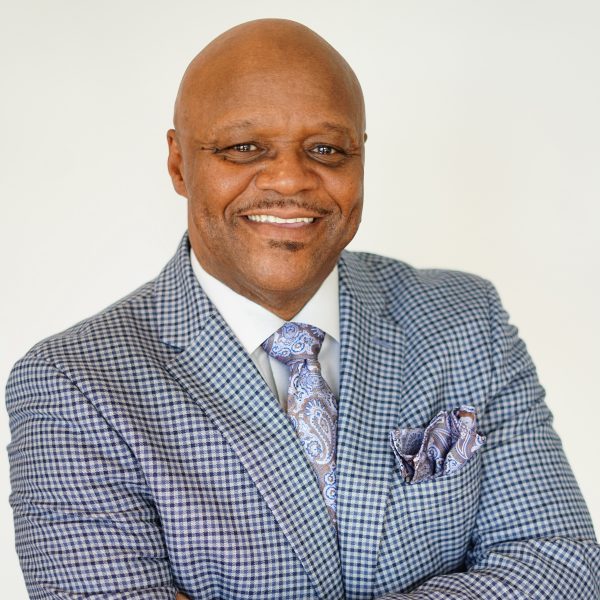
PeteFirstPete First, Chief Development Officer at BrightStar Care

As Chief Development Officer, Pete is responsible for recruiting new franchise owners for all three brands under the BrightStar Group Holdings umbrella: BrightStar Care, BrightStar Senior Living®, and BrightStar® Care Homes™.

BrightStar Senior Living delivers a higher standard of assisted living and memory care to seniors in need of care support outside of their own homes while BrightStar Care Homes are small-home residential care solutions offering assisted living and memory care for seniors. Over his tenure at BrightStar Care, Pete has grown the brand’s nationwide presence to 365 locations and has expanded the brand into new territories and markets.

Pete has more than two decades of experience in the franchise industry and has expert knowledge on the different types of franchise business models and what to look for in a franchise business before investing.

What You’ll Learn In This Episode

  • The future of the growing franchise industry
  • Franchising become one of the most lucrative industries in 2022
  • How to expand your franchise into new markets and territories
  • Unique challenges of in-home care franchising

This transcript is machine transcribed by Sonix

TRANSCRIPT

Intro: [00:00:07] Welcome to Franchise Marketing Radio. Brought to you by SeoSamba comprehensive high performing marketing solutions for mature and emerging franchise brands. To supercharge your franchise marketing, go to seosamba.com. That’s seosamba.com.

Lee Kantor: [00:00:32] Lee Kantor here another episode of Franchise Marketing Radio and this is going to be a good one. Today on the show we have Pete first with Brightstar Care. Welcome, Pete.

Pete First: [00:00:42] Thanks. Appreciate it. Happy to be here.

Lee Kantor: [00:00:43] Well, before we get too far into things, tell us a little bit about Bright Star Care. How are you serving folks?

Pete First: [00:00:49] So we provide in-home in-home health care for seniors all across the country. We’ve got about 340 locations around the US. A big differentiator for us is all of our franchisees are joint commission accredited, which is the highest accreditation that we have out there. And so we’ve got different multiple different areas of revenue stream that our franchisees can enjoy. So they’ve got the in-home care. We have skilled care that we can provide in the home. We also have external staffing to other communities as well. So a lot of different things that are that our franchisees can do.

Lee Kantor: [00:01:26] So how did the brand come about? Did it start with franchising in mind or did it start as kind of a mom and pop?

Pete First: [00:01:34] Well, Shelly Sun, who’s our founder and CEO, she started this started the business looking for care for her grandparents. And so that’s where things really began. And she was actually a franchisee before she was a franchisor. So she was involved with a couple of hotel brands and was in in the new owner training program for the hotel brands and realized, you know, this is something that we can we can really take this and we can franchise it. And so that’s really where where it started. So being a franchisee kind of led to this. And then the most important thing that we have today is being able to provide such a higher standard of care. And that really is the differentiator. And one of the differentiators for us was being able to provide that and then expand that via the franchising model.

Lee Kantor: [00:02:17] Then what does that ideal franchisee prospect look like?

Pete First: [00:02:22] Our franchisees today. You know, we’re really looking for franchisees that come in and want to be able to scale their business and want to expand. You know, in looking at folks that don’t necessarily have a health care background. In fact, most of our franchisees don’t most of our franchisees come to us because they’ve had some experience with home care in some capacity, whether it was their own family member, their grandparents, their own parents. And they realize that there’s got to be a better way to provide this type of service. So they have that passion about the business already, but they come in with a lot of our top franchisees, have quite a bit of management experience, and they used to running teams because if you think about the business that we have, we really have two, two types of businesses that people are running. They’re running the business of providing care and providing service to the community. But also they’ve got, in some cases, hundreds of caregivers that are working with them and working for them. And it’s managing that that large team as well, so that that people that have the management experience really build well in this.

Lee Kantor: [00:03:25] Well, there’s a lot in the news about, you know, shortages of nurses and those type of caregivers. Is that one of the challenges in this organization as well?

Pete First: [00:03:36] It’s nationally and globally. It’s a challenge when it comes to this because there is a shortage of caregivers and nurses. And what we strive for is being, you know, being that employer of choice and finding ways to keep and retain our best people. So retention and having a recruiting and retention arm within our company to support our franchisees is really important. And we do we do that. So, you know, it’s one thing to have to hire a lot of people and bring people onto the team, but you’ve got to onboard them properly and you have to make sure that they’re going to stay. So retention and focusing on keeping that team together, it’s a big part of what we’re doing right now.

Lee Kantor: [00:04:13] So what is a day in the life of a franchisee or a new franchisee look like?

Pete First: [00:04:19] So there’s a lot of a lot of managing the team and the caregivers. So our our franchise owner really oversees everything. They’ve got a director of nursing that manages the nursing team. They’ve got an office manager that helps with the director of operations, kind of helps within managing the building. And the franchisee is the face of the business. This is a business that is networking is very important. Working with the discharge planners and referral sources and having that relationship is really key and then being out there and building that business. So there’s a lot of moving parts to this because especially as you scale, you’re providing care and service to multiple locations every single day. And so there’s a lot of coordination that goes with that.

Lee Kantor: [00:05:05] Now, you mentioned earlier that the ideal franchisee doesn’t necessarily have to be in the health care industry before jumping into Brightstar. They do, though, have to build relationships with people in the health care industry, right. Like there is, I would imagine a lot of locally they have to know the hospice people, the nursing home people that assisted. They have to know kind of all the players in that space or at least have somebody on the team that is kind of immersed in those communities as well.

Pete First: [00:05:35] Yeah. And a lot of that comes over time where they may not have those relationships initially, but part of our training process and onboarding and new franchisees is to work with them to build those relationships and then know who those contacts are and who the key players are within the market. Because you’re right, those referral sources are your are your key to growing your business and we help our franchisees develop those relationships as well. So it’s kind of a part of the part of the boot camp program that we go through is building up those contacts, who’s who and how to ought to be able to reach them. Because ultimately what our referral sources are looking for is a solution. And we can we can provide that beyond beyond companion care. We can provide that if they have other needs. And one of the things that we really are focused on today is national accounts and building the national relationships with various payers and with whether it’s auto owners or other types of insurance companies and things where we’re involved directly with the payer and helping provide those that business out to our franchise network.

Lee Kantor: [00:06:41] Now, when someone’s considering this as a franchise for themselves and taking the leap into franchising, what are some of kind of their their concerns when it comes to this? Because it doesn’t seem like an obvious choice for a lot of folks. I know you mentioned that they’ve had some personal experience, maybe their parent or grandparent, they saw them go through that and they saw, you know, what a mess that can be. But what was their do they feel like, hey, I’m not who am I to be doing this kind of work? I don’t know anything about this. You know, the medicine, the medical side is that fear of not being immersed in the medical or having that health care background hold them back for even considering this.

Pete First: [00:07:22] Well, you know, we get we get through that hurdle as we take candidates through our process of reviewing the brand before they even become a franchisee. So we’ve answered a lot of those questions along the way. And we also have have all of our candidates do a lot of validation with with existing owners so they know they get a true day in the life of explanation from the owners and what to expect. And it’s it’s it is a 24 seven business. I mean, that’s the nature of what we do. So people have to be prepared for that. And it’s not it’s not right for everybody. I mean, we we say no to a lot more people than we say yes to as far as coming into the brand, because we are looking for that person who who really wants to come in and build and scale. But the medical piece of it, yeah. I mean, if you don’t have that background, let’s say you’re not in you haven’t been a nurse or you haven’t been involved in in medical capacity in any capacity. It is a little bit overwhelming. But working through the training program, through the question and getting the questions answered prior to coming on as a franchisee, we try to work through all of that ahead of time. So when you come in and they’re ready to open, you know, they don’t you only take the types of cases that you’re prepared to take as you open, so you sort of crawl, walk, run through this process. And so by the time you get to some of those higher level cases, you’re ready to handle it.

Lee Kantor: [00:08:42] Now are you finding kind of post-pandemic or hopefully we’re post-pandemic, that more people are open to the idea of franchising as kind of that second act or third act in their career?

Pete First: [00:08:55] We’re seeing a lot of that. I mean, it’s it is definitely just franchising in general continues to expand and there’s more and more opportunities out there for if you think about it, there’s there’s a franchise opportunity for almost everything and almost everyone’s interests. So there’s there’s there’s a match out there. I mean, what we want to do with franchising is make sure that people are making the right choices. They’re doing their investigation and doing their legwork. And that’s what we expect when they’re coming. And considering Brightstar as their opportunity and we want them to talk to as many franchises as we can, but the if you hear about the great resignation and there’s a lot of of people that are out there now looking so I can see franchising continue to grow because it’s such a great model. I mean, where else would you want to go? We see a lot of people that try to start things on their own, but why have the mental anguish and the expense and all of the things that go with that when when there’s probably a system out there for you.

Lee Kantor: [00:09:49] Now you’ve been in franchising for a minute and you’ve worked with brands outside of Brightstar. Can you share some advice for those franchise owners, maybe from emerging companies like what are some of the do’s and don’ts? What are some of the must do things that they should be doing to get to the level of a bright star.

Pete First: [00:10:10] I think in the beginning you just really be selective with your franchisees. I know that it’s it is hard when you’re just getting started because you need to get to that scale. But but it’s so important to have a really good foundation of franchisees that you can build with because they’re going to be the folks that are out there helping you validate the item. 19 is going to be based upon how they’re doing and how well they’re doing, how well you’re supporting them and getting them up and started getting getting up and running and being able to provide that validation for you as you continue to grow. So I think that’s the biggest thing. Don’t be afraid to say no to a candidate if you just don’t feel like they’ve got the same core values as you, and they’re not going to be working in lockstep with you as as you grow and have the same vision for the brand.

Lee Kantor: [00:10:59] Now, do you find that when you’re an emerging brand, should you just, even if they’re the perfect fit, should you just take anybody anywhere in the country, or should you kind of grow from your initial location outward?

Pete First: [00:11:14] You know, I guess it depends on the. It depends on the franchisee, on the candidate and their and your ability to support them. So, you know, I suppose it’s the type of brand to we don’t want to I wouldn’t want to hold back development with the right candidate in the right place, even though they may be further from our corporate location, especially today. We can do so much support online and we can do so much support via Zoom. And the pandemic has taught us how to support our franchisees remotely. So I think that that’s opened up a lot of doors. And I wouldn’t be I wouldn’t hesitate if it was the right person.

Lee Kantor: [00:11:54] Now, maybe back in the day at the early, early franchising history, the people started as kind of the one person that’s going to go into a market, and now you’re finding more and more kind of I call them professional franchisees, where they have a portfolio of brands that might be in complementary industries and they have an infrastructure where they can support, you know, where there are some economies of scale. Is that kind of part of your profile now at this stage of Brightstar, you’re looking for that type of professional franchisee.

Pete First: [00:12:29] We see that a little bit. And they come to us from from differing industries. So it’s almost like they’ve had and they’re looking to diversify their portfolio. So they may have multiple food concepts or they may come from other types of industries. So we’re seeing some industry crossover where they’re not necessarily having complementary businesses to Brightstar per se, but they see the opportunity with where the demographics, with seniors and where this where this type of industry is heading. And they see it as an opportunity to be diverse with where they’re at and they’ve got some great teams that they’re that they already have. And some people may be able to be plugged into this and potentially run this for them as well.

Lee Kantor: [00:13:10] Now, is hospitality one of those kind of crossover industries, like if you have a bunch of hotels, is this kind of a make sense as part of a portfolio?

Pete First: [00:13:21] Yeah, we see we do get we do get quite a few inquiries from that. And one of the reasons that we do is because we also have Brightstar Senior Living and Brightstar Care Homes, which are brick and mortar senior living communities. And that’s where we’ve really seen a lot of folks from the hospitality side come and have interest because they see senior living as an opportunity. That’s fairly similar when it comes to running, running the business itself. It’s about occupancy and it’s about revenue per available room and it’s about providing great service and the hospitality industry bodes well for that, really ties in nicely.

Lee Kantor: [00:13:58] So now is there some locations that Brightstar is looking to expand into next? Are there territories or is it kind of the world is your oyster at this point?

Pete First: [00:14:08] So we’re only in the U.S. so we’re not looking internationally, but we still have areas in the northeast. There are territories available in most of the major markets. What we have done, if you think about how people develop, we’re pretty established and we’re going on 20 years and so we have quite a few. A lot of the major markets are fairly sold out, but what we’ve done this year to increase interest in some of the markets that may be not in the central area but maybe a suburb or something like that. We’ve introduced a medium density territory and so what we’ve done is looked at territories that are under 200,000 population where we know that we need to provide service and the need is there and the demand is there. But we’re looking at these smaller medium density markets. We’ve cut our franchise fee in half, so we’re dropping that down in 50%. And then there are some some aspects of that where they may not have to have an office or may be able to work differently with a salesperson. But it’s really being able to enter into some of these markets that still need service but may not be a 400,000 population territory. But we know that are still very, very viable and areas that we need to provide service and we have national account needs. And this is a way to enter into some of those some of those markets.

Lee Kantor: [00:15:32] Yeah. The demographics of this of aging are definitely working in your favor. And, you know, it doesn’t matter the size of the city, there’s going to be a need to at least some level.

Pete First: [00:15:44] Absolutely. Absolutely. We want to be able to provide that and want to be able to say yes to inquiries that come in.

Lee Kantor: [00:15:50] Right. And if you can create an offering that makes sense financially in each of those markets, why not?

Pete First: [00:15:58] Yeah. I mean, most senior care franchises have have minimum thresholds that franchisees need to meet as part of developing their market. And with the medium density territories that we’re doing today, we don’t have any of those minimums. So it allows people to to really build to the maximum potential within within a territory of that size. And we’re really excited about that and see that as a great growth opportunity.

Lee Kantor: [00:16:20] Yeah, and it’s great for those consumers and those markets because those are the people that really have a hard time.

Pete First: [00:16:27] Absolutely. Absolutely.

Lee Kantor: [00:16:29] Well, Pete, congratulations on all the success. If somebody wants to learn more, what’s the website? What’s the coordinates?

Pete First: [00:16:36] I would go to Brightstar franchising dot com and that will give you all of the information on the agency in our circular agency development and growth along with Brightstar senior living and those opportunities as well so bright star franchising dot com.

Lee Kantor: [00:16:50] All right well thank you again for sharing your story. You’re doing important work and we appreciate you.

Pete First: [00:16:55] Thank you, Lee. Appreciate it.

Lee Kantor: [00:16:56] All right. This is Lee Kantor. We’ll see you next time on Franchise Marketing Radio.

Tagged With: BrightStar Care, Pete First

Mental Health Therapist Amy Wilhelmi

May 12, 2022 by Jacob Lapera

Chicago Business Radio
Mental Health Therapist Amy Wilhelmi
Loading
00:00 /
RSS Feed
Share
Link
Embed

Download file

Firmspace-sponsor-banner

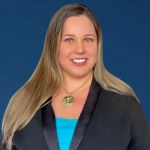
AmyWilhelmiAmy Wilhelmi is a successful multi-entrepreneur as the founder of Balanced Wellness Collective and Ascension Mentality, business & performance coach at Strategic Voyages Business Consultants and licensed mental health therapist. As a speaker, author, and professional athlete, she is on a mission to become a global go-to thought leader in making mental health in business and life mainstream through proven formulas to help individuals stuck in their professional or business lives.

Amy believes in the power of mental fortitude and the many possibilities that lies inside individuals to level up and live their best lives. Within her work, Amy encourages the power of connection and the development of raw, transparent and truth-telling storytelling. Amy sees people’s innate abilities to be resilient and overcome challenges through mental wellness tools and techniques.

By sharing her personal story of being a business owner, licensed marriage and family therapist, divorce mediator, performance coach, mother and bikini bodybuilder, as well as sharing stories of others, Amy hopes to encourage people to let go of judgement, stigma, shame, self-consciousness, step into their own truths and powers and feel relieved, relaxed and ready to conquer life.

Connect with Amy on LinkedIn.

What You’ll Learn In This Episode

  • Mentality/ mindset
  • Lack of direction/ goals, direction, and purpose, and an identity crisis
  • Reinvention
  • Feel lost, relationships are suffering,
  • Working through loss and uncertainly
  • “Now what?” Phase
  • Career pivot

This transcript is machine transcribed by Sonix

TRANSCRIPT

Intro: [00:00:04] Broadcasting live from the Business RadioX studio in Chicago, Illinois. It’s time for Chicago Business Radio. Brought to you by firmspace, your private sanctuary for productivity and growth. To learn more, go to firmspace.com. Now here’s your host.

Max Kantor: [00:00:21] Hey, everybody, and welcome to another episode of Chicago Business Radio. I’m your host, Max Kantor. And before we get started, as always, today’s show is sponsored by firmSpace, thanks to firmSpace, because without them, we couldn’t be sharing these important stories. And we’ve got a good one for you today. On today’s show, we have a mental health therapist, a traveling speaker, an author and an athlete. So please welcome to the show, Amy Wilhelmi. Welcome to the show, Amy.

Amy Wilhelmi: [00:00:45] Thank you for having me on.

Max Kantor: [00:00:46] I’m excited to talk to you so we can just jump right in. Why don’t you tell me a little bit about yourself and what you do?

Amy Wilhelmi: [00:00:53] Sure. So my training is I’m a licensed mental health therapist. Technically, I’m a marriage and family therapist and I own a therapy practice. So we see individuals, couples, families and children. And then personally, I am in bodybuilding, I do the Women’s Bikini Division, so I’m an athlete and then I consider myself a mindset mentality. Coach I just wrote my first book, it’s called Making Mental Gains, and I specifically work with the athlete community, all sports, and then I also work with teams to really kind of focus on mindset and mentality.

Max Kantor: [00:01:36] So why are you so interested in the topic of mental health and wellness for athletes?

Amy Wilhelmi: [00:01:43] Yeah, I think that there is a a gap there specifically. I think if most athletes or very high performers go to a licensed mental health therapist, it’s hard for them to find a provider that actually understands that the mental health struggles that a very high performer goes through. So I again, being an athlete myself, being ingrained in this sport, I, I quickly saw that there are a lot of mental health issues in bodybuilding. And then I started digging into other athletes and you know, 35% of professional athletes have mental health struggles and they just don’t know where to turn. So I was like, well, I can take my professional work and my life passion and kind of combine them and really help athletes stay on track so that they they feel well and then they can perform well.

Max Kantor: [00:02:46] This past year, really, like this past couple of years, we’ve seen a lot of athletes have their mental health struggles publicized, you know, people like Naomi Osaka and Michael Phelps and Simone Biles. So can you kind of describe what you feel like they were going through?

Amy Wilhelmi: [00:03:05] Yeah. I think that, again, they just don’t put it as as a priority. Right? I mean, they put their training as a priority, their nutrition as a priority. They all hold very strict schedules. Most of them are traveling, you know, and so there’s a really huge piece with with self care that’s important. And, you know, my whole goal in life is to make mental health and mental wellness less taboo than it used to be. I think a lot of these athletes are just burnt out and they’re just grinding and they just don’t have, again, that correct support system that can that can really understand what they’re going through and help them with their wellness. I think there’s also an issue when athletes get injured or they’re facing retirement and then their sport is over. Right. And they’ve worked so hard to do one thing amazingly well. And now they’re dealing with some sort of identity crisis. They’re forced to pivot, make something new of themselves. And they really have a difficulty, just like mentally separating themselves from their sport and just and moving on.

Max Kantor: [00:04:21] I’m I’m glad you brought up injuries because that’s what I was kind of thinking about. We were talking and I can imagine the struggle for an athlete when, say, they tear their ACL, you know, that has an X amount of time and then you’ll be back, you know what I mean? But when it comes to mental health, it’s kind of undefined. It could be a month. It could be a year. It could be five years. So how do you help athletes when they come to you kind of set that expectation that, hey, this might not be an overnight process?

Amy Wilhelmi: [00:04:48] Yeah, I mean, I think that luckily the athlete mentality already understands the work that you have to put in day to day, that those small, tiny steps that kind of add up to the large successes, they’re used to doing that, right? They’re used to running these drills where they’re like, this seems stupid, but they’re they’re doing it because they can see kind of that long game. And so I think mental health for an athlete in their mentality is very similar. It’s like we have to build in these self care activities, these, these mental wellness activities in order to see these kind of long term results. So I think it’s also just kind of talking them into like taking a break sometimes will lead you to those successors. Sometimes our bodies especially, you know, we’re human. They just can only handle so much stress and so much, like you said, injury. If we’re talking injury, that really taking a break for a while is really going to help them be more successful in their sport.

Max Kantor: [00:05:59] So what are some challenges that you see athletes go through from starting from an early age all the way through adulthood and beyond?

Amy Wilhelmi: [00:06:09] Yeah, I think that athletes that have a lot of success very early have really have trouble with their identity, like just separating themselves from their sport, right? So like, what do you do when your time runs out? Because it will your body will run out. We all know that the lifespan of athletes in their sport is not much beyond, you know, thirties. Maybe sometimes if you’re really well conditioned, you can make it up to 40. But, you know, really having that plan B and really having an identity outside of your sport, although when you’re when you’re in your sport, obviously you should be mentally all in. But the plan B is so crucial so that you don’t have that swing at the end where a lot of them are just struggling with like this thought of like, who am I? I kind of always compare it to almost like a divorce. Like you were married, you were you did have this family and these neighbors and these friends. And then all of a sudden, you’re not that person anymore. It’s it’s kind of very a similar mind shift and really trying to figure out who they are, what their next steps are. But if you’re planning ahead of time and kind of have all those things built in already, I feel like that transition period goes a lot easier.

Max Kantor: [00:07:28] Earlier you mentioned that there’s kind of like, you know, the stigma of mental health, especially, I feel, in the United States when when if someone reveals that they’re in therapy, they could be labeled as, quote, like, oh, they need help. They’re crazy, you know, all these stigmas that just aren’t fair. So I imagine for an athlete, some could see seeking out mental health help as weak. How would you address that for any athlete who feels that it’s weak to work on their mental health?

Amy Wilhelmi: [00:07:59] Yeah, I would say that the way to normalize it again is kind of just building it into your plan and just. Being open about it. I think we do a better job on the coasts of our country. I feel like California is kind of got a hang of it. New York’s got a hang of it. I went to graduate school in California and people are kind of like, yeah, you know, like I went to the gym today and I got my smoothie and I talked to my therapist. My therapist talked to my other therapist. And like, it’s, it’s it’s a normal part of what we do for wellness, right? So I think if we’re thinking about mental health in that wellness realm, like I’m taking care of my body, I’m taking care of my mind, I’m going to go to my chiropractor. I’m going to go get my massage when I need to. I’m going to drink my water. I’m going to have my sleep. You know, I think that when we think of it in that in that context, it becomes less taboo. It’s just one of those boxes that we’re checking off our list. I met with an athlete yesterday, actually, who’s young. She’s 23. And she was I was like, you know, what brings you in? And she was like, you know what? I feel like everybody should just be doing this. Everybody should be talking to someone. Everybody has issues. And that is the right mindset to have about all this. And I think our younger generations are actually doing a lot better at recognizing that that’s a thing, right? And being more proactive rather than reactive.

Max Kantor: [00:09:25] So as an athlete yourself, talk about the unique perspective that you can bring when an athlete comes to you versus, say, going to a therapist who may not have an athletic background.

Amy Wilhelmi: [00:09:39] Right. So, you know. I really believe that that you would need to find a provider who does have that experience, because there’s really no way to understand this drive unless you kind of practice what you preach. Right? So I’ve had a lot of athletes come to me after being told by other therapists like, Hey, you should just stop doing that, right? Or in bodybuilding, the nutrition is so specific that sometimes it could swing into kind of eating disorder type things, and most therapists just have no idea how to handle that. Instead of just like having a good mindset about the nutrition that you need to fuel your body to do your sport right. As far as like the the grind it takes to get up every day and do the same thing over and over and over and over, because that’s really the way that you’re going to get a result. I think that it’s just such a high level of functioning very specifically that it’s it’s really important, again, to just find a provider that understands all of that.

Max Kantor: [00:10:48] And now what kind of services can you provide to an athlete who has questions about maybe their goals or where their career is headed, things like that?

Amy Wilhelmi: [00:10:58] Mm hmm. Yeah. So I work with athletes that are currently in their sport, and there’s a huge gamut of sports that I work with as far as gymnasts to football players, to dancers, to baseball. I think that the mindset and the mentality are all the same. So they come to me for that motivation in their sport to keep doing it when the sport is hard, to keep doing it when they might have some performance anxiety to keep doing it, when they’re not making the team or not not performing as well as they should be because they’re having these mental blocks. So I work with athletes that are currently practicing whatever their sport is, and then I work again, like I explained earlier with that transition period. And that’s like a real, real important niche in this population is like, okay, I’m injured or I’m benched or I’m not sure if I’m going to recover or I’m thinking about retiring. And so then I help them kind of formulate those next steps and also connect them with resources to do so. Because especially pro athletes like when they’re playing their sport, they have all these resources available to them. Maybe they’re going to have sponsorships, maybe they have some visibility and people want to give them career opportunities. And then when they’re at that retirement piece or they’re injured, those career opportunities kind of fade away because the those opportunities are more focused on the athletes that stay in their sport, that are active and doing well. So then we have to kind of create almost I help a lot of people with business plans so that they can start their own thing and they can still feel passionate and involved and maybe they’re still in their sport, but in a different way. For example, in the bodybuilding community, a lot of retired pros become coaches or they make clothing lines or they have supplement lines or whatever, and they’re they’re not actively on the stage anymore because their body is just come to a point or they’re they’ve just decided that they’re done and then we kind of help develop their next steps.

Max Kantor: [00:13:16] So, Amy, if someone wanted to learn more about what you do or check out your books or speaking engagements or look to you for potential therapy in the future, what’s the best way they can learn more about you?

Amy Wilhelmi: [00:13:30] Yeah, my my website is w w w amy wilhelmi w l h e l m i dot com.

Max Kantor: [00:13:40] Awesome. Well, Amy, thanks again for being on the show today. It was great to talk to you and you’re doing really great work.

Amy Wilhelmi: [00:13:47] Thank you so much for having me.

Max Kantor: [00:13:49] And thank you for listening to another episode of Chicago Business Radio. I’m your host, Max Kanter, and we’ll see you next time.

Intro: [00:13:57] This episode of Chicago Business Radio has been brought to you by firm space, your private sanctuary for productivity and growth. To learn more, go to firm Space.com.

Tagged With: Amy Wilhelmi

Joshua Malik With Joshua Tree Experts

May 12, 2022 by Jacob Lapera

Franchise Marketing Radio
Joshua Malik With Joshua Tree Experts
Loading
00:00 /
RSS Feed
Share
Link
Embed

Download file

Brought To You By SeoSamba . . . Comprehensive, High Performing Marketing Solutions For Mature And Emerging Franchise Brands . . . To Supercharge Your Franchise Marketing, Go To seosamba.com.

JT-logo-2020

Joshua Malik founded Joshua Tree Experts in 2005 as a home-based business out of a three-car garage in Lehigh, PA. After moving into a dedicated location, the company organically expanded to offer lawn care services to clients as a direct result of customer demand.

In 2017, lawn care became its own division in the company. The brand went even further in 2020, and expanded its offerings with a pest control division. Now, the brand is looking to sign 5 franchisees in 2022.

What You’ll Learn In This Episode

  • About Joshua Tree Experts
  • Now is the time for franchisees to invest in Joshua Tree Experts
  • Qualities of franchisees

This transcript is machine transcribed by Sonix

TRANSCRIPT

Intro: [00:00:07] Welcome to Franchise Marketing Radio. Brought to you by SeoSamba comprehensive high performing marketing solutions for mature and emerging franchise brands. To supercharge your franchise marketing, go to seosamba.com. That’s seosamba.com.

Lee Kantor: [00:00:32] Lee Kantor here another episode of Franchise Marketing Radio and this is going to be a good one. Today on the show we have Joshua Malick with Joshua Tree experts. Welcome, Josh.

Joshua Malik: [00:00:42] Hi Lee. Thanks for having me on.

Lee Kantor: [00:00:44] Well, I’m excited to learn what you’re up to. Tell us about Joshua Tree experts. How are you serving, folks?

Joshua Malik: [00:00:50] We are in the green industry. We provide general tree care, which is pruning and removal services. Plant health care is insect disease management on trees and shrubs. We also have another model which is lawn care, fertilizer, weed control, aeration, and we also do indoor outdoor flea, mosquito and tick, which is our pest control department.

Lee Kantor: [00:01:11] Now, how did the idea come about? What was the initial thoughts when you launched this?

Joshua Malik: [00:01:18] Well, I’ve been in the industry for 30 years. In 92, when I graduated high school. I got right into doing tree care at a local tree care company within the Lehigh Valley, Pennsylvania area and developed them skills in the field for about eight years. Found an opportunity towards the Philadelphia region for sales and management. Did that for five years and just really had the passion that I wanted to be my my an owner of a business, develop my own team. So in 2005, I launched Joshua Tree Experts out of my three car garage with a 100 square foot of office space. So it’s been it’s been a heck of a ride since that time.

Lee Kantor: [00:01:57] Now, when you launch, were you always thinking, oh, at some point I’m going to franchise this? Or was this like, hey, now this is my own empire I can build here in the area and we’ll see where it goes.

Joshua Malik: [00:02:07] Man what a great question. If I look back at my business plan from 2005 when I launched, I was happy to get to a seven employee company service in one general tree crew of plant health crew and really small office staff. And when you really start learning how to develop people and take in people strengths, it’s really energizing and incredible on how much growth you can accomplish.

Lee Kantor: [00:02:37] So what was the switch that flipped that said, You know what, we might have something here that can be replicated and we can train other people to to do this and provide this service at this level and create those, you know, predictable, repeatable processes. How did that idea come about? Because that becomes a different business now, right? It’s different than, you know, being in someone’s yard now. You’re training someone in the market nowhere near you to do what you’re doing.

Joshua Malik: [00:03:07] Yeah, it is. And you know, when we launched Joshua Tree Experts, I think one of the biggest opportunities was within our service area. We really focused on providing you know, everyone says, hey, they want to give excellent customer service, right? But we really focused on that from the initial call to the follow up. We under-promise, overdeliver. It’s been a big factor of even hiring our coworkers on that, you know, sharing that clear vision with them of what we want to do. And training is huge. We’ve always we always knew that we would have a competitive edge by having certified arborist on staff. Having industry certifications that can really focus on employee development, you know, which helps them professionally and personally develop and. Over the last few years, we’ve really developed our processes and systems down to each function of the business of operations, sales and marketing, finance and admin. And we’ve really built out a table of contents that really shows, hey, this is how you operate this business when something happens. This is how. This is the action plan that you have to take place. So we really focused on on building those out. And we’ve done the team has done a really excellent job at doing that. So we knew that we could develop and replicate this system anywhere within the country.

Lee Kantor: [00:04:37] Now, once you decide to do that and you say, okay, we have something here, we got it, you know, we created this playbook for success. Now you go out to the world and say, okay, hey, do you want to open a Joshua tree experts in your market? Are you looking for the Josh’s like you were? That person that had been in the business had kind of got the lay of the land and is maybe struggling or is frustrated or just doesn’t know the ropes as well as you do. And here now you have a playbook that’ll make take whatever you were doing more to be more successful. Or is this somebody who doesn’t necessarily have to have that kind of experience you have had of, you know, working in people’s yards and working with trees and doing all that stuff.

Joshua Malik: [00:05:19] Sure. You know, ideally we would. Take on the right person to fit this seat and want to expand and improve their lifestyle from where they’re currently at. I know from my own experience getting individuals that have 20, 25 years experience, it’s hard for them to break a cycle that they’re in, whether it’s a process that they’re doing. They might have some really strong beliefs on the way that they perform the work and might not be flexible or like minded on the way that we’re performing it. We really believe, as I picked up the training part. I love getting industry professionals that don’t have that type of experience within our industry. Maybe they have work experience, but they understand that they can be developed or learning the proper way of doing something from the get go. So I would lean towards the people that are maybe business minded, have some really good communication skills, emotional intelligence, have the drive to want to succeed or able to follow processes. And I think I would find that more in that executive style person or someone that is in quite within the tree care industry currently.

Lee Kantor: [00:06:38] Because at the end of the day they’re more in charge of the operations and the sales and then they’re going to hire out the people that are going into people’s yards.

Joshua Malik: [00:06:47] That’s exactly it. We’re looking to focus on people that are going to have the drive to work on the business and not so much in the business. I know from my own experience, when you first launch, you’re pretty heavily hands on, maybe with the first six months to a year, but then when you get the right people in the right place, you develop your team, you got your equipment out there. You got your clientele. Your sales and marketing is working. I want you to start thinking about the big picture and really driving those unit economics.

Lee Kantor: [00:07:17] Now, you mentioned a variety of services when you become a Joshua Tree expert franchisee. Do you have access to all of those lines, those revenue lines, or is that each one its own individual brand?

Joshua Malik: [00:07:31] It is its own individual brand. I’m really glad that you asked that. When I launched in 2005, I launched as a general tree care plant health care company. I developed those 13 years of skills performing that service. And we’re heavily the equipment and vehicle, you know, invested to go perform the service that we’re doing. And in regards to training. It’s much easier to not just train on the brand, but also to train on the industry, to focus on general tree care, plant health care. That’s going to be the launching service. We have developed a scorecard of KPIs that are numbered and tiered that will help you get into the lawn care industry when you can launch that and then the pest control. And we really put that back on the franchisees lap to say, hey, to get to the lawn care, you need to develop these skills. We need to hit the scorecard and the KPIs at this level. Then you can roll in lawn care and then it would be the same thing for the pest control. When I launched in 2005, I didn’t launch lawn care until 2017. We launched pest control in 2020. We’ve just learned. For developing that marketing plan and hiring the right people to run those departments on how to launch that properly now.

Lee Kantor: [00:08:51] So the ideal situation is somebody goes in initially as kind of the the tree person and then earns their way up to these other brands based on their performance rather than somebody saying, Hey, I just wanted to do pest control and I’m going to just jump in and start at pest control.

Joshua Malik: [00:09:09] That is correct. We have three models in the one brand, and we want we want our franchisees to offer that. And our base is absolutely without a doubt, has always been general tree care, plant health care. That’s where my 30 years experience comes from. We know how to develop that brand and find those clients very easily through that. When I say find those clients, the consumer clients like that, and then we would develop that team of professionals to launch our franchisees, helping them get the equipment, searching their subcontractors if they need that, getting their vendors hooked up with them. And then once they hit those KPIs and it’s developing in the lawn care, then and then offering the pest control.

Lee Kantor: [00:09:55] So what how many do you have right now?

Joshua Malik: [00:10:00] We we just emerged. And when I say that we just completed our RFP late last year, we just got, you know, little minor touches on it renewed. We have some people in the pipeline, but we have not landed our first sale yet and we are so close and so excited and doing it. So when I say we’re just coming out live, we are we are just emerging.

Lee Kantor: [00:10:22] So this is a great opportunity for folks out there that are in that same kind of space that you are right now. You have a successful company and that has been proven successful in your local market. And now you’re emerging and you’re kind of trying to get those first ones on the board. What are what some advice you can give other people in that boat, whether they’re in the point of, you know, approaching that and saying, hey, you know, we want to do this. What are some of the, you know, do’s and don’ts and what are the things that you have found to be most successful thus far when it comes to kind of, you know, getting those first ones in the pipeline?

Joshua Malik: [00:11:02] You know, I would say I think one of the biggest things, Leigh, is that. You know, defining your own path in the franchise space, I think is really important. And when I say that is. A lot of people within this industry can can give you a lot of advice, which could kind of make that road instead of going straight. A lot of intersections that you come through and you start making a left turn and you start making a right turn again. You know, define your plan early and stick with it. You might be a trailblazer and start doing things a little bit different than everybody else. And that’s okay to do that. It really, really is. But it’s got to be your own belief on which path you want to create and which which way you want to go down. When you do start developing, we have a franchise sales organization that we’re working with PINNACLE. We just launch with five different broker groups and working with them closely and kicking some stuff off of them, but still making that decision on your own and defining on what you want to do and creating that plan. It’s ultimately up to you and you got to make those decisions for yourself. So that would probably be my my key take away from that is that you can get very confused within this industry fast, but have your strong beliefs on what you want to do and keep your keep your nose down and just keep moving ahead.

Lee Kantor: [00:12:27] Now, when you decided to do the franchise path and you got all your documentation, all that stuff, did you at first try to do this on your own and just say, hey, we can figure it out, we’re smart. We’ve been doing this for a while, you know, how hard could it be or did you immediately get expert help?

Joshua Malik: [00:12:46] That’s awesome. You know, we’ve developed when I tell you about Joshua Tree experts, currently, we’re we’re a good sized firm within our area. We have over 60 employees. We just launched our second location last year in March 1st of last year. So we’ve just completed our first year and our second corporate location. We knew getting into the space, the franchise. Franchising and selling franchises that, hey, we weren’t experts in it. I studied and did some research for about a year and a half, two years. So it wasn’t a quick decision. We knew, again, developing that plan of what it was going to be. I launched and hired. Smb is a consulting group out of Philadelphia. Steve Belman and his team, and they have been awesome to work with. They helped us develop our operations manual. They hook this up with an intern, Nicola Law Firm out of Jersey, which helped create our PhD and we have a really solid pieces there and having them to to bounce ideas off to talk things through network with other franchises they launched with mature and emerging has been absolutely wonderful and we knew that was going to be important. I’ve talked to some people that have gone on this that their own. It’s taken them a lot of time. It’s taken them a lot more of an investment and they never really got to where they wanted to be. I feel like we’re after a year of working on it and we really did start about a year ago that we’re in a really good spot and a really good space to really project now.

Lee Kantor: [00:14:21] So now are there certain markets that are better than others? Like what is kind of in your mind the ideal Joshua Tree export market? Like what are some of the qualities of that market?

Joshua Malik: [00:14:33] Well, we just we definitely want some some demographics to be good. We’ve got to think about. The topography of certain places, you know. Some places in the southwest, probably one the most extreme places for us. Northeast, East Coast, Midwest places even on the West Coast are good. We got to think about tree size. We’ve got to think about vegetation as in what lawns currently look like. Pest control is something that is basically we can do anywhere but and we’re launching as a tree care. We got to think, you know, my ideal spot for us to get our first couple sales wood would honestly be locally to the region that we’re at Pennsylvania within a five hour radius of us. That would be key. We can give some excellent support. The topography is very close. The demographics are very close to what we’re working with right now. Geography is very close. We have our ideal consumer client target profile would be someone in their 40 year old plus single dwelling home half acre plus. That gives us home values of 350,000 and up, gives us the ability to to really cross-sell our services. We might get calls for tree work and it could be a tree removal job. It could be a tree pruning job. We go out there, we’re able to cross-sell and upsell our other departments that we have so different areas of the country that we can find that opportunity. They got trees, they got the landscape care that they need. They got the pest control. We get to offer them all three brands.

Lee Kantor: [00:16:12] And if somebody wants to learn more about the opportunity, what’s the website?

Joshua Malik: [00:16:17] Yeah. Joshua tree experts dot com. They can go to the consumer website there. There’s a tab top right there for franchising that’ll take you to JTI franchising dot com and they can fill out a submission form and we can go from there.

Lee Kantor: [00:16:32] Well, Josh, thank you so much for sharing your story today. You’re doing important work and we appreciate you.

Joshua Malik: [00:16:38] Leah. I appreciate the time, man. Have a good day, brother.

Lee Kantor: [00:16:40] All right, this Lee Kantor. We’ll see you next time on Franchise Marketing Radio.

Tagged With: Joshua Malik, Joshua Tree Experts

John Yates With Morris, Manning & Martin LLP

May 12, 2022 by Jacob Lapera

John-Yates-feature
Startup Showdown Podcast
John Yates With Morris, Manning & Martin LLP
Loading
00:00 /
RSS Feed
Share
Link
Embed

Download file

JohnYatesJohn Yates, Partner, Chair of the Technology Group at Morris, Manning & Martin LLP

Mr. Yates has practiced exclusively in the technology law field for 30 years. He chairs the Technology Group at Morris, Manning & Martin, LLP, one of the leading law firms in the country. The firm represents private and public technology companies, entrepreneurs, and business services companies throughout the U.S. and globally.

Mr. Yates co-founded and has been a Board member of leading tech organizations, including the Southeastern Medical Device Association, Southeastern Software Association, Technology Association of Georgia, Technology Executives Roundtable, and Atlanta CEO Council. He serves on the Board of the Metro Atlanta Chamber, co-chairs its Technology Leadership Group, and chairs its political action committee.

He is nationally ranked in Chambers USA: America’s Leading Lawyers for Business as a top lawyer in venture capital. He frequently speaks at national and international conferences on technology law issues and has delivered more than one hundred speeches in his career.

His articles have been cited in the tech law area, including citation by the U.S. Supreme Court in Kodak vs. Image Technical Services. He is the author of articles published in Law and Business of Computer Software, Handbook of Business Management, Atlanta Journal-Constitution, TechJournalSouth, and LocalTechWire. He is frequently quoted in publications, including The Wall Street Journal, The Economist, and Atlanta Business Chronicle. Mr. Yates has been recognized in a Harvard Business School case study (“Ockham Technologies: Living on the Razor’s Edge”) as a leading lawyer representing fast-growth companies.

Nonprofit service includes the Board of Visitors – Duke University School of Law, Board of Trustees – Furman University, Emory New Venture Advisory Board, Director Emeritus – United Way of Metro Atlanta’s Tech Initiative, and Advisory Board of CURE Childhood Cancer. He and his wife were named the 2009 Volunteers of the Year by the DeKalb County YMCA.

Connect with John on LinkedIn.

This transcript is machine transcribed by Sonix

TRANSCRIPT

Intro: [00:00:04] We’ll come back to the Startup Showdown podcast, where we discuss pitching, funding and scaling startups. Join us as we interview winners, mentors and judges of the monthly $120,000 pitch competition powered by Panoramic Ventures. We also discuss the latest updates in software web3, health care, tech, fintech and more. Now sit tight as we interview this week’s guest and their journey through entrepreneurship.

Lee Kantor: [00:00:38] Lee Kantor here another episode of Startup Showdown, and this is going to be a fun one. But before we get started, it’s important to recognize our sponsor, Panoramic Ventures. Without them, we could not be sharing these important stories. Today on Startup Showdown, we have John Yates and he is with Morris, Manning and Martin. Welcome, John.

John Yates: [00:00:57] Thank you. Thanks for inviting me.

Lee Kantor: [00:00:59] Well, I’m excited. First off, to share with our listeners what you got going on at Maurice Manning and Martin. Talk a little bit about your practice since you are one of the kind of linchpin people in this arena in technology, especially in the metro Atlanta area.

John Yates: [00:01:15] Well, thank you. It’s a pleasure to be involved here today and to be a part of this podcast, so I appreciate it. So I am a senior partner and head the technology practice at Morris Manny Martin here in Atlanta. I started in the practice actually in 1981. That was the year the IBM PC was announced. So sort of the beginning of time. And the technology community came to Atlanta at that time, didn’t know anybody, but my sister had encouraged me to get involved in the tech space. And I’ll tell you more about that. But I guess roll the clock forward to the present. From when I joined Morris, Manning and Martin, we were about 20 lawyers. Today we’re over 200. We represent over 600 technology companies throughout the United States and internationally. We did over 300 tech financings last year. Venture M&A, private equity deals. And we’re one of the top ten law firms in the country and doing tech deals and the number one firm in the Southeast and in Atlanta, we’re doing deals in the private equity venture area. So it’s been a been a great ride and we’ve been excited to be in Atlanta for that, although again, the practice is very much global. So it’s been a great environment and a wonderful city to be in.

Lee Kantor: [00:02:22] Now take us back in time a little, because it’s probably difficult for our listeners to even imagine at that time in the early eighties, what was the tech scene like? Was there an official tech scene or was this just kind of sprouts, just, you know, a few individuals out there doing interesting work?

John Yates: [00:02:40] Well, it’s interesting and it is interesting as well that there aren’t a lot of us that are still around that remember that time, most of the people, your listeners that may not even been born in 1981. So I’m really dating myself here. Fortunately, my memory is still pretty good about that time. So before 1981, the second half of the year, when the IBM PC was announced, the market was very cluttered and it was mainly mainframes and midrange computers. So companies like Digital Equipment Corporation companies, companies products like PDP elevens and faxes and the like, and IBM were the dominant players, UNIVAC, Honeywell. I was very different crowd. The latter part of 1981 resulted in the IBM PC being announced as open architecture. Now Apple did have a product at that time, but it was very closed in its architecture and it made it very challenging with respect to the ability for people to write software to the Apple system. So when IBM opened up the architecture, meaning they allowed basically software companies to write into their computer, it basically spawned the software industry. And Atlanta was very fortunate to pick up on that.

John Yates: [00:03:46] Now, at that time, MSA Management Science America was one of the largest midrange software companies in the country. And I’m sitting here in my office in Buckhead. I can see the old MSA building across the Lenox Mall Peach Tree area, and they and American Software were two of the largest players. So what happened was Atlanta spawned a lot of software companies that were nurtured as a result of IBM opening up that architecture. So we became a software capital. And also we ended up at that time having Peachtree Software, which was one of the first, if not the first accounting software products for microcomputer technology users. And we also spawned a little after that a company called Samba that was one of the first word processors in that area. So we became very software driven at that point. A lot of folks coming out of Georgia Tech and a lot of companies that were offshoots of what were midrange and mainframe computer companies that all of a sudden were focused on the microcomputer. So that was really the genesis and what initially launched the tech community in our city.

Lee Kantor: [00:04:56] Now, where there are a lot of lawyers clamoring to get into tech at that point.

John Yates: [00:05:01] Not really. There weren’t that many companies, so there weren’t as many in this area, so there weren’t as many lawyers clamoring. The reason I was clamoring was because my sister had started a tech company in 1980 in Palo Alto, California. So I saw a reason to clamor when I went out and visited her after getting out of law school, got the bug by traveling around Silicon Valley with her, and at the time there were some major trade show called Comdex. Comdex, and it was one of the largest trade shows in the world and every computer company. And there were a lot of them at the time who had all sorts of different microcomputers would go to those shows, as would all the software companies. Now, for about a decade, Comdex was the show you had to attend, and all the major software companies in Atlanta and all of the world went to Comdex and all the hardware vendors went to Comdex. And what happened was obviously hardware became more commoditized and the software companies really stopped going to Comdex because it became so large. Just a huge, huge, huge conference. But what happened was I got the bug because if having gone out to Silicon Valley and my sister’s tech company was one where I represented her and then several other tech companies out there and just saw that it was just a matter of time before it spread to Atlanta. Fortunately for me, it spread pretty quickly.

Lee Kantor: [00:06:19] Now, was having seen Silicon Valley in the community there, was that what kind of inspired you to be kind of a leader when it comes to organizing a Atlanta tech community and tech community events? It seems like you’re you’re touching a lot of them throughout the years.

John Yates: [00:06:38] What’s interesting, because at the time in 1981, 82, 83, there was there were some groups in Atlanta that were doing some things in technology, but they were it was largely sort of scattered. And what we found out in the Valley was that the software was driving a lot of the activity. So I went to my sister in Palo Alto and I said, Gene, what should I do? Where should I focus my time and attention? And she said, You need to start a software society. You need to start something in Atlanta and bring together the software leaders because there’s a lot of small growing companies there. And so I came back to Atlanta and came back to my home and contacted a few folks who were who had a similar interest. They weren’t lawyers. The computer law area or software law area was very nascent at the time. Very few decisions, very little precedent that was being created. And so I said, this is going to be a hot area. Initially I came up with the idea that we would create the Atlanta Software Society, but then I thought of the acronym for Atlanta Software Society realized that wasn’t going to work. So we said, Well, let’s make it. The Southeastern Software Association CSA, which is today one of the divisions of the Technology Association of Georgia, which we’re also co-founders of. And so started the Southeastern Software Association, which turned into the initial pivotal group, later grew into become part of Tag. But that was really the genesis, bringing together people that had an interest and then finding out a lot of these were small companies that were going to grow rapidly. They just wanted to find common a common allegiance with other entrepreneurs. And the CSA created that.

Lee Kantor: [00:08:22] So now I guess there was a lot of foresight to to call it southeast, because the Southeast is kind of really becoming a major, major player in the country when it comes to technology. Could you imagine then what it is now, where there are so many cities around the southeast that are kind of making their mark when it comes to technology?

John Yates: [00:08:44] Yeah. This is obviously a hot space to be in right now and it’s easy to start a tech company. You can pretty much do it anywhere right now from any apartment in any city, anywhere in the world. And so a lot of cities are trying to attract technology businesses. For a long time, the medical device area was in Minnesota and San Diego and biotech was in portions of Boston. And you could think about certain areas where there was really usually a center, university center that served as a hub. That’s still a huge advantage for Atlanta to have Georgia Tech in that regard. You do see places like Miami that are focused now on cryptocurrency, which is fine. That’s an area that’s a little more problematic, let’s say. But it’s certainly an area that’s been hot and we have our fair share of crypto related businesses in the Atlanta area. Austin is also gotten gotten into the fray. One of the disadvantages there is, again, infrastructure and also the absence of what Atlanta has, which is being one of the top three cities in the country for Fortune 100 headquarters. And frankly, being in an environment where we’ve gone through a lot of the sprawl that Austin is going through now, so we’re going to see competition. There’s no question about it. We do need to be more innovative and creative in Atlanta. And one of the great things about our city is we brought together the business community, the traditional business community, again, being top three in the country for Fortune 100 headquarters with the tech business community. And we’re bringing those together in a very unique way that very few cities can do. And it’s it’s been a big differentiator for us.

Lee Kantor: [00:10:23] So now as your career has progressed and you’re now kind of in start of shutdown, at least you were a judge. What how how does that kind of has that changed? Are you seeing entrepreneurs today? Are they kind of similar people as they were in the eighties, nineties and early 2000s?

John Yates: [00:10:43] There are a lot of similarities. It’s interesting. Back in the eighties and nineties, the challenge of go to market strategy was was much different. The Internet was not being used for commercial purposes. And so the way you communicated was very different. And it was primarily through magazines, which is not a very efficient way to do it, but literally for, let’s say 20 years, the first 20 years of the computer industry, a lot of it was you ran ads and articles and wrote columns and magazines. That was where I start. I wrote a column on computer law in a publication called Computer Retail News that, believe it or not, was published right here in Atlanta, but it was distributed nationally, not a very efficient way to actually get the word out. And I actually did prospecting for software and technology companies by reading, subscribing to all these computer magazines. And literally there were hundreds of them I could have. I’m sure I’ve supported many a paper drive for over a decade, and I would go through those magazines looking at articles, tearing out ads, looking at area codes and zip codes, trying to figure out where these companies were just a highly inefficient system.

John Yates: [00:11:54] And then when the Internet came on, obviously it made it much more efficient, created a much greater likelihood to accelerate companies and go to market quickly. And then social media, of course, helped to catapult that even further. So one of the big differences now is that because of with with the Internet and social media, you can be anywhere. You can plant a flag anywhere you want to be, and you can really create the business in a quite a unique way, which was not the case in the olden days, where we were much more tethered to a particular location and made it much more difficult to get get the word out and required, frankly, a lot more money to do it, too, because advertising campaigns and magazines and going to tradeshows and the like was highly expensive. So the system now much more efficient, much easier. But frankly, that also makes it more crowded, too. So you’ve got to find ways to differentiate yourself.

Lee Kantor: [00:12:49] Now, are you finding that the startup founders are looking the same? Are we is is our startup community as inclusive as you’d like it to be, where it represents America? Maybe truer than it did maybe in the early stages of this.

John Yates: [00:13:06] Well, there’s yes, I think it is much more inclusive now. And Atlanta has a big advantage of being probably one of the most diverse cities as far as population in the United States, which does make us quite different from many other cities as well, because the barriers to entry are lower. It means that more people of any kind of color, persuasion, religion, geography can enter the market. And and so it creates a great opportunity, especially for a community like Atlanta, where we have such a diverse population and we have great mentors. I know Panoramic is one of the supporters here of this podcast. They do a wonderful job focusing on on entrepreneurs, focusing on issues, diversity, as do many other companies and businesses here. So it creates a unique environment for us and a way to attract, I think, companies and entrepreneurs that can feel comfortable that there are people like them that are in our community getting the support and a community that really is desirous of doing that. I know our mayor is focused on that mayor. Mayor Andre Dickens is a Georgia Tech graduate. I know invest Atlanta is focused. I know the metro a lot of chamber. So we’ve got a lot of organizations that are trying to knock down any barriers that were out there for young entrepreneurs, diverse entrepreneurs. We now have a number of venture funds. In addition to panoramic, we have Zane Ventures, Valar Ventures that are focused on dealing with and supporting entrepreneurs that are diverse women entrepreneurs and the like. So it’s great to see that in our community and it’s a good thing for what’s happening here in Atlanta is a differentiator.

Lee Kantor: [00:14:55] Now, any advice for the entrepreneur out there that’s listening that might be from an underserved community? What would you recommend they do to kind of plug in and to get involved and to give themselves the best chance for success?

John Yates: [00:15:08] I think there are three areas of really focus here. One are these venture funds that I’ve just mentioned, the early stage funds, the Atlanta Technology Angel’s Panoramic Valar Ventures, Zane Ventures, these are all groups that that are helpful and directing folks to the right area. And also some of them have cohorts. I know Zane, for example, has a cohort of entrepreneurs. They bring on on as do several of these other funds. So if you’re an entrepreneur, you may be able to get plugged into that. There’s a launch pad to X, which is primarily for women entrepreneurs who are starting businesses as a way to get plugged in, to learn about how to grow a business. And then the Technology Association of Georgia, which is, I think probably the largest tech organization in the United States, I believe that Larry Williams is CEO mentioned. I think we’re over 30,000 members there, which is phenomenal. But lots and lots of groups within the Technology Association at Georgia, where these entrepreneurs can plug in the metro Atlanta Chamber, is also quite helpful in that regard. And importantly, Venture Atlanta, which has now become one of the largest venture conferences in the country, is a must attend this year. It’ll be October 19th through 20th. It’ll be held at the Woodruff Arts Center, which is going to be fantastic, a great way for us to tie technology and the arts together. And I know being involved with the Woodruff Arts Center on the board, we’re extremely excited about bringing the technology entrepreneurs together with folks in the arts community, but also many of the tech leaders. So if you’re a young entrepreneur, there are a lot of resources there and you want to make sure you get your your registration to attend venture. Atlanta, October will be here before you know it.

Lee Kantor: [00:16:52] Well, John, thank you so much for sharing your story today. If somebody wants to connect with Morris, Manning and Martin or learn more or maybe connect with you, what’s a website website is.

John Yates: [00:17:03] Mhm. Law.com. And I’m also on LinkedIn. That’s a good way to connect with me. I do have quite a few LinkedIn connections and I’m always happy to help people if they’re looking to connect into the network. And so I would say you can reach me at my law.com the website provides all the information, but the email address is Jay Yates at law.com and I appreciate everything that you’re doing and this podcast is very informative and we appreciate the support panoramic as well.

Lee Kantor: [00:17:32] Well, thank you again for sharing your story. You’re doing important work and we appreciate you.

John Yates: [00:17:36] Actually.

Lee Kantor: [00:17:37] All right. This is Lee Kantor SEO next time on Startup Showdown.

Intro: [00:17:42] As always, thanks for joining us. And don’t forget to follow and subscribe to the Startup Showdown podcast. So you get the latest episode as it drops wherever you listen to podcasts to learn more and apply to our next startup Showdown Pitch Competition Visit Showdown VC. That’s Showdown Dot VC. All right, that’s all for this week. Goodbye for now.

Tagged With: John Yates, Morris Manning & Martin LLP

Safir Monroe With UnDelay

May 10, 2022 by Jacob Lapera

SafirMonroe
Atlanta Business Radio
Safir Monroe With UnDelay
Loading
00:00 /
RSS Feed
Share
Link
Embed

Download file

Undelay

SafirMonroeSafir Monroe, CEO at UnDelay

Safir graduated from Howard University in Mechanical Engineering. He worked for Delta Air Lines for several years.

Connect with Safir on LinkedIn.

What You’ll Learn In This Episode

  • Flight delays
  • Airline industry
  • Airport industry

This transcript is machine transcribed by Sonix

TRANSCRIPT

Intro: [00:00:04] Broadcasting live from the Business RadioX studios in Atlanta, Georgia. It’s time for Atlanta Business Radio brought to you by on pay Atlanta’s new standard in payroll. Now here’s your host.

Lee Kantor: [00:00:24] Lee Kantor here, another episode of Atlanta Business Radio. And this is going to be a good one. But before we get started, it’s important to recognize our sponsor on pay. Without them, we couldn’t be sharing these important stories. Today on Atlanta Business Radio, we have Safir Monroe with UnDelay. Welcome, Safir.

Safir Monroe: [00:00:43] Hey, thank you. Thank you for talking to me. And I want to say hi to everybody is listening.

Lee Kantor: [00:00:48] Well, I’m excited to learn what you’re up to. Tell us about Underlay. How are you serving folks?

Safir Monroe: [00:00:54] Oh, definitely. So we reduce flight delays and improve ground efficiencies by converting a lot of radio transmissions into text to identify different maintenance issues, growing operations, problems by disruptions, and maybe some mechanical issues and a lot of runway congestion problems.

Lee Kantor: [00:01:14] So what was the genesis of the idea? How did you know this was a problem worth solving?

Safir Monroe: [00:01:21] I worked for Delta Airlines for several years, and then after I left, I just understood a lot of operations, definitely wanted to get back in the industry. So just with my background in mechanical engineering and software engineering, I definitely wanted to tag the problem. I worked at Delta as a web developer on dotcom, so I understood a lot of the ins and outs of the entire system of technologies in aviation.

Lee Kantor: [00:01:42] Now, is this a product that’s sold to the airline individually? Is it sold to the airport? Who who benefits the most from this? And who is the, you know, economic buyer of it?

Safir Monroe: [00:01:56] So we’re focusing on medium sized and smaller airports right now. So within a lot of problems at airports, I’m sure you’ve been stuck in the airport before. And later in that night, the concessions start closing. But the flight is delayed two or 3 hours. Everybody’s just wondering where can they get food or something to drink? So we definitely want to service airports first to extend a lot of their concession hours to improve overall revenue at airports. And with that, with advanced flight data statistics like voice recognition and a lot of other places, information and flight stats, we combine those to kind of give the airport more understanding of when to close concessions to increase concession revenue at airports.

Lee Kantor: [00:02:35] So I didn’t realize that the concessions were that tied into the kind of the flight. So they know when the last flight of the day is. So they know when to call, you know, call it and send their people home.

Safir Monroe: [00:02:49] Yeah, definitely. So a lot of you see a lot of airports like their schedule, some schedules, you know, and about their local time. But some are scheduled to close at the last departure of the day. But, you know, as we all know, there are so many different changes within different flight plans. And what was at one delay could, you know, disseminate over the entire airport network. So to cause multiple ripple delays. So with that, there’s so many different changing factors. So we give a lot of statistics to show what these change, in fact, is. We can update those flight plans more efficiently, efficiently, efficiently, and then give that information to different airport vendors.

Lee Kantor: [00:03:27] So how has it done now? How do they know, you know, what’s going on right now? How you know.

Safir Monroe: [00:03:34] Representative, they currently refresh their statistics over and over again so they might get the schedule for the day, but to really understand what was going to happen during the end of the day. Right. Because, you know, there’s a lot of changes. They just they just look at the flight change changes and different flight feels like you could you could search online like real time data, whatever carrier that you have, you’ll see the actual delay. But with that, they want to know like, okay, we’re out of the plane. Like just more information on because what they have right now is not enough to make the decision of if they should stay late longer. So with that, we want to give them more data to make that decision more efficiently.

Lee Kantor: [00:04:18] So how many airports are there like you’re are you talking about like airports the size of Hartsfield or are these the smaller ones like DeKalb or, you know, Charlie Brown?

Safir Monroe: [00:04:31] One more like the ones that for small cities like, you know, Tulsa right now, definitely areas like Alabama, Huntsville, Mobile, you know, Birmingham City, cities like that. Well, that’s where we’re targeting maybe around 20 or 30 gates, you know, 15 or ten gates. Just a good amount of operations that we can detect around and we could increase the revenue for. So Tulsa, Tulsa Airport, they made about $32 million of revenue and $10 million of that were through concessions. And then with that, we want to increase the revenue by $1,000,000. So with that, we want to get just whatever concessions that are made of money. We believe we can increase that revenue. So whatever how many operations the airport has and they have positions and they have enough flight operations to have this type of problem. It was an airport to go target. And there’s 17,000 airports in worldwide, but there are 5000 in America and about a couple hundred that we’re targeting right now in terms of like the medium, small size market. But as we go forward, we want to integrate with all different types of airports. But.

Lee Kantor: [00:05:39] So now your solution would send a text to like, you know, the the hamburger shop and saying, hey, this last flight is going to get in at 11 and not ten. So you may want to keep your people another hour.

Safir Monroe: [00:05:55] Yeah, definitely. So we right now, we, we have a dashboard that just address all the data and make it to make that final decision. But we’re working with a company called Volt, which is text based system to where we can see that text like notification to different airport vendors to have that final output of saying, okay, this flight is going to be delayed an extra hour because we understand where the plane is, where the different planes are in the ground and the operations that are taking place or the voice that they want to send as an engineer, a pushback issue here or operational failure here. So with all those statistics, we push out that final text to airport managers and managers.

Lee Kantor: [00:06:34] Now, have you tested this as is this operational somewhere in an airport somewhere, or is this kind of an idea at this point?

Safir Monroe: [00:06:43] What they’ve said on stage is a lot of airports were just identified. Different rooms replace our technology as well. As, you know, we’re setting up the systems and talking to a lot of officials. It gets a lot it needs a lot of pool for different airports. But we’re in advanced stages of talking to multiple different airports.

Lee Kantor: [00:07:00] So you don’t have it beta tested in the real world yet.

Safir Monroe: [00:07:05] Yeah. No, we don’t have a complete pilot project, but just from talking to different CEOs, CEOs and executives and also TSA agents and managers at the airport and I we just show them the business rules of what our data could do and then a real time feed. So we can take a lot of remote real time fees as well. So we just show them. And also like with being a certain cities, I can detect a lot of places as well. Then with that combined data, we just show them how this will have a final output. But let’s say if they want a lot more data or like a lot more outputs or a lot more predictions, we just get receivers. So in terms of like the business rules of what we can accomplish, that’s already done. So they’ve they’ve tested that at the point we’re just looking at the dashboard or via API.

Lee Kantor: [00:07:51] So you have it kind of conceptually agreed upon that this will solve a problem and it just hasn’t been all the way followed through into an actual airport where they’re getting the text and they’re actually seeing the actual. What happens when you have this information? Are people really going to say, okay, stay another hour or two because there could be, you know, 50 people coming in.

Safir Monroe: [00:08:13] Yeah. Yeah, exactly, exactly. So we we have perception and built out. But in terms of everyday testing, not not yet. I’m just a lot of airport like, you know, sometimes there’s a lot of process within the airport.

Lee Kantor: [00:08:25] Right? There’s a lot of bureaucracy, I’m sure, to get this approved. It’s not the easiest thing. Now, how did you you know, you have an idea and then you go through all these steps and the politics and the bureaucracy is a nightmare just by itself. So did you do this on your own or you have a co founder that is a technologist or like like how is the kind of the responsibilities divided up? Because just contacting the airports is a that’s a job by itself and then building an app or a software program or however you’re going to do it, that’s another challenge.

Safir Monroe: [00:09:02] Yeah. Yeah, definitely. So for me, the team is comprised of all five people on me. I’m the CEO co-founder, so my background in software engineering as well as hardware. So I started the solution early stages and now we have a CTO, the software engineer from Georgia Tech co-founder Rob, and he’s served the aviation industry for about 30 years. He’s worked he’s held leadership roles for over 40 airlines worldwide. So it’s a very extensive knowledge and background in aviation. The aviation space as well as a Daniel Cable has actually been in aerospace engineering at Georgia Tech and Brendan O’Keefe, which is just got on the team, he’s the head of operations. So with our team we have engineers was people in the aviation space that really just all came together to really solve this problem to the airports that we’ve got now. We’ve been the accelerators. So with that ACT accelerator sponsored by Italy and a lot of other foundations like Bolt and Tulsa, we’re working with them to advance operations in the Tulsa Airport as well as the Bronze Valley Accelerator. We’re working with the Alabama airports because Bronzeville is based in Alabama.

Lee Kantor: [00:10:13] Now, are you bootstrapping this? Are you bootstrapping this or you have investors at this point?

Safir Monroe: [00:10:18] All we do is we raise up to roughly a $200,000 a day to grow this technology. One of our investors very in Atlanta is Chris Claus. So he’s in our security and really believes in our product and helping invest in our company. We actually invested in a company.

Lee Kantor: [00:10:36] So with him behind you, that gives you a nice jumping off point to get this thing done.

Safir Monroe: [00:10:42] Yeah. Yeah, huge. Right. Because just, you know, the technology behind it is so vast and complicated and there’s so many layers to it to where, you know, you need a lot of investments to cover. A lot of the airports, give a lot of push out a lot of data. It’s a very complex structure. So with that, that’s why we are raising we have raised a lot and we still are raising to just to feed a lot of and cover a lot of these products from the hardware and software side.

Lee Kantor: [00:11:08] Now, what do you need more of? How can we help?

Safir Monroe: [00:11:13] But that’s the outreach. I mean, you know, if you know, any medium or small airports, you know, that can utilize technology, we have a lot on our map. But, you know, we definitely like to just talk to as much Air Force as possible. We’ll be going to Ireland and next month for the Future Travel Experience Expo. So they like, you know European airports want to talk to us. We’ll be there pitching as well as just any airports within that Georgia region, you know, or like Florida or South Carolina. You know, we would love to have those conversations with the smaller airports now.

Lee Kantor: [00:11:47] If somebody wants to learn more about Underlay, where should they go? What’s website?

Safir Monroe: [00:11:53] But definitely so. The website is Underlay App.com. So you and Delaware. App.com. So check it out. And also you can contact us at contact at App.com. So feel free to send us an email. A lead to an airport or if you just want to understand more about it, feel free to contact us and we’ll definitely explain what we do in more detail.

Lee Kantor: [00:12:15] Now, are you looking for more talent or are you good from a talent standpoint?

Safir Monroe: [00:12:21] It sounds like we are good right now. We’re really focused on just raising raising money. So we’ll talk later how Tampa really, really focused on like pilots and just getting more airports on board customers. Right. But really, from a customer perspective, we really want to scale in that direction. But also we are raising money as well. But after like, you know, get more airports and raise more money, we definitely look at the time because you need more people to grow the company. But that’s probably the third stage of things we’re looking for.

Lee Kantor: [00:12:53] Good stuff. Well, congratulations on all the success. One more time. The website is underlay. App.com. Unadilla. Why app.com?

Safir Monroe: [00:13:04] Yep. Yep. That’s the website under the ABC.com.

Lee Kantor: [00:13:07] All right. Well, Sophia, thank you so much for sharing your story today. You’re doing important work and we appreciate you.

Safir Monroe: [00:13:13] Thank you, man. I appreciate it. And I really I’m glad that you had you on the call today.

Lee Kantor: [00:13:17] You got it. All right. This Lee Kantor will see you all next time on Atlanta Business Radio.

About Our Sponsor

OnPay’sOnPay-Dots payroll services and HR software give you more time to focus on what’s most important. Rated “Excellent” by PC Magazine, we make it easy to pay employees fast, we automate all payroll taxes, and we even keep all your HR and benefits organized and compliant.

Our award-winning customer service includes an accuracy guarantee, deep integrations with popular accounting software, and we’ll even enter all your employee information for you — whether you have five employees or 500. Take a closer look to see all the ways we can save you time and money in the back office.

Follow OnPay on LinkedIn, Facebook, and Twitter


Tagged With: Safir Monroe, UnDelay

Jess Chew With Trella Health

May 10, 2022 by Jacob Lapera

Atlanta Business Radio
Jess Chew With Trella Health
Loading
00:00 /
RSS Feed
Share
Link
Embed

Download file

JessChewJess Chew, VP of Marketing at Trella Health

With more than 10 years’ experience in healthcare marketing, Jessica leads Trella Health’s marketing team.

Prior to joining Trella Health, Jessica served as a marketing leader at Greenway Health, an EHR and practice management solutions company that serves the independent physician market.

After graduating from the University of Georgia with a bachelor’s in journalism, Jessica got her start in marketing at Gannett, the largest newspaper publisher in America. She thought this entry-level job was the first step on the road to a career as an investigative reporter — but immediately became hooked on marketing.

At Trella Health, she’s able to do all the things she loved about journalism — digging for information and insights, helping people share their stories — and she’s also able to make a meaningful difference in the way post-acute care is provided.

Connect with Jess on LinkedIn.

What You’ll Learn In This Episode

  • Healthcare tech
  • Atlanta Tech scene
  • Branding/marketing

This transcript is machine transcribed by Sonix

TRANSCRIPT

Intro: [00:00:04] Broadcasting live from the Business RadioX studios in Atlanta, Georgia. It’s time for Atlanta Business Radio brought to you by on pay Atlanta’s new standard in payroll. Now here’s your host.

Lee Kantor: [00:00:24] Lee Kantor here, another episode of Atlanta Business Radio. And this is going to be a fun one. But before we get started, it’s important to recognize our sponsor on pay. Without them, we couldn’t be sharing these important stories. Today on Atlanta Business Radio, we have Jess Chew with Trella Health. Welcome, Jess.

Jess Chew: [00:00:42] Hi, Lee. Great to be here.

Lee Kantor: [00:00:44] Well, I’m excited to learn what you’re up to at Health. Tell us a little bit about kind of mission purpose. How you serving folks?

Jess Chew: [00:00:52] Yeah. So telehealth provides growth solutions for health care organizations. We really believe that by providing insights and performance metrics, making those visible for health care organizations across the board, that we can really make a difference in how patients are treated and how in reducing unnecessary health care costs. So at our core, we give customers insight into what’s happening in their markets and with their competitors, as well as the tools to take action on those insights.

Lee Kantor: [00:01:21] You use an interesting word visible. Everybody talks about data and a lot of organizations have access to lots and lots of data, but they don’t know how to make it visible and how to kind of discern what is the most important things I should even be looking at. How does Trello kind of help in that way?

Jess Chew: [00:01:41] Yeah, no, it’s a really great point. We do there’s two things that makes what we do at Trello special. One is the data that we have access to. So while health care organizations have a ton of data on their own organizations and their own patients, the missing piece for them is often knowing what’s happening in their markets with their patients at different providers and with some of their competitors. So we have a special relationship with Medicare where we get access to all the fee for service claims as well as Medicare Advantage claims. And we take all of that and aggregate it and provide one clear view into what’s happening in your market and your state and your county nationally. So that’s a differentiator because like I said, health care organizations have a ton of information at their own buildings, but they don’t necessarily have what’s happening at a broader level. And then, like you said, data is only as useful as what you can do with it. And we have an awesome team of data scientists that take all of that information and compile it into helpful calculations, surface information. We have a great Web team that turns that into more visuals. We do a lot of things with color coding and just trying to make data as simple as possible and surfacing up what we think are the most critical points for each user.

Lee Kantor: [00:03:07] Now, is the user the the medical center or facility, or is it the consumer? Because I would you know, from the medical center and I know I charge X for this type of A procedure and I can see around, oh, these people charge why these people charge? Z That’s interesting for me to see where I stand from that standpoint. But as a consumer, if I know that center charges, you know, X and Center B charges, you know, five X, you know, maybe I’ll choose this other place. Does it go down to the consumer level or is it just kind of one institution to another?

Jess Chew: [00:03:47] Yeah, it’s not done to the consumer level. It’s the health care organizations themselves. And the primary users at those health care organizations are like the strategic folks, the sales and marketing teams, so that they know who should they be working with to help bring in more patients and who should they be collaborating for in terms of making networks like who? Who would be a good fit for their practice to be working with from a business standpoint?

Lee Kantor: [00:04:11] So it’s, it’s giving you kind of outcomes. So you can see that Surgeon A is more successful in this manner than the surgeon.

Jess Chew: [00:04:19] B Yeah, that’s part of it for sure. And another thing, for example, home health agencies, they’re a big part of our business. We sell to them a lot, helping them understand what types of doctors in your area are referring patients to home health who maybe isn’t but should be because their patients are not having the types of outcomes that doctors who are referring to home health are having. So that’s a big piece about of what we do.

Lee Kantor: [00:04:45] So what was the genesis of the idea? How did this whole company get started?

Jess Chew: [00:04:51] Yeah. So our our founder was working in the post-acute space. He’s actually working at a CRM, a company at the time. And what he found was he was, you know, selling into sales and marketing organizations. But what those teams needed was more information about where they should be going, where they should be spending their time. And then once they do finally get that ultra important meeting with the physician, what should they be saying? And so that’s we were founded around helping them get the insights and information that they need to make their time really efficient. And also at the time, he just saw not a lot of companies were innovating in the post-acute care space. It’s not as big as some of the other health care markets. There’s a lot more small and medium sized businesses. So it’s not as many of these. Giant health systems, and it’s also a big driver of costs for our health care system. And so he really felt like we could make a huge impact in this space and and provide better resources to these companies who are caring for our nation’s most vulnerable.

Lee Kantor: [00:06:00] Now, was this happening at the time when I think the rules change, where they that the insurance companies cared more about outcomes and they were kind of almost penalizing you for bad outcomes?

Jess Chew: [00:06:13] Absolutely, yeah. As we’ve started shifting away from a volume based system where you get paid for a service rendered and moving more towards a value based system where you’re getting reimbursed based on outcomes, and now health systems are getting dinged if their patients are coming back into the getting readmitted into the hospital. So it’s just so much more important now that as you’re referring patients, as you’re sending them from one place to another, that you’re working with people not based on relationships, but based on how they treat patients. Do they treat the types of patients that you treat? Do they have expertize in that area and are they known for having really good outcomes because it ultimately is now starting to affect every single health care organization’s business, whether or not they’re the ones treating them at the time.

Lee Kantor: [00:07:04] So when you say relationships as a driver in the past, that was like that was the person I played golf with was kind of a driver in terms of should I partner with this facility as opposed to who is the one that’s really delivering, you know, the outcome that we all desire.

Jess Chew: [00:07:21] Exactly. Or we, you know, we like to say we’re moving away from donuts and moving towards data. And, you know, donuts are still an important piece of business development in the health care world, for sure. But, you know, a lot of times back in the day, it was who who brought something to the office most recently, who have I known forever that I should send my patients to? And while that’s is certainly merits to working with people that you have good relationships to now, it’s just so much more important that you’re paying attention to. Is this organization best suited to care for my types of patients? Are they well versed in caring for people with these types of conditions, and are they known for having really strong outcomes so that I know my patients are going to get the care they need and they’re not going to rebound and come back for the exact same thing.

Lee Kantor: [00:08:08] And that’s really where kind of the secret sauce of Trello, you’re able to parse that data and say, okay, you know what, this organization might be great for people over 80, but they’re not great for people at 35 with a similar injury.

Jess Chew: [00:08:24] Exactly. We only deal with patients 65 plus and older, but. Exactly. You’re right on. You’re exactly right on the track. I mean, we help you understand this group is really good at caring for cancer patients or this group is really good at caring for those who have just had major heart surgery. So every every organization is going to have their own specialties. And we help really surface that information and showcase what a difference in outcomes for the patients that can make.

Lee Kantor: [00:08:53] So now how has kind of the trajectory of cello’s growth gone? I know that early in your career you worked with maybe some early stage folks in the past and you so your background is kind of interesting. So I’d like to kind of touch on that as well. But where are we at with Trello right now?

Jess Chew: [00:09:12] Yeah, I mean, we’ve been growing, growing like crazy. We’ve entered a couple of new markets. We had an acquisition at the end of last year. So it’s been I’ve been with Trello for about three and a half years. It’s been a really great ride and I think, you know, as seniors are continuing to age, there’s continuing to be more value based care type programs coming out that are impacting all the different care settings that we serve and and highlighting other care settings that we should probably enter into to help support them during these times. So it’s just it’s been a really exciting time to to be at Trello.

Lee Kantor: [00:09:49] Now for you personally, it seems like you’re attracted to these fast growing emerging brands.

Jess Chew: [00:09:55] Yeah, absolutely. I was actually just thinking about it because this week, 13 years ago, I was just moving back to Atlanta from from my first job, which was at probably the largest company that I ever worked at, which was Gannett, one of the largest newspaper publishers in the country. And I was was moving back to Atlanta and trying to figure out what I was going to do next. It was honestly one of the worst job markets.

Lee Kantor: [00:10:19] So at that time, you were you had a journalist hat on at Gannett or you were in marketing at Gannett.

Jess Chew: [00:10:26] So I was in marketing at Gannett. I thought I was going to be a joy. I spent my entire life dreaming of being a journalist, and then when I graduated college, had the opportunity to work on the business side of a newspaper and absolutely fell in love with marketing and realize just how many similarities there are with. Journalism and marketing. So I did have my marketer hat on at that point, but I knew the likelihood of getting another job at a newspaper was very slim. So I started thinking about other alternatives. Ended up at an apparel company. It was a startup. It was really fun. We were we were mostly selling flannel pants, so it was really fun. But I, I missed kind of that mission driven work, which is what I felt like. I was getting in a newspaper. I felt like I was doing something really important by helping getting news in front of people. And so that’s when I started working at a small marketing agency supporting health care companies, doing B2B marketing. And that’s where I was like, Ooh, yes, I love this. I love helping health care organizations and those that are serving health care organizations. So from there, I went to work at an HR company serving ambulatory practices, which is like your primary care doctor. So I was at Greenway and I was there for a couple of years in their marketing department with marketing ops and demand generation, and then got the call to come join the Trello team. And I couldn’t say no to that because it just was such an exciting product and a market that I hadn’t been able to serve, but felt was just a really important one.

Lee Kantor: [00:11:59] So how is your experience been in the Atlanta tech scene? I’ve had the opportunity to interview lots and lots of startup founders, lots of startups, and I’ve seen the kind of startup scene grow over the last ten, 15 years. What has it been for you to be kind of immersed in, especially this health care tech scene?

Jess Chew: [00:12:22] Oh, yeah. No, it’s been phenomenal. I mean, I remember when I was working at the apparel company, which is a startup, Sara Blakely came in the founder of Spanx. She came in and this was before Spanx was like crazy big. But I still knew of her because they’d had some early success and just walked down the halls. I was talking to people and I’m like, Oh my gosh, so crazy Spanx is here. But yeah, I mean, it is. There’s so many people in my network that I talk to on a very frequent basis that are at other similar stage growth companies, some in health care, some not. We’re right around the corner from Atlanta Tech Village in Buckhead. And I just I feel like I’m always running into somebody wearing another startup t shirt in the elevator, in the office.

Lee Kantor: [00:13:08] It’s a lifestyle.

Jess Chew: [00:13:09] It’s it is a lifestyle.

Lee Kantor: [00:13:13] I believe it is. I mean, to me, I think startup t shirts were the concert t shirts. You know, today they are what the the concert teacher was, you know, a generation ago.

Jess Chew: [00:13:24] Oh, absolutely. I mean, and I take a lot of pride in making sure that Estrella, we have really nice t shirts because I totally get it. And I, I sometimes I feel bad when I hop on an interview and like, I’m interviewing a candidate to work for us and I have like a t shirt on and they’re in a very fancy business outfit for an interview. But, you know, I’m like, this is what it’s like when you work at a startup, you get to wear t shirts.

Lee Kantor: [00:13:49] And then it’s not everybody gets that. I mean, it’s it’s not for everybody.

Jess Chew: [00:13:54] Exactly.

Lee Kantor: [00:13:55] So now what’s it like kind of recruiting talent in today’s market? And you’re in the health care tech Atlanta, and I’m sure you’re you’re searching all over the country, if not the world, for talent today.

Jess Chew: [00:14:11] Yeah. I mean, honestly, this is one of the hardest markets I’ve ever had to recruit in because you’re competing just with a lot of different companies. There’s a lot of different benefits that people are offering. I mean, it’s it’s really the opposite job market of when I quit my job 13 years ago and moved back to Atlanta. And that’s a really exciting thing for employees. I think it’s a really great time, but it has made it extremely difficult. And so what I try to do is lean on the autonomy that we have here and the fact that I have such trust from my boss, the CEO, and all he asks of the marketing team is that we drive pipeline, that we nurture and engage customers so they want to retain and renew and that we help build up Treloar as a place where people want to work. How we do that is completely up to us. And so I think for a marketer that’s something really exciting and hopefully I’m trying to attract people that want to be at a place like that. And also just going back to our mission, I mean, I think there’s a lot of people like me who want to be working at a company where they feel like they’re doing something really important. And so try to tap into that too, because it is really competitive out there right now.

Lee Kantor: [00:15:31] So now what is the kind of the office situation? Is it in office? Is it remote? Is it hybrid?

Jess Chew: [00:15:40] Yeah, it’s really. Really up to the individual. So we still have our headquarters here in Atlanta. I’m actually in the office right now. I love coming into the office, so I’m here pretty much every day. But I’m one of the few people that that that is my preference. And it’s completely up to every single person. We have like a workday Wednesday where it’s just a day where a lot of people do tend to come in. And that way people know like, hey, if I want to see somebody one day this week, which what day should be Wednesday, but it’s completely up to everyone what their preference is.

Lee Kantor: [00:16:09] So when you are doing that kind of hybrid work day, can you. How did how does it work? This is something that I’m it’s a puzzle for me as a layperson, as an outsider. If you if on one side, I can be remote and I can, you know, live in Michigan because I got to take care of my parents who are in Michigan. And and you’re okay with that? I mean, during the pandemic, everybody was okay with anybody living anywhere. And then if if it’s still okay and then you do things like Workplace Wednesday and I’m in Michigan, is that still okay or is it do I really have to be kind of in the metro Atlanta area so that or, you know, within a drive so that I could come in and work day Wednesday?

Jess Chew: [00:16:57] Yeah, no, it’s totally we have people all over the country and even my team that used to be pretty much an Atlanta based team just because we’d hired most of the people before the pandemic, when we did really want to be in the office together. Now I have a couple of people spread out, so yeah, there’s no pressure to be together. It is. We are still figuring out, gosh, if you have some people in one office and you have a couple of people remote, how do you make that meeting as effective as possible? I would say we’re still stumbling through that like others are. Sometimes, even if there’s three of us in the office, we still take it from our desk just because we want it to each be our own little square on the screen. But for Workday Wednesday, we try to do things that it’s most important to be together for. Otherwise, if we’re just coming to the office to sit on Zoom calls, it’s like, Well, why did we do that? So, you know, we try to we try to find time to make sure that the people that we know are going to come in, that we’re spending time with them and and then prioritizing people who may not be in the office on the other days.

Lee Kantor: [00:18:01] So what for you was that clue when you were you know, you go from unit, you go into this startup world now you’re you’re exploring, you know, you’re with, like you said, that fashion company and then you get into health care. How did you start sensing, you know what this is? I’m good at this. I have a superpower that maybe is different than other people hear. My kind of lens on the world is unique because of my background and who I am and what I can do. Like can you talk a little bit about that from just that self-discovery standpoint of getting you to where you are now and having kind of this your own great trajectory of your career as it’s expanded and grown over the years?

Jess Chew: [00:18:45] Yeah, well, I think for me, it started when I was at the apparel company because when I was working at newspaper I was like living my childhood dream and I used to go it every morning and this is going to sound ridiculous. But there was a table where all the newspapers that we published at that at that press would be laid out on the table. And I’d grab one of each one to take to my desk so I could read on my coffee break. So I was like living my childhood dream. I always knew I wanted to do that. And then when I was at the apparel company, I thought it was crazy fun. I mean, I was organizing photo shoots. I was picking out which pattern of flannel we were going to put on the cover of the catalog. It was crazy fun, but there was just this element of like, why? Like, why does it matter that there’s going to be pink flint on this on this cover for me? And I just I didn’t have that same passion that I had about picking up my newspapers every morning as I did about picking out the flannel. And then when I, I really didn’t choose on purpose to go to a health care agency, I was really intrigued by it, but I wasn’t like, Ooh, this is my calling.

Jess Chew: [00:19:49] But once I started talking to customers, so not not necessarily the organizations that we were supporting, but their customers when I started interviewing them for different marketing projects and getting to hear in their words, like what their day to day was like, how the products we were helping market were we’re solving real problems for them and giving them like time back in their day so that they could spend more time with their families, so that they could provide a better experience for their patients. That to me it was just like a light bulb went off for me and I’m like, yes, this is this is something I can really get excited about and give me that feeling of I’m making a difference. I’m contributing something. I’m putting marketing messages out there, but that they’re ultimately driving to, you know, a patient getting better care or a doctor being able to. Go home and actually spend time with their family because they’re not having to to sit there and try and type notes into a ear system because it’s clunky.

Lee Kantor: [00:20:49] So the impact was real. Like it wasn’t a theoretical or it wasn’t. You were seeing actual impact.

Jess Chew: [00:20:56] Exactly. And it was through talking with my I guess it was technically my customers, customers, the organizations I was supporting at the time from the agency side, talking to their customers and really hearing firsthand how technology was was truly having a positive impact in their lives. And that was just yeah, it was really game changing for me in my career.

Lee Kantor: [00:21:19] And that’s when that light bulb went off and you were like, I am on the right path. This does you know, this is, you know, an exciting reason to get up every day and every Monday. I’m looking forward to I’m not dreading it.

Jess Chew: [00:21:32] Exactly. And that’s I mean, that’s when I basically said, you know, and there’s also so many health care tech companies in Atlanta. I was like, yes, I’ve found my niche. I’m set. This is where I’m going to spend the rest of my marketing days is is helping support health care companies.

Lee Kantor: [00:21:48] Now, how did you kind of keep your skills relevant and fresh as this tech scene is obviously expanding and growing and changing and chaotic? And so, you know, not only it’s one thing to have your passion pointing in the true north, but it’s another thing to say, okay, well, I’ve got to get good at this and stay good at this.

Jess Chew: [00:22:13] Yeah. And my role was not necessarily at the agency focused on some of the marketing technology that we were using for clients. But I found that in order to answer clients questions, I needed to get a lot deeper. And then and I never thought of myself as somebody who was good at technology or somebody who was particularly skilled at computers or whatever. I fell in love with Marketo, which is the marketing automation system that we were using at the time. It just clicked for me, and so I actually went way down that rabbit hole and that’s when I got my next job at Greenway I was in marketing operations, is running the tech stack for the company and I, I really appreciated that I was a member of we had a, I think they called it mug like a marketo user group but then did need to branch out and start because marketing changes so fast. So I’ve also joined gosh, what do they call it now? I always want to call it Revenue Collective, but there’s a group of like minded go to market leaders, there’s a Slack community and there’s regular meetups part of that. I’m always on LinkedIn. I have a couple of people that I follow very closely because I’m always looking to see what they’re saying and I’m paying attention to that. And I’m just an avid reader, too, of different business books, different business philosophies. And that’s one thing I love about working for Scott Tap, the CEO that we have now and at Trello is he’s introduced the concept of executive book club. So the exec team reads a book and then we talk about it every Friday as as we read it, we don’t wait till the very end. We kind of meet progressively. So those are just some of the ways in which I try to stay. Freshen and on my game.

Lee Kantor: [00:24:03] So what do you need more of? How can we help you?

Jess Chew: [00:24:07] Whew. I don’t know. That’s a really good question. I would definitely say, you know, even though I’m in some of these groups where I feel like and I have network connections with like minded people, it’s ever since the pandemic, it has been a little bit hard to continually find places and ways to meet up with other people in similar roles and similar stage companies. And so I just think that’s something I’m always looking for, is trying to connect with others at similar phases of their career, similar stage companies, because there’s just always so much that we can learn from each other. And, and so I could always use more networking opportunities around that.

Lee Kantor: [00:24:48] Well, if somebody wants to connect with you, whether it’s on LinkedIn or whether they want to, you know, maybe a job at Trello, what’s first the website for Trello and then maybe your LinkedIn coordinates.

Jess Chew: [00:24:59] Yeah. So. W w w Trello. Health.com. And then my I actually don’t even know the exact URL for my LinkedIn, but it’s it should be Jessica Levine.

Lee Kantor: [00:25:13] Good stuff. Well, Jess, thank you so much for sharing your story. You’re doing important work and we appreciate you.

Jess Chew: [00:25:19] Thank you.

Lee Kantor: [00:25:20] All right. This is Lee Kantor. What’s your next time on the Atlanta Business Radio?


About Our Sponsor

OnPay’sOnPay-Dots payroll services and HR software give you more time to focus on what’s most important. Rated “Excellent” by PC Magazine, we make it easy to pay employees fast, we automate all payroll taxes, and we even keep all your HR and benefits organized and compliant.

Our award-winning customer service includes an accuracy guarantee, deep integrations with popular accounting software, and we’ll even enter all your employee information for you — whether you have five employees or 500. Take a closer look to see all the ways we can save you time and money in the back office.

Follow OnPay on LinkedIn, Facebook, and Twitter

Tagged With: Jess Chew, Trella Health

Elisa Pratt With Brewer Pratt Solutions

May 6, 2022 by Jacob Lapera

ElisaPratt
Association Leadership Radio
Elisa Pratt With Brewer Pratt Solutions
Loading
00:00 /
RSS Feed
Share
Link
Embed

Download file

brewerpratt

ElisaPrattElisa Pratt, CEO and Chief Strategist of Brewer Pratt Solutions, is an influential strategic specialist who, prior to consulting, served as an impactful senior staff member for several trade and individual membership associations, both domestic and international.

Pratt leverages a record of transformative success and specializes in strategic planning and engagement. As an association management executive for nearly 20 years, she delivers strategic and actionable innovations, future-focused member engagement solutions, and tactical operational effectiveness solutions.

With a unique background in components, advocacy, stakeholder relations, and association operations, Pratt’s diverse expertise makes her an invaluable partner. Pratt is a Certified Association Executive (CAE), has earned her Certified Virtual Facilitator™ designation from the International Institute for Facilitation (INIFAC) and holds a MA in Government from Johns Hopkins University.

A thought leader in the association space, Elisa founded and co-hosts the award-winning Association Transformation™ podcast, advancing issues and innovations of nonprofits around the world.

Elisa serves as a strategic advisor, sitting on the board of the Institute for Association Leadership (IAL), has developed curriculum for AssociationTrends.com and AssociationSuccess.com and delivered keynote and session presentations for the American Society of Association Executives (ASAE), Nplace.org, the IAL’s Focus Forum, and the Virtual Association Network (VAN).

Connect with Elisa on LinkedIn.

What You’ll Learn In This Episode

  • The Power of a Post-Pandemic Recalibration
  • Strategic planning in the new, next normal
  • Nonprofit hiring in a hybrid world: Don’t fill the old holes

This transcript is machine transcribed by Sonix

TRANSCRIPT

Intro: [00:00:02] Broadcasting live from the Business RadioX studios in Atlanta, Georgia. It’s time for Association Leadership Radio. Now, here’s your host.

Lee Kantor: [00:00:16] Lee Kanter here another episode of Association Leadership Radio. And this is going to be a fun one. Today on the show, we have Alisa Pratt with Brewer Pratt Solutions. Welcome.

Elisa Pratt: [00:00:28] Well, thank you, Lee. Longtime listener, first time caller. Thanks for having.

Lee Kantor: [00:00:31] Me. Well, I’m excited to learn what you’re up to. Tell us a little bit about Brewer Pratt. How are you serving folks?

Elisa Pratt: [00:00:37] Yes, Brewer Pratt Solutions is an association excellence consultancy. We focus on really a three legged stool of strategy development. So strategic planning, board execution. So making sure your board has what they need. And then future member engagement. Who is in your pipeline? Who is your pipeline to not only membership but to those those next generation of leaders. So that is our our main approach with organizations of all shapes and sizes. We work with both 536 and 583 associations. And it it keeps us busy. It keeps things exciting. And things have never been busier.

Lee Kantor: [00:01:20] Well, one of the first things you mentioned was strategy. How how important is strategy to you in this three legged stool? And why would you think that organizations that have been around for any length of time would need help in strategy?

Elisa Pratt: [00:01:39] Sure. You know, it’s interesting with mission driven organizations that mission is truly your your compass, but you’re changing directions all the time. And it’s that that adaptability. It’s it’s that reaction to change around you, both internal and external, that requires a strategic mind, a strategic focus. And it’s important to to keep asking yourself the hard questions. I believe, and I see often that it’s those well established and long tenured organizations that that get into the most rut. You know, it’s it’s it’s hard to go from good to great, but it’s also really hard to stay great and and strategy can come into play to allow an organization to be flexible, to be responsive and to remain relevant. Really, this is about relevance and ensuring a relevant future. And that requires strategy. That requires a candid look at yourself as an organization, at your your industry and your your membership and and what you believe you can truly achieve within the scope of your your mission.

Lee Kantor: [00:02:51] Now, what are some symptoms that maybe your strategy has gone awry or it’s a little maybe off the mark and it is no longer kind of pointing to that true north that you aspire to?

Elisa Pratt: [00:03:03] Sure. There’s some very, I think, obvious data points and metrics that can start to skew to let you know that things are off. First, our customer numbers, those end users, in most cases, your members, your leadership, when those when retention numbers start to drop, when joined numbers start to decline, when when even attendance and registration numbers start to drop. That tells us that there’s there’s a disconnect that the organization we want to be and the organization we think we are, that’s not what’s what’s getting to the end user. That’s not the experience that they’re having. Financials usually fall in line with that. Obviously, membership and programs and service changes will will affect the finance pieces. But I also like to look at at internal if we’re turning over staff, if if we’ve had a long tenured executive with great success retire and now we can’t seem to keep to keep a new executive in place. That’s that’s a red flag that there’s not not a strategy coming out of COVID. One of the most telling symptoms for me has been the burnt out staff. Many organizations got very lean during COVID and necessarily so. And the staff that have remained have been rewarded for their loyalty and their commitment with more and more and more responsibility. And that does not demonstrate a strategic mindset. That means you’re saying yes to everything you’re piling on, and you are, as some would say, you’re you’re forgetting about the mule and just loading the wagon. And that is a recipe for for disaster. And that tells me that we don’t have a strategic discipline or a strategic focus for the future.

Lee Kantor: [00:04:54] How do you help the organization where maybe at one time in their market or with their cause, they were maybe the only game in town. And now there’s been others that upstarts maybe that have said, you know what, this is a cause worth pursuing and this is kind of our little take on it. And this is where we’re a little different. And all of a sudden, the cause that. Was exclusively yours is now has several players in it and maybe each appealing to a different group. In that case, the strategy might have made sense at a certain time, and maybe it still makes sense, but maybe you just aren’t the answer anymore.

Elisa Pratt: [00:05:32] You know, I laugh because competition and an expanded and competitive market is something all industries face. Not just associations, not just nonprofits. And where the greatest competition lies is, is really in in the organic user space. The people on the Internet, the people on groups, the people in their own communities that can connect, that can amplify their voices through through unity, that can can make a case that can put on a user group, that can write a paper, that can do a lot of the things that we would traditionally look to to a nonprofit to to undertake. And that’s scary. But if you if you embrace partnership and you embrace collaboration and I think those are two very important strategic attributes you can weave yourself into that diverse marketplace, that diversity of thought. And instead of having competitors, you can have channels of content, you can have you can have channels of influence. And in some ways make yourself even more more vibrant and therefore more relevant.

Lee Kantor: [00:06:44] Now when you’re having a conversation with maybe an incumbent, how are you broaching this? Because that seems like a conversation not many incumbents would like to have.

Elisa Pratt: [00:06:56] Well, you know, it depends on what you’re measuring and how you’re measuring success if if success is being measured through. Status quo through. Through, not, not. I don’t know. I don’t want to say a resistance to change. But we know that many, many incumbents and the boards that they support are resistant to change. The future is coming and you can either wrap yourself around it or it will consume you at your own expense. I think my my clients hire me for my candor. I’m not a yes person. I’m not going to sugarcoat things. And and in many ways, that environmental scan that that we do for our clients will help. I don’t know. It allows us to read the tea leaves. But but the future is coming. The the pace at which it will impact you is different for every organization. And I mean, I have to beg of my my clients to be to be open minded. And many are those that are already innovative, that used the pandemic to to jump ahead, to experiment, to test things, to try new things. They already get it. And it’s really about risk allocation and prioritization, those that are the risk averse, those that that are desperately grasping on to the status quo and talk about the good old days and how things used to be and and want to get back to the way things were. They they need a little bit different motivation. You have to kind of shake them up in a little bit different way. And I don’t want to use fear, but that competition is out there. The the rate at which the world around us is changing not only through technology and science and and innovation, but the expectations of the next generation that is that is speeding up faster than we can we could have ever imagined. And and sometimes you do have to show people the hard truth to get them to to open their minds to. To what their mission and their organization could be in the future.

Lee Kantor: [00:09:09] I agree 100%, and I think that that is one of the biggest challenges, especially with mission driven organizations at some point is the priority the mission or is the priority the organization? Is it to keep the status quo and the status of the organization and the members of there who have been there a million years and are seen a certain way and have a certain level of authority? Or is it to really solve the true problem of the mission that we’re trying to solve? That’s a different. Those are two different things.

Elisa Pratt: [00:09:38] Yeah, you know, it’s interesting. And there are we talk about the word stewards and I hate to think of of organizations as as steward or as leaders and boards as stewards of their organization, because that forgets that mission, peace. And I like to think as visionaries, I like to go into boards and ask them what they believe possible, not what the organization has done, but what they believe the organization could look like. What impact do they believe they could? They could have? And it’s a most interesting conversation in the trade association space. I spent most of my nonprofit career in 500 1c6 organizations, and there you’re trying to advance an industry. But I’ve never seen an organization where 100% of that industry is represented in the membership. So at some point the organization is having to do things and spend resources and allocate effort in areas that are that are benefiting those outside of the direct membership. And I think that’s where you can start to break down that wall of just the organization. This is who we are. This is what we do. This is who we do it for. You also have this conversation in more of the philanthropic and charitable organizations where where their their vision is is more broad because they are focused on a cause and on a mission. But anyone looking to protect the organization and build walls and ensure rigidity, I didn’t use the term stability, but rigidity, you know, they, to your point, are are missing the forest for the trees.

Lee Kantor: [00:11:22] Now, when you’re working with an organization and say the light bulb goes on and they look at their website and they realize that the people on the website under the leadership and the board aren’t looking like they’re members. And they said, you know what, we want this to change. How do you what are some kind of low hanging fruit? What are some of the things that that organization leadership can do to make that dream come true?

Elisa Pratt: [00:11:48] Sure. It’s important to first recognize that that you have that that challenge, that that who is around your board table doesn’t either represent your current membership, your current industry, your current cause, or even the future of that industry. And I think the first step is, is to to understand where your industry is going. And some organizations embrace this through through DEI initiatives. Other organizations embrace this through a future visioning of where their their industries are going, their sciences, their specialties, their areas of of practice or their professions. I want organizations I want my clients to undertake this as as part of a pursuit of excellence for those who they serve, not just to check a box and stick a new variety of people on on the board. We want to be representative. We want to be we want to be the future of of of our organizations and the future of who is going to be impacted by and have the greatest opportunity to impact these these missions. So I like my group’s to dove into data, understand who are your members now. It’s amazing how many organizations don’t know exactly who their members are now. They haven’t captured demographic information. They haven’t captured maybe not age, but where are you in your career? Where are you in the industry? And first, knowing who you have within your under the tent and knowing who that that is and what portion of the industry you then represent and how you measure against your industry or your profession’s own numbers and representation and diversity. Then you then you can start to measure something, then you can start to put initiatives into place and reallocate your your efforts and your resources to to see and measure change. So many people are just plugging new faces in and they’re not measuring anything. And and I think that is, is it’s somewhat arbitrary. And and it’s it’s I wouldn’t say it’s in. Sincere, but I think it’s it’s misdirected.

Lee Kantor: [00:14:08] Well, if you’re going to do the effort to kind of get the lay of the land, it makes sense. Again, going back to the strategy to have some to know what it looks like when you’re done, you know, at least have something. Okay. How do we know if we did a good job? Should we be high fiving this month or should we not be? You know, you know, keeping track of the metrics are important, but also defining what are the metrics that matter, I think are are more important now.

Elisa Pratt: [00:14:33] So definitions of success are going to be different for every organization and each organization and each each industry is going to define diversity in a different way. You know, it may it may not be racial. It may be more gender specific. It may be age related. It may be a diversity of of roles within within the industry. And and I like I like to break beyond the DEI space to ensure that, to your point, the strategic metric is specific to that organization and who they represent and what their mission states.

Lee Kantor: [00:15:12] Now, you mentioned leadership and leaders. How does an organization kind of keep that leadership pipeline filled? What are some of the things they can be doing to engage? You know, maybe the people that are early in their career as well as the people who are on later in their career that would like to leave a legacy and like to, you know, feel like they’re they made an impact. You know, both sides of the coin have to be addressed and you don’t want to forget anybody.

Elisa Pratt: [00:15:42] Yeah. And, you know, groups have gotten pretty good over these last ten, 20 years at creating future leader committees, young leaders, councils, you know, all of these channels and for for engagement and participation among the young, the next generation, the emerging leader. But then there’s a gap. They don’t have anything for them to do until you you’ve evolved to a board position and they’re losing a lot of those people that they’ve invested in during those gap years. And what I like to help my clients identify and design are opportunities for bridge engagement. How do we bridge them from the early career professional committee or counsel to the board? Are there micro volunteering opportunities that we can plug in along the way that are suited to their where they are in their life cycle? Can we can we adapt things that that are respectful of of parents of of those who aren’t able to come to to evening events because they’re at Little League? Can we customize some micro volunteering opportunities during those interim years that that will keep them engaged until until they have either met criteria or in their own time and profession are able to give time required of of greater leadership roles. Another piece of this is not reconciling young leaders. And however you define that, but not relinquishing that or I don’t know, not not putting them in a box, putting them in in that council or that task force or integrate them within the holistic organization. Let them have a seat on every committee. Let them be a part of board discussions. Now, give them voting rights. Don’t don’t lock them into a box to interact only with themselves so that you can pat yourself on the back and say, Great, we’re engaging the young. Good job. Well, they’re engaging with themselves. But you aren’t you aren’t absorbing them sincerely into into the organization. And therefore, you’re losing their their influence. You’re losing their their expertize. And you’re somewhat, I think, stunting their growth within the organization.

Lee Kantor: [00:18:14] Right. You’re giving lip service to giving them a voice, but they’re only having a voice among themselves. It’s not really being heard by the people that are making decisions. So that’s the I mean, the balance there. I love how you use the word strategy. I think that’s critical and I love how you use the word design because things have to be designed. You can’t just hope that just because you have good intentions that things are going to work out the way that you’d like. These things have to be really kind of elegantly designed so that they organically lead you to the path you want to be on and grow into.

Elisa Pratt: [00:18:51] You know, having come from the staff side of things, the way I’ve approached consulting, I want to be the consultant that I wish I had had. And for me, being staff minded but member and mission focused is key to the value that I provide my clients. And when we embark on a strategic planning engagement, there’s the standard of discovery and analysis and in-person facilitation and all of that. But I require of my clients an implementation planning phase. I refuse to allow my strategic plans and these clients strategic plans to get put on a shelf. And if we aren’t going through the process with a certain dose of realism and ownership and ultimately bringing it all the way through the design phase to implementation. We have to figure out the how and do so in a way that is tactical, incremental, measured and tied to those key performance indicators that will allow us to report out victories. Part of this is just the PR around around delivering on what we say we’re going to do. And it’s very, very important to me. The design piece is sincere and it is member driven but staff minded and that there is a commitment to and a dedication of time and resources to to the how to the implementation planning, who’s going to own what, what are the milestones along the way and what what’s our measure of success? To your earlier point, how are we going to know when we get there? And that’s something a lot of people think strategic planning is just facilitating a board retreat. And I’ve learned my lesson. I have my own strategic planning scars from when I was a staff person, and that’s how I built my approach and why my clients come back over and over again to undertake a more. Implementation minded. Approach just to to strategic planning.

Lee Kantor: [00:20:57] Now, what is your ideal client look like? What is the size? What is the maybe the niche that they’re in?

Elisa Pratt: [00:21:05] Sure. I love that kind of 10 to 15 person staff, you know, 5 to $15 Million. I do have a special place in my heart for organizations that have chapter and affiliates, because I spend a lot of time in component relations. So whether it’s a national network, whether it’s a state network. Even more so now a global network. I think that’s a very underrated element of strategy and strategic design because people don’t always give credit to or fully appreciate the power of those networks. So I started most of my work in the trade association space, but now have greatly diversified over over the last five years with scientific associations, medical societies, charitable organizations. And and it keeps me I’m learning at every turn. Every every client makes me better. And and we refine our process and evolve that strategic journey for for each each client.

Lee Kantor: [00:22:15] So can you share maybe one of your success stories in terms of what was the problem they had? Obviously don’t name the name of the organization, but maybe share. What was the challenge they had and how? When Breuer and Pratt Solutions came in, you were able to help take them. You solve the problem and took them to a new level.

Elisa Pratt: [00:22:33] Sure. Absolutely. There’s there’s really many groups fall into two categories. And I’ll come into a group and they will have what I call an overgrown garden. And they’re good. They want to get to great, but they don’t realize that it’s it’s having said yes to everyone along the way and trying to be everything to everyone, that really is what’s holding them back. And so coming in with a lean, a lean mindset and also a commitment to candor, using the data to point us in the right direction, but also listening to the members and taking taking what they have to say to heart, taking the ego out of it. That’s that’s very common. More recently, I’ve been working with organizations on on operational assessment. They’re coming through the pandemic. They don’t know who they’re supposed to be moving forward. As I mentioned, they’re very lean on staff and they don’t want to just rehire into the old positions. So they’re calling me in to do kind of an operational and organizational 360. And then with that in place, we can reassess and realign our internal resources in conjunction and in parallel with a strategic planning engagement. And it’s powerful to do those things at the same time because your board tells you they want to prioritize this or this element of the mission is where we want to direct more resources to your operation has to has to align with that. You have to be able to deliver. So I very much appreciate those organizations that are self aware enough to bring in an outside set of eyes to assess and determine, not just. What positions need to be hired for, but how departments are are interacting and how roles are shared among different program models and their and therefore prepare themselves better. It’s almost kind of like a training boot camp. Before you go into strategic planning, let’s make sure that we are strong in the right places so that we can go into strategic planning to deliver to to to exceed the board’s expectations in every way possible.

Lee Kantor: [00:24:49] Right. If you have the foundation right, then the other stuff gets a lot easier.

Elisa Pratt: [00:24:53] Exactly. Exactly. And doing strategic planning first is very dangerous. And, you know, many I have a handful of clients right now who are coming off of 2018 or 2019 strategic plans. And how much has the world changed since then and how much of those plans had to be either forgotten about, left behind, or completely reimagined? And what does strategic planning look like for those organizations in this new normal? That’s that’s a very common call that we get. Alisa, please help us. We didn’t do anything with our 2019 plan because we were just trying to survive. And and it’s not necessarily about picking up where you left off.

Lee Kantor: [00:25:41] Right. It’s a new world now.

Elisa Pratt: [00:25:43] Absolutely.

Lee Kantor: [00:25:44] Well, Lisa, if somebody wants to learn more, have a more substantive conversation with you or somebody on your team, what’s the website?

Elisa Pratt: [00:25:49] Absolutely. It’s Brewer Solutions dot com. And I’m also very active on LinkedIn and you can find me there either at Lisa Pratt or at Brew Pratt Solutions. But we look forward to, again, any helping any organization that wants to to go from good to great or even great to awesome. Those are those are some of our most fun engagements. And there’s really no client too small. I want to make sure, having come from smaller organizations myself as a staff person, that you two deserve expert consultation and third party support. So if you’re you’re a 500,000 association or $1,000,000 association, you have just one staff person or two staff people don’t don’t think of yourself as as undeserving or or not able to secure support. I love the small and medium associations and I think they often get forgot about in this landscape and their potential for impact is is is truly amazing.

Lee Kantor: [00:26:55] Well, Elisa, thank you so much for sharing your story today. You’re doing an important work and we appreciate you.

Elisa Pratt: [00:27:00] Thank you, Lee.

Lee Kantor: [00:27:01] All right. This is Lee Kantor. We’ll see you next time on Association Leadership Radio.

Tagged With: Brewer Pratt Solutions, Elisa Pratt

Caitlin Clampitt With Amazing Lash

May 5, 2022 by Jacob Lapera

CaitlinClampitt
Franchise Marketing Radio
Caitlin Clampitt With Amazing Lash
Loading
00:00 /
RSS Feed
Share
Link
Embed

Download file

Brought To You By SeoSamba . . . Comprehensive, High Performing Marketing Solutions For Mature And Emerging Franchise Brands . . . To Supercharge Your Franchise Marketing, Go To seosamba.com.

CaitlinClampittCaitlin Donovan is no stranger to business ownership. After her husband Adam Clampitt, a Naval Public Affairs Officer, returned from his deployment to Afghanistan in 2010, the couple built a public relations firm that focused on raising awareness of social impact issues.

Now, Donovan is focusing on her next endeavor — bringing Amazing Lash* Studio, a 250-plus-unit eyelash extension franchise, to North and South Carolina.

Donovan, who has been a client of the brand for years, will be opening six Amazing Lash Studio*s in the Asheville and Greenville markets, with the first two planned to open in late summer.

Connect with Caitlin on LinkedIn.

This transcript is machine transcribed by Sonix

TRANSCRIPT

Intro: [00:00:07] Welcome to Franchise Marketing Radio. Brought to you by SeoSamba comprehensive high-performing marketing solutions for mature and emerging franchise brands. To supercharge your franchise marketing, go to SeoSamba.com. That’s SeoSamba.com.

Lee Kantor: [00:00:31] Lee Kantor here another episode of Franchise Marketing Radio and this is going to be a fun one. Today on the show we have Caitlin Clampitt and she is with Amazing Lash Studio. Welcome, Caitlin.

Caitlin Clampitt: [00:00:43] Thanks so much for having me.

Lee Kantor: [00:00:45] Well, I’m excited to learn what you’re up to. As I said before, you’re a franchisee with amazing. Tell us a little bit about Amazing.

Caitlin Clampitt: [00:00:55] Sure. So we have over 250 locations nationwide and we are the studio to come and get your lash extensions done. We have the best quality products. We have the most highly trained lash stylists, and we’ve also branched out into brows doing brow waxing, tinting, lamination. We really own the whole eye area. So it’s it’s something that we as women, we get hooked on. And it’s a little something special we can do for ourselves that make a really big difference in how we look and feel.

Lee Kantor: [00:01:37] Now, we talk a lot on this show with franchisors, and sometimes we talk to franchisees. And whenever I talk to a franchisee, I’m always curious about the journey to become a franchisee. Can you share a little bit about that story?

Caitlin Clampitt: [00:01:51] Absolutely. So for the last 12 years, I’ve been helping my husband’s manage and run our PR firm. So long story short, my husband’s 19 years in the military and we met right after he came back from Afghanistan. He knew he didn’t want to go back into corporate America and all the stress and, you know, just working for somebody else after having such a crazy life experience, like being in Afghanistan in a war zone. And so we set out to create our own veterans centric organization. We do a lot of PR and marketing for veteran campaigns, and it’s been an unbelievable journey, learned so much about business ownership and being a leader, hiring and being customer centric, all of the things, and I love it. It’s absolutely what I’m meant to do. I can’t imagine ever working for somebody else again. But truth be told, it was my husband’s business. And as much as we’re married and we did everything together, I really was yearning for something of my own. And I was noodling around some ideas, you know, trying to come up with that million dollar idea or that cool new product or service that’s not out there. And it wasn’t coming to me, at least it hasn’t come to me yet.

Caitlin Clampitt: [00:03:16] And I started exploring franchising because it’s the best way to be an entrepreneur without having to take on so much risk. Having a playbook given to you. So as long as you sort of follow the rules and you’re smart and you can you can be as involved or not as actively involved as you want. And it was a really good match for what I want to do with my career at this point. So again, I started talking to a bunch of franchise organizations and ironically at that same time, well, Biz reached out to me and I had been a customer at Amazing Studio for four years. At that point I had been a member. I knew the brand inside and out. I was hooked. I loved it. I was there every two weeks and it was like the perfect storm. So I flew out to Denver and met with the whole team. They wowed me. I said, If I don’t buy into this franchise, I want to come join your corporate team. That’s how much I just loved everybody and was really impressed. I purchased six licenses to own and operate Amazing Lash Studios and I’ve opened three in the last year.

Lee Kantor: [00:04:40] Now talk about the very beginning of this when you’re like your husband shows kind of creating something from nothing. He he didn’t choose the franchise path. He said, I’m going to build this and they will come. Kind of strategy. Right. And you saw that work for 19 years. And then something inside of you said, you know what? I would rather go with somebody who has already kind of built a playbook and I can just kind of plug and play my way into this. And I know I’m going to work hard. I know I’m going to give it my all and I’ll do whatever it takes to be successful. But I prefer partnering with somebody who’s already kind of laid the ground so I can just go in and execute. Well, when you had that kind of conversation with yourself or your spouse or your team, what happened next? Like, did you just go onto Google and said, okay, now I’m going to find a franchise? I mean, you you mentioned you were a member of Amazing Slash kind of locally. And then that team reached out to you because you were probably a super customer and they said, hey, this would be a good partner and share some of the skills that we need in our franchisees. But did you kind of go out to the world and say, let me see what else is out there?

Caitlin Clampitt: [00:05:55] I did. I did. And actually, before I connected with well, Biz and the Amazing Lash Brand, I had explored conversations with other other corporations, other franchisees. I was talking to owners that franchisees. I was talking to franchise owners. I was really digging into all of it. I was listening to podcasts and reading books and just trying to familiarize myself and understand what the process was and what to expect, what to look for, and really how to identify the right match for me.

Lee Kantor: [00:06:33] So what were some of those kind of things you learned so that you can educate some other people who are potential franchisees listening? What are some kind of things that you were like, you know what, if a brand has this, that’s great. That’s a that’s a must have. And if a brand does this, that’s kind of a yellow flag. That might be a red flag. So can you share a little bit about that kind of the the go no go decision making of when you’re vetting a brand?

Caitlin Clampitt: [00:07:03] Absolutely. So I think, you know, everyone is looking for something different. Everyone needs different degrees of support, hand-holding or autonomy. And so that is definitely a personal decision. You’ll know when you’re aligned with the right group. For me, it was there were a lot of red flags, things like missing meetings or being disorganized or just not on top of things. If I were asking specific questions about marketing or the fee structure or technology, you know, other brands just weren’t able to give me a thorough, clear, quick answer. And all of those things were red flags for me. But I think the thing that really stood out the most to me, a couple of things. One, you need to talk to other owners. You’ve got to do your due diligence. And this has been number one place. If you connect and you can really go deep, you can ask these owners almost anything because you’re all part of the same club sorority, if you will. You’re all in it to win it. And people are willing to help other franchisees give that, give all the tips and tricks and tell them exactly what’s going on. So that was a big part of figuring out what what direction I should go in. Was talking to other owners going into their physical location, if that was relevant. So for me, I saw a whole bunch of amazing studios. I talked to a whole bunch of owners all over the country, and that really clicked for me. I met all of the heads of the different departments from corporate, so marketing, technology, development, real estate. I really dug into everything and so it felt really, really good to me. All my questions were answered, all my concerns were addressed, and they were really transparent and honest.

Lee Kantor: [00:09:10] So now you mentioned autonomy, and that might be confusing for some folks because in a franchise you’re supposed to, you know, kind of follow the recipe. How much autonomy is there in the different franchises that you explored or some kind of a free for all that said, look, your market’s different, go you, be you or others like you have to you know, you can’t fried the burgers. You got to grill the burgers. This is how we do it here.

Caitlin Clampitt: [00:09:39] Yeah, I. You know, I, I think that was another reason why I nixed a few of the other brands I explored was that there was either too much hand-holding and I wasn’t given a lot of freedom or flexibility to put my own spin on things, or it was like the Wild West and they had no sort of brand standards and you could go into one store and things were done one way and you go into another, and it was a completely different service offering or their websites or social media presence were different. I thought, well, there’s an amazing lash in particular. It was a good 7525 in the sense that 75% of things are done exactly the same in every single studio, and that 25% is where you get to put your own spin, have your fun, try different things. What works for you? What connects with your community, your market that makes you unique? It was a good balance for me.

Lee Kantor: [00:10:50] Now, did you use franchise brokers? Did you use, you know, kind of some of the intermediaries that are out there or did you just do this all on your own?

Caitlin Clampitt: [00:11:01] I did it all on my own.

Lee Kantor: [00:11:04] So you haven’t had the experience of going through a franchise broker or one of the portals or one of those kind of places where a lot of people connect with franchises?

Caitlin Clampitt: [00:11:14] No, no. But I. I don’t know if I wish I had, because I had such a good experience and I was able to cut right through it and not have somebody acting as that buffer. But at the same time, you know, I had to figure everything out myself and be really resourceful and read articles, books, podcasts and really put pen to paper, writing down my questions and thinking through everything. So I think for people that have never owned or operated a business before, going the broker route is absolutely a smart move. For myself, I think I had enough experience in building businesses that I and just that reliance on my gut that I feel pretty good about the direction I went in. So I think either way works.

Lee Kantor: [00:12:08] So now when you decided to kind of go with Amazing Slash, what made you go with a six pack rather than just try one on and see if you’re going to be able to make this go?

Caitlin Clampitt: [00:12:20] Yeah. So I knew that I wanted to scale. I didn’t want to just own one. I actually ended up owning or opening studios outside of where I live. So I live in South Florida and we have a summer home in western North Carolina. So we knew we had some presence and ease of of getting to that market. But there was nothing like this there. So that’s why I picked that market. But I knew that I because I wasn’t going to be there every day, that I needed to surround myself and build really strong teams and layers of management. So I figured in this way, more could almost be less for me. If I owned one studio, I wouldn’t be generating enough revenue to have not just a studio manager, but but somebody over overarching that location as well. So I opened three in six months. So really open staff trained. Boom. Move on to the next. And I built up regional managers to help support me with all three locations. And as we grow, the costs for those senior level managers and regional folks will go down because I will spread it out among multiple studios and locations. But to be perfectly honest, I also got a package deal by buying more than five. It reduced the cost of each license considerably. And on top of that, well, this offers a super generous military discount. So we were able to really tap into a bunch of ways to trim those franchise fees. And I wanted to take full advantage.

Lee Kantor: [00:14:21] Now, once you decided to pull the trigger and you launch, is there any advice you can give a brand new franchisee in a market of how to launch successfully? Like is this you know, that would be different than. Okay well biz is helping here on this side with the launch. But me as a franchisee, I have to take some responsibility and I have to immerse myself in the community somewhat to make sure that this launch. Because this ultimately is my business.

Caitlin Clampitt: [00:14:49] Absolutely. I mean, you nailed it. You’ve got to be embedded in your community. And I’d say that was my biggest challenge because I didn’t live in the market where we opened our first studio in South Carolina. But my team was all from there. They were born, raised, went to school, had friends, family. So I was making everybody this was a team effort and we hit the community hard. We made lists of businesses to build relationships with. We invited the media. We got all of our friends and family. We did a massive grand opening party. We got engaged with different community organizations. We partnered with charities to be able to give back, but also raise awareness to our organization as well as theirs. So we have really gotten involved in the community. That’s what makes it fun, that’s what makes it meaningful, and that’s also a key component to success.

Lee Kantor: [00:15:56] Now, what about some advice on choosing those initial team members because that they’re the boots on the ground, they’re the ones that are are really the brand when you’re launching?

Caitlin Clampitt: [00:16:07] Yeah, I would say I had a little bit of an advantage in this area just because my entire career I’ve been the recruiter. That was how I started out. Right after I graduated college, I was in HR and recruiting, so I have been recruiting people my entire career, so there was a little bit of advantage there, but I had never owned this type of business before. I’ve never worked in the retail or the beauty business. I had a lot to learn and the best way to do it for me. I did get training through through the prep work that you do before you launch and you open. So I did get lots of tips and tricks and talking to owners about what what worked for them when they were hiring managers, what kind of backgrounds. But honestly, I just hit the phones. I posted an ad, of course, and I interviewed tons of people, but the people that I hired for my managers were all people that I found myself. I went out, I found them on LinkedIn, I pulled calls, I networked, I called references and flip them to become candidates. I, I really just learned what was going to work by talking to as many candidates as possible. And I’ve been really lucky. I’ve have built an unbelievable management team, and I can’t imagine doing this without each and every one of them.

Lee Kantor: [00:17:41] Now, when you were selecting, were you going with kind of attitude first or skills first and or, you know, if they have the right attitude, you can train some of the skills or that they have to have some of these skills become the non-negotiable part. And then, you know, we’ll, we’ll get them kind of built buying into the culture over time.

Caitlin Clampitt: [00:18:04] Yeah. So when I was looking at my managers, they needed to have the skills that I don’t have and so they needed to come with membership, sales, retail, studio operations, people, management. And of course, if they had anything in the beauty industry lashes or anything along those lines, that was the cherry on top. I needed that and I can bring other skills to the table. So I needed people that were very complementary. But outside of managers, which I again, I think it’s 5050, they need to have a killer attitude and b they just they need to have it all. The 50% needs to also be those technical skills. They need to be able to run the studio operations when I’m not there. And even if I am there, everyone else that works in our studios, I am dead set on attitude. Attitude to me is everything. And I have been doing this throughout my career of I would every single time hire somebody that has a killer attitude. If you are humble, hardworking. You want to learn. You are passionate, responsible, dedicated. Those are skills. You can’t teach those things. I mean, maybe you can a little bit, but I really think you’ve either got it or you don’t. But when it comes to working at the front desk or even lashing, some of my most talented and successful lash stylists came to me with just an awesome attitude and a willingness to learn. And we’ve put them through training. We’ve given them all the tools to be successful. And I’ll tell you, they are more successful than people I hired that have been doing lashing for years if they didn’t have a great attitude. So attitude for me is everything. It is truly a deal breaker.

Lee Kantor: [00:20:08] Yeah, we’ve interviewed over the years some of the folks at Chick-Fil-A and some of the the family members that own Chick-Fil-A. And one of the things that one of them said to me that really stuck with me is they hire people who are natural smiles.

Caitlin Clampitt: [00:20:27] I love.

Lee Kantor: [00:20:27] That. Like, if you’re not a smiley person, it’s going to be hard for you to get a job at one of their locations. And and that really comes across I mean, they don’t have to train smiling, you know, that’s it’s just built into the person and that’s, you know, you’re almost there. If the person is smiling at you, you’re you’re almost had a good experience right at go. So it’s a lot easier to kind of take the person that has those that right attitude and then force somebody who doesn’t have the right attitude to kind of fake it.

Caitlin Clampitt: [00:21:03] Absolutely. And, you know, this isn’t the job for everybody and that’s okay. You know, if it doesn’t work out, let’s part ways and let’s celebrate your next career. Move. As much as we celebrated, you know, you joining the team, there’s no hard feelings as long as you’ve got a great attitude. And that is what’s going to carry you through every aspect of your life and your career. So I love Chick fil A and there’s a lot of good lessons to learn from how they run their business that we can all employ in our businesses.

Lee Kantor: [00:21:37] Now, what has been the most rewarding part of this journey for you, having come from a business that again started from a blank sheet of paper to now one that had a playbook and is now kind of growing, which is I don’t want to say which is more rewarding, but what is a rewarding part about this part of your life?

Caitlin Clampitt: [00:21:57] You know, I love first of all, I think my ultimate advice is for for people considering a franchise is align yourself with something you’re super passionate about. It’s going to help you weather the storms. It’s going to make the lows not so bad and the highs that much better. So for me, I love lashes, I’m passionate about it and I love the brand, so it helps. But for me, the biggest takeaway, there’s two. It’s it’s multifaceted. I’ll keep it quick, though. One is just the teams I’ve built. I love these women. I love the opportunities that they’re tapping into and taking advantage of. That is so rewarding to me. When I was interviewing some of these gals, they would tell me the stories of places they were coming from and just the lousy managers they worked for or just circumstances that they shouldn’t have been in, in a professional setting, and to give them a completely different culture, to give them a career path. I mean, these women have are coming to me with goals. They’re paying off student loans, they’re saving up to buy houses. They are putting themselves through beauty school and transitioning from the front of the house to the back of the house.

Caitlin Clampitt: [00:23:18] I love the opportunities that are available to them and it is so exciting and worth everything to see them thriving in their lives and their career. And then on the flip side, the customers, I mean, you know, I know the concept of lash extensions and anything in the beauty industry can sometimes come across as a little superficial. I get it. But when you really strip it down, I have had cancer patients come in. I’ve had women in abusive relationships. I mean, you wouldn’t believe the stories and the things that people tell you. And to see people give themselves an hour or 2 hours for themselves and to come in and then leave. I mean, talk about smiling. I know it’s not Chick-Fil-A, but our guests come out and they are grinning ear to ear. It is transformational and it’s an hour and they feel great about themselves. And how you look and how you feel is it goes hand in hand. And I really love giving people a place that they can come treat themselves some me time, some alone time and really help them feel awesome about themselves.

Lee Kantor: [00:24:41] Well, Caitlyn, you know, the impact is real and the work that you’re doing is important. And we appreciate you. If somebody wants to connect with you, whether it’s about amazing lash or maybe you’re the PR firm you’re you work with and whatever regard what is the best way to connect with you and learn more about Amazing Lash and the work that you’re doing?

Caitlin Clampitt: [00:25:01] Absolutely. I’m reachable best at email. It’s Caitlin Clampitt at Amazing Lash Studio is probably the best way to to get in touch.

Lee Kantor: [00:25:14] Well, thank you again for sharing your story. Like I said, you’re doing important work and we appreciate you.

Caitlin Clampitt: [00:25:19] Oh, thanks so much for the opportunity. It is great to chat with you, Leigh.

Lee Kantor: [00:25:23] All right. This is Lee Kantor. We’ll see you next time on Franchise Marketing Radio.

Tagged With: Amazing Lash, Caitlin Clampitt

Rebecca Taylor With GoCoach

May 5, 2022 by Jacob Lapera

Rebecca-Taylor-GoCoach
Startup Showdown Podcast
Rebecca Taylor With GoCoach
Loading
00:00 /
RSS Feed
Share
Link
Embed

Download file

GoCoach-logo
RebeccataylorRebecca Taylor, Co-Founder / COO at GoCoach

Rebecca brings her years of experience in the HR and People space to GoCoach as the first official employee and Co-Founder.

Throughout her 10 years in HR, she developed programs that optimized talent acquisition, employee retention, upskilling/reskilling, employee engagement, employee experience, succession planning, and more.

She used this expertise to build People strategies that made her companies successful and protected their most valuable asset – the people. At GoCoach, she works cross-functionally to deliver solutions and experiences that push learners beyond their perceived limitations to unlock their potential.

She aligns with key stakeholders to ensure they see ROI and continue making learning more accessible within their organizations. Her goal is to empower people to invest in themselves and their teams, to increase employee engagement, retention, and performance.

Connect with Rebecca on Linkedin.

This transcript is machine transcribed by Sonix

TRANSCRIPT

Intro: [00:00:04] We’ll come back to the Startup Showdown podcast, where we discuss pitching, funding and scaling startups. Join us as we interview winners, mentors and judges of the monthly $120,000 pitch competition powered by Panoramic Ventures. We also discuss the latest updates in software web3, health care, tech, fintech and more. Now sit tight as we interview this week’s guest and their journey through entrepreneurship.

Lee Kantor: [00:00:38] Lee Kantor are here. Another episode of Startup Showdown, and this is going to be a good one. Today on the show, we have Rebecca Taylor with GoCoach. Welcome, Rebecca.

Rebecca Taylor: [00:00:47] Hi, Lee. Thanks for having me.

Lee Kantor: [00:00:49] Well, I’m excited to learn what you’re up to. Tell us a little bit about Go Coach. How are you serving folks?

Rebecca Taylor: [00:00:54] Yeah, so we’re a learning platform. We work with companies to help them bring access to education and learning opportunities for all their employees within their organization. And it’s nice because we’re also working in the higher ed space. So we’re introducing students to the ability to develop their soft skills through our learning platform to while they’re still in school.

Lee Kantor: [00:01:11] So the name Go Coach, is it. So it goes beyond coaching.

Rebecca Taylor: [00:01:16] It does go beyond coaching. So it starts with coaching. When we actually first founded the company, we started with seven coaches and a couple of spreadsheets, and our idea was kind of, let’s make it really easy for companies to find coaches and for people to find the right coaches to work with within their companies provided structure. And then it’s really kind of grown in the last few years because for us, coaching is always sort of the beginning of where people start to learn and it’s really branched into more of a platform that supports all types of learning with the root of it being coaching, whether it’s team coaching, group coaching, one on one coaching or anything along those lines.

Lee Kantor: [00:01:52] So what’s your background? How did you get involved in just this kind of thought process in terms of adding coaching as a as a career and building a platform around that?

Rebecca Taylor: [00:02:04] Yeah. So it’s actually kind of funny. I when I was in college, I was an English major, majored in creative and professional writing, thought I was going to work for The New Yorker and that I was going to spend my days making art. And I actually ended up falling into h.r. When I got out of college and it was actually a really cool opportunity. I was working in the learning and development team at lord and taylor fifth Avenue, rest in peace. And so I spent a lot of time kind of developing training programs for people at all different levels of the company. And that kind of got me started on my HR path. So I sort of did the typical HR stint where I did some time as an external recruiter and then as a head of talent acquisition at a company where I actually ended up meeting my co-founder and CEO, Christy McCann. And so when we were there, we were really working on building out different learning and development programs specifically to help their different employees better retain their staff and to create those career paths that every company really is looking for, for their employees. And so we had this there’s got to be a better way kind of moment when we were really working on finding the right coaches for the right people to kind of serve them where they need to. And so we sort of had this we had a really great exit. The company was acquired for just over $1,000,000,000. And we had this sort of what do we do now? Conversation. And that was really where the idea for Go Coach started.

Rebecca Taylor: [00:03:27] And over the course of a couple of years, I actually took a job as a head of people and culture at a series a startup in New York. While Christie was really kind of laying the foundation for what was going to become go coach. And so we realized that there was a lot of opportunity to help companies address the different gaps that they had with their talent. So there were so many companies that were hiring all these people and they were losing all these people because they would let them go when they were reaching sort of their plateau. And there was sort of this culture within these organizations, especially in the tech space and in the startup space where people weren’t expected to stay at a company for very long. And so we really looked at that as something that was a problem that was worth solving because people would leave companies when they were losing the ability to to grow and the ability to learn. And companies were losing really great talent after spending all this money to hire them. And so we launched Go Coach with really this core of seven coaches and a spreadsheet. And it grew into something that we’ve really evolved to understand the different needs of the different companies that we work with. And so leaning into our HR backgrounds has really been a really strong sort of vision navigation point for how we’re deciding what our next steps are. Because at the end of the day, our ultimate goal is here to support companies and to support employees to unlock their potential together.

Lee Kantor: [00:04:49] Now, do you find that coaching has evolved from back in the day where like a coach was only for the, you know, the highest performers or the the highest executives? And now it seems to be trickling down throughout the organization. And to use coaching and learning almost interchangeably. Like you, you have a coach, sometimes you need help and sometimes you need a helper, right? Like learning can happen in a lot of ways. And a coach is a great way to expedite some, you know, to get the best out of somebody that a lot of organizations want. But, you know, maybe historically haven’t invested in them that way.

Rebecca Taylor: [00:05:28] Yeah. Yeah. So it definitely has changed when, you know, when you first think about coaching, everyone kind of thinks of the original coaching kind of. Except where you had one person who’d be flown in to coach the executives at an organization and either spend all day with them once a month rotating their meetings between these different executives, or someone who would just sort of be there and only support a few members, a very few very high up members of an organization. And it was very much based on being in person. It was very it was very elitist. It was very much catered to supporting CEOs and executives. And what we’ve seen, especially over the last probably seven or eight years or so, is that the evolution of technology has really allowed the coaching industry to become a lot more democratized. It’s a lot easier to access coaches and it’s a lot easier to access coaches all over the world where the cost becomes a lot more effective for the coaches to work with a wide variety of people because they don’t have to spend all this time and money traveling because technology and virtual coaching especially can kind of allow them to cast a wider net. And when we work with companies, it’s really been interesting to see kind of how people evaluate whether or not someone is sort of a viable candidate for coaching it.

Rebecca Taylor: [00:06:43] Like I mentioned, it always kind of had started with executives, then it sort of segued into managers, directors a little bit lower than executives, but still those that were kind of in a higher powered position within the company. And what we’ve seen during COVID really kind of starting when when the pandemic started, was employees are demanding the opportunity to learn and they’re demanding the ability to increase their skills and to access different opportunities. And so as a result of that demand, companies are investing in coaching solutions that are actually available to all employees from entry level to executive level. And yes, the things that people work on in those coaching sessions will be different. Someone entry level might have what some might think to be simple things to work on, but for that person meeting them where they are, these are big challenges that they’re looking to work through and we’re really looking to create is a culture where everybody has a coach from day one. You know, when you’re a kid, you’re going through school and you always have teachers, guides and mentors, and then all of a sudden you graduate and you’re on your own. And we’re really looking at just sort of creating cultures that continue that element of nurture and continuous learning even throughout our entire careers.

Lee Kantor: [00:07:53] Now, is that when did you kind of get the sense that you’re getting traction with that idea? Because that’s a leap for a lot of organizations. I remember interviewing somebody in HR for a while ago and they said, You know, when people talk about training and learning and coaching and things like that, they’re like, What if we invest all this resources onto this person and they leave and and then somebody said, Well, what if you don’t and they stay?

Rebecca Taylor: [00:08:22] Yeah.

Lee Kantor: [00:08:24] You know, are you seeing a change in that thinking is we have to invest in our people, in their learning because we want them to stay a little longer. It’s hard to get people. And why are we always thinking the new person is better than the person we already have?

Rebecca Taylor: [00:08:40] Yeah. Yeah. So it has been an interesting shift because the great resignation is definitely influencing this because you’re seeing people leave organizations regardless of whether they’re getting invested in or not. Right. And the different reasons that people are leaving, organizations come down to things like salary. You know, that is kind of something that is always going to be a good reason for people to leave a company if they can get paid much better somewhere else. And their current employer can’t match that. I mean, that’s hard to argue with. Right. But what’s interesting is that when you’re seeing the data around why people are leaving their organizations now in mass, it has more to do with their work culture, their potential to grow. And so it’s really kind of creating this environment where there’s a lot of data from the actual employees that’s showing that they would stay in organizations if if more organizations were investing in them and the historical way that people would invest, where people would look at, you know, I’m going to put all this money into my high potentials and we’re just going to hope that if they’re invested and they’re going to stay. But what’s really kind of influencing this democratized element of it is if you put money into all of your people in your organization to develop, those who do stay will perform better because they’re more mentally connected to the company, they’re more engaged in their role, but they’re actually seeing their own skills grow and develop as a result of what the company is providing to them.

Rebecca Taylor: [00:10:01] So they’re more likely to stay on because they’re seeing themselves grow and be successful within their role and they don’t feel the need to look elsewhere. And so it’s also the concept of sort of skills or currency, right? So employees know that the skills that they have are very, very valuable. And I always say this to organizations, to the skills that you have within your organization are the most valuable piece of your talent. It’s not who has those skills, it’s how strong those skills are within your organization. So if you’re not continuously investing in the skills of your organization, then the value of your talent goes down. So it’s really about kind of shifting the narrative from looking at. As individual person to collective group of skills and using that as a way to empower both learners and employers.

Lee Kantor: [00:10:44] So what is kind of the conversation you’re having with your prospective clients or your clients? Like what’s the pain they’re having? Where Go Coach is the solution?

Rebecca Taylor: [00:10:54] Yeah, so it’s a few different things that actually kind of map to the employee life cycle, which is interesting. Know every organization has their own sort of unique challenges, right? But what we can really see is that it buckles down to kind of the basic things like employee retention, talent attraction and talent acquisition, succession planning. So what happens when people do leave? How do we have sort of our next batch of of leaders or people being able to step into those roles as well as things like burnout, change, management, die? These are sort of the main challenges that companies are facing in mass. And so we really work with them to address the different components that are influencing this. And we map it to how it influences the employee life cycle of attracting talent, retaining talent, developing talent, because that’s really where you’re going to see a lot of value in what you’re doing from a people perspective.

Lee Kantor: [00:11:44] So what are some of the clues that your prospect has a problem that go coach can help them with.

Rebecca Taylor: [00:11:52] Bleeding people and having a lot of open jobs is a really good indication of that. They might need some help. So when you see that there’s a company that has a lot of people exiting and a lot of open jobs, you can imagine that they’re losing people at a rate faster than they can acquire them. And so there’s two different challenges to meet there. There’s one, the employee retention side. So how do we stop the bleeding? And then two, how do we use learning as a way to attract more talent so we can hire people and really fill the top of that funnel? So that’s really been the biggest theme that people are seeing now, and it’s probably our biggest sort of call when we get onto a call with a customer and they’re just like, everyone’s having sort of this universal problem. And so what’s nice is that they don’t have to explain their situation, they don’t have to explain that they’re losing people and that they can’t hire. It used to be a very taboo thing to say in HR. You never wanted to say that you couldn’t keep your people and you couldn’t hire people. But what’s nice is that there is sort of this universal narrative that there is everybody reshuffling. And so you can get a very, very frank perspective. And we’ve got a really sort of nice way to solve this problem regardless of their industry.

Lee Kantor: [00:13:00] So has been as being a founder of a startup, has it been as you thought it would be?

Rebecca Taylor: [00:13:09] I don’t even know if I knew what I thought it was going to be, to be honest. I had I’d say yes and no. I mean, yes in the sense that it really is sort of empowering to see that you’re doing something that companies think is valuable enough to spend money on and that they continue to spend money on on this thing that you created. Right. Seeing the impact that you can make on people who are working with a coach who without without this company would not have been able to access that coach. You know, that is sort of something that I wasn’t expecting as a founder to feel as personally gratified by, to be honest. But then it was also the things that are expected or, you know, it’s tough out there, right? Like, it’s it’s hard to it’s it’s hard to be a founder because there’s a lot of there’s a lot of weight on your shoulders. You know, you’re at the end of the day, the buck stops with you when you’re you want your company to be successful, your teammates really look to you. And that level of responsibility is something that if you’re going into entrepreneurship, you can’t take lightly. I grew up in a family of entrepreneurs, and so I think it was always inevitable that I’d sort of be here. But I think what’s really cool is that, you know, it’s going to be hard. You know, it’s always nice to kind of be able to choose your own destiny a little bit more and to kind of set a meaningful vision. But it really is cool when you can look back and see, oh, you know, all the hard work that we’re doing. And this idea that we had is actually something that’s truly benefiting people’s lives. And I know every founder says this, but actually changing the world and changing the way companies hire people and the relationship that they have to their employees. So that’s been really cool.

Lee Kantor: [00:14:40] So what compelled you to get involved with Startup Showdown and Panoramic?

Rebecca Taylor: [00:14:47] Yeah, so we were really looking for an opportunity to partner with investors who would be partners to us, and so we’d been bootstrapped for a long time by choice. We really didn’t want to take money from organizations that didn’t support our vision and our mission. And so we done a lot of research in about panoramic and the team that was the team that’s there. And we saw that they were going to be a group or we assumed and thought that they were going to be a group that we would want to partner with and work with. And so that was the thing that we said, Hey, let’s do this startup showdown, see if we can get a chance to meet with them and then see where it takes us. And so I think the piece of it that was really cool was just kind of the level of visibility that we had, but who we were able to meet in the process from other founders that were going through the same showdown process and really seeing who else is building cool stuff out there. And we’ve loved working with the panoramic team. I mean, they’ve really kind of felt like an extension of our team, and it’s the kind of partnership that you want from an investor. As much as it’s nice to say, you know, I’ll take a check and then we can just sort of move on with our lives. We were really looking for groups that wanted to be part of the vision and the mission with us, and we really found that here.

Lee Kantor: [00:15:54] Now, any advice for startup founders out there that maybe are going along the same path as you bootstrapping it first and then then reaching out to partners afterwards, as there are some do’s and don’ts that you would if you could, if looking back at the journey so far.

Rebecca Taylor: [00:16:13] Yeah. So do take every conversation. You know, getting funding and getting investment is something it’s very much like sales. I mean, it is sales, right? So you want to have a huge pipeline so that you have opportunity and you have options. So take every call and try to make as many connections as humanly possible with other founders, but don’t necessarily rely on other founders to refer you to investors before you try to go and approach these investors yourself. So definitely take sort of that self driven yet community support community partnership element to it. And you know, do look at competitions like the startup showdown, look at accelerators, look at these types of resources because they’re not only a good way to get funding, but they’re a really good way to get education, too, and a good way to kind of get that support that you really need to understand how to be a founder, because being a founder is a totally different job for every type of company. And so really finding that support from that community is really big. The biggest don’t that I have though is don’t give up. I know it’s probably really cheesy, but you’re going to hear so many no’s and you have to believe in your vision and your product and your idea and your self and your team more than anybody else does. And you know, there is the opportunity to take constructive feedback. But don’t let it don’t let it set you off. Right, because companies that are looking for funding are looking to disrupt something. They’re looking to do something differently than it’s ever been done before. And you’re always going to be measured around who’s done something similar or what might have been done in the past. And you have to remain convicted that the whole point is that we’re doing it differently and there might not be a proven path that shows how this is going to work. But I know that we’re going to be the ones to set it. That’s the thing to remember when every moment of defeat hits you.

Lee Kantor: [00:18:03] Now, any advice for female founders, both you and your co-founder of female? Is there anything that you would advise a young female founder to going through the process that again, do’s and don’ts from that standpoint, is there is there groups that you found that were useful for you, that were supportive? Or is this something that you’ve done just kind of on your own where you’re just like kind of carving the path but within your own team?

Rebecca Taylor: [00:18:36] Yeah. So I’d say, I mean, the female founder question is always one that kind of comes with a little bit of a little bit of, I guess an asterisk. So we found a lot of support in the Female Founders Association. They’ve been really, really great. But I think it’s important for any founder to sort of find a diverse network and community so that you can find other people who are like you, but also people who can challenge you in a really good way and who you can really kind of grow and evolve your yourself and your idea through. So female founders has been a really great association, but and I know that this sounds like a plug, but the best thing that any founder can really do on this path is to get a coach. So if you’re a female founder and you’re looking for funding, expect it to be different. Expect every conversation to be different than you anticipate. But if you work with a coach, I think that was what was really powerful with Panoramic two is there was a lot of practice sessions going into the startup showdown. You know, we had a lot of support to prepare and to present ourselves in a really strong way. If you’re working with if you’re working with a coach or a mentor or an advisor, you know, let them prep you. Let them help you understand how to tell your story in the best way. And, you know, that’s probably the piece that’s going to be the most important because it’s really hard to tell the story of your startup in a way that makes other people care about it the way that you do, because no one’s going to care about your company the way that you do. And so taking advice from people who can say this is what’s interesting, this is what’s going to catch people’s attention, it’s definitely an important way to to govern all of these types of conversations. And the best way to really hone that is to work with a coach.

Lee Kantor: [00:20:15] Now, has there been a point anywhere in the journey thus far that was kind of a make or break where you’re like, I don’t know if this is going to if we’re going to make this, and then if so, how did you kind of get through it?

Rebecca Taylor: [00:20:28] I’d say COVID was definitely a big one. So when when the world shut down in early 2020. We were a company that was just over a year old, so we were still brand new in the grand scheme of things. We were still bootstrapped, we were selling into H.R. and all of a sudden all these companies started laying all these people off and we had the world shutting down. No one had any idea. I remember just sort of the ambiguity when COVID started and what was going to happen. So Kristy and I had this conversation where we were like, What if this is it? What if this is the thing that kills the company? And so we sort of were like, Well, we have all these trainings, we have all of this information, all these things that we are offering to companies. If this is what’s going to bring the company down, let’s let’s go down swinging. Let’s offer all of our stuff out there for free. Let’s give people free coaching. Let’s give people free training. Anyone who’s lost their job, any company that doesn’t know what to do, you know, register for our webinars. Let’s get through all this together. And it was actually pretty amazing. We we trained over 1000 people for free over the course of six months, just working with huge companies, too. And it was a lot of people who just didn’t really know what else to do. And we coach hundreds of people back into their jobs for free. We were actually able to secure sponsorship from a company to actually pay our coaches who had initially volunteered their time.

Rebecca Taylor: [00:21:53] But we were able to get a grant to actually pay them for their time since they were coaching people back into into the workforce. And so it was actually pretty cool because it was sort of that moment where when you’re at your most desperate, you find out who you are. And when Christie and I were sort of at our most like, if this is it, you know, let’s just try to help as many people as we can along the way. It really became that moment where we realized the type of leaders who we were and honestly the type of leader who she is, because she’s made me in a lot of ways. Like I said, I’ve known her for eight years now, I think. And so it’s been really, really cool to see how that continues to give back to us. I mean, we’ve gotten it turned out to be a really great marketing campaign because once, you know, once people got over some of the humps and they started to have some money to spend, we were starting to convert a lot of these free trainees into paid customers, like through their big companies. And so it’s kind of like when you’re at that moment where you think everything’s going to kick it go down swinging because you never know what can come out of it. And it’s put us in a really good spot.

Lee Kantor: [00:22:52] And when you have a good true North or a good Y, then it makes the things a lot easier because if your mission is to coach people, then getting paid or not getting paid, you should still want to coach people.

Rebecca Taylor: [00:23:07] Yeah, right, exactly.

Lee Kantor: [00:23:08] Because the why didn’t change, you know, the money might have changed, but the why didn’t change.

Rebecca Taylor: [00:23:13] Yeah, the how changed a little bit, but the Y definitely didn’t then. The Y was all we had at that point and it was actually kind of cool because we were expecting our clients to cancel their contracts. We were just like, Oh no, what’s going to happen? And a lot of our core clients were like, okay, we need you now more than ever. We had to cut our recruitment budget. So now we’ve got money that’s already been budgeted. Let’s do more training, let’s do more coaching. And it was pretty cool. It was pretty cool to see because I think we’ve done a good job at partnering with really good clients who are really forward thinking too. So it turned out to be it turned out to be a good Y on all ends.

Lee Kantor: [00:23:45] So what’s next?

Rebecca Taylor: [00:23:48] Yeah. So we’ve got big plans. We’re actually going to launch, we’re going to start to kick off our series A Fundraise later on in the spring. So we’re really pumped about that and we’re really looking at ways that we can continue to partner with some, not just really interesting enterprise clients and B2B clients, but really carve out our space and higher education. We’ve been working with a lot of really great institutions to offer coaching to their alumni, their students, their staff. And so really continuing to grow our presence and our offering within the higher education space is going to be huge for us. We’re also partnering with some really great nonprofits to focus on upskilling, to get people out of impoverished neighborhoods, the skills that they need to work in jobs within their cities. So really kind of continuing to hone in on that Y while continuing to sort of fundraise and evolve our platform into this really, really nice, slick, inclusive learning ecosystem. Those are the big sort of things and it’s on to continue to change the world.

Lee Kantor: [00:24:50] So what do you need more of right now?

Rebecca Taylor: [00:24:53] So I mean, in terms of I think in terms of people, we always need more. We always need more people. I think every time we hire someone new to the team, we get a really, really great story and perspective. So we are looking to hire some folks, especially on the entry level side into sales. It’s about to be prime hiring season for folks who are graduating. So we’re looking at bringing on some more people and we’re obviously always looking for more customers, right? So anyone who’s really looking at how they can change the way that they develop their employees within their organizations, where we’d love to talk to you, we’d love to. We’d love to figure something out and make it work.

Lee Kantor: [00:25:31] Well, if somebody wanted to learn more, have a more substantive conversation with you or somebody on the team, is there a website?

Rebecca Taylor: [00:25:37] Yeah. So they can go to go coach, go or you can email me at Rebecca at Go Coach, Go.

Lee Kantor: [00:25:44] Well, thank you so much for sharing your story today. You’re doing important work and we appreciate you.

Rebecca Taylor: [00:25:50] Thanks, Lee. Thanks so much for having me.

Lee Kantor: [00:25:52] All right. This is Lee Kantor. We’ll see you all next time on Startup Showdown.

Intro: [00:25:57] As always, thanks for joining us. And don’t forget to follow and subscribe to the Startup Showdown podcast. So you get the latest episode as it drops wherever you listen to podcasts to learn more and apply to our next startup Showdown Pitch Competition Visit Showdown Dot VC. That’s Showdown Dot VC. All right, that’s all for this week. Goodbye for now.


Tagged With: GoCoach, Rebecca Taylor

  • « Previous Page
  • 1
  • …
  • 67
  • 68
  • 69
  • 70
  • 71
  • …
  • 116
  • Next Page »

Business RadioX ® Network


Our Most Recent Episode

CONNECT WITH US

  • Email
  • Facebook
  • LinkedIn
  • Twitter
  • YouTube

Our Mission

We help local business leaders get the word out about the important work they’re doing to serve their market, their community, and their profession.

We support and celebrate business by sharing positive business stories that traditional media ignores. Some media leans left. Some media leans right. We lean business.

Sponsor a Show

Build Relationships and Grow Your Business. Click here for more details.

Partner With Us

Discover More Here

Terms and Conditions
Privacy Policy

Connect with us

Want to keep up with the latest in pro-business news across the network? Follow us on social media for the latest stories!
  • Email
  • Facebook
  • Google+
  • LinkedIn
  • Twitter
  • YouTube

Business RadioX® Headquarters
1000 Abernathy Rd. NE
Building 400, Suite L-10
Sandy Springs, GA 30328

© 2025 Business RadioX ® · Rainmaker Platform

BRXStudioCoversLA

Wait! Don’t Miss an Episode of LA Business Radio

BRXStudioCoversDENVER

Wait! Don’t Miss an Episode of Denver Business Radio

BRXStudioCoversPENSACOLA

Wait! Don’t Miss an Episode of Pensacola Business Radio

BRXStudioCoversBIRMINGHAM

Wait! Don’t Miss an Episode of Birmingham Business Radio

BRXStudioCoversTALLAHASSEE

Wait! Don’t Miss an Episode of Tallahassee Business Radio

BRXStudioCoversRALEIGH

Wait! Don’t Miss an Episode of Raleigh Business Radio

BRXStudioCoversRICHMONDNoWhite

Wait! Don’t Miss an Episode of Richmond Business Radio

BRXStudioCoversNASHVILLENoWhite

Wait! Don’t Miss an Episode of Nashville Business Radio

BRXStudioCoversDETROIT

Wait! Don’t Miss an Episode of Detroit Business Radio

BRXStudioCoversSTLOUIS

Wait! Don’t Miss an Episode of St. Louis Business Radio

BRXStudioCoversCOLUMBUS-small

Wait! Don’t Miss an Episode of Columbus Business Radio

Coachthecoach-08-08

Wait! Don’t Miss an Episode of Coach the Coach

BRXStudioCoversBAYAREA

Wait! Don’t Miss an Episode of Bay Area Business Radio

BRXStudioCoversCHICAGO

Wait! Don’t Miss an Episode of Chicago Business Radio

Wait! Don’t Miss an Episode of Atlanta Business Radio