Business RadioX ®

  • Home
  • Business RadioX ® Communities
    • Southeast
      • Alabama
        • Birmingham
      • Florida
        • Orlando
        • Pensacola
        • South Florida
        • Tampa
        • Tallahassee
      • Georgia
        • Atlanta
        • Cherokee
        • Forsyth
        • Greater Perimeter
        • Gwinnett
        • North Fulton
        • North Georgia
        • Northeast Georgia
        • Rome
        • Savannah
      • Louisiana
        • New Orleans
      • North Carolina
        • Charlotte
        • Raleigh
      • Tennessee
        • Chattanooga
        • Nashville
      • Virginia
        • Richmond
    • South Central
      • Arkansas
        • Northwest Arkansas
    • Midwest
      • Illinois
        • Chicago
      • Michigan
        • Detroit
      • Minnesota
        • Minneapolis St. Paul
      • Missouri
        • St. Louis
      • Ohio
        • Cleveland
        • Columbus
        • Dayton
    • Southwest
      • Arizona
        • Phoenix
        • Tucson
        • Valley
      • Texas
        • Austin
        • Dallas
        • Houston
    • West
      • California
        • Bay Area
        • LA
        • Pasadena
      • Colorado
        • Denver
      • Hawaii
        • Oahu
  • FAQs
  • About Us
    • Our Mission
    • Our Audience
    • Why It Works
    • What People Are Saying
    • BRX in the News
  • Resources
    • BRX Pro Tips
    • B2B Marketing: The 4Rs
    • High Velocity Selling Habits
    • Why Most B2B Media Strategies Fail
    • 9 Reasons To Sponsor A Business RadioX ® Show
  • Partner With Us
  • Veteran Business RadioX ®

Decision Vision Episode 173: Should I Purchase Trade Credit Insurance? – An Interview with Janelle Foy and Carlos Garcia, Allianz Trade

June 16, 2022 by John Ray

Allianz Trade
Decision Vision
Decision Vision Episode 173: Should I Purchase Trade Credit Insurance? - An Interview with Janelle Foy and Carlos Garcia, Allianz Trade
Loading
00:00 /
RSS Feed
Share
Link
Embed

Download file

Allianz Trade

Decision Vision Episode 173: Should I Purchase Trade Credit Insurance? – An Interview with Janelle Foy and Carlos Garcia, Allianz Trade

On this episode of Decision Vision, Janelle Foy and Carlos Garcia of Allianz Trade joined host Mike Blake to discuss the ins and outs of trade credit insurance. Janelle and Carlos explained how this insurance comes into play and what it provides for, why this insurance is a reliable source of due diligence of trading partners, and much more.

Decision Vision is presented by Brady Ware & Company and produced by the North Fulton studio of Business RadioX®.

Allianz Trade

Euler Hermes North America Insurance Company and its affiliated debt collection company are part of the Allianz group and market their products and services using the ‘Allianz Trade’ trademark. They are the global leader in trade credit insurance and a recognized specialist in the areas of surety, collections, structured trade credit, and political risk.

For over a century, they have been helping businesses like yours anticipate risks, act with speed, make informed decisions and grow securely. Headquartered in Paris, they are present in more than 50 countries with 5,500 employees. In 2021, their global business transactions represented 931 billion Euro in exposure.

As a member of the Allianz Group, they are a strong global community committed to a culture where both people and performance matter. They truly care for their employees and their individual needs and aspirations. They all shape an environment in which everyone has the confidence to dream, to explore and to grow.

Company website | LinkedIn |Twitter

Janelle Foy, Senior Agent, Allianz Trade

Janelle Foy, Senior Agent, Allianz Trade

Janelle just celebrated 15 years with Allianz Trade. She works in business development and is focused on fostering her clients aggressive sales growth while protecting against credit risk.

Prior to Allianz Trade, Janelle spent 7 years in sales and account management for BellSouth Business, selling telecommunication services to middle-market customers. She is an active member of multiple professional organizations and currently serves as President of the Secured Finance Network (SFNet) Atlanta Chapter.

Janelle lives in Chamblee, Georgia with her husband and two teenage sons.

LinkedIn

Carlos Garcia, Sales Vice President, Allianz Trade

Carlos Garcia, Sales Vice President, Allianz Trade

For over 15 years, Carlos Garcia has been consulting with a variety of companies in diverse industries to help them navigate the growth of their business.

As a part of Allianz Trade, he has access to a wide range of B2B trade receivables protection and credit management solutions, including credit insurance and debt collection.

His goal is to leverage the knowledge he has amassed over the years to help you deal with the inevitable hiccups that happen while growing your business. He can make sure your business continues to thrive in the face of the unexpected.

LinkedIn

Mike Blake, Brady Ware & Company

Mike Blake, Host of the “Decision Vision” podcast series

Michael Blake is the host of the Decision Vision podcast series and a Director of Brady Ware & Company. Mike specializes in the valuation of intellectual property-driven firms, such as software firms, aerospace firms, and professional services firms, most frequently in the capacity as a transaction advisor, helping clients obtain great outcomes from complex transaction opportunities. He is also a specialist in the appraisal of intellectual properties as stand-alone assets, such as software, trade secrets, and patents.

Mike has been a full-time business appraiser for 13 years with public accounting firms, boutique business appraisal firms, and an owner of his own firm. Prior to that, he spent 8 years in venture capital and investment banking, including transactions in the U.S., Israel, Russia, Ukraine, and Belarus.

LinkedIn | Facebook | Twitter | Instagram

Brady Ware & Company

Brady Ware & Company is a regional full-service accounting and advisory firm which helps businesses and entrepreneurs make visions a reality. Brady Ware services clients nationally from its offices in Alpharetta, GA; Columbus and Dayton, OH; and Richmond, IN. The firm is growth-minded, committed to the regions in which they operate, and most importantly, they make significant investments in their people and service offerings to meet the changing financial needs of those they are privileged to serve. The firm is dedicated to providing results that make a difference for its clients.

Decision Vision Podcast Series

Decision Vision is a podcast covering topics and issues facing small business owners and connecting them with solutions from leading experts. This series is presented by Brady Ware & Company. If you are a decision-maker for a small business, we’d love to hear from you. Contact us at decisionvision@bradyware.com and make sure to listen to every Thursday to the Decision Vision podcast.

Past episodes of Decision Vision can be found at decisionvisionpodcast.com. Decision Vision is produced by John Ray and the North Fulton studio of Business RadioX®.

Connect with Brady Ware & Company:

Website | LinkedIn | Facebook | Twitter | Instagram

TRANSCRIPT

Intro: [00:00:02] Welcome to Decision Vision, a podcast series focusing on critical business decisions. Brought to you by Brady Ware & Company. Brady Ware is a regional, full-service accounting and advisory firm that helps businesses and entrepreneurs make visions a reality.

Mike Blake: [00:00:21] Welcome to Decision Vision, a podcast giving you, the listener, clear vision to make great decisions. In each episode, we discuss the process of decision making on a different topic from the business owners’ or executives’ perspective. We aren’t necessarily telling you what to do, but we can put you in a position to make an informed decision on your own and understand when you might need help along the way.

Mike Blake: [00:00:44] My name is Mike Blake, and I’m your host for today’s program. I’m the Managing Partner of Brady Ware Arpeggio, a data-driven management consultancy which brings clarity to owners and managers of unique businesses facing unique strategic decisions. Our parent, Brady Ware & Company, is sponsoring this podcast. Brady Ware is a public accounting firm with offices in Dayton, Ohio; Alpharetta, Georgia; Columbus, Ohio; and Richmond, Indiana.

Mike Blake: [00:01:08] If you would like to engage with me on social media with my Chart of the Day and other content, I’m on LinkedIn as myself and @unblakeable on Facebook, Twitter, and Instagram. I also host a LinkedIn Group called Unblakeable’s Group That Doesn’t Suck, so please join that as well if you would like to engage.

Mike Blake: [00:01:24] Today’s topic is, Should I purchase trade credit insurance? According to the Federal Reserve, U.S. non-financial firms had $4.5 trillion in trade credit outstanding, equal to approximately 21 percent of gross domestic product.

Mike Blake: [00:01:40] So, accordingly, trade credit is the largest form of short term business financing. And I want to cover this topic today because, even though it’s a niche topic, it’s foundational to the import-export business. And we haven’t really done foreign business in a while. I don’t remember what podcast number it is, it had been within the first 50, when we had Gene Plavnik on to talk about Should I export? And we didn’t really touch upon trade credit there is my recollection.

Mike Blake: [00:02:17] But I think what we’re going to find from one of our guests is that one of the key things that allows import-export to go, especially at scale, is the existence of this kind of insurance product. And so, whether you are exporting, or perhaps even importing, now or you’re thinking of doing so in the next couple of years, this is a topic that you’re going to want to understand as you go down that path.

Mike Blake: [00:02:48] So, joining us today are Janelle Foy and Carlos Garcia of Allianz Trade. Janelle just celebrated 15 years with Allianz. She works in business development and is focused on fostering her clients’ aggressive sales growth while protecting against credit risk. And protecting against risk is something near and dear to my heart. Prior to working with Allianz, Janelle spent seven years in sales and account management for BellSouth business, selling telecommunication services to middle market customers. She’s an active member of multiple professional organizations and currently serves as president of the Secured Finance Network, Atlanta Chapter.

Mike Blake: [00:02:48] For over 15 years, Carlos Garcia has been consulting with a variety of companies and diverse industries to help them navigate the growth of their business. As part of Allianz Trade, Carlos has access to a wide range of business-to-business, trade receivables, protection, and credit management solutions, including credit insurance and debt collection. Carlos’s goal is to leverage the knowledge he has amassed over the years to help clients deal with the inevitable hiccups that happen while growing their business.

Mike Blake: [00:03:52] Headquartered in Paris, Allianz Trade is present in more than 50 countries, with over 5,500 employees. A member of the Allianz Group, they are a strong global community, committed to a culture where both people and performance matter. Janelle and Carlos, welcome to the Decision Vision podcast.

Carlos Garcia: [00:04:10] Thank you for having us.

Janelle Foy: [00:04:12] Thank you for having us.

Mike Blake: [00:04:14] So, let’s start off with something very basic, because I think a lot of our listeners are not going to necessarily be familiar with this topic, what is trade credit insurance and why do people buy it?

Carlos Garcia: [00:04:29] Well, trade credit insurance, it’s very, very easy to understand, but a lot of people want to make it very difficult. Imagine – to use something that everybody discusses and knows, brands – Samsung, so let’s say Samsung is going to go and sell $100,000 worth of T.V.s to Best Buy. Well, we insure is that if Best Buy goes bankrupt, disappears, slow pace, or there’s any type of political risk, if they’re in an export market, we’re going to pay them 90 percent of that loss. So, it’s basically an insurance when you give a customer terms.

Mike Blake: [00:05:15] Now, I think something that will be helpful is to explain to our listeners, and to me – because I don’t do a lot of import-export. I have some sales to foreign customers, but nothing of the magnitude you guys deal with – how do import-export deals generally work? And where does trade credit insurance fit into that process?

Carlos Garcia: [00:05:39] Well, from import-export, once you import the product, if you’re distributing it within the U.S., the minute that you reach out to us where we would approve a buyer, as soon as you cut that invoice and that product has left your warehouse, at that point is where the receivable starts and the insurance begins.

Carlos Garcia: [00:06:06] On the export side, it basically starts either it goes to the freight forwarder or you deliver it directly to the customer. That’s where the insurance starts when you’ve lost control of the product.

Mike Blake: [00:06:23] And so, how does it work? I mean, to me, it’s fairly obvious about how this works from an export perspective. You sell something. You expect to get paid for it. Something happens. All of a sudden you don’t think you’re going to get paid. That’s when the insurance comes in. But what about on the import side? How does trade credit insurance work on the import side?

Carlos Garcia: [00:06:53] It’s not a product for the import.

Mike Blake: [00:06:56] It’s not. Okay. I want to make sure I understood that.

Carlos Garcia: [00:06:58] Once you import the product, what you’re going to do with that product, so if you’re going to sell it to a customer and give them terms to pay you, for example, within the U.S., that’s where our insurance starts.

Mike Blake: [00:07:12] Got it. Okay. So, what are the reasons that deals go badly? What are the most typical reasons that your insurance is ultimately called upon?

Janelle Foy: [00:07:22] I think, like you had mentioned before, when you talk about that 4.5 trillion in trade credit outstanding, essentially, when you give somebody 60 day terms, you’re giving them a loan. It’s basically a small business loan. A bank would never do that without getting collateral, without getting financials, without getting credit terms, all the information that they need. But buyers expect you to do that on virtually no information.

Janelle Foy: [00:07:48] So, what credit insurance does is, essentially, provides that collateral for the loan. We’re going to help you know if that customer is a good customer and a strong one to work with. And then, if in the end they don’t pay you, we’re going to cover you and pay you for it.

Mike Blake: [00:08:02] Not being paid by a customer is something that is a risk, of course, whether it’s an international or a domestic deal. Why is that risk different when you’re exporting to a foreign country versus, say, a deal between a company in New Jersey and a company in Indiana?

Carlos Garcia: [00:08:27] Well, the biggest thing is because we cover political risk. So, if you’re shipping overseas and there’s a political risk situation, that’s the biggest thing of exporting why people require the insurance or the financial institution requires the insurance. It’s because of that political risk factor.

Mike Blake: [00:08:48] Okay. So, let’s dive into that because I think it’ll be helpful for our audience to get granular. What are some examples of a place where political risk puts being paid at risk?

Carlos Garcia: [00:09:04] A real easy one, for example, is a couple of years ago when Argentina or Venezuela said, “Hey, you’re not pulling any money out of the country to pay a U.S. debt.” So, a situation like that where the government gets involved and either seizes the products at the port or says, “Hey, there’s no money coming out of here to pay U.S. debt.” Those are political risk events that would cause our insurance to trigger and cover that.

Janelle Foy: [00:09:32] I think another timely example is sanctions in Russia. We had a client with a barge full of perishable goods that we’re shipping into Russia. We put the sanctions in place. They were no longer able to deliver those goods. So, that then becomes a political risk claim as well.

Mike Blake: [00:09:50] I’m glad you mentioned that because I was going to ask about that. One day you’re able to do business in Russia, another day you’re not. And, to me, the interesting risk or dynamic that political risk brings into these deals is, you may have a customer who is perfectly willing and able to pay. But because of some policy intervention, they may not be allowed to. Russia’s interesting and that the policy intervention has not been within Russia itself, at least not initially. It’s been on Western countries, including the United States.

Mike Blake: [00:10:30] But the more classic case for what you described, in Latin America, where they put in currency controls, for example. The point is that, even with the best of intentions, the buyer, the customer, may simply be legally prohibited from paying, even though they can and want to do so.

Mike Blake: [00:10:52] So, you bring Argentina – I’m curious about this – Argentina is a very interesting case because I’m old enough to remember at least two debt defaults. And we’re old enough to remember at least two currency devaluations where another comma was put on the currency, maybe two commas, in fact. I’m curious, in your experience, once a country kind of commits those acts, which then compel you to pay out insurance claims, how long does it take to get comfortable to go back into that country?

Mike Blake: [00:11:35] Because it’s kind of interesting how short memories we have when during the 1980s default, the chatter was, “Well, Argentina can’t default because nobody will ever put money into the country again.” Within five years, it was as if nothing had ever happened. I’m curious about that phenomenon. This is kind of a philosophical question, but just fascinates me, if you’re going to be an international risk, international credit, do you sort of have to have a short memory? Does that come with the territory?

Carlos Garcia: [00:12:06] Absolutely. From every aspect of what we do, we have a short memory. Our head underwriter tells me that all the time, when we go through difficult times and I tell him, “Hey, Steve. Do you think we learned that we’re not going to do this again?” And he tells us, “Hey, we’re going to have short memory and we’re going to do this and worse.” Because you never know what’s going to happen.

Carlos Garcia: [00:12:36] And in the situation with Argentina, yeah, sometimes we come off the political risk. Currently, we’re off the political risk. So, if you purchase credit insurance in Argentina, for example, we tell you, “Hey, this is excluding the political risk factor because the chances of there being a political risk event in today’s world in Argentina is extremely, extremely high.” But we do have very short term memory when it comes to things.

Janelle Foy: [00:13:05] And, ultimately, we are in the business of paying claims. So, we can’t live in a no risk market. Ultimately, we do pay claims to our clients, so we have to take on some level of risk.

Mike Blake: [00:13:18] So, I’m also curious, we hadn’t discussed this before, we talked about Argentina and talked about Russia, places which, historically, let’s just say, had had some volatility to them. Do you ever write policies with more, frankly, stable political environments? Maybe even somebody, the G20 or the G7, that we wouldn’t ordinarily have political risk. But maybe there’s a perception in each area where there could be political risk. Or is it purely so-called developing world?

Janelle Foy: [00:13:55] Political risk for certain countries is very valuable. But when we look at foreign receivables, there’s multiple reasons why companies buy them. A lot of banks will not lend on any foreign receivables that aren’t insured, so to help them prove a borrowing base and their lending capabilities.

Janelle Foy: [00:14:13] But, in addition, as much as we insure foreign receivables, we also insure domestic. So, companies look at it for a credit management tool. They look at it for an insurance product. They look at it to just protect the risk that is out there, regardless if it’s in Argentina or Germany, the risk is still there. And the ability to go collect a receivable in Germany is going to be just as difficult as going to Argentina and collecting it. So, that’s where we kind of step in and make sure they’re going to get paid for those receivables.

Mike Blake: [00:14:40] Yes. That’s really interesting, too. So, the political risk is not limited to a foreign or a distinct policy, but simply the risk of trying to collect on a judgment in a foreign judicial system is something that also is insured against.

Janelle Foy: [00:15:03] Absolutely.

Carlos Garcia: [00:15:05] It’s got a default. The easy way to understand it, is, we cover the inability to pay. Not I don’t want to pay. But it has to be I can’t pay for X, Y, Z reason. Not I don’t want to pay because the product was bad. Now, there’s got to be an inability to pay.

Mike Blake: [00:15:27] Got it. Okay. So, let’s say someone’s been listening to this and they’re thinking, “Oh, I really ought to think about trade credit insurance. I just didn’t know that this existed or hadn’t learned anything about it.” What is the process like to apply for an insurance policy from you guys or somebody similar to you?

Janelle Foy: [00:15:50] The process is really pretty simple. It’s an application and a recent copy of their aging report. Oftentimes, we can help them complete the application. But it’s a pretty simple process. Turnaround, we can do it in five to ten business days. So, we can have a quote for them and a proposal in front of them pretty quickly.

Mike Blake: [00:16:10] And over time, does a relationship with the customer matter? In other words, is it easier once you’ve done a deal or two with a particular customer? Do you find that it’s easier to underwrite more policies for that person? Is there benefit to that relationship to go back to, for example, you guys, Allianz or somebody else? Or is each opportunity purely a standalone exercise that’s evaluated on its own merits?

Janelle Foy: [00:16:41] We don’t generally write transactional policies. When we write a policy, it’s usually for a one to two year term. The idea being that then we bundle all of their customers in, or a portion of their customers, and we continue to insure those for the policy period. So, unlike, say, a letter of credit, where for every transaction you have to get a new letter of credit, with credit insurance, we set a policy in place and you’re covered and insured for all those buyers for the policy period.

Mike Blake: [00:17:09] Okay. That’s interesting. I didn’t know that. I presumed that these would be transaction-based policies. But, in fact, you’ll write a policy for all transactions, presumably between a customer and all their customers in one country for a fixed period of time. Is that how that works? So, like, if I were going to do business in Germany, for example, you’d be writing a one to two year policy on all the business that I do in Germany over a one to two year period?

Janelle Foy: [00:17:42] Essentially, we underwrite at a buyer level. So, they would let us know they’re doing business with ABC Company. They would tell us how much they need that insured for. And that goes to our local underwriting department. So, like you had mentioned earlier, we have offices in 50 countries. We cover 200 markets. So, if you have a customer in Germany, that request goes to our local German risk department, and they determine whether or not that customer is insurable.

Janelle Foy: [00:18:07] So, in addition to the insurance, you’re also getting a credit management tool that helps you understand if a company is insurable. We continue to monitor their risk throughout the policy period. And you know that ABC Company is insured for X amount of dollars. So, you know based on that policy exactly how much coverage you have on that particular buyer.

Mike Blake: [00:18:26] Oh, I see. Okay. So, it’s really focused on one particular trade relationship over a period of time, right? One buyer, one seller.

Janelle Foy: [00:18:37] Average is at a buyer level. The policy itself is combined of all those buyers, a combination of those buyers together.

Mike Blake: [00:18:46] Understood. So, that brings me to another question I want to make sure to ask, because it seems to me that bringing in trade credit insurance can actually have a useful sort of – no pun intended – collateral impact in that what you do must be a great source of due diligence. And that’s got to be one of the hardest things with a new foreign customer how do you kind of check them out. You know, is there a German or an Austrian version of D&B or Hoovers? Does that even matter anymore? But your analysis can be very useful tactical intelligence to the customer.

Carlos Garcia: [00:19:28] Exactly. An easy way to understand it, we’re like their credit manager with a checkbook. So, if your credit manager makes a mistake, you can’t go to them and say, “You made a mistake. I need 200 grand for this loss.” That’s what we do. We review the buyer, look at their financials, in some cases, make a decision. If we make a mistake, you receive a check.

Mike Blake: [00:19:52] Now, most of the time when we talk about doing foreign business, I think we automatically think about selling products to foreign buyers. But point of fact, of course, America is a pretty big exporter of professional services abroad, especially architectural services, among others. Can services be insured in this way as well?

Carlos Garcia: [00:20:18] Yes. Any service, any product, as long as you give terms, 30, 60, 90, 120 days, we can ensure it.

Mike Blake: [00:20:30] Okay. And I’m curious. This may be a silly question, but it occurs to me, I wonder if in the terms of a particular transaction there might be a question or discussion over who actually pays for the insurance policy. Is the insurance policy going to be paid for by the seller or the buyer, maybe both, depending on the structure of the transaction? Is that a thing or does the seller always pay for the insurance or maybe the buyer always pays? I truly don’t know.

Janelle Foy: [00:21:04] As a general rule, the seller will pay for the policy. But I’ve certainly had situations where a bank has required credit insurance and the bank has paid for the policy parent company, even the insurer’s supplier. There’s multiple cases where somebody else may pay for the policy. But, generally, as a rule, the supplier or the person that owns the policy and manages it, they’re the ones that pay for the premium.

Mike Blake: [00:21:27] Okay. And how long does it take? So, let’s say somebody wants to take out insurance on a particular trade activity, how long does it take from somebody contacting one of you guys? Assuming that the policy is writable, that that works out, how long does it take to go from phone call to being insured?

Carlos Garcia: [00:21:52] Two or three days.

Mike Blake: [00:21:53] How much?

Carlos Garcia: [00:21:54] Two or three days.

Mike Blake: [00:21:55] Oh. Two or three days. That’s pretty quick. So, you’re not going to get in the way of a transaction happening.

Carlos Garcia: [00:22:02] No, absolutely not.

Mike Blake: [00:22:04] Now, within the context of political risk, does that in any way cover currency risk or is that just a totally separate thing?

Carlos Garcia: [00:22:15] It’s separate. We don’t cover devaluation of currency.

Mike Blake: [00:22:20] So, in an insurance policy like this, how are they priced or how is the pricing expressed? And what I mean by that is, I have car insurance, so I just pay a number of dollars per month. But I think there are certain other kinds of insurance or financial instruments that are expressed as a percentage of the amount of the transaction or expected transactions over time or maybe something else. So, can you talk to me about kind of what the model looks like in terms of pricing these policies?

Carlos Garcia: [00:22:58] The policy, most of them, they go based on an insured sales volume annually and then it’s a percent. So, to give you a little bit of an idea. Let’s say a company comes up to us and says, “Hey, I want to insure my receivables. My sales on credit are $10 million a year.” Our underwriter will come back and say, “Okay. Your rate is going to be a quarter of one percent.” We take a quarter of one percent, multiply times 10 million, and it’s 25 grand a year. And we give you two options, either you can pay it in full or you can finance it 25 percent down in quarterly payments. It’s basically that simple.

Carlos Garcia: [00:23:37] We do have policies that are coverage based, for example, single debtor transactions. A big hot topic now as the cruise line, “Hey, I need $5 Million on cruise line.” We’ll tell them, “Okay. It’ll cost you 0.42 percent a month.” So, we have two options to price policies.

Janelle Foy: [00:23:59] And I think –

Mike Blake: [00:24:00] Sorry. Go ahead, Janelle.

Janelle Foy: [00:24:03] Well, I was just going to say, I think one thing to point out that the big misnomer in credit insurance is you do not have to insure the entire portfolio. So, if you only want to insure your export business, if you only want to insure key accounts, we can carve out that business. And, essentially, every policy is customized for the customer’s needs. So, depending on what they’re looking for, we can structure a policy to meet their needs.

Mike Blake: [00:24:26] And do the terms vary on the policy? My world is M&A, so I tell clients all the time that in an M&A deal, price and terms are dancing partners. And you might get a better price, but you may have to give up more strict terms. Or maybe from an insurance perspective, maybe there’s a “higher deductible” in order to lower your fees. Does that kind of conversation happen in your world? Or are the terms pretty much standardized no matter what you’re insuring?

Carlos Garcia: [00:25:01] No. There is a little bit of a wiggle room, you know, increase in deductible and increase of price share. But at the end of the day, there’s a cost to turn the lights on. So, at some point we’re going to say, “It doesn’t matter if you lower that another 20 percent, it’s still not going to change the price.”

Mike Blake: [00:25:24] So, when a customer approaches you for an insurance policy like this, what sorts of information are you going to be requesting to review?

Janelle Foy: [00:25:38] So, on the application, the information is pretty simple. We’re looking at the annual sales of what we’re insuring, and we talked about being able to segment your business. So, we look at the annual sales. In the event of foreign receivables, we look at how those break down by country. We look at the industry you’re in, your loss history, the terms you sell on. All those things kind of rolling together to determine the premium.

Mike Blake: [00:26:03] So, is there a minimum – not transaction. I keep thinking transaction. That’s not right. Is there a minimum amount of sales volume, let me put it that way? Or even a maximum sales volume that you or others like you will consider?

Carlos Garcia: [00:26:25] No. There is no minimum. What we have is a minimum premium. So, for a domestic policy, the minimum premium is going to be 10,000. For an export policy, it’s going to be 15,000, because of the coverage of the political risk. And, basically, there is no maximum.

Mike Blake: [00:26:40] Okay. So then, at that point, customers will self-select that. Obviously, if it’s a $10,000 transaction, spending on insurance doesn’t make any sense.

Carlos Garcia: [00:26:49] Exactly.

Mike Blake: [00:26:50] Interesting. Okay. So, I think one of your competitors, either directly or indirectly, is going to be somebody like EXIM Bank or Maeda over in Japan, entities of that nature who are designed to be in particular export promotion entities. And if I’m not mistaken, they also provide some sort of trade credit insurance, typically based on political risk. How do you coexist with them? Or where does it make sense to come to you guys versus to go to an EXIM Bank or a similar authority? How do you help clients navigate that decision?

Janelle Foy: [00:27:32] EXIM Bank really was developed to help support small businesses. And really where its strength is, is at that transactional level, like you were talking about earlier. So, if you do four or five transactions a year, small export business, that’s where EXIM really does well.

Janelle Foy: [00:27:49] Once you start getting into regular business and you really are doing a decent amount of volume on the export side, at that point, private insurance is going to be more cost effective. We also have the access to more information. So, we have the risk underwriters throughout the world that are providing the data that somebody like an EXIM Bank wouldn’t be able to offer.

Janelle Foy: [00:28:09] And in addition, we don’t have requirements for where the products are made. EXIM requires that a large portion of it be manufactured here in the United States. And, also, we can cover domestic receivables, and that’s something that EXIM can’t do.

Mike Blake: [00:28:24] How does the company prepare to work with somebody like you? What do they need to do in order to make your job easier so you can quickly and effectively put up an insurance policy in place?

Carlos Garcia: [00:28:38] Basically, it’s very, very easy. All we’re going to ask them for, like Janelle said, that information on the application. But moving forward, all we ask them is for three pieces of information. What’s the name of the customer you’re going to sell to? What’s their address? And how much you need? That will go to our underwriting team. And on the U.S. side, from instant to 48 hours, you’re going to get an answer. One of three answers. Either (1) the buyer is insured for that amount; (2) the buyer is insured for a lesser amount and the reason why; or (3) stay away from this buyer, they’re not insurable, and this is the reason why.

Carlos Garcia: [00:29:11] On an export, it’s a little longer. It could be from instant to five days with the same information. So, from a customer’s point of view, it’s basically taking it from a situation where they’re going from the credit manager sitting on their desk to review it, to maybe going to the credit manager, he or she looking at it, putting it in our system, making a decision, and now they can make a business decision, do they want to still sell to that buyer or not? So, it’s really not a lot of effort that they got to put on their part to get a transaction insured.

Mike Blake: [00:29:50] I’m talking with Janelle Foy and Carlos Garcia. And the topic is, Should I purchase trade credit insurance? So, a question I like to ask in almost every show is, Who shouldn’t get trade credit insurance? Is there a profile of somebody that maybe should be thinking about it but you kind of tell them, “Don’t waste your time. This probably isn’t the right kind of product for you”?

Carlos Garcia: [00:30:14] Customers that don’t give credit to their customer. Someone that does prepaid, COD, on delivery. But as soon as they want to grow, the only way to grow is for them to start giving terms to their customers. At that point, they have to come get the insurance. I would say anybody that’s got an accounts receivables should have credit insurance.

Mike Blake: [00:30:38] So, are there countries right now that are basically on a no fly list? Are there countries that pretty much an application is going to be dead on arrival that that risk is just simply uninsurable?

Carlos Garcia: [00:30:53] On my world out of Miami here, the biggest one is Venezuela and Cuba. Those are non-starters.

Mike Blake: [00:31:06] All right. So, this has been a good conversation. I’ve learned a lot. I’m sure there are questions that my listeners would have liked me to have asked or that our listeners would have liked us to spend more time on, if somebody wants to contact you for more information about this topic, can they do so? And if so, what’s the best way for them to do so?

Carlos Garcia: [00:31:30] I’m sure you’re going to provide our email and phone number. Janelle and I are readily available. You can just shoot us an email or give us a call. And if we don’t answer the phone on the second, within 24 hours, they’ll have a call from us.

Mike Blake: [00:31:48] That’s going to wrap it up for today’s program. I’d like to thank Janelle Foy and Carlos Garcia so much for sharing their expertise with us.

Mike Blake: [00:31:55] We’ll be exploring a new topic each week, so please tune in so that when you’re faced with your next business decision, you have clear vision when making it. If you enjoy these podcasts, please consider leaving a review with your favorite podcast aggregator. It helps people find us that we can help them.

Mike Blake: [00:32:10] If you would like to engage with me on social media with my Chart of the Day and other content, I am on LinkedIn as myself and @unblakeable on Facebook, Twitter, Clubhouse, and Instagram. Also, check out my LinkedIn Group called Unblakeable’s Group That Doesn’t Suck. Once again, this is Mike Blake. Our sponsor is Brady Ware & Company. And this has been the Decision Vision podcast.


Tagged With: Allianz Trade, Brady Ware, Carlos Garcia, import/export, Janelle Foy, Michael Blake, trade credit insurance

LIVE from RISKWORLD 2022: Ashish Saboo, Tech Synergy

June 14, 2022 by John Ray

Tech Synergy
Minneapolis St. Paul Studio
LIVE from RISKWORLD 2022: Ashish Saboo, Tech Synergy
Loading
00:00 /
RSS Feed
Share
Link
Embed

Download file

Tech Synergy

LIVE from RISKWORLD 2022: Ashish Saboo, Tech Synergy

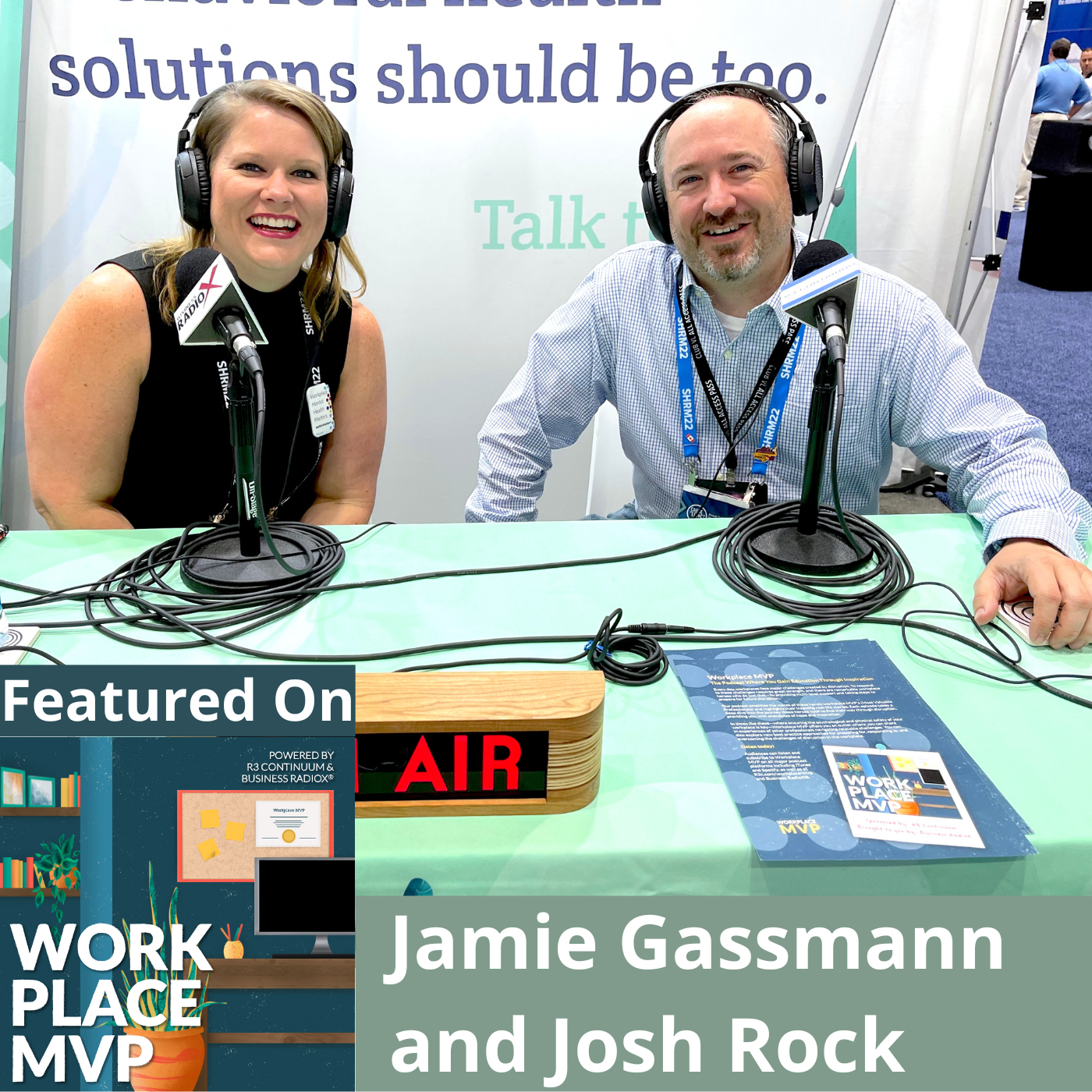
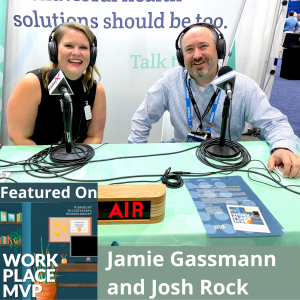
Tech Synergy provides transcription and knowledge processing services that support doctors performing claims evaluations and worker’s comp defense lawyers. Asish Saboo, Founder and CEO of Tech Synergy, described to host Jamie Gassmann all the services they provide, the labor and cost they can save their clients as well as streamline their work, who their ideal clients are, and more.

Workplace MVP is underwritten and presented by R3 Continuum and produced by the Minneapolis-St.Paul Studio of Business RadioX®.

This show was originally broadcast from the RIMS 2022 RISKWORLD Conference held at the Moscone Center in San Francisco, California.

Tech Synergy

Tech-Synergy is a leading provider of KPO services, including audio transcription and business support solutions to customers around the world.

Tech Synergy is known for transcription services, knowledge processing, call center solutions, and med-legal services helping you enhance your business productivity and effectiveness.

24/7 business support solution services from US, Philippines, and India.

Company website | LinkedIn | Facebook

Ashish Saboo, Founder and CEO, Tech Synergy

Ashish Saboo, Founder and CEO, Tech Synergy

Ashish Saboo is the Founder and CEO of Tech-Synergy, a leading provider of audio transcription, translation, medical record review, customer service, call center, and other back-office support services to customers around the world. Staffed with over 500 people and operating round the clock, they work as an extended office for clients enabling them to be nimble and cost-effective.

Ashish is President of TiE SoCal (www.socal.tie.org), a non-profit, global community of entrepreneurs from all over the world. They believe in the power of ideas to change the face of entrepreneurship and growing business through their five pillars: Mentoring, Networking, Education, Incubating, and Funding.

He is also Co-Founder of StartupSteroid, a deal flow management SaaS platform connecting Investors with startups.

Ashish also founded  YouJustRun, a company devoted to simplifying the process of organizing sporting events particularly marathon races, cycling, and swimming in India. Their end-to-end solutions for event organization from conceptualization to execution including online registration, RFID race timing, and real-time race tracking and results greatly simplify event organization tasks.

LinkedIn

About Workplace MVP

Every day, around the world, organizations of all sizes face disruptive events and situations. Within those workplaces are everyday heroes in human resources, risk management, security, business continuity, and the C-suite. They don’t call themselves heroes though. On the contrary, they simply show up every day, laboring for the well-being of employees in their care, readying the workplace for and planning responses to disruption. This show, Workplace MVP, confers on these heroes the designation they deserve, Workplace MVP (Most Valuable Professionals), and gives them the forum to tell their story. As you hear their experiences, you will learn first-hand, real-life approaches to readying the workplace, responses to crisis situations, and overcoming challenges of disruption. Visit our show archive here.

Workplace MVP Host Jamie Gassmann

Jamie Gassmann, Host, “Workplace MVP”

In addition to serving as the host to the Workplace MVP podcast, Jamie Gassmann is the Director of Marketing at R3 Continuum (R3c). Collectively, she has more than fourteen years of marketing experience. Across her tenure, she has experience working in and with various industries including banking, real estate, retail, crisis management, insurance, business continuity, and more. She holds a Bachelor of Science Degree in Mass Communications with special interest in Advertising and Public Relations and a Master of Business Administration from Paseka School of Business, Minnesota State University.

R3 Continuum

R3 Continuum is a global leader in workplace behavioral health and security solutions. R3c helps ensure the psychological and physical safety of organizations and their people in today’s ever-changing and often unpredictable world. Through their continuum of tailored solutions, including evaluations, crisis response, executive optimization, protective services, and more, they help organizations maintain and cultivate a workplace of wellbeing so that their people can thrive. Learn more about R3c at www.r3c.com.

Company website | LinkedIn | Facebook | Twitter

TRANSCRIPT

Intro: [00:00:03] Broadcasting live from Riskworld 2022 at the Moscone Center in San Francisco, it’s time for Workplace MVP. Brought to you by R3 Continuum, a global leader in helping workplaces thrive during disruptive times. Now, here’s your host.

Jamie Gassmann: [00:00:22] Hi, everyone. Your host, Jamie Gassmann here, and I am coming to you from Riskworld 2022’s Expo Hall in R3 Continuum’s Booth. And with mem I have Ashish Saboo from Tech Synergy. Welcome to the show.

Ashish Saboo: [00:00:36] Jamie, thank you. It’s a pleasure to be here.

Jamie Gassmann: [00:00:38] So, talk to me, Ashish, tell me a little bit about what Tech Synergy does.

Ashish Saboo: [00:00:42] Thank you for that. So, Tech Synergy is basically a back office service provider. What that means is we provide all kinds of support services to med legal evaluation companies, workers comp evaluation companies, law offices, and medical providers. So, with our three offices back in Philippines and in India, we are able to offer a variety of customized service to these kinds of service providers, services like scheduling through our call centers, doing record review through qualified nurses, then also doing transcription of evaluations and medical transcription work for various evaluating doctors, as well as being a virtual secretary for a lot of workers comp evaluation lawyers.

Ashish Saboo: [00:01:31] So, they can carry around just a cellphone with our dictation app in there. They tab, press, start speaking their correspondence or any kind of case report, and then within a couple of hours, they have the report back, and it works 24/7. So, we are able to offer a lot of cost savings and efficiencies to these firms and taking out those unnecessary additional costs from the whole evaluation process.

Jamie Gassmann: [00:01:56] Interesting. And so, how does—like from a customer perspective, tell me a little bit about that experience. Like if they’ve got this claim that they have, can you walk me through like how would that process look?

Ashish Saboo: [00:02:08] So, we work on certain aspects of the claim, so our process generally starts when the applicant is assigned to, say, a Q&A panel or something. So, there are two aspects to it. One is the workers comp defense firm who is on that case and the other is the evaluation company. So, the evaluation company, if we are working with them, then we basically get hold of the cover letter, the face sheet of the applicant, and then we will call the applicant on their behalf and create a schedule for actual history call.

Ashish Saboo: [00:02:42] And on that date, then we actually call the applicant, talk to them, sometimes, for 30 minutes, sometimes, maybe for an hour, sometimes, in English, sometimes, in Spanish, and get down their history of injury, their claim, what happened with them? Are they working? Their social history, their ideal activity of daily living, and create a comprehensive history report, which the evaluating doctor can use on the date of evaluation, which makes the evaluation go much faster.

Ashish Saboo: [00:03:09] So, a doctor, which might take like an hour for evaluation, and now, they can do it in 30, 45 minutes, so that’s a huge time saving. With that also comes a lot of medical records, so we are able to take 1,000, 1,500 pages of those medical records, take out the duplicates, sort them chronologically, create a hyperlink index, so it, again, becomes very easy for the doctor to go ahead and evaluate. Once the doctor does the evaluation, they use our smartphone app on their iPhone or Android, dictate the whole report, and then we put everything together, put it in their billing, maybe it’s a DC bill, maybe it’s a custom software, and that way, the end-to-end process, we are able to handle much more efficiently for them.

Jamie Gassmann: [00:03:55] Yeah, it’s like you’re streamlining the green spots.

Ashish Saboo: [00:03:57] Yeah, we are streamlining and also saving a lot of cost, because with about 10 to $12 an hour, we are pretty cost effective, and by being able to work 24/7, so we might be shutting shop here at 4:00 or 5:00 in the evening, but then the work continues in our offshore centers, and by the time you come back in the morning, your work is already done and ready to go.

Jamie Gassmann: [00:04:20] Yeah, interesting. So, do you have a panel of doctors, or are you outsourcing that from somewhere else, or is it the client’s doctors?

Ashish Saboo: [00:04:26] It’s the client’s doctor, so we are not doing anything which is actually medical in nature in the sense of actually evaluating or prescribing to the patient. All we are doing is actually just talking to them, getting their current status, and putting it in a form where it becomes easier for the doctor to use.

Jamie Gassmann: [00:04:46] Yeah. So, you’re almost like organizing the claim upfront for the company so that it makes that process, it’s like you’re giving a package to the doctor to move that process a little bit.

Ashish Saboo: [00:04:56] That is correct. That is as succinctly put. And on the other hand, with the worker’s comp defense lawyers, we are then able to also do the same for them. So, when they have long cases and they are dictating on it instead of using their secretaries who are only working 8:00 to 5:00, again, and worker’s comp lawyers, we have seen they work almost 18 hours a day.

Ashish Saboo: [00:05:19] So, they are dictating at 11:00 at night and they got the dictation back in one or two hours, so they are surprised. So, they are working and we are working with them. They can just pick up, again, our app, start dictating, hey, this is on Case So-and-so, this is a letter to applicant attorney, it comes back, formatted on their letterhead, ready to go. So, again, they can get a lot more value added work done out of secretary instead of just typing.

Jamie Gassmann: [00:05:44] Yeah. So, who is like the ideal client for that, that you typically are working with?

Ashish Saboo: [00:05:51] So, our ideal clients are workers comp evaluation law firms, and we have a lot of them. I think a few firms are right here. I saw D’Andre Law. They are our client, for example. Then, a lot of workers comp evaluation companies would be our ideal client. And we have majority of firms in Southern California as our clients right now.

Jamie Gassmann: [00:06:13] Wonderful. Well, it has been so great to chat with you. So, if somebody wanted to get more information from you about how your services could benefit their processes, how would they get a hold of you?

Ashish Saboo: [00:06:23] Oh, very easy. They can go to our website tech-synergy.com. Tech-synergy.com. Just look us up and we’d be glad to help out.

Jamie Gassmann: [00:06:34] Wonderful. Again, thank you for being on the show. It’s been great chatting.

Ashish Saboo: [00:06:38] Thank you, Jamie. Have a good one.

Outro: [00:06:44] Thank you for joining us on workplace MVP. R3 Continuum is a proud sponsor of this show and is delighted to celebrate most valuable professionals who work diligently to secure safe workplaces where employees can thrive.


Tagged With: Ashish Saboo, claims evaluation, Data Management, data transcription, Jamie Gassmann, KPO, medical transcription, R3 Continuum, RIMS, RISKWORLD 2022, Tech Synergy, worker's comp defense lawyers, Workplace MVP

LIVE from RISKWORLD 2022: Daniel Cunningham, Leonardo247

June 14, 2022 by John Ray

Leonardo 247
Minneapolis St. Paul Studio
LIVE from RISKWORLD 2022: Daniel Cunningham, Leonardo247
Loading
00:00 /
RSS Feed
Share
Link
Embed

Download file

Leonardo 247

LIVE from RISKWORLD 2022: Daniel Cunningham, Leonardo247

Daniel Cunningham, CEO of Leonard0 247, stopped by the R3 Continuum booth at RISKWORLD 2022. He and Jamie talked about Leonardo 247, which systemizes multi-family property operations. They have developed a new feature of the software that will help property owners track and mitigate property damage and reduce risk. He talked about this new feature, their company’s first experience at RISKWORLD, and more.

Workplace MVP is underwritten and presented by R3 Continuum and produced by the Minneapolis-St.Paul Studio of Business RadioX®.

This show was originally broadcast from the RIMS 2022 RISKWORLD Conference held at the Moscone Center in San Francisco, California.

Leonardo247

Property operations and maintenance is hard work. Leonardo247 helps owners and operators by providing a unified platform that streamlines maintenance and operations workflows, automates time-consuming tasks, and helps people get more done more easily and accurately.

Enabled by a patented machine learning algorithm, Leonardo247 has invented a way to source and catalog federal, state, and city municipal codes that govern real estate operations. The system will identify when action is required and then monitor the codes for changes so your properties stay compliant and avoid costly violations.

Bring your best practices to life through Leonardo247’s task, workflow, and process automation tools.

By delivering daily guidance that is customized to each property’s unique profile (location, equipment, amenities, etc.), your teams will outperform whether they are seasoned pros or brand-new to your organization.

Since launching the first platform in 2014, Leonardo247 has grown to become one of the most innovative tech companies in real estate operations.

Their account management teams have real-world experience in property operations allowing Leonardo247 to build solid relationships with their customers through a true understanding of their pain points. These practical insights allow them to craft solutions that address each customer’s specific needs.

They are a true operating partner first and a technology company second.

Company website | Facebook | Twitter

Daniel Cunningham, Founder & CEO, Leonardo247

Daniel Cunningham, Founder & CEO, Leonardo 247

Daniel Cunningham is a technologist, author, and recognized thought-leader in the commercial real estate management industry. Prior to launching Leonardo247 in 2014, Cunningham co-founded prefabricated homebuilder LivingHomes and also served as Director of Asset Management for AIMCO, one of the largest publicly traded residential REITs in the United States. Cunningham ran his own property management company for 10 years and out of that experience authored the book “365 Days of Property Management.”

A Civil Engineer by education, Cunningham has always been focused on process efficiency through innovation. The founding of Leonardo247 is the result of marrying that desire with his deep expertise in property management and his corresponding understanding of the difficulties in achieving consistent and comprehensive execution in property operations.

LinkedIn

About Workplace MVP

Every day, around the world, organizations of all sizes face disruptive events and situations. Within those workplaces are everyday heroes in human resources, risk management, security, business continuity, and the C-suite. They don’t call themselves heroes though. On the contrary, they simply show up every day, laboring for the well-being of employees in their care, readying the workplace for and planning responses to disruption. This show, Workplace MVP, confers on these heroes the designation they deserve, Workplace MVP (Most Valuable Professionals), and gives them the forum to tell their story. As you hear their experiences, you will learn first-hand, real-life approaches to readying the workplace, responses to crisis situations, and overcoming challenges of disruption. Visit our show archive here.

Workplace MVP Host Jamie Gassmann

Jamie Gassmann, Host, “Workplace MVP”

In addition to serving as the host to the Workplace MVP podcast, Jamie Gassmann is the Director of Marketing at R3 Continuum (R3c). Collectively, she has more than fourteen years of marketing experience. Across her tenure, she has experience working in and with various industries including banking, real estate, retail, crisis management, insurance, business continuity, and more. She holds a Bachelor of Science Degree in Mass Communications with special interest in Advertising and Public Relations and a Master of Business Administration from Paseka School of Business, Minnesota State University.

R3 Continuum

R3 Continuum is a global leader in workplace behavioral health and security solutions. R3c helps ensure the psychological and physical safety of organizations and their people in today’s ever-changing and often unpredictable world. Through their continuum of tailored solutions, including evaluations, crisis response, executive optimization, protective services, and more, they help organizations maintain and cultivate a workplace of wellbeing so that their people can thrive. Learn more about R3c at www.r3c.com.

Company website | LinkedIn | Facebook | Twitter

TRANSCRIPT

Intro: [00:00:03] Broadcasting live from Riskworld 2022 at the Moscone Center in San Francisco, it’s time for Workplace MVP. Brought to you by R3 Continuum, a global leader in helping workplaces thrive during disruptive times. Now, here’s your host.

Jamie Gassmann: [00:00:23] Hi, everyone. Your host, Jamie Gassmann here, and I am broadcasting from the Riskworld 2022 Expo Hall in R3 Continuum’s booth. And with me is Daniel Cunningham from Leonardo247. Welcome to the show.

Daniel Cunningham: [00:00:39] Hi. Thank you. Good to be here.

Jamie Gassmann: [00:00:40] Great. I’m so happy to have you here. And I know you are an exhibitor, but I want to hear a little bit about what does Leonardo247 do.

Daniel Cunningham: [00:00:47] Yeah, this is our first time at the show. We’ve not been a insurance-forward company in the past. That’s changing in some respects. But Leonardo247 is a property and operations software that’s largely focused in the multifamily industry. So, we were founded in 2011 and we now have about 2 million units, multifamily units, apartment units that are on the platform, which represents about 5,000 properties, somewhere around 40,000 buildings across the country. And what people use Leonardo247 for is we automate all of the tasks, and inspections, and workflows, and just the day-to-day responsibilities of operating apartment buildings.

Daniel Cunningham: [00:01:40] And those are typically expressed in these binders or maybe processes that are stored online in SharePoint someplace, and people are expected to to to remember all of these things, they’re expected to know it all, remember it all, execute, and it’s very difficult in the chaos of operating apartment buildings to stay on top of all these things. So, my experience prior to this that I’d been director of asset management for Aimco, which was the largest multifamily REIT in the country at the time. And we were finding that these policies and procedures that we had established were not being followed in the field. People couldn’t remember it all, people couldn’t know it all.

Daniel Cunningham: [00:02:17] And there was so much turnover in that business that even if you had somebody who really like was on board with doing everything they’d been taught could remember, like in 18 months, they were generally gone, and you were on to somebody new. So, we shift the burden of all of those policies and procedures, the execution of that, Leonardo becomes the expert in all of those policies and procedures. We have our own library of risk management best practices, for example, that if the client doesn’t have their own, they can use what we bring to the table or they can combine it, both.

Daniel Cunningham: [00:02:53] And then, Leonardo gives guidance every day to these individual properties based on a property’s unique amenity, equipment, geographic profile. Leonardo says, okay, we know you have a pool, we know you’re in the northeast, therefore since it’s November, we’re going to give you the instructions on how to kind of winterize the pool and that sort of thing. And we deliver whatever form or inspection they need to be successful, or instructions or video they want to watch, whatever it might be. We empower the folks on site to execute, so they don’t have to worry about whether or not they know it all, or understand, or even know what the priorities are. That all comes out of Leo.

Daniel Cunningham: [00:03:33] Now, you just ask them to execute and we give real-time visibility to the owners and the operators—the owners and maybe executives in those operations companies as to what’s actually happening on site. Are they in compliance with your expectations of running that property? So, that’s really been the core business. The question is, what does that have to do with insurance? Why are we here?

Daniel Cunningham: [00:03:58] What we discovered is since we sit in this unique role of being able to observe the actions that our clients are taking on a daily basis, are they doing the preventative maintenance that they claim they were supposed to be doing? Are they performing the inspections that are part of their risk management policies and procedures? We have a chance to see that.

Daniel Cunningham: [00:04:23] We then sit in a unique point of view where we’re able to assess the relative risk of any given operator based on their behavior, which prior to this, insurers were really relying on people to sort of attest, I have these policies and procedures, I have this preventive maintenance program, and I follow it, and yet then you have a loss, and you go on site, and you find out they’ve not been following any of that.

Jamie Gassmann: [00:04:55] Yeah.

Daniel Cunningham: [00:04:55] Yeah. There’s no way to see. The industry had no way to tell the difference between people that were lucky and people that were merely making a concerted effort to mitigate the risk to reduce their exposure to loss. And the bad actors were only exposed after a loss. Well, we are a leading indicator of good behavior and bad actors, so that we can help the carriers understand who’s a better risk than others based on their actual behavior.

Daniel Cunningham: [00:05:26] And so, we’re debuting something called the Leonardo Risk Indicator score, the LRI, which is a score based on that behavior that helps carriers discern good risk from bad risk, but also, for our clients, gives them some suggestions as to what they can do to reduce their risk and to improve their LRI score. Do they have water intrusion devices installed? That would improve their risk score. Are they doing like lighting inspections? Have they missed fire inspections or fire extinguisher inspections? These sorts of things, we can give them that feedback, and say, hey, if you do these things, or you do these things better, or you do these additional things, you will reduce your exposure to loss, and that’s our goal now.

Jamie Gassmann: [00:06:13] Interesting. So, are you using the data from those that are using the platform and managing those day-to-day tasks or monthly tasks to inform those scores?

Daniel Cunningham: [00:06:23] Yeah. I mean, they may not be as diligent in Leo as we would like them to be, so what we’ve done is we’ve looked at all the areas that impact losses, preventable losses generally. There’s not much we can do about hurricanes and flood, right? There’s not much we can do about that. We can impact what you do after an event like that to mitigate loss. We can push out, for example, water remediation processes and workflows if you’ve got a flood, that sort of thing.

Daniel Cunningham: [00:06:56] But when it comes to preventable losses, we looked at those things that are most impacting the claims history for multifamily owners, and we said, okay, what can we do in Leo to help mitigate that risk? What kinds of inspections can we perform? What devices can you install, and this sort of thing? So, since that’s new, we haven’t had that point of view before, like that these were the things that are important, so not everybody has been doing that over time. But now, what we’re introducing is, hey, here’s a new series of things that you should be paying attention to, and if you do these, we will help you understand your positional, like relational risk to the benchmark if you do this all in a systematic way within Leo.

Jamie Gassmann: [00:07:45] Interesting. And so, from like a property management perspective, you’re able to give them some tangible information about how they’re preventing harm to their property, basically.

Daniel Cunningham: [00:07:59] Yeah. And so, for property managers, like the actual people operating the property, like we’re reducing their losses so that there’s a cost to losses that that’s beyond just the cost of the claim. I mean, processing the claims and all that has a cost to it as well. So, while the owners feel the benefit of reduce losses in the form of spending less money on deductibles and maybe their insurance rates not going up, the operators who maybe don’t bear that responsibility still benefit from not having to process as many claims, and there’s reputational risk that happens here, and that sort of thing. So, everyone really benefits from being able to more or less quantify where they stand in terms of their relative risk and what they can do to make it better.

Jamie Gassmann: [00:08:50] Yeah. And so, this is your first time here at RIMS, so talk to me about what you’re hoping connections that you’ll make. Is it with insurance carriers? Is it with brokers? Who are you really looking to have conversations with that you’re excited to meet here at the show?

Daniel Cunningham: [00:09:05] Yeah, it was a bit of a mystery for us. Exactly not who would be there, because we have the list, but who would be intrigued by what it is that we’re doing. What we think will resonate with folks and it seems to be playing out so far is, so for the broker community, we want them to know about what we’re doing, because if they represent habitational like property and casualty clients, we want them to think about Leonardo and recommend Leonardo247 for their clients. We’ve had a number of over the years meetings with brokers, who said, look, we wish every one of our clients were using this, because it would reduce their losses and help them negotiate better rates.

Daniel Cunningham: [00:09:56] So, we’re hoping to increase our exposure with brokers. We want the carriers to know about the LRI, because we want them to—because with any luck, they’re going to start seeing LRI scores come across their desk as brokers go out and remarket our clients for insurance, and we want them to be aware of what that is, where that comes from, who we are, how that’s derived, so we can start at least that conversation at the carrier level with what we hope, someday, results in the LRI being a standard data point for evaluating the relative risk of somebody who’s applying for insurance.

Jamie Gassmann: [00:10:33] Yeah, that’s very cool. Very interesting. And I got to imagine that your platform, if you’re thinking of that turnover perspective, it’s keeping that log of activity. so it should be a good training tool for these property management companies to be able to have somebody come in where somebody left off. Is that kind of part of the design of that, and helping them kind of be aware of where somebody was at or not at?

Daniel Cunningham: [00:10:58] Yeah, we say something similar all the time. We say, look, when you have a change of staff, just one person just hands the baton off to the next person. They don’t have to know. Leonardo knows the last thing that they did, what’s up next? Leonardo can help you understand what the process is so that you can get new staff members up to speed faster than ever, help them become productive faster than you ever have before, because it’s all laid out for them.

Daniel Cunningham: [00:11:30] Hopefully, through Leo, you’re giving them everything they need to be successful, the process, the form, like I said, the video that they might need to watch, and they can just take the ball and run with it. And so, especially right now with the great resignation, has really hit multifamily in a way that I think is probably worse than other industries. Maybe not hospitality and restaurant, but certainly, in a very significant way. It’s very difficult right now to find people who want to be in this business. So, we have to find ways to make people more productive. We have to find ways when you bring people on board that they can get up to speed more quickly, and that’s the role that we fill, for sure.

Jamie Gassmann: [00:12:13] Yeah. Wonderful. Well, I hope that you’re getting the results from conversations. I know it’s been busy throughout the day in the RIMS Expo Hall, so hopefully, your conversations have been going well and you’ll get some great contacts to be able to share your wonderful platform with.

Daniel Cunningham: [00:12:28] There’s been lots of serendipity here for us already, so it’s good.

Jamie Gassmann: [00:12:31] Wonderful. That’s great. So, if somebody wanted to get a hold of you and learn a little bit more from you about Leonardo247 or your new insurance, kind of the measurement tool, how would they be able to do that?

Daniel Cunningham: [00:12:42] So, our website is leonardo247.com. Leonardo247.com. So, there’s plenty of like Contact Us information there if you’re interested. And yeah, the LRI will be sort of publicly debuted I think by the end of June, so there’ll be more information on the website starting then.

Jamie Gassmann: [00:13:06] Wonderful. Well, best of luck in that and thank you again so much for joining us. It’s been a pleasure talking with you.

Daniel Cunningham: [00:13:11] Yeah, nice wandering by, and seeing you here, and having the opportunity to appear. Thank you.

Jamie Gassmann: [00:13:15] Yeah. We always like great conversations to learn a little bit more about what’s out there in the risk field, so great.

Daniel Cunningham: [00:13:20] Thank you.

Jamie Gassmann: [00:13:21] Yeah.

Outro: [00:13:26] Thank you for joining us on Workplace MVP. R3 Continuum is a proud sponsor of this show and is delighted to celebrate most valuable professionals who work diligently to secure safe workplaces where employees can thrive.


Tagged With: Daniel Cunningham, Leonardo247, Multi family housing, operational efficiency, property claims, property maintenance, property management, property operations, Risk Management

LIVE from RISKWORLD 2022: Michael Zalle, YellowBird

June 13, 2022 by John Ray

YellowBIrd
Minneapolis St. Paul Studio
LIVE from RISKWORLD 2022: Michael Zalle, YellowBird
Loading
00:00 /
RSS Feed
Share
Link
Embed

Download file

YellowBIrd

LIVE from RISKWORLD 2022: Michael Zalle, YellowBird

YellowBird fills a unique role in connecting companies with pros in risk & environmental, health, and safety. Founder and CEO Michael Zalle joined the show to discuss how it works, his thoughts on the valuable expertise of professionals, his experience at RISKWORLD 2022, and much more.

Workplace MVP is underwritten and presented by R3 Continuum and produced by the Minneapolis-St.Paul Studio of Business RadioX®.

This show was originally broadcast from the RIMS 2022 RISKWORLD Conference held at the Moscone Center in San Francisco, California.

YellowBird

Get matched with the best Risk & Environmental, Health, and Safety Pros on-demand! YellowBird connects Companies with Professionals in hours, not days or weeks.

Companies & Professionals register on YellowBird, Pros list their skills, certifications and experience, then complete The 4-step onboarding process. Companies post jobs on-demand! YellowBird handles everything else, including accounting and insurance.YellowBird matches the right Pro to the Job, then manages the process to completion.

Company website | LinkedIn | Facebook

Michael Zalle, Founder and CEO, YellowBird

Michael Zalle, Founder and CEO, YellowBird

Michael Zalle is the Founder and CEO of YellowBird. He is responsible for creating, building, and launching new concepts and companies, resulting in multiple successful exits over a 25-year tech career. He has built a career through a unique balance of commercializing novel business models, operationalizing innovative technologies and platforms, rapidly scaling operations, and building market-shaping ecosystems. Michael’s companies and purpose are ever focused on serving others. Whether it be satellite systems for First Responders, environmental products for flood and spill response, or time and economic support for difference-making organizations, Michael believes in “doing well while doing good.”

Michael’s college journey began at San Francisco State University and completed at Pepperdine University Graziadio Business School while working full-time and traveling at age 19. As a lifelong member and mentor for the Amputee Coalition of America, he enjoys the time he’s able to invest in mentoring kids with physical challenges.

Married 20 years with two children, Michael spends most of his free time at lacrosse or soccer games chasing balls, applying band-aids, and handing out snacks. He enjoys traveling and engages in a variety of sports including golf and tennis; he ranks himself an incredibly average golfer and perhaps even worse tennis player.

LinkedIn

About Workplace MVP

Every day, around the world, organizations of all sizes face disruptive events and situations. Within those workplaces are everyday heroes in human resources, risk management, security, business continuity, and the C-suite. They don’t call themselves heroes though. On the contrary, they simply show up every day, laboring for the well-being of employees in their care, readying the workplace for and planning responses to disruption. This show, Workplace MVP, confers on these heroes the designation they deserve, Workplace MVP (Most Valuable Professionals), and gives them the forum to tell their story. As you hear their experiences, you will learn first-hand, real-life approaches to readying the workplace, responses to crisis situations, and overcoming challenges of disruption. Visit our show archive here.

Workplace MVP Host Jamie Gassmann

Jamie Gassmann, Host, “Workplace MVP”

In addition to serving as the host to the Workplace MVP podcast, Jamie Gassmann is the Director of Marketing at R3 Continuum (R3c). Collectively, she has more than fourteen years of marketing experience. Across her tenure, she has experience working in and with various industries including banking, real estate, retail, crisis management, insurance, business continuity, and more. She holds a Bachelor of Science Degree in Mass Communications with special interest in Advertising and Public Relations and a Master of Business Administration from Paseka School of Business, Minnesota State University.

R3 Continuum

R3 Continuum is a global leader in workplace behavioral health and security solutions. R3c helps ensure the psychological and physical safety of organizations and their people in today’s ever-changing and often unpredictable world. Through their continuum of tailored solutions, including evaluations, crisis response, executive optimization, protective services, and more, they help organizations maintain and cultivate a workplace of wellbeing so that their people can thrive. Learn more about R3c at www.r3c.com.

Company website | LinkedIn | Facebook | Twitter

TRANSCRIPT

Intro: [00:00:03] Broadcasting live from Riskworld 2022 at the Moscone Center in San Francisco, it’s time for Workplace MVP. Brought to you by R3 Continuum, a global leader in helping workplaces thrive during disruptive times. Now, here’s your host.

Jamie Gassmann: [00:00:23] Hey, everyone. Jamie Gassmann, your host of workplace MVP, here again at Riskworld 2022 with my guest, Michael Zalle.

Michael Zalle: [00:00:32] Hello. Good morning.

Jamie Gassmann: [00:00:33] Yes. And I’m going to rhyme with your name, my new pal.

Michael Zalle: [00:00:38] Good trick. Good trick.

Jamie Gassmann: [00:00:40] Yeah. You actually told me that’s what it rhymed with so I had to leverage that in the interview. So, you are with YellowBird.

Michael Zalle: [00:00:46] I am.

Jamie Gassmann: [00:00:47] So, tell me a little bit about what YellowBird is, your role at YellowBird, and just kind of give us a background on you.

Michael Zalle: [00:00:53] All right. Wow. I’m the founder. So, I started the company about three years ago. We are an on-demand people business and we focus on matching professionals in environmental, health, safety, and risk. And so, what that means is we have a platform for loss control and safety organizations to bring in the right people with the right skills on demand, and we do all the work, essentially.

Jamie Gassmann: [00:01:22] Interesting. So, give me a little kind of like scenario of how your platform would work.

Michael Zalle: [00:01:29] Okay. I was actually just talking to a group over here who’s a consultant firm. And so, everybody goes, “Oh, you’re competing with the consulting firms.” We’re really not. So if you have a big consulting practice or you have a large organization and you’re running your own loss control practices and you have 30 sites you need to do an environmental assessment on, and 25 of those sites are perfect for your staff and five of those sites you don’t know what the heck you’re going to do, so you say, okay, who do we know in these five states? And the answer is, well, we probably have people who could fly around and get there. And so, this went from a profitable deal to an unprofitable deal in those locations.

Michael Zalle: [00:02:10] We can help basically facilitate that type of work. Or in the case of loss control, like in an insurance organization, they’re constantly doing assessments. And so, we can help them bring the loss control process down to mid-market where realistically they go deeper dive when you get upmarket because they can afford to do it so they can send people out rather than just doing self-assessments.

Jamie Gassmann: [00:02:37] Yeah. So like for those in a sense, it’s almost like you’re tapping into the pool of people you have within your platform and finding an expert in that location that can help support that need, correct?

Michael Zalle: [00:02:48] Yeah. Absolutely.

Jamie Gassmann: [00:02:49] Awesome.

Michael Zalle: [00:02:50] And, what we try to do is we go well beyond their certs. So for us, the certifications are important but the background and experience and history. So I’ll give you an example. You have a client that’s at a chemical organization and they need somebody to come in and do a chemical assessment. And you have somebody on the platform that was 30 years at DuPont who’s retired who says, “I want to stay in the game.” Well, I can send that person out and they would be able to, assuming legally they’re allowed and all the other things. But assuming that they’re allowed and they’re not under a non-circumvention or non-compete or anything like that, they could go out and they could do the assessment. So, you could get somebody with 30 years of DuPont experience going to a regional chemical place where otherwise they wouldn’t have access to that world of knowledge.

Jamie Gassmann: [00:03:37] Interesting. So, you’re here at RIMS.

Michael Zalle: [00:03:42] Yes.

Jamie Gassmann: [00:03:42] Are you an exhibitor this year or are you just kind of moseying around and kind of looking at it for future? You know what – yeah.

Michael Zalle: [00:03:47] So, well, we’re throwing a big party, so I’m excited about that.

Jamie Gassmann: [00:03:52] Yeah.

Michael Zalle: [00:03:52] I am not an exhibitor this year and we chose not to be for a couple of reasons. One, we’re a small organization. We have 27 people now on staff. We’re raising venture capital a couple of years back and we are growing rapidly, but we can’t do as many shows as I want to do. So, I always try to walk through and see, you know, what’s it all about. This is a great show. This is a great event. So, we will be exhibiting in the future. I was hopeful that I was going to be speaking this year and I was not selected to speak this year because it was just such a tight sketch.

Jamie Gassmann: [00:04:26] Absolutely. Yeah.

Michael Zalle: [00:04:27] But hopefully, I will speak next year because I’m somewhat of a subject matter expert on the changing nature of work in general, which is a big hot button in today’s world.

Jamie Gassmann: [00:04:37] Yeah.

Michael Zalle: [00:04:38] So that’s my hope. But, yeah, I’m just exhibiting and eating and drinking and being Michael.

Michael Zalle: [00:04:44] Social. Yeah. I was going to ask if you had been presenting, what would your topic be that you would present on?

Michael Zalle: [00:04:51] The complexities of running a consulting practice. Because I think most people, most professionals have this mindset of when I stop working, I want to consult and they should. That is a natural inclination. And, I’ve got all this work. There’s an old quote, and I don’t know where it comes from and I should know because I use it a fair amount, that when an elder dies it’s like burning a library. And I look at it like when a knowledge holder retires, it’s like burning a library, where there’s only so many times that you can go back to these people and there’s only so much information that you would’ve been able to glean from them. And so, you will either consult and be one-client consultation or you will start your own consulting practice and then you have to hustle. And most knowledge workers are not hustlers. They’re, you know, they haven’t had to be.

Michael Zalle: [00:05:44] And so, the most the biggest challenges with starting your own consulting practice are obviously getting the insurance and getting the business set up. And then, of course, it’s billing and receiving and then it’s customer service, all the things that as a risk and safety executive you don’t want to do.

Jamie Gassmann: [00:06:02] Oh, absolutely. Yeah.

Michael Zalle: [00:06:03] It’s the worst part of anybody’s business, but we do it for them. And so, I wouldn’t really focus it on YellowBird per se. But really, the inclination and the wishes of becoming a consultant combined with the, is it really worth my effort?

Jamie Gassmann: [00:06:19] Yeah.

Michael Zalle: [00:06:19] And so, we try to make it worth their effort to keep them in the game.

Jamie Gassmann: [00:06:22] Yeah, I love that. It’s almost like it’s okay to ask for help, right?

Michael Zalle: [00:06:26] Totally.

Jamie Gassmann: [00:06:26] And sometimes, you know, when you’re an expert, you don’t think about that. But it is, you know, as a leader, I’ve heard more and more about that. It’s okay to ask for that help. So, that’s fantastic.

Michael Zalle: [00:06:36] Oh, absolutely. Well, thank you.

Jamie Gassmann: [00:06:38] If our listeners wanted to get a hold of you, how would they go about doing that?

Michael Zalle: [00:06:41] So, our website is goyellowbird.com. Just like it sounds, G-O, yellowbird.com. We’re on all the socials, @goyellowbird. And if you are in San Francisco, you can come to one of our parties because we’re having a party on Tuesday night. So, hopefully, actually, this is not going to be heard before then, so. Too bad you missed our party on Tuesday night. It was fantastic.

Jamie Gassmann: [00:07:05] Yeah. You just showed off your ping pong skills, I hear.

Michael Zalle: [00:07:08] Yes. We’re going to a ping pong bar.

Jamie Gassmann: [00:07:11] I love that idea. Yes. Well, it has been an absolute pleasure.

Michael Zalle: [00:07:15] Thank you.

Jamie Gassmann: [00:07:15] And, it was so great to meet you and talk with you on our episode here. So, thank you for joining me.

Michael Zalle: [00:07:19] My pleasure. I’m glad you’re here.

Outro: [00:07:26] Thank you for joining us on Workplace MVP. R3 Continuum is a proud sponsor of this show and is delighted to celebrate most valuable professionals who work diligently to secure safe workplaces where employees can thrive.


Tagged With: Jamie Gassmann, Michael Zalle, R3 Continuum, RIMS, Risk and Safety Executive, RISKWORLD 2022, Workplace MVP, YellowBird

LIVE from WORKBENCHcon 2022: Michael Spencer, Spencer Woodworks

June 13, 2022 by John Ray

Spencer Woodworks
North Fulton Studio
LIVE from WORKBENCHcon 2022: Michael Spencer, Spencer Woodworks
Loading
00:00 /
RSS Feed
Share
Link
Embed

Download file

Spencer Woodworks

LIVE from WORKBENCHcon 2022: Michael Spencer, Spencer Woodworks (Organization Conversation, Episode 26)

Michael Spencer, the owner of Spencer Woodworks, joined Stephanie of Uncommon Outpost and Wall Control for a conversation live from WORKBENCHcon 2022. Michael described transitioning from his military career into woodworking. He talked about what kinds of custom pieces he creates, the advantages of being able to work at home with his family, how they built his shop in one day, and much more.

Organization Conversation is produced by the North Fulton studio of Business RadioX® inside Renasant Bank in Alpharetta.

Michael Spencer, Owner, Spencer Woodworks

Michael Spencer, Owner, Spencer Woodworks

Spencer Woodworks is a custom woodworking business that creates original cabinetry, built-ins, one-of-a-kind furniture, and live-edge/slab furniture.

They enjoy working with clients from the beginning to the end of a project to design, build and finish custom pieces that suit their spaces and lives perfectly.

Michael uses 3D modeling to make sure that each piece is exactly what the client wants and needs in their specific space. He enjoys the personal stories associated with each project and the relationships built in the process.

After a twenty-year military career as a UH-60 Blackhawk pilot, Michael is accustomed to a high level of attention to detail in his work. He enjoys the conceptualizing and problem-solving that comes with design and the process and craftsmanship that goes into building quality furniture and cabinetry.

Woodworking began as a hobby for Michael during an especially stressful period in his Army career. He appreciated the way that woodworking captivated his brain in a challenging but peaceful way. He found satisfaction in this activity that simultaneously engaged his mind, hands, and heart.

Connect with Michael: Website | Instagram | YouTube

About Organization Conversation

Organization Conversation features interviews with movers and shakers in storage and organization, from professional organizers to the creative and talented Brand Ambassadors who use Wall Control products every day. You’ll hear tips, tricks, and how-tos for storage and organization, as well as receive first access to Wall Control promotions. We talk with our suppliers and partners to give you a look behind the scenes at how we operate, what makes our family-owned and operated brand tick, and some of the fun and interesting insights that go into making our business run. We love our guests, as they are engaging and entertaining with interesting experiences to share. By focusing on those guests and the amazing stories they tell, we hope you will be enriched and find your time listening to the Organization Conversation podcast as time well spent.

Organization Conversation is hosted by Richard Grove and broadcast and produced from the North Fulton studio of Business RadioX® inside Renasant Bank in Alpharetta. You can find the full archive of shows by following this link. The show is available on all the major podcast apps, including Apple Podcasts, Spotify, Google, Amazon, iHeart Radio, and others.

About Richard Grove

Richard Grove, Host, Organization Conversation

Richard Grove‘s background is in engineering but what he enjoys most is brand building through relationships and creative marketing. Richard began his career with the Department of Defense as an engineer on the C-5 Galaxy Engineering Team based out of Warner Robins. While Richard found this experience both rewarding and fulfilling, he always knew deep down that he wanted to return to the small family business that originally triggered his interest in engineering.

Richard came to work for the family business, Dekalb Tool & Die, in 2008 as a Mechanical Engineer. At the time Wall Control was little more than a small ‘side hustle’ for Dekalb Tool & Die to try to produce some incremental income. There were no “Wall Control” employees, just a small warehouse with a single tool and die maker that would double as an “order fulfillment associate” on the occasion that the original WallControl.com website, which Richard’s grandmother built, pulled in an order.

In 2008, it became apparent that for the family business to survive they were going to have to produce their own branded product at scale to ensure jobs remained in-house and for the business to continue to move forward. Richard then turned his attention from tool and die to Wall Control to attempt this necessary pivot and his story with Wall Control began. Since that time, Richard has led Wall Control to significant growth while navigating two recessions.

Connect with Richard:

Instagram | Twitter | LinkedIn

About Wall Control

The Wall Control story began in 1968 in a small tool & die shop just outside Atlanta, Georgia. The first of three generations began their work in building a family-based US manufacturer with little more than hard work and the American Dream.

Over the past 50+ years, this family business has continued to grow and expand from what was once a small tool & die shop into an award-winning US manufacturer of products ranging from automobile components to satellite panels and now, the best wall-mounted tool storage system available today, Wall Control.

The Wall Control brand launched in 2003 and is a family-owned and operated business that not only produces a high-quality American Made product but sees the entire design, production, and distribution process happen under their own roof in Tucker, Georgia. Under that same roof, three generations of American Manufacturing are still hard at work creating the best tool storage products available today.

Connect with Wall Control:

Company website | Facebook | Instagram

Tagged With: built-ins, custom cabinetry, live-edge furniture, military career, Organization Conversation, Richard Grove, Spencer Woodworks, Stephanie from Uncommon Outpost, Uncommon Outpost, Wall Control, WORKBENCHcon 2022

Dr. Courthney Russell, Jr., A2H2

June 13, 2022 by John Ray

A2H2
North Fulton Business Radio
Dr. Courthney Russell, Jr., A2H2
Loading
00:00 /
RSS Feed
Share
Link
Embed

Download file

A2H2

Dr. Courthney Russell, Jr., A2H2 (North Fulton Business Radio, Episode 465)

Dr. Courthney Russell of A2H2 joined host John Ray on this edition of North Fulton Business Radio to discuss his organization’s work on behalf of the health needs of underserved communities.

North Fulton Business Radio is broadcast from the North Fulton studio of Business RadioX® inside Renasant Bank in Alpharetta.

A2H2

The mission of A2H2 is to provide quality healthcare and wellness services to the marginalized, indigent, and those experiencing poverty.

Today medicine and healthcare are revenue-based. A2H2 holds the fundamental belief that saving lives should be a priority. The medical attention and wellness services given to the indigent should mirror the care received by the affluent. A2H2 believes wholeheartedly that without quality consistent healthcare, poverty will forever be perpetuated. Finances should never be an obstacle for someone without the means to pay.

This organization will be the catalyst for changing healthcare by increasing access to quality healthcare through consistency and raising awareness.

Company Website | Facebook | Instagram

Dr. Courthney Russell, Jr., Founder, A2H2

Courthney Russell, Founder, A2H2

Born in Fort Knox, KY, and raised in East Atlanta, Dr. Courthney Russel Jr. was the first in his family to go to med school with little assistance. Due to this, he went through school homeless and interacted with the homeless community in Atlanta.

His first-hand experience motivated him to make it his mission to serve the forgotten members of our society by providing free health services to the Atlanta community.

LinkedIn


Questions and Topics in this Interview:

  • How did going through medical school while homeless affect you?
  • What is the mission of A2H2?
  • How has your life experience affected how you run A2H2?
  • What has been the most rewarding experience you have had with A2H2?
  • The importance of visibility for patients to receive proper care.
  • What inspired you to turn your back on becoming a surgeon to create A2H2?
  • What do you think stops traditional healthcare from effectively reaching those in need?
  • How do you see the future of healthcare changing?

North Fulton Business Radio is hosted by John Ray and broadcast and produced from the North Fulton studio of Business RadioX® inside Renasant Bank in Alpharetta. You can find the full archive of shows by following this link. The show is available on all the major podcast apps, including Apple Podcasts, Spotify, Google, Amazon, iHeart Radio, Stitcher, TuneIn, and others.
RenasantBank


Renasant Bank has humble roots, starting in 1904 as a $100,000 bank in a Lee County, Mississippi, bakery. Since then, Renasant has grown to become one of the Southeast’s strongest financial institutions with over $13 billion in assets and more than 190 banking, lending, wealth management and financial services offices in Mississippi, Alabama, Tennessee, Georgia and Florida. All of Renasant’s success stems from each of their banker’s commitment to investing in their communities as a way of better understanding the people they serve. At Renasant Bank, they understand you because they work and live alongside you every day.

 

Special thanks to A&S Culinary Concepts for their support of this edition of North Fulton Business Radio. A&S Culinary Concepts, based in Johns Creek, is an award-winning culinary studio, celebrated for corporate catering, corporate team building, Big Green Egg Boot Camps, and private group events. They also provide oven-ready, cooked from scratch meals to go they call “Let Us Cook for You.” To see their menus and events, go to their website or call 678-336-9196.
Tagged With: A&S Culinary Concepts, A2H2, Courthney Russell, Health care, Homelessness, North Fulton Business Radio, poverty, renasant bank

LIVE from RISKWORLD 2022: Theresa Everett, QBE North America

June 13, 2022 by John Ray

QBE North America
Minneapolis St. Paul Studio

LIVE from RISKWORLD 2022: Theresa Everett, QBE North America
Loading
00:00 /
RSS Feed
Share
Link
Embed

Download file

QBE North America

LIVE from RISKWORLD 2022: Theresa Everett, QBE North America

Theresa Everett, AVP of Strategic Client Management for QBE North America, shared some points from her presentation at RISKWORLD 2022, “The Five Best Practices on How to Conduct a Claim Review.” She and host Jamie Gassmann talked about some of those practices, the value of taking a macro perspective to better serve the needs of their clients, and much more.

Workplace MVP is underwritten and presented by R3 Continuum and produced by the Minneapolis-St.Paul Studio of Business RadioX®.

This show was originally broadcast from the RIMS 2022 RISKWORLD Conference held at the Moscone Center in San Francisco, California.

Theresa Everett, AVP, Strategic Client Management, QBE North America

Theresa Everett, AVP, Strategic Client Management, QBE North America
QBE North America is a global insurance leader focused on helping customers solve unique risks, so they can focus on what matters most. Part of QBE Insurance Group Limited, QBE North America reported Gross Written Premiums in 2020 of $4.775 billion. We are rated A+ by Standard & Poor’s and A (Excellent) by A.M. Best.
As an AVP of Strategic Client Management with QBE N.A., Theresa Everett is the one point of contact for all QBE customers, coordinating all the relationships, services, and solutions that their customers have access to.
She also specializes in pre and post-loss injury management consultation which is customized for each customer.  Theresa focuses on the various components of their overall Safety and Workers’ Compensation injury and medical management programs, including but not limited to: human resource and employment practice challenges and the overlap with workers’ compensation and other leave of absence programs, formalized transitional duty programs design and all pre-loss program development and management.

Company website | Theresa Everett LinkedIn

About Workplace MVP

Every day, around the world, organizations of all sizes face disruptive events and situations. Within those workplaces are everyday heroes in human resources, risk management, security, business continuity, and the C-suite. They don’t call themselves heroes though. On the contrary, they simply show up every day, laboring for the well-being of employees in their care, readying the workplace for and planning responses to disruption. This show, Workplace MVP, confers on these heroes the designation they deserve, Workplace MVP (Most Valuable Professionals), and gives them the forum to tell their story. As you hear their experiences, you will learn first-hand, real-life approaches to readying the workplace, responses to crisis situations, and overcoming challenges of disruption. Visit our show archive here.

Workplace MVP Host Jamie Gassmann

Jamie Gassmann, Host, “Workplace MVP”

In addition to serving as the host to the Workplace MVP podcast, Jamie Gassmann is the Director of Marketing at R3 Continuum (R3c). Collectively, she has more than fourteen years of marketing experience. Across her tenure, she has experience working in and with various industries including banking, real estate, retail, crisis management, insurance, business continuity, and more. She holds a Bachelor of Science Degree in Mass Communications with special interest in Advertising and Public Relations and a Master of Business Administration from Paseka School of Business, Minnesota State University.

R3 Continuum

R3 Continuum is a global leader in workplace behavioral health and security solutions. R3c helps ensure the psychological and physical safety of organizations and their people in today’s ever-changing and often unpredictable world. Through their continuum of tailored solutions, including evaluations, crisis response, executive optimization, protective services, and more, they help organizations maintain and cultivate a workplace of wellbeing so that their people can thrive. Learn more about R3c at www.r3c.com.

Company website | LinkedIn | Facebook | Twitter

TRANSCRIPT

Intro: [00:00:02] Broadcasting live from Riskworld 2022 at the Moscone Center in San Francisco, it’s time for Workplace MVP. Brought to you by R3 Continuum, a global leader in helping workplaces thrive during disruptive times. Now, here’s your host.

Jamie Gassmann: [00:00:21] Hi, everyone. Jamie Gassmann here again, your host for Workplace MVP, live at the RIMS Riskworld 2022. And with me is Theresa Everett. Theresa, give us a little background about who you are, where you work, what you do.

Theresa Everett: [00:00:38] Sure. Thank you. Thank you for having me. My name is Theresa Everett. I am with QBE Corporation here in North America and I am a claim relationship manager, and I manage coming from the claims background but I also manage national and multinational insurance programs.

Jamie Gassmann: [00:00:59] And, you are presenting at this year’s conference. Talk to me about the title and what your presentation is about.

Theresa Everett: [00:01:05] Sure. Yes, I am presenting and I’m very excited for that. And I am presenting the five best practices on how to conduct a claim review.

Jamie Gassmann: [00:01:16] So, tell me a little bit about – I know you want to probably save all the juicy stuff for the presentation, but what kind of things are you sharing with the audience?

Theresa Everett: [00:01:25] Sure. Well, the presentation really focuses on how best to take advantage of your claims data and then what is it that you look at in order to pick those claims. So, you know, it’s starting with the understanding of our customer and then, you know, what their pain points are, how much risk are they willing to retain. And just understanding that and just not picking claims just for the sake of doing a claims review, but really picking those claims strategically so that you can have an impact on their total cost of risk.

Jamie Gassmann: [00:02:06] So looking at your audience, what are you hoping that they take away from that presentation? What are like – if you could pick, like, the top three things that you want that audience to be left with after sitting through the presentation, what would you like that to be?

Theresa Everett: [00:02:23] I think that having a claim review, just for having the sake of a claim review, so many people are just used to doing that in our industry. Okay, let’s just have a claim review. What I really want them to walk away with is to really think strategically on the claims that they are picking for that review, how is that going to impact, you know, the account.

Jamie Gassmann: [00:02:50] Yeah.

Theresa Everett: [00:02:51] So that’s really, you know, just for the sake of, okay, we need to do a claims review. So from the portion from the carrier perspective, just don’t, you know, go picking claim. Okay, we need to do this. Really be a lot more strategic with it.

Jamie Gassmann: [00:03:09] So would they be putting like a criteria together then? Is that kind of something that would be an approach that they could take and identifying like –

Theresa Everett: [00:03:16] Yes.

Jamie Gassmann: [00:03:16] Appropriate claim.

Theresa Everett: [00:03:17] Yeah. Yes, absolutely. And, the biggest thing really is to understand your customer, what industry they’re in, you know, how they do their business, you know, what are the things, how much risk have they retained or have they transferred that risk. You know, what do they want to do? Is it just normal business or are they trying to change their program? So, those are the things that really we need to understand before we pick that group of claims to be able to effectuate any change in their program.

Jamie Gassmann: [00:03:52] Yeah. And when we talk about claims management and choosing claims review, what types of claims are you kind of focusing your presentation on?

Theresa Everett: [00:04:00] Well, really it depends on the industry. So you need to know what industry when you’re ready to pick your claim review and you have your client and you’re insured. Okay. If they’re in the food and beverage industry, you pretty much know the types of claims that they’re going to have. And, you know, from a pre-lost perspective, a safety perspective, you can take all of that data, look at it, and then look at the efficacy of how their programs are working behind the scene. So, I mean, people don’t take advantage. They look at things from a micro perspective as opposed to a total macro perspective when they’re looking at a set of claims.

Jamie Gassmann: [00:04:41] Yeah. So, really, from your presentation, they can take those pointers, those five best practices and look at across industries and apply them.

Theresa Everett: [00:04:50] Yes.

Jamie Gassmann: [00:04:50] And, really, it sounds to me like what you’re getting, you know, trying to send the message to the audiences. You’ve got to look at all the industries. They’re all going to be a little different.

Theresa Everett: [00:05:00] Correct. Each one is unique.

Jamie Gassmann: [00:05:01] Yeah, absolutely. But you can use the same standard principles across all of them.

Theresa Everett: [00:05:05] Yes. Absolutely.

Jamie Gassmann: [00:05:05] Fascinating.

Theresa Everett: [00:05:06] Yes.

Jamie Gassmann: [00:05:06] Oh, well, it sounds very exciting. I’m sure the audience is going to really enjoy those tips.

Theresa Everett: [00:05:10] Yes.

Jamie Gassmann: [00:05:11] And we so appreciate you being here on our episode here at Riskworld. If our guests or our audience, goodness gracious, a little tongue-tied this morning. If our audience wanted to learn more from you about that or to talk to you, how would they get ahold of you?

Theresa Everett: [00:05:29] So, they can contact me via email. And my email address is Theresa, that’s T-H-E-R-E-S-A, dot Everett, E, V as in victor, E-R-E-T-T, @us.qbe.com.

Jamie Gassmann: [00:05:45] Wonderful. Well, thank you again so much for being on the episode with us here, Theresa.

Theresa Everett: [00:05:50] Thank you for having me.

Jamie Gassmann: [00:05:50] Good luck in your presentation.

Theresa Everett: [00:05:52] Thank you very much.

Outro: [00:05:57] Thank you for joining us on Workplace MVP. R3 Continuum is a proud sponsor of this show and is delighted to celebrate most valuable professionals who work diligently to secure safe workplaces where employees can thrive.


Tagged With: claim review, Jamie Gassmann, QBE North America, R3 Continuum, RIMS, RISKWORLD 2022, Theresa Everett, Workplace MVP

Quick Tips for Time Well Spent: The True Goal of Time Management, with Julie Hullett

June 13, 2022 by John Ray

North Fulton Studio
North Fulton Studio
Quick Tips for Time Well Spent: The True Goal of Time Management, with Julie Hullett
Loading
00:00 /
RSS Feed
Share
Link
Embed

Download file

time management

Quick Tips for Time Well Spent: The True Goal of Time Management, with Julie Hullett

In a quick tip from Julie Hullett, she explains the rewards of time management and how she helps people create more time to do what they love.

Julie’s commentary was taken from this episode of Time Well Spent with Julie Hullett. 

Time Well Spent with Julie Hullett is presented by Julie Hullett Concierge, LLC and produced by the North Fulton studio of Business RadioX®.

About Time Well Spent

Time Well Spent with Julie Hullett features stories from busy professionals who have created more time to do what they love. Every other week, your host and personal concierge Julie Hullett speaks with entrepreneurs, community leaders, and influencers to answer the question: What would you do if you had more time?

The show is produced by the North Fulton studio of Business RadioX® and can be found on all the major podcast apps. The complete show archive is here.

Julie Hullett, Host of Time Well Spent with Julie Hullett

Julie Hullet, Host of Time Well Spent with Julie Hullett

Julie Hullett is the host of Time Well Spent with Julie Hullett.

Julie Hullett is a personal concierge and entrepreneur in Nashville, TN. She founded Julie Hullett Concierge, LLC in 2011 to give people their time back so they can do more of what they love. No stranger to big ideas and pursuing passions, Julie left corporate America to create her business. She capitalized on her skills—multi-tasking, attention to detail, and time management, to name a few—to build a successful business that gives back. Her clients enjoy ample free time. They’ve traveled more, spent more time with those they love, and have even created their own businesses.

Connect with Julie:

Website|  LinkedIn | Instagram . Sign up to receive her newsletter.


Tagged With: Julie Hullett, Quick Tips for Time Well Spent, time management, Time Well Spent with Julie Hullett

Clients Don’t Buy Gasoline

June 10, 2022 by John Ray

Clients Don't Buy Gasoline
North Fulton Studio
Clients Don't Buy Gasoline
Loading
00:00 /
RSS Feed
Share
Link
Embed

Download file

Clients Don't Buy Gasoline

Clients Don’t Buy Gasoline

Clients don’t buy gasoline at a service station. They buy the ability to keep driving and go where they need to go. It’s the same with professional services:  clients buy solutions to their problems, not how we do what we do.

The Price and Value Journey is presented by John Ray and produced by the North Fulton studio of Business RadioX®.

TRANSCRIPT

John Ray: [00:00:00] Hello. I’m John Ray on The Price and Value Journey. In 1960 when Theodore Levitt dissected the navel gazing oil industry in his classic Harvard Business Review essay Marketing Myopia, he wrote, “People actually do not buy gasoline. They cannot see it, taste it, feel it, appreciate it, or really test it. What they buy is the right to continue driving their cars.”

John Ray: [00:00:30] Those words don’t just apply to gasoline and the oil industry. They apply to our professional services that we offer. You see, clients buy solutions to their problems, wants, needs and hopes. They’re not concerned about the details which lie between their current day concerns and the solution that they crave. They don’t care, for example, how the gasoline gets made and delivered. Your service is simply a means to an end they crave, a solution. That will be true as long as there are clients to serve.

John Ray: [00:01:10] If you’re a CPA, for example, clients aren’t buying your ability to get a tax return prepared properly. That’s assumed. What they yearn for are better results for their businesses. They are purchasing a less stressful retirement. They are buying the peace of mind, knowing that if they are audited, they’ll have an experienced professional holding their hand.

John Ray: [00:01:34] Yes, there are a minority of clients who are perfectly happy with a tax return being prepared at the lowest cost. But most clients are oriented toward the value they’ll receive from the solutions you provide.

John Ray: [00:01:50] Sure, different customers have varying notions of what they will pay for that value, but they are value focused nonetheless. If your focus is on client solutions, a lot of questions you might be struggling with get answered. How do you market your services? How and whether you pivot? What service options do you offer? How do you price?

John Ray: [00:02:15] The best answer to all these questions starts with perspective. Understanding what clients are buying when they come to you. And they aren’t buying gasoline.

John Ray: [00:02:29] I’m John Ray on The Price and Value Journey. Past episodes of this series can be found at pricevaluejourney.com or on your favorite podcast app. And I’d be honored if you’d subscribe to the series and send me your feedback, john@johnray.co is my email address, and I’d love to hear from you. Thank you for listening.


About The Price and Value Journey

The title of this show describes the journey all professional services providers are on:  building a services practice by seeking to convince the world of the value we offer, helping clients achieve the outcomes they desire and trying to do all that at pricing which reflects the value we deliver.

If you feel like you’re working too hard for too little money in your solo or small firm practice, this show is for you. Even if you’re reasonably happy with your practice, you’ll hear ways to improve both your bottom line as well as the mindset you bring to your business.

The show is produced by the North Fulton studio of Business RadioX® and can be found on all the major podcast apps. The complete show archive is here.

John Ray, Host of The Price and Value Journey

John Ray The Price and Value Journey
John Ray, Host of “The Price and Value Journey”

John Ray is the host of The Price and Value Journey.

John owns Ray Business Advisors, a business advisory practice. John’s services include advising solopreneur and small professional services firms on their pricing. John is passionate about the power of pricing for business owners, as changing pricing is the fastest way to change the profitability of a business. His clients are professionals who are selling their “grey matter,” such as attorneys, CPAs, accountants and bookkeepers, consultants, marketing professionals, and other professional services practitioners.

In his other business, John is a Studio Owner, Producer, and Show Host with Business RadioX®, and works with business owners who want to do their own podcast. As a veteran B2B services provider, John’s special sauce is coaching B2B professionals to use a podcast to build relationships in a non-salesy way which translate into revenue.

John is the host of North Fulton Business Radio, Minneapolis-St. Paul Business Radio, Alpharetta Tech Talk, and Business Leaders Radio. house shows which feature a wide range of business leaders and companies. John has hosted and/or produced over 1,300 podcast episodes.

Connect with John Ray:

Website | LinkedIn | Twitter

Business RadioX®:  LinkedIn | Twitter | Facebook | Instagram

Tagged With: clients, gasoline, John Ray, Price and Value Journey, pricing, professional services, professional services providers, solopreneurs, Theodore Levitt, value, value pricing

  • « Previous Page
  • 1
  • …
  • 129
  • 130
  • 131
  • 132
  • 133
  • …
  • 276
  • Next Page »

Business RadioX ® Network


Our Most Recent Episode

CONNECT WITH US

  • Email
  • Facebook
  • LinkedIn
  • Twitter
  • YouTube

Our Mission

We help local business leaders get the word out about the important work they’re doing to serve their market, their community, and their profession.

We support and celebrate business by sharing positive business stories that traditional media ignores. Some media leans left. Some media leans right. We lean business.

Sponsor a Show

Build Relationships and Grow Your Business. Click here for more details.

Partner With Us

Discover More Here

Terms and Conditions
Privacy Policy

Connect with us

Want to keep up with the latest in pro-business news across the network? Follow us on social media for the latest stories!
  • Email
  • Facebook
  • Google+
  • LinkedIn
  • Twitter
  • YouTube

Business RadioX® Headquarters
1000 Abernathy Rd. NE
Building 400, Suite L-10
Sandy Springs, GA 30328

© 2025 Business RadioX ® · Rainmaker Platform

BRXStudioCoversLA

Wait! Don’t Miss an Episode of LA Business Radio

BRXStudioCoversDENVER

Wait! Don’t Miss an Episode of Denver Business Radio

BRXStudioCoversPENSACOLA

Wait! Don’t Miss an Episode of Pensacola Business Radio

BRXStudioCoversBIRMINGHAM

Wait! Don’t Miss an Episode of Birmingham Business Radio

BRXStudioCoversTALLAHASSEE

Wait! Don’t Miss an Episode of Tallahassee Business Radio

BRXStudioCoversRALEIGH

Wait! Don’t Miss an Episode of Raleigh Business Radio

BRXStudioCoversRICHMONDNoWhite

Wait! Don’t Miss an Episode of Richmond Business Radio

BRXStudioCoversNASHVILLENoWhite

Wait! Don’t Miss an Episode of Nashville Business Radio

BRXStudioCoversDETROIT

Wait! Don’t Miss an Episode of Detroit Business Radio

BRXStudioCoversSTLOUIS

Wait! Don’t Miss an Episode of St. Louis Business Radio

BRXStudioCoversCOLUMBUS-small

Wait! Don’t Miss an Episode of Columbus Business Radio

Coachthecoach-08-08

Wait! Don’t Miss an Episode of Coach the Coach

BRXStudioCoversBAYAREA

Wait! Don’t Miss an Episode of Bay Area Business Radio

BRXStudioCoversCHICAGO

Wait! Don’t Miss an Episode of Chicago Business Radio

Wait! Don’t Miss an Episode of Atlanta Business Radio