Business RadioX ®

  • Home
  • Business RadioX ® Communities
    • Southeast
      • Alabama
        • Birmingham
      • Florida
        • Orlando
        • Pensacola
        • South Florida
        • Tampa
        • Tallahassee
      • Georgia
        • Atlanta
        • Cherokee
        • Forsyth
        • Greater Perimeter
        • Gwinnett
        • North Fulton
        • North Georgia
        • Northeast Georgia
        • Rome
        • Savannah
      • Louisiana
        • New Orleans
      • North Carolina
        • Charlotte
        • Raleigh
      • Tennessee
        • Chattanooga
        • Nashville
      • Virginia
        • Richmond
    • South Central
      • Arkansas
        • Northwest Arkansas
    • Midwest
      • Illinois
        • Chicago
      • Michigan
        • Detroit
      • Minnesota
        • Minneapolis St. Paul
      • Missouri
        • St. Louis
      • Ohio
        • Cleveland
        • Columbus
        • Dayton
    • Southwest
      • Arizona
        • Phoenix
        • Tucson
        • Valley
      • Texas
        • Austin
        • Dallas
        • Houston
    • West
      • California
        • Bay Area
        • LA
        • Pasadena
      • Colorado
        • Denver
      • Hawaii
        • Oahu
  • FAQs
  • About Us
    • Our Mission
    • Our Audience
    • Why It Works
    • What People Are Saying
    • BRX in the News
  • Resources
    • BRX Pro Tips
    • B2B Marketing: The 4Rs
    • High Velocity Selling Habits
    • Why Most B2B Media Strategies Fail
    • 9 Reasons To Sponsor A Business RadioX ® Show
  • Partner With Us
  • Veteran Business RadioX ®

Jim Barnish, Orchid Black

September 22, 2021 by John Ray

Orchid Black
Business Leaders Radio
Jim Barnish, Orchid Black
Loading
00:00 /
RSS Feed
Share
Link
Embed

Download file

Orchid Black

Jim Barnish, Orchid Black

High-growth technology firms often experience a plateau in their growth, and that’s where Jim Barnish and the Orchid Black team come in. As Jim discussed with host John Ray, Orchid Black helps technology companies get “unstuck.” Their work turns high-level strategic objectives into actionable plans which produce demonstrable and significant increases in company valuations, examples of which Jim shared. Business Leaders Radio is produced virtually from the Business RadioX® studios in Atlanta.

Orchid Black

Orchid Black partners with tech-forward companies to build smarter, better, game-changing businesses. Orchid Black ensures clients hit bigger milestones and see greater returns faster. You could say we’ve cracked the code.

Human capital is their greatest asset.

Their differentiator is their team. Behind Orchid Black’s customized assessments, strategy and effective execution is its people. They are skilled problem solvers, operators, and entrepreneurs. They get it.

They use their collective business intellect, insights, and experience to interpret client company data and give it insight. Then, with this knowledge, their operators clear a path to alignment, healthy growth, and results-driven success.

Orchid Black’s formula for success starts with their Team who combines Data and Insights in their Value Creation Assessment. Learn more at www.orchid.black.

Company website | LinkedIn

Jim Barnish, Co-founding Managing Partner, Orchid Black

Jim Barnish, Co-founding Managing Partner, Orchid Black

Jim is a strategic change leader with over 15 years of leadership experience in global and integrated operations, M&A, and strategic go-to-market planning. Drawing on deep operational and investment experience at startup and scale-up businesses, he has created and curated a collection of proven, data-driven processes and methodologies to help companies build scalable and fundable VC-ready solutions—accelerating organic growth.

LinkedIn


Business Leaders Radio is hosted by John Ray and produced virtually from the North Fulton studio of Business RadioX® in Alpharetta.  The show can be found on all the major podcast apps and a full archive can be found here.

Renasant Bank has humble roots, starting in 1904 as a $100,000 bank in a Lee County, Mississippi, bakery. Since then, Renasant has grown to become one of the Southeast’s strongest financial institutions with over $13 billion in assets and more than 190 banking, lending, wealth management and financial services offices in Mississippi, Alabama, Tennessee, Georgia and Florida. All of Renasant’s success stems from each of their banker’s commitment to investing in their communities as a way of better understanding the people they serve. At Renasant Bank, they understand you because they work and live alongside you every day.

Tagged With: Business Leaders Radio, high growth, High-Tech, Jim Barnish, John Ray, Orchid Black, strategic planning, technology companies

Workplace MVP LIVE from SHRM 2021: Josh Rock, Nuss Truck Group, and Jessica Miller-Merrell, Workology

September 22, 2021 by John Ray

Josh Rock
Minneapolis St. Paul Studio
Workplace MVP LIVE from SHRM 2021: Josh Rock, Nuss Truck Group, and Jessica Miller-Merrell, Workology
Loading
00:00 /
RSS Feed
Share
Link
Embed

Download file

Josh Rock

Workplace MVP LIVE from SHRM 2021:  Josh Rock, Nuss Truck Group, and Jessica Miller-Merrell, Workology

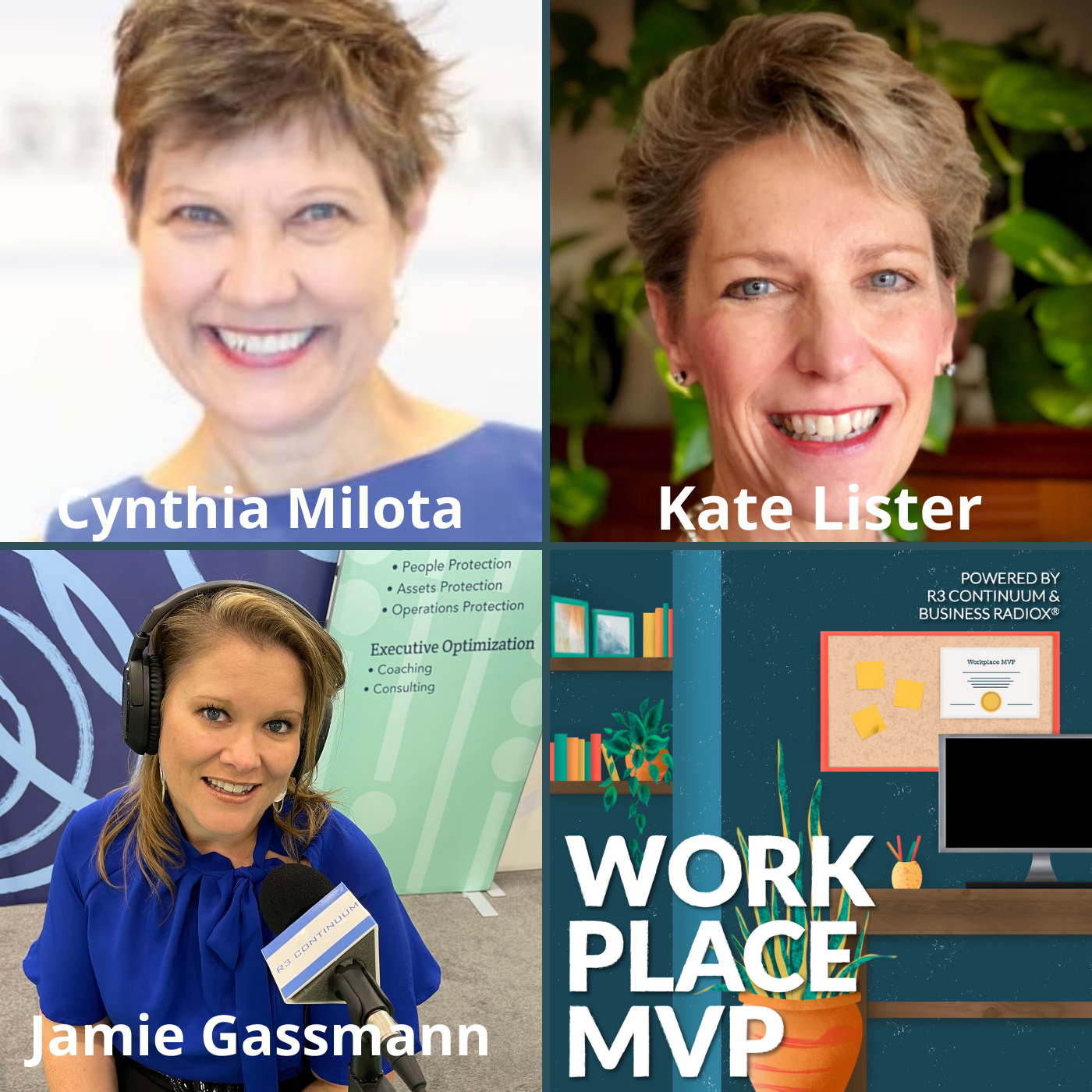
Josh Rock, Talent Acquisition Manager at Nuss Truck Group, and Jessica Miller-Merrell, CEO of Workology, had a lively conversation with host Jamie Gassmann about connecting with talent, going where the talent is, global HR issues as the workforce is remote, the Workology podcast, and much more. Workplace MVP is underwritten and presented by R3 Continuum and produced by the Minneapolis-St.Paul Studio of Business RadioX®.

This show was originally broadcast live from the 2021 SHRM Annual Conference held at the Las Vegas Convention Center in Las Vegas, Nevada.

Josh Rock, Talent Acquisition Manager at Nuss Truck Group Inc.

Josh Rock, Talent Acquisition Manager at Nuss Truck Group Inc.

After nearly a decade in recruiting with healthcare companies, Josh Rock moved the Nuss Truck Group as their Talent Acquisition Manager.

Josh holds a degree from the University of Minnesota-Duluth and is an active alum. He is the recipient of the 2001 Sieur du Luth Award Winner, given for the highest level of involvement and service to the university community.

LinkedIn | Twitter

Nuss Truck Group

With eight locations in the midwest, Nuss Truck & Equipment is proud to carry the best lines of trucks, trailers, and construction equipment. Their sales and service teams are highly trained to deliver and maintain the right truck or machine for your application to ensure maximum productivity and efficiency. You and your business can rely on Nuss.

Company website | LinkedIn

Jessica Miller-Merrell, SHRM-SCP, SPHR, CEO & Founder, Workology

Jessica Miller-Merrell, SHRM-SCP, SPHR, CEO & Founder, Workology

Jessica Miller-Merrell is the Founder of Workology, a workplace resource for HR, recruiting professionals and business leaders. The site was listed twice as a top 75 career resource by Forbes Magazine. Jessica is the president and CEO of Xceptional HR, a human capital strategy and consulting agency, and a published author of Tweet This! Jessica is listed by Forbes as a top 50 social media power user. Because of vast industry expertise and knowledge, Jessica’s professional opinions and expertise are sought after and sourced by publications and media including: the Economist, Forbes, CIO Magazine, CBS, Entrepreneur Magazine, and SHRM’s HR Magazine.

LinkedIn | Facebook | Twitter | Instagram

Workology

Workology is a destination for the disruptive workplace leader discussing trends, tools, and case studies for HR, recruiting professionals, and business leaders. The site and community are designed for those who are tired of the status quo and are compelled to change and transform not just their organization but the world of work and the human capital industry. If you are interested in contributing, please click here. If you are interested in advertising, click here.

We reach a half-million HR and Recruiting leaders each month with our website, newsletters, and podcasts. Workology and its community are founded and managed by XceptionalHR Consulting. XceptionalHR Consulting is a workplace consulting company focused on developing resources, training, and content for HR, Recruiting, and Workplace Leaders.

Workology and Xceptional HR Consulting is led by our Founder and Chief Innovation Officer, Jessica Miller-Merrell. She’s available for speaking, consulting, writing and research opportunities. If you are interested in advertising opportunities, visit our advertising page.

Company website | LinkedIn | Twitter | Instagram

About Workplace MVP

Every day, around the world, organizations of all sizes face disruptive events and situations. Within those workplaces are everyday heroes in human resources, risk management, security, business continuity, and the C-suite. They don’t call themselves heroes though. On the contrary, they simply show up every day, laboring for the well-being of employees in their care, readying the workplace for and planning responses to disruption. This show, Workplace MVP, confers on these heroes the designation they deserve, Workplace MVP (Most Valuable Professionals), and gives them the forum to tell their story. As you hear their experiences, you will learn first-hand, real-life approaches to readying the workplace, responses to crisis situations, and overcoming challenges of disruption. Visit our show archive here.

Workplace MVP Host Jamie Gassmann

Jamie Gassmann, Host, “Workplace MVP”

In addition to serving as the host to the Workplace MVP podcast, Jamie Gassmann is the Director of Marketing at R3 Continuum (R3c). Collectively, she has more than fourteen years of marketing experience. Across her tenure, she has experience working in and with various industries including banking, real estate, retail, crisis management, insurance, business continuity, and more. She holds a Bachelor of Science Degree in Mass Communications with special interest in Advertising and Public Relations and a Master of Business Administration from Paseka School of Business, Minnesota State University.

R3 Continuum

R3 Continuum is a global leader in workplace behavioral health and security solutions. R3c helps ensure the psychological and physical safety of organizations and their people in today’s ever-changing and often unpredictable world. Through their continuum of tailored solutions, including evaluations, crisis response, executive optimization, protective services, and more, they help organizations maintain and cultivate a workplace of wellbeing so that their people can thrive. Learn more about R3c at www.r3c.com.

Company website | LinkedIn | Facebook | Twitter

TRANSCRIPT

Intro: [00:00:03] Broadcasting live from the SHRM 2021 Conference at the Las Vegas Convention Center, it’s time for Workplace MVP. Brought to you by R3 Continuum, a global leader in workplace behavioral health, crisis, and, security solutions. Now, here’s your host.

Jamie Gassmann: [00:00:17] Hey, everyone. Jamie Gassmann here, your host of Workplace MVP. And we are broadcasting our episode today from the SHRM 2021 Conference in Las Vegas, Nevada. And I have two wonderful guests with me today. I’ve got Josh Rock from Truck & Equipment. He’s the Talent Acquisition Manager. And from Workology, I have Jessica Miller- Merrell, Founder and Chief Innovation Officer. Welcome to the show you two.

Josh Rock: [00:00:48] Thanks, Jamie.

Jessica Miller- Merrell: [00:00:49] Awesome to be here.

Jamie Gassmann: [00:00:50] So, I’m going to start out by talking with Josh, because I know you’ve kind of waited a little bit to connect with us on our show.

Josh Rock: [00:00:57] We’ve been chatting here and hanging out, and talking with your guys online via Twitter, you know, here at the show, just having a good time.

Jamie Gassmann: [00:01:02] Awesome. So, tell us a little bit about your background, how you got into talent acquisition, and just share with our audience a little bit more about you.

Josh Rock: [00:01:10] So, if any of your listeners are familiar with the cartoon Family Circus, where the kids would walk around a lawn and the whole yard and they have the dotted line, that’s how I fell into H.R. I started going to school for law, of all things. I fell into advertising for 16 years. And through that, I did ten years of recruitment advertising and trying to be a trusted advisor to H.R. professionals across the country and across the globe. And left that organization and went to work for my clients to teach them what I was doing outside but then within their walls, give them back control, back their budget, back to the power, instead of putting it in the hands of agencies. And I’ve been doing it ever since.

Josh Rock: [00:01:47] I went to work for a couple of health care organizations. I recently left a 36,000 employee health care group out of Minneapolis to join a truck dealership of nine locations, with now almost 400 employees. So, a huge paradigm shift, not only in the industry, but employee size, to lead their talent acquisition efforts and just have a good time every day.

Jamie Gassmann: [00:02:08] Yeah. Wow. And, obviously, now, hiring concerns and issues, how has that impacted the truck industry that you’re in?

Josh Rock: [00:02:17] You know, there’s impact. There’s not enough students going into the heavy duty diesel programs. And so, connecting with the schools, helping build curriculum to make that a more profitable venture for not only the schools, but the students, obviously. So, that way, we can continue to drive great business for us and then our customers. So, it’s going full cycle. It’s not just opening up a requisition, posting it on Indeed or any other partner just to wait for candidates to come in. We’ve had to be more holistic in our approach of finding, acquiring, and hiring great talent.

Jamie Gassmann: [00:02:51] Right. And so, talk to me a little bit about that approach. Are you going out to actual universities? You live in the St. Cloud area, I know there’s a big university in St. Cloud. I know I’ve been talking to you a little bit already. I know you’re a big Duluth.

Josh Rock: [00:03:06] Go Bulldogs.

Jessica Miller- Merrell: [00:03:07] Go bulldogs.

Josh Rock: [00:03:08] Shane here from R3, he’s also a UMD Bulldog. We connected on Twitter because of our alumni association with UMD. So, yeah, I mean, I actively go out. Even in a post-pandemic world, I’m out visiting colleges already. I was down in Dallas recently. I was down in Denver. I’m now here going out and talking to students about how their careers could go well in diesel truck repair. And, you know, finding great ways about, not only who we are, what we do, and how they can grow with us, and set themselves up and maybe their families up for great success through careers in this venture. So, it’s fun.

Jamie Gassmann: [00:03:45] Yeah. Absolutely. And that’s such an impressionable age, right? I’m guessing you’re really looking at all students. But, you know, when you’ve got somebody who’s going through their program and they’re trying to figure out what they want to be when they get older, you can really have an impact. So, if another employer was looking at taking that same approach, you know, what are some kind of your advice, if you will, on how you would approach that?

Josh Rock: [00:04:13] You know, for me, it’s all about engagement. And engagement comes in different forms. Through active questioning of the people that you’re talking to, whether it’s a student or a student’s parents, about where do they want to take their career, where do they want to go, what do they want to achieve. You know, those things, layering those questions in to create a picture, a painting, of what that could be. And then, finding your organization – like mine here at Nuss – where that resonates. For some, it’s time off. For some, it’s paid. For some, it’s advancement.

Josh Rock: [00:04:46] You’re going to find those threads just in genuine conversation and questions with those students or alumni from the schools or parents looking at how do I help set my child up for a successful career. And then, just finding those threads. It doesn’t have to be, “Hey, we’re offering a $10,000 sign on bonus and you can start tomorrow.” It’s more about what do you want? And then, finding that lane of the value proposition from your organization and going through that.

Jamie Gassmann: [00:05:15] Yeah. Well, and it’s interesting you mentioned, like, finding that lane and kind of having that engagement opportunity. Because, you know, I’ve read job descriptions over my career. I think we all have.

Josh Rock: [00:05:25] Unfortunately.

Jamie Gassmann: [00:05:25] And sometimes you’re left going, “I don’t get it. I don’t know. Maybe I like this job, but there was one word that kind of threw me off.” So, it’s almost like how can that employer step out of that job description. How can they empower themselves to take that different approach? What’s worked for you?

Josh Rock: [00:05:43] So, a great story. I had a local – or, actually, a national job board reach out to me and say,” Hey Josh. You need to invite people through our portal to apply for your positions.” And I told him he was wrong. Straight up I said, “You know what? Actually, what I need to do is when somebody voices interest in one of our jobs through your portal, I’m going to call them. I’m going to text them and say, ‘Hey, you know what? I found your information. I want to talk about where your career is going and what we can do together.'”

Josh Rock: [00:06:14] Because my job is not a gatekeeper. There’s a lot of recruiters, unfortunately, in the United States that act like gatekeepers. Actually, what you should be doing is being dance partners. Helping them navigate to their career within your organization. And so, instead, what I told this vendor, I said, “What I’m going to do is you guys are going to bring me information. I’m going to digest that information. I’m going to actively reach out to them on my own, through my own information, my own tools and technology and say, ‘Hey, I’m interested in you because. Now, I want you to join me because.'” Instead of saying, “Hey, do this for me, do this for me.” Because they’re getting the information. They’re holding the power. No.

Jamie Gassmann: [00:06:52] No. I need to hold the power, right?

Josh Rock: [00:06:53] Exactly. Exactly. I’m the customer. I need to do what works for me. Not what works for you and your technology. And what you can then put on your advertisement to say you had this many candidates to customers. That doesn’t matter to me. What matters to me is that Paul Alexander from Sheboygan, Wisconsin applied for my position, has an interest in my role, was in the U.S. Military, now wants to come work for me. I want to get him on the phone as quickly as I can and find a way that maybe this is an opportunity for him to drive his career forward.

Jamie Gassmann: [00:07:24] And so, you’re very active on social media with the Twitter, because that’s how you found us.

Josh Rock: [00:07:30] Kind of. Yeah.

Jamie Gassmann: [00:07:31] So, talk to me how do you leverage Twitter or how do you leverage LinkedIn? How do you empower even Facebook, potentially, I’m guessing, could be a really good avenue for you? How do you leverage that in a way that’s helped you to get good candidates to reach out to?

Josh Rock: [00:07:45] So, in my current industry in transportation, I’m not going to find a ton of diesel technicians on Twitter. It’s just not going to happen. I can do it on Facebook. I can do searches by putting in diesel technology. I can look for trucking. I can do keywords to find people that have similar similarities or have posted something about it, and then reach out to them that way.

Josh Rock: [00:08:07] In my previous industry in health care, I could do it much easier. Because I could go on to Pinterest and find a female in Atlanta, Georgia looking at recipes for something. But she also posted on her Pinterest wall scrubs that she really liked.

Jamie Gassmann: [00:08:25] Interesting.

Josh Rock: [00:08:25] And I can say, “Oh, I see you’re a nurse. We’ve got opportunities here in Minnesota. What’s your specialty? Are you an ED? Are you in transplant?” Strike up a conversation, say, “Hey, you know what? I work for this organization. We have this many openings. I’ve got these many hospitals, depending upon the kind of community you want to be in.” I can do those types of things that way.

Josh Rock: [00:08:40] You can do a lot of different things on social channels based on what somebody is interested in. It doesn’t have to be just the resume on LinkedIn or that they’re looking for a job that they posted on Twitter. That stuff’s easy. You can do that really quickly. But sometimes it’s just as simple as finding that moment in time post about what they liked and then find the correlations. It takes time. It’s sourcing. It’s active sourcing. But you can find really good talent.

Jamie Gassmann: [00:09:07] Yeah. And sometimes going out of the script of, like, this role helps you to kind of get that engagement that you’ve been mentioning.

Josh Rock: [00:09:15] Well, you talked about social media so a great story about SHRM. We’re sitting here in Las Vegas. We all flew here Tuesday, Wednesday, Thursday. And I’m on the flight from Minneapolis here and I’m sitting by four people in my row. I’m like, “Hey, are any of you guys going to the SHRM Conference?” All four of them said yes. I said, “Anybody staying at Resorts World, the new Conrad Hotel?” It’s where I’m staying. By the way, if you haven’t been to Las Vegas’s brand new hotel, it’s fantastic. There’s their plug. I love those guys. It’s good.

Josh Rock: [00:09:45] But this young man, his name is Ethan. He’s from Minneapolis. He was sitting with his mom. And they’re like, “Yeah. We’re staying there too.” I said, Well, why don’t we ride share? Save each other some money. Maybe we could put it on gambling, or food, or something like that later on.” Come to find out he’s a senior at a local college back in Minnesota looking to, you know, build upon his career. And I said, “Are you on social media?” “Well, yeah. I’m on Twitter.” I said, “Well, here. We’re going to do something while we’re in the car.”

Josh Rock: [00:10:08] So, I took a photo, tagged him in a post. I said, “Hey, all my SHRM social influencers, I want you to meet Ethan. All H.R. leaders here at SHRM, I want you to meet Ethan. He’s looking to start his career in the next year. Let’s connect with him, and help build him, and get to network with him, and connect with him.” He has over 50 followers now. When I talked to him, he was at 18 on the flight. He’s over 50. And these are all H.R. leaders. These are people that could offer him an opportunity, could give him tips towards connecting with other leaders. It’s endless.

Josh Rock: [00:10:36] We’re walking through the hall and I run into Ethan. We’re sitting with the other students. I said, “Hey, Ethan. How’s it going for you so far?” “It’s great. I met these people. I got invited to these dinners. I’m going to this social. All because you shared who I am at this conference.”

Josh Rock: [00:10:50] And there’s this young lady from University of Tennessee, Knoxville, sitting behind me. Her name is Stephanie. And I said, “Stephanie, can we blow you up on Twitter too?” “Sure.” The next thing you know, people are following Stephanie. Her dad followed me on Twitter yesterday and said, “Thanks for expanding my daughter’s networking world.” These are the things that we do.

Jamie Gassmann: [00:11:09] I love that.

Josh Rock: [00:11:09] You know, it may not benefit me as a recruiter at Nuss. But if I can give back, I’m happy to do it. And that’s part of the reason of one of the things we talked about earlier before coming on the show was #JobHuntChat. We’ve been doing a job advice chat on Twitter for over 11 years every Monday night. I don’t do it because I’m getting paid off it. I do it because I enjoy it. I love to give back, because if one little bit allows somebody to leverage their career, provide for themselves or their family, good karma for the day.

Jamie Gassmann: [00:11:36] Yeah. Absolutely. And engagement is the key. Not being afraid to strike up that conversation and start just, you know, getting to know people. I mean, it’s amazing what you can find out and what you can learn, which is obviously what we’re doing today, which is great.

Josh Rock: [00:11:48] Exactly.

Jamie Gassmann: [00:11:48] Well, thank you so much, Josh. It has been great chatting with you. I’m going to shift over to our next guest from Workology, Jessica Miller-Merrell. Welcome. She’s the Founder and Chief Innovation Officer. Talk to us, Jessica, how did you get into this?

Jessica Miller- Merrell: [00:12:03] I started a blog. I started a blog in 2005. It was a job search blog originally called Blogging for Jobs. And I was an H.R. director at a Fortune 200 company, and I was trying to fill inside/outside sales positions and supporting roles. And I started the blog to be able to build a pipeline of candidates. And it’s now became a business. I have a team of 11 and we provide resources, information, support, and training for H.R. And workplace leaders. We reach over 800,000 every single month. It’s amazing.

Jamie Gassmann: [00:12:37] That is amazing. Fantastic. So, now, you’re here at SHRM, obviously, probably been here multiple times. How do you leverage this conference for building on maybe your content or learning about what’s kind of trending within the H.R. space?

Jessica Miller- Merrell: [00:12:53] So, it’s my first conference in – what? – two-and-a-half years or whenever the world stopped, right? So, it’s been great to hug people, shake hands, masked of course. But just connect in person and have a conversation that doesn’t involve screens. I mean, my business is predominantly online, and the work that we do is mostly digital. But it’s nice to just be able to randomly connect with somebody on Twitter or in a session and then learn more about what they’re doing and what’s important to them.

Jessica Miller- Merrell: [00:13:27] I have a lot of access to different resources information in people. And so, for me, it’s all about connecting those people to other people or those other resources. And sometimes the best way to do that is in crazy atmosphere like this, where we’re all kind of the same, but we’re all different, but we all have that thing in common which is working and loving the human resources industry.

Jamie Gassmann: [00:13:49] Absolutely. And so, for content, I mean, you mentioned it’s kind of a resource hub. You’ve got different elements that help H.R. leaders. I got to imagine you’ve just been pushing a ton of content out over this last year helping them with how to guide through the pandemic and others. So, how do you create that and how are they accessing it?

Jessica Miller- Merrell: [00:14:09] So, predominantly, there’s four different ways that H.R. leaders get access to our resources. We do have a number of trainings. We provide H.R. certification prep for HRCI and SHRM certification resources that’s all digital and on demand. And then, we also have a membership that allows H.R. leaders to get access to our library of resources, connect with me, connect with others. And then, be able to just have aggravated customized content delivered to them or training or information. So, training is number one.

Jessica Miller- Merrell: [00:14:39] And then, we also have a newsletter that reaches over 500,000 H.R. leaders at Workology every single week. And we organize and deliver similar stuff – like, the Biden press conference will probably be on our next newsletter – just providing information to help them do their jobs better and to spend less time searching the internet for it, like we just deliver it out for them. So, I’m like their trusted friend that knows all the things over cocktails or coffee that’s like, “Here’s everything that you need.”

Jessica Miller- Merrell: [00:15:09] We also have a podcast ourselves. It’s called the Workology Podcast, over seven years going. So, that’s been a lot of fun. And then, of course, my blog, and we have over 8,000 articles and information there. It’s this living embodiment and a testament to how vast, and interesting, and amazing the human resource industry really is.

Jamie Gassmann: [00:15:30] Yeah. Well, there’s so many different facets. You know, there’s the legal side, regulation, talent and acquisition that we talked about, and there’s also the hiring part of it. So, one part of HR that’s your favorite that gets you just all giddy, what would that be?

Jessica Miller- Merrell: [00:15:48] Right now, I’m really fascinated with the evolution of the chief human resources and the chief people officer. I was telling Nicole as we were waiting that we have been doing a podcast series, really, since the beginning of the pandemic that’s just focused on talking to CHROs, and understanding what has their attention right now, maybe an initiative or program. What’s their HR organization like? How do they talk to their executive team? And it has been amazing. We’ve talked to companies that are, you know, Fortune 5 CHROs. And then, we’ve talked to companies that have 57 employees that are chief people officers in their organization.

Jessica Miller- Merrell: [00:16:29] So, it’s really interesting to see how that’s evolving and changing. And then, the kinds of resources that we need as CHROS, regardless of the company size, need, tools, information technology is really evolving. And it definitely has increased in the speed with the pandemic, because we have to be able to be more flexible and pivot and agile. And that’s different than it ever has before because we don’t know – well, we always didn’t know what tomorrow is going to be. But we really don’t know what tomorrow is going to be in the workplace.

Jamie Gassmann: [00:17:02] Yeah. Even still today, right?

Jessica Miller- Merrell: [00:17:04] Yeah. Every single day, it’s changing. And, especially if you’re a global H.R. leader, if you have a global organization, maybe you’re in the U.S., maybe you’re in India, maybe you have a team in Pakistan or Mexico, you have to be able to lead not just to your core team or your team in the U.S., but you have to be able to support those employees everywhere.

Jessica Miller- Merrell: [00:17:25] And now that so many people are remote, you might have Susan who decides to move to Portugal and now you’re faced with a whole another challenge as the head of HR. Like, how do I set a payroll and taxes and all these things for Susan who didn’t tell me for the last eight months that she relocated to Portugal. And this is happening a lot. I’m seeing it. I’m getting emails, DMs, text messages of, you know, freaked out H.R. personnel like, “I need help.” And I have been drowning for the last two years. And now here’s another just pivot or thing that we have to become an expert on and support the organization and our employees in.

Jamie Gassmann: [00:18:06] That’s fascinating. Because when they move, everything changes in terms of their employment. So, I mean, how an employee doesn’t share that with them, but you know [inaudible].

Jessica Miller- Merrell: [00:18:15] Well, they wanted to work remotely. I think the pandemic, like for me, I’ve had to really sit back and think about my life. And I think a lot of people have taken stock, like what is really important, what matters. And I hope that if you haven’t done that as an H.R. leader, you are doing that. And then, also, thinking about who you want to be in 18 months, two years or five years. Not just who you want to be as a person to your family and your friends, but as a leader in an organization supporting the business.

Jessica Miller- Merrell: [00:18:44] And employees are making decisions and saying, “Hey, you know what? YOLO. I’m moving to Portugal. And right now everybody’s working from home, so nobody knows because I can do it over Zoom.” But they are just thinking about, “Okay. My boss, I just want to show them, him or her, that I can do this here. Or, you know, they’re probably never going to know.” They’re not thinking about the things that we have to deal with as H.R. leaders, employment laws, payroll, taxes, all the fun things. And, now, it’s not just somebody moving from Texas to Minnesota, it is somebody moving from Texas to Portugal or, you know, wherever else.

Jamie Gassmann: [00:19:21] So, quick question, because I had not heard that yet, but it makes total sense when you bring that up that an employee would do that because why not, right? How can an employer be proactive in saying, “If you’ve got ideas of doing this,” I mean, is there a way they can gently put that out there without maybe showing that they’re encouraging, but maybe is there communication that can be done?

Jessica Miller- Merrell: [00:19:44] It starts with a culture of trust and conversation. So, H.R. leaders – and they should be. And I know we have got a lot on our plate, so I hear you because you’re going to groan when I make this recommendation – you need to be investing as much time as you can talking to your people. And I don’t mean your managers and your frontline managers and your executive team. I mean, your actual people. And so, that means popping into Zoom calls, scheduling appointments, scheduling meetings, in-person or remote, however you’re going to do it. But the majority of your time should be spent with the people in the organization, and building that trust, and leading by example.

Jessica Miller- Merrell: [00:20:23] So that when Susan decides to relocate to Portugal, she sees us as a human being, Josh or Jessica, “I might need to let my boss or Josh or Jess know what’s going on.” Just to check in.

Jessica Miller- Merrell: [00:20:38] I think a lot of times we just look at someone who is in a position of management or leadership as a logo, not necessarily a person. So, as H.R. leaders, we need to lead with the humanity side of things. Go out there and build those relationships, set the tone for the rest of the organization.

Jessica Miller- Merrell: [00:20:57] So that when Susan has a question because she’s probably just like, you know, no news is good news, right? So, she hasn’t heard anything about it, so she thinks it’s okay. But then, we can start to have those conversations because if there’s one person that’s done it in your organization, I guarantee you, there’s probably 15, 25, 45 more.

Jessica Miller- Merrell: [00:21:17] I mean, personally, my goal is to move to Belize. I want to be, like, part time. I want to be in Texas. I want to be in Belize and wherever. My husband, he’s a little bit different. He just wants to relocate to wherever my daughter goes to college. Which I’m like, “Okay. We can own a house. But I’m moving to the Caribbean somewhere. I’m going to be snorkeling on my days off and when I’m not podcasting or speaking.”

Jamie Gassmann: [00:21:41] Like, this is going to happen.

Jessica Miller- Merrell: [00:21:41] Yeah. And I think a lot of other people are wanting to do this. But if we don’t plan or prepare or at least consider this might be happening, because if it’s not moving to Belize or Portugal, it is mental health conversations or PTSD, or I’m having a lot of financial problems right now, or other things. This year has been hard for so many people, and so they’re just grabbing onto the one thing that brings them some happiness and just fills up their cup. And for Susan, that’s moving to Portugal. For me, it is Belize. And I’m going to talk about it on every podcast. I am moving there because I’m going to manifest and make it happen.

Jamie Gassmann: [00:22:21] Yeah. And then, you’ll do a podcast on living in Belize.

Jessica Miller- Merrell: [00:22:24] Yeah. There’ll be a whole blog and a business. It’s going to be a whole thing.

Jamie Gassmann: [00:22:26] I can see it now. Fantastic. No, I’m glad we’re having that conversation, and I know you said people will groan at that. But you’re not the first person that I’ve talked to at the show that has mentioned that, about that senior, that executive level leadership needing to have more visibility kind of with employees. And that is a struggle, right? Because some of them are feeling the burn. They’re trying to balance all the shifts and turns and keep that organization strategically running forward.

Jessica Miller- Merrell: [00:22:52] It’s the reason that I’m here to connect with the H.R. community. Because I’m providing resources just like H.R. leaders are providing their employees and organizations resources. If I don’t invest the time, like H.R. leaders are not investing time in their people, I might go somewhere else and start writing about Alaska when I should be writing about Belize or whatever resource that I’m providing. I want to make sure that we’re connected together and that I’m able to do my job and what my superpower is.

Jessica Miller- Merrell: [00:23:22] Just like as H.R. leaders, we need to be able to do that. And that’s really that human connection piece that people focus first. That is so important right now in moving forward, because we will continue to be a hybrid workplace, whether our organizational leaders want it or not. The employees are speaking, and they are walking out of jobs, and making decisions, or moving to Portugal and not telling their organization because it is such an important thing. It doesn’t mean that working remotely is less productive, but it allows for some work-life flexibility that they maybe didn’t have in the same way before.

Jamie Gassmann: [00:24:03] Yeah. And are so appreciating that aspect over the last year of that work-life, you know, they don’t want to give that up so they’re really holding on to it.

Jessica Miller- Merrell: [00:24:10] As someone who has worked remotely for over 12 years, it’s good and bad. I do like going to the office because I can leave my work at work.

Jamie Gassmann: [00:24:22] Yeah. Yeah. Absolutely. Well, if anybody wanted to get a hold of you, Jessica, how would they do that? Or how would they access Workology so they can get those great resources that you talked about?

Jessica Miller- Merrell: [00:24:34] workology.com is the best place to go. If you want to connect with me one-on-one, all the places and all the social medias. Facebook is great. Twitter is excellent. Linkedin, you can connect with me there as well. You can also send me an email, you know, if you’re not on the social medias. And that’s jessica@workology.com. I’m here to support H.R. leaders and help empower them to be better at their jobs and also better at just life. I mean, this is all that we have. That’s one opportunity. So, we should make the best of it.

Jamie Gassmann: [00:25:09] Absolutely. I love that. And, Josh, if they wanted to get in touch with you, how would they get in touch with you?

Josh Rock: [00:25:14] Easy. You can find me on LinkedIn, just like many other H.R. pros that are here. Twitter, JRock96, the hockey number follows me everywhere I go. But if you’re looking for a job or seeking advice, you can always check out #JobHuntChat Monday nights 8:00 p.m. Central, we’ll be there. And you can contribute if you’re an H.R. pro and you want to help job seekers. Or if you have other job seekers that want to know more, tell them to jump on Twitter and follow us along.

Jamie Gassmann: [00:25:43] Awesome. Well, thank you both for joining us. It’s been great to chat with you.

Josh Rock: [00:25:46] Awesome. Thanks, Jamie.


Tagged With: find talented people, hiring, Human Resources, Jamie Gassmann, Jessica Miller-Merrell, Josh Rock, Nuss Truck Group, SHRM 2021, talent acquisition, Workology, Workplace MVP

Workplace MVP LIVE from SHRM 2021: Nicole Roberts, MVAH Partners and John Baldino, Humareso

September 22, 2021 by John Ray

Humareso
Minneapolis St. Paul Studio
Workplace MVP LIVE from SHRM 2021: Nicole Roberts, MVAH Partners and John Baldino, Humareso
Loading
00:00 /
RSS Feed
Share
Link
Embed

Download file

Humareso

Workplace MVP LIVE from SHRM 2021: Nicole Roberts, MVAH Partners and John Baldino, Humareso

Nicole Roberts with MVAH Partners and John Baldino with Humareso joined host Jamie Gassmann on this live edition of Workplace MVP. Nicole spoke to the steps her company took to support their workforce, employee, and HR burnout, and how to be there for each other. John Baldino shared his work at Humareso, the HR consulting firm he founded, the unprecedented pace of change in compensation, and much more. Workplace MVP is underwritten and presented by R3 Continuum and produced by the Minneapolis-St.Paul Studio of Business RadioX®.

This show was originally broadcast live from the 2021 SHRM Annual Conference held at the Las Vegas Convention Center in Las Vegas, Nevada.

Nicole Roberts, SHRM-CP, PHR, Vice President of People & Culture, MVAH Partners

Nicole Roberts, VP of People & Culture, MVAH Partners

Nicole Roberts is Vice President of People & Culture for MVAH Partners. She started in March, 2020, three days before the pandemic affected their business. She went right to work figuring out how to help employees feel supported and finding solutions such as Support Link, a 14 touch point EAP service to employees.

Nicole started in human resources in 2004.

LinkedIn

MVAH Partners

MVAH began developing affordable housing in 1993. Since then they have developed more than 7,000 affordable housing units ranging across a broad spectrum of housing types: multi-story apartment properties for families and seniors, villas, single-family developments, rehabs, adaptive reuse of existing buildings in large and small communities. MVAH has a singular focus on developing quality affordable housing for those who need it most. This includes over 100 affordable housing properties in 15 states.

MVAH provides development services for their own long-term ownership as well as for other companies. MVAH values long-term partnerships and relationships with non-profits and public agencies and will continue to try to build relationships like those with others.

Company website

John Baldino, MSHRD SPHR SHRM-SCP, President, Humareso

John Baldino, MSHRD SPHR SHRM-SCP, President, Humareso

John is an SPHR, SHRM-SCP certified professional with 25+ years of HR experience in strategic planning, organizational development, coaching, leadership development, training, curriculum development, compensation analyses, employee relations, policies & procedures, business development, payroll & benefits administration.

He delivers keynote addresses across the US and in the international community. John was the 2012 Delaware Valley (Philadelphia Metropolitan Area) HR Person of the Year.

John started Humareso in 2012. He has a Master’s in Human Resource Development from Villanova.

LinkedIn

Humareso

Humareso is able to strategize with your company and develop plans to manage talent, recruit for skill gaps based on employee inventories, assess markets for growth, develop long-range succession plans and influence a culture of enthusiastic buy-in. Humareso handles all facets of employee engagement and business development. Humareso provides HR solutions and administration for small businesses trying to manage budget and growth.

Humareso sits strategically to support an organization’s vital talent needs. Talent is what they believe in cultivating. They look to drive organizational health through true employee engagement, strategic workforce planning and invested management training. Having a culture that values people, policy, and performance in the right measures is the differential needed to stand apart from other organizations. Whether your organization has 10 or 100,000 employees, dynamic human resources will build corporate strength and recognize talent contribution.

Company website | LinkedIn


About Workplace MVP

Every day, around the world, organizations of all sizes face disruptive events and situations. Within those workplaces are everyday heroes in human resources, risk management, security, business continuity, and the C-suite. They don’t call themselves heroes though. On the contrary, they simply show up every day, laboring for the well-being of employees in their care, readying the workplace for and planning responses to disruption. This show, Workplace MVP, confers on these heroes the designation they deserve, Workplace MVP (Most Valuable Professionals), and gives them the forum to tell their story. As you hear their experiences, you will learn first-hand, real-life approaches to readying the workplace, responses to crisis situations, and overcoming challenges of disruption. Visit our show archive here.

Workplace MVP Host Jamie Gassmann

Jamie Gassmann, Host, “Workplace MVP”

In addition to serving as the host to the Workplace MVP podcast, Jamie Gassmann is the Director of Marketing at R3 Continuum (R3c). Collectively, she has more than fourteen years of marketing experience. Across her tenure, she has experience working in and with various industries including banking, real estate, retail, crisis management, insurance, business continuity, and more. She holds a Bachelor of Science Degree in Mass Communications with special interest in Advertising and Public Relations and a Master of Business Administration from Paseka School of Business, Minnesota State University.

R3 Continuum

R3 Continuum is a global leader in workplace behavioral health and security solutions. R3c helps ensure the psychological and physical safety of organizations and their people in today’s ever-changing and often unpredictable world. Through their continuum of tailored solutions, including evaluations, crisis response, executive optimization, protective services, and more, they help organizations maintain and cultivate a workplace of wellbeing so that their people can thrive. Learn more about R3c at www.r3c.com.

Company website | LinkedIn | Facebook | Twitter

TRANSCRIPT

Jamie Gassmann: [00:00:07] Well, I think you hire veterans. I’m going to totally play off of that. So, I watch for my little clues of good convo.

Nicole Roberts: [00:00:17] I love it.

Jamie Gassmann: [00:00:17] Awesome.

Male Speaker: [00:00:18] So, let’s do a real quick soundcheck. I want to make sure we’re good. Nicole, pull that mic in, if you will, just a little bit. Awesome. And, these are directional mics, meaning if you’re back here or off to the side, you can hear the difference. So, we want you in there loud and proud. So, Nicole, just give your name and company affiliation.

Nicole Roberts: [00:00:36] Nicole Roberts.

Male Speaker: [00:00:38] Perfect. John?

John Baldino: [00:00:39] John Baldino.

Male Speaker: [00:00:42] Awesome. Okay. I think we’re ready to go.

Jamie Gassmann: [00:00:45] I think we are.

Male Speaker: [00:00:45] Okay.

Jamie Gassmann: [00:00:46] Awesome.

Male Speaker: [00:00:46] Here we go. You all have fun.

Intro: [00:00:53] Broadcasting live from the SHRM 2021 Conference at the Las Vegas Convention Center, it’s time for Workplace MVP. Brought to you by R3 Continuum, a global leader in workplace behavioral health, crisis, and security solutions. Now, here’s your host.

Jamie Gassmann: [00:01:12] Hello, everyone. Jamie Gassmann, your host here for Workplace MVP. And I am broadcasting from SHRM 2021 in Las Vegas, Nevada. And really exciting. I have three guests for this episode. So, I’m going to start out with our first guest, Nicole Roberts, who’s Vice President of People & Culture from MVAH Partners. Welcome to the show, Nicole.

Nicole Roberts: [00:01:34] Thank you very much.

Jamie Gassmann: [00:01:35] So, why don’t we start out with you telling us a little bit about your H.R. background, how you came into H.R., and a little bit about MVAH partners?

Nicole Roberts: [00:01:45] Sure. So, I started in H.R. in 2004 and started out in benefits and then moved into employee relations and was a department of one a couple of times and really just moved into more amplified roles throughout my career until I got into, you know, executive leadership and building and developing teams. And, currently, my role as vice president at People & Culture, I am able to set the strategy and be really intentional in how we want to show up and how we want to take the best care of our people and to really be intentional with our culture.

Jamie Gassmann: [00:02:24] Awesome. So, over the last year and looking at going now into 2021 and I know it’s hard to not talk about over the last year because H.R. has been impacted so much. And, from a cultural perspective, what have been some of the challenges that you’ve seen that you’ve had to get really strategic and kind of overcome over that last year?

Nicole Roberts: [00:02:42] So, when I started with MVAH partners, my first day was March 9 and as we know the kind of beginning, so to speak, of the impact of the pandemic on our cultures and on our workplaces was March 11. So, the traditional aspect and the traditional approach of, you know, get in, learn the culture, learn the people, all that, like all of that went out the window. And it was, what is most important to the business? How can we best support our people?

Nicole Roberts: [00:03:12] We are in 15 states and we have 100 locations. And, because we’re affordable housing, it’s essential that people have a place to live. So, we have not stopped through the entire pandemic. And so, our major focuses were making sure that our people who were working, you know, at front lines, so to speak, really felt supported and that we see you and we understand and we acknowledge that you are right there public-facing.

Nicole Roberts: [00:03:40] And, one of the things that we’ve done recently is we implemented Core Links…. It’s called SupportLink. And, what it is is it is what I would call an EAP on steroids. And, it is a 14-touchpoint EAP program. So, it really just meets people where they are if it’s an app, a phone number, a website. And, it really just was one of those benefits where we looked at it and we said we really can’t afford not to do this.

Jamie Gassmann: [00:04:13] Yeah. It’s almost like giving them access to something in the way that they want to receive that information. And, what kind of difference have you seen within the employees, maybe from a utilization perspective, by implementing something different like that?

Nicole Roberts: [00:04:25] So, one of the main things is during the pandemic, there were so many people that were reaching out and saying, “Hey, does our benefit program cover mental health? Do we have tech support? Do we have phone calls? How many visits is it?” And all of that.

Nicole Roberts: [00:04:41] And so, even before our renewal of 10/1, I started to talk to our broker and, like, what can we do? What solutions are out there? And so, we looked at four or five different companies and we decided that SupportLlink was perfect for us because it met people where they were and we’ve gotten so much positive feedback from that that not only do you have access to the care, but it is a licensed professional that you speak to the first time that you call.

Jamie Gassmann: [00:05:09] Right. So, they’re more accessible. Fantastic. So, you know, as you kind of look at it towards the end of this year, are there any things that you’re seeing now that we’ve kind of seen this increase in cases again? You know, are there challenges that are resurfacing that you’re having to navigate? And, what is that looking like for your organization?

Nicole Roberts: [00:05:27] Well, for us, so we went through, you know, state-by-state, and in some states, it was municipality-by-municipality, where the guidance was different. The regulations were different. And, there was kind of this feeling like, okay now we can breathe and then right back into it. So, for us, it’s really just making sure that, you know, the compassion fatigue doesn’t get to a point of complete burnout and exhaustion, and that people, you know, feel supported and that there’s – our biggest thing really is making sure that they have as much information as possible so that there’s not that additional stress of the uncertainty to go with it.

Jamie Gassmann: [00:06:13] Right. Well, and isn’t compassion fatigue and burnout becoming some of the most common things we’re hearing across multiple industries but particularly that frontline, kind of, essential worker, like here we go again kind of environments.

Jamie Gassmann: [00:06:28] So, when how – and I know you’ve got this program. But are there other things that you’re seeing with that compassion fatigue and burnout? And, are there ways that employers or H.R. people can be looking at and doing things to help out?

Nicole Roberts: [00:06:41] I think one thing that we really need to pay attention to as well is it’s not just our employees, it’s H.R. I mean, part of how you build resilience is you have that period of rebuilding and we just aren’t having that in this case. I mean, some of us have been, you know, just full steam ahead for so long that we haven’t even stopped to feel authentically how this actually is for us.

Nicole Roberts: [00:07:10] And so, I think from that aspect, we just need to really grant each other a lot of grace and we need to make sure that we’re caring for one another coming into situations with that positive intent, that benefit of the doubt, and asking, how are you? Not just what do you need and what can I get for you? And, you know, from a benefit perspective or anything like that. But really at the personal level, how are you? How are you dealing with this? Do you have kids that all of a sudden have been sent back home? Or, you know, what’s going on with you? And, I think that the biggest thing that we can do as H.R. is to not only be there for our employees but for each other.

Jamie Gassmann: [00:07:51] Oh, that’s a fantastic way, and SHRM is a great place to be able to do that. Reconnect with colleagues you probably haven’t seen for a while. Well, thanks, Nicole.

Jamie Gassmann: [00:08:00] We’re going to go into our next guest here, John Baldino from Humareso.

John Baldino: [00:08:06] Excellent.

Jamie Gassmann: [00:08:06] Did I say it right?

John Baldino: [00:08:08] Yes. Humareso.

Jamie Gassmann: [00:08:09] I tried really hard to punch that up for you.

John Baldino: [00:08:12] You did a great job. Fantastic.

Jamie Gassmann: [00:08:13] So, John, why don’t we start out with you introducing yourself, telling us a little bit about your background, tell us a little bit about Humareso, and kind of give us a little bit of background on you.

John Baldino: [00:08:22] Sure. So, I’m one of the old ones here at SHRM. Yes, I’m getting head nods. This month actually is my 30th year in human resources. And, I started out in personnel because that’s kind of what we used to be known as. And, I started out in the retail world and my career just, you know, evolved from there and leadership development and organizational design and development and H.R. stuff right over the past 30 years.

John Baldino: [00:08:51] And so, Humareso is my H.R. consulting firm that I began a little over nine years ago. And, it’s been a great ride. I mean, really, it’s been a lot of fun because we do a lot of great work with organizations of various sizes across the country, a little bit international. And so, from startups, which is really exciting, right, to watch all the startups trying to get things going, but also to organizations that are enterprise, multistate, multilevel organizations that have some of the same problems that startups have and trying to figure out a way to be customized in the approach to handle those problems because of their specific details. But there’s a lot of similar applications, right. So, it’s fun for our team to get to be a part of those things.

Jamie Gassmann: [00:09:32] Yeah. And, I imagine as a consulting firm, you see everything.

John Baldino: [00:09:34] I mean, unfortunately.

Jamie Gassmann: [00:09:37] Like everything.

John Baldino: [00:09:37] Everything. And videos. Yes.

Jamie Gassmann: [00:09:40] Okay, so everything.

John Baldino: [00:09:41] Thank you. Yes.

Jamie Gassmann: [00:09:41] Have to add that, right. So, talk to me. What are some of the, you know, kind of, you know, from the – I’m looking at the last year because I think that that’s really top of mind for a lot of people. But, you know, what are some of the things that you’ve seen in the consulting world that have been growing, kind of trending concerns or challenges that H.R. teams or employers have faced?

John Baldino: [00:10:01] Yeah. I mean, obviously, and then Nicole just did a great job talking about COVID response and you can’t ignore that. But there’s some residual in that as well. And so, we’re seeing some difficulty when it comes to talent management and talent acquisition. And, we’re also seeing difficulty when it comes to compensation management. How much do we pay people now? You know, the rate of pay is changing so quickly. I just was sharing this with somebody else.

John Baldino: [00:10:25] You know, again, I’ve been doing this a long time. There’s some great data that’s done from a compensation analytics standpoint that for the first time with some of the large providers of compensation data, they’re putting their hands up and saying, “We are so sorry. We’ve never experienced this kind of turnover in comp data. We can’t keep up.”

Jamie Gassmann: [00:10:46] Wow.

John Baldino: [00:10:47] And, that’s absolutely unusual. Like, never have I seen this before.

John Baldino: [00:10:52] Yeah. Well, in the rate of change, just in the worlds, I mean, you know, constant in terms of what people are needing.

John Baldino: [00:10:59] Yes.

Jamie Gassmann: [00:11:00] So, it’s very interesting. Have you seen, you know, obviously, from your experience, in nine years of doing consulting, are there some trends that might have been starting prior to COVID? So, you already saw the writing on the wall, but due to COVID just completely sped up the rate of the change.

John Baldino: [00:11:18] Yeah. You know, I know that we’ve talked a lot about work from home obviously over the past year. And, what I would say is, pre-pandemic there already were organizations trying to figure out how to be a bit more nimble and flexible. And so, this concept, I mean, even in my own organization in Humareso, not everyone came into the office every day, not every – and they weren’t hired in the city where the corporate offices are.

John Baldino: [00:11:41] So, we already had a sense of that. But, obviously, when COVID hit and that became much more of the conversation, for some organizations, it was, you know, a little too late. They could have been planned a bit better when it came to flexibility. But for some, they really saw this as the push to make things cleaner when it comes to employee experience and to finding talent. I mean, we’re seeing organizations that are – so, our corporate offices are in the Philadelphia area and we’re seeing companies, for example in Philadelphia, that are hiring their first employees this past year in San Francisco, in Chicago, in Austin, Texas, and, you know, Topeka, Kansas, because they can.

Jamie Gassmann: [00:12:28] Yeah.

John Baldino: [00:12:29] Right? And that’s kind of exciting.

Jamie Gassmann: [00:12:30] Right. Your candidate pool just expanded across the globe, basically.

John Baldino: [00:12:33] And, it needed to.

Jamie Gassmann: [00:12:34] Yeah. Absolutely.

John Baldino: [00:12:34] We needed it, too.

Jamie Gassmann: [00:12:35] But on top of that, though, how does that impact compensation? I know you mentioned the compensation numbers are off the charts. But when you live like, let’s say you have, you know, your offices are in somewhere remote Nebraska, but you’re trying to hire somebody in San Francisco. I mean, that rate of pay is like a night and day. How how does an employer navigate that?

John Baldino: [00:12:54] It’s a great question. I’m going to say they navigate it not very well and usually –

Jamie Gassmann: [00:13:00] And they need to hire you, right? Yeah. They need to call John.

John Baldino: [00:13:05] And, you know, then you get into – there’s a couple of different ways to approach it. There is a philosophy around the job is worth what the job is worth. Because that’s what you’re paying for is the skill sets and knowledge to be applied to get that work done. And that is worth X, whatever that is.

John Baldino: [00:13:21] Some organizations will do that as sort of a baseline, but then you have sort of cost of living add-ons put onto it to say, you know, living in San Francisco, as an example, or San Diego, it’s a lot different than living in Lincoln, Nebraska, right? It’s a little different for a variety of reasons. But compensation being one. And so, we can do the offset from a cost of living adjustment if we needed to. This way you’re not committing yourself to something beyond.

John Baldino: [00:13:46] But I will say there are employers that are, I hope, listening, right, who have put themselves in a corner to say we will never hire anybody from California because we don’t want to pay X, Y, or Z, we don’t want to do this and that. And I get that. But I would also say we’re in a time where talent is at a premium. So, you can’t afford to be that snotty about where you’ll take people, right. It’s not someone’s fault that they grew up in California. That’s where they are.

Jamie Gassmann: [00:14:14] It’s where they live. And then, the question comes to is with the shortage of employers or employees, right, that strain on employers trying to find that talent, you know, to your point, you know, sometimes they can’t really be overly picky, but, you know, how – they got to get into a certain mindset. So, if you were going to coach somebody and can kind of consult on how they should be approaching that, especially in today’s hiring world, what would be some of those key things you would remind them to do?

John Baldino: [00:14:42] Yeah. That’s really a good question. So, one of the things that I like to do and our team does is the hiring manager or executive who is having these thoughts. We try to say to them, okay, we’re going to take out a piece of paper, right old school, grab a pen, old school, and write down the top 10 tasks that you have in your job. Your job.

John Baldino: [00:15:05] And, you know, we’ll watch them write these 10. And, I’ll say, “When you started here, could you do these 10?” And, really have a heart-to-heart about – right. Well, I could do six out of 10 of these. I couldn’t do all six as well as I do them now, but I had an understanding. Okay. If I had your resume today, you wouldn’t let me hire you for that job. Right?

Jamie Gassmann: [00:15:28] That just got deep.

John Baldino: [00:15:29] Right.

Jamie Gassmann: [00:15:30] That’s awesome.

John Baldino: [00:15:31] You’re welcome. But you caused them to have a reality check. Like, you’ve been in your role, maybe for six years. You’re very comfortable. You know what you’re doing. You’ve had job enlargement and enrichment and have grown with it. You are not looking at it with those same eyes anymore to remember. You need to do that for this person who is bringing – you know, one of the things, and I know that this is going to come up probably a little bit later, too. But when you put out these job postings with these qualifications or what’s there, we have some people in our country who will look at these qualifications and self-select out.

John Baldino: [00:16:04] The statistics are off the chart about that. Look, if there are 10 bullet points of what you need and you’re a dude, you’ll do, too. If I have two out of 10, I’m 100% qualified for this job. That’s what you think. Women will be somewhere between seven and eight bullet points, and so they’ll self-select out of. And, if you’re in the military, the statistics are almost 10 out of 10.

John Baldino: [00:16:23] Come on, right. So, what are we doing that’s precluding people from thinking that they can be a part of it? Take a look at what you’re advertising, which you’re asking for a little bit deeper. And, remember, you can grow into some things. It’s not a day one.

Jamie Gassmann: [00:16:37] Right. And I love that perspective because that’s so true. And, I’ve heard that before, where men, you know, sometimes are, “Yeah, I’m fully qualified. I’m applying for it.” And, women tend to kind of take a step back.

John Baldino: [00:16:48] Yes.

Jamie Gassmann: [00:16:48] And so, if you were going to give advice to a candidate, you know, what – you know, who is looking at those job descriptions and going, “Oh my gosh, can I do this? Can I not do this?” What would be some of the advice you would give to them that helps them to identify that “No, you can do that.” You know, you may need to grow into some of these skills. But how should they present themselves or how should they kind of build up maybe some of that confidence?

John Baldino: [00:17:10] I think that when you look at it from a talent sourcing standpoint, finding people and connecting with someone to exactly your point, and saying and listening to someone say, “You know, I can’t do this. I see what you sent me. I can’t do this,” I’ll often say, “Oh, this is just, you know, a barometer of some of what’s needed. Let me ask you a question.” And then, I’ll ask something that seems disconnected and I’ll listen to someone share success that they’ve had and how they’ve been rewarded for that success. And, I’ll say fascinating. By doing whatever that is, X, the skills you demonstrated were a B and C. Funny how that will likely apply to these couple of areas that you’re saying I don’t have that. You have it all over the place, especially, I mean, again, something that might be common to some people listening is returning. If you’ve made a choice as a woman to take some time off to raise kids and you want to come back into the workforce and you say, “Well, I haven’t been working.” “Well, what have you been doing at home? I’d like to know?” Right? Because I have three kids and I know, right?

Jamie Gassmann: [00:18:18] I am a mom. I know.

John Baldino: [00:18:20] But you know what I mean?

Jamie Gassmann: [00:18:21] Yes. Absolutely. And to be able to say to you, “Did you manage the household? How about a budget?” Right? “Did you plan menus? Like, did you get your kids where they needed to be on time?” You know, maybe they weren’t dressed, but they were there on time. Like, whatever it is to just sort of laugh with it, be a little tongue in cheek about it, but remind them you demonstrated skill sets just in a different arena.

Jamie Gassmann: [00:18:42] Yeah, but they’re transferable.

John Baldino: [00:18:43] And, they are totally transferable.

Jamie Gassmann: [00:18:45] Yeah. Yeah. And so, one additional question because I am just kind of thinking about it. You know, in today’s candidate market and to some of the points you made about when people are reading those job descriptions and kind of self-selecting out, you know, do you think some of that comes down to how employers are writing that job description and how can they write them better that helps the candidates understand, “No, I can do that job,” or that may not be required on day one but we’re going to be looking for you to expand into that. I mean, is there’s something that they can be doing to maybe kind of get a little bit more innovative so candidates understand?

John Baldino: [00:19:20] Absolutely. I mean, I think there are a couple of things that come to mind. Number one, stop going to Google and, you know, downloading a job description, for Pete’s sake. I mean, I appreciate the accessibility but it’s the wrong way to approach it, right. Should I go on Google for your job description? You know, CEO, CFO, because you may not make it. Because it depends on the one that I’ll download.

Jamie Gassmann: [00:19:44] Right, right.

John Baldino: [00:19:45] The other thing I would say is, be creative in the way in which you can vet for qualifications. Use video. Use Facetime, right? You can do pre-records. You can do lives. We should be a lot more comfortable with those things as a result of this past year, right, to your point, earlier, like what has changed. Be creative in that way, too.

John Baldino: [00:20:05] I recently was working on a marketing specialist at our organization and the key to entry was, where’s your link to your portfolio, your online portfolio? Just send the link. I don’t – well, I have to get my resume together. No, thank you.

Jamie Gassmann: [00:20:21] Yeah. I want to see actual work.

John Baldino: [00:20:23] Right. No thank you. I’ll get the resume later. I need your name and email address. Can I just have the link to your – are you sure? Yeah. Actually, I know, I run the company. I’m pretty sure. Just sent it to me. It’s okay.

Jamie Gassmann: [00:20:36] Are you questioning me? Are you questioning me? Really?

John Baldino: [00:20:40] And, you do that and someone is – the interesting thing about that in that particular role is that’s their bread and butter.

Jamie Gassmann: [00:20:47] Yeah.

John Baldino: [00:20:48] The creative, innovative approach to design and development. So, start with the best foot forward. Why wouldn’t you want to?

Jamie Gassmann: [00:20:55] Yeah. What is your LinkedIn look like and is you have a picture on it? I mean, that’s –

John Baldino: [00:20:59] Right.

Jamie Gassmann: [00:20:59] Honestly, I mean, that’s going to be – you’re going to be expected to do that and so –

John Baldino: [00:21:03] Right.

Jamie Gassmann: [00:21:03] Fantastic. Yeah.

John Baldino: [00:21:03] So, to have that kind of different approach, I would say for employers, look at the job, and I know we’re going to hear some more about that from a talent acquisition standpoint. But what does this job ask for? Is there are different ways that you can find out that information than just a sheet of paper?

Jamie Gassmann: [00:21:15] Yeah. Fantastic. Well, thanks so much for joining us, John.

John Baldino: [00:21:18] Thank you.

Jamie Gassmann: [00:21:21] So, yeah, thank you for joining us. Sorry, I just got a little bit distracted from the show floor here. Lots of people coming by. Very exciting. But we’re going to – if anybody needs to get a hold of you, John, how would they do that if they wanted to get in touch with you and reach out for more information?

John Baldino: [00:21:37] So, certainly the website @humareso.com, H-U-M-A-R-E-S-O .com. And you can connect with me there, or I’m on Twitter all over the place @bjalive, like not dead, but alive, jbalive.

Jamie Gassmann: [00:21:51] Fascinating. Well, it’s been great to have you on the show. Thank you so much. And, thanks to Nicole as well who did have to step away because obviously, these are working, you know, H.R. folks trying to get all their education here at the show. And, if you are in the area, stop by Booth 4076 and check out R3 Continuum’s booth, our show sponsor. And, thank you again. Have a great day.


Tagged With: Affordable housing, HR Consultant, Human Resources, Humareso, Jamie Gassmann, John Baldino, MVAH Partners, Nicole Roberts, R3 Continuum, SHRM 2021, Workplace MVP

William Lorentz, Wiz Graphics

September 22, 2021 by John Ray

Wiz Graphics
Minneapolis St. Paul Business Radio
William Lorentz, Wiz Graphics
Loading
00:00 /
RSS Feed
Share
Link
Embed

Download file

Wiz Graphics

William Lorentz, Wiz Graphics (Minneapolis-St. Paul Business Radio, Episode 19)

If you own a home service or some other business with vehicles on the road every day, there’s a proven way to make your phone ring:  eye-catching vehicle graphics! William Lorentz and his team prove it with the work they’ve done on countless vehicles in the state of Minnesota. William joined host John Ray to discuss the extensive corporate branding experience he brings to his work with small and medium sized businesses, why he prefers to work with owner-operated firms, success stories, and much more. Minneapolis-St. Paul Business Radio is produced virtually by the Minneapolis St. Paul studio of Business RadioX®.

Wiz Graphics

Have your logo designed by a professional- it’s important.  Your logo says a great deal about your company and will be the central theme to your branding for years to come.Wiz Graphics
Wiz Graphics knows what a quality logo needs to accomplish, and we understand the science of how things like color and copy affect perception.  They give you a simple 7 question survey which they use to create the initial concepts to run by you.  When they’re done, you get a style guide complete with different treatments of your awesome new logo.
If you’ve already got your branding in place and just need someone to arrange elements, just send us your resources and have your work done at a fraction of the cost of design!
Sometimes your logo just needs a little TLC, and their wizards are here for you.  They recreate, redraw, and reimagine logos for their customers all the time.
Is your logo dated?  Is it low-quality?  Does it represent your company or product poorly?  This is a serious issue that needs to be addressed but don’t worry.  They recreate, redesign, update and fix logos with issues all the time.
It could be your logo is decent but needs a little tweak to reach its potential.  Or maybe it is just time for a fresh start.

Company website | LinkedIn | Facebook

William Lorentz, Owner & Head Lizard, Wiz Graphics

William Lorentz, Owner and Head Wizard, Wiz Graphics
William Lorentz has worked in the advertising industry for his entire adult life.  His first art job came in high school when his art teacher recommended him to the people at the local hockey arena who needed someone to paint sponsors’ logos on Plexiglas lightbox faces.  He pursued a degree in graphic design and parlayed that into a 25+ year career in commercial graphics that culminated in the creation of Wiz Graphics – the ultimate graphics shop.
He preaches an ‘objective-based’ design approach in which a design’s aesthetic, copy, imagery, colors, and message all revolve around accomplishing a goal.  This design approach took off like wildfire because, well, it just works.  William is great at writing copy, communicating ideas visually, and understanding the art of subtext in advertising.  Today his work can be seen in stadiums, at the Mall of America, at convention centers, at trade shows, in businesses, and on countless vehicles.

LinkedIn


Minneapolis-St. Paul Business Radio is hosted by John Ray and produced virtually from the Minneapolis St. Paul studio of Business RadioX® .  You can find the full archive of shows by following this link. The show is available on all the major podcast apps, including Apple Podcasts, Spotify, Google, Amazon, iHeart Radio, Stitcher, TuneIn, and others.
Tagged With: Branding, design, graphic design, Minneapolis St Paul Business Radio, vehicle wraps, William Lorentz, Wiz Graphics

John Herbert, Herbert Legal Group

September 21, 2021 by John Ray

Business Beat
Business Beat
John Herbert, Herbert Legal Group
Loading
00:00 /
RSS Feed
Share
Link
Embed

Download file

Herbert Legal Group

Frazier & Deeter’s Business Beat:  John Herbert, Herbert Legal Group

John Herbert of Herbert Legal Group joined this edition of Business Beat with host Roger Lusby to discuss his legal and strategic advisory practice, both domestic and international. John shared what he sees with commercial real estate activity in North Fulton, his work on various investment projects in Africa, assisting international investors in buying U.S. real estate, and much more. Business Beat is presented by Alpharetta CPA firm Frazier & Deeter.

Herbert Legal Group

From the smallest start-up to the industry giant, legal solutions are no longer a luxury. Whether it is that one incident that requires intense legal representation or simply issues that arise naturally in the day-to-day business context, companies need a law firm that is on their side.Herbert Legal Group

Herbert Legal Group wants to be an integral member of your business team. Nothing splits up a team more than that unexplained, surprise invoice for services clients were not expecting, did not approve of, or did not understand. Time-based billing creates a wall of separation between team members which can hamper even the best working relationship. So Herbert Legal Group delivers solutions, not minutes.

Company website | LinkedIn

John Herbert, Principal, Herbert Legal Group

John Herbert, Principal, Herbert Legal Group

John Herbert has been practicing law since 1994. In 2013 he decided to transform my practice and the way legal services are delivered to small and medium-sized businesses.

He realized that he was missing out on opportunities because people were afraid to call out of fear that the clock would be running, and they would be hit with a huge bill for his time. At the same time, companies were missing critical legal services out of fear.

Herbert Legal Group’s biggest competition is not other law firms. Their biggest competition is business owners doing nothing. Herbert Legal will take that call. They will take that meeting. If they cannot offer you a solution during that time, then that time is on them. At least you will trust them enough to call them next time.

They are business owners just like you and understand the opportunities and challenges of building something lasting and important. HLG cannot commit to open-ended invoicing from their service providers either. They measure their resources and employ them in a way that creates value for the clients first and the company second. Sound familiar? They treat you the way you want to be treated.

LinkedIn

Frazier & Deeter

The Alpharetta office of Frazier & Deeter is home to a thriving CPA tax practice, a growing advisory practice and an Employee Benefit Plan Services group. CPAs and advisors in the Frazier & Deeter Alpharetta office serve clients across North Georgia and around the country with services such as personal tax planning, estate planning, business tax planning, business tax compliance, state and local tax planning, financial statement reviews, financial statement audits, employee benefit plan audits, internal audit outsourcing, cyber security, data privacy, SOX and other regulatory compliance, mergers and acquisitions and more. Alpharetta CPAs serve clients ranging from business owners and executives to large corporations.

Roger Lusby, Partner in Charge of Alpharetta office, Frazier & Deeter
Roger Lusby, Partner in Charge of the Alpharetta office of Frazier & Deeter

Roger Lusby, host of Frazier & Deeter’s Business Beat, is an Alpharetta CPA and Alpharetta Office Managing Partner for Frazier & Deeter. He is also a member of the Tax Department in charge of coordinating tax and accounting services for our clientele. His responsibilities include a review of a variety of tax returns with an emphasis in the individual, estate, and corporate areas. Client assistance is also provided in the areas of financial planning, executive compensation and stock option planning, estate and succession planning, international planning (FBAR, SFOP), health care, real estate, manufacturing, technology, and service companies.

You can find Frazier & Deeter on social media:

LinkedIn | Facebook | Twitter

An episode archive of Frazier & Deeter’s Business Beat can be found here.


Tagged With: Africa, business attorney, commercial real estate, commercial real estate investing, economic development africa, foreign investment in the U.S., foreign investors, Frazier & Deeter's Business Beat, Frazier and Deeter, Herbert Legal Group, investing in Africa, John Herbert, Roger Lusby

Workplace MVP LIVE from SHRM 2021: Tammy Worley, Adare Pharma Solutions

September 21, 2021 by John Ray

Tammy Worley Adare
Minneapolis St. Paul Studio
Workplace MVP LIVE from SHRM 2021: Tammy Worley, Adare Pharma Solutions
Loading
00:00 /
RSS Feed
Share
Link
Embed

Download file

Tammy Worley Adare

Workplace MVP LIVE from SHRM 2021: Tammy Worley, Adare Pharma Solutions

On this live edition of Workplace MVP, Adare Pharma Solutions Sr. HR Manager Tammy Worley related not only her path to HR but shared how the SHRM 2021 conference has reaffirmed her belief that the whole person comes to work. As she shared with host Jamie Gassmann, employees aren’t looking for another newsletter; they are looking for better communication and connection. Workplace MVP is underwritten and presented by R3 Continuum and produced by the Minneapolis-St.Paul Studio of Business RadioX®.

This show was originally broadcast live from the 2021 SHRM Annual Conference held at the Las Vegas Convention Center in Las Vegas, Nevada.

Tammy Worley, Sr. Manager, Human Resources – US, Adare Pharma Solutions

Tammy Worley, Sr. Manager, Human Resources – US, Adare Pharma Solutions

Tammy Worley fell in love with HR in 1996. She realized it combined her love of compassion for people and education. Tammy has been with Adare since 2017 and in 2020 became the Senior Manager of Human Resources in the US for Adare.


LinkedIn


Adare Pharma Solutions

Adare is a global specialized CDMO company with a long history of success from concept through commercialization. We use our unique combination of experience, proprietary capabilities, and resources to create meaningful products for our customers. Our ability to create differentiated drugs guides the identification and development of the novel products in our pipeline and our acquisition strategy. Our dedication to developing strong, collaborative partnerships provides significant advantages in competitive markets.

Company website

About Workplace MVP

Every day, around the world, organizations of all sizes face disruptive events and situations. Within those workplaces are everyday heroes in human resources, risk management, security, business continuity, and the C-suite. They don’t call themselves heroes though. On the contrary, they simply show up every day, laboring for the well-being of employees in their care, readying the workplace for and planning responses to disruption. This show, Workplace MVP, confers on these heroes the designation they deserve, Workplace MVP (Most Valuable Professionals), and gives them the forum to tell their story. As you hear their experiences, you will learn first-hand, real-life approaches to readying the workplace, responses to crisis situations, and overcoming challenges of disruption. Visit our show archive here.

Workplace MVP Host Jamie Gassmann

Jamie Gassmann, Host, “Workplace MVP”

In addition to serving as the host to the Workplace MVP podcast, Jamie Gassmann is the Director of Marketing at R3 Continuum (R3c). Collectively, she has more than fourteen years of marketing experience. Across her tenure, she has experience working in and with various industries including banking, real estate, retail, crisis management, insurance, business continuity, and more. She holds a Bachelor of Science Degree in Mass Communications with special interest in Advertising and Public Relations and a Master of Business Administration from Paseka School of Business, Minnesota State University.
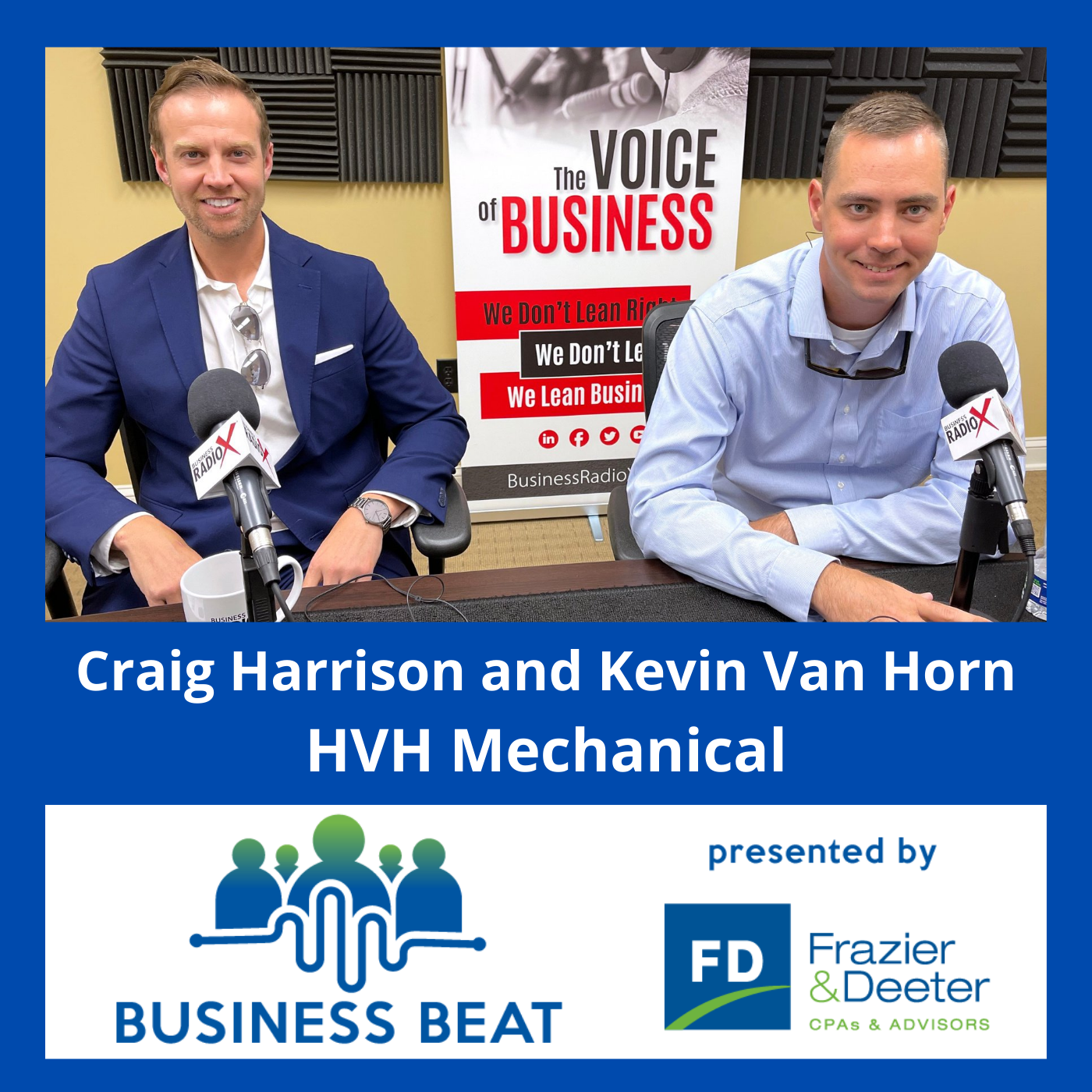
R3 Continuum

R3 Continuum is a global leader in workplace behavioral health and security solutions. R3c helps ensure the psychological and physical safety of organizations and their people in today’s ever-changing and often unpredictable world. Through their continuum of tailored solutions, including evaluations, crisis response, executive optimization, protective services, and more, they help organizations maintain and cultivate a workplace of wellbeing so that their people can thrive. Learn more about R3c at www.r3c.com.

Company website | LinkedIn | Facebook | Twitter

TRANSCRIPT

Intro: [00:00:03] Broadcasting live from the SHRM 2021 Conference at the Las Vegas Convention Center, it’s time for Workplace MVP. Brought to you by R3 Continuum, a global leader in workplace behavioral health, crisis, and security solutions. Now, here’s your host.

Jamie Gassmann : [00:00:22] Hello, everyone. Jamie Gassmann, your host of Workplace MVP, and we are broadcasting from the SHRM 2021 Conference in Las Vegas, Nevada. And, with me today is Tammy Worley from Adare Pharmaceuticals. Tammy is the senior H.R. manager for the U.S. region. Welcome to the show, Tammy.

Tammy Worley: [00:00:44] Thank you. I’m happy to be here.

Jamie Gassmann : [00:00:46] So, Tammy, tell me a little bit about your career journey and how you came to be the senior H.R. manager for Adare Pharmaceuticals.

Tammy Worley: [00:00:54] Wow. What a journey. I started out in a manufacturing company that was a glass factory and I was asked to volunteer to help to rewrite an employee handbook. And, from there, I fell in love with H.R. and I have been in it since 1996.

Jamie Gassmann : [00:01:14] Wow. So, all from being a volunteer to writing an HR handbook. Fantastic. How did you navigate that task?

Tammy Worley: [00:01:22] It was a lot of work, a lot of talking to people, a lot of typing because back then we did not have word processors like we have today so there was a lot of manual typing. And, it was communicating with a lot of people and having to collaborate with different groups. And, I found that when I was a child, I wanted to be a teacher and this started that journey where I could be a customer service person without having to be a teacher of young children. And, I also, at one point, wanted to be in adult care, and I knew that from my wearing my heart on my sleeve that I wasn’t going to be probably good in that arena. And, when I volunteered in H.R., it just was like, I think I found my home.

Jamie Gassmann : [00:02:19] It’s amazing. Well, it definitely brings those two, kind of, passions that you had as a child into one career opportunity because H.R. definitely does that. There’s definitely that educational component to it as an H.R. leader within an organization, and you really have to have that compassion for people, too. So, that’s fantastic.

Tammy Worley: [00:02:38] Yeah. And, it was just a way that, you know, if in the adult care, elder care, you know, you’re going to be looking at the loss of individuals. Not that I don’t see a loss of people, but it’s on a different scale. But it’s a way for me to connect with people, do all I can to support them because I heard it during the session, the general session, it’s the whole person comes to work, and I heard Chipotle mentioned that. And, that has actually been a belief of mine for as long as I can remember. The whole person comes to work and the whole person goes home. And how can you ask people to differentiate from that? And I can’t because I am the whole person that comes to work and I’m the whole person that goes home. So, how can I ask people to be different from me? I can’t.

Jamie Gassmann : [00:03:37] That’s a fantastic takeaway. I love that. And it’s true. You got to look – it’s all of it. It’s the physical. It’s the psychological. You got to look at that entire person and how you’re supporting them.

Jamie Gassmann : [00:03:48] So, having that belief and then hearing that in one of the pre-conferences, oh, actually, it was the general session, was like, opening keynote. Is there something that you are taking back that’s different than what you might have been doing already, or is it going to enhance some of the things that you maybe have done already in your role?

Tammy Worley: [00:04:06] I think it’s an affirmation that what I have believed all along is accurate. You know, I’m a person entering the H.R. arena in the ’90s, and that was a whole different world. And Brian spoke about, you know from Chipotle, that there was one person who said a new normal. And, I agree with him that our new normal is changes daily.

Jamie Gassmann : [00:04:41] Absolutely.

Tammy Worley: [00:04:42] And, as an H.R. professional how do we recognize that that new normal is going to change daily but we answer to different people who don’t necessarily agree that the new normal is daily. I love the fact that he, as a high-level leader within the organization, recognizes that.

Jamie Gassmann : [00:05:01] Yeah. That’s fascinating because, you know, it’s a new normal at work daily. It’s also a new normal at home daily for some of these employees. So, they’re bringing that on their sleeve when they’re coming into that workplace. They’re trying to balance the challenges that they’re experiencing on their daily at home with the challenges they face daily at work. So, what a great takeaway.

Jamie Gassmann : [00:05:20] And so, you know, how, you know – from your perspective, if you’re going to be looking at, like, maybe a senior leader in your organization that you’re having to kind of talk about that with, you know, how would you approach that?

Tammy Worley: [00:05:39] Well, it’s really a cultural difference. We went from an autocratic organization, most organizations are autocratic, to more of a demographic or democracy, if you will, asking employees. What do you think? What do you feel? Where do you want to see things? Having focus groups.

Tammy Worley: [00:06:01] I mean a lot of organizations were breaking that ground and other organizations were not jumping onto that bandwagon. They were still in a this is what we have to do and we’re very controlled environment and it’s black and white but now we’re in a gray environment. We have remote workers and these remote workers want to stay remote. We had to introduce flexible work environments because we have people that are taking care of their children at home.

Tammy Worley: [00:06:37] And so, that new normal became a different demographics for us, and we had to rethink how we administer policies, how we administer compassion, how we integrate communication, you know. So, it was a divide and conquer, but at the same time thinking about how do we re-engage people because engagement is important. And I know every pulse survey every company does, it comes out communication. But employees are not asking for us to give us another newsletter. They’re not asking us to send another email. They’re not asking for another video. They’re asking for us to bridge the gap from department to department. And, they want to bridge that gap of communication.

Tammy Worley: [00:07:33] And so, when you have remote workers, there’s a delay in communication. It’s not real-time anymore. So, we have to figure out how to engage the employees to recognize that if you’re asking for email, you’re asking for teams meetings or Skype meetings or whatever the case may be, that we’re no longer asking employees, send me an IM, let’s open up the door to give me a call, and have a real-life conversation because I think email has become the norm communication and there’s something lost in that.

Tammy Worley: [00:08:15] Because I know from my own personal experience. I send an email. I can be short and sweet. And then, the person reads that, and then they interpret something different than the message I wanted to present. If we had just picked up the phone and called that person or said let me call you on teams or IM or Skype, we could have eliminated all of that confusion. But I think that the bridge is communicating interdepartmentally and silos have been built, and we’ve got to get the silos back down.

Jamie Gassmann : [00:08:50] Oh, I think that’s such a great point. I always say things are lost in translation and in email. And on top of that, you know, people are, they’re burned out. They’re stressed and they’re getting a lot of emails from a lot of different sources. And so, I would agree with you. Like, they’re probably skimming it, you know, and not really reading it. And, you know, it’s kind of like when you hear communication with when you talk and listen to someone like that active listening skills. It’s almost like you have to have active reading skills. And, when you’ve got so many things coming at you, I could see where some of those employees are struggling with that, which does create kind of some divides because – and those silos are hard to break down once they’re formed.

Tammy Worley: [00:09:32] Yes, and we have, in the past, you could just get up from your chair and go to the other office and talk to the person if you were not understanding. We can’t do that so much today, right?

Jamie Gassmann : [00:09:45] Right. Yeah.

Tammy Worley: [00:09:45] Because their office is at their home where the dog is barking, the cats walking across their keyboard, or the child is crying in the background. And so, we need to remember that.

Jamie Gassmann : [00:10:00] Wow. That sounded like a school bell here. Speaking of interruptions during different work and events. I’m not sure what that was, but, yeah, no, absolutely there are a lot more distractions sometimes with people working from home.

Jamie Gassmann : [00:10:16] So, in your opinion, if an organization is going to, you know – that’s a cultural thing, right, and I’m always a firm believer that cultural changes and things of that nature start at the top and then they kind of, you know, move their way through the organization. And so, as leaders, do you think that it has to be like a program implemented or is it something that you just have to get that buy-in from your executive team or your leaders and kind of saying this is now the expectation culturally that you pick up the phone and you make that phone call.

Tammy Worley: [00:10:51] I think it has to be a top-down.

Jamie Gassmann : [00:10:53] Absolutely.

Tammy Worley: [00:10:54] Because I find that our executive leadership is leading from an email. And, they do town halls, they do the pulse surveys, they do all of that. But it’s still disengaged, right? It’s not personable. Where is the personable touch to that?

Tammy Worley: [00:11:15] So, our organization is trying to do more onboarding, calling, welcoming the person to the organization from a one-on-one standpoint, and then asking them, what would you like to see differently? And then, we are actively looking to make changes based on that critique. So, that feedback is important to us. But I think there’s a lot of work that still needs to be done from the top down.

Jamie Gassmann : [00:11:43] Yeah. Interesting. I know it’s – I heard one time from an executive leader that making rounds on the floor to check in on people just to see how they’re doing, like building that into your day. It’s almost like you got to find a way to do that virtually, you know, whether it’s joining in on a team meeting. That’s not a town hall but, like, kind of individual department team meetings just to kind of show that face and let them know that you’re there and you care.

Tammy Worley: [00:12:10] Yeah. But when you have an essential workforce, they have to be there day in and day out. And then, you’ve identified those people that are not essential to the day-to-day operation. And, I almost guarantee you that’s been H.R. folks, customer service folks, maybe finance, and maybe even your individual site leadership people that don’t have to be there on a day-to-day basis. How do we get them to reengage to do as you’re pointed out to walk on that floor? Because I’m sorry, I can take my phone out there and I can video. That’s not the same. It’s not an engagement activity.

Tammy Worley: [00:12:54] So, we have to get them back to the workforce and realize that their presence is this key to every essential employee to be there. Because for me, even when I was told I was not an essential employee, I still came to the site almost every day. Why? Because I’m H.R. My title is human resource manager. How can I take the human out of the resource? And so, I still came to the site because they needed to know that I cared enough to be there, that you had to expose yourself every day to be there on-site. I had to be there too because you have questions. And, how am I supposed to answer those questions remotely from an email? Send me an email. For employees that are still using flip phones and don’t understand the email system. So, I came on site because I felt like it was my job to still include the human in the resource that we provide because are we not a customer service?

Jamie Gassmann : [00:14:02] Yeah. Absolutely. Like an internal customer service. Love that point of you’re the human in the resource. That’s fantastic. So, now, I know this is your first SHRM that you’ve attended.

Tammy Worley: [00:14:14] Yes.

Jamie Gassmann : [00:14:15] And so far, obviously, it sounds like you’re getting some great pointers from the presentations.

Tammy Worley: [00:14:21] I love it.

Jamie Gassmann : [00:14:21] So, are there any other topics or exciting presentations you’re looking forward to attending over the next few days?

Tammy Worley: [00:14:28] The Michael Phelps is really interesting to me. A couple of years ago I really wanted Adare to change their EAP benefits and we promoted a new EAP benefit plan and I have noticed over the last year we had more utilization of that. And, it’s a very – it’s a big, passionate part of being a human resource department is providing that resource.

Tammy Worley: [00:14:54] And, I knew a couple of years ago, actually I would say almost five years ago I had an employee who lost her spouse. And, she went to use our EAP benefits and she struggled finding a counselor. That was not acceptable to me because she needed real-time assistance. And, our plan that we had in place at that time was what we want to call like “free benefit,” but it didn’t provide real benefit, real-time benefit. And so, I promoted and we utilized putting in a real-life, live online help that they can get immediately for EAP benefits. And, I have noticed an increase in the utilization of our benefits, not just from our employees but their families, and we opened up that door to our EAP benefits to being anyone living in the household.

Tammy Worley: [00:15:59] So, we know that in this modern-day, it’s not just your spouse, you as an employee, and your children, but you might have a grandchild living with you. You might have a grandparent living with you. You might have parents living with you. And they may need help, too. And so, for me, an EAP benefit isn’t just about acknowledging our employee but acknowledging their home and who might need help in that home.

Jamie Gassmann : [00:16:31] Yeah. Going back to that whole person you mentioned earlier in the conversations. Great pointers. Great information. Well, I hope you get some wonderful sessions that you take some more great content from. And, I just really want to thank you for being on our show today and appreciate you stopping by the booth.

Jamie Gassmann : [00:16:50] For all those listeners listening in, we are at Booth 4076 here in the SHRM Conference. It’s our R3 Continuum’s booth, our show sponsor. And, thank you again. Enjoy the show.

Tammy Worley: [00:17:00] Thank you. So, I have enjoyed it and I hope that somebody will take something away from this, too.

Jamie Gassmann : [00:17:06] Wonderful. Appreciate it.


Tagged With: Adare Pharma Solutions, Human Resources, Jamie Gassmann, R3 Continuum, SHRM 2021, Tammy Worley, Workplace MVP

Workplace MVP LIVE from SHRM 2021: Michelle Raines, DeKalb County (Georgia) Board of Health

September 20, 2021 by John Ray

Michelle Raines
Minneapolis St. Paul Studio
Workplace MVP LIVE from SHRM 2021: Michelle Raines, DeKalb County (Georgia) Board of Health
Loading
00:00 /
RSS Feed
Share
Link
Embed

Download file

Michelle Raines

Workplace MVP LIVE from SHRM 2021:  Michelle Raines, DeKalb County (Georgia) Board of Health

On this live edition of Workplace MVP, Michelle Raines, Human Resources Director at the DeKalb County (Georgia) Board of Health shared with Jamie how they show appreciation to their employees, how they navigated (and still are) keeping the department staffed during COVID, and how they all work as a team.  Workplace MVP is underwritten and presented by R3 Continuum and produced by the Minneapolis-St.Paul Studio of Business RadioX®.

This show was originally broadcast live from the 2021 SHRM Annual Conference held at the Las Vegas Convention Center in Las Vegas, Nevada.

Michelle Raines, Human Resources Director at DeKalb County Board of Health

Michelle Raines, Human Resources, Dekalb County Board of Health

Michelle Raines began her Human Resources career in the hospitality industry and then moved into state government in Georgia. in 2018 she became Human Resources Director for the DeKalb County Board of Health.

LinkedIn


The DeKalb County (Georgia) Board of Health

The Board of Health works to protect and improve the health of those who live, work and play in DeKalb County.

DeKalb County’s most striking characteristic is the diversity of both its communities and its people. Although the county is mostly suburban, it includes an urban area (part of the city of Atlanta) as well as rural areas. Also, DeKalb’s more than 660,000 residents represent more ethnic groups than any other county in the southeastern United States.

The Board of Health continually strives to meet the varied health needs of all the residents of DeKalb County. However, they know that creating healthier communities involves what everyone does collectively to assure the conditions in which people can be healthy.

Website

About Workplace MVP

Every day, around the world, organizations of all sizes face disruptive events and situations. Within those workplaces are everyday heroes in human resources, risk management, security, business continuity, and the C-suite. They don’t call themselves heroes though. On the contrary, they simply show up every day, laboring for the well-being of employees in their care, readying the workplace for and planning responses to disruption. This show, Workplace MVP, confers on these heroes the designation they deserve, Workplace MVP (Most Valuable Professionals), and gives them the forum to tell their story. As you hear their experiences, you will learn first-hand, real-life approaches to readying the workplace, responses to crisis situations, and overcoming challenges of disruption. Visit our show archive here.

Workplace MVP Host Jamie Gassmann

Jamie Gassmann, Host, “Workplace MVP”

In addition to serving as the host to the Workplace MVP podcast, Jamie Gassmann is the Director of Marketing at R3 Continuum (R3c). Collectively, she has more than fourteen years of marketing experience. Across her tenure, she has experience working in and with various industries including banking, real estate, retail, crisis management, insurance, business continuity, and more. She holds a Bachelor of Science Degree in Mass Communications with special interest in Advertising and Public Relations and a Master of Business Administration from Paseka School of Business, Minnesota State University.
R3 Continuum

R3 Continuum is a global leader in workplace behavioral health and security solutions. R3c helps ensure the psychological and physical safety of organizations and their people in today’s ever-changing and often unpredictable world. Through their continuum of tailored solutions, including evaluations, crisis response, executive optimization, protective services, and more, they help organizations maintain and cultivate a workplace of wellbeing so that their people can thrive. Learn more about R3c at www.r3c.com.

Company website | LinkedIn | Facebook | Twitter

TRANSCRIPT

Intro: [00:00:02] Broadcasting live from the SHRM 2021 Conference at the Las Vegas Convention Center, it’s time for Workplace MVP. Brought to you by R3 Continuum, a global leader in workplace behavioral health, crisis, and security solutions. Now, here’s your host.

Jamie Gassmann: [00:00:21] Hey, everyone. Jamie Gassmann here, your host of Workplace MVP. And I am broadcasting from the SHRM 2021 Conference here in Las Vegas, Nevada. And with me today is Michelle Raines from DeKalb County, Georgia, Board of Health. Welcome to the show.

Michelle Raines: [00:00:38] Thank you for having me.

Jamie Gassmann: [00:00:40] So, tell us a little bit about your career journey and a little bit about what you do at the Board of Health.

Michelle Raines: [00:00:45] Okay. So, I began my career in H.R. back in ’93. I used to work for Marriott International for actual hotel, which if you can learn H.R. there, you can learn it anywhere.

Jamie Gassmann: [00:00:59] I like that. I can only imagine.

Michelle Raines: [00:01:01] Turnover is just off the chart. We literally had new employee orientation every week. So, I developed H.R. skills, training skills, and then I advanced. One of my coworkers, her daughter worked for the State of Georgia, and she told me about a training position. I applied and interviewed and I got that position. So, I was a trainer for about seven years, it used to be called Department of Human Resources for the State. Then, our director retired and they did some – they called it reorganizing. It was more like a hostile takeover. So then, they merged training and H.R. together, so then I got back into H.R.

Michelle Raines: [00:01:47] At the time, they made all trainers travel. I had a small two year old daughter, so traveling all the time wasn’t going to work. So, they said, “Well, the only job we have is class and compensation.” I said, “Well, sign me up.” So, I did that for about a year. Then, I moved on to another state position where I did more like consulting, workforce planning, succession planning. I would sit with different agencies and I was their consultant to work on their plan for their agency. That was required every year that they had to turn in a workforce development plan and succession plan to the State. So, I helped them do that.

Michelle Raines: [00:02:27] Then, we moved into – it’s called Eperformance, the performance management system that became electronic. And so, I was on the original charter team for that. So, I got some good training with that. And then, we went out throughout all the State of Georgia and trained everyone on how to use the new tool and how it worked. And so, I got recognized, and someone recruited me from another state agency to be their H.R. Generalist, so I did that. Then, the crash of 2009 happened.

Jamie Gassmann: [00:03:01] Yes. We remember that.

Michelle Raines: [00:03:03] So, I was laid off. So, you can get laid off in state employment, believe it or not. So, I was laid off, so I was out for about a year, a-year-and-a-half, and interviewed because I wanted to come back with the State. I had reached my ten years with [inaudible] with Georgia. And then, I came back in and the job posting looked just like my resume, so I applied. And sure enough, I got it within, like, a week or two. And I came back as an H.R. Manager, I did that for about five years. Then, transferred again to be a deputy director, I did that for three years. And then, DeKalb had a position for director, so I applied for that and I got that, now, I’ve been there since 2018.

Michelle Raines: [00:03:45] Fantastic. So, you really got kind of a well-rounded résumé.

Michelle Raines: [00:03:49] I do.

Jamie Gassmann: [00:03:49] I can imagine that is really helpful as you’re navigating, you know, potentially different challenges and things of that nature.

Michelle Raines: [00:03:55] Yes. Absolutely.

Jamie Gassmann: [00:03:56] So, it’s interesting going from, like, the hospitality industry and rolling into kind of a government agency, are there differences in that? So, talk to us a little bit about that. You know, if there was somebody listening to the show and they’re looking at switching industries, talk a little bit about what were some of the changes or things you had to learn when you switched over to the government sector?

Michelle Raines: [00:04:19] Well, coming from private sector, of course, is different going into government sector. But we worked in hospitality, which is a lower paying industry, so they did a lot for their employees. Like, we got to spend $25,000 on the Christmas party, and we had one every year. We had, you know, full bar, full food and, I mean, nice stuff people pay the hotel for. But we have access to the ballrooms, to the staff, to the food, so that kind of stuff. You know, being able to have the money to reward employees, we cannot use government funds for anything like that because it’s a conflict of interest, taxpayer money. So, that is a challenge.

Michelle Raines: [00:05:00] Because government workers work hard and there’s limited things that you can do to really reward staff. Of course, the State, again, limited funds, limited budgets. There was a period of time we went almost, I think, eight years with no raises because it wasn’t in the State budget. So, that’s a big difference. And, again, recruiting and retaining that top talent because we are competing with people who have money.

Jamie Gassmann: [00:05:31] Yeah. Well, and that’s got to be challenging. And I think some other businesses that maybe are private that are smaller might exhibit or experience some of the same restrictions. So, how do you kind of engage those employees to the point where they – like, what are some of the benefits that they would be able to get? Or how do you navigate that, I guess, to create that culture that they want to stay?

Michelle Raines: [00:05:52] Well, they’ve always had the 12 paid holidays, so we get holidays that other people don’t get. The benefit package, when I first started with the State back in’99 was more competitive than it is now. Now, it is a little bit more expensive. We have telework. We’re putting together now strategies that we can advance people because career growth, salary, those are the number one reasons why people leave, and also a sense of purpose.

Michelle Raines: [00:06:23] So, working with Board of Health, especially during a pandemic, a lot of people don’t come for the money, they come for the purpose and giving back to the community, and that’s how we engage. Then, we try to reward, like, as we can. And it’s not always money. Sometimes it’s an event. Sometimes we do staff appreciation every year. You know, we might have a luncheon, get a speaker because we can pay for training. We just have to stay within the bounds of the rules. We have a lot of long time employees. Of course, the retirement. We still have a pension plan. So, that’s a big draw.

Jamie Gassmann: [00:07:03] Yeah. That’s not very common nowadays.

Michelle Raines: [00:07:04] No. It’s not common. People have to actually save their own money, which, you know, a lot of people don’t do. So, that’s a draw. And, again, we try to create an environment that people want to work. We try to be flexible. We try to have work-life balance when people are in school. We try to do individual things case-by-case as to where, you know, the flexibility allows. Because sometimes with that higher pay, when I worked at Marriott, all managers were required to work 50 hours a week.

Jamie Gassmann: [00:07:38] Yeah. Right. You’re going to get a higher salary, but you’re going to put in the time that way.

Michelle Raines: [00:07:42] But you work for that. Yes.

Jamie Gassmann: [00:07:42] So, that’s fascinating. So, you kind of have to get creative and you almost kind of have to look a little bit out of the box in terms of, “Well, this could be a training and they’re going to learn something from it.” You know, that’s very interesting.

Jamie Gassmann: [00:07:58] So, in talking of the pandemic and looking at it over the last year, what have been some of the challenges that you’ve had? Because, obviously, as a frontline essential worker working in Board of Health, you had to be on. I mean, they’re leaning on you. So, talk to me a little bit about some of the challenges you had over that last year.

Michelle Raines: [00:08:17] Well, the first one was with, of course, childcare, because that just kind of hit and schools just dropped out. And we actually had to do a survey with all managers to survey all their employees to ask, Who has childcare issues? Who cannot get childcare for their children? And we worked with those employees. So, we had some employees that could telework, and they did. Some who, for a period of time, they could not work. And then, the rest of us, we just kind of picked up the slack so that business kept moving. Then, we had, of course, the medically fragile, so those people due to their underlying health conditions who it was a danger for them to come to work, so we had that group of people.

Michelle Raines: [00:09:07] And then, of course, immediately they passed the FFCRA, but we had to manage all of those things, all the different pockets and pots, and make sure people knew how to apply what they needed to present to us. We had to track them while they were out. You know, we had some that had leave, some that didn’t. Some that were hourly staff that typically don’t get leave or anything like that. So, we had a lot of that going on. I have a staff of five people, including myself. So, we just made it happen. And then, in between, you still had your regular normal H.R. things to do.

Jamie Gassmann: [00:09:46] Yeah. Wow.

Michelle Raines: [00:09:47] Yeah. Employee relations didn’t get any better during that time.

Jamie Gassmann: [00:09:50] And in terms of, like, your team now looking at it a year later, obviously we have some of the same challenges we’ve had over this last year, how have you sustained kind of that supportive culture taking care of them? How do they keep going, basically?

Michelle Raines: [00:10:05] So, in H.R., what we did was, when everything first broke out, we got to telework three days and come to the office two. So, we had staggered schedules. You know, it’s H.R., so people will wander up to the floor and they want to see somebody physically there. So, we made sure we had coverage and we worked with each other. So, you know, you had an issue and you needed to switch, we were flexible with one another so that we can continue to work-from-home three days. That’s how we started.

Michelle Raines: [00:10:38] Now, we have two days, so it’s the same thing, and we get two days a week with a small staff, but we make it happen. We had recently an employee whose son was going to college, so she asked her coworker, “Can you switch with me?” We want to keep that privilege to where we’re not coming back five days a week. But, also, it helps from a safety standpoint. It helps people feel more secure because they’re not exposed to people. Now, we have a vaccine that’s available. Back then, we didn’t have that. So, it made people feel more comfortable because we went to a staggered staff across the whole agency.

Jamie Gassmann: [00:11:18] Interesting. So, like, half the staff on, half the staff off.

Michelle Raines: [00:11:21] Yeah. More like a third.

Jamie Gassmann: [00:11:23] A third. Okay. Interesting.

Michelle Raines: [00:11:24] Yeah. Because we had those teleworking, those medically fragile, we made sure everybody had access to laptops, VP, and there was a lot of technology. You know, I always had a laptop, but certain departments didn’t have one. So, we switched from desktops to laptops. So, now, probably 95 percent of the agency has laptops. And those that don’t are because it’s a stationary desk.

Jamie Gassmann: [00:11:50] Right. It’s a different type of work.

Michelle Raines: [00:11:51] It’s a different type of work.

Jamie Gassmann: [00:11:52] So, looking at it now, it’s been a year, and obviously, back in the early kind of timeframe last year, everybody kind of went remote, I’m guessing. How is the staff now? Are they fully back into the office? Is it more of a hybrid situation? Is it more of a case-by-case?

Michelle Raines: [00:12:10] Well, let’s just say, we’ve gone fully back multiple times. So, the first bringing back to people to work was in June. And then, because of summer so some people with childcare issues didn’t have that issue because it’s summertime, so those people came back. Then, of course, it hit again in August in Georgia, that’s when school starts. So, certain people had to go back out or work remotely because of that. Then, in December, we sent out notification for a hard return when school started back in January. And we still had some that, you know, we did a case-by-case, but the majority came back. And, again, we take it as it comes in.

Michelle Raines: [00:12:55] Some people test positive and there’s a whole quarantine process, and all of that. And we just managed it as it comes. So, I’d say right now we probably have 80 percent of the staff back. There are still some that are still medically fragile, who they telework 100 percent. Some have a hybrid method. In clinical operations, of course, it’s difficult to see a nurse and the nurse is at home, so they have to be on site. We’re still doing testing. We’re still doing vaccination sites. We still have all of those things.

Jamie Gassmann: [00:13:34] Wow. Your hands are full, I’m guessing, a little bit.

Michelle Raines: [00:13:38] Yes.

Jamie Gassmann: [00:13:38] And managing all those different employee requirements or needs, really, and balancing it in a way where they feel comfortable and safe and sure is kind of a main priority. That’s so interesting. So, if anybody listening wanted to get a hold of you, kind of just touch base, networker, or any of those different things, how could they do that?

Michelle Raines: [00:14:00] Email me. My work email is michelle, M-I-C-H-E-L-L-E, .raines, R-A-I-N-E-S, @dph, D as in Dog-P as in Peter- H as in hello, .ga.gov.

Jamie Gassmann: [00:14:19] Wonderful. And thank you for all of the work that the Board of Health has done, and for you, and supporting those employees that were able to help out your county. And thank you for joining us today.

Michelle Raines: [00:14:31] Thank you for having me.

[00:14:31] And if you are in the SHRM area listening in on our show, definitely stop by our booth, we are in R3 Continuum’s booth. The Workplace MVP podcast is broadcasting from the SHRM Conference in Booth 4076. Thank you again, and it’s a wrap.


Tagged With: Dekalb County Board of Health, Human Resources, Michelle Raines, R3 Continuum, Workplace MVP

Sharon Foley, The Interiors Studio, and Andrew Henry, Childs Company

September 20, 2021 by John Ray

The Interiors Studio
North Fulton Studio
Sharon Foley, The Interiors Studio, and Andrew Henry, Childs Company
Loading
00:00 /
RSS Feed
Share
Link
Embed

Download file

The Interiors Studio

Sharon Foley, The Interiors Studio, and Andrew Henry, Childs Company (ProfitSense with Bill McDermott, Episode 25)

Sharon Foley, Director of Interior Design for The Interiors Studio, and Andrew Henry, Partner at Childs Company, were host Bill McDermott’s guests on this edition of ProfitSense. They discussed finding the right professional for the support business owners need to handle their multiple needs, from integrated interior design to architecture to financial services and exit planning. Bill also offered a commentary on delegation, and how business owners succeed when they focus on what they do best and leave other aspects of the business to those appropriately skilled in those areas.  ProfitSense with Bill McDermott is produced and broadcast by the North Fulton Studio of Business RadioX® in Alpharetta.

The Interiors Studio

In 2017, the interior design department at Foley Design Associates Architects, Inc. became The Interiors Studio LLC to allow for more targeted marketing of interior design services.  Currently, The Interiors Studio provides both design and procurement services to architects, clients and end-users.  A major market segment for The Interiors Studio is senior living design – from affordable senior apartments to continuing care retirement communities, and including skilled nursing, assisted living, memory support and senior independent living projects.  They have 6-8 senior living projects in design and production at this time.

Currently, they are also working on a film studio vendor building, a sushi restaurant, a tenant improvement project, a golf clubhouse renovation in Florida, and a hotel renovation in the Caribbean.  Creating and maintaining long-term client relationships is the most effective marketing strategy for The Interiors Studio.  Principals stay involved in all project phases from concept design to move-in.  Procurement of furnishings is managed in-house to maintain control of the entire process.  Professional licensure and continuing education are encouraged and supported.  Interior designers at The Interiors Studio enjoy working with architects and land planners in a collaborative design environment.  The result is a more cohesive and seamless design and ensures that the interior design reflects the architect’s vision for the project.

Company website

Sharon Foley, Director of Interior Design, The Interiors Studio

Interiors Studio
Sharon Foley, Director of Interior Design, The Interiors Studio

Sharon Foley is the Director of Interior Design for The Interiors Studio LLC, a commercial interior design firm located in Atlanta, Georgia. A graduate of Auburn University, she started her career in interior design in 1983 as an intern designer at an Atlanta architecture firm. In 1984, she joined architect and husband Bill Foley in a new company, Christian Foley Architects, and later worked with Bill and two architectural partners to launch Foley Design Associates Architects, Inc. in 1991.

Sharon led the interiors department at Foley Design until 2017 when The Interiors Studio was formed. She and partner Yvonne Portwood lead a team of 4 designers from their office in the West Midtown area of Atlanta. Sharon is NCIDQ Qualified and is a Registered Interior Designer in the State of Georgia.

LinkedIn

Childs Company

Childs Company is a boutique private wealth management practice. We leverage our 35+ years of business experience and financial expertise to provide comprehensive financial planning and investment strategies to business owners, executives, retirees, and young professionals.

Our clients share our values, appreciate our approach and rely on us to help them make the best financial decisions throughout their lives.

Company website | LinkedIn | Facebook

Andrew Henry, CPA, CFP®, Partner, Childs Company

Andrew Henry, Partner, Childs Company

Andrew joined Childs Company in 2014 after beginning his career at Ernst & Young, LLP, which is one of the four largest international professional services firms commonly known as the “Big Four.” Ultimately serving as a Senior Accountant in the Assurance practice, his experience includes working with the initial public offering (IPO) for a Fortune Global 100 Company, encompassing debt and equity offerings. Additionally, he gained experience performing analytical procedures and extensive financial analysis for client financial statements. Andrew is a Certified Public Accountant (CPA) and a CERTIFIED FINANCIAL PLANNER™ professional.

He focuses on the firm’s strategic growth through business development and client satisfaction. Andrew is also responsible for leading the financial planning and business retirement plan advisory practice at Childs Company. Andrew is a Registered Representative with Kestra Investment Services, LLC and an Investment Advisor Representative with Kestra Advisory Services, LLC.

Andrew graduated from the University of Georgia with a Masters’s in Accountancy. Andrew actively volunteers and sits on the Board for Camp Horizon, a non-profit organization that serves foster care children in metro Atlanta. He lives in Atlanta with his wife and young son and enjoys golf, running, and spending time outside with his family.

LinkedIn

About ProfitSense and Your Host, Bill McDermott

Bill McDermott
Bill McDermott

ProfitSense with Bill McDermott dives into the stories behind some of Atlanta’s successful businesses and business owners and the professionals that advise them. This show helps local business leaders get the word out about the important work they’re doing to serve their market, their community and their profession. The show is presented by McDermott Financial Solutions. McDermott Financial helps business owners improve cash flow and profitability, find financing, break through barriers to expansion and financially prepare to exit their business. The show archive can be found at profitsenseradio.com.

Bill McDermott is the Founder and CEO of McDermott Financial Solutions. When business owners want to increase their profitability, they don’t have the expertise to know where to start or what to do. Bill leverages his knowledge and relationships from 32 years as a banker to identify the hurdles getting in the way and create a plan to deliver profitability they never thought possible.

Bill currently serves as Treasurer for the Atlanta Executive Forum and has held previous positions as a board member for the Kennesaw State University Entrepreneurship Center and Gwinnett Habitat for Humanity and Treasurer for CEO NetWeavers. Bill is a graduate of Wake Forest University and he and his wife, Martha have called Atlanta home for over 40 years. Outside of work, Bill enjoys golf, traveling, and gardening.

Connect with Bill on LinkedIn and Twitter and follow McDermott Financial Solutions on LinkedIn.

Tagged With: Andrew Henry, architecture, Bill McDermott, exit planning, interior deisgn, interior design, interior designer, Profit Sense, retirement planning, Sharon Foley, The Interiors Studio, wealth management

Workplace MVP LIVE from SHRM 2021: Cassondra Halpin, VertexOne

September 20, 2021 by John Ray

Cassondra Halpin VertexOne
Minneapolis St. Paul Studio
Workplace MVP LIVE from SHRM 2021: Cassondra Halpin, VertexOne
Loading
00:00 /
RSS Feed
Share
Link
Embed

Download file

Cassondra Halpin VertexOne

Workplace MVP LIVE from SHRM 2021: Cassondra Halpin, VertexOne

On this live edition of Workplace MVP, Cassondra Halpin, Human Resources Manager at VertexOne, shared with Jamie Gassmann how her company went virtual in 2020 and how they managed to keep communication flowing. Workplace MVP is underwritten and presented by R3 Continuum and produced by the Minneapolis-St.Paul Studio of Business RadioX®.

This show was originally broadcast live from the 2021 SHRM Annual Conference held at the Las Vegas Convention Center in Las Vegas, Nevada.

Cassondra Halpin, JD, SPHR, SHRM-SCP, Human Resources Manager, VertexOne

Cassondra Halpin, Human Resources Manager, VertexOne

Cassondra Halpin, JD, SPHR, SHRM-SCP is Human Resources Manager at VertexOne. She began her career in employment law and transitioned to working in Human Resources at start-up and technology companies.

Cassondra has a JD from the University of San Diego Law school and an MBA from Keller Graduate School of Management.

LinkedIn


VertexOne

At VertexOne, helping utilities provide the best customer service experience is what they do. It’s been in the DNA of the company, but also in all their people, too, since they started supporting utilities’ customer experience needs over 20 years ago. And that commitment continues to this day.

VertexOne partners with utilities and energy service providers to deliver world-class customer experience by reducing risk and maximizing value through improved customer operations. Their culture rewards innovation, personal and professional development and inspires a passion for their customers’ missions.

Company website

About Workplace MVP

Every day, around the world, organizations of all sizes face disruptive events and situations. Within those workplaces are everyday heroes in human resources, risk management, security, business continuity, and the C-suite. They don’t call themselves heroes though. On the contrary, they simply show up every day, laboring for the well-being of employees in their care, readying the workplace for and planning responses to disruption. This show, Workplace MVP, confers on these heroes the designation they deserve, Workplace MVP (Most Valuable Professionals), and gives them the forum to tell their story. As you hear their experiences, you will learn first-hand, real-life approaches to readying the workplace, responses to crisis situations, and overcoming challenges of disruption. Visit our show archive here.

Workplace MVP Host Jamie Gassmann

Jamie Gassmann, Host, “Workplace MVP”

In addition to serving as the host to the Workplace MVP podcast, Jamie Gassmann is the Director of Marketing at R3 Continuum (R3c). Collectively, she has more than fourteen years of marketing experience. Across her tenure, she has experience working in and with various industries including banking, real estate, retail, crisis management, insurance, business continuity, and more. She holds a Bachelor of Science Degree in Mass Communications with special interest in Advertising and Public Relations and a Master of Business Administration from Paseka School of Business, Minnesota State University.
R3 Continuum

R3 Continuum is a global leader in workplace behavioral health and security solutions. R3c helps ensure the psychological and physical safety of organizations and their people in today’s ever-changing and often unpredictable world. Through their continuum of tailored solutions, including evaluations, crisis response, executive optimization, protective services, and more, they help organizations maintain and cultivate a workplace of wellbeing so that their people can thrive. Learn more about R3c at www.r3c.com.

Company website | LinkedIn | Facebook | Twitter

TRANSCRIPT

Intro: [00:00:03] Broadcasting live from the SHRM 2021 Conference at the Las Vegas Convention Center, it’s time for Workplace MVP. Brought to you by R3 continuum, a global leader in workplace behavioral health, crisis, and security solutions. Now, here’s your host.

Jamie Gassmann: [00:00:21] Hey, everyone. Jamie Gassmann here, host of the Workplace MVP podcast. We’re broadcasting from the SHRM 2021 Conference in Las Vegas, Nevada. And with me today is Cassondra Halpin. She’s H.R. manager for VertexOne. Welcome to the show.

Cassondra Halpin: [00:00:39] Thank you very much.

Jamie Gassmann: [00:00:40] So, tell us a little bit about yourself.

Cassondra Halpin: [00:00:42] Well, I have been in H.R. for 15 years. I started out as an employment law attorney and decided I didn’t like that, but I had a real passion for H.R.

Jamie Gassmann: [00:00:54] Wonderful. I’ve got to imagine that employment law background comes in handy in your daily work.

Cassondra Halpin: [00:01:00] Very much so.

Jamie Gassmann: [00:01:01] Yeah. So, I got to imagine, like, do you leverage that with the staff at your organization in, like, helping them to kind of understand it from that legal perspective?

Cassondra Halpin: [00:01:10] Definitely. It’s been very helpful.

Jamie Gassmann: [00:01:13] Yeah. So, looking at this SHRM Conference, so you’re attending this year.

Cassondra Halpin: [00:01:20] Yes.

Jamie Gassmann: [00:01:20] Is this your first time coming to the conference?

Cassondra Halpin: [00:01:22] No. I’ve been to about five conferences.

Jamie Gassmann: [00:01:26] Okay over the last – well, obviously last year.

Cassondra Halpin: [00:01:29] Yes. I was supposed to be here last year.

Jamie Gassmann: [00:01:31] Yeah. You’re like, I planned on it. So, tell me a little bit about your background. I know you said employment law and you had 15 years of H.R. Have you always been at VertexOne or have you kind of moved to different lines?

Cassondra Halpin: [00:01:42] No. I’ve been mostly startup companies.

Jamie Gassmann: [00:01:47] Okay.

Cassondra Halpin: [00:01:47] So, I’ve been with several software startup companies. VertexOne is the company that’s been around the longest and isn’t a startup but is still a software company. So, I really enjoy working there.

Jamie Gassmann: [00:02:00] Great. And so, looking at over this last year from an H.R. perspective, can you share with us what were some of the challenges that you’ve had to navigate and how did you get through them?

Cassondra Halpin: [00:02:12] I think the biggest challenge for us was going virtual. We decided to shutter all five of our offices and go completely virtual. And, the challenge comes in with engaging employees and making sure that they still feel connected and have a strong culture.

Cassondra Halpin: [00:02:29] And, some of the things that we’ve done- we started a project called Virtual by VertexOne, which we have nine areas of the employee lifecycle that different employees come up with suggestions for, and then H.R. kind of make sure that those don’t fall through the cracks. And, we have small group discussions that we do. We have virtual team building, so just a variety of things to really help people feel connected to the company.

Jamie Gassmann: [00:03:00] Wow. I know the struggle I’ve heard from other H.R. leaders is that keeping that culture intact when you’re so far away, you know that lack of the water cooler chat, if you will, that we’ve lost over this last year. I know a lot of people crave that. As a social person myself, I totally get it.

Jamie Gassmann: [00:03:19] Today was the first day of the conference. Did you attend some of the pre-conference sessions that they had?

Cassondra Halpin: [00:03:24] I didn’t attend the pre-conference sessions this year. I have been to one general session and then one of the concurrent sessions.

Jamie Gassmann: [00:03:32] Okay. So, this expo event right now is kind of your first, like, you know, intro into the SHRM 2021, right?

Cassondra Halpin: [00:03:40] Yes.

Jamie Gassmann: [00:03:40] Awesome. So, looking at the agenda, what are some of the areas of interest you have from the sessions that they’ve got scheduled?

Cassondra Halpin: [00:03:49] I am really excited about the diversity, equity, and inclusion sessions. That’s one of our areas of the employee lifecycle that we’re working on in Virtual by VertexOne. So, I want to come back with some good ideas, how we can become a more inclusive environment.

Jamie Gassmann: [00:04:04] That’s fantastic. I’m sure they’ve got a number of sessions that are focused around that.

Cassondra Halpin: [00:04:08] Yes.

Jamie Gassmann: [00:04:08] To kind of help navigate that for you. Wonderful.

Jamie Gassmann: [00:04:11] Well, you know, if any of our guests were going to want to get a hold of you and kind of be able to share, either swap ideas or suggestions or just to connect with you, how would they go about doing that?

Cassondra Halpin: [00:04:23] They can email me at cassondra.halpin@vertexone.net.

Jamie Gassmann: [00:04:29] Great. And, thank you so much for joining us today, Cassondra. It was great to chat with you and I hope you have a great rest of your SHRM show, and we look forward to broadcasting this and sharing your great information, especially with the virtual environment that you created for your team. That sounds absolutely fascinating.

Cassondra Halpin: [00:04:45] Thank you very much. It’s been a pleasure.


Tagged With: Cassondra Halpin, Human Resources, Jamie Gassmann, R3 Continuum, VertexOne, Workplace MVP

  • « Previous Page
  • 1
  • …
  • 173
  • 174
  • 175
  • 176
  • 177
  • …
  • 276
  • Next Page »

Business RadioX ® Network


Our Most Recent Episode

CONNECT WITH US

  • Email
  • Facebook
  • LinkedIn
  • Twitter
  • YouTube

Our Mission

We help local business leaders get the word out about the important work they’re doing to serve their market, their community, and their profession.

We support and celebrate business by sharing positive business stories that traditional media ignores. Some media leans left. Some media leans right. We lean business.

Sponsor a Show

Build Relationships and Grow Your Business. Click here for more details.

Partner With Us

Discover More Here

Terms and Conditions
Privacy Policy

Connect with us

Want to keep up with the latest in pro-business news across the network? Follow us on social media for the latest stories!
  • Email
  • Facebook
  • Google+
  • LinkedIn
  • Twitter
  • YouTube

Business RadioX® Headquarters
1000 Abernathy Rd. NE
Building 400, Suite L-10
Sandy Springs, GA 30328

© 2025 Business RadioX ® · Rainmaker Platform

BRXStudioCoversLA

Wait! Don’t Miss an Episode of LA Business Radio

BRXStudioCoversDENVER

Wait! Don’t Miss an Episode of Denver Business Radio

BRXStudioCoversPENSACOLA

Wait! Don’t Miss an Episode of Pensacola Business Radio

BRXStudioCoversBIRMINGHAM

Wait! Don’t Miss an Episode of Birmingham Business Radio

BRXStudioCoversTALLAHASSEE

Wait! Don’t Miss an Episode of Tallahassee Business Radio

BRXStudioCoversRALEIGH

Wait! Don’t Miss an Episode of Raleigh Business Radio

BRXStudioCoversRICHMONDNoWhite

Wait! Don’t Miss an Episode of Richmond Business Radio

BRXStudioCoversNASHVILLENoWhite

Wait! Don’t Miss an Episode of Nashville Business Radio

BRXStudioCoversDETROIT

Wait! Don’t Miss an Episode of Detroit Business Radio

BRXStudioCoversSTLOUIS

Wait! Don’t Miss an Episode of St. Louis Business Radio

BRXStudioCoversCOLUMBUS-small

Wait! Don’t Miss an Episode of Columbus Business Radio

Coachthecoach-08-08

Wait! Don’t Miss an Episode of Coach the Coach

BRXStudioCoversBAYAREA

Wait! Don’t Miss an Episode of Bay Area Business Radio

BRXStudioCoversCHICAGO

Wait! Don’t Miss an Episode of Chicago Business Radio

Wait! Don’t Miss an Episode of Atlanta Business Radio