Business RadioX ®

  • Home
  • Business RadioX ® Communities
    • Southeast
      • Alabama
        • Birmingham
      • Florida
        • Orlando
        • Pensacola
        • South Florida
        • Tampa
        • Tallahassee
      • Georgia
        • Atlanta
        • Cherokee
        • Forsyth
        • Greater Perimeter
        • Gwinnett
        • North Fulton
        • North Georgia
        • Northeast Georgia
        • Rome
        • Savannah
      • Louisiana
        • New Orleans
      • North Carolina
        • Charlotte
        • Raleigh
      • Tennessee
        • Chattanooga
        • Nashville
      • Virginia
        • Richmond
    • South Central
      • Arkansas
        • Northwest Arkansas
    • Midwest
      • Illinois
        • Chicago
      • Michigan
        • Detroit
      • Minnesota
        • Minneapolis St. Paul
      • Missouri
        • St. Louis
      • Ohio
        • Cleveland
        • Columbus
        • Dayton
    • Southwest
      • Arizona
        • Phoenix
        • Tucson
        • Valley
      • Texas
        • Austin
        • Dallas
        • Houston
    • West
      • California
        • Bay Area
        • LA
        • Pasadena
      • Colorado
        • Denver
      • Hawaii
        • Oahu
  • FAQs
  • About Us
    • Our Mission
    • Our Audience
    • Why It Works
    • What People Are Saying
    • BRX in the News
  • Resources
    • BRX Pro Tips
    • B2B Marketing: The 4Rs
    • High Velocity Selling Habits
    • Why Most B2B Media Strategies Fail
    • 9 Reasons To Sponsor A Business RadioX ® Show
  • Partner With Us
  • Veteran Business RadioX ®

Decision Vision Episode 88: Should I Mix My Faith With Business? (Part Two) – An Interview with Soumaya Khalifa, Khalifa Consulting, Inc.

October 22, 2020 by John Ray

Khalifa Consulting
Decision Vision
Decision Vision Episode 88: Should I Mix My Faith With Business? (Part Two) - An Interview with Soumaya Khalifa, Khalifa Consulting, Inc.
Loading
00:00 /
RSS Feed
Share
Link
Embed

Download file

Decision Vision Episode 88: Should I Mix My Faith With Business? (Part Two) – An Interview with Soumaya Khalifa, Khalifa Consulting, Inc.

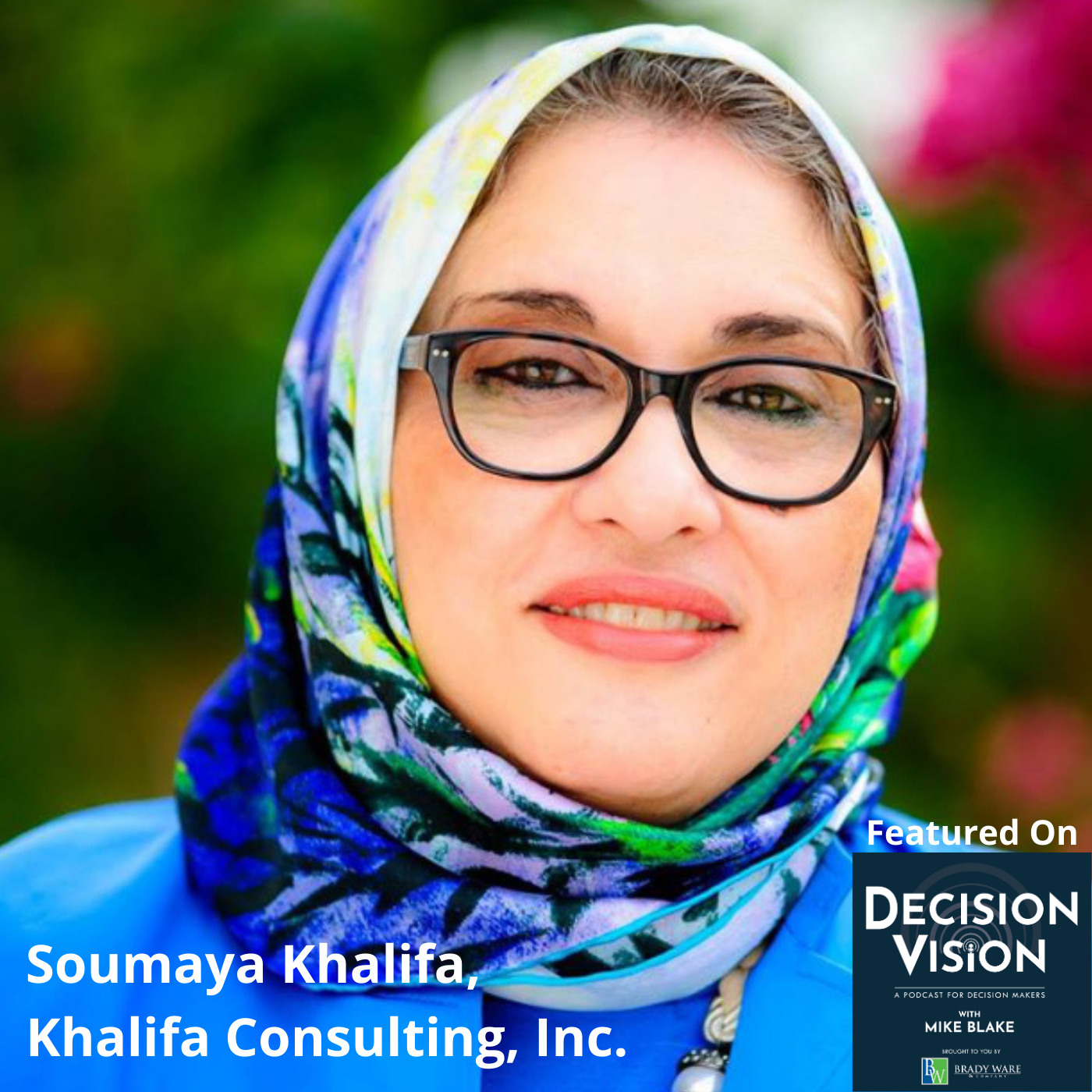
Khalifa Consulting CEO Soumaya Khalifa joins host Mike Blake to discuss how she integrates her Islamic faith with her work and business, as well as her community-building work with the Islamic Speakers Bureau. “Decision Vision” is  presented by Brady Ware & Company.

Soumaya Khalifa, Khalifa Consulting, Inc.

Soumaya Khalifa founded Khalifa Consulting, a strategic intercultural and leadership consulting firm, in 2007. Her career spans more than 25 years in human resources, management, business management and ownership, non-profit and entrepreneurship. Khalifa Consulting specializes in helping executives and organizations succeed when doing business across cultures by providing them the most relevant, practical and up to date cross cultural coaching and training. In addition, Khalifa Consulting offers training and coaching on global virtual teams. Soumaya and team apply this work to a broad range of clients, from large established national and global organizations to startups.

Prior to founding Khalifa Consulting, Soumaya served in several leadership roles in U.S.-based Fortune 100 companies in human resources, leadership development and diversity and inclusion. An alumnus of the University of Houston and Georgia State University, Soumaya is a board member of the Society of Intercultural Education, Training and Research (SIETAR) and the Atlanta Interfaith Broadcasters (AIB). She is also an adjunct professor at Emory University Center for Continuing Education and at the Federal Executive Institute. Soumaya is the author of Diversophy Egypt and has contributed to several publications.

Along with a group of Atlantans, Soumaya launched the Islamic Speakers Bureau (ISB) of Atlanta in August 2001. As the current Executive Director of ISB, she serves the Muslim and wider community by building bridges of understanding, creating interfaith partnerships, developing community leaders, and creating spaces for mutual understating and respect. Under Soumaya’s leadership, the ISB has developed its core programming and launched other key initiatives, including ISB Leadership Institute (ISBLI), 100 Influential Georgia Muslims, and 40 Under 40 Georgia Muslims.  In 2017, Soumaya created a partnership with the Atlanta Mayor’s Office to host the ISB’s first ever Ramadan Iftar hosted at Atlanta’s City Hall and in 2018, the second Atlanta Mayor’s Iftar was attended by over 250 people.

Soumaya has received many awards and recognitions for her work with the ISB, including:

  • 2019 Academy of Women Achievers, YWCA
  • 2018 Arab American High Achiever Award, Alif Institute
  • 2017 City of Atlanta Phoenix Award, presented by Mayor Kasim Reed
  • 2012 FBI’s Community Leadership Award
  • Citizen Diplomat for the U.S. State Department
  • 2012 Invited to the annual White House Iftar hosted by President Barak Obama
  • 2015 Inducted into the College of Ministers and Laity

To learn more on Khalifa Consulting, follow this link.

Michael Blake, Brady Ware & Company

Mike Blake, Host of the “Decision Vision” podcast series

Michael Blake is Host of the “Decision Vision” podcast series and a Director of Brady Ware & Company. Mike specializes in the valuation of intellectual property-driven firms, such as software firms, aerospace firms and professional services firms, most frequently in the capacity as a transaction advisor, helping clients obtain great outcomes from complex transaction opportunities. He is also a specialist in the appraisal of intellectual properties as stand-alone assets, such as software, trade secrets, and patents.

Mike has been a full-time business appraiser for 13 years with public accounting firms, boutique business appraisal firms, and an owner of his own firm. Prior to that, he spent 8 years in venture capital and investment banking, including transactions in the U.S., Israel, Russia, Ukraine, and Belarus.

Brady Ware & Company

Brady Ware & Company is a regional full-service accounting and advisory firm which helps businesses and entrepreneurs make visions a reality. Brady Ware services clients nationally from its offices in Alpharetta, GA; Columbus and Dayton, OH; and Richmond, IN. The firm is growth minded, committed to the regions in which they operate, and most importantly, they make significant investments in their people and service offerings to meet the changing financial needs of those they are privileged to serve. The firm is dedicated to providing results that make a difference for its clients.

Decision Vision Podcast Series

“Decision Vision” is a podcast covering topics and issues facing small business owners and connecting them with solutions from leading experts. This series is presented by Brady Ware & Company. If you are a decision maker for a small business, we’d love to hear from you. Contact us at decisionvision@bradyware.com and make sure to listen to every Thursday to the “Decision Vision” podcast.

Past episodes of “Decision Vision” can be found at decisionvisionpodcast.com. “Decision Vision” is produced and broadcast by the North Fulton studio of Business RadioX®.

Visit Brady Ware & Company on social media:

LinkedIn:  https://www.linkedin.com/company/brady-ware/

Facebook: https://www.facebook.com/bradywareCPAs/

Twitter: https://twitter.com/BradyWare

Instagram: https://www.instagram.com/bradywarecompany/

Show Transcript

Intro: [00:00:01] Welcome to Decision Vision, a podcast series focusing on critical business decisions. Brought to you by Brady Ware & Company. Brady Ware is a regional, full-service accounting and advisory firm that helps businesses and entrepreneurs make visions a reality.

Mike Blake: [00:00:20] And welcome to Decision Vision, a podcast giving you, the listener, clear vision to make great decisions. In each episode, we discuss the process of decision making on a different topic from the business owners’ or executives’ perspective. We aren’t necessarily telling you what to do, but we can put you in a position to make an informed decision on your own and understand when you might need help along the way.

Mike Blake: [00:00:39] My name is Mike Blake, and I’m your host for today’s program. I’m a Director at Brady Ware & Company, a full-service accounting firm based in Dayton, Ohio, with offices in Dayton; Columbus, Ohio; Richmond, Indiana; and Alpharetta, Georgia. Brady Ware are sponsoring this podcast, which is being recorded in Atlanta per social distancing protocols. If you like this podcast, please subscribe on your favorite podcast aggregator and please consider leaving our view of the podcast as well.

Mike Blake: [00:01:04] So, today’s topic is actually a continuation of a prior topic or a previously recorded topic, which is, should I mix my faith with my business? And this will be part two. In part one, we had, I thought, a tremendous discussion with Bill Leonard and Jonathan Minnen, who are from the Christian and Jewish faiths, respectively. And really, I really appreciate it, and I hope you, as listeners, appreciated the fact that they were very open about how they came to approach mixing their faith with their business, how it impacts their business, what that decision process looks like. And I think that we learned a lot.

Mike Blake: [00:01:53] But to be candid, in an ideal world, I wanted to have this be a little bit broader than that because there’s another faith. I mean, you could say there are many faiths that are missing, but I think a faith that was obviously missing – and that was due simply to scheduling constraints – is Islam. And Islam, I think … I’m not going to claim to be particularly knowledgeable about it. I know what I’ve read, I know what I studied in college five million years ago, but that’s about it. But Islam has a different or, certainly, a very identifiable place in American society.

Mike Blake: [00:02:39] And it’s different. I think it’s much more prominent now in the United States than it was, say, 50 years ago or even 30 years ago. And I think that people who practice Islam face different challenges and maybe even different rewards. We’ll find out from our guests. But I think there’s a different relationship with business, in general. I think there’s a different relationship with Islam and mainstream American society than the Jewish and Christian faith have.

Mike Blake: [00:03:08] So, to be perfectly candid, I just felt like this conversation was not complete without getting a view from the Muslim perspective. And I hope you’ll agree that it’s worthwhile. So, we’ve never done a two-parter before. We didn’t necessarily have a cliffhanger or anything, but I do think that this is necessary to have a more comprehensive and complete discussion.

Mike Blake: [00:03:33] So, joining us today is Soumaya Khalifa, who founded Khalifa Consulting, a strategic intercultural and leadership consulting firm back in 2007. Her career spans more than 25 years in human resources management, business management and ownership, nonprofit and entrepreneurship. Khalifa Consulting specializes in helping executives and organizations succeed when doing business across cultures by providing them with the most relevant, practical and up-to-date cross-cultural coaching and training.

Mike Blake: [00:04:07] Along with a group of Atlantans, Soumaya launched the Islamic Speakers Bureau of Atlanta back in August 2001. We’ll talk about that. That’s an interesting date. As the current executive director of ISB, she serves the Muslim and wider community by building bridges of understanding, creating interfaith partnerships, developing community leaders, and creating spaces for mutual understanding and respect. Under Soumaya’s leadership, the ISB has developed its core programming and launched other key initiatives, including ISB Leadership Institute, 100 Influential Georgia Muslims, and 40 under 40 Georgia Muslims.

Mike Blake: [00:04:44] In 2017, Soumaya created a partnership with the Atlanta Mayor’s Office to host ISB’s first ever Ramadan Iftar hosted at Atlanta City Hall. And in 2018, the second Atlanta mayor Iftar was attended by over 250 people. Soumaya has received many awards and recognitions for her work with the ISP, including Academy of Women Achievers of the YWCA, the Arab-American High Achiever Award of the Alif Institute, City of Atlanta Phoenix Award, the FBI’s Community Leadership Award. That’s interesting. We’ll have to get back to that. She’s a citizen diplomat for the US State Department and numerous other recognitions, but you get the idea. She’s highly accomplished and highly recognized for those accomplishments. And we are fortunate. And I am so glad she agreed to come on the podcast. Soumaya, thank you for coming on the program.

Soumaya Khalifa: [00:05:36] Mike, it’s my pleasure and honor. Thank you so much for having me.

Mike Blake: [00:05:40] So, before we get into this, I want to ask because I think this is really important, the FBI’s Community Leadership Award. Tell us about what led to being recognized. I assume it’s the FBI, like what I recognized, Federal Bureau of Investigation, or some other acronym. What led to that?

Soumaya Khalifa: [00:06:03] Yeah. So, that was quite an experience. I got to actually travel to their headquarters and receive the award by then FBI Director Mueller. And it was quite an experience being there, and touring their facility and just seeing what’s there. I was part of their outreach, diversity and inclusion outreach team that we had for several years many years ago. And they recognized the work that the ISB does here in Atlanta in terms of building bridges, and they felt like that was something that is much needed, and they recognized me for the work. So, I was, again, very fortunate and gotten a lot of awards and recognitions that I wouldn’t have dreamt of many years ago. So, again, very lucky and very fortunate.

Mike Blake: [00:06:57] Well, congratulations and thank you for your service to our society. So, I’ve studied Islam about as much as I needed to to graduate from college with a Liberal Arts degree. I know it’s a highly complex religion, but how would you describe your faith? I think you can do a much better job than I ever could.

Soumaya Khalifa: [00:07:22] Yeah. So, it’s not any more complicated than Christianity or Judaism. The three faith traditions are monotheistic religions and they’re Abrahamic traditions. So, there are a lot of similarities between the three. In terms of the essence of Islam in the word itself, it means peace, submission to the will of God, and creating peace in the world. And the person, even Muslims, when they greet each other, they have a covenant that they say to each other, and that is, “May peace be upon you,” which means that you will not get anything from me but peace, whether it’s in interactions, or talking about you, or anything at all, it’s peace.

Soumaya Khalifa: [00:08:09] So, it is a misunderstood religion. It is a religion, unfortunately, that a lot of people associate terrorism with. And I love talking to groups and asking them, “You know what comes to mind when you hear the word “Islam” and “Muslims?” And sometimes, people don’t want to say, and I say, “Hey, how about the T word, does that come to mind? Do you hear it?” And yeah, they do.

Soumaya Khalifa: [00:08:33] So, the two misconceptions about Islam that I hear all the time is that Islam is associated with terrorism, all Muslims are terrorists, and the other one is that all women are oppressed. And I have a lot of fun with the second one because I ask audiences and people, do you think I’m oppressed? And they look at me and they say, “Well.” “So, you should ask my husband.” And we have a little fun with that.

Soumaya Khalifa: [00:08:58] But absolutely, it is. It’s a religion that people don’t know about. And a lot of times, when they hear about it, it is in a very negative sense. There isn’t a face of Islam that is carried throughout our country and our communities that portrays the good that Muslims do. And Muslims, like any other group of people, Christians included, Jews and Hindus and others, there is the good, the bad and the ugly.

Mike Blake: [00:09:28] So, you made an interesting decision and a conscious one, not just to really connect your faith with your business but to build a business, if you will, around your faith. A lot of it is around educating individuals, companies, organizations about Islam, about inclusiveness with people who practice that faith and others. I know it’s not just limited to that, but certainly it is sort of the headline. So, what drew you to that? I mean, you’re a very capable person. You could have done, I’m sure, anything that you wanted. What drew you to make that your mission?

Soumaya Khalifa: [00:10:11] Sure. I just want to make a distinction here. I wear a couple of scarves, if you will. So, I have a nonprofit (versus hats). There’s the nonprofit that I started in 2000 right along with a group of people who wanted to do something about building bridges of understanding because what we saw then, and it’s still happening right now, is that people speak about Islam and Muslims, and they have not a good idea and not a correct idea about Islam and Muslims. They don’t know about our community. So, we wanted to train people within the First Amendment guidelines of teaching and not preaching to be able to speak about Islam and Muslims to have embody they’re my neighbor, they’re my coworker, et cetera, and really building that connection between people.

Soumaya Khalifa: [00:10:57] And so, that is one thing that was started in 2001. And at the time, I was in corporate America doing human resources. So, thinking back about that journey and what I did then, I just can’t even comprehend how I did that while having a full-time job in corporate America. So, that’s one thing that I felt like was necessary to build bridges of understanding. And it wasn’t about promoting the religion. It was just to understand each other and build a stronger community where people don’t fear others. So, that’s one of the things that I do.

Soumaya Khalifa: [00:11:29] The other one is a business, and that is Khalifa consulting. And as you mentioned in the introduction, it’s to help people understand the business they’re getting into, to understand the culture for them to be successful. Khalifa Consulting has many consultants that cover the whole wide world. So, if we have a client that’s going to Germany, we have somebody who can do Germany. China, Russia, what have you, there’s that network of consultants who cover the whole wide world.

Soumaya Khalifa: [00:12:00] Because of my own background, my own cultural background, my own upbringing, I offer the training, and the consulting and the coaching on the Arab world. And as you know, the majority of the Arab world is Muslim. And so, we talk about Islam, and how it impacts their business, and what do they need to be aware. Of anything from gift giving, don’t do pork or alcohol, to the holidays, to how people communicate. And that’s not religion; it’s more culture.

Soumaya Khalifa: [00:12:31] So, those are the two distinctions in terms of the business piece and the nonprofit work. But it’s like you said, both of them are about helping people understand in different circumstances. With the ISB, it’s more about community and community building. And Khalifa Consulting is about the business world and helping individuals, leaders and organizations be successful as they interact with different cultures.

Mike Blake: [00:13:00] So, yeah and understood. There’s a cultural component, religious component. And while they are certainly separate, they frequently are quite closely linked. And so, what I’d be curious to understand from you is this, is that, are there ways in which the way you conduct business is maybe different from what kind of a garden variety, if this can even be said, but a garden variety American business is conducted because of your desire and the importance to you of being true to your faith? Does it manifest itself in the business? Does Islam manifest itself in the business itself? I hope I have asked that question in a way that you understand

Soumaya Khalifa: [00:13:49] Yeah. I think each and every one of us has a moral compass. And the moral compass is the faith tradition that we adhere to. And whether we realize it or not, it kind of helps us navigate through things. For instance, holding true to your word, keeping the individual, valuing the customer, valuing yourself, telling the truth. And I don’t think this is just to Islam, but I think it’s due to many faith tradition, treating people with dignity and respect, not cheating people, et cetera, et cetera.

Soumaya Khalifa: [00:14:30] And again, this is in Islam ,as well, I’m sure, as Christianity, and Judaism, and other faith traditions as well. So, it is my moral compass. It’s probably unconscious, but it’s there. It’s how I’m kind of wired. And again, I believe that that’s not just particular to me, but it’s to everyone else.

Mike Blake: [00:14:54] So, you chose to name your firm Khalifa Consulting. And I think to most people that they may understand that that’s your last name or your family name or not. But it clearly sounds like a name that comes from a region that practices a lot of Islam, at least fairly widely. Was that a conscious decision in the branding? And whether it was or not, have you found that it evokes any kind of maybe preconceptions or stereotypes? Does it help you within the Islamic community? Does it create barriers elsewhere? Talk about kind of how that’s impacted the business. If it has at all?

Soumaya Khalifa: [00:15:43] I love the question. So, I’m going to tell you a story. There was an event in Atlanta and a high-up person in the Gulf State was here to speak about their country and how opportunities are there, et cetera. And I attended, and I walked in, and people saw my name who are not part of that country’s entourage, if you will. And they saw my name, and I was like given the royal treatment. And I was just saying, “What in the world is that?” I was just like not really comprehending what was going on. But they saw my name and they thought I was part of the royal clan for that country. And they just took care of me. And after a while, I realized what happened.

Soumaya Khalifa: [00:16:30] But, yeah, I think the reason that I chose Khalifa Consulting is because when I started out, I was not sure how it was going to go in terms of what my business is going to focus on because I have a wide variety of things that I provide and do, all the way from consulting, coaching, executive coaching, and human resources, and the intercultural world diversity and inclusion. So, I wanted something that kind of was an umbrella name that brought all those things under it. So, that’s the reason. I don’t know whether it was a smart way of doing it or not, but that’s how I started. And because I started that way and I’ve been known in the marketplace as that, I’m just continuing with it. Is there a better name? Maybe, but moving forward with Khalifa Consulting.

Mike Blake: [00:17:23] So, I’m going to ask you a completely off-the-wall question because I’m a language junkie and probably a lot of our listeners will roll their eyes, but that’s okay, it’s my show. And that is, I’m curious-

Soumaya Khalifa: [00:17:35] Go for it.

Mike Blake: [00:17:35] I’m curious if the name Khalifa, is at all related to the term chalice, which implies some sort of of Ducci, or county, or something of that nature.

Soumaya Khalifa: [00:17:47] Yeah. Khalifa means Vice Gerente or the ruler. And so, within the Islamic tradition, the Khalifa is the leader of the group, or the family, or  I’m just really lucky to have that name. I feel like, “Hey, all right, I need to live up to it,” but yeah. Khalifa means a responsible person, right? So, it’s a godsend human beings to be His vice gerente on earth, so human beings could take care of the earth, et cetera. So, it has like a title of of leadership, but it also has a title of true responsibility.

Mike Blake: [00:18:31] Well, good. Thank you for that. So, that’ll be our duo-lingo diversion for the day. So, do you ever run into any kind of conflict? Do you ever have to make any conscious decisions of where your faith starts and ends, where your business starts and ends? Do you find yourself having to make decisions that maybe today, I want to be less obvious or open about my faith, or another day in another situation, I want to be more open about my faith? So, do you ever have to make those kinds of decisions? And if so, what goes into that?

Soumaya Khalifa: [00:19:06] Yeah. I really don’t think about it that way at all. I am who I am. And I struggle with that for a long time, and it was a journey. I was born in Egypt, came to Texas as a teenager. I went to middle school and high school. And throughout my early years, I really struggled with my identity, and I struggled with my Egyptianness, if you will, my Muslimness and my Americanness. And it was like three people in one. And those three people in one did not come out as three people in one told people. I would reveal parts of me that I thought people were comfortable with.

Soumaya Khalifa: [00:19:47] So, until I took that journey of being comfortable with who I was that I said, “Hey, world, here I am,” and this is when I started covering my hair. It was shortly thereafter that I started the Islamic Speakers Bureau. This is when I really embraced who I was. It was not an easy journey. It was much, much easier not to wear a headscarf and to just kind of try to build in and assimilate, but I felt like part of me was being lost. That, besides the nagging of my mom. When are you going to cover your hair, right? When are you going to cover your hair?

Mike Blake: [00:20:24] Parents. Well, parents will always have a big influence on that.

Soumaya Khalifa: [00:20:27] They sure do.

Mike Blake: [00:20:28] So, I’m curious, and if this question is out of bounds, weigh it out, but was there one particular incident that pushed you over and said, “You know what? Yeah, I want to embrace this identity. I’m going to wear the headscarf and let strangers know that I’m a practitioner of Islam”?

Soumaya Khalifa: [00:20:51] Yeah. I think it was more than a journey versus a one incident that happened that kind of got me to do that. I was listening to religious tapes about how women are supposed to do that. And by the way, women who do not cover their hair, who are Muslim, it does not mean they are less religious. It’s just they choose not to. So, it was just that, plus my mom, plus I just felt like, “Hey, I’m not getting any younger, I need to do something about it.” And I did.

Soumaya Khalifa: [00:21:18] And I have to tell you, that was just like the most uncomfortable decision I ever made in my life. I did not know how to put the headscarf on. I remember, at the time I was working, I just finished my MBA, and I was working as an intern for a major company, and one day, I went with my hair. And then, the following Monday, I went in with the head covered, and people did not know what to make of me, and I had to do a lot of explanation. And as that was going on, my scarf fell off because I did not know how to put it on. And it was just like a real ordeal.

Soumaya Khalifa: [00:21:55] And even though it’s a piece of cloth, it’s a lot of psychological getting used to and being able to be comfortable with it. And I wasn’t comfortable with it for a long time. And I felt like people were staring at me and the whole nine yards until I embraced it myself and started shopping for different headscarves. And there was something more to shop for. I got very excited about that. And that’s when I became okay with it.

Mike Blake: [00:22:23] Now, we had a previous conversation. You said something that I think is fascinating and I just did not know is that not all scarves are alike. And the way that one wears it, you can identify somebody’s origin from the Muslim world or how they practice Islam by virtue of how their scarf is is worn, correct?

Soumaya Khalifa: [00:22:46] Yes, yes, yes, absolutely. And even what age category they might be from. It’s fascinating. It’s a fascinating observation just to sit there and kind of look at women’s scarfs, and how they tie them, and what color, what’s the material, et cetera. Now, I’ve discovered something since we talked. I discovered there’s a COVID scarf. And the COVID scarf is a scarf where people could put their masks on while having a scarf on. So, the regular scarf that I used to wear would not allow me to put this really easily. And so, this is now my COVID scarf because it allows us to put on the mask and take it off easily.

Mike Blake: [00:23:26] Well, one adapts, right? So, Islam has been around a long time. So, it’s gone through many adaptations. This is another one of those adaptations, I guess. So, you led off by kind of pointing out the elephant in the room.

Mike Blake: [00:23:44] So, I want to put a bright light on it. And that is it strikes me that having a business that is associated with Islam is different from one that’s associated with Christianity or Judaism, not only because it’s less common and also more concentrated, I think, in certain regions of the country but, of course, America itself has had a troubled, and frankly – and I’m not going to get into the reasons why, but you cannot deny there’s a violent relationship with, say, certain elements of Islam, I guess, for lack of a better term or, at least, conflict with individuals who have decided to brand themselves under the name of Islam in order to accomplish whatever social and political goals that they’re accomplishing. And that’s a little bit different, right? You’re operating in a country that in some cases, recently, has been in a state of war with Islamic countries.

Mike Blake: [00:24:54] And I will say this. I thought George Bush the first did a really good job of trying to make clear that we were at war with states that happen to have governments that claim to espouse Islam, and we are not pursuing war against the Muslim people. It’s a very sort of dancing on the head of a pin there. But I do think he made a good faith effort to try to communicate that. But I mean, it’s got to be different, right?

Mike Blake: [00:25:21] I mean, America right now does not have a military conflict with a Christian-dominated or a Jewish-dominated nation, but America has had that. I think it necessarily creates, I think, certain tensions, certain preconceptions. I think even, unfortunately, among certain people, a starting point of suspicion and hostility. One, I guess, do you agree with that observation? And two, if so, how do you work within that? How do you survive mentally in that kind of environment, because I can only imagine how difficult that must be?

Soumaya Khalifa: [00:26:16] Yeah. In terms of the conflict between the US and Muslim majority countries, that is a debate that people can have. Is it really a conflict, or we talked about weapons of mass destruction in Iraq, and after so many years, we found that there were no weapons of mass destruction? And so, there are a lot of debate going on about about the validity of the conflicts that we are part of and claimed for it to be because of whatever. So, let’s put that aside.

Soumaya Khalifa: [00:26:50] But what I want to say, what’s really here and now that is a very troublesome is the Muslim ban. When we have a Muslim ban, and I walked down the street with the headscarf on, that puts me and my fellow 12 million Muslims, American Muslims, in jeopardy because people are getting a message from the highest office in this land saying Muslims are a danger to our country and our society. So, that is truly something that hits very close to home, and I can talk for a long time about that.

Soumaya Khalifa: [00:27:25] But in terms of the business itself, it’s not about just Islam and Muslims. Khalifa Consulting, it’s about cultural understanding for the whole wide world. And it’s not just me. I have about 10 or 12 colleagues who cover, again, the entire world. But when it comes to the part of the world that I handle, which is the Arab world and the US, people want to come to us because we know how to help them to navigate in that part of the world, in the business world, so they could be successful.

Soumaya Khalifa: [00:27:58] I have worked with so many different organizations, US organizations, that their market in the US is basically shrinking, and the only way for them to expand is to go to emerging markets, what they call emerging markets. And the Arab world with over 300-400 million people, it’s a very opportune place for many of the businesses, whether it is in the car business, or the automotive business, or defense, or food. So, it’s a business decision. It’s not about the faith. It’s not about anything.

Soumaya Khalifa: [00:28:39] We talk about the faith that’s part of them understanding what they’re getting into because you don’t want them to schedule meetings for Friday. Why weren’t the Saudis, or the Egyptians, or, or, or coming to our meetings on Fridays? Because it’s their holidays. It’s their weekly weekend. And so, you don’t do that. And this is just a very simplistic example of seeing people who don’t understand the different ways of communication.

Soumaya Khalifa: [00:29:07] Americans tend to be more direct communicators. When you go to the Arab world, it’s about saving face. It’s to not put anybody in an embarrassment position. So, how do we understand indirect communicators, and how do we bridge that gap between the two cultures to run the business, to get to the bottom line, to add to the bottom line and be successful? So, it’s not all about religion. It’s about being successful in a different culture that is very different for many people to navigate through.

Mike Blake: [00:29:43] Before we recorded our show, I got dressed because we’re doing video. I had originally put on a T-shirt that said “Got bacon,” and my wife said, “Aren’t you doing that interview about Islam today?” I go, “Yeah.” She says, “Are you really sure you want to wear that for this video?” “No. Maybe you’re right. Maybe I’ll do a quick change here.” So-

Soumaya Khalifa: [00:30:10] But there is turkey bacon too. So, there are always options. It’s not all pork. There’s turkey bacon.

Mike Blake: [00:30:16] Oh! I haven’t thought of that. I had a chance to win an argument with my wife and I blew it. Ugh! Okay. Well, at any rate, but-

Soumaya Khalifa: [00:30:16] You should have called me, Mike.

Mike Blake: [00:30:28] Sure, I should have. I should have. So, let me ask this. The thing about … actually, this actually segues to one of the questions I really wanted to make sure I got to. So, bearing what you just described in mind, and to me, it reminds me of maybe a little bit of what it might have been like to be a Russian immigrate here during the height of the Cold War, right? You’re here, but you’re obviously from “the other side.” And I have to imagine that that also had its own challenges. Now, the timeline for Khalifa Consulting was you started it in August of 2001, correct?

Soumaya Khalifa: [00:31:15] That’s the ISB.

Mike Blake: [00:31:16] ISB, sorry. The ISB in 2001.

Soumaya Khalifa: [00:31:18] Yeah, yeah.

Mike Blake: [00:31:18] That’s right. Khalifa was 2007. So, you started that. And then, a month later, the attacks of September 11th, 2001.

Soumaya Khalifa: [00:31:30] Three weeks.

Mike Blake: [00:31:30] And so, I mean, walk through as as somebody who just launched an Islamic commercial venture, and feel free if you want to just comment on being a practitioner of Islam at that time, what’s going through your head? How does your life experience change? What are you thinking about your business?

Soumaya Khalifa: [00:31:57] When you were talking about that, my whole body felt like I was there in September 11th, 2001. It was a nonprofit that I launched. It was into businesses, and non-profit, educational outreach. We had our training on August the 18th, which was approximately three weeks before 9/11 happened. We had just trained people to speak about Islam and Muslims within the First Amendment guidelines. They took their test, and we were getting ready to launch.

Soumaya Khalifa: [00:32:30] When the morning of 9/11, I went to my job, and I was in downtown Atlanta in the high-rise up on a very high floor. I heard the news about what happened in New York and in Washington. And I was scared. I was very scared. I was sad. I was angry. I had no idea what was going on. I was just thinking the people who were killed. Are people like me who went to their work in the morning, and they were waiting to get home to their kids and their family? And guess what? They did not make. And what was the reason for that? And it was a very, very tough day, I had three children at the time. I still have them, Thank God. They were in daycare and what have you. I was very worried about them. I was very worried about my husband.

Soumaya Khalifa: [00:33:28] They were talking about the terrorists were going to hit Atlanta because of CNN. We were very close to CNN. They pulled us all into a conference room to watch what’s going on. And I mean, I’m talking about right now, and just my whole body feels the same way. It was just very, very, very angry, very scared, very just in despair. Why did that happen? How can anybody do this?

Soumaya Khalifa: [00:34:02] And then a few days later, we find out who did it. And I got even angrier because the people not only killed 3000 people for no reason at all, innocent people, but they also hijacked a whole religion at 1.5 billion people. And so, anger. It got even worse because what they did to a religion in people. And we’re still paying the price of the horrendous, stupid act that they did. I can’t tell you how angry I am still. And I hope they get what they deserve in the hereafter because human life is very sacred in Islam, and taking innocent life is just one of the worst ever transgressions in the religion. Nobody could call themselves a Muslim and do that.

Mike Blake: [00:35:10] Yeah. As an observer, you try to put yourself, and as an interviewer, you try to put yourself in the shoes of the person that you’re interviewing. And I can hear in your voice how tremendously upsetting that must have been and continues to be. And like the rest of us as a country, we’ve had to move on, and the Islamic community has had to move on and attempt to build bridges. And in our society, some people have moved on, I would characterize, more successfully than others.

Mike Blake: [00:35:55] And let’s move on beyond that. In spite of that, I’m curious kind of in the wake of that attack, there must have been – I would hope that there was – maybe even a rise of interest in the Islamic Speakers Bureau because I think a lot of us … I grew up in the ’80s and the ’70s. So, when I was a child, I remember the conflict with Iran, the Iranian hostage crisis. I remember that there was a spate of hijacks of American aircraft, but the September 11th attack was, of course, an entirely different animal.

Soumaya Khalifa: [00:36:43] It was in our land.

Mike Blake: [00:36:44] Yeah. And in our land against one of the most important symbols, I think, of American economic strength in many ways, you could say, and at the heart of the country, short of an attack on the White House or Congress or something. I don’t want to belabor, but the point is that I think a lot of us were kind of left why. And some of us seek answers in the why. We want to know who’s responsible, right? Who overlooked opportunities to stop this? And there are many reports, and conspiracy theories and whatnot. I’m not going to discuss those today.

Mike Blake: [00:37:22] But I wonder and I hope that maybe you saw a surge of interest in speakers after the attack as people kind of want to understand, okay, this is horrible, and it’s probably going to lead to worse things down the road because you know the United States is not going to just not respond. You know there’s going to be a significant response. Did you see an increase in interest in people wanting to get your take in some expert opinion as to kind of what’s going on here?

Mike Blake: [00:37:55] Yeah. So, absolutely. When we realized who did it, et cetera, the board of the newly found Islamic Speakers Bureau or ISB, we kind of talked about what do we do? Do we kind of backtrack like we didn’t exist or do we move forward? And the decision was made, fortunately, that we needed to move forward. And we started receiving calls, and emails, and a lot of interest in people wanting to meet a Muslim, wanting to understand better, and wanting to understand their neighbors, et cetera.

Soumaya Khalifa: [00:38:34] And one of the stories that happened right after 9/11 is when an Episcopal pastor in Fayetteville – we used to live in Fayetteville – who reached out. He called. He called the number for the ISB and said, “This is so and so. And I’m driving up to the mountains, but I want to invite a speaker to come on.” And he gave his numbers, but it was so mumbly towards the end, it was a bad connection that the last three numbers didn’t come through. And I remember trying all possible three number combinations until I was finally able to get through to him.

Soumaya Khalifa: [00:39:17] And that friendship has lasted all through the years. He has moved on to different parts of the country, but we still stay in touch and communicate very often. So, there are a lot of silver linings from 9/11, as well as the tragedy, and the heartache, and the sadness that also came out of it. So, absolutely, there was and still is a silver lining from that.

Mike Blake: [00:39:47] So, I’m going to switch gears here. Sometimes, you can see in some face that people can use faith opportunistically in business. And I’ve certainly seen it. I speculate that you’ve seen it, but I don’t know. But I’m curious, so I’m going to ask you that question. Have you seen – and it doesn’t even have to be related to Islam, I guess, but since that was where your expertise lies, I imagine that’s going to be your perspective. Is there a temptation or have you encountered where people have tried to somehow capitalize kind of overtly on presenting a faith because they think it’s going to ingratiate themselves to a particular community, and therefore allow them to address what they think is an attractive market?

Soumaya Khalifa: [00:40:48] Yeah. I don’t believe in that. I don’t.

Mike Blake: [00:40:55] Right, I’m sure you don’t, but I’m sure, but have you seen it.

Soumaya Khalifa: [00:40:59] I’m sure I’ve seen it. I just can’t think of an example right now. But I am of the opinion and of the practice that everybody’s free to believe in whatever they want to believe. All that matters to me is how you treat me and you treat others around you. And pushing anybody’s faith on anybody else, I think that is so disrespectful. I really do. I believe that people are smart enough to think through what’s important to them and how they want to believe or not believe.

Soumaya Khalifa: [00:41:31] In the business that I’m in, whether it’s the non-profit or the consulting, it’s whoever feels that I’m a good fit for them and could provide the services that they need, then let’s let’s talk about it. But I don’t feel like it’s the right thing to use the business or the faith to be opportunistic.

Mike Blake: [00:41:56] Are there-

Soumaya Khalifa: [00:41:56] Did I answer your question?

Mike Blake: [00:41:58] Yeah. No, you did. You did.

Soumaya Khalifa: [00:42:00] Okay.

Mike Blake: [00:42:00] You did because I have seen it. I guess I bring it up because I have overtly seen people, for example, that they’ll go to a Bible study circle. And I know for a fact they do that because they think that that’s a way to generate prospects. And that strikes me as, frankly, repugnant, and repulsive, and immensely disrespectful to the religion.

Mike Blake: [00:42:36] And really, what I’m trying to get at is my hope is that that would be a unique case, but I’m not quite certain that it is. And in some religions and some religious communities, I think that there is a temptation to present a certain faith because they think that’s going to drive the business, but they aren’t necessarily themselves people of faith. And it bothers me. I’ve only seen that really in certain communities. I’m just curious because I have somebody here who’s embedded very much in the Muslim community, if that’s a phenomenon that you’ve ever witnessed.

Soumaya Khalifa, Khalifa Consulting: [00:43:23] Yeah.

Mike Blake: [00:43:24] Basically, it’s a universal temptation.

Soumaya Khalifa, Khalifa Consulting: [00:43:27] Got it. So, for instance, do real estate agents who happened to be Muslim go to a mosque, so they could pass out their card, et cetera? I’m sure that happens all the time. But for my own business, actually, my clients are not within the Muslim community itself, whether it’s the nonprofit or for my consulting. It’s people who are doing business outside the United States or talking about diversity and inclusion, and having Muslims in the workplace, and what are the reasonable accommodations, and how do we do that, and how do we understand them? How do we make sure everyone under our roof as an organization feels comfortable, valued and they belong? So, those are the clients that I’m looking for, people who need my help and find me to be the most competent person to help them get to where they want to go.

Mike Blake: [00:44:20] So, we’re talking to Soumaya Khalifa today of Khalifa Consulting and the Islamic Speakers Bureau. And we’re doing a part two of our podcast on Should I Mix My Faith With My Business? And we’re running out of time, but I do have a couple more questions that I’d like to to squeeze in here. And one is, is there a company that you admire that is Islamic facing – it doesn’t even have to be an American company. But is there a company that you admire that you think really gets it right, that maintains its commitment to its faith, but at the same time, doesn’t shy away from its faith, and at the same time, it’s commercially successful?

Soumaya Khalifa, Khalifa Consulting: [00:45:08] That is a really good question. Locally, here we have Chick-fil-A. And I haven’t been really associated with them on a professional level but their food is great, right? And people love their food. And for me, lemonade, their lemonade is really awesome. But I think diversity and inclusion – and I believe that faith comes under that – is a journey. It’s not that, “Hey, I’ve done this, and this, and this. Now, we are there.” There was never there, right? It’s always trying to get to being better, and better, and better.

Soumaya Khalifa, Khalifa Consulting: [00:45:46] And so, I know there are many, many, many organizations throughout the country that are striving to be the best that they can be, but they will never get there because it’s always changing. The environment is always changing. With the recent Black Lives Matter and many other things that are going on, companies had to pivot. They had to understand where they’re at, where they’re going, and what does the market need, and what do the employees need. And so, it’s a constant, constant journey. I don’t think anybody would say, “I made it and I’m there.”

Mike Blake: [00:46:22] So, this has been a great discussion. I want to thank you so much for being willing to come on and discuss some tough topics and answer, I think, some challenging questions. I’m sure people would like to learn more about you, your business, and maybe even want to ask more about this. I have a feeling we have listeners that practice Islam and are wrestling with this question. Can people contact you for more information? And if so, what’s the best way to do that?

Soumaya Khalifa, Khalifa Consulting: [00:46:52] Absolutely. Would love to hear from the listeners. My email address, soumaya@khalifa.consulting. There is no dot com. So, soumaya@khalifa.consulting. And the phone number is 678-523-5080. And our website is khalifa.consulting. For the Islamic Speakers Bureau, its isbatlanta.org. Again, isbatlanta.org. And again, looking forward to staying connected. Mostly in LinkedIn and Facebook. So, find me whichever way that makes sense to you.

Mike Blake: [00:47:38] Thank you so much. That’s going to wrap it up for today’s program. And I’d like to thank Soumaya Khalifa so much for joining us and sharing her expertise with us. We’ll be exploring a new topic each week. So, please tune in, so that when you’re faced with your next executive decision, you have clear vision when making it. If you enjoy this podcast, please consider leaving a review of your favorite podcast aggregator. It helps people find us that we can help them. Once again, this is Mike Blake. Our sponsor’s Brady Ware & Company. And this has been the Decision Vision Podcast.
Tagged With: Brady Ware, Brady Ware & Company, cross cultural coaching, faith and business, faith in business, Human Resources, Islamic Speakers Bureau, Khalifa Consulting, Mike Blake, Soumaya Khalifa

Frazier & Deeter’s Business Beat: Andrew Smoltz and Taylor McDermott, United in Gaming

October 21, 2020 by John Ray

United in Gaming
Business Beat
Frazier & Deeter's Business Beat: Andrew Smoltz and Taylor McDermott, United in Gaming
Loading
00:00 /
RSS Feed
Share
Link
Embed

Download file

United in Gaming
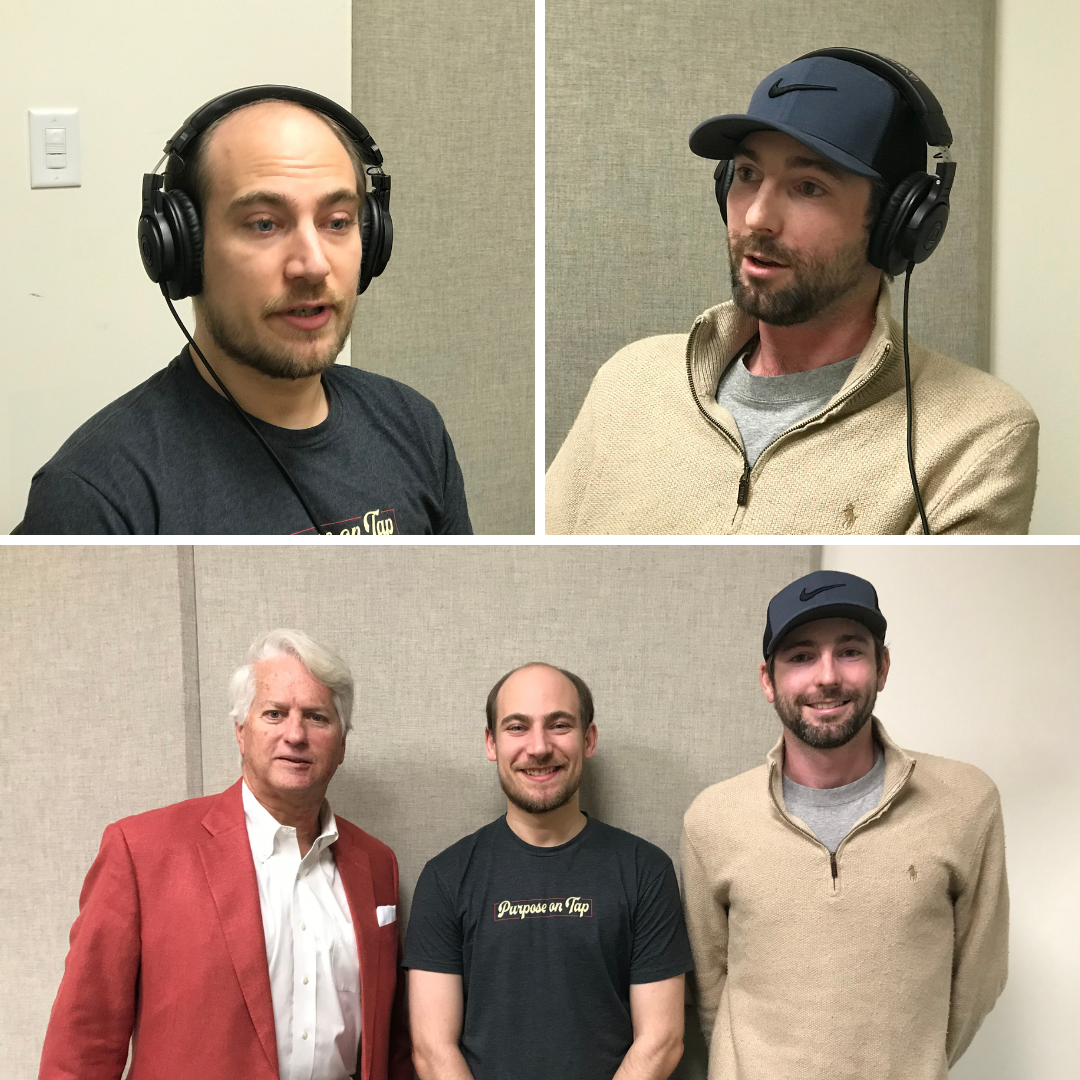
Roger Lusby, Andrew Smoltz, and Taylor McDermott

Frazier & Deeter’s Business Beat:  Andrew Smoltz and Taylor McDermott, United in Gaming

United in Gaming Co-Founders Andrew Smoltz and Taylor McDermott join this edition of Frazier & Deeter’s Business Beat to discuss their community-centered gaming platform, how the pandemic has accelerated the growth of the gaming industry, and their goal of becoming the social network of choice for gamers. Roger Lusby, CPA is the host of “Business Beat” and the series is presented by Alpharetta CPA firm Frazier & Deeter.

United in Gaming

At United in Gaming, they believe in the power of one gaming community that welcomes casual and elite gamers to the same turf. No matter the skill level, they provide an inclusive platform for gamers to play and compete on their terms, creating an experience unique to each gamer.

Andrew Smoltz

Andrew launched UIG to tie together his experience and passion in esports and entertainment. Andrew has 10+ years of experience in the space with a focus in eSports and celebrity entertainment. The visionary behind COV-AID, Andrew has also helped jumpstart the debut league for ELEAGUE on TBS while working at IMG Live/WME. Andrew was also in charge of eSports research and recruitment for CSE Talent. In addition to agency background, Andrew brings relevant event planning and event management experience from his time with ETA.

Taylor McDermott

Taylor’s 10+ years of experience brings unique attributes that drive the eSports industry. Combining a high level of traditional sports marketing and sponsorship knowledge,  experience in client facing representation with professional athletes, to strategic revenue growth and analysis for Major League Baseball Advanced Media. Following his entrepreneurial  aspirations, Taylor founded UIG with longtime partner Andrew Smoltz, creating a strategic force with the goal of empowering a global gaming community through the power of opportunity.

Connect with United in Gaming

Company Website

LinkedIn

Facebook

Instagram

Frazier & Deeter

The Alpharetta office of Frazier & Deeter is home to a thriving CPA tax practice, a growing advisory practice and an Employee Benefit Plan Services group. CPAs and advisors in the Frazier & Deeter Alpharetta office serve clients across North Georgia and around the country with services such as personal tax planning, estate planning, business tax planning, business tax compliance, state and local tax planning, financial statement reviews, financial statement audits, employee benefit plan audits, internal audit outsourcing, cyber security, data privacy, SOX and other regulatory compliance, mergers and acquisitions and more. Alpharetta CPAs serve clients ranging from business owners and executives to large corporations.

Roger Lusby, Partner in Charge of Alpharetta office, Frazier & Deeter

Roger Lusby, host of Frazier & Deeter’s “Business Beat,” is an Alpharetta CPA and Alpharetta Office Managing Partner for Frazier & Deeter. He is also a member of the Tax Department in charge of coordinating tax and accounting services for our clientele. His responsibilities include a review of a variety of tax returns with an emphasis in the individual, estate, and corporate areas. Client assistance is also provided in the areas of financial planning, executive compensation and stock option planning, estate and succession planning, international planning (FBAR, SFOP), health care, real estate, manufacturing, technology and service companies.

You can find Frazier & Deeter on social media:

LinkedIn
Facebook
Twitter

An episode archive of Frazier & Deeter’s “Business Beat” can be found here.

Tagged With: Alpharetta, Andrew Smoltz, eSports, Frazier Deeter, gaming, Roger Lusby, Taylor McDermott, United in Gaming, virtual gaming

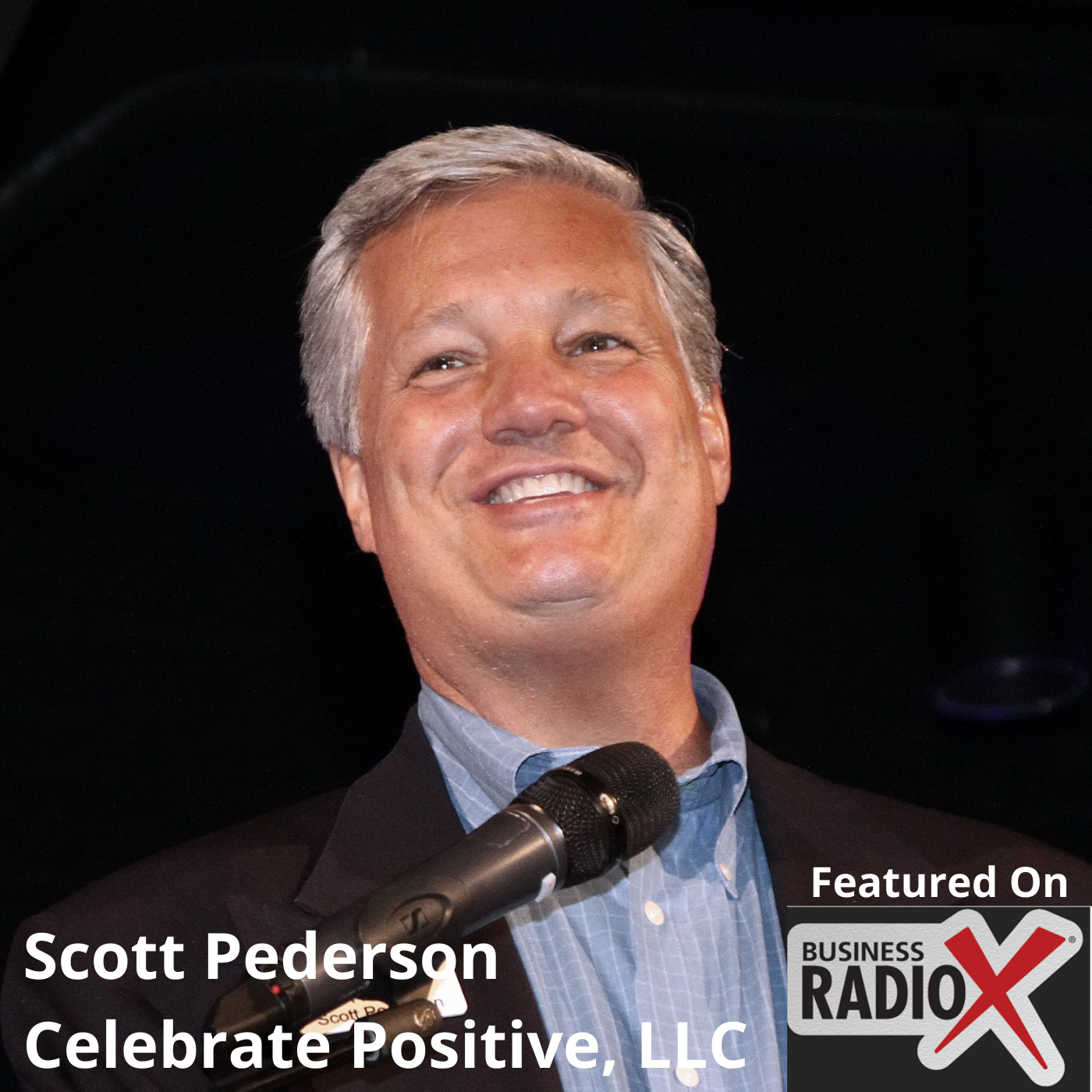
Scott Pederson, Positive Athlete and Celebrate Positive, LLC

October 19, 2020 by John Ray

Scott Pederson Positive Athlete
North Fulton Business Radio
Scott Pederson, Positive Athlete and Celebrate Positive, LLC
Loading
00:00 /
RSS Feed
Share
Link
Embed

Download file

Scott Pederson, Positive Athlete and Celebrate Positive, LLC (North Fulton Business Radio, Episode 297)

Scott Pederson, Positive Athlete, talks with host John Ray about how his organization recognizes high school athletes whose positive attitude and will to achieve have inspired others well beyond the field or court. “North Fulton Business Radio” is produced virtually from the North Fulton studio of Business RadioX® in Alpharetta.

Scott Pederson, President and CEO, Celebrate Positive, LLC

Scott has spent over 35 years of his career marketing some of the most high-profile events, corporations and celebrities in the world. He has staged a World Series, helped develop the National Football League’s most high-profile grass-roots event property (Punt, Pass & Kick), and negotiated endorsement contracts for professional athletes. He has consulted with each of the four major sports leagues (NFL, MLB, NASCAR and NBA) and with many sports franchises. He has also designed numerous programs enabling clients to leverage their sponsorship investments at retail, including Miller Brewing Company, Gatorade, Pillsbury and General Mills.

Prior to founding Universal Marketing Associates in 1990 and before merging his company with Leader Enterprises, Inc., in 2000, he was director of Marketing at Oklahoma State, Director of Marketing for the Kansas City Royals, and Regional Manager for Miller Brewing Co. Sports.

Under his ownership/leadership of Leader Enterprises, the company grew to a $12 million agency with clients such as Nike, Motorola, TaylorMade, DirecTV, Vizio and General Mills to name a few. Leader’s marketing and public relations plan for Lance Armstrong’s “LiveStrong” yellow wrist band programs is considered one of the most successful cause-marketing campaigns in history.

Scott sold his interest in Leader Enterprises seven years ago and started Celebrate Positive, LLC so that he could focus his efforts on the marketing and development of a program called Positive Athlete. With the help of Super Bowl XL MVP Hines Ward, the Positive High School Athlete Awards were created in Pittsburgh and then in Georgia where over $400,000 in scholarships have been given away to student-athletes who have overcome obstacles, given back to their communities, and been a positive influence in their schools.

It is estimated that over 10,000 high school student-athletes will be nominated nation-wide in 2019-20 with market specific programs in New York, Michigan, Washington and Minnesota. In February of 2020, The Positive Athlete – 100 Inspirational Stories of High School Student-Athletes book was released and a weekly videocast was launched in May 2020.

Company website

“Lessons in Positivity” videocast

LinkedIn

Facebook

Instagram

Twitter

Questions/Topics Discussed in this Show

  • Tell us about why you started Positive Athlete.
  • How have you incorporated businesses and companies into this endeavor?
  • You started a videocast called “Lessons in Positivity” and have attracted some really high-profile pro and Olympic athlete guests on your show. Why are athletes so interested in doing your show?
  • Due to the pandemic, many games at all level of sports, have either not been played, or played without fans in attendance. How do companies engage with sports now that these two key elements have been so severely altered?
  • What are some unique ways companies are utilizing sports to promote their brands?

North Fulton Business Radio” is hosted by John Ray and produced virtually from the North Fulton studio of Business RadioX® in Alpharetta. You can find the full archive of shows by following this link. The show can be found on all the major podcast apps by searching “North Fulton Business Radio.”

Renasant Bank has humble roots, starting in 1904 as a $100,000 bank in a Lee County, Mississippi, bakery. Since then, Renasant has grown to become one of the Southeast’s strongest financial institutions with over $13 billion in assets and more than 190 banking, lending, wealth management and financial services offices in Mississippi, Alabama, Tennessee, Georgia and Florida. All of Renasant’s success stems from each of their banker’s commitment to investing in their communities as a way of better understanding the people they serve. At Renasant Bank, they understand you because they work and live alongside you every day.

Tagged With: Celebrate Positive, Positive Athlete, Scott Pederson

Andy Roberts, Cresa Atlanta

October 19, 2020 by John Ray

Andy Roberts, Cresa
North Fulton Business Radio
Andy Roberts, Cresa Atlanta
Loading
00:00 /
RSS Feed
Share
Link
Embed

Download file

Andy Roberts, Cresa Atlanta (North Fulton Business Radio, Episode 296)

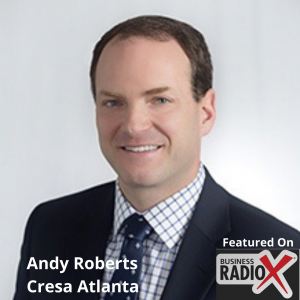
Andy Roberts, Cresa Atlanta, joins host John Ray to discuss the state of office and industrial real estate in the Atlanta market. Andy also discusses how the pandemic has hastened real estate trends which were already in motion. “North Fulton Business Radio” is produced virtually from the North Fulton studio of Business RadioX® in Alpharetta.

Andy Roberts, Senior Vice President, Cresa Atlanta

Cresa is the largest privately-held tenant representation firm in North America. They think of real estate as a business tool – one that goes beyond just the client’s operational needs to help enhance the client’s image, attract top talent, and drive profitability.

Andy Roberts began his career in commercial real estate at Wells Real Estate Funds by raising capital for various REIT portfolios that are now traded on the NYSE. During his tenure at Wells, Andy developed a passion for counseling clients on the dynamics of investing in commercial real estate. Following his tenure with REITs, Andy joined Cresa in the summer of 2014 to help clients navigate their real estate decisions in a market where a growing percentage of properties are institutionally owned.

Andy enjoys educating clients on the manner their real estate decisions impact not only their financial bottom line but their culture and labor force dynamics as well.

Company website

LinkedIn

Questions/Topics Discussed in this Show

  • Fourth Quarter Commercial Real Estate Update
  • Future of Work From Home vs. Office
  • Have employees enjoyed working from home
  • M&A activity in ATL
  • Which industries are thriving in ATL

North Fulton Business Radio” is hosted by John Ray and produced virtually from the North Fulton studio of Business RadioX® in Alpharetta. You can find the full archive of shows by following this link. The show can be found on all the major podcast apps by searching “North Fulton Business Radio.”

Renasant Bank has humble roots, starting in 1904 as a $100,000 bank in a Lee County, Mississippi, bakery. Since then, Renasant has grown to become one of the Southeast’s strongest financial institutions with over $13 billion in assets and more than 190 banking, lending, wealth management and financial services offices in Mississippi, Alabama, Tennessee, Georgia and Florida. All of Renasant’s success stems from each of their banker’s commitment to investing in their communities as a way of better understanding the people they serve. At Renasant Bank, they understand you because they work and live alongside you every day.

Tagged With: Andy Roberts, Commercial Office Space, commercial real estate, Cresa Atlanta, industrial real estate, work from home

Why It is Important to Have a Tech Savvy Business Attorney, with Almeta E. Cooper, The AECooperGroup

October 19, 2020 by John Ray

Almeta-Cooper
North Fulton Studio
Why It is Important to Have a Tech Savvy Business Attorney, with Almeta E. Cooper, The AECooperGroup
Loading
00:00 /
RSS Feed
Share
Link
Embed

Download file

Almeta-Cooper

Why It is Important to Have a Tech Savvy Business Attorney, with Almeta E. Cooper, The AECooperGroup

John Ray: [00:00:00] And hello, everyone. I’m John Ray with Business RadioX. And I’m here with Almeta Cooper. And Almeta is principal with her own firm, The AECooper Group. And Almeta, our question for you is, why is it important that businesses and business owners have a tech-savvy lawyer?

Almeta Cooper : [00:00:21] It’s important for business owners to have a tech-savvy lawyer because we are living in a tech time in the 21st Century. It’s pervasive. Everybody has a smartphone, a smart device, a laptop, an iPad. And if you are a business person, you want to find a lawyer who’s able to communicate with you, and produce work, and caring for you as a modern-tech-conscious client. So, you want your lawyer to reflect the kind of business you have, which most likely is high-tech and high-touch.

Almeta Cooper, The AECooperGroup

Almeta Cooper is a nationally known healthcare leader. Her C-Suite peers trust her judgment, experience, accountability and integrity. She resolves problems at all levels of complex healthcare organizations. Almeta is a calm center of leadership in a crisis. She is passionate about providing equality in healthcare.

From a 20,000 member healthcare professional association, to academic health professions institutions, to a $3 billion integrated healthcare delivery system, Almeta has provided strategic guidance and innovative solutions. She advised governing bodies and senior leaders how to respond to complex federal healthcare investigations, saving millions. She oversaw the integration of 800 independent physicians into a major medical center. She co-chaired a strategic initiative to integrate telemedicine into existing and future medical services for a leading healthcare academic institution.

Almeta serves on the board of the Health Care Cost Institute (HCCI), an independent research institute focusing on economic issues critical to the U.S. healthcare system. Almeta also serves on the Senior Living and Services Subsidiary Board and Health Care Quality Committee of National Church Residences (NCR), the nation’s largest not-for-profit provider of senior affordable housing and supportive services.

Almeta is past president of the American Health Lawyers Association (AHLA) and its board. She served as an advisory board member of the Women Business Leaders in the Healthcare Industry Foundation. She was corporate secretary for the OSU Wexner Medical Center board, and board liaison for the Ohio State Medical Association governing board. Almeta stays current with emerging board issues through her participation in the National Association of Corporate Directors.

Almeta was most recently senior vice president, general counsel, and corporate secretary for Morehouse School of Medicine. She is a Fellow of the American Bar Foundation and AHLA. Almeta is the 2012 recipient of the AHLA David J. Greenburg Service Award. She received recognition in the nation’s largest African American oral history video collection, The History Makers, for her significant contributions to the legal field.

Almeta holds a B.A. in German from Wells College and a J.D. from Northwestern University School of Law. She creates meaningful connections through personal and community service, and she describes her recent tandem skydiving jump as a lesson in trust and courage.

LinkedIn

Twitter

Listen to the complete North Fulton Business Radio interview with Almeta here.


The “One Minute Interview” series is produced by John Ray and in the North Fulton studio of Business RadioX® in Alpharetta. You can find the full archive of shows by following this link.

Renasant Bank has humble roots, starting in 1904 as a $100,000 bank in a Lee County, Mississippi, bakery. Since then, Renasant has grown to become one of the Southeast’s strongest financial institutions with over $13 billion in assets and more than 190 banking, lending, wealth management and financial services offices in Mississippi, Alabama, Tennessee, Georgia and Florida. All of Renasant’s success stems from each of their banker’s commitment to investing in their communities as a way of better understanding the people they serve. At Renasant Bank, they understand you because they work and live alongside you every day.

Cloud Computing for Atlanta Small Business – An Interview with Scott Bechtold, Agility IT (IT Help Atlanta, Episode 9)

October 16, 2020 by John Ray

Scott-Bechtold-Nerdio
IT Help Atlanta
Cloud Computing for Atlanta Small Business - An Interview with Scott Bechtold, Agility IT (IT Help Atlanta, Episode 9)
Loading
00:00 /
RSS Feed
Share
Link
Embed

Download file

cloud computing for Atlanta small business

Cloud Computing for Atlanta Small Business – An Interview with Scott Bechtold, Agility IT (IT Help Atlanta, Episode 9)

Host Rick Higgins speaks with Scott Bechtold, Agility IT, on cloud computing for Atlanta small business, what to look for in a cloud services provider, the difference between private cloud and public cloud, and much more.  “IT Help Atlanta” is brought to you by TeamLogic IT, your technology advisor.

About the Show

“IT Help Atlanta” profiles small to mid-market businesses and highlights how those companies use technology to succeed. An archive of previous shows can be found here.

About Your Host

Rick-Higgins-2019Rick Higgins is Owner and President of TeamLogic IT of Dunwoody, GA. Rick’s firm is part of a national network of locally-owned service businesses, providing comprehensive IT services to the small-medium sized business market.

They offer managed service for networking, cyber security, data and email, as well as hardware and software support in addition to a variety of consultation and preventative maintenance services. Rick’s personal and corporate philosophy is simple: Stand up, be bold, and tell the truth.

Connect with Rick on LinkedIn and Twitter, and follow TeamLogic on Facebook.

Tagged With: Agility IT, cloud computing, cloud services provider, IT, IT Help Atlanta, Rick Higgins, TeamLogic IT

Trace Blackmore, Blackmore Enterprises and the “Scaling Up!” Podcast

October 15, 2020 by John Ray

Trace Blackmore
North Fulton Business Radio
Trace Blackmore, Blackmore Enterprises and the "Scaling Up!" Podcast
Loading
00:00 /
RSS Feed
Share
Link
Embed

Download file

Trace Blackmore, Blackmore Enterprises and the “Scaling Up!” Podcast (North Fulton Business Radio, Episode 295)

Trace Blackmore joins host John Ray to discuss his journey in the water treatment industry, how teaching is vital aspect of how he conducts his business, and how he gives back to his industry through his podcast, “Scaling Up!” “North Fulton Business Radio” is produced virtually from the North Fulton studio of Business RadioX® in Alpharetta.

Trace Blackmore, CEO, Blackmore Enterprises

Trace Blackmore learned water treatment from his Dad, who taught him two important things about the techniques and ethics of the business:
• Most customers don’t really know what they do, even though it’s to their advantage to know how and why they do things. So it’s up to them to teach their customers,  not just service an account.
• Each customer should have the knowledge to hold Blackmore Enterprises accountable for what they do.  By being held accountable, a business becomes more reliable.

Trace puts these values to work every day as the CEO and founder of Blackmore Enterprises, an industry leader providing outstanding water treatment consultation and services to industrial and commercial customers in Metro Atlanta.

He also hosts “Scaling Up!,” a podcast for water treatment experts and novices alike. It’s the podcast for water treaters, by water treaters, that is quickly becoming the go-to resource in the industry. The goal of each “Scaling Up!” segment is simple: Encourage water treaters to treat the industry with the respect it deserves.

Through Blackmore Enterprises and “Scaling Up!,” Trace is motivating water treaters to push themselves to always be learning

Company website

LinkedIn

Facebook

Twitter

Instagram

Questions/Topics Discussed in this Show

  • Water treatment
  • Legionella
  • Masterminds
  • Podcasting
  • Leadership

North Fulton Business Radio” is hosted by John Ray and produced virtually from the North Fulton studio of Business RadioX® in Alpharetta. You can find the full archive of shows by following this link. The show can be found on all the major podcast apps by searching “North Fulton Business Radio.”

Renasant Bank has humble roots, starting in 1904 as a $100,000 bank in a Lee County, Mississippi, bakery. Since then, Renasant has grown to become one of the Southeast’s strongest financial institutions with over $13 billion in assets and more than 190 banking, lending, wealth management and financial services offices in Mississippi, Alabama, Tennessee, Georgia and Florida. All of Renasant’s success stems from each of their banker’s commitment to investing in their communities as a way of better understanding the people they serve. At Renasant Bank, they understand you because they work and live alongside you every day.

Tagged With: Blackmore Enterprises, Scaling Up!, Trace Blackmore, water treatment

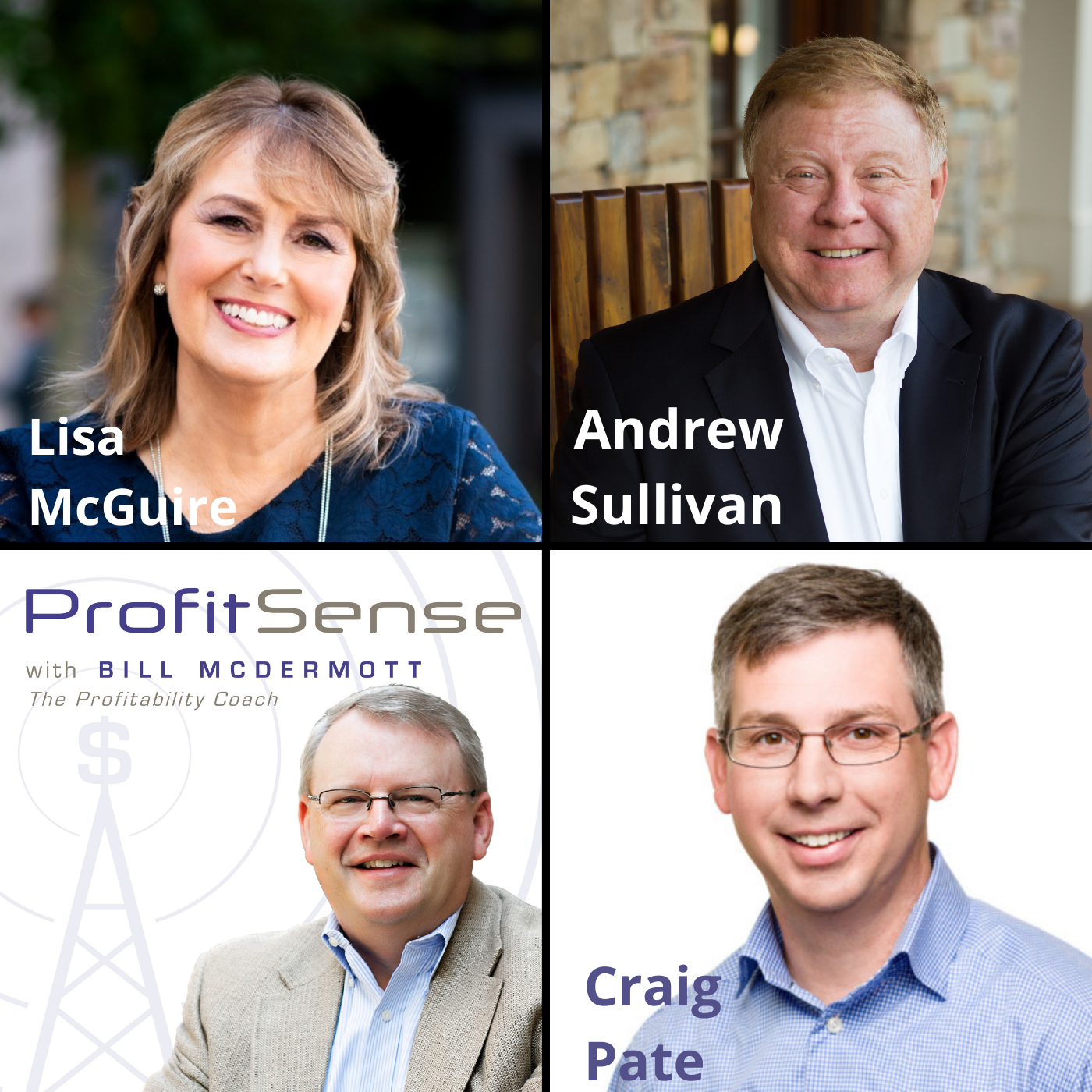
ProfitSense with Bill McDermott, Episode 14: Lisa McGuire, Marketing Consultant; Andrew Sullivan, Sullivan and Schlieman Wealth Management; and Craig Pate, Wilson Lewis

October 15, 2020 by John Ray

Sullivan and Schlieman
North Fulton Studio
ProfitSense with Bill McDermott, Episode 14: Lisa McGuire, Marketing Consultant; Andrew Sullivan, Sullivan and Schlieman Wealth Management; and Craig Pate, Wilson Lewis
Loading
00:00 /
RSS Feed
Share
Link
Embed

Download file

ProfitSense with Bill McDermott, Episode 14: Lisa McGuire, Marketing Consultant; Andrew Sullivan, Sullivan and Schlieman Wealth Management; and Craig Pate, Wilson Lewis

Host Bill McDermott is joined by marketing consultant Lisa McGuire, Andrew Sullivan of Sullivan and Schlieman Wealth Management, and Craig Pate, CPA, with Wilson Lewis. “ProfitSense with Bill McDermott” is produced and broadcast by the North Fulton Studio of Business RadioX® in Alpharetta.

Lisa McGuire, Business Growth Advisor and Marketing Consultant

Lisa McGuire

When the rules of business shift, one thing stays the same. Businesses need to be clear about the value they offer and communicate it effectively to the marketplace.

This is exactly what Lisa McGuire helps her clients do. Lisa McGuire is a Business Growth Advisor and Marketing Consultant to professional services and personal brands (coaches, consultants, authors, speakers). She leverages her experience as the marketing leader of a startup, where she created the brand position and message that grew a vision-based company to raise $50M in capital funds with an $18M annual operating budget.

Integrating her strong background in educating others, Lisa equips her clients with strategies to align their teams, attract and convert leads, boost revenue, and retain clients. She is a StoryBrand Certified Guide, Business Made Simple Coach, workshop speaker, and the co-host of the Business Growth Insiders Podcast.

Andrew Sullivan, Managing Partner and Wealth Advisor, Sullivan and Schlieman Wealth Management

Andrew Sullivan, Sullivan & Schlieman Wealth Management, LLC
Sullivan and Schlieman Wealth Management, LLC is a comprehensive wealth planning firm established to serve affluent individuals and their families in an effort to plan for and achieve their financial goals. With a combined total of over 150 years of industry experience, we have the expertise to develop a plan that is specific to your needs.

Andrew Sullivan is managing partner and wealth advisor of Sullivan & Schlieman Wealth Management, LLC. In this role, he offers access to a full range of comprehensive financial services, including estate, financial and income planning, as well as strategic and tactical portfolio construction and management.

Prior to forming Sullivan & Schlieman Wealth Management, LLC in 2008, Andrew was a financial advisor and senior vice president at SunTrust Investment Services for nearly 20 years.  He has been in the financial services industry since 1989.

Andrew graduated from The University of Georgia with a bachelor’s degree in finance and received a master’s degree in international business from Georgia State University. He is a CERTIFIED FINANCIAL PLANNER™ designee, earned through studies conducted at Oglethorpe University.

Currently, Andrew is a member of the Board of Trustees for Children’s Healthcare of Atlanta Foundation Board and a member of the Annual Fund Committee for Children’s Healthcare of Atlanta. Andrew sits on the Student Affairs Development Board and is Chair of the Emerge/Leadership Programs Subcommittee for Auburn University..  Andrew is a former member of the Terry College of Business Alumni Board. After 7 years of committed service to The Schenck School, Andrew was named to their Emeritus Board. He served on the Executive Committee and was Chairman of the Board of Trustees at The Schenck School, where he also served as Chairman of the Financial Aid Committee He served on the board for Habitat for Humanity North Central Georgia, and served as the organization’s treasurer. Andrew also served on the Development Committee for Wesleyan School for four years. In 2011, in recognition of Andrew’s community involvement, he was nominated for the Turknett Leadership Character Award.

Andrew and his wife Donna reside in Alpharetta, GA with their two children, Drew and Katie. He spends his free time with his family. They enjoy frequent trips to their house on Lake Hartwell. Andrew is also an avid hunter, traveling across the U.S. and various other countries for the sport.

Craig Pate, CPA, CFE, Partner, Wilson Lewis

Craig Pat, CPA, CFE, Wilson Lewis

Wilson Lewis is a certified public accounting firm that serves the Atlanta metro area including downtown Atlanta, Midtown, Alpharetta, Buckhead, Brookhaven, Cumming, Decatur, Duluth, Dunwoody, Gainesville, Marietta, Roswell and Smyrna (Georgia) with audit, tax, accounting and advisory services

Craig is a Certified Public Accountant and Certified Fraud Examiner. He has over twenty years of experience in the construction industry.

He is responsible for performing and supervising client engagements for the firm, including audits, reviews, and compilations of financial statements. He is a part of the firm’s fraud consulting and investigation services.

About “ProfitSense” and Your Host, Bill McDermott

Bill McDermott

“ProfitSense with Bill McDermott” dives in to the stories behind some of Atlanta’s successful businesses and business owners and the professionals that advise them. This show helps local business leaders get the word out about the important work they’re doing to serve their market, their community and their profession. The Show is presented by McDermott Financial Solutions. McDermott Financial helps business owners improve cash flow and profitability, find financing, break through barriers to expansion and financially prepare to exit their business. The show archive can be found at profitsenseradio.com.

Bill McDermott is Founder and CEO of McDermott Financial Solutions. When business owners want to increase their profitability, they don’t have the expertise to know where to start or what to do. Bill leverages his knowledge and relationships from 32 years as a banker to identify the hurdles getting in the way and create a plan to deliver profitability they never thought possible.

Bill currently serves as Treasurer for the Atlanta Executive Forum and has held previous positions as board member for the Kennesaw State University Entrepreneurship Center and Gwinnett Habitat for Humanity and Treasurer for CEO NetWeavers. Bill is a graduate of Wake Forest University and he and his wife, Martha have called Atlanta home for over 40 years. Outside of work, Bill enjoys golf, traveling and gardening.

Connect with Bill on LinkedIn and Twitter and follow McDermott Financial Solutions on LinkedIn.

Tagged With: Andrew Sullivan, Craig Pate, Gloria Wilson Moore, Lisa McGuire, McDermott Financial, McDermott Financial Solutions, Sullivan and Schlieman, Wilson Lewis

The Value of Forward Thinking – An Interview with Jill Frey, Cummins Facility Services

October 15, 2020 by John Ray

Cummins Facility Services
Inspiring Women PodCast with Betty Collins
The Value of Forward Thinking - An Interview with Jill Frey, Cummins Facility Services
Loading
00:00 /
RSS Feed
Share
Link
Embed

Download file

Cummins Facility Services

The Value of Forward Thinking – An Interview with Jill Frey, Cummins Facility Services (Inspiring Women, Episode 26)

Cummins Facility Services CEO Jill Frey joins host Betty Collins to discuss her company’s growth and how forward thinking has aided her success journey. She also shares her experience of being a female in a male-dominated industry. “Inspiring Women” is presented by Brady Ware & Company.

Betty’s Show Notes

You’ve got to be a forward thinker.

You’ve got to be proactive if you want to move forward and get through the “what ifs” when they come. Forward thinking is not always easy. It might not be your personality. So you’ve got to at least have somebody on your team who’s a forward thinker, who can push you to do more, think bigger.

In this episode, I speak with Jill Frey, President & CEO of Cummins Facility Services. I consider her the definitive forward thinker.

Cummins Facility Services (CFS) is a national multi-faceted facility management company servicing Fortune 500 companies across the US. CFS is a 100% women owned enterprise.

Cummins provides services including janitorial, landscaping, snow removal, HVAC, security, floor care, and light maintenance to manufacturing plants, retail stores, medical facilities, schools, corporate offices as well as the hospitality industry. Jill took over leadership of the family business, which began in 1972, after graduating from the University of Toledo in 1994.

About being a female in a male-dominated business category…

So in my opinion, it’s all about respect. You’ve got to stand your guard and you’ve got to really stick up for who you are. I’ve been in this industry literally my whole life. And people can try to say that they can bully me around. But I started in this industry rolling up my sleeves and working with my employees. I know how to do it. I know how to strip and waxer. I know how to do all of that. And that’s gotten me so far ahead. I get so excited about my industry and my employees and my people and what’s going on. And I think if they don’t take me seriously, it’s going to come back on them.

Jill talks about how have she navigated through this COVID-19 time, and what she thinks that this industry will look like in the future…

It has changed our life. And the quote that I like to use for this is what 9/11 did to buildings, COVID-19 is doing to disinfection and facilities. And I truly believe that. Nobody’s had a guidebook. No one’s had a book of “this is what you do here.” It’s never existed before. And so we had to reinvent that.

And her clients are appreciating her outlook, her forward thinking and quick action…

Our clients were telling us that the information that we were sending out is the best information that they are getting from any of their sources. It was amazing. We’ve had so many clients sending us letters of thank you, presidents of companies. Thank you so much for cleaning our facility.

And she ends our interview with three great quotes, and here is one of them…

The best way to predict the future is to invent it.

Betty Collins, CPA, Brady Ware & Company and Host of the “Inspiring Women” Podcast

Betty Collins, Brady Ware & Company

Betty Collins is the Office Lead for Brady Ware’s Columbus office and a Shareholder in the firm. Betty joined Brady Ware & Company in 2012 through a merger with Nipps, Brown, Collins & Associates. She started her career in public accounting in 1988. Betty is co-leader of the Long Term Care service team, which helps providers of services to Individuals with Intellectual and Developmental Disabilities and nursing centers establish effective operational models that also maximize available funding. She consults with other small businesses, helping them prosper with advice on general operations management, cash flow optimization, and tax minimization strategies.

In addition, Betty serves on the Board of Directors for Brady Ware and Company. She leads Brady Ware’s Women’s Initiative, a program designed to empower female employees, allowing them to tap into unique resources and unleash their full potential.  Betty helps her colleagues create a work/life balance while inspiring them to set and reach personal and professional goals. The Women’s Initiative promotes women-to-women business relationships for clients and holds an annual conference that supports women business owners, women leaders, and other women who want to succeed. Betty actively participates in women-oriented conferences through speaking engagements and board activity.

Betty is a member of the National Association of Women Business Owners (NAWBO) and she is the President-elect for the Columbus Chapter. Brady Ware also partners with the Women’s Small Business Accelerator (WSBA), an organization designed to help female business owners develop and implement a strong business strategy through education and mentorship, and Betty participates in their mentor match program. She is passionate about WSBA because she believes in their acceleration program and matching women with the right advisors to help them achieve their business ownership goals. Betty supports the WSBA and NAWBO because these organizations deliver resources that help other women-owned and managed businesses thrive.

Betty is a graduate of Mount Vernon Nazarene College, a member of the American Institute of Certified Public Accountants, and a member of the Ohio Society of Certified Public Accountants. Betty is also the Board Chairwoman for the Gahanna Area Chamber of Commerce, and she serves on the Board of the Community Improvement Corporation of Gahanna as Treasurer.

“Inspiring Women” Podcast Series

“Inspiring Women” is THE podcast that advances women toward economic, social and political achievement. The show is hosted by Betty Collins, CPA, and presented by Brady Ware and Company. Brady Ware is committed to empowering women to go their distance in the workplace and at home. Other episodes of “Inspiring Women” can be found here.

Show Transcript

Betty Collins: Today, I’m going to interview someone who is just the definition, to me, of forward-thinking. She’s just always been that way and forward-thinking is so crucial to success and there are no guarantees in life, professionally or personally. There are so many unplanned events and circumstances, like a pandemic, or whatever, a loss of a crucial employee, or fill in the blank. There’s all kinds of things that come at you, and if you don’t forward-think to always try to be ahead of things, it’s really hard, sometimes, to head those things head on. They just come. It’s not about if, but when. Will you be ready to always answer what is next? In the good and the bad times, not just in the bad times, not just in the pandemic times, you’ve got to be a forward thinker. You’ve got to be proactive, if you want to move forward and further, and get through the what ifs when they come.

Betty Collins: In addition, the marketplace, your industry, technology, etc., it’s always changing and it’s better to be ahead of it or even just, “Hey, I’m the driver of the change in my industry.” On vacation this year, I was walking on the beach, and I’ve told this story in several other podcasts, but it’s one of my favorites. It’s this little boy; he’s maybe eight to 10 years old, and he was really excited because he caught this fish. It was about seven or eight inches long. I approached him on the beach, and I asked him what he was going to do with that fish. “Are you going to throw that out? Are you going to eat it? You going to give it back? What are you going to do?” He immediately, very aware of his surroundings, seven or eight years old, he says, “First, you need to socially distance.” Of course, I just went, “Oh, wow.” His mother was looking at me like, “What is she going to do?” I said, “Thank you so much.” I did, and then he said without hesitation to me, “The fish is a bait for a bigger fish.”

Betty Collins: I thought, “Wow.” My husband could see my head. He just knew what I was thinking. He’s like, “We’re on vacation.” I said, “I know,” but wow. To me, this is a forward, big thinker. He’s only, again, a small kid, but he wasn’t going to just eat and be satisfied today. He wasn’t just going to throw the fish back in. He was going to catch a bigger fish. He was going to do something in the future with that fish. Immediately, I thought of our guest today, Jill Frey, who’s the president and CEO of Cummins Facility Services, which we’ll refer to that as CFS in the future. She’s always asking and thinking, and she’s always- she’ll call me and say, “I just need to pick your brain,” or she does that with her team. What could be and what should be; those are two different things. The could and the should, are they both important when you’re asking those questions, trying to get ahead, trying to do one plan, trying to drive your change? Remember, it’s not about if, it’s about what. What do you do? You have to be a forward thinker and it’s not always an easy, easy … It might not be your personality.

Betty Collins: You got to, at least, have somebody in your team who’s a forward thinker, who can get you to go further. Today, I have with me, she is the definition of forward-thinking, and she’s the owner, again, of Cummins Facility Services. It’s a family-owned business. She became that owner. It’s been around since actually, 1972. I mean, they do everything under the sun for janitorial services, landscaping, snow removal, HVAC, security, floor, you name it, they do it. I can’t give away what she’s thinking about doing now or what she is in the process of doing now, but … And two, as a successful business owner and executive, she’s very involved in things like young professional organizations, YPO, young executives, women’s business enterprise, as well as ISSA. Just, she’s helping me with a young woman that we’re trying to get into the marketplace. Just a dynamic resume, right out of college, in 2020. That’s who she is and that’s who she likes to help. She’s active in her local community, involved with Ruling Our Experiences, ROX, R-O-X, and a leader in ME programs. She has a special love for diving; that sounds fun, enjoys running; not so fun, and travel; I could do that. She’s a single mom of two, really great children, Savannah and Spencer. Jill, welcome to our program today, and thank you today for taking the time to do this podcast.

Jill Frey: Oh, Betty, it’s my pleasure. I love time with you, so anything I can do to get more Betty time is always fun. Thank you for all those kind words. Thank you for believing in me, always. I appreciate everything that you’ve done for us, so thank you.

Betty Collins: She’s just a great. What I want you to do, Jill, is just take a few minutes and tell your stories of Cummins. I mean, I’ve heard it and we don’t have an hour, but give us the highlights of the story of Jill and Cummins.

Jill Frey: Thanks. I like to be funny. I think I’m the funniest person in the world and so, because people don’t laugh. No, no. If you hear something, it’s because I’m trying to be funny. Anyway, so, my parents started a company in 1972. I grew up the daughter of a janitor, which is always fun, let me tell you. I graduated from college, from the University of Toledo, and my parents said, “Hey, we’ve just paid for your college. Can we go on a vacation?” I said, “Absolutely. Go. The sky’s the limit. Wherever you want to go, go for it.” They went on a trip to Honduras to go diving and they ended up buying beachfront property, called me and said, “We’re not coming back. The company’s yours. Good luck.” We had 15 employees at the time and we did business in one town, literally one town. Today, we self-perform business all over the nation. We are in 40 states; really, really good. We pay taxes, we pay people. I can call the phone and I can pick up my phone and say, “Who’s the supervisor of this state?” And we have someone there. We’ve grown substantially. It’s been so fun. When I grew that whole time, it was all about my employees.

Jill Frey: When I took over the company, when my parents gave me the company and said, “The company is yours, good luck. Run with it,” it was all about, “How do I keep the employees that I have, and make sure that I can continue to give them a job? How do I grow them? How do I make them successful?” That has always been my why, and I think that’s really important for me to remember every day, that that’s why I get out of bed in the morning. My life has literally, in the facilities industry, been revolving around my employees and how to make them as successful as I can. It’s a story of Cummins, but you’re completely right. We’ve moved out of janitorial and into more facilities maintenance, HVAC, snow removal, landscaping, security. We’re in the tech sector now. I really do think buildings can talk, and so, I am trying to enable them to do that, so I know what’s going on inside my buildings. My children have grown. I need something now to communicate with, and I guess, I feel like those are my buildings.

Betty Collins: Well, not only have you grown Cummins and you have a great team- I can’t, we’ll talk about that in a few minutes, but you’re also an industry leader. You’re pushing cutting-edge stuff. You’re involved in that, as well as a thought leader. You’ve gone beyond, “This is my company, and this is what we’re doing today. This is what my industry should be doing.”

Jill Frey: Thanks, Betty.

Betty Collins: You’ve been really great about that. We’ve had some fun times, created a nonprofit, just to do that, right?

Jill Frey: Right, exactly. You know my stories.

Betty Collins: You’re always out, somewhere in the future. I remember the first time I ever met you. I was with your COO and your CFO. We were going over different things, and you said, “Look, Betty. My role is to go figure out all this crap we need to do, and then these guys do it.” You’ve just been this future person and some of the ideas you were throwing out that day, I went, “Oh, my gosh. I wonder if she’ll ever really do that,” but I mean, you’re ahead of it. How has that thinking in the future, being somewhere in the future, how has that played in your success? Then give us an example of when you weren’t forward-thinking and it held you back.

Jill Frey: Thank you. Thanks for asking those questions. I got into a conference room with Betty and her team, and obviously, she’s an accountant. She’s my accountant. She’s amazing. She’s fantastic. I highly recommend her to anybody listening to this podcast. She’s changed our company. I was squirming in my chair and I said, “Betty, I feel naked right now. I’m completely naked in front of all of you people, and there are men in the room.” She said, “Jill, you’re fine.” I said, “I don’t do this.”

Jill Frey: “I go and I solve problems, so you’re right, Betty.” That’s exactly what I said, and thanks for remembering that. Yes, I am always trying to be out in the future. One example I can give you is one of my largest clients about 15 years ago. We were still a state player, state competitor in janitorial services. My biggest client says to me, “We’re going to go out for bid, and your choice is to lose your business with me or grow five times.” I thought, “Oh, my goodness, how am I going to do this? Because if I don’t conquer this, I’m going to lose the business I have.” Biggest client, all of my employees, I’m going to have to lay them off. It would be a nightmare. I went out and I found a partner, and that is how we grew our business into so many states, because our partner said- in fact, we were in Mexico at the time, as well. I literally got on a plane, went down to Monterrey, Mexico, and started touring.


Jill Frey: We had 20 facilities down in Mexico that we were taking care of. That’s me, trying to be futuristic, because that company wanted one neck to choke, and that neck was mine. Knock on wood, we still have that client today. I’ve made the right decision and we grew. We took on all those facilities, we took on Mexico. I’d have accountants, attorneys in Mexico. You could see this little blonde beboppin’ down there. I mean, I’m sure it was just a vision to be seen, but we did it and we succeeded. The company knew that they could trust us and that we had their best interests at heart. That’s how I had to be a futuristic with that. I came back and I said, “Hey, team, we’re going to be doing business in all these states.” They looked at me like I had five heads. They had no idea.

Jill Frey: “How are we going to do the payroll for that? Who’s our bank going to be? How do we pay people in these other states?” That was very interesting. I could see that if I would have said, “No, I’m not prepared for that,” I don’t know where I would be, today. I would have lost my biggest customer. I wouldn’t be in all the states that I am in today. That would have had a huge impact on my success, on my company, on my employees. That’s a really interesting story. At the time, I didn’t know how well that was going to unfold. That’s, I think, how my forward-thinking was. I don’t really have a story on not forward thinking, because if anybody asks … There’s a slogan in the company, ‘what would you all do?’ It was always about what I would do with a client, the client always right. You are always taking care of the client, always do that.

Jill Frey: On the flip side of that, if the client asks us to do something, the answer is always yes. “Do you clean windows?” “Yes.” I can give you an example of this. My father started a company in 1972. About 1980, Honda came in, got the huge Honda contract there in Marysville, and he went in to do some cleaning for them. Honda said to my father, “Do you clean windows?” My father said, “No, we don’t clean windows,” and he never got the contract with Honda. From that point, I’ve always said, “Please make sure if they ever ask us to do anything, we say yes. If they ask us to go to a different state, yes, we will do that. If they ask us to take on another responsibility, yes, we will totally do that.” Anything a client asks, the answer’s always yes.

Belly Collins: You can have a client like Honda, because you wouldn’t even think twice. Even if you didn’t even have any window experience, you’d go, “We absolutely clean windows.” Then you call your team and say, “How do we clean windows?”

Jill Frey: That’s exactly what I would do.

Belly Collins: That’s what’s so awesome, right?

Jill Frey: Yeah, that’s happened.

Belly Collins: That’s why I like being in meetings with your team and with you guys, because you’re always, “Well, Jill is going to do this now.” I go, “Oh, okay. All right, so now what?” They make it happen. Let’s talk about your team, because you have an amazing team. I’ve been very impressed. Part of that is because you value them. They play a part of your success, certainly, but how do they deal with forward-thinking and fast pace and constant change? Because you are never going to be in neutral or “Look at what we used to do.” You’re going to be looking, “We’re going and we’re going fast and furious.” Not everyone can think like that. Tell us about your team and leading them, as a forward thinker.

Jill Frey: Oh, I do have the best team in the world, you’re absolutely right. I trust them and I enable them. I give them the power to make decisions. I do not multi or I do not micromanage them at all, and I let them know that, “Listen, if you need a micromanager, this is not the place for you to be. I’m just going to assume everything I ask you to do is going to be done perfectly.” Yeah , they’ve had a hard time. One of my team, I’ll ask for something to be done and she’ll say, “That can be done, but it’s not going to be done in jail time.” Everybody knows that jail time is now. Like, “Let’s go, jail time.” That’s been really challenging for me and as we grow, I still have those key people that I call and I just called one of them today and I said, “Hey, I had a whole truckload of stone I’m having delivered out to the office.” They’re like, “Do we need a truckload of stone?” I’m like, “I don’t know. I just got it. It’s going to be there. She’s like, “Jill, I don’t manage stone delivery.” I’m like, “Okay, we’ll figure out who does, great.”

Jill Frey: I don’t know who everybody is, so I just still go to those main players. You’re right, they have to adapt to that and God bless their souls. I mean, they’ll be like, “Jill, I’m in the middle. Today’s Monday, it’s a big day for me. I don’t have time to figure out stone delivery,” but they always do and they always make it happen. They’re fantastic, and they love when I forward-think. One day, I had them all look outside and I said, “Do you see that big, blue, beautiful sky?” They said, “Yes, it’s gorgeous.” I said, “Someday, there’s going to be airships out there and they’re all going to be delivering packages via drones.” They didn’t believe me. I just said, “What? You don’t believe me?” I got all these news articles for them about all these airships that are being built, and we’re working on part of that as well. It’s opening your mind and you never know what is going to come out of my mouth.

Jill Frey: It’s just like, “Is she serious? Really?” That’s where my team just- I mean, they focus on what they need to do, but they have to know, in their job as well, I’m looking at all these other possibilities because I want to make sure they’re secure in their jobs and they have a very bright future. I want them to feel like, “Okay, Jill’s taking care of me. She’s protecting me and she’s making sure that we all have jobs to do, and we might be up cleaning airships, someday.” As strange as it sounds, it will happen, and I want to be able to be the first one to say to them, “Oh, my gosh, can you believe we’re in an airship?” I mean, Elon Musk, he’s got some really cool ideas. I mean, there’s a lot of really cool people out there, but anyway, hope that answers the question.

Belly Collins: It does, and the other side of it, though, is the one thing I think you do well, is you’re a forward thinker, but you listen to what they have to say. They may change you not to be so forward thinking or maybe, you’ll go, “Hey, actually, now I see that we can even do more.” You listen to what they have to say when it comes to forward thinking and their reservations. Then you guys come together, but you’re the ideas person and everyone knows that. That’s what’s great about it. Then you just keep moving ahead, faster and further. Even where sometimes, you can’t move fast, you just can’t because there’s so many components to it, but if you want to grow 30%, you’ve got to have even a bigger line of credit, so you have to watch that stuff. When your team comes to you and they say to you, “Hey, what are we going to do about this?” And you’re going, “We’re still going to get there, and they’re going, “Okay.” I do like the jail time thing. That’s good. That’s good.

Jill Frey: Thanks, Betty.

Belly Collins: No, but I mean, you guys work together well, and that’s why you had the success you’ve had. COVID-19- and I’m tired of talking about it, but it’s still very much a reality, of course, has changed our world. You, as a cleaning company, obviously, that’s now even a bigger, bigger deal. How have you navigated through this time and what do you think that your industry looks like in the future?

Jill Frey: Thanks for asking the question, and I agree. I am as tired with that pandemic as ever, but it has changed our life. The quote that I like to use for this is ‘what 9/11 did to buildings, COVID-19 is doing to disinfection in facilities’. I truly believe that in each- and nobody’s had a guidebook. No one’s had a book of, “Okay, this is what you do here.” It’s never existed before, and so, we had to reinvent that. I didn’t feel comfortable sending people into the office, so we sent everyone home and we had to learn to hire people. We are hiring 75 people a week, virtually. We had to put all new systems in to do that. We are sending out newsletters every other day, communication with our clients, how we’re handling their building. They wanted to know what we are using, who we were going in, if they’ve been COVID-tested. What of our regulations, what are policies and procedures based on this? We didn’t have any policies and procedures based on COVID-19. I thought it was still a beer. I thought, “Oh, it’s Corona right?”

Jill Frey: Of course, we all adapted to that, and our team was so fantastic. The information that we were sending out, our clients were telling us, is the best information that they are getting from any of their sources. It was amazing. We’ve had so many clients sending us letters of thank you; presidents of companies. “Thank you so much for cleaning our facility. We did not have a COVID outbreak,” or one of- this was a food processing plant. 40% of all food processing plants had COVID outbreaks. They said, “Thank you so much for working with us, for being our partner and making sure that in this ecosystem, that our environment is safe and protected.” Yes, cleaning is completely sexy right now. It has not been sexy before, but oh, my goodness, it is in the limelight.

Betty Collins: Yes, it is.

Jill Frey: It’s been really fun to get that attention, but it’s like, “Oh my gosh. Okay, we have attention now.” It’s making sure we are that great company. I wish I could tell you, I don’t have the amount of money that we spend on bonuses this year, but it’s astronomical, with everything that’s going on with unemployment and trying to hire people and retain people and COVID bonus, it’s unbelievable. I feel like I’m reinvesting into the company. About seven years ago, I bought about four machines. They’re called electrostatic machines. They’re by Clorox 360. Technically, these were the first generation and they’re called ByoPlanet. Clorox 360 ended up buying these rights, and so, the second generation was called Clorox 360. During this COVID time, electrostatic disinfection became hot as all get-out. If you don’t know what it is, it’s basically a charged chemical that comes out from a gun. It wraps around and disinfects a surface. I had been selling this service for seven years. Nobody wanted it. Nobody wanted to talk about it. Nobody wanted to think about it. They thought that I was an alien with this gun, that they never wanted to see again. I can tell you, those guns were $7,000 or $8,000 apiece and we bought four of them. My controller, as Betty can contribute, is very tight on money. For me, asking to spend, what, $28,000?

Betty Collins: Seven years ago.

Jill Frey: Yeah, seven years ago, he was like, “All right, Jill Frey, but we better be using these things.” I’m like, “Yeah, we’re going to use them Missy-” oh, sorry, “We’re going to use them, I promise. We’re going to use them.” Let me tell you, we have been using those guns. Now, you can’t even order them. You can’t even touch them. They’re as hot as all get-out. I can literally say we are leading the industry in disinfection and now, we have another tool that’s even going to get- not get rid of electrostatic, but it’s going to replace it in a lot of opportunities. It’s just, I was so thrilled that I got to say to my team, “You know those guns we bought seven years ago, we’re finally using them.” It was hilarious because we are using them so much, they are breaking. The batteries went dead. I felt like we are on Guardians of the Galaxy. We were trying to put the spaceship back together again. It was hilarious. We got through it. We just kept pushing and pushing because you just couldn’t find them anywhere. You couldn’t find electrostatic guns, but anyway. COVID has been a true learning curve. The office has been amazing. I’m so grateful and blessed for how much we’ve gotten through it, and gosh, I hope that 2021, I hope it’s got a brighter spot. You brought up a subject I could talk hours about. Sorry.

Betty Collins: No, but that’s what you’ve always, since I’ve known you, it’s, “We’re going to buy this product and we’re going to use it and sell it.” It takes time to take these guns and get your money back sometimes, but in that case, man, you just- now, you are definitely ahead of the game, that’s for sure.

Jill Frey: It was fun. It was really fun.

Betty Collins: That’s for sure. Let’s go into the fun question, which is, women who are forward-thinking, aggressive- we wouldn’t see them as aggressive- are not always appreciated, Jill Frey. Have you ever just experienced that pushback or get the look? I know I have. How do you handle that aspect of being a woman business-owner? Especially- you’re a forward thinker. I mean, you’re ready to go.

Jill Frey: Being a woman, my industry is a male-based industry. I mean, I’ve always been looked at as the black sheep of the family. I mean, people like to see me at conventions and they’re always kind to me, but it’s really funny when I call them and say, “Hey, I’m bidding on your facility, and it looks really bad, so you really got to clean it up in there.” “I really don’t want your facility, so if you could do a good job, I won’t take your account from you.” I’ve built a lot of respect in my industry over the time because I don’t play their games. Some people have taken accounts from me, and I’ll go in and say, “Listen, you took one of mine. That means I take three of yours, so let me know when you’re ready, because that’s going to happen.” I had one guy take me out for drinks. He had to have two Manhattans, he’s like,”Okay, stop.” I’m like, “Oh, okay.” In my opinion, it’s all about respect. You got to stand your guard and you’ve got to really stick up for who you are. I’ve been in this industry, literally, my whole life. People can try to say that they can bully me around, but I started in this industry rolling up my sleeves and working with my employees. I know how to do it. I know how to strip and wax floors. I know how to do all of that, and that’s gotten me so far ahead. I think that when you walk into a room, I mean, you can hear the passion in my voice. I get so excited about my industry and my employees and my people and what’s going on.

Jill Frey: I think if they don’t take me seriously, at the end of the day, it’s going to come back on them, just like this electrostatic gun. You know how many men I walked in and said, “Yeah, I’ve got this great gun,” and they’re like, “A gun? Really?” Now, they’re calling me, begging me to get into their facilities. I think it’s just that you have to take yourself and you take yourself seriously and just go into a room and just say, “Listen, this is what I got. If you don’t want it, the end of the day, you’re going to be the one-” I mean, you don’t say this, but you’ve got the look on your face of, “All right. Well, I tried to tell you so, but, here’s my card. When you need me, let me know.” You’re kind about it, but just, you can’t let that get to you. You got to go in, know what you can do and know what you’re good at, and then rock it out of the park. Just recently, as you know, Betty, I started a nonprofit trade organization in my industry and it’s based on IoT. I went to a leader in our trade association, said, “Hey, I got this idea. I want to create an open API standard for the globe, for technology in facilities.”

Jill Frey: He had eight other people on the phone, it was just me. They went through all eight people, and all eight of those people said, “I don’t think there’s a need for this in our industry right now. I don’t see the opportunity at all. I don’t see it.” Like, “Okay, that’s great. Would you mind to sign this non-compete form?” They said, “Nope, we have no trouble signing that.” “Okay, great.” Today, I just got off of a phone call. They want to partner with us because this is what they see as the hottest trend going internationally, and they see such a demand for it. Of course, I didn’t get a call from the main guy. I got a call from somebody else. That, when you know what you’re doing and when you- or you have a feeling that this is going to happen, just go with that gut. In your industry, you know what’s going on. You know what the trends are. You know what problems need to be fixed. That’s my fun story.

Betty Collins: I love it. I love it. That’s awesome.

Betty Collins: I always go back to my kids. I learned a long time ago when they were that lovely middle age, the middle school time. Just drove me crazy. When I would get the look from them or the rolling of the eyes or whatever they were throwing at me, I started doing it back to them. Of course, they’re middle-schoolers going, “What are you doing?” I said, “Oh, I thought we were communicating. I thought this is what we were doing.” I feel like that in business, at times, especially if you’re considered aggressive woman, and I am, a lot of the time or that I’m going to say what’s on my mind. I’m a pretty straight shooter. You’re going to get some pushback with that, as a business owner, but especially as a woman business owner. I just wanted to hear your perspective of how you do that, so thanks for sharing that story. I love it. That’s awesome. I love the fact that he called and said, “Hey, I want to be involved now.” That’s too much.

Jill Frey: I know, right?

Betty Collins: That’s cool.

Jill Frey: It crushed me. That day was just such a crushing day. Betty, you’re the same. You are so awesome. You are leading your industry and my company depends on you so much. Like I said, you’ve changed our whole company and for the better and we’ve put our complete trust in you. We knew we could. You’re that industry leader, and that is so awesome. Once you find it, it’s an amazing partnership that you’re so grateful for. We’re all in this together. We are all in this together, and we’re going to get through it together. That’s where you use your networking. I mean, just so many people you’ve introduced me to- has been amazing. You rockstar.

Betty Collins: I appreciate all those. Usually, the guest, I’m supposed to be doing that to the guest, but Jill, thank you for doing that back to me. As of what I call- you call me all the time a rock star, and I call you the same thing. As the rockstar of cleaning industry, give us your final word. What thoughts would you want to leave this audience today?

Jill Frey: I love quotes and I have a book that I journal in every day. Then when I get done with that, I have to find new quotes to put in the front of the journal. Then I live with those quotes throughout six or eight months. I have three, if that’s okay.

Betty Collins: That’s good.

Jill Frey: I had to cut it down to three. This one’s really fun. ‘Logic will get you from A to Z, imagination will get you everywhere’. That’s from Albert Einstein.

Betty Collins: Love it.

Jill Frey: ‘Opportunities to find deeper powers within ourselves come when life seems most challenging’. That’s Joe Campbell. I really like that one too. I think that one’s fantastic. This is my favorite. This quote has carried me through two books and so, it’s in my second book here, and it says, ‘the best way to predict the future is to invent it’.

Betty Collins: Nice.

Jill Frey: I truly believe that that is the best way for you to see what your future is, is you have to understand what you want and then you have to create what you want, whether that’s in your life, in your business, in whatever realm that is, create your future. That’s my favorite one right now.

Betty Collins: That’s a great way to end the podcast, especially on just forward-thinking being crucial to your success. Well, Jill, again, Jill Frey with Cummins Facility Services. If you need a good cleaning service, she’s your girl. I just appreciate your time today, getting your perspective out there and we really appreciate it. This is Betty Collins and thank you for joining today. I hope you have a great day.

Tagged With: Betty Collins, Cummins Facility Services, forward-thinking, Inspiring Women with Betty Collins, Jill Frey

  • « Previous Page
  • 1
  • …
  • 225
  • 226
  • 227
  • 228
  • 229
  • …
  • 280
  • Next Page »

Business RadioX ® Network


Our Most Recent Episode

CONNECT WITH US

  • Email
  • Facebook
  • LinkedIn
  • Twitter
  • YouTube

Our Mission

We help local business leaders get the word out about the important work they’re doing to serve their market, their community, and their profession.

We support and celebrate business by sharing positive business stories that traditional media ignores. Some media leans left. Some media leans right. We lean business.

Sponsor a Show

Build Relationships and Grow Your Business. Click here for more details.

Partner With Us

Discover More Here

Terms and Conditions
Privacy Policy

Connect with us

Want to keep up with the latest in pro-business news across the network? Follow us on social media for the latest stories!
  • Email
  • Facebook
  • Google+
  • LinkedIn
  • Twitter
  • YouTube

Business RadioX® Headquarters
1000 Abernathy Rd. NE
Building 400, Suite L-10
Sandy Springs, GA 30328

© 2026 Business RadioX ® · Rainmaker Platform

BRXStudioCoversLA

Wait! Don’t Miss an Episode of LA Business Radio

BRXStudioCoversDENVER

Wait! Don’t Miss an Episode of Denver Business Radio

BRXStudioCoversPENSACOLA

Wait! Don’t Miss an Episode of Pensacola Business Radio

BRXStudioCoversBIRMINGHAM

Wait! Don’t Miss an Episode of Birmingham Business Radio

BRXStudioCoversTALLAHASSEE

Wait! Don’t Miss an Episode of Tallahassee Business Radio

BRXStudioCoversRALEIGH

Wait! Don’t Miss an Episode of Raleigh Business Radio

BRXStudioCoversRICHMONDNoWhite

Wait! Don’t Miss an Episode of Richmond Business Radio

BRXStudioCoversNASHVILLENoWhite

Wait! Don’t Miss an Episode of Nashville Business Radio

BRXStudioCoversDETROIT

Wait! Don’t Miss an Episode of Detroit Business Radio

BRXStudioCoversSTLOUIS

Wait! Don’t Miss an Episode of St. Louis Business Radio

BRXStudioCoversCOLUMBUS-small

Wait! Don’t Miss an Episode of Columbus Business Radio

Coachthecoach-08-08

Wait! Don’t Miss an Episode of Coach the Coach

BRXStudioCoversBAYAREA

Wait! Don’t Miss an Episode of Bay Area Business Radio

BRXStudioCoversCHICAGO

Wait! Don’t Miss an Episode of Chicago Business Radio

Wait! Don’t Miss an Episode of Atlanta Business Radio