Business RadioX ®

  • Home
  • Business RadioX ® Communities
    • Southeast
      • Alabama
        • Birmingham
      • Florida
        • Orlando
        • Pensacola
        • South Florida
        • Tampa
        • Tallahassee
      • Georgia
        • Atlanta
        • Cherokee
        • Forsyth
        • Greater Perimeter
        • Gwinnett
        • North Fulton
        • North Georgia
        • Northeast Georgia
        • Rome
        • Savannah
      • Louisiana
        • New Orleans
      • North Carolina
        • Charlotte
        • Raleigh
      • Tennessee
        • Chattanooga
        • Nashville
      • Virginia
        • Richmond
    • South Central
      • Arkansas
        • Northwest Arkansas
    • Midwest
      • Illinois
        • Chicago
      • Michigan
        • Detroit
      • Minnesota
        • Minneapolis St. Paul
      • Missouri
        • St. Louis
      • Ohio
        • Cleveland
        • Columbus
        • Dayton
    • Southwest
      • Arizona
        • Phoenix
        • Tucson
        • Valley
      • Texas
        • Austin
        • Dallas
        • Houston
    • West
      • California
        • Bay Area
        • LA
        • Pasadena
      • Colorado
        • Denver
      • Hawaii
        • Oahu
  • FAQs
  • About Us
    • Our Mission
    • Our Audience
    • Why It Works
    • What People Are Saying
    • BRX in the News
  • Resources
    • BRX Pro Tips
    • B2B Marketing: The 4Rs
    • High Velocity Selling Habits
    • Why Most B2B Media Strategies Fail
    • 9 Reasons To Sponsor A Business RadioX ® Show
  • Partner With Us
  • Veteran Business RadioX ®

Instead of Worrying About the Competition, Worry About This

December 30, 2022 by John Ray

worrying about the competition
North Fulton Studio
Instead of Worrying About the Competition, Worry About This
Loading
00:00 /
RSS Feed
Share
Link
Embed

Download file

worrying about the competition

Instead of Worrying About the Competition, Worry About This

Instead of worrying about the competition, there is a more pressing issue to focus on as a professional services provider:  the value you’re delivering to clients.

The Price and Value Journey is presented by John Ray and produced by the North Fulton studio of Business RadioX®.

TRANSCRIPT

John Ray: [00:00:00] Hello again. I’m John Ray on The Price and Value Journey. Solo and small professional services providers spend way too much time worried about competition. The irony here is that so many of these firms are run by ex corporate executives. That’s an irony because their former employers must worry about competition, market share, and what they’ll report to shareholders next quarter. Leaving big corporate ought to mean you left all that behind.

John Ray: [00:00:34] Not long ago, I was sitting with a financial services solopreneur who said to me, “I get calls from people all the time, who I don’t know, saying that so-and-so referred them. And I don’t even know who so-and-so is.” You think this guy is worried about his so-called competition? In his case, he has major national brand name firms with big advertising budgets pounding all of us with more ads than a political candidate in a swing state. There are thousands of providers of all sizes who provide the same service he does. Why does he get more calls than he can handle?

John Ray: [00:01:13] Because he is singularly focused on the value he gives to everyone who calls him. Even if he can’t take care of them, he makes sure he sends them to someone who can. Or he gives them an insider to which at least gets them closer to a resolution of their problems. If you’re focused on delivering value, competition becomes an old acquaintance whose face you recognize but whose name you can’t remember.

John Ray: [00:01:43] I’m John Ray on The Price and Value Journey. Past episodes of this series can be found at pricevaluejourney.com. I’d also be honored if you’d subscribe to our series on your favorite podcast app, if you’re not already. You’re also welcome to email me directly, john@johnray.co is my email address. And big news for 2023, I’ve got a book coming out. And if you’d like more details, you can follow me on LinkedIn, johnray1, or you can send me an email, john@johnray.co for more details. Thanks so much for joining me.


About The Price and Value Journey

The title of this show describes the journey all professional services providers are on:  building a services practice by seeking to convince the world of the value we offer, helping clients achieve the outcomes they desire, and trying to do all that at pricing which reflects the value we deliver.

If you feel like you’re working too hard for too little money in your solo or small firm practice, this show is for you. Even if you’re reasonably happy with your practice, you’ll hear ways to improve both your bottom line as well as the mindset you bring to your business.

The show is produced by the North Fulton studio of Business RadioX® and can be found on all the major podcast apps. The complete show archive is here.

John Ray, Host of The Price and Value Journey

John Ray The Price and Value Journey
John Ray, Host of “The Price and Value Journey”

John Ray is the host of The Price and Value Journey.

John owns Ray Business Advisors, a business advisory practice. John’s services include advising solopreneur and small professional services firms on their pricing. John is passionate about the power of pricing for business owners, as changing pricing is the fastest way to change the profitability of a business. His clients are professionals who are selling their “grey matter,” such as attorneys, CPAs, accountants and bookkeepers, consultants, marketing professionals, and other professional services practitioners.

In his other business, John is a Studio Owner, Producer, and Show Host with Business RadioX®, and works with business owners who want to do their own podcast. As a veteran B2B services provider, John’s special sauce is coaching B2B professionals to use a podcast to build relationships in a non-salesy way which translate into revenue.

John is the host of North Fulton Business Radio, Minneapolis-St. Paul Business Radio, Alpharetta Tech Talk, and Business Leaders Radio. house shows which feature a wide range of business leaders and companies. John has hosted and/or produced over 1,700 podcast episodes.

Coming in 2023:  A New Book!

John’s working on a book that will be released in 2023. The book covers topics like value and adopting a mindset of value, pricing your services more effectively, proposals, and essential elements of growing your business. For more information, contact John below.

Connect with John Ray:

Website | LinkedIn | Twitter

Business RadioX®:  LinkedIn | Twitter | Facebook | Instagram

Tagged With: competition, deliver value, John Ray, Price and Value Journey, pricing, professional services, professional services providers, solopreneurs, value, value pricing

Employee Pay Inequity: The New Frontier

December 30, 2022 by John Ray

Employee Pay Inequity The New Frontier
Advisory Insights Podcast
Employee Pay Inequity: The New Frontier
Loading
00:00 /
RSS Feed
Share
Link
Embed

Download file

Employee Pay Inequity The New Frontier

Employee Pay Inequity:  The New Frontier (Advisory Insights Podcast, Episode 24)

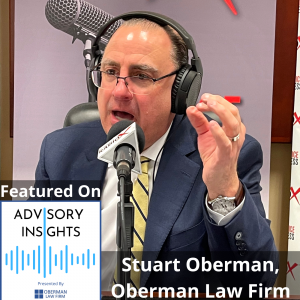
On this episode of Advisory Insights, Stuart Oberman of Oberman Law Firm discussed laws regarding employer disclosure of pay ranges and how they differ in various states and municipalities. He also offered advice to employers on how to avoid potential problems with these laws.

Advisory Insights is presented by Oberman Law Firm and produced by the North Fulton studio of Business RadioX®. The series can be found on all the major podcast apps. You can find the complete show archive here.

TRANSCRIPT

Intro: [00:00:02] Broadcasting from the studios of Business RadioX, it’s time for Advisory Insights. Brought to you by Oberman Law firm, serving clients nationwide with tailored service and exceptional results. Now, here’s your host.

Stuart Oberman: [00:00:20] Hello everyone, and welcome to Advisory Insights. Stuart Oberman here, your host. All right, folks, we’re going to drill it down right now. Some ongoing legislation, big items going on, employee pay inequity. The new frontier.

Stuart Oberman: [00:00:38] So, a new front has emerged in state and local governments, and the federal government to a certain extent, regarding their attempts to qualify inequity in compensation. So, what’s happening is, is pay disclosure laws are taking several forms now. Some require employers to provide the minimum and even maximum pay or pay range for a given job application upon request. So, other states are now mandating the practice without even requirements that candidates ask first.

Stuart Oberman: [00:01:19] So, I want to take a look at a couple of states that they always seem to be out and frontal things that really affect employee compensation. So, I want to go through a couple of states, and this will give you an idea of where things are going with this.

Stuart Oberman: [00:01:36] First off, let’s take a look at California, all over the map, all over the map. They’ve got a new effective law coming in January 1, 2023 regarding all employers with 15 or more employees. So, if you don’t know what that is, I would strongly suggest that you pull that particular legislation. So, what we’re looking at, really across the board, is a lot of the same scenarios are going on across the states and states are picking up and copying what other states are doing.

Stuart Oberman: [00:02:10] Again, Colorado in January 1, 2021 enacted a new law affecting all employees. Again, in Colorado, do you know what that is? Connecticut, October 1, 2021 enacted legislation affected all employees. Maryland going back to October 1, 2020, again, legislation affecting all employees. Nevada, trailing a little bit as far as time goes, October 1, 2021 affected all employees.

Stuart Oberman: [00:02:45] Jersey – now get this one, Jersey. So, you got to love New Jersey. I mean, you’ve got to love those guys, right? – so April 13, 2022 – get a load of this – Jersey City, they got now laws that all employees in the city with five or more employees. Again, Jersey City, new law, April 13, 2022, all employers in the city with five or more employees. You got to know it.

Stuart Oberman: [00:03:14] I’m going to New York. New York is fantastic. You have to love New York City. The heartbeat of America. All employers in a city with four or more employees. New York City, November 1, 2022. Oh, now we’ve got a new law in Ithaca. I can’t make this up. September 1, 2022, Ithaca, all employers in the city with four or more employees. Or Chester County, New York – you got to love those guys – November 6, 2022. Again, you’ve got different cities enacting different laws as far as employees go.

Stuart Oberman: [00:03:49] So, in Westchester County, all employers in the county with four or more employees. Great. So, now your company, you work in three different cities in New York and you got a problem. Let’s look at our friends out in the Midwest. Ohio, I love Ohio. Cincinnati got their own set of laws. All employers located within the city with 15 or more employees, including referral and employment agencies.

Stuart Oberman: [00:04:20] So, now, we jump right on up to Toledo. Again, one state. We’ve got different laws. June 25, 2020, all employers located within the city with 15 or more employees, including referral and employment agencies. You have to love the Midwest. Again, folks, I know I’m sort of picking on those guys. But, again, let’s look at Rhode Island, January 1, 2023 enacted a law, all employers. Washington, Northwest – here we go – all employers in the state with 15 or more employees.

Stuart Oberman: [00:04:57] Why am I reviewing this? Why am I reviewing this? In today’s world, where you have remote employees everywhere, some of our clients have employees in 15 or 30 states, some employers probably have employees in every state. If you’re an employer, you have got to know where your people are at, what the law is, what the state, what the county law is, and what the municipality laws are.

Stuart Oberman: [00:05:29] Because otherwise you’re going to run into different problems, different payrolls. You’re going to have to revise. If you’re a city like New York and you’re a city like Ohio, and you have three or four different employer issues, you’ve got to understand where these things are going.

Stuart Oberman: [00:05:46] So, a couple of things to look at. So, what are we going to look at as far as requirements go? Look at what the disclosure requirements are. Look at disclosure pay or pay ranges upon request or certain conditions that employers and employees are referred to. Look at the disclosure pay ranges. Look at the disclosure upon all job listings. Are you required to list the pay now for job descriptions on a locality level, statewide level? Again, folks, you got to understand this.

Stuart Oberman: [00:06:26] Again, this is for our employers on a national basis. So, just be aware. These are all hot buttons. Pay inequity, literally, it’s a smoldering fire waiting to explode. And I think we’re probably not too far from that area.

Stuart Oberman: [00:06:43] Folks, I appreciate your time listening to me today. Again, what do we need to do as far as localities go? Let’s look at that. If you have any questions, please feel free to give me call, Stuart Oberman, 770-886-2400 or stuart, S-T-U-A-R-T, @obermanlaw.com. Folks, thanks for listening. Join our additional podcasts to follow. Have a fantastic day.

Outro: [00:07:11] Thank you for joining us on Advisory Insights. This show is brought to you by Oberman Law Firm, a business-centric law firm representing local, regional, and national clients in a wide range of practice areas, including health care, mergers and acquisitions, corporate transactions, and regulatory compliance.

About Advisory Insights Podcast

Presented by Oberman Law Firm, Advisory Insights Podcast covers legal, business, HR, and other topics of vital concern to healthcare practices and other business owners. This show series can be found here as well as on all the major podcast apps.

Stuart Oberman, Oberman Law Firm

Oberman Law Firm

Stuart Oberman is the founder and President of Oberman Law Firm. Mr. Oberman graduated from Urbana University and received his law degree from John Marshall Law School. Mr. Oberman has been practicing law for over 25 years, and before going into private practice, Mr. Oberman was in-house counsel for a Fortune 500 Company. Mr. Oberman is widely regarded as the go-to attorney in the area of Dental Law, which includes DSO formation, corporate business structures, mergers and acquisitions, regulatory compliance, advertising regulations, HIPAA, Compliance, and employment law regulations that affect dental practices.

In addition, Mr. Oberman’s expertise in the healthcare industry includes advising clients in the complex regulatory landscape as it relates to telehealth and telemedicine, including compliance of corporate structures, third-party reimbursement, contract negotiations, technology, health care fraud, and abuse law (Anti-Kickback Statute and the State Law), professional liability risk management, federal and state regulations.

As the long-term care industry evolves, Mr. Oberman has the knowledge and experience to guide clients in the long-term care sector with respect to corporate and regulatory matters, assisted living facilities, continuing care retirement communities (CCRCs). In addition, Mr. Oberman’s practice also focuses on health care facility acquisitions and other changes of ownership, as well as related licensure and Medicare/Medicaid certification matters, CCRC registrations, long-term care/skilled nursing facility management, operating agreements, assisted living licensure matters, and health care joint ventures.

In addition to his expertise in the health care industry, Mr. Oberman has a nationwide practice that focuses on all facets of contractual disputes, including corporate governance, fiduciary duty, trade secrets, unfair competition, covenants not to compete, trademark and copyright infringement, fraud, and deceptive trade practices, and other business-related matters. Mr. Oberman also represents clients throughout the United States in a wide range of practice areas, including mergers & acquisitions, partnership agreements, commercial real estate, entity formation, employment law, commercial leasing, intellectual property, and HIPAA/OSHA compliance.

Mr. Oberman is a national lecturer and has published articles in the U.S. and Canada.

LinkedIn

Oberman Law Firm

Oberman Law Firm has a long history of civic service, noted national, regional, and local clients, and stands among the Southeast’s eminent and fast-growing full-service law firms. Oberman Law Firm’s areas of practice include Business Planning, Commercial & Technology Transactions, Corporate, Employment & Labor, Estate Planning, Health Care, Intellectual Property, Litigation, Privacy & Data Security, and Real Estate.

By meeting their client’s goals and becoming a trusted partner and advocate for our clients, their attorneys are recognized as legal go-getters who provide value-added service. Their attorneys understand that in a rapidly changing legal market, clients have new expectations, constantly evolving choices, and operate in an environment of heightened reputational and commercial risk.

Oberman Law Firm’s strength is its ability to solve complex legal problems by collaborating across borders and practice areas.

Connect with Oberman Law Firm:

Company website | LinkedIn | Twitter

Tagged With: Advisory Insights, Advisory Insights Podcast, Dental Practice, employee law, Employee Pay, employee pay inequity, Oberman Law, Oberman Law Firm, Stuart Oberman

Chrissy Das, Invisible Writer

December 28, 2022 by John Ray

Chrissy Das, Invisible Writer
Business Leaders Radio
Chrissy Das, Invisible Writer
Loading
00:00 /
RSS Feed
Share
Link
Embed

Download file

Chrissy Das, Invisible Writer

Chrissy Das, Invisible Writer

On this episode of Business Leaders Radio with host John Ray, Chrissy Das, Ghostwriter, Book Coach, and Editor at Invisible Writer, joined the show to talk about how to know when you should write a book, her new book, Delegate Your Book, tips for business owners who have a book idea, how a book coach works with an author, and much more.

Business Leaders Radio is produced and broadcast by the North Fulton Studio of Business RadioX® in Atlanta.

Chrissy Das, Ghostwriter/Book Coach/Editor, Invisible Writer

Chrissy Das, Ghostwriter/Book Coach/Editor, Invisible Writer

Chrissy Das is a lifelong learner and binge-reader. She launched Invisible Writer in 2015 to channel her career as a ghostwriter and editor who specializes in nonfiction. Chrissy’s clients describe her as “creative analytical” and, though the words seem at odds with one another, they neatly sum up the energy she brings to projects!

As a ghostwriter, she works with published and soon-to-be published authors to bring their ideas out of their heads and onto the page. She leverages her professional background in publishing and her high standards as an editor to help her authors finish their next business book.

Invisible Writer clients are often service-based business owners and members of the creative community who rely on Chrissy and her team to help them better communicate their thought leadership and grow their business.

She lives in Jacksonville, Florida, with her husband and their dog Neil.

Website | Instagram | Facebook | Chrissy’s LinkedIn | Chrissy’s Facebook


Questions and Topics in this Interview

  • Who is “ready” to write a book?
  • What tips can you give business owners who have a book idea?
  • What is your new book, Delegate Your Book, about?
  • What is important to know before you write a book of your own?
  • Does every business owner need to write their own book?

Business Leaders Radio is hosted by John Ray and produced virtually from the North Fulton studio of Business RadioX® in Alpharetta.  The show can be found on all the major podcast apps and a full archive can be found here.

Tagged With: Author Coaching, book coach, book editor, Business Leaders Radio, Chrissy Das, Editor, Ghostwriter, John Ray

Hamming It Up

December 28, 2022 by John Ray

Hamming It Up
North Fulton Studio
Hamming It Up
Loading
00:00 /
RSS Feed
Share
Link
Embed

Download file

Hamming It Up

Hamming It Up

Avoid “hamming it up”:  seasonal ham companies offer a cautionary example on price integrity and to coaches and other professional services providers.

The Price and Value Journey is presented by John Ray and produced by the North Fulton studio of Business RadioX®.

TRANSCRIPT

John Ray: [00:00:00] Hello, I’m John Ray on The Price and Value Journey. It’s estimated that Americans consume over 300 million pounds of ham during the holiday season. Our family did our part as well. And in the coming days, we’ll be consuming a few ham sandwiches from the leftovers ourselves.

John Ray: [00:00:21] Unless you’re in a hurry or you’re a last minute shopper, you know that there’s no reason to pay full price for a ham if you’re buying from one of the seasonal ham companies. Coupons and so-called special offers abound year after year so that you’re conditioned to wait to get a discount. You know that full price is a fiction.

John Ray: [00:00:45] Professional services providers, if you feel you must, there’s nothing wrong with an occasional special on your course or your coaching group. But if you’re talking to me, I will try to talk you out of it. But if you must, go ahead. But when in post after post and one email newsletter or notice after another, you’re promoting limited time offers and “just a few seats remaining,” you’re becoming increasingly like the holiday ham companies.

John Ray: [00:01:20] Your audience knows that there’s always going to be more seats available because you will just make more. There’s always going to be a discount. There’s always going to be another coaching group that you’re starting up. You see, when you do it all the time, there’s no such thing as limited time or full price. And it damages perceived value and your pricing credibility. You’re selling yourself and your expertise as if you’re a glazed ham.

John Ray: [00:01:55] I’m John Ray on The Price and Value Journey. Past episodes of this series can be found at pricevaluejourney.com and also on your favorite podcast app. And I’d be grateful if you subscribe to the show on your favorite podcast app. And you’re welcome to email me directly, john@johnray.co is my email address. Also, big news for 2023, I’ve got a new book coming out. If you’d like more information on that, connect with me through email or on LinkedIn. Thanks for joining me.


About The Price and Value Journey

The title of this show describes the journey all professional services providers are on:  building a services practice by seeking to convince the world of the value we offer, helping clients achieve the outcomes they desire, and trying to do all that at pricing which reflects the value we deliver.

If you feel like you’re working too hard for too little money in your solo or small firm practice, this show is for you. Even if you’re reasonably happy with your practice, you’ll hear ways to improve both your bottom line as well as the mindset you bring to your business.

The show is produced by the North Fulton studio of Business RadioX® and can be found on all the major podcast apps. The complete show archive is here.

John Ray, Host of The Price and Value Journey

John Ray The Price and Value Journey
John Ray, Host of “The Price and Value Journey”

John Ray is the host of The Price and Value Journey.

John owns Ray Business Advisors, a business advisory practice. John’s services include advising solopreneur and small professional services firms on their pricing. John is passionate about the power of pricing for business owners, as changing pricing is the fastest way to change the profitability of a business. His clients are professionals who are selling their “grey matter,” such as attorneys, CPAs, accountants and bookkeepers, consultants, marketing professionals, and other professional services practitioners.

In his other business, John is a Studio Owner, Producer, and Show Host with Business RadioX®, and works with business owners who want to do their own podcast. As a veteran B2B services provider, John’s special sauce is coaching B2B professionals to use a podcast to build relationships in a non-salesy way which translate into revenue.

John is the host of North Fulton Business Radio, Minneapolis-St. Paul Business Radio, Alpharetta Tech Talk, and Business Leaders Radio. house shows which feature a wide range of business leaders and companies. John has hosted and/or produced over 1,700 podcast episodes.

Coming in 2023:  A New Book!

John’s working on a book that will be released in 2023. The book covers topics like value and adopting a mindset of value, pricing your services more effectively, proposals, and essential elements of growing your business. For more information, contact John below.

Connect with John Ray:

Website | LinkedIn | Twitter

Business RadioX®:  LinkedIn | Twitter | Facebook | Instagram

Tagged With: coupons, discounts, ham, holiday ham, John Ray, Price and Value Journey, pricing, professional services, professional services providers, Sales, solpreneurs, value, value pricing

Donald Peterson, The Iron Horse Golf Academy

December 27, 2022 by John Ray

Donald Peterson, The Iron Horse Golf Academy
North Fulton Business Radio
Donald Peterson, The Iron Horse Golf Academy
Loading
00:00 /
RSS Feed
Share
Link
Embed

Download file

Donald Peterson, The Iron Horse Golf Academy

Donald Peterson, The Iron Horse Golf Academy (North Fulton Business Radio, Episode 594)

Donald Peterson, Academy Director at the Iron Horse Golf Academy, joined host John Ray on this episode of North Fulton Business Radio. He discussed his career as an accomplished golf instructor, recently being named Featured Golf Instructor at The Hotel at Avalon, what the Iron Horse Golf Academy has to offer, the beautiful Iron Horse Golf Club course, and much more.

North Fulton Business Radio is produced and broadcast by the North Fulton studio of Business RadioX® inside Renasant Bank in Alpharetta.

The Iron Horse Golf Academy

Iron Horse Golf Club strives to enhance the lives of their members, their member’s families, and guest through the spirit of golf, the beauty of their natural setting and a commitment to service and community. The benefits of membership at Iron Horse Golf Club are endless. Their staff of dedicated professionals are committed to providing exceptional golf, dining, and social experiences in a relaxed, inclusive environment that feels like home.

In addition to the golf, the 28,000 square-foot Tudor style Clubhouses features a newly renovated patio overlooking the course and three event spaces. They offer many amenities which provide a very attractive life-style for the entire family. Iron Horse Golf Club offers a variety of functional space options that are available for corporate meetings and golf outings as well as weddings, private events and social gatherings. They invite you to come and experience all that membership at Iron Horse Golf Club has to offer.

Website | Facebook | Instagram | Twitter

Donald Peterson, Academy Director, The Iron Horse Golf Academy

Donald Peterson, Academy Director, The Iron Horse Golf Academy

Don Peterson is one of the most accomplished and experienced golf instructors in the world. He has taught more than 100,000 people and has been voted a TOP 50 Instructor in the United States three times by Golf Range Magazine. Don’s students have included comedian Jeff Foxworthy, NFL legend Brett Favre, and 2004 Open Champion Todd Hamilton. Don has authored three books; Miyagi For Golf, Start Golf Now, and Baseball Golf.

Don is a member of The Proponent Group, a community of accomplished teaching professionals from around the globe. The member network includes more than half of the GOLF Magazine Top 100 Teachers, more than 150 PGA Section Teachers of the Year, more than a dozen PGA National Teachers of the Year as well as the owners and operators of over 50 golf academies.

Proponent Group founder and former Golf Magazine editor, Lorin Anderson had this to say about Don’s book: “As creator of GOLF Magazine’s Top 100 Teachers program, I have been working with the game’s best teachers for many years. Don Peterson’s Miyagi For Golf is certainly one of the most creative and comprehensive ideas for improving your game that I have ever seen. It takes what you already know how to do and turns it into a powerful and consistent golf swing.”

This is what Senior PGA Tour player Todd Hamilton had this to say about Don: “When I began to struggle with my swing, I turned to an old friend from home to help me turn things around. Don Peterson and I worked to make the necessary changes for me to improve. Shortly after working with Don, I earned my way back to America by qualifying for the PGA Tour. In 2004 I won the Honda Classic, earned Rookie Of The Year, and became Champion Golfer of the year with my victory in “The Open” at Royal Troon.”

LinkedIn

Questions and Topics in this Interview

  • What the Academy has to offer
  • Owners and facilities
  • The golf course
  • Equipment and training

North Fulton Business Radio is hosted by John Ray and broadcast and produced from the North Fulton studio of Business RadioX® inside Renasant Bank in Alpharetta. You can find the full archive of shows by following this link. The show is available on all the major podcast apps, including Apple Podcasts, Spotify, Google, Amazon, iHeart Radio, Stitcher, TuneIn, and others.

RenasantBank

Renasant Bank has humble roots, starting in 1904 as a $100,000 bank in a Lee County, Mississippi, bakery. Since then, Renasant has grown to become one of the Southeast’s strongest financial institutions with over $13 billion in assets and more than 190 banking, lending, wealth management and financial services offices in Mississippi, Alabama, Tennessee, Georgia and Florida. All of Renasant’s success stems from each of their banker’s commitment to investing in their communities as a way of better understanding the people they serve. At Renasant Bank, they understand you because they work and live alongside you every day.

Since 2000, Office Angels® has been restoring joy to the life of small business owners, enabling them to focus on what they do best. At the same time, we honor and support at-home experts who wish to continue working on an as-needed basis. Not a temp firm or a placement service, Office Angels matches a business owner’s support needs with Angels who have the talent and experience necessary to handle work that is essential to creating and maintaining a successful small business. Need help with administrative tasks, bookkeeping, marketing, presentations, workshops, speaking engagements, and more? Visit us at https://officeangels.us/.

Tagged With: Baseball Golf, Donald Peterson, Featured Golf Instructor, golf, Golf Instructor, Hotel at Avalon, Iron Horse Golf Academy, John Ray, Miyagi For Golf, North Fulton Business Radio, Office Angels, renasant bank, Start Golf Now

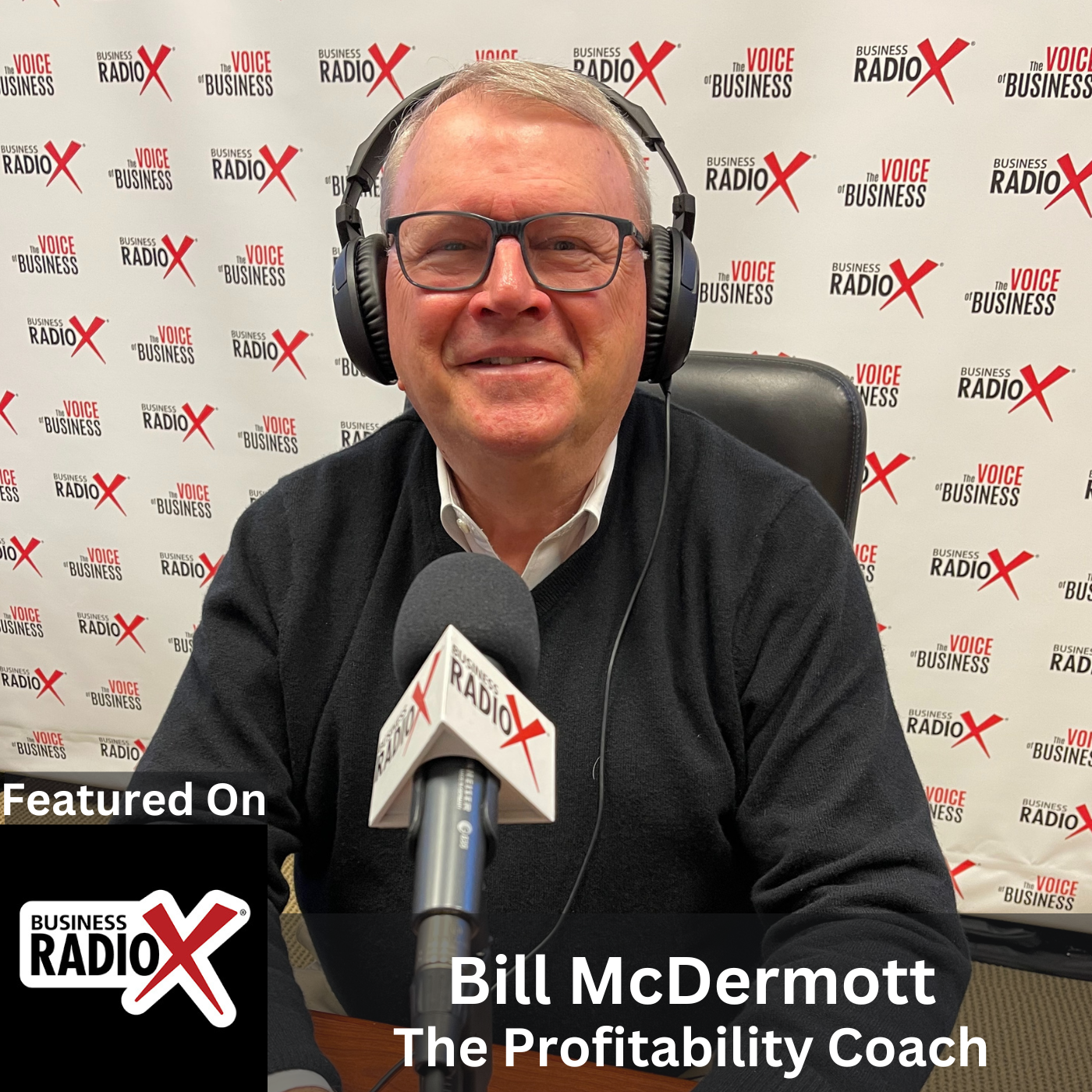
How to Improve Earnings to Maximize Business Value, with Bill McDermott, The Profitability Coach

December 27, 2022 by John Ray

maximize business value
How to Sell a Business
How to Improve Earnings to Maximize Business Value, with Bill McDermott, The Profitability Coach
Loading
00:00 /
RSS Feed
Share
Link
Embed

Download file

Earnings

How to Improve Earnings to Maximize Business Value, with Bill McDermott, The Profitability Coach (How To Sell a Business Podcast, Episode 4)

Improving earnings to maximize business value was the focus of this episode with guest Bill McDermott, The Profitability Coach. He and host Ed Mysogland discussed key things business owners can do to improve earnings, strategies to improve profitability, the need for delegation, financial management, planning your exit strategy, and much more.

How To Sell a Business Podcast is produced and broadcast by the North Fulton Studio of Business RadioX® in Atlanta.

The Profitability Coach

Every business owner has a big dream for their company and wants to make it happen. The problem is many business owners don’t know how to manage the finances of their business leaving them frustrated and confused.

The Profitability Coach comes alongside the business owner and analyzes the financial health of the business and develops a plan to take them from financial confusion to clarity. Then he executes the plan focusing on areas of financial growth. Together they travel the road of financial success to profitability and healthy cash flow.

Company website | Instagram | LinkedIn

Bill McDermott, The Profitability Coach

Bill McDermott, The Profitability Coach

Bill McDermott graduated from Wake Forest University and launched a banking career that spanned 32 years. He was laid off from his position as Chief Commercial Lender in the Great Recession of 2009. With a treasure trove of banking knowledge and analytical skills, Bill launched the Profitability Coach with the purpose of making business owners better financial managers.

Over the past 13 years, Bill has helped over 200 clients by delivering results-oriented insights, taking them from financial confusion to clarity.

Bill is also the host of ProfitSense with Bill McDermott. ProfitSense dives into the stories behind some of Atlanta’s successful businesses and business owners and the professionals that advise them. This show helps local business leaders get the word out about the important work they’re doing to serve their market, their community, and their profession. You can subscribe to the show on all the major podcast apps, and the show archive can be found here.

LinkedIn

Ed Mysogland, Host of How To Sell a Business Podcast

Ed Mysogland, Host of “How To Sell a Business”

The How To Sell a Business Podcast combines 30 years of exit planning, valuation, and exit execution working with business owners. Ed Mysogland has a mission and vision to help business owners understand the value of their business and what makes it salable. Most of the small business owner’s net worth is locked in the company; to unlock it, a business owner has to sell it. Unfortunately, the odds are against business owners that they won’t be able to sell their companies because they don’t know what creates a saleable asset.

Ed interviews battle-tested experts who help business owners prepare, build, preserve, and one-day transfer value with the sale of the business for maximum value.

How To Sell a Business Podcast is produced virtually from the North Fulton studio of Business RadioX® in Alpharetta.  The show can be found on all the major podcast apps and a full archive can be found here.

Ed is the Managing Partner of Indiana Business Advisors. He guides the development of the organization, its knowledge strategy, and the IBA initiative, which is to continue to be Indiana’s premier business brokerage by bringing investment-banker-caliber of transactional advisory services to small and mid-sized businesses. Over the last 29 years, Ed has been appraising and providing pre-sale consulting services for small and medium-size privately-held businesses as part of the brokerage process. He has worked with entrepreneurs of every pedigree and offers a unique insight into consulting with them toward a successful outcome.

Connect with Ed: LinkedIn | Twitter | Facebook


TRANSCRIPT

Intro: [00:00:00] Business owners likely will have only one shot to sell a business. Most don’t understand what drives value and how buyers look at a business. Until now. Welcome to the How to Sell a Business Podcast, where every week we talk to the subject matter experts, advisors, and those around the deal table about how to sell at maximum value. Every business will go to sell one day. It’s only a matter of when. We’re glad you’re here. The podcast starts now.

Ed Mysogland: [00:00:35] Welcome to another episode of How to Sell Your Business Podcast. I had the opportunity to visit with Bill McDermott, who’s known as The Profitability Coach. And, you know, I’m really skeptical on those consultants and people like that. And it came from a referral from Business RadioX, John Ray. And the first thing he said was what a quality guy he is, and this is such an understatement.

Ed Mysogland: [00:01:11] And so, I’m thrilled to death about the time that you’re getting ready to spend here on the podcast because Bill really helped provide some clarity on, number one, how to identify an advisor. If you’re going to hire somebody, what’s the difference between signal and noise? When should you expect a return on your investment? And so, as we went through the podcast, you know, not only was he well versed in so many different attributes of the selling process of what creates value to actually the whole exit process.

Ed Mysogland: [00:01:56] So, I think you’re going to find that Bill, as The Profitability Coach, really helped provide some really helpful nuggets on how you can make some immediate changes to your business to increase the transferable value. So, I hope you enjoy my conversation with Bill McDermott of The Profitability Coach.

Ed Mysogland: [00:02:22] I’m your host, Ed Mysogland. I teach business owners how to build value, and identify and remove risks in their business so that one day they can sell at maximum value how they want, to whom they want, and at maximum value.

Ed Mysogland: [00:02:36] On today’s show, I’m so excited to welcome Bill McDermott, who is known as The Profitability Coach. And for anybody that are small business owners, they know how important profitability and earnings are to the success of their business. And so, I am so fortunate to have this guy. I was connected by another mutual friend, John Ray from Business RadioX, and he connected us. And, boy, what a great opportunity this is. And I’m looking so forward to learning a lot about earnings.

Ed Mysogland: [00:03:17] And so, Bill, welcome. At the beginning I shared a little bit about your bio before we started recording, so can you just kind of give just a little bit of the lay of the land how you got to be The Profitability Coach?

Bill McDermott: [00:03:34] Sure. Sure. Absolutely. Well, Ed, first, let me say thank you for having me. The excitement is mutual on both sides. I was excited when you invited me to come on the show. And so, yeah, my background is I was a Wake Forest University grad. I spent 32 years in the banking industry. And then, all of a sudden 2009 hit, the Great Recession hit, and so I was laid off from my banking career. I was scared to death. But I also realized looking back, it was the best thing that had happened to me.

Bill McDermott: [00:04:17] During my banking time, I really discovered that business owners really struggled with the financial management aspect of their business. I had built up a treasure trove of banking and financial knowledge in my career as a banker, and so I launched The Profitability Coach, really helping business owners drive earnings through becoming better financial managers.

Bill McDermott: [00:04:45] You know, every business owner has a big dream for their company and wants to make it happen. What happens sometimes, though, is they don’t really know if the decisions they’re making are helping or hurting. They may not know exactly how to manage the finances of their business. And so, we have a process where we identify the hurdles that are getting in the way and to deliver to them a company that has profitability that, honestly, they never thought was possible. And so, excited to talk about that with you today. You’re absolutely right, it is all about earnings, and I would love to dive into that with you.

Ed Mysogland: [00:05:27] Well then, that’s where we’ll get started. Most of my career has been centered around working with owners and business value. I mean, ultimately when we start the process of selling a company, that’s what everybody wants to know. And everybody gets so hung up on multiples that they hear. They’re at the club and they hear the multiples. They’re watching the news and they hear price to earnings ratios and different things like that.

Ed Mysogland: [00:06:03] And I guess the longer I’ve been in the business, and I’d been in it 30 years now, it is all about earnings. And I guess that’s where I’d like to start. It seems so fundamental that value is based on profitability, but it doesn’t seem to resonate with business owners. Or, you know, they’re so caught up in working the business and if I’m able to pay myself, if I’m able to do the things I want to do, and have the freedom I want, no big deal. Up until the part where they think they want to sell. So, why is that component so glossed over?

Bill McDermott: [00:06:48] You know, I think you hit on it – by the way, absolutely great question and great topic – you mentioned it a little bit yourself. You know, I hold the view that business owners are so busy working in the business. They don’t really take time out to work on the business. They don’t have that time where they’re really looking at strategy. And so, honestly, I think every business owner should take time to stop working in the business and work on it.

Bill McDermott: [00:07:22] To your point on earnings, I share with my clients that generally speaking, a one percent increase in your top line is equivalent to a ten percent increase in your bottom line. You know, revenue is vanity, but profit is sanity. And so, in order to be sane, we really need to be focusing on driving earnings, but also by driving revenue.

Bill McDermott: [00:07:51] We could go down the path of, you know, generally speaking, clients I talked to, their prices are too low. They have more value to their product or to their service than they think they do. Or, second, they maybe haven’t figured out a way to actually increase volume. But both are equally important and both can equally drive revenue, therefore drive earnings.

Ed Mysogland: [00:08:13] Yeah. But, boy, I’ll tell you, it’s hard to make that leap of faith. Like, I’m going to increase prices and, oh, my gosh, if I do this what’s the likelihood I’m going to lose customers? So, I totally see that that’s low lying fruit that you can do. But, I mean, if I’m a business owner, how do you coach me into just go ahead and throw caution to the wind and let’s increase price by 15 percent. How do you do that?

Bill McDermott: [00:08:49] Yeah. Well, excellent question. So, the way I approach that with my clients is, let’s pretend I go to Walmart. When I go to Walmart, I’m prepared and I go there because I’m going to get the lowest price. But I’m generally not going to be able to find any kind of help in the service aisle, so I have to know exactly where it is. And then, when I get to the checkout, I have to wait a long time in line because the lines are so long. And by the way, because the parking lot is so full, I even have a hard time finding a parking spot. But, by golly, they’ve got the cheapest prices.

Bill McDermott: [00:09:31] On the other hand, if I go to Ace Hardware, the guy meets me at the door, “What are you looking for?” “Well, I need some fertilizer for my garden.” “Okay. It’s on Aisle 3. And by the way, these are the three types that we have. This one has a fertilizer and a weed killer in it.” And by the way, most of my clients like that one, I get a whole lot of service, a whole lot of value. And so, therefore, I go to Ace Hardware because I want the help, I want the expertise, and I pay for that in the price.

Bill McDermott: [00:10:05] So, we, as business owners, have two choices. We can either be a Walmart or we can be an Ace Hardware. And the value that we create for our clients, either in time savings or money savings, is worth the increase in price. So, a lot of business owners, I think, position themselves as providing a commodity and not really diving into the value that they’re creating for their clients. And they’re afraid to price accordingly.

Bill McDermott: [00:10:39] And I think a lot of that is a mindset issue. And we all have self-limiting beliefs that maybe our business, our product or service just isn’t worth the price. And everybody else is telling us we’re silly because it really is. And so, I think it really boils down to more of a mindset issue. Not raising prices is a scarcity mindset. And the reality is, there’s an abundance of clients out there that appreciate you and value the product or service that you offer.

Ed Mysogland: [00:11:10] Yeah, I get that. And I’m an Ace Hardware guy. I love Ace Hardware. And one of the things I recognize is that I’m willing to pay a premium for that. But I guess the follow up to that is, I’m already paying a premium because Lowe’s and Home Depot and Menards, you know, they’ve got lower prices, but, like you said, I’m paying for the service. So, if I’m that Ace Hardware, I’m already doing service, how do I stress test what that threshold is before I start losing customers? You know what I mean?

Bill McDermott: [00:11:55] Yeah, absolutely. So, I adopt the idea that I’m going to ask my clients, Am I continuing to deliver the value that they expected when they first hired me? And, also, as I’m putting my services or putting my products out there, if no one is telling me I’m too high, I’m going to automatically assume I’m too low.

Ed Mysogland: [00:12:26] That’s a good point. That’s really good.

Bill McDermott: [00:12:27] So, where is that area? Back when I was in banking – it was great – this client told me, “Bill, my loyalty to you ends with a quarter of a point on my interest rate.”

Ed Mysogland: [00:12:44] It totally makes sense.

Bill McDermott: [00:12:46] Yeah. And so, I knew that I could get another quarter, but I wasn’t going to get a half. And, by golly, I’d better be right on with that loan fee as well.

Ed Mysogland: [00:12:56] Yeah. I’m with you on the scarcity versus abundant mindset. I think the race to the bottom is always a losing proposition. And I know it’s the default position for a lot of owners that they feel that they have to compete. But, boy, but like you were saying on mindset, that is a real big ask for some of the change.

Bill McDermott: [00:13:20] Yeah, it is. And so, to your point earlier, if we kind of reverse engineer the conversation, those business owners that aren’t driving earnings through revenue want the multiple to be higher to make up for the profit that they could be getting by charging more, but they’re not. The reality is, it doesn’t matter what multiple I use, if I have a dollar’s worth of net profit that equates in a five times multiple, $5 of business value. And so, if I’m not driving the earnings, I want the multiple to be high. But that’s the wrong focus, to your earlier point, the focus on earnings.

Ed Mysogland: [00:14:09] Yeah. So, when you focus on earnings and you increase it to a 20 percent increase and you put a five multiple on that, versus put the same increase on the multiple, I mean, it’s two entirely different results. So, the earnings taking advantage of the number of turns on the multiple is always superior.

Ed Mysogland: [00:14:38] Okay. So, there’s four areas of profitability improvement that we typically see. So, it’s reducing costs, increasing inventory turnover, increasing productivity, and increasing efficiency. Those are big, big components of a business. But what do you think is the biggest area I should focus? If I’m a business owner, I should focus on this? And I suppose it’s company specific. But generally speaking, in your experience, where do I focus my attention?

Bill McDermott: [00:15:16] Yeah. So, I’m going to go back and maybe share a story, but this saying did not originate with me. Revenue is vanity. Profit is sanity. The cash flow is reality. So, I was working with a company that was a management consulting firm, international firm. They were doing incredibly well, but they got into trouble during the Great Recession because nobody was doing much, if any, management consulting when the downturn came.

Bill McDermott: [00:15:59] So, this company had to do a pivot. Basically did, and went from losing a-half-million dollars a year to making a-half-million. It was $1,000,000 swing in a year. It was absolutely fabulous. But this business owner said, “Bill, I made a-half-million dollars in profit this year. Where’s the cash?” And basically I said to him, I said, “Randy, look, you see that big honker accounts receivable number that’s sitting on your balance sheet? There’s your profit. If you go out and collect it, then you’ll have the cash.”

Bill McDermott: [00:16:37] So, certainly focus on profit. But I also think focusing on cashflow, I mean, profit doesn’t pay payroll, cash does. And so, I generally try to focus on profit. But if you aren’t doing, to your earlier point, turning the inventory, collecting the receivables, you’re missing out on cash that could be sitting in your bank account instead of sitting in your client’s or your vendor’s bank account.

Ed Mysogland: [00:17:10] Yeah. And a lot of business owners fail to understand that when a buyer goes to buy their business, there’s two checks that they write. The first one is for the business, the second one is for the working capital. And I don’t think that they recognize or I think they have a hard time recognizing that the more that’s tied up in working capital – to your point, that’s not in cash – it’s going to cost me to fund the working capital more than it should, because I’m not collecting receivables in a timely fashion or whatever the issue is, whether it’s debt, inventory, or whatever. That impairs a company’s ability to sell.

Ed Mysogland: [00:18:05] And I think you probably have coached a lot of people on, you know, if you hone in on your working capital, you’re reducing your risk, which is increasing your value, right?

Bill McDermott: [00:18:16] Yeah. To your point, recently we successfully completed a management buyout where this professional services firm sold the company for $13 million, and it was a combination of seller financing and bank debt financing. But when the negotiation on the purchase agreement came, the seller wanted, basically, to take as much cash out of the business as they possibly could. And so, the the broker stepped in and said, “Time out. We need to have adequate working capital. We got payroll, we got purchases, all of this.”

Bill McDermott: [00:19:01] And so, the owners were thinking about their pocket. They should be thinking about their pocket. But, also, since they had seller financing involved by stripping out all the working capital, they put their debt at risk to a certain degree. So, yeah, working capital is incredibly important.

Ed Mysogland: [00:19:21] And one of the best things that you’ve said today is just that, the seller financing and the working capital that they put the seller financing note at risk by how they were treating the working capital. And if I’m a business owner, that’s a big takeaway right there, that you don’t understand or you need to understand that they’re all intertwined together. Everything is intertwined. And each component of a business has risks and benefits. And by not acknowledging one, you’re putting another at risk. That was awesome. Go ahead. I’m sorry.

Bill McDermott: [00:20:20] I was just going to say, so in my banking career, as I was talking to business owners, I coined the term called bank speak. And what I found was happening is I was throwing out terms, working capital being one, cashflow being another, inventory turnover being another, I caught myself using terms that my clients didn’t understand.

Bill McDermott: [00:20:49] And so, I think you and I take for granted everybody knows what working capital means, Ed, but what I found is many business owners, because nobody taught them accounting in school and there’s no on-the-job training when you’re a business owner, I have to be careful to define terms that I’m using because a lot of times I use terms people don’t understand.

Ed Mysogland: [00:21:12] No, that’s a great point. And that was one of my questions is, with all of this information out there, with everything that’s all over the internet, just the vast amount of content, why do you think that business owners aren’t more versed in basic accounting?

Bill McDermott: [00:21:34] Yeah. I think everybody starts out, if you’re starting a business from scratch, it’s because you’re a great technician at whatever it is that you do. So, for example, coming out of a banking career of 30 years, I saw a lot of business owners that ran businesses, but I had never run a business myself. I was never one that had to go out and basically do everything that needed to be done for me to have a paycheck. And so, I think they’re great technicians.

Bill McDermott: [00:22:22] A CPA is a good accountant. An architect. You know, somebody like me who’s a business consultant now, thank goodness I had a lot of accounting and finance in my background. But they’re good technicians, they just haven’t learned how to become business people. And so, if you haven’t taken accounting and finance classes in school or gone to some seminar or maybe a community college to take some courses, you don’t really feel like you’re well-versed in how to manage or how to run a business. You’re a good technician. You’re just not a business person.

Ed Mysogland: [00:23:03] Yeah. And I agree with you. And one of the challenges that we bump into is just that, you’re a great technician, but you’re not a great business owner. And as a buyer of your business, I really need you to be a great business owner because that’s who I’m replacing. I’m not the technician. You know what I mean?

Bill McDermott: [00:23:25] Yeah.

Ed Mysogland: [00:23:29] One of your claims to fame is your coaching, that you’re able to coach people through complex matters. And I guess I’m curious to know how you get over the pushback of time. And as a guy with not a lot of it, I’m sitting here going, “All right. If he asked me to fix a component of my business, how do I make more time to do what you’re asking?” And you can have all the empirical evidence that it’s going to fix everything in the business or fix this part of the business. Do I have to wait until the pain is great enough? Or do you have some secret sauce to help me overcome that?

Bill McDermott: [00:24:20] Yeah. No secret sauce. But I think maybe just some common sense. Again, I think business owners tend to want to be all things to all people. They might also be very high control. It’s not going to get done well unless I do it. And so, the business owner becomes, for lack of a better term, Ed, the choke point in their own business. They’re their own worst enemy.

Bill McDermott: [00:24:57] And so, statistically, do you know how many companies break through the $1 million revenue barrier and the $10 million revenue barrier?

Ed Mysogland: [00:25:09] No. How many?

Bill McDermott: [00:25:10] Ten percent through the $1 million barrier, only three percent through the $10 million barrier of all businesses that ever start. What’s the number one reason? Delegation.

Bill McDermott: [00:25:24] And so, what I tell that business owner is, “Look, your time is valuable.” You know, I calculated an effective hourly rate for a business owner by taking the profit in their business, plus their salary. And it came out to about $150 an hour. And so, I said, “Look, any activity in your business that can be done less than $150 an hour, you need to hire somebody to do it because it will allow you to increase your hourly rate to 200, then to 250.”

Bill McDermott: [00:26:02] And so, the ability to take on those things that they’re not taking on is basically just giving those tasks to other people and allowing them to focus on more revenue generating activities versus administrative activities.

Ed Mysogland: [00:26:18] Yeah. I hear you. And I can hear the business owner going, “Yeah. Where am I going to find this person? Everybody that’s working for me is complaining that they’re overworked and underpaid. If I add another person, where am I going to find them?” And how do I – I shouldn’t say how do I. Then, it’s throw your hands up, screw it, I’ll do it myself. And that’s the default position because of the difficulty of what you’re asking.

Ed Mysogland: [00:26:58] I totally agree with you. I think the next generation of business owners, it’s about delegation and automation. I totally believe that that’s the path that we’re going toward. And those that either go from first generation to second generation or a successful third party sale, I totally believe that those buyers or that next generation, those people that have a command to delegate, whether that’s to third parties like Upwork or some of these organizations, the Gig Economy, or you can find help, personally, I think that is the long term of the successful business. I think.

Bill McDermott: [00:27:54] Yeah. So, a quick story on that. I worked with a client. Their books were an absolute mess. They were a multimillion dollar company. And they had an accountant who is moonlighting doing their books. And the financials weren’t done on time. There were errors. And the owners were spending their time going in and correcting errors. And I said, “Look, go out and find somebody who’s QuickBooks certified. They can be a CPA. They can just be an accountant. But somebody who is really, really good.”

Bill McDermott: [00:28:31] And so, I referred them to a service that I use, because you find people based on relationships. And so, they brought this accountant in. This person has straightened out their books in the span of two months. We just had the second month end close. Bank accounts reconciled. Financial statements were timely and inaccurate. And this client now has clarity in his financials where, before that, they had confusion.

Ed Mysogland: [00:29:05] Yeah. And, again, that’s back to knowing where to look for the talent. And like I said, I think most business owners are faced with the pain of making the change as opposed to the change itself. You know what I mean?

Bill McDermott: [00:29:25] Well, it’s the principle of inertia, right? A body at rest tends to stay at rest. A body in motion tends to stay in motion. You know, my business owner client was stuck accepting that moonlighting accounting person getting subpar financials. And basically just made a decision, “Okay. I’m drawing a line in the sand. I’m going to upgrade my requirements and get somebody in here to do a better job.”

Ed Mysogland: [00:29:56] And, again, to your point earlier on having good records and being able to have clarity of your cash position or your financial position, that’s an important thing. Reading your email and trying to figure out what to do next, somebody probably can do that a little bit more effective than you.

Bill McDermott: [00:30:23] Yeah. The other thing I’ll say on that topic, I’m a big believer that your balance sheet is more important than your income statement. Your income statement certainly measures your profitability, but there are three other things that you care about. You care about your liquidity, how much cash you have that’s on your balance sheet. You care about how you’re collecting your receivables and turning your inventory, that’s on your balance sheet. And you care about your leverage, how much debt you have relative to the net worth of your business. And so, three out of the four things that you track are on your balance sheet. Most business owners don’t look at that first. They look at their income statement first.

Ed Mysogland: [00:31:05] Yeah. We face that, too, when helping these business owners. There is a disconnect between the two. It’s what’s my net income. When we do value work, one of the things that we do is, this is what you’re going to put in your pocket. And that’s part of liquidating your balance sheet. And, oftentimes, that’s more than the tangible and intangible value of the company. You know, once you start liquidating current assets and retiring debt, that’s a whole nother event. Go ahead. I started to interrupt you.

Bill McDermott: [00:31:56] I was just going to say, the other thing that comes to mind, you’re mentioning, also most business owners when they’re selling their business, focus on the gross amount they’re selling. But they may not be factoring in taxes, if it’s an asset sale, as well as debt.

Ed Mysogland: [00:32:17] The highest price is not always –

Bill McDermott: [00:32:20] It’s the net.

Ed Mysogland: [00:32:21] Yeah. And we bump into that a lot, that it’s not the highest price that’s the best price. That allocation of purchase price is really, really important.

Bill McDermott: [00:32:32] It really is.

Ed Mysogland: [00:32:32] So, everything we read, it seems as though we’re heading into a recession. That there’s some level of downturn. So, granted, it was your greatest blessing that you got displaced and here you are. But how did you make that pivot? Because I think there’s going to be a lot of people that are in similar situations or are finding themselves in similar situations right now. So, how did you make that effective change into entrepreneurship? In your case, you started the business versus buying the business. So, how did you get comfortable with the risk that you were taking, I guess?

Bill McDermott: [00:33:26] Yeah. So, necessity is the mother of invention. My wife had two daughters in college. We had a mortgage to pay. And she was the preschool director at our church preschool. And that was not going to be enough to do it.

Bill McDermott: [00:33:45] So, I was financially motivated. I read a really great book. It was called The E-Myth by a guy named Michael Gerber. Michael Gerber says, establish a prototype of the business that you want to build, which in effect is, really, if you are going to franchise your business, this is what you would show a potential franchisor. So, I’m a person of faith. Part of my prayer time after I was laid off is I would say to the man upstairs, “Okay. You closed the door. Would you open a window? And by the way, would you put a little neon around it so I can see it.”

Bill McDermott: [00:34:34] But I found that business owners really struggled with financial management. I was passionate about helping them become better financial managers. Next, I found that I’m a pretty good teacher. And so, teaching these business owners how to be better financial managers was something that I was good at, and then figuring out how to monetize that.

Bill McDermott: [00:35:06] So, this is a page out of Jim Collins’s book, Good to Great. If someone’s thinking about becoming an entrepreneur themselves, what are you passionate about? What are you best in the world at? And what drives your economic engine? And where those three circles intersect is your greatness.

Bill McDermott: [00:35:28] And so, for me, passionate about making business owners better financial managers, teaching them how to run more profitable businesses with healthy cashflow, and then monetizing that as a business coach. And that’s kind of how I did it.

Ed Mysogland: [00:35:46] Yeah. Well, you know what? That whole leap of faith thing – also, I’m a red letter guy myself – I totally believe that, you know, there’s some divine intervention that goes into entrepreneurs where you’re building the kingdom. I totally believe no matter where you’re at on the spiritual spectrum, whether it’s the universe or God or whatever you want to call it, there is some level of wind behind your back to make these doors open.

Ed Mysogland: [00:36:26] I’m guilty of this, too, as far as hiring consultants. I am horrible at it. And one of the things is, you know, when should I expect a return on my investment? It’s not writing the check. It’s when am I going to get repayment for it? You know what I mean?

Bill McDermott: [00:36:49] Yeah. Great question. So, I think, in my experience, I’ve worked with quite a few professional services firms. I can think of one psychology firm, three locations, very well-established practice. This firm hired me for two years. And, essentially, what we did is we did an analysis of the business. We looked at the areas where we could really accelerate financial growth.

Bill McDermott: [00:37:33] And then, after a two year period of time, first, we focused on collections. A lot of their receivables were from insurance companies. Insurance companies are notoriously slow pay. So, we basically had them pick up their pace on collections, which put another $50,000 of cash in the bank. Then, I’m a big believer in the power of one percent. Looking at ways where we can increase revenue one percent consecutively over periods of time.

Bill McDermott: [00:38:10] So, the cumulative effect for this firm, over a two year period, we increased revenue 45 percent total, so roughly a little over 20 percent per year for ten years. The profit that was generated paid 100 percent of my consulting fees and gave the owner another 100 percent return on their spend. So, it took two years in this case.

Bill McDermott: [00:38:45] You know, I know for me, I hired a marketing firm to come in and help me with my brand messaging. I did that two years ago. This year, I’m having my best year ever in the 14 years that I’ve been in business. So, I would say, when you buy a stock, you’re interested in buying quality stocks that aren’t big gainers, because big gainers also can be big losers. But if you can earn 10 percent year over year, your money compounds every seven years, roughly. And so, I’d say slow and steady wins the race. You know, if you can get a decent return in the first year or two, I think you’ve hit a homerun.

Ed Mysogland: [00:39:36] Well, one of the things that we bump into is that everybody’s an expert now. How do you get between what’s signal and what’s noise? Like I said, and I was telling you before we started, you know, my wife’s a therapist and there is all kinds of noise in her industry of solving problems. When in fact, there’s a lot of complex trauma and different things that they have to deal with that requires specialization. So, my point is that anybody can write a blog article about profitability and this, that, and the other. But how do I find people like you that are going to give me that 10 percent return year over year over year?

Bill McDermott: [00:40:26] Yeah. I subscribe to the philosophy of people do business with people that they know and they trust. And so, I always put relationships first, Ed. I just think we were all put on this earth to figure out a way to live together and to help each other. And so, I find that relationships follow a progression. You know, first, I get to know somebody and they get to know me. Then, we like each other. Then, we try each other. Then, we trust each other. And then, we refer each other.

Bill McDermott: [00:41:03] And so, going through that relationship progression, I think it’s totally based on relationships. You sort the noise from the people that you really want to do business with based on the quality of the relationship that that’s developed.

Ed Mysogland: [00:41:20] Yeah, 100 percent. I mean, I was just looking at our deal flow and we spend so much money on external marketing. But I’ll bet 80 percent of our revenue comes from referrals, people doing business that we’ve done a good job for that have referred us. And so, I’m with you. This is how you sniff out – I don’t want to say a fraud because I don’t mean a fraud. This is how to sniff out who’s best in class versus those that probably should be on junior varsity. Anything come to mind?

Bill McDermott: [00:42:01] Yeah. So, I’m sure you’ve probably had this experience. There are a lot of people on LinkedIn that basically put relationships last. You’re their best friend. They don’t even know you. You don’t even know them. But, by golly, they have a solution to a problem that you didn’t even know you had. And we all get those emails and just messages on LinkedIn.

Bill McDermott: [00:42:35] And so, I think to kind of sniff those out, who approaches me trying to sell me something rather than getting to know me, you don’t have the right to sell me unless you know me and I know you. And so, that would be one easy way.

Bill McDermott: [00:42:57] The other thing I usually do is, when I’m going through and looking at my LinkedIn feed, if there are people that are really making some really solid comments or suggestions in a LinkedIn exchange, I kind of determine, “Hey, I’d like to know more about that person just based on some of the insights they’re sharing.”

Ed Mysogland: [00:43:23] Yeah, I agree. I mean, providing some meaningful comments versus just broadcast stuff. I get it. So, I know we’re pushing on time, so if you have a couple more minutes, I got a couple questions.

Bill McDermott: [00:43:41] Yeah. Absolutely.

Ed Mysogland: [00:43:41] All right. So, I know you do some exit planning work. And so, I wanted to focus a little bit about, you know, are you seeing business owners that are coming prepared to sell or are they playing catch up and you’re trying to fix things before they go to market?

Bill McDermott: [00:44:03] Definitely the latter. As I said earlier, that business owner is so busy working in the business, they’re not working on the business. All of a sudden, a business owner maybe that has run a business for 20 years, he or she finds themselves, “Gosh. I’m 60, 61, 62. I’m not going to be doing this a whole lot longer. And, by golly, I have done nothing to build the value of my business.” So, the default is the business owners that I run into have done little to no planning.

Bill McDermott: [00:44:47] And the other concept that you and I probably both deal with is that business owner that has not created transferable value in their business and how they do that is a way that you can truly try value but very little to no planning.

Ed Mysogland: [00:45:12] And that’s what’s heartbreaking is because either – I don’t want to say tragedy, but circumstances, life circumstances come bumping into them and now they’re forced into a decision on how to make this illiquid asset liquid. And, boy, that is a heartbreaking situation. Like I said, it’s not necessarily that you can’t transfer the business, but the problem is it’s not going to transfer for what you want. And so, that creates a lot of the challenges that at least we see.

Ed Mysogland: [00:45:51] I wanted to ask you, you know, what makes exit planning effective? I mean, granted, if you have a lot of runway, that’s an easy layup. There’s all kinds of things you could do. But the people that are hearing this going, “Man, I really want to sell my company. I haven’t done anything.” So, as the profitability coach, is there anything that you can suggest that would lead me to a better than average exit?

Bill McDermott: [00:46:34] Yeah. So, I’m going to try to answer that question and try to tell a story at the same time. So, we’ve all sold houses. And when we sell a house, we get it ready for sale. Usually, a fresh coat of paint, maybe some new carpet. What sells houses from what I’ve been told are bathrooms and kitchens, and so you want to be sure that you’ve got everything updated. Generally, you’re not going to try to sell your house yourself or you shouldn’t, because what you think it’s worth and what that appraiser for that mortgage lender thinks it’s worth or the buyer, you always want to have someone between you.

Bill McDermott: [00:47:26] So, selling a business, sprucing things up is really creating a management team that can successfully run the business and transfer the value to that team. I found having that management team, being sure they’re compensated in a way that they’re not going to walk out the day the business gets sold, so you need to have some kind of arrangement where there’s what I call a stay pay.

Bill McDermott: [00:47:58] Frankly, financial statements need to be reliable. Preferably audited, but at least reviewed by an independent CPA, so that you have financials that have been verified by an independent third party. Just like when you get your house appraised, it’s by an independent third party.

Bill McDermott: [00:48:21] I think it’s ideal to have a business growth plan that you can hand that potential buyer to show how the business can be grown. And I think it’s also important to have documented processes so that that business owner knows how you make money, how you have a repeatable sales process, a repeatable operations or delivery process, and then an accounting and finance process.

Bill McDermott: [00:48:55] So, mostly, I’m looking for management with stay pay, reliable financial statements, and documented processes. I’m sure there are some other equally important things. But I’m certain those are the main ones.

Ed Mysogland: [00:49:10] Yeah. And I’m going to ask you even a harder question. Out of those, which ones most important? Right. I know. You’re welcome.

Bill McDermott: [00:49:23] Businesses are run by people. Real estate is location, location, location. I’m going to say companies are management, management, management. So, I’m saying having the management team is important.

Ed Mysogland: [00:49:41] Okay. I got it. You know, in your analogy of selling a house, you know, its bathrooms and kitchens. And there’s empirical data that says, you know, if you fix up your kitchen and your bathroom, your house will sell or you’ll get X number of dollars back. Unfortunately, to my knowledge, I don’t think there’s anything like that in business, that if you replace your antiquated lades, you’re going to get your money back. I don’t think that’s going to happen.

Bill McDermott: [00:50:20] I’m in agreement. You know, when a buyer buys a business, they’re looking towards buying that business and the income stream that comes with it. But they’re entitled to a return on their investment. And at the end of the day, they have a return that they want to earn based on the amount of the business that they’re paying.

Bill McDermott: [00:50:44] And pure and simple, when we invest in stocks, we’re looking for a rate of return. When we’re investing in a closely held business, we’re looking for the same thing. And, potentially, we’re looking for an even higher return because we want to get compensated for the risk of buying that business as well.

Ed Mysogland: [00:51:06] Yeah. We say the same thing. Not only are you looking for a return on your investment, you’re looking at return of your investment. So, it’s two components. All right.

Ed Mysogland: [00:51:19] So, I finish every one of my interviews with the same question. So, if there is one piece of advice, just one – you know, they spent a-half-hour with you and me – what would that piece of advice be that would have the most immediate impact on their business? You’ve got one good nugget?

Bill McDermott: [00:51:41] I love that question. So, I think what I would say is, where are the one percent improvements that you can make in your sales process, in your cost of goods or cost of services process, if you’re a service business, your delivery process and then your billing and payment process? We’ve already talked about a one percent increase in your top line in sales. What’s the cumulative effect of those one percents? What if I can buy my materials or labor better and reduce my costs that way? What if I can reduce overhead one percent? What if I can collect my receivables one day faster or turn my inventory one day faster?

Bill McDermott: [00:52:42] The cumulative effect of all of those would be huge. And the way that you’re doing that is you’re shortening either the cycle times, you’re eliminating your mistakes, or you’re improving your business model in each of those three aspects of your business. Doing that, I think you’re well on your way to really having a game changer of a company.

Ed Mysogland: [00:53:09] I agree. So, where can people find you? And do you do work throughout the country?

Bill McDermott: [00:53:17] I do. I do.

Ed Mysogland: [00:53:19] Oh, good. All right. Okay.

Bill McDermott: [00:53:20] I have clients in Seattle, Texas, all over the Midwest, up and down the East Coast. So, where there’s technology, I can play.

Ed Mysogland: [00:53:32] You’re based in Georgia, right?

Bill McDermott: [00:53:35] I’m based in Atlanta, Georgia, yes. My website is www.theprofitabilitycoach.net. You can also find me on LinkedIn, my profile is Bill J. McDermott. I am on Instagram as The Profitability Coach. And you can also find my phone number and email contacts either on my LinkedIn profile or on my website as well. But my email, for anyone that’s listening, is bill@theprofitabilitycoach.net.

Ed Mysogland: [00:54:13] Well, we will have all your contact information in the show notes. So, if you didn’t catch it, I can assure you we will have it readily available for you. So, Bill, you know what? This absolutely was everything I’d hoped for. So, I’m so grateful for all the time. I know you and me, we start talking about time and the value of it. And I so appreciate you going over with me a little bit. And I’m certain everyone will have gained a lot from this, from our time together. So, thanks again.

Bill McDermott: [00:54:54] You made it easy for me. You asked some great questions. It was a pleasure to be on the show. Thank you for inviting me.

Ed Mysogland: [00:55:02] All right. Well, I’m going to cut us off. And once again, I appreciate you being with us.

Bill McDermott: [00:55:08] Very good. Thanks again.

Outro: [00:55:12] Thank you for joining us today on the How to Sell Your Business Podcast. If you want more episodes packed with strategies to help sell your business for the maximum value, visit howtosellabusinesspodcast.com for tips and best practices to make your exit life changing. Better yet, subscribe now so you never miss future episodes. This program is copyrighted by Myso, Inc. All rights reserved.


Tagged With: Bill McDermott, Business Owners, business value, Ed Msyogland, exit planning, How to Sell a Business, How to Sell a Business Podcast, maximum value, P&L, profitability, ProfitSense, ProfitSense with Bill McDermott, selling a business, The Profitability Coach, valuation

Employee Handbook Sections to Overhaul in 2023

December 23, 2022 by John Ray

Employees Handbook
Advisory Insights Podcast
Employee Handbook Sections to Overhaul in 2023
Loading
00:00 /
RSS Feed
Share
Link
Embed

Download file

Employees Handbook

Employee Handbook Sections to Overhaul in 2023 (Advisory Insights Podcast, Episode 23)

On this episode of Advisory Insights, Stuart Oberman of Oberman Law Firm discussed which sections in your employee handbook to overhaul in 2023. He stressed addressing changing technology, making changes to account for alternate work arrangements, modifying sick leave policies, and more.

Advisory Insights is presented by Oberman Law Firm and produced by the North Fulton studio of Business RadioX®. The series can be found on all the major podcast apps. You can find the complete show archive here.

TRANSCRIPT

Intro: [00:00:01] Broadcasting from the studios of Business RadioX, it’s time for Advisory Insights. Brought to you by Oberman Law Firm, serving clients nationwide with tailored service and exceptional results. Now, here’s your host.

Stuart Oberman: [00:00:20] Hello everyone, and welcome to Advisory Insights. Stuart Oberman here as your host. All right, folks, it’s 2023. HR is in the house. Now is the time. I want to go over a couple of things. Today’s topic, Employee Handbook Sections to Overhaul in 2023.

Stuart Oberman: [00:00:40] We have some clients that have not overhauled their employee manuals for ten years. Now, it’s time to rethink the entire process, especially in today’s world, in today’s economy. Look, what’s happening is we have the workers of today. The new workers are clashing with the old employer policies and procedures. And what’s happening is that the employers are losing.

Stuart Oberman: [00:01:05] So, I want to run through a couple of things that seem to be sticking out as sort of a poke in the ribs, if you will, as to where things are going and what needs to be looked at and changed.

Stuart Oberman: [00:01:17] Number one, I know a lot of our clients have very, very strict appearance rules. So, if you have a particular rule or policy that you are wanting to enforce, folks, you’ve got to get it in writing. And another thing you got to take a look at in today’s world is the new reality as far as appearance goes.

Stuart Oberman: [00:01:43] One particular thing I want to bring up is you have to look at legislation and where things are at today. So, let me give you an example.

Stuart Oberman: [00:01:50] The Crown Act, for example, bans race-based hair discrimination in the workplace. So, the CROWN Act or similar legislation has been enacted – get this – 19 states. And a bill is currently pending before Congress. Who knows what will happen as far as Federal legislation goes? And it’s set at the Senate level to regulate hair and appearance. So, you better jump on the bandwagon now. Adjust things that you need to adjust knowing what we know as far as hair discrimination. The next thing you know, we’re going to work on tattoos and everything else.

Stuart Oberman: [00:02:31] So, look, at the end of the day, what people do with their bodies is up to them. If you’re going to have a policy and procedure, be ready for some pushback on it, be ready to explain why you need it, and be ready to review federal and state law as it comes down the pike.

Stuart Oberman: [00:02:47] Let’s take a look at number two, the work arrangements. Folks, we’re in a different world. We’re in a hybrid workplace. Our communications have changed. Our performance has changed. Everything about what we do on the work side has changed. So, what does that mean? That means your HR teams have to provide opportunity, tools, guidelines, and make it easier. Do you have a remote policy? Do you have a nondisclosure policy? Are your employees working with sensitive data along with the same computer that they’re using for their kid’s recreation facility and baseball teams? So, you’ve got to look at all these things.

Stuart Oberman: [00:03:28] Now, another area – huge – technology. So, policies have to outline technology and how a company’s handbook should be remote workplace. Does your technology require multifactor authentication for employees to use their own devices? Your data, your confidential data that could literally sink you as a company is now on your employees cellphones. What do you do if the cellphone is lost? What do you do if the cellphone is hacked? What do you do if data is lost? What is the policy and procedure for that? Does your company provide the cellphones? Does your employer or employee have an automatic shutdown and wipe out on their cellphones if you lose it?

Stuart Oberman: [00:04:25] So, I think you’ve got to address safety and technology concerns along with security now as the technology grows and as the workplace becomes blended between work, play, and family.

Stuart Oberman: [00:04:41] One of the things we’re looking at now is sick leave. And there’s a lot of discussion regarding this. States now are mandating certain leave policies. Certain companies are now being subject to jurisdictional issues that they never thought they would be before. The localities are now handling sick leaves. So, you really have got to take a look at where your states are, what’s on a local basis, what’s the trends.

Stuart Oberman: [00:05:11] You know, if you’re in Georgia or if you’re in North Carolina or if you’re in Massachusetts, what’s coming down the pike as far as from Cleveland, Ohio, or from California, or from Texas, where are these things coming from? Because everything trends and you’ve got to know the trends.

Stuart Oberman: [00:05:31] Next one – I’ve talked about this over and over and over again – marijuana use and testing. So, the law hasn’t changed. Marijuana is still illegal on the federal law. But what’s happening is, is that the states are adding protection for workers use of marijuana. Folks, I can’t make this up.

Stuart Oberman: [00:05:53] So, example in California, for instance, employers cannot discriminate against employees for legal marijuana use outside of work. Now, what do you do if on the way to work, an employee is toking on the way to work and they’re not a health safety welfare hazard to other employees? How do you address that? You know, they’re inebriated, but they’re in no danger to other employees.

Stuart Oberman: [00:06:25] So, you’ve got to understand what the trends are. So, you’ve got to get out in front of this. You’ve got to have descriptions as to what’s acceptable, what’s not acceptable. You’ve got to have safety concerns. The use of marijuana is not a carte blanche on the workplace. There are restrictions. There are protocols that employers can follow. And we have to get ahead of this, because I always say what happens in the West comes East. It’s just a matter of what direction it comes.

Stuart Oberman: [00:06:59] So, again, these are a couple of things that we want to take a look at. We’ve got communication issues. We’ve got technology issues. We’ve got employee handbook issues. We have appearance issues, work arrangements. We have remote responsibilities now that employers have to really be aware of. So, I don’t think any of this is earth shattering. There’s been a lot of commentary on these issues.

Stuart Oberman: [00:07:25] But, again, we keep seeing the same problems over and over and over, which is in summary, (1) employers are not addressing appearance; (2) employers are not revising the work arrangement, policies, procedures; (3) employers are not getting ahead of technology; (4) employers are not modifying their sick leave; and (5) marijuana usage, employers are not adjusting what they need to do.

Stuart Oberman: [00:08:00] Folks, there’s a lot of things that really, really we need to look out for 2023. We’re going to have some more discussion on this. If you have any questions, please let me know, Stuart Oberman, Oberman Law Firm, stuart, S-T-U-A-R-T, @obermanlaw.com, phone number 404-630 – excuse me – 770-886-2400. Again, 770-886-2400. Please stay tuned for other issues of Advisory Insights. Have a fantastic day.

Outro: [00:08:36] Thank you for joining us on Advisory Insights. This show is brought to you by Oberman Law Firm, a business-centric law firm representing local, regional, and national clients in a wide range of practice areas, including health care, mergers and acquisitions, corporate transactions, and regulatory compliance.

About Advisory Insights Podcast

Presented by Oberman Law Firm, Advisory Insights Podcast covers legal, business, HR, and other topics of vital concern to healthcare practices and other business owners. This show series can be found here as well as on all the major podcast apps.

Stuart Oberman, Oberman Law Firm

Oberman Law Firm

Stuart Oberman is the founder and President of Oberman Law Firm. Mr. Oberman graduated from Urbana University and received his law degree from John Marshall Law School. Mr. Oberman has been practicing law for over 25 years, and before going into private practice, Mr. Oberman was in-house counsel for a Fortune 500 Company. Mr. Oberman is widely regarded as the go-to attorney in the area of Dental Law, which includes DSO formation, corporate business structures, mergers and acquisitions, regulatory compliance, advertising regulations, HIPAA, Compliance, and employment law regulations that affect dental practices.

In addition, Mr. Oberman’s expertise in the healthcare industry includes advising clients in the complex regulatory landscape as it relates to telehealth and telemedicine, including compliance of corporate structures, third-party reimbursement, contract negotiations, technology, health care fraud, and abuse law (Anti-Kickback Statute and the State Law), professional liability risk management, federal and state regulations.

As the long-term care industry evolves, Mr. Oberman has the knowledge and experience to guide clients in the long-term care sector with respect to corporate and regulatory matters, assisted living facilities, continuing care retirement communities (CCRCs). In addition, Mr. Oberman’s practice also focuses on health care facility acquisitions and other changes of ownership, as well as related licensure and Medicare/Medicaid certification matters, CCRC registrations, long-term care/skilled nursing facility management, operating agreements, assisted living licensure matters, and health care joint ventures.

In addition to his expertise in the health care industry, Mr. Oberman has a nationwide practice that focuses on all facets of contractual disputes, including corporate governance, fiduciary duty, trade secrets, unfair competition, covenants not to compete, trademark and copyright infringement, fraud, and deceptive trade practices, and other business-related matters. Mr. Oberman also represents clients throughout the United States in a wide range of practice areas, including mergers & acquisitions, partnership agreements, commercial real estate, entity formation, employment law, commercial leasing, intellectual property, and HIPAA/OSHA compliance.

Mr. Oberman is a national lecturer and has published articles in the U.S. and Canada.

LinkedIn

Oberman Law Firm

Oberman Law Firm has a long history of civic service, noted national, regional, and local clients, and stands among the Southeast’s eminent and fast-growing full-service law firms. Oberman Law Firm’s areas of practice include Business Planning, Commercial & Technology Transactions, Corporate, Employment & Labor, Estate Planning, Health Care, Intellectual Property, Litigation, Privacy & Data Security, and Real Estate.

By meeting their client’s goals and becoming a trusted partner and advocate for our clients, their attorneys are recognized as legal go-getters who provide value-added service. Their attorneys understand that in a rapidly changing legal market, clients have new expectations, constantly evolving choices, and operate in an environment of heightened reputational and commercial risk.

Oberman Law Firm’s strength is its ability to solve complex legal problems by collaborating across borders and practice areas.

Connect with Oberman Law Firm:

Company website | LinkedIn | Twitter

Tagged With: Advisory Insights, Advisory Insights Podcast, Dental Practice, employee handbook, employment law, Oberman Law, Oberman Law Firm, Stuart Oberman

A Year-End Message from Bill McDermott, Host of ProfitSense

December 21, 2022 by John Ray

A Year-End Message from Bill McDermott, Host of ProfitSense
North Fulton Studio
A Year-End Message from Bill McDermott, Host of ProfitSense
Loading
00:00 /
RSS Feed
Share
Link
Embed

Download file

A Year-End Message from Bill McDermott, Host of <i>ProfitSense</i>

A Year-End Message from Bill McDermott, Host of ProfitSense (ProfitSense with Bill McDermott, Episode 40)

In a year-end message, Bill McDermott. host of ProfitSense thanked listeners and guests for joining him in 2022.

ProfitSense with Bill McDermott is produced and broadcast by the North Fulton Studio of Business RadioX® in Alpharetta.

About ProfitSense and Your Host, Bill McDermott

Bill McDermott
Bill McDermott

ProfitSense with Bill McDermott dives into the stories behind some of Atlanta’s successful businesses and business owners and the professionals that advise them. This show helps local business leaders get the word out about the important work they’re doing to serve their market, their community, and their profession. The show is presented by McDermott Financial Solutions. McDermott Financial helps business owners improve cash flow and profitability, find financing, break through barriers to expansion, and financially prepare to exit their business. The show archive can be found at profitsenseradio.com.

Bill McDermott is the Founder and CEO of McDermott Financial Solutions. When business owners want to increase their profitability, they don’t have the expertise to know where to start or what to do. Bill leverages his knowledge and relationships from 32 years as a banker to identify the hurdles getting in the way and create a plan to deliver profitability they never thought possible.

Bill currently serves as Treasurer for the Atlanta Executive Forum and has held previous positions as a board member for the Kennesaw State University Entrepreneurship Center and Gwinnett Habitat for Humanity and Treasurer for CEO NetWeavers. Bill is a graduate of Wake Forest University and he and his wife, Martha have called Atlanta home for over 40 years. Outside of work, Bill enjoys golf, traveling, and gardening.

Connect with Bill on LinkedIn and Twitter and follow McDermott Financial Solutions on LinkedIn.

Tagged With: Bill McDermott, profitability coach, Profitability Coach Bill McDermott, ProfitSense, ProfitSense with Bill McDermott, The Profitability Coach, year end

Confidentiality Agreements in Dental Insurance Company Contracts, with Patrick O’Rourke, Host of Dental Business Radio

December 21, 2022 by John Ray

Confidentiality
Dental Business Radio
Confidentiality Agreements in Dental Insurance Company Contracts, with Patrick O’Rourke, Host of Dental Business Radio
Loading
00:00 /
RSS Feed
Share
Link
Embed

Download file

Confidentiality Agreements

Confidentiality Agreements in Dental Insurance Company Contracts, with Patrick O’Rourke, Host of Dental Business Radio 

Patrick O’Rourke, the host of Dental Business Radio, addresses issues to be aware of when reviewing dental insurance company contracts. He mentions language in confidentiality agreements that has the potential to be a problem.

Dental Business Radio is underwritten and presented by Practice Quotient: PPO Negotiations & Analysis and produced by the North Fulton studio of Business RadioX®.

TRANSCRIPT

Patrick O’Rourke: [00:00:01] Hi. Patrick O’Rourke here, and another installment of contract provisions in Network Participation Agreements that you should be aware of.

Patrick O’Rourke: [00:00:12] The confidentiality portion is reasonable, right? Typically, you know, they have their proprietary information. They have agreed to certain fees for you and you have agreed to keep them confidential. Now, there’s been a lot of real dangerous language put in there about, you know, irreparable harm and all kinds of other, really, language that can be used purposely and intentionally in a court of law to bankrupt you or to get you to settle. A bit one sided if it’s not mutual.

Patrick O’Rourke: [00:00:58] I’m not a lawyer, by the way, and neither is my opinion a substitute for qualified legal counsel licensed to practice law in your state. This is just one man’s opinion. Somebody who happens to read these contracts a lot and have been doing so for over two decades.

Patrick O’Rourke: [00:01:15] So, confidentiality, good, when they try to prevent or if the contract – not they – the contract language tries to prevent you from accessing the expertise of a subject matter expert, you know, consultant, attorney, anybody else who has expertise in these. That’s when I kind of raised an eyebrow. Again, is it mutual? Are you telling me that that particular payor or that network does not use network or consultants, outside business consultants, folks like myself, or anyone else? There’s a number of different consultants out there. They don’t use attorneys. They don’t use CPAs. I would find that very difficult to believe.

Patrick O’Rourke: [00:02:07] So, for what it’s worth, confidentiality, important. Access to others and to advisors, raising an eyebrow. So, thank you for joining me. Hope you have a terrific day.


About Dental Business Radio

Patrick O'Rourke
Patrick O’Rourke, Host of “Dental Business Radio”

Dental Business Radio covers the business side of dentistry. Host Patrick O’Rourke and his guests cover industry trends, insights, success stories, and more in this wide-ranging show. The show’s guests include successful doctors across the spectrum of dental practice providers, as well as trusted advisors and noted industry participants. Dental Business Radio is underwritten and presented by Practice Quotient and produced by the North Fulton studio of Business RadioX®. The show can be found on all the major podcast apps and a complete show archive is here.


Practice Quotient

Dental Business Radio is sponsored by Practice Quotient. Practice Quotient, Inc. serves as a bridge between the payor and provider communities. Their clients include general dentist and dental specialty practices across the nation of all sizes, from completely fee-for-service-only to active network participation with every dental plan possible. They work with independent practices, emerging multi-practice entities, and various large ownership entities in the dental space. Their PPO negotiations and analysis projects evaluate the merits of the various in-network participation contract options specific to your Practice’s patient acquisition strategy. There is no one-size-fits-all solution.

Connect with Practice Quotient

Website | LinkedIn | Facebook | Twitter

Tagged With: Confidentiality agreements, consultants, Dental Business Radio, dental insurance company contracts, dental insurance contracts, dentistry, dentists, network participation agreements, Patrick O'Rourke, PPO Negotiations & Analysis, PPO network contract analytics, Practice Quotient, subject matter experts

  • « Previous Page
  • 1
  • …
  • 92
  • 93
  • 94
  • 95
  • 96
  • …
  • 276
  • Next Page »

Business RadioX ® Network


Our Most Recent Episode

CONNECT WITH US

  • Email
  • Facebook
  • LinkedIn
  • Twitter
  • YouTube

Our Mission

We help local business leaders get the word out about the important work they’re doing to serve their market, their community, and their profession.

We support and celebrate business by sharing positive business stories that traditional media ignores. Some media leans left. Some media leans right. We lean business.

Sponsor a Show

Build Relationships and Grow Your Business. Click here for more details.

Partner With Us

Discover More Here

Terms and Conditions
Privacy Policy

Connect with us

Want to keep up with the latest in pro-business news across the network? Follow us on social media for the latest stories!
  • Email
  • Facebook
  • Google+
  • LinkedIn
  • Twitter
  • YouTube

Business RadioX® Headquarters
1000 Abernathy Rd. NE
Building 400, Suite L-10
Sandy Springs, GA 30328

© 2025 Business RadioX ® · Rainmaker Platform

BRXStudioCoversLA

Wait! Don’t Miss an Episode of LA Business Radio

BRXStudioCoversDENVER

Wait! Don’t Miss an Episode of Denver Business Radio

BRXStudioCoversPENSACOLA

Wait! Don’t Miss an Episode of Pensacola Business Radio

BRXStudioCoversBIRMINGHAM

Wait! Don’t Miss an Episode of Birmingham Business Radio

BRXStudioCoversTALLAHASSEE

Wait! Don’t Miss an Episode of Tallahassee Business Radio

BRXStudioCoversRALEIGH

Wait! Don’t Miss an Episode of Raleigh Business Radio

BRXStudioCoversRICHMONDNoWhite

Wait! Don’t Miss an Episode of Richmond Business Radio

BRXStudioCoversNASHVILLENoWhite

Wait! Don’t Miss an Episode of Nashville Business Radio

BRXStudioCoversDETROIT

Wait! Don’t Miss an Episode of Detroit Business Radio

BRXStudioCoversSTLOUIS

Wait! Don’t Miss an Episode of St. Louis Business Radio

BRXStudioCoversCOLUMBUS-small

Wait! Don’t Miss an Episode of Columbus Business Radio

Coachthecoach-08-08

Wait! Don’t Miss an Episode of Coach the Coach

BRXStudioCoversBAYAREA

Wait! Don’t Miss an Episode of Bay Area Business Radio

BRXStudioCoversCHICAGO

Wait! Don’t Miss an Episode of Chicago Business Radio

Wait! Don’t Miss an Episode of Atlanta Business Radio