Business RadioX ®

  • Home
  • Business RadioX ® Communities
    • Southeast
      • Alabama
        • Birmingham
      • Florida
        • Orlando
        • Pensacola
        • South Florida
        • Tampa
        • Tallahassee
      • Georgia
        • Atlanta
        • Cherokee
        • Forsyth
        • Greater Perimeter
        • Gwinnett
        • North Fulton
        • North Georgia
        • Northeast Georgia
        • Rome
        • Savannah
      • Louisiana
        • New Orleans
      • North Carolina
        • Charlotte
        • Raleigh
      • Tennessee
        • Chattanooga
        • Nashville
      • Virginia
        • Richmond
    • South Central
      • Arkansas
        • Northwest Arkansas
    • Midwest
      • Illinois
        • Chicago
      • Michigan
        • Detroit
      • Minnesota
        • Minneapolis St. Paul
      • Missouri
        • St. Louis
      • Ohio
        • Cleveland
        • Columbus
        • Dayton
    • Southwest
      • Arizona
        • Phoenix
        • Tucson
        • Valley
      • Texas
        • Austin
        • Dallas
        • Houston
    • West
      • California
        • Bay Area
        • LA
        • Pasadena
      • Colorado
        • Denver
      • Hawaii
        • Oahu
  • FAQs
  • About Us
    • Our Mission
    • Our Audience
    • Why It Works
    • What People Are Saying
    • BRX in the News
  • Resources
    • BRX Pro Tips
    • B2B Marketing: The 4Rs
    • High Velocity Selling Habits
    • Why Most B2B Media Strategies Fail
    • 9 Reasons To Sponsor A Business RadioX ® Show
  • Partner With Us
  • Veteran Business RadioX ®

Search Results for: marketing matters

Decision Vision Episode 39: Should I Write a Book? – An Interview with Bea Wray, Michael Levin Writing Company

November 7, 2019 by John Ray

Decision Vision
Decision Vision
Decision Vision Episode 39: Should I Write a Book? – An Interview with Bea Wray, Michael Levin Writing Company
Loading
00:00 /
RSS Feed
Share
Link
Embed

Download file

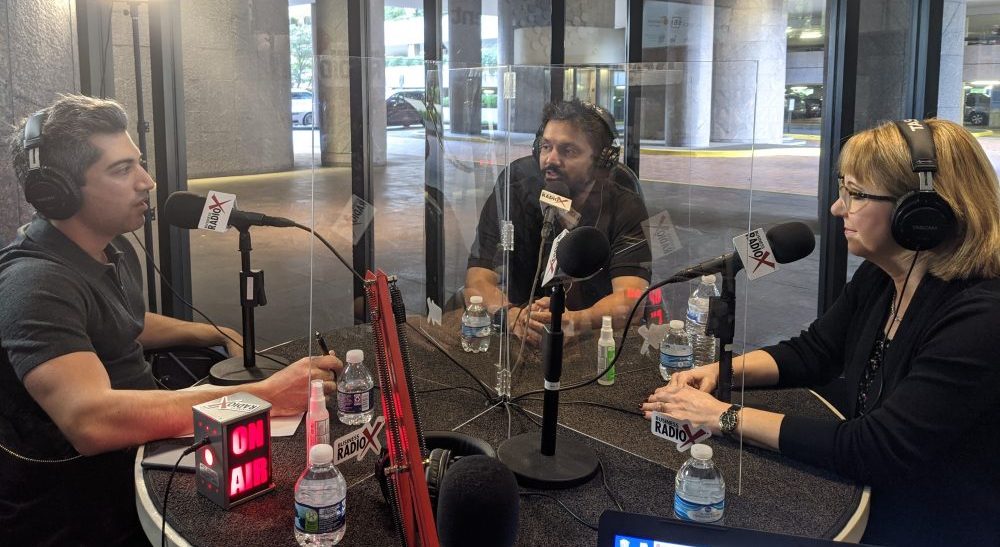
Mike Blake and Bea Wray

Decision Vision Episode 39:  Should I Write a Book? – An Interview with Bea Wray, Michael Levin Writing Company

Are books still relevant? How do I get a book out of my head and down on paper? Should I self-publish? The answers to these questions and much more come from this interview with Bea Wray, Michael Levin Writing Company, “Decision Vision” is hosted by Mike Blake and presented by Brady Ware & Company.

Bea Wray, Michael Levin Writing Company

Bea Wray

An innovation expert, Bea Wray helps thought leaders share their stories, passions and knowledge as they invent, launch, and promote new products. As the former Chair of the Entrepreneurship Practice Group at Advantage Media Group, ForbesBooks, Bea further leveraged the wisdom and experience of these innovators through branding, visibility, and marketing efforts substantiated by the ForbesBooks brand name.

Bea is an innovator herself.  She successfully built and eventually sold SourceHarbor Inc.  Along the way, she expanded the company to serve thousands of clients internationally, and has consulted with hundreds of startups. Bea served as the Executive Director of The Creative Coast, a regional non-profit building the innovation economy in Savannah, Georgia where she hosted TEDxCreative Coast and the innovation conference known as GeekEnd. Her years of energy and effort are an immediate benefit to entrepreneurs across 26 countries and throughout the United States.

Bea’s upcoming book, titled What Harvard Taught Me, But My Kids Made Me Learn, is expected to arrive late in 2019. She is looking forward to sharing how her experiences as a mother of three taught her how to negotiate, communicate, and adapt in the business world.

Bea holds an MBA with Distinction from Harvard Business School, is a summa cum laude graduate of Emory University, and is one of South Carolina’s prestigious Liberty Fellows of the Aspen Global Leadership Network. She is a frequent keynote speaker on innovation, entrepreneurship and business growth, and an inspiring contributor to various publications, including Entrepreneur.com, The Grindstone, and The Savannah Morning News.

Michael Blake, Brady Ware & Company

Mike Blake, Host of “Decision Vision”

Michael Blake is Host of the “Decision Vision” podcast series and a Director of Brady Ware & Company. Mike specializes in the valuation of intellectual property-driven firms, such as software firms, aerospace firms and professional services firms, most frequently in the capacity as a transaction advisor, helping clients obtain great outcomes from complex transaction opportunities. He is also a specialist in the appraisal of intellectual properties as stand-alone assets, such as software, trade secrets, and patents.

Mike has been a full-time business appraiser for 13 years with public accounting firms, boutique business appraisal firms, and an owner of his own firm. Prior to that, he spent 8 years in venture capital and investment banking, including transactions in the U.S., Israel, Russia, Ukraine, and Belarus.

Brady Ware & Company

Brady Ware & Company is a regional full-service accounting and advisory firm which helps businesses and entrepreneurs make visions a reality. Brady Ware services clients nationally from its offices in Alpharetta, GA; Columbus and Dayton, OH; and Richmond, IN. The firm is growth minded, committed to the regions in which they operate, and most importantly, they make significant investments in their people and service offerings to meet the changing financial needs of those they are privileged to serve. The firm is dedicated to providing results that make a difference for its clients.

Decision Vision Podcast Series

“Decision Vision” is a podcast covering topics and issues facing small business owners and connecting them with solutions from leading experts. This series is presented by Brady Ware & Company. If you are a decision maker for a small business, we’d love to hear from you. Contact us at decisionvision@bradyware.com and make sure to listen to every Thursday to the “Decision Vision” podcast. Past episodes of “Decision Vision” can be found here. “Decision Vision” is produced and broadcast by the North Fulton studio of Business RadioX®.

Visit Brady Ware & Company on social media:

LinkedIn:  https://www.linkedin.com/company/brady-ware/

Facebook: https://www.facebook.com/bradywareCPAs/

Twitter: https://twitter.com/BradyWare

Instagram: https://www.instagram.com/bradywarecompany/

Show Transcript

Intro: [00:00:02] Welcome to Decision Vision, a podcast series focusing on critical business decisions, brought to you by Brady Ware & Company. Brady Ware is a regional, full-service accounting advisory that helps businesses and entrepreneurs make visions a reality.

Michael Blake: [00:00:20] And welcome to Decision Vision, a podcast giving you, the listener, clear vision to make great decisions. In each episode, we discuss the process of decision making on a different topic. Rather than making recommendations because everyone’s circumstances are different, we talk to subject matter experts about how they would recommend thinking about that decision.

Michael Blake: [00:00:38] My name is Mike Blake and I’m your host for today’s program. I’m a director at Brady Ware & Company, a full-service accounting firm based in Dayton, Ohio, with offices in Dayton; Columbus, Ohio; Richmond, Indiana; and Alpharetta, Georgia, which is where we’re recording today. Brady Ware is sponsoring this podcast. If you like this podcast, please subscribe in your favorite podcast aggregator. And please, also, consider leaving a review the of podcast as well.

Michael Blake: [00:01:02] Our topic today is, should I write a book? And this is a topic that is near and dear to my heart because books have become, in some respect, easier to write and circulate than ever before. And I do sort of have this secret desire to get about five or six books out, which surprises a lot of people because they’re a surprise and I learned I could read. But in point of fact, I think that there’s a voice in there that wants to put things down on either dead tree paper or virtual paper.

Michael Blake: [00:01:38] And I think a lot of people are thinking about that as well. And it may be people who are like me that are in the services area that wish to establish and reaffirm our reputations as subject matter experts to the market. It may be people that have an artistic bent and this is, you know, a book is in effect their canvas for self-expression. Or it could be somebody that simply feels like they have a story to tell or a lesson to teach. And a book is their way of of getting that lesson out to the world. That’s sort of their contribution to society. And we all know this proliferation of books out there under various names. They could be books, they could be e-books, they could be something else.

Michael Blake: [00:02:27] And, you know, I think that, you know, as we record today in 2019, this is a topic that really wouldn’t have even mattered 20 years ago. You know, the notion that somebody would just somehow write a book was a much larger undertaking because of the way the industry was structured, because of the way technology worked or didn’t work. And it’s just another one of those signs of the times that technology is enabling us all to put a voice out there in a way that, for good or bad, we simply were not able to.

Michael Blake: [00:03:06] And joining us today is my pal Bea Wray, who is with Michael Levin Writing Company with the awesome tag line, their books make their clients happy, famous, trusted and rich. You have a story to tell, a business case to make, a family history, to capture, your book as the ultimate leave behind on sales calls. And I agree with that. The best way to record the culture of the enterprise you’ve built and your legacy for your family.

Michael Blake: [00:03:31] Bea herself is an innovation expert. And she and I know each other from back in the days when Startup Lounge was active in Savannah, Georgia, and she was the director of—executive director of our partner organization Creative Coast there. And now she’s helping thought leaders share their stories, passions and knowledge as they invent, launch and promote new products. As the former chair of the Entrepreneurship Practice Group and Advantage Media Group, Forbes Books, Bea further leverage the wisdom and experience of those innovators through branding, visibility, marketing efforts substantiated by the Forbes Books brand name.

Michael Blake: [00:04:08] Bea is an innovator herself. She successfully built and eventually sold Source Harbor Incorporated. Along the way, she expanded that company to serve thousands of clients internationally and has consulted with hundreds of startups. She serves as the executive director of the Creative Coast, a regional nonprofit building the innovation community in Savannah, Georgia. By the way, one of those awesome cities anywhere. If you don’t—if you’ve never been there, go. If I can ever afford to retire there, that is where I’m going. She hosted TEDxCreative Coast and the Innovation Conference known as GeekEnd.

Michael Blake: [00:04:40] Her years of energy and effort are an immediate benefit to entrepreneurs across 26 countries and throughout the United States. She holds an MBA with Distinction from Harvard Business School and a summa cum laude graduate of Emory University and a bunch of other good things. And last but not least, I mean, we’ll get to this one. She has written her own book or is in the fit—in the process of putting her own finishing touches on that book. What Harvard taught me but my kids made me learn, which is expected to arrive in 2019. And I know she’s looking forward to sharing how her experiences as a mother of three taught her how to negotiate, communicate and adapt in the business world. And I think there’s a lot that I’m going to learn from that, too, as a father of two who I think already can negotiate better than I can. Bea Wray, thank you so much for being on the program.

Bea Wray: [00:05:30] I’m so happy to be here, Mike. This is wonderful.

Michael Blake: [00:05:33] So, let’s sort of get down to it. You know, normally I start these podcasts with a definition because we’re talking about a fairly technical topic. But I’m just going to go on a limb here and say everybody knows what a book is. So, why would I want to write a book? You know, I don’t have time to even read all the books that I would like to read. Why am I going to take that time and write one instead?

Bea Wray: [00:05:57] Well, the main reason is to—that people want to be known, loved, and trusted and businesses want to hire people that they know love and trust. And more and more businesses are deeper in whomever they’re working with. Whether it’s your accounting firm, your lawyer, even your orthodontist. You know, I helped an orthodontist write a book because he explains that the impact of straightening teeth on a child’s sleep and what was happening in sleep and the ability for that child to do better in school. So, I thought, orthodontia was all about just keeping your smile pretty. Well, it turns out that the fact that this doctor spends more time understanding the numerous impacts, he wrote a book about it.

Bea Wray: [00:06:53] And so, I guess what I’m trying to say is, you introduced the podcast, which was excellent by, you know, this was not something you could have done 20 years ago because technology was different and the distribution was different. That’s very true. I would argue that in addition, the knowledge base was different. And so, one of the reasons fewer and fewer people publish with a traditional publisher is because we are not all reading the same book. You just said yourself, there’s 10 or 12 books you would love to read. Those are probably not the 10 or 12 that are on my list.

Bea Wray: [00:07:35] It’s that we want more specific stories, more connected to our lives. I want to know not what is the most popular book in the country, but I want to relate to someone who’s more like me, who has insights about things that I need. And so, one of the reasons you might write a book is because you have a unique and special experience and perspective that can help some people, thousands of people, tens of thousands of people. Maybe not a few billion people. And yet helping thousands of people is actually a really great thing to do, and sharing your own thoughts in that way is a great endeavor.

Michael Blake: [00:08:23] So, you touched on something that I think I want to jump to, because if you’re—if you really haven’t looked at this and if you’re a people of a certain age such as myself, you think, oh, I need a book, I then need to, I guess, find a way for John Wiley and Sons or McGraw-Hill or, you know, somebody else that’s going to pick this thing up, is that necessarily the case anymore? Is that gateway or that barrier to entry still important?

Bea Wray: [00:08:55] It is not. And I’m a big fan of both of those companies. And working with a traditional publisher can be great and it might not work for you at all. And I have had the privilege of working with hundreds of authors. And what I find is that that industry continues to consolidate and to minimize in such a way that the services one would have gotten in the past, like marketing services are smaller and fewer. And so, it may not be a great experience if you, one, go down that route even if you’re successful. Then the distribution of the book may not be what you’re hoping for.

Bea Wray: [00:09:39] What also can happen is, you know, they’re in the business of selling books. Not in the business of selling you or your company or your idea, which can be great as long as your incentives are aligned with what you want with your book. And so, if they’re not aligned, what can happen is a very specific methodology that maybe it’s something you go over in your consulting practice. It’s a way you use as a business card. It’s what you start talking about and bringing people to your company. Make it watered down in the book that’s trying to be sold to a million people. And so, right off the get go, just the book you envision in your head, depending on what level of control you want, it may be better to self-publish or a hybrid publish than going the traditional route because you lose a lot of control. There’s a lot of talk about how you lose money. You get 40 cents on the book versus $10 on each book sold. But a big problem is, are you actually putting out there the book that is in your heart and mind and soul?

Michael Blake: [00:10:50] And you know, you touched on something there that I want to kind of break from the script a little bit and drill into because I think that’s an important point. You know, the business model of bookselling and the life model of the author may not very—may not be in alignment, right, to sell a book. If you’re going to really do it the way McGraw-Hill put on a bestseller list, that kind of becomes your job, doesn’t it? And maybe you don’t want that to become your job.

Bea Wray: [00:11:18] Absolutely. That’s exactly right. And you know, you mentioned me and my own book. And I’ll just use this as a very specific example. Is—I write not exclusively to women, but sometimes to women, because I’m a mom and I am a woman and I’m a business person. And what I have found is that, we as women, choose to belittle our own experiences in the home and outside of the corporate world, even though they’re very, very relevant to learning about how to deal with people and learning how to negotiate and all those things you said earlier. I never speak from a platform of corporations to conferences or in my book as a victim, or about those bad men who don’t treat me well enough, because that’s not something I think about.

Bea Wray: [00:12:14] However, there is a huge market for that. There is a lot—after the #MeTooMovement, there’s a lot of energy and there’s—I have actually been approached by traditional publishers, write the book in this way because there is a market for, if only men would pay a dollar and a dollar to men and women and the gender pay gap and all this whole language that—those are important factors and there are important things to fight for. But I’m going to fight it from the perspective I know which is I’m going to get better at raising my hand. I’m going to get better at taking risks. I’m going to be better at stepping forward. Not about saying I’m a victim.

Bea Wray: [00:12:55] And the point I’m trying to make here is I have personally been approached, hey, if you change your book to say something that wasn’t in your heart, mind and soul, we can sell it. That’s not been my personal choice. And I know 30 other people who’ve made a similar choice to me because what was more—if you’re going to go through the effort of writing a book, it is a long journey and it sticks with you a long time, my encouragement is make it a book you want it to be.

Michael Blake: [00:13:22] And you know, I would think the thing about a book even by today, it—still, if you compare it to other forms of communication, media, it—a book still has a permanency to it that even a blog doesn’t, a YouTube video, or a Facebook post, whatever, an Instagram, whatever it’s called, a gram, I don’t know. I’m not on histogram, you know, tweet, whatever. A book is still different in that regard, isn’t it, that once it’s out there, either on on dead tree paper or a virtual paper, at some point, I think most people would would have a need to be proud of that out there, because if you’re not, it ain’t going away.

Bea Wray: [00:14:08] Correct. And it is all about—I mean, I love that the word author is part of authority. It is all about establishing your authority. So, be clear on what authority you want to be establishing. Be clear on who you are on that paper because this is where you have your chance to shape it.

Michael Blake: [00:14:30] So, let’s do a close eye role play here. But what I’m really doing is I’m getting free consulting and other guys are giving you a podcast interview opportunity. But I’ve got a book and I’ve got several books in my head that I think I want to write. Do I just start writing? Do I do the Snoopy cartoon thing where I’m on my doghouse, the typewriter and say it was a dark and stormy night? Or how do you—what are the first steps toward that goal?

Bea Wray: [00:15:00] Well, that’s a great question. And you certainly can. Most people start to at least have an outline and a set. The kind of questions you’re thinking is, what is the book I want to write and for whom? And then why? I do recommend being I won’t say selfish but a little bit. Like know your purpose for writing the book because that will help you define your audience and your use. And it will certainly keep you motivated.

Bea Wray: [00:15:34] So, I’ve worked with people who are writing a book because they just hope that one of their grand kids will read it someday, that they don’t want to die without their story somewhere written down. And that’s what they’re going to do. Maybe it will get published in a place and all those people around the world will read it but it was really just about a legacy. That’s a great reason. I’ve helped people write books because their need is to drive business to their company. Now, those kinds of people may be selling $40 gene. Usually, they’re selling a complicated relational relationship kind of product. So, $150,000 on average. Way that leads to consulting, whether it’s for manufacturing or setting up of insurance captive or whatever, where their wisdom and knowledge and the sense to be trusted is so critical. You can’t have that across in a phone call. They want their ideas out and they want to be trusted. And that’s their way that they attract people to their company.

Bea Wray: [00:16:45] Some people want to launch a speaking career. Some people—so, understanding your why. I think it is really, really important before you go too far in writing your book. And then there’s the how. What I will say is I learned over time that the average entrepreneur take around three years to write his or her own book. And unfortunately, fewer than 40 percent of the entrepreneurs to start out on that personal endeavor finish. And that’s why people like the Michael Levin Writing Company exist, is people who are running their own company have—there’s so much at stake every two hours that they spend just writing, not working in the company. And so, it’s constantly the battle that’s most urgent thing and the book never gets done. And so, it becomes a very costly endeavor just an opportunity cost.

Michael Blake: [00:17:54] So, you know, you said another thing. You’re going to make us rip off the script, which is great, because I can do that with you because you’re smarter than I am, empirically. And that is that you say something that kind of runs against what a lot of us, I think almost everybody, is taught and as a hardwired way, which is cater to your audience, cater to your audience, cater to your audience. And while I think you’re acknowledging kind of the existence of the audience, at the end of the day, if you’re going to produce a book that you’re going to feel is worthwhile at the end, it’s really about what you want. It sounds like, correct me if I’m wrong, but what I’m hearing is that it’s really about what you want to put out there to the world. And then if people buy it, buy into and engage cause they’re great. But that’s just kind of the way that it’s got to go.

Bea Wray: [00:18:48] Yes. I mean, one of the first questions we ask people is who is this book for? And what are you going to do for them? And so, in why are they going to do what you want them to do? It may be that they—you want to motivate them to take better care of their health. Great. It may be that you want them to call you to take better care of their health. We don’t know. But one of the very first questions is who are you writing for? So, I do care about the audience.

Bea Wray: [00:19:21] But before that, you have an idea for the book. It really needs to be your idea that’s deep in your heart and your passion connected to the life that you are ready to lead as an author. And so, whether that’s a business person who has a book, whether that is a speaker who has a book, or whether that I’m a grandparent, I’m leaving a legacy that has a book. This book is becoming a part of who you are and you have to have a reason for wanting to write it. And that will help define your audience. And then you can start tailoring to that audience and you have to or otherwise it won’t be a good book. But I—what I don’t recommend is go out, survey the world, and see what book is missing.

Michael Blake: [00:20:12] Interesting, because I’ve actually heard exactly that advice given many times. So tell me more about that. Why? Why is that a bad idea?

Bea Wray: [00:20:23] Because we don’t live in—because, well, we’re going to think I’m an old fuddy duddy, but because we don’t want beaver cleaver on T.V. anymore is basically the reason. And let me explain that. So 40 years ago, you watch, you consume video television, the same—you and every other neighbor were watching the same thing as there were three channel. And we all watched the same thing. We consume information in a certain way. And my guess is you didn’t watch that last night. Am I right?

Michael Blake: [00:20:59] Yeah.

Bea Wray: [00:20:59] And you didn’t watch even the same thing as everyone on your street. And if you’re like most of America, you don’t even watch everything that was the same even if people in your home. So not only is it not consistent. Three options down the street. Most of us watching the same thing and talking about it. And as the water cooler the next day, we are self-selecting and sometimes is independently created content like YouTube videos, TedX Talk, and so on and so forth. So the way we consume information is so totally different than the way it was years ago. At that time, publishing of individual books had certain channels. We need so many mysteries, we need so many adventure stories, we need so many biographies. And we don’t have a recent biography of Abe Lincoln for 10-year-old. We needed to fill that.

Bea Wray: [00:21:56] That is not the way information is consumed today. It’s quite the opposite. We create whether video content or written content as a way of connecting with people. Who do we want to connect with? Is it based on our faith? Is it based on our geography? Is it based on our clients? And so, I want to write a book that helps me be who I want to be and connect with the people I want to connect with. I have a—I have an e-mail today from a friend who went to Harvard Business School who wrote a book about parenting and leveraging Harvard Business School, very, very similar in some ways as my book and not at all similar. And it will be used in the same way. But we became friends because our books were similar. But never did she think, oh, gosh, you’re writing on that topic, I can’t. Or did I think you’re writing on that topic, I can’t.

Michael Blake: [00:23:01] Yeah. And to some extent, right, it probably kind of reaffirms a factor you may be on to something.

Bea Wray: [00:23:07] Yes.

Michael Blake: [00:23:08] If one person, other person thinks it’s worth writing that book, that would tell me there’s 10,000 people that think it’s reading that book.

Bea Wray: [00:23:18] Exactly. But it wouldn’t be the case if there were only one spot on the network or only one spot in the McGraw-Hill sells for this type of book. But that’s not the way books are distributed, written especially today.

Michael Blake: [00:23:36] So—and this actually—this does circle back then to a question I actually had prepared to ask for today, which is, you know, given all of the media that bombards us and is available, you know, I mean, are books on their way out or are books still a real thing?

Bea Wray: [00:23:58] That’s so interesting because many times you also in this podcast talked about, you know, a paper book or an online book. And I believe that not only are books very much relevant today. Funny, I’m looking at a bookshelf right now suddenly filled with books. But I think paper books are still very relevant, even though I’m an audible fan. I listen to books often. And the reason is because they are a way of connecting with people.

Bea Wray: [00:24:30] So more and more people are writing books, more and more people are writing books to connect with their audience. It may not be a billion people. It may not even be 300,000 people. But writing a book—well, take the guy, for example, whose client is $150,000 every time he gets a client. This gentleman wrote a book, put it in the hands of fewer than a thousand people, and his business increased by $5 million in the first year because it didn’t take many people to learn, to know, love, and trust him. Does that make sense?

Michael Blake: [00:25:15] It does. And by the way, as an aside, I have stolen that phrase because I’m familiar with the phrase no like and trust. No love and trust is so much better. So kudos to you.

Bea Wray: [00:25:26] Well, thank you.

Michael Blake: [00:25:26] And if you hear lots of other people that are using that, it’s because I stole it from you and told everybody they can have it.

Bea Wray: [00:25:33] I appreciate that. I was told one time that, you know, the first time you borrow, you give credit. The second time, you know, oh, I was talking and so-and-so said. The next time you say, so and so taught me to say. The third time you forget about so-and-so altogether and you just know it.

Michael Blake: [00:25:52] That’s right. And by the fourth time, it just came to me one day. I don’t know where. But you’re welcome to borrow it if you want.

Bea Wray: [00:26:01] There you go.

Michael Blake: [00:26:01] Yeah. So I do think, you know, there is still some—there is still a mystique around a book. In spite of all the other media that, you know, compete for attention, I give books a lot because I recommend that people read a book and then to guilt them into reading and I’ll often buy it for them and send it to them. So they’ll at least lie to me the next time they see me and say they read it. But, you know, it is a very powerful calling card.

Michael Blake: [00:26:32] And I’ll share my own story. So years ago, I co-authored a book called Entrepreneurship Back to Basics, and it’s one long out of print. But I remember, I was applying for a job and they asked me for a writing sample. I say, okay, if I send you a copy of my book, right, just sort of hear a pin drop at the interview at that point. An extreme case, but still an anecdote of the impact that a book could make.

Bea Wray: [00:27:00] Totally fabulous. And you know, a lot of time it’s okay if someone doesn’t read the whole book. But one of the most powerful sales talk is to say, you know, hey, Michael, it was great to speak with you today. I really appreciated the questions you had on my marketing strategy. Please turn to page 26 in the book that I’ve enclosed.

Michael Blake: [00:27:23] Yeah. And of course, then there’s if you want the benefit of reading the book and I haven’t actually read it, you can just hire me.

Bea Wray: [00:27:31] Precisely.

Michael Blake: [00:27:34] So let’s say we’re well along the way to a book being written or maybe it’s even written. Is it as hard to get a book picked up by Amazon and distributed to Kindle or iBooks or something like that? Is it hard at all or can anybody just sort of do it? How, you know, what’s your assessment of that electronic distribution medium in terms of making it harder or easier to actually get a book out there?

Bea Wray: [00:28:01] Well, I think anybody can do it. Most people need help with how. So certainly making sure the book is a great quality. You know, you do want an excellent manuscript, well-written, but that’s not enough. You definitely have to have someone who’s helping you do the layout, make it look excellent. Pull out images and illustrations and even font type and book jackets. All of that matters.

Bea Wray: [00:28:30] And so, I’ve never met someone who can do all of that him or herself. You know, that usually takes a team who can get that done. And that’s where, you know, hybrid publisher and that’s where, you know, our company helps people find that right team at the Michael Levin Writing Company so that—because what people don’t want to do is finally get this book out of themselves. Finally have this manuscript and then say, now what, and still run into all of the hurdles that they were experiencing before, you know, they took the steps to get the book actually done. That said, you know, Amazon will put a book up, and so you don’t have to go to McGraw-Hill to have—to be a published author. And you still get—and you get to retain much more of the profits of the book, which is excellent.

Bea Wray: [00:29:27] But there’s still a science around how do you get it in the very category? How do you get the ISBN number? How do you make sure that it becomes an Amazon best-seller because Amazon does a great job of creating certain categories. And there’s a system around making sure enough people are voting for you at the time so that you can be a best-seller. And so, there—it’s not that hard. You just, you know—my husband will kill me for saying this. I don’t even change my oil in my car because I don’t know how to do that, right.

Michael Blake: [00:30:03] Right.

Bea Wray: [00:30:03] He does and he knows how to take the radiator out, too. And if he doesn’t, he’ll learn on YouTube. That’s not me. So my philosophy is get the people who are excellent at doing these things for you so that you can feel comfortable and go do the things that you’re excellent at.

Michael Blake: [00:30:25] So you mentioned in passing that assuming the book is finished at all, that it would take an entrepreneur roughly three years to complete a book. Is that reflective of best practices or is that reflective more of that? There have been a bunch of fits and starts and mistakes and restarts. And that’s not really an efficient path. And if you do it kind of the Bea Wray way that it doesn’t necessarily take a full presidential cycle to do that.

Bea Wray: [00:30:55] Now, I think the best practice is 90 to 120 days.

Michael Blake: [00:31:00] So good. Yeah. Because I’m not nearly that patient if I’m going to write my book. So, let’s walk through that. If you’re talking to somebody and they’re serious about writing a book, what—how does that time typically get allocated? Do somebody take 90 days off to write the book and they go to a, you know, a Nepalese monastery where they’re not going to be disturbed? Or do they take one or two days a week or they just sort of locked themselves in an office and do that? Or is it, you know, the method where somebody gets up at 4:00 in the morning and the first two and a half hours a day, they write? How does that typically work?

Bea Wray: [00:31:38] So, what I have experienced in the last few years, both with the Michael Levin Writing Company and the ghostwriting company and when I ran the Forbes book is that they realize they want to buy their—what they’re really doing as CEO of a company is buying his or her own time. They’re saying, I don’t want to delay fits and starts because there’s something about our brains that actually gets ourselves in the way of writing our own book because we want to be perfect. And writing is an imperfect endeavor. We have to get it out and then it needs to be edited and changed and moved around.

Bea Wray: [00:32:18] And so, most people who have not been trained as writers and have 10 years of history as a writer with things that are not emotionally connected to themselves, are not going to be the best at writing their own book. They’re going to be the best at speaking their own books. And so, what they typically do is say, I want to hire a partner to help me with this book. And then, the first thing that happens is there’s a 90-minute phone call where there’s a conversation about who’s the audience, why are you doing the book, and let’s work through what is the book, meaning the outline of the book in the book plan.

Bea Wray: [00:33:00] And then usually the writers will go back and take probably six to eight hours with that 90 minute, listening to it, just writing it, re-listening to it, reshaping it, understanding, doing some research and then deliver back. Sometimes a 10 to 12 fixed, detailed outline, sometimes with holes. This is the way I see the book. Here’s where I sit these stories. What do you think? And so, now we’re working off of a book plan. And from that book plan, sometimes weekly phone calls are scheduled, sometimes every other week, depending on the schedule of the book and whether there is sort of a launch of that. But we need this book to be done by X date. What are we aiming for in order to hopefully get the 90 to 120 days.

Bea Wray: [00:33:51] And oftentimes, the entire book is interviewed. And then the writer goes away and delivers factious the first three chapters, never the whole book. That’s too much to digest for the author. So, the ghostwriter will deliver back the first two or three chapters, are we—did I get the voice right? Are we on the right path? That’s the time to iterate and decide how to shape the next two-thirds of the book. And within 90 days, an excellent ghostwriter, ghostwriting team should be able to deliver to a CEO his or her book written in his or her voice about his or her story.

Michael Blake: [00:34:40] And so, you know, kind of working through that process. And it certainly makes sense to me if you’re retaining a ghostwriter. You know, you’re surely buying back that time. And by the way, I’ve got to assume being a ghostwriter is extremely hard because writing to capture someone else’s voice has—I know is excruciatingly difficult because I’ve tried to work with ghostwriters in just small articles. And it’s never worked very well. And I think it’s something that’s very hard to do. Meaning that if you find somebody like you guys that can do it, you know, that is a precious commodity.

Bea Wray: [00:35:23] I think so. I can’t not do it. So, let me be clear. But the Michael Levin Writing Company has written over 700 books in 25 years. And I’ve been tracking for the last five years, and what I find is there are people who can do it. And interestingly, I spent enough time with them that these actual ghostwriters will say it’s easier for me to write your books than my own because all of those emotional things like that are those blocks that get ourselves in the way, get in our, we put in our own way don’t happen.

Bea Wray: [00:36:07] But it is one reason why the calls are cheap recorded, is there’s a lot of time spent getting that voice correct. Getting even that like (inaudible) of stories correct.

Michael Blake: [00:36:22] So, you touched on something I think is an important definitional point and that is editing and proofreading. I don’t think those are necessarily the same thing. And if you agree with that, can you explain to our audience what the differences between those two steps?

Bea Wray: [00:36:39] Yeah. So, anything—you know, they’re closely related, but editing is this—is a little more thorough and has a little more power. So, there’s ghostwriting. There’s really an overseeing. So, Michael Levin actually does all the book planned and he does the overseeing as a whole company. But there’s dozens of ghostwriters who are very carefully, closely match specifically to the author, but they’re never going to do their editing themselves. And so, then, there’s an overall editor who’s paying attention to tying the written work back to the author,b Back to the transcripts, back to the plan.

Bea Wray: [00:37:24] And then the proofreading is more the very final, you know, fork it out the door.

Michael Blake: [00:37:35] Right. Make sure there are no glaring errors and so forth, as opposed to high level kind of structure elements, I’m guessing.

Bea Wray: [00:37:41] Exactly.

Michael Blake: [00:37:42] Okay.

Bea Wray: [00:37:42] Editing can be—proofreading is making sure what they’re perfect. Editing is making sure we have everything we need there and identifying what’s not there.

Michael Blake: [00:37:57] Yeah. Okay. So, we’ve touched on this next question a little bit, but I don’t want to skim over because I do think it’s important. What’s your opinion of e-books?

Bea Wray: [00:38:11] Well, I think a lot of people that have them need to have them. Personally as a parent driving me crazy that my kids almost only read e-books because they read them on their phone and then there goes the text message, it’s like an invitation for a distraction. So, I don’t think they’re going away but there is a lot lost. I also don’t think—I’m positive they’re not replacing paper books where you can highlight and send and give as a gift and wrap up in a way. That cannot be done as effectively in an e-book.

Michael Blake: [00:38:55] And in terms of impact on a reader, do you think there’s a difference? Do you think that maybe readers look at e-books—and I want to make a distinction. I don’t necessarily mean a formal analog book that also happens to have a Kindle variant, but I’m more referring to kind of the promotional e-books that you see out there and they’re often called an e-book and maybe they’re not even worthy of the name. They should be called something else. But, you know, maybe they’re 15, maybe they’re 50 or 80, 90 pages to be considered almost too short a book to publish in paper format. But you see kind of that genre of book that appears in a digital format. You know what I’m talking about?

Bea Wray: [00:39:36] Yeah, I know exactly what you’re talking about. And, you know, there are certain things that are seen to be shared and they are sort of too short that would never make it as a book that also has an electronic version. I hear what you’re saying. So, I tell people that some of those out, it’s definitely not my specialty and I don’t personally have a big desire, so I don’t know that I have enough experience to say, you know, to have an opinion about them. It makes sense to me that sometimes people have a shorter message to give and a 50 page e-book will get it done.

Michael Blake: [00:40:20] Okay. So, now, I’m curious on your view, and I think our listeners are curious, and it’s an off—it’s an awkward, almost insipid question, but I think it has to be asked and that is, you know, how easy or hard is it to actually produce a book that people are willing to pay for? And, you know, for most people, is that even a realistic or desirable goal?

Bea Wray: [00:40:55] Well, I think that the hardest part is digging deep in your heart. So, I’ve been involved with the publishing of hundreds of books and every one of them has met that bar. They are—some people are paying for them. What I’m not sure is that enough people are paying—the author is getting a million dollars. So, I am not a fan of published—I never say to someone go write a book, you’ll be a millionaire because it’s selling—making money, selling books is hard work. So, it depends. You know, you’re not going to get very far if your book is of bad quality and you can’t find some market who will pay for it.

Bea Wray: [00:41:48] Oftentimes, the way to get to that is you might give it away to other people, but it has to be excellent quality, has to have an excellent work, has to have a brief title, has to know the audience but that’s a big leap from, you know, I sold books at the back of a conference to I became a millionaire selling books. And I say a million dollars because it’s really not worth your time and effort. Probably you’re gonna get a $200,000 but there are easier ways to make a living.

Bea Wray: [00:42:22] And so, that is really hard. And I don’t think it’s about the quality of the book at that point. I think it’s about the quality and the dedication of your marketing and how many—did you run here to get on the radio station? And how many public speaking engagements are you doing and how did you work your way onto The Today Show?

Michael Blake: [00:42:45] So, it’s about the business of the book?

Bea Wray: [00:42:46] Most people don’t want to do all of that work because they don’t need to, that their book is making them a million dollars because it’s tied to a business that they’re doing or it’s tied to some other reason. So, they don’t go through the effort to get on The Today Show.

Michael Blake: [00:43:01] Right. And plus, I mean, it sounds like—I mean, that process, if you want your book itself to be that kind of income generator, the book itself becomes a business and it requires a substantial investment. You know, I don’t think you just sort of write at info@todayshownbc.com, whatever their domain is. Hey, can I come on. I’d really like you to interview me. You know that in itself is a huge financial investment.

Bea Wray: [00:43:27] I used to help software companies sell their software. And what we always said was no matter how great it is, you can’t just cut a hole in the side of the building and hope that people start driving up like Burger King.

Michael Blake: [00:43:40] Darn it.

Bea Wray: [00:43:42] It’s true with books.

Michael Blake: [00:43:44] So, we’re running out of time. Before we do, if it’s okay with you, I’d like to shift gears to your own upcoming book. It’s going to be released later this year. Are you self-publishing that or is that going for a formal publishing house?

Bea Wray: [00:43:57] I am actually self-publishing that and I’m really excited about it. We’re finally getting into the homestretch here.

Michael Blake: [00:44:05] And if it’s not a major state secret, what is the voice of that book and what is the idea that you just had to get out of yourself and into that book?

Bea Wray: [00:44:18] Thank you. So, I had the privilege. I called the company and I had the privilege of taking about six years off of corporate work to raise my children. And I actually did so on a (inaudible) island in South Carolina. Daufuskie Island. So basically it’s exactly next to heaven and it was a perfect experience. But when I went back to work, which was at the Creative Coast, which you’ve already mentioned, I’m terrified. Did I have any skills? What can I do? How could I help them? Could I even find a job? And it was even way worse when I did because then I thought of all the ways I would fail because I had been at home with my children for six years.

Bea Wray: [00:45:00] And what amazed me is I had floods of thank you note. Thank you for that introduction to the venture capitalist. Thank you for this great event that you put on. Thank you for the strategic consulting. And I kept wondering, what were we doing that was helping these people? And then I kept wondering specifically, where did I personally get this skill to help these 300 plus companies? And over and over and over, the answer to that last question was not that I got this skill because I had attended the Harvard Business School. It wasn’t that I got this skill because I had decades of experience as an entrepreneur. Over and over again, the ability that I had to connect people, make people feel comfortable at an event, set out a vision for where we were going I received because I was raising children. So I want to talk about it.

Michael Blake: [00:46:00] And what what is the—is there one lesson that stands out as to the most important or the most obvious that your children taught you?

Bea Wray: [00:46:16] There isn’t one. Well, there’s dozens of them. But I think the main—the overarching lesson is that business is done with people. So people skills matter. So a great way to get people feel—hone your people skills is to try to raise them in your home.

Michael Blake: [00:46:37] Very good.

Bea Wray: [00:46:38] The one to do I have that I hope people walk away with is we, both men and women, belittle on our LinkedIn profile anything to do with parenting. We treat it as like a black mark, especially people who have taken time off. We try to cover it up from our professional experience. And my invitation is to consider not feeling that. And if you consider saying, you know, here’s who I am as a whole person. It’s basically Sheryl Sandberg said, hey, your corporate—your career path is not a corporate ladder. It’s not linear. It’s a jungle gym. And what I’m trying to do with this book is to validate that parenting is a reasonable spot on that corporate jungle gym.

Michael Blake: [00:47:33] Well, I am going to hit you up for a signed copy of that book. I can certainly see where that would fit because you’re right, there’s not just people skills. I think, you know, modern parenting involves tremendous time management requirements. I think obviously there’s economics that are involved. There’s conflict resolution. There’s so many things that actually can take from that. I’ve never thought about that. But the more you talk about it, the more inherent sense it makes to me. So, like I said, I’m going to hit you up for an autographed copy of the book.

Bea Wray: [00:48:10] I can’t wait.

Michael Blake: [00:48:11] So we need to wrap up. I think this is the longest podcast we’ve actually done and this is number 37 or 38, something like that. So I’m not sure if congratulations are in order or not, but it is what it is. If people want to contact you about writing a book or or maybe just figuring out where, you know, what lessons their children should be teaching them, how can they best contact you?

Bea Wray: [00:48:36] So, my personal e-mail is bea, is my name. B like boy, @beawray.com.

Michael Blake: [00:48:47] Okay. And that’s gonna do it for today’s program. I’d like to thank Bea Wray so much for joining us and sharing her expertise with us. We’ll be exploring a new topic each week. So, please tune in, so that when you’re facing your next business decision, you have clear vision when making it. If you enjoy these podcasts, please consider leaving a review with your favorite podcast aggregator. It helps people find us, so that we can help them. Once again, this is Mike Blake. Our sponsor is Brady Ware & Company. And this has been the Decision Vision podcast.

Tagged With: connecting with an audience, CPa, CPA firm, Dayton accounting, Dayton business advisory, Dayton CPA, Dayton CPA firm, Decision Vision, Michael Blake, Mike Blake, Parenting, personal brand, personal branding

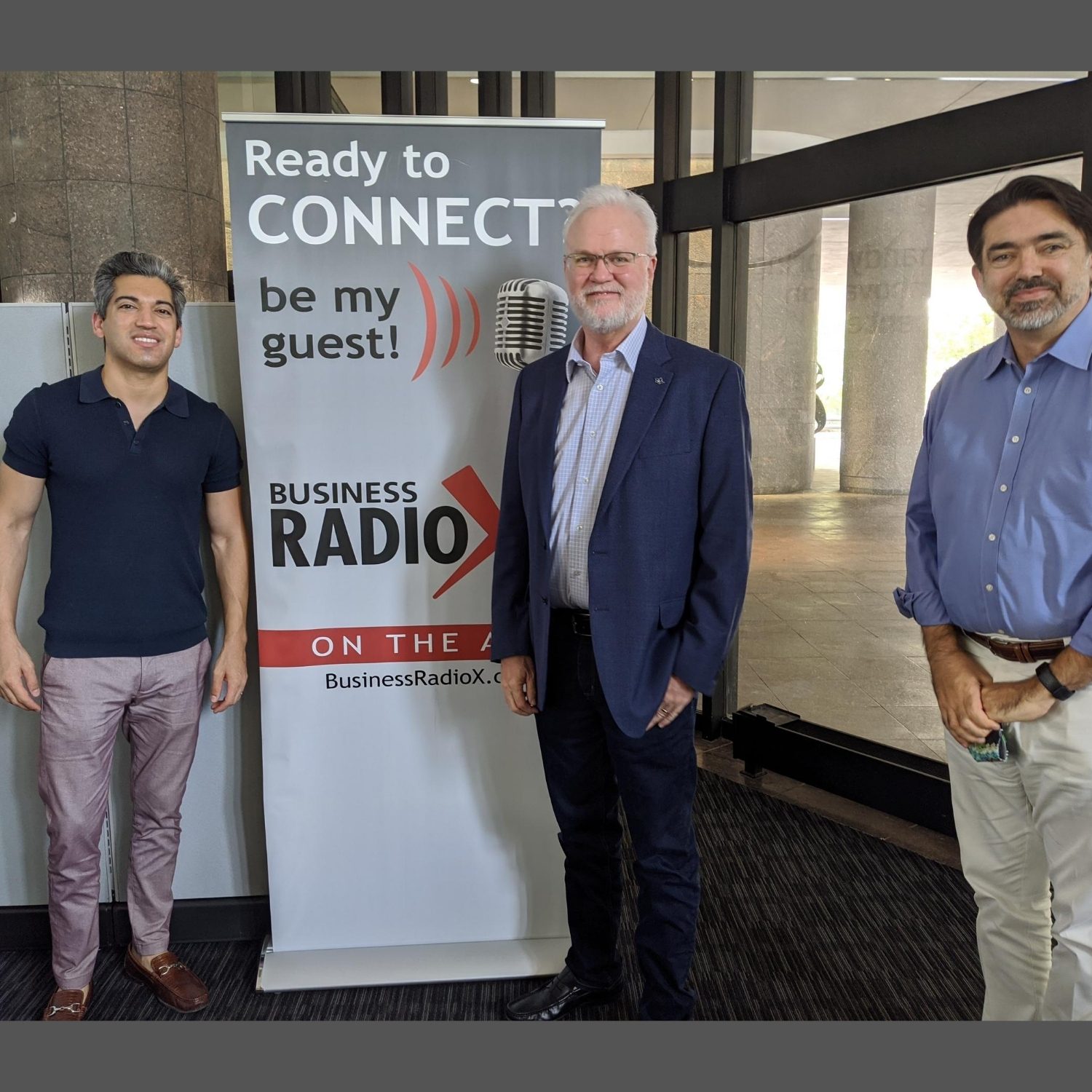
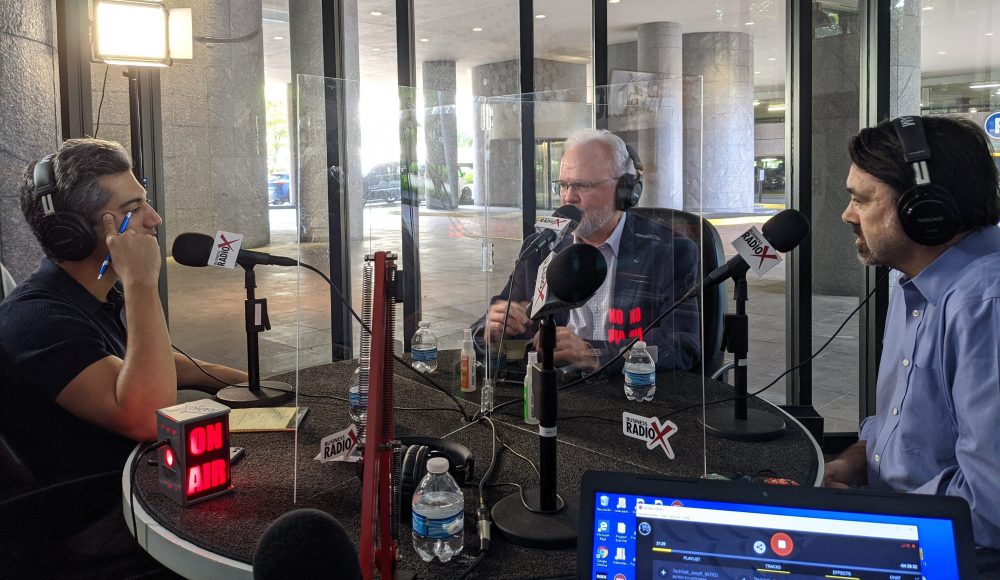
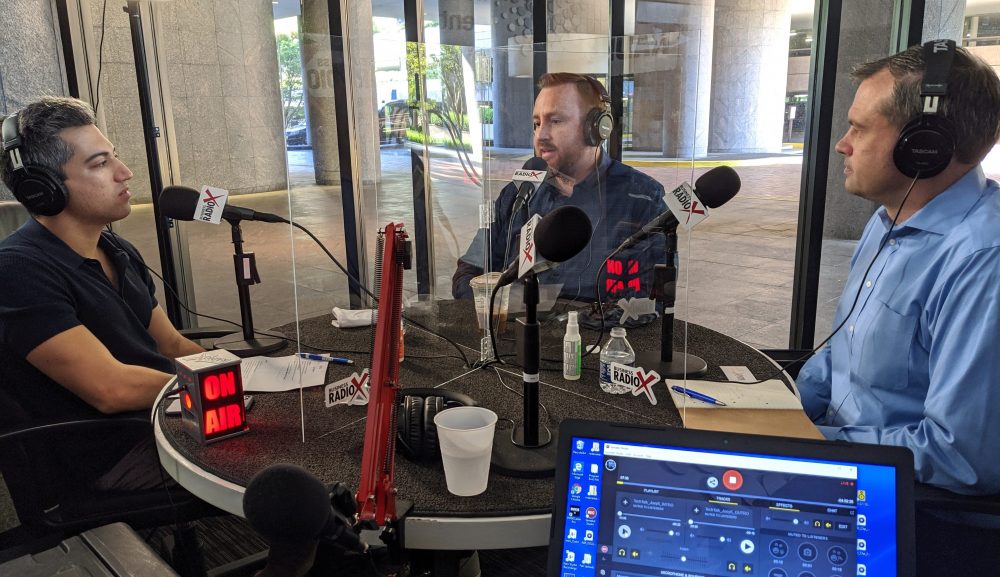
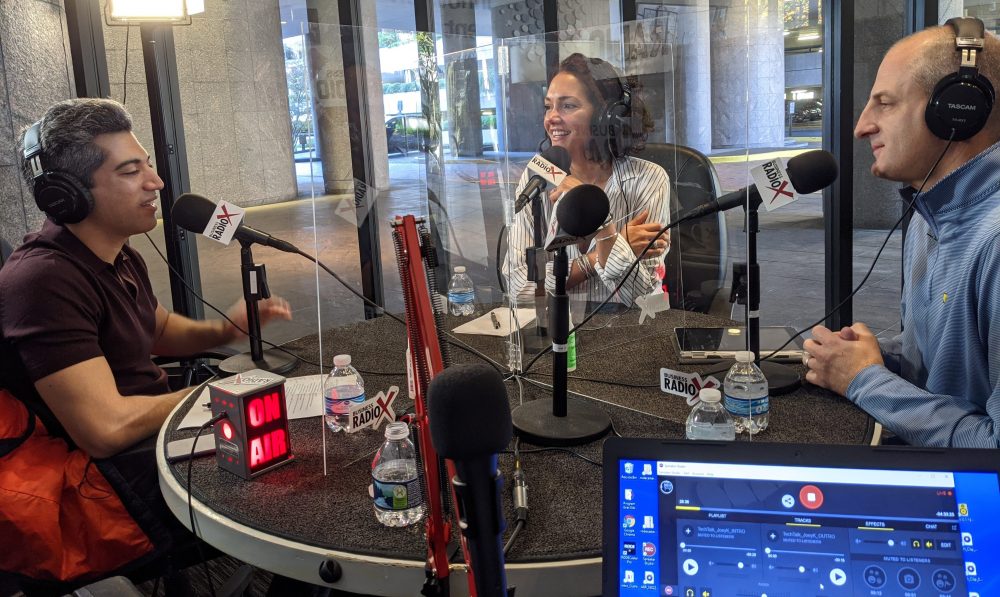
Roxana Shershin with Digital Additive, K.P. Reddy with Shadow Ventures and Chris Weissman with TopRight

October 25, 2019 by angishields

TechTalkFeature10-25
Atlanta Business Radio
Roxana Shershin with Digital Additive, K.P. Reddy with Shadow Ventures and Chris Weissman with TopRight
Loading
00:00 /
RSS Feed
Share
Link
Embed

Download file

TechTalkGroup10-25

Roxana Shershin is Co-Founder & President of Digital Additive. In a world of one-size-fits-all email, Digital Additive delivers on the promise of one-to-one.

Founded in 2012, Digital Additive specializes in eCRM Planning, Email Marketing Services, Data Integration, Creative, and Campaign Optimization services to Fortune 1000 companies including The Home Depot, FleetCor, ApartmentGuide, Oldcastle and Carters, Inc. An agency partner of Salesforce Marketing Cloud, Digital Additive helps clients go beyond email to foster authentic conversation with their customers.

Follow Digital Additive on LinkedIn, Twitter and Instagram.

To know K.P. Reddy, Founder of Shadow Ventures, is to experience boundless enthusiasm for creating new ventures. Reddy’s multidisciplinary career spans the innovation continuum. Over 25+ years, he has been a technologist, subject matter expert, founder, CEO, advisor, investor, professor, author and coach.

K.P. effortlessly combines expertise in advanced technologies with critical, in-the-trenches experience as an entrepreneur. He is a globally recognized authority in AEC environments, artificial intelligence, robotics and automation, collaborative communication, mobile applications and cloud computing. His passion is in launching game-changing startups, raising substantial investments, and leading organizations to meaningful acquisition and IPO exits.

Follow Shadow Ventures on LinkedIn, Twitter and Facebook.

Chris Weissman brings over 25 years of marketing and leadership experience for leading consumer and B2C companies.  Prior to joining TopRight, Chris served as CMO for The Honey Baked Ham Company where he delivered strong e-commerce and retail growth.

Chris was also an integral member of the NuCO2 leadership team – driving over 20% growth in revenue resulting in the sale of the company for ten times revenue.  Prior to NuCO2 Chris spent 10 years consulting driving growth for clients across an array of industries.  Project work included brand development, innovation, portfolio optimization, “go-to-market” strategy, and marketing training. Clients included Coca-Cola, Heineken, Walmart, Dow Chemical, Alcoa and Con Agra Foods.

Chris also spent 10 years at Kraft Foods and The Pillsbury Company in a variety of product and brand management roles.  Chris holds an MBA from Babson College in Boston and a BBA from Southern Methodist University where he was an All American swimmer and member of the United States National Swim Team.

Follow TopRight on LinkedIn and Facebook.

About Your Host

JoeyKlineJoey Kline is a Vice President at JLL, specializing in office brokerage and tenant representation. As an Atlanta native, he has a deep passion for promoting the economic growth and continued competitiveness of communities in and around Atlanta, as well as the Southeast as a whole. He has completed transactions in every major submarket of metro Atlanta, and works primarily with start-ups, advertising/marketing agencies, and publicly-traded companies. With a healthy mix of tenacious drive and analytical insights, Joey is a skilled negotiator who advises clients on a myriad of complex real estate matters.

With a strategy and business development background, Joey is first and foremost a pragmatic advisor to his clients. Most recently, he was the Director of Business Development for American Fueling Systems, an Atlanta-based alternative energy company. While at JLL, he has become a member of the Million Dollar Club, and has built a reputation as an expert on the intersection of transit-accessibility and urban real estate. With intimate involvement in site selection and planning/zoning concerns, Joey approaches real estate from the perspective of the end user, and thus possesses a unique lens through which to serve his clients.

Joey holds a Master of Business Administration from Emory University, and a Bachelor of Arts from Washington University in St. Louis. He is a founder, board member, and the treasurer of Advance Atlanta, and also sits on the Selection Committee for the Association for Corporate Growth’s Fast 40 event. In addition, he is a member of CoreNet and the Urban Land Institute. Finally, he is part of LEAD Atlanta’s Class of 2019.

Connect with Joey on LinkedIn.

Tagged With: Digital Additive, Shadow Ventures, TopRight

Decision Vision Episode 35: Should I Hire a Business Development Coach? – An Interview with Rod Burkert, Burkert Valuation Advisors

October 10, 2019 by John Ray

Decision Vision
Decision Vision
Decision Vision Episode 35: Should I Hire a Business Development Coach? – An Interview with Rod Burkert, Burkert Valuation Advisors
Loading
00:00 /
RSS Feed
Share
Link
Embed

Download file

Mike Blake and Rod Burkert

Decision Vision Episode 35: Should I Hire a Business Development Coach? – An Interview with Rod Burkert, Burkert Valuation Advisors

Why should I hire a business development coach? What are the most important aspects of marketing my professional services? In this interview with “Decision Vision” host Mike Blake, Rod Burkert of Burkert Valuation Advisors answers these questions and much more. “Decision Vision” is presented by Brady Ware & Company.

Rod Burkert, Burkert Valuation Advisors

Rod Burkert, CPA, CVA, and his wife, Amy Burkert, CPA, CFA, with their dogs Buster, left, and Ty, stand in front of the RV that serves as their mobile office and their home.

Rod Burkert is the Founder and President of Burkert Valuation Advisors.

In one way, shape, or form, Rod has performed valuations since the late 1980s. In July 2000, he started Burkert Valuation Advisors in Philadelphia where he ran a “traditional” valuation practice for 10 years that focused on tax purpose valuations for manufacturers and distributors.

Based on that experience, in 2013 Rod began coaching BVFLS (business valuation and forensic legal services) professionals to mentor them in the marketing and positioning skills they need.

In March 2010, he began traveling full time throughout the US and Canada in an RV with his wife and dogs. Today his mobile consulting firm includes his valuation practice and a coaching business, all of which he built by leveraging his professional network, social media, and hiring virtual assistants to make the available technology work for him.

For more information, you can email him directly, go to his website, or you can find him on LinkedIn.

Michael Blake, Brady Ware & Company

Mike Blake, Host of “Decision Vision”

Michael Blake is Host of the “Decision Vision” podcast series and a Director of Brady Ware & Company. Mike specializes in the valuation of intellectual property-driven firms, such as software firms, aerospace firms and professional services firms, most frequently in the capacity as a transaction advisor, helping clients obtain great outcomes from complex transaction opportunities. He is also a specialist in the appraisal of intellectual properties as stand-alone assets, such as software, trade secrets, and patents.

Mike has been a full-time business appraiser for 13 years with public accounting firms, boutique business appraisal firms, and an owner of his own firm. Prior to that, he spent 8 years in venture capital and investment banking, including transactions in the U.S., Israel, Russia, Ukraine, and Belarus.

Brady Ware & Company

Brady Ware & Company is a regional full-service accounting and advisory firm which helps businesses and entrepreneurs make visions a reality. Brady Ware services clients nationally from its offices in Alpharetta, GA; Columbus and Dayton, OH; and Richmond, IN. The firm is growth minded, committed to the regions in which they operate, and most importantly, they make significant investments in their people and service offerings to meet the changing financial needs of those they are privileged to serve. The firm is dedicated to providing results that make a difference for its clients.

Decision Vision Podcast Series

“Decision Vision” is a podcast covering topics and issues facing small business owners and connecting them with solutions from leading experts. This series is presented by Brady Ware & Company. If you are a decision maker for a small business, we’d love to hear from you. Contact us at decisionvision@bradyware.com and make sure to listen to every Thursday to the “Decision Vision” podcast. Past episodes of “Decision Vision” can be found here. “Decision Vision” is produced and broadcast by the North Fulton studio of Business RadioX®.

Visit Brady Ware & Company on social media:

LinkedIn:  https://www.linkedin.com/company/brady-ware/

Facebook: https://www.facebook.com/bradywareCPAs/

Twitter: https://twitter.com/BradyWare

Instagram: https://www.instagram.com/bradywarecompany/

Show Transcript

Intro: [00:00:02] Welcome to Decision Vision, a podcast series focusing on critical business decisions, brought to you by Brady Ware & Company. Brady Ware is a regional, full-service, accounting and advisory firm that helps businesses and entrepreneurs make vision a reality.

Michael Blake: [00:00:20] And welcome to Decision Vision, a podcast giving you, the listener, clear vision to make great decisions. In each episode, we discuss the process of decision making on a different topic. Rather than making recommendations because everyone’s circumstances are different, we talk to subject matter experts on how they would recommend thinking about that decision.

Michael Blake: [00:00:39] My name is Mike Blake, and I’m your host for today’s program. I’m a Director at Brady Ware & Company, a full-service accounting firm based in Dayton, Ohio, with offices in Dayton; Columbus, Ohio; Richmond, Indiana; and Alpharetta, Georgia, which is where we are recording today. Brady Ware is sponsoring this podcast. If you like this podcast, please subscribe on your favorite podcast aggregator, and please also consider leaving a review of the podcast as well.

Michael Blake: [00:01:03] So, our topic today is, should I hire a business development coach? And I’ve picked this topic because, as most of you know, I’m a shareholder inside an accounting firm. And one of the hard—one of the struggles that almost every accounting firm faces is, how do we motivate people to develop business? How do we train people to develop business? Because at the end of the day, in the 21st Century economy, it’s all well and good to be a great technician, but if all you have in a firm is technicians, it’s like trying to win a baseball game with great pitching only, you wind up having zero to zero. And you can’t win that way. So, you’ve got to have people and a culture that drives the ability to generate revenue. And the accounting industry, in particular, is not one that is necessarily known for its outgoing, gregarious nature. And so, that’s a particular area that that we focus on.

Michael Blake: [00:02:08] And, for me, as a leader of a valuation and strategic advisory practice, at least 70% of what I do has something to do with business development. And I can tell you that the things on the mind of our partners all the time is, how do we get people excited, and not just excited, but also trained to generate revenue? Because it’s not fair to send a bunch of kids out there, or sometimes not kids say, you know, “Go back, get us some business. Go get them.” That’s not going to produce an outcome, except for the occasional outlier. There needs to be an important support system for that.

Michael Blake: [00:02:46] And I say this is not somebody to whom sales necessarily comes naturally. When I started my career in investment banking, I was the clock guy. I was the guy they locked into a room, and shoved in front of a spreadsheet, and left them with the textbooks, and just made sure it never ever got in front of the client because that was my role. We had other people that were much more comfortable than I. And then, over a number of years, working with coaches, including Rod, for a time, I’ve managed to become slightly below average, which doesn’t sound a lot, except when you understand the disaster I was when I started. And, actually, it’s quite a long way.

Michael Blake: [00:03:25] And joining us today by phone is is Rod Burkert, who is, I think, the best in the business when it comes to this kind of topic in the business valuation arena. And I’m proud to say that I was actually a client of his when I had my own practice for a little bit under a year, and I fired him for the best reason possible, is that I was generating so much business, I could not handle all of it. I had to turn off basically. And I give him a lot of credit for that, as well as another coach sort of earlier in my career. And I can’t think of a better endorsement than that. And it happens to be true.

Michael Blake: [00:04:03] But Rod is the founder of Burkert Valuation Advisors, a business valuation and litigation support firm. His assignments focus primarily on income, gift, and estate matters, specializing in closely held companies and private investment partnerships. He also provides report, review, and project consulting services to assist attorneys and other practitioners with their engagements between 1996 and 2025. Rod was a member of an elite instructor for the National Association of Certified Valuation Analysts – just rolls off the tongue – Consultants Training Institute. Missing the classroom environment, he rejoined the NACVA’s teaching circuit in 2011, championing the subject of Report Writing, another topic near and dear to my heart.

Michael Blake: [00:04:42] He is a recipient of various instructor awards, including the Circle of Light and Instructor of the Year. He is a past chairman of NACVA’s executive advisory board and education board, and has been named one of NACVA’s outstanding members. He is also a regular contributing author to Business Valuation Update, the Value Examiner, and Financial Valuation and Litigation Expert. If you’re not in valuation, you don’t know what those are, but those are basically the Sports Illustrated of the Valuation World, the New York Times of the valuation world. Rod is leveraging social media to build a mobile valuation consulting practice, allowing him to travel full time in an RV throughout the United States and Canada with his wife, Amy, and their two dogs. And Rob, thank you for taking time off the road to talk to us today.

Rod Burkert: [00:05:26] Hey, thanks, Mike, for having me. I appreciate it. I—gosh, until you read my bio, I didn’t realize how much I’ve done, but it sure sounds like a lot, doesn’t it?

Michael Blake: [00:05:38] Well, as I tell people, one of the benefits I see for myself having gray in my beard and two arthritic ankles is, at least, when you look behind in the rearview mirror, there’s some interesting stuff.

Rod Burkert: [00:05:49] Exactly, exactly.

Michael Blake: [00:05:51] So, you started out, I think, as did I, as a practitioner, giving out the work. Why did you decide that you’re going to develop, if you will, this persona or this new vocation of practice development training?

Rod Burkert: [00:06:13] Well, one of the things that you said in the beginning kind of struck me as pretty close to home is back in the day, when I started doing valuations, if someone said to me, “Describe your ideal day,” I would have said, “Sitting in front of a computer building an Excel model to help a client accomplish some—you know, or solve a valuation problem.” So, I was very much the nerd sitting in front of a computer as well, but I had my own practice, and I had to bring in work in order to build those kinds of models.

Rod Burkert: [00:06:50] And so, I’m kind of an outgoing person. I don’t mind getting out there. And I actually found that the more I did it, the more I enjoyed it. And then, I turned 60. So, I’m 63 now, but when I turned 60, I’m thinking my health is really good, I’m having a great time, I’m not thinking about retiring, I’ve got a long road ahead of me, and I have an opportunity really to embark on a second career. And for me, that second career piggybacked on what I know and what I do best, which is doing business valuation work. But instead of doing the work, I’m actually, as you said, helping people get the work because there is a lot of information out there that’s of a very technical nature. It tells us how to do the work, but nobody tells us how to get the work.

Rod Burkert: [00:07:47] And the last piece of why I’m doing what I’m doing, as you mentioned in the introduction two days ago, my wife and I officially crossed 9.5 years that we have lived full time in our RV, traveling throughout the United States and Canada with our two dogs. There’s no home. There’s no storage facility. Everything is in the RV. And I want to give that RV equivalent experience to other people in our profession. So, I don’t expect everybody to think that they’re going to pull up stakes and live in an RV like Amy and I do. But rhetorically speaking, Michael, what is your RV equivalent experience? What is it that you would like to do in tandem or in parallel with the business valuation work that you do? And one of my—kind of one of my success stories is a client that I am working with, and he really had a previous life as a painter and an artist. And we’ve restructured her practice to give that life back to her again.

Michael Blake: [00:09:00] So-

Rod Burkert: [00:09:00] That’s why I’m doing this.

Michael Blake: [00:09:02] Okay. So, yeah. And obviously, you’re helping a lot of a lot of people with it. So, before we go, I’m going to define a term because what we’re going to be talking about here is business valuation because that just happens to be my world. But I want to emphasize that Rod, also, helps people that are in the forensic and litigation services area, which generally means expert witnesses. And that that’s not an area which I play in. I’m on record saying that’s not my strength, to put it mildly. But a lot of what Rod does is he works with professionals like that as well.

Michael Blake: [00:09:38] So, when I say business valuation, because I don’t want to say that entire mouthful each and every single time, just imagine to yourself out in the audience that we’re also talking about forensic and litigation services. So, with that in mind, the question then is, can anyone do this? Can literally anyone who decides that, for whatever reason, for career development, or for survival, because they’ve got to eat, and they’ve got this practice, can anyone develop a business valuation practice?

Rod Burkert: [00:10:11] I think, to an extent, the answer to that question is yes with a huge but caveat. And that caveat is simply this, it’s that you have to be willing to keep showing up to try new things and always keep moving forward. And I think that’s the problem with many people in our profession. They don’t have that dedication to the consistency and persistency that’s required for the marketing that you need to build a practice.

Rod Burkert: [00:10:46] So, one of my coaching clients coined a really cool term. He’s been accused by his friends and colleagues of dolphin marketing. And what is dolphin marketing? Well, dolphin marketing is when you need work because everything in the pipeline is done, you come up for air, you breach out of the water, you grab a few new clients, and then you disappear under water, and nobody hears from you again until you need more work. That’s dolphin marketing.

Rod Burkert: [00:11:18] Anyone in our industry who we might call an industry titan, the seasoned professional, will tell you that you need to be out there marketing, if not every day, at least every week. And I think, given some of the mentality in our profession, we don’t want to do that. We convince ourselves—to me, we convince ourselves, “I’m a person that was never good in math,” and I had convinced myself that I will never be good in math. When actually, it’s a learned skill like anything else that we do. You can learn to be good in math, and you can learn to be good in marketing and practice development if you don’t talk yourself out of it.

Michael Blake: [00:12:05] What you talk about resonates with me. A podcast to which I listen fairly frequently is the Rosen Institute. You might have heard of it.

Rod Burkert: [00:12:14] Oh, yes.

Michael Blake: [00:12:15] Yeah. I mean, Lee Rosen is very much a kindred spirit of yours, except he goes global. And one of the things he says is that almost any marketing activity you do will be successful as long as you stick with it, and you’re consistent.

Rod Burkert: [00:12:31] And yes, I agree with that. And related to that, Michael. You have to like it. I mean, one of the things is what works for others may not work for you. And what works for you may not work for others. But the important thing is to play to your strengths. I would never advise a coaching client that they need to be out there speaking constantly if they didn’t really like speaking, or writing, or doing videos, or anything like that. You have to pick a marketing skill that you are halfway good at, so that you can learn to get better and enjoy doing or else, you won’t stick with it. And that goes back to being consistent and persistent.

Michael Blake: [00:13:14] So, why isn’t just being a great technician good enough? I mean, the little voice in my head that says the world in America is a meritocracy. Tell us. And maybe this is a rationalization that the marketing and sales are just fluff, but I’m a professional of substance, and I’m really good at the business valuation, et cetera, world. Why is that not good enough?

Rod Burkert: [00:13:39] Yeah. I mean, I used to think being a technician would be good enough. And then, I read Dale Carnegie’s book, How to Win Friends and Influence People. That book was written back in the 1930s. So, 80 some years ago, Dale Carnegie had this observation about the finance, about the success of the people that he was coaching. And he says, basically, it’s by observation that if you look at anyone who has achieved some level of financial success, 15% of that success is due to technical skills, and 85% of it would be due to what we would call today people engineering skills, the soft skills like good listening, having empathy, being patient. That has—I think, many times, we gravitate to somebody who can capture our imagination and tell us what they can do for us without, actually, supplying the mathematical solution for what they can do for us.

Michael Blake: [00:14:56] Now, sales, for people who don’t do it, and for me, I surprisingly found to my to my astonishment, really, that I get a big endorphin rush from it, but not everybody does. And some people—I think a lot of people still look at sales with a certain amount of apprehension, even dread. And I’m sure it comes across people’s minds, “Maybe I could just hire a salesperson or maybe partner up with a salesperson.” Is that. Is that a model that could work for a small firm, or is that just sort of putting a Band-Aid on a gunshot wound?

Rod Burkert: [00:15:32] Well, there are firms out there, even in our business valuation space, that have a team of salespeople only. They do not do valuation, or forensic accounting, or litigation services work at all. They go out and their job is to sell the work. And they have built an incredibly successful practice. I think they are five or six offices. They’ve been around for like 80 years, and they have used that model to some success.

Rod Burkert: [00:16:09] Rhetorically speaking, though, if you’re the prospect, at that point, because you haven’t signed on, this isn’t a widget that we’re selling. We’re selling a solution to an acute problem that could be the death of a family member, and their interest in the business needs to be valued for estate tax purposes. It could be the sale of your business, something that you’ve built over the course of your lifetime. And now, it represents the largest asset that you own. When it comes to interviewing somebody that’s going to help you solve that problem, do you want to meet somebody who’s selling the solution or somebody who is going to be preparing this solution?

Rod Burkert: [00:16:56] So, I’m not saying that the sales model where you’re wanting to hire somebody to outsource the sales piece of your practice development won’t work. But I think where we really fail most often is the people that do the work that we do, we don’t put ourselves in the shoes of the client. And how would we feel if we were going to have our problems solved by a salesperson as opposed to a person that’s going to actually do the work?

Rod Burkert: [00:17:27] You go to a doctor, there’s no salesman selling you the procedure that you need to have performed. There is the doctor that’s telling you the what, the why, and the how that this procedure needs to be performed. And I think with a professional service like ours, to me, prospects and clients want to meet with the person that’s going to be doing the work, not the person that’s just going to be selling the work.

Michael Blake: [00:17:57] Now, one of the objections, I’m sure, you face, and I certainly see with somebody who is confronted with the need to develop a business development mentality and business development practice, if you will, is a lack of time. I don’t have time to sit. I don’t have time to do X, Y and Z. And I’m curious, I would imagine that—I know this for a fact, as I’ve been a client of yours, is that it’s not a free ride to kind of jump on board the Rod Burkert training and become a coaching client, is it? I mean, there’s a there’s a time commitment and not just inside of school, if you will, but outside as well to prepare and build those skills, and build those business development muscle, isn’t there?

Rod Burkert: [00:18:45] There is. And I think, a big factor in all of this in what you said, Michael, is really how—first of all, well, how successful of a practice do you want? What does success mean to you? Because there are some people, you and I both know them, that have a successful practice simply by sitting in their office and aggressively waiting for the phone to ring. That’s a term that I used in coaching with you. And they are perfectly happy with that. They’ll never make high six figures doing that or it would be unusual to think that they could, but if they’re making a low six figure billing revenue and however you want to look at it, that may be all they need, and they’re not going to invest time with a coach like me.

Rod Burkert: [00:19:38] And on the other hand, there are people who want more for different reasons. And they’re not just necessarily saying more income. I’m saying more time, more money, more freedom. You have to put some systems in place to realize those things. And that’s what I would like to think that my coaching helps people do, not just more money but more money with more time and more freedom to use that money to, again, have that RV-equivalent experience.

Michael Blake: [00:20:12] And one of the time investment required by a coaching client of yours, let’s say, in a given week? How many hours do they expect to invest in their education that’s being led by you?

Rod Burkert: [00:20:25] I would say that there is a ramp up. In the beginning, it may be a few hours a week tailoring down. I mean, there’s two things, if you can bear with me here, Michael. Number one is it depends on when you come to me, how much authority, how much awareness that you have because there are people in the profession that don’t do marketing per se. They’re not out there networking like we think that they might do. Their networking is speaking and writing. And so, for them, they’re not investing any time in marketing, again, per se. They’re just doing what they like to do, which is speaking and writing.

Rod Burkert: [00:21:07] The other part of what this is, of what I teach, is something that you should be doing anyhow to build your practice. Let me give you a great example. I’m at a speaking event, someone says to me, “I’m a tax person. I would love to get a valuation practice up and running. And I just don’t—but I just don’t have the time.” And I was kind of blunt, and that’s my style. And my first question out of my mouth was, how much television do you watch a week? And he was all proud of the fact that he was a Cubs fan, and that during baseball season, he’s watching every game somehow streaming on television. And I said, “So, to me, an average baseball game is like three hours a week, three hours a game. And you’re watching multiple games a week. And now, you want to tell me that you don’t have time for marketing.”

Rod Burkert: [00:22:02] So, that enters into it as well. Meaning, how badly do you want this? Do you just want to gripe about your situation, or do you actually want to take time from other activities that really don’t contribute any value to get you to where you say you want to end up, and invest it in coaching time, and learning how to market and build a practice?

Michael Blake: [00:22:30] I remember reading that story. You put it on your mailings, at least, once. And it’s—yeah, it is a great story. And television is one of styles, sort of, t sucks too. You don’t realize how much time has gone until you—sometimes, you do wake up, but you look up, and you say, “Oh, my gosh. My whole evening is gone. I could have written an entire article in the four hours I just spent watching that TV.”.

Rod Burkert: [00:22:57] Right.

Michael Blake: [00:23:00] So-

Rod Burkert: [00:23:00] And if I can say, one of the last things—well, one of the things that I teach people is how to automate certain processes. Now, I don’t have a sales system or anything like that. But given what I know, given what I can teach people about platforms like Facebook and LinkedIn, there is a way to automate your connection requests. There’s a way to automate your scripts and use conversations on LinkedIn Messenger or Facebook Messenger to make it seem like you’re actually having a conversation until you get to the point where you find out that the person really does want to buy from you whatever they’re buying, and you take that conversation offline, and have—and call them, reach out, and phone, and have them have that real discussion.

Rod Burkert: [00:23:51] But there’s a lot of automation that can go on at the front end that you don’t have to be sitting at your computer to do or it happens for you. You’ve got to invest the time to set the system up. But man, once it’s running, it really works.

Michael Blake: [00:24:09] So, what about the duration of an optimal coaching relationship?

Rod Burkert: [00:24:14] And I’m supposing some of them may not be true. So, I’m likely going to learn something, but contrast with, say, a therapist, where—and I think part of what you do is therapy, good therapy, but there are some people that have lifelong relationships, or certainly years or decades-long relationships with therapists, is there ever a point in a coaching program such as the one that you run where your clients graduate, or is this something that you think that it’s a long term, maybe ideally a semi-permanent commitment to that relationship?

Rod Burkert: [00:24:51] Yeah, good question. And tongue in cheek, I think you stay with a coach as long as the return on investment is greater than or equal to the investment. And I think what really pivots people here is that our average engagement could be anywhere from at the really low end if you’re competing on the basis of price, maybe you’re doing work for $5000. But our engagements could easily go up to $25,000, $30,000, $50,000. $100,000 if you’re doing litigation support work, and it’s a big case. I mean, that happens.

Rod Burkert: [00:25:29] So, if I can teach you something that helps you get those kinds of—that kind of case work at those kinds of fees, and let’s say my coaching is $10,000 for an entire year, or that’s what it comes out to, because it’s close to that, but I’m helping you get three, four, five engagements at a multiple of $10,000, or $15,000, or $20,000 that you would not have otherwise gotten as a result of the coaching. Why wouldn’t you stick with me or any other coach, for that matter, that can help you develop that kind of a return on your investment?

Michael Blake: [00:26:08] Well, okay. So, yeah. So, there you go. So, I’d like to jog down to that a little bit because we’ve talked about the skill set that you help your clients acquire. And that’s a big part of what you’re offering. But my sense, also, is that’s for some people, you’re also just offering an accountability partner, so that people do, in fact, stay engaged, they stay motivated, they stay on task. (A), is that a fair characterization? And (B), if you had to guess, in many cases, is that accountability contribution even of equal value to the technique and skills contribution that you make?

Rod Burkert: [00:26:52] Yeah, it’s interesting that you put it that way, Michael, because if you think about it, we know – we know what we need to do to be successful because what it takes to be a success in an industry like ours hasn’t changed in generations. Quite frankly, it hasn’t changed in centuries. You get known for what you know by a combination of speaking and writing. And perhaps, in this day and age, video or podcasting. So, you see, you know what you should be doing. So, one of the big reasons people come to me is that accountability because they know that we’re going to have twice monthly meetings, and I’m going to ask them what progress that they’ve made towards the goals that they set for themselves to have the practice that they say that they want to have.

Rod Burkert: [00:27:48] So, accountability is a big thing. It’s not like I can’t teach you some things about, for example, something has come out in the last couple of weeks that has really changed the game about how people should be using LinkedIn. I can teach you that, but it doesn’t take away from the fact that you know you should be using LinkedIn in some way, shape, or form to help build your practice. Now, are you going to do it? Are you going to set aside 10 or 15 minutes every morning and every afternoon to use it? Well, that’s where accountability comes in because you know, as a coaching client, you’re going to have to report back to me about what you did and didn’t do in the last two weeks.

Michael Blake: [00:28:35] So, you’re a big proponent of your clients making themselves visible experts. And it’s important to note, there are there other marketing opportunities or channels available if you choose to. But you’re very much on the visible expert train. Why exactly is that as opposed to other potential marketing channels or approaches?

Rod Burkert: [00:28:59] A great question. And I think the answer is simple. If you put yourself—if we’re—if we put ourselves in the client’s shoes when we have a problem, we want a visible expert to solve it. I mean, if there’s something going on in your family, in your household, in your home, and it needs to be—and by that, it could be a medical emergency, all the way down to a plumbing emergency, do you want to call somebody that nobody has never heard of to solve your problem, or do you want to call somebody that you know of, or that your friends can highly recommend because they know that that person can successfully solve your problem? And I think we would agree with the latter. I mean, we want somebody who has solved our problem multiple times successfully.

Rod Burkert: [00:29:51] And the way you do that is to have—first of all, you have to have the skills and knowledge. So, you have to be an expert. You have to have expertise. But no one’s going to know about your expertise, or your authority, or what you’re known for if you don’t get out there because we need to be where the buyers of our services are when they need us. And so, if you’re not out there constantly priming the pump with speaking engagements, writing articles, again, whatever is your strength, doing videos, how’s anybody going to know to call you?

Michael Blake: [00:30:30] Well, yeah. That’s true. And, of course, as a presupposition, and I think an important one, that you don’t want to be a commodity. One thing you could do is the alternative, is you could adopt sort of a Yellow Pages model, put yourself in directories. Believe it or not, I actually do a case. I get an email from appraisers.org. I never landed a client or even came close, but at any rate—and you can sort of go that route, but by making yourself a visible expert, you are elevating yourself and making yourself, I think, a much more obvious fit to solve that problem too, right?

Rod Burkert: [00:31:06] Right.

Michael Blake: [00:31:07] So-

Rod Burkert: [00:31:08] Exactly.

Michael Blake: [00:31:09] I want to switch gears a little bit and talk about the the the nature of the coaching relationship itself. Somebody is looking for a coach like you, and they may have a view as to what an outcome, desirable outcome would be. Can you talk about what are some—what are realistic expectations of a coaching relationship? I’ll just have you talked about you because I don’t want you to speak for all other coaches, but what are realistic expectations of a relationship with you? And maybe what might be some unrealistic expectations somebody might have in a relationship with you?

Rod Burkert: [00:31:47] Sure. You’ve heard the expression, “You can lead a horse to water,” right?. And I think the an example of an unrealistic expectation and a coaching relationship is that me imparting knowledge to you is going to solve your problem because information is dramatically different than implementation. And the coaching client in any field is going to have to take the information from the coach and implement it. So, I can give you what you need to do. I can tell you why it’s important that you do that. And as a coaching client, I will even show you how to go about doing it. So, I will give you the what, the why, and the how. But if you don’t do anything with it, if you don’t do the work, if you don’t implement it, your situation is not going to change.

Rod Burkert: [00:32:47] You just may—you may learn more, you may be more knowledgeable, but if you don’t do anything, nothing’s going to change. If you don’t get out there on LinkedIn, if you don’t get out there and write, if you don’t get out there and speak, even though, again, you know these are the things you should be doing, nothing’s going to change. And quite frankly, Michael, when I see that happening in a coaching relationship, I will terminate the relationship because I’m not—I don’t want to take people’s money. If I see that they’re not implementing, we have a come-to-Jesus conversation, and I give them a little bit of time after that, and if they’re not working it, then I’m not helping them.

Michael Blake: [00:33:28] And look, I think, to be perfectly candid, too, it’s a self-defense mechanism for you as well. And I know how you coach in groups. So, if a person is not engaging, it means they’re not contributing to the other people who are, sort of, in your study group, if you will. And also—and I fired clients for similar things where I don’t want a client paying me, not taking my advice, have it not worked out, and then run around telling everybody what a moron I am because they didn’t take my advice.

Rod Burkert: [00:34:02] Right, exactly. I mean, there’s there is something in your reputation that you want to preserve out of all this too.

Michael Blake: [00:34:08] I think absolutely. What you talk about reminds me of a running joke my wife and I have. So, years and years ago, I used to be a tournament chess player. And one thing that my wife could always count on was whenever I came home from a tournament, I’d come home with, at least, three chess books. And they looked great, and they make you sound so smart. But there’s a problem with chess books, and this is the spoiler alert. They’re really boring to read. And so-

Rod Burkert: [00:34:38] I can imagine.

Michael Blake: [00:34:38] Right? They’re just not a page turner. Even though I was, in my day, a pretty strong player, they’re not boring. They look great on the shelf. And at some point, I had to stop stop myself from buying them because only in the books did not magically create this energy field that made me a stronger chess player. They just took up space on my bookshelf and made free space in my bank account.

Rod Burkert: [00:35:07] God. Yeah. Again, the difference between information and implementation.

Michael Blake: [00:35:14] So, one issue practices have, and I face this in mine, not urgently, but it’s something I think about a lot is training kind of the next generation. Many practices, as you know, sort of have a patriarch at the top of the practice, right? It could be Chris Mercer, who I know you have a good relationship. It could be Shannon Proud. It could be Jim Hitchner. And then, they have people that are working for them and are professionals in their own right. And all of those people know what it takes to build a successful and valuable firm, that if it’s going to have value, better not be entirely dependent on one person doing all the rainmaking. Do you think there’s a role for coaching in some capacity to help address the problem or the challenge of raising the next generation of visible experts? And if so, do you have any idea of what that may look like?

Rod Burkert: [00:36:16] Yes and yes. I think, to get to the heart of your question, it sounds like, well, is there a problem in training the next generation? And I think you’ve got to look at it from the origin of marketing. I mean, again, we came into this profession, Michael, many, many years ago, where there was no expectation that we needed the market. We were going to be those technicians and succeed solely on that basis. And then, things got tough.  We started to realize that if we really did want to get anywhere, we needed to do marketing.

Rod Burkert: [00:36:55] Just as a quick aside, I had a managing partner and accounting firm come to me when I was running a valuation practice in an accounting firm, comes into my office one day and says, “Damn it. The problem that I’m having is I can always find people to do the work. You can’t find people who can get the work.” And so, I suddenly realized, that was like a big aha moment for me that if I wanted to get anywhere, I needed to get the work. And so, begrudgingly, my generation – again, I said I was 63 at the top of the podcast – I happen to be what I consider a baby boomer trapped in a millennial body, or, I’m sorry, I’m a millennial trapped in a baby boomer body, the other way around. But we’ve begrudgingly learned these things that we have to do to bring in more work. We have to network. We have to have lunches, and breakfasts, and coffees with attorneys. We have to do it this way.

Rod Burkert: [00:37:54] And that patriarch at the top of the firm is saying to the younger generation, “This is how you have to do it,” and it doesn’t work that way because generations change. And the patriarch grew up with a certain generation of colleagues and referral sources for which networking events, for example, worked for them. But I hate to even say the millennial generation because it sounds like we’re maligning them, but I don’t mean to, they’re growing up with a cohort of similar-minded people who saw the damage of being away from your family all the time create. So, going out and networking every night of the week is not something that you’re going to convince the millennials the right thing to do. They’ve grown up with all sorts of phone apps, and texting, and that is how they communicate with each other.

Rod Burkert: [00:38:54] And these millennials, if they’re professional service providers, they’re going to get work from attorney and CPA referral sources who are their own age, who grew up with the same technology, and have the same shared experience of wanting to be with family and wanting to do a good job. So, I think when there’s a breakdown between trying to train the younger generation, it’s because we’ve already approached the relationship that these people are lazy, and they spend too much time on their phones, and they don’t want to get out there, and we make them bad and wrong because we want them to do it our way.

Michael Blake: [00:39:37] Yeah. And darn it, we want them to pair the same horrible price we had to pay, regardless how much sense it makes.

Rod Burkert: [00:39:43] Exactly. I mean, think about it the other way around. What if patriarchal generation grew up with texting as a way to bring in new work, but the younger generation didn’t like that? They don’t like texting. They want to have real conversations with people. They want to go out and meet them in person. They want to go to networking events. Would we, the older generation, be yelling at millennials if they didn’t want to stop texting to get business, and instead wanted to go out and do networking events? Would we be yelling at them because they want to do networking and not rely on something more technology related?

Michael Blake: [00:40:23] Yeah, and I see that. I see that in my practice because, as you know, I do a lot of work in the tech space. So, my demographic tends to skew a little bit younger. And I’ve actually not met about half of my clients in person, and it doesn’t matter, right? Even if I did a site visit, I wouldn’t even see servers anymore. I would see a bunch of Macbooks, and iPads, and a couple of conference rooms. If, they might even be in a coworking space. But they’ll respond to a text, they’ll respond to a tweet. I can read some through Instagram. And as you have often said, in a way, that millennial generation has it right because if you think about the investment you have to make, meeting one person at a time, breakfast, lunch, drinks, whatever it is, right, in the time you spend doing that over the course of a month, you could have reached 100,000 people over social media.

Rod Burkert: [00:41:19] Several times. Several times over. That’s exactly right. And just try and say, “Hey, we don’t care so much.” What we’re really saying as the patriarch, we don’t care about the results as much as we care about your methodology.

Michael Blake: [00:41:38] Right.

Rod Burkert: [00:41:38] And I think that’s wrong.

Michael Blake: [00:41:39] Yeah. Clearly wrong, right? That is just—that’s no longer a business solution. That’s a psychological issue.

Rod Burkert: [00:41:47] Right.

Michael Blake: [00:41:48] So-

Rod Burkert: [00:41:49] Again, like you said, we want those people to pay the same price that we had to.

Michael Blake: [00:41:54] That’s right. So, you obviously coach this business valuation forensic area, I think, exclusively. Do these—could these principles—again, could these principles apply in other industries? Law? Digital marketing? Management consulting? Could they be applicable anywhere, or are they strictly useful only and in the field that we’ve chosen?

Rod Burkert: [00:42:21] I think that what I do is applicable to other fields, but  you know from working with me, I’m a big fan of niching. So, I’ve got this minimum viable audience of business appraisers. So, I would be violating my own philosophy of niching if I try to go out and proselytize about how to develop an accounting practice or a law practice. I just—I’m not saying it couldn’t work, but I don’t think I’d have any authority or credibility because I’ve never built an accounting practice, or I’ve never built a law practice, but what I have built a couple of times over different iterations is a business valuation practice. I know what my clients are up against. I know how things are changing because I still run a traditional valuation practice. And I think it gives me the authority and credibility to do and to talk about what I do for similarly situated professionals. I’d have no idea. I wouldn’t really know where an accountant is coming from. I mean, I sort of would, but you get what I’m trying to say.

Michael Blake: [00:43:32] Yeah, sure, sure. And to be clear, I’m not suggesting that you should diversify, but somebody who I—some—it is most likely that the vast majority of people listening to this discussion today have nothing to do or have no interest in the business valuation industry or profession, but they may be wondering, if I could find a coach with a similar approach in my industry, would that be viable? My own answer is it probably would. It’s just a matter of finding the right person who are similarly niche that understands kind of the industry-specific realities that have to intersect with the techniques.

Rod Burkert: [00:44:15] Number one, I would agree with what you said. And number two, I would also like to point out that I think you’d be really hard pressed, Mike, to identify anyone that has achieved any level of success in finance, in industry, in sports, any field of endeavor without a coach or mentor. People say, “Well, why do I need a coach?” And I’m like, “Hey, do you ever watch a basketball game?” “Yeah.” “What’s the objective of the game?” “Score more points than the other team.” “Do you think the five players out on the court know that that’s what the objective is?” “Yes.” “Well, then why did those five players need a coach? Why don’t they just go out and score more points than their opponent? They know what they have to do. They don’t need a coach. right?” And then, there’s a big pause.

Michael Blake: [00:45:07] I’m glad you brought that up because I think the reputation of the professional coach has evolved and elevated significantly, certainly, in the last 10 years. And I think, in particular, in the last four or five. And I think it’s elevated partially because I think coaches have become better, and the coaches themselves are people that are accomplished as opposed to 10 years ago, I seemed to encounter a lot of coaches that weren’t very successful in the actual field. So, those who can’t do teach kind of thing.

Michael Blake: [00:45:42] But I think, also, there’s a recognition that particularly in business development, and I know you don’t like the word sales, so I’m trying to avoid it, but business development, we don’t teach that anymore. And it used to be—you’re a little older than I am, but, certainly, in the baby boomer generation, in most professional services firms of any size, even the smaller ones, there was a notion that the senior people would impart their wisdom, their knowledge, and would participate in the management and development of that next generation of business developers.

Michael Blake: [00:46:16] Now, what I see is just everyone for themselves. They got to meet their billable hours goals. I think to a certain extent, they’re fearful the younger generation will come and take their jobs. They’re certainly not rewarded for developing new talent as much as most firms kind of give lip service to that. And that confluence has created, I think, an opportunity for people like you to fill a very real vacuum that, I think, has occurred and has generally been harmful to most professional services industries.

Rod Burkert: [00:46:50] Yeah, yes. I mean, you’re preaching to the choir. And I know this sounds self-serving, but I think a lot of people might be more willing to embrace a coach, but I think they look at it as a cost instead of an investment. And that goes back to, well, how long should they stay in the coaching relationship? Well, as long as you’re getting a return on your investment, it’s not a sunk cost. If you’re not getting a return on investment, you should find another coach or quit your existing coach, find another coach. But investing in your own personal development, I don’t know where else you should spend your money first if not spending it on or not investing it in your own personal growth.

Michael Blake: [00:47:37] I think there’s plenty of literature out there that is very clear that one of the best investments anybody can ever make is on themselves, right? And certainly, one of the best bets you can make is on yourself.

Rod Burkert: [00:47:47] Correct.

Michael Blake: [00:47:48] So, we’re winding down here, and I want to get you back to your beautiful weather and your scenery. But two more questions I like to ask. One is, can you think about kind of one of your favorite coaching success stories and tell us a little bit about that.

Rod Burkert: [00:48:07] Yeah, yeah, yes. And actually, I’m going to—more than one comes to mind, but let me tell you the one that had the most impact that I feel like I’ve had the most impact on somebody. My biggest success story was somebody who I coached out of business valuation, because one of the things that goes back to, “Well, why don’t we like marketing?”, we realize for this person, for this individual, that she did not really like—the reason she didn’t really want to do marketing is because she really didn’t like business valuations. And actually coached her out of the business valuation world. She went to work for her husband’s business and is, now, focusing on something that she realized that she really wanted to do, which was to become a writer. And so, she’s starting out selling detective stories on Amazon. And I’d like—from a personal standpoint, from my viewpoint, that is like my most successful story.

Rod Burkert: [00:49:17] From another client’s perspective, I have an older client, late 60s, early 70s, who came to me really drained. I mean, emotionally drained of the years of just doing one project after another. And we’ve turned things around. We’ve tried to get away from one-to-one client service. He’s created a one-to-many product that he’s selling—creating one time, selling to his industry niche, and they don’t want to say what it is, what his niche is, but it’s webinar related. And he’s making almost as much money from a one-to-many product, which takes him a couple of days, a month to create, as he was going out there trying to sell and do one-to-one client service engagements. And he’s got a whole new—he feels totally reinvigorated about his practice and the possibilities for his practice.

Michael Blake: [00:50:23] And I do think those are very important outcomes. And at first, I have a similar one. As you know, I do office hours a few times a month.

Rod Burkert: [00:50:32] I think it’s a great idea. Let me—I’m sorry, Michael, to interrupt you, but everybody thinks it’s got to be something so secret saucy, there’s a magic bullet, secret potion, silver bullet that is the answer to marketing. And the simple things that I see you do on LinkedIn, creating the hard candy is an example. Letting it be known that you’re going to be at a restaurant for a certain time, and anybody who shows up during that time, you’re going to help them. I think, sometimes, we get so lost in the trees, and we don’t see the forest. And then, it’s the simple things that if we did consistently and persistently, we wouldn’t even consider it marketing. We wouldn’t hate to do it because we think it’s—you hate going to lunch and having those open office hours? I don’t think so.

Michael Blake: [00:51:21] No, no. And you take one look at my waistline, you know I do not going to lunch and having those office hours. But one of my favorite stories of office hours was I’d call a successful failure like Apollo 13. I had office hours. And this was about eight to nine years ago. And a guy showed up, ran his pitch, his venture pitch by me, and said, “What do you think?” I said, “I think this thing has a lot of holes, and I think that you are risking years in your family’s finances on a very dubious proposition. And it’s most likely going to fail.” And he was so upset that he got up, walked away, stuck me with this bill, and called me a couple of names on the way out. He was not happy.

Michael Blake: [00:52:07] Six months later, I received a handwritten note from him thanking me through the fact that I told him something that his friends and family just didn’t have the heart to do and for having the courage to kind of tell him that he needed to do that. And he sent me $100 gift card hoping that was going to cover his tab, which is more than it did, but that was somebody I held by getting him out of something that just was not going to be successful. So, there’s no nothing wrong with that.

Michael Blake: [00:52:36] All right. So, I’m already going over time for both of us, but I want to make sure I get this last one. And that is, how can people contact you to learn more about business development coaching? And maybe if you’re not the right person because they’re not in business valuation, maybe elsewhere, how can they reach out to you?

Rod Burkert: [00:52:57] Well, I think just saying it over the phone, probably the easiest way is just if you know how to spell my name, you can find me on LinkedIn. I’m there a lot. That is my social media platform of choice. And so, you can message me on LinkedIn. I have a website that outlines pretty much who I am and what I do. And that website URL is rodburkert.com. And my email address piggybacks off of that. You can email me at rod@rodburkert.com.

Michael Blake: [00:53:31] All right. Well, thanks very much for that. And that’s going to wrap it up for today’s program. I’d like to thank Rod Burkert – B-U-R-K-E-R-T, so you know how to spell it – so much for joining us and sharing his expertise with us today. We’ll be exploring a new topic each week. So, please turn in so that when you’re faced with your next business decision, you have clear vision when making it. If you enjoy this podcast, please consider leaving a review with your favorite podcasts aggregator. It helps people find us, so that we can help them. Once again, this is Mike Blake. Our sponsor is Brady Ware & Company. And this has been the Decision Vision Podcast.

Tagged With: CPa, CPA firm, Dale Carnegie, Dayton accounting, Dayton business advisory, Dayton CPA, Dayton CPA firm, Decision Vision, dolphin marketing, forensics services, litigation services, marketing, marketing professional services, Michael Blake, Mike Blake, podcasting, professional services firms, professional services marketing, professional services sales, Rod Burkert, Sales, selling professional services, speaking, valuation services, video

Geoff Wilson with 352, Aman Bhardwaj with Liberty Defense Technologies and Robby Gulri with Proliant

October 10, 2019 by angishields

TechTalk-Feature-10-9
Atlanta Business Radio
Geoff Wilson with 352, Aman Bhardwaj with Liberty Defense Technologies and Robby Gulri with Proliant
Loading
00:00 /
RSS Feed
Share
Link
Embed

Download file

TechTalk-Group-10-9

Geoff Wilson is a true entrepreneur. He’s passionate about helping companies find, build and grow their next big idea. He launched his first venture at age 16, when he started a computer store in a shopping mall in Sarasota, Florida. Since then, he’s built eight more companies.

Geoff is president and founder of 352, a firm helping industry-leading companies find new market opportunities and build new products and services. Geoff and his team have helped some of today’s most recognizable brands—including Microsoft, Nationwide Insurance, Cox and GoFundMe. Thanks to 352’s insight and consultation, clients have generated hundreds of millions of dollars in new revenue.

Being true to his entrepreneurial spirit, Geoff often can be found at TechStars Atlanta and Atlanta Tech Village coaching startup founders to help them achieve success by accelerating business growth. His involvement in his wife, Kim Wilson’s, high-growth startup, Social News Desk—the world’s leading social media tool set for journalists and media, used by 85% of the television newsrooms in the US—led to its acquisition in 2014 by Graham Holdings, a Fortune 500 company.

Inc. magazine has named Geoff one of America’s Top 30 Young Entrepreneurs, and his alma mater, University of Florida, recognized him as the Warrington College of Business’ Young Entrepreneur of the Year.

Outside of his professional pursuits, Geoff passionately cheers on the Florida Gators, collects sports cards and enjoys time with Kim and their three kids.

Follow 352 on LinkedIn.

Aman Bhardwaj, President of Liberty Defense Technologies, is a product development and operations executive with over 25 years of experience in bringing consumer electronics products and services to market in mobile phone, Smart TV and e-learning industries.

Mr. Bhardwaj has built and led global teams in U.S, Canada, China, and India for large multi-national and start up companies such as Panasonic, Flextronics, Educo, Hisense and Liberty Defense.

Mr. Bhardwaj holds both a Bachelor and Master of Science Degree in Electrical Engineering from Georgia Institute of Technology specializing in RF and Electromagnetics.  He also received an Executive MBA from Georgia State University and currently pursuing a Doctorate in Business Administration from Northcentral University.

Follow Liberty Defense on LinkedIn.

Robby Gulri is Chief Marketing Officer with Proliant. His mission is to use his technology, business, and marketing skills for a better world.  Robby brings over 25 years of technology product marketing, product management, and sales experience and has brought 13 SaaS products and solutions to market in the areas of predictive analytics, machine learning software, information security, mobile device security, email encryption, business email and IM, and artificial intelligence platforms totaling in over $200M ARR since 2000.

Robby works or has worked in senior marketing and leadership roles at companies such as Proliant, ENGAGE Talent, Solvati, Illuminate360, Echoworx, BellSouth, Yahoo!, Portal Software, and Sirius Systems. He also runs a non-profit called Community Consulting Teams of Atlanta, where they provide over $1M of consulting expertise all pro-bono to 15 non-profits every year in the areas of marketing, strategy, IT, and board development. In April 2017, Robby was appointed to the Leadership Atlanta Class of 2018.

Robby has a BS in Electrical Engineering with a Minor in Mathematics from Georgia Tech, Master of Business Administration (MBA) with a focus in Management of Information Systems & Marketing from the Robinson School of Business at Georgia State University. He is a proud father of 2 beautiful daughters, ages 17 and 12.

Follow Proliant on LinkedIn.

About Your Host

JoeyKlineJoey Kline is a Vice President at JLL, specializing in office brokerage and tenant representation. As an Atlanta native, he has a deep passion for promoting the economic growth and continued competitiveness of communities in and around Atlanta, as well as the Southeast as a whole. He has completed transactions in every major submarket of metro Atlanta, and works primarily with start-ups, advertising/marketing agencies, and publicly-traded companies. With a healthy mix of tenacious drive and analytical insights, Joey is a skilled negotiator who advises clients on a myriad of complex real estate matters.

With a strategy and business development background, Joey is first and foremost a pragmatic advisor to his clients. Most recently, he was the Director of Business Development for American Fueling Systems, an Atlanta-based alternative energy company. While at JLL, he has become a member of the Million Dollar Club, and has built a reputation as an expert on the intersection of transit-accessibility and urban real estate. With intimate involvement in site selection and planning/zoning concerns, Joey approaches real estate from the perspective of the end user, and thus possesses a unique lens through which to serve his clients.

Joey holds a Master of Business Administration from Emory University, and a Bachelor of Arts from Washington University in St. Louis. He is a founder, board member, and the treasurer of Advance Atlanta, and also sits on the Selection Committee for the Association for Corporate Growth’s Fast 40 event. In addition, he is a member of CoreNet and the Urban Land Institute. Finally, he is part of LEAD Atlanta’s Class of 2019.

Connect with Joey on LinkedIn.

Tagged With: Liberty Defense Technologies, Proliant

MIND MONEY MOTION Elena Zee with ACEE and Lupe Camargo with Perspective Financial Services

September 19, 2019 by Karen

MIND-MONEY-MOTION-Elena-Zee-with-ACEE-and-Lupe-Camargo-with-Perspective-Financial-
Phoenix Business Radio
MIND MONEY MOTION Elena Zee with ACEE and Lupe Camargo with Perspective Financial Services
Loading
00:00 /
RSS Feed
Share
Link
Embed

Download file

MIND-MONEY-MOTION-Elena-Zee-with-ACEE-and-Lupe-Camargo-with-Perspective-Financial-1

MIND MONEY MOTION Elena Zee with ACEE and Lupe Camargo with Perspective Financial Services

Financial success is 20% head knowledge and 80% behavior. So it’s crucial to be sure we have a good foundation of knowledge and understanding. Personal finance is a life skill that needs to be taught in our schools and reinforced at home. Elena Zee from the Arizona Council on Economic Education, shares how Arizona is educating students as part of the new law passed requiring personal finance as a graduation requirement. Childhood is often the beginning of our money script messages in our head and then consumer marketing knows how to trigger emotions to impact our purchasing, not always for our own good. Lupe Camargo, from Perspective Financial Services, discusses our habit loops and how we can make positive behavior change when it comes to money decisions or any area we want to improve in our life.

Our mindset and body/mind connections are key factors that impact our health, success, and happiness in life. Not sure where to start or what next step to take? Listen in to what our guests have to share and challenge yourself to act on one of their tips. Elena offers fun ways to help children practice critical thinking when it comes to money decisions, how to consider the opportunity cost when you make your own personal purchase decisions, and encourages us to focus our actions on the question “what kind of life do I want to live?”. Lupe reminds us of the science behind marketing, steps we can take to work around our brain’s tendencies in order to be successful in making change and how we can overcome that “I am not good with money” script in our head.

The ACEE envisions a world where all school-aged children are empowered through economic and personal financial literacy to make informed and rational choices acee-vertical-1-page-001throughout their lives as consumers, savers and investors, workers, entrepreneurs, citizens, and participants in a global economy.

Our Mission is to reach and teach every Arizona student to become financially and economically responsible in work and life.

Elena-Zee-on-Phoenix-Business-RadioXElena Zee is President and CEO of the Arizona Council on Economic Education. Prior to this role, Elena had worked in the global financial services industry for more than twenty years, with her first job as an econometrician developing predictive modeling to launch new products at American Express in New York. She was then promoted to Director of International Operations responsible for customer service, business growth and process improvement worldwide.

Elena’s extensive work and travel internationally brought her to Arizona to build the international information management MIS and business analytics infrastructure and teams. Elena has a Master’s Degree in Economics from Columbia University and Double Bachelor’s degrees in Economics and Math from Wellesley College. She is a graduate of Lodestar American Express Leadership Academy Class VII and Valley Leadership Class 40. She is also a Certified Financial PlannerTM, and taught financial planning and economics at universities.

Elena is very passionate about education, professional development, economic empowerment, and international exchange, having served on the boards of Global Economic Education Alliance, Organization for Nonprofit Executives, National Association of Economic Educators, Phi Beta Kappa of Greater Phoenix, and Chinese Chamber of Commerce of Arizona. Elena has represented the City of Phoenix multiple times to visit China for cultural, education, tourism and business exchange.

Follow ACEE on Twitter and Facebook.

Perspective Financial Services is a full service Financial Planning and Investment Management firm. They are fee-only planners acting as their clients’ fiduciary, putting clients’ interests before their own. They do not receive commissions or any third-party sales which allows them to remain free of conflicts of interest. PFSlogohighres

As qualified financial planners they help manage finances, provide direction in identifying goals, and help maintain a balanced portfolio in uncertain economic times. They strive first to understand clients background, philosophy, needs, objectives and concerns to develop a personal plan for their unique situation. They then provide the necessary resources to understand options to make confident decisions.

They help clients gain control of their financial life with a range of customized services and online tools that will organize everything from budgeting, taxes and insurance needs to planning, investments and goal setting.

Lupe-Camargo-on-Phoenix-Business-RadioXLupe Camargo has been serving clients as a financial planner for 15 years. She received her undergraduate degree from Arizona State, and her MBA from University of Texas at Austin. Prior to becoming a financial planner, Lupe held management positions with US West and Honeywell.

In addition to providing financial planning services, Lupe also works with clients to explore opportunities to create stronger financial habits, and understand behaviors that may be preventing them from achieving their goals. She is a lifelong learner, and has been certified and has conducted boot camps on behavior change. This passion began as she pursued her goal of optimizing her own health.

She is active in her community, and has dedicated years of service to both the Girl Scouts AZ Cactus Pine Council, and the Friends of the Tempe Public Library.

Connect with Lupe on LinkedIn.

ABOUT OUR SPONSORS

The Women’s Enterprise Foundation (WEF) is a 501(C)3 charitable organization that supports and inspires women business owners within the greater Phoenix area. For over 10 years we have sponsored women through scholarships and grant funding.  Our monthly scholarship applications and bi-annual grant opportunities have assisted over 20 women in 2018 and 2019. These women continue to develop themselves as business leaders. The grants give them the increased capital to help generate greater revenue in their business.  Scholarships help support their business growth through leadership and business training. We know when women grow their businesses, they benefit entire communities. WEF-Logo

The first Friday in November each year, we hold our annual fundraiser at the Scottsdale Resort at McCormick Ranch. This year our featured guest speaker will be Dr. Connie Mariano, the first military woman to serve as a White House Physician to the President. Info for scholarships and grants, as well as our upcoming event may be found at . 

WEF is proud to sponsor Marie Burns in her podcasts, Mind, Money and Motion, that will positively educate women about money habits.  We are excited for Marie Burns to spread her message, as it is consistent with the success for women in business, as well as their personal financial growth.

Our financial support of Marie’s grant continues to create a foundation that WEF fosters. We believe that women are the glue for their communities as they participate in, orchestrate and mediate relationships, opportunities and business growth. We are confident that her support and success will multiply and benefit many others.

mindmoneymotionlogoMind Money Motion is an education business whose mission is to help women worry less about running out of money by keeping their mind and body healthy so they can enjoy LESS WORRY, MORE LIFE.

Money is the number one stressor in American’s lives and one of the main reasons for divorce. Women are often uncomfortable with financial decisions OR don’t have the time or interest to take care of financial matters OR don’t know where to begin or if they are on track.

As the founder, Marie Burns provides tools and resources through her podcast, books, speaking events, website and social media to be the financial advocate women need.

ABOUT YOUR HOST:

Marie-Burns-on-Phoenix-Business-RadioXMarie Burns, a Certified Financial Planner (CFP®), has been advocating for clients’ financial health for almost 20 years.

Originally from Wisconsin, she has helped clients with their financial lives in a fiduciary capacity in a bank setting, accounting firm, at Vanguard, at a financial planning firm and now has an independent advisory practice where she offers financial planning and investment management called Focus Point Planning.

She is a volunteer ambassador and board member for The Financial Awareness Foundation, member of the Financial Planning Association, board member for the Senior Advocacy Group of Ahwatukee, author of a financial checklist book series, and podcast host of Mind, Money, Motion, where she strives to help women enjoy LESS WORRY, MORE LIFE!

Follow Mind, Money, Motion on Facebook.

Tagged With: economic education, economics, Financial Literacy, personal finance, teachers

John Foshee with MyPorter, Fred McGill with SimpleShowing and Jesse Lindsley with Thrust Interactive

September 19, 2019 by angishields

Tech-Talk-Feature-9-19
Atlanta Business Radio
John Foshee with MyPorter, Fred McGill with SimpleShowing and Jesse Lindsley with Thrust Interactive
Loading
00:00 /
RSS Feed
Share
Link
Embed

Download file

Tech-Talk-Group-9-18

John Foshee is MyPorter’s Co-CEO CMO, responsible for generating demand and bringing MyPorter’s message out to the
market.

Prior to MyPorter, John worked for five years at Deloitte Digital Consulting specializing in marketing performance & strategy. Trained in digital & classic media, he advised clients on their customer and marketing strategies.

Connect with John on LinkedIn.

Fred McGill is the Co-Founder & CEO of SimpleShowing – the new way to tour and buy a home. SimpleShowing is a residential real estate technology company based in Atlanta, GA.

Fred was previously VP of Marketing at Redox, a health tech startup and served in sales roles at Fortune 500 companies such as Johnson & Johnson and Salesforce.com. Fred is a graduate of Georgia Tech (MBA) and Samford University (BS).

Connect with Fred on LinkedIn.

Jesse Lindsley is the CEO & Co-Founder of Thrust Interactive. The Thrust team has been creating video games and interactive experiences together for 10 years with over 200 product launches. We are game developers, game designers and behavioral scientists who believe that innovation through collaboration can make a difference.

Our Game Science philosophy applies a research-based approach to agile game development to create socially responsible solutions that influence behavior.

Connect with Jesse on LinkedIn.

About Your Host

JoeyKlineJoey Kline is a Vice President at JLL, specializing in office brokerage and tenant representation. As an Atlanta native, he has a deep passion for promoting the economic growth and continued competitiveness of communities in and around Atlanta, as well as the Southeast as a whole. He has completed transactions in every major submarket of metro Atlanta, and works primarily with start-ups, advertising/marketing agencies, and publicly-traded companies. With a healthy mix of tenacious drive and analytical insights, Joey is a skilled negotiator who advises clients on a myriad of complex real estate matters.

With a strategy and business development background, Joey is first and foremost a pragmatic advisor to his clients. Most recently, he was the Director of Business Development for American Fueling Systems, an Atlanta-based alternative energy company. While at JLL, he has become a member of the Million Dollar Club, and has built a reputation as an expert on the intersection of transit-accessibility and urban real estate. With intimate involvement in site selection and planning/zoning concerns, Joey approaches real estate from the perspective of the end user, and thus possesses a unique lens through which to serve his clients.

Joey holds a Master of Business Administration from Emory University, and a Bachelor of Arts from Washington University in St. Louis. He is a founder, board member, and the treasurer of Advance Atlanta, and also sits on the Selection Committee for the Association for Corporate Growth’s Fast 40 event. In addition, he is a member of CoreNet and the Urban Land Institute. Finally, he is part of LEAD Atlanta’s Class of 2019.

Connect with Joey on LinkedIn.

Tagged With: MyPorter, SimpleShowing, Thrust Interactive

Susan Ratliff with Susan Ratliff Presents and LaCoya Shelton with Revolutionary HR Consulting

September 17, 2019 by angishields

Susan Ratliff with Susan Ratliff Presents and LaCoya Shelton with Revolutionary HR Consulting speaking on Valley Business RadioX in Phoenix, Arizona


Susan Ratliff

Susan Ratliff with Susan Ratliff Presents in the studio at Valley Business RadioX in Phoenix, ArizonaSusan Ratliff is the owner of Susan Ratliff Presents, a consulting and training company specializing in trade show marketing and industry trade show and public consumer show exhibitor education services.

Known in the industry as The Exhibit Expert, Susan has unique insight into how to generate leads and maximize profits from a booth. For 30 years she’s worked both sides of the exhibit aisle, gathered knowledge, discovered shortcuts and made mistakes she teaches her audiences to avoid.

Susan started her career in the trenches selling personalized children’s books at craft fairs and family expos. She’s produced sports related consumer shows and women’s business conferences. Susan is an author, award-winning entrepreneur and founder of a reputable trade show display company where for 16 years she helped thousands of companies polish their presence and produce profits at industry trade shows and public consumer shows.

She knows what attendees want, how exhibitors think, and what they both need to be successful. Her personal experiences and exhibit marketing strategies will educate and motivate both novice and veteran exhibitors leaving them with keys to a competitive advantage and the knowledge to work a show like a pro.

Connect with Susan Ratliff on LinkedIn, Facebook, and Twitter.


LaCoya Shelton

LaCoya Shelton with Revolutionary HR Consulting in the studio at Valley Business RadioX in Phoenix, ArizonaLaCoya Shelton is CEO of Revolutionary HR Consulting, an Arizona based firm that partners with organizations of all sizes and industry to create alignment between HR systems and business strategies. By strengthening HR’s ability to build the capacity to align people, structure and process in a sustainable way, businesses gain a competitive advantage improving their ability to build and maintain the workforce needed today and in the future. Revolutionary HR Consulting specializes in helping conscious businesses operate consciously recognizing that high-impact HR is critical to this end. Revolutionary HR Consulting captures what HR does, compares it to what you need, to create the HR that you want.

Revolutionary HR Consulting also provides consultative support in all aspects of talent management for small businesses and start-ups and provides expert HR witness services for both plaintiff and defendant cases arising from various employment scenarios across industries.

Prior to launching Revolutionary HR Consulting at the beginning of this year, LaCoya spent many years in the C-suite. She served as Vice Chancellor for Human Resources with Maricopa Community Colleges, the largest community colleges district in the nation. Her previous roles include Chief HR Officer overseeing the full delivery of HR services for 70 Arizona state agencies, boards and commissions, healthcare and private sector human resources. She specializes in the design and execution of high-impact, transformational HR recognizing that HR is the intersection between business strategies and the human beings responsible for its success.

LaCoya also serves as an expert HR witness providing expert HR opinions in a variety of legal matters involving employment given her background and expertise in Human Resources. She teaches HR management and leadership part-time at Grand Canyon University, serves on the City of Surprise Personnel Board and is a member of the Conscious Capitalism Arizona Chapter leadership team. LaCoya is a graduate of Arizona State University.

Connect with LaCoya Shelton on LinkedIn, and follow Revolutionary HR Consulting on LinkedIn and Twitter.


Susan Ratliff with Susan Ratliff Presents and LaCoya Shelton with Revolutionary HR Consulting on the radio at Valley Business RadioX in Phoenix, Arizona

Susan Ratliff with Susan Ratliff Presents and LaCoya Shelton with Revolutionary HR Consulting visit the Valley Business RadioX studio in Phoenix, Arizona

ATDC Radio: Danielle Claffey with Kuck Baxter Immigration and Danielle Major with Smart Convos

August 22, 2019 by angishields

ATDC-Ep-2-Feature
ATDC Radio
ATDC Radio: Danielle Claffey with Kuck Baxter Immigration and Danielle Major with Smart Convos
Loading
00:00 /
RSS Feed
Share
Link
Embed

Download file

ATDC-Ep-2-Group

Danielle Claffey is a Partner with Kuck Baxter Immigration LLC and practices in all areas of U.S. immigration and nationality law. She has more than 12 years of experience in business immigration matters including employment-based visa petitions, investor petitions, family based immigration, affirmative asylum, nonimmigrant visas, consular processing and federal court litigation.

Ms. Claffey is also highly experienced in deportation, cancellation of removal and asylum proceedings before the immigration courts and the U.S. Court of Appeals.

Danielle Major, CEO of Conversational Marketing Startup company Smart Convos, is a creative tech-loving executive with a desire to break communications barriers between businesses and consumers through new technology. She enjoys using her strong communication skills , creative chaos, and ingenuity to help build innovative ideas and relationships with others.

Danielle has a background in web design and marketing. She has a deep passion for helping others succeed, is always positive and loves meeting new people for great conversation.

Follow Smart Convos on LinkedIn, Twitter and Facebook.

Tagged With: E-2, employment based immigration, green card, green cards, H-1B Petitions, immigration, investment options, national interest waiver, visa petitions, Visa sponsorship

Decision Vision Episode 29: Should I Cooperate with a Competitor? – An Interview with Tom Brooks, Windham Brannon

August 22, 2019 by John Ray

Decision Vision
Decision Vision
Decision Vision Episode 29: Should I Cooperate with a Competitor? – An Interview with Tom Brooks, Windham Brannon
Loading
00:00 /
RSS Feed
Share
Link
Embed

Download file

Mike Blake and Tom Brooks

Should I Cooperate with a Competitor?

Why would you collaborate with a competitor? How do you establish and maintain trust with a competitor you cooperate with?  Host Mike Blake, Head of the Valuation Practice at Brady Ware, discusses these questions and more with Tom Brooks, Director of the Valuation Practice at Windham Brannon. “Decision Vision” is presented by Brady Ware & Company.

Tom Brooks, Windham Brannon

Tom Brooks, Windham Brannon

Tom Brooks is a Principal and Director of the Valuation Practice at Windham Brannon. Tom has over 20 years of experience handling valuation and litigation support matters. He specializes in guiding clients with the valuation of their businesses, business interests, and intangible assets for mergers and acquisitions, gift and estate planning, financial and tax reporting, charitable giving, strategic planning, shareholder disputes, commercial litigation, and marital dissolution. Tom has worked with businesses of all sizes, including start-up companies to larger companies with over $1 billion in revenues. He is effective at communicating complex valuation issues and collaborating with his clients in building successful relationships.

Prior to joining Windham Brannon, he was a Senior Manager in the Valuation practice of a leading tax and advisory firm. As a licensed CPA in Georgia, Accredited in Business Valuation (ABV) and as an Accredited Senior Appraiser (ASA), Tom often speaks for organizations such as the Atlanta National Association of Certified Valuation Analysts (NACVA) chapter, the Georgia Society of Certified Public Accountants and Atlanta Alumni of Retired Revenue Agents. He has also presented for Georgia Tech and LaGrange College accounting students and at Merrill Lynch seminars.

Michael Blake, Brady Ware & Company

Mike Blake, Host of “Decision Vision”

Michael Blake is Host of the “Decision Vision” podcast series and a Director of Brady Ware & Company. Mike specializes in the valuation of intellectual property-driven firms, such as software firms, aerospace firms and professional services firms, most frequently in the capacity as a transaction advisor, helping clients obtain great outcomes from complex transaction opportunities. He is also a specialist in the appraisal of intellectual properties as stand-alone assets, such as software, trade secrets, and patents.

Mike has been a full-time business appraiser for 13 years with public accounting firms, boutique business appraisal firms, and an owner of his own firm. Prior to that, he spent 8 years in venture capital and investment banking, including transactions in the U.S., Israel, Russia, Ukraine, and Belarus.

Brady Ware & Company

Brady Ware & Company is a regional full-service accounting and advisory firm which helps businesses and entrepreneurs make visions a reality. Brady Ware services clients nationally from its offices in Alpharetta, GA; Columbus and Dayton, OH; and Richmond, IN. The firm is growth minded, committed to the regions in which they operate, and most importantly, they make significant investments in their people and service offerings to meet the changing financial needs of those they are privileged to serve. The firm is dedicated to providing results that make a difference for its clients.

Decision Vision Podcast Series

“Decision Vision” is a podcast covering topics and issues facing small business owners and connecting them with solutions from leading experts. This series is presented by Brady Ware & Company. If you are a decision maker for a small business, we’d love to hear from you. Contact us at decisionvision@bradyware.com and make sure to listen to every Thursday to the “Decision Vision” podcast. Past episodes of “Decision Vision” can be found here. “Decision Vision” is produced and broadcast by the North Fulton studio of Business RadioX®.

Visit Brady Ware & Company on social media:

LinkedIn:  https://www.linkedin.com/company/brady-ware/

Facebook: https://www.facebook.com/bradywareCPAs/

Twitter: https://twitter.com/BradyWare

Instagram: https://www.instagram.com/bradywarecompany/

Show Transcript

Intro: [00:00:01] Welcome to Decision Vision, a podcast series focusing on critical business decisions, brought to you by Brady Ware & Company. Brady Ware is a regional, full-service, accounting and advisory firm that helps businesses and entrepreneurs make vision a reality.

Michael Blake: [00:00:20] And welcome to Decision Vision, a podcast giving you, the listener, clear vision to make great decisions. In each episode, we discuss the process of decision making on a different topic. Rather than making recommendations because everyone’s circumstances are different, we talk to subject matter experts about how they would recommend thinking about that decision.

Michael Blake: [00:00:37] My name is Mike Blake, and I’m your host for today’s program. I’m a Director at Brady Ware & Company, a full-service accounting firm based in Dayton, Ohio, with offices in Dayton; Columbus, Ohio; Richmond, Indiana; and Alpharetta, Georgia, which is where we are recording today. Brady Ware is sponsoring this podcast. If you like this podcast, please subscribe on your favorite podcast aggregator. And please also consider leaving a review of the podcast as well.

Michael Blake: [00:01:01] So, our topic today is cooperating with competitors. And this is a a ticklish topic. We think of competitors in the marketplace, regardless of our industry, it could be public accounting, it could be advisory, it could be manufacturing cars, it could be airlines. Very few businesses are not in a competitive scenario in some case. And by the way, if you are in a business that isn’t in one, please write me. I’d like to know what that is, so I can then compete with you because that sounds great.

Michael Blake: [00:01:38] And what I’ve learned over the last 15 years or so that I’ve been in business is that some industries just can’t get along. Like years and years ago, I did a project for Coca-Cola Enterprises. And I was a contractor there doing some financial analysis. And at the time, you walk into their office, and everything is Coca-Cola red. They got polar bears all over the place, and bottles of Coke, and everything else. And it’s definitely rah-rah, sort of, company branding is at the forefront. And if—I did not do this, but somebody else I knew did, went off premises, and then came back with a bag full of Taco Bell, which at the time was owned by Pepsi Co. Now, Yum! Brands, I don’t know if Pepsi is owned by them or not, but that was a big no-no. Like even having food from the competing beverage was not a fireable offense, but boy, you’ve got the Coca-Cola stink eye, and then some when you did that.

Michael Blake: [00:02:39] I imagine there was a time when you had that kind of rivalry at Microsoft and Apple. I don’t think that’s the case today. And we think of of competition as something that, frankly, we have to destroy, that they are enemies, that they are opposing us, that they are taking food out of our mouths, and that they are something to be feared and disliked. But I think in modern business, that’s not necessarily always the case. And you see industries where, in certain cases, competitors do band together. The auto industry, as competitive as they are, they do band together in order to promote safety in their industry. They band together to make sure that regulations aren’t too constraining.

Michael Blake: [00:03:27] In the airline industry, I think the same thing. I think the same thing is true. You see partnerships all over the place where maybe companies are cross-selling each other’s services. And maybe, I’ll go back to airlines, they’re actually a really good example too because of your quote sharing. So, my family and I are going to take a trip to Scandinavia later this year, and our plane ticket says Delta. But at some point, we’re probably going to be put on an SAS plane, or a Norwegian airplane, or something. We don’t know that, but because those are competitors that are cooperating, right, that’s the kind of customer experience that we’re going to have. And because they cooperate, we don’t have to get out at Paris, and then walk the rest of the way to Copenhagen, which would be a real pain in the neck.

Michael Blake: [00:04:12] And so, I wanted to explore this because in my particular practice—and I don’t know if I’m exceptional in either direction or right about the average, but I can tell you in my practice in business valuation, about somewhere between 20% and 30% of my business actually comes from competing firms. And I don’t necessarily know that I’m exceptional, but on the off chance that is exceptional some way, that means that there’s a lesson to learn. I want to talk about what if your competitors aren’t your mortal enemies? What if you’re not just always locked in a life-and-death struggle with your competitors? And not in a way where you’re forming a cartel. I mean, our firm is not a big enough firm. I’m not going to cartel anything. But there’s a long—there’s a big gap between cartel and cutthroat, winner-take-all competition.

Michael Blake: [00:05:10] And so, that’s what I want to talk about today because if you’re not thinking about competitors in terms of if there’s a potential partnership and a potential cooperation and opportunity, you may be leaving money on the table. You may be leaving business value on the table. And maybe, also, you’re living a more stressful life than you have to. And so, I’ve brought in a guest today that, I think, this will be a little bit of a different conversation because I’m going to be more of an active participant rather than an interviewer.

Michael Blake: [00:05:38] But I brought in my friend Tom Brooks today, who is a competitor with whom that I cooperate quite a bit. Tom is a Director in the Valuation of Litigation Services Group of Windham Brannon PC, a midsized certified public accounting firm in Atlanta. I think about the same size as Brady Ware. I haven’t measured it, but I get the sense we’re about roughly the same size. Tom has over 20 years of experience handling valuation and litigation support matters. He specializes in guiding clients at the valuation of their businesses, business interests, and intangible assets for mergers and acquisitions, gift and estate planning, financial and tax reporting, charitable giving, strategic planning, shareholder disputes, commercial litigation, and marital dissolution. Tom has worked with businesses of all sizes, including startup companies to larger companies with over $1 billion in revenues. He is effective at communicating complex valuation issues, and collaborating with his clients, and building successful relationships.

Michael Blake: [00:06:35] Prior to joining Windham Brannon, he was a Senior Manager in the Valuation Practice of a leading tax advisory firm. As a licensed CPA in Georgia, accredited in business valuation, and as an accredited senior appraiser, Tom often speaks for organizations such as the Atlanta National Association for Certified Valuation Analysts or NACVA – that has got to be the weirdest, most awkward acronym in the history of mankind. And I’m a NACVA member, so I can speak to that internally – the Georgia Society of Certified Public Accountants and Atlanta Alumni of Retired Revenue Agents. He has also presented for Georgia Tech, and LaGrange College Accounting Students, and at Merrill Lynch seminars. And Tom and I used to work together. And he won’t admit this, but I actually worked for him technically, at least, 15 years ago. And we have tracked each other’s careers and have been good friends ever since. And it’s a terrific pleasure to have Tom Brooks in the program. Tom, thanks for coming on.

Tom Brooks: [00:07:32] It’s great to be on. Mike, I appreciate it. That’s quite an intro, and I think it makes me sound a little better than I really am. And yeah, you really didn’t work for me, Mike. That wasn’t really the case.

Michael Blake: [00:07:43] So, you see. I mean, he’s only saying that, so that if I do something bad, he doesn’t want the blame for it. So, talk to us a little bit about your practice in Windham Brannon. How big is that practice, generally speaking? I’m not looking for a number of terms or anything. And what do you focus on within that practice?

Tom Brooks: [00:08:01] Yeah. Our practice highlights a lot of what you highlighted in my bio, which is a mouthful, but traditional business valuation of privately held entities. A number of reasons that clients may perform those. You’ve probably talked about those a lot on your program and on the podcast here. But we do a lot of work around exit planning for our clients, management planning, which can be very broad, to keeping a scorecard.

Tom Brooks: [00:08:28] What’s my business worth? Why am I—the investments that I’m making, the growth that I’m achieving, why is that happening and how does it impact value? We do a lot of work as a firm in Windham Brannon. We’ve got a large high-net worth practice. So, we do a lot of work with our high-net worth clients that have their businesses. And they may be looking at transition planning. How do we transition the business to the next generation? If there’s no next generation, what’s the next—how do we exit? And then, financial reporting. And for accounting purposes, valuation for purchase price allocations, goodwill impairment, stock compensation. And then, finally, probably the last piece to our puzzle in terms of our jigsaw puzzle of our practice would be litigation support in terms of commercial litigation cases and where valuation comes into play in those.

Tom Brooks: [00:09:20] Our practice has been in existence now for 18 months. And we have within—we practice as a litigation and valuation group together. We’ve got two partners and a senior manager in that group. So, I will say that I’ve been announced as a new principal in the firm, Mike, so-

Michael Blake: [00:09:42] Oh, Congratulations! We heard it here first.

Tom Brooks: [00:09:46] So, it’s a great—it’s been a good—we’ve had a good, very successful start in the 18 months that I’ve been in Windham Brannon.

Michael Blake: [00:09:51] That is great. That is great to hear. I know that was kind of the plan when you joined, but I know you never take anything for granted. And that road to principle can be a bumpy one too. So, we’ll amend that bio. You’re a principal now at Windham Brannon. Your Excellency.

Tom Brooks: [00:10:08] Don’t go there, Mike.

Michael Blake: [00:10:12] So, you have chosen, I think, in your career, really, to be pretty open about cooperating with competing firm, not just ours, but others. We don’t need to be exclusive, so. But why is that? Why do you have that outlook and that philosophy?

Tom Brooks: [00:10:30] I think it all comes back to—and this may hit—this may be a recurring theme this afternoon. It comes back to trust. I mean, it’s not—I’m not an open book that no matter who I sit down with in terms of my competitors, but I’m not afraid to ask questions when you develop that level of trust with somebody to say, “Am I handling this client situation right?” And it’s not like we’re sitting here sharing our Rolodex or client names and revealing that. It’s talking more about issues that we may face as practitioners. And again, I’m sure these are topics that you’ve talked about. If we were to talk about technical topics and valuation, you and I could have two—there could be two very different approaches. And they may not be or they could be similar.

Tom Brooks: [00:11:13] So, so much of our—and in the career field of valuation, frequently, it said that it may be more science or more art than science, rather. And so, why wouldn’t you—in my case, I think it’s just kind of how I’m wired as well. Why wouldn’t you open yourself up and be trustworthy of some other folks potentially? Again, it’s not everybody but those, that over time, you developed a relationship like that with. You’ve just got to develop that high level of trust before you can get to where you’re going to kind of be a friendly, friendly competitor.

Michael Blake: [00:11:49] And I’ll interject to that. I think another ingredient to that is ego. I think in the valuation profession, more than most other areas of accounting, ego is more prominent and more pronounced, right? And we both know practitioners that what other faults they have, healthy self-esteem is not one of them.

Tom Brooks: [00:12:09] Right.

Michael Blake: [00:12:09] Right? And I do think that our profession, sometimes, encourages or discourages that. I think our profession, sometimes, a little bit more water coolery. Nobody is either sort of is good or maybe good in a certain area. But what we tend to put people in the bucket. They’re either a genius or an idiot, right? Not learning, not trending, whatever, right?

Tom Brooks: [00:12:35] Right.

Michael Blake: [00:12:36] And I think part of the willingness to cooperate is a willingness to be vulnerable, right?

Tom Brooks: [00:12:43] Right.

Michael Blake: [00:12:43] And say, “Look, I don’t know everything about this. I don’t.” We do some estate and gift tax work, but you do 10 times more work there. And that’s okay, I’m willing to say, “Look, I don’t think I need to necessarily give up the engagement, but I do need to sort of phone a friend,” right?

Tom Brooks: [00:13:02] And like you, I’ve got other—and you and I probably just talked about issues like that. And there have been issues that I’ve raised around technology that I’ve phoned you about. And I have other former co-workers and, now, competitors that, again, have very good relationships with. The same thing, you referenced the gift and estate. They’ll call and say, “Hey, I’m dealing with this issue. I don’t deal with it that often. Can you…”  Usually, most of the time even, you or somebody else are going to call and say, “Here’s the way I’m thinking about it.” They’re not asking you to solve their problem. They’re asking you to help them. And you may take them in a completely different direction. But that does speak yet of that vulnerability to be willing to listen, and ask somebody, and say, “Okay, there’s a better way to do it than the way I’m thinking about it. And I want to go find the right way,” because that’s the best answer for your client.

Michael Blake: [00:13:48] Yeah. And you’ll learn something, right?

Tom Brooks: [00:13:49] Right.

Michael Blake: [00:13:49] And one question you have to ask later. And you mentioned something I didn’t thought of. I think it’s a really important point. My father was in this industry too, but he had two jobs over the course of his career. I think I’m on number eight now, and I’ve got, at least, 17 or 18 years of work left in me, give or take health. So, will this be my last job? I don’t know. I think we all hope it is. That’s why I’m a director. But we’re, now, building networks of people that we worked with in our generation and subsequent generations much more rapidly than I think generations before us, aren’t we? And that probably contributes to this, doesn’t it?

Tom Brooks: [00:14:29] I think that’s the case. And again, this is not—there’s no, I guess, poll data to back it up. But I think you’re right. I think especially—and I can’t speak to any other platform other than accounting firms. That’s where I’ve spent most of my career. But you do, at times, get that hesitancy and sense. And maybe it is from some of the older partners or the generation before us. And it’s not to say all of them are that way, but there can be a very strong hesitancy. “Well, Tom, you want to refer our client that we can’t do work for to another accounting firm?” And that is one reason I would say our success has been great at Windham Brannon because my partners aren’t thinking that way. It’s just—but I’ve seen it throughout life in terms of my career, and I’ve seen it. Other practitioners will tell me the same thing that they experience some of those same roadblocks when you do want to have this healthy, friendly, competitive nature to your relationship.

Michael Blake: [00:15:32] Well, and we’ve had—you and I have had that because the firm I used to work for before Brady Ware was of that mind was that just referring stuff to another CPA firm, that was just not on the table.

Tom Brooks: [00:15:44] Right.

Michael Blake: [00:15:44] And it killed me that I had to basically tell you that because I didn’t want you to refer stuff thinking of those stuff coming back because it was not, and it did not. So, that was a very liberating thing about sort of planting my flag. And I think now, that other firm has sort of started to loosen up a little bit in terms of sharing. But that can be a real issue. And I’ll admit, maybe 10 years ago, I might have had—10-12 years ago, I might have had that same mindset. You’ve just got to hold on to every client like they’re the last life vest on the Titanic.

Tom Brooks: [00:16:15] Right.

Michael Blake: [00:16:17] Right? But then, with us, especially, we can get into something, what I call a valuation Vietnam, where you think you’re getting into something that’s going to turn out fine. And then, you get in, and you’re not, and it’s not. And maybe—and you look back, you think, “Boy, I’m not sure I should have taken that on.” But halfway through, you’re, kind of, committed. You just got to figure it out. And you learn that I don’t know that I even did myself a favor by taking every seat. If Tom were here doing this, he would have been done three weeks ago. And here I am, here I am tearing my hair out at 2:00 a.m. trying to figure out this problem. And I think there’s a maturity element to that.

Tom Brooks: [00:16:56] No, time teaches you a lot in any form no matter what your career choice is. I believe that especially when you listen to business owners and entrepreneurs. We’ve all failed probably in some capacity somewhere, and it’s how do you learn from that. And, again, it’s taking the ego out of it, and being willing to learn, and being open. It’s not—I think it’s along the same lines that when we’re told no, or we don’t win an assignment, probably when I first started, that would hurt me a lot more than it does now. You have to lose some engagements to figure some things out and to learn a little bit more about how people view you in the marketplace.

Tom Brooks: [00:17:38] And so, I think it just goes to some humility along the way too that you learn, and you make some mistakes, and being willing to learn from those. And so, again, as you age and mature in your business career, hopefully, you become more open to these types of concepts.

Michael Blake: [00:17:57] And I think it helps to have definition in terms of what you just know. You just know in your heart of hearts, you’re not very good at doing. I’ve been very open with you and anybody who’ll listen, I don’t do litigation. I’m not very good at it, and I’m not willing or interested to make the investment required to become even mediocre at it. So, being a mediocre expert witness, that’s a bad day, being deposed when you know you’re not that great.

Michael Blake: [00:18:29] And that is maturity, but I think it’s also liberating. And I think in a certain way to it, it actually helps your brand, right? I don’t get a lot of litigation referrals anymore, either now, because the market has known like, “Blake, he’s just not going to do it.” But I think that tends to lead to more projects that you are good at being sent your way. And I think the market respects you more when you’ll turn them down, right?

Tom Brooks: [00:18:58] I agree. I mean, what you and I do is professional services. This isn’t just about being a CPA. And for listeners out there, especially in professional services arena, this is really what it gets back to. It’s your firm’s reputation. And some people may have their own firm. So, the name may go—your individual name may go with the firm name. But at the end of the day, as a practicing valuation specialist at Windham Brannon, it’s both my reputation and the firm’s reputation every day that are on the line. And that’s a risk that I have to manage as a practice leader. And with firm leadership, when you have questions about engagements that you may or may not want to take on.

Tom Brooks: [00:19:36] But like you said, it’s kind of one of those, “Maybe I would have been better off.” But thinking ahead and as you encounter something that’s going to be considered maybe outside your comfort zone, it doesn’t mean that we don’t take all assignments outside our comfort zone because, sometimes, it relates to something we’ve done before, and you just got to stretch yourself and learn, like you said earlier in the podcast. And that’s what we—many times, that’s the way we take new tasks on or responsibilities is we learn. And some of it for us is on the job. And we don’t have all the answers, as you said, but, sometimes, it’s almost like phone a friend, right?

Michael Blake: [00:20:13] Yeah.

Tom Brooks: [00:20:13] I mean that’s what you just talked about. And sometimes, those things will help you kind of navigate those challenging situations. But, again, having those open relationships that you can do that, to use your word, it’s liberating to be able to know that in the event that I’m struggling with something, I’ve got a lifeline out there to help me make sure that I’m doing the right thing for my client.

Michael Blake: [00:20:36] So, I’d like to revisit the trust discussion because I think so much of that, ultimately, comes down to that. And there are two areas I want to explore. One is, what are some of those dimensions of trust? It’s obvious, part of it is going to be just, are you competent, right? I’ll give you the fine China, don’t drop it, please. But there are kind of other elements of trust that belong there too, right? So, talk a little bit about what those trust features look like.

Tom Brooks: [00:21:05] Yeah, I think that’s one of the things in thinking about what we’re going to talk about today as I went through in my head. It’s kind of, like you said, the opposite, potentially, of trust. Like you, you get to see a lot of work product come across your desk of your competitors, whether it’d be just one of your partners is asking you to review something because they had a valuation done by an outside firm, or maybe it’s the on the accounting side that our audit team needs something reviewed, and I’m looking at it. So, the first element is kind of that competency. It’s just kind of that, does the expert that we may send this out to, do they have the competency, and will they be taken care of? The way I think of it as well is, will my client or the firm’s client be taken care of as well as they would have been taken care of by me?

Tom Brooks: [00:22:03] So, it really does come down to that trust. Some of it is just years and years. In my case, it’s years. I mean we, I think, have trusted each other a lot longer probably than just the 10-15 years, and we departed the firm that we worked with together, but it’s also developed over time. And so, I think it’s time. So, there’s a time element to it because you got to get to know the person.

Tom Brooks: [00:22:25] I think you have to also understand – and I think maybe this is an element of trust is – are they motivated to do the right thing? Again, I think that’s something that you’ve got to gage. There’s a high level—in doing this, there’s nothing that we can grab at and grasp. There’s nothing tangible. All this is intangible, and there’s risk associated with that when you do that, when you’re putting yourself out there, and potentially handing another name off. So, I think it’s that, again, at the end of the day, these are all elements of trust. But really, that is the key element, at the end of the day, the kind of that you got to come back to.

Michael Blake: [00:23:05] And in the second point I want to ask about trust is, trust between the two direct participants, such as between you and me is great, but it’s not enough, right? We also have to have organizational trust. And unless you have another announcement to make, you’re not the managing partner of your firm.

Tom Brooks: [00:23:26] No.

Michael Blake: [00:23:26] And I’m not the managing partner of my firm. And there is no danger of that announcement ever being made. I can promise you that.

Tom Brooks: [00:23:32] This side as well.

Michael Blake: [00:23:32] So, in our case, in the case of many people, we also had to help build organizational trust, right?

Tom Brooks: [00:23:43] Absolutely. That was—when you and I first landed between Brady Ware and Windham Brannon, it was one of the first things that we did because our moves kind of coincided with each other.

Michael Blake: [00:23:51] We’re a month apart.

Tom Brooks: [00:23:52] Yeah. It was we got together for breakfast with our managing partners and some of our other key senior partners. And you just did begin to develop that rapport, and that openness, and, again, those lines of communication. Maybe this is the word I was looking for in the prior answer but transparency. And, again, it doesn’t mean that we’re coming with a client roster list and go, “And here’s ours. Where’s yours? Here’s yours.” And we’re just exchanging names like that.

Michael Blake: [00:24:17] Like lineup cards.

Tom Brooks: [00:24:18] Right. Client confidentiality still trumps all these and precedes all of these. So, that’s the utmost important thing that we have is to maintain. And again, in that confidence, that’s where your trust comes in. But it does take, in our case, where you’re with a larger firm organizationally, you’ve got to have that confidence because many times for you and I, it’s not just something that comes across my desk that comes through, say, a referral to me from one of my outside sources outside the firm. It’s something inside the firm. So, my partners have to trust that again and have that confidence that Mike Blake and Brady Ware are going to take care of them. And so, you’re right, organizational trust on top of the individual relational trust that exists is really critical as well.

Michael Blake: [00:25:05] And take care of them and not try to exploit the opportunity too, right?

Tom Brooks: [00:25:11] Yeah, right. That becomes an underlying element. And I think that goes back to when we talked about some of the distrust that occurs within many firms and across probably every professional service line there is that you would have in terms of thinking about sending a potential client out to a competitor is right. Are they going to poach them completely? Are they going to be looking to market other service lines in there? And you’ve got to have those conversations, and they’re just really open and direct. Those who are not, I would share when we had ours, those were not difficult conversations. It was just, “Well, here’s how we conduct ourselves.” And I guess it’s kind of like dating. I mean, it’s kind of like we were just figuring each other out, so to speak. And in our case, it’s worked really well that, again, between us and the relationship we already had and our partners, it’s just gone. We’re able to do that.

Michael Blake: [00:26:10] So, sometimes there can be speed bumps in a partnership, right? And these are—by definition, they’re sensitive relationships. No matter how long the trust is, there’s always going to be a speed bump. And to my mind, I’m always kind of worried that, “Oh, boy.”

Tom Brooks: [00:26:28] What did Tom do now?

Michael Blake: [00:26:29] Well, anybody, right?

Tom Brooks: [00:26:31] Right. No.

Michael Blake: [00:26:31] And I’ll tell you that I kind of tell our people, “This is a Windham Brannon referral. This has got to be red as red carpets on this one, because I don’t want to go back and tell—I don’t want to face him if it’s not great.” But there can be speed bumps. And how do you—what do you think is the best way to kind of handle those speed bumps, so that they don’t jeopardize the broader relationship?

Tom Brooks: [00:27:01] I think it goes back to what we kind of just articulated and spoke about in our last answer was that it’s got to be open lines of communication and transparency. You’re right. I mean, even if I had never handed that client off and, I could have done the work for whatever reason, clients are complex in terms of the issues that we face, and the demands that we face, the time, whether it’d be—the demands are just numerous. And it’s what we signed up for. We love serving our clients, but that hiccup could have occurred with anybody.

Tom Brooks: [00:27:39] So, I think it’s just important to know that, again, take the ego out of it. None of us are perfect. None of us has—again, these are intangible issues that we’re dealing with typically with clients. The technical issues, yes, but relational, this is all soft skills. These aren’t hard, tangible skills. So, I think, it’s, again, having that open line of communication and transparency.

Tom Brooks: [00:28:04] And if there was a hiccup, I think, first, come up with an action plan to solve the problem if you’re the firm that received kind of the referral. And then, obviously, if there was something that was significant enough, you need to reach back out across the aisle to the firm that referred the work to you, and say, “Hey, here’s what happened. Here’s what we did.” And if there is anything, potentially, they can help you with to get over that hump, then that’s it. I mean, the client has to come first, and their interests have to come first, and serving them, and making sure you get to the finish line. So, I think it’s just what has to happen to do that.

Michael Blake: [00:28:42] Now, one area that is most common that leads to competitor cooperation in our industry is a conflict, right?

Tom Brooks: [00:28:51] Right.

Michael Blake: [00:28:51] We can just get conflict. I tried to send you a piece of work, you got conflicted out of it. I know that was very painful, but you have to do the right thing for an existing client, right? But talk to our audience, what does a conflict look like? Is a conflict always black and white or the sort of shades of gray we have to make a judgment call? What is that conflict thought process look like?

Tom Brooks: [00:29:17] Yeah, I think there can be shades of gray. I mean, some are very obvious.  Let’s just—to use an example, litigation that if we were working for the plaintiff in some capacity, obviously, we’re probably hired by their legal counsel, and we’ve got an underlying client. But if we had been on—and then you look at the defendant, and go, “Oh, they’re an audit client of Windham Brannon. We’re not going to take that on. I mean, that’s just a conflict for us. It’s not something that where we would want to go. And I think there’s a direct conflict anyways.”

Tom Brooks: [00:29:50] Some of them can be a little more gray. I mean, this is more of an independence issue that we face as well. It’s not gray, but I’ll highlight it. So, for our auditors, our audit clients that have financial reporting issues that have valuation embedded in them, Windham Brannon can’t do that valuation work. So, we call it independence, but it’s really a conflict. We can’t produce a valuation, then, that one of my audit or that our audit teams goes and audits and signs off on it because we’re all under the same house of Windham Brannon. So, those are obvious.

Tom Brooks: [00:30:22] I think, sometimes, it can be—maybe it’s going back to the litigation scenario to paint just kind of a grey issue is you may not have a direct or a perceived direct conflict, but it may be that, in this case, again, let’s just say we were potentially representing the plaintiff. The defendant, somehow, isn’t a client of Windham Brannon, but they’re close to Windham Brannon. They have maybe referred some work to Windham Brannon. That’s just not a position. Potentially, again, it’s not that we couldn’t take the assignment, but you also may not take it because you’d say, “Well, that’s just not a position we want to put ourselves in with that defendant that the spigot may turn off or it may create, as you described before, one of those speed bumps. We really don’t want to have to navigate that speed bump.”

Michael Blake: [00:31:13] There are no speed bumps by accident. You don’t want to go making them on your own, right?

Tom Brooks: [00:31:16] Right, exactly. Well said, yeah.

Michael Blake: [00:31:17] So, another conflict I run to on occasion, which is not strictly one, but I get very uncomfortable with and, usually, we’ll try to try to sidestep it is maybe it’s not a litigation but a partner buyout, right? So, the client will come to us and say, “I want to buy out my partner,” or their service partner will come to me and say, “We have a client that want to buy the partner. Can we do an appraisal?” I said, “Well, we could do an appraisal.” And strictly speaking, there’s no conflict there, right? But let me ask you this question, if we come up with an answer that the client doesn’t like, right, is it going to make them mad at you?” They said yes. So, I don’t think we want to do this then, right?

Tom Brooks: [00:32:00] Right.

Michael Blake: [00:32:01] That’s not a conflict with a capital C.

Tom Brooks: [00:32:03] Right.

Michael Blake: [00:32:03] But it’s a conflict with a small C with a lot of underlines underneath it.

Tom Brooks: [00:32:07] Yeah. It’s kind of managing your firm risk at the end of the day. It comes back to, just like I said, just assessing, is that a place or a client relationship that we want to be in and take on? Sometimes, I laugh at it. You turn something away, or what you perceive is to do the right thing in some capacity, or you lose an engagement for whatever reason. Well, probably within, it may not be 24 hours, but within a week, there’s a better opportunity that turns around that you like better than the last one that had some hair on it, so.

Michael Blake: [00:32:43] Yeah, that’s called maturity. I like to think that in exchange for my gray hair and two arthritic ankles, I get some benefit out of that. In fact, to that point, I can think of a few assignments that I wish I had not taken. I can’t think of a single one that I turned down, and I wished I’d hung on to.

Tom Brooks: [00:33:04] Right.

Michael Blake: [00:33:04] Not a single one. Oh man, it never happened.

Tom Brooks: [00:33:06] Right.

Michael Blake: [00:33:08] So, talk about the sort of cooperation. In your mind, do you think you need to have sort of a written agreement? Does everything have to be kind of a papered over joint venture, or can these relationships be sustained on an informal basis?

Tom Brooks: [00:33:26] I think they can. I think it’s situational-dependent. So, we’ll go with it depends, which is always a good answer, right?

Michael Blake: [00:33:36] Jim would not like that one, right?

Tom Brooks: [00:33:38] That’s right, exactly. So, I think there’s—I can think back to 20 years ago at a prior firm where I had gone to work with. And I was a manager at that time, but was brought on to help kind of manage the valuation practice day to day that it wasn’t all the way up to a day-to-day practice. And before I got there, there were two tax partners. They had a retainer agreement with one of the more nationally known valuation experts. Then, it was the same thing like we talked about earlier, “Hey, I got this question,” or “Can you review this for us?” And that was padded with an agreement and a retainer that the experts, so to speak, just stayed out in front of.

Tom Brooks: [00:34:24] And I’ve had it as well where it’s not necessarily padded. You just, “Hey, I need another set of eyes to see this,” almost like a QC capacity, helping me review a project, and there’s no agreement in place, but a bill comes, and we pay it, and that is what it is. And then, there’s a larger—then, you may have a larger project maybe where it’s more of a subcontracting nature. Maybe you’re in a spot that you can’t produce all the volume of work, but at the same time, you certainly can manage it if you’re able to subcontract that. And that probably gets memorialized with an agreement with rates, and everything else, and protective language, “Yes, we’re not going to solicit your client,” those types of things.

Tom Brooks: [00:35:17] So, it may be a little bit of a long answer, but it depends. On each three of those scenarios or two of the three, you had an agreement. The other one, you don’t, I think some of it, then, comes back to that trust level as well. Again, we’ll keep harping on that as to the nature of that relationship that you have, whether you need to have it written or not. And then, it’s really up to both firms or individuals to figure out, how do we cement that?

Michael Blake: [00:35:47] So, one area that some of our listeners are probably thinking about is – boy, I’m not sure I like this one – when competitors start to cooperate, that sounds like they’re forming some kind of cartel, right. This is how it got started or whatnot. But in most cases, that really isn’t what happens. When we do this, we’re not price fixing or anything like that, are we?

Tom Brooks: [00:36:11] No, not at all. It’s, “Hey, here’s an opportunity.” Again, there’s no expected, “I’m going to get this back in return,” or no price fixing. It’s what’s best for our client. So, there’s just no, I’d say, illicit concepts in the background, lurking in the background that’s in either of our minds and what we’ve done. And I would never associate myself with somebody that would have that. To me, the world is too big, and there’s too many valuation assignments out there that even though, sometimes, you’re going, “Oh, man. I wish I had another one,” or whatever, but there’s plenty of opportunities for all of us to be efficient in the same pond. The pond is actually really big. And I actually think it’s really deep.

Tom Brooks: [00:36:57] So, many times, for the people even that I know and meet with as competitors, I can say that I’m very friendly with. It’s frequent that I don’t come up against them even in—whether it’s through RFP or there’s an opportunity, and somebody is reaching out to two or three valuation firms. Now, I don’t come across them. So, it’s just the concept, I think, of – again, I’ll repeat it – doing the right thing for your client, and who is that most trusted source, then, that you need to send him to for the situation you have?

Tom Brooks: [00:37:31] And I wouldn’t expect you to send me every assignment. You may say, “This isn’t right for Tom and Windham Brannon. It’s not something that—it doesn’t fit Tom’s bailiwick on what he does.” And I know that you’ve got other folks that you work with or that you spend time with in terms of opportunity. So, that’s not offensive to me.

Michael Blake: [00:37:50] Right. We’re seeing other people.

Tom Brooks: [00:37:51] Right. Yes.

Michael Blake: [00:37:52] And we know that. We don’t have each other’s varsity jacket, or a letter ring, or anything like that, right?

Tom Brooks: [00:37:57] You don’t have my class ring?

Michael Blake: [00:37:57] So, I want to draw this out. We’ve talked a lot about the valuation world, but I want to draw this out a little bit sort of higher level. So, one thing I’ve observed, and I’m curious about your experience, is that one way where competitors may cooperate is on an exit, right? If you’re a company that you’re getting to that point where you’re looking for a sale or for a strategic expansion either way, right, one of the most logical targets is going to be a competitor because they understand your business. They probably understand you.

Tom Brooks: [00:38:33] Right.

Michael Blake: [00:38:33] You may have some relationship with them. And down the road, that may be a very important value-building relationship. Have you seen something similar?

Tom Brooks: [00:38:45] I can’t say that I’ve necessarily seen it, but what I hear from the business owners I talk to, and I think you talked about it as well, and I’m not going to say that it’s generational, but I am amazed that when you do talk to clients and, again, business owners, entrepreneurs, how much they do know and how much time they do spend frequently with their competitors. And I don’t think it’s always just at a conference, like an industry conference. And maybe that is where a lot of these conversations occur, but I do get the impression that, again, it’s not sharing everything about whether it’d be their cost structure, if they’re a manufacturing client. “Well, we’ve got this technology now in place and this is setting us apart.” You’re not going to share that, but very much, many, I find, of my clients do know a lot about their competitors, or if they are looking at an exit, why certain competitors, they would prefer them to be a potential buyer versus others.

Michael Blake: [00:39:46] So, I want to be respectful of your time here. We’re going to wrap things up, but I do have a couple of other questions. If we can kind of sum up here ingredients that go into a good cooperative competitive relationship. We’ve talked about trust. That’s clearly one. Are there one or two other ingredients you can think of that help make relationships like that be mutually lucrative and sustainable?

Tom Brooks: [00:40:10] I think, I’ve used—the other word that I used is transparency and communication. It will probably be the other two words that I think if you summed it up. Again, transparency, to repeat, it isn’t just, “I’m going to tell you everything about my practice.” It’s, “Here’s a little bit about my practice. Here’s about our clients.” And obviously, when it comes to a specific referral, yes, you’re going to probably have a name at that point. But even when you’re meeting with people, whether it’d be over launch, or coffee, or a meeting at somebody’s office as a competitor, again, you’ve got to—if you want to, I’ll say, kind of be on the receiving end, probably, then you need to be, again, talking openly about your own business. So, that’s transparency.

Tom Brooks: [00:40:52] And then, that open line of communication is just be willing to—the other word, I guess, we’d say for it as vulnerable, as you talked about. And so, that’s just kind of just as a—I think you’ve got to get comfortable with that. And if you’re not, then you may struggle getting to that point. And the folks that you’re trying to be more friendly with may pick up on that.

Tom Brooks: [00:41:17] But the other thing that I’ve said frequently is that I’m willing to be the first one to extend the olive branch in a case because you don’t know how it’s going to go. Many times, probably—I don’t know if anybody else’s lunches are like mine, but sometimes it just becomes more of a social lunch. You have a great lunch, but you kind of go, “Well, that was great. And I really got to know somebody. And I think we could work together,” but does the phone ever ring for the work?

Michael Blake: [00:41:45] Right.

Tom Brooks: [00:41:45] So, I think that happens to all of us. But, now, now it becomes, how do you become more purposeful? And then, translating that to a relationship. So, it’s kind of that same thing. Be willing to be vulnerable and extend that olive branch to be the first one because, sometimes, it’s, “Well, are they in the boat with me or out? I have one foot in. Are we all in the boat?” So, that comfort level of knowing that I could extend it one time, and I may not ever get anything that comes back to me or an opportunity that I see come my way.

Michael Blake: [00:42:21] And alongside that notion of vulnerability, I think it’s also differentiation and defining yourself, right? I think if you’re in a business where you truly feel or think that it’s important that you handle every opportunity that comes through, no matter what, it’s much harder to find grounds for cooperating with a competitor.

Tom Brooks: [00:42:48] Right.

Michael Blake: [00:42:48] Right? And maybe that’s right, maybe that’s wrong for your practice. For mine, it’s not right. But on the other hand, if you tend towards more specialization, as I certainly believe. I’m a big fan of Rod Burkhardt. In this regard, he is a strong advocate of specialization and differentiating yourself that way. Then, the opportunities for cooperation, I think, become much more obvious-

Tom Brooks: [00:43:13] Right.

Michael Blake: [00:43:14] … and they become much more natural.

Tom Brooks: [00:43:16] Agree.

Michael Blake: [00:43:16] Right? This is in the wrong box. I know Tom’s got this box. So, we’re just going to do this. It really just sort of becomes a system.

Tom Brooks: [00:43:23] Right.

Michael Blake: [00:43:24] I don’t have to think about it.

Tom Brooks: [00:43:25] Right. No, absolutely. You got to know your own strengths and weaknesses. And again, maybe we’ll call that maturity. It does take some time to figure that out and as you’re building a practice. What do you want to be when you grow up? And we’re always refining that. But it just is that time teaches you a lot, and I still have a lot to learn.

Michael Blake: [00:43:50] And I will say this, a way that I benefit from cooperating with competitors is one of my marketing points that I use with prospects is that we get about 25% of our referrals from our competitors, right?

Tom Brooks: [00:44:08] That’s a good point. I mean, we’ve touched on it. I think it suggests that you know what you’re doing, and that you are qualified because in our world, Mike, as you know, and, again, maybe some of your listeners know in your podcast is that, you don’t have to have any credentials to sign a valuation report.

Michael Blake: [00:44:25] No.

Tom Brooks: [00:44:26] There’s nothing that you have to do. I mean, you could just hang a shingle and you could be mister, “Hey, I can appraise your business.” And it’s not all about the credentials behind your name. That’s part of it. So, that’s the first thing you potentially want to look at or consider when you’re thinking about looking at a friendly competitor, but then it becomes that reputation, and do they have the ability to do it? And so, yeah, if you can sit there and tell your prospect, “Yeah, 25%-30% of my work comes from my competitors,” that shines a pretty bright light on you. I think, it sets the bar pretty high for you as that specialist in that space.

Michael Blake: [00:44:59] I found that, I mean, especially since I don’t do litigation, they don’t even care about the letters after my name, right? I mean, they don’t know what they are.

Tom Brooks: [00:45:07] Right.

Michael Blake: [00:45:07] Sometimes, they ask and get bored about halfway through. But that part, because when your competitors are validating you, because ostensibly you know how to evaluate me much better than the prospect, well, that carries a lot of weight.

Tom Brooks: [00:45:21] Well, that’s right. And I’ve kind of figured out some math. And I don’t know if this is right, but I’ve probably reviewed several hundred appraisals of other firms, and I get to see their work. So, again, you begin to get to see-

Michael Blake: [00:45:35] That’s a lot.

Tom Brooks: [00:45:35] You get to see what your competitors and what their work product looks like. And so, you can begin to, in your mind, go, “Okay. Just even from a technical perspective, I can trust them,” or “I can’t trust them,” or they’re doing some things technically that you go, “I couldn’t agree with or sign off on. I don’t want our client to have to potentially get to a wrong answer because their provider is not doing the right thing technically for them.”

Michael Blake: [00:46:05] Right. So, we’re coming up to the end of our time here, but can people contact you if they have a question about a coopetition or cooperating with a competitor?

Tom Brooks: [00:46:15] Sure. Always be glad to chat with folks or email correspondence. Email is tbrooks@windhambrannon.com. And direct dial 678-510-2748 at the office.

Michael Blake: [00:46:40] All right. And there you have it. That’s going to wrap it up for today’s program on Cooperating with Competitors. I’d like to thank my pal, Tom Brooks, very much for joining us and sharing his expertise with us today. We’ll be exploring a new topic each week. So, please tune in, so that when you’re faced with your next business decision, you have clear vision when making it. If you enjoy this podcast, please consider leaving a review with your favorite podcast aggregator. It helps people find us, so that we can help them. Once again, this is Mike Blake. Our sponsor is Brady Ware & Company. And this has been the Decision Vision Podcast.

Tagged With: CPa, CPA firm, Dayton accounting, Dayton business advisory, Dayton CPA, Dayton CPA firm, Decision Vision, litigation, Michael Blake, Mike Blake, referral, referrals, referrals to competitors, Tom Brooks, Transparency, trust, valuations, Windham Brannon

  • « Previous Page
  • 1
  • …
  • 48
  • 49
  • 50
  • 51
  • 52
  • …
  • 65
  • Next Page »

Business RadioX ® Network


Our Most Recent Episode

CONNECT WITH US

  • Email
  • Facebook
  • LinkedIn
  • Twitter
  • YouTube

Our Mission

We help local business leaders get the word out about the important work they’re doing to serve their market, their community, and their profession.

We support and celebrate business by sharing positive business stories that traditional media ignores. Some media leans left. Some media leans right. We lean business.

Sponsor a Show

Build Relationships and Grow Your Business. Click here for more details.

Partner With Us

Discover More Here

Terms and Conditions
Privacy Policy

Connect with us

Want to keep up with the latest in pro-business news across the network? Follow us on social media for the latest stories!
  • Email
  • Facebook
  • Google+
  • LinkedIn
  • Twitter
  • YouTube

Business RadioX® Headquarters
1000 Abernathy Rd. NE
Building 400, Suite L-10
Sandy Springs, GA 30328

© 2025 Business RadioX ® · Rainmaker Platform

BRXStudioCoversLA

Wait! Don’t Miss an Episode of LA Business Radio

BRXStudioCoversDENVER

Wait! Don’t Miss an Episode of Denver Business Radio

BRXStudioCoversPENSACOLA

Wait! Don’t Miss an Episode of Pensacola Business Radio

BRXStudioCoversBIRMINGHAM

Wait! Don’t Miss an Episode of Birmingham Business Radio

BRXStudioCoversTALLAHASSEE

Wait! Don’t Miss an Episode of Tallahassee Business Radio

BRXStudioCoversRALEIGH

Wait! Don’t Miss an Episode of Raleigh Business Radio

BRXStudioCoversRICHMONDNoWhite

Wait! Don’t Miss an Episode of Richmond Business Radio

BRXStudioCoversNASHVILLENoWhite

Wait! Don’t Miss an Episode of Nashville Business Radio

BRXStudioCoversDETROIT

Wait! Don’t Miss an Episode of Detroit Business Radio

BRXStudioCoversSTLOUIS

Wait! Don’t Miss an Episode of St. Louis Business Radio

BRXStudioCoversCOLUMBUS-small

Wait! Don’t Miss an Episode of Columbus Business Radio

Coachthecoach-08-08

Wait! Don’t Miss an Episode of Coach the Coach

BRXStudioCoversBAYAREA

Wait! Don’t Miss an Episode of Bay Area Business Radio

BRXStudioCoversCHICAGO

Wait! Don’t Miss an Episode of Chicago Business Radio

Wait! Don’t Miss an Episode of Atlanta Business Radio