Business RadioX ®

  • Home
  • Business RadioX ® Communities
    • Southeast
      • Alabama
        • Birmingham
      • Florida
        • Orlando
        • Pensacola
        • South Florida
        • Tampa
        • Tallahassee
      • Georgia
        • Atlanta
        • Cherokee
        • Forsyth
        • Greater Perimeter
        • Gwinnett
        • North Fulton
        • North Georgia
        • Northeast Georgia
        • Rome
        • Savannah
      • Louisiana
        • New Orleans
      • North Carolina
        • Charlotte
        • Raleigh
      • Tennessee
        • Chattanooga
        • Nashville
      • Virginia
        • Richmond
    • South Central
      • Arkansas
        • Northwest Arkansas
    • Midwest
      • Illinois
        • Chicago
      • Michigan
        • Detroit
      • Minnesota
        • Minneapolis St. Paul
      • Missouri
        • St. Louis
      • Ohio
        • Cleveland
        • Columbus
        • Dayton
    • Southwest
      • Arizona
        • Phoenix
        • Tucson
        • Valley
      • Texas
        • Austin
        • Dallas
        • Houston
    • West
      • California
        • Bay Area
        • LA
        • Pasadena
      • Colorado
        • Denver
      • Hawaii
        • Oahu
  • FAQs
  • About Us
    • Our Mission
    • Our Audience
    • Why It Works
    • What People Are Saying
    • BRX in the News
  • Resources
    • BRX Pro Tips
    • B2B Marketing: The 4Rs
    • High Velocity Selling Habits
    • Why Most B2B Media Strategies Fail
    • 9 Reasons To Sponsor A Business RadioX ® Show
  • Partner With Us
  • Veteran Business RadioX ®

Search Results for: marketing matters

Navigating Business Growth: Essential Sales Strategies and Risk Management for Small Business Owners

March 28, 2025 by angishields

CBRX-32525-Feature
Cherokee Business Radio
Navigating Business Growth: Essential Sales Strategies and Risk Management for Small Business Owners
Loading
00:00 /
RSS Feed
Share
Link
Embed

Download file

CBRX-32525-banner

Brought to you by Diesel David and Main Street Warriors

CherokeeSponsorImageDieselDavidMSW

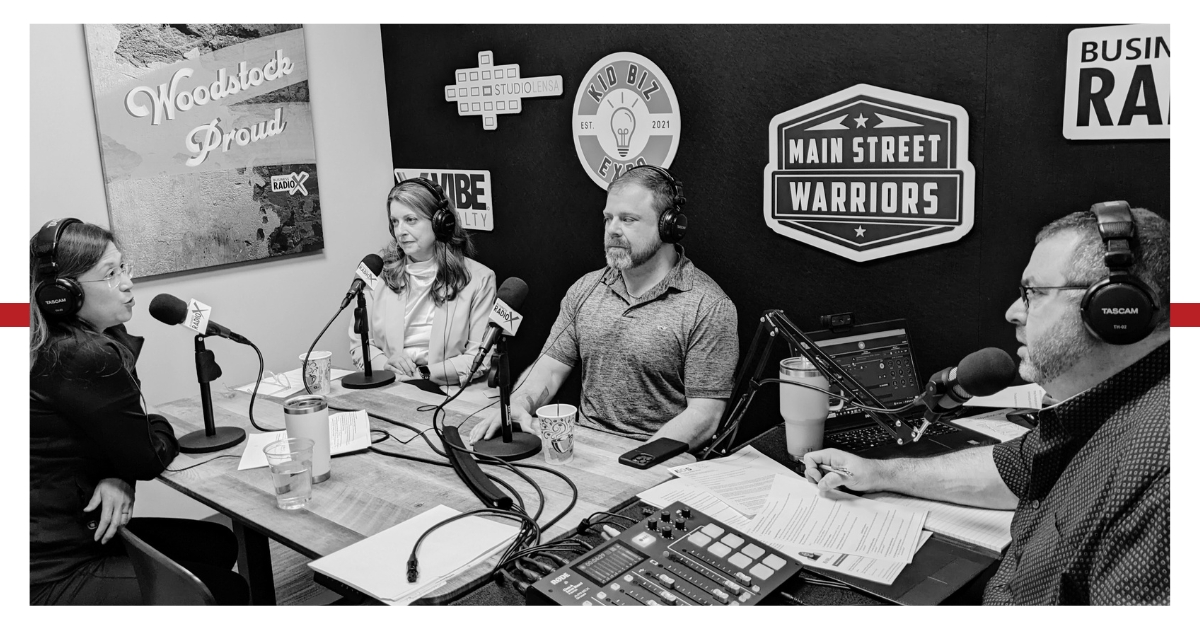
In this episode of Cherokee Business Radio, Joshua Kornitsky interviews Jeane Gutierrez, founder of Action Plan Sales, Dana Dorris, senior partner at Risk and Insurance of North Georgia, and Richard Flournoy with Flournoy Consulting. Jeane discusses how she helps business owners enhance their sales by identifying common mistakes and implementing structured sales processes. Dana shares her extensive experience in the insurance industry, emphasizing the importance of risk management. Richard provides insights into his consulting work, highlighting unique challenges and solutions for various industries. The episode provides valuable insights into improving sales strategies, understanding risk management, and navigating industry-specific challenges, offering practical advice for small business owners aiming to scale their operations and prepare for future transitions.
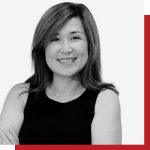
Jeane-Gutierrez-hsGrowing sales shouldn’t feel like guesswork.

That’s why Jeane Gutierrez helps business owners and CEOs build a clear, repeatable path to more revenue.

With 20+ years of experience and Sales Xceleration’s proven systems, she works alongside teams to develop scalable sales strategies, target the right customers, and build high-performing sales teams. Action-Plan-Rocket-Logo
As a Fractional VP of Sales, she can also provide hands-on leadership —delivering results without the full-time cost.

With a background that spans cultures and industries, Jeane takes a creative and adaptable approach to problem-solving and sales growth.

Outside of work, she enjoys yoga, tennis, and discovering new places and cuisines—always up for a great conversation!

Connect with Jeane on LinkedIn.

Risk-Insurance-Consultants-of-North-Georgia-logo

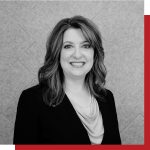
Dana-Dorris-hsDana Dorris is a seasoned insurance professional with over 20 years of experience in risk management and insurance.

As a Senior Partner at Risk & Insurance Consultants of North Georgia, she specializes in personal lines and small business insurance, ensuring her clients receive tailored solutions to safeguard their assets.

Dana takes great pride in her ability to craft comprehensive insurance strategies that provide peace of mind and financial security. Her deep industry knowledge and client-focused approach have made her a trusted advisor in the field.

Beyond her professional expertise, Dana is passionate about traveling the world and cherishing time with her family. She also has a strong affinity for collector vehicles and motorsports, a passion that fuels her appreciation for the unique risks associated with high-value assets.

With a commitment to excellence and a personalized approach to insurance, Dana Dorris is dedicated to protecting what matters most to her clients.

Connect with Dana on LinkedIn.

Richard-Flournoy-hsRichard Flournoy is the founder of Flournoy Consulting and Luxe + Roam Travel. Through Flournoy Consulting, he helps businesses achieve measurable growth by aligning strategies with clear goals. Luxe-Roam-Travel-logo

Luxe + Roam Travel offers busy professionals transformative luxury travel experiences, blending seamless planning with exclusive partnerships to inspire and rejuvenate.

Richard’s work reflects his passion for unlocking potential in both business and life.


Transcript-iconThis transcript is machine transcribed by Sonix.


TRANSCRIPT

Intro: Broadcasting live from the Business RadioX studios in Atlanta, Georgia. It’s time for High Velocity Radio.

Joshua Kornitsky: Welcome to Cherokee Business Radio, where business leaders get the word out about the important work they’re doing to serve their market, their community, and their profession. I’m Joshua Kornitsky here with you. And today we’ve got three guests in the studio. And I’d like to start by introducing Jeanee Gutierrez, the founder of Action Plan Sales. Jeanee, good morning. Welcome.

Jeane Gutierrez: Good morning. Happy to be here. Thanks for having me.

Joshua Kornitsky: Thank you for coming in. We sure appreciate it. So tell me a little bit about what you do.

Jeane Gutierrez: Sure. So what I do is I help business owners get more sales. That’s what I tell a five year old.

Joshua Kornitsky: Well, then you’re on the right. The right track with me.

Jeane Gutierrez: So basically, um, to kind of break it down is, um, I build a path to more sales so that it’s consistent and repeatable, and that’s what I do because there’s so many small business owners out there.

Joshua Kornitsky: So what types of things do you see when you’re working with these business owners? Do they make a lot of the same mistakes?

Jeane Gutierrez: Yes, they absolutely do because you really think about it, right? You’re a small business owner. You go into business. Why? Because you have a passion or you have an expertise in a certain area. Um, but did you go into it because, hey, I really love sales quotas. I really love sales training and metrics. You know. No, that’s not why. So.

Joshua Kornitsky: Okay, so when you’re helping the folks that you’re helping, um, you know, what are some of the reasons that they struggle?

Jeane Gutierrez: Oh, gosh. I would say the biggest thing when it comes to small and medium business owners is they struggle because they’re growing. And what they do is they promote or they put someone in that business sales spot or a business manager, their top person. So, you know, maybe they their their partner or someone who is great in operations and great out in the field doing whatever it is in the trades or a professional person. They put them in the sales role and you know, that’s not the right thing. I mean, so you’re actually promoting someone, but they’re not a salesperson. So that’s the biggest mistake.

Joshua Kornitsky: So if they’ve let’s say they’ve put that person in and they may be the wrong person in the wrong seat or even the right person, but in the wrong seat, what do you do when you get involved with them to help get that on track?

Jeane Gutierrez: Okay. So the first thing is, um, and they’re not they’re not um, so everyone does this. It’s it’s not unique. And the reason they do this is because they say, well, this person has done such a great job, they know the business. And it could be even the owner, the owner themselves, they know the business so well, so of course they’re going to be the ones to sell it, to do the sales. And in the beginning, yes, that works. But when you’re trying to scale, what I do is I come in and see what the gaps are first, you know, you got to assess and a lot of a lot of times the number one thing is they don’t have a process. It’s all in their head. So it’s really hard when they’re trying to hire that next person to get all that stuff out in the head and, you know, verbally or do a ride along and you know, that only works so much. So basically you have to have something that’s very concrete, like what is the strategy? Who are you trying to target? And then what is that actual process look like from getting the lead in how to close the sale. And then really, you know, how do you follow up there and how do you track, um, success? All of those things are things that have to be put down, like in a sales playbook.

Joshua Kornitsky: So that’s a great concept. The first thought that occurs to me because using the example of of having that person who grew with the business sort of organically, right. They don’t necessarily know what all those steps are. All they’ve done is repeat what’s worked and avoided what hasn’t worked. So how do you help them kind of make sense of the chaos?

Jeane Gutierrez: So what’s great is I come in and sometimes I don’t even know what the business is. And that’s better because, you know, you have that blind spot because like you said, you know so much about it. So the customer or your target market does not. And you’re trying to solve a problem that they may not know that they have or a pain point. So it’s really asking questions like a five year old why why this why that. By doing that then you can actually break it down so that it’s very easy to explain and very easy to ask questions. And I’m going to get into that later. But the most important thing is oh, we were some of my colleagues here were talking about that. You know, when you’re selling something, people buy based on emotion, it’s not logic. Um, and they can’t buy on emotion unless they feel something. They can’t feel something if they don’t understand. So there are all these things happening in the background. But that business owner, they just know it. It’s part of their DNA. They hire someone, they’re not going to know it. So you got to break it down. It’s like when you’re training someone, you know, you’re a car mechanic and of course everything is, you know, it’s it’s second nature to you. You come in, I’m like, okay, I know I can do it if you just tell me what’s what.

Joshua Kornitsky: So, okay, you’ve, you’ve gone and you’ve you’ve helped them create a playbook. They’ve now got a process and they begin to sell. What happens when when the sale outpaces or the selling outpaces their ability to manage or to lead that. Because oftentimes you’ve got the, you know, the founder who’s busy doing other things right. And and now they’ve got this gap where they’ve got selling, but they don’t have leadership. How does that.

Jeane Gutierrez: Oh, okay. So, um, well, that’s a key to their selling, but they really should have someone that’s managing the day to day. The questions that they have. So, you know, salespeople are innately very self-sufficient. They want to be, you know, um, do you have the right incentives in place? Do you have the right commission in place? Um, you know, depending on what your company goals are, what are you trying to sell? So you put the incentives focused on that. Then you have to look at their activities. Because you know what? If you don’t put that in there, um, you may have someone just making 1 or 2 calls a day. Uh, so there’s lots of things that a manager looks at. It’s not a fun thing, but it’s something that needs to happen.

Joshua Kornitsky: Right. But do you help them in the event?

Jeane Gutierrez: Yes, I can help them as well. Um, so what I do is I’m, I’m what’s known as a fractional VP of sales. And so what that does is for small businesses, they may not be able to afford a full time sales manager. So I can help manage maybe one day a week, maybe a couple hours a week, whatever it is to scale. So the idea is that I help them grow to a point where they can now hire a full time sales manager, because a sales team does need someone managing them.

Joshua Kornitsky: So you’ve come in, you’ve established a playbook, you’ve helped them work out their compensation, their bonus plan, and then you’ve kind of rode shotgun while they get everything tightened up in an order. Do you just wash hands or do you help them find that next right person to fill that chair?

Jeane Gutierrez: Oh, I love how you tee that up. Yes, that is something that I can do as well. So it’s really just as from beginning to end. Beginning like really putting a strategy in place, rolling up my sleeves, putting that process together and then finding that person. So yes, there are things to look for. Um, you know, to make sure that there’s a personality fit, a culture fit, a skill set fit, depending on that industry.

Joshua Kornitsky: That makes perfect sense. So how did you learn to do all of these things?

Jeane Gutierrez: Oh my gosh, it’s just over time. Um, I started out actually in advertising. So a creative, uh, um, field and marketing. Um, but I fell into sales. But I was very fortunate because I ended up with a fortune 500 company. And, um, so they have the resources, those large companies, you know, they spend so much money on training. So I was trained for so many things. Um, and I didn’t realize that those processes that I learned that I, um, you know, used was what helped me become successful. Um, and then later, when I was in leadership, I just kind of used use the process as that, that I was taught. But, um, then later, um, when I wanted to find something more meaningful because, you know, big companies, you’re just looked at as a, um, you know, as a number, right? So even though I was doing well, it starts over and resets the next year. So I’m like, what is wrong?

Joshua Kornitsky: What have you done for me lately?

Jeane Gutierrez: Exactly. So the most meaningful was when, um, someone said, you know, there’s this business owner. Um, he’s got a small business, $3 million, and he’s struggling, and but he’s been in business for 20 years. And when I went in, I’m like, okay, let me see what I can do. And I was like, really surprised that they didn’t have a CRM, which is, you know, a software to be able to track activities. They didn’t they didn’t. They kept going through salespeople every, um, every nine months, which is crazy because they did not know who they were hiring. They were promoting people from within that they thought was good, and it would be frustrating for them for both sides, or they would hire outside, think, oh, you know, this person did really well in sales in this industry. Well, so there’s just there’s just a lot of things that go into it. So but I found that helping him, the CEO, um, was much more meaningful because I felt like I could see the impact I was making by just putting processes in place. He was he’s not alone. I mean, there’s so many businesses owned a business owners out there that just don’t have these because like I said before, they go into business not thinking about this, they’re just focused on that one product or service. Um, and then they get to this, you know, usually they’re very successful because they have 1 or 2 really large clients and it’s referral based, and they hit a plateau. Yeah.

Joshua Kornitsky: Well, and you and I were talking earlier and you had mentioned that there was this really complex relationship between competition and business growth. And I feel like this is maybe where that wood would fall in. So can you explain so that people understand?

Jeane Gutierrez: Yeah. So actually, you know, a lot of people, I mean, owners and salespeople are afraid of competition. And I had to learn this over time. The competition is actually good, especially if you really know, um, who you are as a company, what your value is and how you’re different, because then you can capitalize on that and really set yourself apart. Um, and actually, um, kind of brainstorm on what additional value you can bring. But, but you need to do the work. You need to understand who your competition is. Right. But also the reason competition is good is, um, because if you’re the first to market, you have to spend all this marketing dollars to really educate people. If there’s competition out there, people already know what your product or service is. You just need to stand out. And so that is a marketing and a sales um feat in in marketing and sales are different.

Joshua Kornitsky: No question at all. No question at all. Two completely different disciplines. So when you’ve helped people and they begin to grow and they they start to experience a level of success, is that the end of your engagement with them, or do you work with ownership to continue on towards some eventual sunset?

Jeane Gutierrez: Yeah, that’s the goal because the goal is I, I am not looking to work full time for a company. I’m looking to help several. And that’s like I said, that’s what’s meaningful for me. I’m now able to put in, see, um, the impact that I make. So that is my goal is to get to that point where they’re self-sufficient and it really depends on them. Um, maybe I’ll check in once a year. But really, the goal is for them to be self-sufficient with a sales manager, and they can do it on their own.

Joshua Kornitsky: So what advice do you give a business owner who say wants to exit at a certain point?

Jeane Gutierrez: Oh, you mean like exit? Like.

Joshua Kornitsky: Like we’ve talked about your exit. But let’s talk about their exit. Their exit. You’ve helped them achieve a level of success, and now they start looking towards their own future. And often business owners do have a long term plan of of exiting at some point. Right. Are you able to help them with that?

Jeane Gutierrez: Yes, I can, and actually, if they have someone like me from the beginning to set this in place when they exit, their valuation will be so much more than if they didn’t. So so if I if I was in their, then they have everything in place to be able when they, um, you know, bring on um, someone who does the valuation. All of that will be, you know, because their contracts are sticky, meaning that, uh, someone I’m not a financial person, but. So someone financial will look at it and they see, oh, wow, there’s this many contracts so I can give a higher valuation on the contrast. If a business owner says, you know, I think I’m going to, um, exit in a couple of years, but they don’t have anything in place. They’re going to get a much lower valuation because they don’t have a process. They’re going to be in the business probably, um, helping, um, after they sell because, um, they, they are not able to scale without them. They can’t remove them. So how much time? I was just going to say something that’s really quick.

Joshua Kornitsky: At least we got all the time you need.

Jeane Gutierrez: Because it’s interesting you bring that up because right now, you know, everyone’s heard of baby boomers, right?

Joshua Kornitsky: I’ve encountered 1 or 2.

Jeane Gutierrez: 1 or 2, and we don’t know. In this room everyone looks young, so there’s probably no one in here.

Joshua Kornitsky: There’s a baby outside. It helps.

Jeane Gutierrez: But baby boomers, basically, um, they’re born between, I think 46 and 64. It’s a huge I mean, they’re 40, 40% of business owners are small, are our baby boomers. So they’re going to retire. And 10,000 baby boomers retire each day. So this is a huge group of people. What’s going to happen? Are they going to get the most out of it? You know, are they going to, um, what’s the succession plan? Are they going to sell to someone? Are they going to have a family member take over or someone? Those are all questions they need to ask themselves, and they really need a 3 to 5 year, um, what is that called, path or runway?

Joshua Kornitsky: Gotcha.

Jeane Gutierrez: To to do it successfully.

Joshua Kornitsky: Okay. Well, first, thank you for sharing your knowledge and your insight. But second, I want to ask you one last question before I ask how people can get in touch with you. What would you say is the best piece of advice you’ve gotten in your career?

Jeane Gutierrez: Okay, there’s a tie for two, and I think it’s really important. And, um, one of them is, you know, you can have a million problems until it’s a health problem. Then you only have one. So we can talk about business, we can talk about career and goals. But really, you Do you know when you’re on a plane and you know, the flight attendant says, put on your oxygen mask before you put it on someone else? Well, you’ve got to always take care of your health because then you that’s your physical and your mental and emotional health. Then you’re able to be a good family member and then that. See, we’re a whole person. We’re not just a business owner. Then you’re able to be successful in your business. So I think that’s that’s one the other one is love who you are, because all your little quirks and everything, that’s what makes you different and that’s what makes your business different.

Joshua Kornitsky: My mom says it makes me special.

Jeane Gutierrez: Yep. That’s right.

Joshua Kornitsky: Well, Jeanene, thank you again. Uh, Jeanene Gutierrez, founder of Action Plan Sales. And, Jeanene, what’s the best way for folks to reach you?

Jeane Gutierrez: The best way is to go into the Cherokee Business Radio website.

Joshua Kornitsky: Okay. We will have all that contact information posted there. Uh, I hope are you able to hang out while we talk to the rest of our guests?

Jeane Gutierrez: Oh, absolutely. I can’t wait to hear.

Joshua Kornitsky: Really appreciate that. Thank you so much. Thank you again. Jeane Gutierrez action plan sales. So moving on to someone I’ve known for, well, let’s just say a little while, but certainly longer than a moment. I’d like to introduce my friend, my own personal insurance broker, and, uh, an unbelievable senior partner with Risk and Insurance of North Georgia. Dana Dorris. Good morning.

Dana Dorris: Joshua. I’m glad to be here. Thanks for inviting me.

Joshua Kornitsky: Thanks for being here. So tell us a little bit about what you do and how you help.

Dana Dorris: Okay, so I am a 20 year veteran. That makes me sound old in the risk management.

Joshua Kornitsky: You started at 2.

Dana Dorris: That’s right. In the risk management and insurance industry. I have worked both on in the agency field as well as on the corporate side. So it enables me to understand, you know, what goes on behind the scenes with underwriting and rating and product solutions and that sort of thing, as well as being able to serve the community as an insurance agent.

Joshua Kornitsky: Okay, I said broker, I apologize. It’s okay, it’s okay.

Dana Dorris: It’s fine.

Joshua Kornitsky: It’s fine. Sorry. Um, so in in the time we’ve known one another and as you mentioned, you’ve kind of held different roles within the sphere of insurance. What would you say are the biggest things you’ve learned on that journey?

Dana Dorris: So I mean, gosh, it’s such a wide spectrum of of things that I’ve learned. Um, I think, you know, when the rubber meets the road, so to speak, I think that it comes down to serving the client. And I think that you learn throughout, whether you’re the, um, feet on the street, talking with the clients in the community or you’re at the senior most corporate level, the end result is the same that you’re trying to serve that client and do what’s best for them. So I think that’s the most important lesson is just when you peel the onion back, you’re at the end of the day, you’re taking care of the client.

Joshua Kornitsky: Okay, well, and in taking care of the client in particular to that journey, tell us a little bit about about risk and insurance of North Georgia, because I happen to know they take good care of their clients.

Dana Dorris: Right, right.

Joshua Kornitsky: So so what makes you different?

Dana Dorris: Okay. So, um, risk and insurance consultants I’m going to start there is our Atlanta office. And it was founded back in 2006 by, um, two gentlemen, Bobby Kitchen and Steve Molina. And they have a great agency. And in 2022, I decided to partner with them to open risk and Insurance Consultants of North Georgia is a local agency, is quite different. The Atlanta office focuses a lot on large commercial. They do have a personal lines department, life and health, all of all of the things. Right. But, uh, the North Georgia office was specifically designed to be that neighborhood agency where we could really focus in on the community and be that, um, that one stop shop there in our our North Georgia location. Uh, we focus primarily on personal lines. We do some small business as well. And, um, it’s been great. It’s been a lot of fun integrating into the North Georgia community. That’s where, uh, Steve, who serves as the president of risk and Insurance consultants, and then, um, I, we both live in the Emerson area, and the agency is right there.

Joshua Kornitsky: Sure. And you and I run into each other at networking events all the time. We do. Um, so I know when we were talking earlier, you had mentioned that there were really, uh, some interesting new products that that you’ve embraced and kind of created to bring forward. Uh, I think one of them was the, the essential and then the, the Rev Match Motorsports insurance. Can you tell us a little bit about those, so that people that are looking for those things will know they’re available?

Dana Dorris: Sure, sure, sure. So, um, listening to Jeanee speak about marketing and, and sales plans and that sort of thing, it, it it kind of ties in. Um, so the insurance market has changed dramatically over the last three years. I’m sure you all see it within your pocketbook, right? As you’re paying premiums and as you’re shopping your insurance and and all of the above. Well, essential was born, um, November of 24 out of a need. And so basically what essential is, is a nonstandard Department of risk and insurance consultants of North Georgia. And what do I mean by that. So underwriting guidelines really, uh, tightened the market became what we call in the insurance industry, a hard market. And we had to start looking for other solutions for our clients so that they could even qualify for auto insurance.

Joshua Kornitsky: Really, it’s become that big of a problem.

Dana Dorris: Some people that, yes, some people that, um, you know, had standard insurance all of a sudden became substandard. And we, we felt like it was our, our responsibility and duty to make sure that we were able to provide a product to them, for them. Um, you know, so that they could, could meet the guidelines for the state of Georgia. So essential was born out of a need. And it just so happened that we had a, uh, an employee at risk and Insurance consultants of North Georgia that had previously specialized in the, um, nonstandard market. So she came in and we’ve been able to to, you know, find a solution for our clients, which has been really great.

Joshua Kornitsky: And has that been something that they’ve adopted.

Dana Dorris: It is, it is. It’s nice. It’s nice to be able to, you know, they call in for an auto quote in, in our agents that would typically say, I’m sorry, we can’t help you. It’s been nice to be able to offer something that’s, you know, taking care of their need. In addition, we’ve become a referral, um, source for other exclusive agents in our area that that doesn’t have that nonstandard.

Joshua Kornitsky: That’s fantastic. So it’s something that you can offer.

Dana Dorris: It is, it is. And the time back how I started with, with Jeane is that, you know, we we looked at a sales plan where we couldn’t sell a lot of auto insurance to on our side. So, um, it was we were able to, you know, think about how can we help our community, but also bring in a different sales acquisition process. So a little bit of both.

Joshua Kornitsky: Sure. And and the rev match Motorsports.

Dana Dorris: So rev match is is just launching now. I’m really excited about it.

Joshua Kornitsky: Um, tell us about it.

Dana Dorris: Yeah. So it is a motor sports insurance. Motor sports insurance. Um, department, we’ll call it a department of, of our agency. And so we will be specializing in collector cars. Um, which we’ve done a lot of anyway. Uh, race teams, racing facilities. Um, you know, a lot of, of things that pertain to cars. So performance shops. I’m just trying to think off the top of my head. I have.

Joshua Kornitsky: A list. How did you get into that space?

Dana Dorris: Okay, so Joshua and I met, um, 25 years ago. We were both in the car business.

Joshua Kornitsky: It was. It was more of a daycare center.

Dana Dorris: Uh, well. Well, we’ll let you go with that. Fair enough. Um, but basically, um, I love cars. I think it stems from being a young girl and my dad and my brother fixing up old cars in the garage at our house, you know, just fixing up and and car shows and, you know, all the things that that muscle cars looked like in the, the 80s, right? And so for me, um, I’ve always enjoyed going to car shows. I’m lucky my husband loves cars, and so we may have too many at our house right now. Uh, kind of thing.

Joshua Kornitsky: I know a lady that can get great insurance.

Dana Dorris: I know, I know. And then, um, Steve Molina, who I mentioned earlier, serves as our president of risk and insurance consultants. He, too, loves cars. And so he was doing a lot on the, um, racing side, and I was doing a lot on the collector car side. So we decided to brand this thing and name it Rev match. And Rev match has a specific meeting. Steve can explain it way better than I can, but when you’re racing, it has to do with the RPMs and the gas that you you give and it’s and it translates over translates over to insurance because for us, it’s all about the risk management side and making sure that we are understanding our clients and we are understanding what we need to do to provide them the best overall coverage that’s going to take care of their needs. And so we’ve been, um, you know, dabbling, dabbling in this motor sports insurance and just decided to attack it full force. Because what we’ve learned being out in the industry is that not a lot of people understand cars, understand, um, the racing, but they also don’t understand the risk management component because there are a lot of things that we do anyway. And we might do it for a restaurant, we might do it for a car dealership, we might do it for a manufacturer already. That just translates beautifully over to this motor sports arena, because we are able to make sure they have everything in place. There’s a lot of different areas.

Joshua Kornitsky: I can’t even begin to imagine, but I would have to think that the person that’s drawn to motorsports, they understand risk management in a different way, right?

Dana Dorris: That’s right, that’s right.

Joshua Kornitsky: How fast can I go around the corner? Is their version of risky?

Dana Dorris: I know, I know. So we’re really excited about it.

Joshua Kornitsky: Well, see, you touched on earlier, uh, the fact that you grew up around cars that your dad and your brother, uh, we’re into cars, but it makes me ask the question of thinking about your life and your work. Your your active. I know for a fact in the community to an extreme level. You’ve got new products that you’re offering at work. How do you keep it all balanced?

Dana Dorris: Oh, well, you know, sometimes there’s not enough hours in the day. That is absolutely for certain. But, um, I think it’s important at the end of the day to make sure that, um, you know, what comes first comes first. And my family is very, very important to me. So sometimes I do have to turn it off just like everybody else, to be able to go home and spend time with the ones I love. But as I mentioned earlier, it’s I’m in a little different scenario now. Um, maybe I’m a little seasoned, seasoned agent in more ways than one, right? My kids are grown. My husband loves cars. Um, my husband is also in the insurance industry, so he brings a whole nother level of education and experience from the claims perspective. That helps me, um, with my clients. Make sure too, that we’re handling everything professionally and to the best of our ability because I know what goes on on the other side of the the coin when the the claims happen.

Joshua Kornitsky: So you’re able to collaborate and.

Dana Dorris: We collaborate all the time, maybe a little too much.

Joshua Kornitsky: That’s great. Well, that’s but that’s the secret to success both personally and professionally. Learning to work with one another. Right? Right. Um, so I guess the the listening to the personal side of your life a little bit and trying to understand more about that and knowing that that in in the foundational days of our mutual careers, we worked with some pretty incredible people and some remarkable people using that word in its broadest sense. Uh, I know what I took away from it, but what would you say is the best piece of advice you’ve ever received?

Dana Dorris: Um, I’m going to I’m going to say two things. Uh, number one. Uh, my dad always says that if you love what you do, it’s not a job. Okay. And I do love what I do. And so I feel a passion, still, 20 years later, about helping people and making sure that, um, you know, they have what they need. Uh, my little tagline has always been protecting today and preparing for tomorrow. So I feel I own that, I own that, and then my my other thing is, you know, things don’t always go as you expect for them to go in your career, right?

Joshua Kornitsky: No.

Dana Dorris: Sad but true. You may have the best intentions, but sometimes things don’t work out. And I know in 2020, I was involved in a in a reduction in force. Right. And so I lost my job after 16 years with the same carrier. And it was very difficult. You know, I used to feel sorry.

Dana Dorris: For people who. Right. Who go through half are forced to go through a career change. Um. And I was 50. So you know it. I felt sorry for people who had to go through that. And then all of a sudden, I was one. And I was on, um, the great base of wisdom Tree called LinkedIn.

Joshua Kornitsky: We can all get a good laugh out of that.

Dana Dorris: Right? I saw a quote and it stuck with me and it basically said, you can get bitter or you can get better. It’s your choice. And so I chose to get better. And that’s when when Risk and Insurance Consultants of North Georgia was born. And I think that was excellent advice from an unknown source.

Joshua Kornitsky: Well that’s fantastic advice. And it’s and it’s a great point for us to to wrap up. Thank you for sharing. Uh, everything about risk and insurance consultants of North Georgia. Um, quick question. The the, uh, essential and the rev match. Are those both available now? They are wonderful. What’s the best way for folks to reach you?

Dana Dorris: So our main agency line is (470) 689-0151.

Joshua Kornitsky: Okay.

Dana Dorris: And I can be reached there.

Joshua Kornitsky: Fantastic. And we’ll also have the information on our website when all of this goes live. So anybody that didn’t get that number can, can check there to get a hold of you via all the, the normal social ways and, and even pick up some some additional insight from the occasional anonymous quote. Misquote. Are you able to stay with us for just a little bit longer?

Dana Dorris: I am, I’m looking forward to it. And thank you again for having me today, Joshua.

Joshua Kornitsky: Thank you. And Jeane, thank you as well for being here. So let me introduce our third guest. Uh, this is Mr. Richard Flournoy. And Richard and I met through professional channels. He was actually a client of mine. And then he was not a client of mine through no choice of our own. But he became a fantastic friend, uh, a trusted consultant, an advisor. And, uh, I’ve learned more from him than I think I ever taught him as a as a teacher. Uh, let me please introduce Richard Flournoy, uh, the founder co-founder of Lux and Roam Travel out of White, Georgia, also the co-founder of Deep Dive Plumbing and Drain and a consultant with Service Titan. So, Richard, welcome. What on earth are you doing now? Well.

Richard Flournoy : When Joshua called me to ask me to do this, I was like, what in the heck is this about? And I and I said, well, really, do you really need to think about what this is about? Is Joshua just do it? So I didn’t put much thought to it and I just showed up. And I don’t know if any of y’all have ever heard of Doctor Mehrabian of UCLA, but he has a seven 3855 rule and 55% of communication is the body language, 38% is your tone and inflection, and 7% is the words you say. Now, I know none of y’all can see the body language in this room, but it’s absolutely amazing what I realize that this show is about people helping people because we’re all in the people business. And as I’m listening to both these ladies talk, I’m like, I could use her in my future business and I could absolutely use her and my future business and their their stories are amazing and and the tone and you can tell by the tone and inflection by how genuine they are. But watching their body language tells the whole story. And while we won’t remember everything that they said, I’ll remember how they made me feel today and the way Joshua made me feel in this room. So, uh, thank you for inviting me on here.

Joshua Kornitsky: Well, thank you for being here. So. So let’s take them one at a time. And I actually skipped over one of your businesses, which is Flournoy Consulting, which you’ve already led with. So tell us a little bit about what Flournoy Consulting is and who you help and how you help. Well, I.

Richard Flournoy : If we could go back in time a minute, I would rather go back in time. So in 20, I’m sorry. 2001, the day after September 11th, I started my first business, a Total Plumbing. And I had a very, very weak why I wanted to start it because I didn’t like working for somebody. So for the first 16 years of that business, I operated by the law of accident, which means that I didn’t have a plan and I just just kind of floundered around. And in 2016, I discovered, I’m sorry, 2017, I discovered the law of cause and effect. And what that means is that if you have a plan and you execute on that plan and you learn and you do and you learn and you fail and you fail and you do and you learn that you’re going to succeed. And I also learned that if you have a strong enough why, you can bear any what. So the why went from I didn’t want a boss to I want to be a provider for my family, my wife Felicia, who’s also a master plumber, my daughter, who just got accepted into law school, congratulations. My 21 year old son that lived his first year of life in HOA and they sent him home after a year, said he’s not going to make it very long, but we want you to spend time with him. He’s been on a on a ventilator since birth. And because because he was such a strong. We had such a strong.

Richard Flournoy : Why? To take care of him. Now he’s 21, about to celebrate his 22nd birthday. And we went to our first adult hospital. And they’ve never seen a kid like Jackson that’s on a ventilator because typically they don’t live this long. And so they didn’t really know how to do it. Which which is a testament to the love and the power of God and the, uh, goal setting and the strong. Why? But he’s going to be 22. And then my why is still the same provide for my wife and kids. And so I kind of do a lot of things. But the primary thing that I want to do is help people, whether it’s through Flournoy Consulting, whether it’s through transformative travel, through Lux and Rome Travel, or whether it’s through Flournoy Consulting. Um, uh, I started when I started that first business. It was with a rented van that I paid $50 a week to my grandfather and it had no air conditioning. It was painted with house paint, and I literally had $250 in the bank. And I grew it, and I sold it for ten figures in 2022. And then I read, and then I resold it a second time and made more money off of it. And then I thought I was done with the plumbing business. So I started a consulting company, and I became a professional speaker and coach. And I so far I’ve coached, uh, an OCD therapist, an attorney, a heating and air company and a plumbing company.

Joshua Kornitsky: And what type of coaching do you provide, Richard?

Richard Flournoy : Um, so I do mindset, uh, and goal setting because business is 95% mindset and 5% strategy. But that 5% strategy has to be so good that it equals that 95%. But if you don’t have the mindset, then the strategy is worthless, absolutely worthless. So I help I help bridge the gap to just know that you can do it. But you got to. You got to have clear written goals, uh, and you got to have the right mindset and you got to have that deep why. And like you can have everybody has a why. But you have to clarify it and you have to write it down. And then the mind can only think about one thing at a time, whether positive or negative. And so anytime I had a negative thought, I pull out this index card and it would have my why. Or I’d look at a picture of my son and my wife and my daughter, and then it would say, that’s why you got to keep going.

Joshua Kornitsky: Pretty powerful motivation.

Richard Flournoy : So that’s a little bit about me and I, and I know the looks and Rome. It sounds like I’m doing a lot of things, but they all complement each other because travel is one thing that people neglect that they a lot of people work, work, work, work, work, work, work, work, work. And they’ll go on a little vacation here and there, but they don’t truly release. And in order to really activate your super conscious mind, you’ve got to go on a vacation where you forget about the world. Here, here. Forget about everything. So?

Joshua Kornitsky: So tell us about that. Tell us what? What? So you’ve. You and Felicia and your family have traveled quite a bit, as you’ve shared with me. What drew you to this completely different arena from from where you had been?

Richard Flournoy : So my daughter and I had, because of our son that’s on a ventilator. Um, my wife and I have to juggle trips, so she’d have to go on a trip. I’d have to go on a trip because the logistics are just too difficult, because Jackson is so medically fragile. So my daughter and I had been on many trips. My wife had been on many trips with my daughter, and then I was like, you know, you can accomplish any goal if you have a strong enough why. And I’m like, I can figure out a way for us, for me and my wife to go on a really good trip. So two years ago, I went on a trip, took my wife to Italy, and the logistics to set it up was a lot, sure, but I wrote wrote down the goal, and then all of a sudden you go to sleep and you wake up the next day and you’re like, you can do this, you can do this, you can do this. So we laid out a plan, a backup plan so that for people to take care of Jackson. And we went on a trip to Italy.

Richard Flournoy : And the first two days, even though I was not in any business at all at that point, because I’d sold my business and I hadn’t started Flournoy Consulting, and I hadn’t started luxury travel yet. So the first two days I’m still thinking about, I’m like, calling Josh and Josh is like, quit calling me. You’re on vacation. And and so it took me two days to get into it. But then when we, we were in Italy and we just, we started going around and I’m like, you know what? This is something I neglected. My whole career is travel. Like traveling, because it’s while it’s extremely fun and rewarding to travel with one of your family members, it’s much more rewarding to travel with everybody in your immediate family. So I was like, how can I give back and teach people about going on transformative trips that will transform their lives. And I’m like, I can start a travel agency. And then I can start a consulting business. And so immediately when I went to when I started the consulting business, I had two people call me and just randomly say, hey, could you help us with our business?

Joshua Kornitsky: So back up. Basically what you’re saying is leisure travel opened your mind and relaxed your brain enough that you you immediately came back and thought of new business.

Richard Flournoy : 100%. And that’s and so that’s how it it works altogether.

Joshua Kornitsky: So so you heard it here. You need to take a vacation, take a clarity break in order to have a.

Richard Flournoy : Really good vacation. And whether you book, like if you contact me through Loxodrome, whether you book a trip through me or you just want me to help you come up with some ideas, I’ll do it. No charge. Like that’s it’s more important for me to help you, um, than it is for me to make money. 100%. Um.

Joshua Kornitsky: That’s a great perspective. Information is is what changes everybody’s perspective on everything. And I think that it was Mark Twain who said something to the effect about how travel opens the mind. So until you get around the planet, some you don’t really have that great perspective. So we’ve got Lux in Rome, we’ve got Flournoy Consulting. Let’s talk a little bit about Servicetitan and a little bit about deep dive plumbing and drain.

Richard Flournoy : So Servicetitan, I was a customer of service titans.

Joshua Kornitsky: So back up. For those who don’t know, could you tell us what Servicetitan is?

Richard Flournoy : Servicetitan is a software company that handles everything from taking the call all the way through the documenting of the work order, and then integrates with the like, QuickBooks or sage intact. So basically it’s a field management software.

Joshua Kornitsky: For, for all industries.

Richard Flournoy : Uh, for um, uh, plumbing, heating and air roofing. Uh, electrical, uh. Pest control.

Joshua Kornitsky: Okay. All right, so I’m sorry I interrupted you. So you you help bridge the gap in knowledge there? Is that what you do in the role with Servicetitan?

Richard Flournoy : Well, so I put a I put a goal on a vision board to get a job at Servicetitan because I really loved the people and the culture, but that’s all I put on there. So I ended up going to a speaking academy class in San Diego, California, and the chief revenue officer of Servicetitan lives out there, and I had met him and became friends with him because we were a customer, and I told him I wanted to, I wanted a job there. And he’s like, well, what would you do? Uh, I sold him on giving me a job, but neither one of us knew what I was going to do there. Okay.

Joshua Kornitsky: So so so sales coaching also.

Richard Flournoy : So he he he gave me a job, and then they I work in the sales team, and basically I do, uh, Up sell core product which is new customers. I sell pro products and then I also coach team members that work in the in the, um, in servicetitan.

Joshua Kornitsky: Okay. Thank you for sharing that with us. And then last we round out on on deep dive plumbing and drain.

Richard Flournoy : So sometimes you set a goal and you’re led to something else. So um, not change the goal but led to something else. So I had set a large revenue goal, uh, for my consulting business and travel business. And then all of a sudden, this opportunity pops up where I could restart a plumbing company, and I don’t know if it’s God’s way or the universe’s way of telling me that, hey, this might be a little bit of a stretch. And in those spaces or if we’re just going to exceed that goal and have another business and they all work together because it when I open this business, it’s not going to I’m not going to actually work in the business. I’m going to work on the business. Uh, my wife is going to work in the business, but it’ll be more of a coaching and training perspective. And, uh, so the goal is to have it open by May 28th.

Joshua Kornitsky: Okay.

Richard Flournoy : Um, and the goal is to to get to 12 trucks by the end of 2026.

Joshua Kornitsky: That’s certainly an ambitious goal. But you’ve done this before. So I think you, uh, you, you know, that arena. Um, well, then then let me ask you this, um, last closing thoughts are, you know what? What’s, uh, what’s a mistake that helped shape your career? What’s what’s something that you did wrong that helped get you right?

Richard Flournoy : I would say that. It. Everything. I mean everything.

Joshua Kornitsky: Well, clearly you haven’t done everything wrong.

Richard Flournoy : No no, no. So it’s. It’s fail and learn. Don’t be afraid to fail. Success is goals. And all else is commentary. And and to go back to it like the biggest killer of success is inaction. You can have all the greatest ideas in the world. But if you don’t get up and try it, then what good is it? And so if you try it, people don’t try stuff because they’re worried about failing. But don’t worry about failing because guess what? Most people that like I’m a I’m a black belt and don jitsu Ryu. Uh, martial arts. The hardest step for somebody to become a black belt is to become a white belt, because most people don’t even start.

Joshua Kornitsky: That’s a great perspective.

Richard Flournoy : And so just starting will help you finish and just stick with it.

Joshua Kornitsky: Well, my head is full of lots of quotes because my mom was a librarian, now retired, and I think it was Walt Disney that said a journey of a thousand miles begins with a single step. He also said it all began with a mouse. So, you know, take what you want from Walt. But thank you for sharing your your your insight, Richard. Thank you for sharing your guidance. Any final piece of advice for anybody that’s that’s looking to get started on goals?

Richard Flournoy : Um, my passion is, is the consulting. Uh, so if you wanted to reach out to me and do like, a free session, like just to learn about your why and your goal setting and look, you can read, you can find a hundred books on digging into your why and goal setting, but I can put it in a way that you can actually get it accomplished in your life. And if you want to do that single session, I wouldn’t charge anything for it. And as far as contacting me, I’m going to defer to my colleague and you’re going to look on the website for my contact information.

Joshua Kornitsky: That’s our closing question to ask the best way to reach you. So, uh, we’ll have your information along with, uh, Janine Jeanene Gutierrez from sales or action plan sales. Uh, Dana Doris from North Georgia. Insurance consultant. Insurance rate risk and insurance consultants of North Georgia. I knew I’d get it right. It’s it’s a tongue twister. And Richard Flournoy from Flournoy consulting luxe in Rome. Travel, uh, service titan and ultimately, deep dive plumbing and drain. Thank you all for coming in and for sharing your your experience, your perspective and all of the things that you do to help the people of our community excel.

Jeane Gutierrez: Thank you. It was fun.

Dana Dorris: Thank you for having us.

Joshua Kornitsky: Thank you. This is Joshua Konicki saying goodbye for now from Cherokee Business Radio.

 

Tagged With: Action Plan Sales, Flournoy Consulting, Luxe + Roam Travel, Risk & Insurance Consultants of North Georgia, Sales Xceleration

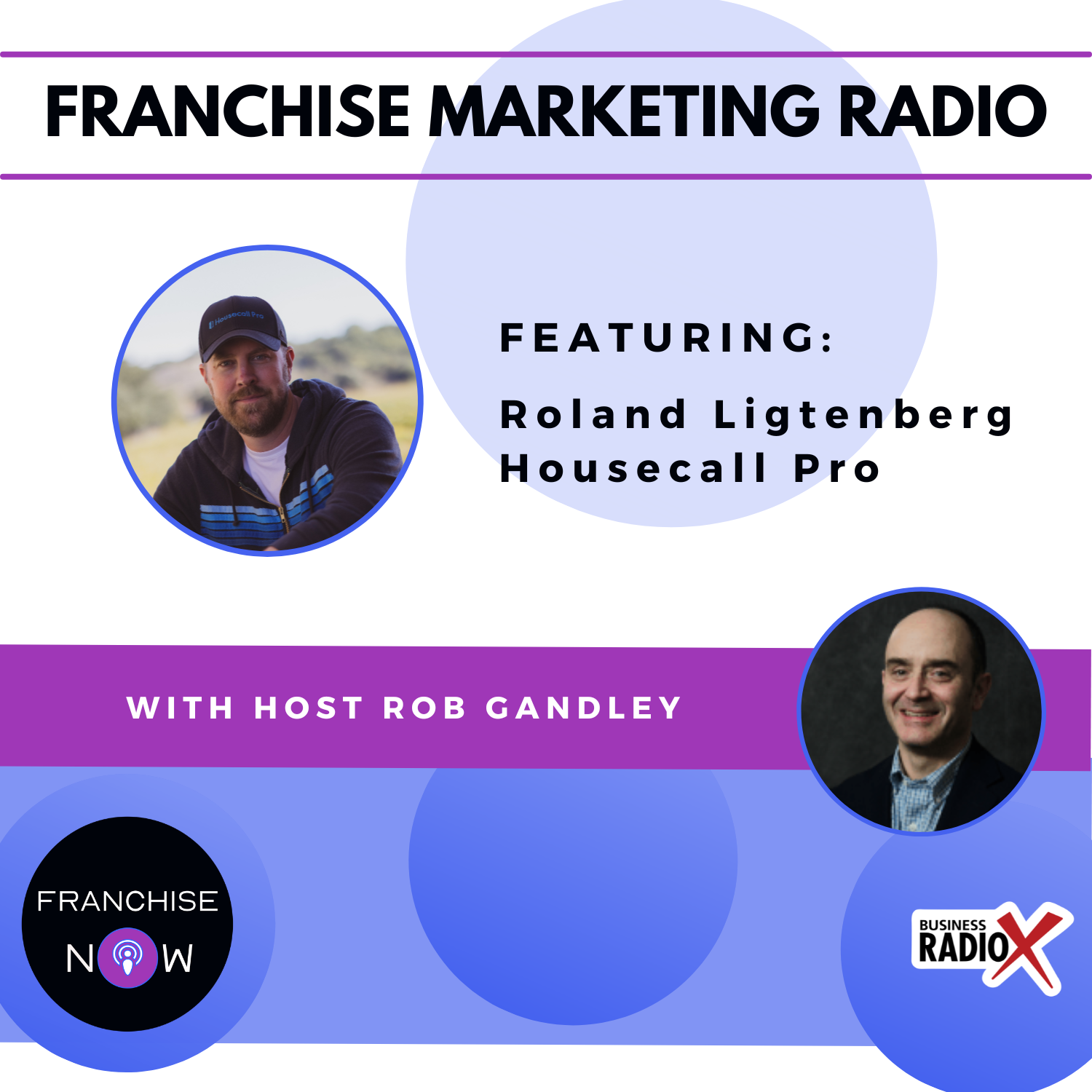
Roland Ligtenberg with Housecall Pro

March 20, 2025 by angishields

Denver Business Radio
Roland Ligtenberg with Housecall Pro
Loading
00:00 /
RSS Feed
Share
Link
Embed

Download file

housecall-pro-logo-vector

Roland-LigtenbergRoland Ligtenberg is a co-founder of Housecall Pro, the best field service management platform serving over 45,000 home service companies.

Housecall Pro’s comprehensive suite of features, solutions, reports and state-of-the-art AI capabilities empower home service professionals to save time, sell bigger jobs and provide best-in-class service so they can discover new opportunities to grow and effectively outpace the competition.

Connect with Roland on LinkedIn.

Transcript-iconThis transcript is machine transcribed by Sonix.


TRANSCRIPT

Intro: Coming to you live from the Business RadioX studio. It’s Franchise Marketing Radio. Ready to revolutionize your franchise with AI? Franchise now empowers franchises with advanced AI solutions, automatic processes, and enhanced marketing strategies. From personalized customer interactions to predictive analytics, we help you harness AI to drive growth and efficiency. Transform your franchise with the power of AI. Visit Franchise Now to learn more and take your business into the future. Now here’s your host.

Rob Gandley: Welcome everybody to Franchise Marketing Radio, where we explore the latest strategies and innovations driving success in the franchise world. I’m your host, Rob Gandley, and today we have a special guest with us. I have Roland Ligtenberg. He is the founder or co-founder of Housecall Pro, and so Housecall Pro specializes in the home services market in the franchise space as well. And they have an amazing SaaS platform and are innovating with AI every single day. Welcome to the show, Roland. It’s good to have you.

Roland Ligtenberg: Thanks, Rob. I’m super excited to be here.

Rob Gandley: Great to have you. So just ask before we jump in. I wanted you to have an opportunity to introduce us to Housecall Pro for anyone who’s listening may be familiar, but tell us a little bit about the platform and then who you’re serving. I know franchising is a big part, but tell us a little bit more about who you’re serving overall.

Roland Ligtenberg: Yeah, sure. Great. So Housecall Pro, we were founded in 2013 and we launched Housecall Pro in 2015 out into the market. So it’s been a decade now, which has been crazy, but we serve the residential home service pros that are out there. So think HVAC, plumbers, electricians, you know, people doing fiber seals like smaller roofing In companies, all kinds of different home service repair, just service businesses. And so we provide them with a tool that helps them run their business. Both grow with it, make it more efficient. We talk about AI. There’s all kinds of fun stuff that we do. We have accounting, we’ve got payroll, we’ve got websites, we’ve got marketing. We just have the full gamut. So think of us as like an all in one shop to help you do the things that normally you probably don’t want to do, which is get back to, you know, turning the wrench, talking to customers, getting a new business, you know, making connections, and then we’ll handle all the rest.

Rob Gandley: Yeah. So that’s pretty, you know, you made something that’s pretty complex. Pretty pretty simple there. But tell me the inspiration. You know, you found your co-founder in the company. So that’s interesting right. So you got a chance to what was that inspiration with you and your, your partners that kind of led to this amazing platform?

Roland Ligtenberg: Sure. So, you know, when we when we first started the company, you know, back in 2013, Uber was just one of those companies that was coming out. Uber obviously now everybody knows about. But we were we were thinking, hey, can we build Uber for home services? And really what that turned into is this like, hey, really the pros. So the drivers pros, they didn’t have an app. You know, they were just using pen and paper or a combination of free products like Google Calendar and Square or QuickBooks. And so we thought, hey, why don’t we build an app for them? And so we really focused on Housecall Pro. We launched that in 2015 and we’re kind of off to the market. But we just saw an opportunity where it was underserved and there weren’t a lot of great mobile native apps out there because our pros are on the go. You know, they’re not sitting at home in front of computers like me and you. We don’t have fancy podcast setups. None of that cool stuff. They’re out in the truck or they’re they’re in the attic or, you know, they’re under the crawl space. So they’ve got their mobile phones with them constantly. And why couldn’t they run their entire business from their pocket? So that’s what we built. And from there now we have over 50,000 or so home service professionals serving 99% of all Zips in the United States. Just everywhere across 55 different industries. And then we have a whole bunch of franchise companies that use us as well, that have gone out there that have really systemized their business. And, you know, it probably comes as no surprise when, you know, you get into the franchise world, you need to have a playbook that works and you need to have something that is like a standard operating procedure. And you click this, you do this and you know, you got to make it repeatable. And so with Housecall Pro we help franchises do that, you know, and deliver that same experience regardless of which location they’re on. And so that’s why I’m just excited to be here talking to you.

Rob Gandley: Yeah. Yeah. No. And what you just said again is difficult. Like when you think about franchising, it was certainly around way before technology or not all technology, but internet technology. And then the internet came along in the last 30 years. And it’s like, how do we get technology to help us do what you just said? Have stay in line with this process and this step by step procedures and operations and not easy to do, right? Uh, especially over time, technologies have evolved but weren’t always easy to talk to each other and, and, you know, expensive. And you needed certain skills and, and it’s gotten easier to use technology. But we’ve also now gotten just so much of it. Right. Such an explosion of resources. Right. So for for industries like home services, to have a platform like yours is unique because you guys have kind of addressed that fact that, you know, it’s kind of that all in one platform that can help a business model like the companies you serve. And it is hard to get that, get that systemized, uh, process. So tell me, tell me a little bit about your journey here. So started in 2013, what were some of the pivotal, pivotal, pivotal, um, events, uh, that kind of shaped your product? Like, I’m sure there have been times where you thought, okay, it’s going to be this and maybe you adjusted and, you know, the market gave you feedback, but how has that kind of what are some things you can point to that have helped you shape the product? And they kind of led to the features that you have today.

Roland Ligtenberg: Yeah. So when we first launched, we were mobile and mobile only because that was our thesis. And so the core part of the market that we addressed were the folks that are always out and about, and they didn’t have access to a desktop or, you know, a bigger iPad or something, you know, so they, they, they needed a mobile app only. And as we started to grow as a business, we really started to see a lot of folks would have office managers, you know, or or admin folks or spouses, you know, at home that would run some of the back end operations. And so, you know, we pivoted from being mobile only to having both mobile and web. And for anybody that’s listening, that’s in the software development. Building for mobile is much more difficult than building for web, because you have to ship it to the stores and then they have to approve it, and it takes some time. So you have to be a little more thoughtful in how you how you go to market versus web. If you make a mistake, boom, you can ship another update real quick. Fix live, you know. Uh, and there’s no gates, per se, to get through. And so for us, uh, once we started addressing the larger part of the market, which were bigger companies, you know, we really need to pivot. And having just more of a holistic approach, whether you’re at home or in the truck, on a computer or wherever you are.

Roland Ligtenberg: We had to have a web experience plus a mobile experience. But together those two work really well because you’ve got a lot of space on on web. So if you’re doing dispatching, for example, in the office, and you need to look at different routes and different people across a big calendar, it’s nice to have that real estate. But if you’re out in the phone in the field, you know you’re using that, having your own jobs just really easily visible and boom, boom, boom. This is my route for today. Just having that at your fingertips is really important. So you kind of get the best of both worlds. One which is you’ve got all the space in the world to kind of look at things on a map. And then the other one is very, uh, just focused on, hey, these are the tasks I need to accomplish today? The customers I need to go see, the things I need to go do. I just need to get that done. So those two things, that was just one one moment that we had that kind of aha, we got to build both. And now, you know, we’ve got so many different pros using it. And it’s probably half the pros are on the web and half the pros are using mobile.

Rob Gandley: Yeah. Well and you know certainly the mobile explosion occurred in the 20 tens. And if you didn’t have ways to serve people in front of a mobile screen, it. And of course with your business, it totally makes sense. There was so much of their team is mobile and moving around and looking at a small screen. So very cool, very, very cool. So, so thinking about operations, thinking about when I think of your name like Housecall Pro. Um, and I think you could almost say that’s a Housecall Pro brand, right? I kind of think of like, they’re running, they’re powered by kind of you see that a lot with softwares and platforms. But I think of you guys, what you said earlier about, you know, operations and really building a software tool that aligned with with an operational procedure, right. That allowed people to work step by step, thinking of every role, every team member. How do you feel your software has reshaped or how would you look at it? How has it kind of reshaped the franchise brands and or other brands you work with? How do they change how they now serve the public? I’m sure it’s been a big transformation for those that don’t use or aren’t powered by something like what you guys do.

Roland Ligtenberg: Sure. Look, I still think that when a homeowner gets on my way, text notification with the picture of the technician that’s going to enter the home. It seems like such an obvious idea, but the reality is, is, you know, in the home services, even in the franchise world, that’s still a novelty, but it should be standard place. You know, you’re entering someone’s home. Wouldn’t that be nice? I know for my wife, like, just if some random person pulls up our driveway, it’s like, what the heck is this? Who is this? You know? Or they say who they are And so simple things like that. From an operational standpoint, if you didn’t have software to do that, that’d be very difficult to do. You know, imagine how many, even if you’ve got a handful of trucks doing a handful of jobs per day, you know, you got to be on it. If you were to do that by hand. And so when you think about the value that that brings and the customer perceived value, wow. This is a professional company that’s entering my home. If you are a franchise style company, you’re not using software like Housecall Pro. You are falling way behind, way behind. And it’s really hard to stay on top of small things like that. Now imagine cashflow is king, especially in the home services. When you’re dealing with the residential market, most people are getting paid cod, which means they do the job.

Roland Ligtenberg: They get paid the same day. But now imagine if you weren’t able to accept credit cards out in the field. Now you have to get cash and a check, and that guy might get lost in the truck. And then you got to bring it to the office, and then someone’s got to do a bank run. But you don’t have time to do a bank run. They only go to bank run once on Friday. And now all of a sudden they don’t have cash for payroll. And oh my gosh. So same things there. You know for franchise. All those things should just be a part of what your technician can do out in the field within a second. And that takes a bunch of burden off of a lot of the operational nightmare that often comes with just trying to collect and keep track of all this stuff. Three trucks on the road and four trucks a day, 1212 jobs a day, 60 jobs a week. All of a sudden, pretty quickly imagine the stack of paperwork, the stack of checks or cash you’re trying to chase down. If you’re an awful person, that’s a lot of work. That’s a lot of work. It doesn’t have to be that way. It doesn’t have to be that way. Um, I’d say the biggest feature is a checklist feature, especially for, uh, for our franchise companies that that use our software because they have found a method that works and works great, which is hopefully why you bought into the franchise.

Roland Ligtenberg: Right? And so they’ve got those pre-loaded into Housecall Pro. So as a franchise, you can set it up and a perfect account, a golden account. And then you can hand over those accounts. You can just duplicate and just give them to different locations. And that comes with all of your preloaded checklists, processes, all the things that you do, all the messaging, the price book, the the way that your product name looks like, the, the descriptions, you know, take all that work off of, you know, your, your your, your franchisees because they don’t know they’re looking for you for this. This is why they pay you the royalties. You know, this is why they’re buying into your service. All of those things make for a very consistent approach. This is why, hopefully, you know, as a franchisor, you set up an amazing system here. And so inside Housecall Pro, you can set each one of those up. So that way it’s always followed. You’re delivering that consistent experience regardless of the location that you’re in. And that’s that’s really what’s key to using Housecall Pro. And and you know, if you’re a franchisor looking to systematize, you know, what your process is that you’ve figured out that you invented.

Rob Gandley: Yeah. And as you said earlier and I being more I’ve been on both sides where I’ve served franchises as a, as a vendor. And then and have also worked internally to consult for, you know, technology and operations and things. And yet this is so key. I mean, that’s exactly right. People buy into franchises, especially as they first learn about it. They think a lot about systems and processes and checklists. And so like just your whole platform is built to make that turnkey. And it’s hard to do that. Well you can’t. Some franchisors may be big enough to have teams big enough, but very few. And even if they were, would it be strategic right, to really focus the way you guys do and to have the capabilities your platform has? It’s really the key is just finding the alignment, finding the right tool so that your franchisees do have that success. And think about what you just said with cash flow, we have, you know, making the client feel better, the customer feel better. Just good customer service check box, right. Just things you think are pretty common sense. But it’s the little details pile up. Right. They just too much to do. So another aspect of your industry that I’m sure comes up is that skilled trades professionals obviously are in demand, and it’s not an easy thing for your clients to, to manage, uh, whether it’s hiring, recruiting and then retaining and things. How do how do you guys look at that? How have you sort of tried to serve your clients and deal with that reality that there’s this constant demand and challenge to keep quality people? How does that impact you guys and how do you.

Roland Ligtenberg: So I’ll say this. If you are a skilled trades professional and you are working for a business that does not have software like ours in place, I would go find one or start your own because it makes your life so much easier and gets rid of all the paper headache and all of that. So when your question is like, how do you retain these people that are high in demand, franchises that focus on having a work environment that does not include a lot of monotony and just overhead and just annoying processes to follow, especially because our software is cloud based, real time, updated in the field, allows everyone to communicate all at once, all in one place. You know, it’s a lot easier to keep employees happy, especially skilled tradespeople that just want to do their trade and solve customer issues and work on the job, rather than the tedium of, you know, filling out triplicate papers, you know, checking the boxes on a bunch of things by hand. You know, there’s so little time that they have between one job from the next. They’ve got some windshield time, whatever the drive time is, and then boom, they’re on to the next. And really, they shouldn’t be doing anything when they’re having windshield time. They shouldn’t should be feeling it. And so how can you make it really easy for them to get their job done so that they’re not feeling that administrative burden that you’re kind of putting onto them. So I think long term happy employees is the key to delivering an exceptional customer service to this homeowners and delivering your core values.

Roland Ligtenberg: And if you don’t have happy employees, you’re going to struggle and then you’re going to have struggle retaining them. And I think those two things are highly, highly related. When you’re hiring someone, bringing someone on board, if they see that you’re using modern systems, they’re going to feel much more supportive, much more inclined to stay and go through the onboarding process as long as it’s easy. There is software out there that’s very calm, like it’s just complicated, takes a long time to learn, you know? And that’s frustrating to skilled trades because they’re like, I just want to do my trades. I don’t want to have to learn a piece of software and have to figure out where all the buttons are and all this. And so there’s expensive software out there that promises the world you have to be thoughtful and careful in what you select. Because if it’s not easy for them to use out in the field, they’re not going to do the things you want them to do because it’s too complicated. So I think it serves many different ways in terms of retention, whether it’s onboarding and hiring new people and impressing them in the way in and then the retention side, just making it easy on them overall so they don’t have to do, you know, the tedium, the boring work, the stuff that they never signed up to do in the first place? So keep that in mind when you’re selecting software, when you’re thinking about that for for your business, whether you’re a franchisee, franchisor, whatever it is.

Rob Gandley: Yeah. No. That’s key. I mean, what you said about people, I mean, think about like just the feeling we all have when we want to get go to work and produce a great product and serve somebody or do the work you’re called to do, it’s very hard to do when technology doesn’t cooperate. We already know that. Right? And so, like if you have a work environment where people are struggling with tech all day, it is what an impact it will have to not customer service, employee retention, probably how much work is getting done. All of that is impacted by that one thing. So how important is that? It’s just everything, almost, um, it.

Roland Ligtenberg: Is. It really is.

Rob Gandley: So, um, now I’m going to get ready to get into some interesting stuff. Now, you had mentioned earlier before we got on that you’re part of the innovation team, right? You’re a co-founder and a big part of driving this platform. Um, I wanted to ask you a two part question. One, I wanted to get into AI. Right. I wanted to talk about how are you guys evaluating AI and how that can serve your client. Again, going back to the principles you’re just sharing, it’s like what will help them, what will make their job easier? What will make them happier, that kind of thing. Uh, but before you get into AI and describing what you guys are doing, how do you manage your innovation process like so much you could do right? How do you zero in what is sort of that lens or that rubric you look through to try to, you know, figure out where do we prioritize, especially with AI happening. Tell me a little bit about that and then tell me, what are you doing in your platform with with AI and innovative things that are a little cutting edge and things?

Roland Ligtenberg: Sure. So I’d say in general, our framework is simply built around our mission, which is championing our paths to success, because if we make them successful, then they’ll be successful, right? And we’ll be successful. So for us, the more we can align with their needs, we’re going to win. So what does that mean when it comes to AI? Uh, our pros are in an industry that is very AI resilient from a job replacement standpoint. The jobs mean you have any job where you’re sitting high replacement likelihood jobs were standing. You know, we’re not going to have Ellen’s robots jumping around in the attics or those crazy dogs, you know, from Black Mirror. If you ever seen on Netflix, you know, running around the crawl spaces. Now, any time soon carrying tools. Although who knows, but still probably not for some time. And so I think as we look at what should we do to help champion our personal success? One of the first things we really take a look at is, okay, what’s one of the first jobs? You know, if you’re a skilled trades person and you go build a business, what’s kind of the first job that you need to abdicate or delegate? The first job is answering your own phone when you’re on the job in a crawlspace, in the attic, whatever you’re doing and you can’t get to that phone, you know that that customer is going to call the next one.

Roland Ligtenberg: Call the next one, call the next one until someone picks up. Get some schedule. So the first thing is, how can you get someone to answer your phone? Well, there’s two ways. One is you hire somebody and all they do is answer the phone, maybe hire an office manager. I don’t know, depending on where you are, maybe that’s a 50 to $70,000 a year job. Uh, but why can’t we use AI to do that for you. And so one of the agents, we call them team members at Housecall Pro, one of the team members that we have is called CSR AI. And this is someone that will never call in sick will work 24 over seven. Answer your phone on the first ring every single time and then helps that customer, that homeowner get into your calendar, get on to to onto get on to your calendar. And what’s why does that matter? Because now they’re done. They’re not going to go call anybody else, right? You still should call them back at a certain point. Say, hey, hey, Rob, you spoke to my assistant. You know, Roland, I’m glad to got you on the books.

Roland Ligtenberg: I see some of the notes. It seemed like you’re having trouble with, you know, the noise of the AC. Tell me a little bit more about it. Can you tell me, like, when it happens or how cold it is outside when that happens? You know, so I think of it as just like an extra layer that allows you to, to capture the business that is yours to begin with. Because for some reason, they’re calling you. And so now you can focus on doing the work that you like best, which is talking to the customer, troubleshooting, solving problems, turning the wrench, doing those things versus being tethered to your phone 24 over seven. You know, I know that most pros don’t answer the phone because I can see the missed calls that happen after hours. Um, and it’s a wild statistic. It’s about 40% of work comes in after hours. But you can probably imagine why. Because the people that are calling for you have to work themselves. And so when they have time off is when it’s time off of everyone’s calendar, quote unquote. And so, you know, when we think about what do we build next? How can we impact our pros? The first one is let’s untether them from their phone.

Roland Ligtenberg: Let’s let them have their weekend off so they can go spend it with their family. Let’s have, you know, if they want to clock out at five, but not have the fear of losing that job, let’s give it to them and do it at a cost that’s like 1/100 or 1,000th of the cost of a human to do it. So I think that’s where standing jobs are very resilient. Sitting jobs are much more prone to disruption. And for pros, our pros, it’s one of the easiest things that they can implement into their business and have returns right out of the gate, because it just makes sense and I can handle it. And they’re never going to call in sick. So anyways, that’s a that’s a long winded answer, but that’s kind of how we think about, you know, we we always try to make our pros successful. We champion our pros to success. And one of the first things that is making them not successful or keeping their eye off the ball is having to answer their phones. So that’s where we diverted a bunch of AI energy to to go to fix that. Now we have a CSR AI team member. Our pros can add to their business click of a button and boom! It just works.

Rob Gandley: It just works. I love that, and I know you have some other team members in that AI platform, right? So you want to just highlight a few of those?

Roland Ligtenberg: Sure. I mean, look, when you’re running a successful business, it’s difficult to sometimes know. For example, um, hey, how many condensers did Rob install in the month of February so I can pay him his commission check? It’s a simple question, but in the old world, you’d have to log in. You’d have to sort it by February, you’d have to sort it by employee type. You’d have to sort it by condenser installs. Right. You really have to kind of pivot a table on a pivot on a report, and you have to drill down to get to that answer. But a human would take, I don’t know, maybe ten, 15 minutes to go do that for all of your employees every single month. That adds up. Yeah, I you can just ask it and it’ll do that for you. It’ll build a report and give you the answer. So that’s our analyst. I, uh, and, you know, there’s lots of other great ideas we’re working on under the cover. Both our coach I. So this is just. Hey, you’re running the business a little hot. Your your books, your your schedule looks a little empty. Uh, your your marketing spend of your total gross is running a little low based upon what your goal was for the year. I suggest you spend an extra $1,000 on your Google LSA ads.

Roland Ligtenberg: You know, this month. Okay. Wow, that’s that’s interesting insight. Thanks, coach. And so coaches designed so that our pros can focus on their business and the product they deliver versus oh man do I have enough ad spend for this given week. It seems a little light, but maybe not. This thing is constantly monitoring everything for your business 24 over seven running so many calculations every single minute just to make sure that your business is on track. So having these extra superpowers, these extra team members on your team for such a small fraction of the cost of what a human would cost, no, no home service business. All right, I’m going to hire a business analyst. Like, at what size do you have to be to hire a business analyst? Big trucks. 40 trucks. I don’t even know. Um, but now imagine you can put the power of that in the hands of someone that’s maybe, you know, running a family business with 3 to 4 trucks, only doing a couple million dollars a year, right? And so, um, now it’s possible. And so across, you know, what we have at Housecall Pro, whether it’s the coach guy, the analyst or the CSR, I, you know, we’re building out accountant, AI, all of these kind of functions that are eating into these sitting jobs to help our pros do more of their standing job is really important because our pros, they love getting out there in the field, talking to customers, solving problems, turning the wrench, doing the work, but coming home to a stack of invoices, trying to figure out how to pay taxes.

Roland Ligtenberg: What can I deduct or not deduct, and just all of these other things. They didn’t really want to become a full business owner and learn all the things. They just wanted to be a tradesperson and make a great living. And because there’s such demand for the supply, it makes it really easy for them to adopt a tool like Housecall Pro to help them with all these other things that they didn’t really want to do in the first place. And same applies to franchisees and franchisors, right? Like they want to build a better, you know, roofing glue product or something. You know, that they want to install across all the roofs in the United States. Like focus on that. Don’t focus on trying to help your your franchisees figure out their books, like keep that off their plate, you know. And so that’s when they come to us to Housecall Pro to help with, you know, running running their business.

Rob Gandley: It’s as I’m listening to you, I’m just thinking that I was going to ask, as you were, and you kind of started to talk about it like the, the, the Non-franchise market. Right? Just the independent market. I mean, man, what an opportunity for them to, to to have a platform like yours. Like, and I’m going to assume it’s affordable, right. For, like you said, a small operation, a family business. And many of them don’t have the advantage of a franchisor. Right. Which is why we always talk about how great franchising is because of what it provides you, the, you know, the again, allowing you to focus on what matters most and alleviating some of the grind. Right. But you guys, you have that you can make that available to almost anyone, right? I mean, and then I is taking that even further, like you were saying things that I don’t think, as you said, you just would never think to do it because it wouldn’t be practical. But if you said, well, if it was free, would you do it? You’d be like, yeah, it’d be great. It’d be great to have that, you know? And it’s like, you’ve got a bunch of those tools now available and affordable built in to the platform. So as I said, I’m almost tempted to pick up a hammer. It seems so streamlined.

Rob Gandley: I don’t know, I don’t know, um, I did a little of that. I’m a little older, so I got a little of that in me, uh, but, uh, but yeah, no, that’s amazing to hear and good work on that. Um, I would say you guys are definitely out there. You’re you’re cutting edge. You’re a lot of folks are starting to do an AI first SaaS platforms, but not not a lot of softwares. Or as far as what I could see on your side. It was really good that you built all that in, so that’s amazing. I think that’s important with you guys, right? For your business future. So thinking about what we just talked about is there and as a, as a, as a co-founder and a owner of this platform, I know you are proud of it. And I know what that feels like. You know what I mean? And, um, is there any stories that you would want to share, like just an aha moment with a customer? They were just like blown away, but how it it turned their business around or changed their day or made things work better for them. Anything you want to share that just kind of you just kind of touched your heart as an owner and or as a founder and just proud of of what this thing could do.

Roland Ligtenberg: Sure. I think, um, maybe it’s more of a somber story, but you said touched, touched my heart. But I think a lot of people are like, wow, you’ve been doing this now for 12 years. That’s a long time. How could you how could you continue to do that? I remember during Covid when it hit, um, there was one of our pros, um, Steve Maldonado. He’s in. He’s in Texas. Um, Maldonado plumbing. But, um, he he called me. Um, and when he was in the hospital before he went on the ventilator and he said, you know, and he could barely talk, you know, because he he could he could barely breathe. Um, and he said, you know, thank you so much for everything Housecall Pro did for me and my business and my family. Will, will, will. Thank you. Um, after I’m gone. I was like, whoa. That’s wild. He called.

Rob Gandley: You? Yeah.

Roland Ligtenberg: Yeah, yeah. From the hospital. You know, and on his on his effective deathbed. And so, you know, that’s just such a crazy story. That’s so touching. And there’s so many different. There’s so many different stories. Um, but, you know, that one is something I still think about. Um, and so knows, like you talk.

Rob Gandley: About, do you talk about that much or is this kind of like brought it out? I mean, just that’s really impactful. Yeah. I mean.

Roland Ligtenberg: Yeah, I think, um, you know, I talk about it sometimes, but not often enough, I guess, um, because it’s sometimes hard to to share and even think about, you know, uh, because it was so much political controversy around that kind of stuff. Um, not the story itself, but just around Covid. Um, but, um, you know, it’s stuff like that or, you know, we’ve had pros come out to our headquarters, um, and get house called Pro Tattoos. You know, it’s just like.

Rob Gandley: That’s pretty cool.

Roland Ligtenberg: That people are doing that, you know, and, and, uh, so, so that’s what we know, like the impact that you’re having really matters. And I think because it’s a product that allows people to go spend more time with their family and things that really matter in life, I think that time back is worth you can’t even measure it. And so building tools that can help, uh, you know, our pros be successful, but not just their professional lives, but just their personal lives and the way that it touches them and the way that it helps their family and get that time back. And that’s that’s a really fulfilling part of of the job for sure. And it makes it easy to do this, you know, because you’re you’re making a real impact on people’s lives. Um, and getting calls like that and having experience with people like, you know, doing tattoos, those are just like things you never would have imagined when you, when you go to start a business. Yeah. And so, you know, that’s really, really, really touching and, and it and it helps, you know, do the grind, you know to go build a business like ours. So um, and then working with great brands now, you know, there’s, there’s so many different franchises, you know using, using our software um, that that’s, that’s out there to help systemize ties, things, you know, brands, veteran service brands, empower brands, fiber, SEO, quick dry just like a massive amount of franchises use, you know, our software. Um, yeah.

Rob Gandley: Yeah.

Roland Ligtenberg: So it’s it’s it’s pretty neat to see.

Rob Gandley: Yeah. No, the tattoo you got me at the tattoo and the. And I’m sorry, but someone to think of you at that stage at that point. That’s amazing. And you know what? You did say it like, if something is impacting your day, day to day, every day, whether it’s helping you make earn more money, helping you spend more time with your family, taking the stress out, allowing you to be happier. That’s everything. And that’s what that gentleman understood. And that’s why he called you. And that’s amazing. Uh. Amazing stuff. I know we’ll both start getting choked up if we keep talking, but you.

Roland Ligtenberg: Know.

Rob Gandley: What? What I want because I love software. I get passionate about, you know, you and me, we could probably talk about software, like, you know, something that works well and helps you do what you do better. It’s just really in lifting. And so you’re you’re part of that. But so like when you think about just kind of a final question here as we as we wrap things up as you think about the future. I know for me, I’m in the in the tech space too. And AI is at the forefront of what we’re focused on. It is coming quickly. Right. And it’s sort of this new way of sort of how do you sort of sort and sift and deal with everything coming at you? There’s a lot of noise and you’ve got a great team, I’m sure, and you and everybody else that that is over there are being exposed right to what’s coming at you. What do you see happening? What is your priority for, say, five years, ten years for Housecall Pro? How do you deal with this rapid change? And and do you have sort of a vision where you think things will go? How are you seeing it right now?

Roland Ligtenberg: Yeah, I think first, only, you know, um, growth and comfort, they don’t co-exist. And so, you know, with this rapid change, I feel like there’s an increased opportunity for those that want it. Um, which means you can stand on the sidelines and just kind of think it’s a toy. Um, you know, I’m referring to AI and kind of use it for silly things, or you can really start to kind of dig in and how would you use it? And I think it’s sometimes hard when you’re bombarded with like, oh, this is the new best model. Now this is the new best model. Oh, the end of the day, all that matters is that you have a growth mindset and that you’re always taking an opportunity from anything that you do, uh, to to learn from failure. Because there is no failure. There’s only failure to learn. And so I think in this next 5 to 10 years, it’s important to remember that. And as business owners, as entrepreneurs, it’s even more important. And it’s also even even more important that your employees see you think and behave and operate in this way. Because the best thing that you can do is get leverage through people, through leadership that can become autonomous and behave and model your own behavior.

Roland Ligtenberg: And if they’re constantly learning, then they’re not going to leave you if they have the room to learn. If they have the room to be autonomous, they’ll learn like just the the opportunity. Um, now in the next five, ten years, things are going to move fast. Really fast. So maybe set aside some time. I suggest people, you know, can you do something once a week or once a month where everyone gets together and just shares ideas or shares things that they’ve tried and not ridicule? Those celebrate the failures. You know, you know, know, know what did you learn from that? You know, how can you collectively become better? So if you build your companies in such a way, you’re going to put yourself in a great position to reap a lot of the benefits that are going to come from the people that are actively continuing to be curious and actively learning, versus those that are just settling or feel like, oh, this is this is moving too fast. I’m just going to get left behind at some point. So yeah.

Rob Gandley: So I just had a little follow up. I was just thinking, as you were sharing, that the demand for these pros is increasing. We are in this world now with AI encroaching on all industries. And you have these young folks, right? A lot of them probably think about, should I get into the business of being a trades skilled trades person professional. Um, do you have any advice for that market? Because obviously that’s a big part of your platform and the future franchisees or future business owners, you know, what would you say? Because I think a lot of people are wondering, what do I focus on? What do I what do I invest in for my career? Like my kids are at that age and even just giving them advice. But what would your advice be to someone who’s leaning in that direction?

Roland Ligtenberg: Try to find somebody that you admire and appreciate and you would trade places with to take advice from. So if you can find somebody that you like, that might be me in five, ten, 20, whatever it is, years, and you’d be willing to trade places with them, follow and see what they do. You know, what are they talking about? What are they looking at? What are they reading? What are they listening to? Um, I think that having that as a an extra source of inspiration is really key, regardless of the trade, regardless of what you’re trying to do from your career, regardless of whether you’re your own business owner or a franchisee or whatever it is. Um, but but I feel like that’s always helped me, regardless of what time we’re in or what tools are available to us. Um, I think our time is finite. And so having great inspiration is important to making sure that, you know, you’re holding yourself accountable and living up to your potential. And so, you know, you might see glimpses of things in multiple different people that you admire. And so I think, you know, you have to stay curious and you have to constantly learn. You have to have that growth mindset. You have to make sure there’s no sacred cows. Meaning? You know, if you have a belief, you should be willing to change your belief presented the right evidence. And as long as you maintain a healthy, skeptical, but healthy mind, I think you’ll be fine. But don’t focus too much on like, meta things that are going around you politics, all those things, all of that’s just like a distraction and likely will have very little impact on you. So focus on what you can control and the stuff that you can’t. Don’t let it bother you, because if you do, it’s just wasted energy that you could be putting towards something much more meaningful. So hopefully that helps.

Rob Gandley: No, I loved it. It’s good advice. I love asking questions like that is to traders. Yeah. Trading places. I love that idea. Emulating who you want to become. It’s, uh. I think it’s a pretty common idea, but very well said. And, uh, well, I do appreciate, uh, the impact that your brand is making. Um. It’s cool. Very cool. I love cool software. I love cool business ideas, especially when they transform customers and and and their customers. Um, so appreciate your work there. And thank you for your insights today. Um, before I let you go, is there just one you want to share the best way to get Ahold of your brand, and maybe anyone who would be interested in in learning more about the platform and product.

Roland Ligtenberg: Sure. I always I always put my number out there. Um, you’d be surprised at how little people actually call or text me, but my number is (858) 215-1512. If you’re interested in Housecall Pro, you can obviously go to our website. You can Google us, you can Google my name. You can figure out who I am. Um, but shoot me a text if you want a deal on it. Or if you think you’ve got a great idea. Whatever it is, I’m open. I’m mostly in zoom meetings most of the day, but, uh, you know, if you call, I might not pick up, but, um. But but but shoot me a text. Um, be happy to connect you to the right folks on my team, given your circumstances or whatever you’re trying to accomplish. So, uh, feel free to reach out, but house, call Procom. Shoot me a text. Whatever you want. I’m easy to find and happy to talk to anybody.

Rob Gandley: Wow, I missed you guys. A lot of you guys do that. And I always say, take them up on that bad boy. Roland Littenberg is the co-founder of Housecall Pro. He’s the guy you should text or call. He’ll help you, guide you. So if you have any questions, do that. But again, Roland Littenberg, thank you for being on Franchise Marketing Radio today. Appreciate you.

Roland Ligtenberg: Thanks, Rob. This is this is awesome. I’m happy to jump on again in a future date. Um, and like I said, uh, keep keep at it. And, uh, see you guys on the on the flip side.

Rob Gandley: Absolutely. We’re going to keep telling the stories. And I would love to have you back because I know you’re going to keep innovating, so we’ll go from there. Good deal.

Roland Ligtenberg: Bye, all.

Speaker4: Boom boom boom.


Tagged With: Housecall Pro

Relationship Coach Tereza Bansky

March 19, 2025 by angishields

HVR-Tereza-Bansky-Feature
High Velocity Radio
Relationship Coach Tereza Bansky
Loading
00:00 /
RSS Feed
Share
Link
Embed

Download file

Tereza-BanskyTereza Bansky is relationship coach, HR professional with leadership background and enthusiastic change ambassador. Originally from the Czech Republic, she now lives in Seattle, Washington.

In her career she worked in ambitious, results-oriented corporate environments and European startups for two decades. Coca-Cola, Merck, Air Bank or Bonami.cz are some examples to name where Tereza held HR leadership roles and helped those organizations to shape their people strategy, develop talents, build their company culture and drive change. Today, she is primarily coaching individuals and provides HR consulting to smaller organizations and start-ups across the globe.

As a coach she works with diverse clients. For her background, she is often found by HR professionals and first-time managers to support their career growth and leadership development or by people in career transition. Despite this, Tereza´s passion and expertise are in relationship coaching and her special niche is to help people impacted by infidelity. She helps clients navigate the complex, difficult, and emotional situations around affairs.

Her personal experience with a decade-long affair has given her deep empathy for the diverse emotions and challenges faced by everyone involved in such complex relationships. When coaching, Tereza is grounded in empathy for client´s situation, confidentiality, commitment to their growth and no judgment.

Tereza is Associate Certified Coach, ACC with the Internatinal Coaching Federation (ICF) and Certified Co-Active Professional Coach, CPCC (Best Coach & Leadership Training Programs – Co-Active Training Institute). She holds a Master´s degree in HR management and Adult Education from Komensky University in Prague.

To mention some interesting facts from her private life, Tereza dedicated her first 20 years of her life to ballet with the aim of becoming a professional dancer. When she did, she changed her career path. She has 17 years younger brother who significantly influenced her life, now playing NHL.

In addition to Prague and Seattle, she lived in New Zealand. Change and adaptation is part of her DNA. She loves movement, outdoor adventure, psychology, theatre, yoga, gastronomy, time with her husband and road trips.

Connect with Tereza on LinkedIn and at terezabansky.com.

Transcript-iconThis transcript is machine transcribed by Sonix.


TRANSCRIPT

Intro: Broadcasting live from the Business RadioX studios in Atlanta, Georgia. It’s time for High Velocity Radio.

Stone Payton: Welcome to the High Velocity Radio show, where we celebrate top performers producing better results in less time. Stone Payton here with you this afternoon. You guys are going to enjoy this one. Please join me in welcoming to the broadcast relationship coach, HR professional and enthusiastic Change ambassador, Tereza Bansky. How are you?

Tereza Bansky: Hi Stone, I’m doing very well. How about you?

Stone Payton: I am doing great and I’ve really been looking forward to this conversation. Tereza, I have a list of questions. I’m sure we won’t get to them all, but before we even start there, I have to say I really think you may be our first and only relationship coach. So I’m interested in mission. Purpose. How are you out there? Really? Trying to to help people.

Tereza Bansky: My pleasure to be here. Thank you. Um, yeah. I’m a relationship coach with a long career in human resources, helping people, working with people. Um, supporting them to thrive. And, um, you know, I learned that relationship really matters, and they strengthening our quality of life and have direct impact on our happiness. And, I don’t know, it just ended up and it found my heart found into being a relationship coach. And I really enjoy being in with my clients and support them to, um, live a better relationships. Be happier. Be more comfortable. Be themselves. And I have a special niche which is helping people who are impacted by infidelity in their life to find a way out and have a life they really want to have.

Stone Payton: I would think that that would be a very difficult time for everyone involved. That seems like it would be a real challenge. How do you how do people even find you? I mean, can you do traditional sales and marketing type stuff or is it people you get referred? How does that work?

Tereza Bansky: Um, yeah. People involved in affair usually don’t share, uh, very publicly. They are not very vocal about that, obviously. Um, but people search on internet, what other stories are what help others and I’m sharing publicly. I’m in media and I’m I send some, um, blog and, you know, sharing some experience so people can find me online. But the most often source of my clients are through referral. So you are in a difficult situation. You share with your best friend and they help you to give a tip. Okay, there is someone. Ask for help. Go to professional if it’s coach or therapist. So, uh, most often I’m found by clients through referrals.

Stone Payton: Now, do you feel or has it been your observation that infidelity is more common now than it was ten years ago? 20 years ago? Or or do we know? Really?

Tereza Bansky: I don’t have data about it, but my honest opinion is it’s not different from the past. Uh, affairs. Been here always, and most probably will be in the future. What I observe now is that we talk about it a little bit more so I can access more information, more data. You hear more stories. There is lots of literature on the market and a lot of courses that help people to go out. I think it’s more vocal. It’s more normalized. Uh, but infidelity was here forever.

Stone Payton: Yeah, I suspect you’re right about that. So what can a person expect in working with you? What does that look like? Mm.

Tereza Bansky: Um. It’s never the same. Buy customized approaches and actually create a process together with my clients. My potential clients have three 30 minute session to get to know me, uh, experience my style, ask any question and check if I might be the right partner for them. If that clicks, we start to design our alliance. Um, we set up goals and we jump in. We start to work. So, um, when I’m coaching, my priority is to first create a safe space, safe environment for clients to be really comfortable, to deeply dive in and start exploring and make step by step actions. I’m often curious, sometimes provoking, um, but I seek to understand where clients are stuck with their perspective or stuck with emotions that hold them back. And I love to challenge them to, um, really go out of the comfort zone, um, which that complex relationship is itself. But I love my clients to find a little tiny step even further that it’s getting them closer to what they really want to move on, but they need to be ready. Um, there’s lots of tools. It depends. Some tools I don’t use with some clients, and I use the other ones with others. But, uh, my favorite tool is embodiment. Our bodies are pretty smart, and I help my clients to understand their body more and listen to their body response. Seek intuition. And, you know, if you are in love or in complex, difficult relationship that is painful. We use a lot our head, our mind, our rational thinking, but, um, it’s usually confusing, and we need to get connected with our body to understand what we really want.

Stone Payton: So do some topics come up in these conversations more than others, or are there some topics you almost always know are going to find their way into the conversation?

Tereza Bansky: Mm. You know, clients in affair have something in common. So it’s always about relationship and difficult relationship. But yes there are some similarities. Typical example can be you know, I’m married. I fell in love with somebody else. I’m completely stumped about what I want and what to do. This is usual start of our conversation or, um, someone reach out like, you know, I experience affair. I ended it because it was right thing to do. But, you know, it’s still hard. Not happy. Um, I don’t have my energy, so they need help to still process the whole situation and maybe change some things in their life to be happy again in their relationship.

Stone Payton: I wonder? It’s probably a pretty long list, but I’m going to ask anyway. Just in general, what brings people into affairs like why?

Tereza Bansky: Mm. It’s a very good question, Stone. Um, and I don’t have a simple answer, but I’m learning from my clients that affairs are the result of dysfunctional relationship, or it’s a symptom of something. And my role is to help my clients to understand what is behind the symptom, what they want, what they need, what is missing in their life that brings them to fire. And I’m learning from the stories that it often doesn’t relate to their primary relationship. It’s just about them. If I give you an example, like one of my clients, male in his 30s, he’s married to kids. He has quite peaceful marriage, and he fell in love with his colleague at work. Very simple common scenario. He felt super guilty about what he is doing. He knew it was wrong and he’s risking a lot. He was 100% sure he didn’t want to leave his wife and her family. Still, he wasn’t able to end this parallel relationship, felt completely alone, lost under the pressure of the dilemma. And that was the moment he reached out. He found me and we started to explore, explore what his new partner represents for him, how he feels with her, what he admires about her, and really deep work on.

Tereza Bansky: Of exploration. And he mentioned he first noticed her when she was presenting her trip to India, and about her climbing experience to base camp somewhere in a high in mountains. Long story short, she represented what he always dreamt of and he never tried. His dream was to mountaineer and climb high mountains on expedition. It represents for him some kind of freedom, courage, a sense of pride, values that he didn’t honor in his primary relationship. Not on purpose, but he found out it was very important and it was missing in his life. Of course, he liked, um, the body shape, uh, his girlfriend. And he found very easy to connect one with each other. But he fell in love to her because she had something he was missing in his life, and he never tried to build for himself. And just this understanding was a breaking point for him to understand himself and understanding about his needs. And we could start to, you know, considering small steps and action that he could integrate in his life, in his primary relationship, to feel, feel himself and feel more free, proud, courageous, um, and not to seek it outside of his primary relationship and family. So it’s just a simple example.

Stone Payton: No, that’s such an important insight because I think maybe like many, I guess I was attaching most of it to. Physical attraction, and it sounds like that so often that’s really not the the main thing. Is it interesting?

Tereza Bansky: It’s not because if it’s just a physical thing, we most probably find a different solution or we change partners often. But what holds us in a fair and parallel relationship is the connection. We get really close, we get emotionally involved, and this is why it’s so difficult to cut it off, to leave that, uh, that relationship.

Stone Payton: Yeah. So do you find yourself working with the other person, the the betrayed partner, I guess. Is that the right term? The the other person? Maybe not. At the same time, I don’t know. I’ll ask that question too, if you ever work with a couple. But do you talk about working with the the betrayed partner, if that’s the right term? Mm.

Tereza Bansky: Uh, I do, I work with disloyal partners, betrayed ones, but also with the third parties, not with all together, but with individuals. Sometimes I work with couples with the primary partners, but it has a special condition. But speaking about betrayed partners, um, how we work together again, it depends on what the intention of the client is. Generally, I help clients to process the incredible amount of emotions that is there. You know, there is pain, there is betrayal, sadness, disappointment, jealously, anger. There is a lot. And and I’m trying to lead my clients to understand that such experience requires, um, complete redesign of their relationship. Because if they want to, if they want to stay together after affair, it’s not possible to continue from the point before the affair started. Technically, such relationship end, and both partners needs to be willing to build a new relationship with the strong foundation. Rebuild trust. Renew intimacy. Greater meaning. But first, betrayed partner needs to process all the pain and emotions that are coming with that situation.

Stone Payton: And then you mentioned you also do some work or are available to work with the third party. Again, not all together. That would be a reality show. But but the the the the third party, there’s there’s work to be done there too isn’t there.

Tereza Bansky: Mm. Yeah. Thank you for bringing this topic. Um, it’s not often, uh, to talk about the third one’s. Usually all the conversations are focused on the primary couple, but being involved in an affair for, uh, as a third party, it’s usually the same amount of stress. Like for the primary couple. Yeah. Um, being third is not something you usually plan or desire. It just happens. It happens very quickly. Um, typically deep connection appears. High attraction between partners. Desire support partners starts to be like, really feel seen. Understood. They get fresh energy and just feel alive, you know? And it’s sexy. You have, you know, I have the right energy. You are alive. And it’s magic formula to keep going in that relationship. Complex relationship. Even your mind knows it’s not right. It doesn’t go in the right direction. There is a lot of troubles, pain, risks and mistress or lover quickly desire to be on the first place in the relationship and build the primary relationship together. Build own family. Being on a first place. Going for vacation together. Spending. Spend Christmas together, you know. And it’s not possible. So it sometimes takes months. Um, uh, and even years of waiting and those third parties get stuck and just depending on what, what their partner do, they completely stop to live their own life. And of course, it has a terrible impact on their self-esteem. Um, they face loneliness, jealously, sadness, helplessness. It’s, you know, there’s a lot to be, um, working on, to go through, and when such client decides they want to leave the relationship. We are creating together a vision. What is next? What is their vision for their life? What they want and I support them to do a small steps towards this vision.

Stone Payton: So at this point in your career, what are you finding the most rewarding? What do you really enjoy about the work?

Tereza Bansky: Um, I learned I can’t have attachment to what is the expected result to be if they are happy together or if they divorce, if they find a new partner, if they make it work or not. It’s up to my client, and I make it very clear and transparent from the beginning that, um, The result is my client’s responsibility. Mm. Uh, I own the protest, and I lead them through the process, but the result is up to them. My definition of success is progression. So as soon as my client is doing progress, I know I’m doing a good job. And it can mean whatever, depending on the goal from where we are starting with the client.

Stone Payton: So for you personally, um, hobbies, passions outside the scope of your work, what do you do when you’re not doing this kind of work that you really enjoy?

Tereza Bansky: Mm. Um, I’m still a HR professional, so I have projects really working with the companies as in-house HR, so it’s the professional part. But myself, I love being outdoor. I’m really adventurous. Uh, hiking, camping, uh, being outdoors, starting trying a new sports and new activities, I love yoga. It’s my kind of spirituality and, um, my body care. I do every month, at least 20 minutes. I need to stretch my body. Otherwise, uh, my body is really not happy. Um, yeah. And I honor friendships. I’m happily married, so it takes some time to take care of my, uh, partnership. And I love to spend time with my partner. What else? Yeah, I live in Seattle right now, but my roots are back home in the Czech Republic, so I travel often. Oh, please. Yeah. Busy life. Actually.

Stone Payton: It sounds like you’re living your best life. Okay, before we wrap up, uh, what tips or recommendations might you have for our listeners who are involved in or impacted by infidelity. And look, guys, the number one pro tip I can give you is if that’s where you find yourself right now, reach out and have a conversation with Tereza. Uh, but prior to that, uh, some things that they should be thinking about or doing or reading, let’s leave them with a little something to think about.

Tereza Bansky: Mm. Um, you know, as a coach, I don’t provide advice to my clients. Uh, I lead them to find their own answers and make decisions about what is best for them, because I don’t know what is best for them. I just create space to to find out. But generally speaking, uh, my advice for our listeners and people who are trapped in this complex relationship, Uh, ask for help. Seek professional. It might be coach. It might be therapist who can support you. And just getting outside perspective and having trustful partner, you can really share whatever is on your mind without judgment, without, uh, opinion, what is right and what is not. It’s it’s really, really I can see with my clients how they feel. They are not alone. So my tip would be don’t wait too long. Uh, asking for help because these situations don’t pass very quickly. And if, if, if if there is a saboteur voice, it will. It’s really a saboteur voice. And, uh, these relationships can be very painful. So don’t stay too long in, uh, in on a, on a place and Just keep asking yourself about what’s going on, how you feel, what you need, what, um, what do you desire if you are happy or not? And be very honest to yourself. It can be a great starting point even without having someone, some professional, being on a journey with you.

Stone Payton: Well, I think that is great advice. What’s the best way for our listeners to connect with you and learn more about your work, or maybe have that conversation with you?

Tereza Bansky: Uh, the easiest way is to to visit my website, it’s Thereza Bansky. Com. Tereza t e r e z a b a n s k y.com or visit my LinkedIn. Happy to speak up.

Stone Payton: Well, Tereza, this has been an incredibly informative conversation. Thank you for sharing your expertise and your story. I have no doubt that you’ve definitely helped me in this conversation, and I would be willing to bet quite a few others. Thank you so much for investing the the time to share your your story and your insight and your perspective with us today.

Tereza Bansky: Thank you, Stone, for having me. It was a pleasure and have a great day. Bye.

Stone Payton: My pleasure. All right, until next time. This is Stone Payton for our guest today. Tereza Bansky and everyone here at the Business RadioX family saying we’ll see you in the fast lane.


Tagged With: relationship coach, Tereza Bansky

Zach Tatum – Market House Creative

March 17, 2025 by Rose

North Georgia Business Radio
Zach Tatum - Market House Creative
Loading
00:00 /
RSS Feed
Share
Link
Embed

Download file

Mastering Marketing: How Small Businesses Can Attract More Customers Without Breaking the Bank

How can small businesses transform their marketing strategy to attract more customers without breaking the bank? That’s exactly what Zach Tatum, co-founder of Market House, a creative agency specializing in branding and digital marketing, discussed on North Georgia Business Radio with host Phil Benelli.

From SEO vs. paid ads to content strategies that boost visibility, Zach shared expert insights to help business owners optimize their marketing efforts without overspending.

Why SEO is the Best First Step

Many small businesses struggle with where to start when it comes to marketing. According to Zach, SEO (Search Engine Optimization) is the most cost-effective strategy because it attracts organic traffic without the constant expense of paid advertising.

🕒 [02:12] – “We like to go after organic traffic. There’s nothing wrong with paid ads, but many businesses forget about SEO and the power of ranking naturally.”

SEO helps businesses show up in search results when potential customers are already looking for their services—without the need for expensive paid ads.

How to Improve Your Website’s SEO

Your website plays a huge role in your business’s visibility, and many businesses don’t realize their websites may be working against them.

🕒 [06:00] – “A lot of businesses think they’re fine because they have a website, but once we run an audit, we often find major issues that are hurting their rankings.”

Zach’s key SEO tips:


✅ Run a website audit to check for issues
✅ Ensure your site has fast loading speeds and is mobile-friendly
✅ Use high-quality content with relevant keywords
✅ Optimize meta descriptions and headings

Why Content is King in Digital Marketing

Zach emphasized that quality content is essential for SEO success. Google prioritizes websites that provide valuable information to users, so businesses should create content that answers common questions.

🕒 [09:19] – “People say, ‘No one’s going to care about my industry or product,’ but the truth is, customers are searching for answers. You just have to provide them.”

✅ Blogs & Articles: Answer industry-related questions
✅ Videos & Podcasts: Repurpose content into multiple formats
✅ Social Media: Share valuable insights to increase visibility

Paid Ads vs. Organic Marketing: Which One Wins?

Should businesses invest in paid ads or focus on organic marketing? Zach believes a blended strategy works best, but businesses shouldn’t rely solely on ads.

🕒 [12:15] – “With a strong organic strategy, businesses get better long-term results. Paid ads work, but SEO provides a better return on investment over time.”

📌 Best approach:

  • Use SEO to build long-term visibility
  • Leverage Google and social media ads as a testing tool
  • Focus on high-value content that attracts and retains customers

The Power of Networking in Business Growth

While digital marketing is critical, Zach stressed the importance of old-school networking for business success.

🕒 [30:56] – “Networking can be intimidating, but it’s essential. You need to build relationships and show up consistently.”

✅ Attend local events and industry meetups
✅ Join business groups or professional associations
✅ Engage in community-based marketing

Final Takeaways: Marketing Success Requires Patience

Zach closed the conversation with a powerful lesson:

🕒 [24:44] – “Be patient. Every entrepreneur wants instant results, but marketing—and business growth—takes time. Stick to the plan, and success will come.”

📌 Key Lessons from Zach:


✅ SEO is the best place to start for cost-effective marketing
✅ Content creation is essential for organic traffic and engagement
✅ Networking remains a powerful tool for business growth
✅ Paid ads work best when paired with an organic strategy


Connect with Zach and the Market House Team:

WEBSITE: https://mkt.house/

https://www.facebook.com/markethousecreative

https://www.linkedin.com/company/market-house/

https://www.instagram.com/mkthse_atl/


Connect with Phil Bonelli:

https://www.facebook.com/Hopewell-Farms-GA-105614501707618/

https://www.instagram.com/hopewellfarmsga/

https://www.hopewellfarmsga.com/


Connect with Beau Henderson:

https://RichLifeAdvisors.com

https://www.facebook.com/RichLifeAdvisors

https://www.facebook.com/NorthGARadioX


This Segment Is Brought To You By Our Amazing Sponsors

Hopewell Farms GA

Roundtable Advisors

RichLife Advisors

Regions Bank


Highlights of the Show:

[00:31] – How Does the Market See Your Business?

  • Many business owners focus so much on operations that they neglect their external presence.
  • Zach Tatum, co-founder of Market House, joins to discuss branding, SEO, and digital marketing.

 [01:08] – Meet Zach Tatum & Market House

  • Zach shares his background and how Market House was founded.
  • Market House is a creative agency specializing in branding, SEO, social media, and email marketing.

 [02:12] – What is SEO & Why It Matters?

  • SEO (Search Engine Optimization) helps businesses rank in Google searches organically, reducing reliance on paid ads.
  • Businesses often overlook SEO, which leads to lost opportunities for free website traffic.

[03:19] – SEO vs. Paid Ads: What’s the Difference?

  • Paid ads (PPC) are like holding up a billboard, while SEO creates authority and brings traffic naturally.
  • Organic traffic is more sustainable in the long run and often cheaper than continuous ad spending.

[06:00] – Why Every Business Needs a Website Audit

  • Many businesses believe their website is fine, but SEO audits often reveal broken links, slow speeds, and missing SEO elements.
  • Google changes its algorithms constantly—businesses should update their websites every 2 years to stay competitive.

[08:56] – How to Choose the Right Keywords for SEO

  • Businesses must target keywords that potential customers are actually searching for.
  • Avoid keyword stuffing—Google penalizes overuse of the same terms.
  • Use semantic keywords (related terms) to improve ranking.

[09:19] – The Power of Content Marketing

  • Many businesses think they don’t have anything to write about, but customers are searching for information every day.
  • Example: Window companies should write blogs answering common window-related questions.
  • Content can be repurposed into blogs, social media posts, videos, and even podcasts.

[12:15] – Why SEO is the Best First Step in Marketing

  • SEO provides better long-term ROI compared to social media marketing.
  • Paid ads can work in combination with SEO, but Google prioritizes organic search results.
  • Social media is valuable, but people often search for businesses on Google first.

[14:37] – The Role of Social Media in Business Marketing

  • Social media should not be the main marketing strategy but a supporting tool.
  • Zach uses social media to test content, colors, and messaging before scaling up.
  • Social media posts don’t directly improve SEO, but shared content can drive website traffic.

[15:41] – The Value of Email Marketing

  • Many think email marketing is dead, but it remains one of the most effective sales tools.
  • Email should focus on value (education & entertainment) first, with sales offers coming later.
  • Proven strategy: Build relationships through email, then introduce offers.

[24:44] – Lessons Learned: The Importance of Patience

  • Entrepreneurs often want quick results, but business growth takes time.
  • Zach emphasizes not sacrificing family time for business success.

[30:56] – The Power of Networking in Business Growth

  • Zach shares how networking was intimidating at first, but it’s essential for growth.
  • Advice: Focus on relationships, not just business transactions.
  • Being authentic and serving others leads to organic business opportunities.

[35:09] – Hiring & Scaling: Lessons from Growing Market House

  • Hiring too fast can hurt a business’s stability—grow at a pace that fits your goals.
  • Market House initially grew too quickly, leading to an adjustment period.

[38:37] – The Future of Market House

  • Mission-driven growth: The goal isn’t just profit—it’s helping businesses succeed.
  • The team at Market House is passionate about marketing and branding.

[40:10] – Where to Learn More

  • Check out MKT.house for branding, SEO, and marketing services.
  • North Georgia Business Radio airs Saturdays at 3:00 PM on AM 550 WDUN.

Tagged With: business marketing strategist, effective email marketing, Market House, marketing for business growth, North Georgia Business Radio X, SEO, Social Media Content Marketing, Zach Tatum

Tom Applegarth with Preferred CFO

March 13, 2025 by angishields

HBR-Preferred-CFO-Feature
Houston Business Radio
Tom Applegarth with Preferred CFO
Loading
00:00 /
RSS Feed
Share
Link
Embed

Download file

Tom-ApplegarthTom Applegarth with Preferred CFO is transforming organizations through strategic HR process improvement.

He’s an expert in talent management, recruiting, compensation & benefits, performance management, labor relations, HRIS, and global mobility. Proven success in aligning culture and processes to optimize talent, driving leadership development, and fostering business partnerships at all levels.

In a conversation with Trisha, Tom discussed the vital role of HR partners for small businesses, the challenges of remote work, and the importance of benchmark data in understanding employee sentiments. Preferred-CFO-logo

He emphasized the risks of employee terminations, the need for proper documentation in severance agreements, and the advantages of outsourcing critical business functions.

His insights focus on educating small to medium-sized business owners about affordable and effective HR solutions.

Connect with Tom on LinkedIn.

Transcript-iconThis transcript is machine transcribed by Sonix.


TRANSCRIPT

Intro: Broadcasting live from the Business RadioX studios in Houston, Texas. It’s time for Houston Business Radio. Now, here’s your host.
Trisha Stetzel: Hello, Houston. Trisha Stetzel here bringing you another episode of Houston Business Radio. So I want to introduce you to my new friend. We were having some fun before we started recording here. I’ve got Tom Applegarth on the line with me today from Preferred CFO. Tom, I’m really excited to have you on the show with me today.
Tom Applegarth: I’m glad to be here.

Trisha Stetzel: So let’s talk H.R.. But first, tell us more about Tom, and then let’s dive into Preferred CFO and the services that you’re providing to businesses.

Tom Applegarth: Absolutely. So I’ve been in HR my entire career. After graduating from business school, um, I went to work for BP Amoco and was with them in an HR role. And and then then I moved to Payless Shoesource. Uh, you know which at the time that I worked for them in the 90s, they sold one out of every five pairs of shoes in the United States. Wow. Today they sell zero. So it’s still a mind blowing for me. Um, but I was there for, uh, for eight years and a bunch of different HR roles. Um, I was, uh, worked for Goodyear Tire and Rubber Company, where I was the head of HR for one of their divisions. That was about a billion in sales. Um, and 8000 employees. Um, I worked for a company called Belden, um, that did about 2.5 billion in sales. And I was the head of HR for one of their divisions. That was also about a billion in sales. I was the head of comp and benefits for them. Um, I did a lot of recruiting. Um, and, uh, and, and then then I was the chief people officer for a company called Potter Electric. And a couple of years ago I joined preferred CFO. We do outsourced finance, accounting, HR and payroll for small companies. And then we also do a fair amount of recruiting for big companies. Um, and, and a few HR projects, certainly willing to do HR projects for big companies as well. Um, but but you know, we have a great team that’s just providing air support to, to companies.

Trisha Stetzel: Yeah. It’s fantastic. So very diverse background where you get to be on the other side of all of the things that you’re doing now, you’re providing the service to people like you.

Tom Applegarth: Yeah, absolutely.

Trisha Stetzel: Yeah.

Tom Applegarth: Fantastic. And and we’re, you know, just a fractional HR leader for small companies where it doesn’t make sense for them to hire an HR professional full time because they’re too small. Well, we’ll we’ll put in an HR manager, you know, who’s only working part time. And it just saves them a lot of money.

Trisha Stetzel: Yeah, absolutely. Let’s talk about the importance of that. So small small businesses don’t necessarily need what I would consider an HR partner or service, right? Where because they’re small, maybe they don’t even have any employees, or they have 1 or 2 employees. Now they’ve grown. Why is it important to allow a service like yours to be a partner in their business?

Tom Applegarth: Yeah. So I think I think once a once a small business hires their first employee, they’ve now taken a step into the government is now a partner with them because there are all kinds of laws around how you treat your employees. And and you can you know, it’s kind of like speeding. A lot of times you don’t get caught, but when you get caught, you’re going to wish you hadn’t got caught. Um, we have we have a client that, uh, that that, uh, became a client of ours, um, you know, in the last 6 or 8 months. And they had a they had somebody doing payroll and HR that, you know, didn’t really know what they were doing. They had they were doing lots of other stuff. So, you know, not necessarily expected to know what they were doing. And we got in there and we found all kinds of laws, including they have, uh, they have about 100 employees spread out amongst 10 or 15 states. Well, and they’re using paychecks to do their payroll. Well, paychecks is a great software and and works really well, but you still need to know what you’re doing, and you got to jump through a few hoops with paychecks to have them actually pay payroll taxes in certain states.

Tom Applegarth: And this company hadn’t done that. And so we we joined them and said, oh, well, first thing we need to do is clean this up because you haven’t paid payroll, you haven’t paid taxes in, like, you know, 5 or 6 states for a year and, you know, cost them a lot more money to clean that up. There’s a few other things that were cleaning up that hopefully, hopefully nobody from the government is listening. And they don’t they don’t, you know, come after us anytime real soon. But but some of those things can I mean, even for a small business like that, a few of those things can add up to 50, 60, $70,000. Um, you know, and so I think it’s important to have somebody that knows what they’re doing. And then the other thing that we really help with is coaching and counseling of the management team. You know, employees don’t often go sit down with their boss and say, hey, boss, you’re really screwing up. And here, let me tell you how. But that’s really one of the roles that the HR manager needs to play is understanding what’s going on, getting feedback from employees, and then coaching management on how they can be better.

Trisha Stetzel: Wow, what a concept, Tom.

Tom Applegarth: There you go.

Trisha Stetzel: A feedback loop, right?

Tom Applegarth: Exactly. Absolutely.

Trisha Stetzel: The employees are doing so before we started recording. I’d like to shift just a little bit to the conversation that we were having about bringing everybody back to the office. So what are your thoughts around that, especially from an HR perspective. And payroll. It does. It makes a difference, I think.

Tom Applegarth: Yeah, it does. And so I speak with a lot of CEOs that are both clients and prospective clients. And then, you know, a few of my friends that that are CEOs today. And I have yet to meet the CEO that actually has an office. I have a few, a few clients that you know are totally virtual and don’t have an office. Um, and, you know, I’ve never had an office. Uh, um, but but the ones that actually have an office, I think it’s they all all of these CEOs want to bring people back in the office more. And the question I always ask them is, you know, help me understand why. And a lot of it’s around, you know, I’m not sure we’re getting the creativity, the teamwork. You know, there’s something about being together that we’re missing and and I agree with them about that. But I worry about, okay, if you force people back in the office that don’t want to be there, you know how much creativity and teamwork and, you know, do you think you’re really going to get. And so, you know, I think that if you tell, you know, I think if a manager so, you know, in some of these small companies, the CEO is the manager and I give them a lot more weight in, in their decision of whether or not they ought to bring people back to the office. Um, I think back to the, uh, the CEO of Goodyear Tire and Rubber Company.

Tom Applegarth: I was the head of HR of $1 billion division, and I shook his hand like, maybe three times in two years. He had no idea what was going on in our business. We had 8000 employees, a billion in revenue, you know, great guy. And and you know, and Goodyear was like 15 billion in sales. So, you know, we only had 1/15 of his business. So I didn’t necessarily expect a ton of face time with him, but he had absolutely no idea what was going on in the business. And so in that scenario, when that CEO and and I have no idea what Goodyear Tire and Rubber Company is doing from a work at home perspective, because it’s been 20 years since I worked there. But, you know, a CEO that is not managing the team, mandating that everybody come back in the office, I question whether or not they really know whether or not that’s going to be the best thing. And in most of these organizations that are doing that, that are a little bigger, and the CEO isn’t managing all the employees directly, um, almost all of their managers disagree with the CEO and don’t think they should force their team to come in. Me personally, I think the manager probably has a better feel for what’s going to help them achieve their goals and objectives. Then the CEO, who may be, you know, three, four, five people removed from that work team.

Trisha Stetzel: Absolutely. And, you know, it’s that feedback loop again, where you’re talking about having this HR person really understand what’s happening with the people in the business and able to convey or relay that message to those who need to hear it. Right. Um, what? Tell me how this shifts the way your business is operating with these businesses that are going back to the office?

Tom Applegarth: Yeah. So, I mean, we’re we’re we’re coaching the, the the CEO and and and sometimes I’m, you know, we’re we’re more successful. Sometimes we’re less successful. Um, but then one of the things that’s an easy sell that I think is really good is all right. You know, you’ve you’ve decided you want to bring people back in the office. Well, before you just totally make that mandate. Let’s do a employee engagement survey, and we’ll have some questions there about coming back to the office. But then we’ll have lots of other questions as well. But I I’m a big believer in employee engagement surveys because they they really help people provide anonymous feedback, which is the only way you really get, you know, even semi honest feedback, right? I mean, if people have to put their name to feedback, rarely it happens. But but most frequently people are going to pull their punches a little bit. And so I think that kind of anonymous feedback is good. I think I think I think that companies should get help when doing an employee engagement survey, because benchmark data is important. Because and I’ll give you my favorite example, most companies, if you ask the ask employees, um, do you think your compensation is, uh, you know, high low or about. Right. Almost. You know, usually way more than half say. I think my I think my pay is too low.

Tom Applegarth: But when you can benchmark that against other companies because I had one client that, you know asked that question, you know, came back, they were like wow 45%. I mean 55% of our employees think they’re underpaid. Tom, what are we going to do? I’m like, you ought to feel pretty good because the benchmark is like 40%.

Tom Applegarth: You guys are overindexed. You know, you guys are are they’re in a good spot doing really well.

Tom Applegarth: So don’t worry about it. You know, and so you need you need some kind of stake in the ground to understand and interpret the answers that you’re getting from your employees. But but I think that’s a good first step is, you know, let’s see how strongly employees feel about coming back to the office. And, you know, and there’s a big difference between telling everybody, I want you to come back to the office one day a week, and I want you to come back to the office five days a week, you know? So. So, you know. Hey, Ken, is there some middle ground here? Let’s let’s talk about this. Let’s not just, you know, pull a Jamie Dimon and say, nope, everybody’s back in the office five days a week or you’re fired, or I guess an Elon Musk as well for our federal.

Trisha Stetzel: Yeah, yeah. Then you have a bunch of employees stomping around and then you have a bigger HR problem, right? I mean, that’s the if you’re not careful.

Tom Applegarth: And and ultimately, to me, um, you really need to measure, you know, what are the 4 or 5 metrics that help us as a company understand whether or not we’re successful? Okay. And then if that’s what we’re measuring, what are the 4 or 5 metrics for each one of the CEO’s direct reports that help us understand whether or not their team is successful? And then you ought to be able to take that all the way down to every single employee in the company. And, you know, certainly there’s some some job functions that are easier to measure than others. But but the question I always ask myself is, if you cannot identify the 4 or 5 metrics for that job that tell you whether or not it’s being successful, are you certain that you need that job?

Tom Applegarth: And so and ultimately if you’re managing an organization I think you’re much better served to manage the 4 or 5 metrics for every person going down the organization. So, so if you’re a CEO and you have eight direct reports, each one of those direct reports ought to have the 4 or 5 metrics that help you tell if they’re successful, if they are exceeding the goals and exceeding your expectations, you ought to go play some golf, because all you’re going to do is screw this up. If you get in the middle of this, go play some golf, enjoy some work life balance. Go think about where your organization should be in five years. But don’t get into the day to day because you are green on all of your metrics now where you’re red. All right. Now dig in and figure out what’s going on. And if you’re only measuring the 4 or 5 metrics of the people that report to you as the CEO, what, how what percentage of their team is in the office probably isn’t going to be one of those 4 or 5 metrics that really tell you whether or not your organization is being successful?

Trisha Stetzel: That’s right. So, Tom, if someone’s interested in having a conversation with you about this, about HR, about all of the work that you’re doing out there for these companies, how can they find you?

Tom Applegarth: So you can go to preferred Cfo.com, or you can just Google Tom Applegarth and it’s Apple like the fruit. And Garth is in Garth Brooks. So very phonetic. And luckily my last name is unique enough that if you Google Tom Applegarth, Human Resources. I’m the only one who comes up.

Trisha Stetzel: The only one that comes up. Your face will be all over the screen. Tom.

Tom Applegarth: That’s it. That’s it.

Trisha Stetzel: Um, can we talk about the importance of outsourcing something so important to a business? So. And I believe unless you’re an expert at payroll or HR, you shouldn’t be doing it. So tell me. Tell me your thoughts on that.

Tom Applegarth: Yeah, I agree with that. I think that goes for every function. You know, I mean, every small business owner is an expert in some things. And if you’re an expert, well, there’s absolutely no need for you to bring on another expert. Right? You’re the expert. Yeah. Um, but if you don’t think you’re the expert in HR or payroll, you’re probably right. And you’re going to potentially there’s a lot of lot of people I’ve worked with over the years that have spent five, six figure sums Because they didn’t have an expert. And if you’re a small company, generally if you have less than 100 employees and maybe even less than 200 employees, going and hiring an HR and payroll expert is probably costing you more than it needs to. Um, because if you have, especially if you have less than 100 employees, you don’t really have a full time job for an HR expert. You’re either going to be overpaying, or you’re going to pay somebody who may say they’re an expert, but you’re not paying them enough for them to really be an expert. And, you know, I’ve there’s a lot of clients that that we bring on that had a, you know, somebody who, you know, wasn’t an expert but doing the job and they’re just not they’re just not equipped to do it. It’s not their fault. They’re an expert in something else. But you know, and definitely in HR everybody seems to think that that they know what they’re talking about. Um, usually, you know, 5 or 6 minute conversation. I can help them understand. They don’t really know what they’re talking about. But it’s one of those functions probably a little bit like marketing to, you know, everybody thinks they’re an expert in HR and marketing. And, you know, most of them are probably wrong.

Trisha Stetzel: I would agree. And there’s so much liability alongside of being your own HR person. Right. Or hiring somebody with from within. And that happens often. Somebody gets promoted. Now they’re the HR person right. And they don’t know. And they’re not looking at the laws like your company would and know all of the changes that are happening every it’s not even just every year. It’s every few months there’s something new out there. And that is exactly why someone would want to, um, engage with you. So let’s talk about not everybody understands this whole idea of fractional. So you do a lot of fractional work. Air. We talked about the CFO work and some of these other areas that you can do fractional work. So first explain what that means fractional. And then tell us the services that you offer in that fractional space.

Tom Applegarth: Yes. So fractional means getting you know somebody that has 20 plus years of experience in an area and is an expert and, and has lots of experience with, you know, big companies, small companies, all sizes of companies, and you’re basically hiring them on a part time basis because you can’t afford them on a full time basis, and you probably don’t even have 40 hours a week worth of work if you’re if you’re a small company. So. So that’s where preferred CFO for CFOs, controllers, CPAs, HR managers and payroll managers. That’s what that’s what we do is we have people that are working for us full time, but they’re working for 3 or 4 different small companies, and we’re it’s just like having your, you know, a full time employee in that we pick up the phone 24 over seven, just like a full time employee. You don’t always get us on the first ring, but we’re calling you back really quickly because we’re part of your team and and we’re we’re embedded. So it’s it’s really the best of all worlds that you’re you’re not paying as much. You’re getting the expertise, but you’re still getting somebody who’s going to return your phone call within, you know, a reasonable amount of time, usually hours. I mean, you know, you call just like just like when the CEO of of Potter Electric used to call me, it might take me an hour or two to get back to him if I was in a meeting or whatever. Um, it’s the same with the CEOs of small companies that are now giving me a call or giving somebody on my team a call. I mean, we’re returning that call as soon as we can.

Trisha Stetzel: Yeah. So bringing this expertise at something affordable for these small businesses, I think that’s so important for people to hear. You can have amazing experts on your team and not have to pay for them to be an employee on your team. Right. You can use them as a fractional service. And I think that’s so important. So as we start to get to the back end of our conversation, I’d love to hear your favorite story. It could be a client story, some part of you figuring out what you wanted to be when you grew up, I don’t know. So tell us a story, Tom.

Tom Applegarth: Well, my my favorite story. And and it’s I mean, it’s it’s the one I, I, I tell the most because I think one of the things that companies do that can cost them a ton of money is when you terminate somebody, every time you terminate somebody, there’s a potential risk. And so the story I always tell to help people appreciate this risk is when I was involved in it, we had a plant manager who was managing a plant of about 100 employees and a horrible plant manager. Um, but he had worked for the company for 30 years, been around forever, but, you know, retired. My my hypothesis is he retired, but just didn’t tell anybody. He kept coming to work, uh, occasionally. Um, and so, so, you know, so his boss was like, we need to fire this guy tomorrow. I’m like, well, you know, he’s been here for 30 years. We probably need to first, you know, if not from a moral perspective, from a legal perspective, we need to give him firm guidance on What are the 4 or 5 metrics he’s not hitting that he needs to hit, or we’re going to fire him and let’s do it in writing and let’s you and I do it together. So we have witnesses. So if this thing ever ends up in court, you know. So we gave that to him. And a couple months later his boss is like, all right, I need a firing today. He’s not hitting those 4 or 5 metrics because, well, he worked here for 30 years. He’s, uh, you know, it’s only been a couple of months.

Tom Applegarth: He’s got, you know, he’s turning a little bit of an organization. It’s not like it’s just him personally. Right? He’s trying to change. So let’s, let’s, let’s give him another written warning and tell him, here are the 4 or 5 metrics that your organization needs to improve. Or we’re going to going to have to fire you. So we did that a couple months later. All right. Let’s fire him right now. I’m like, okay, all right, I think we can fire him. But and I’m a firm believer in this and this this incident helped, uh, helped reaffirm it. I’m like, any time you fire somebody, especially if they’ve been with you for 30 years, we ought to give them severance if they sign an agreement not to sue us. Just think of it as insurance. This guy was like, no, you’ve made me waste four months. We’re not giving him a dime. I’m like, oh, dude. So I went to his boss. You know, the division president. And I’m like, hey, come on, 30 years. We need to do it. And a division president is like, no, we’re not. We’re not a dime. I’m like, it’s a mistake. And then the mistake I made is I didn’t go to the CEO. I should have. I said, oh, it’s a mistake, but I guess, you know, you’re a division president. I’ll let you make a mistake. Made a mistake? Of course. The guy go, gets a lawyer, sues us. That cost the company $1 million. And the CEO came to see me and said, Tom, what happened? And I’m like, I’m sorry.

Tom Applegarth: I should have. I should have come to you. I knew this was going to turn out bad. I made a mistake. I should have come to you. I didn’t, um, you know. And, hey, that’s what happens. You get a jury of 12, they only need nine. They do crazy stuff. And, uh. And there’s no doubt in my mind that we weren’t discriminating against him based on age, which was his allegation. But that doesn’t matter. It doesn’t matter what’s true. What matters is what a defense attorney who’s I mean, a plaintiff’s attorney who’s working on contingency can convince nine of 12 jurors. That’s all that matters. And that’s why I think you need, you know, uh, the certainly a well written agreement. Severance agreement. And you don’t have to give people a lot of money. A week’s pay, two weeks pay. I mean, you don’t have to give people a lot of money, but give them a little bit of money, have them sign a properly documented severance agreement. There’s a lot of rules there, so make sure you know you don’t just write one out on a napkin. You need to know what you’re doing for it to be enforceable in court. But but literally in my 30 plus years, either me or somebody who’s worked for me has probably fired over a thousand people. And, um, and, you know, most of them have signed a severance agreement, and no one who has signed a severance agreement has ever, um, got an attorney to be willing to take their case.

Trisha Stetzel: Yeah. Wow. That is a very expensive lesson to learn. Tom.

Tom Applegarth: Expensive lesson.

Trisha Stetzel: Thank you for sharing that. So if people want to just remind us how they can find you, if they want to have a follow up conversation with you.

Tom Applegarth: Yes. Go to preferred CFO. Com or Google Tom Applegarth. Um, and the human resources and you’ll see my LinkedIn and everything else there.

Trisha Stetzel: Awesome. And I love that you made reference to Garth Brooks because I kind of like him. And it’s Houston rodeo time.

Tom Applegarth: I’m just saying I like him, too. In fact, my my wife with our first born child said maybe we should name him Garth. I said, come on, Garth, Apple. Garth. No, that’s I have to veto that one. That’s awful.

Trisha Stetzel: It’s not a good parenting decision. I’m just saying. Tom, thank you so much for being on with me today. The work that you’re doing is really important to small businesses, medium businesses, giant businesses. And I think the more we can educate our small business small to medium sized business owners, the more they can take advantage of these really great services that are actually affordable. Yeah.

Tom Applegarth: Thank you. It’s good to be here.

Trisha Stetzel: Yeah, absolutely. And that’s all the time we have for today’s show. Join us next time for another exciting episode of Houston Business Radio. Until then, stay tuned, stay inspired, and keep thriving in the Houston business community.
 

Tagged With: Preferred CFO

Mindset and Leadership Coach Coach Cindy Ames

March 7, 2025 by angishields

HVR-Cindy-Ames-Feature
High Velocity Radio
Mindset and Leadership Coach Coach Cindy Ames
Loading
00:00 /
RSS Feed
Share
Link
Embed

Download file

Cindy-Ames-Coaching-logo

Cindy-AmesCindy Ames is a dynamic speaker, coach, and mindset strategist dedicated to empowering professionals and entrepreneurs to create the results they want by shifting their mindset and taking aligned action. With expertise in mindset coaching, leadership development, and instructional design, Cindy transforms the way individuals and teams approach success.

As a former National Director of Learning and Development, Cindy developed high-impact training programs that enhanced leadership effectiveness, communication, and business performance. Now, as a sought-after speaker, trainer, and coach, she helps professionals break through limiting beliefs, build confidence, and implement practical strategies to achieve both professional and personal success.

Services & Expertise:

✔ Mindset Coaching – Identifying and shifting thought patterns that drive success
✔ Leadership & Communication Training – Elevating team performance through clarity and accountability
✔ Goal-Setting & Productivity – Creating value-driven, achievable goals that align with long-term success
✔ Motivational Speaking & Facilitation – Engaging, interactive sessions that inspire action

Cindy holds a PCC (Professional Certified Coach) accreditation from the International Coaching Federation (ICF), as well as certifications in Emotional Intelligence Coaching, Master Training, and Instructional Design. She has been a featured speaker at conferences and a guest on multiple podcasts, sharing her expertise on leadership, mindset, and kindness.

Speaking & Training Topics:

✅ Managing Your Mindset for Peak Performance
✅ Intentional Conversations: Elevating Communication & Influence
✅ Holding Others Accountable with Confidence & Clarity
✅ Creating Value-Driven Goals That Get Results

Cindy’s unique approach blends mindset transformation with actionable strategies, ensuring that clients don’t just think differently—they take action and see results.
To book Cindy for a speaking engagement, leadership training, or mindset coaching, contact cindy@cindyamescoaching.com.

Connect with Cindy on LinkedIn and Instagram.

Transcript-iconThis transcript is machine transcribed by Sonix.


TRANSCRIPT

Intro: Broadcasting live from the Business RadioX studios in Atlanta, Georgia. It’s time for High Velocity Radio.

Stone Payton: Welcome to the High Velocity Radio show, where we celebrate top performers producing better results in less time. Stone Payton here with you this afternoon. This is going to be a good one. Please join me in welcoming to the broadcast speaker, coach, trainer and mindset strategist, Cindy Ames. How are you?

Cindy Ames: I am so fine. How are you today, Stone?

Stone Payton: I am doing well. Really been looking forward to this conversation and I think a great place to start would be if you could share with me and our listeners mission. Purpose. What is it that, uh, that you’re really out there trying to do for folks, Cindy?

Cindy Ames: Yeah, absolutely. So I think my mission is really and I don’t think it, I believe it. It’s really empowering others to live their life with kindness so that they can achieve the results that they want in life. And how do we do that is by observing and creating awareness for our current mindset, so that we can determine if it’s actually giving us what we want in life.

Stone Payton: Sounds like very rewarding work if you can get it. How in the world did you find yourself in this profession?

Cindy Ames: Oh, that’s a good question. So I have been in the corporate world for about ten, 12 years, and Covid happened and I was laid off, as many of us were, and my work was in the senior living industry, and I was centered in learning and development, and I loved it. I created trainings mainly for sales, but I also created trainings for operations and memory care and compliance and so forth. And I love being able also to deliver those trainings. And when Covid happened, I was in the process of becoming an executive coach for my company. I was in the original coach and help out in that way. And so I got laid off and I realized that I really wanted to pursue coaching because that was something I was passionate about at first and foremost, because all the learning that I gained from listening to coaches and experiencing being coached myself, and I saw such value in that, I wanted to share it with others. So I went ahead and graduated from my class. I was certified through the International Coaching Federation and I created my own business and in it I offer mindset coaching, I offer training, development, facilitation and I’m hired as a motivational speaker at conferences, workshops and so forth. And so it’s it’s not what I had expected. I had expected that I would work for the same company and do what I was passionate about doing until I was going to retire. And so for me, this was a big shift going into my own business and being an entrepreneur. And I can’t say that I regret it. In fact, I gained so much from having my own business that I’m rather pleased that this is the way that my career is going to come to a close eventually.

Stone Payton: I have a lot of questions about this business of mindset, but before we go there, I want to hear more about this transition because I would think that is quite the the leap. Was it a little intimidating? A little? A little scary in the early going. Getting your own business up and running?

Cindy Ames: Yeah, absolutely. It was. I experienced a lot of uncertainty. That was how fear manifested in my brain with uncertainty. I didn’t know if I was going to be able to do this. It was, um, so many things that were new for me. You know, when you work in a corporate setting, all the things are done for you. Marketing stunt, accounting stunt, all of that getting clients is done. And so I had to learn how to do all of that. And so one of the things that I learned early on was I talked to my brain. And when my brain would throw up uncertainty and those feelings and you could feel it in your in my body, I could feel it. I would say, oh, wait, wait, wait, hey, I see, I see that you’re feeling uncertain that you, you’re kind of scared about what’s going to happen. It’s okay. We’ve got this I have resources. My daughter had a business. She was a great resource and I learned Google and ChatGPT and YouTube. They’re all my friends, you know. And so I would go to those resources and that would help me. So my my point is, I reassured my brain that it was going to be okay. And I told it how it was going to be okay. And then I don’t know if you’ve seen the show Ted Lasso, but it’s a great show, right? It’s one of my favorite. And so one of the things I did was I created a believe sign and I put it above my door, just like they have in the show. And I have a rock on my desk that says believe. And it was just a reminder to believe in myself. I have the capacity, as do others, to to choose things that are challenging What gets us through it, I believe, are two things. One, it’s our mindset and it’s being kind to ourselves along the way. That’s what helps us.

Stone Payton: So you mentioned being formally credentialed, going through a certification process. What compelled you to take that route, and what’s your recommendation for other people maybe wanting to enter the field, or are you glad you did that?

Cindy Ames: Oh, I’m so glad I did it. It for me, coaching is extremely, extremely rewarding in that I get to be a partner with somebody and when they are going through a process of discovery and getting that aha moment, that epiphany where they realize, oh, I could think this other way. And in doing so, I get so much more in my life than what I had before. That’s a truly, I think, sacred and beautiful thing to be a part of. And so it brings me a lot of joy to be that partner and I if if a person is a has a, I call it a servant minded spirit. If if that comes naturally to them. I think that coaching is a great thing. The thing about coaching that a lot of people understand is it’s not my job to solve the other person’s problem. It’s not my job to have the answers. My job is to be their partner and asking them questions to create awareness in their own brain for what or how they’re looking at something. We have certain patterns of of looking at things, certain perspectives, certain lenses.

Cindy Ames: And those lenses cause us to look at something a certain way. And in doing so, we tend to come to the realization that that’s the truth. And it is. It’s a truth for us. However, that truth or that belief might no longer be working well for us. For us. And so what I can do is I can shine a light on that truth that’s holding them back and say, hey, would you like to talk about that? And we talk about it. And because they’re adults, they get to choose something new, right? As children, we are often given our rules. We’re given beliefs from our family, our parents, and so on. And and we tend to follow those because we don’t know any different. As adults, we get to make our own decision. We get to say, oh yeah, that particular rule, it no longer works or serves me. I can create a new one in its place that’s going to better push me forward or propel me forward to get the results in life that I want.

Stone Payton: So say a little bit more about this certification process, because I’m operating under the impression, at least with ICF, that’s a pretty Any rigorous, uh, curriculum, isn’t it?

Cindy Ames: Yeah it is. So with ICF, you go through a a organization that is specific for coach training and I use six seconds. They are their niche, if you will, is an emphasis on emotional intelligence. And I really like that a lot. They also had a mindset tool that I use a lot with my clients. And that was something that was really important to me to have in the curriculum. And it’s based on behavioral cognitive therapy. And so I chose that school and I went through that curriculum. And then I took a I had 100 hours of coaching I had to experience before I could take the first test. Wow. I took it, I passed. Well done. And then I had 500 hours to accumulate. And then I took my second test. And then I’m a Professional coach. Certified coach is what it’s called PCC, and that’s the level of accreditation I have through the International Coaching Federation. I felt it was really important to have that certification because I my brain, how my brain works is it likes structure and it does like rules. And so I wanted to make sure that I was following the rules I wanted.

Cindy Ames: I wanted a layout of ethics. I have, of course, my own ethics, but I wanted to go beyond what I knew to make sure that I wasn’t missing anything. So that was a really important component that ICF provided for me was their ethics and their standards. And they recently changed their testing. And the second go round was very was very challenging. But I passed and that’s all that matters. And so I, I find that especially because I was going to start with Corporate, um. Corporate coaching. I thought that it would be good to have ICS certification because SHRM, which is an HR organization, um, is connected with their partners with ICF. I want you to know that anybody can call themself a coach. The coaching industry is not legalized in any way. There’s no, uh, regulations or anything like that. And so for me, I thought it added legitimacy that I was educated in coaching, that I was certified by a body such as ICF. For me, that was important for other people. It’s not, um, that I wanted to serve what was best for myself. And so that’s why I did that.

Stone Payton: So at this point in your career, uh, at this stage of your practice, and you touched on a little bit, but I’d like to hear more. What are you finding the most rewarding? What’s the most fun about it these days for you?

Cindy Ames: I think it’s the collaboration that I have with the client. Uh, again, I get to see an insight into their brain, and you don’t often get to do that. I also love being able to create that neutral space for them, so there’s no judgment. They can say whatever they need to say. It’s not my job to, uh, to judge in any way that my job is just to create awareness for how they’re thinking so that they can see if it’s effective for them or if it’s not effective for them. You know, we have we have so many beliefs, and oftentimes we move through life unconscious of those beliefs. We just do them, follow them naturally. And it’s probably when we get pushed up against a wall or when we’re, we’re stumbling in some way is when we it brings attention to us that we’re like, you know, this just isn’t really working. What might I change? And being a part of that change and seeing it firsthand, I think is really, really exciting for me.

Stone Payton: Okay, so let’s do let’s dive into the work a little bit all the way to I want to make sure we’re, we’re singing off the same hymn sheet as my daddy would say and defining mindset and yeah, talk to us about the mechanism for the the work and how and walk us through the a primer around mindset in the first place.

Cindy Ames: Sure. So mindset is simply your beliefs, the things that you think about yourself and all the things around you which are your circumstances. And I’m sure you’ve heard of the phrase a positive mindset, a negative mindset, or or maybe even, um, Carol Dweck has created a growth mindset. All of those mindsets are just ways that we believe and the ways we think. And so somebody who has a positive mindset is thinking, for the most part along positive lines. When we do that, it impacts our life experience. So oftentimes people will say, well, I really believe and I really think this is the way it is. It’s okay. Great. How is that impacting you? What life experience are you experiencing with that type of thought? And that’s the point I want to bring to people’s attention. So if you’re adamant about believing something and it’s holding you back, it’s limiting you or it’s causing negativity in your life, well, then that’s a really good time for an opportunity to look at it and and evaluate, is that really going to work for me or not? And so when we do our sessions, my job is is simply to listen and ask questions based on what the individual has shared. Sometimes I’ll also bring in tools as appropriate for whatever the topic of conversation is. For example, the mindset tool that I use is we look at everything outside of us and we have a thought about it. So if you let’s just use a person, let’s say it’s our boss, we have a thought about our boss and it could be positive, it could be negative, whatever. And in this particular instance we usually start with negative. So I have a thought about my boss.

Cindy Ames: And that thought leads to emotion. Emotions drive our behaviors. So we have some sort of action we take and that action leads to result. If I’m not getting the results I want, maybe in the interaction I’m having with my boss, I need to look at my thoughts. Once I do that, I can make the tie between my thoughts and my result, and then I can say, okay, you know what? I don’t like those Results. I want to shift to another way of thinking that’s going to allow me to get better results. I can also give you the example of if we thought, I can’t, I can’t do this. What does that lead? Leads to? It leads to feeling, um, unsure. And when I’m unsure, what do I do? Well, what do I do? Is I sit back. I don’t do anything. What are my results? I’m not going to get any results because I’m not doing anything. So then I need to look at the opposite, which is I can when I think I can, I feel empowered. That’s like a great feeling. The empowerment motivates me. It causes me to want to go and to explore, to try different things, see what happens. And then I get results because I’m trying things. I’m realizing, oh, this is working. This isn’t working. Okay, let’s follow the line of what is working, and I’m going to double down on that or I’m going to expand it, that type of thing. So the mindset tool is a way that people can take a tangible thing, if you will. I’ll call it a tangible thing. You can take that as a structure to evaluate your thoughts and how they’re either helping you or they’re hindering you.

Stone Payton: Boy, do I wish I had your skills and background and experience because I will share with you there’s someone in my circle right now that genuinely believes that it’s hard to help people and make money at the same time. Um, or maybe it’s more on the money side. They just think it’s hard to make money, but it sounds like with your process, like you could disrupt that pattern and get them out of that long enough to to achieve a little direction, maybe.

Cindy Ames: Yeah, yeah. Oh, absolutely. Money is we have lots and lots of thoughts about money. A lot of it we inherit from our families. So if we have the thought, it’s hard to make money. Guess what? It’s hard for you to make money. It’s a struggle to make money. You’re conscious about it. You put in a lot of effort and you don’t get a lot of results. So what we can do is oftentimes our brains won’t change quickly from it’s hard to make money to it’s easy to make money. The brain is like, nah, we have all this evidence that it’s hard to make money. We know this to be a truth with a capital T, this is a fact. And so what we can do is we can move from it’s hard to make money to. It’s easy to make money. We can we can make that move in our brain by offering it rich thoughts. And you know what? Bridge is simply a way for us to get from one place to another. Place where there is a gap in between. So a bridge that helps us to close that gap between it’s hard and it’s easy. So we could say it’s hard to make money. And I’m not so sure about that. It’s hard to make money. And maybe I’m wrong about that. It’s hard to make money, and I might figure out a way. It could be easy. So see how I’m moving closer and closer to the idea of it’s easy to make money.

Cindy Ames: And then once I get to the point where I’m believing it’s easy to make money, then I start asking my brain how. And our brain has the reticular activating system inside of it. And what that does is it is a filter. We have so much data coming to us at any given time that the brain uses filters to help us to, to survive. And so when we say, how can I do something, then what happens? And we keep that thought in our mind, keep it in our mind. Then we’re reading an article and pop it pops up. How I can do something. We’re talking with a friend and it pops up. All of a sudden we get all these different ways on how to do it. And if you ever want to test it out, this is one of my favorite things to do. If you’re driving down the street all of a sudden, think in your head, where are all the white cars? Then all of a sudden, all you see are white cars where you’ve never really noticed them before and you’ve got white cars coming, you’ve got white birds going. You look down the street, there’s white cars, you look the other way. There’s white cars. It’s so fascinating. I love that thing. So that’s a that’s one way to do it.

Stone Payton: And your work is it largely one on one. Is it groups. And you also mentioned speaking which I actually want to ask a few more questions about. But what’s the mechanism. Is most of it one on one groups a little bit of all of that.

Cindy Ames: So if it’s coaching it’s typically one on one. So I do two. There’s similar but different. I do two different types of coaching one an individual hire. Hire me to coach them on specific topics. It could be personal. It could be business. It’s just basically what’s going on in their life that they’re having a challenge with. I also do executive coaching, so I’ll have a company hire me, and then they have different people in their organization that I work with, and I coach them based on what I think needs a lot of that is centered around what’s going on in their company or in their role, and I help them navigate it. And in that job, it’s kind of like a coaching slash consulting, because sometimes it’s a matter of how do I talk to this person? And what we do is we brainstorm. Well, what do you think about talking about it this way, or what do you think? Have you said that? How might that work? What is it? Does that feel? Does it resonate with you? Does that feel like how you would express yourself? Right. And so we work through that together. Sometimes we practice it, sometimes they just take notes. And then we come back and talk about how that worked for them. So Coaching is mainly one on one. What I also do are workshops or I do training and those are group settings. I do a mindset training. It’s called managing your mindset and that’s done in a group training. I just had a company hire me yesterday and I’m going to be doing one for their HR team in April on that. It’s like an hour and a half webinar. I also get hired to go do trainings. I’m going to do a half day training in September in Chicago. So there’s just different ways depending on what the, uh, the client wants to have happen.

Stone Payton: Well, I’m glad I asked, because I was trying to envision myself in an authentic exchange with you about, you know, my belief systems. And I love this idea of bridge thoughts and and the idea of this. Uh Self-kindness. Right. And how I talked to to to myself. But I was also thinking, you know, if I were in a room with other people who ran an organization and had some of the same leadership pressures and that kind of thing as I do, and I watched them participate in this exchange. I just it seems like you could you could learn a lot from each other in that environment. It seems like there would be plenty to be gained in both of those environments.

Cindy Ames: Yeah, there are there are coaches that will have group sessions, and you do learn a lot from what somebody else is being coached on, because you can usually take just about anything and apply it to your own life in some way. Right. You. Yeah. You look at it and say, how does this apply to me? And you can benefit from it. So absolutely.

Stone Payton: Now there’s some honest to goodness real science behind. So much of what you’re talking about is, I mean, we have some data that suggests, yes, this is how the the brain works, right?

Cindy Ames: Absolutely. So neuroscience has done a lot to uncover how the brain works. And and you know what happens. And one of the things that I think is really exciting is the brain, the concept of neuroplasticity, which means the brain is able to rewire itself. So we have thoughts and thoughts are just you think something in a neural pathway in your brain is lit up and and when you pay that thought enough attention, it becomes more solidified. And so what happens for us when we have that thought? It becomes a belief because we just thought that thing for so long. Mm. The trick is when we want to have a new thought. So if we go to our chant and our can example from before, if I have a thought, I fought long enough, I can’t. That’s pretty hard wired into my brain. But the cool thing is again neuroplasticity. We can rewire our brain. So then I bring in the new thought, and I bridge my way over to I can. And then I start thinking that thought again and again and again. It’s not a one and done. It’s work. There is a work to this practice. And so I think it long enough to where I begin believing it, I begin to see how it’s true. And I make that superhighway, if you will, stronger. However, one of the things we have to remember is that sometimes that old thought will come back in and we’ve experienced that, you know, oh no, you can’t or oh, do you remember so-and-so said this and you really believe that about yourself? They’ll pop up. That’s our opportunity. That’s our opportunity to say, hey, no, I don’t think that way anymore.

Cindy Ames: I now believe I can do it, And we have to be firm. This is just our brain throwing stuff at us. Just because our brain thinks it doesn’t actually mean it has to be true. And I. I liken our brains to a toddler. A toddler is going to throw things at you. Toddler is going to say, I want it to be done my way, but you’re in charge of your brain, and you can take that power away from your brain by just saying, no, we don’t think that way anymore. I mean, there’s sometimes I’ll wake up and I I’ve had depression since I was 16 and so I’ve not had I don’t really have it anymore because I’ve managed it and I’ve done a lot of work on myself, but I my body remembers it. And so sometimes I’ll wake up and I’ll have those the, the feeling in my body of the depression and I will tell myself it’s okay, nothing’s gone wrong, everything is fine. And I just repeat that mantra over and over again, and then my body calms down and then it. And then I’m, I’m just it’s in every it’s an every day. It’s just a regular day. I don’t have depression. My body just remembers. And so I think it’s important for us to remember that we’re in charge of our thoughts. And you can think anything you want to. I think to me, that’s one of my taglines. You can think anything you want to. So if something isn’t working for you, let’s get you a new thought.

Stone Payton: Well, it’s an inspiring tagline tagline. And I got to confess, Cindy, I’m finding one of the most empowering aspects of this conversation for me personally, is I’m walking away telling myself, my brain works for me.

Cindy Ames: Yeah, your brain works for you, not the other way around.

Stone Payton: No, I think that’s marvelous. Uh, I’m going to switch gears on you for a minute, if I might, and ask you about hobbies, interests, pursuits, passions outside the scope of your coaching and speaking and facilitation work. Anything you nerd out about, that’s not this.

Cindy Ames: Oh, that’s a fun question. Um, so I’m a I’m a voracious reader. I read 240 books last year. Um, yeah. I think the most I read, I think it was like around Covid time was 350 books. Um, and they’re they’re not deep philosophical books. They’re just they’re fun books. And I just, I love reading. I have ever since I was a little kid, I was one of those kids who go to the library and come back with, you know, ten books, read them all in a week. And so I love reading. I have four grandkids, loves spending time with my grandkids, my son, my son for Christmas bought me a Oculus, which is a VR headset. And so I’m having a lot of Burn playing Beat Saber every evening before I watch TV, and it’s just, uh, it’s just an online game that’s, you know, the six year old woman is playing Beat Saber. I just think it’s kind of amusing. So. And then I love traveling. My husband and I enjoy traveling, and I. I love experiencing other cultures, understanding people. Uh, seeing how I think the coolest thing about people and the understanding of them is that. Based on their experience where they live, the, the temperature, whatever, they’ve created certain things and things that I have no idea that that’s there or that they would think that way, but it makes sense that they do based on their circumstances. And I find that to be really fascinating. And so my husband and I like to travel and and experience that. And I love to see. I love to see the beauty in our world. And that’s a that’s a big pleasure for me to see that beauty. So I enjoy that both in what, um, the creation of the Earth as well as as what man humans, I should say, humans have created. Both are very fascinating to me.

Stone Payton: What a marvelous laboratory. Or maybe observatory is. A is a better word for it to travel and experience other cultures and and engage with and observe these, these folks. So especially with your unique lens, I bet that is a great deal of fun to do that.

Cindy Ames: And absolutely is.

Stone Payton: So what’s next for you? Uh, are you going to kind of just stay in your groove, keep doing what you’re doing? Do you have plans? Is there a book in you, or are we going to replicate the the Cindy Ames Method. What’s on the horizon?

Cindy Ames: You think a book would always be fun, but I don’t actually have an outline for a book written. But I think it’s going to stay an outline and that’s okay. I think that, you know, I’m looking for four years or so or six years and then retiring. And so I love what I do. I find so much pleasure in what I do that I am so content where I’m at now. I’m just open to clients reaching out for to work with me as either a coach or a trainer and doing a workshop facilitating, uh, or, excuse me, speaking at a conference. That’s kind of my jam right now. So I’m having fun with that, and I’m hoping that I will retire from doing this because it is bringing so much joy to my life now I just. And who knows, maybe I won’t retire. Maybe I’ll just keep on doing this. No, I can’t do it anymore. You know, that would be fun, too.

Stone Payton: Well, the only thing I’ve even been a little bit skeptical about during the entire course of this conversation is the idea that you would fully retire from this work? I don’t know, I think you’re too invested in and living your best life through it, so we’ll just have to see.

Cindy Ames: You’re probably right. You’re probably right.

Stone Payton: Hey, listen, before we wrap, I’d love to leave our listeners with a pro tip. And look, gang, the the best pro tip if any of this conversation. And it certainly has had to, um, stimulate and challenge your thinking, the best pro tip is reach out and have a conversation with Cindy. But, uh, let’s leave them with a pro tip for producing better results in less time or getting their arms around some of these topics we’ve talked about.

Cindy Ames: Yeah, absolutely. So producing better results in less time. Less time. Microchip would be. Treat yourself with kindness. What happens is when we have negative thoughts coming into ourselves about ourselves, it’s like having mud that you have to move through as you’re trying to achieve your goal. And it makes trying to achieve your goal so much harder. So if you shifted to bringing in kind thoughts, meaning, I can do this. I’m intelligent. I’ve got this. You’re doing great. I’m so proud of you talking to myself right when we say that those times, or even if it’s okay, I messed up. No big deal. I’m a human being. Human beings. Not sad. Let’s see what we want to do next. Let’s see how we’re going to fix it. We have that positivity toward ourselves. Then we’re not. We’re not slogging through the mud to get to the goal. And so that makes your pace in achieving that goal much quicker, and you have a beautiful life experience along the way. So self-kindness, that’s that’s the thing. That’s the key right there.

Stone Payton: Well, I think that is terrific. Counsel. What’s the best way for our listeners to continue to tap into your work, maybe get connected with you, maybe have that conversation with you? Let’s leave them with some coordinates.

Cindy Ames: Yeah, absolutely. So my website is w ww dot Cindy Ehnes a m e s Coaching.com. And I still send you the traditional way. Cindy. And you can also follow me on Instagram. And that’s Cindy Ehnes coach. So those are the two places to connect with me and to get a peek into who I am and and what what I can offer.

Stone Payton: So Cindy, it has been an absolute delight visiting with you this afternoon. It’s been an inspiring and invigorating conversation. I have personally benefited a great deal and you are clearly doing some tremendous work in serving others. Keep up the good work and thank you so much for investing your your time and energy with us this afternoon.

Cindy Ames: I appreciate it, Stone. Thank you for having me on your show.

Stone Payton: My pleasure. Alright, until next time. This is Stone Payton for our guest today, Cindy Ames and everyone here at the Business RadioX family saying we’ll see you in the fast lane.


Tagged With: Cindy Ames Coaching

Beyond Numbers: How Frazier & Deeter Invests in Relationships, with Jessie Broussard and Donna Beatty, Frazier & Deeter

March 7, 2025 by John Ray

Beyond Numbers: How Frazier & Deeter Invests in Relationships, with Jessie Broussard and Donna Beatty, on North Fulton Business Radio with host John Ray
North Fulton Business Radio
Beyond Numbers: How Frazier & Deeter Invests in Relationships, with Jessie Broussard and Donna Beatty, Frazier & Deeter
Loading
00:00 /
RSS Feed
Share
Link
Embed

Download file

Beyond Numbers: How Frazier & Deeter Invests in Relationships, with Jessie Broussard and Donna Beatty, on North Fulton Business Radio with host John Ray

Beyond Numbers: How Frazier & Deeter Invests in Relationships, with Jessie Broussard and Donna Beatty, Frazier & Deeter (North Fulton Business Radio, Episode 852)

In this episode of North Fulton Business Radio, host John Ray interviews Jessie Broussard, Chief Marketing Officer, and Donna Beatty, Tax Partner at Frazier & Deeter. The discussion highlights the evolution of Frazier & Deeter from a traditional accounting firm to a multifaceted advisory firm. Topics covered include the firm’s commitment to client relationships, the integration of technology like AI, and the recent rebranding efforts focused on maintaining client trust while evolving with modern times. The conversation also touches upon the importance of internal culture and recruiting in maintaining the firm’s growth and success. Listen to learn how Frazier & Deeter continues to innovate and serve their clients’ diverse needs while fostering a dynamic and supportive workplace.

John Ray is the host of North Fulton Business Radio. The show is produced by John Ray and North Fulton Business Radio, LLC, an affiliate of Business RadioX®, and recorded inside Renasant Bank in Alpharetta.
Jessie Broussard, Chief Marketing Officer, Frazier & Deeter

Jessie Broussard, Chief Marketing Officer, Frazier & Deeter, on North Fulton Business Radio with host John Ray
Jessie Broussard, Chief Marketing Officer, Frazier & Deeter

Jessie Broussard was named Frazier & Deeter’s first Chief Marketing Officer in 2024, marking a significant milestone for the firm’s strategic growth. With more than 15 years of corporate marketing and leadership experience, she specializes in B2B marketing, advertising and sales enablement, along with a background in talent and organizational development. Her expertise spans brand development, demand generation and client engagement across professional services, technology and telecommunications sectors.

Known for leading high-performing teams, Broussard has developed marketing strategies that fuel business growth and innovation. Her leadership plays a key role in advancing Frazier & Deeter’s market presence and strengthening client relationships. A graduate of the University of Mississippi with a Bachelor of Arts in History, she has been recognized for her expertise in strategic communications and sales marketing in the B2B sector.

LinkedIn

Donna Beatty, Tax Partner, Frazier & Deeter

Donna Beatty, Tax Partner, Frazier & Deeter, on North Fulton Business Radio with host John Ray
Donna Beatty, Tax Partner, Frazier & Deeter

Donna Beatty, a Partner in Frazier & Deeter’s Tax Practice, brings extensive professional tax and accounting expertise to the firm. Her experience includes providing comprehensive tax planning, review, advisory, and compliance services to closely held businesses, high-net-worth individuals, and professional services groups. She has significant expertise consulting with small businesses on financial software and has worked with clients across various industries, including real estate, construction, manufacturing and distribution, retail, professional services, technology, entertainment, and family-owned businesses.

Donna specializes in assisting law firms and real estate investment groups with complex tax matters. Her broad industry knowledge enables her to offer valuable insights in an evolving market. She has successfully represented clients before the Internal Revenue Service in Washington, D.C., showcasing her ability to navigate challenging tax scenarios.

A hallmark of Donna’s career is her commitment to building strong professional relationships with her clients. She thrives on understanding and meeting their needs and expectations. Before 1994, Donna served as a Principal at Frazier & Deeter before transitioning to a partner role at a small local accounting firm. She rejoined Frazier & Deeter in January 2010 to better serve her clients.

In addition to her professional accomplishments, Donna is actively involved in civic and professional organizations. She is a member of the American Institute of Certified Public Accountants (AICPA), the Georgia Society of Certified Public Accountants (GSCPA), and the Atlanta Tax Forum, where she serves as a Board Member and Past President. She is also a Board Vice President for the Better Business Bureau Serving Metro Atlanta, Athens & Northeast Georgia, and a Board Member and Past Chair of the C5 Georgia Youth Foundation. Furthermore, Donna serves as a director on the board of the Community Foundation for Northeast Georgia (CFNEG), contributing to initiatives that strengthen communities through leadership and charitable giving while supporting nonprofits and fostering meaningful connections between donors and causes.

LinkedIn

Frazier & Deeter

Frazier & Deeter, founded in 1981 by Jim Frazier and David Deeter, is a prominent accounting and advisory firm that has grown from its Atlanta roots to become one of the largest and fastest-growing firms in the United States. The founders, dissatisfied with the rigid and impersonal approach of their Big Eight firms, set out to create a company that prioritized client relationships and hired curious professionals eager to understand their clients on a deeper level.

Over the past four decades, Frazier & Deeter has attracted talent from the world’s largest accounting firms, the Public Company Accounting Oversight Board (PCAOB), and prestigious colleges. Today, it stands as a Top 50 firm with a presence in three countries, maintaining its commitment to client-centric service.

The firm’s success is attributed to its brand promise of “Investing in Relationships to Make a Difference™,” which has earned it numerous accolades. These include recognition as a Best of the Best Accounting firm, Best Firm for Women, Fastest Growing, and Best Firm to Work For.

Frazier & Deeter offers a comprehensive range of services, including tax, audit, risk advisory, digital, and business transformation solutions. Its client base spans from Fortune Global 500 companies to small businesses worldwide. The firm is registered with the Public Company Accounting Oversight Board and the American Institute of Certified Public Accountants, underscoring its commitment to maintaining high professional standards.

Website | LinkedIn |Facebook | Instagram

Topics Discussed in this Episode

00:00 Introduction and Welcome to North Fulton Business Radio
00:33 Meet Jessie Broussard and Donna Beatty
01:52 Frazier & Deeter: Beyond Traditional Accounting
07:16 The Role of Technology and AI
11:50 Brand Refresh and Employer Branding
24:22 Client Success Stories and Firm Growth
29:11 Closing Remarks and Contact Information

About North Fulton Business Radio and host John Ray

With over 850 shows and having featured over 1,300 guests, North Fulton Business Radio is the longest-running podcast in the North Fulton area, covering business in our community like no one else. We are the undisputed “Voice of Business” in North Fulton!

The show invites a diverse range of business, non-profit, and community leaders to share their significant contributions to their market, community, and profession. There’s no discrimination based on company size, and there’s never any “pay to play.” North Fulton Business Radio supports and celebrates business by sharing positive business stories that traditional media ignore. Some media lean left. Some media lean right. We lean business.

John Ray, host of  North Fulton Business Radio, and Owner, Ray Business Advisors

John Ray is the host of North Fulton Business Radio. The show is produced by John Ray and North Fulton Business Radio, LLC, an affiliate of Business RadioX®, and recorded inside Renasant Bank in Alpharetta.

The studio address is 275 South Main Street, Alpharetta, GA 30009.

You can find the full archive of shows by following this link. The show is available on all the major podcast apps, including Apple Podcasts, Spotify, Google, Amazon, iHeart Radio, and many others.

John Ray, The Generosity MindsetJohn Ray also operates his own business advisory practice. John’s services include advising solopreneurs and small professional services firms on their value, their positioning and business development, and their pricing. His clients are professionals who are selling their expertise, such as consultants, coaches, attorneys, CPAs, accountants and bookkeepers, marketing professionals, and other professional services practitioners.

John is the national bestselling author of The Generosity Mindset: A Journey to Business Success by Raising Your Confidence, Value, and Prices.

Tagged With: accounting firm, advisory firm, AI, Donna Beatty, Frazier Deeter, Jessie Broussard, John Ray, North Fulton Business Radio, relationships

Strength in Unity: How the Greater Perimeter Chamber Supports Diverse Business Needs

March 4, 2025 by angishields

GPCS-Adam-Bernadette-Feature
Chamber Spotlight
Strength in Unity: How the Greater Perimeter Chamber Supports Diverse Business Needs
Loading
00:00 /
RSS Feed
Share
Link
Embed

Download file

CS-Adam-Bernadette-Banner

In this episode of Chamber Spotlight, Adam Forrand, President and CEO of the Greater Perimeter Chamber, and Bernadette Pannier, Director of Strategic Membership Investment, discuss the merger of the Dunwoody and Sandy Springs Perimeter Chambers into the Greater Perimeter Chamber. Adam explains the decade-long rationale for the unification, emphasizing a stronger network and better resources for businesses. Bernadette highlights the Chamber’s support for both small and large enterprises, focusing on personalized assistance, community engagement, and fostering connections. The merger aims to create a thriving business ecosystem, advocating for local businesses and encouraging community involvement.

Adam-P-Forrand-HeadshotAdam Forrand, President of the Greater Perimeter Chamber, is a master of relationships. It’s a skill that enables him to sit down at an initial client meeting and come away with a clear sense of who everyone is, where they’re coming from, and what their goals are.

It’s a skill that helps him use that knowledge to map out ways that various and often competing needs just might fit together in a solution.

And it’s a skill that mixes well with Adam’s abundance of creative energy, leading to innovative ideas to meet those needs. And with Adam, an unrepentant optimist who says “opportunity” a lot, there is always a solution. Always.

Connect with Adam on LinkedIn.

Bernadette-PannierBernadette Pannier is the Director of Strategic Membership Investment at the Greater Perimeter Chamber.

Connect with Bernadette on LinkedIn and follow the Greater Perimeter Chamber on Instagram.


Transcript-iconThis transcript is machine transcribed by Sonix


TRANSCRIPT

Intro: Broadcasting live from the Greater Perimeter. It’s time for Greater Perimeter Chamber Spotlight. Now. Here’s your host.

Lee Kantor: Lee Kantor here. Another episode of Chamber Spotlight. So excited to be talking to some of the leadership team at the Greater Perimeter Chamber. I got Adam Forrand President and CEO and Bernadette Pannier, who is the Director of Strategic Membership Investment. Welcome.

Adam Forrand: Hey, Lee.

Bernadette Pannier: Hey hey.

Lee Kantor: Hey, hey.

Lee Kantor: So I’m going to just throw this out to the room. Let’s talk a little bit about kind of this merger that happened, the coming together of two chambers into the new Greater Perimeter chamber.

Adam Forrand: Yes. We have taken what has been a long conversation, a long period spanning a decade or more, honestly, of two municipally focused chambers, the Dunwoody Perimeter Chamber and the Sandy Springs Perimeter Chamber, and in service to our members to scale and to grow, to provide a greater, stronger network, more resources to serve our members. We have unified into a single regional chamber.

Lee Kantor: So now can you talk about the why behind it? Like there’s city chambers all over the place, but this kind of a regional chamber is there’s a transition involved. Right now. It’s thinking from city to region. Can you talk about the why behind it? Yeah.

Adam Forrand: The why for us is unique in contextualized to this geography as well. When you think of chambers and other parts of the nation, other communities, there’s good reason why a city or a regional chamber would be formed in terms of a boundaries or service area. In our particular case, the central perimeter marketplace has been known nationally for years and years before cityhood for our two respective cities. So as an economy, as a marketplace. There’s there’s maturity. There is equity in the perimeter. And given the fact that we have a significant amount of fortune 500 companies based here, it is a we are a known community, a known business community. And cityhood provided a great opportunity for us to rally around ensuring that our futures within our cities are directed by the residents that are that are managed appropriately. Each city wanted to have a chamber for themselves as well, which is understandable. But as cityhood and those services to the community mature, the service to the business community needed to mature as well. And so this unification of what were two city focused chambers into a more regional chamber that reflects a region that is well recognized nationally, just made sense.

Lee Kantor: And Bernadette, in your role, can you talk about how this region, how do you see it, and what do you see as kind of the best way to serve it for me.

Bernadette Pannier: When I moved here a little over ten years ago, Sandy Springs was my home. So it’s it’s got a special place in my heart because it’s where I started here. It’s what formed my love for this area in Georgia. And coming here and seeing all of the businesses that have moved here and the brick and mortars that are coming back to life, the new developments that are in the area and the dedication of the city management. You can tell that this area is really thriving. And when you hear stories from the individual mayors about how Sandy Springs has less than 3% retail space available at this time for rentals and purchase, that’s a big deal. It’s there’s a reason why businesses like Mercedes Benz are here. They’re it’s thriving. It’s fun, it’s young, it’s inviting. And I’m really excited about the future of what this area is going to be like. You know, it’s it used to be just known for the mall and now it’s known so much more.

Lee Kantor: Now, how, uh, the the region is, is so diverse in terms of the types of businesses here. Like you mentioned, Mercedes Benz, there’s you know, I don’t know how many, but lots of fortune 500 headquarters are here. There’s a lot of kind of enterprise level organizations that hire, you know, that employ a lot of people. They serve a global marketplace, but they’re based here. But then you have, like you mentioned, when there’s only 3% space left, there’s lots of mom and pop, you know, people out there grinding, just trying to, you know, you know, run a restaurant or a hardware store or a hair salon. So how do you create value for each of them and encourage each of those constituencies to become part of the chamber?

Bernadette Pannier: I think the main thing is eyes on them. That assistance that we give for them to be able to have that additional set of eyes, that additional marketing, that additional advertising, that additional support really makes a difference. There is a brand new, uh, taqueria that’s opening in the area here. It’s a family owned restaurant. This isn’t their first restaurant that they’ve owned or opened, but as they’ve gone through the process, the daughters reached out a few times. And every now and then, I think it’s just to be able to talk it out to me and know that she can do that. She can pick up the phone and say, okay, we’re doing inspections tomorrow, and I’m really nervous and I’m not really sure about this. And for me to be able to listen to her and say, do you need me to come? Do you want me to just come hold your hand? Those are the things that I think that they don’t necessarily get in other areas, or from other businesses or membership environments. Right. The chamber is a place that we want you to come for the support that you need, no matter the support. If you’re having problems with your sign getting approved, I can’t necessarily say the phone call I’m going to make is going to help that process happen, but maybe I can find out why it’s sitting on somebody’s desk. Right.

Lee Kantor: It’s not going to hurt.

Bernadette Pannier: It’s not going to hurt for me to make a phone call or send a text message on your behalf as the owner of that restaurant, and if it’s me using you or the chamber, using you as a caterer for your restaurant, or putting an event in your restaurant or your place of business, or if it’s you needing additional education. A lot of small business owners restaurants specifically fail because they got into the industry with the education that they didn’t have. And for us, we come from a place of education. So we specifically curate these leadership programs to make sure that you are going to have the foundation and the chaptered information that you need to be successful.

Lee Kantor: So what are some of the changes as it turns into a regional chamber from individual city chambers? When it comes to maybe some of the benefits to the members, is there going to be more education? Is there going to be more kind of mixers, networkers like, what’s your vision of how you see kind of the value to each of the membership, no matter what level they are. Um.

Adam Forrand: It’s about scale. Uh, is definitely for us that the stronger network, the bigger network, the the accumulation and aggregation of partners and resources are two chambers had complementary sets of of networks and resources so that when we combine them, both memberships got the benefit of, of that scale and that growth. Ultimately, when we talk about scale and growth and stronger networks and stronger resources, it also acknowledges the fact that doing business in DeKalb County in Dunwoody is different than doing business in Fulton and Sandy Springs as well. And so we are also here to help navigate the nuanced differences between the two as well, recognizing that in these communities, they are unique and they are different. We’re here to celebrate them and to also, uh, navigate and operate with them within them as well. And so whether you’re a small business just starting out, whether you are a large global enterprise as well, where you are rooted matters and it is our job to know how and where that matter meets the rubber, where the rubber meets the road on those matters. Right.

Lee Kantor: So now, Bernadette, when you’re going and talking to the the different constituents, kind of give me your elevator pitch for maybe a mom and pop versus an elevator pitch for enterprise.

Bernadette Pannier: For the smaller businesses, the scaling businesses. My conversation normally starts with the what do you feel like you’re missing? Where do you feel like you need the support? Those usually answer a lot of the questions. For me, I tend to do a lot more listening than I do asking questions when I’m talking to the smaller retail space owners and things like that in the area, because they all need something different. Some of them just want a ribbon cutting. That’s all they want. They want to celebrate this huge moment that to them, is just as important as their baby gender reveal or their baby shower. Right. So sometimes that’s just what it is. They come to me and say, listen, I just want the ribbon cutting. That’s all I really want. That’s fine. Absolutely. I will come and celebrate anything you want me to celebrate. Sometimes it’s. I really do need some help with advertising. I need some help with traffic. Well, we have availability on our website for you to be able to put that information on our hot deals page, on our job boards, on our calendar, so that people can see where you’re located and what you’re doing. Other times, it’s about being part of the ecosystem, and that usually drives my conversation when I’m talking to larger companies. If I’m talking to those companies that are in that 5 million and above, it’s about what are you doing for your community? You moved in here.

Bernadette Pannier: You built this beautiful building. You put 500 extra bodies into our traffic. And now what are you doing? Have you invested in the local nonprofits? Have you figured out how to plant trees. Are you trying to drive additional things back to the community? Whatever you do as a business, what are you giving back? Are you going into the schools or are you doing the things that you need to do? Are you dropping off food for our police and for our fire departments? So a lot of times when I talk to the larger companies, it’s about being part of the ecosystem. It’s about being part of the bigger conversation about where the sidewalks are going and where Marta is making stops and how the busses are running. Those are the larger conversations they need to be in, because they make more of an investment in the city financially than the smaller companies will. So it’s about making them understand why we’re important and why we can help drive legislation forward in the area, and that these two cities are sisters. They touch in a bunch of different ways, and most companies don’t sit there and say, I only want to sell in Sandy Springs. I only want to sell in Dunwoody. I don’t want to sell in the other city. They want to be able to bring traffic from one to the other.

Lee Kantor: Now, when you’re talking to them, um. And, Adam, correct me if I’m wrong. When an enterprise level organization joins the chamber, all their everybody joins the chamber, right? It’s not just the senior leadership, right?

Adam Forrand: It is not for all of our members, the businesses, the member, but the representatives. All the employees are members as well. And so whether it is the small, family owned business, we want to be sure that every member of that family in that business has the opportunity and knows that that all services, all supports, all activities, all programs, all events are for every single one of them. And so we start talking about, uh, we talked about this yesterday actually, how depending regardless of the size of the enterprise, there will be salespeople, business development people who would be the best, uh, participants to engage in some of our sales and marketing supports and services. If you’re trying to advance young professionals, we’ve got programs for them. If you’ve got finance professionals, we’re hosting a webinar next week about forecasting in uncertain times, right. The finance and accounting professionals on the team need to know that, hey, we’ve got an additional opportunity for you to learn from another expert, perhaps outside of your sector or your domain or even your own organization, to give you some fresh perspective. And so we’re working hard to identify who our target audiences are, how we tag them within our membership. Because the whole membership within the whole organization, every individual in that organization who is a member can benefit from the things that we do.

Lee Kantor: Membership has its benefits. Huh? It does.

Adam Forrand: Indeed.

Lee Kantor: Now, um, can these enterprise level organizations connect with you and then make recommendations like, hey, it would be great if we had this type of, uh, you know, education Available. Are you open to having those kind of conversations?

Adam Forrand: Absolutely. We’ve had a smaller member, not necessarily a large global enterprise, come to us with his particular expertise in sustainability, with a particular focus that he wants to ensure that even smaller businesses can operate more efficiently, more effectively through sustainable practices. And so he takes his big corporate experience. Even though he is the owner operator of Hounds Town Sandy Springs. His background has ensured that his business operates sustainably and incredibly economically efficient, that he wants to champion that for fellow members as well. And so thus was born our new focus on sustainability and sustainability resources thanks to Kevin Brown. And so those suggestions, those ideas, particularly when when brought with action and support, are always welcome.

Lee Kantor: Now, is there any story you can share? I know it’s a new kind of Uh, coming together. But maybe in your experience in the chamber, working in the chambers, where a success story where a member came to you, maybe at one size and then, you know, joined the chamber and then that helped fuel their growth?

Adam Forrand: Well, we had at our orientation just a couple of weeks ago, we had a solopreneur single employee organization, a bookkeeper who had been with us socially for a couple events and was waiting for the New Year to make that investment in her membership, uh, and came to her first official orientation as a member and stood up in the middle of the event and said, I just want everyone to know that, because now that I was on the directory of members that I picked up two new clients, uh, just because of the trust that was conveyed through membership. And so in that transition from nonmember to member, and her recognizing that that membership does have its benefits and the trust that is parlayed through membership as an Active Now member on our roster earned her two new clients. Um, just by joining. Um, and so, you know, she was over the moon. She was thrilled. It was an immediate ROI for her. Um, and, you know, whether it’s a single employee solopreneur opportunity or if we’re talking about exponential growth versus incremental growth for some of our members, um, we hear those stories often and we celebrate them. And it’s a reminder to us of the of the critical nature of the work that we do for our members and for the business community.

Lee Kantor: Now, does the chamber play a role in attracting businesses to the region? Is that part of your mission?

Adam Forrand: It is. We play a role with our partners in economic development at our cities and in the region. Uh, and that role may change from time to time based upon the opportunity that comes our way. But our job is to as Bernadette spoke to, is to ensure that there’s perhaps an expectation that this business would be, uh, rooted in our community and that we, as a chamber, will help them get grounded in a community that if they choose to land and locate and to expand in the perimeter region, that we are a partner to that as well. But the expectation is that you’ll also be involved, uh, that there’ll be, uh, that they’ll be engagement, they’ll be involvement, that you will understand better the needs of our community, and perhaps the role that that company can play and help solving some of those challenges and issues as well. Right.

Lee Kantor: This isn’t something that you just pay your dues and you’re done. Like, in order for this chamber to really thrive, it requires that there is involvement and engagement. This this can’t just be, you know, a donation, that you just do it one time. You’re finished.

Adam Forrand: No, uh, in community, this is all relationship based. This is all relationship based. And particularly for our larger employers too. What’s at stake for them is not just their consumer brand or their service brand. Right. But but as an employer, if they have growth plans and they need to hire, um, and have have projections for their growth and know that the best talent is within the community that they reside. Um, how they show up in community also ensures that that trust is conveyed, that they’re here for the long run and for the right reasons as well.

Lee Kantor: Right. And and I’m sure all of these companies on their mission statement, they mentioned the importance of community.

Adam Forrand: Indeed.

Lee Kantor: So it’s time to walk the walk.

Adam Forrand: Absolutely.

Adam Forrand: And that’s what chambers as institutions within communities has always been about. Right. Um, is rooted in community for the community, with the community.

Lee Kantor: So now what’s something as you look forward into the year, in the coming years? What are what what would have to occur for you all to be high fiving? Like, this was a great year.

Adam Forrand: Well, as a membership organization. It’s all about growing our membership rank. The role, the roster. There is power in numbers, in scale and growth. Um, while we talk about expanding our capacity and our network and our resources, we also ask our members to show up not just for themselves, but for other members as well. And so with more members comes more resources and and better support in community. And so membership, organization, membership growth at the end of this year, if we have had significant growth like we expect to have in more having more members join us, then that is a that is a double high five. That’s a high ten right there. That’s uh, those are Grand Slams that were born out of singles and doubles and triples. Right. And so that’s what we’re working on.

Lee Kantor: So the metric that matters is membership.

Adam Forrand: Membership. We’re a membership organization. We’re a membership. Uh, we are we’re a business advocacy organization for our members. We are nothing without our members. And so the more members, the better.

Lee Kantor: And, Bernadette, for you, that’s obviously you’re one of the people that are kind of charged with that mission here.

Bernadette Pannier: So that’s a lot of my role. Right. So when we were when Adam and I sat down and started talking about this and we started talking about the growth opportunity in the area, it’s not necessarily just about, you know, signing up members and walking out the door. For me, I wanted to have a bigger conversation. I want to have a better conversation about membership and what that means to the members themselves. The chamber is, Adam said, is a trusted component of every community. And so I wanted to make sure that when you’ve made that investment, no matter the investment that you make, because every investment, every penny we spend is really expensive and it feels it’s an emotional component of your business. I want to make sure, though, that you’re getting the most out of it. So as you come into the chamber, are you coming to the right events? Let’s have a conversation about where your ideal client sits. If you’re telling me you need to be speaking to CFOs, let’s make sure you’re in the room with CFOs. If you’re telling me you’re a boutique and you sell mother of the bride dresses, let’s make sure that you’re around the women that are the mother of bride age. I don’t even know what that age is anymore. But let’s make sure that you’re in the room with them. Let’s make sure that maybe, potentially, you spend a little money on that event and put up a table and show everybody what you sell, or you pay a little bit more and speak in front of that crowd. So I want to make sure that these members aren’t just stamping a stamp on an envelope and throwing a check in the mail once a year. I want to make sure that they’re really looking at their spending and putting it where it makes sense, where it can make impact, and where they can develop a great footprint here in the community so that people say I shop at so and so because they show up for me and those things are important.

Bernadette Pannier: And I, I think we all learned a pretty valuable lesson a few years ago about the importance of small business and communities and how we can support each other. That is the foundation of our country that makes or breaks us as a country. We don’t necessarily thrive and survive on the top 100 businesses. They get our day to day through, but at the end of the day, the I can spend $100 and a very large retail space or $100 in a boutique. I’m making the difference in that boutique, because that boutique owner is going to be able to put food on their table, to turn on their lights and to show up the next day, because I shopped there instead. So shopping local, being involved in local community, those are huge drivers for me and I want the higher end companies the fortune 100, the fortune 500, to come into our community and help us thrive. And when they’re looking at their employees, knowing that they’re doing those things in the communities, making sure that the apartments are built in the right places, transportation is done correctly. Sidewalks are correct. Crosswalks are correct that we have all of the plug ins that we need for electric vehicles. That’s what they’re there for because they have a voice at the table amongst our legislations because they listen to them. But there’s impact. It’s like a butterfly wing. Everything makes a little bit of a ripple as you go through.

Lee Kantor: Effect is real.

Lee Kantor: Now for you, you’re looking to have more conversations with business leaders of businesses of all sizes just to have this conversation, to see where you can help them and where they can plug in to help the community.

Bernadette Pannier: Absolutely. If somebody comes to me and says, hey, I just want to be able to get my voice heard and I need to be on a podcast. Well, let’s have a better conversation. If somebody says, I’ve got a book coming out in September. I need to know how to advertise it. Great. Let’s talk about it. Um, one of my my favorite things to say is some of my best recommendations for the members that we need inside the chamber come for our other members. So as we roll into I can’t believe we’re saying this spring and summer, right. I’ve had members that have come up to me and been like, well, my pool guy quit. I need a new pool guy, and I only use people that are involved in the chamber. So then I go look for a pool guy, right? Or I need a bounce house for my kid’s party this summer I found a bounce house community. So it’s sometimes it’s just those little conversations. The members come to me and say, I need X, Y, and Z and there isn’t a member in the chamber. And maybe I’ve never thought about that person being a member. And I’m like, well, let me go find that company for you. So a lot of those conversations come. The recommendations come from the members, right? It’s their needs. They want to drink the champagne, just like we want to drink the champagne. So they don’t necessarily want to look outside the directory. They just want to go to the directory, put in what they’re looking for and use. Use the person that they know that’s already part of their community. So that’s really fun for me.

Lee Kantor: So if somebody wants to learn more, have more substantive conversation with somebody on the team, what’s the best way to connect?

Bernadette Pannier: I would say my my email and my cell phone is on the website. You could definitely call or email us. Um, I’m on LinkedIn and my contact information is on LinkedIn as well. So definitely look for us there. Follow us on our social medias. We’re building out our Instagram’s, our Facebook’s, and we’re very excited about all the things that we’re posting. So those would be our recommendations I think.

Adam Forrand: Greater Perimeter Chamber. Com and in the show notes too.

Lee Kantor: Good stuff. Greater Perimeter Chamber. Com A lot of big things happening. So uh join now. All right. This is Lee Kantor. We will see you all next time on Greater Perimeter Chamber radio.

 

Tagged With: Greater Perimeter Chamber

Brian Sabin with SpinnerMedia

February 28, 2025 by Tom Sheldon

Northeast Georgia Business Podcast
Brian Sabin with SpinnerMedia
Loading
00:00 /
RSS Feed
Share
Link
Embed

Download file

Brian Sabin – CEO, SpinnerMedia


Business owners often juggle multiple responsibilities—from managing daily operations to helping customers—leaving little time to build a strong online presence and stay ahead of the competition. Limited marketing experience and fast-changing technology only add to the challenge. SpinnerMedia makes it easier with customized marketing solutions that enhance brand identities, create user-friendly websites, and develop effective social media and advertising strategies, along with software tools to streamline business processes. Partner with SpinnerMedia to boost your digital presence, so you can spend more on what matters most: keeping your customers happy.



Our Community Partner for this episode of Northeast Georgia Business Radio is Leads Near Me. A giant thank you for their continued support. Leads Near Me, the leader in marketing for auto repair shops; making lives easier by helping great auto repair shops to connect with great customers with the greatest of ease.


Tagged With: AI, brian sabin, nega, northeast georgia, spinnermedia, tom sheldon

  • « Previous Page
  • 1
  • …
  • 19
  • 20
  • 21
  • 22
  • 23
  • …
  • 70
  • Next Page »

Business RadioX ® Network


Our Most Recent Episode

CONNECT WITH US

  • Email
  • Facebook
  • LinkedIn
  • Twitter
  • YouTube

Our Mission

We help local business leaders get the word out about the important work they’re doing to serve their market, their community, and their profession.

We support and celebrate business by sharing positive business stories that traditional media ignores. Some media leans left. Some media leans right. We lean business.

Sponsor a Show

Build Relationships and Grow Your Business. Click here for more details.

Partner With Us

Discover More Here

Terms and Conditions
Privacy Policy

Connect with us

Want to keep up with the latest in pro-business news across the network? Follow us on social media for the latest stories!
  • Email
  • Facebook
  • Google+
  • LinkedIn
  • Twitter
  • YouTube

Business RadioX® Headquarters
1000 Abernathy Rd. NE
Building 400, Suite L-10
Sandy Springs, GA 30328

© 2026 Business RadioX ® · Rainmaker Platform

BRXStudioCoversLA

Wait! Don’t Miss an Episode of LA Business Radio

BRXStudioCoversDENVER

Wait! Don’t Miss an Episode of Denver Business Radio

BRXStudioCoversPENSACOLA

Wait! Don’t Miss an Episode of Pensacola Business Radio

BRXStudioCoversBIRMINGHAM

Wait! Don’t Miss an Episode of Birmingham Business Radio

BRXStudioCoversTALLAHASSEE

Wait! Don’t Miss an Episode of Tallahassee Business Radio

BRXStudioCoversRALEIGH

Wait! Don’t Miss an Episode of Raleigh Business Radio

BRXStudioCoversRICHMONDNoWhite

Wait! Don’t Miss an Episode of Richmond Business Radio

BRXStudioCoversNASHVILLENoWhite

Wait! Don’t Miss an Episode of Nashville Business Radio

BRXStudioCoversDETROIT

Wait! Don’t Miss an Episode of Detroit Business Radio

BRXStudioCoversSTLOUIS

Wait! Don’t Miss an Episode of St. Louis Business Radio

BRXStudioCoversCOLUMBUS-small

Wait! Don’t Miss an Episode of Columbus Business Radio

Coachthecoach-08-08

Wait! Don’t Miss an Episode of Coach the Coach

BRXStudioCoversBAYAREA

Wait! Don’t Miss an Episode of Bay Area Business Radio

BRXStudioCoversCHICAGO

Wait! Don’t Miss an Episode of Chicago Business Radio

Wait! Don’t Miss an Episode of Atlanta Business Radio