Business RadioX ®

  • Home
  • Business RadioX ® Communities
    • Southeast
      • Alabama
        • Birmingham
      • Florida
        • Orlando
        • Pensacola
        • South Florida
        • Tampa
        • Tallahassee
      • Georgia
        • Atlanta
        • Cherokee
        • Forsyth
        • Greater Perimeter
        • Gwinnett
        • North Fulton
        • North Georgia
        • Northeast Georgia
        • Rome
        • Savannah
      • Louisiana
        • New Orleans
      • North Carolina
        • Charlotte
        • Raleigh
      • Tennessee
        • Chattanooga
        • Nashville
      • Virginia
        • Richmond
    • South Central
      • Arkansas
        • Northwest Arkansas
    • Midwest
      • Illinois
        • Chicago
      • Michigan
        • Detroit
      • Minnesota
        • Minneapolis St. Paul
      • Missouri
        • St. Louis
      • Ohio
        • Cleveland
        • Columbus
        • Dayton
    • Southwest
      • Arizona
        • Phoenix
        • Tucson
        • Valley
      • Texas
        • Austin
        • Dallas
        • Houston
    • West
      • California
        • Bay Area
        • LA
        • Pasadena
      • Colorado
        • Denver
      • Hawaii
        • Oahu
  • FAQs
  • About Us
    • Our Mission
    • Our Audience
    • Why It Works
    • What People Are Saying
    • BRX in the News
  • Resources
    • BRX Pro Tips
    • B2B Marketing: The 4Rs
    • High Velocity Selling Habits
    • Why Most B2B Media Strategies Fail
    • 9 Reasons To Sponsor A Business RadioX ® Show
  • Partner With Us
  • Veteran Business RadioX ®

Search Results for: marketing matters

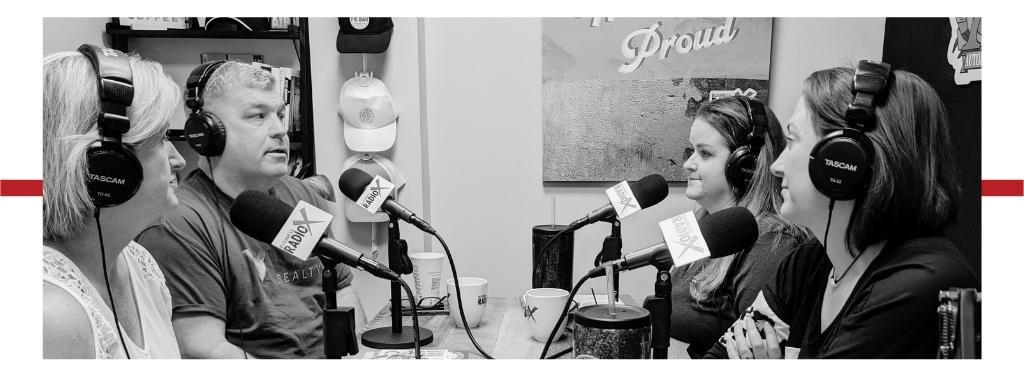
Andrew Reibly and Bobbi Cowart with VIBE Realty

September 19, 2022 by angishields

Cherokee Business Radio
Andrew Reibly and Bobbi Cowart with VIBE Realty
Loading
00:00 /
RSS Feed
Share
Link
Embed

Download file

Sponsored by Business RadioX ® Main Street Warriors

Kid-Biz-Radio-top

Andrew-Reibly-headshotAndrew Reibly is a VIBE Realty Brokerage Owner, Realtor, State Licensed Residential & Light Commercial General Contractor, Residential Housing Investor in Georgia.

His goals are to help a diverse group of clients to buy & sell real estate, and build and/or renovate their homes and businesses while maintaining quality craftsmanship and a strict budget.

Specialties: Realtor, Managing residential & light commercial construction projects, as well as assisting clients in buying & selling residential and commercial real estate. Specializing in FHA 203K renovation loans.

Connect with Andrew on LinkedIn.

Bobbi-Cowart-headshotBobbi Cowart has vast professional experience in banking, insurance, and real estate. Her wide array of skills and expertise have helped propel her forward as a leader in her career. That leadership has inspired her to achieve the dream of owning and running her own real estate brokerage. Bobbi began her career working in the banking sector for over twelve years. She has always worked with smaller, community banks where she felt there was more of a personalized experience for her clients.

After leaving the banking world, Bobbi worked in the insurance industry and was licensed in property, casualty, life, accident, and health policies. Bobbi turned her eyes to the real estate industry and began working towards her license while working in insurance. She became licensed for real estate in 2009 and has been a full-time realtor since. She initially specialized in commercial real estate and land, however, residential real estate is where her heart belongs.

Bobbi is a fun-loving person who loves the personal relationships that real estate allows her to establish with her clients and colleagues. She is a proclaimed people person and loves to spend time hanging out with others whether it is having fun or collaborating on a deal. She loves to laugh and has a not-so-secret talent for winning at common bar games such as darts, pool, and shuffleboard.

Her contagious, fun personality has helped her become an industry leader in the area. Her favorite part of the job is the relationships and the feeling of knowing that she gets to help her clients with such a sweet life moment. When she is not working you can find her listening to live music or snuggled up with her fur baby, Snickers.

Connect with Bobbi on LinkedIn.

This transcript is machine transcribed by Sonix

TRANSCRIPT

Intro: [00:00:07] Broadcasting live from the Business RadioX studios in Woodstock, Georgia. It’s time for Cherokee Business Radio. Now, here’s your host.

Renee Dierdorff: [00:00:27] Hi everybody. My name is Renee and I’m with.Amy.And we are with Kid Biz Radio. We are here to create conversations about the power of entrepreneurship and the positive impact that journey can have on kids. Today we are here with Bobbi Cowart and Andrew Reibly from Vibe Realty right here in Woodstock. Thank you for being here.

Andrew Reibly: [00:00:46] Thank you.

Bobbi Cowart: [00:00:46] Thanks for having us.

[00:00:47] Yeah. So as you know, we’re all about businesses and kids learning through being business owners. So can you tell us a little bit about your business and how you got started?

[00:00:58] Sure. Yeah. So I am originally just a custom builder and renovator, and when we had the recession back in oh nine, I decided to get diversified and become a realtor. So I still do both. And Bobby and I met at a previous brokerage and became fast friends and have done deals together, have been project partners and that kind of thing. And yeah, so that’s my story.

[00:01:26] Okay.

[00:01:27] Well, I was a banker in a previous life and when 2739 happened, I lost my job because I was a commercial lender for small community banks and had to regroup and figure out what to do. I had a ton of real estate knowledge through that, so real estate seemed like a natural path and I had a great mentor that encouraged me to get my real estate license. So I did.

[00:01:49] That’s great. Great. I know you said you do general contract work as well. So is that something? I mean, do you feel like that’s more full time or is it like which one do you do more often? Or is it really just.

[00:02:03] Really they’re both. Because the way I categorize it is it’s real estate services. I’m just a full service, real estate service company and guy. So I can help you buy a property or buy land and build on it and sell your property. So it’s just a full service deal that goes hand in hand.

[00:02:20] Do you feel like it’s really helped with your general contracting Business.

[00:02:24] Big time? I mean, great book to read, especially for your listeners and the kids is Who Moved My Cheese Say Wonderful book. It’s a very simple if you all heard.

[00:02:38] I haven’t.

[00:02:39] Trust me when I tell you. You all should read it. Yeah, everybody should read it. It is a wonderful book and it’s just basically about getting diversified, but it’s a very easy, simple read. It’s almost Dr. Seuss ish. Yeah, so. But it’s great. I think I wanted to have my business model that way. And so to answer your question, it was it’s diversified sort of within the same kind of industry. So I think it’s been phenomenally helpful.

[00:03:07] They complement each other.

[00:03:07] hey really do. My main revenue stream would be the building side, and then as a secondary is the real estate, if you want to kind of, you know, rank them or whatever. But they’re relatively close and it’s all tied together in terms of you also think of everybody, of course, initially thinks of revenue streams and stuff, but for the marketing aspect as well too, right? Because if I’m talking to you about buying and selling you guys house and the real estate side, I’m also a builder. Oh, I have somebody. Or maybe I want to do that. So it really is a great marketing tool for that.

[00:03:46] And you have the knowledge of what someone’s getting into and what to look for.

[00:03:51] That’s a huge deal on the real estate. A lot of my clients like using me because I think there’s better. Realtors like Bobby, I think is a better realtor, but people will use me because I’m a builder, so they’re like, I want your builder I on these projects. Or if it’s an investment deal, I do investments as well, like flipping houses and things. So they bring me in on that as well.

[00:04:14] So it’s a huge advantage for our brokerage to I. Most brokerages don’t have a general contractor who especially is an owner. And because he’s not just an agent, he’s an owner, he’s invested in this business. So our agents have access to a general contractor. So it’s huge when you get those scary inspection reports on a home, he they have someone they have a resource to come talk to, not just the inspector, but someone who’s actually renovating and building. So I think it’s a huge advantage for our agents and not ever, unless you’re with Vibe, you’re not going to have access to luxury paying.

[00:04:55] Nice marketing.

[00:04:56] I was going to ask if you guys leverage that in your general marketing that you do and you mentioned.

[00:05:01] It, but it’s certainly a value add for our brokerage. And and and it’s not just corporate speak, you know, it’s it’s actually in marketing. You know, of course, you become friends with people in the brokerage and they know they can come in any time and chat with me about, you know, what I think about this or that and is this serious? Not serious and happens all the time. And I think it is a great value add for our our agents in us for sure.

[00:05:27] That’s awesome. So you guys were talking a little bit about invest, sorry, investments and things like that. And our topic today is introducing kids to personal finances and budgeting. And I think regardless if someone has children or not, this is a lot can be added to the conversation because everyone has experience with money. Everybody uses money. You have your own childhood experiences and how you learned it or didn’t learn it for sure. And I think that all of the different perspectives and frames of references to where you are now can help other parents out there and kids learn.

[00:06:05] Agreed. Agree. Bobbi was saying beforehand she goes, well, I don’t have kids, so I don’t know, but she’s a banker, so.

[00:06:11] I know about Money.

[00:06:12] That’s a huge and as a value add to viability, being a banker and a commercial lender, she brings a huge part to the financial piece and to this to this conversation. I think she would be she’s super valuable as well.

[00:06:27] Maybe I’ve experienced some things like maybe with young like young buyers, maybe they’ve come through that they didn’t know and things like that. Just buying a house. I mean, that’s kind of part of the whole money. Talk to how it works, how credit works and all. I mean, it could opens up to a larger conversation. Our target audience around middle school is tend to be where we get a lot of interaction. And so. Trying to not dumb it down like it’s the worst word in the world or phrase in the world. But make it engaging for kids that age.

[00:07:02] And simplify.

[00:07:03] And simplify like you were.

[00:07:05] Have to be.

[00:07:05] Complicated, right? We’re talking about the move. My cheat who move my cheese being like I no one wants to read a textbook on that kind of thing. Right. For even for adults, it needs to be engaging.

[00:07:15] Absolutely.

[00:07:16] So.

[00:07:17] Well, and I’ll tell you and and really, you know, I think it becomes a it’s a self-indulgent for adults a lot of times. And I’m that way I’m very nerdy. I love to drill down. And I know I probably drive people crazy with data points. And I want to know this and listen.

[00:07:35] No, not.

[00:07:38] You know, it’s fair. And but the that’s just because I enjoy a self indulgent. I think I think we all want to feel like we’re smart and doing that. But listen, honestly, there there nothing in life has to actually be complicated. Absolutely nothing. And if you’re super smart, you can run down rabbit holes and all, but you can also then translate it to that. And I think what you all are doing is wonderful with kids and entrepreneur. Oh, yeah, because I’m obviously we’re entrepreneurs. I’m a serial entrepreneur. I love having my multiple businesses and I think it’s the absolute backbone of our country’s economics. And, you know, I can’t imagine ever being stuck in a corporate office and God bless people that can do it because.

[00:08:31] Right.

[00:08:32] We got to have them, too, right? I mean, they’re they’re like the old Wiley Coyote and Roadrunner where they clock in and clock out. It’s definitely not a thing for me, but I think it’s great that people can do that. But teaching kids to be entrepreneurs is phenomenal.

[00:08:47] Yeah.

[00:08:48] I think one of the biggest things that impacted me from like thinking about how I manage my money and especially savings is very important to me. I learned it because my parents didn’t do that. So any time there was an emergency or something breaks at the house, my parents were constantly scrambling, trying to figure out How do we pay for it? Can we get a new credit card? So that sticks with you. I learned by seeing maybe what not to do. So I’m not a parent, but I was a child, so I kind of saw some things that.

[00:09:28] That makes a difference.

[00:09:29] Yeah, it’s structured how I tried to live my life.

[00:09:32] Yeah, I.

[00:09:32] Think those lessons are just as impactful as.

[00:09:35] Absolutely.

[00:09:36] As, you know, what to do. In fact, I think those lessons are actually more impactful. You know, you can learn stuff, but we all know I used to when my kids were growing up, I coached football and softball for my daughter. And, you know, it’s one thing to tell a kid that you’re going to get hit and it’s going to hurt. It’s not going to kill you. You’re going to be fine. But until you actually get hit and have the wind knocked out of you or a ball hit you or something, you know, skinning your knee and then you figure out, okay, maybe I should not do that kind of thing. So I think that’s super impactful. I think seeing what not to.

[00:10:16] Do and being able to share that experience, you know, that’s what we kind of are wanting to do here is be able to share the things that you did learn. And I know some people learn through experiences, you know, have to learn the hard way. They say, Oh, absolutely, I’m not that person. There’s people in my life that are my husband is one of them. That’s, I think, why we work well together, because he just had the courage to try things anyway and learn that way. Yeah, but I was the one afraid to break the rules and I want to know what the rules were and that kind of thing. So I was like, Oh my gosh. I had to, you know, I needed to know step one, two and three. But yeah, being able to share the things because regardless of how prepared you think you are, there’s always something that life, a curve ball or something that life will throw you. So it’s not I just kind of wanted to jump into a topic because she and I both have I don’t know if you’ve heard of the green light card.

[00:11:10] I have not.

[00:11:11] It is a and I’m sure there’s other ones out there, but she and I both use these with our kids and they are debit cards that a kid can have that runs through your bank. But you have an app so you can pull money from your bank into your parent wallet and then disperse that money to the kids and they can save, spend, give that whole thing. But they see it digitally. That’s how everything’s done. I know when I was growing up, my mom gave me an old check register and we did my money that way and she would write me a check. And because that’s what that was, what it was. And the late eighties, right? There were.

[00:11:43] No portals.

[00:11:44] There weren’t. There weren’t. And so, you know, we’re just taking the same idea of. Teaching your kids money and good habits, etc., etc., and doing it the way it is today. I don’t know if you want to talk about the positive experiences you’ve had with it or.

[00:11:59] Yeah, I can. Absolutely. So I have three daughters and they each have a green light card and it’s been really beneficial because it’s a lot easier because I never carry cash, but to give them their allowance and they can see money coming in, they can order their own things on Amazon and see money going out. They can use them, they have PIN numbers, they can go to the store and use them. And so they each individually have their own businesses. So when they get a profit from our expose and have a really good day, we disperse it between spending and savings and they can see their savings grow versus and their and their spending categories. So I think for them it’s been really beneficial. It’s not just like because they can it’s visual, it’s not just like at the bank somewhere and they don’t know what’s going on. Yeah. So then seeing like, oh well my sister has this much in her savings and maybe I should catch up or whatever, you know, or like I have this much in spending and do I need to spend it all right now or can I transfer some? And so they they’re learning a lot through that. I think it’s been great.

[00:13:00] Makes them think twice before buying the thing at the store.

[00:13:03] Well, some one of them is very money conscious. The other two are like, let’s spend it now.

[00:13:09] Well.

[00:13:09] It’s cool that and I think that school and you were talking before about you and your husband, huge difference between boys and girls, how we do things and we talk about that a lot. And I think it’s I think it’s great to have both perspectives. You know, it’s yin and yang. I always say that girls are more smarter than guys. Exactly. But it’s not better necessarily. It just means you guys think about things more. And, you know, I know most guys like me are like, I want to think about it, but there comes a time. I’m like, we’re going to try to.

[00:13:42] Make a decision.

[00:13:43] And not get. In fact, we just had a mastermind where don’t get paralysis by analysis. And I think I think women are prone to do that a lot of times because of the security aspect. It’s like, that’s not safe. I got to do this. I got to protect my family. It’s just it’s just in you. And I think you have to account for that, you know, and those are smart deals, but to me, it can also be a little bit of a curse. Whereas guys, we can also be a little too dumb and quick. So there’s a sweet spot, I think. And I think Bobby and I work well together because we tend to do that. You know, I’m like, you know, let’s, let’s think about it for a minute, but then go. And she’s like, Wait, wait. I got to think. And I’m like, I just, you know, basically grab her hand and we’re.

[00:14:24] Doing this.

[00:14:24] And she’s like, Oh, God, here we go.

[00:14:26] And she you get a day.

[00:14:28] The only issue I have is a lot of times we’re jumping out of the plane and I’m still trying to put a pair of.

[00:14:33] Shoes on, you.

[00:14:34] Know, yeah, it’s going to happen.

[00:14:36] And I tell her, you have the rest of your life to put your parachute on on the way down.

[00:14:40] Oh, gosh.

[00:14:43] I’m an old paratrooper, so we’ll we’ll do airborne jokes sometimes.

[00:14:47] That’s okay.

[00:14:48] It is good to have someone, though, to push you outside of your comfort zone, because when you are ultra conservative, especially on a financial side, that can be very good, but it can also hold you back from making investments that can make you a lot of money. So yeah, sometimes it’s good to have someone that’s like, okay, we analyze the numbers. We’re like, Go, let’s, let’s do it.

[00:15:10] Go do it. Scared? Yeah, I think that was kind of my motto.

[00:15:13] That’s kind of how this brokerage was to a certain point, right? Like we talked about it, we talked about it years before we did it, and then circumstances were different for both of us. We were at the same brokerage again and not happy with certain things. So we started a discussion and I had to push him into the discussion. And then once I pushed him in, he’s pushing me out of the.

[00:15:36] Plane like a minute. Yes.

[00:15:39] So be careful what you wish for, then.

[00:15:41] Yeah, yeah, yeah, that’s right. Yeah. Well, she and I work well, the yin and the yang, too.

[00:15:46] With this complementing different personality.

[00:15:50] Yeah, I think you come up with a process, right? And then both of those are valuable. I think our politics today could use that, you know? I mean, look what a mess that is. And people don’t even want to talk about it. And what a great subject that we all want to talk about. But then it gets too messy.

[00:16:05] Sometimes it gets.

[00:16:05] Too messy and it’s like, y you know, you need both sides of those things.

[00:16:09] Information.

[00:16:10] You need information. And you know, there’s a compromise to be found in the middle for everything. Yeah, I think there’s also seasons in lives. Like you guys have, you know, adolescent children, I guess you would call them or whatever. Your season is going to be much different, you know, now than it will be, as I am an empty nester now. So the way we look at things and manage money and how we teach kids and talk to kids.

[00:16:36] Mm hmm.

[00:16:36] I think it’s brilliant. Y’all are talking to kids about money and intentional. I think everything should be intentional about that like you guys are talking about doing. Because now I’ll tell you what’s wonderful is I talk to my. Kids who are grown. They’re 24 and 23. You know, he’s an Army Ranger and she’s a nurse. And I get to talk to them about what they do with their money and things. And they come to me for advice and.

[00:17:01] Did you do that when they were younger? Absolutely. You’ve just developed this relationship.

[00:17:04] Absolutely. And it changes as they grow. You know, I always believed in me and intentional. And, you know, it was raised and they were kids. I was raising adults. So I would talk to them like you guys do. I love the the green money card thing as a wonderful deal and saying you have to save because there’s things you’re going to have to pay that you don’t want to pay. And if you spend it all, then you’re going to be in trouble. And it’s amazing that a lot of adults don’t know that. You know, it’s tremendous. It’s like and I used to be harsher. I’ve gotten older. I’m I think I’m moving into grandpa mode, but I’m like, you know, how stupid is that? You know? And how how can they not know that? But they just really don’t know it. They’ve never been taught or trained or those kinds of things. And, and so I think, yeah, I definitely did it with my kids and said, you know, here’s the deal and you can save your money, you can spend it, give them the option, let them develop the thought process.

[00:18:04] How.

[00:18:04] They manage their money.

[00:18:06] See which direction it leads them like and what the good and the bad of that is.

[00:18:10] Yeah. And let them go through and skinned their knees sometimes.

[00:18:12] Oh absolutely.

[00:18:13] If they want to spend it all.

[00:18:15] Run out of money in that need.

[00:18:16] Yeah. And that ties back into where we are with our organization. Just teaching them these hardships now. You betcha. And they become lifelong skills in the long run, right. I love that we’re teaching them that. Yeah, you can mess up and you can make poor choices. You’ll be okay, but.

[00:18:32] You’ll be okay.

[00:18:33] And it’s better to do that now and understand that process in that journey rather than later in life when it’s a lot harder and there’s more factors, you know?

[00:18:41] Sure. I think it’s wonderful. Yeah. And and when they do, you know, they decide to spend their money, don’t bail them out.

[00:18:47] Right.

[00:18:48] If your other kids are eating and you’re like, Oh, I feel bad because they’re not don’t feel bad, you are teaching them the greatest lesson ever. The feel bad is yours is.

[00:18:57] Your problem, right? Yeah. It’s like your thing.

[00:18:58] It’s your.

[00:18:59] Thing. Yeah.

[00:18:59] Let them sit over there and go.

[00:19:01] You’re not doing them any favors.

[00:19:02] Doing them any favors. You’re making yourself feel better. Let them sit over there and hate that. And the next time I bet you that kid goes, You know what? I’ll save my money because I want ice cream with my brothers and sisters and friends next time. Just the greatest lesson you can teach them that is that we’ll give back to them for the rest of their life.

[00:19:21] It’s like you said, you’re raising adults. Yeah, the kids. Right. You need to guide them. And that’s your job as a parent is make sure they’re ready. And when you were talking about like kids that you’ve seen or just in general, like, how do kids not know this? It’s you want them to feel empowered. Sure. And have the resources that you need. And it’s about, I guess, having control in their life and having a plan. And, you know, yes, things go can go south, but you can talk about that as they grow up and just having real applications like with the way that we use the green light card and just through the experience of building a business and showcasing it at our expos and all of that, it’s all to give them something to because we were talking about, I think about kids and needing be engaging. Just telling them isn’t, you know, we’re just trying to provide.

[00:20:11] Those living experience, feeling living.

[00:20:13] Doing totally the hurt and the the tiredness of being up, making your inventory, you know, up to midnight or whatever, all ready for it, you know, like you learn things and responsibility and then the pride that get afterwards is huge.

[00:20:28] So something that we see with a lot of realtors is that they don’t save for taxes, for example. So when you’re talking about these children as being entrepreneurs and building a business and then you talk about, you know, like your example was, well, now I don’t have any money because so I can’t have ice cream with my siblings. There’s also a business component in there that like, for example, for to make things simple for me with my budgeting, when I make money, I just do everything in percentages. So I move a certain percentage into savings, a certain percentage goes towards taxes, and then I figure out what you know. Then I have a percentage for all my expenses, right? So I think sometimes just breaking it down into like percentage categories.

[00:21:18] Yeah, makes.

[00:21:18] Sense. And that way they make sure they set aside. But that is one thing that we see. It’s a big.

[00:21:23] Problem for.

[00:21:24] Some, especially realtors, right? Because sometimes they don’t think of that as like they’re a real business and then they haven’t saved for their taxes. And then and.

[00:21:32] Then it’s a nightmare.

[00:21:35] For sure.

[00:21:35] A nightmare because, my gosh.

[00:21:37] Uncle Sam does not play when it comes to that.

[00:21:39] Right. So we want to help people before they get there. Yeah, that’s a great.

[00:21:43] Also with the green light card you can not that this is like just a commercial for green light but just. Something that I’ve noticed. You can categorize their savings portion. So we’ve broken theirs down into like just general savings and business savings because they know that Romney can’t be the sole investor in every single thing for their business. Like I’ll do the big stuff. But if there’s something else and you have money in that business savings account, guess where that money is going? You need to buy more supplies. So just like reiterating the breaking it down into different categories that you will have to reinvest in yourself and your business.

[00:22:22] Super smart.

[00:22:23] Yeah.

[00:22:23] Oh, those are huge. And, you know, like Bobbi was saying, I mean, she’s one of the smartest ladies with finances and all that thing ever.

[00:22:31] And and I do love it, actually. I’m a finance major also.

[00:22:36] Yes.

[00:22:36] So she numbers are your jam 100%.

[00:22:39] And she can go down a rabbit hole and get as complicated as you want. But think about what she just said. She just breaks it down. Simple, very, very simple.

[00:22:49] So otherwise I won’t do it.

[00:22:51] Yeah. Yeah, right. And your process, that’s the perfect point. As you’re, you know, know it, get as extensive knowledge as you want on it, but just have a very simple process. X goes to taxes for saving, X goes to reinvestment and X goes to play. Because I think that’s a huge part. We, we work to enjoy our lives, so make sure you’re intentionally doing those things. But I think it can be very simple. I think you want to study it and know it and get smart, but be intentional, make it simple, and if you follow that, it’ll keep you out of trouble for sure.

[00:23:29] So the reason I brought up green light was and the reason this whole topic came to be was because I get that I have one, but it’s in my Facebook feed ads for it. And one came up the other day and there the ad is for kids getting paid, doing chores around the house. That’s how they marketed it. In this particular ad, I went to the comment section and there were people just saying, You shouldn’t. This is like just dog in the whole concept because you shouldn’t pay your kids to do chores around the house. I think, you know, my ever so humble opinion that everybody’s family values around that can be different. And what I commented was, you know, think outside the box on how you can use this tool. It’s a tool to teach your kids. That’s the whole point of it. And if you personally don’t want to pay them, do chores, what else can they do to earn money? Right, because that pride part or delayed gratification, is there some sort of goal you can set because they want a bike, you can have them do certain things, whatever it is, because they’re just just writing it all off and you’re missing the whole point. So we kind of had a talk talk about the other.

[00:24:38] Day, right? I mean, you have to set like so from my kids get paid on their chores, but they also have their businesses where they make money, but it’s set up differently. We’re like certain chores are new, more things, you know, just like in the real world, look at it more like a commission rather than like an allowance or whatever, like that. What work you put into it is the rewards you get out of it versus like the amount of money that you get out.

[00:25:01] Oh my goodness, can I stop you there?

[00:25:04] And that is. Yeah.

[00:25:05] Because we have and, you know, this country is getting to be and it’s not I’m not going down a political rabbit.

[00:25:14] Hole.

[00:25:15] But we.

[00:25:16] Are we.

[00:25:16] Don’t have time for.

[00:25:17] That.

[00:25:18] Right. But but the country is becoming very socialistic and that and I think, oh, it’s such a foolish thing to not teach your kids that some things are more valuable than others. And look at the mess we’re in right now with college loans and all that. Oh, you got to go to college and get an art history degree and have $100,000. If you know business that is a terrible investment. Go to trade school, become a plumber. All of we said earlier, I was a builder, my electrician, my builder, I mean my electrician, my plumber, my HVAC man, my framers are all six figure people.

[00:26:02] That’s a trade.

[00:26:03] Yeah, because it’s trade is valuable now, you know, it’s not to denigrate anybody but jobs that aren’t as important. They are not going to get paid more valuable lesson everybody wants to this thing about participation trophies. No, the quarterback gets paid more. You know why he’s more valuable? He is. Don’t take it as he’s a more valuable person.

[00:26:28] But what he does, what he does, the whole thing, it’s different.

[00:26:32] People get it so messed up and it’s like, who?

[00:26:35] Right. I.

[00:26:36] I think everybody’s got 100% value, you know, as a person and individually.

[00:26:42] But when you put it into a work environment, it changes.

[00:26:46] It does. It changes big time. And that’s. Why Elon Musk and Jeff Bezos, who is on Thursday night football last night, our billionaires, because they came up with something that was so super important and they get paid. That is a huge lesson to teach. I mean, it’s you know, it’s one of those things to wear. And if it’s your calling, then teach them. Oc Pastors, you know, generally don’t make that much money. It’s your calling, your values different, but you really better know how to manage your money because you’re going to make less.

[00:27:18] Of it, right? Yeah.

[00:27:19] Yeah. You can still find your passion in what moves you.

[00:27:22] But understand.

[00:27:24] You have to understand the value and where your money is going to come from and how that’s going to impact what you’re doing or if that is going to impact what.

[00:27:31] You think it teaches. Get like chores, for example, when they’re younger, I think it teaches them to that. When you are out in the real world doing your job, you’re going to be tasks that you love doing and tasks that you really hate doing or dislike very strongly. But you still have to do them, do it, earn the money, right? So I’m sure cleaning toilets is on the bottom of the list where, you know, maybe wiping the countertops off is not so bad. Right. But I think that that’s important to understand, that that’s part of life and it’s going to be part of your work. I love being a realtor. There are parts of my job I do not like. I love being a brokerage owner. There’s parts of that I do not like to be.

[00:28:17] Could that be partner related?

[00:28:19] There has to be uptown.

[00:28:21] I’m kidding.

[00:28:23] Yeah, of course. Yeah, I will brag on my daughter or my oldest daughter who’s in the room with us. She’s 13. And so her skill set is going to be different than her seven year old sister. So she cooks dinner for the family twice a week. That job gets paid more because that’s a skill set that she has that her sisters don’t have.

[00:28:41] Right?

[00:28:42] Perfect. But does feeding the dogs get that’s a daily menial task, right? That doesn’t get the same. Amount or commission or whatever. So.

[00:28:50] But do you guys talk about all of that? It opened a conversation with her.

[00:28:54] Yes, it has opened up that conversation and just learning because she’s always like, why do I have to do it if she can do it, too? Or, you know, like the same thing. But it’s the concept of, well, that is part of the household. That is something that you can handle, you know, and things of that nature. But. And do you have to keep your room spotless? No, but you have to. You know what? I’m trying to teach you to be an adult at some point. Like there are things there are things that you have to.

[00:29:18] Do.

[00:29:19] Whether you want to or not.

[00:29:21] You may hate me for saying this, but I think there could also be some negotiation skills learned in the chores, even amongst siblings.

[00:29:30] Because, oh.

[00:29:30] Let’s say your one of your chores is cleaning the toilets. Well, you could negotiate with one of your other siblings.

[00:29:38] They do it.

[00:29:39] Anyway to keep a portion of the money for it.

[00:29:41] That inspires absolutely.

[00:29:43] Them to do it.

[00:29:45] I think so far, not as much negotiating as maybe conning their sisters to help or to do more.

[00:29:51] Robberies not allowed. So let’s say negotiate.

[00:29:54] Call it negotiation. Absolutely. Yes. Learning how to do that.

[00:29:58] I think that’s brilliant. You know, and if you find a kid that’s getting paid X and pays them less to have their little siblings do it, I think.

[00:30:06] Right.

[00:30:07] That is next level.

[00:30:08] It’s management, right.

[00:30:10] It’s just some parents that listen to this are going to be like, who is that? Bobby said she had no children.

[00:30:16] Why she. No, I think that’s eye opening.

[00:30:19] It’s management. You’re still teaching them life lesson 100 years and the things are still getting done 100%. So if there’s another way to do it that everybody, quote unquote, wins problem solving, it’s problem solving skills.

[00:30:31] Yeah.

[00:30:32] I’m brilliant.

[00:30:33] I’ve probably just caused a lot of no children.

[00:30:37] I think you opened eyes. I don’t think.

[00:30:39] No, we talked. I mean, the whole thing was thinking outside the box, you know, like it brings that conversation to the forefront. And, you know, you get to have these, you know.

[00:30:48] Different perspectives, like there’s no one way.

[00:30:51] I am so impressed with what you guys do in this whole deal. Oh, I think it’s phenomenal. I think it is definitely a part of our solution to society. You know, I always say millennials get a bad name, probably well deserved in a lot of cases. But I’ll tell you something, they’re just people like everybody else and somehow have locked into a misguided idea, you know? But what you all are talking about is people will just teach their kids these basic things. They will go forward and they will be fine. You know.

[00:31:27] You know, something I think that you guys do is extremely important in the age where most children are behind a screen of some sort, is teaching them people skills and the fact that you provide networking opportunities with their peers. So I was reading on your website about the things you provide.

[00:31:44] Yeah.

[00:31:45] And I think that that is essential because there’s always going to be a certain amount of communication in most jobs with like human interaction. And if the children don’t have a chance to learn how, learn those skills in a business setting like they’re doing this.

[00:32:01] For sure.

[00:32:01] For themselves. Yeah. Like I think that that’s a wonderful opportunity you provide.

[00:32:06] We notice to like at our expose so these kids who may not have a lot of experience talking with adults outside of their family or even their peers in general, just that physical communication, they come out of their comfort zone because adults are taking interest in what they’re doing. And it that you see that sense of pride and confidence grow because they’re engaging like and it gives them that power back like, yeah, this is my business, this is what I do, this is my passion and I want to talk about it. And adults are like, Please tell me all about it. Why did you choose this is it’s a different environment than you would say, like a regular vendor market where it’s just adults that are just there selling. You don’t really do that engagement with. It’s not expected because it’s not expected. But these kids, people want to know like this is in different it’s different and it’s like you’re curious and all of that. And so people are adults are engaging and it gives that the kids this power in that confidence and it it comes back to that communication like our kids have learned how to communicate with adults and it’s that’s huge.

[00:33:11] It is a it is a huge deal. And I’m very nerdy, my degrees in sociology. So I’m a builder with a sociology degree and a minor in history. So one of the most successful there was a study done so for for the most successful people in life, they were kids that would talk to adults. And that is a direct correlation of how they were raised. So, you know, it used to be in the older days, don’t speak until you’re spoken to and all these things. And they and they they showed where kids that were allowed to. Be engaging were ultimately more successful. And because something also like from the biological standpoint, their brains are being wired. Yes, they are. Until they’re 24, their frontal lobe is not developed yet. So when you’re teaching them these things, it is wiring their brain to be successful and to have processes and do things. That’s amazing. And so there’s there’s that component to it, which you don’t even know you’re doing it. But I think the part that pays benefits is you bonding with your kid and other.

[00:34:20] Right.

[00:34:20] When I coached, I love talking to kids and when I would let them be involved in engaging, you know, like, for instance, a kid, I’d say, I want you to go here and hit that hole with the ball and go to the outside. And do you think that will work? Because, first of all, they’re on the ground. You know, it’s like troops, boots on the ground kind of thing. And they’re like, well, I think I should go this way. Does a couple of things probably successful because they know better than me standing over there coaching. But also it gets them to engage with you. So when you’re engaging with money and having it’s wiring their brain to develop processes on how to have relationships with people and listen, it’s such a trifecta of things that are good doing these things, being intentional, right? You know.

[00:35:07] Yeah, one of the before I lose it because I do that like my thoughts here. But when you were talking about engaging with them, it does develop that. But it also. Teaches them that what they have to say is valuable and that their opinion matters. You bet. And then that gets them thinking even more, because if they’re always shut down, then they’re just they might go into themselves and not really think that what they have to say matters so true. So I think that’s.

[00:35:31] If you think about how many things have been invented, like all the technology, all the tools, all the things that we have in this world. I personally think it’s going to take kids because their minds work so much different than adults to come up with the next business ideas. I mean, they’re super smart adults that do that too, but their minds don’t work the same as a child.

[00:35:52] That’s true. That’s so.

[00:35:53] True. Having the generation that grew up only using it is they’re going to find a way to utilize it into something else.

[00:35:59] Which we.

[00:36:00] Didn’t, which.

[00:36:00] We have. No. Yeah.

[00:36:01] So when you were talking about we.

[00:36:03] Are older millennials, so.

[00:36:05] We were born in 83 and.

[00:36:07] Just insulted our hosts.

[00:36:09] Yeah. No, I get it. I think it’s.

[00:36:13] A soft way.

[00:36:15] No, we don’t. It’s funny.

[00:36:16] We are more similar to Gen X than an actual millennial because we’re on the cusp.

[00:36:22] Identifies Gen Xers. Yeah, yeah.

[00:36:24] Because we’re on the cusp.

[00:36:25] We’ve talked about it before. It’s like 82, 83, 84. You know, my brother’s born 86 and we don’t necessarily we’re just, you know, we just think differently. Sure. But I was doing like pagers in high school and Facebook didn’t happen until the end of college. And, you know, so we were we had our childhoods without all that, but we were young enough and willing enough to adapt to what was new.

[00:36:46] For.

[00:36:46] Sure. It’s just weird.

[00:36:48] Yeah. We’re right in the middle of.

[00:36:50] This way, I have to.

[00:36:51] Say. It’s a tool for us older folks, you know, and I’ve embraced it, but I’m 53, so I’ve had to embrace it for business and but also think it’s cool. I’m, you know, embrace it. And I don’t want to be old, you know, too old build or a guy. I try not to be that but you know, I think it it’s it’s tools for us. Right. And even y’all. So that’s how it came along with this new generation, which I dig the portal and the green light card and all that. There’s tools you have to meet them on their level with because they’re, like Bobby said, their brains are wired that way. They know they’re not tools to them. They are just things in life that.

[00:37:30] Right.

[00:37:31] You know.

[00:37:31] Normal day to day thing. Yeah. Everything is through your phone now. It doesn’t matter like that.

[00:37:36] It’s not it’s.

[00:37:37] Not a cool innovation.

[00:37:39] It’s like new.

[00:37:40] Yeah. This is just what life.

[00:37:41] Is, right?

[00:37:42] So, yeah.

[00:37:43] Doing electronic banking and anything like that makes way more sense than pulling out a checkbook ledger. Like, you know, like, there’s no point for sure, unfortunately. But there.

[00:37:53] Isn’t. I agree. Oh, great. Yeah, I think maybe. Maybe I’m just having this slide, having the experience we’ve had up till now and being those elder millennials that we all elders.

[00:38:06] It has put coined a new term.

[00:38:08] We have put maybe that has put us in a great place to do this organization because we have the perspective of both and can value both.

[00:38:18] Our kids are growing up in it.

[00:38:20] Yeah. Yeah. And just, you know.

[00:38:22] You have, you have the wisdom, you know, that’s the cool thing about the next generation and not growing up with it as you have wisdom to know what it was without it as well as what it is.

[00:38:33] Benefits.

[00:38:34] And you know, if you’re grown up with it, you don’t know what the benefits were without it. So how do you sort of marry it and find the sweet spot for sure?

[00:38:41] And I know one of my favorite shows is Shark Tank, and my favorite ones that come on are the ones where kids have invented something or come up with something. And I think that they were able to do that because usually their parent is there and has supported them and has encouraged them to like follow their dreams and go with what they find.

[00:39:03] A new path.

[00:39:03] Yes, follow their passion. And I have a very good friend of mine that’s been a friend for a long time. Well, him and his wife both. And they have three children, one son and two daughters. Well, their son does not play any sports or anything because they’ve allowed him to do what is his natural ability and passion, which is music nice. And they encourage him in every way possible to follow his passion. The girls do other things, but I think it’s wonderful that they let them be who they are and encourage them to go after their goals.

[00:39:37] And you almost have to because it’s just they’re not going to be their authentic self as an adult if it’s your path for them, not their own path for them.

[00:39:45] Such a great philosophy right there, you know, and I don’t know how it was my life. It had to.

[00:39:51] Be my wife.

[00:39:52] Yes, I will go with that.

[00:39:53] Yeah, that’s.

[00:39:54] What I said earlier. Yeah, you all are smarter. But I think letting kids be who they are and whatever their God given talents are, everybody’s different. But I think what you do instead of teach them to make money, do what your passion is. But if you’re a musician, fine, you’re going to need to be really sharp. On your financial.

[00:40:18] Skills or somebody that can do that.

[00:40:20] For you.

[00:40:21] Delegation’s another topic. But. But yeah. Just teach them how to. Hey, chase your dreams. But understand this. There’s not a lot of money in it. You just learn to live on what you make and how to manage it well, but do your passions. And to me, that’s the sweet spot. I mean, my generation and the one before was like, what do you do to make the most money? Yeah, I don’t care if you like it. Or in fact, there’s an old saying. There’s no army saying in an old saying that says you don’t have to like it, you just have to do it. And I think things have changed to where we want our kids to follow their passions. Well, there’s nothing wrong with that. But just understand, I think I think where people get off track is they don’t teach their kid that your passion doesn’t pay much. That’s fine. Just manage it well and just know you’re not going to. And don’t be bitter upset because you don’t make what your brother who’s an engineer or a lawyer or something.

[00:41:16] I think it comes from a place of as a parent of concern, like you want your kids to be happy, but you don’t want them to be unstable, you know? So.

[00:41:25] But it’s it’s hard.

[00:41:26] It’s a hard balance. So, yeah, follow your passion. But you’re not going to have any money. You know?

[00:41:31] You’re gonna live.

[00:41:31] In my basement forever.

[00:41:33] Forever, never leave.

[00:41:34] Like the whole thing. Where if you if you try to monetize your passion and you end up hating it so you could just have a job of some kind where there’s a bartender or something because you make good money doing that and.

[00:41:45] Then you just.

[00:41:46] Catch it. You know what I mean? For sure.

[00:41:47] So but that’s ways to do it. It comes with the life lessons that.

[00:41:50] You.

[00:41:51] Need to instill.

[00:41:52] Yeah, yeah, yeah. I mean, sometimes it’s important to keep your passion. Your passion and not try to.

[00:41:57] It’s a good point. It’s a good point.

[00:41:59] I think, depending on what it is.

[00:42:01] Yeah, for.

[00:42:01] Sure. You know, but there are options that are out there to monetize certain things. Should that make sense, like art, maybe selling it, that kind of thing or influencers?

[00:42:10] Yeah, yeah. I can’t believe I’m going. That’s a job. Like, how do you and they make tons of money from doing this, right?

[00:42:18] Some influencer, it’s kinda like it’s kind of like artist or something.

[00:42:22] It’s right.

[00:42:22] It’s still, it’s something amazing to me.

[00:42:27] But that is, you know, it ties into entrepreneurs and that like there are so many paths that we never had the thought, sure. You know, you could do literally anything with technology now and turn it into a business.

[00:42:41] Because that’s so big for sure. We’re trying to let this help become something that can help it be more structured.

[00:42:47] So we can focus.

[00:42:48] Yeah. So that it can help kids realize that, you know, it’s not one, two and three. You’ve got these other things that you can do here.

[00:42:55] But just think about them, right? And be intentional about.

[00:42:57] What you do. Right. Smart about it, right? Yeah. Because there’s resources, because there’s all these resources and just trying to make it like a package. And, you know, the parents like obviously this is you know, we want to have resources for the parents. That’s where it all starts. And you just need to they may have kids that are entrepreneurial minded and they’re not so sure. You know, they just they’re like, I don’t know what to do with this kid. They have all these great ideas. I want them to follow their path, right?

[00:43:23] So they bring them to you guys. That’s what they.

[00:43:25] Do. Try to start an outlet, give them the tools to have conversations. And this is where you get started. And I think our first place Facebook post today was like 30 ideas for you to start up your a kid business or whatever and they can just talk about it, you know, because somebody is like, I want them to but I don’t know.

[00:43:41] Where to.

[00:43:41] Begin. Do Right. And so we just want to have that.

[00:43:45] And don’t get paralysis by analysis. Just pick.

[00:43:47] Something.

[00:43:48] Try just going to say.

[00:43:49] Great minds think alike.

[00:43:50] I think that kids need to be encouraged to not be afraid to fail. If they haven’t a business idea, it’s okay if it ends up not working out. Absolutely. You want to encourage them to take it as far as they can and see what happens. But I think some of the most successful people in the world share stories about how many times they started over because they had this idea and that didn’t work, or they just had to enhance what they were doing. Like it wasn’t pivoted this way. So now we’ve got to do.

[00:44:19] This and all those critical thinking skills and problem solving that comes from that. But imagine starting that at 12 and not 25 for.

[00:44:26] Sure, but not being afraid to say this didn’t work or I’m just going to have to scrap it and start over if that’s the case. Like I think to let them know that’s okay. That’s not a failure, that’s a growth.

[00:44:39] Nothing to do with your worth as a human. Right. It’s it’s separate from that.

[00:44:43] Oh, that’s so.

[00:44:43] So and so smart.

[00:44:44] Example of that within our organization. So my middle daughter, she essentially started all of this because she is my free thinking.

[00:44:53] Yeah.

[00:44:54] And she wanted to rule the world with cotton candy was her goal. And we did it for a little while and that’s what got her sisters involved and so on and kind of like snowballed into all of this. But cotton candy is harder than it sounds. Stinky it’s a mess. But when you break a couple of toy cotton candy machines and then also a commercial grade cotton candy machine, you kind of have to pivot to something else. So she learned the concept of rebranding and that’s awesome. Why we need to try something different that we’re not going to ruin Mommy’s house. A But also that it is just more feasible and it makes more sense and it’s easier for all of us because we’re all the ones doing this. So now she does gourmet popcorn and that is a much easier avenue for her.

[00:45:48] Easier, but I think it appeals to more people.

[00:45:50] And it is more appealing. Yeah, she’s.

[00:45:52] Made more money.

[00:45:52] Though, so she’s learned a whole lot in that concept of, like, almost failure or you know what? Growth going from one to the other.

[00:46:04] And so. Yeah. Well, smart, right? I mean. Well, how how amazing. Pivoting is a huge deal in business, you know, and teaching kids to do that, that, like you said, if they fail, they fail. Good. Lot of lessons learned. Let them skin their need. That’s a great thing. And they’ll remember it forever. But sometimes you do have to pivot, you know, in business, you know.

[00:46:26] Just think about 2020.

[00:46:27] Yeah, right. Pivoting was.

[00:46:30] Crucial.

[00:46:30] Either you pivot or you’re different.

[00:46:32] Yeah, absolutely.

[00:46:34] Yeah.

[00:46:34] And a lot of the businesses that failed me, you know, that mindset isn’t there, unfortunately.

[00:46:39] Well, most of them, you know, like Facebook, it’s been through lots of iterations from when it was they were at Harvard or wherever they were doing it and just to meet kids. And then it grew and they had to pivot and do this and monetize and blah, blah, blah. I mean, that’s just part of life. Life changes for sure. So be embrace the change, you know, be happy about that, you know, and that’s yeah, that’s the growth. Not a failure for sure.

[00:47:04] Yeah. You’re growing your I mean, like the fact that maybe instead of like if they’re adults and they’re something’s not doing well, it’s like I’m going to pivot to make like you’re testing the product, you always a product or service. That’s how you can always think of it and then you’re just trying to make it better. Yeah, you know, it’s not really failing at all.

[00:47:23] I think that’s an important.

[00:47:24] Lesson.

[00:47:24] For kids to know when they’re becoming entrepreneurs.

[00:47:27] Rethink your your thought process can have different words. Words are powerful and sure.

[00:47:32] And, you know, kids are so great at social media, I think that it’s a good idea to let them watch the social dilemma. It’s like the Netflix documentary about social media and the power of it.

[00:47:45] And have you guys seen that?

[00:47:47] I haven’t. I haven’t keeping.

[00:47:48] In mind how that works for business. Like I had people, friends who told me about it before I watched it and they were like, Oh my God, you have to watch. Like, now I just want to shut down all my social media. But when I watched it as a realtor and business owner, I was like, Oh my gosh. Like, I’ve got to learn how to harness the power.

[00:48:03] Right? The same response. Interesting. Okay. And I think.

[00:48:06] Children who already understand social media so well, if they could see the power and the impact that could have on their business. Yeah, absolutely. They already know how.

[00:48:16] They know how to do it.

[00:48:17] Yeah.

[00:48:18] No, don’t be. It’s like, don’t you know it is. I mean, you can look at it when you’re watching it. It’s sort of scary. Yeah, but it’s like anything, you know, once you sort of when you realize the boogeyman under your bed ain’t really the boogeyman, and then it frees you up from that fear of things. And yeah, I was the same response as Bobby. It’s like, I just need to harness this monster and not let it harness me.

[00:48:43] Yeah, it’s a tool to use.

[00:48:45] Don’t let it take over your life that figure out how you can leverage.

[00:48:49] The control of it. Yeah, absolutely. Yeah. I think that’s a lot of the lesson to today is, you know, having control and having a plan and being in charge of your own destiny sort of, you know, I mean, knowledge is power, but I think that we are coming to the end of our time together. But I just wanted to thank you both for being here.

[00:49:11] Thanks for having us. Yeah.

[00:49:12] How can people find you online?

[00:49:14] Well, we have a Facebook page. Imagine that you do viral TGA. That’s how you will find us. Or we have a website viral and we’re located right in downtown Woodstock, right behind Mad Life at 790 Market Street. So stop by the office. We have a bar, have a drink with us. If you don’t drink, we have soda and coffee. Hey.

[00:49:38] Show.

[00:49:39] Oh, this is for the pain.

[00:49:41] The parents are listening.

[00:49:42] Yes, yes, it’s real life.

[00:49:44] Okay. We also want to take a moment to shout out. Thank you so much for your sponsorship of our expose. That is huge. Being a501c3, we rely heavily on the community involvement and getting behind us, so we appreciate that.

[00:50:00] You’re welcome. I think it’s a wonderful thing what you’re doing. Thank you. Having an area where kids can learn more about business and like you said, if they don’t have. Parents that are entrepreneurs having a resource to help them navigate that.

[00:50:12] And also knowing that we solely are not that resource, like having these network connections with community members and business owners to provide those resources is, is mostly our goal, you know, like making a network of that. So there is a go to source, we just want to facilitate it.

[00:50:31] Well, I hope we can be partners with you guys going forward. We would love to continue to contribute in all ways.

[00:50:38] We’re sponsoring the October one.

[00:50:40] To you, so that is. Yes. Thank you very much for that as well. Our next vendor, Kid Biz Expo Market is October 1st and we are in an CRABAPPLE market, so that is 12 650 Crabapple Road in Milton, Georgia. And we will be there Saturday, October 1st from ten to to.

[00:51:00] Come out and see us and take a look firsthand at all these kiddos. We have over about 50 kid vendors that are going to be out there. Awesome. So and, and it’s the same day as Crabapple Fest. So there’s going to be a whole lot going on and it’ll be.

[00:51:13] A time event. Large event.

[00:51:15] Yeah.

[00:51:15] Oh, come on, get some of that popcorn.

[00:51:17] It’s good.

[00:51:18] Oh, it’s good. She makes some interesting flavors.

[00:51:21] Yeah, well, thank you again. We appreciate you being here. And we look forward to maybe getting you guys in a workshop one day. Love to.

[00:51:28] Yeah. Teach some lessons.

[00:51:30] Love to.

[00:51:31] To a roomful of kids. Yeah. All great.

[00:51:33] Well, thank you so much. And if you guys want to follow Kid Biz Expo, you can find us on all of our socials at Kid Biz Expo.

[00:51:40] We’re Kid Biz Expo dot com.

[00:51:42] Thank you. Thank you.

[00:51:43] Thank you.

Tagged With: VIBE Realty

Jonathan Weathington With Shuckin’ Shack

September 2, 2022 by Jacob Lapera

Jonathan Weathington
Franchise Marketing Radio
Jonathan Weathington With Shuckin' Shack
Loading
00:00 /
RSS Feed
Share
Link
Embed

Download file

Shuckin ShackJonathan WeathingtonJonathan Weathington, CEO at Shuckin’ Shack.

As a Chief Executive Officer with a demonstrated history of working in the retail and restaurant industry, his desire focuses around bringing out the absolute best results in his teammates and co-workers. With a combination of analytical thinking, servant leadership, and true cultural dependency, they work together to achieve real results. A proven systems developer and implementer, as well an empiricist, his goal revolves around never losing status as a trusted advisor to colleagues and customers.

Connect with Jonathan on LinkedIn.

What You’ll Learn In This Episode

  • Unique Positioning and Bar Sales Make Shuckin’ Shack a Recession Shark
  • The brand’s outlook on scaling franchising efforts ahead of the recession

This transcript is machine transcribed by Sonix

TRANSCRIPT

Intro: [00:00:05] Coming to you live from the Business RadioX studio. It’s Franchise Marketing Radio brought to you by IDs, an award winning digital marketing agency that delivers integrated marketing solutions for franchisors, franchisees and franchise development teams. Learn why over 75 brands depend on ID’s team of dedicated marketers and client service professionals to deliver a strong ROI on their marketing investment. Go to ID’s franchise marketing for a complimentary digital audit and consultation Lee Kantor.

Lee Kantor: [00:00:44] Here, another episode of Franchise Marketing Radio and this is going to be a good one. Today on the show we have Jonathan Weathington with Shuckin’ Shack. Welcome, Jonathan.

Jonathan Weathington: [00:00:55] Hey, Lee. Thanks for having me on.

Lee Kantor: [00:00:56] Well, I’m so excited to be catching up with you. For those who don’t know, tell us a little bit about Shuckin’ Shack.

Jonathan Weathington: [00:01:02] Sure. So my very, very abbreviated elevator pitch, let’s say we’re going from floor one to floor two. My abbreviated elevator pitch is, if you like raw oysters and cold beer, you’re going to like us just fine. That’s that’s the very brief one. The 32nd one is we are a we’re we’re an oyster bar franchise founded on the Carolina coast in 2007. We’ve since expanded into five states, soon to be two more states by the end of this year. And we serve fresh seafood, exceptional, exceptional spirits, full service, bar, craft, beer, all of those things. Just a little bit of a little bit of a differentiator in the market aside from what you would get in a normal sports bar, your normal bar scene.

Lee Kantor: [00:01:43] Can you talk about the origin story? Like how did this come about?

Jonathan Weathington: [00:01:48] Sure. It’s and I actually just told this origin story last night, as it were, to to a group of folks asking me about the same things. You know, chug and check started as a place where people wanted to hang out. The founders I am not a founder of the brand and Matt Pickett and Sean Cook founded the brand in 2007, and it was in a sleepy beach town of Carolina Beach, North Carolina. And their goal was really to open a bar. They’re both in their twenties who doesn’t want to open a bar in their twenties? And I think they were a little surprised that it was so successful. And we talk about that all the time. Sean and I were just talking the other day about how things happen, right place, right time, and it just took off and open the second location in 2012 in downtown Wilmington. So all of a sudden we had a little bit of proof away from the coast, more than a central business district market. And then in 20 1314, looking for a third location and decided to go the route of franchising. That’s when they brought me on board. I was friends with them back when they opened the first initial, the first location. So we started franchising in 2014 and have been opening restaurants every year since.

Lee Kantor: [00:02:53] So what was your kind of background that you were the right fit to help them expand?

Jonathan Weathington: [00:02:58] You know, I like to think I like to think my biggest background fit was personality. Working with two founders, especially two founders that are very passionate about their business is it takes a certain person to do that in myself. Me personally, knowing them ahead of time certainly helped. So I think that was the biggest key to to our success and how we fit together thus far. However, my background, I have a really strong background in retail primarily of course, now restaurant and bar. But I’ve worked for some very, very large companies in the retail space, customer centric positions. I did a short stint in banking. I’ve done pretty much everything you can think of. My my work history is highly varied, but always very customer centric, always very focused on customer service. And so what I brought to them was, was I was able to use some of the experience and knowledge I had gained at some multibillion dollar companies and able to implement some of those systems, procedures and thought processes into the brand.

Lee Kantor: [00:04:01] So how did you kind of develop that avatar of the ideal franchisee?

Jonathan Weathington: [00:04:08] Yeah, it took a long time at first. Whenever you start franchising, there’s this moment of of it’s just this really nebulous, I would say three, six months, maybe. Sometimes it lasts a year. And you’re really just curious about who’s going to be attracted to your system? We went through that. I think every other brand also goes through that. However, over time, as we brought people into our system as franchise owners, we learned, Hey, we really like this quality in a person. We like that they’re outgoing. For instance, being outgoing, being primarily extroverted is a big deal within our own system. We’re in the hospitality industry, which means we have to have to be hospitable. And a part of being hospitable is is being extroverted and being outgoing and able to carry on a conversation and able to host people within your four walls and then making those connections outside of the four walls. So that was one of the things. And I think not only that, that’s not just trying to check and check, I think that’s very common in what you would see in other restaurant and bar franchises. But then beyond that, I think there’s a real there’s a real grit quality, for lack of a better term. Grit is is a big deal, especially when you’re talking about the restaurant industry as a whole. It is a difficult industry at times. Employee turnover can be high at times. And your you cannot get caught in the day to day grind of it and lose sight of what your overall goal is, which is to serve your customer base and make sure they come back. That’s all that really matters in the long run. And so those are two primary qualities that we look for in folks. And then, of course, over time, you develop what would be considered more soft skill learning, so more personality based things, and then, of course, hard skills, you know, is this does this person have basic financial responsibility? Do they understand basic accounting, at least to the extent of controlling food and labor costs and all of those items?

Lee Kantor: [00:06:01] So when you kind of identify those attributes for that avatar of the ideal franchisee, now that you do that and you have these qualities hard and soft skills, how do you then find this person? Like, you can’t just do a Google search for, you know, extroverts with grit. You know, you can’t.

Jonathan Weathington: [00:06:21] I wish you could that would that would that might put the CEO and pay per click out of business if you could Google search for four four people with grit and have extroverted personalities. We use a number of ways first the first and foremost way that we use and this is very common to systems our size is that we open healthy restaurants with happy owners. That’s it. Happy owners tell people about the experience that they’re happy that they’re having and they communicate that to interested parties that might also be interested in opening a restaurant and bar of their own. That is the first primary lead source. And then beyond that, we’re we’re seeking out digital channels as well. So search engine optimization, pay per click via Google and less so Bing. And then doing some social media ads. It’s really I think if you’re looking at it from an outsider’s view and thinking, Oh, that’s easy, you just run commercial ads and seeking people, it’s like hiring. Well, yes and no. Some of the aspects of it are like hiring and that you do put out, Hey, this is who we’re looking for. Do you have a desire to do this? Do you feel like you have this quality internally? But then on the other side of things, it’s a it’s a massive brand push as well. So you can’t put all of your eggs in one basket, so to speak. You have to participate in some franchise shows. You have to do all of the digital channels. Like I mentioned before, you have to have a strong presence on social media, including Facebook, Instagram and LinkedIn, and you’ve got to communicate that same message, which is the absolute most important thing that you can do. You’ve got to come with a cohesive message to the market so that regardless of who the listener is, that they’re seeing the same message throughout. And then their read on that message is These people have it together. They know what they’re talking about. They’re consistently saying these things and they’re also producing once the store gets open.

Lee Kantor: [00:08:11] So now as you expanded and they’re growing, how did you guys navigate the pandemic? How was your support system internally from corporate side as well as your franchisees that were kind of the boots on the ground there? Was there any changes that had to happen that are maybe now kind of silver linings that may be then now you’re doing business a little differently and attracting a slightly different group? Or was everything just kind of boldly forward and just keep doing what we’re doing?

Jonathan Weathington: [00:08:44] I think it was a little bit of both, and that’s that’s a total punt answer. But it is the truth. You know, looking at the pandemic as a lessons learned experiment at this point, we can look back at certain decisions that we made and very, very clearly say, yes, we definitely did that correctly. For example, we going into the pandemic and delivery seem to to reach a. Fever pitch. We sat down internally, we spoke with our franchisees. And the overall and overarching message was seafood typically doesn’t travel all that well. And with the delivery companies cut on on the items that we’re sending out the door, we would rather put our money into marketing and weather, put our money into marketing as a franchise marketing radio. We would rather put our money into direct to consumer marketing that says, if you like us, come to the curb and pick up your food. So that helped us control some of those costs. I mean, because if you’re looking at delivery companies as a whole, you’re talking 20 to 30% of whatever’s going out the door. It’s a loss leader. You’re losing money every time something walks out the door. And so we decided to turn that on its head and say, we’re willing to give up this money as food walks out the door. Let’s take that money, put it into a marketing budget. Let’s market to our customers that what we’re doing internally, when you’re allowed to come back, this is what we’re doing internally and we want you to come back safely and dine with us so that when you do want to escape your home, your compound, and you are choosing maybe to eat out once a week safely with your family or with a couple or whomever it may be that you will choose us.

Jonathan Weathington: [00:10:16] And then on top of that, hey, we’re going to be waiting for you at the curb. Seafood doesn’t travel directly. We’re not going to trust the delivery companies as a whole to deliver it effectively. But we know that if you come and you call us, we’ll have it to you and it’ll be hot by the time you get home. So we double down on those things. And that was that was a very, very critical decision. On our end. We decided that we weren’t going to be able to compete with pizza. We weren’t going to be able to compete with Chinese delivery or some of the other delivery options out there. And so we weren’t we didn’t put a ton of money or effort into that. So those are some of the pandemic lessons learned in that. And as a part of that, what helped us make that decision was, like you said, doubling down, continuing to forge forward in what we know and who we are. We’re very fortunate and that we know exactly who we are. And so we never had to question our direction in that. And it was enforcing when our franchise owners all reopened after COVID and have done extremely well moving out of COVID.

Lee Kantor: [00:11:13] So now the experience, obviously the seafood element is there. That’s part of your name. But the bar part is also an important component of a successful restaurant. Can you talk about how that’s going and maybe some innovation on that side?

Jonathan Weathington: [00:11:28] Sure. So the bar component is huge, about 30%. Our system average is 30% alcohol sales, which is which is pretty strong. If you look at casual dining as a whole, 30% is way up there. So we have doubled down on that over time for two reasons. Number one, it’s our true identity. So Chuck and Shaq, we talk about the early days, 27, 2008. Chuck and Jack was the dive bar that served great food. That’s how strong Shaq started. And if you remember from my initial conversation, initial storytelling, it was open because two 2020 somethings wanted to open a bar and have fun. And that was the whole impetus behind Shaq. We have maintained those routes. The bar always plays a focal point in all of our restaurants. It can be seen from the front door. We make it a part of the show, quote unquote, of what’s going on within the restaurant. It’s a big deal. So we’ve maintained that that’s the first reason. The second reason and why we continue to push that as a part of our advertising, as a part of our social media. And even when it comes to franchisee recruitment is because it’s profitable. The profitability behind your liquor sales and your beer sales, draft beer, bottled beer, liquor drinks, cocktails is higher than what you would see typically coming out of the kitchen. And so if we can do 30% of our business at the bar, we have a really, really strong profit center that helps us produce higher profits within the restaurants because it’s such a significant portion of our business.

Lee Kantor: [00:12:54] So what has been kind of the most rewarding part for you in the growth of Chuck and Jack.

Jonathan Weathington: [00:13:00] Seeing other people be successful? That’s it. I answer that question the same way every time is seeing other people be successful and ancillary as a part of that. Walking into any one of our locations across the country and seeing the same feelings that I had, because again, I’m not a founder that I had as my first customer experience, meaning I felt welcome. I felt like I belonged there. I’d only been there one time, but I was told to sit down. They’d be with me in just a second, having all of those feelings and seeing that imparted on the rest of our customer base and then getting to experience those things as well has been the most rewarding part to me. You know, and going back to to my first point, seeing the franchise owners be successful, that’s it. You know, we’re we’re in a results driven culture. We’re in a results driven company. And quite frankly, the franchisor doesn’t succeed unless the franchisees succeed. And the only way that happens is if they’re happy and they’re profitable. And we think that we have we think that we’ve been able to do that pretty well.

Lee Kantor: [00:13:58] So what’s next? What do you need more of and how can we help?

Jonathan Weathington: [00:14:02] I want to open healthy restaurants. That’s what we need more of is more healthy restaurants that. Said We could ask all the time, Hey, what’s your number? What are you guys looking at? When do you want to get out? You know? Of course, all those conversations lead in one direction. And my response is always, I want to open healthy units. That’s it. And I want good people to open those units, people that can participate in their community, their outgoing, they’re extroverted. They understand how to have a conversation. They have some of those hard skills that we discussed. And that’s that’s what we’re after. That’s what we want.

Lee Kantor: [00:14:32] So if somebody wants to learn more, have more substantive conversation with you or somebody on the team, where should they go?

Jonathan Weathington: [00:14:38] Sure. The easiest thing to do, if you are interested in a franchise with us, you can go to Chuck and Shack franchise. There is no G and Chuck and Chuck and check franchised dot com.

Lee Kantor: [00:14:48] All right. Well, Jonathan, thank you so much for sharing your story today. You’re doing important work and we appreciate you.

Jonathan Weathington: [00:14:53] Thanks. We appreciate it.

Lee Kantor: [00:14:55] All right. This is Lee Kantor will SEAL next time on franchise marketing radio.

Tagged With: Jonathan Weathington, Shuckin' Shack

Jon Bassford With Lateral Solutions

August 30, 2022 by Jacob Lapera

Jon Bassford
Association Leadership Radio
Jon Bassford With Lateral Solutions
Loading
00:00 /
RSS Feed
Share
Link
Embed

Download file

Lateral SolutionsJon BassfordJon Bassford is the founder and principal of Lateral Solutions, an operations management and consulting company specializing in the launch and management of internal operations for startups and small businesses. As an operations executive and consultant, Jon’s direct leadership has led to the successful launch of more than a dozen organizations.
His systems and procedures focus on utilizing cloud-based tools and software to launch integrated systems that reduce administration and allow founders and owners to focus on their core business. Jon Bassford and Lateral Solutions are trusted partners to ensure operations are launched and managed with full compliance.

Connect with Jon on LinkedIn.

What You’ll Learn In This Episode

  • About ERC
  • Few organizations that applied for ERC
  • Associations that are perfect candidates for ERC

This transcript is machine transcribed by Sonix.

TRANSCRIPT

Intro: [00:00:02] Broadcasting live from the Business RadioX studios in Atlanta, Georgia. It’s time for Association Leadership Radio. Now, here’s your host.

Lee Kantor: [00:00:20] Lee Kantor here another episode of Association Leadership Radio, and this is going to be a good one. Today on the show we have Jon Bassford with Lateral Solutions. Welcome, Jon.

Jon Bassford: [00:00:31] Welcome Lee. Thanks for having me.

Lee Kantor: [00:00:32] Well, I’m excited to catch up with you. For those who don’t know, share a little bit about lateral solutions. How are you serving folks?

Jon Bassford: [00:00:39] Yeah, Lateral Solutions is a operations management company where we specialize in the launch and management of internal operations for startups, small businesses and nonprofits.

Lee Kantor: [00:00:52] So what’s your back story? How’d you get involved in this line of work?

Jon Bassford: [00:00:55] Sure. So, my my. I got started this I felt association work. Not necessarily intentionally. I am one of those people who went to law school, did not know what I wanted to do after law school, and I end up working for a legal organization. I was a member of law school and I started out in the membership programmatic volunteer management side of the house. And then as time went on, started taking on more internal operational roles staff management, budget management, building management, etc. And so when I was looking for a new role, I was looking for operational roles, and I got a great opportunity to work for a tech trade association that was a startup in service startups. So even though it was still an association world, it gave me a this this immersion into working for startups in the startup ecosystem. And it really allowed me to kind of grow my skills and experience while the organization grew. And from there it continued on a number of other operations roles and then became a consultant where it started out just with me launching and managing internal operations. And then as time went on, grew it to have an accounting staff and an HR staff to service more clients.

Lee Kantor: [00:02:10] So operations are one of those kind of unsung heroes of an organization, right, like that. It’s something that every organization has, whether they’re being proactive in, mindful about building it effectively and efficiently. Are there some mistakes you see when you enter a new client or prospective client that you’re like, Oh, here they are. They’re making these kind of basic operational mistakes that can so easily be fixed if they would have done some of these foundational things.

Jon Bassford: [00:02:36] Yeah, I think, you know, young organizations with a for profit or nonprofit run into a couple of mistakes. One is that starting out, sometimes they’re going to overpay for the work needed. I mean, I literally have seen an organization pay their corporate attorney who is being billed at 4 to $600 an hour, handle their business insurance, which is an administrative function. Right. It’s filling out forms and sending them back into an insurance broker. So one mistake is definitely overpaying for administrative tasks. The other one is having very junior knowledgeable people do some of these tasks that do take some expertise in nuance. So you got to have both ends of the spectrum there where they’re having really skilled, educated, specialized people doing administrative work. And then you have administrative people doing specialized work, right? So both ends of the spectrum. Another common mistake that I run into is a lot of times the CEO, executive director, founder or whatever believes that they know enough about operations, that they can handle it themselves. And look, nothing of a rocket science, right? I mean, with an education, enough experience, research, etc., you know, intelligent person can handle and figure out most things. But the problem runs into the fact that that’s not what a CEO or a director should be doing. You know, they should be focusing on the core mission, the core service of the organization, and making sure that they’re driving profits and revenue. And so it always ends up happening. Is these operational matters fall to the wayside. And I can’t tell you the number of times that I’ve come into a situation where they’re paying me and my organization far more to clean up the mistakes and to clean up their books and HR, etc., than it would have cost them to hire us from the beginning. And that CEO or the other people involved want to save their time as well.

Lee Kantor: [00:04:40] But when you mentioned like kind of both ends of the spectrum, if you aren’t kind of a knowledgeable about all this stuff, it’s hard to discern what is the thing that I got to have my lawyer do and what is the thing I can have my admin? Do you need somebody that at least kind of knows the lay of the land so they can point and say, okay, that’s something that can easily be handled by admin and this is something that you better hire an expert because if you screw this up, that’s going to have ramifications for years to come.

Jon Bassford: [00:05:08] Yeah, absolutely. And that’s why Lateral Solutions really offers a range of services. So we’ll do everything from being your. Outsource Operations team. From the start, I have literally had a few clients come to me and say, We’ve incorporated in Delaware now what? And so we get in their bank account, set up their business insurance, their books, set up their HR payroll, etc. We set up all the administrative functions for them, which normally can be done in 30 to 45 days. I say normally because sometimes it depends on the an officer of the organization to sign forms and that sort of stuff. And there can be some delays. But we also offer services like co advising, you know, for an organization that’s not quite ready to take that leap, but they need that trusted advisor who’s there to hold their hand, direct them so they’re not making costly mistakes, but also not spending an arm and a leg for just the advising.

Lee Kantor: [00:06:09] Yeah. So that’s why I can see, especially if there’s a change of leadership or an organization that’s plateaued or is frustrated, to have you come in and just kind of get the lay of the land to let them know, hey, you know what, if we share this area up, you might be on the new trajectory. I think that that’s critical, especially if you don’t have somebody on the team that can do this kind of stuff.

Jon Bassford: [00:06:31] Yeah, a lot of times, you know, we are reached out to by individuals who just lost our director of operations. Right. A lot of times it’s probably more of a an office manager who’s been elevated a little bit and been handling accounting and HR and maybe don’t really have that background or that skill set. And so they’re when they when they lose that person, like, okay, now’s a great time to reassess. Let’s figure how, you know, how much time we’re spending on internal operations, how much time should we be spending, and are there better ways to do it?

Lee Kantor: [00:07:05] Yeah, absolutely. So part of the reason you’re here today is to educate our listeners about a program called Employee Retention Credits. Can you talk a little bit about first what what they are, number one, and number two, where the opportunity is for so many associations?

Jon Bassford: [00:07:25] Yeah. So the employee retention credit is part of the CARES Act. You know, this is all part of COVID relief measures that Congress passed back in March 2020. And what it is, is it’s a payroll tax credit. And without getting too granular with everything, there’s basically four ways to qualify for this. And, you know, part of the problem with I.R.S., it’s also referred to sometimes as RTC, the employee retention tax credit. They both mean the same is that again, this launched in March 2020. But the the the time period that you can qualify for this runs all the way through 2021. And so there has actually been nine updates by the IRS on who to qualify, who can qualify and how to qualify. And every time they’ve done one of these notices, it’s expanded these parameters. The perfect example of this is when I.R.S. first launched. If you got PPE, you were exempt from applying to I.R.S. After some time, they said, No, no, let’s not make it an exemption, but it will discount the amount of credit you receive. And so going back to the question of what this is, this is a payroll tax credit. This is not an income tax credit. This is not a loan. There’s no forgiveness. This is a credit against the payroll taxes that you have paid across these periods. And so this is why it is a perfect opportunity for associations, because it it is not a it’s not an income tax credit. Right. Like when they filed nine nineties, they don’t pay taxes. And so this is still a credit that they can get.

Jon Bassford: [00:09:18] And secondly. You know, with the qualifications for I.R.S.. Associations are ripe candidates for it. And I can kind of jump into a little bit here what those four basic qualification areas are and why I believe associations are the best fit. Even though associations across the board really are not applying for this and quite frankly, 400 billion that is 400 billion with a B dollars was allotted by Congress and only a fraction of this has been applied for IRC is just now kind of really getting some steam I think partly because. Accountants and people in the know about this type of stuff got burned out with PGP and the IDL. You know, managing those operations and filing those for their clients doesn’t really fit their business model. And with all the changes that affected that came along with I.R.S., they just haven’t stayed on top of it. So there are four basic. Ways to qualify for IRC one is being a startup. It’s pretty straightforward. If you began operations, not corporate, they began operations including having employees after February 15, 2020, and you average less, less than $1 million in revenue per year. So across 2020 and 2021, you qualify for the the startup qualification and that is actually the lowest amount you can qualify for because it only covers your employee counts in Q3 and Q4 in 2021. But if you qualify for startup, does that mean you have to? So you should always if you qualify as a startup, you should also assess the other ways of qualifying to see where you’ll get more money.

Jon Bassford: [00:11:08] Because the next three qualification areas I’m going to mention, they run from Q2 2020 through to three 2021. So we’re a startup, only has two quarters of qualifying these other ways have six quarters you can qualify, which obviously will maximize the amount of credit you can get. And the other thing good about I.R.S. is that it’s all quarter based, and with these other three, it’s all cumulative. So if you tell me that it’s not all or none, right? So if you qualify for one way for two quarters, two quarters for another way in one quarter for the third way, it all adds up. It builds up. They don’t cancel each other out. It just all adds to the quarter you qualify for and the amount of credit you’ll receive. So there’s three qualifying areas that run across these six quarters. The first one is a gross receipts reduction, which is what the IRS called it. So basically lost in revenue. And it it is substantial. And I think this is the area where there’s a lot of misinformation because I think when accountants are telling clients they don’t qualify, it’s based upon this financial reduction. And it is hard to do so when you’re looking at a quarter by quarter comparison between 2019 and 2020. So so comparing Q2 2019 to Q2 2020, did you have a 50% reduction in gross receipts that substantial? Not very many businesses and organizations can lose 50% of their revenue quarter by quarter and stay in business. But it gets a little softer.

Jon Bassford: [00:12:43] When you compare 2019 to 2021, it’s only a 20% reduction. So I always. Recommend that my clients look at the financials, even if top of their head they’re like, There’s no way we increase in revenue across both years. We didn’t have any reduction. You never know where. You just might have had a light quarter on your books in 2021 and you meet one quarter of that financial reduction. So that’s you want to keep an eye on that. Again, you’re going you’re going to add each of these quarters up and qualifying up. So that’s that’s that’s number one. Number two is supply chain issues. Again, this is something that’s not going to really affect most associations, but for for businesses that rely on buying goods and selling goods. Supply chain issues were were definitely hit throughout COVID, but I’ll brush over that so it doesn’t really apply to associations. The third way to qualify in this group of three is full or partial shutdown. Now the IRS says that or estimates that 70 to 80% of all companies in the US qualify. And it’s really based upon this criteria that most of them fall under that. And this is the area where I believe that majority of associations qualify as well can have an association background. I’m very well versed in the type of operations that they put on, the type of events, etc. and there’s no doubt that associations qualify under this. So for a full and partial shutdown, full or partial shutdown, I should say, sounds draconian, right? You had to stop operations.

Jon Bassford: [00:14:15] You had to lay people off. You had to stop delivering your goods and services. But again, looking at these notices that the IRS has put out to to clarify these various rules. You can quickly see that. It’s not that harsh for this qualification. And in fact, it’s pretty straightforward. The rule basically is, is that due to government orders, no state, local, federal, no travel, no events, no one person this. No one person that. Government. Covert orders. Affected your organization’s ability to deliver its goods and services from its normal course? More than 10%. So what does that mean? The best example that I can give is restaurants. Every expert I’ve talked to, every article I’ve read. Agrees that this is a prime candidate for full and partial shutdown. So my area restaurants I think were had no indoor dining for four or five months, then went to 25% and 50%. And when they did that, let’s just say a restaurant in day one of these shutdowns built a patio out front. Replace every table and chair. So they lost no revenue. They want they replaced it all from indoor dining to outdoor dining. But they also increased their takeout sales by 30, 40% because that’s what people did during COVID. So not only do they not lose money, they increase their revenue. Every expert agrees that this restaurant qualifies for full or partial shutdown because it changed the way it delivered its goods and services. Now think about all the different industries at that time. Effects. Schools move to remote learning. Now move over to associations.

Jon Bassford: [00:16:13] Now what are some key components of associations? Live events, trade associations, trade events, those pretty much got shut down for 2020. And given the size of them, a lot of them probably couldn’t happen in 2020, 2021 either, depending on where it was located. So you have the big events of these associations, trade shows, conventions, conferences, etc.. But you also have to keep in mind. The more local and regional stuff. Many organizations are built around chapters which have chapter meetings and chapter events in person, social events in person because of government shutdowns. Pretty much all of that had to stop in 2020 and some of it in 2021. Again looking at the trade association route. Look at lobbying. Lobbying drastically changed. Congress and government buildings were shut down for a long period of time. So again, the full or partial shutdown. Isn’t that you had to stop doing these things completely, but you had to change how you did them. If you normally did it in person, you had to change the virtual. If you normally did this type of marketing, you had a change of this type of marketing. When you look at all the notices from the IRS, the way I describe what is trying to do with a perfect shutdown is recognize and understand. That these government orders had a dramatic impact on how our businesses and organizations conducted their operations. And what it’s doing is rewarding companies who were creative, who adapted. Kept their businesses making money, kept their organizations in business, and kept people employed. That’s what it’s there to do.

Lee Kantor: [00:18:08] So when you’re working with an association and you bring this up to them and obviously, you know, in an ideal world, their own CPA or accounting firm would be proactively telling them this. But as you describe, that’s not not always the case. But when you’re working with this association, can you come in and and kind of assess the situation and do a turnkey service where you’re like, okay, this is what I see. This is where the opportunity is, and now we can apply for this. Or like, what is your relationship in this matter? Is it just you telling them, Hey, this is something that your accountant should do? Or is this something that your company, you know, takes the ball and does it on their behalf?

Jon Bassford: [00:18:51] Yeah, very good question. So like you said, there’s two parts to this. The first part is the education. Educating people on what IRC is, what the qualification areas are, and how does that apply to their organization. That’s the first step. And now that you and I are talking about this, you’re going to see everywhere you go ads and start seeing IRC places now that we’ve talked about this. But the problem a lot of them are making is they’re just sending people links to pre qualify. And so without educating people on these various qualification areas and breaking it down for them so they understand how it affects their business, they’re going to go through these pre qualification forms and just. Mark No, because they’re going to go into it with a mindset that I don’t qualify for this because my CPA said I don’t or I didn’t lose revenue. Whatever it is, whatever that preconceived notion is, they’re going to go into it with that. So we help break that down. So we do one on one calls, webinars, etc., and we’re offering this education to organizations, business owners, associations for free. Now, the second part of this is the actual filing. So we have partnered with the second largest IRC filing company in the US. I believe to date they have filed for over two and one half billion with a B credits for small business and nonprofits.

Jon Bassford: [00:20:21] And it’s a really straight, easy, straightforward process. So typically what happens is we do a one on one call or we do a webinar with with an association or their association members. And after we educate them and walk them through the process, we send them our qualification link. Now, if they have their numbers ready, their financial reduction number is ready, they have their employee counts ready. And they kind of have that that narrative painted out in their head as to how they apply for the full partial shutdown. The questionnaire takes anywhere between two and 4 minutes. It’s very quick and easy, very straightforward to to just assess which course the organization is applicable for, for the credit, where they qualify for the credit. Once they do that, then we they will receive a estimate on the amount of credit they will receive. And an upload link and all that they do from that point of view is to upload their detailed payroll journals. I recommend that they do it by paycheck date. It can be as large as quarter based, but it’s got to show every check date in that, every employee, the salary amount, the taxes, etc. because it’s got to be those details as well as your 941. And for most, most people, they’re using some kind of payroll system where these are very basic reports that you can download with with a button and just you upload those for the course in which you qualified.

Jon Bassford: [00:21:50] From there, our partner will analyze the analyze your payroll. Analyze your your qualifying quarters and work to maximize the amount of credit that you receive. From there, it is simple as they will bring you bring back to the client the final number after this analysis and present a contract to them. So our partner offers this service in one of two ways. It can be completely contingent upon receiving the credit to where you pay nothing until the credits received, in which case they charge 15 one 5%. A A client can opt to pay an advance and they charge 10%. Now, obviously, if something happens and that credit is ever received, the IRS rejects it for whatever reason. Maybe they had back taxes or whatever it may be. They will obviously refund that that that fee, but does give those two options. And most of my clients are just opting for the 15% because the IRS right now is taking anywhere between two and six months to make the payments. And why carry that load? Another very important thing about I.R.S. is that it’s actually real money. And my clients are shocked. We’ve now helped over over 35 companies qualify and have about another 18 processing. Our goal is to help over 500 companies get back over $100 million in IRC credits.

Lee Kantor: [00:23:19] So is there a sweet spot in terms of number of employees? Like when does it start? When does it stop making sense? Like if you have five employees, is that enough? Or if you have two employees, does that even matter? Like, would you even bother? Or is it you have to have 50 or 100 or hundreds of employees for this to make sense?

Jon Bassford: [00:23:39] Yeah, that’s a very good question. So the answer is yes, it makes sense for everybody. And here’s why I say that. We’ve had a few people because they had no these are these are for profits. So for for profits, majority owners and their family members are exempt from the employee count. So we’ve had a few people who the core employees were owners and family and had a few part time people, even an organization like that, where they have no full time people who are qualifying because the owners don’t count. They still have gotten 3 to 5 grand. And again, this is with the with conversation with us and the forms and the uploading. You’re talking 15 to 25 minutes. So if you take that out to an hourly rate, you’re still talking 6 to 10000 an hour, right? So so no one’s no one. Most people don’t make that make that an hour. So even if you have very few people, I just help the association where it’s just the executive director again because it’s not he’s not an owner, right. It’s non profit. He got 12,000, you know, a small state association that probably has a budget of 3 to 500000, you know, gets an extra 12 grand in their bank account. That’s huge for them. Now it also can be large. So 1 to 1, one employee to 100 employees is the sweet spot that we play in.

Jon Bassford: [00:24:59] And here are some numbers. We’ve helped an organization that had about 7 to 9 full time employees I say about because they had some part time, etc. They’ve got 150,000. We helped the small property management company get 212,000 with a government contractor firm that had 29 employees, got 586,000. So generally I say that if you have 25 or more employees, you’re looking over 500,000. If you’re over 50 employees and you you probably qualify for at least four or five quarters, you’re looking at over $1,000,000. And the reason why I say our sweet spot is 1 to 100, because when you hit more than 100 employees, the rules do change. So there’s no limit on how high you can go. But when you switch to 100 or 500. You only can qualify in 2021, which is harder to qualify for than in 2020. So it’s reducing them again now it’s reducing the amount of qualifying quarters from 6 to 3. When you go 500 and greater. It’s still only in 2021. But it’s not all employees. It’s only employees that you paid who were not working. So yeah. Any and all companies and organizations, regardless of size, absolutely can qualify for RC. It just stores different parameters depending on that size.

Lee Kantor: [00:26:24] Well, if somebody wants to learn more, have a more substantive conversation with you or somebody on the team, what is the best way to get ahold of your website or LinkedIn? What’s the best way to get ahold of you or.

Jon Bassford: [00:26:35] Yeah, I’ll get to. So. So the easiest way is to email us at info at think dash lateral. Or obviously you can go to our website, think ao.com and we do have an IRC page on there with some videos with a form where you can put in your information and we’ll get back to you a.S.A.P. So those are the two best ways to get ahold of us.

Lee Kantor: [00:26:59] Good stuff. Well, John, thank you so much for sharing your story, doing important work. And we appreciate you.

Jon Bassford: [00:27:04] Thanks for having me.

Lee Kantor: [00:27:05] All right. This is Lee Kantor. We’ll see you next time on Association Leadership Radio.

Tagged With: Jon Bassford, Lateral Solutions

Spark Stories Episode 18

August 30, 2022 by Jacob Lapera

Spark Stories
Spark Stories
Spark Stories Episode 18
Loading
00:00 /
RSS Feed
Share
Link
Embed

Download file

Arlene StearnsArlene Stearns is a leading image consultant, artist, and public speaker, who helps those who want to up level their income to make an impact in the world.  She creates a distinctive personal style for entrepreneurs and professionals that boosts their confidence and revenue.

As the founder of The ImageUp System, she guides her clients to cash in on lucrative opportunities they’ve previously missed by enhancing their appearance, presence, and image. The comprehensive system addresses all aspects of the client’s inner and outer persona, so the brilliance on the inside radiates on the outside, too.

With almost 20 years in the fashion industry, and as a recipient of four national awards, Arlene understands the powerful connection between how you look and your success. Her proven system helps men and women look like a leader, so they are paid like a leader.

Connect with Arlene on LinkedIn.

This transcript is machine transcribed by Sonix

TRANSCRIPT

Intro: [00:00:01] Welcome to Spark Stories, where entrepreneurs and experts share their brand story and how they found their spark. The spark that started it all.

Clarissa J. Sparks: [00:00:13] Good evening. Good afternoon. I’m Clarissa J. Sparks, your host of Spark Stories. And we’re excited to be here today. Spark Story airs on the Atlanta Business Radio X Show on Saturdays Live at 10 a.m.. Please tune in to our pre broadcast at WW dot Atlanta Business RadioX dot com. I’m so excited to be in the studio today. We have an exciting guest. Her name is Arlene Stearns and she is the founder of Image Up System. Arlene, this show’s very conversational. Our listeners love to hear all about who you are, what you do, and why your brand matters. Please introduce yourself.

Arlene Stearns: [00:00:57] Well, I am Arlene Stearns and I am the founder of the Image App System. The image up system started I guess the seed started being planted as I was just a young girl. So my mother was a fashion model in New York City, and she gave up that career, of course, to start her family. My grandmother was the epitome of fashionista when that term wasn’t even in existence.

Clarissa J. Sparks: [00:01:24] We all love a fashionista, right?

Arlene Stearns: [00:01:26] Oh, yes. Well, she had me on Fifth Avenue as a toddler, and she loved dressing me in those styles. I was the only grandchild. And so, yes, I was decked out. It was a way for her to kind of show me off and and it was wonderful to be all dressed up.

Clarissa J. Sparks: [00:01:45] Oh, yeah. Dressing up is fun, especially when you’re in the early stages of development. When you’re exposed, that kind of brings you out and start you out on your purpose and starting out on that purpose. Like I said, it can be a transition from your relatives and almost like, like you said, planting that seed. And I think in entrepreneurship that is so important to have those foundational components instilled. And definitely, like I said, start at an early age. So thankful to your grandmother. She was able to recognize who you are and what you are becoming.

Arlene Stearns: [00:02:19] Yes. And my mother really instilled in me the value that you place on yourself is the value that others place on you. And initially, it’s all visually. Right. So you’re how you dress is you’re the expression of your essence. And that’s extremely important, right?

Clarissa J. Sparks: [00:02:41] The essence is getting to the core of who you are and what you stand for. And people do judge off of your appearance. So tell us a little bit about how, you know, how important image is when building your business.

Arlene Stearns: [00:02:57] It’s extremely important and influence is really every aspect of your life, but it definitely influences your income because people do judge. It’s in our nature. We judge everything. When you go to a produce stand, you’re going to pick the shiniest apples, you’re going to pick the the tomatoes that don’t have any bruises. So we judge everything. And in less than a second is what the newest research shows.

Clarissa J. Sparks: [00:03:26] Less than a second.

Arlene Stearns: [00:03:27] Less than a second. Someone has decided on your capability and credibility, all based on your appearance. That’s how important it is. So you might have the best resume because managing partners or hiring partners have said the three most important things were the your experience, your confidence. And the third one was appearance. It even trumped education was more important and they said you should spend as much as much time as you’re on your appearance as you do on your resume. And so, yes, whether you’re going to look for like a corporate position or your rep or you’re representing your business, you represent your business everywhere you go, you are the face and the billboard of your business. People will decide if you’re an expert and if you’re really worth listening to all based on how you appear. Because we see you before we ever hear you.

Clarissa J. Sparks: [00:04:34] That’s right. And especially in the social media age, a lot of people see us online before they actually meet us in person. So I think that’s very important to kind of emphasize your overall brand. Look, how do you guide? How do you know if you have an imaging problem and how do you help solve it?

Arlene Stearns: [00:04:56] Hmm. Well, when people starting out, I try to have them as as they’re creating their brand. They are their brand. Right. So we look for colors. I really stress colors that will really flatter them and fit them. We look for a style that’s going to fit them in every aspect of the word. So it should literally fit them their body type, but it should fit their personality because it is essence of who they are, their lifestyle and their profession.

Clarissa J. Sparks: [00:05:39] So how did you do that? Do you go about it through assessment or just kind of a conversation? Because again, that’s kind of a hard talk to have with someone to tell them that they need to change their appearance in order to fit in.

Arlene Stearns: [00:05:53] Some people just know that it’s right for them. So I’ve had people reach out to me and say, I think I’m ready to up level because I feel like I believe, especially with every woman, because my heart goes to women. Every woman has a leader inside of her that’s ready to emerge, that’s ready to step into that leadership position, knowing that she can get the job she wants and the salary she wants as long as she looks like that person. So some of my clients have actually come to me and said, okay, I’m in transition. I’m ready to step up into this new position and I need to look that part. I need to look like I’m in charge and the leader. And so I love bridging the gap from where the woman is currently to where she wants to be. And I hold your hand and we take that journey together because because it is a total transformation.

Clarissa J. Sparks: [00:07:11] And during that transition time and transformational time, what is it? How long does it take to recreate your look?

Arlene Stearns: [00:07:18] Okay, so it starts with just a conversation because people will reach out to me or I’ll connect with them. And we just have a conversation about their challenges, where their goals, where they would like to go. And then we just see if we’re a good fit, if I can help them reach those goals faster. That’s always what I’d like to do. I in my agreement, I just say that we take like 90 days, but I have done it as fast as in two weeks. Two weeks. When somebody said, okay, I am ready to do this. I am committed. You know, I’m making this major leap and I need to get it done and we’ve gotten it done in a couple of weeks.

Clarissa J. Sparks: [00:08:06] Arlene, let’s talk about that. A few things that kind of resonate with me is you have to have confidence, clarity and commitment. Those three qualities in entrepreneurship and leadership are key. How do you help women who possibly may lack the confidence to show up?

Arlene Stearns: [00:08:29] The confidence is the key, and when you start dressing in a style that makes you look taller and slimmer because yes, any silhouette dressed in a style that suits them and really fits them, flatters them, you will look taller and slimmer without any dieting, without any detox, when you start looking in the mirror and seeing your beauty because everybody has beauty.

Clarissa J. Sparks: [00:09:00] The inner beauty.

Arlene Stearns: [00:09:01] Inner beauty. God made you beautiful with a silhouette that’s perfect for you. And all my job is is to enhance it when you see that enhanced version of you use. I’ve seen it over and over again. She stands up taller. Her whole demeanor changes. You can see that boost of confidence and that boost of confidence then translates into greater performance, more visibility, more confidence and more income. Because you’re attracting clients, you’re attracting people of influence that can help really move your business ahead. So that’s the confidence part. The clarity we did. I do a deep dive with you on clarity. And and it’s very clear when we finish to. Exactly what styles are going to make you confident, make you be the best you you can possibly be. And then that commitment, that commitment to self care, because it’s all part of self care, you need that commitment to yourself that you are important. So many women think I need to wait until I lose £10. Well, you’re saying that you’re not worthy now to look good. And you are. So, yes, it is a commitment.

Clarissa J. Sparks: [00:10:36] Yeah. And when you make that mindset shift and you commit, like you said, you can show up confidently in your business, in your leadership role, because you feel good about who you are and what value you can bring to your your customers. So again, I think that’s a very with any stage of business, particularly the early stages, just making sure that you are confidently showing up and you look the part because again, you are being judged, you are being categorized, and you want to make sure that you are portraying who you want to be and who you’re becoming. And it’s an evolution process. As your brand grows, your style will grow. And you have that signature style that say, you know what, I know when she shows up, she’s going to look the part, she’s going to speak the part, she’s going to be the part. And so I think that’s imaging is very important. But, you know, from an expertise, how often is it overlooked?

Arlene Stearns: [00:11:43] It’s very often overlooked, especially nowadays, kind of like that great resignation. And we’ve been locked away for two years. Yeah, we’ve gotten so lax about how we look as women. I’ve even read an article that talked about like I’m just reminding me of like the 1960s, like, burn the bra. Who needs that? You know, I’m going to grow a man’s stache. We just don’t need to really care about what we look like anymore. That is such a disservice to you. And you’re dishonoring yourself when you don’t care enough about yourself. And then if you don’t care about yourself, how are you going to care about somebody else’s business?

Clarissa J. Sparks: [00:12:25] That’s right. That’s right. So for those who were locked away during the pandemic years, what are some recommendations for transitioning back into the public’s eye?

Arlene Stearns: [00:12:38] Try on what you you are trying on what you have and you’re looking in the mirror and going, Oh, this doesn’t look the same anymore. The styles could have changed or your body probably has changed, so the styles don’t fit in, flatter you. So it would really be great if you could consult an expert because you know your friends are going to tell you.

Clarissa J. Sparks: [00:12:59] Or at least they should know.

Arlene Stearns: [00:13:01] They usually tell you what you want to hear. Oh, and then. And then they also influence you with their style, which might not be your style at all. And then the salesperson wants to just sell you things. That’s her or his job, right? So they’re not as concerned. Does it really fit you in every sense of the word? Because some of my clients, invariably, as I’m going through their closet clarity component and we’re looking at everything in their wardrobe.

Clarissa J. Sparks: [00:13:35] Ooh, I like that. Say it again.

Arlene Stearns: [00:13:37] Closet clarity. Yes. So I have them. I look for the gems in their wardrobe that they already own. And I put together stunning outfits with their wardrobe, the gems and their wardrobe and all their accessories. And I take pictures of those outfits. Invariably, my clients will say, I never thought about pairing those two things. I never even knew that these two things could go together or match. I forgot all about this skirt, or the last person had a whole drawer full of scarves that she never wore because they were they were put away. And I showed her, you know, how to use them. And she loved it and said, we’re not going to pack them away. We’re going to put them over this hanger here where you can see them and grab them. Right. So but when I’m doing that, like one of my clients said, I’ve never warned that because I was with my friend and she insisted that I buy it. She liked it on me, I didn’t like it. And we don’t need things to just hang in our closet to take up space. We need a wardrobe that’s fun and functional. So when I say functional, I underline that fun part because you need to really love the clothes that you have. It’s part of loving who you are. And. And so if you don’t love it, don’t keep it. Don’t buy it.

Clarissa J. Sparks: [00:15:07] That’s hard advice to follow. I look at my closet that was just bursting at the seams and it’s just like, I want to keep this. How long? How often should we purge our closets?

Arlene Stearns: [00:15:20] You know what? I think we should go through it, like at the end of every season, especially if you need to pack up like your summer things as you transition into fall and winter. Think about did you as you’re packing them up, did I even wear this, this whole season? How often did I wear it? If you if you didn’t wear it the whole season, you might consider passing it on to someone else. Another way to kind of figure that out is as you’re wearing clothes, to have all your clothes facing in one direction. Because when I put your clothes back in your closet for a closet clarity, I have them all facing the same way, and they’re all grouped together in a way that’s easy for you to get dressed for any occasion, but as you’re wearing clothes to flip the hanger the other way. So at the end of the season, you can actually then know what you wore and what you never wore.

Clarissa J. Sparks: [00:16:19] So with your closet clarity, it sounds like you help us get organized, too.

Arlene Stearns: [00:16:25] I do.

Clarissa J. Sparks: [00:16:26] Okay.

Arlene Stearns: [00:16:26] Because isn’t it wonderful when you’re organized and you have that time to have that extra cup of coffee or just a little quiet time before you start your day instead of pulling out things and discovering, Oh, this doesn’t fit me. This has a stain. This has a tear, you know, and or where is that shell top, you know? And you’re, like, looking for it. Oh, is it in the laundry? Oh, my goodness. So that you’re starting your day out and kind of chaos in actually the mood for your day is set in your closet. You’re either going to feel like a rock star or are you going to feel like kind of like, oh, like I’m not quite happy with what I’ve got on and your day will follow suit. So you’re a rock star. Day will be. You know, if you feel like that rock star, you’re going to be so productive, you’re going to shine. But if you’re just feeling kind of app and have that kind of kind of day.

Clarissa J. Sparks: [00:17:21] So even like what I’m hearing is preparation, making sure that you’re prepared to show up and it starts probably in advance and not the day of.

Arlene Stearns: [00:17:34] It’s always wonderful if you can think of how you want to show up, because if you show up like a leader, you’re going to get paid like a leader, you’re going to close more deals, you’re going to attract your ideal clients and prospects. You’re going to feel successful. And that’s a perception you need to have for yourself. And, you know, because your perception really matters just as much or even more than the perception of others of you.

Clarissa J. Sparks: [00:18:05] Yeah, I think brand perception is just extremely important. And again, particularly when you’re starting out because how you’re perceived by the market, again it does impact your income and the way that you show up. So again, it’s just super important how what what drives you like what made you passionate about imaging and particularly in women?

Arlene Stearns: [00:18:32] Okay. Well, if I look back so you know a little bit about me, I had an experience that changed my life and probably planted a seed in what I do. I was going through a really terrible divorce. I was in my mid twenties, the very abusive relationship. I was a single, a single. I was then going to be a single parent. I was going to be the first one in my family to divorce. And I lived in a small town without family around me. My husband was in the GBI, and so he knew all the legal people in town, all the powerful people. I was a schoolteacher. So I really felt devastated and alone. And I didn’t have one shred of self confidence. Well, my mother hated to see me like that, so she gave me one of the greatest gifts, which was a makeover at Saks Fifth Avenue. I went there and gave that expert permission to create a hairstyle for me and to do makeup. And so she snipped away at my long, dark hair that had been worn the same way all through high school and college. And and she showed me some she did the makeup.

Arlene Stearns: [00:19:56] When I looked in the mirror. Gone was that young college student, and there sat a young, professional woman. It boosted my confidence and I felt like $1,000,000. And I wanted to create that feeling for my clients because one of my components is that esthetic component. You’re hair and makeup. Even when we’re been on Zoom, people see your face in your and your hair and makeup. It’s like, you know, putting your best face forward is always the best thing and and to make that square work for you. But then when I see my clients, because I did wardrobe being for 20 plus years before I created the image up system, and when I saw women put on something that I really felt beautiful in, their whole demeanor changed. Yeah. To see that smile on their face because I never wanted them just to settle for something. Life is too short to just settle for something. You really need to make sure that you love it and it really great that your brilliance on your inside radiates on the outside when you wear it right.

Clarissa J. Sparks: [00:21:18] And I think it’s important, and I mentioned this earlier, is having someone who sees something in you and being able to bring it out. And if you can do that through hair, makeup, clothing, accessories, that becomes your gift that you’re sharing with these women, with these men, to help them to go out and be stronger leaders. And I think that is just so important because entrepreneurship can be isolating. It could be. Just scary. And knowing that there’s someone out there like you that say, you know what, I will hold your hand through this process. We can do it. Let’s go from bangs to a new hair color and they show up for themselves. So just having that that foundation and that partnership with someone, I think is just really important. Again, for those who are not or they don’t feel ready to look at to start the branding or rebranding of their image, what words of encouragement would you give them?

Arlene Stearns: [00:22:39] The best investment is investment in yourself. So really think that you are worth it because you are and God made you beautiful. And all I do is enhance that beauty so that you can really believe in yourself and and promote what you’re doing. And for people to see that brilliance that you have on the inside. Because if we if we just show up, we’re we’re looking like we don’t care. We could have the best resume, we could have the best skills. But somebody’s not probably not going to give you that chance. Right, to to exhibit that. Right. So and then one of my clients said, gee, not only did I help hold her hand, but I really boosted her self-esteem. And she’s in the C-suite. But yet she didn’t feel like she you know, so many women don’t feel like they’re quite worthy of this advancement. And she was in that place and she said, like I, I didn’t only see her as a client, but I cared about her. Right. And I do care about my clients.

Clarissa J. Sparks: [00:23:59] And I think that’s important to establishing that relationship and that circle of trust, because, again, you have to be vulnerable in order to change.

Arlene Stearns: [00:24:09] Yes.

Clarissa J. Sparks: [00:24:11] You have to be open and willing to say, you know what.

Arlene Stearns: [00:24:16] I surrender and I do a deep dive with my clients because I don’t want them to have their distinctive personal style. So they need to be comfortable in their own skin and with what we what we decide is a great wardrobe for them. So I do that deep dive. And for instance, one of my clients hates animal print. I would I love animal print, but I would never suggest anything with animal print. Right. And sometimes they’re willing to step out of the box just a little bit.

Clarissa J. Sparks: [00:24:57] Just a little.

Arlene Stearns: [00:24:58] And they’re amazed.

Clarissa J. Sparks: [00:24:59] And they’re.

Arlene Stearns: [00:25:00] Amazed. And so several more than one client, definitely most of them have said, I never would have selected that. I never would have tried it on, but I’m so glad I did. And they wind up getting it. They wind up purchasing it because I love it. And I said I never would have even given it. I never even glanced at it. I would have just stayed in my little area over here, you know, just.

Clarissa J. Sparks: [00:25:27] You know, it’s funny, we’ve used a lot of see words in this conversation and the one now that sticks out is comfort zone. We got to get out of the comfort zone. So we’ve got to have confidence, we’ve got to have clarity. We got to get out of the comfort zone to change.

Arlene Stearns: [00:25:47] Right. But I’m not saying to take a leap out of your comfort zone. You’re not not talking a total leap. Okay. Because you do need to feel comfortable. And so just like that client that doesn’t like animal prints, you would never be comfortable in it. I would never suggest it. Okay. So I’m not I’m not saying that we need to just being in your comfort zone is important, but sometimes you might want to just try just a tiny little toe out, you know, just experiment just a little bit to see. Because when we change, it’s growth.

Clarissa J. Sparks: [00:26:24] For us, it’s a stretch. And most of us as early stage entrepreneurs, and we’ve got to be willing to stretch. Now, Arlene, what is your ideal client? Who who do you work with and who would you like to work with?

Arlene Stearns: [00:26:44] I love working with women that are successful in their in their entrepreneurship and in their business ownership that are ready to take that next step, that are willing to grow, willing to really boost, enhance their leadership to take that next step upward. So I’ve worked with entrepreneurs and business owners. I’ve also worked with people that are already that are in corporate so that they desire to go up to that next level. Or you’re confused because right now style is so different. Yeah, my corporate ladies are saying, like when they’ve gone back to the office, things were much more relaxed. So what they had before, since their body changed to, you know, might not work, but they needed to look kind of casual business casual in jeans and how do I make that work? So how how do I dress down? Kind of, but not not so far down that I’m not going to be seen as that leader.

Clarissa J. Sparks: [00:28:05] Sure. Sure. That’s good advice. I know. Hear it. Spark stories. We are all about supporting other women entrepreneurs, other experts. How can we support you?

Arlene Stearns: [00:28:17] Well, I’d love more speaking opportunities because I feel like my message is really important that your image plays such a significant role in your life. I just touched on your business and your income, but it also affects your relationships. It affects your health. It really touches every part of your life. So just telling people about me that I exist, for one thing.

Clarissa J. Sparks: [00:28:50] Well, how.

Arlene Stearns: [00:28:50] Can we conversation, oh, you can reach me and I’ll social media image up system on everything I’m Facebook on LinkedIn it’s image up system and then if you just want to reach out to me, it’s Arlene at Image Up System. So I’ve kept it very consistent and I welcome just a conversation with you. It’s my gift to you to just have a 30 minute conversation to see where you are now, where you want to be and see if my system because it’s it’s a program that’s very thought out that goes from head to toe and inside out will work for you if it will get you there. But it’ll bridge that gap between where you are now and where you want to go. So so that’s one way. And also, I believe that every wardrobe starts with ten core pieces and there are ten core pieces that every successful woman has in her wardrobe, no matter what her business is. And you can get that from me as well as a gift. Just type in gift from Arlene. It will give you a listing of those ten pieces that will get you started. And I guarantee you probably have some of those pieces already because it forms a nucleus of your wardrobe.

Clarissa J. Sparks: [00:30:16] Okay. And where can we get that gift again?

Arlene Stearns: [00:30:19] Gift from Arlene.

Clarissa J. Sparks: [00:30:21] Arlene or Arlene, thank you so much for sharing with our listeners who you are, what you do, and why it’s why it matters is very clear. You’re passionate and this is your purpose. And we just look forward to helping support you to get more speaking engagements or in expand your your visibility within the community. So again, thank you for your time and thank you for being a part of Spark Stories. Listeners, please support our entrepreneurs. Visit them on social media, Facebook, Twitter, wherever they show up. You can find her at Image Up Systems. Image Up Systems. Again, thank you for your support system.

Arlene Stearns: [00:31:05] No se no.

Clarissa J. Sparks: [00:31:06] Se. Say it again for us. Arlene.

Arlene Stearns: [00:31:08] Image up system. No s on the end.

Clarissa J. Sparks: [00:31:12] No s on the end. So I’m sorry about that. All right. Again, thank you for tuning in. Create a great day.

Intro: [00:31:22] Thank you for listening to Spark Stories. If you’re looking for more help in gaining focus, come check out our website where you can find episode show notes, browse our archives and access free resources like worksheets, trainings, events and more. It’s all at www.shesparks.com

About Your Host

sparkstories2022

Dr. Clarissa J. Sparks is a personal brand strategist, trainer, mentor, and investor for women entrepreneurs. She is the founder of She Sparks, a brand strategy design consultancy.

Using her ten-plus years of branding & marketing experience, Dr. Sparks has supported over 4,000 women entrepreneurs in gaining clarity on who they are, what they do, and how they can brand, market, and grow their businesses. Using her Brand Thinking™ Blueprint & Action Plan she gives entrepreneurs the resources and support they need to become the go-to expert in their industry.

Follow Dr. Clarissa Sparks on LinkedIn, Twitter, Instagram and Facebook.

Tagged With: Arlene Stearns, leading image consultant

Leander Howard II With Spark Your Resume

August 23, 2022 by Jacob Lapera

Atlanta Business Radio
Leander Howard II With Spark Your Resume
Loading
00:00 /
RSS Feed
Share
Link
Embed

Download file

Leander Howard II believes in helping REAL people obtain REAL results. He is the Founder/CEO of Spark Your Resume, a full-service career development agency connecting top talent to top companies. He is the Host of Spark Your Success Podcast where he connects entrepreneurs to better business.

He started his career at Adobe as a Financial Analyst in August of 2020 and recently left to go full-time in his business in October of 2021. He is an alumnus of Georgia State University where he received a dual degree in Finance and Marketing through the J. Mack Robinson College of Business. During his time at Georgia State, he interned at Wells Fargo, Arthur M. Blank Foundation at Mercedes-Benz Stadium, served as the President of Alpha Kappa Psi Professional Business Fraternity (2019-2020), and was listed as a Forbes 30 Under 30 Scholar in 2019.

He has been featured on many platforms for his wealth of knowledge such as Typeform which is a form builder tool for his automation and digital marketing skills, Canvas which is a diversity recruiting platform where he taught a masterclass for Black History Month teaching students how to prepare for their next job interview, and Afro Tech by Blavity where he also taught the African American community “How to Prepare for an Interview During Afro Tech 2020”.

When Leander is not working, he enjoys reading, daily fitness, listening to podcasts, and spending time with loved ones.

Connect with Leander on LinkedIn, Facebook, and Twitter.

What You’ll Learn In This Episode

  • Finding clarity in career
  • Gaining traction with 3 Marketing Assets
  • Finding ideal role
  • Building meaningful relationships
  • Ace the interview

This transcript is machine transcribed by Sonix

TRANSCRIPT

Intro: [00:00:03] Broadcasting live from the Business RadioX studios in Atlanta, Georgia. It’s time for Atlanta Business Radio, brought to you by on pay. Built in Atlanta, on pay is the top rated payroll and HR software anywhere. Get one month free at on paycom. Now here’s your host.

Lee Kantor: [00:00:31] Lee Kantor here, another episode of Atlanta Business Radio. And this is a very special one. This is part of the GSU ENI series that we’ve been doing for some time now, and I’m so excited to be talking to our guest today, Leander Howard the second. And he is with Spark Your Resume. Welcome.

Leander Howard: [00:00:49] Hey, how’s it going? Lee Thanks for having me.

Lee Kantor: [00:00:51] I am so excited to learn what you’re up to. Tell us a little bit about Spark your resume. How are you serving folks?

Leander Howard: [00:00:56] Yeah, man, most definitely. So Spark your resume is a professional development agency connecting top talent to top companies. I actually started a business literally the semester before I graduated from Georgia State University. So April of 2020 was the year or the month. I started it and I started my business plan January 9th, 2020. Actually, a friend named Michael had told me that I should start a business because I was already helping people with their professional brand on campus. He was like, Man, you just don’t know how many people actually need this type of service in the world, right? You’re already doing it for people here and it’s working. How about you monetize it and actually start a business and help more people throughout their career? So that’s what really happened, man. That’s how I got started. Thanks to Georgia State, they taught me about entrepreneurship, marketing, sales, so and really Alpha Kappa PSI, professional business, fraternity. I was the president there from 2019 to 2020, which actually taught me how to run a successful business.

Lee Kantor: [00:01:56] Now, so the problem that you are trying to solve is to help folks either get their first job or get a new job and find kind of the right fit job for themselves.

Leander Howard: [00:02:08] Yes, sir. Pretty much so. We pretty much have a framework, man. You know, you want to first, how do I identify your gift and purpose? Right. I think that’s something that people need to start with because you need to know who you are and what you and what you don’t want before you enter the job market. Or else you’ll go in looking at everything and thinking everything aligns with what you want to do, right? Just like going to the grocery store and picking out everything on the shelf when you don’t need it. You’re applying for every job online and you’re not hearing any callbacks because you haven’t really taken a targeted approach to landing a new role. So we help with them. We help our clients identify the gift and purpose first, and then after that we build their marketing assets, which is the resume LinkedIn cover letter, and then a digital portfolio which we start we started implementing a few months ago to help people actually build a brand that pays them forever. Right? So really our focus is to help you build a brand and then the result of that is getting a new job or gaining new clients. Right. Because we’ve seen a lot of our clients dive into entrepreneurship or maybe solo partnership consulting, right? Because now they’re talking to people about what they know and people are gravitating towards them because of what they know, who they are. So your main job, man, is really to help people in your dream role in 90 days or less without applying for jobs online. So we also apply for jobs for people in our new and our new program. So that’s been going pretty well and helping them pretty much connect with people in their industry and recruiters and hiring managers all across the world.

Lee Kantor: [00:03:34] Now, does this work better for certain industries, like, say, I want to be a performer or something in the creative arts field? Is this going to work as effectively as if I want to be, you know, in finance or business analytics?

Leander Howard: [00:03:50] Yeah, I would say more so like general business sales, marketing, finance operations and then I.T. it’s like kind of our niche right now. Not really, you know, entertainment performers, things like that. Not trying to find them a job. They’re more gig workers, to be honest. So this is more like long term work. So full time employment and maybe we do a little bit of contract work depending on the client, but I would say mainly full time, full time workers.

Lee Kantor: [00:04:24] And then mainly kind of in the nuts and bolts of business is kind of the niche that you’re in.

Leander Howard: [00:04:30] Right.

Lee Kantor: [00:04:31] Now. You mentioned that aligning your passion and skills, that’s an important component of this. Do you ever find that when you’re working with someone, they have a degree like, say, in accounting, but they’re not you know, they start doing accounting. They’re like, I hate accounting. Like, why did I do this? And now, you know, I’ve got to kind of adjust a little bit and you’ve got to kind of aim using your accounting degree in a little different direction.

Leander Howard: [00:04:57] Yep. So what I tell people, man, is like, it’s more about your transferable skills because we’ve had clients that were teachers, right? And now they’re customer success managers, so. That you have to take your experience as being a teacher, and how does that relate to being a customer success manager? You’ve done a lot of things as a teacher, right? But all of those skills aren’t relatable to becoming a customer success manager, so we don’t need to highlight those skills on the resume. So our job is to paint a clear picture to the hiring manager and recruiter on why you should be qualified, why you should be interviewed for that specific position. Based on your previous experience and skills. So to transition from. A role that our position that has nothing to do with your current role. You have to be able to articulate the transferable skills that you’ve learned in that role and get someone to believe that you can actually do the things you say you can do.

Lee Kantor: [00:05:58] Now, how important is LinkedIn today? Is that kind of you have to be really good on LinkedIn in order to get a job in today’s world? Or is that something that’s just a nice to have? If you got that, then that’s great. But it’s not a big deal if you don’t.

Leander Howard: [00:06:15] In my opinion, man, I think LinkedIn is the best platform to be on. I wholeheartedly believe that if you’re not on LinkedIn, it does limit your chances to getting hired in today’s society. I know for a fact many recruiters are looking at people’s LinkedIn profile and how I look at it and the job search process. You’re doing yourself a major disservice if you’re not on LinkedIn because LinkedIn is a search engine. So and your résumé is very transactional, right? So if you’re applying if you’re, you know, your job search, you’re open to work, right? And nobody knows that you’re looking for a job if you’re only if you’re only submitting your resume. The resume is very transactional. I have to apply to this job to show them that I’m interested rather than on LinkedIn. I can put open the work on my profile, put up to five position titles on there, and recruiters and hiring managers can find me based on what I’m based on what I’m looking for. But if you’re not on LinkedIn, you have no visibility right to be found. So you’re doing yourself a major disservice if you’re not on LinkedIn and your in your profile is not keyword optimized to the point where people can find you based on keyword searches.

Leander Howard: [00:07:20] So it’s a platform called LinkedIn recruiter, right, that recruiters use daily to find qualified talent. If you’re like they’re looking up, they’re doing like this thing called Boolean search, right? So it’s very specific search. It’s like and or not filters that you can use to pretty much segment your audience or segment the type of people you’re looking for. Right. Once they conduct that search, if you don’t pop up, you won’t be found. And that’s why it’s so important to have a keyword optimized profile, right? So where people know who you are, what you’re doing, how you can help them so they can find you on LinkedIn. People have found me on LinkedIn because my, my, my profile is optimized. So you type in resume writing. People have literally messaged me and said, Bro, I found you on LinkedIn in search. I let that resume. Right. You’re the first person that popped up. My year old. That’s nice. That’s good. But it’s because the work I’ve done to build the profile to where now I’m position on LinkedIn as an expert in my field.

Lee Kantor: [00:08:16] And that’s what every individual should be doing when they’re in the job search, is to create those kind of keyword optimized profiles so that they can be seen as kind of the go to person for whatever job it is they’re looking for.

Leander Howard: [00:08:31] Exactly, exactly. That is what LinkedIn is for. Building your personal brand and connecting you with the right people. And LinkedIn algorithms work. They work on your behalf. So if you’re if your profile is not optimized the right way, LinkedIn algorithms will not work on your behalf. So, for example, I went to Georgia State University, right? If I go to my network tab on LinkedIn right now, it will literally show me people that went to Georgia State University that I should be connected to, like, hey, hey, check out these people that also went to Jack Robertson, College of Business. Right. They’re trying to they’re trying to connect you with people you’re affiliated with. And then also, if you’re searching for jobs on LinkedIn, if you’re looking at a specific company to apply to link them, will show you the company alumni. So it will tell you like, hey, you’re looking at Home Depot. It would tell you, hey, you got 212 people that went to your school that work at Home Depot. Don’t connect with him.

Lee Kantor: [00:09:23] Now it sounds like the people who are going to get jobs are not the people that just kind of are passive about it. They can’t just kind of even if they optimize their LinkedIn show, that will give them a better chance. But the people who are going to get jobs are or the people that you kind of alluded to are the people that go in see, oh, this company has, you know, ten people from my university in there. Why don’t I, you know, message them and say, hey, I want there, too, and I’m looking for a job? Look, you have to kind of be proactive about this, right? You can’t just sit back and hope the phone’s going to ring.

Leander Howard: [00:09:58] Most definitely. You hit it right on the nail, man. And searching for a job is a full time job. And the people that are going to get jobs, anybody can get a job. But the people that are going to get great jobs land their dream role are the people that’s proactive. There’s a difference. I can get a job right now. Maybe not a job that I like, maybe not a job that I want, but I can go get a job. It’s about the job that you actually want. The job is going to pay you what you’re worth. The job that you’re going to love, the culture, the benefits, the people that you’re working with. That’s what matters. It’s not just getting a job, it’s landing your dream role. And that’s why we changed that verbiage.

Lee Kantor: [00:10:39] So now when you’re looking for your ideal role, that is something that doesn’t happen by accident. You have to have taken that first step to really understand what it is you’re trying to, what outcome you desire, what is the right fit. And then you’ve got to find a match that is an organization that kind of is philosophically believes what you believe in and needs what you have.

Leander Howard: [00:11:05] Those are the.

Lee Kantor: [00:11:05] Research. Those are the kind of services that your company provides. Right. You help them really get strategic and really not waste time going on interviews in places they don’t even want to work.

Leander Howard: [00:11:21] Most dead. That’s our whole goal. Right. So like I said before, you got you have to first identify your gift and purpose. Point blank period. You can’t do anything until you do that. Your gift is something you do your absolute best with minimal effort. And what’s what’s going to fuel your fire to get up every single day and do that one thing. Regardless of how you may feel. Right? This is your family. You got kids, you got like I’m pretty sure we’ve all had days where we don’t feel like going to work. Well, we still do. What’s your purpose? What’s that? What’s that? Burning desire to help to make you want to do. Meaningful work every day. Because it has to be bigger than you. Right. So that’s why we take that so serious. That first step is so critical. It’s about building you, understanding who you are first. And then we can go into the job market because the job market is not in your control. It’s just like the stock market. It fluctuates every day. Every single day. It’s out of your control. But what is in your control is understanding who you are and what you do. Understanding what you’re going to accept and what you’re going to reject. So if this doesn’t apply, we’re not even looking at it. We’re only focused on these positions at these companies. We need to connect with these people. Let’s go all in here for the next 90 days and I guarantee you’ll see results. You will see results, but you got to stay focused. You have to stay focused because you can get lost. The Internet is crazy. You’ll get lost. Searching for jobs with distractions, ads. Youtube videos popping up like. It’s a lot of distractions. So you have to know who you are, what you do, so you can eliminate those distractions and focus on what really matters. And that’s what we do.

Lee Kantor: [00:13:14] And then how did you get involved with the Main Street Fund? How did that get on your radar?

Leander Howard: [00:13:20] So I think, yeah, actually one of the alumni from Georgia, the Mainstreet program, had reached out to me and she told me about it and that’s how I applied. And then I interviewed. They love the business and then got selected, man. So most definitely excited to be in this cohort. Some great others. Some other great entrepreneurs in there. Founders, CEOs doing some wonderful things. So excited to do demo day coming up in October and just thankful for the opportunity.

Lee Kantor: [00:13:51] So what part of the process has been most beneficial for you?

Leander Howard: [00:13:57] I think customer discovery, you know, we’re still like now I guess we’re testing the waters, you know, trying to find that perfect product market fit, right. So we tested, you know, we’ve done some partnerships with companies such as like rework training. They’re a immersive program helping people transition into sales development representative and business development representative, tech sales positions. So we’ve helped one of their cohorts build like their resume, LinkedIn, the cover letter and it went well, they loved it. So trying to finalize that partnership to where now we can help. We have consistent people that we’re helping on a every two month basis, right. Every cohort they have. We’ll be responsible for helping them build their brand and helping them land their new role after they get done learning how to become a BTR SDR. And that’s where I see. Honestly, the biggest bang for our buck in the market is as a business. It’s partnering with companies or bootcamps that are teaching people the education and the skills, but not necessarily mastering the career development side. Right. So we partner with these companies and boot camps to pretty much come up with a managed career services operations to where we can help them, help their students build their brand and actually teach them how to land their dream role after they’ve already learned the skills needed to actually do the job.

Lee Kantor: [00:15:26] Wow. That’s fantastic. Before we wrap, can you share a piece of advice for the folks that have gone through the gantlet? They, you know, optimized their resumes. They got their LinkedIn perfect, and now they’re going out on interviews. Is there any tips or advice you can give that person to help them get the job from the interview?

Leander Howard: [00:15:50] Yeah. So. Well, for interviewing, man, I would say treat it like. She’d like to meet somebody new. A lot of people overthink the word interview like interviews kind of has a negative connotation these days. I treat it as just another another opportunity to meet somebody new. Right. I’m learning more about them and honestly how I landed on my job because I recently worked at Adobe as a financial analyst coming out of college, that’s my first job. And Adobe doesn’t recruit at Georgia State, so I had to go get that job right. And it taught me the power of networking, building meaningful relationships, and then how to ask to interview me. And I just first being yourself, right? And then making it a conversation. That’s the best thing you could do because I went into the interview asking them questions and they forgot to ask me questions because 30 minutes passed by, we already had a whole conversation. Now they like me. You have to remember, people hire who they like, know and trust. You’re probably not going to get somebody to trust you in 30 minutes, but you can damn sure get somebody to like you.

Lee Kantor: [00:16:50] And that and that’s a really important point. Don’t forget to ask them questions. This isn’t just you being interrogated. You’re interrogating them, too. You want to make sure it’s the right fit for you?

Leander Howard: [00:17:03] Yep. It’s a two way street. Right. So that’s your opportunity to actually get insights from the company that you probably would never get if you didn’t have the interview. Because everybody is looking for an outside end. You don’t know what they’re doing. Every company is different, so the only way you’re going to know if a company is the right fit for you is by talking to the people that work there. Not looking at their blogs. What they put online is anybody can write that. Of course it’s going to look good. It’s going to sound great. It’s marketing. Everything comes down to marketing and sales. So when you’re interviewing, the job search process is literally marketing and sales, and that’s why people struggle with it because people don’t know how to market and sell themselves. Think about it, your resume LinkedIn cover there in your portfolio is your marketing assets. That’s why I call it your market for marketing assets. Your interviewing is your sales. You’re selling somebody on the opportunity of hiring you. And that’s why I’m really focused on right now treating professionals how to treat their career like a business. I’m teaching professionals how to treat their career like a business because it is one. Leigh I believe everybody is a freelancer, right? You have unique skills and capabilities, right, that you’re offering in exchange. To your client. Right. Which is your company? That’s your client. Right. In exchange for salary benefits, vacation time, PTO and stock options. You could take that same skill set, right? Because, you know, you know for a fact it’s a need. You have a job right now. They just hired you to do something at that company. You know, for a fact, your skills are in demand. If you have a job right now, your skills are in demand. Point blank period. You could take those same skills and go get another client. But people lack sales and marketing. They don’t know how to position themselves in the markets where people can like no one, trust them enough to hire them. And that’s where we come in.

Lee Kantor: [00:18:52] Yeah, it’s a mindset shift and they have to believe that they have value and that they’re worth it and that they should be the one doing the job, not somebody else. And, and it’s a mindset shift. And I think that your service can really help open some eyes and help people, you know, make their dreams come true.

Leander Howard: [00:19:13] Most that’s man, that’s the goal. That’s the goal, man. We’re almost at 1000 clients right now. So in the past two years. So we’re doing we’re doing some good things, man. I just you know, we had of course. And that’s why I always tell people just to start, too, man, because my business plan when I first started has nothing. It doesn’t even relate to what we’re doing today. Maybe the services, but that’s about it. Process, procedures. How is going? Nothing relatable, but I would have never learned if I didn’t start.

Lee Kantor: [00:19:45] Yep. Amen to that. So if somebody wants to learn more, get on your radar. Maybe have a conversation with you or somebody on your team. What’s the website? What’s the best way to get a hold of you?

Leander Howard: [00:19:54] Yeah, man. So Spark your Macomb is our website. I have, like, free trainings and stuff on there that you can sign up for. I have a free training. Teaching you how to land your dream role in 90 days or less. That’s actually been going really crazy. Like a lot of people love it. So I would say check that out. You can find it on a website. I think it’s under the resources tab and you can also connect with me on LinkedIn. That’s my number one platform. Shoot me a message on LinkedIn. Tell me that you watch the or listen to the interview. We’d love to chat with you and if we could maybe schedule a time to meet.

Lee Kantor: [00:20:26] Good stuff. Well, thank you so much for sharing your story today. You’re doing important work. We appreciate you.

Leander Howard: [00:20:31] No problem. And I appreciate you having me.

Lee Kantor: [00:20:33] All right. This is Lee Kantor. We’ll see you next time on GSU ENI Radio.

Intro: [00:20:41] Today’s episode of Atlanta Business Radio is brought to you by on pay. Built in Atlanta, on pay is the top rated payroll in HR software anywhere. Get one month free at on paycom.

About Our Sponsor

OnPay’sOnPay-Dots payroll services and HR software give you more time to focus on what’s most important. Rated “Excellent” by PC Magazine, we make it easy to pay employees fast, we automate all payroll taxes, and we even keep all your HR and benefits organized and compliant.

Our award-winning customer service includes an accuracy guarantee, deep integrations with popular accounting software, and we’ll even enter all your employee information for you — whether you have five employees or 500. Take a closer look to see all the ways we can save you time and money in the back office.

Follow OnPay on LinkedIn, Facebook, and Twitter

Tagged With: Leander Howard II, Spark Your Resume

Relationships Matter E35

August 22, 2022 by Karen

E35-Relationships-Matter-feature
Phoenix Business Radio
Relationships Matter E35
Loading
00:00 /
RSS Feed
Share
Link
Embed

Download file

E35-Relationships-Matter

Relationships Matter E35

Relationships matter, in life and in business. That is the theme that ran through this episode of Collaborative Connections Radio Show and Podcast. Host, Kelly Lorenzen, was joined on-air by her client, Steve Russell, Realtor with Keller Williams Arizona Realty along with Jim Hutelmyer Loan Officer/ Branch Manager at Primary Residential and Anjali Patel with Tyler Allen Law Firm.

Here are a few takeaways from the show… Surround yourself with people you know, like and trust and life will be so much better. If you are thinking about buying or selling real estate, or have a problem with your HOA, talk to professionals who understand the complexities of the industry. Don’t get complacent. Always be marketing, growing and stretching yourself. It is ok to want to make money. That shouldn’t be taboo. Just do it ethically. They call it Conscious Capitalism for a reason. 😁

Steve-Russell-Collaborative-ConnectionsSteve Russell has worked for Keller Williams Arizona Realty as an independent real estate agent in the Scottsdale area since 2009.

The ability to make people smile is one of his strongest qualities and having this is important when it comes to finding or selling your next home.

As someone who has been selling real estate since 2007, Steve Russell knows that searching for your perfect home or trying to sell your home can be a long and draining process. So why not make it as fun and enjoyable as you possibly can?

As a top Keller Williams Arizona Realty agent, it’s Steve’s job to keep you informed and knowledgeable about the market. Keeping your family on track as we go through the process together is what he do best. His strong work ethic and good communication skills were formed during a very successful 12-year television career.

When he is not helping people make amazing lifestyle changes through real estate, you can find Steve hiking (he once hikes 100 days in row,) going to the gym or playing golf with friends.

Connect with Steve on Facebook, Twitter and Instagram.

Tyler-Allen-Law-Firm-logo

The exceptional Phoenix lawyers of the Tyler Allen Law Firm are committed to providing you with unparalleled legal counsel. With over 30 years of combined experience, our legal professionals’ objective is to meaningfully contribute to our clients’ success by providing a personalized service in a timely manner.

Anjali-Patel-Collaborative-ConnectionsAnjali Patel has defined her career as a strong advocate for small business owners and individuals, assisting her clients in all aspects of civil litigation and transactional matters.

She now focuses her practices on business formation and strategy, estate planning, and employment matters, providing creative and practical solutions to avoid costly litigation.

Attorney Anjali Patel was born and raised in the Phoenix metropolitan area and is now proud to call Tempe home. Anjali serves on the Board of Directors for the Tempe Community Council volunteering her time to address the human services needs of her local community.

During law school, Anjali interned for U.S. Representative of Arizona Gabrielle Giffords and externed with U.S. District Court Judge Stephen McNamee. She holds an undergraduate degree in Molecular Biosciences and Biotechnology and a Certificate in History and Philosophy of Science. Anjali is also a National Merit Scholar.

Admitted: Arizona, U.S. Dt. Ct. of Arizona

Law School: University of Arizona, James E. Rogers College of Law, J.D.

Undergraduate: Arizona State University, B.S. Molecular Biosciences and Biotechnology

Awards and Distinctions: Selected for inclusion in The Best Lawyers in America©: Ones to Watch in the area of Commercial Litigation, 2021-2022

Connect with Anjali on LinkedIn and follow Tyler Allen Law Firm on Facebook and Instagram.

PRMI-logo

PRMI is a national mortgage company located in 49 states.

Jim-Hutelmyer-Collaborative-ConnectionsJim Hutelmyer has been a mortgage loan office in AZ since 2001. He is well within the top 1% for loan origination in the country with over $108,000,000 in loans written last year.

Jim and his wife Kristin have two daughters Taylor and Jayden. In his free time he enjoys traveling with his family, golf, and following his favorite sports teams.

Connect with Jim on Facebook and Instagram.

About Collaborative Connections

Kelly Lorenzen started the “Collaborative Connections” show to bring her clients and favorite charities together to meet each other, connect and collaborate in life and business.collaborative-connections-Radio-Show-Podcast-logo1

She hopes to build a stronger community one show at a time.

About Our Sponsor

KLM is a one-stop support shop for small business owners who are starting, growing, or trying to sustain. Our purpose is to foster the growth and prosperity of small businesses in our community.

Entrepreneurs & small business owners come to KLM for support in all areas of business. KLM clients think of us as a concierge, business snuggy, another arm, or duplicate for the business owner; They call us when they need us. Business owners can continue to do what they love while having the support they need when they need it.klm-logo-small

About Your Host

Kelly-Lorenzen-on-Phoenix-Business-RadioXKelly Lorenzen, CEO of KLM, is an award-winning entrepreneur with over 15 years of business-ownership experience. She is also a certified project management professional.


Kelly’s expertise is in business development, customer service, marketing, and sales.

Connect with Kelly on LinkedIn, and follow KLM Consulting on Facebook.

Tagged With: CC&Rs, estate planning, HOA attorney, LLC formation, will or trust

Mike Abdelsayed with the Comedy Clubhouse, The Titanic Players and One Group Mind

August 17, 2022 by Jacob Lapera

MikeAbdelsayed
Chicago Business Radio
Mike Abdelsayed with the Comedy Clubhouse, The Titanic Players and One Group Mind
Loading
00:00 /
RSS Feed
Share
Link
Embed

Download file

Firmspace-sponsor-banner

TheComedyClubhouse

MikeAbdelsayedMike Abdelsayed is the current Artistic Director of One Group Mind, a first-ever comedians union, The Titanic Players, the only 2-time winners of the National College Improv Tournament, and The Comedy Clubhouse, the highest rated comedy club in Chicago.

He was an iO coach, 6-year iO house team performer, an understudy for Keegan Michael-Key at Second City, and a member of Second City’s Outreach and Diversity Company. He is a 28-year veteran of the comedy industry and have coached over 3000 comedians, some for as long as 7 years.

Many of his students have continued successful careers in The Office, Community, Arrested Development, Saturday Night Live, Reno 911!, the Jimmy Kimmel Show, Cougartown, The Mindy Project, Man Seeking Woman, Last Man on Earth, Key and Peele, Parks and Recreation, the Late Show with Stephen Colbert, and the Ellen Degeneres show, to name just a few.

His original play, Wishin’ Control, was a critic’s pick in Performink. His comedy studio was a finalist for the Chicago Reader’s Best Venue for Stand-up in 2019. His show Toasted was the Chicago Reader’s Nine Places for Laughs in 2019 (and beyond) and a Must-See Show from The Torch. His studio was named a Best Comedy Club Near You by Urban Matters and a Top 13 Comedy Club by Time Out Chicago.

Follow the Comedy Clubhouse on Facebook.

This transcript is machine transcribed by Sonix

TRANSCRIPT

Intro: [00:00:04] Broadcasting live from the Business RadioX studio in Chicago, Illinois. It’s time for Chicago Business Radio. Brought to you by firm space, your private sanctuary for productivity and growth. To learn more, go to firmspace.com. Now here’s your host.

Max Kantor: [00:00:21] Hey, everybody, and welcome to another episode of Chicago Business Radio. I’m your host, Max Kantor. And before we get started today, today’s show is sponsored by firm space. Without them, we couldn’t be sharing these important stories. And we have a great guest today. Today’s guest is Mike Abdelsayed. He is the owner and artistic director of one group Mind The Titanic Players and the Comedy Clubhouse, which is the highest rated comedy club in Chicago. Welcome to the show, Mike.

Mike Abdelsayed: [00:00:48] Hi, Max. How are you.

Max Kantor: [00:00:49] Doing? I’m good. Thanks for being on today. Excited to talk about everything that you’re doing in the Chicago community. So let’s jump right in. Tell me a little bit about one group mind. What is that?

Mike Abdelsayed: [00:01:00] One group mind is the first ever developing comedians union. So we’re basically trying to rally comedians and organize ourselves so that we can get sort of basic protections and compensation. And so we have about 150 members that each pay monthly dues. And in exchange for that, we give them training performances and opportunity to get compensation. Career building resources will bring in SAG. We’re basically trying to eliminate the the middlemen in our industry that might be taking the compensation before it trickles down to the rest of us. And so, yeah, we had probably eight or nine different spaces in the past. And in 2015 we made the move to purchase our own space and that that sort of eliminated one of the biggest middlemen being the landlord. And so we’ve been able to take a lot of a lot of steps since then in that space is the comedy clubhouse that you mentioned earlier is highly rated and basically our current venue and we hope to expand somewhere down the line.

Max Kantor: [00:02:13] So you started with one group mind first and then came the comedy clubhouse in that order.

Mike Abdelsayed: [00:02:19] Actually, what started first was the Titanic players. They’re a collegiate organization. We started that back in 1994 and they have an incredible track record of success. If you’re familiar with Sarah Sherman or Sarah Squirm, who is the recent featured player on SNL, she’s from that organization. The Titanic players existed from 94 until 2001. 2002 was the first time one group mine sort of made its appearance. And then the Titanic players expanded to four teams on the Northwestern University campus and eventually expanded to eight other campuses from University of Minnesota to Madison, Milwaukee, U of I. We had DePaul, Columbia all the way down the steps in Florida. And so yeah and it kind of one good mind kind of grew from the, the graduates of the collegiate program that sort of saw a need in the professional industry to have a specific type of theory being taught. And so we were less at that time based off of a union that was more or less looking for rights and compensation at the time. We’re we were more or less just looking for an organization that’s sort of taught one consistent improv theory.

Max Kantor: [00:03:47] It’s interesting for me to hear you describe your story and all the organizations you’re a part of, because a lot of it is you creating kind of what you wanted, you know, you creating the Titanic players or you helping create the comedy clubhouse one group mind. So why is it important for someone in comedy or in improv to have that entrepreneurial spirit?

Mike Abdelsayed: [00:04:12] Well, I mean, anyone that’s enacting anyone that’s that’s going to be a performer, they’re generally their own business. They’re, you know, they’re marketing themselves as a product and they’re trying to brand themselves. That being said, I think my motivations to start these things were a lot more predicated on a lack of opportunity for put blank people with my skin color in the industry. And so just having to create my own opportunity as is par for the course.

Max Kantor: [00:04:53] And now you’ve been in the comedy world for a really long time. What were some key lessons that you’ve learned that helped you create over time? The Titanic players one group mind in the comedy clubhouse.

Mike Abdelsayed: [00:05:08] I mean, the lessons big one is take ownership for yourself. I think too many people walk into the comedy industry looking for validation, looking for someone who might have a lot of experience or a lot of time or they look up to and they’re looking for that person to come back and say, Hey, you’re good and you can keep doing this. And all those people, you know, at the end of the day, no one can really tell you that you’re good until you tell yourself that you’re good. And so, you know, those folks that are looking for that validation, they might not get it. And, you know, you have to validate yourself more than anything. And I tell my students at Northwestern all the time that, you know, that that truism of opportunity, meeting, preparation, too often people lament that they don’t have the opportunities. And the reality is, is the opportunity is there, even if it isn’t, when it presents itself, or are you ready to go or are you not just kind of looping back a few things here? You know, at the time I performed on a team called Valhalla for six years. We became a legendary team on the team with several Second City mainstage directors and performers. And, you know, there was a show that ran at Second City that ran for right after 911, that ran for two years, sold out, which is unheard of for a Second City revue.

Mike Abdelsayed: [00:06:42] And it starred Keegan-Michael Key. If you’ve ever seen Key and Peele, they pulled them from Detroit to do this incredibly complicated, diverse role. And I found out from one of my performing friends that, hey, you should go see this show. Keegan doesn’t have an understudy. And so I went and saw the show. I absolutely loved it. And I tried to see it as often as I could, but I just couldn’t afford it. So I would stand outside in the lobby and just listen through the doors. And eventually I got to know the box office staff. And one day, you know, one of them said, Hey, why don’t you sit in Keegan-Michael Keys, understudy chair. Nobody sits there. And so I sat there and, you know, eventually learned a lot about the show. And Keegan eventually connected with me and he gave me a VHS tape and said, Don’t tell anybody I gave you this. And I took it home and I memorized it. And I looked at all the the blocking. One night I even snuck in the back to write it down. And, you know, at the time I was never in Second City. I could never afford to do Second City classes or things like that. And one day, an accident, you know, had Keegan’s wife in Detroit and he had to fly out there.

Mike Abdelsayed: [00:07:53] And they were about to cancel four sold out shows. And the cast said, Well, what about his understudy? And Second City said, he doesn’t have an understudy. And they said, well, who’s been sitting in his chair? And so they they called me at 1:00 in the afternoon on a Friday, and I saw that that caller ID, you know, and knew exactly what was going on. And once she got. Pick up the phone. She said, This is Beth. You know, I know this sounds a little bit weird. And I right away said, Hey, it’s Keegan, okay? I didn’t know if something had happened to him. And she said, He’s fine, but someone said that you’ve been watching the show. And I go, Yeah, I’m ready to go. And I went in there, you know, four shows, they two shows on a Friday. They hired me Saturday morning and two shows on a Saturday. And so I kind of asked people, Are you ready for that call when you get it? I always tell my students, Hey, if you got that call, were you ready? Do you have that portfolio? Can you just grab it and hop in a in a car and hop on a plane and see who you need to see? So. Sorry to ramble on like that, but there you go.

Max Kantor: [00:08:56] Well, so what are you doing? Because I love you know, I love what you were saying. And I think the story is so important because, yeah, you’re absolutely right. You know, you can’t just sit around twiddling your thumbs hoping that one day Second City is going to go. You know who we should call, Mike? Because, you know, if you weren’t actively going there and studying and being interested, like that’s just not how it works. So what do you do for the students that walk in the door of the comedy clubhouse? What do you do to help them build their portfolio?

Mike Abdelsayed: [00:09:28] I mean, we have an extensive training program and it’s probably, in my opinion, the best and longest and most thorough in the country. It was developed because of our collegiate system where we would have these teams together for four years before they graduated. And then we were able to, you know, take a look at a laboratory experiment across eight universities at the same time and tweak it and see what was working and what wasn’t. So, you know, what I tell people and I tell students is that, you know, that last step before success or fame is your good, you know? And so, you know, what’s what’s worse to never get the call to write for SNL or to get the call and they send you back three months later. I argue the second one is worse because you just told all your friends you’re an SNL writer, you know, and you weren’t ready, you weren’t prepared. So we teach long form improv as the basis of just getting good and getting better and getting comfortable with your voice, you know? And then we teach it as a as a common language of creation so that when we collaborate on something like script or on video, we can use common terms, you know, to describe something to be funnier, more or less funny than something else.

Max Kantor: [00:10:48] So, Mike, my, my question I ask every guest is how I close out every interview. What is the most rewarding part about what you do?

Mike Abdelsayed: [00:11:00] That’s a tough one. So I’m in a unique position. I live above the comedy club and so so I’m able to be here all the time and just getting to know certain people and comedians and the people that you’re working with, you know, you hope that you can affect change, but sometimes change has to go through a few generations of people before something actually happens. So it’s, you know, the people, you know, they’re my family. So yeah.

Max Kantor: [00:11:33] And Mike, if there are any improvisers or aspiring comedians that are listening to this, how do they get involved at the comedy clubhouse? And also, if someone just wants to come watch some of your shows, how can they do that as well?

Mike Abdelsayed: [00:11:46] Oh, cool. Yeah. So, yeah, we if you ever want to see a show, you can go to the Comedy Club Hotels.com and purchase tickets there. And in fact, if you are an aspiring improviser or a standup comedian, you can let them know at the box office and you can get in for free provided that there’s, there’s seats and yeah, I’d recommend the main stage mic and the main stage improv ensemble. The mainstage improv ensemble features a team called Tricky Micky. That’s a two person team that uses some of the most complex techniques in the industry to produce as much as a team of eight or ten would do. And then if you ever want to learn how to do this, you know, most people when they join us, they don’t have prior experience. If people think that you need a performing background, that’s not the case either, you know, so every three or six months we’ll do an audition. And once you audition, you join one group mind. It’s not like you have to re audition, but you start as an apprentice and then you escalate to an ensemble member, then a House member, then an artist and a member. And at each stage you sort of get more perks and more opportunities.

Max Kantor: [00:12:57] Awesome. Well, Mike, thank you so much for being on the show today. It was great talking to you and all that you’re doing for the Chicago comedy community.

Mike Abdelsayed: [00:13:05] Thank you so much, Max. I appreciate it.

Max Kantor: [00:13:07] And thank you for listening to another episode of Chicago Business Radio. I’m your host, Max Cantor, and we’ll see you next time.

Intro: [00:13:15] This episode of Chicago Business Radio has been brought to you by firm space, your private sanctuary for productivity and growth. To learn more, go to firm Space.com.

Tagged With: Mike Abdelsayed, One Group Mind, The Comedy Clubhouse, The Titanic Players

Spark Stories Episode 17

August 16, 2022 by Jacob Lapera

Spark Stories
Spark Stories
Spark Stories Episode 17
Loading
00:00 /
RSS Feed
Share
Link
Embed

Download file

Virginia NavaVirginia Nava is a strategic advisor. She helps purpose driven visionaries, changemakers and trailblazers bring their vision to life through the power of strategy, communications and marketing.

She has been advising Purpose Driven Organizations and teams in different capacities for over 25 years, including nonprofit leaders, startup leaders and female leaders and entrepreneurs.

She believes that your business needs to serve. It should be a tool you can use to impact the world, not something that drains or energy and eats up all of your time.

Connect with Virginia on LinkedIn.

This transcript is machine transcribed by Sonix

TRANSCRIPT

Intro: [00:00:02] Welcome to Spark Stories, where entrepreneurs and experts share their brand story and how they found their spark. The spark that started it all.

Dr. Clarissa J. Sparks: [00:00:13] Welcome to Spark Stories Live Business Radio brought to you by the Atlanta Business Radio Network. Every week, entrepreneurs and experts share the stories behind the brand who they are, what they do, and why their brands matter. I’m your host, Clarissa Sparks. In our own series, we dive into the everyday operations of inspiring small business owners in our community. You can listen live on Saturdays at 10 a.m. or the rebroadcast at WW dot Business RadioX dot com. Today we’re going to talk about women entrepreneurs, how you can connect your gift with others so that it can have a deeper impact on the world. Please allow me to introduce one of our amazing community leaders who owns it? Virginia Nava. She’s a strategic advisor. She helps purpose driven visionaries, changemakers and trailblazers bring their vision to life through the power of strategy, communications and marketing. She has been advising purpose driven organizations and teams in different capacities for over 25 years, including nonprofit leaders, startup leaders and female leaders and entrepreneurs. She believes that your business needs to serve. It should be a tool you can use to impact the world, not something that drains or energy and eats up all of your time. Please help me welcome Virginia. Virginia, how are you today?

Virginia Nava: [00:01:48] I am really excited to be here. I’m really grateful. Thank you.

Dr. Clarissa J. Sparks: [00:01:52] Thank you. You’ve taken the step to launch your company, which is transformative power, and you’re brave in the world of entrepreneurship. I just have three questions for you today.

Virginia Nava: [00:02:06] Excellent.

Dr. Clarissa J. Sparks: [00:02:07] Would you please tell our listeners who you are, what you do, and why does it matter? So just give us a brief introduction, introduction of yourself, and we’ll give us all of the knowledge that we need for this call.

Virginia Nava: [00:02:23] Yes, of course. Yeah. So. So my name is Virginia Nava, and I’m originally from Mexico, and I’ve been living here in Atlanta for many, many years now. And what I do is helping people to really recognize their own inner greatness and to connect that inner greatness and gifts into the specific mission that they have and vision that they have for their life. One of the things that I believe is really important is to be a revolutionary in business. I believe that for many years we have been given a lot of formulas around business and how to have a career and how to approach even entrepreneurship. And to me, I think one of the major parts of transformation in my life was when I became an entrepreneur and I and I was like, Wow, I can do anything I want. I can wake up at whatever time I want. And, you know, I can basically design my life and it just spark in me a a new perspective about what I can do within my business. And it really spark a new perspective of how I can serve others with my marketing abilities, my ability to see people gifts and connect them into a specific business model that will work to share their vision with the world.

Dr. Clarissa J. Sparks: [00:03:56] That’s great, Virginia. And I think it’s so important to be able to tap into your gifts now for early stage entrepreneurs when they’re starting up, sometimes they can lack the clarity and even the confidence and knowing what their purpose in. How do you help someone to identify their purpose?

Virginia Nava: [00:04:20] Yeah. So how I do it is I help. I help people in many ways. One of the ways in which I help them is asking them questions and helping them realize that the answers that they find inside of themselves. Our what matters. I think a lot of the times we believe that what matters is something outside of ourselves and some form of outside of ourselves. And we believe that that’s the key of success. And I think as an entrepreneur, I think there are so many aspects of to entrepreneurship. There is a person who they are, there is the lifestyle they want, and then there are the circumstances that they’re facing. And I think a lot of the times people give. Advice without considering the three elements, right? So it’s really important to ask those three elements. So when you ask the question around purpose and how, how can somebody discover that for themselves? How I do it is I ask questions about their story, like, what is the life story and what are the lessons they’ve learned? Because along side of the story, a lot of times there’s some pain or there’s something that they want to change in the world, or there’s a desire to continue doing something that was great in their life.

Virginia Nava: [00:05:45] And from there I think it comes the heart desire to do something. So I think part of purpose is that is that heart centered desire, then that is the other aspect, which is your gifts. What are your own innate talents? Like who? Who are you? Essentially, I think there’s a lot of work that has been done around like a schooling, you know, like a skill set. There’s a lot of work on that. There’s there’s a lot of also research around like how you can find your personality traits and all that. However, one of the things that people miss the most is their innate abilities. Like some people may be like a natural caregiver, like some person may be like a natural leader, like some person, maybe a natural artist. Another person may be a natural, like, critical thinker and visionary. And if you are that person, but then you grow up in an environment that wasn’t conducive to that in many ways. For some people, their own natural abilities feel uncomfortable, which is really strange. Or sometimes it feels like, Oh, I haven’t used that, I don’t know how to use it.

Virginia Nava: [00:06:57] So why do people don’t know how to use it is because they were not they were not nurtured like like as children or in the workplace. Those abilities were not nurtured. So people need to go back to reclaim parts of themselves, of who they are. And they also need to go back and put themselves kind of in a mirror and not this mirror that is the inner critic mirror. And I think that’s the reason why a lot of people don’t go there, because they they go into this mirror that is a really critical mirror about all the things they don’t do and all the things that haven’t done. And we need to go see ourselves in this mirror. That is, if you cannot see yourself in the mirror of beauty and amazing ness about who you are, at least see yourself in a mirror that is neutral and it gives you an ability to see all of who you are. Because that’s the secret to success in entrepreneurship, and that’s the secret to resilience when entrepreneurship doesn’t work or when you know you don’t have the money from the founder to do it, that’s when you find that resourcefulness inside of yourself to succeed.

Dr. Clarissa J. Sparks: [00:08:12] Yeah. So, Vijay, it sounds like to me with entrepreneurship, you are you have to change the mindset.

Virginia Nava: [00:08:21] Yes.

Dr. Clarissa J. Sparks: [00:08:22] And having that entrepreneurial mindset will shift you into transformation.

Virginia Nava: [00:08:28] Yes. Yes, I love that.

Dr. Clarissa J. Sparks: [00:08:31] And oftentimes, like you said, go trying to minimize that negative or that inner critic so that you can transform and become either the new person or a refined person, if you will. And sometimes and I think earlier you touched on environmental and environmental when that plays a part of becoming. Sometimes you have to unlearn what you’ve been taught. You have to recondition the mindset so that you can embrace who you are becoming. Yeah, I think that’s a very important for our early stage and even our season entrepreneurs to really understand because again, this is a journey. And it doesn’t happen overnight and is evolutionary, so it’s always changing. So we talked a little bit about resilience, how if you are in a space where you don’t feel as resilient as you would like, what is something you can recommend or a strategy of some sort to help? The entrepreneur get out of that that state.

Virginia Nava: [00:09:48] Yeah. So, so I would like to totally answer the question around resilience and, and how important that is and. And I will also like to make some points around mindset and how to deal with the inner critic. So in terms of. Mai Mai in terms of resilience? In terms of resilience, I believe that resilience comes from perception. And I’m a I’m a marketer by trade and a brand.

Dr. Clarissa J. Sparks: [00:10:19] How do you see yourself? Right.

Virginia Nava: [00:10:21] So think about marketing and branding. Marketing and branding itself a perception, right? And that is like, okay, you buy this beautiful bag and then you feel like, you know, you buy this beautiful dress and you feel amazing, right? And then you have this perfume and like, you smell like roses, right? So there is in the world, there’s a creation of perception that is happening all the time. And it’s either sold to us like an advertisement all the time or it’s a perception that we made up of ourselves. So I believe that resilience I think people think resilience is that. It’s something you acquire. And I believe it’s true that you’re acquired through how you see the lessons and all that. But I believe also resilience is a perception and how is resilience of perception? So resilience is like if I perceive a circumstance. As really dramatic and really difficult. And then I and then I perceive myself as a person or a entrepreneur as a person. And they perceive themselves as really slow against the circumstance that the circumstance is going to win. Because because already perceptually, the circumstance is too big to handle. So there is this thing called perception and resilience, which is. Can you see yourself as capable of dealing with this circumstance and whether it’s capable to ask for help like sometimes? I know it’s really interesting, like capabilities, not always knowing what to do in terms of, you know, all the steps.

Virginia Nava: [00:12:16] Sometimes knowing what to do is saying, okay, I need to ask so-and-so for help or I need to go Google it literally, or I need to go to score again or places to go to. So, so resilience to me is, is when we take our power back from an experience, whether it’s we have experience and we can ask ourselves, what did I learn? Who did I become from this experience? And this is this inner conversation with ourselves of being aware of how we see ourselves in the mirror in response to the circumstance, and then being aware that the way we see ourselves is impacting our ability to act and then shift that perception and then invite other players into the experience. So most of the time, if we see ourselves as little as not employed, that’s not enough, that’s not perfect enough or the circumstance is too big and we can do it. And we are all in fear and self-doubt. Right? Which first of all, there’s nothing to be critical about because in many ways, a lot of entrepreneurs, I believe, are really courageous people because they took a step out of their 9 to 5 jobs, like some of them are like single moms with their children doing this, you know, like some of them have like amazing life circumstances and they’re doing this right.

Virginia Nava: [00:13:53] So first of all, acknowledge yourself or your courage to be an entrepreneur and try something new. And then second of all, say, you know what, it is normal to do something new and I don’t know how to do it, you know, and it’s normal to have those learning curves. And then now look at yourself instead of from the inner judge, inner critic, inner perfectionist perspective. And look at yourself from this loving perspective, this graceful perspective, and find yourself somebody who sees you like that and imagine how they will see you or find somebody like, you know, an inspirational elf or somebody you know. And imagine they look at you like that and then that will give you a new perception around your resilience. And to me, the first step to resilience is believing you are resilient and believing you can be resilient because it’s a really actually learn the skill, just like you learn math or Spanish or language.

Dr. Clarissa J. Sparks: [00:14:57] Yes, right. Yeah. You have to put it into practice. That’s good. That’s really good. And I think that’s one of. The many hats that we do have to wear as an entrepreneur, and that is a hat of resilience, being able to come back. Time and time again. And one of the things that I took away from for me just now is being able. Being confident. Being curious. Being creative enough to ask for help. We do not have to do it all. Being able to remove some of those hats is just as important as the many hats that we wear.

Virginia Nava: [00:15:43] Yes. And also, it is important to me, I believe what happened to me as an entrepreneur was know I was a corporate woman for 15 years before becoming an entrepreneur. And I have you know, I have a team of people and I have an agency that work with me. And I did amazing things. Right. And then when I became entrepreneur, I was like, wow, like I make all the decisions now, you know? And I feel like a lot of times. I think it is important to know that you can ask for help. It is important to also, you know, take out any belief around it that is not okay to ask for help. So whether you believe is like you are empower female and because you’re an empowered female, you do it all, you know. So it’s really interesting how even the feminine empowerment movement has made us almost like it’s scared of our own vulnerability and is scared to ask for help. So there is really no shame on asking for help and helping yourself or shaming that. And also, I think for me, when I was an entrepreneur, I think, you know, I have a successful career of 20 years. Before being an entrepreneur. And I think I want it to be like a successful entrepreneur, like the year they won, you know? And I assume I was like, Oh, because I have this successful, you know, corporate career. Like, I know what to do in entrepreneurship. So I’m like successful day one. I wasn’t really prepared to understand that entrepreneurship is like a total different game. And one day I was like, you know, I’m comparing my results from a 20 year successful career to a one month entrepreneurship. Like, two years, entrepreneurship is.

Dr. Clarissa J. Sparks: [00:17:34] Not the same.

Virginia Nava: [00:17:36] So allow yourself to say, Hey, I’m a beginner entrepreneur or I’m an amateur entrepreneur or I am a pro entrepreneur. And compare yourself with yourself and your stage. And don’t compare yourself with your previous self or some other people compare themselves with other people.

Dr. Clarissa J. Sparks: [00:17:55] I think sometimes too, we are in a society where we’re told we’re supposed to follow this new subscription of being on social media. And I think that with social media it’s hard not to compare because you’re looking at your success compared to such a global market. And so, again, being able to tune out the noise so that again, that you can focus on your own success and not the success of someone else’s, because it’s all measured differently. And I think that’s very important to. Identify at whatever stage that you’re in. Now, when you took the leap from corporate into entrepreneurship. What challenges did you face or that surprised you the most?

Virginia Nava: [00:18:52] Thank you. For me. There were many challenges. I think. I think what surprised me the most, I think first is realizing that that the whole entrepreneurship thing is an inner game. That was the thing that I was like, Wow, this is not an outer game. This is an inner game. It really surprised me how much of entrepreneurship really is a mindset and connecting with yourself and self-knowledge. And I didn’t know that. So I think for me, the challenges I had along the way were that I believe it wasn’t an inner game, it was an outer game. And then I was asking for the outer solution, right? So like if I was going to learn how to sell my product, then I would go to a sales training. Or if I was going to learn how to manage my books or my accounting, then I was going to go get to an accounting person. So during my entrepreneurship. I, I had challenges that were functional challenges, right? Like it was like the normal challenges an entrepreneur has like, you know, technical acumen about how to learn certain things or how to create a sales process, you know, things like that. But then what I realized along the way is that at some point in my career, I knew the processes.

Virginia Nava: [00:20:30] Like I went through the training, you know, I took the sales training, I took the technical training. I knew how to post a blog. Like I knew I knew how to build my website, you know, like. So basically I went to all this training on the how to do things, and then I had to ask myself, okay, I know the training of how to sell, you know, and it’s like nutrition, right? Like you’re not you should eat carrots, you know, whatever. And I like the things that you should do. And I knew all this thing. And then I was like, Well, if I know this things, then why am I not doing it right? Right. And that was when I was like, Oh, my God, nobody has told me, like, this is an inner game, you know, that that I feel uncomfortable promoting myself, that I feel comfortable doing the sales conversation and that it feels like a start to have and like to up front, you know. And I started really understanding that I have limiting beliefs around sales conversations that I believe I was a great closer and I believe I was a great restaurateur. But the middle I didn’t believe I was great at. Right. So what other things to me that I think in my journey was really, really surprising was.

Virginia Nava: [00:21:50] I. I felt there was a lot of skill that I needed to learn. But then when I learned them, then I went, Oh, I have to learn more of this, you know? And then I started really noticing this cycle of perfectionism that I had. And then really what has been really helpful to really overcome this challenges for me is that it’s this new mindset. So there’s this new mindset that everything can be learned. Like if you want to, you can learn it. So if you want to become a technical dude, you can learn it. If you want to become a master at your books, you can learn it. And then. There are things that you may not want to learn and then that you can then delegate. So what I learned was. In order to actually grow as a person during my entrepreneurship. I’m here to ask myself many more questions that I never asked myself at the beginning. Like, What do I really want? Like, what’s the lifestyle? Lifestyle I want? Like, you know how many hours I want to be with my son? Like, how much time I want to spend with my family? Like, do I want to learn that? Like, do I really want to do that?

Dr. Clarissa J. Sparks: [00:23:10] Is that right? Stop learning and start implementing.

Virginia Nava: [00:23:14] Yes. And then and then I also ask myself, I guess what I found that is that the areas of my entrepreneurship that where working. Is because either a my perfectionist was like, well, we are not perfect yet, we need to be more perfect. Or There was a part of me that made them difficult that is always so difficult. And like and then what I learned as a to solutions for this is solutions for this one. Smarter mindset about something being difficult and then make it easy and ask yourself, what’s the first easiest step that I can do to learn this? Or What’s the easiest step that I can do to delegate this? Then the two Is that the interpreter? Shit, the game is another game. So perfection is really not helpful for entrepreneurship because entrepreneurship is about this constant learning. It’s this constant evolution. And then when we are trying to perfect something and we wait six months to perfect something and then launch the product six months later, we lost six months of feedback from our community to say, I like this title, I care about this subject, or, you know, I have no clue what you’re talking about. So we did the perfect thing and the perfect lunch, and then guess what? Like nobody showed up because we didn’t ask. And if we have asked in January, we’re not to launch something and then nobody cared or nobody asked questions. We could have pivot the question or the messaging. So one of the things to me that I learned was I have many challenges. I thought the solutions came from the outside and then I did it over and over again. And then, you know, that that says like whomever is doing the same thing over and over again, it’s like not the greatest idea, but I guess there’s a better way.

Dr. Clarissa J. Sparks: [00:25:15] We call that insanity, right?

Virginia Nava: [00:25:17] Exactly. So I was doing that and then I was like, it’s not working, so why isn’t that working? And it really made me realize that it was it was the way I was approaching and thinking about it. So mindset is such an important thing. And in your next question, I could I could give some tools around this if that’s helpful for your community.

Dr. Clarissa J. Sparks: [00:25:36] Yeah, I think, like I said, it’s I think it’s definitely important because a lot of my listeners have experienced that same thing. We take a course at the course. I like to call them course junkies and we go from webinar to workshops to trainings to different podcasts, and we’re looking for these answers, these solutions. But as you stated, the answers and the solution is is within us and we have to be able to identify that so that we can change those limiting beliefs to go and launch the course and not hide behind the shield of perfection. I think perfection can come with paralysis and hold us in a place that we aren’t moving as swiftly as we could or as we should. So I think that it is very important. Again, you know, what is being echoed in this conversation is the mindset we have to change the way that we see ourselves so that we can show up for our clients. And we talked. We started the conversation with purpose and time, that purpose to your gift. If you’re trying to learn other skill sets, you’re now being distracted from your true gift.

Virginia Nava: [00:26:56] Yes.

Dr. Clarissa J. Sparks: [00:26:57] So you have to be able to block out those distractions so that you can focus on that. I like to say that God given talent, that God idea, whatever that is serving you, I think that is very important that you stay in tune.

Virginia Nava: [00:27:15] Yes. And if I may, can I can I share a tool? Yes. So so one tool that that I have on with this is I’m actually writing a book about this is that. It is important that you see yourself essentially. And what I mean by this is I make a list of all your qualities, your introvert, your extroverted, your compassionate, your kind, your loving, your caring. You are creative, you’re a thinker. Your challenge. People make a list of all those things. And then ask yourself, how can I use this to get to where I want to go? And it’s just so magical when you really start using your own powers to go to where you want to go. And then the other one is. You know, be aware of perfectionism and the trap of it and be aware that you’re a perfectionist. You put a standard, that you put the bigger standard, and then you got the bigger standard, and then you don’t get to where you want to go. And instead of focusing on that standard, focus on the impact you want to make when you when you stop putting that, how do I look like, you know, is my hair perfect? Is my post perfect? Like, is my grandma perfect? Like, for somebody like me, you know, it’s.

Virginia Nava: [00:28:45] Stop focusing on that and then think about the opportunity that you’re giving yourself to express who you are and the opportunity you’re giving to another human to come in connection with you with that amazing gift you have, that amazing idea you have. You know, I remember seeing this post one time that said that something like like somebody has a vision board. And in that vision board, there is you and they’re waiting for you. They’re like, you know, they have you their vision board. And the only thing you have to do is show up and write down the post. And because somebody out there put you on the mission board like that happened to me recently, I put somebody in my vision board and the person showed up and it’s like, Oh my God, I was praying for you. I’m so glad you connected with me and share what you do. Because, you know, I think we believe that it’s the opposite. Like we believe there’s nobody out there for us. And what if we actually believe that in the vision board of somebody is the specific title of what they’re looking for? And we’re here, we’re like, Hey, we’re here, and we’re showing up and we’re just got to help somebody else with our gift.

Dr. Clarissa J. Sparks: [00:29:55] Yeah. Again, purpose, gift. Impact.

Virginia Nava: [00:30:01] Yes.

Dr. Clarissa J. Sparks: [00:30:03] And the to me, the key ingredients for all of those things is showing up. I think we miss the value in just showing up. And when you show up, unexpected things happen and that’s when you make a greater impact. It’s not about influence. It’s about impact and being able to reach who your destined to reach. And again, block out all those distractions. The comparison analysis and show up for who you were. Purpose to show up for.

Virginia Nava: [00:30:40] And also shut up gracefully, like shut up lovingly, shut up compassionately and like and be compassionate to yourself and your process and like and love yourself along the way of showing up so you don’t show up from a pushy energy and that is going to get you to be burned out. But I think when we shut up and we include ourselves in the process, you know, like right now I’m showing up and I’ll show you I have a candle next to me, right? Because I like, you know, I had to take care of myself as I’m here. Right? Because I don’t know you yet. Right. And I’m trying to get you comfortable with you as my community. Right. So one of the things I did is I light a candle for myself to feel like, you know, to feel kind of love, right? So can you do something little for yourself like that that gets you to know that you love yourself and you love your self now where you are, you know, so that you can shut up in a way that, you know, if you didn’t make it perfect or nobody liked it or whatever, you know that you can know that you love yourself, that you know that you’re there for yourself and that and the almost becomes, I think entrepreneurship can become this beautiful relationship of self-love and self expression and that, you know what, like you put your video out there, you put out there and you love yourself and then you say, nobody saw it.

Virginia Nava: [00:32:09] It’s not true. You saw it. Yeah. Because you are listening to yourself like this. I talk to my son. I’m like, dude, everything you tell yourself you’re listening. Yes. So everything you do, you know, like showing up to the one person that is you, that you. First of all, I think we need to show up to ourselves like we need to share our gift and say, this gift is important. I want to share it. The fact that you go with your photo on Instagram or like you call somebody in a circle or a networking group is an act of self love. And a lot of times we don’t think that that way. And and then we think that the love comes from the outer and somebody is going to love us by hiring us or whatever. And I believe that that’s just a byproduct of us loving ourselves and us honoring our gifts and like and it’s not selfish to honor your gifts because actually you are becoming a person of service when you do so.

Dr. Clarissa J. Sparks: [00:33:05] Yes, service. I love that. I think that is very, very important. Again, the service servant leadership. In entrepreneurship. I think that, like I said, that’s another staple that you have to have to make this. And I tell people all the time, you have to trust the process. And you have to give yourself grace. Yeah. And when you give yourself grace, you just show up again. Beautiful things happen. Beautiful things happen. And, you know, you said you’ve been in entrepreneurship for what, how many years now?

Virginia Nava: [00:33:42] It’s been over nine years.

Dr. Clarissa J. Sparks: [00:33:44] Over nine years. So I’ll put you in the the season category.

Virginia Nava: [00:33:52] I said that I think I’m an amateur. Like pretending to be seasoned.

Dr. Clarissa J. Sparks: [00:33:58] No, no, no, no. You survive over three years. So that means that you’re constantly growing and you’re giving you’re continuously giving yourself grace throughout the process. But do you do you read any books or podcasts or anything that kind of keeps you prepare for what’s next?

Virginia Nava: [00:34:20] Oh, my God. I love I love, you know, I love books especially and I love personal development programs. And, you know, I can share some tools. Like, I actually took the E Connell class on how to manage the psychology of time.

Dr. Clarissa J. Sparks: [00:34:39] Oh, interesting.

Virginia Nava: [00:34:40] It was like, oh, my God, it was an incredible class because it was so practical and it really shared like. Like how time is actually like like a practice, you know, like, like a yoga practice. Like how you just her time and that was like to me it was so transformational to me to see that program. Also, I was in that class with the woman and. The associated time with resources and money in a way that I’ve never associated it. And I was like, Oh, how I use my time, you know, has a relationship with my abundance and I and then I take this book. So let me tell you books that I love. So a book I love is the Grade by Dr. Magdalena meier. I actually know her in person because I met her at a woman event in New York. She’s a neuroscientist, and she basically teaches you how to do the whole work life balance thing. And then she has this thing called the grid and then you have all the sections and then you’re able to. To see all the areas of life and then how you’re putting them. Because I think for me, before I was successful, like I have a 15 year or whatever, 20 year career, but then I work 80 hours a week. So yes, I was successful in my career. But then if you see other things, like I was really lucky that I have really loving friends and a loving husband and they’re really low maintenance, you know.

Virginia Nava: [00:36:10] So I was lucky that I was able to have good relationships at the same time. I had 80 hours a week work. However, now I have a different perspective on my count and nurture them and make time for them and myself. And then there is another book that I think it would be really helpful for your community, and I recommend it to the people I coach and teach all the time. And it’s called The Art of Money by Barry Tessler, because for me as an entrepreneur, I had no clue how to do personal finance thing. Like I went to school and I knew corporate finance and I knew like how you do like a balance sheet and all that. But I didn’t know. And in many ways I think when you are bootstrapping your business, it is not just about professional finance, but it’s how you manage your personal finance to bootstrap your business. And Barry Tessler talks about the elephant in the room. Yeah. And it talks about like the emotional side of money. And I, it took me like five years to go to get that book because I wasn’t ready the first four. But when I read it, it was like a really amazing and is really feminine. So she puts a lot of compassion and on shaming and like, I really like man, like, you didn’t know this. Like, okay, like give yourself some grace and then learn it. So that, that book was really great for me and my development.

Dr. Clarissa J. Sparks: [00:37:33] Very good. Very good. Now, how, how can my community support you?

Virginia Nava: [00:37:40] No. I think for me, I am in a mission to really help people. Like find their spot in the world. Right. So I believe it’s like, imagine you have a job ad and then the job ad says you and then you have your gifts. And then there’s somebody out there that needs them. Right. So I great at a school forgets that it’s actually all my course is done in my Virginia dot com website that has three core courses I created, which is called Discover Your Inner Gifts, Create with your inner gifts and Share Your Inner Gifts. And one of my missions is that I want to help people that think that outer is going to be fixed and then it’s not and it doesn’t get fixed. And they think that there’s something wrong with them because it’s not getting fixed. Right. Because a lot of people are saying because as I well do, you’re not doing the right thing. And I want to help society by being like if you really knew yourself, like if you really knew all that dress shoes to have inside of you, you would live your vision. You will live the life you want, because then you will stop thinking that the only way to do this is to get outside resources.

Virginia Nava: [00:38:56] So one of my missions and one of the ways I think your community can help me is, you know, can they have an opportunity for me to share an article? If they have an opportunity for me to be interviewed, if they have an opportunity to download one of my books or simply, you know, one way you can help me is if you’re a mom or a dad or at auntie or grandma or like, you know, you influence another child. Even though I’m not a specialize in children, I think. If you can give them what my grandma gave me, gave me, which was see their gifts, acknowledge them. Like every time you see another person, you can help me create a movement by acknowledging the gift of another. So next time you see your best friend say you are amazing at cooking, you’re amazing and caring for others. Next time you see a child and their inner critic is coming because something is failing and not working, notice what they’re good at. And next time you see yourself and you’re like, you know, you’re being mean to yourself because something didn’t work out. Notice one thing that you’re amazing at and that can always be like, I’m an amazing, resilient person or I’m really courageous or I’m a great learner.

Virginia Nava: [00:40:14] If you can help me create a movement of gifts, I think the world will be better because I believe it’s like it’s like we are a big world, like a big puzzle. Right? And it’s like almost like a big puzzle that hasn’t been built. And it’s like only three pieces there. And there’s all these leaders, you know, like Oprah and all these amazing leaders. But then I know this sounds weird, but Oprah and like Williams and I always amazing. People need our help. Yeah, they need us to step up, and we don’t even need to step up, like, be Oprah, right? We need to stop in our community. We need to step up and LinkedIn. We need to step a step up. And like Instagram, we need to step up and whatever, you know, the work that you do, we need to step up in our family. So really step up. Don’t be shy with your gifts. Like God didn’t give you your gifts to be shy like it gave you you didn’t give you your gifts to be humble like, you know, like humbleness meeting like I’m going to hide them and keep them that right. Gifts are given to be used.

Dr. Clarissa J. Sparks: [00:41:23] Use your.

Virginia Nava: [00:41:23] Gift. So use them. And so that’s the way you can help me. You can have my mama. And then maybe Clarice. I can put my email and maybe you can put a story and share how you use them and like what happened. Because I love to hear that story.

Dr. Clarissa J. Sparks: [00:41:38] I think we just created in our entrepreneurial minds a new movement. And we go into the gift movement and get people to encourage them. I think that is so important. People don’t often hear the value that they bring to the friendship, to the what they bring to the table. And I think if we can hear that enforced, yes, it will make change an impact in its own right. So I think that’s an excellent idea. Virginia, to the gift challenge.

Virginia Nava: [00:42:14] Yes.

Dr. Clarissa J. Sparks: [00:42:14] Yeah. And we you know, and it starts with us when we just kind of, like you said, send that text message, send an email or in your if you’re in person, just tell someone the value in the gifts that you see in them. And I promise you it will make the world of difference. And a greater impact. So, again, thank you for sharing. Look, thank you for sharing that challenge. I think that is super important. Super important. And we’re happy to support you in any way that we can. Where do you hang out on Facebook or LinkedIn? Where do you hang out?

Virginia Nava: [00:42:53] Well, my favorite place to hang out is LinkedIn. Definitely. There’s something about community that I like, you know. So, yes, you can find me on my LinkedIn and basically has my same name here and you can find me there, disconnected me. And then I put a lot of resources and stories and lessons I learned. I also have an Instagram account on Facebook that I don’t put as much information there as I do, and I just think that LinkedIn, there’s more entrepreneurial centric information. And also on my website, I’ve been writing these amazing blogs with this amazing co author I have, and they’re really tool driven. So you can also find them there in Virginia, Napa, and yeah, and I have several books. I actually like that. There’s a book I wrote called Your Unique Gift and that if you if you’re interested, I can give an access to your community so they can access this book.

Dr. Clarissa J. Sparks: [00:43:50] Yeah, I would love to have the link so that we can support you in that way. Virginia. Thank you for sharing who you are, what you do, and why it matters. You know, here in Sparks story, we like to celebrate business owners today and every day. So our listeners. So please remember to go out and support your local businesses, express your support on their social media platforms. Like she said that she’s at Virginia now. And thank you for your time. Thank you for your expertise. And I want you to create a great day.

Virginia Nava: [00:44:25] Thank you. Thank you so much.

Intro: [00:44:29] Thank you for listening to Spark Stories. If you’re looking for more help in gaining focus, come check out our website where you can find episode show notes, browse our archives and access free resources like worksheets, trainings, events and more. It’s all at WW. She sparks dot com.

About Your Host

sparkstories2022

Dr. Clarissa J. Sparks is a personal brand strategist, trainer, mentor, and investor for women entrepreneurs. She is the founder of She Sparks, a brand strategy design consultancy.

Using her ten-plus years of branding & marketing experience, Dr. Sparks has supported over 4,000 women entrepreneurs in gaining clarity on who they are, what they do, and how they can brand, market, and grow their businesses. Using her Brand Thinking™ Blueprint & Action Plan she gives entrepreneurs the resources and support they need to become the go-to expert in their industry.

Follow Dr. Clarissa Sparks on LinkedIn, Twitter, Instagram and Facebook.

Tagged With: Strategic advisor, Virginia Nava

Mike Hall with Transworld Business Advisors of Raleigh

August 9, 2022 by angishields

Mike-Hall-Headshot
Buy a Business Near Me
Mike Hall with Transworld Business Advisors of Raleigh
Loading
00:00 /
RSS Feed
Share
Link
Embed

Download file

Mike-Hall-HeadshotBWMike Hall loves connecting with business owners and hearing their stories. Being a good listener and a determined problem solver is what makes him good at what he does. He is a business broker and he helps people to buy and sell businesses.

Mike has had an entrepreneurial spark in him going back to the days of setting up lemonade stands in his parent’s front yard. He knows what it means to work hard, and take risks. He knows what it means to fail and to fail miserably, but in failing, he’s learned valuable lessons that pave the way for future success. Transworld-Business-Advisors-logo

Mike has been a business owner and knows what the world looks like from your chair. Since becoming a business broker, he has had the opportunity to be a part of listing and selling many businesses from mom and pops all the way to multi-million dollar ventures.

Regardless of the size of the business, the commitment on his part remains high. Mike will not rest until he has done his best to broker deals that his clients can look back on with pleasure.

When he isn’t connecting with clients or negotiating deals, Mike spends time working on his MBA at Longwood University. He also likes to read, exercise with his beautiful bride Patti, and travel around the United States and East Asia.

Connect with Mike on LinkedIn.

This transcript is machine transcribed by Sonix

TRANSCRIPT

Intro: [00:00:07] Broadcasting live from the Business RadioX studios in Atlanta, Georgia. It’s time for Buy a Business Near Me, brought to you by the Business Radio X Ambassador Program, helping business brokers sell more local businesses. Now here’s your host.

Stone Payton: [00:00:32] Welcome to another exciting and informative edition of Buy a Business Near Me. Stone Payton here with you this afternoon. This is going to be a marvelous show. Please join me in welcoming to the broadcast with Transworld Business Advisors, Mr. Mike Hall. Good afternoon, sir.

Mike Hall: [00:00:52] Well, good afternoon. It’s a pleasure to be with you today.

Stone Payton: [00:00:55] Well, we are delighted to have you on the show, man. One of the first things I wanted to ask you a little bit about is just this this whole general concept of exit planning. I’ve been running into that term a lot lately, and I know Lee and I, who owned the Business Radio X Network, I suppose at some point we should have some sort of plan for for our exit. But from your perspective, why is it so important to have an actual exit plan for your business?

Mike Hall: [00:01:32] Well, so that’s a great question. It’s a big part of what I do is educating people on this very topic is the importance of having an exit strategy. So for many people who own small businesses, their small businesses represent a huge investment of their time and money and their source of retirement. And in order for them to be able to maximize that investment, they need to have an exit strategy so that they can exit their business on their terms. Unfortunately, what we see a lot of is business owners will contact us and say, hey, look, I’ve got a health issue. I’ve got my parents live out of state and they’re in and declining health and we need to sell our business within the next 3 to 6 months. Can you help us? Well, our answer is always yes, because we want to help as many people as we can. But that’s not the ideal scenario. The ideal scenario is that I would have met with that business owner a year or two, even longer ahead of time. And we had sat down and come up with a strategy for how they were going to exit their business, what their benchmarks were, how they were going to ensure the longevity and the health of that business long after them.

Stone Payton: [00:02:55] So so in terms of time and timing, yeah, what are we looking at? How far out should we get on top of this thing is should it be one or two years or more?

Mike Hall: [00:03:06] Yeah, it could be even longer, because the fact of the matter is, if you’re a small business owner, you don’t have a crystal ball. You don’t know what life circumstances are going to hit you. And so in a sense, we use this phrase begin with the ending in mind. I use the analogy that entrepreneurs and small business owners are like someone who can build a plane and and get it off the ground and get it flying at a nice cruising altitude, but have very little, if any, training on how to land the plane. And that’s kind of what the strategy is. And that’s what I help do. I help these business owners land that plane successfully.

Stone Payton: [00:03:51] So I suspect that you’ve probably got a pretty good handle on you can probably pretty quickly when talking to someone get a get a handle on how sellable that’s a word how sellable their their business is or maybe even could be, or there’s some criteria or there’s some things you look for, some markers, some red flags, some green flags, kind of things that you’re looking for. At least get a baseline.

Mike Hall: [00:04:20] Yeah. So here’s a stat for you just to paint a realistic picture, anywhere from 60 to 70% of businesses that list never sale. And so what I’m looking for is I’m looking to get as many business owners and small businesses into that that 30 to 40% that do sell. And to get them there, there’s three criteria stone that that we really like to see. Number one, a motivated seller. In other words, they’re engaged with going through with the process and they’re going to be forthcoming with their financials and they’re going to be cooperative and helpful in the process of getting that business listed for sale. So number one and motivated seller number two, they’ve got clean books. That point cannot be overestimated because clean books, that is the rails that allow that train to leave the station. If you don’t have good, clean books that are a buyer or banker or another professional can follow very easily. It makes it very difficult to sell that business. And then the third thing is you’ve got to have that business competitively priced. So that business owner has to have a very realistic, market based understanding of what their business is worth.

Stone Payton: [00:05:43] Yes. Say more about that, because instinctively I can envision, for example, me and Lee, I mean, this is our baby, right? I can envision us feeling like this is worth maybe more than the than the market says that it’s worth, which if that’s the case. Back to your earlier point about time and timing. Okay, great. What can we do to get those two numbers closer together but that say more about this? Is valuation the right word? What this market?

Mike Hall: [00:06:17] Yeah, no. Valuation is precisely the word. In fact, normally when I engage in a conversation with the business owner who’s at least remotely interested in selling their business, that’s where we always start. Well, let me do a valuation for you. We don’t charge anything to do those. That’s our way of earning your your trust and your business. And so we we start with those valuations. Unfortunately, what we run into stone is we do a very realistic market based. We take a very realistic, market based approach to our valuations. And sometimes that means we just have to honestly tell a business owner something that they really don’t want to hear. But the fact of the matter is, so there’s no point in me giving a bloated valuation for the purpose of of enticing that business owner to list their business with me, because at some point reality is going to dawn and we’re not going to be getting buyers calling us to want to buy that business. Or if they do, they’re going to be putting in offers that are substantially lower than what it’s listed for. So we’d we’d much rather and the colleagues I work with in my office, we rather much get that valuation very grounded in the reality of where the market is so that we have those hard conversations up front.

Stone Payton: [00:07:40] So I won’t ask you to do a valuation webinar today, but like some of the high, high points they’re looking at what cash flow revenue, profits, like the number of customers, that kind of stuff I guess, right?

Mike Hall: [00:07:56] Yeah. So if I were to throw out a few key things that, that obvious attracting factors as it relates to a valuation, obviously profitability, if you’re not making any money, it’s going to be very difficult to sell your business and consistent profitability, too. That’s one issue we run into where, you know, is it something that you’ve steadily your profitability has steadily grown over time or do you see sort of a low profitability and then some kind of spike and then it goes back down again? So consistent profitability is a big, big attracting factor. If your business is the type of business that can have recurring revenue, that’s something that’s always very attractive to a buyer. And then other things like, you know, is your business the type of business that can be run with the minimal attention of the owner operator? So in other words, can it be a semi absentee business or is there management in place that the owner has to do very little? So it could almost be an absentee business. That’s obviously an attractive factor to an investor or buyer.

Stone Payton: [00:09:12] So how did you get in this business, man? What was the catalyst for you to start doing this kind of work?

Mike Hall: [00:09:18] You know, it’s interesting you ask that I actually have a background as a history teacher and so I yeah, yeah. So I did that for a number of years and I was also doing a little bit of real estate brokerage on the side. That’s how I got my teeth cut and the sort of the brokerage industry and brokerage knowledge and representation. And then a friend of mine, a lifelong friend of mine, the owner of our office, decided he wanted to open up a Transworld office in the Raleigh area. And after he did, I was very much curious as to what this was. But like many people out there, people just don’t know what business brokerage is or what business brokers do. And I was one of them and so I had a meeting with my boss. Now Balls and I just kind of started asking him a lot of questions and I was intrigued by what he was doing. But I thought, Yeah, I just don’t know if I’m going to be a good fit for this because I’m not a quote unquote salesman. And he said he said, Mike, you’ve been a teacher. You know how to educate people. You’re good with people. You’re a person of integrity. And, you know, you’ve worked in small business before. You have all the skills that are needed. I don’t need it. He’s basically said I don’t need some. He’s a salesman. I just need somebody who knows how to work with people and who wants to help people. And he said on top of that, he said, How many real estate brokers do you know in the greater Raleigh, Durham area? And I said, Well, quite a few. He said, How many business brokers do you know? And I said, one you. So that was that was pretty much the deciding factor. So then I came home and I talked to my wife about it and we both agreed that it was a good fit for me. So I’ve been at it going on four years now.

Stone Payton: [00:11:13] So let’s talk about the local market landscape and maybe you do more national work as well. But but I’m curious, is the is that Raleigh area a good place to to look to buy a business?

Mike Hall: [00:11:28] Well, you know, it’s funny you mentioned that, Carrie. The area outside of Raleigh where I live was just voted by, I believe it was MSNBC as the most prosperous place in the United States. Oh, my. Yeah. And this area has numerous accolades. Best place to start a small business. Best place to raise a family. This area is growing like gangbusters. I mean, we recently had commitments from Google and Apple to to increase their presence here. So this area is growing like crazy. And the small business climate here is is on the rise as well. So I know I’m a little bit biased, but I think the facts speak for themselves. This area is a fantastic area to start or to buy a business.

Stone Payton: [00:12:26] Now, it strikes me that if you’re if you’re selling a business, you’ve got this weird hydraulic this weird dichotomy of you want some degree of confidentiality maybe, but you also want to promote it, right? You don’t want to like I don’t know that I would want my clients to know that I was selling or maybe my employees. Can you speak to that a little bit? This, this, this. Yeah. Confidentiality, but promotion all at the same time.

Mike Hall: [00:12:56] Yeah. So there’s a little bit of sort of subtlety that a business broker has to be capable of and marketing a business because a hallmark of what we do is helping business owners to sell their businesses confidentially. And so to give you a perfect example, there’s a there’s a few things that we do in order to ensure that. So if I’m writing ad copy and I’m going to let’s say you you’ve got a restaurant selling that you wanted to sell, and it’s a fairly well known restaurant in my area. So I’m going to give a very vague description of that in the ad copy. I’m not going to name the name of the business. I might not even say if it’s a in Raleigh. I may not even say it’s in Raleigh. I may say it’s in Wake County. Oh, I may say it’s in central North Carolina if it’s very well known. The key thing is you want the concept of here’s a restaurant, and then you want to just throw out a couple of little sort of pieces of bait to catch a potential buyer. So the gross sales, the seller discretionary earnings or EBITDA, the net income essentially. And just a couple of other small things that typically is enough to attract a buyer. And then once they are attracted, they contact me. And then the first thing that I have them do is I have them sign a nondisclosure agreement. So anything that we discuss with them from that point on is just covered under that NDA. And then we kind of reveal information to them in stages to sort of keep them on the hook and keep them interested, keep them in the process. And as they make a greater commitment to the deal, whether it be an offer or whatever, that’s when they learn more and more and have more access to the business, if that makes sense.

Stone Payton: [00:14:56] It does. And I think you may have just answered this question just by virtue of your experience, based on your examples. But I’m going to ask it anyway, because I think some listeners might ask it. I mean, do I really need a broker? Can I just go out and sell it on my own?

Mike Hall: [00:15:14] So the quick answer to that is, no, you don’t need a broker. You absolutely can go out and sell a business on your own. But the problem with that is, and I just recently wrote an article about this for my website is I laid out all of the steps that you have to go through and all of the things that you have to give attention to if you’re going to sell a business. It requires a lot of time. It requires a lot of attention. And yes, you can absolutely sell your business yourself. But when you do that, you’re putting yourself at a great disadvantage because now you’ve got two jobs. Okay. Selling a business is not a part time job. It’s a full time job that requires full time attention. And if you think about it like this, let’s go back to the restaurant analogy I was just giving you. Well, let’s say that you’ve got buyers trying to contact you during the lunch lunch rush at your restaurant. Well, you can’t be taking care of your employees and your guests at your restaurant. If you’ve got people on the phone call and you’re trying to get information about the listing that you have for sale. I mean, that’s just one example of how. Yes, absolutely, you can do it. I don’t recommend it. And I know it sounds biased coming from me, but if I had a business for sale, there’s no way in the world I would try to sell it on my sell it on my own. I would want somebody to be an intermediary for me who was impartial, whose primary line of work was selling businesses. I would want to focus on keeping my business healthy and strong up until the finish and not having to take on that second role. But the short answer to your question is yes, it can be done.

Stone Payton: [00:17:03] Yeah. So so there’s all the work that you put in to helping other people sell their businesses. How does the whole sales and marketing thing work for you as a broker? Like how do you get the new business for yourself? That seems like that could be a bit of a challenge too.

Mike Hall: [00:17:21] Yeah, I mean, I think marketing is probably the greatest challenge can be the greatest challenge for any small business owner. And I just think it requires a lot of creativity and a lot of time investment. So for me, you know, there are some marketing channels that I use to help bring in new business. Sometimes it may be direct mail. I spend a lot of time networking, so I’m constantly meeting with small business owners and getting to know them and to know their needs. I have several networking groups that I’m a member of. You may have heard of an organization called BNI, so I’m a member of a local BNI group and that’s a huge source of referrals and encouragement for me. So networking is a big part of that direct mail. And then of course, I try to have an Internet presence and use social media as well.

Stone Payton: [00:18:21] And you’ve got to develop, nurture relationships on both sides of the equation. Right. Because you need you need buyers and sellers, don’t you?

Mike Hall: [00:18:32] That’s exactly right. So I’m a I am a candidate for one of the designations for our industry called Certified Business Intermediary. And that means a big part of what I do is just being an intermediary excuse me. Intermediary. I’m a go between. And so in order to be a go between, you’ve got to have something on either side. So, yes, you’re exactly right. I have to first of all, when the business of sellers and then once I win their business and they become my clients, then I have to help them to make a good case to buyers that this is a good business for them to buy.

Stone Payton: [00:19:10] Yeah. So let’s talk about deal structure for like how to finance the deal because it doesn’t always have to be straight up. I like your business. I agree with your valuation. Here’s your check. Right. It can be more creative than that, right?

Mike Hall: [00:19:25] Oh, absolutely. There’s any number of ways that deals get funded. It could be the traditional route, which is SBA funding. So if that particular business meets the criteria and credit worthiness of the buyer is there, they may be able to get SBA lending. And so that’s a perfectly normal and common way for people to buy businesses. It could be something that that business or that buyer doesn’t fit the traditional SBA model. So then you have to go for a more creative type of financing. And more, more than likely, it’s going to mean a combination of some type of banking bank financing, along with what we call seller financing. And so I always encourage my sellers to at least be open to offering part of the deal as seller financing.

Stone Payton: [00:20:26] So this kind of it kind of goes back to, yeah, you need a broker, but I envision you. I suspect you have a great deal of your own counsel on some of these matters, like due diligence and deal structure and all that. But I’m also envisioning you as kind of a almost like a quarterback, right? Like if we need to talk to investment bankers or people who can loan me money if I’m buying or even on the seller side so that we can grease the skids for the the buyer. So you must be you must cultivate and really nurture relationships with other practitioners that handle these specific aspects of a deal, huh?

Mike Hall: [00:21:07] No, that’s exactly right. So and that’s been one of the benefits to expanding my own professional network is now when someone contacts me a seller and saying, I want to sell my business, well, if I need to talk to an SBA lender, I’ve got a network of SBA lenders that I several SBA good SBA lenders. And in my network I can call if they are having some issues with their their bookkeeping. I’ve got a bookkeeper on standby and she’s ready to go to work and to help them out if it’s accounting and tax related issues. I’ve got a fantastic CPA now that’s in my network. So yes, I am quarterbacking a lot of issues because ultimately Stone, my job is to get this deal done. And so I’ve got to find creative ways to solve problems and to bring people together. It’s a huge part of what a business a business broker does. And, you know, and it’s one of the interesting aspects of what I do is just figuring out how to solve a problem and to keep that deal alive when in many cases it dies several times before we get it across the finish line.

Stone Payton: [00:22:26] Yeah, that’s you must be incredibly patient and persistent, but I can tell that you love the work, man. What are you finding the most rewarding about the work?

Mike Hall: [00:22:37] Thank you. Yeah, I do. I do enjoy it. I think a big part of it is the fact that I get to contribute to the future health of our local economy. So if you understand the nature of small business and where we are demographically, we’ve got a huge swath of baby boomer business owners that are really in need of passing the baton. And so I get I feel a sense of achievement and reward when I get to step in and help them to do that and to do it well, because that means that’s another. Of our area businesses that’s going to remain open and vital and serving our community for years to come. It’s going to provide employment for people. It’s going to help a business owner provide for his family. The new business owner provides for his family, and it’s going to provide retirement for that, that owner who’s stepping away. So I get to facilitate all of that and in a way I get to make a huge, like I said, a huge contribution, contribution to the local economy.

Stone Payton: [00:23:53] You know, I hadn’t really thought about it until you just touched on it, but I suppose there really is a what would you call it, like like a demographic trend. That’s I mean, that’s really going to this business is not going anywhere. Because what you said about the baby boomers. Right. Speak more to that, because that’s got to have a direct impact on this arena.

Mike Hall: [00:24:17] Oh, absolutely. Yeah. In fact, I did. Part of what I do for our office here in Raleigh is I have a background in research and writing, so I like to do research on topics related to the work that we do. I did a project on what we call the Silver Tsunami, which is basically a coin, a phrase coin to describe this this large exit of baby boomers from small business ownership. And so it’s roughly 27 million businesses representing anywhere from 5 to $6 billion worth of in our economy. And so this phenomenon is is so interesting because according to research in this area, only 20% of these baby boomer business owners are going to hand their business off to a family member. Roughly 18% of them are going to shutter their doors. And so that business will not exist anymore and the remainder of them will have to have somebody to help them to pass that business on and fund their retirement. And so I’m really keeping an eye on this trend and really trying to do my best to educate these baby boomer business owners. Hey, look, you have options, right? You know, even though over half of you have never had a business valuation, if statistics are correct, you have options. Let me help you understand what those options are.

Stone Payton: [00:25:54] All right. So let’s leave our listeners with a few pro tips, a few pieces of counsel. Buyers and sellers alike. I mean, one pro tip is just reach out and talk with Mike and have a conversation. But, you know, even short of that, some things that we ought to be thinking about, I don’t know if it’s something we ought to be reading or just a couple of actions we can take now so that we’re properly prepared when the time comes to buy or sell. Let’s leave him with a couple of pro tips.

Mike Hall: [00:26:20] Yeah. So one huge tip I would give our our business owners out there is don’t wait till the last minute to to come up with an exit plan. Again, over half of those business owners out there have never had a business valuation done. It doesn’t cost anything to contact me to have a business valuation done and that information can be used for you can useful be useful to you to set your benchmarks for your business. So even if you’re not ready to sell now, you can you’ve got something to aim for. You know where you are that will enable you to know where you want to go. So that’s the first thing. For buyers, I would say, hey, you know, don’t get frustrated. I know that there’s a lot more buyers out there looking for businesses than there are businesses to list for sale, but there are a lot of good businesses out there. Also, get to know brokers in your area. They can be some of the best source of information and they can also tell you things that you need to be doing to be prepared to get ahead of the game when you find a business that you want. So getting your financing in place, getting your financial statement in place, when you have to submit that to a potential landlord, if you’re going to buy a business that has a commercial lease, just little things like that that help you to be more prepared. A reputable broker is going to be able to help educate you so that you’re ready.

Stone Payton: [00:27:48] Yeah, well, I’m glad I asked. So what’s the best way if someone hears this conversation, but they’d like to get in touch with you and have a conversation with you or somebody on your team, whatever you think is appropriate email, phone, website, LinkedIn. But let’s leave them with some points of contact.

Mike Hall: [00:28:05] Yeah. So my website is very easy to remember. It’s a business broker. Raleigh R a l e business broker. Raleigh dot net. And my email address is m hall mphahlele at t WorldCom for Transworld T WorldCom. And then they can give me a call at 9194241927.

Stone Payton: [00:28:30] Well, Mike, it has been an absolute delight having you on this show, man. Thanks for coming on and sharing your story and your insights and your perspective. This has been very informative, man.

Mike Hall: [00:28:41] Well, I appreciate it, Selwyn. It’s been good to talk with you and to communicate with your listeners.

Stone Payton: [00:28:47] All right. Until next time. This is Stone Payton for our guest today, Mike Hall with Transworld, Business Advisors of Raleigh and everyone here at the Business Radio X Family saying We’ll see you next time on Buy a Business Near Me.


Tagged With: Transworld Business Advisors of Raleigh

  • « Previous Page
  • 1
  • …
  • 36
  • 37
  • 38
  • 39
  • 40
  • …
  • 70
  • Next Page »

Business RadioX ® Network


Our Most Recent Episode

CONNECT WITH US

  • Email
  • Facebook
  • LinkedIn
  • Twitter
  • YouTube

Our Mission

We help local business leaders get the word out about the important work they’re doing to serve their market, their community, and their profession.

We support and celebrate business by sharing positive business stories that traditional media ignores. Some media leans left. Some media leans right. We lean business.

Sponsor a Show

Build Relationships and Grow Your Business. Click here for more details.

Partner With Us

Discover More Here

Terms and Conditions
Privacy Policy

Connect with us

Want to keep up with the latest in pro-business news across the network? Follow us on social media for the latest stories!
  • Email
  • Facebook
  • Google+
  • LinkedIn
  • Twitter
  • YouTube

Business RadioX® Headquarters
1000 Abernathy Rd. NE
Building 400, Suite L-10
Sandy Springs, GA 30328

© 2026 Business RadioX ® · Rainmaker Platform

BRXStudioCoversLA

Wait! Don’t Miss an Episode of LA Business Radio

BRXStudioCoversDENVER

Wait! Don’t Miss an Episode of Denver Business Radio

BRXStudioCoversPENSACOLA

Wait! Don’t Miss an Episode of Pensacola Business Radio

BRXStudioCoversBIRMINGHAM

Wait! Don’t Miss an Episode of Birmingham Business Radio

BRXStudioCoversTALLAHASSEE

Wait! Don’t Miss an Episode of Tallahassee Business Radio

BRXStudioCoversRALEIGH

Wait! Don’t Miss an Episode of Raleigh Business Radio

BRXStudioCoversRICHMONDNoWhite

Wait! Don’t Miss an Episode of Richmond Business Radio

BRXStudioCoversNASHVILLENoWhite

Wait! Don’t Miss an Episode of Nashville Business Radio

BRXStudioCoversDETROIT

Wait! Don’t Miss an Episode of Detroit Business Radio

BRXStudioCoversSTLOUIS

Wait! Don’t Miss an Episode of St. Louis Business Radio

BRXStudioCoversCOLUMBUS-small

Wait! Don’t Miss an Episode of Columbus Business Radio

Coachthecoach-08-08

Wait! Don’t Miss an Episode of Coach the Coach

BRXStudioCoversBAYAREA

Wait! Don’t Miss an Episode of Bay Area Business Radio

BRXStudioCoversCHICAGO

Wait! Don’t Miss an Episode of Chicago Business Radio

Wait! Don’t Miss an Episode of Atlanta Business Radio