Business RadioX ®

  • Home
  • Business RadioX ® Communities
    • Southeast
      • Alabama
        • Birmingham
      • Florida
        • Orlando
        • Pensacola
        • South Florida
        • Tampa
        • Tallahassee
      • Georgia
        • Atlanta
        • Cherokee
        • Forsyth
        • Greater Perimeter
        • Gwinnett
        • North Fulton
        • North Georgia
        • Northeast Georgia
        • Rome
        • Savannah
      • Louisiana
        • New Orleans
      • North Carolina
        • Charlotte
        • Raleigh
      • Tennessee
        • Chattanooga
        • Nashville
      • Virginia
        • Richmond
    • South Central
      • Arkansas
        • Northwest Arkansas
    • Midwest
      • Illinois
        • Chicago
      • Michigan
        • Detroit
      • Minnesota
        • Minneapolis St. Paul
      • Missouri
        • St. Louis
      • Ohio
        • Cleveland
        • Columbus
        • Dayton
    • Southwest
      • Arizona
        • Phoenix
        • Tucson
        • Valley
      • Texas
        • Austin
        • Dallas
        • Houston
    • West
      • California
        • Bay Area
        • LA
        • Pasadena
      • Colorado
        • Denver
      • Hawaii
        • Oahu
  • FAQs
  • About Us
    • Our Mission
    • Our Audience
    • Why It Works
    • What People Are Saying
    • BRX in the News
  • Resources
    • BRX Pro Tips
    • B2B Marketing: The 4Rs
    • High Velocity Selling Habits
    • Why Most B2B Media Strategies Fail
    • 9 Reasons To Sponsor A Business RadioX ® Show
  • Partner With Us
  • Veteran Business RadioX ®

Search Results for: regions business radio

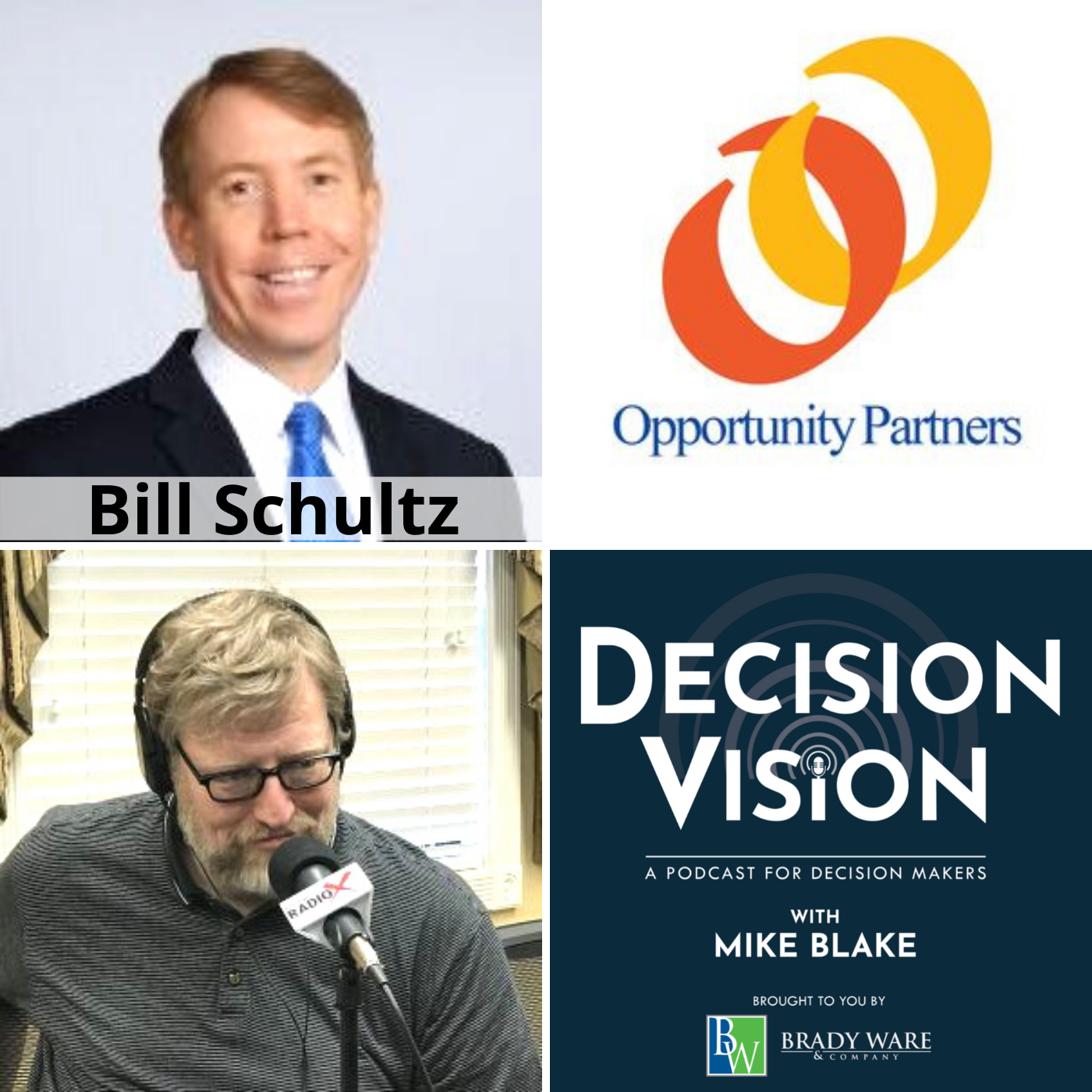
Decision Vision Episode 118: Should I Hire Someone with a Disability? – An Interview with Bill Schultz, Opportunity Partners

May 27, 2021 by John Ray

Opportunity Partners
Decision Vision
Decision Vision Episode 118: Should I Hire Someone with a Disability? - An Interview with Bill Schultz, Opportunity Partners
Loading
00:00 /
RSS Feed
Share
Link
Embed

Download file

Opportunity Partners

Decision Vision Episode 118:  Should I Hire Someone with a Disability? – An Interview with Bill Schultz, Opportunity Partners

In a conversation with host Mike Blake, Bill Schultz, CEO of Opportunity Partners, demystifies misconceptions businesses have about hiring people with disabilities. He explains why so many businesses, once they get past those misunderstandings and bring on someone with a disability, often expand such hiring. Decision Vision is presented by Brady Ware & Company.

Opportunity Partners

Established in 1953, Opportunity Partners is a Minnesota nonprofit organization that works alongside people with disabilities to provide job training, employment, and residential support for people to live more independently, succeed on the job and lead lives filled with purpose and meaning.Opportunity Partners

Opportunity Partners serves people with many different types of disabilities. Some examples include Autism Spectrum Disorder, Asperger syndrome, brain injury, Down syndrome, cerebral palsy, Fetal Alcohol Syndrome, and many others.

Company website | LinkedIn | Facebook | Twitter | YouTube

Bill Schultz, President & CEO, Opportunity Partners

Bill Schultz, CEO & President, Opportunity Partners

Bill Schultz was named President & CEO of Opportunity Partners in August 2020, after serving briefly as Interim President & CEO. Bill joined Opportunity Partners in 2015 as Executive Vice President, Business Development and Operations, overseeing all business services and production operations, identifying new products, processes, and services in community and center-based work.

Bill came to Opportunity Partners with more than 20 years of experience in a variety of business leadership positions and was drawn to the organization for its strong mission and history of making a difference in the community.

LinkedIn

Mike Blake, Brady Ware & Company

Mike Blake, Host of the “Decision Vision” podcast series

Michael Blake is the host of the Decision Vision podcast series and a Director of Brady Ware & Company. Mike specializes in the valuation of intellectual property-driven firms, such as software firms, aerospace firms, and professional services firms, most frequently in the capacity as a transaction advisor, helping clients obtain great outcomes from complex transaction opportunities. He is also a specialist in the appraisal of intellectual properties as stand-alone assets, such as software, trade secrets, and patents.

Mike has been a full-time business appraiser for 13 years with public accounting firms, boutique business appraisal firms, and an owner of his own firm. Prior to that, he spent 8 years in venture capital and investment banking, including transactions in the U.S., Israel, Russia, Ukraine, and Belarus.

Brady Ware & Company

Brady Ware & Company is a regional full-service accounting and advisory firm which helps businesses and entrepreneurs make visions a reality. Brady Ware services clients nationally from its offices in Alpharetta, GA; Columbus and Dayton, OH; and Richmond, IN. The firm is growth-minded, committed to the regions in which they operate, and most importantly, they make significant investments in their people and service offerings to meet the changing financial needs of those they are privileged to serve. The firm is dedicated to providing results that make a difference for its clients.

Decision Vision Podcast Series

Decision Vision is a podcast covering topics and issues facing small business owners and connecting them with solutions from leading experts. This series is presented by Brady Ware & Company. If you are a decision-maker for a small business, we’d love to hear from you. Contact us at decisionvision@bradyware.com and make sure to listen to every Thursday to the Decision Vision podcast.

Past episodes of Decision Vision can be found at decisionvisionpodcast.com. Decision Vision is produced and broadcast by the North Fulton studio of Business RadioX®.

Connect with Brady Ware & Company:

Website | LinkedIn | Facebook | Twitter | Instagram

TRANSCRIPT

Intro: [00:00:01] Welcome to Decision Vision, a podcast series focusing on critical business decisions. Brought to you by Brady Ware & Company. Brady Ware is a regional full service accounting and advisory firm that helps businesses and entrepreneurs make visions a reality.

Mike Blake: [00:00:21] Welcome to Decision Vision, a podcast giving you, the listener, clear vision to make great decisions. In each episode, we discuss the process of decision making on a different topic from the business owners’ or executives’ perspective. We aren’t necessarily telling you what to do, but we can put you in a position to make an informed decision on your own and understand when you might need help along the way.

Mike Blake: [00:00:39] My name is Mike Blake, and I’m your host for today’s program. I’m a director at Brady Ware & Company, a full service accounting firm based in Dayton, Ohio, with offices in Dayton; Columbus, Ohio; Richmond, Indiana; and Alpharetta, Georgia. Brady Ware is sponsoring this podcast, which is being recorded in Atlanta per social distancing protocols. If you like to engage with me on social media with my Chart of the Day and other content, I’m on LinkedIn as myself, and @unblakeable on Facebook, Twitter, Clubhouse, and Instagram. If you like this podcast, please subscribe on your favorite podcast aggregator, and please consider leaving a review of the podcast as well.

Mike Blake: [00:01:12] So, today’s topic is, Should I hire someone with a disability? And in a way, this is an extension of the previous week’s topic, Should I hire somebody with a criminal background or somebody with a prison record, I forget what the actual title was, but you get the drift. And the same sort of concepts applies that we find ourselves in an unusual, if not unprecedented scenario in the workforce where we’re finding ourselves in a shortage of workers. And although this is being felt most acutely in the hospitality sector, it is not limited to that.

Mike Blake: [00:02:03] Over the course of the last 18 or 17 months or so, I think our society is redefining our relationship with work. I think at a micro and macro level, many of us are readdressing priorities. And I think we’re asking ourselves the question, is it worth it? You know, is it worth the effort and the expense to have a two income family? And I think with people now that have had an opportunity, whether they wanted it or not, to work-from-home or withdraw from the workforce for a while in order to meet their family obligations.

Mike Blake: [00:02:50] You know, I think this goes beyond more than simply the more generous unemployment. I think people are simply asking themselves, you know, was it really worth the extra income to give up what I gave up in terms of being with my family, and building the home that I want, and doing other things in my life. I think the answer that some people are giving is no. And some people, I think, are going back to school and they’re retraining for a job they think will suit them better. And I think others will simply exit the workforce on more or less permanent basis, certainly not coming back full time.

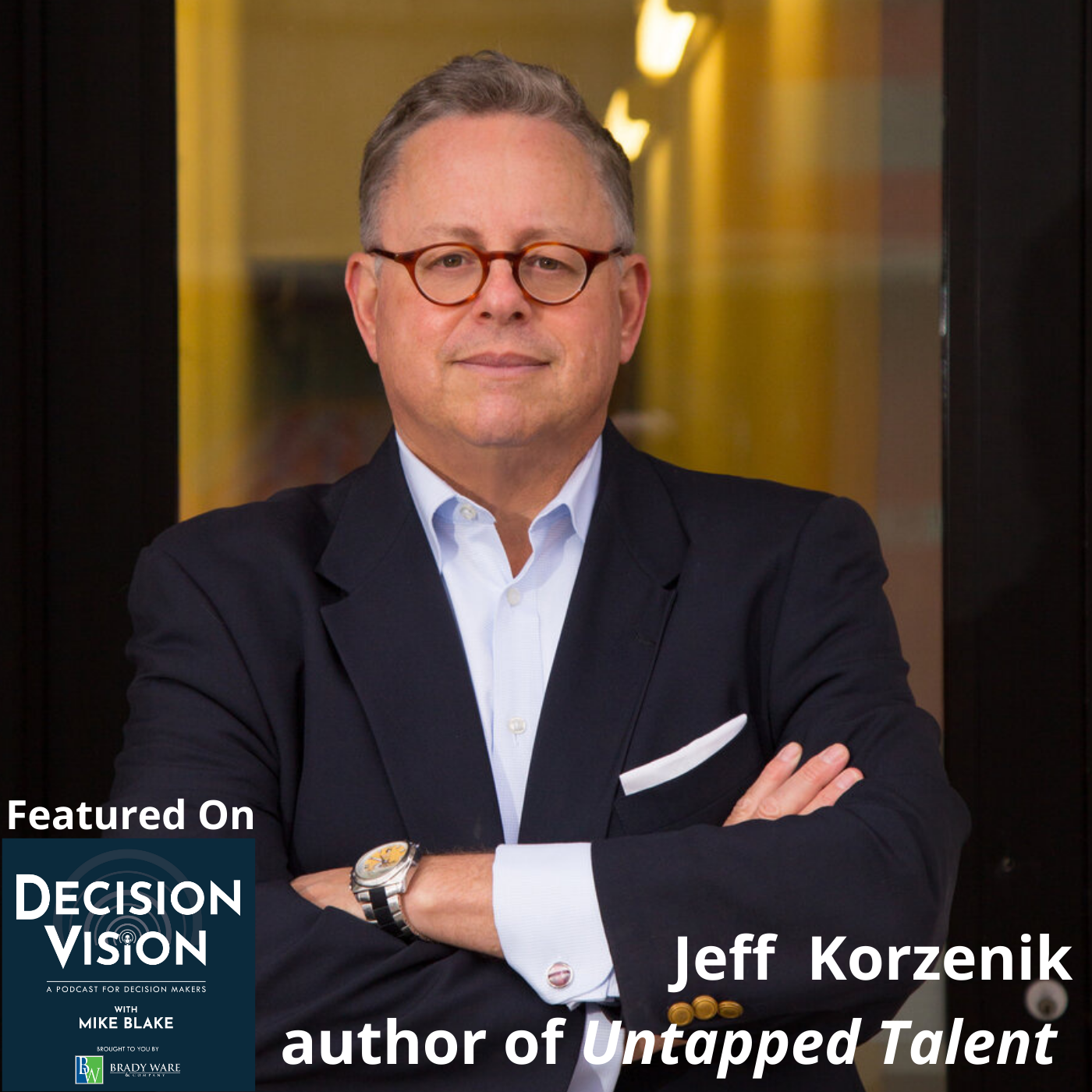
Mike Blake: [00:03:26] And as our previous guest, Jeff Korzenik, indicated – I thought that was a very astute observation – the size of the American labor force had already been exhibiting decline since 2010, maybe a little bit earlier. And as so many things in life, coronavirus simply accelerated trends that were already underlying. And so, we’re now finding ourselves as an economy and a scenario in which labor just is not available and plentiful the way that we are used to being. I am 51 years old and I cannot remember a scenario under which it was just so difficult to hire. I’ve been through tight labor markets for sure. But this is a different animal.

Mike Blake: [00:04:14] And so, as a result, I think that decision paths that people would not have ordinarily considered, for example, hiring someone with a criminal record and, in the case of our topic today, should I hire somebody with a disability. I think, whereas employers would just simply not have considered that or not have given as heavy consideration to it. I think we’re now at a point in our economy where, if you want to run your business the way you like to run it, if you’d like to be as profitable as a way and you’d like to grow it, you simply cannot afford to decide right off the bat that you’re not going to consider large segments of the population. And that’s not ideology, that’s just simply arithmetic. When the music stops, there just are not enough chairs to go around. In this case, not enough workers to go around for employers. And, again, we’re just not used to seeing that.

Mike Blake: [00:05:15] So, this is an extension of that topic. Again, I hope you’ll agree it’s a relevant topic. And for those of you maybe who have wondered about hiring people with disabilities, maybe how you do it, whether it makes sense to do it, or maybe you agree with me and you decide, “You know what? I need to -” even if I wasn’t discriminating against the disabled, maybe I wasn’t being intentional about doing it. You know, here’s a stone that can be overturned that may yield some great opportunities. And the goal is to help you explore whether or not that’s the right path for you. And if it is, then what is the best way to pursue that?

Mike Blake: [00:05:50] So, joining us today is Bill Schultz, who is President and CEO of Opportunity Partners. Established in 1953, Opportunity Partners is a Minnesota nonprofit organization that works alongside people with disabilities to provide job training, employment, and residential support for people to live more independently, succeed on the job, and lead lives filled with purpose and meaning. Opportunity Partners service people with many different types of disabilities. Some examples include autism spectrum disorder, Asperger Syndrome, brain injury, Down’s syndrome, cerebral palsy, fetal alcohol syndrome, and many others.

Mike Blake: [00:06:28] Bill joined Opportunity Partners in 2015 as Executive Vice President, Business Development and Operations, overseeing all business services and production operations, identifying new products, processes, and services in community and center based work. Bill came to Opportunity Partners with more than 20 years experience on a variety of business leadership positions and was drawn to the organization for its strong mission and a history of making a difference to the community. Maybe we should have had you on our podcast that will be publishing soon on transitioning to nonprofit. And, Bill, I believe you became CEO last year, 2020. Bill Schultz, welcome to the program.

Bill Schultz: [00:07:04] Thanks, Mike. It’s great to be here. Thanks for having me.

Mike Blake: [00:07:07] So, Bill, let’s start off easy. I’m sure this is a question that you could answer in your sleep. You must face it all the time. And that question is, make the case that hiring somebody with a disability is a good business decision, not just simply a good social decision.

Bill Schultz: [00:07:26] Right. And I think you made a strong argument. One, just the necessity right now of looking into non-traditional pools that employers might look at. And this is a group that’s often overlooked. And people with disabilities want to work. It’s the vocation that’s in the DNA of our organization. It was started by a group of parents that wanted to have work for their children. So, they bought a house in the small town in Richfield, Minnesota. Why not work with local businesses and brought back work. And then, a few years later, they placed their first person in the community.

Bill Schultz: [00:08:02] Because people want to feel normal and often somebody with a disability is ostracized that way and thought of that they can’t. And we just need to understand they have a wide range of abilities and we need to understand what support they need. They’re not different than you or me. We all have skills and can really thrive if we’re supported in the right way. So, these folks are very loyal. They’re great workers. They care. They can be great teammates.

Bill Schultz: [00:08:33] One of the fun things, too, that we’ll hear is, it also boosts the morale of the other folks that work there. You know, sometimes there’s an individual, sometimes there’s more than one. And I think it’s a feel good thing. And people get to know them and it demystifies people with disabilities because some people will be uncomfortable around them. And once they get to know them as a person, that goes away. And they’ll learn what their interests are and they’ll laugh with them. And it just boosts things that I’ve heard that from employers, that this is an unexpected benefit that we’ve had.

Bill Schultz: [00:09:12] And there’s also some that, you know, you’re going to have other workers that might have a child with a disability, it also gives them some hope because, “Hey, look. There is a future for my child.” Because they may be worried about that and what does the future hold for them. So, those are some things.

Bill Schultz: [00:09:29] But, you know, for the business owner or the manager that is running that storefront, it’s, “I need somebody. I need somebody that’s going to be reliable”, that can get there, they can coach and can do that. There’s other things, too, that we place a lot of people because we’re having a lot of wage pressure. That, I don’t want to pay someone this higher rate to do something more routine or that employee might not want to do these routine things that someone with a disability might really thrive on.

Bill Schultz: [00:10:01] Some people with disabilities in it, we have such a wide variety of diagnoses and just a wide range of individuals and what their characteristics are. They might really thrive in that. So, where one employee might say, “This is really mundane and I don’t enjoy this.” Someone with a disability might find this very rewarding and be very good at it. So, they can parse out those jobs and focus those other individuals that they’re may be paying a higher wage on those higher skilled areas. And let someone with a disability do other things. Like, whether it’s picking up boxes and having them recycled, moving different things about. There’s such a wide range of duties that we do. And those are just some of the benefits, I think, of hiring someone.

Mike Blake: [00:10:45] Now, you brought up something I would not have thought of in a million years. But my observation certainly bears it out. At least Americans love a story where somebody overcomes a disability, to overcome something, right? There was something on the news recently about, I think, a golfer with Down syndrome that is having some success. And it seems like every other month is a great story in ESPN. You know, somebody that maybe was the 15th person on the basketball team had a mental disability and they put them in sort of at the end of the last game of the season or something. And everybody sort of goes berserk.

Mike Blake: [00:11:29] There is sort of that element in contrast with the prior show that we did – I guess really two shows, not last show – on, you know, should we dip into the pool of people with criminal records. You know, there are people that they did something to earn that or to receive that distinction. Whereas, as opposed to people that are handicapped or are disabled, chances are very good that they did nothing to do that. You know, they’re are born with, generally, bad luck, basically. And there’s a very different attitude towards that. And I can see how, under the right circumstances, under the right leadership, that somebody who is disabled on a team can actually become a rallying point.

Bill Schultz: [00:12:25] Absolutely. The other thing is, these folks are really genuine. They’re curious about you. There’s no pretense with individuals. They want to get to know you. And it’s another thing that people, once they get comfortable – and, again, some people are just uncomfortable because they’re unique. And our organization will do training for people and just talk through it. And that really allows people to relieve their anxiety and build that relationship with that person and help support them in their role. Because they’ll need support like anyone else. And one of the things that we’ve seen where people are really successful.

Bill Schultz: [00:13:04] So, we offer job coaching. And that’s one of the things that employers should know, too, that whatever state you’re in – we’re in Minnesota – most states are going to have organizations like Opportunity Partners with job development and they come with a job coach. So, this is a free support that comes with this individual that the business doesn’t have to pay for. And they can help with onboarding and they can help with training. We go out those first few days, we’re there the full shift with them, helping them get onboarded. We’ll create checklists for them. Talk with the manager about getting to know. Because everyone’s different and they’re going to have different behaviors and things like that. So, that’s just a real benefit for someone to onboard that individual and help them be successful. And, also, demystify even for other employees on how to interact with the individual.

Mike Blake: [00:13:54] You know, I’m curious about one thing, because your organizational profile says you work with people who are on the autism spectrum and have Asperger Syndrome. What, if anything, was the impact of Elon Musk’s Saturday Night Live monologue in which he disclosed that he indeed has Asperger’s Syndrome? Is that bringing conversations to you? Is it changing conversations? Too early to tell? What do you think about that?

Bill Schultz: [00:14:24] I thought it was great. And, you know, just the buzz around it that, again, it’s just making it more acceptable and letting people know. There’s so many people with disabilities and we have a wide range of abilities. And everybody you work with, there’s likely someone with something that’s challenging them. The folks we support, you know, are just more parent, more obvious, so it’s visible. And Elon just normalized it for people. And also say, “Look. Look what I can accomplish. And I’m on the spectrum.”

Bill Schultz: [00:15:00] And people with autism spectrum disorder, also Asperger’s, which is just typically higher functioning, are wildly successful. And technology firms are discovering this, and there’s lots of them that are reaching out to this pool. Because with some minor modifications like, you know, often a technology office will have a wide open workspace. This individual might have some sensory issues where they need even an office or high walled cube, but they’re fantastic at coding or they’re fantastic at software analysis. I mean, things that other individuals wouldn’t pick out.

Bill Schultz: [00:15:37] So, again, just a wide spectrum of people that come to us, we’ll place them in technology jobs or different things like that that are well suited for their skills and where their interests lie. But there’s also, you know, a lot of traditional programs like post-secondary education isn’t well suited for people on spectrum, so they fall through the cracks. And there’s just such a wide group of underemployed, talented individuals that we really need to figure out a way to support and get them trained. And then, educate employers on how to bring them onboard and help them be a valuable asset.

Mike Blake: [00:16:12] And I can actually attest to that. I have a relative who has been diagnosed of Asperger’s Syndrome and he, in fact, is a software engineer. And they do make accommodations for him. Not overly heavy in my mind, actually. But he is fantastically successful and they’re just never going to let him go. And the good news is that, people with Asperger’s syndrome don’t particularly like change either. So, it’s actually a scenario that works extremely well for them. So, I can tell you this from my own experience of somebody who has weaknesses related to disability elsewhere, interpersonal reactions, relations, that sort of thing. But in terms of his ability to produce code, I mean, he’s a parent. I’m not an engineer, but for all accounts, he’s not good. He’s great.

Bill Schultz: [00:17:08] Yeah. That’s not an uncommon story. Businesses have to be open to it. I think one of the big miss out there is, there’s a liability or there’s expensive accommodations that need to be made. And that’s just not the case. So, I think it’s just learning. You know, obviously, a business owner can just dip their toes in the water and go and talk with an organization and learn more and meet some of the individuals. And, really, I think, get comfortable with that.

Bill Schultz: [00:17:40] I think one of the biggest things is, we support people with the job coaches so we can help people, we can help train them, and be that gap. And maybe people are worried about disciplinary things. We can come in and have the meeting with the manager and the individual and work through challenges if that becomes a thing. Or, “I can’t fire this individual.” “Well, yes, you can.” That’s not a worry. And we can help with that, too. And other organizations will do the same thing. Typically, it’s a process like anybody else, right? You sit down and kind of talk over. “Well, you’re not doing this or we had this incident. We can’t do that.” And we work through improvement.

Bill Schultz: [00:18:18] And one thing that goes back to the point you made earlier, just the challenge. We’re actually finding employers be a lot more tolerant and give more tries on things because of the challenge. And they see that this individual is trying. And it’s just something that we need to work through and help them understand, because it’s often just something new that comes up that was kind of unexpected. And we help them sort through it. So, I think a big thing is just thinking that there isn’t a liability. And, you know, it’s not expensive to bring on one of these people. There’s not a lot of accommodations that you have to make that are going to be hard for the organization to support.

Mike Blake: [00:18:59] So, obviously it’s important to the individual, it’s important to society, and can be a benefit to a company to hire somebody with a disability and give them a job, make them productive, et cetera. Do governments offer any special incentives that you’re aware of to hire somebody who’s disabled? Are government’s helping offset training costs or hiring costs or wages or anything like that that you’re aware of?

Bill Schultz: [00:19:26] Yeah. Well, I know the state of Minnesota does. There’s a tax break for employers that do. So, I just recommend a business owner go out, I think it’s $9,600 a year in tax break, no matter the number that they hire. So, I would just recommend that they reach out to their Employment Economic Office of their state and look and see if they’re doing something similar. We even have counties within Minnesota, too, that will offer something on top of that. So, you can even check with the county in which your business is and see if they’ll offer some kind of grants. Sometimes it’s for onboarding and they’ll be like onboarding grants and then a retention grant that they’ll get a couple of cash payments for.

Mike Blake: [00:20:11] I’d like to ask a question that popped up. And this may be an unfair question, but I think you can handle it. And that is, I have an observation that coronavirus, in effect, made some employees effectively disabled. Not necessarily from a mental standpoint, although that may be the case, but I think they simply became impaired because of demands that were placed on them outside the workplace, simply did not allow them to be their best selves at work, as they ordinarily would have been.

Mike Blake: [00:20:44] And frankly, I am one of them. My work life balance has changed as I have become a homeschooling father and tried to help my wife realize her goals of starting her business. And that just means I cannot work 15 hours a day and accomplish those things. I really can’t work 12 on a regular basis, frankly.

Mike Blake: [00:21:04] And, you know, as I think about our organization and people that have had to kind of step back and others have covered for them, I kind of wonder if the coronavirus experience maybe has made us collectively a little more understanding of individual people’s limitations. Those limitations may happen because of an actual disability that they have or the limitations may be environmental, but the net impact is the same, I think.

Mike Blake: [00:21:36] I’m curious if you think that maybe coronavirus and just seeing lots of people have had their lives upended and, therefore, they’re not able to be their best professional selves. Do you think that’s led to greater empathy towards the disabled that have kind of had to live with having a different baseline, if you will, of performance than their peers?

Bill Schultz: [00:22:00] Yeah. I think it’s probably a mixed case and it kind of depends on the individual, not the disabled individual, but the other individual. Because what I’ve seen from coronavirus is, and to your point, it can make people more empathetic to others and the challenges that they’re facing and see that. But I’ve also seen fatigue with corona and a lot of people hitting the wall and saying, “I’ve already got so much capacity, I need to do a little self-care. And I need to dial back a little bit on how I’m supporting others.” So, I’ve seen a little bit of both of that.

Bill Schultz: [00:22:41] So, I think one thing that’s helped us a little bit is actually some of the social unrest that we’ve seen with some of the different – well, In Minnesota, specifically with George Floyd and Daunte Wright right. But it’s across the country, unfortunately. That we’ll see a lot more talk around diversity, equity, and inclusion. And some organizations will put people with disabilities in there. And we’re trying to get more people to think about that, because I think that’s really an important thing to help open people’s eyes more so.

Bill Schultz: [00:23:20] Then, COVID is creating, “Oh, my gosh. I’m not thinking about that.” And that’s something that we, as an organization, should really think about, is, how do we do this? Because when they’re trying to do a diversity, equity, and inclusion, it shouldn’t be to do check boxes because they see the value that these individuals bring in different life experiences. And they’re going to add value or they’re going to make the organization stronger.

Bill Schultz: [00:23:41] I equate it to the United States. I think one of the reasons we’re so strong is we’re not homogeneous. We’re a melting pot of people from all over with brilliant entrepreneurs from around the world. And it makes us a great country. And I think a diverse organization, you’re going to get the same benefit. And seeing that being pushed forward, I think, will help people open up to people with disabilities and think of them as that way, too. And, of course, people that have intellectual developmental disabilities or physical disabilities come in all colors as well.

Mike Blake: [00:24:20] Sure. So, you’ve been with this organization for six years, presumably, or five years and change, maybe, I’m not sure the exact months, but are you aware of any data that measures how well disabled or employees with disabilities have performed relative to their peers that do not have such disabilities? They tend to perform as well, a little worse, a little better, pretty much the same? In your experience, kind of what have the results been?

Bill Schultz: [00:24:55] Yeah. I don’t know if there’s analytics around it, but I can say that the best way to equate it is all around individuals. And I’d say, by and large, they’re generally the population. They have people that are great and people that have different struggles and just need to find the right fit. Sometimes they go into one specific job and, you know, you might try out that, “I want to be a lawyer, but, gosh, I’m a terrible lawyer. And, really, I want to go be a chef.” So, it’s the same kind of thing of finding the right fit for the individual, whether they have a disability or not is really where we see it.

Bill Schultz: [00:25:28] We do see more employers opening up, so we’re definitely seeing a huge impact or a huge growth with people being placed on the community. So, that’s certainly in the data. And we see more and more of it. There’s just more demand. And we really are working with individuals to find that. And now, obviously, with employers. Obviously with COVID, a lot of businesses shut down and some jobs were lost. But that’s reboundingly crazy, like it is around the country.

Bill Schultz: [00:26:06] Especially, so we place a lot of people in, like, fast food, or dishwashers, or housekeeping, cashier stocking. I think one thing you’ll see a trend of that’s higher in someone with intellectual developmental disability than maybe your typical person that might be in this position is longevity. So, that’s one attribute that I think you’re going to see more loyalty there. And you also see a lot of reliability.

Bill Schultz: [00:26:36] I think one thing that employers need to understand and to think about is, typically, the folks we place don’t work eight hours a day. There can be income limits based on their benefits. And that’s something that the employer can always work with a job coach and say, “How many hours can this person work?” Because there’s often a misunderstanding by the person that has a disability or their guardian and to which how much they can make. So, maybe they can work 32 hours a week, and they just need to work through that.

Bill Schultz: [00:27:07] The other thing is, a lot of our folks don’t necessarily drive. Some people do. It depends on where they are within that range of ability. So, they’re taking public transportation or sometimes the state has a transportation, and that system can have some tolerance to it that, you know, they might have to show up a little bit early or a little bit late.

Bill Schultz: [00:27:29] And just so the employer educate themselves as to what’s happening. So, an appearance doesn’t look like, “Oh, my gosh, this guy is late again.” And it could be that, you know, he’s setting up a ride with the local state agency and those drivers, they got to figure out the route or whatever it is. So, they can talk with that job coach and really help sort those things out. So, I think something just for people to be aware of is, typically they’re going to be part time. I would say on average it’s 20 hours a week. But that can be also really helpful.

Bill Schultz: [00:28:03] Because a lot of times, you know, if I’m at a fast food restaurant, my busy shifts are this window. And I only want you to work this hour and these hours. And I don’t need you otherwise. And most of the folks aren’t going to ask for benefits because they’re getting the benefits. So, that can be a benefit for some business owners.

Mike Blake: [00:28:26] So, is there anything that the disabled tend to bring to the table because of their experience, their life experience, that may distinguish them from more conventional job candidates. And you mentioned longevity as one. Are there other ways that, in some ways, maybe hiring somebody with a disability may result actually in a superior employee on average?

Bill Schultz: [00:28:57] Yeah. I think, again, we’re just talking about individuals. So, there’s a wide range of that. But, again, I think the one thing that you might see is, some of the tasks that someone you’ve hired off the street is really not very productive at it because they’re really bored with it. And so, they’re going to be slower. Where you can bring in someone with a disability that they gravitate to that responsibility and they’re going to be just incredible at it.

Bill Schultz: [00:29:26] We also do what’s called support employment teams, where we’re the employer of record. And a lot of other organizations will do this. We call them support employment teams. Lots of organizations call them enclaves. So, they come to a business. The organization will be paid by the business. And then, we pay those individuals. But we show up and do the work.

Bill Schultz: [00:29:48] And we work, for example, at one of the plants for General Mills here in the Twin Cities. And this is hard work. So, we’re repackaging and making mixes for baked goods, frozen baked goods. So, it’s a cold environment, fast paced, heavy boxes. And you go in there and they are replacing temps that they hire with us. Because the quality of temps, we outperform them and we’re more reliable. So, all of those things can be attributed to someone that they hire an individual. Because it’s well suited. The folks that are there work really hard. And I mean, Mike, if you went there, you would be exhausted. And were there six hours a day, five days a week. So, I think those things are just considerations for businesses.

Mike Blake: [00:30:39] So, you mentioned something that I’d like to dig a little deeper into, because I think it’s important. And you tell me if it’s not, obviously. But one sort of subtext of what you’re describing is that many employees with a disability have a a support system around them that deeply wants them to succeed in that job. I mean, that’s their purpose in life. You ain’t doing it for the money. You’re doing it because you think it’s important, I’m sure. And your colleagues think that it’s important.

Mike Blake: [00:31:18] And, you know, there are a lot of nondisabled employees that would benefit from the same thing. That would benefit from focus, and paying attention, and showing up to work on time, and basic rules, and also work etiquette. And, also, when things aren’t going well, how do you you sort of handle that? Who do you vent to, et cetera? And it just strikes me that the benefit of having just that kind of support structure must be a massive advantage.

Mike Blake: [00:31:55] Imagine if as a manager, you know, if I had an employee that I wanted to cultivate and keep on the right track, in a professional sense, I would love to go home with that employee and sort of be around them 24/7 or have my structure around them 24/7. I cannot. But somebody with a disability may very well have somebody like you in your organization that does that. And what an awesome benefit.

Bill Schultz: [00:32:23] Yeah. True. I mean, to your point, there’s two things. One, so we’ll place someone in an organization and the manager will see what we’re doing for that person. We bring along. We help them onboard. We’ll go in and check on them occasionally. We’ll check with the manager. How are things going? What do we need to work on? What do they need to work on? Help the manager understand the individual and how to best coach them. If something comes up, we’re there.

Bill Schultz: [00:32:50] And we’ve had managers say, “Hey, I’ve got this person that could maybe use your services or the services.” So, within the the state of Minnesota, that individual just needs to go to the unemployment office – what is it? – Extended Employment Office here and demonstrate the need, whether it’s a disability or just the need for support, and they can often qualify for a certain number of hours of service to help that. So, that does happen.

Bill Schultz: [00:33:22] And we, obviously, offer support for people that are living in their home. So, it’s not just employment, but they need help organizing their bills. Because we’re trying to keep people in their homes. That’s the most cost effective way for a government. You know, if someone’s not living in a house or an apartment program where they’re paying paying a higher rate for that. So, we do a lot of that support as well. Just whether it’s socialization, managing their medical appointments, medications, bills, all those different things. You know, we try to encompass the full life, if that’s needed for the individual. Just help them be successful. Just a little bit of coaching and support goes just such a long ways in making that individual successful.

Mike Blake: [00:34:02] As an aside, I just have to say, you said something about how important it is to keep people in a home. I’ve read numerous studies that the biggest inflection point to preventing sort of a disastrous social outcome is making sure people stay in a home. Because once somebody is homeless, it’s at least ten times harder to kind of reverse that and get them off that track. So, good for you on that.

Mike Blake: [00:34:30] So, I’m going to change tack on the question here, because I want to cover both sides of this issue here. And what I want to ask is, what defines or what characterizes an organization that maybe is not a good fit for somebody with a disability? And I’ll preface this. That may be a confusing question.

Mike Blake: [00:34:58] So, to make it a little bit clearer, you know, I’m sure that you don’t have 100 percent or 1,000 batting average. You don’t have 100 percent success with every candidate. And I’m sure that in every case where there has not been success, I’m sure it has not always been the candidate’s fault. There may be some organizations that simply don’t have the infrastructure, culture, understanding, whatever it is, to properly onboard, manage, and cultivate somebody with a disability.

Mike Blake: [00:35:29] So, that’s a long winded way of simply getting to the question of, you know, what’s a warning sign of an organization that might have some work to do on itself before it really would be a good place to find a professional or a working home for somebody with a disability?

Bill Schultz: [00:35:47] Sure. I kind of see that in two questions. So, I want to answer the first part. I think when you’re looking at an individual with a disability and what might not be a good fit, it’s like any position you’re going to hire for anyone. And does that individual have the right skillset to meet the needs of the job? Because you could hire somebody and it’s like, “I need you to be an engineer.” And if they don’t have a background in engineering, they’re going to fail.

Bill Schultz: [00:36:14] So, if you’re going to hire someone with a disability that maybe has a mobility issue, and you’re in a warehouse environment with forklifts flying around, and they might be crossing that traffic, that might not be a good fit for the individual. But there’s also going to be a job coach that’s going to say, “Yeah. Probably not a good fit for this individual.” So, I think that’s one thing, is just, it’s going to depend on that person.

Bill Schultz: [00:36:39] One of the things that we’ve seen where, I think, businesses are successful with, one, having an open mind and flexibility around the individuals. And we see this grow over time because businesses will try to, typically, be either jaded. They had a bad experience, and it didn’t work out, and they won’t give it a second try. It’s just like, if I had a bad employee, I’m not ever hiring another employee again. But that’s not going to work for your business.

Bill Schultz: [00:37:02] So, I would say, you know, open your mind and just work with that organization, the job coach, to understand what it needs to support that person. Because we’ll see that be successful. And then, that business will hire more because they can see the success in it.

Bill Schultz: [00:37:20] Another area, this is an example of a fast food, where we have someone working at a well-known fast food place and wildly successful. This individual has some specific behaviors that would be triggered. But the manager understood those. He knew how to de-escalate things. It never happened in front of customers, but they could handle it well. Well, this manager went on vacation. They had somebody come in somewhere else. This person had that trigger. It showed that behavior to that manager. And the manager said, “This is intolerable. You’re fired.” So, they fired somebody that worked there for years just because they didn’t understand.

Bill Schultz: [00:37:57] So, there wasn’t proper training on the hand over is one thing that we’ll see where you’ve got a good employee, they just act in a unique way in certain situations. And that person knew how to handle it and this person didn’t. And the way they reacted was to terminate the employee.

Mike Blake: [00:38:14] So, that’s interesting. So, it sounds to me that, in particular, if you are an organization that maybe doesn’t have a lot of experience or history with hiring people with disabilities, it may be a good idea to pave the way for that with some sort of training, I guess, right? Because you do have to manage differently. You may even need to alter your culture to some extent.

Bill Schultz: [00:38:42] Yeah. We’ll do training. Sometimes they’ll just want to have the direct manager do it. We also did a grant initiative to help understand where are some of the barriers. And one of the things we learned that’s really helpful – and maybe you’ve had this experience – so you go on to a new job and you’re trying to figure out things. Where’s the coffee maker? What’s the culture like? What if this happened? And your relationship is just with your manager, and you want to have that relationship.

Bill Schultz: [00:39:13] So, if you can bring on somebody with a disability and it goes with any employer and have like a mentor for them that’s not their manager, they have someone to go to, you know, they can ask any kind of question to and also just another support for the individual. That really help them be successful.

Bill Schultz: [00:39:29] One of the things we also did was, we had funding where we paid the wages. So, one of the biggest barriers is employers haven’t done it. And there’s a risk of, “Oh, I don’t want to do this.” So, we would say, “Okay. Here’s, basically, an internship and we’re going to pay the wages for this individual for three weeks. You try it.” It doesn’t work out, they just walk away. And we had, I think, 80 percent of the people were hired after those three weeks.

Bill Schultz: [00:39:57] So, it’s just getting over that initial concern. And, really, we need to demystify that, if you hire someone with disability, you can’t fire them because of discrimination. That’s just not the case. And, again, usually the organization is going to come with a job coach. I would certainly recommend that. I think it just is going to make the individual and the business successful. And they can help you remove that person if it’s just not going to be a right fit, and they can find something else.

Mike Blake: [00:40:24] What’s a favorite success story that your organization has had with an individual that it’s just been a great experience? Maybe you have a ton of them you can’t pick, but I hope you can pick one because I would like to give our audience an understanding kind of what the ceiling looks like.

Bill Schultz: [00:40:42] Well, holy cow, there’s such a wide range. We have somebody that’s a certified nurse assistant at the VA. I think that’s been a real success. We placed people, again, with autism and maybe they don’t need as much support, in technology jobs. And, you know, it’s funny because they’re making way more money than their job coach is making, which is fine.

Bill Schultz: [00:41:08] I think one of the success stories that I like is, we have a lot of people that come to us just for job development and will go out in the community. We have other people that come – we have locations – and they’ll come to us for work and they work for us or they come for enrichment. And we had somebody that came in to us, really severe autism, and basically wouldn’t even make eye contact with people, and just had his nose in a book. A big guy, he’s like 6’4″, a couple hundred pounds, not very verbal. And we just worked with him over the years. And he wanted to work. His dream was to work at Potbelly was really his goal.

Bill Schultz: [00:41:48] And we worked with him and just slowly developed these skills where he could interact with people and got him, you know, more and more skills. And then, we were able to to get him a job at Potbelly, where he worked cleaning the area where you eat. So, that’s just one of the great stories, I think, because it just shows anybody with the right support can be successful. It just depends on where they’re starting from. And that was just a great story to see because he came through so many challenges. And the perseverance of our team to get him there and fulfill his goal of working at Potbelly was really exciting.

Mike Blake: [00:42:25] We’re talking with Bill Schultz, who’s President and CEO of Opportunity Partners. And the topic is, Should I hire someone with a disability? So, another question I’m sure that our audience would like to get an understanding of is, what are some best practices in terms of working with an employee with a disability? We talked sort of in generalities in terms of being flexible. I’m sure patience is part of it. But I think those are features of a company. But in terms of best practices and for day-to-day management to maximize that person’s value and performance, do you have any best practices you can share?

Bill Schultz: [00:43:11] Sure. I think that the biggest thing is, they’re coming with a job coach. Be open with the job coach. There’ll be some different corporate policies that, either we wouldn’t be able to access their schedule or get access to them on site or talk with their manager, because I think that’s just so successful. We can say, “Here’s John, and John’s going to have these kind of behaviors or challenges. And this is how you might handle this situation. What are the things you want, John, to do? Let’s go over that.” They will develop that checklist for the individual and work with them on those things.

Bill Schultz: [00:43:45] Then, say, “Okay. If John’s going to have downtime, how does he handle downtime?” Because John might not know what to do if there’s not. So, he needs some kind of direction. So, they’ll work through those learning things. So, I think it’s really important to know that working with a job coach is just going to steepen your learning curve so much and make that individual and that business more successful in doing that.

Mike Blake: [00:44:11] Kudos to you, by the way, for using steeping the learning curve correctly. Most people don’t. That drives me crazy. So, well done. You get a Decision Vision gold star. So, you’re in Minnesota, do you work across the country or are you regional? And if so, are there other organizations in different parts of the country that can help with more localized potential opportunity matches?

Bill Schultz: [00:44:40] Yeah. As a matter of fact, we’re just in Minnesota, but there are all kinds of organizations just like ours across the country, great organizations. They can just search disability organization and they will find those. You know, Google will be their friend.

Mike Blake: [00:44:59] Now, we talked a little bit about, you know, what kind of environments may not be optimal for hiring somebody with a disability. And I’m curious, I think a lot of us, just because they’re visible, we tend to associate the disabled with food service, hospitality, retail to some extent. Is that by accident or are there certain industries that tend to be a better match than others?

Bill Schultz: [00:45:31] Well, those are pretty common. It’s across the board, though. You know, it’s retail. We have an I.T. tech specialist that works for the Minnesota Department of Health. We have people that work for the Transportation Department. We have people that work at Lane Bryant or a rehabilitation center, retirement communities. Boy, it’s all over the place. But restaurants, convenience stores, stocking, manufacturing is really pretty common, so all kinds of different manufacturers, industrial things, where there usually is some kind of support. And, again, doing those tasks that they don’t want to have those higher paid skilled workers doing so they can off board that work and really focus those people on doing those things.

Mike Blake: [00:46:30] Bill, we’re running out of time and I have questions I’d hope to ask, but we’re not going to get to. But if somebody listening has a question that they want to address or maybe go deeper than we are able to in a question we did cover, are you willing to talk to them? And if so, how can people contact you for more information about this topic?

Bill Schultz: [00:46:48] For sure. Just have them reference my name Bill and email at info@opportunities – that’s plural – .org.

Mike Blake: [00:46:57] Very good. Well, that’s going to wrap it up for today’s program. I’d like to thank Bill Schultz so much for joining us and sharing his expertise with us.

Mike Blake: [00:47:05] We’ll be exploring a new topic each week. So, please tune in so that when you’re faced with your next business decision, you have clear vision when making it. If you enjoy these podcasts, please consider leaving a review with your favorite podcast aggregator. It helps people find us that we can help them. If you like to engage with me on social media with my Chart of the Day and other content, I’m on LinkedIn as myself and @unblakeable on Facebook, Twitter, Clubhouse, and Instagram. Once again, this is Mike Blake. Our sponsor is Brady Ware & Company. And this has been the Decision Vision podcast.
 

Tagged With: Asperger syndrome, Autism, Bill Schultz, Brady Ware, Brady Ware & Company, disabled adults, intellectual and developmental disability, Mike Blake, Opportunity Partners

Decision Vision Episode 117: Should I Work for a Non-Profit? – An Interview with Elisa Goodwin, Mission: Hope, and Stan Dawson, Retired from Crossroads Community Ministries

May 20, 2021 by John Ray

Crossroads Community Ministries
Decision Vision
Decision Vision Episode 117: Should I Work for a Non-Profit? - An Interview with Elisa Goodwin, Mission: Hope, and Stan Dawson, Retired from Crossroads Community Ministries
Loading
00:00 /
RSS Feed
Share
Link
Embed

Download file

Elisa Goodwin

Decision Vision Episode 117:  Should I Work for a Non-Profit? – An Interview with Elisa Goodwin, Mission: Hope, and Stan Dawson, Retired from Crossroads Community Ministries

If you’re a corporate executive or business owner thinking about a second stage in your career working at a non-profit, this episode is for you. Elisa Goodwin, current CEO of Mission: Hope, and Stan Dawson, retired Executive Director of Crossroads Community Ministries, discuss their experiences with host Mike Blake, the myths of working for a non-profit, and much more. Decision Vision is presented by Brady Ware & Company.

Elisa Goodwin, President/CEO, Mission: Hope

Elisa Goodwin, President & CEO, Mission: Hope

Elisa Goodwin is currently President/CEO of Mission: Hope, an Atlanta-based, international non-profit serving through local leaders in the world’s most remote villages to build sustainable solutions to their most urgent issues. She has spent the last 15 years in nonprofit service. Prior to that, she was a bank executive in small business banking and retail for more than two decades. For those considering for-profit vs. non-profit careers, she can definitely provide perspective. Elisa attended Towson State University and received a B.S. in Mass Communications. She also received an MBA from Clark University. Her office is in Alpharetta, Georgia on the Jackson Healthcare campus

LinkedIn

Mission: Hope

Mission: Hope is a Christ-centered organization committed to equipping churches and leaders to bring about sustainable transformation in isolated villages.

For over 20 years, they have tackled critical needs in some of the most remote areas on the planet. Led by the vision and adventurous spirit of Dr. Ben Mathes, their organization has provided medical care for millions and led thousands of people to experience new life in Jesus.

In 2017, Rivers of the World changed its name to Mission: Hope to reflect its broader reach beyond the river.

Their goal today is to continue building upon our rich history. While their work has expanded beyond the river, our heart and vision remain the same: doing whatever it takes to bring hope to the hopeless.

Their model looks at a village as a whole, working with the local leaders and churches to distinguish their assets as well as their greatest challenges. Their process heavily involves indigenous leadership for assessing the village and providing solutions to needs. Together they transform impoverished villages into sustainable ones.

Company website | Facebook | Instagram

Stan Dawson, Former Executive Director, Crossroads Community Ministries

Stan was the ED of Crossroads Community Ministries, Inc. from 1999 until 2016.

Prior to that, he was partner/co-owner of Northside Material Brokers, Inc. Prior to that he was Executive Director of Creative Interchange, Inc., (a division of FCS Urban Ministries) which focused on job development and business creation for those living in low-income communities. He also served as national Community Services Director for Prison Fellowship, Inc., Washington, DC. This organization’s mission was to assist federal and state prisoners transition back into mainstream society. He also worked with Boys Clubs of American where he designed the self-help youth employment program. He spent almost three years with Campus Life/Youth for Christ International working with low-income high school students.

After graduating from Georgia State University with a BBA degree, he began his professional career with the First National Bank of Atlanta in their Marketing Department.

Stan is married with two adult children and two grandchildren.

LinkedIn

Crossroads Community Ministries

Crossroads Community Ministries seeks to provide access to resources that empower people experiencing homelessness to progress on the road toward economic and personal stability

For over 20 years, Crossroads Community Ministries has been a leading provider of supportive services for those experiencing homelessness in our community. Last year, the staff and dedicated volunteers served over 4,200 men, women and children, primarily through our Renewal Project which consists of stabilization and job readiness training programs.

Company website | Facebook | Twitter | Instagram

Mike Blake, Brady Ware & Company

Mike Blake, Host of the “Decision Vision” podcast series

Michael Blake is the host of the Decision Vision podcast series and a Director of Brady Ware & Company. Mike specializes in the valuation of intellectual property-driven firms, such as software firms, aerospace firms, and professional services firms, most frequently in the capacity as a transaction advisor, helping clients obtain great outcomes from complex transaction opportunities. He is also a specialist in the appraisal of intellectual properties as stand-alone assets, such as software, trade secrets, and patents.

Mike has been a full-time business appraiser for 13 years with public accounting firms, boutique business appraisal firms, and an owner of his own firm. Prior to that, he spent 8 years in venture capital and investment banking, including transactions in the U.S., Israel, Russia, Ukraine, and Belarus.

Brady Ware & Company

Brady Ware & Company is a regional full-service accounting and advisory firm which helps businesses and entrepreneurs make visions a reality. Brady Ware services clients nationally from its offices in Alpharetta, GA; Columbus and Dayton, OH; and Richmond, IN. The firm is growth-minded, committed to the regions in which they operate, and most importantly, they make significant investments in their people and service offerings to meet the changing financial needs of those they are privileged to serve. The firm is dedicated to providing results that make a difference for its clients.

Decision Vision Podcast Series

Decision Vision is a podcast covering topics and issues facing small business owners and connecting them with solutions from leading experts. This series is presented by Brady Ware & Company. If you are a decision-maker for a small business, we’d love to hear from you. Contact us at decisionvision@bradyware.com and make sure to listen to every Thursday to the Decision Vision podcast.

Past episodes of Decision Vision can be found at decisionvisionpodcast.com. Decision Vision is produced and broadcast by the North Fulton studio of Business RadioX®.

Connect with Brady Ware & Company:

Website | LinkedIn | Facebook | Twitter | Instagram</a

TRANSCRIPT

Intro: [00:00:02] Welcome to Decision Vision, a podcast series focusing on critical business decisions. Brought to you by Brady Ware & Company. Brady Ware is a regional full service accounting and advisory firm that helps businesses and entrepreneurs make visions a reality.

Mike Blake: [00:00:21] Welcome to Decision Vision, a podcast giving you, the listener, clear vision to make great decisions. In each episode, we discuss the process of decision making on a different topic from the business owners’ or executives’ perspective. We aren’t necessarily telling you what to do, but we can put you in a position to make an informed decision on your own and understand when you might need help along the way.

Mike Blake: [00:00:41] My name is Mike Blake, and I’m your host for today’s program. I’m a director at Brady Ware & Company, a full service accounting firm based in Dayton, Ohio, with offices in Dayton; Columbus, Ohio; Richmond, Indiana; and Alpharetta, Georgia. Brady Ware is sponsoring this podcast, which is being recorded in Atlanta per social distancing protocols. If you would like to engage with me on social media with my Chart of the Day and other content, I am on LinkedIn as myself and @unblakeable on Facebook, Twitter, Clubhouse, and Instagram. If you like this podcast, please subscribe on your favorite podcast aggregator, and please consider leaving a review of the podcast as well.

Mike Blake: [00:01:16] So, today’s topic is, Should I get a job with a nonprofit? And according to a 2019 report by the Center for Civil Society Studies at Johns Hopkins University, nonprofits account for roughly one in ten jobs in the United States private workforce, with total employees worked numbering 12.3 people in 2016.

Mike Blake: [00:01:40] And I want to cover this topic because I think it’s timely for a number of reasons. Number one, as we record this on May 13, 2021, we are seeing some unprecedented conditions in the job market. For the first time in my lifetime – and I just passed age 51, so that makes me 1970 vintage – this is the first time I can ever remember people talking about a labor shortage. There have been times it’s been difficult to hire people. Of course, in the 1990’s, we have the dotcom boom and we had a very tight labor market. But there’s never really a thought that we just didn’t have enough people to fill jobs.

Mike Blake: [00:02:26] And the conversation this time, I think, is very different. I think it’s also relevant because, you know, the pandemic and other things that have happened, of course, right along with it, we’ve had massive social upheaval. And many of the effects of those two phenomena have been not great. People have been hurt. They’ve died. They’ve had their lives, their careers, perhaps, inexorably altered. But it’s also led, I think, as any crisis and cataclysm, really, creates is something new that’s going to rise from the ashes.

Mike Blake: [00:03:14] And what I’m observing as I read and as I talk to people, as I listen to other podcasts, TED talks, et cetera, one thing that’s rising from the ashes is, I think, many people are re-examining what they want to do with the rest of their lives. They’re re-examining, “Is what I was doing in 2019, is it really all that and a bag of chips, frankly? And do I kind of want to go back to that in 2021? Even if I get two shots, even if I get ten shots, even if everybody I know and their uncle and aunt get shots, you know, am I all fired up to going back to what I was doing then?”

Mike Blake: [00:03:53] And, now, realizing how life short is – I don’t know what the death toll is in the United States. The official death toll is a-half-a-million. I think it’s likely higher than that from the pandemic. And although it’s been concentrated among the elderly, it certainly has not been limited to that. And so, you know, my Generation X and other subsequent generations have been confronted with mortality in, in your face, widespread way, that, again, I don’t think that I can remember. I think it’s prompting a lot of people to do some soul searching and say, “Am I doing what I really want to be doing?”

Mike Blake: [00:03:53] And that leads into that labor force discussions, partially that we don’t have enough people. On our last conversation we had last week with Jeffrey Korzenik, you know, the decline in labor force in the United States has been occurring since 2010. This phenomenon just simply made it more noticeable. But I think a lot of people are reexamining, not only what are they doing, but why are they doing it? And I think people are starting to place a premium on, “If I’m going to work, then I want it to be more meaningful than a paycheck. Frankly, I want it to be more meaningful than paying off my student loans. If that’s all it is, I’m not sure how I’m interested.”

Mike Blake: [00:05:19] And so, I think for many people the thoughts are turning to a nonprofit. I think by definition, when you work for a nonprofit, you’re committing to work for something that’s a purpose greater than yourself. And our guests will talk to us more about that. But one of the attractions, I think, for working for a nonprofit is – I cannot imagine it’s all about the paycheck. You don’t change your career to the nonprofit world to get rich. You change your career because you want your work life to have a greater impact beyond yourself. And from what I’m seeing and how people are reflecting upon their lives, how their spirituality is evolving in this trans-pandemic environment, I think that it’s a timely topic. And I hope that you, the listeners, think that it’s a timely topic, too.

Mike Blake: [00:06:10] And helping us work through this are two guests, Elisa Goodwin and Stan Dawson. Elisa Goodwin is currently President and CEO of Mission: Hope, an Atlanta based international nonprofit serving through local leaders in the world’s most remote villages to build sustainable solutions to their most urgent issues. Last year, Mission: Hope served 45,000 in remote villages where no one else was helping. She spent the last 15 years in nonprofit service. Prior to that, she was a bank executive in small business banking and retail for more than two decades. For those considering profit versus nonprofit careers, she can definitely provide perspective.

Mike Blake: [00:06:47] Also joining us is Stan Dawson, who is the Executive Director of Crossroads Community Ministries from 1999 to 2016 – at which point, I believe he retired. Prior to that, Stan was a partner and co-owner of Northside Material Brokers Incorporated. And before that, was executive director of Creative Interchange Incorporated, which is a division of FCS Urban Ministries that’s focused on job development and business creation for those living in low income communities. He also served as National Community Services Director for Prison Fellowship Incorporated in Washington, D.C. Another connection, because our last topic was about making the decision to hire people with a criminal record.

Mike Blake: [00:07:24] Stan also worked with Boys Clubs of America, where he designed the Self-help Youth Employment Program. He spent almost three years in the Campus Life Youth for Christ International, working with low income high school students. Stan’s first job out of school was with the First National Bank of Atlanta in their marketing department. Currently, he’s married with two adult children and two grandchildren. Elisa and Stan, welcome to the program.

Elisa Goodwin: [00:07:47] Thank you, Mike.

Stan Dawson: [00:07:47] Thank you. Glad to be with you.

Mike Blake: [00:07:49] So, this may sound like an obvious question, but I think it’s actually quite a new one, so I’m going to ask it anyway because I don’t want to assume. What is a nonprofit exactly?

Elisa Goodwin: [00:08:03] Do you want to go first, Mike? Or me?

Mike Blake: [00:08:08] Elisa, why don’t you take it.

Elisa Goodwin: [00:08:09] Sure. So, it’s an organization that qualifies for tax exempt status from the IRS. And its mission or purpose is to further a social cause and provide public benefit. And if you are qualifying for people to write off their donations, then you’re a 501(c)3. That’s the really simple explanation or definition of it, but that’s pretty much what it is.

Mike Blake: [00:08:43] Okay. So, I like you both to talk about your origin stories. Stan, I’ll ask you to lead off first. You spent a good chunk of your career, and it sounds like from a pretty early age, in the nonprofit sector. How did you get there?

Stan Dawson: [00:08:59] That was not my intent. I grew up right near downtown Atlanta. I got a business degree. And my one goal in life at that point was to make as much money as I could coming out of college with a business degree. I got on at that point, as you had mentioned earlier, with one of the largest banks in Atlanta. Then, it was known as the First National Bank of Atlanta, since morphed many times into Wells Fargo today.

Stan Dawson: [00:09:36] And I was really fortunate through a professor friend, landed in their marketing department. And most people starting out in banking, at least back then, you had to start at ground level. So, I was really fortunate, excited, thrilled that I’d be on the path to establishing a solid financial foundation.

Stan Dawson: [00:10:02] Well, 15 months into it, my heart started pounding away and I realized that for me to have a goal of making as much money as I could wasn’t going to bring me joy in life. It might bring me a happy retirement, but I wanted to enjoy what I was doing while I was doing it. So, I got involved with, as you said, Campus Life Youth Organization. Mainly underprivileged teenagers at that point fell so in love with that.

Stan Dawson: [00:10:37] I morphed into the next phase, which was aligning myself with a brand new organization, since become quite well-known, at least in southeast Atlanta, and that’s Family Consultation Services, which in effect worked with the same population. But parents, children, teens, whomever was in that demographic. I fell in love even deeper with what I was doing that led to involvement at one point with federal prisoners. Chuck Colson, who you may remember is President Richard Nixon’s hatchet man, started this organization. Tremendous job. We were helping federal prisoners. I did that for a few years. Moved back to Atlanta, re-engaged with FCS, ran some businesses for them.

Stan Dawson: [00:11:41] And then, after 20 plus years, I decided maybe it was time to step away, take a break from nonprofit work, and get back to pursuing the goal of chasing money. So, I went into partnership with another individual. I was making more money than I ever had. And suddenly, the heart started pounding away. And I said, “This isn’t worth it. I’m making all this money and I’m very miserable.” With that – long story short – a door opened up the Crossroads. They were looking for an executive director. Because of my background and, obviously, my most recent business experience, I jumped into the hopper and was selected to be the next executive director. And then, until I retired, I just spent 16 incredible joyous years doing that program, directing that program.

Mike Blake: [00:12:47] Elisa, how about you? I know you had a little bit of a different path. What’s your origin story? How did you and the nonprofit world meet?

Elisa Goodwin: [00:12:55] Okay. Well, so I was having a really great time in banking for, like you said, over two decades. I moved up the ladder quickly, got my MBA to be more competitive. One trip still why. I just got stock options. It was a blast. And I loved banking, so the only mission that I had was to be the next bank president. I was perfectly satisfied. Well, and I’m being facetious, but the mistake of saying, “God, send me where you want me. And if you ever want me to leave banking, just make it clear and I’ll leave.” Well, there you go.

Elisa Goodwin: [00:13:35] And then, two weeks later, we were getting ready for a recession. And the senior team was getting together and the leader said, “You guys need to decide that you’re in this with me and we’re going to make some changes. It’s going to affect you, but you’ll still get your salary and all your good stuff. But are you in?” And long story short, I felt like I could make a decision right there. So, since I needed to make a decision, I really felt like that was a clear point to terminate a 17 year relationship with one particular leader.

Elisa Goodwin: [00:14:09] It was super difficult to do, and I was sure that my purpose was to go in the financial industry, just a different job. I was a senior VP at that point, like you said, in retail and small business banking, and loving every minute of it and very fulfilled. So, I started looking in the financial industry and applied to one nonprofit that I knew of because of my experience with a board member who gave generously to that organization. And I read their book and loved it.

Elisa Goodwin: [00:14:40] And, actually, the president of that organization was the former prison fellowship president after Chuck Colson – so we have a little connection there – Tom Pratt. So, anyway, they called me and I was sure that they were going to offer me or invite me to give a major gift. I really didn’t think they would want, you know, a jaded banker to take a ministry position. And so, I went in and they didn’t have a role. And the guy liked me and said, “All I have is this assistant position.” And here I have been a senior V.P. and I said, “Well, you know, if this is where I’m supposed to be, God will provide, let’s keep talking.”

Elisa Goodwin: [00:15:18] I ended up going into the senior team meeting. He wanted me to meet everyone. Tom Pratt saw me and said, “I want to see this lady’s resume.” And as a result, my first gig was at an international ministry and I was running, essentially, sales. The equivalent in a nonprofit of sales is philanthropy fundraising. So, I ran the fundraising, the marketing and communications. And that was my background. And that’s how it all started.

Elisa Goodwin: [00:15:48] And I’ve got to tell you, I’ve never felt like I had to be in nonprofit, even though it’s certainly rewarding. But every time I think that God is kind of stirring me up to go somewhere and I say, “Well, if you want me to go back into the for-profit world and, you know, be a light and an encouragement and do my job, I’ll do it.” But he keeps sending me into nonprofit. So, here I am, 15 years later, still in nonprofit, and enjoying it. I’ve had a career that I’ve loved every minute of for-profit and nonprofit.

Mike Blake: [00:16:18] Well, I can see that. For the listeners, you can’t see the video, but I can see she’s got a big smile on her face when she talks about this. So, it certainly looks like you’re enjoying it. So, a question I’d like each of you to take a swing at. It could be just my bias, though I don’t think so. But if it is, I’ll cop to it. But I think there’s a sense that when people leave the corporate sector to join a nonprofit and to join that world, there can be the perception that that’s sort of a transition to retirement or maybe a capstone to a career.

Elisa Goodwin: [00:16:59] It’s viewed – I think in some circles, if you don’t know what you’re talking about to be perfectly candid – as something of a step down from being in the corporate environment. It doesn’t pay as well. Perhaps the intensity is less, but you’ll either confirm or disabuse me of that notion. And I’m curious, is that accurate? Is that a bad bias? Is there some truth to that? How would you kind of react to that observation?

Elisa Goodwin: [00:17:28] I can go first if you want. I would say, first of all, I know that some people consider it like their half-time transition. And some people do consider it kind of in semiretirement mode. But I think it’s just completely situational and can go either way. For me, it was just the next step in my career. Did it actually set me back? Yeah. I took about a 65 percent pay cut and went from six weeks vacation to zero the first year with loads of experience. So, heck yeah, I call it my desert period.

Elisa Goodwin: [00:18:06] Now, you know, I’ve pretty much recovered from that. I mean in terms of that, there are jobs that are sweet that pay a lot in nonprofit, but there’s a lot more probably that don’t, I would say. And I even worked for an organization that didn’t have medical benefits and I had to turn around and find ways to provide that because I could not take care of my people.

Elisa Goodwin: [00:18:30] But in terms of how demanding it is, I would say that I thought I worked like a dog in banking, but now I work like a dog, a cat, and a gorilla. I mean, it’s a lot. It’s demanding and rewarding. So, if you don’t do it for the passion and the mission, then you probably should still be in for-profit because, you know, it is rare that you are compensated fully for all that you sacrifice to be in that role. And I mean that in a positive way. But it is the truth.

Mike Blake: [00:19:04] I mean, there’s a trade off that we’re talking about, at least I perceive it to be that way anyway. Stan, do you want to add anything to that?

Stan Dawson: [00:19:12] Well, just to say that, for me, as I mentioned, I was making more money than I ever had, but my heart was just empty. And when this opportunity presented itself, I couldn’t get to it fast enough. I had to dissolve my side of the partnership. But it was just such a joy to leave. The fact that I was going to take a pay cut never entered my mind. I knew that I was getting older faster and that I wanted the rest of my work life to be involved with helping to make lives better for the organization we’re serving.

Stan Dawson: [00:20:00] I will say that the business opportunity, when you run a business, of course, PNLs, balance sheets are very, very important. Often people think that in the nonprofit sector, it’s not quite as important. But it’s just like running a business. You better have more revenue coming in than going out. Or regardless of how big your heart is, the doors are going to eventually close. So, my business degree and ownership position for those four or five years, I took all that skill with me to the nonprofit. And I think elevated my management standards, if you will, much quicker than it would have had I just started out in the world of nonprofits.

Mike Blake: [00:20:57] You know, you say something that I like to pause on a little bit, because I think that’s important. I’ve served on boards of a couple of nonprofits. I’ve never been employed by one. I’ve never been offered employment by one. But one thing that struck me is that, generating revenue for a nonprofit, I think, may be harder – maybe a lot harder than generating revenue for a for-profit.

Mike Blake: [00:21:24] You know, I’m a partner in a CPA firm and I’m a practice leader, and, frankly, I can sell. And if I don’t, I’m going hungry. But if I had to sell kind of the way that nonprofits generate revenue, that’s just a different animal, man. And I think in a lot of ways it’s harder, isn’t it? I mean, what do you think about that? I am on to something there or am I all wet?

Stan Dawson: [00:21:53] No. Not at all. At Crossroads, who we had the privilege of serving was people who came to us that were homeless. They could have been a bank executive or pro athlete, crack, cocaine, abuser, prostitute, all walks of life came through our doors at Crossroads. And, you know, when you don’t have a hard product to sell, if you will, for $0.97, what you’re selling is trying to make a human’s life a little bit more joyful, more livable, more sustainable, that’s a challenging task. I’m sure Elisa with her mission runs into the same thing.

Stan Dawson: [00:22:56] But to try to raise revenue for that particular population is a real challenge. So, you better come with a briefcase full of business savvy knowledge base about the population you’re serving, and what it is you need and are asking for, so that the folks you’re requesting funds from will buy into your sense of accountability. Because if they don’t, there’s no going back with a less expensive product.

Mike Blake: [00:23:34] Elisa, what do you think?

Elisa Goodwin: [00:23:35] Oh, my word, it’s tremendously different and more difficult. So, in banking, of course, if you can show me how you can save me money and make my business easier to run, and I like and trust you, you’re goals. In the nonprofit sector, you have to still build the relationship and be trustworthy. But then, as Stan said, you’ve got to connect with where their heart is, where they want to have their money make the biggest impact. And there are tons of different ways they look at that, right? So, you’ve got to figure out what triggers them and what’s going to keep them engaged, as opposed to simply save you money on your loan and your deposits, et cetera. I’ve got your business as long as I stay competitive.

Elisa Goodwin: [00:24:24] And just like the for-profit industry, you are competing with tons of other nonprofits who know where the money is and they are pinging on these people as well. And then, you’ve got the people that are so jaded, they talk about how they feel like an ATM machine. That’s kind of a common phrase. And then, they’ll use third parties like National Christian Foundation and other community foundations so that they are a bit separated from the organizations unless they choose to engage. And then, that kind of creates a wider distance for you and that the partner so it’s even harder to keep them engaged.

Elisa Goodwin: [00:25:05] I mean, there are benefits to it. So, not discounting the value, but it is kind of, now, there’s an additional gatekeeper to that person. So, it, honestly, is a lot tougher. You can transition those skills and learn the ways to engage people and be really conscious of what triggers them and their vision trips and things like that. But it’s not as simple. I could do banking, and my team and I would be number one all day long for years. But transitioning to nonprofit, it was just a whole new game.

Mike Blake: [00:25:38] So, I want to come back to that transition, because I think that’s really important for our listeners to understand kind of what they’re getting into. And on that note, you know, when you went from corporate into nonprofit, what was that adjustment like? How long did it take for you to get adjusted? What were the hardest things for you to catch up to in order to, you know, for lack of a better term, find your stride? Elisa, yeah.

Elisa Goodwin: [00:26:11] For me, a couple of things, one – and this one’s really minor, but it’s an adjustment – how you communicate. So, when you’re in ministry, oftentimes you’ll do your closing with blessings or, you know, whatever, depending on what your mission is and what resonates for you. But I was used to sincerely in regards, right? So, suddenly I’m getting all of the kind of Christianize verbiage, you know, both in communications to partners and even in my own emails. So, that was a significant change.

Elisa Goodwin: [00:26:45] It was intimidating to be around people who had led these, at least for all intents and purposes, amazing Christian life, a lot of pastors or this and that so they had dedicated themselves. And I’m coming in, you know, divorced and just, you know, the mess that you bring with normal life and feeling like each one of them came out of the womb with a Bible in hand. So, it was a bit intimidating. And then, the adjustment of realizing that you can’t go in for a sale like you do in for-profit.

Elisa Goodwin: [00:27:19] And even hiring people, there were people that I could see that had great sales skills, but were they willing to soften them? You know, in the case of working in a Christian organization, you want to also make sure you’re praying and allowing the Holy Spirit to lead. So, all of those things to make sure those rough edges didn’t turn people away. So, there were a lot of nuances that had to be done for me and as I looked at other people to bring into the organization. But still, I would say once I got settled in after, say, a quarter, three months, I felt pretty comfortable. And the skills that I had acquired through education and experience actually really made it fairly easy to transition as long as you’re self-aware and make the adjustments.

Mike Blake: [00:28:06] So, Stan and Elisa said something that I’d like to ping you on, because I find that to be true, too. You know, nonprofits in a way can have their own language to them, can’t they? The accounting can be different. The terminology can be different. And that can be difficult to catch up to.

Stan Dawson: [00:28:28] Yes, without question. You know, for me, I think the greatest asset – that I don’t take any credit for this. It was just there in my heart – people would say to me, thinking about the transition you’re describing, “What’s it take, Stan?” The first and foremost thing that enabled me – and by the way, my first day of work, I discovered there was a $60,000 debt hanging over the organization that no one bothered to share with me when we were in the recruitment phase of the process.

Stan Dawson: [00:29:11] But I did know one thing, like Elisa, I knew that God had opened this door for me and that my passion was overwhelming. I didn’t realized it at the time, but that ended up being my greatest tool in my briefcase, because, you know, with some people, you can use the right language. You can come up with the correct bylines. But, really, what closes the deal is if the presenter has an incredible passion for what it is they’re doing. And I had that passion. Again, I don’t give myself any credit. It was just there already.

Stan Dawson: [00:29:57] But as soon as they read my passion, I had instant access to whoever it was I was presenting to. And then, once they realized that we were running Crossroads, just like they were running Chick-fil-A or whatever other organization they were corporately involved with, you know, the door got even wider for us. There’s a tremendous sense out there – and I think it’s true throughout America – of wanting to make life better for those who need a little bit of assistance. But often time, as Elisa alluded to, the puzzle gets real jumbled and you’re not sure where or how to do that. But when you come with passion, one, and, two, business savvy about the organization you’re managing, credibility becomes much easier.

Mike Blake: [00:31:07] So, Stan, I like to follow up on that. You said that when you joined, there is a $50,000 debt that wasn’t overly enthusiastically disclosed to you. Did your business background help you address that debt in a way that, maybe, would not have been as effective had you not had that background?

Stan Dawson: [00:31:36] Without question. And I wish it had been 50, but it was 60.

Mike Blake: [00:31:40] Sixty. Okay. What’s $10,000 among friends?

Stan Dawson: [00:31:45] Yeah. Not only my nonprofit experience, but the business experience running my own business there for a while, taught me how important it was to cross T’s and dot I’s. And, again, because we dealt with so much of the private sector corporate community in metro Atlanta, you know, to demonstrate that this organization was about basic business principles along with our mission, it made the task much easier.

Stan Dawson: [00:32:27] Now, again, when I discovered the $60,000 debt and what I hadn’t said so far, the population we were working with in metro Atlanta is a population that most citizens, just like in Cleveland, Ohio or L.A. or San Francisco, it’s a population that a lot of folks already have preconceived notions about. So, you can imagine – and I never thought of myself as a sales person – the amount of effort going in to having to change minds about that situation we call homelessness in America, to then turn around and ask them to get on this particular train to help make life better.

Stan Dawson: [00:33:25] But, again, to answer your question, Mike, because of my business background, that I could take that and I could marry it up to my incredible passion for what I was being asked to do. It took a while to get rid of that debt, but it turned into a win-win situation. And, thankfully, when I left the organization, its balance sheet was over a million dollars.

Mike Blake: [00:33:55] All right. Well, congratulations. Now, at least let me ask you sort of a similar question, but a little bit differently. As you joined your nonprofit and you’ve got to sell it over those three months, what skill did you learn was the most valuable? What skill did you bring to the table walking in that said maybe people said to you, “Thank goodness you know how to do this because we really need help here”?

Elisa Goodwin: [00:34:21] Gotcha. So, yeah, it’s different from the first world to the world now. So, I would say it was having that sales management experience. That and, honestly, you would think that nonprofits are just, I wouldn’t say well- managed, but they think that they’re happy places. Everyone must be happy. They love Jesus or, hopefully, with a good mission. But it doesn’t mean that’s always the case. So, part of what I brought was my positivity that I didn’t realize people so desperately wanted. And the other part was the experience in sales management that could help with philanthropy and communications.

Elisa Goodwin: [00:35:09] But then, I need to piggyback off of what Stan said, I realized the more I got involved in nonprofit, that there were a number of individuals leading departments and organizations who didn’t have the business background and it did caused issues. And so, there was a real benefit having someone with my banking finance leadership experience. It really did help fill a gap that wasn’t always being filled in a nonprofit. So, definitely that’s critical.

Elisa Goodwin: [00:35:40] And I also agree with Stan that, if you do decide to go into nonprofit, it’s good to ask a lot of really good challenging questions. Because don’t expect there to be more transparency in a nonprofit in terms of their challenges as opposed to a for-profit. Just because, you know, maybe it’s a Christian organization does not mean that they’re going to share everything that you probably should know. And so, you’ve got to ask those tough questions. Don’t make assumptions.

Mike Blake: [00:36:12] So, at least you said something that to I want to capitalize on a little bit. You know, I do think there’s a conception, there’s a bias, or even a stereotype that nonprofits are sort of happy, la vita dolce kind of places because you don’t have the pressure cooker of being on Wall Street. And as if there’s just those two extremes and nothing in between. And, you know, having been involved pretty heavily in one nonprofit in particular that was struggling, I think the morale in a nonprofit can actually be much more challenging than in an organization, especially if things aren’t going well.

Mike Blake: [00:37:02] And I say that because, you know, in a business organization, if things aren’t going well, I think you have a lot more tools available to turn things around. I, as a practice leader can say, “Well, I’m going to work harder. I’m going to sell more projects. I’m going to get more revenue in the door by cutting prices,” whatever. I’m glad John Ray is not here, he would cut me off if I said that. But whatever it takes, I have more tools available to me.

Mike Blake: [00:37:26] But with a nonprofit, when things aren’t going well, I think nonprofits have a little bit of a harder time turning things around because, first of all, the revenue cycle is so different. You know, typically, you have narrow windows of opportunity to bring in new revenue. And, also, I think because people in nonprofits, like you, they typically join nonprofit because they’re so mission driven. If they feel that mission being constrained, I think it can be very demoralizing as well. And so, I love both you and Stan to comment on that. Is it, in fact, more difficult in some cases to maintain morale inside of a nonprofit?

Elisa Goodwin: [00:38:14] Yes. I would say yes. And apologies to any nonprofits I worked for in the past, but, honestly, I would say the morale was better in my for-profit experiences than my nonprofit. And part of that was some of the clunkyness of the experience. Or even, you know, maybe a little bit more focus on the mission and a little bit less on taking care of the people.

Elisa Goodwin: [00:38:41] And, for me, my passion is to see people thrive both globally and my team. And so, we’re very holistic with the international mission. And so, I wanted to be holistic with our U.S. Team as well. So, just to share with folks who might be interested in this, we are going through a dream manager training program.

Elisa Goodwin: [00:39:04] Matthew Kelly wrote this book called Dream Manager, and it’s about really unpacking the dreams of your team, both personal and professional. And if you can help them focus on that and actually even make adjustments to your own organization culturally in policies and things where it makes sense. You know, in one case, there was a large organization that had low skilled people and they were out all the time, but it was because they couldn’t get to work. He ended up having a shuttle where people met at different hubs and then, suddenly, morale and attendance was higher. So, being more sensitive to the needs of your people in a very intentional way.

Elisa Goodwin: [00:39:39] And so, I reached out to Matthew Kelly and we were invited to go through the training. It’s a year process. And we’re going to embed it in our culture. But that’s because I feel like it’s kind of hypocritical to say, “Hey, we’re helping people in these remote, unreached areas to thrive and then not addressing the needs of our own organization.” So, I think that’s part of the rub where we get so wrapped up in the mission that maybe sometimes we forget we have a mission to the people within our U.S. Group as well. I can’t speak for everybody org, but that’s been my perception with some.

Elisa Goodwin: [00:40:11] And, hey, if you’re a nonprofit and you know you had to make these sacrifices, so what if you can’t pay your mortgage or you don’t have medical benefits, right? But then, you don’t have a thriving team and it’s going to end up playing out in production and everything else.

Mike Blake: [00:40:27] Stan, anything you’d like to add to that?

Stan Dawson: [00:40:29] Well, yes. I wouldn’t disagree with anything she said there. But when I got to Crossroads, there were several staff members with college degrees that were not totally in touch with the population we served. So, they had already reached the negative morale point, if you will. One of my first challenges was to remake the staff. There were a couple of folks that were already there that were top notch and fully empathized with the population we were working with.

Stan Dawson: [00:41:12] But I really flipped the switch at Crossroads in that I started to employ people that had come to us to receive our services, meaning formerly folks who were homeless, men and women. That was probably, in all my years, the smartest management decision I made because it made my job so much easier in that, if you’ll excuse the expression, I got rid of a whole lot of BS much sooner than if a bunch of degree people had sat down and tried to figure all that out. So, I was really fortunate.

Stan Dawson: [00:41:58] And it wasn’t that I had some kind of special training to know to do that. It just made common sense to me. And then, long term, the benefit of that is that the people that were financially supporting us really warmed up to the fact that, “Wait a minute. You had former people coming to you for service and now they’re moving into the workforce?” So, it turned into a real bonus. I didn’t anticipate that. I just did it because I thought they’ve been there. They know what it is I’m trying to raise money and resources for. So, let me listen to them about what the geography looks like.

Mike Blake: [00:42:51] So, are there any skills or abilities that you developed in business that maybe you wish you could use more? Stan, anything come to mind? Something that you don’t use as much, maybe as much as you thought of, as much as you would like to?

Stan Dawson: [00:43:14] I don’t want to sound like a broken record here – and I’ll just name it – that be it God or the Holy Spirit placed it in my life, the intangible that I keep referring to is that word passion. And so, I went to school and learned the business school, I ran a business, so I learned those skill sets. So, with that luggage in hand, the passion was already there. But I would never, never in my wildest expectations taken on a job like this without that passion, that commitment to the mission that was there. I know that sounds awfully simplistic but –

Mike Blake: [00:44:08] Well, look, I think to be fair, there’s a lot to it. My favorite business book – period. There’s no tie. There’s no close second – Start with Why by Simon Sinek. And the fundamental thesis of that book – and by the way, I have an uncomfortable man crush on Simon Sinek. My dream is to get him on this podcast. He will never come. But his core thesis, people don’t buy what you do, they buy why you do it. And that’s not just customers, but also the people that you work with.

Mike Blake: [00:44:39] And, you know, you spoke of something about how you hired and that you actually hired from your clientele, if you will. And there was a case study that either in Simon’s book – I call him Simon. He calls me who the heck are you? – or the successor book, Find Your Why, they talked about a study of actually a telemarketing firm that did fundraising for nonprofits – no. It was a hospital that did fundraising. So, they have a benevolent fund for patients, that’s what it was. And they found that simply by bringing in people to meet the telemarketers who had been helped by that program, that their effectiveness went up by something like 30 percent.

Stan Dawson: [00:45:36] Absolutely.

Mike Blake: [00:45:37] Because it just gave people a sense as to why they were doing it. It became real. So, that organization made it a point to bring in somebody who had been helped by the program once a month to talk to everybody. And that was as motivating as anybody. And in fact, an interesting thing is that, it actually turned the lower performers into the highest performers. Because they had a [inaudible] that some people that just like telemarketing. If they hadn’t done it for them, they would have done it in a boiler room someplace. And they were just going to call people to get money because that’s the way they were wired.

Mike Blake: [00:46:10] But for other people that did sort of face that call reluctance, if you will, being enrolled in a higher calling purpose or mission, all of a sudden, made them go from being the bottom performers to the top performers. So, for what it’s worth, I think that completely meshes with the empirical data that’s out there in terms of how that can be very powerful and transformative decision.

Stan Dawson: [00:46:36] It certainly worked for us.

Mike Blake: [00:46:43] We’re talking to Elisa Goodwin and Stan Dawson. And the topic is, Should I get a job with a nonprofit? And I like both your answer this, so each of you should answer it, what in your mind is the most common misconception or misunderstanding about working for a nonprofit? What do most people think working for a nonprofit is like that really isn’t true at all?

Elisa Goodwin: [00:47:13] I just recently heard a perception that, you are not going to get the same quality experience because you’ve got people in nonprofit who maybe couldn’t make the cut in for-profit. And that you’re not going to get paid what you’re worth. And I think both of those are true and not true. It just depends on the organization like anywhere else. And this is at least in a small nonprofit. And I’ve worked in small and large ones.

Elisa Goodwin: [00:47:47] In a relatively small organization, it reminds me of a small bank environment where you got to wear a lot of different hats. So, it really exposed you to a lot of areas that otherwise you may not. In a commercial bank, you’re siloed. And in a really large nonprofit, typically, you have your scope of responsibility and you don’t go beyond that typically. And so, I think it can really challenge you and allow you to see what you enjoy most and then grow on that.

Elisa Goodwin: [00:48:17] I think the disadvantage is that, in most nonprofits – I want to make sure people hear this – you will get a lot of good experience, but you won’t necessarily have a lot of time to continue to grow except in the practical application within the job. You know, one out of the five or six that I worked at really was already so solid in their infrastructure and workings that you have the space to maybe get higher education and different things. But in most of them, they oftentimes refer to it as, we’re building the plane while we’re flying it, which makes it a lot more difficult to get the additional refinement of your skills, but you will get a lot through experience.

Elisa Goodwin: [00:48:59] So, I would say from that perspective, there’s plus and minuses. And from the standpoint of salary, I think it could go either way. I see people who are overpaid in the industry and I see people who are underpaid. So, either way, I mean, it’s just hit or miss depending on where you end up working. And that’s up to you in terms of how well you vet the organizations that you choose to apply to.

Mike Blake: [00:49:27] Stan, how about you? Any misconceptions about working for a nonprofit you’d like to dispel our audience of?

Stan Dawson: [00:49:33] Well, at least in the arena I was in, in metro Atlanta, the nonprofit industry as a whole, the level of water has gone up, not down. Meaning, more and more organizations where they don’t survive are providing a living wage with decent benefits. When I got to Crossroads, there was not anything other than sort of indirectly connected health insurance policy, but that was it. But most nonprofits now that have any kind of a history, at least in the homeless arena, are paying a livable wage, have benefits, and it’s not like it was 25 years ago.

Stan Dawson: [00:50:29] Now, what I discovered at Crossroads, the other emotional side of it, all of us are human beings. We all bleed red blood. But the pressure of the arena I was in can be very intense, almost on a daily basis. So, you don’t have a ton of happy faces running around and smiling and patting each other on the back. But for those that have the passion down deep, they emotionally do just fine.

Mike Blake: [00:51:17] You know, we’re running out of time here and I want to make sure you guys can get back to serving your constituency and fulfilling your missions. But a question I did want to get to is, you know, for somebody who’s out there thinking about joining a nonprofit and moving their career into the nonprofit sector, whether temporarily or permanently, what in your mind is the biggest risk of doing that? Is there a risk to doing that? And if so, what is the biggest one in your minds?

Elisa Goodwin: [00:51:44] Well, first, they need to realize that the grass is not greener on the other side. It really is important for them to examine the whys behind what they’re thinking about doing. If it’s just because they’re not happy with the job and they have, maybe, unrealistic expectations that things are going to be rosier in a nonprofit, that’s not a good reason to do it. If, as Stan said, they’ve got a passion and they really want to invest their talents in a mission that’s going to resonate for them, that’s awesome.

Elisa Goodwin: [00:52:16] But, also, if they think that they’re not doing enough in their current job, I would challenge them to consider how to mobilize the opportunities that they do have. You know, if they’re making a lot of money, we need them. Stan and I in nonprofit, need them to fund the work and to be board members and different things.

Elisa Goodwin: [00:52:36] You know, they can be thought in, like, if you will, in their current situation, there are a lot of business leaders who are Christians who helped to empower and bless and be a light to their own corporations as well as to the business community at large. So, I would just challenge them to make sure that they’re making the decision for the right reason, because they can get that same satisfaction by continuing in a role in for-profit. But if they do decide that they want to be a part of it, I would not let them be deterred by the thought of, “Well, I’m not going to make the same amount of money.”

Elisa Goodwin: [00:53:13] I have yet to meet someone who’s going from for-profit to nonprofit who doesn’t talk about, “Well, I don’t know if I’m ready to take a pay cut.” Don’t walk in anticipating a pay cut. Do your homework, there’s a lot of data – I’d be happy to share some with you – so you can see what the typical salaries are and the ranges. Be aggressive to get what you deserve. There’s a chance not everybody is like, “Man, it’s going to take a big pay cut.” So, don’t let that deter you. But, you know, make the decision for the right reasons.

Mike Blake: [00:53:42] Stan, how about you?

Stan Dawson: [00:53:44] Elisa detailed it very well. Though I will go back, you’re going to stop calling me Stan and start calling me passion. But particularly what I was called to do, on a scale of one to ten, I’d have to measure where that passion was. Now, doing that involves a lot more than a resume. It involves a lot of building relationship with another person before you employ them. But if that passion level, because the work is too hard, is too challenging, you get slapped in the face way too many times against that backdrop. If their passion meter is not 8.5 to 10, they’re not going to last. And you’re doing them a disservice as well as the organization.

Mike Blake: [00:54:51] Stan and Elisa, this has been a great conversation. We’re running out of time and there are a lot more questions that we could have covered, but just enough time to. Would it be okay if somebody wants to contact you maybe to go deeper into a question we covered or cover a question that we didn’t? And if so, what’s the best way for them to contact you?

Elisa Goodwin: [00:55:09] For me, the best way is elisa, E-L-I-S-A, @missionhope.org.

Mike Blake: [00:55:17] Stan?

Stan Dawson: [00:55:17] And for me, it’s lowercase letters, S-A-D-6-6-7@icloud.com.

Mike Blake: [00:55:31] Okay. Well, thank you. And that’s going to wrap it up for today’s program, I’d like to thank Elisa Goodwin and Stan Passion Dawson so much for joining us today and sharing their expertise with us today.

Mike Blake: [00:55:41] We’ll be exploring a new topic each week, so please tune so that when you’re faced with your next business decision, you have clear vision when making it. If you enjoy these podcasts, please consider leaving a review with your favorite podcast aggregator. It helps people find us that we can help them. If you would like to engage with me on social media with my Chart of the Day and other content, I’m on LinkedIn as myself and @unblakeable on Facebook, Twitter, Clubhouse, and Instagram. Once again, this is Mike Blake. Our sponsor is Brady Ware & Company. And this has been the Decision Vision podcast.

 

Tagged With: Brady Ware & Company, crossroads, Crossroads Community Ministries, Elisa Goodwiin, Michael Blake, Mike Blake, Mission: Hope, Nonprofit, Nonprofit / Faith-based, Stan Dawson

Workplace MVP: Andy Davis, Trident Manor Limited

May 20, 2021 by John Ray

Trident Manor Limited
Minneapolis St. Paul Studio
Workplace MVP: Andy Davis, Trident Manor Limited
Loading
00:00 /
RSS Feed
Share
Link
Embed

Download file

Trident Manor Limited

Workplace MVP: Andy Davis, Trident Manor Limited

Andy Davis, Founder of Trident Manor Limited, brings extensive global experience to his work in risk management and security consulting for organizations.  He joined host Jamie Gassmann to offer perspective on the scope of cyber threats, share tips for mitigating workplace violence, address the particular personal safety concerns for women traveling, and much more. Workplace MVP” is underwritten and presented by R3 Continuum and produced by the Minneapolis-St.Paul Studio of Business RadioX®.

Andy Davis, CEO, Managing Director, Trident Manor Limited

Trident Manor Limited
Andy Davis, CEO, Trident Manor Limited

Andy Davis is an international security, risk, and crisis management expert based in the United Kingdom. Following time spent undertaking investigative and intelligence activities within British security organizations. Andy joined the UK foreign service as a security risk management specialist responsible for the protection of embassies, personnel, families, and information. This took him around the world and in charge of all security activities in countries such as Uganda, Colombia, Saudi Arabia, and Pakistan.

Following a commercial job offer he joined the corporate world as the Head of Security (Safety & Insurance) for a Middle Eastern organization with assets of over $40 billion. This involved strategic oversight of all security and safety activities, designing and implementation of protective policies and the development of collaborative emergency and crisis management plans requiring engagement with emergency services, the intelligence community, and government officials.

In 2013 Andy left the corporate world and established Trident Manor Limited as a specialist security, risk, and crisis management consultancy dedicated to supporting others from individuals through to global organizations in the protection of their assets. He has operated in over 30 countries delivering advice and guidance and has responded to crisis situations where deployments into crisis situations have taken place to protect client’s operations and assets.

In 2020 during the COVID crisis, he devoted time, effort, and energy to create Trident Manor Training Academy which provides specialist training programs that concentrate on the protection of individuals, the protection of staff, and the protection of organizational assets, including their reputation.

He holds a Master of Science degree in security and risk management, is board certified by ASIS International and CPP (Certified Protection Professional), he is a Chartered security professional, a Fellow of the Security institute and chairs a number of professional safety and security organizations.

Andy is passionate about supporting cultural and heritage organizations as well as those humanitarian organizations that operate in difficult or hostile environments. He lectures around the world and has written numerous articles for professional or trade magazines.

LinkedIn

Trident Manor Limited

Trident Manor Limited was established in 2013 to offer clients, irrespective of their size, professional security, risk, and crisis management services anywhere in the world.

As with the trident the company offers three distinctive service strands, the consultancy, the education and training, and protective services.

Consultancy

The consultancy services offered have included undertaking strategic and operational reviews for organizations to assess the threats, risks, and vulnerabilities they may be exposed to. Once identified solutions are provided to manage and mitigate the threats and the risks that exist. Where vulnerabilities are identified ways of mitigating them are introduced. These assessments have involved evaluations from a wide range of threat sources such as terrorism, organized crime, espionage, riots and open conflict, and the often-forgotten threat ‘the insider’.

Once threats have been identified Trident Manor has supported organizations in creating robust and resilient policies, practices and procedures that provide organizational direction, reduce risks and address duty of care responsibilities.
Within the consultancy services is a specialist team responsible for ‘Corporate Research’ activities. This is a term used to describe our business investigative and intelligence services that have been used by global clients to assess threats to staff in Venezuela, operational issues in Mexico, threats from organized crime in Hungary, and in January 2020 the threat from a pandemic that was spreading from Wuhan.
The consultancy services are bespoke for a client’s needs and driven by what is most beneficial for the client, not profit margins. The sensible and pragmatic approach, alongside their discretion is respected by many individuals and organizations alike.

Training

Trident Manor has provided training to organizations around the world. It has been responsible for the creation of many bespoke programs that are sector or organization specific. The primary focus has been on the protection of individuals through the creation of personal safety and security programs, workplace violence, travel risk management, and operating in difficult environment programs.

In addition, the professionalization of individuals engaged in the cultural, hospitality, and retail sectors has been delivered through the implementation of programs such as proactive risk reduction, conflict avoidance, situational awareness and surveillance detection. Specialist driving, first aid, surveillance/counter-surveillance, and intelligence have also been developed to support the individual and the organizations they work for.

Finally, training programs aimed at the senior management and organizational level have been created and include emergency response scenario-based exercise, tabletop crisis management activities, through to full-scale collaborative exercises designed to test integrated response.

Protective Services

The protective services offered by Trident Manor include concierge staff, executive protection officers, security drivers, embedded security managers, and high-value escort services. One of the more recent protective services offered by Trident Manor is the e=protection services. This is where analysts collect and collate data from electronic sources that relate to clients or client activities before it is processed into actionable intelligence that can proactively prevent threats from impacting a client. This service is ideal for C-Suite members, those in sensitive positions, or the organization itself.

Whatever services a client requires Trident Manor has the global resources to help with “Enabling the Protection of Assets” – their motto since 2013.

Company website | Facebook | Instagram

 About “Workplace MVP”

Every day, around the world, organizations of all sizes face disruptive events and situations. Within those workplaces are everyday heroes in human resources, risk management, security, business continuity, and the C-suite. They don’t call themselves heroes though. On the contrary, they simply show up every day, laboring for the well-being of employees in their care, readying the workplace for and planning responses to disruption. This show, “Workplace MVP,” confers on these heroes the designation they deserve, Workplace MVP (Most Valuable Professionals), and gives them the forum to tell their story. As you hear their experiences, you will learn first-hand, real life approaches to readying the workplace, responses to crisis situations, and overcoming challenges of disruption. Visit our show archive here.

“Workplace MVP” Host Jamie Gassmann

In addition to serving as the host to the Workplace MVP podcast, Jamie Gassmann is the Director of Marketing at R3 Continuum (R3c). Collectively, she has more than fourteen years of marketing experience. Across her tenure, she has experience working in and with various industries including banking, real estate, retail, crisis management, insurance, business continuity, and more. She holds a Bachelor of Science Degree in Mass Communications with special interest in Advertising and Public Relations and a Master of Business Administration from Paseka School of Business, Minnesota State University.


TRANSCRIPT

Intro: [00:00:04] Broadcasting from the Business RadioX Studios, it’s time for Workplace MVP. Workplace MVP is brought to you by R3 Continuum, a global leader in workplace behavioral health and security solutions. Now, here’s your host, Jamie Gassmann.

Jamie Gassmann: [00:00:26] Hi, everyone. Your host, Jamie Gassmann here. And welcome to this edition of Workplace MVP. The Workplace MVP we will be celebrating today brings expertise in an area that can be helpful, both personally and professionally. With us today to share his wisdom and knowledge regarding safety and security and crisis management is Owner and Managing Director at Trident Manor Limited, Andy Davis. Welcome to the show, Andy. And thank you for joining us today.

Andy Davis: [00:00:54] Thanks very much, Jamie. It’s a great pleasure.

Jamie Gassmann: [00:00:58] So, before we dive into today’s topic, can you tell me a little bit about yourself and your career journey?

Andy Davis: [00:01:05] Well, I suppose, as your listeners will identify, I’m from the UK. And I’ve been involved in security and risk management most of my adult career. That include the time in the British Military, where I was involved in intelligence activities and security management. In the police service in the UK, where I was a detective and led a team of investigators and, finally, undertaken intelligence activities. And then, ultimately, I joined the Foreign Service and I did roles equivalent to your RS or Regional Security officers, and that took me to Uganda, Colombia, working in Venezuela, Guyana, Panama, Saudi Arabia, throughout the Middle East and Pakistan.

Andy Davis: [00:02:01] Eventually, I entered the corporate world in the UAE, the United Arab Emirates, where I took a position as the corporate head of security. And then, in 2013, I established Trident Manor, which is my own security risk management consultancy.

Jamie Gassmann: [00:02:19] Great. Wow, what a journey you’ve had with your career. So, you recently held a free virtual event that was focused on personal safety and security for women. Can you tell us about that event and why it was important to you?

Andy Davis: [00:02:34] Well, throughout my career, personal safety and security has always been important, whether it’s my own personal safety and security or that’s looking after and caring for other third parties, whether it was diplomats, diplomatic wives, et cetera. And sometimes that was in difficult and hostile environments. This event that I held followed the kidnap and murder of a young female in London by a police officer who has been charged. And there was a lot of outcry, a lot of concern on social media, on mainstream media about the safety of women.

Andy Davis: [00:03:17] And so, what I volunteered to do as an individual, as opposed to Trident Manor, was to hold this event where some of the realities could be shared about, certainly in the UK, the levels of crime, but also victimization shown in identifying that lots of attacks on female was carried out by partners or people who they knew. And, actually, percentage wise, there was a small amount that was by strangers. But it’s primarily the strangers that caused the fear because they are the unknown.

Andy Davis: [00:03:54] Then, it went through a whole series of trying to give advice and guidance that would help everybody. And in this case, it was particularly aimed at females going about their daily lives, whether they’d be socializing, in the workplace, or actually travelling overseas. So, we give that presentation. It was well received. There was over 250, I think, on the call from around the world. And we’ve since actually uploaded that again, free of charge, so that anybody can see and share them.

Jamie Gassmann: [00:04:27] Great. That sounds like it was a well-attended event or a well-received event because I’m sure the information you shared was very helpful for that audience.

Andy Davis: [00:04:37] Yeah. I mean, it is important from the sense of the reality versus perception. But, also, the vulnerability of females. And the idea was, hopefully, to give them some confidence in actually ways of avoiding some of the dangers themselves. So, proactive prevention rather than reacting to an incident. Because then, if you can avoid an incident, there’s a great likelihood that you’re not going to be hurt.

Jamie Gassmann: [00:05:07] Right. So, now, looking at organizations, what are you seeing as main concerns for them and their security in this current work environment? You know, what are some of the things that you’re noticing in the work that you do?

Andy Davis: [00:05:24] Well, I think around the world, globally, cyber is the biggest threat. It’s impacting all organizations. I mean, there’s just been the attack on the pipeline that’s happened on the East Coast of the USA. Look at hundreds of millions of dollars worth of impact that must have had. But that happens to individuals. It happens to organizations. And it happens on a daily basis.

Andy Davis: [00:05:58] There were some statistics that came out and actually showed that, on average in the UK, every individual is attacked once every seven minutes. Which if you think about, that’s statistically looking at people. So, cyber is a constant and it’s there because it’s information that the companies need to operate and to function correctly. There are other threats. There has been an increase in protests, the protests of directly impacted retail, hospitality, museums, public services. But the primary threat that I see at the moment globally is from cyber.

Jamie Gassmann: [00:06:49] So, you shared with me in a previous conversation that protection is primarily about common sense. Can you elaborate on this and what that means to a workplace leader?

Andy Davis: [00:07:01] Well, I mean, you said to workplace leader, and really it’s to everybody. And one of the things that we really talk about as being a cornerstone of personal safety is situational awareness. And part of situational awareness is actually engaging with your brain, engaging with your senses. The common sense, when we look at security protection, if people just actually stopped and thought about what they’re doing, stopped and thought about what risks there are, and stopped and thought, “Why am I putting myself in danger? Why don’t I avoid it?”

Andy Davis: [00:07:41] It’s common sense from a security practitioner’s point of view. We look at things exactly the same. We look at things from a common sense approach. Good security, when we talk about good security, it’s not good cheap where you have the most expensive technical systems and the biggest barrier and the concrete walls. It’s where those of us need to continue with our lives, our business need to operate, and it’s adopting a common sense approach. Common sense approach is understand what risks exist for you and your business. And taking proportionate steps to actually manage those risks so you can continue to operate, to function, and create money or to make money. But at the same time, avoid unnecessary risks that exist.

Andy Davis: [00:08:29] Somebody asked me years ago, “Well, okay. What skillsets do you need for security?” And I said, “Ninety to 95 percent of it is common sense. Seven percent, you know, is that special skills.” And then, there’s always that element that’s still needed to avoid security situations. We can’t dictate what happens out there. But when you look at a new introduced security plans and measures, I still think that sounds and remain true to this day.

Jamie Gassmann: [00:09:14] Great. And I know you mentioned cyber attacks as being kind of a main concern right now and brought up some of the protests, which kind of lead a little bit more into this next question that I have for you. When looking at leaders, you know, when they’re asked about workplace violence, they often refer to, like, active shooter scenarios. Which, I know recently here in the States, we’ve had kind of a stream of them that have been occurring. But you indicated that there is a softer side of protection that workplace leaders need to be considering as well. So, in your opinion, what does that look like and why is it so important for business leaders to also stay aware and prepare for that softer side of violence in their organization?

Andy Davis: [00:10:06] Yeah. I mean, obviously, in the United States, the active shooter is a real concern and should always be a part of any active shooter program that the organization implements. But, equally, that’s the same wherever there is a prevalence of firearms or, as I said right at the start or what I said in your previous question, understanding the risks.

Andy Davis: [00:10:29] So, in your workplace, it’s important to understand the risks that exist. And this is part of the softer side. The softer side isn’t, don’t use a sledgehammer to smash a nut when you can have a nice delicate pair of nutcrackers there. Think about the cost as well, the nutcracker is far cheaper than the sledgehammer.

Andy Davis: [00:10:50] But when you look at a workplace, there are so many different parameters and so many different factors that can impact your work colleagues. Lots of violence occurs, violence, intimidation, harassment, whether it be sexual, whether it be through race. There are a lot of violence that many people don’t automatically identify as being workplace violence. But by fact, they are. Because violence is something that causes harm. Harm doesn’t have to be physical harm. It can also be that mental harm that somebody suffers. So, somebody being abusive, the constant name calling, these are softer sides, much softer than somebody pointing a gun.

Andy Davis: [00:11:37] But the impact of them could actually be equal. Because somebody through being bullied, somebody through intimidation, could suffer mental harm and anguish. Which, obviously, from a workplace perspective, could impact their effectiveness, their morale, the whole team’s morale. But, ultimately, it could cause somebody to commit suicide.

Andy Davis: [00:12:01] So, when we talk about softer skills, it’s things like what governors do you have in place to minimize harassment, to minimize bullying? What procedures do you have in place to have everybody take part in security? And by that, I mean, is everybody aware of how to open and close and make sure barriers exist if there’s a public/private interface? Softer sides include making sure that you have the necessary skills, training, and organizational resilience to deal with acts of violence that may come.

Andy Davis: [00:12:46] But we talk about workplace violence, here in the UK, lots of the drive that we do is towards that proactive prevention, that I mentioned earlier. So, it’s understandable situational awareness. Remember, your workplace isn’t necessarily a fixed location. Nowadays, with the smaller corporate world, your workplace could be here one day, in the U.S. one day, in the UK another day, across in Australia the next day. Technically, each of them becomes a workplace.

Andy Davis: [00:13:22] As an organization, what thoughts are being put in place to protect your staff while they’re travelling from location to location? Is the organization aware of what risks exist? Is there a terrorist threat? Is there a threat from protesters? What about environmental threats? Are you going into hurricane season, monsoon season, or is the risk of a tsunami? So, all of these sort of things, the naturally occurring incident threats don’t actually impact workplace violence because violence is arbitrarily enacted.

Andy Davis: [00:13:58] But if you think about it, it all revolves around the organization taking the time to assess and understand the risks. Making sure that they’ve got the good governance in place to manage the risk that they have. Provide training and resources that’s needed wherever their staff are working. I hope that answers.

Jamie Gassmann: [00:14:19] It does. And it kind of leads into my next question. So, in looking at protection, whether it’s for kind of that harder side of violence or softer side of violence, you indicated that one of the best weapons that an organization might have in helping to protect that in their workplace is communication. Can you talk a little bit around how communication can play a huge factor in being a protective agent within a workplace?

Andy Davis: [00:14:48] Yes. So, there’s a number of strands to this. So, if we take organizationally, communication, senior management really need to communicate. They need the organization to understand their approach to protection, to workplace violence, to threat, and risk management. That has to be communicated somehow. If it’s a 50 page document, nobody’s going to read it. If it’s either brief in a team talk in a town hall, that involves communicating. That might involve verbal communication or it might be through audio-visual communication, so creating of presentations. That’s important because it provides the direction and the parameters of acceptable behavior within an organization.

Andy Davis: [00:15:41] When we look at personal safety and security, communication is vital. And communication, again, isn’t just the spoken word, it’s the listening. And this doesn’t necessarily just apply in the workplace. This can apply in the streets, when you’re on holiday, when you’re socializing, or in the cinema. So, when we look at communication skills and the importance of them, our hearing, the vast majority of our communication should be through listening. I think my wife says I never listen – but I do lots of things and say lots of things.

Andy Davis: [00:16:17] But the listening aspect is important because it’s only through listening that you can either hear some complaints, you can hear if any problems occurred. You can hear from a personal point of view if somebody’s voice is increasing. Because if it’s increasing all of a sudden, you realize that isn’t normal. But you can only do that if you listen. And with listening, it’s also paying attention. So, listening is a vital communication skill because it helps you process the situation and it’s directly linked to situational awareness because you’re using your senses to assess and evaluate what the situation is presenting itself. So, the listening skill is important.

Andy Davis: [00:17:05] The verbal communication is important to an organization. You want that free flow of information. You want people to be able to share their concerns either in the direct workplace or if they’re traveling. Because it’s only through sharing that information that you’re going to increase the levels of knowledge and understanding by the organization. When you increase the levels of knowledge and understanding, you’re able to take steps to actually manage and mitigate those risks that exist.

Andy Davis: [00:17:37] But as an individual, verbal communication is really important because it’s a double edged sword. “How I see things” has a totally different meaning to “I’m ever so sorry. I didn’t understand what was being said there.” How you communicate can actually be a violence accelerator or it can be a calming, soothing activity.

Andy Davis: [00:18:09] The only new element of communication that I would like to say is nonverbal communications. They really, really are important because nonverbal communications help you read and interpret. It lets your brain function and identify potential triggers. So, if somebody is angry – and I always show a slide of the amazing Hulk turning green – wouldn’t it be wonderful if we knew somebody was going to be violent they turned green? We really could avoid them.

Andy Davis: [00:18:40] Life isn’t that simple, but there are still certain violence indicators that people can be aware of that they can see. So, the clenching of fists, the pinpointing of pupils, the stare, the heavy breathing, the stance. All of these things, little nonverbal communication skills. But if you can understand them, you can interpret that and say there is potential for harm. If you can identify a potential for harm, you can actually extract yourself and avoid the situation.

Jamie Gassmann: [00:19:12] Great. So, for business leaders and people in general, what are some things that maybe they’re not thinking about that, in your opinion, they should be, and should be thinking about probably even more so now, when it comes to personal security and safety that you would like to share?

Andy Davis: [00:19:34] Yeah. Well, I said it earlier, the cornerstone for me of personal safety and security is situational awareness. You know, if you can read and identify what’s happening around you. Is there an argument taking place? Can I smell burning? If you smell burning, what does that imply? Are you in a forest fire or is it a case of somebody has burned some food? But using your senses and actually being situationally aware is really, really a paramount importance in personal safety and security.

Andy Davis: [00:20:14] I mean, there are many other things where we talk about business leaders. The communication aspect, keeping that flowing and keeping it fluid, understanding, listening, making sure that their policies are such that people can reach out. Because what you want is, you want people to help support the protection of the business. The more they can protect the business, the greater the business is going to be.

Andy Davis: [00:20:39] So, why wouldn’t you go that extra mile to actually give the tools and help support them to help you protect your business? So, making sure that you have policies for – I don’t know what the term is in American – whistleblowing. You know, is there a whistleblowing policy? Is there a health and safety policy? Are there grievance procedures?

Andy Davis: [00:21:04] And these might seem, “Hold on. These are H.R. issues. What do they have to do with security?” Well, security is all about protecting assets. It’s about protecting people from loss, harm, or damage. It’s about protecting assets. And it’s also about protecting reputations. A business needs to protect its people, its assets, and its reputation to flourish. And so, therefore, everybody has a part to play in security. And, really, the organization got a great way to help.

Jamie Gassmann: [00:21:37] And I think your employees will thank you for it, too, in preparing them. Because I’m sure some of what you may teach in a corporate setting for protection of the organization and their employees can be things that are universal in helping them to protect themselves personally when they’re not maybe at work. So, there could be some underlying benefits for both professionally and personally for them.

Andy Davis: [00:22:00] Yeah. So, when it comes to personal safety and security, everything is transferable. All you’re doing is changing the setting that you’re in and the environment that you’re in. If, as an organization, you want to make sure that your staff were traveling to, let’s just say, East Africa, that they have the necessary skills and training. If they’re going to be driving in Saudi Arabia, where road traffic incidents and deaths, mortality rates are sky high, that you provide them with additional skills to drive safely and defensively.

Andy Davis: [00:22:38] So, there’s things that the organization can do that help them. But the transferable benefits pass on to their staff, who in turn pass it on to their children, their families. And I’ve seen it work. And it is a wonderful feeling when a young kid comes up to you and says, “You can’t do that because I’ve seen the little booklet that you wrote for my mommy and she says it’s marvelous.” Because what an organization should try to do is to build a security culture. It can’t be done overnight. It can’t be enforced. But it has to be driven by the actions of the top and the actions of the bottom and meeting together.

Jamie Gassmann: [00:23:25] Great. Great advice. I love that, security culture. So, with that, we’re just going to take a quick break and hear a word from our sponsors. So, Workplace MVP is sponsored by R3 Continuum. Ensuring the psychological and physical safety of your organization and your people is not only normal, but a necessity in today’s ever changing and often unpredictable world. R3 Continuum can help you do that and more with their continuum of behavioral health, crisis, and security solutions that are tailored to meet the unique challenges of your organization. Learn more at www.r3c.com.

Jamie Gassmann: [00:24:06] So, diving into some questions that kind of go in the direction of where you were, you’ve touched on it a little bit, but the domestic versus international security and crisis management. So, is there a difference between what organizations should be doing when looking at their domestic versus international crisis management or security plans?

Andy Davis: [00:24:29] Yes. I’m sure there’s going to be many people from organizations who say, “No. No. They’re all the same.” Unfortunately, they’re not the same. And the reason that they’re not the same, you can actually take it a step further. If you look at it domestically, if you have a single site, then it’s appropriate. Your corporation is based on a single site and you’re operating from there. Brilliant. Your crisis emergency response plans are built around that. And that’s because the scenarios that you can face, the social impacts that can happen, the environmental impacts. Are you in an earthquake zone? Are you in a tornado alley? You know, all of these things can impact your crisis management approach in that location.

Andy Davis: [00:25:17] If you have multiple sites across the USA, then there’s nothing to stop having an overarching corporate that provides the direction and strategy that the organization expects all of its different offices to take. But each office should actually have their own crisis management plan, because they will need to deal with the crisis. Unfortunately, I’ve seen it where people have thought, “Oh, let me telephone the USA and I’ll get advice about this crisis that’s happening.” By the time somebody is woken up because of the time difference, people have managed to break through the walls, have come into the building, they’ve started ransacking. You know, they have to be localized. They have to be specific to what the organization is going to face.

Andy Davis: [00:26:09] I’ve worked with organizations where they might have had ten offices around the world, two or three individual countries. And we then build the crisis management plan specific for that location. There might be an overarching country one. Ultimately, the threats and risks and vulnerabilities that you face, in many cases, it will be the trigger for the crisis.

Andy Davis: [00:26:35] So, one example was, there was a crisis in Armenia a few years ago where the government was overthrown by the people. Clients and American businesses would have operations there and they wanted to make sure that things were safe. Well, what might be okay in the USA isn’t okay in them sort of scenarios, because the social dynamics are different, the violence indicators might be different. So, you’ve got to take it from that particular perspective. So, it’s a lot more work for organizations. But when you get it right, the benefit is financial for the organization.

Andy Davis: [00:27:25] Because, again, I talk about proactive prevention. You’re trying to prevent an incident in the first place, but then you want an effective response and a timely recovery. Planning and having that individual locations is far more easy to achieve than having it from London or New York or wherever, and trying to dictate direct from that location.

Jamie Gassmann: [00:27:56] So, what should be considered when you have employees who are traveling? So, when you have those permanent locations, maybe you’ve got employees that are traveling from the U.S. to maybe another country or maybe even just traveling within the United States as well. But, you know, if they’re traveling internationally or maybe they’re relocating, what are some of the things that often get missed that employers should make themselves aware of when they’re considering those relocation or traveling scenarios?

Andy Davis: [00:28:30] Yeah. Well, one of the first things that I always ask clients or businesses, “Can I have a look at your travel risk management policy?” And, normally, I get a blank face, or a pause, or, “We have this document which has nothing to do with travel risk management,” or it might be a travel authorization that you go through a travel agent and they’ll do things for you. But, really, an organization should have a travel risk management policy.

Andy Davis: [00:29:05] If they have wide and diverse locations around the world, some of which might be in Africa, Central Asia, or wherever, what I always advice is, “Look. It’s quite simple.” The U.S. State Department, British Foreign Office, and many of the governments actually categorize each country. It’s quite simple to have a spreadsheet and you have a country category down the side of each. If it’s green, then that might be Category 1 to 3, then it’s standard procedure. Here’s the procedures. If it’s a difficult environment, then these are the actions. If it’s a dangerous, hostile environment, then these are the actions.

Andy Davis: [00:29:48] So, having that governance, it prevents subjectivity. And what happens is, those who are frequent travelers – and I apologize if any of your listeners fall on this category – who’ve been there, seen it, done it. There are no risks. I know it all. And, unfortunately, they’re the sort of people who me and my team get called in to rescue, recover, or to help identify what’s gone wrong post-incident. If you’ve got that governance, the parameters are clearly defined and the organization has an expectation.

Andy Davis: [00:30:26] The flip side of that is that, the individual understands that the organization is meeting its duty of care. It’s taking care of me. If, for example, you go into an orange country, an amber country, and there are significant road traffic incidents, then you provide training or you provide a trained driver in that country, you’re managing that risk. Which means that you’re minimizing disruption, you’re maximizing operational effectiveness, and you’re keeping your staff safe and secure. And you do that through all aspects of travel and risk. And, actually, it’s very, very beneficial.

Andy Davis: [00:31:07] So, when people are looking overseas, look at the individuals, look at your operations. Individuals have a responsibility as well. You know, it’s no good going to a country where there’s malaria or yellow fever, and say, “It’s not my fault. Nobody injected me.” Well, sorry. There’s the travel advice. And, again, as part of the travel advice, it might be that you give a package. It might be that the risks are so great that you provide them with hostile environment training or difficult environment training so that they know and understand the sort of threats and risk vulnerabilities that happen, carjackings that may occur.

Andy Davis: [00:31:45] But, also, the softer side, which is food poisoning, which are malarial diseases and how they can impact you, which are a lack of medical facilities. And by the way, we’re now going to give you first aid training. So, that sort of thing, it’s really, really beneficial for organizations to consider when they take things forward.

Jamie Gassmann: [00:32:13] Great. So, you shared the comparison of proactively preventing versus reactively responding. Can you elaborate a little bit more on the difference and what our listeners should be considering when they’re looking at that crisis management or business continuity programs and plans? And what should they be keeping in mind, you know, from your perspective so that they’re more on the proactive end of it versus the reactive?

Andy Davis: [00:32:42] Yeah. So, proactive preventing, what you’re trying to do is identify – again, the words that you’re going to hear me continually use are threats, risk, et cetera, because security is there to manage and minimize the impact from the threats, risks, and vulnerabilities that exist. Proactive prevention is either individuals or organizations identifying the potential for harm, or the potential for loss, or potential for any other adverse aspect. If you can proactively identify it, then you can take steps to manage and mitigate it before you have to then deal with it.

Andy Davis: [00:33:32] Reactive response or responding means that the incident has happened. You haven’t seen it. You weren’t aware of it. You didn’t identify it. And, now, you’re having to respond to it. But, actually, your response might be survival. Because you might be in a hospital bed in a third world country, whether poor medical facilities, and you’ve got to wait ten days for an emergency flight to come in and get you because there isn’t another way, there isn’t the transport, for whatever reason.

Andy Davis: [00:34:05] But, actually, from the organizational point of view, if you have to react to an incident, one, there’s massive disruption. Two, its resource intensive. And, three, there is a massive cost implication. So, the more you can prevent to minimize and mitigate the risks before they actually happen, the greater it is for an organization. But, equally, the greater it is for me as an individual, because I can go about my life and I can enjoy the safaris or I can enjoy ancient temples because I’m proactively helping myself and the organization stay safe.

Jamie Gassmann: [00:34:48] And looking at all of the advice you shared over the show so far, does it matter by the size of the organization when they’re considering to implement a crisis management program or plan or how much of it that they implement? I know sometimes I hear – you kind of mentioned it – like, “We have this sheet of paper. This is what we go off of.” Does it matter the size of the organization or should all organizations, if they’ve got employees, be looking at that?

Andy Davis: [00:35:16] It should be risk-based. So, I always say to every organization, the primary documentation you have before you look at crisis management and everything like that, is risk management strategy and your risk assessment. Everything should be risk-based. Because if you, by default, implement and design a certain process, so if it’s an organization, you said, every single sub-office will create an emergency crisis management response plan. Somebody has to write that. Time is money. It impacts operations. And the effectiveness of what’s been written may not be relevant because it could be sheets of paper that gathered dust. And when it happens, nobody knows where them sheets of paper are.

Andy Davis: [00:36:06] So, it has to be pragmatic. It has to be based on the pragmatic risks or looking at the realistic risks that can impact an organization. There’s two aspects, the risk and the size of the organization. Because the size can impact the severity of a crisis and the disruption that it’s caused.

Andy Davis: [00:36:33] For example, in our office at the moment, there’s five people. Is there a need for us to have a crisis management plan or do we go by our risk management strategy? Actually, we got our risk management strategy and we’ve got emergency response plans. But the response plans are if there’s fire, it it’s this or this.

Andy Davis: [00:36:56] However, our staff travel overseas. And when they travel overseas, sometimes it’s in difficult or hostile environments. So, therefore, we almost write a separate plan and strategy for that activity while they’re in that location. When they come back, that’s great. We can forget about that and return back to normal. But what it is, it’s that continued preparedness that’s relevant, proportionate, cost effective. But then, ultimately, if it was needed, it can be implemented.

Jamie Gassmann: [00:37:32] So, one last question for you that’s a little bit personal in terms of your career, but is there something across your career journey that you are most proud of that you want to share with our listeners?

Andy Davis: [00:37:47] There’s actually many things and, obviously, I’ll keep it from the professional side. I think the most rewarding thing that I’ve ever done was during 2010 or 2011, the monsoon floods in Pakistan devastated, I think, at one point over a third of the land was underwater. Some of the regions whole towns have been swept away and were left with rubble. And some of these regions were in the border areas of Pakistan with Afghanistan. So, there was lots of difficulties in getting support and aid to them.

Andy Davis: [00:38:34] And, you know, one of the proudest moments of my career was being able to manage the operations that got the team and got the UK government’s aid into these areas. And we were able to distribute tents, water, people actually had somewhere to sleep. And, actually, a year later, was still living in the same tents. But given something that actually meant something to humanity, that was really important. And I’ve still got photos of little kids just with glee swimming in a puddle because they just received the first drink of fresh water or they just received a sweet candy bar that, “What’s that? I’ve never seen it before.”

Andy Davis: [00:39:27] So, by being able to do that very close to the border where there was the threat from the Taliban, where it was real operational security management, looking at dynamic risk management because it was still raining. We had to divert on some roads, and then getting to a point where we could stop the cars on the motorway. I always remember the head of the mission and I, we pulled over. We would wave goodbye to our police escort. We looked at each other and we just hugged each other. And that was just so rewarding because we knew that at that time we’ve done something that made a difference to hundreds of people.

Jamie Gassmann: [00:40:09] So powerful. I’m sure that’ll be a memory you’ll carry with you forever, just that reward of being able to help those people. Amazing. So, if somebody listening wanted to connect with you, Andy, how would they go about doing that?

Andy Davis: [00:40:22] So, I’ve been told that I’m a social media dinosaur. That’s why the members of my team actually do all my social media. Apart from, apart from, I’m very big on LinkedIn. I think when it first started, I went, “Oh, I love to go on this.” And I’ve stayed with LinkedIn. And I like it because, you know, you can communicate with some great discussions on there. My email address, I think, has been provided, as my work address, and telephone number. If ever anybody has any questions, any concerns, if ever anybody is worried about staff safety, what people around the world have found out, just give me a call.

Jamie Gassmann: [00:41:09] Wonderful. Well, it’s been so great to listen to your advice and your knowledge. And thank you so much for letting us celebrate you and have you on the show to share all that great information with our listeners. We appreciate you. And I’m sure that your organization and your employees do as well.

Andy Davis: [00:41:30] We also want to thank our show sponsor, R3 Continuum, for supporting the Workplace MVP podcast. And to our listeners, thank you for tuning in. If you’ve not already done so, make sure to subscribe so that you get our most recent episodes and other resources. You can also follow our show on LinkedIn, Facebook, and Twitter at Workplace MVP. If you are a Workplace MVP or know someone who is, we want to know. Email us at info@workplace-mvp.com. Thank you all for joining us and have a great rest of your day.


Tagged With: Andy Davis, Crisis Management, Jamie Gassmann, R3 Continuum, Risk Management, security, security consulting, Trident Manor Limited, workplace violence

Tom Studer with Symmetry Benefit Solutions

May 13, 2021 by Mike

Gwinnett Business Radio
Tom Studer with Symmetry Benefit Solutions
Loading
00:00 /
RSS Feed
Share
Link
Embed

Download file

Steven Julian, Tom Studer and Mike Sammond

Tom Studer/Symmetry Benefit Solutions

Symmetry Benefits Solutions is committed to enhancing your benefits package while lowering costs for both the employer and the employee. They offer a broad portfolio of benefit solutions – from innovative product offerings to comprehensive administrative services – communicated with customer-oriented technology. They offer diverse solutions for complex employer and employee needs. They understand that the needs of their clients and employees vary, so they have tailored their products and services to provide customized solutions employees deserve along with support employers demand.

Gwinnett Business Radio is presented by

Tagged With: amanda pearch, business podcast, business radio, Business RadioX, Entrepreneurs, Entrepreneurship, gwinnett business, gwinnett business podcast, Gwinnett Business Radio, Gwinnett Business RadioX, gwinnett businesses, gwinnett online radio, gwinnett radiox, Health Benefits, health insurance, Healthcare, online radio, podcast, Radiox, small businesses, steven julian, subaru, subaru of gwinnett, subaru radio studio, symmetry benefit solutions, tom studer

Decision Vision Episode 116:  Should I Hire Ex-Offenders? – An Interview with Jeff Korzenik, author of Untapped Talent

May 13, 2021 by John Ray

Untapped Talent
Decision Vision
Decision Vision Episode 116:  Should I Hire Ex-Offenders? - An Interview with Jeff Korzenik, author of Untapped Talent
Loading
00:00 /
RSS Feed
Share
Link
Embed

Download file

Untapped Talent

Decision Vision Episode 116:  Should I Hire Ex-Offenders? – An Interview with Jeff Korzenik, author of Untapped Talent

As an economist examining factors contributing to labor shortages, Jeff Korzenik singled out a particularly large demographic:  the 19 million unemployed people with criminal records. He joined host Mike Blake to discuss how “second chance” hiring among this untapped talent pool can give businesses competitive advantages, factors for business owners to consider with second chance hiring, and much more. Decision Vision is presented by Brady Ware & Company.

Jeff Korzenik, Chief Investment Strategist and author of Untapped Talent

Jeff Korzenik, Author of “Untapped Talent”

Jeff Korzenik is Chief Investment Strategist for one of the nation’s largest banks where he is responsible for the investment strategy and allocation of over $40 billion in assets. A regular guest on CNBC, Fox Business News, and Bloomberg T.V., his insights into the economy, markets, manufacturing, and the workforce are frequently cited in the financial and business press. His writings on economics and public policy have been published in Barron’s, Forbes, CNN, the Chicago Tribune, and other outlets. In recognition of his work on the interaction of the criminal justice system and labor markets, Jeff was elected to membership in the Council of Criminal Justice.Untapped Talent

Jeff is the author of Untapped Talent: How Second Chance Hiring Works for Your Business and the Community (HarperCollins Leadership, April 2021), which shares the business case and best practices for hiring people with criminal records.

The book – the first and only work of its kind – shows that such “second chance” hiring, done right, delivers a loyal and engaged workforce.  Korzenik shows why companies will be challenged by multi-decade labor shortages but can gain a significant competitive advantage by developing talent pipelines from marginalized workers. While this is business, not charity, Untapped Talent argues that the path to a safer, more just America must be paved by the business community.

Website | LinkedIn

Mike Blake, Brady Ware & Company

Mike Blake, Host of the “Decision Vision” podcast series

Michael Blake is the host of the Decision Vision podcast series and a Director of Brady Ware & Company. Mike specializes in the valuation of intellectual property-driven firms, such as software firms, aerospace firms, and professional services firms, most frequently in the capacity as a transaction advisor, helping clients obtain great outcomes from complex transaction opportunities. He is also a specialist in the appraisal of intellectual properties as stand-alone assets, such as software, trade secrets, and patents.

Mike has been a full-time business appraiser for 13 years with public accounting firms, boutique business appraisal firms, and an owner of his own firm. Prior to that, he spent 8 years in venture capital and investment banking, including transactions in the U.S., Israel, Russia, Ukraine, and Belarus.

Brady Ware & Company

Brady Ware & Company is a regional full-service accounting and advisory firm which helps businesses and entrepreneurs make visions a reality. Brady Ware services clients nationally from its offices in Alpharetta, GA; Columbus and Dayton, OH; and Richmond, IN. The firm is growth-minded, committed to the regions in which they operate, and most importantly, they make significant investments in their people and service offerings to meet the changing financial needs of those they are privileged to serve. The firm is dedicated to providing results that make a difference for its clients.

Decision Vision Podcast Series

Decision Vision is a podcast covering topics and issues facing small business owners and connecting them with solutions from leading experts. This series is presented by Brady Ware & Company. If you are a decision-maker for a small business, we’d love to hear from you. Contact us at decisionvision@bradyware.com and make sure to listen to every Thursday to the Decision Vision podcast.

Past episodes of Decision Vision can be found at decisionvisionpodcast.com. Decision Vision is produced and broadcast by the North Fulton studio of Business RadioX®.

Connect with Brady Ware & Company:

Website | LinkedIn | Facebook | Twitter | Instagram

TRANSCRIPT

Intro: [00:00:01] Welcome to Decision Vision, a podcast series focusing on critical business decisions. Brought to you by Brady Ware & Company. Brady Ware is a regional full service accounting and advisory firm that helps businesses and entrepreneurs make visions a reality.

Mike Blake: [00:00:20] Welcome to Decision Vision, a podcast giving you, the listener, clear vision to make great decisions. In each episode, we discuss the process of decision making on a different topic from the business owners’ or executives’ perspective. We aren’t necessarily telling you what to do, but we can put you in a position to make an informed decision on your own and understand when you might need help along the way.

Mike Blake: [00:00:39] My name is Mike Blake, and I’m your host for today’s program. I’m a director at Brady Ware & Company, a full service accounting firm based in Dayton, Ohio, with offices in Dayton; Columbus, Ohio; Richmond, Indiana; and Alpharetta, Georgia. Brady Ware is sponsoring this podcast, which is being recorded in Atlanta per social distancing protocols. If you’d like to engage with me on social media with my Chart of the Day and other content, I’m on LinkedIn as myself and @unblakeable on Facebook, Twitter, Clubhouse, and Instagram. If you like this podcast, please subscribe on your favorite podcast aggregator, and please consider leaving a review of the podcast as well.

Mike Blake: [00:01:13] Today’s topic is, Should I hire former convicts? And when this topic was suggested to me, I thought it was a really cool topic. And it’s only dumb luck that I think it happens to be more timely now than it might be at other times that we have seen. I do not proclaim to be an expert in the criminal justice system. I’ve never served time. I’ve never been in a criminal matter or anything. But, you know, I have become familiar with the criminal justice system, I’ve toured the Atlanta City Jail. I’ve done ride-alongs and things of that nature, so I’ve seen some of it in action. I know some people who have worked both as prosecutors and public defenders.

Mike Blake: [00:02:03] And, you know, it’s a massive system and massive apparatus of justice. And, you know, in particular when you tour a jail or you do ride-alongs, you see a side of humanity that most of us don’t see. I think, frankly, we try hard not to see. None of us want to necessarily. Very few of us want to live in an area where crime is simply an everyday ho-hum occurrence. But for good or ill, crime is a fact of life. And the United States per capita, I think, has one of the largest and most extensive prison systems, certainly of any democratic society.

Mike Blake: [00:02:45] And a couple of data points, I think, jumped out. Almost one in three people in the U.S. has a criminal record of some kind, according to USA Today. That number shocked me. And data that I’ve seen shows that roughly 27 percent unemployment rate among former convicts. Actually, I’m kind of surprised it’s that low. I thought it might have been higher.

Mike Blake: [00:03:09] But now, here on May 11, 2021, we’re faced with a scenario that I have not encountered in my lifetime. And I don’t know that we’ve ever encountered really since before the baby boom, maybe World War II, which is, we have a labor shortage. We have widespread complaints in industry and among many industries that they simply cannot hire enough people, that there are mismatches between jobs desired, jobs being offered. People are simply deciding not to return to work because of their fear of exposure to coronavirus, particularly in high consumer touch industries.

Mike Blake: [00:03:52] And I think also based on things that I’ve read and anecdotally, I think some people are re-evaluating the cost of having a second income in the house. I think many families are reevaluating, saying, “You know, it’s really not worth it. Maybe we’ll have a lesser material standard of living in exchange for a life that we just think is better.” And I’m not going to sit and argue which is good and which is bad, but I think it’s undeniable that that’s happening. I don’t think that’s a very easy argument to sustain.

Mike Blake: [00:04:27] And so, this topic becomes timely because the questions really put to us now, can we, as a society, afford to marginalize large groups of labor? Can we afford to simply have millions, potentially, of able bodied men and women sitting this out when our economy desperately needs to get those people in the workforce? And by the way – and I’m sure our guest will talk about this at length on command of the data – there is something to the notion that, you know, idle hands are the devil’s playground. And one of the best ways that I understand you can prevent recidivism is simply to provide gainful employment to people once they exit the criminal justice system.

Mike Blake: [00:05:20] And so, given the fact I just think it’s a neat topic. It’s a neat social topic. And the fact that, now, we have this unusual confluence of factors creating, at least in my lifetime, a unique labor economy, I think it’s a very timely topic. And I hope that you’ll find it interesting. And I think we’re all going to learn something that we didn’t expect to learn.

Mike Blake: [00:05:44] And joining us is Jeff Korzenik, who is Chief Investment Strategist for one of the nation’s largest banks, where he is responsible for the investment strategy and allocation of over $40 billion in assets. A regular guest on CNBC, Fox Business News, and Bloomberg T.V. – I’m amazed they let you on all three of those at once, maybe we’ll get into that – his insights into the economy, markets, manufacturing, and the workforce are frequently cited in the financial and business press. His writings on economics and public policy have been published in Barron’s, Forbes, CNN, the Chicago Tribune, and other outlets.

Mike Blake: [00:06:19] In recognition of his work on the interaction of the criminal justice system and labor markets, Jeff was elected to membership in the Council of Criminal Justice. Jeff is the author of Untapped Talent: How Second Chance Hiring Works for Your Business and the Community, published by Harper Collins Leadership April 2021. So, it’s a brand new book with that brand new book smell. And it shares the business case and best practices for hiring people with criminal records. Jeffrey Korzenik, welcome to the program.

Jeffrey Korzenik: [00:06:47] Thanks so much, Mike. Great to be here.

Mike Blake: [00:06:49] So, I had a bunch of questions prepared, but I’m going to go off the script right away, because as I kind of learn about your bio and learn about you, the question that really jumps out is, why is this subject interesting to you? Why have you made this a big part of your life? Going through your background, there’s not an obvious connection. So, I’m curious, how have you made this your thing?

Jeffrey Korzenik: [00:07:12] You know, there are two answers to that. The straightforward answer is around 2013, 2014 the big topic among economists was the dropping out, the slowing of labor force participation rates, the decline in labor force participation rates. We couldn’t grow our workforce. And that’s one of the real pillars of economic growth. So, that’s one of the reasons we grew so poorly out of ’08, ’09.

Jeffrey Korzenik: [00:07:36] And I took it a step further and not merely observed this decline in labor force participation rate, I asked why. And I quickly came to the conclusion that the numbers the data told you that it was social ills that were hurting us in a way we’d never seen, at least in post-World War II America, long term unemployment, the opioid epidemic, and the incarceration recidivism cycle. So, it became very much part of my job, which is advising businesses and clients on economic trends. And then, I stumbled into some employers that had made it their practice to go into these marginalized groups, figure out how to bring them in, and bring them in successfully. So, that’s the straightforward answer.

Jeffrey Korzenik: [00:08:15] The deeper answer, I think, goes back to my childhood. Every family has someone who does the heavy lifting in their family. For me, it was my dad. Son of immigrants, raised absolutely dirt poor, enlisted in World War II at age 17, used the GI Bill which covered four years. So, he doubled up on classes and ended up, in four years, degrees from Harvard undergrad and Harvard Law, but never forgot his roots. And he would do these errands, which were really just excuses to visit the neighborhood.

Jeffrey Korzenik: [00:08:45] And when I was 10 or 12, something like that, I went with him on one. We stopped. He introduced me to a friend. He talked with him at length. He owned a junk shop or something. And as we walked away, my dad remarked that this gentleman had been in prison. And of course, I asked for what. And the answer, my dad told me, he was there for murder, a crime of passion. And my father said something that has just stuck with me forever. He said, “He’s done his time.” So, I think it’s combined with the economic necessity of looking at this issue, but with this sense that people who have served their sentence do deserve a second chance or at least can earn the right to that second chance.

Mike Blake: [00:09:23] Yeah. It gets into a much larger issue that I think we’re wrestling with now as a broader society. And we talked about things like student debt, for example. And I understand these things are not equivalent, but I do think there’s a parallel. Does one bad decision or even a series of bad decisions, should that be the driver to effectively ruin somebody’s life? And at what point is that justice or at what point is that serving a true social good? And so, that question fascinates me, I think, and that’s probably why I think this conversation fascinates me, because I do think there’s a parallel.

Mike Blake: [00:10:03] So, let me sort of cut to the chase. What’s your argument? Let’s take a real world example. We’ve got restaurants right now that cannot stay open as much as they like to because they simply do not have staff. Talk to me like I’m a restaurant owner or a general manager. Make the case to me that I should consider hiring somebody with a criminal record.

Jeffrey Korzenik: [00:10:27] Sure. The starting point is to recognize that my argument for business owners is purely an economic argument. I do not touch the ethical case. That’s for us as individuals to decide. But the labor shortage that you’re observing today is only going to get worse. We’ve got the baby boomers leaving the labor market on average for the next decade at 10,000 people a day are retiring. Baby boomers are retiring. The millennials are all in. And birth rates peaked in 1990. So, we just don’t have the people.

Jeffrey Korzenik: [00:10:59] So, the answer is to look where you haven’t looked before. And I guess the basic question is, why would you want to exclude the 19 million Americans who have a felony conviction and the millions more who have a misdemeanor? It’s not a case of saying all of them are employable. It’s saying that this is a very big pool that other business leaders have found or business pioneers have found can be tapped very successfully to get not just adequate employees, but actually highly engaged and loyal employees.

Mike Blake: [00:11:32] So, I want to geek out with you a little bit, sort of amateur economist on my end to economist on your end. And that is, can you also kind of make the case that because of the nature of somebody who has a criminal record as being, let’s call it, an apparent asset or stigmatized asset, for lack of a better term. In theory, economics would tell us just by drawing out the supply and demand curves that you ought to be able to get more or less the same quality of work but at a lower price, because you’re just in a different place on the demand curve.

Jeffrey Korzenik: [00:12:12] You know, what you find is, if those employers who have pursued this labor force as the cheapest labor force, it tends not to work that well. That doesn’t maximize it. It’s all about getting the right employee. And I think most business owners would share that sentiment. It’s not about getting the cheapest. It’s about getting the one that’s the best fit for the job.

Jeffrey Korzenik: [00:12:34] But what I would say is that, the model that I talk about that works requires two processes. One, how do you identify who’s ready to work? And two, how do you equip them to thrive? And that model would work anywhere. That model would work for people coming out of Harvard Business School. But the difference is, everyone from Harvard Business School was picked over already. This is truly this untapped talent pool. And so, that’s why it’s so effective. It may not be effective ten years from now, but it’s effective today because you have such a diverse group. Given the numbers, you can find some fabulous, fabulous employees and really good people in there who’ve just made a mistake.

Mike Blake: [00:13:14] So, I want to come back to that, because I think that’s a deep topic that I want to spend some time on. But before we get to that, are there any kind of programs that offer incentives for businesses to hire people out of the prison system?

Jeffrey Korzenik: [00:13:30] There are, and these are administered at the state level. The most commonly known one is the Work Opportunity Tax Credit, which provides some subsidies for employers. Again, I go back to, there are employers out there – I call this in my book, I refer to this as the disposable employee model – who are really just in it for cheap employees and where the wages are subsidized. But the model that really maximizes the economic opportunity is one that does tap those tax credits, but use it to help with training and support features. And that’s where you really maximize it. Generally, payroll companies can help. That’s a good way to access this. Almost any payroll company is familiar with this and can help with the administration.

Mike Blake: [00:14:15] So, I would have to imagine, I haven’t really been in the scenario myself. But I have to imagine that one of the biggest fears, if not the biggest, for a potential employer considering this kind of move is, how do you get comfortable with somebody that you know has a track record of doing one or more bad things and they’ve paid their debt to society, but they could incur another debt, right?

Jeffrey Korzenik: [00:14:42] Absolutely.

Mike Blake: [00:14:45] How do you address that fear or what advice do you give to business owners and hiring managers to address that fear in order to manage that risk, if you will?

Jeffrey Korzenik: [00:14:54] My advice is, don’t go it alone. There are many non-profit and some government partners that you can use that as long as you vet these partners appropriately and set the right expectations, they have time to build relationships sometimes even before release from prison, many times after release from prison, or there are many people with felonies who never served a prison term. But they can help you, as the employer, identify who’s truly ready. So, it’s essentially just another kind of referral network, but one that is largely based on character, where you’re asking them to identify who’s got the character to do this right.

Mike Blake: [00:15:35] And are those organizations easily identifiable? Can you find them through Department of Labor or Google them?

Jeffrey Korzenik: [00:15:41] Yes. So, around the country are these American job centers. There’s a website career, onestop.org, that helps you locate the ones in your area. That would be a starting point. I give many other suggestions in the book. But there’s national organizations, like Goodwill, that have active reentry programs. But very often it might be the local church. So, you have to invest some time in researching who’s the right partner for you and your business.

Mike Blake: [00:16:10] Okay. Now, I’m curious, in that support system, that information network, do prisons or jails themselves, or does the criminal justice system itself, provide any information? For example, if I’m a hiring manager, could I ask information about how well-behaved that prisoner was or how well they engaged in their rehabilitation programs? Did they overcome alcoholism, drug use, things of that nature? Is that information available from the prison system?

Jeffrey Korzenik: [00:16:41] There are absolutely ways to do that. Usually, where I’ve seen that done most commonly is places that have already built a relationship with facilities and have kind of a developmental partnership going on.

Mike Blake: [00:16:55] I’m curious – I have my own view on this, but I’m curious as to your view because you had more conversations like this – you know, are prison managers, I guess, wardens, executives, are they engaged as well? I mean, do they seem like they really want to help the prisoners reenter?

Jeffrey Korzenik: [00:17:14] There is no single answer. It varies very much between states, and even between facilities, and even between professionals and facilities. I would say that there has been a very strong movement towards prison officials recognizing that they’re job is not just to lock people up, but a broader sense of pushing for public safety, which means successful reentry. So, it is getting there. Some states and some facilities are fantastic at it, but it’s not uniform.

Mike Blake: [00:17:47] And have you noticed if there’s any distinction between privately run prisons versus state run prisons in terms of whether they seem to do a better job or worse job with preparing convicts for reentry?

Jeffrey Korzenik: [00:18:02] You know, there’s so few private prisons. It’s roughly seven percent, I think, of the prison population is in private prisons. But I don’t think that there is a particular distinction. Those contracts, you get what you pay for. So, the economists would call this a monopsony, where you have one buyer, the state, and several providers. And so, in those cases, the buyer, the state, really gets to dictate the terms. So, I think some of the folks of these private prison companies have told me, if a state approached them and wanted to do a performance based contract where the performance was based on better outcomes, they’d absolutely do that. So, I don’t think there’s a better or worse in terms of those outcomes.

Mike Blake: [00:18:53] And just as an aside, you get a gold star for using the word monopsony. I love that word. You don’t hear it very often outside of economic circles. So, that’s going to be one of the best of 2021 clips for the podcast.

Mike Blake: [00:19:10] A theory I have is, I wonder if the prison experience can actually lead to someone becoming a better employee than maybe they had been prior to entry. Not many prisoners, many convicts, had jobs. They may very well have committed their crime on the job. In your experience or in what you studied, does being in prison somehow with the regimentation or something, can that make somebody a better employee?

Jeffrey Korzenik: [00:19:44] It can in several odd ways. For one, criminologists have long noted that people age out of crime. And so, as the father of young men who were once teenagers, if I could have locked them up for ten years until their brains matured, it sounds pretty appealing. And there’s a little bit of a sense of a lot of mistakes that get people into trouble with the law are really mistakes made by young men. The prison system is disproportionately young men who have very poor judgment about risk, and delayed gratification, and things like that, that get them into trouble.

Jeffrey Korzenik: [00:20:24] So, there’s a sense that just time can help. But it can be wake up calls for people. I think we’ve all, in our lives, had times where we stumbled – presumably not in a criminal way – and not lived up to who we would like to be ourselves. And people of character, including some people, make criminal mistakes, pick themselves up, and are determined to be better people and live up to their aspirations.

Jeffrey Korzenik: [00:20:56] And then, finally, you realize that so many people who go into prison, particularly, again, young men, just had a very limited view of the world and didn’t know what’s out there and how to think. And some good prison programs really help with some virtue based training. And sometimes prison ministries have turned people’s lives around. And sometimes it stops the cycle of addiction. I’ve had several friends of mine who are formerly incarcerated tell me that prison saved their life because it broke their cycle of addiction.

Mike Blake: [00:21:31] And to that point, I wonder also, you know, years ago, I toured the Atlanta City Jail with a program in Atlanta. And, you know, one of the things that struck me – many things struck me – was how many of the inmates clearly had some sort of mental illness. And it’s almost too tempting to turn the show into on a mental illness show, but we’re not going to do that. But I think we both know that there’s a lot of mental illness that’s in the prison system. And, you know, it seems like there are opportunities for people to get treated for that as well that can help them.

Jeffrey Korzenik: [00:22:14] Yeah. You recognize that a lot of people who have committed crimes were victims of crimes. That doesn’t really change the need to have a criminal justice system. But it’s an important perspective because you realize that a lot of people had childhood trauma, trauma later in life, and that impacts how they think and that can drive criminal behavior. The challenge becomes, this is a group that’s very hard to advocate for in budget circles. Mental health treatment costs money and is a use of resources. And it’s very hard, I think, for our policymakers to say, “Here are people who have messed up, maybe hurt people, damaged property, we’re going to provide them with free resources.” It’s a good investment. But it’s something that is very hard to advocate for politically.

Mike Blake: [00:23:08] Yeah. I mean, it is hard to get people excited about trying to take care of those that have, in some way, been deemed to harm society, especially because it’s not like we have unlimited resources.

Mike Blake: [00:23:28] I’m going to change gears a little bit. To me, in my simple minded way, I think of offenders as being violent versus nonviolent. And I would speculate those have different risk profiles. They may even have different skill profiles. You know, you actually have to be pretty smart to steal millions of dollars of money from a corporation over time. There’s some skills to do that. So, my question is, does the discussion change about hiring somebody with a criminal record if that criminal record is violent versus non-violent?

Jeffrey Korzenik: [00:24:07] You certainly want to hire people who are non-violent, but that doesn’t mean you exclude people who are convicted of a violent crime. And what you recognize is that, very often, people who were convicted of violent crimes – which is actually the plurality of people in the prison system, it’s not quite over half – if you look at property crime, drug crime, and violent crime, more are in for violent crime than those other two categories. But when you dig into it, you realize a lot of that is mistakes of youth, being in the wrong place at the wrong time, sometimes its connection to the drug industry, illicit drug industry.

Jeffrey Korzenik: [00:24:54] You know, a friend of mine who has 500 second chance employees in the Philadelphia area, he said most of these guys are in the drug business. If you’re in the drug business, you’re protecting your inventory. If you’re protecting your inventory, that means having a gun. And young men with tempers and hormones and all that with guns present is a really bad recipe.

Jeffrey Korzenik: [00:25:18] So, people who’ve been convicted of violent crimes, very often, were not innately violent people. Wrong place, wrong time, bar fights, under the influence of drugs or alcohol, immature. And they tend to have served longer sentences, which means when they come out, they tend to have had more time to reflect. They tend to have aged out of crime. So, you know, one of the reasons we’ve had such little success in reentry is because every employer’s first instinct is, “Oh, I just want to talk to people drug crimes”, because that’s not violent. And very often it’s people, they are still young, still sometimes addicted.

Jeffrey Korzenik: [00:25:57] In general – you shouldn’t use generalities in your decision making – the better bet is actually one time violent offenders is usually a much better bet statistically. That being said, it all boils down to an individual assessment. Look at the person as a person. Look at the very specific circumstances of the criminal act.

Mike Blake: [00:26:24] That is really interesting, so I just learned something today. And that makes a lot of sense to me. You know, a violent act could just be a one time outburst. And you do it, you pay for it, you’re done. But, as we know, a lot of people never fully shake addiction. And addiction is just so thoroughly malevolent that the track record of shaking it, even under the best of circumstances, is problematic.

Mike Blake: [00:27:06] So, I’m curious, have you been exposed to or studied any data that measures the performance of ex-convicts as employees? Do they tend to do worse, better, about the same as their cohort with their peers with no criminal record? What does that look like?

Jeffrey Korzenik: [00:27:28] So, it gets down to the model of employment. If you ask someone who’s done a disposable employee model, maybe a fast food restaurant where they’re just after the tax credit. The people stay six months, nine months, and they’re not very selective. They’re just after the cheap labor solution. They’re not great, but they’re cheap. But if you look at the models that really maximize the economic opportunity, where there’s a selection process and the support process, that’s where you see the data really shines.

Jeffrey Korzenik: [00:28:01] And there are two large scale studies, one done by the Johns Hopkins Hospital system, when they released the data at the time they had 500 second chance hires. The other was, interestingly, the U.S. Military. The Military study was actually done outside the military, at UMass Amherst. University of Massachusetts Amherst professor who used Freedom of Information Act to get performance statistics from people who had gotten felony waivers to enlist. Both studies show the same thing. People with records selected right and supported appropriately are not just employees, they’re actually superior employees, and they tend to be more loyal and more engaged. And you can see that along any number of metrics.

Jeffrey Korzenik: [00:28:48] There aren’t a lot of studies out there. There are more coming. I know one done by another company that I spoke to the people who did the study. Again, all the studies affirm this, but it’s a matter of putting the right model in place.

Mike Blake: [00:29:03] So, accepting the fact that the studies so far are limited more in the pipeline, but the ones you’re citing seemed to be pretty positive. Why do you think that is? What is it? Is it simply motivation or is it something else that –

Jeffrey Korzenik: [00:29:18] It’s very much motivation. People who have had criminal justice interaction know that when they’re given an opportunity, it’s a rare thing. So, they tend to be very grateful for it. And, again, we go down back to that analogy in our lives, when you stumble and you pick yourself up, you’re more determined than ever. So, it’s a combination of determination to rebuild a life. And, also, to appreciation, which translates to loyalty and low turnover rates. And it may also be low turnover for the wrong reason. People don’t have the mobility to go to other firms and so they stay in place. But either way, it benefits the employer.

Mike Blake: [00:30:05] And I’m curious about one thing. You know, we hear the stories every once in a while, somebody while in prison obtains a law degree, or a Ph.D., or something like that. You know, I don’t know if those are the exception to the rule, they seem to me like they might be exceptional. But from a broader sense, are there skills that people pick up in prison, maybe either hard or soft skills that make them better employees coming out than they might have been going in?

Jeffrey Korzenik: [00:30:32] I’m a skeptic of that. You know, I hear they’re more entrepreneurial, which may be true. I think it’s not so much hard skills as a matter of character. The term that I constantly hear applied to second chance employees is, they have grit. They can navigate risk. They can bounce back. So, those are the things that – I think from the standpoint of many employers – is even more attractive than a single skill.

Mike Blake: [00:31:03] That’s interesting. And I probably finished the book, Grit by Angela Duckworth, earlier this year. And that’s interesting that I would not have expected that answer necessarily, because my understanding or my impression from what I’ve seen about the prison system is that, in order to maintain kind of basic order that the prison staff needs to establish themselves kind of as the alphas. Because they’re outnumbered hundreds to one in some cases. They’re not allowed to carry firearms inside the facility, et cetera.

Mike Blake: [00:31:41] And from what I’ve seen, in order to establish that, there really is a psychological assault to compel a prisoner basically to understand their place, for lack of a better term. Which, to me, it sounds like that would be something that would be kind of anti-grit. But what you’re describing sounds that, you know, the fact that they’re coming out with more grit, to me, is a little counterintuitive. But I mean, it’s encouraging because that clearly is such a better for life.

Jeffrey Korzenik: [00:32:08] I think some of it has to do with the reentry process. I spend some time in the book educating prospective employers about all the hurdles that someone coming out of prison has to go through, you know, housing, documentation, learning some basic electronic skills. You know, they might have gone in before cell phones were around or smartphones were around. And when you think about all the things you have to overcome just to be ready to apply for a job, and along the way face rejection after rejection, not just for jobs, but often for housing, the people who you get to at the other end, those are the ones with grit. So, perhaps they didn’t develop it in prison, but they sure as heck developed it along on the pathway out, at least the ones who are to the point of being ready to work.

Mike Blake: [00:33:01] So, we touched on the notion of due diligence at the start of the conversation, I’d like to circle back to that. From practical experience, if somebody listening on this podcast is considering – and I like your terms. I’m going to try to remember to adopt it – a second chance hire, what are red flags that someone should be aware of?

Jeffrey Korzenik: [00:33:25] Sure. I mean, repeat offenses and a sense, particularly with regard to addiction, that someone is not ready would be important. You do as an employer have the right to ask questions. And I think you get a sense of who owns this in their life and takes responsibility for this. You get to ask all sorts of questions about what would make this different. And so, I think there’s a process, and particularly if you rely on experienced outside partners, that they can handle a lot of this, getting rid of the red flags for you.

Jeffrey Korzenik: [00:34:01] But there’s a whole host of things you want to check for. Is emotional management an issue? Is work ethic, work experience? Addiction has been dealt with or traumas have been dealt with? How are they thinking? And these are things that good in-prison programming can help with, a tremendous amount of post-prison programs helping this as well. So, that’s why I always think you want a partnership with someone who can really attest to the character of the person.

Mike Blake: [00:34:33] Navigating that sounds very complex and with information coming from a lot of sources, so I can certainly see that in that case. Having a partner, especially if it’s a nonprofit, I presume that means those services are generally free or very inexpensive.

Jeffrey Korzenik: [00:34:48] Yes. And, you know, it is a responsibility of a business owner. If this is your talent pipeline of good people, you should be supporting that nonprofit, too. And a lot of these businesses do that in various ways. But, ultimately, it’s an investment and it’s a worthwhile investment. There are also, I should mention, temp staffing agencies that focus on this. And so, they do (A) a part of the vetting, but (B) as an employer, you can do a temp to hire. And a lot of programs use that.

Jeffrey Korzenik: [00:35:22] Tempt to hire has drawbacks, normally, in a tight labor market. Because the best candidates in temp to hire get snatched up right away or don’t need to go that route. But, again, this is an untapped resource, so the negatives of temp to hire for other populations aren’t negatives here.

Mike Blake: [00:35:43] Is there a particular success story of a second chance employee that you can think of maybe you can tell the audience about that can wet their appetite, at least, for what could be if they go this route?

Jeffrey Korzenik: [00:35:56] You know, there are so many stories, but I always like to share the one that I made the case study chapter of my book. My book is filled with actual business owners that have done this and some of the outcomes they’ve had. But I focus in particular on a company in Lebanon, Ohio, called JBM Packaging. And I chose them because they didn’t come to this for any kind of ethical reason – I mean, very ethical ownership. But they did it for a traditional reason, they couldn’t find talent. And they tried other pools. And that’s how they came to this.

Jeffrey Korzenik: [00:36:33] And it’s a second generation family business. They set up what they call their Fair Chance Hiring Program. And, ultimately, more than 20 percent of their 150 employees/associates are second chance, or fair chance in their terminology. It has solved their labor problem. They’ve expanded the program. They even found one of their former employees had gotten into trouble, was in the Ohio Prison system. They petitioned the prison authorities to have him transferred to another facility where they could install a folding machine. That’s part of what they do. And so, they have an in-prison training program. They pay a training stipend. Any product coming out of there, they recycle. They don’t want any question about whether they’re conducting prison labor or not. And they’ve got a pipeline now, not just of entry level, but of trained talent coming out with a former employee as the trainer.

Mike Blake: [00:37:29] Talk about a vertical integration. That’s a great story. And how long has that program been going on, do you know?

Jeffrey Korzenik: [00:37:38] About three, four years. A breakthrough moment for them was hiring a life coach that’s for their employees. And it’s not just a matter of making sure there are support resources. A lot of people who come out of these situations, life situations in prison, don’t even know how to tap resources. They just don’t know how to navigate these things. So, it’s very helpful. They’ve had a tremendous success with this program. And, ultimately, transformed the whole company. They’re now very involved in other areas of innovation, not just innovation and hiring, but innovation and packaging. Moving from plastics to paper packaging, for instance. So, it’s transformed the company in very, very positive ways.

Mike Blake: [00:38:27] In your experience or based on what you’ve seen, are there certain industries or maybe kinds of companies that lend themselves better to hiring second chance employees than others?

Jeffrey Korzenik: [00:38:38] You know, I think, again, I go back to the size of this talent pool and there could be a fit for just about every industry. That being said, manufacturing has been the easier fit. And it’s the easier fit because manufacturing roles typically aren’t customer facing. So, some of the reputational concerns or fears that employers might have aren’t an issue. People aren’t handling the money. So, you don’t have those issues. And they tend to be middle skill jobs, things you can train for that don’t require a college degree, and pay a pretty good wage. And so, that’s also helps people sustain this. So, the biggest successes I’ve seen have tended to be manufacturing, but it is not because it doesn’t work well in other industries.

Mike Blake: [00:39:24] So, are there best practices that have evolved in terms of onboarding a second chance employee? And I would have to imagine that needs to be treated or ought to be treated a little bit differently than your conventional garden variety employee. And if so, can you share kind of some tips in that regard?

Jeffrey Korzenik: [00:39:44] I think it’s a recognition that you need a little bit more flexibility because you don’t know what you don’t know. I’ll give you an example. CKS Packaging, another big packaging company based in Atlanta, but they’re in maybe a dozen other locations around the country. They started the program and like most goods manufacturing companies, they had a no show, no call, no job rule. And when they started this, they found that, an otherwise very good second chance employee didn’t show up and didn’t call.

Jeffrey Korzenik: [00:40:17] And the initial response, the H.R. person was, “Okay. We’ll terminate them.” And Lloyd Martin, the executive who led this program, said, “You know, I think we need to find out more.” And so, they went to visit him because they had helped the employee, helped him establish some housing, knocked on the door, and he was there. They said, “Why weren’t you in work?” And he said, “Well, I’m sick. You don’t want me to come in when I’m sick, do you? And I can put on a coat and I can come.” They said, “No. No. You did the right thing. Why didn’t you call?” And the gentleman said, “Mr. Lloyd, I don’t have a phone. I don’t have any friends with phones. In fact, I don’t really have any friends.” And that person is still there several years later.

Jeffrey Korzenik: [00:40:56] And that kind of flexibility and need to understand that there’s a lack of mentorship. Other areas of flexibility that can come up are things like policies that allow people to go visit parole officers or, better yet, create a space within the facility, especially if you have multiple employees who are on parole where parole officers can come to the facility and not disrupt the work day. Those are the kind of things that come up.

Mike Blake: [00:41:22] This borders on a legal question, but I’ll ask it anyway. If you want to beg off, you’re welcome to do so. But in your mind, do other employees have a right to know if a new hire, someone who they’ll be working next to and with, has a criminal record?

Jeffrey Korzenik: [00:41:38] No. No more than you have a right to know another employee’s medications or medical history. The reality is, in this day and age, companies that have second chance programs, I think people probably go on Google and see what they can find. But there is no employer/employee right to that kind of information.

Mike Blake: [00:42:00] We are talking to Jeffrey Korzenik, and the topic is, Should I hire former convicts? So, you know, we talked about onboarding, but then you started to touch upon this, and I do want to dig into it because I think this could really be interesting. People that are second chance employees, do they need to be managed, led, trained differently than somebody that does not have that prison experience in their background? And if so, what are some best practices to kind of get the most out of those people?

Jeffrey Korzenik: [00:42:32] You know, I don’t think necessarily. But you do need support networks for other things. If you’ve hired the person ready to turn their life around, you’ve got all sorts of great motivation and character. But it tends to be other things that get in the way. And those tend to be transportation, housing, just not knowing what they don’t know. One company that I’ve worked with, Cascade Engineering, makes available for their supervisors a poverty simulation, which I think is a great way to help sensitize supervisors to the challenges of being deeply poor. And that often characterizes this group.

Jeffrey Korzenik: [00:43:14] But, again, you know, it’s 19 million people, you might have someone who’s ten years out of incarceration, successfully rebuilt their life, who furthered their education. That’s just another employee. And it doesn’t need any special consideration other than the opportunity.

Mike Blake: [00:43:30] Heck, you may hire somebody that stole $10 billion, the feds only found nine. So, you know, they could be loaded and they’re just drawing something out of the Cayman Islands. So, you can’t necessarily make assumptions. But I love that. I’m going to Google that to see if there’s something like that out there. That poverty simulator, I think, is so important because as I studied decision making, one of the things I’ve learned is that being in poverty on average lowers one’s functional IQ by 10 to 15 percent. Simply by virtue of the fact that you’re in constant existential – not existential spiritual, but existential living and your family to live, that you become effectively 10 to 15 percent dumber on average. Which means some people become 40 percent dumber on average.

Jeffrey Korzenik: [00:44:23] And understanding that an environment does cause people to be less than their best selves and may make lousy decisions, I think, creates empathy and helps you understand where the employee is coming from. And, therefore, for example, that employee that didn’t have a phone. You got to take the time to check.

Jeffrey Korzenik: [00:44:49] I managed many people over the years – this was a reach – but I had something like 50 direct reports in this insane set up years ago. And it’s our responsibility as business people/managers to foster the growth of our employees. Give them pathways to being the best employee they can be. And that does require a sensitivity to where they’re starting from and giving them some runway to succeed.

Mike Blake: [00:45:21] A couple more questions before we let you go, we’ve talked a lot about the case for companies to give people that second chance, make that second chance higher. Can you think of a profile of a hiring manager or a company that maybe shouldn’t try to go down that path? Who’s a bad fit on the hiring side for the second chance employee?

Jeffrey Korzenik: [00:45:43] I don’t think there’s any real answer to that other than to note it’s a matter of commitment and recognition that this is an investment and will require a change of processes. So, it doesn’t matter the industry. But if you are just in transient and just not willing to make change and commit to this, it’s not going to work. It is important, though, that many businesses do have regulatory restrictions. I work for a bank, we are restricted in who we can hire. Defense contractors are another great example of that. But I always tell employers, check the specifics. Because, in general, people tend to think all doors are closed when it’s just some doors.

Mike Blake: [00:46:32] Yeah. You know, I’m kind of thinking, unfortunately, even in 2021, there are employers that treat labor in a way that I don’t agree with. They treat them as quasi-disposable. And you’ve kind of hinted upon this, but I’d like to underline it because I think it’s an important point. It sounds like what you’re saying is, if you’re trying to hire second chance employees because you just think you’re getting a great deal – and by a great deal, I’m going to use just an inflammatory term – getting slave or quasi-slave labor, that’s not going to work out well. Do something else.

Jeffrey Korzenik: [00:47:09] And it’s not going to work for the company in the long term because we’re coming into a new environment. We have never seen a labor shortage – and you referred to this earlier, Mike – of the likes that we are entering into and it’s going to persist for years and probably decades. And so, business models that assume there was this unending supply of cheap labor aren’t going to work anymore.

Mike Blake: [00:47:34] And, you know, you pointed something out that I kind of knew in the back of my mind, but I didn’t put together until now or until this discussion. I want to thank you for that. This is not new. This is simply an accelerating trend that we’ve seen since, at least, 2010, if not earlier. And it’s because of simple demographics. You know, we ain’t making people as quickly as we’re losing people in the labor force, basically. And since immigration, no matter what side of the issue you’re on, it’s a hot mess. That’s not going to come to our rescue.

Jeffrey Korzenik: [00:48:12] Well, and this declining birth rates and fertility is a global phenomenon, too. So, among developed countries, there’s only one country that has a fertility rate above even the replacement rate of its population, and that’s Israel. And there aren’t enough Israelis to go around for the world labor needs.

Mike Blake: [00:48:31] No. Their country is seven million, there’s only so much they can do. Jeffrey, this has been a fun conversation and very informative. And you have such great command of the subject matter. If somebody wants to contact you with a follow up question or maybe they want to talk about something that we didn’t get to, how can people contact you for more information?

Jeffrey Korzenik: [00:48:51] Sure. I have a contact form on my website. My website is jeffkorzenik.com. I do my best, I have gotten a lot busier with the book’s launch, but I do try to get back to people. Again, jeffkorzenik.com, which means you have to be able to spell Korzenik, K-O-R-Z-E-N-I-K. I’m the only Jeff Korzenik on the planet, so if you can spell the last name, you can find me.

Mike Blake: [00:49:14] All right. Well, that’s going to wrap it up for today’s program. I’d like to thank Jeff Korzenik so much for joining us and sharing his expertise with us. We’ll be exploring a new topic each week, so please tune in so that when you’re faced with the next business decision, you have clear vision when making it. If you enjoy these podcasts, please consider leaving a review with your favorite podcast aggregator. It helps people find us that we can help them.If you like to engage with me on social media, with my Chart of the Day and other content, I’m on LinkedIn as myself and @unblakeable on Facebook, Twitter, Clubhouse, and Instagram. Once again, this is Mike Blake. Our sponsor is Brady Ware & Company. And this has been the Decision Vision podcast.
 

Tagged With: Jeff Korzenik, labor shortage, second chance hiring, talent acquisition, Untapped Talent

Alex & Louis Grady with Gradyent Brothers, Roy Bean with Burn Boot Camp Suwanee, and James Chao with Chao Financial Planning

May 7, 2021 by Mike

Gwinnett Business Radio
Alex & Louis Grady with Gradyent Brothers, Roy Bean with Burn Boot Camp Suwanee, and James Chao with Chao Financial Planning
Loading
00:00 /
RSS Feed
Share
Link
Embed

Download file

Alex Grady, Louis Grady, Roy Bean and James Chao

Alex & Louis Grady/Gradyent Brothers

Gradyent Brothers offers branding, ideation sessions, and photography services to holistically help their clients blend wishful wants into tangible reality.


Roy Bean/Burn Boot Camp Suwanee 

Burn Boot Camp transforms lives and communities through challenging 45-minute cardio and strength workouts that will leave you feeling stronger and more confident in all aspects of your life.


James Chao/Chao Financial Planning

Since joining Northwestern Mutual in 2018, Financial Advisor James Chao has been passionately advocating for the financial security of dual income families, small business owners, real estate professionals and investors.

Gwinnett Business Radio is presented by

Tagged With: alex grady, amanda pearch, burn boot camp suwanee, business podcast, business radio, Business RadioX, chow financial planning, Entrepreneurs, Entrepreneurship, gradyent brothers, gwinnett business, gwinnett business podcast, Gwinnett Business Radio, Gwinnett Business RadioX, gwinnett businesses, gwinnett online radio, gwinnett radiox, james chow, louis grady, online radio, podcast, Radiox, roy bean, small businesses

Terry Knox with Uline and Tamara McLemore with Tamara McLemore Enterprises

May 6, 2021 by Mike

Gwinnett Business Radio
Terry Knox with Uline and Tamara McLemore with Tamara McLemore Enterprises
Loading
00:00 /
RSS Feed
Share
Link
Embed

Download file

Tamara McLemore and Terry Knox

Terry Knox/Uline

Uline, a family-owned business, is the leading distributor of shipping, industrial and packaging materials to businesses throughout North America. Currently they have open positions in their Warehouse and Customer Service departments.


Tamara McLemore/Tamara McLemore Enterprises

Tamara McLemore Enterprises upskills your number one asset – your team – to not only take, but pass the Project Management Professional (PMP) Exam and become PMP Certified the first time. Tamara McLemore Enterprises specializes in working with individuals, corporations, government agencies, and colleges & universities in identifying the innate PMP strengths and developing those talents into high-performance individuals that equate to high performing organizations.

Gwinnett Business Radio is presented by

Tagged With: business podcast, business radio, Business RadioX, Entrepreneurs, Entrepreneurship, gwinnett business, gwinnett business podcast, Gwinnett Business Radio, Gwinnett Business RadioX, gwinnett businesses, gwinnett online radio, gwinnett radiox, online radio, packaging materials, pmp certified, PMP Exam, podcast, project management, Radiox, shipping materials, small businesses, sonesta, sonesta gwinnett place, sonesta hotel, steven julian, subaru, subaru of gwinnett, subaru radio studio, tamara mclemore, tamara mclemore enterprises, terry knox, uline

Decision Vision Episode 115:  Should I Become a Caregiver? – An Interview with Rayna Neises, A Season of Caring

May 6, 2021 by John Ray

A Season of Caring
Decision Vision
Decision Vision Episode 115:  Should I Become a Caregiver? - An Interview with Rayna Neises, A Season of Caring
Loading
00:00 /
RSS Feed
Share
Link
Embed

Download file

A Season of Caring

Decision Vision Episode 115:  Should I Become a Caregiver? – An Interview with Rayna Neises, A Season of Caring

Caregiving might seem like a topic which doesn’t fit a business podcast, yet when the need to act as a caregiver to a parent or other family member arises, a career or business is affected. Rayna Neises, who journeyed through her own seasons of caring with parents affected by Alzheimer’s, joined host Mike Blake to address issues and questions which arise for caregivers in these circumstances. Decision Vision is presented by Brady Ware & Company.

Rayna Neises, Certified Coach/ Author, A Season of Caring

A Season of Caring
Rayna Neises, Coach/Author, A Season of Caring

A Season of Caring is owned and operated by Rayna Neises an ICF Associate Certified Coach with certifications in both Life and Leadership Coaching from the Professional Christian Coaching Institute. She specializes in supporting those who are in a season of caring for an aging parent.  A Season of Caring offers private coaching, monthly online support groups, a variety of workshops with a membership option coming soon.
Caregivers don’t need to aimlessly wander through this season, they can have the guidance and support they need in order to be able to look back with no regrets once they have walked their parent all the way home.

Rayna has also published a book with Morgan James Publishing sharing heartwarming stories and practical takeaways from her experience of caring for her father in the last years of his journey with Alzheimer’s.  No Regrets: Hope for Your Caregiving Season is a must-read.

Rayna is the host of “A Season of Caring”, a weekly podcast where she interviews family caregivers and caring professionals to offer Hope for Living, Loving and Caring with No Regrets to her listeners.

Rayna lost both of her parents to Alzheimer’s disease twenty years apart. After her season of caring for her dad through his journey, she founded A Season of Caring Coaching where she offers encouragement, support, and resources aimed at preventing family caregivers from aimlessly wandering through this important season of life.

Rayna lives on a farm in southeast Kansas with her husband, Ron, and a small pack of dogs. She is the baby of her family, but most would never guess that. She is a former teacher and enjoys crafts of all kinds and spending time with her grandkids most of all.

Mike Blake, Brady Ware & Company

Mike Blake, Host of the “Decision Vision” podcast series

Michael Blake is the host of the Decision Vision podcast series and a Director of Brady Ware & Company. Mike specializes in the valuation of intellectual property-driven firms, such as software firms, aerospace firms, and professional services firms, most frequently in the capacity as a transaction advisor, helping clients obtain great outcomes from complex transaction opportunities. He is also a specialist in the appraisal of intellectual properties as stand-alone assets, such as software, trade secrets, and patents.

Mike has been a full-time business appraiser for 13 years with public accounting firms, boutique business appraisal firms, and an owner of his own firm. Prior to that, he spent 8 years in venture capital and investment banking, including transactions in the U.S., Israel, Russia, Ukraine, and Belarus.

Brady Ware & Company

Brady Ware & Company is a regional full-service accounting and advisory firm which helps businesses and entrepreneurs make visions a reality. Brady Ware services clients nationally from its offices in Alpharetta, GA; Columbus and Dayton, OH; and Richmond, IN. The firm is growth-minded, committed to the regions in which they operate, and most importantly, they make significant investments in their people and service offerings to meet the changing financial needs of those they are privileged to serve. The firm is dedicated to providing results that make a difference for its clients.

Decision Vision Podcast Series

Decision Vision is a podcast covering topics and issues facing small business owners and connecting them with solutions from leading experts. This series is presented by Brady Ware & Company. If you are a decision-maker for a small business, we’d love to hear from you. Contact us at decisionvision@bradyware.com and make sure to listen to every Thursday to the Decision Vision podcast.

Past episodes of Decision Vision can be found at decisionvisionpodcast.com. Decision Vision is produced and broadcast by the North Fulton studio of Business RadioX®.

Connect with Brady Ware & Company:

Website | LinkedIn | Facebook | Twitter | Instagram

TRANSCRIPT

Intro: [00:00:01] Welcome to Decision Vision, a podcast series focusing on critical business decisions. Brought to you by Brady Ware & Company. Brady Ware is a regional full-service accounting and advisory firm that helps businesses and entrepreneurs make visions a reality.

Mike Blake: [00:00:21] Welcome to Decision Vision, a podcast giving you, the listener, clear vision to make great decisions. In each episode, we discuss the process of decision making on a different topic from the business owners’ or executives’ perspective. We aren’t necessarily telling you what to do, but we can put you in a position to make an informed decision on your own and understand when you might need help along the way.

Mike Blake: [00:00:40] My name is Mike Blake, and I’m your host for today’s program. I’m a director at Brady Ware & Company, a full-service accounting firm based in Dayton, Ohio, with offices in Dayton; Columbus, Ohio; Richmond, Indiana; and Alpharetta, Georgia. Brady Ware is sponsoring this podcast, which is being recorded in Atlanta per social distancing protocols. If you like to engage with me on social media, with my Chart of the Day and other content, I’m on LinkedIn as myself and @unblakeable on Facebook, Twitter, Clubhouse, and Instagram. If you like this podcast, please subscribe on your favorite podcast aggregator, and please consider leaving a review of the podcast as well.

Mike Blake: [00:01:14] Today’s topic is, should I become a caregiver? And this may seem like a strange topic for a business podcast, but, you know, I think this is one of these topics where personal life and corporate life necessarily merge into one another, or maybe collide – might be the better term – into one another. According to estimates from the National Alliance for Caregiving, during the past year, 65.7 million Americans or 29 percent of the U.S. adult population served as family caregivers for an ill or disabled relative. So, that means that there’s a three out of ten chance in a given year that we are going to find ourselves, at a minimum, a caregiving opportunity, if not ultimately a caregiving position.

Mike Blake: [00:02:13] And while some of us may be in a position to simply retire or leave the workforce, not all of us will be. And even if you are in that position, you are going to be forced to make a difficult decision. But the fact of the matter is, I think for most people – I don’t know if it’s a fact. But I certainly think it’s hard to argue – the sudden responsibility that you assume to become a caregiver for another human being is potentially all consuming, all absorbing. And by necessity, just as we do when we are parents, we are going to have to balance the priorities of caring for, if you’re a parent, your children, or as a caregiver for the people under your charge, and your professional responsibilities. And the reality is that on some occasions somebody’s going to lose. Somebody is just not going to get your best because you’re choosing to give your best elsewhere based on whatever your priorities are at that particular time. So, for many of us, this is going to become a real thing.

Mike Blake: [00:03:26] And I have a personal story to share, not nearly on the on the level of that of our guest. But about four years ago, I was visiting my parents in Boston. And the day before I was going to leave, I thought I was going to go take on a Red Sox game. At the very last second, I said, “You know what? It’s just the Tampa Bay Rays anyway, I’m not going to bother. I’ll watch the game at home.” And so, I sat down to watch the game at home. My dad was going to join me. Long story short, he basically had a stroke right in front of me. And, I’ve never seen somebody – frankly, I didn’t know he had a stroke. I just knew something was not right.

Mike Blake: [00:04:09] And my parents live in a fairly large house. My mother was on an entirely different floor. And, you know, long story short, because I was there, an ambulance was at our house within ten minutes. And that, at a minimum, saved his life and also probably saved him from massive brain damage as well. And I believe I’m not the hero of the story. I just happened to be in the right place at the right time and I hit the panic button. That’s all I did.

Mike Blake: [00:04:34] But it did sort of drawn a very sharp focus that, had things gone differently, that I could have been put in a position of being a caregiver. My mother, she’s still independent, but I don’t know that she’d be in a position to do that entirely on her own. But the point is, there before the grace of God, I still have my father, thankfully. And there before the grace of God, I may have been in a caregiver position for a long time. And I live in Atlanta doing that from Boston and it could have been a lot of upheaval.

Mike Blake: [00:05:04] So, it did sort of ram home that that day may be coming for me. At some point, it may be coming for all of us. And as I said, there are business implications to that. So, that’s why I’m doing this topic on a business program, because the decision to care for a family member or not is, perhaps, one of the most consequential decisions you may ever make in your professional life because it will have such far ranging impacts.

Mike Blake: [00:05:33] So, joining us today is Rayna Neises, who is literally one of the nicest people I’ve ever met. And that’s how I remember how to pronounce the name. But she’s founder of a coaching company called A Season of Caring. And she is an ICF, International Coaching Federation, Associate Certified Coach with certifications in both life and leadership coaching from the Professional Christian Coaching Institute. She specializes in supporting those who are in a season of caring for an aging parent. A Season of Caring offers private coaching, monthly online support groups, and a variety of workshops to the membership option coming soon.

Mike Blake: [00:06:09] Rayna has also published a book with Morgan James Publishing, sharing heartwarming stories and practical takeaways from her experience of caring for her father in the last years of his journey with Alzheimer’s Disease. No Regrets: Hope for Your Caregiving Season is a must read, especially if you find yourself as a potential or actual Alzheimer’s caregiver. Rayna is the host of A Season of Caring, a weekly podcast where she interviews family caregivers and caring professionals to offer hope for living, loving, and caring with no regrets to her listeners.

Mike Blake: [00:06:40] Rayna lives on a farm in southeast Kansas with her husband Ron and a small pack of dogs. She is the baby of her family, but most would never guess that. She is a former teacher and enjoys crafts of all kinds and spending time with her grandkids, most of all. I think you’re our first guest from Kansas, so thank you for representing the great State of Kansas. Rayna. welcome to the program.

Rayna Neises: [00:06:59] Thank you. It’s great to be here.

Mike Blake: [00:07:01] So, Rayna, I’ve not had a chance to read your book, and I don’t want you to give us spoilers necessary. But I’d like to invite you to share with our listeners your caregiving journey and how that prompted you then to be an advocate for caregivers and someone who teaches other caregivers how to be the best caregivers they can be.

Rayna Neises: [00:07:27] Well, I have the story actually nobody wants to have. I’ve actually lost both of my parents to Alzheimer’s Disease. I was 16 years old when my mom was diagnosed, she was just 53. And she was able to live at home for the 12 year journey through the disease with my dad, who took the option of early retirement to take care of her in the home. And so, just seven years after her passing, my dad was diagnosed with Alzheimer’s. He lived 14 years with the disease and passed away in his home just in June of ’18.

Rayna Neises: [00:08:04] So, we’ve had caregiving a part of our lives. My sister and I, most of our lives. But definitely for me, when dad was diagnosed, we sat down and had a conversation where he asked to stay at home as long as possible. And so, that was something that we kind of had to define and figure out. And about nine years into his diagnosis, he had cancer, skin cancer, had surgery, and the recovery was just really difficult. He had MRSA and some other complications. And his ability to care for his own daily needs just declined quickly. He was living with his sister at the time and she just couldn’t handle it all.

Rayna Neises: [00:08:45] So, we reached a point as a family that we had to make the decision, what are we going to do? And so, looking at memory care units and just trying to decide what was going to work best. Thankfully, my husband just said, “You know, if you don’t see your dad doing well there, then if you need to move here -” which was 220 miles away from our farm “- to care for him, then you need to do that.” And so, I was able to then stop and say, “Okay. What does this look like?” And make plans to do that and recruit help. And so, with my sister, his sister, and paid caregivers, we were able to keep my dad at home for the last four-and-a-half years of his life.

Rayna Neises: [00:09:21] And through that journey, just like you said, so many times, it’s, you know, how do I do this and be a good employee? How do I do this and be a good boss? There’s so many pieces because it impacts everything of your life. And really being able to navigate that without losing your life and losing things that are important to you, your marriage, your job, your career, all of those things, you have to do it intentionally. And so, after my season of caring for my dad, I just really decided to pivot my business and start to focus in on others that are finding themselves in that place. And that’s how I came up with the book as well, as just really what’s the most important things I need to tell people who are walking this journey or just starting out this journey.

Mike Blake: [00:10:08] So, I’m going to go off script a little bit here, because I think I have a better question than the one I originally thought of, and that is, how do you describe to somebody who isn’t already a caregiver what that experience is like? Is it even possible without a common frame of reference? Or do you have to be in that position to really have any hope of understanding what that means?

Rayna Neises: [00:10:33] I think it’s a really tough line to walk, because, first of all, you hate to paint this horrible picture of what it’s going to look like. But the reality is, it’s not easy. There’s really nothing easy about it. And so, I think it is difficult for people to understand. Number one, majority of people just don’t even want to think about it. They don’t want to think about their parents getting older. If their parents get older, they’re getting older. And it’s just a lot. It impacts every area of your life. And so, unless you’re in the middle of it, it is difficult.

Rayna Neises: [00:11:06] But I guess my goal is to help people start thinking about it now. Because the more conversations you have with your family, your parents, whoever it is that needs you to care for them, the more you talk about what they really want, what’s important to them, the more you understand and the more you can make steps in that direction.

Mike Blake: [00:11:26] So, can you describe whether it’s from your client’s or your own perspective, or however it is you choose to approach it, what are the physical and mental tolls that becoming a caregiver takes on that person?

Rayna Neises: [00:11:45] You know, again, every situation is different, you know that. And, really, I think just watching someone age is difficult. I mean, your parents are the people who have known you your whole life. And they’ve always been there for you. And they’ve done things for you. They provided for you. They’ve been support, but they’ve also been that one that kind of shows you how to do it, who taught you to walk, who taught you to talk. You know, all of those things came from them.

Rayna Neises: [00:12:10] So, emotionally, there are so many emotions that are involved in caregiving. There’s that grief, it’s anticipatory grief is what they call it. And it’s anticipating things that are no longer going to be the same that you experienced all the time. They’re little things, like mom can’t make the same pumpkin pie that you’ve always had for Thanksgiving, because she doesn’t remember, or it’s not safe for her to cook anymore, or she’s gone.

Rayna Neises: [00:12:38] You know, my dad and I were in business together, and we found that those business meetings that he had always been – he was an accountant – where he was able to bring his expertise of people management and money management to our business together, which I was doing the hands-on running, he just got to a point where it was too confusing. There was too much for him to be able to really take the information in and problem solve with me. That was a loss. I mean, you’re losing the normal relationship that you’ve had, no matter what the situation is.

Rayna Neises: [00:13:11] And physically, there’s just a lot of stress involved, whether it be physical stress of needing to physically – you know, there were times that my dad’s blood pressure would drop and he would collapse, and physically getting him off of the floor into a safe place. Lack of sleep as a caregiver. Oftentimes, when you’re caring for someone, you’re on the alert. Just like you are when you have a young infant, you’re listening for every little thing to be able to come in. So, lack of sleep, eating habits, just all of those things can really fall to the wayside unless we’re intentional. And that’s where, you know, I feel that I can provide the most support for caregivers, is, asking them to check in, asking them to be able to really see where they are, and if they’re taking care of themselves or not.

Mike Blake: [00:13:58] So, as somebody comes to you and looks for coaching and maybe they’re in mid-caregiver mode, or maybe they realize they’re about to embark upon that responsibility, what sort of the beginner’s crash course – when you have that first conversation, how do you prepare them for the awesome responsibility that they’re considering or maybe they’re about to take on, whether considering or not or maybe they just have to? How do you prepare them for that?

Rayna Neises: [00:14:28] So, the main thing is to start with an inventory of where is your life right now. You know, when I stepped into this caregiving role of driving 220 miles one way to my dad’s home, I was teaching four-and-a-half days a week, I had a high school or at home, I had volunteer responsibilities at my church, and kids getting married. There were all kinds of things happening in our lives that are really full plates. So, adding this additional responsibility on top of what I already had really didn’t make sense.

Rayna Neises: [00:14:55] And so, for a period of time, I needed to ride out those responsibilities. But, eventually, I had to move some of those things off of my plate to really make room for caregiving and at the same time have some white space. Because if we don’t have margin in our life, we’re not going to make it. So, really having that conversation of what’s most important to you right now, and what can you let go of, and how are you going to make room in your life for this important role.

Mike Blake: [00:15:23] Now, I suspect, but I don’t know. But I suspect that also another part of this equation is that, you know, as a caregiver or as a caregiver to a new individual, if you will, I may also already have some sort of caregiving responsibilities, right? You mentioned you are a mom of a high schooler. And we know right now, for good or ill, mom, still, they really carry the meal in the household. And what sort of toll does it take on the family that, all of a sudden, has to share and is not going to get – for lack of a better term – the level of service they’re used to from somebody who now has an entirely new caregiving responsibility? And that caregiving responsibility may be more labor intensive than the one they’ve already got.

Rayna Neises: [00:16:17] Important key, you have to get everybody on board and you have to make them understand what we’re looking at. And I would say, the most important thing, the first step is to evaluate where you are and what you have room for. But the other thing is, it doesn’t mean that you have to do it all. You have got to build your team. You have to find the people to support you. So, yes, I went, but I went three days a week. And I brought people in to take care of the other three days so I could be with my family the other three days. So, I brought in help at home. I brought in someone to help clean my house. I brought in someone to clean my dad’s house.

Rayna Neises: [00:16:54] You know, just because it needs to be done, doesn’t mean you have to put your superhero cape on and do it. In fact, you need to take that super hero cape off and find people to help you. Everybody needs their sidekicks. And the more that you build into your team, the better you’re going to be, the healthier you’re going to be, and the longer you’re going to be able to sustain it.

Mike Blake: [00:17:13] I think that’s a really important point. And I want to kind of pause on that for a second, because, again, going back to the parenting model, because that’s the only one that I know in this kind of context. We’ve heard that it takes a village to raise a child. And there is at least a notion, whether or not it’s implemented all the time – again, not this podcast – that good child raising is a community responsibility. If we can, we look out for each other’s children. We try to impart a certain culture, a certain ethos, certain values system, sense of community, et cetera. And your notion that it takes a team to be a caregiver, I think is so important. Where does that team typically come from? Who are the team members?

Rayna Neises: [00:18:05] That’s a great question. I think part of what the struggle is that people assume it’s going to be family. We’re going to all just come together, and we’re all going to get along, and we’re all going to do the same thing, and we’re all going to contribute the same amount. And that is not true. It doesn’t happen. My family was very unusual. And then, I have one sister, and she and I both, we really worked together, we made a lot of sacrifices together. We did not find a lot of conflict. In fact, in my book, again, I say, we found a new relationship, a stronger relationship when we came together to care for my dad.

Rayna Neises: [00:18:38] But, typically, people find that they have these expectations that no one lives up to. And so, there’s a lot of frustration, a lot of feeling dumped on often. And that’s because they’re not looking beyond the family. Point blank, not everyone has the same natural capacity to be a caregiver as others. And so, if you find yourself being that person, great. But don’t expect everyone to be you. So, you have to look outside.

Rayna Neises: [00:19:06] So, I mentioned someone to clean my house. Yard people, I think, are part of the team. Medical people are definitely part of the team. Paid caregivers are part of that team. I believe your employer needs to be a part of that team, because they need to understand what it looks like and what your responsibilities are. The person you’re caring for needs to be a part of that team, because they need to be cooperative and they need to be helpful in that situation. As well as legal and financial professionals. I think we have to build this full capacity team to really help us to meet all of the needs.

Mike Blake: [00:19:40] And, you know, you bring up an interesting point that it doesn’t necessarily have to be family members. In fact, a lot of those team members probably won’t, right? I am qualified to mow a lawn. I’m even qualified to cook to a limited extent, as long as your standard is that it won’t kill you, but it won’t taste all that great. But, you know, I’m not qualified to provide legal advice. I don’t think I’d ever want to manage my parents money, because I have a sister. And there are all kinds of just bad things that can happen just optically when one family member sort of manages money, and that can get very ugly, as I’m sure you’ve seen or heard about.

Rayna Neises: [00:20:23] So, it’s interesting that a lot of that team may very well come from outside of the family. And, you know, I wonder if, in fact, there’s another touch point here with business that, probably some of your skills that may have led one to be successful in business, life management, time management, motivation, coaching, prioritizing resources, et cetera. You know, maybe there are skills from the business world that actually help make this more effective. What do you think about that?

Rayna Neises: [00:20:59] Definitely, 100 percent. I think the more that you realize that this is a team and that you’re managing a team, the stronger you’re going to be. You have to hire, you have to fire, you have to make sure that all of those needs are met. People are working within their strengths and that they are pulling their weight. If they aren’t, then you need to make an adjustment to that team.

Rayna Neises: [00:21:19] And I think that brought a lot of strength to our team, is, my background in business in the comfort level of interviewing, whether it be companies that we were hiring to provide help or individuals. And then, also, I think that business perspective, we aren’t successful individually. We have to have the support that we need. And even if we’re a solopreneur, we need support. And you’re smart enough to know that what’s not your strength is not where you need to be. And so, hire. It’s just like you do in the office.

Mike Blake: [00:21:54] So, one question I’m curious about is, of course, becoming a caregiver is a life changing experience – life altering experience. Not life changing. Though it could be, I guess, from a spiritual perspective. But just life altering in terms of how you’re going to live your life for some possibly indefinite period of time. How long do you find it takes people to adjust to that new reality? And I think that question is important so that people understand, maybe if they’re not perfect right away, they should cut themselves some slack. Because it seems to me this is life shift that would require some sort of breaking in period.

Rayna Neises: [00:22:40] Yeah. I think it definitely does. And it totally depends on the situation. Sometimes people have a slow, gradual step into needing to support their parents. They’re starting to see things like needing help around the yard or cleaning the gutters, those types of things. Some people, it’s a sudden stroke or an accident that suddenly demands a lot of time. And so, I think initially, like anything, we have to just respond. If it’s a crisis, we’ve got to realize it’s a crisis and we’re going to respond in that. And it’s going to take a lot of our time initially. And then, as we find that we build that team that we need to have, we bring in others and we can find more of that balance that we need in life in general to make it.

Rayna Neises: [00:23:27] So, that’s a part of life. We have to integrate caregiving. We cannot allow it to become all of our lives or we’re going to regret that. And so, you know, making sure that we’re integrating it in and we’re making our lives what we want them to be. Both honoring those that were caring for and ourselves and our other family members, I think, is a really crucial piece of that.

Rayna Neises: [00:23:49] The other part that I think oftentimes people overlook is, at the end of life, how important it is to understand this is going to be unlike any other time. It’s going to last as long as it takes. But at the same time, it’s going to take a lot out of our lives, and a lot of our time, a lot of our energy. I know at the time when I lost my mom, it was a six week process of just finally saying goodbye. And at the same time, I had a job and I had other things that I needed to do. But it’s a matter of realizing that some seasons within this caregiving are going to be more demanding than others.

Mike Blake: [00:24:31] A question I want to make sure that I get to is this, caregiving, of course, is one of the ultimate acts of service. And the thought going on in my mind is, I wonder if everybody is really cut out to be a caregiver. And what I’m really getting to is that, are there people in certain circumstances that maybe shouldn’t be a very active caregiver unless they absolutely have to? Are there certain personality profiles? Are there certain physical limitations? You know, frankly, are there people that just have a hard enough time taking care of themselves and then adding somebody else’s wellbeing is just not a good match for that person? Is that a profile or do you think that anybody can adapt with sufficient motivation and time to becoming a caregiver?

Rayna Neises: [00:25:24] I think it’s actually a really wise thing to realize that there are different personalities and there are some that are going to do and respond better than others. Again, different types of illnesses require different types of personalities, probably, or physical strength. You know, if a person is bed ridden, then obviously not everyone is physically able. Someone has a bad back, they’re not able to do some of the things that need to be done for a person who’s aging to make sure that they’re safe – the person they’re caring for is safe, successfully get them off of the floor or stop them from falling.

Rayna Neises: [00:26:02] Another piece of that I think is just, if you’re looking at someone who has dementia – which the numbers are high, that over 35 percent of the people over the age of 65 have some form of dementia – it is very trying to take care of them at times. The repeated questions, the lack of processing, they’re non-ability to understand what’s happening. You know, you really do have to be a certain type of personality to find the way to interact with them.

Rayna Neises: [00:26:37] That being said, I think that people think of caregiving as the hands-on piece only. And I think that that’s where we missed the boat a lot of times. The physical needs of the person we’re caring for are important, and definitely we want someone who’s competent and compassionate doing that. But if you are a child, you have a role in your parents life, no matter if you’re the hands-on person or not. No one can replace you as their daughter or son.

Mike Blake: [00:27:07] So, what are some tips that an individual who finds himself in that position – and you’ve hinted at it, but I’m confident that it’s a highly stressful, emotionally demanding position to be in. What are some tips that you give to people in terms of their own selfcare so that they can, frankly, hold up under that stress?

Rayna Neises: [00:27:35] It is definitely a stressful situation. And I think realizing, number one, that’s part of why I encourage people to take on the caregiver name. Because I think when we realize that we are a caregiver, we do then embrace the fact that there’s more stress in our lives than just being a daughter or son supporting an aging parent. But, you know, like anything dealing with stress, there’s definitely things to do that you need to do, get good sleep, drink plenty of water, get those exercise.

Rayna Neises: [00:28:05] But that’s where the emotional side comes in. I find that most people need to really take time to process the emotions, to grieve the losses, the changes in life, the things that will never look the same again because their parents are not able to be that same person that they were when they were younger. And really take the time to reflect. So, I say you need to be intentional with the commitments that you make and with the things that you choose to keep in your life during the season. And then, at the same time, you need to be reflective. So, each time, once a week, whatever it is, schedule time to stop and check in with yourself. How am I doing? What do I need to do differently? And a lot of times just the question, how am I doing?

Rayna Neises: [00:28:53] I might have had a really rough weekend with my dad. I might have had a time where I was not patient with him or as patient as I wanted to be. Or I might have gotten frustrated with another caregiver and the fact that they didn’t write down that something was used up in the house. And so, we didn’t have catch up when we needed it for our hotdogs, whatever it was. That frustration, that irritability, usually, when I really took the time to step back and look at it, it was because there was something else going on. Either I wasn’t getting enough rest or I was frustrated with myself and didn’t respond well.

Rayna Neises: [00:29:28] Really reflecting, and understanding those emotions, and taking the time to work through the emotions, ride through the emotions, and get the support that you need. I’m a huge advocate for support groups. I think that they can bring a lot of encouragement and normalcy to your life in that season. And so, really finding the support that you need, whatever that looks like, if it’s a coach or support group, counselor, making sure that you’re caring for yourself in that way.

Mike Blake: [00:29:55] So, you mentioned the emotional toll – and maybe I’m putting words in your mouth – but it sounds like it can be something of a roller coaster.

Rayna Neises: [00:30:03] Definitely.

Mike Blake: [00:30:05] I’d like to talk about one emotion in particular, and that is, at the end of that season. All caregiving stints are going to end one way or the other. And I have some thirdhand experience with this because I’ve been involved as a volunteer with Lou Gehrig’s disease advocacy groups. And of course, that’s basically Alzheimer’s of the body.

Mike Blake: [00:30:32] And, you know, something that I’ve heard from caregivers in that scenario is, the most difficult or one of the most difficult emotions that those caregivers have to address or confront is their sense of relief and the guilt that they face around that relief. That, yes, they’re sad that their loved one has died and they miss that person terribly. But on the other hand, suddenly their obligation, a massive obligation, has ended and they can resume their lives. So, their lives have become significantly unburdeneAll right. And, again, thirdhand, I’ve heard that, that in itself can be a different kind of trauma, if you will. Have you heard or experienced something similar? And if so, how do people kind of deal with and work through that?

Rayna Neises: [00:31:29] I think that that’s a normal piece of grief. And society today, I don’t think we really acknowledge grief or understand grief. We think of it as these stages and steps. And really, that’s not what it is. It’s those steps, those stages, that we hear about are pieces of the grief. But they can happen simultaneously. You can move forward. You can move backwards. You dance within the grief throughout the season.

Rayna Neises: [00:31:56] So, I think definitely it is unsettling when you have spent so much of your time and so much of your energy focused in on one person or one activity. And especially by the point in time when you lose that person, because like I mentioned earlier, it’s one of those things that that amount of time, that commitment, is going to increase at the end of your loved one’s life. It just is. And so, that’s something that you have spent a great deal of time with them there at the end. And then, suddenly, like you said, they’re gone.

Rayna Neises: [00:32:33] For me, personally, I called it an untethering. The best description I had was, my dad was my last parent. He was kind of my always come back to home place and then he was gone, and that was very difficult. I did not expect grief to be as overwhelming for me as it was. I knew that I agreed throughout my season. I knew that it was coming. I mean, we’re taking care of someone with a terminal illness, but it is still surprising when you reach the end. And at the same time, I think it can be very unsettling.

Rayna Neises: [00:33:15] I called it grief brain. I found myself not being able to accomplish tasks that I had accomplished in the same period of time. Sometimes it took twice as long. It was exhausting. I found myself tired when I didn’t do anything. And so, it was a long period of time that I was thankful I had counsel to just rest, and to allow it to be what it was, and to be in the grief, and not to try to push through it or to try to ignore it.

Rayna Neises: [00:33:45] So, I think for everybody, it’s different. Like, all emotions, I think, it definitely is a time where it’s surprising. And, for me, honestly, that’s where the name of my book came from. As I looked back, I didn’t regret what I did. I didn’t regret investing as much of my time and energy in my dad, and building the memories, and having the opportunities of the joy that we experienced during that four-and-a-half years that I spent with him. I was able to look back and say, “I don’t regret any of those things that I did.”

Rayna Neises: [00:34:15] And, for me, taking that experience and pivoting with my business was part of what helped me move forward. So, I think it’s important to find what you can take from that time. And, for me, it was important for me to give to others and that really helped to move me forward and out of that grief.

Mike Blake: [00:34:37] And I wonder also if one is in that position for, you know, years, that that becomes part of your identity as well. And part of your identity is passing away right along with the relative.

Rayna Neises: [00:34:55] Definitely.

Mike Blake: [00:34:55] And, again, I’m being amateur psychologist here. But that does sound like that would be jarring.

Rayna Neises: [00:35:03] And I think that’s part of why I think it’s so important to teach people, just like anything else, just like workaholism, all of those things can become extreme. Even as a caregiver, if that is all that you have in your life, you’re going to find yourself even more in a depth of depression and struggling with how to go forward. If you maintain a healthy life with caring, being integrated into part of it, then you’re going to find yourself having a marriage to walk back into, having a relationship with your children and other friends. You know, those things are still there. If you neglect them for the entire time that you’re in a caregiving season, you’re going to find that they aren’t there and you’re going to be, you know, in a lot worse shape.

Mike Blake: [00:35:49] We’re talking to Rayna Neises. And the topic is, Should I become a caregiver? I want to switch gears a little bit to talk a little bit more directly about managing the professional side of one’s life in this kind of scenario, the caregiver scenario. And one question I’d like to cover is, if you have an employer, how do you approach that conversation with an employer about being a caregiver? And I guess giving them a heads up that this is going on and you just want to make your employer aware of it. How do you approach that? And what do you hope to achieve with your employer by having that conversation?

Rayna Neises: [00:36:36] So, in my employee/employer situations, I think I’ve been as a teacher and then, also, working in other industries that just having that personal relationship with my boss. So, I just made sure that I made an appointment, went in and just said, “This is where we’re at. My mom is progressing in her disease. We’ve reached a point where we think we’re going to lose her. I just want you to be aware that we’re probably talking within weeks that she’s going to pass away. And remind me again the policy of how long I can be gone and those kinds of questions.”

Rayna Neises: [00:37:11] If you’re not at the end, then I think just letting them know that this is something that’s going on in my personal life, and that I have the support that I need to be able to continue to do what I need to do here at work. But I do want you to know there might be emergencies that come up here or there and that I’ll do the best I can to juggle as I need to.

Rayna Neises: [00:37:31] But I think knowing that you have family leave time or a leave time to be able to take those loved ones to the doctor’s appointments or do those things that you need to do, it’s important to be communicating that those are going to be needed. At the same time, I think as an employee, it’s really important to honor your responsibilities and make sure that you have the support that you need to be able to continue to do the best you can at your work.

Rayna Neises: [00:37:56] And, also, to deal with your emotional needs. You know, just because you’re in this season doesn’t mean it’s okay to not be healthy. So, if you need to get the support of a counselor or other people in that way, too, I think that’s important. Because your job, they need you to perform the best that you can at that point.

Mike Blake: [00:38:15] So, on the other side of the coin, how can employers be supportive of caregivers – assuming this is desired – so that they can remain employed by the company and still deliver the value or at least most of the value that they have been delivering?

Rayna Neises: [00:38:31] I think at this time with COVID, we’ve learned that working from home actually can have a good productivity. And so, being flexible and open to options that are available for your employee, I think, is an important piece of that. Realizing that emergencies are going to creep up. And just like you have a new mom who has a tendency to have a sick child and need to be at home more than a person who’s in this season of their life is probably going to find themselves needing to go to doctor’s appointments, needing to take off at last minute a little bit more than they probably did before they took on this role.

Rayna Neises: [00:39:08] So, I think there’s just an understanding of them being willing. They are trying to do the best that they can and not feeling like they’re using that as an excuse. But rather being supportive and that helping to problem solve, being flexible with their schedule as far as allowing them to come in and make up hours or stay late on another day if they need to leave for a doctor’s appointment, those types of things. I think just even as the boss asking the question “How’s mom doing?” can really help that employee feel appreciated, understood, and just build that loyalty even more.

Mike Blake: [00:39:43] Rayna, this has been a great conversation. We could go so much more in depth, but probably the best thing to do is to refer people to your book. You certainly can learn a lot of lessons from that, I’m sure. But aside from that, if people have questions we haven’t addressed or if there’s something they’d like to go into more depth than we were able to today, can they reach out to you? And if so, what’s the best way to contact you for more information?

Rayna Neises: [00:40:06] Definitely. So, my website is aseasonofcaring.com. And there’s a contact form on there, you can make a time to schedule a time to talk. I would be more than happy to answer any questions to try to support people in any way that I can. You can also find out more about the book at noregrets-book.com. And there’s some preorder offers available here for the next month or so. And then, you can just find it at all major retailers after June 1st.

Mike Blake: [00:40:34] Well, that’s going to wrap it up for today’s program. I’d like to thank Rayna Neises so much for joining us and sharing her expertise with us.

Mike Blake: [00:40:41] We’ll be exploring a new topic each week, so please tune in so that when you’re faced with your next business decision, you have clear vision when making it. If you enjoy these podcasts, please consider leaving a review with your favorite podcast aggregator. It helps people find us that we can help them. If you like to engage with me on social media with my Chart of the Day and other content, I’m on LinkedIn as myself and @unblakeable on Facebook, Twitter, Clubhouse, and Instagram. Once again, this is Mike Blake. Our sponsor is Brady Ware & Company. And this has been the Decision Vision podcast.
 

Tagged With: A Season of Caring, Brady Ware, Brady Ware & Company, Caregivers, caregiving, elder care, Michael Blake, Mike Blake, No Regrets, Rayna Neises

Cat Rangers Charity Golf Tournament

April 29, 2021 by Mike

Gwinnett Business Radio
Cat Rangers Charity Golf Tournament
Loading
00:00 /
RSS Feed
Share
Link
Embed

Download file

Will Rigdon, Sparrow Marcioni, Terri Jondahl and Sid Theus

The 1st Annual Cat Rangers Charity Golf Tournament will be held Wednesday, May 19, 2021 at the Legacy Golf Course at Lanier Islands. The tournament will include a $1 million Hole In One Shootout for the winning team, a $10,000 Hole In One prize, a $5,000 Putting Contest, and many other great prizes. Several cars will also be on display from Atlanta Motorsports Park and local Corvette and Mustang clubs.

Sparrow Marcioni/Cat Rangers

Cat Rangers is saving the lives of cats and kittens one paw at a time. They are the “special forces” of cat rescue and all of their kitty’s recover at their center in Buford, GA while they wait to find their forever homes.


Will Rigdon/Atlanta Motorsports Park

Atlanta Motorsports Park (AMP) is a motorsports country club and motorsports playground, set in the breathtaking Blue Ridge Mountains near Dawsonville, where family, friends and businesses come together to share and celebrate their passion for driving.

Atlanta Motorsports Park is a road course designed by famed Formula 1 architect Hermann Tilke. Instead of the typical country club with a golf course at its center, AMP features a 2-mile road course with elevation changes, technical course layout, high speed straights, and two “signature” corners designed to pay homage to famed European race courses. Moreover, AMP is the only CIK Level A/1 level kart track in America (Formula 1 standard) with the most aggressive elevation changes of any kart track in the world. Both tracks have a Formula 1 lighting and CCTV system and are built to the highest standards.

Sid Theus/American Painting & Renovations

American Painting & Renovations has grown exponentially in the residential, commercial and multi-family property industries because of quality workmanship, competitive pricing and reliable service to all of their customers. APR is currently licensed in 33 states and has no plans to stop there. The company and the subcontractors perform a host of renovation and construction services across the country, including apartment-to-condo conversions and interior and exterior renovations. American Painting also provides the residential, commercial and multi-family communities with services such as exterior painting, concrete, roofing, stucco, siding, gutter replacement, carpentry, welding and much more.

Terri Jondahl/CAB Incorporated

Unsurpassed excellence since 1982, CAB Incorporated is a leader in international supply chain and quality management, specializing in supplying industrial castings and forgings, steel pipe flanges for waterworks, and wind tower components for industrial applications on three continents. With manufacturing and distribution in the U.S. and engineers on the ground around the world working with supplier factories, CAB’s deep expertise in manufacturing and process control drives down costs and minimizes risks of an international supply chain and provides options for U.S. based inspection, manufacturing, assembly, just in time inventory management and other value added services.

Gwinnett Business Radio is presented by

Tagged With: american painting, american painting & renovations, atlanta motorsports park, business podcast, business radio, Business RadioX, CAB Incorporated, Cat Rangers, gwinnett business, gwinnett business podcast, Gwinnett Business Radio, Gwinnett Business RadioX, gwinnett businesses, gwinnett online radio, gwinnett radiox, online radio, podcast, Radiox, sid theus, small businesses, sparrow marcioni, steven julian, subaru, subaru of gwinnett, subaru radio studio, terri jondahl, will rigdon





  • « Previous Page
  • 1
  • …
  • 62
  • 63
  • 64
  • 65
  • 66
  • …
  • 81
  • Next Page »

Business RadioX ® Network


Our Most Recent Episode

CONNECT WITH US

  • Email
  • Facebook
  • LinkedIn
  • Twitter
  • YouTube

Our Mission

We help local business leaders get the word out about the important work they’re doing to serve their market, their community, and their profession.

We support and celebrate business by sharing positive business stories that traditional media ignores. Some media leans left. Some media leans right. We lean business.

Sponsor a Show

Build Relationships and Grow Your Business. Click here for more details.

Partner With Us

Discover More Here

Terms and Conditions
Privacy Policy

Connect with us

Want to keep up with the latest in pro-business news across the network? Follow us on social media for the latest stories!
  • Email
  • Facebook
  • Google+
  • LinkedIn
  • Twitter
  • YouTube

Business RadioX® Headquarters
1000 Abernathy Rd. NE
Building 400, Suite L-10
Sandy Springs, GA 30328

© 2025 Business RadioX ® · Rainmaker Platform

BRXStudioCoversLA

Wait! Don’t Miss an Episode of LA Business Radio

BRXStudioCoversDENVER

Wait! Don’t Miss an Episode of Denver Business Radio

BRXStudioCoversPENSACOLA

Wait! Don’t Miss an Episode of Pensacola Business Radio

BRXStudioCoversBIRMINGHAM

Wait! Don’t Miss an Episode of Birmingham Business Radio

BRXStudioCoversTALLAHASSEE

Wait! Don’t Miss an Episode of Tallahassee Business Radio

BRXStudioCoversRALEIGH

Wait! Don’t Miss an Episode of Raleigh Business Radio

BRXStudioCoversRICHMONDNoWhite

Wait! Don’t Miss an Episode of Richmond Business Radio

BRXStudioCoversNASHVILLENoWhite

Wait! Don’t Miss an Episode of Nashville Business Radio

BRXStudioCoversDETROIT

Wait! Don’t Miss an Episode of Detroit Business Radio

BRXStudioCoversSTLOUIS

Wait! Don’t Miss an Episode of St. Louis Business Radio

BRXStudioCoversCOLUMBUS-small

Wait! Don’t Miss an Episode of Columbus Business Radio

Coachthecoach-08-08

Wait! Don’t Miss an Episode of Coach the Coach

BRXStudioCoversBAYAREA

Wait! Don’t Miss an Episode of Bay Area Business Radio

BRXStudioCoversCHICAGO

Wait! Don’t Miss an Episode of Chicago Business Radio

Wait! Don’t Miss an Episode of Atlanta Business Radio