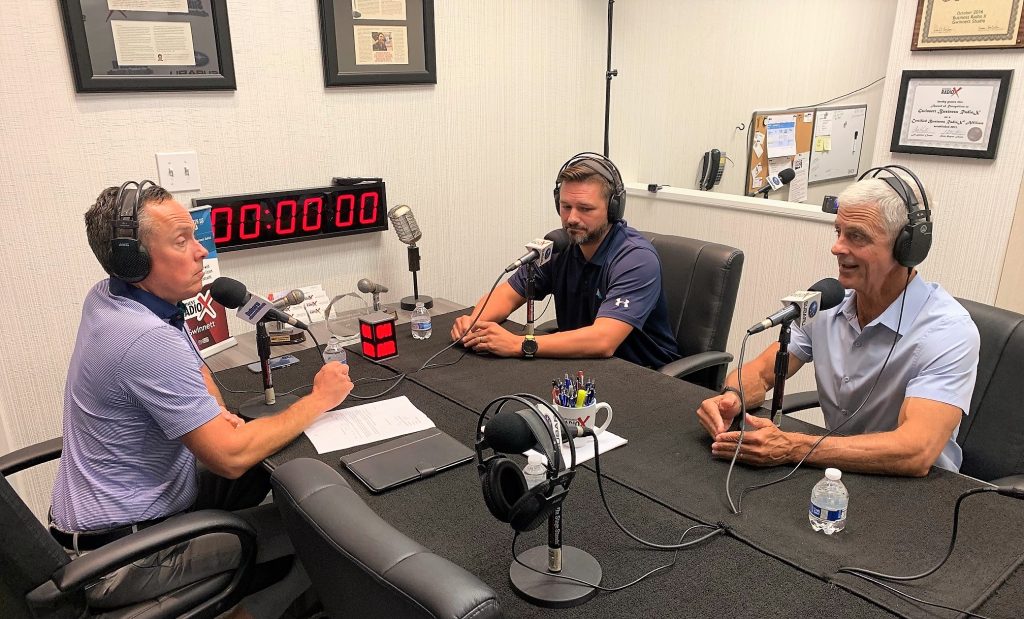

In this episode of Franchise Marketing Radio, Haley Haar, President of AlphaGraphics Kansas City, shares how building strong relationships, solving customer problems, and adopting a consultative approach have helped grow her business. She also highlights the value of franchise networks, peer support, and creating a customer-first culture that turns one-time transactions into long-term partnerships.

 Haley Haar is President and Owner of AlphaGraphics Kansas City, where she has transformed a 40-year-old printing company into one of the region’s leading providers of print, signage, visual communications, and project management solutions.
Since purchasing the business in 2009, she has led more than 250% growth by focusing on strong relationships, operational excellence, and continuous innovation. Known for combining strategic thinking with operational excellence, Haley enjoys helping organizations solve complex business challenges and build sustainable growth.
She is recognized as a collaborative leader within the printing industry, serving in leadership roles across the AlphaGraphics network, including chairing NetVision, a national strategic committee focused on the future of the franchise system.
She is also on the board of the Helzberg Entrepreneurial Mentoring Program (HEMP), where she collaborates with fellow business leaders to strengthen leadership, share ideas, and support entrepreneurial growth. Her commitment to leadership extends beyond business.
In 2023, Haley was named Kansas City’s Woman of Impact by the American Heart Association’s Go Red for Women initiative after leading a campaign that raised more than $50,000 for cardiovascular research and education. The recognition held special meaning following the loss of her mother in 2022.
Whether leading her company, mentoring fellow business owners, or serving the community, Haley believes that organizations grow when people grow. She is passionate about building strong teams, fostering meaningful relationships, and helping businesses and communities succeed together.
Follow AlphaGraphics Kansas City on LinkedIn, Facebook, Instagram, and X.
What You’ll Learn In This Episode
- Choosing a franchise model that aligns with personal strengths and desired autonomy
- Leveraging franchise networks and local peer groups for support and growth
- Building deeper customer relationships through consultative selling
- Looking beyond transactional requests to solve larger client problems
- Turning one-time customers into long-term strategic partners
- Creating a customer-first culture across sales and production teams
- Using generosity and referrals to build trust and long-term loyalty
- Leading a business with collaboration, service, and problem-solving at its core
 This transcript is machine transcribed by Sonix.
TRANSCRIPT
Intro: Coming to you live from the Business RadioX studio. It’s Franchise Marketing Radio.
Lee Kantor: Lee Kantor here. Another episode of Franchise Marketing Radio and this is going to be a good one. But before we get started, it’s important to recognize our sponsor, Business RadioX. If you are tired of being a best kept secret, set up a call with Stone Payton at brookstone.com to unlock your perpetual prospect pipeline. Today on the show, we have the president of AlphaGraphics Kansas City, Haley Harr. Welcome.
Haley Haar: Thank you, Lee, for having me.
Lee Kantor: Well, I am excited to hear about your story. Tell us about Alphagraphics Kansas City.
Haley Haar: So Alphagraphics Kansas City is part of the Alphagraphics franchise and group. And so we are printing and sign and marketing company located in downtown Kansas. Kansas City, and we work with a lot of regional and local customers.
Lee Kantor: So what’s your backstory? How’d you get involved in franchising and why did you choose Alpha Graphics?
Haley Haar: Sure. So so I had an uncle who actually owned three Alpha Graphics franchises in Denver, and he was kind of asking us, my husband and I, if we wanted to come out to Denver and help him run his businesses. So we did that for a few years, had our first daughter in Denver, and decided that it wasn’t a good fit for us as far as family wise, but we really enjoyed the alpha graphics side of things. And, you know, we knew that at that time, owning and or buying up my uncle’s three locations probably wasn’t going to be an opportunity that we had. So we decided to move back to Kansas City and looked around to see, hey, are there any alphagraphics for sale in our in the region here? And at that time there happened to be two Alphagraphics that were also up for sale, both in Kansas City. So we bought the downtown location.
Lee Kantor: And then so it was always a matter of, I’m going to stay within the brand of Alphagraphics. It wasn’t like, okay, now that we’re here and I like franchising, I’m going to, you know, I have, you know, the world’s my oyster. There’s lots of franchises you’re always looking for alphagraphics.
Haley Haar: Primarily, uh, alpha or this business is probably my third or fourth business that I’ve started. And so I think what I loved about Alphagraphics is I knew the network, I knew the products, we knew how to kind of run the business and had some built in support with family already being in the business. So that really gave us a lead up leg up on that. And we didn’t really look at much else because we were happy with what we had.
Lee Kantor: So for folks out there who are deciding which franchise to choose? What were some? I know you had some insiders in there, so you got kind of a peek under the curtain that maybe a typical franchisee wouldn’t. But what are some of the, you know, criteria for you in choosing a franchise?
Haley Haar: Sure. So one of the things that when, when we were looking at Alphagraphics to own and luckily we had seen this firsthand, but looking at a franchise, I knew that I was going to need something that gave me a lot of autonomy and independence and that I wasn’t going to thrive in a franchise that told me who to sell to, what to sell, how to sell, and was very strict in their product and offering. So Alphagraphics really wasn’t a good fit for me, both on the creative side and the independence side, to be able to look at that. So if people are looking at franchises, I think you need to ask yourself, how much do you like or can you feel positive about, um, some of those restrictions. And if you think you can work within those restrictions and be happy, then that’s a great opportunity. But if you think that there’s, um, going to need to be more flexibility, then, uh, really looking at those franchises that have a broader scope that have a little allow their owners to have a little bit more autonomy is, is probably the way to go for a lot of people like me.
Lee Kantor: Now, what about the fact that this is kind of a B2B? Was there any kind of consideration of, should I do something more B2C, like a, you know, a restaurant or food service? Something along those lines? Was that like, like if you were, you went B2B, what is what did you see kind of the advantage of being B2B versus B2C?
Haley Haar: Sure. So there are a lot of alphagraphics that do a considerable amount of B2C work. Uh, we choose have chosen not to. And we, we shy away from that work. Overall, we’re located downtown. We love to serve our community. It’s not a we. We do not have a large residential population near us. Uh, so we, we work a lot with businesses who are, who are in the downtown community. And I liked the opportunity for the businesses because you’re looking at larger ticket sizes, uh, more spend available spend with a lower volume of customer base. And you were able to really develop really close relationships with those businesses rather than in a more consumer driven business. It’s very transactional at times. You know, you’re working with a lot of different people. The the individual invoices are going to be smaller. And I really wanted, uh, to, to make this more of a relationship based business.
Lee Kantor: Now, um, you mentioned the, the fact that, uh, you know, your uncle had this. How important was kind of that support? Like, are you still kind of going back and forth with his learnings? And, um, are you getting support from the whole Alphagraphics community, not just family members?
Haley Haar: Yeah. So he retired probably close to seven years ago now, I think. And, uh, but it’s been a few years. He, he’s retired and sold his franchises in Denver and, uh, you know, it, I think I relied a lot on him the first few years because there were those things that it was just easier to ask him. Um, and we, we did like, I did like how he ran this business. Uh, but today, you know, the best part of the franchise really is the network. And it’s the other alphagraphics owners that you can you develop relationships with that rely on each other and support each other, answer questions And, uh, we, we would, we wouldn’t be able to be as successful, in my opinion, as we are without those peers that, that, that push us to grow.
Lee Kantor: Is there an example you can share about what that looks like in real life? I obviously don’t name anybody’s name, but maybe just the challenge that you had and how you were able to get to pick somebody’s brain that, you know, maybe in a different market, but faced a similar challenge.
Haley Haar: Yeah. So, you know, Alphagraphics moved into signage, you know, probably close to ten years ago. And when we first got into that, you know, you, we’re so used to working on, on small format print printed materials that you would hold in your hand. And so we were very exacting in how do we do this? And so we had a client that came to us, they wanted a large sign. It’s, you know, going 40ft in the air on the side of their building. And as we look and we’re lining up the panels. Um, the, the logo was just off from one panel to the other by probably less than a quarter of an inch, um, probably closer to like an eighth of an inch. And my team is going, but it’s, but it’s off, but it’s off. And I, you know, so we were a little concerned and I called, uh, another owner who had purchased a sign business before us. And I was like, what do you do with in this kind of situation? Like, we are high quality. This is technically not technically wrong, but it’s from up close. You can see it. And the great thing about this owner was like, he’s kind of like, Haley, you need to calm down. Like put this in perspective. This is going to be 40ft in the air. Nobody’s going to be able to see it up close. That that kind of error isn’t even going to show up to the naked eye from, from the ground or from somebody driving by in a vehicle or all those things. So, you know, you’re able to really one problem solve with each other and also problem solve for the clients. Um, there are times where we do go out to, to other owners to say, oh, I see you’ve done this. Can you help me and tell me how you did it? Uh, that allow us to then offer those same products to our clients as well.
Lee Kantor: Now the print business, I would imagine, um, is kind of male dominated. Has there been any challenges as kind of the president and owner of a print business? Did you, do you have a network or people you can kind of hang, hang out with to share some of your challenges?
Haley Haar: Sure. So you’re correct. The print industry is definitely male dominated. Uh, it’s gotten a little better over the last 5 to 10 years with more women involved, particularly more women in leadership. Uh, but there, there have been challenges, particularly when I was much younger, I bought, the alpha graphics when I was in my early 30s, so it. Not only did I have the. The issue with being female, but then I was also young. So I would go to industry events or go to things and people would say, you know, they asked me what I did and I’d say I own Alpha Graphics, and I’d get a response with a quizzical look on their face going, you, you’re the owner. And, and yeah, I am I, you know, and so it, it took some time to earn that credibility that I really was doing this. I was making the decisions. I was the one leading the organization. Um, and, and that it that I was doing a good job of it. Uh, and I think some of that the doing the good job of it was a little bit what I needed to prove to myself in addition to also proving to others.
Lee Kantor: Now in your area, are there kind of entrepreneurial groups for women entrepreneurs?
Haley Haar: Oh, absolutely. Uh, so I there’s one, a national one called the National Association of Women Business Owners Nawbo. And we have a really strong chapter here in Kansas City. So that was one of the first women business organizations I got involved with. And they do a lot of policy work. They do a lot of networking work. And we, um, I found a group there that that was able to support me in that women owned business. There were definitely some people or other women in there that worked in male dominated industries. So I was able to create some peers there as well. There are also a lot of just, um, broad entrepreneurial organizations in Kansas City. The Helzberg Entrepreneurial Mentorship program is one of those. And while it’s got a lot of male and female Counterparts to it. The women in that group really do create some strong bonds together because it is such a healthy organization and it’s one built on relationships. So you find that that a lot of the women are attracted to each other because they’re in similar situations. So definitely been able to find a local network. And then in the, the franchise, there are several many more female owners today than there were 15 years ago. And so we’ve, we created kind of our own little network there as well.
Lee Kantor: So is that something you would recommend any franchisee to kind of lean on? Is these kind of groups within their local market?
Haley Haar: Definitely. I think having local groups and the franchise group are both really important. I’ve been with local peer groups and I’ve also been on Alpha graphics peer groups and they bring a different insight. With Alpha Graphics peer groups, you’re talking a lot about the same exact same issues, the exact same product problems. We’re working off of very similar processes. Our businesses are all very similar. Uh, however, when you work with a more local group, you get that face to face interaction with people and you’re looking at other businesses that have different challenges or different are built differently than you are. And it gives you a different perspective to be able to say, oh, well, they’re a manufacturer too, but their problem is different than mine for whatever reason. And we’re able to, to help each other do that to, to figure out problems to solve for our businesses. And we’re also learning together when, when there are opportunities to learn more about our businesses.
Lee Kantor: Now when you’re working with a client, like you mentioned that in your business, you decided to focus in on, um, kind of larger organizations that, um, that you want to handle more of their needs rather than, you know, kind of one offs. Is there any, um, kind of advice you can share for other people who are going that route when it comes to turning a client that maybe came in for one thing, into kind of a client for life and be able to serve them more at a deeper level over time.
Haley Haar: Yeah. So for my business, one of the ways that we really focus on working with customers here is, is not just getting them what they’re asking for, but solving the problem that they’re really looking to solve. And that can be anything from they need it fast. They could need a high quality product. They could need a unique way of ordering or a unique way of communicating with us and identifying that instead of necessarily just fulfilling their request or fulfilling their product need, and by being able to create those, those touch points where, okay, we’re solving this problem for you. That really begins a relationship with, okay, they’re, they’re looking out for me and my business and what I, my goals are. And then we can really kind of build off of that. So we have customers that, you know, came into us once for a rush job because they, they were unable to get it fulfilled by somebody else or they’re in town who end up coming back to us because they’re like, oh, that was a great experience. I got a great product and they made it so easy. And we want we want to do business with you again. And to me, it’s it’s that idea that we want to do business together again is what helps keep that longevity going for between a customer and a vendor.
Lee Kantor: And it sounds like you’re looking at you’re trying to holistically solve their problem, not transactionally solve their problem.
Haley Haar: Correct? Yes, definitely. We, you know, we find that our best customers usually do have a little bit of a unique need. It’s either that they, they want something a specific way. They’re looking for a specific product. They’re a unique business. But yes, it’s always looking at that kind of holistic need and, and, you know, solving a bigger problem for them than just the one in front of us.
Lee Kantor: Now, is that something that Alphagraphics taught you? Is that part of their playbook or is this something that you just picked up on your own?
Haley Haar: I would say that’s probably more my playbook. Uh, I think that that I am a very big picture person. I’m the visionary here. And so for me, that is very, very typical that I’m looking beyond just the single task at hand. I’m thinking about the what next or what else could this do? And so that kind of adapted into my, my center and my style and then has flowed into the employees I work with too. So my sales staff is very similar in that, you know, they’re looking at the, the, what next? How can we help you more? And, and Alphagraphics does have some of that. And we’ve definitely been building more of that in the next network. But, uh, for a long time, the Alphagraphics model sales model has been a little bit more transactional in, in product to product based.
Lee Kantor: Now, is there a story you can share along these lines that maybe somebody came in for business cards and you and eventually, you know, you did six figures with them over time is there. Don’t name the person, but maybe just tell the story.
Haley Haar: Sure. Absolutely. I mean, we have we have quite a few customers like that where, Uh, um, they’ve come to us for one thing, and then they they never leave. Oh, one good example is we do the signage for a local, a regional car wash. And they came to us for one product. Uh, I think they needed something fast in Kansas City. So we created it. We built it for them or printed it for them, got it delivered where it needed to be delivered. And they liked the experience that they had with us. Um, they worked with my salesperson, Amanda. And, you know, she worked really closely with them and she built a conversation with, uh, the marketing person off of that initial, that initial order and just kept talking to him about like, okay, what else do you do? And you know, how, you know, what was the, what was wrong with this original product that when you got it from, from the other vendor and you know, what could we do to make it better? And they. Through those conversations, we they were able to develop a relationship and realize that, hey, we can do more than just this one little product for you. We can actually manage the whole gamut of products. And so today, we’re not just printing a product for them. We actually print all of the signage for all of their locations. Um, we print, package, deliver and fulfill those, uh, multiple times a year to those locations. And we’re now an integral partner in their process and not just a vendor.
Lee Kantor: Right. You’re a partner.
Haley Haar: Yes.
Lee Kantor: And that’s, I mean, I’m sure that every business owner, that’s what they hope to be. But the way that you go in there with intentionality and with, hey, I’m here to help you holistically. I’m not here to just sell you this one thing you’re after. I think that’s not the thinking of most people. Um, and especially in a franchise where they probably have a process on how to deal with a customer, and it probably isn’t the one that you just described.
Haley Haar: I think a lot of, um, there are quite a few owners in Alphagraphics that do lean more towards this model of helping a client and developing deep relationships. And, and usually those are the larger, larger businesses. They are the larger centers because they found that when you develop these relationships and you work with a client when they have a problem. So let’s say this, uh, car wash came, they came to us and said, hey, this sign keeps getting broken. Well, okay, the sign keeps getting broken. How are you using it? Where is where are you using it? What’s going on? And then we’re able to propose a different product. Okay, we’re not going to use this product anymore. We want to switch to this other product that has more longevity or last longer, is firmer, or whatever the product needs to be. And, and so in our business, particularly as our business has developed, developed over time into more consultative materials, we’ve had to be adjust how we sell to be more, um, consultative.
Lee Kantor: Right. And that’s something that not every salesperson wants to be, um, that, that takes, you know, active listening, you have to be able to go out on a limb and maybe say something they’re going to disagree with. And you’re going to have to be able to, you know, have some back and forth, which some people aren’t comfortable with it. It takes a higher level of sales skills to, to sell consultative.
Haley Haar: Yes, definitely. It is a much different sale. It’s a longer sales cycle. Uh, you know, particularly. And I can see that in my data that the orders that are more transactional are definitely the ones that come in and go out within a few days. The ones that, you know, we’re, we’re looking at materials and we’re picking out stocks or finishing techniques or that we’re really looking in into solving a problem. Those can take a very long time to sell and a very long time to produce in some cases. But you do that once with a client and, and a lot of times they keep coming back.
Lee Kantor: Right? And in my eyes, what you’re doing isn’t selling anymore. You’re helping. And if you can be the solution, um, to just inform them, that’s a win. And if you can be the solution that informs them and they buy from you, you know, then you have a chance they could be a customer for life.
Haley Haar: Correct.
Haley Haar: And I think that’s, that even goes beyond just the day to day sales. So if you come to us and say, hey, I’m looking for this thing, if we can’t do it, my my request for my team is to try to suggest somebody else. So maybe we can’t create, we can’t print on steel, print and cut steel. So we if somebody needed it overnight or something, quick, quickly, the answer isn’t going to be no, we don’t do that. The answer is going to be, I’m sorry, that’s not a product we can help you with. However, so and so down the street does this and and call them. And we might even have the phone number for them on hand on hand, because helping them solve that problem means that they ultimately are going to remember us when they have something that they do need.
Lee Kantor: Right. And that’s, you know, that’s not a scarcity mentality. And, you know, a lot of salespeople have a scarcity mentality.
Haley Haar: They do.
Haley Haar: And you know, my my, I’ve been very lucky with my staff. We, we, we’ve built a culture where that scarcity mentality is. Is that everybody helps each other. So we’re, we’re not looking at a way that, okay, I, I’m, I’m going to pick up every phone call because I want to get every phone call. I want every lead. You know, it’s, it’s very much that. Okay, well, Amanda’s going to take some. Rob’s going to take some. Matt’s going to take some. And and that everybody is going to get the client. The client’s taken care of because the number one goal is to take care of the customers. It’s it’s not how much money we’re going to make at the end of the day, or how much how many sales we’re going to make by the end of the day, it’s how many people did we help?
Lee Kantor: Right. And when the customer is at the focus and everybody’s aligned. Then you can have the the great growth that your team has achieved.
Haley Haar: Correct.
Haley Haar: And it’s it goes beyond just our sales team. Uh, my production team is amazing. They, they know that their jobs and their interactions with customers can be equally as important as the sales people’s job. So when they are either client facing, for some reason, maybe they’re on a sign install or proof check or something that, that they do great with customers and, and they know that the work they do make the salespeople look really good. So we’ve really kind of included them in on this kind of mentality of supporting and solving the problems for the clients to the point where I’m comfortable with my production team answering the phone. They’re going to answer the questions. They’re going to provide the customer service that they need. They may not be able to solve the problem, but they’re going to tell them, hey, you know what? I can’t help you with this, but I’m going to leave Haley a message, and she’s going to get back to you tomorrow morning with an answer. And again, it’s all about focusing on on the client at the end of the day.
Lee Kantor: Well, that’s a sign of good leadership.
Haley Haar: Well thank you.
Lee Kantor: So what do you need more of? How can we help you?
Haley Haar: What do I need more of? You know, uh, just we love conversations. The more that that we can have conversations, even if it’s having those, those we want to be the person that people call when they have a have a problem. And it doesn’t necessarily have to be a problem. We have a lot of customers. Um, and I have a large network and, you know, I would love for us to be the solution. Sometimes when somebody says, hey, I, I need somebody to mow my lawn. I don’t know who knows who, who. I don’t know anybody, but I bet Haley does. I bet somebody at Alphagraphics knows who can come mow my lawn. Uh, you know, that’s the, the level of kind of support that we want to be able to provide our customers. And so the more conversations we can have, the more people we can get to know, the more problems we’re able to solve and, and the better we do.
Lee Kantor: Now in your business, is there kind of, um, I know people come right into your shop, but are there referral sources that people are like, okay, Alphagraphics, uh, call Haley. Like, are you their go to resource? Like it may be agency ad agencies or marketers or things like that.
Haley Haar: Sure.
Haley Haar: So we have a couple of agency partners that we work with really closely, and they refer clients to us. Sometimes we print on behalf of the agency to deliver to the customer. There’s there’s multiple ways that we do that. And then just like you said, within our networks, whether it’s an entrepreneurial network or, uh, the, the downtown community or whatever it is, we, we get a lot of referrals from people, you know, hey, call Haley at Alphagraphics or, um, call downtown Alphagraphics. They, they did, you know, they did this for me. People love to, to get compliments on, on their materials or, you know, if we’ve done a sign or something for somebody, they always love to tell you where they got it if they’re happy with it. So, you know, we, we want that referral. So we’re always going to try to do the best job we can so that when somebody says, oh, you’re your conference room wall is really cool. Who did that? They’re going to say, oh, Alphagraphics did that. You should call them if you want something similar.
Lee Kantor: So if somebody wants to learn more, have a more substantive conversation with you or somebody on the team. What’s the website? What’s the best way to connect?
Haley Haar: So the best way to connect is I am on LinkedIn, uh, Haley Harr, uh, 2 a’s 1 r in the name HAAR and, uh, but online, you can find us at alphagraphicskc.com. And, uh, we have our phone numbers and our email and, uh, a web form where you can just fill out what you want and one of us will get in contact with you.
Lee Kantor: Well, Haley, thank you so much for sharing your story today. You’re doing such important work and we appreciate you.
Haley Haar: Well, thank you very much, Lee.
Lee Kantor: All right. This Lee Kantor. We’ll see you all next time on Franchise Marketing Radio.