
Business RadioX ®

  • Home
  • Business RadioX ® Communities
    • Southeast
      • Alabama
        • Birmingham
      • Florida
        • Orlando
        • Pensacola
        • South Florida
        • Tampa
        • Tallahassee
      • Georgia
        • Atlanta
        • Cherokee
        • Forsyth
        • Greater Perimeter
        • Gwinnett
        • North Fulton
        • North Georgia
        • Northeast Georgia
        • Rome
        • Savannah
      • Louisiana
        • New Orleans
      • North Carolina
        • Charlotte
        • Raleigh
      • Tennessee
        • Chattanooga
        • Nashville
      • Virginia
        • Richmond
    • South Central
      • Arkansas
        • Northwest Arkansas
    • Midwest
      • Illinois
        • Chicago
      • Michigan
        • Detroit
      • Minnesota
        • Minneapolis St. Paul
      • Missouri
        • St. Louis
      • Ohio
        • Cleveland
        • Columbus
        • Dayton
    • Southwest
      • Arizona
        • Phoenix
        • Tucson
        • Valley
      • Texas
        • Austin
        • Dallas
        • Houston
    • West
      • California
        • Bay Area
        • LA
        • Pasadena
      • Colorado
        • Denver
      • Hawaii
        • Oahu
  • FAQs
  • About Us
    • Our Mission
    • Our Audience
    • Why It Works
    • What People Are Saying
    • BRX in the News
  • Resources
    • BRX Pro Tips
    • B2B Marketing: The 4Rs
    • High Velocity Selling Habits
    • Why Most B2B Media Strategies Fail
    • 9 Reasons To Sponsor A Business RadioX ® Show
  • Partner With Us
  • Veteran Business RadioX ®

What’s Standing in the Way of Your Business Exit?, with Bill McDermott, Host of ProfitSense

October 31, 2023 by John Ray

Business Exit
North Fulton Studio
What’s Standing in the Way of Your Business Exit?, with Bill McDermott, Host of ProfitSense
Loading
00:00 /
RSS Feed
Share
Link
Embed

Download file

Business Exit

What’s Standing in the Way of Your Business Exit?, with Bill McDermott, Host of ProfitSense

In this commentary from a recent episode of ProfitSense, Bill McDermott laid out several factors that can influence how and when a business owner exits.

Bill’s commentary was taken from this episode of ProfitSense.

ProfitSense with Bill McDermott is produced and broadcast by the North Fulton Studio of Business RadioX® in Alpharetta.

Bill McDermott: I want to take a moment right now and ask my business owner audience the question, What’s standing in the way of your business exit? Recent surveys show that 80 percent of business owners will exit their business in the next ten years, yet only 25 percent have created any sort of plans in writing for a successful outcome.

I’m working with quite a few firms that are considering an exit. One situation includes a majority owner who has several partners and maybe discovering those partners don’t think like business owners and may just prefer to remain employees. Another owner is a very successful business. He’s a baby boomer and is ready to retire, but is having a hard time removing himself from day-to-day operations.

So, what are some things that could be standing in the way of our exit? First, the economy. In a recession, the value of a business may decline making it more difficult to sell. Also, if the economy is weak, it may be more difficult to find a buyer. Industry trends. If the industry is declining, the value of a business in that industry may decline. If the industry is changing, it may be difficult to find a buyer who is willing to take on the challenges of a changing industry. Third thing is taxes. This is one component that’s very complex. In almost every case, selling a business for a gain will trigger either capital gains or ordinary income tax.

So, what can we do as owners? Time the sale of our business carefully, plan carefully, and seek advice from your professional advisors, and know that alternatives such as merging with another company also exists. With careful planning and execution, it is possible to sell a business at a fair price, even in challenging economic or industry conditions.

About ProfitSense and Your Host, Bill McDermott
Bill McDermott
Bill McDermott

ProfitSense with Bill McDermott dives into the stories behind some of Atlanta’s successful businesses and owners and the professionals that advise them. This show helps local business leaders get the word out about the important work they’re doing to serve their market, their community, and their profession. The show is presented by McDermott Financial Solutions. McDermott Financial helps business owners improve cash flow and profitability, find financing, break through barriers to expansion, and financially prepare to exit their business. The show archive can be found at profitsenseradio.com.

Bill McDermott is the Founder and CEO of McDermott Financial Solutions. When business owners want to increase their profitability, they don’t have the expertise to know where to start or what to do. Bill leverages his knowledge and relationships from 32 years as a banker to identify the hurdles getting in the way and create a plan to deliver profitability they never thought possible.

Bill currently serves as Treasurer for the Atlanta Executive Forum and has held previous positions as a board member for the Kennesaw State University Entrepreneurship Center and Gwinnett Habitat for Humanity and Treasurer for CEO NetWeavers. Bill is a graduate of Wake Forest University and he and his wife, Martha have called Atlanta home for over 40 years. Outside of work, Bill enjoys golf, traveling, and gardening.

Connect with Bill on LinkedIn and Twitter and follow McDermott Financial Solutions on LinkedIn.
Tagged With: Bill McDermott, business exit, business succession planning, economy, exit planning, ProfitSense with Bill McDermott, recession, The Profitability Coach

Being Prepared for a Sales Conversation, with Dan Mahony, Transcendent Sales Solutions

October 16, 2023 by John Ray

Transcendent Sales Solutions
North Fulton Studio
Being Prepared for a Sales Conversation, with Dan Mahony, Transcendent Sales Solutions
Loading
00:00 /
RSS Feed
Share
Link
Embed

Download file

Transcendent Sales Solutions

Being Prepared for a Sales Conversation, with Dan Mahony, Transcendent Sales Solutions

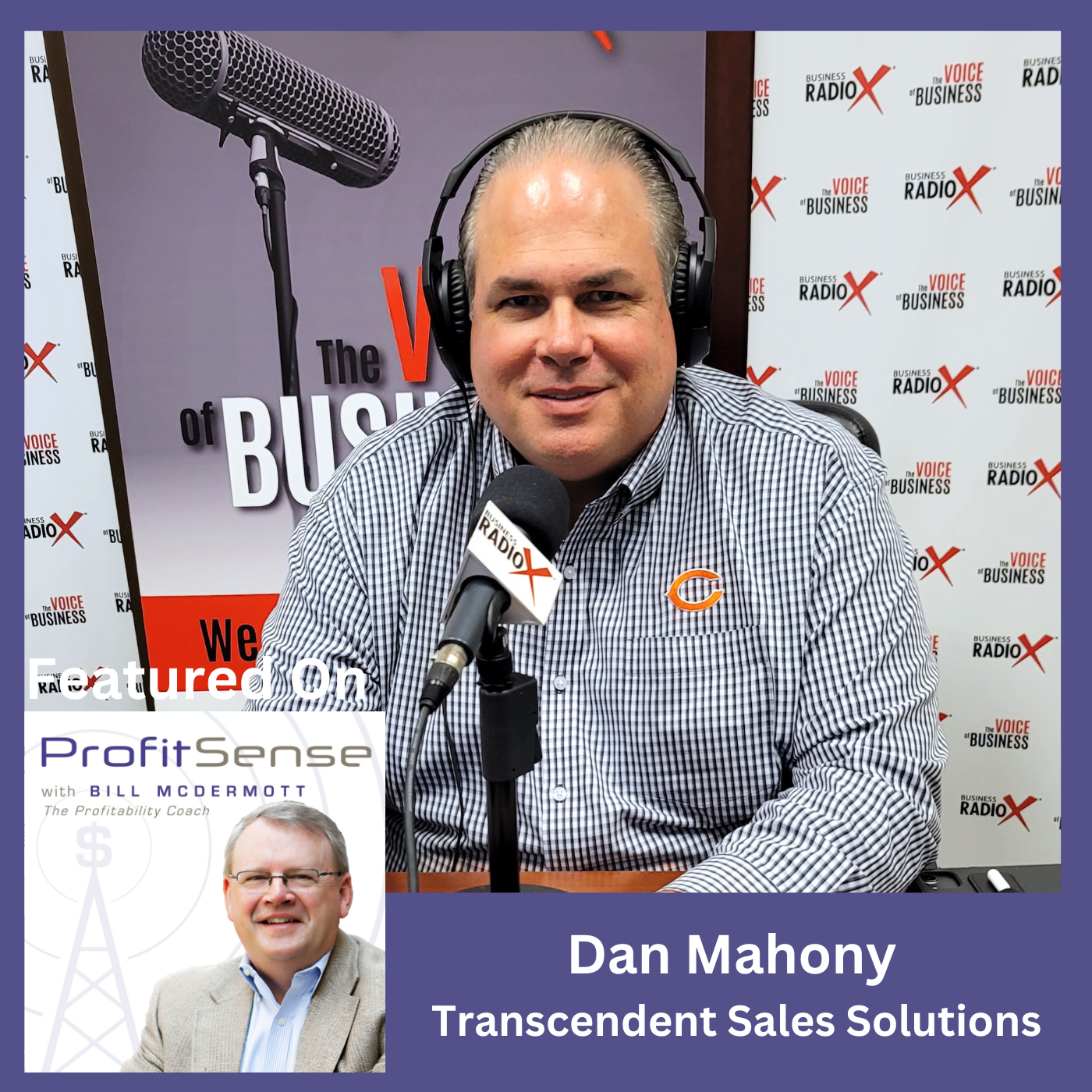
[00:00:00] Dan Mahoney: I think when we’re having a discussion with somebody, I, as I mentioned before, many times we’re trying to think about what we’re going to say next versus actually listening to them.

[00:00:09] I think it’s real important, from a skill set perspective is going back to being curious. I mean, realizing that you have a lot of research that you can do before you go and meet somebody. I mean, think about when we used to go to try to meet somebody 30 years ago. We didn’t know anything right now we have so much information and I think it gives us the ability, as we’re communicating and we’re listening to them, we should know more when we’re going in, which we ever did before.

[00:00:37] And if that’s the case our conversation should be much more specific than just in a general sense. Like I, I always say in sales, like the first question, in this, especially in this day and age, when somebody walks in and says, Hey, Bill, it’s nice to meet you. So tell me a little bit about your company.

[00:00:54] That’s usually the, are you kidding me? I mean, after you’re asking me about the company, you should know all these things already. Yeah. So yeah, it’s those are some things that are just real important as being prepared and, it’s just those good listening skills and, going in with a plan too.

Listen to Dan’s full ProfitSense with Bill McDermott interview here. 


The “One Minute Interview” series is produced by John Ray and the North Fulton studio of Business RadioX® in Alpharetta. You can find the full archive of shows by following this link.

Renasant Bank has humble roots, starting in 1904 as a $100,000 bank in a Lee County, Mississippi, bakery. Since then, Renasant has grown to become one of the Southeast’s strongest financial institutions with over $13 billion in assets and more than 190 banking, lending, wealth management and financial services offices in Mississippi, Alabama, Tennessee, Georgia and Florida. All of Renasant’s success stems from each of their banker’s commitment to investing in their communities as a way of better understanding the people they serve. At Renasant Bank, they understand you because they work and live alongside you every day.

Tagged With: be prepared, Bill McDermott, Dan Mahony, have a plan, ProfitSense with Bill McDermott, research, Sales, The Profitability Coach, Transcendent Sales Solutions

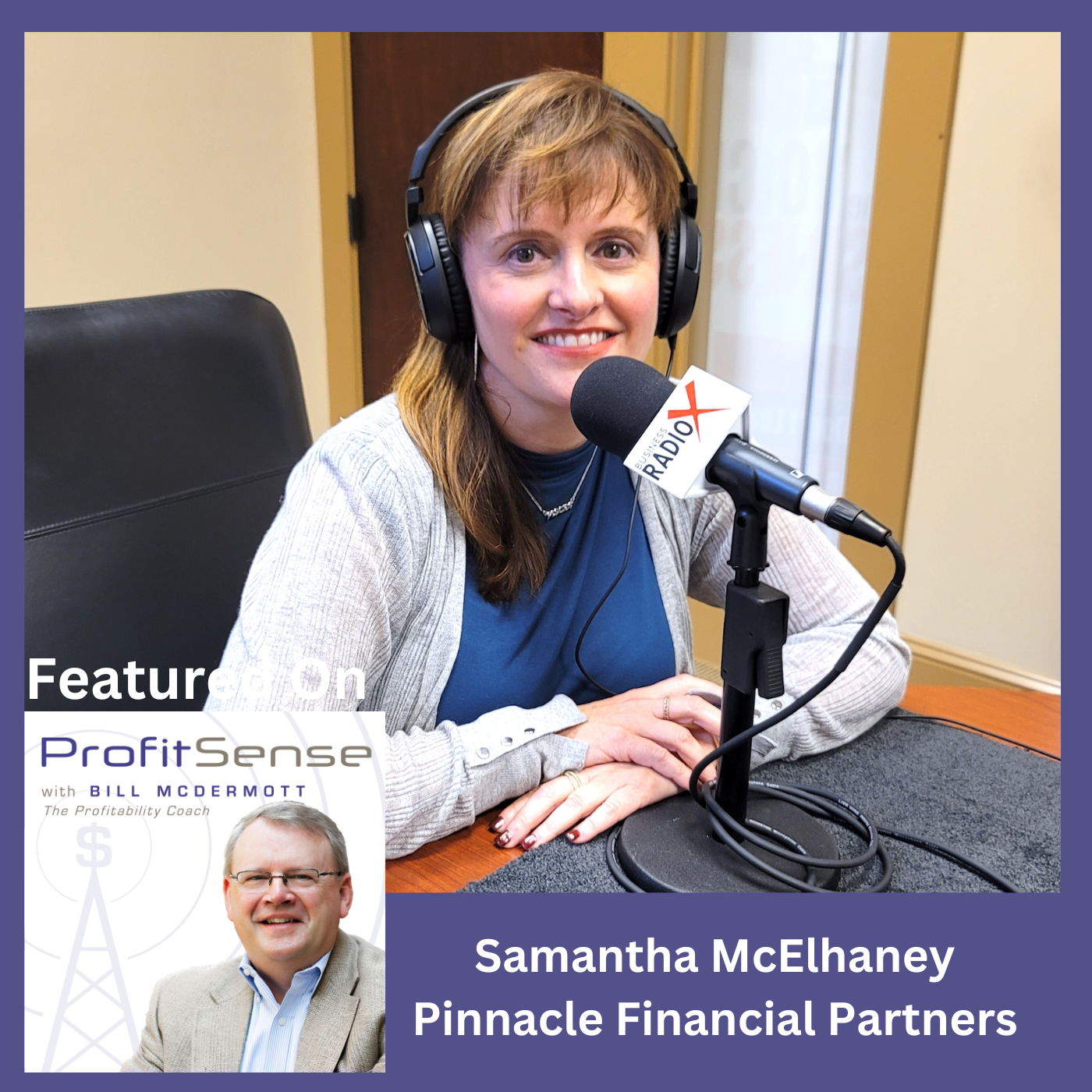
The Value of Collaboration, with Samantha McElhaney, Pinnacle Financial Partners

October 12, 2023 by John Ray

Samantha McElhaney
North Fulton Studio
The Value of Collaboration, with Samantha McElhaney, Pinnacle Financial Partners
Loading
00:00 /
RSS Feed
Share
Link
Embed

Download file

Samantha McElhaney

The Value of Collaboration, with Samantha McElhaney, Pinnacle Financial Partners

[00:00:00] Samantha McElhaney: I really like working with small business owners, but I have an opportunity right now to work with companies. And I’ve been introduced to companies in that need, 40, 50, 60 billion in financing, and they’re not getting factual information from other banks or they’re not getting the information that they need from other lenders.

[00:00:21] Samantha McElhaney: So I’m able at Pinnacle to pull in other people in different departments and all across the United States and they’re getting on the phone or they’re getting on zoom or they’re even getting in a plane and coming here to Georgia to work with me and help my prospects or my clients with those opportunities.

[00:00:41] Samantha McElhaney: And there’s no competition. There’s no, “I’ve got to meet a goal, so Sam get out of the way,” or.. I’m learning. At 30 years in my career, I’m learning just like my clients are learning of our capabilities and it’s fun. And they’re seeing it on my face, my clients are seeing it, and they’re eager to learn about what, not only capabilities we have, but how I can help, how my coworkers can help, and we’re all learning together.

[00:01:06] Samantha McElhaney: And if we can’t do it, we’re getting them in front of other institutions that can help, and there’s no fighting. among each other about that. And it’s just fantastic that we’re trying to help the business succeed.

Listen to Samantha’s full ProfitSense with Bill McDermott interview here. 


The “One Minute Interview” series is produced by John Ray and the North Fulton studio of Business RadioX® in Alpharetta. You can find the full archive of shows by following this link.

Renasant Bank has humble roots, starting in 1904 as a $100,000 bank in a Lee County, Mississippi, bakery. Since then, Renasant has grown to become one of the Southeast’s strongest financial institutions with over $13 billion in assets and more than 190 banking, lending, wealth management and financial services offices in Mississippi, Alabama, Tennessee, Georgia and Florida. All of Renasant’s success stems from each of their banker’s commitment to investing in their communities as a way of better understanding the people they serve. At Renasant Bank, they understand you because they work and live alongside you every day.

Tagged With: banking, Bill McDermott, collaboration, financial services, Pinnacle Financial Partners, ProfitSense with Bill McDermott, Sales, Samantha McElhaney, The Profitability Coach

Chris Caldwell, Highland Trust Partners, and Aaron Wynn, Hunter Recruitment Advisors

October 12, 2023 by John Ray

HIghland Trust Partners
North Fulton Studio
Chris Caldwell, Highland Trust Partners, and Aaron Wynn, Hunter Recruitment Advisors
Loading
00:00 /
RSS Feed
Share
Link
Embed

Download file

HIghland Trust Partners

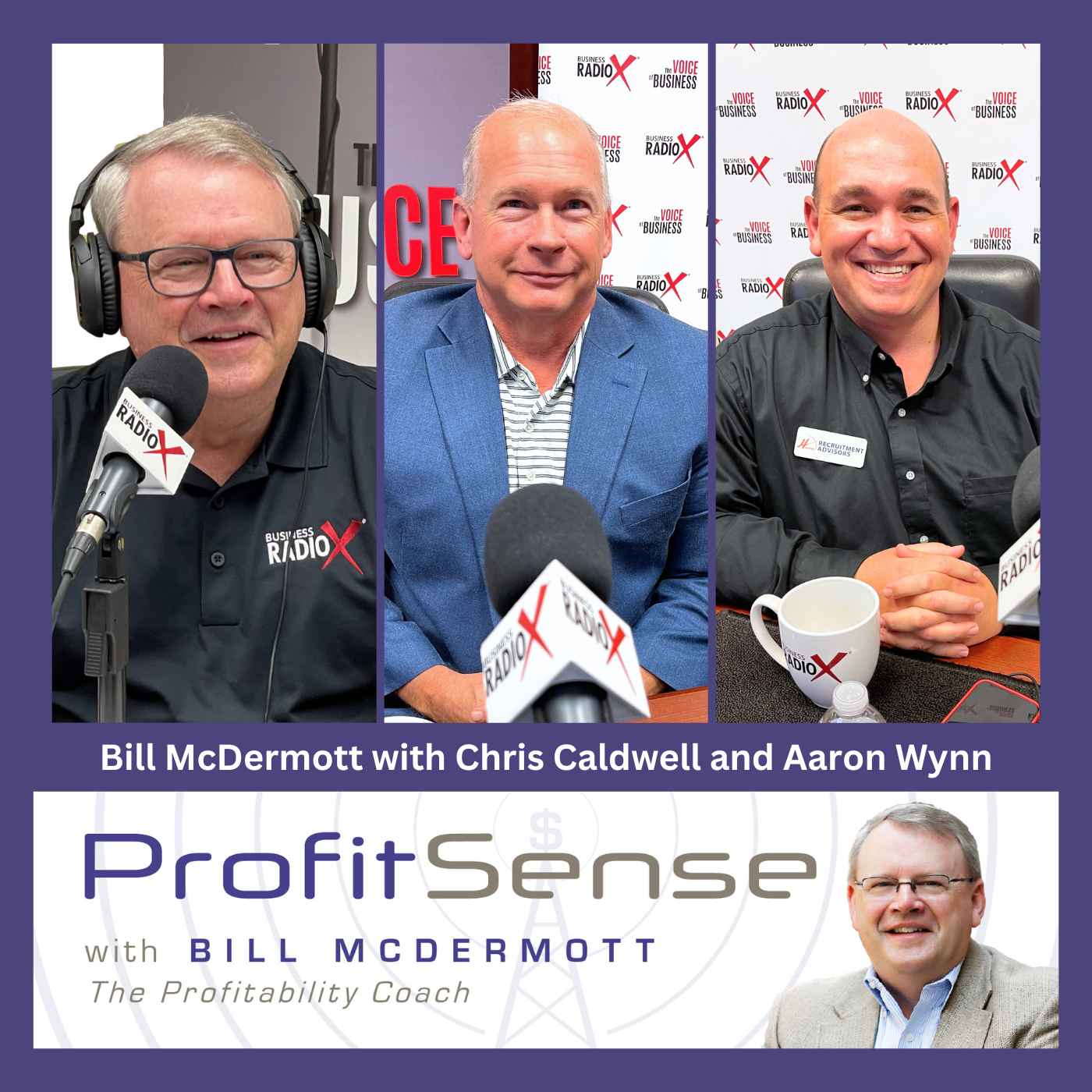
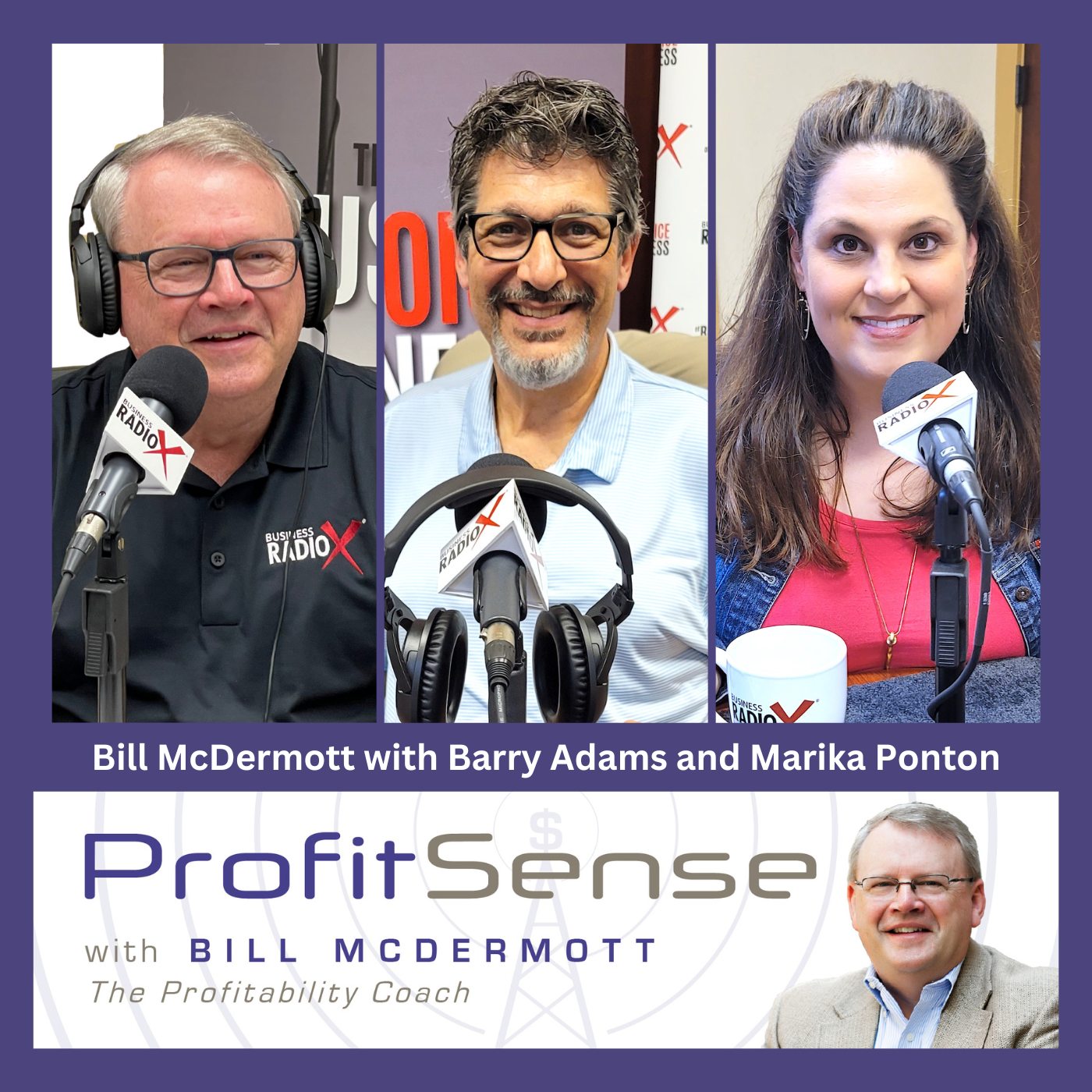
Chris Caldwell, Highland Trust Partners, and Aaron Wynn, Hunter Recruitment Advisors (ProfitSense with Bill McDermott, Episode 50)

Chris Caldwell, Partner at Highland Trust Partners, and Aaron Wynn, President of Hunter Recruitment Advisors, were Bill McDermott’s guests on this episode of ProfitSense with Bill McDermott. Chris discussed how he got into financial planning, who they most often work with, the business owner’s level of preparedness for the future, how business planning unfolds, and much more.

Aaron began with a very personal reason he started Hunter Recruitment Advisors and went on to discuss recruitment marketing, working with trades recruiting, why talent leaves a position, and more.

Bill concluded with his thoughts on a question for business owners:  “What’s Standing in the Way of Your Business Exit?”

ProfitSense with Bill McDermott is produced and broadcast by the North Fulton Studio of Business RadioX® in Alpharetta.

Highland Trust Partners

Highland Trust Partners is a team of experienced financial advisors located in Athens, Georgia, bringing more than 60 years of combined experience in the finance industry to each client engagement. Their independent wealth management practice was established with the goal to help individuals and organizations manage, preserve, and enhance their wealth as they seek to attain and maintain financial independence.

Their client-centered, team approach combines experience and insight from a comprehensive, independent perspective as they develop customized strategies to help address the unique challenges and opportunities you face. Highland’s clients are individuals, families, business owners and corporations seeking experienced guidance and a personalized approach to attaining and maintaining financial independence.

Website | LinkedIn | Facebook

Chris Caldwell CFP®, AIF®, CRC®, AEP®, ChSNC®, MBA, Partner, Financial Planner, Highland Trust Partners

Chris Caldwell CFP®, AIF®, CRC®, AEP®, ChSNC®, MBA, Partner, Financial Planner, Highland Trust Partners

Chris is a CERTIFIED FINANCIAL PLANNER™ professional, Accredited Investment Fiduciary®, Certified Retirement Counselor® (CRC conferred by InFRE®), Accredited Estate Planner ®, Chartered Special Needs Consultant ®, and a founding partner of Highland Trust Partners. Chris seeks to help families reduce financial stress by organizing their finances and developing strategies aligned with their goals and values.

He helps businesses design retirement plans that are noticed and appreciated by employees with the goal of helping workers retire on time with the assets they require for retirement. Based on experience, Chris knows that financial independence is the number one goal most people have for their lives in retirement. His clients rely on him to help them identify and overcome challenges along the path to retirement, anticipating and seeking to avoid obstacles that could come between them and their goals.

Chris received both his undergraduate and graduate degrees from the Terry College of Business at the University of Georgia. He began his financial services career in 1996 and has experience in trusts, investments, insurance, and banking. Chris has concentrated his efforts over the years on enhancing his financial knowledge to assist clients by earning four accredited professional designations, which combined require more than 30 hours of continuing education each year.

Chris has been an adjunct professor at Piedmont College, teaching several business courses and occasionally lectures to classes at the University of Georgia. He has served as a board member for St. Mary’s Hospital, Highland Hills Retirement Village, Athens Rotary Club, Athens Rotary Foundation, Food Bank of NEGA, Athens-Clarke Library, and Piedmont College.  Chris is a member of the Estate Planning Council of Northeast Georgia and the National Association of Financial Planners.

Chris and his wife, Heather, were married in 1999 and have two children, Seth and Natalie.  In spare time, Chris enjoys travel, running, hiking, golf, reading, and of course the Georgia Bulldawgs.

LinkedIn

Hunter Recruitment Advisors

Hunter Recruitment Advisors (HRA) is a minority-owned, Recruitment Process Outsource (RPO) provider and recruitment marketing expert. They mobilize the right people, skills, and technologies to help organizations improve their business performance.

Hunter provides key staff to employers allowing them to meet diversity goals and to promote equal opportunity in employment.

HRA is committed to creating innovative, flexible solutions for government and commercial clients.

Website | LinkedIn | Facebook | Instagram | YouTube

Aaron Wynn, President, Hunter Recruitment Advisors

Aaron Wynn, President, Hunter Recruitment Advisors

Aaron Wynn has spent his professional life helping his clients overcome the distress of not being able to grow their businesses. By applying his personal experiences and professional knowledge, he provides the proven tools and techniques needed to identify, attract, and retain the right employees at the right time. This strategic alignment of talent and resources then becomes the catalyst for the organization’s strength and growth trajectory.

Aaron understands you cannot achieve your company’s full potential without bringing in the right people to help manage the processes and operations, while giving you the ability to focus on growth and profitability. Hunter Recruitment Advisors (HRA) began as a one-man shop, and Aaron has successfully grown it into a 25-member talent consultancy firm.

While his focus has always been centered around talent management, his specialty within the field is really Recruitment Marketing. Hunter Recruitment Advisors has helped more than a hundred companies across the United States recognize recruiting is no longer solely an HR function, but it is a Marketing one as well. Each company is unique and carries with it its own culture and values, and similarly, there is not a a single approach to recruitment. HRA creates uniquely designed recruitment marketing plans, identifies recruitment practices, and can recruit as an outsourced resource to maximize a client’s exceptionality and specific needs.

Aaron has been in the Talent Management field for 20+ years. He received his BA in Human Resources from The George Washington University and his MBA from Benedictine University and founded HRA in 2015. He is an avid student of all things related to the workforce and professional development and is recognized as an expert authority within the field.

Aaron is currently the President of Hunter Recruitment Advisors based in Atlanta, GA where he lives with his wife and children.

LinkedIn

About ProfitSense and Your Host, Bill McDermott

Bill McDermott
Bill McDermott

ProfitSense with Bill McDermott dives into the stories behind some of Atlanta’s successful businesses and business owners and the professionals that advise them. This show helps local business leaders get the word out about the important work they’re doing to serve their market, their community, and their profession. The show is presented by McDermott Financial Solutions. McDermott Financial helps business owners improve cash flow and profitability, find financing, break through barriers to expansion, and financially prepare to exit their business. The show archive can be found at profitsenseradio.com.

Bill McDermott is the Founder and CEO of McDermott Financial Solutions. When business owners want to increase their profitability, they don’t have the expertise to know where to start or what to do. Bill leverages his knowledge and relationships from 32 years as a banker to identify the hurdles getting in the way and create a plan to deliver profitability they never thought possible.

Bill currently serves as Treasurer for the Atlanta Executive Forum and has held previous positions as a board member for the Kennesaw State University Entrepreneurship Center and Gwinnett Habitat for Humanity and Treasurer for CEO NetWeavers. Bill is a graduate of Wake Forest University and he and his wife, Martha have called Atlanta home for over 40 years. Outside of work, Bill enjoys golf, traveling, and gardening.

Connect with Bill on LinkedIn and Twitter and follow McDermott Financial Solutions on LinkedIn.
TRANSCRIPT

Intro: [00:00:03] Broadcasting from the Business RadioX Studio in Alpharetta, it’s time for ProfitSense with Bill McDermott.

Bill McDermott: [00:00:17] Good morning. Welcome to ProfitSense. This podcast dives into the stories behind some of Atlanta’s successful businesses and business owners and the professionals that advise them. We help local business leaders get the word out about the important work they’re doing to serve their market, their community, and their profession, as well as discuss current issues that business owners are facing today across a wide variety of industries.

Bill McDermott: [00:00:44] I’m your host, Bill McDermott, and this show is presented by The Profitability Coach. When business owners want to increase their profitability, they often don’t have the expertise to know where to start or what to do. I leverage my knowledge and relationships from 32 years as a banker to identify the hurdles getting in the way and create a plan to deliver profitability they never thought possible.

Bill McDermott: [00:01:07] We have two great guests on the show today. I want to welcome Chris Caldwell with Highland Trust Partners. Chris, welcome.

Chris Caldwell: [00:01:14] Thank you, Bill.

Bill McDermott: [00:01:15] And I also wanted to welcome Aaron Wynn with Hunter Recruitment Advisors. Aaron, welcome to ProfitSense.

Aaron Wynn: [00:01:21] Thank you so much. Excited to be here.

Bill McDermott: [00:01:23] Chris, I’m going to start with you. You and I both have a topic that’s near and dear to our hearts, helping business owners exit their business, and not only exit it and have a plan. But before we jump to that topic, I’d love to know why are you in the profession you are as a financial planner?

Chris Caldwell: [00:01:44] Well, that’s a great question. I get that fairly often. So, I always say, and I think everybody does this when they coach other people, is that you do what you’re passionate for. You do what you love to do. You do what you feel that you can provide value to others. So, financial planning was that for me.

Chris Caldwell: [00:01:59] When people ask me what I do, I tell them that I’m passionate about reducing stresses in the lives of families and business owners, and they want to know what that means with financial planning. So, financial planning is not about finances. That’s my background. That’s what I studied. I’m pretty good with math. I love statistics. I love analytics. I love strategies. That’s part of it. But what I really love to do is to get involved with people’s lives and find out what they are worried about, what they don’t know, and try to find ways that we can structure a plan with a bunch of strategies to make sure that they’re successful in whatever their endeavors are.

Chris Caldwell: [00:02:35] So, I think when we have conversations with people, we can all say this, that we have a look back. If I could go back in time, ten years ago if I knew what I knew today, 20 years ago if I knew what I knew today, I think what we bring to the table as planners in our firm is that we can share all of our experiences with clients to help them not do that later. So, 10 years from now, 20 years from now, they don’t look back on had I known, had I done, had somebody told me that we’d be in a better situation, we’re passing on all the experiences that we’ve worked with other people, sharing their stories of sometimes mistakes they’ve made so others don’t make those mistakes. That’s really what financial planning is, is life planning.

Bill McDermott: [00:03:15] Yeah. And I’ve found just in my experience, while I don’t do financial planning, I do help business owners with an exit, and so the things that I’m thinking about as a business owner in my 60s is I don’t know how to do this. How do I do it? I know you work with different types of businesses in figuring that out, so share with me and our audience what type of businesses do you and Highland Trust Partners work with most often?

Chris Caldwell: [00:03:44] Sure. So, a lot of our businesses look like us. We are an independent financial planning firm. We have a partner. There’s two of us as partners in our practice. We have nine total people as part of our practice. We are in growth mode, so we’re looking to recruit and possibly add. We may get up to 20 as our max. We may hit around 15, it’s probably a good number for our firm going forward. So, we are a business owner, so the businesses that gravitate to us most is one of five partners, maybe they have less than 100 employees, but they live the same issues, the same stress points that we live as owning a business. So, we’re good about talking to them with the things that we do with the business.

Chris Caldwell: [00:04:29] And no matter what industry you’re in, whether you’re in construction or health care or engineering or law, we have different products and services and different things we do as a business, but we have a lot of the same foundation things to run a business. So, the business that gravitate to us are small businesses that look like us because we can share our stories with them as far as the stress points we go through and what we’re working on to make ourselves better.

Bill McDermott: [00:04:53] Yeah. That is great. We’re talking this morning with Chris Caldwell. He’s the founding partner with Highland Trust Partners. Chris is a certified financial planner. Chris seeks to help families reduce financial stress by organizing their finances and developing strategies aligned with their goals and their values.

Bill McDermott: [00:05:12] So, I want to switch to a question that’s very near and dear to my heart, when you first meet a business owner, what surprises you most with how they’ve prepared for their future or the future of their businesses?

Chris Caldwell: [00:05:27] So, it depends a lot on what stage of the business cycle they’re in their business. A lot of it for, say, a young business owner, I don’t want to say this surprises me anymore because I expect a young business owner – not young in age, but young in the business venture – not to know a lot yet. But even things like having an operating agreement in place, we’ve seen business owners who’ve done their own or not done any at all, whether they’re a single shop or two or three person practice or firm.

Chris Caldwell: [00:05:51] We’ve seen where they haven’t organized maybe how, really, they’re running the business. I don’t want to say they’re winging it, but they have a good idea, a good service, a good product, and they’re just doing the best they possibly can to get that to market and sell it. So, they haven’t put a lot of emphasis in how do we take this from A to B and what do we think of personally to protect ourselves. They haven’t done a lot of the organization or the structures. They’re not near an exit yet at all.

Chris Caldwell: [00:06:19] But I tell everybody that opens a door in a business, they need to already start talking about succession planning at some point because it’s going to come about. Don’t wait. Do it now. Let’s go ahead and start the conversation. So, the young business owner or young businesses, we see a lot they haven’t adopted those things quite yet as far as structuring the business.

Chris Caldwell: [00:06:36] So, for the growth businesses, now they’re full board, their sales are up, they’re adding employees, they’re in full growth mode, and they are focused only pretty much on the business at that point, they’re the owner or owners and so they’re putting all their time and energy into the business, what I see most that surprises me there is they’re neglecting the other stakeholders, and a lot of those may be their own family. Not neglecting time per se from family, which is part of it, but it is Are they doing the things to protect their families if something happens to them? And are they protecting their business?

Chris Caldwell: [00:07:09] So, if they’re the owner and they’re basically the reason why the business is in growth mode and doing so well, does the business succeed or continue to succeed if they’re not there, whether it’s time off, a sickness, an injury, a disability, or – God forbid – death. So, are they putting things in place to make sure that the business is taken care of in their absence and the family’s taken care of in their absence?

Bill McDermott: [00:07:32] Yeah. I actually had one experience myself where two partners had a buy-sell agreement, but it never got funded with insurance, and the owner died, and all of a sudden that owner never anticipated having the spouse as a partner. And so, that type of planning is so critical.

Chris Caldwell: [00:07:53] And we see that for those who are in the growth stage as well as the mature stage, those who are ready to exit. And your show has said several times and you’ve mentioned it and we buy into this, is, you got to think like a buyer. So, we have a lot of clients that are in the mature stage of ownership that are getting closer to exit strategy. They aren’t thinking like buyers. They’re not ready. They’re not getting their house ready for the best valuation and best sale they can get out of it.

Bill McDermott: [00:08:16] Yeah. Yeah. And typically it is the largest asset that they have on their personal financial statement based on how they value it. And so, I want to switch a little bit and go in a similar direction, but different type of question. A hundred percent of the businesses are going to pass one way or another. But yet, studies show that probably only 20 percent have any kind of a financial plan that’s in writing, 80 percent don’t. So, what do you discuss to convince a business owner to focus time, energy, and money towards business planning?

Chris Caldwell: [00:08:53] So, that 80 percent – from what I’ve experienced – is business owners not willing to or able to take the time to put the work into it. They feel like the process is going to take much longer than it is. Again, those growth in the middle stages of the business cycle, they’re dedicated to the business primarily, of course they have family, they have social life. So, for them to fear to spend the time to do this is money out of their pocket. Not even dollars. It’s just opportunity cost.

Chris Caldwell: [00:09:21] So, what we do for them, again, we’re business owners, I have limited time in my day. I know that. I convey that to my clients and say, “Look, I understand that you don’t have the ability to pull away from work for three or four or five hours a week to work with somebody on developing all these strategies.” What we’re really good at, besides conveying that time issue, is do the things behind the scenes for them.

Chris Caldwell: [00:09:47] So, I am a network person. I naturally just want to introduce people to people. I got plumbers. I got electricians. I got gardeners. I got people who do work for people and just give them free pro bono referrals all the time. So, for me to build a team for a client, to make sure that they have a CPA, a corporate attorney, and a state attorney, an insurance agent, maybe an investment advisor, somewhere else, all the bankers, but these people, they may have them, but they’re not talking to each other in a lot of cases. They’re working in silos for what they do for that individual.

Chris Caldwell: [00:10:18] My role as a planner is to basically bring this team to the table, not really at a table, but to talk to each other about the different circumstances our client is going through and how can we pull resources together to make this stuff happen for them to fix what’s broken or what’s not being done. So, I can do a lot of the information gathering and discovery for a client to do succession planning and other things, estate planning without engaging the client. All that we need from them is letters of authorizations from these different professionals to work with them to gather information.

Chris Caldwell: [00:10:51] And we come up with a strategy solution, basically get it ready to sign almost in some cases. And they’re not pulling a lot of time away from work to do that. Energy is natural. Once they see we don’t take their time, they’re energized. That’s pretty easy. They’re excited to know they don’t have to do a lot. But we’re going to get to know them personally and ask them personal questions. We’re also going to get to know their families well. So, I think importantly, for planning for a business owners, also knowing what they need in their family, knowing their spouse, knowing what they have to bring home one day, so that energizes them knowing we involve the family with that.

Chris Caldwell: [00:11:27] And then, money, it really never comes down to money. Once they know the time we save them, they know we’re putting the resources together to make sure we reduce the risk in their lives, they know that we’re definitely adding more valuation to the business by doing this, maybe saving on other things, tax strategy, return on investments, and others, they’re going to save money off of it. So, it never comes down to, “Hey, it’s going to cost me money.” They’re worried about costing me time.

Bill McDermott: [00:11:50] Sure. That makes all the sense in the world. We’re talking today with Chris Caldwell with Highland Trust Partners. Highland Trust Partners is a team of experienced financial advisors located in Athens, Georgia, bringing more than 60 years of combined experience in the finance industry to each client engagement.

Bill McDermott: [00:12:09] And, Chris, I want to talk a little bit about I’m a new business owner, I’m coming to you, what are the steps that Highland Trust takes with a new business owner and what do you charge?

Chris Caldwell: [00:12:21] Sure. So, some of that answered in the time. So, when we engage with a new client, we work on 12 month engagements. And that basically means we’re fiduciary obligated to you for this 12 month period, at least, to do everything in your best interest, to work with your other professionals, and that type of thing. So, I’d say within the first month is a lot of discovery. We want to know you as a person and your family, because everybody’s different, so what’s your history, what’s your background, what’s your belief system with money and other things, do you like lawyers, not like lawyers, all those kind of conversations we want to get to.

Chris Caldwell: [00:12:55] And then, get to know their other professionals. I want to make introductions to that list I gave you a second ago, and try to discovery pull all those resources together to begin to build their plan and their strategies from that plan. So, within the first month or two is discovery, getting to know family again. The second, third, or fourth month in combination is actually starting to implement some of those strategies that we put in place.

Chris Caldwell: [00:13:18] With a business owner, particularly multiple partners, because everybody’s involved at this point, it’s not just one partner, it’s everybody, and then it’s their spouses, so it’s a network, we want to make sure that we do it methodically. We don’t go fast. We do it well. So, we’ll do certain strategies with it and finish certain components of it, but finish the plan within a 12 month period. It usually takes some time, two years, which they appreciate because they realize (1) we’re not taking time away and (2) we’re going to do it slow and right.

Chris Caldwell: [00:13:48] But what we want to engage the owner in, essentially, is that we just need to know their direction. What’s your strategic plan with the business? Do you have a business coach? That’s a great one. So, how do we improve your valuation? What do we need to do? What have you done before this failed? Those are the kind of things I have to engage the owner with as far as their time.

Bill McDermott: [00:14:06] Sure, that makes a lot of sense. Chris, this has just been a wealth of information. I’m going to guess we have several business owners that are going to listen in to this, what is the best way for a potential business owner to get in touch with you and Highland Trust Partners?

Chris Caldwell: [00:14:22] So, the best way probably is just go to our website, www.highlandtrustpartners.com, so highlandtrustpartners.com. All of our contact information is on the website so you can easily reach out through the site and get in touch with any of our planners and we can have an introduction call with you.

Bill McDermott: [00:14:40] Well, great wealth of information, good counsel, and thanks again for coming on the show.

Chris Caldwell: [00:14:45] Thanks for having me. I appreciate it. Thanks, Bill.

Bill McDermott: [00:14:47] We’re now going to switch to Aaron Wynn with Hunter Recruitment Advisors. Aaron, I want to just kick off with what was the inspiration for how HRA got started?

Aaron Wynn: [00:14:58] I think most stories there’s a personal and then there’s a professional side of it. For me, the personal side of it was that my wife and I had twin sons that were born about three-and-a-half, four months early, and unfortunately we lost one of our sons about 16 days after he was born. He’s living with the Lord now. And our other son is with us. And I was a director of recruiting for a very large convenience chain, and I would leave to go to work and he would be asleep on oxygen at our house, and I’d come home and he’d be asleep on oxygen in my house. And it was the very real reality of having lost a child, realizing time is precious and I needed to make some changes.

Aaron Wynn: [00:15:43] And so, I wanted to work closer to home. And I was a little frustrated with my work. And my wife – who was amazing – said, “You’re never going to be happy until you do this on your own.” My story is probably no different than most business owners who start out. You’re never going to be happy unless you do this on your own. And sure enough, she was right. But I tell people all the time, especially business owners who might be listening to this for the first time, I failed miserably in my first business. I made so many mistakes and I could have let that knock me out of it altogether. But I took that as an opportunity to say, “You know what? Here’s where I’m going to learn.”

Aaron Wynn: [00:16:20] Originally, I did what was called contingency recruiting. And it’s a great business, it’s the majority of the business that happens in our country when it comes to recruiting. But I felt so frustrated because I was providing a different level of service to our clients and it was really dependent on if the candidate stayed for 90 days. If they left on day 89, it voided all of the work that we had done.

Aaron Wynn: [00:16:44] And so, when I started over again, one of the things that I wanted to bring in, or the principles were corporate recruiting. Most businesses are familiar with corporate recruiting. And the big difference is that you’re paid for the work that you do and the consulting that you provide. And so, when I started Hunter Recruitment Advisors, for me it was just a natural thing. I provided guidance, not just a job order or job taking, but really giving you guidance on what I call the three principles of all recruiting, that you work with the hiring manager and you have to explain to them that recruiting foundationally is always built on the principles of skill, money, and time. And how you directly impact one of those impacts the other two, and helping them understand that while you may want Michael Jordan, sometimes it’s great to settle for a Scottie Pippen and train them to do more.

Aaron Wynn: [00:17:39] And so, when Hunter Recruitment Advisers got started, that’s really how it began. It wasn’t a grand idea that I had to grow into a 24 person company. It was really just me sitting in my basement and realizing that there had to be other options out there in the marketplace. Because a lot of small businesses, they can’t afford to pay 20, 30 percent of first year salary for an individual. That impact would be $20,000, $30,000. So, what we provide is an hourly based recruiting solution that allows them to pay as they go.

Bill McDermott: [00:18:14] And I know building on that foundationally, that’s really the difference in your recruiting, isn’t it?

Aaron Wynn: [00:18:22] It is. A lot of times we’ll get asked, “Well, can you do contingency?” And I always try to explain to people that contingency in its nature is a lot like the spelling test that you have to take. Contingency firms will come by and they’ll say, “Hey, let me work on your job. No charge until you find your person,” which is great. And they do the exact same thing with 60 other businesses. So, they get these 60 jobs and then all of a sudden they go, “All right. I’m going to pick the ten that’s going to be the easiest to fill and I’ll maybe pass on some resumes if I find something to these other 50.”

Aaron Wynn: [00:18:56] What happens then is that you, as the owner, get frustrated – and you hear this all the time in the industry – “They didn’t do a great job or they really didn’t focus on us.” When you do RPO, you’re being paid to focus on that position. Actually, all the hours that we tell you that we’re working on that role, we’re working on that role. And so, I go back to the spelling analogy, if you’re given a spelling test and in one word is cat and the other word is onomatopoeia, and you only have to learn one, you’re going to learn cat.

Bill McDermott: [00:19:26] Sure.

Aaron Wynn: [00:19:26] That’s what contingency firms do. They work on the cat projects. Most of the jobs that people are being asked to recruit for are onomatopoeia. And so, you need somebody who’s going to study it, who’s going to focus and who’s actually going to work on your project for you.

Bill McDermott: [00:19:41] We’re talking today with Aaron Wynn, President of Hunter Recruitment Advisors. Aaron spent his professional life helping his clients overcome the distress of not being able to grow their businesses. By applying his personal experiences and professional knowledge, he provides the proven tools and techniques needed to identify, attract, and retain the right employees at the right time.

Bill McDermott: [00:20:05] And so, Aaron, your business model really is intended not only to be much more effective and efficient, but you’re actually working yourself out of a job through what you call recruitment marketing. So, talk about that a little bit.

Aaron Wynn: [00:20:23] That is true. So, for a lot of businesses, they apply principles that they’ve known their entire career. I put a job posting out. Hopefully, we’ll see some resumes come in and then we’ll see what happens. That worked pretty well when you had a unemployment rate that was 5-1/2, 6, 7 percent. There were people available in the market. Well, for the last – what? – five years, we’ve been at less than four full employment and people are really stretched. And in particular industries where we tend to have a lot of expertise, in the construction or in the trades business, it’s even worse.

Aaron Wynn: [00:20:59] And so, what they found is that all of a sudden that well of resumes has dried up. So, what do you do? Well, that’s really when the smart companies, the bigger companies started employing practices of recruitment marketing. Recruitment marketing is sharing your business to the public as to why they would want to come and work for you versus somebody else. And there’s lots of different avenues where that takes place. One, it’s their career page, that’s a basic for every business owner. Two, most people don’t realize Indeed provides a career page for your company that you don’t even know about. The moment you post a job on Indeed, you get an automatic career page.

Bill McDermott: [00:21:39] I didn’t know that.

Aaron Wynn: [00:21:39] And from there people can rate how much they like your business or don’t like your business. And that’s a really big deal because Indeed bought Glassdoor, so they’re funneling people to give ratings on your organization. Well, I’m telling you, most new candidates are going through there and trying to decide who they want to work for. They’re checking out your rating. And so, if you don’t own that, if you’re not marketing through that, that’s a challenge.

Aaron Wynn: [00:22:07] And with the rest of our clients, we try to teach them how they can use these principles of recruitment marketing for themselves. They can use us to be able to employ those principles, but they themselves can learn to do it. And what happens often is that we’ll do the recruiting as well as the recruitment marketing. And once we help them find their person or people, then we’ll work ourselves out of that opportunity and they have the fundamental tools now to be able to recruit for themselves.

Aaron Wynn: [00:22:33] They could always bring us back in if they’d like to, and we have lots of clients that will phase in and phase out and bring us back in when they have the next set of hiring needs. But for a lot of our clients, they’ve reached that stage where they have 35, 40, 50 people, they need to have an ongoing recruitment process. We will actually help them hire their recruiter and train them on how to execute both recruitment marketing and recruitment practices so they can do it for themselves.

Aaron Wynn: [00:22:57] I tease people, it’s either the worst business model or the best one. I’d like to think it’s probably a really good one because we’ve had now 130 companies just in the last four-and-a-half years all based off of referrals, individuals just sharing with other people this practice of recruitment marketing and recruiting.

Bill McDermott: [00:23:15] Yeah. And I would say 130, it’s a great business model, so congratulations on that.

Aaron Wynn: [00:23:22] I appreciate that.

Bill McDermott: [00:23:22] So, talk to me a little bit about the work in trades recruiting, HVAC, plumbing, electrical.

Aaron Wynn: [00:23:29] It’s really funny, we didn’t start out that way. When we began recruiting, our clients included the Weather Channel, we’ve had Edible Arrangements, we’ve worked with insurance companies, investment groups. And then, one day I got a call from a local Atlanta organization. They had an HVAC and they were looking to explore to do others. And they were running T.V. advertisement and they eventually had to stop because they couldn’t take on any more customers. Wouldn’t that be a great problem to have, you can’t take any more customers on, so I’m just going to have to stop advertising?

Aaron Wynn: [00:24:05] And so, they looked at me and said, “Hey, I hear you’re pretty decent at this recruiting thing. Could you look in to see what it is that we need to do?” And I had never done a trades recruiting before, and so I said, “I can do it, but you’ve got to give me two weeks. One week I’m going to spend in your office actually learning the culture of your company. And then, the second week I’m going to go in a truck with your guys and go with them on installations and go with them on repairs, because I want to understand what it takes to do this role and do it well.”

Aaron Wynn: [00:24:37] Now, not a lot of other companies would take that kind of practice. They would just take the job order and then move on. But for us, because we believe in recruitment marketing, we have to know who our target audience is. And so, after that, we developed an avatar who we targeted all of our recruiting. And I’m really proud of the fact that even on our website, the video testimony is given where we were able to double their revenues in about 18 months. They were at 35 employees and today they’re at 135 employees. And it’s been a great partnership.

Aaron Wynn: [00:25:09] And I think it was a real testimony to the fact that, all of a sudden, now we’re becoming experts in the trades. And that’s a real market that’s stressed. This year alone, there’s a-half-a-million person gap of trades positions that exist and the people that are willing to work. Now, there’s lots of reasons. There’s seven million people who are able to work that don’t want to work or – what I call affectionately – the extended childhood, where men and women who used to go to work in their 20s to support their families, now don’t have to really start until their late 20s and early 30s.

Aaron Wynn: [00:25:43] But suffice it to say, there’s still this gap, and so the trades business, which our plumbers, our electricians, our roofers – excuse me – plumbers, electricians, roofers, HVAC, these businesses really need to find not just individuals who can turn a wrench, but real people who can engage with customers. That’s not an easy feat. And so, all of a sudden, this need for finding that and being able to target with recruitment marketing to help them identify not just possible people, but people who have done this work before, became a premium for a lot of different businesses to be able to succeed.

Aaron Wynn: [00:26:21] And when COVID hit, businesses were screaming to get more people because they had all the business that they could handle, but they couldn’t find enough people to do the work. And so, we started to become experts. It was originally 25 percent of our business, then it became 50 percent, now it’s almost 80 percent of our business is just working in the trades.

Bill McDermott: [00:26:40] Wow. And there’s such a need for it out there. We’re talking today with Aaron Wynn with Hunter Recruitment Advisors. HRA is a minority owned recruitment process outsource provider and recruitment marketing expert. They mobilize the right people skills and technologies to help organizations improve their business performance. They provide key staff to employers, allowing them to meet diversity goals and to promote equal opportunity in employment. HRA is committed to creating innovative, flexible solutions for government and commercial clients.

Bill McDermott: [00:27:15] And so, Recruitment Process Outsourcing, RPO, what is it and why do employers need to be looking into this instead of contingency recruitment?

Aaron Wynn: [00:27:25] Sure. And we touched on this a little bit earlier, but the idea is that contingency recruitment is great, especially if you have a segmentation that you have an expertise in and you have a well of people. But most positions don’t start off that way with people who are actively ready to jump ship. And so, what happens is that you have to be the kind of position that’s easy for them to fill, to be able to move on to the next project.

Aaron Wynn: [00:27:51] If you’re in an organization where this position is not easy to fill and you really need somebody to concentrate on that, contingency can be a challenge because there, as we affectionately said earlier, they’re working on the cat jobs, they’re not working on the onomatopoeia. And so, that’s when you need to have a recruiter that’s devoted to you. Most small businesses that exist can’t afford to have a full time recruiter, that’s just cost prohibitive. And they really can’t afford to do 20 or 30 percent of a first year salary, that’s also cost prohibitive.

Aaron Wynn: [00:28:23] But they can afford to have a fractional recruiter, like somebody has a fractional HR person or a fractional CFO, which is becoming more and more common every single day. And so, fractional recruiting allows somebody to be able to have someone to come in who’s an expert in recruiting that not just does recruiting, but does the recruitment management for you. We literally will take on the role of the company through email as well as through phone. We’ll pick up the phone as that organization will describe the company’s culture. We’ll actually give them insights about the position as a candidate, because so often you have to woo a candidate into an opportunity.

Aaron Wynn: [00:29:02] And so, that’s not somebody who’s just looking at your resume and passing you through. These are business professionals. Our team are business professionals who have been corporate recruiters before, and they’re actually engaging with the candidate. Why it’s advantageous for the client is that, one, they’re really getting corporate recruiting, but they’re also getting it on an hourly basis. When we make the hire, the clock stops. And for most of our clients, they don’t realize this in the beginning, they’re paying probably anywhere between 40 to 50 percent of what they normally would have paid a contingency firm for the same level of service and, in fact, more service when you go with an RPO.

Aaron Wynn: [00:29:44] An RPO also establishes the ability to run your recruiting for you so that you can focus on doing your business. How many business owners have just one job? Nobody does. They’ve got four or five. My week this week is I’m the accountant, I’m the sales guy, the marketing guy, oh, and I happen to do some recruiting. Nobody has time for everything. And so, recruiting gets pushed to the bottom.

Aaron Wynn: [00:30:07] Here, they can outsource it all that the only thing they have to do is look at the write up that we did for them so they can see if this is the kind of candidate they want to talk to, provide the time that they would like to do the interviews and then show up. Everything else is handled by their RPO team.

Bill McDermott: [00:30:23] Yeah. Which is great. And the whole concept of fractional work gives the business owner the ability to have on demand recruiting, and so what a great business model. And everybody needs staff right now. I don’t think I have a client that isn’t looking to fill some kind of positions.

Aaron Wynn: [00:30:43] Well, pass those business cards over. I’ll be happy to take that.

Bill McDermott: [00:30:47] Absolutely. For our business owner listeners out there, just to help them, top three reasons people leave their job and what employers should know and do to attract them to their business.

Aaron Wynn: [00:31:01] In the top three, people often think the number one reason has got to be pay. Pay is in the top three, but it’s not number one, but it’s one that should always be considered. And what I try to tell business owners all the time is that you have to constantly make sure that your position and how it’s being paid is up to market. We usually get settled into a, “Hey, this is what it got paid, so that’s what it’s going to stay.” And the problem is they’ll get wooed by somebody else who’s more current. Every single year, for myself, I look at what we’re paying our employees and making sure that it’s at least up to market, if not better.

Aaron Wynn: [00:31:38] The second reason why people are – in fact, going from three to two, the second reason why people leave their positions is the quality of life. Can’t get to Susie’s recital. Can’t get to Timmy’s ballgame. Or their working hours non-stop and they really just want to be able to take a break, have some balance. That becomes more and more important with every generation that comes through is that balance and being able to convey that you can provide that. It doesn’t mean we don’t want people to work hard, but it means that you have to respect that they have a life outside of this business.

Aaron Wynn: [00:32:12] But the number one reason why people leave their jobs is the managers they work for. Over and over again, it’s the people that they work for. Can they respect them? Can they be somebody who listens to them and respects what they have to say? Will they actually contribute to their development as an individual?

Aaron Wynn: [00:32:34] And so, whenever I try to help companies reduce turnover, the first three things I investigate with them is, let’s see how well the pay is. And base it based off of the skills that you’re asking them to do, let’s get an internal survey or quality of life and understand how well that’s actually working. And then, three – and this usually makes people’s head spin when they originally think about it – is what’s the turnover rate per manager? And how well are we actually bonusing towards turnover rates? It’s not to keep people in positions that they shouldn’t be there, but if it’s apparent that one or two of your managers has a really high turnover rate in comparison to everybody else, then there’s an opportunity to help them to become a better manager, for no other reason than to become a better retention tool.

Bill McDermott: [00:33:24] What a great point. Aaron, if someone wants to get in touch with you, if they have some recruiting needs, what’s the best way to get in touch with you or with Hunter Recruitment Advisors?

Aaron Wynn: [00:33:37] There’s lots of different avenues. We have a pretty strong LinkedIn channel that we do a lot of our communication with the public. But they can also give us a call at 413-367-4868. That’s where our Solutions team will be able to take their call and really try to provide a solution that’s going to work best for them. Because it’s not a cookie cutter, every business is different, and so you need a different solution. And, obviously, they can check us out at hunterrecruitment.net where they can provide their information and see video testimonials of clients that have worked with us to get a sense of who we are as a company and to see if it would work well for them.

Bill McDermott: [00:34:15] Well, you’ve got a great business model and a great business, I’m excited about your future. Thanks again for coming on ProfitSense today.

Aaron Wynn: [00:34:22] The pleasure was all mine. Thank you.

Bill McDermott: [00:34:26] I want to take a moment right now and ask my business owner audience the question, What’s standing in the way of your business exit? Recent surveys show that 80 percent of business owners will exit their business in the next ten years, yet only 25 percent have created any sort of plans in writing for a successful outcome.

Bill McDermott: [00:34:48] I’m working with quite a few firms that are considering an exit. One situation includes a majority owner who has several partners and maybe discovering those partners don’t think like business owners and may just prefer to remain employees. Another owner is a very successful business. He’s a baby boomer and is ready to retire, but is having a hard time removing himself from day-to-day operations.

Bill McDermott: [00:35:14] So, what are some things that could be standing in the way of our exit? First, the economy. In a recession, the value of a business may decline making it more difficult to sell. Also, if the economy is weak, it may be more difficult to find a buyer. Industry trends. If the industry is declining, the value of a business in that industry may decline. If the industry is changing, it may be difficult to find a buyer who is willing to take on the challenges of a changing industry. Third thing is taxes. This is one component that’s very complex. In almost every case, selling a business for a gain will trigger either capital gains or ordinary income tax.

Bill McDermott: [00:35:58] So, what can we do as owners? Time the sale of our business carefully, plan carefully, and seek advice from your professional advisors, and know that alternatives such as merging with another company also exists. With careful planning and execution, it is possible to sell a business at a fair price, even in challenging economic or industry conditions.

Bill McDermott: [00:36:26] If you want to keep up with the latest in pro business news, follow us on LinkedIn and Instagram at The Profitability Coach. If you want to listen to past or future ProfitSense episodes, you can find us on profitsenseradio.com. This is ProfitSense with Bill McDermott signing off. Make it a great day.


Tagged With: Aaron Wynn, Bill McDermott, Business Succession, certified financial planner, employment, exit planning, HIghland, Hunter Recruitment Advisors, ProfitSense with Bill McDermott, Recruiting, retirement, Succession Planning, Talent Management, talent retention, The Profitability Coach

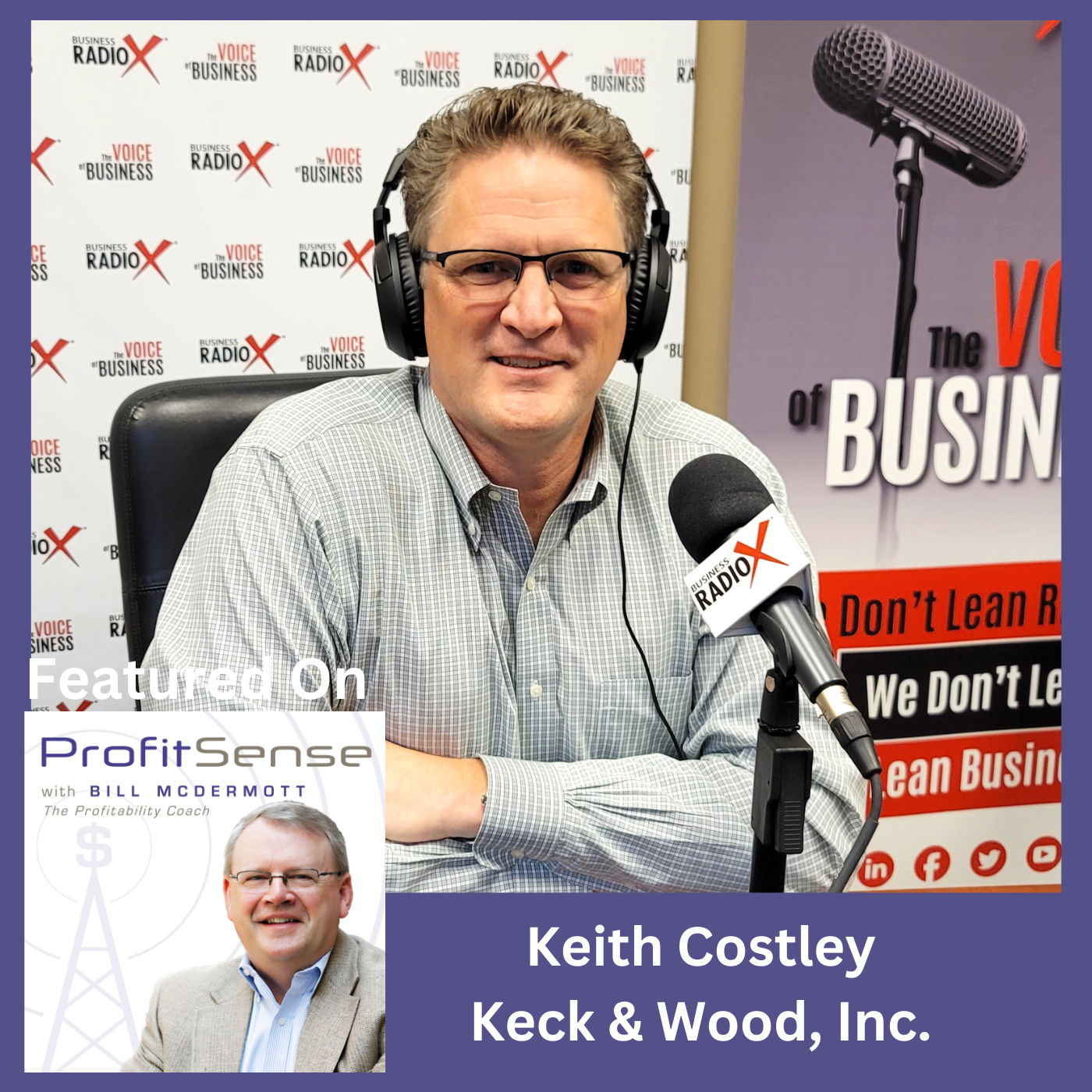
Keeping the Focus on Your Clients, with Keith Costley, Keck & Wood

October 9, 2023 by John Ray

Keith Costley
North Fulton Studio
Keeping the Focus on Your Clients, with Keith Costley, Keck & Wood
Loading
00:00 /
RSS Feed
Share
Link
Embed

Download file

Keith Costley

Keeping the Focus on Your Clients, with Keith Costley, Keck & Wood

[00:00:00] Keith Costley: Being curious about what your client need is asking good questions is just, it’s just absolutely critical. But in order to build relationships I find that instead of coming into a interaction with a client and wanting to talk about us or me, if we turn that around and make sure that we’re learning about them or doing our research.

[00:00:27] Keith Costley: We’re talking about them and even when we’re doing writing articles, are we writing articles about what we did or are we celebrating our clients and the cool projects that they’ve done? Are we, when we’re posting on social media, are we talking about our successes and our people – which is important.

[00:00:44] Keith Costley: But are we also celebrating our clients and their people and the good things that they’re doing? So you know, it just takes a moment and we try to instill in our culture to be a client centric have a client centric approach and get out of our own heads because when we submit proposals and statement of qualifications too much, it’s all about us instead of it being about the client and we’re trying to learn and improve that every day.

Listen to Keith’s full ProfitSense with Bill McDermott interview here. 


The “One Minute Interview” series is produced by John Ray and the North Fulton studio of Business RadioX® in Alpharetta. You can find the full archive of shows by following this link.

Renasant Bank has humble roots, starting in 1904 as a $100,000 bank in a Lee County, Mississippi, bakery. Since then, Renasant has grown to become one of the Southeast’s strongest financial institutions with over $13 billion in assets and more than 190 banking, lending, wealth management and financial services offices in Mississippi, Alabama, Tennessee, Georgia and Florida. All of Renasant’s success stems from each of their banker’s commitment to investing in their communities as a way of better understanding the people they serve. At Renasant Bank, they understand you because they work and live alongside you every day.

Tagged With: Bill McDermott, client focused, clients, curiosity, engineers, Keck & Wood, Keith Costley, ProfitSense with Bill McDermott, Sales, The Profitability Coach

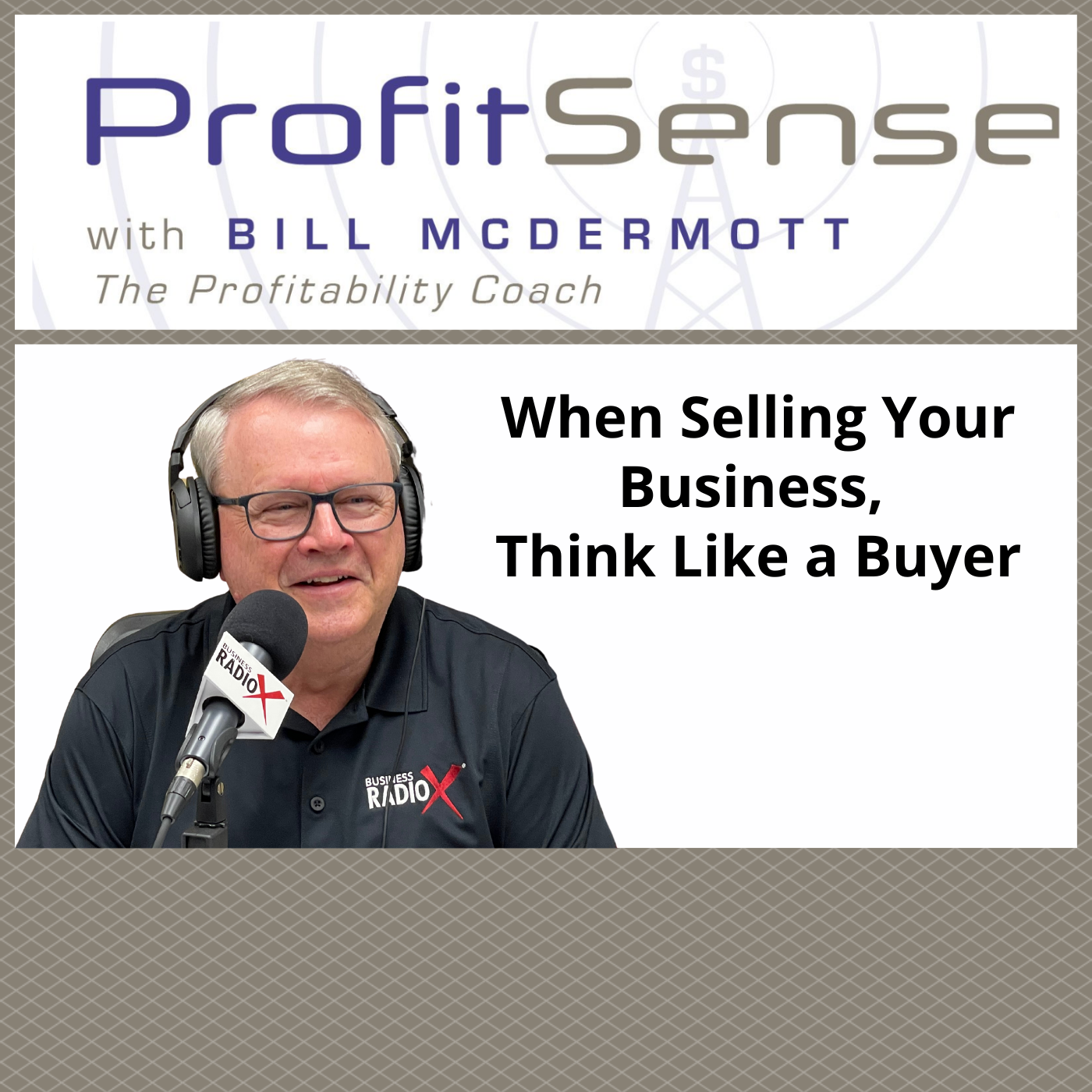
When Selling Your Business, Think Like a Buyer, with Bill McDermott, Host of ProfitSense

October 3, 2023 by John Ray

Think Like a Buyer
North Fulton Studio
When Selling Your Business, Think Like a Buyer, with Bill McDermott, Host of ProfitSense
Loading
00:00 /
RSS Feed
Share
Link
Embed

Download file

Think Like a Buyer

When Selling Your Business, Think Like a Buyer, with Bill McDermott, Host of ProfitSense

In this commentary from a recent episode of ProfitSense, Bill McDermott discussed how to think like a buyer when preparing to sell your business.

Bill’s commentary was taken from this episode of ProfitSense.

ProfitSense with Bill McDermott is produced and broadcast by the North Fulton Studio of Business RadioX® in Alpharetta.

TRANSCRIPT

[00:00:00] Bill McDermott: So I want to take a moment and talk to my business owner audience on if you’re selling your business or transitioning ownership whether it be to coworkers or a potential strategic or financial buyer,
[00:00:16] Bill McDermott: we have to think like buyers. Every business owner has a big dream to sell their business, achieve financial freedom, and live life on their terms. But recent studies show that business owners have a concept of the value of their business, but less than half of those have obtained an independent valuation.
[00:00:35] Bill McDermott: How do we know our value corresponds with the market value to a buyer? Selling our business is a lot like selling a home, except the business values are usually much higher. Everyone knows that kitchens and bathrooms sell houses. Location is also critical. Typically to maximize the value, we don’t sell our house ourselves,
[00:00:57] Bill McDermott: we hire a professional agent. They come up with a listing price based on comparable sales and run a process. In the same way, when selling our business, it’s important to think like a buyer. This means understanding what buyers are looking for in a business and how we can position our business to be attractive to potential buyers.
[00:01:18] Bill McDermott: Number one, identify your ideal borrower. Who is our ideal borrower and what are their goals or pain points? Knowing who we’re selling to, we can tailor our marketing materials to appeal to them. Second, Prepare a business for sale. This means cleaning up our financials, updating our marketing materials, and getting our business in top shape.
[00:01:40] Bill McDermott: Many business owners don’t know where to start or what to do in these areas, so hiring a professional to help you is critical. Third, hire a business broker or an M& A advisor. Best to have an independent advisor to handle the marketing of our business, finding potential buyers, and negotiating deal points.
[00:02:03] Bill McDermott: By following these steps, you can increase the chances of selling your business for a fair price and to a buyer who is a good fit for the company.


About ProfitSense and Your Host, Bill McDermott

Bill McDermott
Bill McDermott

ProfitSense with Bill McDermott dives into the stories behind some of Atlanta’s successful businesses and owners and the professionals that advise them. This show helps local business leaders get the word out about the important work they’re doing to serve their market, their community, and their profession. The show is presented by McDermott Financial Solutions. McDermott Financial helps business owners improve cash flow and profitability, find financing, break through barriers to expansion, and financially prepare to exit their business. The show archive can be found at profitsenseradio.com.

Bill McDermott is the Founder and CEO of McDermott Financial Solutions. When business owners want to increase their profitability, they don’t have the expertise to know where to start or what to do. Bill leverages his knowledge and relationships from 32 years as a banker to identify the hurdles getting in the way and create a plan to deliver profitability they never thought possible.

Bill currently serves as Treasurer for the Atlanta Executive Forum and has held previous positions as a board member for the Kennesaw State University Entrepreneurship Center and Gwinnett Habitat for Humanity and Treasurer for CEO NetWeavers. Bill is a graduate of Wake Forest University and he and his wife, Martha have called Atlanta home for over 40 years. Outside of work, Bill enjoys golf, traveling, and gardening.

Connect with Bill on LinkedIn and Twitter and follow McDermott Financial Solutions on LinkedIn.
Tagged With: Bill McDermott, business sale, M&A, Mergers and Acquisitions, ProfitSense, sell a business, selling a business, selling a company, The Profitability Coach

Dan Mahony, Transcendent Sales Solutions, Keith Costley, Keck & Wood, Inc., and Samantha McElhaney, Pinnacle Financial Partners

September 29, 2023 by John Ray

Dan Mahony
North Fulton Studio
Dan Mahony, Transcendent Sales Solutions, Keith Costley, Keck & Wood, Inc., and Samantha McElhaney, Pinnacle Financial Partners
Loading
00:00 /
RSS Feed
Share
Link
Embed

Download file

Dan Mahony

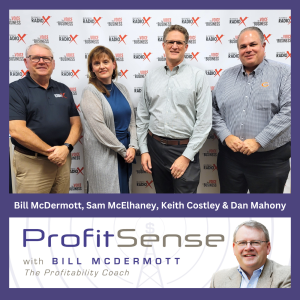
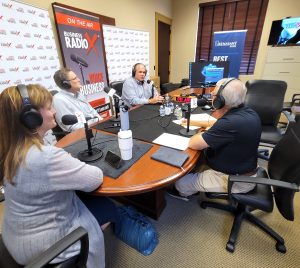
Dan Mahony, Transcendent Sales Solutions, Keith Costley, Keck & Wood, Inc., and Samantha McElhaney, Pinnacle Financial Partners (ProfitSense with Bill McDermott, Episode 49)

Dan Mahony, Transcendent Sales Solutions, Keith Costley, Keck & Wood, and Samantha McElhaney of Pinnacle Financial Partners joined host Bill McDermott for a roundtable discussion about what it takes to have a good mindset for sales. Each of them shared their career journey and their experience in sales. Bill led them through a conversation about the critical elements of mindset that contribute to effective sales, such as intentionality, collaboration, transparency, and honesty. They also discussed the skills that are important such as listening, curiosity, building trust over time, doing your research and more. Each guest concluded with their key advice based on their years of experience.

Bill wrapped up the episode with his thoughts on thinking like a buyer.

ProfitSense with Bill McDermott is produced and broadcast by the North Fulton Studio of Business RadioX® in Alpharetta.

Transcendent Sales Solutions

Transcendent Sales Solutions is focused on empowering companies with tactical sales strategies to accelerate revenue growth. Dan is an agile, results-oriented, and charismatic leader with a proven track record of turning underperforming sales organizations into revenue producing market leaders. He has a unique ability to create sales messaging and processes that increase revenue, decrease headaches, and provide order and definition in place of chaos and confusion. 

Website | LinkedIn | Facebook | Instagram

Dan Mahony, President, Transcendent Sales Solutions

Dan Mahony, President, Transcendent Sales Solutions

Dan Mahony is the President of Transcendent Sales Solutions, a company that helps and empowers small to mid-sized businesses in turning underperforming sales teams into revenue-producing market leaders. Transcendent Sales Solutions takes a proven results-oriented strategic and tactical approach by developing successful sales plans, building a strict sales approach, and aligning sales teams that will help a business marketing operation run effectively.

Dan has a unique ability to create sales messaging and processes that increase revenue, decrease headaches, and provide order and definition in place of chaos and confusion. 

LinkedIn

Keck & Wood, Inc.

Keck & Wood, Inc., founded in 1954, provides professional civil engineering, landscape architecture, and land surveying services to clients throughout the southeast.

The company has 65 employees in four offices. Duluth and Fayetteville, GA as well as Rock Hill and North Charleston, SC. Our clients include city and county governments, utility companies, state agencies, education institutions, and private developers. 

Website | LinkedIn | Facebook

Keith Costley, President & CEO, Keck & Wood, Inc.

Keith Costley, President & CEO, Keck & Wood, Inc.

Keith Costley is the President / CEO of Keck & Wood, Inc., a 65 person civil engineering firm headquartered in Duluth, GA. He graduated from Vanderbilt University with a civil engineering degree in 1994 and has become licensed as a Professional Engineer in GA, SC and NC.

He joined the firm as a Project Manager in their Rock Hill, SC office in 2000 and has steadily progressed his career by becoming the office leader in 2012 and then the President / CEO in 2017.

LinkedIn

Pinnacle Financial Partners

Pinnacle is much more than a bank. It’s a place for people to find true partners for their business. It’s a place where seasoned professionals give clients unmatched service and advice that better their financial well-being. And it’s a place where people love coming to work every day.

Website | LinkedIn | Facebook | YouTube

Samantha McElhaney, Commercial Financial Advisor, Pinnacle Financial Partners

Samantha McElhaney, Commercial Financial Advisor, Pinnacle Financial Partners

Sam has been in the financial services industry for 30 years and works hard to solve the daily business struggles of her clients. When she is not working closely with clients, she is out networking with individuals, so she has resources to solve problems and to connect others to regularly. If Sam is connecting people, she feels her day is fulfilled.

LinkedIn


About ProfitSense and Your Host, Bill McDermott

Bill McDermott
Bill McDermott

ProfitSense with Bill McDermott dives into the stories behind some of Atlanta’s successful businesses and business owners and the professionals that advise them. This show helps local business leaders get the word out about the important work they’re doing to serve their market, their community, and their profession. The show is presented by McDermott Financial Solutions. McDermott Financial helps business owners improve cash flow and profitability, find financing, break through barriers to expansion, and financially prepare to exit their business. The show archive can be found at profitsenseradio.com.

Bill McDermott is the Founder and CEO of McDermott Financial Solutions. When business owners want to increase their profitability, they don’t have the expertise to know where to start or what to do. Bill leverages his knowledge and relationships from 32 years as a banker to identify the hurdles getting in the way and create a plan to deliver profitability they never thought possible.

Bill currently serves as Treasurer for the Atlanta Executive Forum and has held previous positions as a board member for the Kennesaw State University Entrepreneurship Center and Gwinnett Habitat for Humanity and Treasurer for CEO NetWeavers. Bill is a graduate of Wake Forest University and he and his wife, Martha have called Atlanta home for over 40 years. Outside of work, Bill enjoys golf, traveling, and gardening.

Connect with Bill on LinkedIn and Twitter and follow McDermott Financial Solutions on LinkedIn.
TRANSCRIPT

Intro: [00:00:03] Broadcasting from the Business RadioX studio in Alpharetta, it’s Time for Profit Sense with Bill McDermott.

Bill McDermott: [00:00:17] Good morning. Welcome to Profit Sense. This podcast dives into the stories behind some of Atlanta’s successful businesses and business owners and the professionals that advise them. We help local business leaders get the word out about the important work they’re doing to serve their market, their community, and their profession, as well as discuss current issues that business owners are facing today across a wide variety of industries.

Bill McDermott: [00:00:44] I’m your host, Bill McDermott, and this show is presented by The Profitability Coach. When business owners want to increase their profitability, they often don’t have the expertise to know where to start or what to do, I leverage my knowledge and relationships from over 32 years as a banker and 14 years as a business coach now to identify the hurdles getting in the way and create a plan to deliver profitability they never thought possible.

Bill McDermott: [00:01:10] We’re going to be talking sales today, selling professional services. First, I want to introduce Keith Costley who is president and CEO of Keck & Wood. Keith, so glad you’re on Profit Sense. And by the way, welcome back because I was privileged to have you as a guest previously.

Keith Costley: [00:01:30] Yeah, thanks, Bill. It’s great to be back. I feel like a veteran and I really appreciate my relationship with you and our company’s relationship with you. We’ve been in the trenches together before. So, glad to be here.

Bill McDermott: [00:01:42] Yeah, and we’re delighted to have you. So, talk a little bit about Keck & Wood, founded in 54, providing professional civil engineering and other things. Talk about that a little bit.

Keith Costley: [00:01:55] That’s right. Founded in 54. So we’re heading towards our 70th anniversary as a firm, which we’re pretty excited about.

Bill McDermott: [00:02:03] Wow.

Keith Costley: [00:02:03] But our core services are civil engineering. We also do landscape architecture and provide planning and consulting services. But the core to our business is providing solutions to public sector and private sector clients who have a wide variety of needs, whether they be regulatory, development, engineering, solutions, consulting. But our bread and butter is city and county government providing a wide range of services. And we also do design work for private clients as well.

Bill McDermott: [00:02:42] And I love your tagline, “Collaboration By Design.” Talk briefly about that.

Keith Costley: [00:02:46] So, we believe that collaboration is just – has to be at the core of our business and our relationships and not only external relationships with clients but internal relationships. If we’re really going to maximize our success as a firm, we have to be collaborative in how we do our business, how we treat each other internally, and be collaborative with our clients. So that’s why our tagline is what it is.

Bill McDermott: [00:03:09] Yeah, well, and it’s a great one. I also want to welcome Dan Mahony who is president and CEO of Transcendent Sales Solutions. Dan, delighted to have you back. So, welcome back to Profit Sense.

Dan Mahony: [00:03:21] Bill, thanks for having me. It’s great to be here.

Bill McDermott: [00:03:23] And Dan is president of Transcendent Sales, which is a company that helps and empowers small to mid-sized businesses and turning underperforming sales teams into revenue-producing market leaders. So, Dan, talk about that briefly.

Dan Mahony: [00:03:36] Well, I started my business five years ago. I’m on my fifth anniversary. And what I do is, I help those business owners and CEOs that struggle with sales. A lot of times they started the company and they are running their companies. Plus, they’re the head of sales and they’re also the top sales producers. So, especially when you’re getting ready to sell your business, there needs to be that separation for the new buyer. And I work with those companies to help them build the right processes, the right systems, put the right people in there, and have the right strategy.

Bill McDermott: [00:04:09] Yeah. And it’s really about transferring those selling skills from the business owner to that next level of management. So, there is actual transfer – transferable value in the firm, isn’t it, Dan?

Dan Mahony: [00:04:21] Absolutely. And it’s that the skills and the relationships too, is how do you take those relationships from all those years and transfer them over to somebody new when they’re not there anymore?

Bill McDermott: [00:04:31] Yeah, yeah. Great point. And the baby boomer generation is retiring in droves. And so, we’re going to talk more about sales. And I’m excited what you have to contribute to the conversation.

Bill McDermott: [00:04:43] And Samantha McElhaney. Samantha, I believe, is maybe one of the best bankers in the city of Atlanta. Samantha, welcome.

Samantha McElhaney: [00:04:53] Thanks, Bill. Just call me Sam.

Bill McDermott: [00:04:55] All right, Sam. So, Pinnacle Financial Partners. You do a lot of commercial financial advisory business – advisory services. I know financial services because I’ve sold in that space before. You have a unique perspective on that. But talk a little bit about the work that you do and talk a little bit about Pinnacle Financial Partners.

Samantha McElhaney: [00:05:18] Yeah, the last time I was here exactly a year ago, I couldn’t announce that I had moved to Pinnacle Financial Partners. I was actually here with Keith doing a podcast and I just joined Pinnacle Financial Partners. So, it was a year ago, celebrating my anniversary.

Bill McDermott: [00:05:37] Wow! Happy anniversary.

Samantha McElhaney: [00:05:39] Thank you.

Samantha McElhaney: [00:05:39] And it’s the best decision I ever made because I’m with all of my old teammates from former banks, SunTrust, Synovus, Wells Fargo. We’ve assembled an all-star team here in Atlanta, and we are doing what we love, helping business owners make decisions financially that they need to either start their business, grow their business, transition their business, but also help them with their personal needs as well, too. So, it’s just the ideal job as far as banking is concerned.

Bill McDermott: [00:06:15] Yeah. And the thing about banking and financial services is obviously the more a business sells in revenue, the more deposits that a bank will have to be able to loan out. And so – but it’s not really selling as much as it is helping business owners solve problems.

Bill McDermott: [00:06:38] So let the four of us kick off this whole topic of sales. You know, I’ve learned recently over the last couple of years that before we can deal with skill set, we have to deal with mindset. And, Sam, one of the things that I think you do really well and I want to get Keith and Dan’s perspective because I’m sure they do this well also being clients set – being client-centric, one of the mindsets. You know, we have to be able to put our client’s needs before our own and deliver the solutions that meet those needs. So, how have you become the client-centric banker that you are?

Samantha McElhaney: [00:07:26] I think over the years, especially after becoming a mother, you have to put other people’s needs first. I’m a big faith believer. I go to church and it’s not just about going to church. It’s just, you know, getting up every day and having those conversations with my God. And that’s why I work where I work because our institution is a big faith-based institution as well, too.

Samantha McElhaney: [00:07:57] And putting those things into practice and knowing that if I put others first and their needs first, it will pay dividends long term. And so, listening to those individuals and listening to what they need in their life, and it may not be anything financial. I have a new client that had not had a vacation in years and they’re now right now at Disney World and all the family members are down there in Disney. And one of the things that I personally wanted to do and Pinnacle allows me to do it is I wanted to put a big gift basket in their hotel room so that when they open the door, it just welcomed them to Disney and they got to celebrate time with their family. So I got a text message on Saturday that said, “Wow, we opened the door and there was this huge gift basket that just said, ‘Welcome to Disney, you know, blank family.'” And they were just so thrilled and so excited that I got to do something like that to help them all celebrate. And it was a cooler full of, you know, water bottles and snacks and things. So they didn’t have to worry about going and getting all those things while they went out and visited Epcot and Magic Kingdom and stuff.

Samantha McElhaney: [00:09:01] So just taking that burden off of the family, that just makes me feel better as a banker on a regular basis. And that has nothing to do with financial whatsoever.

Bill McDermott: [00:09:10] Yeah. And, Keith, I know the time that you and I spent in the trenches figuring out the direction that you were going to take Keck & Wood, the tagline, “Collaboration By Design,” I think, if I recall correctly, deeply embedded in that was to really create the collaboration with clients and have the engineers also become client-centric and putting your client’s needs first. How have you seen that dream that you had become a reality?

Keith Costley: [00:09:45] In a lot of different ways. You know, we sell professional services and the value that we have is just through our expertise in our time. And I think the key to us being collaborative with our clients is building trust over time and adding value to every interaction that we have with them.

Keith Costley: [00:10:06] Give them a reason to respond to your email, to pick up the phone and take your call because they’re getting bombarded every day from all directions, from all manner of people and vendors and everything else. So, you have to give them a reason to spend time with you. And that’s really important to building that collaborative relationship with the client. They see you as an expert or having some expertise and they know when they interact with you, you’re going to be able to share something with them that’s useful in their lives.

Bill McDermott: [00:10:37] Yeah. And, Dan, I know you and I have had conversations. A lot of people have the mindset that selling is transactional, but in the vein of client-centric, it’s really relational. So as you talk to those solopreneurs or those business owners, whether they be large businesses or smaller businesses, what mindset issues around changing the perspective from this is a transaction to it being a relationship and the relationship is focusing on the client and not the person.

Dan Mahony: [00:11:22] Yeah, it’s from that perspective. When a lot of business owners, again, they have forecast, they have pipelines and you know, a lot of the salespeople, they get trained in the word I’ve used before is that’s been used as coin operated. It’s there. Okay. We have an opportunity and we just need to go in and we need to put our selling shoes on and we need to close it. And it’s just so easy to go and just from point A to point B, but in that relationship build, it’s so much more. It’s more like a chess game versus a game of checkers. I mean, there’s a lot of people to know. There’s a lot of things to understand before you earn the right to ask them for that business. So, it’s making them understand that yeah you have sales goals, but point A to point B, the straight line is not always the path that you have to take when you’re working on something that’s more complex from a sales perspective.

Bill McDermott: [00:12:18] Yeah. Is there a particular story maybe of a client that you’ve worked with recently that might come to mind where you were kind of dealing with this whole selling mindset versus relational mindset?

Dan Mahony: [00:12:33] Yeah. I worked with a client that, you know, worked very large transactions. And, you know, one of the problems they had is they just had the wrong team. And there was that mindset. Their mindset was, we’re going to go out and we’re going to get an order today and we’re going to go out and we’re going to win today. And you want to have that positivity. But they were dealing with companies that were Fortune 250 companies, and the transaction sizes were high six to sometimes low eight-figure transactions. And you’re just not going to go in and write a two-page proposal and send it to somebody and they’re going to sign off on it. So they didn’t understand that complexity of it.

Dan Mahony: [00:13:10] So after we put in the right first people and then we surrounded them with the right process on how we’re going to go about these sales, yeah, they’ve seen – they’ve seen system sales increase by probably 300% over the last couple of years just because, and again, it’s more time. We’re very methodical. But every conversation, everything we’re doing at every time is an event. And if you have a half-hour conversation, we’re going to prepare an hour to an hour and a half for that one conversation and getting them in that you just don’t go on the fly. You know, I think a lot of salespeople have this Superman or Superwoman complex. They could just go in and just handle any situation. And a lot of times they can’t. And they realize and you don’t get a lot of – in big opportunities, you don’t get a do-over.

Bill McDermott: [00:14:04] Right. No mulligans.

Dan Mahony: [00:14:06] No mulligans in sales. Absolutely.

Bill McDermott: [00:14:09] So, Keith, I think the next mindset is around what we’ve already talked about that it’s necessary for that professional to be collaborative, and collaborating effectively is being able to do it with others. That’s harder for some people than it is for others. How do you share ideas and work towards common goals? So certainly, there’s been a mindset shift probably in your collaboration by design. Talk about that a little bit. How is the importance of a collaborative mindset necessary?

Keith Costley: [00:14:49] Well, I think a lot of – we had really good bones before I became CEO six or seven years ago. But I think the key is, is being intentional about what it is that you’re trying to do, what is the message you’re putting out there to the marketplace and how can you leverage that to the benefit of your clients and to the company. But, you know, it’s – sometimes we find ourselves pursuing a wide variety of projects for a wide variety of clients.

Keith Costley: [00:15:21] And sometimes even just recently, we’ve started to develop a capture plan template to help us focus on, well, instead of trying to be everything to everybody and trying to communicate out there, how do we, you know, make that pool of potential clients smaller and do a deeper dive and really invest that time and research and understanding what their needs are and understanding those people and getting to learn those people and building that trust while we’re trying to build an understanding of what their needs are, what future projects are. And it just takes intentionality to allow yourself to pursue less volume of work but hopefully be more successful at meeting your client’s needs and ultimately building more business for your company.

Keith Costley: [00:16:09] And people kind of get in the mindset sometimes that we need revenue, I need to sell, you know, I need to be successful in sales and I need to pursue anything and everything that we could possibly do. And as we are growing up as a firm and growing as a firm, we’re taking a step back and going, “Now let’s get more focused. Let’s do a deeper dive on five clients rather than trying to pursue 25 clients.”

Bill McDermott: [00:16:33] Yeah, yeah, because you can go an inch wide or you can go five feet deep. But there is an intentional choice that gets made. I personally prefer to go deep versus wide.

Keith Costley: [00:16:50] Sure. But that’s not necessarily the natural mindset that people are in.

Bill McDermott: [00:16:54] Right.

Keith Costley: [00:16:54] You know, they just, you know, we can do that, you know, so let’s go after that.

Bill McDermott: [00:16:58] Yeah, yeah.

Keith Costley: [00:16:59] And sometimes it’s better to take a step back and be more intentional and strategic in the types of clients and projects that you pursue. And that’s just something that we’re learning how to do better.

Bill McDermott: [00:17:09] Yeah. And, Sam, I think part of your mindset is your approach to really put the team at the disposal of the client, and that client may have different problems to solve and likely you become the quarterback of the team. So, how has collaboration played out in delivering professional services to business owners?

Samantha McElhaney: [00:17:39] Yeah, it’s really frustrated me over the years when different bankers have said that they’re all things to all people because you can’t be all things to all people. We just read a book at Pinnacle because we read books on a quarterly basis. And I mentioned to you, Bill, the book that we just finished was one called Unreasonable Hospitality, and it’s been focused and featured on the shows, the Bear and Billionaires and stuff. And in the book, it talks about not being all things to all people, just be all things to that one in front of you at that moment at that time. And I love the fact that it says, you know, be good at what you do and then get all the others around you and what they’re good at and just assemble this amazing team around you.

Samantha McElhaney: [00:18:30] So, you know, I really like working with small business owners, but I have an opportunity right now to work with companies and I’ve been introduced to companies that need, you know, 40, 50, $60 billion in financing and they’re not getting factual information from other banks or they’re not getting the information that they need from other lenders. So, I’m able at Pinnacle to pull in other people in different departments and all across the United States and they’re getting on the phone or they’re getting on Zoom or they’re even getting in a plane and coming here to Georgia to work with me and help my prospects or my clients with those opportunities. And there’s no competition. There’s no I’ve got to meet a goal, or, Sam, get out of the way, or I’m learning.

Samantha McElhaney: [00:19:21] At 30 years in my career, I’m learning just like my clients are learning of our capabilities. And it’s fun and they’re seeing it on my face. My clients are seeing it, and they’re eager to learn about what, not only capabilities we have but how I can help, how my coworkers can help. And we’re all learning together. And if we can’t do it, we’re getting them in front of other institutions that can help. And there’s no fighting with and among each other about that. And it’s just fantastic that we’re trying to help the business succeed.

Bill McDermott: [00:19:55] Yeah. Thanks for sharing that. That’s awesome. We’re talking today with Dan Mahony, who’s president and CEO of Transcendent Sales Solutions. Transcendent is focused on empowering companies with tactical sales strategies to accelerate revenue growth. We’re also talking to Keith Costley with Keck & Wood, as Keith mentioned, a company that provides civil engineering landscape architectural and land surveying services, companies in four offices in Duluth and Fayetteville, Georgia, as well as Rock Hill and North Charleston, South Carolina.

Bill McDermott: [00:20:32] And then Samantha McElhaney with Pinnacle Financial Partners. So Sam has, as she said, 30 years in the financial services industry and works hard to solve her clients’ daily business struggles. When she’s not closely working with clients, she’s out networking with individuals. And I’ve seen that networking in action and it works really well.

Bill McDermott: [00:20:55] So the last thing I’m going to pick up on what Sam was talking about reading. Salespeople I think don’t understand because of the transactional mindset, Dan, they don’t look at themselves as professionals, just like a doctor or a dentist or an engineer or an attorney. So, what I’m wondering is if we could shift the topic and talk a little bit about continuous learning, having a growth mindset. You know, we’re on a journey that is leading us to become not only better people but also better professionals. So, how do lifelong learning and having a growth mindset, you think, play into being successful at selling?

Dan Mahony: [00:21:42] You know, very much so. There are so many different books out there on sales and there are so many – you know, there’s training, there’s educational videos. But, you know, I’m old school when it comes back to the fundamentals. It’s as we talked about, it’s first of all, being present. And if you’re present, the most important thing is, is you have to be a very good listener. Okay. It starts with listening, number one, and then being inquisitive and being curious and, you know, asking good questions. Because a lot of times you find with sales folks, I don’t care how many sales trainings they’ve gone through, they are thinking about what they’re going to say next when somebody is talking to them and they’re not present there. So, you know, sometimes I’m like, put all the books away and just go back to the real basic things. It’s just good listening skills. And if you are present, actually be present.

Bill McDermott: [00:22:35] Yeah, yeah. So, asking questions that are based on curiosity, Keith, I guess, how have you used that growth mindset in building a culture of successful engineering professionals?

Keith Costley: [00:22:56] I think some of the key concepts, and I totally agree with what Dan just said, you know, being curious about what your client needs is. Asking good questions is just – it’s just absolutely critical. But, you know, in order to, you know, build relationships, I find that instead of coming into an interaction with a client and wanting to talk about us or me, you know, if we turn that around and make sure that we’re learning about them or doing our research, we’re talking about them. And even when we’re doing, writing articles, are we writing articles about what we did or are we celebrating our clients and the cool projects that they’ve done?

Keith Costley: [00:23:45] You know, are we – when we’re posting on social media, are we talking about our successes and our people, which is important, but are we also celebrating our clients and their people and the good things that they’re doing? So, you know, it just takes a moment and we try to instill in our culture to be a client-centric, have a client-centric approach, and get out of our own heads. Because when we submit proposals and statements of qualifications too much, it’s all about us instead of it being about the client. And we’re trying to learn and improve that every day.

Bill McDermott: [00:24:24] Yeah. And, Sam, in your professional journey, I know that you are a lifelong learner and you and I share books and I’m going to read, what was it?

Samantha McElhaney: [00:24:38] Unreasonable Hospitality.

Bill McDermott: [00:24:39] Unreasonable Hospitality. That is a provocative title.

Samantha McElhaney: [00:24:42] Yeah.

Bill McDermott: [00:24:42] So I look forward to that. But you’ve been a lifelong learner. That’s who you are. Do you have a sense of what has made you that way?

Samantha McElhaney: [00:24:55] Well, I mean, I’m supposed to be a teacher and I’ve got a daughter who’s going to be a teacher.

Bill McDermott: [00:24:59] Okay.

Samantha McElhaney: [00:25:00] And I constantly crave feedback. I think when I meet people because of emotional intelligence, if I can’t pick up on it myself, if I’ve either done something well or I’ve not done something well, I beg people to tell me. I hopefully pick up on it. But if I don’t, I beg you to tell me one way or the other. Let me know that I’ve done it well. Give me good feedback or even give me the bad feedback. I don’t think there’s anything wrong with hitting the elephant in the room straight on because we can learn from it.

Bill McDermott: [00:25:39] Sure.

Samantha McElhaney: [00:25:40] So, for instance, Dan and I are in a networking group together and he knows my eye will blow his phone up and go, “Hey, give me some feedback here. How did that go? How did that – how did the meeting go? How did the presentation go? What can we do better as a group to grow the group, to make the group better?” I just – I want everything to not be perfect because you can’t be perfect, but like you said earlier present because a strong group makes for better opportunities for everyone in the group to be successful. So, more feedback makes for better education, makes for better prosperity for everybody.

Bill McDermott: [00:26:16] Sure. So I think we’ve talked about mindsets and being client-centric, being collaborative and being continuous learners. Let’s kind of, before we move on to successful skill sets, can we synthesize all of those three things? Dan, any closing thoughts on the synthesis of client-centric, collaborative, and continuous learning?

Dan Mahony: [00:26:43] Well, and just what Sam said, it’s that – it’s that feedback, is if you’re in a true collaboration and you’re working as a team and having that and being open to that feedback is important because many times, even though we’re collaborating, people, you know, people don’t want to get called out or they can’t, they take that honest feedback is not a learning opportunity but is an attack or they take it, personal. So, you know, if to have the right mindset, you have to go in at that. I’m always learning and I’m open to learning because, you know, my dad always says, “Hey, listen when you stop learning,” he’s 83 years old, “when you stop learning is when it’s all over.” And he’s still learning at 83.

Bill McDermott: [00:27:26] Yeah. That’s awesome. Keith, synthesizing it in your mind?

Keith Costley: [00:27:31] I think one of the key concepts is just being curious. And so if you are curious enough to want to know from your client and get the feedback from them, how are we doing? That’s a really powerful question.

Bill McDermott: [00:27:47] Yeah, people don’t –

Keith Costley: [00:27:48] How are we doing?

Bill McDermott: [00:27:49] Yeah, people don’t care how much you know, till they know how much you care.

Keith Costley: [00:27:52] Right, right. And so even if you get some tough feedback because nobody’s perfect, no company is perfect. But if you’re willing to ask the question, then you’ve taken a huge step.

Bill McDermott: [00:28:06] Yeah, yeah.

Keith Costley: [00:28:06] You know, and – so, I think that being willing to be curious and ask those types of questions of your clients does nothing but deepen that relationship.

Bill McDermott: [00:28:17] Yeah.

Keith Costley: [00:28:18] Really important.

Bill McDermott: [00:28:19] Sam, as you kind of bring those three things, what are kind of final thoughts from you on mindset issues?

Samantha McElhaney: [00:28:29] I think it was during COVID someone suggested to me to pick a word every year and live by that word. And so, and I think that has to go with mindset. And so 2023, I picked transparency, which I think goes with what you’re talking about. And as long as we all remain transparent, I think we can hit a good mindset with, you know, our client-centric collaboration, curiosity and continuous education, and everybody will be on the same page and – or at least know where everybody stands and move forward.

Bill McDermott: [00:29:03] Right, right. It’s a great point. So shifting to skill set, Dan, I’m going to pick up on something that you said earlier when we’re talking about technical skills. Selling is not about talking. Selling is about listening. And so, I think one of the technical skills is not only being present but listening while you’re present. Talk about that.

Dan Mahony: [00:29:30] Well, I think when we’re having a discussion with somebody, as I mentioned before, many times we’re trying to think about what we’re going to say next versus actually listening, listening to them. So I think it’s really important, you know, from a skill set perspective is going back to being curious, I mean realizing that you have a lot of research that you can do before you go and meet somebody. I mean, think about when we used to go to try to meet somebody 30 years ago, we didn’t know anything. Now we have so much information and I think it gives us the ability, you know, as we’re communicating and we’re listening to them, you know, we should know more when we’re going in which we ever did before. And if that’s the case, you know, our conversations should be much more specific than just in a general sense.

Dan Mahony: [00:30:22] Like I always say in sales, like the first question, you know, and especially in this day and age, when somebody walks in and says, “Hey, Bill, it’s nice to meet you. So tell me a little bit about your company.” That’s usually the “Are you kidding me?” I mean, you’re asking me about the company. You should you should know all these things already. So, yeah, it’s, you know, those are some things that are just real important as, you know, being prepared and, you know, just those good listening skills and, you know, going in with a plan, too.

Bill McDermott: [00:30:53] Yeah. And I think, Keith, one of the things that is part of your sales process is certainly technical knowledge. But beyond technical knowledge, what are some of the things that you see the successful people in your organization possessing as skill sets?

Keith Costley: [00:31:15] Curiosity for sure. We try to have our people. We don’t have anybody in our organization that is their sole responsibility is sales. So, we have a doer seller model. And one of our challenges as a company as we grow is to clearly establish who in the company is responsible for maintaining relationships, building relationships and producing the sales, the growth and revenue.

Keith Costley: [00:31:48] And so it’s just making sure that those people are aware that they have that responsibility, they have tools. We have some basic mindset that we need for them to be in and questions that they need to be asking and researching and being curious about. It all ties together and then developing some processes around this is how we do it. This is the Keck & Wood way to prepare for a meeting. This is how we strategize on what clients are pursuing and why. These are the questions that we have to answer, ask and answer, before we put time, effort and money into developing relationships with different clients.

Keith Costley: [00:32:33] And so, yeah, it’s really exciting time as we grow as a company to help our staff realize these things. You know, we all went to some type of professional school and got some kind of technical degree and we have to teach our people how to be effective friends and client representatives and managers and be able to do sales. And it all works together.

Bill McDermott: [00:33:01] Yeah. Dan?

Dan Mahony: [00:33:02] I think one of the hard things when you have somebody that’s technical is, you know, you’re a nuclear physicist. How do you go and explain nuclear physicist to somebody that doesn’t understand it at all? And it’s trying to understand how you, you know, water it down a little bit and simplify something that’s very complex, like civil engineering or anything like that.

Keith Costley: [00:33:24] It is really hard. I had my own experience with that. I was talking with an accountant about tax-related issues and I was just getting very valid information from this person, but it was very technical and it was formed this and ruled this. And I’m like, “Whoa, you’re speaking a language I don’t understand.” So to speak to your point, it is difficult for some of our highly skilled, highly technical people to boil it down to common sense language that a city manager or a mayor or somebody can understand. And that’s a challenge. That’s definitely a real challenge.

Bill McDermott: [00:34:01] Yeah, great point, Dan. Sam, to build a little bit on what Keith said in technical skills and maybe even in communication skills, the power is in the question that you’re asking rooted in curiosity. So as you have developed as a successful sales professional, how have you crafted your questions to me, more powerful or more meaningful to the person that you’re sitting with in the meeting?

Samantha McElhaney: [00:34:36] Oh, okay. It really all depends on the person. I mean, like Dan has said earlier, a lot of time is spent upfront researching. I mean, I live and breathe by LinkedIn and finding out not only about the individual but researching with my connections what they know about the individual and specific things I need to know. Finding out articles. I do a lot of keyword searches and indicate the person down the road in case some current events or things happen so that I can bring that into the conversation.

Samantha McElhaney: [00:35:16] But, I mean, even though I am a more aggressive individual, I always try to find out about the individual family-wise or significant events, vacations. Pictures can tell a lot. So you can start conversations off with key events that are happening with the person’s life. I mean, if you look at my social media posts, I mean, of course, it shows my twins. So if someone never asks me about my twins, I have a real problem connecting to them.

Bill McDermott: [00:35:46] Because they’re a big part of your life.

Samantha McElhaney: [00:35:47] Because they are my life.

Bill McDermott: [00:35:49] Yeah.

Samantha McElhaney: [00:35:50] Or a football.

Bill McDermott: [00:35:51] Right, right.

Samantha McElhaney: [00:35:52] This is my season of the year. So if you don’t ask me about college football right now, it’s going to be a real hard time trying to connect.

Bill McDermott: [00:35:59] So, I’m trying to say this with –

Samantha McElhaney: [00:36:02] All due respect.

Bill McDermott: [00:36:04] Passion, but Roll Tide.

Samantha McElhaney: [00:36:05] Yes. But I’m also a Gamecock, so.

Bill McDermott: [00:36:08] Okay. Okay.

Samantha McElhaney: [00:36:09] But yeah, so doing those types of things will help an individual connect and therefore ask the right of questions. But if I’m listening, then I can make the right transitions and go down the path of asking the right questions and then funneling them, making those questions, start opening them really large, and then going more direct to the avenue that the person needs to go to.

Bill McDermott: [00:36:32] So, Dan, technical and communication skills seem to kind of blend together, but we as professionals know that from our EQ, we’re creating conversations either of resonance or dissonance. We, you and I, as we have had coffee together, our conversation resonates. It creates harmony. I’m picking up what you’re putting down and I think vice versa. And so, we’re probably aware of those resonance harmony or dissonance disharmony conversations that we’re having. And so, how does that play in in your experience into the sales process as you’re sitting across from the table, maybe even thinking, “Gosh, I’m really loving this conversation,” or, “I’m really struggling to connect with this person and don’t really know how”?

Dan Mahony: [00:37:32] Well, I mean, you never know. I mean, it’s you go in and you can do all the research. You can stalk them on LinkedIn like Samantha does. I mean, we could do all of these things and we could look at all their pictures and everything. And when you show up with that person, you just don’t know what they get. They could get having a bad day. They could have just – they could have just lost the deal. You know –

Bill McDermott: [00:37:55] Their dog died.

Dan Mahony: [00:37:56] Their dog is sick or died. I mean, you just don’t know. So it’s, you know, sometimes it’s timing. I mean, it’s – you know, sales is they say – is sales an art or is it a science? I’ve always said it’s a little bit of both. And you know, and, you know, not to go and get back into movies, but it is like a box of chocolates.

Bill McDermott: [00:38:15] Yep.

Dan Mahony: [00:38:16] Because you never know what you’re going to get on that one call. You could meet somebody one day and they’re Mr. Talkative and they could meet him in the next week and they’re closed-off and they don’t want to have it. So it’s just being flexible and being quick on your feet just to, you know, just try to get as much out of them. And sometimes, and I’ve had conversations with someone you could that is closed-off say, “You don’t really want to have this conversation today, do you?” And they’re like, “Not really.” And I was like, “Can we do it next week? Is that it would be next week?” And they actually appreciate that.

Bill McDermott: [00:38:49] Yeah. Because you can sometimes read their body language. They’re either feeling – you’re feeling disconnected to them or – and then like you said, maybe something happened in their life and they just can’t focus. Well, the worst thing that you can do is continue to have that sales call. So part of those communication skills are knowing when to call a time out and say, “Look, this is not the day to do this, is it?”

Dan Mahony: [00:39:18] Yeah. Like we always know what our objective is. Our objective is in the process to go to the next step. Sometimes you got to, you know what, let’s take a pause and we’ll do it again at another time.

Bill McDermott: [00:39:29] Yeah, yeah. And so, Keith, I’m sure you’ve had some situations where communication and the ability to guide the conversation or what do you handle in a situation if a client surprises you with a question that you didn’t expect, how important is the ability to be able to go with the flow in those conversations?

Keith Costley: [00:39:55] So, it’s important to be able to react appropriately, but it’s also really important to not say things you’re not confident in because people will understand if you don’t really know what you’re talking about. And it’s okay to say, that’s a great question and I know who I need to talk to or I know what I need to do to research that and I will get you an answer on that. That’s okay.

Bill McDermott: [00:40:19] Yeah, yeah.

Keith Costley: [00:40:19] But one of the things I was thinking about when Dan was talking was it’s – I think it’s a learned skill, too. If you have an interaction with a client and, you know, there was dissonance, you know, you didn’t connect well, it didn’t go well, whatever, to not give up on that opportunity, to find another way either recognizing that moment that, hey, maybe this isn’t the right day or time, but, you know, just because it didn’t work one time doesn’t mean that the next time it might work. And sometimes I find it’s human nature that when you feel like there wasn’t a connection and well, I’m just going to walk away from that opportunity and go on to the next thing and I would really encourage people to try to find a way to try again. And, you know, if it’s consistently you’re just not connecting with that person, then so be it. But don’t give up on one try.

Bill McDermott: [00:41:15] Yeah. Sam, I want to go to kind of our next point because I think you do this so well. Relationship-building skills, to Dan’s point, it’s really art. So as you are approaching your sales, you’re always putting that relationship first before any transaction takes place. So what do you feel like are some of the key elements based on your experience in building relationships with those clients or with those potential clients?

Samantha McElhaney: [00:41:54] I think honesty is very important upfront. Because I’m – personally, I’m not going to be everybody’s cup of tea. So I want to be upfront with those individuals and find out what they’re looking for in a partnership and make sure that my skill set will match what they’re looking for and vice versa. And if it’s not, then I want to make sure I have the teammates and the capability to help to the table. And if it’s not going to work, then introduce them to people that I know in my bag of, you know, connections and make those introductions for them.

Samantha McElhaney: [00:42:38] I want to make sure people listen. Honesty, listening, and just effort. I think effort is so important if – I tell people if you will give 100%. And if you’re not capable of it, again, the honesty comes into play. But if you’re always giving 100%, then there’s not going to be a problem there. If you can’t give that 100%, let someone else know and let someone else come in. Tag them in with the teamwork.

Bill McDermott: [00:43:07] Yeah, yeah. Great point. So as you’re talking, what came to my mind is, so I have this computer program that plays in my head. My dad told me very early on, “Bill, anything worth doing is worth doing well.” And so if you’re going to do something, then do it well. So I think that’s part of my DNA. And I think the other word that you mentioned earlier, which is your word for 2023, building relationships that are also transparent.

Samantha McElhaney: [00:43:41] Yeah. And that’s why, again, I’m so excited to be back with my old co-workers from SunTrust because this was the group that helped me when I went through cancer. I know I can trust these individuals. Because they were there for me. They allowed me to tag out and take the time, you know, go through chemo, survive, do what I needed to do. And they allowed me to tag back in and do my best work. And now I’m back with those same people and we’ll be able to do that same thing as we’re getting older and taking care of our families and all that stuff. So, yeah.

Bill McDermott: [00:44:13] Yeah, yeah. This is kind of a full-circle moment.

Samantha McElhaney: [00:44:15] It’s full circle.

Bill McDermott: [00:44:16] For you.

Samantha McElhaney: [00:44:16] Full circle.

Bill McDermott: [00:44:17] We have to celebrate that.

Samantha McElhaney: [00:44:18] Yeah.

Bill McDermott: [00:44:19] Dan, are there one or two relationship-building skills that you’re working with your business owner clients that are just kind of non-negotiables?

Dan Mahony: [00:44:31] As far as working with the owners themselves? Yeah. So, you know, for me, typically it’s there are three things that have to really occur for it to be successful. Number one, they have to realize they have a problem. Okay. Number two, it’s realizing they have a problem that themselves or anyone in their company is able to fix. The third one is if they don’t do something, the problem is not going to get any better. It’s likely to continue to decline. Those are kind of the three things I need as far as being able to work with somebody.

Dan Mahony: [00:45:05] And, you know, as far as just the relationship – that’s the basis of the relationship, is being able to like, “Hey, I’m here to help. I’m not here to be the CEO. I’m not here to be your permanent hire for VP of sales. I’m not looking to work for you. I’m just looking to help solve your problem.” And, you know, them being open to feedback is key, too. Like, we have to go in. Sometimes, we have to tell the business owners that, you know, their baby is, you know, not as handsome as they think it is. And it’s, you know, having those very tough conversations with them is they have to be open to that, or else the success is not going to happen.

Bill McDermott: [00:45:47] Sure, sure. Keith, what are you finding as some of the critical relationship-building skills that are necessary for successful engineers?

Keith Costley: [00:45:58] I think a lot of it is just understanding the individual’s role in developing relationships and maintaining relationships with our clients. And it’s really interesting to speak with some of our younger professionals who don’t realize that they can have a role in relationship building and business development and as well when they’re interacting with a client on a project. It’s okay to ask them, “Hey, what’s on your mind these days? Or what’s coming up next or whatever?” And they just – sometimes it’s just talking to them about that and having them realize, “Oh, yeah, I can ask that question.”

Bill McDermott: [00:46:38] Yeah, yeah, absolutely.

Keith Costley: [00:46:40] And so, it’s just a lot of little things. But I think one of the keys is having our people put their client’s interests first and being genuine with them and asking good questions and the rest of it just kind of flows naturally from that.

Bill McDermott: [00:46:56] Yeah. And so, I think where we’ve kind of landed on skill sets is certainly technical skills, communication skills, relationship-building skills. Sam, I’m going to kind of ask you to maybe synthesize this, not only the mindsets but also the skill sets, how you have done this so successfully. What are just some closing thoughts and comments that you might have for our listeners?

Samantha McElhaney: [00:47:27] Bottom line, when it’s coming to a relationship between myself and a client, with it being a partnership, just ask them what they’re looking for. Bottom line, you know, how do you want to be communicated with? I always tell people I’ve had a client in the past, they’re always on the road and they simply wanted a text message. Don’t bombard me with emails. Don’t call me. Just send me a text. And that’s how I communicate. And I always give that example because if I did anything else for that person, we would have never been able to communicate and we would never be able to work together. So if you just clearly ask, they’ll tell you what they want.

Bill McDermott: [00:48:10] Yeah, that’s a great point. Dan, same question, kind of how do you synthesize what we’ve talked about today in mindset and skill set and successful selling?

Dan Mahony: [00:48:21] You know, I think successful selling and relationship building is realizing that, you know, a lot of times we’re in a consultative – we’re consultative selling and we want to do value-based selling and realizing that how value-based selling has changed. As the salesperson, you are the value. You are the value that is coming to the client. It’s not necessarily your product; it’s your service. It’s your expertise. It’s your background. You are the value. So I think when salespeople know that and realize that and realize they got to continue to educate themselves to continue to increase their value.

Bill McDermott: [00:49:00] Yeah. Great points. Keith, kind of same question. How do you bring all this together in mindset and skill set and professional services?

Keith Costley: [00:49:10] You know, it’s an interesting challenge to have confidence that you have the technical skill to have the – to be humble and be curious and to be able to interact with people and not overwhelm them and really listen to them and then ultimately go down a path with the client that will give you an opportunity to provide a service to them. And hopefully, you’ve built some trust and some rapport along the way. And because without that trust and rapport, you might win some work, but you don’t build lasting relationships. You don’t get repeat business and things like that. So it’s a real challenge for professionals who don’t focus on sales all the time to kind of put all the pieces together, but that’s what we do. And this is how we keep the business going and growing.

Bill McDermott: [00:50:10] Yeah, yeah. Dan, there might be a listener who, something you said really resonated with them and wants to get in touch with you. What’s the best way for them to contact you, phone, email website?

Dan Mahony: [00:50:25] Yeah. Visit transcendentsales.com. We have a website. You know you could be -I could be reached at our business line, (404) 271-6767, or email, sales@transcendentsales.com.

Bill McDermott: [00:50:41] Great. Thanks for coming on the show today.

Dan Mahony: [00:50:43] Bill, thanks for having me.

Bill McDermott: [00:50:44] Keith, kind of same question. There are special people at Keck & Wood doing special things. There is a war for talent out there, but there might be an engineer who is really interested in what you had to say today and the great company that you’ve built and others before you have built. How did they get in touch with you and with Keck & Wood?

Keith Costley: [00:51:11] Sure. If you want to get directly in touch with me, I’d be happy to talk to anybody who’s interested in this topic or Keck & Wood, (678) 417-4001. That’s my landline, mobile line, text. You can reach me. But if you just want to learn information about Keck & Wood and see what we’re all about both from a professional side but also, you know, the human side of our business and how we interact with each other and the things we do in the communities that we work in to volunteer and whatnot, check out our website. It’s keckwood.com, K-E-C-K-W-O-O-D, dot com. Or check us out on LinkedIn. We do a good job of doing posts regularly, talking about our clients, our projects, and our culture. So if you want to learn about us, those are the best places to go.

Bill McDermott: [00:52:02] Great. Keith, thanks so much for sharing your experience and expertise in this topic.

Keith Costley: [00:52:07] Thank you, Bill.

Bill McDermott: [00:52:09] Sam, it’s so hard for business owners out there to have a relationship with a banker, especially with all the banking consolidation that goes on. But you do banking relationships well, and I can say that as having been in banking for three decades. So if what you’ve said today really has resonated with someone out there, whether they be a client or a fellow banker at another bank, what’s the best way for them to get in touch with you at Pinnacle Financial Partners?

Samantha McElhaney: [00:52:38] My phone number has not changed in 18 years, unlike my employer, so my phone number is (678) 524-7133. And our website is www dot P as in Paul, N as in Nancy, F as in Frank, P as in Paul, dot com. And you know, you’re at the right Pinnacle website when you see the Batman building on the website, the one in Nashville, because that’s where we are headquartered. But we have three locations here in Atlanta. Don’t mistake us for the Pinnacle that is here in Georgia, headquartered here in Georgia, but we are headquartered in Nashville with three locations in Atlanta.

Bill McDermott: [00:53:22] Gotcha.

Samantha McElhaney: [00:53:23] Thank you.

Bill McDermott: [00:53:23] Sam, thanks so much for coming on the show today. Great topic.

Bill McDermott: [00:53:28] So, I want to take a moment and talk to my business owner audience on if you’re selling your business or transitioning ownership, whether it be to co-workers or a potential strategic or financial buyer, we have to think like buyers. Every business owner has a big dream to sell their business, achieve financial freedom, and live life on their terms. But recent studies show that business owners have a concept of the value of their business but less than half of those have obtained an independent valuation. How do we know our value corresponds with the market value to a buyer?

Bill McDermott: [00:54:13] Selling our business is a lot like selling a home, except the business values are usually much higher. Everyone knows that kitchens and bathrooms sell houses. Location is also critical. Typically, to maximize the value, we don’t sell our house ourselves. We hire a professional agent. They come up with a listing price based on comparable sales and run a process. In the same way when selling our business, it’s important to think like a buyer. This means understanding what buyers are looking for in a business and how we can position our business to be attractive to potential buyers.

Bill McDermott: [00:54:51] Number one, identify your ideal borrower. Who is our ideal borrower and what are their goals or pain points? Knowing who we’re selling to, we can tailor our marketing materials to appeal to them.

Bill McDermott: [00:55:04] Second, prepare a business for sale. This means cleaning up our financials, updating our marketing materials, and getting our business in top shape. Many business owners don’t know where to start or what to do in these areas, so hiring a professional to help you is critical.

Bill McDermott: [00:55:21] Third, hire a business broker or an M&A advisor. It’s best to have an independent advisor to handle the marketing of our business, finding potential buyers and negotiating deal points.

Bill McDermott: [00:55:36] By following these steps, you can increase the chances of selling your business for a fair price and to a buyer who is a good fit for the company.

Bill McDermott: [00:55:47] If you want to keep up with the latest in pro-business news, follow us on LinkedIn and Instagram at The Profitability Coach. If you want to listen to past or future Profit Sense episodes, you can find us on profitsenseradio.com.

Bill McDermott: [00:56:01] This is Profit Sense with Bill McDermott signing off. Make it a great day.


Tagged With: Architects, Bill McDermott, collaboration, curiosity, Dan Mahoney, engineers, Keck & Wood, Keith Costley, mindset, Pinnacle Financial Partners, ProfitSense, ProfitSense with Bill McDermott, relationship building, Sales, Sam McElhaney, The Profitability Coach, think like a buyer, Transcendent Sales Solutions

Barry Adams, Peachtree Awnings, and Marika Ponton, Office Angels

August 18, 2023 by John Ray

Peachtree Awnings
North Fulton Studio
Barry Adams, Peachtree Awnings, and Marika Ponton, Office Angels
Loading
00:00 /
RSS Feed
Share
Link
Embed

Download file

Peachtree Awnings

Barry Adams, Peachtree Awnings, and Marika Ponton, Office Angels (ProfitSense with Bill McDermott, Episode 48)

Host Bill McDermott welcomed two accomplished entrepreneurs to this edition of ProfitSense with Bill McDermott: Barry Adams, Peachtree Awnings, and Marika Ponton, Office Angels. Barry shared how his inspiration for starting his business was to “make people smile” and how that mission guides both their work and care for their associates. He also talked about associate engagement, the need for more trades people, the business book he recommends, succession planning, and more.

Marika discussed the mission and work of Office Angels as well as her career journey. She also shared lessons she’s learned, the advice she has for business owners, her book recommendation, and more.

Bill wrapped up the episode with the one sales rule everyone should follow.

ProfitSense with Bill McDermott is produced and broadcast by the North Fulton Studio of Business RadioX® in Alpharetta.

Peachtree Awnings

Peachtree Awnings located in Lawrenceville, Georgia is a premier manufacturer of custom commercial and residential canopies of all kinds.

Their clients includes some of the largest companies in Atlanta, general contractors and property managers.

Website | Facebook

Barry Adams, Owner and President, Peachtree Awnings

Barry Adams, Owner and President, Peachtree Awnings

Barry Adams is the founder and owner of Peachtree Awnings and Peachtree Powder Coating located in Lawrenceville, GA and Tennessee Awnings located in Smyrna, TN. Barry opened Peachtree Awnings in 2005 which serves the metropolitan Atlanta area and other parts of the southeast. He purchased an existing awning company in Tennessee in 2012 which serves Nashville and most of middle Tennessee.

In 2022, Barry opened Peachtree Powder Coating to further expand his business offering into the area of industrial coatings in Atlanta. Prior to getting into the awning and powder coating business, Barry had 18 years of experience in the electrical distribution industry in sales and sales management.

Barry got his undergraduate degree from Tulane University in 1985 and his MBA from Kennesaw State University in 2004. Barry is a past chair of the Southwest Gwinnett Chamber of Commerce and the Professional Awning Manufacturer’s Association. Barry enjoys concerts and live music and resides in Norcross, GA.

LinkedIn

Office Angels

OFFICE ANGELS®  matches a business owner’s support needs with Angels who have the talent and experience necessary to handle work that is essential to creating and maintaining a successful small business. Virtual Administrative Support, Books and Billing, Social Media & Marketing, Human Resources Consulting and more – all on an as-needed basis.

They help you build your own Agile Office with exactly the help you need on your terms and your budget. They are the most efficient virtual services solution a small business could ask for!

Website | LinkedIn

Marika Ponton, Owner, Office Angels

Marika Ponton, Owner, Office Angels

Combine an in-depth accounting background of a CPA, an outgoing personality of a business development professional and an unwavering drive to help small business owners and entrepreneurs grow and command their businesses to achieve their goals and you have Marika Ponton.

Her unique background as an auditor, a successful flooring business owner, and now with Office Angels allows her to serve clients using deep personal experience to relate to business owners regarding their financials, their internal operations, and their goals for new business and growth.

LinkedIn

About ProfitSense and Your Host, Bill McDermott

Bill McDermott
Bill McDermott

ProfitSense with Bill McDermott dives into the stories behind some of Atlanta’s successful businesses and business owners and the professionals that advise them. This show helps local business leaders get the word out about the important work they’re doing to serve their market, their community, and their profession. The show is presented by McDermott Financial Solutions. McDermott Financial helps business owners improve cash flow and profitability, find financing, break through barriers to expansion, and financially prepare to exit their business. The show archive can be found at profitsenseradio.com.

Bill McDermott is the Founder and CEO of McDermott Financial Solutions. When business owners want to increase their profitability, they don’t have the expertise to know where to start or what to do. Bill leverages his knowledge and relationships from 32 years as a banker to identify the hurdles getting in the way and create a plan to deliver profitability they never thought possible.

Bill currently serves as Treasurer for the Atlanta Executive Forum and has held previous positions as a board member for the Kennesaw State University Entrepreneurship Center and Gwinnett Habitat for Humanity and Treasurer for CEO NetWeavers. Bill is a graduate of Wake Forest University and he and his wife, Martha have called Atlanta home for over 40 years. Outside of work, Bill enjoys golf, traveling, and gardening.

Connect with Bill on LinkedIn and Twitter and follow McDermott Financial Solutions on LinkedIn.
TRANSCRIPT

Intro: [00:00:08] Broadcasting from the Business RadioX studio in Alpharetta, it’s time for Profit Sense with Bill McDermott.

Bill McDermott: [00:00:21] Good afternoon. Welcome to Profit Sense. This podcast dives into the stories behind some of Atlanta’s successful businesses and business owners and the professionals that advise them. We help local business leaders get the word out about the important work they’re doing to serve their market, their community, and their profession, as well as discuss current issues that business owners are facing today across a wide variety of industries.


Bill McDermott: [00:00:46] I’m your host, Bill McDermott, and this show is presented by The Profitability Coach. When business owners want to increase their profitability, they often don’t have the expertise to know where to start or what to do. I leverage my knowledge and relationships from 32 years in banking to identify the hurdles getting in the way and create a plan to deliver profitability they never thought possible.

Bill McDermott: [00:01:11] We have two great guests on the show today. We have Barry Adams with Peachtree Awnings. Barry, welcome. Glad to have you.

Barry Adams: [00:01:21] Thanks, Bill. It’s nice to be here today.

Bill McDermott: [00:01:23] And we have Marika Ponton with Office Angels. Marika, welcome to Profit Sense.

Marika Ponton: [00:01:28] Thank you so much for having me. Pleasure to be here.

Bill McDermott: [00:01:31] Barry, I’m going to start with you. You know, I looked at your website. I see in the comments, exceptional customer service, great customer service. And so, I also loved, on your website, your inspiration for starting the business was to make people smile. So exceptional customer service, making people smile, talk about that.

Barry Adams: [00:01:58] Well, you know, Bill, it’s – from the very start, if you have happy customers, then you’re going to be able to replicate that as a business model and bring customers back time after time after time. So, making people smile is something that is kind of at the forefront of everything that we do every day. And our product lends itself to being on the outside of your home, outside of a building. And so when you look up and you see something that beautifies your home or office space, if it brings a smile to your face, then we’ve done our job. We’ve done something that helps you represent your business to the outside community or make your home a better place to live.

Bill McDermott: [00:02:48] That’s such an excellent point. And, you know, it’s Atlanta. It’s hot, it’s humid. You know, everybody needs a canopy or an awning to get some shade here in Atlanta, Georgia.

Barry Adams: [00:02:59] We sell shades, so we cover you up. So that’s it. Yeah.

Bill McDermott: [00:03:03] I love it. And, you know, exceptional customer service really is a function of great people. And so, that kind of leads us into talking about employee and associate retention. How do you continue to develop that exceptional customer service? And, you know, I guess part of that would be in how you retain associates and employees.

Barry Adams: [00:03:32] Well, I think you have to kind of take the mold and break it, first of all, because what people are looking for today is a lot different from what people are looking from a decade ago. And so, little things for us. Every team member has got a picture, their picture on our wall in our office, and that starts with welcoming them as a team member and making them feel engaged, and associate – we call people in our company associates rather than employees. But associate engagement is a very tricky and nebulous thing. But if you can find the hot buttons that keep people at a high level, at their energy, at a high level, then you can start to really tap into their lifeblood. And so whether it’s, you know, going to a Gwinnett Stripers game or, you know, putting their picture on the wall or a company picnic or, you know, things of that nature, keeping people really in the fold is what we really try to do every day. Not easy. Not easy.

Bill McDermott: [00:04:48] Yeah.

Barry Adams: [00:04:49] We’re all busy. So you have to really spend that extra 2%, 3% to keep people at a very high level.

Bill McDermott: [00:04:58] Yeah. And not only employee engagement but also, from what I understand, employee fulfillment is a really big part of retention as well. So it sounds to me like part of your strategy is also to figure out what that person’s, for lack of a better term, what their currency is, maybe things that they really believe in, whether it’s the cancer society or rescuing animals, and people like to feel like they’re a part of purposes or causes that also drive them. Wouldn’t you agree?

Barry Adams: [00:05:34] Absolutely. And our workplace today is a multiracial, multinational workplace. And so, you might hear several different languages spoken on our shop floor. And that’s tricky, to say the least. And so even things like our associate evaluations are in two languages, in Spanish and in English, so that people are certain that they understand an evaluation when it’s given to them by their manager or supervisor. And so, we present that type of collateral literature and those processes. Now, we’ve provided them, tried to provide them, bilingually. So that’s very, very important.

Bill McDermott: [00:06:25] And certainly coming from Gwinnett County myself, I know Gwinnett and other areas of Atlanta certainly have multicultural multilanguages. I know. My wife was a preschool director at our church preschool and they actually spoke, I think she told me at one time, 23 different languages if you can believe it. So, yeah, being able to provide that information in the native tongue of the person is absolutely critical.

Barry Adams: [00:06:55] Yeah.

Bill McDermott: [00:06:55] So exceptional service, how you attract and retain employees that really then takes me back to how you as a business owner recruit and select your people. So, I don’t want you to give away any secret sauce.

Barry Adams: [00:07:13] No, no, no, no. It’s all good.

Bill McDermott: [00:07:15] But what’s your secret?

Barry Adams: [00:07:16] Well, I think if you go back a decade or so, the trades – and I use the trades to represent our business as well. The trades were not in Vogue. It was not a sexy thing to be a welder, you know, or an installation technician. But now suddenly in 2023 it’s becoming more Vogue to be in a trade because the trades are paying, you know, paying quite well and the compensation is good. If you’re a welder these days, you’re going to be in good shape.

Barry Adams: [00:07:52] So, one of the things we tried to do was to forge strategic relationships with the trade schools. We’re only ten minutes from Gwinnett Tech. You know, our shop is only ten minutes from Gwinnett Tech. And I also own Tennessee Awnings in Nashville, Tennessee. And they have a vocational or trade school called TCAT, which is Tennessee College of Applied Technology. And so, we’ve tried to forge strategic relationships with those institutions so that we create a pipeline of people coming right out of the trade school and we get them literally hot off the press, right, right off the line. And so if you’ve got welding skills and you’re in the process of finishing, we really want to reach into that trade school and get you before you’ve graduated.

Barry Adams: [00:08:47] And so, in that way, and we don’t have a thousand employees, but we always need one, two good trade technicians. And so, whether it’s welding or project management, construction management, or installation technicians, we can find those. But you really – and I told my H.R. manager, you – when you build these relationships with an institution like Gwinnett Tech, you can’t be one and done. You got to show up all the time. You know, if they have a job fair, you can’t just be a fair-weather friend. You have to be there all the time because they’re in the business of placing their students. They’re in the business of finding jobs for their students.

Barry Adams: [00:09:36] And so, we help assist that and create that pipeline for people coming out of their technical school into Peachtree Awnings. And it’s really, really – it took a little time. You know, it took a little time. But like any relationship, you know, you’ll get out of it what you put into it. And I feel like, you know, what we get out, we get from Gwinnett Tech is, you know, a times ten kind of relationship. So it’s been really, really awesome.

Bill McDermott: [00:10:04] Yeah, I absolutely love your thinking there. And of course, I went through, I think, a phase not only as a college person myself, but also our children. We tended to think that a college degree was an end all be all. You know, you had to go to college. And I do think your point, the trades have suffered because of it. And so those that, you know, college is expensive. It’s not for everybody. And there is good money to be made, whether you’re a welder or a plumber or, you know, any of the trades that you know that are offered in the Metro Atlanta area.

Barry Adams: [00:10:50] It’s coming back. So the pendulum, you know, tends to take, you know, ten-year swings. And so, it was out and it’s coming back in. And it feels good. It feels right because we need people to do those jobs and do them particularly well, because –

Bill McDermott: [00:11:07] Absolutely.

Barry Adams: [00:11:07] If you’ve ever – if your AC has ever been down, you know, in Atlanta, Georgia, and you need a good HVAC company, you know, finding somebody, you know, online is a good thing as long as you can get somebody out to your house.

Bill McDermott: [00:11:22] Yeah, yeah, that is a challenge, especially in the summer in Atlanta.

Barry Adams: [00:11:27] Yeah.

Bill McDermott: [00:11:28] I know you and I have talked about books that have really impacted us and that takes us, I think, to a book that I believe you and I chatted about called Extreme Ownership.

Barry Adams: [00:11:39] Yeah.

Bill McDermott: [00:11:40] And so for our listening audience, tell us a little bit about the book as you read it and how it has impacted you and your business.

Barry Adams: [00:11:54] Well, Jocko Willink and Leif Babin have a great story to tell because they were obviously on the very frontline in Ramadi and in some really, really dangerous places. And hats off to anybody who’s served our country and has helped to protect the freedoms that we enjoy here.

Bill McDermott: [00:12:17] Yeah, absolutely.

Barry Adams: [00:12:17] But beyond that, they talk about a level of accountability that, you know, no excuses, but it’s beyond no excuses. It starts with if the team has failed its mission, it starts with leadership, you know, and it starts with leadership. And I don’t look for people to blame. The first thing I ask is what did I not provide, what did I not provide our folks that they really, really needed to be successful in their mission or their project? You know, was it tools? Was it training? Did they not understand what the mission was?

Barry Adams: [00:13:01] And so, Extreme Ownership always reflects back on good leadership. And if the leader is strong, then the team is strong. And if the leader is strong, probably the communication is good, you know, and the understanding is good because the communication is good. And so, it tends to permeate from the top down. And the level of accountability that’s required in Extreme Ownership is really something that a lot of people are really kind of uncomfortable with, really honestly.

Barry Adams: [00:13:37] And, you know, we all like to play the blame game, you know, who’s at fault when something goes wrong, you know. Who can – who can we – you know, it’s it’s not about that. If the team failed, then the team failed. And it seems kind of trite, but there is no I in team. And so collectively, we take the credit. Collectively, we take the blame. And I think for me as a business owner, it begins and ends there because the buck stops with me.

Barry Adams: [00:14:10] And I was having a conversation with a general contractor on the way over and he’s trying to get a project done and he’s up in Tennessee, but the buck begins and ends with me. And so, I have to make sure that my team is acutely aware of what it takes to accomplish the mission at hand. And if it doesn’t, then I have to go back to the drawing board and say, what did I not do to cause them to understand or cause them to be able to complete their mission in a timely manner or fully?

Bill McDermott: [00:14:41] Yeah. I’m finding as I’ve coached business owners, accountability is a really big thing. And, you know, it’s one thing to see the problem, but accountability really starts when you own the problem to what you were talking about, Extreme Ownership. Obviously, once you own it, you solve it, then you do the solution.

Bill McDermott: [00:15:01] But it is a challenge sometimes for people to own a problem. And a lot of times leadership doesn’t either have accountability in a particular seat or maybe they have two people in the same seat and each person thinks the other one is accountable for it. And so, accountability is critical to get the results you’re looking for.

Barry Adams: [00:15:24] It’s a little counterintuitive to understand or realize that the more power you give up, the more you get – the more power you have, really. And a lot of people don’t really understand that dynamic because they’re always looking to – but if I’m casting blame, then I don’t really have control over my own processes or my own people, do I? You know, if I’m casting somebody, throwing somebody under the bus, then that means that I don’t have control over my people or my processes. And so, I look – I’m perceived as powerless. Whether that’s true or not, I’m perceived as powerless. And so really raising your hand and saying, “Mr., Ms. Customer, that’s on me. That’s on me. I take, I take full responsibility for that.”

Barry Adams: [00:16:18] And the good news is that when the team does accomplish their mission or the project, you can celebrate those times and you should take time to celebrate those times.

Bill McDermott: [00:16:29] Absolutely.

Barry Adams: [00:16:29] And a lot of times we miss that as an opportunity because we’re off to the next thing. We’re all very busy people and we stop to take a moment again. We talk about engagement. You know, stop to take a moment to celebrate those wins with your team, just in a meaningful way. And that’s easy to say, hard to do. But if you can do that with your folks, they really will really appreciate it. It could be just Chick-fil-A biscuits, you know, in the morning, or it could be, you know, it could be a cake or pizzas for lunch, you know, what have you. So, yeah, yeah, that’s really important as well.

Bill McDermott: [00:17:18] Two of my favorite things, Barry, Chick-fil-A and pizza.

Barry Adams: [00:17:22] Yeah.

Bill McDermott: [00:17:23] We’re talking today with Barry Adams, who’s the founder and owner of Peachtree Awnings and Peachtree Powder Coating, located in Lawrenceville. Peachtree Awnings is a premier manufacturer of custom, commercial, and residential canopies of all kinds. Their clients include some of the largest companies in Atlanta, general contractors, and property managers.

Barry Adams: [00:17:45] Barry, to kind of closeout, the baby boomer generation is thinking about succession planning. Succession planning is something that business owners think about but seem to have a hard time implementing. So when you think about succession planning for the business owner, what comes to mind? And you certainly are very experienced as a business owner yourself. What do you think maybe are the pain points that business owners need to be alert to?

Barry Adams: [00:18:23] Well, first of all, I would say, get started as early as you can – give yourself the longest runway that you can to be successful in that business transition. It’s not too early. You might think it’s, you know, I’m – you know, I’m 59. This is way too early to get started in that process. It’s not. You know, give yourself the longest runway possible because the people that you’re going to need to pull into that process to advise you need to know what’s on your mind and what your intentions are.

Barry Adams: [00:18:56] And so, not everybody has a son, a daughter, a family member to pass that business along to. It would be nice to think so. I don’t have a son or daughter involved in my business. And so, no idea is a bad idea. You can look at, you know, an ESOP, an employee stock ownership program. You should sell it to one of your key employees or a key person in your company. You could sell it to an unrelated, disinterested third party.

Barry Adams: [00:19:32] But you really have to be very open-minded. I think about where that next business owner, where that person is going to come from, identifying a number of strategies and then selecting the proper strategy for you and giving yourself a long time to develop those strategies and not settling on one thing. We’re not having to do it in a crisis mode or in a short period of time where time becomes your enemy. Because right now, for me, time is my friend. I’m healthy. I feel like a fairly young 61. But some mornings I might disagree with that.

Bill McDermott: [00:20:18] Yeah, I would have guessed younger but go ahead.

Barry Adams: [00:20:20] But at any rate, it’s something that I’m starting to think about more and more. The horizon is getting closer. And so, I’m trying to wrestle with those same questions that many business owners do every single day.

Bill McDermott: [00:20:38] Yeah. You had mentioned a moment ago just bringing in a team. Who do you think is important to be part of that team that helps you with that, with that long runway and helps you with that process?

Barry Adams: [00:20:52] Well, I would start with your lending institution, whoever your bank, your lending institution is, your accountant, someone who can help you with a business valuation is a part of that team. Might be an attorney – might be a key attorney that you’ve consulted with. So those are four people right off the top of my, you know, top of my head that really need to be integrally involved in those discussions. And everybody should be kept at the same pace I would say. Nobody needs to be kept in the dark. Everybody needs to kind of know what page you are on as a business owner. And that kind of helps that team move together to advise you appropriately.

Bill McDermott: [00:21:39] Sure. Sure. So it sounds like long runway put together your team, possibly a banker, CPA, business valuation advisor, and maybe also an attorney.

Barry Adams: [00:21:51] Attorney, yeah.

Bill McDermott: [00:21:51] That makes a lot of sense. So, Barry, for those of us that maybe need some shade in our lives, if someone –

Barry Adams: [00:21:59] We hope everybody.

Bill McDermott: [00:22:01] It’s everybody, especially in Atlanta, Georgia, and probably Nashville, Tennessee. What is the best way for a contractor or a potential client to get in touch with you and Peachtree Awnings?

Barry Adams: [00:22:13] Well, you went to the website. We appreciate all the web traffic that we can get. You can drop us a line at info@peachtreeawnings.com, you know, is a great, great way. You go to the website and go to the contact us button and fill out a web page. Those are great ways. Or you can just simply call into the office. We’d love to hear from you. And that’s a great way. You know, our office is staffed fully from 7 a.m. to 5 p.m. Monday through Friday.

Bill McDermott: [00:22:45] Wow. Great. And that phone number I think I have is (770) 409-8372.

Barry Adams: [00:22:52] You got it, Bill.

Bill McDermott: [00:22:53] All right. Barry, it’s been a delight having you on Profit Sense. Thanks so much for not only sharing your experiences, but your expertise. And I love making clients smile. I’m going to try to aspire to that in my business, too.

Barry Adams: [00:23:08] Thanks, Bill. It’s been a pleasure. Thanks so much for having me.

Bill McDermott: [00:23:11] And now we’re going to talk to Marika Ponton. Marika is the owner of Office Angels. Marika, it is so exciting to have you on. I’m going to just start out very generally, why should a business owner call Office Angels?

Marika Ponton: [00:23:30] It’s a great question. And first of all, I just have to say thank you for having me on. But also really, I want you to know how much I appreciate all the guests that I’ve listened to on the podcast and even just sitting here listening to Barry. It’s lovely. And it’s why Office Angels have been around for 23 years helping small business owners, is because of stories like that and just thoughtful people running businesses. And we are there to help them.

Marika Ponton: [00:24:00] So, why should they call Office Angels? This sounds terrible, but it is totally true when they’re in pain, and that pain can be so many things as small business owners know. Who’s going to do this? I don’t know how to do this. I don’t even know what help I need.

Marika Ponton: [00:24:20] Pick up the phone. And number one, we’re just fun to chat with. So that would be one reason. But also let us know what your pain point is. The business has been helping small business owners for 23 years with so many different things. We probably have a solution and we can talk you through getting there.

Bill McDermott: [00:24:43] Great point. I also want to get your perspective on maybe there are some things that surprised you the most about small business ownership. Can you name a couple?

Marika Ponton: [00:24:58] Where do I start? And I’m going to start with a little bit of background about myself so it makes more sense.

Bill McDermott: [00:25:05] Okay.

Marika Ponton: [00:25:05] I spent many years as an auditor in public accounting, and if anyone knows what that means, that’s painful.

Bill McDermott: [00:25:14] It’s also lonely.

Marika Ponton: [00:25:15] Exactly.

Bill McDermott: [00:25:15] It’s you and the numbers.

Marika Ponton: [00:25:17] You and the numbers. You and the numbers and probably difficult clients. Not enough staff. You know, deadlines, intense deadlines. And so my point is, it was hard and it was challenging. And it really gave me grit. And here’s what I’m going to say about small business ownership. Hardest thing I’ve ever done. Literally hardest thing I’ve ever done. I was blown away at just my frustrations and what I wasn’t able to accomplish that I probably thought I could have easily. And so, that’s the surprise, is how hard it was and how much help you really do need. And it’s also lonely as well. You know, where do you go? Who do you talk to? Like I said, call Office Angels. We’re there.

Bill McDermott: [00:26:06] Right.

Marika Ponton: [00:26:08] But truly challenging. And before Office Angels, I owned a flooring company. So that’s why so many things Barry was saying I identified with, you know, the labor shortages, getting people to, you know, show up and to work. All of those things were on me. And I guess that’s really the crux of it, is that the owner is where the buck stops and you need that team around you. But who is that team and how do you get them and how do you find them and how do you trust them?

Bill McDermott: [00:26:42] Yeah, yeah. You know, part of my story was I really thought starting the business, I had to be all things to all people.

Marika Ponton: [00:26:49] Absolutely.

Bill McDermott: [00:26:50] And so, I became the choke point of my own business. And I was unintentionally paying my own hourly rate to do tasks that I wasn’t good at and could be done well by a very competent person that I could pay less than my hourly rate and free up time. And so, part of that was my realization as kind of a solopreneur. You know, you play to your strengths and you staff your weaknesses. And so, I hired someone to handle my calendar, my marketing, two things that I can remember that I really wasn’t good at. And it was a game changer and I was happier. And the person that was doing that work was great at it. And so it was a win-win.

Marika Ponton: [00:27:51] It’s an absolute win-win. And the business can grow.

Bill McDermott: [00:27:54] Yeah.

Marika Ponton: [00:27:55] Because you’re not that choke point. And that is my entire mission with Office Angels, is to grow and help more business owners. But if I’m doing all of those tasks that are non-critical for me to do, no way.

Bill McDermott: [00:28:10] Yeah.

Marika Ponton: [00:28:11] You can’t grow.

Bill McDermott: [00:28:12] You can’t.

Marika Ponton: [00:28:12] So that really was just mind-boggling for me when I first started in small business ownership. You can’t do everything, you know. You really can’t.

Bill McDermott: [00:28:25] We’re talking today with Marika Ponton, who is the owner of Office Angels. Combining an in-depth accounting background of a CPA, an outgoing personality of a business development professional, and an unwavering drive to help small business owners and entrepreneurs grow and command their businesses to achieve their goals, and you have Marika Ponton.

Bill McDermott: [00:28:46] And so, I want to ask you a little bit about some of the most influential people in your life and how they impacted you.

Marika Ponton: [00:28:55] It’s such a good question. Thank you for asking. And there’s a few, and I’ll start with all the way back, something so special that I can remember that still affects me to this day. I was probably eight years old. I was on my grandfather’s farm and he said, “Hey, go ahead and jump up on that forklift and, you know, go move that box over there.” “Okay.” And he showed me some things. It wasn’t just like complete child unsafety. But when I did that, I totally rammed the forks into the side of the box.

Bill McDermott: [00:29:33] Uh oh.

Marika Ponton: [00:29:33] Right. And so all these walnuts start pouring out and I’m looking around like, “Oh, I’m in trouble. I’m in big trouble.” Because if it was my parents around, I would have been. But what did my grandfather say to me? He said, “That’s okay. That’s how you learn.” And to this day, I still think about that because it really shaped my entire life of, like, it’s okay if I make a mistake. I don’t have to be hung up on that forever and beat myself up. I learn from it and I don’t do it again, but I roll on, you know, just like I did with that forklift. So that one really stuck with me.

Marika Ponton: [00:30:14] And the next one, a few years later, my dad, we were driving in Utah in the deserts of Utah, and I was about ten. And he said, “Hey, let me teach you how to drive.” And I jumped behind the wheel and he taught me. Again, there’s a lot of child unsafety sounding, but this was back in back in the day. It was fine. Right?

Marika Ponton: [00:30:38] But what that really taught me was it was just, he pushed me and he made me do things that I really didn’t think I could do and I did. And also with my dad. This is a good story. My name is spelled M-A-R-I-K-A, but that’s not how it originally was. It was originally with a C and everyone would call me Marcia. Yes.

Bill McDermott: [00:31:04] Okay.

Marika Ponton: [00:31:04] Which is fine. That’s a fine name. But it was Marika. And both my parents, I will give them both credit for this, they said you need to explain to people how to pronounce your name. And so any of you who know me now, I don’t shy away from ever speaking up and sticking up for myself and having confidence about who I am and what I do, and that came from my parents. And my dad even went to the extent of going down and having my name changed on my birth certificate to a K. And so my point here is, stick up for yourself. It’s okay to speak up and correct someone if it’s not what you want to be known as or in whatever it is in life. It’s okay to speak up. Yeah.

Bill McDermott: [00:31:52] Yeah. The thought that comes to mind, if you don’t stand up for something, you’ll fall for anything.

Marika Ponton: [00:31:57] Absolutely. Is it a country song or?

Bill McDermott: [00:31:59] It could be.

Marika Ponton: [00:32:00] I think it might be.

Bill McDermott: [00:32:01] I don’t know the singer, but maybe.

Marika Ponton: [00:32:02] Me neither. But it’s absolutely true.

Bill McDermott: [00:32:04] Yeah.

Marika Ponton: [00:32:05] It’s absolutely true.

Bill McDermott: [00:32:06] So, a lot of businesses are getting agile. In your experience, what are two specific things that small businesses can do to get agile?

Marika Ponton: [00:32:19] I’m going to speak right to what you do for a living. It is, get your books in order, timely and accurate, and know where your profitability points are and how you can improve. I can’t speak to it enough. Having proper books is just the first thing I ask of anyone that I’m talking to in a business relationship. When they’re asking for help, what can I do to turn this around? Where am I missing? Well, where’s your financials? What financials? You know, or “Oh, well, they’re not cut up from 22.” Start there and then come talk to me.

Marika Ponton: [00:32:56] And a lot of that comes from my – I mean, I’m a CPA. Like, the background is, we got to have the numbers, you know, and an auditor. But in small business, if you don’t have books, I don’t know. I don’t know how you do much of anything with security because you’re making decisions totally blind of not knowing if you can even afford something, if you should be doing this, if this is the right decision. So, that’s number one in my book. And I know it’s your book as well.

Bill McDermott: [00:33:24] Yeah. You’re preaching to the choir here. Yeah.

Marika Ponton: [00:33:26] Exactly. But I had to say because I literally live it. I live it. It is so crucial. When I was a flooring business owner, so many of the other franchisees would come to me because I was profitable and I was having all these sales and they’re like, “Well, what do you do? You know, what – tell me how to be like you.” Well, I mean, no one can be Marika, but what I can tell you is how do your financials look. Dig into your financials. I’m happy to look at them. And I did. And I would just glaringly see things, “Hey, why are you spending on this when, you know, your sales are down 50% from last month?” “Oh, good point.” So that’s number one. Number one.

Marika Ponton: [00:34:05] And number two, I would say is just same things we’ve been talking about right here is take stock of non-critical tasks that you’re doing. Take stock. Write it down. What are things that you are doing that you shouldn’t be doing and aren’t the best use of your time, and outsource those. And that’s Office Angels is there to help you with that.

Bill McDermott: [00:34:30] So, I had a client who was actually coaching me when I was coaching them.

Marika Ponton: [00:34:37] Okay.

Bill McDermott: [00:34:38] She said, “Bill, you need to build a – this is ridiculous list.” Meaning this is ridiculous that you’re doing this task. And so, the same thing that you’re talking about, make a list. I shouldn’t be doing this. Find an Office Angel to do this for me who’s much better at it. So, gosh, I’m a walking commercial for Office Angels.

Marika Ponton: [00:35:03] You literally are. I mean, that’s why I said, why am I here? Why am I here? I mean –

Bill McDermott: [00:35:06] You’re here because you’re important.

Marika Ponton: [00:35:08] I’m fun. I mean, that’s really kind of it. That’s what I hang on to. That’s what I hang on to. Yeah.

Bill McDermott: [00:35:14] So, what’s been your least favorite job to date and what did you learn from it?

Marika Ponton: [00:35:21] You know, I spoke about public accounting. No, I’m kidding. We won’t go there. I’ve got a funny one. I’ve got a funny one. Even though it wasn’t funny at the time. It was one of my first jobs way back. And I won’t even name the company. I won’t. I won’t do that. But it was – they made smoothies. And so, I show up for my – I’m super excited. It’s like my first job. I show up and they give me a hat that has the brand on it, right? I’m ready to rock the brand and I go to put the hat on and it is literally stained with sweat in the hat.

Bill McDermott: [00:35:57] Oh, my gosh.

Marika Ponton: [00:35:58] And it’s just like, “Oh, okay.” I mean, I’m, like, not valued to even get a brand new hat, right? And of course, I was already at that point where I’m speaking up for myself and I said, “Hey, can I get a new hat? This is kind of gross.” And they were like, “No, this is all we have.” So, I did wear it. But because I had spoken up, they went ahead and put me in the freezer, lifting strawberries and berries and all of this stuff for the entire day.

Marika Ponton: [00:36:28] And look, I say it’s funny because it was. Really, it was. But what it taught me and what I remembered and it’s some of what Barry was speaking to, how you treat employees and onboard people and show them how you care about them anytime but really as a first impression, it stuck with me. You gave me a used hat.

Bill McDermott: [00:36:55] Yeah.

Marika Ponton: [00:36:56] You know, in a food space. Like, this is unacceptable.

Bill McDermott: [00:37:01] Right.

Marika Ponton: [00:37:02] Unacceptable. But it stuck with me. It’s a good story because it’s like, I’ll never do that. I may not be perfect on how we onboard and how we engage, but I care and I’m thoughtful and I will try. So, that was the least favorite job.

Bill McDermott: [00:37:17] Yeah. Understandable.

Marika Ponton: [00:37:18] Yeah.

Bill McDermott: [00:37:19] So, I know you and I both love to read.

Marika Ponton: [00:37:22] Yeah.

Bill McDermott: [00:37:22] We’re lifelong learners. So, what is one book you would recommend to the audience? And then, the second part of that is, why would you recommend it?

Marika Ponton: [00:37:29] Yeah, and it’s such a great – we’re having – this is such a good conversation here today because it all aligns the book that I really would encourage people to pick up, and even if they are challenged with some of the – it’s a slow read because it’s heavy. But what it’s called is The Courage To Be Disliked. And it’s exactly along the lines of some of the stuff you guys were talking about with Jocko and the Extreme Ownership. It’s all about accepting responsibility for your circumstances and not being a victim. And you can change it if you dig in. It’s no one else’s responsibility to fix your life or fix your business. Take a look at yourself and really know who you are and know what your skills are. And if you’re not good at something, that’s okay. It’s more power, really, to you if you can say, I can’t do this, I’m terrible because move that to somebody else who’s better at it and then we grow the business or we grow our lives or we, you know, we become happier in our lives.

Marika Ponton: [00:38:38] So, The Courage To Be Disliked, like I said, was tough even for me to get through because it’s so thought-provoking. I had to put it down and say, you know, let me – I got to let that sink in for just a minute. But why do I recommend it? All those things. But so much that I hear when people are looking for help, it’s just as discussed earlier. They’re oftentimes looking to blame someone else before they go, “Hey, maybe I messed that up,” you know. And that’s where really knowing yourself and being okay with doing things even though not everybody likes them, that courage to be disliked, it’s powerful.

Bill McDermott: [00:39:24] Yeah.

Marika Ponton: [00:39:25] It’s really powerful. And it really, it can drive you to a deeper level of happiness with yourself and your business.

Bill McDermott: [00:39:32] Yeah. Sounds like a great book.

Marika Ponton: [00:39:35] It’s a great book. But don’t give up on it, is my point. Don’t give up because I’ve recommended it to multiple people and they’re like, “Whoa.” And I’m like, “I know.” Put it down. Come back after you’ve thought about it, but don’t give up on it.

Bill McDermott: [00:39:48] Yeah, yeah. So for our listening audience out there, somebody needs an Office Angel. What’s the best way for them to get in touch with you and/or the firm?

Marika Ponton: [00:39:58] Call us up. We love to chat. We absolutely love to chat. We want to hear your story. The phone number is (678) 528-0500. Or go to our website. Really, that’s the same kind of thing. Contact form. Learn a little bit about us. It is officeangels.us.

Bill McDermott: [00:40:23] Great. Marika, it’s been great having you on the show. Thanks so much for coming.

Marika Ponton: [00:40:26] Thank you for having me, Bill.

Bill McDermott: [00:40:29] You know, I want to take a moment and talk about the sales rule everyone should follow. When someone mentions they’re a salesperson, mental images often come to mind of the used car salesperson that asks, “What do I need to do to get you in the car today?” People hate to be sold, but when people are ready to buy, they appreciate the help. There’s a subtle mind shift. Excuse me. There’s a subtle mindset shift sell versus help. The used car salesperson makes it about themselves, but the smart salesperson makes it about their client.

Bill McDermott: [00:41:06] One of the best pieces of sales advice I’ve gotten is the level of activity you’re willing to adopt will be a limiting factor in your business. If I adopt a low-activity process, I’ll have low production. But if I’m willing to adopt a high-level activity, I will have high production. Having spent over four decades in sales, I’ve learned that 10-3-1 rule. For every ten client meetings I have, I’ll give three proposals, and for every three proposals, I’ll get one sale.

Bill McDermott: [00:41:37] So, early on in my career, I looked at my calendar and saw five potential timeslots for meetings, 8 a.m. breakfast, 10 a.m., noon for lunch, 2 p.m., and 4 p.m. So if I challenge myself to fill three of those five slots every day, that’s 60 potential client meetings per month, 18 proposals, and six sales. If my sales goal was $200,000, then each sale needed to be at least 34,000, which is the 200,000 divided by six. If I’m able to make four appointments per day, that’s 80 calls, 24 proposals, and eight sales with the same average sale. I make 272,000. If I adopt only two calls per day, that’s 40 calls a month, 12 proposals, and four sales. That’s 136,000. I missed my sales goal by 32%.

Bill McDermott: [00:42:29] The combination of a mindset of helping people buy combined with a high-activity 10-3-1 process puts you well on your way to being a top salesperson in your organization.

Bill McDermott: [00:42:43] If you want to keep up with the latest in pro-business news, follow us on LinkedIn and Instagram at The Profitability Coach. If you want to listen to past or future Profit Sense episodes, you can find us on profitsenseradio.com.

Bill McDermott: [00:42:57] This is Profit Sense with Bill McDermott signing off. Make it a great day.


Tagged With: Barry Adams, Bill McDermott, commercial awnings, Marika Ponton, Office Angels, Peachtree Awnings, ProfitSense with Bill McDermott, small business, The Profitability Coach, virtual admin, virtual services

Keys to Retaining Talent, with Eric Cooley, Strack, Inc.

August 4, 2023 by John Ray

Eric Cooley
North Fulton Studio
Keys to Retaining Talent, with Eric Cooley, Strack, Inc.
Loading
00:00 /
RSS Feed
Share
Link
Embed

Download file

Eric Cooley

Keys to Retaining Talent, with Eric Cooley, Strack, Inc.

Eric Cooley: I think a lot of construction has high turnover and we’re not that different as it comes to that and that’s one thing we’re really focused on.

We’ve had to, as we’ve tried to grow, we’ve also had to replace. But I think, the key things we look at is, we start training from day one. So a lot of folks from an orientation perspective, they may come in, have you just sign some papers.  We’re running a four day orientation program right now. Come in, you learn the standard operating procedures for the company, get safety training, you have an opportunity to go through we’ve got equipment simulators to get familiarization with the equipment. And really making that investment starting in day one.

I think living out our core values, that’s something that’s key to trying to retain them. If we’ve sold them on something, it’s important that we live that out. They’re able to see that demonstrated to hold on to them.

I think Jonathan touched a little bit on the training. So we’ve got this frontline leadership training program we built. We’re also building an operator training program where we’ve promoted four guys from inside the business and they’re going to go out and help on the job sites to help train and really bring up the level of experience and understanding to some of the newer employees.

Because part of this, attracting new talent means we might be looking at folks from other industries.


Listen to Eric’s full ProfitSense with Bill McDermott interview here. 


The “One Minute Interview” series is produced by John Ray and the North Fulton studio of Business RadioX® in Alpharetta. You can find the full archive of shows by following this link.

Renasant Bank has humble roots, starting in 1904 as a $100,000 bank in a Lee County, Mississippi, bakery. Since then, Renasant has grown to become one of the Southeast’s strongest financial institutions with over $13 billion in assets and more than 190 banking, lending, wealth management and financial services offices in Mississippi, Alabama, Tennessee, Georgia and Florida. All of Renasant’s success stems from each of their banker’s commitment to investing in their communities as a way of better understanding the people they serve. At Renasant Bank, they understand you because they work and live alongside you every day.

Tagged With: Bill McDermott, Construction, Eric Cooley, hiring, labor shortage, One Minute Interviews, ProfitSense, ProfitSense with Bill McDermott, Retaining talen, retaining talent, skilled labor, Strack Inc.

  • « Previous Page
  • 1
  • …
  • 3
  • 4
  • 5
  • 6
  • 7
  • …
  • 13
  • Next Page »

Business RadioX ® Network


Our Most Recent Episode

CONNECT WITH US

  • Email
  • Facebook
  • LinkedIn
  • Twitter
  • YouTube

Our Mission

We help local business leaders get the word out about the important work they’re doing to serve their market, their community, and their profession.

We support and celebrate business by sharing positive business stories that traditional media ignores. Some media leans left. Some media leans right. We lean business.

Sponsor a Show

Build Relationships and Grow Your Business. Click here for more details.

Partner With Us

Discover More Here

Terms and Conditions
Privacy Policy

Connect with us

Want to keep up with the latest in pro-business news across the network? Follow us on social media for the latest stories!
  • Email
  • Facebook
  • Google+
  • LinkedIn
  • Twitter
  • YouTube

Business RadioX® Headquarters
1000 Abernathy Rd. NE
Building 400, Suite L-10
Sandy Springs, GA 30328

© 2025 Business RadioX ® · Rainmaker Platform

BRXStudioCoversLA

Wait! Don’t Miss an Episode of LA Business Radio

BRXStudioCoversDENVER

Wait! Don’t Miss an Episode of Denver Business Radio

BRXStudioCoversPENSACOLA

Wait! Don’t Miss an Episode of Pensacola Business Radio

BRXStudioCoversBIRMINGHAM

Wait! Don’t Miss an Episode of Birmingham Business Radio

BRXStudioCoversTALLAHASSEE

Wait! Don’t Miss an Episode of Tallahassee Business Radio

BRXStudioCoversRALEIGH

Wait! Don’t Miss an Episode of Raleigh Business Radio

BRXStudioCoversRICHMONDNoWhite

Wait! Don’t Miss an Episode of Richmond Business Radio

BRXStudioCoversNASHVILLENoWhite

Wait! Don’t Miss an Episode of Nashville Business Radio

BRXStudioCoversDETROIT

Wait! Don’t Miss an Episode of Detroit Business Radio

BRXStudioCoversSTLOUIS

Wait! Don’t Miss an Episode of St. Louis Business Radio

BRXStudioCoversCOLUMBUS-small

Wait! Don’t Miss an Episode of Columbus Business Radio

Coachthecoach-08-08

Wait! Don’t Miss an Episode of Coach the Coach

BRXStudioCoversBAYAREA

Wait! Don’t Miss an Episode of Bay Area Business Radio

BRXStudioCoversCHICAGO

Wait! Don’t Miss an Episode of Chicago Business Radio

Wait! Don’t Miss an Episode of Atlanta Business Radio