Business RadioX ®

  • Home
  • Business RadioX ® Communities
    • Southeast
      • Alabama
        • Birmingham
      • Florida
        • Orlando
        • Pensacola
        • South Florida
        • Tampa
        • Tallahassee
      • Georgia
        • Atlanta
        • Cherokee
        • Forsyth
        • Greater Perimeter
        • Gwinnett
        • North Fulton
        • North Georgia
        • Northeast Georgia
        • Rome
        • Savannah
      • Louisiana
        • New Orleans
      • North Carolina
        • Charlotte
        • Raleigh
      • Tennessee
        • Chattanooga
        • Nashville
      • Virginia
        • Richmond
    • South Central
      • Arkansas
        • Northwest Arkansas
    • Midwest
      • Illinois
        • Chicago
      • Michigan
        • Detroit
      • Minnesota
        • Minneapolis St. Paul
      • Missouri
        • St. Louis
      • Ohio
        • Cleveland
        • Columbus
        • Dayton
    • Southwest
      • Arizona
        • Phoenix
        • Tucson
        • Valley
      • Texas
        • Austin
        • Dallas
        • Houston
    • West
      • California
        • Bay Area
        • LA
        • Pasadena
      • Colorado
        • Denver
      • Hawaii
        • Oahu
  • FAQs
  • About Us
    • Our Mission
    • Our Audience
    • Why It Works
    • What People Are Saying
    • BRX in the News
  • Resources
    • BRX Pro Tips
    • B2B Marketing: The 4Rs
    • High Velocity Selling Habits
    • Why Most B2B Media Strategies Fail
    • 9 Reasons To Sponsor A Business RadioX ® Show
  • Partner With Us
  • Veteran Business RadioX ®

Welcome to Hello, Self… with Patricia Leonard

October 6, 2022 by John Ray

Patricia Leonard
Hello, Self . . .
Welcome to Hello, Self... with Patricia Leonard
Loading
00:00 /
RSS Feed
Share
Link
Embed

Download file

Patricia Leonard

Welcome to Hello, Self… with Patricia Leonard (Hello, Self… Episode 1)

In the debut of her podcast, Hello, Self…, host Patricia Leonard introduces the show, her “why”, who she is, the stories and insights she’ll share, and much more.

Hello, Self… is presented by Patricia Leonard & Associates  and produced by Arlia Hoffman in association with the North Fulton studio of Business RadioX®.

About Hello, Self…

Hello, Self… is a biweekly podcast focused on inspiring stories of turning dreams into reality. Join coach and author Patricia Leonard and her guests as they share life-changing Hello, Self… moments.

Hello, Self… is brought to you by Patricia Leonard & Associates and is based on the new book by Patricia Leonard, Hello, Self.., available here.

The show is produced by Arlia Hoffman in association with Business RadioX®. You can find this show on all the major podcast apps. The complete show archive is here.

Patricia Leonard, Host of Hello, Self…

Patricia Leonard, Host of Hello, Self..

Patricia Leonard is President of RUNWAY TO SUCCESS, a division of Patricia Leonard & Associates located in Nashville, TN.  She is a MESSAGE ARTIST speaker, career & business coach, author and magazine columnist.  Patricia consults with clients on leadership, empowerment, career management, entrepreneurship and the power of language.  Her work is focused on helping clients find their runway to success!

She has a professional background in management, human resources, corporate training, business consulting and talent development.   Patricia has worked with companies in the service, music, banking, manufacturing, publishing, warehousing, healthcare, academic, retail and financial industries, and has taught management classes as an adjunct professor.

Patricia has a degree in Human Resource Management, is certified as a Career Coach and Consulting Hypnotist and is MBTI qualified.

Her volunteer energies are focused on Women in Film and Television-Nashville, where she is a Board Vice President; Dress for Success as the Advisory Board President; and International Coaching Federation-Nashville where she held Board roles for several years.

Patricia is the author of Wearing High Heels in a flip flop World, BECOMING WOMAN…a journal of personal discovery, THE NOW, HOW & WOW of Success, Happenings, a full year calendar of inspirational messages and a spoken word album titled, I AM…

She enjoys songwriting, creating poetry and has written a one-woman show and artistic speech she performs titled Hello, Self…, about a woman in midlife reinventing herself, which led to her new book by the same name, available here.

On the personal side, Patricia, describes herself as a woman, lover of life, mother, grandmother, career professional and message artist; AND in that order!  Her goal is to continue inspiring others, of any age, to START NOW creating and expanding their Runway to Success.

She believes that life is a gift, the way we wrap it is our choice.

Connect with Patricia:

Website| LinkedIn | Facebook | Twitter | Instagram

Tagged With: Arlia Hoffman, career, Coaching, Hello Self Podcast, inner knowing, inner voice, Nashville, Patricia Leonard, Patricia Leonard & Associates, Runway To Success

Have an Exit Plan, with Anthony Chen, Host of Family Business Radio

October 3, 2022 by John Ray

exit plan
Family Business Radio
Have an Exit Plan, with Anthony Chen, Host of Family Business Radio
Loading
00:00 /
RSS Feed
Share
Link
Embed

Download file

exit plan

Have an Exit Plan, with Anthony Chen, Host of Family Business Radio

In a commentary from a recent Family Business Radio episode, host Anthony Chen discussed the value of having an exit plan and being aware of what your true goals are.

Anthony’s commentary was taken from this episode of Family Business Radio. Family Business Radio is underwritten by Anthony Chen with Lighthouse Financial Network.

Anthony Chen, Host of Family Business Radio

family owned craft breweries
Anthony Chen

This show is sponsored and brought to you by Anthony Chen with Lighthouse Financial Network. Securities and advisory services offered through Royal Alliance Associates, Inc. (RAA), member FINRA/SIPC. RAA is separately owned and other entities and/or marketing names, products or services referenced here are independent of RAA. The main office address is 575 Broadhollow Rd. Melville, NY 11747. You can reach Anthony at 631-465-9090 ext. 5075 or by email at anthonychen@lfnllc.com.

Anthony Chen started his career in financial services with MetLife in Buffalo, NY in 2008. Born and raised in Elmhurst, Queens, he considers himself a full-blooded New Yorker while now enjoying his Atlanta, GA home. Specializing in family businesses and their owners, Anthony works to protect what is most important to them. From preserving to creating wealth, Anthony partners with CPAs and attorneys to help address all of the concerns and help clients achieve their goals. By using a combination of financial products ranging from life, disability, and long-term care insurance to many investment options through Royal Alliance. Anthony looks to be the eyes and ears for his client’s financial foundation. In his spare time, Anthony is an avid long-distance runner.

The complete show archive of Family Business Radio can be found at familybusinessradioshow.com.

Tagged With: Anthony Chen, assets, career, exit plan, exit planning, Family Business Radio, financial planner, goals, Lighthouse Financial Network, retirement

What Millennials Want in a Job, with Danielle Godby

August 15, 2022 by John Ray

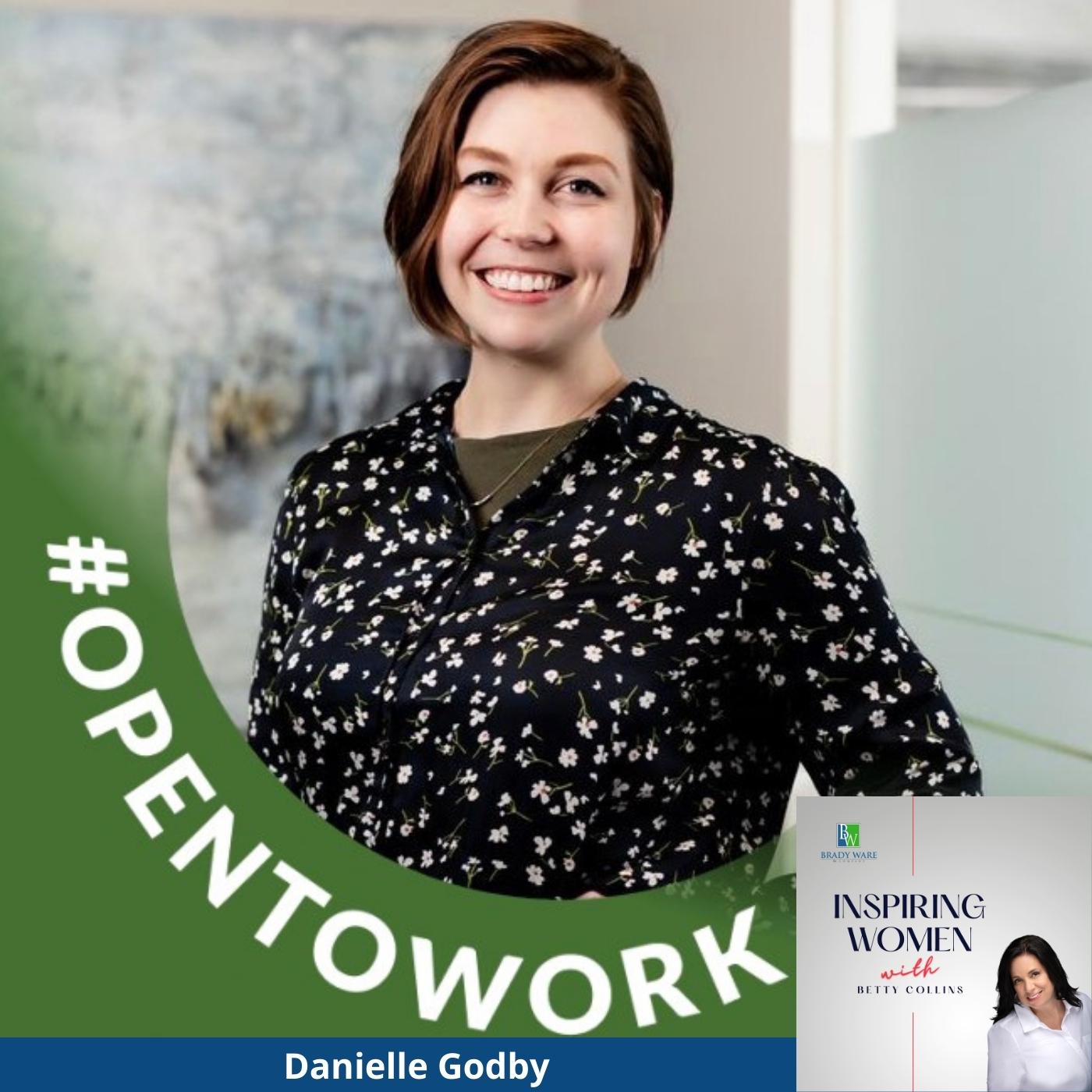
Danielle-Godby-Inspiring-Women
Inspiring Women PodCast with Betty Collins
What Millennials Want in a Job, with Danielle Godby
Loading
00:00 /
RSS Feed
Share
Link
Embed

Download file

Danielle-Godby-Inspiring-Women

What Millennials Want in a Job, with Danielle Godby (Inspiring Women, Episode 49)

Danielle Godby is a millennial retirement planner who talks about how her generation is often unfairly portrayed. She shares her own journey from ballet dancer to fitness instructor to retirement planner, highlighting how she has always been drawn to helping others. Godby discussed with host Betty Collins how job-hopping is often seen as the best way to make more money and get more experience, but she wonders why more employers don’t try to keep their employees happy and engaged. She also emphasizes the importance of offering value before asking for anything in return.

The host of Inspiring Women is Betty Collins and the show is presented by Brady Ware & Company.

Betty’s Show Notes

The millennial generation has been subjected to a lot of criticism – they are perceived as selfish, entitled and demanding, not to mention addicted to technology.

Are these stereotypes true? Certainly not for everyone.

But there are certain tendencies and habits associated with the millennial generation that are more prevalent than in the other generations currently in the workforce. However, bashing any one group of people does more harm than it does it good.

My guest is Danielle Godby, a Retirement Planner at Golden Reserve.

Danielle talks about her generation’s focus on their job search. What’s a priority to them?

When I talk to my friends, it’s a lot about feeling fulfilled by the work that they do, being able to go home at night and know that they helped someone do something better or they can feel better about their contributions to their own community.

Does money come into play?

It’s not necessarily about how much money you can make, which, honestly, it’s quite surprising given all the student loan debt that is saddling my generation. But that’s really not the dialogue that I hear. It’s a lot more about feeling good about what they do and feeling appreciated in what they do.

Among your colleagues and your peers, do you find that they value other job attributes like learning and advancement more than they do income?

There are a few different things that I hear come up in conversation and they’re surprising to me. You would think income would be front and center of the conversation, given that we were taught our whole lives to prepare for college.  But what I hear is they want to make an impact. They want to feel good about what they do. They want to have the flexibility to work from home if they need it or to take mental health days to have a work-life balance.

What can business owners do to motivate them to stay?

I think it’s very basic. If you pull it back to the bare bones, it’s just building a relationship with someone that’s strong, and consistent. You want something that lasts. So you have to invest in that relationship.

Hosted by Betty Collins, CPA, and Director at Brady Ware and Company. Betty also serves as the Committee Chair for Empowering Women, and Director of the Brady Ware Women Initiative. Each episode is presented by Brady Ware and Company, committed to empowering women to go their distance in the workplace and at home.

For more information, go to the Resources page at Brady Ware and Company.

Remember to follow this podcast on Apple Podcasts and Google Podcasts.  And forward our podcast along to other Inspiring Women in your life.

TRANSCRIPT

[00:00:00] Betty Collins
So today we’re going to interview somebody from Golden Reserve and what we really, really like about this person first, she’s a millennial. She’s full of life, she’s energetic, and she’s just been starting her career. And we just really wanted to talk today about her generation. I am not a millennial. I don’t even know what really bracket I’m in. I just know I’m 58. Right. And so we want to talk about millennials. Everyone wants to kind of put them in a box sometimes, you know, so we want to get inside your brain a little bit. But since that what you are. But so first, before we get started to talk about a little bit, two or 3 minutes of just kind of about you, you know, and golden reserve and and just take some time to to introduce yourself to the audience.

[00:00:48] Danielle Godby
Yeah. Hi, I’m Danielle Godby. I’m a retirement planner with Golden Reserve and a millennial. So I’m grateful for this opportunity to talk about things in a light that that might not be. Millennials are killing the cinema industry. What industry are we killing next? You know, I don’t think that’s the impression that my fellow millennials have of ourselves. You know, there’s a lot of intergenerational I won’t call it bullying. It’s all in good fun, you know. But I feel, you know, boomers are very down on millennials and Gen Gen Z is also, you know, so I feel that it’s good to have a representation of us. That is true. So I grew up in Mt. Vernon, Ohio. Oh, okay. Yep. I went to Ohio University down in Athens and I studied exercise physiology. Okay, so that’s something near and dear to me so that I can learn how to improve my own health and to help people around me to improve their health. That’s always been top of mind for me.
Yeah. I love to help people. I, I did ballet for 14 years.

[00:01:51] Betty Collins
Oh, very nice. Wow. How talented. That’s. I mean, that’s that takes strength. That takes a lot of discipline.

[00:01:59] Danielle Godby
Discipline is the word I would use. Yeah, certainly. But I remember finding that, you know, that core of who you are that always follows you and you tell stories about where you started out and where you ended up and have always been teaching people. Yeah, I started in ballet. I was doing we were doing stretches and people nearby would be bent in a certain way. And then like, you know, if you point your toe this way or straighten your leg in this way or or pivot this way, it’s going to feel a lot better. And I’ve always been helping people in little ways like that. So, you know, I found a strange little journey. I don’t know very many people who graduated with their bachelor’s and then continued on in that field. And I had done that for a while. I did fitness for about ten years, managed boutique fitness studios like Row House. And what was the act, the Amanda Kaiser technique. I love kickboxing, so a handful of of different things that I’ve done in the past. But I don’t think that it’s it’s something that I have to do to limit myself to being good at one thing. Yeah. You know, so I.

[00:03:03] Betty Collins
Learn that now do three things well, not ten things average.

[00:03:06] Danielle Godby
Yeah. Absolutely. So.

[00:03:08] Betty Collins
Well, my daughter loves kickboxing, I mean and so for Christmas, I always have my kids give a gift. Their spouse gives them a gift that they don’t know is coming because everything else is done with links. And they give me these lists and they know everything that’s going to be open. So I said, Are you sure you want to buy her boxing gloves? He goes, I can handle it. I got it. Incredible. But yeah, but she loves how it’s a good venting for her. It’s a great plus. She really works out and it’s a good exercise.

[00:03:36] Danielle Godby
A phenomenal workout.

[00:03:37] Betty Collins
Well, let’s talk the one thing millennials and I don’t look as millennials as the enemy, by the way. But, you know, a lot of times you’re known for job hopping. I mean I mean, that is it’s kind of the environment. And in fact, it’s three times higher than than that of non millennials who do the same job. So, you know, I’m a business owner. You really probably are too in what you do. I need to make it easier for millennial prospects to to choose me because I’m a little bit older and choose me over my competition. But what exactly in your mind do many millennials look for in their job search? What’s that priority to them? What’s what are what’s going to attract them? Right.

[00:04:18] Danielle Godby
Well, we have to keep in mind the advice that we’ve been receiving since we were children, like people in your generation have been telling people in my generation to look for something that they love, right? Do something that you love. You’ll never work a day in your life. And then we all laughed collectively because it’s still work. Right? Right. But I think I hear a lot of buzzwords like impact or, you know, what does that really mean? And I think when I talk to my friends, it’s a lot about feeling fulfilled by the work that they do, being able to go home at night and know that they helped someone do something better or they can feel better about their contributions to their own community. And so it’s not it’s not necessarily about how much money you can make, which. Honestly, it’s quite surprising given all the student loan debt that is saddling my generation, but that’s really not the dialogue that I hear. It’s a lot more about feeling good about what they do and feeling appreciated in what they do.

[00:05:13] Betty Collins
Yeah. So when, when, when millennials look in job searching, I know my daughter is is looking to do some job search or to make a change. She. Is more concern first about truly their mission statement and the culture. And she wants to know what they’re doing in the community. Now, that’s coming from my daughter. We didn’t talk about money a whole lot. We didn’t talk about her career aspirations in five years. What do you want to do? She talked about those things first. Talk to me about your generation with those things being mission culture and what are they really do for the community? Is that a driver for you? Is that going to be an attractor to you for a place to work?

[00:06:02] Danielle Godby
I think workplace culture is definitely a priority for me. Yeah, you know, I’ve left I left places because I don’t feel happy or comfortable. I’ve turned down jobs that were six figures because I didn’t like the story they were painting of their workplace culture. Yeah. And it boiled down to, I think the question they asked me was, do you ever lose sleep at night over your work? And I said, No, I do not, because I leave it all on the table every day. And I know that. And I get to go home and I get to close my laptop and feel good about what I did that day. And I thought to myself, that’s not very it doesn’t prioritize my mental health. Yeah. Or my time off. And then what is the point of then having all that money if you have no time to use it or a family or friends to spend it on, you know. Yeah. And so what are they doing in the community? I did not interview Golden Reserve and ask them what sort of philanthropy they were involved in, but it is important to me to know that their mission is to offer people tools to fight back against the financial industry. And what I mean by that is like seniors don’t have as many resources as the rest of us, like we are very well prepared to plan for retirement. But once we get into retirement, the skills are very different. The view is different. And, and it makes me very happy to know that we are doing extra things for that group.

[00:07:25] Betty Collins
Yeah, yeah, that’s good. That’s good stuff. Well, of course, this is a we’ll put you in the box because all of you want ping pong tables and free beer. Right. You know, what about the ping pong tables and the free beer that you hear that other companies are doing? You know, you see that? Is this something that really millennials want? I mean, is that a preference when they’re picking a company that will that help them learn, grow and be better or be who they want to be, to have those that typical ping pong table work? And I can be in flip flops and we have beer at lunch and nobody cares. I mean, is that really a driver for you?

[00:08:05] Danielle Godby
Well, I can only speak for myself. I would I would say no, definitely not. Those things are very novel. I love that we have a fancy schmancy water machine in our office and I can have cucumber water when I want, but I can make cucumber water at home. Right. You know, I think for me, it’s just wanting the resources required to do my job really well. And I want a group of people around me who will assume the best in me and offer me. Accommodations if I need them or, you know. Yes, wearing flip flops. That’s great. I’m wearing flip flops right now. I love that. It makes me feel happy. I know if that’s a dealbreaker for my job, I wonder how serious I am about that job, you know?

[00:08:48] Betty Collins
Yes.

[00:08:49] Danielle Godby
Yes.

[00:08:49] Betty Collins
I like the way you say that. That’s good. Yeah. Now, when you first interviewed for your job, was it a you just knew that this is it. And I’m I’m going and I’m going to jump in and do this.

[00:09:01] Danielle Godby
Well, they had a very different approach on their job posting. So a lot of the job postings in any sales position have to do with commission only. Or what do we need from you? We need top closers, top performers, very disciplined people who know what they’re doing, like that’s the dialogue. As always, this is what I need from you. And if you can’t check these boxes, then move on, you know, take it or leave it. And that’s always what I read. But this one was very backwards. It was this is what we’re prepared to offer to you. This is our 6 to 12 months of training with a partner of the firm. You know, we’re seeking people that don’t have finance backgrounds. And I asked them about that. I said, you know, I have a decade of fitness experience on this resume. Does that give you pause? Yeah. And they said no, because you have you know, you have personality and you have the desire to learn. And we’ll teach you everything else that you need to know. Yeah. And so ping pong tables and free beer, that’s not really my style. But if I have someone who’s willing to look at me in my strengths and my shortcomings and say, Hey, let me meet you where you.

[00:10:02] Betty Collins
Are, yeah.

[00:10:03] Danielle Godby
And let me give you some training where you need it to watch you shine. Like that goes a long way, right?

[00:10:08] Betty Collins
So are millennials getting a bad rap when that’s what we think that they like and that they’re motivated by? I mean, you know what I mean? I mean, is that not a fair assessment? Because, sure. You know, your generation, is that really I mean, you’re speaking for you, but is that not a fair assessment to put everyone in that box?

[00:10:27] Danielle Godby
The best advice I’ve ever gotten is someone else’s opinion of me is none of my business. And so if I look at Gen Z and think they’re the tide pod people, yeah, that’s not maybe a fair representation of their generation. Right? But it’s none of their business. What I have to think about them and vice versa. You know, all I can do is represent myself and what I know to be good and true. And when people get to know me, they see those qualities over time. So, I mean, if I have to pleasantly surprise employer after employer that I don’t want their ping pong tables and they can return them and save a couple of hundred dollars.

[00:11:00] Betty Collins
But we have an audience with a lot of business owners and, you know, and so I’m hoping they’re hearing what you’re saying. I mean, you’re getting to something that we all just think is the thing, right? And it’s.

[00:11:11] Danielle Godby
The novel.

[00:11:11] Betty Collins
Thing. Right? The novel thing. That’s a good way to say it. So so, you know, income is not among millennials. Top five factors when they’re applying for a job. I don’t even know what my daughter, who I’m helping, wants in salary. We’ve never talked about it.

[00:11:26] Danielle Godby
Interesting.

[00:11:27] Betty Collins
Yes, but it still has to matter with the high student debt that you have. But among your friends, among your colleagues and your peers, do you find that they value other job attributes like learning and advancement more than they do income? You’ve already kind of touched on that, but let’s expand on that.

[00:11:45] Danielle Godby
Definitely. There are a few different things that I hear come up in conversation and and they’re surprising to me. You would think income would be front and center of the conversation, given that we were taught our whole lives to prepare for college and then college seemed to be the only option for me. That was the only presentation. My mom, you’re going to college, right? No one in our family did. You are. And I’m like, Well, I guess I am. How will we pay for it? You know? So I would think that would be more more prevalent. But what I hear is. They want to make an impact. They want to feel good about what they do. They want to have flexibility to work from home if they need it or to take mental health days to have work life balance. I think is a really important thing. Or then you can go into the benefits package can really make a big difference. Like if you have health care, that could make a huge difference. I know a lot of potential business owners who are one foot in their job and one foot out because they have health care at that job. Right. And they have benefits that they wouldn’t otherwise have or things like paternity leave. You know, I hear a lot of maternity leave, but how many dads get the chance to go home and spend time with their new babies?

[00:12:57] Betty Collins
Right.

[00:12:57] Danielle Godby
You know, it’s the little things that kind of flag someone’s humanity. For me and again, in one person, I can speak for myself. But when I talk to my friends, they like to leave their job and know they feel good being there. They don’t want to have to vent about their co-workers or their managers or how how the culture there doesn’t align with them. You know, that’s a very stressful experience. It just gets in the way of doing the job. And so it sounds simple, but if you can just be good people to each other and remove the barriers between that person and accomplishing the goal of their job, that’s. That’s it.

[00:13:34] Betty Collins
Right?

[00:13:36] Danielle Godby
That’s it.

[00:13:36] Betty Collins
I know my son has said to me with his children, then they’re three and one and a half. But he’s like, I’m not going to just say college is your only option. There are all kinds of things that you can do, but it all starts with passion for it. And both of my kids, everything was about this is the experience I want to do. She ended up being a teacher. He’s a hospice chaplain and I’m a business person. Yeah, they give me a bad. They give me a bad rap. It’s all good. It’s all good. So business owners want to I think they want to do a better job than retaining millennials. They want that future. They want that next generation. They do. I mean, we we talk about it in Brady. We’re now a lot not just who’s going to replace Betty Collins, but who’s going to replace Betty Collins replace place. You know, it’s not just me. And here’s somebody now. We’re trying to think in two generations. Sure. So they want to keep them. But but investing in in their learning and advancement can be costly. And it can be uncomfortable for us to take that risk to some degree because we’re going, okay, of course, we’re thinking you want the novelties more than substance.

[00:14:45] Danielle Godby
Share.

[00:14:45] Betty Collins
Too, but what can business owners do to motivate them to stay? And then, you know, you’re not looking for the next thing or the next best thing and that kind of thing. How can we do that?

[00:15:01] Danielle Godby
Well, I think it’s very basic. If you pull it back to the bare bones, it’s just building a relationship with someone that’s that’s strong, consistent. You want something that lasts. So you have to invest in that relationship, right? It doesn’t matter if it’s a friendship, a romantic relationship or a work relationship. You know, you have to continue to follow up with these people and and check in with them and offer them choices. But I’ve noticed some of the things that piqued my interest is I’ll hear someone who’s been in a job for a long time and they seem to get these. I’m using air quotes here, promotions. Right. And they’re getting to other people’s jobs, but there’s no pay increase for these people. And so they’re being it feels like a reward. They’re being rewarded with this opportunity, but then it also feels like a punishment. Yeah. Why do I have to do all this extra work just because I’m good at it, you know? And so to me, it’s it might be simple on one side, not being a business owner yet. You know, I have a business mindset, but I don’t have to work with a pal.

[00:16:00] Danielle Godby
Right. So but consistent opportunities for promotions, you know, lateral roles in the same job. You don’t have to leave your workplace, but maybe they’re sick of doing that role. Maybe they want something where they can be paid the same and do something else and contribute in a different way. Or, you know, ultimately, if it’s a good workplace culture, I’ve been hit with a couple of non-compete agreements in my time, and I mean, that’s very common in fitness, it’s common in finance, common and anywhere in the industry. Yeah. So anywhere that there’s sales, you have talented people, you want to retain them and there’s a little bit of fear like I just invested so much time, so many resources into you and your growth. I don’t want you to leave me and that’s reasonable and fair. But if you take that into, let’s say, a romantic relationship, relationship and you’ve invested all this time and dates into this one person, you say, I don’t want to fully commit to you because what if you leave me?

[00:16:57] Betty Collins
Yeah.

[00:16:58] Danielle Godby
And that’s not a very productive or fruitful way to live the great relationship. Yeah, right. But I mean, it’s not easy to be the first one to go first. But one of the things I really liked about Golden Reserve is that they said, Hey, we’re going to take a bet on you and you’re going to take a bet on us, and it’s going to take a lot of work on your part. But we’re here for you and here are your resources, and it’s up to you if you succeed. And they told me one in ten people make it in this industry that I’ve decided to go into. Six months ago.
Right? Right.

[00:17:30] Betty Collins
But you’re making it.

[00:17:30] Danielle Godby
You know, I have the audacity and the boldness to know that’s me. I have to be that one person out of ten. Yeah, but I don’t think I would be that comfortable if they weren’t ready to sponsor my licensure or my certificates or to give me training when I ask for it, you know? So.

[00:17:47] Betty Collins
But you felt like they were all in with you. It wasn’t. Here’s what we’ll do, but here’s what we’ll do. If it was, we’re all in.

[00:17:56] Danielle Godby
Yes. And people don’t want to leave jobs like that because they become family. Yeah. And it’s not like that. We’re all a family here. So we’re going to abuse you mentally? Sort of.

[00:18:06] Betty Collins
Yeah, yeah, yeah. Get.

[00:18:09] Danielle Godby
I’ve seen some some memes as a millennial, we communicate in memes. Right. But the places that are the hardest for me to leave are places that feel like family. The communities that I’ve built in different fitness studios. I was really, really sad to leave those, but I was guided by people who know and love me. That job hopping is how you make more money, and if you leave one job, you get to bump your pay a lot. And if you do that every few years, you get more experience and more skills and more pay. What’s stopping us from keeping that person there and still giving them these bumps and these opportunities to contribute? Yeah, I guess would be my question.

[00:18:47] Betty Collins
Well, let me ask you a few things and see what you mean, because first of all, do you feel like you, your generation. The you guys who are going to take over the world one day and we’re all going to be going. They took over the world. Right. When you hear things like. Do you want a mentor? I want to be your mentor or I’m a mentee. I can’t be a mentor or whatever. What do you think of mentor mentee relationships? Your generation? That. Are you open to being teachable? Are you open to hearing and being part of somebody who just might know more? Or they might really want to generally help you?

[00:19:29] Danielle Godby
Absolutely.

[00:19:29] Betty Collins
Just expand on that a little bit.

[00:19:31] Danielle Godby
I think everybody knows something that I don’t know and you never know unless you listen to them talk and you ask them to tell you their story. And I’m very supportive of any mentorship that I hear about or participate in. I don’t think being a mentee precludes you from mentoring someone else. Because we have diverse skills and we can offer a lot to different groups of people. And I think if you are very closed off to that, you’re going to have a very hard time in and anything that you do. And that’s one of the one of the things that I attribute to my success and being flexible enough to go from one industry to the next is being coachable. Because if I came from a decade of fitness experience and I was closed off to the idea of somebody knowing more than me, I would know a fraction of what I know now, and I wouldn’t have nearly as much success as I do now in this new role. And I would probably be really lonely and anxious about it too. Right. Why is it just my job to do this when there’s a wealth of information around me? I think I’m a little bit. I like to offer value before I ask for anything. So engaging in those relationships can be can be, I don’t know, complex, difficult, I guess, to approach someone and say, hey, can you mentor me? Right. Like, what am I supposed to offer that person? You know? So I think it’s more comfortable in situations where I’ve met people who I know I can help and I say, Hey, you know, I drop a little breadcrumbs for them. I let them come to me. I don’t want to be overbearing at all. Sure, either side of that is a difficult conversation, though. Like I know something that would benefit you. I want to I want to take you under my wing. That’s delicate. But then being the person who wants to know more is delicate, too. So.

[00:21:19] Betty Collins
Right. Because I think there is a huge desire that boomers, which is kind of where I’m in. I was born in 63, so I don’t know where I’m at, but it doesn’t matter to me. I really could care less. But we love to be able to mentor, but sometimes turns into we’re going to tell you all we know and what we think. And and then it isn’t a relationship where you’re going to really get you’re not going to hear us, you know? So sure. But I think your generation, two or generations, that two and three behind me are craving somebody that was willing to jump in with them, whether it’s hard or not, whether it’s a it’s awkward or not.

[00:22:00] Danielle Godby
Right. Definitely.

[00:22:01] Betty Collins
So so interesting thing about you is when we talked just before we started in the podcast, what I find intriguing is that you were a ballerina, I don’t know, very many ballerinas. And you did that for what about you said 14 years and you said, I learned a lot of things about when I was a ballerina. Definitely talk about that.

[00:22:24] Danielle Godby
Well, I’ve always been a dancer. I think that was my mother’s not so subtle way of getting me out in front of people. Okay. Just she says my father is very awkward around people and he’s very is very shy. And she didn’t want that for me. And so, for better or for worse, I was three years old and she stuck me in a.

[00:22:43] Betty Collins
To get on stage.

[00:22:44] Danielle Godby
Right. So I’ve been performing since I was very, very little and I didn’t really know anything else and which is good because I’m pretty extroverted and it would be a strange combination of qualities to be extroverted and also shy. Right? Right. So I think you learn a lot about your limitations and how strong you can be. I think dance is a powerful form of self expression. You know, I didn’t have an outlet for that after college and that’s what prompted me to start Group Fitness. Yeah, and I missed it so much because it helped me feel valued, like I was contributing to my community. I had impact, all these things. And so kind of to bring this back into our earlier conversation. It’s kind of like you can look for these things in a job, but it’s almost the same concept of putting all of your eggs in one basket and looking for the same thing in a romantic partner, for example. Like you want them to be your everything, your whole universe. And that’s just not realistic, right? One job cannot be your whole universe. It’s not realistic. So I think it’s important to sort of pad your life with things that bring you joy and that bring you passion. So I find all sorts of opportunities to dance, whether that’s in my kitchen or at a ballroom dancing studio that I just found, fitness dance classes. I think that brings people out of their comfort zone in a really beautiful way.

[00:24:07] Betty Collins
Well, I will say to you that. It would be good if we just took our labels off. You know, I kind of want to end with a little bit about that, whether I’m a boomer or an X or gen. If we took our we took those names away, it would be so much better. Right. I agree. And then just having these kind of conversations, you’ve been such a delight today. It’s just restores my faith in OC. There are generations behind me that get a lot at at your age. You’re just because I shouldn’t ask this. But how old are you?

[00:24:41] Danielle Godby
I’m 29 inches.

[00:24:42] Betty Collins
49 in July. Oc OC We say we’re 29 again many times.

[00:24:48] Danielle Godby
I’m at the age I’ll always be.

[00:24:50] Betty Collins
Yeah, that’s right.

[00:24:51] Danielle Godby
That’s right. I have arrived.

[00:24:53] Betty Collins
So what would you like to say to my audience who probably looks a lot like me? Oc As a kind of a closing, inspirational thing coming from a millennial that we’re not going to call you a millennial, but what would you want to say to my audience that would just maybe wrap up all this in a nice bow?

[00:25:11] Danielle Godby
Well, I think if you can approach another human being with kindness and curiosity, it goes a really long way, no matter who you’re talking to or what kind of conversation you’re having, because there are many people in every generation that I’ve met who go in with this this thought that they they already know what that person is about to say, and that closes you off to actually listening to them.
And so listening actively being genuinely curious about what that other person has to say is it’s going to solve a lot of problems before they begin. You know, there are a lot of really educated, passionate people out there who just want to meet someone else in the middle. Right. It takes two to tango. I don’t think it’s an easy one. One sentence answer by any stretch. But I mean, I’ll stop making fun of boomers as soon as they start making fun of me. Right? That’s not going to work. I’m going to have to stop first. Yeah, right.
And then boomers can see that and they can say, like, okay, right. Maybe I’ll give this one slack.

[00:26:09] Betty Collins
I have a lot of people under the age of 40 here and they’ll say to me, When your generation keeps using the word you millennials, we shut down immediately. We don’t have we don’t hear anything else. You have to say. True. If we learn something today, it’s like, let’s stop putting everyone in a box. Well, Danielle, it’s been a pleasure to interview you today. I think my audience will get a lot out of what you have to say. Totally invigorating. Totally inspiring. And that’s what we do. Inspiring women.

Automated transcription by Sonix www.sonix.ai

Tagged With: Betty Collins, career, Danielle Godby, Golden Reserve, Inspiring Women with Betty Collins, millennials, retirement planning

Decision Vision Episode 111: Should I Retire? – An Interview with Brian Falony, Director of Marketing, Brady Ware & Company

April 8, 2021 by John Ray

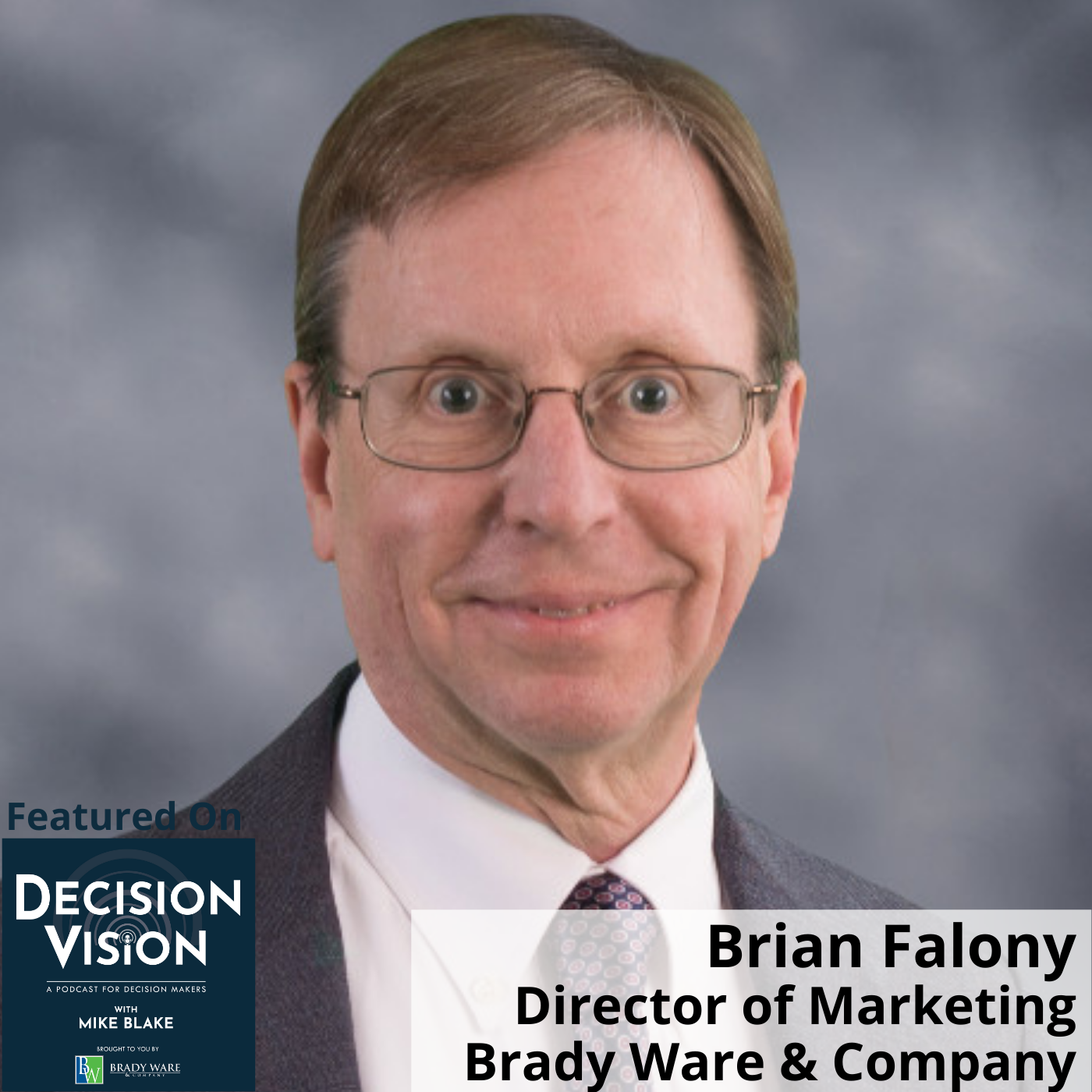
Brian Falony
Decision Vision
Decision Vision Episode 111: Should I Retire? - An Interview with Brian Falony, Director of Marketing, Brady Ware & Company
Loading
00:00 /
RSS Feed
Share
Link
Embed

Download file

Brian Falony

Decision Vision Episode 111: Should I Retire? – An Interview with Brian Falony, Director of Marketing, Brady Ware & Company

On the eve of his retirement from Brady Ware & Company, Brian Falony joined host Mike Blake to discuss the considerations he weighed as he made the decision to retire from the workforce. “Decision Vision” is presented by Brady Ware & Company.

Brian Falony, Director of Marketing, Brady Ware & Company

Brian Falony
Brian Falony, Director of Marketing, Brady Ware & Company

Brian joined Brady Ware in 2017 and has more than 25 years of experience helping accounting firms grow their practices. He led the marketing functions for two of the top 50 CPA firms in the U.S. and has consulted with firms across North America on improving their marketing programs. Brian will lead the firm’s overall marketing efforts with a focus on growth.

Brian is a member of the Association for Accounting Marketing where he has served on several committees as well as the Board of Directors. He is also a member of the Association’s Hall of Fame.

LinkedIn

Mike Blake, Brady Ware & Company

Mike Blake, Host of the “Decision Vision” podcast series

Michael Blake is the host of the “Decision Vision” podcast series and a Director of Brady Ware & Company. Mike specializes in the valuation of intellectual property-driven firms, such as software firms, aerospace firms, and professional services firms, most frequently in the capacity as a transaction advisor, helping clients obtain great outcomes from complex transaction opportunities. He is also a specialist in the appraisal of intellectual properties as stand-alone assets, such as software, trade secrets, and patents.

Mike has been a full-time business appraiser for 13 years with public accounting firms, boutique business appraisal firms, and an owner of his own firm. Prior to that, he spent 8 years in venture capital and investment banking, including transactions in the U.S., Israel, Russia, Ukraine, and Belarus.

Brady Ware & Company

Brady Ware & Company is a regional full-service accounting and advisory firm which helps businesses and entrepreneurs make visions a reality. Brady Ware services clients nationally from its offices in Alpharetta, GA; Columbus and Dayton, OH; and Richmond, IN. The firm is growth-minded, committed to the regions in which they operate, and most importantly, they make significant investments in their people and service offerings to meet the changing financial needs of those they are privileged to serve. The firm is dedicated to providing results that make a difference for its clients.

Decision Vision Podcast Series

“Decision Vision” is a podcast covering topics and issues facing small business owners and connecting them with solutions from leading experts. This series is presented by Brady Ware & Company. If you are a decision-maker for a small business, we’d love to hear from you. Contact us at decisionvision@bradyware.com and make sure to listen to every Thursday to the “Decision Vision” podcast.

Past episodes of “Decision Vision” can be found at decisionvisionpodcast.com. “Decision Vision” is produced and broadcast by the North Fulton studio of Business RadioX®.

Connect with Brady Ware & Company:

Website | LinkedIn | Facebook | Twitter | Instagram

TRANSCRIPT

Intro: [00:00:01] Welcome to Decision Vision, a podcast series focusing on critical business decisions. Brought to you by Brady Ware & Company. Brady Ware is a regional full-service accounting and advisory firm that helps businesses and entrepreneurs make visions a reality.

Mike Blake: [00:00:21] Welcome to Decision Vision, a podcast giving you, the listener, clear vision to make great decisions. In each episode, we discuss the process of decision making on a different topic from the business owners’ or executives’ perspective. We aren’t necessarily telling you what to do, but we can put you in a position to make an informed decision on your own and understand when you might need help along the way.

Mike Blake: [00:00:41] My name is Mike Blake, and I’m your host for today’s program. I’m a director at Brady Ware & Company, a full service accounting firm based in Dayton, Ohio, with offices in Dayton; Columbus, Ohio; Richmond, Indiana; and Alpharetta, Georgia. Brady Ware is sponsoring this podcast, which is being recorded in Atlanta per social distancing protocols. If you would like to engage with me on social media with my Chart of the Day and other content, I’m on LinkedIn, and also @unblakeable on Facebook, Twitter, Clubhouse, and Instagram. If you like this podcast, please subscribe on your favorite podcast aggregator, and please consider leaving a review of the podcast as well.

Mike Blake: [00:01:17] Today’s topic is, Should I retire? And our guest – that I’m going to bring on in just a minute – is a dear friend, and professional colleague, and mentor of mine, who has reached the stage of his life where he is going to retire from our firm. I don’t know if it’s been formerly announced, so I’m not going to mention it right now, but soon. It’s a known quantity by the time this thing gets published, I’m sure it’s going to be more known.

Mike Blake: [00:01:51] But, you know, it occurs to me that retirement is one of the most consequential decisions that all of us, we hope, will make in our lives. It’s consequential from a business perspective. It’s, of course, consequential from a personal perspective. And a decision to retire is so weighty and is so complex and is intertwined with the hard material discussions and considerations as well as the emotional and profound personal considerations.

Mike Blake: [00:02:30] And, you know, we’ve been thinking about retirement as a society for a while. I remember ten years ago or 15 years ago that we thought for sure there was going to be this wave of businesses that was going to be up for sale, and this wave of executives that were going to have to retire. And interestingly, they, largely, didn’t. I mean, some did, of course. But, you know, first of all, with the profound financial implications of the financial correction of 2008 and 2009, simply for many people moved the goalposts for retirement back from a financial perspective and did so in a significant way.

Mike Blake: [00:03:17] But, also, sort of a funny thing happened is that, the human lifespan and the human useful lifespan has increased significantly since World War II. And I’m not going to get into a big discussion as to why that is. There are lots of theories. But you just can’t deny the fact that more people are living into their 90s. You know, renowned children’s author, Beverly Cleary, just passed away at 104. I didn’t even know she was still alive. But when I was in my single digits and in the 70s, I was reading her books right along with everybody else. And that’s just an example. But not only are people living longer, they’re living longer in a state of greater health and in a state of greater vibrancy. And in particular, if we ever really get a handle on Alzheimer’s, watch out, because, you know, I don’t know that 65 is going to be the bogey for retirement. I don’t know that it’s necessarily economically sustainable. And again, that’s a different podcast, so maybe the Chart of the Day.

Mike Blake: [00:04:19] But coming back to where we are, you know, regardless of the social implications and the economic implications, at the end of the day, our podcast is about making critical decisions. And usually ones that are hard to reverse. And when you really get down to it, it’s hard to think of many personal decisions that are much more impactful, that have much greater and far reaching implications than should I retire. So, that’s why I want to cover this today. And I hope many of you will find this of interest and helpful.

Mike Blake: [00:04:57] And joining us today is my longtime friend and mentor, Brian Falony, who is Director of Marketing for my firm, Brady Ware & Company. We actually met when we are working with another accounting firm. I went back and checked, it’s actually about 12 years ago. And I suspect that we grew a friendship quickly because I was an accountant that actually was interested in marketing. But, ha, the joke’s on you. I’m not really an accountant. I just have to work for an accounting firm so the record is unblemished.

Mike Blake: [00:05:28] But, you know, he and I have maintained a long relationship, a great relationship now across two firms. He actually recruited me into Brady Ware. And I hope that’s not one of the reasons he’s being put into retirement. It might be, we’ll get into that. And as I said, he’s retiring soon. So, I thought, what a cool idea to get into the head of somebody who is actually in retirement, not thinking about retirement, not did it a year ago, but is actually sort of in process, kind of like watching an eclipse as it’s happening.

Mike Blake: [00:06:05] Brian has more than 30 years of experience helping accounting firms grow their practices. He led the marketing functions for two of the top 50 CPA firms in the U.S., and has consulted with firms across North America on improving their marketing programs. Brian leads the firm’s overall marketing efforts with a focus on growth – at least he will until he retires. Brian is a member of the Association for Accounting Marketing, where he has served on several committees as well as the board of directors. He is also a member of the Association’s Hall of Fame – which I did not know. And, again, this is one of these things, just like last week, you get into somebody’s bio, you find some cool things about them you didn’t know in spite of how long you knew them.

Mike Blake: [00:06:45] And I think it’s worth saying that, also, Brian has been one of the thought leaders that helped put this podcast together. It was he, in a lot of ways, helped make this possible and rallied the support of the firm behind it. And it’s a fair statement to say, this podcast would not be here, I think, without Brian’s help. And to him, I’m very grateful for that. And I hope our listeners will acknowledge that. Brian, thank you so much for coming on the program.

Brian Falony: [00:07:13] Well, thanks, Mike. That was a great introduction. I’m not sure that I’ll live up to all of it, but I’m ready to talk about it.

Mike Blake: [00:07:22] Well, you are retiring. You are retiring, right? I mean, you are qualified to talk about that because you are, in fact, retiring. You don’t reverse that decision, right?

Brian Falony: [00:07:30] That is true. That is true.

Mike Blake: [00:07:32] So, you know, talk about your career as you kind of look back and you’re talking to somebody about what you have done over the course of your business life, how would you summarize it?

Brian Falony: [00:07:44] Well, actually, I had two careers. Right out of college, I started working for the office furniture industry. My dad was actually working in that industry. And he kind of got me an entree into it. And I worked for firms like Herman Miller and Haworth for about 17 years. And then, in, I think, 1989, Herman Miller, being a public corporation, had a big cutback. And, suddenly, there I was without a job and had a family and a house and all of that. So, I started searching around, landed a job, and had to move from West Michigan down to South Bend, Indiana, sold the house, moved the family. Six months into the new job, I decided I would have been better off staying unemployed. So then, I started searching again.

Brian Falony: [00:08:29] And there was a firm called Crowe Chizek down in South Bend, Indiana. And I had an opportunity, go in and talk to them about their marketing director position. They took a chance on me and I had no idea about working in accounting, but I took a chance on them. I found out that I absolutely loved working with accountants, working in a less hierarchical structure, and working in an area where I could make a meaningful impact on the growth of a firm. I worked for them for a few years.

Brian Falony: [00:09:04] I took another job which moved me to Atlanta, consulting. I worked for an association of accounting firms and consulted with them for a number of years. And then, had a great opportunity to go back into a firm. And so, I’ve been in firms. I’ve been consulting with firms. I’ve been with a company that’s no longer in existence, Peachtree Software. They were bought up. But for the last 30 years, I’ve been working with accounting firms and have just absolutely loved what I do, helping these firms grow and helping individual accountants find new clients and develop relationships with those clients.

Mike Blake: [00:09:45] So, you’ve done all that. You’ve enjoyed and produced, you know, the success that you have. What goes into the decision to decide you’re going to retire?

Brian Falony: [00:09:59] I think there are a couple of things, and I’m going to speak for me here. But I started over the last couple of years, I started to realize that there were parts of the job that I really, really liked. But then, there were other parts of it that it just wasn’t my main interest. And my interests were changing a bit. And so, when you start to get that feeling that – gosh – it’s just not exactly what you wanted to do. And that started me thinking about it.

Brian Falony: [00:10:35] And then, the other thing that went into that decision is, I’m a relatively older person. I did not grow up with the internet. I did not grow up with a lot of the technology that we have today. And I started to think, you know, the way marketing is going within CPA firms, it may require a different skillset than what I bring to the table. And maybe it’s time for the firm to start looking for somebody that has that skillset that can take them to the next level, can take them over the next few years, and really embrace the technology that is taking over our world.

Mike Blake: [00:11:21] You know, that’s interesting, and I think there’s a very visible analogy to that, and that is in sports coaching. I know you follow sports, at least, a little bit. And I’m sure you’re cognizant of the fact that many sports, particularly baseball but has spread to others, have gone deep into data analytics in terms of how they build teams on field, decision making, and so forth. And what we saw, about, starting ten years ago in baseball and maybe five to seven years ago in the other sports, were the old school coaches retiring. Not because they had lost the ability to coach a football game and select players and train players per se, but they started to recognize that in order to be successful or to get that next job, they were going to have to embrace analytics.

Mike Blake: [00:12:19] It means going back to school for computers, which means having to go back to school for some form of data science. Which, just is not the kind of thing that say, you know, Don Shula was going to do, right? It’s not what Joe Torre was ever going to do, right? And so, rather than retool – it didn’t mean they all of a sudden become bad coaches, but it simply was a scenario in which their industry evolved in a direction where you have to make a decision. (A) You don’t want to do it. And (B) is it worth doing, given the fact that I may not necessarily have that many working lives left. Does it even make sense to do that from an ROI perspective?

Brian Falony: [00:13:03] Yeah. And I think it’s not only the internal looking that you just described. But I think if an executive is really dedicated to the firm that they work for, I think they also have to, in their mind, ask that question, is the skillset that I have what is needed to take my firm to where it needs to go?

Mike Blake: [00:13:32] Yeah. But I guess, also, the other consideration, too, I mean, you could have simply left Brady Ware and moved to another accounting firm. So, it’s not just about the need for that firm, I imagine, but it’s also sort of the needs of the market generally. And that doesn’t mean that what you bring to the table is obsolete – I’ll just call it sort of old school, if you will, or OG marketing – it’s still very valuable. And it’s going to come back with a vengeance. So, say, I’ll get vaccinated and start meeting each other again. But it’s going to be one tool as opposed to the tool.

Brian Falony: [00:14:10] Yes. I agree totally.

Mike Blake: [00:14:14] And a tool that’s more relied upon, I think, by certain demographics, one versus the other. Again, as you mentioned, just based on how people grow up and what their comfort level is with different kinds of marketing platforms.

Brian Falony: [00:14:26] Absolutely.

Mike Blake: [00:14:28] So, I’m going to quasi-out you a little bit. I know that you’re not 65. I know that you’re older than 65. I’ll let you disclose your age if you choose to. But I know you didn’t retire exactly at 65, which is our firm’s ostensible mandatory retirement age. And that’s sort of a frequent finish line for many people’s careers, I’m not sure how long term sustainable that is given the economics. But, for now, it is what it is. Why didn’t you just retire at 65, kind of like everybody else? What kept you wanting to continue?

Brian Falony: [00:15:07] Well, at the time, I was working for a company called Thomson Reuters. And I had started out working for a company called BizActions, which was then bought by Thomson Reuters. And I had the opportunity to help CPA firms use a tool, an electronic newsletter tool, to help develop their business. And when Thomson Reuters bought it, my job changed significantly and became a little bit less fun. But I wasn’t ready to hang it up yet.

Brian Falony: [00:15:39] And so, one day, I was talking with one of my customers, Brady Ware & Company. I was talking to my contact with Brady Ware. And I’d seen on LinkedIn that they were looking for a marketing director, and I said, “Gee. I see you’re looking for a marketing director.” She says, “Yeah. Do you know anybody?” And I said, “Well, as a matter of fact, I do.” And because we had developed such a good relationship, I started working for Brady Ware.

Brian Falony: [00:16:08] But, really, at the time I was 65 years old, I wasn’t ready to hang it up at that point in time. I knew that I really loved going into an accounting firm and bringing my skills into their marketing program. And getting them to the part where they’re directed, and they’re growing, and everybody is being successful in growing the firm. So, I thought this was a great opportunity. I did, however, say to the managing partner who is doing the hiring, I said, “I want you to realize I am 65 years old. I plan on retiring at age 70. So, just understand that this is a five year maximum gig. And I’ll be happy to work with you in that transition when the time comes.”

Brian Falony: [00:16:54] Well, that was a number of years ago. And, now, that I am 70 years old, it is time to actually put that in place. And so, he and I started talking, probably, about a year ago on the transition. I let him know that 70 was coming up and that we had discussed this. And so, we’ve been working on the transition for about a year.

Mike Blake: [00:17:18] So, as you approach this decision, other than the financial peace – and financial, I think, concerns everybody to some extent. Maybe not. I don’t want to put words in your mouth – but what concerns you most about the decision to retire, if anything? Was there anything that worried you, concerned you, bothered you, made you hesitate in any way?

Brian Falony: [00:17:39] Well, it’s something that I’m still having to deal with in my head. And that is for, roughly, 47 years, ever since I graduated college, I have been in marketing. I have progressed through marketing up to the director level. I have been the breadwinner for my family. I can’t tell you the last time I took more than about two weeks off from work. And so, I think there is a little bit of a loss of identity. Like, “Who am I going to be in this new career?” And I’m still working on that. I think I’ve got a solution for it. And I’m hoping that it all works out well. But that is still a concern. And I think for a lot of people that have had a good long career and really loved what they’re doing, that loss of, “Well, this defines who I am. How do I get that new definition?” can be a pretty significant issue that needs to be considered.

Mike Blake: [00:18:49] Yeah. And, you know, I spoke with a friend, that you and I both know, last week. And she retired, actually, about a year or almost a year ago. And I’m going to have another conversation with her next week. But she wasn’t overly thrilled with her retirement either. And the thing that she told me that she’s really struggling with is building that identity. You know, there’s only so many books you can read, if you’re the most voracious reader in the world. And so, like I said, I got on the phone with her and helped her brainstorm and kind of think about what might be next. And, you know, I think it is jarring.

Mike Blake: [00:19:32] My dad, he retired, I guess, about eight, nine years ago. And he’s a very good retiree. He had no desire to go back to work. He’s a little bit a nonprofit. He’s a big time bridge player, that sort of thing. But, you know, I can appreciate for a lot of people that’s not easy, especially if you’ve been sort of in an intense environment where your whole day, your week, your month, your year is structured around work. You just have that become a vacuum. It’s almost an embarrassment of riches in terms of time. It’s a different kind of time management problem.

Brian Falony: [00:20:08] Yes, it is. And we’ll see how that goes.

Mike Blake: [00:20:12] So, how would you characterize your retirement planning process? When did you start to get serious about it? Was it phased? Was it consistent? Was it, “Oh, crap. I’m behind. I got to hurry up.” And it’s probably sort of different for different aspects of retirement. But how would you characterize it in your particular case?

Brian Falony: [00:20:38] Well, it was pretty well planned. And if you ever talk to my wife, she’ll tell you that I’m very annal about process and planning and all of that. So, you know, as I alluded to earlier, I had told the managing partner of Brady Ware when he hired me that there was a limit on this. So, I had already started thinking about what does this look like. And then, I kind of put off any kind of planning until about a year ago. And when I turned 69, I said, “You know, I really have to be in a position to make this a successful and a smooth transition, so I better start planning now.”

Mike Blake: [00:21:22] And so, I talked to the managing partner, like I said, a year ago. And then, we got serious about putting a plan together, probably, starting six months ago. And we have a structured plan that laid out dates for hiring a consultant to determine what kind of a transition we wanted to make in sourcing, hiring, putting up the ads for candidates, evaluating the candidates. So, there was a pretty good plan there.

Brian Falony: [00:22:01] On the personal side, I’ve also been planning and talking to a couple of my contacts within the industry about possible consulting work and things like this. So, there’s that other side of the plan, the personal side of the plan. But I’ve been working on that for probably about the last year just to make sure that it is a good, smooth transition.

Mike Blake: [00:22:28] So, you’ve been involved, you said, in helping to choose your successor. How much involvement have you had? And do you think that involvement is likely going to be best practices for many firms? Or maybe best practice is more or less involvement?

Brian Falony: [00:22:48] That’s a really interesting question. As you said, I have been involved. I have interviewed some of the candidates. I definitely interviewed the successful candidate. But I think part of that is going to depend on the personality of the of individual retiring. I went into this with an idea that within the accounting marketing profession, most times marketing directors don’t retire. They leave and get another job, they get fired, whatever. And it’s a very difficult transition. One of the things I wanted to do in this is, try to make a smooth transition to see what goes into making that happen. So, I had the mindset that I really wanted to help with that.

Brian Falony: [00:23:46] Other people that may have a different attitude, may have the attitude that I’m the best one that’s ever been in this position, it would be a little harder for them to step back and say, “All right. Who is going to be a great person to replace me? Do some of the things that I can’t do and take the firm to the next level.”

Brian Falony: [00:24:07] So, I think going back to your original question, how involved should the person be in bringing their successor, I think if they’ve got the attitude that, this is a process that I can significantly help move my firm to the next level by doing this, then they ought to be very involved. If it’s, on the other hand, a person who thinks that they can’t be replaced, they probably ought to not be terribly involved because they’re going to look for the negative sides of anybody that’s going to come in and replace them.

Mike Blake: [00:24:39] Right. There are, in fact, the process. So, I imagine the other piece of this, too, is the circumstances under which the retirement is occurring. In your case, you know, you’re managing an orderly retirement. You’re obviously departing from the firm or separating from the firm on very good terms. Not every retirement occurs in that direction that way, right?

Brian Falony: [00:25:01] That’s true. That is true.

Mike Blake: [00:25:03] You know, you don’t necessarily want to have the person that you’re effectively booting out, trying to be involved in the successor. It’s hard to see how that would be a constructive conversation and relationship.

Brian Falony: [00:25:15] Yeah. Yeah. The plan is to have my successor in place and for me to work with him for probably about four weeks. And I’ve given this some thought and I’m thinking that, like, the first week, I’m still going to be the marketing director and he’s going to be learning from me. The second week, it might be kind of half and half. And by the third week, he’s going to be the marketing director and I’m just going to be there as a resource to him for a couple of weeks.

Mike Blake: [00:25:42] Okay. Now, you really gave the firm five years notice, when you really get down to it, right? But then, you sort of reminded our managing partner – I don’t know if I should say his name, but I guess not. I don’t know if it matters or not. People can look it up – you gave him notice saying, “Hey, look. You know, we’re sort of at the fourth quarter here. You know, we need to start acting.” So, in effect, that was a year long runway. Do you think a year is best practice in your ideal world might you have started a transition process earlier? Is it perhaps too much that maybe a year just seems so far away in retrospect? What’s your view on that?

Brian Falony: [00:26:34] I think a year is probably good. I wouldn’t make it less than six months. But then, I wouldn’t make it longer than a year either. And one of the things that I’ve noticed particularly, probably, in the last couple of months, is that, in interactions with some of the folks in the firm, I get the feeling that they’re looking at me as a lame duck. And so, I think if you start this process too soon, like more than a year out, the person could find themselves in that lame duck position a lot earlier than they need to be. So, I would say probably somewhere in the six months to one year range, at least from my experiences, is a pretty good amount of time.

Mike Blake: [00:27:25] Right. Right. And, of course, we’re talking about an executive position too. A position that’s more of a staff position. You may not necessarily need that long a transition. But the bulk of our listeners are in that executive position, so I think that answer is most relevant to them.

Mike Blake: [00:27:47] The question I’d like to ask is, a lot of people – and I’m starting to get to this age now where people are very fixated on it – have sort of a magic financial number. Where their basis is, you know, if I hit this, I’m going to retire. In government, if I hit 20 years of service, I’m out. Or, you know, for the rest of us mere mortals, if I have this much in the bank, that said, I’m out. You know, how important was that to you in terms of the timing and decision to retire?

Brian Falony: [00:28:15] It was a factor, but I don’t think it was the major factor. One of the things that I considered is – and this may change, but for right now -you’ve maxed out your Social Security at age 70. So, I knew 70 was kind of where I wanted to be. What was more important to me was having zero debt going into it, so that was a goal. But, you know, I don’t think there was a specific financial number in mind.

Brian Falony: [00:28:58] I wanted to make sure that I had enough in between my retirement savings and my Social Security that we’re not going to have to significantly downsize our lifestyle. That’s probably the biggest consideration, just having enough to enjoy the time that I have left, and provide for my wife, and just do some of the things that we have not been able to do because I’ve been tied up with work for all these years. But there wasn’t a magic number out there. There was a lot of factors that went into it. I don’t know if that helps, but that was kind of what was going in my mind.

Mike Blake: [00:29:47] Well, I think it’s interesting. This is one of those answers that I think is going to differ person to person. I know some people that they look fanatically at their brokerage accounts or savings accounts, whatever it is, their total assets, and they say, “If I hit this number, then I can basically give the world a finger. And then, my whole world changes after that time.” And, you know, of course, we all hear about government employees that the saying is, they know to the day when they’re eligible to receive full retirement.

Mike Blake: [00:30:22] And I was just curious, in your perspective – it sounds like it’s not – it doesn’t sound like you’re fixated on a number that basically was your “freedom number”. Obviously, you want to retire at a time when you can provide for yourself. That doesn’t make any sense not to do if you can help it. But at the same token, it doesn’t sound like you hit a finish line. I’ve made the number. And, therefore, I’m just going to sort of hit a switch and go into retirement mode. It’s much more holistic than that.

Brian Falony: [00:30:52] Yeah. I think that’s a fair description, Mike.

Mike Blake: [00:30:57] So, I see retirement as falling into one or two buckets. And I think I know the answer to this question, but I don’t want to assume. And one of those buckets is, retirement just simply closes a book. It’s a big ending that transitions into something just entirely different. And, again, my father was this way, my grandfather was this way for sure, my mother was this way. They just retired and just never looked back in any way, at least as far as I could tell.

Mike Blake: [00:31:39] And then, there’s another school of thought that says, “Well, this is just a different chapter where I’m still going to be around. I’m still going to be doing stuff. I’m not going to necessarily have ‘being retired’ as my identity. It’s simply a financial status,” if you will. I’m curious as to which bucket you would like to see yourself in and what’s attractive about that to you?

Brian Falony: [00:32:03] I think I would up for bucket number two as opposed to bucket number one. As I said earlier, when I fell into this career of professional services, marketing, and particularly marketing for accounting firms, I found something I really loved. And you mentioned earlier that I’m a member of the Association for Accounting Marketing and I’ve served on the board of directors and a number of committees there. And that association has been critical to my career. And I love the people in the organization. I love the organization.

Brian Falony: [00:32:42] So, I plan to stay involved with that organization even after I retire. And through that organization, I’ve met a number of people, some of whom have gone out into the consulting world. And I’ve talked to a couple of them about possibly working with them on some part time consulting engagements, things like that. Because, like I said, I love this profession and I do have, I believe, some things that I can give back to some other firms. So, I plan to keep my hand in at least a bit, not full time, but at least a bit, and just give back a little bit to this profession that has been so good to me.

Mike Blake: [00:33:24] You know, one of the things that I’ve seen some organizations do, and this is something I believe they have borrowed from academia, is, they established an emeritus role. And I think that’s actually really smart because one of the things I think that firms make a mistake on, you know, we have these well-intentioned retirement ages. And the goal mainly of the retirement age is to make room for the next generation, basically. But hitting the ejector seat on people that have potentially a-half-a-century of experience – I don’t care how much technology has changed – there’s going to be value to that half century of experience, for sure. You know, to have a role for that emeritus, whether it’s in a firm, whether it’s in an organization – hopefully AAM has something like that available for you. If not, they should – what do you think about roles like that? I mean, is that a real thing or is it just window dressing or am I making something that really isn’t a big deal? How do you kind of react to that?

Brian Falony: [00:34:28] Actually, I hadn’t thought about that until you brought it up. But I think it’s a really good idea. It’s certainly not going to be for everybody. But I think there is a lot of experience that goes out the door, and firms and individuals could benefit from that. I think there’s a tremendous opportunity for mentorship relationships within firms that could be enhanced by that person not being in a direct reporting relationship.

Brian Falony: [00:35:05] That’s one of the things that I found interesting about CPA firms, is, most of them that are at the partnership type have a defined retirement date where people have to sell back their ownership, and it’s usually 65. And there’s a lot of experience that walks out the door when that 65 hits and they have to sell their shares back. It’s experience that the firms themselves, I think, could benefit from in some fashion if they had what you call an emeritus type position. So, in hearing you talk about that, I think that’s probably not a bad idea.

Mike Blake: [00:35:48] Yeah. And maybe it’s something I’ll bring up with the other partners in the firm. So, we’re talking with Brady – I’m sorry. We’re talking with Brian Falony of Brady Ware & Company. And the topic is, Should I retire? Did the pandemic impact your decision to retire at all? And if so, how?

Brian Falony: [00:36:07] Not really. I’m one of these people that I’ve never been particularly concerned about the pandemic per se. So, I haven’t altered my work style much because of it. Now, the big change for me when the pandemic hit was, I was flying up to Dayton, Ohio usually about once a month. And I don’t think I’ve been up there since January of 2020. So, I’m not getting those Delta miles anymore. But the pandemic really didn’t have a lot to do with it. In fact, if the pandemic had had any effect, the only effect I could see is I might have postponed it another year since I won’t be able to do some of the traveling I wanted to do in retirement. But the pandemic really has not affected my decision one way or the other.

Mike Blake: [00:37:02] And that’s interesting because in considering what you said at the outset of our conversation, you talked about the approach to marketing being much more technologically focused as one of the motivations to retire. And I would have anticipated you saying that, clearly, marketing as much as anything has been forced to undergo a massive digital transformation. Because we can’t go to the conferences, and trade shows, and networking meetings, and coffees, and after dinner drinks and happy hours, all that good stuff. And I was curious if the sudden reliance on that – and I may be putting words in your mouth, so feel free to tell me to go jump in the lake – knowing the kind of person you are, how much personal contact means to you, and how much relationships means to you, you know, I wonder if kind of just the pandemic and the digital transformation for somebody like you would just take a lot of the fun out of it.

Brian Falony: [00:38:13] Maybe. But I think one of the things that the pandemic did, going back to what you just said about the change and the greater use of technology, is, it really spurred me to dig in and learn better how to use this technology that I’m not a native to and have not grown up with. It reminds me of something I got from my old aunt who just passed away, she was 98 years old. I last saw her, probably, about five years ago. And she said, one of the things that kept her going at that point in time was when she got up every day, her goal was to read something and learn something new every day. And as long as she did that, then she felt she was living well.

Brian Falony: [00:39:08] And so, when I reflected back on that, I said, “Here’s an opportunity for me to really dig in and learn something new, and see if I can enhance my skillset with it.” And so, rather than being a turn off and losing that contact – yeah, I do miss the personal contact. I do miss the face to face. I miss sitting down in your office with you and talking over your huge screen – but on the other hand, it has also spurred me to really dig in and learn new things. And so, I think there’s pluses and there’s minuses.

Mike Blake: [00:39:44] What are you looking forward to most in retirement?

Brian Falony: [00:39:50] One of the things is, as I noted before, giving back somewhat to my profession and trying to help and mentor some younger folks in the accounting marketing profession, because it can be a tough profession. But I’m also looking forward to exploring some other interests. I have a strong interest in science, and particularly astronomy and things like that. And I plan to spend some time reading and learning about that. And I might even dust off my log book and go out and go back to flying a little bit. You know, get current back so that maybe I can take my grandkids up for a flight one of these days.

Mike Blake: [00:40:34] Well, I’m sure they love that. For somebody who went to pilot training myself for a while, the navigation is a lot easier now, so you might want play with that. Brian, this has been great. I really appreciate you taking some time to talk to us. And I think our conversation is going to help a lot of people who are thinking about retirement sometime in the short to medium term. If people want to follow up on a question I didn’t ask or maybe want to go deeper on something that we talked about, can they reach out to you? And if so, what’s the best way to do so?

Brian Falony: [00:41:07] Yes, they can. And Mike, thank you. This has been a fascinating discussion. But if people need to get a hold of me, probably, since I will not be at Brady Ware for more than another few weeks, best thing would be to email me. And my personal email is F as in Frank-A-L-O-N-Y-B@earthlink.net.

Mike Blake: [00:41:33] Well, thank you, Brian. And that’s going to wrap it up for today’s program. I’d like to thank Brian Falony so much for joining us and sharing his expertise with us.

Mike Blake: [00:41:41] We’ll be exploring a new topic each week, so please tune in so that when you’re faced with your next business decision, you have clear vision when making it. If you enjoy these podcasts, please consider leaving a review with your favorite podcast aggregator. It helps people find us that we can help them. If you like to engage with me on social media with my Chart of the Day and other content, I’m on LinkedIn, and @unblakeable on Facebook, Twitter, Clubhouse, and Instagram. Once again, this is Mike Blake. Our sponsor is Brady Ware & Company. And this has been the Decision Vision podcast.


Tagged With: accounting firm, Brady Ware, Brady Ware & Company, Brian Falony, career, marketing career, Michael Blake, Mike Blake, retirement, retirement planning

Business RadioX ® Network


Our Most Recent Episode

CONNECT WITH US

  • Email
  • Facebook
  • LinkedIn
  • Twitter
  • YouTube

Our Mission

We help local business leaders get the word out about the important work they’re doing to serve their market, their community, and their profession.

We support and celebrate business by sharing positive business stories that traditional media ignores. Some media leans left. Some media leans right. We lean business.

Sponsor a Show

Build Relationships and Grow Your Business. Click here for more details.

Partner With Us

Discover More Here

Terms and Conditions
Privacy Policy

Connect with us

Want to keep up with the latest in pro-business news across the network? Follow us on social media for the latest stories!
  • Email
  • Facebook
  • Google+
  • LinkedIn
  • Twitter
  • YouTube

Business RadioX® Headquarters
1000 Abernathy Rd. NE
Building 400, Suite L-10
Sandy Springs, GA 30328

© 2025 Business RadioX ® · Rainmaker Platform

BRXStudioCoversLA

Wait! Don’t Miss an Episode of LA Business Radio

BRXStudioCoversDENVER

Wait! Don’t Miss an Episode of Denver Business Radio

BRXStudioCoversPENSACOLA

Wait! Don’t Miss an Episode of Pensacola Business Radio

BRXStudioCoversBIRMINGHAM

Wait! Don’t Miss an Episode of Birmingham Business Radio

BRXStudioCoversTALLAHASSEE

Wait! Don’t Miss an Episode of Tallahassee Business Radio

BRXStudioCoversRALEIGH

Wait! Don’t Miss an Episode of Raleigh Business Radio

BRXStudioCoversRICHMONDNoWhite

Wait! Don’t Miss an Episode of Richmond Business Radio

BRXStudioCoversNASHVILLENoWhite

Wait! Don’t Miss an Episode of Nashville Business Radio

BRXStudioCoversDETROIT

Wait! Don’t Miss an Episode of Detroit Business Radio

BRXStudioCoversSTLOUIS

Wait! Don’t Miss an Episode of St. Louis Business Radio

BRXStudioCoversCOLUMBUS-small

Wait! Don’t Miss an Episode of Columbus Business Radio

Coachthecoach-08-08

Wait! Don’t Miss an Episode of Coach the Coach

BRXStudioCoversBAYAREA

Wait! Don’t Miss an Episode of Bay Area Business Radio

BRXStudioCoversCHICAGO

Wait! Don’t Miss an Episode of Chicago Business Radio

Wait! Don’t Miss an Episode of Atlanta Business Radio