Business RadioX ®

  • Home
  • Business RadioX ® Communities
    • Southeast
      • Alabama
        • Birmingham
      • Florida
        • Orlando
        • Pensacola
        • South Florida
        • Tampa
        • Tallahassee
      • Georgia
        • Atlanta
        • Cherokee
        • Forsyth
        • Greater Perimeter
        • Gwinnett
        • North Fulton
        • North Georgia
        • Northeast Georgia
        • Rome
        • Savannah
      • Louisiana
        • New Orleans
      • North Carolina
        • Charlotte
        • Raleigh
      • Tennessee
        • Chattanooga
        • Nashville
      • Virginia
        • Richmond
    • South Central
      • Arkansas
        • Northwest Arkansas
    • Midwest
      • Illinois
        • Chicago
      • Michigan
        • Detroit
      • Minnesota
        • Minneapolis St. Paul
      • Missouri
        • St. Louis
      • Ohio
        • Cleveland
        • Columbus
        • Dayton
    • Southwest
      • Arizona
        • Phoenix
        • Tucson
        • Valley
      • Texas
        • Austin
        • Dallas
        • Houston
    • West
      • California
        • Bay Area
        • LA
        • Pasadena
      • Colorado
        • Denver
      • Hawaii
        • Oahu
  • FAQs
  • About Us
    • Our Mission
    • Our Audience
    • Why It Works
    • What People Are Saying
    • BRX in the News
  • Resources
    • BRX Pro Tips
    • B2B Marketing: The 4Rs
    • High Velocity Selling Habits
    • Why Most B2B Media Strategies Fail
    • 9 Reasons To Sponsor A Business RadioX ® Show
  • Partner With Us
  • Veteran Business RadioX ®

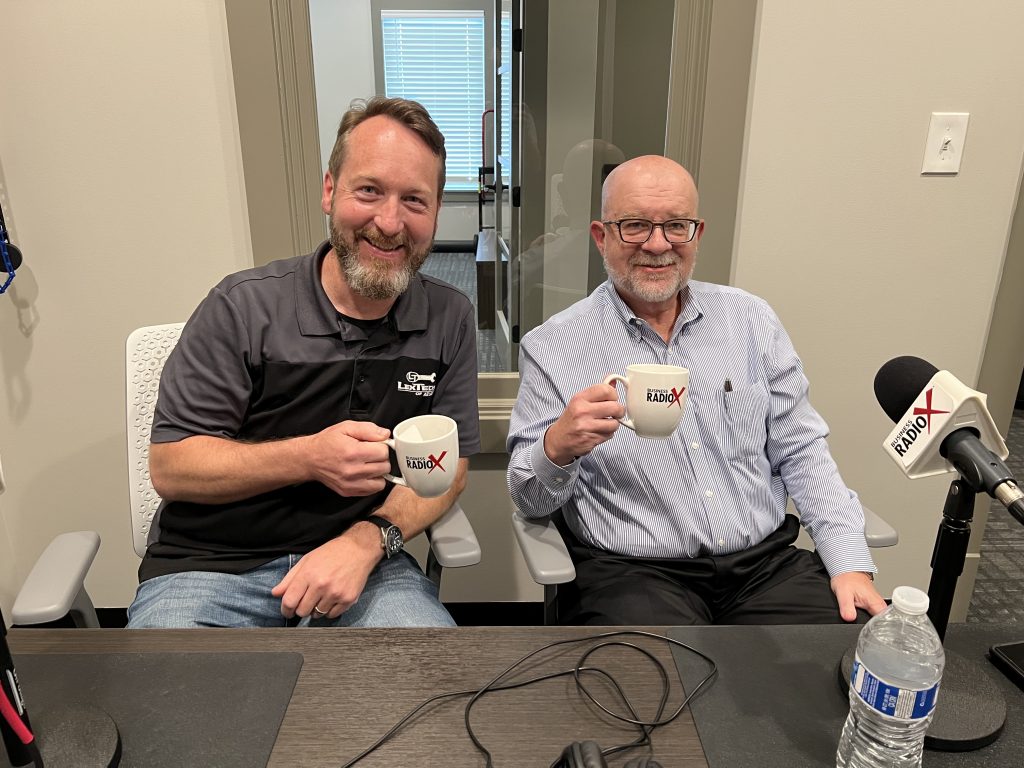
Stan Alhadeff of Business CFO For Hire & Matthew Durdin of Lextechs of Atlanta join Gary Zermuehlen of Sandler Training, Simon INC

April 11, 2023 by Amanda Pearch

Forsyth Studio
Forsyth Studio
Stan Alhadeff of Business CFO For Hire & Matthew Durdin of Lextechs of Atlanta join Gary Zermuehlen of Sandler Training, Simon INC
Loading
00:00 /
RSS Feed
Share
Link
Embed

Download file

 Matthew Durdin of Lextechs of Atlanta & Stan Alhadeff of Business CFO For Hire


 At Business CFO For Hire, their primary objective is your success. They recognize that every business is unique and as such mold their approach to align to your objectives, desires, and priorities with a seamless integration. They become part of your executive team. Every company today is unique and has their own specific challenges, they also face similar issues and share the same objective—to be profitable and sustainable while creating value. With Business CFO for Hire you get the benefit of financial management expertise and guidance at a lower cost and therefore without the need for a long-term commitment.


Lextechs of Atlanta was was founded in 2008 by Huston Hatch and Chad Almond. They opened their doors with the principle of creating an affordable high quality alternative to expensive dealership service centers and under qualified general repair shops. By specializing in Lexus and Toyota only, our expertise is in knowing your vehicle and providing any service or repair you would need at a value you will not find elsewhere. They believe their success is determined by our customer’s satisfaction.  LexTechs of Atlanta strives to offer the highest quality service and parts. Customer service experience is personal, informative, and above all, non-intimidating. They will explain in detail what we recommend for your car while addressing any concerns or questions you may have.

Host Gary Z is a Sales Trainer & Coach at Sandler Training, Simon Inc.

Companies depend on sales force development. Gary and team equip sales professionals to drive sales revenue higher, uncover significantly more business opportunities, shorten their selling cycles, and protect their gross profit margins. Using a powerful combination of consulting, sales training, they help their client community to achieve goals and overcome challenges.

SUBSCRIBE to “Simon Says Let’s Talk Business 2.0” wherever you get your podcasts
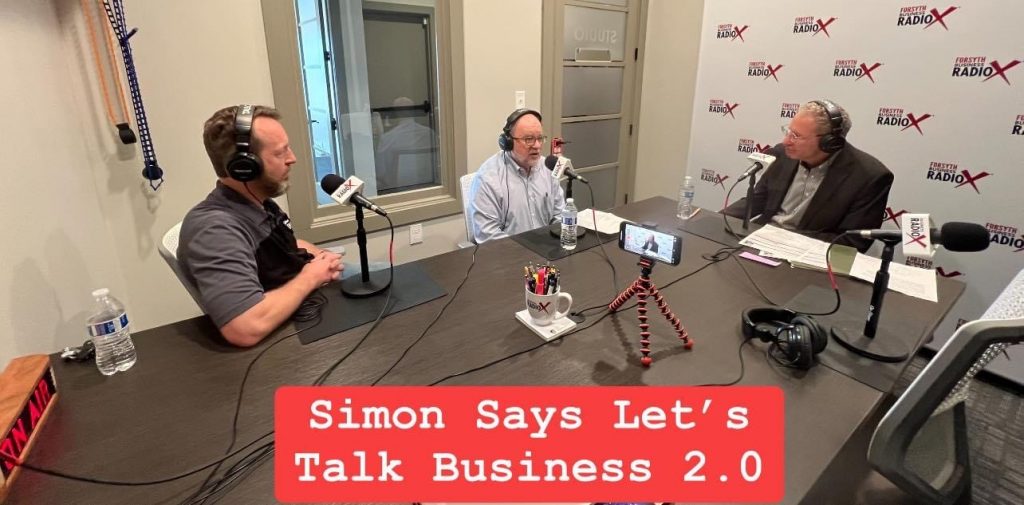
Series proudly presented by Sandler Training, Simon Inc.

Simon-Says-Forsyth-banner.png

Podcasts by Amanda Pearch

Tagged With: al simon, amanda pearch, Amanda Pearch Marmolejo, Business CFO For Hire, CFO, Coaching, Gary Zermuehlen, Lextechs of Atlanta, Matthew Durdin, Sales, Sales 1-2-3 with Gary Z, Sandler Training Simon by Simon Inc, Sherry Simon, Stan Alhadeff

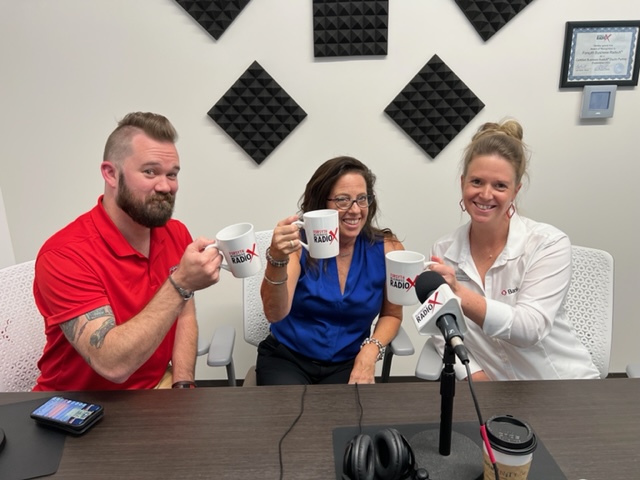
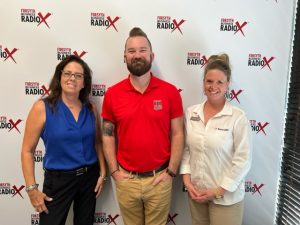
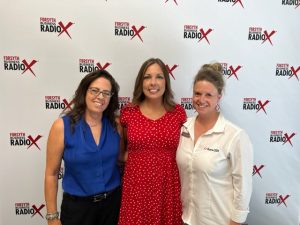
Jennifer Haezebrouck of Bank OZK, Melanie Zeman of North Georgis CFO’s & Tyler Nelson of 680 The Fan

July 7, 2022 by Amanda Pearch

Forsyth Business Radio
Jennifer Haezebrouck of Bank OZK, Melanie Zeman of North Georgis CFO's & Tyler Nelson of 680 The Fan
Loading
00:00 /
RSS Feed
Share
Link
Embed

Download file

Tyler Nelson of 680 The Fan, Melanie Zeman of North Georgis CFO’s &

Jennifer Haezebrouck of Bank OZK 


Jennifer Haezebrouck VP Commercial Banker at Bank OZK 

Specializing Business development professional with a proven track record of successfully building customer relationships. Along with experience in client relations, marketing, customer service, and lending, Jennifer is a highly motivated self-starter. Passionate about her community & clients ensuring their growth and success.


Melanie Zeman Founder of North Georgis CFO’s

Melanie has over 25 years of successful leadership guidance and knowledge as a financial executive. Her experience as a high-level Controller and CFO has made her a strategic visionary with sound technical skills, analytical ability and strong operational focus. The North Georgia CFO’s team is well equipped and ready to assist.


Tyler Nelson Director of Corporate Partnerships at 680 The Fan

Dickey Broadcasting is a locally owned business. They pride themselves on is being marketers and brand builders through the magic of sports talk radio.
Tyler has been with 680 The Fan for almost 5 years and is an Atlanta Native. Prior to his work with 680, he was in the craft beer industry.


SPECIAL THANKS to our Forsyth Business RadioX Studio, Print & Furniture Partners:
Connect with us on Social Media @forsythbrx

Broadcasted LIVE from the Forsyth Business RadioX Studio in Cumming, Georgia

Hosted & Produced by Amanda Pearch

Tagged With: 680 The Fan, amanda pearch, Bank OZK, banking, Brandywine Printing Inc, Braves, Brews with Bros, Business Development, CFO, Chick-Fil-A, commercial banking, Cumming, Derek Brooks, Dickey Broadcasting, Dmitriy Templinskiy, duffie dixon, forsyth business radio, Forsyth County Chamber of Commerce, Jennifer Haezebrouck, Melanie Zeman, Mike Sammond, networking, North Georgis CFO's, randy brunson, sports, steve cooper, strategy, Tyler Nelson, Women Connect

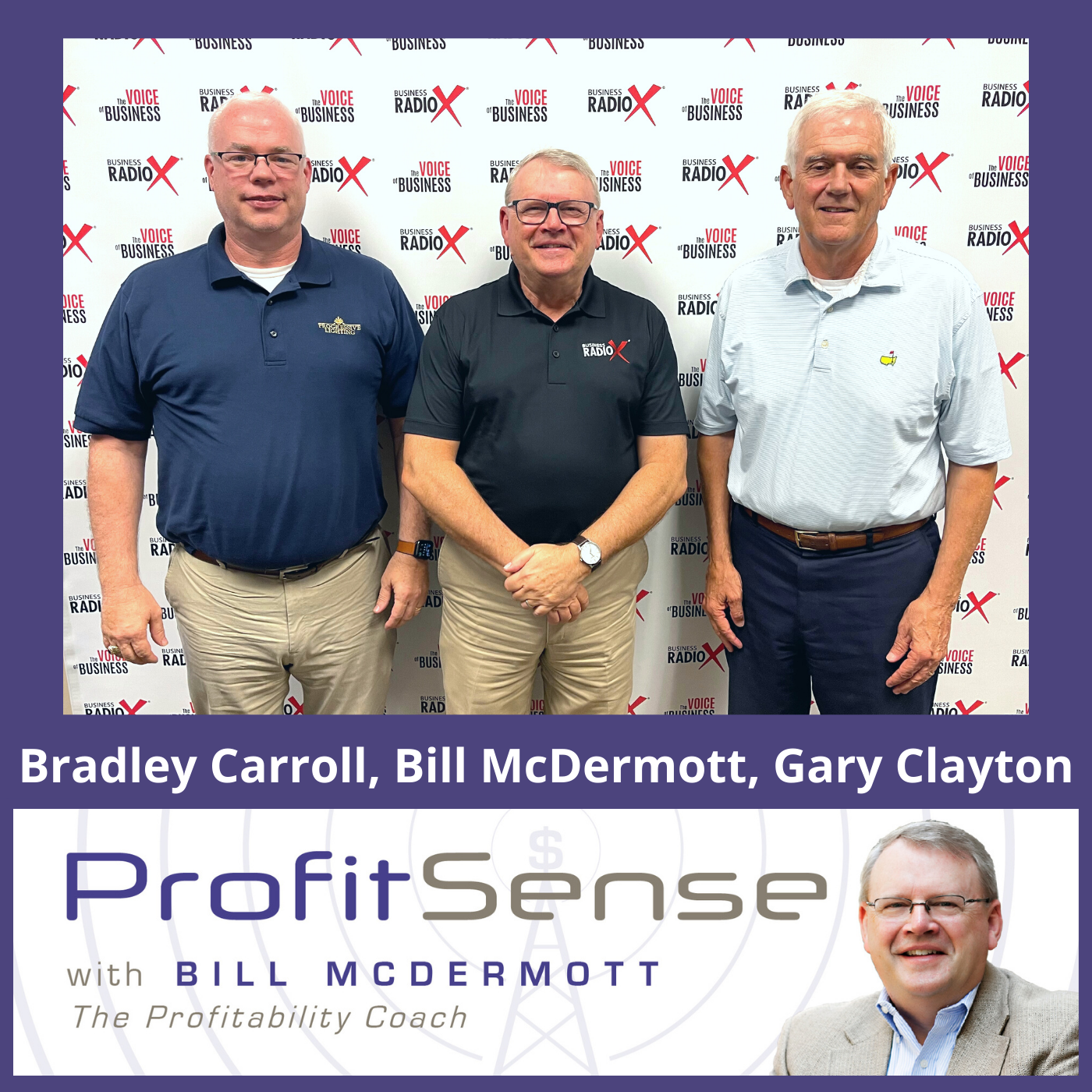
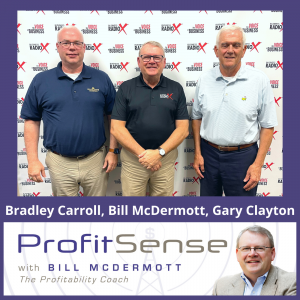
Bradley Carroll, Progressive Lighting, and Gary Clayton, Superior Business Management 

June 9, 2022 by John Ray

Progressive Lighting
North Fulton Studio
Bradley Carroll, Progressive Lighting, and Gary Clayton, Superior Business Management 
Loading
00:00 /
RSS Feed
Share
Link
Embed

Download file

Superior Business Management

Bradley Carroll, Progressive Lighting, and Gary Clayton, Superior Business Management (ProfitSense with Bill McDermott, Episode 33)

A major theme of this edition of ProfitSense was accounting, as host Bill McDermott welcomed two CPAs, Bradley Carroll, CFO of Progressive Lighting, and Gary Clayton, CFO of Superior Business Management. Bradley discussed his move from a CPA firm to in-house practitioner, the significant problems associated with logistics and sourcing products internationally, and more. Topics Gary addressed included enhancing the value of the business, major challenges business owners face today, and why misclassifying employees is so high-risk for such small savings.

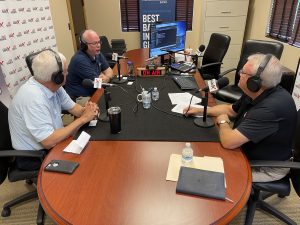
ProfitSense with Bill McDermott is produced and broadcast by the North Fulton Studio of Business RadioX® in Alpharetta.

Progressive Lighting, Inc.

Progressive Lighting, Inc. is a family-owned business with a 50-year history. As the largest chain of residential lighting showrooms in the Southeastern United States, Progressive Lighting has a national reputation for stylish and unique lighting fixtures, superior value, and unparalleled customer service.

The company operates retail locations in Georgia, Texas, and North Carolina, under both the Progressive Lighting and Lee Lighting brand names. Furthering Progressive Lighting’s leadership in residential lighting is Savoy House, the company’s wholesale brand, which offers a full catalog of elegant, high-quality lighting and accessories for the home.

With central distribution from Duluth, Georgia, Savoy House is available nationwide through many of the finest lighting showrooms in the U.S. More recently, the company launched an e-commerce brand, LightsOnline.com, which features thousands of residential lighting products from many of the top lighting brands.

Company website | Facebook | Twitter

Bradley Carroll, CFO/VP Shared Services, Progressive Lighting

Bradley Carroll, CFO/VP Shared Services, Progressive Lighting, Inc.

Bradley is a seasoned financial professional having had a diverse career spanning internal audit, banking, manufacturing, logistics, income tax, financial statement audits, and building and selling a CPA firm that still operates today.

He has presented on numerous compliance, risk management, and control topics at national and international conferences in his career. Bradley not only is a CPA, but he is a Certified Internal Auditor, Certified Financial Services Auditor, Certified in Risk Management Assurance, Certified in Financial Forensics, and holds a Qualification in Internal Audit Leadership.

In addition to his role at Progressive Lighting, Bradley is interested to join a local board of directors with interest in serving on the audit or risk committee.

He’s been married to the lovely Dawn Carroll for 26 years with a 15-year-old son, Harris, at Wesleyan and a 4-year-old yellow lab Geronimeaux.

LinkedIn

Superior Business Management

SBM serves high-net-worth clients from business, sports, and entertainment, who rely on them as their “Personal CFO.” They provide customized business, lifestyle, and financial advisement services that address the most time-consuming and complex financial responsibilities that one encounters in daily life.

Superior Business Management bridges those gaps by doing what needs to be done while protecting the interests of each client. Their goal is to alleviate the concerns that financial burdens put upon clients so they can focus on what they do best. SBM’s level of service is customized and can range from bill pay, banking set-up and management, payroll, and business advisement.

Company website | Facebook

Gary Clayton, CFO, Superior Business Management

Gary Clayton, CFO, Superior Business Management

Gary is a CPA with experience in a variety of industries. As a partner in Superior Business, he provides valuable insight into running profitable companies and creating wealth for its shareholders and employees. Superior Business Management is a firm that provides accounting and tax services to entertainers, wealthy individuals, and small businesses. The firm was founded by Kris Benson, former major league baseball player, in 2014. Gary has been involved since 2015.

Gary Clayton graduated from Presbyterian College in 1975 with a Bachelor of Science in Business Administration. He passed the CPA exam in 1978 and was a partner in Clayton Paulk and Associates. Mr. Clayton originated and owned Micro/Net Solutions, Inc. from 1995 until 2009. After this venture, Gary returned to the accounting field, and over the years, has served as a “Part-time CFO” for numerous companies. In 2015, he joined Superior Business Management, Inc.


Gary is at his best when helping Entrepreneurs, Business Owners, and Executives quickly understand their financial position and guide them through key areas for future growth. His ideal clients are those who do not have the means for a full-time CFO but know they need to address key areas that include: Minimizing tax obligations, hiring new employees, improving cash flow, and maintaining profitability while keeping a watchful eye on risk management. He serves business owners who need guidance in areas of finance and business operation, who may also lack a formalized infrastructure and future growth plan.

Gary Clayton currently resides with his wife in Hoschton, Georgia. They are members of Cannon United Methodist Church, where he teaches a weekly Bible study.

Gary can be reached by email.

About ProfitSense and Your Host, Bill McDermott

Bill McDermott
Bill McDermott

ProfitSense with Bill McDermott dives into the stories behind some of Atlanta’s successful businesses and business owners and the professionals that advise them. This show helps local business leaders get the word out about the important work they’re doing to serve their market, their community, and their profession. The show is presented by McDermott Financial Solutions. McDermott Financial helps business owners improve cash flow and profitability, find financing, break through barriers to expansion, and financially prepare to exit their business. The show archive can be found at profitsenseradio.com.

Bill McDermott is the Founder and CEO of McDermott Financial Solutions. When business owners want to increase their profitability, they don’t have the expertise to know where to start or what to do. Bill leverages his knowledge and relationships from 32 years as a banker to identify the hurdles getting in the way and create a plan to deliver profitability they never thought possible.

Bill currently serves as Treasurer for the Atlanta Executive Forum and has held previous positions as a board member for the Kennesaw State University Entrepreneurship Center and Gwinnett Habitat for Humanity and Treasurer for CEO NetWeavers. Bill is a graduate of Wake Forest University and he and his wife, Martha have called Atlanta home for over 40 years. Outside of work, Bill enjoys golf, traveling, and gardening.

Connect with Bill on LinkedIn and Twitter and follow McDermott Financial Solutions on LinkedIn.

Tagged With: Accounting, bradley carroll, CFO, CFO Services, CPa, Gary Clayton, Progressive Lighting, Superior Business Management

Decision Vision Episode 104: Should I Layoff Employees? – An Interview with David Frame, HB NEXT

February 18, 2021 by John Ray

David Frame
Decision Vision
Decision Vision Episode 104: Should I Layoff Employees? - An Interview with David Frame, HB NEXT
Loading
00:00 /
RSS Feed
Share
Link
Embed

Download file

David Frame

Decision Vision Episode 104:  Should I Layoff Employees? – An Interview with David Frame, HB NEXT

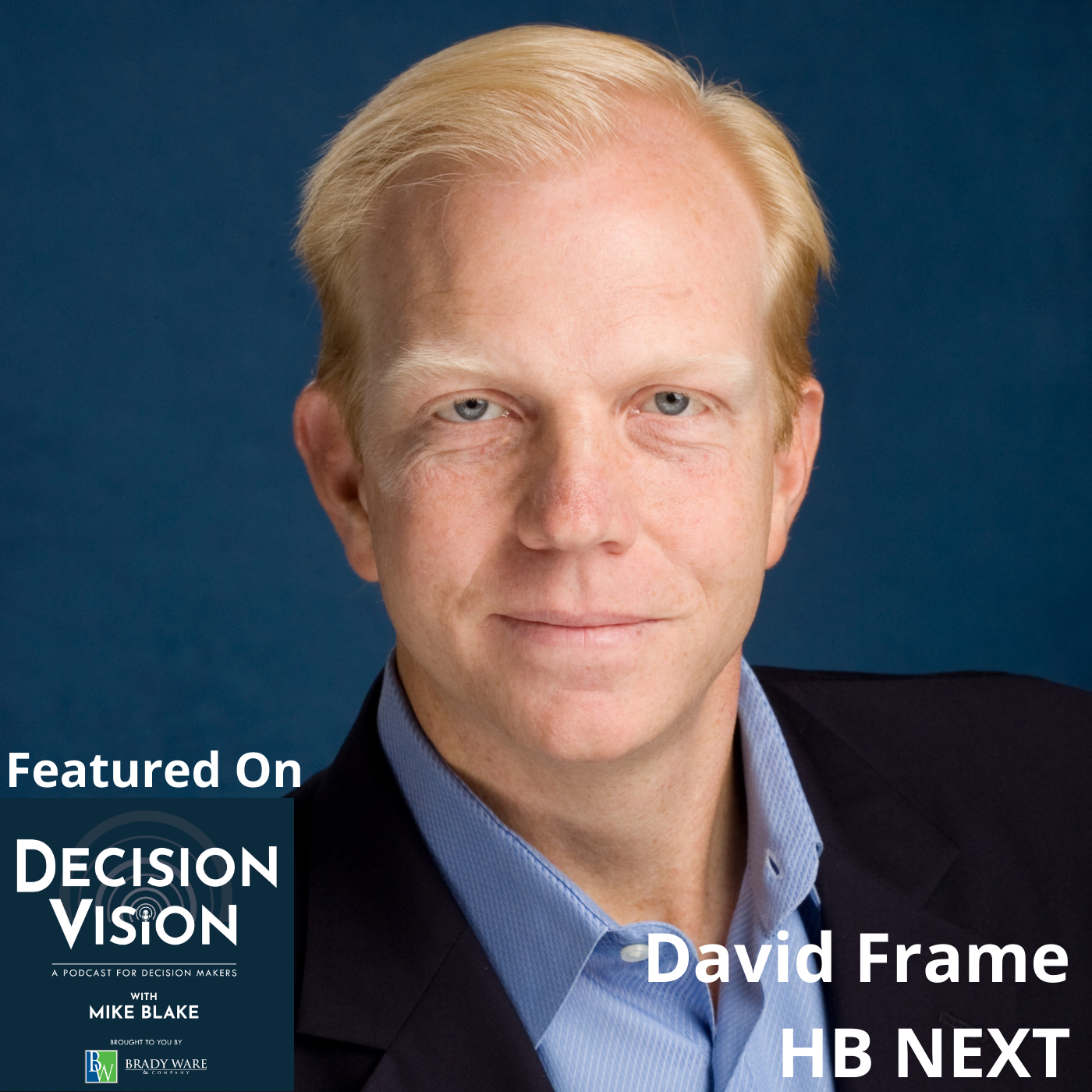
Reflecting on an earlier career experience at Allconnect, David Frame, now CFO of HB NEXT, joined host Mike Blake to discuss decisions on layoffs he and his management colleagues had to confront during the 2007-2008 recession. “Decision Vision” is presented by Brady Ware & Company.

David Frame, HB NEXT

David Frame is Chief Financial Officer of HB NEXT. David’s focus has been on growing and scaling private equity-backed technology-enabled services companies in the $25 to 50 million range, and has held both financial and operational leadership roles. David’s passion is developing people and building high functioning teams to effectively execute growth strategies. Outside of work, he volunteers in the Boy Scouts of America, stays active with golf, basketball, and skiing when he can.

He has an MBA in Finance and Electronic Commerce from Vanderbilt.

HB NEXT is a technology-enabled services company servicing construction, industrial, and energy companies with a range of safety and environmental compliance and training solutions.  In business since 1999, the company constantly evolved with technology and now provides several SaaS platforms for clients including SafetyCloud and StormCloud for safety and environmental compliance.

HB NEXT is also proud to be a part of the Construction Ready program, providing training for individuals looking for careers in the commercial construction industry.  To date, the program has successfully placed over 1000 students in high-paying construction jobs in Georgia.

LinkedIn

Mike Blake, Brady Ware & Company

Mike Blake, Host of the “Decision Vision” podcast series

Michael Blake is the host of the “Decision Vision” podcast series and a Director of Brady Ware & Company. Mike specializes in the valuation of intellectual property-driven firms, such as software firms, aerospace firms, and professional services firms, most frequently in the capacity as a transaction advisor, helping clients obtain great outcomes from complex transaction opportunities. He is also a specialist in the appraisal of intellectual properties as stand-alone assets, such as software, trade secrets, and patents.

Mike has been a full-time business appraiser for 13 years with public accounting firms, boutique business appraisal firms, and an owner of his own firm. Prior to that, he spent 8 years in venture capital and investment banking, including transactions in the U.S., Israel, Russia, Ukraine, and Belarus.

Brady Ware & Company

Brady Ware & Company is a regional full-service accounting and advisory firm which helps businesses and entrepreneurs make visions a reality. Brady Ware services clients nationally from its offices in Alpharetta, GA; Columbus and Dayton, OH; and Richmond, IN. The firm is growth-minded, committed to the regions in which they operate, and most importantly, they make significant investments in their people and service offerings to meet the changing financial needs of those they are privileged to serve. The firm is dedicated to providing results that make a difference for its clients.

Decision Vision Podcast Series

“Decision Vision” is a podcast covering topics and issues facing small business owners and connecting them with solutions from leading experts. This series is presented by Brady Ware & Company. If you are a decision-maker for a small business, we’d love to hear from you. Contact us at decisionvision@bradyware.com and make sure to listen to every Thursday to the “Decision Vision” podcast.

Past episodes of “Decision Vision” can be found at decisionvisionpodcast.com. “Decision Vision” is produced and broadcast by the North Fulton studio of Business RadioX®.

Visit Brady Ware & Company on social media:

LinkedIn:  https://www.linkedin.com/company/brady-ware/

Facebook: https://www.facebook.com/bradywareCPAs/

Twitter: https://twitter.com/BradyWare

Instagram: https://www.instagram.com/bradywarecompany/

TRANSCRIPT

Intro: [00:00:01] Welcome to Decision Vision, a podcast series focusing on critical business decisions. Brought to you by Brady Ware & Company. Brady Ware is a regional, full service accounting and advisory firm that helps businesses and entrepreneurs make visions a reality.

Mike Blake: [00:00:20] Welcome to Decision Vision, a podcast giving you, the listener, clear vision to make great decisions. In each episode, we discuss the process of decision making on a different topic from the business owners’ or executives’ perspective. We aren’t necessarily telling you what to do, but we can put you in a position to make an informed decision on your own and understand when you might need help along the way.

Mike Blake: [00:00:41] My name is Mike Blake, and I’m your host for today’s program. I’m a director at Brady Ware & Company, a full service accounting firm based in Dayton, Ohio, with offices in Dayton; Columbus, Ohio; Richmond, Indiana; and Alpharetta, Georgia. Brady Ware is sponsoring this podcast, which is being recorded in Atlanta per social distancing protocols. If you like this podcast, please subscribe on your favorite podcast aggregator, and please consider leaving a review of the podcast as well.

Mike Blake: [00:01:08] Today’s topic is, Should I conduct layoffs? And we’ve touched on this topic before, mostly about alternatives to layoffs. But, you know, as I said in Episode 100 that I wasn’t going to be afraid to revisit topics that we have covered before because everybody’s experience is different. And we’re also focusing more on getting people from industry as opposed to advisors on the program. And, again, we’re not going to stop having advisors. We just had one from the previous episode. But, you know, there is a difference from somebody who’s actually had to go through it versus somebody who’s tried to help somebody go through it. You know, there’s empathy and there’s actually feeling the pain.

Mike Blake: [00:01:59] And I think you’re really going to enjoy the podcast that we have for you today or at least find it helpful. Layoffs are not a pleasant topic. Certainly, very few people have enjoyed being laid off. One time I did, because the job I hated and I sucked at and they laid me off. So, they gave me a severance before I quit. So, that was good.

Mike Blake: [00:02:21] But bosses, business owners, business executives, you know, it’s very unpleasant for them to conduct layoffs for many reasons. And I’m not saying that to try to get people to feel sorry for them. But I am trying to say that, you know, if you’re an executive and you’re in a position of either considering layoffs or you’ve had to pull the trigger on that, and if you’re wondering what it says about you, if it bothered you that you had to do that, the answer is that it says good things about you. I think where it says bad things about you, if you can sort of do that cavalierly and then, you know, 30 minutes later, you’re kind of going right back to what you’re doing without a thought. That I would find, frankly, far more disturbing than somebody who had find the topic self-disturbing.

Mike Blake: [00:03:16] And, you know, I’m not sure there’s a more traumatic experience in business than layoffs. You know, if it’s a large company, then the decision to execute a series of layoffs or a layoff program could very well impact the livelihoods of thousands of people. And in a smaller company, it may impact the livelihoods of hundreds or dozens of people. But that’s painful enough. And you probably know a lot of the people that you’re laying off, which just makes it all the more difficult. But at the end of the day, you do have a company to run. You have value that you have to protect for your shareholders. And, you know, one of the reasons that executives are paid as much as they’re paid, besides what they bring to the table in terms of intelligence, capability, willingness to work long hours, weekends, missing birthdays and so forth, but it’s also because they’re the ones who have to make that extremely hard decision.

Mike Blake: [00:04:24] And I’ve had to do it. And our next guest has had to do it more than once, unhappily I know. And I think you’re going to get a lot out of kind of getting inside his head, getting inside what was the mindset, what worked well, what has he learned over the years about doing it better. And so, if you’re an executive that is facing the decision of whether or not that you’re going to have to have layoffs at your company, then my hope is that some of the information we’re going to talk about today is going to help you make a better decision and execute that decision better than you otherwise might have.

Mike Blake: [00:05:08] Joining us today is David Frame, who is the Chief Financial Officer of HB Next, a software and services company providing safety and environmental compliance solutions to construction and industrial companies in the Southeast. David’s focus has been on growing and scaling private equity backed technology enabled services companies in the $25 to 50 million range, and has held both financial and operational leadership roles. David’s passion is developing people and building high functioning teams to effectively execute growth strategies. Outside of work, he volunteers in the Boy Scouts of America, stays active with golf, basketball, and skiing when he can. I think one of his sons is actually an Eagle Scout, if I’m not mistaken.

Mike Blake: [00:05:50] HB Next is a technology enabled services company, servicing construction, industrial, and energy companies with a range of safety and environmental compliance and training solutions. In business since 1999, the company constantly evolved with technology and now provides several software as a service platform for clients including Safety Cloud and Storm Cloud for safety and environmental compliance. HB Next is also proud to be a part of the construction ready program, providing training for individuals looking for careers in the commercial construction industry. To date, the program has successfully placed over 1,000 students in high paying construction jobs in Georgia. Dave Frame, welcome to the program.

David Frame: [00:06:30] Thank you. It’s nice to be here. And, yes, my oldest son did make Eagle and made it the third straight generation of Eagle Scout.

Mike Blake: [00:06:38] Well, good for you. And I assume you’re the second generation. And, you know, thank you all for your service to our community. My son is in scouts. My wife is actually the leader of the Cub Scout troop. And, you know, we’re big fans of the scouting program and what it provides, not just to the individuals, but to the country in terms of building good citizens. So, thank you for that dedication.

David Frame: [00:07:08] I enjoy it.

Mike Blake: [00:07:08] So, let’s dig in. I mean, everybody knows what layoff is. I don’t need to do what I often do in a podcast. You know, what is a layoff? We know what that is. So, what I like you to do is, think about a layoff that you’ve had to do. And I know, unfortunately, you’ve had to kind of go through that – you had to see that movie more than once. But talk about a time that you had to do layoffs. And how did that decision come about? What was involved in making that decision? What was it like to be in the conference room talking through that decision and arriving at the decision that that was the thing that was appropriate to do?

David Frame: [00:07:51] Yeah. Yeah. There’s one that comes to mind, and as you said, unfortunately, I’ve been through it a few times. And oftentimes, it’s really precipitated by a very drastic event. COVID, lots of people had to go through it most recently with the pandemic. But the time I’m going to talk to in this podcast or this moment is one where – and we’ll get into it – it wasn’t necessarily event driven. And I think sometimes these are the hardest ones because there’s not necessarily an excuse, if you will.

Mike Blake: [00:08:25] Yeah. There’s no external blame.

David Frame: [00:08:27] That’s right. There are no external blame. There’s no shock to the system per se. And so, it’s a little like boiling a frog, right? You just slowly end up in a position, and that’s where we were. So, this is a number of years ago – actually, it was 2008 – and we’ll get into that in a second. I’ve been working at Allconnect, which was a technology enabled services company in the digital marketing lead gen space, and venture back, we were growing. As we continue to grow, as you do, you’re adding headcount.

David Frame: [00:09:01] And, frankly, we got to the end of 2007 and we were looking at our results and realizing that we were not on path to be meeting the financial threshold that we need to do towards profitability, which our investors were looking for. And so, we really took the time in early 2008 to sit down and go through the organization, because we felt like we were doing well. We felt like we were on the trajectory. But that wasn’t turning into the bottom line results we were looking for. And we were cash flow positive at that point. And so, we were still – you know, cash burn was an issue. And the last thing you want to do is go back to your investors.

David Frame: [00:09:44] And so, we really sat down with the senior leadership team and took a hard look at our entire organization. We, at the time, had a sales team – like a call center sales team – that was operating pretty well. That was not the issue. We started to look at kind of the overhead, if you will, account management, technology, finance, all of the kind of fixed overhead costs that we had, and we started to really pick it apart and try to look at who is adding value, where are we spending more money than we should. And we went through that process and we realized that we had a lot of people well-intentioned and probably brought on at some point for the right reason. As we’ve evolved, we’ve created a lot of overlap and a lot of redundancy in what people were doing. And it got to the point where we’re just, quite frankly, bloated. Let’s call it a $35 million company is bloated. It shouldn’t be part of the $35 million company. That’s what billion dollar international companies do.

David Frame: [00:10:58] So, we really sat down and we went through kind of a full reorganization of how we aligned resources, how we aligned resources against our customers, against our vendors, and against our goals. And realized that we needed to layoff about 20 percent of our corporate staff. And it was a hard decision because, again, in a small growth company, these are people that many of them started with us early in the process, have been with the company for a while. It’s a small, closely-knit group and so you know all these people really well. And so, it was a hard decision and you really had to fall back to kind of objective measures of what needs to happen, how many people really need to be doing this function to do it the way we want to, and who’s the best suited to do it.

David Frame: [00:11:48] The other thing you find in growth companies like this is, sometimes there’s the saying, “The people that get you here won’t necessarily get you there.” The skillsets you need when you’re a very small startup growth company tend to be people that are a lot of jack of all trades, can pick up a lot of different things, but they may not be the people that also know how to put in systems and structures and process to scale. And I think that’s really what we found we had gotten to.

David Frame: [00:12:18] So, we had to make some hard decisions and let some people go that had been with the company for a long time, were part of the success. But, quite frankly, as much as we tried, they weren’t the right fit going forward. And so, fortunately, we were not up against the wall with a major event that was causing financial stress so we could do it in as fair and equitable way as possible, given everyone’s longevity with the company. But we had to go ahead and do it and reorganize and restructure. And, you know, it’s never easy, particularly in that. But I think we tried to be as honest and upfront about it as possible, and give the context, and go from there.

David Frame: [00:13:07] You know, I will say what’s interesting about the timing of that is, as we know, by the time we fast forward to the fall of 2008, all hell had broken loose. And we were very fortunate to have gotten ahead of this because of a culling process, rather than waiting for the event, that when that happened, we were not in a panic. We were able to do this by being proactive. We were able to do it in a much more rational, logical, and methodical way, which, frankly, is better for the entire organization.

David Frame: [00:13:44] And in that particular case – I’m familiar with the company of which you speak – you know, there’s a dynamic that is somewhat distinctive. You’re venture-backed, correct?

David Frame: [00:13:57] Yes.

Mike Blake: [00:13:57] And you are not yet profitable. So, you know, to a certain extent, you expect venture-backed companies to not be profitable for a period of time. But on the other hand, not everybody is an Uber or an Amazon and can carry unprofitability seemingly indefinitely, if they feel like it. You didn’t have that kind of venture capital, basically. And so, you know, that slow boiling frog is really an interesting and apt description. So, before you reached that point or as you’re reaching that point that layoffs were the right decision to make, even if it was a tough decision, did you consider other vehicles? Maybe some kind of compensation adjustment, work sharing, maybe dumping more money into growth to try to grow your way out of the problem, and trying to cover the costs, or something else. Were there other alternatives that you considered? Or was it very clear just right from the get-go, you just had too much overhead and had to go?

David Frame: [00:15:03] No. I mean, it was clear that our financials were not doing what they needed to do. But, again, I think what we started with in this situation – and this is why it’s nice and something I’ve carried forward in constantly testing this – but we started with aligning an organization that would best accomplish the goals we needed. And then, we started to fill the required boxes in there. And then, what you had was kind of a remainder. And so, it was not done – the goal was not to do layoffs when we started the exercise. The goal is to understand our profitability and really make sure that we’ve aligned the organization for future success.

David Frame: [00:15:50] Had we come to that conclusion and said, “Hey, look. We really need all of these resources because here’s the new structure, here’s what we need to accomplish in 2008, and here are the resources we need and those aligned.” Then, I think we would have been willing to, you know, keep toeing the line, continue on that course, because we did still have funding. We were not going to run out of money right away. But by the same token, what we did was, we had to align the organization. And then, when there were remainders and there were potentially people who didn’t fit the new organization from a skillset perspective or something else, then we realized we had to make those hard decisions and knew that they were right for the company because then we had a fresh start to build from.

Mike Blake: [00:16:38] So, in the process of then implementing the layoffs, what was that like? For example, were you able to give people notice that their jobs are going to end in a week or two weeks? Did you have to basically kind of inform and walk them out the door? Were you able to give them severance? Was there anything else you’re able to sort of do to try to ease the impact or help with the transition?

David Frame: [00:17:04] Yeah. I mean, we were fortunate to be able to give severance, not a lot of golden parachutes, but there was a fair severance for everybody. We were in a situation we felt like we walk people out the door. So, we gave them notice. And in fact, some of that, we needed to do transitions and so on. And so, again, while it was difficult -and you don’t prolong if you don’t have to kind of the people in the building, because at some point that becomes counterproductive. But it was able to be done, like I said, in kind of a methodical as far away as possible, again, partly because we didn’t have our back against the wall.

Mike Blake: [00:17:48] So, what risks were you looking at as you decided to move forward with the layoffs? What are the risks of doing that that concerned you the most?

David Frame: [00:17:59] So, in the company, we had a lot of relationships. We relied on relationships with some large companies on both investor-owned utilities as well as telecommunication companies, and those relationships were critical. And so, one of the things where we really had to focus was how do we maintain those relationships and support those relationships but in a way that doesn’t risk diminishing them or hurting those. But at the same token, doesn’t take as many resources to do so. And so, I think the handoff of those relationships was probably the biggest risk we had because people had formed some good personal relationships amidst the business relationships. And so, we really had to plan around that. We took a lot of time with the executives to make sure the executives were able to step in with some of those changes and kind of support those relationships as needed. And so, we really did have kind of a leadership led process to make sure that all of those remained stable and in good condition. We didn’t lose any business as a result.

Mike Blake: [00:19:11] So, where did the decision for layoffs initiated? You, at the time, I think you’re the senior vice-president of finance and you reported to a chief financial officer. Where did that decision come from? Did it come from you guys? Was it a mandate from the CEO? Is it from the board? Was it from investors who may have sat outside of the board? Where did the genesis of that decision sort of come from?

David Frame: [00:19:39] The genesis came from myself and the CFO. The impetus did, because, as I said, we kind of were looking at our financials and our profitability and understanding that, for lack of a better word, it wasn’t adding up. All right? It was not going on the path we needed to. And I don’t think we had a clear idea why per se. But we knew we were on that path. And the path we were on was not going to get us where we wanted to go. And so, kind of we started with that analysis and understanding and brought that up to the CEO.

David Frame: [00:20:16] It was not at the board level at this point. I mean, we were able to bring that to the board. And then, we sat down with the CEO and the finance team and really kind of went through the first pass of where we are. And then, we had to bring in other leaders, CIO, chief sales officer, those folks into the conversation to start fleshing out the new organization. But the fact that we were going to do it, the decision had been made before we brought in the broader executive team to actually start making the detailed decisions of who needed to go where.

Mike Blake: [00:20:53] You know, you’ve been talking about this in a certain way and it finally sort of hit me. There’s a subtle but very powerful point here in the way that you approached this from an intellectual level. And the way that you approached it was not, “Hey, we have too many people, let’s start swinging the ax.” But it rather was, “Here’s what the organization needs to look like. And of the pool of talent that we currently have within the boundaries of this company, here’s who has a role in that new organization. And here’s who doesn’t have a role in that organization.” Is that a fair way to characterize it? And do you agree that that’s a meaningful distinction?

David Frame: [00:21:34] Yeah. I do. I do for a couple of reasons. One, I think in any growth company – probably any company – as you’re growing, new things come up. It’s not clear where they land. So, it’s easy to start kind of building a Frankenstein’s monster, if you will, of different people. And until you have a comprehensive view now of all the new things that are going on and how to best handle those, you’re going to kind of naturally grow that way a little, you know, Frankenstein’s monster, if you will. And then, you get enough data and you can step back and say, “Hey, there’s a better way to do all of this stuff. Now, that we see all of the new things we’re doing, how are we going to do all those in a more efficient and better way?”

David Frame: [00:22:17] And so, I think that’s a process that needs to happen. In my experience, always has happened in growth companies because of the nature of the way growth comes. And so, on the one hand, it’s the necessity of reassessing what are we doing today that’s different and how are we handling that the best way. The other part, I’ll say, too, is a little bit selfish, which is, nobody wants to have to go through layoffs. It’s painful. I, as a manager, always feel somewhat responsible for having gotten the company into this situation. I know that’s maybe overexaggerating a little bit. But there is a personal responsibility as a manager to say, “Hey, look. If we had been perfect, we might have been able to avoid this.”

David Frame: [00:23:01] So, I think the other part that this does is it provides an objectivity that allows you to make decisions that are hard to make from an emotional perspective. And so, for me, it’s always better to drop back to kind of a process that is not about people and names, but about functions and business requirements, and then match those up with the other one. And then, it’s not personal. It’s about the needs of the business. And it’s a little blunt to cut off a part to save the whole. And that’s what this is all about, you’re saving a hundred jobs by eliminating 20 as opposed to going down this path where, suddenly, it is swinging an ax and it doesn’t matter who you hit. And no one wants to be part of that.

Mike Blake: [00:23:50] So, once the that decision was made, what were some of the key steps in preparing to then implement? And how long did it take you to do that?

David Frame: [00:24:05] So, I think number one, for me, is I believe you want to do it once. And even if you cut a little deeper than you need to, being decisive with a clear communication for the organization of what is happening and why. And this is easier for a small company, I mean, you get to big multinationals, it’s probably hard to manage that. But a mid company size, you have a very clear and honest conversation with your employees of where we are, why we’re doing this, and how we got here. Have that communication come out at once and then have a very clear execution plan of how you’re going to go about doing that, so that everything kind of as much as can be done happens in a very short timeframe. Because I think it makes it easier for the organization. Plus, it allows the remaining people to move forward confidently and not feel like they’re waiting for the other shoe to drop.

Mike Blake: [00:25:10] Okay. So, you want to be prepared to do it quickly, so in order to be able to do that quickly, what’s involved in that?

David Frame: [00:25:19] You know, it’s nailing your talking points – not talking points, but nailing your message, really focusing on what you want to communicate to whom, and having that fully baked with a communication plan when, who, how. It also involves orchestrating all the individual conversations that need to go both for the people that are moving out, but also for the people that are moving in. And sometimes, you know, you want to really prepare the people that are staying before you necessarily let the people know that they’re going. It’s a tight window. But I would rather not surprise the person that’s stepping into a new role. I prefer to let them know what’s going on so they’re prepared. So, when the news is delivered to the person who’s leaving, there’s someone ready to step into that breach.

Mike Blake: [00:26:16] Okay. And that messaging, did you have legal counsel review it?

David Frame: [00:26:20] Yes. Yeah. We did. That was relatively – a smaller company, it’s a little easier. But, yeah, I mean, through the whole process, you’ve got to – and even more so nowadays – be really crisp on understanding and documenting. And another reason we do the process is from a legal perspective, too – I would say I’m more appreciated about now than maybe 15, 20 years ago – but going through that objective process we talked about also is very helpful from a legal standpoint as well as we’re in a world where you’ve got to have your I’s dotted and T’s crossed on those items as well.

Mike Blake: [00:27:00] You know, I’m assuming you agree with me that a layoff is a traumatic event, individually as well as collectively. What was the impact upon the people left behind and how did you manage kind of the after effects left in the wake of the layoffs?

David Frame: [00:27:24] I think that’s a great point, because as you were talking, it occurred to me, the other part of this that I found important is the honesty and the openness that you do this is critical for, (A) the relationships that you’re leaving as they leave the company. But more so, you’ve got an entire organization watching how you choose to execute something like this. And the more that you come at it with an honesty, and an empathy, and an openness, I think you can actually use these opportunities. These opportunities are either going to build or destroy trust in your organization. And the more that you demonstrate to the remaining organization that you are being honest, and open, and forthright, and empathetic, then that is critical to keeping that trust and the people that are still here and getting them to rally behind the new organization as opposed to buck against it or be distrustful of it.

David Frame: [00:28:28] And so, I have seen situations where, you know, it was not done in a way that felt right to people that, again, been long time employees. And I think that really starts to set the new organization on the wrong path in terms of trust, and buy in, and all the things you need to be successful.

Mike Blake: [00:28:49] And, you know, talk about, say, the 24 to 48 hours after announcing the layoffs. Could you feel a difference in the office? I mean, was there a different atmosphere, if you will, or were people able to kind of go back to business as usual?

David Frame: [00:29:09] I think there were two things. I mean, there was a brief period of, what we call, mourning, where people or friends left the building. But I think quickly, frankly, that turned not into business as usual, which was good. It turned into kind of an energy that says, “Okay. We’re refocused. We’ve got the right people on the bus.” I mean, the fact is, when you get to those situations, other employees have the same sense that, “Hey, this isn’t working quite right.” And so, I think if you do this right, you really get a reenergized group of people that see the vision, see the new organization, what it can accomplish. And if you pick the leaders right for that stay, then they’re energized with their new opportunity, probably taking on some different and new responsibilities. And you can actually kind of slingshot your way forward a little bit.

Mike Blake: [00:30:05] You know, that’s an interesting point and I wanted to ask you about that, and I still will because I like to probe. And that is, you know, employees are smart, right? They know what’s going on, on the ground. They often know better than we do in the C-suite, because, I mean, they’re just they’re living it day to day. And I do think on some level, they do know kind of who has a cushy job, who doesn’t have a cushy job, who seems to have a clear role, who doesn’t. And, you know, I do wonder if there’s some appreciation on some level that management at least is knowledgeable enough and has the courage to take action.

David Frame: [00:30:46] Yeah. I think that’s dead on. And I think that’s why people know those that aren’t pulling their weight, either on purpose or not, and the ones that are really motivated can get resentful of that, right? And so, it can be counterproductive. So, when they do see you taking action – and, again, it’s not that there’s anything wrong with that individual. It could be the position they were put in the role. But the fact that you get to the point where, you know, some group is carrying more than their weight, and there’s a group that’s not carrying their weight, and they see that. And so, the fact that, again, in their honest, open way, management is willing to acknowledge that and move forward is a motivator to those folks. And those are the folks you want to motivate too, right? I mean, those are the ones that are chomping at the bit to do more.

Mike Blake: [00:31:33] Well, yeah. And I think to my mind – and tell me if I’m wrong – one of the concerns that comes in right after that is okay. How do you motivate the people you want to stay to stay? Because it’s a natural reaction, I think, that if you’re in a firm that is having layoffs and is faltering at achieving its goals and there’s no more concrete admission of that than layoffs, some people are going to think, “Well, you know, maybe I should get off before my number comes up. Maybe I ought to get my resume out in the street. Or I have to flip a switch in the LinkedIn and say I’m open to job offers,” that sort of thing. And so, how did you manage trying to make sure, in particular the people you really wanted to keep, those high performers continue to have confidence in the company and to sell them? Did you feel like you had to sell them a new on, “We did this, this sucked. I’m not going to sugarcoat it this is a setback. But here’s why you ought to double down.”

David Frame: [00:32:44] Yeah. I mean, again, I’ll keep going back to it, I think honesty and transparency is the key there. And you can’t just wait to this side. That has to be a culture that you’re building anyway. People have to believe they trust you anyway. But I think if you go through a difficult situation, and sometimes that transparency involves risk. And I can share another story of that. But I think if you are honest and transparent, they have to start by trusting you to begin with. But if you continue that honesty and that transparency, and even as a business, take a little risk, then I think you’re likely to – maybe not everybody – retain that trust and gain that backing that you’re looking for. But it’s not going to come unless you’re willing to give a little bit as a company or as a management team.

David Frame: [00:33:34] I’ll share one story that I think embodies that a little bit. Not too long ago, I was working for a company and we had a sizable call center sales force. And we found out we lost a piece of business with one of our biggest clients. And so, in 60 days or 30 days, we were going to lose this business. So, we very quickly put together a plan and it would have been very easy for us, for business continuity reasons or for any business, to wait until a week before and then let everyone know that we lost this business and it’s no longer here. “Sorry. Here’s two weeks. Good luck.” But we didn’t think that was the right thing to do.

David Frame: [00:34:22] So, what we did is, we let about 75 people know right away this is coming and we also explained why. We, also, at the same time, had a plan where we set up a process by which people could apply for internal jobs in the other areas. We also had already reached out to a couple of companies in the area that did similar things and let them know we had high quality people that were being let go. So, we brought them in for job fairs. We set up a job fair internally. And I got to tell you, at the end of that conversation, the appreciation from a bunch of people just being told they’re going to be laid off was tremendous.

David Frame: [00:35:08] And what we found was, most of them stayed around. Some of them looked for other jobs. But they didn’t feel like we were going to cut their legs out. And so, you know, they went through the process and we were able to have a very orderly transition. And we bought a lot of credibility with the rest of the organization because they saw how we treated those people. And so, they’re going to be more trusting going forward. So, I think in the long term, while we took some risk – because half of those people could have walked out the door the next day and we have been struggling and we missed – we chose to take the risk of honesty and transparency because we felt like that was the culture we wanted. Plus, the benefit for us is, we continued to build the trust with our employee base, which is what we really needed for the remaining 350 people versus that. And so, that is the type of thing you got to make some decisions on how you’re going to handle these things. And sometimes they go beyond X’s and O’s, if you will.

Mike Blake: [00:36:03] Well, I mean, that’s when you find out what a company’s integrity and what a company’s dedication to its workforce is. It’s easy to have integrity and dedicated when you’re not in crisis. And there’s sort of plenty of money for everybody. But when things get tight and you’ve got to take something off the table, and you really have constraints, that’s where you find out what price are you willing to pay or even potentially willing to pay in order to pursue that path of integrity. And, you know, you showed it. I’ve never heard of that before where you proactively, you know, invite your competitors to come in and start recruiting, I think that’s awesome. That was very vulnerable. And I can see why people were appreciative of it.

Mike Blake: [00:36:55] And, you know, the thing also is, there are a lot of things that make Americans different from other societies. And one of them, I think, frankly, is that Americans know the name of the game, right? Americans, for the most part, we know that we are at will employees and we generally do not have a culture of job entitlement. We certainly have not had that since the 1980s, because of the economic realities just don’t match that. And part of this, too, I think is kind of giving people some credit. I mean, there are cases, obviously, there are disastrous cases where an employee is really upset and then it becomes a crisis of a different kind. And we had a guest come on and talk about that in the first couple of months of the show, Bruce Blythe. But for the most part, we benefit from a culture where, you know, Americans kind of know the score that nothing is guaranteed to them. And I think because of that case, honesty and transparency and integrity, I actually think, worked better in that case.

David Frame: [00:38:08] I think so, too. And I’ll be honest with you, you don’t learn that right away. One of the interesting things about potentially being on the finance side is, in my history, even as a junior person, when these things happen and you’re not in the management side, you tend to get pulled in early. Because they’re running the models, you’re trying to see that. And so, I guess I was fortunate – or unfortunate – but fortunate to watch other people in management seats have to go through this and took my own personal learnings from that about watching it when it was done in a way that felt a little sneakier or whatever. And so, I think that gave me a little bit of opportunity to learn before I was actually responsible for it. But, yeah, I just made a personal decision, again, because it’s a personal thing that, for me, I just always err towards transparency and openness. And I found that from an ROI perspective, I would argue you almost always get paid back on that.

Mike Blake: [00:39:11] You know, from a personal perspective, one of the best lessons I got as a young analyst was, I had to do one of those analysis to help somebody run three numbers for potential layoffs. And as I handed in my first draft – this was back in the days when bosses still wanted things in paper and wanted them stapled – he said, “Before you give that to me -” he looked me right in the eye and said, “- you need to know that those numbers represent people and families. So, what I want you to do is I want you to go away for an hour and then look at that from that context. And then, if you still believe this is the right thing to do, then I’ll take a look at it. But if you want, putting that in your head, if you want to take some more time to look at this, you can go ahead and do that.” And I thought that was a great lesson. That’s one I’ve never forgotten. And when this comes up with my clients, it’s one that I teach my analysts as well.

David Frame: [00:40:08] Yeah. I mean, you can’t get away from personal connection. Again, particularly at small and mid-sized companies where you really know everybody so closely and so well.

Mike Blake: [00:40:19] But it is easy. I mean, you haven’t done it. I hope that I haven’t done it. But it is easy. And I certainly believe I know people who have. It’s easy to dehumanize these things when they’re numbers in a spreadsheet. A change of a formula here, two people are fired. A change from an assumption there, six people are fired. Or they’re not getting their bonus or whatever. And one of the reasons I want to have you specifically to talk about that on this program is because I know you don’t think that way. I know that when you’re looking at that spreadsheet, behind that, there’s a realization of the human cost of what you’re contemplating.

David Frame: [00:41:02] And I’m going tell you the other big lesson that I learned from that is, I am much more reticent to hire the next body until there’s a very proven need with a long term proven need with a very defined role. Because until you’ve been through it and have to lay those people off, and you realize that potentially you’ve got to make sure it’s not a zero sum game. Because I don’t want to go through that. And so, sometimes that means we’re a little late on hiring. I’d much rather do that and work with the team I’ve got, and suck it up for a little bit, and prove that we have the need, then you don’t have to go through a layoff. We could avoid it. And I think it really does make you a much more discerning hirer.

Mike Blake: [00:41:49] Yeah. I agree with that. And I’ve been in cases where I’ve been pushed to hire. And I’m like, “No. We can handle it.” But I mean, the nightmare scenario is that you hire somebody and then three months later, things don’t pan out. And then, you got tell them, “Look, I don’t have the money to pay anymore.” And, you know, that’s just not a responsibility I’m interested in taking.

David Frame: [00:42:13] So, just as a note, right in that same time, this happened in that time, and I probably blocked it from my side. We hired a guy and came to this whole realization I talked about in the period of which we hired him to when he showed up, and we had to tell him there’s no job for him. I mean, it was horrible. And we made it right. Like, we worked very hard – similar to what we did – to give him a soft landing and all that stuff because that was unfair to him. And I felt horrible because the CFO and I looked at each other and said, “We need this role.” And then, it was a long transition. When we got the end of it, we can’t lay these people off and bring this new person on. And I think that event, probably more than anything, exactly highlighted what you said in no uncertain terms. And I think that probably as much as anything has shaped my hiring and layoff decisions from there going forward.

Mike Blake: [00:43:15] We’re talking to Dave Frame, who is Chief Financial Officer of HB Next. And the topic is, Should my company conduct layoffs? We’re running up against time here, and I’m not surprised. But a couple more questions before we let you go. And one of them is that, you know, how do you handle the emotional impact of having to make that decision? First, in one role, I know that you are reporting to the CFO, so you’re supporting that decision. But the last two, you’ve been the CFO, you have been that person who the buck stop with you, period. I’m curious how you emotionally make peace with those decisions and the aftermath, and find a way to kind of heal yourself on that, and move on.

David Frame: [00:44:06] And I think some of it, for me, is through the process. I’m an empirical person. And so, going through the right process and feeling like we’ve done everything we could to turn over every stone to make sure this is the right decision is the first step. The second step, to me, is honesty and transparency. It’s a hard time for everybody. And we owe it to that person and the rest of the organization to be as honest and transparent as we can. And then, doing it personally. I think that, you know, lots of times there are people that defer this to other people in the organization. And I just feel like, when appropriate, as the executive, it’s my responsibility. As I said, part of my responsibility that we got here and so it’s my responsibility to look it through. And so, I try to, you know, without sugarcoating it, be involved in delivering the message, and the empathy, and transparency, and try to support them as best I can. And I guess that’s about all I can do to make myself feel like I understand that inevitability in business at some level. But at least I’ve handled it in the most fair, transparent, and empathetic way.

Mike Blake: [00:45:29] Dave, this is great. There’s lots of ground we could cover. And, of course, every situation is different. If somebody would like to reach out to you to maybe ask you a question or some advice about a similar situation they’re facing, can they do that? And if so, what’s the best way to connect with you?

David Frame: [00:45:45] Yeah. Probably the easiest way is just to email me at my work email address. It’s dframe, like a picture frame, D-F-R-A-M-E@hbnext.com. And I’m happy to – if I can help anyone through this, I’m happy to do it. Or bounce any ideas, I’m happy to do that as well.

Mike Blake: [00:46:03] Thank you. That’s going to wrap it up for today’s program. I’d like to thank Dave Frame so much for joining us and sharing his expertise with us.

Mike Blake: [00:46:11] We’ll be exploring a new topic each week, so please tune in so that when you’re faced with your next business decision, you have clear vision when making it. If you enjoy these podcasts, please consider leaving a review with your favorite podcast aggregator. It helps people find us that we can help them. Once again, this is Mike Blake. Our sponsor is Brady Ware & Company. And this has been the Decision Vision podcast.

Tagged With: Allconnect, Brady Ware, Brady Ware & Company, CFO, David Frame, employee layoffs, HB NEXT, layoffs, Michael Blake, Mike Blake, recession

Frazier & Deeter’s Business Beat: Grant Edwards and Kevin Carlson, TechCXO

December 16, 2020 by John Ray

TechCXO
Business Beat
Frazier & Deeter's Business Beat: Grant Edwards and Kevin Carlson, TechCXO
Loading
00:00 /
RSS Feed
Share
Link
Embed

Download file

Frazier & Deeter’s Business Beat: Grant Edwards and Kevin Carlson, TechCXO

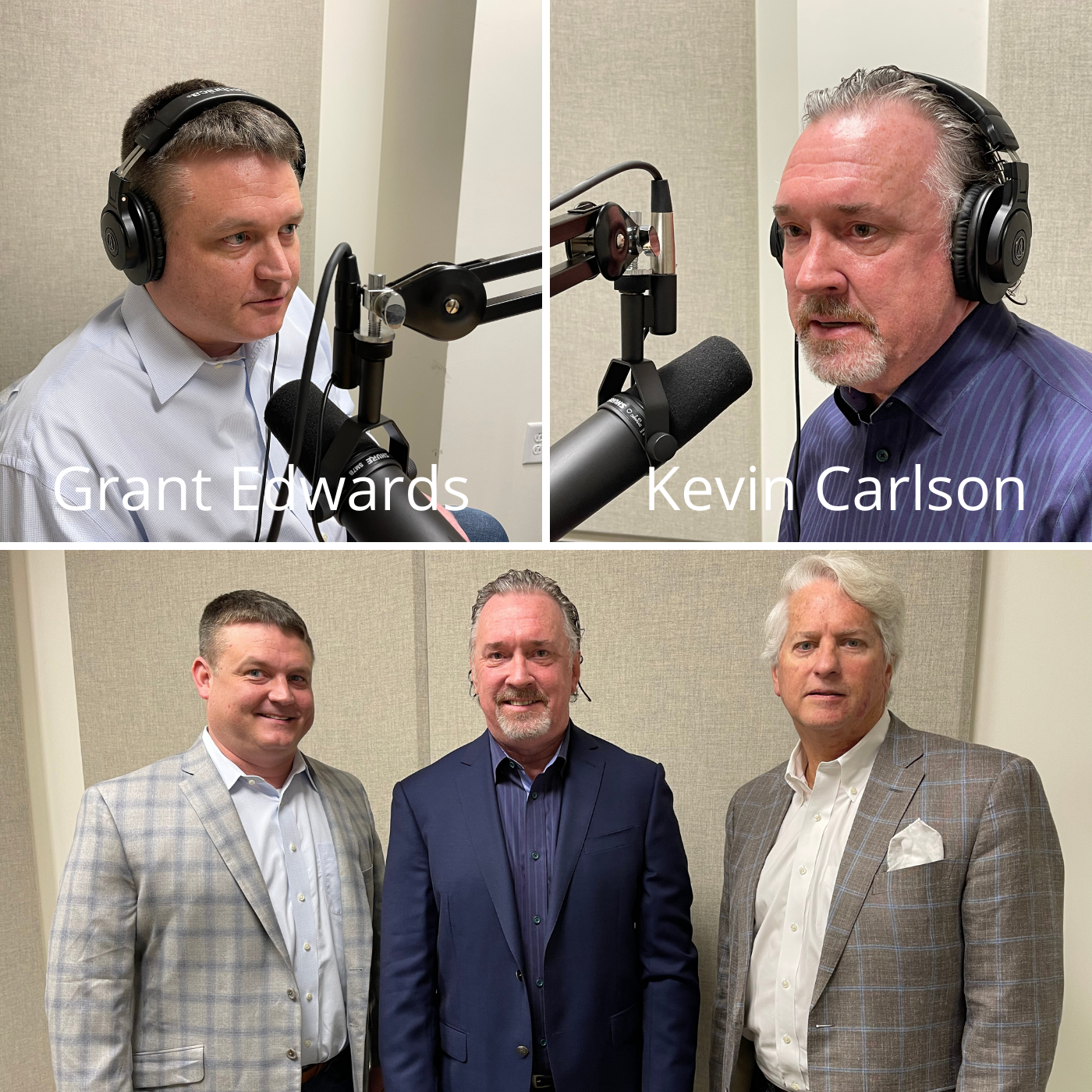
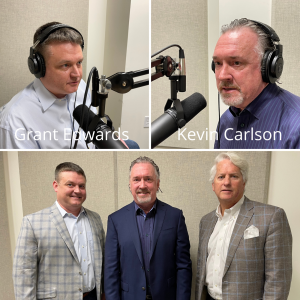
Grant Edwards and Kevin Carlson of TechCXO are more than just “interims-for-hire” filling a role. As a fractional CFO and fractional CTO, respectively, Kevin and Grant become a part of their respective clients’ teams to bring seasoned executive knowhow and collaboratively drive impactful solutions. They joined host Roger Lusby on this edition of “Business Beat,” presented by Alpharetta CPA firm Frazier & Deeter.

TechCXO

TechCXO provides companies with on demand executives. TechCXO was founded on the premise that high potential companies can greatly benefit from proven, interim executives who they otherwise may not be able to access due to cost, availability or because they do not necessarily need them full time. Our purpose is to provide the best executive talent available… on demand.

Grant Edwards, Partner, TechCXO

TechCXO
Grant Edwards, Partner, TechCXO

Grant Edwards is a hands-on, results-driven executive with expertise in finance operations, SEC reporting, corporate governance, and strategic planning. Grant has been the CFO for multiple early stage companies, many of which of had successful exits. These include an energy company that grew from inception to over $70 million in annual revenues, an entertainment and theatre company, a durable medical equipment company, a receivable factoring business and an executive travel company.

His Big 4 CPA experience includes positions with Deloitte & Touche and Arthur Andersen. He also served as Senior Director of SEC Reporting and Corporate Controller for Shinogi & Co. (formerly Sciele Pharma) where he launched all initial accounting policies and procedures, designed to shepherd the company through a period of massive growth, from $100MM to over $500MM in annual revenue. He effectively managed a team of 32 employees and a full spectrum of corporate finance functions, including general ledger, accounts payable, accounts receivable, payroll, financial reporting (internal and external) and revenue recognition.

As Vice President, Corporate Controller & Treasurer for Harbinger Group, Inc., Grant managed all finance, accounting, and treasury functions for this NYSE-listed BDC/Holding Company/Private Equity company, while contributing additional service as an active member of the Disclosure, Pension and 401K Committee.

Grant is also an adjunct professor for accounting at Georgia State University.

Kevin Carlson, Partner, TechCXO

TechCXO
Kevin Carlson, Partner, TechCXO

Kevin is a veteran technology executive with a unique combination of technology expertise and business acumen. A four-time CTO of both services and product companies, he has worked with numerous organizations across various industries in technology leadership and executive-level roles in North America and Europe. He is also a technology thought-leader, with in-depth working knowledge of current technologies such as mobile application development, AI, predictive analytics, privacy, security, and technical architecture.

Serving as fractional CTO for a number of companies, he is an expert at helping clients leverage technology effectively and manage the change inherent in the technology world. Seeing companies transform through the thoughtful application of technology solutions has been a career-long goal. Throughout his career, Kevin never lost the desire to code and prototype solutions . He believes that in order to gain a full understanding of how things work, it’s necessary to get into the details and determine how they apply to solving a business problem. Equally as rewarding as helping business strategize and plan on technology solutions, he still likes get in the trenches with software engineers and work through making a system more performant or find an elusive bug.

A founder of multiple startups, he stays active in the startup community by mentoring founders and providing technology leadership. He is currently a mentor for The Farm, Comcast’s Accelerator located in Atlanta, GA.

Among Kevin’s career highlights he is serving or has served as:

Board of Advisors, ChartSpan Medical Technologies – As an advisor to Chartspan whose flagship product is a first of it’s kind, fully automated personal healthcare record management system that operates on a mobile platform. Chartspan allows an individual to take ownership of their personal health information, manage the information for an individual or entire family and control which healthcare providers receive the information.

Vice President of Development, DataFinch Technologies – Led and managed development teams for three products, mentoring and fostering collaboration between team members in development, user experience, quality assurance, project management, and technical writing. Responsible for helping set technology strategy, working with product management to prioritize effort, and ensuring the timely delivery of quality software.

CTO/CSO, Optaros – Set technology direction and strategy for world-class digital agency focused on eCommerce for B2C and B2B. Responsible for global technical resource pool and for working with partners and clients to set eCommerce technology strategy.

CTO, Verteris – Chief Technology Officer for firm that provides software and information services to legal and financial services organizations.

CTO, Delivery Services, Viant – Responsible for technical strategy and direction for Viant in all areas of the company. Key responsibilities include business development, enterprise marketing, recruiting, service model development, and other broad ranging managerial duties within the technology community. Responsible for the management of over 500 technology staff members in 8 offices worldwide.

Founder & Managing Partner, Advanced Systems Group – Founded and managed a technology focused consulting firm that provided focused services to companies developing software either for internal use or the retail market. Flagship clients include: IBM, Peachtree Software, Equifax.

In addition, Kevin is a published writer, songwriter, blogger and speaker. When he isn’t busy helping his clients, he is active in the music industry and voting member of NARAS. Several of his original songs have been licensed for TV shows and he actively writes and records new music.

Kevin received his Bachelor of Science degree from Georgia State University; and completed executive education studies in Leadership in Professional Services Firms from the Harvard Business School.

Read more of Kevin’s insight at his blog: FractionalCTO and on Twitter @thatcarlson.

Company Website

Company LinkedIn

Grant Edwards LinkedIn

Kevin Carlson LinkedIn

Frazier & Deeter

The Alpharetta office of Frazier & Deeter is home to a thriving CPA tax practice, a growing advisory practice and an Employee Benefit Plan Services group. CPAs and advisors in the Frazier & Deeter Alpharetta office serve clients across North Georgia and around the country with services such as personal tax planning, estate planning, business tax planning, business tax compliance, state and local tax planning, financial statement reviews, financial statement audits, employee benefit plan audits, internal audit outsourcing, cyber security, data privacy, SOX and other regulatory compliance, mergers and acquisitions and more. Alpharetta CPAs serve clients ranging from business owners and executives to large corporations.

Roger Lusby, Partner in Charge of Alpharetta office, Frazier & Deeter

Roger Lusby, host of Frazier & Deeter’s “Business Beat,” is an Alpharetta CPA and Alpharetta Office Managing Partner for Frazier & Deeter. He is also a member of the Tax Department in charge of coordinating tax and accounting services for our clientele. His responsibilities include a review of a variety of tax returns with an emphasis in the individual, estate, and corporate areas. Client assistance is also provided in the areas of financial planning, executive compensation and stock option planning, estate and succession planning, international planning (FBAR, SFOP), health care, real estate, manufacturing, technology and service companies.

You can find Frazier & Deeter on social media:

LinkedIn
Facebook
Twitter

An episode archive of Frazier & Deeter’s “Business Beat” can be found here.

Tagged With: Alpharetta CPA firm, CFO, Chief Financial Officer, Chief Technology Officer, CTO, finance, Frazier Deeter, Grant Edwards, Kevin Carlson, Roger Lusby, Technology

Brooke Lively with Cathedral Capital

December 14, 2020 by Karen

Cathedral-Capital
Phoenix Business Radio
Brooke Lively with Cathedral Capital
Loading
00:00 /
RSS Feed
Share
Link
Embed

Download file

Brooke-Lively-with-Cathedral-Capital

Brooke Lively with Cathedral Capital

Cathedral-Capital-logo

Cathedral Capital provides fractional CFO and strategic business consulting to small- and mid-size firms across the country. Cathedral Capital’s team of CFO’s and Profitability Strategists help entrepreneurs turn their companies into profitable businesses.

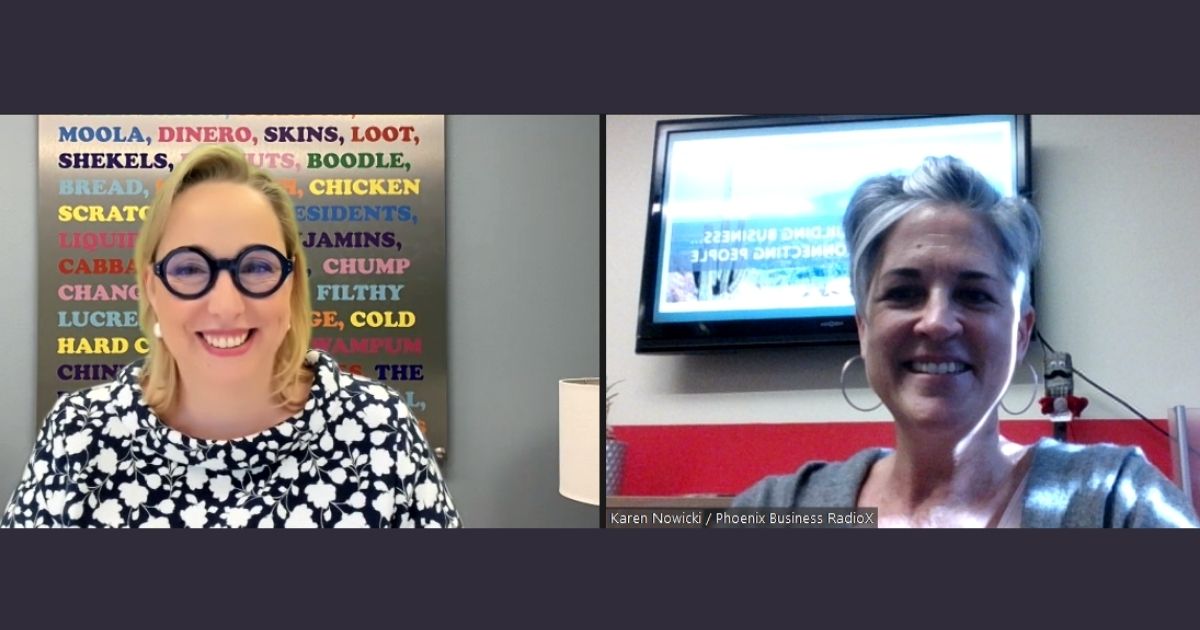
Brooke-Lively-Cathedral-CapitalBrooke Lively is the Founder and President of Cathedral Capital, a team of CFO’s and Profitability Strategists who help entrepreneurs turn their businesses into profitable companies. After earning her MBA in Investments and Corporate Finance, Brooke built a seven-figure company in under two years. As a Chartered Financial Analyst (CFA), she and her team work with Hall of Famers, INC 5000 businesses, CEO’s, and Small Business Owners.

With expertise in growth management, creative problem solving and profitability strategy, Brooke has been named 2016 – 2020 Diversity Journal ‘Women Worth Watching’ and ‘Fort Worth’s 2016 CFO’s of the Year.’ She is a highly regarded speaker and the author of several books including her 2020 International Best Seller, From Panic to Profit. Brooke has been featured in international media including CNBC, Forbes, US News and World Report, and on podcasts such as Mission Matters, The American Bar Association Modern Law Library, and The Entrepreneur Way.

Connect with Brooke on LinkedIn and follow Cathedral Capital on Facebook, Twitter and Instagram.

Tagged With: business strategy, CFO, financial strategy, profitability, small business

Steve Fisher, B2B CFO

May 14, 2020 by John Ray

North Fulton Business Radio
Steve Fisher, B2B CFO
Loading
00:00 /
RSS Feed
Share
Link
Embed

Download file

Steve Fisher B2BCFO
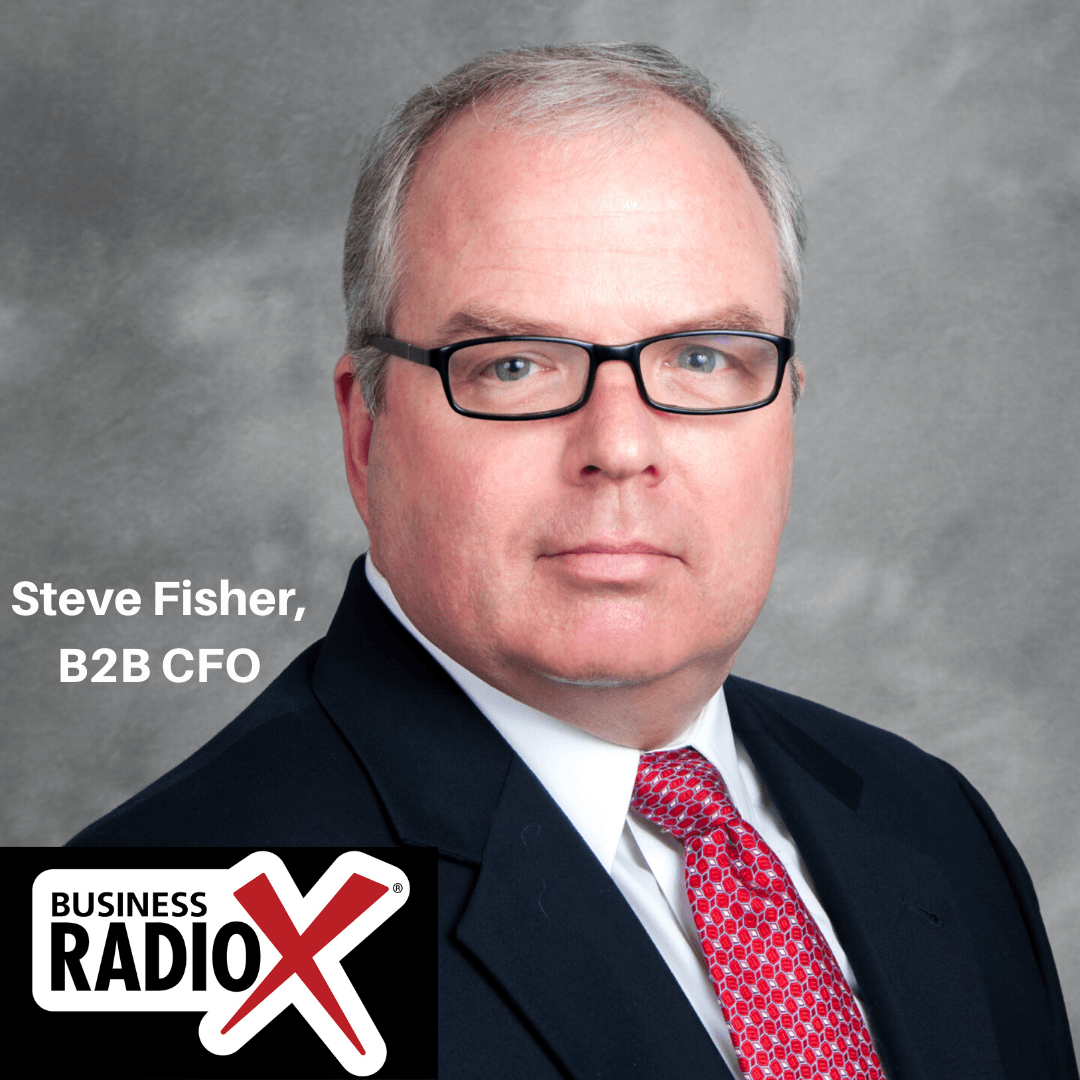
Steve Fisher, B2B CFO

Steve Fisher, B2B CFO (North Fulton Business Radio, Episode 234)

“I like to help business owners fall in love with their business again.” That’s Steve Fisher, B2B CFO, talking about how he installs systems and procedures which give business owners much more control over their business and peace of mind. The host of “North Fulton Business Radio” is John Ray and the show is produced virtually by the North Fulton studio of Business RadioX® in Alpharetta.

Steve Fisher, Partner, B2BCFO

Steve Fisher helps owners of privately-held businesses manage, grow and eventually transition from their companies. He worked for several decades as the CFO for a nationwide financial services company and guided it from start up to over $90 million in annual revenue before successfully executing the company’s sale. He now offers that expertise and skill to business owners who are ready for a more strategic approach to growing and managing their companies.

Steve has an extensive background in financial and service industries, franchise business models, business integration and managing explosive growth. Steve holds a bachelor of science in Industrial Engineering and Operations Research from Virginia Tech. He has held a Series 27, Series 7, and Series 63 license.

Find out more about Steve at his website or by email. His Cumming, GA office number is 404-931-4430.

Steve Fisher B2B CFO

North Fulton Business Radio” is produced virtually from the North Fulton studio of Business RadioX® in Alpharetta. You can find the full archive of shows by following this link. The show is available on all the major podcast apps, including Apple Podcasts, Spotify, Google, iHeart Radio, Stitcher, TuneIn, and others.

Renasant Bank has humble roots, starting in 1904 as a $100,000 bank in a Lee County, Mississippi, bakery. Since then, Renasant has grown to become one of the Southeast’s strongest financial institutions with over $13 billion in assets and more than 190 banking, lending, wealth management and financial services offices in Mississippi, Alabama, Tennessee, Georgia and Florida. All of Renasant’s success stems from each of their banker’s commitment to investing in their communities as a way of better understanding the people they serve. At Renasant Bank, they understand you because they work and live alongside you every day.

Tagged With: B2B CFO, business integration, CFO, John Ray, North Fulton Business Radio, outsourced cfo, privately-held businesses, Steve Fisher, Steven Fisher, virtual CFO

Business RadioX ® Network


Our Most Recent Episode

CONNECT WITH US

  • Email
  • Facebook
  • LinkedIn
  • Twitter
  • YouTube

Our Mission

We help local business leaders get the word out about the important work they’re doing to serve their market, their community, and their profession.

We support and celebrate business by sharing positive business stories that traditional media ignores. Some media leans left. Some media leans right. We lean business.

Sponsor a Show

Build Relationships and Grow Your Business. Click here for more details.

Partner With Us

Discover More Here

Terms and Conditions
Privacy Policy

Connect with us

Want to keep up with the latest in pro-business news across the network? Follow us on social media for the latest stories!
  • Email
  • Facebook
  • Google+
  • LinkedIn
  • Twitter
  • YouTube

Business RadioX® Headquarters
1000 Abernathy Rd. NE
Building 400, Suite L-10
Sandy Springs, GA 30328

© 2025 Business RadioX ® · Rainmaker Platform

BRXStudioCoversLA

Wait! Don’t Miss an Episode of LA Business Radio

BRXStudioCoversDENVER

Wait! Don’t Miss an Episode of Denver Business Radio

BRXStudioCoversPENSACOLA

Wait! Don’t Miss an Episode of Pensacola Business Radio

BRXStudioCoversBIRMINGHAM

Wait! Don’t Miss an Episode of Birmingham Business Radio

BRXStudioCoversTALLAHASSEE

Wait! Don’t Miss an Episode of Tallahassee Business Radio

BRXStudioCoversRALEIGH

Wait! Don’t Miss an Episode of Raleigh Business Radio

BRXStudioCoversRICHMONDNoWhite

Wait! Don’t Miss an Episode of Richmond Business Radio

BRXStudioCoversNASHVILLENoWhite

Wait! Don’t Miss an Episode of Nashville Business Radio

BRXStudioCoversDETROIT

Wait! Don’t Miss an Episode of Detroit Business Radio

BRXStudioCoversSTLOUIS

Wait! Don’t Miss an Episode of St. Louis Business Radio

BRXStudioCoversCOLUMBUS-small

Wait! Don’t Miss an Episode of Columbus Business Radio

Coachthecoach-08-08

Wait! Don’t Miss an Episode of Coach the Coach

BRXStudioCoversBAYAREA

Wait! Don’t Miss an Episode of Bay Area Business Radio

BRXStudioCoversCHICAGO

Wait! Don’t Miss an Episode of Chicago Business Radio

Wait! Don’t Miss an Episode of Atlanta Business Radio