Business RadioX ®

  • Home
  • Business RadioX ® Communities
    • Southeast
      • Alabama
        • Birmingham
      • Florida
        • Orlando
        • Pensacola
        • South Florida
        • Tampa
        • Tallahassee
      • Georgia
        • Atlanta
        • Cherokee
        • Forsyth
        • Greater Perimeter
        • Gwinnett
        • North Fulton
        • North Georgia
        • Northeast Georgia
        • Rome
        • Savannah
      • Louisiana
        • New Orleans
      • North Carolina
        • Charlotte
        • Raleigh
      • Tennessee
        • Chattanooga
        • Nashville
      • Virginia
        • Richmond
    • South Central
      • Arkansas
        • Northwest Arkansas
    • Midwest
      • Illinois
        • Chicago
      • Michigan
        • Detroit
      • Minnesota
        • Minneapolis St. Paul
      • Missouri
        • St. Louis
      • Ohio
        • Cleveland
        • Columbus
        • Dayton
    • Southwest
      • Arizona
        • Phoenix
        • Tucson
        • Valley
      • Texas
        • Austin
        • Dallas
        • Houston
    • West
      • California
        • Bay Area
        • LA
        • Pasadena
      • Colorado
        • Denver
      • Hawaii
        • Oahu
  • FAQs
  • About Us
    • Our Mission
    • Our Audience
    • Why It Works
    • What People Are Saying
    • BRX in the News
  • Resources
    • BRX Pro Tips
    • B2B Marketing: The 4Rs
    • High Velocity Selling Habits
    • Why Most B2B Media Strategies Fail
    • 9 Reasons To Sponsor A Business RadioX ® Show
  • Partner With Us
  • Veteran Business RadioX ®

Creativity and Cleanup Leading to Improved Culture E33

August 16, 2023 by Karen

PodcastShowSarahAnca
Phoenix Business Radio
Creativity and Cleanup Leading to Improved Culture E33
Loading
00:00 /
RSS Feed
Share
Link
Embed

Download file

Creativity-and-Cleanup-Leading-to-Improved-Culture

Creativity and Cleanup Leading to Improved Culture E33

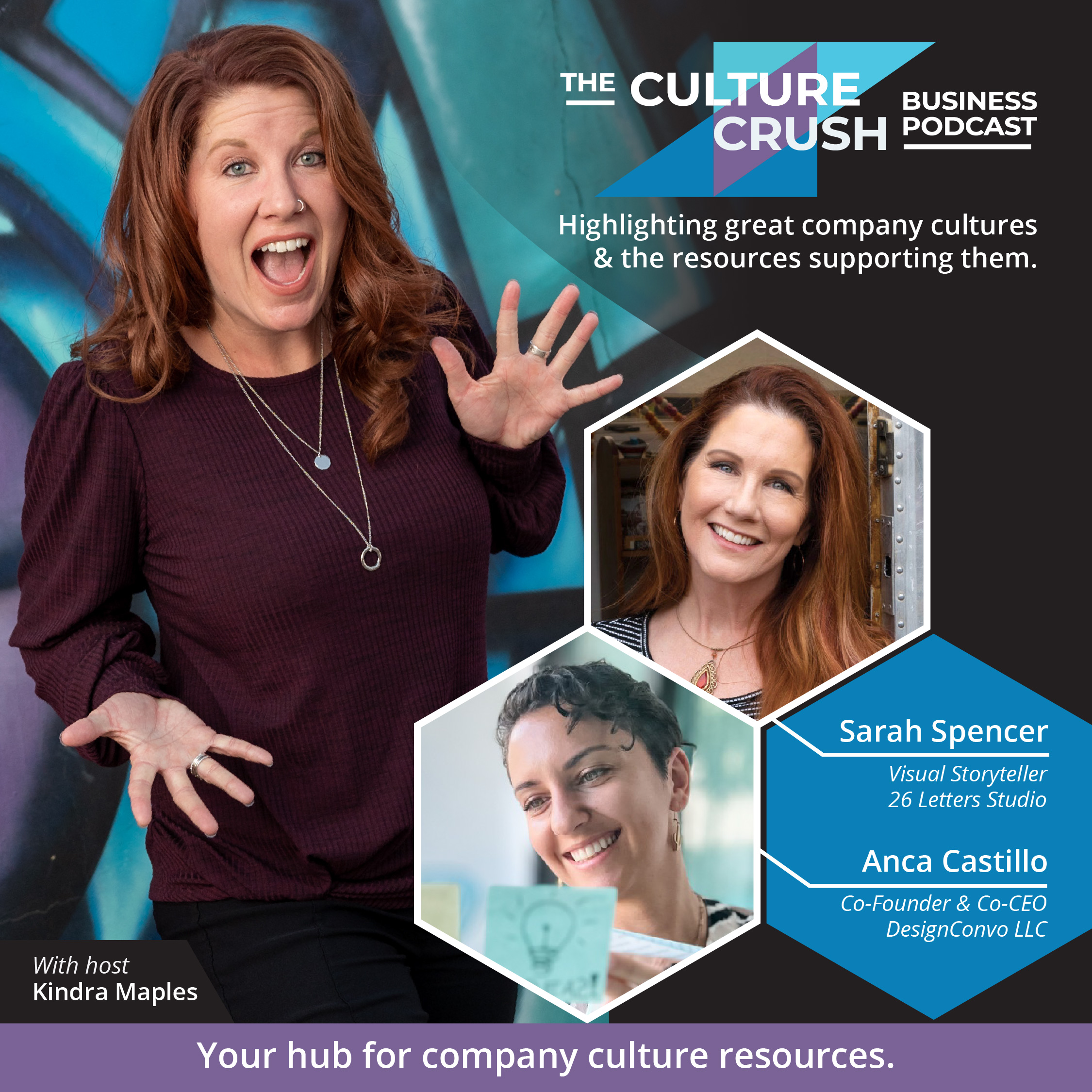
When it comes to improving company culture, there are a tremendous amount of resources out there to help companies. Finding which resources are the right fit for your company is the tricky part.

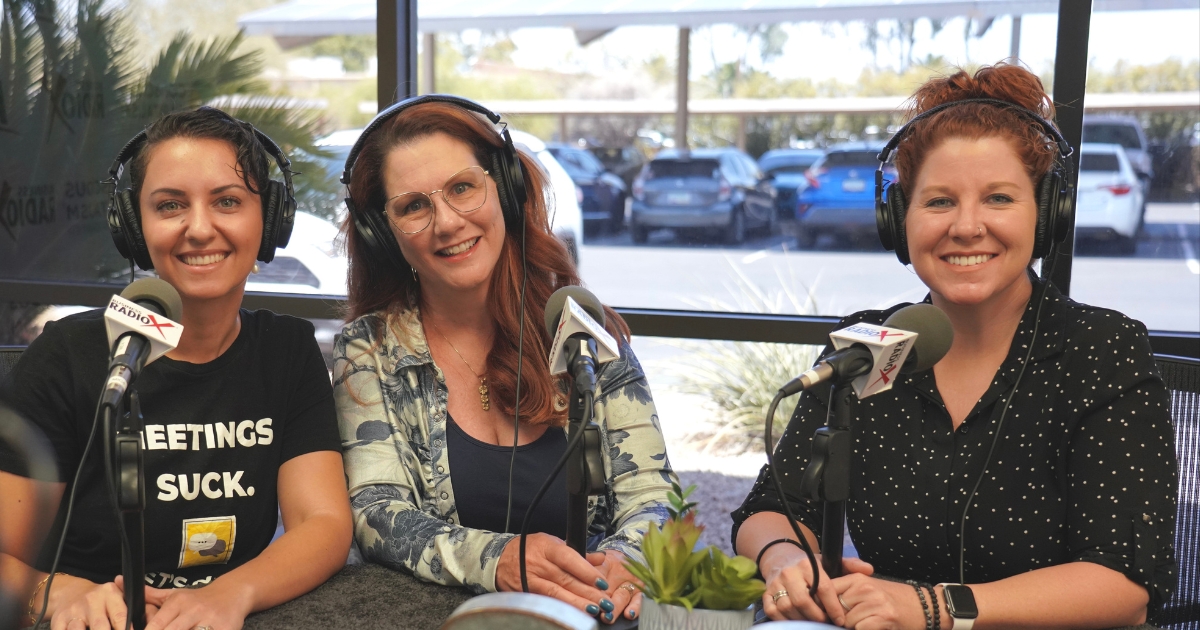
Lucky for you, we brought together two amazing ladies that offer support that can improve all companies! These resources help to bring creativity and clarity to your teams!

This conversation talked about the support and structure that both Sarah’s company and Anca’s company can help provide to others.

There is a fear of failure and these ladies are here to help build the teams so that the fear can be concurred and supported.

Investing in outside support and facilitation is one of the best things a company can do to help improve their teams and company culture. Facilitators use techniques that stimulate creative thinking and innovation- and these ladies are the pinnacle of creativity!

You should listen to this podcast if you….

  • are having trouble communicating with your team and trying to find the right resources to help.
  • would like to find a unique way to improve your meetings and sharing top highlights with the company.
  • need a little support defining the goals of the meetings and the communication taking place.
  • are ready to invest in your company to improve the culture of the people and the company as a whole.
  • if you need a little help capturing and synthesizing the details from your meetings.

Culture Crush is here to support and it starts with these two amazing women led companies! Design-Convo-Logo

Design Convo is a female-owned Human Centered Strategy and Consulting firm dedicated to empowering organizations with transformative solutions. They specialize in helping organizations navigate complex challenges and achieve sustainable growth by placing humans at the heart of their strategies.

They team of seasoned consultants brings together expertise in strategy, design thinking, organizational change, capacity building, leadership development, and digital innovation.

By combining these diverse perspectives, they create holistic solutions that blend human insights with cutting-edge technologies, unlocking new possibilities for teams and organizations.

With a deep understanding of human communication and behavior, they guide organizations in crafting strategies that resonate with their target audiences and foster meaningful connections. They believe that successful businesses are built upon strong relationships, and they work closely with teams to cultivate cultures that drive collaboration.

In addition to strategy and consulting services, they also focus on capacity building and leadership development. Through tailored training programs, coaching, and skill-building initiatives, they equip leaders and teams with the tools and knowledge they need to drive sustainable change from within.

Anca-Castillo-aCulture-CrushAnca M. Castillo, MS is as a master facilitator in multiple techniques and approaches, including Strategic Storytelling, Human-Centered Design, and Visual Facilitation, to name a few.

Originally from Romania, Anca grew up in Alaska before moving to Arizona to pursue an education in business. She spent the past 6+ years in different leadership roles at ASU before taking the leap into entrepreneurship.

Anca loves to help organizations and leaders solve wicked problems using a variety of proven tools and techniques. She is passionate about helping leaders develop the skills and capabilities they need to do their best work and helping organizations to push the boundaries of the status quo. She describes herself as a “rule breaker” and “big picture thinker”.

When not working, you can find Anca performing improv with her team, doing DIY projects, and dancing around her kitchen with her family.

Follow Design Convo on LinkedIn. 26-Letters-LOGO-5624

26 Letters Studio’s creativity is a crucial piece to the culture work organizations do in order to grow a sustainable business.

Their graphic facilitation visually guides and captures the conversations and activities that emerge during culture meetings.

This work inspires participants in the moment and the results (called artifacts) are used to further the conversation and quickly bring new hires into the fold.

Sarah-Spencer-Culture-CrushSarah Spencer is a professional visual storyteller. With experience across multiple disciplines, Sarah is valued for her ability to listen, synthesize and draw what is emerging as people meet to discuss important subjects.

The outcome is a visual representation of the meeting used for future discussions and planning and acts as an artifact of what emerged from the group.

Sarah is a published illustrator, writer, award-winning designer, inventor, and culture expert.

Follow 26 Letters on LinkedIn and Instagram.

About Culture Crush

At Culture Crush, culture isn’t just a corporate buzzword. It’s a key factor that can either boost your company or lead to its failure. 

We’re culture consultants, with a focus on leadership, appreciation, communication, processes, accessibility, mental health, diversity, inclusion, and creating a dynamic workplace.

CultaureCrushKindraBanner2

As a growing company:

Culture Crush Business is your hub for company culture resources. With deep cultural insights and years of expertise, we evaluate your company’s needs and connect you with the precise resources to cultivate a thriving culture.

We work with CEOs, founders, HR Directors, or Culture Leaders of companies or teams, who value company culture and understand its impact on their business success.With Culture Crush you’ll learn how to transform your workplace into a place of unity, efficiency, and growth. Don’t just fix your company culture – transform it with Culture Crush Business.

On this podcast:  We focus on everything surrounding businesses with good company culture. We will talk with company leaders to learn about real-life experiences, tips, and best practices for creating a healthy work environment where employees are finding joy and satisfaction in their work while also striving and growing within the company. We share the resources to help improve company culture and showcase them on the podcast with their tips and tricks for growing culture.

Thank you for our Sponsor!

There has been tremendous growth of the Culture Crush Business and the Podcast. This growth is thanks to the support from the community and now the support through our current podcast sponsor. 

Thank you Gateway Bank for supporting us as our Cultivator Podcast Sponsor!

If you would like to be part of the Culture Crush team or would like to support sponsoring the show- please reach out: info@culturecrushbusiness.com

About the Host

ABHOUTHOSTHEADSHOT

Kindra Maples  is spartan racer, past animal trainer, previous magician’s assistant, and has a weakness for Oreo cookie shakes. Her journey working with people actually started working with animals as a teenager (don’t worry we won’t go that far back for her bio).

She worked for over 15 years in the zoo industry working with animals and the public. Her passion of working with animals shifted into working with people in education, operations and leadership roles. From there her passion of leadership and helping people develop has continued to grow.

Then came the opportunity for leading  the Culture Crush Business Podcast and she jumped on it. Leadership, growth, and strong company cultures are all areas that Kindra is interested in diving into further.

Tagged With: capacity building, consulting, conversation design, Creative thinking, Culture work, design thinking, facilitation, Graphic facilitation, Graphic recording, strategic planning

Nonprofit Fundraising, with Mark Wilkison and Wes Wicker, Columns Fundraising Consulting

July 19, 2023 by John Ray

Fundraising
North Fulton Business Radio
Nonprofit Fundraising, with Mark Wilkison and Wes Wicker, Columns Fundraising Consulting
Loading
00:00 /
RSS Feed
Share
Link
Embed

Download file

Fundraising

Nonprofit Fundraising, with Mark Wilkison and Wes Wicker, Columns Fundraising Consulting (North Fulton Business Radio, Episode 682)

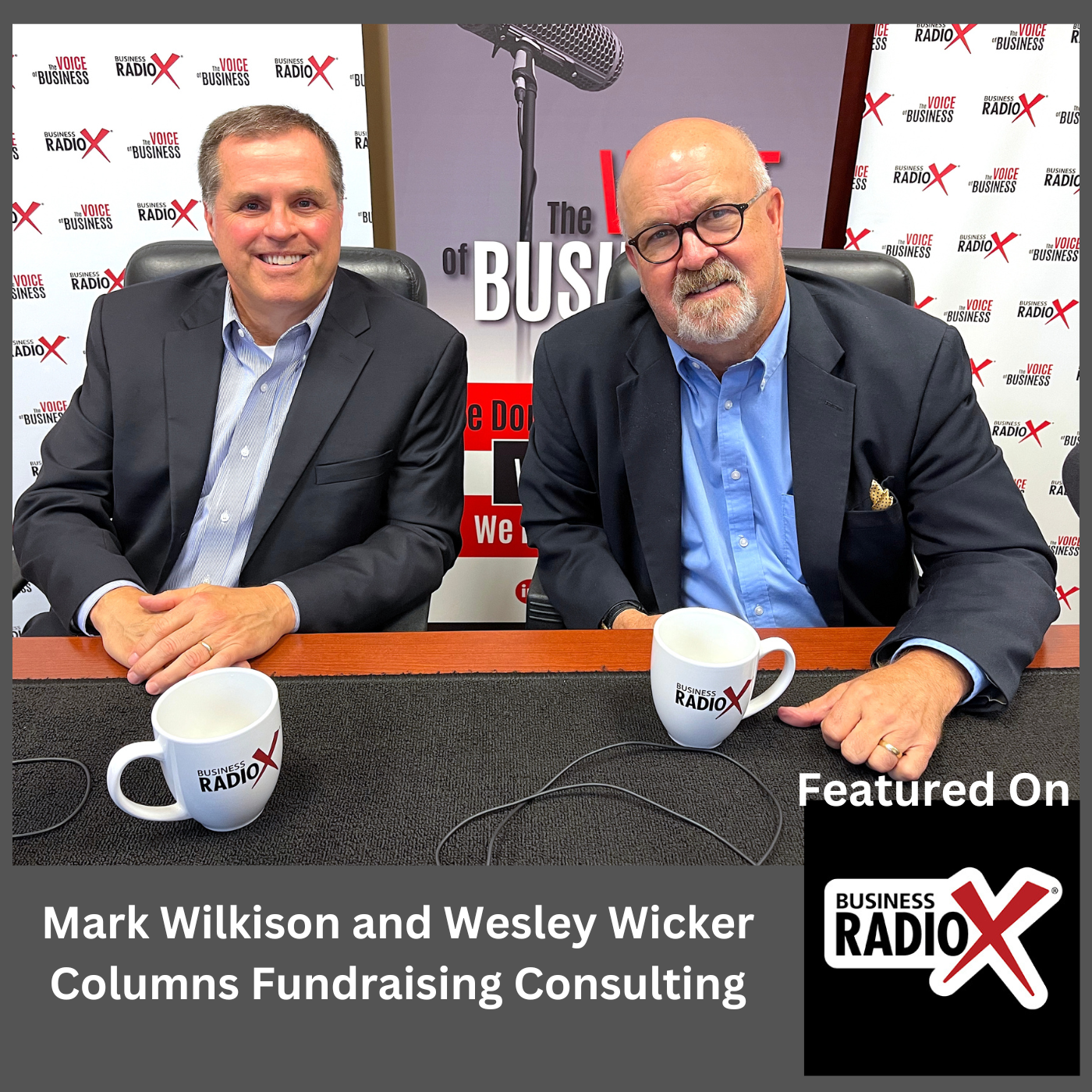
Mark Wilkison and Wes Wicker, both partners and principals at Columns Fundraising Consulting joined host John Ray to chat about nonprofits and nonprofit fundraising. They discussed the needs they see when they engage with a client, some of the common issues nonprofits face, the state of giving in the current economic climate, and much more.

North Fulton Business Radio is broadcast from the North Fulton studio of Business RadioX® inside Renasant Bank in Alpharetta.

Columns Fundraising Consulting

Columns is a strategic business and organizational development firm comprised of seasoned executive level professionals with first-hand experience in non-profit organizations and private sector businesses. Their expertise provides the ability to quickly assess clients’ challenges and opportunities, develop and execute customized solutions, and deliver exceptional results.

With a specialized focus on healthcare, higher-education, health, and human services, independent schools, membership-based and fraternal organizations, community foundations, and associations, they design and activate strategic plans, including capital campaigns, sustainable major giving programs, and feasibility studies across a wide-range of clients.

Columns’ integrated services include c-suite executive level search, interim advancement staffing, non-profit merger facilitation, brand positioning, marketing and communication plans, public-private partnerships, nonprofit fundraising, and grant writing as well as leadership coaching and training for boards, executives, and middle management staff, including front line sales teams, development officers and volunteers.

Unlike other firms where senior executives focus on acquiring clients but are not engaged in providing day-to-day service, Columns clients always have senior executives intimately engaged in plan execution. They’ve walked in your shoes, so they have the knowledge and experience to accelerate and drive completion of your business objectives by providing the leadership and resources required to achieve your goals.

Your mission is to change the lives of those you serve. Their mission is to support you in that important work.

Website | LinkedIn | Facebook

Mark Wilkison, Principal and Partner, Columns Fundraising Consulting

Mark Wilkison, Principal and Partner, Columns Fundraising Consulting

Mark has extensive expertise in major gifts, planned giving, feasibility studies, execution of capital campaigns, strategic planning and visioning for organizations, and executive search.

A graduate of the University of Vermont, Mark has more than 35 years of consulting and fundraising experience, including serving as Vice President – Development for Children’s Healthcare of Atlanta, Chief Development Officer at Piedmont Hospital in Atlanta, Chief Development Officer for the International Life Sciences Institute, and as Executive Vice President of Phi Gamma Delta Educational Foundation.  Mark’s additional Phi Gam work included serving as a Field Secretary for the Fraternity and as Director of Graduate Services.

He has served as President of the Atlanta Peachtree Rotary Club, and has also been involved with Association for Healthcare Philanthropy (AHP), Georgia Education Advancement Council (GEAC), Georgia Association of Development Professionals (GADP), and the Partnership for Philanthropic Planning (PPP).

He enjoys spending time with his wife, Shari, and his two grown children, and playing an occasional round of golf.

LinkedIn

Wesley K. Wicker, Ed.D., Principal and Partner, Columns Fundraising Consulting

Wesley K. Wicker, Ed.D., Principal and Partner, Columns Fundraising Consulting

Wes has more than thirty years of experience in higher education and development, and nine years as a non-profit consultant. Wicker began his career in Admissions, and then in Alumni Affairs at Georgia Southwestern State University. He also worked as a Research Assistant at the Institute of Higher Education at the University of Georgia, and as Vice President of Advancement at Kennesaw State University, and concurrently as Executive Director of the KSU Foundation. He also served as Vice President of Major Gifts for United Way of Metro Atlanta and held a similar position with United Way of Central Indiana (Indianapolis).

Wes has a B.A. in History from the University of Alabama, an M.Ed. in History from Georgia Southwestern State University and an Ed.D. from the University of Georgia in Higher Education Administration.

Wicker has served on the boards of the Fulton County Schools Foundation, the Georgia Planned Giving Council, United Community Bank of Marietta, and the Georgia Education Advancement Conference. He served as the Senior Director and later as President of the Theta Chi National Fraternity Foundation. He currently serves as President of the Norwich Housing Corporation. Wicker is a recipient of the Distinguished Service Award, the highest honor bestowed on an alumnus of Theta Chi. Wes and his wife, Kay, have two adult daughters, and live in Big Canoe, GA.

LinkedIn

Questions and Topics in this Interview:

  • Tell us a little bit about your company?
  • Given the economy, what is the state of philanthropy and nonprofit fundraising in the United States right now?
  • How does charitable giving in Georgia compare to charitable giving across the country?
  • With government playing a larger role in funding social programs and societal issues, why should people continue to support non-profit organizations?
  • What are the common issues facing non-profit organizations today?
  • What are the most advantageous ways to make a charitable contribution?

North Fulton Business Radio is hosted by John Ray and broadcast and produced from the North Fulton studio of Business RadioX® inside Renasant Bank in Alpharetta. You can find the full archive of shows by following this link. The show is available on all the major podcast apps, including Apple Podcasts, Spotify, Google, Amazon, iHeart Radio, Stitcher, TuneIn, and others.

RenasantBank


Renasant Bank has humble roots, starting in 1904 as a $100,000 bank in a Lee County, Mississippi, bakery. Since then, Renasant has become one of the Southeast’s strongest financial institutions with over $13 billion in assets and more than 190 banking, lending, wealth management, and financial services offices in Mississippi, Alabama, Tennessee, Georgia, and Florida. All of Renasant’s success stems from each of their banker’s commitment to investing in their communities as a way of better understanding the people they serve. At Renasant Bank, they understand you because they work and live alongside you every day.

Since 2000, Office Angels® has been restoring joy to the life of small business owners, enabling them to focus on what they do best. At the same time, we honor and support at-home experts who wish to continue working on an as-needed basis. Not a temp firm or a placement service, Office Angels matches a business owner’s support needs with Angels who have the talent and experience necessary to handle work that is essential to creating and maintaining a successful small business. Need help with administrative tasks, bookkeeping, marketing, presentations, workshops, speaking engagements, and more? Visit us at https://officeangels.us/.

Tagged With: capital campaigns, Columns Fundraising Consulting, consulting, John Ray, Mark Wilkison, nonprofit fundraising, North Fulton Business Radio, Office Angels, planned giving, renasant bank, Wesley Wicker

Using Business Process Improvement to Empower Employees, with Yuquan Holloway, Holloway Consulting Group, LLC

June 13, 2023 by John Ray

Using Business Process Improvement to Empower Employees, with Yuquan Holloway, Holloway Consulting Group, LLC
North Fulton Business Radio
Using Business Process Improvement to Empower Employees, with Yuquan Holloway, Holloway Consulting Group, LLC
Loading
00:00 /
RSS Feed
Share
Link
Embed

Download file

Using Business Process Improvement to Empower Employees, with Yuquan Holloway, Holloway Consulting Group, LLC

Using Business Process Improvement to Empower Employees, with Yuquan Holloway, Holloway Consulting Group, LLC (North Fulton Business Radio, Episode 672)

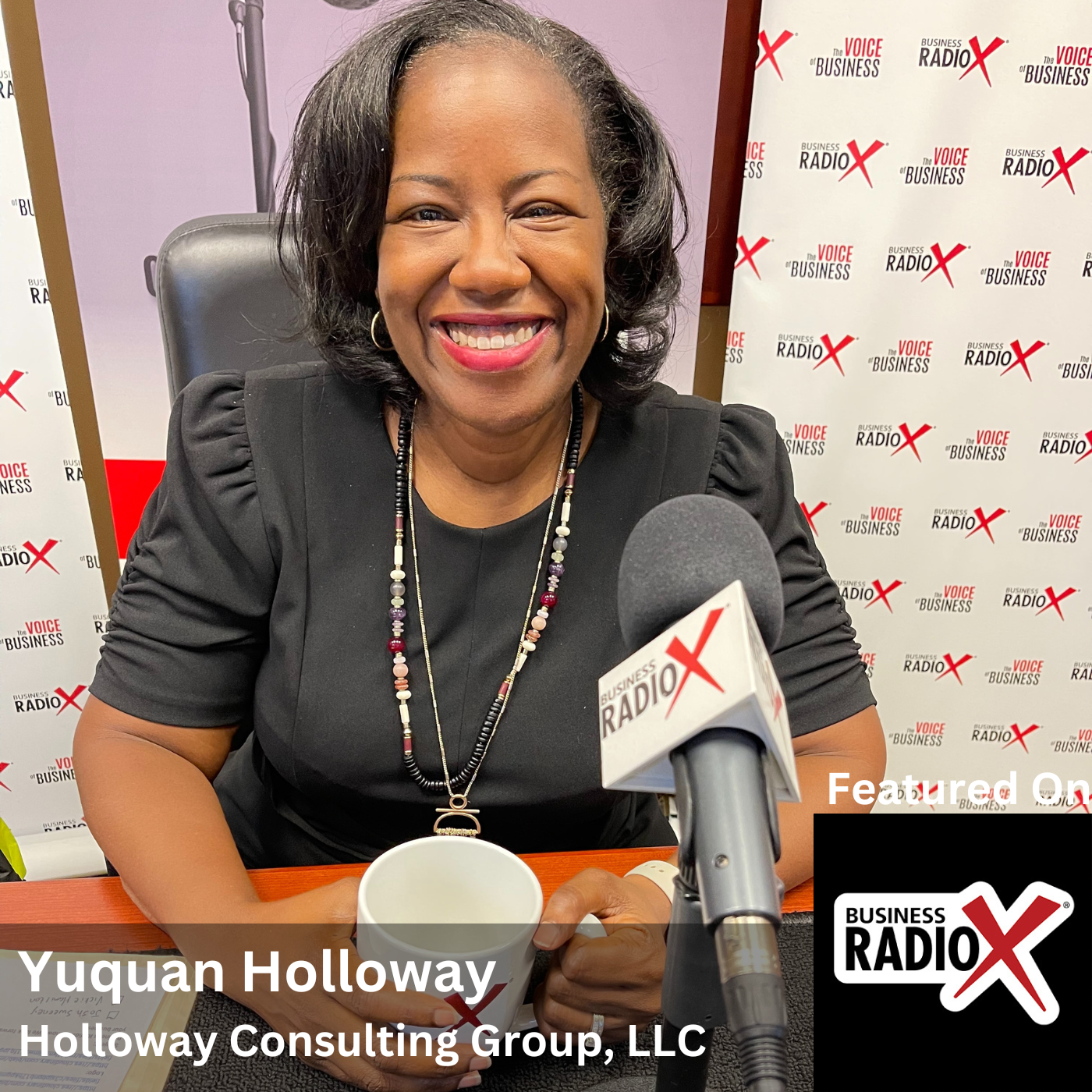
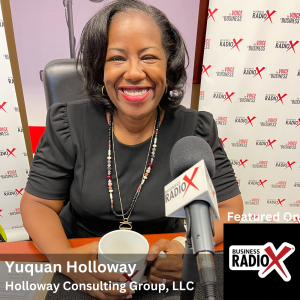
Yuquan Holloway, Founder and Principal Consultant at Holloway Consulting Group, was the guest on this edition of North Fulton Business Radio. She shared her career journey with host John Ray, along with the influence her corporate career has had on her consulting practice, demystifying project management, upskilling and empowering team members, quantifying results of business process improvement, and much more.

North Fulton Business Radio is broadcast from the North Fulton studio of Business RadioX® inside Renasant Bank in Alpharetta.

Holloway Consulting Group, LLC

At Holloway Consulting, they focus on helping corporate technology teams set goals, create plans, and solve complex problems.

With well over 20 years of experience leading projects and programs for Fortune 100 organizations, they are passionate about helping businesses achieve their strategic goals.

Their team of experts leverages proven methodologies like Lean Six Sigma and Business Process Re-engineering to assess challenges and provide sound solutions and improvements.

Website| LinkedIn | Facebook

Yuquan Holloway, Principal Consultant, Holloway Consulting Group, LLC

Yuquan Holloway, Principal Consultant, Holloway Consulting Group, LLC

Yuquan Holloway is a leader in the fields of business and IT. She is the Principal Consultant of Holloway Consulting Group, a consulting practice that focuses on helping corporate teams deliver IT and transformation projects, resolve systemic process issues, and train and coach associates on project management and Lean Six Sigma principals.

She graduated from Georgia Institute of Technology with a Bachelor of Civil Engineering and holds an MBA from Georgia State University. With over 20 years of experience in leading large cross-functional initiatives, Yuquan has a track record of driving successful change.

Through her work, she strives to demystify project management, create a culture of standard work and repeatable processes, stabilize and simplify core applications, and reduce critical incidents.

LinkedIn

Questions and Topics in this Interview:

  • History in Corporate America
  • Opportunity to Leave
  • Mission – Demystify Project Management and Problem Solving
  • Upskill associates by teaching them how to problem-solve
  • Pair training with coaching for long-lasting impact
  • Her online course
  • What skills does it take to be a solid project manager

North Fulton Business Radio is hosted by John Ray and broadcast and produced from the North Fulton studio of Business RadioX® inside Renasant Bank in Alpharetta. You can find the full archive of shows by following this link. The show is available on all the major podcast apps, including Apple Podcasts, Spotify, Google, Amazon, iHeart Radio, Stitcher, TuneIn, and others.

RenasantBank


Renasant Bank has humble roots, starting in 1904 as a $100,000 bank in a Lee County, Mississippi, bakery. Since then, Renasant has become one of the Southeast’s strongest financial institutions with over $13 billion in assets and more than 190 banking, lending, wealth management, and financial services offices in Mississippi, Alabama, Tennessee, Georgia, and Florida. All of Renasant’s success stems from each of their banker’s commitment to investing in their communities as a way of better understanding the people they serve. At Renasant Bank, they understand you because they work and live alongside you every day.

Since 2000, Office Angels® has been restoring joy to the life of small business owners, enabling them to focus on what they do best. At the same time, we honor and support at-home experts who wish to continue working on an as-needed basis. Not a temp firm or a placement service, Office Angels matches a business owner’s support needs with Angels who have the talent and experience necessary to handle work that is essential to creating and maintaining a successful small business. Need help with administrative tasks, bookkeeping, marketing, presentations, workshops, speaking engagements, and more? Visit us at https://officeangels.us/.

Tagged With: business process, business process improvement, Coaching, consulting, Holloway Consulting Group, LLC, Office Angels, problem solving, project management, Project Manager, renasant bank, training, Upskilling, Yuquan Holloway

LIVE from the GNFCC 2022 Women in Leadership Summit: Dawn Stargell Moore, Moore 2 Life Consultants

November 16, 2022 by John Ray

LIVE from the GNFCC 2022 Women in Leadership Summit: Dawn Stargell Moore, Moore 2 Life Consultants
North Fulton Business Radio
LIVE from the GNFCC 2022 Women in Leadership Summit: Dawn Stargell Moore, Moore 2 Life Consultants
Loading
00:00 /
RSS Feed
Share
Link
Embed

Download file

LIVE from the GNFCC 2022 Women in Leadership Summit: Dawn Stargell Moore, Moore 2 Life Consultants

LIVE from the GNFCC 2022 Women in Leadership Summit: Dawn Stargell Moore, Moore 2 Life Consultants (North Fulton Business Radio, Episode 573)

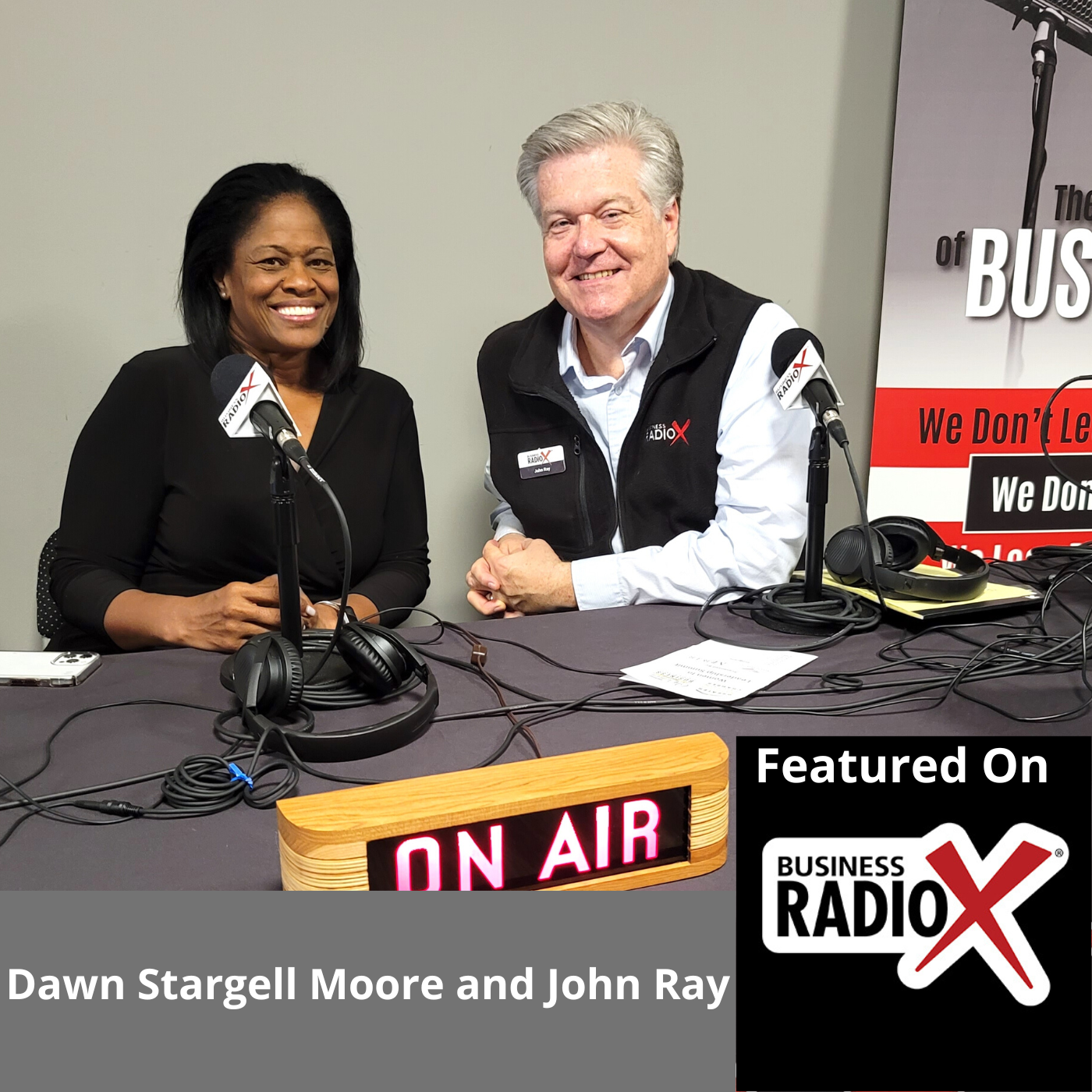
Dawn Stargell Moore with Moore 2 Life Consultants joined host John Ray LIVE from the GNFCC 2022 Women in Leadership Summit. They talked about Dawn’s work at Moore 2 Life Consultants, purpose, GNFCC’s Women INfluencing Business Committee, her workshop at the Women in Leadership Summit, and much more.

This show was originally broadcast live from the GNFCC 2022 Women in Leadership Summit held at  The Commons at Phase in Alpharetta, Georgia.

North Fulton Business Radio is produced and broadcast by the North Fulton studio of Business RadioX® inside Renasant Bank in Alpharetta.

Dawn Stargell Moore, Founder & CEO, Moore 2 Life Consultants

Dawn Stargell Moore, Founder & CEO, Moore 2 Life Consultants

Dawn Stargell Moore is the Founder and CEO of Moore 2 Life Consultants, LLC and has over two decades of strategic leadership experience in leading customer sales, service and educational fields. It was as a working professional that she completed her Bachelor of Science in Management, Master of Business Administration, both from Shorter University and most recently her Master Certificate in Big Data Analytics from Keller Graduate School of Management and Diversity, Equity and Inclusion Certificate from the University of South Florida.

Dawn enjoys making a difference in the lives of others and volunteers her time with Women in Technology, lending her knowledge and guidance to teens and young adults pursuing STEAM career paths.

Dawn currently serves as the Chairman of Board of Directors for the 7 Cords Foundation and Paradigm 360 Foundation Boards in additional to Executive Leadership Roles for Computer Information Systems, Business and Management Advisory Boards of institutions within the Technical College System of Georgia.

She is also an active member the Education, Economic Development and Diversity and Inclusion Committees with the Chambers of Commerce.

Website | Facebook | Instagram | Twitter

GNFCC 2022 Women in Leadership Summit, presented by the Women INfluencing Business Committee

The 2022 Women in Leadership Summit, organized by the Women INfluencing Business Committee of the Greater North Fulton Chamber of Commerce, was held on November 2, 2022, at the Commons at Phase in Alpharetta, Georgia.

Powered by the Greater North Fulton Chamber of Commerce (GNFCC), the Women INfluencing Business Committee strives to engage female leaders and enhance the standing of professional women within the community. Its annual awards program recognizes women with exceptional vision who have implemented innovative ideas in both the workplace and community and who inspire others.

Website

Questions and Topics in the Interview

  • Moore 2 Life Consultants
  • Purpose
  • Women INfluencing Business Committee
  • Women in Leadership Summit

North Fulton Business Radio is hosted by John Ray and broadcast and produced from the North Fulton studio of Business RadioX® inside Renasant Bank in Alpharetta. You can find the full archive of shows by following this link. The show is available on all the major podcast apps, including Apple Podcasts, Spotify, Google, Amazon, iHeart Radio, Stitcher, TuneIn, and others.

RenasantBank


Renasant Bank has humble roots, starting in 1904 as a $100,000 bank in a Lee County, Mississippi, bakery. Since then, Renasant has grown to become one of the Southeast’s strongest financial institutions with over $13 billion in assets and more than 190 banking, lending, wealth management and financial services offices in Mississippi, Alabama, Tennessee, Georgia and Florida. All of Renasant’s success stems from each of their banker’s commitment to investing in their communities as a way of better understanding the people they serve. At Renasant Bank, they understand you because they work and live alongside you every day.

Since 2000, Office Angels® has been restoring joy to the life of small business owners, enabling them to focus on what they do best. At the same time, we honor and support at-home experts who wish to continue working on an as-needed basis. Not a temp firm or a placement service, Office Angels matches a business owner’s support needs with Angels who have the talent and experience necessary to handle work that is essential to creating and maintaining a successful small business. Need help with administrative tasks, bookkeeping, marketing, presentations, workshops, speaking engagements, and more? Visit us at https://officeangels.us/.

Tagged With: consulting, Dawn Stargell Moore, executive coaching, GNFCC, Moore 2 Life Consultants, North Fulton Business Radio, Office Angels, Phase Commons, purpose, renasant bank, Women in Leadership, Women In Leadership Summit 2022, Women Influencing Business

Brian Slack, Vistage International

November 9, 2022 by John Ray

Brian Slack
North Fulton Business Radio
Brian Slack, Vistage International
Loading
00:00 /
RSS Feed
Share
Link
Embed

Download file

Brian Slack

Brian Slack, Vistage International (North Fulton Business Radio, Episode 561)

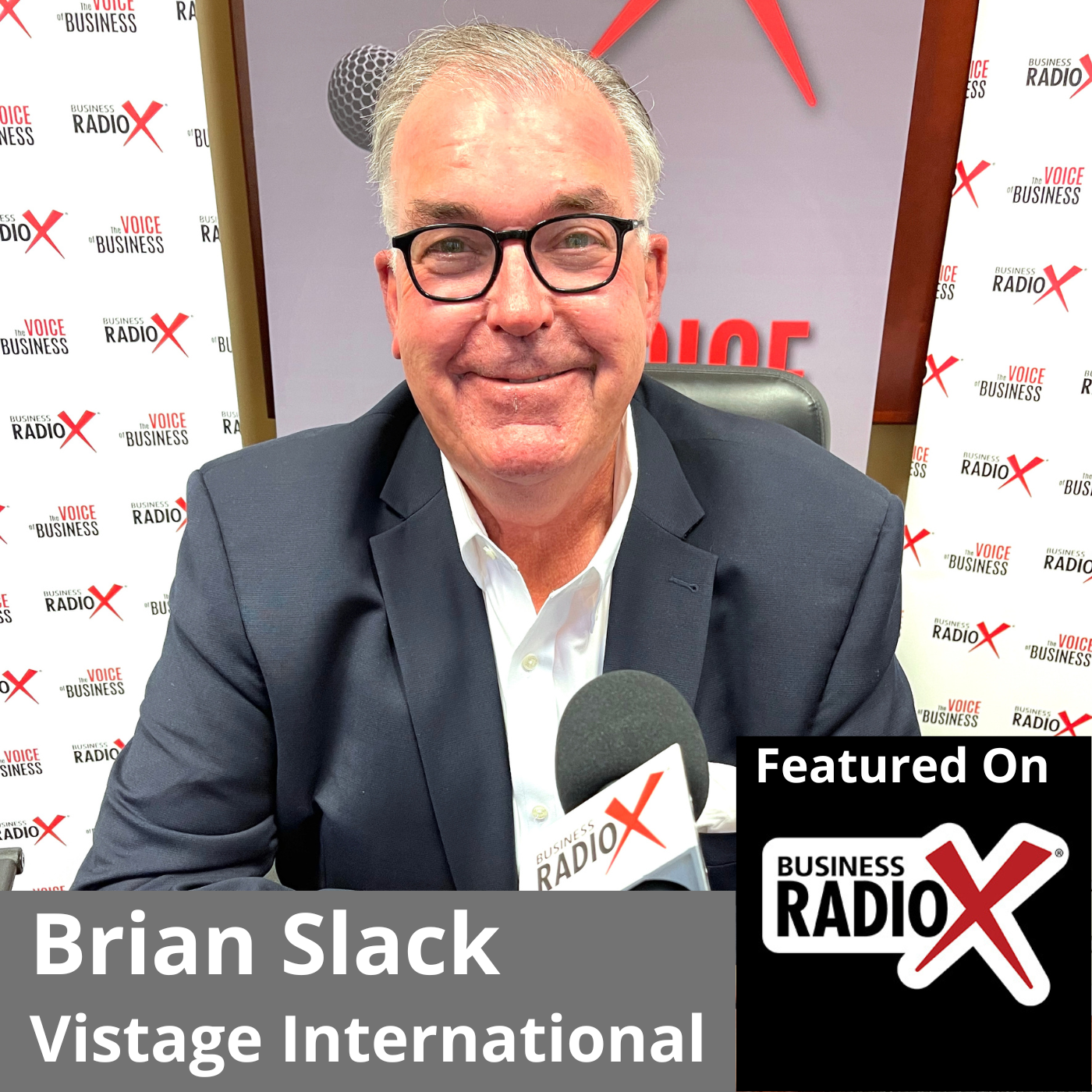
On this edition of North Fulton Business Radio, Vistage International Chair Brian Slack joined host John Ray to discuss the CEO mentoring groups he leads. Brian discussed the value CEOs find in surrounding themselves with like-minded peers, his own journey as a CEO, success stories, and much more.

North Fulton Business Radio is produced and broadcast by the North Fulton studio of Business RadioX® inside Renasant Bank in Alpharetta.

Vistage International

Vistage is the world’s largest CEO coaching and peer advisory organization for small and midsize business leaders. We offer the most effective approach to achieve better results, grow your company faster and maximize your impact as a leader.

For more than 65 years, Vistage has helped CEOs, business owners and key executives reach new levels of success.

Your Vistage group gives you the perspective you need to make better decisions.

A Vistage peer advisory group is made up of 12-16 other CEOs or local business owners. It’s like having a confidential, private advisory board to troubleshoot problems, vet ideas, and identify blind spots.

The local business leaders who make up the peer advisory group are always from non-competing industries and have no agenda but to help each other succeed. Vistage offers different programs for CEOs, small business owners, key executives, and emerging leaders.

When you’re a Vistage member you’re part of a group of other CEOs, business owners or key executives who are committed to helping each other make better decisions, get better results and become better leaders.

After coaching 100,000+ CEOs for over 65 years, Vistage has identified a proven approach for making better decisions and getting better results for your business.

Company website | LinkedIn | Facebook | Twitter | Instagram

Brian Slack, CEO Peer Advisory Board Chair, Vistage International

Brian Slack, CEO Peer Advisory Board Chair, Vistage International

Brian Slack is an accomplished business executive with a consistent record of meeting and exceeding goals. Specific areas of focus, general corporate management, Sales and Marketing Management, Sales Development, and National and Key Account Expansion. Strategic and analytical thinker; able to plan and implement complex programs to penetrate new markets and customer types for increased revenues; demonstrated leader of world-class performing teams; results driven for success in highly competitive markets.

He is retired from Pro-Link, a national full-service janitorial supply, marketing, distribution, and buying organization. Pro-Link has more than 100 member companies and over 120 distribution points throughout the United States.

LinkedIn

Questions and Topics in the Interview

  • What is Vistage?
  • What types of companies and people are involved with Vistage?
  • What are the goals of Vistage Groups? How do Vistage Groups Work?
  • Tell us about your qualifications
  • Why do you believe in the concept the way you do?

North Fulton Business Radio is hosted by John Ray and broadcast and produced from the North Fulton studio of Business RadioX® inside Renasant Bank in Alpharetta. You can find the full archive of shows by following this link. The show is available on all the major podcast apps, including Apple Podcasts, Spotify, Google, Amazon, iHeart Radio, Stitcher, TuneIn, and others.

RenasantBank


Renasant Bank has humble roots, starting in 1904 as a $100,000 bank in a Lee County, Mississippi, bakery. Since then, Renasant has grown to become one of the Southeast’s strongest financial institutions with over $13 billion in assets and more than 190 banking, lending, wealth management and financial services offices in Mississippi, Alabama, Tennessee, Georgia and Florida. All of Renasant’s success stems from each of their banker’s commitment to investing in their communities as a way of better understanding the people they serve. At Renasant Bank, they understand you because they work and live alongside you every day.


Special thanks to A&S Culinary Concepts for their support of this edition of North Fulton Business Radio. A&S Culinary Concepts, based in Johns Creek, is an award-winning culinary studio, celebrated for corporate catering, corporate team building, Big Green Egg Boot Camps, and private group events. They also provide oven-ready, cooked-from-scratch meals to go they call “Let Us Cook for You.” To see their menus and events, go to their website or call 678-336-9196.

Tagged With: A&S Culinary Concepts, Brian Slack, consulting, North Fulton Business Radio, renasant bank, Vistage International

Christina Rebel-Otterbach, CRO Management Consulting LLC

July 18, 2022 by John Ray

Christina Rebel-Otterbach
North Fulton Business Radio
Christina Rebel-Otterbach, CRO Management Consulting LLC
Loading
00:00 /
RSS Feed
Share
Link
Embed

Download file

Christina Rebel-Otterbach

Christina Rebel-Otterbach, CRO Management Consulting LLC (North Fulton Business Radio, Episode 471)

Christina Rebel-Otterbach, President of CRO Management Consulting, helps businesses diagnose the issues they’re facing and find solutions. She discussed with host John Ray how her tools help a business owner see what is really going on, analyzing the data to back up those issues, cultural issues for foreign business owners, considerations when doing business in Germany, how she approaches exit planning, and much more.

North Fulton Business Radio is broadcast from the North Fulton studio of Business RadioX® inside Renasant Bank in Alpharetta.

Christine Rebel-Otterbach, Founder and President, CRO Management Consulting LLC

Christine Rebel-Otterbach, Founder and President, CRO Management Consulting LLC

Christina Rebel-Otterbach started CRO Management Consulting LLC in 2011 after a rewarding career contributing to growth initiatives and global expansion as an executive management team member of internationally operating and expanding companies such as Honeywell, Gencorp, KACO (European automotive manufacturer & supplier). She is now offering her expertise and skills through management consulting, and transformational leadership. Value builder and exit planning services to companies that are seeking to resolve their pain points and to business leaders and owners to increase their value. Recent assignments include acquisitions, integration management, and country leadership for Pharmalex US, LLC; Finance support of JDC-Consulting Group (IT-consulting organization); Finance and Operations transparency services for online consumer product organization (Picture Keeper) and Transformational and Financial leadership for an automotive manufacturer and supplier in the South East of the US (Mekra Lang NA).

Christina holds an MBA majoring in economics and IT management from the Cooperative State University Mosbach/Germany and acquired the CEPA™ and CVB™ certifications since 2017.

Her clients will clearly define and formulate their goals, assess their strong points, and gain awareness of areas to improve, strategize to develop and implement solutions/execution plans, and she closely accompanies the process until the project is finished.

Her fundamental belief PRIORITIZE, FOCUS & SUCCEED allows her to see through to the core of challenges and issues to be addressed. She approaches projects structured and analytically, can identify an organization’s potential and shortcomings, and uses her expertise working with domestically and globally operating and expanding companies to design and implement solutions that fit the client’s organization’s culture and personality, and financial resources. Qualities her clients associate with her are Adaptability, Competence, Collaboration, Adapt Problem Solver, Humbleness, and Leadership.

Christina Rebel-Otterbach grew up in Germany, and lived and worked in Europe and the US. Together with her family, she was located 10+ years on the West Coast of the US and relocated to the Greater Atlanta Area in 2013. She loves spending time outdoors while running, hiking, biking, skiing, and exploring topics yet unknown to them. Relaxation comes to her through practicing yoga, reading, gardening, and spending time with family and friends, cooking. Traveling the world to discover and explore new places is one of her favorite past times.

Giving back to the community is important to her – the goal is to give 10% of her income to charitable organizations. She also mentors young women in business and through a mentoring program at her local church and is deeply engaged in supporting the German American community in Atlanta and the South East of the US

Website | LinkedIn

Questions and Topics in this Interview:

  • What does CRO Management Consulting stand for?
  • What made you start your own company?
  • Which pain points do you resolve for your clients?
  • How do you typically approach their challenges?
  • Please share some key advice you generally give your clients
  • What makes you a suitable support for your clients?
  • Every business wants to optimize profit, how does this align with your focus on value?
  • What makes a successful client engagement?

North Fulton Business Radio is hosted by John Ray and broadcast and produced from the North Fulton studio of Business RadioX® inside Renasant Bank in Alpharetta. You can find the full archive of shows by following this link. The show is available on all the major podcast apps, including Apple Podcasts, Spotify, Google, Amazon, iHeart Radio, Stitcher, TuneIn, and others.

RenasantBank


Renasant Bank has humble roots, starting in 1904 as a $100,000 bank in a Lee County, Mississippi, bakery. Since then, Renasant has grown to become one of the Southeast’s strongest financial institutions with over $13 billion in assets and more than 190 banking, lending, wealth management and financial services offices in Mississippi, Alabama, Tennessee, Georgia and Florida. All of Renasant’s success stems from each of their banker’s commitment to investing in their communities as a way of better understanding the people they serve. At Renasant Bank, they understand you because they work and live alongside you every day.


Special thanks to A&S Culinary Concepts for their support of this edition of North Fulton Business Radio. A&S Culinary Concepts, based in Johns Creek, is an award-winning culinary studio, celebrated for corporate catering, corporate team building, Big Green Egg Boot Camps, and private group events. They also provide oven-ready, cooked from scratch meals to go they call “Let Us Cook for You.” To see their menus and events, go to their website or call 678-336-9196.

Tagged With: A&S Culinary Concepts, Christina Rebel-Otterbach, consulting, CRO Management Consulting, doing business in Germany, North Fulton Business Radio, renasant bank

Decision Vision Episode 152: Should I Become a Consultant or Freelancer? – An Interview with Ben Cagle, Cagle Consulting Partners

January 20, 2022 by John Ray

Cagle Consulting Partners
Decision Vision
Decision Vision Episode 152: Should I Become a Consultant or Freelancer? - An Interview with Ben Cagle, Cagle Consulting Partners
Loading
00:00 /
RSS Feed
Share
Link
Embed

Download file

Cagle Consulting Partners

Decision Vision Episode 152:  Should I Become a Consultant or Freelancer? – An Interview with Ben Cagle, Cagle Consulting Partners

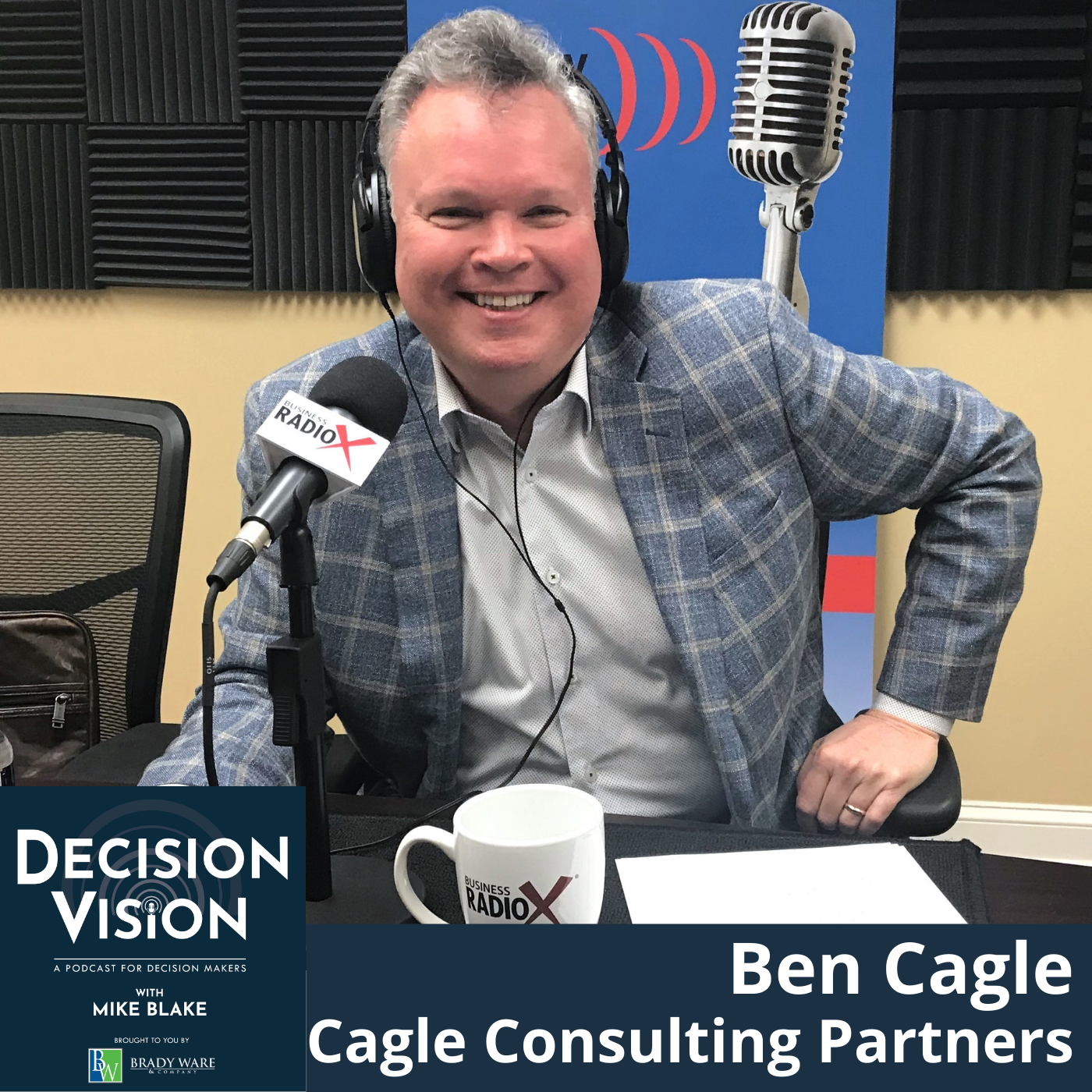
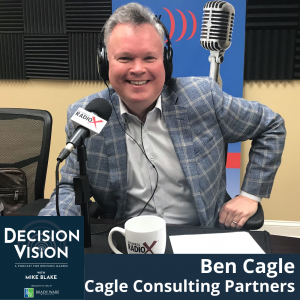
With corporate employment in constant flux, executives tired of the corporate life often set up their own independent consulting practice. Host Mike Blake spoke with Ben Cagle, managing partner of Cagle Consulting Partners, about the process of becoming an independent consultant or freelancer. Ben discussed his journey, how to get that first client, networking and marketing, the challenges unique to consulting, and much more. Decision Vision is presented by Brady Ware & Company.

Cagle Consulting Partners

Cagle Consulting Partners (CCP) is an Advisory Firm focused on helping clients: • Accelerate Revenue Growth • Respond to Rapidly Changing Markets • Building/Scaling Organizations • Sell into Large Global Customers. CCP currently serves large Global Enterprises (IBM, Cisco, SAS), Mid-Market Firms, and diverse Technology Start-Up clients in Artificial Intelligence, Data Analytics, Cybersecurity, IoT, and Blockchain.
Company website | LinkedIn

Ben Cagle, Managing Partner, Cagle Consulting Partners

Ben Cagle
Ben Cagle, Managing Partner, Cagle Consulting Partners

Ben Cagle is Managing Partner of Cagle Consulting Partners (CCP), an Advisory Firm focused on helping clients:
• Accelerate Revenue Growth
• Respond to Rapidly Changing Markets
• Building/Scaling Organizations
• Selling to Large Global Customers.

CCP currently serves large Global Enterprises (IBM, Cisco, SAS), Mid-Market Firms, and diverse Technology Start-Up clients in Artificial Intelligence, Data Analytics, Cybersecurity, IoT, and Blockchain.

Prior to founding CCP, Ben served as a Division President for a Global 100 Enterprise. Ben had P&L responsibility for a global business unit (several $ hundred million in revenue) and was on the core team leading an industry consolidation initiative (with McKinsey & Company).

Transitioning from “industry” into global management consulting, Ben served in various Consulting Partner, Practice/Industry Leader, Solution Innovation, Marketing, and Thought Leadership roles. Ben’s global enterprise consulting leadership experience includes positions at HP Enterprise (formerly EDS), DXC Technology (formerly CSC Consulting), and Hitachi Consulting with clients across four continents.

Ben also has led various NASDAQ, VC-backed Software/SaaS, and entrepreneurial companies focused on Advanced Data Analytics, Market Insights, and Brand/Marketing Strategy targeting multiple industries.

Ben is an Alpharetta, Ga. native and currently resides in Alpharetta with his wife, Sara. He graduated of the Georgia Institute of Technology, is active in various Technology and Start-up organizations, and currently serves as the Chairman of Tech400 (sponsored by the Greater North Fulton Chamber of Commerce).

LinkedIn

Mike Blake, Brady Ware & Company

Mike Blake, Host of the “Decision Vision” podcast series

Michael Blake is the host of the Decision Vision podcast series and a Director of Brady Ware & Company. Mike specializes in the valuation of intellectual property-driven firms, such as software firms, aerospace firms, and professional services firms, most frequently in the capacity as a transaction advisor, helping clients obtain great outcomes from complex transaction opportunities. He is also a specialist in the appraisal of intellectual properties as stand-alone assets, such as software, trade secrets, and patents.

Mike has been a full-time business appraiser for 13 years with public accounting firms, boutique business appraisal firms, and an owner of his own firm. Prior to that, he spent 8 years in venture capital and investment banking, including transactions in the U.S., Israel, Russia, Ukraine, and Belarus.

LinkedIn | Facebook | Twitter | Instagram

Brady Ware & Company

Brady Ware & Company is a regional full-service accounting and advisory firm which helps businesses and entrepreneurs make visions a reality. Brady Ware services clients nationally from its offices in Alpharetta, GA; Columbus and Dayton, OH; and Richmond, IN. The firm is growth-minded, committed to the regions in which they operate, and most importantly, they make significant investments in their people and service offerings to meet the changing financial needs of those they are privileged to serve. The firm is dedicated to providing results that make a difference for its clients.

Decision Vision Podcast Series

Decision Vision is a podcast covering topics and issues facing small business owners and connecting them with solutions from leading experts. This series is presented by Brady Ware & Company. If you are a decision-maker for a small business, we’d love to hear from you. Contact us at decisionvision@bradyware.com and make sure to listen to every Thursday to the Decision Vision podcast.

Past episodes of Decision Vision can be found at decisionvisionpodcast.com. Decision Vision is produced and broadcast by the North Fulton studio of Business RadioX®.

Connect with Brady Ware & Company:

Website | LinkedIn | Facebook | Twitter | Instagram

TRANSCRIPT

Intro: [00:00:02] Welcome to Decision Vision, a podcast series focusing on critical business decisions. Brought to you by Brady Ware & Company. Brady Ware is a regional, full-service, accounting and advisory firm that helps businesses and entrepreneurs make visions a reality.

Mike Blake: [00:00:23] Welcome to Decision Vision, a podcast giving you, the listener, clear vision to make great decisions. In each episode, we discuss the process of decision making on a different topic from the business owners’ or executives’ perspective. We aren’t necessarily telling you what to do, but we can put you in a position to make an informed decision on your own and understand when you might need help along the way.

Mike Blake: [00:00:45] My name is Mike Blake, and I’m your host for today’s program. I’m a director at Brady Ware & Company, a full-service accounting firm based in Dayton, Ohio, with offices in Dayton; Columbus, Ohio; Richmond, Indiana; and Alpharetta, Georgia. My practice specializes in providing fact-based strategic and risk management advice to clients that are buying, selling, or growing the value of companies and intellectual property. Brady Ware is sponsoring this podcast, which is being recorded in Atlanta per social distancing protocols.

Mike Blake: [00:01:14] If you would like to engage with me on social media with my Chart of the Day and other content, I’m on LinkedIn as myself and @unblakeable on Facebook, Twitter, Clubhouse, and Instagram. I also recently launched a new LinkedIn group called A Group That Doesn’t Suck, so please join that as well if you would like to engage. If you like this podcast, please subscribe on your favorite podcast aggregator and please consider leaving a review of the podcast as well.
Mike Blake: [00:01:41] Today’s topic is, Should I become a consultant or freelancer? And it’s an interesting topic, as we record this on January 18, 2022 as we continue through this trans-pandemic period that we’re in, we are seeing society reorganize in many facets in real time. And one of the areas that I don’t think any of us are truly prepared for was the way the labor market is reorganizing.

Mike Blake: [00:02:18] And we’ve had a couple of shows late last year, probably in the 120s or so, I think this is recording number 151 or two or something, but, you know, we’ve had conversations about how to find or tap into underutilized, underexplored labor pools. And the reasons for that are that we are experiencing an unprecedented labor supply shock that we have not seen since World War II.

Mike Blake: [00:02:48] And that labor supply shock has occurred for a number of reasons including – in whatever order you want to place – that we’re two-and-a-half million immigrants short of where we would have been had we continued the policies that have been in place before, say, 2016. And that’s according to data from the Cato Institute. The Cato Institute is a conservative think tank. So, don’t go all up on Blake is a communist kind of thing.

Mike Blake: [00:03:19] We have seen between three to four million people retire that we were not expecting to retire, and that’s data that comes from the Kansas City and St. Louis Federal Reserve. Again, they may be communists, but take it up with them, not with me. And that’s been because of a combination of people being let go, and they probably don’t have great prospects for reentering the labor force. It’s because of people’s portfolios suddenly becoming a lot more valuable because they had invested in Apple and Netflix and, therefore, can afford to retire, and people that just don’t want to deal with a COVID work environment.

Mike Blake: [00:03:59] On top of that, we’ve had something on the order of 400,000 to 450,000 people simply die or be disabled by coronavirus that were of working age in the United States. And we don’t know how many people who have exited the workforce because for lack of day care and elder care. And the estimates I’ve seen have placed those numbers in the millions. So, the point is you take that many people out of the labor force in an 18 month period, you’re going to find that it’s hard to find workers.

Mike Blake: [00:04:35] And on top of all that, we’re finding that the script has flipped in what we’ve called the gig economy. I mean, the gig economy has been around for a while. It’s been around, as long as I can remember in my professional life, since around 2000 or 2005, when startups were relying on gig workers to help bootstrap their startups and run an ultra lien. And everything was about Elance and Fiverr and now Upwork and other places. But that was always considered sort of a fringe area of the labor market.

Mike Blake: [00:05:17] And then, we saw the second wave of gig economy in terms of delivery and transportation, Uber, Lyft, Amazon drivers, to a lesser extent, delivery services like Instacart but that really didn’t take hold until we all didn’t feel comfortable leaving our homes anymore.

Mike Blake: [00:05:38] But what’s happened now is that the script has flipped a little bit and that I think there is a perception for many of us that if you’re in the gig economy, you’re kind of there because you got relegated. You didn’t get picked to go work for a big company or you had unique life circumstances that simply wouldn’t let you work out of the home. But, frankly, we felt sorry for a lot of people that were in the gig economy because we had the sense or the stigma, perhaps, for being fair about it. We had the sense that people in the gig economy because they were forced there, not because that was a matter of choice.

Mike Blake: [00:06:23] And that’s now changing as we enter a phase in the economy that I have not seen in my adult lifetime. I don’t know if this happened in the early 80s. I was a dumb ass teenager then, so I don’t know. But I have not seen a period in my life where labor had this much power in the labor market in the United States. I cannot remember when that’s ever happened. Even during the dotcom boom, it was really nothing like this.

Mike Blake: [00:06:54] And for a combination of factors of wanting to work from home, from liking the flexibility of working from home, work life balance, in some cases better pay, in some cases, I would argue, better stability rather than less than in a gig economy than working in a J-O-B, job. Lots of people are making the switch to becoming consultants and freelancers, often for the companies where they quit their jobs to take that role in the first place. And that’s not new, but it’s more pervasive, because I think companies are more desperate to keep that talent so they’re kind of saying, “Well, whatever kind of keeps you in the seat, we’re going to be willing to do.”

Mike Blake: [00:07:32] And so, that made me think that this is a neat topic to visit at this point in time. Because whether you’re a decision maker thinking about entering the gig economy as a freelancer yourself, it could be as a side hustle, it could be as a fulltime thing, or whether it’s an employer wondering if your employees are thinking about becoming gig workers, whether they would prefer to become gig workers, maybe the gig work model is better for you as a company. I think that it has relevance and warrants a discussion of the topic that I’m not sure that it really has had since we launched the Decision Vision podcast, and I hope you’ll agree. If not, then you’ll probably have already turned off and listening to another podcast.

Mike Blake: [00:08:19] But with that long preamble – probably the longest I’ve ever had – today’s topic is, Should I become a consultant or freelancer? And according to the data from MBO Partners and presented by Visual Capitalist, gig workers are now contributing $1.2 trillion in revenue to the U.S. economy. That’s a little bit north of five percent, maybe six percent doing the math in my head. And according to Statista, millennial gig economy statistics show that 44 percent of millennials freelance.

Mike Blake: [00:08:55] And, you know, as I sit here, I’m now 51, I have to realize that millennials aren’t just pimply video game playing teenagers anymore. They’re serious people and serious jobs that are executives and owning companies, and some of them have become my clients. And, you know, now we get to make fun of the Gen Y or whatever the hell is behind them. But that generation has largely embraced the gig economy by choice. And so, again, it just underscores the fact – or my belief anyway – that this is a topic that is well worth talking about in the decision of whether to enter the gig economy or not.

Mike Blake: [00:09:36] And joining us today is somebody who is no stranger to the gig economy – I think, we’re going to find from many angles – Ben Cagle, who is Managing Partner of Cagle Consulting Partners, CCP, an advisory firm focused on helping clients accelerate revenue growth, respond to rapidly changing markets – I bet you’re busy doing that – building and scaling organizations, and selling into large global customers. CCP serves large global enterprises, IBM, Cisco, and SAS; mid-market firms, and diverse technology startup clients, and artificial intelligence, data analytics, cybersecurity, Internet of Things, and blockchain.

Mike Blake: [00:10:19] Prior to founding CCP, Ben served as a division president for a Global 100 Enterprise. He had P&L responsibility for a global business unit of several hundred million dollars of revenue. And was on the core team leading an industry consolidation initiative with McKinsey and Company. Transitioning from industry into global management consulting, Ben served in various consulting partner, practice, industry leader, solution innovation, marketing, and thought leadership roles.

Mike Blake: [00:10:49] Ben’s global enterprise consulting leadership experience includes positions at HP Enterprise, formerly EDS, DXC Technology, and Hitachi Consulting with clients across four continents. Ben has also led various Nasdaq Venture Capital backed software and SAS and entrepreneurial companies focused on advanced data analytics, market insights, and brand marketing strategy targeting multiple industries.

Mike Blake: [00:11:17] Ben is an Alpharetta, Georgia native – I knew there was one out there – and currently resides in Alpharetta with his wife, Sarah. He graduated from the Georgia Institute of Technology, is active in various technology and startup organizations, and currently serves as the chairman of Tech 400, sponsored by the Greater North Fulton Chamber of Commerce, and it goes on and on. Look at his LinkedIn profile, he’s done a bunch of stuff. Ben Cagle, welcome to the program. Thanks for coming on the show.

Ben Cagle: [00:11:47] Yeah. Thanks, Mike. And thanks for cutting my LinkedIn profile short on that intro. I appreciate it.

Mike Blake: [00:11:52] The beauty of copy and paste, maybe. So, you know before we get started, it’s bizarre that you and I have not talked more. You know, I spent a lot of time in the startup community with Startup Lounge, and I know you’re familiar with it and I’m familiar with your name. But this will probably represent the longest conversation you and I have ever had up until this point.

Ben Cagle: [00:12:17] Well, that’s because alcohol is not currently involved. But, virtually, we can take care of that. But, no, I look forward to it. I loved your intro. It was a bit lengthy, but I’ll give you grief about that later. But disruption has been a theme of my career and a theme of how I’ve had to create value for different clients and different opportunities. So, I really look forward to your setup. I really enjoyed the conversation.

Mike Blake: [00:12:37] Good. Well, like I said, it was a record. Most don’t go that far, but, you know, it is just a fascinating topic. And when we get into society evolution questions, I just find them so fascinating. And my favorite field of economics has always been labor economics. I’m not sure why, but just the relationship between workers work and society is really interesting. And it’s interesting because I think every time we think we understand, we find out just how little we understand.

Ben Cagle: [00:13:10] Yeah. And it’s interesting how it’s changed and how each industry is cascading at different maturity curves and everything else around that, so a lot going on. But, you know, I entered the workforce in the 80s – yes, I’m that old – and the expectation, I think, at that time – we read several articles – I was really at the edge of the baby boomers, the last year, maybe in the next generation past baby boomers, 35 year career, one employer. Three years after I graduated undergrad, they then said it was radical you may have three jobs in your career. Then, it turned five years, it was 12 jobs, maybe.

Ben Cagle: [00:13:50] So, you can see how that change in that expectation, that loyalty to the global enterprise. All the disruption you talked about has changed. And just going through all of that and, even getting a 401K where you’re accountable for your retirement versus all the baby boomers that are punched out before us, had the free ride with the pensions, all those changes I’ve cascaded. I call it surfing through those changes and had to really respond to industries, you know, disappearing, new ones emerging, and then how do you manage your career through that, which led me to starting my own consulting practice.

Mike Blake: [00:14:25] You know, it’ll be fascinating to see how my sons enter the economy. I’m a Gen-Xer. My oldest son will be 20 in April. My father had two jobs in his professional career after the Air Force. I’m on job, I think nine since college, maybe ten, I’m not sure. And my sons may have 30 over the course of their career. And the definition of a job may change. It’ll be really fascinating to see how that all kind of works.

Mike Blake: [00:14:59] So, Ben, you’ve done all these things. In a lot of ways, many people would say that you had to achieve the brass ring several times over. You sort of made it to the top of the pile. You made it to the top of the food chain. And then, you gave it up to go into consulting and freelancing. So, what I’d really like to understand and I think my listeners would find fascinating is, I’d love you just to tell me about the origin story. How did Ben Cagle, corporate chieftain venture capitalists turned into Ben Cagle, freelancer Fiverr?

Ben Cagle: [00:15:36] Well, my wife is still asking that same question.

Mike Blake: [00:15:41] Should we get her on? That’ll make for some good podcast.

Ben Cagle: [00:15:44] This will be a support group meeting if we do that. Now, if I may, I look at my career, not just by jobs, but by chapters. And there’s been four chapters to my career that kind of sets up what I’m in now, the fourth chapter, which is having my own consulting company. So, I, hopefully, won’t belabor the point. But let me just tell you that runway and the themes of that disruption that I previously mentioned.

Ben Cagle: [00:16:08] I got out of Georgia Tech, got into industry, Global 100 company, started in sales. They trained me supply chain all the way through operations. And, eventually, the industry itself was disrupted. And the industry is we sold paper to newspapers- yes, I am that old. Remember our newspaper, you used to get ink on your fingers. There was actually a product, not a digital product.

Ben Cagle: [00:16:36] But what happened is, during that change, we knew the world was changing. Our customers were consolidating. All the media companies were consolidating. We knew this thing called the internet was going to take off. I’m in my late 20s, early 30s saying, “Okay. I know that in 15 years I’m going to be obsolete, what do I do with my career?”

Ben Cagle: [00:16:54] So, at that time, I was very fortunate. We did a McKinsey study, reorg, and I knew that I had to get into technology if I was going to be sustainable in my career and to keep having value. So, with the industry, in the paper industry, I was able to be the division president, traveled the world, global clients. Did that, enjoyed that lifestyle, and enjoyed the ego strokes that came with that, but knew I was going to have transition.

Ben Cagle: [00:17:19] At that time, a company called EDS, their technology, they were looking at people that had business experience, not even technology experience. I don’t even know how to do a PowerPoint or anything like that. But they brought me in. I led some practices learn global consulting. I was recruited over to another company, CSC. So, the first chapter was industry. The second chapter was big consulting. So, again, big business, big systems, all the ERP, the enterprise resource planning, the internet bubble. We consulted right through that, advised several large companies.

Ben Cagle: [00:17:53] Third chapter of my career – and this is a key theme here, and I think this is what’s happening with the great resignation – people said, “Screw it. I’m tired of the corporate reorgs.” I was tired of climbing the ladder, building an organization. Someone made a decision, sold the business, shut the business, didn’t fund it. New CEO comes in with a new strategy every two years. So, at that time, I entered the third chapter, which was working with Nasdaq, traded data analytics companies or venture software, leveraging my industry experience and PNL experience into different smaller companies.

Ben Cagle: [00:18:27] You know, Mike, I only had, like, $2 million of revenue. Others had 120 that were Nasdaq traded. I had thousands of employees across two continents. So, that was the third chapter is managing these small businesses. And then, the fourth chapter was my own business.

Ben Cagle: [00:18:44] And the reason I decided was, “You know what? I’m tired of other influences determine my future. I’m tired of not being able to navigate and be totally accountable for my own success.” So, I did everything wrong when I started my consulting business. I had no clients. I had three ideas. And I really jumped out of it because I just left another position and the decision was, for me at that time – Mike, and this is PC, you know, pre-COVID – I said, “I had a decision to make. I’m in my 50s, do I want to do three more turns of the crank finding jobs every two to three years? Or do I want to do my own thing and really ride this into retirement or really create a new future?” And I made the decision, “I’m going to take accountability. I’m going to create my own future.”

Ben Cagle: [00:19:35] And to do that, I started out with, again, typically, someone in their 50s that punches out of corporate, they always go and sell themselves back. They do consulting or freelance work for their previous employer. That’s the standard model for someone in the 50s. Now, we’ll talk about younger people, different skill sets, how they’re freelancing versus consulting in just a minute. But that was my decision. And I really started with a three layer cake.

Ben Cagle: [00:20:04] I started with saying, “Okay. I’ve led venture capital software companies, let me play with startups.” And that’s where, Mike, I started hanging around all the incubators and accelerators in Atlanta, I think there’s 35 at last count. And just started kind of building relationships and learning.

Ben Cagle: [00:20:19] Second layer of the cake, mid-sized companies, five to 150 million. And then, I said, “What’s their problem? How can I add value? What would someone pay me for?” And that’s the problems of growing revenue, scaling organizations, applying disruption, and helping them just really think through their business strategy, and then execute that strategy.

Ben Cagle: [00:20:40] And then, I was very fortunate, kind of the third layer, the top layer of the cake with the Global 100 companies, I actually was recruited by a firm that actually provides senior level executives back to IBM, Cisco, and SAS, training their sales reps how to have the executive conversation with the CEO, CFO, line of business leaders.

Ben Cagle: [00:20:59] So, that’s kind of the three levels of my consulting business, startups, mid-sized companies – and really, I’ve done breweries. I’ve done software development in India, all that tech stuff, all of these services stuff. And then, still staying in touch with the global enterprises and even their innovation groups. Because – guess what? – they want to know about the startups and create value there. So, there’s a method to the madness of that three layer cake and then solving the three major problems of revenue scaling, responding to change, and innovation.

Ben Cagle: [00:21:31] So, Mike, thank you for letting me kind of share that, but that’s really what led me to building this business. The other thing is, it was kind of a lifestyle. But more importantly, I wanted to kind of say, “You know what? As I got older, I could either ramp it up or ramp it back.

Ben Cagle: [00:21:45] The other thing is cable partners, I called it that because I didn’t want the headache of having a payroll. So, I work with 15 different partner firms, some of them are three person, single entrepreneurs, freelancers. Some, actually, they have 100 employees. And if I need to assemble a team to deliver value, whether it’s tech or strategy or whatnot, I can do that. It’s really relationships together to deliver value for clients. So, that’s my long rambling.

Ben Cagle: [00:22:16] So, Mike, as I was telling that story, which themes head of your disruption of the gig economy 2.0, what were you thinking about as I was telling that story?

Mike Blake: [00:22:27] Well, the thing that struck me, probably because I just happen to violently agree with it so it must mean we’re both geniuses, is, you talked about or you touched upon what effectively is the myth of stable employment. You talked about being tired of somebody else making a decision for you.

Mike Blake: [00:22:47] And I remember years ago, I was a sole practitioner – I still consider myself sort of a sole practitioner within my firm and certainly my comp plan does, so I think that all agrees – I remember giving a talk. I was at the Kettering group, I think. And back then, they had a lot of executives in transition, that was sort of their thing, not that much anymore. But I started the talk by asking the question, “How many of you guys are in transition, guys and ladies in transition?” Two-thirds of them raised their hands.

Mike Blake: [00:23:18] I said, “Okay. Keep your hands up. And then, all of you who think that you are let go because of a bad thing that you did, keep your hands up.” And everybody’s hand went down. And it has everything to do with what you just talked about, acquisitions happen, strategic priorities change, economies happen, somebody has a bad day.

Ben Cagle: [00:23:48] Well, yeah. Perfect. I’ve been on the giving and the receiving side of a reduction in force.

Mike Blake: [00:23:55] So have I.

Ben Cagle: [00:23:56] And like the Nasdaq traded company, that was, again, about $120 million, we came in as a leadership team. We were about eight weeks with not making payroll. So, we had to get rid of about 20 percent of the workforce immediately, and you had to basically navigate a quick strategy, whipsaw. And I’m kind of a relationship guy. You know, I’m a spiritual guy. I was really having problems with that.

Ben Cagle: [00:24:20] But it’s kind of like the old, when you’re in that leadership position – so I understand it – it’s kind of like being a submarine commander. When you’re sub’s head in the front with a torpedo and you have to close all the doors, and you know the front sailors in the first section that got torpedoed are going to drown. But if you don’t do that, everyone’s going to die. So, that’s been in that kind of situation. So, I’ve been on the giving side of that.

Ben Cagle: [00:24:43] The other thing is, you know, I was hired by Hitachi Consulting, recruited by the CEO of the consulting group, working for the COO. They said they were going to be there five more years. I had three years to make my goal and build the business we were talking about. So, it was a senior level executive. They were throwing money at me. And three months after I joined them, the CEO was shut. The COO was shut. So, all these long term people that promised me the world, basically six months later, they took the top 15 of us and shut us all.

Ben Cagle: [00:25:14] So, that’s when I said, “Mad as hell. I’m not going to take anymore. I’m pissed.” And I’ve always said I’m smarter than everyone else and go prove it, you know, if you’re that pompous. And I said this to myself, “You’re that pompous. Go make it happen.” So, that’s how I got into consulting and just loved it. And I have no regrets going back.

Mike Blake: [00:25:34] And I think there’s a lot to the notion that when you have income coming from ten spots as opposed to one, it’s just basic diversification. One consultant decides they don’t need you anymore, for whatever reason. You still got the other nine. Not as big a deal.

Ben Cagle: [00:25:54] Let me tell you the best piece of career advice I got was from my landscaper, true story. So, between senior level executive, they always get rid of you, and then they send you a severance, and then you use that severance to look for your next role. Sometimes that could be a year gap, two year gap as you’re jumping. My Chapter three of my career, different leadership roles.

Ben Cagle: [00:26:20] So, he noticed I was home again, working for home yet again. “Hey, Ben. You’re between jobs.” “Yeah. Thanks, Al. I really appreciate you rubbing my nose in it.” And I said, “Well, at least I don’t have it like you do.” And he goes, “What do you mean?” I go, “Well, at least I have opportunities, and I’ve got the logos behind me, and I was doing all the corporate stuff.” He goes, “Well, Ben, that’s all great. You know I’ve got 140 customers, if three of them fire me, that just means I go home early.”

Ben Cagle: [00:26:48] So, I’m going, “Damn. I missed it again. That was just genius.” And really, Mike, I will be honest that informed my portfolio approach to I’m working with startups. They don’t always have money. So, I do some sweat equity, some for fee, retainer-based, fractional COO or CRO, whatever. But my portfolio, that middle tier of the cake working with those mid-sized companies, sometimes that’s a three month gig, sometimes I check in once a quarter. And then, the training that I do working with IBM, Cisco, or SAS, or the innovation group, the chief innovation officer that I work with, that comes and goes.

Ben Cagle: [00:27:25] So, you’re right, I’m managing a portfolio of interest, of revenue models, and everything else, but it’s my hand to play. It’s my cards. I lay three cards down. I’m playing draw poker. I pick three up. And that’s what I’ve enjoyed about it and being able to navigate those different ecosystems of relationships, which is key for freelancers or anything else. I’m sure we’re going to touch on that in terms of what’s success or how do you drive success. But that’s been the most fun part.

Ben Cagle: [00:27:50] And meeting, quite frankly, guys like you and some of the other professionals that turn into being, you know, referral networks, hub and spoke advisors. It’s just really cool. You meet wicked smart people with the same values. You don’t have to deal with the assholes. And you just run your business and run it the way you want to.

Mike Blake: [00:28:11] So, I think a question everybody is asking – and you sort of touched on this and you said you did everything wrong – everybody wonders how do you get your first client. That’s so scary. Now, you, obviously, have some exposure to sales, but not every consultant who goes out there has a background in sales. Talk about the story of getting that first client. You hang out the shingle Ben Cagle and Associates, or Partners, or whatever, Cagle Capital Partners and Consulting Partners, how do you get that first client?

Ben Cagle: [00:28:48] Yeah. It was a referral. I think it took me six months. In my first year – and this is not making fun of people or saying it’s derogatory – I think I made 30,000 in revenue. And there’s nothing wrong with making 30,000 revenue, but that was a little bit below my expectations, and I had two daughters in college at the time.

Ben Cagle: [00:29:09] But I remember that first retainer I got was from a technology company and it was part of my networking. So, I mentioned the three layers of the cake, I was networking and just going to events with startups down around Georgia Tech. I had a friend from Georgia Tech refer me to the startup, got a referral, and just started telling my story, and that was the connection. So, networking and referrals, key, key, key pipeline for driving any kind of freelance or consulting business pipeline.

Ben Cagle: [00:29:42] It’s not the only channel to drive revenue or get clients but, obviously, your first one’s going to come from that or, like I mentioned, a previous employer, or if you’ve got another partner in your practice, or other freelancers that can refer you in. So, that referral network, that’s key. If you don’t have that, if you haven’t built it, it’s going to take time.

Ben Cagle: [00:30:03] Someone advised me – Mike, I’m curious to hear your point of view – if you’re starting ground level cold, it takes about almost four to five years to build your network where it feeds your business. In addition to doing other marketing, doing thought leadership like you’re doing here with your blog, there’s other things to really get your marketing, your awareness, your interest out there besides networking. But you can’t avoid it. You’ve got to be out there talking to people and getting that referral network going.

Mike Blake: [00:30:32] Yeah. It definitely takes time, which is one of the things I’m harping on all of my team who are much younger than I am. I’m always pushing them to build networks. I only got serious about my network when I was about 35. And I kind of wonder because I was always the quant geek, I was the math geek they shoved in the closet someplace and never like to talk to human beings because I was the Greek letter guy. And that was fun. It was fun to have everybody talk about how smart you were.

Mike Blake: [00:31:03] But then, I realized what immense damage that did to my career that I had no network. And when, all of a sudden, I needed to learn how to sell, I think it took me a year to sell my first engagement period, which is a really small one. And then, it did take about five years before the flywheel started going, and I didn’t have to be always doing sales all the time for the phone to ring and emails to come in and so forth.

Ben Cagle: [00:31:35] Right. Exactly. I mean, for a lot of people in their 20s and 30s that are either getting started, I was talking to one lady, she worked with start ups. She’s 29. She’s already feeling obsolete because she doesn’t know where her next opportunity is coming from. She hasn’t worked on our network. She really hasn’t thought about her core competencies, poor English, what she’s really good at. And she hasn’t thought about either her own consulting, what’s the problem she’s solving, or anything else?

Ben Cagle: [00:32:04] You know, if you’re an engineer, you can do software coding. There’s enough websites now to keep you busy. My daughters are in their 20s, they’ve got a friend, she’s a financial analyst, great MBA, and she’s literally traveling the world. It’s like we play Where’s Waldo? It’s like Where’s Michelle this week? Because she is working anywhere in the world she wants to doing her financial analysis. Those are discrete mathematical engineering skills. And I think there’s kind of a hierarchy. Those are easy to quantify, easy to validate, easy to use all the technology out there.

Ben Cagle: [00:32:37] However, the more senior you are, the more vague you get. If you’re creative, you definitely need channel partnerships. You definitely need referral networks, alliance partners, that can really get you in the opportunities around that. So, really, I look at your skillset, your experience set, your tenure, which industries you played in. And then, of course, what scenarios have you been in? Were you in a high growth mode or a mature dying industry?

Ben Cagle: [00:33:05] All of those five or six kind of vertical lines when I do career coaching informally, I look at all those and say, “What are you really unable to? How can we wrap you, package you, and then how do we get you to market to meet the needs and create value where someone will pay you for it?

Mike Blake: [00:33:21] So, I don’t think it’s so much of a choice. I think it’s a spectrum. When you’re a consultant, the spectrum of lifestyle versus I want to kill it. One is, I want to have a certain lifestyle, and maybe it’s a 30 to 45 hour week kind of gig and that supports a certain lifestyle, if you will. And then, there’s a 75, I want to build the next McKinsey, Bain, Boston Consulting kind of thing. Where do you think you kind of were on that slider when you started and what went into your decision to go that direction?

Ben Cagle: [00:34:00] Yeah. Let’s be honest here, I think what you were implying, Mike, when you said, “Hey, it’s going to take you a while to win your first client,” cash is king. Cash is oxygen. Cash flow, if you don’t have cash flow or savings or investments that you’re willing to give up to fund this runway – and I think you said a year before you hit your first revenue, I would second that motion – I think it takes you three to five years to ramp up. So, this is going to be a long haul building this. Potentially, again, unless you have specific skills, very discreet.

Ben Cagle: [00:34:36] So, to me, my goal was, within three years, I’m going to be making X per month. I wanted to have revenue on all three layers of my cake, my startups and mid-sized enterprise. And I wanted to build a network. I had a networking goal, because I knew that the people, that connective tissue, was what was going to make me successful. And that’s what I evaluated on.

Ben Cagle: [00:34:58] The other thing is, you know, continuous learning and those kinds of things. So, I had a revenue goal, yeah, but I had other goals around relationship goals, exposure, or acquiring clients with specific problems, size of clients. And then, building my network of not only just getting into clients, but also how I deliver that value. So, that’s the way I thought about it. Some people get into it saying, “Hey, look, I’ve got three friends. We’re going to start billing. We’re going to do website development and we’re going to get out there and just knock it out and just lock arms and get it done.”

Ben Cagle: [00:35:34] But mine was all about virtual. I wanted to be leveraged. I wanted to market. If I need to resell, like if I needed a graphic designer, I would mark them up and I get 20 percent. They would do the work. I would be like general contractor. So, that virtual firm was my model and I’ve been very fortunate that we’d be able to pull that off. And I’ve had resources from India, Belarus brought in and, again, I love the virtual economy.

Ben Cagle: [00:35:58] I love COVID – I hate to say this – I’m picking up clients well outside of Atlanta, in Dallas, New York, Chicago just because, like this, you know, we’re talking on Zoom right now, you’re recording the audio. But I can add value to any client through any distance. I can collaborate with them. I can have deliverables. I can be part of their management groups without leaving the comfort of my home office. So, to me, that was the other dimension.

Ben Cagle: [00:36:27] I thought I had to be geographically based when I started five, six years ago. This has really opened my eyes to this leverage model and bringing in other freelancers or other consultants to assemble them to, again, deliver value for the client. But you have to be very intentional about the problems you saw, of the clients you go after, and the way you’re going to deliver that value, whether it’s your own skills and unique knowledge, or they’ll be tangible deliverables or products around that.

Mike Blake: [00:36:54] Isn’t it funny how we’ve had the telephone since the 1870s, I think, it was invented, right? So, we’ve had the telephone for 145 years. For 60 of those, we’ve had video conferencing available. AT&T showing it off the world’s fair. We’ve had video conferencing as long as we’ve wanted it. And nobody wanted it for a number of reasons. At first, it was because the frame rate was like two frames a second. And then, for other reasons we didn’t want it.

Mike Blake: [00:37:26] And now in the pandemic era, we can’t get away from it. I have people asking for permission to get on an old timey phone call because they’re afraid I’m going to think less of them that I’m going to put them on Zoom. And I want to see the innovation diffusion curve for video conferencing. I’m going to go back and do the research on that because that’s going to be a weirdly shaped curve.

Ben Cagle: [00:37:49] Yeah. And, again, now that we’ve all gotten comfortable, it’s like, I’m not wearing pants right now in this frame. I just have a shirt on for the show.

Mike Blake: [00:37:57] Well, thank you for that.

Ben Cagle: [00:37:58] Yeah. Yeah. Kidding, of course. But it’s funny how, to your point, the more has change. I mean, again, I deal with IBM, who calls on Goldman Sachs. They call them Royal Dutch Shell over in the E.U. They’re having to sell their consulting services virtually. You know how they measure relationships? If you know you’re really close with a client – and I just confirmed this with another mentee of mine who’s about 32 who’s in sales for tech sales – if you’ve got a text relationship, that’s like the ultimate. If you can text that CIO, Chief Information Officer, you’ve got permission. They’ve already got you identified in their address book when you pop up.

Ben Cagle: [00:38:42] When you can actually be on the Zoom call or the WebEx call and text them to get feedback on what’s going on, not even do chat, that’s when you know you’ve made it.

Ben Cagle: [00:38:52] So, everything has been inverted from a relationship, “Hey, let’s go get a cup of coffee in the cafeteria. Tell me about your kids and then I’ll find out what’s really going on.” You know, walking the halls, elevator pitch – remember all those terms? – they’re now obsolete. To now, the relationship, if you’ve got the highest relationship with a C level of a Global 500, if you’re texting back and forth weekends and all that, boy, you know you’ve made it.

Ben Cagle: [00:39:19] The other thing is, I found using Zoom and WebEx, people going, “How do you build a relationship?” And I said, “Hey, just cut the meeting short to 20 minutes and give them ten minutes back in their schedule, because everyone has 12 hours of Zoom now.” Give them back ten minutes and say, “Hey, Bill, by the way, or Barbara, before we break up, do you mind? I’ve got an idea I want to run by you that I think might help you guys, or may create value or, solve a problem.” And that’s the way you have to do it. And then, ask either for permission or get to text as soon as possible. And that’s how you know you’ve really made it from a sales and development standpoint.

Ben Cagle: [00:39:58] So, isn’t it weird the way that you used to avoid text because there was no interaction, there was no voice inflection. But now that’s become the gold standard of relationship.

Mike Blake: [00:40:07] Oh, it’s fascinating and probably warrants its own podcast in some fashion. I’ve met in person fewer than 25 percent of my clients, and that number goes down every year. They don’t want to see me, and there’s nothing to even look at if it’s a tech company.

Ben Cagle: [00:40:24] Yeah. They don’t want to deal with me. Occasionally, if we’re local and say, “Hey, let’s grab a beer or grab coffee,” there’s some social element to it. But when COVID hit, I hosted a virtual happy hour. Everyone got their drinks and we brought people in, literally, from four countries and, I guess, really, five time zones just trying to get social interaction, talking about how people are responding differently to COVID and everything else. So, that social element, that emotion, that need is still there.

Ben Cagle: [00:40:55] But you’re right, from a business to business standpoint, people don’t want to see you. They don’t want to invest the time. They don’t want to put a collared shirt or dress pants on.

Mike Blake: [00:41:08] So, thinking back when you started as a consultant, what was the scariest part? Or was there a scary part of it? And if so, what was the scariest part of that process? And how did you overcome that fear?

Ben Cagle: [00:41:24] Again, I’ll show my age here, but remember the Indiana Jones movie when he had to step out on faith and walk across an abyss of a hidden bridge and he didn’t know it was there? That’s what it was like is taking that first step saying, “I don’t know what’s going to handle.” Now, again, keep in mind, I had two daughters, no scholarships, out-of-state tuition. So, I had my highest cash flow outflow with zero income coming in, so that’s pressure.

Ben Cagle: [00:41:54] And if you’re measuring your security by your 401K, your investments, your cash flow, your savings, you might want to rethink when your kids are in college and starting your own consulting business. So, that was the scariest point to me is not knowing the financial insecurity, knowing that I may be betting part of my retirement savings on the fact that I’m betting on myself that I can build this business and be successful. That was the scariest part to me.

Mike Blake: [00:42:19] So, I’m happy to geek out on Indiana Jones and The Last Crusade, that was a great movie. So, what helped Indiana Jones overcome his fear was that his father had been shot and he was dying. What helped you overcome your fear? What is it that got you to take that first step off the cliff?

Ben Cagle: [00:42:40] Yeah. Well, I think what happened was it wasn’t a greater fear of going back into another job. It was, I think, my pissed factor. I was so mad. It exceeded my fear factor and it made me more determined just to go for it. So, if you’re doing a two-by-two matrix of pissed versus scared, I was more pissed than I was scared and going for it.

Ben Cagle: [00:43:01] And the other thing was I knew the world was changing rapidly. I had to adjust from selling paper to newspaper publishers, to implementing SAP ERP implementations to Toyota North America, to basically doing e-commerce for banking in Europe. I understood how change was happening and I thought I could capitalize on it. And I was betting on that. So, that was my big trade off. And I’m a very rational person and I’ve got a weird sense of humor. But that was the trade off, it’s like, “Damn it. I’m going to go do it. There’s a market opportunity, I believe I can capture it. And I think I can create a better future than I can going back into corporate or trying to get another leadership position that has a two year, three year runway.”

Ben Cagle: [00:43:49] And we haven’t proven that theory yet. But touch wood with God’s will and a little bit of more persistence and great network partners, we’re on our way. I’m feeling pretty good about it.

Mike Blake: [00:44:03] So, one thing that I think keeps people from becoming a freelancer or consultant is the matter of health insurance. You know, I had a sole practitioner shop for a while and one of the first lessons I learned as a sole practitioner is that the best insurance you can buy on the open market is more expensive and worse than the worst health insurance you’re going to get through almost any company. That’s what I learned anyway.

Ben Cagle: [00:44:34] Well, again, you’ve been talking to my wife doing background. She complained about our insurance, she still does. But just the two of us now, the kids finally got married and got off the payroll – well, partially off the payroll. So, we’re paying $1,400 or $1,500 a month in insurance with a high deductible and it covers catastrophic events. But beyond that, we get a free COVID shot and that’s about it. So, I think that was the biggest learning financially for me is health care. I’ve got my overhead. I knew that.

Ben Cagle: [00:45:09] But getting comfortable with that and, of course, all the tax implications of making sure that, “Hey, look how much money I’m making” versus making sure, especially if you come out of corporate you’re used to all those withholdings made for you, be very intentional about that, or for using retirement savings early penalties, the true cost of money, make sure you understand that before you make the leap to go there.

Mike Blake: [00:45:32] What’s a skillset that you’ve had to evolve or develop since moving out on your own?

Ben Cagle: [00:45:41] It’s not personal discipline but – and this is what a lot of people have trouble with – structuring your day. It is saying that I’m going to go to this networking event back in the day or I’m going to work on my LinkedIn profile. It’s allocating that working on the business versus in the business – you’ve heard that.

Ben Cagle: [00:46:02] When you first start – and, again, I mentioned that fear of having a high cash outflow and not much coming in – I thought I had to be, you know, constant business development, finding that, versus being smart about laying the foundation, and LinkedIn, using media like you’re using smart channels like RadioX and some other things you’re doing with your blogs. Being really intentional around that because that’s the foundation that will feed you and serve you later.

Ben Cagle: [00:46:28] So, that’s the biggest skill of work on the business versus in the business and really get used to adding structure and discipline. You know, no boss is going to tell you what to do. No company is going to set up mandatory conference calls. It is a blank slate and you’ve got to add that structure. I knew that but you really have to be intentional around that. And that was really a muscle I kind of had developed being part of corporate, but really had to be intentional around structure, work on versus in the business.

Mike Blake: [00:47:01] I’m talking with Ben Cagle of Cagle Consulting Partners – got it right instead of five tries this time. And the topic is, Should I become a consultant or freelancer? That’s the benefit of podcasting, more forgiving medium.

Mike Blake: [00:47:21] So, let me ask you this, who shouldn’t become a consultant? I want to take the flip side of this. Not everybody’s cut out to be through everything, right? There’s no amount of practicing I could ever do and become a successful ballet dancer. I should not become a ballet dancer. What kind of personality or what kind of personal situation, probably, maybe doesn’t prohibit, but at least puts you at a serious disadvantage to become a consultant or freelancer?

Ben Cagle: [00:47:49] Let’s go for kind of seniority level from a career standpoint and then work our way down. So, arrogant former CXOs should not be consultants, because they write their book that was basically their swan song. They promote their book and they add zero value. And, eventually, I’ve seen the tale of their growth curve goes off about eight to nine months, because no one wants to work with them because they’re arrogant and they think they own the world. And they’re doing it for ego versus really adding client value. So, that’s kind of one.

Ben Cagle: [00:48:27] On the other side of it, if you’re not comfortable with understanding problems, asking questions, interacting with people, that’s kind of like Consulting 101, doing discovery on what the problem you’re solving is, or what the requirements of the job spec they want to hire you for are. If you’re not comfortable with those interpersonal skills, and leading that, and thinking ahead, and you’re not a structured thinker, probably not a good idea to be a consultant. So, that’s kind of a skillset personality continuum. But those are kind of some of the people I’ve seen have tried and failed.

Ben Cagle: [00:49:00] You know, you can be very shy but be very analytical or very technical. And if you’ve got the right, either partnership or channel partners, or you kind of contract with a company that places you, you can do really well. But if you’re out on your own, I’m going to be dealing with clients. You’ve got to find it. You got to find the client, kill the client, skin the client, eat the client. You have to do, you know, all the delivery all the way through. You better make sure that you have confidence in yourself. You have great communication skills. And you’re not talking about yourself all the time. You’re spending at least, you know, 70 percent letting the client talk versus you.

Ben Cagle: [00:49:38] That’s what I meant about the arrogance, I’ve seen a lot of people just talk their way past opportunities because they were trying to prove how smart they were. So, kind of lessons learned there. That’s the pragmatic. Mike, what are your thoughts? What dimensions do you think about when you think about people consulting who are successful or not?

Mike Blake: [00:49:56] I think it’s coming to grips with the fact that having to sell becomes part of the job description. You know, if you have a particular skillset, that’s great. But if nobody knows about it, if nobody understands how that fits and how that addresses a need that they have, I think it’s very difficult for a consultant to succeed in that way.

Ben Cagle: [00:50:24] Excuse me for interrupting, the one question I’ve asked people that want to get in consulting, do you think sales is dirty? Is it beneath you? Is it sleazy? That perception will tell you if you’re ready for it. If you think sales is really helping people finding problems, how are you going to help them solve their problems, then, odds are you’ll be more successful as a consultant.

Ben Cagle: [00:50:53] But if you think you’ve got a sale and ask for the order, and I hate talking about money, they’re just trying to take advantage of me, if you kind of come in with that attitude, boy, keep your day job. Update your LinkedIn profile and, hopefully, find a good place or a staffing firm or a good recruiter because you’re going to need it. I agree with what you said there, Mike, yeah.

Mike Blake: [00:51:17] You know, the transition at the end of the day is, you might find yourself moving from being a cost center to a profit center. And that can be a difficult transition, because when we say somebody is a cost center, there’s an implication that you’re kind of a dead weight. And you’re not a dead weight, but you are a weight that has to be carried by the profit center.

Mike Blake: [00:51:45] And when I give advice for the few people who ask me for advice about their careers, always position yourself to be a profit center. If you’re a profit center, then you’re never going to be unemployed a day in your life. And that’s what consultants have to do. And if you particularly, as I did, come from a technical field, finance and business valuation, I can be the greatest spreadsheet jockey in the world. But if I can’t go out there and get clients, it just doesn’t matter. And what you find is the people who can sell make more and they have more job stability.

Ben Cagle: [00:52:27] Yeah. Absolutely. And just having that knowledge going in, I think, that’s like a yes/no primary screen question you should ask around that. Can you represent? And, again, not tell what you do but understand and relate to that person you’re sitting across the Zoom call on about what their issues are and how you’re relevant to them.

Ben Cagle: [00:52:48] So, I’ve been on both the buy side and the sell side of consulting, so I’ve had that advantage. And even today, I get sold constantly. They’re trying to sell me services for my own firm or people are trying for me to hire them or partner with them. It’s amazing how they push the play button and talk about themselves and really don’t understand the situation they’re going into. And if you don’t have that awareness, that EQ and IQ, boy, you’re not going to be successful as a consultant. So, you really got to have that radar going.

Mike Blake: [00:53:20] Yeah. It’s hard. Ben, this has been a great conversation. We’re running up against the hour that I asked of you for time. I know we haven’t gotten every question I wanted. We got off our script pretty quickly, but that’s okay. But there are probably questions that our listeners wish that I would have asked or we’d stayed on a little bit longer. If somebody wants to follow up on this conversation with you for some advice, can they do so? And if so, what’s the best way for them to do that?

Ben Cagle: [00:53:46] Yeah, Mike, we’re pretty casual about it. And thank you for this opportunity, I really enjoyed the conversation. Thank you for reaching out and, again, giving me the opportunity to be on your blog. And if they care to reach me, they can reach me directly through email at ben, B-E-N,@cagle, C-A-G-L-E, partners.com, ben@caglepartners.com. Or through my website Cagle, C-A-G-L-E, Partners, caglepartners.com.

Ben Cagle: [00:54:10] And, again, I coach people. Part of my values when I founded my firm is I want to help other people advance. If I can help them and create value for them, odds are, eventually, it’s like karma. It will eventually come back, if not from that person, someone else. Don’t mind helping people. Love to have a conversation anyway at all. I can get perspective or help people along the way. I would be glad to do that. Email or hit my website.

Mike Blake: [00:54:35] Well, that’s going to wrap it up for today’s program. I’d like to thank Ben Cagle so much for sharing his expertise with us.

Mike Blake: [00:54:41] We’ll be exploring a new topic each week, so please tune in so that when you’re faced with your next business decision, you have clear vision when making it. If you enjoy these podcasts, please consider leaving a review with your favorite podcast aggregator. It helps people find us so that we can help them.

Mike Blake: [00:54:58] If you would like to engage with me on social media with my Chart of the Day and other content, I’m on LinkedIn as myself and @unblakeable on Facebook, Twitter, Clubhouse, and Instagram. Also, check out my new LinkedIn group called A Group That Doesn’t Suck. Once again, this is Mike Blake. Our sponsor is Brady Ware & Company. And this has been the Decision Vision podcast.
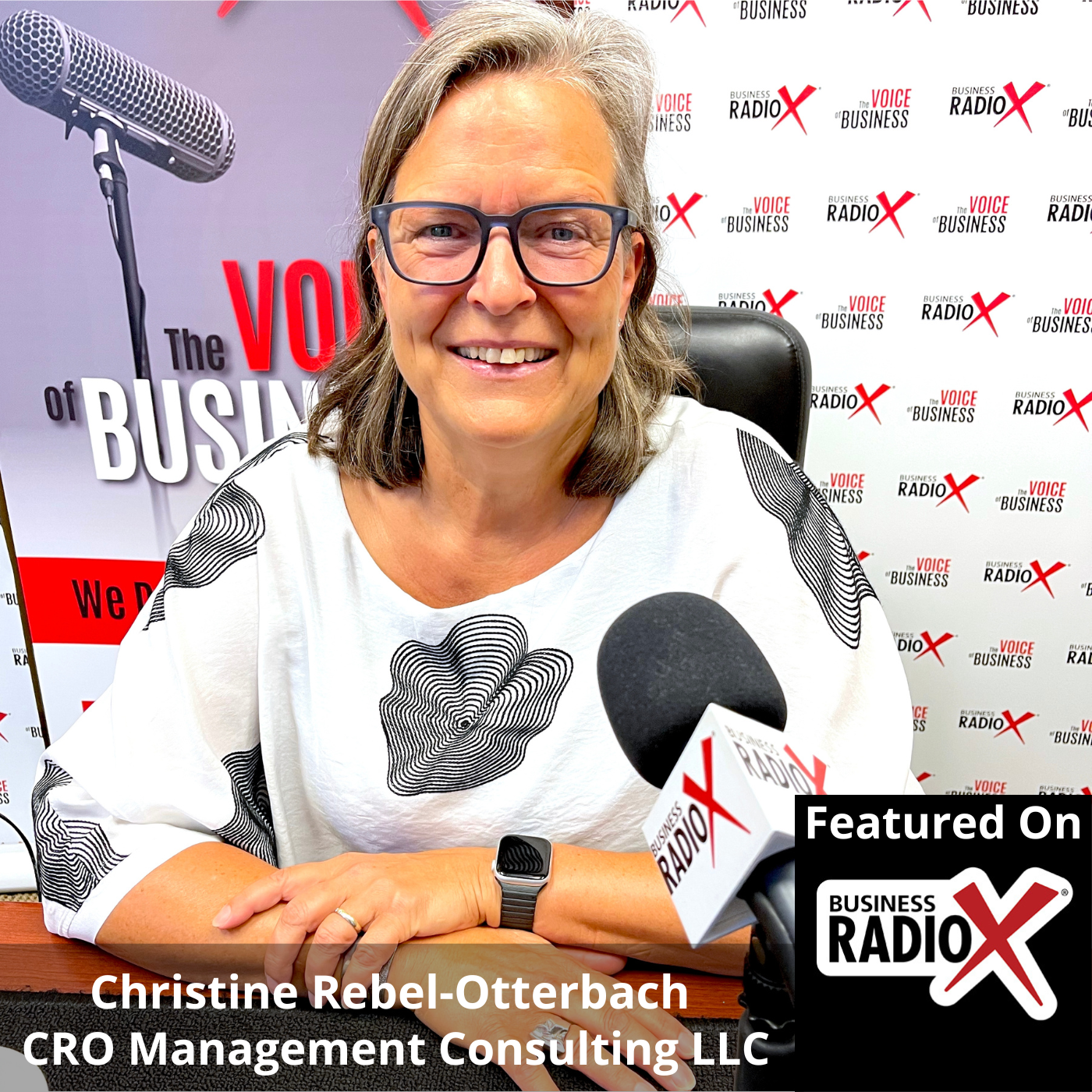
 

Tagged With: Ben Cagle, Brady Ware & Company, Cagle Consulting Partners, Consultant, consulting, Decision Vision, Freelance, freelancer, freelancing, how to start freelancing, independent consulting, independent consulting career, Mike Blake

Sandy Hansen-Wolff, Sandy Hansen-Wolff Consulting

November 10, 2021 by John Ray

Sandy Hansen-Wolff
Minneapolis St. Paul Business Radio
Sandy Hansen-Wolff, Sandy Hansen-Wolff Consulting
Loading
00:00 /
RSS Feed
Share
Link
Embed

Download file

Sandy Hansen-Wolff

Sandy Hansen-Wolff, Sandy Hansen-Wolff Consulting (Minneapolis-St. Paul Business Radio, Episode 24)

Sandy Hansen-Wolff dove unexpectedly into a leading a business after her husband’s passing, but recognizes now she chose her path and was prepared for it by life. She has evolved her coaching into what she calls an Intuitive Strategy Blueprint, and Sandy helps business owners reconnect with their passion and create tangible leaps forward from those insights. She talked with host John Ray about her coaching practice, persisting through tragedy, and much more. Minneapolis-St. Paul Business Radio is produced virtually by the Minneapolis St. Paul studio of Business RadioX®.

Sandy Hansen-Wolff Consulting

Sandy’s true inspiration comes from her unwavering conviction that the highest results come from digging into what we already have burning inside, just waiting to be ignited into new realities.

Partnering with leaders and entrepreneurs like you to help you bust through barriers (both internal and external) and reach new levels of success is why Sandy loves what she does.

Whether you’re taking your business to a new level or dealing with unexpected or overwhelming challenges, she partners with you in creating a vision for your ideal future and taking aligned action to reach your goals during a short term (3-6 months) or longer-term (12 months+) private coaching experience.

Sandy is your idea accelerator, your expert listener, your collaborative facilitator, your visionary strategist, and your partner in taking your life and business to the next level.

Sometimes, the best way to dream and work towards your goals is to get out of your everyday environment and turn off the distractions.

Sandy offers business and leadership coaching as well as speaking and workshops. Workshops and retreats are powerful tools for reaching new heights in business and in life through inspiring and high-value,  rich topics.

Website | LinkedIn | Facebook | Twitter

Sandy Hansen-Wolff, Owner, Sandy Hansen-Wolff Consulting

Sandy Hansen-Wolff, Owner, Sandy Hansen-Wolff Consulting

Sandy Hansen-Wolff has spent her entire career as a business leader and entrepreneur.

Sandy started her speaking, coaching, and consulting business nearly two decades ago. In this role, she works across industries to partner with leaders and business owners to create and execute high level strategy and aligned actions. She was thrust into entrepreneurship when widowed at a young age.

Although always an entrepreneur at heart, Sandy assumed ownership of her late husband’s company in 2003 upon his death and began sharing her story of crisis leadership and overcoming tragedy. She has worked for nearly two decades in agribusiness ownership as well as launched a new agribusiness e-commerce company and recently and successfully transitioned her company to new ownership.

Sandy now spends her time helping other leaders and companies scale through her leadership coaching, speaking, and consulting business. She is a certified International Coaching Federation executive and leadership coach as well as a certified Emotional Intelligence Assessor. She partners with many brilliant business leaders, owners and teams and facilitates monthly mastermind peer groups of business leaders.

Sandy speaks to groups large and small on topics of pricing, negotiation, business success/scaling strategies, emotional intelligence, employee engagement, and culture, launching new ventures as well as personal strategies for aligning heart-based leadership to profits. She also serves on several boards, is a volunteer wish granter for MakeAWish as well as many other community initiatives.

LinkedIn

Questions and Topics Discussed in this Episode

  • Tell us how you began in business ownership and how it led to coaching high-level leaders and business owners.
  • The use of Intuitive Strategy Blueprint for quick clarity & goal setting in business.
  • What do you feel are the top challenges that leaders and managers face in these changing times?
  • You turned around a company in very turbulent times and under tragic circumstances. Tell us how your experience is a big attractor for working with clients in your coaching and consulting work.
  • How is your intuitive strategy coaching unique and different than other methods of coaching?
  • You also facilitate leadership and business owner mastermind peer groups. What is your passion behind this role and what focus do these groups have for each session?
  • You have also spoken on stages large and small. What are the hot topics now for business and leadership conferences?

Minneapolis-St. Paul Business Radio is hosted by John Ray and produced virtually from the Minneapolis St. Paul studio of Business RadioX® .  You can find the full archive of shows by following this link. The show is available on all the major podcast apps, including Apple Podcasts, Spotify, Google, Amazon, iHeart Radio, Stitcher, TuneIn, and others.

Tagged With: business coach, business coaching, Coaching, consulting, grief, John Ray, Minneapolis St Paul Business Radio, Sandy Hansen-Wolff

Triumph Over Trauma E53

May 20, 2021 by Karen

Triumph-Over-Trauma-Feature
Phoenix Business Radio
Triumph Over Trauma E53
Loading
00:00 /
RSS Feed
Share
Link
Embed

Download file

Triumph-Over-Trauma-E52

Triumph Over Trauma E53

Anthony “Doc” Ameen shares his powerful story not knowing what path he intended to take as a young man to join the military and being influenced by the tragedies he survived. He now dedicates his time to assisting military members, first responders and their families, fighting for them as they have fought for us. Wings for Warriors non-profit has helped over 5,000 veterans with securing benefits, benefits counseling and travel assistance among other holistic needs.

If you or someone you know is a veteran or a first responder, Wings For Warriors Foundation can support you with a wide array of services and programs with the help of their 4 beneficiaries.

WFWF-10Yea-rLogo-FINAL

Wings For Warriors Foundation is a nationally recognized, 501(c)(3) non-profit organization in support of veterans, first responders, and their families.

Wings For Warriors Foundation supports the holistic needs of veterans, first responders, and their families with transformational growth, well-being, and spiritual fitness.

Taylor & Lawrence is a boutique consulting firm helping healthcare organizations of all sizes achieve their desired goals by building cooperative alliances and strategic partnerships.

Taylor & Lawrence’s mission is to provide loyal and mutually beneficial partnerships for healthcare organizations to thrive together, ensuring sustainability, growth, and increased quality.

Anthony-Doc-Ammen-Tycoons-of-Small-Biz

Anthony Ameen’s life changed in an instant in 2008. And it’s been evolving ever since…

As a Hospital Corpsman, Ameen earned the nickname “Doc” as he embraced a culture of order and duty. His catastrophic battlefield injury changed the course of the life he envisioned, but Anthony eventually chose to view his new path as one that would be watered by the nurtured outflow of the adversity he had faced. His experiences, though challenging at times, allowed him to see potential for change and fueled an entrepreneurial spirit within him, which led to his creation of the non-profit Wings For Warriors.

Under Ameen’s leadership, the non-profit organization matured from an idea to a nationally-recognized foundation that aims to advocate for the holistic and spiritual needs of veterans, first responders, and their families. As Founder & CEO, Anthony personally counseled more than 5,000 veterans and helped launch Wings for Warriors outlets in 30 different cities across the country.

It quickly became clear that the grit, determination, perseverance and leadership capabilities “Doc” channeled in the military served him well in civilian life as an entrepreneur, an advocate, and a nationally-recognized public figure. He is the face and the lifeblood of Wings For Warriors, and with that brings invites from national media outlets, speaking engagements at large-scale events and sponsorships earned from Fortune 500 companies.

Along the way, Doc turned his focus into co-founding and building Taylor & Lawrence, a boutique consulting firm that specializes in serving the Department of Defense (DoD), and Healthcare industries by unearthing strategic business partnerships for increased performance and quality patient care.

Ameen’s past continues to fuel his future. And, his story provokes anyone listening to realize they have not fully tapped every ounce of their potential. Anthony addresses his successes and pitfalls through his emotional and physical recovery in an uncommonly honest way, all while holding his listeners internally responsible for the changes they need to make in order to grow. Ameen’s story incites change, triggers action and spurs productivity. And, perhaps most importantly, it plants a seed of accountability.

When he isn’t traveling for speaking engagements, Anthony spends time with his wife, and their four children, at their home in Phoenix, Arizona.

Connect with Anthony on LinkedIn, Facebook and Twitter.

About the Show

Tycoons of Small Biz spotlights the true backbone of the American economy, the true tycoons of business in America… the owners, founders and CEO’s of small businesses. Join hosts,  Austin L Peterson, Landon Mance and the featured tycoons LIVE every Tuesday at 1 pm, right here on Business RadioX and your favorite podcast platform.

About Your Hosts

Autsin-Peterson-on-Phoenix-Business-RadioX

Austin Peterson is a Comprehensive Financial Planner and co-founder of Backbone Planning Partners in Scottsdale, AZ. Austin is a registered rep and investment advisor representative with Lincoln Financial Advisors. Prior to joining Lincoln Financial Advisors, Austin worked in a variety of roles in the financial services industry.

He began his career in financial services in the year 2000 as a personal financial advisor with Independent Capital Management in Santa Ana, CA. Austin then joined Pacific Life Insurance Company as an internal wholesaler for their variable annuity and mutual fund products. After Pacific Life, Austin formed his own financial planning company in Southern California that he built and ran for 6 years and eventually sold when he moved his family to Salt Lake City to pursue his MBA.

After he completed his MBA, Austin joined Crump Life Insurance where he filled a couple of different sales roles and eventually a management role throughout the five years he was with Crump. Most recently before joining Lincoln Financial Advisors in February 2015, Austin spent 2 years as a life insurance field wholesaler with Symetra Life Insurance Company. Austin is a Certified Financial Planner Professional and Chartered Life Underwriter. In 2021, Austin became a Certified Business Exit Consultant® (CBEC®) to help entrepreneurs plan to exit their businesses.

Austin and his wife of 23 years, Robin, have two children, AJ (21) and Ella (18) and they reside in Gilbert, Arizona. He is a graduate of California State University, Fullerton with a Bachelor of Arts in French and of Brigham Young University’s Marriott School of Management with a Master of Business Administration with an emphasis in sales and entrepreneurship.backbone-New-Logo

Connect with Austin on LinkedIn, Facebook, Twitter, and Instagram.
LandonHeadshot01

Landon Mance is a Financial Planner and co-founder of Backbone Planning Partners out of Las Vegas, Nevada. He rebranded his practice in 2020 to focus on serving small business owners after operating as Mance Wealth Management since 2015 when Landon broke off from a major bank and started his own “shop.”

Landon comes from a family of successful entrepreneurs and has a passion and excitement for serving the business community. This passion is what brought about the growth of Backbone Planning Partners to help business owners and their families. At Backbone Planning, we believe small business owners’ personal and business goals are intertwined, so we work with our clients to design a financial plan to support all aspects of their lives.

In 2019, Landon obtained the Certified Exit Planning Advisor (CEPA) designation through the Exit Planning Institute. With this certification, Backbone Planning Partners assists business owners through an ownership transition while focusing on a positive outcome for their employees and meeting the business owner’s goals. Landon is also a member of the Business Intelligence Institute (BII) which is a collaborative group that shares tools, resources and personnel, and offers advanced level training and technical support to specifically serve business owners. In 2021, Landon became a Certified Business Exit Consultant® (CBEC®) to help entrepreneurs plan to exit their businesses by counseling owners about exit options, estimating the value of the business, preparing the business for exit and tax considerations.

Landon enjoys spending time with his beautiful wife, stepson, and new baby twins. He grew up in sunny San Diego and loves visiting his family, playing a round of golf with friends, and many other outdoor activities. Landon tries to make a difference in the lives of children in Las Vegas as a part of the leadership team for a local non-profit. He regularly visits the children that we work with to remind himself of why it’s so important to, “be the change that you wish to see in the world.”

Landon received his B.S. from California State University Long Beach in business marketing and gets the rest of his education through the school of hard knocks via his business owner clients.

Connect with Landon on LinkedIn.

Austin Peterson and Landon Mance are registered representatives of Lincoln Financial Advisors Corp. Securities and investment advisory services offered through Lincoln Financial Advisors Corp., a broker/dealer (member SIPC) and registered investment advisor. Insurance offered through Lincoln affiliates and other fine companies. Backbone Planning Partners is a marketing name for registered representatives of Lincoln Financial Advisors

CRN-3566695-042721

Lincoln Financial Advisors Corp. and its representatives do not provide legal or tax advice. You may want to consult a legal or tax advisor regarding any legal or tax information as it relates to your personal circumstances.

The content presented is for informational and educational purposes. The information covered and posted are views and opinions of the guests and not necessarily those of Lincoln Financial Advisors Corp.

Business RadioX® is a separate entity not affiliated with Lincoln Financial Advisors Corp.

Tagged With: Business Management, Charity, Christianity, consulting, first responders, giving back, Health, Healthcare, inspiration, Leadership, medical equipment, medical supplies, motiviation, Nonprofit, post traumatic growth, PPE, public speaking, spiritual fitness, spirituality, strategic sourcing, Supply Chain, Veterans, wellbeing

  • « Previous Page
  • 1
  • 2
  • 3
  • 4
  • …
  • 14
  • Next Page »

Business RadioX ® Network


Our Most Recent Episode

CONNECT WITH US

  • Email
  • Facebook
  • LinkedIn
  • Twitter
  • YouTube

Our Mission

We help local business leaders get the word out about the important work they’re doing to serve their market, their community, and their profession.

We support and celebrate business by sharing positive business stories that traditional media ignores. Some media leans left. Some media leans right. We lean business.

Sponsor a Show

Build Relationships and Grow Your Business. Click here for more details.

Partner With Us

Discover More Here

Terms and Conditions
Privacy Policy

Connect with us

Want to keep up with the latest in pro-business news across the network? Follow us on social media for the latest stories!
  • Email
  • Facebook
  • Google+
  • LinkedIn
  • Twitter
  • YouTube

Business RadioX® Headquarters
1000 Abernathy Rd. NE
Building 400, Suite L-10
Sandy Springs, GA 30328

© 2025 Business RadioX ® · Rainmaker Platform

BRXStudioCoversLA

Wait! Don’t Miss an Episode of LA Business Radio

BRXStudioCoversDENVER

Wait! Don’t Miss an Episode of Denver Business Radio

BRXStudioCoversPENSACOLA

Wait! Don’t Miss an Episode of Pensacola Business Radio

BRXStudioCoversBIRMINGHAM

Wait! Don’t Miss an Episode of Birmingham Business Radio

BRXStudioCoversTALLAHASSEE

Wait! Don’t Miss an Episode of Tallahassee Business Radio

BRXStudioCoversRALEIGH

Wait! Don’t Miss an Episode of Raleigh Business Radio

BRXStudioCoversRICHMONDNoWhite

Wait! Don’t Miss an Episode of Richmond Business Radio

BRXStudioCoversNASHVILLENoWhite

Wait! Don’t Miss an Episode of Nashville Business Radio

BRXStudioCoversDETROIT

Wait! Don’t Miss an Episode of Detroit Business Radio

BRXStudioCoversSTLOUIS

Wait! Don’t Miss an Episode of St. Louis Business Radio

BRXStudioCoversCOLUMBUS-small

Wait! Don’t Miss an Episode of Columbus Business Radio

Coachthecoach-08-08

Wait! Don’t Miss an Episode of Coach the Coach

BRXStudioCoversBAYAREA

Wait! Don’t Miss an Episode of Bay Area Business Radio

BRXStudioCoversCHICAGO

Wait! Don’t Miss an Episode of Chicago Business Radio

Wait! Don’t Miss an Episode of Atlanta Business Radio