Business RadioX ®

  • Home
  • Business RadioX ® Communities
    • Southeast
      • Alabama
        • Birmingham
      • Florida
        • Orlando
        • Pensacola
        • South Florida
        • Tampa
        • Tallahassee
      • Georgia
        • Atlanta
        • Cherokee
        • Forsyth
        • Greater Perimeter
        • Gwinnett
        • North Fulton
        • North Georgia
        • Northeast Georgia
        • Rome
        • Savannah
      • Louisiana
        • New Orleans
      • North Carolina
        • Charlotte
        • Raleigh
      • Tennessee
        • Chattanooga
        • Nashville
      • Virginia
        • Richmond
    • South Central
      • Arkansas
        • Northwest Arkansas
    • Midwest
      • Illinois
        • Chicago
      • Michigan
        • Detroit
      • Minnesota
        • Minneapolis St. Paul
      • Missouri
        • St. Louis
      • Ohio
        • Cleveland
        • Columbus
        • Dayton
    • Southwest
      • Arizona
        • Phoenix
        • Tucson
        • Valley
      • Texas
        • Austin
        • Dallas
        • Houston
    • West
      • California
        • Bay Area
        • LA
        • Pasadena
      • Colorado
        • Denver
      • Hawaii
        • Oahu
  • FAQs
  • About Us
    • Our Mission
    • Our Audience
    • Why It Works
    • What People Are Saying
    • BRX in the News
  • Resources
    • BRX Pro Tips
    • B2B Marketing: The 4Rs
    • High Velocity Selling Habits
    • Why Most B2B Media Strategies Fail
    • 9 Reasons To Sponsor A Business RadioX ® Show
  • Partner With Us
  • Veteran Business RadioX ®

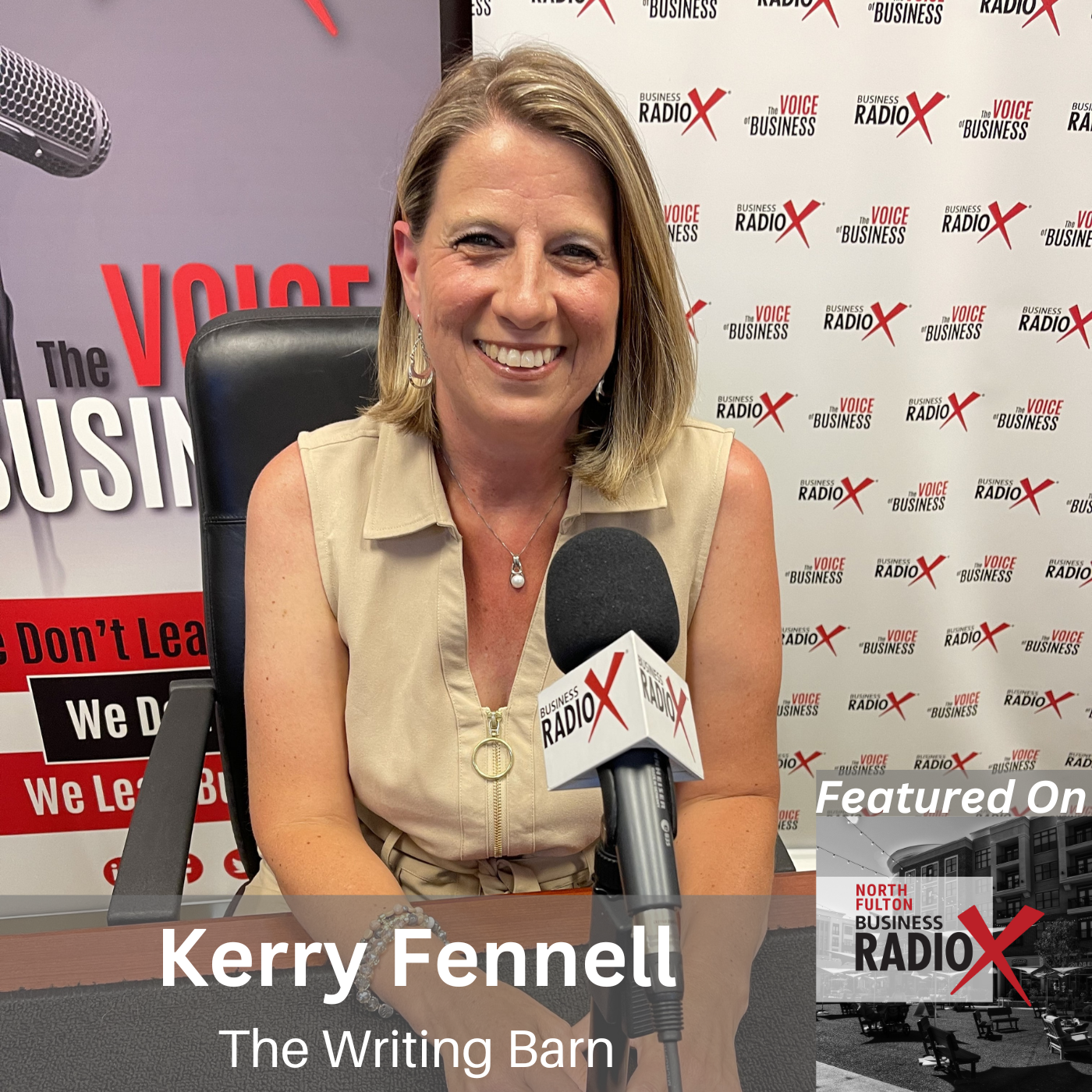
Brand Messaging with Kerry Fennell, The Writing Barn

May 7, 2025 by John Ray

Brand Messaging with Kerry Fennell, The Writing Barn, on North Fulton Business Radio with host John Ray
North Fulton Business Radio
Brand Messaging with Kerry Fennell, The Writing Barn
Loading
00:00 /
RSS Feed
Share
Link
Embed

Download file

Brand Messaging with Kerry Fennell, The Writing Barn, on North Fulton Business Radio with host John Ray

Brand Messaging with Kerry Fennell, The Writing Barn (North Fulton Business Radio, Episode 869)

In this episode of North Fulton Business Radio, host John Ray talks with Kerry Fennell, founder of The Writing Barn. Kerry helps small business owners, consultants, and solopreneurs clarify their brand messaging and connect more effectively with their audience. She explains why clear messaging is more important than ever in today’s crowded digital world, how imposter syndrome often holds professionals back from showing up authentically, and why good writing starts with understanding rather than selling. Kerry also discusses the concept of human-centered marketing and how writing can build trust, clarity, and connection. Whether you are building a brand, refining your voice, or learning how to use AI responsibly, this conversation offers practical guidance for writing that resonates.

John Ray is the host of North Fulton Business Radio. The show is produced by John Ray and North Fulton Business Radio, LLC, an affiliate of Business RadioX®, and is recorded inside Renasant Bank in Alpharetta.

Kerry Fennell, The Writing Barn

Kerry Fennell, The Writing Barn

Kerry Fennell is a copywriter and brand messaging strategist based in the Atlanta metropolitan area, known for her work with The Writing Barn. She specializes in helping B2B founders, business coaches, consultants, and service providers clarify and communicate their brand messaging to attract ideal clients and build trust.

Kerry is professionally trained in B2B copywriting through the American Writers and Artists Institute (AWAI) and holds a Content Marketing Certification from HubSpot Academy. Her approach is rooted in providing clarity, confidence, and impactful messaging while reducing the overwhelm often associated with marketing. With experience spanning marketing strategy, website copy, sales pages, and email campaigns, she also offers ghostwriting services for executives and founders in thought leadership and branding.

Kerry’s background includes roles in executive support, event planning, and admissions, and she is recognized for her faith-driven, purpose-filled work ethic and high emotional intelligence. Through The Writing Barn, she is dedicated to bringing authenticity and human connection back into marketing communications.

Website | LinkedIn

Topics Discussed in this Episode

00:00 Introduction and Welcome to North Fulton Business Radio
00:29 Guest Introduction: Kerry Fennell from The Writing Barn
02:03 The Importance of Brand Messaging
03:05 Kerry’s Career Journey and Passion for Writing
04:46 Challenges in Marketing and Overcoming Imposter Syndrome
08:10 Defining a Clear Brand Message
10:31 Human-Centered Marketing
14:25 The Role of AI in Marketing
25:18 Success Stories and Client Experiences
27:34 Conclusion and Contact Information

About North Fulton Business Radio and host John Ray

With over 860 shows and having featured over 1,300 guests, North Fulton Business Radio is the longest-running podcast in the North Fulton area, covering business in our community like no one else. We are the undisputed “Voice of Business” in North Fulton!

The show invites a diverse range of business, non-profit, and community leaders to share their significant contributions to their market, community, and profession. There’s no discrimination based on company size, and there’s never any “pay to play.” North Fulton Business Radio supports and celebrates businesses by sharing positive stories that traditional media ignore. Some media lean left. Some media lean right. We lean business.

John Ray, host of  North Fulton Business Radio, and Owner, Ray Business Advisors

John Ray is the host of North Fulton Business Radio. The show is produced by John Ray and North Fulton Business Radio, LLC, an affiliate of Business RadioX®, and recorded inside Renasant Bank in Alpharetta.

The studio address is 275 South Main Street, Alpharetta, GA 30009.

You can find the full archive of shows by following this link. The show is available on all the major podcast apps, including Apple Podcasts, Spotify, Google, Amazon, iHeart Radio, and many others.
John Ray, The Generosity MindsetJohn Ray also operates his own business advisory practice. John’s services include advising solopreneurs and small professional services firms on their value, their positioning and business development, and their pricing. His clients are professionals who are selling their expertise, such as consultants, coaches, attorneys, CPAs, accountants and bookkeepers, marketing professionals, and other professional services practitioners.

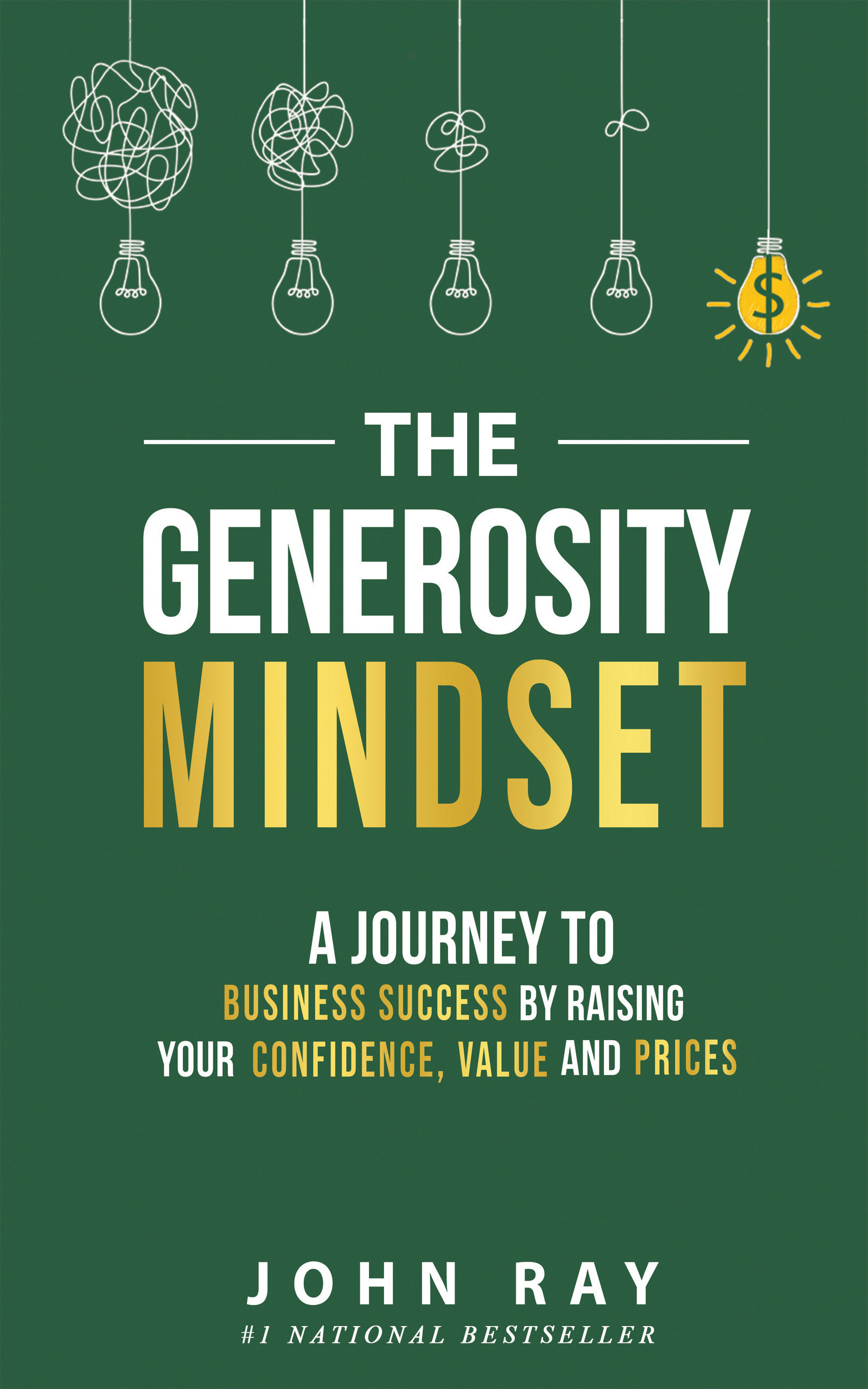
John is the national bestselling author of The Generosity Mindset: A Journey to Business Success by Raising Your Confidence, Value, and Prices.
Tagged With: AI, brand messaging, brand voice, copywriter, copywriting, human-centered marketing, imposter syndrome, John Ray, Kerry Fennell, North Fulton Business Radio, overcoming imposter syndrome, The Writing Barn

Bill Wilson – WDUN – Master Copywriter + Audio Engineer (Part 4 – “The Art of Sales” with Phil Bonelli)

July 7, 2024 by Rose

North Georgia Business Radio
Bill Wilson - WDUN - Master Copywriter + Audio Engineer (Part 4 - "The Art of Sales" with Phil Bonelli)
Loading
00:00 /
RSS Feed
Share
Link
Embed

Download file


Always be selling. If somebody doesn’t need your services right now, when they hear your voice long enough, it gets stored between their ears. – Bill Wilson

What do Copy, Consistency, and Communication have to do with sales? Well… EVERYTHING!

Remaining top of mind with your audience is vital in sustaining brand awareness and customer loyalty. Consistent advertising across different channels ensures that potential customers constantly see and remember your brand. Staying top of mind builds trust and credibility with your audience, leading to increased sales and business growth.

Bill Wilson, North Georgia Business RadioX’s premier audio engineer + Master Copywriter, brings over two decades of radio experience and expertise in writing compelling sales copy. With a career that began in 1993, he has honed his skills in producing, mixing, and creating impactful advertising strategies.

Bill’s ability to effectively communicate value through copywriting and his extensive knowledge of the radio medium make him an invaluable resource for small business owners looking to enhance their advertising effectiveness and sales strategies.

Maximize Your Reach

Expanding your reach is crucial in advertising, as it allows you to connect with a broader audience and potential customers. Utilizing various mediums such as radio, social media, and cold calls can help maximize your reach and increase brand awareness. By reaching more people, you have a higher chance of converting leads into sales.

Stay Top of Mind

Remaining top of mind with your audience is vital in sustaining brand awareness and customer loyalty. Consistent advertising across various channels ensures that your brand is constantly visible and remembered by potential customers. Staying top of mind builds trust and credibility with your audience, leading to increased sales and business growth.

Captivate Your Audience

Captivating your audience is essential in effective advertising, as it keeps them engaged and interested in your message. Writing compelling sales copy and utilizing professional copywriters can help you capture their attention and convey the value of your product or service effectively. By captivating your audience, you increase the chances of conversion and customer retention.


Connect with Bill:

Website — DJTrivia.com

Facebook – https://facebook.com/DJTrivia

Connect with Phil Bonelli:

https://www.facebook.com/Hopewell-Farms-GA-105614501707618/

https://www.instagram.com/hopewellfarmsga/

https://www.hopewellfarmsga.com/

Connect with Beau Henderson:

https://RichLifeAdvisors.com

https://www.facebook.com/RichLifeAdvisors

https://www.facebook.com/NorthGARadioX

This Segment Is Brought To You By Our Amazing Sponsors

Hopewell Farms GA

Roundtable Advisors

RichLife Advisors

Regions Bank

Highlights Of The Show

00:00:41 – Bill Wilson’s Background in Radio
Bill Wilson shares his journey in radio, starting as a board operator and transitioning to producing shows and writing sales copy, winning an Addy award in the process.

00:05:30 – Importance of Effective Copywriting
Bill emphasizes the importance of professional copywriting, highlighting the need to avoid cliches and focus on communicating value to the audience in a unique way.

00:09:42 – The Essence of Selling
The conversation delves into the essence of selling, emphasizing the importance of focusing on the customers’ needs and problems, rather than self-promotion.

00:11:44 – The Impact of Radio Advertising
Bill discusses the effectiveness of radio advertising, highlighting the inability to skip commercials and the positive impact on sales and customer retention.

00:13:48 – Cohesive Team and Business Radio
The discussion highlights the importance of a cohesive team and the upcoming segments of North Georgia Business Radio.

00:14:04 – Importance of Planning
Planning is emphasized as essential for effective communication and success in sales, with the need to address customer needs being a top priority.

00:15:40 – Strategic Communication and Customer Needs
The importance of addressing customer needs through strategic communication is discussed, emphasizing the value of understanding and meeting the needs of customers.

00:17:29 – Utilizing Strengths for Sales
The conversation explores how individuals can utilize their strengths in sales, highlighting the value of understanding one’s strengths and utilizing them effectively in a sales context.

00:27:11 – Origin of Baseball
Bill and Phil discuss the origin of baseball, debunking the myth of Edna Doubleday’s involvement and the influence of cricket.

00:27:40 – Research and Knowledge
Bill emphasizes the importance of leaning into strengths and conducting thorough research, while Phil highlights the need to provide expertise and add value to clients.

00:28:23 – Information and Misinformation
Both Bill and Phil stress the prevalence of misinformation, with Bill noting that 70% of submitted questions are wrong, often citing unreliable sources like Google and Wikipedia.

00:30:04 – Roundtable Advisors
Phil discusses the services provided by Roundtable Advisors, offering experienced CFOs and COOs on a fractional basis to drive businesses, emphasizing the need to solve problems beyond their product offerings.

00:36:07 – Consistency in Sales and Advertising
Bill and Phil highlight the importance of consistency in sales and advertising, discussing the impact of radio advertising and the need to stay top-of-mind for potential clients through various mediums.

Tagged With: Audio Engineer, Bill Wilson, copywriting, DJ Trivia, Hopewell Farms GA, phil bonelli, radio advertising, Roundtable Advisors

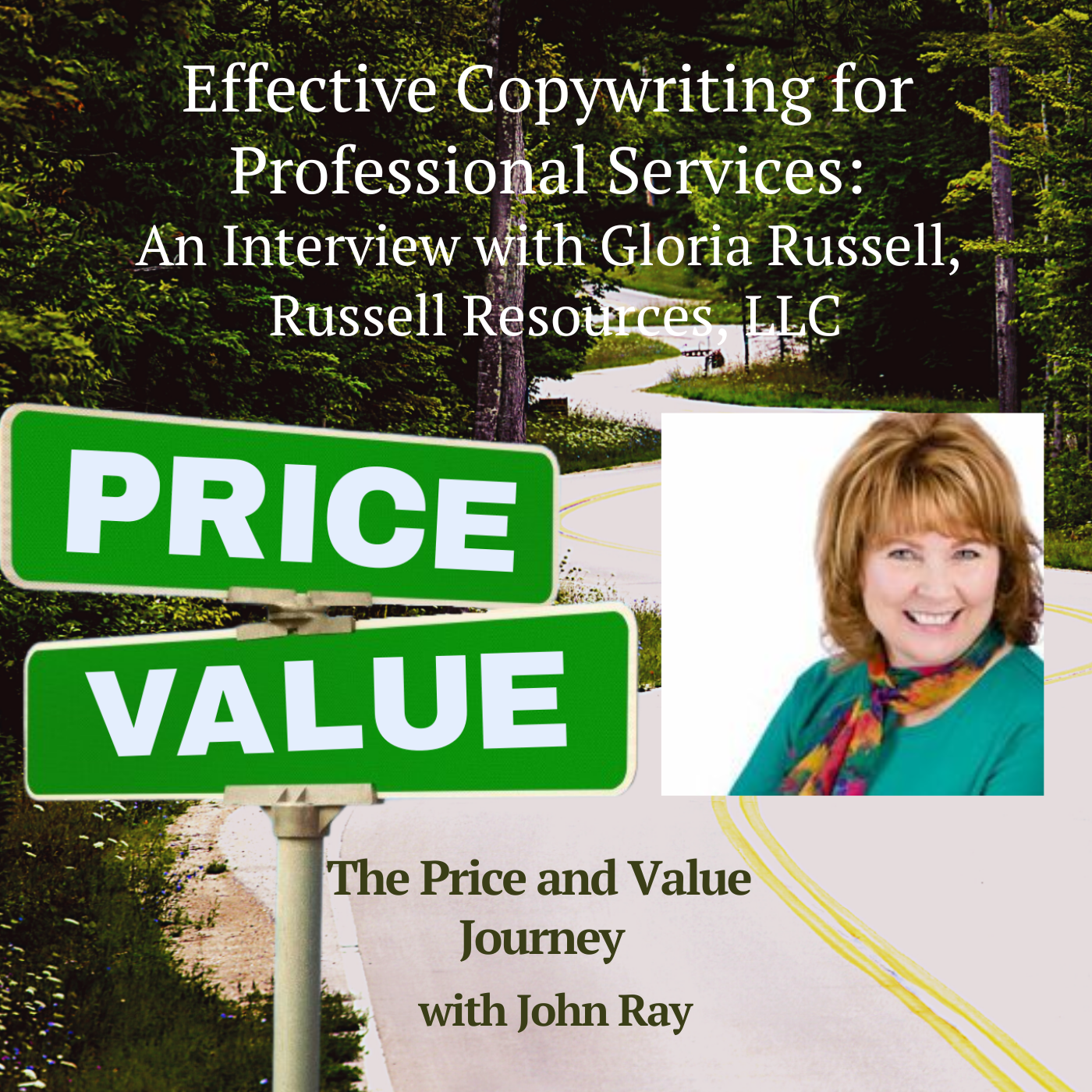
Effective Copywriting for Professional Services: An Interview with Gloria Russell, Russell Resources, LLC

March 29, 2023 by John Ray

Effective Copywriting
North Fulton Studio
Effective Copywriting for Professional Services: An Interview with Gloria Russell, Russell Resources, LLC
Loading
00:00 /
RSS Feed
Share
Link
Embed

Download file

Effective Copywriting

Effective Copywriting for Professional Services: An Interview with Gloria Russell, Russell Resources, LLC

Copywriter Gloria Russell joined host John Ray to discuss the elements of effective copywriting for professional services providers. Gloria talked about the problem of services providers talking too much about themselves, uncovering their unique brilliance, the rise of AI and what it means for copywriting, why reading makes for better copywriting, and much more.

The Price and Value Journey is presented by John Ray and produced by the North Fulton studio of Business RadioX®.

Russell Resources

How you show up and serve your clients is more important now than ever.

At Russell Resources and writer.mn, they help U.S. business owners who are bogged down with ineffective website content and unclear marketing messages.

They know that you would like to finally feel confident that you are sending the right message to the right audience. They understand that successful messaging must authentically resonate with your ideal clients. With their marketing and writing expertise, they would love to talk with you about helping you attract more of your ideal clients to increase revenue and profit.

Russell Resources can help you extend your reach, so it delivers value to you and your clients. They provide the strategic, client-focused, written content that sends your unique message to those you most love to serve.

Website | LinkedIn | Instagram

Gloria Russell, Founder and Lead Copywriter, Russell Resources LLC

Gloria Russell, Founder and Lead Copywriter, Russell Resources LLC

Nine years ago, Gloria Russell launched Russell Resources LLC to help entrepreneurs upgrade their marketing strategy and copywriting. She works with service-based businesses to gain clarity on their preferred markets, ideal clients, and services that provide in-demand solutions. Her compelling content enhances visibility, credibility, and marketability by reaching the right audience through engaging topics on websites, blogs, and LinkedIn posts.

After a lengthy corporate career, Gloria now enjoys working with clients across the country from her office in west central Minnesota. She treasures all the special times with her children and grandchildren who live out of state. Her son, Ryan, and family live in Virginia, and Michigan is home to her daughter, Odessa, and family.

Gloria enjoys travel, music, adventure or mystery books and movies, home improvement projects, and the cheery sound of birds chirping.

LinkedIn

TRANSCRIPT

John Ray: [00:00:00] And hello again, folks. I’m John Ray on The Price and Value Journey. And I’m delighted to welcome my friend Gloria Russell. Gloria is based in Minnesota, but she works all over the country and she works with a number of different verticals, you might say, performing copywriting services, giving them copywriting that they need for their website. It might be for brochures or social media posts or maybe LinkedIn or what have you.

But I’ve known Gloria for a while now and I really love her work. I love her perspective. And I thought she would be a great person to talk to about effective copywriting for professional services firms. Gloria, thank you so much for joining me.

Gloria Russell: [00:00:50] Thank you so much. It’s a pleasure. Thank you for the invitation.

John Ray: [00:00:54] Absolutely. So I didn’t do your background justice because you’ve done so much great work. But I’m going to turn it over to you and tell the listeners a little bit more about your background and how you became a copywriter.

Gloria Russell: [00:01:15] Well, I think, John, it actually started kind of a young age, at least for the writing part of it. When I was a young girl, I used to actually rip pictures out of a magazine and then I’d write my own story. I had quite the imagination. And I’m a reader and I think readers make good writers a lot of time. And it’s probably just because you have that exposure to the written word and the spelling and word usage, just all of that. And of course, you love the impact and the adventure. But I do feel like readers oftentimes make good writers.

And so that’s kind of how I began. I used to like to write. I always been a reader. But if you fast forward to my corporate career, there I had a variety of responsibilities. But part of it was I wrote internal and external communications. And for some of them I was the author, but for others I was writing for other people. It might have been the owner of the company, the VPs, the CEO, the C-suite, whomever.

And so I learned, and I feel like some of it might have been a little bit of a natural tendency. But I learned through years of practice how to write in the voice of many different people. And it was really fun for me. So I enjoyed that a lot.

John Ray: [00:02:49] You said something there I want to follow up on. You talk about the connection between reading and writing. Talk about how important it is to read in order to develop your writing skills.

Gloria Russell: [00:03:06] I think it is, most definitely, because and I think that’s one of those things that really helps. When you read, and I’ve got the whole bookshelf, when you read, you really see how stories develop. You see different styles of writing, but you can also recognize the good patterns and even just the words and the spelling and all of that. I’m one that finds the mistakes in books. And I’m always thrilled when I read a book and there are no mistakes, but I think it is important.

It’s kind of funny, John, because in my corporate days when I did a lot of writing, I didn’t call myself a copywriter. Even though I certainly was, but that was just one of my many duties. And I didn’t call myself a copywriter. It wasn’t until I decided to leave the corporate campus and start my own business that I realized, oh, now I’m a copywriter.

Because what I was trying to do, I wanted to help business owners with their copywriting, with their content, with how they projected themselves. And that’s what they told me they needed the most. So the things I love to do, that’s what I decided. And I do love it because it offers me a lot of freedom and flexibility at this stage of my career. But now I indeed do call myself a copywriter because that’s what I do all the time. So I’ve owned up to it now.

John Ray: [00:04:45] Okay. Well, I want to talk about that term for just a second, because the term itself, I understand why you use it because that’s what people are looking for. So you have to call yourself that, right? But the writing itself is the task, and you do so much more than that. And really, and this is true for any good copywriter, right? I mean, it does not start with the writing. It starts with something bigger than that. Talk more about that.

Gloria Russell: [00:05:20] Yeah, absolutely. Well, so there is the writing thing, and that’s the part where I say I kind of came by that early and came by that honestly. But when I talk about the content, really, it’s the marketing. And sometimes people don’t know that’s what they need and they’re asking for the writing, which is definitely the product. But a lot of times, it’s the marketing and they don’t quite understand that.

So when clients come to me, typically what they’ll say is they need the content, they need the writing, but they don’t have time, they don’t know how to write, they can’t write. Some of them just say it would be torture. So they want something professional, something that’s really going to serve them well, represent them well, but they’re not sure how to provide that for themselves.

So a lot of times, even I do use the word copywriting because you need to, but a lot of times I use the term marketing content. So I’ll say I write marketing content, or I create marketing content. And I think sometimes people understand that a little bit better.

John Ray: [00:06:33] You know, I think I’m qualified to judge a bad copywriter from a good one because I’ve had bad ones and I’ve had good ones, and that means you. And I think the difference is the copywriters that play into people’s point of view, right? I mean, and I think your talent, it seems to me, is giving professional services providers and other companies you work with a point of view makeover that it’s not about them and what they do per se.

Gloria Russell: [00:07:14] This is so true. I think what you need to do and what people want, sometimes they’re just not really able to express it. But really, we need to uncover their unique brilliance and how they’re different and how they relate to the client. Because in the writing and in the copy that people are going to read, it needs to be all about the client.

There are many different types of copywriters. There are some and they are professionals as well. But there are some that will write for a particular industry, and they will maybe create companies that will create a website and the copy that goes with it, and they sell that same thing to everyone in that niche or all the same.

So there’s really no way to differentiate when you see that. And if that’s something that works for you and that’s what you need, that’s great. You have to know what your objectives are and what your goals are. For me, I like to provide original content. And so that means I really need to get to know the business and who their ideal clients are.

John Ray: [00:08:22] Yeah. And I guess this also comes around to a lot of professional services providers have, they’ve gotten trained too. Right? I mean, they’ve done a lot of writing along the way, particularly attorney’s verticals like that. Right? They’ve done a lot of that. So. If you’re a good writer, why do you need to hire a copywriter?

Gloria Russell: [00:08:55] Well, there’s usually two reasons. People will come to me, and they’ll say, I am a good writer. And they are, but they don’t have time. They absolutely do not have the time. And that’s not where they want to focus their energy. But most of them are good, they’re good writers, but they don’t really understand the marketing side of it. And you need to really love the outcome.

So once you have new content, say for your website, your blogs, your LinkedIn profile, bios, whatever it is, you want to feel really good about that and proud of it because I feel really bad when people say, yeah, I wrote it but it doesn’t really do the company justice. It doesn’t really help me. People aren’t attracted to it.

And the whole thing is you need to speak to the clients. You need to show what’s in it for them and you need to do it pretty quickly. So I think a lot of times the real reason is it’s just a matter of the marketing side of it. People have trouble talking about their own, talking about themselves or their own business a lot of times.

John Ray: [00:10:06] Well, my sense of it is they talk too much about themselves. So maybe they’re too good at talking about themselves as opposed to talking about what’s going on in the heads of the potential client that they have, right?

Gloria Russell: [00:10:20] Right. Well, that’s absolutely true. And that’s one of the things that I see as probably the biggest, well, I would say undoubtedly the biggest mistake that people make when they write their own content. And a lot of people will do that, especially when they’re starting out. But they talk too much about themselves and too much about the company and we do this and we do that.

But the truth is, when someone comes to your website or looks at some marketing materials, whatever it is, they want to know what’s in it for them. And people don’t have a very long attention span anymore. I don’t either. So they want to see it and they want to see it quickly. So you really need to talk about the client and what’s in it for them. That’s what gains you the outcome that you’re really looking for.

John Ray: [00:11:11] Well, let’s talk about the, I guess, the piece of this that involves how you work with a client and how you get to that point. So dig into that for us. Take us through what that looks like for you as you unpack all that with a client.

Gloria Russell: [00:11:33] Well, when there’s a new client, the first thing always is to get to know them. So I will spend time with them to really understand what drives them their why, why are they in it? I’d like to know about their business, the mission, the vision, what they’re hoping to achieve. And so we have some discussions on that. Some of them will go pretty deep to see what’s it all about. I want to know what’s important to them.

But the second thing we’ll talk about is who is their ideal client? Who are they really looking for? Who do they want to serve? And those are the people that we want to attract because we want them to fall in love with you so that you can serve more of those type of people. So we discuss all of that with an understanding of what their goals are and who they’re really going to be basically a hero to. And then we decide what needs attention and where we can show the client some love. So it might be their website, it might be their LinkedIn, it might be blogs. Sometimes it’s video, video scripting, case studies, whatever they need. But you need to start with those elements first.

John Ray: [00:12:49] Do you find that you discover more about the clients of a service provider than maybe they knew themselves?

Gloria Russell: [00:12:59] It happens sometimes. Yeah. The interesting thing is when I talk with business owners, most of them know a lot about their business and what their goals are and what they’re trying to achieve, who they want to serve. Some of them are very clear on who their preferred clients are and who they can really make a difference for. But some of them are not so clear, especially if they’re a little earlier on in their business.

Or during the pandemic, a lot of people change their focus or do a little bit of a switch and they might have added services or just they’re doing their work differently. They might even be looking for a different set of clients. So we would talk about that. And sometimes we need to have a little bit more discussion on that to really understand who it is they’re looking for. Because until I know who those clients are that they really want to serve, I can’t write for them. I need to know who they are so that I can write directly to them, and it will speak to them and resonate with them.

John Ray: [00:14:11] Yeah, that makes sense, Gloria. Now, so you go through — and I know this from working with you. You go through a pretty extensive interview process, right? And you record that interview, so you have access to that later, right?

So I guess what are the big — are there surprises that come out of that? I’m just curious if your clients sometimes have epiphanies about their own business that maybe they didn’t fully appreciate? And just because you’re an independent third party and looking for their special sauce that you find things they didn’t know they had.

Gloria Russell: [00:15:01] This is true. It does happen sometimes. And it turns out to be a delightful journey for the business owner, I feel. And they’ll say, oh my gosh. And sometimes I think they’re a little bit worried about it, like, well, it will be too overwhelming, depending on where they are at. It depends really on how deep we go into that and how much we have to do.

But typically, at the end, they’ll just say, oh my gosh, I learned so much and I’ve narrowed things down and I have much more clarity now. And they realize that actually the exercise was fun. And so, I really love that because I don’t want anybody feeling nervous about it or like it’s going to be too much work. But you do have to ask the right questions so that you can uncover the essence of their business goals and what they’re really trying to accomplish.

John Ray: [00:15:57] Yeah, that makes sense. So what are the services businesses that you find maybe the most challenging to write for and why?

Gloria Russell: [00:16:13] That one’s pretty easy for me. And every copywriter might have a different answer. But for me, the most challenging are legal and financial. And it doesn’t mean that I don’t write for them. I do. I will write things like ads. I’ll do their LinkedIn profiles to make sure it really represents them well. I will do some website content, or it could be blogs or posts.

What I won’t do is I won’t do white papers or something that really gets deep into the topic. And the reason is I’m not the expert on the legal and the financial. That’s not my main focus. And there are a lot of things in those industries that you can’t say or certain ways you can’t say it. There are certain words you can’t use. And so, I just avoid that. And if there is someone who needs that type and that depth of copy for legal or financial, I refer them to someone who only works with that group.

John Ray: [00:17:23] Okay, cool. So let’s say we’ve got some someone listening to this, and they’ve decided, okay, I give up, I’m going to hire my own copywriter. So one question that I get a lot from people is I don’t know how to judge. I don’t know how to judge who’s a good fit for me and who’s not, because it all kind of sounds the same to me when I go to their website or what have you. So how do you counsel someone on how to make a good selection of a copywriter for their business?

Gloria Russell: [00:18:03] Well, I think there are ways that you can go about that. And first thing I would do is you have to have an idea of what you need. But you can go to the copywriters, look for their LinkedIn. And when you look at their LinkedIn profile, you can gain a little bit of an idea of who they are, what they do, what it might be like to work with them. And you can see a little bit about their style.

The other thing you can do is you can look at their recommendations and that will tell you something I think that’s valuable. And the LinkedIn recommendations are awesome. You can see who said what. You can even see the date that it was posted. So I think that’s really good. You can also go to their website and just see how they wrote their own website and who they seem to be speaking to, that kind of thing.

So I think those two. And then if it seems like something that speaks to you, you can ask for a conversation. I’m sure that any copywriter would be very happy to have a chat and you can decide if it’s a good fit.

John Ray: [00:19:22] Yeah. Okay. So I want to get to the topic of the day, which is AI and ChatGPT and Google has Bard coming out. Well, it’s already out right now, but talk about just how you view AI and copywriting and your ability to do what you do.

Gloria Russell: [00:19:52] Yes. It certainly is the topic of the day, isn’t it?

John Ray: [00:19:55] Oh, yeah.

Gloria Russell: [00:19:57] For me, I love technology, so I don’t think of AI or any kind of techno innovative happenings as any kind of a threat. If you think about over the years, all the technology changes we’ve had, it’s exciting and we have capabilities now that we never had before. And this is another thing. I mean, it’s ever-evolving and it will continue to evolve.

I know there are people who aren’t as fond of technology. Probably they think, oh, now we have to learn another thing. Or some people just don’t like change. And so that impacts how people feel about things. I’m one of those that really embraces change and technology. I mean, as long as it can do something for me that might be productive, it’s great. So change doesn’t bother me.

I mean, even in my personal life, John, I, like a lot of people don’t like to move and I have moved many times. For me, that’s just an adventure. I don’t have to clean my closets. I can just move. And I kind of take that same perspective with technology. And I think AI can really help a lot of business owners and it can help a lot of career professionals in many ways that might not have been available to them before. And it will keep getting better.

I’ve seen a lot of my clients use AI effectively for writing emails. Some of them, especially if they’re a little concerned about how to structure the sentence or which words to use, they find it very valuable. I’ve seen others use AI as they start projects, maybe to outline something or to gain some other ideas. That is another benefit.

And then of course, there are some people who are using AI to write their posts in their blogs and their eBooks and all of that. And it’s amazing if you just watch it unfold, it’s just like, oh my gosh, look at this, it’s amazing to just see it happen so quickly.

But here’s the caution. And this is my view, but here’s the caution. This is like anything, I believe the output is only as good as the input. And so to use it well, you really need to spend some time with it and improve the questions you ask, and you need to know when to use it and basically create a strategy.

John Ray: [00:22:35] Yeah. There’s something beguiling about getting the results as quickly as you get them. And what I mean by that is it’s kind of like if you, well, I’m dating myself. Probably not you, but I’m dating me. So, I mean, when, I guess it was VisiCalc, came out and the old spreadsheet software and because everything was so well organized and so forth, I mean, you maybe took a little bit of a, had more confidence in the results than you should. Right. Just because of the way the output looked. Right. And it strikes me that something like ChatGPT is very similar.

Gloria Russell: [00:23:28] Yes. Yes, I think so. I don’t believe for a minute that it would replace humans for exceptional copywriting, but it can help speed up the process a little bit if really learn how to use it to your benefit. And on the other hand, I’ve had clients come to me in the last weeks saying they don’t want to use AI for their content because they don’t feel that it gives the personality, or it doesn’t add to their branding, and it just doesn’t pull it all together. So that’s why they would like for me to do it so that they know that that’s they’ll get the outcome that they want.

But the whole thing is fascinating. And I think the other caution that I would have is it’s like anything else, it’s not perfect. And so when you use ChatGPT or the others, it will create content that can sometimes be inaccurate and there can be mistakes. It’s like any software actually even if — well, it’s because I know I guess. But if I use the grammar software, I can see it make mistakes or I can see it use a word that changes the meaning basically of what I want to say. And it’s not going to be a good thing for me.

So you have to be aware that all the information might not necessarily be accurate and some of it might be a little bit biased. So you have to, when you’re using it, I feel like you need to, in the end, really make it your own and edit it. Make sure that it has the proper content, grammar, tone and flow that you’re looking for. In other words, what you really want is something original, not strictly machine generated.

John Ray: [00:25:21] Right. Yeah. And so do you use ChatGPT or its equivalents? Do you use AI yourself?

Gloria Russell: [00:25:33] I do to a point. I do to a point. But I certainly don’t write my clients content with ChatGPT. No.

John Ray: [00:25:45] Okay.

Gloria Russell: [00:25:46] N-O.

John Ray: [00:25:47] So I got it. So are you using it for like research, outlining, prompts, or that kind of thing? Is that the extent of your usage?

Gloria Russell: [00:25:57] Pretty much. I would say, honestly, I’m using it just to see what it can do.

John Ray: [00:26:02] Okay. Okay.

Gloria Russell: [00:26:03] Really, I feel like we’re really at the beginning stages of this. And so I use it to see what it can do, but it does not replace the original content for me at all. So, but it’s very interesting. It’s fascinating.

John Ray: [00:26:20] Yeah, for sure. So let’s talk about tone and getting someone’s voice because I can hear someone saying it’s a valid point. That may be a problem with ChatGPT, but how do I get a copywriter that gets my tone and my voice, right, that makes it sound like me? So how do you accomplish that?

Gloria Russell: [00:26:50] Well, I don’t know that there’s really a class I could teach on that one. But again, I feel a little bit like I had maybe a little bit of a natural tendency there, but also probably just because I’ve done it for so long. That was part of my corporate work. And again, you need to really know your client and you need to know who you’re speaking to. So that’s the key to it right there, I think.

And it’s very important to have those conversations with the client, to understand their personality and their brand, what they’re trying to accomplish, their focus. And in working with them over time, if that changes, then you have those discussions again. But if you’re working with someone for the first time, like I will look at what has been created before and I’ll ask them how they feel about it. Sometimes they’re really happy with it, sometimes they’re not. They understand that that did not represent them the way they wanted. And so we talk about those kinds of things. But I think if you ask the right questions, you can really understand better who they are and how they would speak to their client.

The other part is knowing the client and how would they speak to those marvelous clients that they love to serve, and how do those clients want to be spoken to, what do they want to know? And again, you don’t want to use too much technical jargon or acronyms. You don’t want to get too technical. So there’s a lot to it, but it’s really fun. And I just am thrilled when I hear the comments that people say, oh, I don’t know how you can write so that it sounds like I wrote it, but you do a great job. And that really makes me feel good.

John Ray: [00:28:46] Yeah. And that really gets over the objection I think a lot of people have toward hiring a copywriter in general, right. And they put this in a category. They kick the can down the road because that’s what they’re afraid of and they’re waiting for a time they’ll be able to do it themselves. And they never get to that point, right?

Gloria Russell: [00:29:07] Yeah, it’s true. I have had a few, not many, but a few say, well, I don’t know that you could write my content because you don’t totally understand my business. Well, we have conversations so that I can understand enough. And I think what helps me too is that I have that corporate background and I was involved always from the strategy all the way through to the implementation.

So I do understand business and that probably helps me too. But sometimes it’s maybe better not to know all the details because you can write then in a way that more people will understand rather than when you’re really in the thick of it and you’re getting a little bit too detailed or too technical. It’s interesting.

John Ray: [00:29:54] Yeah. Sometimes knowing too much makes you a captive of all that, right?

Gloria Russell: [00:29:58] Yeah.

John Ray: [00:29:59] Yeah, yeah. Yeah, that makes perfect sense to me. Gloria, this has been great. And I can’t imagine that there aren’t some folks that would like to know more about you and your services. So can we give them your contact information and allow them to get in touch with you?

Gloria Russell: [00:30:18] Absolutely. Thank you so much. So they could Google Gloria Russell copywriter and they would find my LinkedIn and my website for Russell Resources. That’s one way. But I have a shortcut. The shortcut is you can just Google writer.mn. I’m based in Minnesota, so the MN is easy to remember. So writer.mn goes directly to my Russell Resources website.

John Ray: [00:30:44] Terrific. And you were again, work with clients really all over the place. You may be in Minnesota, but in terms of your clients, you’re all over the place.

Gloria Russell: [00:30:54] All over the country. I don’t do international anymore, but all over the country.

John Ray: [00:30:59] There you go. Gloria Russell. Gloria, this has been great. Thank you so much for joining me and our listeners and talking about your work and the copywriting profession. Thank you so much.

Gloria Russell: [00:31:14] Thank you so much. I appreciate it. It’s a pleasure.

John Ray: [00:31:18] Hey, folks, just a quick reminder that you can find the show archive for this series at pricevaluejourney.com, as well as your favorite podcast app. So whichever makes the most sense to you, just search pricevalujourney.com or go to pricevaluejourney.com or search Price Value Journey and you’ll find it.

Also, if you go to pricevaluejourney.com, you can find updates on my upcoming book. It’s called The Price and Value Journey, Raising Your Confidence, Your Value and Your Prices Using the Generosity Mindset Method. Be out later this year in 2023. So for my guest, Gloria Russell, I’m John Ray. Join me next time on The Price and Value Journey.


About The Price and Value Journey

The title of this show describes the journey all professional services providers are on:  building a services practice by seeking to convince the world of the value we offer, helping clients achieve the outcomes they desire, and trying to do all that at pricing which reflects the value we deliver.

If you feel like you’re working too hard for too little money in your solo or small firm practice, this show is for you. Even if you’re reasonably happy with your practice, you’ll hear ways to improve both your bottom line as well as the mindset you bring to your business.

The show is produced by the North Fulton studio of Business RadioX® and can be found on all the major podcast apps. The complete show archive is here.

John Ray, Host of The Price and Value Journey

John Ray The Price and Value Journey
John Ray, Host of “The Price and Value Journey”

John Ray is the host of The Price and Value Journey.

John owns Ray Business Advisors, a business advisory practice. John’s services include advising solopreneur and small professional services firms on their pricing. John is passionate about the power of pricing for business owners, as changing pricing is the fastest way to change the profitability of a business. His clients are professionals who are selling their “grey matter,” such as attorneys, CPAs, accountants and bookkeepers, consultants, marketing professionals, and other professional services practitioners.

In his other business, John is a Studio Owner, Producer, and Show Host with Business RadioX®, and works with business owners who want to do their own podcast. As a veteran B2B services provider, John’s special sauce is coaching B2B professionals to use a podcast to build relationships in a non-salesy way which translate into revenue.

John is the host of North Fulton Business Radio, Minneapolis-St. Paul Business Radio, Alpharetta Tech Talk, and Business Leaders Radio. house shows which feature a wide range of business leaders and companies. John has hosted and/or produced over 1,700 podcast episodes.

Coming in 2023:  A New Book!

John’s working on a book that will be released in 2023:  The Price and Value Journey: Raise Your Confidence, Your Value, and Your Prices Using The Generosity Mindset. The book covers topics like value and adopting a mindset of value, pricing your services more effectively, proposals, and essential elements of growing your business. For more information or to sign up to receive updates on the book release, go to pricevaluejourney.com.

Connect with John Ray:

Website | LinkedIn | Twitter

Business RadioX®:  LinkedIn | Twitter | Facebook | Instagram

Tagged With: AI, artificial intelligence, business writing, ChatGPT, copywriting, Entrepreneurs, Gloria Russell, John Ray, Price and Value Journey, Price Value Journey, pricing, professional services, professional services providers, Russell Resources, solopreneurs, value, value pricing, Write.mn

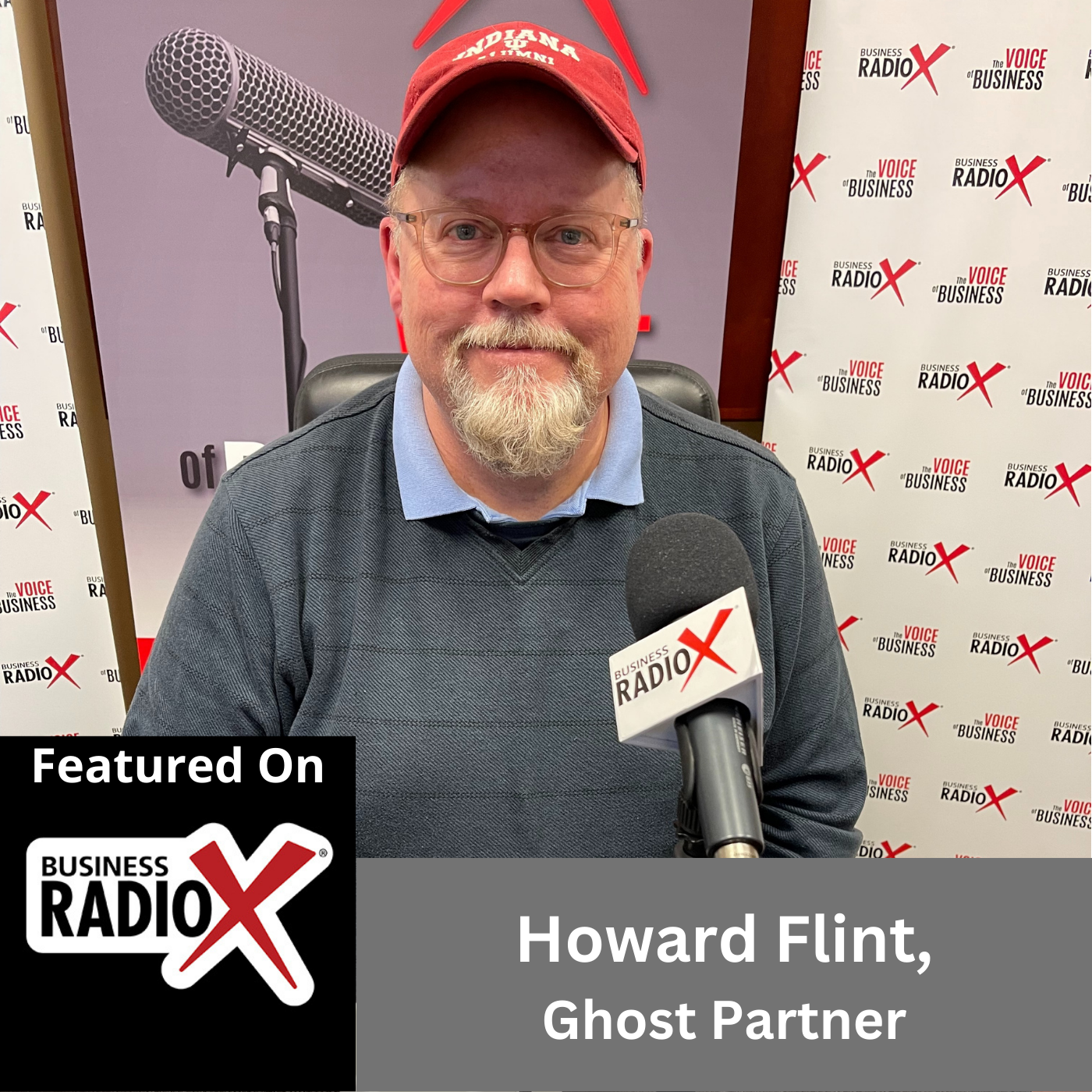
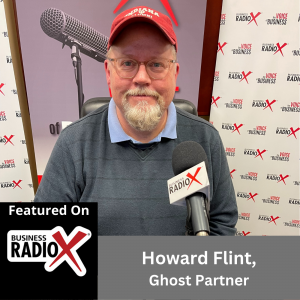
Howard Flint, Ghost Partner

December 19, 2022 by John Ray

Howard Flint, Ghost Partner
North Fulton Business Radio
Howard Flint, Ghost Partner
Loading
00:00 /
RSS Feed
Share
Link
Embed

Download file

Howard Flint, Ghost Partner

Howard Flint, Ghost Partner (North Fulton Business Radio, Episode 591)

Howard Flint, CEO of Ghost Partner joined host John Ray on this episode of North Fulton Business Radio. He discussed why companies need clear messaging to gather leads and to close sales, how most companies are doing email marketing wrong, content which resonates with potential clients, and much more.

North Fulton Business Radio is produced and broadcast by the North Fulton studio of Business RadioX® inside Renasant Bank in Alpharetta.

Ghost Partner

If you have an email customer database, you are sitting on unrealized revenue opportunities. In other words, MORE SALES!

Your current and past customers are your best source for more revenue and increased profitability. When you stay engaged with them through regular email and content marketing, they become REPEAT customers, they buy MORE services from you, and best of all: they REFER you to other customers.

Ghost Partner becomes your CUSTOMER MARKETING partner. We will help you create a strategy that works. Then the Ghost team will execute that strategy every month with success.

Website | LinkedIn | Facebook | Twitter

Howard Flint, CEO, Ghost Partner

Howard Flint, CEO, Ghost Partner

Howard Flint is the owner of Ghost Partner. Howard started Ghost Partner in 2007 after he sold his first company, BUZZ Publishing. The Ghost Partner team specializes in custom content, clear messaging for brands, email, marketing, social, and search advertising.

Howard has been married to Canita of I Canita Cake for 33 years and they have three unruly children.

LinkedIn


Questions and Topics in this Interview

  • Clear Messaging
  • Leads and Sales
  • Email Marketing
  • Good Content

North Fulton Business Radio is hosted by John Ray and broadcast and produced from the North Fulton studio of Business RadioX® inside Renasant Bank in Alpharetta. You can find the full archive of shows by following this link. The show is available on all the major podcast apps, including Apple Podcasts, Spotify, Google, Amazon, iHeart Radio, Stitcher, TuneIn, and others.

RenasantBank

Renasant Bank has humble roots, starting in 1904 as a $100,000 bank in a Lee County, Mississippi, bakery. Since then, Renasant has grown to become one of the Southeast’s strongest financial institutions with over $13 billion in assets and more than 190 banking, lending, wealth management and financial services offices in Mississippi, Alabama, Tennessee, Georgia and Florida. All of Renasant’s success stems from each of their banker’s commitment to investing in their communities as a way of better understanding the people they serve. At Renasant Bank, they understand you because they work and live alongside you every day.

Since 2000, Office Angels® has been restoring joy to the life of small business owners, enabling them to focus on what they do best. At the same time, we honor and support at-home experts who wish to continue working on an as-needed basis. Not a temp firm or a placement service, Office Angels matches a business owner’s support needs with Angels who have the talent and experience necessary to handle work that is essential to creating and maintaining a successful small business. Need help with administrative tasks, bookkeeping, marketing, presentations, workshops, speaking engagements, and more? Visit us at https://officeangels.us/.

Tagged With: conversion copywriting, copywriting, digital marketing strategy, effective email marketing, email marketing, Ghost Partner, Howard Flint, John Ray, leads, marketing strategy, North Fulton Business Radio, Office Angels, renasant bank, Sales

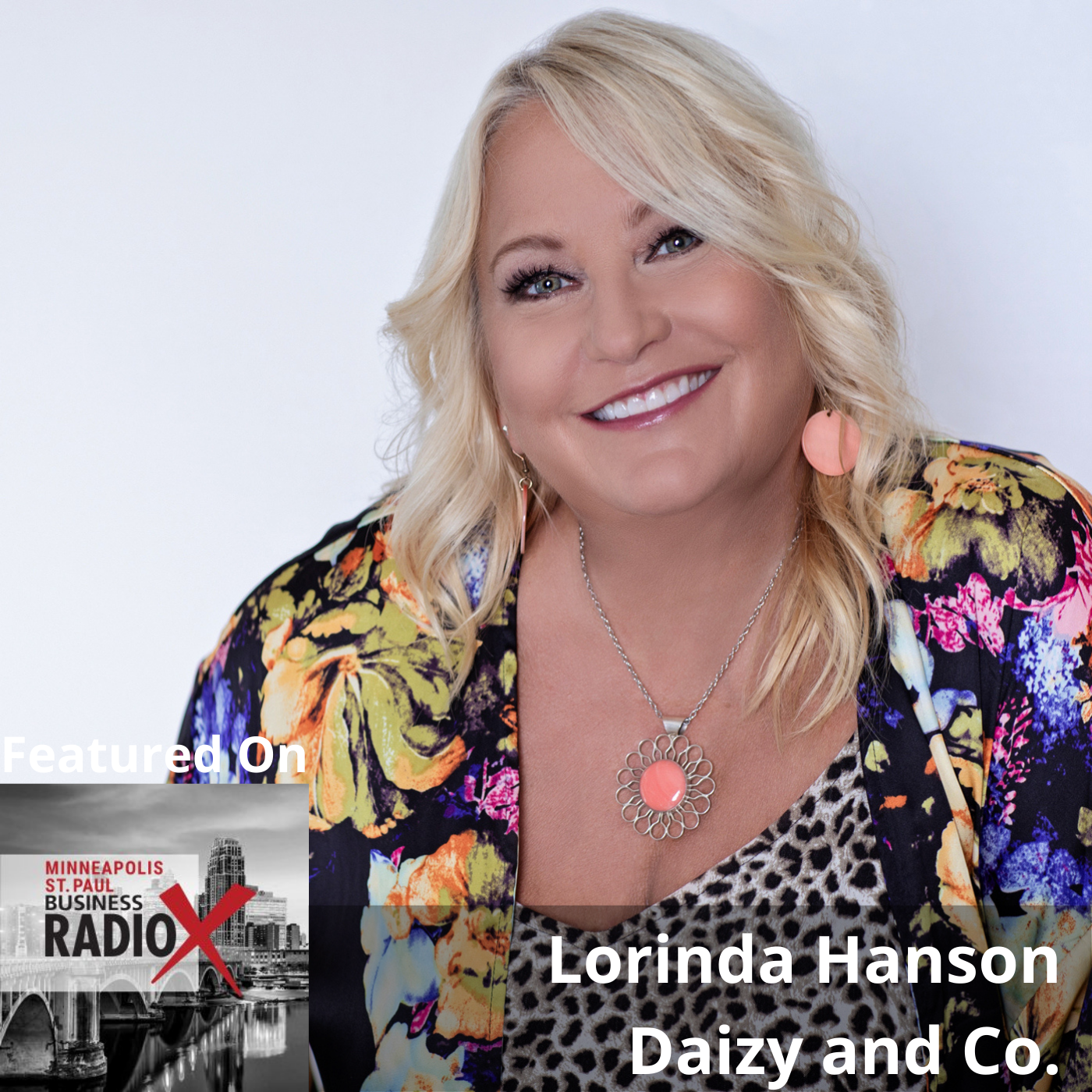
Lorinda Hanson, Daizy and Co.

February 3, 2022 by John Ray

Daizy and Co.
Minneapolis St. Paul Business Radio
Lorinda Hanson, Daizy and Co.
Loading
00:00 /
RSS Feed
Share
Link
Embed

Download file

Daizy and Co.

Lorinda Hanson, Daizy and Co. (Minneapolis-St. Paul Business Radio, Episode 31)

Lorinda Hanson, the founder and owner of Daizy and Co., joined host John Ray to discuss her work in branding and graphic design. Lorinda left “big agency” to work directly with small business clients and loves the variety of clients she works with, including rebrands and start-ups. She shared issues she sees with clients currently, the role of design in business, the resurgence of direct mail, and much more. Minneapolis-St. Paul Business Radio is produced virtually by the Minneapolis St. Paul studio of Business RadioX®.

Daizy and Co.

Consider Daizy & Co. your connection to fresh graphic design. Lorinda will make your company stand out from your competition and raise its hand. She can help with website design, logo design, brochures, ads, direct mail, signage, email marketing, and more. Join her on an adventure in marketing that will engage your customers, build your brand and grow your business — and have fun along the way!

Lorinda offers graphic design, creative design, copywriting, programming, strategy, and printing.

Company website | LinkedIn | Facebook

Lorinda Hanson, Owner, Daizy and Co.

Daizy and Co
Lorinda Hanson, Owner, Daizy and Co.

Lorinda Hanson is a graphic designer, web designer and branding specialist with 25+ years of experience working with a variety of clients in many different industries.

After 16 years of “big agency” experience, she started Daizy and Co. in 2010 to provide professional creative services to small and medium-sized businesses at affordable prices.

LinkedIn

Questions and Topics Discussed in this Episode

  • Why graphic design (and your other offerings)?
  • What was your motivation to create a business around this? What were you doing before?
  • What’s something unique that sets you apart from others in this area?
  • What is the most important lesson you’ve learned thus far with your business?
  • What are some of the most inspiring or challenging things you’ve worked on over the years?

Minneapolis-St. Paul Business Radio is hosted by John Ray and produced virtually from the Minneapolis St. Paul studio of Business RadioX® .  You can find the full archive of shows by following this link. The show is available on all the major podcast apps, including Apple Podcasts, Spotify, Google, Amazon, iHeart Radio, Stitcher, TuneIn, and others.

Tagged With: copywriting, Daizy and Co, graphic design, Lorinda Hanson, Minneapolis St Paul Business Radio, web design

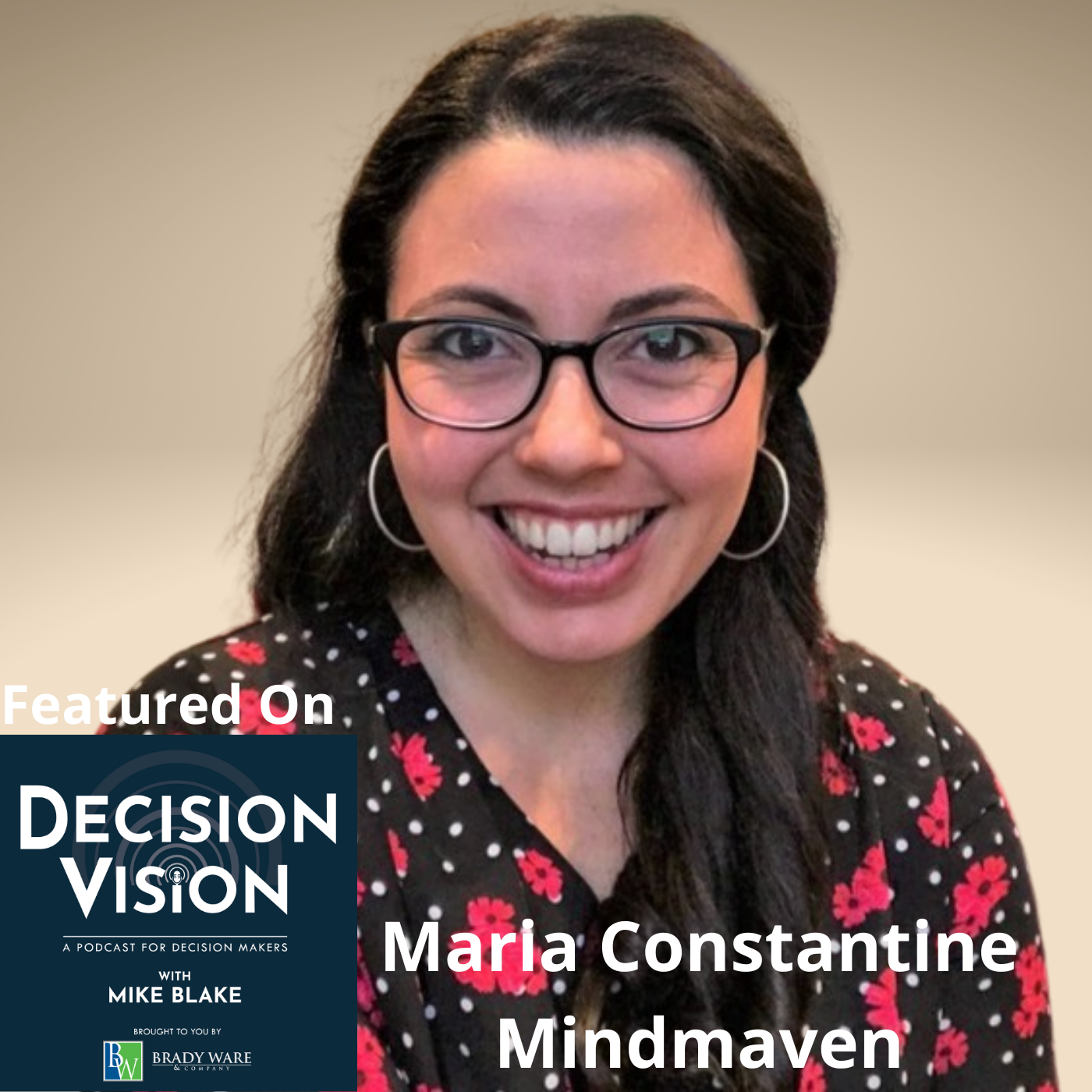
Decision Vision Episode 141: Should I Hire a Copywriter? – An Interview with Maria Constantine, Mindmaven

November 4, 2021 by John Ray

Copywriter
Decision Vision
Decision Vision Episode 141: Should I Hire a Copywriter? - An Interview with Maria Constantine, Mindmaven
Loading
00:00 /
RSS Feed
Share
Link
Embed

Download file

Copywriter

Decision Vision Episode 141:  Should I Hire a Copywriter? – An Interview with Maria Constantine, Mindmaven

Knowing how a copywriter can help you, Maria Constantine notes, is the first step in deciding whether to hire one or not.  Copywriters make business communications easier, more effective, and build relationships through the emails and marketing pieces they write. Maria discussed with host Mike Blake how a copywriter enhances a brand presence, how they write in a client’s “voice,” how hiring one frees up the client’s time, when to hire a copywriter with a particular expertise, how to know whether they’re good at what they do, and much more.  Decision Vision is presented by Brady Ware & Company.

Mindmaven

Mindmaven is an executive coaching firm that’s spent the last 12+ years working with 100’s of leaders at companies like Reddit, Thumbtack, and Roblox, as well as heavy hitters in the tech startup world such as Sequoia Capital, Andreessen Horowitz, Benchmark, and First Round Capital.

Mindmaven helps leaders drive greatness by unleashing three key executive superpowers: Leverage, Intent, and Fellowship. With Leverage, you’ll free up 8-10 hours of your time each week by fundamentally changing how you work with your EA/Chief of Staff. With Intent, you can become more proactive and highly focused on growth, mastery, and the things that matter most. With Fellowship, you’ll learn how to build an irrationally loyal following of people (both within your company and greater network).

Company website | Twitter

Maria Constantine, Head of Educational Partnerships & Programs, Mindmaven

Maria Constantine, Head of Educational Partnerships & Programs, Mindmaven

Maria Constantine is an educator turned marketing generalist with a background in ed tech, entrepreneurship, and copywriting. As the Head of Educational Partnerships & Programs for Mindmaven, Maria partners with CEO peer groups and organizations to host educational workshops on how to free up 8+ hours/week—through reimagining the role of an EA—and how to become a leader people are proud to follow.

LinkedIn


Mike Blake, Brady Ware & Company

Mike Blake, Host of the “Decision Vision” podcast series

Michael Blake is the host of the Decision Vision podcast series and a Director of Brady Ware & Company. Mike specializes in the valuation of intellectual property-driven firms, such as software firms, aerospace firms, and professional services firms, most frequently in the capacity as a transaction advisor, helping clients obtain great outcomes from complex transaction opportunities. He is also a specialist in the appraisal of intellectual properties as stand-alone assets, such as software, trade secrets, and patents.

Mike has been a full-time business appraiser for 13 years with public accounting firms, boutique business appraisal firms, and an owner of his own firm. Prior to that, he spent 8 years in venture capital and investment banking, including transactions in the U.S., Israel, Russia, Ukraine, and Belarus.

LinkedIn | Facebook | Twitter | Instagram

Brady Ware & Company

Brady Ware & Company is a regional full-service accounting and advisory firm which helps businesses and entrepreneurs make visions a reality. Brady Ware services clients nationally from its offices in Alpharetta, GA; Columbus and Dayton, OH; and Richmond, IN. The firm is growth-minded, committed to the regions in which they operate, and most importantly, they make significant investments in their people and service offerings to meet the changing financial needs of those they are privileged to serve. The firm is dedicated to providing results that make a difference for its clients.

Decision Vision Podcast Series

Decision Vision is a podcast covering topics and issues facing small business owners and connecting them with solutions from leading experts. This series is presented by Brady Ware & Company. If you are a decision-maker for a small business, we’d love to hear from you. Contact us at decisionvision@bradyware.com and make sure to listen to every Thursday to the Decision Vision podcast.

Past episodes of Decision Vision can be found at decisionvisionpodcast.com. Decision Vision is produced and broadcast by the North Fulton studio of Business RadioX®.

Connect with Brady Ware & Company:

Website | LinkedIn | Facebook | Twitter | Instagram

TRANSCRIPT

Intro: [00:00:01] Welcome to Decision Vision, a podcast series focusing on critical business decision. Brought to you by Brady Ware & Company. Brady Ware is a regional, full-service, accounting and advisory firm that helps businesses and entrepreneurs make visions a reality.

Mike Blake: [00:00:23] Welcome to Decision Vision, a podcast giving you, the listener, clear vision to make great decisions. In each episode, we discuss the process of decision making on a different topic from the business owners’ or executives’ perspective. We aren’t necessarily telling you what to do, but we can put you in a position to make an informed decision on your own and understand when you might need help along the way.

Mike Blake: [00:00:44] My name is Mike Blake, and I’m your host for today’s program. I’m a director at Brady Ware & Company, a full-service accounting firm based in Dayton, Ohio, with offices in Dayton; Columbus, Ohio; Richmond, Indiana; and Alpharetta, Georgia. My practice specializes in providing fact-based strategic and risk management advice to clients that are buying, selling, or growing the value of companies and intellectual property. Brady Ware is sponsoring this podcast, which is being recorded in Atlanta per social distancing protocols.

Mike Blake: [00:01:12] If you’d like to engage with me on social media with my Chart of the Day and other content, I’m on LinkedIn as myself and @unblakeable on Facebook, Twitter, Clubhouse, and Instagram. If you like this podcast, please subscribe on your favorite podcast aggregator and please consider leaving a review of the podcast as well.

Mike Blake: [00:01:31] Today’s topic is, Should I hire a copywriter? According to statistics published by Real Business – and I have no idea, by the way, how real Real Business is or not, but it sounds good. And it’s on the internet, so what could possibly go wrong? – 59 percent of people would actually avoid buying from a company who made obvious spelling or grammar mistakes in their copy. Which, I can understand. That sort of drives me crazy as well.

Mike Blake: [00:01:56] And I think many firms are faced with a decision as to whether or not they should hire a copywriter because writing has actually taken on a much greater level of importance. I think that it ever has in human history. And this is with all due respect to LinkedIn videos, and YouTube, and everything else, and videos out there, certainly, is an important platform.

Mike Blake: [00:02:25] But there’s so much written content out there and everybody now has connection and access to a global marketplace and a global audience that, you know, I’m old enough where I can remember my first emails were written on a digital emulated VT100 VAX terminal in the bottom of a computer science lab that I had to get special permission to use. And back then, email was pretty easy, right? Nobody is ever going to see it. We didn’t know yet that all caps meant that you were shouting at people. In fact, I think our terminal didn’t even have a caps button. Everything was all caps.

Mike Blake: [00:03:10] And, now, we’re in a world that has exploded where, whether we realize it or not, we’re writing all the time. We don’t do phone calls nearly as much as we do. We text. The only way I can communicate nowadays with my 19 year old son, I try to actually talk to him in a real conversation or have him pick up the phone. Forget it. He’s had a phone for five years. I don’t even think he’s set up his voicemail, so I know that that’s not a winning proposition. But if I send him a text, I’ll get something right back.

Mike Blake: [00:03:41] So, whether it’s texting, whether it’s social media, whether it’s newsletters – and we’ve had an episode not long ago about whether you should have a newsletter – writing is just so endemic now. And I think there’s some real questions as to whether we, as decision makers, should be writing as much as we are. Is it a good use of our time? Are we qualified to write on behalf of our companies our information ourselves?

Mike Blake: [00:04:14] And if you want to exhibit A as to the cautionary tale, look no further than the National Football League. We’re seeing ten-year-old emails that are being dug up, in really only tangentially related legal matter that have so far gotten a National Football League coach fired. And are now having Congress calling to potentially subpoena – I don’t know the legal grounds, I’m no lawyer – basically, years of emails involving the Washington Football Team.

Mike Blake: [00:04:45] And so, writing is just more important than I think, frankly, it’s ever been when you think about it. And because it’s so important, the question really boils down to, can we afford to to leave writing to amateurs like ourselves?

Mike Blake: [00:05:04] And joining us today to help us understand this question and talk about it is Maria Constantine, who’s head of Educational Partnerships and Programs for Mindmaven, and has also been a freelance copywriter for the past, nearly, seven years.

Mike Blake: [00:05:20] Maria is an educator turned marketing generalist with a background in educational technology, and entrepreneurship, and, of course, copywriting. Maria partners with chief executive officers, peer groups, and organizations to host educational workshops on how to free eight or more hours per week through reimagining the role of an executive assistant and how to become a leader people are proud to follow.

Mike Blake: [00:05:45] Mindmaven is an executive coaching firm that has spent the last 12 plus years working with hundreds of leaders at companies like Reddit, Thumbtack, and Roblox, as well as heavy hitters in the tech startup world such as Sequoia Capital, Andreessen Horowitz, Benchmark, and First Round Capital.

Mike Blake: [00:06:03] Mindmaven helps leaders drive greatness by unleashing three key executive superpowers: leverage, intent, and fellowship. With leverage, you’ll free up eight to ten hours of your time each week by fundamentally changing how you work with your chief of staff. With intent, you can become more proactive and highly focused on growth mastering the things that matter most. And with fellowship, you learn how to build an irrationally loyal following of people both within your company and greater network. Maria, welcome to the program.

Maria Constantine: [00:06:33] Thank you, Mike. It’s wonderful to be here.

Mike Blake: [00:06:36] So, let’s start off because it may not be obvious to everybody in the audience. What exactly is a copywriter? And what do people like you and your copywriting persona, what do you guys do?

Maria Constantine: [00:06:51] Yeah. The best way I can describe what a copywriter does is by giving you a little story. So, first of all, a copywriter, I would say, is to words, as a master painter is to paint. They can take the most basic, most regular, even most boring ideas and turn them into something that’s compelling, something that is a masterpiece.

Maria Constantine: [00:07:14] As I was thinking about this podcast, it’s really interesting, actually, just this week, I bought a bed frame from a company that I used a couple of years back, probably about six years ago now. And when I was looking for this bed frame that I just bought this week, I remembered this company from six years ago. Because when I ordered from them the first time, I got this welcome packet along with the bed frame. The bed frame was great, by the way.

Maria Constantine: [00:07:40] But what stuck out to me was the welcome packet, because the copywriter who created this welcome packet invited themselves into my life. They congratulated me on this piece that was turning a house into a home. They made me feel like they were a friend that knew me that was part of this journey with me. It was a little bit cheeky. There were some puns in there. I laughed. I took pictures of it and sent it to my friends.

Maria Constantine: [00:08:08] And this connection that I had with this person I’ll never meet and never know who wrote that is exactly why, six years later, when I was comparing models and I could go with the same company that I went with six years ago or a new company that had a cheaper bed frame – exactly the same, but cheaper – I went with the more expensive bed frame because I love these people. I feel like they’re part of my home buying journey. And that right there is the magic of a copywriter.

Mike Blake: [00:08:38] So, do copywriters only serve marketing needs? Or are there other needs that copywriters serve?

Maria Constantine: [00:08:45] That’s a great question. So, of course, typically they work in marketing but, especially in Mindmaven, we think about copywriting pretty uniquely. We have this role called an engagement manager, which is like an executive assistant, but upgraded, who works to support the office of the CEO, but also can work with a leadership team to actually increase how many opportunities come from the leadership’s network.

Maria Constantine: [00:09:16] So, if you think about it, every time you send an email, you’re building a relationship with someone, right? So, a copywriter can help actually craft that email for you – or with you, rather. We do something where we’ll have the executive dictate an email, so it’s still a genuine expression of what they’re doing, it’s still coming from them. But then, you have an engagement manager who often has some kind of copywriting experience come in and wordsmith that to really bring an extra level of intention and help the exact to really connect with people in a meaningful way. So, that’s another way that a copywriter can support a business.

Maria Constantine: [00:09:56] Also, copywriters can help sales teams. They can help you craft outreach emails or follow up emails. And even social media is under marketing, but it’s not. Sometimes there’s actually an overlap between customer service and social media. That was something I did in one of my jobs where my role was a social media manager. But a lot of times, I just spent a lot of time writing answers to customers. People would ask us questions, I would answer, but then also engage with them to, again, try to form that relationship with them. So, there’s a lot of different ways that a copywriter can support a business.

Mike Blake: [00:10:37] Yeah. You know, it occurred to me that we see, of course, the gaffe email that a company sends out. But I think the most damaging internal communications, not just emails, are ones that are internal because they don’t see the light of day, they aren’t intended to see the light of day. And, therefore, I wonder if sometimes the authors feel a little bit more careless about them. But that internal email or internal communication can be disastrous. It can be demoralizing. It can set you up for liability. It can undermine your brand. The wrong communication can send, like, five very valuable people over to indeed.com looking for their next job, right?

Maria Constantine: [00:11:35] Yeah. Absolutely.

Mike Blake: [00:11:38] And so, you know, it just gets back to at least my point – I want to pat myself in the back – it does go back to the point where we’re just writing so pervasive. And so pervasive, we don’t even think about it. And when you don’t think about it, that’s when you get killed.

Maria Constantine: [00:11:54] Yeah. Yeah. Absolutely. And actually this is the concept of good to great. That’s something that a lot of people are familiar with. One area where leaders can really shine is in their personal communications. When you send an email, you can be the person who sends two liners that are quick, short to the point, not a lot of fluff. Maybe as a follow up email to someone that you’ve met with, you want to just kind of quick grab the things that you both agreed on, you throw it into an email, you send that out.

Maria Constantine: [00:12:27] Or you can spend 30 extra seconds wordsmithing that with the support of a copywriter. And then, you leave this impact on the person you’ve met with where, again, it’s the relationship building. They’re going to feel like, “Wow. I really like this person. I’m walking away from this meeting feeling really good about this.” And a lot of that is because you took 30 extra seconds on the follow up email that you sent them.

Mike Blake: [00:12:55] So, what are some signs that a company could see that would lead them to the conversation or the question, “Hey, maybe you need to think about hiring a copywriter? What are the warning signs?”

Maria Constantine: [00:13:07] Yeah. I would say a big thing is, if your leadership team, if you are the CEO, or in the senior leadership team, and you spend more than 20 minutes wordsmithing one particular thing, I would say that is a sign that you should be hiring a copywriter. Because at the end of the day, that’s opportunity cost. As the leader of a company, you can outsource this, you can outsource copywriting. There are brilliant, talented people who do this. But there’s not a lot of people you can outsource the leadership of your company to. That is your role.

Maria Constantine: [00:13:43] And if your very valuable time is being taken up trying to figure out exactly what to say in an email or even on a newsletter or in a blog, those are things that you can do in a much more effective way while being supported by a copywriter. So, that’s a big thing.

Maria Constantine: [00:14:02] I would say, if you feel some hesitancy around this, I think it’s really common for leaders to feel like they have control over their messaging when they do the copywriting. If you are the one typing the words out, that gives you a sense of control over that, some ownership. And it feels good to have that. But if you feel yourself resisting, that you want to hold on to that for longer, that’s actually a sign. It’s probably time to let that go because that’s not your core objective as the leader.

Maria Constantine: [00:14:36] Again, there are so many other things that you can use your time for. And being able to bring in someone new is going to help you connect with your audience more, because you’re going to get some fresh perspective in there, you’re going to be able to pump out content in a much higher rate. And it’s just going to be better for you to be able to have that support to do so many more things that are really going to push the needle forward.

Mike Blake: [00:15:01] Now, of course, the name of the game with marketing is engagement. It’s one thing to write something. It’s another thing to have somebody actually care about what you wrote and read it. How can a copywriter improve engagement?

Maria Constantine: [00:15:18] Yeah. So, this, again, comes back to relationships. If a copywriter is good at what they do, they are going to give the reader the sense that you have a relationship with them. One of these funny things that we love to think that people are rational. We like to think that we make decisions based on facts and data. But we don’t. No one does. We make decisions based on how we feel, how someone else makes us feel.

Maria Constantine: [00:15:47] An example of this, actually, I subscribe to a lot of different tech newsletters. That’s a big part of our clientele. So, I’m on a bunch of newsletters, but I get busy, so I don’t read very many of them. I’ll admit I can’t keep up with all of them.

Mike Blake: [00:16:02] No, you can’t.

Maria Constantine: [00:16:02] But the one that I do keep up with is TechCrunch. And it’s not because it’s particularly better than the others – maybe some would argue it is – but it’s because the editor is a riot. Every time they write their newsletter, it starts with some personal note from the editor that has me cracking up. It is so fun and I feel like I have this connection with the editor who writes the TechCrunch weekly newsletter. And so, right there is an example of this very talented copywriter is bringing me back because of the relationship that I feel that I have with that writer on the other end of this newsletter.

Mike Blake: [00:16:44] So, it’s a very interesting theme that you’re kind of coming back to, which I hadn’t considered but it makes sense now that you bring it up, which is writing is relationships. If that’s where most of our communication is taking place and the thing about writing is that it is permanent. When we were kids who are always warned that something was going to go into our permanent record. And now that we’re adults, everything we write, it goes into our permanent record, whether we like it or not.

Maria Constantine: [00:17:09] Yeah. Exactly right. And the fun thing is that, unlike in-person communication where maybe there’s other emotions happening, of course, you want to communicate well in-person as well, but there’s not as much time, there’s not as much space to really craft the communication the way you want. In writing, the amazing thing about it, is that, you have as much time as you need. I mean, you have the opportunity, you have that space to really craft. It’s like a gift that you’re giving someone. That communication is an opportunity to make them feel good, to make them feel connected to you, to make them feel good about themselves. Every time you right something to someone else, you have that opportunity.

Mike Blake: [00:17:57] So, I think what we’re learning here is there can be an impression that you might hire a copywriter just because you don’t write well. And there is some of that, right? Not everybody can be a good writer. And I wonder if writing is kind of like driving, we all think we’re better at it than we actually are. But if you hire a copywriter, it’s not necessarily kind of admitting that you think you’re a bad writer. It’s not just for people that struggle with, you know, grammar and vocabulary.

Maria Constantine: [00:18:29] Yeah. Absolutely right. And, actually, I would say that if you have strong copywriting skills, if that’s just a natural skill of yours, it’s actually going to be easier for you to find and really leverage a copywriter. Because one skill that, at least, good copywriters will have is that they’re going to be able to emulate a tone, especially someone with agency background or who’s done freelancing similar to what I’ve done. They need to be able to switch hats really quickly and slip into the tone and the branding of whatever account that they’re working on.

Maria Constantine: [00:19:07] So, that means, if you have a really strong brand, if you have a really strong voice already, your copywriter is going to be able to hit the ground running because they don’t have to start from scratch creating a voice. They can just learn from what you’ve done that you really like. And then, again, increase the amount that they can output.

Mike Blake: [00:19:28] So, I’ve heard an argument – and please tell me if I’m wrong. Although, you’re welcome to tell me if I’m right, if I happen to be – there’s benefit to hiring a copywriter simply to gain some distance from the topic. You talked about, for example, in your answer to the first question about adding excitement. You know, if I’m working, I’ll just cop to this. I’ve been doing business appraisals and strategic advisor for 15 years. It sometimes can be hard to summon up the excitement for one more piece of collateral material, because I’ve been doing it for so long. Somebody who’s encountering it for the first time, I’ve been told, can bring a different energy, a different level of excitement that somebody who’s in the weeds every day isn’t necessarily going to be able to summon. Is that fair?

Maria Constantine: [00:20:21] Yeah. I think that’s totally fair. And thinking about this, you know, in terms of there are different sort of industries where I would say having someone with familiarity is really important. If you have a very technical business, if you have something very technical that you’re trying to communicate – because copywriters, again, you can do that outward facing like marketing copywriting, but you can also do product descriptions, technical instruction books, those kinds of things, all of that can be done by a copywriter.

Maria Constantine: [00:20:55] So, depending on what you’re looking for this copywriter to do, if it’s more technical, of course, having someone in the industry with experience is really essential, really important. But if you’re looking for that marketing spark, if you’re looking for someone to bring an excitement to reinvigorate the brand, and even to see your product from the perspective of an audience member who’s seeing it for the first time, if you think about that, if you’ve been doing this for so long, you have certain blinders because you know what to expect, you know this inside and out.

Maria Constantine: [00:21:35] But someone from the outside is coming at your product, coming at your service, the way your target client would for the first time. They’re going to find the things that make them excited, which is probably going to be similar to what’s going to get your audience excited.

Mike Blake: [00:21:52] So, is there a typical model in that? Let’s narrow this down. We’ll talk about for our audience. Most of our audience is comprised of owners or executives and businesses with, say, $100 million of annual revenue or less. For businesses like that, are they more likely to find it beneficial to hire somebody full-time? Or are they more likely to find a beneficial to outsource it?

Maria Constantine: [00:22:21] Yeah. That’s a great question. So, freelancers are amazing. You can get some incredible work from finding folks on places like Upwork or Fiverr. There’s a lot of talented copywriters out there. One thing that you want to know if you’re going to be doing a freelance position with a copywriter is that, every time you find someone new, every time you find a new freelancer, you are paying them to learn your brand. So, there’s a cost to that.

Maria Constantine: [00:22:51] A really good copywriter can do that quickly. But there is a learning time, where if you give them a deadline and say, “I need something by the end of today,” it might be a stretch for some freelancers where they say, “Well, you just brought me on. I need time to get to know your brand first, to get to know your product first.” If you have someone that’s on your team as a full time copywriter, you should definitely look for someone who can really help you in other areas of marketing as well.

Maria Constantine: [00:23:24] Most people who have in-house copywriters, especially for smaller businesses, they don’t only do copywriting. When I was a full-time marketing specialist, I was a copywriter, a social media manager, and I ran interviews, actually, for our sales and training team. So, they found areas where they could plug me in, where, “All right. You’re good at words. Here are the places where we need someone who’s good at words.”

Maria Constantine: [00:23:49] So, if you’re going to have someone full time, really think big. And when you hire that person, think about where your needs are and look for overlaps. Because there’s, like I said, a lot of copywriters who overlap with funnel building, copywriters who overlap with social media. So many different marketing channels that you can get out of someone who’s a copywriter, if you choose to do that, bring them on board full time.

Mike Blake: [00:24:16] So, if you are going to go the outsourced route – and I suspect many companies will do that if they’re using a copywriter for the first time to sort of try before they buy – where do you find them? Where do they hang out? How do you identify people that are identifying themselves as being capable in that area? How do you find them?

Maria Constantine: [00:24:36] You know, there’s a couple of different ways. Upwork is the obvious one. They’re a huge hub for copywriters. I would say, actually, maybe an unconventional one is Instagram. One thing about Upwork or even Fiverr, Elance, places like that, is that, the copywriter is going to be a little bit mad because part of their pay goes to Upwork, goes to the other platform. So, they have to charge you more, but you’re not actually paying them that much. So, there’s a disconnect there, where it doesn’t feel as good as a copywriter to know I’m worth this number, but I have to give part of that to this platform.

Maria Constantine: [00:25:19] But if you can go directly through Instagram or even Facebook, maybe LinkedIn, I would say Instagram is a big one where more and more copywriters are starting to create their branded profiles on there. I have a couple friends that I follow. A Cup of Copy is one example where she’ll just highlight some incredible freelance copywriters that are out there. I think she now doesn’t do freelance work. But she still will highlight freelancers.

Maria Constantine: [00:25:51] And if you can find someone directly, it’s better for you because you don’t have to pay them as much because they don’t have to bump up their rate to compensate for that charge from Upwork or whatever else. But then, Instagram is a great place to see their portfolio. A good copywriter will know how to market themselves as well and have a lot of great examples for you to look through.

Mike Blake: [00:26:17] Yeah. And that actually brings us back to what you touched on that I want to make sure that I addressed, are there copywriters that are industry specialists that tend to do most of their work in one or two verticals? And if so, is there a benefit to that? Is it worth looking for somebody that already has deep or at least deep-ish industry knowledge is somebody that you select for that role?

Maria Constantine: [00:26:43] Yeah. So, I would say, definitely, if you’re doing a freelance sort of set up, you should look for copywriters who have some experience in the industry where you’re working. The reason for that is, again, it’s going to shorten that learning curve.

Maria Constantine: [00:26:58] I remember I did a freelance arrangement once where I was writing for, it was like a scientific journal about fishing. And, you know, I’ve gone fishing with my dad a couple of times as a kid. But beyond that, my knowledge of fishing, technical tools, or even the type of fish, I had to do a lot of research to be able to talk about this as an expert. So, they were very happy with the product in the end, but they paid me for the research that I did. If you had someone who has a lot of experience in your technical field, then you’re able to pay more just for the actual writing and not so much for that research bit.

Mike Blake: [00:27:43] So, there’s a train of thought and I do think that there’s some value to it that suggests that companies, or individuals, executives, owners, should do as much writing as possible as they can themselves because that’s the only way to capture their authentic self. It’s got to sound like your voice, your hand, your fingers, your keyboard, whatever. How much weight do you place in that argument? How do you strike a balance? Or is it a non-issue? Maybe good copywriters are really good at capturing your voice. That’s a spurious argument. But what’s your take on that?

Maria Constantine: [00:28:27] Yeah. I would say, especially for smaller businesses where your relationship with your customers is a big part of your brand, where they feel like they’re connected with you, they feel like they’re working with you because of the ownership, because they know the owner, there is value in making sure your genius is captured whatever your authentic tone is. But the thing is, you do not have to type it up in order to do that.

Maria Constantine: [00:28:59] So, at Mindmaven, we teach people to use dictations for everything that you possibly can. We actually talk about rather than hiring a copywriter first, we tell people to hire an engagement manager first, that executive assistant plus. And all of our executives, all of our senior leadership team will dictate, whether it’s a blog or an email or anything, anything that you would have typed, you can dictate to your engagement manager. And then, they type it up and publish it for you. So, it’s still your voice, it’s still your authentic experience, and even just your personality will still come through. But you have a copywriter, especially who’s good at editing.

Maria Constantine: [00:29:42] If you’re going to go that direction, if you’re looking for an engagement manager and want someone with a copywriting experience, you look for someone who has some editing experience who really loves the details, very detail-oriented, so that they can polish that for you, so that when it goes out, you’re not worried about grammar mistakes or spelling mistakes. Also, it goes so much faster. You can talk like four times the speed you can type for most of us. And then, you have that ability, again, to leverage a copywriter but still capture your authentic contribution.

Mike Blake: [00:30:17] My question is this, is it reasonable to look for a copywriter that has the capability to write with SEO in mind?

Maria Constantine: [00:30:29] SEO is incredibly important for any business. I would say, you know, if you only are going to hire one person for SEO, if that’s all that you have in your budget, then, yes, your copywriter should have some experience with SEO. What you should know about SEO is that there are very, very technical bits of it that you have the writing side of it, which any copywriter should be able to do. But then, the technical side of SEO, really, it’s not quite fair to expect that from a copywriter. Those are like two very different skills.

Maria Constantine: [00:31:06] So, actually, as an example, here at Mindmaven, we work with an amazing firm called White Hat Ops, and they do our technical side of SEO. But then, our writing team, our copywriting team will implement the insights that we get from our technical SEO support. So, you don’t necessarily have to hire someone who has all of the magical SEO skills because it’s kind of a unicorn. That person doesn’t really exist. Either you have someone who’s an incredibly talented creative writer or you have someone who’s incredibly skilled at the technical side of things.

Maria Constantine: [00:31:41] Just starting with the writing is a great place to start. If you want to go really deep into SEO, it’s worth at least talking to an SEO expert and really considering all the bits that go into really making your website and your content optimized for search engines.

Mike Blake: [00:32:02] Okay. So, Maria, where do copywriters come from? I don’t know that people necessarily grow up saying, “Hey, I want to be a copywriter when I grow up.” I mean, I didn’t say I want to be a business appraiser when I grew up either. It’s not a criticism. It’s just the way it works. Is there a common path that people take to become copywriters?

Maria Constantine: [00:32:28] That’s a great question. I actually love that. It made me think back on my own journey getting into copywriting, and it’s fun. So, for me, personally, I always wanted to be a writer as a kid. But I had two accountants as parents. So, when I told them I wanted to be a writer, then like, “Oh yeah. That’s nice. Who’s going to feed you? Who’s going to pay for the heat in your home when you’re an adult?” Like, “Okay.” So, writing is not a career, I guess, that my parents encouraged. My parents are wonderful and encouraged all my dreams. But, you know, they like to keep me nice and pragmatic too.

Mike Blake: [00:33:04] Some dreams more than others.

Maria Constantine: [00:33:06] Exactly. Especially the dreams that pay the bills, you know? So, I went into teaching. I taught English. I taught writing, creative writing and drama. And that was a really fulfilling way to use my love of writing. But I found pretty quickly that it wasn’t enough. I wanted to do more. And somehow, I don’t even know, I think it was a friend who needed help ghostwriting their dissertation, it was something like that. That was my first freelance project. And, suddenly, I was making better money than I ever had before doing something that I loved.

Maria Constantine: [00:33:43] Freelancing can be tricky because it’s hard to be a full-time job. You’re just constantly spending a lot of time looking for jobs, which isn’t very fun, I’ll admit. So, for my copywriting journey, it’s something I enjoy on the side, but it wasn’t something I wanted to pursue full-time. I think a lot of people who end up in copywriting have a love of human behavior. People who notice things, who watch, who like to tell stories, there’s a lot of different tracks into copywriting. And I guess, I’m really focusing on the more creative copywriters because there are also, like I mentioned, more technical copywriters who will help.

Maria Constantine: [00:34:26] Actually, that dissertation project is a perfect example, a ghostwriter on a very technical dissertation. That would be a copywriter job, but someone with a very specific technical skillset. And they’re probably going to get into it because they’re just in the industry, because they have that expertise and they maybe want to make a little money on the side, they want to give back to this industry that they love. So, there’s a lot of different tracks into copywriting.

Maria Constantine: [00:34:53] I think the creative copywriters tend to be folks who love storytelling in one way or another and want to contribute to that connection that we feel when you read some good copy. Really thinking about how do I move people to action? You know, there’s a lot of power in that. That’s a really exciting thing to be able to inspire people or help people. And that drive, I think, is what is behind at least the best copywriters. I’ll say it that way.

Mike Blake: [00:35:27] An observation that I have is what you’re describing in terms of the mindset of the copyrighter very closely resembles how I’ve heard comedians describe.

Maria Constantine: [00:35:39] Hmm, interesting.

Mike Blake: [00:35:41] Because I mean, they observe the world, and they’re creative, and they have a story that they want to tell. Every comedian comes up with a series of stories that they’re trying to tell. And, you know, I wonder if there’s two sides really to the same coin. And maybe that’s why there are a lot of people who write for comedians that are effectively copywriters.

Maria Constantine: [00:36:04] Yeah. Yeah.

Mike Blake: [00:36:05] Jimmy Fallon doesn’t just show up and write jokes, right? He has a whole team of people that are writing content for him all day. So, I wonder if there’s a common thread there.

Maria Constantine: [00:36:14] Yeah. I think that makes a lot of sense. And we see humor is a huge tool in marketing. If you can get a copywriter who has the ability to write jokes, to write some good humor into your content. The amazing thing about humor is that it’s based in an understanding of the human condition. Humor is only funny because we all get it. We all recognize something in it. And that’s what the best marketing is, too, you read a piece of marketing and you say, “I see myself in that.” Or, “I didn’t even know there were words for this thing I was feeling. Now, I’m compelled to do something about it.” That’s what really good copywriting is at its core.

Mike Blake: [00:36:59] I’ll bet you’re funny. I don’t know you very well, but I’ll bet you can tell a joke or two and hold an audience. I’ll bet you got some funny stories. I’m not going to put you on the spot to say something funny. That’s idiotic. But I can tell that resonates with you because I’ll bet you in a social setting, you’re probably pretty funny. Your friends would say, if I ask them, that you’re funny.

Maria Constantine: [00:37:22] I do like making people laugh. That’s something my poor teachers in school didn’t love it because I was a bit of the class clown. But I worked hard, too, so, it was okay. I balanced it out.

Mike Blake: [00:37:36] So, I think I know the answer to this, but I don’t want to assume. Do copywriters get better over time by working for the same client or with the same company? Is there sort of like a break-in period? Maybe the first couple of pieces are good. But after developing a relationship with the company, the people, the brand, they internalize it, do they get better? So, is this sort of like a break in period or ramping up period with copywriters? Or should you expect them to just be awesome right off the bat?

Maria Constantine: [00:38:10] Yeah. I would say a really good copywriter will show you how good they are within the first week. So, a really good copywriter should be able to slip into your tone, into your brand, and produce excellent content within a week. Now, that being said, I think there’s a lot of benefit to having continuity with a copywriter because, of course, as they get to know you more, as they get to know your audience more, really, it’s almost like they build traditions with your audience, whether that’s through a specific type of spotlight content or maybe it’s the newsletter having a specific style of how you start the newsletter. You need continuity for that.

Maria Constantine: [00:38:59] It’s much harder, I should say. I won’t speak in absolutes there, but it’s much harder to do that if you have a different copywriter doing your newsletter every quarter or so. And building that long term relationship is something that is easier if you have someone there to really go deep with your audience.

Maria Constantine: [00:39:19] One thing really that comes out of that as well is kind of like what I mentioned with the social media, sometimes the copywriter is on the frontline to actually consume feedback from your customers. Maybe because your customers are responding to the emails that they wrote. Maybe it’s because they’re reaching out on social media or engaging in comments and your copywriter is responding. So, they’re really as a forward facing person to your audience. And having them around for a while allows you to have really valuable insights from your audience, but it also allows your copywriter to then write with that insight in mind.

Maria Constantine: [00:40:01] And a lot of what copywriters do is hard to translate or to, like, capture in a best practice. Sometimes it does come down to your copywriter generally feels they have a connection with your audience and so that comes out. There’s a little bit of magic there that’s – so let me backtrack. Because I said they’re going to write good content for you in the first week. They’re going to do great work for you there. But you’re not going to have that magic until they find their legs a little bit more. And that’s maybe a little bit of a difference here if we’re talking about, “Yeah. It’s okay to expect excellent things from them right off the bat.” But if you’re expecting magic right off the bat, give them a little bit of time to actually learn your audience and your product a little bit deeper.

Mike Blake: [00:40:52] We’re talking with Maria Constantine of Mindmaven. And the topic is, Should I hire a copywriter? Have you found that copywriters are more effective or less effective in certain industries? Do they work well in one particular industry versus another? Or can they work well across the board? Is there such a thing as an industry that doesn’t lend itself well to working with copywriters?

Maria Constantine: [00:41:19] No. I would say, if you are a business that sells a product, service, or experience, which is every business I have ever heard of, then you can benefit from a copywriter. Because your copywriter is going to take whatever you are selling, whatever you are giving back to the world, and connect it to your audience. Whether that’s super technical, whether it’s very emotional, relationship driven, your copywriter is your mouthpiece to the world. And getting an audience, getting more attention to what you are creating is the goal of any business. So, there’s no field that wouldn’t benefit from a copywriter.

Maria Constantine: [00:42:01] And like we were talking about earlier, even technical pieces, like your instruction books, sometimes people will kind of use those as a throwaway opportunity. They just get someone to write out something that’s basic, straightforward, no bells or whistles. And maybe that’s okay, you know, it doesn’t have to be shiny and fancy every time. But if you have a copywriter who takes care of any piece of writing that your company puts out, people are going to notice, people are going to feel connected to you.

Mike Blake: [00:42:38] I mentioned at the top of our program, videos are now sort of riding shotgun along with writing in terms of being the preferred communication. And as much as I love podcasts, I mean, podcasts are a little bit behind that. That’s fine. You know, I’m dabbling in video now and I’m predictably terrible at it. But the one thing that strikes me I wanted to ask you was, can copywriters help write scripts for people that are going on video?

Mike Blake: [00:43:14] My wife, has a skill that she doesn’t appreciate how good that is. She can turn the camera on, look in the camera, talk for several minutes and sound intelligent. Me, if I do that, I sound like I’m in the middle of a hostage tape, basically. And so, I’ve got to have a script or it’s going to be beyond terrible. And so, my question is, are copywriters now providing services to help people write scripts for their videos?

Maria Constantine: [00:43:43] Absolutely. Yeah. I did a freelance gig for a company that had only two products, if you will. They created SEO rich websites and they created videos sponsored by cities to attract tourists. That was all they did. And they had two teams of writers for both products. They had a team of writers that did SEO and they had a team of writers who created the scripts. And more than that, they created the storyline of the video. Because at the end of the day, a good video is a storytelling tool.

Maria Constantine: [00:44:18] If your video has a beginning that captures you, a middle that has some kind of conflict that you’re resolving, and an end that wraps up and makes you feel good or like you want to know more, then that video is successful. That is an amazing storytelling tool. So, to have a writer support you on creating scripts for videos makes so much sense.

Maria Constantine: [00:44:42] And even better, I’ve actually done some work in my freelance career where I wrote the storyline of the video. I wrote the copy that actually showed up on screen. And I created the video. I have a little bit of video experience, so I did the whole thing for them. So, you can find copywriters who have a really rich experience in video creation or even editing.

Mike Blake: [00:45:08] So, we’ve learned, ladies and gentlemen, that Maria is a triple threat here.

Maria Constantine: [00:45:13] I don’t know about that. I find problems and I solve them, you know?

Mike Blake: [00:45:19] So, Maria, this has been a great conversation. We’re running out of time and I’m sure there are questions that I might have asked and our listeners would have liked me to ask that we didn’t get two or maybe a question that they would have liked us to go into more depth with. If somebody wants to follow up with you on this conversation, can they? And if so, what’s the best way to contact you?

Maria Constantine: [00:45:39] Absolutely. You can find me on LinkedIn as myself, Maria Constantine. I’m also behind the Mindmaven Twitter, @mindmavenHQ. You can also email me, maria.c@mindmaven.com. And then, you can also always reach out on our website, mindmaven.com.

Mike Blake: [00:46:02] That’s going to wrap it up for today’s program. I’d like to thank Maria Constantine so much for sharing her expertise with us.

Mike Blake: [00:46:09] We’ll be exploring a new topic each week, so please tune in so that when you’re faced with your next business decision, you have clear vision when making it. If you enjoy these podcasts, please consider leaving a review with your favorite podcast aggregator. It helps people find us so that we can help them. If you would like to engage with me on social media with my Chart of the Day and other content, I’m on LinkedIn as myself and @unblakeable on Facebook, Twitter, Clubhouse, and Instagram. Once again, this is Mike Blake. Our sponsor is Brady Ware and Company. And this has been the Decision Vision podcast.


Tagged With: Brady Ware & Company, Content writing, copywriter, copywriting, Decision Vision podcast, Maria Constantine, marketing, Mike Blake, Mindmaven, writing

Gloria Russell, Russell Resources LLC

August 16, 2021 by John Ray

Russell Resources
Minneapolis St. Paul Business Radio
Gloria Russell, Russell Resources LLC
Loading
00:00 /
RSS Feed
Share
Link
Embed

Download file

Russell Resources

Gloria Russell, Russell Resources LLC (Minneapolis-St. Paul Business Radio, Episode 17)

More than just a copywriter, Gloria Russell of Russell Resources brings wide-ranging corporate experience to the table as she helps her B2B services clients clarify their target customers and shift their marketing point of view toward customer-centric and solutions-driven. Gloria and host John Ray covered these topics, characteristics of a successful web site, success stories, and much more. Minneapolis-St. Paul Business Radio is produced virtually by the Minneapolis St. Paul studio of Business RadioX®.

Russell Resources LLC

Gloria Russell knows that your clients—present and future—are ready to hear how you can help them and why you are exactly what they’ve been searching for to fill those gaps that are haunting them or holding them back. These wonderful people need your services, and you are meant to serve them.

Working together, Gloria and you will get clear on who you serve best and create a plan to speak to them. With clarity in the message, they’ll clearly understand that you and your company are exactly what they need to solve their problems and achieve their vision for the future. As you serve others in this way, you help reduce their stress by giving them peace of mind with honest solutions—and they’ll love you for it.

Gloria makes things easier on you, too, with a process and a plan to create and edit powerful, written content for your website: web pages, landing pages, case studies, bios, articles, blogs, e-books, workshops, and promotional marketing campaigns. These will all make it easier for your ideal clients to find you, hear your reassuring message and be excited to work with you.

You’ll find that our Gloria’s programs meet you where you are and help you on the path to where you’d like to be. Everyone is at different stages of progress on the journey to greater success. Russell Resources is ready to help you move more quickly from your current stage toward your growth goals. With compelling content, you’re set to attract more of your ideal clients and enhance your exposure.

Company website | LinkedIn | Instagram

Gloria Russell, Founder, Russell Resources LLC

Russell Resources
Gloria Russell, Founder, Russell Resources LLC

Eight years ago, Gloria Russell launched Russell Resources LLC to help small business owners upgrade their marketing strategy and website copywriting. She works with service-based businesses to gain clarity on their preferred markets, ideal clients, and services that provide in-demand solutions. Her compelling content enhances visibility, credibility, and marketability by sending the right message to the right audience.

After a lengthy corporate career in the metro, Gloria now enjoys working with clients across the country from her office in west-central Minnesota where she lives closer to family. And, she treasures all those special times with her children and grandchildren who live out of state. Her son, Ryan, and family live in Virginia, and Michigan is home to her daughter, Odessa, and family.

When time allows, Gloria enjoys travel, reading, Fast and Furious movies, home improvement projects and the cheery sound of birds chirping.

LinkedIn

Questions and Topics in this Interview

  • Why did you leave the corporate arena and start your own business?
  • What types of businesses do you serve?
  • Which primary services do you provide for these service-based businesses?
  • What are the biggest struggles for these companies with their marketing content?
  • Can you give us some examples of results have they received?
  • Any particular insights they have gained while working with you?
  • How has networking helped you in your business?
  • What’s the best way for business owners to reach out to you?

Minneapolis-St. Paul Business Radio is hosted by John Ray and produced virtually from the Minneapolis St. Paul studio of Business RadioX® .  You can find the full archive of shows by following this link. The show is available on all the major podcast apps, including Apple Podcasts, Spotify, Google, Amazon, iHeart Radio, Stitcher, TuneIn, and others.

Tagged With: B2B services, copywriting, Gloria Russell, messaging, Minneapolis St Paul Business Radio, Russell Resources

Conversion Copywriting for Business Growth, with Sarah L. Parker

April 16, 2021 by John Ray

Sarah L. Parker
Business Leaders Radio
Conversion Copywriting for Business Growth, with Sarah L. Parker
Loading
00:00 /
RSS Feed
Share
Link
Embed

Download file

Sarah L. Parker

Conversion Copywriting for Business Growth, with Sarah L.  Parker

Sarah L. Parker is an experienced, results-driven copywriter. She joined host John Ray to discuss conversion copywriting, what makes it different than traditional copywriting, and why conversion copywriting is crucial to make a website effective and profitable. “Business Leaders Radio” is produced virtually from the Business RadioX® studios in Atlanta.

Sarah L. Parker, Seasoned Copywriter

Sarah L. Parker
Sarah L. Parker, Copywriter

Sarah Parker is a seasoned copywriter who helps B2B technology companies generate revenue from copywriting.
Business owners want powerful copy that comes from an understanding of their niche, product, or industry. Often copywriters don’t get a brand’s tone, style, or objectives. With Sarah Parker, clients get a marketer who increases leads and revenue. Outsourced copywriters stay outside the team. That costs extra work, lost time, and reduced quality. Sarah works with clients to deliver a messaging hierarchy that drives business goals. She is a seasoned technology copywriter who can ramp up to the technical aspects of a client’s software.  She will talk to a client’s existing and prospective customers to back up all her recommendations with data and convert a business’s audience into buyers. Sarah delivers a scientific process based on research, testing, and validation.

Sarah’s website

Questions/Topics Discussed in this Show

  • Why did you set up your copywriting business?
  • What is the difference between conversion copywriting and traditional copywriting?
  • How do you make sure a website is set up to convert?
  • What is the most common reason websites don’t convert?
  • How do you write a great hero section?
  • What roles does the customer play in copy review?
  • What are the biggest mistakes that copywriters make?
  • How do you write emails that customers read and react to?
  • What kind of copywriter should I look for?
  • Should small businesses hire a writer or train their team to write?

“Business Leaders Radio” is hosted by John Ray and produced virtually from the North Fulton studio of Business RadioX® in Alpharetta.  The show can be found on all the major podcast apps by searching “Business Leaders Radio.”

Renasant Bank has humble roots, starting in 1904 as a $100,000 bank in a Lee County, Mississippi, bakery. Since then, Renasant has grown to become one of the Southeast’s strongest financial institutions with over $13 billion in assets and more than 190 banking, lending, wealth management and financial services offices in Mississippi, Alabama, Tennessee, Georgia and Florida. All of Renasant’s success stems from each of their banker’s commitment to investing in their communities as a way of better understanding the people they serve. At Renasant Bank, they understand you because they work and live alongside you every day.

Tagged With: B2B technology, conversion copywriting, copywriting, Sarah L. Parker, technology copywriter

Troy Pottgen with Narwhal Stories and Drew Shaw with Voyce Threads E10

December 11, 2019 by Karen

ARIZONAGOODBUSINESSTroyPottgenwithNarwhalStoriesandDrewShawwithVoyceThreads
Phoenix Business Radio
Troy Pottgen with Narwhal Stories and Drew Shaw with Voyce Threads E10
Loading
00:00 /
RSS Feed
Share
Link
Embed

Download file

ARIZONAGOODBUSINESSTroyPottgenwithNarwhalStoriesandDrewShawwithVoyceThreads2

Troy Pottgen with Narwhal Stories and Drew Shaw with Voyce Threads E10

NARWHAL STORIES was founded in 2018 to create branded content that tells great stories and invites audiences to join in the fun. When you work with NARWHAL, you get a “blessing” of nationally award-winning writers, directors, editors and designers who provide outstanding creative, production and post for your content projects—from websites and TV commercials to long-form web series and documentary-style storytelling. Narwhal-Stories

Troy-Pottgen-on-Phoenix-Business-RadioXTroy Pottgen is a pretty good husband, dad and creative director/writer with two decades of experience helping brands share their stories.

Troy earned degrees in Business at Illinois and Copywriting at Miami Ad School. He is a two-time recipient for Copywriter of the Year, a nominee for Creative Director of the Year and winner of Best in Show at the Phoenix ADDYs, and his work has been featured in Communication Arts, the One Show and Art Directors Club of NY.

He once claimed to watch 100 movies and read 100 books a year until his wife’s meticulous documentation in 2012 proved otherwise. Through his volunteer work, Troy tries to live the words of Marian Wright Edelman: “Service is the rent we pay for being.” If you ever greet him with, “Hey TP, I love NARWHAL Stories,” he’ll buy you a coffee.

Connect with Troy on LinkedIn and follow Narwhal Stories on Facebook and Twitter.

Voyce Threads is a socially conscious lifestyle brand that brings awareness to important causes by designing unique pairs of mismatched socks inspired by the work of charitable organizations. A portion of the proceeds from the sale of each pair is donated back to the nonprofit the socks represent. VoyceFBProfilePic

Drew-Shaw-on-Phoenix-Business-RadioXElementary school teacher turned sock peddler, Drew Shaw lives to show others what’s possible when you have time and good ideas.

As a budding serial entrepreneur, he founded an education consulting company, wrote a children’s book, and launched a retail brand in just three years.

His most recent venture, Voyce Threads, is a socially conscious lifestyle brand that brings awareness to important causes by designing mismatched socks that tell the inspiring story of charitable organizations. His passions intercept at the point of education, community, and entrepreneurship as evidenced by his numerous board positions on community organizations and nonprofits in Phoenix.

Connect with Drew on LinkedIn and follow Voyce Threads on Facebook, Twitter, and Instagram.

About Arizona Good Business Radio

What is good business? What are local businesses doing to build a better Arizona?

Join Arizona Good Business Radio to hear from local companies who are:

  • Centering purpose at the forefront of business
  • Creating social well-being for the community
  • Prioritizing sustainability and positive environmental practices
  • Growing strong company cultures through building authentic teams
  • Ensuring diversity, equity, and inclusion are involved in all business decisions

Arizona Good Business Radio features local business leaders that are redefining what it means to do good business.

About Your Host

Thomas-Barr-on-Phoenix-Business-RadioXThomas Barr is the Executive Director for Local First Arizona, the largest coalition of local businesses in North America. He advocates for a strong local business community that contributes to building vibrancy, equity, and prosperity across the state. A proud Arizona native and graduate of Arizona State University, Thomas leads the business coalition of Local First Arizona by advocating for the economic and cultural benefits provided by building strong local economies.

Thomas steers the strategic direction of LFA’s major programs and initiatives as well as the engagement of over 3000 businesses across Arizona. As Executive Director, Thomas guides a team of statewide senior directors overseeing the execution of LFA’s communication strategy, major initiatives and key partnerships, as well as the collaboration of over 30 staff implementing work in entrepreneurship programs, small business advocacy, local food initiatives, sustainability, urban development and community building. He frequently speaks to groups locally and nationally, presenting the impact of Local First Arizona and the importance of local economy work in building prosperity.

Outside of Local First Arizona, Thomas has participated in volunteering his time to many causes and organizations throughout the Valley including Young Nonprofit Professionals – Phoenix, Equality Arizona, Alliance of Arizona Nonprofits, Arizona Commission on the Arts, Heritage Square Foundation and Phoenix Legal Action Network. Additionally, Thomas is a 2018 Phoenix Magazine 40 Under 40 honoree, alumni of Arizona Leading for Change, and current participant in Valley Leadership Institute’s 40th cohort.

Connect with Thomas on LinkedIn and Twitter.

LocalFirstArizonaLogo

Local First AZ

Local First Arizona is a nonprofit organization that celebrates independent, locally owned businesses. We support, promote and advocate for a strong local business community and raise public awareness of the economic and cultural benefits provided by strong local economies. Local businesses contribute to a sustainable economy for Arizona and build vibrant communities we’re all proud to call home.

Tagged With: content production, copywriting, Creative development, mismatched socks for arizona nonprofits, pitches and presentations

  • 1
  • 2
  • 3
  • Next Page »

Business RadioX ® Network


Our Most Recent Episode

CONNECT WITH US

  • Email
  • Facebook
  • LinkedIn
  • Twitter
  • YouTube

Our Mission

We help local business leaders get the word out about the important work they’re doing to serve their market, their community, and their profession.

We support and celebrate business by sharing positive business stories that traditional media ignores. Some media leans left. Some media leans right. We lean business.

Sponsor a Show

Build Relationships and Grow Your Business. Click here for more details.

Partner With Us

Discover More Here

Terms and Conditions
Privacy Policy

Connect with us

Want to keep up with the latest in pro-business news across the network? Follow us on social media for the latest stories!
  • Email
  • Facebook
  • Google+
  • LinkedIn
  • Twitter
  • YouTube

Business RadioX® Headquarters
1000 Abernathy Rd. NE
Building 400, Suite L-10
Sandy Springs, GA 30328

© 2025 Business RadioX ® · Rainmaker Platform

BRXStudioCoversLA

Wait! Don’t Miss an Episode of LA Business Radio

BRXStudioCoversDENVER

Wait! Don’t Miss an Episode of Denver Business Radio

BRXStudioCoversPENSACOLA

Wait! Don’t Miss an Episode of Pensacola Business Radio

BRXStudioCoversBIRMINGHAM

Wait! Don’t Miss an Episode of Birmingham Business Radio

BRXStudioCoversTALLAHASSEE

Wait! Don’t Miss an Episode of Tallahassee Business Radio

BRXStudioCoversRALEIGH

Wait! Don’t Miss an Episode of Raleigh Business Radio

BRXStudioCoversRICHMONDNoWhite

Wait! Don’t Miss an Episode of Richmond Business Radio

BRXStudioCoversNASHVILLENoWhite

Wait! Don’t Miss an Episode of Nashville Business Radio

BRXStudioCoversDETROIT

Wait! Don’t Miss an Episode of Detroit Business Radio

BRXStudioCoversSTLOUIS

Wait! Don’t Miss an Episode of St. Louis Business Radio

BRXStudioCoversCOLUMBUS-small

Wait! Don’t Miss an Episode of Columbus Business Radio

Coachthecoach-08-08

Wait! Don’t Miss an Episode of Coach the Coach

BRXStudioCoversBAYAREA

Wait! Don’t Miss an Episode of Bay Area Business Radio

BRXStudioCoversCHICAGO

Wait! Don’t Miss an Episode of Chicago Business Radio

Wait! Don’t Miss an Episode of Atlanta Business Radio