
Business RadioX ®

  • Home
  • Business RadioX ® Communities
    • Southeast
      • Alabama
        • Birmingham
      • Florida
        • Orlando
        • Pensacola
        • South Florida
        • Tampa
        • Tallahassee
      • Georgia
        • Atlanta
        • Cherokee
        • Forsyth
        • Greater Perimeter
        • Gwinnett
        • North Fulton
        • North Georgia
        • Northeast Georgia
        • Rome
        • Savannah
      • Louisiana
        • New Orleans
      • North Carolina
        • Charlotte
        • Raleigh
      • Tennessee
        • Chattanooga
        • Nashville
      • Virginia
        • Richmond
    • South Central
      • Arkansas
        • Northwest Arkansas
    • Midwest
      • Illinois
        • Chicago
      • Michigan
        • Detroit
      • Minnesota
        • Minneapolis St. Paul
      • Missouri
        • St. Louis
      • Ohio
        • Cleveland
        • Columbus
        • Dayton
    • Southwest
      • Arizona
        • Phoenix
        • Tucson
        • Valley
      • Texas
        • Austin
        • Dallas
        • Houston
    • West
      • California
        • Bay Area
        • LA
        • Pasadena
      • Colorado
        • Denver
      • Hawaii
        • Oahu
  • FAQs
  • About Us
    • Our Mission
    • Our Audience
    • Why It Works
    • What People Are Saying
    • BRX in the News
  • Resources
    • BRX Pro Tips
    • B2B Marketing: The 4Rs
    • High Velocity Selling Habits
    • Why Most B2B Media Strategies Fail
    • 9 Reasons To Sponsor A Business RadioX ® Show
  • Partner With Us
  • Veteran Business RadioX ®

Coronavirus, A Survivor’s Story, And Personal Injury Claims During A Pandemic

April 9, 2020 by Mike

Gwinnett Studio
Gwinnett Studio
Coronavirus, A Survivor's Story, And Personal Injury Claims During A Pandemic
Loading
00:00 /
RSS Feed
Share
Link
Embed

Download file

“Injury Insider with Derek Hays” will answer legal questions and debunk personal injury myths with insight and humor. For nearly 25 years, Derek has exclusively represented injured parties in Georgia. Now, he’d like to put that knowledge to work for you!

On this episode, Derek and Leta discuss their personal battle with coronavirus. Although there are ever evolving effects from the pandemic on the legal field, treatment for your injuries in a personal injury case must still go on as it normally would. Derek discusses this in depth and also gives extremely important tips for what to do if someone you love is currently in a nursing home.

“Injury Insider with Derek Hays” is brought to you by Status Home Design, your one-stop-shop for all your home and gift needs.

About The Law Office of Derek M. Hays

The Law Office of Derek M. Hays is located in the heart of downtown Lawrenceville at 30 Lumpkin Street, Suite C in Lawrenceville, GA . We are just minutes away from the Lawrenceville Square and Gwinnett Justice and Administrative Center.

Derek Hays, owner and founder of the Law Office of Derek M. Hays, is among Georgia’s elite trial lawyers, recognized for his work on behalf of victims of car wrecks, nursing home negligence and other personal injury claims. He has successfully obtained approximately $125,000,000 in combined verdicts and settlements in his almost 25 years practicing law. Nationally, he is one of America’s Top 100 Lifetime Achievement Award recipients, earned by the most skilled and ethical attorneys. Derek M. Hays has also been honored as Gwinnett Magazine’s “Best of Gwinnett” every year since 2015 as well as being a valued member of the Million Dollar and Multi-Million Dollar Advocates Forum.

Mr. Hays believes communication is key and this sets him apart from other firms. He is committed to clients and manages each case while discussing all aspects of your claim with you from the beginning, answering questions and guiding you through the process to maximize your compensation.

Call for a free, no risk case evaluation – 404-777-HURT

Follow The Law Office of Derek M. Hays on Facebook

Follow The Law Office of Derek M. Hays on Instagram

Follow The Law Office of Derek M. Hays on Twitter

 

Tagged With: coronavirus, coronavirus effect, Derek Hays, derek m. hays, gwinnett personal injury attorney, law office of derek hays, law profession, Leta Brooks, Personal Injury, Radiox, Status Home Design, status life

Noah Valens and Shourya Seth, Pluto Delivery

April 8, 2020 by John Ray

Pluto Delivery
North Fulton Business Radio
Noah Valens and Shourya Seth, Pluto Delivery
Loading
00:00 /
RSS Feed
Share
Link
Embed

Download file

Pluto Delivery
Noah Valens and Shourya Seth, Pluto Delivery

“North Fulton Business Radio,” Episode 212:  Noah Valens and Shourya Seth, Pluto Delivery

Pluto Delivery is a food delivery startup founded by five Alpharetta High School students. As the company was ready to launch its core service, the coronavirus pandemic hit, and Pluto saw an opportunity to help with delivery of vital medical supplies to healthcare providers. Noah Valens and Shourya Seth join “North Fulton Business Radio” to tell their fascinating story. The host of “North Fulton Business Radio” is John Ray and the show is produced virtually from the North Fulton studio of Business RadioX® in Alpharetta.

Noah Valens and Shourya Seth, Pluto Delivery

Pluto Delivery
Noah Valens, Pluto Delivery

Noah Valens is the CEO of Pluto Delivery. He is a student at Alpharetta High School and President of the Future Business Leaders of America, Alpharetta High School Chapter.

Shourya Seth is the Chief Business Development Officer of Pluto. Shourya is also a student at Alpharetta High School, an FBLA officer, and a committee member for the National Science Honor Society.

Noah, Shourya, and their other three co-founders (also Alpharetta High School students) founded Pluto Delivery in January 2020. Pluto is a food delivery company which makes food delivery affordable. Their edge has been to work on perfecting multi-route delivery, the crux of last-mile delivery everywhere. Using their routing technology, Pulto has decreased the cost of direct to consumer delivery to one-third that of other nationally known food delivery companies such as Uber Eats or DoorDash.

Pluto Delivery
Shourya Seth, Pluto Delivery

While working on the launch of their core business, the coronavirus pandemic hit. Pluto’s founders saw an opportunity to contribute to the community, thanks to their growing driver network:  they started picking up donated medical supplies for delivery to hospitals and other healthcare providers. In only two weeks, they have delivered over 3,000 PPE’s (personal protective equipment) to hospitals across Atlanta. To do this, they activated a student donation network that has grown to include both organizations and manufacturers in Georgia who have donated to the cause.

Pluto now plans to roll out their core full food delivery launch to the public on April 20, where Alpharetta locals will be able to support local restaurants by having their food delivered directly to their front door for significantly less than other platforms.

In the meantime, they are still accepting donations of needed medical supplies from across Georgia, so if you have usable medical supplies (masks, gowns, disinfectant wipes and thermometers), please find pickup route information at pluto.delivery/donations.

For more information, go to their website or email them directly.

Questions and Topics in this Interview:

  • FBLA at Alpharetta High School
  • food delivery in North Fulton
  • COVID-19 response
  • delivery of PPEs and other medical supplies

North Fulton Business Radio” is produced virtually from the North Fulton studio of Business RadioX® in Alpharetta. You can find the full archive of shows by following this link. The show is available on all the major podcast apps, including Apple Podcasts, Spotify, Google, iHeart Radio, Stitcher, TuneIn, and others.

Renasant Bank has humble roots, starting in 1904 as a $100,000 bank in a Lee County, Mississippi, bakery. Since then, Renasant has grown to become one of the Southeast’s strongest financial institutions with over $13 billion in assets and more than 190 banking, lending, wealth management and financial services offices in Mississippi, Alabama, Tennessee, Georgia and Florida. All of Renasant’s success stems from each of their banker’s commitment to investing in their communities as a way of better understanding the people they serve. At Renasant Bank, they understand you because they work and live alongside you every day.

Tagged With: Alpharetta, Alpharetta High School, coronavirus, COVID-19, Doordash, FBLA, food delivery, food delivery in North Fulton, food delivery services, Future Business Leaders of America, Noah Valens, pandemic, Pluto Delivery, PPE, Shourya Seth, Uber Eats

Gwinnett Chamber President/CEO Nick Masino on the Chamber’s Resources in Supporting Local Businesses During the Pandemic

April 6, 2020 by Mike

Gwinnett Studio
Gwinnett Studio
Gwinnett Chamber President/CEO Nick Masino on the Chamber's Resources in Supporting Local Businesses During the Pandemic
Loading
00:00 /
RSS Feed
Share
Link
Embed

Download file

On this special episode of “The Voice of Business Podcast”, Gwinnett Chamber President and CEO Nick Masino provides an update on the chamber’s continued efforts to support local businesses during the worldwide viral pandemic and what resources are available.

Nick Masino/Gwinnett Chamber of Commerce

The mission of the Gwinnett Chamber is to strengthen existing businesses, facilitate the growth of quality job opportunities, and enrich the community’s quality of life. In addition, the Gwinnett Chamber is the forum for business, government, education, healthcare, arts/culture/entertainment, and philanthropic and public-service communities to come together to advance the region’s economy and enrich Gwinnett’s quality of life.

Nick Masino is the President & CEO of the Gwinnett Chamber and Partnership Gwinnett, located in Duluth, GA. Masino joined the Gwinnett Chamber and Partnership Gwinnett in 2007 and most recently served as Partnership Gwinnett’s Chief Economic Development Officer where he oversaw the business recruitment and retention efforts for Gwinnett, as well as the implementation of the Partnership Gwinnett Strategy.

A leading authority on local and state economic development, Masino is regularly sought after for prominent speaking engagements throughout metro Atlanta and Georgia. In addition, he has spoken internationally in South Korea and China, representing Georgia on government, economic development and international business subjects. As a result of his extensive expertise in the economic development arena, Masino is a preferred interviewee for regional and local television, radio, newspaper and magazine outlets.


Tagged With: business podcast, business radio, Business RadioX, coronavirus, COVID-19, gwinnett business, gwinnett chamber, gwinnett chamber members, Gwinnett Chamber of Commerce, gwinnett chamber podcast, gwinnett chamber radio show, member spotlight podcast, nick masino, Radiox, Sara Persing, the voice of business podcast

Leading a Business During COVID-19: Terri Jondahl of CAB Incorporated

April 3, 2020 by Mike

Celebrating Powerhouse Women
Leading a Business During COVID-19: Terri Jondahl of CAB Incorporated
Loading
00:00 /
RSS Feed
Share
Link
Embed

Download file

Celebrating Powerhouse Women salutes and recognizes women who are making an impact, whether it’s in business, philanthropy, public service, or elsewhere.

This special episode of “Celebrating Powerhouse Women” focuses on effectively leading a business during the COVID-19 pandemic or any similar crisis.

This series is presented by C-A-B Incorporated. Since 1982, C-A-B Incorporated has been a pre-eminent leader in manufacturing and global sourcing of precision machined iron and steel products serving infrastructure, hydraulics, automotive, rail, and a variety of other industries. As a woman-owned company, C-A-B is proud to be the presenting sponsor of the “Celebrating Powerhouse Women” series, bringing focus to the many incredible women in our community making things happen.

CLICK HERE for the Video of this Podcast

Terri Jondahl/CAB Incorporated

Terri Jondahl built CAB Incorporated, an iron and steel precision products company serving industrial, infrastructure and renewable energy sectors, from $3.5 million to $50 million.

As a key strategy, she has diversified manufacturing operations – both expanding US manufacturing and transitioning outsourced products from country to country based on geopolitical realities over the past thirty years. CAB has quality management and engineering operations in China, India, Korea and Vietnam as well as a sales and distribution operation in South Africa.

In transforming CAB from a single product line, US focused business, to a multi-national, multi-product business, Terri developed valuable international and complex enterprise experience. Key to her success was the development of strong modeling, key metrics and process controls for rigorous management of finances, quality and manufacturing.

Coupled with deep understanding of domestic and international business culture and environments, these tools and skills have provided the means to better “see around corners” to quickly anticipate the need for a change in strategy.

As an independent director of Gwinnett Health System and Sequent Health Clinically Integrated Network, she used the skills gained from the many pivots in the industrial sector to encourage better metrics and to evaluate the changing healthcare industry. This strategic outlook resulted in playing a key board role in identifying, evaluating, selecting and championing Gwinnett Medical’s recent merger with Northside Hospital Inc, creating a $4 billion entity. Terri now serves on the Northside Hospital Inc. board. She also serves on the Managing Board of Sunbelt Packaging, a regional packaging equipment and supply company.

Board experience includes being Chair of the Governance & Nominating Committee and serving on Executive Committee, Finance, Audit & Compliance, Strategic Planning, Strategic Partnership and Compensation Committees.

Terri is a recognized leader serving on many boards including Gwinnett Chamber of Commerce (past Chair and current Secretary and Vice Chair of Manufacturing); Georgia Gwinnett College Foundation Board of Trustees (Secretary and Strategic Planning Chair); Gwinnett County Public Schools Superintendent’s Business Advisory Council; 1818 Club Board; Mitsubishi Electric Classic Foundation; and Gwinnett Medical Foundation. She was appointed by Governor Nathan Deal to serve on the Lake Lanier Islands Development Authority and is currently serving as Chair and is heavily involved in work on continued development on Lake Lanier Islands.

Official Presenting Sponsor of Celebrating Powerhouse Women


Also Brought To You In Part By

Cat-Rangers

Tagged With: amanda pearch, Business RadioX, CAB Incorporated, Cat Rangers, Celebrating Powerhouse Women, coronavirus, COVID-19, leading business during pandemic, McCarthy Building Services, pandemic, powerhouse women, successful women, terri jondahl, women business leaders, women business podcast, Women Empowerment, women executives

To Your Health With Dr. Jim Morrow: Episode 29, Coronavirus Update and Human Viral Infections

March 26, 2020 by John Ray

North Fulton Studio
North Fulton Studio
To Your Health With Dr. Jim Morrow: Episode 29, Coronavirus Update and Human Viral Infections
Loading
00:00 /
RSS Feed
Share
Link
Embed

Download file

Dr. Jim Morrow

To Your Health With Dr. Jim Morrow: Episode 29:  Coronavirus Update and Human Viral Infections

Beyond the coronavirus, a number of human viral infections affect our health. Dr Jim Morrow discusses these viruses in this episode of “To Your Health.” In addition, he offers an update on the coronavirus pandemic and discusses the new telemedicine option now available at Morrow Family Medicine. “To Your Health” is brought to you by Morrow Family Medicine, which brings the CARE back to healthcare.

About Morrow Family Medicine and Dr. Jim Morrow

Morrow Family Medicine is an award-winning, state-of-the-art family practice with offices in Cumming and Milton, Georgia. The practice combines healthcare information technology with old-fashioned care to provide the type of care that many are in search of today. Two physicians, three physician assistants and two nurse practitioners are supported by a knowledgeable and friendly staff to make your visit to Morrow Family Medicine one that will remind you of the way healthcare should be.  At Morrow Family Medicine, we like to say we are “bringing the care back to healthcare!”  Morrow Family Medicine has been named the “Best of Forsyth” in Family Medicine in all five years of the award, is a three-time consecutive winner of the “Best of North Atlanta” by readers of Appen Media, and the 2019 winner of “Best of Life” in North Fulton County.

Dr. Jim Morrow, Morrow Family Medicine, and Host of “To Your Health With Dr. Jim Morrow”

Dr. Jim Morrow is the founder and CEO of Morrow Family Medicine. He has been a trailblazer and evangelist in the area of healthcare information technology, was named Physician IT Leader of the Year by HIMSS, a HIMSS Davies Award Winner, the Cumming-Forsyth Chamber of Commerce Steve Bloom Award Winner as Entrepreneur of the Year and he received a Phoenix Award as Community Leader of the Year from the Metro Atlanta Chamber of Commerce.  He is married to Peggie Morrow and together they founded the Forsyth BYOT Benefit, a charity in Forsyth County to support students in need of technology and devices. They have two Goldendoodles, a gaggle of grandchildren and enjoy life on and around Lake Lanier.

Facebook: https://www.facebook.com/MorrowFamMed/

LinkedIn: https://www.linkedin.com/company/7788088/admin/

Twitter: https://twitter.com/toyourhealthMD

The complete show archive of “To Your Health with Dr. Jim Morrow” addresses a wide range of health and wellness topics, and can be found at www.toyourhealthradio.com.

Dr. Morrow’s Show Notes

Coronavirus Tips

  • Spend time washing your hands.
    • Take twenty seconds out of your day,
      • several times a day and wash them thoroughly with soap and water.
      • When this is not available, use a hand sanitizer that is more than 60 percent alcohol.
      • The novel coronavirus is very susceptible to that concentration of alcohol.
    • Do not touch your face, including eyes, nose and mouth if you can avoid it.
      • This is the main entryway for this virus to get into your system.
    • If you are sick, stay home.
      • If you feel you need to go to the doctor,
        • please call them first so that they can be prepared for you.
        • Do a telemedicine visit
      • When you do cough or sneeze, cover your mouth and nose or sneeze into the crook of your elbow.
        • When you use a tissue, use it once then throw it away.
        • Then, refer back to number 1 and WASH your hands!
      • Wipe down surfaces that are frequently touched and use a disinfectant wipe to do so.
        • Then, that’s right, throw it away and WASH your hands.
      • If you know people who are sick, avoid them.
        • If they are loved ones and need your help, frequently WASH your hands and wipe down surfaces.
        • Try to stay at least six feet away from anyone right now.
      • With schools and colleges out right now, stay at home.
        • Do not substitute a bar or restaurant for a class.
      • Masks are made for people who are sick.
        • They do very little to keep people from getting sick.
        • The exception is the fancy mask that healthcare providers wear when they deal with infected people.
      • Visit cdc.gov often and follow their advice.
      • Get a flu shot.
        • Influenza A is still around and active, so avoid that.
        • And, when the coronavirus vaccine is available next year, for heaven’s sake, GET IT!
      • Treatments:
        • Hydroxychloroquine has potential
          • Used for malaria, has some antiviral activity
          • For hospitalized patients
          • Remdesivir
            • Did not work well for Ebola,
            • Compassionate use studies show some effect
          • Tosalusamab: immune modulator, but being used for severely ill people
        • If infected, most will resolve spontaneously.
          • Some will start to improve then relapse due to inflammatory reaction in the lungs
          • These people will likely need to be hospitalized
          • Vaccines
            • Will be at least a year


Human Viral Infections

  • Since the first antiviral drug, idoxuridine, was approved in 1963,
    • 90 antiviral drugs categorized into 13 functional groups have been formally approved for the treatment of the following 9 human infectious diseases:
      • HIV infections
      • Hepatitis B virus (HBV) infections
      • Hepatitis C virus (HCV) infections
      • Herpesvirus infections
      • Influenza virus infections
      • Human cytomegalovirus infections
      • Varicella-zoster virus infections
      • Respiratory syncytial virus infections
      • External anogenital warts caused by human papillomavirus infections

Introduction


  • Over the course of human civilization, viral infections have caused millions of human casualties worldwide,
    • Driving the development of antiviral drugs in a pressing need
    • A new era of antiviral drug development has begun since the first antiviral drug, idoxuridine, was approved in June 1963
    • Since then, many antiviral drugs have been developed for clinical use to treat millions of human beings worldwide.
      • Between June 1963 and April 2016, 90 drugs were formally approved to treat 9 human infectious diseases
    • As of April 2016, antiviral drugs have been approved to treat 9 human infectious diseases albeit more than 200 human viruses have been discovered.

Overview of Nine Human Viruses

  • Herpes Simplex Virus
    • Discovered before 1900
    • HSV can be classified into two types:
      • HSV-1 and
      • HSV-2.
      • The former leads to the majority of cases of oral herpes infections that cause skin lesions and cold sores.
      • The latter is mainly responsible for genital herpes infections that cause pain during urination and blistering sores.
      • In the absence of any animal reservoir, HSV circulates exclusively in human populations
      • HSV-1 transmissions are mediated by direct exposure to contaminated aerosols or droplets, such as oral-to-oral and skin-to-skin contacts.
      • HSV-2 is transmitted mainly by direct exposure to genital skin or fluids of HSV-infected patients.
      • During viral infections, the incubation period of HSV-1 or HSV-2 is ∼4 days
      • HSV-1 usually causes pneumonia, keratitis, encephalitis, or orofacial blisters, while HSV-2 typically causes meningitis or genital lesions
      • According to the WHO global health survey, in 2012,
        • 140 million and 417 million people between 15 and 49 years of age lived with HSV-1 and HSV-2, respectively.
      • If you think you have herpes, see your doctor as soon as possible.
        • It is easier to diagnose when there are sores.
        • You can start treatment sooner and perhaps have less pain with the infection.
        • There is no cure for herpes. But medicines can help.
          • Medicines such as acyclovir and valacyclovir fight the herpes virus.
            • They can speed up healing and lessen the pain of herpes for many people.
            • They can be used to treat a primary outbreak or a recurrent one.
          • If the medicines are being used to treat a repeat outbreak,
            • they should be started as soon as you feel any tingling, burning, or itching.
            • They can also be taken every day to prevent recurrences.
            • Acyclovir also comes in a cream to put on sores during the primary stage or during recurrences.


  • Varicella-Zoster Virus
    • Isolated in tissue culture for the first time in 1953
    • In the absence of any animal reservoir, VZV circulates exclusively in human populations
    • VZV is transmitted mostly by respiratory routes, such as by direct contact with respiratory tract secretions (e.g., aerosols and droplets) or lesions.
    • VZV infections, whose incubation period is ∼10 to 21 days are known to cause chickenpox as well as a painful skin rash called shingles or herpes zoster
    • Many clinical complications of herpes zoster in immunocompetent humans have been reported, including pneumonia, cellulitis, neuralgia, encephalitis, myelitis, cranial nerve palsies, or peripheral nerve palsies
    • It has been estimated that 30% of humans have been infected with herpes zoster over their lifetime and the seroprevalence of immunoglobulin G (IgG) antibody to varicella-zoster virus is >86% in children and adults
    • In the United States, VZV infections give rise to 1 million cases or more each year
  • Shingles is often treated with an antiviral medicine.
    • These medicines can reduce the severity and duration of your symptoms.
    • Acyclovir, famciclovir, or valacyclovir are commonly prescribed.
      • Your doctor will decide whether one of these medicines is right for you.
      • These medicines work better if you start taking them in the first 3 days after you get the rash.
    • Your doctor might also have you take a steroid medicine to reduce your pain and swelling.
    • This medicine along with the antiviral medicines may reduce your risk of developing postherpetic neuralgia.


  • Human Immunodeficiency Virus
    • Discovered in 1983 HIV, is the causative agent of AIDS
    • HIV strains can be classified into two types (HIV-1 and HIV-2),
    • A high level of genetic variation has been observed in the HIV genome, making HIV one of the fastest-evolving organisms
    • Regarding the origin of HIV, it can be traced to West Central Africa in the late 19th or the early 20th century, when the butchering and consumption of primate bushmeat were widely practiced
    • Due to multiple zoonotic transfers, HIV is known to be transmitted from
      • Chimpanzees or gorillas to humans
    • As a blood-borne virus, HIV is spread mainly through HIV-contaminated blood or body fluids;
      • thereby, patients can become infected with HIV by
        • sexual contact,
        • needle sharing,
        • blood transfusions, or
        • maternal transmissions.
      • During chronic infection, the incubation period of HIV can be 8 to 11 years.
        • Many clinical complications have been reported:
        • lymphoma, psychiatric disorders, gingivitis, cardiovascular disease, lung cancer, kidney disease, osteoporosis, and dental or salivary gland diseases
        • In the past 3 decades, HIV has caused a great burden to global wealth and health.
        • According to the WHO global health survey, ∼9 million people were infected with HIV, causing 1.2 million deaths a year
      • While originally lethal in 100 percent of cases, patients all over the world now live healthy lives while infected with HIV.


  • Hepatitis C Virus
    • Discovered in 1989
    • Regarding the origin of HCV,
      • it remains a mystery,
      • but nonhuman primates (apes and monkeys) and mammals (e.g., horses and dogs) might have been potential zoonotic reservoirs
      • As a blood-borne virus, HCV is transmitted mainly by
        • sexual contact,
        • needle sharing,
        • blood transfusions, or
        • maternal transmissions.
        • During acute infection, the incubation period of HCV is ∼7 weeks (range, 4 to 20 weeks)
        • Many clinical complications have been observed,
          • including liver cirrhosis,
          • liver failure,
          • portal hypertension, or
          • hepatocellular carcinoma
          • According to the WHO global health survey, HCV causes 500,000 deaths every year, and 130 million to 150 million people were living with HCV in 2014.
        • Treatment now exists and although expensive, is well covered and very effective.

 Influenza Virus

    • Human influenza viruses caused the first recognizable influenza pandemic in the summer of 1510
      • and they were isolated for the first time in 1933
      • Influenza A viruses that cause human epidemics and pandemics
        • (e.g., Spanish flu in 1918,
        • Asian flu in 1957, and
        • Hong Kong flu in 1968)
      • Influenza B viruses
      • Influenza C viruses cause neither epidemics nor pandemics, because they usually infect humans with mild illnesses.
      • Influenza viruses have been discovered in a broad spectrum of animal reservoirs
      • Influenza A viruses can be transmitted from animal reservoirs such as
        • birds
        • pigs or
        • seals to humans
        • Using respiratory routes, influenza viruses spread mostly through direct contact with contaminated aerosols or droplets.
        • During influenza infection, the typical incubation period is ∼1 to 4 days (average, 2 days),
          • and many clinical complications (e.g., pneumonia, bronchitis, dehydration, encephalitis, sinusitis, and ear infections) have been reported
          • According to the WHO global health survey, influenza viruses cause 250,000 to 500,000 deaths every year, and 3 million to 5 million cases of severe illnesses were reported in 2014.
        • Treatment is effective and a few choices as well.

Tagged With: coronavirus, Dr. Jim Morrow, flu, flu virus, Hepatitis B, Hepatitis C Virus, Herpes, herpes simplex virus, HIV, HIV/AIDS, Human Immunodeficiency Virus, influenza virus, Morrow Family Medicine, pandemic, shingles, shingles vaccine

Decision Vision Episode 57, How Do I Secure Data for Work at Home Employees? – An Interview with Justin Daniels, Baker Donelson, and Jodi Daniels, Red Clover Advisors

March 26, 2020 by John Ray

How Do I Secure Data for Work at Home Employees?
Decision Vision
Decision Vision Episode 57, How Do I Secure Data for Work at Home Employees? - An Interview with Justin Daniels, Baker Donelson, and Jodi Daniels, Red Clover Advisors
Loading
00:00 /
RSS Feed
Share
Link
Embed

Download file

How Do I Secure Data for Work at Home Employees?

Decision Vision Episode 57, How Do I Secure Data for Work at Home Employees? – An Interview with Justin Daniels, Baker Donelson, and Jodi Daniels, Red Clover Advisors

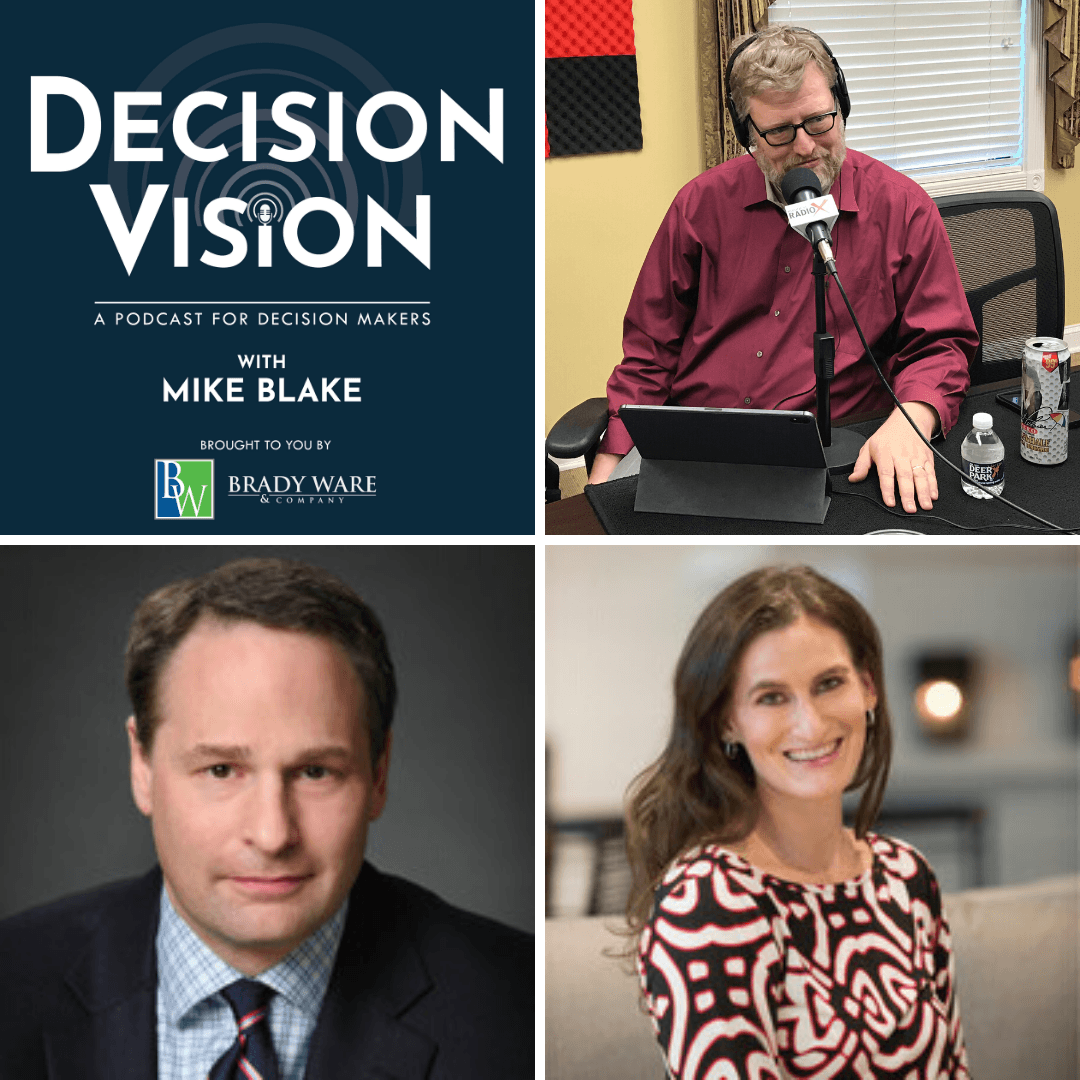
Millions of employees are now working at home because of coronavirus-related “shelter in place” directives, creating a data security problem for many employers. Justin Daniels, Baker Donelson, and Jodi Daniels, Red Clover Advisors, address this problem in the latest edition of “Decision Vision.” This series is hosted by Mike Blake and presented by Brady Ware & Company.

Justin Daniels, Baker Donelson

how do i secure data for work at home employees
Justin Daniels

Justin Daniels, Baker Donelson, provides corporate advice to growth-oriented and middle market domestic and international businesses. He is also a cybersecurity thought leader who believes cybersecurity is a strategic business enterprise risk.

His corporate practice consists of representing businesses and business owners in all aspects of their growth cycle, from structuring new ventures, raising capital and advising on acquisitions and divestitures to reviewing and negotiating key vendor, franchise, employment and customer contracts.

Justin specifically advises on cyber business and legal issues that impact every aspect of a company from mergers and acquisitions, investment capital transactions and related due diligence matters, vendor and customer contracts and cyber insurance. He runs tabletop exercises to help companies practice and identity opportunities to improve their cyber incident response plan. He also has a strong background in blockchain technology as he represents one of the largest cryptocurrency mining facilities in the country. He has particular experience in helping clients navigate how the blockchain might apply to a specific use case and the potential business and legal issues arising from it.

Justin has taken a leadership role in Georgia’s cybersecurity industry. In 2017, he founded and led the inaugural Atlanta Cyber Week, where multiple organizations held 11 events that attracted more than 1,000 attendees. Atlanta Cyber Week created business opportunities between growth cyber companies and Atlanta’s middle market and Fortune 1,000 customer base while also burnishing the reputation of Atlanta’s regional cybersecurity ecosystem. At the end of Atlanta Cyber Week 2017, he gave a Ted Talk entitled “Why You Hold the Key to Cybersecurity.” In March 2015, he traveled with Atlanta Mayor Kasim Reed and a 36-member delegation on a Georgia cybersecurity mission to the state of Israel to promote the Atlanta regional cybersecurity ecosystem. He has also given presentations about Atlanta’s cybersecurity ecosystem and U.S. privacy laws as part of his travels to London and Manchester surrounding the InfoSec cybersecurity conference in 2016 and 2017.

You can connect with Justin on LinkedIn, or email him directly.

Jodi Daniels, Red Clover Advisors

how do I secure data for work at home employees
Jodi Daniels

Jodi Daniels is the Founder and CEO of Red Clover Advisors. She is a Certified Informational Privacy Professional (CIPP/US) with more than 20 years of experience helping a range of businesses from solopreneurs to multi-national companies in privacy, marketing, strategy, and finance roles. During her corporate career, she proved a valuable asset to companies like Deloitte, The Home Depot, Cox Enterprises, Bank of America where she most recently served as the privacy partner for Digital Banking and Digital Marketing. Ms. Daniels started her privacy career by creating the comprehensive privacy program at Cox Automotive. She launched an online advertising network for Autotrader and Kelley Blue Book.

Since launching in 2017, Red Clover Advisors has helped hundreds of companies create privacy programs, achieve GDPR, CCPA, and US privacy law compliance, and establish a secure online data strategy their customers can count on. Jodi makes privacy easy to understand by breaking it down into measurable steps using plain language her clients can relate to. She passionately supports the idea that privacy is more than just compliance and concern over fines. It’s a human right we all deserve. She has made it her mission to help businesses build trust and transparency with this core value at its foundation.

Jodi holds a Masters of Business Administration and a Bachelor of Business Administration with a concentration in Accounting from Emory University’s Goizueta Business School. She lives in Atlanta, GA with her husband, two little girls, and a big fluffy dog named Basil.

You can connect with Jodi on LinkedIn, or email her directly.

Michael Blake, Brady Ware & Company

Mike Blake, Host of “Decision Vision”

Michael Blake is Host of the “Decision Vision” podcast series and a Director of Brady Ware & Company. Mike specializes in the valuation of intellectual property-driven firms, such as software firms, aerospace firms and professional services firms, most frequently in the capacity as a transaction advisor, helping clients obtain great outcomes from complex transaction opportunities. He is also a specialist in the appraisal of intellectual properties as stand-alone assets, such as software, trade secrets, and patents.

Mike has been a full-time business appraiser for 13 years with public accounting firms, boutique business appraisal firms, and an owner of his own firm. Prior to that, he spent 8 years in venture capital and investment banking, including transactions in the U.S., Israel, Russia, Ukraine, and Belarus.

Brady Ware & Company

Brady Ware & Company is a regional full-service accounting and advisory firm which helps businesses and entrepreneurs make visions a reality. Brady Ware services clients nationally from its offices in Alpharetta, GA; Columbus and Dayton, OH; and Richmond, IN. The firm is growth minded, committed to the regions in which they operate, and most importantly, they make significant investments in their people and service offerings to meet the changing financial needs of those they are privileged to serve. The firm is dedicated to providing results that make a difference for its clients.

Decision Vision Podcast Series

“Decision Vision” is a podcast covering topics and issues facing small business owners and connecting them with solutions from leading experts. This series is presented by Brady Ware & Company. If you are a decision maker for a small business, we’d love to hear from you. Contact us at decisionvision@bradyware.com and make sure to listen to every Thursday to the “Decision Vision” podcast. Past episodes of “Decision Vision” can be found here. “Decision Vision” is produced and broadcast by the North Fulton studio of Business RadioX®.

Visit Brady Ware & Company on social media:

LinkedIn:  https://www.linkedin.com/company/brady-ware/

Facebook: https://www.facebook.com/bradywareCPAs/

Twitter: https://twitter.com/BradyWare

Instagram: https://www.instagram.com/bradywarecompany/

Show Transcript

Mike Blake: [00:00:00] Welcome to Decision Vision, a podcast giving you, the listener, clear vision to make great decisions. In each episode, we discuss the processes of decision making on a different topic from a business owner’s or executive’s perspective. We aren’t necessarily telling you what to do, but we can put you in a position to make an informed decision on your own and understand when you might need help along the way.

Mike Blake: [00:00:19] My name is Mike Blake, and I’m your host for today’s program. I’m a Director at Brady Ware & Company, a full-service accounting firm based in Dayton, Ohio, with offices in Dayton; Columbus, Ohio; Richmond, Indiana; and Alpharetta, Georgia. Brady Ware is sponsoring this podcast, which is being recorded in Atlanta per social distancing protocols. If you like this podcast, please subscribe to your favorite podcast aggregator and please consider leaving or review the podcast as well.

Mike Blake: [00:00:44] This is a first in a sub-series of topics regarding how to address the coronavirus crisis. And I think we’re gonna have a few of these podcasts that we’re going to record before everything is said and done. But this is our initial attempt at this, and we’ll see how it goes. But I think that it should go pretty well. And specifically, we’re going to talk about data security.

Mike Blake: [00:01:07] Now, in episode 15, we had Charles Hoff come on to talk generally about data security practices and procedures. But now, we are faced with an unprecedented data security challenge. We’ve all been basically told to take our balls, and go home, and don’t come back until somebody else gives us the all clear. Now, for a lot of us, like myself, this is a good thing. It means that we don’t have to not be working at all. We can work from home, but it does present some novel challenges that, frankly, I don’t think a lot of us ever thought we would ever wind up having to face – certainly not on the scale. And as we always do for our podcasts, I bring in the best experts that I can find for this because I don’t know anything about this. All I know is to ask a few questions and we’ll let the experts talk.

Mike Blake: [00:01:59] So, joining us today are Justin and Jodi Daniels. Justin is a partner with Baker Donelson, which is the 64th largest firm in the US, giving their clients access to a team of more than 700 attorneys and public policy advisors, representing more than 30 practice areas, all seamlessly connected across 21 offices to serve virtually any legal and policy needs. Baker Donelson provides their clients a global network of global counsel and other professionals and to help their clients take advantage of global opportunities in more than 90 countries spanning six continents.

Mike Blake: [00:02:30] Justin’s corporate practice consists of representing middle-market and emerging growth businesses and business owners in all aspects of their growth cycle from structuring new ventures, raising capital, and advising on acquisitions and divestitures, to reviewing and negotiating key vendor franchise employment and customer contracts. Justin specifically advises businesses on cyber business and legal issues that pertain to mergers and acquisitions, investment capital transactions, and related due diligence matters, vendor customer contracts, information security plans, and cyber insurance. His representation of one of the largest crypto mining facilities in the country has provided him with a strong background in blockchain technology. This experience has been especially relevant in helping clients navigate how the blockchain might apply to a specific use case and the potential business and legal issues arising from it. He is also co-founder of Baker Donelson’s Cybersecurity Accelerator.

Mike Blake: [00:03:22] Jodi Daniels as founder and CEO of Red Clover Advisors. Since launching in 2017, Red Clover Advisors has helped hundreds of companies create privacy programs, achieve GDPR, CCPA, and US privacy law compliance -if you want to know what those are, again, go back and listen to Episode 15 – and establish a secure online data strategy their customers can count on. Jodi makes privacy easy to understand by breaking it down into measurable steps using plain language her clients can relate to. She passionately supports the idea that privacy is more than just compliance and concern over fines, it’s a human right we all deserve. She’s made it her mission to help businesses build trust and transparency with this core value at its foundation.

Mike Blake: [00:04:05] Jodi is a certified informational privacy professional with more than 20 years of experience, helping a range of businesses from solopreneurs to multinational companies in privacy, marketing, strategy and finance roles. During her corporate career, she proved a valuable asset to companies like Deloitte, the Home Depot, Cox Enterprises, Bank of America, where she most recently served as a privacy partner for digital banking and digital marketing. Ms. Daniels studied her privacy career by training at the Comprehensive Privacy Program with Cox Automotive. She launched an online advertising network for Auto Trader and Bluebook, Justin and Jodi Daniels, welcome to the program.

Jodi Daniels: [00:04:43] Hi. I’m glad to be here.

Mike Blake: [00:04:45] So, with all that said, you guys know a thing or two, you know a thing or two about security. Before we get started, I just kind of want to dive in to kind of a high level. When everything started hitting the fan about two weeks ago, what were your first thoughts in terms of how this is going to impact and really just sort of change the game in terms of business, privacy, and data security?

Justin Daniels: [00:05:14] So, thanks, Mike. Let me take that one. So, the biggest thing that we identified is pretty much overnight, companies, as you said, told their workforce, “Take your ball, and go home, and work remotely.” So, now, when you take a whole lot of companies who may not have had a significant part of their workforce work remotely and introduce them into this whole new concept of working remotely, a lot of the security challenges that companies were struggling to deal with, just in the workplace, now take on an added focus now that you’ve got all these people who are unfamiliar working at home, who now have to go and work at home and connect remotely to the company server, and all of the potential mischief and mayhem that can present for our trusty cyber criminals who are always out there.

Mike Blake: [00:06:10] So, let me ask this. I’m already going off the script, but I know you can handle it. Do you think as soon as this started happening, cyber criminals around the world, and crime syndicates, and so forth, and even state-sponsored are sort of rubbing their hands in anticipation because of the vulnerabilities here?

Justin Daniels: [00:06:27] I have three words for you. They think of this as target-rich environment. Absolutely, because any kind of dislocation like that, just like you’re advising your clients to think strategically about new ways to do business, a pandemic like this for a cyber-criminals says, “Wow, look at all this dislocation and people working remotely, this is just a great opportunity to commit different and varied types of crimes.” And as we get into this, I’ll share with you some of the things that we’re already seeing, which are cyber threats that are very specific to coronavirus when it comes to phishing and other kinds of things, but absolutely.

Mike Blake: [00:07:08] So, now, everybody has gone home. And for, at least, in many cases, they’re working on their personal device in some respect. And they may have been before, but certainly more of them are now. What sort of issues does using your personal device to telework present?

Jodi Daniels: [00:07:25] Sure. And so, you have the teleworking piece, but you also have, a lot of people like us, you have children doing distance learning and virtual learning. And so, it’s very similar scenarios. But you have probably no VPN, maybe the home Wi-Fi doesn’t have a password, or the password is password, or my pet’s name, something very simple that’s really easy to crack. So, if I don’t have a good password or no password, that’s sort of the first line of defense on the Wi-Fi or router. And then, I might not have a VPN, a virtual private network. That’s often been sort of saved for some of the more sophisticated or bigger companies. And again,  just an aside, if I was a company and sent everyone home because that’s what we needed to do, I didn’t think about a VPN and how I set that up.

Jodi Daniels: [00:08:15] A lot of people who are now potentially exposing company data fairly easily, the Wi-Fi might be one kind of wall that’s a bad actor has to make it through. A VPN would be a second wall that they’d have to make it through. You also have company information now on a personal device, which presents two interesting things. You have the security challenge. You actually also have a privacy challenge because the privacy laws haven’t gone away. And now, you’ve just exposed further where that personal information is. And you have others in the home who might be seeing it. And maybe someone comes along and, oops, accidentally sends that email that you had and draft that had all this information on it or shared information that they didn’t anticipate doing or a variety of things kind of like that.

Mike Blake: [00:09:10] So, you talk about the Wi-Fi piece. And I wanted to divert into that because I think that’s really important. When I think of Wi-Fi security, I think of going on airport Wi-Fi, Starbucks, whatever. Obviously, a vulnerability. And as you mentioned, that’s a target rich environment because if I’m a hacker, I know there’s 20 people in there that are using them, that are using Wi-Fi. Chances are there’s one computer in there, at least, that’s not secured properly. In a residential environment, what is the crime case there? Have you heard of criminals literally just like is parking outside somebody’s home, or a group of homes, or maybe a multi residential property, and just scanning for open networks and seeing if they can hack in?

Jodi Daniels: [00:09:58] Yeah. Well, if you actually think back to some of the stories you’ve seen on the children’s baby monitors that had Wi-Fi on them and how people were able to hack in. And sort of a nanny cam, people would call. The same idea is true. Those are on Wi-Fi networks. So, you have a couple different things. You have people from around the world who can break into those Wi-Fi networks that don’t necessarily … You know, there’s backdoors into all of this. Certainly, people could park outside my house. My neighbors can break in. We all don’t exactly know who our neighbors are all the time. So, you’re certainly exposing yourself. And the way the digital system works, I don’t necessarily have to be in range to be able to still break in, just like with those nanny cams years ago or ring devices. We’ve seen the developers of certain different Wi-Fi-enabled devices be able to break in and see whatever they want to see on those exposed devices.

Mike Blake: [00:10:53] So, are there any new threats that are being posed by mass teleworking, or do kind of the distribution or the composition of the threats change? Well, I guess what is the threat? How does the threat landscape change now that we’re in this mass remote working environment?

Justin Daniels: [00:11:14] So, Mike, I think the way that it changes is the type of phishing scams that you had before where they try to get to you through work, they’re now going to try to get to you as a remote worker. And let me break this down for you a little bit. So, you’re going to start to get emails that are very specific to coronavirus. And someone shared with me one that said, “Hey, this is from the CDC.com,” or I’m sorry, .gov.org. And the fact that they added on the “.org,” that’s what made it a phishing type of e-mail. So, now think about instead of phishing people at work, you’re now going to phish people at home, and they’d be distracted because they have kids, or trying to get work done, they have a million things on their mind.

Justin Daniels: [00:11:56] Well, let me take a step further for you. And it’s a concept called Identity Access Management. And what that really is, is have companies – because they so quickly get their remote workforce working remotely – did they really think about, “Well, how do I have to limit the access of my employees?” Like, for example, with what you do, Mike, it might be that your company says, ‘You know what? Mike gets access to the network, but there’s probably no reason for him to get access to invoicing or cash management,” because that’s not really your role. But I think what you’re going to find with a lot of these other companies who are just quickly trying to get their employees working remotely, they didn’t think about how to limit the employees’ access to the company network.

Justin Daniels: [00:12:43] So, now, if I phish remotely on someone, not only may I get through their e-mail, I may get access to the entire company network because the company didn’t think through, “Well, maybe I need to limit their access.” And now, they can get to the invoicing, they can get the wiring, they can get this sensitive company IP. So, it’s really a cascading effect because it’s not just the remote working, it’s how did you setup identity access management? How are you putting in layers of defense to help your people who are working remotely? Because just the phish e-mail is just the first step in getting access to a network that they may not have limited appropriately for the different workers because you put several thousand people working remotely, a lot of companies may not have thought about this.

Mike Blake: [00:13:29] I think that’s a really interesting point that you bring up. So, I want to drill back into that. So much of cyber security still relies on the focus of the individual user. And that distraction I face, I have a nine year old that we’re homeschooling now. My wife has her own business. Our situation is not that dissimilar to yours. And it’s different. Even though I work from home a lot, it’s still different. And I have to change my work hours and so forth to make sure I can concentrate. But all it does, and because the nature of cyber threats, all it does is, it takes one wrong clicked email when you’re not 100% focused, and the whole house of cards can come down, right?

Justin Daniels: [00:13:29] That’s it. That’s it.

Mike Blake: [00:14:17] And so, I think a key bullet point, if you’re a remote worker and you’re listening to this podcast or if you’re a manager, one of the things to think about, aside from policies, and software, and hardware – and we will get into that – is also just maintaining concentration and focus because not only are we in a target rich environment but, realistically, for a lot of people, we’re in an environment that encourages mistakes. Sorry. Go ahead.

Jodi Daniels: [00:14:49] I just want to add. I think this environment, also, it’s emotionally charged. People are tired. They’re stressed. We’re all at home hoping we don’t get this disease. We might know others who do. And there’ll also be a fair amount of personal information that might come through our personal emails like, “Please donate to this cause here,” or like the one that Justin just said, “Let’s get more information on the virus here.” And so, when your defenses are down because you’re tired, and you’re trying to do 14 things at the same time, there’s going to be a multitude of different ways of how these actors are going to try and get at you.

Mike Blake: [00:15:33] So, let’s start at the heart of this from the infrastructure-wise. I think we’ll kind of start there and work our way out. Employees are now going to be accessing their servers remotely through the internet, through their home access. It maybe cable. It maybe fibr for some case. It maybe through their mobile device. How does that change the security equation? And how should companies be reacting or addressing that to minimize the security exposure at the infrastructure level?

Justin Daniels: [00:16:09] So, Mike, let’s talk about that. So, when you log on to your network with your business, I suspect you may have something, as Jodi alluded to, what’s called a virtual private network. So, let’s talk a little bit in general business terms  what that is. So, that is software that you can put on your computer that creates a secure link between you and your company network using your home internet. But here’s the thing with VPN that’s interesting, is IT infrastructure wasn’t built so that everybody would be connecting via virtual private network.

Justin Daniels: [00:16:54] So, one of the things that companies may face is, one, they may not have sufficient licenses to put everyone on a VPN. But second, and probably just as important, is their network may not have the capacities to sustain the load of almost all of your workforce being remote. So, you may need to put in policies and procedures that say only certain employees have access during certain times because if everybody goes at the same time and is using it at the same time, you’re likely to have a disruption to your network or worse, it could go down. And then, you compound the problem.

Justin Daniels: [00:17:30] So, that’s just from an IT perspective, in addition to the security, because security is part and parcel of how do I keep stuff running because if it’s not secure, and we have a breach, then things don’t really run. But in general, how are you thinking about your IT infrastructure? And I think a lot of people did this because they had to get it done to keep working without thinking through, we’re gonna do this for an indefinite period of time. How do I make sure my IT infrastructure has the capacity to take care of all these people and also do it in a reasonably secure fashion?

Mike Blake: [00:18:05] So, you bring up virtual private network. I want to touch on that too because some people may have virtual private networks already, they may have purchased one because they’re concerned about the abolition of net neutrality. Some people have them because they want to be able to access Star Trek Discovery on Netflix. So, they spoof it into thinking they’re an international subscriber. So, it has been a consumer use case for VPN. Is that the same thing? And if I already have a VPN, does that mean that I’m using that to access those corporate documents or are we talking about two different animals?

Jodi Daniels: [00:18:45] I don’t know that it’s necessarily different. I think if you’re going to use any software on your personal computer to access the company network, your company and their IT professionals should be involved in that because I think one of the things you and I talked about was, should you use your own devices? And I think the answer to that is my company issued me a computer, but that may not be a realistic choice under this time pressure for everyone. So, my answer to you is you might be able to do it, but it’s not something where a company should said, “Hey, Mike, go off in whatever VPN you might have. Just go and use it.” It needs to be more of a concerted, “we’ve engaged with professionals and this is the type of VPN we want you to use. We’re going to give it to you because even though you’re letting employees have their own access, you want to have some level of control.”

Justin Daniels: [00:19:35] And we haven’t even talked about our iPhones. And that’s a whole nother area. And remember, a VPN just deals with the connection from you connecting to your server. It doesn’t really deal with any PII or other sensitive information that may now reside on your phone or your computer, and how that might impact the ransomware attack.

Mike Blake: [00:19:56] Yeah. And we’re definitely going to get to that. So, we’re kind of moving from that access in on out. The licensing issue you bring up is interesting. We phased out at the firm that I used to work for, when we had the Snowmageddon back, I want to say 2014, I think that sort of was. And of course, we’re all home. Once we finally got home, we’re home for about three days while the ice melted. And a lot of us couldn’t get on because we didn’t have enough licenses. We had to start rationing license. Then, we scrambled. But we never foresaw a scenario where 300 people, all of a sudden, would need remote access. And ironically, I think that’s actually made a lot of Atlanta companies better prepared for this, because we had sort of a dress rehearsal back and forth team to do just that.

Mike Blake: [00:20:52] Let me ask this. I know this is an area that you deal with a lot. So, I think your answer is going to be great. And that is, what are the cyber liability policy implications of moving to this mass remote working? When insurers wrote that policy, they thought there’s only a certain amount of remote and a certain amount of onsite. Now, that whole thing’s been disrupted. Are people’s policies being blown up if there is a breach? Are companies still covered?

Justin Daniels: [00:21:23] So, I think the answer to that question, Mike, is you really have to look at your individual policy, because if I’ve learned anything when I’ve been involved in the cyber insurance game is that there is no uniform policy out there like you have with commercial general liability or some of the other more well established type of policies. And so, I think what you’re going to have to do is take a look at the exclusions in your policy because it’s one of the hardest contracts that I have to read. And I hesitate to give you an answer that’s definitive because it’s really policy-dependent.

Justin Daniels: [00:21:58] But what I will say is companies should really be looking at whether or not they have specific, they call it social engineered emails in their coverage because a lot of companies may not realize that they’re not covered for the kinds of increase in what I expect of phishing scams to be, and they may want to look at their insurance and say, “Well, how am I covered for this?” because you probably know this, we’re in kind of the season where insurance is being renewed. And so, this is now a great time to bring up the issue of, “Hey, what is my coverage for socially engineered emails? And what is covered? What isn’t covered? Can I increase my defenses, so that I can get bigger coverage? What is excluded now that I’m more of a remote workforce?

Justin Daniels: [00:22:48] These are questions that should be brought up now because I know we are now in the season for people getting renewals on their insurance, and premiums might be changing on that kind of stuff. But now is the time to be asking those questions to the insurers because you know what, when you talked about Snowmageddon, you bring up a larger point. A lot of companies who really don’t have or never practice their business continuity plan, they’re now having to build it in flight.

Justin Daniels: [00:23:16] And so, an additional challenge is this teleworking issue is a big one. I think we’re going to see a rise in cyber breaches, but they’re going to have to figure that along with furloughing employees. What if my employee, do I have to test them for the COVID? If they test positive, what do I do? So, now, you’ve got this teleworking issue sitting alongside all those other issues as a business. And it’s a capacity issue. How many of these issues can you deal with in mid-flight if you don’t have a plan and you’ve never practiced it? And that’s why I think you’re going to see such a rise in breaches because people are going to discount this one for some of these more immediate ones until this one becomes a huge problem.

Mike Blake: [00:23:57] Yeah, I think a key bullet point. And I appreciate you can’t answer this blanket. I mean, you sound like you have command of everybody’s insurance policy.

Justin Daniels: [00:24:06] Yeah.

Mike Blake: [00:24:06] But it does sound like it is definitely worth your while at a minimum to pull your policy out and see how this changing environment may alter the coverage. So, let’s move then sort of away from the infrastructure then to the individual device access. We’ll get to mobile in a second but I want to ask a question about computers first because I think they’re slightly different. And my question is this, I guess, broadly, what would best practices be for companies in terms of monitoring, policing, developing  standards, I guess, around the actual hardware that employees are using to telework?

Jodi Daniels: [00:24:59] Well so, I think that starts with a few different things. There’s certainly software that companies can use to manage and monitor what’s happening. There’s data loss prevention software, there’s monitoring software, there’s VPN monitoring software, there’s noodles of software to actually manage the ins and outs of data on a network. At the same time, you really have to have some policies in place that inform the employee what is actually being monitored. And that’s really important depending on the country you’re in. So, if you’re outside the US, there’s some stricter policies in place, especially if you’re in GDP, what you can and can’t be monitoring, and what you have to disclose to me. If I’m here in the United States, there are still some issues. So, you kind of need to factor in the HR component combined with an information security policy.

Jodi Daniels: [00:25:56] So, while there’s an IT team who can identify the right software depending on the type of information and the number of employees to be able to monitor and determine where is traffic coming in and out of, what’s being downloaded, there’s capabilities to restrict what’s being downloaded, or shared, or forwarded. There’s a lot that you can do. And again, it’s very dependent on the company and the type of data. You do have to factor in the human element and the notice requirements, so that employees understand what is happening to them, to not have it be such a huge surprise.

Mike Blake: [00:26:37] Now, the question I think that follows from that naturally is, where’s that software going to reside? Of course, many people, not everybody, but many people do own their own computers. And so, they could use that to access whatever it is they need access or do. Is that the right answer is BYOD? And now, WYOD, just work on your own device. Is that presenting additional challenges? And if so, maybe, should a company consider them, at least, giving employees the option to use company issued equipment, so that maybe the company has more power over this, or maybe I’m barking up the wrong tree? Is that a way to think about this?

Jodi Daniels: [00:27:31] I think it’s a great question. So, BYOD, WWOD, pick your flavor of acronym, they all do present big issues. And again, a policy piece is something I’ve helped a number of companies on, which is, what is the policy? Because it does make it a little bit harder if I have my own device, depending on the tools that I’m using, you may or may not be able to see what I’m doing on that device. So, in some policies, the company has the right to take a look at it at any time. I have the right to be able to wipe it at any time. And I know we’re gonna get into mobile, but that’s really quite similar for mobile because a lot of times, I’m putting my company email on mobile, I might access my apps on mobile. It’s really very similar of what power does the company have to be able to come in and kind of audit, if you will, be able to test and control when it needs to, and it reserves the right to be able to do so.

Jodi Daniels: [00:28:29] At the same time, because there’s so much in the cloud these days, if I’m using Google Docs or I’m using Exchange, there are still some monitoring tools that can be connected to those cloud servers. So, let’s say I’m sending an email, and I’m trying to forward it to a personal email, there is some capabilities to be able to limit that. You can put in certain … you can’t forward it to G-mails, and Yahoo!’s, and things like that. I’ve seen companies do that. So, it’s a little bit dependent on the type of software I’m using, but it is definitely still possible.

Mike Blake: [00:29:06] So, let me bring up a specific case that I think if I were in a decision making capacity – I guess I semi am – that would concern me if I’m allowing all my employees to use their personal devices, particularly if they’re not necessarily particularly conscientious about their own security is, who knows what is on the employees computer, right? And whether it’s free apps, whether they’ve downloaded pornography, whatever they’ve done with their computer, we know that there’s malware and other things that piggyback off of other content that may be basically cohabitating with company data in some respect, right? So, if we’re going to ask employees to use their own equipment, is that an additional risk? And is that one that the company can reasonably manage absent issuing everybody a company-issued laptop that then the company can lock down, and restrict use, and downloads, and all that good stuff?

Justin Daniels: [00:30:15] So, Mike, I think to address that question, what I would say is I am going use a term I learned from the US Secret Services, it’s really about concentric rings of defense. And what I mean by that is you’re absolutely right, who knows what employees have downloaded? And if you’re a company who’s not in the position to configure a hundred computers or whatnot and just disseminate them out, you’re kind of in a spot where you’re going down BYOD. But as I alluded to before, I think you have to go at this with a sense of you’re going to assume that some fish e-mail is going to make it through. They only have to be right once. So, you do security, I think, you train people up the best that you can, but you do it under the assumption that some e-mail or something is going to get clicked on because that’s just the law of averages.

Justin Daniels: [00:31:06] But the other things that you can do, and I alluded to it before, is are you making sure that your employees have the least amount of access necessary to do their work? Meaning that even if you phish someone, maybe it’s the administrative assistant to the CEO, that they don’t have access to billing and invoicing. The access that a criminal would get is very limited. So, then, what you’re adding in are these other layers of defense that make it harder for a criminal to get around, to get to your wire instructions or get to other information that they’re seeking to get to because you just don’t give people carte blanch access to the network.

Justin Daniels: [00:31:46] And are you using – and you’ve probably heard of this – two factor authentication? Maybe you have instances where if you want access to certain parts of the network, there has to be a higher level of authentication than is required, so that people get access to invoicing, billing, financial statements, things of that nature. So, there are other things that you can implement to institute all these different layers of defense among the different assets that you’re identifying as being the most important for your organization.

Justin Daniels: [00:32:15] And that’s a lot of what I’ve been doing lately for clients is I’ve been helping them issue spot across a whole different swath of areas that are impacting their business. And when we start talking about teleworking, I start to ask these questions. When they say, “Oh, well, they just have access to the network,” then that’s where you’re creating the opportunities to help clients identify these issues, and then start to implement this defense and depth, which, really, it’s a factor of the technology that you’re using, we talked about; pop processes and procedures, Jodi alluded to that; and also, it’s educating your workforce about what to look for in phishing. It’s really doing all three of those things and doing it in layers of defense.

Jodi Daniels: [00:32:58] All right. So, let’s then move out to the mobile device. And I appreciate that that’s similar to the more conventional work device, but I think they’re a little bit different in that mobile devices are more likely to have been issued by someone’s employment. At a minimum, they’re probably picking up the tab for the access, which I think, then, gives the company certain rights that they may not have with respect to a true BYOD. So, how does the equation now change for mobile devices? Or let me ask this. iPhone or Apple has gotten a lot of publicity for their security. Even the government can’t crack it, et cetera. So, I don’t know if that’s true or that’s a sort of an urban legend like roving bands of surgeons that steal kidneys, but that’s certainly the reputation. Does the security equation change with mobile devices? And if mobile devices do, in fact, offer superior security, is there a case to be made that maybe you want to try to work off a mobile devices as much as possible?

Justin Daniels: [00:34:12] So, Mike, I’m going to answer the first part of that. So, when I was in Israel on a mission for cyber, even the Israelis said the iPhone is a much better platform for security. And one of the big reasons why is everything with Apple is internal to Apple with the apps and everything else. With Android and some of the other users system environments, other developers can come, and create things, and put them onto their systems. So, those are potential areas of weakness as opposed to Apple that’s very much self-contained. It is very difficult to breach Apple’s security, as we know from the San Bernardino issue and whatnot. So, Jodi and I happen to have the iPhones. So, one thing people should be doing is you can have a passcode that’s six digits long instead of four. People should implement that. It’s another layer of security.

Justin Daniels: [00:35:09] As for the other parts of your question, with mobile devices, I know that you can install software from a company perspective on devices that you give people that allows you to monitor the software or monitor the machine, what’s coming on to it, but also more importantly, what if somebody just loses it or something happens? It allows you to wipe their machine immediately. And having some of that software, particularly on devices that the company has issued, can really be the difference between a large breach and keeping something on a low boil because you’re able to get to your machine or your phone and just wipe it.

Justin Daniels: [00:35:43] So, that’s where, to me, mobile devices have some other security that might be if the companies issued all the phones, and they don’t have it on there, they might want to consider pushing apps out to their users, so they can now monitor the phone, the ISPs. And it shouldn’t be an issue if those are phone issued by the company, you just probably want to check some of your policies and employee handbook, so that people are made aware of you, and you put it on the computer or the phone that says, “Hey, look, anything you do on this, we can monitor.”

Jodi Daniels: [00:36:15] I’d add two interesting things. So, on the Apple side, one important distinction is a lot of people, they might use Slack or other chat channels, but if they use the iMessage, iMessage, so Apple to Apple is what’s encrypted. But if I’m Apple to Android, I’m not encrypted. So, kind of an interesting differentiation on that. And then, if I’m a company who didn’t issue devices, and now everyone’s remote, and I have all these mobile devices, another avenue to, at least, be able to protect the data without … there are going to be some companies who don’t want to say, “I’m going to wipe all the data on your personal device.” That’s just not going to be the culture. For that company, the six digit passcode is going to be really important one. You can also have two factor authentication on the different company-focused apps, and tools, and suites, and things along those lines too. Again, it’s another added layer to Justin’s concentric methodology.

Mike Blake: [00:37:15] And what do you think about biometric authentication? That’s getting more and more common. Android is headed for a while. Apple is catching up. Windows, hello. I’m a big fan of it. And I also use KeyLemon for Apple devices. Are you a big fan of biometric authentication as well, or do you think it’s overkill?

Jodi Daniels: [00:37:36] I think it depends on the type of data that your company has. I think it’s just all relative to the type. Again, what kind of information and the volume of information that the employee has? Maybe it’s appropriate for some employees, not for other employees. And bring it to the privacy side, biometrics is a very sensitive area. So, for anyone who has employees really actually anywhere in Europe, for sure, it’s a sensitive data field under GDPR. That requires special notice and consent. And then, for States, here in the United States, biometric, also, there’s a variety of hoops you have to go through. So, can absolutely still do it. Just have to make sure you follow the laws where you’ve notified, you’ve asked for consent, I get what I’m doing. And to me, it’s just a matter of, does it make sense? Is it the right method for what I’m using?

Mike Blake: [00:38:30] So, you mentioned privacy. That’s a good segue to the next question I wanted to ask, which is, does this new work regime create loopholes that have not been foreseen in privacy protection and ownership protocols? Are there companies that, therefore, might be tempted to collect data that they wouldn’t necessarily be in a position to collect before? Is that an issue? And then, what are best practices to kind of safeguard against that?

Jodi Daniels: [00:39:05] So, from an employee standpoint … And there’s a difference, I think, between us and the rest of the world. The rest of the world generally has stricter privacy regulations than what we have here in the US. And in the US, we’re very sectoral. Every industry is going to have its own privacy laws. But if I had any level of a remote workforce, I likely was already monitoring something – IP addresses, where are people accessing my network from, and things along like that. If I have more of them, I probably just have more data points. If a company is going to start analyzing it and using it in some other fashion, then I think that does tie into the loopholes that you’ve just described.

Jodi Daniels: [00:39:50] I personally haven’t heard of any company yet trying to do that. I think everyone is just in a little bit of survival mode trying to keep their business afloat as best as they can. So, it’s quite possible, but I haven’t heard of that yet. It would, though, go to the same theme that we’ve been talking about, which it brings it back to policy. Whatever it is that a company is doing, whether it’s on your customers or for your employees, you need to have a policy that informs them of what it is that you’re doing. And in some countries, the individual rights might be a little bit greater and the notice might be a little bit greater, but it is a fundamental privacy baseline to inform of what it is that companies are doing.

Justin Daniels: [00:40:37] Mike, I want to add one other point alongside of what Jodi is saying is. If I’m a company, and if it’s the difference between my sales going down by 80% and collecting and using data to market to people, I think you know what a lot of companies are likely to decide to do, particularly small or medium sized companies that may not have the cash reserves to withstand this. So, I think you’re going to have a lot of companies making some pretty tough decisions. Well, we got these privacy laws and these other things. Well, I need to sell this because I need to generate revenue. And I think that’s also going to create some issues.

Mike Blake: [00:41:13] Yeah. And that answer segues in a question that I’ve got to ask. And it’s an unfair question, but I’m going to ask it anyway.

Justin Daniels: [00:41:20] Okay.

Mike Blake: [00:41:20] And the question is this, is that I think more companies are in this position than are going to admit. One day, everybody is in the office. The next day, everybody isn’t. Most companies probably are just not compliant as they need to be day one. I mean, I think that’s a fact of life. How do you manage that? Is the best practice to cause all of your operations until you get compliant? Do you just sort of roll that, and do the best you can, and hope that you don’t get unlucky, and you kind of make it until you do get to the point where you want to be? That’s a real kind of brass tacks decision. How do you think about that? I got to imagine your clients are raising that issue with you.

Jodi Daniels: [00:42:10] Yeah, we each have some thoughts. I think we’re going to both take a stab. I think that the reality is business needs to go on, especially in the environment that we’re in right now. And for any of the privacy laws and security requirements, it’s impossible to be perfectly 100% secure and 100% compliant. Companies should do the best that they can. And for some, it’s just starting out, and they know the five things they need to do. They have a list and they’re going to dedicate to working towards as many of them as they can. For others, they’re farther down the path, and they’re going to try and maintain where it is that they are.

Jodi Daniels: [00:42:50] So, generally, I don’t think it’s the best idea to just stop all business and wait for sort of your perfect compliance secure program because it’s moving. The security challenges are continuously changing. It’s doing the best that you can. Everyone can pretty simply educate a workforce of what they should be on the lookout for. There’s some practical items that they can do pretty simply. And there’s some more complicated things that they can work towards. And this is probably not the first time we’re going to have this. So, planning for the next iteration, I think, is going to be incredibly important. And Justin, I’m sure you have some thoughts too.

Justin Daniels: [00:43:34] So, Mike, I’ve already had that some pretty tough discussions with people, particularly around potentially violating one law or having a potential lawsuit. And I’ve had to give some tough advice because you’re put in a position where the uncertainty of a lawsuit versus maybe violating some other law, I’m going to violate the law, kind of know what that might look like because you’re just trying to make some tough business decisions. When it comes to the security and the privacy, it’s like every other risk in your business. You need to manage it.

Justin Daniels: [00:44:07] And what Jodi and I have tried to articulate in our discussion today are some of the real commonsense things that you can do that don’t cost tons of money, don’t take an overwhelming amount of effort to start to manage this because you and I both know there’s no way people are going to wait to be perfectly compliant. That’s not what they’re gonna do. But what they can do is, is if they do none of the things we’ve talked about and have these issues, if you have a data breach on top of what the environment is now, I think most companies, you’re done.

Justin Daniels: [00:44:40] And so, what can companies be doing to do some commonsense things that don’t cost the sun and the moon to address this? And that’s really the approach that Jodi and I have taken with our clients and customers on how to manage this amongst all the other things that people are trying to manage, because you know what businesses are focused on. How do I trim expenses and how do I generate new revenue? And within all of that, how do I manage these risks, which are very real when you have a remote workforce from a security and privacy standpoint?

Mike Blake: [00:45:12] So, Jodi and Justin, this has been a great conversation. I’ve learned a lot. I think our listeners are going to learn a lot as well. They probably will have more questions. How can they contact you for more information?

Jodi Daniels: [00:45:26] Sure. So, for me, a couple of different ways. My website is redcloveradvisors.com. You can also find me on LinkedIn, Red Clover Advisors or personally, Jodi Daniels. Real simply, email is just jodi@redcloveradvisors.com.

Justin Daniels: [00:45:45] As for me, my email is jdaniels@bakerdonelson.com. And you can also find me on LinkedIn because Jodi and I post on these topics very regularly for more information. And I also have been advising companies just generally on strategically issue spotting. And so, if companies need help with that as this is important but not the only point. I’ll be honest, Mike, that’s been the bulk of my advisory services lately is helping companies strategically implement a business continuity plan in mid air because they either haven’t had one or the one they have doesn’t really relate to something this significant.

Mike Blake: [00:46:33] Well, thanks so much. That’s going to wrap it up for today’s program. I’d like to thank Jodi Daniels of Red Clover and Justin Daniels of Baker Donelson so much for joining us and sharing their expertise with us today. We’ll be exploring a new topic each week. So, please tune in, so that when you’re faced with your next executive decision, you have clear vision when making it. If you enjoy these podcast, please consider leaving a review with your favorite podcast aggregator. It helps people find us, so that we can help them. Once again, this is Mike Blake. Our sponsor is Brady Ware & Company. And this has been the Decision Vision Podcast.

Tagged With: Brady Ware, Brady Ware & Company, coronavirus, coronavirus effect on business, cyber security, data security, Red Clover Advisors, shelter in place, virtual private network, VPN

Sam Perkins, Pūrgenix™ (PHI Technologies, LLC)

March 24, 2020 by John Ray

Pūrgenix™
Alpharetta Tech Talk
Sam Perkins, Pūrgenix™ (PHI Technologies, LLC)
Loading
00:00 /
RSS Feed
Share
Link
Embed

Download file

“Alpharetta Tech Talk,” Episode 14:  Sam Perkins, Pūrgenix™ (PHI Technologies, LLC)

Pūrgenix™ equips hospitals with patented technology which eliminates airborne pathogens in hospitals, preventing root infection sources which cause numerous illnesses and even deaths. Sam Perkins joined this edition of “Alpharetta Tech Talk” to discuss how this technology not only protects patients but hospital employees as well, reducing absenteeism and turnover. The host of “Alpharetta Tech Talk” is John Ray and this series is broadcast from the North Fulton Business RadioX® studio. Special thanks to Renasant Bank for their support of this episode of “Alpharetta Tech Talk.”

Sam Perkins, Pūrgenix™ (PHI Technologies, LLC)

Pūrgenix
Sam Perkins, CEO of Pūrgenix™ (PHI Technologies, LLC)

Sam Perkins is the CEO of Pūrgenix™ (PHI Technologies, LLC).

Parents entrust their child to a children’s hospital, only to have their child infected during their stay. Failure to address the root infection sources in hospitals causes these infections and creates headlines like: “6 deaths, more illnesses blamed on mold at Seattle Children’s hospital, CEO admits.” Hospital-acquired infections (HAIs), known in the healthcare industry as nosocomial infections, are increasingly being recognized as preventable. Infectious pathogens, which may have no adverse effect on a healthy individual, can be life threatening to a patient with a compromised immune system.

Hospitals currently employ multiple technologies, products and procedures for cleaning, disinfecting, and sterilizing different aspects of the hospital environment. The PurgenixMatrix™ augments these best-practice techniques by delivering the first hospital-wide, systemic approach to air disinfection. We reduce the risk of airborne HAIs and provide healthier air for patients, staff, and visitors alike through addressing pure air at the source, the HVAC system.

Pūrgenix® attacks the root of mold and disease pathogens in hospitals creating a pūrHospital®. The first pūrHospital®, Harrison Memorial Hospital, has a three-year record of zero hospital acquired sepsis and pneumonia, combined with 9 of 12 quarters with zero surgical site infections-results not seen until becoming a pūrHospital®. Pūrgenix® creates pūrHospital® pathogen elimination by installing the PurgenixMatrix™, their patented germ eliminating energy field, in every air handling. PurgenixMatrix™ generates an intense UVGI energy field that kills or deactivates infectious pathogens both in the passing air and on air handling unit (AHU) interior surfaces.

For more information, you can connect with Sam on LinkedIn, or email him directly.

Show Transcript

John Ray: [00:00:14] And hello again, everyone. Welcome to yet another edition of Alpharetta Tech Talk. I’m John Ray and we are in Alpharetta. We’re not in the Business RadioX Studio inside Renasant Bank as we usually are. We’re in a new normal, but we’re in Alpharetta, in a nice safe location and excited about being here today. We’ll get to our guest in a moment, but I want to remind you that we love Renasant Bank even though we can’t be there right now. And Renasant Bank has all the mobile applications that you need.

John Ray: [00:00:51] Whether it’s your friends, your family or your life, Renasant understands how you bank and offer those mobile services you need. Renasant also knows that sometimes you need to speak to real people the real answers and they have real offices you can find, 190 convenient locations throughout the south ready to serve you. Call ahead and check in with them. For more information, go to renasantbank.com, Renasant Bank understanding you. Member FDIC. And now, I want to welcome Sam Perkins. Sam is the CEO of Purgenix. And Sam is as timely as anything can be right now. Sam, welcome.

Sam Perkins: [00:01:35] Thank you very much, John. I appreciate the opportunity to speak with you here from a safe zone in Nashville, Tennessee.

John Ray: [00:01:42] Yeah. All right. You’re on the phone from Nashville. And company headquartered here in Alpharetta. But you’re working out of Nashville because that’s really kind of a little bit of ground zero in terms of what you do, right?

Sam Perkins: [00:01:54] It is. It’s really the epicenter of health care in the United States. And this is where we need to be. And our presence here is actually quite timely.

John Ray: [00:02:05] So, let’s get into it, talk a little bit about Purgenix. How are you helping folks?

Sam Perkins: [00:02:13] You know, I think, John, the best way to summarize it is really our mission. And if you believe that they’re catching something in a hospital, getting an infection in a hospital is probably one of the greatest fears, I think especially right now in these times, then what you do is you really understand our mission and that is that we create an air-handling system performance that we are able to remove these germ agents inside the air system, and then block them from being able to be spread around the hospital again. And that is our underlying mission. And that impact when you do it across the entire hospital creates a PurHospital.

John Ray: [00:03:00] So, the way you help hospitals is, I guess, you’re installing really aftermarket technology into the air handling systems, correct?

Sam Perkins: [00:03:15] That’s right. So, what we have, John, is we have a patented platform of an array of ultraviolet lamps. That array with our patent is able to smooth or create a curtain of energy inside the air system. And because where we do it, we placed that at the pivot point of all air and the air-handling unit from what’s called the cooling coil. And we then design the energy field to eliminate. It’s the dog. I’m at home with a dog.

John Ray: [00:03:49] Absolutely. And that’s okay. So-

Sam Perkins: [00:03:52] We eliminate those pathogens in the course of that by being able to remove it. And we can design it at different levels of energy depending upon what’s needed.

John Ray: [00:04:07] So, Purgenix has been around a while. You’ve had this technology for a while. And before the coronavirus came along, we’ll get to that in a second. Of course, that’s extraordinarily timely. But the airborne pathogens are a big problem in hospitals, generally.

Sam Perkins: [00:04:30] Yeah, that’s right. If you were to spend some time, I think the best example of the impact that we can have is at a hospital in Cynthiana, Kentucky, which is really the first PurHospital. And I’d recommend your listeners go and check out their Facebook page, their Instagram feed and other such social media to see the impact of PurHospital. What we did there was three years ago, we installed our system inside of every air-handling unit.

Sam Perkins: [00:05:01] And by doing so, I think the CEO best summarizes it by the reason for what she said, “We’ve had quarters before where we’ve had zero infections”, but they believed that this was the next layer through which they could then take all of the great practices and get a more consistent zero infection ratio. And if you’re interested, I’ll be happy to share with you what happened over the last three years.

John Ray: [00:05:26] You know, that would be great. And folks, we’ll put these links to this in the show notes as well, but yeah, we’d love for you to share that, Sam.

Sam Perkins: [00:05:33] So, what’s curious is that they’re a hospital that has gone in the medical world with zero hospital-acquired pneumonias when I last met with them in April in person. That’s an astounding record, but there’s more. They also had gone a thousand days with zero central-line infections. That is an amazing statistic as well, but they’re not finished. They went seven out of 10 quarters with zero surgical-site infections. So, before this moment in time where we’re confronting the COVID-19, they were already having these outstanding infection rates over the past period of time.

John Ray: [00:06:20] So, several things to pull out of that, but again, before we get to COVID-19, even before we get to that, let’s talk about, there’s a huge branding impact on that for the hospital, but address that if you would. And also, what’s the financial impact because it’s got to be tremendous for them.

Sam Perkins: [00:06:40] Yeah. Oh, it is. So, let’s talk about, first, the emotional part of this. And if you take a look at their social media page particularly the last two weeks and a new story that was done on March 9th, what they’re talking about is that they can now talk about being a safer environment. All of their media is saying that over the last two weeks in particular. They’re safer because they’re a PurHospital. And I think a great way of being able to say it is that after the hands are washed, the surfaces are clean. The CDC protocols are followed.

Sam Perkins: [00:07:17] PurHospital assures that as you go through that hospital, that you’re actually in the safest environment. And that emotional piece of what we talked about with PurHospital, they’re using in Harrison Memorial to reassure the reality that they are safer hospitals. That’s the emotional part of it. The financial piece is pretty significant too. Sheila Currans, The CEO at Harrison Memorial has shared that they’d already seen after a-year-and-a-half a reduction in their infection control costs.

Sam Perkins: [00:07:53] And in the impact on absenteeism, while unmeasured, the employees are very happy working in that environment because they too are safer. Remember, we do have people on the front lines that are taking care of us in the hospital and they’re being exposed to this too. And we’re helping them be safer in that hospital, and that’s an important piece for employees. I mean, the question is where would you rather work? A PurHospital or the other hospital. Another emotional piece.

Sam Perkins: [00:08:21] But the financial aspect of it too is that because of that, the employees are healthier, you have an impact on employee absenteeism. But there’s another hard cost piece that has not as much to do with the infection prevention, but because of where we do it, in the air-handling units, there are actually some very significant energy savings and operating savings from cleaning the systems and replacing filters that go away. And they, in fact, paid for this system alone. And they recognize that there at Harrison Memorial.

John Ray: [00:08:56] And there are plenty of studies out there relatedly that employees that feel good about where they work, that translates into bottom-line performance.

Sam Perkins: [00:09:09] Oh, yeah. There’s no doubt. We did a social media promotion, if you will, a year ago, where there is a restaurant in town, Biancke’s. It’s one of the oldest restaurants in all of Kentucky. Biancke’s is a wonderful old place. I love visiting there when I’m in town, visiting them. And we went and bought two $100 gift cards to Biancke’s. And in that, we had one for the community and one for the employees. And all we ask them to do is take a picture next to one of the banners that proclaims that they’re a PurHospital.

Sam Perkins: [00:09:49] One says, you know, “Shouldn’t your babies air be pure?”, the picture of the baby and the mom. “Take your picture next to that banner, tag Harrison Memorial Hospital. Put the hashtag, PurHospital”, which is P-U-R-H-O-S-P-I-T-A-L, “and put it on social media and you have an entry to win that gift card.” Well, we had somewhere around 156 employees do that with comments on social media such as, “I am so happy that my hospital where I work cares as much about me as we do about our patients.”

Sam Perkins: [00:10:21] That was a powerful message. And that was affirmation of exactly what you’re talking about. That’s awesome. Folks, if you just joined us, we’re speaking with Sam Perkins. And Sam is the Chief Executive Officer of Purgenix. So, Sam, you have installations. It’s amazing, the list of—if I can just read a few, the list of installations that you have beyond Harrison. I mean, that includes Emory, WellStar, UHS Aiken, Baptist Health. That’s a pretty impressive client list.

Sam Perkins: [00:11:00] Yeah. Where we were if we’ve been demonstrating the power of this, you know, until COVID-19, I had a rather difficult challenge explaining to everybody the invisible enemy they were fighting, the germs, right?

John Ray: [00:11:13] Right.

Sam Perkins: [00:11:14] I think COVID-19 has raised awareness around this and before, we’re talking about solving problems of C. diff, which redistributes in a hospital, we solved that for somebody. MRSA, we can go on with the list of nasty germs there in hospitals that cause these problems that we help eliminate from the air system. And we were doing individual installations. It’s really the change that we had three years ago over the PurHospital saying, “Hey, this is not about a single part. You need an entire protective envelope across the entire hospital.” And then, you can talk about it because, you know, the funny thing about air is it doesn’t know how to stay place, stay in one place, it moves around.

John Ray: [00:11:57] Right.

Sam Perkins: [00:11:57] So, covering the whole hospital makes a difference, and that’s sort of what happened. So, Harrison Memorial is our first PurHospital. But if I may, the hospital in Georgia that people may be interested in, our technology is throughout the Paulding Hospital. Now, they did not choose to take the PurHospital branding. And so, they’re not a PurHospital, but they could be. And what I do like is that when that hospital was built and introduced, I love how Mark Haney, who’s now retired from WellStar introduced to all of Georgia, in essence, on WSBT, Channel 2, the hospital from the mechanical room. I mean, when have you ever seen that before, John?

John Ray: [00:12:43] Yeah, really.

Sam Perkins: [00:12:45] You want to go there in the atrium, right? You want to go to the pretty place.

John Ray: [00:12:48] Exactly. With all the potted plants, right?

Sam Perkins: [00:12:51] Exactly. So, instead, he decided that the pretty place was actually down in the mechanical room showing our system on TV. This happened, what, six years ago when they opened that hospital.

John Ray: [00:13:03] Wow.

Sam Perkins: [00:13:05] And I love the statement, he said like, “This hospital is designed as an infection-prevention tool from the outset. We still have to do the basics, but now, we have the building working for us.” That’s a powerful statement.

John Ray: [00:13:19] Yeah, for sure, for sure.

Sam Perkins: [00:13:20] I mean, in most instances, John, what’s happening is not only, you know, you’re washing your hands, cleaning the surfaces, and what’s happening is you’ve got to remember that you’re doing this environment with the rebroadcast of this drug building, and that’s what we’re preventing.

John Ray: [00:13:39] And so, just to clarify, you’ve got all these installations in the various parts of that particular institution or a location. So, you mentioned WellStar Paulding. You know, there’s just certain aspects of that property that you cover. But the Harrison installation was noteworthy because you covered the entire facility.

Sam Perkins: [00:14:10] That’s right.

John Ray: [00:14:10] Yeah. And so, that’s really where you’re going with the company in terms of branding an entire facility a PurHospital.

Sam Perkins: [00:14:18] That’s right. So, a part of what we’re doing quite frankly is that we’re designing and building installing. We’re maintaining the system to make sure—because part of PurHospital’s re-certifying, it’s going to perform to the standards to which we are going that we said that it will perform. And so, PurHospital is about the reassurance that system is operating as designed.

John Ray: [00:14:39] Right. Right. And-

Sam Perkins: [00:14:41] That’s part of it. So, part of it is, you know, WellStar Paulding has a medical office building attached to it. We did not put our systems into the medical office building. So, that’s part of it, too, is they could become a PurHospital pretty quickly by covering that and such. So, that’s an example. You know, over at UHS Aiken, with Universal Health Services, we did all their surgical suite. And while they’re much safer, you know, again, it’s not the whole hospital that’s covered.

John Ray: [00:15:09] So, why don’t we talk about return on investment? Because that’s really what it’s all about for, certainly, the health care industry where they’re squeezed in terms of their returns and profits just like everyone else. They’re looking for the best return they can get. Why don’t you talk a little bit about that because that’s a compelling part of your story, it seems to me.

Sam Perkins: [00:15:34] No, there’s so many multiple paybacks. Let me break them down into three areas. And I think most importantly, let’s start with the leader around PurHospital, the impact on infections. We talked about that and the important thing is that let’s start to look at the infection rate in United States, about 900,000 hospital beds, 1.7 million infections in hospitals a year and a hundred thousand people die from them. So, that’s a one in 17 probability of death if you get an infection in a hospital, right?  So, every hospital bed then, if you average, represents just slightly less than two infections.

Sam Perkins: [00:16:18] So, every 17 infections that we block, there’s a life that’s been saved. The cost of fighting an infection for a hospital is about $16,000 per infection. If we block those infections, that’s an immediate return to them. Certainly, it’s the impact on families too. How about the patients? Let me speak to that person that had a hip replacement three years ago as a result of a mountain bike accident that I had and they found an infection. I asked to see the records and I understood that it came from the environment. And it was not from the infection of a body or a human. Never confirmed that I had it, but guess what I had to do, John?

John Ray: [00:17:00] What’s that?

Sam Perkins: [00:17:00] Well, I had to follow a six-week course of antibiotics three times a day followed by probiotics two hours after, and I had to do that for six weeks. Now, that’s when you get infected. 1.7 million people are having to go through this infection fight, and it’s no fun. I know this. So, this mission became very personal from that moment, let me assure you.

John Ray: [00:17:25] For sure.

Sam Perkins: [00:17:26] Yeah. So, now, we come back. I think the third area is employees. And for employees, it’s an issue of absenteeism. We’ve seen reductions of absenteeism anecdotally from 5% to 30%. That’s pretty dramatic. And the cost of replacing employees is significant in a hospital. And while we can’t frame exactly what that number is because there’s not enough experience with PurHospitals yet, but it’s a clear benefit that comes. Very measurable impacts.

Sam Perkins: [00:17:58] Put it in three sub-parts of the financial area, energy, operating and capital. So, on the energy side, you have all these giant fans and these big chillers that are operating, and they are probably up to 40% of the total energy bill, maybe 50 in many instances in the hospital. And because of what we do, we slow fans down. We make chillers operate more efficiently, and that is a very, very big number.

Sam Perkins: [00:18:31] We can pretty much assure in every instance, you’re going to see about a 3% to 6% reduction in total building energy from what we do. So, that’s the energy side. Operating savings come in the form of these giant cooling coils. Just think about your home air unit where you see these silver coils and things, that’s where the heat exchange happens. And in hospitals, we’ve got to clean them once, twice, sometimes, four times a year. They don’t have to do that anymore after we’ve installed.

Sam Perkins: [00:19:05] So, that’s a significant savings on that. And then, these things called HEPA filters, these filters are after the system to take out all these pathogens. That’s been the standard for years, but they change them out every quarter, maybe twice, four times a year. We have one customer that hasn’t changed their HEPA filters for three years. That’s a significant savings in the cost of those filters and the labor required to go put them and take them out and let’s not forget about waste and disposal, too.

John Ray: [00:19:35] Sure. Sure.

Sam Perkins: [00:19:36] So, all those are savings. And finally, here’s an interesting one. We installed at Washington and Lee University, so this is universal, doesn’t matter what the setting is. But the capital piece of it is interesting. They had 100,000 giant systems called 100,000 CFM is how we tell them, so it would be about, for them, $2.4 million to replace it. Well, if you’re a for-profit system, if I make those two air-handling units operate longer, this is where we get a little bit technical in ROI, but if I take systems $2.4 million worth of systems that you were going to replace and you don’t have to replace them now because what we do, we return them to performance, that $2.4 million, if you have a return on equity in your for-profit company, it’s worth a quarter million dollars a year to you because you redeploy it into areas where you can drive profit rather than a sunk cost like an air system. So, those are three things. Energy, operating cost, a capital cost. Combine that with absenteeism and infections, it’s a powerful ROI, John.

John Ray: [00:20:47] Yeah. It’s kind of mind-boggling. And something tells me that you’ve got a way—I mean, every hospital’s different. Something tells me you’ve got a way to kind of plug in the variables and show what the ROI is or the average internal rate of return for that investment.

Sam Perkins: [00:21:07] Absolutely. In fact, we make it so it’s virtually no out-of-pocket cost, plus it’s beautiful we’re doing this interview, you in Georgia, we had one project with Georgia Power, had granted us a pre-approval for a rebate, an energy rebate. So, we were able to come back and say, “Hey, customer, now, we’re going to make this so that your cost is spread across 60 months. We’re going to align that to all the savings that you have. We’ll guarantee on the energy and operating side that you will not be out of pocket. All these other benefits will be for free. Oh, and by the way, here’s a check from Georgia Power.”

John Ray: [00:21:45] You can’t beat that deal. That’s awesome.

Sam Perkins: [00:21:47] That’s true.

John Ray: [00:21:48] Yeah. Wow. Terrific. Folks, we’re speaking with Sam Perkins. And Sam is the CEO of Purgenix. So, Sam, we’ve walked all around the issue, but we need to dive into COVID-19 because you offer solutions there as well.

Sam Perkins: [00:22:11] Yes. Well, thank you. Yes, John. And because of the way we design our systems, we’re able to eliminate in one single pass 70% of the COVID-19 in a single pass in the air. It’s significant because the Daily Mail published an article, I think, week before last that they’re finding COVID-19 in air-handling ducts that we now saw this week, in fact, that they’re finding it can last in the air for up to three days. That’s the best estimate they have by the way.

John Ray: [00:22:47] Right.

Sam Perkins: [00:22:47] I believe it may be higher. And so, we’re in a place where we are going to be able to address the unknown. Let’s face it, it could last on surfaces. I’ve seen some people say up to eight days. So, think of it as if it goes airborne for three days, there are 96 air changes in a hospital, think about that. Ninety-six air changes for an hour, for three days, you’re approaching 300 opportunities for COVID-19 to be redistributed throughout that hospital.

John Ray: [00:23:26] Wow.

Sam Perkins: [00:23:28] I mean, that’s all theoretical, mind you, but it’s possible. And so, as a result, that’s just what we’re dealing with. And so, in the midst of all this, we are addressing it in that fashion. The more—here’s another important part of it though, and we don’t know what the answer is, yet that’s the challenge, but at least at Harrison Memorial, they’re likely to have a better answer than most, and that’s this, once you have a person with COVID-19, their immune system is obviously compromised, making them more susceptible to guess what, other infections, secondary infections. You’re going to be hard-pressed to find a better environment which to fight COVID-19 than Harrison Memorial Hospital because of their infection rate that they’ve had that’s been so low for three years that the exciting part about it is—and so, it’s something where I can address it directly, frankly.

John Ray: [00:24:33] Right.

Sam Perkins: [00:24:34] And sorry for the dogs barking, but they’re kind of over at the backdoor, and I’m not. We’re going to go live with this. It’s kind of like, you know, you’re used to being in a studio setting and we’re just where we are today.

John Ray: [00:24:49] I just assumed there was some hospital folks knocking at the backdoor and they were barking at that. So, that’s-

Sam Perkins: [00:24:55] You’re breaking the door down to get in here.

John Ray: [00:24:58] Yeah, exactly. They’re looking for you because you’ve got some answers to the problems they’ve got. So-.

Sam Perkins: [00:25:03] That’s great. That’s great.

John Ray: [00:25:05] Yeah.

Sam Perkins: [00:25:05] Yeah.

John Ray: [00:25:05] So, talk about what this involves because when you’re talking about—I mean, you’re not replacing an air handling system, but you are doing an installation. What does that involve? How long does it take? In other words, how quickly can you bring a solution to a hospital’s issues?

Sam Perkins: [00:25:26] Well, it requires design. So, how quickly can you build a building? You first have to make sure that you have the structural engineer on it, right? So, in order to get this airborne, every air-handling system has a very, very different performance metric, different air velocities, speed, different temperatures, all this impacts how you’re going to design it. And so, we do an assessment of the air-handling unit. And then, from there, the implementation can be pretty fast. So, for example, at Harrison Memorial Hospital, once we had the pre-engineering completed and we manufactured the system specifically for each area in the unit and installed them from beginning to end, it was about nine weeks, which is pretty fast for a custom delivery of a solution.

John Ray: [00:26:19] Oh, wow. Absolutely. And then, after the installation, judging by what you’ve done with Harrison, you’re keeping pretty close tabs on the payback of that installation.

Sam Perkins: [00:26:33] Yeah, that’s right. Well, we are. There are smaller hospital, they don’t have specifics, but they’ll tell you, for example, that their air-handling systems had dropped by 20 percent in terms of their energy consumption. And since that comprises about 50%t of their energy consumption at that particular hospital, they’ve seen a 10% reduction in their energy cost. Now, the reality of it is that they don’t see it completely because they put a brand-new section on the building. We installed across that one new area in the unit, but the remaining 13 or so were all old ones, and they have energy recovery and all of those. And we stopped the new one from becoming, shall I say, impaired.

John Ray: [00:27:22] Got you.

Sam Perkins: [00:27:23] Yeah.

John Ray: [00:27:25] Got you. So, just trying to get out with this question, who is a good fit for the technology you bring to bear? I mean, Harrison’s a smaller hospital in the scheme of things. I mean, how big of a hospital plant can you service?

Sam Perkins: [00:27:47] Any hospital, frankly. Now, this is a unique point in time and I look forward to the issue of how to scale, frankly. And I think that COVID-19 has created a background for conversation around the invisible enemy that has never been there before. Certainly, our entire economy has been disrupted by an invisible enemy. It now makes the point that why are we getting all these infections in hospitals and while it may be finally transmitted by touch, questions how to get there.

Sam Perkins: [00:28:20] And my answer has been that don’t think of an air system as something you’re breathing in, but think of it more like a shower of germs coming down on top of you. Stop the shower, stop the infections. If it’s not there, it can’t be transmitted. So, I think that conversation has changed because this COVID-19 and the things that are happening because now, people understand, “Hey, maybe we do have an invisible energy and we want to be more like Mark Haney and have a building working for us, not against us.”

John Ray: [00:28:47] Yes.

Sam Perkins: [00:28:48] So, the answer is any hospital, but, you know, there are other applications. You’re sitting in Georgia, and I’ve always wanted to and have not had the opportunity to get to the Georgia Aquarium. Think about this for a moment, John. I suspect that all the mammals that are inside that aquarium have to be fed probably some anti-fungals and antibiotics. And why would that be? And you think about it, any mammal in the middle of the ocean has been playing around or even penguins, you know, they don’t deal with fungus or human bacteria. And you’re putting them into a building, where there’s a whole bunch of humans, and Charles Schulz by the way almost had it right with his characters, so here you go, I think you’ll like this, is that the best image to have is everybody is a pig pen.

John Ray: [00:29:40] Nobody wants to hear that, but it’s true, right?

Sam Perkins: [00:29:45] It is true.

John Ray: [00:29:45] Right.

Sam Perkins: [00:29:46] So, he always had it right. You know, the cloud that you’re carrying just varies and you just don’t want to be around someone that has a cloud of COVID-19 right now. That’s kind of the way I think of it as a pig pen.

John Ray: [00:29:57] Sure.

Sam Perkins: [00:29:58] So, if you take all this collection of people in the Georgia Aquarium, one, you have the same kind of recirculating system. We did put a system in there a long time ago for one installation, but they need to cover the—for example, covering the entire aquarium would be great. Can you imagine PurAquarium, and it didn’t quite smell like an aquarium because we alter that environment, just like a hospital or how about another one? A corporate headquarters. So, you have people coming internationally, at least you used to, internationally in your headquarters, you don’t know what they’re carrying, what illness there is.

Sam Perkins: [00:30:34] And that corporate headquarters is not designed any differently than a hospital other than they’re not using HEPA filters. And so, these same germs, these pig pens come in and out at the corporate headquarters. There are germs that are going up in the air system, festering, growing and being redistributed. We had one customer a long, long time ago, John, we had an employee that came up and said, “Hey, I got this sickness from being in this building.” And they took that employee upstairs, showed them the installation that we had and said, “You did not get it here because that does not get through this”, right?

John Ray: [00:31:11] Yeah. Wow.

Sam Perkins: [00:31:12] So, I think there’s going to be a potential in the area of corporate headquarters. There’s going to be a potential for aquariums, in particular. And how about the fact that we’re in 37 buildings on the Emory campus. They’re not PurBuildings, they’d be PurBuilding-eligible. And by the way, Emory has the largest collection of PurBuilding-eligible buildings in the United States. Second is Washington and Lee University. But now, imagine you’re a parent and you’re sending your child off to college, well, they shut them down, why? Well, because they’re in buildings where they could share, and what if you could block the sharing through PurBuilding?

John Ray: [00:31:53] Right. Wow.

Sam Perkins: [00:31:53] There are a lot of applications. But right now, I think if I had to choose between, you know, capacity, I’m going to throw it at health care because that’s our most vulnerable population right now. And we would have to figure out how to expand out to those others because I have a sense in about two to three months, we’re going to have a line.

John Ray: [00:32:13] Yeah. Sounds like it. Sam Perkins is with us folks, CEO of Purgenix. Sam, this has been awesome. Maybe we ought to let you go and take calls from hospitals at this point. But for-

Sam Perkins: [00:32:30] Actually, this is kind of funny, John, but investment bankers that wouldn’t take my phone call three weeks ago are now calling me.

John Ray: [00:32:41] Imagine that. Nothing like an opportunistic investment banker, right?

Sam Perkins: [00:32:45] Well, let’s face it, they’re in it to make a profit, right?

John Ray: [00:32:49] Of course. Of course. They’re-

Sam Perkins: [00:32:51] I’m happy to take their calls because I’m having very nice conversations about something I love, which is, we’re protecting patients and people inside of hospitals and when you have that as a mission, that’s a pretty awesome life, let me tell you.

John Ray: [00:33:05] So true. Outstanding. Sam Perkins, folks, CEO of Purgenix. So, Sam, for those that would like more information, would like to be in touch, tell them how they could do that.

Sam Perkins: [00:33:17] Sure. If you have Twitter, I have a funny name, but it’s @three50one, T-H-R-E-E-50-O-N-E. You can certainly connect with me on LinkedIn and just let me know in both instances that you heard me on this program and I’ll connect with you. I get several requests, as you might imagine, but if you heard on the radio show and you want to connect, just let me know and we’ll connect there. You can always DM me on that. Otherwise, if you want more information directly, you can always reach me on my email address which is sam@purgenix, P-U-R-G-E-N-I-X, .net.

John Ray: [00:34:04] Awesome. Sam Perkins, thanks for being with us.

Sam Perkins: [00:34:07] John, it was a pleasure. Thank you for helping us spread that there is good news even in these times.

John Ray: [00:34:14] Absolutely. Thanks again.

Sam Perkins: [00:34:16] Thank you.

John Ray: [00:34:17] Folks, just a reminder that you can listen to this show every Thursday morning live at 11:30. If you miss any of our live shows—and we also have special shows throughout the week, but if you missed any of our shows, we’re Podcast Space. You can find us on all the major podcast platforms, that’s Apple, Google, Stitcher, TuneIn, Spotify, Overcast, happens to be my favorite. We’re even on YouTube. So, just check us out on any of your favorite podcast apps. Also, we’re online at alpharettatechtalk.com. You can find our complete archive of shows there and follow us on social media channels, North Fulton BRX is our handle on Twitter, Facebook and LinkedIn. So, for my guest, Sam Perkins, I’m John Ray. Join us next time here on Alpharetta Tech Talk.


About “Alpharetta Tech Talk”

“Alpharetta Tech Talk” is the radio show/podcast home of the burgeoning technology sector in Alpharetta and the surrounding GA 400 and North Fulton area. We feature key technology players from a dynamic region of over 900 technology companies. “Alpharetta Tech Talk” comes to you from from the North Fulton studio of Business RadioX®, located inside Renasant Bank in Alpharetta.

Past episodes of “Alpharetta Tech Talk” can be found at alpharettatechtalk.com.

Renasant Bank has humble roots, starting in 1904 as a $100,000 bank in a Lee County, Mississippi, bakery. Since then, Renasant has grown to become one of the Southeast’s strongest financial institutions with approximately $12.9 billion in assets and more than 190 banking, lending, wealth management and financial services offices in Mississippi, Alabama, Tennessee, Georgia and Florida. All of Renasant’s success stems from each of their banker’s commitment to investing in their communities as a way of better understanding the people they serve. At Renasant Bank, they understand you.


Tagged With: Alpharetta, Alpharetta Tech Talk, coronavirus, COVID-19, Harrison Memorial Hospital, Novel Coronavirus, PHI Technologies, pneumonia, Purgenix, PurgenixMatrix, Sam Perkins, sepsis

The Importance of Using a Licensed and Certified Professional and How We #DesignYourLife

March 18, 2020 by Mike

StatusLIfewithLetaBannerTile
Gwinnett Studio
The Importance of Using a Licensed and Certified Professional and How We #DesignYourLife
Loading
00:00 /
RSS Feed
Share
Link
Embed

Download file

Let Leta take you on a journey of faith, life, travel, and interior design. Take your life out of the status quo and into 2020! Status Life with Leta is brought to you by Status Home Design, and by the Law Office of Derek M. Hays at 404-777-HURT.

On today’s episode, Leta discusses the importance of using an Interior Designer or Interior Decorator that is a licensed and certified professional in their field. She also talks about how she can #DesignYourLife!

Leta Brooks/Status Home Design

Status Home Design is a 12.000 sq ft retail store located in the Kohls Plaza of Hamilton Mill at 2240 Hamilton Creek Pkwy, Dacula, Georgia. They have 70 different merchants inside the store selling furniture and home goods of various styles. Their Status Carpenters can rehab, refinish, or repaint almost anything. This fantastic team of carpenters also custom builds tables, bookcases, cabinets, and barn doors. Status Design Studio, Inc., their award winning full-service interior design firm is also located inside the store. Their designers, provide exemplary service for all your home and business needs. Status Home Design’s knowledge of the latest trends and access to an abundance of manufacturers for furniture and all home decor items, sets them apart from the rest. Last, but certainly not least, they have an in-house seamstress and upholstery workshop.

Contact Leta at lbrooks@statushomedesign.com

Follow Us On Social Media!

Status Home Design on Instagram
Status Life with Leta on Instagram

Status Home Design on Facebook
Status Life with Leta on Facebook

Visit Our Websites!

Status Home Design and Status Life with Leta

Tagged With: coronavirus, Derek Hays, design your life, interior decorating, interior decorator, interior design, interior designer, law office of derek hays, Leta Brooks, pandemic, Radiox, Status Home Design, status life, status life with leta

Resources for Business Owners in Uncertain Times – Kali Boatright, CEO of the Greater North Fulton Chamber of Commerce

March 18, 2020 by John Ray

Kali Boatright
North Fulton Business Radio
Resources for Business Owners in Uncertain Times – Kali Boatright, CEO of the Greater North Fulton Chamber of Commerce
Loading
00:00 /
RSS Feed
Share
Link
Embed

Download file

Kali Boatright, President and CEO of GNFCC

Resources for Business Owners in Uncertain Times – Kali Boatright, CEO of the Greater North Fulton Chamber of Commerce

Business owners are hurting due to the challenging environment created by the coronavirus pandemic. Kali Boatright, CEO of the Greater North Fulton Chamber of Commerce, joined the “GNFCC 400 Insider” to discuss what GNFCC has done to distill resources for business owners in uncertain times.

About GNFCC and “The GNFCC 400 Insider”

The “GNFCC 400 Insider” (formerly “North Atlanta’s Bizlink”) is presented by the Greater North Fulton Chamber of Commerce (GNFCC) and is hosted by Kali Boatright, President and CEO of GNFCC. The Greater North Fulton Chamber of Commerce is a private, non-profit, member-driven organization comprised of over 1400 business enterprises, civic organizations, educational institutions and individuals.  Their service area includes Alpharetta, Johns Creek, Milton, Mountain Park, Roswell and Sandy Springs. GNFCC is the leading voice on economic development, business growth and quality of life issues in North Fulton County.

The GNFCC promotes the interests of our members by assuming a leadership role in making North Fulton an excellent place to work, live, play and stay. They provide one voice for all local businesses to influence decision makers, recommend legislation, and protect the valuable resources that make North Fulton a popular place to live.

For more information on GNFCC and its North Fulton County service area, follow this link or call (770) 993-8806.

For the complete show archive of “The GNFCC 400 Insider,” go to GNFCC400Insider.com. “The GNFCC 400 Insider is produced by the North Fulton studio of Business RadioX®.

Tagged With: coronavirus, coronavirus effect on business, GNFCC, GNFCC 400 Insider, Greater North Fulton Chamber of Commerce, Kali Boatright, Novel Coronavirus, resources for business owners, The Greater North Fulton Chamber of Commerce, uncertain times

  • « Previous Page
  • 1
  • 2
  • 3
  • Next Page »

Business RadioX ® Network


Our Most Recent Episode

CONNECT WITH US

  • Email
  • Facebook
  • LinkedIn
  • Twitter

  • YouTube

Our Mission

We help local business leaders get the word out about the important work they’re doing to serve their market, their community, and their profession.

We support and celebrate business by sharing positive business stories that traditional media ignores. Some media leans left. Some media leans right. We lean business.

Sponsor a Show

Build Relationships and Grow Your Business. Click here for more details.

Partner With Us

Discover More Here

Terms and Conditions
Privacy Policy

Connect with us

Want to keep up with the latest in pro-business news across the network? Follow us on social media for the latest stories!
  • Email
  • Facebook
  • Google+
  • LinkedIn
  • Twitter

  • YouTube

Business RadioX® Headquarters
1000 Abernathy Rd. NE
Building 400, Suite L-10
Sandy Springs, GA 30328

© 2025 Business RadioX ® · Rainmaker Platform

BRXStudioCoversLA

Wait! Don’t Miss an Episode of LA Business Radio

BRXStudioCoversDENVER

Wait! Don’t Miss an Episode of Denver Business Radio

BRXStudioCoversPENSACOLA

Wait! Don’t Miss an Episode of Pensacola Business Radio

BRXStudioCoversBIRMINGHAM

Wait! Don’t Miss an Episode of Birmingham Business Radio

BRXStudioCoversTALLAHASSEE

Wait! Don’t Miss an Episode of Tallahassee Business Radio

BRXStudioCoversRALEIGH

Wait! Don’t Miss an Episode of Raleigh Business Radio

BRXStudioCoversRICHMONDNoWhite

Wait! Don’t Miss an Episode of Richmond Business Radio

BRXStudioCoversNASHVILLENoWhite

Wait! Don’t Miss an Episode of Nashville Business Radio

BRXStudioCoversDETROIT

Wait! Don’t Miss an Episode of Detroit Business Radio

BRXStudioCoversSTLOUIS

Wait! Don’t Miss an Episode of St. Louis Business Radio

BRXStudioCoversCOLUMBUS-small

Wait! Don’t Miss an Episode of Columbus Business Radio

Coachthecoach-08-08

Wait! Don’t Miss an Episode of Coach the Coach

BRXStudioCoversBAYAREA

Wait! Don’t Miss an Episode of Bay Area Business Radio

BRXStudioCoversCHICAGO

Wait! Don’t Miss an Episode of Chicago Business Radio

Wait! Don’t Miss an Episode of Atlanta Business Radio