
Business RadioX ®

  • Home
  • Business RadioX ® Communities
    • Southeast
      • Alabama
        • Birmingham
      • Florida
        • Orlando
        • Pensacola
        • South Florida
        • Tampa
        • Tallahassee
      • Georgia
        • Atlanta
        • Cherokee
        • Forsyth
        • Greater Perimeter
        • Gwinnett
        • North Fulton
        • North Georgia
        • Northeast Georgia
        • Rome
        • Savannah
      • Louisiana
        • New Orleans
      • North Carolina
        • Charlotte
        • Raleigh
      • Tennessee
        • Chattanooga
        • Nashville
      • Virginia
        • Richmond
    • South Central
      • Arkansas
        • Northwest Arkansas
    • Midwest
      • Illinois
        • Chicago
      • Michigan
        • Detroit
      • Minnesota
        • Minneapolis St. Paul
      • Missouri
        • St. Louis
      • Ohio
        • Cleveland
        • Columbus
        • Dayton
    • Southwest
      • Arizona
        • Phoenix
        • Tucson
        • Valley
      • Texas
        • Austin
        • Dallas
        • Houston
    • West
      • California
        • Bay Area
        • LA
        • Pasadena
      • Colorado
        • Denver
      • Hawaii
        • Oahu
  • FAQs
  • About Us
    • Our Mission
    • Our Audience
    • Why It Works
    • What People Are Saying
    • BRX in the News
  • Resources
    • BRX Pro Tips
    • B2B Marketing: The 4Rs
    • High Velocity Selling Habits
    • Why Most B2B Media Strategies Fail
    • 9 Reasons To Sponsor A Business RadioX ® Show
  • Partner With Us
  • Veteran Business RadioX ®

How the Coronavirus Pandemic is Affecting the Legal Profession

March 17, 2020 by Mike

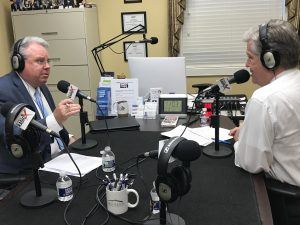
Gwinnett Studio
Gwinnett Studio
How the Coronavirus Pandemic is Affecting the Legal Profession
Loading
00:00 /
RSS Feed
Share
Link
Embed

Download file

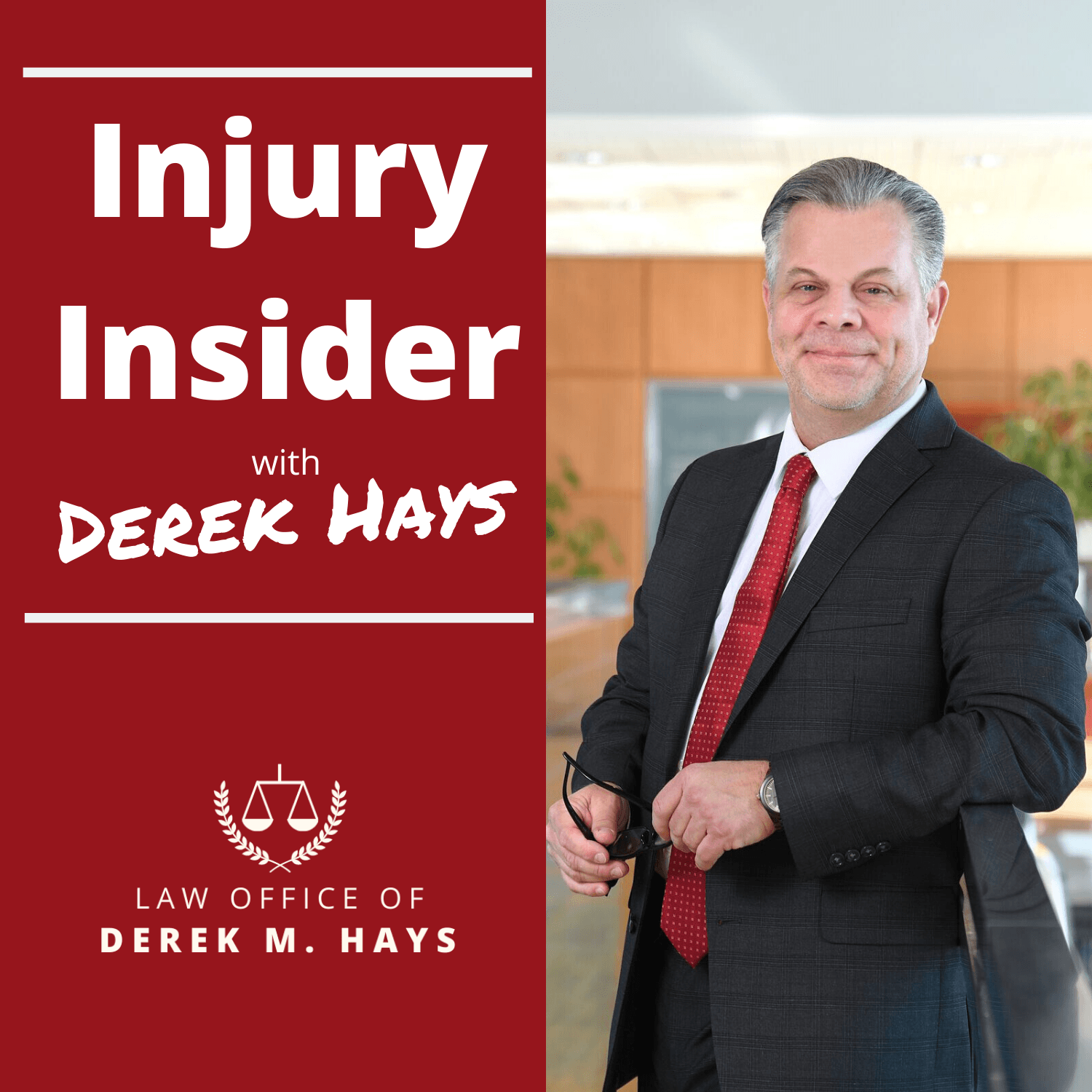
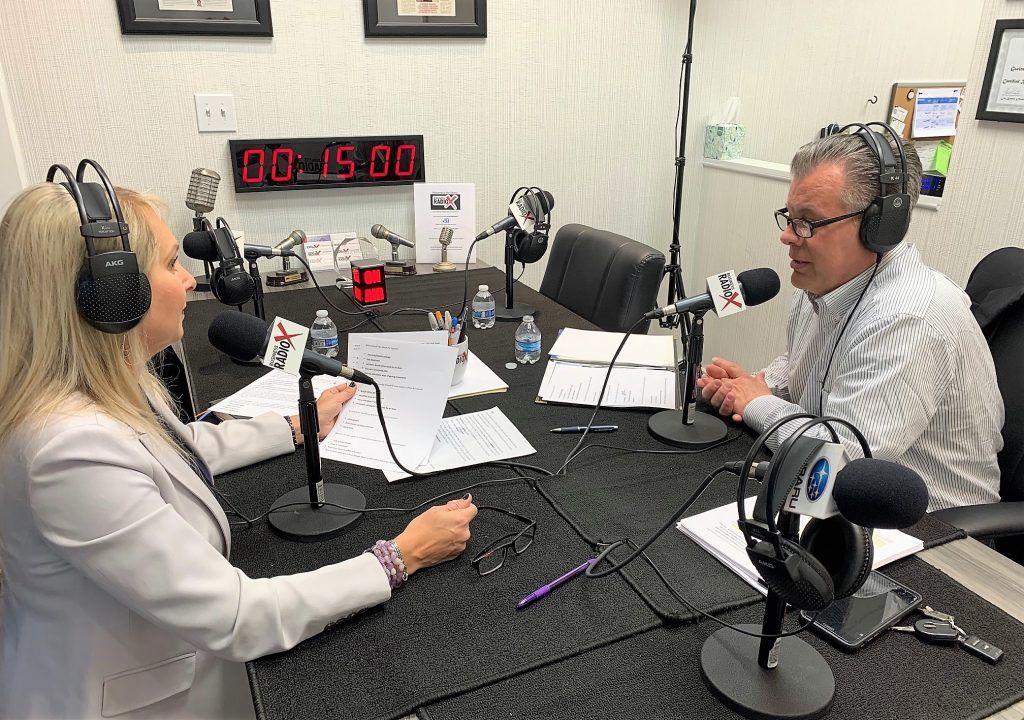
“Injury Insider with Derek Hays” will answer legal questions and debunk personal injury myths with insight and humor. For nearly 25 years, Derek has exclusively represented injured parties in Georgia. Now, he’d like to put that knowledge to work for you!

On this episode, Derek discusses how the coronavirus pandemic is affecting the legal profession and offers tips to anyone injured in a car wreck or any other kind of accident right now. Although everyone may all be focused on the news of the day, that doesn’t mean people aren’t getting hurt in accidents.

“Injury Insider with Derek Hays” is brought to you by Status Home Design, your one-stop-shop for all your home and gift needs.

About The Law Office of Derek M. Hays

The Law Office of Derek M. Hays is located in the heart of downtown Lawrenceville at 30 Lumpkin Street, Suite C in Lawrenceville, GA . We are just minutes away from the Lawrenceville Square and Gwinnett Justice and Administrative Center.

Derek Hays, owner and founder of the Law Office of Derek M. Hays, is among Georgia’s elite trial lawyers, recognized for his work on behalf of victims of car wrecks, nursing home negligence and other personal injury claims. He has successfully obtained approximately $125,000,000 in combined verdicts and settlements in his almost 25 years practicing law. Nationally, he is one of America’s Top 100 Lifetime Achievement Award recipients, earned by the most skilled and ethical attorneys. Derek M. Hays has also been honored as Gwinnett Magazine’s “Best of Gwinnett” every year since 2015 as well as being a valued member of the Million Dollar and Multi-Million Dollar Advocates Forum.

Mr. Hays believes communication is key and this sets him apart from other firms. He is committed to clients and manages each case while discussing all aspects of your claim with you from the beginning, answering questions and guiding you through the process to maximize your compensation.

Call for a free, no risk case evaluation – 404-777-HURT

Follow The Law Office of Derek M. Hays on Facebook

Follow The Law Office of Derek M. Hays on Instagram

Follow The Law Office of Derek M. Hays on Twitter
Tagged With: coronavirus, coronavirus effect, Derek Hays, derek m. hays, gwinnett personal injury attorney, law office of derek hays, law profession, Leta Brooks, Personal Injury, Radiox, Status Home Design, status life

Charlie Brown, Loyal Trust Bank

March 16, 2020 by John Ray

Loyal Trust Bank
North Fulton Business Radio
Charlie Brown, Loyal Trust Bank
Loading
00:00 /
RSS Feed
Share
Link
Embed

Download file

Loyal Trust Bank
John Ray and Charlie Brown

North Fulton Business Radio, Episode 201:  Charlie Brown, Loyal Trust Bank

Charlie Brown, CEO of the recently opened Loyal Trust Bank, joins this edition of “North Fulton Business Radio.” Charlie discusses his bank’s mission and target customers, how technology helps a newly-formed bank like his serve clients better, and the impact he sees from the coronavirus. “North Fulton Business Radio” is hosted by John Ray and is broadcast from the North Fulton Business RadioX® studio inside Renasant Bank in Alpharetta.

Charlie Brown, Loyal Trust Bank

Loyal Trust Bank
Charlie Brown, Loyal Trust Bank

Charlie Brown is the President and CEO of Loyal Trust Bank. “Comfortable” and “easier” are words some customers are using to describe doing business with the bank due to its multi-cultural approach to banking.

This is also due in large part because the headquarters is local, opening November 15, 2019 after the Founding Directors discovered a need for just such a bank. This location for a headquarters means the policy and decision makers, including the board and executives are close to the customers or know them personally as well as active in the community. This availability and local focus allows leadership in the bank to consider the communities to financial needs and respond accordingly.

Secondly, Loyal Trust Bank is the only bank headquartered in Johns Creek, GA, the organization holds the distinction of being a truly multi-cultural community bank as evidenced by its board of directors and staffing. Again, this allows anyone from multiple cultures to do business with the bank and work with a banking professional that understands their language and culture. Specifically, the bank has a focus as a start on the Asian American community as well as the business community from all cultures.

Location:  11675 Medlock Bridge Rd., Johns Creek, GA 30097. You can learn more by visiting their website or by calling 678-783-8018.

Founding Directors include:

Rose Jarboe, Chairwoman, CEO of WePartner
Charlie Brown, CEO of Loyal Trust Bank
Bill Abernathy, owner of Abernathy Bank Consulting and former regional OCC Bank Examiner
Julin Gu, Founder and President of China US Technology Innovation Center, Johns Creek, Georgia
John Lewis Jr., Partner, Shook, Hardy & Bacon, LLP as well as former Private Bank of Buckhead Board Member
Edward Oh, Founder and CEO of Pac Tell Group dba US Fibers
James Park, CEO and owner of Sun’s Transfer Co., Inc.
Bo Shen, Founder and Managing Partner of Fenbushi Capital
Dr. Dong Wang, CEO/Neurologist, Georgia Neuro-diagnostic & Treatment Center

Loyal Trust BankCharlie Brown, CEO:

Charles Brown is the President & Chief Executive Officer of Loyal Trust Bank and has over 20 years of community bank chief executive officer experience in the position having built, bought and sold multiple banks over his career of 30 plus years in the industry. Mr. Brown most recently started Insignia Bank in 2006 (Sarasota, Florida) and served as its founding Chairman and Chief Executive Officer until its sale in 2017, where Mr. Brown was able to achieve record returns. He was honored to be appointed by Chairman Sheila Bair of the FDIC to be one of only 13 bankers to represent his region on the FDIC Community Bank Advisory Board in Washington, D.C. for a period of over five years while serving as President and Chief Executive Officer of Insignia Bank. Additionally, he served for over six years as one of two bankers to represent his state with the American Bankers Association in D.C. on its Community Bank Advisory Board.

Loyal Trust Bank

North Fulton Business Radio” is broadcast from the North Fulton studio of Business RadioX®, located inside Renasant Bank in Alpharetta. You can find the full archive of shows by following this link.

Renasant Bank has humble roots, starting in 1904 as a $100,000 bank in a Lee County, Mississippi, bakery. Since then, Renasant has grown to become one of the Southeast’s strongest financial institutions with over $13 billion in assets and more than 190 banking, lending, wealth management and financial services offices in Mississippi, Alabama, Tennessee, Georgia and Florida. All of Renasant’s success stems from each of their banker’s commitment to investing in their communities as a way of better understanding the people they serve. At Renasant Bank, they understand you because they work and live alongside you every day.

Tagged With: coronavirus, coronavirus effect, coronavirus effect on business, de novo bank, Loyal Trust Bank, multi-cultural bank, north fulton business, North Fulton Business Radio, Novel Coronavirus, startup bank

To Your Health With Dr. Jim Morrow: Episode 28, Coronavirus Update and Tinnitus

March 12, 2020 by John Ray

tinnitus
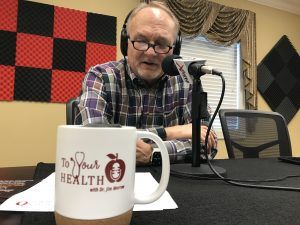
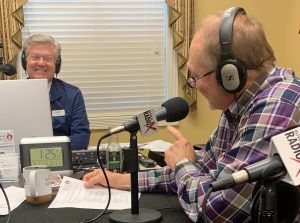
North Fulton Studio
To Your Health With Dr. Jim Morrow: Episode 28, Coronavirus Update and Tinnitus
Loading
00:00 /
RSS Feed
Share
Link
Embed

Download file

tinnitus
Dr. Jim Morrow

To Your Health With Dr. Jim Morrow: Episode 28:  Coronavirus Update and Tinnitus

On this edition of “To Your Health with Dr. Jim Morrow,” Dr. Morrow updates the current information on the coronavirus and also discusses tinnitus, its causes and symptoms, and treatment options for people living with “ringing in the ears.” “To Your Health” is brought to you by Morrow Family Medicine, which brings the CARE back to healthcare.

About Morrow Family Medicine and Dr. Jim Morrow

Morrow Family Medicine is an award-winning, state-of-the-art family practice with offices in Cumming and Milton, Georgia. The practice combines healthcare information technology with old-fashioned care to provide the type of care that many are in search of today. Two physicians, three physician assistants and two nurse practitioners are supported by a knowledgeable and friendly staff to make your visit to Morrow Family Medicine one that will remind you of the way healthcare should be.  At Morrow Family Medicine, we like to say we are “bringing the care back to healthcare!”  Morrow Family Medicine has been named the “Best of Forsyth” in Family Medicine in all five years of the award, is a three-time consecutive winner of the “Best of North Atlanta” by readers of Appen Media, and the 2019 winner of “Best of Life” in North Fulton County.

Dr. Jim Morrow, Morrow Family Medicine, and Host of “To Your Health With Dr. Jim Morrow”

Dr. Jim Morrow is the founder and CEO of Morrow Family Medicine. He has been a trailblazer and evangelist in the area of healthcare information technology, was named Physician IT Leader of the Year by HIMSS, a HIMSS Davies Award Winner, the Cumming-Forsyth Chamber of Commerce Steve Bloom Award Winner as Entrepreneur of the Year and he received a Phoenix Award as Community Leader of the Year from the Metro Atlanta Chamber of Commerce.  He is married to Peggie Morrow and together they founded the Forsyth BYOT Benefit, a charity in Forsyth County to support students in need of technology and devices. They have two Goldendoodles, a gaggle of grandchildren and enjoy life on and around Lake Lanier.

Facebook: https://www.facebook.com/MorrowFamMed/

LinkedIn: https://www.linkedin.com/company/7788088/admin/

Twitter: https://twitter.com/toyourhealthMD

The complete show archive of “To Your Health with Dr. Jim Morrow” addresses a wide range of health and wellness topics, and can be found at www.toyourhealthradio.com.

Dr. Morrow’s Show Notes

What is tinnitus?

  • Tinnitus is a problem that causes you to hear a noise in one ear or both ears.
    • People commonly think of it as ringing in the ear.
    • It also can be roaring, clicking, buzzing, or other sounds.
    • Some people who have tinnitus hear a more complex noise that changes over time.
    • You may hear the noise constantly, or it may come and go.
  • In most cases, people who have tinnitus hear noise in their head when no outside sound is there.
    • They are the only ones who can hear the sound.
      • This type of tinnitus is called “subjective tinnitus.”
      • It can happen because certain nerves are not functioning normally or because there is a problem with part of your ear.
    • In rare cases, tinnitus is caused by an actual sound that occurs inside or near the ear, such as from nearby blood vessels.
      • The sound can also be heard by the doctor examining you.
      • This type of tinnitus is called “objective tinnitus.”
    • Another type of tinnitus is”pulsatile tinnitus”
      • This is basically when you can hear your heartbeat in your ear.
      • It can be related to vascular disease
        • but more often than not, it is just you hearing your heartbeat in your ear.
      • The word tinnitus is of Latin origin, meaning “to ring or tinkle.”
        • Tinnitus has two different pronunciations, both of which are correct and interchangeable:
          • ti-NIGHT-us: typically used by patients and laypeople
          • TINN-a-tus: typically used by clinicians and researchers


The Journey of Sound to the Brain

  • This is how this magic happens:
    • Sound waves are captured by the out ear
    • They travel through the ear cana to the eardrum
    • The eardrum vibrates and causes three little bones to vibrate
      • The malleus, the incus and the stapes.
    • These cause vibration in the cochlea where the waves are converted into electrical energy and an impulse is sent down the auditory nerve to the brain.
    • The brain interprets the impulse as sound.


  • So… if a tree falls in the forest and no one is there to hear it, does it make a sound?


  • Included in our show notes will be a link to a YouTube video from NIH about this journey.

https://youtu.be/eQEaiZ2j9oc


Symptoms of tinnitus

  • The main symptom of tinnitus is hearing sounds in your ears.
    • The sound could be ringing.
    • It may also sound like blowing, roaring, clicking, buzzing, hissing, or humming.
    • The noises can be soft or loud.
    • They can be high pitched or low pitched.
    • You may hear them in only one ear or in both ears.


What causes tinnitus?

  • Tinnitus is not a disease itself.
    • It is a symptom of an underlying health problem.
    • The following are among the most common causes of tinnitus:
      • Exposure to loud noises,
        • which can lead to noise-induced hearing loss over time.
      • Hearing loss related to aging.
      • Certain medicines that can damage the inner workings of the ear.
        • For example, taking high doses of aspirin every day may lead to tinnitus.
      • Eustachian tube dysfunction.
        • This is the tube that leads from the middle ear to the back of the throat.
      • Infections of the inner ear, such as
        • otitis media or
        • labyrinthitis.
      • Meniere’s disease,
        • an inner-ear condition that involves hearing loss and dizziness.
  • Other causes:
    • Allergies,
    • high blood pressure,
    • low blood pressure,
    • diabetes,
    • tumors, and
    • head injuries can also cause tinnitus.
    • If you have a foreign object in your ear or a build-up of ear wax, you may also experience tinnitus.
  • In most cases, the cause of tinnitus cannot be identified.

How is tinnitus diagnosed?

  • Your doctor will probably take a detailed medical history.
    • He or she will want to know about any medical conditions you may have and any history of infections.
    • Your doctor also needs to know what medicines you are taking,
      • including herbal products or supplements.
    • He or she will check your ears.
    • They may give you a hearing test.
    • They may also order other tests to find out what is causing your tinnitus.
      • These could include
        • a head CT scan,
        • a head MRI scan, or
        • blood vessel studies.
        • Your doctor might refer you to an otolaryngologist.
          • This is a doctor that specializes in the ear, nose, and throat (also called an ENT doctor).


Can tinnitus be prevented or avoided?

  • To prevent tinnitus or keep it from getting worse,
    • avoid long-term exposure to loud noises and activities that put you at risk for hearing loss.
    • If you know you’re going to be around loud noises, take precautions by wearing earplugs or earmuffs.
    • If you listen to music through headphones, keep the volume low.


  • If you have tinnitus, avoid things that seem to make it worse.
    • These may include:
      • nicotine,
      • alcohol, or
      • cafffeine


Treatment

  • Treatment will depend on what is causing your tinnitus.
    • For example, if a medicine you are taking causes your tinnitus, your doctor may recommend you stop taking that medicine.
      • Remember, you should never stop taking a prescription medicine without talking to your doctor first.
    • If an underlying condition, such as high blood pressure, causes your tinnitus,
      • your doctor can create a treatment plan for you to follow.
      • Usually, tinnitus goes away once the condition that is causing it is treated.
    • When no specific cause can be identified,
      • your doctor will probably focus on making your tinnitus easier to tolerate.
      • Some possible methods include:
      • Hearing aids:
        • For people who have tinnitus and hearing loss, using a hearing aid may be helpful.
        • When you wear a hearing aid, things you need to hear will be louder than the ringing, buzzing, or clicking sound.
      • Sound generators (maskers):
        • Wearable sound generators can be placed behind your ear and create white noise (constant background noise) or other sounds.
        • This “masks” the tinnitus and makes it less noticeable.
        • Some people also use bedside sound generators to help them sleep.
      • Counseling:
        • Some people who have tinnitus become anxious or depressed.
        • If you have tinnitus and are struggling, seeking help through a counselor and/or a support group may help you cope.
        • Counseling can also be used to teach you how to take the focus off your tinnitus.
      • Tinnitus retraining therapy:
        • This method uses a mix of counseling with maskers or other approaches.
        • The goal is to teach your brain to ignore the sounds you hear.
        • This isn’t a quick fix, but many people find it useful with time and practice.
      • Relaxing:
        • Stress can make tinnitus worse.
        • Your doctor can suggest relaxation techniques that might help you deal with your stress.
      • Medicines:
        • Currently, there are no medicines specifically designed for treating tinnitus.
        • Some medicines, such as certain ones used to treat anxiety, have been shown to relieve tinnitus for some people.
        • Talk to your doctor about whether medicine might relieve your symptoms.


Living with tinnitus

  • For many people with tinnitus, the condition is just a mild distraction.
    • But for some, tinnitus causes distress and negatively affect their quality of life.
    • It can cause
      • anxiety,
      • depression,
      • sleep disturbances, and
      • poor concentration.
    • To lessen the impact of tinnitus on your life, try the following:
      • Avoid loud noises and sounds.
      • Control your blood pressure.
      • Exercise regularly for good circulation.
      • Get plenty of sleep and avoid fatigue.
      • Take the focus off your tinnitus.
        • Use techniques such as sound generators and counseling to push it to the background.
        • Remember that the more you think about tinnitus, the more bothersome it will become.


Tagged With: coronavirus, Dr. Jim Morrow, hearing loss, Morrow Family Medicine, Novel Coronavirus, ringing in the ears, tinnitus, To Your Health, To Your Health With Dr. Jim Morrow

Coronavirus Lawsuit Update and McDonald’s Coffee Lawsuit Myths

March 11, 2020 by Mike

Gwinnett Studio
Gwinnett Studio
Coronavirus Lawsuit Update and McDonald's Coffee Lawsuit Myths
Loading
00:00 /
RSS Feed
Share
Link
Embed

Download file

“Injury Insider with Derek Hays” will answer legal questions and debunk personal injury myths with insight and humor. For nearly 25 years, Derek has exclusively represented injured parties in Georgia. Now, he’d like to put that knowledge to work for you!

On this episode, Derek discusses the case of a couple suing their cruise ship because of the coronavirus outbreak. He also debunks the myths and misinformation about the famous McDonald’s hot coffee lawsuit.

“Injury Insider with Derek Hays” is brought to you by Status Home Design, your one-stop-shop for all your home and gift needs.

About The Law Office of Derek M. Hays

The Law Office of Derek M. Hays is located in the heart of downtown Lawrenceville at 30 Lumpkin Street, Suite C in Lawrenceville, GA . We are just minutes away from the Lawrenceville Square and Gwinnett Justice and Administrative Center.

Derek Hays, owner and founder of the Law Office of Derek M. Hays, is among Georgia’s elite trial lawyers, recognized for his work on behalf of victims of car wrecks, nursing home negligence and other personal injury claims. He has successfully obtained approximately $125,000,000 in combined verdicts and settlements in his almost 25 years practicing law. Nationally, he is one of America’s Top 100 Lifetime Achievement Award recipients, earned by the most skilled and ethical attorneys. Derek M. Hays has also been honored as Gwinnett Magazine’s “Best of Gwinnett” every year since 2015 as well as being a valued member of the Million Dollar and Multi-Million Dollar Advocates Forum.

Mr. Hays believes communication is key and this sets him apart from other firms. He is committed to clients and manages each case while discussing all aspects of your claim with you from the beginning, answering questions and guiding you through the process to maximize your compensation.

Call for a free, no risk case evaluation – 404-777-HURT

Follow The Law Office of Derek M. Hays on Facebook

Follow The Law Office of Derek M. Hays on Instagram

Follow The Law Office of Derek M. Hays on Twitter

Tagged With: coronavirus, coronavirus lawsuit, Derek Hays, derek m. hays, gwinnett personal injury attorney, law office of derek hays, Leta Brooks, mcdonalds coffee lawsuit, mcdonalds lawsuit, Personal Injury, Radiox, Status Home Design, status life

To Your Health With Dr. Jim Morrow: Episode 26, Novel Coronavirus

February 12, 2020 by John Ray

novel coronavirus
North Fulton Studio
To Your Health With Dr. Jim Morrow: Episode 26, Novel Coronavirus
Loading
00:00 /
RSS Feed
Share
Link
Embed

Download file

novel coronavirus
Dr. Jim Morrow

To Your Health With Dr. Jim Morrow: Episode 26:  Novel Coronavirus

On this edition of “To Your Health with Dr. Jim Morrow,” Dr. Morrow discusses the 2019 Novel Coronavirus (2019-nCoV), a potentially fatal respiratory virus which originated in Wuhan, China. “To Your Health” is brought to you by Morrow Family Medicine, which brings the CARE back to healthcare.

About Morrow Family Medicine and Dr. Jim Morrow

Morrow Family Medicine is an award-winning, state-of-the-art family practice with offices in Cumming and Milton, Georgia. The practice combines healthcare information technology with old-fashioned care to provide the type of care that many are in search of today. Two physicians, three physician assistants and two nurse practitioners are supported by a knowledgeable and friendly staff to make your visit to Morrow Family Medicine one that will remind you of the way healthcare should be.  At Morrow Family Medicine, we like to say we are “bringing the care back to healthcare!”  Morrow Family Medicine has been named the “Best of Forsyth” in Family Medicine in all five years of the award, is a three-time consecutive winner of the “Best of North Atlanta” by readers of Appen Media, and the 2019 winner of “Best of Life” in North Fulton County.

Dr. Jim Morrow, Morrow Family Medicine, and Host of “To Your Health With Dr. Jim Morrow”

novel coronavirus
Dr. Jim Morrow, Morrow Family Medicine and Host of “To Your Health”

Dr. Jim Morrow is the founder and CEO of Morrow Family Medicine. He has been a trailblazer and evangelist in the area of healthcare information technology, was named Physician IT Leader of the Year by HIMSS, a HIMSS Davies Award Winner, the Cumming-Forsyth Chamber of Commerce Steve Bloom Award Winner as Entrepreneur of the Year and he received a Phoenix Award as Community Leader of the Year from the Metro Atlanta Chamber of Commerce.  He is married to Peggie Morrow and together they founded the Forsyth BYOT Benefit, a charity in Forsyth County to support students in need of technology and devices. They have two Goldendoodles, a gaggle of grandchildren and enjoy life on and around Lake Lanier.

Facebook: https://www.facebook.com/MorrowFamMed/

LinkedIn: https://www.linkedin.com/company/7788088/admin/

Twitter: https://twitter.com/toyourhealthMD

The complete show archive of “To Your Health with Dr. Jim Morrow” addresses a wide range of health and wellness topics, and can be found at www.toyourhealthradio.com.

Dr. Morrow’s Show Notes

The 2019 Novel Coronavirus

• 2019 Novel Coronavirus (2019-nCoV) is a virus (more specifically, a coronavirus) identified as the cause of an outbreak of respiratory illness first detected in Wuhan, China.
◦ Early on, many of the patients in the outbreak in Wuhan, China reportedly had some link to a large seafood and animal market, suggesting animal-to-person spread.
◦ However, a growing number of patients reportedly have not had exposure to animal markets, indicating person-to-person spread is occurring.
◦ At this time, it’s unclear how easily or sustainably this virus is spreading between people.

How It Spreads

• Much is unknown about how 2019-nCoV, a new coronavirus, spreads.
◦ Current knowledge is largely based on what is known about similar coronaviruses.
◦ Coronaviruses are a large family of viruses that are common in many different species of animals, including camels, cattle, cats, and bats.
◦ Rarely, animal coronaviruses can infect people and then spread between people such as with MERS, SARS, and now with 2019-nCoV.
• Most often, spread from person-to-person happens among close contacts (about 6 feet).
◦Person-to-person spread is thought to occur mainly via respiratory droplets produced when an infected person coughs or sneezes, similar to how influenza and other respiratory pathogens spread.
◦ These droplets can land in the mouths or noses of people who are nearby or possibly be inhaled into the lungs.
◦ It’s currently unclear if a person can get 2019-nCoV by touching a surface or object that has the virus on it and then touching their own mouth, nose, or possibly their eyes.
• Typically, with most respiratory viruses, people are thought to be most contagious when they are most symptomatic (the sickest).
• It’s important to note that how easily a virus spreads person-to-person can vary.
◦ Some viruses are highly contagious (like measles), while other viruses are less so.
◦ There is much more to learn about the transmissibility, severity, and other features associated with 2019-nCoV and investigations are ongoing.
◦ While research has just begun, scientists have estimated that each person with the new coronavirus could infect somewhere between 1.5 and 3.5 people without effective containment measures.
 That would make the virus roughly as contagious as SARS, another coronavirus that circulated in China in 2003 and was contained after it sickened 8,098 people and killed 774.

◦ Respiratory viruses like these can travel through the air, enveloped in tiny droplets that are produced when a sick person breathes, talks, coughs or sneezes.
 These droplets fall to the ground within a few feet.
 That makes the virus harder to get than pathogens like measles, chickenpox and tuberculosis, which can travel a hundred feet through the air.
 But it is easier to catch than H.I.V. or hepatitis, which spread only through direct contact with the bodily fluids of an infected person.

How far viruses travel 

• Coronaviruses can travel only about six feet from the infected person. Itʼs unknown how long they live on surfaces.
• Some other viruses, like measles, can travel up to 100 feet and stay alive on surfaces for hours.
• If each person infected with the new coronavirus infects two to three others, that may be enough to sustain and accelerate an outbreak, if nothing is done to reduce it.
• Here’s how that works.
◦If 5 people with new coronavirus each infected 2.6 others … there could be 52 people sick after 3 cycles.
 Compare that with a less contagious virus, like the seasonal flu.
 People with the flu tend to infect 1.3 other individuals, on average.
 The difference may seem small, but the result is a striking contrast:
• Only about 45 people might be infected in the same scenario.
• But the transmission numbers of any disease aren’t set in stone.
◦They can be reduced by effective public health measures, such as isolating sick people and tracking individuals they’ve had contact with.
◦ When global health authorities methodically tracked and isolated people infected with SARS in 2003, they were able to bring the average number each sick person infected down to 0.4, enough to stop the outbreak.
• So far, the number of cases outside China has been small.
 But in recent days, cases have turned up in several countries, including the United States, with people who have not visited China.
 And the number of cases within China far surpassed the rate of new SARS cases in 2003

Symptoms and Complications

• For confirmed 2019-nCoV infections, reported illnesses have ranged from people with little to no symptoms to people being severely ill and dying.
◦ Symptoms can include:
 Fever
 Cough
 Shortness of breath
• CDC believes at this time that symptoms of 2019-nCoV may appear in as few as 2 days or as long as 14 after exposure.
◦ This is based on what has been seen previously as the incubation period of MERS viruses.

How deadly is the virus?

• Itʼs hard to know yet. But the fatality rate is probably less than 3 percent, much less than SARS.
◦ This is one of the most important factors in how damaging the outbreak will be, and one of the least understood.
◦It’s tough to assess the lethality of a new virus.
 The worst cases are usually detected first, which can skew our understanding of how likely patients are to die.
 About a third of the first 41 patients reported in Wuhan had to be treated in an I.C.U., many with symptoms of fever, severe cough, shortness of breath and pneumonia.
 But people with mild cases may never visit a doctor.
 So there may be more cases than we know, and the death rate may be lower than we initially thought.
• At the same time, deaths from the virus may be underreported.
◦The Chinese cities at the center of the outbreak face a shortage of testing kits and hospital beds, and many sick people have not been able to see a doctor.
• There’s still a lot of uncertainty about what this virus is like and what it is doing.
• Early indications suggest the fatality rate for this virus is considerably less than another coronavirus, MERS, which kills about 35 percent of people who become infected, and SARS, which kills about 10 percent.
◦ All of the diseases appear to latch on to proteins on the surface of lung cells, but MERS and SARS seem to be more destructive to lung tissue.
• Among 17,000 people who were infected in China,
◦ 82 percent had mild infections,
◦ 15 percent had severe symptoms and
◦ 3 percent were classified as critical,
◦Less than 2 percent of the people with confirmed infections had died.
◦ Many of those who died were older men with underlying health problems

• Pathogens can still be very dangerous even if their fatality rate is low
◦For instance, even though influenza has a case fatality rate below one per 1,000, roughly 200,000 people end up hospitalized with the virus each year in the United States, and about 35,000 people die.

Prevention and Treatment

• There is currently no vaccine to prevent 2019-nCoV infection.
◦The best way to prevent infection is to avoid being exposed to this virus.
 However, as a reminder, CDC always recommends everyday preventive actions to help prevent the spread of respiratory viruses, including:
• Wash your hands often with soap and water for at least 20 seconds, especially after going to the bathroom; before eating; and after blowing your nose, coughing, or sneezing.
◦ If soap and water are not readily available, use an alcohol-based hand sanitizer with at least 60% alcohol.
 Always wash hands with soap and water if hands are visibly dirty.
◦ Avoid touching your eyes, nose, and mouth with unwashed hands.
◦ Avoid close contact with people who are sick.
◦ Stay home when you are sick.
◦ Cover your cough or sneeze with a tissue, then throw the tissue in the trash.
◦ Clean and disinfect frequently touched objects and surfaces using a regular household cleaning spray or wipe.

What Should the Public Do?
• While the immediate risk of this new virus to the American public is believed to be low at this time, everyone can do their part to help us respond to this emerging public health threat:
◦ It’s currently flu and respiratory disease season and CDC recommends getting a flu vaccine, taking everyday preventive actions to help stop the spread of germs, and taking flu antivirals if prescribed.
◦ If you are a healthcare provider, be on the look-out for people who recently traveled from China and have fever and respiratory symptoms.
◦ If you are a healthcare provider caring for a 2019-nCoV patient or a public health responder, please take care of yourself and follow recommended infection control procedures.
◦ For people who have had close contact with someone infected with 2019-nCoV who develop symptoms, contact your healthcare provider, and tell them about your symptoms and your exposure to a 2019-nCoV patient.

Recently Returned Travelers from China

• To slow the spread of 2019 novel coronavirus into the United States, CDC is working with public health partners to implement new travel procedures announced in a Presidential Proclamation on Novel Coronavirus
• In summary:
◦ Foreign nationals who have visited China in the past 14 days may not enter the United States.
◦ American citizens, lawful permanent residents, and their families who have been in China in the past 14 days will be allowed to enter the United States, but will be redirected to one of 11 airports to undergo health screening.
 Depending on their health and travel history, they will have some level of restrictions on their movements for 14 days from the time they left China.
• If you are a US citizen and are traveling to the United States:
◦ Your travel will be redirected to one of 11 U.S. airports where CDC has quarantine stations.
◦ You will be asked about your health and travel.
◦ Your health will be screened for fever, cough, or trouble breathing.
 Depending on your health and travel history:
• You will have some restrictions on your movement for a period of 14 days from the time you left China.
• These actions are being taken to protect your health, the health of other travelers and the health of U.S. communities from the new coronavirus that is spreading from person-to-person in parts of China.

• Travelers who have been in Hubei Province in the past 14 days:
◦ If you have fever, cough, or trouble breathing:
 CDC staff at the airport will evaluate you for illness.
• You will be taken to a medical facility for further evaluation and care.
• You will not be able to complete your travel itinerary.
◦ If you do not have symptoms (fever, cough, trouble breathing):
 You will be placed under a federal, state or local quarantine order for a 14-day period from the time you left China.
 You may not be able to complete your travel itinerary until the 14-day period has elapsed.
• Travelers from other parts of China (outside Hubei Province) in the last 14 days:
◦ If you have fever, cough, or trouble breathing:
 CDC staff at the airport will evaluate you for illness.
 You will be taken to a medical facility for further evaluation and care.
 You may not be able to complete your travel itinerary.
• If you do not have symptoms:
◦ You will be allowed to reach your final destination.
◦ After arrival at your final destination, you will be asked to monitor your health for a period of 14 days from the time you left China.
◦ You will receive a health information card that tells you what symptoms to look for and what to do if you develop symptoms.
◦ During that time, you should stay home and limit interactions with others as much as possible.
◦ Your state or local health department will contact you for further follow up.

How effective will the response be?

• The W.H.O. has praised Chinaʼs efforts, but critics fear lockdown measures may not be enough.
◦ In addition to closing off transportation, officials shut down a market in Wuhan selling live poultry, seafood and wild animals, which was thought to be the origin of the coronavirus, and later suspended the trade of wild animals nationwide.
◦ Schools have been closed, Beijing’s Great Wall is off limits and tourist packages from China have been halted.
◦ World Health Organization officials have praised China’s aggressive response to the virus.
• But the measures have also had unintended effects.
◦ Residents in Wuhan who are unwell must walk or cycle for miles to get to hospitals.
◦ There, many complain that they are being turned away because of shortages of hospital beds, staff and supplies that have been made worse by the lockdown.
• Until recently, researchers abroad were also concerned by the fact that China was not admitting experts who could help track the virus and prevent its spread.
◦ On Thursday, the W.H.O. declared the outbreak a global health emergency, acknowledging that the disease represents a risk beyond China.
◦ The United States and Australia are temporarily denying entry to noncitizens who recently traveled to China, and several major airlines said they expect to halt direct service to mainland China for months.
◦ Other countries — including Kazakhstan, Russia and Vietnam — have temporarily restricted travel and visas. But critics fear that these measures will not be enough.

How long will it take to develop a vaccine?

• A vaccine is still a year away — at minimum.
• A coronavirus vaccine could prevent infections and stop the spread of the disease.
◦ But vaccines take time.
• After the SARS outbreak in 2003, it took researchers about 20 months to get a vaccine ready for human trials.
◦ The vaccine was never needed, because the disease was eventually contained.
◦ By the Zika outbreak in 2015, researchers had brought the vaccine development timeline down to six months.
• Now, they hope that work from past outbreaks will help cut the timeline even further.
◦ Researchers have already studied the genome of the new coronavirus and found the proteins that are crucial for infection.
◦ Scientists from the National Institutes of Health, in Australia and at least three companies are working on vaccine candidates.

Prevention and Protection for Yourself

• CDC does not recommend travelers wear masks to protect themselves from the new coronavirus.
◦ You may choose to wear a mask, but it is more important that you take the following steps.
• We recommend that everyone follow everyday prevention practices:
◦ Avoid close contact with people who are sick.
◦ Avoid touching your eyes, nose, and mouth with unwashed hands.
◦ Wash your hands often with soap and water for at least 20 seconds, especially after going to the bathroom; before eating; and after blowing your nose, coughing, or sneezing.
◦ If soap and water are not readily available, use an alcohol-based hand sanitizer with at least 60% alcohol. Always wash hands with soap and water if hands are visibly dirty.
◦ Stay home when you are sick.
◦ Cover your cough or sneeze with a tissue, then throw the tissue in the trash.
◦ Clean and disinfect frequently touched objects and surfaces using a regular household cleaning

Sources:  World Health Organization (https://www.who.int) and Center for Disease Control (https://www.cdc.gov)

Tagged With: coronavirus, Cumming, Dr. Jim Morrow, Milton, Morrow Family Medicine, Novel Coronavirus, To Your Health

  • « Previous Page
  • 1
  • 2
  • 3

Business RadioX ® Network


Our Most Recent Episode

CONNECT WITH US

  • Email
  • Facebook
  • LinkedIn
  • Twitter
  • YouTube

Our Mission

We help local business leaders get the word out about the important work they’re doing to serve their market, their community, and their profession.

We support and celebrate business by sharing positive business stories that traditional media ignores. Some media leans left. Some media leans right. We lean business.

Sponsor a Show

Build Relationships and Grow Your Business. Click here for more details.

Partner With Us

Discover More Here

Terms and Conditions
Privacy Policy

Connect with us

Want to keep up with the latest in pro-business news across the network? Follow us on social media for the latest stories!
  • Email
  • Facebook
  • Google+
  • LinkedIn
  • Twitter
  • YouTube

Business RadioX® Headquarters
1000 Abernathy Rd. NE
Building 400, Suite L-10
Sandy Springs, GA 30328

© 2025 Business RadioX ® · Rainmaker Platform

BRXStudioCoversLA

Wait! Don’t Miss an Episode of LA Business Radio

BRXStudioCoversDENVER

Wait! Don’t Miss an Episode of Denver Business Radio

BRXStudioCoversPENSACOLA

Wait! Don’t Miss an Episode of Pensacola Business Radio

BRXStudioCoversBIRMINGHAM

Wait! Don’t Miss an Episode of Birmingham Business Radio

BRXStudioCoversTALLAHASSEE

Wait! Don’t Miss an Episode of Tallahassee Business Radio

BRXStudioCoversRALEIGH

Wait! Don’t Miss an Episode of Raleigh Business Radio

BRXStudioCoversRICHMONDNoWhite

Wait! Don’t Miss an Episode of Richmond Business Radio

BRXStudioCoversNASHVILLENoWhite

Wait! Don’t Miss an Episode of Nashville Business Radio

BRXStudioCoversDETROIT

Wait! Don’t Miss an Episode of Detroit Business Radio

BRXStudioCoversSTLOUIS

Wait! Don’t Miss an Episode of St. Louis Business Radio

BRXStudioCoversCOLUMBUS-small

Wait! Don’t Miss an Episode of Columbus Business Radio

Coachthecoach-08-08

Wait! Don’t Miss an Episode of Coach the Coach

BRXStudioCoversBAYAREA

Wait! Don’t Miss an Episode of Bay Area Business Radio

BRXStudioCoversCHICAGO

Wait! Don’t Miss an Episode of Chicago Business Radio

Wait! Don’t Miss an Episode of Atlanta Business Radio