Business RadioX ®

  • Home
  • Business RadioX ® Communities
    • Southeast
      • Alabama
        • Birmingham
      • Florida
        • Orlando
        • Pensacola
        • South Florida
        • Tampa
        • Tallahassee
      • Georgia
        • Atlanta
        • Cherokee
        • Forsyth
        • Greater Perimeter
        • Gwinnett
        • North Fulton
        • North Georgia
        • Northeast Georgia
        • Rome
        • Savannah
      • Louisiana
        • New Orleans
      • North Carolina
        • Charlotte
        • Raleigh
      • Tennessee
        • Chattanooga
        • Nashville
      • Virginia
        • Richmond
    • South Central
      • Arkansas
        • Northwest Arkansas
    • Midwest
      • Illinois
        • Chicago
      • Michigan
        • Detroit
      • Minnesota
        • Minneapolis St. Paul
      • Missouri
        • St. Louis
      • Ohio
        • Cleveland
        • Columbus
        • Dayton
    • Southwest
      • Arizona
        • Phoenix
        • Tucson
        • Valley
      • Texas
        • Austin
        • Dallas
        • Houston
    • West
      • California
        • Bay Area
        • LA
        • Pasadena
      • Colorado
        • Denver
      • Hawaii
        • Oahu
  • FAQs
  • About Us
    • Our Mission
    • Our Audience
    • Why It Works
    • What People Are Saying
    • BRX in the News
  • Resources
    • BRX Pro Tips
    • B2B Marketing: The 4Rs
    • High Velocity Selling Habits
    • Why Most B2B Media Strategies Fail
    • 9 Reasons To Sponsor A Business RadioX ® Show
  • Partner With Us
  • Veteran Business RadioX ®

COMMUNITY SPOTLIGHT: Eastside Medical Center

April 21, 2020 by Mike

Gwinnett Business Radio
COMMUNITY SPOTLIGHT: Eastside Medical Center
Loading
00:00 /
RSS Feed
Share
Link
Embed

Download file


During this unique time in our history, this special Community Spotlight series on Business RadioX will highlight local businesses that are open for business, how they have pivoted during the viral pandemic, and share the good work they are doing to serve the community.

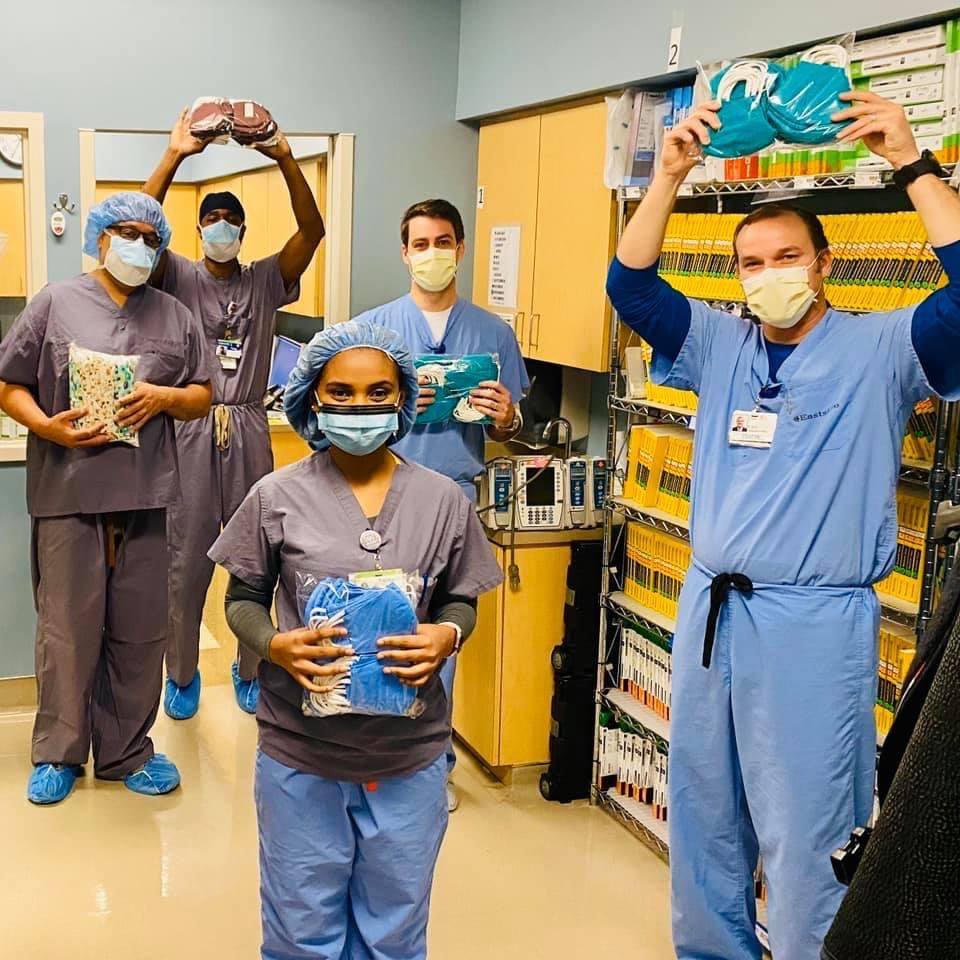
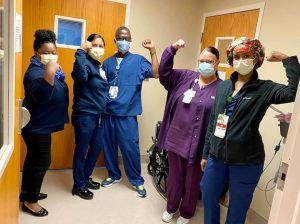
The Community Spotlight series offers brief 10-minute interviews with business leaders and business owners that are making things happen. In the first interview of the series, we hear from Trent Lind, the CEO of Eastside Medical Center in Snellville, to see how the hospital has responded to the Covid-19 pandemic and how his doctors, nurses and staff working are doing on the front line.
Tagged With: community spotlight, COVID-19, cpronavirus, eastside medical center, trent lind

Decision Vision Episode 60, “How Can My Business Survive the Covid-19 Crisis?” – An Interview with Tommy Marsh, Brady Ware

April 14, 2020 by John Ray

Survive the Covid-19 Crisis
Decision Vision
Decision Vision Episode 60, "How Can My Business Survive the Covid-19 Crisis?" – An Interview with Tommy Marsh, Brady Ware
Loading
00:00 /
RSS Feed
Share
Link
Embed

Download file

Survive the Covid-19 Crisis
Tommy Marsh, Brady Ware & Company

Decision Vision Episode 60, “How Can My Business Survive the Covid-19 Crisis?” – An Interview with Tommy Marsh, Brady Ware & Company

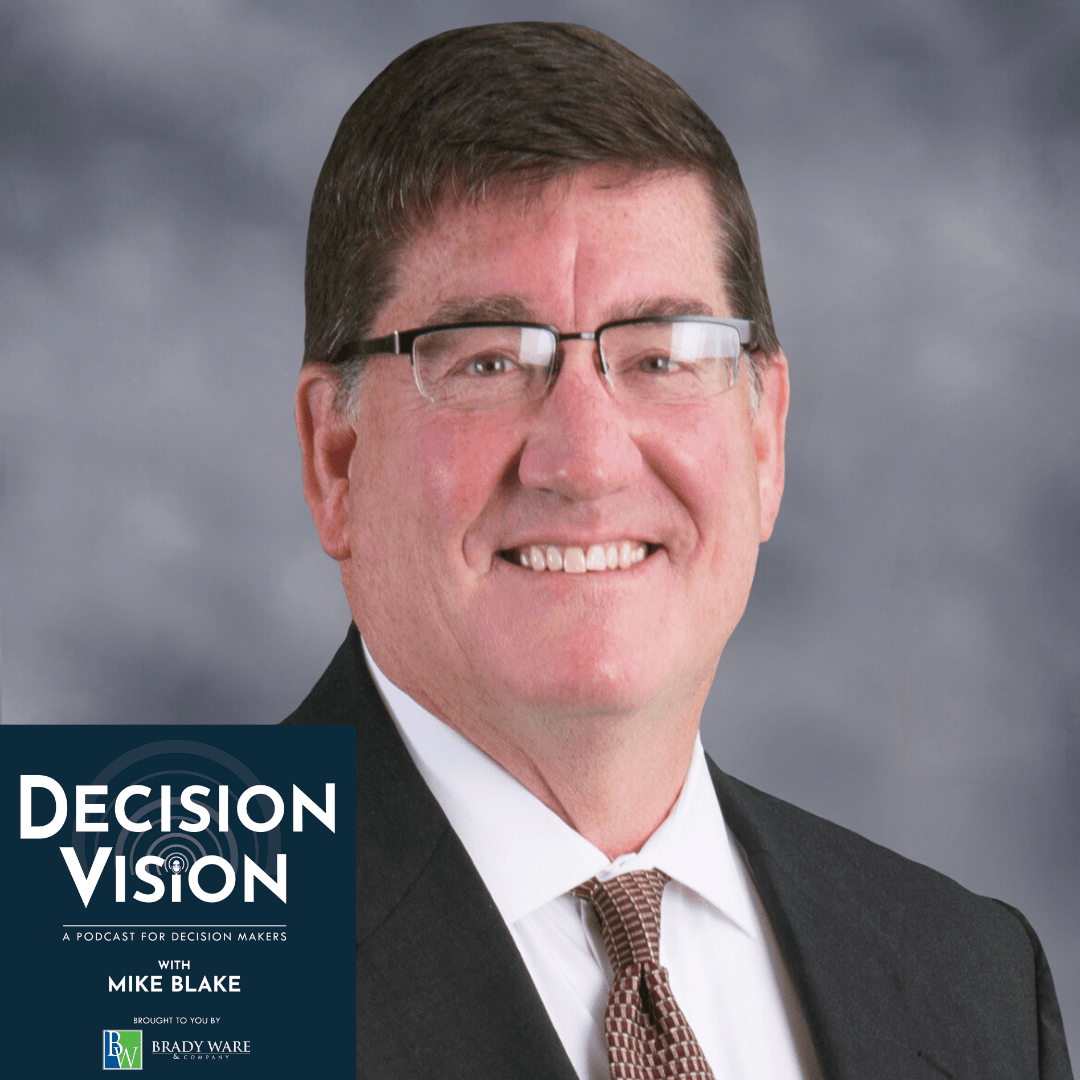
Many business owners right now are asking “how can my business survive the Covid-19 crisis?” In this episode of “Decision Vision,” veteran CPA Tommy Marsh addresses the various SBA relief programs of the CARES Act, how they help business, and much more. The host of “Decision Vision” is Mike Blake, and this series is presented by Brady Ware & Company.

Tommy Marsh, Brady Ware & Company

Tommy Marsh has more than 25 years’ experience in public accounting. Prior to joining the Brady Ware family, he was a tax partner with Marsh & McConnell for 21 years.

Tommy’s responsibilities include general business consulting, strategic planning and tax and audit services. He also specializes in Federal and State income tax laws and regulations as they relate to closely held corporations and partnerships, as well as personal and financial, income and estate planning. He has significant experience in obtaining IRS ruling requests, approval for changes in tax accounting methods, and tax issues relating to problems that arise in connection with complex business transactions.

Tommy is a member of the Greater North Fulton Chamber of Commerce, the American Institute of Certified Public Accountants, as well as the Georgia Society of CPAs.

To get in touch with Tommy, you can email him or call him directly at 678-350-9503.

Michael Blake, Brady Ware & Company

Michael Blake is Host of the “Decision Vision” podcast series and a Director of Brady Ware & Company. Mike specializes in the valuation of intellectual property-driven firms, such as software firms, aerospace firms and professional services firms, most frequently in the capacity as a transaction advisor, helping clients obtain great outcomes from complex transaction opportunities. He is also a specialist in the appraisal of intellectual properties as stand-alone assets, such as software, trade secrets, and patents.

Mike has been a full-time business appraiser for 13 years with public accounting firms, boutique business appraisal firms, and an owner of his own firm. Prior to that, he spent 8 years in venture capital and investment banking, including transactions in the U.S., Israel, Russia, Ukraine, and Belarus.

Brady Ware & Company

Brady Ware & Company is a regional full-service accounting and advisory firm which helps businesses and entrepreneurs make visions a reality. Brady Ware services clients nationally from its offices in Alpharetta, GA; Columbus and Dayton, OH; and Richmond, IN. The firm is growth minded, committed to the regions in which they operate, and most importantly, they make significant investments in their people and service offerings to meet the changing financial needs of those they are privileged to serve. The firm is dedicated to providing results that make a difference for its clients.

Decision Vision Podcast Series

“Decision Vision” is a podcast covering topics and issues facing small business owners and connecting them with solutions from leading experts. This series is presented by Brady Ware & Company. If you are a decision maker for a small business, we’d love to hear from you. Contact us at decisionvision@bradyware.com and make sure to listen to every Thursday to the “Decision Vision” podcast. Past episodes of “Decision Vision” can be found here. “Decision Vision” is produced and broadcast by the North Fulton studio of Business RadioX®.

Visit Brady Ware & Company on social media:

LinkedIn:  https://www.linkedin.com/company/brady-ware/

Facebook: https://www.facebook.com/bradywareCPAs/

Twitter: https://twitter.com/BradyWare

Instagram: https://www.instagram.com/bradywarecompany/

Show Transcript

Intro: [00:00:05] Welcome to Decision Vision, a podcast series focusing on critical business decisions. Brought to you by Brady Ware & Company. Brady Ware is a regional, full-service accounting advisory firm that helps businesses and entrepreneurs make vision a reality.

Mike Blake: [00:00:25] And welcome to Decision Vision, a podcast giving you, the listener, clear vision to make great decisions. In each episode, we discuss the process of decision making on a different topic from the business owners’ or executives’ prospective. We aren’t necessarily telling you what to do, but we can put you in a position to make an informed decision on your own and understand when you might need help along the way.

Mike Blake: [00:00:45] My name is Mike Blake, and I’m your host for today’s program. I’m a Director at Brady Ware $ Company, a full-service accounting firm based in Dayton, Ohio, with offices in Dayton; Columbus, Ohio; Richmond, Indiana; and Alpharetta, Georgia. Brady Ware is sponsoring this podcast, which is being recorded in Atlanta per social distancing protocols. If you like this podcast, please subscribe and your favorite podcast aggregator and please consider leaving our view of the podcast as well.

Mike Blake: [00:01:12] This is the fifth of a subseries of topics regarding how to address the coronavirus crisis. And specifically, we’re discussing managing and leading companies in a shutdown shelter-in-place world. And we’ve gone pretty granular for the first four topics, ranging from data security, to managing remote teams, to being an effective remote worker. And by the time this is published, we may or may not have also published addressing your real estate obligations in a shutdown world.

Mike Blake: [00:01:51] But I want to sort of draw back a little bit and look at this from a 30,000-foot perspective because in addition to managing the very granular aspects of managing a company through a crisis, there is also the broad discussion of just how do you run a company in this environment and how do you lead. And let’s kind of put our cards on the table right now. We are collectively living inside of a horror movie, with the exception of we don’t have the don’t-open-that-door kind of thing. But we’re living in an unprecedented environment. And unless you’ve had – I don’t know – bomb diffusing training or something like that, none of us have specific training in how to handle a scenario like this.

Mike Blake: [00:02:53] And I think the best teacher for this kind of thing, quite candidly, is experience because, again, I don’t think there’s a course that Harvard is offering that is the Coronavirus and You: How to Manage your Company in a World That’s Being Afflicted with a Pandemic. And I think there are just sort of broad questions and conversations that as leaders, as decision makers, we would like to have, we’re trying to have, and maybe we have something in our region, in our network, or our ecosystem that can have that with us; maybe we don’t.

Mike Blake: [00:03:33] And what I want to do with the show is I want to make available too, quite candidly, one of the wisest business people I know and one of the guys you want to be in a foxhole with. And full disclosure, he is technically my boss. So, as a listener, you can decide if I’m sucking up to him or not, but if you’ve known me for more than five minutes, you know I’m not a suck-up guy. But I’ve taken an instant liking to Tommy Marsh ever since I joined the firm almost two and a half years ago. And in the short period of time, he’s become something of a mentor that I wish I’d had much earlier in my career and rarely did have. He just got a common sense to him and a way of cutting through the bullshit, but a way of addressing it with a level of humanity and compassion that you don’t see all that often, including in the accounting industry. And I think you’ll enjoy the next 45 minutes we’re going to spend with him as much as I’ve enjoyed being able to learn from him over the last two years.

Mike Blake: [00:04:45] Tommy has more than 25 years of experience in public accounting and is the managing director of our Alpharetta, Georgia office. Prior to joining the Brady Ware family, he was a tax partner with a firm called Marsh McConnell for 21 years, which, of course, that’s his name. He was co-owner and he was running that, running and owning that firm. Tommy is an involved in general business consulting, strategic planning and tax audit services. He specializes in federal and state income tax laws and regulations. They relate to closely held corporations and partnerships, as well as personal financial income and estate planning, does all this accounting stuff, yada, yada, yada. He’s a member of the Greater North Fulton Chamber of Commerce, AICPA, and the Georgia Society of CPAs.

Mike Blake: [00:05:32] But most importantly, what he does on a daily basis, I think he would tell you himself, he doesn’t do all that much raw accounting stuff anymore. He’s the guy that clients come to when they just got problems, and they’ve got major issues with their company that are potentially company or career-threatening, and they come to him for advice. And that’s the kind of guy that you want involved, that you want to ask these kinds of questions because every business, I don’t care even if you’re making N95 masks and you’re making ventilators, this environment, if you don’t navigate correctly, is an existential threat to us all. And so, great advice is it’s never been more important. And I’m so delighted I could convince Tommy to take some time off the tennis court and join us today. Tommy, welcome to the program.

Tommy Marsh: [00:06:33] Mike, thank you so much. I learned a couple of things about myself in that introduction, and it’s much appreciated. I will leave my ring on your desk because we got to have six feet apart, but I will leave it on your desk in order for you to pay the proper homage. But in all seriousness, Mike, thank you for the introduction, and I’m proud to be your partner. So, job well done.

Mike Blake: [00:07:01] So, Tom, let’s get into some background. When we say that you’re with Marsh & McConnell for 21 years. Were you the owner or and owner of that firm for all 21 years?

Tommy Marsh: [00:07:13] Yes, I’ve been in public accounting for about 38 years. And you sort of sharpen your teeth on the early years, I was with a regional farm. And then, once, I was traveling a lot. And when I started having children, I wanted to be in Atlanta versus being on a plane traveling and consulting. But I hooked up with a guy named Bob Humberstone, and myself, and Margaret McConnell, bought him out eventually. And therefore, I became an owner at about, probably, I don’t know, 20 some odd year, maybe 25 some odd years ago. So, I wasn’t a partner/of Marsh & McConnell for the 20 plus years you’ve indicated.

Mike Blake: [00:08:02] And in your career, how many financial crises have you had to weather, either as a business owner or as an executive that has to make these tough decisions?

Tommy Marsh: [00:08:14] Well, obviously, the two that come to mind, and I’m going to throw you a third one, but basically in 2008, that was the “Great Recession days” that that we all experienced. It was pretty much in the real estate world, but it also impacted banking, and financing, and a lot of industries across the board. That was a tough, tough time for a lot of people, a lot of businesses. So, that was probably the major one. The second one is what we’re experiencing today. I have never seen something like this before. So, this has got to be one of the major financial issues that are facing us today.

Tommy Marsh: [00:09:05] Now, being a CPA for a small practice and in the Marsh & McConnell years, I believe the other financial crisis that we had is with clients. When a client of yours loses a key employee, or they lose a bank funding, or they lose a line on a distributorship, I believe that I’ve had crises along the way. Nothing of magnitude as the 2008 or 2020 crisis that we’re going through today, but I can’t even tell you how many I’ve experienced of that on the front lines with clients.

Mike Blake: [00:09:48] Is this the worst crisis you think you’ve experienced in your career?

Tommy Marsh: [00:09:56] Absolutely. And I think when you talk about the 2008 Great Recession, it’s now behind us. It’s in the rearview mirror. When you talk about the 2020 coronavirus pandemic, we’re still living it. As you said, when we first started talking this morning is that we’re living it, we’re in the middle of it. And my experience has been that I believe that the unknown, most of the time, is worse than the known. And so, we’re still in the unknown part of this, whether it’s a health issue that you’re worried about, a loved one, or your children, or your spouse, or what have you from a health issue, but you’re also in a situation to where from a business owner, what’s going to happen? And so, that’s why I think for right now, it is absolutely terrifying on some stages.

Tommy Marsh: [00:10:55] However, we all know that the unknown is worse than the known. So, hopefully, in the next — and I’m not trying to put a deadline on this, but at the same token, we need to get back to work. Is that 30 days? Is that forty five? Is that 60 or 90? Only time will tell. So, yes, this is absolutely the worst situation I’ve seen in my career.

Mike Blake: [00:11:24] In the past, let’s go back to the ’08-’09 Great Recession, you and I were both advising clients back then. What advice have you given to clients in the past from financial stocks that came to you and said, “Tommy, what’s going to happen? The economy is obviously going to take a massive turn for the worse.” And they’re saying, “What do I do? What do I have to be doing?” What piece of advice that you find yourself most commonly giving out?

Tommy Marsh: [00:11:56] Well, obviously, advice is pretty much client-specific. You may have one client that really has not been impacted. So, our advice to them is, hey, it’s the general discussion and the general consulting that we do on a daily basis. Other clients typically have specific advice, but the over ending advice that I give clients is it is going to be okay. I may not know 100% what it looks like, but I believe with my experience and as much as I’ve been through the last 38 years in my industry, it’s all going to be okay. It may not look like it was prior to this, but at the end of the day, it’s all going to be okay. If we can hang in there long enough, and be healthy, and survive all of this, which I believe we will, we’ll come out the other side, and it’s all going to be okay.

Tommy Marsh: [00:12:59] Way back in my career. I would get nervous, I guess is the word, that if a client got in trouble or one of my largest clients declared bankruptcy, as a business owner, you become nervous, and what’s going to happen next, and am I going to survive and feed my family, and what have you? The reality is at the end of the day, it’s the human spirit that’s going to overcome, and we’re going to come out the other side better. Maybe a little bit different, but we’re going to come out the other side. I’m always betting on me, and you, and the clients, and the human spirit to get through this. And I believe it’s all going to be okay. So, that’s probably the 30,000-foot specific advice is it’s all going to be okay.

Mike Blake: [00:13:54] So, I know you, as I have, have fielded calls and have taken meetings with with clients about this. What are the most common worries that they’re expressing to you right now?

Mike Blake: [00:14:10] Well, it depends on the industry. So, one of the first, about the middle of March when this really was starting to shape up to where the economy was going to get shut down for whatever reason, it really depends upon what industry that you’re at. One of my trade show vendors called up and said, “When will this be over?” And I said, “Well, I’m not sure.” But if you know anything about the trade show industry, they didn’t postpone their trade shows, they canceled them. So, his worry was, “When will it get back to normalcy?” And he thinks it’s going to be in the fall. So, all the planning that we have done is for the fall.

Tommy Marsh: [00:15:01] A charity event client of mine suffered the same type of situation to where, overnight, all of his charity events that he supports were canceled. And right now, they’re pushing to have them in the fall again. So, his biggest concern and his biggest worry was, “I have assembled the best team that I’ve ever put together. How can I keep them all together? How can I keep my my great team together?”

Tommy Marsh: [00:15:33] A project company called me up, and he manufactures large displays for whether it’s a large construction client here in town or what have you. His revenue went from $7 million down to zero. “How am I gonna pay for the rent? How can I keep my my team together? How am I going to survive this and pay for my bills?” So, at the end of the day, even the hair salon that we represent, she called me up and said, “Hey, I closed the shop, sent everybody home. Will unemployment benefits be enough to take care of my team that I’ve had for the last 10 or 15 years?”

Tommy Marsh: [00:16:23] All four of those examples happened within about two and a half days of each other in the middle of March because they saw what was coming, and they were looking at what was gonna happen economically. So, at that point, most of them were just really, really, really worried, not only about their business but really about the people that work with the small business owner that they care about. So, really, it’s specific of what industry that you’re in, but you can give a sampling and a taste of what people are worried about going forward. So, those are some true-to-life examples. Obviously, I could give you probably 10 more. But then we went from 45 minutes to about an hour and fifteen, and I’m not sure we want to do that.

Mike Blake: [00:17:13] So, we, along with the rest of our industry, is scrambling to understand how the recently passed CARES/Payroll Protection Program Act is going to operate. And I think we’re starting to get a handle on it. But the interpretations are still a work in progress. But at the end of the day, I know a lot of, in particular, small businesses are looking at that as a potential savior. In your mind, how helpful do you think that is going to be for small businesses? And are you telling people to, “Yeah, this is going to be great, and it is a true lifeline,” or are you telling them that, “Maybe you should manage your expectations? This is great, but it’s not going to solve the whole thing”? Where do you kind of come down on that?

Tommy Marsh: [00:18:13] Well, that is a great question. So, a couple of comments on the frontend are, is that from about the middle of March and even to the end of March, we kept hearing about the SBA programs, and the CARES Act, and the TPP loans, and what have you. The way I see the world is that there’s really two groups of the CARES Act that is available or you could use it to your benefit.

Tommy Marsh: [00:18:45] The first part of it is your typical, what they call as the EIDL loan. It stands for economic injury disaster loan. And that is an SBA program that you go online and you apply for, which is truly a disaster loan to be able to borrow money from the federal government in order to keep your business open. You have to use the money for overhead, but that’s okay, right? In other words, if we have a good business, and we’re going to come out the other side, this is a great, great means for businesses to borrow money. And this disaster loan is no different than when a tornado hits a small town, they need relief, or a flood, they need relief, or a drought. You’re trying to loan moneys to businesses in order to survive. So, from that first part of this CARES Act, I think that’s very, very, very powerful and very, very good for the government to provide that. So, I highly recommend that. We have a lot of our clients applying for it. And hopefully, we’ll hear success stories of them funding it, and we’re starting to get that right now, is that we’re hearing clients are getting to receive the money.

Mike Blake: [00:20:13] Yeah. Go ahead.

Tommy Marsh: [00:20:16] Go ahead, Mike.

Mike Blake: [00:20:16] I was just going to say I’ve also started to see things trickling through our own internal communications and elsewhere that the money is actually starting to flow. So, in spite of the fact that I think the banks are taken a little bit by surprise that they’re going to be the frontend of processing this, and they’re scrambling to develop intake procedures and capacity. It looks like they’re actually starting to rise to the occasion fairly quickly.

Tommy Marsh: [00:20:43] And they have. And what’s interesting is up until about, again, three days to a week ago, the CPAs, not only myself but other CPAs around the country, are on the frontlines of answering questions that they really don’t know the answers to yet. So, I know it’s frustrating to some clients, but we can only do the best we can with the information that we have.

Tommy Marsh: [00:21:08] However, the other side of it is, of the CARES Act, is really it’s a separate, for lack of a better word, a bucket. And the other bucket, there’s really three things going on in this proverbial bucket that I’ve described. And basically the CARES Act, I believe, and this is my personal opinion, is trying to provide relief to people to survive two and a half months. And the reason I say that is if you break it down further, then the two and a half months, you’ll hear about the stimulus checks that individuals are getting 1200 bucks if your income is under $75,000. If you’re married jointly, you’re getting 2400 bucks. I’m not saying that everybody’s going to survive two and a half months on that kind of money, but from the stimulus side of the government, they are providing these stimulus checks, I believe, to individuals to try to weather the storm for a period of time.

Tommy Marsh: [00:22:15] The second thing that they’re doing is, is that they are maintaining in the CARES ACT, is that an employer that keeps their payroll in place, there are great credits available to them against future payroll taxes, which benefits people to keep their payroll and their team in place. So, that is a great opportunity. See your accountant to help you calculate those credits.

Tommy Marsh: [00:22:45] And then, the last would be the infamous PPP loan, which is the Paycheck Protection Program Loan. And that’s the one that’s getting the most press because if you maintain your payroll for two and a half or two months, you can borrow up to two and a half times your average monthly payroll. But if you can survive the two months of paying your regular payroll, I believe it’s in hopes that the economy gets started again and things get back to normal. So, when you look at the CARES Act, a lot of it is, “Hey, let’s see if we can survive the next two and a half months,” which we will, which we will, but that’s a that’s a high-level summary of the CARES Act in order for businesses to consider to keep going for two and a half months.

Mike Blake: [00:23:42] I agree with that. The math I did was that this is a $2.5 trillion rescue package, and the non-government piece of our national GDP is about $16 trillion of GDP, right? And so, when you work through the math, that does turn out to be 10 weeks or so of GDP in effect that the government is now replacing, right? Give or take what’s being produced by elsewhere in the economy. So, I think you’re right.

Tommy Marsh: [00:24:16] That’s very well put and that’s a great point, I believe, that whatever they’re trying to do and, again, what we’re hearing success stories that clients are now beginning to get some money, but if you think about it, there’s two things going on. What can the government do to help the citizens and small business out to get to the next event to where we’re back outside and we’re not on shelter-in-place type of things, which is under Georgia and what have you? So, that’s the first part of it. The second part of it is that, all of a sudden, we’re going to have this trillion dollar debt, but in my opinion, today, we’re just trying to make it two and a half months, right? I mean-

Mike Blake: [00:25:05] We are.

Tommy Marsh: [00:25:05] Yeah, exactly. So, I believe that the stimulus package and the CARES is really just trying to get businesses and people to, “Let’s figure this out. Let’s give us two and a half months of survival.”

Mike Blake: [00:25:20] So, tax return deadlines have been pushed back. I think it’s to July, I should know this more, but I’m not an accountant. How many full do you think that is for most business owners? Do you think that that’s appreciated – just to take one thing off their plates, they can focus on what’s right in front of them?

Tommy Marsh: [00:25:37] Well, Mike, to be very blunt with you. I think it’s the greatest law ever invented because I’m a public accountant CPA. So, I think it’s very meaningful if you want to know the truth of the matter. Now, on a serious note, it did give us a break because what was interesting was as we all know historically how important the April 15th deadline is, you have all the cartoon characters of the accountant in the white shirt with the 10 key, and the green hat on, and the visor on, and cranking out the numbers, and all that’s true.

Tommy Marsh: [00:26:14] So, what was little disturbing on the front end was we kept hearing about these SBA loans and big breaks given to other businesses, but they really didn’t take their foot off the gas pedal until later on to where they passed it to where CPA firms could defer the filing or actually taxpayers with CPAs are part of helping them prepare their taxes until July 15th. So, you and I know, Mike, because we sent our staff home, right?

Mike Blake: [00:26:47] Yeah

Tommy Marsh: [00:26:47] On a Monday, we sent everybody home to work from home because we didn’t want anybody getting sick or trying not to get them sick. But it was a great, great relief to get the filing deadline. And they’ve just recently come out with more rules to state that a lot of the filings that are normally done between now and July 15th have pretty much all been extended. So, from that aspect from a CPA firm, it was huge.

Tommy Marsh: [00:27:17] Now, from a general business type of client, really, it helps them if they owe tax, right? So, in other words, if you owe tax and you’re trying to survive the next two and a half months, they’re probably not going to make their tax payments anyway because they’re trying to keep the doors open and keep their employees in place. At that moment, it is a huge benefit for the government not to charge the typical 1% interest rate from April 15th until July 15th. They have waived that. So, from that aspect, if you are owing money, that is a great, great benefit and very meaningful to those people who just picked up the interest carry on that.

Tommy Marsh: [00:28:08] If you have a refund, obviously, the group that have refunds are still pressuring the CPAs to get the returns done. And Brady Ware is continuing to do that. We’re still in full production in order to continuously serve the clients that we have. It’s just being done a little bit differently since everybody’s at home. But yeah, in order to get refunds, you should have to file. And we are in the process of doing that. So, from a huge meaning, I think the SBA loans and the CARES package was probably more meaningful than just the “July 15th” filing date. If you want to know the truth of the matter, well, that’s my opinion. That’s totally my opinion.

Mike Blake: [00:28:58] And I’ll say for an aside here, as a shameless plug, but as a semi-outsider because I’m not in the accounting side, my busy season is fourth quarter, not second quarter or first quarter. We’ve done a fantastic job, in spite of this disruption, getting through the workflow that we’ve had to get through. And my impression is that not only has our productivity not dropped, I think it’s actually improved. I don’t know if that sort of industry wide, but that’s my perception.

Tommy Marsh: [00:29:38] Well, and that’s great of you to say because your taxes in his fourth quarter of what you do. But at the same token, I’ve got to give it to our team here. Our leadership here, the managers and the offices, the the staff, the professionalism exhibited by our team has been second to none. And I’m sure CPA firms around the country feel the same way. But right now, our team is still taking phone calls, and e-mails, and production, and reviewing, and I’ll probably at least a handful of tax returns this afternoon and keep the ship going in the right direction. But I got to give it to our team, Mike. We have a great group of of team members here that carry the buckets of water uphill. So, I don’t get credit for that. The managers that put it in place get credit for it.

Mike Blake: [00:30:38] They’ve responded very well. And again, as a clause outside because I’m not doing that stuff, it’s been impressive. So, let’s touch upon this. What have you had to change? I mean, you’re still responsible for our office of 36 people. I know you want us to be safe. I know you want us to be engaged. We also still have a job to do. We still have the public trust to serve. We still have clients that got to get stuff done, especially ones that that have refunds, because they really need those refunds. How are you adapting to changing to this new this new reality?

Tommy Marsh: [00:31:27] Well, you know me pretty well, Mike. And you can tell I’m smiling when I say this, but when we sent our team—let me back up further than that. Even prior to sending our team to work from home, you were on the front lines of this, we were in the process of saying, “Hey, team members, with the Atlanta traffic, why don’t you work one day from home, and just stay in touch, and we’ll see how it works,” right? I mean, for an accounting firm or for me, that was a big change, right, because I’m old school, and let’s get in here, and let’s get your hours done, and the chargability, and all the things that go with that.

Tommy Marsh: [00:32:09] So, for me, personally, I believe sending everybody home has changed, I’m not going to say a lot. Maybe it changes the way I look at it because our team, given the chance to be professionals without being in the office professionally, they have risen to the occasion. So, from that aspect, when we sent everybody home that Monday, I got up on Tuesday, Mike, and the sky hadn’t fallen. I went to my car, the sky was still up in the sky. I couldn’t believe it. I figured we’d be all over the parking lot. But no, the sky did not fall with us sending everybody home.

Tommy Marsh: [00:32:51] Now, that’s a little tongue in cheek because as you know, Brady Ware takes great pride with our IT, and you can log in anywhere, and the things that we do. We were already ahead of the curve of that, in my opinion. But just from a from a leadership viewpoint, obviously, it’s been harder. As you know, if you’re here on a Friday, sometimes – and again, this is rumor – you may have a fireball Friday walking around. So, what’s happened? Rumor has it there may be some virtual happy hours. So, from a leadership viewpoint, what’s happening is, I believe, everyone is incredibly professional. I also believe from a leadership viewpoint that people, our team misses the social interaction of our office. And people are coming in. I’m actually at the office today. Don’t tell Governor Kemp. But I guess I’m essential, though. So, I guess I’m good there.

Mike Blake: [00:33:54] You are essential, Tommy.

Tommy Marsh: [00:33:56] Thank you, Mike. I appreciate that. And so, what’s happening is, I think, people are coming, and they’re missing the social aspect of it, but you still got to run a business, you still got to look at the timesheets, you still got to look at production, you still got to return emails. And we’re still doing the 101 stuff, and the blocking, and tackling that we we need to do in order to take care of our clients.

Mike Blake: [00:34:21] And you’re right about that social interaction. Out of the Atlanta office, at least, we’re doing a virtual happy hour on Friday. And last Friday, half the office participated, which was remarkable. All we were doing was staring at people on the screen. Even one guy who is on vacation dialed in. I mean, I I think we need to get him counseling, but the gesture was nice. You’re right. I mean, it does show that the team has some resilience because they do miss each other. And you do have people like me on one end of the spectrum that will wander into the office once every two weeks or so just to remind people that I need a paycheck. But then, you have other people that really like to be in the office and get a good vibe from there.

Mike Blake: [00:35:11] And this segue nicely to my next question. Maybe one of the lessons, one of the good things that’s going to come out of this is we realize the sky doesn’t fall. We realize that we have hired well. We’ve always thought we hired well. We always thought we hired people that we could trust to be adults. But now, it’s been combat tested and it’s been proven victorious. And one of the things we’ve learned is that we can do this and we don’t need to focus on butts and seats anymore so much as productivity, which can maybe unleash some other good downstream effects down the road.

Tommy Marsh: [00:35:50] I totally agree. I think Brady where can look in the mirror a little bit because as I advise my clients, “Hey, why don’t you use this time to look at your business and to look at what changes you need to make, so when you come out the other side, what did we learn from it? What decisions needed to be taking place to get us to the other side? As well as once we get to the other side, then  what kind of culture and firm can you improve upon in order to be a better firm?” And that’s what I’ve been telling most clients or all clients, “Hey, look in the mirror and look at your business to see what needs to happen.”

Mike Blake: [00:36:36] And that segues, I think, into maybe the most important question I have in this interview. One of my previous interviews with a gentleman out in Silicon Valley named Shane Metcalf, and he runs basically an employee engagement software firm out there in Silicon Valley. And the thing that struck me from that interview – we just published that by the way – was he immediately looked at or turned the conversation to, how are we going to be better after all of this? And true Silicon Valley perspective, it was, “Yeah, yeah, yeah, okay. We got the virus thing going on. It’s going to do its thing. It’s going to visit tragedy among people and families. And we’re doing the best we can. But from a business perspective, it’s also creating disruption, which also means that it creates opportunity.” Very Silicon Valley way of thinking, which I have now blatantly stolen from him because I think it’s the right way to think about it.

Mike Blake: [00:37:47] And I think you think about these things the same way too, right? You’re saying we’re going to come out of this. We don’t know when. We don’t know exactly how. Although I think companies should be planning now for what that looks like, what the restart process is. How do you think companies are going to — you can make this Brady Ware specific if you would like or make it more general. How do you think companies are going to be better? Or maybe how do you think you’re going to be better professionally from all this?

Tommy Marsh: [00:38:19] Well, great question. I’m one of the best tax guys in the city because every answer, it depends, right? So, you can always answer it that way.

Mike Blake: [00:38:29] You’ll make a great economist.

Tommy Marsh: [00:38:30] Yes, exactly. So, to me, it’s a two-step process. And the first step is that like what clients are asking me today, “Hey, what about this?” and “Hey, what can I change?” and “Hey, Tommy, I need your help.” Well, the reality is I took a real estate course at college and it taught me three things, right? Location, location, location, right? We all know that old real estate joke.

Mike Blake: [00:38:59] Yeah.

Tommy Marsh: [00:38:59] Well, what’s happening today is in the coronavirus environment is really it’s cash flow, cash flow, cash flow because we need to figure out the cash flow to get us to the other side. And part of that cash flow analysis is, what moneys do I have coming in. Whether it’s from sales, or SBA loans, or fat claim, or whatever you’re going to do, that’s the first aspect of it is to say, “Hey, what money do I have coming in?

Tommy Marsh: [00:38:59] The second tier is  typically—and again, every business is a little bit different, but a lot of our clients, one of their largest expenses is, obviously, salaries. So, do you rank your owner as number one and everyone else down to number 20 or whatever? And the theory behind it is, hey, if my sales have gone down 30%, do I need to look at 30% of my salaries? That is a question mark, by the way. It’s not a rule out there.

Mike Blake: [00:40:09] Yeah.

Tommy Marsh: [00:40:09] But once you look at it in good times. Mike, what happens? You don’t really address the problem employee. You don’t really hold them accountable like you should hold them accountable because things are good, and why do I have to rock the boat to a degree? Well, when things aren’t good, it is forcing people, companies to look at their business and make those tough decisions. So, once you do that, and you have to say, “You know what, my business is down 30%, I’ve got to get rid of 30% of my workforce in order to survive,” right? We’re trying to get the cash flow to get the other side. Then, at that moment, it’s really easy to let the problem employee go or the team member who really isn’t carrying the water uphill because it’s survival.

Tommy Marsh: [00:41:02] And then, the last thing is that once you do that, you analyze your overhead. And that’s a little bit easier approach because it’s easier to to tell the specialty water person that we can no longer use their services in the break room because it’s not essential. But once you do all of this, and you get to the other side, I believe all businesses are going to be stronger, including Brady Ware. Maybe we have work anywhere policies, maybe we only meet on Mondays, or Tuesdays, or something because it’s been proven if Brady Ware so far that we have a great professional staff without having to repeat all of. that.

Tommy Marsh: [00:41:46] So, to answer your question, what it’s going to look like? I don’t know, Mike, but what it’s going to look like they’re still writing the book while we’re reading it. But I think we’re going to come out the other end a lot stronger in leadership and more trustworthy. Not that we weren’t before, but we’re going to be more professional and let our team grow and blossom where they can grow and blossom.

Mike Blake: [00:42:11] Tommy, this has been a great conversation. We could easily have it go another hour. But I know you got a lot to do, and you got ants in your pants anyway. But if we haven’t covered something that somebody else had a question about or maybe they’d want to follow up on something that we have covered, is it okay if they contact you? And if so, how best can they do that?

Tommy Marsh: [00:42:35] Two ways. The first is  my e-mail address, which is tmarsh@bradyware.com. So, tmarsha@bradyware.com or my direct line is 678-350-9503. Please call.

Mike Blake: [00:43:03] That’s going to wrap it up for today’s program. I would like to thank Tommy Marsh of Brady Ware so much for joining us and sharing his expertise with us today. We’ll be exploring a new topic each week or maybe even more frequently as we do these special episodes, but please to announce that when you’re faced with your next executive decision, you have clear vision when making it.

Mike Blake: [00:43:23] If you enjoy these podcasts, please consider leaving a review with your favorite podcast aggregator. That helps you will find us, so that we can help them. Once again, this is Mike Blake. Our sponsor is Brandy Ware & Company. And this has been the Decision Vision Podcast.

Tagged With: Brady Ware, Brady Ware & Company, CARES Act, COVID-19, covid-19 crisis management, Michael Blake, Mike Blake, SBA, survive the Covid-19 crisis, Tommy Marsh

Leta’s Real Life Coronavirus Battle

April 9, 2020 by Mike

StatusLIfewithLetaBannerTile
Gwinnett Studio
Leta's Real Life Coronavirus Battle
Loading
00:00 /
RSS Feed
Share
Link
Embed

Download file

StatusLIfewithLetaBannerTile

Let Leta take you on a journey of faith, life, travel, and interior design. Take your life out of the status quo and into 2020! Status Life with Leta is brought to you by Status Home Design, and by the Law Office of Derek M. Hays at 404-777-HURT.

On this episode, Leta gives her in-depth account of her personal battle with Coronavirus. Although you’ve heard countless stories in the news, nothing compares to hearing directly from an actual survivor. It’s a very captivating and informative discussion, that provides facts and clarity to calm the anxiety and provide help to get through this. As a single parent of two young kids, Leta also talks about helping them understand her illness and she provides a way to give them a structured schedule during their quarantine.

Leta Brooks/Status Home Design

Status Home Design is a 12.000 sq ft retail store located in the Kohls Plaza of Hamilton Mill at 2240 Hamilton Creek Pkwy, Dacula, Georgia. They have 70 different merchants inside the store selling furniture and home goods of various styles. Their Status Carpenters can rehab, refinish, or repaint almost anything. This fantastic team of carpenters also custom builds tables, bookcases, cabinets, and barn doors. Status Design Studio, Inc., their award winning full-service interior design firm is also located inside the store. Their designers, provide exemplary service for all your home and business needs. Status Home Design’s knowledge of the latest trends and access to an abundance of manufacturers for furniture and all home decor items, sets them apart from the rest. Last, but certainly not least, they have an in-house seamstress and upholstery workshop.

Contact Leta at lbrooks@statushomedesign.com

Follow Us On Social Media!

Status Home Design on Instagram
Status Life with Leta on Instagram

Status Home Design on Facebook
Status Life with Leta on Facebook

Visit Our Websites!

Status Home Design and Status Life with Leta


Tagged With: business radio, Business RadioX, coronavirus, coronavirus abttle, coronavirus symptoms, COVID-19, Derek Hays, interior decorating, interior design, law office of derek hays, Leta Brooks, Radiox, Status Home Design, status life, status life with leta

Noah Valens and Shourya Seth, Pluto Delivery

April 8, 2020 by John Ray

Pluto Delivery
North Fulton Business Radio
Noah Valens and Shourya Seth, Pluto Delivery
Loading
00:00 /
RSS Feed
Share
Link
Embed

Download file

Pluto Delivery
Noah Valens and Shourya Seth, Pluto Delivery

“North Fulton Business Radio,” Episode 212:  Noah Valens and Shourya Seth, Pluto Delivery

Pluto Delivery is a food delivery startup founded by five Alpharetta High School students. As the company was ready to launch its core service, the coronavirus pandemic hit, and Pluto saw an opportunity to help with delivery of vital medical supplies to healthcare providers. Noah Valens and Shourya Seth join “North Fulton Business Radio” to tell their fascinating story. The host of “North Fulton Business Radio” is John Ray and the show is produced virtually from the North Fulton studio of Business RadioX® in Alpharetta.

Noah Valens and Shourya Seth, Pluto Delivery

Pluto Delivery
Noah Valens, Pluto Delivery

Noah Valens is the CEO of Pluto Delivery. He is a student at Alpharetta High School and President of the Future Business Leaders of America, Alpharetta High School Chapter.

Shourya Seth is the Chief Business Development Officer of Pluto. Shourya is also a student at Alpharetta High School, an FBLA officer, and a committee member for the National Science Honor Society.

Noah, Shourya, and their other three co-founders (also Alpharetta High School students) founded Pluto Delivery in January 2020. Pluto is a food delivery company which makes food delivery affordable. Their edge has been to work on perfecting multi-route delivery, the crux of last-mile delivery everywhere. Using their routing technology, Pulto has decreased the cost of direct to consumer delivery to one-third that of other nationally known food delivery companies such as Uber Eats or DoorDash.

Pluto Delivery
Shourya Seth, Pluto Delivery

While working on the launch of their core business, the coronavirus pandemic hit. Pluto’s founders saw an opportunity to contribute to the community, thanks to their growing driver network:  they started picking up donated medical supplies for delivery to hospitals and other healthcare providers. In only two weeks, they have delivered over 3,000 PPE’s (personal protective equipment) to hospitals across Atlanta. To do this, they activated a student donation network that has grown to include both organizations and manufacturers in Georgia who have donated to the cause.

Pluto now plans to roll out their core full food delivery launch to the public on April 20, where Alpharetta locals will be able to support local restaurants by having their food delivered directly to their front door for significantly less than other platforms.

In the meantime, they are still accepting donations of needed medical supplies from across Georgia, so if you have usable medical supplies (masks, gowns, disinfectant wipes and thermometers), please find pickup route information at pluto.delivery/donations.

For more information, go to their website or email them directly.

Questions and Topics in this Interview:

  • FBLA at Alpharetta High School
  • food delivery in North Fulton
  • COVID-19 response
  • delivery of PPEs and other medical supplies

North Fulton Business Radio” is produced virtually from the North Fulton studio of Business RadioX® in Alpharetta. You can find the full archive of shows by following this link. The show is available on all the major podcast apps, including Apple Podcasts, Spotify, Google, iHeart Radio, Stitcher, TuneIn, and others.

Renasant Bank has humble roots, starting in 1904 as a $100,000 bank in a Lee County, Mississippi, bakery. Since then, Renasant has grown to become one of the Southeast’s strongest financial institutions with over $13 billion in assets and more than 190 banking, lending, wealth management and financial services offices in Mississippi, Alabama, Tennessee, Georgia and Florida. All of Renasant’s success stems from each of their banker’s commitment to investing in their communities as a way of better understanding the people they serve. At Renasant Bank, they understand you because they work and live alongside you every day.

Tagged With: Alpharetta, Alpharetta High School, coronavirus, COVID-19, Doordash, FBLA, food delivery, food delivery in North Fulton, food delivery services, Future Business Leaders of America, Noah Valens, pandemic, Pluto Delivery, PPE, Shourya Seth, Uber Eats

Gwinnett Chamber President/CEO Nick Masino on the Chamber’s Resources in Supporting Local Businesses During the Pandemic

April 6, 2020 by Mike

Gwinnett Studio
Gwinnett Studio
Gwinnett Chamber President/CEO Nick Masino on the Chamber's Resources in Supporting Local Businesses During the Pandemic
Loading
00:00 /
RSS Feed
Share
Link
Embed

Download file

On this special episode of “The Voice of Business Podcast”, Gwinnett Chamber President and CEO Nick Masino provides an update on the chamber’s continued efforts to support local businesses during the worldwide viral pandemic and what resources are available.

Nick Masino/Gwinnett Chamber of Commerce

The mission of the Gwinnett Chamber is to strengthen existing businesses, facilitate the growth of quality job opportunities, and enrich the community’s quality of life. In addition, the Gwinnett Chamber is the forum for business, government, education, healthcare, arts/culture/entertainment, and philanthropic and public-service communities to come together to advance the region’s economy and enrich Gwinnett’s quality of life.

Nick Masino is the President & CEO of the Gwinnett Chamber and Partnership Gwinnett, located in Duluth, GA. Masino joined the Gwinnett Chamber and Partnership Gwinnett in 2007 and most recently served as Partnership Gwinnett’s Chief Economic Development Officer where he oversaw the business recruitment and retention efforts for Gwinnett, as well as the implementation of the Partnership Gwinnett Strategy.

A leading authority on local and state economic development, Masino is regularly sought after for prominent speaking engagements throughout metro Atlanta and Georgia. In addition, he has spoken internationally in South Korea and China, representing Georgia on government, economic development and international business subjects. As a result of his extensive expertise in the economic development arena, Masino is a preferred interviewee for regional and local television, radio, newspaper and magazine outlets.


Tagged With: business podcast, business radio, Business RadioX, coronavirus, COVID-19, gwinnett business, gwinnett chamber, gwinnett chamber members, Gwinnett Chamber of Commerce, gwinnett chamber podcast, gwinnett chamber radio show, member spotlight podcast, nick masino, Radiox, Sara Persing, the voice of business podcast

Leading a Business During COVID-19: Terri Jondahl of CAB Incorporated

April 3, 2020 by Mike

Celebrating Powerhouse Women
Leading a Business During COVID-19: Terri Jondahl of CAB Incorporated
Loading
00:00 /
RSS Feed
Share
Link
Embed

Download file

Celebrating Powerhouse Women salutes and recognizes women who are making an impact, whether it’s in business, philanthropy, public service, or elsewhere.

This special episode of “Celebrating Powerhouse Women” focuses on effectively leading a business during the COVID-19 pandemic or any similar crisis.

This series is presented by C-A-B Incorporated. Since 1982, C-A-B Incorporated has been a pre-eminent leader in manufacturing and global sourcing of precision machined iron and steel products serving infrastructure, hydraulics, automotive, rail, and a variety of other industries. As a woman-owned company, C-A-B is proud to be the presenting sponsor of the “Celebrating Powerhouse Women” series, bringing focus to the many incredible women in our community making things happen.

CLICK HERE for the Video of this Podcast

Terri Jondahl/CAB Incorporated

Terri Jondahl built CAB Incorporated, an iron and steel precision products company serving industrial, infrastructure and renewable energy sectors, from $3.5 million to $50 million.

As a key strategy, she has diversified manufacturing operations – both expanding US manufacturing and transitioning outsourced products from country to country based on geopolitical realities over the past thirty years. CAB has quality management and engineering operations in China, India, Korea and Vietnam as well as a sales and distribution operation in South Africa.

In transforming CAB from a single product line, US focused business, to a multi-national, multi-product business, Terri developed valuable international and complex enterprise experience. Key to her success was the development of strong modeling, key metrics and process controls for rigorous management of finances, quality and manufacturing.

Coupled with deep understanding of domestic and international business culture and environments, these tools and skills have provided the means to better “see around corners” to quickly anticipate the need for a change in strategy.

As an independent director of Gwinnett Health System and Sequent Health Clinically Integrated Network, she used the skills gained from the many pivots in the industrial sector to encourage better metrics and to evaluate the changing healthcare industry. This strategic outlook resulted in playing a key board role in identifying, evaluating, selecting and championing Gwinnett Medical’s recent merger with Northside Hospital Inc, creating a $4 billion entity. Terri now serves on the Northside Hospital Inc. board. She also serves on the Managing Board of Sunbelt Packaging, a regional packaging equipment and supply company.

Board experience includes being Chair of the Governance & Nominating Committee and serving on Executive Committee, Finance, Audit & Compliance, Strategic Planning, Strategic Partnership and Compensation Committees.

Terri is a recognized leader serving on many boards including Gwinnett Chamber of Commerce (past Chair and current Secretary and Vice Chair of Manufacturing); Georgia Gwinnett College Foundation Board of Trustees (Secretary and Strategic Planning Chair); Gwinnett County Public Schools Superintendent’s Business Advisory Council; 1818 Club Board; Mitsubishi Electric Classic Foundation; and Gwinnett Medical Foundation. She was appointed by Governor Nathan Deal to serve on the Lake Lanier Islands Development Authority and is currently serving as Chair and is heavily involved in work on continued development on Lake Lanier Islands.

Official Presenting Sponsor of Celebrating Powerhouse Women


Also Brought To You In Part By

Cat-Rangers

Tagged With: amanda pearch, Business RadioX, CAB Incorporated, Cat Rangers, Celebrating Powerhouse Women, coronavirus, COVID-19, leading business during pandemic, McCarthy Building Services, pandemic, powerhouse women, successful women, terri jondahl, women business leaders, women business podcast, Women Empowerment, women executives

Sam Perkins, Pūrgenix™ (PHI Technologies, LLC)

March 24, 2020 by John Ray

Pūrgenix™
Alpharetta Tech Talk
Sam Perkins, Pūrgenix™ (PHI Technologies, LLC)
Loading
00:00 /
RSS Feed
Share
Link
Embed

Download file

“Alpharetta Tech Talk,” Episode 14:  Sam Perkins, Pūrgenix™ (PHI Technologies, LLC)

Pūrgenix™ equips hospitals with patented technology which eliminates airborne pathogens in hospitals, preventing root infection sources which cause numerous illnesses and even deaths. Sam Perkins joined this edition of “Alpharetta Tech Talk” to discuss how this technology not only protects patients but hospital employees as well, reducing absenteeism and turnover. The host of “Alpharetta Tech Talk” is John Ray and this series is broadcast from the North Fulton Business RadioX® studio. Special thanks to Renasant Bank for their support of this episode of “Alpharetta Tech Talk.”

Sam Perkins, Pūrgenix™ (PHI Technologies, LLC)

Pūrgenix
Sam Perkins, CEO of Pūrgenix™ (PHI Technologies, LLC)

Sam Perkins is the CEO of Pūrgenix™ (PHI Technologies, LLC).

Parents entrust their child to a children’s hospital, only to have their child infected during their stay. Failure to address the root infection sources in hospitals causes these infections and creates headlines like: “6 deaths, more illnesses blamed on mold at Seattle Children’s hospital, CEO admits.” Hospital-acquired infections (HAIs), known in the healthcare industry as nosocomial infections, are increasingly being recognized as preventable. Infectious pathogens, which may have no adverse effect on a healthy individual, can be life threatening to a patient with a compromised immune system.

Hospitals currently employ multiple technologies, products and procedures for cleaning, disinfecting, and sterilizing different aspects of the hospital environment. The PurgenixMatrix™ augments these best-practice techniques by delivering the first hospital-wide, systemic approach to air disinfection. We reduce the risk of airborne HAIs and provide healthier air for patients, staff, and visitors alike through addressing pure air at the source, the HVAC system.

Pūrgenix® attacks the root of mold and disease pathogens in hospitals creating a pūrHospital®. The first pūrHospital®, Harrison Memorial Hospital, has a three-year record of zero hospital acquired sepsis and pneumonia, combined with 9 of 12 quarters with zero surgical site infections-results not seen until becoming a pūrHospital®. Pūrgenix® creates pūrHospital® pathogen elimination by installing the PurgenixMatrix™, their patented germ eliminating energy field, in every air handling. PurgenixMatrix™ generates an intense UVGI energy field that kills or deactivates infectious pathogens both in the passing air and on air handling unit (AHU) interior surfaces.

For more information, you can connect with Sam on LinkedIn, or email him directly.

Show Transcript

John Ray: [00:00:14] And hello again, everyone. Welcome to yet another edition of Alpharetta Tech Talk. I’m John Ray and we are in Alpharetta. We’re not in the Business RadioX Studio inside Renasant Bank as we usually are. We’re in a new normal, but we’re in Alpharetta, in a nice safe location and excited about being here today. We’ll get to our guest in a moment, but I want to remind you that we love Renasant Bank even though we can’t be there right now. And Renasant Bank has all the mobile applications that you need.

John Ray: [00:00:51] Whether it’s your friends, your family or your life, Renasant understands how you bank and offer those mobile services you need. Renasant also knows that sometimes you need to speak to real people the real answers and they have real offices you can find, 190 convenient locations throughout the south ready to serve you. Call ahead and check in with them. For more information, go to renasantbank.com, Renasant Bank understanding you. Member FDIC. And now, I want to welcome Sam Perkins. Sam is the CEO of Purgenix. And Sam is as timely as anything can be right now. Sam, welcome.

Sam Perkins: [00:01:35] Thank you very much, John. I appreciate the opportunity to speak with you here from a safe zone in Nashville, Tennessee.

John Ray: [00:01:42] Yeah. All right. You’re on the phone from Nashville. And company headquartered here in Alpharetta. But you’re working out of Nashville because that’s really kind of a little bit of ground zero in terms of what you do, right?

Sam Perkins: [00:01:54] It is. It’s really the epicenter of health care in the United States. And this is where we need to be. And our presence here is actually quite timely.

John Ray: [00:02:05] So, let’s get into it, talk a little bit about Purgenix. How are you helping folks?

Sam Perkins: [00:02:13] You know, I think, John, the best way to summarize it is really our mission. And if you believe that they’re catching something in a hospital, getting an infection in a hospital is probably one of the greatest fears, I think especially right now in these times, then what you do is you really understand our mission and that is that we create an air-handling system performance that we are able to remove these germ agents inside the air system, and then block them from being able to be spread around the hospital again. And that is our underlying mission. And that impact when you do it across the entire hospital creates a PurHospital.

John Ray: [00:03:00] So, the way you help hospitals is, I guess, you’re installing really aftermarket technology into the air handling systems, correct?

Sam Perkins: [00:03:15] That’s right. So, what we have, John, is we have a patented platform of an array of ultraviolet lamps. That array with our patent is able to smooth or create a curtain of energy inside the air system. And because where we do it, we placed that at the pivot point of all air and the air-handling unit from what’s called the cooling coil. And we then design the energy field to eliminate. It’s the dog. I’m at home with a dog.

John Ray: [00:03:49] Absolutely. And that’s okay. So-

Sam Perkins: [00:03:52] We eliminate those pathogens in the course of that by being able to remove it. And we can design it at different levels of energy depending upon what’s needed.

John Ray: [00:04:07] So, Purgenix has been around a while. You’ve had this technology for a while. And before the coronavirus came along, we’ll get to that in a second. Of course, that’s extraordinarily timely. But the airborne pathogens are a big problem in hospitals, generally.

Sam Perkins: [00:04:30] Yeah, that’s right. If you were to spend some time, I think the best example of the impact that we can have is at a hospital in Cynthiana, Kentucky, which is really the first PurHospital. And I’d recommend your listeners go and check out their Facebook page, their Instagram feed and other such social media to see the impact of PurHospital. What we did there was three years ago, we installed our system inside of every air-handling unit.

Sam Perkins: [00:05:01] And by doing so, I think the CEO best summarizes it by the reason for what she said, “We’ve had quarters before where we’ve had zero infections”, but they believed that this was the next layer through which they could then take all of the great practices and get a more consistent zero infection ratio. And if you’re interested, I’ll be happy to share with you what happened over the last three years.

John Ray: [00:05:26] You know, that would be great. And folks, we’ll put these links to this in the show notes as well, but yeah, we’d love for you to share that, Sam.

Sam Perkins: [00:05:33] So, what’s curious is that they’re a hospital that has gone in the medical world with zero hospital-acquired pneumonias when I last met with them in April in person. That’s an astounding record, but there’s more. They also had gone a thousand days with zero central-line infections. That is an amazing statistic as well, but they’re not finished. They went seven out of 10 quarters with zero surgical-site infections. So, before this moment in time where we’re confronting the COVID-19, they were already having these outstanding infection rates over the past period of time.

John Ray: [00:06:20] So, several things to pull out of that, but again, before we get to COVID-19, even before we get to that, let’s talk about, there’s a huge branding impact on that for the hospital, but address that if you would. And also, what’s the financial impact because it’s got to be tremendous for them.

Sam Perkins: [00:06:40] Yeah. Oh, it is. So, let’s talk about, first, the emotional part of this. And if you take a look at their social media page particularly the last two weeks and a new story that was done on March 9th, what they’re talking about is that they can now talk about being a safer environment. All of their media is saying that over the last two weeks in particular. They’re safer because they’re a PurHospital. And I think a great way of being able to say it is that after the hands are washed, the surfaces are clean. The CDC protocols are followed.

Sam Perkins: [00:07:17] PurHospital assures that as you go through that hospital, that you’re actually in the safest environment. And that emotional piece of what we talked about with PurHospital, they’re using in Harrison Memorial to reassure the reality that they are safer hospitals. That’s the emotional part of it. The financial piece is pretty significant too. Sheila Currans, The CEO at Harrison Memorial has shared that they’d already seen after a-year-and-a-half a reduction in their infection control costs.

Sam Perkins: [00:07:53] And in the impact on absenteeism, while unmeasured, the employees are very happy working in that environment because they too are safer. Remember, we do have people on the front lines that are taking care of us in the hospital and they’re being exposed to this too. And we’re helping them be safer in that hospital, and that’s an important piece for employees. I mean, the question is where would you rather work? A PurHospital or the other hospital. Another emotional piece.

Sam Perkins: [00:08:21] But the financial aspect of it too is that because of that, the employees are healthier, you have an impact on employee absenteeism. But there’s another hard cost piece that has not as much to do with the infection prevention, but because of where we do it, in the air-handling units, there are actually some very significant energy savings and operating savings from cleaning the systems and replacing filters that go away. And they, in fact, paid for this system alone. And they recognize that there at Harrison Memorial.

John Ray: [00:08:56] And there are plenty of studies out there relatedly that employees that feel good about where they work, that translates into bottom-line performance.

Sam Perkins: [00:09:09] Oh, yeah. There’s no doubt. We did a social media promotion, if you will, a year ago, where there is a restaurant in town, Biancke’s. It’s one of the oldest restaurants in all of Kentucky. Biancke’s is a wonderful old place. I love visiting there when I’m in town, visiting them. And we went and bought two $100 gift cards to Biancke’s. And in that, we had one for the community and one for the employees. And all we ask them to do is take a picture next to one of the banners that proclaims that they’re a PurHospital.

Sam Perkins: [00:09:49] One says, you know, “Shouldn’t your babies air be pure?”, the picture of the baby and the mom. “Take your picture next to that banner, tag Harrison Memorial Hospital. Put the hashtag, PurHospital”, which is P-U-R-H-O-S-P-I-T-A-L, “and put it on social media and you have an entry to win that gift card.” Well, we had somewhere around 156 employees do that with comments on social media such as, “I am so happy that my hospital where I work cares as much about me as we do about our patients.”

Sam Perkins: [00:10:21] That was a powerful message. And that was affirmation of exactly what you’re talking about. That’s awesome. Folks, if you just joined us, we’re speaking with Sam Perkins. And Sam is the Chief Executive Officer of Purgenix. So, Sam, you have installations. It’s amazing, the list of—if I can just read a few, the list of installations that you have beyond Harrison. I mean, that includes Emory, WellStar, UHS Aiken, Baptist Health. That’s a pretty impressive client list.

Sam Perkins: [00:11:00] Yeah. Where we were if we’ve been demonstrating the power of this, you know, until COVID-19, I had a rather difficult challenge explaining to everybody the invisible enemy they were fighting, the germs, right?

John Ray: [00:11:13] Right.

Sam Perkins: [00:11:14] I think COVID-19 has raised awareness around this and before, we’re talking about solving problems of C. diff, which redistributes in a hospital, we solved that for somebody. MRSA, we can go on with the list of nasty germs there in hospitals that cause these problems that we help eliminate from the air system. And we were doing individual installations. It’s really the change that we had three years ago over the PurHospital saying, “Hey, this is not about a single part. You need an entire protective envelope across the entire hospital.” And then, you can talk about it because, you know, the funny thing about air is it doesn’t know how to stay place, stay in one place, it moves around.

John Ray: [00:11:57] Right.

Sam Perkins: [00:11:57] So, covering the whole hospital makes a difference, and that’s sort of what happened. So, Harrison Memorial is our first PurHospital. But if I may, the hospital in Georgia that people may be interested in, our technology is throughout the Paulding Hospital. Now, they did not choose to take the PurHospital branding. And so, they’re not a PurHospital, but they could be. And what I do like is that when that hospital was built and introduced, I love how Mark Haney, who’s now retired from WellStar introduced to all of Georgia, in essence, on WSBT, Channel 2, the hospital from the mechanical room. I mean, when have you ever seen that before, John?

John Ray: [00:12:43] Yeah, really.

Sam Perkins: [00:12:45] You want to go there in the atrium, right? You want to go to the pretty place.

John Ray: [00:12:48] Exactly. With all the potted plants, right?

Sam Perkins: [00:12:51] Exactly. So, instead, he decided that the pretty place was actually down in the mechanical room showing our system on TV. This happened, what, six years ago when they opened that hospital.

John Ray: [00:13:03] Wow.

Sam Perkins: [00:13:05] And I love the statement, he said like, “This hospital is designed as an infection-prevention tool from the outset. We still have to do the basics, but now, we have the building working for us.” That’s a powerful statement.

John Ray: [00:13:19] Yeah, for sure, for sure.

Sam Perkins: [00:13:20] I mean, in most instances, John, what’s happening is not only, you know, you’re washing your hands, cleaning the surfaces, and what’s happening is you’ve got to remember that you’re doing this environment with the rebroadcast of this drug building, and that’s what we’re preventing.

John Ray: [00:13:39] And so, just to clarify, you’ve got all these installations in the various parts of that particular institution or a location. So, you mentioned WellStar Paulding. You know, there’s just certain aspects of that property that you cover. But the Harrison installation was noteworthy because you covered the entire facility.

Sam Perkins: [00:14:10] That’s right.

John Ray: [00:14:10] Yeah. And so, that’s really where you’re going with the company in terms of branding an entire facility a PurHospital.

Sam Perkins: [00:14:18] That’s right. So, a part of what we’re doing quite frankly is that we’re designing and building installing. We’re maintaining the system to make sure—because part of PurHospital’s re-certifying, it’s going to perform to the standards to which we are going that we said that it will perform. And so, PurHospital is about the reassurance that system is operating as designed.

John Ray: [00:14:39] Right. Right. And-

Sam Perkins: [00:14:41] That’s part of it. So, part of it is, you know, WellStar Paulding has a medical office building attached to it. We did not put our systems into the medical office building. So, that’s part of it, too, is they could become a PurHospital pretty quickly by covering that and such. So, that’s an example. You know, over at UHS Aiken, with Universal Health Services, we did all their surgical suite. And while they’re much safer, you know, again, it’s not the whole hospital that’s covered.

John Ray: [00:15:09] So, why don’t we talk about return on investment? Because that’s really what it’s all about for, certainly, the health care industry where they’re squeezed in terms of their returns and profits just like everyone else. They’re looking for the best return they can get. Why don’t you talk a little bit about that because that’s a compelling part of your story, it seems to me.

Sam Perkins: [00:15:34] No, there’s so many multiple paybacks. Let me break them down into three areas. And I think most importantly, let’s start with the leader around PurHospital, the impact on infections. We talked about that and the important thing is that let’s start to look at the infection rate in United States, about 900,000 hospital beds, 1.7 million infections in hospitals a year and a hundred thousand people die from them. So, that’s a one in 17 probability of death if you get an infection in a hospital, right?  So, every hospital bed then, if you average, represents just slightly less than two infections.

Sam Perkins: [00:16:18] So, every 17 infections that we block, there’s a life that’s been saved. The cost of fighting an infection for a hospital is about $16,000 per infection. If we block those infections, that’s an immediate return to them. Certainly, it’s the impact on families too. How about the patients? Let me speak to that person that had a hip replacement three years ago as a result of a mountain bike accident that I had and they found an infection. I asked to see the records and I understood that it came from the environment. And it was not from the infection of a body or a human. Never confirmed that I had it, but guess what I had to do, John?

John Ray: [00:17:00] What’s that?

Sam Perkins: [00:17:00] Well, I had to follow a six-week course of antibiotics three times a day followed by probiotics two hours after, and I had to do that for six weeks. Now, that’s when you get infected. 1.7 million people are having to go through this infection fight, and it’s no fun. I know this. So, this mission became very personal from that moment, let me assure you.

John Ray: [00:17:25] For sure.

Sam Perkins: [00:17:26] Yeah. So, now, we come back. I think the third area is employees. And for employees, it’s an issue of absenteeism. We’ve seen reductions of absenteeism anecdotally from 5% to 30%. That’s pretty dramatic. And the cost of replacing employees is significant in a hospital. And while we can’t frame exactly what that number is because there’s not enough experience with PurHospitals yet, but it’s a clear benefit that comes. Very measurable impacts.

Sam Perkins: [00:17:58] Put it in three sub-parts of the financial area, energy, operating and capital. So, on the energy side, you have all these giant fans and these big chillers that are operating, and they are probably up to 40% of the total energy bill, maybe 50 in many instances in the hospital. And because of what we do, we slow fans down. We make chillers operate more efficiently, and that is a very, very big number.

Sam Perkins: [00:18:31] We can pretty much assure in every instance, you’re going to see about a 3% to 6% reduction in total building energy from what we do. So, that’s the energy side. Operating savings come in the form of these giant cooling coils. Just think about your home air unit where you see these silver coils and things, that’s where the heat exchange happens. And in hospitals, we’ve got to clean them once, twice, sometimes, four times a year. They don’t have to do that anymore after we’ve installed.

Sam Perkins: [00:19:05] So, that’s a significant savings on that. And then, these things called HEPA filters, these filters are after the system to take out all these pathogens. That’s been the standard for years, but they change them out every quarter, maybe twice, four times a year. We have one customer that hasn’t changed their HEPA filters for three years. That’s a significant savings in the cost of those filters and the labor required to go put them and take them out and let’s not forget about waste and disposal, too.

John Ray: [00:19:35] Sure. Sure.

Sam Perkins: [00:19:36] So, all those are savings. And finally, here’s an interesting one. We installed at Washington and Lee University, so this is universal, doesn’t matter what the setting is. But the capital piece of it is interesting. They had 100,000 giant systems called 100,000 CFM is how we tell them, so it would be about, for them, $2.4 million to replace it. Well, if you’re a for-profit system, if I make those two air-handling units operate longer, this is where we get a little bit technical in ROI, but if I take systems $2.4 million worth of systems that you were going to replace and you don’t have to replace them now because what we do, we return them to performance, that $2.4 million, if you have a return on equity in your for-profit company, it’s worth a quarter million dollars a year to you because you redeploy it into areas where you can drive profit rather than a sunk cost like an air system. So, those are three things. Energy, operating cost, a capital cost. Combine that with absenteeism and infections, it’s a powerful ROI, John.

John Ray: [00:20:47] Yeah. It’s kind of mind-boggling. And something tells me that you’ve got a way—I mean, every hospital’s different. Something tells me you’ve got a way to kind of plug in the variables and show what the ROI is or the average internal rate of return for that investment.

Sam Perkins: [00:21:07] Absolutely. In fact, we make it so it’s virtually no out-of-pocket cost, plus it’s beautiful we’re doing this interview, you in Georgia, we had one project with Georgia Power, had granted us a pre-approval for a rebate, an energy rebate. So, we were able to come back and say, “Hey, customer, now, we’re going to make this so that your cost is spread across 60 months. We’re going to align that to all the savings that you have. We’ll guarantee on the energy and operating side that you will not be out of pocket. All these other benefits will be for free. Oh, and by the way, here’s a check from Georgia Power.”

John Ray: [00:21:45] You can’t beat that deal. That’s awesome.

Sam Perkins: [00:21:47] That’s true.

John Ray: [00:21:48] Yeah. Wow. Terrific. Folks, we’re speaking with Sam Perkins. And Sam is the CEO of Purgenix. So, Sam, we’ve walked all around the issue, but we need to dive into COVID-19 because you offer solutions there as well.

Sam Perkins: [00:22:11] Yes. Well, thank you. Yes, John. And because of the way we design our systems, we’re able to eliminate in one single pass 70% of the COVID-19 in a single pass in the air. It’s significant because the Daily Mail published an article, I think, week before last that they’re finding COVID-19 in air-handling ducts that we now saw this week, in fact, that they’re finding it can last in the air for up to three days. That’s the best estimate they have by the way.

John Ray: [00:22:47] Right.

Sam Perkins: [00:22:47] I believe it may be higher. And so, we’re in a place where we are going to be able to address the unknown. Let’s face it, it could last on surfaces. I’ve seen some people say up to eight days. So, think of it as if it goes airborne for three days, there are 96 air changes in a hospital, think about that. Ninety-six air changes for an hour, for three days, you’re approaching 300 opportunities for COVID-19 to be redistributed throughout that hospital.

John Ray: [00:23:26] Wow.

Sam Perkins: [00:23:28] I mean, that’s all theoretical, mind you, but it’s possible. And so, as a result, that’s just what we’re dealing with. And so, in the midst of all this, we are addressing it in that fashion. The more—here’s another important part of it though, and we don’t know what the answer is, yet that’s the challenge, but at least at Harrison Memorial, they’re likely to have a better answer than most, and that’s this, once you have a person with COVID-19, their immune system is obviously compromised, making them more susceptible to guess what, other infections, secondary infections. You’re going to be hard-pressed to find a better environment which to fight COVID-19 than Harrison Memorial Hospital because of their infection rate that they’ve had that’s been so low for three years that the exciting part about it is—and so, it’s something where I can address it directly, frankly.

John Ray: [00:24:33] Right.

Sam Perkins: [00:24:34] And sorry for the dogs barking, but they’re kind of over at the backdoor, and I’m not. We’re going to go live with this. It’s kind of like, you know, you’re used to being in a studio setting and we’re just where we are today.

John Ray: [00:24:49] I just assumed there was some hospital folks knocking at the backdoor and they were barking at that. So, that’s-

Sam Perkins: [00:24:55] You’re breaking the door down to get in here.

John Ray: [00:24:58] Yeah, exactly. They’re looking for you because you’ve got some answers to the problems they’ve got. So-.

Sam Perkins: [00:25:03] That’s great. That’s great.

John Ray: [00:25:05] Yeah.

Sam Perkins: [00:25:05] Yeah.

John Ray: [00:25:05] So, talk about what this involves because when you’re talking about—I mean, you’re not replacing an air handling system, but you are doing an installation. What does that involve? How long does it take? In other words, how quickly can you bring a solution to a hospital’s issues?

Sam Perkins: [00:25:26] Well, it requires design. So, how quickly can you build a building? You first have to make sure that you have the structural engineer on it, right? So, in order to get this airborne, every air-handling system has a very, very different performance metric, different air velocities, speed, different temperatures, all this impacts how you’re going to design it. And so, we do an assessment of the air-handling unit. And then, from there, the implementation can be pretty fast. So, for example, at Harrison Memorial Hospital, once we had the pre-engineering completed and we manufactured the system specifically for each area in the unit and installed them from beginning to end, it was about nine weeks, which is pretty fast for a custom delivery of a solution.

John Ray: [00:26:19] Oh, wow. Absolutely. And then, after the installation, judging by what you’ve done with Harrison, you’re keeping pretty close tabs on the payback of that installation.

Sam Perkins: [00:26:33] Yeah, that’s right. Well, we are. There are smaller hospital, they don’t have specifics, but they’ll tell you, for example, that their air-handling systems had dropped by 20 percent in terms of their energy consumption. And since that comprises about 50%t of their energy consumption at that particular hospital, they’ve seen a 10% reduction in their energy cost. Now, the reality of it is that they don’t see it completely because they put a brand-new section on the building. We installed across that one new area in the unit, but the remaining 13 or so were all old ones, and they have energy recovery and all of those. And we stopped the new one from becoming, shall I say, impaired.

John Ray: [00:27:22] Got you.

Sam Perkins: [00:27:23] Yeah.

John Ray: [00:27:25] Got you. So, just trying to get out with this question, who is a good fit for the technology you bring to bear? I mean, Harrison’s a smaller hospital in the scheme of things. I mean, how big of a hospital plant can you service?

Sam Perkins: [00:27:47] Any hospital, frankly. Now, this is a unique point in time and I look forward to the issue of how to scale, frankly. And I think that COVID-19 has created a background for conversation around the invisible enemy that has never been there before. Certainly, our entire economy has been disrupted by an invisible enemy. It now makes the point that why are we getting all these infections in hospitals and while it may be finally transmitted by touch, questions how to get there.

Sam Perkins: [00:28:20] And my answer has been that don’t think of an air system as something you’re breathing in, but think of it more like a shower of germs coming down on top of you. Stop the shower, stop the infections. If it’s not there, it can’t be transmitted. So, I think that conversation has changed because this COVID-19 and the things that are happening because now, people understand, “Hey, maybe we do have an invisible energy and we want to be more like Mark Haney and have a building working for us, not against us.”

John Ray: [00:28:47] Yes.

Sam Perkins: [00:28:48] So, the answer is any hospital, but, you know, there are other applications. You’re sitting in Georgia, and I’ve always wanted to and have not had the opportunity to get to the Georgia Aquarium. Think about this for a moment, John. I suspect that all the mammals that are inside that aquarium have to be fed probably some anti-fungals and antibiotics. And why would that be? And you think about it, any mammal in the middle of the ocean has been playing around or even penguins, you know, they don’t deal with fungus or human bacteria. And you’re putting them into a building, where there’s a whole bunch of humans, and Charles Schulz by the way almost had it right with his characters, so here you go, I think you’ll like this, is that the best image to have is everybody is a pig pen.

John Ray: [00:29:40] Nobody wants to hear that, but it’s true, right?

Sam Perkins: [00:29:45] It is true.

John Ray: [00:29:45] Right.

Sam Perkins: [00:29:46] So, he always had it right. You know, the cloud that you’re carrying just varies and you just don’t want to be around someone that has a cloud of COVID-19 right now. That’s kind of the way I think of it as a pig pen.

John Ray: [00:29:57] Sure.

Sam Perkins: [00:29:58] So, if you take all this collection of people in the Georgia Aquarium, one, you have the same kind of recirculating system. We did put a system in there a long time ago for one installation, but they need to cover the—for example, covering the entire aquarium would be great. Can you imagine PurAquarium, and it didn’t quite smell like an aquarium because we alter that environment, just like a hospital or how about another one? A corporate headquarters. So, you have people coming internationally, at least you used to, internationally in your headquarters, you don’t know what they’re carrying, what illness there is.

Sam Perkins: [00:30:34] And that corporate headquarters is not designed any differently than a hospital other than they’re not using HEPA filters. And so, these same germs, these pig pens come in and out at the corporate headquarters. There are germs that are going up in the air system, festering, growing and being redistributed. We had one customer a long, long time ago, John, we had an employee that came up and said, “Hey, I got this sickness from being in this building.” And they took that employee upstairs, showed them the installation that we had and said, “You did not get it here because that does not get through this”, right?

John Ray: [00:31:11] Yeah. Wow.

Sam Perkins: [00:31:12] So, I think there’s going to be a potential in the area of corporate headquarters. There’s going to be a potential for aquariums, in particular. And how about the fact that we’re in 37 buildings on the Emory campus. They’re not PurBuildings, they’d be PurBuilding-eligible. And by the way, Emory has the largest collection of PurBuilding-eligible buildings in the United States. Second is Washington and Lee University. But now, imagine you’re a parent and you’re sending your child off to college, well, they shut them down, why? Well, because they’re in buildings where they could share, and what if you could block the sharing through PurBuilding?

John Ray: [00:31:53] Right. Wow.

Sam Perkins: [00:31:53] There are a lot of applications. But right now, I think if I had to choose between, you know, capacity, I’m going to throw it at health care because that’s our most vulnerable population right now. And we would have to figure out how to expand out to those others because I have a sense in about two to three months, we’re going to have a line.

John Ray: [00:32:13] Yeah. Sounds like it. Sam Perkins is with us folks, CEO of Purgenix. Sam, this has been awesome. Maybe we ought to let you go and take calls from hospitals at this point. But for-

Sam Perkins: [00:32:30] Actually, this is kind of funny, John, but investment bankers that wouldn’t take my phone call three weeks ago are now calling me.

John Ray: [00:32:41] Imagine that. Nothing like an opportunistic investment banker, right?

Sam Perkins: [00:32:45] Well, let’s face it, they’re in it to make a profit, right?

John Ray: [00:32:49] Of course. Of course. They’re-

Sam Perkins: [00:32:51] I’m happy to take their calls because I’m having very nice conversations about something I love, which is, we’re protecting patients and people inside of hospitals and when you have that as a mission, that’s a pretty awesome life, let me tell you.

John Ray: [00:33:05] So true. Outstanding. Sam Perkins, folks, CEO of Purgenix. So, Sam, for those that would like more information, would like to be in touch, tell them how they could do that.

Sam Perkins: [00:33:17] Sure. If you have Twitter, I have a funny name, but it’s @three50one, T-H-R-E-E-50-O-N-E. You can certainly connect with me on LinkedIn and just let me know in both instances that you heard me on this program and I’ll connect with you. I get several requests, as you might imagine, but if you heard on the radio show and you want to connect, just let me know and we’ll connect there. You can always DM me on that. Otherwise, if you want more information directly, you can always reach me on my email address which is sam@purgenix, P-U-R-G-E-N-I-X, .net.

John Ray: [00:34:04] Awesome. Sam Perkins, thanks for being with us.

Sam Perkins: [00:34:07] John, it was a pleasure. Thank you for helping us spread that there is good news even in these times.

John Ray: [00:34:14] Absolutely. Thanks again.

Sam Perkins: [00:34:16] Thank you.

John Ray: [00:34:17] Folks, just a reminder that you can listen to this show every Thursday morning live at 11:30. If you miss any of our live shows—and we also have special shows throughout the week, but if you missed any of our shows, we’re Podcast Space. You can find us on all the major podcast platforms, that’s Apple, Google, Stitcher, TuneIn, Spotify, Overcast, happens to be my favorite. We’re even on YouTube. So, just check us out on any of your favorite podcast apps. Also, we’re online at alpharettatechtalk.com. You can find our complete archive of shows there and follow us on social media channels, North Fulton BRX is our handle on Twitter, Facebook and LinkedIn. So, for my guest, Sam Perkins, I’m John Ray. Join us next time here on Alpharetta Tech Talk.


About “Alpharetta Tech Talk”

“Alpharetta Tech Talk” is the radio show/podcast home of the burgeoning technology sector in Alpharetta and the surrounding GA 400 and North Fulton area. We feature key technology players from a dynamic region of over 900 technology companies. “Alpharetta Tech Talk” comes to you from from the North Fulton studio of Business RadioX®, located inside Renasant Bank in Alpharetta.

Past episodes of “Alpharetta Tech Talk” can be found at alpharettatechtalk.com.

Renasant Bank has humble roots, starting in 1904 as a $100,000 bank in a Lee County, Mississippi, bakery. Since then, Renasant has grown to become one of the Southeast’s strongest financial institutions with approximately $12.9 billion in assets and more than 190 banking, lending, wealth management and financial services offices in Mississippi, Alabama, Tennessee, Georgia and Florida. All of Renasant’s success stems from each of their banker’s commitment to investing in their communities as a way of better understanding the people they serve. At Renasant Bank, they understand you.


Tagged With: Alpharetta, Alpharetta Tech Talk, coronavirus, COVID-19, Harrison Memorial Hospital, Novel Coronavirus, PHI Technologies, pneumonia, Purgenix, PurgenixMatrix, Sam Perkins, sepsis

  • « Previous Page
  • 1
  • …
  • 4
  • 5
  • 6

Business RadioX ® Network


Our Most Recent Episode

CONNECT WITH US

  • Email
  • Facebook
  • LinkedIn
  • Twitter
  • YouTube

Our Mission

We help local business leaders get the word out about the important work they’re doing to serve their market, their community, and their profession.

We support and celebrate business by sharing positive business stories that traditional media ignores. Some media leans left. Some media leans right. We lean business.

Sponsor a Show

Build Relationships and Grow Your Business. Click here for more details.

Partner With Us

Discover More Here

Terms and Conditions
Privacy Policy

Connect with us

Want to keep up with the latest in pro-business news across the network? Follow us on social media for the latest stories!
  • Email
  • Facebook
  • Google+
  • LinkedIn
  • Twitter
  • YouTube

Business RadioX® Headquarters
1000 Abernathy Rd. NE
Building 400, Suite L-10
Sandy Springs, GA 30328

© 2025 Business RadioX ® · Rainmaker Platform

BRXStudioCoversLA

Wait! Don’t Miss an Episode of LA Business Radio

BRXStudioCoversDENVER

Wait! Don’t Miss an Episode of Denver Business Radio

BRXStudioCoversPENSACOLA

Wait! Don’t Miss an Episode of Pensacola Business Radio

BRXStudioCoversBIRMINGHAM

Wait! Don’t Miss an Episode of Birmingham Business Radio

BRXStudioCoversTALLAHASSEE

Wait! Don’t Miss an Episode of Tallahassee Business Radio

BRXStudioCoversRALEIGH

Wait! Don’t Miss an Episode of Raleigh Business Radio

BRXStudioCoversRICHMONDNoWhite

Wait! Don’t Miss an Episode of Richmond Business Radio

BRXStudioCoversNASHVILLENoWhite

Wait! Don’t Miss an Episode of Nashville Business Radio

BRXStudioCoversDETROIT

Wait! Don’t Miss an Episode of Detroit Business Radio

BRXStudioCoversSTLOUIS

Wait! Don’t Miss an Episode of St. Louis Business Radio

BRXStudioCoversCOLUMBUS-small

Wait! Don’t Miss an Episode of Columbus Business Radio

Coachthecoach-08-08

Wait! Don’t Miss an Episode of Coach the Coach

BRXStudioCoversBAYAREA

Wait! Don’t Miss an Episode of Bay Area Business Radio

BRXStudioCoversCHICAGO

Wait! Don’t Miss an Episode of Chicago Business Radio

Wait! Don’t Miss an Episode of Atlanta Business Radio