Business RadioX ®

  • Home
  • Business RadioX ® Communities
    • Southeast
      • Alabama
        • Birmingham
      • Florida
        • Orlando
        • Pensacola
        • South Florida
        • Tampa
        • Tallahassee
      • Georgia
        • Atlanta
        • Cherokee
        • Forsyth
        • Greater Perimeter
        • Gwinnett
        • North Fulton
        • North Georgia
        • Northeast Georgia
        • Rome
        • Savannah
      • Louisiana
        • New Orleans
      • North Carolina
        • Charlotte
        • Raleigh
      • Tennessee
        • Chattanooga
        • Nashville
      • Virginia
        • Richmond
    • South Central
      • Arkansas
        • Northwest Arkansas
    • Midwest
      • Illinois
        • Chicago
      • Michigan
        • Detroit
      • Minnesota
        • Minneapolis St. Paul
      • Missouri
        • St. Louis
      • Ohio
        • Cleveland
        • Columbus
        • Dayton
    • Southwest
      • Arizona
        • Phoenix
        • Tucson
        • Valley
      • Texas
        • Austin
        • Dallas
        • Houston
    • West
      • California
        • Bay Area
        • LA
        • Pasadena
      • Colorado
        • Denver
      • Hawaii
        • Oahu
  • FAQs
  • About Us
    • Our Mission
    • Our Audience
    • Why It Works
    • What People Are Saying
    • BRX in the News
  • Resources
    • BRX Pro Tips
    • B2B Marketing: The 4Rs
    • High Velocity Selling Habits
    • Why Most B2B Media Strategies Fail
    • 9 Reasons To Sponsor A Business RadioX ® Show
  • Partner With Us
  • Veteran Business RadioX ®

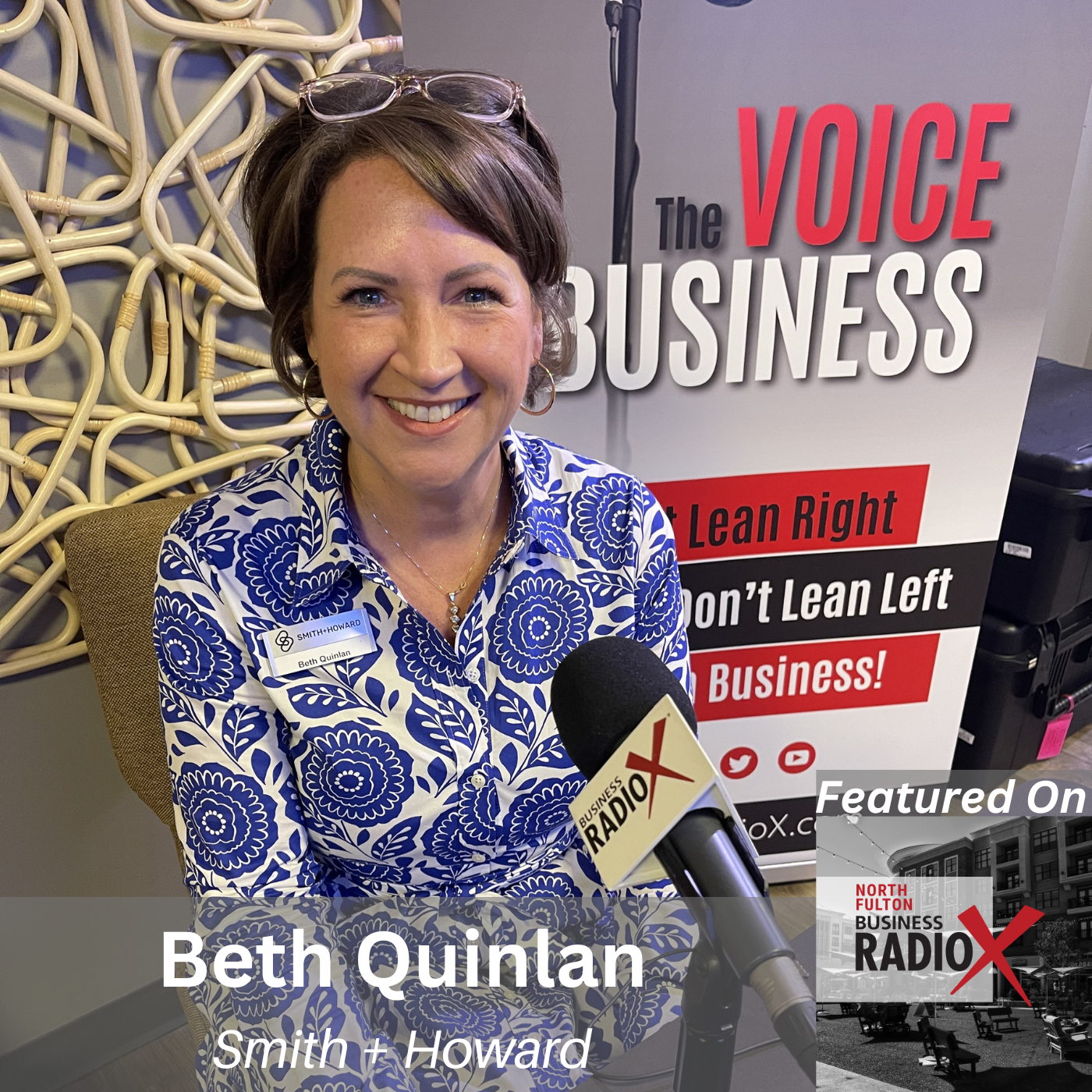
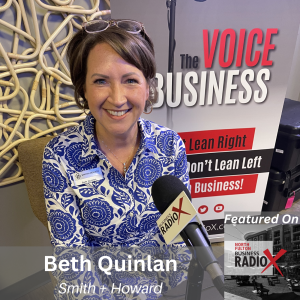
Beth Quinlan, Smith + Howard, on Women in Leadership

August 25, 2025 by John Ray

Beth Quinlan, Smith + Howard, LIVE from the 2025 GNFCC BOLD Women’s Leadership Summit, on North Fulton Business Radio with host John Ray
North Fulton Business Radio
Beth Quinlan, Smith + Howard, on Women in Leadership
Loading
00:00 /
RSS Feed
Share
Link
Embed

Download file

Beth Quinlan, Smith + Howard, LIVE from the 2025 GNFCC BOLD Women’s Leadership Summit, on North Fulton Business Radio with host John Ray

Beth Quinlan, Smith + Howard, LIVE from the 2025 GNFCC BOLD Women’s Leadership Summit (North Fulton Business Radio, Episode 895)

Beth Quinlan of Smith + Howard, co-chair of the BOLD Women Committee at the Greater North Fulton Chamber of Commerce, joined host John Ray live from the 2025 GNFCC BOLD Women’s Leadership Summit to share her journey as a CPA, her work in business development, and her leadership role in organizing the summit.

Beth discussed the growth of Smith + Howard, from its roots in Atlanta to its national expansion and broad range of services that include tax, accounting, M&A advisory, cybersecurity, sales tax, and executive search. She explained how the firm’s philosophy of growing with its clients has driven its evolution.

She also reflected on the importance of community service, mentorship, and her personal involvement with the BOLD Committee, including work with The Drake House and efforts to create meaningful connections through intentional networking. Beth shared how the idea of a “broken circle” guided the event’s structure, ensuring that conversations remained open and inclusive.

This interview was originally broadcast live from the 2025 GNFCC BOLD Women’s Leadership Summit held on August 12, 2025, at The Commons at Phase in Alpharetta, Georgia. John Ray Co. and North Fulton Business Radio were the Media Sponsors for this year’s Summit.

Topics Discussed in this Episode

00:00 Welcome to the GNFCC BOLD Leadership Summit
00:42 Meet Beth Quinlan: Co-Chair of the Bold Women Committee
01:02 Beth Quinlan’s Journey with Smith + Howard
02:01 Smith + Howard: A Legacy of Growth and Service
03:18 Expanding Services and National Reach
07:06 The Importance of Chamber Involvement
08:36 Beth Quinlan’s Personal Commitment to Bold Women
10:19 Highlights from the Bold Leadership Summit
12:15 The Power of Networking and Community
15:40 Closing Thoughts and Future Events

Beth Quinlan, Smith + Howard

Beth Quinlan joined Smith + Howard in 2015 and is a Senior Business Advisor in our Business Development team. During her time with the firm, she has worked with clients across a wide variety of industries, including manufacturing and distribution, professional services, medical services, as well as nonprofit organizations. Beth has worked with clients on back-office accounting services, including bookkeeping, financial statement preparation, federal grant compliance reporting, and much more.

Prior to joining Smith + Howard, Beth was hands-on in the operations of her family’s local chain of pet food stores and national pet food distribution business with warehouses across the United States. It was here that she found her interest in accounting and decided to return to school for her Master of Business Administration degree. Beth also served as a consultant with an emphasis in marketing and management, where she focused on B2B communications for software companies and productivity and performance management for financial institution retail operations.

Beth received her Master of Business Administration from Georgia State University and earned her bachelor’s degree from Mississippi State University. She is a member of the Georgia Society of Certified Public Accountants and the American Institute of Certified Public Accountants.

LinkedIn | Smith+ Howard website

2025 GNFCC BOLD Women’s Leadership Summit

The 2025 GNFCC BOLD Women’s Leadership Summit was held on Tuesday, August 12, 2025, at The Commons at Phase in Alpharetta, Georgia.

The mission of BOLD—Businesswomen Organizing for Leadership and Development—is to connect businesswomen to build outstanding networks and spheres of influence, to collaborate with each other and with partner organizations to develop their businesses, and to celebrate and recognize the women of North Fulton.

Website

Greater North Fulton Chamber of Commerce (GNFCC)

The Greater North Fulton Chamber of Commerce is a private, non-profit, member-driven organization comprised of over 1,400 business enterprises, civic organizations, educational institutions, and individuals. Their service area includes Alpharetta, Johns Creek, Milton, Mountain Park, Roswell, and Sandy Springs. GNFCC is the leading voice on economic development, business growth, and quality of life issues in North Fulton County.
As a five-star accredited chamber, GNFCC’s vision is to be the premier organization driving member and community success across the region, and they are dedicated to pursuing this vision based on the guiding principles of advocacy, inclusivity, and operational excellence.

GNFCC promotes the interests of their members by assuming a leadership role in making North Fulton an excellent place to work, live, play, and stay. They provide one voice for all local businesses to influence decision-makers, recommend legislation, and protect the valuable resources that make North Fulton a popular place to live.

For more information on GNFCC and its North Fulton County service area, follow this link or call (770) 993-8806. For more information on other GNFCC events, follow this link.

Connect with GNFCC:  Website | LinkedIn | Facebook | Instagram

About North Fulton Business Radio and host John Ray

With over 890 episodes and having featured over 1,300 guests, North Fulton Business Radio is the longest-running podcast in the North Fulton area, covering business in our community like no one else. We are the undisputed “Voice of Business” in North Fulton!

The show invites a diverse range of business, non-profit, and community leaders to share their significant contributions to their market, community, and profession. There’s no discrimination based on company size, and there’s never any “pay to play.” North Fulton Business Radio supports and celebrates businesses by sharing positive stories that traditional media ignore. Some media lean left. Some media lean right. We lean business.

John Ray, host of  North Fulton Business Radio, and Owner, Ray Business Advisors
John Ray, host of North Fulton Business Radio and Owner, Ray Business Advisors

John Ray is the host of North Fulton Business Radio. John and the team at North Fulton Business Radio, LLC, an affiliate of Business RadioX®, produce the show, and it is recorded inside Renasant Bank in Alpharetta.

The studio address is 275 South Main Street, Alpharetta, GA 30009.

You can find the full archive of shows by following this link. The show is available on all the major podcast apps, including Apple Podcasts, Spotify, Google, Amazon, iHeart Radio, and many others.
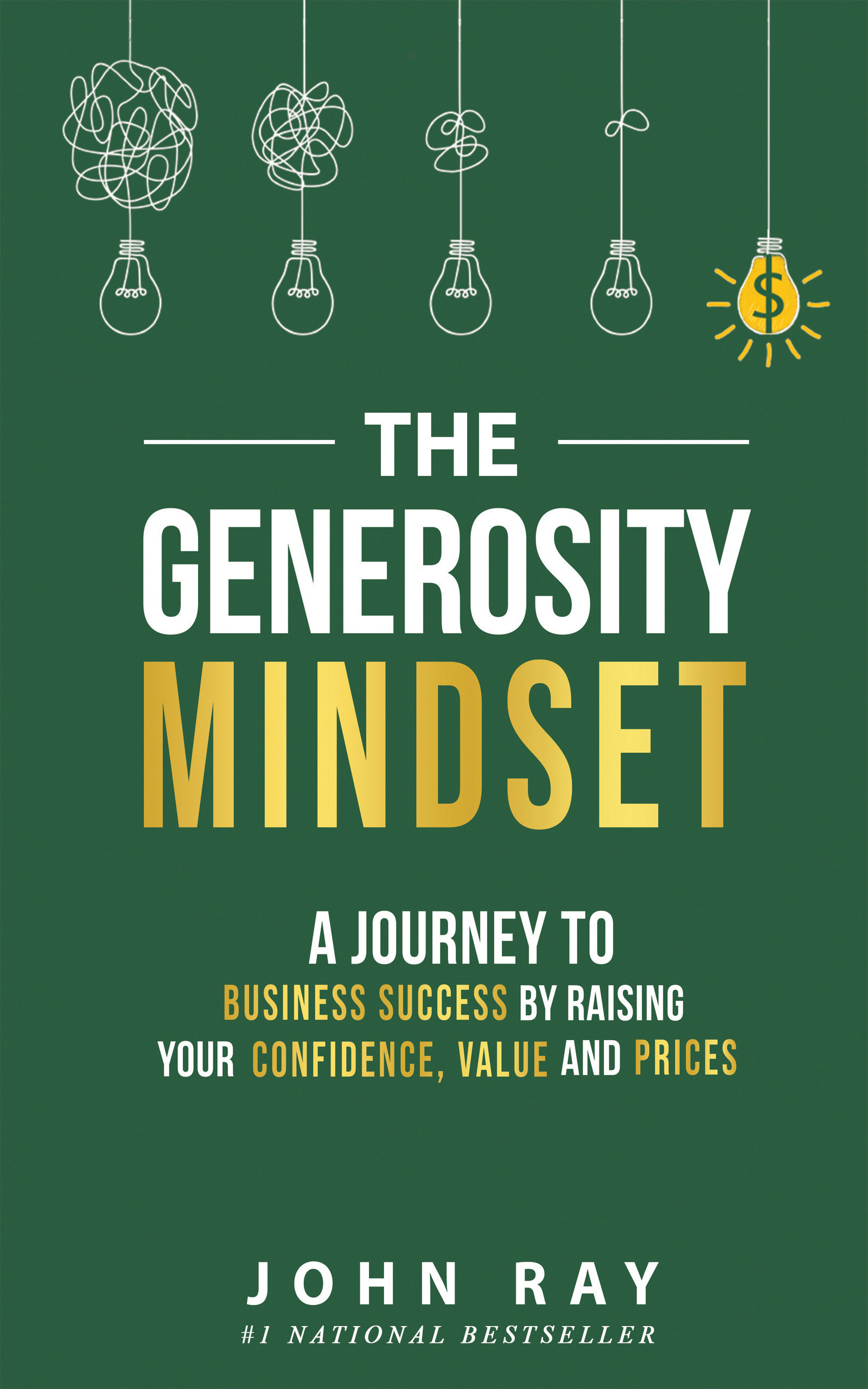
John Ray, The Generosity MindsetJohn Ray also operates his own business advisory practice. John’s services include advising solopreneurs and small professional services firms on their value, their positioning and business development, and their pricing. His clients are professionals who are selling their expertise, such as consultants, coaches, attorneys, CPAs, accountants, bookkeepers, marketing professionals, and other professional services practitioners.

John is the national bestselling author of The Generosity Mindset: A Journey to Business Success by Raising Your Confidence, Value, and Prices.

Renasant Bank supports North Fulton Business Radio

Renasant BankRenasant Bank has humble roots, starting in 1904 as a $100,000 bank in a Lee County, Mississippi, bakery. Since then, Renasant has become one of the Southeast’s strongest financial institutions, with over $17 billion in assets and more than 180 banking, lending, wealth management, and financial services offices throughout the region. All of Renasant’s success stems from each banker’s commitment to investing in their communities as a way to better understand the people they serve. At Renasant Bank, they understand you because they work and live alongside you every day.

Website | LinkedIn | Facebook | Instagram | X (Twitter) | YouTube

Beyond Computer Solutions supports North Fulton Business Radio

If you’re a law firm, medical practice, or manufacturer, there’s one headline you would rather not make: “Local Business Pays Thousands in Ransom After Cyberattack.” That’s where Beyond Computer Solutions comes in. They help organizations like yours stay out of the news and in business with managed IT and cybersecurity services designed for industries where compliance and reputation matter most.

Whether they serve as your complete IT department or simply support your internal team, these professionals are well-versed in HIPAA, secure document access, written security policies, and other essential aspects that ensure your safety and well-being. Best of all, it starts with a complimentary security assessment.
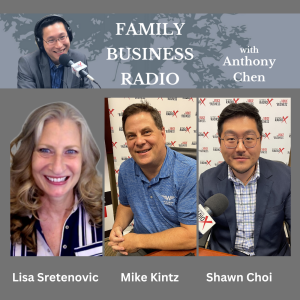
Website | LinkedIn | Facebook | YouTube

Tagged With: 2025 GNFCC BOLD Women in Leadership Summit, accounting services, Atlanta Business, Beth Quinlan, Beyond Computer Solutions, Business Development, community service, CPA firm, cybersecurity, executive search, GNFCC, Greater North Fulton Chamber of Commerce, John Ray, Mergers and Acquisitions, North Fulton Business Radio, renasant bank, Sales tax, Smith & Howard, Smith and Howard, tax advisory, Women in Business, Women in Leadership

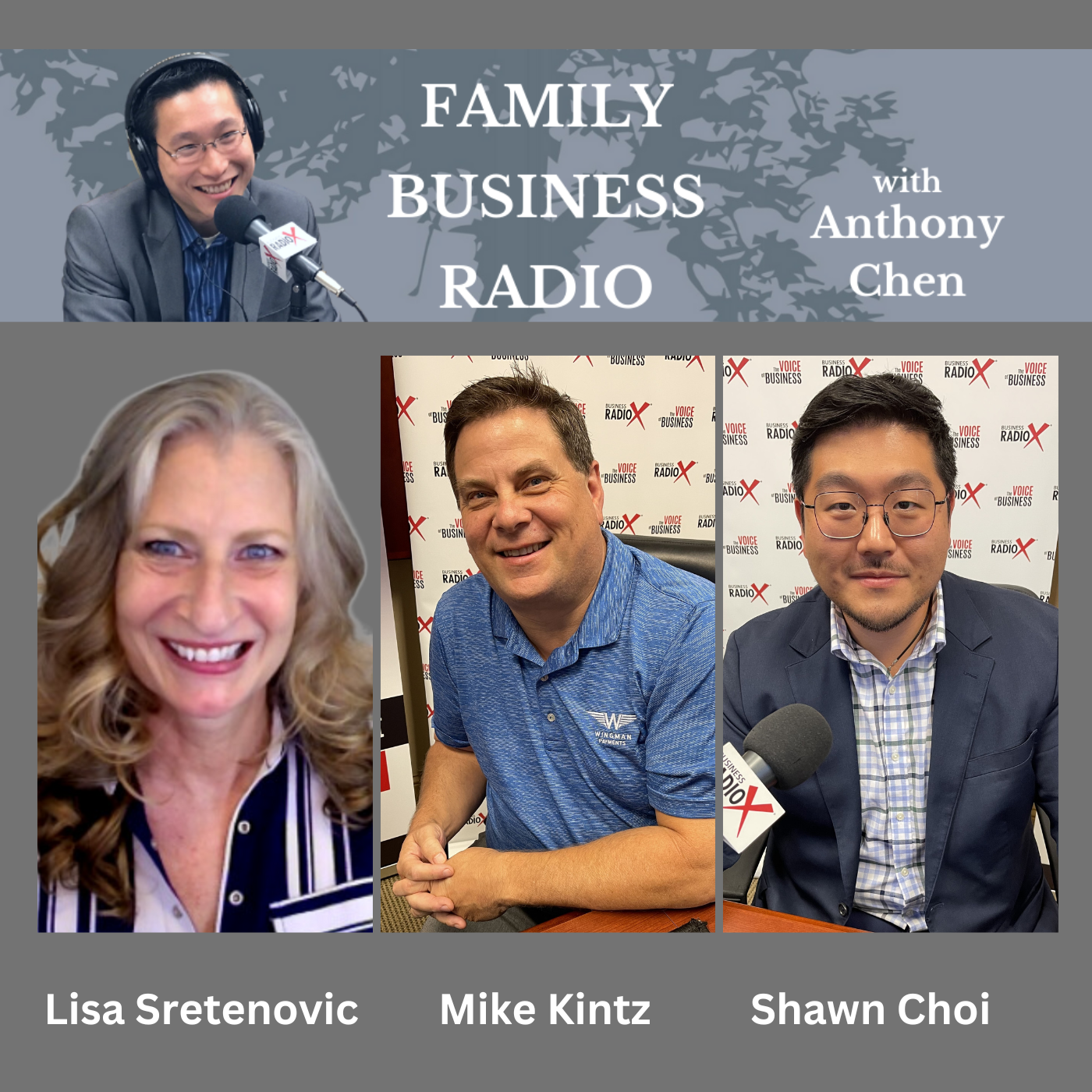
Lisa Sretenovic, Visionating LLC, Mike Kintz, Wingman Payments, and Shawn Choi, Chastain Injury Law

October 17, 2024 by John Ray

Lisa Sretenovic, Visionating LLC, Mike Kintz, Wingman Payments, and Shawn Choi, Chastain Injury Law, on Family Business Radio with host Anthony Chen
Family Business Radio
Lisa Sretenovic, Visionating LLC, Mike Kintz, Wingman Payments, and Shawn Choi, Chastain Injury Law
Loading
00:00 /
RSS Feed
Share
Link
Embed

Download file

Lisa Sretenovic, Visionating LLC, Mike Kintz, Wingman Payments, and Shawn Choi, Chastain Injury Law, on Family Business Radio with host Anthony Chen

Lisa Sretenovic, Visionating LLC, Mike Kintz, Wingman Payments, and Shawn Choi, Chastain Injury Law (Family Business Radio, Episode 58)

This episode of Family Business Radio with host Anthony Chen features a series of insightful discussions with three distinguished guests, Lisa Sretenovic from Visionating, Mike Kintz of Wingman Payments, and Shawn Choi from Chastain Injury Law. Lisa talks about navigating a virtual business pre- and post-pandemic, setting work-life boundaries, and offering business coaching and consulting services. Mike explains how Wingman Payments provides streamlined payment solutions with specialized services tailored to various business needs. Additionally, Shawn shares his journey from a defense attorney to a personal injury advocate, emphasizing his unique approach to legal cases. The episode also includes reflections from Anthony Chen on building meaningful client relationships and integrating collaborative lessons into financial planning.

Family Business Radio is underwritten and brought to you by Anthony Chen with Lighthouse Financial Network. The show is produced by John Ray and the North Fulton affiliate of Business RadioX®.

Lisa Sretenovic, Visionating LLC

Lisa Sretenovic, Visionating LLC

Lisa Sretenovic, CPA, has been empowering entrepreneurs to create a thriving business while focusing on their families for more than 30 years.

As The Velocity Detective, Lisa passionately brings financial literacy to both Wall Street and Main Street. She is a speaker, author, coach, & volunteer with organizations such as SCORE, Texas Accountants & Lawyers for the Arts, and TXCPA. Along with being a leader in the nationally recognized mastermind group Coach Connections, LLC.

When businesses become more in line with their values and vision, they accelerate their impact and discover their missing velocity, resulting in a positive influence in their greater community.

Lisa lives in Austin, TX, with her husband, Milan (The Vibration Chef & music producer).

Website | LinkedIn | Facebook | Instagram | X (Twitter)

Mike Kintz, Wingman Payments

Mike Kintz, Wingman Payments, on Family Business Radio with host Anthony Chen
Mike Kintz, Wingman Payments

Mike Kintz is the President of Wingman Payments.

Wingman Payments is a trusted provider of merchant services and payment solutions for businesses nationwide, delivering cutting-edge technology and exceptional support to help businesses streamline their payment processes. Wingman Payments offers a wide range of services, including credit card payment processing, fully integrated point-of-sale (POS) systems, and compliance management with PCI-DSS standards.

The company is committed to transparency, providing straightforward pricing without hidden fees, and a concierge-level of service that ensures businesses receive personalized support at every stage of their growth. Wingman Payments specializes in helping businesses reduce their payment processing expenses through innovative solutions like cash discount programs and dual pricing, which are designed to enhance operational efficiency and boost revenues.

As a merchant services broker for top brands like Dejavoo, Lavu, FRI, and National Retail Solutions, to name a few, Wingman Payments equips businesses with the technology they need to thrive in today’s competitive market. Whether working with retail, restaurants, or service-based businesses, Wingman Payments stands out for its dedication to building long-term partnerships, offering tailored solutions, and ensuring that its clients stay ahead of the evolving payment landscape.

Wingman Payments is the go-to partner for businesses looking to enhance their customer experience, optimize operations, and maintain compliance with the most recent industry standards because of its mission to simplify payment processing and offer exceptional service.

Website | Mike’s LinkedIn | Company LinkedIn | Facebook | X (Twitter)

Shawn Choi, Founder and Managing Attorney, Chastain Injury Law

Shawn Choi, Chastain Injury Law, on Family Business Radio with host Anthony Chen
Shawn Choi, Chastain Injury Law

Shawn Choi is the founder of the Atlanta, Georgia-based Chastain Injury Law, which specializes in personal injury law. The firm specializes in representing clients who have suffered injuries due to negligence, focusing on areas such as car accidents, truck accidents, motorcycle accidents, and premises liability. Committed to a client-centered approach, Chastain Injury Law offers free consultations and operates on a contingency fee basis, ensuring that clients receive quality legal representation without upfront costs.

With extensive experience in personal injury law, Shawn and his team are dedicated to securing fair compensation for their clients. They leverage their knowledge of Georgia’s legal landscape to effectively negotiate with insurance companies and litigate cases when necessary. The firm emphasizes personalized attention, tailoring strategies to meet the unique needs of each client, and strives to empower individuals navigating the complexities of the legal system following an injury.

Website | LinkedIn

Topics Discussed in this Episode

00:00 Introduction to Family Business Radio
00:40 Meet Lisa Sretenovic: The Velocity Detective
02:12 Visionating During COVID: Challenges and Adaptations
04:23 The Untethered Entrepreneur: Balancing Work and Travel
10:59 Group Coaching and Consulting Services
16:43 Introducing Mike Kintz and Wingman Payments
20:10 Understanding Merchant Services and PCI Compliance
25:37 Understanding Client Concerns
25:45 Dedicated Relationship Managers
27:04 Innovative Payment Technologies
28:35 Point of Sale and Scheduling Solutions
30:08 Loyalty Programs for Small Businesses
31:24 Client Success Stories
33:28 Introducing Shawn Choi
33:41 The Journey into Injury Law
34:54 Challenges and Nuances in Injury Cases
48:00 Advice for Aspiring Entrepreneurs

Anthony Chen, Host of Family Business Radio

Anthony Chen, Host of Family Business Radio

Family Business Radio is sponsored and brought to you by Anthony Chen with Lighthouse Financial Network. Securities and advisory services are offered through OSAIC, member FINRA/SIPC. RAA is separately owned, and other entities and/or marketing names, products, or services referenced here are independent of OSAIC. The main office address is 575 Broadhollow Rd., Melville, NY 11747. You can reach Anthony at 631-465-9090, ext. 5075, or by email at anthonychen@lfnllc.com.

Anthony Chen started his career in financial services with MetLife in Buffalo, NY, in 2008. Born and raised in Elmhurst, Queens, he considers himself a full-blooded New Yorker while now enjoying his Atlanta, GA, home. Specializing in family businesses and their owners, Anthony works to protect what is most important to them. From preserving to creating wealth, Anthony partners with CPAs and attorneys to help address all of the concerns and help clients achieve their goals. By using a combination of financial products ranging from life, disability, and long-term care insurance to many investment options through Royal Alliance, Anthony looks to be the eyes and ears for his client’s financial foundation. In his spare time, Anthony is an avid long-distance runner.

The complete show archive of Family Business Radio can be found by following this link.

Tagged With: Anthony Chen, Chastain Injury Law, CPa, CPA firm, credit card processing, Family Business Radio, financial advisor, Lisa Sretenovic, merchant processing, Mike Kintz, personal injury attorney, personal injury law, personal injury law firm, Shawn Choi, Visionating, Wingman Payments

Daniel Sosebee and Heather Fleming, MST

September 19, 2023 by John Ray

MST
North Fulton Business Radio
Daniel Sosebee and Heather Fleming, MST
Loading
00:00 /
RSS Feed
Share
Link
Embed

Download file

MST

Daniel Sosebee and Heather Fleming, MST (North Fulton Business Radio, Episode 695)

Daniel Sosebee and Heather Fleming with MST were guests on this episode of North Fulton Business Radio with host John Ray. Daniel and Heather each shared how they came to MST, what MST does for family businesses, and what makes them unique. They also talked about how cloud accounting has changed their business, the advantages they bring to their clients, success stories, and much more.

North Fulton Business Radio is broadcast from the North Fulton studio of Business RadioX® inside Renasant Bank in Alpharetta.

MST

MST’s focus remains on serving privately owned businesses, entities domiciled in the United States owned by a foreign parent company, and nonprofits since 1956. We opened our first office in Brunswick, Georgia, with two partners and five employees driven to give individual and organizational clients the pinnacle of business support and consultation. Now, with four offices, ten partners, and more than 100 employees, we are equipped to support a broader clientele with an extensive array of specialized services.

After achieving substantial growth through the Brunswick office, we expanded operations into the Atlanta market, opening a second location in 1967. Positioning ourselves in this southeastern hub was essential to serve the extensive metro community. Twenty years later, in 1988, we furthered our outreach in Georgia by opening a third office in Gwinnett County. In 2017 through the growth of the firm and our clients, we were able to open a New York office to better serve clients with holdings in the Northeast.

Our focus has remained constant throughout our distinguished growth and history: the entire MST team is dedicated to creating lasting success for our clients and continuing opportunities for our employees. Our achievements have been recognized by Accounting Today and Atlanta Business Chronicle, where we are consistently named in the “Top 25 Accounting Firms.”

MST is an independently owned and operated member firm of Moore North America (Moore NA), a regional member of Moore Global Network Limited (MGNL). All the firms in MGNL are independent entities owned and managed in each location.

Website | LinkedIn | Facebook | Twitter

Daniel Sosebee, Associate Member, MST

Daniel Sosebee, Associate Member, MST

Daniel is an associate member in MST’s Gwinnett office. He specializes in assurance and attestation services for closely held businesses and not-for-profit organizations. His expertise includes a variety of industries such as distribution, manufacturing, construction, technology and dealerships, as well as serving on a number of significant non-profit engagements, including our largest private foundation clients.

In addition to assurance and attest engagements, Daniel is passionate about building relationships with colleagues, clients, prospects and networking within the communities we serve. This passion has led Daniel to the position of Director of Business Development where his role is to lead the Firm through organic growth, mergers and acquisitions as well as develop new lines of business. Secondly, he oversees the Firm’s employee retention and recruiting department in which he works hand-in-hand with the Firm’s retention and recruiting specialist.

Daniel obtained his BBA in Accounting from Georgia College and State University (where he also was a member of the men’s golf team) and completed his Master of Accountancy at Kennesaw State University.

Daniel is a member of the Georgia Society of Certified Public Accountants and American Institute of Certified Public Accountants and is actively involved with his church and community affairs including the Gwinnett Chamber of Commerce, Gwinnett Chairman’s Club, Partnership of Gwinnett and board member of the Gwinnett Leadership Forum and the Hudgens Center for Art and Learning.

LinkedIn

Heather Fleming, Business Development Manager, MST

Heather Fleming, Business Development Manager, MST

Heather is the Business Development Manager in the Gwinnett office for MST. She is a. former banker who spent the first part of her career helping privately held companies achieve their business goals by providing sound financial solutions. She invested time with her clients to really get to know them, their company, and their goals.

As a daughter of entrepreneurial parents, Heather has always enjoyed working with privately held companies and when she was presented the opportunity to join the MST team as a Business Development Manager, she couldn’t pass up the chance to do what she loves, getting to know people and more importantly getting to know their business.

Heather wants to help businesses determine what accounting services match their strategic or compliance needs and connect them with the partner and team that is going to be best for them and their team. It’s MST’s goal to be a strategic partner with their clients and to develop strategies that help reach their goals.

LinkedIn

Questions and Topics in this Interview:

  • What is MST and how did each of you come to MST?
  • What makes MST unique as a CPA firm?
  • Why do you focus on family businesses?
  • What are some common themes you’re seeing in your clients?
  • What are the advantages to cloud accounting?
  • What’s the return on the investment for a business with MST?

North Fulton Business Radio is hosted by John Ray and broadcast and produced from the North Fulton studio of Business RadioX® inside Renasant Bank in Alpharetta. You can find the full archive of shows by following this link. The show is available on all the major podcast apps, including Apple Podcasts, Spotify, Google, Amazon, iHeart Radio, Stitcher, TuneIn, and others.

RenasantBank


Renasant Bank has humble roots, starting in 1904 as a $100,000 bank in a Lee County, Mississippi, bakery. Since then, Renasant has become one of the Southeast’s strongest financial institutions with over $13 billion in assets and more than 190 banking, lending, wealth management, and financial services offices in Mississippi, Alabama, Tennessee, Georgia, and Florida. All of Renasant’s success stems from each of their banker’s commitment to investing in their communities as a way of better understanding the people they serve. At Renasant Bank, they understand you because they work and live alongside you every day.

Since 2000, Office Angels® has been restoring joy to the life of small business owners, enabling them to focus on what they do best. At the same time, we honor and support at-home experts who wish to continue working on an as-needed basis. Not a temp firm or a placement service, Office Angels matches a business owner’s support needs with Angels who have the talent and experience necessary to handle work that is essential to creating and maintaining a successful small business. Need help with administrative tasks, bookkeeping, marketing, presentations, workshops, speaking engagements, and more? Visit us at https://officeangels.us/.

Tagged With: Accounting, cloud accounting, CPA firm, daniel sosebee, family businesses, fractional accounting, heather fleming, John Ray, mst, North Fulton Business Radio, Office Angels, renasant bank

Vivian Dempsey, Wilson Lewis, and Scott Williford, vLink Solutions

May 12, 2023 by John Ray

Vivian Dempsey, Wilson Lewis, and Scott Williford, vLink Solutions
North Fulton Studio
Vivian Dempsey, Wilson Lewis, and Scott Williford, vLink Solutions
Loading
00:00 /
RSS Feed
Share
Link
Embed

Download file

Vivian Dempsey, Wilson Lewis, and Scott Williford, vLink Solutions

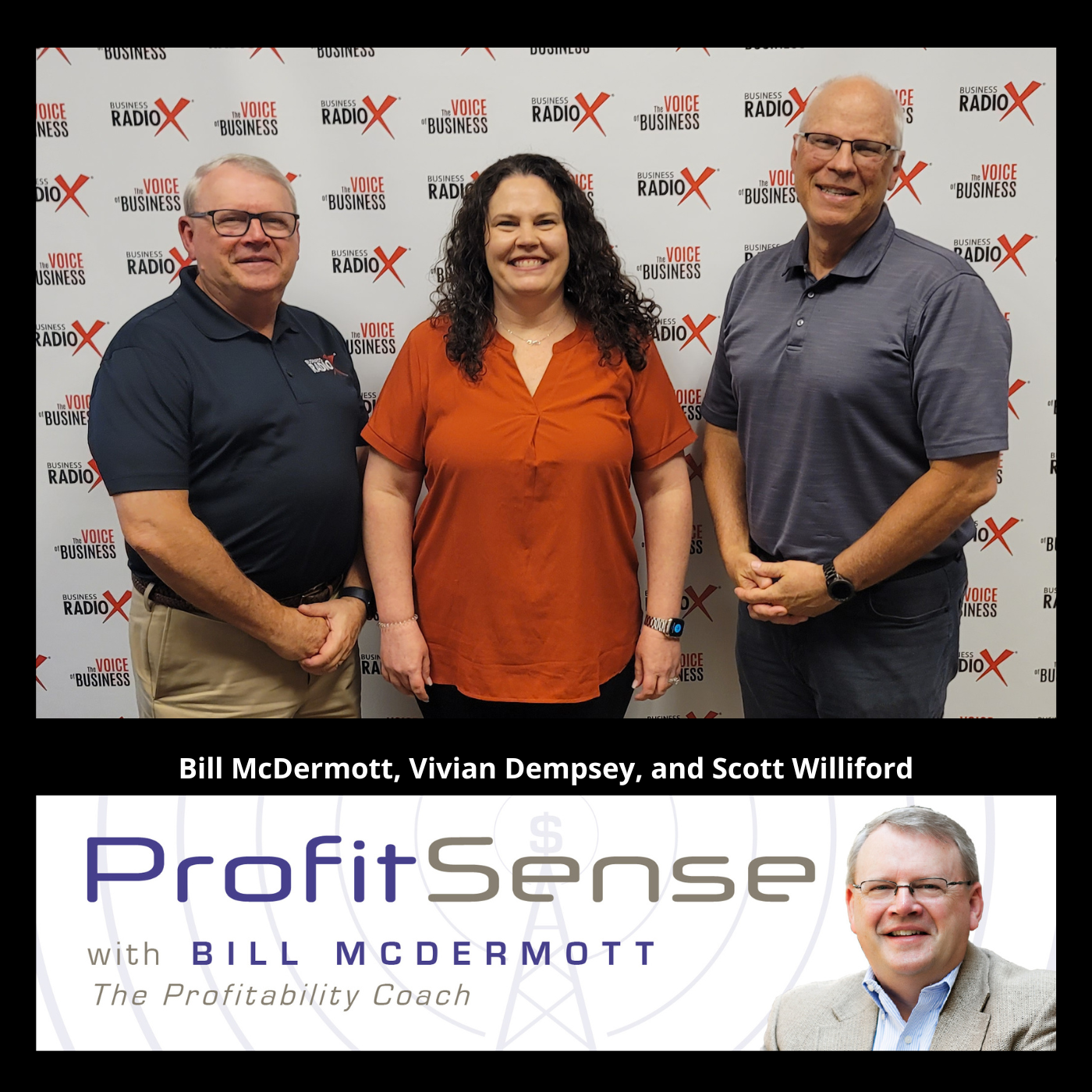
Vivian Dempsey, Wilson Lewis, and Scott Williford, vLink Solutions (ProfitSense with Bill McDermott, Episode 45)

On this episode of ProfitSense, host Bill McDermott welcomed Vivian Dempsey, Partner at Wilson Lewis, and Scott Williford, CEO of vLink Solutions. Vivian talked about Georgia’s personal income tax rebate, the advantages and disadvantages of an S Corp, the IRS tax inflation adjustments for the tax year 2023, and much more. Scott discussed his experience in being an entrepreneur for over 30 years, lessons he has learned from past startups, marketing trends, and much more. Bill closed the show by talking about how to know if your business is scalable.

ProfitSense with Bill McDermott is produced and broadcast by the North Fulton Studio of Business RadioX® in Alpharetta.

Wilson Lewis

Wilson Lewis, a Gwinnett-based Certified Public Accounting (CPA) firm, provides a variety of tax, accounting, and consulting services to meet the changing needs of both individuals and businesses. There are services designed to help address “once in a lifetime” issues such as estate, succession, and retirement planning, fraud prevention and detection, and even strategic business planning. The combination of these provides the direction and confidence that many seek in their accounting relationships. While the main work is ensuring accurate and timely reports and tax filings, team members are proactive and often bring new ideas to the table when appropriate. Concurrently, there is also an emphasis on consistent communication throughout the year to ensure new opportunities are properly leveraged.

Wilson Lewis is a philanthropic star in Atlanta’s business community and proudly supports Rainbow Village, Arthritis Foundation, Ahimsa House, CHOA Children’s Healthcare of Atlanta, Happy Feat, and The NSORO Foundation to name just a few. The firm is also very involved with the Gwinnett Chamber of Commerce and has been named The Best of Gwinnett Accounting Firms 2016-2022.

If you are looking for a proactive CPA firm focused on client service and capable of growing with your needs, then Wilson Lewis is the firm to consider. With locations in Atlanta, Duluth, Sandy Springs, and availability online, Wilson Lewis is right around the corner. Additional information is available at wilsonlewis.com or by calling 770-476-1004.

Website | Facebook | Twitter | LinkedIn

Vivian Dempsey, Partner, Wilson Lewis

Vivian Dempsey, Partner, Wilson Lewis

Vivian Dempsey specializes in federal and state compliance and tax consulting services. Her work spans the full spectrum, including corporations, partnerships, limited liability companies, trusts and estates, not-for-profit, and individual planning and returns. Vivian is a graduate of Georgia State University with a Bachelor of Business Administration in Accounting.

She came to Wilson Lewis in 2014 from a firm in Atlanta and was named partner in 2017. Vivian’s professional memberships include the American Institute of Certified Public Accountants and the Georgia Society of Public Accountants.

Vivian currently resides in Buford, Georgia with her husband, Robert, and their 5 children.

LinkedIn

vLink Solutions

Engaging your audience whether they are prospects, employees, or event attendees is critical to reaching your goals. Video and live streaming are powerful communication tools but they can be complicated and expensive. vLink Solutions has mastered the art of creating effective video and live streams at a price point that’s affordable. Let us help you engage your audience.

vLink produced over 1500 videos and live-streamed over 4000 hours in 2022. They are the owners of vlink Events, a complete virtual events platform.

vLinks current and past clients include UPS, Google, Comcast, LeasePlan, Fleetcor, ParkMobile, and many many more. For more information about vLink please visit www.vlinksolutions.com.

Website | Facebook | Twitter | LinkedIn

Scott Williford, CEO, vLink Solutions

Scott Williford, CEO, vLink Solutions

Scott is a serial entrepreneur, consultant, and family man. He has played a major role in several successful organizations and helped countless others as an investor, consultant, and executive. Scott has a passion to help businesses and professionals differentiate themselves in their marketplace. He is currently the CEO of vLink Solutions.

vLink is a video marketing agency that helps businesses create cost-effective, high-quality videos, virtual events, and live streams. As CEO and Founder of vLink Solutions, Scott is the visionary leader and spokesperson for the company.

Scott is also the managing partner in Iuvo, LLC, a boutique management consulting practice, specializing in all areas of technology, marketing, business planning, and more. Scott brings a wealth of knowledge from his CEO and COO background that provides clients access to a unique blend of technology, marketing, sales, and operational expertise.

LinkedIn

About ProfitSense and Your Host, Bill McDermott

Bill McDermott
Bill McDermott

ProfitSense with Bill McDermott dives into the stories behind some of Atlanta’s successful businesses and business owners and the professionals that advise them. This show helps local business leaders get the word out about the important work they’re doing to serve their market, their community, and their profession. The show is presented by McDermott Financial Solutions. McDermott Financial helps business owners improve cash flow and profitability, find financing, break through barriers to expansion, and financially prepare to exit their business. The show archive can be found at profitsenseradio.com.

Bill McDermott is the Founder and CEO of McDermott Financial Solutions. When business owners want to increase their profitability, they don’t have the expertise to know where to start or what to do. Bill leverages his knowledge and relationships from 32 years as a banker to identify the hurdles getting in the way and create a plan to deliver profitability they never thought possible.

Bill currently serves as Treasurer for the Atlanta Executive Forum and has held previous positions as a board member for the Kennesaw State University Entrepreneurship Center and Gwinnett Habitat for Humanity and Treasurer for CEO NetWeavers. Bill is a graduate of Wake Forest University and he and his wife, Martha have called Atlanta home for over 40 years. Outside of work, Bill enjoys golf, traveling, and gardening.

Connect with Bill on LinkedIn and Twitter and follow McDermott Financial Solutions on LinkedIn.

Tagged With: Accounting, Bill McDermott, CPa, CPA firm, digital marketing, Iuvo, live streaming, LLC, profitability, profitability coach, Profitability Coach Bill McDermott, ProfitSense, ProfitSense with Bill McDermott, Scott Williford, Taxes, The Profitability Coach, video marketing, Vivian Dempsey, vLink Solutions, Wilson Lewis

Tuff Yen, Seraph Group

February 21, 2023 by John Ray

Tuff Yen
Business Beat
Tuff Yen, Seraph Group
Loading
00:00 /
RSS Feed
Share
Link
Embed

Download file

Tuff Yen

Frazier & Deeter’s Business Beat: Tuff Yen, Seraph Group

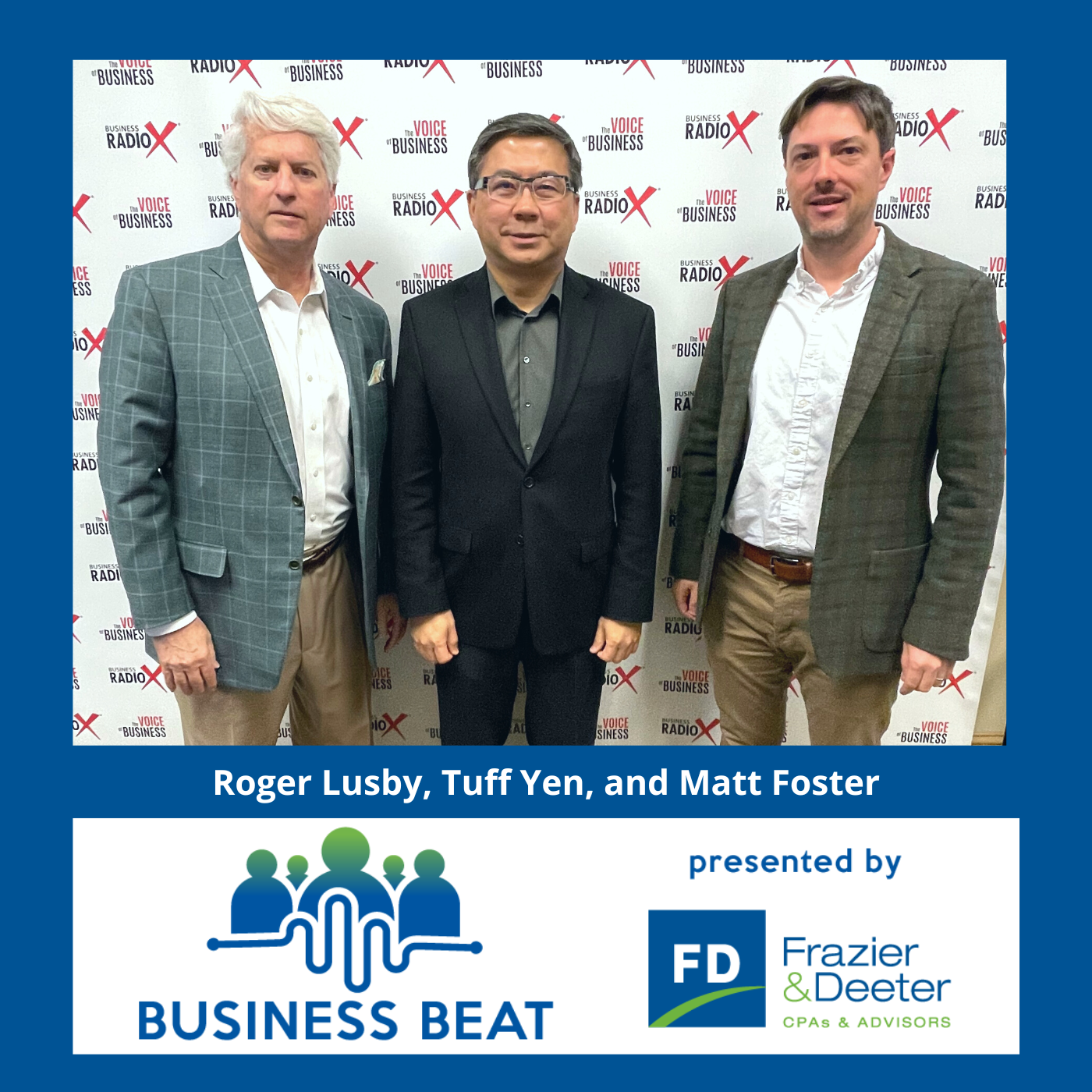
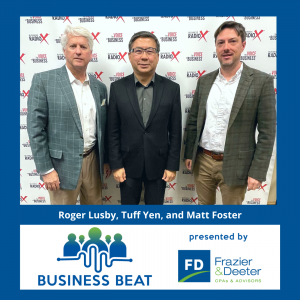
Tuff Yen, Founder and Managing Partner of Seraph Group, joined this edition of Business Beat to discuss his venture capital investment firm and their work. In a discussion with Frazier & Deeter’s Roger Lusby and Matt Foster, Tuff talked about Seraph Group and its mission, his move to Milton from the Bay Area, how Seraph is investing locally, trends he’s seeing, what Seraph is looking for in investments, how investors can get involved, and much more.

Business Beat is presented by Alpharetta CPA firm Frazier & Deeter and is produced by the North Fulton studio of Business RadioX®

Seraph Group

Unlike a traditional venture fund, Structured Angel Fund offers a 20+ portfolio of seed and pre-seed stage investment into high-risk/high return technology startups. Investors not only gain a diversified portfolio, but also have the opportunity to co-invest on a deal by deal basis above his managed portfolio. This two-prong approach provided investors with a managed fund by the General Partner and a self-directed investment portfolio by investors.

SAF is popular with C-level executives and entrepreneurs. For the busy individuals whose time is limited, the managed portfolio is not only a low-cost way of investing in startup, but a more efficient acquisition of diversification. For individuals who have strong domain knowledge and operating experience, SAF offers investors the opportunity to work with startups first-hand.

Seraph Group’s approach to angel investment addresses and solves many challenges experienced by localized angel organizations. Their national reach for deal flow, 400+ domain experts, professionally managed process and 19 years history of success established the company as the premier professional organization in the United States.

Seraph Research Foundation was founded to help the local community build a successful capital source for startups based on almost two decades of learnings from personally invested in 130+ companies. As technology continues to play a significant role in the economy, and many accelerators and incubators graduate companies, the growth of risk capital has not caught up with the demand.

Few communities or organizations have experience in organizing angel investment groups. Seraph Research Foundation will assist local communities in a public private partnership to help educate, train, organize and manage an angel investment group, a vital component of keeping promising companies local, translating into economic growth, job creation and tax revenues.

Seraph Research Foundation has established local angel investment groups in Austin Texas and Lubbock Texas.

Company website | LinkedIn | Twitter

Tuff Yen, Founder and Managing Partner, Seraph Group

Tuff Yen, Founder and Managing Partner, Seraph Group

Tuff Yen is the founder Seraph Research Foundation, a non-profit dedicated to the education and training of angel investors and working with the local community to establish angel/seed investment organization to help the public and private effort on growing the economy. He is also the founder of Seraph Milton, a north Fulton Georgia based angel investment group.

Mr. Yen is also the founder of Seraph Group, an investment firm that brings together successful individuals to create wealth through ownership of private enterprises. Seraph Group was founded in 2004 and is now the largest, and only global angel investment fund group that specializes in backing high-tech startups.

Mr. Yen started his career in the biotechnology industry with a degree in Microbiology and Immunology from the University of California Berkeley. He worked at Genentech and Amgen, two leading biotechnology companies in northern and southern California. After graduating from the Yale School of Management in New Haven Connecticut, Mr. Yen began his venture capital career at Chemical Venture Partner, the private equity and venture capital arm of Chemical Bank, then managing $8 Billion in New York City. Chemical Bank later merged with Chase Manhattan Bank and then JPMorgan Bank, and the group became JPMorgan Partners which then managed close to $20 Billion. Mr. Yen subsequently joined a Hambrecht & Quist’s affiliated $1.6billion fund in San Francisco.

With an extensive venture capital background on both coasts, Mr. Yen saw an opportunity to deliver a new investment platform for accredited investors and launched Seraph Group in 2004. He introduced Structured Angel Fund™, a venture capital fund designed specifically for angel investors and family offices to gain access to a diversified portfolio of seed stage startups and with the right to co-invest on a deal-by-deal basis. This GP-managed and LP-curated fund attracted close to 400 investors from 120+ cities in north America, Europe and Asia, many of them Fortune 500 C-level executives, entrepreneurs, technologists, innovators, investment and operating professionals.

Mr. Yen led Seraph Group and invested north of $120 million into 130+ companies. He reviewed between 300 and 400 investment proposals each year and was responsible for all aspects of an investment, from sourcing, investigating, conducting due diligence, and structuring. Mr. Yen has gained experience in investing in a wide variety of industries, including manufacturing, distribution, entertainment, publishing, information technology, Internet, enterprise software, cybersecurity, aerospace, medical and life sciences.

LinkedIn | Twitter

Frazier & Deeter

The Alpharetta office of Frazier & Deeter is home to a thriving CPA tax practice, a growing advisory practice and an Employee Benefit Plan Services group. CPAs and advisors in the Frazier & Deeter Alpharetta office serve clients across North Georgia and around the country with services such as personal tax planning, estate planning, business tax planning, business tax compliance, state and local tax planning, financial statement reviews, financial statement audits, employee benefit plan audits, internal audit outsourcing, cyber security, data privacy, SOX and other regulatory compliance, mergers, and acquisitions and more. Alpharetta CPAs serve clients ranging from business owners and executives to large corporations.

Roger Lusby, Partner in Charge of Alpharetta office, Frazier & Deeter
Roger Lusby, Partner in Charge of the Alpharetta office of Frazier & Deeter

Roger Lusby, host of Frazier & Deeter’s Business Beat, is an Alpharetta CPA and Alpharetta Office Managing Partner for Frazier & Deeter. He is also a member of the Tax Department in charge of coordinating tax and accounting services for our clientele. His responsibilities include a review of a variety of tax returns with an emphasis in the individual, estate, and corporate areas. Client assistance is also provided in the areas of financial planning, executive compensation and stock option planning, estate and succession planning, international planning (FBAR, SFOP), health care, real estate, manufacturing, technology, and service companies.

You can find Frazier & Deeter on social media:

LinkedIn | Facebook | Twitter

An episode archive of Frazier & Deeter’s Business Beat can be found here.


Tagged With: accountants, angel investment group, Angel Investors, CPA firm, estate planning, financial planning, Frazier & Deeter's Business Beat, Frazier and Deeter, Roger Lusby, Roger Lusby CPA, Seraph Foundation, Seraph Georgia, Seraph Group, Seraph Milton, Tuff Yen

The Immensely Valuable CPA

May 11, 2022 by John Ray

The Immensely Valuable CPA
North Fulton Studio
The Immensely Valuable CPA
Loading
00:00 /
RSS Feed
Share
Link
Embed

Download file

The Immensely Valuable CPA

The Immensely Valuable CPA

What are the characteristics of an immensely valuable CPA, one who clients cannot do without? The answer goes beyond degrees, designations, and even technical expertise. A story here not just for CPAs but all professional services providers.

The Price and Value Journey is presented by John Ray and produced by the North Fulton studio of Business RadioX®.

TRANSCRIPT

John Ray: [00:00:00] Hello. I’m John Ray on the Price and Value Journey. Recently, I sat with an older business owner who is a 50/50 partner with a relative. They’re getting closer to that inevitable time when they are transitioning out of the business and there are problems. The relative’s behavior is erratic, and the business has some unique characteristics, which will make a sale challenging. This owner was wondering how he could navigate all this, a situation which could turn into a quagmire, if not handled just right.

I asked him who among their professional services providers could help mediate and walk through with the two of them this business transition. It had to be someone both he and his relative trusted implicitly. We agreed that having the right person there to smooth any friction would save a lot of hurt feelings, anxiety, and maybe a bunch of legal bills if everything descended into a legal fight. The business attorney had just passed away, but the long-time CPA for the business was still active. Do both of you trust – I’ll call him – Joseph? “Do you value Joseph’s opinions?” I asked him. Do both of you listen to him? How’s his bedside manner? I asked several questions like this about Joseph, and all the answers led to a conclusion this man agreed with, that. Joseph, the CPA was the ideal person, possibly the only person to companion the two of them through the looming transition.

Now, what makes Joseph not just important, but immensely valuable to these two business partners? What is it that makes Joseph seem irreplaceable at this point? Is that his knowledge of the tax code? His ability to help them craft a business transition, which saves both a large tax bill? His accuracy in filing tax returns? The fact that he’s been through 40 or more tax seasons? No, it’s none of these things, actually. All his experience and his qualifications are important, to be sure, but that’s not what makes Joseph more than just important. What makes Joseph immensely valuable here? What makes Joseph seem priceless as an advisor?

Joseph’s value as a professional services provider lies in his experience with these two partners. The trust he has engendered with them over time, his demeanor and his ability to mediate tough situations. All of these factors are intangibles. Intangibles that are not available with anyone else, it seems. Intangibles that these two partners can’t find with a Google search. It’s yet another example of why, ultimately, your content, your experience, your certifications as a professional services provider is not, ultimately, what drives your practice. Whether it’s your knowledge of the tax code if you’re a CPA, or social media platforms if you’re a marketing or branding expert, or the law if you’re attorney, your value lies in intangibles that, sometimes, you’re not able to see if we don’t understand what the client sees. Your value lies in more, much more than just your experience, certifications and the content that you give the world. So, what are those intangibles your clients see in you, which make you priceless to them? Do you know? If not, maybe it’s time to start asking them those questions.

I’m John Ray on the Price and Value Journey. Past episodes of this series can be found on your favorite podcast app, or you can find the entire show archive at PriceValueJourney.com. You’re welcome to send me a note, John@JohnRay.co. Thank you for joining me.

About The Price and Value Journey

The title of this show describes the journey all professional services providers are on:  building a services practice by seeking to convince the world of the value we offer, helping clients achieve the outcomes they desire and trying to do all that at pricing which reflects the value we deliver.

If you feel like you’re working too hard for too little money in your solo or small firm practice, this show is for you. Even if you’re reasonably happy with your practice, you’ll hear ways to improve both your bottom line as well as the mindset you bring to your business.

The show is produced by the North Fulton studio of Business RadioX® and can be found on all the major podcast apps. The complete show archive is here.

John Ray, Host of The Price and Value Journey

John Ray The Price and Value Journey
John Ray, Host of “The Price and Value Journey”

John Ray is the host of The Price and Value Journey.

John owns Ray Business Advisors, a business advisory practice. John’s services include advising solopreneur and small professional services firms on their pricing. John is passionate about the power of pricing for business owners, as changing pricing is the fastest way to change the profitability of a business. His clients are professionals who are selling their “grey matter,” such as attorneys, CPAs, accountants and bookkeepers, consultants, marketing professionals, and other professional services practitioners.

In his other business, John is a Studio Owner, Producer, and Show Host with Business RadioX®, and works with business owners who want to do their own podcast. As a veteran B2B services provider, John’s special sauce is coaching B2B professionals to use a podcast to build relationships in a non-salesy way which translate into revenue.

John is the host of North Fulton Business Radio, Minneapolis-St. Paul Business Radio, Alpharetta Tech Talk, and Business Leaders Radio. house shows which feature a wide range of business leaders and companies. John has hosted and/or produced over 1,300 podcast episodes.

Connect with John Ray:

Website | LinkedIn | Twitter

Business RadioX®:  LinkedIn | Twitter | Facebook | Instagram

Tagged With: accountants, bookkeepers, CPa, CPA firm, cpa's, John Ray, Price and Value Journey, pricing, professional services, professional services providers, solopreneurs, value

Laura Madajewski, Principal with HLB Gross Collins, P.C.

October 22, 2021 by Mike

Celebrating Powerhouse Women
Laura Madajewski, Principal with HLB Gross Collins, P.C.
Loading
00:00 /
RSS Feed
Share
Link
Embed

Download file

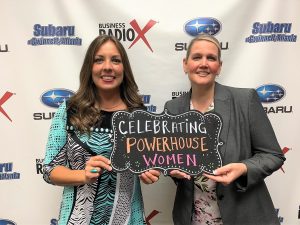
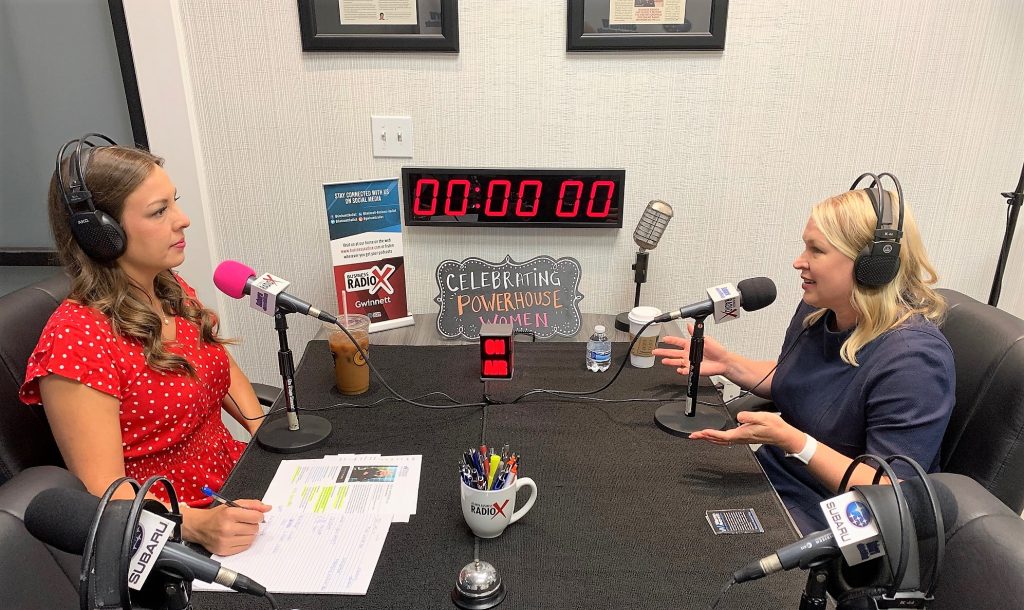
Amanda Pearch and Laura Madajewski

Celebrating Powerhouse Women salutes and recognizes women who are making an impact, whether it’s in business, philanthropy, public service, or elsewhere.

Laura Madajewski/HLB Gross Collins, P.C.

Laura is a Principal in the Audit and Advisory department with HLB Gross Collins, P.C., one of Atlanta’s most well-known certified public accounting and consulting firms. She joined HLB Gross Collins P.C. with 16 years of public accounting experience and has extensive experience in managing audits and in the preparation of financial statements.

Laura is committed to making the assurance process run smoothly for her clients and looks for ways to help clients improve controls, strengthen management, enhance governance roles and oversight and streamline operations. She works diligently to facilitate positive changes and growth for her clients’ operations. As a trusted advisor, she gets to know each client in order to provide a customized approach to their assurance and accounting needs.

Laura leads the firm’s Manufacturing, Distribution and Supply Chain Practice, as well as the Employee Benefit Practice. She also has extensive expertise serving nonprofit organizations including private schools, religious organizations, trade associations and foundations. She is a regular presenter and published author on various topics within her areas of specialization.

Celebrating Powerhouse Women is presented by

Tagged With: amanda pearch, Business RadioX, CAB Incorporated, capital city home loans, Celebrating Powerhouse Women, consulting firms, CPA firm, HLB Gross Collins, Laura Madajewski, P.C., powerhouse women, public accounting, successful women, women business leaders, women business podcast, Women Empowerment, women executives

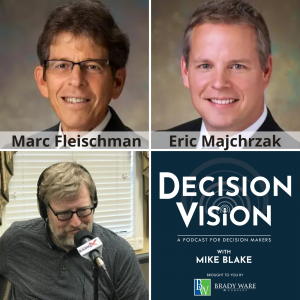
Decision Vision Episode 106: Should We Think Outside the Box for Our Next Chief Executive? – An Interview with Marc Fleischman and Eric Majchrzak, BeachFleischman

March 4, 2021 by John Ray

BeachFleischman
Decision Vision
Decision Vision Episode 106: Should We Think Outside the Box for Our Next Chief Executive? - An Interview with Marc Fleischman and Eric Majchrzak, BeachFleischman
Loading
00:00 /
RSS Feed
Share
Link
Embed

Download file

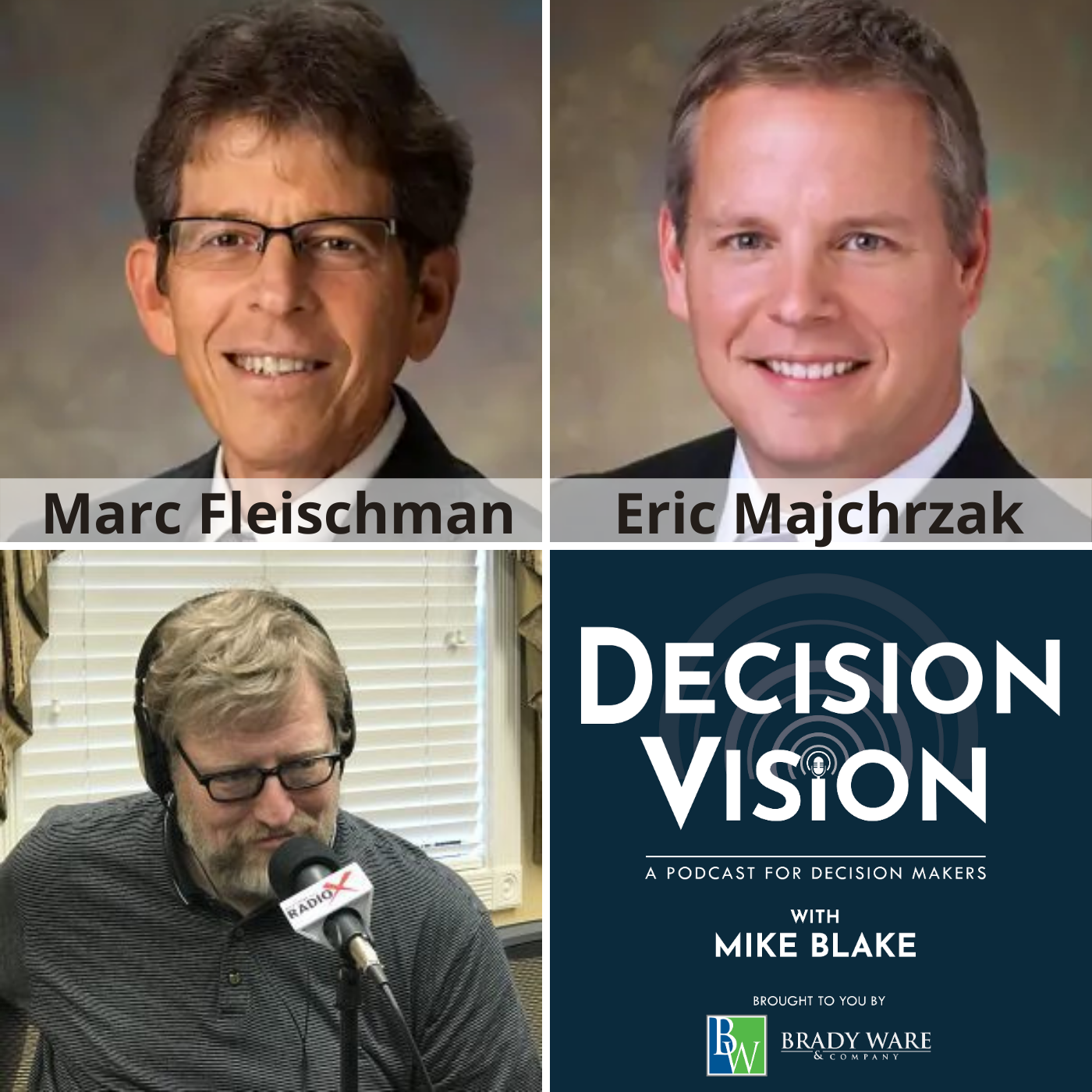
BeachFleischmanDecision Vision Episode 106:  Should We Think Outside the Box for Our Next Chief Executive? – An Interview with Marc Fleischman and Eric Majchrzak, BeachFleischman

When choosing a new CEO, should you consider unconventional options? How do you transition the CEO role to a non-founder? Marc Fleischman and Eric Majchrzak are in a management succession like this at their firm, BeachFleischman, and they joined host Mike Blake to discuss their own experience. “Decision Vision” is presented by Brady Ware & Company.

BeachFleischman PC

BeachFleischman PC is Arizona’s largest locally-owned CPA firm and a “Top 200” largest CPA firm in the U.S. The firm has over 200 client service and administrative professionals and provides accounting, assurance, tax, and strategic operations & advisory services to businesses (U.S. and foreign-based), organizations and individuals. The firm serves clients doing business domestically and internationally and specializes in a variety of Industry-related practice areas, including cannabis, construction, healthcare, real estate, manufacturing, hospitality, technology, nonprofit and professional service businesses. BeachFleischman has subsidiaries, including Pinnacle Plan Design LLC, a national provider of qualified retirement plan consulting, design, administration and actuarial services; MOD Ventures LLC, a virtual client accounting services and consulting firm; and Contempo HCM LLC, a payroll and human capital management company. Offices are in Tucson (headquarters) and Phoenix.

Company website | LinkedIn | Twitter

Marc Fleischman, CEO, BeachFleischman PC

BeachFleischman
Marc Fleischman, BeachFleischman PC

Marc Fleischman is a founding shareholder and current CEO of BeachFleischman PC, an accounting and consulting firm with offices in Tucson and Phoenix Arizona founded in 1990. The firm has approximately 200 office and remote employees. Marc retires at the end of 2021 and is currently mentoring his replacement to share knowledge and experience.

Eric Majchrzak, Chief Strategy Officer, BeachFleischman PC

Eric Majchrzak, BeachFleischman PC

Eric Majchrzak is a shareholder and chief strategy officer of BeachFleischman PC. He is also the firm’s appointed CEO-elect and will assume the role in 2022. He joined BeachFleischman in 2012 and is responsible for the firm’s overall strategic growth initiatives, including innovation, service line development, M&A, joint ventures, institutional firm branding, market alignment, and community outreach.


Mike Blake, Brady Ware & Company

Mike Blake, Host of the “Decision Vision” podcast series

Michael Blake is the host of the “Decision Vision” podcast series and a Director of Brady Ware & Company. Mike specializes in the valuation of intellectual property-driven firms, such as software firms, aerospace firms, and professional services firms, most frequently in the capacity as a transaction advisor, helping clients obtain great outcomes from complex transaction opportunities. He is also a specialist in the appraisal of intellectual properties as stand-alone assets, such as software, trade secrets, and patents.

Mike has been a full-time business appraiser for 13 years with public accounting firms, boutique business appraisal firms, and an owner of his own firm. Prior to that, he spent 8 years in venture capital and investment banking, including transactions in the U.S., Israel, Russia, Ukraine, and Belarus.

Brady Ware & Company

Brady Ware & Company is a regional full-service accounting and advisory firm which helps businesses and entrepreneurs make visions a reality. Brady Ware services clients nationally from its offices in Alpharetta, GA; Columbus and Dayton, OH; and Richmond, IN. The firm is growth-minded, committed to the regions in which they operate, and most importantly, they make significant investments in their people and service offerings to meet the changing financial needs of those they are privileged to serve. The firm is dedicated to providing results that make a difference for its clients.

Decision Vision Podcast Series

“Decision Vision” is a podcast covering topics and issues facing small business owners and connecting them with solutions from leading experts. This series is presented by Brady Ware & Company. If you are a decision-maker for a small business, we’d love to hear from you. Contact us at decisionvision@bradyware.com and make sure to listen to every Thursday to the “Decision Vision” podcast.

Past episodes of “Decision Vision” can be found at decisionvisionpodcast.com. “Decision Vision” is produced and broadcast by the North Fulton studio of Business RadioX®.

Visit Brady Ware & Company on social media:

LinkedIn:  https://www.linkedin.com/company/brady-ware/

Facebook: https://www.facebook.com/bradywareCPAs/

Twitter: https://twitter.com/BradyWare

Instagram: https://www.instagram.com/bradywarecompany/

TRANSCRIPT

Intro: [00:00:01] Welcome to Decision Vision, a podcast series focusing on critical business decisions. Brought to you by Brady Ware & Company. Brady Ware is a regional full service accounting and advisory firm that helps businesses and entrepreneurs make visions a reality.

Mike Blake: [00:00:20] Welcome to Decision Vision, a podcast giving you, the listener, clear vision to make great decisions. In each episode, we discuss the process of decision making on a different topic from the business owners’ or executives’ perspective. We aren’t necessarily telling you what to do, but we can put you in a position to make an informed decision on your own and understand when you might need help along the way.

Mike Blake: [00:00:39] My name is Mike Blake, and I’m your host for today’s program. I’m a director at Brady Ware & Company, a full service accounting firm based in Dayton, Ohio, with offices in Dayton; Columbus, Ohio; Richmond, Indiana; and Alpharetta, Georgia. Brady Ware is sponsoring this podcast, which is being recorded in Atlanta per social distancing protocols. If you like this podcast, please subscribe on your favorite podcast aggregator, and please consider leaving a review of the podcast as well.

Mike Blake: [00:01:08] Today’s topic is, Should we think outside the box for our next chief executive? And this is, I think in some respects, a hot topic, I think more companies are thinking outside the box in terms of retaining their next chief executive, because industries are finding that their markets are changing so rapidly. And this is even before we get into a coronavirus discussion, which has, basically, just yanked the tablecloth and everything sort of come crashing down wherever it’s going to come down. But, you know, we’re seeing this before.

Mike Blake: [00:01:46] And it’s an interesting conversation. If you look at Ford, right? They got rid of Mark Fields, he was a lifer inside the company and all he knew was making cars – I don’t mean to trivialize that. Knowing how to make cars is hard, just ask Elon Musk, especially doing it at scale. But they replaced him with a software guy – a woman, actually, from Silicon Valley – because they have decided that the future of driving is on autonomous vehicles. General Motors has done something similar because they are making a pretty all in bet on electrification.

Mike Blake: [00:02:32] Now, sometimes it doesn’t necessarily go as well. Those of us who are old enough may remember when Steve Jobs was forced out of Apple in the late 1980s. They hired a Pepsi executive to replace him. And they brought out products such as the Apple Newton, and if you’ve never heard of it, there’s probably a reason for that. But, basically, that was sort of the Neanderthal iPad and it was ten years too early before the the supporting technology was really ready to to support that kind of device.

Mike Blake: [00:03:08] So, it doesn’t necessarily all work out. But it is an interesting and a courageous decision and, I think, in particular as we’re in an interesting time where demographics are dictating turnover. And in my world where I live and I do a lot of transaction advisory, we tend to think that that is going to lead to a change in ownership, where people are going to be selling their companies because they feel like they’re too old to run them. Interestingly enough, we’ve thought that for the last ten years, we thought there was going be a massive turnover of companies. And that actually really hasn’t happened the way that we thought it was going to be, because it turns out that, you know, a lot of people still have their marbles at age 70 and can run their company. And there’s also a lot of data to suggest that the least healthy thing you can do is retire. But that’ll be a subject maybe for another podcast.

Mike Blake: [00:04:04] But it also brings to mind another issue, which is at the forefront even of Brady Ware, which is succession. That ownership is necessarily going to turn over at some point. And in professional services, one of the big tests of staying power and, frankly, whether the firm has value is, whether or not you’re able to have a successful transition of power, basically, and still retain the things about the firm that make it useful and valuable today while still positioning itself for the new challenges and opportunities that exist for that firm at the time that the succession is taking place.

Mike Blake: [00:04:51] And so, you know, for those reasons, I think this is an interesting topic. I think it will resonate with a lot of people, whether you’re in that succession plan yourself, whether you are maybe subject to that succession plan, or maybe you’re thinking that’s five to ten years away. And if there’s anything I’ve learned about succession, I’m not sure it’s ever too early to start thinking about it. Certainly, ten years is not too early because as Yogi Berra is famous for saying, it gets late early.

Mike Blake: [00:05:19] So, joining us today are Marc Fleischman and Eric Majchrzak, who are the current and future CEOs of BeachFleischman PC out in Arizona. So, we’re going to get a really interesting kind of perspective here of the full spectrum of transition, if you will.

Mike Blake: [00:05:40] Marc Fleischman is a founding shareholder and current CEO of BeachFleischman PC, an accounting and consulting firm with offices in Tucson and Phoenix, Arizona. Founded in 1990, the firm has approximately 200 office and remote employees. Marc is retiring at the end of 2021 – this year – and is currently mentoring his replacement to share knowledge and experience. And that replacement is Eric Majchrzak, who is a shareholder and chief strategy officer of BeachFleischman. He is also the firm’s appointed CEO-elect, and will assume that role at the start of 2022. He joined BeachFleischman in 2012, and is responsible for the firm’s overall strategic growth initiatives, including innovation, service line development, mergers and acquisitions, joint ventures, institutional firm branding, market alignment, and community outreach.

Mike Blake: [00:06:32] BeachFleischman PC is Arizona’s largest locally owned CPA firm and a top 200 largest CPA firm in the United States. The firm has over 200 client service and administrative professionals and provides accounting assurance, tax, and strategic operations and advisory services to business, U.S. and foreign based, organizations and individuals. The firm service clients doing business domestically and internationally and specializes in a variety of industry related practice areas, including cannabis, construction, health care, real estate, manufacturing, hospitality, technology, nonprofit, and professional service businesses. BeachFleischman has subsidiaries including Pinnacle Plan Design, LLC, a national provider of qualified retirement plan, consulting design administration and actuarial services; MOD Ventures, LLC, a client accounting services and consulting firm; and Contempo HCM, LLC, a payroll and human capital management company; offices are in Tucson and Phoenix. Marc and Eric, welcome to the program.

Marc Fleischman: [00:07:33] Thank you for having us.

Mike Blake: [00:07:35] So, lots of ground we can cover today. And although we have a general direction where we’re going to go, we’ll see if it stays that way. But the thing that I think is going to be helpful for the listener and myself to understand the context is, what are the circumstances leading to this transition? Marc, since you’re the one who’s currently in the seat and you’re leaving, I’ll ask you to kind of answer that first. What’s happening that’s leading to this change?

Marc Fleischman: [00:08:09] I’m happy to. Under our governance policy, at age 67 – which I’ll be this coming December – I need to sell my shares back. So, I will no longer be a shareholder in the corporation. As a result, we deemed it not appropriate for me to remain as CEO. And quite honestly, you mentioned earlier about retirement maybe not being good, I’m going to find out how good it is or how good it isn’t. And plan on, maybe, staying on as an advisor to the firm and helping where they need it, if they need it. But, basically, getting out of the way and allowing Eric and the team to lead into the future.

Mike Blake: [00:08:48] So, I’d like to pause on that for a moment, because, one, 67 is interesting to me because it’s a little older than I normally see accounting firms have. At Brady Ware, it’s 65. Other places I’ve worked, it’s 65. But can you answer for me – and Eric might be able to chime in too – why do a lot of professional services firms have a mandatory retirement age?

Marc Fleischman: [00:09:12] I think it relates primarily to succession and the ability to allow, number one, the relationships that have been fostered for a number of years. We have to transfer those relationships to new people, younger people. Otherwise, the client will no longer have a service provider that they feel comfortable working with. So, it’s necessary to start early. You talked about succession, maybe ten years is long enough or not long enough. Basically, here, we believe in continuous succession. Whereby, we are constantly attempting to – I’m going to use the term – pushdown client relationships, transferring them to younger people, giving them an opportunity so that there is a continuing success of the firm going forward.

Eric Majchrzak: [00:10:06] I would add, Marc just addressed the client side of things, which is very relevant. On the talent side of things, on the internal side, it creates more space for future leaders to step up. And it’s a great way to retain top talent is to have that succession plan in place so that others can step up and lead a practice, lead a division, become a future leader. And that’s always been part of our culture here. So, both on the client side and on the internal talent side, both very important.

Mike Blake: [00:10:40] So, I’d like to go back in time then to the point at which you decided or where you arrived at the point where you needed to name that successor. How long ago was that? Was that six months ago, a year ago, two years ago? How long has that transition practice been in place?

Marc Fleischman: [00:10:59] We started the process back in July of 2019, so we’re talking over a-year-and-a-half ago.

Mike Blake: [00:11:06] Okay. And then, how long has it been known that Eric is going to be the next person up?

Marc Fleischman: [00:11:13] Well, we made the announcement internally this November, but actually the selection was a full year before that. The shareholders and the committee that selected him knew of it, but everybody else did not.

Mike Blake: [00:11:28] Okay. So, it sounds like that it’s going to be 2020 or maybe even 2019 BC, before coronavirus. And think back to that time when you were deciding who was the right person to take on this role and this challenge, talk to me about about how you viewed your own firm. I love to hear about when you took inventory of its strengths and weaknesses. What did those kind of look like to you?

Marc Fleischman: [00:12:00] Well, from my standpoint, I think we were a successful firm, having been founded in 1990. We had a one long term CEO that that served that position almost 25 years. And then, I replaced him naturally. I mean his name was Beach. My name is Fleischman. It was a natural for me to take over after that. And I guess, I would say, that having been involved with my partner and my good friend since I got out of college many, many, many years ago, I was Avis to his Hertz. And I was always practicing to become number one.

Marc Fleischman: [00:12:42] So, in 2019, we were still in a growth mode as we are today. We were considering rolling out new opportunities, new service lines, and realized that it would probably would make sense to spend a fair amount of time with regards to being able to mentor our new CEO in that role. Because Mr. Beach and myself had been really co-drivers of this practice for a number of years as far as running it. And no one else had really had too much opportunity to fulfill those duties. And so, it was going to take a long time to transition, regardless of whether it was a practice partner or a nonpractice partner.

Mike Blake: [00:13:30] And so, it sounds like this is the first time that a nonpractice partner is really somebody not named Beach or Fleischman is going to be in that seat.

Marc Fleischman: [00:13:38] Exactly right.

Eric Majchrzak: [00:13:40] No pressure. No pressure, right, Mike?

Mike Blake: [00:13:42] Well, and that’s why I want to ask you about, you know, does that change your calculus about how you approach the job? Did it give you any pause in taking the job? Because, you know, as they say in coaching, you don’t want to be the guy that follows a guy. You want to be the guy that follows the guy that follows the guy. You know, did that give you any pause?

Eric Majchrzak: [00:14:05] You know, only to the extent that both Bruce and Marc are loved within the firm, significant shoes to fill, so the bar was set very high. And that’s never necessarily a position you want to walk into, where the bar is so high already to begin with, right? But I have to say, I think it’s a blessing because they have created a firm and a culture that’s committed to growth, that’s committed to clients, committed to our own people internally. And I can’t think of a better circumstance to step into this role than what we have here.

Eric Majchrzak: [00:14:45] During the time when we were going through the search process and the transition process back in the second half of 2019, there was significant change happening here. I mean, we have launched two of our new ventures, two brand new subsidiaries or two companies. We’re going through a lot of transformation on the technology side. We’re shifting our business model away from the hourly billing model. We’re entering new markets. So, there was just so much change happening. And, with change comes opportunity, of course. So, that was kind of the environment that we were looking at.

Eric Majchrzak: [00:15:29] And by the way, we’re no different than any other firm. Other firms are grappling with the same issues of innovation and disruption and that, so I just feel we’re in a really good spot to navigate through this.

Mike Blake: [00:15:45] Well, we certainly are. But what’s interesting in how you described the state of the firm, if you will, as the succession decision was taking place, everything you described to me was a business issue that could impact any business, whether it is an accounting or whether it was in manufacturing paper clips.

Eric Majchrzak: [00:16:07] Agree.

Mike Blake: [00:16:07] And I wonder and I suspect that that’s one of the reasons that may bring somebody in who’s not a practitioner of accountancy or one of the specific services as a viable, maybe even an optimal fit, because you weren’t trying to figure out how to get tax returns out more efficiently or figure out how to manage audit risk or whether you can take on public company audits or something. It is much more kind of – I hate to say garden variety – but really garden variety business stuff.

Eric Majchrzak: [00:16:38] Yeah. And in my case – and maybe the committee and Marc thought about this – the firm is my only client. I get to work on the business 100 percent of my time, because I don’t have a client list. I’m not serving clients externally. I get to work on the business. And I think because of the fast pace of change, that’s a good spot to be in where I can dedicate all of my time on anticipating change, anticipating our needs, and not being reactive.

Mike Blake: [00:17:14] I suspect – and I’d love you to comment – I think there are a lot of positives about that. One, you’re not distracted by a book of business. Two, you don’t have to worry about trying to regain that book of business if you then leave that role but want to stay in the firm, as can happen with CEOs. And, you know, something I talk about philosophically and it doesn’t always meet with a lot of receptivity, you know, I think partners should have the fewest billable hours in the firm anyway because you need that time to work on the business, and you’re set up in a way. So, I can’t fill out somebody’s tax returns anyway, so I may as well go work and make the firm more valuable.

Eric Majchrzak: [00:18:00] I know. That’s a great point. And Marc can, maybe, comment on the conversations that were happening internally at that time about just that, about wanting to have that person ultra focused on the business of the firm and where the accounting profession was headed. And what we need to do, the decisions today that we have to make that are going to align with the future exploration, and what that looks like.
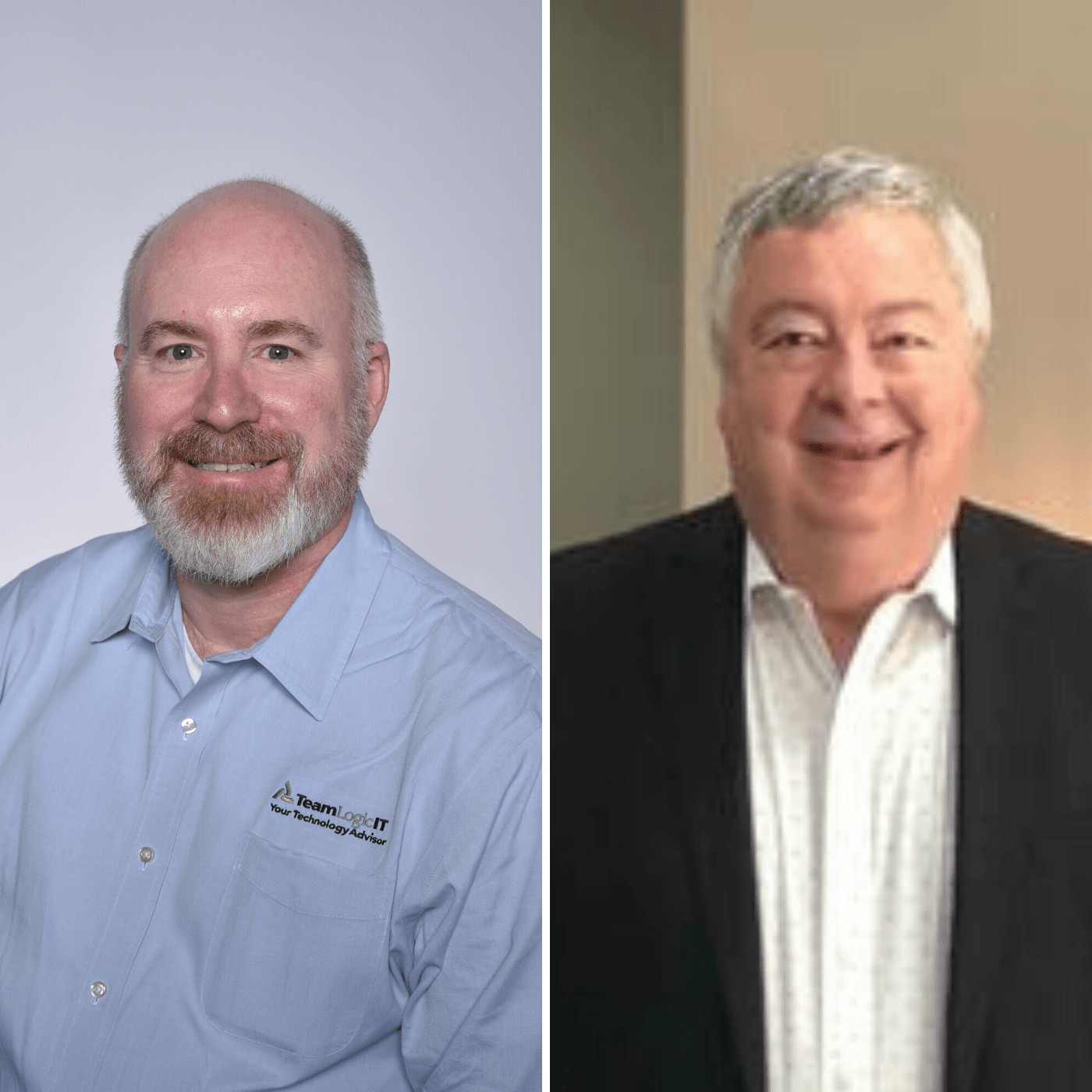
Marc Fleischman: [00:18:31] It was kind of interesting the way we went about it. I mean, we created a committee of about eight shareholders from different disciplines, all of whom had decided that they didn’t want to put their name in the hat. We then asked for people to put their name in the hat. We had them go ahead and write us a little narrative about why they felt they were qualified. We went ahead and did some psychological testing to see how they matched up with myself and Mr. Beach, what their strengths and weaknesses might have looked like in comparison to ours. We went ahead and had an interview process with each one of them. And from my standpoint, it wasn’t even a question as to who was the most qualified and why.
Marc Fleischman: [00:19:25] Eric shined compared to my other partners, who I love very much. And they are my partners, so I am married to them from a financial sense. But I realized that Eric’s background and what he does every day made him uniquely qualified to take the position, number one. And number two, from the CPA firm standpoint, it wasn’t going to be we have to transition $1 million or 2 million book of business to somebody else to handle so that the next CEO would be able to have fewer billable hours and focus on running the business.

Mike Blake: [00:20:03] So, in those internal discussions with that committee, was there expressed any concern that, you know, “But Eric’s not a practitioner”. You know, was there any concern?

Marc Fleischman: [00:20:19] Oh, yes. Absolutely. I mean, we, as CPAs, we know everything and we know it best, right? And we work on our clients. We know how to do it better than anybody else. How could somebody who doesn’t do that understand what we do? But Eric’s been in the CPA profession, just not working on a multitude of clients, but one client, whether it’s with us or his predecessor firm, his whole accounting firm career. So, you know, he does understand what we do. We’ve developed a process here over the last – what will be – over two years of him learning more about what his partners do on a day-to-day basis, providing excellent quality service to clients and being involved with the community, and also training the new leaders of the firm that are going to come up behind him and everybody else.

Mike Blake: [00:21:21] So, if I understood you correctly, it sounds like you considered exclusively candidates that were already in the BeachFleischman house.

Marc Fleischman: [00:21:32] That is correct. We preferred to do that because we believe we have a culture that we want to be able to be easily sustained and built on. And feeling that if we brought an outsider in, we just don’t know what the ramifications might be. They could be great, but they could also be destructive. And to the extent we could find a qualified individual that’s already living under our roof, we were very happy with that possibility that being the decision.

Mike Blake: [00:22:02] And I think that’s an important point, because, you know, how far you go in terms of bringing in an “outsider” and Eric is kind of a tweener, sort of an inside outsider or an outside inner – I’m not sure which way I’d go with that. But, you know, as I mentioned a couple of examples in the intro, there are some firms that just decided they’ve got to go really outside. And I think what’s driving that is because they feel like there’s some massive trend upon which they must capitalize. Or there’s some massive existential threat that just cannot be handled with the internal firm culture. You know, with you, it seems like you prized quite a bit of continuity. And I want to be clear, some people may hear that and think that means complacent. I don’t think that’s what it means. It means exactly what it means, which is that continuity of culture is important.

Marc Fleischman: [00:22:55] Well, I think that, honestly, for success in a business like ours, culture is key. And if you disrupt it, you create earthquakes that you don’t know what buildings you may have built that are going to fall because of disrupting your culture.

Mike Blake: [00:23:15] So, I like both of you to kind of answer this next question if you can, because I think you both have different perspectives on the same thing. And that is, Marc, as the firm was considering Eric for this role and as Eric was considering taking it, was there a particular skill set or area of expertise that, Eric, you did have that made you sort of the right person for this role at this time?

Marc Fleischman: [00:23:45] Well, I’ll go first, and he may echo what I say. But, you know, marketing is key. We cannot live on our laurels. We have to be able to grow. And as a growth leader and a strategy leader, he had the the natural areas that we were looking at to be able to move the firm forward as we go into the unknown abyss of what the world is going to look like going forward, right? With all the transition and the fast growth that’s taking place in our particular world here of accounting firms, it’s necessary to be able to be a forward thinker and look towards what the future can bring before the future brings it to you. And so, I think he had this natural perspective being in the marketing area to be able to have those skills and traits and be able to exhibit it and lead the firm forward.

Eric Majchrzak: [00:24:50] Yeah. And I have a broad definition of marketing, which is perhaps even textbook, but there are 4Ps to the marketing mix. And so, it’s not just about promotion, and advertising, and social media, and lead generation, but there’s also product and service development, pricing, and business model. There is placement replace, which is about distribution channels and how you deliver that service. And, really, I’ve been working on all 4Ps of the marketing mix for my career.

Eric Majchrzak: [00:25:20] So, I think maybe some firms consider marketing just that fourth P, promotion. And along with that comes, you know, competitive pressures. You’re looking at disruption. You’re looking at trends in technology. I’ve done my best to stay in tune with where the profession is headed and what the risks are, and articulate that to the folks in my firm. So, I think that’s what I brought to the table, because everybody in our profession is talking about how firms now need to diversify, we need to get away from compliance, how we need to be consultants, how we need to be launching new practices and service lines and industry groups. And that stuff that I do every day working with my colleagues here, and so I have a level of comfort dealing with discomfort. Which I think is something that future leaders are going to have to get used to, is being uncomfortable a good amount of the time.

Mike Blake: [00:26:33] So, that’s a very interesting word, and a word with a lot of depth to it. So, I like to follow that up then with this question, do you agree with me, you are accepting a place that is not necessarily all that comfortable. There’s some comfort level, I get it, you have a history with the firm. You understand the firm. Obviously, you have the blessing of the leadership. But it’s not the same thing as, say, a lateral move to take another role that’s like yours, maybe let’s say, a bigger company. Is that fair to say?

Eric Majchrzak: [00:27:08] Yeah. I would say that’s fair, for sure.

Mike Blake: [00:27:11] So, how did you get comfortable as a candidate? As someone who is, obviously, a responsible steward of your own career that this was the right move? And in doing so – and I don’t want to be specific. I wouldn’t be that prying. It’s not necessarily be that specific – I’m curious, did that lead you to think about your terms of employment in a different way than you might have thought about your terms of employment had the move been more, you know, within the typical comfort zone?

Eric Majchrzak: [00:27:51] That’s a good question. I’ll address the earlier portion of your comment about being uncomfortable. I don’t know that even at this stage that I’m comfortable with the idea of being CEO. But I know it needs to happen. I know that the firm is going to be going through change that’s going to make a lot of people uncomfortable. I just feel it’s a job to do. I already felt the burden of a lot of these issues we’re talking about, about sustainability, about growth. So, it just seemed to be a natural transition for me to go from chief marketing and strategy officer to chief executive officer in terms of, you know, is it the right move for my career?

Eric Majchrzak: [00:28:45] You know, I feel like with a solid team in place, great people around me, a common vision, it’s going to make it that easier. In terms of having a special kind of agreement in your employment arrangement, I think that’s probably more relevant to, like we mentioned before, when you have an accountant or a partner that has a book of business with clients and they have to transition those clients away. I don’t have that. But what I do have, and I think there’s a general understanding, is, I am still going to be directing the strategic growth and marketing initiatives of the firm even as CEO. So, that is essentially my fallback where a lot of accountants would have some limited client where I’m still going to be working on guiding the firm where we need to be in the future, launching new growth initiatives, institutional branding, that kind of thing. So, I just gave you a lot to ponder there, but those are the things that kind of go through my head.

Mike Blake: [00:29:57] Yeah. I mean, that’s good. I mean, that’s exactly the kind of information we try to get on this podcast. So, I appreciate you giving us a lot. And I asked you a really hard question, so it’s fair that the answer is hard too. So, you’ve been in this transitional role, I’m guessing, for about 18 months, give or take. So, in that role, how have you found sort of the practical on the ground reception? Have people been wary? Have they been welcoming? Have there been areas of even obvious resistance? What has that looked like? What have you picked up either from direct cues or even informal body language, nonphysical cues? How’s that going?

Eric Majchrzak: [00:30:46] I mean, I feel I have been welcomed into the room. I certainly feel supported and I am being supported. I think there’s certainly no shortage of ideas and opinions, which I get a lot of those coming my way nowadays, maybe even more so than I did in my chief marketing and strategy role. And it’s good, because it’s all the things that – some of the things we need to be thinking about, having a holistic approach to governing the firm.

Eric Majchrzak: [00:31:21] You know, there’s a lot of folks commenting about how things aren’t so linear anymore and that competition is coming from all different angles. So, almost like an asymmetrical kind of approach to governing a firm. And I think that’s in our dialogue, we’re talking about it a lot. It’s in the language that we use. So, in that sense, I feel that the firm is identifying and my colleagues are identifying the issues at stake, which makes me feel pretty good. I don’t feel isolated in that sense. I do feel like we’re on the same page. Now, we may disagree with how to get there. But I think all in all, we have the same common vision, we have the same understanding of the issues at stake. And I think that’s important.

Mike Blake: [00:32:16] So, how are you two working together now, Eric and Mark? I mean, is it a de facto? I can see a lot of ways it’s working. Is it a de facto dual CEO role right now until the end of 2021? Is it still more of a master-apprentice kind of relationship? Something else that doesn’t come to mind that you describe differently? What does that look like between the two of you right now?

Marc Fleischman: [00:32:42] I would describe it as a mentor-mentee relationship, where I’m available to Eric 24/7, seven days a week, whenever he wants to reach out, whatever he wants to talk about, I’m there. I try to include him in in meetings where I think this is something maybe he hasn’t been exposed to, whether it’s dealing with insurance issues, banking issues, setting goals for partners. We had our goal setting session last month and he sat in all of the goal setting sessions that I would typically sit through with the partners, whether it’s the tax partner-in-charge or the A&A partner-in-charge also sitting in there.

Marc Fleischman: [00:33:29] So, he’s involved in everything I do other than a little bit of client work that I do, which no one wants to be involved in because it’s divorce work. So, you’ve got to be crazy to do what I do, and another reason that 67 is a good time to retire, because 65 probably would have been good, too, to get out of that type of work.

Marc Fleischman: [00:33:51] But in any case, I think that it is more mentor-mentee than anything else. I still sign the important stuff as necessary for the firm. But I think everybody is accepting that Eric is in his master’s degree program, and soon he’ll go through a quick doctorate, and then he’ll be ready to take on the world.

Eric Majchrzak: [00:34:16] And there is some structure behind that arrangement – and by the way, that’s a great place to be – and, Marc, literally, does have an open door policy. And I knock on his door several times a day to go in there and ask him his perspective on something, or ask him a question, or just to do an update. But we’ve had for a while now a standing recurring meeting where we meet on a regular basis, I did take the opportunity to kind of map out what I thought the transition should look like. Marc gave me his feedback on that. I attend an external managing partner, CEO Bootcamp, that I’m in right now. I am also making an effort to talk to CEOs and managing partners of other accounting firms and other businesses that are not related to accounting and just having a sounding board and a network of support and people that I can count on. And so, it’s all of that. And it’s been great. I couldn’t be happier with that process.

Mike Blake: [00:35:25] Eric, I think what you just said is interesting. And for it’s worth for me, I think it’s really smart, the fact you’re going outside and looking for different perspectives, both within the industry and outside. What is the most frequent question you find yourself asking? Or if that doesn’t jump to mind, what’s the most frequent piece of advice you’re hearing?

Eric Majchrzak: [00:35:49] Boy, that is a good question. You know, a lot of people are commenting and I agree with this, that, you know, you really have to govern with a shared set of core values and beliefs, so mission, vision, values. And I strongly believe in that. So, using those elements as the core tenets of who we are, the purpose of our firm, which will help us and help me make decisions in the future there’s a fork in the road and we’re not sure which way to go. I think part of that is going to be my job and part of that is going to be, you know, understanding what we’re all setting out to accomplish, and then choosing the path that gets us there. But the top down approach, the tone from the top is very important. So, I’ve been hearing a lot about that.

Eric Majchrzak: [00:36:49] I’ve also been getting some advice just about taking care of myself, making sure that I stay healthy, that I exercise, that I can have moments to clear my mind, and to think, and to do that kind of thing. So, I’ll have to work a little bit harder with that. And there’s a few other things in there. But, I would say, those are the main bits of advice that I’ve been receiving.

Mike Blake: [00:37:21] So, so far, you’re 18 months into this journey and, give or take, you’ve got about ten-and-a-half months left in the transitional part of the journey. What have both of you learned along the way that might be good advice to our listeners who may be thinking about a similar model to their executive succession?

Marc Fleischman: [00:37:40] Well, I would say to the CEOs out there that are going to be transitioning out, don’t be afraid of what the future is going to bring, embrace it. And be open to the ideas of your successor, because their ideas are extremely important to even your final education in your role. There’s nothing better, from my standpoint, to be able to say, “When I leave here, I have no fear of the success of this organization, because I’ve done everything I can and look forward to the next steps of whatever that brings for me.”

Marc Fleischman: [00:38:28] As far as Eric is concerned, I think what I’ve learned so far is we made the right choice. We’re lucky to have had an opportunity to have somebody like that internally in our organization. And I also would say that I never thought I’d be able to be a teacher. And, now, I’m finding that it comes easy and it’s fulfilling to be able to share ideas and then hear what comes back from Eric, because, obviously, his upbringing was different than mine as far as professional services are concerned. And I love hearing his perspective on things.

Eric Majchrzak: [00:39:08] Yeah. Thanks for those comments, Marc. I’ve learned a bunch of things. One is, that we have to give each other a lot of latitude on the pace and empathy during the transition process. So, just really identifying with each other, I think, is a challenging time for both of us, actually, maybe for different reasons. The other thing I learned, that by going through this process, it’s actually a bit of an opportunity to document and develop a transition process. You know, Marc mentioned, he was the likely and the logical successor to Bruce Beach. Me, being the first non-founder CEO, we got to map out what the transition process looked like. And I think we can leave it behind for the transition I’m going to go through in another 15 years down the road. So, there’ll be a framework there for people to follow.

Eric Majchrzak: [00:40:17] And I would also say, just looking at all the things that we’ve been covering in this process, it helps you identify opportunities. I mean, Marc, think about all the opportunities that we’ve identified just for things that we can be doing helps us address, maybe, some challenges. So, all in all, I just think it’s a great process to kind of redefine and agree upon what we want to be. And that’s always a good thing to go through.

Mike Blake: [00:40:49] We’re talking to Marc Fleischman and Eric Majchrzak of BeachFleischman PC. And the topic is, Should we think outside the box for our next chief executive? A question I want to get to, I’m curious, has anything about this process surprised you? Is there something that you thought this would be like going in and it turned out to be different than what you were expecting?

Marc Fleischman: [00:41:15] I guess, I didn’t have any preconceived notion of what this was going to look like going in. I think, maybe, what surprised me the most was how easy it’s going. You know, change is hard, always. Sometimes, you know, especially if it’s change you don’t want, it’s brought upon you. I won’t say that I don’t want to be able to move on to whatever life is going to look like post being the CEO of BeachFleischman. But it wasn’t something that I may have necessarily chosen to do, but it’s the right thing to do. So, here, I think that it’s been really quite a pleasure to be able to experience this with Eric and the rest of our management team, which we pretty much run our organization as a team. We have a leader, but many decisions are made collaboratively and collectively. So, I’m happy that it’s been so painless up until now.

Eric Majchrzak: [00:42:19] Yeah. I have to agree with that. Knowing a lot of firms out there and transitions that other firms have been through, doing a lot of reading, I know that these can be really trying times and they can be difficult transitions. And, you know, maybe I have that in the back of my head that there’s going to be much more friction than what there actually is. And so, I just think that would probably be the biggest surprise. But it’s been enjoyable. It’s been a great learning opportunity. And I think other people are excited, too. So, all in all, it’s been a great experience to go through this. And, gosh, but the documents kind of the process as we go along, I think is going to be helpful for a way that a future succeeding CEO can go through the process.

Mike Blake: [00:43:24] So, I’d like to offer an observation that I love your comment on, because one thing, this transition that you’re doing is a pretty long one, I think, by most standards, right? It’s not British royal throne long, I mean, Prince Charles has been waiting about 50 years or so to become King Charles III of England. I don’t know if they’ll ever do that. But to be sort of in the wings for two-and-a-half years when all is said and done, that’s a long time to kind of wait and kind of get that seat where you get to take the training wheels off and really run the job that you’re training for. And, to me, it speaks to a certain level of humility. It speaks to a certain level of, at least, being able to subordinate your ego, if not outright just not having a big one. And I wonder if that’s either explicitly or sort of backdoor implicitly part of the process as to why you have such a high level of confidence this is going to work. Or if I’m just playing amateur psychologist and I should just shut up and never say things like that again.

Marc Fleischman: [00:44:39] Well, I guess from my standpoint, you know, I think you’ve got to check your ego at the door. And this, I think, goes through being able to have a successful partnership or relationship in any professional services firm. Of my 45 years of observing law firms, accounting firms, architects and engineering firms, regardless of the leader, everybody thought they were a leader and everybody thought they were the most important person in the firm. And, often, that’s what breaks them up. That’s what we try to avoid here as much as we always can to make sure that your ego doesn’t get in the way of decision making. And so, although, it probably has in my past and probably will again maybe tomorrow, I try my best to not let that get in the way of anything we do here. And I think that is – you know, Eric is the one that’s waiting in the wings, so his comment is probably much more relevant than mine.

Eric Majchrzak: [00:45:43] Yeah. I think, definitely you have to be mindful of the trappings of ego. It’s not about me, it’s not about Marc, it’s about the future of the firm. And so, we just have to find a way to work together, to collaborate, to put our firm in the best position moving forward. And you know what? A two year transition is not going to work for every company and it’s certainly not going to work for every accounting firm. I’ve seen transitions that were, you know, six months out, a year out. I don’t know what the answer is, but, for us, this seems to be working and it’s a way to do it.

Mike Blake: [00:46:31] Guys, we’re running out of time, but there’s more ground that we could cover than we realistically have time for. And I realized that I’m taking up not just one, but two chief executive’s time here effectively. If people want to learn more about this topic, get your insight, ask a question I didn’t have a chance to ask, can they contact you to follow up? And if so, what’s the best way for them to do that?

Eric Majchrzak: [00:46:57] Sure. I mean, Marc and I are both on LinkedIn, they can definitely search us there. Beachfleischman.com has a Contact us form, you can request a conversation through that form. You can also message us on Twitter, we’re @BeachFleischman. And we have a Facebook page. So, really, there’s many ways you can get a hold of us. Marc, I don’t know if you want to add to that.

Marc Fleischman: [00:47:31] I’m very old fashioned, I still use a phone. My direct dial number, 520-618-7918. Call and leave a message if I don’t pick up.

Mike Blake: [00:47:43] That’s so retro. People actually use smartphones to make and receive telephone calls. That’s extraordinary.

Marc Fleischman: [00:47:49] I know. I haven’t learned not to do it.

Mike Blake: [00:47:52] I want to see if there’s an app that will let me convert my keypad to an old rotary dial phone, like a virtual rotary dial, just to mess with my kids.

Mike Blake: [00:48:04] Well, thanks, guys. That’s going to wrap it up for today’s program. I’d like to thank Marc Fleischman and Eric Majchrzak so much for joining us and sharing their expertise with us. We’ll be exploring a new topic each week, so please tune in so that when you’re faced with your next business decision, you have clear vision when making it. If you enjoy these podcast, please consider leaving a review with your favorite podcast aggregator. It helps people find us that we can help them. Once again, this is Mike Blake. Our sponsor is Brady Ware & Company. And this has been the Decision Vision podcast.


Tagged With: BeachFleischman, Brady Ware, Brady Ware & Company, CEO, Chief Executive Officer, CPA firm, Eric Majchrzak, management succession, Marc Fleischman, Michael Blake, Mike Blake

IT Help Atlanta with Rick Higgins:  Warren McClellan, McClellan & Associates CPAs

May 29, 2020 by John Ray

McClellan & Associates CPAs
IT Help Atlanta
IT Help Atlanta with Rick Higgins:  Warren McClellan, McClellan & Associates CPAs
Loading
00:00 /
RSS Feed
Share
Link
Embed

Download file

McClellan & Associates CPAs
Left to Right: Rick Higgins and Warren McClellan

IT Help Atlanta with Rick Higgins:  Warren McClellan, McClellan & Associates CPAs

McClellan & Associates CPAs Founder Warren McClellan joins host Rick Higgins on “IT Help Atlanta” to discuss his firm’s special work with booster clubs and school systems, using the cloud to get client work done in a pandemic, and much more.  “IT Help Atlanta” is brought to you by TeamLogic IT, your technology advisor.

Warren McClellan, McClellan and Associates, CPAs

Warren McClellan

Warren McClellan is the Founder and CEO of McClellan & Associates CPAs. He has been a Certified Public Accountant for over 30 years, many of which he spent working with an international CPA firm providing services to a number of Fortune 100 companies. Warren observed the high demand for small CPA businesses that could access their accounts on a daily basis, like the largest companies could. This led him into creating McClellan & Associates CPAs.

​McClellan & Associates CPAs LLC was created in 1992 to provide reliable accounting services to individuals and corporations across all industries. The firm offers a wide range of services, many of which most accounting firms are unwilling or unable to provide. The professionals at McClellan & Associates strive not only to provide exceptional tax and accounting services, but to also build lasting client relationships through one-on-one guidance and counseling. The firm is a small team of CPAs, an Enrolled Agent, and financial experts who are always willing to go the extra mile for their clients’ accounting needs.

When Warren is not in the office or visiting clients, he will most likely be traveling with his wife, bike-riding, or grilling his infamous barbecue ribs. Warren also enjoys spending time with his children and grandchildren.

Visit the McClellan & Associates website to learn more.

About the Show

“IT Help Atlanta” profiles small to mid-market businesses and highlights how those companies use technology to succeed. An archive of previous shows can be found here.

About Your Host

Rick-Higgins-2019Rick Higgins is Owner and President of TeamLogic IT of Dunwoody, GA. Rick’s firm is part of a national network of locally-owned service businesses, providing comprehensive IT services to the small-medium sized business market.

They offer managed service for networking, cyber security, data and email, as well as hardware and software support in addition to a variety of consultation and preventative maintenance services. Rick’s personal and corporate philosophy is simple: Stand up, be bold, and tell the truth.

Connect with Rick on LinkedIn and Twitter, and follow TeamLogic on Facebook.

Show Transcript

Rick: Welcome everyone to the “IT Help Atlanta” radio show, the show that profiles small, and mid-market businesses and highlights how those companies use technology to succeed. “IT Help Atlanta” is brought to you by TeamLogic IT, your managed services technology advisor. Specializing in cybersecurity, cloud, and business continuity solutions, TeamLogic leverages cutting-edge technology to solve all types of business problems. Go to ithelpatlanta.com for audio archives of this radio show and to learn more about our sponsor, TeamLogic IT. I’m your host Rick Higgins. And today’s honored guests is Warren McClellan, the owner and founder of McClellan & Associates CPAs, located in Duluth and Johns Creek, Georgia. Welcome, Warren. How are you?

Warren: I’m great, Rick. Thank you so much for having me today.

Rick: We’re really glad you’re here. And we really appreciate you making time to come spend some time with us on the show. Warren, tell us who you are and what do you do?

Warren: Well, I’m Warren McClellan, I’m a CPA and have a practice that’s located in Duluth and Johns Creek. And it’s really a small business firm that’s focused on consulting in tax for individuals that own the businesses and individuals with complicated tax situations.

Rick: That’s great. Warren, give us a success story, maybe something that would be interesting of how you solved a tricky problem or how you helped someone. It doesn’t have to be anything recent or something that comes to mind that you’re really proud of.

Warren: Yeah, Rick, thank you. I mean, one of the things that we do is we work with a lot of nonprofit organizations as well as businesses and individuals. And we work with school systems around the state. And they hire us to speak to their booster clubs, and help the parents and it’s one of the things I’m very proud of what we do is that we help the parents to…well, along with a partner of mine help the parents to provide the extra stuff that the school systems can’t provide. And nonprofits are very complicated, and we try to break that down and help them establish and maintain those booster clubs. And we’ve had a lot of success in that area. And one of the things that I like is how it affects the children in their sports and in their extracurricular activities. So we do a lot of that and I feel like, because we do it so much around the state, we’ve made quite an impact on these children. Of course, right now with COVID this year, there’s not been a lot of activity in the spring, but I’m sure that as life gets back to normal, that will crank back up as well.

Rick: Warren, definitely I wanna circle back around and, you know, dive deeper on talking about COVID and how that’s affected your business. But can we unpack a little bit more about this new thing that you’re doing with nonprofits, because that’s not your main line of business, right? This is something that you’re dealing with another partner, in addition to your main CPA firm, correct?

Warren: Yeah, Rick, it really is. And basically what happened was my partner, Steve Kosmala and I, we’re parents. And we had kids and a new school didn’t have a booster club. And we looked around as to how to establish this thing right for their activity. And we started looking around, and we realized that a lot of people weren’t doing it right. And so we set it up properly, organized the parents, and developed a really good booster club and got that started and got the attention of Gwinnett County public schools and they started getting us to help them speak with their booster parents and help them work with that. And now it’s kind of gotten attention of a lot of people around the state.

We also help people with other nonprofits. And it’s kind of expanded and morphed to that, and we do a good bit of speaking as well, on governance, on how to be a board member. What you need to know before you go on to a board, and what you should really expect if you’re on a board, and in many ways is to give back to the team. [inaudible 00:05:32] obviously, we get paid in most situations, but really, we feel like it’s a huge impact for the community and it’s had an impact on the tax practice as well because a lot of these nonprofits come back to the tax practice and a lot of CPA firms don’t really operate that much in the nonprofit arena. They do it because they have to. They have a kid on the booster club as we did and they dabble in it, but my staff has kind of embraced it. And we do a lot of nonprofit accounting as well as significant corporate and individual accounting and tax.

Rick: I see why you’re proud of it, man. I understand it. And by the way, for the listening audience, full disclosure, Warren and McClellan & Associates is a client of ours at TeamLogic IT. I wanted to disclose that. So I do know a little bit about this line of work and this area of expertise, and it’s really a specialty. I don’t know anybody else that’s doing what you guys are doing in that area, Warren, do you?

Warren: I really don’t. Thank you, Rick. And a comment on being a client of yours, we have been a very happy client now for several years and that’s made a big impact on our firm. We’ve actually gone paperless under your assistance and it’s made a big impact on our being able to continue to operate this spring through what we all went through with COVID-19. So thank you very much.

Rick: Thanks Warren, for saying that one, appreciate it. So yeah, so here we are. It’s May 27th of 2020. We’re some 12 odd weeks into the, I guess the forced shut down or shelter in place rules and laws and whatnot. And strangely enough, these 12 weeks of…actually, maybe more, like, 14 or 15 weeks has been right in the height of the CPA busy season and busy time of the year. So I think more than anybody else, I’m hoping and I believe you’ve got a really interesting story to tell us about how COVID has affected your business. Did it really hit you at the most awkward time of all, didn’t it?

Warren: Oh, it really did. It was kind of a bizarre timing, not only for us, but for everyone. But our story with it is in mid-March was about where it hit, our firm as far as the corporate deadline had basically passed on March 15th. And so now we were looking full speed ahead at April 15th. And we have a deadline of about the end of the third week of March for our clients to get their information and it’s just not possible to adequately staff to do all the returns in the first two weeks of April. So we asked that our clients and through years we’ve helped them organize, get us everything that’s possible by about the third Friday in March. And that was about the time all of this hit. So we had everything in place that we were going to get done for the season.

Some of our employees went home and worked from home. Thanks to Rick and his team being able to make that possible and jumped through the hoops for us. But there were some of us working here. We didn’t allow clients in the office and we just worked away and finished our tax season pretty close to normal. Now what was really different was two things that happened. One was normally, the second week in April we would spend trying to get extensions for people. Well, that sounds pretty easy. You know, you just file the extension and you’re done. But for most of our clients, it’s a lot more complicated than that because the extension extends the time to file but not the time to pay. So you have to spend a good bit of time helping people organize and come up with a reasonable estimate of what they need to pay, communicate back and forth to get that information. Obviously, during that time, we don’t have the information. And so we’re working back and forth to do the best we can, communicate back to the client, help them figure out what they can pay and how they can pay. And that actually went away this year, and we’re working on it now. And a lot of those returns I think will be filed by the July 15th. So that was really the first thing that was the big change, was that second week in April not being so horrendous, jumping the hoops to get the extensions done.

Rick: Got you.

Warren: The second thing that had such a big impact on that was all the new legislation. And in particularly the PPP loans, and that’s really ongoing now. So first of all, we had to help our clients or we were asked to help our clients, many of them gathered the information to file for the PPP loans. We were kind of a central focus of information on this bank’s doing this, the bank’s doing that, how do we do it? You know, who got what and when? And then came down the, “Oh, do you really need it?” You know, if you don’t need it, you shouldn’t have got it. Maybe you should pay it back. Well, most of our clients, ultimately that came out and that if your loan was under $2 million, you have a safe harbor on that. Of course, you needed it. If your loan was over $2 million, then you’re going to have to do some serious justification and perhaps you should consider giving the loan back. So that made it very complex. So then we know there’s forgiveness of these loans if they’re spent right.

Well, they were required to give us the regulations from the SBA and the Treasury, within a month of when that loan was signed, which would have made that due about April 26th. So we got that information, very timely on about May 15th or so. So there were a lot of people that had eight weeks to spend the money and then it was really unclear as to how to spend that money in order to effectively get it forgiven.

And so now many of our clients are in certainly the second half of that eight-week period, I think most of them are. And so are there things that they need to do to appropriately spend that money so they can ensure forgiveness? And what are the calculations of the forgiveness? Which, again, we just really got last week. So we’re going through our clients and helping them do preliminary calculations based on what they’re spending and what they’re doing to make sure that they get that forgiven. So that along with all the new retirement rules that are out there, and all the other things, as well as the stimulus checks, where’s my stimulus check? All of those things, we were taking a million calls. So that actually made it very exciting. And while we didn’t always have the answer, we tried to maintain the latest information, so that when people called, we could help them and help them get on top of that. And so it certainly made it a very exciting year for us and hopefully, business gets back to normal and we’re all back to living our normal lives.

Rick: Well, everything that you just said, the thing that I just can’t get my mind wrapped around is how much of a moving target everything was that you were involved in, in your area of expertise and service to your clients. I mean, you were fielding calls non stop yet the answers were, again, a moving target almost constantly, right?

Warren: Absolutely. It really was. And my staff did great too. We would sit, and we would meet, we would talk things through. We watched videos from lots of law firms. We studied this thing. And again, it was very much a moving target and we were working during tax season. And some people were at home and some people were here. And so the good thing about it was, there really wasn’t much else to do during that time but work. So we all just buckled down and worked. And all the people talking about being bored, we just didn’t have that problem.

Rick: Well, good for you. And I guess the million dollar question then is do you think that the target’s done moving at this point? Is there going to be more guidance coming out with respect…I guess I’m focused on the PPP with respect to that question. Do you think that we’ve settled down on…?

Warren: No. I think we’re close on what we have on the PPP loans, but Congress is now considering making some changes that hopefully are just good changes and helpful changes, like considering changing the length of time to spend it from 8 weeks to 16 weeks. Again, that’s only a consideration. It is not a fact yet, but I think there will be some more things happening and, you know, I wouldn’t be surprised if there were more loans. I think that would be very helpful to small business. I think it was a very good law, at least for PPP loans because the clients that I’ve been involved with, were able to keep people employed during a very difficult time. Medical practices, for instance, have really struggled because, okay, they could do video appointments and people were putting things off. And I think overall, most people really their revenue was down, and the PPP loans enabled them to pay the rent, pay their utilities and most importantly pay their employees. So I’m a big fan of what was done there.

Rick: Okay, great. Switching gears with you a little bit, you had mentioned about going paperless. And I’m not sure if you mentioned cloud or not. I would like to dive a little bit into that because the, you know…part of our focus on the show is to talk about how small businesses use technology to succeed. Can you talk about, say life before the cloud solution and then life now with the cloud solution? What that means to you and what it’s been able to facilitate for you, whether it’s, you know, working from home or whatever?

Warren: Oh, absolutely. Rick, I appreciate the question. I honestly admit that has meant and means so much more to us than being able to work from home. Obviously, that’s a big deal, but being a CPA firm, we’ve just been all about the paper. And to say that we’re 100% paperless today is not really true. We’re certainly still paperless-ish and we may never be 100% paperless. But it certainly…

Rick: I like that one.

Warren: Thank you.

Warren: It’s certainly been a big boon to our business. So we’ve had a huge file room that’s actually a double office, but the room, the wall between was taken out and that the huge file were in here, and it has just been absolutely full, and we can keep about four years’ worth of information. And we had also offsite storage, dramatic offsite storage, some of it going back 25 years. And so ultimately, we were able to scan all of that into the cloud and appropriately shred, dispose of it. And now we get rid of the offsite storage. And we get rid of the file room, although we’re still scanning a little bit in there, but it’s going away, freeing up two more office spaces in our office, which is nice. But the movement of information, the being able to wake up on Saturday morning and say, “You know what, I’d really like to work and I don’t wanna drive into the office,” I can go in there, you can pull up everything, being able to work on a client site. We go to a lot of corporate clients, and we have to take a big box of physical files and sit there to be able to open up everything. I go in now, with my laptop, get on the cloud, and I’ve got everything, I’ve got my desk there. So I can look at everything and work with the client. It’s so much easier to have this tiny, little laptop that I take everywhere and I can just go and get what I want. I do not have to worry about somebody packing my bag, and, “Oh, they forgot this tax return or they forgot to pack this for me.” If it’s all there, I can just go and get it.

I think the step up here has made us much more efficient. Obviously there have been inefficiencies through the years of getting there, but now that we’re there, our automation is so much better. And I think that we’re exploring the possibility of going to even further automation where when somebody brings us a 1099, there’s software and sometimes 1099s are 50 pages because they have brokerage statements, and so to be able to automate that and actually pull the information off the 1099 and put it directly to the tax return. And we were exploring that. And obviously, even when that’s done automatically, all that we will take out of it is the data process, the professional effort will still be there, but they won’t be spending their time [inaudible 00:21:25] 50 pages worth of data into a tax return. And so the efficiencies that we’re gaining allow us to be so much more consultative and less data crunches for people. And so we can help get the returns prepared and help our clients understand it and have the information to make good decisions.

Rick: More strategic and less tactical, I guess.

Warren: Exactly.

Rick: That’s great. Warren, thanks for that. That was a deep dive. That was just really a great answer to an interesting question. I have a couple more questions for you. We’ve got a little bit of a time limit, but we’ve got plenty of time if you’re willing to go into a couple more questions here. One that I always like to ask…

Warren: Absolutely, Rick, thank you.

Rick: Okay, thank you. Thank you. One that I always like to ask on every show is a special question is, what is an aspect about your business that people don’t tend to think about, that you wish people would ask you about?

Warren: Rick, what I’d really like people to ask me is how can I better understand my business or my personal situation? How can I…? What do I need to know, Warren, about the tax aspects, the accounting aspects that allow me to have better discernment and make better decisions? So for instance, when I got started maybe 25 years ago, I left a very large firm and started this firm. And so I started working with companies at that point. QuickBooks was brand new. And it was a new program and I embraced it very quickly and started helping clients get set up. And those days, most everybody had a computer, at least on a desk in their office, and they would use it to create invoices and do mailings. And I’m like, “Let’s upgrade this. If we’re gonna use QuickBooks, let’s have it at your site and have good real-time information,” because the environment that I come out of, which was Fortune 500, Fortune 100 companies I was working with in those days had real time information. So the idea was to help them get up-to-date data. And what was happening with a lot of them, they kept a check book with invoices, send it off to some bookkeeping practice who would send them back financial statements, they didn’t understand, they didn’t know how to read. They meant nothing to them, but they were done because they had to have them. And so it’s like, “Wait, let’s use this as a tool.” So I started working with several people and helping them to automate their accounting in house with support from me and from my staff. Then I started working with the owners and helping them to understand what they had, to be able to read the financial statements, and to be discerning about them, and to make management decisions out of that. So that’s really what I really like to do and what my staff likes to do is help our clients to understand the information. And many of those people that I work with so many years ago are still clients, and have been highly successful. And I would like to think and I think many of them would say that my firm contributed to that by helping them have a good foundation and helping them get the accounting system started right and helping the owners to understand and to be able to use the accounting information that they had.

Rick: You know, one thing that we say in our business at TeamLogic is that you can’t manage something unless you can measure it. And I know we didn’t come up with that. That’s probably something that one of your CPA predecessors or something back in time came up with. That’s the essence of what you’re talking about, right?

Warren: Right. Exactly.

Rick: You’ve got to be able to measure it to manage it. Great, great answer. Thank you. One more question, then we’re gonna give you a chance to talk a little bit about how folks can find you. But before we do that, it’s my favorite question of all time. And that is that, you know, 25 years in business as a founder and a small business owner, what do you like best about being a small business owner?

Warren: I really like and I’m most turned on about making a difference for people. I truly think that… And it’s a surprise. I set out to start a business and I didn’t really anticipate that. But now with so many clients, so many people through the years, I’ve been able to see and told of the impact that we make. And that is probably the biggest thing. And especially going back to even the booster clubs, the parents, being able to see people comfortably being able to do that. The school systems, understanding and having comfort that their parents have the information that they need. The small businesses, helping them to make good decisions, helping them to have a good base. And the individuals that we serve, with their accounting and financial planning, helping them to do that and to have good information and make good decisions and feel like that their accounting is a good base for them. So I think that’s the biggest thing. And again, it was not something I anticipated but it truly turns me on to help people and make a difference.

Rick: That’s great, Warren. I just really, really love asking that question and that may be the best answer that I’ve ever gotten from anybody on that. Thank you for that. Thank you for…

Warren: Thank you for that.

Rick: So, we’re gonna go ahead and wrap up but before we do, tell the audience how to find you. How do we get in touch with you? How do we find McClellan & Associates CPA?

Warren: Well, probably the easiest way, the first thing is the website. And the website is fairly easy, and that it’s just mcclellancpa.com. But there are about 100 different ways to spell McClellan. So if you’ll let me do that I’ll put that out there so that you can find me and it is, mcclellancpa.com. That’s certainly the first place is to go to the website. If you’ll allow me I’ll also add our main telephone number as well. And we do our best to still answer the telephone. I can’t say that 100% of the time and during COVID we may have struggled with that but we try to answer it. Rather than dial 387 for this person, we try to get you a person at least on business days between 9:00 and 5:00. And that main phone number and it is for both offices is 770-497-9525. Again, 770-497-9525.

Rick: Thank you, Warren. Thank you for your appearance and time with us today. Folks, that’s a wrap. “IT Help Atlanta” is brought to you by TeamLogic IT, your managed services technology advisor, specializing in cybersecurity, cloud, and business continuity solutions. TeamLogic leverages cutting-edge technology to solve all types of business problems. Go to ithelpatlanta.com for audio archives of this radio show and to learn more about our sponsor, TeamLogic IT. Go to mcclellancpa.com, mcclellancpa.com to learn more about Warren’s wonderful company, McClellan & Associates CPA. For my guest, Warren McClellan, I’m Rick Higgins and join us next time on “IT Help Atlanta.”

Tagged With: Accounting, cloud computing, CPA firm, cpa's, enrolled agent, IT Help Atlanta, McClellan & Associates CPAs, Rick Higgins, TeamLogic IT, Warren McClellan

  • 1
  • 2
  • 3
  • …
  • 6
  • Next Page »

Business RadioX ® Network


Our Most Recent Episode

CONNECT WITH US

  • Email
  • Facebook
  • LinkedIn
  • Twitter
  • YouTube

Our Mission

We help local business leaders get the word out about the important work they’re doing to serve their market, their community, and their profession.

We support and celebrate business by sharing positive business stories that traditional media ignores. Some media leans left. Some media leans right. We lean business.

Sponsor a Show

Build Relationships and Grow Your Business. Click here for more details.

Partner With Us

Discover More Here

Terms and Conditions
Privacy Policy

Connect with us

Want to keep up with the latest in pro-business news across the network? Follow us on social media for the latest stories!
  • Email
  • Facebook
  • Google+
  • LinkedIn
  • Twitter
  • YouTube

Business RadioX® Headquarters
1000 Abernathy Rd. NE
Building 400, Suite L-10
Sandy Springs, GA 30328

© 2025 Business RadioX ® · Rainmaker Platform

BRXStudioCoversLA

Wait! Don’t Miss an Episode of LA Business Radio

BRXStudioCoversDENVER

Wait! Don’t Miss an Episode of Denver Business Radio

BRXStudioCoversPENSACOLA

Wait! Don’t Miss an Episode of Pensacola Business Radio

BRXStudioCoversBIRMINGHAM

Wait! Don’t Miss an Episode of Birmingham Business Radio

BRXStudioCoversTALLAHASSEE

Wait! Don’t Miss an Episode of Tallahassee Business Radio

BRXStudioCoversRALEIGH

Wait! Don’t Miss an Episode of Raleigh Business Radio

BRXStudioCoversRICHMONDNoWhite

Wait! Don’t Miss an Episode of Richmond Business Radio

BRXStudioCoversNASHVILLENoWhite

Wait! Don’t Miss an Episode of Nashville Business Radio

BRXStudioCoversDETROIT

Wait! Don’t Miss an Episode of Detroit Business Radio

BRXStudioCoversSTLOUIS

Wait! Don’t Miss an Episode of St. Louis Business Radio

BRXStudioCoversCOLUMBUS-small

Wait! Don’t Miss an Episode of Columbus Business Radio

Coachthecoach-08-08

Wait! Don’t Miss an Episode of Coach the Coach

BRXStudioCoversBAYAREA

Wait! Don’t Miss an Episode of Bay Area Business Radio

BRXStudioCoversCHICAGO

Wait! Don’t Miss an Episode of Chicago Business Radio

Wait! Don’t Miss an Episode of Atlanta Business Radio