Business RadioX ®

  • Home
  • Business RadioX ® Communities
    • Southeast
      • Alabama
        • Birmingham
      • Florida
        • Orlando
        • Pensacola
        • South Florida
        • Tampa
        • Tallahassee
      • Georgia
        • Atlanta
        • Cherokee
        • Forsyth
        • Greater Perimeter
        • Gwinnett
        • North Fulton
        • North Georgia
        • Northeast Georgia
        • Rome
        • Savannah
      • Louisiana
        • New Orleans
      • North Carolina
        • Charlotte
        • Raleigh
      • Tennessee
        • Chattanooga
        • Nashville
      • Virginia
        • Richmond
    • South Central
      • Arkansas
        • Northwest Arkansas
    • Midwest
      • Illinois
        • Chicago
      • Michigan
        • Detroit
      • Minnesota
        • Minneapolis St. Paul
      • Missouri
        • St. Louis
      • Ohio
        • Cleveland
        • Columbus
        • Dayton
    • Southwest
      • Arizona
        • Phoenix
        • Tucson
        • Valley
      • Texas
        • Austin
        • Dallas
        • Houston
    • West
      • California
        • Bay Area
        • LA
        • Pasadena
      • Colorado
        • Denver
      • Hawaii
        • Oahu
  • FAQs
  • About Us
    • Our Mission
    • Our Audience
    • Why It Works
    • What People Are Saying
    • BRX in the News
  • Resources
    • BRX Pro Tips
    • B2B Marketing: The 4Rs
    • High Velocity Selling Habits
    • Why Most B2B Media Strategies Fail
    • 9 Reasons To Sponsor A Business RadioX ® Show
  • Partner With Us
  • Veteran Business RadioX ®

Pam Balentine, Viking CPA Group, and Anna Clapper, Deep Blue Aquatics

November 5, 2019 by John Ray

North Fulton Business Radio
Pam Balentine, Viking CPA Group, and Anna Clapper, Deep Blue Aquatics
Loading
00:00 /
RSS Feed
Share
Link
Embed

Download file

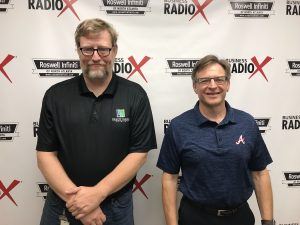
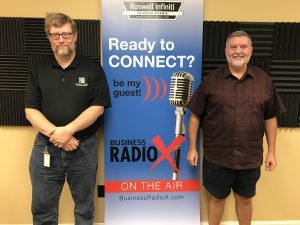
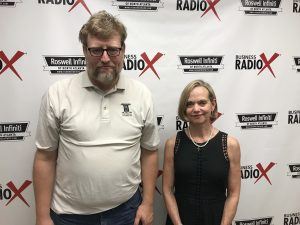
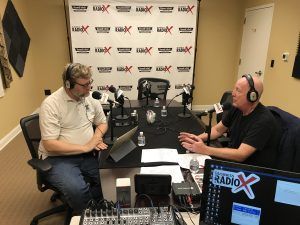
John Ray, Pam Balentine, and Anna Clapper

North Fulton Business Radio, Episode 175: Pam Balentine, Viking CPA Group, and Anna Clapper, Deep Blue Aquatics

A small business “CPA with a personality” and a professional mermaid for your next corporate event were featured on this edition of “North Fulton Business Radio” as Pam Balentine, Viking CPA Group, and Anna Clapper, Deep Blue Aquatics, joined the show. “North Fulton Business Radio” is hosted by John Ray and is broadcast from inside Renasant Bank in Alpharetta.

Pam Balentine, Viking CPA Group

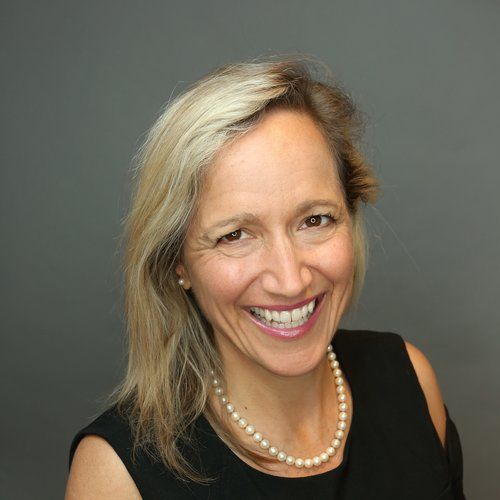
Pam Balentine

Pam Balentine is founder of Viking CPA Group, which services small to mid-size business owners, assisting them with tax, accounting, and consulting needs. She prides herself on being a value add to her clients and forming relationships. Pam helps clients understand their business numbers and how to use them to make key growth decisions. She assists clients with strategies to incorporate operations and processes with financials to ensure a low risk, effective, and efficient business.

Pam earned bachelor and master’s degrees in accounting from Michigan State University, and started her career at the prestigious EY in the Detroit office. She continued her career in auditing at various Fortune 500 companies. While working in internal audit, Pam started Viking CPA Group in March of 2013. She is a former adjunct accounting professor at Kennesaw State University. Pam describes herself as the CPA with personality.

To learn more, go to the Viking CPA Group website, email Pam directly, or call 404-850-0326.

Anna Clapper, Deep Blue Aquatics

Anna Clapper

Anna Clapper is a professional aquatic performer and owner of Deep Blue Aquatics in Columbia, SC. She has made appearances at events all across the Southeast. She not only provides exceptional mermaid and aquatic performance entertainment, but also offers personalized dive instruction, aquatic safety workshops, and life-saving certification courses upon request. She has nearly 15 years of diving experience and is a PADI Open Water Scuba Instructor. As a PADI Master Freediver and Freediving Instructor, Anna has a recorded breath hold of over three and a half minutes. She can safely perform in open water and confined water environments using both breath hold diving and surface supply scuba systems. Anna has more than 20 years of training in a variety of dance styles, making her a skilled underwater model and performer.

In addition to diving, Anna is a published scientist. She works closely with local organizations as an advocate for conservation and STEM education. In her spare time, Anna is also a volunteer diver at the South Carolina Aquarium (in her human form). And, as you might have guessed, her favorite sea creatures are jellyfish.

To learn more, go to the Deep Blue Aquatics website, email Anna directly, or call 843-289-0033.

North Fulton Business Radio” is broadcast from the North Fulton studio of Business RadioX®, located inside Renasant Bank in Alpharetta. Renasant Bank has humble roots, starting in 1904 as a $100,000 bank in a Lee County, Mississippi, bakery. Since then, Renasant has grown to become one of the Southeast’s strongest financial institutions with approximately $12.9 billion in assets and more than 190 banking, lending, wealth management and financial services offices in Mississippi, Alabama, Tennessee, Georgia and Florida. All of Renasant’s success stems from each of their banker’s commitment to investing in their communities as a way of better understanding the people they serve. At Renasant Bank, they understand you because they work and live alongside you every day.

Tagged With: CPa, CPA firm, Dive industry, dive instructor, free diving certifications, freediver, freediving, internal audit, life-saving certifications, lifeguard, mid-size business owners, Open water certifications, outsourced accounting services, PADI Master, Pam Ballentine, performance aquarium, Professional Association of Dive Instructors, Professional Mermaid, Revenue and Profit, scuba certifications, scuba instructor, scuba systems, sea creatures, small business clients, small business owners, STEM education, tax needs, tax preparation, traveling performance aquarium, underwater model, Viking CPA Group, virtual cfo services, water safety instructor

Decision Vision Episode 38: Should I Outsource My IT? – An Interview with Tony Rushin, Network 1 Consulting

October 31, 2019 by John Ray

Decision Vision
Decision Vision
Decision Vision Episode 38: Should I Outsource My IT? – An Interview with Tony Rushin, Network 1 Consulting
Loading
00:00 /
RSS Feed
Share
Link
Embed

Download file

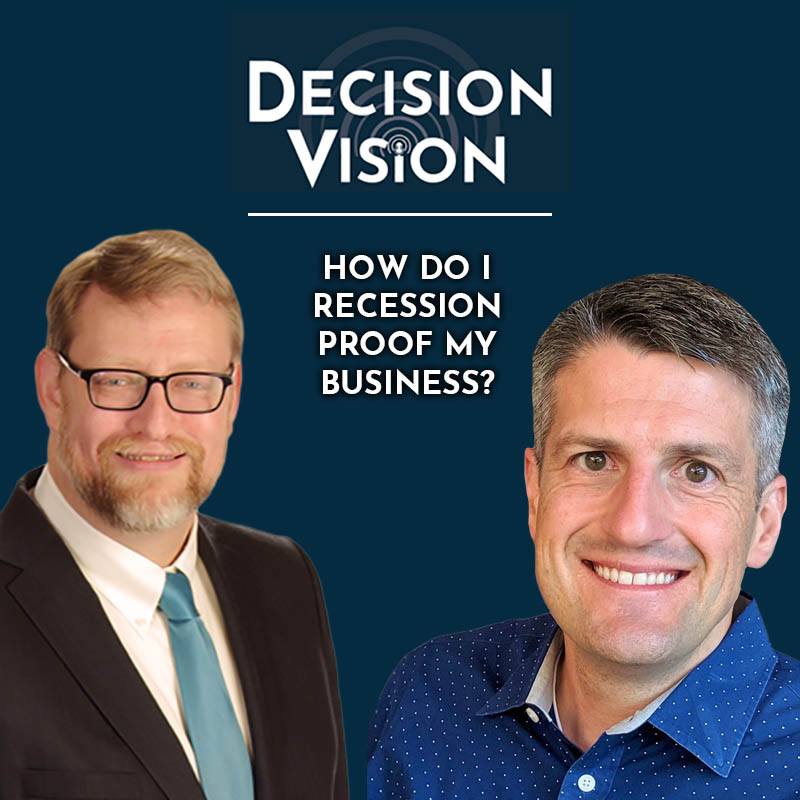
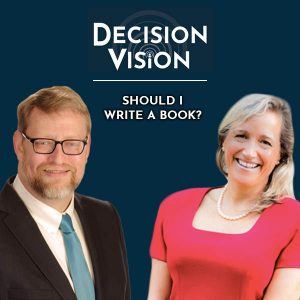
Mike Blake and Tony Rushin

Decision Vision Episode 38:  Should I Outsource My IT? – An Interview with Tony Rushin, Network 1 Consulting

Will outsourcing my IT increase my cybersecurity? What’s a human firewall and how does a managed services provider help me with this aspect of my IT? In this episode of “Decision Vision,” host Mike Blake explores these questions and much more with Tony Rushin, Network 1 Consulting. “Decision Vision” is presented by Brady Ware & Company.

Tony Rushin, Network 1 Consulting

Tony Rushin

Tony Rushin is a Vice President, Sales & Marketing, with Network 1 Consulting.

Network 1 Consulting is a 21-year-old, IT Support company in Atlanta, GA. They become – or augment – the IT department for law firms, medical practices and real estate & construction companies. Their IT experts can fix computers, but what their clients value most are the industry-specific best practices we bring to their firms. This is especially important with technology, along with regulations and cyber threats, changing so rapidly. They take a proactive approach to helping our clients use technology to gain and keep their competitive advantage.

For more information, go to the Network 1 Consulting website, or contact Tony directly by email.

Michael Blake, Brady Ware & Company

Mike Blake, Host of “Decision Vision”

Michael Blake is Host of the “Decision Vision” podcast series and a Director of Brady Ware & Company. Mike specializes in the valuation of intellectual property-driven firms, such as software firms, aerospace firms and professional services firms, most frequently in the capacity as a transaction advisor, helping clients obtain great outcomes from complex transaction opportunities. He is also a specialist in the appraisal of intellectual properties as stand-alone assets, such as software, trade secrets, and patents.

Mike has been a full-time business appraiser for 13 years with public accounting firms, boutique business appraisal firms, and an owner of his own firm. Prior to that, he spent 8 years in venture capital and investment banking, including transactions in the U.S., Israel, Russia, Ukraine, and Belarus.

Brady Ware & Company

Brady Ware & Company is a regional full-service accounting and advisory firm which helps businesses and entrepreneurs make visions a reality. Brady Ware services clients nationally from its offices in Alpharetta, GA; Columbus and Dayton, OH; and Richmond, IN. The firm is growth minded, committed to the regions in which they operate, and most importantly, they make significant investments in their people and service offerings to meet the changing financial needs of those they are privileged to serve. The firm is dedicated to providing results that make a difference for its clients.

Decision Vision Podcast Series

“Decision Vision” is a podcast covering topics and issues facing small business owners and connecting them with solutions from leading experts. This series is presented by Brady Ware & Company. If you are a decision maker for a small business, we’d love to hear from you. Contact us at decisionvision@bradyware.com and make sure to listen to every Thursday to the “Decision Vision” podcast. Past episodes of “Decision Vision” can be found here. “Decision Vision” is produced and broadcast by the North Fulton studio of Business RadioX®.

Visit Brady Ware & Company on social media:

LinkedIn:  https://www.linkedin.com/company/brady-ware/

Facebook: https://www.facebook.com/bradywareCPAs/

Twitter: https://twitter.com/BradyWare

Instagram: https://www.instagram.com/bradywarecompany/

Show Transcript

Intro: [00:00:02] Welcome to Decision Vision, a podcast series focusing on critical business decisions, brought to you by Brady Ware & Company. Brady Ware is a regional, full-service accounting and advisory that helps businesses and entrepreneurs make visions a reality.

Michael Blake: [00:00:20] And welcome to Decision Vision, a podcast giving you, the listener, clear vision to make great decisions. In each episode, we discuss the process of decision making on a different topic. Rather than making recommendations because everyone’s circumstances are different, we talk to subject matter experts about how they would recommend thinking about that decision.

Michael Blake: [00:00:37] My name is Mike Blake, and I’m your host for today’s program. I’m a director at Brady Ware & Company, a full-service accounting firm based in Dayton, Ohio, with offices in Dayton; Columbus, Ohio; Richmond, Indiana; and Alpharetta, Georgia, which is where we are recording today. Brady Ware is sponsoring this podcast. If you like this podcast, please subscribe on your favorite podcast aggregator. And also, please, consider leaving a review of the podcast as well.

Michael Blake: [00:01:01] Our topic today is, should I outsource my IT or information technology functions? And you know, I think this is a question that companies wrestle with quite a lot. In fact, I know companies that kind of do the IT two-step where they’ll insource it, and then outsource it for a while then. And then, thrilled to kind of bring it back, and then send it out again. And, you know, it’s really sort of the Texas two-step information technology style. And, you know, having been a business owner myself, I had to face that decision.

Michael Blake: [00:01:32] Now, as an anecdote, when I had my firm for a while, Arpeggio Advisors, our family at that time had started out as a Windows platform family. And then, something like three weeks into my trying to launch my company where my blood pressure was at a fairly high level, all of a sudden, my wife’s computer crashes and my oldest son’s computer crashed. Basically a race time when they can’t do anything and we’ve got to figure it out. And I’ve spent an entire day getting them back up and running, which I eventually did. But I said I’m just never doing that again.

Michael Blake: [00:02:16] So, on Saturday, I don’t know if Apple salespeople work on commission or not. But whoever—if they did, they made a lot of money on me that day because that day all the PCs are out. Macs were in. Never had trouble since. And this is not meant to be an Apple infomercial. I mean I do actually still have Windows machines for some things, but it’s indicative of how IT can be disruptive to a business, even if you’re a sole practitioner or even if you’re a home based business. That when you—when you’re infrastructure doesn’t work well, it is a real pain in the neck. It’s one of those things. It’s kind of like an umpire in baseball. You don’t notice and necessarily they do great. But boy, when they fail, you notice the heck out of them.

Michael Blake: [00:03:02] And IT is like that one. When your technology fails you, I can tell you from my perspective, I feel betrayed when my technology does not work. So, I feel like, you know what? I’m doing my my job. Right. Why is Apple, why is Microsoft, why is whoever not sort of holding up their end of the bargain? And so, the IT function in a company in the 21st century is every bit as important, if not more important than sales, than an accounting product delivery. You know, it’s right up there. But I don’t think that there’s as much controversy or consternation on whether or not to to keep that function or to outsource it or maybe if there’s, you know, identify kind of where that inflection point is, where you should consider that—you should consider that decision.

Michael Blake: [00:03:59] And so, as is often the case, you know, I’m not qualified to advise you on how to make that decision. So, I’ve brought in somebody who is qualified to help you make that decision. And joining us today is my friend Tony Rushin, who is vice president of Network 1 Consulting. Spending 30 years in high technology sales and marketing from IBM to startups, Tony brings his broad experience and business development marketing in IT business strategy to Network 1’s leadership team clients and partners. His passion is to help people achieve greatness and however they define it. And by the way, if your Atlanta Braves fan, you will appreciate this. He does run it out when the ball is hit into the gap in the outfield. Unlike some of our players here.

Michael Blake: [00:04:38] Network 1 delivers I-T managed services exclusively to businesses in Metro Atlanta. Since 1998, Network 1 becomes or augments the IT department for companies. Network 1’s IT experts fix computers for what their clients really values, the industry best practices they bring to the firm. It’s especially important with technology, along with regulations and cyber threats, which are changing rapidly.

Michael Blake: [00:05:02] With over 30 employees, Network 1 has built a culture that attracts and retains network and desktop professionals who know their stuff and have an outstanding desk side. Man, that is not easy to do. They find a fixed root causes instead of putting a Band-Aid on issues. Network 1 delivers proactive planning, so their clients avoid problems and gain competitive advantage. They’re not just a cost function. Network 1 is a fractional chief information officer, a support desk network engineer and everything in between. Tony, welcome to the program.

Tony Rushin: [00:05:32] Well, glad to be here, Mike. Thank you.

Michael Blake: [00:05:34] So many of us encounter outsource support when we need to fix our computer in sort of a robot vacuum. Is outsourced IT support simply hiring day from India. What does that look like?

Tony Rushin: [00:05:49] Well, no offense today from India, but if that’s all outsourced, IT support would be, there wouldn’t be much outsourced IT. So, it’s much more than that. But, you know, it can be confined to that, too. It really runs the gamut as far as what companies need, and then what they go out and get.

Michael Blake: [00:06:08] So, you know, what if a company happens to have a lot of people who are relatively computer uncomfortable, does that change the equation? Not every company necessarily has or needs people who are power users at every desk, right? Does that at all impact the decision on whether or not you should keep that function in-house versus outsourcing it?

Tony Rushin: [00:06:29] Great question. We’ve got 120 clients around Metro Atlanta. And I would say most of the users we support are relatively uncomfortable with technology and yet they still have a job to do. And their threshold for when they need help is much lower than that, power user often. And some of those that are uncomfortable with technology are also in some form the rainmakers. It could be a salesperson. It could be a managing partner in a law firm. And so, we haven’t found any correlation to whether or not you outsource to the how comfortable or uncomfortable people are with technology.

Michael Blake: [00:07:15] So, let’s back up. I probably should have made this the first question but too late. But there’s a term people hear a lot and I’m not sure they understand what it means. What—when we say managed services, what does that mean?

Tony Rushin: [00:07:27] Yeah. Managed services. It can mean something different to different IT support companies. What it means for Network 1, and in general I think we’re aligned with the industry, it’s the ongoing and always up to date services that are delivered by your outsourced IT company. So, what does that mean? And not all outsourced IT is—includes managed services.

Tony Rushin: [00:07:53] But, for instance, basic security. Well, that’s antivirus. Well, making sure it’s the latest version and it’s on everyone’s desktop or laptop. Well, that kind of infers that desktops and laptops need to be monitored to make sure that the latest is on there. It could be advanced security suite that’s got more tools and solutions in there to protect and prevent bad guys from getting in, but also detecting them when they get in. It can be managing a firewall. So, it always has the latest firmware and software involved in the company that is being managed on behalf. Never has to worry about it, never has to buy the hardware, it just gets supplied. So, think of it as baked in.

Michael Blake: [00:08:40] And so, in effect, is it fair to kind of characterize managed services for the most part as just a turnkey solution to some IT operation that needs to happen?

Tony Rushin: [00:08:50] Yeah, great, great summary of it. Turnkey and but typically it’s also based on a menu. Hey, I need this, that and the other and I don’t need those other things.

Michael Blake: [00:08:59] Okay. So, I think—in fact, I know a question on a lot of business owners and executives minds. As you know, we both understand the importance of IT to an organization. Right. And when IT doesn’t work, an organization can stop dead. And we’ve seen, we’ve heard of those those things. How do you overcome as an executive this notion or the idea or the fear that if I don’t own my IT department, really own them, right, they’re employees and I can, I don’t know, yell at them or fire or throw rocks at them, whatever, right, that that just leaves me more vulnerable to a disaster?

Tony Rushin: [00:09:42] Yeah. You know, it’s great you do this podcast because you’re getting advisors in here that have some experience and yet some in your audience that own businesses will say, yeah, I hear that but I think I have a better way. And so, we don’t do too much to educate people. We let the marketplace educate them for them. What I mean by that is the common sense of one business owner might be, I need IT in-house and it could be going great because let’s say there are financial advisory company and they’ve got 15 people and they’ve got an IT guy. That’s good. He’s customer-oriented. He’s focused. He runs around. He helps fix issues. And then, he gets sick or he quits or he’s not so good and he’s spotty.

Tony Rushin: [00:10:36] That’s the education of the owner like, oh, wait a minute, he is who he is. And by the way, the dynamic of the marketplaces, if he is really good, and I say he because most of them are guys, then he won’t be satisfied forever at a 15 person financial advisory company. He’ll want colleagues. He’ll want more challenges, whatever it is. And so, if someone chooses to bring it in-house, it could work great. My guess is for a small size business, say under 50 employees, it will bite them in some way, in some form or fashion.

Michael Blake: [00:11:17] You bring up something I want to make sure that I talked about because I do think it’s important. You know what was not intended to create innuendo here, but I think size really does matter. Right? I mean, I think there’s a—is it fair to speculate on my part that there’s maybe a sweet spot where, you know, can an organization get so big that having outsourced IT just isn’t—at least entirely, is no longer practical and maybe even on the small end, right, outsourced IT may kind of even be overkill, right? If you only wanted two people and you know your way around a computer, maybe it should just kind of do that. Is that fair?

Tony Rushin: [00:11:57] It is fair. And I’ll talk in generalities because it’s different depending on the kind of business it is. Some are highly regulated. I use financial advisory as an example and some are less regulated for instance. In the marketplace over time—and Network 1’s 21 years old. I’ve been there almost 10 years. I’ve seen almost a physics of size and when they need certain IT support. And if you’re less than 10 employees or or less than 8, you can often get away with some kind of as needed IT support. So, the opposite of managed services. You simply pick up the phone and call somebody if you need their help, only when you have an issue. And sometimes that can be done internally if you got a smart guy. And hey, I’ll fix it for you, right.

Tony Rushin: [00:12:52] Sometime between 5 and 10 employees, if they’re doing it with a smart person in-house and they’re growing, they might say, hey, wait a minute, it’s better to have Sally get out there and get new clients than fix our computers, and she’s really good at getting new clients, for instance. And so, that’ll happen. And they’ll say, well, let’s get someone that can fix things when they break. Often at about that 10 employees standpoint up to say 50, they’ll say, hey, look, I need—it would be better if there was someone more proactive and all inclusive delivering these services, not just when my hair’s on fire. Because when my hair’s on fire, I need him here now. And you can always get him here now. Whereas if they’re fixing little things along the way, it can avoid the big thing.

Tony Rushin: [00:13:42] So, really, for companies less than 50 employees, but 10 to 50, we don’t find a lot of in-house IT people. They’re outsourcing everything. Somewhere between 50 and 100, typically, we see them get their first IT person and that can actually be worked really well with an outsourced firm. We love working with an internal IT person because no matter how good our support desk is and they’re really good, I mean, they get to every issue within on average, seven minutes.

Michael Blake: [00:14:16] Wow.

Tony Rushin: [00:14:16] But the person on site can beat that every time. Now, not if he’s helping Joe and Susie down the hall needs him at the same time.

Michael Blake: [00:14:26] Right. That just assumes a personal sort of waiting for the phone to ring and that phone lights up and all of a sudden-

Tony Rushin: [00:14:32] Yeah.

Michael Blake: [00:14:32] … you’re rushing up to that person, right?

Tony Rushin: [00:14:34] Yeah. But between that 50 and 100 people, they typically have a person onsite. And then, if they get to that issue where, hey, we have multiple people and you know, our IT guy can’t get to them all, they’ll often bring in someone like us and say, hey, look, is there a way we can streamline, so that they take what they can? But if it’s over their technology knowledge or if they’re flat out, you know, covered up with a couple different issues or you know what, the dang employee wants vacation once in a while, go figure, right. They’ll have a relationship with someone like us, a managed service company, and says, look, we want to escalate or we want to hand off whenever we need to. So, that’s about 50 to 100.

Tony Rushin: [00:15:19] And then, when you get multiple people in I.T., then they have colleagues, then they can internally go on vacation or go to a class and still have someone to back fill. And we find that typically when there’s more than 100 employees.

Michael Blake: [00:15:35] So, I think there’s an important point there that I want to make sure we highlight is that this choice may or may not necessarily be an either or. Right. It very well could be an and, right. You may have, you know, one IT resource that is captive. Right. But then some firm like yours might then be available to augment that. It could be as needed, it could be strategic, whatever. Right. So, maybe in some cases it’s a fault—you can have your cake and eat it, too.

Tony Rushin: [00:16:09] Yeah. Really, it ends up being managing the business risk and managing the ongoing productivity of the employees on a fundamental level. The business risk is I have one IT guy and he gets sick. He leaves, he goes on vacation, whatever. And, of course, Murphy says that’s when the bad things gonna happen. And you need help.

Michael Blake: [00:16:28] Absolutely.

Tony Rushin: [00:16:29] And if you wait till then to have this outsourced relationship, well, the company you bring in doesn’t know your system. And so, they’re doing the best they can. But at best, it’s triage learning the systems. Oh, was it documented? Oh, you don’t even know passwords. Well, then they’re hacking into your system.

Michael Blake: [00:16:48] Right. It’s like an emergency room visit.

Tony Rushin: [00:16:50] Exactly. Whereas if you do it when everything’s quiet, you’ve got your IT person, they’re part of the solution of bringing in the company. They’re actually even getting, hey, what’s my style? What’s the style of the person to work with? Do they work with me well? Then they’re part of the solution. And it works fine for when those emergencies come up.

Michael Blake: [00:17:12] So, you mentioned something else I want to make sure to underline, because I think one of the arguments somebody might have to maintain a captive IT resource is that notion that while I own most of the service, the response time is going to be instantaneous. Right. But, you know, that’s not necessarily the case. And if you work with the right partner, you may very well find that you get, you know, assuming it doesn’t necessarily need to be an onsite because most of these—most computer issues can be addressed remotely now that you aren’t necessarily making that sacrifice of responsiveness that you thought you might.

Tony Rushin: [00:17:47] Yeah, it all depends. It depends a lot on how customer service oriented is the person you hire. And, you know, people can be really good in interviews, and then you get what you get. But let’s say they’re great, you know, and they know their technology and they’re really customer service oriented. You still run into, oh, my gosh, the rainmaker’s on the road and his laptop failed and yet they’re addressing a server down issue in the other part of your company, they can’t do two things at once. But that’s part of the business dynamic. I think companies get there on their own, get their meaning. Oh, we need to augment the current person we have in site simply from enduring enough IT issues that, you know, the person can’t clone themselves.

Michael Blake: [00:18:36] So, I would have to imagine that you’re having many more conversations about cyber security now than you were, say, 10 years ago, 5 years ago, right. So, how does—how do concerns about cyber security impact that decision of outsourcing IT functions? On the one hand, I could see an argument that’s well, again, if I have this captive asset, I own it, it’s ostensibly a closed cycle that should be nominally more secure. On the other hand, maybe it’s by outsourcing your brain and expertise, you could not possibly afford to hire cause cyber security experts are—they’re as well paid as a senior software engineer, if not more, at this point. Where do you kind of fall in that? Where—how do you kind of look at that, that many decision within the decision process?

Tony Rushin: [00:19:27] Yeah, great question. I don’t think overall it really affects the fundamental of do I outsource or do I bring it, have it in-house. What it has done—and really we’ve seen the acceleration rapidly in the last three years, you know, where cyber security, it’s gone from reading about it in the newspaper like, oh, it happened to someone else, to people—oh, it happened in my company or my next door neighbor’s company and I know him personally and I think that’s what’s accelerated it.

Tony Rushin: [00:20:00] You kind of set it up really well with if it’s that single in-house person and you’re keeping them really busy, how much time do they have to do that proactive. Hey, what new solutions are in the marketplace that might protect us better? Do they have colleagues already in-house that they can pick up the phone and just have a brainstorm sounding board conversation about, hey, we got this bad malware, how did you guys prevent it? It’s hard to find that really tactically good computer broke, fix it fast, person. And have that same person be that strategic, always looking forward, hey, what’s on the horizon? What do the bad guys do and what do the good guys do and what solutions should I be looking at? Oh, I should bring it in and vet it and do a pilot on it. Oh, wait a minute, this guy’s computer broke. That’s where I have to spend my time. And that’s the reality of what that single shingle person is involved with. And so, it ends up driving more people, I think driving more outsourced I.T.’s conversations, whether you keep that internal person and if he’s good, you should or whether you simply want to outsource all of it.

Michael Blake: [00:21:15] So many companies now are also using cloud services or putting all their data up in the cloud, whether that’s One Drive, Dropbox, something like that. Does that impact a need to—does that impact at all kind of the decision as to whether or not you outsource versus keep in-house, given that by definition, when you’re putting your data in a cloud, you’re already taking a step to outsource anyway, right?

Tony Rushin: [00:21:41] Yeah. Yeah. And a lot of things that are bundled into that, you know, cloud solution are what a company like us would do if you had it running on a server internally, meaning the servers in that cloud solution if you picked a good one, right. Not one that’s really in someone’s basement, but, you know, Microsoft or, you know, Office 365 or something like-

Michael Blake: [00:22:10] Josvpn.com.

Tony Rushin: [00:22:12] Right. They’re going to have redundancy built in. They’re going to have backups built in. And they’re going to make sure that everything is designed in a way where the application is not going to go down. Or if it goes down, it’s gonna be minutes and, you know, like that, not two days. So, all of that is a real big step up where we find that people—I mean you still need—you still have users and you still have them. I mean, I’ll flip it around, ask you question. Do people still go to the wrong websites?

Michael Blake: [00:22:47] All the time.

Tony Rushin: [00:22:47] Do they still get tricked by that e-mail, that phishing e-mail, and they might click on something?

Michael Blake: [00:22:53] You better believe that.

Tony Rushin: [00:22:55] Do they still forget to run the updates when their computer says run these updates?

Michael Blake: [00:23:00] Especially with Windows, I think many people actively avoid it.

Tony Rushin: [00:23:04] Yeah, because then, you know, you got a reboot or hey, the update might cause a problem.

Michael Blake: [00:23:09] And takes a minute.

Tony Rushin: [00:23:10] Takes a minute. So, it’s the user issues that are still the same. In fact, maybe they’re more complicated because you’re not going to pick up the phone if Office 365’s not working right and call Microsoft and actually get a response.

Michael Blake: [00:23:23] Right. Not unless you’re a really big user.

Tony Rushin: [00:23:25] Right.

Michael Blake: [00:23:26] Or you’ve really paid for their Cadillac plan, which they will sell you. Right. But then are you really saving anything, right?

Tony Rushin: [00:23:31] Right.

Michael Blake: [00:23:32] You know, I want to go back to those questions you just asked because they’re so important. You know, speaking of spear phishing attack, a friend of mine who was a CFO fell prey to a spear phishing attack and lost her job.

Tony Rushin: [00:23:52] Wow.

Michael Blake: [00:23:52] Within two days, gone. Right. Now, I do not believe it was her fault. The organization had never trained her or anybody to recognize spearfishing. There are no policies, rules, procedures, right? Yes, there’s human error. But to me, that was human error that was set up by an organizational failure to be prepared. So, my question for you is, beyond kind of the nuts and bolts of of keeping a machine running and keeping software update and so forth, can an outsourced IT function, if it’s not you, maybe somebody else, also help kind of establish those rules, procedures, create awareness? Because the end of the day, you do still need your end users to be smart about this thing.

Tony Rushin: [00:24:37] Yeah, and it’s interesting. The biggest weakness in any network is still the human firewall.

Michael Blake: [00:24:44] Yeah.

Tony Rushin: [00:24:44] It’s that person. And you hit the nail on the head. Well, how do you make that human firewall more secure? It’s through education. It’s through training. It’s through—and not one time events. Right. It’s like, hey, security is important. And that’s the day that you hired him, and then you never talk about it again. Well, that doesn’t work.

Michael Blake: [00:25:06] Right. This isn’t sensitivity training. OK, just kidding, just kidding, hold your e-mails.

Tony Rushin: [00:25:11] Right. So, the—first of all, we, as the outsourced IT or any outsourced IT can influence the leadership of the company to take security seriously and make it part of their employee handbook, make it part of their regularly ongoing employee training. But at the end of the day, if they don’t—if the leadership doesn’t step up to lead it and say this is important and this is what we’re doing, we can only influence, right.

Tony Rushin: [00:25:51] But let’s say it is a company that they care. It’s like, look, I want this to care. Then, yeah, we can advise. Well, then here are the steps, the processes, the training that you should incorporate into your culture. And here’s the frequency at which you should do it. So, I think most companies that are like us and helping those smaller companies can at least advise, influence, give some examples of processes and procedures to put in place to raise up their security. And solutions are put in place. If they need—if they’re in a regulated industry and they need something more robust than you’ve got those paid as much as a software developer kind of people that are consultants to put whole company assessments in place around security, physical and online security and put, you know, really extensive processes and procedures in place.

Michael Blake: [00:26:53] I mean, that—yeah, and that security space has has evolved into sort of the neurosurgery, I think of the IT world. Partially because I’m glad about the regulations, because, you know, financial statement, audit rules are now directly addressing this. Right. Your data security. In my world now, you know, I am—although badly I am now asking customers, not customer, I’m asking clients, why appraise their business? What are they doing about data security? How many records do they have that are potentially exposed, right, to do business in Europe where GDPR becomes effective or in California where their roles become effective? Because I don’t think that if you’re—if you ignore that, you’re really missing a big potential risk, right?

Tony Rushin: [00:27:38] Yeah.

Michael Blake: [00:27:39] So—but it’s become so specialized that, you know, if you’re a generalist, you just can’t cover it, right. And if you’re really sensitive, if you’ve got high sensitivity, that maybe another IT function that needs to ultimately be outsourced and just part of the cost of doing business. Right?

Tony Rushin: [00:27:56] Yeah. And the good news is. When you look at the tools of the technology that’s available to also help protect and prevent and detect security breaches, in this day and age, they are very affordable for small businesses. And especially if they outsource because what they also get the benefit of, let’s say with us, is a 50 person company pays a 50 person price for whatever licenses they might get of Cisco umbrella that protects them way out on the Internet side, or Huntress Labs, which is a cool piece of software that doesn’t protect you. But it always scans to check and detect if something made it through because something’s going to get through no matter how good your protection is.

Tony Rushin: [00:28:51] Well, those things for a 50 person company might cost them, say, $40 per computer per month. Well, a company like us will buy 2000 nodes for all our clients, and then we’ll offer it to our clients for $10 a computer a month. Plus, by the way, you know, we’ll get an alert when something happens and we’ll dig into it. You don’t even have to know about it. So I wanted to bring in costs because it’s important. These solutions typically start with big companies. And then, over the years, more competition comes in or that same company will develop a price point that is very palatable for small businesses.

Michael Blake: [00:29:37] And interestingly enough, I see the same thing, but from a different angle. I see that also occurring because small companies, most of them at some point would like to be bought by a larger company. And I have seen deals get stopped dead or at least get dragged through the mud and prices go down because the larger acquirer that does have kind of “best practices”, I think they do. Right. And they’re reaching down into this small company that is farther behind. Right. And it’s like trying to buy a house and you realize you’ve got to put a million dollars to get up the code and the deal can fall apart.

Michael Blake: [00:30:18] So, you know, I think a best practice for many companies is to make your IT as best practice as you can afford if you want to be acquired, because an information officer will say, look, this is too risky.

Tony Rushin: [00:30:33] Right.

Michael Blake: [00:30:33] Either they’ve got to go through and get a real grown up IT audit and a clean bill of health from your national firm or it just doesn’t make sense. An Exhibit A was the Verizon Yahoo! deal. Right. I remember when Verizon bought Yahoo! a while ago. And in the middle of that deal, they discovered a breach and it shaved billions of dollars off the acquisition price. I mean that’s an extreme example, but it happens all the time.

Tony Rushin: [00:30:57] Yeah. And I want to play off that a couple different ways. And in your example, it doesn’t mean the small company has to spend big company money. I mean, at the end of the day, you have to be more secure than your neighbor, just like physical security with your house.

Michael Blake: [00:31:13] Run faster than the other guy when you’re running from there.

Tony Rushin: [00:31:16] Exactly. And so, no one’s asking them to, you know, spend what Yahoo! or Verizon spent. In fact, no matter how much they’re spending, they can’t keep themselves safe. So, if the bad guys want to get you, they’re going to get you. What you want to do is button down things, so when they knock on your door from a cyber standpoint, oh, no one’s home. Go to the next. I checked the windows, can’t get in and they quickly go to the next. And so, you don’t have to spend that kind of price. You just have to pay attention to it appropriately.

Tony Rushin: [00:31:51] And going back to outsourcing, if you’re a single small business, you may not know what’s available out there in your price point or what are best practices without overspending for a company that’s 40 people. Whereas a company like us has one hundred and twenty clients that are that size and we work in there all day. And by default then because we earn a living doing this, we understand what best practice is or what’s appropriate and what’s available for that sized company.

Michael Blake: [00:32:23] Now, correct me if I’m wrong. If I’m not mistaken, a lot of your clients are law firms and accounting firms.

Tony Rushin: [00:32:30] They’re law firms and financial advisors.

Michael Blake: [00:32:31] Financial advisors, okay.

Tony Rushin: [00:32:32] Yeah, not quite accounting firms.

Michael Blake: [00:32:34] So, is that because those kinds of firms tend to lend themselves better to outsourced IT than do others? And are there other kinds of firms that say, you know what, this kind of firm probably really needs to just have staff in-house?

Tony Rushin: [00:32:51] So, way back in our history, 21 years, our founder married an attorney and the daughter of an attorney. So, it’s not rocket science why we got law firms at the beginning. We got referred in by people that knew our-

Michael Blake: [00:33:05] Right. Fair enough.

Tony Rushin: [00:33:06] And then, we built enough reputation there for being good. We call it that side manner to be able to explain things to an attorney or their staff that wasn’t tech talk and to be empathetic and to be responsive. And so, we got more law firms and attorneys. So, truth be told. Now, are some better outsourced than others? No, pretty much we find across the board any business can benefit from it. The ones we found actually—I say any. The ones that don’t seem to be quite as good a fit is that technology company that part of their offering is delivered through technology that’s facing for their client.

Tony Rushin: [00:33:52] Think of Amazon when they were really little. Well, when they were really little, they’re structured the same way as they are now and their technology was really client facing. Click here and go on and order a book. Well, if you outsource the IT support for that, you may not—that’s a critical function to their business. Those critical functions or the family jewels, if you will, you typically want to have in-house. So, that’s not quite a fit. But any others, we haven’t seen the correlation.

Michael Blake: [00:34:29] So, what does—what are the economics of outsourcing IT typically look like? And what I mean by that in a more specific way is, is pricing typically done on a monthly retainer? Is it on a per incident basis, done on an hourly basis, some other basis? How does that typically work?

Tony Rushin: [00:34:53] Yeah. Well, the good news for that small business owner is it’s a highly competitive marketplace. In Metro Atlanta alone, there’s over 800 IT support companies.

Michael Blake: [00:35:07] Wow.

Tony Rushin: [00:35:07] Yeah.

Michael Blake: [00:35:08] I thought I had competition.

Tony Rushin: [00:35:09] That’s a real number. And now, granted, 780 of those 800 are one, two or three-man shops. But the good news is that business owner, you brought up examples, you know, is it on a monthly retained basis, is it per incident, is it this or that? The answer’s yes.

Michael Blake: [00:35:26] Got it.

Tony Rushin: [00:35:26] You can find a provider that works with any of those models.

Michael Blake: [00:35:31] And what about you guys? Is it—do you find that you kind of tailor your pricing to the particular needs and wants of that customer as while? Do you sort of have—or do you have kind of a more of a fixed model?

Tony Rushin: [00:35:44] It’s both. We have three different basic plans, and then we have these managed services that, oh, you don’t need the advance security suite in your environment. Okay, don’t get that. Or you don’t need the the backup and recovery with disaster recovery built into it or at least it’s not at your price point. Great, let’s not do that. So, it’s some of both smorgasbord and fixed plans.

Tony Rushin: [00:36:10] We, in particular, won’t take a client that merely wants to call us when their hair’s on fire. That’s the as needed only. However, we’ve been around Atlanta for 21 years. So, if we find someone or if someone’s referred to us and say this is the kind of plan I want, we’ll simply say, well, that doesn’t fit us but we know two people that are really good at that. And would you like their names. Yes, we would. All right. Go call them. We found—we—I’ve been there 10 years. And for the first three years of me being there, we tried to serve both kind of client and we found we simply couldn’t because our monthly retained clients are where we put all our resources. And then, that person with their hair on fire calls and it’s like, do we take this engineer off this client that pays us every month? No, of course, we don’t. And then, we’d never be responsive enough for the hair on fire guy.

Michael Blake: [00:37:00] Right. That makes sense. And it would be like working at, you know, at a car company. And they have this assembly line, that’s their model, and then all of a sudden the CEO wants a custom car built, right? It would break everybody. Right. You wouldn’t get a very good custom car and it would disrupt the entire assembly line, too. Tony, this has been great. We’re running out of time, so we’re gonna need to wrap up. But if somebody wants to contact you with questions about this decision, how can they do that?

Tony Rushin: [00:37:31] Yeah, a lot of ways to contact. It’s trushin, R-U-S-H-I-N, @network1consulting.com. And that’s the numeral 1. So, that’s long the first time you type it. You know, just put me in as a contact. You can find me on LinkedIn, Tony Rushin. We’ve got a website. You know, we do tweet and we do Facebook. Personally, I’m not on those too much cause our—I’m on LinkedIn mostly cause that’s where business people are.

Michael Blake: [00:37:56] Right.

Tony Rushin: [00:37:57] Yeah.

Michael Blake: [00:37:58] Well, good. Well, that’s going to wrap it up for today’s program. I’d like to thank Tony Rushin so much for joining us and sharing his expertise with us. We’ll be exploring a new topic each week. So, please tune in, so that when you’re faced with your next business decision, you have clear vision when making it. If you enjoy these podcasts, please consider leaving a review with your favorite podcast aggregator. It helps people find us, so that we can help them. Once again, this is Mike Blake. Our decision—our sponsor is Brady Ware & Company and this has been the Decision Vision podcast.

Tagged With: CPa, CPA firm, Dayton accounting, Dayton business advisory, Dayton CPA, Dayton CPA firm, Decision Vision, firewall, Information technology, information technology strategies, IT managed services, it outsourcing, managed IT services, managed IT support, Managed Service Provider, managed services, Michael Blake, Mike Blake, Network 1 Consulting, outsourced it, outsourced IT services, outsourcing IT, Tony Rushin

Decision Vision Episode 37: Should I Use an Offshore Software Developer? – An Interview with Dave Bernard, The Intellection Group

October 24, 2019 by John Ray

Decision Vision
Decision Vision
Decision Vision Episode 37: Should I Use an Offshore Software Developer? – An Interview with Dave Bernard, The Intellection Group
Loading
00:00 /
RSS Feed
Share
Link
Embed

Download file

Mike Blake and Dave Bernard

Decision Vision Episode 37:  Should I Use an Offshore Software Developer? – An Interview with Dave Bernard, The Intellection Group

What countries should I consider for offshore software development? How should I manage an offshore software development project? The answer to these questions and much more come in this in-depth, frank interview with Dave Bernard of The Intellection Group. “Decision Vision” is hosted by Mike Blake and is presented by Brady Ware & Company.

Dave Bernard, The Intellection Group

Dave Bernard

Dave Bernard is the CEO and Co-Founder of The Intellection Group. He is a serial entrepreneur, technologist, investor, inventor.

The Intellection Group specializes in rapidly building sophisticated, high-quality and innovative technology solutions that deliver breakthrough business results.

No matter where you are in the world, if your company or government agency is a market leader in your niche that requires highly-custom systems to maintain your leadership position and invent further marketplace advantages, they can help. The company’s specialty is complex (and often, award-winning) SaaS projects, and they’ve become well-known as the “vendor of last resort” for many of their clients.

The Intellection Group applies their versatile and deep technology and project management skills to solve problems in areas like developing database architectures that ensure effective data mining, integrated disparate information systems through service oriented architectures and loosely-coupled techniques, applying advanced techniques in data presentation, often an important selling point and differentiator, and rescuing complex technology projects that threaten to derail business plans.

The Intellection Group also has special expertise in emerging technologies, including voice recognition, text-to-speech, location services (GPS, RFID), natural language processing and search (supported by their patent portfolio.)

They like nothing better than for you to count on us to bring new and exciting ideas to the table that enable you to succeed in a tough and complex marketplace.

The Intellection Group delivers technology solutions which get results, like

  • A comprehensive portfolio management program for a world-leading private equity firm
  • A flexible data interchange application for one of the world’s largest vehicle transporters
  • A complex human resources system for a European defense ministry
  • A sales force productivity management system used by Microsoft, Symantec and Computer Associates
  • The most advanced online education delivery platform available.

The Intellection Group’s work has won awards such as the TAG (Technology Association of Georgia) Excalibur Award, the TAG Top 40 Most Innovative Company Award, and the Virginia Governor’s Technology Award.

To contact Dave, you can find him on LinkedIn or you can email him directly.

Michael Blake, Brady Ware & Company

Mike Blake, Host of “Decision Vision“

Michael Blake is Host of the “Decision Vision” podcast series and a Director of Brady Ware & Company. Mike specializes in the valuation of intellectual property-driven firms, such as software firms, aerospace firms and professional services firms, most frequently in the capacity as a transaction advisor, helping clients obtain great outcomes from complex transaction opportunities. He is also a specialist in the appraisal of intellectual properties as stand-alone assets, such as software, trade secrets, and patents.

Mike has been a full-time business appraiser for 13 years with public accounting firms, boutique business appraisal firms, and an owner of his own firm. Prior to that, he spent 8 years in venture capital and investment banking, including transactions in the U.S., Israel, Russia, Ukraine, and Belarus.

Brady Ware & Company

Brady Ware & Company is a regional full-service accounting and advisory firm which helps businesses and entrepreneurs make visions a reality. Brady Ware services clients nationally from its offices in Alpharetta, GA; Columbus and Dayton, OH; and Richmond, IN. The firm is growth minded, committed to the regions in which they operate, and most importantly, they make significant investments in their people and service offerings to meet the changing financial needs of those they are privileged to serve. The firm is dedicated to providing results that make a difference for its clients.

Decision Vision Podcast Series

“Decision Vision” is a podcast covering topics and issues facing small business owners and connecting them with solutions from leading experts. This series is presented by Brady Ware & Company. If you are a decision maker for a small business, we’d love to hear from you. Contact us at decisionvision@bradyware.com and make sure to listen to every Thursday to the “Decision Vision” podcast. Past episodes of “Decision Vision” can be found here. “Decision Vision” is produced and broadcast by the North Fulton studio of Business RadioX®.

Visit Brady Ware & Company on social media:

LinkedIn:  https://www.linkedin.com/company/brady-ware/

Facebook: https://www.facebook.com/bradywareCPAs/

Twitter: https://twitter.com/BradyWare

Instagram: https://www.instagram.com/bradywarecompany/

Show Transcript

Intro: [00:00:02] Welcome to Decision Vision, a podcast series focusing on critical business decisions, brought to you by Brady Ware & Company. Brady Ware is a regional, full-service accounting and advisory firm that helps businesses and entrepreneurs make vision a reality.

Michael Blake: [00:00:20] Welcome to Decision Vision, a podcast giving you, the listener, clear vision to make great decisions. In each episode, we discuss the process of decision making on a different topic. Rather than making recommendations because everyone’s circumstances are different, we talk to subject matter experts about how they would recommend thinking about that decision.

Michael Blake: [00:00:38] My name is Mike Blake, and I’m your host for today’s program. I’m a director at Brady Ware & Company, a full service accounting firm based in Dayton, Ohio, with offices in Dayton; Columbus, Ohio; Richmond, Indiana; and Alpharetta, Georgia, which is where we are recording today. Brady Ware is sponsoring this podcast. If you like this podcast, please subscribe on your favorite podcast aggregator. And please, also, consider leaving a review of the podcast as well.

Michael Blake: [00:01:02] Our topic today is, should I have software developed offshore? And for those of you who either know me in real life or have follow the podcast, and if you have followed the podcast, thank you very much for doing that. It’s a small but growing club I’m sure. You know that I have a background working with emerging technology companies, even matured technology companies. And in working with such companies, there are a few universal truths that I hear about how somebody is going to grow and scale their company. One, they say, well, we’re gonna have viral marketing and that’s a whole—that’s a different animal that we’ll tackle at some point. But if you know how to reliably produce viral marketing, you don’t need to raise money. Somebody will pay you $10 million a year to do it. But I digress.

Michael Blake: [00:01:59] Second is, all I need is three million dollars and this idea comes to fruition. And the third is we are going to develop software offshore. And we tend to think about this as if it’s something that is just very easily done and very easily executed because we are used to technology now being imported from overseas, whether it’s phones from Korea, whether it’s Macintosh’s or iPhones being made in Taiwan and China, whether it is Facebook memes coming from Volgograd. The fact of the matter is we have a lot of technology that comes from abroad. And of course, everybody is familiar with the meme of Steve from Wichita, who’s actually based over in Mumbai. And so, we’re used to having our technology come from someplace else.

Michael Blake: [00:02:50] And so, at a high level, it’s easy to kind of think about, well, we’ll just have our software developed abroad. These—you know, many of these countries have very strong educational systems and in particular,  very strong in producing engineers, scientists, mathematically oriented people. People are clearly very comfortable with computers. And by the way, you know the story goes that they basically work for peanuts or whatever the Indian equivalent of a peanut is.

Michael Blake: [00:03:20] And that’s fine as far as it goes. But when you sort of dig into it, you know, I’ve discovered that for every success story about well, we’re just going to offshore and outsource our software development, there are few stories that are not as successful. In fact, some of them are just outright tire fires. And so, it’s indicative, I think, of an important notion that software development abroad, really anywhere, but especially offshore doesn’t just happen just because you know that other companies have been able to do it.

Michael Blake: [00:03:55] And so, it’s a decision that needs to be worked through very carefully, because for most companies, getting your software done correctly, getting it done on time and now in a way that makes sure that you’ll have security back doors is not just a financial imperative, it is existential to the firm. And if you get that wrong, you just have no product. Not every firm can just sort of hit the reset button. So, OK, this didn’t work, let’s try it again a second or third time. And so, I think it’s important to kind of understand what exactly is involved in that.

Michael Blake: [00:04:27] And other than what I just told you, this is not a topic I know anything about, but fortunately I have a guy here in front of me who does know a lot about that and he’s going to tell us about it and share that knowledge with us. So, joining us today is Dave Bernard. Dave is a serial entrepreneur, technologist, inventor, and investor living in Atlanta, Georgia, an expert in new and emerging technologies.

Michael Blake: [00:04:48] Dave has co-founded several companies, including the Intellection Group, an innovative technology consulting group that has been recognized as one of Georgia’s most innovative companies. The Intellection Group specializes in building complex award winning-software as a service systems for both commercial and government entities in North America, Europe, and Africa. The Intellection Group specializes in rapidly building sophisticated, high-quality and innovative technology solutions that deliver breakthrough business results. They like nothing better than for you to count on them, to bring new and exciting ideas to the table that enable you to succeed in a tough and complex marketplace.

Michael Blake: [00:05:26] Dave has led and helped create award-winning complex software programs for organizations across many different industries, including healthcare, supply chain, insurance, retail, hospitality. You get the idea, all shapes and sizes from startup to multi-billion dollar enterprises. Dave has also founded a company called BeneVets providing technology solutions to veterans services organizations. Boy, did we ever need that. He’s also led the Intellection Group’s development of a patented technology architecture that unifies web development capabilities with voice recognition, text to speech, natural languages, radio frequency identification, and global positioning system technologies, deliverable to wireless, handheld, and desktop services. And his credentials go on and on but you get the idea. He’s pretty smart. He’s pretty accomplished. Dave, welcome to the program.

Dave Bernard: [00:06:19] Thanks, Mike. That’s quite, quite an intro. I’m really glad to be here, though. Going to have fun with this.

Michael Blake: [00:06:24] We’re going to have fun with this. And I know that we’re going to learn a lot because, you know, do you agree with me that I think you know, I think a lot of people are just sort of take for granted that offshore software development happens, right? And that’s not the case.

Dave Bernard: [00:06:38] They do. And, you know, there’s definitely what I would consider an almost mythology about it. And, you know, I tend to have a bit of a contrarian attitude about a lot of things. I’ve been in this business 40 years. I’ve seen a lot of best thing since sliced bread come and go. And so, I have an increasing skepticism about what that next best thing is.

Dave Bernard: [00:07:03] When we first started our company, our technology company, about 16 years ago, you know, you’re a new company, you want to control costs and make some money coming out of the gate. And I already had a large network of offshore people I have met at conferences over the years. And I just kind of flipped through my Rolodex and started calling some of these people overseas and we actually started establishing a nice little business doing that. And it has been—it has not been a better process. All along we’ve learned a lot through the school of hard knocks. And I’ll tell you, one of the biggest revelations for me in building this up has been that I thought software development is software development, no matter where it’s done, and that meaning that I didn’t think that there were cultural differences that would make a difference. I’ve found that to be diametrically opposite in practice, that cultural differences may matter a lot to how work is done and you have to account for that.

Michael Blake: [00:08:06] Good. So, let’s put a pin in that. So, we are going to get back to that. But speaking about kind of those cultural differences, in your mind and your experiences, you see it sitting here today. What are the countries right now that seem to attract the most interest in terms of being hosts of offshore development exercises?

Dave Bernard: [00:08:24] Yeah, it—I mean, everybody talks about South Asia, India, Pakistan, even Bangladesh. You have the Far East emerging as a very low cost area, Vietnam, Philippines in particular. The Philippines is very attractive because a lot of English speakers there. But there are also an entire half day ahead of you. So, that needs to be—I actually use a virtual assistant of the Philippines. So, I am acutely aware of that.

Dave Bernard: [00:08:52] Other areas that are up and coming, I think of Central America, South America, their values, because there tend to be in about the same time zone we’re in. And you also have to pull in Canada as a nearshore opportunity. But mostly Canada’s been positioning itself as QA technical support type of capability. So, that’s what you hear about. What we have found after going through the school of hard knocks on this is that Eastern Europe for us is the biggest bang for the buck. Best cultural fit. And just—there’s just a lot of stud developers over there.

Michael Blake: [00:09:28] Now, an important sort of nuance. When you say Eastern Europe, do you mean sort of all of the countries east of Germany or do you parse kind of central Europe that has Poland, Czech Republic versus Belarus, Ukraine, Russia? Does that make a difference?

Dave Bernard: [00:09:42] I would say Central and Eastern Europe.

Michael Blake: [00:09:44] OK.

Dave Bernard: [00:09:45] We’ve been—we have a ton of experience with Bulgaria, for example. And I’d like to highlight them because there’s a historical reason why there’s that way, but also a substantial experience in Poland and Belarus. And I know people who work with Serbs, Croats, Romanians, and Hungarians, and Czechs, and they’re all very, very good. It’s a very similar type of approach.

Michael Blake: [00:10:13] You know something about Bulgaria, they produce a ton of academic finance people and economists, for some reason more than any other country. When—you know, in my field, when somebody writes a really new and interesting paper that is super quantitative, like, you know, it takes me an hour and a half to get through the first page basically, Bulgaria seems to produce a lot of people like that. And I think that goes to the culture, right. For whatever reason, their culture, maybe their education system seems to skew towards that way.

Dave Bernard: [00:10:47] Yeah, there’s a very interesting wrinkle in Bulgaria that I did not discover till after I was working there for a few years. And that is that if you recall, the command economy that the Soviet Union ran in the Warsaw Pact, you had countries like Poland that were building aircraft. So, the Soviets would outsource a lot of their aircraft manufacturer to Poland in order for the economy to succeed. So, the Czechs and Hungarians built cars. The Bulgarians built computers. That’s what they did. They built software-

Michael Blake: [00:11:18] That’s right.

Dave Bernard: [00:11:19] … firmware and computers. They’re very well known for that. So, when you do that, your whole education ecosystem is built around that. So, that is still there. That disproportionate focus on the hardware and software side of things is tremendous there. And I think that part of that is informed—you know, a disproportionate amount of their population is in that business. And we just found tremendously talented people there.

Michael Blake: [00:11:48] That’s really interesting. And somewhere in the back of my mind, I was aware of that, but never made that connection until you made it for me. That explains. And I’ll pull the kimono back for just a second. One of my hobbies is retro computers. One of my prized possessions is an Apple IIGS. It actually works, souped up, et cetera, et cetera. But one of the—one thing that I do not have in my collection and I will not because that will be a major fight with my wife that I’m not going to have is a Pravetz computer, which was their knockoff of the Apple II, that their spies basically went into Cupertino, stole the diagram, stole everything, basically, and remade it. And if you look, you can find on eBay once in a while and it looks almost exactly like an Apple IIe, except Apple has been replaced with the Pravetz.

Dave Bernard: [00:12:40] Well, next time, I’ll go see if I dig one up for you.

Michael Blake: [00:12:42] Oh, boy, you do that. You’re my friend forever.

Dave Bernard: [00:12:44] But, you know, there’s one other really interesting thing about this and something that Bulgarians are immensely proud of. And that is the the person who invented the digital computer is widely regarded as a fellow named John Atanasoff out of, I believe, is Iowa State University. Well, at—his name is spelled Atanasoff with two Fs at the end. But I didn’t ever made the connection because I know a lot of Atanasoff in Bulgaria. And sure enough, he’s Bulgarian.

Michael Blake: [00:13:18] Is that right?

Dave Bernard: [00:13:19] And, in fact, when I made that connection, I asked—when I was in Soviet one time, I asked my team, do you know about this? “Oh, yeah. He’s one of our greatest heroes.” And they took me to a large statue in the middle of Soviet that has his figure on it. And I also had a little—another little antidote is that I was actually at a soccer game with my daughter, probably about 12 years ago and standing next to an old friend of mine who also had a daughter in the team. And I had mentioned—so, I must have been talking about going to Bulgaria. And she said, “Oh, my family’s Bulgarian.” Oh, really? No kidding. And she said, “Oh, by the way, my grandfather invented the digital computer.” And I was like, John Atanasoff? “Yeah, that was him.” And actually, a few years later, on his 100th birthday anniversary, they came over, found her, and brought her whole family over for 10 days random around the country and just celebrating his 100th anniversary. It was a big deal there. Big deal.

Michael Blake: [00:14:17] Well, good. So—and by the way, if you’re listening from the Bulgarian Embassy, the commercial attache, feel free to call up and sponsor our program. That’s fascinating. I did not know that. But, you know, getting back to the, you know, the current part of the question is that not all offshore hosts are the same, right? And it’s not just about cost structure but cultural. So, I’m curious. You said that Central and Eastern Europe for, at least for you, seem to have worked the best, maybe for your clients. Why is that?

Dave Bernard: [00:14:49] Yeah, there’s a very definite pattern there. When you’re in a small business like me, you know, I can’t afford to micromanage people. I need to have smart people, knowledge workers you can call them, that could run on their own, take initiative and go solve problems and think for themselves. Otherwise, it doesn’t scale, just doesn’t scale. So, with a lot of countries, there is actually a great cultural barrier to saying no to the boss, you know, or disagreeing with the boss at all. So, you—they’ll just say yes to you all day long, and then you’re just paying them all day long.

Dave Bernard: [00:15:29] With the Bulgarians and with many others in that part of the world, I found a pretty common theme is that they definitely will push back. I mean, it’s great to have those kind of—you know, they’re not tense conversations but they, you know, sharpening the steel. And we’ve had many times, many times when I’ve said for them to do something and they said, “Dave, that’s a really bad idea. And this is why.” And I said, oh, you’re right. Thank you for telling me. And I love that aspect of it with them.

Michael Blake: [00:16:01] And, you know, I’ve found something similar. As you know, I spent a lot of time in Belarus and Ukraine myself. And they are not shy. I mean, they’ve-

Dave Bernard: [00:16:10] They aren’t.

Michael Blake: [00:16:10] And for whatever reason, maybe it’s because for 70 years, they couldn’t say no. Now, they can’t say no fast enough, right. And you’re right, that is a good thing. You’d much rather have that than the passive aggressive, hey, we’ll take your money, right?

Dave Bernard: [00:16:23] Yes.

Michael Blake: [00:16:24] But then you don’t wind up with what you want. I’d much rather be told that I’m not doing the right thing upfront.

Dave Bernard: [00:16:30] And they do appreciate that directness, too. It’s part of their culture. So, if I’m direct with them, they’re direct with me, we all get along great and we get a lot done. So, that’s what—that’s really the big difference for me.

Michael Blake: [00:16:42] Interesting. Okay. So, the obvious driver to move development offshore is cost, at least perceived cost anyway. Are there other things you might want to consider? Is there a reason besides cost to consider offshore development?

Dave Bernard: [00:16:58] Yeah. I mean—and I hope I don’t upset too much of the audience but, you know, I’ve been just underwhelmed by the bang for the buck I get from onshore developers. There’s several problems with onshore developers and I just have chosen not to deal with them. One, I think is they’re grossly overpaid for what they do. And I’ve seen that firsthand with working with developers all over the world. The other thing is I think that even more important—and all these things are kind of tied together. Cost is an issue. Culture is an issue. Work ethic and attitude is an issue. But also there’s this kind of pattern in the U.S. where you job hop. You don’t like your job. You can make 10 bucks an hour or more over there or another 20 grand a year over there. You job hop. That just doesn’t happen. In my world, in Central and Eastern Europe.

Dave Bernard: [00:17:49] We have multiple examples where we’ve had the same small group of developers working on a project for 10, 12, 13 years. And when you have that kind of continuity on a project, all kinds of things happen that you don’t have to worry about. They tend to be a lot better at their work because they can work in the system. They make a lot fewer mistakes. That makes QA and testing a whole different ballgame. Responsiveness goes way through the roof. And I don’t have to have all these processes and plans for when they leave. So, we actually don’t even think about that. Because there’s so much continuity now, we don’t worry about it, you know. And that is so ingrained in the U.S. approach. If you really looked at all the processes and procedures that they put into U.S. based software development, the vast majority of is geared toward that guy walking out the door and screwing us.

Michael Blake: [00:18:46] You know, it’s—you know, actually, you bring up two things that I want to kind of highlight. One is that, yeah, the cost here is higher but it doesn’t sound like that in and of itself is problematic. What’s the value that you get for the cost?

Dave Bernard: [00:18:59] Yeah.

Michael Blake: [00:19:00] Right? You can live with the high cost if the value were there. But-

Dave Bernard: [00:19:03] Yes.

Michael Blake: [00:19:03] … the value was not there.

Dave Bernard: [00:19:05] And I would say too that, you know, we don’t pay the lowest rates that are out there.

Michael Blake: [00:19:09] Right.

Dave Bernard: [00:19:10] And there is a lot of academic work done on programmer productivity. If you look at DeMarco and Lyster and Ed Yordan and some of—and Steve McConnell, you’ll see a lot of academic work. And at the end of it is, is that there’s a wide range of talent in developer community. The difference between a mediocre developer and a top notch stud, it can be 7, 8, 9 10x. So, what we want to do is we want to find the 7 or 8x guy that we can pay 2x, 4. That’s a tremendous bargain. So, a lot of times the $10 and $15 an hour people take four times as long to do something. I could pay somebody $20 or $25 an hour and they do the work of five people. So, there’s a whole different mindset there. It’s economics. It’s math.

Michael Blake: [00:20:01] Yeah.

Dave Bernard: [00:20:01] You know, that’s what it boils down to.

Michael Blake: [00:20:02] And we’ll take a little bit of the finance side tour. As you know, one of the things I do a fair amount of is, is appraising software. Right. Internally developed software. And two of the factors that we consider that plugged directly into the quantitative models we use are how effective are the programmers and what is the turnover. And it’s fascinating because you would think not knowing, and I didn’t know this, not knowing the intricacies of that software development process. The knee jerk reaction would be, oh, turnover is gonna be lower here, especially if they’re kind of in-house people, right. I can pay him. I can keep him.

Michael Blake: [00:20:45] But that’s so not true it sounds like that, in fact, these offshore teams, for whatever reason and maybe that’s cultural, right, tend to stick around for prolonged periods of time. They’re actually more stable than even if you hire people in-house.

Dave Bernard: [00:20:59] They are. And there’s—I think there are some insight that I can add to that. I think software developers in general, having been one for 40 years myself, I think in general they’re a lot like doctors. They’re trained to practice a craft. And that’s what they want to do. They don’t want to run a business. They don’t want to have to deal with insurance companies. They don’t want to have to market themselves. Software developers not that much different. If you could create an environment for them where all they got to do is code and build stuff and be creative, they’re very happy.

Dave Bernard: [00:21:30] So, really our job in the Intellection Group is to find customers and give them work. And when we do that, we make them very happy and they’re not going to go anywhere because they’d be shooting themselves in the foot. I think the other thing we do, because of distance, it’s also very hard to—it’s harder to build relationships with people, even if you get Skype and e-mail and all that. We communicate with our guys constantly. But we also visit them on a regular basis, at least once a year. And we know their kids. We know we—visit their houses. We know their spouses. So, it’s a relationship that’s built on that personal side as well as the commercial side.

Michael Blake: [00:22:14] So you talked about the fact that you’ve found some folks that work really well and you’ve got long-term relationships. Let’s put ourselves in the seat of somebody now as thing on a map, you know, I should think about offshoring. How do you go about making an assessment as to whether or nothing would be a good fit? I mean, it can’t be as simple as finding resumes on Indeed.com or something, you know. And you’ve got the cultural, geographic, distance, how do you do that?

Dave Bernard: [00:22:43] You know, I mean getting introduced to them is probably the hardest part because there’s a lot of them out there to sift through. What I try to do is—and I rarely add new teams, although I did add some new teams the last couple of years in Krakow, in Minsk. And I actually went to visit them before I engaged with them, to see their offices, to see how they run their shops, you know, and look them in the eye. I mean, I—that’s worth the investment because I’m about to bet my company on these guys.

Dave Bernard: [00:23:14] The other thing we’ll do is to test them on some small projects that we don’t pay for. Okay. I learned that a long time ago. Find a 20 or 40 hour project that they’ll do. And almost all them will say, yeah, sure, we’ll be happy to do that. And what you really want to test there is not necessarily their coding ability, but I want to see how well and how they communicate and how responsive they are, because in our business has everything. Our clients want us to be responsive and communicate frequently. They don’t want unknowns. And that’s the same way I want to run my business. So that’s really what I’m looking for. If I see a lag in that, that’s a big red flag for me.

Michael Blake: [00:23:56] And that’s gonna be another differentiator between an offshore market here. I mean you try to get somebody local to take on a project of that scope to test out their capabilities, right.

Dave Bernard: [00:24:08] They’re not going to do it.

Michael Blake: [00:24:09] They’re not going to do it.

Dave Bernard: [00:24:09] Yeah.

Michael Blake: [00:24:10] Right. At best, they will not refuse with extreme prejudice.

Dave Bernard: [00:24:15] Yeah. And that’s part of that whole attitude thing.

Michael Blake: [00:24:18] Yeah.

Dave Bernard: [00:24:18] You know, I actually think there’s a tremendous desire to work with Americans in overseas markets.

Michael Blake: [00:24:25] I think so too.

Dave Bernard: [00:24:26] There’s a cache to that. That’s leverage for you. And if you treat them as equals—you know, the thing I used to hear all the time from some teams—I mean every time I visited, they tell me this. You know, we do work with some other U.S. companies but they don’t let us do cool stuff. You guys let us do stuff that people actually use. They also feel distrusted and disrespected in a lot of ways because oh, well, the Americans know best, but that’s not the case.

Dave Bernard: [00:24:52] And what we try to do, actually, because it’s good for business is to push everything down to the lowest level. We want them to do architecture. We want them to do database design. We want them to do documentation, so that they own the whole thing, and then they learn the business. So, again, that scales. If I get to tell them every little thing to do, that doesn’t scale. So, Mike, I got guys who know—I got guys in Soviet who know more about global private equity than most people in New York. You know, I’ve got people in Minsk who know more about sales, online sales and marketing than most people in California do. That’s because they’ve had to bury themselves in it, in the details and build it and they own it. So, I don’t have to tell them technical specs. I just say the customer wants a report that shows this, this, and this. Four or five sentences, they go build it. They know what to do.

Michael Blake: [00:25:44] So, that brings up another question or two later but the segue works here. It sounds like—and correct me if I’m wrong but it sounds like you’re an advocate of sending entire projects, not necessarily having the offshore developer work on a piece or a part of it and maybe keep it here. Sounds like you think just either you’re going to give them the project or not. Is that fair?

Dave Bernard: [00:26:06] That is fair. I mean the structure we have is we have onshore managers here, but really the delineation is in customer ownership. Who owns relationship? We own the relationship, the Intellection Group, with our customers. The developers rarely talk directly to our customers. We want to be that intermediary who want to own the relationship. And actually, quite frankly, the developers are very happy with that. They don’t wanna talk to customers.

Michael Blake: [00:26:32] I’m sure.

Dave Bernard: [00:26:34] They want to do their thing. So, that works out very, very well. So, we—that model is really important, I think. And that’s actually—I would say it’s our biggest problem is finding good onshore management. That is a—still an Achilles heel for us, because, again, you know, we’re dealing with people who are trying to run by an agile playbook or something like that. And I think if I just put all these processes in place, everything’s going to work. No, you’ve got to get engaged. You’ve got to talk these people everyday. You can’t just e-mail them, you got to get on Skype, look them in the eye. You got to be able to be flexible and move priorities around. These guys are good at that. Make use of it. You know, and I still have a difficulty finding people who will do that.

Michael Blake: [00:27:25] And I think that’s an important point because it’s different to manage an offshore team.

Dave Bernard: [00:27:32] It is.

Michael Blake: [00:27:32] Right. Even if you’ve had 15 years of experience that—pick a company, Cox Communications, right, managing their internal software development processes, it’s just a different skill set, a different animal managing an offshore team, isn’t it?

Dave Bernard: [00:27:48] It is. And we have—I have my own personal philosophy with the hundreds of projects I’ve been involved in in my career. Like agile is not fast enough. Two weeks grumps to me are awful. We drop code every day with our clients. You know, when you do that, you don’t have to give them a status report because the system is the status. It’s always built. It’s always running. It’s always up to date. You want to see where we are? Go look at the system. That’s where we are.

Dave Bernard: [00:28:18] And if you do that every day, mind share is preserved. okay, so that’s where we would hate for a developer to make a change. Wait for two weeks to deploy it. So, the customer tests it. He’s already forgotten after the third day what he did. Customers come back and said, “Oh, there’s something wrong with it.” I don’t know what I did back then. That’s how things really work. We would rather have that very tight velocity and much, much—it’s much better use of mind share for us. And that has worked for me in lots of projects.

Dave Bernard: [00:28:50] So, we call it, for want of a better term, call it super agile. And we’ve gotten that confirmed with some independent third parties who looked over our process and our code. And they—I was actually told by a European firm that just did a large code review, a multi-million line system we’ve been building for 10 or 12 years and they told us they’d never seen a more productive team. And I said, it’s really simple. We just—we deploy a lot and we still do 500 hours of work on that system every month, every single month. It’s never going to end. And so—and they couldn’t—they’ve never seen by with our velocity. But that to me is the only way to build this, to preserve mind share. It’s a knowledge worker business.

Michael Blake: [00:29:36] It’s—even in my field, it’s very hard to start, put down, pick up, down, pick up.

Dave Bernard: [00:29:44] Right.

Michael Blake: [00:29:45] It’s—the creativity gets lost, the time getting up to speed and so forth.

Dave Bernard: [00:29:53] And you know it intuitively, you know.

Michael Blake: [00:29:55] You do. I mean I—you know, I had—not in software, but I was set to be an expert witness in a case that I last touched about four years ago. And I assume the thing had settled. And then, all of a sudden, you know, the attorney e-mails and says, “Hey, this thing looks like it’s going to trial.” Let me see if I can find it. I wish I find can it. But, you know, you’re trying to kind of get back and step back for—you know, thankful it’s settled. So, nobody wanted to be in that case. But the notion of having something that’s sort of still like that, and then try to pick it up and try to do the same quality work that you were doing when you started, boy, that’s the exception rather than the rule, isn’t it?

Dave Bernard: [00:30:39] It is. And, you know, I would—and this discussion is about offshore development, but a lot of things I’m talking about apply to software development in general. And the point I want to make is that the reason we do offshore development is it actually makes some of the other stuff clearer and easier and more predictable to do in a lot of ways. So, that’s—its big advantage.

Michael Blake: [00:31:02] So, talking about kind of where you can get this done and you of all people appreciate this, because I know that there’s something that you’re very involved in studying, is the nature of security, right. There are countries out there that wish the United States ill. And candidly, they realize they cannot defeat us on a conventional battlefield. And so, their battlefield is cyberspace.

Michael Blake: [00:31:28] And there’s concern. And we’ve seen even with the current administration that, you know, we’re not necessarily letting other companies sort of have the run of the place from technology anymore. And I’m curious on, even if it’s not a particularly “sensitive project”, is that something you think about? If you think about, you know, a Russia, if you think about a China being a software developer for us. Maybe they’re not enemies but I’m not sure I’d say they’re friends either. Right. Is that something if you’re in the private sector, should give you pause?

Dave Bernard: [00:31:59] You know, I would say that we let economics drive us and talent. Talent and economics drive us where we’re gonna go. So, I have nothing against working with Russians or Chinese. There may be some other things that give me pause. So, I do pay attention to things like economic sanctions. And that’s a business risk. It’s a business risk if—you know, I was actually working in Bulgaria before the VAT was implemented there, and I had some concern about whether they were going to apply it to services. It turns out they didn’t because that would have changed our business model. That’s a 20 percent tax. So, it’s things like that more that are going to drive me.

Dave Bernard: [00:32:37] I—if you’re talking about intellectual property, I get that asked of me a lot. People will say, well, what if they go and steal our code? And my response to that is a question. What are they going to do with it? I mean, they don’t—by definition, they don’t like marketing or selling. So, they’ve got to have—they would have to package it up and figure out where the market is and go sell and build a business around it. They don’t have time for that. They don’t want to do it. And plus AB, as soon as I found out about it and I would, I’d kill—you know, I’d cut them off.

Michael Blake: [00:33:08] Right.

Dave Bernard: [00:33:08] So, that’s a disincentive. So, I think right now, can you completely bottle that up and make sure it doesn’t happen? No, you can’t. And even if you have NDAs and contracts, they’re worth your ability to defend them, which you want to do.

Michael Blake: [00:33:25] Right.

Dave Bernard: [00:33:26] It’s like a pattern-

Michael Blake: [00:33:26] Which is tough.

Dave Bernard: [00:33:27] So, if you’d not willing to defend it, why go do it? But in our case, we are—we focus on making a relationship very strong and making it a really symbiotic relationship that tends to keep those things at bay. And I’ve never had a problem with that. As far as national security types of aspects of this. Well, that has its own rules. And we have done cleared projects overseas under U.S. Army contract or NATO. And I do some pro bono work on the national security space anyway. So, I have a maybe an extra sensitivity to working with some of those places. And for me, there’s just so much work and so many good people that I can work with. Why risk working with people who are on the fringe? And I might consider right now in the current political climate and economic climate that Russia and China are kind of on the fringe.

Michael Blake: [00:34:20] Got it. So, switching gears a little bit. I’m curious in your experience, are there certain kinds of software applications that are better or worse suited to being developed offshore?

Dave Bernard: [00:34:36] You know, I was giving that some thought because I had your question ahead of time and I just couldn’t think of any pattern one way or the other.

Michael Blake: [00:34:44] Okay.

Dave Bernard: [00:34:44] The thing that I could think of the most was if you had a—an application that was such high availability that you needed to have 24/7 engineering support on it and that time zones might cause your problem with that. But other than that, we’ve already built systems used in tens of countries at a time 24/7 around the world and they were all built by the offshore guys. And you know, a lot of our customers in the beginning, they’ll say, well, you know, they’re not available after like 1:00 p.m. Eastern or something like that. And they actually fall into our pattern of following the sun. They love sending me stuff at 11 p.m. And when they get up in the morning, it’s done. So, actually, they’ve all adapted to our pace and our time zone and they actually understand it. You’re going to have a gap somewhere or by sleeps, right. So, all they do is they understand, hey, I can get stuff today late and it’s going to be done while I’m sleeping.

Michael Blake: [00:35:48] It’s interesting you said that. And sometimes I wonder if they sleep, because for a while, I’ve actually used an Indian contractor for my valuation practice. And, you know, it just astounded me. I would send something at 9:00 at night. That’s when I have a bunk bunch of my sort of technical work done and I’m getting a response in 30 minutes. I’m like, dude, you should—what? You should be asleep.

Dave Bernard: [00:36:11] I’ve had that same experience. I tell them the same thing, go to bed.

Michael Blake: [00:36:16] You know, you’re no use to me if you do it, you know, if you’re—but you’re right. They seem to adapt. They seem to be willing and enthusiastic to adapt their body clocks to match our time zone if necessary.

Dave Bernard: [00:36:27] And your customers adapt too.

Michael Blake: [00:36:30] Yeah.

Dave Bernard: [00:36:30] I mean, it’s all kind of the same thing you’ve got to do with them anyway, set expectations. This is the way it works and it’s very effective for them.

Michael Blake: [00:36:41] So, I’m going to show off a word here that our mutual friend, Scott Burkett, who is on podcast number two or three, I think-

Dave Bernard: [00:36:48] Oh, I know Scott.

Michael Blake: [00:36:48] … shared with me and that was technical debt. So, I did not know what that was until about six months ago. Anyway, it is—and for those who don’t know, as I did not six months ago, technical debt is basically the amount of rework you may have to do with a software package to get it done, so that it actually can be expanded upon as opposed to just getting it done in a rigid way to meet a deadline.

Dave Bernard: [00:37:15] Yes.

Michael Blake: [00:37:16] More or less. Right. Also sort of covering-

Dave Bernard: [00:37:18] That’s a good definition.

Michael Blake: [00:37:18] Also, covering obsolescence to a certain extent. Is there a greater risk or a lesser risk of accumulating technical debt when an offshore project is-

Dave Bernard: [00:37:28] The short answer is no, I don’t think so.

Michael Blake: [00:37:29] Okay.

Dave Bernard: [00:37:30] I mean developers—you know, a good developer knows the best way to implement any given task. Now, given that, I’ll just get on my soapbox a little bit about technical debt and I have a really good example, a counter example-

Michael Blake: [00:37:45] Got it.

Dave Bernard: [00:37:45] … for this. It’s actually a little bit of a surprise when I heard it. Like I said earlier, we had had a large system reviewed by European—it took months for them to do the review. Very thorough job. They looked at every bit of our code. And they came out and said, you know, you have a bunch of technical debt in your reports. And this is a system that had been around for a while. We’ve probably built 200 or 300 reports. We’d even retired like 20 of them. And they said you have a tremendous amount of code duplication among these reports. And I said, really? Because I don’t tell the developers how to write stuff. That’s their job.

Dave Bernard: [00:38:21] And I talked to developers and they had a very interesting story to tell me. They had followed my directive exactly. And what I directive to them was this customer is extremely sensitive to accuracy and risk in the code. They just don’t want bugs. So, they took that to heart. And basically the approach they took is whenever a new report request came, they went and found another report that was battle tested, coded and worked, copied the code and worked from that, the one that was closest to what they had to build. So, immediately, they were reducing the risk tremendously, increasing the likelihood of accuracy and reduce the amount of work they had to do. So, responsiveness went through the roof. Accuracy was still really good and risk was low. Exactly what the customer wanted and they’d been doing that for years. Okay.

Dave Bernard: [00:39:10] And so—but these guys who were reviewing said, oh, this has got to be fixed. I said, really? Okay. So, what’s my pitch to the customer here? I’ve got to go burn a whole bunch of time that you’re gonna pay for and I’m gonna refactor this code. So, now, I’ve just instituted a whole lot of risk and I get cussed. I get developers changing code. That’s risk. And then, at the end of the day, it’s all gonna be tested again, which is the bulk of work in software development. And so, at the end—and after all that’s done, then the customer’s got to verify it, which they’ve already done with the existing reports.

Dave Bernard: [00:39:46] And after all that’s done, they had the same thing they started with. So, how do I pitch that to them? And they said, “Oh, I see your point.” Because they were gonna make it a prominent part of their presentation to clients. I said you can do whatever you want but I know what they’re going to say. And so actually, it’s turned into—it was eye opening for me because I love—it was the genius creativity in my mind because the customer doesn’t care how it’s written. They just want it to work and make their business grow. And this is a customer who’s realize billions of dollars of return on this system.

Dave Bernard: [00:40:21] So that’s why there’s a lot of these little things, object-oriented programming, agile development, technical debt, QA processes, you know, test driven development. All this stuff is really to me, they’re red herrings. They’re distractions from serving the customer in the way that best does that. So, I have a similar contrarian attitude about testing as well based on experience. So, you know, I did tell the customer a little bit about this, said you may hear about it, I’m just telling you, just say no, you know, it doesn’t matter. So, that’s my my little soapbox on that.

Michael Blake: [00:41:02] All right. So, let-

Dave Bernard: [00:41:07] And oh, by the way, I would challenge anyone in the audience to counterpoint that. I would love to hear it.

Michael Blake: [00:41:11] Okay. Well, please do also, because the more you challenge something and write about the podcast, the better SVO it gets. So, light it up, everybody. It’s open season for trolls on offshore software development.

Dave Bernard: [00:41:25] There you go.

Michael Blake: [00:41:26] So, I want to ask this. I mean you’ve mentioned several countries in which you work. I’m curious if you’ve ever had different teams in different countries working on the same project or do you kind of allocate kind of one project per team?

Dave Bernard: [00:41:41] Yeah, as a general rule, it’s one team per project. I think it’s—you know, there was a book 50 more years ago by Fred Brooks, the guy who invented the 360 operating system for IBM called The Mythical Man-Month and is still in print. It’s a fabulous book. Every software developer should read it. Basically, one of his famous quotes in there, adding people to a late project makes it later. But his big thing was that  lines of communication expand exponentially as you add people. So. the Google approach is to keep teams very small because the lines of communication are very—are fewer. If you have three people, then you have—you know, I guess it’s a factorial, three factorial lines of communication. And if you add a fourth one, it goes up a lot.

Dave Bernard: [00:42:35] So, if I have to have multiple teams working in different parts of the system at the same time, I have to not only contend with communication, but I also have to contend with different styles and approaches. I have to contend with different velocities because there’s different talent in different places. It’s a nightmare, quite frankly. It’s really, I think, is uncontrollable. I think there are certain—there could be situations where the system can be built in very parallel pieces where you could probably get away with that. But I prefer actually for the mind share to be in one place and not in multiple places. It’s just—that’s just something I’ve not—I’ve found to work much better. And there’s an ownership issue, too, you know. These developers want to own their work. They want to have—it’s their baby. You know, it’s a creative process. It’s not engineering. It’s a craft. So, if you’ve split the craft up between two groups, who owns it? You know, they’ll bid—you get into finger pointing exercises. It becomes a blame game if something goes wrong.

Michael Blake: [00:43:39] Yeah. Okay. So, you’re obviously a big fan of offshore development. So, let me ask you a contrarian question. Are there cases where you have advised clients that offshore development may be not—may not be a great idea?

Dave Bernard: [00:43:57] I think if there—for—there are clients out there or people I’ve talked to who just can’t wrap their head around it. They don’t—it’s a trust issue when you boil it down. They just don’t trust what they can’t see. They want the person in their office. You know, you just can’t get around that. And I would tell them, then we’re not a good fit for you because we don’t work that way. You know, we can’t give you the economies and the performance and velocity of development in that environment because we’re committing to something when we quote our system. And we’re committing to it based on how we do it. You know, if you want to change that, then you got to get a different group of people. So, I think that’s probably the only real time I tell them it’s not going to work for you.

Michael Blake: [00:44:42] Okay.

Dave Bernard: [00:44:42] Other than that, because we tend to deliver very quickly on stuff, it’s almost like they’re there. You know, it just starts. And then, they forget that the person is not there because they’re seeing results. A lot of it is that trust, because I don’t see what’s happening, I don’t see a guy typing at a keyboard and come in at 8:00, leaving at 5:00. But if you see and results, then it doesn’t matter. They quickly get over that. That’s what I would say to them.

Michael Blake: [00:45:09] Okay. Well, Dave, we could easily go another hour on this but we’re running out of time. So, I think what I’d like to do is invite people if they want to learn more about this, if they’re thinking about this for their own companies, how can they contact you to maybe ask a question or two and follow up?

Dave Bernard: [00:45:24] You know, my e-mail address is, I’m always available, dbernard@intellectiongroup.com. You can easily find me on LinkedIn. I get a lot of people communicating with me on LinkedIn. Happy to do that. So, I’m not gonna give out my phone number over the podcast but I can be called too. Once you e-mail me, then you—I’ll allow you to call me.

Michael Blake: [00:45:48] Yeah, you’re not hard—and I mean phones are so 20th century anyway.

Dave Bernard: [00:45:52] My phone number is probably on several websites out there anyway.

Michael Blake: [00:45:54] Probably is.

Dave Bernard: [00:45:55] If you do a search, you’ll find me.

Michael Blake: [00:45:56] Probably is. Well, that’s going to wrap it up for today’s program. I’d like to thank Dave Bernard so much for joining us and sharing his expertise with us. We’ll be exploring a new topic each week. So, please tune in, so that when you’re faced with making your next business decision, you have clear vision when making it. If you enjoy these podcasts, please consider leaving a review with your favorite podcast aggregator. It helps people find us, so that we can help them. Once again, this is Mike Blake. Our sponsor is Brady Ware & Company. And this has been the Decision Vision podcast.

Tagged With: CPa, CPA firm, Dave Bernard, Dayton accounting, Dayton business advisory, Dayton CPA, Dayton CPA firm, Decision Vision, Eastern Europe, location services, Michael Blake, Mike Blake, natural language processing, offshore development, offshore software development, Software Developers, software development, Software Development project management, text-to-speech technology, The Intellection Group, voice recognition

Inspiring Women, Episode 14: Lifting Up The Next Generation of Women

October 17, 2019 by John Ray

Inspiring Women PodCast with Betty Collins
Inspiring Women, Episode 14: Lifting Up The Next Generation of Women
Loading
00:00 /
RSS Feed
Share
Link
Embed

Download file

Lifting Up The Next Generation of Women

On this edition of “Inspiring Women,” host Betty Collins discusses lifting up the next generation of women. How do you create environments for women to thrive? What’s the best way to encourage the next generation of women? Betty discusses these questions and more in this edition of “Inspiring Women,” presented by Brady Ware & Company.

Betty Collins, CPA, Brady Ware & Company and Host of the “Inspiring Women” Podcast

Betty Collins, Brady Ware & Company

Betty Collins is the Office Lead for Brady Ware’s Columbus office and a Shareholder in the firm. Betty joined Brady Ware & Company in 2012 through a merger with Nipps, Brown, Collins & Associates. She started her career in public accounting in 1988. Betty is co-leader of the Long Term Care service team, which helps providers of services to Individuals with Intellectual and Developmental Disabilities and nursing centers establish effective operational models that also maximize available funding. She consults with other small businesses, helping them prosper with advice on general operations management, cash flow optimization, and tax minimization strategies.

In addition, Betty serves on the Board of Directors for Brady Ware and Company. She leads Brady Ware’s Women’s Initiative, a program designed to empower female employees, allowing them to tap into unique resources and unleash their full potential.  Betty helps her colleagues create a work/life balance while inspiring them to set and reach personal and professional goals. The Women’s Initiative promotes women-to-women business relationships for clients and holds an annual conference that supports women business owners, women leaders, and other women who want to succeed. Betty actively participates in women-oriented conferences through speaking engagements and board activity.

Betty is a member of the National Association of Women Business Owners (NAWBO) and she is the President-elect for the Columbus Chapter. Brady Ware also partners with the Women’s Small Business Accelerator (WSBA), an organization designed to help female business owners develop and implement a strong business strategy through education and mentorship, and Betty participates in their mentor match program. She is passionate about WSBA because she believes in their acceleration program and matching women with the right advisors to help them achieve their business ownership goals. Betty supports the WSBA and NAWBO because these organizations deliver resources that help other women-owned and managed businesses thrive.

Betty is a graduate of Mount Vernon Nazarene College, a member of the American Institute of Certified Public Accountants, and a member of the Ohio Society of Certified Public Accountants. Betty is also the Board Chairwoman for the Gahanna Area Chamber of Commerce, and she serves on the Board of the Community Improvement Corporation of Gahanna as Treasurer.

“Inspiring Women” Podcast Series

“Inspiring Women” is THE podcast that advances women toward economic, social and political achievement. The show is hosted by Betty Collins, CPA, and presented by Brady Ware and Company. Brady Ware is committed to empowering women to go their distance in the workplace and at home. Past episodes of “Inspiring Women” can be found here.

Show Transcript

Betty Collins: [00:00:00] Lifting the next generation of women … No, this is not a podcast on millennials. This is not a podcast on the 20-somethings. For me, I’m 56 years of age. I’m a young 56, but I am 56. And all the sudden, the word legacy starts being said out loud, because it’s kind of in your thoughts. It’s on your mind a little bit more. I think that 65 is a long way off. However, it’ll be here before I probably want it. Then what? I will tell you, without reservation, my CPA life will be completed. There is no question. The empowerment and the advancement of women is something I’m passionate about for many reasons, and it’s not just about success, or the rights; it’s just about a life well-lived on their terms. That can look different for everybody.

Betty Collins: [00:00:53] Lifting up the next generation of women is what I want for me to give and to be part of. It’s just part of my DNA, and it’s certainly something I want as part of my legacy, both in business and personal. There’s nothing like the energy of youth. I know, in my Columbus office, in Brady Ware, we have a lot of younger people, and we all love that. Watching from a distance, just the success of those 20-, 30-, and 40-somethings, just the energy, and just watching from a distance, that’s really not enough. Lifting them up – more, I’m going to talk more about the women part of it – is really a movement that I want to be a part of, and there’s no retirement to that. How do you just feed off that energy, maybe, and how do you maybe direct it; help them direct that energy? Then, how do you really get involved by not just being on the outskirts?

Betty Collins: [00:01:51] Again, this is not a podcast on millennials, although they are a part of the next generation. This is not even a podcast on my life, and now that it’s coming to a close, and it’s all ending, and my CPA career – I will never have to do accounting again … It’s not that. It’s just a podcast about having a discussion on how to lift up that next generation of women. Really, it goes beyond more than just sharing your experiences, because you’ve learned along the way, or mentoring. All that is important. It goes beyond even making sure that they don’t make your same mistakes, because they probably are going to make a lot of them. It’s important, obviously, to teach that. It goes really beyond, sure, that you’re not in this to change them, so that they do it your way; although you might know the way …

Betty Collins: [00:02:38] If you really want to uplift that next generation, you must determine what is the uplift; what is it that you want to uplift? Uplifting women in leadership? Is it about their careers? Is it about the potential? Maybe it’s about big choices in life – the significant other who you marry, parenting – maybe you are really good at that; faith, or core values. Whatever those things are, you’ve got to go, “This is what I really want to help that next generation be successful in.”

Betty Collins: [00:03:13] When you do that, you can start focusing in on that. Some of it is maybe you really help with what you are great at, or maybe what you’re not so great at, because that’s the one that you’d learn probably the most lesson from. You us those to uplift and get that next generation excited. Look around your life. What women uplifted you in the past, or are doing it right now? By the way, who are you uplifting? You need to think on that. If you got nothing, start making it part of your life, ASAP.

Betty Collins: [00:03:47] By the way, you don’t have to be 56 to be an uplifter of the next generation. I think we think it’s for gray-hairs, right? I read a really great article on what 30-somethings want 20-somethings to know. Chances are, a 30-something will resonate more with that 20-something than I would. Here are some examples. Be picky who you spend your time with. high school, it’s a popular contest; maybe even college, and then you start … You probably have some time where you need to whittle down some friendships. There’s only so much time in the day. That’s a 30-something telling that to 20s.

Betty Collins: [00:04:25] The 30-something is telling the 20-somethings to take more risk. I find that kind of comical, but that’s what they see. Here’s a good one – they say save more money. Your 401k is important. If I say, at 56, my 401k is important, like to my children, their response usually is, “Well, you have money to do that. You don’t have the bills I have,” and all that. Where a 30-, and 20-something, if a 30-something is starting to have success in that, the 20-something’s going to relate more.

Betty Collins: [00:04:58] Don’t dismiss your wild dreams. Slow down and be positive. Get rid of skinny jeans. I found that one to be funny, because I will tell you, when I see 56-year-old women looking like they’re trying to be 30, it really drives me crazy, so I found that one very interesting. They even said this in their article, “Don’t judge older women for spending money on eye cream.” They also agree that Sheryl Sandberg was right, you’ve got to have a lot of support. She was where she was because she acknowledged she had a great partner in life. I thought it was very interesting that I found more articles on 30-somethings wanting to give advice to 20-somethings. I didn’t find a lot about what you what 50-year-olds want 40s to know or even what 40-year-olds want 30s to know? I found that interesting.

Betty Collins: [00:05:51] Be aware, they may not want you lifting them up. Chances are, they’re not going to seek you out. Step up but be respectful. What inspires you may not inspire them. When I started a women’s initiative in Brady Ware, I thought, “Oh, Brady Ware’s so generous, they’re gonna let me buy books for all the women to read a book a month, or a book a quarter …” They didn’t want to read books. That was not them. I like a hard book with a highlighter. I always read about half of it. That didn’t interest them. It didn’t inspire them to help them.

Betty Collins: [00:06:26] You really have to figure out, then, too, what motivates them. My children are not motivated at the things I was motivated. They don’t care if they ever, really, a buy a house. They’re more into condo living in the downtown. When I was their age, that was the thing – you’ve got to get that 20 percent saved, so you could buy a house. You’ve got to get the house. What motivated maybe you or me, back in the time that they were their age is not probably the same.

Betty Collins: [00:07:00] These are things you have to be aware of. To uplift, you’ve got to be uplifting. You can’t be Debbie Downer, and go, “I’m gonna inspire you!” I remember one of my friends, her mom was really not doing very well; she was getting ready to pass away. She had cancer; they were in the hospital, and they were going around … They were sitting in the lobby just to get out of the room. Her mom was just a negative, negative person. She was not fun to be around at all. She saw somebody in the waiting room, and she leaned over to my friend, her daughter, and said, “I’m going to go help them. They shouldn’t be smoking, because this is what the result is.” She said, “Mom, you’re not gonna go do that,” because she knew that her mom was going to go over and just … It was not going to be a good conversation.

Betty Collins: [00:07:54] To be uplifting, man, you’ve got to be uplifting. It’s not about making you feel better. It’s about them. I’ll use this illustration – this may not make sense to you – there are preachers who are very preachy, fire and brimstone, and teach you, and tell you, and go on. Then there’s somebody who’s got a pastor’s heart. They’re that caregiver. They have compassion. Those are two different things. You’ve got to know the difference. Yeah, you can figure out what you want to uplift, because you’ve been good at it or you’ve been bad at it, but you’ve got to be aware of those things.

Betty Collins: [00:08:31] Then, you’ve got to be generous. Your mistakes, your barriers, your regrets – figure out a way to teach your life lessons to the next generation and learn from them. I know, with my kids, I was very determined that they were not going to work as much as I worked. They were not going to have to take care of things financially, like I had to do. That was my own little … I’m going to teach them that, man, life is good, and these are the things you can really aspire for, but I’m going to pay for all that and do that. They really kind of missed out on figuring out finances in life, like they should have. It took them a little time to do that, because I didn’t let them experience that. Instead, I was trying to take my mistakes and my barriers that I thought I had and just remove them from their life. Not a good thing.

Betty Collins: [00:09:20] Then, patience is required. You ever had that person in your life, you’ve got to be really patient with? Then, one day, they turn the corner, right? Being a mentor, and sponsoring someone, all those are important, but the informal, sometimes … Just that informal, day-to-day, shoot from the hip … Figure out what motivates them;  figure out what they need; figure out how to communicate to them – you might be surprised. I will tell you, I wish I would have known these things over the last 30 years. I wish I would have had some people in my life that said, “This next generation, man, Betty Collins probably could use this …” but these are things I really wish I would have known more of.

Betty Collins: [00:09:59] Cultivate the right attitude, no matter what you’re seeking. Sometimes, it was just I have to do this because I have to do this. Really? Or, I want to do this because I want to do this. Having that right attitude; that’s just one example of attitude, that I always did the “right” thing. I just always did what I was supposed to, instead of maybe this is what I really would like to do.

Betty Collins: [00:10:25] When all else fails, a plan is a good thing, but it may not always be reality. I was a big five-year planner in some of my years that I could have been a little more freer. Plans are good, and they probably are needed more in today … I see today’s generation behind me, and they really just go from thing to thing, but … Plans are good.

Betty Collins: [00:10:47] I did not learn this til later in life, and no one ever talked to me about it, or inspired me, but passion and the why are first, and then your how and your what. That’s been a big topic. Simon Sinek is big on it. I wish I would have known more about why I do things, or someone would have asked me those questions a little bit more, but they didn’t.

Betty Collins: [00:11:09] Mistakes are fruitful. If you’re not making mistakes, then you’re not doing anything. Okay, this is not my quote – it’s President Theodore Roosevelt – but it really is true. Sometimes, we’re buried in mistakes and just think, “Oh my goodness, how can I go on?” I was that way, and I didn’t want to go further. I would kind of hibernate a little bit more, instead of moving on, or learning from it. I wish, over the last 30 years, someone said, “If you want something, sometimes you gotta ask.” You’re not asking, so why should you … Other people around you are asking, so guess what they’re getting? Whatever that is. I just didn’t do it. I always thought, if you accept everything, accept your stuff around you, accept the position, accept the money, accept the status quo, then it’s a much more peaceful, good road. That’s not always the case. Questions are good. You know why? Because there’s going to be answers, probably, behind them. I wish I would have known that over the last 30 years.

Betty Collins: [00:12:11] Safety and security is awesome. It’s comfortable. It’s the safety net. I’ve never have to worry. There’s nothing to me like a full refrigerator, okay? But reckless, and that thing I call unruly, in my last … It’s not always a bad thing. Sometimes, hot dogs on fire at the last minute are just awesome. I’ve kind of learned to shake it up a little bit more with various things in my life. When I was 40 and went through things that changed a lot in my life, I ended up doing a tremendous amount of traveling from the age 40 to 50.

Betty Collins: [00:12:46] Man, I’m glad I did that. I’m so glad I said, “We’re gonna do this regardless.” We didn’t put as much money in a 401k. We didn’t do as much debt reduction on the house. But I probably can’t do a lot of the things I did, physically, for sure, on those trips and keep up. I’m just glad I was part of … Someone in my life, my husband, who said, “No, let’s go on an adventure. Let’s do something. We work hard all year. Let’s play hard.” Grateful for that. Most of my life, I didn’t ever hear those things. I’ve been married, and I’ve been divorced. I wish someone really would have emphasized the importance of that significant other, that spouse in your life.

Betty Collins: [00:13:32] Those are things that, over my last 30 years, when I was trying to figure out how would I help the next generation, these were things that matter to me now. These are things I would have never seen along the way. Hindsight’s really easy, but I’ve got to know that maybe someone doesn’t want to be married. So, finding your support to be your biggest fan isn’t going to help them. That’s why I go back to being aware in the different things I’ve talked about.

Betty Collins: [00:13:58] These are some things to think about when you’re wanting to uplift other women. Remember, surely, our seasons are all different. Your 20s are not your 30s, which are … Those are very different from your 40s; not to mention your 50s. Not sure what 60 holds, because I’m not 60. I’ve not been there, but I’m sure it’s different. The other thing about those different seasons are you may need to shift who you are being uplifted by or getting help from, because they are different. The 20-somethings can help the 55-year-old. It doesn’t always need to be, “Well, we’ve already been through this generation; we are helping here.” A lot of times, we can learn tremendously from them. It’s not a one-way thing.

Betty Collins: [00:14:44] Be aware of the women in your life that are around you. Start at home, in your extended family. Just sit and go, “Who is not making it? Who is not maybe living out their potential? Who could really use a friend, which can lead to help?” You can’t just go in with help, not knowing somebody. You have to have the relationship there. Be more intentional of it, and then keep it simple.

Betty Collins: [00:15:11] My previous podcast on building up women around you, I talked about that. Simple gestures; how you conduct yourself. Those familiar little simple random acts of kindness. Now, they have a hundred books on that. We live in a tough world with constant challenge; a lot of negativity; a lot of how are we ever going to do this? You’ve got to seize the opportunity now to uplift others. They really are intentional. They’re insightful about pleasure is a daily thing, because you don’t always have tomorrow. It’s not just for special occasions – fun, and pleasure, and contentment – it’s not just for holidays and weekends. Only two weeks out of the year is your vacation. You’ve got 50 other to do. Uplifting in a tough world right now is something that is so needed, and guiding that next generation, getting them where they need to be, even if they don’t know that they … Even if they don’t know that they need you.

Betty Collins: [00:16:07] I’m going to close this with some great sayings, because when I was out there on uplifting, a lot of times when I do podcasts, I Google certain words just to get ideas. Here are some things that you … I’m going to try to uplift you at the end here. “Do not dim your light for anybody. Darkness is no place to live.” I just  the way that quote sounded. This is a Betty Collins quote, by the way, “Leverage your uniqueness in life, but, remember, if you want to be funny and no one is laughing, you probably need to change what you are leveraging. Be aware.” “Today, you could be drinking the wine. Tomorrow, you could be picking the grapes.” You probably need to expect that to happen, so be ready, and learn, and try to enjoy both seasons. “There is power in purpose. Stuff is just stuff, for the sake of stuff.” We need to accept that we won’t always make right decisions, that we will screw up royally, sometimes; understanding that failure is not the opposite of success, it’s part of it.

Betty Collins: [00:17:11] Today, I hope you sit back and think, “Who can I help in that next generation? Who can I uplift, especially women I’m passionate about, if anyone?” Really sit and go, “How can I help, and be effective, and have that impact?” I’m Betty Collins, and I hope you enjoyed today. Thank you.


Tagged With: CPa, CPA firm, Dayton accounting, Dayton business advisory, Dayton CPA, Dayton CPA firm, Inspiring Women, Inspiring Women podcast, woman owned business, women entrepreneurs, Women in Business, women-owned businesses

Decision Vision Episode 36: How Do I Recession Proof My Business? – An Interview with Wes Gipe, Aileron

October 17, 2019 by John Ray

Decision Vision
Decision Vision
Decision Vision Episode 36: How Do I Recession Proof My Business? – An Interview with Wes Gipe, Aileron
Loading
00:00 /
RSS Feed
Share
Link
Embed

Download file

Host Mike Blake and Wes Gipe, Aileron

Decision Vision Episode 35:  How Do I Recession Proof My Business? – An Interview with Wes Gipe, Aileron

How do I manage my business so it’s able to withstand (and maybe even thrive in) a recession? In the edition of “Decision Vision,” host Mike Blake discusses this question with Wes Gipe of Aileron. “Decision Vision” is presented by Brady Ware & Company.

Wes Gipe, Aileron

Wes Gipe

Wes Gipe works with business owners and their teams as a trusted facilitator, business advisor and coach. Known for his enthusiasm and high-energy approach, Wes’s willingness to boldly approach tough issues and go the extra mile have gained him loyal clients who look to him for help with strategic planning, leadership and culture development, and conflict resolution.

Wes started his journey as an Aileron client in 2008. After applying Aileron’s Professional Management principles to build a self-managing company, he now spends much of his time helping other organizations—big and small—build a strategy that endures. Through this work, he has logged over 9,000 coaching hours with more than 500 individuals throughout North America and Europe. His work has been featured in Forbes as well as other national media outlets. Wes resides in Miami County, OH with his wife and three rambunctious boys.

For more information, go to the Aileron website.

Michael Blake, Brady Ware & Company

Mike Blake, Host of “Decision Vision”

Michael Blake is Host of the “Decision Vision” podcast series and a Director of Brady Ware & Company. Mike specializes in the valuation of intellectual property-driven firms, such as software firms, aerospace firms and professional services firms, most frequently in the capacity as a transaction advisor, helping clients obtain great outcomes from complex transaction opportunities. He is also a specialist in the appraisal of intellectual properties as stand-alone assets, such as software, trade secrets, and patents.

Mike has been a full-time business appraiser for 13 years with public accounting firms, boutique business appraisal firms, and an owner of his own firm. Prior to that, he spent 8 years in venture capital and investment banking, including transactions in the U.S., Israel, Russia, Ukraine, and Belarus.

Brady Ware & Company

Brady Ware & Company is a regional full-service accounting and advisory firm which helps businesses and entrepreneurs make visions a reality. Brady Ware services clients nationally from its offices in Alpharetta, GA; Columbus and Dayton, OH; and Richmond, IN. The firm is growth minded, committed to the regions in which they operate, and most importantly, they make significant investments in their people and service offerings to meet the changing financial needs of those they are privileged to serve. The firm is dedicated to providing results that make a difference for its clients.

Decision Vision Podcast Series

“Decision Vision” is a podcast covering topics and issues facing small business owners and connecting them with solutions from leading experts. This series is presented by Brady Ware & Company. If you are a decision maker for a small business, we’d love to hear from you. Contact us at decisionvision@bradyware.com and make sure to listen to every Thursday to the “Decision Vision” podcast. Past episodes of “Decision Vision” can be found here. “Decision Vision” is produced and broadcast by the North Fulton studio of Business RadioX®.

Visit Brady Ware & Company on social media:

LinkedIn:  https://www.linkedin.com/company/brady-ware/

Facebook: https://www.facebook.com/bradywareCPAs/

Twitter: https://twitter.com/BradyWare

Instagram: https://www.instagram.com/bradywarecompany/

Show Transcript

Intro: [00:00:02] Welcome to Decision Vision, a podcast series focusing on critical business decisions, brought to you by Brady Ware & Company. Brady Ware is a regional, full-service accounting and advisory firm that helps businesses and entrepreneurs make vision a reality.

Michael Blake: [00:00:21] And welcome to Decision Vision, the podcast giving you, the listener, clear vision to make great decisions. In each episode, we discuss the process of decision making on a different topic. Rather than making recommendations because everyone’s circumstances are different, we talk to subject matter experts about how they would recommend thinking about that decision.

Michael Blake: [00:00:38] My name is Mike Blake, and I’m your host for today’s podcast. I’m a director at Brady Ware & Company, a full-service accounting firm based in Dayton, Ohio, with offices in Dayton; Columbus, Ohio; Richmond, Indiana; and Alpharetta, Georgia, which is where we are recording today. Brady Ware is sponsoring this podcast. If you like this podcast, please subscribe in your favorite podcast aggregator. And please, also, consider leaving a review of the podcast as well.

Michael Blake: [00:01:03] So, our topic today is how can I recession proof my business? And, you know, in one respect, recession proofing sounds like the holy grail. It sounds like something that’s so great that it can’t possibly be done. I think we’re going to dispel that myth fairly quickly today. But you know that as business owners and business leaders, we are so involved in the day to day granular nature of our operations. And if you happen to be a business owner or a leader that truly can take a big picture view as often as you would like, congratulations. Let me know. I’d like to have you on the podcast. You can tell the rest of us how you do it.

Michael Blake: [00:01:44] But for most of us, you know where we’re—you know, for most of us, a week ahead of our calendars, the other side of our lives. And the fact of the matter is that our economy is not recession proof. Now, I think the data would show that our periods of expansion appear to be getting longer. And it’s unclear yet as to whether or not that means that when our recessions do happen, there’ll be that much more severe or if ’08, ’09 was simply an aberration.

Michael Blake: [00:02:14] But we do know that just as in gravity, whatever goes up must come down. And so, having a business that is able to weather a downturn that may be somewhat prolonged is an important way to establish that company’s value. Because if it’ s only viable during good times, then by definition, you know that your runway is finite. So, I think everybody is going to find this a fascinating and useful topic.

Michael Blake: [00:02:39] And joining us today to talk about this by phone is Wes Gipe of Aileron, a management consulting firm at Tipp City, Ohio. Wes works with business owners and their teams of trusted facilitator, business advisor and coach. Known for his enthusiasm and high energy approach, Wes’ willingness to boldly approach tough issues and go the extra mile have gained him loyal clients who look to him for help with strategic planning, leadership, and culture development, and conflict resolution.

Michael Blake: [00:03:07] Wes started his journey as an Aileron client in 2008. So, I guess he’s like Victor Kiam. He liked the Razor so much; he bought the company. After applying Aileron’s professional management principles to build a self-managing company, he now spends much of his time helping other organizations, big and small, build a strategy that endures through. Through this work, he has logged over 9000 coaching hours as one in 500 individuals throughout North America and Europe. His work has been featured in Forbes as well as other national media outlets. Wes resides in Miami County, Ohio with his wife and three rambunctious boys. Wes, welcome to the program. And rambunctious and boys sounds kind of redundant, doesn’t it?

Wes Gipe: [00:03:47] It does. It’s a loud house.

Michael Blake: [00:03:48] Loud house and probably with with increasingly unbreakable things.

Wes Gipe: [00:03:57] Indeed. Indeed. We just—we’ll have nice things sometime in the future.

Michael Blake: [00:04:02] So let’s jump into it and let’s talk about, you know, when you talk about a recession proof business, what does that mean? What—and is any business truly recession proof?

Wes Gipe: [00:04:16] Well, you know, a mentor of mine said that there’s no normal environment, only the one that you’re in and the one that you should be preparing for. So, I think there’s no one who looks up and says, gosh, my business is just totally recession proof. And if you do, I would suggest you take stock of where you really are. But there are those who do a good job of recognizing that things will not always be as they are today, whether they’re experiencing good times or challenging ones. And there is still work to be done if they are to adequately prepare for that next environment. I don’t think it’s as much about a destination as it is a continual awareness of the weaknesses and the strengths of the businesses and a reaction to that.

Michael Blake: [00:05:00] So, when a business owner thinks about, let’s call it being recession ready.

Wes Gipe: [00:05:06] Yeah.

Michael Blake: [00:05:06] Does that mean for most business owners, surviving a recession, just sort of making it to the next expansion limiting the damage of a recession or maybe even in some cases thriving in a recession?

Wes Gipe: [00:05:19] Yeah, it’s a great question because—and I think the answer is somewhat subjective. I think it depends, which is, of course, any consultant’s best answer, it depends. There are certainly-

Michael Blake: [00:05:32] Talking about business code.

Wes Gipe: [00:05:33] Right, yeah. And so—but what the observation I’ll make is there are certainly kinds of businesses that take harder hits than others when the economy changes. I mean, for example, the automotive market responds very different than the healthcare market, but both respond at the end of the day.

Wes Gipe: [00:05:52] And the good news is in that reality that all of your competitors that are in the same space as you are experiencing the exact same thing. You can’t control it. What you do control, though, is what you do while you wait for those external factors to recover. I think there’s always opportunity in a recession because everything goes on sale. People go on sale. Property goes on sale. Equipment goes on sale. Services go on sale. Nearly everything can be had at a discount and sometimes a huge discount. So, the question becomes, you know, what should we and can’t—what can we and should we buy now? What should we invest in that would be difficult or expensive to buy during the recovery?

Michael Blake: [00:06:32] So why aren’t all businesses making those kinds of plans? I mean why doesn’t every business kind of have that mentality?

Wes Gipe: [00:06:42] Well, I think it’s interesting. Well, the first thing I might point out that comes to mind is that some businesses actually boom with a recession. You know, we don’t necessarily think that way, but quick service restaurants, for example, what we might call fast food, they generally will see revenue growth during a recession because people are re-prioritizing their dollars. They have less disposable income. That sort of thing. So, I think, it depends. In some cases, things are pretty good when things are going well and they’re great when things go south.

Wes Gipe: [00:07:20] But I think while there are certainly outliers like that, I think those who endure the greatest harm from recession are those who acted as if the good times would last forever. If you know what I mean. The killer in a recession is not necessarily revenue decline, but it’s a failure to build a cost structure that’s able to scale down as a revenue declines without compromising the core competency of the business. Cutting fat but not muscle, if you will. And that kind of planning, I would point out, is far easier to do and is done with far more clarity when the economy is strong. Those are way to plan that way until we start to see the turn and we have the stress of revenue decline. We have the stress of those difficult conversations with our people and with our customers are far more susceptible to emotional and therefore far more risky decision making.

Michael Blake: [00:08:15] You know, essentially, you bring up McDonald’s. You know that’s a classic example of an economist would call so-called inferior good, that when the economy is doing badly, that the customers switch from whatever higher end restaurants, which they used to dine, you know, to a fast food kind of place. And interestingly, I credited the ’08, ’09 recession with launching the electric vehicle market, because back then the notion that you could drive without having to fill your car with gas, that was extremely attractive. And as we’ve emerged from that recession, you know, environmental concerns, whether you believe or not, they’ve not changed. But what has changed is now you know I was concerned about filling up your Ford F-150 with 25 bucks of gas or 25 gallons of gas.

Wes Gipe: [00:09:03] Yeah, yeah, it is fascinating to me as well, because I think we all see—to some degree we’re programmed to see the downside to something that the media and economists would paint a really negative light. I would go so far as to say that economists exist so that weatherman can be proud of their profession. I don’t think that they know anything more about where our economy going—is going than a business owner that’s got his or her head—ear to the ground and head—looking out ahead.

Wes Gipe: [00:09:38] But there is some truth to that. There are opportunities created. The truth that is perhaps not as obvious when it’s happening but no less true is that there are real opportunities created during recessions. You know, I focused earlier on the cost control and investment in things when they go on sale. But the other reality is that the business opportunities are created. Interestingly enough, my own journey in 2008, when 2008 hit, I had a mentor that came to me and said, you know, what you need to do here is spend while others are scared. And it was sort of a different take on Warren Buffet’s perspective in his letter to the shareholders some years ago, where we would do well to be cautious when others are greedy and greedy when others are cautious or something to that effect.

Wes Gipe: [00:10:34] And you know, what was interesting is we took that advice. And fortunately, in my case, we had a number of outsiders that were committed to being part of a board of advisors. And so, they helped me to maintain a focus on investing wisely during that time. And what was fascinating is that customer account grew. Consistently, revenue shrunk. And so you start looking at those numbers and most of this with any sort of rational thinking ability would say this is a terrible situation. But what was also true is people were spending emotionally. And so, there was pent up demand that was being created, particularly in the businesses that I was in that had to be released eventually. And so, that wave of revenue came but it didn’t come for two years after we spent the money, the time, and the effort on capturing those customers while they were being ignored by our competitors.

Michael Blake: [00:11:32] Well, yes, because when your competitors retrench, right, they’re leaving a vacuum in the market. And you know, you’re right. If you have kind of that dry powder, there’s tremendous opportunity to capture market share, to capture mind share, frankly, and also attract great talent because not just the employment, unemployment being higher, but also, you know, don’t you want to work for the company that’s on offense? Playing defense stinks is why we admire teams that do it. Playing offense and scoring is always more fun. So, if you’re playing offense in a defensive environment, you know I think that tends to attract aggressive, more successful business people.

Wes Gipe: [00:12:12] Yeah, I think that’s true. I think it’s also true, though, that it is very difficult to endure two years of that and just trust that the wind is going to come. And I think that’s where I found the outside board to be tremendously helpful. People that weren’t emotionally attached to the decision making, people that were older, wiser, had seen a few more cycles like that than I had, I think that’s what gave me the confidence to continue on when it seemed like we had done this for a really long time and I’m just trusting that this is all going to work out. But in the end, it does, because you’re caring for customers in a way that maybe your competitors can’t.

Michael Blake: [00:12:53] So, you know, let’s talk about the good old recession. It’s hard for me to believe it’s been over 10 years now since Lehman Brothers collapse.

Wes Gipe: [00:13:01] I know right.

Michael Blake: [00:13:01] Seems like two days ago. But it sounds like you’re of the mind that you know companies can position themselves to be successful even in a recession that was pretty profound. Not just financially but I think from a psyche perspective.

Wes Gipe: [00:13:18] Yeah. Yeah. So, I think they can. I think they can. There are certainly—now, what I don’t want to discount is there are certainly industries that just got decimated with that recession and through no fault of their own. I mean, the best laid plans and there were industries that just got hit so hard that it was very, very difficult, if not impossible, to recover. But those really, if you step back and look at the full picture of the economy, those were really, in my opinion, the exception rather than the rule. Most of the folks—there was a prediction made here at Aileron, interestingly enough, when we were in the throes of like I’ll say early ’09. And that was that we believed that there would be more companies actually fail on the upswing or in the recovery than did in the recession itself.

Wes Gipe: [00:14:11] And the reason for that thinking was that most people cut bone. They cut too far out of fear and out of emotional decision making. Or perhaps they cut just a little further than they should, failed to cast a vision, and the real talent and the best customers get nervous and leave. And that is—we saw some version of that come true. I won’t say that was universally true but we did see some version of that come true that we saw a lot of people, if not fail outright, really suffer. And I’ll say grow in fits and spurts as a result of having to rebuild core infrastructure before they could even think about scaling the business to take advantage of the recovery. So, I do think all that to today, I do think there’s a tremendous opportunity when the chips are down to think rationally and in an intellectually honest way about the business and look for opportunities.

Michael Blake: [00:15:11] You know what? One industry that comes to mind that really took it on the chin and serves I think as a missing object lesson is the legal industry.

Wes Gipe: [00:15:21] Yeah.

Michael Blake: [00:15:21] You know. For the first time that anybody can remember, firms on mass are not just cutting staff. They were cutting partners and even equity partners.

Wes Gipe: [00:15:31] Yeah, right. Yeah, long time. Yeah.

Michael Blake: [00:15:31] They certainly (inaudible) bone. And what’s happened since then is the fundamental business of law has changed in that, you know, now there’s a recognition that every lawyer who’s an equity partner must be a revenue generator in a profit center. If you’re not, you’re just never going to be a partner that’s going to be cut the next recession in the first place. So what they’ve done is although they’ve de-emphasize a technician and that’s been a tough pill to swallow for the technician because that work is becoming commoditized, the business of law itself is probably more resilient to the next recession because their model now is able to scale up and down much more easily than it did 10 years ago.

Wes Gipe: [00:16:16] Yeah, yeah. Well, and I think—I mean that’s sort of what I was referring to when I said that—when I made the comment about the issue not being declining revenue but the inability to scale cost with that change in revenue. And, you know, I think in law firms, that’s a labor heavy model. It’s a model that needed innovating. And what’s interesting, I was just sitting here thinking, as you were talking about the law space, I was thinking about Thomas Friedman in The World is Flat. I think that book was written in roughly 2000, something like that.

Wes Gipe: [00:16:55] And it’s interesting to me that it’s only now becoming really, really true. You know, we’ve now seen real examples of what he was positing back in 2000 that, you know, if you’re the middle accountant that never has any contact with customers, you’re in real danger of finding yourself outsourced versus if you’re in the business of relationship management or something that’s much more difficult to outsource to a nameless, faceless entity somewhere else in the world, that your job is not only going to be secure, it’s going to actually grow in value. And I think that’s what we saw in that industry and we’ve seen it in a lot of industries otherwise as well.

Michael Blake: [00:17:37] So let’s start talking at a more micro level. You know, in your experience, what are typically—what are companies typically lacking that makes them more recession vulnerable? And why do they need help from somebody like you to help them remediate those issues?

Wes Gipe: [00:17:56] Well, I often say, you know, [indiscernible], here is a client. And what I got at Aileron that I was unable to get anywhere else was the truth. The objective, they’re hard, harsh truth. Someone to look me in the eye and really challenge my thinking, not—of course accountants are good for this. Attorneys are good for this. But there are limits to the truth that they’re going to give you. And candidly, there are limits to what the scope of the sort of issues that they’re going to typically approach.

Wes Gipe: [00:18:38] And so what I got here at Aileron was not a replacement for any of those things but really someone to look me in the eye and help me think about my business and the decisions that I was making in an intellectually honest way. And I think those who are lacking something that makes it difficult to recession proof themselves, most often what I see is they lack the ability to be intellectually honest. They lie. And that only comes in my experience with an outsider that only has your best interests at heart. And so that’s what I got here. I’ve had this distinct memory of leaning against a post in the cafe, downers, coffee and snacks. And my business adviser sort of looked me in the eye and he said, how much money are you willing to spend to prove that you’re right?

Michael Blake: [00:19:37] That’s a question. That certainly puts your cards on the table kind of question, isn’t it?

Wes Gipe: [00:19:43] Oh, wow. Right. And I remember thinking after I considered running out of the building, what—where else could I get that? You know, they’re one of the precious, precious things that you learn. One of the things that you learn is very precious as a leader is those few people whom you deeply respect that are willing to look you in the eye and challenge the best of, even the best of your ideas. And some do it. You know, sometimes some do it in a very direct way. They call the baby ugly. Other cases, I’ve had situations where people were really good at pointing out all the pretty babies around mine and by virtue of that, letting me draw my own conclusions.

Wes Gipe: [00:20:30] And—but the net of it is it’s the truth, right. And you look at someone like Blockbuster, right. Man, I mean I would love to have been a fly on the wall in that boardroom, in the conversations that must have unfolded as that whole model was changing around them and they just doubled down on what they had already done.

Michael Blake: [00:20:58] That quote or that conversation reminds me one of my favorite quotes from an economist, John Maynard Keynes, who’s one of the architects of modern economics and was also, in his own right, one of the fathers of modern investment management as well. And he said that the market can remain irrational longer than you can stay solvent.

Wes Gipe: [00:21:21] Oh, that’s profound.

Michael Blake: [00:21:22] Isn’t it though?

Wes Gipe: [00:21:23] That’s just profound, right. And in—the other thing that’s true about that, what I love about that is there is always margin. Regardless of the economic reality, there is always margin where there is mystery. Always.

Michael Blake: [00:21:43] Yes.

Wes Gipe: [00:21:43] And yet what we tend to do when things get uncertain is to control the things we can and just hunker down and make ourselves unique just like everybody else. And so that’s profound. I haven’t heard that quote before but I love it.

Michael Blake: [00:22:00] Well, I wish I had said it, but all I can do is parrot it too. But—so when we look at recession proofing or making companies recession resilient, in your experience, is that more often involve making maybe a small number of massive changes or maybe a larger number of smaller changes? Or is there some other way to kind of think about the scope and depth of change that needs to occur in order to achieve that recession resistant property?

Wes Gipe: [00:22:32] Yeah, yeah, I think it is, again, I’ll use my favorite answer, it depends. I think it is somewhat situational. But in more cases than not, the big changes are simply changes that should have happened in most cases a long time ago. And the only reason they’re evident now is because we’ve got no choice. You know, sales growth causes—it covers a multitude of sins. And you want to—and so when that stops, particularly high growth, when that revenue curve inverts or leveled off plateaus, since they weren’t visible before become visible very quickly.

Wes Gipe: [00:23:19] Businesses that we’re in that we have no business being in, lines of business or customer relationships that are just plain unprofitable. Some of those are really big decisions like we got to get out of the line of business. Some of those are—or even perhaps part ways with a large client that we thought was more profitable than they were. Many of them, though, are small decisions. So, I would say the majority, the big decisions are just decisions that I have to make and should have, you know, a year, five years or maybe even longer ago. And they’re only now visible.

Wes Gipe: [00:23:57] But the things—and those have to happen to stop the bleeding, to keep the company solvent, that sort of thing. The path to recovery, though, often is a series of very small, intentional, low risk experiments, all of which, if coordinated appropriately, add up to meaningful and sustainable change.

Michael Blake: [00:24:20] So, it sounds like that, you know, for the most part, the changes a company makes are not sort of one-time fixes, but there are things that need to be consistent. I guess the way to best describe it would be of a structural nature.

Wes Gipe: [00:24:35] Yeah.

Michael Blake: [00:24:36] That’s superficial and cosmetic, but they’re really fundamental to how the company does businesses or even makes decisions.

Wes Gipe: [00:24:43] Yes, certainly. And I think the, you know, because you’ll get a couple of big wins. I mean, with any recession, things will stand out. Revenue curve inverts, things will stand out that have never—that haven’t stood out in the face of revenue, you know, significant revenue growth. But the things that, you know, those come and go pretty quickly and you get the win. The things that keep on giving are the things that make a $500 a month difference here, and $100 a month difference there, and $70. I mean many times, it’s really a lot of really, really small things that add up to monumental differences.

Wes Gipe: [00:25:24] And I think that’s hard to—it’s hard to remain disciplined in looking for those things when the world around is crumbling. And that, again, is where I would just really encourage people to think about, well, how can I surround myself with people who are not as emotionally attached to this thing as I am?

Michael Blake: [00:25:45] So, it’s sort of seeing sort of a psycho-graphic profile sort of coalesce here that, you know, being able to be cold and calculating is kind of critical to making the right decision in a high stress environment. So, I guess, in retrospect, it makes sense. But like so many things, when you’re, kind of, in the weeds, you don’t necessarily see the entire picture.

Wes Gipe: [00:26:08] Yeah. Yeah.

Michael Blake: [00:26:09] So are there businesses and certain kinds of industries that are easier to make recession proof than others? You know, for example, I would imagine the companies that have high operating leverage really would struggle because like you said, they just can’t scale the way that, ultimately, you’d like to. They’re kind of built—they’re built entirely to capture upside.

Wes Gipe: [00:26:32] Yeah. You know, it’s interesting. But even in those scenarios, there is substantial opportunity if you’re willing to step back and think logically and rationally and think about all right, where’s the margin? Where’s the mystery? And therefore, there’s got to be margin there. And how can I leverage that margin? Even if it’s something I’d rather not do in the long term, how can I leverage that margin to cover that high fixed cost if you are high capital cost, depreciation cost?

Wes Gipe: [00:27:00] What do I got to do to make it work to get through the other side of this thing? So, an example I might give you is I worked for a number of years with one of the largest egg producers in the world, 15, 16 million chickens, which is hard to even get your head around to begin with. And every one of these things lays an egg every 26 hours. Things you don’t think about unless you’re in this business, right? And so that’s 15 million eggs a day that come whether you want them or not. And 90—or excuse me. I think it’s a high 70 percent, 80 percent of the cost of that egg is in feed but yet you’ve got animals. It is a very complex industry and it is a feast and famine industry. You know, you’ll make a killing one year and then you’ll just lose your shorts for a couple of years. It’s an industry that takes a tremendous amount of resilience to be in.

Wes Gipe: [00:27:58] And so if you’ll recall, some number of years ago, we had the avian influenza epidemic and so bird flu hits. I mean, it’s something it’s—totally beyond your control. You can’t cover every pan. If you get 15 million chickens, you can’t physically enclose them. And so, duck flies by, goose flies by with AI, with avian influenza, lands in a flock, infects that flock. That flock comes into contact with the other flock. And pretty soon, you can find yourself in a situation, in this case, they lost half of their production in a series of very short period, around a couple of months. So, we go from, all of a sudden, 15, 16 million chickens to 8, right. So, we got all this incredible capital overhead.

Wes Gipe: [00:28:50] Now, you don’t just run down to the true value and say, hey, I’d like to order eight million, you know, layers. That’s just not how that works, right. So, all of a sudden, now, we’ve got rid of what we got in a safe way. We’ve got to sanitize all these environments. Now we’ve got to think about where do we get eight million birds and very quickly, because the bills keep coming, regardless of whether we have eggs to pay for them or not. And very, very, very difficult time.

Wes Gipe: [00:29:21] Fascinating. This leader at one of the best I’ve come into contact with just refused to see that as anything other than an inconvenience. And as a result, for a period of time, they actually became a government contractor that went to their egg, cleaned up their own mess, you know, euthanize the birds, turned them into actually, you know, product, either fertilizers, some other product that was actually salable. And they did so for their competitors.

Wes Gipe: [00:29:53] So while their competitors were freaking out over what are we going to do, they had pivoted. And was it pretty? No. Was it difficult? Absolutely. Was it stressful? It was ridiculously stressful. But you know what? They didn’t lay anybody off. And so, after they got over the hump, gotten, you know, they contracted with somebody to raise eight million more birds and got things cleaned up, they were back at it before their competitors were. So, they saw—again, they just refused to look at that as anything other than an inconvenience. It’s a factor. It’s not an excuse. And I think it’s that mindset, you know, that makes someone recession proof or recession resilient rather than any one thing that you can do.

Michael Blake: [00:30:40] So, you know, this segues nicely to the next question then, which is, I’m curious if you have a view, what’s harder about addressing or confronting a recession, knowing what to do or actually carrying it out?

Wes Gipe: [00:30:54] Yeah. Gosh. Yogi Bear, I love, gosh, I love that guy. If there’s somebody I could go back in history and beat, it would be—there’s a couple of people. I think him, Mark Twain, some other folks. But he famously quipped, you know, if you don’t know where you’re going, you’ll end up somewhere else. And so, I think they’re both hard. But if you don’t know what to do, chances are you’ll do something else. And the best time to decide what to do is not after the economy shift, it’s now. But I got to say, I think—I like to poke fun at economists, but I think there’s a fair consistency in the belief that the recession is not going to happen in the next three months.

Wes Gipe: [00:31:43] And I don’t think anybody believes it’s going to be on the order, the magnitude of 2008 barring some major world event or something to that effect. So, we’ve got some time. That’s the good news. And so, my incursion, we do something with that time. Don’t just sit here and think about it. You know, I think about even people like, oh, remember Captain Sully Sullenberger?

Michael Blake: [00:32:11] Sure.

Wes Gipe: [00:32:11] That guy saved 155 lives when he successfully landed a disabled plane on the Hudson. And I’ll guarantee you that he did not wait until that bird strike to start planning for the emergency. He already knew what to do. It’s just a matter of remaining calm and executing a plan. He had practiced that over and over and over and over. What are the chances that you lose two jet engines with some of the most reliable machines in the world that have ever been invented? You lose two of them that soon after takeoff, but nonetheless, remain disciplined. All right. No normal environment, there’s one I’m in, there’s one I should be preparing for. And he knew in that phase of flight that he should be preparing for that reality. So, he knew what to do. It’s just a matter of remaining calm executing the plan. And in keeping with that analogy, the best possible scenario if people listen to this podcast and don’t need it, right, they know what to do and they never even have to do it.

Michael Blake: [00:33:09] So, you know, I’m glad you brought up kind of this time because there’s a growing belief that a recession is likely between now and the end of next year. And so, you know, if that’s the case and let’s say I’m listening to this podcast and I’m convinced that A, recession proof is feasible and B, it’s something I should do. Is there enough time to do things and execute them for most businesses that, you know, can make a difference? Or do they kind of have to wait until the recession after that to really gain benefit?

Wes Gipe: [00:33:38] Oh, I absolutely think there’s plenty of time. And again, barring, you know, something major happening, some world event, or something that just wasn’t on the radar. I think there’s more than enough time, you know. And if you want to start to think that way, just take some real disciplined time, time that we would probably argue in this employment environment and just how hard it is to operate right now that we don’t have and model a scenario where you lose 20, 30, 40 percent of your revenue in a short time.

Wes Gipe: [00:34:10] Model that avian influenza, you know, your version of that avian influenza plan, could you survive? Would you still make money? If not, why not? And those questions are a great place to start, both to identify, as we were talking about earlier, you know, the big one hit things that might be really painful but, gosh, they provide a lot of, you know, a lot of benefit as well as you have a list of prioritized items that we would do. Again, all of which we might not enjoy, but build on those plans. Now, I think if you just model some sort of revenue correction that will reveal, start to reveal where you should start, I don’t think it has to be any more complicated than that.

Wes Gipe: [00:34:54] Because I will say—I’ll go there for just a second. I see people that get fixated and driven by fear. And I would just offer that that’s counterproductive. There’s these plans that I’m talking about, you know, as you build plans for what you might do in the case of emergency are, you know, a matter of a page or two or three maybe. We’re not talking about some, you know, a full execution manual or anything to that effect just because the reality around us is changing all the time. And so, if you try to make this too precise, chances are, you know, it will just end in frustration.

Michael Blake: [00:35:44] So let me ask this, just one or two more questions and we’ll let you get back to what you’re doing.

Wes Gipe: [00:35:50] Sure.

Michael Blake: [00:35:50] But can recessions offer kind of an—I guess we kind of talked about this a little bit, but I want to hit upon it because that fear that you talked about, I think is really important to master because I’ve read that people’s decision making, their effective IQ, decreases by as much as 30 percent when they’re in a state of fear, right, as they react to crisis. I don’t know if you read anything similar to that, but the benefit of having some sort of recession proofing is I think that it puts you in a place where more intelligent decision making can take place because your fear is kind of amped out a little bit. Does that make any sense to you or am I all whacked?

Wes Gipe: [00:36:33] No. No. I think I’ve read similar things. I hadn’t read that specific statistic, but it makes total sense given, you know, how I’ve seen some of the clients here. They don’t even respond to what I refer to as industry specific recessions that I’ve seen the last five or six years. And it is really interesting. The ability to think rationally is severely hampered by stress, uncertainty, fear, uncertainty, doubt.

Wes Gipe: [00:37:04] And that’s why I think there’s always opportunity. Shoot. We’ve got the bank coming at us. I happen to still remain a partner in the company that I founded back in 1997 and the bank recently said we’d like you to borrow some money and buy a business. And I said, you’ve got to be out of your mind. I mean, why on earth what—there are people demanding multiples as high as 50, 60, 70 percent higher than is even rational right now and you want me to borrow money from you likely based upon some sort of revenue model that makes absolutely no sense. Yes, you’re crazy.

Michael Blake: [00:37:50] What I’d rather do is—what conversations do we have—need to be having now so that when our financials don’t look as strong, when the outlook doesn’t look as rosy this year, as willing then to give me the money as you are now, what sort of indicators do you need to have from me to show you that we’re being responsible while we do have capital and access to capital so that you’ll trust that we’ll be as responsible or more so when the real opportunity exists?

Wes Gipe: [00:38:23] And so there are people around us making noise and all kinds of very candidly unhelpful—pushing us in unhelpful directions. And I think it comes down to, again, outside influence, whether it’s a board of advisors, whether it’s people that you rely on. And it can be people like your accountant—that aren’t—I mean, don’t discount that. You know, people that you may already be in conversations with. It’s just a matter of slowing down and asking them for real feedback, real and honest feedback, because that’s the intellectual honesty that will ultimately reveal the opportunities that exist.

Michael Blake: [00:39:05] Well, Wes, this has been great. And I realize that I’m probably one of your last to do things of the week here so I want to wrap up. But I do want to give some direction or some opportunity for our listeners to maybe follow up. If someone wants to talk to you about maybe making their business a bit more recession proof and have that conversation, what’s the best way for them to reach out to you?

Wes Gipe: [00:39:27] Yes. So, our website is www.aileron. That’s A-I-L-E-R-O-N.org, aileron.org. And if you just search discover session, we—actually business advisors or team members from our staff will actually sit down with a business owner and help explore where they are. And we’re not a fit for everyone but that’s the goal of that initial meeting. It’s just to sit down, ask a bunch of questions, learn about where they are, and connect them with anything here that they might find helpful. So, it’s been a delight and a pleasure to be a part of the program today. Thank you very much.

Michael Blake: [00:40:07] Well, thank you for coming on. And that’s going to wrap it up for today’s program. I’d like to thank Wes Gipe so much for joining us and sharing his expertise with us today. We’ll be exploring a new topic each week. So, please tune in so that when you’re faced with your next business decision, you have clear vision when making it. If you enjoy this podcast, please consider leaving a review of your favorite podcast aggregator. It helps people find us so that we can help them. Once again, this is Mike Blake. Our sponsor is Brady Ware & company. And this has been the Decision Vision podcast.

Tagged With: CPa, CPA firm, cutting expenses, Dayton accounting, Dayton business advisory, Dayton CPA, Dayton CPA firm, Decision Vision, economic recession, economic recovery, Michael Blake, Mike Blake, recession, recession proof, recession resistant, revenue decline, Wes Gipe

Decision Vision Episode 35: Should I Hire a Business Development Coach? – An Interview with Rod Burkert, Burkert Valuation Advisors

October 10, 2019 by John Ray

Decision Vision
Decision Vision
Decision Vision Episode 35: Should I Hire a Business Development Coach? – An Interview with Rod Burkert, Burkert Valuation Advisors
Loading
00:00 /
RSS Feed
Share
Link
Embed

Download file

Mike Blake and Rod Burkert

Decision Vision Episode 35: Should I Hire a Business Development Coach? – An Interview with Rod Burkert, Burkert Valuation Advisors

Why should I hire a business development coach? What are the most important aspects of marketing my professional services? In this interview with “Decision Vision” host Mike Blake, Rod Burkert of Burkert Valuation Advisors answers these questions and much more. “Decision Vision” is presented by Brady Ware & Company.

Rod Burkert, Burkert Valuation Advisors

Rod Burkert, CPA, CVA, and his wife, Amy Burkert, CPA, CFA, with their dogs Buster, left, and Ty, stand in front of the RV that serves as their mobile office and their home.

Rod Burkert is the Founder and President of Burkert Valuation Advisors.

In one way, shape, or form, Rod has performed valuations since the late 1980s. In July 2000, he started Burkert Valuation Advisors in Philadelphia where he ran a “traditional” valuation practice for 10 years that focused on tax purpose valuations for manufacturers and distributors.

Based on that experience, in 2013 Rod began coaching BVFLS (business valuation and forensic legal services) professionals to mentor them in the marketing and positioning skills they need.

In March 2010, he began traveling full time throughout the US and Canada in an RV with his wife and dogs. Today his mobile consulting firm includes his valuation practice and a coaching business, all of which he built by leveraging his professional network, social media, and hiring virtual assistants to make the available technology work for him.

For more information, you can email him directly, go to his website, or you can find him on LinkedIn.

Michael Blake, Brady Ware & Company

Mike Blake, Host of “Decision Vision”

Michael Blake is Host of the “Decision Vision” podcast series and a Director of Brady Ware & Company. Mike specializes in the valuation of intellectual property-driven firms, such as software firms, aerospace firms and professional services firms, most frequently in the capacity as a transaction advisor, helping clients obtain great outcomes from complex transaction opportunities. He is also a specialist in the appraisal of intellectual properties as stand-alone assets, such as software, trade secrets, and patents.

Mike has been a full-time business appraiser for 13 years with public accounting firms, boutique business appraisal firms, and an owner of his own firm. Prior to that, he spent 8 years in venture capital and investment banking, including transactions in the U.S., Israel, Russia, Ukraine, and Belarus.

Brady Ware & Company

Brady Ware & Company is a regional full-service accounting and advisory firm which helps businesses and entrepreneurs make visions a reality. Brady Ware services clients nationally from its offices in Alpharetta, GA; Columbus and Dayton, OH; and Richmond, IN. The firm is growth minded, committed to the regions in which they operate, and most importantly, they make significant investments in their people and service offerings to meet the changing financial needs of those they are privileged to serve. The firm is dedicated to providing results that make a difference for its clients.

Decision Vision Podcast Series

“Decision Vision” is a podcast covering topics and issues facing small business owners and connecting them with solutions from leading experts. This series is presented by Brady Ware & Company. If you are a decision maker for a small business, we’d love to hear from you. Contact us at decisionvision@bradyware.com and make sure to listen to every Thursday to the “Decision Vision” podcast. Past episodes of “Decision Vision” can be found here. “Decision Vision” is produced and broadcast by the North Fulton studio of Business RadioX®.

Visit Brady Ware & Company on social media:

LinkedIn:  https://www.linkedin.com/company/brady-ware/

Facebook: https://www.facebook.com/bradywareCPAs/

Twitter: https://twitter.com/BradyWare

Instagram: https://www.instagram.com/bradywarecompany/

Show Transcript

Intro: [00:00:02] Welcome to Decision Vision, a podcast series focusing on critical business decisions, brought to you by Brady Ware & Company. Brady Ware is a regional, full-service, accounting and advisory firm that helps businesses and entrepreneurs make vision a reality.

Michael Blake: [00:00:20] And welcome to Decision Vision, a podcast giving you, the listener, clear vision to make great decisions. In each episode, we discuss the process of decision making on a different topic. Rather than making recommendations because everyone’s circumstances are different, we talk to subject matter experts on how they would recommend thinking about that decision.

Michael Blake: [00:00:39] My name is Mike Blake, and I’m your host for today’s program. I’m a Director at Brady Ware & Company, a full-service accounting firm based in Dayton, Ohio, with offices in Dayton; Columbus, Ohio; Richmond, Indiana; and Alpharetta, Georgia, which is where we are recording today. Brady Ware is sponsoring this podcast. If you like this podcast, please subscribe on your favorite podcast aggregator, and please also consider leaving a review of the podcast as well.

Michael Blake: [00:01:03] So, our topic today is, should I hire a business development coach? And I’ve picked this topic because, as most of you know, I’m a shareholder inside an accounting firm. And one of the hard—one of the struggles that almost every accounting firm faces is, how do we motivate people to develop business? How do we train people to develop business? Because at the end of the day, in the 21st Century economy, it’s all well and good to be a great technician, but if all you have in a firm is technicians, it’s like trying to win a baseball game with great pitching only, you wind up having zero to zero. And you can’t win that way. So, you’ve got to have people and a culture that drives the ability to generate revenue. And the accounting industry, in particular, is not one that is necessarily known for its outgoing, gregarious nature. And so, that’s a particular area that that we focus on.

Michael Blake: [00:02:08] And, for me, as a leader of a valuation and strategic advisory practice, at least 70% of what I do has something to do with business development. And I can tell you that the things on the mind of our partners all the time is, how do we get people excited, and not just excited, but also trained to generate revenue? Because it’s not fair to send a bunch of kids out there, or sometimes not kids say, you know, “Go back, get us some business. Go get them.” That’s not going to produce an outcome, except for the occasional outlier. There needs to be an important support system for that.

Michael Blake: [00:02:46] And I say this is not somebody to whom sales necessarily comes naturally. When I started my career in investment banking, I was the clock guy. I was the guy they locked into a room, and shoved in front of a spreadsheet, and left them with the textbooks, and just made sure it never ever got in front of the client because that was my role. We had other people that were much more comfortable than I. And then, over a number of years, working with coaches, including Rod, for a time, I’ve managed to become slightly below average, which doesn’t sound a lot, except when you understand the disaster I was when I started. And, actually, it’s quite a long way.

Michael Blake: [00:03:25] And joining us today by phone is is Rod Burkert, who is, I think, the best in the business when it comes to this kind of topic in the business valuation arena. And I’m proud to say that I was actually a client of his when I had my own practice for a little bit under a year, and I fired him for the best reason possible, is that I was generating so much business, I could not handle all of it. I had to turn off basically. And I give him a lot of credit for that, as well as another coach sort of earlier in my career. And I can’t think of a better endorsement than that. And it happens to be true.

Michael Blake: [00:04:03] But Rod is the founder of Burkert Valuation Advisors, a business valuation and litigation support firm. His assignments focus primarily on income, gift, and estate matters, specializing in closely held companies and private investment partnerships. He also provides report, review, and project consulting services to assist attorneys and other practitioners with their engagements between 1996 and 2025. Rod was a member of an elite instructor for the National Association of Certified Valuation Analysts – just rolls off the tongue – Consultants Training Institute. Missing the classroom environment, he rejoined the NACVA’s teaching circuit in 2011, championing the subject of Report Writing, another topic near and dear to my heart.

Michael Blake: [00:04:42] He is a recipient of various instructor awards, including the Circle of Light and Instructor of the Year. He is a past chairman of NACVA’s executive advisory board and education board, and has been named one of NACVA’s outstanding members. He is also a regular contributing author to Business Valuation Update, the Value Examiner, and Financial Valuation and Litigation Expert. If you’re not in valuation, you don’t know what those are, but those are basically the Sports Illustrated of the Valuation World, the New York Times of the valuation world. Rod is leveraging social media to build a mobile valuation consulting practice, allowing him to travel full time in an RV throughout the United States and Canada with his wife, Amy, and their two dogs. And Rob, thank you for taking time off the road to talk to us today.

Rod Burkert: [00:05:26] Hey, thanks, Mike, for having me. I appreciate it. I—gosh, until you read my bio, I didn’t realize how much I’ve done, but it sure sounds like a lot, doesn’t it?

Michael Blake: [00:05:38] Well, as I tell people, one of the benefits I see for myself having gray in my beard and two arthritic ankles is, at least, when you look behind in the rearview mirror, there’s some interesting stuff.

Rod Burkert: [00:05:49] Exactly, exactly.

Michael Blake: [00:05:51] So, you started out, I think, as did I, as a practitioner, giving out the work. Why did you decide that you’re going to develop, if you will, this persona or this new vocation of practice development training?

Rod Burkert: [00:06:13] Well, one of the things that you said in the beginning kind of struck me as pretty close to home is back in the day, when I started doing valuations, if someone said to me, “Describe your ideal day,” I would have said, “Sitting in front of a computer building an Excel model to help a client accomplish some—you know, or solve a valuation problem.” So, I was very much the nerd sitting in front of a computer as well, but I had my own practice, and I had to bring in work in order to build those kinds of models.

Rod Burkert: [00:06:50] And so, I’m kind of an outgoing person. I don’t mind getting out there. And I actually found that the more I did it, the more I enjoyed it. And then, I turned 60. So, I’m 63 now, but when I turned 60, I’m thinking my health is really good, I’m having a great time, I’m not thinking about retiring, I’ve got a long road ahead of me, and I have an opportunity really to embark on a second career. And for me, that second career piggybacked on what I know and what I do best, which is doing business valuation work. But instead of doing the work, I’m actually, as you said, helping people get the work because there is a lot of information out there that’s of a very technical nature. It tells us how to do the work, but nobody tells us how to get the work.

Rod Burkert: [00:07:47] And the last piece of why I’m doing what I’m doing, as you mentioned in the introduction two days ago, my wife and I officially crossed 9.5 years that we have lived full time in our RV, traveling throughout the United States and Canada with our two dogs. There’s no home. There’s no storage facility. Everything is in the RV. And I want to give that RV equivalent experience to other people in our profession. So, I don’t expect everybody to think that they’re going to pull up stakes and live in an RV like Amy and I do. But rhetorically speaking, Michael, what is your RV equivalent experience? What is it that you would like to do in tandem or in parallel with the business valuation work that you do? And one of my—kind of one of my success stories is a client that I am working with, and he really had a previous life as a painter and an artist. And we’ve restructured her practice to give that life back to her again.

Michael Blake: [00:09:00] So-

Rod Burkert: [00:09:00] That’s why I’m doing this.

Michael Blake: [00:09:02] Okay. So, yeah. And obviously, you’re helping a lot of a lot of people with it. So, before we go, I’m going to define a term because what we’re going to be talking about here is business valuation because that just happens to be my world. But I want to emphasize that Rod, also, helps people that are in the forensic and litigation services area, which generally means expert witnesses. And that that’s not an area which I play in. I’m on record saying that’s not my strength, to put it mildly. But a lot of what Rod does is he works with professionals like that as well.

Michael Blake: [00:09:38] So, when I say business valuation, because I don’t want to say that entire mouthful each and every single time, just imagine to yourself out in the audience that we’re also talking about forensic and litigation services. So, with that in mind, the question then is, can anyone do this? Can literally anyone who decides that, for whatever reason, for career development, or for survival, because they’ve got to eat, and they’ve got this practice, can anyone develop a business valuation practice?

Rod Burkert: [00:10:11] I think, to an extent, the answer to that question is yes with a huge but caveat. And that caveat is simply this, it’s that you have to be willing to keep showing up to try new things and always keep moving forward. And I think that’s the problem with many people in our profession. They don’t have that dedication to the consistency and persistency that’s required for the marketing that you need to build a practice.

Rod Burkert: [00:10:46] So, one of my coaching clients coined a really cool term. He’s been accused by his friends and colleagues of dolphin marketing. And what is dolphin marketing? Well, dolphin marketing is when you need work because everything in the pipeline is done, you come up for air, you breach out of the water, you grab a few new clients, and then you disappear under water, and nobody hears from you again until you need more work. That’s dolphin marketing.

Rod Burkert: [00:11:18] Anyone in our industry who we might call an industry titan, the seasoned professional, will tell you that you need to be out there marketing, if not every day, at least every week. And I think, given some of the mentality in our profession, we don’t want to do that. We convince ourselves—to me, we convince ourselves, “I’m a person that was never good in math,” and I had convinced myself that I will never be good in math. When actually, it’s a learned skill like anything else that we do. You can learn to be good in math, and you can learn to be good in marketing and practice development if you don’t talk yourself out of it.

Michael Blake: [00:12:05] What you talk about resonates with me. A podcast to which I listen fairly frequently is the Rosen Institute. You might have heard of it.

Rod Burkert: [00:12:14] Oh, yes.

Michael Blake: [00:12:15] Yeah. I mean, Lee Rosen is very much a kindred spirit of yours, except he goes global. And one of the things he says is that almost any marketing activity you do will be successful as long as you stick with it, and you’re consistent.

Rod Burkert: [00:12:31] And yes, I agree with that. And related to that, Michael. You have to like it. I mean, one of the things is what works for others may not work for you. And what works for you may not work for others. But the important thing is to play to your strengths. I would never advise a coaching client that they need to be out there speaking constantly if they didn’t really like speaking, or writing, or doing videos, or anything like that. You have to pick a marketing skill that you are halfway good at, so that you can learn to get better and enjoy doing or else, you won’t stick with it. And that goes back to being consistent and persistent.

Michael Blake: [00:13:14] So, why isn’t just being a great technician good enough? I mean, the little voice in my head that says the world in America is a meritocracy. Tell us. And maybe this is a rationalization that the marketing and sales are just fluff, but I’m a professional of substance, and I’m really good at the business valuation, et cetera, world. Why is that not good enough?

Rod Burkert: [00:13:39] Yeah. I mean, I used to think being a technician would be good enough. And then, I read Dale Carnegie’s book, How to Win Friends and Influence People. That book was written back in the 1930s. So, 80 some years ago, Dale Carnegie had this observation about the finance, about the success of the people that he was coaching. And he says, basically, it’s by observation that if you look at anyone who has achieved some level of financial success, 15% of that success is due to technical skills, and 85% of it would be due to what we would call today people engineering skills, the soft skills like good listening, having empathy, being patient. That has—I think, many times, we gravitate to somebody who can capture our imagination and tell us what they can do for us without, actually, supplying the mathematical solution for what they can do for us.

Michael Blake: [00:14:56] Now, sales, for people who don’t do it, and for me, I surprisingly found to my to my astonishment, really, that I get a big endorphin rush from it, but not everybody does. And some people—I think a lot of people still look at sales with a certain amount of apprehension, even dread. And I’m sure it comes across people’s minds, “Maybe I could just hire a salesperson or maybe partner up with a salesperson.” Is that. Is that a model that could work for a small firm, or is that just sort of putting a Band-Aid on a gunshot wound?

Rod Burkert: [00:15:32] Well, there are firms out there, even in our business valuation space, that have a team of salespeople only. They do not do valuation, or forensic accounting, or litigation services work at all. They go out and their job is to sell the work. And they have built an incredibly successful practice. I think they are five or six offices. They’ve been around for like 80 years, and they have used that model to some success.

Rod Burkert: [00:16:09] Rhetorically speaking, though, if you’re the prospect, at that point, because you haven’t signed on, this isn’t a widget that we’re selling. We’re selling a solution to an acute problem that could be the death of a family member, and their interest in the business needs to be valued for estate tax purposes. It could be the sale of your business, something that you’ve built over the course of your lifetime. And now, it represents the largest asset that you own. When it comes to interviewing somebody that’s going to help you solve that problem, do you want to meet somebody who’s selling the solution or somebody who is going to be preparing this solution?

Rod Burkert: [00:16:56] So, I’m not saying that the sales model where you’re wanting to hire somebody to outsource the sales piece of your practice development won’t work. But I think where we really fail most often is the people that do the work that we do, we don’t put ourselves in the shoes of the client. And how would we feel if we were going to have our problems solved by a salesperson as opposed to a person that’s going to actually do the work?

Rod Burkert: [00:17:27] You go to a doctor, there’s no salesman selling you the procedure that you need to have performed. There is the doctor that’s telling you the what, the why, and the how that this procedure needs to be performed. And I think with a professional service like ours, to me, prospects and clients want to meet with the person that’s going to be doing the work, not the person that’s just going to be selling the work.

Michael Blake: [00:17:57] Now, one of the objections, I’m sure, you face, and I certainly see with somebody who is confronted with the need to develop a business development mentality and business development practice, if you will, is a lack of time. I don’t have time to sit. I don’t have time to do X, Y and Z. And I’m curious, I would imagine that—I know this for a fact, as I’ve been a client of yours, is that it’s not a free ride to kind of jump on board the Rod Burkert training and become a coaching client, is it? I mean, there’s a there’s a time commitment and not just inside of school, if you will, but outside as well to prepare and build those skills, and build those business development muscle, isn’t there?

Rod Burkert: [00:18:45] There is. And I think, a big factor in all of this in what you said, Michael, is really how—first of all, well, how successful of a practice do you want? What does success mean to you? Because there are some people, you and I both know them, that have a successful practice simply by sitting in their office and aggressively waiting for the phone to ring. That’s a term that I used in coaching with you. And they are perfectly happy with that. They’ll never make high six figures doing that or it would be unusual to think that they could, but if they’re making a low six figure billing revenue and however you want to look at it, that may be all they need, and they’re not going to invest time with a coach like me.

Rod Burkert: [00:19:38] And on the other hand, there are people who want more for different reasons. And they’re not just necessarily saying more income. I’m saying more time, more money, more freedom. You have to put some systems in place to realize those things. And that’s what I would like to think that my coaching helps people do, not just more money but more money with more time and more freedom to use that money to, again, have that RV-equivalent experience.

Michael Blake: [00:20:12] And one of the time investment required by a coaching client of yours, let’s say, in a given week? How many hours do they expect to invest in their education that’s being led by you?

Rod Burkert: [00:20:25] I would say that there is a ramp up. In the beginning, it may be a few hours a week tailoring down. I mean, there’s two things, if you can bear with me here, Michael. Number one is it depends on when you come to me, how much authority, how much awareness that you have because there are people in the profession that don’t do marketing per se. They’re not out there networking like we think that they might do. Their networking is speaking and writing. And so, for them, they’re not investing any time in marketing, again, per se. They’re just doing what they like to do, which is speaking and writing.

Rod Burkert: [00:21:07] The other part of what this is, of what I teach, is something that you should be doing anyhow to build your practice. Let me give you a great example. I’m at a speaking event, someone says to me, “I’m a tax person. I would love to get a valuation practice up and running. And I just don’t—but I just don’t have the time.” And I was kind of blunt, and that’s my style. And my first question out of my mouth was, how much television do you watch a week? And he was all proud of the fact that he was a Cubs fan, and that during baseball season, he’s watching every game somehow streaming on television. And I said, “So, to me, an average baseball game is like three hours a week, three hours a game. And you’re watching multiple games a week. And now, you want to tell me that you don’t have time for marketing.”

Rod Burkert: [00:22:02] So, that enters into it as well. Meaning, how badly do you want this? Do you just want to gripe about your situation, or do you actually want to take time from other activities that really don’t contribute any value to get you to where you say you want to end up, and invest it in coaching time, and learning how to market and build a practice?

Michael Blake: [00:22:30] I remember reading that story. You put it on your mailings, at least, once. And it’s—yeah, it is a great story. And television is one of styles, sort of, t sucks too. You don’t realize how much time has gone until you—sometimes, you do wake up, but you look up, and you say, “Oh, my gosh. My whole evening is gone. I could have written an entire article in the four hours I just spent watching that TV.”.

Rod Burkert: [00:22:57] Right.

Michael Blake: [00:23:00] So-

Rod Burkert: [00:23:00] And if I can say, one of the last things—well, one of the things that I teach people is how to automate certain processes. Now, I don’t have a sales system or anything like that. But given what I know, given what I can teach people about platforms like Facebook and LinkedIn, there is a way to automate your connection requests. There’s a way to automate your scripts and use conversations on LinkedIn Messenger or Facebook Messenger to make it seem like you’re actually having a conversation until you get to the point where you find out that the person really does want to buy from you whatever they’re buying, and you take that conversation offline, and have—and call them, reach out, and phone, and have them have that real discussion.

Rod Burkert: [00:23:51] But there’s a lot of automation that can go on at the front end that you don’t have to be sitting at your computer to do or it happens for you. You’ve got to invest the time to set the system up. But man, once it’s running, it really works.

Michael Blake: [00:24:09] So, what about the duration of an optimal coaching relationship?

Rod Burkert: [00:24:14] And I’m supposing some of them may not be true. So, I’m likely going to learn something, but contrast with, say, a therapist, where—and I think part of what you do is therapy, good therapy, but there are some people that have lifelong relationships, or certainly years or decades-long relationships with therapists, is there ever a point in a coaching program such as the one that you run where your clients graduate, or is this something that you think that it’s a long term, maybe ideally a semi-permanent commitment to that relationship?

Rod Burkert: [00:24:51] Yeah, good question. And tongue in cheek, I think you stay with a coach as long as the return on investment is greater than or equal to the investment. And I think what really pivots people here is that our average engagement could be anywhere from at the really low end if you’re competing on the basis of price, maybe you’re doing work for $5000. But our engagements could easily go up to $25,000, $30,000, $50,000. $100,000 if you’re doing litigation support work, and it’s a big case. I mean, that happens.

Rod Burkert: [00:25:29] So, if I can teach you something that helps you get those kinds of—that kind of case work at those kinds of fees, and let’s say my coaching is $10,000 for an entire year, or that’s what it comes out to, because it’s close to that, but I’m helping you get three, four, five engagements at a multiple of $10,000, or $15,000, or $20,000 that you would not have otherwise gotten as a result of the coaching. Why wouldn’t you stick with me or any other coach, for that matter, that can help you develop that kind of a return on your investment?

Michael Blake: [00:26:08] Well, okay. So, yeah. So, there you go. So, I’d like to jog down to that a little bit because we’ve talked about the skill set that you help your clients acquire. And that’s a big part of what you’re offering. But my sense, also, is that’s for some people, you’re also just offering an accountability partner, so that people do, in fact, stay engaged, they stay motivated, they stay on task. (A), is that a fair characterization? And (B), if you had to guess, in many cases, is that accountability contribution even of equal value to the technique and skills contribution that you make?

Rod Burkert: [00:26:52] Yeah, it’s interesting that you put it that way, Michael, because if you think about it, we know – we know what we need to do to be successful because what it takes to be a success in an industry like ours hasn’t changed in generations. Quite frankly, it hasn’t changed in centuries. You get known for what you know by a combination of speaking and writing. And perhaps, in this day and age, video or podcasting. So, you see, you know what you should be doing. So, one of the big reasons people come to me is that accountability because they know that we’re going to have twice monthly meetings, and I’m going to ask them what progress that they’ve made towards the goals that they set for themselves to have the practice that they say that they want to have.

Rod Burkert: [00:27:48] So, accountability is a big thing. It’s not like I can’t teach you some things about, for example, something has come out in the last couple of weeks that has really changed the game about how people should be using LinkedIn. I can teach you that, but it doesn’t take away from the fact that you know you should be using LinkedIn in some way, shape, or form to help build your practice. Now, are you going to do it? Are you going to set aside 10 or 15 minutes every morning and every afternoon to use it? Well, that’s where accountability comes in because you know, as a coaching client, you’re going to have to report back to me about what you did and didn’t do in the last two weeks.

Michael Blake: [00:28:35] So, you’re a big proponent of your clients making themselves visible experts. And it’s important to note, there are there other marketing opportunities or channels available if you choose to. But you’re very much on the visible expert train. Why exactly is that as opposed to other potential marketing channels or approaches?

Rod Burkert: [00:28:59] A great question. And I think the answer is simple. If you put yourself—if we’re—if we put ourselves in the client’s shoes when we have a problem, we want a visible expert to solve it. I mean, if there’s something going on in your family, in your household, in your home, and it needs to be—and by that, it could be a medical emergency, all the way down to a plumbing emergency, do you want to call somebody that nobody has never heard of to solve your problem, or do you want to call somebody that you know of, or that your friends can highly recommend because they know that that person can successfully solve your problem? And I think we would agree with the latter. I mean, we want somebody who has solved our problem multiple times successfully.

Rod Burkert: [00:29:51] And the way you do that is to have—first of all, you have to have the skills and knowledge. So, you have to be an expert. You have to have expertise. But no one’s going to know about your expertise, or your authority, or what you’re known for if you don’t get out there because we need to be where the buyers of our services are when they need us. And so, if you’re not out there constantly priming the pump with speaking engagements, writing articles, again, whatever is your strength, doing videos, how’s anybody going to know to call you?

Michael Blake: [00:30:30] Well, yeah. That’s true. And, of course, as a presupposition, and I think an important one, that you don’t want to be a commodity. One thing you could do is the alternative, is you could adopt sort of a Yellow Pages model, put yourself in directories. Believe it or not, I actually do a case. I get an email from appraisers.org. I never landed a client or even came close, but at any rate—and you can sort of go that route, but by making yourself a visible expert, you are elevating yourself and making yourself, I think, a much more obvious fit to solve that problem too, right?

Rod Burkert: [00:31:06] Right.

Michael Blake: [00:31:07] So-

Rod Burkert: [00:31:08] Exactly.

Michael Blake: [00:31:09] I want to switch gears a little bit and talk about the the the nature of the coaching relationship itself. Somebody is looking for a coach like you, and they may have a view as to what an outcome, desirable outcome would be. Can you talk about what are some—what are realistic expectations of a coaching relationship? I’ll just have you talked about you because I don’t want you to speak for all other coaches, but what are realistic expectations of a relationship with you? And maybe what might be some unrealistic expectations somebody might have in a relationship with you?

Rod Burkert: [00:31:47] Sure. You’ve heard the expression, “You can lead a horse to water,” right?. And I think the an example of an unrealistic expectation and a coaching relationship is that me imparting knowledge to you is going to solve your problem because information is dramatically different than implementation. And the coaching client in any field is going to have to take the information from the coach and implement it. So, I can give you what you need to do. I can tell you why it’s important that you do that. And as a coaching client, I will even show you how to go about doing it. So, I will give you the what, the why, and the how. But if you don’t do anything with it, if you don’t do the work, if you don’t implement it, your situation is not going to change.

Rod Burkert: [00:32:47] You just may—you may learn more, you may be more knowledgeable, but if you don’t do anything, nothing’s going to change. If you don’t get out there on LinkedIn, if you don’t get out there and write, if you don’t get out there and speak, even though, again, you know these are the things you should be doing, nothing’s going to change. And quite frankly, Michael, when I see that happening in a coaching relationship, I will terminate the relationship because I’m not—I don’t want to take people’s money. If I see that they’re not implementing, we have a come-to-Jesus conversation, and I give them a little bit of time after that, and if they’re not working it, then I’m not helping them.

Michael Blake: [00:33:28] And look, I think, to be perfectly candid, too, it’s a self-defense mechanism for you as well. And I know how you coach in groups. So, if a person is not engaging, it means they’re not contributing to the other people who are, sort of, in your study group, if you will. And also—and I fired clients for similar things where I don’t want a client paying me, not taking my advice, have it not worked out, and then run around telling everybody what a moron I am because they didn’t take my advice.

Rod Burkert: [00:34:02] Right, exactly. I mean, there’s there is something in your reputation that you want to preserve out of all this too.

Michael Blake: [00:34:08] I think absolutely. What you talk about reminds me of a running joke my wife and I have. So, years and years ago, I used to be a tournament chess player. And one thing that my wife could always count on was whenever I came home from a tournament, I’d come home with, at least, three chess books. And they looked great, and they make you sound so smart. But there’s a problem with chess books, and this is the spoiler alert. They’re really boring to read. And so-

Rod Burkert: [00:34:38] I can imagine.

Michael Blake: [00:34:38] Right? They’re just not a page turner. Even though I was, in my day, a pretty strong player, they’re not boring. They look great on the shelf. And at some point, I had to stop stop myself from buying them because only in the books did not magically create this energy field that made me a stronger chess player. They just took up space on my bookshelf and made free space in my bank account.

Rod Burkert: [00:35:07] God. Yeah. Again, the difference between information and implementation.

Michael Blake: [00:35:14] So, one issue practices have, and I face this in mine, not urgently, but it’s something I think about a lot is training kind of the next generation. Many practices, as you know, sort of have a patriarch at the top of the practice, right? It could be Chris Mercer, who I know you have a good relationship. It could be Shannon Proud. It could be Jim Hitchner. And then, they have people that are working for them and are professionals in their own right. And all of those people know what it takes to build a successful and valuable firm, that if it’s going to have value, better not be entirely dependent on one person doing all the rainmaking. Do you think there’s a role for coaching in some capacity to help address the problem or the challenge of raising the next generation of visible experts? And if so, do you have any idea of what that may look like?

Rod Burkert: [00:36:16] Yes and yes. I think, to get to the heart of your question, it sounds like, well, is there a problem in training the next generation? And I think you’ve got to look at it from the origin of marketing. I mean, again, we came into this profession, Michael, many, many years ago, where there was no expectation that we needed the market. We were going to be those technicians and succeed solely on that basis. And then, things got tough.  We started to realize that if we really did want to get anywhere, we needed to do marketing.

Rod Burkert: [00:36:55] Just as a quick aside, I had a managing partner and accounting firm come to me when I was running a valuation practice in an accounting firm, comes into my office one day and says, “Damn it. The problem that I’m having is I can always find people to do the work. You can’t find people who can get the work.” And so, I suddenly realized, that was like a big aha moment for me that if I wanted to get anywhere, I needed to get the work. And so, begrudgingly, my generation – again, I said I was 63 at the top of the podcast – I happen to be what I consider a baby boomer trapped in a millennial body, or, I’m sorry, I’m a millennial trapped in a baby boomer body, the other way around. But we’ve begrudgingly learned these things that we have to do to bring in more work. We have to network. We have to have lunches, and breakfasts, and coffees with attorneys. We have to do it this way.

Rod Burkert: [00:37:54] And that patriarch at the top of the firm is saying to the younger generation, “This is how you have to do it,” and it doesn’t work that way because generations change. And the patriarch grew up with a certain generation of colleagues and referral sources for which networking events, for example, worked for them. But I hate to even say the millennial generation because it sounds like we’re maligning them, but I don’t mean to, they’re growing up with a cohort of similar-minded people who saw the damage of being away from your family all the time create. So, going out and networking every night of the week is not something that you’re going to convince the millennials the right thing to do. They’ve grown up with all sorts of phone apps, and texting, and that is how they communicate with each other.

Rod Burkert: [00:38:54] And these millennials, if they’re professional service providers, they’re going to get work from attorney and CPA referral sources who are their own age, who grew up with the same technology, and have the same shared experience of wanting to be with family and wanting to do a good job. So, I think when there’s a breakdown between trying to train the younger generation, it’s because we’ve already approached the relationship that these people are lazy, and they spend too much time on their phones, and they don’t want to get out there, and we make them bad and wrong because we want them to do it our way.

Michael Blake: [00:39:37] Yeah. And darn it, we want them to pair the same horrible price we had to pay, regardless how much sense it makes.

Rod Burkert: [00:39:43] Exactly. I mean, think about it the other way around. What if patriarchal generation grew up with texting as a way to bring in new work, but the younger generation didn’t like that? They don’t like texting. They want to have real conversations with people. They want to go out and meet them in person. They want to go to networking events. Would we, the older generation, be yelling at millennials if they didn’t want to stop texting to get business, and instead wanted to go out and do networking events? Would we be yelling at them because they want to do networking and not rely on something more technology related?

Michael Blake: [00:40:23] Yeah, and I see that. I see that in my practice because, as you know, I do a lot of work in the tech space. So, my demographic tends to skew a little bit younger. And I’ve actually not met about half of my clients in person, and it doesn’t matter, right? Even if I did a site visit, I wouldn’t even see servers anymore. I would see a bunch of Macbooks, and iPads, and a couple of conference rooms. If, they might even be in a coworking space. But they’ll respond to a text, they’ll respond to a tweet. I can read some through Instagram. And as you have often said, in a way, that millennial generation has it right because if you think about the investment you have to make, meeting one person at a time, breakfast, lunch, drinks, whatever it is, right, in the time you spend doing that over the course of a month, you could have reached 100,000 people over social media.

Rod Burkert: [00:41:19] Several times. Several times over. That’s exactly right. And just try and say, “Hey, we don’t care so much.” What we’re really saying as the patriarch, we don’t care about the results as much as we care about your methodology.

Michael Blake: [00:41:38] Right.

Rod Burkert: [00:41:38] And I think that’s wrong.

Michael Blake: [00:41:39] Yeah. Clearly wrong, right? That is just—that’s no longer a business solution. That’s a psychological issue.

Rod Burkert: [00:41:47] Right.

Michael Blake: [00:41:48] So-

Rod Burkert: [00:41:49] Again, like you said, we want those people to pay the same price that we had to.

Michael Blake: [00:41:54] That’s right. So, you obviously coach this business valuation forensic area, I think, exclusively. Do these—could these principles—again, could these principles apply in other industries? Law? Digital marketing? Management consulting? Could they be applicable anywhere, or are they strictly useful only and in the field that we’ve chosen?

Rod Burkert: [00:42:21] I think that what I do is applicable to other fields, but  you know from working with me, I’m a big fan of niching. So, I’ve got this minimum viable audience of business appraisers. So, I would be violating my own philosophy of niching if I try to go out and proselytize about how to develop an accounting practice or a law practice. I just—I’m not saying it couldn’t work, but I don’t think I’d have any authority or credibility because I’ve never built an accounting practice, or I’ve never built a law practice, but what I have built a couple of times over different iterations is a business valuation practice. I know what my clients are up against. I know how things are changing because I still run a traditional valuation practice. And I think it gives me the authority and credibility to do and to talk about what I do for similarly situated professionals. I’d have no idea. I wouldn’t really know where an accountant is coming from. I mean, I sort of would, but you get what I’m trying to say.

Michael Blake: [00:43:32] Yeah, sure, sure. And to be clear, I’m not suggesting that you should diversify, but somebody who I—some—it is most likely that the vast majority of people listening to this discussion today have nothing to do or have no interest in the business valuation industry or profession, but they may be wondering, if I could find a coach with a similar approach in my industry, would that be viable? My own answer is it probably would. It’s just a matter of finding the right person who are similarly niche that understands kind of the industry-specific realities that have to intersect with the techniques.

Rod Burkert: [00:44:15] Number one, I would agree with what you said. And number two, I would also like to point out that I think you’d be really hard pressed, Mike, to identify anyone that has achieved any level of success in finance, in industry, in sports, any field of endeavor without a coach or mentor. People say, “Well, why do I need a coach?” And I’m like, “Hey, do you ever watch a basketball game?” “Yeah.” “What’s the objective of the game?” “Score more points than the other team.” “Do you think the five players out on the court know that that’s what the objective is?” “Yes.” “Well, then why did those five players need a coach? Why don’t they just go out and score more points than their opponent? They know what they have to do. They don’t need a coach. right?” And then, there’s a big pause.

Michael Blake: [00:45:07] I’m glad you brought that up because I think the reputation of the professional coach has evolved and elevated significantly, certainly, in the last 10 years. And I think, in particular, in the last four or five. And I think it’s elevated partially because I think coaches have become better, and the coaches themselves are people that are accomplished as opposed to 10 years ago, I seemed to encounter a lot of coaches that weren’t very successful in the actual field. So, those who can’t do teach kind of thing.

Michael Blake: [00:45:42] But I think, also, there’s a recognition that particularly in business development, and I know you don’t like the word sales, so I’m trying to avoid it, but business development, we don’t teach that anymore. And it used to be—you’re a little older than I am, but, certainly, in the baby boomer generation, in most professional services firms of any size, even the smaller ones, there was a notion that the senior people would impart their wisdom, their knowledge, and would participate in the management and development of that next generation of business developers.

Michael Blake: [00:46:16] Now, what I see is just everyone for themselves. They got to meet their billable hours goals. I think to a certain extent, they’re fearful the younger generation will come and take their jobs. They’re certainly not rewarded for developing new talent as much as most firms kind of give lip service to that. And that confluence has created, I think, an opportunity for people like you to fill a very real vacuum that, I think, has occurred and has generally been harmful to most professional services industries.

Rod Burkert: [00:46:50] Yeah, yes. I mean, you’re preaching to the choir. And I know this sounds self-serving, but I think a lot of people might be more willing to embrace a coach, but I think they look at it as a cost instead of an investment. And that goes back to, well, how long should they stay in the coaching relationship? Well, as long as you’re getting a return on your investment, it’s not a sunk cost. If you’re not getting a return on investment, you should find another coach or quit your existing coach, find another coach. But investing in your own personal development, I don’t know where else you should spend your money first if not spending it on or not investing it in your own personal growth.

Michael Blake: [00:47:37] I think there’s plenty of literature out there that is very clear that one of the best investments anybody can ever make is on themselves, right? And certainly, one of the best bets you can make is on yourself.

Rod Burkert: [00:47:47] Correct.

Michael Blake: [00:47:48] So, we’re winding down here, and I want to get you back to your beautiful weather and your scenery. But two more questions I like to ask. One is, can you think about kind of one of your favorite coaching success stories and tell us a little bit about that.

Rod Burkert: [00:48:07] Yeah, yeah, yes. And actually, I’m going to—more than one comes to mind, but let me tell you the one that had the most impact that I feel like I’ve had the most impact on somebody. My biggest success story was somebody who I coached out of business valuation, because one of the things that goes back to, “Well, why don’t we like marketing?”, we realize for this person, for this individual, that she did not really like—the reason she didn’t really want to do marketing is because she really didn’t like business valuations. And actually coached her out of the business valuation world. She went to work for her husband’s business and is, now, focusing on something that she realized that she really wanted to do, which was to become a writer. And so, she’s starting out selling detective stories on Amazon. And I’d like—from a personal standpoint, from my viewpoint, that is like my most successful story.

Rod Burkert: [00:49:17] From another client’s perspective, I have an older client, late 60s, early 70s, who came to me really drained. I mean, emotionally drained of the years of just doing one project after another. And we’ve turned things around. We’ve tried to get away from one-to-one client service. He’s created a one-to-many product that he’s selling—creating one time, selling to his industry niche, and they don’t want to say what it is, what his niche is, but it’s webinar related. And he’s making almost as much money from a one-to-many product, which takes him a couple of days, a month to create, as he was going out there trying to sell and do one-to-one client service engagements. And he’s got a whole new—he feels totally reinvigorated about his practice and the possibilities for his practice.

Michael Blake: [00:50:23] And I do think those are very important outcomes. And at first, I have a similar one. As you know, I do office hours a few times a month.

Rod Burkert: [00:50:32] I think it’s a great idea. Let me—I’m sorry, Michael, to interrupt you, but everybody thinks it’s got to be something so secret saucy, there’s a magic bullet, secret potion, silver bullet that is the answer to marketing. And the simple things that I see you do on LinkedIn, creating the hard candy is an example. Letting it be known that you’re going to be at a restaurant for a certain time, and anybody who shows up during that time, you’re going to help them. I think, sometimes, we get so lost in the trees, and we don’t see the forest. And then, it’s the simple things that if we did consistently and persistently, we wouldn’t even consider it marketing. We wouldn’t hate to do it because we think it’s—you hate going to lunch and having those open office hours? I don’t think so.

Michael Blake: [00:51:21] No, no. And you take one look at my waistline, you know I do not going to lunch and having those office hours. But one of my favorite stories of office hours was I’d call a successful failure like Apollo 13. I had office hours. And this was about eight to nine years ago. And a guy showed up, ran his pitch, his venture pitch by me, and said, “What do you think?” I said, “I think this thing has a lot of holes, and I think that you are risking years in your family’s finances on a very dubious proposition. And it’s most likely going to fail.” And he was so upset that he got up, walked away, stuck me with this bill, and called me a couple of names on the way out. He was not happy.

Michael Blake: [00:52:07] Six months later, I received a handwritten note from him thanking me through the fact that I told him something that his friends and family just didn’t have the heart to do and for having the courage to kind of tell him that he needed to do that. And he sent me $100 gift card hoping that was going to cover his tab, which is more than it did, but that was somebody I held by getting him out of something that just was not going to be successful. So, there’s no nothing wrong with that.

Michael Blake: [00:52:36] All right. So, I’m already going over time for both of us, but I want to make sure I get this last one. And that is, how can people contact you to learn more about business development coaching? And maybe if you’re not the right person because they’re not in business valuation, maybe elsewhere, how can they reach out to you?

Rod Burkert: [00:52:57] Well, I think just saying it over the phone, probably the easiest way is just if you know how to spell my name, you can find me on LinkedIn. I’m there a lot. That is my social media platform of choice. And so, you can message me on LinkedIn. I have a website that outlines pretty much who I am and what I do. And that website URL is rodburkert.com. And my email address piggybacks off of that. You can email me at rod@rodburkert.com.

Michael Blake: [00:53:31] All right. Well, thanks very much for that. And that’s going to wrap it up for today’s program. I’d like to thank Rod Burkert – B-U-R-K-E-R-T, so you know how to spell it – so much for joining us and sharing his expertise with us today. We’ll be exploring a new topic each week. So, please turn in so that when you’re faced with your next business decision, you have clear vision when making it. If you enjoy this podcast, please consider leaving a review with your favorite podcasts aggregator. It helps people find us, so that we can help them. Once again, this is Mike Blake. Our sponsor is Brady Ware & Company. And this has been the Decision Vision Podcast.

Tagged With: CPa, CPA firm, Dale Carnegie, Dayton accounting, Dayton business advisory, Dayton CPA, Dayton CPA firm, Decision Vision, dolphin marketing, forensics services, litigation services, marketing, marketing professional services, Michael Blake, Mike Blake, podcasting, professional services firms, professional services marketing, professional services sales, Rod Burkert, Sales, selling professional services, speaking, valuation services, video

Decision Vision Episode 34: How Do I Get an SBA Loan? – An Interview with Joy Manbeck, Vinings Bank

October 3, 2019 by John Ray

Decision Vision
Decision Vision
Decision Vision Episode 34: How Do I Get an SBA Loan? – An Interview with Joy Manbeck, Vinings Bank
Loading
00:00 /
RSS Feed
Share
Link
Embed

Download file

Mike Blake and Joy Manbeck

Decision Vision Episode 34:  How Do I Get an SBA Loan? – An Interview with Joy Manbeck, Vinings Bank

What are the different loan options in the SBA loan program? How do I qualify? Joy Manbeck, a banking veteran with particular expertise in SBA lending, joins “Decision Vision” host Mike Blake to answer these questions and much more. “Decision Vision” is presented by Brady Ware & Company.

Joy Manbeck, Vinings Bank

Joy Manbeck

Joy C. Manbeck is a Senior Vice President and Director of SBA Lending with Vinings Bank. Joy is an Atlanta native who has been in banking for over 35 years. For most of her career she has been in commercial and small business lending with several different Atlanta-based banking institutions. Her community and civic roles include 2019-2020 President of the Rotary Club of North Fulton, alumnus of Leadership North Fulton, board member of Capital Partners Certified Development Corporation, member of the Board of Trustees of Alpharetta First United Methodist Church, and volunteer youth leader at Alpharetta First United Methodist Church. Joy is a graduate of Georgia State University with a degree in Finance, and her hobbies include fitness, gardening and violin.

Vinings Bank was established in 2007 to offer something unique by combining community-based banking expertise with services that create an environment that encourages both growth and prosperity. They offer a full range of financial products and services including specialized deposit solutions for business checking, sophisticated lending options, and outstanding cash management services to help businesses thrive.

To contact Joy, you can email her directly or call (678) 710-2820.

Michael Blake, Brady Ware & Company

Mike Blake, Host of “Decision Vision”

Michael Blake is Host of the “Decision Vision” podcast series and a Director of Brady Ware & Company. Mike specializes in the valuation of intellectual property-driven firms, such as software firms, aerospace firms and professional services firms, most frequently in the capacity as a transaction advisor, helping clients obtain great outcomes from complex transaction opportunities. He is also a specialist in the appraisal of intellectual properties as stand-alone assets, such as software, trade secrets, and patents.

Mike has been a full-time business appraiser for 13 years with public accounting firms, boutique business appraisal firms, and an owner of his own firm. Prior to that, he spent 8 years in venture capital and investment banking, including transactions in the U.S., Israel, Russia, Ukraine, and Belarus.

Brady Ware & Company

Brady Ware & Company is a regional full-service accounting and advisory firm which helps businesses and entrepreneurs make visions a reality. Brady Ware services clients nationally from its offices in Alpharetta, GA; Columbus and Dayton, OH; and Richmond, IN. The firm is growth minded, committed to the regions in which they operate, and most importantly, they make significant investments in their people and service offerings to meet the changing financial needs of those they are privileged to serve. The firm is dedicated to providing results that make a difference for its clients.

Decision Vision Podcast Series

“Decision Vision” is a podcast covering topics and issues facing small business owners and connecting them with solutions from leading experts. This series is presented by Brady Ware & Company. If you are a decision maker for a small business, we’d love to hear from you. Contact us at decisionvision@bradyware.com and make sure to listen to every Thursday to the “Decision Vision” podcast. Past episodes of “Decision Vision” can be found here. “Decision Vision” is produced and broadcast by the North Fulton studio of Business RadioX®.

Visit Brady Ware & Company on social media:

LinkedIn:  https://www.linkedin.com/company/brady-ware/

Facebook: https://www.facebook.com/bradywareCPAs/

Twitter: https://twitter.com/BradyWare

Instagram: https://www.instagram.com/bradywarecompany/

Show Transcript

Intro: [00:00:02] Welcome to Decision Vision, a podcast series focusing on critical business decisions, brought to you by Brady Ware & Company. Brady Ware is a regional, full-service, accounting and advisory firm that helps businesses and entrepreneurs make vision a reality.

Michael Blake: [00:00:21] And welcome to Decision Vision, a podcast giving you, the listener, clear vision to make great decisions. In each episode, we discuss the process of decision making on a different topic. Rather than making recommendations because everyone’s circumstances are different, we talk to subject matter experts about how they would recommend thinking about that decision.

Michael Blake: [00:00:39] My name is Mike Blake, and I’m your host for today’s program. I’m a Director at Brady Ware & Company, a full service accounting firm based in Dayton, Ohio, with offices in Dayton; Columbus, Ohio; Richmond, Indiana; and Alpharetta, Georgia, which is where we are recording today. Brady Ware is sponsoring this podcast. If you like this podcast, please subscribe on your favorite podcast aggregator, and please also consider leaving a review of the podcast as well.

Michael Blake: [00:01:04] Our topic today is, should I consider taking out an SBA loan? And I’m excited to cover this topic because although I don’t do a lot of stuff with banks, frankly, my skill set is more on the the equity side as a recovering venture capitalist and so forth, but I do—it is my belief that the SBA loan program is one of the least understood or most commonly misunderstood opportunities for small business finance out there. And frankly, it’s also—in spite of the fact that there are many outlets and many venues that are promoting the SBA program, it’s a program that not many people even know about. And if you’re a small business, and you’re looking at financing, if you’re looking at acquiring a small business, it might even be a franchise, if you don’t know about the SBA program, you really are leaving important options available to you off the table.

Michael Blake: [00:02:05] And like I said, I’m really not qualified to talk more than a very superficial level about the SBA program. So, if you’re a listener to the show, you know what’s coming next. I’ve brought in an expert who does know about the SBA program quite a bit. And here joining me is my pal, Joy Manbeck, who is a Senior Vice President and Director of SBA Lending with Vinings Bank.

Michael Blake: [00:02:32] And sort of funny story. Joy and I have known each other, I think, for 10-12 years or so, and we haven’t been in contact. We sort of all do our various things. Joy was off taking over corporate America, and I was probably in a gutter somewhere. But we happened to run into each other at an event where we had both recently joined our new companies as a mixer to my firm, Brady Ware, and her bank, Vinings Bank. And it turns out now that we are about 500 yards away from each other in terms of where our offices are; though, neither of us is actually ever there because are always on the road. But at least, theoretically, now, we’ve come together. And that’s kind of what got my wheels spinning about this particular topic.

Michael Blake: [00:03:14] So, Vinings Bank was established in 2007 to offer something unique by combining community-based banking expertise with services that create an environment that encourages both growth and prosperity. They offer a full range of financial products and services, including specialized deposit solutions for business checking, sophisticated lending options and outstanding cash management services to help businesses thrive.

Michael Blake: [00:03:36] Joining is an Atlanta native. Haven’t heard of any Atlanta natives left anymore. Has been in banking for over 35 years. She graduated from Georgia State University with a degree in Finance. And her hobbies include fitness, gardening, and violin. I did not know that. We’re going to have you on our band.

Joy Manbeck: [00:03:52] I would not at all.

Michael Blake: [00:03:53] We’ll do a Dexy’s Midnight Runner kind of cover situation there. She has a number of community and civic roles. She is a 2019-2020 President of the Rotary Club of North Fulton. She is an Alumnus of Leadership North Fulton. She is a Board Member of Capital Partners Certified Development Corporation, is on the board of trustees of Alpharetta United Methodist Church, and is a volunteer youth leader, also, with the Alpharetta United Methodist Church. Joy, thanks for coming on the program and somehow making time because you do a lot.

Joy Manbeck: [00:04:27] Well, thank you for having me. It’s an honor to be here.

Michael Blake: [00:04:29] People talk about banker’s hours, man. They have not met you. So, let’s get started. Let’s start with the very basics. What is a small business administration loan?

Joy Manbeck: [00:04:42] Well, an SBA loan, SBA was started in the 1950s to help businesses who were struggling with getting loans to help incent banks to make loans by guaranteeing a portion of the loan. So, 7-day loan, that’s the seven day program, it has a 75% SBA guarantee. And then, the bank takes the risk of the 25%, and then the SBA guarantees the 75. The bank makes the whole loan. And then, the government guarantees it.

Michael Blake: [00:05:15] So, why do companies consider taking out an SBA loan versus a more conventional financing instrument?

Joy Manbeck: [00:05:21] Well, several reasons. One is the longer terms. Financing equipment, usually, is over a 10-year period. No balloon payments. Real estate, we can finance over a 25-year period. Again, no balloon payments. And then, the amount down can be as little as 10%. Also, businesses that are special use like a daycare, gas station, car wash, they have a little bit more trouble in the conventional world getting financing. And so, SBA is, usually, a partner with those type businesses.

Michael Blake: [00:05:54] And so, you say, for example, a 10-year repayment period. In a more conventional loan, what do those repayment periods look like? Is it like a three to five-year or maybe even quicker?

Joy Manbeck: [00:06:05] Typically, usually three. At least, they’ll amortize them sometimes over 20 years if it’s real estate. 20-year amortization, three, five or seven-year call feature typically on those.

Michael Blake: [00:06:17] So, my understanding is that not all SBA loans are created equal. There’s actually a number of programs out there. So, can you highlight a few of those specific programs?

Joy Manbeck: [00:06:25] Certainly. As I mentioned, the seven day program a few minutes ago, these are eligible for any most small for-profit businesses. And it’s for a myriad of things. It could be to purchase real estate, construction, buying fixed assets, purchasing another business, starting a business, or working capital purposes. Seven day covers all of that. Then, you’ve got the SBA, what’s called a 504 program. And that’s only to buy real estate or fixed assets. And then, another one that’s become very popular is something called the cap line, C-A-P L-I-N-E. And that’s another 75% guarantee program up to $5 million, but it is an in an out line of credit.

Michael Blake: [00:07:09] Now, in the past, I think the SBA has also had so-called express loans. Is that right? Like for veterans, things of that nature. Do they still exist? Am I right? And if so, can you tell us about those?

Joy Manbeck: [00:07:20] They do. This is not something I have a lot of expertise in, but it’s a—an express loan would also be a line of credit. It would be a shorter term. And those loans are usually $350,000 and under.

Michael Blake: [00:07:31] Okay.

Joy Manbeck: [00:07:33] You have 50% guarantee on those.

Michael Blake: [00:07:35] So, for your needs, as long as you’re not trying to buy Apple, sounds like there’s potentially an SBA loan out there for somebody.

Joy Manbeck: [00:07:43] Absolutely.

Michael Blake: [00:07:44] So, what kinds of companies are good candidates for SBA loans? I assume there must be some that are kind of better than others.

Joy Manbeck: [00:07:53] Again, it’s for for-profit businesses. And basically, I mean, there are certain industries. Gambling, we can’t loan to. We can’t lend to finance companies. But pretty much anything, any for-profit business professionals. As I mentioned, car washes, restaurants, daycares, funeral homes, you name it.

Michael Blake: [00:08:15] And the SBA is actually a big source of franchise financing, right-

Joy Manbeck: [00:08:18] Absolutely.

Michael Blake: [00:08:18] Because it, actually, maintain—I think, it’s a pretty interesting list of the most successful franchise in terms of low failure rates, and then ones that are a little bit dicier-

Joy Manbeck: [00:08:27] Correct, yeah.

Michael Blake: [00:08:29] … for lack of a better term.

Joy Manbeck: [00:08:30] Right.

Michael Blake: [00:08:31] So, what about—the world I play in, as you know, is a lot of technology companies. Now, I presume that SBA is not a replacement for venture capital. There’s just not that kind of financing. But are there scenarios in which a technology or technology-driven company might also consider an SBA loan?

Joy Manbeck: [00:08:50] Oh, absolutely. And we loan to technology-driven companies quite a bit. So, they are totally eligible. Their terms are usually going to be—it’s usually for working capital purposes. So, if it’s permanent working capital, like a 10-year term, but the lines of credit are also good for those.

Michael Blake: [00:09:08] Okay. And then. you talked about companies that are not good candidates for SBA loans. You talked about casinos, I guess. Gaming is not going to be a good candidate.

Joy Manbeck: [00:09:18] That’s right.

Michael Blake: [00:09:21] I would assume a marijuana company is not going be a good candidate yet. That may change. But right now, we’re not there.

Joy Manbeck: [00:09:26] You’re right.

Michael Blake: [00:09:28] Finance companies. So, you don’t want people borrowing money from the SBA to, then, lend it out to somebody else. That’s not-

Joy Manbeck: [00:09:33] That’s absolutely right.

Michael Blake: [00:09:34] That’s not the goal of the program. Any other companies that, probably, come to your mind that they may not be great fits.

Joy Manbeck: [00:09:41] Not that are for-profit. Pretty much—I mean, if it’s legal, and if it’s not a finance company or a gambling company, typically it’s eligible.

Michael Blake: [00:09:53] Okay. So, I’d like to spend our time on the seven day loans because, I think, one, I’m not knowledgeable about real estate at all. I’m not even very good at monopolies. The 504 things have been great to me. But I think most of our listeners are more likely to be interested and candidates for the seven-day program. So, can you dive a little bit deeper into that? What does a seven-day loan look like? We talked about a 10-year term. Was it look like in terms of typical collateral coverage, interest rates, things of that nature?

Joy Manbeck: [00:10:23] Okay. Very good question. First of all, SBA gives us a set of regulations that we have to follow. But then, banks can use their own, I guess, credit guidelines. So, SBA is not a collateral lender. So, if the loan is not completely collateralized, andmost conventional lenders want their loans completely collateralized. So, that’s up to the lender if they want to make the loan with an SBA guarantee on it. However, if the loan is not fully collateralized, and the borrower has outside collateral, personal collateral, SBA does expect them to pledge it. So, that’s one advantage of getting an SBA loan. It does not have to be fully collateralized, but we are required to take available collateral. The other thing is cash flow. We’re gonna look at debt serviceability. SBA’s minimum debt serviceability is 1.15:1. We, as a bank, like to see 1.25:1.

Michael Blake: [00:11:22] And that, what’s that? What does that ratio mean?

Joy Manbeck: [00:11:24] That means that your cash flow available to cover the proposed debt service on-

Michael Blake: [00:11:29] Principal and interest.

Joy Manbeck: [00:11:30] Principal and interest.

Michael Blake: [00:11:30] Okay.

Joy Manbeck: [00:11:32] Absolutely. But again, that is up to the bank. That’s a guideline with SBA on the 1.15. So-

Michael Blake: [00:11:38] Okay.

Joy Manbeck: [00:11:38] … we can—our bank looks at loans globally. We’ll look at all the components and make a decision from there.

Michael Blake: [00:11:46] And what about interest rates? My understanding is, at least, the one point that used to be fixed to the prime rate, usually, 1% to 2% over prime. Is that accurate? Is that still true? What does that kind of look like?

Joy Manbeck: [00:11:58] Well, we offer—Vinings offer is a couple of options. And most banks don’t offer fixed rates. We occasionally do, especially on our real estate loans. They’re going to be probably in the mid to high sevens. And they’ll be fixed for the full 25-year term. Typically, most SBA lenders are going to loan over prime. It’s gonna be typically around prime and two. You can loan up to prime plus 2.75. And then, it’s adjustable usually on the calendar quarter.

Michael Blake: [00:12:27] Okay, which makes sense cause that’s usually when the Fed adjusts anyway. So, you’re kind of on the Fed’s calendar.

Joy Manbeck: [00:12:35] Absolutely.

Michael Blake: [00:12:36] So, the question I think a lot of people will ask and where I find that the greatest misunderstanding about the SBA program is that you hear SBA, you hear that it’s got the eagle on, it’s got the federal logo, and everything; and therefore, you think like Donald Trump is writing your check or a Washington-based loan.

Joy Manbeck: [00:12:58] Right.

Michael Blake: [00:13:00] That’s not actually the case, is it?

Joy Manbeck: [00:13:01] Not on seven days. On seven days, the bank makes the loan, and SBA guarantees it. So, your funds come from the bank. They’re guaranteed by SBA. And then, the borrower makes the payments directly to the bank, and the borrower communicates directly with the bank.

Michael Blake: [00:13:17] Now, you at Vinings Bank are preferred lender.

Joy Manbeck: [00:13:20] We are

Michael Blake: [00:13:20] As are other banks, but not all banks are. So, what does it take to become a preferred lender. And if I’m a borrower, why should that matter to me?

Joy Manbeck: [00:13:28] Well, it’s huge for the borrower. First of all, to be able to qualify, you have to, in a 24-month period, have five loans that are approved by SBA on a direct basis. That means your bank approves them in our loan committee, and then we submit them to SBA, they underwrite them, and they are proven. So, once you’ve gotten to that five-limit approval of loans, then you can apply for preferred lender status, which means that you have the choice of once you approve the loan at the bank level, you can go ahead and just say it’s approved, and get your SBA loan number, and go move forward with closing.

Michael Blake: [00:14:02] And if you’re not a preferred lender, how does that differ?

Joy Manbeck: [00:14:05] It could take up to two to three weeks to get your loan approved with SBA, a lot longer.

Michael Blake: [00:14:10] And that point, I want to zero in on that a little bit-

Joy Manbeck: [00:14:14] Sure.

Michael Blake: [00:14:14] … because, again, one of the one reason that people, I think, shy away from SBA loans, when I say, “Think about the SBA,” they say, “How long is the government going to take to make a decision?” But in fact, the government, especially if it’s a preferred lender, is not making the decision at all, right? They’ve empowered the bank to do that.

Joy Manbeck: [00:14:32] That’s correct. I mean, and we do have to make sure that we do everything according to their regulations because we’re going to get audited eventually. And then, we’ve got to have everything as instructed. But we take care of that on our end. We do all the underwriting, but we underwrite them completely with SBA guidelines or regulations.

Michael Blake: [00:14:50] And so, the relationship is that the bank is lending the money and the US government is basically a guarantor-

Joy Manbeck: [00:14:56] That is correct.

Michael Blake: [00:14:56] … in case it doesn’t work out, basically.

Joy Manbeck: [00:14:58] Absolutely correct.

Michael Blake: [00:14:59] So, this may not be a fair question, but I just have to ask you. I mean, what happens if a loan does go bad?

Joy Manbeck: [00:15:07] Well, the first thing we do is try to work with the borrower. We try to get with them, find out what’s going on. Do they just need a payment deferment for a while, or are things turning around, or is this a case where the loan is just defaulting, and there’s nothing to be done? So, then, we begin to foreclose. We foreclose on whatever collateral is available. Then, if there’s a gap, then there’s always a guarantor on the loan, personal guarantor, at least, one, anybody, 20% and over as far as shareholder. They’re required to fully guarantee the loan. So, we will go to them, work with them, and try to resolve that gap. But if not, then we take further steps legally.

Michael Blake: [00:15:51] So, another point, one of the things I advise my clients who are asking about the SBA or talking about the SBA is that I think the SBA lenders do as good a job as any in trying to prevent a default, right?

Joy Manbeck: [00:16:07] Absolutely.

Michael Blake: [00:16:08] I think you get a lot more flexibility from an SBA lender than you do most conventional lenders because you really have no interest in foreclosing, unless there’s a gun to your head, basically, right?

Joy Manbeck: [00:16:18] That is absolutely—that’s the last thing we want to see.

Michael Blake: [00:16:20] And in that respect, it strikes a lot like student loans. I mean, you have to work hard-

Joy Manbeck: [00:16:25] Yes.

Michael Blake: [00:16:25] … to default on a student loan on an SBA. Is that—if your business has any chance at all of becoming solvent and repaying this thing in the future, there’s a lot of rope there, isn’t there?

Joy Manbeck: [00:16:38] There’s some. I mean, we can do it three payment principal and interest or principal deferment twice during the loan. But if the borrower defaults and is just not paying, then we have no choice-

Michael Blake: [00:16:52] Sure.

Joy Manbeck: [00:16:52] … but to foreclose.

Michael Blake: [00:16:52] That’s the way the world works, right?

Joy Manbeck: [00:16:55] Yeah, absolutely.

Michael Blake: [00:16:55] It’s not a grant. It’s not free money.

Joy Manbeck: [00:16:56] That’s right.

Michael Blake: [00:16:58] So, let’s say somebody now in earshot is interested, and wants to learn, and wants to maybe take a shot at SBA loan or pursue that, what does the application process look like?

Joy Manbeck: [00:17:08] Basically, we’re going to send them a list of the items we need. We’ll ask for always three years personal tax returns, three years business tax returns, current personal financial statement, current interim profit and loss statement balance sheet. If it’s a startup, we’re going to want two years of monthly cash projections and a good business plan, solid business plan. And then, depending on the company, whether we’ll ask for things like accounts payable aging, accounts receivable aging, just depends on the structure of the company. We’ll get things like resumes from the borrower, history of the company. We’ll go out and do site visits, meet with the borrower, and we do a lot of handholding with our borrowers.

Michael Blake: [00:17:50] I imagine because a lot of your borrowers aren’t necessarily financially sophisticated in the way they’re putting those projections, and you have to teach them the language of banking, I would imagine.

Joy Manbeck: [00:18:01] Sometimes, we do. Most times, I’ll encourage them to work with their CPAs. If they’re a startup business, and they haven’t had a lot of financial experience in the past, I will strongly suggest they sit down with their CPA and go through that projection process.

Michael Blake: [00:18:16] Okay, good. Now, I’ve seen cases where, also, on rare occasion, an SBA requires a third-party appraisal or valuation of the company to be done. When does that get triggered?

Joy Manbeck: [00:18:28] On a real estate appraisal, if the loan is over $250,000, then we’re going to require a real estate appraisal if that’s our collateral. And then, if you’re buying a business, then if the amount that you’re financing, that the bank is financing is over $250,000, we’re going to acquire a third-party business valuation.

Michael Blake: [00:18:49] Okay. And how long does that application process usually take?

Joy Manbeck: [00:18:56] If we’re gonna send a preferred lender, we’re gonna do it without having to submit it to SBA, typically—and I underwrite my—all of us at Vinings underwrite our own loans. And it takes me, usually, two to three days to underwrite a loan. Our committee meet once a week. And then, from there, we issue a commitment letter. Once the borrower accepts that, then we start ordering appraisals, we engage a closing attorney, and I tell people from start to finish, usually 45 to 60 days to close.

Michael Blake: [00:19:26] Okay. And that’s a lot faster. I think most people will appreciate it. Again, I think they’re used to certain kind of banking stereotypes, and they’re used to government stereotypes as well. But in reality, you most likely will receive funding through the SBA much more quicker than you will from a venture capitalist, right?

Joy Manbeck: [00:19:44] Absolutely.

Michael Blake: [00:19:45] VC is going to be a four to six-month exercise if it’s fast tracked.

Joy Manbeck: [00:19:49] Right, sure.

Michael Blake: [00:19:52] So, are there certain—are there any restrictions on what SBA funds borrowed can be used for?

Joy Manbeck: [00:20:02] There are—we can’t loan money to pay a borrower—give money back to a borrower. Say that they’ve bought a piece of property, and they contributed a certain amount into that property, we can’t loan money to give that money back to them. We can’t loan money to have somebody invest in a business. They can buy the business if they’re going to buy at 100%, but it can’t be for a partial investment. I’m trying to think of some other scenarios that go outside the realm.

Michael Blake: [00:20:33] Well, there’s one part that I think that I didn’t know. I knew you couldn’t borrow in order to buy minority interest, but I did not realize you couldn’t borrow if it’s a majority interest, only if you’re buying 100% percent.

Joy Manbeck: [00:20:45] That is correct. You can’t just buy in.

Michael Blake: [00:20:51] In your experience, where do you think most the funds get used?

Joy Manbeck: [00:20:55] Real estate.

Michael Blake: [00:20:57] Yeah.

Joy Manbeck: [00:20:57] Yeah, because those are gonna be those bigger loans. SBA goes up to—the loan can be up to $5 million. With their guarantee, $3.750 would be their portion. So, those are always, typically, going to be bigger loans, the real estate loans.

Michael Blake: [00:21:10] So, not all SBA loans are approved.

Joy Manbeck: [00:21:17] Correct.

Michael Blake: [00:21:17] Of course, you’d love to get them all through. Especially you, you would love to get them all through. But the reality is that there’s not 100% guaranteed promising.

Joy Manbeck: [00:21:22] Sure.

Michael Blake: [00:21:23] So, one, in your experience, what percentage of applications you think make it through where the loan is actually approved?

Joy Manbeck: [00:21:31] Most of mine, if they’re not going to make it, it’s gonna be a desk turned down. Meaning, I’m going to look at it and realize it’s not going to work. Most of them we take to loan committee are approved. And then, since we’re preferred lenders, we approve it at our bank, and we just get our SBA number. So, we don’t have a lot of turn-down scenarios.

Michael Blake: [00:21:53] Yeah. You make sure it doesn’t get to that process. I’m sure-

Joy Manbeck: [00:21:56] Try to.

Michael Blake: [00:21:56] I’m sure the borrowers appreciate that too, right?

Joy Manbeck: [00:21:58] Right.

Michael Blake: [00:21:59] Much rather a quick no-

Joy Manbeck: [00:22:00] Exactly.

Michael Blake: [00:22:00] … than a long maybe.

Joy Manbeck: [00:22:01] And we try to do that.

Michael Blake: [00:22:04] What are the most frequent reasons you find yourself at that desk level saying, “We have to take a pass on this for now?”

Joy Manbeck: [00:22:12] That’s a very good question. One would be inexperience of the borrower. Somebody wants to start a restaurant, but they’ve never even worked in a restaurant, or daycare, or whatever it’s gonna be. Another is cash flow. The cash flow, the historical cash flow of the company doesn’t show that it can service the loan. And sometimes, we’ll do a projection base. They they’re going to add another city to their company, or they’re going to add people, or whatever, then we’ll look at projections. Another would be that it’s way under-collateralized, and we’re taking too big a risk there. And then, another would be trends. Maybe the companies showed some negative trends over the past few years.

Michael Blake: [00:22:53] But the good news, I think, some of those can kind of be fixed, and they can be addressed proactively. You can’t necessarily fix your history, but you certainly can kind of rework the business, right?

Joy Manbeck: [00:23:04] Absolutely.

Michael Blake: [00:23:04] So, in a way, that can actually be a very educational process because you may be—you may, for a lot of these businesses, be the first kind of professional finance person that has looked at the business in that way. And that feedback can be very helpful, right?

Joy Manbeck: [00:23:18] Sure, absolutely.

Michael Blake: [00:23:18] So, have you ever had boomerangs where you’ve said, “Look, this isn’t ready to go now,” but maybe six months or a year later, they are ready, and you wind up being able to approve them?

Joy Manbeck: [00:23:26] We have. I’ve had a few of those in my history. But usually, they tend to go another avenue. But sometimes, they’ll be back.

Michael Blake: [00:23:36] So, you hinted this before, but it’s worth kind of focusing on. If if I’m an SBA borrower, particularly, I’ve never done something like that before, is it worth hiring an accountant or an attorney? Maybe both? Maybe somebody else that can to help me through that process?

Joy Manbeck: [00:23:53] I totally would. I mean, I mentioned earlier, a CPA to help you with the numbers, with your projections, and see what’s reasonable. Also, an attorney to walk you through getting your business opened with the State of Georgia and just advice. As far as contracts, they need to have someone look at a contract with them who has legal knowledge.

Michael Blake: [00:24:18] So, one—I’m going to get to a piece of advice I often tell my clients. Boy, I hope it’s right. And that piece of advice is that if you’re declined by one bank for an SBA loan, that doesn’t necessarily mean that every single bank’s going to decline it. Is there truth to that? If bank A declined it, maybe they might come to you, and you might view that differently. Is that a valid piece of—is that a valid thought?

Joy Manbeck: [00:24:49] It absolutely is. All lenders have their own guidelines. We all have to go by SBA regulations. But different lenders have different priorities, like where—we look at a loan globally. I mean, we’re going to look at all aspects of it. Other SBA lenders only want real estate, and they want coverage of 85% or whatever. And we—most of the SBA lenders in Atlanta know each other, and we know what each other will do that maybe our bank won’t do. And I referred a number of times somebody to another bank that might look at a loan that’s gotten low cash flow to debt service coverage or collateral is way off. But yes, I mean, those are bank guidelines, as long as you’re following SBA regs.

Michael Blake: [00:25:32] And it doesn’t mean somebody is right or wrong. It can just be a comfort level of the kind of business you’re in, right?

Joy Manbeck: [00:25:37] Exactly, absolutely.

Michael Blake: [00:25:38] So, let’s take you, for example. Are there certain kinds of businesses that you just feel like you just know really well and you can really get into them?

Joy Manbeck: [00:25:46] I do. Yeah, I become a car wash lender for one.

Michael Blake: [00:25:50] You mentioned that a couple of times, yeah?

Joy Manbeck: [00:25:52] Yeah. And restaurants, I’ve done a lot of restaurant lending, daycares. So, those are industries that are sort of my area of expertise. But we do really so many different industries. So, we don’t want to limit it-

Michael Blake: [00:26:04] Sure.

Joy Manbeck: [00:26:05] … ever, so.

Michael Blake: [00:26:06] Sure. Well, what do you—besides what we’ve talked about, are there any kind of other kind of misconceptions about SBA loans that you think that the audience ought to know about?

Joy Manbeck: [00:26:19] In addition to the timing, if you work with the preferred lender, and there are other lenders that are what’s called GP, general participant, that can get the loans done efficiently. So, it’s not only at PLP lenders, but we can certainly get them done faster than the ones that aren’t PLP preferred lenders. The other thing is paperwork. Well, like I say, we do a lot of handholding. We try to complete as much of the paperwork as we can, our processing department. So, a lot of people shy away from it because they think it’s just gonna be tons of paperwork. So, that part, I think, in the past was more true than it is now.

Michael Blake: [00:26:57] I’m gonna go off the script a little bit because I thought of a question I can’t resist asking. You might not be able to answer. If you can’t, that’s fine. We’ll move on. But I’m curious, is there a favorite borrower that you’ve had that just took an SBA loan and just did fantastic things that sort of stands out? Maybe built a car wash empire or something like that?

Joy Manbeck: [00:27:18] It’s funny you should mention that because I learned—I did a 504 loan. That’s the loan that you can only do real estate and fixed assets. It was probably three years ago. He probably had 2.5 into the whole thing. Two years later, one of the big car wash franchises came and offered him $7.5 million for it. And so, now, we’re doing another one for him.

Michael Blake: [00:27:41] Wow!

Joy Manbeck: [00:27:42] Yeah.

Michael Blake: [00:27:42] I’d say he’s a good risk.

Joy Manbeck: [00:27:43] He is. They did everything right. So, good borrowers.

Michael Blake: [00:27:47] Well, this has been great. There’s a whole lot more knowledge that I know that you have. And if someone wants to think about working with you, and they’re getting the sense that I already know. I mean, you’re just a great person to work with.

Joy Manbeck: [00:27:58] Thank you.

Michael Blake: [00:27:59] So, if somebody wants to contact you to learn more about if an SBA loan is right for them or not right for them, how can they do that?

Joy Manbeck: [00:28:07] Probably the best thing is the e-mail address, which would just be jmanbeck@viningsbank.com. And I can spell that out if you’d like me to o-.

Michael Blake: [00:28:16] No, I think Vinings Bank, I think, is fairly self-explanatory.

Joy Manbeck: [00:28:20] Okay.

Michael Blake: [00:28:20] And if they can go the website, they’ll see the spelling. So-

Joy Manbeck: [00:28:22] Absolutely.

Michael Blake: [00:28:23] Okay. Well, that’s going to wrap it up for today’s program. I’d like to thank Joy Manbeck so much for joining us and sharing her expertise with us. We’ll be exploring a new topic each week. So, please tune in, so that when you’re faced with your next business decision, you have clear vision when making it. If you enjoy this podcast, please consider leaving a review with your favorite podcasts aggregator. It helps people find us, so that we can help them. Once again, this is Mike Blake. Our sponsor is Brady Ware & Company. And this has been the Decision Vision Podcast.

Tagged With: CPa, CPA firm, Dayton accounting, Dayton business advisory, Dayton CPA, Dayton CPA firm, Decision Vision, franchise loans, Michael Blake, Mike Blake, Preferred SBA Lender, SBA CAPLine Program, SBA Express, SBA Lending, SBA Loan, sba loan program, sba loans, Vinings Bank

Decision Vision Episode 33: Should I Sell My Business? – An Interview with Ed Rieker, Serial Entrepreneur and CEO, Avondale Innovation District

September 26, 2019 by John Ray

Decision Vision
Decision Vision
Decision Vision Episode 33: Should I Sell My Business? – An Interview with Ed Rieker, Serial Entrepreneur and CEO, Avondale Innovation District
Loading
00:00 /
RSS Feed
Share
Link
Embed

Download file

Mike Blake and Ed Rieker

Decision Vision Episode 33:  Should I Sell My Business? – An Interview with Ed Rieker, Serial Entrepreneur and CEO, Avondale Innovation District

What should I be doing to be ready to sell my business when the right time comes? How do I know when that right time is? Find out answers to these questions and more as “Decision Vision” host Mike Blake interviews serial entrepreneur Ed Rieker, a successful seller of multiple businesses he founded. “Decision Vision” is presented by Brady Ware & Company.

Ed Rieker, Serial Entrepreneur and CEO, Avondale Innovation District

Ed Rieker

Ed Rieker is a serial entrepreneur and currently the CEO of the Avondale Innovation District™. Ed was a founder or co-founder of four healthcare software companies. He navigated successful exits for three of these companies, as two were acquired by public companies and another by investors. The fourth is still running.

Two of these software companies were accepted into the Advanced Technology Development Center at Georgia Tech (ATDC), and one is an ATDC graduate.

Ed previously served as an ATDC Entrepreneur in Residence (4x) and an ATDC Executive in Residence (1x). He has served as a Venture Catalyst at ATDC between startups.

In 2004 Ed purchased an online community, built the business up and sold it to a public company in 2011. He has owned and operated a private coworking and technology incubator. Ed is an angel investor in various startups.

Ed was awarded patent #5,832,447 for an Automated System and Method for Providing Real-Time Verification of Health Insurance Eligibility (a co-inventor).

He is the owner and developer of Tudor Square, a community-oriented, quality, dinning, shopping and entertainment venue, supporting small independent business owners in downtown Avondale Estates, GA

Ed is currently the CEO of the Avondale Innovation District™, located in downtown Avondale Estates, a place-based urban development designed specifically to support entrepreneurs and creative professionals, foster open innovation, attract and accelerate new business ventures.

Michael Blake, Brady Ware & Company

Mike Blake, Host of “Decision Vision”

Michael Blake is Host of the “Decision Vision” podcast series and a Director of Brady Ware & Company. Mike specializes in the valuation of intellectual property-driven firms, such as software firms, aerospace firms and professional services firms, most frequently in the capacity as a transaction advisor, helping clients obtain great outcomes from complex transaction opportunities. He is also a specialist in the appraisal of intellectual properties as stand-alone assets, such as software, trade secrets, and patents.

Mike has been a full-time business appraiser for 13 years with public accounting firms, boutique business appraisal firms, and an owner of his own firm. Prior to that, he spent 8 years in venture capital and investment banking, including transactions in the U.S., Israel, Russia, Ukraine, and Belarus.

Brady Ware & Company

Brady Ware & Company is a regional full-service accounting and advisory firm which helps businesses and entrepreneurs make visions a reality. Brady Ware services clients nationally from its offices in Alpharetta, GA; Columbus and Dayton, OH; and Richmond, IN. The firm is growth minded, committed to the regions in which they operate, and most importantly, they make significant investments in their people and service offerings to meet the changing financial needs of those they are privileged to serve. The firm is dedicated to providing results that make a difference for its clients.

Decision Vision Podcast Series

“Decision Vision” is a podcast covering topics and issues facing small business owners and connecting them with solutions from leading experts. This series is presented by Brady Ware & Company. If you are a decision maker for a small business, we’d love to hear from you. Contact us at decisionvision@bradyware.com and make sure to listen to every Thursday to the “Decision Vision” podcast. Past episodes of “Decision Vision” can be found here. “Decision Vision” is produced and broadcast by the North Fulton studio of Business RadioX®.

Visit Brady Ware & Company on social media:

LinkedIn:  https://www.linkedin.com/company/brady-ware/

Facebook: https://www.facebook.com/bradywareCPAs/

Twitter: https://twitter.com/BradyWare

Instagram: https://www.instagram.com/bradywarecompany/

Show Transcript

Intro: [00:00:02] Welcome to Decision Vision, a podcast series focusing on critical business decisions, brought to you by Brady Ware & Company. Brady Ware is a regional, full-service accounting and advisory firm that helps businesses and entrepreneurs make vision a reality.

Michael Blake: [00:00:21] And welcome to Decision Vision, a podcast giving you, the listener, clear vision to make great decisions. In each episode, we discuss the process of decision making on a different topic. Rather than making recommendations because everyone’s circumstances are different, we talk to subject matter experts of how they would recommend thinking about that decision.

Michael Blake: [00:00:39] My name is Mike Blake and I’m your host for today’s program. I’m a Director at Brady Ware & Company, a full-service accounting firm based in Dayton, Ohio, with offices in Dayton; Columbus, Ohio; Richmond, Indiana; and Alpharetta, Georgia, which is where we are recording today. Brady Ware is sponsoring this podcast. If you like this podcast, please subscribe and your favorite podcast aggregator. And please also consider leaving a review of the podcast as well.


Michael Blake: [00:01:03] So, today’s decision that we’re going to discuss is, should I consider selling my business? And for most people in business, there will never be a bigger decision you ever have to make in your life than whether when, how, and on what terms to sell your business. And selling a business is maybe even more challenging because most people only do it once in their life. There are a few people that are serial entrepreneurs, and we’re going to talk to one in a second, but most people, if they’ve had a good run, they sell their business, they get out, and then they go do something else, particularly if they happen to be good at leisure.

Michael Blake: [00:01:52] And the thing about selling a business, and I’ll be the first to admit this, even though I advise people on selling businesses, and I charge exorbitant fees for helping people do so, is that, actually, when you get right down, it’s not rocket science, but a lot of it isn’t necessarily intuitive. And the process of even wrestling with a decision on whether to sell a business is often such an emotionally entwined decision that has far reaching implications, even outside of the business itself that it can be very challenging to have a clear head when you’re approaching that decision.

Michael Blake: [00:02:33] And, generally speaking, in selling a business, there is no do over, right? Once you sort of sign those documents, and money comes out of escrow, and if you have that kind of business, the keys are turned over if it’s a virtual business, then all the the pass codes, passwords are handed over, that’s sort of it. So, if you have sellers or more, your only real recourse is to start new business and do better the next time.

Michael Blake: [00:02:54] So, it’s an important decision to get right. And it’s one that, like I said, you don’t really get a mulligan on this. And in trying to figure who’d be the best person to talk about this, I’m fortunate that a friend of mine actually is one of those few that has actually sold multiple businesses. So, he’s been through a few of these rodeos. And he hasn’t sold them for other people. They’re actually his businesses.

Michael Blake: [00:03:23] And so, without further doing introduce my pal, Ed Rieker, who has come all the way from Avondale Estates, which if you look at a map of Atlanta should be about a 10-minute drive. But the way our highways are set up at, it paces about an hour and a half. So, I really appreciate him coming into the studio today because he’s also got a 90-minute drive back.

Michael Blake: [00:03:47] But Ed has actually started and sold four businesses, at least, four of which I’m aware. He’ll correct me once he comes on. But he’s currently CEO of the Avondale Innovation District, an Avondale Estate Georgia. He is also the owner and principal of Tudor Square, a community-oriented quality dining, shopping, and entertainment venue supporting small independent business owners in downtown Avondale Estate Georgia.

Michael Blake: [00:04:10] He is the General Manager of the 151 Locust Fund One LLC, which is a fund established for the purpose of providing seed funding to Metro Atlanta technology startups. Ed was also the mayor of Avondale Estates for six years and is an adjunct faculty member in the Emory University Business School’s startup launch accelerator program. Ed Rieker, Your Honor, welcome to the program.

Ed Rieker: [00:04:33] Thanks, Mike. It’s a pleasure to be here.

Michael Blake: [00:04:36] So-

Ed Rieker: [00:04:37] By the way, I took a jet pack here, right.

Michael Blake: [00:04:39] Did you take a jet pack?

Ed Rieker: [00:04:40] Yeah.

Michael Blake: [00:04:40] I think that’s the best way to get here.

Ed Rieker: [00:04:42] 10 minutes.

Michael Blake: [00:04:42] Really?

Ed Rieker: [00:04:43] Yeah.

Michael Blake: [00:04:43] Now, thank God for Georgia Tech inventing that stuff, man.

Ed Rieker: [00:04:47] Absolutely.

Michael Blake: [00:04:47] So, let’s dive into it. There’s a lot of ground we can cover and hope we can cover all of it. Can you talk to us a little bit about the businesses that you have actually owned and sold?

Ed Rieker: [00:04:58] Absolutely. I’m mostly a software guy. So, the businesses that I’ve founded or co-founded were really about software, about the creation of value through pushing little buttons to make stuff happen. So, when I’ve had the privilege of being on some really great teams and also being able to cash out a few times. So, I started in 1988 when you weren’t born yet.

Michael Blake: [00:05:30] You silver-tongued devil.

Ed Rieker: [00:05:34] Absolutely. And so, what we did was we built a software system that actually worked with hospital systems and large systems to kind of get people in the hospital as quickly as possible. What it turned out to be really was a marketing thing. And so, we built that up, sold that to a group of investors in 1991. And then, I was a minority shareholder in that. I had an angel investor that had put money into that.

Ed Rieker: [00:06:09] Then, the next one, we also was in healthcare. I think once you get to be in a domain, you get to know people, they get to know you, you start to kind of build a reputation. So, health care’s been very, very good to me. And I’ve done four health care startups and sold three of those or two of those to public companies. And then, in 2004, I actually bought an online community, because I’m very interested in community and built-

Michael Blake: [00:06:37] Yes, you are.

Ed Rieker: [00:06:38] Yes, I am.

Michael Blake: [00:06:38] That’s definitely bring your MO.

Ed Rieker: [00:06:39] And both online and in the real world. And it’s just fascinating to see how people work together, and how they don’t work together, and what they need, and how it might be able to help. But we built that online community up and sold that to a public company in 2011. So, that’s kind of the story is the ability to build a solution, a tool that solves a problem, build a team, build it up.

Ed Rieker: [00:07:10] And then, the first one, I think you mentioned, was really difficult to sell because I was a minority shareholder. It was everything to me at the time. And when it got sold, it—here’s the thing though. When you—you talked about the escrow, the cash coming in, and you think about buying the yacht, but you missed a step. And that’s the part where you have to stick around for a little bit and deal with the new owners. So, that was the first time I had done that.

Ed Rieker: [00:07:46] And what happened was, is they kind of put me in a room and ignored me for a while. And then, I watched them kind of do what they wanted to do. So, you can’t make decisions anymore because you’ve sold it. You’re exactly right. But normally, once you sell it, especially like a software business, any other business, you’re gonna be there for a while to watch that transition. So, that can be a difficult thing. And over the years, I’ve been able to kind of look at the idea of building with the end in mind, which is to sell it, so.

Michael Blake: [00:08:24] Now, what was that transition like? I mean, I know you personally. I don’t see you as a very good employee.

Ed Rieker: [00:08:34] I’m a horrible-

Michael Blake: [00:08:34] And I mean that with all the love I could possibly muster.

Ed Rieker: [00:08:37] Yes, absolutely. I  know.

Michael Blake: [00:08:38] But I consider myself, and my firm will tell you, I’m a terrible employee.

Ed Rieker: [00:08:42] Right, yeah. I’m a terrible employee. I will admit that. And I think the first time I sold, I was also a terrible seller because I was so emotionally involved and so focused on what I thought was right for the business, but I didn’t have any say anymore. I didn’t have any vote anymore. So, it becomes very difficult to hang around and see people do things that you probably don’t agree with.

Ed Rieker: [00:09:13] And, also, remember, the alignment I had with the sellers was they had the money, they had an idea of what they thought they wanted to do, and I really didn’t know on that well. And when you start to kind of see the team change and see kind of what they think is right, it can be very difficult for a seller to kind of be in that world. Most of the time, after you sell something, if you look at the statistics, the CEO goes bye-bye about six months, the old CEO.

Michael Blake: [00:09:48] I was going to ask you about that because most sales I’ve seen if the CEO is asked to remain at all, it’s a two to three-year period.

Ed Rieker: [00:09:57] Right.

Michael Blake: [00:09:57] But I don’t think most CEOs actually wind up serving out that term.

Ed Rieker: [00:10:01] They’re usually gone in six months. And that’s the thing you have to learn about in terms of selling. There’s things like earn-outs. So, when you get to the part where you agree on what the value is and what the terms are, part of that term can be the offer of, “Oh, we’ll double the what we’re buying you for if you’ll stay and hit these metrics.” And normally that’s kind of phantom money. That’s really hard to do because you don’t have control over how to reach those metrics anymore.

Michael Blake: [00:10:33] Right. I mean, the special sauce that you brought is now not being used anymore. It’s just sitting in the refrigerator with the label on it saying, “Add special sauce.”

Ed Rieker: [00:10:41] Right. You’re lucky if it’s in the fridge.

Michael Blake: [00:10:46] Right. I can’t shake this vision. I mean, having sort of been put in a room, you sort of watch everybody do the thing with the business after you’ve sold that, and you just sort of have to be at peace with your powerlessness by doing that.

Ed Rieker: [00:11:00] Yeah, and I wasn’t. I absolutely wasn’t. I mean, I think I was probably a bad seller at that point because I looked around, and it wasn’t going in the direction and as well as I thought it could go. And so, I didn’t really stay for the whole six months. I kind of bugged out of there because I had other things to do.

Michael Blake: [00:11:24] Yeah.

Ed Rieker: [00:11:24] Yeah.

Michael Blake: [00:11:26] Your experience of that sounds like my experience parenting a teenager.

Ed Rieker: [00:11:31] Yeah.

Michael Blake: [00:11:32] You watch it, but there’s only so much impact you can ultimately have. It’s sort of it’s just going to happen. So, how long did you own those businesses before selling them?

Ed Rieker: [00:11:42] So, I’m looking at my notes here, and I think ’88 and ’91. So, what’s the math? That’s three years. So, I probably worked on that a little bit longer than that. So, probably looks like the average is three to four years.

Michael Blake: [00:11:56] Okay.

Ed Rieker: [00:11:57] Yeah.

Michael Blake: [00:11:57] That’s not particularly long. Even in venture capital, that’s a fairly quick turnaround.

Ed Rieker: [00:12:02] Well, I like small teams and early stage stuff. And so, I like building it up to a certain point. And one of the things, I think, that if you’re a business owner of any kind of type, what you want to see is that every six months or so, the phone rings and somebody says, “Hey, I’m thinking about doing business with you or transaction with you.” And it evolves in this sort of, “Hey, we’re thinking about buying you.” If you’re not getting that call every six months or that activity every six months, then I feel like there’s something wrong with your business-

Michael Blake: [00:12:38] Huh!

Ed Rieker: [00:12:40] … because that’s one of the key indicators that you’re on to demand is that you get these situations where maybe you’re serving a large customer. and they say, “Well, maybe we should buy you instead of being a customer.” So, you want to kind of see those things happen every six months. If that’s not happening, then there’s something wrong with the business.

Michael Blake: [00:13:01] I’m gonna go off the script because I think that is insightful point that I want to explore a little bit more because I would not have thought of that in a million years, but I think I got it. So, let me tell what I think I get, and you tell me why I’m wrong. And what I think I get is people want to buy you because they notice you, and they’re making an impact, and you’re so important, they can’t afford to not you being available at some point down the road.

Ed Rieker: [00:13:31] Yeah, absolutely.

Michael Blake: [00:13:32] Right?

Ed Rieker: [00:13:32] And it’s the noticed part and the can’t live without you part that drives the price up. It could be a strategic or a technology acquisition. And most of the stuff that we did was a technology acquisition because we had found a pocket somewhere in health care that we were serving. And it was important enough to a large corporation that instead of building it, they would try to buy it. And that’s exactly kind of what you’re looking at.

Michael Blake: [00:14:01] So, that’s interesting. So, kind of a bullet point is a lot of business owners will tell me that they get annoyed they get offers to potentially buy and sell. They don’t want to do that. But in a way, if you’re getting those calls, even if they’re not particularly serious, the fact that you’re on somebody’s radar screen means you’re doing something right-

Ed Rieker: [00:14:19] Yeah, that’s correct.

Michael Blake: [00:14:19] … in terms of the market.

Ed Rieker: [00:14:20] And every once in a while, you actually want to follow through with those calls because that’s a great way to to create a valuation for yourself, to kind of figure out, you’re in that business, you’d be a great advisor to call. And it [crosstalk]-

Michael Blake: [00:14:32] “Hey, thank you, Ed.”

Ed Rieker: [00:14:34] … product placement. Was that on the script or?

Michael Blake: [00:14:38] It should have been.

Ed Rieker: [00:14:39] It should have been.

Michael Blake: [00:14:39] It should have. My marketing department is, right now, tearing their hair out, saying, “Why do you make everybody say that?” So, you said that you’re a bad seller when you sold that first business.

Ed Rieker: [00:14:50] Absolutely, yeah.

Michael Blake: [00:14:51] And part of that was because you’re a minority shareholder, so you couldn’t really drive the bus. You could almost sort of grab the steering wheel every once in a while. By sale four, in what way were you a better seller? Were you a better seller?

Ed Rieker: [00:15:03] Well, absolutely, yeah. What happened is that I was so emotionally attached to the first one. It’s not the same thing, and it’s probably a really bad analogy, but it’s like selling your baby or selling one of the things that you love, a family member. It just really was—I was that emotionally attached to it. And then, after I went through that, when I realized that perhaps my career, if I could call it a career, would be building and selling companies. I began to think about it in a different way that the actual in-game was to sell it and to sell it successfully. And by successfully, it meant that they were happy, I was happy, there was a good outcome for both of us, and that the transition part was actually part of building the business that I was able to transition out of the business to be able to go do the next thing.

Michael Blake: [00:16:02] So, the transition was organic. And in fact, they should stick somebody else having to stay with the buyers instead of you.

Ed Rieker: [00:16:08] Absolutely.

Michael Blake: [00:16:08] Right?

Ed Rieker: [00:16:09] Absolutely. So, that’s the process, then, is to build a team, so that I was dispensable. And actually they didn’t—why should we keep that guy?

Michael Blake: [00:16:19] Now, I’m curious. And I may be all wet here, but I’m curious if, also, the financial dynamic changes. When you sell your first business, I suspect but do not know that that was a lifestyle changing event for you.

Ed Rieker: [00:16:37] I would say the first one wasn’t.

Michael Blake: [00:16:39] Okay.

Ed Rieker: [00:16:39] When you start getting into the second and third, because the first two, I had to have angel investing to build the business up.

Michael Blake: [00:16:47] Yeah.

Ed Rieker: [00:16:48] Everything else was out of my own pocket, self-funded.

Michael Blake: [00:16:52] Okay.

Ed Rieker: [00:16:52] And the reason for that is that I found out in the way that I work is that I am able to risk my money, but not so much somebody else’s. I’m more careful with other people’s money, so that it hindered the ability for me to actually do the kind of the on-the-edge things that I wanted to do. I can do that with my own money but not necessarily with someone else’s.

Michael Blake: [00:17:18] I can understand that. And I’ve long thought, even though the standard playbook for startup entrepreneurs is hit up friends and family, right? On the other hand, that can lead to some very awkward Thanksgiving dinner conversations if things don’t go great.

Ed Rieker: [00:17:36] Absolutely.

Michael Blake: [00:17:37] Right?

Ed Rieker: [00:17:37] And the first one was what I would consider friend who had resources that actually funded the first one. And, of course, we don’t talk anymore. So-

Michael Blake: [00:17:50] Okay.

Ed Rieker: [00:17:50] Exactly right.

Michael Blake: [00:17:51] Yeah. So, that is a risk.

Ed Rieker: [00:17:52] Yeah, that’s the risk. Yeah.

Michael Blake: [00:17:55] So, it sounds to me like—well, I’m gonna ask the question for this. That’s why I have you here. To what extent were these sales planned versus opportunistic? They sound like a hybrid to me, kind of.

Ed Rieker: [00:18:07] Well, I think the first one was opportunistic because I really didn’t understand. I mean, I was an idiot on the first one. I really was. And I had a deep desire to create something, and a desire to perhaps bring that into the world and make it bigger. And what I didn’t understand was that through my immaturity, I was not a really good boss. Not only not a good employee, but not a good boss. And so, I think that having that sale hit me and all the emotional stuff that went with that, just reconsider a lot of stuff. At least, I did. And then, as I built teams that actually were the core of the success, you can’t be successful without a great team. I’m just really fortunate to have people that were able to help me, and teach me, and gather the things that we needed to be successful that we’re able to build these businesses up and sell them. So, I think I avoided your question. I am not sure I-

Michael Blake: [00:19:20] No, I think you, eventually, got around the answer.

Ed Rieker: [00:19:23] Yes.

Michael Blake: [00:19:23] Yeah. So, a common thread here is that all of your business is sold within two to three years or so. What did those businesses look like? What did they have in common that made them salable at that three-year period? Why do you—I’m sure it wasn’t luck.

Ed Rieker: [00:19:42] Well, yeah, it is luck. I mean, it’s—there’s a thing called the lucky bus that drives around. And if you’re standing out on the street, and the lucky bus stops in, and they say you’re ready to go, you got your bags packed, and you have your bags packed, and you’re ready to go, you can hop on the bus. And the bags packed is actually the work to be done, the job to be done. If the lucky bus stops, and they say you get your bags packed, and you go, “No, no, wait a minute, I’ll go finish packing,” when you come back out, the bus is gonna be gone.

Ed Rieker: [00:20:18] So, the idea I think we had going forward after the first one was to kind of always be in the way of a larger company. How could we—imagine this giant that’s walking or stumbling around. How can we annoy them enough that they’ll look down, and pick us up, and go, “Oh, yeah. This looks tasty. I’ll eat it.” That was the idea. So, what we did was we developed ways to deploy software and ideas in the world, so that we wound up in front of a large corporate entity that we knew eventually would probably want to do what we were doing, but they weren’t fast enough to be able to do it. And so, they would say, “Okay. Well, it’s just cheaper for us to kind of scoop this up and go with it.”

Michael Blake: [00:21:12] So, what that tells me is that your approach has been always be prepared to be opportunistic.

Ed Rieker: [00:21:18] Yes.

Michael Blake: [00:21:18] Right?

Ed Rieker: [00:21:19] So, yeah, to sell. Right. And to sell. And one of the things I would encourage entrepreneurs and CEOs to do is there’s a thing called due diligence, which is very exciting. And it’s even more exciting if it’s a public company because when they want to buy you, they really come and look at everything.

Michael Blake: [00:21:38] It’s basically a product logical exam without the anesthetic or-

Ed Rieker: [00:21:42] Yeah, yeah.

Michael Blake: [00:21:46] Just leave it-

Ed Rieker: [00:21:46] Yeah, yeah. And at last, not seconds, but hours and days. Yeah, absolutely.

Michael Blake: [00:21:51] Just to make it extra fun.

Ed Rieker: [00:21:52] Yeah, extra fun. So, what I learned after the first one was to create. And I’ll make it simple, like these little paper boxes that you put files in. So, when you’re doing things, like you have a contract, you have an employment agreement, or you have anything that’s paper that’s important that they’re going to look at later on, you just make a second copy and throw it in that box. And you know when the due diligence comes around, you can just go point at that box, and go, “All the stuff you want is in that box.” And it makes it a lot easier because when they do come and do due diligence, if you’re not ready, you’ve got to go through all your files and find this stuff. And it’s really time consuming.

Michael Blake: [00:22:34] And distracting.

Ed Rieker: [00:22:35] And distracting.

Michael Blake: [00:22:36] Right?

Ed Rieker: [00:22:36] Yes.

Michael Blake: [00:22:36] And, also, I gotta believe, and I’ve always advised clients about—on this, so I hope I’m right, there’s something to be said for making yourself easy to buy.

Ed Rieker: [00:22:49] Absolutely.

Michael Blake: [00:22:50] It doesn’t necessarily make you more or less valuable-

Ed Rieker: [00:22:52] Right.

Michael Blake: [00:22:52] … but just offering that path of least resistance.

Ed Rieker: [00:22:56] Well, what can happen is that, for instance, when you talked about opportunity, one of the purchases that was made on one of the software companies was that the public company had actually issued some bonds. So, they had gotten some cash, and they had a timeline when they had to spend that cash. So, you know.

Michael Blake: [00:23:17] So, that the government-

Ed Rieker: [00:23:19] Absolutely. We’ve got a budget to buy stuff. Let’s go buy stuff. And that’s somebody’s job to be done is to do an M&A.

Michael Blake: [00:23:26] Yeah.

Ed Rieker: [00:23:26] So, somebody at a corporate office is absolutely getting bonuses and pay on buying companies. So, there’s actually people that do that, and they have goals, and they have responsibilities. So, if they had this money, they had to spend by a certain time. So, it gave us a couple of things. It gave us the upper limit of the purchase. It gave us the timing. And then, we kind of—that gives you a leverage that perhaps they might not know that you know and helps you in the negotiations. So, you got to make sure that when you’re getting bought that you’re paying attention to those kind of things.

Michael Blake: [00:24:10] Boy, that’s interesting. That’s a a blog post I’ve been aching to write. But you’re right, there is sort of this moral hazard on the buy side when companies have a dedicated business development from an acquisition perspective or corporate development function, right?

Ed Rieker: [00:24:27] Right.

Michael Blake: [00:24:28] Those are people who are judged based on how much stuff they buy.

Ed Rieker: [00:24:31] Yeah.

Michael Blake: [00:24:32] And often, whether or not it’s a good acquisition or not, there’s so much turnover. Those people aren’t around-

Ed Rieker: [00:24:36] Yeah.

Michael Blake: [00:24:37] …  whether it’s a good deal or not, right? And although the prudent thing to do, because we have a pro deal bias, the prudent thing to do may be to walk away from a deal. Nobody ever gets interviewed on Bloomberg or on The Wall Street Journal for someone who walked away from a deal.

Ed Rieker: [00:24:54] That’s correct.

Michael Blake: [00:24:55] It’s never happened.

Ed Rieker: [00:24:56] Yeah, yeah.

Michael Blake: [00:24:56] Right?

Ed Rieker: [00:24:58] Yeah.

Michael Blake: [00:24:58] So, if you are being approached by someone that’s got that corporate development function, they need wins.

Ed Rieker: [00:25:04] Yeah. They need wins.

Michael Blake: [00:25:04] They just do.

Ed Rieker: [00:25:04] And they need certain dollar ranges that they’re buying in. There are certain ways that they’re buying in terms of how they model their transactions. So, cash, stock, earnouts, what happens to the founders, what happens to the team. All those things are consideration. A lot of us think about the buyout as being, “Oh, it’s a certain dollar amount,” but there’s a lot of nuance that you can create for yourself and your team that you can do in a deal.

Michael Blake: [00:25:35] And I don’t know if you’ve been in this situation because your model for building and selling a business has been so focused on a venture capital type model, but I am going to throw it out there anyway. And that is, are there signs out there where an owner needs to think about actively selling a business as opposed to being opportunistic that you can think of, or maybe you’ve experienced it where we’re at a point now where it’s really time for this business to sell, or it’s time for me to get out, or some combination? Is that something you can speak to?

Ed Rieker: [00:26:07] Yeah, sure. I think that that’s an interesting thing that happens. There’s cycles that we see. We’re in a happy time right now. It’s not going to continue to be a happy time. And that’s just the way the market works.

Michael Blake: [00:26:21] Yeah.

Ed Rieker: [00:26:22] So, I own some commercial real estate now. Now, I’m thinking about it’s time to sell because I think we’re in a pretty good place in the market. And I think that’s also true of a business. There could be things going on with the team, there could be things that you know about the technology and perhaps where it’s going that you may want to try to cash out. So, absolutely. I think an example for that for me was that 2008 was the precursor to a horrible 2009. And we had the online community, and there was a company that was rolling communities up. And they had approached us about selling the year before, and we said no because we were still—revenues were rising, and we were still building things. And I was of a mindset that, “Oh, this is going to continue and go up next year.” And the guy that was wanting to buy us, we’re on the phone, and he’s literally screaming at me on the phone saying, “Take the cash, take the cash, I’ll pay all cash.” And I’m saying, “No, I think we’ll be worth more next year.” Well, guess what? We weren’t worth more.

Michael Blake: [00:27:44] It didn’t work out.

Ed Rieker: [00:27:45] It didn’t work out. It went down, and it took us a couple more years to sell it.

Michael Blake: [00:27:49] Huh! Okay.

Ed Rieker: [00:27:51] Yeah.

Michael Blake: [00:27:51] So, when you sold your businesses, were these do-it-yourself jobs, or did you kind of put a team around you to help you?

Ed Rieker: [00:27:58] Well, the team part is the CPA and, also, we used the same legal team to do the sell part. The deal structure, the first one, I was a minority shareholder in. And so, I wasn’t as involved in that and progressively got more involved in the other ones and pretty much full on. I think the idea is that you agree on a face to face, usually. You kind of agree with the principles. This is the price, the terms, what happens to the team, what happens to you? Then, you kind of wind up with maybe a one page or a page and a half. And then-

Michael Blake: [00:28:42] It’s called a term sheet-

Ed Rieker: [00:28:43] Yeah, yeah, yes.

Michael Blake: [00:28:43] … for those of us in the audience.

Ed Rieker: [00:28:44] Term sheet.

Michael Blake: [00:28:44] Yeah, term sheet.

Ed Rieker: [00:28:45] Thank you. I knew there was a name for that. And then, what happens is that two pages turns into 30 or 50 pages of mind-numbing legalese fees and schedules.

Michael Blake: [00:28:58] Oh, boy, you’re not kidding.

Ed Rieker: [00:28:59] Yeah. And so, that’s-.

Michael Blake: [00:29:00] Except, it’s only one of the most important decisions in your life, so you have to read it.

Ed Rieker: [00:29:04] You have to read it. And you have to have a team that can interpret it for you. And you have to have, both on the financial side and on the legal side, someone to make sure that what you think is happening in your head is actually what’s in the document. That’s the most important thing. It’s like you can look at the documents, and you can see what the outcome will be if certain things happen. I got tripped up once by one word in a document that was part of an earnout. And, it costs a big bucket of money because we interpreted that word differently than what it actually meant. And that was one word in probably a 40-page document.

Michael Blake: [00:29:53] Whew!

Ed Rieker: [00:29:54] Ouch.

Michael Blake: [00:29:54] Yeah.

Ed Rieker: [00:29:55] And so—yeah, but unless you make those mistakes and see them, you can’t learn from them, so.

Michael Blake: [00:30:01] Well, yeah. And exactly why I think you have such a fascinating and valuable perspective because you’ve had the opportunity to make those mistakes live to fight another day, right? And like you said, most people don’t see four transaction. They don’t see four sales.

Ed Rieker: [00:30:17] Right.

Michael Blake: [00:30:17] We’ll see one.

Ed Rieker: [00:30:18] Yeah. I’ve been lucky. Absolutely.

Michael Blake: [00:30:21] So, at any point, as you were considering a sale, were you concerned over what would happen the day after, what would you happen to you the day after you wake up, all of a sudden, there’s no office you have to be in?

Ed Rieker: [00:30:35] Well, that there was never a no office to be in. There is always a time you have to stay with the business. And after the first one, I was able to say, “All right. I know my job to be done in the world is to start them and to sell them.” So, I know when the new people come in, I want to underpromise and overdeliver. But I also want to have a team in place to where the business really doesn’t need me. My job was to think about the really big things. And so, usually, by the time the deal was done or even before that, I would be envisioning the next thing that I would be building. And that’s always been the case is that, “Okay. I know it’s time to sell because I’m thinking about something else.”

Michael Blake: [00:31:22] Did you ever find that being involved in a sale was kind of an emotional roller coaster?

Ed Rieker: [00:31:28] It’s absolutely an emotional roller coaster all the time. And remember, this idea of kind of looking at every six months, someone calls you, and they say, “Hey, maybe we should do a deal.” Well, I would do those to see kind of what the value is, to see how prepared I was, to see if our story was right, and to see if it was a real deal. And sometimes, there are corporations that want to really go to school on you. So, they’ll say, “Hey, we’re interested in buying you.” And you go, “Oh, that’s exciting. Come on in. I’ll tell you everything.”

Michael Blake: [00:32:01] Right.

Ed Rieker: [00:32:03] And then, they go, “Oh, we’ve decided to build it ourselves. Thanks.”

Michael Blake: [00:32:05] You’re totally catfished.

Ed Rieker: [00:32:07] Yeah-

Michael Blake: [00:32:07] Basically.

Ed Rieker: [00:32:07] Absolutely. So, you have to know at what point when you go, “Oh, these guys are going to school,” and then you just kind of shut it down. So, I’ve had those experiences where I’m like, “Oh, okay. Yeah. No, I’m not going to show you that. Thanks.”

Michael Blake: [00:32:26] And how about within? I mean, in my experiences, most deals are called off, at least, once before they ultimately happen.

Ed Rieker: [00:32:36] Yeah, absolutely.

Michael Blake: [00:32:36] Right?

Ed Rieker: [00:32:37] Yeah.

Michael Blake: [00:32:37] And how do you kind of stick with that and keep a level head as opposed to just setting up a YouTube video of yourself taking a baseball bat to a roomful of computers and file cabinets or maybe you do that, and that’s how you sort of keep your head on straight?

Ed Rieker: [00:32:51] Right. That’s-

Michael Blake: [00:32:52] How do you manage that?

Ed Rieker: [00:32:53] That’s why glassware is always in danger when you’re around me. So, please don’t bring me glassware. I think the idea is to isolate it from the team and compartmentalize it in your brand because what can happen, I’ve seen this with teams, where the CEO gets excited about a sale, and they move off the mark of what they’re trying to do with growing the business. And these things can take six months, a year. It can take that long to find out it’s a folly. So, if you’re get pulled off growing the business, what happens is your business dips. So, your next sell gets delayed because you’ve got to build that back up. So, the idea is isolate it from the team until you actually have a term sheet that looks real, and looks doable, and maybe even the first draft of the purchase agreement. And then, make sure that while you’re doing that, you’re continually serving the business.

Michael Blake: [00:33:54] And that’s another great reason to sort of have your due—basically build your due diligence package as you go along-

Ed Rieker: [00:34:00] Absolutely.

Michael Blake: [00:34:00] … because, then, you don’t have to bring your team in.

Ed Rieker: [00:34:02] Yeah.

Michael Blake: [00:34:04] And there’s no sort of smoking gun.

Ed Rieker: [00:34:05] Right.

Michael Blake: [00:34:06] If you’ve hired people that are smart, you start to ask for documents, all of a sudden, they’ll realize that’s why.

Ed Rieker: [00:34:11] Yeah.

Michael Blake: [00:34:12] Right? But if all of a sudden, you just have this box, you just say, “Here,” then that gives you the option-

Ed Rieker: [00:34:17] Right.

Michael Blake: [00:34:17] … to be able to let more-

Ed Rieker: [00:34:17] If you’re walking around saying, “Can you sign this employment agreement really quickly?” yeah, it’s a little late.

Michael Blake: [00:34:24] Yeah. My lawyer will be back to you with some thoughts on what I’d like in order to sign that agreement.

Ed Rieker: [00:34:32] Yes.

Michael Blake: [00:34:32] And some of the other side to that too is deals die a thousand deaths, but, also, deals are never done until they’re done. And I think I’ve seen, as you’ve probably seen it too, is plenty of businesses die while they’re up for sale-

Ed Rieker: [00:34:52] Yeah.

Michael Blake: [00:34:53] … because the process of selling a business really becomes a full-time job.

Ed Rieker: [00:34:56] Right.

Michael Blake: [00:34:57] And it can very easily distract you from actually running your business to the point where maybe a deal just doesn’t happen because it doesn’t happen, or I’ve seen—I’ve even seen it where the business has deteriorated so much during the due diligence process that it’s just no longer the valuable asset that prompted the initial proposal to buy in the first place.

Ed Rieker: [00:35:17] Yeah, absolutely.

Michael Blake: [00:35:18] Right?

Ed Rieker: [00:35:19] That’s correct, yeah.

Michael Blake: [00:35:20] And that’s why it’s important, I guess, to have those advisors and have that due diligence ready to go because you’ve got to just accept that it’s two full-time jobs.

Ed Rieker: [00:35:29] Yeah. It’s the exact same thing as raising capital, only you’re selling the business. It’s the same kind of process. And so, when you’re raising institutional money, you’re also doing the same kind of things, and it’s the same kind of roller coaster, but it’s the end game.

Michael Blake: [00:35:49] And I’ll share with you a secret that I tell my buy side clients.

Ed Rieker: [00:35:53] Oh, a secret?

Michael Blake: [00:35:53] Yeah, a secret is that many sellers, if they’ve never sold a business before, they start to get what I call Costa Rica syndrome-

Ed Rieker: [00:36:05] Yeah.

Michael Blake: [00:36:06] … which means that mentally, the second they think that those dollars are coming in-

Ed Rieker: [00:36:11] Yeah.

Michael Blake: [00:36:12] … they’re already halfway to their condo in Costa Rica.

Ed Rieker: [00:36:16] Yeah, absolutely.

Michael Blake: [00:36:17] Right?

Ed Rieker: [00:36:17] Yeah.

Michael Blake: [00:36:18] And once they’re there, the buyer acquires extraordinary leverage.

Ed Rieker: [00:36:24] Absolutely.

Michael Blake: [00:36:25] Right?

Ed Rieker: [00:36:25] Yeah.

Michael Blake: [00:36:25] And even for [indiscernible], let’s say that initially talked about a $10 million purchase price, well, in our due diligence, really, I only want to pay seven.

Ed Rieker: [00:36:34] Yeah.

Michael Blake: [00:36:35] Right? And if the seller has exposed themselves where the business is going to be hard to recover but, also, mentally-

Ed Rieker: [00:36:43] Yeah.

Michael Blake: [00:36:43] … they have to now say—they have to get back from their tropical paradise.

Ed Rieker: [00:36:48] Yeah.

Michael Blake: [00:36:49] Right? And cocktail drinks and so forth. They come back. They don’t want to do that. Now, they’re just looking at that $3 million difference as a number. But, well, I still got $7 million left. Just let me do this, so I can go to my Costa Rica.

Ed Rieker: [00:37:04] Right.

Michael Blake: [00:37:04] Right?

Ed Rieker: [00:37:04] Yeah.

Michael Blake: [00:37:04] And I think it confers a tremendous amount of leverage-

Ed Rieker: [00:37:09] Yeah.

Michael Blake: [00:37:09] … for the buyer.

Ed Rieker: [00:37:11] Yeah. I’ve had stuff happen at closing or right before closing where a buyer will come back and say, “Well, maybe we should do this,” and you have to be prepared to say no.

Michael Blake: [00:37:23] Yeah.

Ed Rieker: [00:37:24] You have to be able to say, “You know what? That’s okay. We’ll pass.”

Michael Blake: [00:37:29] Yeah, that’s right.

Ed Rieker: [00:37:30] So-

Michael Blake: [00:37:30] If you can’t walk away from a deal of any kind, you’re not negotiating. You’re just asking.

Ed Rieker: [00:37:36] Yeah. And that’s the part about the business. If your business is solid enough that you can say no, that’s a great business to have because that means there’s gonna be another buyer. And also, you always want to have a horse race, even if it’s a pretend horse. So, that-

Michael Blake: [00:37:55] The stalking horse.

Ed Rieker: [00:37:56] Yes. So, that when you’re winding up with a single buyer, there’s always this other entity that perhaps might pay more, or do quicker, or be kinder to your employees, that sort of thing. So, a one-buyer deal is really no fun.

Michael Blake: [00:38:12] Well, and even by setting yourself up the way that you’ve described, the other horse is you, as yourself, right?

Ed Rieker: [00:38:19] Right, yeah, you can stick around.

Michael Blake: [00:38:19] I can always not sell.

Ed Rieker: [00:38:21] Yeah.

Michael Blake: [00:38:22] And because I’m the idea person and not the operational person, my lifestyle is still okay.

Ed Rieker: [00:38:30] Yeah.

Michael Blake: [00:38:30] Right? And we’ll just sort of reset and wait for the next person. And that makes you pretty much impervious to the Costa Rica syndrome.

Ed Rieker: [00:38:40] Yeah.

Michael Blake: [00:38:40] And nothing against Costa Rica. I could have just as easily said Tahiti, but a friend of mine-

Ed Rieker: [00:38:44] Yeah, or Macon, Georgia.

Michael Blake: [00:38:46] Or Macon, Georgia, yeah.

Ed Rieker: [00:38:46] Absolutely.

Michael Blake: [00:38:46] But a friend—one of my clients sold a business, went down to Costa Rica, and they love it, so.

Ed Rieker: [00:38:51] Yeah.

Michael Blake: [00:38:53] Well, this has been great. We’re sort of running out of time here, but there’s a lot of ground that could be covered. If somebody is kind of thinking about maybe selling their own business, could they contact you for a little bit of advice?

Ed Rieker: [00:39:04] Sure, absolutely. Yeah.

Michael Blake: [00:39:05] How will be the best way for them to do that?

Ed Rieker: [00:39:07] Send me an email, ed@softlinc.com. S-O-F-T-L-I-N-C dot com.

Michael Blake: [00:39:14] Okay.

Ed Rieker: [00:39:15] Or call Mike. Yeah.

Michael Blake: [00:39:17] There you go. But Ed might be free. I know that I’m not.

Ed Rieker: [00:39:21] Yeah.

Michael Blake: [00:39:22] So, that’s gonna wrap it up for today’s program. I’d like to thank Ed Rieker so much for joining us and sharing his expertise with us. We’ll be exploring a new topic each week. So, please tune in, so that when you’re faced with your next business decision, you have clear vision when making it. If you enjoy this podcast, please consider leaving a review with your favorite podcast aggregator. It helps people find us, so that we can help them. Once again, this is Mike Blake. Our sponsor is Brady Ware & Company. And this has been the Decision Vision Podcast.

Tagged With: CPa, CPA firm, Dayton accounting, Dayton business advisory, Dayton CPA, Dayton CPA firm, Decision Vision, due diligence packages, due dilligence, earn-out, Ed Rieker, emotional roller coaster, merging a business, Michael Blake, Mike Blake, selling a business, serial entrepreneur, strategic acquisition, technology acquisition, valuation

Decision Vision Episode 32: Do I Need a Succession Plan? – An Interview with Bruce Gaynes, Kitchens Kelley Gaynes P.C.

September 19, 2019 by John Ray

Decision Vision
Decision Vision
Decision Vision Episode 32: Do I Need a Succession Plan? – An Interview with Bruce Gaynes, Kitchens Kelley Gaynes P.C.
Loading
00:00 /
RSS Feed
Share
Link
Embed

Download file

Mike Blake and Bruce Gaynes

Decision Vision Episode 32: Do I Need a Succession Plan? – An Interview with Bruce Gaynes, Kitchens Kelley Gaynes P.C.

“All of us will exit, voluntarily or not.” Words to ponder from “Decision Vision” host Mike Blake’s conversation with Bruce Gaynes, Kitchens Kelley Gaynes P.C. What are the three most important aspects of a succession plan? What are the different options I should consider in planning for the next steps in my business? These questions and more are addressed in this “Decision Vision” interview, presented by Brady Ware & Company.

Bruce Gaynes, Kitchens Kelley Gaynes P.C.

Bruce Gaynes

Bruce Gaynes, a founding shareholder of Kitchens Kelley Gaynes P.C., has over 35 years of experience helping clients. Prior to practicing law, he worked in the tax department of a national accounting firm and became a Certified Public Accountant. His law practice focuses on corporate, estate planning and tax matters.

Bruce’s work involves all sizes and forms of entities. He handles matters concerning the full business life cycle, beginning with organizational structuring and formation. As business and professional practices develop and grow, Bruce helps them properly document and protect themselves, in ways such as operating agreements and shareholder agreements, with independent contractor agreements, employment contracts, and non-disclosure agreements, and with other commercial transaction agreements. As clients look for exit strategies Bruce negotiates merger and acquisition documents, advises families on gifting techniques, formulates reorganization strategies, and spearheads family and tax planning.

As part of his work for business owners, executives, and professionals, Bruce maintains an estate planning practice, counseling individuals and families in their tax-reduction and asset-transfer strategies. As a consequence of his involvement in trust and estate law, Bruce also has extensive experience helping clients with probate matters.

Kitchens Kelley Gaynes, P.C. has been providing experienced legal representation for clients in virtually all areas of industry and commerce since 1985. We work closely with our clients to form long-term relationships based on top quality work and realistic legal advice. Our clients trust us to listen to them, understand their businesses and craft reliable legal strategies that will help them achieve their goals. Every client, no matter the size, receives the same quick, efficient and effective response.

For more information on the firm, go to their website, or you can call Bruce directly at (404) 467-7526.

Michael Blake, Brady Ware & Company

Mike Blake, Host of “Decision Vision”

Michael Blake is Host of the “Decision Vision” podcast series and a Director of Brady Ware & Company. Mike specializes in the valuation of intellectual property-driven firms, such as software firms, aerospace firms and professional services firms, most frequently in the capacity as a transaction advisor, helping clients obtain great outcomes from complex transaction opportunities. He is also a specialist in the appraisal of intellectual properties as stand-alone assets, such as software, trade secrets, and patents.

Mike has been a full-time business appraiser for 13 years with public accounting firms, boutique business appraisal firms, and an owner of his own firm. Prior to that, he spent 8 years in venture capital and investment banking, including transactions in the U.S., Israel, Russia, Ukraine, and Belarus.

Brady Ware & Company

Brady Ware & Company is a regional full-service accounting and advisory firm which helps businesses and entrepreneurs make visions a reality. Brady Ware services clients nationally from its offices in Alpharetta, GA; Columbus and Dayton, OH; and Richmond, IN. The firm is growth minded, committed to the regions in which they operate, and most importantly, they make significant investments in their people and service offerings to meet the changing financial needs of those they are privileged to serve. The firm is dedicated to providing results that make a difference for its clients.

Decision Vision Podcast Series

“Decision Vision” is a podcast covering topics and issues facing small business owners and connecting them with solutions from leading experts. This series is presented by Brady Ware & Company. If you are a decision maker for a small business, we’d love to hear from you. Contact us at decisionvision@bradyware.com and make sure to listen to every Thursday to the “Decision Vision” podcast. Past episodes of “Decision Vision” can be found here. “Decision Vision” is produced and broadcast by the North Fulton studio of Business RadioX®.

Visit Brady Ware & Company on social media:

LinkedIn:  https://www.linkedin.com/company/brady-ware/

Facebook: https://www.facebook.com/bradywareCPAs/

Twitter: https://twitter.com/BradyWare

Instagram: https://www.instagram.com/bradywarecompany/

Show Transcript

Intro: Welcome to Decision Vision, a podcast series focusing on critical business decisions, brought to you by Brady Ware & Company. Brady Ware is a regional, full-service accounting and advisory firm that helps businesses and entrepreneurs make vision a reality.

Michael Blake: And welcome to Decision Vision, a podcast giving you, the listener, clear vision to make great decisions. In each episode, we discuss the process of decision making on a different topic. But rather than making recommendations because everyone’s circumstances are different, we talk to subject matter experts for how they would recommend thinking about that decision.

Michael Blake: My name is Mike Blake, and I’m your host for today’s program. I’m a Director at Brady Ware & Company, a full-service accounting firm based in Dayton, Ohio, with offices in Dayton;  Columbus, Ohio; Richmond, Indiana; and Alpharetta, Georgia, which is where we are recording today. Brady Ware is sponsoring this podcast. If you like this podcast, please subscribe to your favorite podcast aggregator and please also consider leaving a review of the podcast as well.

Michael Blake: So, our topic for today is, do I need a succession plan? And I’m intrigued by this topic for a number of reasons. One, as things have sort of worked out, I’m doing a lot of work in the succession planning area, and the dynastic wealth or intergenerational wealth preservation area, and developing strategies to to execute that, figuring out what works, what doesn’t, and helping families build governance around that, so that we don’t have the issues, the so-called shirtsleeves-to-shirtsleeves phenomenon where wealth made in one generation is typically gone by generation three. And in the podcast that was released in the week before, this one had Chris Demetree on talking about establishing a family office, which is one vehicle that is often used to do that.

Michael Blake: And so, this is an area that I like to think that I’ve learned quite a bit about in the last few years I’ve been doing this. It’s also intriguing because I find it somewhat countercultural. We have, I think, in our society and our economy a a pro exit bias. And we talk with entrepreneurs, you talk to venture capitalists, you talk to people in business, and the goal is about exiting. How do I get out? How do we jump off the plane? How do I start to take my chips off the table, and retire, and have a boat that is so big that when people step on it, it does not move? And that’s fine, sort of, as far as it goes.

Michael Blake: But I think it does kind of other options and injustice because there is no law out there that says that the only way to become wealthy and financially self-sufficient, financially independent, and financially impactful is to have an exit. In fact, and maybe there’s something else I’ll do in a podcast later, but there is significant empirical data that suggests that one of the worst things you can do to preserve family wealth over an extended period of time is exit.

Michael Blake: And the reason for that is twofold. One is because, now, you’re liquid. So, it’s easier to do dumb things with your wealth because you can now spend it. And second is that when there’s no longer a family enterprise, there’s less of a reason for the family to be cohesive. It’s easier for everybody to kind of go off and do their own things. And you lose some of the the scale economy’s benefit of having that that wealth kind of amass and in one place. And when it comes to wealth, as some often is greater than the sum of its parts in terms of the impact that you can make. So, I think it’s important to have this voice out there that talks about the other options available other than simply exiting because you don’t necessarily need to do that.

Michael Blake: And I’m not necessarily an expert, but I scratch my head for about two seconds. Then, I remembered a friend of mine who is an expert. And that friend of mine is Bruce Gaynes. And Bruce is a founding shareholder of Kitchens Kelley Gaynes, has over 40 years of experience helping clients, and before practicing law, worked in the tax department of a national accounting firm, and became a CPA. So, he’s your double threat. His law practice focuses on corporate, estate planning, and tax matters. His work involves all sizes and forms of entities. He handles matters concerning the full business lifecycle, beginning with organizational structuring and formation. As businesses and professional practices develop and grow, Bruce helps them properly document and protect themselves with the use of operating and shareholder agreements, independent contractor, and employment contracts, non-disclosure and non-compete agreements, and other documents. As clients look for exit strategies, Bruce negotiates merger and acquisition documents, advises families on gifting techniques, formulates reorganization strategies, and spearheads family and tax planning.

Michael Blake: And I’ll add to that is that he is also the longtime host—I don’t know if he is the founder or not. We’ll ask him about that. He’s the host of the Succession Planning Group, which he’s been hosting in Buckhead for as long as I’ve known him, which has been over a decade, which involves a group of professionals that talk about not exiting, but actually the process of planning for succession and planning for enterprises to go beyond simply their founder or their direct descendants. As part of his work for business owners, executives, and professionals, Bruce maintains an estate planning practice counseling individuals and families in their tax reduction and asset transfer strategies. As a consequence of his involvement and trust and state law, Bruce has extensive experience helping clients with probate matters. Bruce, welcome to the program.

Bruce Gaynes: Thank you very much.

Michael Blake: So, Bruce, like I said, I’ve teed you up. You know, I think you’re about as knowledgeable about succession planning as certainly as anybody I know. So, let’s help people understand what that is. I have a vocabulary reset here or a vocabulary set. What is succession planning?

Bruce Gaynes: Okay. Well, actually, let me say that at the outset that I think that I view the whole topic a little more broadly than you do because I look at this kind of planning as being alternative choices about do we, for instance, keep the company with insiders? And by the insiders, I mean people who are perhaps relatives or people who are not relatives but who are working inside the business, or do we have this go to outsiders? And that’s an important question, because all businesses or all all owners of businesses are going to exit at one point or another. They may do it voluntarily. They may do it involuntarily. And involuntarily might be going bankrupt. It might be just closing down the business because it’s—they’re tired of doing it. It might be just dying or becoming disabled. And so, they might leave, as they say, feet first.

Bruce Gaynes: So, the role of of our law firm is to help our clients maintain control of what’s going to happen in their future. And some of that may involve disposing of the business in a way that’s perhaps more favorable to the owner, either because they are happy that they are keeping it within the family or keeping it within the employee group or because they are going to cash out and sell to a third party. Those are the two primary ways that businesses are disposed of in one fashion or another.

Bruce Gaynes: And the other way that sometimes you see, it’s not very common, but there are also opportunities to go out of a business through an ESOP, an employee stock ownership plan. But that really requires a whole different set of circumstances. You absolutely have to have a bunch of people who are there, who can operate the business without you, which, sometimes, you have people who can be successful as long as the owner is there. Their ability to succeed going forward is dependent sometimes upon them having the proper direction or the proper knowledge. Furthermore, they’ve got to be able to run the business in a manner where cash flows enough, so that the ESPO works. And by the ESOP working, that means that that the ESOP is able to pay normally through a loan, pay for the purchase of the stock of the owner.

Michael Blake: Okay, yeah. And that’s fair. And certainly, in fact, later today, we’re recording a podcast on exiting the business through a sale. But, you know, I mean, it’s my own personal opinion. I do think that the exit by sale is, sort of, the sexier, higher visibility kind of path, right? Everybody loves a good exit. Nobody really—nobody ever writes in The Wall Street Journal about, sort of, a peaceful transition of a business internally, right? But it’s important, obviously, sort of to have all those options on the table.

Bruce Gaynes: Yes. And I think they all need to be considered together, and the same solution doesn’t work for all businesses. Every business is different, and the considerations are different. But the whole idea in putting together a succession plan is to evaluate. Make that evaluation of what’s the proper next step for the business. Put it down in writing in a written plan, and then to implement that plan. And normally, that’s something that takes place over time. And so, ideally we’d like to have at least a few years, some say maybe as many as five, but we want to be able to plan this out because not every business is ready for some form of disposition. Again, whether it’s internal or whether it’s external, it does take some planning in advance.

Michael Blake: Yeah. You know, like you said, I think that’s a great quote. We all will exit, right? Sometimes voluntarily, sometimes not. And if you really decide you’re going to hang on to the very end, it’s sort of feet first. And so, when we talk about—and what I like about what you’re describing too is that, sometimes, a succession plan means that a succession in the classical sense just may not be feasible, right?

Bruce Gaynes: Right.

Michael Blake: Or it may—and it may not be feasible from an economic perspective. It may not be feasible from a family politics perspective, things that have nothing to do, at least, directly with economics. So, you know—and if you know how to do that, if you kind of know that going in, right, that means you’re not going to waste a lot of time and energy on things that just aren’t going to work out.

Bruce Gaynes: Right, right.

Michael Blake: And I think that’s critical.

Bruce Gaynes: And sometimes you have to find out what’s going to work and what’s not, because it’s sometimes the owner assumes that something will work, but they don’t necessarily have the objectivity that that is required to evaluate it. Sometimes, they don’t even have the conversation, particularly if they want to keep it inside the family. They just assume that son or daughter is ready to take over the business. And when you talk to son and daughter, they may not have any intention at all of staying in the business after mom or dad is gone.

Michael Blake: And I think I think adding to that, I mean, you know, we both know we’ve been around long enough. We know that when you have this Venn diagram of family and money, conversations get awkward-

Bruce Gaynes: Yes.

Michael Blake: … at a minimum, or, sometimes, it never happened at all, which is where it kind of where we come back to the succession planning. And I’m curious. if you agree with my observation. I think for a lot of business owners, succession planning is up there with writing a will and taking out a life insurance policy because, in some respect, you’re confronting your mortality.

Bruce Gaynes: Yes. But it’s more than that because, you know, sometimes, people have an awful lot tied up in their business in terms of their own self-evaluation, their own ego, et cetera. Their own purpose in life is, sometimes, tied up in what they do 40 plus hours a week. And so, for a lot of people, it may be even more difficult than death because after death, there’s not much that they need to do. But during their lifetime, they’ve got to figure out, “Okay, how is this going to affect the way I look at myself? How is this going to affect the way other people look at me and treat me? Are they going to ignore me now that I’m no longer the boss?”.

Bruce Gaynes: And then, they also have to confront, what am I going to do now? You know, am I going to be happy playing golf seven days a week, or tennis, or whatever else they might do? What are they going to do to find any kind of meaning at all in their existence? Some people have a great deal of difficulty facing that. Just this past week, I was talking to a friend of mine who left an executive position in a major company, and he’s not had any problem at all, but I do find that his carefree feeling about what he’s doing now is probably less common than the complaint of, “I left my business. Now, I’ve got—I’m trying to figure out what it is I want to do with myself.”

Michael Blake: So, when a lot of people think about succession planning, I think a lot of people’s minds turn to this notion of managing tax liability. And taxes in a succession can be very important. In fact, one reason between the New York Yankees and the Washington Redskins is that the Yankees apparently have very good tax planning because the Steinbrenner is still on the team, right. But when Jack Kent Cooke died, the Washington Redskins did not, and Dan Snyder, and people are gonna start booing at their radios now for Redskins fan, but Dan Snyder is on that team primarily because they couldn’t afford to pay the taxes to keep the team, basically. But it’s—I mean, that’s part of it, but it’s also more than that, isn’t it?

Bruce Gaynes: Well, yes. The taxes are important because, certainly, almost every client wants to minimize estate gift to income taxes. And that’s going to be part of the plan is to consider those aspects of it because it’s going to have a direct impact on what the owner is going to be able to take away from the business. And by the way, that’s irrespective of whether it’s an inside or outside transfer, you’ve got to figure and think about the taxes either way. But that’s not the the only goal of entering into the succession planning arena, and doing so with both feet, and being serious about this as a critical part of the business and the business life cycle. You want to figure out, for instance, for the owner, if they’re going to dispose of the company, and they might be bought out by a third party or might be bought out by an insider. What is it that they’re really going to need in order to retire or move on to the next phase of their of their life?

Bruce Gaynes: They also want to think about—and this is why it takes some planning and some advance preparation, they want to think about what it is they need to do with, if anything, to build their business, to get to that point where they’re going to walk away with enough money to to satisfy themselves. They’ve got to get each element of the business that they can under contract. When I talk about element of the business, I’m talking about having employees who have agreed contractually to stay on for a particular period of time, to not compete with the company because a buyer isn’t going to want to buy a business, and then find out that the sales force just left and created their own competing company.

Bruce Gaynes: And that’s a a serious risk. Normally, you want to find a management team that’s going to stay on, with whom you had a serious discussion about the fact that they’re being hired or their continued employment is premised upon the fact that they are going to be around after the sale, and it may be appropriate to compensate them for that, but that would be a matter of arranging things in a way, a smart way, so that your management team doesn’t walk off just as you’re negotiating a transfer of the stock, again either to an insider or outsider. These are considerations really for either situation, maybe that you need to increase the earnings, the EBITDA, the earning earnings before interest, taxes, depreciation and amortization. It may involve even jettisoning certain aspects of the business to make it attractive for the next owners to come in.

Bruce Gaynes: I’m working on a case right now where we’ve got a company that is in the construction business, and they’ve got a retail operation. The retail operation is a little bit of a distraction, both in terms of time and money, and it’s not part of their core business, and it makes their company less attractive to others who might be coming along. And they’re in a situation where they’ve got people inside the business, younger generation inside the business, that could take it over, but they might decide to go sell to an outsider.

Michael Blake: And, you know, these things you’re talking about, they are so much more expensive to solve when there’s a transaction on the table than when there isn’t, right?

Bruce Gaynes: Right. That’s right.

Michael Blake: Because these people are not dumb if you hired correctly, and they’re going to stay when they have leverage.

Bruce Gaynes: Yes.

Michael Blake: Right? And that gets to, you know, looking at things years in advance. It’s not just because businesses are aircraft carriers, and they just have a very long or wide turning radius. It’s also you can just imagine if you go to an employee and said, “You know what, I like to sell my business, and I’ve got $20 million dollar offer on the table, but they won’t do that deal unless you agree to stay for two years,” right? Well, well, well.

Bruce Gaynes: Right, right.

Michael Blake: I am going to call my attorney, and I’ll be back in touch with you in about a week or so with my list of requests-.

Bruce Gaynes: Right.

Michael Blake: … in order to agree to a stay bonus and signing [crosstalk]-

Bruce Gaynes: Like terrorists, yeah.

Michael Blake: Yeah, exactly right. Exactly right. So, now, I introduced the show from a long-term succession planning perspective. But there’s also a different time horizon, which is the short-term succession planning perspective to write and, really, it’s more like contingency planning or an unexpected succession but, nevertheless, it’s a kind of succession, right? I mean, that’s something that’s also important to think about, isn’t it?

Bruce Gaynes: Right, it is. It is. Many years ago, I had a client—and succession planning is not just for brick and mortar businesses. It can be for service businesses. And this particular client was a CPA who had a firm that had no other CPAs in it. He had, essentially, bookkeepers working for him. And he was concerned about his clients, and it wasn’t really quite as much a matter of, “How am I going to make money out of this?” but he was concerned about what happens if something happens, you know, “If I die, become disabled, who’s going to take over my practice, and see that my client’s tax returns get filed on a timely basis?”.

Bruce Gaynes: And so, frequently, if you had a firm that had several accountants, you might have some sort of buy/sell agreement between the the the owner, the practice, and people who were familiar with the clients, who are working on the clients, they would be the logical people to take it over. But he didn’t have that because he couldn’t continue as a CPA firm unless it had a CPA who is running the firm. And so, what we actually did is we reached out to a friendly competitor, and we did a buy/sell agreement between the two CPAs, and so that if one or the other were to be unable to continue to practice, the one who was able to continue would be able to take it over. There would be a set formula for determining what was going to be paid for that, and it would then inure to the benefit of the possibly disabled CPA or perhaps to the family if the CPA passed away.

Bruce Gaynes: So, that’s the contingency type of planning that really is still part of that larger picture of succession planning. When we do think of succession planning, traditionally, we think about something that’s more long term, three years, five years, as I mentioned. And it would involve trying to possibly improve the businesses, so that the next parties are able to run it more successfully, or pay more for it, or able to achieve some other goal.

Michael Blake: So, when we talk about a succession plan, is it something that needs to be a formal document? Do people maybe just take notes on their phone? Is it on a napkin someplace? Is there a 60-page document? What, in your mind, is the kind of deliverable, if you will, of a succession plan?

Bruce Gaynes: Well, I think it’s very important to have one that’s written. Does it have to be that way? No, but I think it’s much better because if you have a written plan, it records what your thought was back in 2019. And then, you know, in 2027, when you’re looking back at it, you’ve got some sort of track record of, what did you have in 2019? How have things changed? And it’s part of your overall general strategic plan for the business. But the succession plan itself is something that ought to be in writing (A), for the owner himself or herself; and then, (B), for others if the owner is no longer around, if we do have that situation where the owner is taken out of the business rather suddenly. So, the least, they’ve got some sort of idea. Plus, it becomes the basis for how you’re going to make the business better.

Michael Blake: And there is a lot of legal documentation that can go along with it. And in addition to aN overall sort of non-legal strategic plan, it may involve getting restrictive covenants, what we sometimes call covenants not to compete or covenants not to solicit. Maybe a function of getting that in place, getting confidentiality agreements in place. It may be other forms of buy/sell agreements. Maybe even agreements that deal with co-ownership such as shareholder agreements or LLC operating agreements in place. It may involve having a lease. A lot of businesses, at least, in part, the success of the business is dependent upon their location. If you don’t have a good lease, or the lease is not long enough, or you’ve not negotiated the rights in correct kind of terms, it will have a significant impact on either the salability or value of the company or both.

Michael Blake: And it seems to me, the way you describe a succession plan, it sounds like kind of a business plan but with a very narrow specific focus. Is that fair?

Bruce Gaynes: Well, it doesn’t have to be a narrow, specific focus.

Michael Blake: Got it.

Bruce Gaynes: I mean, the plan itself, I think, is an integral part of your overall business paperwork in terms of having something that is strategic, something that looks at the various elements in the business, and that has implementary documents such as the legal agreements to keep management in place.

Michael Blake: So, we’re talking about legal agreement, but a succession plan itself doesn’t necessarily have to be a legally binding agreement, right?

Bruce Gaynes: Correct.  It would refer to those legally binding agreements. And it might have, as I say, the sort of things you would ordinarily find in a strategic plan. It might have, how are we going to improve these these earnings before taxes, et cetera, what we call EBITDA? And it might have in there, what’s going to happen to the business? Who are the people who are going to be capable of taking it over? The functions that the owner is performing at the current time, if there are functions that they’re performing, who’s going to perform those functions?

Michael Blake: So, as my own kind of war story with with succession planning and legally versus non-legally binding, a client of mine, right, that I’m working with right now is working through a nasty shareholder divorce. And the genesis of that divorce is the fact that my client, who’s the majority shareholder of that company, had conversations with the minority shareholder about maybe someday down the line, right, majority shareholder would agree to be bought out by the minority shareholder but with no particular commitment, no particular timeline.

Michael Blake: And then, one day for reasons that are not clear, the minority shareholders said, “You know what? I gotta have this thing now. I just do.” And my client wasn’t right to do that yet. And it’s led to, as I said, kind of a nasty kind of shareholder split that I don’t think has been really positive for either party, in all candor. But thank God that there was not a legal agreement in place because one person was ready to do that transaction, the other person wasn’t. So, you know, the benefit of some flexibility, I think, has served my client very well in that regard.

Bruce Gaynes: Well, it does serve clients well in some regards. On the other hand, there are situations where the minority partner has a particular or critical skill. and walking away from the deal or having the company split can be very damaging to both parties. Well, if they had properly discussed and documented, it’s not just a question of some lawyer coming along and him imposing upon the parties some particular paperwork, is really the situation that you described might very well have been handled best, not by lawyers, but by just frank conversations and honest conversations.

Bruce Gaynes: And sometimes, when I represent the minority owner or somebody who’s coming into a business, the commitment to transfer the business to the person who’s coming in. And, frequently you got to understand, they may be leaving another really good position. There’s somebody of value for a reason. They’ve got a history of success. They’ve got, perhaps, promises for other opportunities that they’re walking away from. And normally, I would want to see some sort of agreement upfront of what’s going to happen in over what period of time, and so that these things would be agreed to upfront. We would want to have that, so that everybody knows, at least, at the outset, you you never can predict the future, you’d never know if things are going to work out as as either the parties or their lawyers hope, but, at least, you’ve got a plan that can be altered, can be amended, may need to be amended, but a plan where we don’t have people second thinking all of this and having one party dedicate himself or herself to a particular course of action, and then having the other party not comply.

Michael Blake: So, you said something that I want to underscore because I think it’s quite smart. And that is that part of the calculus here is identifying individuals that are absolutely critical to the ongoing kind of continuity, success, and value of the company, right? So, that succession discussion may take a—probably will take a different flavor, a different character, depending on the nature of the person involved, right? And in some cases, I have business owners, and I think you have clients like this too, they identify individuals they just want to take care of, right? They’ve served the company loyally for 25-30 years, want to give a little something on the way out to thank them for their service and loyalty.

Michael Blake: And then, there are others where, like you said, this business becomes less viable because that person is in it or, at least, a massive pan the neck to try to then have to recover with that person out of the business, or even just a third disgruntled. And for whatever reason, they understood something differently from what the other shareholder did. And, you know, a disgruntled shareholder employee can do immense damage to a business without even leaving.

Bruce Gaynes: Right.

Michael Blake: Right?

Bruce Gaynes: Right.

Michael Blake: They can break a lot of China on the way out. So part of that decision process in the succession is assessing kind of who needs to be taken care of and what their role is in terms of a successful succession.

Bruce Gaynes: Correct. And it may be that if you’ve got somebody who is not capable of running the business themselves, but you’ve got some reason to believe that they’re not going to take direction from anybody other than the current owner, you may need to remove them from where they are before you ever begin the discussion because they may be the problem. And in setting the succession up, you may have vital tasks that they are accomplishing, but if they’re not going to do that for somebody else, you may need to get somebody in there ahead of time to fulfill that role.

Michael Blake: So, I think we made a pretty strong case that a succession plan is desirable, and there’s some exposure there if you don’t have one. So, I’d like to move ahead and talk about, can we identify maybe the three most important features of a good succession plan? There are actually 28, but we don’t have time to go through 28. Nobody will remember more than three. So, if we had to sort of pick three, what might they be?

Bruce Gaynes: Well, I think, you know, I tend to agree with you, with the 28. You know, I think the most important thing is to assess the business because, I think, the three most important things are going to change, depending upon what business you’re talking about. And so, in some cases, it’s going to be driving a higher EBITDA because that’s the only way that the owner is going to be able to get out. In other situations, it may be resolving. And this is particularly the case in family businesses, resolving how are my kids going to get along after I’m out of the picture? Will they get along?

Bruce Gaynes: I’m dealing right now with a rather new client. So, I’ve sort of jumped into the middle of the fray, but we’ve got one sibling who died, one sibling who’s detached, two siblings who are—the spouse of the deceased sibling and another sibling were half in and half out. And we’ve got a significant problem because we’ve got to deal with who is going to own what aspect of the business, and how is any kind of transition going to be financed. And in fact, I was brought into the business or referred into the business by the banker who is trying to help them solve the financial aspect to this. And, you know, unfortunately, this this business did not have a succession plan that was good. It’s a successful business in some ways because it’s in the third generation of the business, but it’s because of the lack of planning, having written, agreed-upon plans for this, there’s kind of a mess there right now.

Michael Blake: So, this segues very nicely into the next question that I have, which is, you know, a succession plan, to my mind, is a fairly intimate document for the family if it’s going to continue to be a family business. We’ve been very clear. it doesn’t have to be that way. But, certainly, for the business, how do you help businesses kind of formulate those plans and make sure that they work correctly?

Bruce Gaynes: Well, I think the thing that that we need to do first is to assess what the objectives really are. And part of that involves finding and figuring out what is it that needs to be done with this respective business, and then bringing in the proper advisors to help them do that. And there are people who are dedicated, if you will, or hold themselves out as people who do nothing or succession planning generalists who try to look at a—take a holistic view of the company, delve deeply into various aspects. They might be spending significant amounts of time in the business, learning what’s going on, getting an independent view of this business, and then making recommendations.

Bruce Gaynes: Sometimes, there are situations where you’ve got a lack of legal documentation. You may need business lawyers in there. You may need some estate planning lawyers in there. I usually cover both the business and the estate planning because you’ve got significant tax issues, as you mentioned before. It may involve getting the proper accountants involved. I’ve got a case right now where the entire accounting is based upon some people whose loyalty to the company is not assured. And so, you may need to get the proper accountants in there, so that they get their arms around what this business is worth.

Bruce Gaynes: I’m dealing with another business. As matter of fact, I was talking to my client on the way over here. And again, a new client. She’s allowed a management company to run the business for the last several years. And the management company just has completely fallen down in terms of providing proper accounting, and proper records, and general ledgers, and things like that. So, sometimes, you just gotta get that right person in there. It may involve getting financial planners or insurance agents in there. That may involve getting a business broker. If we’re going to sell to a third party, maybe that we need to get a business broker in there or an investment banker if it’s a larger business. We may need to get a business valuation person involved because it might very well be that the owner has no idea of what their business is worth or no accurate idea of what their business is worth.

Michael Blake: Thank you for that, by the way. I appreciate that. Well, Bruce, we’re running out of time, and I know you’ve got a lot to do, and we yanked you many miles out of town to record this. And as you’ve indicated, there are 28 other things that could be looked at here. If somebody wants to learn more about succession planning and wants to ask you a question about it, maybe they would even like your help, how can they best contact you?

Bruce Gaynes: Well, I can be called. I mean, my office is inside the Atlanta-Georgia perimeter, what we call the Perimeter Highway, just off of 400, Georgia 400. I can be reached by phone at 404-467-7526. That’s my direct dial. I can be found on the Internet. Our firm can be found at www.kkgpc.com And KKGPC stands Kitchens Kelley Gaynes Professional Corporation. So, I can be reached by either of those means.

Michael Blake: All right. Very good. Well, that’s gonna wrap it up for today’s program. I’d like to thank Bruce Gaynes so much for joining us and sharing his expertise with us. We’ll be exploring a new topic each week, so please turn in so that when you’re faced with your next business decision, you have clear vision when making it. If you enjoy this podcast, please consider leaving a review with your favorite podcast aggregator. It helps people find us, so that we can help them. Once again, this is Mike Blake. Our sponsors is Brady Ware & Company. And this has been the Decision Vision Podcast.

Tagged With: CPa, CPA firm, Dayton accounting, Dayton business advisory, Dayton CPA, Dayton CPA firm, Decision Vision, exit planning, exit strategies, Family owned business exit planning strategies, Kitchens Kelley Gaynes P.C., Michael Blake, Mike Blake, small business exit planning, small business exit planning strategies, succession plan, trust and estate law

  • « Previous Page
  • 1
  • …
  • 4
  • 5
  • 6
  • 7
  • 8
  • …
  • 10
  • Next Page »

Business RadioX ® Network


Our Most Recent Episode

CONNECT WITH US

  • Email
  • Facebook
  • LinkedIn
  • Twitter
  • YouTube

Our Mission

We help local business leaders get the word out about the important work they’re doing to serve their market, their community, and their profession.

We support and celebrate business by sharing positive business stories that traditional media ignores. Some media leans left. Some media leans right. We lean business.

Sponsor a Show

Build Relationships and Grow Your Business. Click here for more details.

Partner With Us

Discover More Here

Terms and Conditions
Privacy Policy

Connect with us

Want to keep up with the latest in pro-business news across the network? Follow us on social media for the latest stories!
  • Email
  • Facebook
  • Google+
  • LinkedIn
  • Twitter
  • YouTube

Business RadioX® Headquarters
1000 Abernathy Rd. NE
Building 400, Suite L-10
Sandy Springs, GA 30328

© 2025 Business RadioX ® · Rainmaker Platform

BRXStudioCoversLA

Wait! Don’t Miss an Episode of LA Business Radio

BRXStudioCoversDENVER

Wait! Don’t Miss an Episode of Denver Business Radio

BRXStudioCoversPENSACOLA

Wait! Don’t Miss an Episode of Pensacola Business Radio

BRXStudioCoversBIRMINGHAM

Wait! Don’t Miss an Episode of Birmingham Business Radio

BRXStudioCoversTALLAHASSEE

Wait! Don’t Miss an Episode of Tallahassee Business Radio

BRXStudioCoversRALEIGH

Wait! Don’t Miss an Episode of Raleigh Business Radio

BRXStudioCoversRICHMONDNoWhite

Wait! Don’t Miss an Episode of Richmond Business Radio

BRXStudioCoversNASHVILLENoWhite

Wait! Don’t Miss an Episode of Nashville Business Radio

BRXStudioCoversDETROIT

Wait! Don’t Miss an Episode of Detroit Business Radio

BRXStudioCoversSTLOUIS

Wait! Don’t Miss an Episode of St. Louis Business Radio

BRXStudioCoversCOLUMBUS-small

Wait! Don’t Miss an Episode of Columbus Business Radio

Coachthecoach-08-08

Wait! Don’t Miss an Episode of Coach the Coach

BRXStudioCoversBAYAREA

Wait! Don’t Miss an Episode of Bay Area Business Radio

BRXStudioCoversCHICAGO

Wait! Don’t Miss an Episode of Chicago Business Radio

Wait! Don’t Miss an Episode of Atlanta Business Radio