Business RadioX ®

  • Home
  • Business RadioX ® Communities
    • Southeast
      • Alabama
        • Birmingham
      • Florida
        • Orlando
        • Pensacola
        • South Florida
        • Tampa
        • Tallahassee
      • Georgia
        • Atlanta
        • Cherokee
        • Forsyth
        • Greater Perimeter
        • Gwinnett
        • North Fulton
        • North Georgia
        • Northeast Georgia
        • Rome
        • Savannah
      • Louisiana
        • New Orleans
      • North Carolina
        • Charlotte
        • Raleigh
      • Tennessee
        • Chattanooga
        • Nashville
      • Virginia
        • Richmond
    • South Central
      • Arkansas
        • Northwest Arkansas
    • Midwest
      • Illinois
        • Chicago
      • Michigan
        • Detroit
      • Minnesota
        • Minneapolis St. Paul
      • Missouri
        • St. Louis
      • Ohio
        • Cleveland
        • Columbus
        • Dayton
    • Southwest
      • Arizona
        • Phoenix
        • Tucson
        • Valley
      • Texas
        • Austin
        • Dallas
        • Houston
    • West
      • California
        • Bay Area
        • LA
        • Pasadena
      • Colorado
        • Denver
      • Hawaii
        • Oahu
  • FAQs
  • About Us
    • Our Mission
    • Our Audience
    • Why It Works
    • What People Are Saying
    • BRX in the News
  • Resources
    • BRX Pro Tips
    • B2B Marketing: The 4Rs
    • High Velocity Selling Habits
    • Why Most B2B Media Strategies Fail
    • 9 Reasons To Sponsor A Business RadioX ® Show
  • Partner With Us
  • Veteran Business RadioX ®

Principle of Handling Cash Flow: Avoid Debt

April 30, 2021 by Mike

Gwinnett Studio
Gwinnett Studio
Principle of Handling Cash Flow: Avoid Debt
Loading
00:00 /
RSS Feed
Share
Link
Embed

Download file

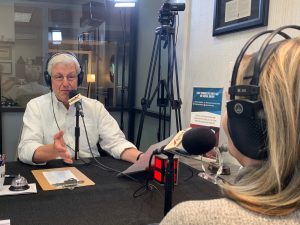
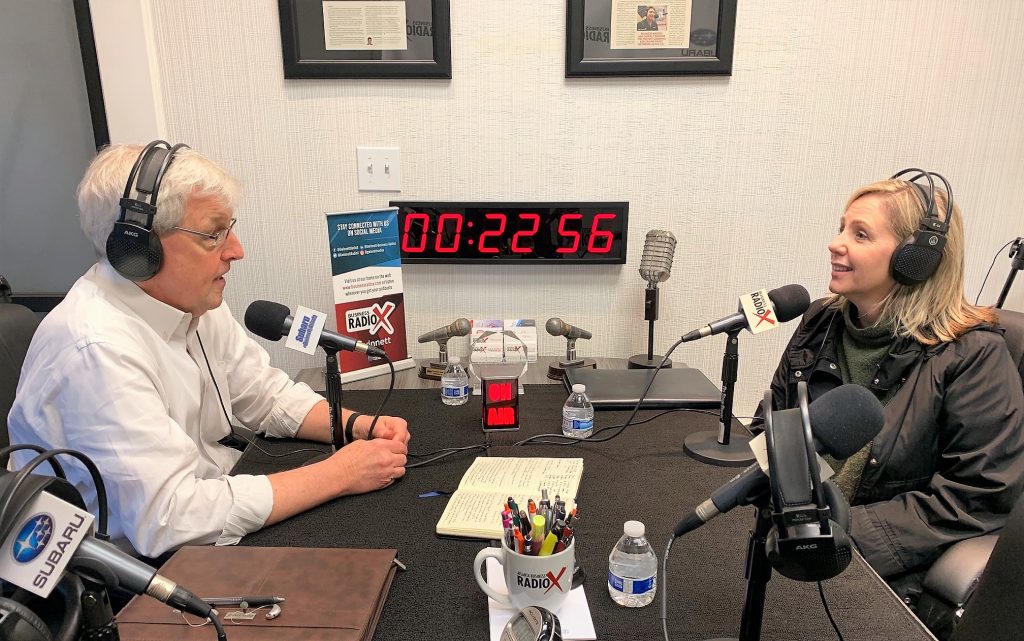
The Centurion Advisory Group teaches five basic principles of handling cash flow. On this episode of “Stewarding Family Wealth“, Randy Brunson, Sandy Leroux and Stephanie Sandridge discuss one of the basic principles which is how to avoid debt.

Randy Brunson/Centurion Advisory Group

Randy Brunson is the founding shareholder of Centurion Advisory Group. Randy has invested most of his forty-year career in financial services. He spent several years on the institutional side and had the opportunity to start a successful financial planning firm in 1991. Centurion Advisory Group serves individual and corporate clients, both in Georgia and throughout the country, offering personal and business financial planning, retirement plan design and management, and investment management services.

Randy studied engineering and marketing at UT Chattanooga. Randy currently holds the Accredited Investment Fiduciary (AIF®) and CKA designation and makes it a priority to stay on top of his knowledge in the financial industry through continuing professional educational opportunities and reading. In addition, Randy has completed studies in qualified plan design, estate planning and business transition planning and he enjoys speaking and writing regularly on these topics.

Sandy LeRoux/Centurion Advisory Group

Sandy LeRoux, has been with Centurion Advisory Group since early 2015. She serves as co-advisor and team lead and has primary responsibility for a number of client relationships. Sandy is a skilled and dedicated Financial Planner with more than 20 years’ experience in the executive level of business and finance. For 15 years, she served as Controller and Human Resources Administrator for LeRoux Entertainment, a multimillion-dollar company with over 250 employees in six states.

Following her desire to serve the broader community, Sandy served as the Executive Assistant to the lead pastor of The Bridge Church. During her time there, she especially enjoyed developing strategic pathways and action plans based on the priorities, vision, and initiatives of the pastor and congregation. Sandy also worked at the executive level of First Covenant Bank in Roswell, GA. Her talents in the financial and faith-based organizations are what led her to Centurion Advisory Group.

Sandy received her Bachelor’s Degree in Finance with a Minor in Accounting from UGA and her MBA in Corporate Finance from Georgia State University. Currently, Sandy is working towards her Certified Financial Planner (CFP) designation.

Stephanie Sandridge/Centurion Advisory Group

Stephanie Sandridge has been with Centurion Advisory Group since the fall of 2017. She is Operations Manager and has responsibility for Compliance, HR, Legal, and workflow processes. Stephanie is a committed business professional with a versatile skill set and 20 years’ experience in professional office environments. As Operations Manager of Centurion Advisory Group, she emphasizes strong organizational, communication, and relationship-building expertise and has an acute ability to relate to clients and colleagues effortlessly.

Stephanie has an operational background in the non-profit and medical fields with a specific focus on practical and efficient procedures, workflows, and compliance. Her interpersonal skills allow her to lead and influence easily. Working at Centurion Advisory Group enables Stephanie to live out her passion for making a positive impact in the lives of others.
Stewarding Family Wealth is presented by
Tagged With: avoiding debt, centurion advisory group, debt, eliminating debt, family wealth, financial advice, financial planning, paying off debt, randy brunson, sandy leroux, stephanie sandridge, stewarding family wealthwealth management

Principle of Handling Cash Flow: Spend Less Than You Make

April 24, 2021 by Mike

Gwinnett Studio
Gwinnett Studio
Principle of Handling Cash Flow: Spend Less Than You Make
Loading
00:00 /
RSS Feed
Share
Link
Embed

Download file

The Centurion Advisory Group teaches five basic principles of handling cash flow. On this episode of “Stewarding Family Wealth“, Randy Brunson, Sandy Leroux and Stephanie Sandridge discuss the first basic principle of tracking your expenses so you spend less than you make.

Randy Brunson/Centurion Advisory Group

Randy Brunson is the founding shareholder of Centurion Advisory Group. Randy has invested most of his forty-year career in financial services. He spent several years on the institutional side and had the opportunity to start a successful financial planning firm in 1991. Centurion Advisory Group serves individual and corporate clients, both in Georgia and throughout the country, offering personal and business financial planning, retirement plan design and management, and investment management services.

Randy studied engineering and marketing at UT Chattanooga. Randy currently holds the Accredited Investment Fiduciary (AIF®) and CKA designation and makes it a priority to stay on top of his knowledge in the financial industry through continuing professional educational opportunities and reading. In addition, Randy has completed studies in qualified plan design, estate planning and business transition planning and he enjoys speaking and writing regularly on these topics.

Sandy LeRoux/Centurion Advisory Group

Sandy LeRoux, has been with Centurion Advisory Group since early 2015. She serves as co-advisor and team lead and has primary responsibility for a number of client relationships. Sandy is a skilled and dedicated Financial Planner with more than 20 years’ experience in the executive level of business and finance. For 15 years, she served as Controller and Human Resources Administrator for LeRoux Entertainment, a multimillion-dollar company with over 250 employees in six states.

Following her desire to serve the broader community, Sandy served as the Executive Assistant to the lead pastor of The Bridge Church. During her time there, she especially enjoyed developing strategic pathways and action plans based on the priorities, vision, and initiatives of the pastor and congregation. Sandy also worked at the executive level of First Covenant Bank in Roswell, GA. Her talents in the financial and faith-based organizations are what led her to Centurion Advisory Group.

Sandy received her Bachelor’s Degree in Finance with a Minor in Accounting from UGA and her MBA in Corporate Finance from Georgia State University. Currently, Sandy is working towards her Certified Financial Planner (CFP) designation.

Stephanie Sandridge/Centurion Advisory Group

Stephanie Sandridge has been with Centurion Advisory Group since the fall of 2017. She is Operations Manager and has responsibility for Compliance, HR, Legal, and workflow processes. Stephanie is a committed business professional with a versatile skill set and 20 years’ experience in professional office environments. As Operations Manager of Centurion Advisory Group, she emphasizes strong organizational, communication, and relationship-building expertise and has an acute ability to relate to clients and colleagues effortlessly.

Stephanie has an operational background in the non-profit and medical fields with a specific focus on practical and efficient procedures, workflows, and compliance. Her interpersonal skills allow her to lead and influence easily. Working at Centurion Advisory Group enables Stephanie to live out her passion for making a positive impact in the lives of others.

Stewarding Family Wealth is presented by
Tagged With: centurion advisory group, debt, eliminating debt, family wealth, financial advice, financial planning, paying off debt, randy brunson, sandy leroux, stephanie sandridge, stewarding family wealth, wealth management

Mergers and Acquisitions E49

April 14, 2021 by Karen

Mergers-and-Acquisitions-feature
Phoenix Business Radio
Mergers and Acquisitions E49
Loading
00:00 /
RSS Feed
Share
Link
Embed

Download file

Mergers-and-Acquisitions-E49

Mergers and Acquisitions E49

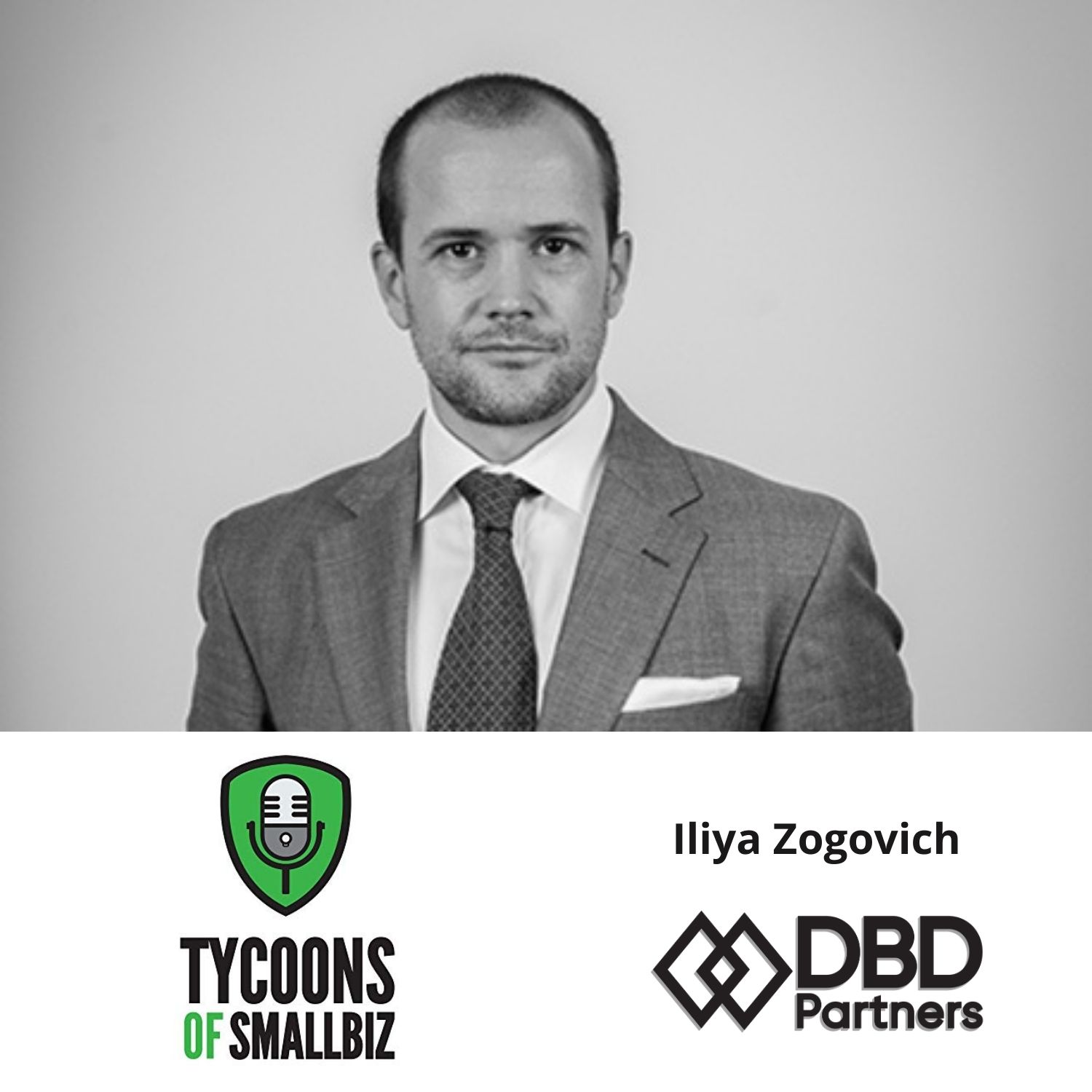
This was a great show with Iliya Zogovich of DBD Partners. Iliyah discusses in clear and understandable terms the process of mergers and acquisitions and the approach his team takes with the lower and middle markets. His current outlook is that this market is not slowing down and will continue to be one of the biggest growth strategies of equities.

Find out what DBD Partners looks for in a business. In summary, Information, Control and Quality are the most important factors, with the deal killers being delusional owners and selling to get rich. Tune in the full episode to be as impressed with Iliyah as the Tycoons are and to learn a little bit about mergers and acquisitions.

DBDPartnersLogo-3D-Transparent-01

DBD Partners is a leading independent Investment Bank focused on providing strategic advice In Mergers and Acquisitions, Financial Restructuring, Capital Formation, and Corporate Finance to middle market companies. We provide our clients with boutique investment banking service and bulge bracket bank process.

DBD Partners is the result of a spin off from ONEtoONE Corporate Finance USA, an International lower middle market focused Investment Bank head quartered in Europe. Before spinning off and forming DBD Partners, Mr. Zogovic launched the US Division of ONEtoONE and grew it to become the most profitable branch of the bank in under four years.

DBD Partners focuses on finding the optimal solutions for our clients’ most difficult strategic issues. In any transaction, making the right decision requires experience, determination, and creativity. We excel at helping our clients navigate complicated business landscapes by uncovering hidden value and presenting opportunities. Our expert bankers advise our clients on how they can unlock the highest potential value of their companies. We believe our people are our greatest asset, so we bring together the brightest individuals to deliver the highest level of execution to our clients. With decades of experience, our professional team has an unparalleled track record of navigating through complex obstacles and providing exceptional results.

At DBD Partners we believe that the key to attaining success for our clients stems from our eagerness to approach extreme challenges with technical skill, tenacity, and creativity. Therefore, we have adopted the mountain designation for Double Black Diamond as our namesake.

Iliya-Zogovich-Tycoons-of-Small-BizPrior to co-founding DBD Partners, Iliya Zogovic was the Chief Executive Officer of ONEtoONE Corporate Finance USA, an international investment bank focused on the lower middle market and headquartered in Europe. Mr. Zogovic launched the US division of ONEtoONE and grew it to become the most profitable branch of the bank in under four years. Prior to joining ONEtoONE, Mr. Zogovic was the President and CEO of EMG / GSP, one of the largest sales and marketing organizations in Mexico and Central America. Mr. Zogovic grew this company from a small, local business into an international company with over 10,000 employees. Mr. Zogovic also co-founded and managed a financial services business in Mexico before moving to the USA.

Mr. Zogovic is an advisor to several businesses as well as non-profit organizations. He is an active member of the Young Presidents’ Organization’s (YPO) Greenwich Chapter, a Founding Member of the NY Liberty Chapter where he serves as Treasurer, and he is the former Learning Officer of the Organizations Global Financial Services Network. Mr. Zogovic is the Secretary of the USA – Mexico Chamber of Commerce Board.

Mr. Zogovic is an ultra-endurance athlete; he has completed 5 Ironman races, and several triathlons and ultramarathons. He is an avid backcountry and big mountain skier. Mr. Zogovic studied Mechanical Engineering in Mexico and received his post-graduate education from Harvard Business School.

Connect with Iliya on LinkedIn.

About the Show

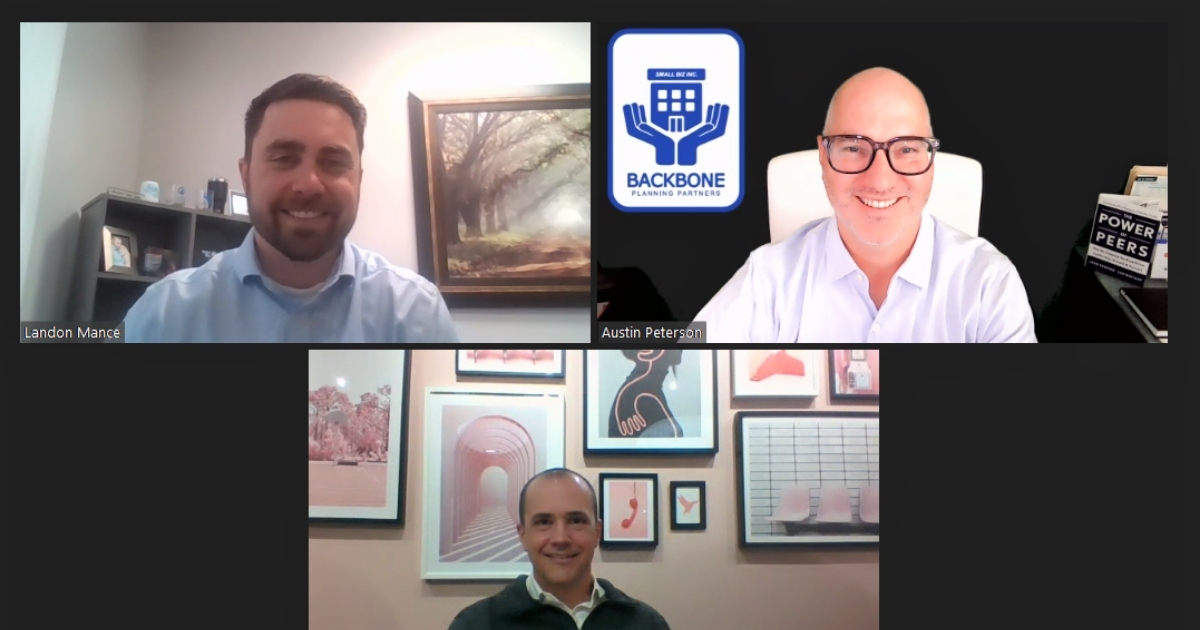
Tycoons of Small Biz spotlights the true backbone of the American economy, the true tycoons of business in America… the owners, founders and CEO’s of small businesses. Join hosts,  Austin L Peterson, Landon Mance and the featured tycoons LIVE every Tuesday at 1 pm, right here on Business RadioX and your favorite podcast platform.

About Your Hosts

Autsin-Peterson-on-Phoenix-Business-RadioXAustin Peterson is a Comprehensive Financial Planner and owner of Backbone Financial in Scottsdale, AZ. Austin is a registered rep and investment advisor representative with Lincoln Financial Advisors. Prior to joining Lincoln Financial Advisors, Austin worked in a variety of roles in the financial services industry.
He began his career in financial services in the year 2000 as a personal financial advisor with Independent Capital Management in Santa Ana, CA. Austin then joined Pacific Life Insurance Company as an internal wholesaler for their variable annuity and mutual fund products. After Pacific Life, Austin formed his own financial planning company in Southern California that he built and ran for 6 years and eventually sold when he moved his family to Salt Lake City to pursue his MBA.

After he completed his MBA, Austin joined Crump Life Insurance where he filled a couple of different sales roles and eventually a management role throughout the five years he was with Crump. Most recently before joining Lincoln Financial Advisors in February 2015, Austin spent 2 years as a life insurance field wholesaler with Symetra Life Insurance Company. Austin is a Certified Financial Planner Professional and Chartered Life Underwriter.

Austin and his wife of 21 years, Robin, have two children, AJ (19) and Ella (16) and they reside in Gilbert, Arizona. He is a graduate of California State University, Fullerton with a Bachelor of Arts in French and of Brigham Young University’s Marriott School of Management with a Master of Business Administration with an emphasis in sales and entrepreneurship.

Connect with Austin on LinkedIn, Facebook, Twitter, and Instagram.

LandonHeadshot01Landon Mance is a Financial Planner and founder of YourFuture Planning Partners out of Las Vegas, Nevada. His firm came to life in 2020 after operating as Mance Wealth Management since 2015 when Landon broke off from a major bank and started his own “shop.”

Landon comes from a family of successful entrepreneurs and has a passion and excitement for serving the business community. This passion is what brought about the growth of YourFuture Planning Partners to help business owners and their families. At YourFuture, we believe small business owners’ personal and business goals are intertwined, so we work with our clients to design a financial plan to support all aspects of their lives.

In 2019, Landon obtained the Certified Exit Planning Advisor (CEPA) designation through the Exit Planning Institute. With this certification, YourFuture Planning Partners assists business owners through an ownership transition while focusing on a positive outcome for their employees and meeting the business owner’s goals. Landon is also a member of the Business Intelligence Institute (BII) which is a collaborative group that shares tools, resources and personnel, and offers advanced level training and technical support to specifically serve business owners.Your-Future-Planning-Partners-logo

Landon enjoys spending time with his beautiful wife, stepson, and new baby twins. He grew up in sunny San Diego and loves visiting his family, playing a round of golf with friends, and many other outdoor activities. Landon tries make a difference in the lives of children in Las Vegas as a part of the leadership team for a local non-profit. He regularly visits the children that we work with to remind himself of why it’s so important to, “be the change that you wish to see in the world.”

Landon received his B.S. from California State University Long Beach in business marketing and gets the rest of his education through the school of hard knocks via his business owner clients.

Connect with Landon on LinkedIn.

About The Tycoons of Small Biz Sponsor

Whether you’re an established local company, or a brand new start-up, you can count on GBS to be a part of your family.

We’re not just any benefits consulting firm, we’re GBS. We have nearly 30 years of experience in group benefits, a strong sense of purpose and it shows.

Austin Peterson and Landon Mance are registered representatives of Lincoln Financial Advisors Corp. Securities and investment advisory services offered through Lincoln Financial Advisors Corp., a broker/dealer (member SIPC) and registered investment advisor. Insurance offered through Lincoln affiliates and other fine companies. Backbone Financial and Your Future Planning Partners are marketing names for registered representatives of Lincoln Financial Advisors

CRN-3541015-040821

Lincoln Financial Advisors Corp. and its representatives do not provide legal or tax advice. You may want to consult a legal or tax advisor regarding any legal or tax information as it relates to your personal circumstances.

The content presented is for informational and educational purposes. The information covered and posted are views and opinions of the guests and not necessarily those of Lincoln Financial Advisors Corp.

Business RadioX® is a separate entity not affiliated with Lincoln Financial Advisors Corp.

Tagged With: acquisitions, capital, debt, mergers, restructuring

Attorney Diane Drain and Bobby Zavala with University of Dubuque E5

December 9, 2019 by Karen

Attorney Diane Drain and Bobby Zavala with University of Dubuque E5
Phoenix Business Radio
Attorney Diane Drain and Bobby Zavala with University of Dubuque E5
Loading
00:00 /
RSS Feed
Share
Link
Embed

Download file

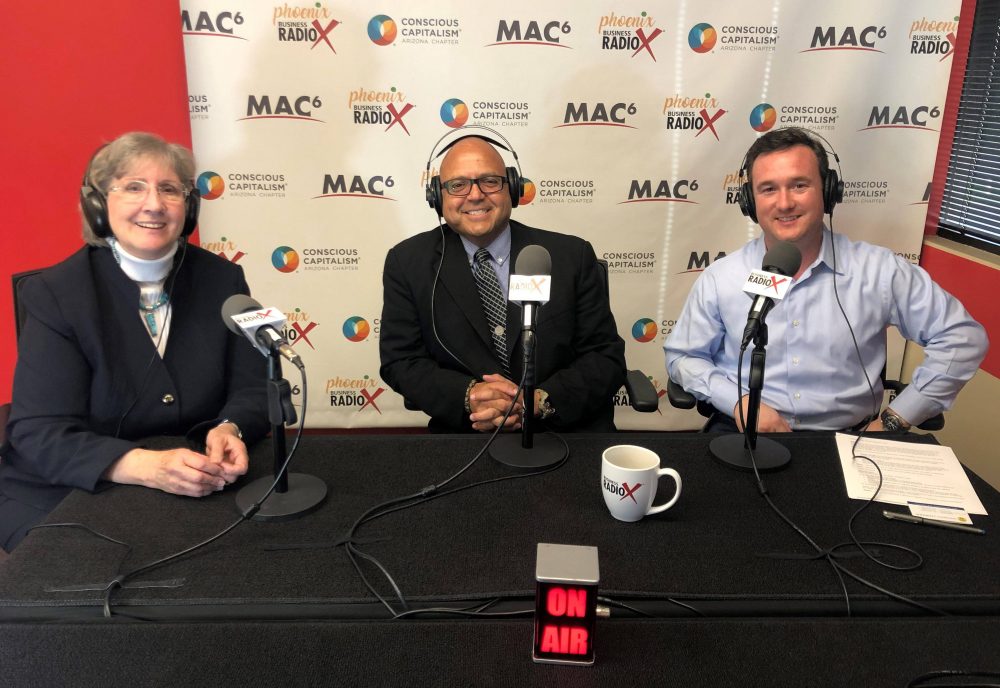
Attorney Diane Drain and Bobby Zavala with University of Dubuque E5

Attorney Diane Drain and Bobby Zavala with University of Dubuque E5

DIANE-DRAIN-University-of-Dubuque-on-Phoenix-Business-RadioXDiane Drain established her law firm in 1991 in order to provide education for those facing financial troubles. She believes that basic legal advice should be free and her commitment is to help her clients get their lives back on track. Her greatest reward is helping a family to establish credit so they can purchase a vehicle or home.

Diane loves her work. As a well known Phoenix bankruptcy attorney, she truly believes that “when you find your passion, going to work every day is a joy, not a job.” Her clients and fellow lawyers can attest to her passion and commitment to excellence. She practices only the areas of bankruptcy and foreclosure laws.For many years our clients and fellow lawyers rate my work as the highest possible.

Diane is a retired professor of law and taught bankruptcy since 1990 to both law students and the general public. Diane’s clients and peers have given her the highest possible rating in both legal ability and ethical standards. Treeoflifewithtaglinecropped480X720

Diane’s code: to quote Abraham Lincoln: “Discourage litigation. Persuade your neighbors to compromise whenever you can. Point out to them how the nominal winner is often a real loser – in fees, expenses, and waste of time.

As a peacemaker the lawyer has a superior opportunity of being a good man. There will still be business enough.” “The Collected Works of Abraham Lincoln edited by Roy P. Basler, Volume II, Notes for a Law Lecture, July 1, 1985, p. 81” ]

Connect with Diane on LinkedIn, Facebook and Twitter.

The University of Dubuque is a private university offering undergraduate, graduate, and theological seminary degrees, and other educational opportunities with the intention of educating and forming the whole person. The university is comprised of individuals from the region, our nation, and the world.

The LIFE advantage: The University of Dubuque designed the Learning Institute for Fulfillment and Engagement specifically for adult learners. LIFES’s accelerated degree program and services–available during the hours you need them–help you balance your family life, your career, and your studies.

The University of Dubuque (UD) LIFE Adult Learning Program offers a Bachelor’s Degree in Human Resources, Marketing, Health Care Administration, Accounting, and Criminal Justice. UD also offers a Master’s Degree in Business Administration (MBA). Convenient scheduling: Classes are Monday -Thursday; Classes are face to face; Classes are from 6PM-9PM; Students take one class per session; Students can attend nine sessions per year; Sessions are five weeks in length; Childcare will be provided for children of students enrolled in the LIFE accelerated degree program.

Bobby-Zavala-University-of-Dubuque-on-Phoenix-Business-RadioXAn Arizona native, Senior Director Bobby Zavala has over 20 years of Active Military Service and 10 years Law Enforcement experience. He is a Deputy Sheriff with the Cochise County Sheriff’s Office. During his tenure with the Cochise County Sheriff’s Office he was a General Instructor, Physical Fitness Instructor, RADAR Instructor, Team Leader for the Accident Investigation Team, and a Field Training officer. He culminated his previous ten years as a Tactical Flight Officer and the Training Officer for the Aviation Support Unit “Geronimo”. He is still a Certified Arizona Peace Officer and remains on Reserve status with Cochise County.

He is active in the Phoenix area with many Civil Rights and Veteran groups. He is currently the Deputy Director of District 1 (LULAC), League of United Latin American Citizens, LULAC State Deputy Director of Elderly Affairs, Chair of the Tempe Military Affairs Committee (MAC), member of the Tempe Diplomats, a Life member of the Veterans of Foreign Wars (VFW) and a member of the American Legion. Senior Director Bobby Zavala holds a Bachelor of Science Degree from Wayland Baptist University and is in pursuit of a Master’s Degree in Criminal Justice.

Bobby is married, lives in Maricopa and enjoys reading, long distance running, spending time with his family.

Follow the University of Dubuque on LinkedIn and Facebook.

Special Guest Host

Mike-Poulton-on-Phoenix-Business-RadioXMike Poulton, with Poulton & Noroian, was born in North Carolina, and has lived in Nebraska, Kansas, Vermont and Arizona throughout his life. Mike earned a Bachelor’s Degree in Construction Management with minors in Physics and Business from the University of Nebraska – Lincoln. As an undergraduate, he worked as a physics research assistant in the Polarized Electron Group at UNL, designing and building scientific apparatus in support of a national nuclear physics research project. Prior to his career in law he was a project engineer and field superintendent for an international commercial contractor, helping manage large office and retail construction projects in Phoenix.

Mike attended the Sandra Day O’Connor School of Law at Arizona State University, where he was awarded the Charles E. Jones Merit Scholarship and was named a Scholar at the Center for the Study of Law, Science and Technology. He won the Moot Court Oral Argument Competition and was an editor of Jurimetrics, the academic journal of the American Bar Association’s division of Law Science and Technology. His published article “Particles of What? A Call for Specificity in Airborne Particulate Regulation” won Best Student Note, and was a nominated for the American Society of Legal Writers Law-Review Award Competition.

Mike’s legal practice draws on his knowledge and experience in other fields to serve his clients. As an experienced science researcher, Mike understands technical issues that many other attorneys cannot, and applies that knowledge for his clients’ benefit. His construction management experience also provides him with a broad knowledge base not only in construction law, but also in regulatory compliance, worker safety, and negotiation.

In addition to law, Mike has a passion for hands-on work with technological hardware and has a number of projects he is actively pursuing at any time – presently including an attempt at the world speed record for a hovercraft. He is a professional pyrotechnician who frequently produces public fireworks displays on the Fourth of July and other holidays. He has worked on the crew of many electronically fired shows in Kansas, Nebraska, Ohio, Vermont, and Arizona and has set up explosive special effects at airshows around the country. Mike has been active in canine search and rescue to find lost and missing people in the wilderness of Arizona, is a ham radio operator, a gun collector, amateur watchmaker, and enjoys camping in the mountains of Prescott, Arizona.

Michael is licensed to practice law in Arizona and is admitted to practice before the U.S. Federal District Courts in Arizona.

Connect with Mike on LinkedIn.

About This Show LawgitimateLogo

Lawgitimate and its awesome guests highlight everyday financial topics including credit scores, debt management, small business, and real estate.

Lawgitimate’s goal is to raise awareness and provide the full perspective, including the legal lens attorneys use to address these complicated and fun topics.

About Your Host

RochellePoultonHeadshotRoundRochelle Poulton is an attorney and owner of AZCLG. Rochelle has been helping people with Credit and Debt issues since 2012, owns several small businesses, and has nearly 20 years of real estate experience.

Rochelle created Lawgitimate to bring in a network of awesome people to raise awareness and educate people about the litany of legal issues she faces everyday at AZCLG.

About AZCLG azclg-circle-web-transparent-bkgd1

The Arizona Credit Law Group, PLLC aka AZCLG is a consumer rights law firm in Tempe, AZ helping people with Credit Repair, Debt Settlement, and Bankruptcy.

We are small but mighty and love helping people get back on track financially. Learn more about us at azclg.com.

Tagged With: debt, higher education, how can I avoid garnishment, how do I stop creditors, how does bankruptcy work, stop collection calls, University of Dubuque

Decision Vision Episode 12: Splitting Up a Business Partnership – An Interview with Bill Piercy, Berman Fink Van Horn

April 25, 2019 by John Ray

Decision Vision
Decision Vision
Decision Vision Episode 12: Splitting Up a Business Partnership - An Interview with Bill Piercy, Berman Fink Van Horn
Loading
00:00 /
RSS Feed
Share
Link
Embed

Download file

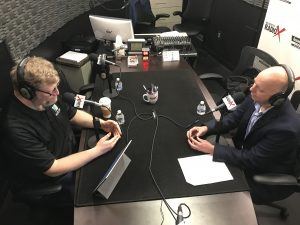
Michael Blake, Host of “Decision Vision” and Bill Piercy, Berman Fink Van Horn

Splitting Up a Business Partnership

It’s inevitable that business partnerships will dissolve, argues Bill Piercy of Berman Fink Van Horn, so partners need to prepare for the inevitable. In this episode of “Decision Vision” host Michael Blake talks with Piercy on how to prepare ahead of time, signs it is time to dissolve a partnership, and mistakes to avoid.

Bill Piercy, Berman Fink Van Horn

Bill Piercy is a Shareholder with Berman Fink Van Horn. Bill works with business owners to bring successful resolution to disputes concerning the management and control of the business. Frequently this means representing partners or shareholder groups who find themselves embroiled in controversy with their co-owners. After more than two decades of practice in the “corporate divorce” arena, he understands the challenges and the opportunities that arise from internal dissension within the management, operations and ownership of a closely held business.

Bill was named a “SuperLawyer” in the Atlanta legal community by Atlanta Magazine in 2012 – 2019, and as a “Rising Star” by that same periodical in 2006, 2009, 2010 and 2011. He is a member of the 2012 Class of Leadership DeKalb, as well as an Eagle Scout.

Recently, Bill put pen to paper to share his more than two decades of practice in the “corporate divorce” arena with entrepreneurs in his new book Life’s Too Short for a Bad Business Partner.

Michael Blake, Brady Ware & Company

Mike Blake, Host of “Decision Vision”

Michael Blake is Host of the “Decision Vision” podcast series and a Director of Brady Ware & Company. Mike specializes in the valuation of intellectual property-driven firms, such as software firms, aerospace firms and professional services firms, most frequently in the capacity as a transaction advisor, helping clients obtain great outcomes from complex transaction opportunities. Mike is also a specialist in the appraisal of intellectual properties as stand-alone assets, such as software, trade secrets, and patents.

He has been a full-time business appraiser for 13 years with public accounting firms, boutique business appraisal firms, and an owner of his own firm. Prior to that, he spent 8 years in venture capital and investment banking, including transactions in the U.S., Israel, Russia, Ukraine, and Belarus.

Brady Ware & Company

Brady Ware & Company is a regional full-service accounting and advisory firm which helps businesses and entrepreneurs make visions a reality. Brady Ware services clients nationally from its offices in Alpharetta, GA; Columbus and Dayton, OH; and Richmond, IN. The firm is growth minded, committed to the regions in which they operate, and most importantly, they make significant investments in their people and service offerings to meet the changing financial needs of those they are privileged to serve. The firm is dedicated to providing results that make a difference for its clients.

Decision Vision Podcast Series

“Decision Vision” is a podcast covering topics and issues facing small business owners and connecting them with solutions from leading experts. This series is presented by Brady Ware & Company. If you are a decision maker for a small business, we’d love to hear from you. Contact us at decisionvision@bradyware.com and make sure to listen to every Thursday to the “Decision Vision” podcast. Past episodes of “Decision Vision” can be found here. “Decision Vision” is produced and broadcast by Business RadioX®.

Visit Brady Ware & Company on social media:

LinkedIn: https://www.linkedin.com/company/brady-ware/

Facebook: https://www.facebook.com/bradywareCPAs/

Twitter: https://twitter.com/BradyWare

Instagram: https://www.instagram.com/bradywarecompany/

Show Transcript:

Intro: [00:00:01] Welcome to Decision Vision, a podcast series focusing on critical business decisions, brought to you by Brady Ware & Company. Brady Ware is a regional, full-service accounting and advisory firm that helps businesses and entrepreneurs make vision a reality.

Michael Blake: [00:00:20] And welcome back to another episode of Decision Vision, a podcast giving you, the listener, clear vision to make great decisions. In each episode, we discuss the process of decision making on a different topic. Rather than making recommendations because everyone’s circumstances are different, we talk to subject matter experts about how they would recommend thinking about that decision.

Michael Blake: [00:00:38] Hi, I’m Mike Blake. And I’m your host for today’s program. I’m a Director at Brady Ware & Company, a full-service accounting firm based in Dayton, Ohio, with offices in Dayton; Columbus, Ohio; Richmond, Indiana; and Alpharetta, Georgia, which is where we are recording today. Brady Ware is sponsoring this podcast. If you like this podcast, please subscribe on your favorite podcast aggregator, and please also consider leaving a review of the podcast as well.

Michael Blake: [00:01:04] Today, we’re going to talk about splitting up a business partnership, or some people call it a business divorce. And for purely selfish reasons, this is a topic that’s near and dear to my heart because this, actually, happens to be a big part of my practice. Often though, not every time, that there’s a business split, somebody wants to know what the number is that one person should be bought out at. And, so, that’s a part of my practice from, sort of, a purveyor of misery.

Michael Blake: [00:01:35] But the thing about business divorces is that they can be equally as dramatic, equally as painful, equally as tense. And, yes, on some levels, equally as entertaining as watching a conventional marital divorce. But we don’t have to just take my word for it. We’re bringing in a subject matter expert. And joining us today, to help us work through this decision process is my good friend Bill Piercy of Berman Fink Van Horn here in Atlanta.

Michael Blake: [00:02:02] Bill works with business owners to bring successful resolution to disputes concerning the management and control of businesses. Frequently, this means representing partners or shareholder groups who find themselves embroiled in controversy with their co-owners. After more than two decades of practice in the corporate divorce arena, Bill understands the challenges and the opportunities that arise from internal dissension within management, operations, and ownership of a closely-held business.

Michael Blake: [00:02:28] Through hard work, candid advice and effective advocacy, Bill helps clients achieve successful outcomes. Bill was named a Super Lawyer in the Atlanta Legal Community by Atlanta Magazine in 2012 and as a Rising Star by that same periodical in 2006, 2009, 2010 and 2011. Bill is a member of the 2012 Class of Leadership DeKalb. Bill previously served on the Executive Committee of the Gators for Business Arm of the Atlanta Gator Club and as a member of the Board of Directors of the Sole Practitioner Small Firm Section of Atlanta Bar Association.

Michael Blake: [00:03:04] In addition, to practicing in the corporate divorce arena, Bill has written a book on the subject, Life’s Too Short for a Bad Business Partner. Bill’s book is available for purchase at amazon.com. I would also say a bookseller near you, but those are pretty much gone now, especially, I think, Barnes & Noble is history, about to be history. And Bill has an undergraduate degree from the University of Florida and earned his law degree from Emory University in Atlanta. And I understand his parents did not bribe either institution in order to get in there. So, we’re getting the real deal. Bill Piercy, thanks so much for coming on the program.

Bill Piercy: [00:03:38] Thank you very much. I appreciate the opportunity to be here.

Bill Piercy: [00:03:41] So, you’ve got kids, I’ve known you a long time. You’re a busy successful attorney doing important things. Why do you find the time to write this book on business divorce?

Bill Piercy: [00:03:55] I found myself saying the same things to clients over and over again. And it occurred to me one day, “Why don’t I write this stuff down? It might be easier or better for people to digest it that way.” When someone has dissension in their business particularly with the other owners that can be a very lonely time and a lonely place to be.

Bill Piercy: [00:04:23] You can’t really go talk to the CPA to ask for a referral to a lawyer because, well, he answers to your business partner too. You certainly don’t want to go to clients and had them know that there’s some sort of problem with the business. You don’t tell vendors, you don’t tell lenders. And so, sort of like when your leg hurts and you go on to Google or Web MD to figure out what’s going on, people would find my blog and find me through that. And it occurred to me that if I created maybe a little more comprehensive guide, I might be able to help even more people.

Michael Blake: [00:05:02] Okay. I’d never thought of that but you’re right. I mean, all the venues that you would normally associate with getting help are close to you because the last thing you want broadcasted to anybody is I’ve got a potential business dispute internally. That freaks out employees. It freaks out advisors. It freaks out clients, vendors. Pretty much everybody within earshot gets freaked out by that.

Bill Piercy: [00:05:28] It’s absolutely right.

Michael Blake: [00:05:28] So, essentially. I haven’t thought of it that way, but that makes sense. So, they say that debt and taxes are the two things in the world that are inevitable. Is the same true of business partnerships? Are business partnerships kind of hired to be fired?

Bill Piercy: [00:05:43] I mean, they should be. Marriage is supposed to last forever or until death do us part, but that’s not the way business partnerships are supposed to be. You come together. You work together. It’s the common goal of making some money. And hopefully everybody leaves with their pockets loaded and as friends. Sometimes, they don’t end that way. And my practice is typically revolves around those situations where folks are less than happy as they are parting ways.

Michael Blake: [00:06:16] I did not expect that answer. I learned something. And you’re right, the notion of death do us part. And what the heck, my wife will never listen to this. But we know that that convention came into play when the life expectancy was about 42. And by then, you’re expected to die of black death, or a rotten chicken bone, or having somebody impale you with a hoe, basically, right?

Michael Blake: [00:06:45] And, now, things have changed. That till death do you part is a much larger commitment. I think when we think of partnership as intimate as a business partnership, I have to admit, I think of it as a lifelong engagement. But maybe you’re right, it’s healthy that you should kind of plan for the split. And maybe if it works out, that you both, as two business partners, you die lovingly and in each other’s arms on a pile full of money, right?

Bill Piercy: [00:07:15] That’s right.

Michael Blake: [00:07:15] Maybe that’s the optimal outcome, but that’s sort of a rarity. So, planning for that in advance, I guess, makes you more prepared, right?

Bill Piercy: [00:07:25] Absolutely.

Michael Blake: [00:07:26] Okay. So, where do the cracks start? I mean, you and I could trade war stories probably all afternoon. We don’t have unlimited time unfortunately. But I’d like to hear from you and maybe I’ll jump in, but where the cracks start to show? What are the things that tend to be the kernels that, ultimately, result in a dispute that is most likely to lead to some kind of split?

Bill Piercy: [00:07:52] Sure. Lack of communication is huge. Lack of transparency is distinguished, in my mind, from lack of communication because it’s one thing for everybody be talking. It’s another thing to actually reveal the financial statements or the underlying transactions that one partner may be responsible for as opposed to the other. The lack of a shared vision among the partners, one wants fast growth, the other doesn’t.

Bill Piercy: [00:08:28] And tied to that, maybe a divergent comfort level with risk score, with debt. Some people, rob Peter, pay Paul, let’s run to the races. And other people want all kinds of money in the bank before they do anything. And that can cause a lot of tension among owners of a business. Disparity and contribution, right. It’s owned 50/50, but one guy is doing 80% of the work. You can see why he might get frustrated.

Bill Piercy: [00:08:56] And a lack of clearly defined roles. Sometimes, early on, we’re all going to jump in. We’re all going to do everything that needs to be done to make this a success, and they’re excited. And 10 years down the line, it would make sense for one person with a particular set of skills to do certain aspects of the business, and someone else to do other tasks. And sometimes, those either formally or informally happen. Sometimes, they don’t. Sometimes, it’s, “Well you were in the office, so you did it, or I thought you were going to do it,” and that can lead to problems.

Michael Blake: [00:09:36] That communication transparency part it, really resonates with me. With the partnership splits in which I’ve been involved in appraising the core business, it has always struck me that if a few honest conversations for 30 minutes had happened two years prior to when they’ve hired me, we may very well not be here, right? And the transparency, to me, is connected with surprise, right?

Bill Piercy: [00:10:11] That’s right.

Michael Blake: [00:10:11] When a surprise happens in the business. In my case, one of the things I really insist on is if a company hires me in a buy/sell that I want to interview both partners even if one of them is retaining me, and try to get them all involved in that, and engaged in that conversation because you’re more likely to get buy-in if there’s not a surprise, if you see the freight train coming, right. And the lack of transparency leads to surprise. Surprise leads to anger. And then, that leads to imagination.

Bill Piercy: [00:10:43] That’s exactly right.

Michael Blake: [00:10:44] And that’s where you kind of get the runaway train, right?

Bill Piercy: [00:10:46] Well put.

Michael Blake: [00:10:50] So, are there are the reasons that are, kind of, avoidable? I mean, we just talked a little about communication. But when you kind of look at that portfolio of partnership disputes, what are the ones you see most often that maybe resonate with what I describe which is, “Jeez, why are we here?” Like the old cartoon of what would you’ve done right to the police is never what would have happened, that sort of thing. Are there things in your mind or patterns that you see that have you, kind of, asking yourself why we’re at this point or are we sure this is not reparable?

Bill Piercy: [00:11:29] It’s whatever the problem is, it’s festering for a while. And so, it’s not necessarily — I mean, communication is a huge one, but whatever the issue is, the people, the partners involved aren’t addressing it head on. They aren’t confronting it with each other. And from my perspective, if there is tension in that way, I would encourage folks to consider ending the business relationship, in its current form. I’m not saying that every fight should lead to divorce, but if there is a persistent problem, the underlying structure isn’t working, right.

Bill Piercy: [00:12:22] And so, it may just need to be fixed, but I find it’s often more productive to go into that fix with, “You know what, the old way is done. We are starting from scratch, and we’re going to talk about how often we’re going to communicate, and we’re going to talk about who is responsible for what, and we’re going to talk about who stays in whose lane, and we’re going to decide what level of commitment and what level of compensation we’re going to have.” And I think those are the business relationships that can be salvaged, if that’s the right word.

Michael Blake: [00:12:57] Yes. So, I’m going to go off script a little bit. I think that’s really smart, if nothing else, because I never thought of it that way. The notion that there is this binary choice that you either keep the partnership as is, baby and bathwater, or you dump baby and bathwater out, it’ s a false choice, isn’t it, right? There’s an option to say, to consider, maybe this relationship, the way it’s structured, isn’t working. But what if we just sort of took a blank sheet of paper, literally a blank sheet of paper, that clean slate, what would we do differently to make us both happy? And maybe there’s a way to salvage that.

Bill Piercy: [00:13:33] That’s my idea.

Michael Blake: [00:13:35] And I’m curious, what’s your betting average with that? Have you suggested that? Have you gotten traction with that?

Bill Piercy: [00:13:44] I have, not a lot.

Michael Blake: [00:13:46] Yeah.

Bill Piercy: [00:13:46] By the time folks get to me, and they’re paying a lawyer by the hour to fight, they’re generally pretty mad. I think that there are probably a lot of transactional lawyers that do this sort of thing all the time. I’m a litigator. When they get to me, we’re typically filing lawsuits, or threatening lawsuits, or being threatened with a lawsuit.

Bill Piercy: [00:14:12] And so, it’s pretty rare, but I do have one shining moment example where I helped. And my opposing counsel was of a similar mindset. And we got these folks to agree to have breakfast at Shoney’s every Friday morning with a checklist. And they would talk through that checklist because despite all their hating each other, they were printing money, and it just made sense to keep printing money. And as far as I know, they’re still printing money today.

Michael Blake: [00:14:43] No kidding. Well, good for you. Well, if the law thing doesn’t work out, maybe you can be a counselor.

Bill Piercy: [00:14:48] Maybe.

Michael Blake: [00:14:48] Maybe as a second career. So, you’ve written this book, and you’ve done it because it’s an opportunity to, kind of, avoid the repetition. And it’s a quick read. Certainly, you’re not going to be mistaken for a Russian novel. But even that having been said, if you wanted a reader to take one thing away from that book, what do you think that would be? ***

Bill Piercy: [00:15:15] To focus on the future, where you’re headed, where you want to be, and not on the past, and what your partner did or didn’t do, and how angry you are about it, if you’re at the point where you’re reading a book called Life’s Too Short for a Bad Business Partner, or talking to a business litigator, or to a business valuation person because your business is in some sort of crisis, then, you’ve already, kind of, lost. And, now, it’s time to stop the bleeding, and to focus on going somewhere else, and making some money. It is easy to let that anger or fear consume you, and it’s just not productive.



Michael Blake: [00:16:07] And I will attest that. I’ve never had to go as far as a litigation, but I’ve been involved in business partnerships where I’ve been upset. And I think that advice is so good that, on the one hand, you do feel like you’ve been wounded somehow. And you’ve been wounded in what, really, is a very intimate relationship. You’ve placed your financial well-being and that of your family in somebody else’s hands to a certain extent.

Bill Piercy: [00:16:39] That’s right.

Michael Blake: [00:16:39] And that means that the second that is even a whiff of being threatened in some way, it’s very hard not to react. Like your bass is super tight in piano string, right?

Bill Piercy: [00:16:51] I’m not suggesting it’s easy.

Michael Blake: [00:16:52] Yeah. And there’s a lot of deep breaths and whatnot that sort of have to take place. And I think that focusing kind of — because you can remedy the passing. A lot of what you do is to recover things from the past, the past injuries. But the end of the, day everything’s out in front of us, I guess, right?

Bill Piercy: [00:17:12] That’s right.

Michael Blake: [00:17:15] Okay. So, you talked about, by the time you get to reading a book, by the time you get to talking to somebody like you, and paying your fees, and so forth, what is that trigger? How do I know that I’m so mad that I got to contact Bill Piercy, and have him help me figure this out, and have some combination of making me whole/extracting horrible revenge versus, yeah, I’m ticked off, but do I really like to get a lawyer involved? You know what I mean? What’s that Rubicon? What’s that inflection point?

Bill Piercy: [00:18:01] Sure. It’s nice when folks have the option of just being mad or annoyed. Sometimes, they do. Sometimes, they don’t. Frankly, in either circumstance, I would encourage folks to get a handle pretty quickly on what rights and obligations they have to and from the business, to and from the other owners, to and from lenders and landlords. And that may mean getting a hold of your shareholder’s agreement, seeing where you can’t remember if you guaranteed the lease on the building or not. Those kinds of things.

Bill Piercy: [00:18:44] Some people are pretty organized. And sometimes, those documents are pretty easy to read. Sometimes, it takes a lot of work. Sometimes, there is no document. Sometimes, it’s on the back of a napkin, or it’s just a handshake, right. And a good lawyer can help folks understand that the law will impose some order on your situation, but it’s not intuitive always what those rules are. So, I would encourage folks to do it.

Bill Piercy: [00:19:15] And as for the trigger, as to when you start investigating those things, I mean, when you don’t trust your partner anymore, when you just can’t see yourself being in business with them anymore. or on a shorter time frame when your little key doesn’t work in the office lock one day-

Michael Blake: [00:19:37] Okay, that’s a trigger.

Bill Piercy: [00:19:38] … or you get served with a summons. I mean those sorts of things.

Michael Blake: [00:19:43] Okay, yeah. Or, as I’ve had with a client, just all of a sudden, one day, gets walked out of the building.

Bill Piercy: [00:19:51] That’s right.

Michael Blake: [00:19:51] Right. Obviously, there’s going to be a call to maybe multiple counsel at that point. So, I was going to ask one question, but I want to interject or intercede one question. Obviously, one sign that a business breakup is coming is that summons, that walking out, right. But are there more subtle signs that it’s sort of happening, but it may not be that apparent, and you’re like the frog in the water? You don’t realize it’s a business break until you’re the boiled frog in the water. You know what I mean?

Bill Piercy: [00:20:25] There are. There absolutely are. Trust that spidey sense or trust your gut. If it seems like maybe, “Boy, my partner seems to be having a lot of meetings with a closed door, or out of the office, or he’s kicked the can down the road on our weekly catchup meeting four weeks in a row. And I keep asking about the financial statements, and I keep being told I’ll see them tomorrow.” We all have other things to do. And not everybody turns everything in on time. But when those things start to lag, and you start to get suspicious, listen to your gut. Trust but verify.

Michael Blake: [00:21:12] Yeah. So, when that spidey sense, then, kicks in, what should you do? First thing, top of the to-do List.

Bill Piercy: [00:21:24] Gather whatever information you can that will help you and your team understand what rights and obligations you have and your partner has because that will be hugely determinative about your next steps and, frankly, the obstacles and opportunities that you have.

Michael Blake: [00:21:47] Now, do you have to treat a little bit differently when — I mean, you’re a company insider. On the one hand, I could certainly see advising somebody to be aggressive because if you think you might get locked out of the business, that means you may be locked out of your access to that information, and the only way we’re going to get it is through discovery. But on the other hand, do I have to be careful if I’m in that scenario because I may be acquiring and taking information that isn’t rightfully mine to have custody? Or I’m an owner of the business, therefore, I have the right to custody. Is there a balance there or a maze there that has to be navigated?

Bill Piercy: [00:22:28] It’s absolutely a complicated maze. And you’ve touched on a really good point. It’s as an owner of the business, you generally have the right to look behind the curtain and see whatever is there. But property that belongs to the business doesn’t belong to you just because you own a piece of the business. It’s not so much taking that information to yourself. I wouldn’t counsel anybody to email the customer a pricing list to their Gmail account, but I would encourage them to access it regularly and to ensure that they have that access.

Bill Piercy: [00:22:28] Sometimes, the division of labor leads partners to where one’s never met the landlord, or the IT guy, or the banker. And, all of a sudden, those things get shut off. It’s much harder to turn it back on when the relationship manager at the bank has never heard of you, and the IT guy doesn’t really know who you are. But if you have — not saying you take over that responsibility, but every once in a while, you stick your head in, and you make sure those folks know you. It’s much easier to restore your access should your partner do something nefarious.

Michael Blake: [00:23:49] So, one of the lessons here is in a partnership, protect yourself. Make sure that there are no key relationships and information sources that are proprietary to your other business partner. Maybe you’ll never have to call upon that, but if you do, you’ll be glad that you made that effort to have that line of communication, that recognition regularly.

Bill Piercy: [00:24:10] Absolutely.

Michael Blake: [00:24:10] So, sort of a hypothetical. Let’s say that that maybe there’s a bunch of information on a laptop, right. It’s a company laptop. It’s one that has not necessarily been assigned to me, but that laptop has information that, I think, is material to my potential case going forward. Is that’s something I may be forced to kind of leave behind, or can I take it, or is it a it-depends kind of deal.

Bill Piercy: [00:23:12] I mean, it’s a it-depends kind of deal. Is it used in the day-to-day business by you? Physically taking it, are you depriving the business of the opportunity to use that information? I’m not so worried about where the laptop sits. It’s, “Can the other partner access the data on it just because it’s sitting in your living room?” Maybe. Maybe it’s linked to cloud, or they can call you up and say, “Hey, I want to come look at it.” And if you allow that, I’m much less concerned about that conduct than one partner excluding the other from some critical piece of the business.

Michael Blake: [00:25:19] Right. So, don’t take the laptop, and then put in a safe deposit box, or bury it, or something like that.

Bill Piercy: [00:25:25] That’s probably right.

Michael Blake: [00:25:26] Okay. So, one of the most common mistakes you see business owners, soon-to-be-splitting partners make during that process that if they hadn’t made those mistakes, they might have had a better outcome.

Bill Piercy: [00:25:40] I think that we’ve touched on really the two big ones already here today. And that’s taking company property and assuming that because you own a piece of that company, you can take this equipment or this data, and either use it for competitive purposes or exclude the other folks in the business from using it. That’s number one. And number two, just not having keys to the castle. Not knowing how to turn your access to the network back on, or get back in the front door, or whatever it may be.

Michael Blake: [00:26:18] I’m going to go off script again because I think this is an important question. What about the scenario, I’ve got two clients in the scenario now, the majority shareholder, basically, fires a minority shareholder, cuts off their income, cuts off access to bank accounts. How is that properly handled? Can the majority shareholder typically just do that? Is it that simple, or, for the minority shareholders, is there are remedy, or does a majority shareholder have to go through a process to do that legally?

Bill Piercy: [00:26:53] So, the firing, pretty much if the majority owner can say, “You know what, we’re going to hire out whatever work you’ve been doing,” or “I’m going to start doing it.” And it’s a complicated question but, generally, can show that minority owner to the door.

Michael Blake: [00:27:15] Okay.

Bill Piercy: [00:27:16] But access to information, if you own a piece of the company, you have a statutory rite, generally, to review the books and records of the business. And it’s a different right, whether it’s a corporation or an LLC, but, generally, you’ve got that right. And you’re supposed to just be able to write a letter, and then be provided reasonable access and an opportunity at your cost to copy whatever information you want to copy. And if that information is not provided, there is generally an expedited legal remedy for ensuring your access to that information. Basically, it means filing a lawsuit, but that lawsuit is supposed to and typically does move faster than your average case.

Michael Blake: [00:28:13] Okay. So, not all business divorces go to court, right, thankfully. But some of them do. I think you’ve touched upon this, but I want to make sure the point is clear. What, in your mind, distinguishes the amicable or, at least, non-hostile partnership dissolution from the all-out, knockdown, drag-out, street-fight of litigation?

Bill Piercy: [00:28:42] Sure. Fundamentally, people change their interest in the business, change their interest in being involved in the business, and what they want to do can change over time. Those are legitimate bases for folks just deciding to part ways and go do something else. Where it turns hostile and expensive, typically, I mean without getting too philosophical about it, it’s pride, greed, lust, anger, gluttony, envy, and sloth. The seven deadly sins or some combination of them that cause people not only to decide they don’t want to be in business together but decide that I want all the business or whatever their dispute may be. Those typical, those raw emotions are often what’s behind it.

Michael Blake: [00:29:44] That’s interesting. That’s a heck of a checklist. I’ve been around a long time now. So, have you found — I mean, people talk a lot about buy/sell agreements. And for the listeners, a buy/sell agreement is just the rules by which the two or more partners agree that a share will be bought out either by the company of one or more shareholders or between each other when somebody is going to get out of the partnership. Have you found them to be helpful? I mean, are they as useful as advertised?

Bill Piercy: [00:30:16] So, in some, typically, when they’re is useful as advertised, I never see it because it doesn’t result in litigation. And so, the transactional lawyers that are deal makers do them and do them well all the time. And I think they provide a valuable set of rules for — agree when you’re agreeable, right. And so, everyone has come to it. We’ve already established how we’re going to decide, how much, and when somebody pays somebody else for their share in the business. And we’re going to already decide ahead of time on these triggering mechanisms. And so, it provides, I think, an efficient and useful tool for helping people through what can sometimes be a pretty difficult situation.

Michael Blake: [00:31:09] Okay.

Bill Piercy: [00:31:10] That said, when I see them, either there is a legitimate dispute about language, and who’s got the right to do what, or somebody is gaming the system. It may be that one partner or faction has significantly more resources than the other. And so, a common buy/sell arrangement is one in which one partner makes an offer to buy the other out at a fixed price per share. And the recipient of that offer, then, has the option. I can either take that offer, or turn it around, and buy out the offer, or at the same price. So, that ought to result in a fair offer because you don’t know if you’re going to be a buyer or a seller.

Bill Piercy: [00:32:02] And it, probably, most of the time, does. I never see it because I’m a business litigator. I see it when maybe one side has more money than the other and thinks, “You know what, even if I make a low-ball offer, he still can’t come up with the cash to buy me out,” or the insider trading, kind of, “I know something about the business that’s about to happen that he doesn’t know. So, I’m either going to offer more than fair market value or try to get myself bought out before things go down the tubes by manipulating my offer. So, those are, unfortunately, the kinds of things that I see on a fairly regularly basis with buy/sell. But I’m certainly not against them. I think in a lot of situations, they can be very useful.

Michael Blake: [00:32:56] I see similar manipulation. In particular if the buy/sell price is either a set number or a set formula because that’s set number or set formula could be right whenever the buy/sell was initiated. But now, five years down, the road the company has changed, the market has changed, the economy has changed. That price is going to benefit someone, right?

Bill Piercy: [00:33:21] Right.

Michael Blake: [00:33:23] And then, there’s at least a financial incentive to manipulate or force a transaction because you know you’re either going to be bought dear or you have an opportunity to sell cheap, right?

Bill Piercy: [00:33:33] That’s absolutely right.

Michael Blake: [00:33:34] And I’m guessing that’s also a scenario that might come your way even though there is a buy/sell. I think in those cases the buy/sells actually can do more harm than good because they motivate the kind of behavior they’re trying to avoid.

Bill Piercy: [00:33:48] That’s right.

Michael Blake: [00:33:51] So, I’m going to switch gears here, more of a governance question. So, I would imagine if I’m a general counsel for a company – internal, external, it doesn’t matter – I have to imagine the worst nightmare I could think of is I’m in the middle now of a business partnership because I’m going to be asked to take sides. All right. It’s just inevitable.

Michael Blake: [00:34:21] But on the other hand, I mean, on one level, it’s “Golly, does the company have to have an attorney, and both sides have to have their own counsel and combine? You’re running the clock at $2000 an hour or something like that.” Have you seen that? Is that a legitimate concern? How does that get resolved? If you’re a corporate counsel or if you’re involved in that, what can you reasonably expect your corporate counsel to do and not do…

Bill Piercy: [00:34:48] Sure.

Michael Blake: [00:34:49] … or that they cannot do for you.

Bill Piercy: [00:34:51] That’s right. The corporate counsel can certainly help partners to access the information that they need to determine their respective rights and obligations like we’ve talked about. What the company’s lawyer can’t do, what would be a conflict of interest is for the company’s attorney to offer advice or suggestions to one partner, or the other, or God forbid. both on what their respective rights are, or what positions or strategies they might employ. The company’s lawyers got to look out for the company and really needs to be careful not to be answering to more than one chief at any one time.

Michael Blake: [00:35:47] The last thing you said, “God forbid, both.” So, I want to expand on that a little bit because I can see a scenario where maybe a counsel feels like they’re doing the right thing, right. They feel like, somehow, they’re giving equal advice to both parties. There’s no conflict of interest. Can you expand that upon it? That sounds like a land mine.

Bill Piercy: [00:36:08] I mean, yeah, it sounds to me like a call to your malpractice carrier at some point because, eventually, likely, one partner is not going to be happy with the advice they got, or even if they are happy with it, they may see an opportunity, and because desperate times call for desperate measures. And really, it doesn’t help anybody to do that. Partners would do well to go get their own private independent counsel even if it’s just a, “Hey, run through this with me for an hour and help me understand where I stand,” as opposed to relying on someone who has multiple folks to answer to and may or may not have your best interest at heart.

Michael Blake: [00:36:59] Now, I think, if I’m not mistaken, there’s a nuclear option out there where if there’s enough of an impasse, at least, in our State in Georgia, I don’t know if this is true in all 50 states. Logically, I don’t, but a judge could actually dissolve a company if there is a sufficient impasse. Is that correct? And what are the circumstances under which that might actually occur?

Bill Piercy: [00:37:23] There absolutely is. It’s called judicial dissolution. And there are two general scenarios when that can happen. One is — and I think it’s the more common of the two deadlock. And that would be very common if you’ve got two partners, and each one of them owns 50% of the company, and one of them wants to franchise and go national, and the other wants a sole location and to become the master of one particular area of town in which whatever they do, they do. One wants white, the other wants black. They can’t agree. They have equal voting power. The company can’t do anything. In that circumstance, a judge can order that the company be dissolved. And we’ll talk about that. I’ll talk about that just a little more after I talk about the other factor.

Bill Piercy: [00:38:19] The other is waste. If the one partner – often, the majority owner – is taking advantage of the company paying unequal distributions, just taking money, and not even calling it a distribution out of the company or steering work to other businesses, all of those things can happen. And in those circumstances, a judge can order, “You know what, this is never going to work. The majority isn’t taking care of the minority here, not fulfilling his fiduciary duties. I’m just going to order this company dissolved.”

Bill Piercy: [00:38:57] And basically, a receiver is typically appointed. some third party. It might be a business broker. It might be a real estate agent. It, kind of, depends on what the company’s assets are. The assets are marshaled, gathered all in one place, and then sold. Sometimes, on the courthouse steps on foreclosure day. Other times, in a more orderly fashion. And then, that money is used to pay the company’s debts. And if there’s any money left over, it’s divided up pro-rata among the owners of the company.

Michael Blake: [00:39:31] And just like that.

Bill Piercy: [00:39:32] It is not a simple process, it’s not an inexpensive process, and you’re never going to get top dollar for a business that’s being sold on the first Tuesday of the month.

Michael Blake: [00:39:44] Yeah, yeah. In effect, it’s a slightly dignified fire sale.

Bill Piercy: [00:39:50] That’s exactly it. I’m not even sure it’s dignified.

Michael Blake: [00:39:53] Okay, fair enough. I certainly don’t want to put words in your mouth. Well, we’re running out of time. I wish we could talk more about this. There’s a lot of war stories I know that we could swap. But if somebody wants to learn more, or they’re thinking about they may be in this situation, think may be in the situation, and want to learn more, how can they contact you to to benefit from your expertise?

Bill Piercy: [00:40:16] I am fairly easy to find on the internet. Again, my name is Bill Piercy. I practice law with the Berman Fink Van Horn. The firm web site is bfvlaw.com. And my email address is bpiercy@bfvlaw.com.

Michael Blake: [00:40:37] All right. Well, thank you. That’s going to wrap it up for today’s program. I’d like to thank Bill Piercy so much for joining us and sharing his expertise with us today. We’ll be exploring a new topic each week. So, please tune in, so that when you’re faced with your next business decision, you have clear vision when making it. If you enjoy this podcast, please consider leaving a review with your favorite podcast aggregator. It helps people find us, so that we can help them. Once again, this is Mike Blake. Our sponsor’s Brady Ware & Company. And this has been the Decision Vision Podcast.

Tagged With: corporate counsel, corporate divorce, Dayton accounting, Dayton business advisory, Dayton CPA, Dayton CPA firm, debt, Decision Vision, Decision Vision podcast, Decision Vision podcast series, dissolving a business partnership, dissolving a partnership, lack of shared vision, lack of transparency, mediation, Michael Blake, Mike Blake, partnership disputes, risk, shareholders agreement, splitting a business partnership, William J. Piercy

JOURNEY RADIO Bill Whitmire with Whitmire Holdings Skincare Consultant Elicia Nademin and US Financial Alliance CEO Eza Israel

March 27, 2019 by Karen

JOURNEY-RADIOBill-Whitmore-with-Whitmore-Holdings-Skincare-Consultant-Elicia-Nademin-and-US-Financial-Alliance-CEO-Eza-Israel
Phoenix Business Radio
JOURNEY RADIO Bill Whitmire with Whitmire Holdings Skincare Consultant Elicia Nademin and US Financial Alliance CEO Eza Israel
Loading
00:00 /
RSS Feed
Share
Link
Embed

Download file

JOURNEY-RADIOBill-Whitmore-with-Whitmore-Holdings-Skincare-Consultant-Elicia-Nademin-and-US-Financial-Alliance-CEO-Eza-Israel

JOURNEY RADIO Bill Whitmire with Whitmire Holdings Skincare Consultant Elicia Nademin and US Financial Alliance CEO Eza Israel

Whitmire Holdings is committed to providing world class products and services to its customers. Our purpose is to bring healthy products to the world and to give back to our community through impactful programs that benefit those suffering from substance abuse illnesses.

Bill-Whitmore-on-Phoenix-Business-RadioXBill Whitmire has a professional back ground in healthcare, human services and education. He studied at Arizona State University and received a grant from the Howard Hughes Foundation to perform undergraduate research on genes involved in postponed aging.

Bill’s personal mission to helping others lead him to the teaching profession and addiction recovery fields. Bill is now helping others in a different way through his business. His purpose is to educate the community on a different coffee that helps not harms and to help others to produce multiple streams of income.

Bill is married and has two children, three grandchildren, and another on the way! His burning desire is to build a business organization that benefits his community and the world. Bill’s keys to success are his family and never give up attitude.

Connect with Bill on LinkedIn and follow Whitmire Holdings on Facebook.

Elicia-Nademin-on-Phoenix-Business-RadioXDr. Elicia Nademin has been a practicing psychologist in Arizona since 2009. She is a home-based primary care psychologist at a local hospital and in private practice part time. In 2015, she became board certified in Behavioral & Cognitive Psychology. She teaches Behavioral Medicine, Professionalism, and Diversity to medical students at Midwestern University and volunteers for a number of local and national organizations.

Dr. Nademin has largely transitioned out of her private practice as she expands her Rodan + Fields Skincare business, though remains passionate about giving back to her community thru training and charity. Over the past 2 years and in both of her roles, Dr. Nademin has found great fulfillment in helping people feel more comfortable and con dent from the inside and out!

Connect with Dr. Nademin on LinkedIn, Facebook and Instagram.

Eza-Israel-on-Phoenix-Business-RadioXEza Israel is CEO of US Financial Alliance, LLC, which was founded on the idea that consumers and businesses need a single reliable source they can turn to for their financial needs. Whether it be funding, revenue streams, better credit or a path out of debt US Financial Alliance is the one place that both consumers and businesses can turn for all of these. We at USFA launched our financial firm in which we have had the good fortune to partner with individuals who have 10+ years of experience in various fields of finance.

In doing this we were able to build the US Financial Alliance. This is a group of like minded organizations that help to provide clients with the most well rounded approach to the financial services they need. With this dynamic in place we are able to not only cater to the needs of our clients more accurately but also generate new revenue streams in sectors that were once viewed as lost causes.

We are continuously building and looking for new affiliates and partners who can offer additional services through the alliance, thus making our collective efforts that much stronger so that we can continue to be at the forefront of the industry providing the best service to our clients.

Connect with Eza on LinkedIn.

ABOUT JOURNEY RADIO

Tune into Journey Radio to learn from successful professionals who will provide you with a roadmap for your own Journey to success. Our guests are individuals who want to share stories, tips and guidelines based on their own journey. Listeners will be encouraged to stay the course after learning that a journey that ends successfully is not a straight line but is a winding road of experiences that teaches life lessons that can be built upon, providing us grit and knowledge to complete our Journey.

Journey Radio’s mission is to ensure all listeners have the opportunity to learn from guest’s experiences, failures and successes enabling Journey listeners to complete their “Path to Success” at a faster pace, with fewer failures. Every lesson learned does not need to be through experience, but can be learned by listening and learning from other’s experience.  Journey Radio connects listeners with guests who have completed the journey that the listener is on.

Journey Radio is powered by Divinity Beauty Bar

Tucson’s Leader in Extensions, Color, Healthy Hair and All your Spa Needs. Connect with Divinity Beauty Bar on Facebook and Instagram and via email.

ABOUT YOUR HOST

Journey Radio’s host and sponsor Enid Moore-Cranshaw is a consummate business professional.  Enid holds a Master’s Degree in Finance and Accounting from Regis University. She is the Immediate Past District Director of Toastmasters International, District 3 (state of Arizona) with a membership of over 4,000.  District 3 Toastmasters is ranked seventh in Arizona’s networking and is one of the top organizations for communication and leadership development in the world. She is a Financial Professional and owner of Divinity Beauty Bar.  Divinity Beauty Bar specializes in nails, hair styling, wigs, hair extensions, maintenance and growth. Enid is the Immediate Past Board President of Child Parent Centers (Headstart). Child Parent Centers is a leader in early childhood development and serves Southern Arizona’s underprivileged children. Her passion is early childhood development, community service, personal development, effective communication and empowering others to realize their full potential.

Tagged With: credit, debt, Funding, ganoderma, healthy beverages, healthy coffee, loans, marketing, Mushroom coffee, Reishi, Rodan and Fields, skincare

Companies Paying Off Student Debt and LinkedIn with Guest Komal Desai

June 28, 2016 by angishields

Career Advancement Radio
Companies Paying Off Student Debt and LinkedIn with Guest Komal Desai
Loading
00:00 /
RSS Feed
Share
Link
Embed

Download file

Image-1
Komal Desai and Dr. Marilyn Carroll

On the June 18, 2016 episode of Career Advancement, we had university student Komal Desai join us for a discussion on companies offering to pay off student loan debt and Microsoft’s acquisition of LinkedIn. We looked at the pros and cons of companies who are willing to pay off student debt, and what that means for the future of students are getting ready to graduate with their Bachelor’s Degree or Master’s. We also talked about what the new partnership between LinkedIn and the tech giant Microsoft means for the networking app.

The topic of companies offering to help take care of student loan debt, was inspired by an article published in Bloomberg. This article spoke to the idea of companies offering to help students pay off the tuition debt, something that is sweeping across this generation of graduates. Shedding light from the view of the company and the graduate, this article addresses the ins and outs of this new perk that may rapidly spread. Microsoft’s acquisition of LinkedIn has created some stirrings, venturing to ask the question of what this means for the most popular networking site. We took a look at the possible futures for LinkedIn and how it is currently being used as a networking source.

Komal Desai is currently a student at The University of Texas at Austin. She is working towards her Bachelor’s in Business Administration with a focus in Finance. Ms. Desai has played an active role in the startup community, working for Beautylish Boutiques based in San Francisco and Appspire.me in Austin.

Employers Paying Off Student Debt 

http://www.bloomberg.com/news/articles/2016-03-18/soon-your-employer-may-be-paying-back-your-student-debt?bcomANews=true

https://www.washingtonpost.com/news/grade-point/wp/2016/02/18/is-it-time-to-abolish-federal-student-loans-this-group-says-yes/

Microsoft’s Acquisition of LinkedIn

http://www.bizjournals.com/newyork/news/2016/06/23/linkedin-founder-eric-ly-on-microsoft-presdo.html

http://theweek.com/articles/630662/assessing-microsofts-linkedin-purchase


Tagged With: debt, Dr. Marilyn Carroll, Komal Desai, LinkedIn, Microsoft, social networking, student loans, University of Texas Austin

PROTECTING BUSINESS OWNERS FROM ENEMIES, ALLIES & THEMSELVES: Clay Westbrook with Ascent Strategy Group

May 4, 2016 by Mike

On the Money
On the Money
PROTECTING BUSINESS OWNERS FROM ENEMIES, ALLIES & THEMSELVES: Clay Westbrook with Ascent Strategy Group
Loading
00:00 /
RSS Feed
Share
Link
Embed

Download file

Joe Moss and Clay Westbrook

On this episode of “On the Money“, Clay Westbrook from Ascent Strategy Group discusses how business owners can stay out of financial trouble and also promotes his new book Debt & Circuses.

Clay Westbrook/Ascent Strategy Group

Ascent Strategy Group is a consulting firm helping business owners and their advisors successfully negotiate financial issues. Using proven negotiation skills, Ascent has worked out bad business loans and debt of over $4M dollars. Ascent specializes in advising businesses of all types and industries in any conflict in which the adversary has large or unlimited resources with which to exploit your weaknesse

To watch the video of this show, CLICK HERE.

——————————————

“On the Money” focuses on topics and issues allowing small businesses to better navigate the financial services minefield, with analysis and opinions from today’s industry experts on banking and loans. “On the Money” also introduces you to some of the top small business leaders in the Atlanta market.

Hosted by Joe Moss, the president of Embassy National Bank, “On the Money” airs live every Wednesday at 3:00 PM EST from the Business RadioX studio in Gwinnett.


Tagged With: consulting, consulting firm, debt, Embassy National Bank, financial issues, financial strategies, foreclosure, negotiation, small business

DEBT COLLECTIONS AND SMALL BUSINESS: Dawn Poplawski with PCC Innovative Solutions

January 6, 2016 by Mike

On the Money
On the Money
DEBT COLLECTIONS AND SMALL BUSINESS: Dawn Poplawski with PCC Innovative Solutions
Loading
00:00 /
RSS Feed
Share
Link
Embed

Download file

Joe Moss, Dawn Poplawski

In a perfect world, all of your clients would pay their invoices on time. Unfortunately, we don’t live in a perfect world. On this episode of “On the Money“, host Joe Moss of Embassy National Bank discusses how your business can avoid having to use a collections agency with collections expert Dawn Poplawski of PCC Innovative Solutions.

Dawn Poplawski/PCC Innovative Solutions

PCC Innovative Solutions is a debt collections agency who supports all types of businesses dealing with commercial and consumer receivables. They don’t just collect on slow paying customers, their focus is in educating businesses on how to reduce bad debt and increase cash flow. Through free consultations and training workshops, businesses will learn what steps should be taken in order to protect their sales or revenue from becoming a collection issue.

To watch the video of this show, CLICK HERE.

—————————————————————————————————————

“On the Money” focuses on topics and issues allowing small businesses to better navigate the financial services minefield, with analysis and opinions from today’s industry experts on banking and loans. “On the Money” also introduces you to some of the top small business leaders in the Atlanta market.

Hosted by Joe Moss, the president of Embassy National Bank, “On the Money” airs live every Wednesday at 3:00 PM EST from the Business RadioX studio in Gwinnett.

Tagged With: dawn poplawski, debt, debt collections, debts, Embassy Bank, Embassy National Bank, lien, liens, litigation, On The Money, on the money radio show, PCC Innovative Solutions, small business

Business RadioX ® Network


Our Most Recent Episode

CONNECT WITH US

  • Email
  • Facebook
  • LinkedIn
  • Twitter
  • YouTube

Our Mission

We help local business leaders get the word out about the important work they’re doing to serve their market, their community, and their profession.

We support and celebrate business by sharing positive business stories that traditional media ignores. Some media leans left. Some media leans right. We lean business.

Sponsor a Show

Build Relationships and Grow Your Business. Click here for more details.

Partner With Us

Discover More Here

Terms and Conditions
Privacy Policy

Connect with us

Want to keep up with the latest in pro-business news across the network? Follow us on social media for the latest stories!
  • Email
  • Facebook
  • Google+
  • LinkedIn
  • Twitter
  • YouTube

Business RadioX® Headquarters
1000 Abernathy Rd. NE
Building 400, Suite L-10
Sandy Springs, GA 30328

© 2025 Business RadioX ® · Rainmaker Platform

BRXStudioCoversLA

Wait! Don’t Miss an Episode of LA Business Radio

BRXStudioCoversDENVER

Wait! Don’t Miss an Episode of Denver Business Radio

BRXStudioCoversPENSACOLA

Wait! Don’t Miss an Episode of Pensacola Business Radio

BRXStudioCoversBIRMINGHAM

Wait! Don’t Miss an Episode of Birmingham Business Radio

BRXStudioCoversTALLAHASSEE

Wait! Don’t Miss an Episode of Tallahassee Business Radio

BRXStudioCoversRALEIGH

Wait! Don’t Miss an Episode of Raleigh Business Radio

BRXStudioCoversRICHMONDNoWhite

Wait! Don’t Miss an Episode of Richmond Business Radio

BRXStudioCoversNASHVILLENoWhite

Wait! Don’t Miss an Episode of Nashville Business Radio

BRXStudioCoversDETROIT

Wait! Don’t Miss an Episode of Detroit Business Radio

BRXStudioCoversSTLOUIS

Wait! Don’t Miss an Episode of St. Louis Business Radio

BRXStudioCoversCOLUMBUS-small

Wait! Don’t Miss an Episode of Columbus Business Radio

Coachthecoach-08-08

Wait! Don’t Miss an Episode of Coach the Coach

BRXStudioCoversBAYAREA

Wait! Don’t Miss an Episode of Bay Area Business Radio

BRXStudioCoversCHICAGO

Wait! Don’t Miss an Episode of Chicago Business Radio

Wait! Don’t Miss an Episode of Atlanta Business Radio